EP3964981A1 - Procédé d'optimisation de l'espace de stockage d'un serveur de messagerie et système associé - Google Patents
Procédé d'optimisation de l'espace de stockage d'un serveur de messagerie et système associé Download PDFInfo
- Publication number
- EP3964981A1 EP3964981A1 EP20305992.8A EP20305992A EP3964981A1 EP 3964981 A1 EP3964981 A1 EP 3964981A1 EP 20305992 A EP20305992 A EP 20305992A EP 3964981 A1 EP3964981 A1 EP 3964981A1
- Authority
- EP
- European Patent Office
- Prior art keywords
- message
- electronic
- electronic message
- identifier
- messages
- Prior art date
- Legal status (The legal status is an assumption and is not a legal conclusion. Google has not performed a legal analysis and makes no representation as to the accuracy of the status listed.)
- Pending
Links
Images


Classifications
-
- G—PHYSICS
- G06—COMPUTING OR CALCULATING; COUNTING
- G06F—ELECTRIC DIGITAL DATA PROCESSING
- G06F16/00—Information retrieval; Database structures therefor; File system structures therefor
- G06F16/90—Details of database functions independent of the retrieved data types
- G06F16/95—Retrieval from the web
- G06F16/957—Browsing optimisation, e.g. caching or content distillation
- G06F16/9577—Optimising the visualization of content, e.g. distillation of HTML documents
-
- H—ELECTRICITY
- H04—ELECTRIC COMMUNICATION TECHNIQUE
- H04L—TRANSMISSION OF DIGITAL INFORMATION, e.g. TELEGRAPHIC COMMUNICATION
- H04L51/00—User-to-user messaging in packet-switching networks, transmitted according to store-and-forward or real-time protocols, e.g. e-mail
- H04L51/04—Real-time or near real-time messaging, e.g. instant messaging [IM]
- H04L51/046—Interoperability with other network applications or services
-
- G—PHYSICS
- G06—COMPUTING OR CALCULATING; COUNTING
- G06F—ELECTRIC DIGITAL DATA PROCESSING
- G06F3/00—Input arrangements for transferring data to be processed into a form capable of being handled by the computer; Output arrangements for transferring data from processing unit to output unit, e.g. interface arrangements
- G06F3/06—Digital input from, or digital output to, record carriers, e.g. RAID, emulated record carriers or networked record carriers
- G06F3/0601—Interfaces specially adapted for storage systems
- G06F3/0602—Interfaces specially adapted for storage systems specifically adapted to achieve a particular effect
- G06F3/0608—Saving storage space on storage systems
-
- G—PHYSICS
- G06—COMPUTING OR CALCULATING; COUNTING
- G06F—ELECTRIC DIGITAL DATA PROCESSING
- G06F3/00—Input arrangements for transferring data to be processed into a form capable of being handled by the computer; Output arrangements for transferring data from processing unit to output unit, e.g. interface arrangements
- G06F3/06—Digital input from, or digital output to, record carriers, e.g. RAID, emulated record carriers or networked record carriers
- G06F3/0601—Interfaces specially adapted for storage systems
- G06F3/0628—Interfaces specially adapted for storage systems making use of a particular technique
- G06F3/0646—Horizontal data movement in storage systems, i.e. moving data in between storage devices or systems
- G06F3/0652—Erasing, e.g. deleting, data cleaning, moving of data to a wastebasket
-
- G—PHYSICS
- G06—COMPUTING OR CALCULATING; COUNTING
- G06F—ELECTRIC DIGITAL DATA PROCESSING
- G06F3/00—Input arrangements for transferring data to be processed into a form capable of being handled by the computer; Output arrangements for transferring data from processing unit to output unit, e.g. interface arrangements
- G06F3/06—Digital input from, or digital output to, record carriers, e.g. RAID, emulated record carriers or networked record carriers
- G06F3/0601—Interfaces specially adapted for storage systems
- G06F3/0668—Interfaces specially adapted for storage systems adopting a particular infrastructure
- G06F3/0671—In-line storage system
- G06F3/0673—Single storage device
-
- G—PHYSICS
- G06—COMPUTING OR CALCULATING; COUNTING
- G06Q—INFORMATION AND COMMUNICATION TECHNOLOGY [ICT] SPECIALLY ADAPTED FOR ADMINISTRATIVE, COMMERCIAL, FINANCIAL, MANAGERIAL OR SUPERVISORY PURPOSES; SYSTEMS OR METHODS SPECIALLY ADAPTED FOR ADMINISTRATIVE, COMMERCIAL, FINANCIAL, MANAGERIAL OR SUPERVISORY PURPOSES, NOT OTHERWISE PROVIDED FOR
- G06Q10/00—Administration; Management
- G06Q10/10—Office automation; Time management
- G06Q10/107—Computer-aided management of electronic mailing [e-mailing]
-
- H—ELECTRICITY
- H04—ELECTRIC COMMUNICATION TECHNIQUE
- H04L—TRANSMISSION OF DIGITAL INFORMATION, e.g. TELEGRAPHIC COMMUNICATION
- H04L51/00—User-to-user messaging in packet-switching networks, transmitted according to store-and-forward or real-time protocols, e.g. e-mail
- H04L51/21—Monitoring or handling of messages
- H04L51/216—Handling conversation history, e.g. grouping of messages in sessions or threads
Definitions
- the present invention relates to electronic messaging servers and in particular to methods making it possible to optimize the storage space of electronic messaging servers.
- An electronic messaging server arrives in the more or less long term at a memory saturation of its storage space storing all the electronic messages or emails of a user's electronic mailbox. It is then essential to reduce the storage space used in order to be able to store new electronic messages.
- Notifications such as the notification below, can then be sent to the user, to invite him to delete superfluous elements from his mailbox:
- the deconstructed electronic messages are freed from redundant elements, reducing the filling rate of the storage space, which induces a lower consumption of operating resources.
- the method makes it possible to reconstruct the deconstructed electronic messages identically to the originals, without altering the user experience when consulting the messages.
- the invention further relates to a system for implementing the method according to the invention, the system comprising a messaging server configured to store a set of electronic messages.
- the invention also relates to a computer program product comprising instructions which, when the program is executed on a computer, lead the latter to implement the steps of the method according to the invention.
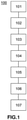
- a method 100 for optimizing the storage space 4 of a messaging server 3 and a system 1 configured to implement said method 100 are presented with reference to the figures 1 to 6 .
- the picture 3 presents a first embodiment of the system 1 configured to implement the method 100.
- the system 1 comprises the mail server 3.
- the mail server 3 interfaces between a mail client 2 and a network 8.
- the network 8 can be a local network or an Internet network.
- the network 8 can implement for example a mail transfer protocol such as SMTP (Simple Mail Transfer Protocol).
- Mail server 3 is configured to store a set of electronic messages 10. For this, it comprises a storage space 4.
- the electronic messages 10 are received by the messaging server 3 and stored on the storage space 4.
- the storage space 4 has a filling rate, depending on the number and the size of the electronic messages 10 stored.
- the messaging server 3 also comprises a processor 5 making it possible to carry out operations on the electronic messages 10 stored on the storage space 4, for example to modify the content or delete an electronic message 10.
- the user of the messaging server 3, or recipient consults the electronic messages 10 stored via the messaging client 2. He can thus, thanks to the messaging client 2, consult, modify or delete the electronic messages 10 stored.
- Each electronic message 10 stored on the storage space 4 is associated with a message identifier 41.
- An electronic message 10 can be of the text type. It includes at least one body, preferably a header, and may also include one or more attached documents.
- the header includes several fields allowing for example to identify the sender and the recipient thanks to their e-mail addresses, the subject of the message or the time of sending.
- the header fields can also include information on the type of encoding used (related to the language used) allowing the body of the electronic message to be correctly decoded. Header fields can be partially hidden from the recipient of the email message.
- the body of the electronic message 10 can also include elements which can be added automatically before the electronic message is sent, such as a signature, clause, warning message or environmental message.
- the sender's signature includes, for example, a postal address or telephone number.
- Warning/environmental clauses or messages can, for example, recall rules of confidentiality or eco-responsible actions.
- the electronic message 10 can also include one or more attached documents, such as text files, images, binary files or compressed files.
- an electronic message 10 When an electronic message 10 is part of a discussion thread, it can also include at least part of a previous electronic message 10 to which it follows.
- the part of the previous electronic message 10 includes for example some fields extracted from the header of the previous electronic message 10, as well as all or part of the body of the previous electronic message 10.
- the recipient François
- the storage space 4 of the recipient's messaging server 3 therefore includes the electronic message 10 sent earlier to the sender, largely included in the electronic message 10 received by the recipient. There are therefore, on the storage space 4, at least two occurrences 20 of a plurality of redundant elements 30.
- the storage space 4 can also include several electronic messages 10 comprising the signature of the sender or the reminder of eco-responsible gestures.
- the size of an electronic message 10 is defined as the storage space required to store said electronic message 10. The more the body of the electronic message 10 includes elements such as signatures, clauses, parts of previous electronic messages 10 which it follows, the larger its size. Similarly, the more the electronic message 10 includes of attached documents, the larger its size. This results in a higher filling rate of the storage space 4.
- the method 100 makes it possible to optimize the storage space 4 of the messaging server 3.
- optimization of the storage space is meant the reduction of the filling rate of the storage space 4.
- the optimization method 100 is firstly described with reference to the figure 1 and 2 .
- the method 100 comprises a step of identifying 101 at least one redundant element 30 having a plurality of occurrences 20 within at least one subset of electronic messages 10 of the set of electronic messages 10 stored on the storage space 4.
- the identification step 101 also makes it possible to determine the position of each occurrence 20 within each message 10 of the subset of electronic messages 10.
- the identification 101 can be carried out by comparing a subset of electronic messages 10 in order to determine common message portions between the messages, forming the occurrences 20 of the redundant elements 30.
- the identification 101 implements an algorithm allowing to detect the longest common portions of messages. In this way, the method 100 makes it possible to greatly reduce the filling rate of the storage space 4.
- the identification 101 not based on syntactic elements also makes it possible to compare portions of electronic messages 10 whose elements do not follow a usual format. For example, the body of an electronic message 10 may be formatted using a non-standard markup language.
- the identification 101 not based on syntactic elements also makes it possible to determine the position of each occurrence within the subset of electronic messages 10.
- the identification 101 can be carried out thanks to a syntactic analysis of all the electronic messages 10 and a comparison of the elements resulting from the syntactic analysis.
- Syntactic analysis allows to search for keywords such as "from”, “to”, “to”, “from”, “cc”, “copy”, “object”, and allows to determine the position of fields of headers in every email message 10.
- a header field can be part of of the body of the electronic message 10.
- the header fields are then compared two by two within the subset of electronic messages 10 comprising header fields, in order to identify the header fields redundant 30, that is to say comprising at least two occurrences.
- the list of keywords above is non-exhaustive and provided as an illustrative example. Keywords can include other keywords or the translation of fields in different languages.
- warning/environmental messages are then compared two by two within the subset of electronic messages 10 comprising said warning/environmental messages, in order to identify the redundant warning/environmental messages 30.
- the identification 101 can also include the search for redundant elements 30 among the attached documents, also called attachments or attached files, attached to the electronic messages 10.
- the identification 101 can include the comparison of attached documents with each other or the comparison of metadata associated with documents. For example, when the documents are text files, the contents of said documents can be compared directly. Whether the attached documents are binary or textual, they can be compared based on their digital fingerprints.
- the digital fingerprint of a document can be obtained by hashing, for example by means of the MD5 algorithm (also called Message Digest 5 in English). Attached documents can also be compared based on their metadata, such as names of each file, creation/modification dates or sizes.
- the attached documents can have a much larger size than the other types of redundant elements 30.
- the multiple occurrences 20 of a document stored on the messaging server 3 can cause a high filling rate of the storage space 4.
- documents may have less redundancy than text elements, such as header fields or signatures. Even with a low size, the multiple occurrences 20 of a textual element stored on the messaging server 3 can also cause a high filling rate of the storage space 4. In order to effectively reduce the rate of use of the storage space 4, it may be advantageous to favor a search for redundant elements 30 among the textual elements, that is to say within the headers or bodies of electronic messages 10.
- the identification step 101 it may be advantageous to select a particular type of element, such as textual elements or attached documents. In this way, only one type of redundant elements 30 is processed, making it possible to reduce the execution time of the method 100. Selecting one or the other of the types of elements, however, makes it possible to obtain a reduction in the rate of occupancy satisfactory.
- the identification step 101 also comprises the association of each occurrence 20 of a redundant element 30 with the message identifier 41 within which the occurrence 20 is located.
- said association is stored in an array of occurrences 40.
- the array of occurrences 40 may be an association table.
- Each occurrence 20 is also associated with a position identifier 51.
- the position identifier 51 refers to the position of the occurrence 20 within the electronic message 10. In the mode of implementation of the picture 2 , said association is stored in a table of positions 50.
- the table of positions 50 can also be an association table.
- the method 100 comprises a step 102 of storing each redundant element 30 identified in order to be able to find them when consulting an electronic message 10.
- the storage step 102 also comprises the association of an element identifier 61 to each redundant element 30 stored.
- the identifiers of elements 61 are stored in an array of elements 60.
- the array of elements 60 can also be an association table.
- the redundant elements 30 can be stored on the messaging server 3, as presented by the embodiment of the picture 3 . According to this embodiment, the redundant elements 30 are stored on the storage space 4 of the messaging server 3. According to this same embodiment, the tables of occurrences 40, of positions 50 and of elements 60 are also stored on mail server 3, for example on storage space 4.
- the redundant elements 30 and/or the tables of occurrences 40, of positions 50 and of elements 60 can be stored on a second storage space 6 of the system 1.
- This second storage space 6 is preferably separate from the messaging server 3.
- the second storage space 6 can be included in the messaging client 2 or on a calculation module 7.
- the steps of the method 100 can be implemented by means of the processor 5.
- the latter 5 can be included at the level of the messaging client 2 or at the level of the calculation module 7 as presented in the figures 4 and 5 .
- the messaging server 3 does not need to be modified to implement the method 100.
- neither the mail server 3 nor the mail client 2 need to be modified to implement the method. It suffices to interface the calculation module 7 between the messaging server 3 and the messaging client 2 to have the elements making it possible to implement the method 100.
- the method 100 comprises a step of associating 103 and a step of deleting 104 each occurrence 20.
- the method 100 thus makes it possible to deconstruct each electronic message 10 of the subset of electronic messages 10.
- deconstructed electronic message 10 we mean a electronic message 10 free of all occurrences 20 of redundant elements 30 stored.
- each element identifier 61 is associated with the position identifier 51 of each occurrence 20 of the redundant element 30 to which it relates.
- Each element identifier 61 is also associated with each message identifier 41 within which said occurrence 20 is located.
- the message identifier 41 refers to each element identifier 61, each element identifier 61 referring in turn to each position identifier 51 of the associated occurrence 20.
- each occurrence 20 of each redundant element 30 is deleted from the subset of electronic messages 10.
- the subset of electronic messages 10 deconstructed is thus obtained.
- Each deconstructed electronic message 10, freed from one or more occurrences 20 of redundant elements 30, has a smaller size than the corresponding original electronic message 10 .
- the filling rate of the subset of deconstructed electronic messages 10, stored on the storage space 4 is lower than the filling rate of the subset of corresponding original electronic messages 10 .
- the redundant elements 30 being stored within the system 1, there is no loss of information.
- the redundant elements 30 are stored on the messaging server 3.
- a single occurrence of each redundant element 30 is stored on the messaging server 3. The filling rate of the storage space 4 is therefore reduced.
- the redundant elements 30 are stored outside the messaging server 3, further reducing the filling rate of the storage space 4, which is then freed of all occurrences 20 of the redundant elements 30.
- the method 100 also makes it possible to reconstruct a deconstructed electronic message 10 .
- the method 100 can easily be transposed to the reconstruction of a plurality of deconstructed electronic messages 10 .
- the reconstruction of a deconstructed electronic message 10 is carried out when the user wishes to consult the electronic message 10 in its original form.
- the reconstruction is triggered on receipt 105 of a request to consult the electronic message 10. In this way, the reconstruction of the electronic message does not need to be anticipated.
- the fill rate also remains reduced when not viewing an e-mail message 10.
- the method 100 comprises a determination step 106 and an addition step 107.
- the associated message identifier 41 is obtained, for example, by means of the message table 40.
- each element identifier 61 associated with the message identifier 41 is determined. The position at which each redundant element 30 must be inserted can be obtained thanks to the association between the element identifier 61 and each position identifier 51.
- each redundant element 30 associated with a determined element identifier 61 is added to the electronic message 10 deconstructed.
- the electronic message 10 is reconstructed by including all the information included in the original electronic message 10.
- the method 100 makes it possible to preserve all the information.
- each redundant element 30 is added to the position corresponding to the associated position identifier 51.
- the reconstructed electronic message 10 corresponds to the original electronic message 10. Deconstruction and reconstruction are carried out transparently for the user.
- each element identifier 61 can be inserted into the electronic message 10 during the deletion step 104, instead of place of each occurrence 20 of the element with which it is associated.
- the determination step 106 can be carried out by means of a syntactical analysis of the electronic message 10.
- the addition step 107 then also comprises the deletion of each element identifier 61 of the electronic message 10 when the redundant element 30 has been added.
- Process 100 can be triggered automatically. For example, when the filling rate of storage space 4 reaches a trigger threshold.
- the trigger threshold can for example be equal to 90%.
- the triggering threshold can be configurable, that is to say adjustable by the user.
- the triggering of the process 100 can also be carried out by the user, so that he can, for example, force the deconstruction 101, 102, 103, 104 of the electronic messages 10 when he is not using the digital resources of the system 1
- the process 100 can be triggered automatically upon receipt of a new electronic message 100.
- the deconstruction steps 101, 102, 103, 104 can be carried out in batches and possibly during periods of low activity such as at night or on public holidays.
- the method 100 can carry out the steps of deconstruction 101, 102, 103, 104 of the electronic messages 10 until the filling rate reaches a stop threshold.
- the stop threshold is preferably lower than the trigger threshold and may for example be 80%.
- the stop threshold can be parameterized.
- the redundant elements 30 can first be searched among the attached documents, making it possible to identify a subset of electronic messages 10 to be processed.
- the deconstruction steps 101, 102, 103, 104 thus make it possible to reduce the filling rate down to a first rate. If the first rate is greater than the stop threshold, then new redundant elements 30 can be searched for among the textual elements such as signatures, making it possible to further extend the subset of electronic messages 10 to be deconstructed.
- the deconstruction steps 101, 102, 103, 104 thus make it possible to further reduce the filling rate until it is less than or equal to the stop threshold.
- a first identification 101 of redundant elements 30 among the documents made it possible to identify 18 redundant documents.
- the deconstruction of 101, 102, 103, 104 reduced the fill rate from 90% to 80.4%.
- a second identification 101 of redundant elements 30 among the textual elements made it possible to identify 20 redundant signatures and 18 redundant warning messages.
- the deconstruction of 101, 102, 103, 104 reduced the filling rate by 0.4% to reach the threshold rate of 80%.
- the filling rate of the storage space 4 can reach saturation.
- the storage space 4 is saturated (filling rate of 100%)
- the identification 101 of redundant elements 30 is advantageously carried out by taking into account all the types of elements, whether documents or textual elements . Thus, the reduction in the filling rate is the strongest.
- the set of electronic messages 10 within which the identification 101 of redundant elements 30 is carried out may comprise only part of the set of non-deconstructed electronic messages 10 stored on the mail server 3, previously called subset of electronic messages 10.
- the electronic messages 10 comprising one or more redundant elements 30 may have a larger size than the electronic messages not comprising any redundant element 30.
- the set of electronic messages 10 within which the identification 101 is carried out may preferably comprise 10 non-deconstructed electronic messages whose size is greater than a size limit.
- the method 100 processes the electronic messages 10 presenting a strong chance of comprising redundant elements 30, or even large redundant elements 30, such as documents, without processing all the electronic messages 10 stored on the messaging server 3
- reducing the fill rate is effective while reducing the execution time of the method 100.
- each electronic message 10 is associated with a size and the identification step 101 is carried out by decreasing size.
- large electronic messages 10 are processed first, making it possible to quickly reduce the filling rate, while processing all electronic messages 10.
- the electronic messages 10 included in a discussion thread have a high chance of comprising redundant elements 30 such as the subject of the discussion thread or a signature of one of the senders.
- the non-deconstructed electronic messages 10 are preferentially selected within a discussion thread.
- the redundant elements 30 stored randomly include redundant elements 30 having a large size and /or high redundancy.
- the method 100 reduces the filling rate by eliminating the occurrences of redundant elements 30 of large size and/or high redundancy.
- the limited number has the advantage of reducing the number of redundant elements 30 processed and therefore the execution time of the method 100.
- the limited number can be parameterized.
- an alternative of the method 100 comprises a step 108 of selecting a subset of redundant elements 30 from the redundant elements 30 identified during the identification step 101.
- the selection step 108 all the occurrences 20 of the elements redundant 30 are identified and associated with a size.
- a plurality of random subsets of redundant elements 30 are formed and an estimate of the fill rate reduction is calculated for each subset.
- the selected subset makes it possible to reach the stop threshold.
- the selected subset makes it possible to reach the stopping threshold by minimizing the number of redundant elements 30 to be processed and therefore the execution time of the method 100.
- the storage step 102 stores each redundant element 30 of the subset of redundant elements 30 selected during the selection step 108.
- the subset of redundant elements 30 resulting from the selection step comprises 1021 redundant signatures, 822 warning messages and 9 attached documents.
- the deconstruction of 101, 102, 103, 104 reduced the filling rate from 90% to 80%.
Landscapes
- Engineering & Computer Science (AREA)
- Theoretical Computer Science (AREA)
- Physics & Mathematics (AREA)
- General Physics & Mathematics (AREA)
- General Engineering & Computer Science (AREA)
- Human Computer Interaction (AREA)
- Business, Economics & Management (AREA)
- Human Resources & Organizations (AREA)
- Signal Processing (AREA)
- Computer Networks & Wireless Communication (AREA)
- Entrepreneurship & Innovation (AREA)
- Strategic Management (AREA)
- Databases & Information Systems (AREA)
- Data Mining & Analysis (AREA)
- Tourism & Hospitality (AREA)
- Quality & Reliability (AREA)
- General Business, Economics & Management (AREA)
- Operations Research (AREA)
- Marketing (AREA)
- Economics (AREA)
- Computer Hardware Design (AREA)
- Information Retrieval, Db Structures And Fs Structures Therefor (AREA)
- Data Exchanges In Wide-Area Networks (AREA)
Abstract
- une étape d'identification d'au moins un élément redondant (30) présentant une pluralité d'occurrences (20) ;
- une étape de stockage de chaque élément redondant (30) ;
- une étape d'association de chaque l'élément redondant (30) à une position et à un message électronique (10) ;
- une étape de suppression des occurrences (20) pour obtenir un ensemble de message électronique (10) déconstruit ;
- à réception d'une requête de consultation d'un message électronique (10) :
o une étape de détermination des éléments redondants (30) ; et
o une étape d'ajout de chaque élément redondant (30) dans le message électronique (10) déconstruit, à la position correspondant au message électronique (10) original.
Description
- La présente invention concerne les serveurs de messagerie électronique et notamment les procédés permettant d'optimiser l'espace de stockage de serveurs de messagerie électronique.
- Un serveur de messagerie électronique arrive à plus ou moins long terme à une saturation mémoire de son espace de stockage stockant l'ensemble des messages électroniques ou courriels d'une boîte de messagerie électronique d'un utilisateur. Il est alors indispensable de réduire l'espace de stockage utilisé pour pouvoir stocker de nouveaux messages électroniques.
- Des notifications, comme par exemple la notification ci-dessous, peuvent alors être envoyées à l'utilisateur, pour l'inviter à supprimer des éléments superflus de sa boîte de messagerie électronique :

- Toutefois, il peut être difficile d'identifier des éléments superflus et/ou le nombre d'éléments superflus supprimés peut être insuffisant pour réduire l'espace de stockage utilisé de façon satisfaisante.
- Afin de remédier à la saturation de l'espace de stockage, il est connu d'avoir recours à des messageries instantanées pour limiter le nombre de courriels échangés. Toutefois, ces solutions ne sont pas systématiquement mises en œuvre, notamment dans le cas où le nombre d'échanges avec un destinataire donné est limité, ce qui est le cas des échanges externes pour lesquels les courriels sont favorisés. Ces solutions ne font alors que retarder le moment de la saturation.
- Il existe également des solutions d'optimisation de l'espace de stockage d'un serveur, mettant par exemple en œuvre la compression de données. Cependant, en appliquant cette solution à un serveur de messagerie, l'expérience utilisateur serait altérée puisque l'utilisateur ne pourrait plus consulter aisément un message ayant été compressé ou réaliser une recherche sur un groupe de messages compressés.
- Il existe donc un besoin d'optimiser l'espace de stockage d'un serveur de messagerie sans altérer l'expérience de l'utilisateur quand il consulte sa messagerie.
- Pour cela, l'invention concerne un procédé d'optimisation de l'espace de stockage d'un serveur de messagerie sur lequel un ensemble de messages électroniques est stocké, l'espace de stockage présentant un taux de remplissage, chaque message électronique étant associé à un identifiant de message, le procédé comprenant :
- une étape d'identification d'au moins un élément redondant présentant une pluralité d'occurrences au sein d'au moins un sous-ensemble de messages électroniques de l'ensemble de messages électroniques, chaque occurrence étant associée à l'identifiant de message correspondant au message électronique dans lequel l'occurrence est localisée et à un identifiant de position correspondant à la position de l'occurrence dans le message électronique ;
- une étape de stockage de chaque élément redondant identifié et d'association d'un identifiant d'élément à chaque élément redondant stocké ;
- pour chaque élément redondant stocké :
- une étape d'association de l'identifiant d'élément correspondant à l'identifiant de position et à l'identifiant de message associés à chaque occurrence de la pluralité d'occurrences correspondante ;
- une étape de suppression de la pluralité d'occurrences correspondante dans chaque message électronique du sous-ensemble de messages électroniques pour obtenir un message électronique déconstruit pour chaque message électronique du sous-ensemble de messages électroniques ;
- à réception d'une requête de consultation d'un message électronique du sous-ensemble de messages électroniques :
- une étape de détermination de chaque identifiant d'élément associé à l'identifiant de message correspondant au message électronique ;
- une étape d'ajout de chaque élément redondant associé à un identifiant d'élément déterminé, à la position correspondant à l'identifiant de position associé dans le message électronique déconstruit correspondant pour obtenir un message électronique reconstruit.
- Grâce au procédé, les messages électroniques déconstruits sont libérés des éléments redondants, réduisant le taux de remplissage de l'espace de stockage, ce qui induit une consommation moindre de ressources de fonctionnement.
- Le procédé permet de reconstruire les messages électroniques déconstruits de manière identique aux originaux, n'altérant pas l'expérience utilisateur lorsqu'il consulte les messages.
- Outre les caractéristiques qui viennent d'être évoquées dans le paragraphe précédent, le procédé peut présenter une ou plusieurs caractéristiques complémentaires parmi les suivantes, considérées individuellement ou selon toutes les combinaisons techniquement possibles :
- le procédé est déclenché lorsque le taux de remplissage atteint un seuil de déclenchement ;
- le procédé est déclenché par l'utilisateur ;
- le procédé est déclenché lors de la réception d'un nouveau message électronique ;
- l'exécution des étapes d'identification, de stockage, d'association et de suppression s'interrompt lorsque le taux de remplissage est inférieur ou égal à un seuil d'arrêt ;
- le sous-ensemble de messages électroniques est choisi pour que le taux de remplissage soit inférieur ou égal à un seuil d'arrêt à l'issue du procédé ;
- lors de l'étape de stockage, seul un nombre limité d'éléments redondants est stocké ;
- le procédé comprend une étape de sélection d'un sous-ensemble d'éléments redondants, le sous-ensemble étant sélectionné à partir des éléments redondants identifiés pour que le taux de remplissage soit inférieur ou égal à un seuil d'arrêt à l'issue du procédé ;
- chaque message électronique est associé à une taille mémoire et l'étape d'identification est réalisée par taille mémoire décroissante ;
- chaque message électronique a une taille supérieure à une taille limite ;
- chaque message électronique est sélectionné au sein d'un fil de discussion ;
- chaque élément redondant est une signature, une clause, un message environnemental, un message anti-virus ou un document en pièce jointe.
- L'invention concerne en outre un système pour la mise en œuvre du procédé selon l'invention, le système comportant un serveur de messagerie configuré pour stocker un ensemble de messages électroniques.
- Outre les caractéristiques qui viennent d'être évoquées dans le paragraphe précédent, le système peut présenter la caractéristique complémentaire suivante :
- le système comporte un module de calcul configuré pour stocker chaque élément redondant et chaque identifiant et/ou pour reconstruire un message électronique sur requête de l'utilisateur.
- L'invention concerne également une produit-programme d'ordinateur comprenant des instructions qui, quand le programme est exécuté sur un ordinateur, conduisent celui-ci à mettre en œuvre les étapes du procédé selon l'invention.
- L'invention et ses différentes applications seront mieux comprises à la lecture de la description qui suit et à l'examen des figures qui l'accompagnent.
- Les figures sont présentées à titre indicatif et nullement limitatif de l'invention.
- [
Fig. 1 ] est une vue schématique d'un premier mode de mise en œuvre d'un procédé selon l'invention. - [
Fig. 2 ] est une vue schématique d'un ensemble de messages électroniques traité par le procédé selon l'invention. - [
Fig. 3 ] est une vue schématique d'un premier mode de réalisation d'un système selon l'invention. - [
Fig. 4 ] est une vue schématique d'un deuxième mode de réalisation du système selon l'invention. - [
Fig. 5 ] est une vue schématique d'un troisième mode de réalisation du système selon l'invention. - [
Fig. 6 ] est une vue schématique d'un deuxième mode de mise en œuvre du procédé selon l'invention. - Un procédé 100 d'optimisation de l'espace de stockage 4 d'un serveur de messagerie 3 et un système 1 configuré pour mettre en œuvre ledit procédé 100 sont présentés en référence aux
figures 1 à 6 . - La
figure 3 présente un premier mode de réalisation du système 1 configuré pour mettre en œuvre le procédé 100. Le système 1 comprend le serveur de messagerie 3. Le serveur de messagerie 3 fait l'interface entre un client de messagerie 2 et un réseau 8. Le réseau 8 peut être un réseau local ou un réseau Internet. Le réseau 8 peut implémenter par exemple un protocole de transfert de courrier tel que SMTP (Simple Mail Transfer Protocol en anglais). Le serveur de messagerie 3 est configuré pour stocker un ensemble de messages électroniques 10. Pour cela, il comprend un espace de stockage 4. Les messages électronique 10 sont reçus par le serveur de messagerie 3 et stockés sur l'espace de stockage 4. L'espace de stockage 4 présente un taux de remplissage, dépendant du nombre et de la taille des messages électroniques 10 stockés. - Selon le premier mode de réalisation, le serveur de messagerie 3 comprend également un processeur 5 permettant de réaliser des opérations sur les messages électroniques 10 stockés sur l'espace de stockage 4, par exemple pour en modifier le contenu ou supprimer un message électronique 10.
- Usuellement, l'utilisateur du serveur de messagerie 3, ou destinataire, consulte les messages électroniques 10 stockés par l'intermédiaire du client de messagerie 2. Il peut ainsi, grâce au client de messagerie 2, consulter, modifier ou supprimer les messages électroniques 10 stockés.
- Chaque message électronique 10 stocké sur l'espace de stockage 4 est associé à un identifiant de messages 41.
- Un message électronique 10 peut être de type texte. Il comprend au moins un corps, préférentiellement un en-tête et peut également comprendre un ou plusieurs documents joints.
- L'en-tête comprend par exemple les informations permettant l'acheminement du message électronique 10 au destinataire. Un exemple d'en-tête peut être le suivant :
 Received: from domainexp.com
  by mta.domainexp.com with HTTPS via
  secure.domainexp.com; Tue, 21 Sep 2020 12:49:18 +0000
 Received: by domaindest.com id 1A2B3C4D5E6F; Tue, 21 Sep
  2020 12:49:16 +0000
 Content-Type: application/ms-tnef; name="winmail.dat"
 Content-Transfer-Encoding: binary
 From: Jean
 To: François
 Subject: Bonjour !
 Thread-Topic: Bonjour !
 Message-ID:
 Content-Language: fr-FR
 MIME-Version: 1.0
 Bonjour François,
 Pour réaliser une baguette de pain il faut de la farine, de l'eau, de
 la levure et du sel. Former une pâte à partir des ingrédients et cuire
 ladite pâte. Pour obtenir une mie aérée, la pâte est
 préférentiellement pétrie pendant 15 min. Pour obtenir une baguette
 croustillante, la pâte est préférentiellement cuite à 250 °C pendant
 20 min. Voir les références de pétrins et de fours en pièces jointes.
 Jean
 Artisan Boulanger
 1 place de l'épi
 Blés-sur-Champ
 Pour protéger la nature n'imprimez cet email que si c'est nécessaire.
 > From: "François"
 > To: jean@domaindexp.com
 > Subject: Recette de la baguette de pain
 > Date: Tue, 22 Sep 2012 09:27:13 +0200
 > Bonjour Jean,
 >
 > Je souhaite préparer quelques baguettes de pain mais je ne connais
 pas la recette. Pourriez-vous m'en faire part ? Et pouvez-vous
 également me donner quelques références vers du matériel nécessaire ?
 >
 > Merci d'avance,
 >
 > François
- un portion de message commune ;
- un champ d'en-tête ;
- une signature ;
- un message d'avertissement/environnementaux ;
- un document joint ;
- un message de logiciel anti-virus.
Claims (10)
- Procédé (100) d'optimisation de l'espace de stockage (4) d'un serveur de messagerie (3) sur lequel un ensemble de messages électroniques (10) est stocké, l'espace de stockage (4) présentant un taux de remplissage, chaque message électronique (10) étant associé à un identifiant de message (41), le procédé étant caractérisé en ce qu'il comprend :- une étape d'identification (101) d'au moins un élément redondant (30) présentant une pluralité d'occurrences (20) au sein d'au moins un sous-ensemble de messages électroniques (10) de l'ensemble de messages électroniques, chaque occurrence (20) étant associée à l'identifiant de message (41) correspondant au message électronique (10) dans lequel l'occurrence (20) est localisée et à un identifiant de position (51) correspondant à la position de l'occurrence (20) dans le message électronique (10) ;- une étape de stockage (102) de chaque élément redondant (30) identifié et d'association d'un identifiant d'élément (61) à chaque élément redondant (30) stocké ;- pour chaque élément redondant (30) stocké :∘ une étape d'association (103) de l'identifiant d'élément (61) correspondant à l'identifiant de position (51) et à l'identifiant de message (41) associés à chaque occurrence (20) de la pluralité d'occurrences (20) correspondante ;∘ une étape de suppression (104) de la pluralité d'occurrences (20) correspondante dans chaque message électronique (10) du sous-ensemble de messages électroniques (10) pour obtenir un message électronique (10) déconstruit pour chaque message électronique (10) du sous-ensemble de messages électroniques (10) ;- à réception (105) d'une requête de consultation d'un message électronique (10) du sous-ensemble de messages électroniques (10) :∘ une étape de détermination (106) de chaque identifiant d'élément (61) associé à l'identifiant de message (41) correspondant au message électronique (10) ;∘ une étape d'ajout (107) de chaque élément redondant (30) associé à un identifiant d'élément (61) déterminé, à la position correspondant à l'identifiant de position (51) associé dans le message électronique (10) déconstruit correspondant, pour obtenir un message électronique (10) reconstruit.
- Procédé (100) selon la revendication 1, caractérisé en ce qu'il est déclenché lorsque le taux de remplissage atteint un seuil de déclenchement.
- Procédé (100) selon la revendication 1, caractérisé en ce qu'il est déclenché par l'utilisateur.
- Procédé (100) selon la revendication 1, caractérisé en ce qu'il est déclenché lors de la réception d'un nouveau message électronique (10).
- Procédé (101) selon l'une quelconque des revendications précédentes, caractérisé en ce que le sous-ensemble de messages électroniques (10) est choisi pour que le taux de remplissage soit inférieur ou égal à un seuil d'arrêt à l'issue du procédé (100).
- Procédé (100) selon l'une quelconque des revendications précédentes, caractérisé en ce que chaque message électronique (10) est associé à une taille mémoire et l'étape d'identification (101) est réalisée par taille mémoire décroissante.
- Procédé (100) selon l'une quelconque des revendications précédentes, caractérisé en ce que chaque élément redondant (30) est une signature, une clause, un message environnemental, un message anti-virus ou un document en pièce jointe.
- Système (1) pour la mise en œuvre du procédé (100) selon l'une quelconque des revendications précédentes, caractérisé en ce qu'il comporte un serveur de messagerie (3) configuré pour stocker un ensemble de messages électroniques (10).
- Système (1) selon la revendication 8, caractérisé en ce qu'il comporte en outre un module de calcul (7) configuré pour stocker chaque élément redondant (30) et chaque identifiant (41, 51, 61) et/ou pour reconstruire un message électronique (10) sur requête de l'utilisateur.
- Produit-programme d'ordinateur comprenant des instructions qui, quand le programme est exécuté sur un ordinateur, conduisent celui-ci à mettre en œuvre les étapes du procédé (100) selon l'une quelconque des revendications 1 à 7.
Priority Applications (2)
| Application Number | Priority Date | Filing Date | Title |
|---|---|---|---|
| EP20305992.8A EP3964981A1 (fr) | 2020-09-08 | 2020-09-08 | Procédé d'optimisation de l'espace de stockage d'un serveur de messagerie et système associé |
| US17/467,755 US11552912B2 (en) | 2020-09-08 | 2021-09-07 | Process for optimizing the storage space on a messaging server and associated system |
Applications Claiming Priority (1)
| Application Number | Priority Date | Filing Date | Title |
|---|---|---|---|
| EP20305992.8A EP3964981A1 (fr) | 2020-09-08 | 2020-09-08 | Procédé d'optimisation de l'espace de stockage d'un serveur de messagerie et système associé |
Publications (1)
| Publication Number | Publication Date |
|---|---|
| EP3964981A1 true EP3964981A1 (fr) | 2022-03-09 |
Family
ID=72615771
Family Applications (1)
| Application Number | Title | Priority Date | Filing Date |
|---|---|---|---|
| EP20305992.8A Pending EP3964981A1 (fr) | 2020-09-08 | 2020-09-08 | Procédé d'optimisation de l'espace de stockage d'un serveur de messagerie et système associé |
Country Status (2)
| Country | Link |
|---|---|
| US (1) | US11552912B2 (fr) |
| EP (1) | EP3964981A1 (fr) |
Citations (3)
| Publication number | Priority date | Publication date | Assignee | Title |
|---|---|---|---|---|
| US20060190830A1 (en) * | 2005-02-04 | 2006-08-24 | International Business Machines Corporation | Space-efficient mail storing and archiving based on communication structure |
| WO2008000532A1 (fr) * | 2006-06-29 | 2008-01-03 | International Business Machines Corporation | Procédé et système pour la gestion des e-mails à faible redondance |
| EP3336786A1 (fr) * | 2016-12-19 | 2018-06-20 | Atos Integration | Procede d'edition d'un message electronique avec elimination d'elements redondants |
Family Cites Families (8)
| Publication number | Priority date | Publication date | Assignee | Title |
|---|---|---|---|---|
| US7310682B2 (en) * | 2004-01-08 | 2007-12-18 | Lsi Corporation | Systems and methods for improving network performance |
| US8738708B2 (en) * | 2004-12-21 | 2014-05-27 | Mcafee, Inc. | Bounce management in a trusted communication network |
| US8805795B2 (en) * | 2011-06-20 | 2014-08-12 | Bank Of America Corporation | Identifying duplicate messages in a database |
| US8856234B2 (en) * | 2013-02-28 | 2014-10-07 | Workiva Llc | System and method for performing distributed asynchronous calculations in a networked environment |
| US9986029B2 (en) * | 2014-03-19 | 2018-05-29 | Red Hat, Inc. | File replication using file content location identifiers |
| US10540667B2 (en) * | 2016-01-29 | 2020-01-21 | Conduent Business Services, Llc | Method and system for generating a search query |
| US11086823B2 (en) * | 2017-12-28 | 2021-08-10 | Dropbox, Inc. | File deduplication using signature information |
| US11157510B2 (en) * | 2018-02-28 | 2021-10-26 | Chaossearch, Inc. | Data normalization using data edge platform |
-
2020
- 2020-09-08 EP EP20305992.8A patent/EP3964981A1/fr active Pending
-
2021
- 2021-09-07 US US17/467,755 patent/US11552912B2/en active Active
Patent Citations (3)
| Publication number | Priority date | Publication date | Assignee | Title |
|---|---|---|---|---|
| US20060190830A1 (en) * | 2005-02-04 | 2006-08-24 | International Business Machines Corporation | Space-efficient mail storing and archiving based on communication structure |
| WO2008000532A1 (fr) * | 2006-06-29 | 2008-01-03 | International Business Machines Corporation | Procédé et système pour la gestion des e-mails à faible redondance |
| EP3336786A1 (fr) * | 2016-12-19 | 2018-06-20 | Atos Integration | Procede d'edition d'un message electronique avec elimination d'elements redondants |
Non-Patent Citations (1)
| Title |
|---|
| "Smarter Email System: Removal of Redundant Attachments in Received and Reply Emails ED - Darl Kuhn", IP.COM, IP.COM INC., WEST HENRIETTA, NY, US, 7 May 2014 (2014-05-07), XP013163372, ISSN: 1533-0001 * |
Also Published As
| Publication number | Publication date |
|---|---|
| US20220078144A1 (en) | 2022-03-10 |
| US11552912B2 (en) | 2023-01-10 |
Similar Documents
| Publication | Publication Date | Title |
|---|---|---|
| KR102355839B1 (ko) | 엔트리들을 위한 옵트-인 영속성을 갖는 메시지 스레드를 유지하는 장치 및 방법 | |
| US8135779B2 (en) | Method, system, apparatus, and software product for filtering out spam more efficiently | |
| US9148432B2 (en) | Range weighted internet protocol address blacklist | |
| US8566406B2 (en) | Filtering of electronic mail messages destined for an internal network | |
| NO335968B1 (no) | Rammeverk for å gjøre det mulig å integrere anti-SPAM-teknologier. | |
| CN102067167A (zh) | 自动对话技术 | |
| US20190319902A1 (en) | Forwarding un-responded to instant messages to electronic mail | |
| TW201007592A (en) | System and method for facilitating the growth of a mobile community | |
| WO2011138528A1 (fr) | Procede de lancement d'une conference a la volee mise en contexte | |
| CA2900735C (fr) | Transmission d'un message multimedia doublee par emission d'un message textuel | |
| CN101667976B (zh) | 一种邮件推送方式确定方法、推送方法及装置 | |
| US7720921B2 (en) | System and method for soliciting and retrieving a complete email thread | |
| CN102377688B (zh) | 一种文件的传输方法和设备 | |
| US20050021644A1 (en) | Systems and methods for validating electronic communications | |
| CN106973008A (zh) | 一种选择性撤回邮件的实现方法 | |
| US7627635B1 (en) | Managing self-addressed electronic messages | |
| CN111010336A (zh) | 一种海量邮件解析方法及装置 | |
| CN102223318A (zh) | 电子邮件的处理方法及系统 | |
| EP2856708B1 (fr) | Procédés de délivrance de courriels à la demande, serveurs de courriels et programmes d'ordinateur mettant en oeuvre de tels procédés | |
| EP3420684B1 (fr) | Gestion d'objets spécialisés dans une mémoire de message | |
| US11552912B2 (en) | Process for optimizing the storage space on a messaging server and associated system | |
| CN114969800A (zh) | 一种用于隐私保护的数据均值统计方法及设备 | |
| EP1595371A1 (fr) | PROCEDE DE GESTION DE PRESENCE SELECTIVE POUR SERVICE DE MESSAGERIE INSTANTANEE AU SEIN D’UN RESEAU DE TELECOMMUNICATION TEL QUE LE RESEAU INTERNET | |
| CN105207884A (zh) | 一种获取电子邮件投递状态的方法和装置 | |
| EP1935149B1 (fr) | Procede et systeme de notification de reception de messages asynchrones |
Legal Events
| Date | Code | Title | Description |
|---|---|---|---|
| PUAI | Public reference made under article 153(3) epc to a published international application that has entered the european phase |
Free format text: ORIGINAL CODE: 0009012 |
|
| STAA | Information on the status of an ep patent application or granted ep patent |
Free format text: STATUS: THE APPLICATION HAS BEEN PUBLISHED |
|
| AK | Designated contracting states |
Kind code of ref document: A1 Designated state(s): AL AT BE BG CH CY CZ DE DK EE ES FI FR GB GR HR HU IE IS IT LI LT LU LV MC MK MT NL NO PL PT RO RS SE SI SK SM TR |
|
| STAA | Information on the status of an ep patent application or granted ep patent |
Free format text: STATUS: REQUEST FOR EXAMINATION WAS MADE |
|
| 17P | Request for examination filed |
Effective date: 20220905 |
|
| RBV | Designated contracting states (corrected) |
Designated state(s): AL AT BE BG CH CY CZ DE DK EE ES FI FR GB GR HR HU IE IS IT LI LT LU LV MC MK MT NL NO PL PT RO RS SE SI SK SM TR |
|
| RAP1 | Party data changed (applicant data changed or rights of an application transferred) |
Owner name: BULL SAS |
|
| P01 | Opt-out of the competence of the unified patent court (upc) registered |
Effective date: 20230330 |
|
| STAA | Information on the status of an ep patent application or granted ep patent |
Free format text: STATUS: EXAMINATION IS IN PROGRESS |
|
| 17Q | First examination report despatched |
Effective date: 20250324 |