EP3963489B1 - Maschinenlernmodellwertverschleierung unter verwendung von schrittfunktionalem positionsabhängigem rauschen - Google Patents
Maschinenlernmodellwertverschleierung unter verwendung von schrittfunktionalem positionsabhängigem rauschen Download PDFInfo
- Publication number
- EP3963489B1 EP3963489B1 EP20727021.6A EP20727021A EP3963489B1 EP 3963489 B1 EP3963489 B1 EP 3963489B1 EP 20727021 A EP20727021 A EP 20727021A EP 3963489 B1 EP3963489 B1 EP 3963489B1
- Authority
- EP
- European Patent Office
- Prior art keywords
- score
- artefact
- classification
- classification model
- model
- Prior art date
- Legal status (The legal status is an assumption and is not a legal conclusion. Google has not performed a legal analysis and makes no representation as to the accuracy of the status listed.)
- Active
Links
Images



Classifications
-
- G—PHYSICS
- G06—COMPUTING OR CALCULATING; COUNTING
- G06F—ELECTRIC DIGITAL DATA PROCESSING
- G06F21/00—Security arrangements for protecting computers, components thereof, programs or data against unauthorised activity
- G06F21/50—Monitoring users, programs or devices to maintain the integrity of platforms, e.g. of processors, firmware or operating systems
- G06F21/55—Detecting local intrusion or implementing counter-measures
- G06F21/56—Computer malware detection or handling, e.g. anti-virus arrangements
- G06F21/562—Static detection
-
- G—PHYSICS
- G06—COMPUTING OR CALCULATING; COUNTING
- G06N—COMPUTING ARRANGEMENTS BASED ON SPECIFIC COMPUTATIONAL MODELS
- G06N20/00—Machine learning
- G06N20/10—Machine learning using kernel methods, e.g. support vector machines [SVM]
-
- G—PHYSICS
- G06—COMPUTING OR CALCULATING; COUNTING
- G06N—COMPUTING ARRANGEMENTS BASED ON SPECIFIC COMPUTATIONAL MODELS
- G06N20/00—Machine learning
- G06N20/20—Ensemble learning
-
- G—PHYSICS
- G06—COMPUTING OR CALCULATING; COUNTING
- G06N—COMPUTING ARRANGEMENTS BASED ON SPECIFIC COMPUTATIONAL MODELS
- G06N3/00—Computing arrangements based on biological models
- G06N3/02—Neural networks
- G06N3/04—Architecture, e.g. interconnection topology
- G06N3/044—Recurrent networks, e.g. Hopfield networks
-
- G—PHYSICS
- G06—COMPUTING OR CALCULATING; COUNTING
- G06N—COMPUTING ARRANGEMENTS BASED ON SPECIFIC COMPUTATIONAL MODELS
- G06N3/00—Computing arrangements based on biological models
- G06N3/02—Neural networks
- G06N3/04—Architecture, e.g. interconnection topology
- G06N3/045—Combinations of networks
-
- G—PHYSICS
- G06—COMPUTING OR CALCULATING; COUNTING
- G06N—COMPUTING ARRANGEMENTS BASED ON SPECIFIC COMPUTATIONAL MODELS
- G06N3/00—Computing arrangements based on biological models
- G06N3/02—Neural networks
- G06N3/04—Architecture, e.g. interconnection topology
- G06N3/0475—Generative networks
-
- G—PHYSICS
- G06—COMPUTING OR CALCULATING; COUNTING
- G06N—COMPUTING ARRANGEMENTS BASED ON SPECIFIC COMPUTATIONAL MODELS
- G06N3/00—Computing arrangements based on biological models
- G06N3/02—Neural networks
- G06N3/04—Architecture, e.g. interconnection topology
- G06N3/049—Temporal neural networks, e.g. delay elements, oscillating neurons or pulsed inputs
-
- G—PHYSICS
- G06—COMPUTING OR CALCULATING; COUNTING
- G06N—COMPUTING ARRANGEMENTS BASED ON SPECIFIC COMPUTATIONAL MODELS
- G06N3/00—Computing arrangements based on biological models
- G06N3/02—Neural networks
- G06N3/08—Learning methods
- G06N3/088—Non-supervised learning, e.g. competitive learning
-
- G—PHYSICS
- G06—COMPUTING OR CALCULATING; COUNTING
- G06N—COMPUTING ARRANGEMENTS BASED ON SPECIFIC COMPUTATIONAL MODELS
- G06N5/00—Computing arrangements using knowledge-based models
- G06N5/01—Dynamic search techniques; Heuristics; Dynamic trees; Branch-and-bound
-
- G—PHYSICS
- G06—COMPUTING OR CALCULATING; COUNTING
- G06N—COMPUTING ARRANGEMENTS BASED ON SPECIFIC COMPUTATIONAL MODELS
- G06N7/00—Computing arrangements based on specific mathematical models
- G06N7/01—Probabilistic graphical models, e.g. probabilistic networks
-
- H—ELECTRICITY
- H04—ELECTRIC COMMUNICATION TECHNIQUE
- H04L—TRANSMISSION OF DIGITAL INFORMATION, e.g. TELEGRAPHIC COMMUNICATION
- H04L63/00—Network architectures or network communication protocols for network security
- H04L63/14—Network architectures or network communication protocols for network security for detecting or protecting against malicious traffic
- H04L63/1441—Countermeasures against malicious traffic
-
- G—PHYSICS
- G06—COMPUTING OR CALCULATING; COUNTING
- G06F—ELECTRIC DIGITAL DATA PROCESSING
- G06F21/00—Security arrangements for protecting computers, components thereof, programs or data against unauthorised activity
- G06F21/50—Monitoring users, programs or devices to maintain the integrity of platforms, e.g. of processors, firmware or operating systems
- G06F21/55—Detecting local intrusion or implementing counter-measures
- G06F21/56—Computer malware detection or handling, e.g. anti-virus arrangements
- G06F21/562—Static detection
- G06F21/563—Static detection by source code analysis
-
- H—ELECTRICITY
- H04—ELECTRIC COMMUNICATION TECHNIQUE
- H04L—TRANSMISSION OF DIGITAL INFORMATION, e.g. TELEGRAPHIC COMMUNICATION
- H04L63/00—Network architectures or network communication protocols for network security
- H04L63/14—Network architectures or network communication protocols for network security for detecting or protecting against malicious traffic
- H04L63/1441—Countermeasures against malicious traffic
- H04L63/145—Countermeasures against malicious traffic the attack involving the propagation of malware through the network, e.g. viruses, trojans or worms
Definitions
- the subject matter described herein is directed to techniques for obfuscating the output of machine learning models using step functions.
- Machine learning and other types of artificial intelligence models are being increasingly deployed across different applications and industries.
- Such models provide classifications which can be based, for example, on historical data with known outcomes or features.
- the classifications provided by such models i.e., the model outputs, etc.
- the outputs of such models can be intercepted even when part of a larger workflow. Such interception can allow a malicious actor to manipulate the classification by such models by repeatedly providing sample input data until a desired classification is received (even if such classification is not ultimately accurate).
- US2018/013772 discloses methods of automatic inline detection based on static data.
- a file being received by a recipient device is analyzed using an inline parser.
- the inline parser identifies sections of the file and feature vectors are created for the identified sections.
- the feature vectors are used to calculate a score corresponding to the malicious status of the file as the information is being analyzed. If a score is determined to exceed a predetermined threshold, the file download process is terminated.
- the received files, file fragments, feature vectors and/or additional data may be collected and analyzed to build a probabilistic model used to identify potentially malicious files.
- TIANWEIZHANG ET AL "Privacy-preserving Machine Learning through Data Obfuscation", arxiv.org, Cornell University Library, 201 Olin Library Georgia University Ithaca, NY 14853 discloses privacy-preserving a classification model through data obfuscation by adding random noise to samples , or by adding random noise to extracted features of the samples, or by adding random noise to a training dataset of the classification model, or by adding random noise to a group of samples.
- US2017/220929 discloses a speech recognition system where a node of a neural network is processed by determining a score for the node as a product of weights and inputs such that the weights are fixed point integer values, applying a correction to the score based a correction value associated with at least one of the weights, and generating an output from the node based on the corrected score.
- an artefact is received.
- Features are extracted from this artefact which are, in turn, used to populate a vector.
- the vector is then input into a classification model to generate a score.
- the score is then modified using a step function to add noise to the score to obfuscate its actual value so that a classification of said modified score does not differ from a classification of said score generated by said classification model, wherein said classification is one of a numeric value, a classification type or cluster, or other alphanumeric output.
- the modified score can be provided to a consuming application or process.
- features in the vector can be reduced prior to it being input into the classification model.
- the features can be reduced, for example, using random projection matrices, principal component analysis, or other techniques.
- the classification model can be a machine learning model trained using a training data set and providing a continuous scale output.
- the classification model can characterize the artefact as being malicious or benign to access, execute, or continue to execute. If the artefact is deemed malicious by the classification model, access or execution of the artefact can be prevented.
- the classification model can include one or more of: a logistic regression model, a neural network, a concurrent neural network, a recurrent neural network, a generative adversarial network, a support vector machine, a random forest, or a Bayesian model.
- the step function can apply various types of noise to the score including, for example, position-dependent noise. Different types of step functions / algorithms incorporating step functions can be applied.
- Non-transitory computer program products i.e., physically embodied computer program products
- store instructions which when executed by one or more data processors of one or more computing systems, cause at least one data processor to perform operations herein.
- computer systems are also described that may include one or more data processors and memory coupled to the one or more data processors.
- the memory may temporarily or permanently store instructions that cause at least one processor to perform one or more of the operations described herein.
- methods can be implemented by one or more data processors either within a single computing system or distributed among two or more computing systems.
- Such computing systems can be connected and can exchange data and/or commands or other instructions or the like via one or more connections, including but not limited to a connection over a network (e.g., the Internet, a wireless wide area network, a local area network, a wide area network, a wired network, or the like), via a direct connection between one or more of the multiple computing systems, etc.
- a network e.g., the Internet, a wireless wide area network, a local area network, a wide area network, a wired network, or the like
- a direct connection between one or more of the multiple computing systems etc.
- the current subject matter provides many technical advantages.
- the current subject matter provides enhanced techniques for obfuscating the output of an AI / machine learning model.
- Such obfuscation is particularly important for applications such as malware detection as it prevents a malicious actor from iteratively modifying a malicious file or code until such time that the model classifies such file or code as being safe to execute or otherwise access.
- the current subject matter is directed to techniques for obfuscating an output of a software-based classifier.
- the classifier in this regard can be an AI / machine learning model that outputs at least one value that characterizes the input to such model. While the current subject matter provides examples relating to models used for detection of malicious software ("malware"), it will be appreciated that the current subject matter can, unless otherwise specified, apply to other applications / workflows utilizing a model including, for example, autonomous vehicle navigation systems, image analysis systems, biometric security systems, video game cheat circumvention systems, and the like.
- the output of a classification model can be intercepted and exploited by a malicious actor as part of an adversarial attack.
- data exchanged between a client and a remote server executing the classification model can be accessed such that small changes can be made to the data (e.g., file, code, artifact, etc.) input into the classification model until a desired outcome (from the point of view of the malicious actor) is obtained.
- a malicious actor either automatically or through manual modifications can make small changes to a file encapsulating malicious code until such time that classification model determines that such file is safe to execute or otherwise access.
- FIG. 1 is a process flow diagram 100 illustrating a sample computer-implemented workflow for use with the current techniques for score obfuscation.
- an artefact 110 can be received (e.g., accessed, loaded, received from a remote computing system, etc.).
- the artefact 110 can be a file, a portion of a file, metadata characterizing a file, and/or source code.
- This artefact 110 can be parsed or otherwise processed by an observer.
- the observer can extract 120 features (sometimes referred to as attributes or observations) from the artefact and vectorize 130 such features.
- a feature reduction operation 140 can be performed on the vector which reduces an amount of dimensions of such vector.
- the feature reduction operation 140 can utilize various techniques including, but not limited to, principal component analysis and random projection matrices to reduce the number of extracted features within the vector while, at the same time, remaining useful (i.e., for classification purposes, etc.) when input into the classification model 150.
- the classification model 150 can take many forms including, without limitation, a logistic regression model, a neural network (including concurrent neural networks, recurrent neural networks, generative adversarial networks, etc.), a support vector machine, a random forest, a Bayesian mode, and the like.
- the output of the classification model 150 can be a score 160 which, as described in further detail below, can be obfuscated 170.
- the score can be a numeric value, a classification type or cluster, or other alphanumeric output which, in turn, can be used by a consuming process 180 or application to take some subsequent action.
- the entity consuming the score, at 180 is provided with the utilized step function so that the underlying score can be determined (i.e., reverse engineered, etc.).
- the obfuscated score can be consumed directly by the entity consuming the score at 180.
- the score can be used to determine whether or not to access, execute, continue to execute, quarantine, or take some other remedial action which would prevent a software and/or computing system from being infected or otherwise infiltrated by malicious code or other information encapsulated within the artefact 170.
- FIG. 1 further illustrates the interception of the score 190.
- interception can occur, for example, when the API of the consuming application is known; by dumping DLL/SO exports with link, nm, objdump; by using various reverse-compilers; by observing stack/heap/registers during execution for function-calling behavior, and the like.
- Other API i.e., function
- FIG. 1 further illustrates the interception of the score 190.
- Such interception can occur, for example, when the API of the consuming application is known; by dumping DLL/SO exports with link, nm, objdump; by using various reverse-compilers; by observing stack/heap/registers during execution for function-calling behavior, and the like.
- Other API i.e., function
- the score 160 can be used by a malicious actor to modify the artefact 195 and repeat the process until such time that a desired score 160 by the corresponding model 150.
- the modified artefact 195 can encapsulate malicious script and small changes to the artefact 110 could result in the corresponding classification model 150 classifying such modified artefact 195 as being benign.
- Modifications to an artefact 150 can be done in such a way as to maintain the original character or nature of the artefact 150.
- any modifications must be such that the malware still operates as intended.
- Such modifications can be made by (for instance) adding to, removing from, or altering un-used portions of the malicious file. As these portions of the file are unused, they have no effect on the realized behavior of the file, but may result in a different score 160 from the model 150.
- used sections of the artefact 150 can also be modified, so long as the final function of the malware is left intact.
- the actor or system will typically make many small changes, and get new scores 160 from the model 150. Any change that moved the score 160 in the desired direction (i.e. in the malware example, moving the score closer to a value that is interpreted as benign) is maintained, while other changes are discarded. Such an iterative process can be repeated until the cumulative changes to the artefact 110 result in a cumulative change in the score 150 which accomplishes the desired effect.
- the obfuscation techniques provided herein can interrupt this cycle of iterative improvements by masking the true effect of each change to an artefact 110 with a false or misleading change in the score 160 which is determined by the obfuscation techniques herein.
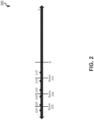
- the score obfuscation causes the output score to be changed to a new value.
- For the first output score 210 (which corresponds to the obfuscated score), there can be multiple other scores 210', 210", etc. which, when obfuscated, all result in the same output score 210.
- the score obfuscation operation 170 can use, as an example, a function to associate various scores 160 output by the model 150 with a particular output score (e.g., scores 210, 220, 230).
- the function can be a rounding function.
- more complex functions can be utilized including, for example, a step function utilizing position-dependent noise. With the step function algorithm below, the "position" of the original score in the overall range of scores determines where the final score will end up. This change from original score to final score is the noise, and that noise is determined entirely by the position of the original score.
- a noise map can be used so that the input score is rounded, or binned, and then the rounded/binned value checked in the noise map, and the associated value is returned as the obfuscated score.
- features of the input vector can be used as additional inputs to the mapping function, such that depending on the values both of the original score, and one or more features from the vector, different obfuscated scores would be the result.
- step functions The goal of the utilized step functions is that small changes to the input to the model, which would normally yield small score changes, by an adversary (i.e., malicious actor) result in no apparent score change.
- Another such step function can use some aspect of the original score to determine the magnitude and direction of the noise to be added to that score.
- a trigonometric function such as a simple sine or cosine function can be used. After the original score is calculated, this trigonometric function can be calculated on that score, and the result would be added to true score to produce the final, obfuscated score.
- the absolute size of the noise can be limited by a coefficient to ensure that the overall distribution of noises fell within a certain desirable range. Additionally, for scores near the boundary between one classification and another, care can be taken such that this noise would not cause the score to flip over the boundary. To avoid these kinds of flips, a noise attenuation function can be used such that when the true score approaches such a classification boundary, the scale of the noise added to the true score would be reduced such that it was always less than that which would cause a score flip.
- Example trigonometric functions are provided below. It will be appreciated that other complex trigonometric functions and/or other types of cyclical functions can be utilized with the current subject matter.
- F(score) score + (A * sin(B* score)); where A and B are parameters chosen by the implementer. A effects the magnitude of the added noise, and B effects how quickly the noise function changes between similar input scores.
- F(score, nearest_score_boundary) score + min(A * sin(B*score), abs(score-nearest_score_boundary- C)); where A and B are as above, and nearest_score_boundary is the closest score to the input score that represents the boundary between two classifications. In the case were positive score values are interpreted as one class, and negative score values are interpreted as another, then the score boundary would be zero.
- C is a third parameter chosen by the implementer, which can further limit the score obfuscation from producing values very near a boundary. This function ensures that the obfuscate score never crosses a score boundary
- F(score) score + logistic_fn(abs(score), theta) * A*sin(B*score)); where A and B are as above, logistic_fn is a parameterized logistic function, and theta are the parameters to the logistic function.
- the logistic function produces a value between 0 and 1, such that when the input score is close to zero, the value of the logistic function is also approaches zero.
- the parameters, theta can be chosen such that the logistic function only attenuates the noise within a certain range of zero, as desired by the implementer.
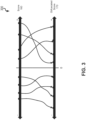
- FIG. 3 is a diagram 300 illustrating the output of a more complex function in which the scores 160 (before obfuscation) are altered (as shown on the obfuscated scores 170 line) in an apparently random manner.
- the range of scores which represent a particular classification for example, all positive scores, or all negative scores, etc.
- the score 160 is obfuscated 170, this map would be used to convert the true score to the obfuscated score.
- This mapping could be retained for a period of time so that repeated queries to the model would yield the same obfuscated score.
- Another example of such a function might use information from the reduced feature vector 140 in the mapping from the true scores to the obfuscated scores.
- the ultimate classification of the obfuscated scores 170 are maintained. Stated differently, a positive score (indicating that the model output is good) is maintained after the obfuscation and similarly, a negative score is maintained after the obfuscation.
- y x 17 + x sin floor 11 ⁇ x 2 ⁇ cos ceil 13 ⁇ x 2
- y the obfuscated score 170
- x the original score 160.
- This obfuscation equation can result in scores as illustrated in diagram 400 of FIG. 4 in which line 410 represents the original scores 160 and the other values 420 correspond to the obfuscated scores 170.
- FIG. 5 is a process flow diagram in which, at 510, an artefact is received. Thereafter, at 520, features are extracted from the artefact so that a vector can be populated with such features. Next, at 530, the vector is input into a classification model to generate a score. This score is modified, at 540, using a step function to obfuscate its actual value. Therefore, the modified score is provided, at 550, to a consuming application or process. For example, the consuming application or process can use such score to make a determination of whether or not to access, execute, or continue to execute the artefact (i.e., it can be used to prevent malware from infiltrating a computing and/or software system, etc.).
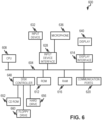
- FIG. 6 is a diagram 600 illustrating a sample computing device architecture for implementing various aspects described herein.
- a bus 604 can serve as the information highway interconnecting the other illustrated components of the hardware.
- a processing system 608 labeled CPU (central processing unit) e.g., one or more computer processors / data processors at a given computer or at multiple computers / processor cores, etc.
- CPU central processing unit
- a non-transitory processor-readable storage medium such as read only memory (ROM) 612 and random access memory (RAM) 616, can be in communication with the processing system 608 and can include one or more programming instructions for the operations specified here.
- program instructions can be stored on a non-transitory computer-readable storage medium such as a magnetic disk, optical disk, recordable memory device, flash memory, or other physical storage medium.
- a disk controller 648 can interface with one or more optional disk drives to the system bus 604.
- These disk drives can be external or internal floppy disk drives such as 660, external or internal CD-ROM, CD-R, CD-RW or DVD, or solid state drives such as 652, or external or internal hard drives 656.
- these various disk drives 652, 656, 660 and disk controllers are optional devices.
- the system bus 604 can also include at least one communication port 620 to allow for communication with external devices either physically connected to the computing system or available externally through a wired or wireless network.
- the at least one communication port 620 includes or otherwise comprises a network interface.
- a computing device having a display device 640 (e.g., a CRT (cathode ray tube) or LCD (liquid crystal display) monitor) for displaying information obtained from the bus 604 via a display interface 614 to the user and an input device 632 such as keyboard and/or a pointing device (e.g., a mouse or a trackball) and/or a touchscreen by which the user can provide input to the computer.
- a display device 640 e.g., a CRT (cathode ray tube) or LCD (liquid crystal display) monitor
- an input device 632 such as keyboard and/or a pointing device (e.g., a mouse or a trackball) and/or a touchscreen by which the user can provide input to the computer.
- input devices 632 can be used to provide for interaction with a user as well; for example, feedback provided to the user can be any form of sensory feedback (e.g., visual feedback, auditory feedback by way of a microphone 636, or tactile feedback); and input from the user can be received in any form, including acoustic, speech, or tactile input.
- the input device 632 and the microphone 636 can be coupled to and convey information via the bus 604 by way of an input device interface 628.
- Other computing devices such as dedicated servers, can omit one or more of the display 640 and display interface 614, the input device 632, the microphone 636, and input device interface 628.
- One or more aspects or features of the subject matter described herein can be realized in digital electronic circuitry, integrated circuitry, specially designed application specific integrated circuits (ASICs), field programmable gate arrays (FPGAs) computer hardware, firmware, software, and/or combinations thereof.
- ASICs application specific integrated circuits
- FPGAs field programmable gate arrays
- These various aspects or features can include implementation in one or more computer programs that are executable and/or interpretable on a programmable system including at least one programmable processor, which can be special or general purpose, coupled to receive data and instructions from, and to transmit data and instructions to, a storage system, at least one input device, and at least one output device.
- the programmable system or computing system may include clients and servers.
- a client and server are generally remote from each other and typically interact through a communication network. The relationship of client and server arises by virtue of computer programs running on the respective computers and having a client-server relationship to each other.
- machine-readable signal refers to any signal used to provide machine instructions and/or data to a programmable processor.
- the machine-readable medium can store such machine instructions non-transitorily, such as for example as would a non-transient solid-state memory or a magnetic hard drive or any equivalent storage medium.
- the machine-readable medium can alternatively or additionally store such machine instructions in a transient manner, such as for example as would a processor cache or other random access memory associated with one or more physical processor cores.
- the subject matter described herein may be implemented on a computer having a display device (e.g., a CRT (cathode ray tube) or LCD (liquid crystal display) monitor) for displaying information to the user and a keyboard and a pointing device (e.g., a mouse or a trackball) and/or a touch screen by which the user may provide input to the computer.
- a display device e.g., a CRT (cathode ray tube) or LCD (liquid crystal display) monitor
- a keyboard and a pointing device e.g., a mouse or a trackball
- Other kinds of devices may be used to provide for interaction with a user as well; for example, feedback provided to the user may be any form of sensory feedback (e.g., visual feedback, auditory feedback, or tactile feedback); and input from the user may be received in any form, including acoustic, speech, or tactile input.
- phrases such as "at least one of” or “one or more of” may occur followed by a conjunctive list of elements or features.
- the term “and/or” may also occur in a list of two or more elements or features. Unless otherwise implicitly or explicitly contradicted by the context in which it is used, such a phrase is intended to mean any of the listed elements or features individually or any of the recited elements or features in combination with any of the other recited elements or features.
- the phrases “at least one of A and B;” “one or more of A and B;” and “A and/or B” are each intended to mean "A alone, B alone, or A and B together.”
- a similar interpretation is also intended for lists including three or more items.
- phrases “at least one of A, B, and C;” “one or more of A, B, and C;” and “A, B, and/or C” are each intended to mean “A alone, B alone, C alone, A and B together, A and C together, B and C together, or A and B and C together.”
- use of the term “based on,” above and in the claims is intended to mean, “based at least in part on,” such that an unrecited feature or element is also permissible.
Landscapes
- Engineering & Computer Science (AREA)
- Theoretical Computer Science (AREA)
- Physics & Mathematics (AREA)
- Software Systems (AREA)
- General Engineering & Computer Science (AREA)
- General Physics & Mathematics (AREA)
- Computing Systems (AREA)
- Data Mining & Analysis (AREA)
- Artificial Intelligence (AREA)
- Evolutionary Computation (AREA)
- Mathematical Physics (AREA)
- Computer Security & Cryptography (AREA)
- Computational Linguistics (AREA)
- General Health & Medical Sciences (AREA)
- Health & Medical Sciences (AREA)
- Biomedical Technology (AREA)
- Molecular Biology (AREA)
- Life Sciences & Earth Sciences (AREA)
- Biophysics (AREA)
- Computer Hardware Design (AREA)
- Computer Vision & Pattern Recognition (AREA)
- Medical Informatics (AREA)
- Algebra (AREA)
- Pure & Applied Mathematics (AREA)
- Mathematical Optimization (AREA)
- Mathematical Analysis (AREA)
- Computational Mathematics (AREA)
- Probability & Statistics with Applications (AREA)
- Computer Networks & Wireless Communication (AREA)
- Signal Processing (AREA)
- Virology (AREA)
- Information Retrieval, Db Structures And Fs Structures Therefor (AREA)
- Image Processing (AREA)
- Image Analysis (AREA)
Claims (15)
- Ein rechnerimplementiertes Verfahren (500), das Folgendes beinhaltet:Empfangen (510) eines Artefakts;Extrahieren (520) von Merkmalen aus dem Artefakt und Befüllen eines Vektors;Eingeben (530) des Vektors in ein Klassifizierungsmodell, um ein Auswertungsergebnis (160) zu generieren;Modifizieren (540) des Auswertungsergebnisses unter Verwendung einer Treppenfunktion, um dem Auswertungsergebnis Rauschen hinzuzufügen, um seinen tatsächlichen Wert zu verschleiern, sodass sich eine Klassifizierung des modifizierten Auswertungsergebnisses (170) nicht von einer Klassifizierung des durch das Klassifizierungsmodell generierten Auswertungsergebnisses (160) unterscheidet, wobei die Klassifizierung eines von einem Zahlenwert, einer Klassifizierungsart oder-gruppe oder einer anderen alphanumerischen Eingabe ist; undBereitstellen (550) des modifizierten Auswertungsergebnisses (170) für eine verbrauchende Anwendung oder einen verbrauchenden Prozess.
- Verfahren gemäß Anspruch 1, das ferner das Reduzieren von Merkmalen in dem Vektor vor dem Eingeben in das Klassifizierungsmodell beinhaltet.
- Verfahren gemäß Anspruch 2, wobei die Merkmale unter Verwendung von Zufallsprojektionsmatrizen reduziert werden.
- Verfahren gemäß Anspruch 2, wobei die Merkmale unter Verwendung von Hauptkomponentenanalyse reduziert werden.
- Verfahren gemäß einem der vorhergehenden Ansprüche, wobei das Klassifizierungsmodell ein Maschinenlernmodell ist, das unter Verwendung eines Trainingsdatensatzes trainiert wurde und eine Ausgabe mit kontinuierlicher Skala bereitstellt.
- Verfahren gemäß einem der vorhergehenden Ansprüche, wobei das Klassifizierungsmodell das Artefakt als schädlich oder gutartig zum Darauf-Zugreifen, Ausführen oder fortgesetzten Ausführen charakterisiert.
- Verfahren gemäß Anspruch 6, das ferner Folgendes beinhaltet: Verhindern des Zugriffs auf oder der Ausführung des Artefakts, wenn das Klassifizierungsmodell das Artefakt als schädlich charakterisiert.
- Verfahren gemäß einem der vorhergehenden Ansprüche, wobei das Klassifizierungsmodell eines oder mehrere von Folgendem beinhaltet: ein logistisches Regressionsmodell, ein neuronales Netzwerk, ein Concurrent Neural Network, ein rekurrentes neuronales Netzwerk, ein Generative Adversarial Network, eine Support Vector Machine, einen Zufallswald oder ein Bayessches Modell.
- Verfahren gemäß einem der vorhergehenden Ansprüche, wobei die Treppenfunktion positionsabhängiges Rauschen auf das Auswertungsergebnis anwendet.
- Verfahren gemäß Anspruch 1, wobei:
das Klassifizierungsmodell ein Maschinenlernmodell ist, das trainiert ist, um eine Wahrscheinlichkeit, dass das Artefakt schädlich ist, zu charakterisieren. - Verfahren gemäß Anspruch 10, das ferner Folgendes beinhaltet:
Verhindern des Zugriffs auf oder der Ausführung des Artefakts, wenn das Klassifizierungsmodell das Artefakt als schädlich charakterisiert. - Verfahren gemäß Anspruch 1, das ferner Folgendes beinhaltet: Bereitstellen der Treppenfunktion für den verbrauchenden Prozess oder die verbrauchende Anwendung.
- Verfahren gemäß Anspruch 12, das ferner Folgendes beinhaltet: Rückentwickeln des generierten Auswertungsergebnisses unter Verwendung des modifizierten Werts und der bereitgestellten Treppenfunktion.
- Ein System, das Folgendes beinhaltet:mindestens einen Datenprozessor; undeinen Speicher, der Anweisungen speichert, die bei Ausführung durch den mindestens einen Datenprozessor bewirken, dass der mindestens eine Datenprozessor das Verfahren gemäß einem der vorhergehenden Ansprüche durchführt.
- Ein nicht transitorisches Rechnerprogrammprodukt, das Anweisungen speichert, die bei Ausführung durch einen oder mehrere Datenprozessoren, die in mindestens einer Rechenvorrichtung beinhaltet sind, bewirken, dass mindestens ein Datenprozessor das Verfahren gemäß einem der Ansprüche 1 bis 13 durchführt.
Applications Claiming Priority (6)
| Application Number | Priority Date | Filing Date | Title |
|---|---|---|---|
| US16/399,665 US11586975B2 (en) | 2019-04-30 | 2019-04-30 | Machine learning model score obfuscation using multiple classifiers |
| US16/399,718 US11580442B2 (en) | 2019-04-30 | 2019-04-30 | Machine learning model score obfuscation using time-based score oscillations |
| US16/399,735 US11562290B2 (en) | 2019-04-30 | 2019-04-30 | Machine learning model score obfuscation using coordinated interleaving |
| US16/399,677 US10963752B2 (en) | 2019-04-30 | 2019-04-30 | Machine learning model score obfuscation using step function, position-dependent noise |
| US16/399,701 US10997471B2 (en) | 2019-04-30 | 2019-04-30 | Machine learning model score obfuscation using vector modification techniques |
| PCT/US2020/030247 WO2020223222A1 (en) | 2019-04-30 | 2020-04-28 | Machine learning model score obfuscation using step-function, position-dependent noise |
Publications (3)
| Publication Number | Publication Date |
|---|---|
| EP3963489A1 EP3963489A1 (de) | 2022-03-09 |
| EP3963489B1 true EP3963489B1 (de) | 2024-10-02 |
| EP3963489B8 EP3963489B8 (de) | 2024-11-06 |
Family
ID=70775504
Family Applications (1)
| Application Number | Title | Priority Date | Filing Date |
|---|---|---|---|
| EP20727021.6A Active EP3963489B8 (de) | 2019-04-30 | 2020-04-28 | Maschinenlernmodellwertverschleierung unter verwendung von schrittfunktionalem positionsabhängigem rauschen |
Country Status (3)
| Country | Link |
|---|---|
| EP (1) | EP3963489B8 (de) |
| CN (1) | CN114127722B (de) |
| WO (1) | WO2020223222A1 (de) |
Family Cites Families (8)
| Publication number | Priority date | Publication date | Assignee | Title |
|---|---|---|---|---|
| US8955133B2 (en) * | 2011-06-09 | 2015-02-10 | Microsoft Corporation | Applying antimalware logic without revealing the antimalware logic to adversaries |
| US9306962B1 (en) * | 2013-07-25 | 2016-04-05 | Niddel Corp | Systems and methods for classifying malicious network events |
| US10803381B2 (en) * | 2014-09-09 | 2020-10-13 | Intel Corporation | Fixed point integer implementations for neural networks |
| US10972482B2 (en) * | 2016-07-05 | 2021-04-06 | Webroot Inc. | Automatic inline detection based on static data |
| US11100506B2 (en) * | 2017-05-09 | 2021-08-24 | Fair Isaac Corporation | Fraud score manipulation in self-defense of adversarial artificial intelligence learning |
| CN107734588A (zh) * | 2017-09-18 | 2018-02-23 | 哈尔滨工程大学 | 一种基于网络编码安全高效的协作中继选择方法 |
| US20190108442A1 (en) * | 2017-10-02 | 2019-04-11 | Htc Corporation | Machine learning system, machine learning method and non-transitory computer readable medium for operating the same |
| CN108601026B (zh) * | 2018-04-02 | 2020-04-10 | 浙江大学 | 基于随机抽样一致性的感知数据错误化攻击检测方法 |
-
2020
- 2020-04-28 WO PCT/US2020/030247 patent/WO2020223222A1/en not_active Ceased
- 2020-04-28 EP EP20727021.6A patent/EP3963489B8/de active Active
- 2020-04-28 CN CN202080032240.3A patent/CN114127722B/zh active Active
Also Published As
| Publication number | Publication date |
|---|---|
| EP3963489A1 (de) | 2022-03-09 |
| WO2020223222A1 (en) | 2020-11-05 |
| EP3963489B8 (de) | 2024-11-06 |
| CN114127722B (zh) | 2025-09-23 |
| CN114127722A (zh) | 2022-03-01 |
Similar Documents
| Publication | Publication Date | Title |
|---|---|---|
| US20230206131A1 (en) | Clustering analysis for deduplication of training set samples for machine learning based computer threat analysis | |
| US11604871B2 (en) | Projected vector modification as mitigation for machine learning model string stuffing | |
| US11188646B2 (en) | Training a machine learning model for container file analysis | |
| EP3916597A1 (de) | Erkennung von malware mit tiefen generativen modellen | |
| US12475695B2 (en) | Deepfake detection models utilizing subject-specific libraries | |
| US20190236490A1 (en) | Methods and apparatus for identifying an impact of a portion of a file on machine learning classification of malicious content | |
| EP3620947A1 (de) | Dynamische absichtsklassifizierung auf basis von umgebungsvariablen | |
| US20220335315A1 (en) | Application of local interpretable model-agnostic explanations on decision systems without training data | |
| US11580442B2 (en) | Machine learning model score obfuscation using time-based score oscillations | |
| US11113579B2 (en) | Machine learning model score obfuscation using step function, position-dependent noise | |
| US12400305B2 (en) | Detecting representative bias within image data sets | |
| EP3963489B1 (de) | Maschinenlernmodellwertverschleierung unter verwendung von schrittfunktionalem positionsabhängigem rauschen | |
| US11586975B2 (en) | Machine learning model score obfuscation using multiple classifiers | |
| US11386308B2 (en) | Artefact classification using xenospace centroids | |
| EP3869423B1 (de) | Projizierte vektorüberlaufstrafe als abschwächung für maschinenlernmodell-string-füllung | |
| US11562290B2 (en) | Machine learning model score obfuscation using coordinated interleaving | |
| HK40070535B (en) | Machine learning model score obfuscation using step-function, position-dependent noise | |
| HK40070535A (en) | Machine learning model score obfuscation using step-function, position-dependent noise | |
| US10997471B2 (en) | Machine learning model score obfuscation using vector modification techniques | |
| HK40061929A (en) | Projected vector modification as mitigation for machine learning model string stuffing | |
| HK40059785A (en) | Projected vector overflow penalty as mitigation for machine learning model string stuffing | |
| HK40064111B (en) | Detecting malware with deep generative models | |
| HK40064111A (en) | Detecting malware with deep generative models |
Legal Events
| Date | Code | Title | Description |
|---|---|---|---|
| STAA | Information on the status of an ep patent application or granted ep patent |
Free format text: STATUS: UNKNOWN |
|
| STAA | Information on the status of an ep patent application or granted ep patent |
Free format text: STATUS: THE INTERNATIONAL PUBLICATION HAS BEEN MADE |
|
| PUAI | Public reference made under article 153(3) epc to a published international application that has entered the european phase |
Free format text: ORIGINAL CODE: 0009012 |
|
| STAA | Information on the status of an ep patent application or granted ep patent |
Free format text: STATUS: REQUEST FOR EXAMINATION WAS MADE |
|
| 17P | Request for examination filed |
Effective date: 20211021 |
|
| AK | Designated contracting states |
Kind code of ref document: A1 Designated state(s): AL AT BE BG CH CY CZ DE DK EE ES FI FR GB GR HR HU IE IS IT LI LT LU LV MC MK MT NL NO PL PT RO RS SE SI SK SM TR |
|
| DAV | Request for validation of the european patent (deleted) | ||
| DAX | Request for extension of the european patent (deleted) | ||
| RAP3 | Party data changed (applicant data changed or rights of an application transferred) |
Owner name: CYLANCE INC. |
|
| REG | Reference to a national code |
Ref country code: HK Ref legal event code: DE Ref document number: 40070535 Country of ref document: HK |
|
| STAA | Information on the status of an ep patent application or granted ep patent |
Free format text: STATUS: EXAMINATION IS IN PROGRESS |
|
| 17Q | First examination report despatched |
Effective date: 20230519 |
|
| P01 | Opt-out of the competence of the unified patent court (upc) registered |
Effective date: 20230518 |
|
| GRAP | Despatch of communication of intention to grant a patent |
Free format text: ORIGINAL CODE: EPIDOSNIGR1 |
|
| STAA | Information on the status of an ep patent application or granted ep patent |
Free format text: STATUS: GRANT OF PATENT IS INTENDED |
|
| RIC1 | Information provided on ipc code assigned before grant |
Ipc: G06N 20/20 20190101ALI20240416BHEP Ipc: G06N 7/01 20230101ALI20240416BHEP Ipc: G06N 20/10 20190101ALI20240416BHEP Ipc: G06N 5/01 20230101ALI20240416BHEP Ipc: G06N 3/088 20230101ALI20240416BHEP Ipc: G06N 3/049 20230101ALI20240416BHEP Ipc: G06N 3/045 20230101ALI20240416BHEP Ipc: G06N 3/044 20230101ALI20240416BHEP Ipc: H04L 9/40 20220101ALI20240416BHEP Ipc: G06F 21/56 20130101AFI20240416BHEP |
|
| INTG | Intention to grant announced |
Effective date: 20240508 |
|
| GRAS | Grant fee paid |
Free format text: ORIGINAL CODE: EPIDOSNIGR3 |
|
| GRAA | (expected) grant |
Free format text: ORIGINAL CODE: 0009210 |
|
| STAA | Information on the status of an ep patent application or granted ep patent |
Free format text: STATUS: THE PATENT HAS BEEN GRANTED |
|
| AK | Designated contracting states |
Kind code of ref document: B1 Designated state(s): AL AT BE BG CH CY CZ DE DK EE ES FI FR GB GR HR HU IE IS IT LI LT LU LV MC MK MT NL NO PL PT RO RS SE SI SK SM TR |
|
| REG | Reference to a national code |
Ref country code: DE Ref legal event code: R081 Ref document number: 602020038675 Country of ref document: DE Owner name: CYLANCE INC., IRVING, US Free format text: FORMER OWNER: CYLANCE INC., SAN RAMON, CA, US Ref country code: GB Ref legal event code: FG4D Ref country code: DE Ref legal event code: R081 Ref document number: 602020038675 Country of ref document: DE Owner name: CYLANCE INC., PLANO, US Free format text: FORMER OWNER: CYLANCE INC., SAN RAMON, CA, US |
|
| REG | Reference to a national code |
Ref country code: CH Ref legal event code: PK Free format text: BERICHTIGUNG B8 Ref country code: CH Ref legal event code: EP |
|
| RAP4 | Party data changed (patent owner data changed or rights of a patent transferred) |
Owner name: CYLANCE INC. |
|
| REG | Reference to a national code |
Ref country code: IE Ref legal event code: FG4D |
|
| REG | Reference to a national code |
Ref country code: DE Ref legal event code: R096 Ref document number: 602020038675 Country of ref document: DE |
|
| REG | Reference to a national code |
Ref country code: LT Ref legal event code: MG9D |
|
| REG | Reference to a national code |
Ref country code: NL Ref legal event code: MP Effective date: 20241002 |
|
| REG | Reference to a national code |
Ref country code: AT Ref legal event code: MK05 Ref document number: 1728997 Country of ref document: AT Kind code of ref document: T Effective date: 20241002 |
|
| PG25 | Lapsed in a contracting state [announced via postgrant information from national office to epo] |
Ref country code: NL Free format text: LAPSE BECAUSE OF FAILURE TO SUBMIT A TRANSLATION OF THE DESCRIPTION OR TO PAY THE FEE WITHIN THE PRESCRIBED TIME-LIMIT Effective date: 20241002 |
|
| PG25 | Lapsed in a contracting state [announced via postgrant information from national office to epo] |
Ref country code: NL Free format text: LAPSE BECAUSE OF FAILURE TO SUBMIT A TRANSLATION OF THE DESCRIPTION OR TO PAY THE FEE WITHIN THE PRESCRIBED TIME-LIMIT Effective date: 20241002 |
|
| PG25 | Lapsed in a contracting state [announced via postgrant information from national office to epo] |
Ref country code: IS Free format text: LAPSE BECAUSE OF FAILURE TO SUBMIT A TRANSLATION OF THE DESCRIPTION OR TO PAY THE FEE WITHIN THE PRESCRIBED TIME-LIMIT Effective date: 20250202 Ref country code: PT Free format text: LAPSE BECAUSE OF FAILURE TO SUBMIT A TRANSLATION OF THE DESCRIPTION OR TO PAY THE FEE WITHIN THE PRESCRIBED TIME-LIMIT Effective date: 20250203 Ref country code: HR Free format text: LAPSE BECAUSE OF FAILURE TO SUBMIT A TRANSLATION OF THE DESCRIPTION OR TO PAY THE FEE WITHIN THE PRESCRIBED TIME-LIMIT Effective date: 20241002 |
|
| PG25 | Lapsed in a contracting state [announced via postgrant information from national office to epo] |
Ref country code: FI Free format text: LAPSE BECAUSE OF FAILURE TO SUBMIT A TRANSLATION OF THE DESCRIPTION OR TO PAY THE FEE WITHIN THE PRESCRIBED TIME-LIMIT Effective date: 20241002 |
|
| PG25 | Lapsed in a contracting state [announced via postgrant information from national office to epo] |
Ref country code: BG Free format text: LAPSE BECAUSE OF FAILURE TO SUBMIT A TRANSLATION OF THE DESCRIPTION OR TO PAY THE FEE WITHIN THE PRESCRIBED TIME-LIMIT Effective date: 20241002 |
|
| PG25 | Lapsed in a contracting state [announced via postgrant information from national office to epo] |
Ref country code: ES Free format text: LAPSE BECAUSE OF FAILURE TO SUBMIT A TRANSLATION OF THE DESCRIPTION OR TO PAY THE FEE WITHIN THE PRESCRIBED TIME-LIMIT Effective date: 20241002 |
|
| PG25 | Lapsed in a contracting state [announced via postgrant information from national office to epo] |
Ref country code: NO Free format text: LAPSE BECAUSE OF FAILURE TO SUBMIT A TRANSLATION OF THE DESCRIPTION OR TO PAY THE FEE WITHIN THE PRESCRIBED TIME-LIMIT Effective date: 20250102 |
|
| PG25 | Lapsed in a contracting state [announced via postgrant information from national office to epo] |
Ref country code: GR Free format text: LAPSE BECAUSE OF FAILURE TO SUBMIT A TRANSLATION OF THE DESCRIPTION OR TO PAY THE FEE WITHIN THE PRESCRIBED TIME-LIMIT Effective date: 20250103 Ref country code: LV Free format text: LAPSE BECAUSE OF FAILURE TO SUBMIT A TRANSLATION OF THE DESCRIPTION OR TO PAY THE FEE WITHIN THE PRESCRIBED TIME-LIMIT Effective date: 20241002 Ref country code: AT Free format text: LAPSE BECAUSE OF FAILURE TO SUBMIT A TRANSLATION OF THE DESCRIPTION OR TO PAY THE FEE WITHIN THE PRESCRIBED TIME-LIMIT Effective date: 20241002 |
|
| PG25 | Lapsed in a contracting state [announced via postgrant information from national office to epo] |
Ref country code: PL Free format text: LAPSE BECAUSE OF FAILURE TO SUBMIT A TRANSLATION OF THE DESCRIPTION OR TO PAY THE FEE WITHIN THE PRESCRIBED TIME-LIMIT Effective date: 20241002 Ref country code: CZ Free format text: LAPSE BECAUSE OF FAILURE TO SUBMIT A TRANSLATION OF THE DESCRIPTION OR TO PAY THE FEE WITHIN THE PRESCRIBED TIME-LIMIT Effective date: 20241002 |
|
| PG25 | Lapsed in a contracting state [announced via postgrant information from national office to epo] |
Ref country code: RS Free format text: LAPSE BECAUSE OF FAILURE TO SUBMIT A TRANSLATION OF THE DESCRIPTION OR TO PAY THE FEE WITHIN THE PRESCRIBED TIME-LIMIT Effective date: 20250102 |
|
| PG25 | Lapsed in a contracting state [announced via postgrant information from national office to epo] |
Ref country code: SM Free format text: LAPSE BECAUSE OF FAILURE TO SUBMIT A TRANSLATION OF THE DESCRIPTION OR TO PAY THE FEE WITHIN THE PRESCRIBED TIME-LIMIT Effective date: 20241002 |
|
| REG | Reference to a national code |
Ref country code: DE Ref legal event code: R097 Ref document number: 602020038675 Country of ref document: DE |
|
| PGFP | Annual fee paid to national office [announced via postgrant information from national office to epo] |
Ref country code: DE Payment date: 20250417 Year of fee payment: 6 |
|
| PG25 | Lapsed in a contracting state [announced via postgrant information from national office to epo] |
Ref country code: DK Free format text: LAPSE BECAUSE OF FAILURE TO SUBMIT A TRANSLATION OF THE DESCRIPTION OR TO PAY THE FEE WITHIN THE PRESCRIBED TIME-LIMIT Effective date: 20241002 |
|
| PGFP | Annual fee paid to national office [announced via postgrant information from national office to epo] |
Ref country code: FR Payment date: 20250424 Year of fee payment: 6 |
|
| PG25 | Lapsed in a contracting state [announced via postgrant information from national office to epo] |
Ref country code: RO Free format text: LAPSE BECAUSE OF FAILURE TO SUBMIT A TRANSLATION OF THE DESCRIPTION OR TO PAY THE FEE WITHIN THE PRESCRIBED TIME-LIMIT Effective date: 20241002 |
|
| PG25 | Lapsed in a contracting state [announced via postgrant information from national office to epo] |
Ref country code: SK Free format text: LAPSE BECAUSE OF FAILURE TO SUBMIT A TRANSLATION OF THE DESCRIPTION OR TO PAY THE FEE WITHIN THE PRESCRIBED TIME-LIMIT Effective date: 20241002 |
|
| PG25 | Lapsed in a contracting state [announced via postgrant information from national office to epo] |
Ref country code: IT Free format text: LAPSE BECAUSE OF FAILURE TO SUBMIT A TRANSLATION OF THE DESCRIPTION OR TO PAY THE FEE WITHIN THE PRESCRIBED TIME-LIMIT Effective date: 20241002 |
|
| PLBE | No opposition filed within time limit |
Free format text: ORIGINAL CODE: 0009261 |
|
| STAA | Information on the status of an ep patent application or granted ep patent |
Free format text: STATUS: NO OPPOSITION FILED WITHIN TIME LIMIT |
|
| REG | Reference to a national code |
Ref country code: DE Ref legal event code: R081 Ref document number: 602020038675 Country of ref document: DE Owner name: CYLANCE INC., PLANO, US Free format text: FORMER OWNER: CYLANCE INC., IRVING, TX, US |
|
| PG25 | Lapsed in a contracting state [announced via postgrant information from national office to epo] |
Ref country code: SE Free format text: LAPSE BECAUSE OF FAILURE TO SUBMIT A TRANSLATION OF THE DESCRIPTION OR TO PAY THE FEE WITHIN THE PRESCRIBED TIME-LIMIT Effective date: 20241002 |
|
| 26N | No opposition filed |
Effective date: 20250703 |
|
| REG | Reference to a national code |
Ref country code: CH Ref legal event code: H13 Free format text: ST27 STATUS EVENT CODE: U-0-0-H10-H13 (AS PROVIDED BY THE NATIONAL OFFICE) Effective date: 20251125 |
|
| PG25 | Lapsed in a contracting state [announced via postgrant information from national office to epo] |
Ref country code: LU Free format text: LAPSE BECAUSE OF NON-PAYMENT OF DUE FEES Effective date: 20250428 |
|
| PG25 | Lapsed in a contracting state [announced via postgrant information from national office to epo] |
Ref country code: MC Free format text: LAPSE BECAUSE OF FAILURE TO SUBMIT A TRANSLATION OF THE DESCRIPTION OR TO PAY THE FEE WITHIN THE PRESCRIBED TIME-LIMIT Effective date: 20241002 |
|
| REG | Reference to a national code |
Ref country code: BE Ref legal event code: MM Effective date: 20250430 |
|
| PG25 | Lapsed in a contracting state [announced via postgrant information from national office to epo] |
Ref country code: BE Free format text: LAPSE BECAUSE OF NON-PAYMENT OF DUE FEES Effective date: 20250430 |
|
| PG25 | Lapsed in a contracting state [announced via postgrant information from national office to epo] |
Ref country code: CH Free format text: LAPSE BECAUSE OF NON-PAYMENT OF DUE FEES Effective date: 20250430 |
|
| PGFP | Annual fee paid to national office [announced via postgrant information from national office to epo] |
Ref country code: GB Payment date: 20260324 Year of fee payment: 7 |
|
| PG25 | Lapsed in a contracting state [announced via postgrant information from national office to epo] |
Ref country code: IE Free format text: LAPSE BECAUSE OF NON-PAYMENT OF DUE FEES Effective date: 20250428 |