EP3963478B1 - Verfahren und systeme zum entfalten und verwalten einer skalierbaren mehrdienst-assistentenplattform - Google Patents
Verfahren und systeme zum entfalten und verwalten einer skalierbaren mehrdienst-assistentenplattform Download PDFInfo
- Publication number
- EP3963478B1 EP3963478B1 EP20827373.0A EP20827373A EP3963478B1 EP 3963478 B1 EP3963478 B1 EP 3963478B1 EP 20827373 A EP20827373 A EP 20827373A EP 3963478 B1 EP3963478 B1 EP 3963478B1
- Authority
- EP
- European Patent Office
- Prior art keywords
- agents
- information
- agent
- action
- info
- Prior art date
- Legal status (The legal status is an assumption and is not a legal conclusion. Google has not performed a legal analysis and makes no representation as to the accuracy of the status listed.)
- Active
Links
Images










Classifications
-
- G—PHYSICS
- G10—MUSICAL INSTRUMENTS; ACOUSTICS
- G10L—SPEECH ANALYSIS TECHNIQUES OR SPEECH SYNTHESIS; SPEECH RECOGNITION; SPEECH OR VOICE PROCESSING TECHNIQUES; SPEECH OR AUDIO CODING OR DECODING
- G10L15/00—Speech recognition
- G10L15/08—Speech classification or search
- G10L15/18—Speech classification or search using natural language modelling
- G10L15/1822—Parsing for meaning understanding
-
- G—PHYSICS
- G06—COMPUTING OR CALCULATING; COUNTING
- G06F—ELECTRIC DIGITAL DATA PROCESSING
- G06F16/00—Information retrieval; Database structures therefor; File system structures therefor
- G06F16/30—Information retrieval; Database structures therefor; File system structures therefor of unstructured textual data
- G06F16/33—Querying
- G06F16/332—Query formulation
- G06F16/3329—Natural language query formulation
-
- G—PHYSICS
- G06—COMPUTING OR CALCULATING; COUNTING
- G06F—ELECTRIC DIGITAL DATA PROCESSING
- G06F16/00—Information retrieval; Database structures therefor; File system structures therefor
- G06F16/30—Information retrieval; Database structures therefor; File system structures therefor of unstructured textual data
- G06F16/35—Clustering; Classification
-
- G—PHYSICS
- G06—COMPUTING OR CALCULATING; COUNTING
- G06F—ELECTRIC DIGITAL DATA PROCESSING
- G06F16/00—Information retrieval; Database structures therefor; File system structures therefor
- G06F16/30—Information retrieval; Database structures therefor; File system structures therefor of unstructured textual data
- G06F16/36—Creation of semantic tools, e.g. ontology or thesauri
- G06F16/367—Ontology
-
- G—PHYSICS
- G06—COMPUTING OR CALCULATING; COUNTING
- G06F—ELECTRIC DIGITAL DATA PROCESSING
- G06F16/00—Information retrieval; Database structures therefor; File system structures therefor
- G06F16/90—Details of database functions independent of the retrieved data types
- G06F16/903—Querying
- G06F16/9032—Query formulation
- G06F16/90332—Natural language query formulation or dialogue systems
-
- G—PHYSICS
- G06—COMPUTING OR CALCULATING; COUNTING
- G06F—ELECTRIC DIGITAL DATA PROCESSING
- G06F40/00—Handling natural language data
- G06F40/20—Natural language analysis
- G06F40/205—Parsing
-
- G—PHYSICS
- G06—COMPUTING OR CALCULATING; COUNTING
- G06F—ELECTRIC DIGITAL DATA PROCESSING
- G06F40/00—Handling natural language data
- G06F40/30—Semantic analysis
- G06F40/35—Discourse or dialogue representation
-
- G—PHYSICS
- G06—COMPUTING OR CALCULATING; COUNTING
- G06F—ELECTRIC DIGITAL DATA PROCESSING
- G06F40/00—Handling natural language data
- G06F40/40—Processing or translation of natural language
- G06F40/55—Rule-based translation
- G06F40/56—Natural language generation
-
- G—PHYSICS
- G06—COMPUTING OR CALCULATING; COUNTING
- G06N—COMPUTING ARRANGEMENTS BASED ON SPECIFIC COMPUTATIONAL MODELS
- G06N20/00—Machine learning
-
- G—PHYSICS
- G06—COMPUTING OR CALCULATING; COUNTING
- G06N—COMPUTING ARRANGEMENTS BASED ON SPECIFIC COMPUTATIONAL MODELS
- G06N3/00—Computing arrangements based on biological models
- G06N3/004—Artificial life, i.e. computing arrangements simulating life
- G06N3/006—Artificial life, i.e. computing arrangements simulating life based on simulated virtual individual or collective life forms, e.g. social simulations or particle swarm optimisation [PSO]
-
- G—PHYSICS
- G06—COMPUTING OR CALCULATING; COUNTING
- G06N—COMPUTING ARRANGEMENTS BASED ON SPECIFIC COMPUTATIONAL MODELS
- G06N5/00—Computing arrangements using knowledge-based models
- G06N5/02—Knowledge representation; Symbolic representation
-
- G—PHYSICS
- G06—COMPUTING OR CALCULATING; COUNTING
- G06N—COMPUTING ARRANGEMENTS BASED ON SPECIFIC COMPUTATIONAL MODELS
- G06N5/00—Computing arrangements using knowledge-based models
- G06N5/04—Inference or reasoning models
-
- G—PHYSICS
- G10—MUSICAL INSTRUMENTS; ACOUSTICS
- G10L—SPEECH ANALYSIS TECHNIQUES OR SPEECH SYNTHESIS; SPEECH RECOGNITION; SPEECH OR VOICE PROCESSING TECHNIQUES; SPEECH OR AUDIO CODING OR DECODING
- G10L15/00—Speech recognition
- G10L15/08—Speech classification or search
- G10L15/18—Speech classification or search using natural language modelling
-
- G—PHYSICS
- G10—MUSICAL INSTRUMENTS; ACOUSTICS
- G10L—SPEECH ANALYSIS TECHNIQUES OR SPEECH SYNTHESIS; SPEECH RECOGNITION; SPEECH OR VOICE PROCESSING TECHNIQUES; SPEECH OR AUDIO CODING OR DECODING
- G10L15/00—Speech recognition
- G10L15/22—Procedures used during a speech recognition process, e.g. man-machine dialogue
-
- H—ELECTRICITY
- H04—ELECTRIC COMMUNICATION TECHNIQUE
- H04L—TRANSMISSION OF DIGITAL INFORMATION, e.g. TELEGRAPHIC COMMUNICATION
- H04L51/00—User-to-user messaging in packet-switching networks, transmitted according to store-and-forward or real-time protocols, e.g. e-mail
- H04L51/02—User-to-user messaging in packet-switching networks, transmitted according to store-and-forward or real-time protocols, e.g. e-mail using automatic reactions or user delegation, e.g. automatic replies or chatbot-generated messages
-
- H—ELECTRICITY
- H04—ELECTRIC COMMUNICATION TECHNIQUE
- H04L—TRANSMISSION OF DIGITAL INFORMATION, e.g. TELEGRAPHIC COMMUNICATION
- H04L51/00—User-to-user messaging in packet-switching networks, transmitted according to store-and-forward or real-time protocols, e.g. e-mail
- H04L51/21—Monitoring or handling of messages
- H04L51/214—Monitoring or handling of messages using selective forwarding
Definitions
- Embodiments of the present invention are in the field of natural language conversation systems and pertain particularly to methods and systems for deploying and managing a scalable multi-service virtual assistant platform that can construct fluid and dynamic dialogue with end users.
- Conversational or natural language (NL) user interfaces can include systems and methods that can rely upon textual, audio, and/or video inputs to allow end users to interact with computing systems using natural language.
- Performing natural language processing using a computing device can include interpreting human text or speech (e.g., a user's input received via text, speech, or video) utilizing one or more algorithms.
- natural language user interfaces can serve to allow for richer and more fluid interactions between machines and humans than traditional interfaces or existing graphical user interfaces (GUIs), which primarily rely upon keyboard and mouse interactions.
- GUIs graphical user interfaces
- WO2015/039105 discloses a system and method for distributed virtual assistant platforms.
- US2019/044829 describes a bot network orchestration to provide enriched service request responses.
- a first aspect of the present invention provides a system for a virtual assistant platform as recited in claim 1.
- a second aspect of the present invention provides a non-transitory, computer-readable medium as recited in claim 13.
- a third aspect of the present invention provides a computer-implemented method for a multi-service virtual assistant platform as recited in claim 14.
- Yet other aspects of the present invention include methods, processes, and algorithms comprising the steps described herein, and also include the processes and modes of operation of the systems and servers described herein.
- Other aspects of the present invention include servers, devices, systems, and non-transitory storage medium which store executable program code, which when executed by at least one hardware processor, implement the methods, processes, and algorithms described herein. Yet other aspects and embodiments of the present invention will become apparent from the detailed description of the invention when read in conjunction with the attached drawings.
- LINC and "LINC GLOBAL” are trademark names carrying embodiments of the present invention, and hence, the aforementioned trademark names may be interchangeably used in the specification and drawing to refer to the products/services offered by embodiments of the present invention. These terms may be used in this specification to describe the overall virtual assistant platform, as well as the company providing said platform.
- Multi-service virtual assistant or “virtual assistant platform” refers to a software platform that can conduct a conversation with end users using natural language to provide a set of useful services, for example, answering a store hours question, checking a status for existing orders, exchanging a product, and so on.
- Virtual assistant is the virtual customer service agent with which the user is conversing, implemented using the virtual assistant platform.
- User or "end user” refer to the users of the virtual assistant platform.
- “Utterance” or “user utterance” are inputs from an end user, for example, speech in an audio system (e.g., AMAZON ALEXA) or textual input in a chat system.
- an audio system e.g., AMAZON ALEXA
- textual input in a chat system e.g., chat system.
- utterances refer to utterances from the user that have been processed via a natural language understanding (NLU) module, described below, to generate machine-parsed data.
- NLU natural language understanding
- utterance is used as short-hand for user utterances that have been processed through the NLU module into parsed user input (without explicitly considering the NLU module). That is, in some contexts, for simplicity, no distinction is made between “user utterance” and “parsed user input.”
- Information value or “information unit” is a piece of information that the information agents may obtain from the parsed user input.
- the information value may be obtained via understanding the information value from the current utterance, inferring it from the current or previous utterances and/or contextual data, or surveying it from the end user, as described in detail below.
- Information agent is a software agent or module that is specialized in obtaining an information value from the user input.
- an info agent may determine an order number for a given user by inferring the order number from a given order date because there was only one order for the given user on the given order date.
- Action agent or “action block” is a software agent or module that is specialized in performing an action based on user input. For example, generating a return slip in response to a request from the user to return an item in an order.
- Building block refers to the information agent(s) and/or action agent(s), or both, depending on context.
- a "software agent” or “module” is a software subroutine or module that encapsulates a well-defined function or operation and can be independently programmed, debugged, activated, deactivated, and evaluated for performance.
- a software agent is a logical organizational structure for program code.
- a software agent comprises program code that can be independently activated multiple times and reused by one or more masterbots across different implementations of the platform, with one masterbot for each implementation of a given virtual assistant platform. Each masterbot implementation can reuse the info and action agents across implementations.
- a “masterbot” or “arbiter agent” is the top-level agent that is responsible for selection, activation, and arbitration of the plurality of info agents and action agents.
- Conversation is a complete dialog between the end user and the virtual assistant (chatbot) conducted in natural language form.
- a conversation may comprise one or more "services.”
- the boundary to delineate different conversations with the same end user is generally idle time. For example, if the virtual assistant receives the end user's utterance after one hour of idle time, a new conversation has begun.
- Service refers to a particular topic or area of interest shared between the end user and the virtual assistant as part of the conversation. Examples of services are order status checking, asking for the latest coupon, modifying an order, and checking the store hours. A service can consist of one or more "turns.”
- “Turn” refers to an exchange of messages between the end user and the virtual assistant. For example, “Where is my order?" (user) and "Your package has been shipped and will arrive on Saturday” (chatbot). There are two turns in this example; one is produced by the user, and one is produced by the chatbot. From the virtual assistant's point of view, the focus is on the chatbot side as it is the main job of the chatbot to respond. The pairing of these two turns is sometimes called "adjacency pairs.”
- FIG. 3 shows a diagram illustrating a sample conversation comprising two services and multiple conversation turns.
- This disclosure describes the overall LINC architecture, and highlights the three main pillars of the LINC system: two building blocks (information agents and action agents) as logical units to construct a dialog, and a masterbot that can coordinate among the building blocks and orchestrate a flexible, complete conversation from end-to-end that is very difficult to accomplish using prior art architectures and approaches.
- NLU natural language understanding
- gateways to various conversational channels such as FACEBOOK MESSENGER, AMAZON ALEXA, etc.
- application state management this disclosure focuses on the aspects of information management, dialog generation, service execution, and overall dialog management that can enable a multi-service oriented conversation scenario. This is something that single-service or narrowly defined virtual assistants (e.g., traditional chatbots) often fail to address.
- Embodiments of the present invention may be implemented in various ways, including as computer program products comprising articles of manufacture, such as a non-transitory computer-readable storage medium storing program codes, executable instructions, and/or the like.
- Various embodiments of the present disclosure may also be implemented as methods, apparatus, systems, computing devices, computing entities, and/or the like.
- embodiments of the present disclosure may take the form of an apparatus, system, computing device, computing entity, and/or the like executing instructions stored on a computer-readable storage medium to perform certain steps or operations.
- embodiments of the present disclosure may also take the form of an entirely hardware embodiment, an entirely computer program product embodiment, and/or an embodiment that comprises combination of computer program products and hardware performing certain steps or operations.
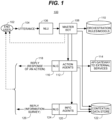
- FIG. 1 shows a diagram 100 illustrating a system architecture of a virtual assistant platform, in accordance with example embodiments of the disclosure.
- the virtual assistant platform comprises the following primary sub-systems: a natural language understanding (NLU) module 106, a masterbot 108, one or more action agents 112, and one or more information agents 120.
- NLU natural language understanding
- the end user 102 generates an utterance 104, such as via speech, video, or textual input.
- the user utterance 104 is processed through NLU module 106, which generates a parsed user input that is computer-readable and convenient for future consumption.
- the NLU module 106 is a sub-system that handles natural language understanding (NLU), whose objective is to take the utterance 104 as input, digest and parse it, and output standard language constructs that can be easily consumed by other components.
- NLU module 106 output comprises user intent (as defined by a particular domain), entity extraction (product name, time, date, location, price, email, etc.), and reference resolution.
- the NLU module 106 output also comprises sentiment analysis, speech act classes, language identification, and/or emoji recognition.
- the masterbot 108 is a controller that is responsible for the orchestration of the entire conversation by exchanging information with various sub-system, triaging and selecting the best action agent 112 or info agent 120 from a pool of candidates, executing the appropriate agent(s), and passing the response back to the end-user 102 (dashed line).
- the operation of the masterbot 108 is described in greater detail below.
- the action agents 112 and info agents 120 denote the two sets of conversation building blocks available in the platform. At runtime, as a multi-service conversation is taking place, some of these agents will become active and participate in the construction and generation of the reply to the user.
- Each action agent 112 has access to a natural language generation (NLG) module 116, which is used to generate a natural language reply 118, such as a response to an action.
- each info agent 120 has access to a natural language generation (NLG) module 124, which is used to generate a natural language reply 126, such as an information survey to query the user for more information.
- NOG natural language generation
- the operation of the info agents 112 and action agents 120 is described in greater detail below.
- the orchestration rules/models 110 is a logical sub-system that is responsible of keeping track of current dialog state information, and internal dialog policy to make selection decisions (which may be rule-based or machine learning based models).
- the masterbot 108 consults with the orchestration rules 110 to make its selection of info agents and action agents.
- the API gateway to external services 114 provides utility for certain services - it is used by the virtual assistant platform to connect to external systems to perform desired action(s). For example, to cancel an order, to perform a product search, or to check the current temperature.
- the API gateway 114 denotes a common mechanism for these requests to external systems to take place.
- the contextual data store 122 is a sub-system that conceptually represents "memory” as well as common “domain knowledge” that are needed to conduct a meaningful conversation.
- “Memory” comprises past interaction history, such as previous dialog turns, conversations from last week, shopper profiles (order history, stated shopping preference, etc.), and so on.
- "Domain knowledge” comprises the aggregate information that is specific to the services supported by the platform. For example, for an e-commerce website, the product catalogue is an important information source of "domain knowledge.”
- the contextual data store 122 can be used to assist a) the masterbot 108 to make improved action agent decisions; b) the individual info agents 120 to make inferences; and c) both action agents 112 and info agents 120 to generate appropriate natural language replies.
- FIG. 2 shows another diagram 200 illustrating an architecture of the virtual assistant platform having a masterbot 204, and a plurality of action agents 208 and info agents 210, in accordance with example embodiments of the disclosure.
- the masterbot 204 is used to arbitrate between a plurality of action agents 208 and info agents 210 based on the user input 202 (after processing via the NLU module, which is not shown in Fig. 2 ).
- the masterbot 204 determines a given action agent 208 to invoke in response to the user input 202.
- the masterbot 204 checks the given action agent's 208 prerequisite condition(s), if any.
- the masterbot 204 invokes any info agent(s) 210 that are prerequisite conditions for the given action agent 208.
- the info agents 210 fulfill the requested prerequisite conditions as described below.
- the action agents 208 and info agents 210 can each generate natural language replies for the masterbot 204 to relay to the end user in the form of responses through a natural language generation (NLG) module, not shown in Fig. 2 .
- NLG natural language generation
- the masterbot 204 outputs the final bot response 206 to the user.
- FIG. 3 shows diagrams 300 and 301 illustrating a sample conversation comprising two services and multiple conversation turns, in accordance with example embodiments of the disclosure.
- Diagram 300 shows a schematic of a conversation construct comprising two services and six turns.
- Service “A” 302 comprises turn 306 (end-user utterance) followed by turn 308 (bot response).
- Service “B” 304 comprises turn 310 (end-user utterance) followed by turn 312 (bot response), followed by turn 314 (end-user utterance) followed by turn 316 (bot response).
- Diagram 301 shows an actual sample conversation comprising two services and six turns, which was illustrated schematically in diagram 300.
- Store Hours Service 322 comprises turn 326 (end-user utterance - "What are your normal store hours?") followed by turn 328 (bot response - "Our store hours are 9am-6pm").
- Store Locator Service 324 comprises turn 330 (end-user utterance - "Got it, can you tell me a nearby store?”) followed by turn 332 (bot response - "Please tell me your location in city and state”), followed by turn 334 (end-user utterance - "I live in Sunnyvale, California”) followed by turn 336 (bot response - "The closest store is at 10 Main St., Mountainview, CA”).
- the virtual assistant platform there are two types of conversation building blocks residing on the virtual assistant platform - info agents and action agents. All conversations are assembled from these two types of conversation agents, i.e., every individual bot response is generated either by a particular info agent or by a particular action agent. The responsibility of the platform is to host these agents and to enable the creation of these agents with low effort.
- the platform manages a pool of currently active/activated agents and selects the right agent to execute for response generation back to the end user. In this fashion, end users can enjoy the benefit of having a flexible, fluid conversation to accomplish their service goals, often many within the same conversation.
- application developers have an environment where they are able to quickly build new services by leveraging many existing agents and the platform's capability to automatically generate part of the dialog flow.
- FIG. 4 shows a diagram 400 illustrating an embodiment of the virtual assistant platform comprising info agents 402 and action agents 404, illustrating a typical embodiment of the virtual assistant platform with respect to agent availability and extensibility.
- a developer can develop custom info agent(s) 406.
- info agent(s) 408 There are also a large number of pre-built, ready-to-use info agents 408 for a particular domain - e.g. email info agent, order ID info agent, location info agent, price info agent, product name info agent, and so forth.
- New custom action agents 410 can be built quickly to fulfill a particular service need.
- pre-built action agents 412 to fulfill common standard services (e.g., order tracking, FAQ, etc.) and chit-chat functions to manage the overall dialog flow.
- a typical embodiment of the platform comes with a rich set of pre-built, reusable info agents 408.
- pre-built action agents 412 related to rendering a natural conversation such as chit-chat ("small talk"), such as greeting, gratitude, compliment, and flow control are available in a typical embodiment of the virtual assistant platform.
- chit-chat small talk
- new info agents 406 and new action agents 410 are easy to build following a standard protocol and the platform will understand the relationship between interacting info agents and action agents, how to fulfill the necessary information values, and perform the services and to generate a response to conduct a fluid conversation with the end user.
- FIG. 5 shows a diagram 500 illustrating an architecture of an info agent and the role that info agents play in the virtual assistant platform, in accordance with example embodiments of the disclosure.
- an info agent 506 is a logical and autonomous programming unit to manage a particular information need as the conversation unfolds.
- the current utterance 502 is represented in the internal language representation (parsed user input) generated by the NLU module described above (not shown in FIG. 5 ).
- the current utterance comprises different entity values extracted, their reference resolutions, a part of speech (POS) tag, parse tree, user intent, and so on.
- POS part of speech
- the contextual data store 504 stores information on "memory,” comprising past interaction history, such as previous dialog turns, conversations from last week, shopper profiles (order history, stated shopping preference, etc.), and so on, and "domain knowledge" comprising the aggregate information that is specific to the services supported by the platform, such as the merchant's product catalog.
- the target output 508 of the info agent 506 is the information value of interest.
- the target output 506 would be the information value " tom@gmail.com ".
- info agents can also generate additional metadata output such as confidence level, information source(s) used to make the decision, alternative value choices, etc. This metadata could be helpful for other components, such as action agents, and other info agents to make better downstream decisions.
- info agents Three techniques used by info agents to determine a final information value are "understand,” “infer,” and “survey.” While it is not a hard requirement, a typical info agent implementation will come with all these capabilities: to understand, to infer, and to survey. The objective is to fulfill the information value as accurately and quickly as possible - mostly by the info agent itself, and occasionally with a little bit of help from the end user or other info agents.
- FIG. 6 shows a diagram 600 illustrating a process flow of an info agent 608, in accordance with example embodiments of the disclosure.
- an info agent 608 goes through an internal process to invoke three capabilities, as needed: understand, infer, and survey using an understand module 610, an infer module 616, and a survey module 626, respectively.
- a typical embodiment of the invention would generally comprise a centralized NLU module 604 within the virtual assistant platform to digest end user's utterance 602, parse it, and output a machine-readable interpretation, or parsed user input 606, to the info agent 608 to make a decision. It is not efficient to duplicate NLU module 604 functionality at the level of individual info agents 608.
- the understand module 610 comprises the ability to understand end user utterances in natural language form 606 and identify and extract the right information to fulfill the information value. That is, if the understand module 610 can ascertain the information value from the utterance in decision step 612, then the info agent 608 is done and can output the information value of interest at step 614. For example, for "Email Info Agent", the agent will understand the following utterance: “Hi my email address is tom@gmail.com " and automatically fulfill the information value to be " tom@gmail.com ".
- the survey module 626 comprises the ability to conduct a dialog question 628 to acquire the information value directly from the end user. This usually is the last resort after the understand and infer modules 610 and 616 cannot ascertain the information value.
- Email Info Agent can engage with the end user with the following simple dialog sequence: "What is the email you like to use?", and the end user responds with "My email is tom@gmail.com ". After this exchange, Email Info Agent will determine that the information value is " tom@gmail.com ".
- the info agent 608 possesses the capability of contextual data retrieval, and computation and automatic sub-dialog generation to engage with end users. It is NLU-enabled, contextual, and conversational. The end-result is the availability of the information value of interest.
- info agent(s) available in a virtual assistant platform, the more new services the platform can quickly assemble to expand the usefulness of the conversation bot.
- the implementation of an info agent depends on the actual embodiment of the overall virtual assistant platform. One example would be to support adding new info agents in a declarative language to minimize the coding effort.
- an info agent can specify using JSON or XML, what entity extraction type and value it should focus on, and how to map that information to the final value.
- the XML can also specify how to combine different information sources to make an inference, what other related info agent(s) it can leverage, and how to deduce the information value from those related info agents, and finally, how to compose the survey question to ask the end user for obtaining additional information.
- FIG. 7 shows a diagram 700 illustrating a sample flow through an info agent 708 for understanding user utterances, in accordance with example embodiments of the disclosure.
- an info agent 708 goes through an internal process to invoke the understand capability, as needed, to understand the information value directly from the current utterance.
- the NLU module 704 digests the end user's utterance 702, parses it, and outputs a machine-readable interpretation 706 to the info agent 708.
- the understand module 710 understands the end user utterances in natural language form 706 and identifies and extracts the right information to fulfill the information value. That is, if the understand module 710 ascertains the information value from the utterance in decision step 712, then the info agent 708 is done and can output the information value of interest at step 714, as output information value 730. For example, for "Email Info Agent", the agent will understand the following utterance: "Hi I want to check my membership status and my email address is tom@gmail.com " and automatically fulfill the information value 730 to be " tom@gmail.com ".
- the infer module 716 can combine the current input 706 with previously known contextual data from the contextual data store 718 or from other info agents 720 to compute the information value. That is, if the infer module 716 can infer the information value in decision step 722, then the info agent 708 is done and can output the information value of interest at step 724. Finally, the survey module 726 can conduct a dialog question 728 to acquire the information value directly from the end user if the info agent cannot understand nor infer the information value.
- FIG. 8 shows a diagram 800 illustrating a sample flow through an info agent 808 for inferring information from user utterances and contextual data, in accordance with example embodiments of the disclosure.
- an info agent 808 goes through an internal process to invoke the infer capability, as needed.
- the NLU module 804 digests the end user's utterance 802, parses it, and outputs a machine-readable interpretation to the info agent 808.
- the understand module 810 cannot understand the end user utterance directly to identify or extract the right information to fulfill the information value directly. That is, the understand module 810 cannot ascertain the information value from the current utterance in decision step 812 and cannot output the information value of interest at step 814. For example, the user has not supplied the information value of interest in the current utterance.
- the infer module 816 combines the current input with previously known contextual data from the contextual data store 818 or from other info agents 820 to compute the information value. This could be based on conversation history between the end user and the virtual assistant platform or some user profile data. That is, if the infer module 816 can infer the information value in decision step 822, then the info agent 808 is done at step 824 and can output the information value 830 of interest.
- the Email Info Agent can automatically infer the information value. Note that since inference doesn't guarantee the value, the info agent can choose to assign a confidence score (or probability score) to indicate how strongly the agent believes the information value.
- the survey module 826 can conduct a dialog question 828 to acquire the information value directly from the end user if the info agent neither understand nor infer the information value.
- FIG. 9 shows a diagram 900 illustrating a sample flow through an info agent 908 for surveying a user for information that cannot be obtained in any other manner, in accordance with example embodiments of the disclosure.
- an info agent 908 goes through an internal process to invoke the survey capability, as needed.
- the NLU module 904 digests the end user's utterance 902, parses it, and outputs a machine-readable interpretation to the info agent 908.
- the understand module 910 cannot understand the end user utterances directly to identify or extract the right information to fulfill the information value directly. That is, the understand module 910 cannot ascertain the information value from the utterance in decision step 912 and cannot output the information value of interest at step 914. For example, the user has not supplied the information value of interest in the current utterance.
- the infer module 916 cannot combine the current input with previously known contextual data from the contextual data store 918 nor from other info agents 920 and cannot compute the information value of interest. That is, in this scenario, the infer module 916 cannot infer the information value in decision step 922 and cannot output the information value of interest at step 924. For example, the information value cannot be inferred with reasonable confidence from prior user conversation history, contextual data, or other sources.
- the survey module 926 conducts a dialog question 928 via a natural language generation (NLG) module to acquire the information value directly from the end user.
- NLG natural language generation
- Email Info Agent can engage with the end user with the following simple dialog sequence: "Please tell me your email address", and the end user responds with "My email is tom@gmail.com ". After this exchange, Email Info Agent, now operating in the understand mode in the subsequent conversation turn, will determine that the information value is " tom@gmail.com " with high confidence.
- Table 1 summarizes the three cases of info agents operating in understand, infer, and survey modes to highlight the dialog sequence differences.
- Table 1 Three Types of Information Agents Dialog Sequence Modules Involved Comment (user): "Hi I want to check my email status and my email is tom@gmail.com " Understand Email Info Agent understands and obtains the value directly from the current utterance. (user): "Hi I want to check my email status"
- Email Info Agent can use a variety of information sources to make the best educated inference; for example, because end user already shared the email address for another service, Email Info Agent will infer the value.
- Email Info Agent fails to understand from the current utterance nor can make any inference with high enough confidence, it engages with the end user to prompt for the information value. After the end user provides the value, Email Info Agent will set the information value at the next conversation turn. (bot): “Please tell me your email address” (user): “Certainly, my preferred email address to use is "tom@gmail.com”
- info agents could be related to each other and can be used to help each other out. This is particularly true when the virtual assistant platform has access to a host of contextual information, and chances are that some of them are other related info agents themselves.
- info agent implementation is called upon to provide information, it can leverage these related info agents directly, just as it can leverage generic contextual data.
- info agents can self-report the underlying info agent's connection(s) that it wishes to collaborate to the masterbot. This process is described in greater detail in the section entitled "Optimal Info Agent Invocation via Inference Based Selection Process.”
- info agents 620, 720, 820, and 920 this relationship between info agents is depicted graphically as related info agents 620, 720, 820, and 920, respectively.
- the related info agents 820 can provide the information value ascertained by the other related info agents 820 to the infer module 816 for use by the info agent 808 to infer the information value with the help of the related agents 820.
- the related information agents 820 might be indirectly invoked for execution at run-time.
- FIG. 10 shows a diagram 1000 illustrating an architecture of an action agent and the role that action agents play within the virtual assistant platform, in accordance with example embodiments of the disclosure.
- the role of action agent 1006 is to perform an action, generate response(s) to end users, and if needed, signal to the overall virtual assistant platform of a state change.
- Each action agent 1006 is a unit of "mini-action,” meaning, a single action focus that is not too complicated to span across conversational turn boundaries after a given action is taken.
- the connected info agent(s) 1002 serve as prerequisite conditions for the action agent 1006.
- the contextual data store 1004 stores information on "memory,” comprising past interaction history, such as previous dialog turns, conversations from last week, shopper profiles (order history, stated shopping preference, etc.), and so on, and "domain knowledge" comprising the aggregate information that is specific to the services supported by the platform, such as the merchant's product catalog.
- the action agent 1006 may need to invoke external or internal API end-points 1008. Finally, the action agent 1006 will generate response(s) to the end user based on the conditions triggered and/or inform the masterbot about any state changes 1110 (invocation state changes and/or application state changes).
- An action agent is to perform a certain action, such as checking membership status and rendering a response. For example, "Hi Tom, your membership status is active but would expire in 3 months.” Both action and response are specific to individual action agents and require implementation.
- An example of action agent implementation would include using an API to perform a database query for membership status and using a template system to generate the response based on the result returned from the API.
- an action agent is essentially to configure all of the necessary data structures mentioned above.
- One possible implementation choice is to use a domain-oriented declarative language to specify concept ontology association for top-level triggering conditions, dependent info agents, API end-point URLs, expressions to be evaluated to retrieve the parameters needed, and a flexible template system to access on-platform data to render a final reply back to the end user as well as any follow-up triggering condition to link to other action agents.
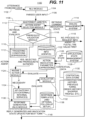
- FIG. 11 shows a diagram 1100 illustrating components and invocation flow of an illustrative action agent, in accordance with example embodiments of the disclosure.
- the end user utterance 1102 is pre-processed via the NLU module 1104 to generate a parsed user input 1106.
- the parsed user input 1106 comprises extracted language constructs data, intent classification, entity extraction, speech act analysis, sentiment analysis, and so forth, all in machine-readable form convenient for consumption by the rest of the system.
- the masterbot 1108 is responsible for selecting a particular action agent 1110 to generate a response for the next turn in response to the user input 1106 via the action agent selector module 1112 based on one or more triggering conditions (expressions) 1112 and the current invocation state from the dialog management system 1114 and/or the application state from the application state management system (not shown).
- the first step is to query the action agent's 1110 prerequisite condition(s) to see if all the prerequisite info agent(s) 1122 have successfully obtained their information values via prerequisite validator module 1116. If not, the masterbot 1108 will suspend the current action agent 1110 (but remember it as part of the invocation state, dialog management data, etc. via the dialog management system 1114 ), and instead ask the prerequisite info agent(s) 1122 to ascertain the required information value(s), as shown in step 1118.
- an action invocation module 1124 will be executed to perform the work of the action agent 1110.
- an evaluator module 1132 can be called upon first to evaluate the expression for the final parameter values.
- an API Gateway 1134 can be used to provide a central gatekeeper for outbound/inbound web API traffic for better security and throughput control.
- response generation can be facilitated with a template system 1138 and the evaluator module 1132.
- the contextual data store 1130 provides easy data access to fulfill variable values used in a given template.
- the evaluator module 1132 can check with the contextual data store 1130 and the API invocation's result data, and render a reply 1140 to be "Hi Tom , your membership status is expired " via a natural language generation (NLG) module 1136.
- end user reply 1140 is passed to the dialog management system 1114, which in turn provides the current invocation state to the masterbot 1108, as needed.
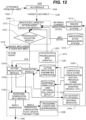
- FIG. 12 illustrates a diagram 1200 which shows how action agent execution is conducted after the action agent 1210 has been activated via action agent selector module 1212 (see action agent selector module 1112 in FIG. 11 for more details about this type of triggering condition).
- FIG. 12 shows how one action agent 1210 connects with another action agent (not shown) via a follow-up relationship as indicated by the triggering conditions (expression) 1238 for a follow-up action agent.
- a key difference between FIG. 11 and FIG. 12 is the triggering condition role, which in FIG. 11 is focused on illustrating how an action agent 1110, with the help of the masterbot 1108, is activated via a triggering conditions 1112 match.
- FIG. 12 illustrates how an action agent 1210 can create a follow-up connection with another action agent via an anticipatory trigger condition 1238.
- Diagram 1200 illustrates components and invocation flow of an action agent at run-time, in accordance with example embodiments of the disclosure.
- the end user utterance 1202 is pre-processed via the NLU module 1204 to generate parsed user input 1206.
- the masterbot 1208 is responsible for selecting a particular action agent 1210 to generate a response for the next turn in response to the user input 1206 via the action agent selector module 1212 based on one or more triggering conditions (not shown) and the current invocation state from the dialog management system 1214 and/or the application state from the application state management system 1219.
- the first step is to query the action agent's 1210 prerequisite conditions to see if all the prerequisite info agent(s) 1222 have successfully obtained their information values via prerequisite validator module 1216. If not, the masterbot 1208 will suspend the current action agent 1210, and instead ask the prerequisite info agent(s) 1222 to ascertain the required information value(s), as shown in step 1218.
- an action invocation module 1224 will be executed to perform the work.
- an action invocation parameters 1226 can be expressed in a declarative language with variable references and arithmetic expressions, an evaluator module 1232 can be called upon first to evaluate the expression for the final parameter values.
- an API Gateway 1234 can be used to provide a central gatekeeper for outbound/inbound web API traffic for better security and throughput control.
- response generation can be facilitated with a template system 1238 and the evaluator module 1232.
- the contextual data store 1230 provides easy data access to fulfill variable values used in a given template.
- the evaluator module 1232 can check with the context data store 1230 and the API invocation's result data, and render a reply 1240 to be "Hi Tom , your membership status is expired " via a natural language generation (NLG) response module 1236.
- NVG natural language generation
- the reply generated 1240 and the invocation state update for the next turn 1238 are passed as triggering conditions (expression) 1238 to the dialog management system 1214, which in turn provides the current innovation state to the masterbot 1208, as needed.
- the result is that the action agent 1210 has setup a follow-up connection with a follow-up action agent (not shown) via a follow-up relationship via triggering conditions (expression) 1238.
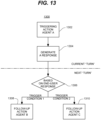
- Diagram 1300 illustrates an architecture comprising follow-up action agents 1308 and 1310 from triggering action agent 1302 spanning two conversation turns, in accordance with example embodiments of the disclosure.
- Action agent 1302 generates a bot response 1304 to the end user in the current turn.
- decision block 1306 triggers one or more follow-up agents 1308 or 1310. If trigger condition 1 is satisfied, then action agent 1308 is triggered; otherwise, if trigger condition 2 is satisfied, action agent 1310 is triggered.
- the triggered follow-up action agent 1308 or 1310 may be an instance of the same agent as the original triggering agent 1302.
- Table 2 shows a sample dialogue containing a follow-up action agent.
- the follow-up action agent (“Membership Status Check Action Agent”) is an instance of the same agent the original triggering action agent (“Membership Status Check Action Agent”).
- Table 2 Dialog Example Using a Membership Status Check Action Agent Dialog Sequence Modules Involved Comment (user): “Hi, can i check my membership status?" Membership Status Check Action Agent is activated. User inquiry. (bot): "Certainly, please tell me your email address first" Email Info Agent Email Info Agent is a prerequisite, and since we don't know the value and can't infer it, it will simply survey it. (user): "My email address is tom@gmail.com " User response. (bot): "Hi Tom, good news, your membership status is active” Membership Status Check Action Agent generates this. With all the prerequisite condition met, the Action Agent goes ahead to invoke an external API call to check the status and generate a reply to end user.
- One benefit of the present invention lies in the flexible inter-relationship (cross-connections) among different conversation building blocks or agents.
- the cross-connections between info agents and action agents makes it possible for the virtual assistant platform to handle different scenarios and render a variety of conversation behaviors using a relatively small number of agents.
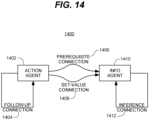
- FIG. 14 shows a diagram 1400 illustrating schematically four illustrative types of relationships between action agents 1402 and info agents 1410, in accordance with example embodiments of the disclosure: prerequisite connection 1406, set-value connection 1408, follow-up connection 1404, and inference connection 1412, which are discussed in turn.
- An action agent 1402 can specify zero or multiple info agent(s) 1410 as prerequisite connections 1406, or necessary pre-conditions. This means that after an action agent 1402 is activated, the virtual assistant platform will first ensure that all the information values associated with the info agent(s) 1410 configured as prerequisite connections 1406 by the action agent 1402 are fulfilled before the actual "action" can be executed.
- an info agent 1410 can be shared by different action agents 1402 as prerequisite connections 1406 as part of the configuration data. And at runtime, the same info agent 1410 can also be shared and re-used for different invocations of action agents 1402.
- the information value associated with such info agent 1410 can remain the same, but it can also evolve as the conversation progresses.
- One common scenario illustrating an information value change is due to the end user's own doing. For example, “I like to order Happy Meal Number 1", “Okay, any side order?", "Wait, I changed my mind, I want Happy Meal Number 2 instead”.
- Prerequisite ( ⁇ Order ID Info Agent>, ⁇ Order Product Info Agent>, ⁇ Quantity Info Agent>]
- An action agent 1402 can also explicitly set values for application variables for future reference, which may be connected info agents 1410 via set-value connections 1408. This helps certain info agents 1410 to compute the information value more efficiently or become sharable/reusable information for other action agents to follow-up. Typically, this set-value connection 1408 takes place after an action has taken place, and based on the result, the action agent 1402 can decide to set certain variable values of certain info agents 1410.
- an action agent 1402 can also specify another action agent 1402, including another instance of itself, as a possible follow-up action agent 1402 after a response from a user, with a particular triggering condition, via follow-up connection 1404.
- a follow-up connection may be specified as follows:
- FollowUp( ⁇ Action Agent>, ⁇ Response>, ⁇ Trigger Condition>) ⁇ Action Agent>
- a given info agent 1410 can also infer its information value by leveraging other info agents 1410 via an inference connection 1412.
- the inference connection 1412 may involve guidance from semantic knowledge or domain specific ontology.
- a new service may be expressed in a simple logical form, for example, using a declarative language, by defining an action agent comprising prerequisite info agents and an action to be performed, as shown schematically in Table 3.
- the virtual assistant platform will automatically manage, among other things:
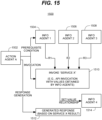
- FIG. 15 shows a diagram 1500 illustrating a logic flow for designing a new service using the virtual assistant platform, in effect teaching the virtual platform to perform a new skill, in accordance with example embodiments of the disclosure.
- Action agent 1502 has prerequisite conditions comprising info agents 1504, 1506, and 1508, via prerequisite connections R1, R2, and R3, respectively.
- the Service X is invoked as specified in action invocation condition 1510, which may typically be an API invocation with parameters transformed from the information value(s) obtained via prerequisite info agents 1504, 1506, and/or 1508.
- the action invocation condition 1510 may also specify a set-value relationship to one or more other info agents 1514, as described above.
- a response generation is specified in generated response condition 1512, which may typically be based on a template system based on a result obtained from the Service X.
- a basic example consists of a basic action agent that can tell time.
- Table 4 shows a sample conversation with an action agent that can tell time.
- Table 4. Dialog Example Rendered by a Single Action Agent with No Info Agents as Prerequisite Dialog Turn Sequence Modules Involved Comment (user): "What time is it?" Local Time Action Agent in activated Local Time Action Agent has no Info Agent requirement. (bot): "It is 11:05pm PT" Generated by Local Time Action Agent Response generated.
- a service can consist of multiple action agents which are interrelated with each other via a follow-up connection.
- FIG. 13 shows an architecture comprising follow-up action agents 1308 and 1310 from triggering action agent 1302 spanning two conversation turns.
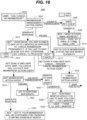
- FIG. 16 shows a diagram 1600 illustrating a process flow of a service comprising multiple action agents, in accordance with example embodiments of the disclosure.
- Table 6 shows a dialog example rendered by a single service with multiple action agent(s) connected via a follow-up. Note both the diagram 1600 in FIG. 16 and the dialog sample in Table 6 illustrate the same conversation sequence. The blocks in FIG. 16 are referenced in the corresponding Table 6. Table 6. Dialog Example Rendered by a Single Service with Multiple Action Agent(s) Connected via Follow-up Dialog Turn Sequence Modules Involved Comment (user): "Can I cancel my membership?" 1602 Membership Management Action Agent 1604 is activated Membership Management Action Agent 1604 has one prerequisite info agent: Email Info Agent 1606 (bot): "What is your email address?
- Email Info Agent 1606 generated the reply Email Info Agent 1606 information value is not fulfilled (neither via understanding nor inference), so Email Info Agent 1606 decides to query the end user.
- Membership Management Action Agent 1604 invokes an API 1612 to check membership status and finds out that the end user is eligible for skipping up to 3 months.
- Skip 1615 Skip Membership Action Agent 1618 is triggered Skip Membership Action Agent 1618 is triggered.
- a special masterbot (also called an arbiter or arbiter agent) is needed to arbitrage, resolve conflict, and facilitate among all the available agents to render a versatile and fluid conversation with end users. This section described how the masterbot functions according to one embodiment of the present invention.
- the masterbot handles the following functions:
- FIG. 2 shows an architecture of the virtual assistant platform, and illustrates the high-level role of the masterbot 204 and the relationship between the masterbot 204 and the plurality of action agents 208 and info agents 210.
- conversations are assembled from execution of conversation building blocks - info agents and/or action agents.
- the masterbot needs to leverage a few other components:
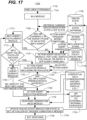
- FIG. 17 shows a diagram 1700 illustrating components and a process flow of the masterbot, in accordance with example embodiments of the disclosure.
- End user utterance 1702 is processed via NLU module 1704 to extract language constructs data, user intent, classification, entity extraction, speech act analysis, sentiment analysis, and so forth.
- the current dialog invocation state and application state is retrieved from the dialog state and application state database 1708.
- a decision step 1706 determines whether or not the system is currently in the survey phase of an active info agent. If yes, the process proceeds to info agent fulfillment module 1710. At decision step 1712, it is determined whether or not the info agent's information value has been successfully fulfilled. If not, then info agent survey module 1720 is triggered to survey the user for the information value using the natural language generation (NLG) module 1732. If yes, then action agent evaluator module 1722 is triggered.
- NVG natural language generation
- decision step 1724 it is determined whether or not all info agents, which are prerequisite conditions to the given action agent, are satisfied. If not, the process reverts back to info agent fulfillment module 1710 to identify the next info agent that needs an information value fulfilled to fulfill any missing prerequisite info agents. If yes, then action agent execution module 1728 is triggered, which relies on contextual data store 1726 and/or API gateways 1730 to external or internal services, as appropriate, to fulfill the action agent output conditions. Finally, response generation module 1732 for natural language generation (NLG) is triggered, which generates both a bot response 1736, as well as updates the dialog state (invocation state) and sets up follow-up trigger conditions 1734, if necessary. The updated dialog state and the follow-up trigger conditions, if any, are then passed to the dialog state and application state database 1708, which in turn provides this information to the decision block 1706 for execution at the next dialog turn.
- NVG natural language generation
- action agent selector module 1716 is triggered, which handles top level switching, follow-up, re-entry, and off-script handling, as appropriate.
- the action agent selector module 1716 relies on input from the dialog state and application state database 1708, action agent and info agent store 1714, as well as dialog policy rules and models 1714 to select the appropriate action agent for execution. Once a given action agent is selected for execution, then the action agent evaluator module 1722 is triggered, and the process proceeds as above.
- this section describes a possible solution that, in addition to the standard text annotation and intent classification method, can leverage a domain specific concept ontology to exploit additional semantic and logical relationships between different concepts (and therefore their associated action agents) for a better overall user experience.
- the flexibility of using different strategies of selecting the best suitable action agent to adapt to the current conversation flow is an important benefit of this invention.
- This section also explains how a rule-based system can be turned into a machine learning based approach as the system collects more and more conversational data.
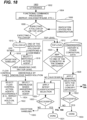
- FIG. 18 shows a diagram 1800 of an action agent selection method utilizing a concept ontology classification and a text-based intent classification, in accordance with example embodiments of the disclosure.
- the end user's utterance 1802 is processed to determine a functional command that is processing state independent to handle common conversation flow control commands (e.g., repeat, hold/wait/pause, etc.). For example, if the user utterance is "Hold on", the masterbot can assign a special utility action agent to respond with something like "Sure, take your time", or alternatively, simply remain silent for the end user to proceed with the next turn.
- a functional command that is processing state independent to handle common conversation flow control commands (e.g., repeat, hold/wait/pause, etc.). For example, if the user utterance is "Hold on", the masterbot can assign a special utility action agent to respond with something like "Sure, take your time", or alternatively, simply remain silent for the end user to proceed with the next turn.
- step 1806 it is determined whether the masterbot is expecting a "follow-up” situation or a "top-level” situation based on the invocation states per conversation 1808. These two terms are used to distinguish two major dialog state situations - is the masterbot proactively anticipating something specific from the end user (expecting a "follow-up” from the end user) or is the masterbot simply going to be reactive to what the end user says ("top-level”).
- An example of a "follow-up” occurs when the masterbot asks the end user for clarification or additional information. For example, the end user starts with “Can I order something to eat?" and bot says, “Is this for here or to go?". At this point, the masterbot is expecting two follow-up scenarios: “eat here” or "to go”.
- the masterbot can apply a rule-based approach to make a sound action agent selection decision.
- the process branches to the left to the follow-up branch 1810; whereas in case it is a "top-level” situation, the process branches to the right to the top-level branch 1812.
- the follow-up branch (left) 1810 and the top-level branch (right) 1812 are each discussed in turn.
- the process branches to the left, if one of the anticipated follow-up conditions is confirmed, then the matched action agent is selected for triggering at step 1818. Otherwise, in case it is an off-script response from the user, exception handling step 1816 is triggered. In one scenario, the user abandons that train of thought, and the process reverts to the top-level branch 1812. Otherwise, the process selects one branch of several possible flow control cases, either selecting flow control action agents accordingly at step 1822 or selecting knowledge-based answering action agents at step 1824.
- the process maps the utterance to one of the concepts in the domain ontology. If the concept mapping 1820 is successful, then the process applies a semantic selection with the help of the concept ontology process at step 1828, which relies on help from the conversation history and other contextual data 1814.
- An example of the semantic selection with concept ontology process is described in relation to FIG. 19A . If the semantic selection with concept ontology process is successful, as determined in decision step 1832, then the process is complete with an action agent chosen at step 1833. Otherwise, the process applies a text-based intent classification selection process at step 1826, described next.
- the process applies a text-based intent classification selection process 1826.
- the text-based intent classification selection process is described in relation to FIG. 19B . If the text-based intent classification selection process is successful, as determined in decision step 1830, then the process is complete with an action agent chosen at step 1831. Otherwise, if the text-based intent classification selection process is not successful, then exception handling 1835 is triggered to handle various classes of exceptions.
- FIG. 19A shows a diagram 1900 illustrating a concept ontology classification example, in accordance with example embodiments of the disclosure.
- a concept ontology classification is shown having nine concepts in three layers with six action agents associated with five of them.
- the ontology allows the masterbot to apply domain knowledge to respond to end user utterances better with the action agents available at hand.
- Four examples are shown for an illustrative e-commerce customer support platform 1902:
- FIG. 1900 Shown in diagram 1900 are parent-child relationships (also known as "Is_Member" relationships) as well as semantic relationships (e.g., Return 1908 and Exchange 1912 are often related to each other because shoppers can choose either one), or just logically connected in chronological sequence or causal relationship like Leave Product Review 1918 and Re-Order 1914.
- four action agents are configured to be associated with five of the eight concepts for direct triggering.
- FIG. 19B shows a diagram 1950 illustrating a text-based intent classification example, in accordance with example embodiments of the disclosure.
- a text-based intent classification example is shown, comprising three classes, with an action agent associated with each of them.
- a text classifier 1952 classifies the user utterance into one of three classes 1954, 1956 , or 1958.
- Each of the three classes 1954, 1956, and 1958 have an action agent 1960, 1962 , or 1964 associated with each of them, respectively.
- Based on the output from the text classifier 1952, one of the three action agents 1960, 1962 , or 1964 is selected based on the matching class.
- the masterbot can be implemented with different implementation strategies with regards to action agent selection, depending on the developer's preferences and availability of certain resources or toolsets.
- a rule-based selection process is used for selecting action agents.
- a data-driven machine learning selection process is used.
- Table 7 illustrates the various data records that a virtual assistant platform can collect and use for training data to build a model for making the optimal action agent selection, illustrating a sample list of data categories that a machine learning approach can leverage.
- Table 7 Sample List of Data Categories that a Machine Learning Approach Can Leverage Input vs Output in Conceptual group Data Description
- Data Source Comment Input Top Intents identified - name and scores NLU module Based on utterance of current turn Input Entity Extraction - existence and scores of entity types found NLU module Based on utterance of current turn (e.g., email address, order number, temporal vs.
- Input Sentiment score NLU module Based on utterance of current turn and/or overall conversation Input Order Status - active order count, in-transit order count, recently delivery order count, etc.
- Contextual data store - this is usually domain specific What is known about the end-user Input Shopper profile - gender, household income bucket, average order size, total orders made, return ratio, etc.
- Contextual data store - this is usually domain specific What is known about the end user Input Conversation history - past sentiment score, invoked Service X in last 24 hours, invoked Service Y in last 7 days, etc.
- the memory of previous conversations Output (target) Action agent selected Based on past conversations Training data can be manually annotated by humans, or automated collected based on strong evidence of successful conversation (e.g., gratitude and/or ticket closure confirmation by end user)
- the masterbot will first examine the prerequisite conditions to evaluate the associated info agent(s) to confirm the information values are present and sufficient. If this is not the case, the masterbot will activate the required info agent to start the information survey sub-dialog with the user (e.g., asking the end user follow-up questions) to help gather the necessary information.
- the masterbot can do better if the info agent implementation can self-report the inference relationship between itself and other info agents at run-time. In this case, the masterbot can use empirical data to examine all the possible info agents (i.e., the original info agent as well as its fellow info agents with inference connections) and make a decision to select one.
- FIG. 20 shows a diagram 2000 illustrating a sample multi-service conversation operated by the masterbot and a plurality of info and action agents, in accordance with example embodiments of the disclosure.
- Diagram 2000 shows the masterbot and all of the conversation building blocks (nine total action and info agents) involved in a sample multi-service-oriented conversation, showing four action agents and five info agents.
- the masterbot 2002 has connection to an on-sale product recommendation action agent 2004, which has a product category info agent 2012 and a gender info agent 2014 as prerequisite connections.
- the on-sale product recommendation agent 2004 also has a set-value connection with product category info agent 2018.
- a stand-alone thank you action agent 2006 has no pre-requisites, and may be triggered, for example, based on sentiment analysis on the end user utterance, as described previously.
- a nearby store action agent 2008 has a locale info agent 2016 as a prerequisite connection, and a set-value connection with store info agent 2020.
- in-store availability check action agent 2010 has the product category info agent 2018 and the store info agent 2020 as prerequisite connections.
- Table 8 shows a multi-service sample dialog from the masterbot's point of view corresponding to the sample multi-service conversation illustrated in diagram 2000.
- Table 8. A Multi-Service Sample Dialog from the Masterbot's Point of View Dialog Turn Sequence Modules Involved Comment (user): "Can you recommend some jeans that are on sale?" "On-sale Product Recommendation Action Agent” in activated Masterbot leverages NLU to determine the product recommendation intent and the selection of "On-sale Product Recommendation Action Agent.” (bot 1 st response): "Certainly, based on your past shopping preference, here is one that you might like - 511 Slim Fit Black Jeans for Women in blue color, size M, it is currently 75% off while supply lasts.” "On-sale Product Recommendation Action Agent” generates the response Both “Product Category Info Agent” and “Gender Info Agent” are prerequisites of "On-sale Product Recommendation Action Agent”.
- Product Category Info Agent set the value to be "jeans”.
- “Gender Info Agent” its value is automatically inferred based on past order history. With all the requirements fulfilled, Masterbot invoke "On-sale Product Recommendation Action Agent.” (user): “Actually this is a gift for my husband.” "Gender Info Agent” Masterbot detects that it is a statement to modify information (using Speech Act Classification) and re-activate "On-sale Product Recommendation Action Agent” again with a new round of evaluation.
- Nearby Store Action Agent generated this message With all the prerequisites satisfied, "Nearby Store Action Agent” will go ahead and invokes the service to find out the nearest store and respond. At the same time, Nearby Action Agent sets "Store Info Agent” to be the final value for possible future usage by itself and others action agents. (user): “Nice, can you also check the product availability in store?" "Availability in Store Check Action Agent” is triggered Masterbot first uses NLU to identify “In Store Product Availability Check” intent and selects "Availability in Store Check Action Agent” The two info agent prerequisites of "Availability in Store Check Action Agent” are "Store Info Agent” and “Product Item Info Agent.” "Store Info Agent” has been set earlier by Nearby Store Action Agent and will be re-used.
- the present invention may be implemented in a combination of hardware and/or software.
- An illustrative hardware and software operational environment for implementing one embodiment of the present invention is now described.
- Embodiments of the present disclosure may be implemented in various ways, including as computer program products that comprise articles of manufacture.
- a computer program product may include a non-transitory computer-readable storage medium storing applications, programs, program modules, scripts, source code, program code, object code, byte code, compiled code, interpreted code, machine code, executable instructions, and/or the like (also referred to herein as executable instructions, instructions for execution, computer program products, program code, and/or similar terms used herein interchangeably).
- Such non-transitory computer-readable storage media include all computer-readable media (including volatile and non-volatile media).
- a non-volatile computer-readable storage medium may include a floppy disk, flexible disk, hard disk, solid-state storage (SSS) (e.g., a solid state drive (SSD), solid state card (SSC), solid state module (SSM), enterprise flash drive, magnetic tape, or any other non-transitory magnetic medium, and/or the like.
- SSS solid state storage
- a non-volatile computer-readable storage medium may also include a punch card, paper tape, optical mark sheet (or any other physical medium with patterns of holes or other optically recognizable indicia), compact disc read only memory (CD-ROM), compact disc-rewritable (CD-RW), digital versatile disc (DVD), Blu-ray disc (BD), any other non-transitory optical medium, and/or the like.
- Such a non-volatile computer-readable storage medium may also include read-only memory (ROM), programmable read-only memory (PROM), erasable programmable read-only memory (EPROM), electrically erasable programmable read-only memory (EEPROM), flash memory (e.g., Serial, NAND, NOR, and/or the like), multimedia memory cards (MMC), secure digital (SD) memory cards, SmartMedia cards, CompactFlash (CF) cards, Memory Sticks, and/or the like.
- ROM read-only memory
- PROM programmable read-only memory
- EPROM erasable programmable read-only memory
- EEPROM electrically erasable programmable read-only memory
- flash memory e.g., Serial, NAND, NOR, and/or the like
- MMC multimedia memory cards
- SD secure digital
- SmartMedia cards SmartMedia cards
- CompactFlash (CF) cards Memory Sticks, and/or the like.
- a non-volatile computer-readable storage medium may also include conductive-bridging random access memory (CBRAM), phase-change random access memory (PRAM), ferroelectric random-access memory (FeRAM), non-volatile random-access memory (NVRAM), magneto-resistive random-access memory (MRAM), resistive random-access memory (RRAM), Silicon-Oxide-Nitride-Oxide-Silicon memory (SONOS), floating junction gate random access memory (FJG RAM), Millipede memory, racetrack memory, and/or the like.
- CBRAM conductive-bridging random access memory
- PRAM phase-change random access memory
- FeRAM ferroelectric random-access memory
- NVRAM non-volatile random-access memory
- MRAM magneto-resistive random-access memory
- RRAM resistive random-access memory
- SONOS Silicon-Oxide-Nitride-Oxide-Silicon memory
- FJG RAM floating junction gate random access memory
- a volatile computer-readable storage medium may include random access memory (RAM), dynamic random access memory (DRAM), static random access memory (SRAM), fast page mode dynamic random access memory (FPM DRAM), extended data-out dynamic random access memory (EDO DRAM), synchronous dynamic random access memory (SDRAM), double data rate synchronous dynamic random access memory (DDR SDRAM), double data rate type two synchronous dynamic random access memory (DDR2 SDRAM), double data rate type three synchronous dynamic random access memory (DDR3 SDRAM), Rambus dynamic random access memory (RDRAM), Twin Transistor RAM (TTRAM), Thyristor RAM (T-RAM), Zero-capacitor (Z-RAM), Rambus in-line memory module (RIMM), dual in-line memory module (DIMM), single in-line memory module (SIMM), video random access memory (VRAM), cache memory (including various levels), flash memory, register memory, and/or the like.
- RAM random access memory
- DRAM dynamic random access memory
- SRAM static random access memory
- FPM DRAM fast page mode dynamic random access
- embodiments of the present disclosure may also be implemented as methods, apparatus, systems, computing devices, computing entities, and/or the like.
- embodiments of the present disclosure may take the form of an apparatus, system, computing device, computing entity, and/or the like executing instructions stored on a computer-readable storage medium to perform certain steps or operations.
- embodiments of the present disclosure may also take the form of an entirely hardware embodiment, an entirely computer program product embodiment, and/or an embodiment that comprises combination of computer program products and hardware performing certain steps or operations.
- retrieval, loading, and/or execution may be performed in parallel such that multiple instructions are retrieved, loaded, and/or executed together.
- such embodiments can produce specifically-configured machines performing the steps or operations specified in the block diagrams and flowchart illustrations. Accordingly, the block diagrams and flowchart illustrations support various combinations of embodiments for performing the specified instructions, operations, or steps.
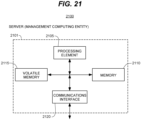
- An exemplary embodiment of the present disclosure may include one or more management computing entities (e.g., servers) 2101, one or more networks, and one or more user computing entities (e.g., clients) 2201, as shown in FIGS. 21-22 .
- management computing entities e.g., servers
- user computing entities e.g., clients
- FIGS. 21-22 illustrate the various system entities as separate, standalone entities, the various embodiments are not limited to this particular architecture.
- FIG. 21 provides a schematic 2100 of a management computing entity (e.g., server) 2101 according to one embodiment of the present disclosure.
- a management computing entity e.g., server
- the terms computing entity, computer, entity, device, system, and/or similar words used herein interchangeably may refer to, for example, one or more computers, computing entities, desktop computers, mobile phones, tablets, phablets, notebooks, laptops, distributed systems, gaming consoles, watches, glasses, iBeacons, proximity beacons, key fobs, radio frequency identification (RFID) tags, ear pieces, scanners, televisions, dongles, cameras, wristbands, wearable items/devices, kiosks, input terminals, servers or server networks, blades, gateways, switches, processing devices, processing entities, set-top boxes, relays, routers, network access points, base stations, the like, and/or any combination of devices or entities adapted to perform the functions, operations, and/or processes described herein.
- RFID radio frequency identification
- Such functions, operations, and/or processes may include, for example, transmitting, receiving, operating on, processing, displaying, storing, determining, creating/generating, monitoring, evaluating, comparing, and/or similar terms used herein interchangeably. In one embodiment, these functions, operations, and/or processes can be performed on data, content, information, and/or similar terms used herein interchangeably.
- the management computing entity 2101 may also include one or more communications interfaces 2120 for communicating with various computing entities, such as by communicating data, content, information, and/or similar terms used herein interchangeably that can be transmitted, received, operated on, processed, displayed, stored, and/or the like.
- the management computing entity 2101 may communicate with user computing entities 2201 and/or a variety of other computing entities.
- the management computing entity 2101 may include or be in communication with one or more processing elements 2105 (also referred to as processors, processing circuitry, and/or similar terms used herein interchangeably) that communicate with other elements within the management computing entity 2101 via a bus, for example.
- processing element 2105 may be embodied in a number of different ways.
- the processing element 2105 may be embodied as one or more complex programmable logic devices (CPLDs), microprocessors, multi-core processors, coprocessing entities, application-specific instruction-set processors (ASIPs), microcontrollers, and/or controllers.
- CPLDs complex programmable logic devices
- ASIPs application-specific instruction-set processors
- microcontrollers microcontrollers
- controllers the processing element 2105 may be embodied as one or more other processing devices or circuitry.
- circuitry may refer to an entirely hardware embodiment or a combination of hardware and computer program products.
- the processing element 2105 may be embodied as integrated circuits, application specific integrated circuits (ASICs), field programmable gate arrays (FPGAs), programmable logic arrays (PLAs), hardware accelerators, other circuitry, and/or the like.
- ASICs application specific integrated circuits
- FPGAs field programmable gate arrays
- PDAs programmable logic arrays
- the processing element 2105 may be configured for a particular use or configured to execute instructions stored in volatile or non-volatile media or otherwise accessible to the processing element 2105.
- the processing element 2105 may be capable of performing steps or operations according to embodiments of the present disclosure when configured accordingly.
- the management computing entity 2101 may further include or be in communication with non-volatile media (also referred to as non-volatile storage, memory, memory storage, memory circuitry and/or similar terms used herein interchangeably).
- non-volatile storage or memory may include one or more non-volatile storage or memory media 2110, including but not limited to hard disks, ROM, PROM, EPROM, EEPROM, flash memory, MMCs, SD memory cards, Memory Sticks, CBRAM, PRAM, FeRAM, NVRAM, MRAM, RRAM, SONOS, FJG RAM, Millipede memory, racetrack memory, and/or the like.
- the non-volatile storage or memory media may store databases, database instances, database management systems, data, applications, programs, program modules, scripts, source code, object code, byte code, compiled code, interpreted code, machine code, executable instructions, and/or the like.
- database, database instance, database management system, and/or similar terms used herein interchangeably may refer to a collection of records or data that is stored in a computer-readable storage medium using one or more database models, such as a hierarchical database model, network model, relational model, entity-relationship model, object model, document model, semantic model, graph model, and/or the like.
- the management computing entity 2101 may further include or be in communication with volatile media (also referred to as volatile storage, memory, memory storage, memory circuitry and/or similar terms used herein interchangeably).
- volatile storage or memory may also include one or more volatile storage or memory media 2115, including but not limited to RAM, DRAM, SRAM, FPM DRAM, EDO DRAM, SDRAM, DDR SDRAM, DDR2 SDRAM, DDR3 SDRAM, RDRAM, TTRAM, T-RAM, Z-RAM, RIMM, DIMM, SIMM, VRAM, cache memory, register memory, and/or the like.
- the volatile storage or memory media may be used to store at least portions of the databases, database instances, database management systems, data, applications, programs, program modules, scripts, source code, object code, byte code, compiled code, interpreted code, machine code, executable instructions, and/or the like being executed by, for example, the processing element 2105.
- the databases, database instances, database management systems, data, applications, programs, program modules, scripts, source code, object code, byte code, compiled code, interpreted code, machine code, executable instructions, and/or the like may be used to control certain aspects of the operation of the management computing entity 2101 with the assistance of the processing element 2105 and operating system.
- the management computing entity 2101 may also include one or more communications interfaces 2120 for communicating with various computing entities, such as by communicating data, content, information, and/or similar terms used herein interchangeably that can be transmitted, received, operated on, processed, displayed, stored, and/or the like.
- Such communication may be executed using a wired data transmission protocol, such as fiber distributed data interface (FDDI), digital subscriber line (DSL), Ethernet, asynchronous transfer mode (ATM), frame relay, data over cable service interface specification (DOCSIS), or any other wired transmission protocol.
- FDDI fiber distributed data interface
- DSL digital subscriber line
- Ethernet asynchronous transfer mode
- ATM asynchronous transfer mode
- frame relay frame relay
- DOCSIS data over cable service interface specification
- the management computing entity 2101 may be configured to communicate via wireless external communication networks using any of a variety of protocols, such as general packet radio service (GPRS), Universal Mobile Telecommunications System (UMTS), Code Division Multiple Access 2000 (CDMA2000), CDMA2000 1X (1xRTT), Wideband Code Division Multiple Access (WCDMA), Time Division-Synchronous Code Division Multiple Access (TD-SCDMA), Long Term Evolution (LTE), Evolved Universal Terrestrial Radio Access Network (E-UTRAN), Evolution-Data Optimized (EVDO), High Speed Packet Access (HSPA), High-Speed Downlink Packet Access (HSDPA), IEEE 802.11 (Wi-Fi), Wi-Fi Direct, 802.16 (WiMAX), ultra-wideband (UWB), infrared (IR) protocols, near field communication (NFC) protocols, Zigbee, Bluetooth protocols, wireless universal serial bus (USB) protocols, and/or any other wireless protocol.
- GPRS general packet radio service
- UMTS Universal Mobile Telecommunications System
- the management computing entity 2101 may include or be in communication with one or more input elements, such as a keyboard input, a mouse input, a touch screen/display input, motion input, movement input, audio input, pointing device input, joystick input, keypad input, and/or the like.
- the management computing entity 2101 may also include or be in communication with one or more output elements (not shown), such as audio output, video output, screen/display output, motion output, movement output, and/or the like.
- one or more of the components of the management computing entity 2101 may be located remotely from other management computing entity 2101 components, such as in a distributed system. Furthermore, one or more of the components may be combined and additional components performing functions described herein may be included in the management computing entity 2101. Thus, the management computing entity 2101 can be adapted to accommodate a variety of needs and circumstances. As will be recognized, these architectures and descriptions are provided for exemplary purposes only and are not limiting to the various embodiments.
- a user may be an individual, a family, a company, an organization, an entity, a department within an organization, a representative of an organization and/or person, and/or the like.
- users may be carrier personnel, consignors/shippers, consignees/recipients, and/or the like.
- a user may operate a user computing entity (e.g., client) 2201 that includes one or more components that are functionally similar to those of the management computing entity 2101.
- FIG. 22 provides an illustrative schematic 2200 representative of a user computing entity 2201 that can be used in conjunction with embodiments of the present disclosure.
- the terms device, system, computing entity, entity, and/or similar words used herein interchangeably may refer to, for example, one or more computers, computing entities, desktops, mobile phones, tablets, phablets, notebooks, laptops, distributed systems, gaming consoles, watches, glasses, key fobs, radio frequency identification (RFID) tags, ear pieces, scanners, cameras, wristbands, kiosks, input terminals, servers or server networks, blades, gateways, switches, processing devices, processing entities, set-top boxes, relays, routers, network access points, base stations, the like, and/or any combination of devices or entities adapted to perform the functions, operations, and/or processes described herein.
- User computing entities 2201 can be operated by various parties. As shown in FIG.
- the user computing entity 2201 can include an antenna 2212, a transmitter 2204 (e.g., radio), a receiver 2206 (e.g., radio), and a processing element 2208 (e.g., CPLDs, microprocessors, multi-core processors, coprocessing entities, ASIPs, microcontrollers, and/or controllers) that provides signals to and receives signals from the transmitter 2204 and receiver 2206, respectively.
- a transmitter 2204 e.g., radio
- a receiver 2206 e.g., radio
- a processing element 2208 e.g., CPLDs, microprocessors, multi-core processors, coprocessing entities, ASIPs, microcontrollers, and/or controllers
- the signals provided to and received from the transmitter 2204 and the receiver 2206, respectively, may include signaling information in accordance with air interface standards of applicable wireless systems.
- the user computing entity 2201 may be capable of operating with one or more air interface standards, communication protocols, modulation types, and access types. More particularly, the user computing entity 2201 may operate in accordance with any of a number of wireless communication standards and protocols, such as those described above with regard to the management computing entity 2101.
- the user computing entity 2201 may operate in accordance with multiple wireless communication standards and protocols, such as 5G, UMTS, CDMA2000, 1xRTT, WCDMA, TD-SCDMA, LTE, E-UTRAN, EVDO, HSPA, HSDPA, Wi-Fi, Wi-Fi Direct, WiMAX, UWB, IR, NFC, Bluetooth, USB, and/or the like.
- the user computing entity 2201 may operate in accordance with multiple wired communication standards and protocols, such as those described above with regard to the management computing entity 2101 via a network interface 2220.
- the user computing entity 2201 can communicate with various other entities using concepts such as Unstructured Supplementary Service Data (USSD), Short Message Service (SMS), Multimedia Messaging Service (MMS), Dual-Tone Multi-Frequency Signaling (DTMF), and/or Subscriber Identity Module Dialer (SIM dialer).
- USSD Unstructured Supplementary Service Data
- SMS Short Message Service
- MMS Multimedia Messaging Service
- DTMF Dual-Tone Multi-Frequency Signaling
- SIM dialer Subscriber Identity Module Dialer
- the user computing entity 2201 can also download changes, add-ons, and updates, for instance, to its firmware, software (e.g., including executable instructions, applications, program modules), and operating system.
- the user computing entity 2201 may include location determining aspects, devices, modules, functionalities, and/or similar words used herein interchangeably.
- the user computing entity 2201 may include outdoor positioning aspects, such as a location module adapted to acquire, for example, latitude, longitude, altitude, geocode, course, direction, heading, speed, universal time (UTC), date, and/or various other information/data.
- the location module can acquire data, sometimes known as ephemeris data, by identifying the number of satellites in view and the relative positions of those satellites.
- the satellites may be a variety of different satellites, including Low Earth Orbit (LEO) satellite systems, Department of Defense (DOD) satellite systems, the European Union Galileo positioning systems, the Chinese Compass navigation systems, Indian Regional Navigational satellite systems, and/or the like.
- LEO Low Earth Orbit
- DOD Department of Defense
- the location information can be determined by triangulating the user computing entity's 2201 position in connection with a variety of other systems, including cellular towers, Wi-Fi access points, and/or the like.
- the user computing entity 2201 may include indoor positioning aspects, such as a location module adapted to acquire, for example, latitude, longitude, altitude, geocode, course, direction, heading, speed, time, date, and/or various other information/data.
- Some of the indoor systems may use various position or location technologies including RFID tags, indoor beacons or transmitters, Wi-Fi access points, cellular towers, nearby computing devices (e.g., smartphones, laptops) and/or the like.
- position or location technologies including RFID tags, indoor beacons or transmitters, Wi-Fi access points, cellular towers, nearby computing devices (e.g., smartphones, laptops) and/or the like.
- such technologies may include the iBeacons, Gimbal proximity beacons, Bluetooth Low Energy (BLE) transmitters, NFC transmitters, and/or the like.
- BLE Bluetooth Low Energy
- the user computing entity 2201 may also comprise a user interface (that can include a display 2216 coupled to a processing element 2208 ) and/or a user input interface (coupled to a processing element 2208 ).
- the user interface may be a user application, browser, user interface, and/or similar words used herein interchangeably executing on and/or accessible via the user computing entity 2201 to interact with and/or cause display of information from the management computing entity 2101, as described herein.
- the user input interface can comprise any of a number of devices or interfaces allowing the user computing entity 2201 to receive data, such as a keypad 2218 (hard or soft), a touch display, voice/speech or motion interfaces, or other input device.
- the keypad 2218 can include (or cause display of) the conventional numeric (0-9) and related keys (#, *), and other keys used for operating the user computing entity 2201 and may include a full set of alphabetic keys or set of keys that may be activated to provide a full set of alphanumeric keys.
- the user input interface can be used, for example, to activate or deactivate certain functions, such as screen savers and/or sleep modes.
- the user computing entity 2201 can also include volatile storage or memory 2222 and/or non-volatile storage or memory 2224, which can be embedded and/or may be removable.
- the non-volatile memory may be ROM, PROM, EPROM, EEPROM, flash memory, MMCs, SD memory cards, Memory Sticks, CBRAM, PRAM, FeRAM, NVRAM, MRAM, RRAM, SONOS, FJG RAM, Millipede memory, racetrack memory, and/or the like.
- the volatile memory may be RAM, DRAM, SRAM, FPM DRAM, EDO DRAM, SDRAM, DDR SDRAM, DDR2 SDRAM, DDR3 SDRAM, RDRAM, TTRAM, T-RAM, Z-RAM, RIMM, DIMM, SIMM, VRAM, cache memory, register memory, and/or the like.
- the volatile and non-volatile storage or memory can store databases, database instances, database management systems, data, applications, programs, program modules, scripts, source code, object code, byte code, compiled code, interpreted code, machine code, executable instructions, and/or the like to implement the functions of the user computing entity 2201. As indicated, this may include a user application that is resident on the entity or accessible through a browser or other user interface for communicating with the management computing entity 2101 and/or various other computing entities.
- the user computing entity 2201 may include one or more components or functionality that are the same or similar to those of the management computing entity 2101, as described in greater detail above.
- these architectures and descriptions are provided for exemplary purposes only and are not limiting to the various embodiments.
- the present invention may be implemented using one or more machine learning modules implementing one or more algorithms implemented in non-transitory storage medium having program code stored thereon, the program code executable by one or more processors, as described above.
- the following description describes in detail some of the illustrative machine learning algorithms useful for implementing some embodiments of the present invention.
- FIG. 23 shows an illustrative diagram 2300 for a machine learning algorithm used to implement masterbot arbitration and evaluation of information agents and action agents, in accordance with sample embodiments of the invention.
- the machine learning algorithm comprises a random forest algorithm, one illustrative machine learning algorithm.
- Random forest algorithms use a multitude of decision tree predictors 2306 such that each decision tree 2306 depends on the values of a random subset 2304 of the training data 2302, which minimizes the chances of overfitting to the training data set.
- the decision tree predictors are voted or averaged 2308 to obtain the prediction 2310 of the random forest algorithm.
- the random forest algorithm is implementation as described in Leo Breiman, Random Forests, Machine Learning, 45, 5-32, 2001, Kluwer Academic Publishers, Netherlands, available at doi.org/10.1023/A:1010933404324 .
- Random forest is only one illustrative machine learning algorithm that is within the scope of the present invention, and the present invention is not limited to the use of random forest.
- Other machine learning algorithms including but not limited to, nearest neighbor, decision trees, support vector machines (SVM), Adaboost, Bayesian networks, various neural networks including deep learning networks, evolutionary algorithms, and so forth, are within the scope of the present invention.
- embodiments of devices and systems (and their various components) described herein can employ artificial intelligence (AI) to facilitate automating one or more features described herein (e.g., action agent selection).
- AI artificial intelligence
- the components can employ various AI-based schemes for carrying out various embodiments/examples disclosed herein.
- components described herein can examine the entirety or a subset of the data to which it is granted access and can provide for reasoning about or determine states of the system, environment, etc. from a set of observations as captured via events and/or data.
- Determinations can be employed to identify a specific context or action, or can generate a probability distribution over states, for example.
- the determinations can be probabilistic - that is, the computation of a probability distribution over states of interest based on a consideration of data and events. Determinations can also refer to techniques employed for composing higher-level events from a set of events and/or data.
- Such determinations can result in the construction of new events or actions from a set of observed events and/or stored event data, whether the events are correlated in close temporal proximity, and whether the events and data come from one or several event and data sources.
- Components disclosed herein can employ various classification (explicitly trained (e.g., via training data) as well as implicitly trained (e.g., via observing behavior, preferences, historical information, receiving extrinsic information, etc.)) schemes and/or systems (e.g., support vector machines, neural networks, expert systems, Bayesian belief networks, fuzzy logic, data fusion engines, etc.) in connection with performing automatic and/or determined action in connection with the claimed subject matter.
- classification schemes and/or systems can be used to automatically learn and perform a number of functions, actions, and/or determinations.
- Such classification may employ a probabilistic and/or statistical-based analysis (e.g., factoring into the analysis utilities and costs) to determinate an action to be automatically performed.
- Another example of a classifier that can be employed is a support vector machine (SVM).
- SVM operates by finding a hyper-surface in the space of possible inputs, where the hyper-surface attempts to split the triggering criteria from the non-triggering events.
- Other directed and undirected model classification approaches including, e.g., naive Bayes, Bayesian networks, decision trees, neural networks, fuzzy logic models, and/or probabilistic classification models, providing different patterns of independence, can be employed.
- Classification as used herein also is inclusive of statistical regression that is utilized to develop models of priority.
- FIG. 24 shows an exemplary flow diagram 2400 for training the machine learning (ML) algorithms, which are utilized in training the masterbot to evaluate and arbitrate among the information agents and action agents, in accordance with example embodiments of the present invention.
- the training process begins at step 2402, with data acquisition.
- the acquired data is pre-processed (known as data preparation).
- the model is trained using training data 2450.
- the model is evaluated and tested, and further refinements to the model are fed back into step 2406.
- the optimal model parameters are selected.
- the model is deployed. New data 2452 can now be used by the deployed model to make predictions 2414.
- a starting point for any machine learning method such as used by the machine learning component above is a documented dataset containing multiple instances of system inputs and correct outcomes (e.g., the training data).
- This data set can be used, using methods known in the art, including but not limited to standardized machine learning methods such as parametric classification methods, non-parametric methods, decision tree learning, neural networks, methods combining both inductive and analytic learning, and modeling approaches such as regression models, to train the machine learning system and to evaluate and optimize the performance of the trained system.
- the quality of the output of the machine learning system output depends on (a) the pattern parameterization, (b) the learning machine design, and (c) the quality of the training database.
- the database can be refined by adding datasets for new documented user utterances.
- the quality of the database can be improved, for example, by populating the database with cases in which the user utterances were correctly recognized.
- the database includes data, for example, of sample conversations with end user utterances and optimal action agent selection, which can assist in the evaluation of a trained system.
- FIG. 25 shows an illustrative block diagram 2500 for a LINC virtual assistant platform 2502, in accordance with another embodiment of the invention.
- LINC platform 2502 may receive NLU input 2510, contextual data 2520, and API input data 2530.
- the received data may be processed by the LINC server 2550, and stored in the cloud for later use, analysis, playback, and predictions.
- the LINC server 2550 may provide NLG output 2560, API output 2570, and/or real-time analytics 2580 to a plurality of end user devices over the network.
- FIG. 26 shows a diagram 2600 of an illustrative prior art decision-tree approach for implementing natural language systems.
- the approach disclosed in this invention dramatically simplifies the work to implement a single service for a developer.
- the virtual assistant platform utilizes domain optimized ontology and on-platform data to support a large collection of data inputs.
- the developer only needs to mark these data inputs as prerequisite info agents, using for example a declarative language, and the platform will automatically manage all the necessary conversations to ensure the information values of these chosen inputs are available for the developer to leverage. This greatly reduces the effort of bot implementation from weeks (or months) to hours.
- FIG. 28 shown in FIG. 28 is a conceptual architecture diagram 2800 showing how a new service (for example, Service X) may be implemented by leveraging and reusing a large number of existing building blocks or agents R1, R2, R3, etc., as prerequisites and rearranging them using a declarative programming language without extensive development time.
- a new service can be assembled quickly by specifying the necessary info agents(s) R1, R2, R3, etc., which are likely to be pre-built and available in the platform.
- the virtual assistant platform will automatically handle all of the natural language understanding (NLU) information retrieval tasks from the conversation, making inferences based on existing context as well as conducting a service using the best approach (e.g., connected info agents).
- NLU natural language understanding
- the entire dialog flow would be automated, and the developer's job is to focus on the actual service logic, which is conversation independent and high-level.
- FIG. 27 shows a diagram 2700 of an illustrative prior art menu-driven approach for implementing multi-service virtual assistants.
- Disadvantages include the topic-based top-level triaging among service-specific dialogue flows; requirement to follow strict dialogue flows to execute individual services; using a rigid set of control functions (e.g., start again, repeat, main menu, etc.) to navigate between services; and often no support for switching topics amid a conversation.
- One benefit of the disclosed invention is an AI agent solution that solves this challenge.
- the developer only needs to spend (n) effort to teach the AI agent (n) services, and the resulting AI agent can seamlessly manage (n m ) conversation possibilities, as described herein.
- the present invention In addition to exponentially reducing the development effort in teaching the AI agent new services, the present invention also:
- the present invention allows for a fluid, dynamic conversation between the bot and the end user using a small number of conversation building blocks that can be leveraged to create an endless variety of conversations.
- the platform allows users to conduct a natural conversation, change topics midstream, and navigate across multiple services seamlessly in the same conversation.
- FIG. 29 shown in FIG. 29 is a conceptual architecture diagram 2900 showing how for a multiple service use case, the masterbot automatically uses natural language understanding (NLU), policy management, and dialog management to facilitate the discovering and triaging of action agents, and how info agents can be shared and re-used.
- NLU natural language understanding
- policy management policy management
- dialog management dialog management
- a frame-based (or frame-slot) approach for conversation interactions.
- a frame is mapped to an intent and defined as a structure with slots of data types. Once all the slots are filled, a frame is ready.
- the dialog system applies natural language understanding to figure out slots and many implementations can automatically generate follow-up questions to attempt to fill the slot.
- the present invention provides many benefits over conventional approaches to conversation bots.
- Every embodiment may be unique, and methods/steps may be either shortened or lengthened, overlapped with the other activities, postponed, delayed, and continued after a time gap, such that every end-user device is accommodated by the server to practice the methods of the present invention.
- a computing device is a hardware that includes at least one processor coupled to a memory.
- the processor may represent one or more processors (e.g., microprocessors), and the memory may represent random access memory (RAM) devices comprising a main storage of the hardware, as well as any supplemental levels of memory, e.g., cache memories, non-volatile or back-up memories (e.g., programmable or flash memories), read-only memories, etc.
- the memory may be considered to include memory storage physically located elsewhere in the hardware, e.g. any cache memory in the processor, as well as any storage capacity used as a virtual memory, e.g., as stored on a mass storage device.
- the hardware of a computing device also typically receives a number of inputs and outputs for communicating information externally.
- the hardware may include one or more user input devices (e.g., a keyboard, a mouse, a scanner, a microphone, a camera, etc.) and a display (e.g., a Liquid Crystal Display (LCD) panel).
- the hardware my also include one or more mass storage devices, e.g., a floppy or other removable disk drive, a hard disk drive, a Direct Access Storage Device (DASD), an optical drive (e.g., a Compact Disk (CD) drive, a Digital Versatile Disk (DVD) drive, etc.) and/or a tape drive, among others.
- DASD Direct Access Storage Device
- CD Compact Disk
- DVD Digital Versatile Disk
- the hardware may include an interface to one or more networks (e.g., a local area network (LAN), a wide area network (WAN), a wireless network, and/or the Internet among others) to permit the communication of information with other computers coupled to the networks.
- networks e.g., a local area network (LAN), a wide area network (WAN), a wireless network, and/or the Internet among others.
- LAN local area network
- WAN wide area network
- wireless network e.g., a wireless network
- the hardware typically includes suitable analog and/or digital interfaces to communicate with each other.
- the entire system can be implemented and offered to the end-users and operators over the Internet, in a so-called cloud implementation.
- No local installation of software or hardware would be needed, and the end-users and operators would be allowed access to the systems of the present invention directly over the Internet, using either a web browser or similar software on a client, which client could be a desktop, laptop, mobile device, and so on.
- Various business models, revenue models, and delivery mechanisms for the present invention are envisioned, and are all to be considered within the scope of the present invention.
- the hardware operates under the control of an operating system, and executes various computer software applications, components, program code, libraries, objects, modules, etc. to perform the methods, processes, and techniques described above.
- the method executed to implement the embodiments of the invention may be implemented as part of an operating system or a specific application, component, program, object, module or sequence of instructions referred to as "computer program(s)" or “program code(s).”
- the computer programs typically comprise one or more instructions set at various times in various memory and storage devices in a computing device or computer, and that, when read and executed by one or more processors in the computer, cause the computer to perform operations necessary to execute elements involving the various aspects of the invention.
- computer-readable media include, but are not limited to, recordable type media such as volatile and non-volatile memory devices, floppy and other removable disks, hard disk drives, optical disks (e.g., Compact Disk Read-Only Memory (CD-ROMS), Digital Versatile Disks, (DVDs), etc.), and digital and analog communication media.
- recordable type media such as volatile and non-volatile memory devices, floppy and other removable disks, hard disk drives, optical disks (e.g., Compact Disk Read-Only Memory (CD-ROMS), Digital Versatile Disks, (DVDs), etc.
- CD-ROMS Compact Disk Read-Only Memory
- DVDs Digital Versatile Disks
- Blocks of the block diagrams and flow diagrams support combinations of means for performing the specified functions, combinations of elements or steps for performing the specified functions, and program instruction means for performing the specified functions. It will also be understood that each block of the block diagrams and flow diagrams, and combinations of blocks in the block diagrams and flow diagrams, may be implemented by special-purpose, hardware-based computer systems that perform the specified functions, elements or steps, or combinations of special-purpose hardware and computer instructions.
- a software component may be coded in any of a variety of programming languages.
- An illustrative programming language may be a lower-level programming language such as an assembly language associated with a particular hardware architecture and/or operating system platform.
- a software component comprising assembly language instructions may require conversion into executable machine code by an assembler prior to execution by the hardware architecture and/or platform.
- a software component may be stored as a file or other data storage construct.
- Software components of a similar type or functionally related may be stored together such as, for example, in a particular directory, folder, or library.
- Software components may be static (for example, preestablished or fixed) or dynamic (for example, created or modified at the time of execution).
- Software components may invoke or be invoked by other software components through any of a wide variety of mechanisms.
- Invoked or invoking software components may comprise other custom-developed application software, operating system functionality (for example, device drivers, data storage (for example, file management) routines, other common routines and services, etc.), or third-party software components (for example, middleware, encryption, or other security software, database management software, file transfer or other network communication software, mathematical or statistical software, image processing software, and format translation software).
- operating system functionality for example, device drivers, data storage (for example, file management) routines, other common routines and services, etc.
- third-party software components for example, middleware, encryption, or other security software, database management software, file transfer or other network communication software, mathematical or statistical software, image processing software, and format translation software.
- Software components associated with a particular solution or system may reside and be executed on a single platform or may be distributed across multiple platforms.
- the multiple platforms may be associated with more than one hardware vendor, underlying chip technology, or operating system.
- software components associated with a particular solution or system may be initially written in one or more programming languages but may invoke software components written in another programming language.
- Computer-executable program instructions may be loaded onto a special-purpose computer or other particular machine, a processor, or other programmable data processing apparatus to produce a particular machine, such that execution of the instructions on the computer, processor, or other programmable data processing apparatus causes one or more functions or operations specified in the flow diagrams to be performed.
- These computer program instructions may also be stored in a computer-readable storage medium (CRSM) that upon execution may direct a computer or other programmable data processing apparatus to function in a particular manner, such that the instructions stored in the computer-readable storage medium produce an article of manufacture including instruction means that implement one or more functions or operations specified in the flow diagrams.
- the computer program instructions may also be loaded onto a computer or other programmable data processing apparatus to cause a series of operational elements or steps to be performed on the computer or other programmable apparatus to produce a computer-implemented process.
Landscapes
- Engineering & Computer Science (AREA)
- Theoretical Computer Science (AREA)
- Physics & Mathematics (AREA)
- Artificial Intelligence (AREA)
- Computational Linguistics (AREA)
- General Engineering & Computer Science (AREA)
- General Physics & Mathematics (AREA)
- Mathematical Physics (AREA)
- Data Mining & Analysis (AREA)
- Health & Medical Sciences (AREA)
- Software Systems (AREA)
- Audiology, Speech & Language Pathology (AREA)
- Evolutionary Computation (AREA)
- Computing Systems (AREA)
- Databases & Information Systems (AREA)
- Human Computer Interaction (AREA)
- General Health & Medical Sciences (AREA)
- Acoustics & Sound (AREA)
- Multimedia (AREA)
- Computer Networks & Wireless Communication (AREA)
- Signal Processing (AREA)
- Medical Informatics (AREA)
- Computer Vision & Pattern Recognition (AREA)
- Life Sciences & Earth Sciences (AREA)
- Biomedical Technology (AREA)
- Animal Behavior & Ethology (AREA)
- Molecular Biology (AREA)
- Biophysics (AREA)
- Information Retrieval, Db Structures And Fs Structures Therefor (AREA)
- Machine Translation (AREA)
- User Interface Of Digital Computer (AREA)
Claims (14)
- System (100) für eine virtuelle Assistentenplattform, umfassend:mindestens eine Speichervorrichtung, die computerausführbare Anweisungen speichert; undmindestens einen Prozessor, der dazu konfiguriert ist, auf die Speichervorrichtung zuzugreifen, wobei der eine Prozessor dazu konfiguriert ist, die computerausführbaren Anweisungen auszuführen, zum:Empfangen einer oder mehrerer Äußerungen (104) von einem Benutzer;Erzeugen einer analysierten Benutzereingabe aus der einen oder den mehreren Äußerungen unter Verwendung eines Moduls zum Verständnis natürlicher Sprache (natural language understanding, NLU) (106);Erlangen mindestens eines Informationswerts aus der analysierten Benutzereingabe und/oder kontextbezogenen Daten unter Verwendung einer Vielzahl von Informationsagenten (120);Durchführen einer oder mehrerer Aktionen als Reaktion auf die analysierte Benutzereingabe, die kontextbezogenen Daten und/oder den mindestens einen Informationswert unter Verwendung einer Vielzahl von Aktionsagenten (112), wobei die Vielzahl von Informationsagenten und die Vielzahl von Aktionsagenten über eine oder mehrere Beziehungsverbindungen miteinander verbunden sind, wobei die eine oder die mehreren Beziehungsverbindungen mindestens eine Vorbedingungsverbindung (1406) umfassen, die einen oder mehrere Vorbedingungsinformationsagenten aktiviert, um eine oder mehrere Vorbedingungsbedingungen für einen gegebenen Aktionsagenten zu erfüllen, wobei die eine oder die mehreren Beziehungsverbindungen ferner aus der Gruppe ausgewählt sind, bestehend aus einer Vorgabewertverbindung (1408) zwischen einem Aktionsagenten und einem Informationsagenten, einer Nachverfolgungsverbindung (1404) zwischen zwei Aktionsagenten und einer Inferenzverbindung (1412) zwischen zwei Informationsagenten; undVermitteln einer Aktivierung der Vielzahl von Informationsagenten und der Vielzahl von Aktivitätsagenten unter Verwendung eines Masterbots (108), um eine Reaktion an den Benutzer zurückzugeben.
- System nach Anspruch 1, wobei mindestens einer der Vielzahl von Informationsagenten (120) angepasst ist, um die analysierte Benutzereingabe des Benutzers zu verstehen, um den Informationswert direkt aus der analysierten Benutzereingabe zu extrahieren.
- System nach Anspruch 1, wobei mindestens einer der Vielzahl von Informationsagenten (120) angepasst ist, um den Informationswert aus der analysierten Benutzereingabe abzuleiten, wobei Ableiten als Reaktion auf Bestimmen aktiviert wird, dass ein gegebener Informationsagent den Informationswert nicht erlangen kann, indem er die analysierte Benutzereingabe direkt versteht.
- System nach Anspruch 3, wobei mindestens einer der Vielzahl von Informationsagenten (120) angepasst ist, um den Informationswert durch Zugreifen auf eine oder mehrere kontextbezogene Datenquellen für die kontextbezogenen Daten abzuleiten, und angepasst ist, um den Informationswert aus der analysierten Benutzereingabe und den kontextbezogenen Daten abzuleiten.
- System nach Anspruch 4, wobei mindestens einer der Vielzahl von Informationsagenten (120) angepasst ist, um den Benutzer nach dem Informationswert abzufragen, indem er eine Abfrage in natürlicher Sprache unter Verwendung eines Moduls zur Erzeugung natürlicher Sprache (NLG) (124) erzeugt, wobei Abfragen als Reaktion auf das Bestimmen aktiviert wird, dass der Informationsagent den Informationswert nicht erlangen kann, indem er die analysierte Benutzereingabe versteht oder den Informationswert ableitet.
- System nach Anspruch 1, wobei mindestens einer der Vielzahl von Informationsagenten (120) angepasst ist, um den Informationswert durch Aktivieren eines oder mehrerer anderer Informationsagenten zu erlangen, wobei der eine oder die mehreren anderen Informationsagenten als Reaktion auf das Bestimmen, dass der mindestens eine Informationsagent den Informationswert nicht durch Verstehen der analysierten Benutzereingabe oder durch Ableiten des Informationswertes erlangen kann, aktiviert werden.
- System nach Anspruch 1, wobei mindestens einer der Vielzahl von Aktionsagenten (112) die eine oder mehrere Aktionen durchführt, indem er einen oder mehrere interne Dienste auslöst, um eine oder mehrere Dienste durchzuführen.
- System nach Anspruch 7, wobei mindestens einer der Vielzahl von Aktionsagenten (112) die eine oder mehrere Aktionen durch das Zugreifen auf eine oder mehrere Anwendungsprogrammierschnittstellen- (Application Programming Interface, API-) Gateways zu externen Diensten zum Durchführen der einen oder mehreren Dienste durchführt.
- System nach Anspruch 1, wobei der Masterbot (108) angepasst ist, um einen oder mehrere der Informationsagenten (120) zu aktivieren, um eine oder mehrere Vorbedingungsverbindungen für einen gegebenen Aktionsagenten (112) zu erfüllen, wobei der gegebene Aktionsagent den einen oder die mehreren aktivierten Informationsagenten einsetzt, um einen oder mehrere Informationswerte zu erlangen, die erforderlich sind, um die eine oder mehrere Aktionen durchzuführen.
- System nach Anspruch 1, wobei die Vorgabewertverbindung die Vielzahl von Informationsagenten (120) und die Vielzahl von Aktionsagenten (112) über eine Vielzahl von Vorgabewertaktionen miteinander verbindet, wobei eine gegebene Vorgabewertaktion für einen gegebenen Aktionsagenten verwendet wird, um einen Informationswert für einen oder mehrere entsprechende Informationsagenten zu setzen, die später von den entsprechenden Informationsagenten verwendet werden.
- System nach Anspruch 1, wobei die Nachverfolgungsverbindung die Vielzahl von Aktionsagenten (112) miteinander verbindet, die bestimmt, wann ein gegebener Aktionsagent nach Beendigen eines anderen gegebenen Aktionsagenten nachverfolgt.
- System nach Anspruch 1, wobei die Inferenzverbindung die Vielzahl von Informationsagenten miteinander verbindet, die bestimmt, wann ein gegebener Informationsagent einen oder mehrere verhältnismäßige Informationsagenten aktiviert, um einen oder mehrere Informationswerte des gegebenen Informationsagenten zu erfüllen, die später von dem gegebenen Informationsagenten verwendet werden.
- Nichttransitorisches, computerlesbares Medium, das computerausführbare Anweisungen für eine virtuelle Mehrdienst-Assistentenplattform speichert, die, wenn sie von einem Prozessor ausgeführt werden, den Prozessor veranlassen, Vorgänge durchzuführen, umfassend Schritte zum:Empfangen einer oder mehrerer Äußerungen (104) von einem Benutzer;Erzeugen einer analysierten Benutzereingabe aus der einen oder den mehreren Äußerungen unter Verwendung eines Moduls zum Verständnis natürlicher Sprache (NLU) (106);Erlangen mindestens eines Informationswerts aus der analysierten Benutzereingabe und/oder kontextbezogenen Daten unter Verwendung einer Vielzahl von Informationsagenten (120);Durchführen einer oder mehrerer Aktionen als Reaktion auf die analysierte Benutzereingabe, die kontextbezogenen Daten und/oder den mindestens einen Informationswert unter Verwendung einer Vielzahl von Aktionsagenten (112), wobei die Vielzahl von Informationsagenten (120) und die Vielzahl von Aktionsagenten (112) über eine oder mehrere Beziehungsverbindungen miteinander verbunden sind, wobei die eine oder die mehreren Beziehungsverbindungen mindestens eine Vorbedingungsverbindung (1406) umfassen, die einen oder mehrere Vorbedingungsinformationsagenten aktiviert, um eine oder mehrere Vorbedingungsbedingungen für einen gegebenen Aktionsagenten zu erfüllen, wobei die eine oder die mehreren Beziehungsverbindungen ferner aus der Gruppe ausgewählt sind, bestehend aus einer Vorgabewertverbindung (1408) zwischen einem Aktionsagenten und einem Informationsagenten, einer Nachverfolgungsverbindung (1404) zwischen zwei Aktionsagenten und einer Inferenzverbindung (1412) zwischen zwei Informationsagenten; undVermitteln einer Aktivierung der Vielzahl von Informationsagenten und der Vielzahl von Aktivitätsagenten unter Verwendung eines Masterbots (108), um eine Reaktion an den Benutzer zurückzugeben.
- Computerimplementiertes Verfahren für eine virtuelle Mehrdienst-Assistentenplattform, das, wenn es von einem Prozessor ausgeführt wird, den Prozessor veranlasst, Schritte durchzuführen, die Folgendes umfassen:Empfangen einer oder mehrerer Äußerungen (104) von einem Benutzer;Erzeugen einer analysierten Benutzereingabe aus der einen oder den mehreren Äußerungen unter Verwendung eines Moduls zum Verständnis natürlicher Sprache (NLU) (106);Erlangen mindestens eines Informationswerts aus der analysierten Benutzereingabe und/oder kontextbezogenen Daten unter Verwendung einer Vielzahl von Informationsagenten (120);Durchführen einer oder mehrerer Aktionen als Reaktion auf die analysierte Benutzereingabe, die kontextbezogenen Daten und/oder den mindestens einen Informationswert unter Verwendung einer Vielzahl von Aktionsagenten (112), wobei die Vielzahl von Informationsagenten (120) und die Vielzahl von Aktionsagenten (112) über eine oder mehrere Beziehungsverbindungen miteinander verbunden sind, wobei die eine oder die mehreren Beziehungsverbindungen mindestens eine Vorbedingungsverbindung (1406) umfassen, die einen oder mehrere Vorbedingungsinformationsagenten aktiviert, um eine oder mehrere Vorbedingungsbedingungen für einen gegebenen Aktionsagenten zu erfüllen, wobei die eine oder die mehreren Beziehungsverbindungen ferner aus der Gruppe ausgewählt sind, bestehend aus einer Vorgabewertverbindung (1408) zwischen einem Aktionsagenten und einem Informationsagenten, einer Nachverfolgungsverbindung (1404) zwischen zwei Aktionsagenten und einer Inferenzverbindung (1412) zwischen zwei Informationsagenten; undAktivieren eines oder mehrerer der Vielzahl von Informationsagenten und der Vielzahl von Aktivitätsagenten unter Verwendung eines Masterbots (108), um eine Reaktion an den Benutzer zurückzugeben.
Applications Claiming Priority (3)
| Application Number | Priority Date | Filing Date | Title |
|---|---|---|---|
| US201962862128P | 2019-06-16 | 2019-06-16 | |
| US16/528,926 US10629191B1 (en) | 2019-06-16 | 2019-08-01 | Methods and systems for deploying and managing scalable multi-service virtual assistant platform |
| PCT/US2020/037814 WO2020257127A1 (en) | 2019-06-16 | 2020-06-15 | Methods and systems for deploying and managing scalable multi-service virtual assistant platform |
Publications (4)
| Publication Number | Publication Date |
|---|---|
| EP3963478A1 EP3963478A1 (de) | 2022-03-09 |
| EP3963478A4 EP3963478A4 (de) | 2023-01-18 |
| EP3963478C0 EP3963478C0 (de) | 2025-02-26 |
| EP3963478B1 true EP3963478B1 (de) | 2025-02-26 |
Family
ID=70285079
Family Applications (1)
| Application Number | Title | Priority Date | Filing Date |
|---|---|---|---|
| EP20827373.0A Active EP3963478B1 (de) | 2019-06-16 | 2020-06-15 | Verfahren und systeme zum entfalten und verwalten einer skalierbaren mehrdienst-assistentenplattform |
Country Status (5)
| Country | Link |
|---|---|
| US (5) | US10629191B1 (de) |
| EP (1) | EP3963478B1 (de) |
| CA (1) | CA3142624C (de) |
| ES (1) | ES3018884T3 (de) |
| WO (1) | WO2020257127A1 (de) |
Families Citing this family (73)
| Publication number | Priority date | Publication date | Assignee | Title |
|---|---|---|---|---|
| CA2982930A1 (en) * | 2017-10-18 | 2019-04-18 | Kari Saarenvirta | System and method for selecting promotional products for retail |
| US20190188269A1 (en) * | 2017-12-14 | 2019-06-20 | Honeywell International Inc. | Providing bots for industrial processes |
| US11978452B2 (en) * | 2019-04-26 | 2024-05-07 | Oracle International Corportion | Handling explicit invocation of chatbots |
| US11651162B2 (en) | 2019-04-26 | 2023-05-16 | Oracle International Corporation | Composite entity for rule driven acquisition of input data to chatbots |
| CN112015852B (zh) * | 2019-05-31 | 2025-03-28 | 微软技术许可有限责任公司 | 在关于事件的会话中提供响应 |
| US11057320B2 (en) * | 2019-06-27 | 2021-07-06 | Walmart Apollo, Llc | Operation for multiple chat bots operation in organization |
| US20210081863A1 (en) * | 2019-07-25 | 2021-03-18 | Airwire Technologies | Vehicle intelligent assistant |
| US12090955B2 (en) | 2019-07-29 | 2024-09-17 | Airwire Technologies | Vehicle intelligent assistant using contextual data |
| CN114041145A (zh) * | 2019-08-02 | 2022-02-11 | 谷歌有限责任公司 | 用于生成和提供建议动作的系统和方法 |
| US11301629B2 (en) * | 2019-08-21 | 2022-04-12 | International Business Machines Corporation | Interleaved conversation concept flow enhancement |
| JP7459470B2 (ja) * | 2019-09-20 | 2024-04-02 | 株式会社リコー | 情報処理システム、情報処理方法及びプログラム |
| US10841251B1 (en) * | 2020-02-11 | 2020-11-17 | Moveworks, Inc. | Multi-domain chatbot |
| US11615097B2 (en) * | 2020-03-02 | 2023-03-28 | Oracle International Corporation | Triggering a user interaction with a device based on a detected signal |
| US12361474B2 (en) | 2020-03-02 | 2025-07-15 | Oracle International Corporation | System, non-transitory computer readable medium, and method for integrating voice assistant device and digital assistant device with cloud-based services |
| US11887138B2 (en) | 2020-03-03 | 2024-01-30 | Daisy Intelligence Corporation | System and method for retail price optimization |
| FR3111210B1 (fr) * | 2020-06-04 | 2022-07-08 | Thales Sa | Communication bidirectionnelle homme-machine |
| EP3926458B1 (de) * | 2020-06-15 | 2024-09-11 | Deutsche Telekom AG | Verfahren und vorrichtung zur verwendung der gleichen äusserungen, um verschiedene aktionen mit einem assistenten auszulösen |
| US11256484B2 (en) * | 2020-06-22 | 2022-02-22 | Accenture Global Solutions Limited | Utilizing natural language understanding and machine learning to generate an application |
| US11410653B1 (en) * | 2020-09-25 | 2022-08-09 | Amazon Technologies, Inc. | Generating content recommendation based on user-device dialogue |
| KR20220046964A (ko) | 2020-10-08 | 2022-04-15 | 삼성전자주식회사 | 멀티 챗봇을 이용하여 질의에 응답하는 전자 장치 및 그 제어 방법 |
| US11934785B2 (en) * | 2020-10-23 | 2024-03-19 | Target Brands, Inc. | Multi-task learning of query intent and named entities |
| US11977813B2 (en) * | 2021-01-12 | 2024-05-07 | International Business Machines Corporation | Dynamically managing sounds in a chatbot environment |
| US11783338B2 (en) | 2021-01-22 | 2023-10-10 | Daisy Intelligence Corporation | Systems and methods for outlier detection of transactions |
| US11394668B1 (en) | 2021-01-26 | 2022-07-19 | The Toronto-Dominion Bank | System and method for executing operations in a performance engineering environment |
| US20240169984A1 (en) * | 2021-03-24 | 2024-05-23 | RN Chidakashi Technologies Private Limited | System and method for generating a closed domain conversation |
| US12118790B2 (en) | 2021-04-21 | 2024-10-15 | Meta Platforms, Inc. | Auto-capture of interesting moments by assistant systems |
| US12125297B2 (en) | 2021-04-21 | 2024-10-22 | Meta Platforms, Inc. | Task execution based on real-world text detection for assistant systems |
| US11861315B2 (en) | 2021-04-21 | 2024-01-02 | Meta Platforms, Inc. | Continuous learning for natural-language understanding models for assistant systems |
| US12131733B2 (en) | 2021-04-21 | 2024-10-29 | Meta Platforms, Inc. | Active listening for assistant systems |
| US11978453B2 (en) * | 2021-06-14 | 2024-05-07 | Amazon Technologies, Inc. | Natural language processing routing |
| US12229784B2 (en) | 2021-06-30 | 2025-02-18 | Walmart Apollo, Llc | Systems and methods for utilizing feedback data |
| US20230031071A1 (en) | 2021-07-28 | 2023-02-02 | Kevin Carr | Handsfree Communication System and Method |
| US11886281B2 (en) | 2021-08-13 | 2024-01-30 | Bank Of America Corporation | Artificial intelligence engine providing automated error resolution |
| US11875127B2 (en) | 2021-08-27 | 2024-01-16 | International Business Machines Corporation | Query response relevance determination |
| US12141533B2 (en) * | 2021-09-23 | 2024-11-12 | International Business Machines Corporation | Leveraging knowledge records for chatbot local search |
| US12499317B2 (en) | 2021-09-23 | 2025-12-16 | International Business Machines Corporation | Creating dialogs for a problem-solution data set |
| CN116170394A (zh) * | 2021-11-23 | 2023-05-26 | 中国移动通信有限公司研究院 | 一种多轮对话方法、装置及通信设备 |
| US20230244968A1 (en) * | 2022-01-29 | 2023-08-03 | discourse.ai, Inc. | Smart Generation and Display of Conversation Reasons in Dialog Processing |
| CN114900851B (zh) * | 2022-05-06 | 2024-10-11 | 上海智向信息科技有限公司 | 一种基于无线组网的自动运维方法、系统和计算机设备 |
| CN114979029B (zh) * | 2022-05-16 | 2023-11-24 | 百果园技术(新加坡)有限公司 | 一种虚拟机器人的控制方法、装置、设备及存储介质 |
| US12184516B2 (en) | 2022-07-20 | 2024-12-31 | Cisco Technology, Inc. | User lifecycle journey and asset data based bot skill selection |
| US20240037334A1 (en) * | 2022-07-28 | 2024-02-01 | Verint Americas Inc. | Task Gathering for Asynchronous Task-Oriented Virtual Assistants |
| US20240105181A1 (en) * | 2022-09-27 | 2024-03-28 | Snap One, Llc | Methods, systems, and apparatus for automaton networks having multiple voice agents for speech recognition |
| CN115356953B (zh) * | 2022-10-21 | 2023-02-03 | 北京红棉小冰科技有限公司 | 虚拟机器人决策方法、系统和电子设备 |
| US11803402B1 (en) * | 2022-12-12 | 2023-10-31 | Sap Se | Recommendations for information technology service management tickets |
| US20240296219A1 (en) * | 2023-03-05 | 2024-09-05 | Microsoft Technology Licensing, Llc | Adverse or malicious input mitigation for large language models |
| WO2024186589A1 (en) * | 2023-03-05 | 2024-09-12 | Microsoft Technology Licensing, Llc | Conversational large language model-based user tenant orchestration |
| US20240338232A1 (en) * | 2023-04-06 | 2024-10-10 | Palantir Technologies Inc. | Artificial intelligence system user interfaces |
| US12106318B1 (en) * | 2023-04-19 | 2024-10-01 | Wevo, Inc. | Prompt management systems for moderating generative artificial intelligence operations |
| CN116302365B (zh) * | 2023-05-17 | 2023-08-15 | 建信金融科技有限责任公司 | 数据持久层的测试方法、装置、电子设备和存储介质 |
| US20240403289A1 (en) * | 2023-05-31 | 2024-12-05 | Palantir Technologies Inc. | Large data set management with large language models |
| CN116502863B (zh) * | 2023-06-15 | 2023-09-19 | 武汉漫悠悠互联网科技有限公司 | 一种应用于智能公交线路的均衡调度方法及系统 |
| US12488785B2 (en) * | 2023-06-30 | 2025-12-02 | Limbic Limited | Dialogue systems |
| US12393581B2 (en) * | 2023-07-12 | 2025-08-19 | Verses AI, Inc. | Method and system for specifying an active inference based agent using natural language |
| US12489722B2 (en) * | 2023-12-14 | 2025-12-02 | Google Llc | Dynamic memory architecture for use with large language model(s) |
| US20250312649A1 (en) * | 2024-04-04 | 2025-10-09 | Stats Llc | Systems and methods for agentic operations using multimodal generative models for tennis |
| US20250312676A1 (en) * | 2024-04-04 | 2025-10-09 | Stats Llc | Systems and methods for agentic operations using multimodal generative models for basketball |
| US20250315661A1 (en) * | 2024-04-04 | 2025-10-09 | Stats Llc | Systems and methods for agentic operations using multimodal generative models for soccer |
| WO2025212912A1 (en) * | 2024-04-04 | 2025-10-09 | Stats Llc | Systems and methods for agentic operations using multimodal generative models for racing |
| US20250315648A1 (en) * | 2024-04-04 | 2025-10-09 | Stats Llc | Systems and methods for agentic operations using multimodal generative models for baseball |
| WO2025212873A1 (en) * | 2024-04-04 | 2025-10-09 | Stats Llc | Systems and methods for agentic operations using multimodal generative models for football |
| US20250316085A1 (en) * | 2024-04-09 | 2025-10-09 | Stats Llc | Systems and methods for agentic operations using multimodal generative models for golf |
| WO2025216974A1 (en) * | 2024-04-09 | 2025-10-16 | Stats Llc | Systems and methods for agentic operations using multimodal generative models for cricket |
| WO2025216969A1 (en) * | 2024-04-09 | 2025-10-16 | Stats Llc | Systems and methods for agentic operations using multimodal generative models for rugby |
| US20250322328A1 (en) * | 2024-04-12 | 2025-10-16 | International Business Machines Corporation | Next best agent selection in an adaptive workflow |
| US20250355946A1 (en) * | 2024-05-17 | 2025-11-20 | Salesforce, Inc. | Dynamic prompt generation for generative artificial intelligence based on reactive interactions |
| WO2025259117A1 (en) * | 2024-06-11 | 2025-12-18 | Xero Limited | Apparatus, program, and computer-implemented method for automated processing of natural language instructions |
| US20250390515A1 (en) * | 2024-06-21 | 2025-12-25 | Intuit Inc. | Query augmentation |
| US20260003672A1 (en) * | 2024-07-01 | 2026-01-01 | Google Llc | Machine-Learned Assistant Systems with Predictive Action Scheduling |
| CN121441874A (zh) * | 2024-07-11 | 2026-01-30 | 北京字跳网络技术有限公司 | 任务处理方法、装置、电子设备和存储介质 |
| US20260064759A1 (en) * | 2024-08-28 | 2026-03-05 | Microsoft Technology Licensing, Llc | Structured retrieval-augmented generation |
| KR102782134B1 (ko) * | 2024-09-05 | 2025-03-17 | 난춘 주식회사 | 중재 에이전트를 이용하여 수요자 에이전트와 공급자 에이전트 사이의 상호작용을 위한 프레임워크를 구축하는 방법 및 장치 |
| US12554779B1 (en) | 2024-10-08 | 2026-02-17 | Google Llc | Generating content items based on source document metadata using a generative neural network |
Family Cites Families (30)
| Publication number | Priority date | Publication date | Assignee | Title |
|---|---|---|---|---|
| US7398209B2 (en) * | 2002-06-03 | 2008-07-08 | Voicebox Technologies, Inc. | Systems and methods for responding to natural language speech utterance |
| US8943094B2 (en) | 2009-09-22 | 2015-01-27 | Next It Corporation | Apparatus, system, and method for natural language processing |
| US9085303B2 (en) * | 2012-11-15 | 2015-07-21 | Sri International | Vehicle personal assistant |
| US20140278427A1 (en) * | 2013-03-13 | 2014-09-18 | Samsung Electronics Co., Ltd. | Dynamic dialog system agent integration |
| WO2015039105A1 (en) * | 2013-09-16 | 2015-03-19 | Persais, Llc | System and method for distributed virtual assistant platforms |
| US9189742B2 (en) | 2013-11-20 | 2015-11-17 | Justin London | Adaptive virtual intelligent agent |
| US10534623B2 (en) * | 2013-12-16 | 2020-01-14 | Nuance Communications, Inc. | Systems and methods for providing a virtual assistant |
| US9338493B2 (en) * | 2014-06-30 | 2016-05-10 | Apple Inc. | Intelligent automated assistant for TV user interactions |
| US9767794B2 (en) * | 2014-08-11 | 2017-09-19 | Nuance Communications, Inc. | Dialog flow management in hierarchical task dialogs |
| US20160260029A1 (en) * | 2015-03-06 | 2016-09-08 | Speaktoit, Inc. | Example-driven machine learning scheme for dialog system engines |
| KR101712180B1 (ko) * | 2015-12-29 | 2017-03-06 | 라인 가부시키가이샤 | 메시지를 송수신하기 위한 컴퓨터로 읽을 수 있는 기록매체에 저장된 프로그램, 방법 및 장치 |
| US20170250930A1 (en) * | 2016-02-29 | 2017-08-31 | Outbrain Inc. | Interactive content recommendation personalization assistant |
| US9990591B2 (en) * | 2016-04-18 | 2018-06-05 | Google Llc | Automated assistant invocation of appropriate agent |
| US20180053119A1 (en) | 2016-08-16 | 2018-02-22 | Rulai, Inc. | Method and system for semi-supervised learning in generating knowledge for intelligent virtual agents |
| US20180054523A1 (en) | 2016-08-16 | 2018-02-22 | Rulai, Inc. | Method and system for context sensitive intelligent virtual agents |
| US20180052664A1 (en) | 2016-08-16 | 2018-02-22 | Rulai, Inc. | Method and system for developing, training, and deploying effective intelligent virtual agent |
| US20180054464A1 (en) | 2016-08-16 | 2018-02-22 | Rulai, Inc. | Method and system for collaborative intelligent virtual agents |
| US10853747B2 (en) * | 2016-10-03 | 2020-12-01 | Google Llc | Selection of computational agent for task performance |
| US10224031B2 (en) * | 2016-12-30 | 2019-03-05 | Google Llc | Generating and transmitting invocation request to appropriate third-party agent |
| US10552543B2 (en) * | 2017-05-10 | 2020-02-04 | International Business Machines Corporation | Conversational authoring of event processing applications |
| US20180336045A1 (en) * | 2017-05-17 | 2018-11-22 | Google Inc. | Determining agents for performing actions based at least in part on image data |
| US10552204B2 (en) * | 2017-07-07 | 2020-02-04 | Google Llc | Invoking an automated assistant to perform multiple tasks through an individual command |
| US10389882B2 (en) * | 2017-07-21 | 2019-08-20 | Brillio, Llc | Artificial intelligence (AI)-assisted conference system |
| US10812343B2 (en) | 2017-08-03 | 2020-10-20 | Microsoft Technology Licensing, Llc | Bot network orchestration to provide enriched service request responses |
| US11775891B2 (en) | 2017-08-03 | 2023-10-03 | Telepathy Labs, Inc. | Omnichannel, intelligent, proactive virtual agent |
| US11394667B2 (en) * | 2017-10-03 | 2022-07-19 | Rupert Labs, Inc. | Chatbot skills systems and methods |
| US10621984B2 (en) * | 2017-10-04 | 2020-04-14 | Google Llc | User-configured and customized interactive dialog application |
| US10498898B2 (en) * | 2017-12-13 | 2019-12-03 | Genesys Telecommunications Laboratories, Inc. | Systems and methods for chatbot generation |
| US10963273B2 (en) * | 2018-04-20 | 2021-03-30 | Facebook, Inc. | Generating personalized content summaries for users |
| US10839167B2 (en) * | 2018-12-04 | 2020-11-17 | Verizon Patent And Licensing Inc. | Systems and methods for dynamically expanding natural language processing agent capacity |
-
2019
- 2019-08-01 US US16/528,926 patent/US10629191B1/en active Active
-
2020
- 2020-04-20 US US16/853,527 patent/US10930273B2/en active Active
- 2020-06-15 EP EP20827373.0A patent/EP3963478B1/de active Active
- 2020-06-15 ES ES20827373T patent/ES3018884T3/es active Active
- 2020-06-15 WO PCT/US2020/037814 patent/WO2020257127A1/en not_active Ceased
- 2020-06-15 CA CA3142624A patent/CA3142624C/en active Active
-
2021
- 2021-02-22 US US17/181,013 patent/US11031001B1/en active Active
- 2021-06-07 US US17/303,783 patent/US11222629B2/en active Active
-
2022
- 2022-01-11 US US17/572,801 patent/US11417320B2/en active Active
Also Published As
| Publication number | Publication date |
|---|---|
| US11031001B1 (en) | 2021-06-08 |
| US20200395007A1 (en) | 2020-12-17 |
| ES3018884T3 (en) | 2025-05-19 |
| WO2020257127A1 (en) | 2020-12-24 |
| EP3963478C0 (de) | 2025-02-26 |
| US20220139385A1 (en) | 2022-05-05 |
| US11417320B2 (en) | 2022-08-16 |
| US10930273B2 (en) | 2021-02-23 |
| EP3963478A4 (de) | 2023-01-18 |
| EP3963478A1 (de) | 2022-03-09 |
| US11222629B2 (en) | 2022-01-11 |
| US20210201901A1 (en) | 2021-07-01 |
| CA3142624A1 (en) | 2020-12-24 |
| US10629191B1 (en) | 2020-04-21 |
| US20210304740A1 (en) | 2021-09-30 |
| CA3142624C (en) | 2022-11-01 |
Similar Documents
| Publication | Publication Date | Title |
|---|---|---|
| EP3963478B1 (de) | Verfahren und systeme zum entfalten und verwalten einer skalierbaren mehrdienst-assistentenplattform | |
| US10984332B2 (en) | Predictive customer service environment | |
| US12165094B2 (en) | System and method for universal mapping of structured, semi-structured, and unstructured data for application migration in integration processes | |
| US11049169B2 (en) | System, computer program product, and method for automated gift determination and delivery | |
| US11386338B2 (en) | Integrating multiple domain problem solving in a dialog system for a user | |
| US11777874B1 (en) | Artificial intelligence conversation engine | |
| US20210110394A1 (en) | Intelligent automation of self service product identification and delivery | |
| WO2022086994A1 (en) | Automated customer review matching | |
| US20210272128A1 (en) | Contextual user interface interaction logging and analysis | |
| US12321701B2 (en) | Building and using target-based sentiment models | |
| US12554934B2 (en) | Multi-task model with context masking | |
| US20240338710A1 (en) | Real-time assistance for a customer at a point of decision through hardware and software smart indicators deterministically generated through artificial intelligence | |
| US11080487B2 (en) | Intelligent communication message completion | |
| US11681948B2 (en) | Message objection identification and handling | |
| US9536207B2 (en) | Using data obtained from an online social network to optimize subscription offers | |
| US11275902B2 (en) | Intelligent dialog re-elicitation of information | |
| US12386637B2 (en) | Intelligent automatic orchestration of machine-learning based processing pipeline | |
| US20260057349A1 (en) | Schedule optimization framework | |
| US12373205B1 (en) | Techniques for service development | |
| US20250362944A1 (en) | System and method for analyzing contextual data of a user interface | |
| CN117217765A (zh) | 服务信息的显示方法及设备 |
Legal Events
| Date | Code | Title | Description |
|---|---|---|---|
| STAA | Information on the status of an ep patent application or granted ep patent |
Free format text: STATUS: THE INTERNATIONAL PUBLICATION HAS BEEN MADE |
|
| PUAI | Public reference made under article 153(3) epc to a published international application that has entered the european phase |
Free format text: ORIGINAL CODE: 0009012 |
|
| STAA | Information on the status of an ep patent application or granted ep patent |
Free format text: STATUS: REQUEST FOR EXAMINATION WAS MADE |
|
| 17P | Request for examination filed |
Effective date: 20211130 |
|
| AK | Designated contracting states |
Kind code of ref document: A1 Designated state(s): AL AT BE BG CH CY CZ DE DK EE ES FI FR GB GR HR HU IE IS IT LI LT LU LV MC MK MT NL NO PL PT RO RS SE SI SK SM TR |
|
| DAV | Request for validation of the european patent (deleted) | ||
| DAX | Request for extension of the european patent (deleted) | ||
| REG | Reference to a national code |
Ref country code: DE Ref legal event code: R079 Free format text: PREVIOUS MAIN CLASS: G06F0016903200 Ipc: H04L0051020000 Ref country code: DE Ref legal event code: R079 Ref document number: 602020046892 Country of ref document: DE Free format text: PREVIOUS MAIN CLASS: G06F0016903200 Ipc: H04L0051020000 |
|
| A4 | Supplementary search report drawn up and despatched |
Effective date: 20221219 |
|
| RIC1 | Information provided on ipc code assigned before grant |
Ipc: H04L 51/214 20220101ALI20221213BHEP Ipc: G10L 15/22 20060101ALI20221213BHEP Ipc: G10L 15/18 20130101ALI20221213BHEP Ipc: G06N 20/00 20190101ALI20221213BHEP Ipc: G06N 5/04 20060101ALI20221213BHEP Ipc: G06F 40/205 20200101ALI20221213BHEP Ipc: G06F 16/9032 20190101ALI20221213BHEP Ipc: H04L 51/02 20220101AFI20221213BHEP |
|
| GRAP | Despatch of communication of intention to grant a patent |
Free format text: ORIGINAL CODE: EPIDOSNIGR1 |
|
| STAA | Information on the status of an ep patent application or granted ep patent |
Free format text: STATUS: GRANT OF PATENT IS INTENDED |
|
| INTG | Intention to grant announced |
Effective date: 20240715 |
|
| GRAS | Grant fee paid |
Free format text: ORIGINAL CODE: EPIDOSNIGR3 |
|
| GRAA | (expected) grant |
Free format text: ORIGINAL CODE: 0009210 |
|
| STAA | Information on the status of an ep patent application or granted ep patent |
Free format text: STATUS: THE PATENT HAS BEEN GRANTED |
|
| RAP1 | Party data changed (applicant data changed or rights of an application transferred) |
Owner name: AI SOFTWARE, LLC |
|
| AK | Designated contracting states |
Kind code of ref document: B1 Designated state(s): AL AT BE BG CH CY CZ DE DK EE ES FI FR GB GR HR HU IE IS IT LI LT LU LV MC MK MT NL NO PL PT RO RS SE SI SK SM TR |
|
| REG | Reference to a national code |
Ref country code: GB Ref legal event code: FG4D |
|
| REG | Reference to a national code |
Ref country code: CH Ref legal event code: EP |
|
| REG | Reference to a national code |
Ref country code: DE Ref legal event code: R096 Ref document number: 602020046892 Country of ref document: DE |
|
| REG | Reference to a national code |
Ref country code: IE Ref legal event code: FG4D |
|
| U01 | Request for unitary effect filed |
Effective date: 20250325 |
|
| U07 | Unitary effect registered |
Designated state(s): AT BE BG DE DK EE FI FR IT LT LU LV MT NL PT RO SE SI Effective date: 20250331 |
|
| REG | Reference to a national code |
Ref country code: ES Ref legal event code: FG2A Ref document number: 3018884 Country of ref document: ES Kind code of ref document: T3 Effective date: 20250519 |
|
| PG25 | Lapsed in a contracting state [announced via postgrant information from national office to epo] |
Ref country code: RS Free format text: LAPSE BECAUSE OF FAILURE TO SUBMIT A TRANSLATION OF THE DESCRIPTION OR TO PAY THE FEE WITHIN THE PRESCRIBED TIME-LIMIT Effective date: 20250526 |
|
| PG25 | Lapsed in a contracting state [announced via postgrant information from national office to epo] |
Ref country code: PL Free format text: LAPSE BECAUSE OF FAILURE TO SUBMIT A TRANSLATION OF THE DESCRIPTION OR TO PAY THE FEE WITHIN THE PRESCRIBED TIME-LIMIT Effective date: 20250226 |
|
| PG25 | Lapsed in a contracting state [announced via postgrant information from national office to epo] |
Ref country code: IS Free format text: LAPSE BECAUSE OF FAILURE TO SUBMIT A TRANSLATION OF THE DESCRIPTION OR TO PAY THE FEE WITHIN THE PRESCRIBED TIME-LIMIT Effective date: 20250626 Ref country code: NO Free format text: LAPSE BECAUSE OF FAILURE TO SUBMIT A TRANSLATION OF THE DESCRIPTION OR TO PAY THE FEE WITHIN THE PRESCRIBED TIME-LIMIT Effective date: 20250526 |
|
| PG25 | Lapsed in a contracting state [announced via postgrant information from national office to epo] |
Ref country code: HR Free format text: LAPSE BECAUSE OF FAILURE TO SUBMIT A TRANSLATION OF THE DESCRIPTION OR TO PAY THE FEE WITHIN THE PRESCRIBED TIME-LIMIT Effective date: 20250226 |
|
| PG25 | Lapsed in a contracting state [announced via postgrant information from national office to epo] |
Ref country code: GR Free format text: LAPSE BECAUSE OF FAILURE TO SUBMIT A TRANSLATION OF THE DESCRIPTION OR TO PAY THE FEE WITHIN THE PRESCRIBED TIME-LIMIT Effective date: 20250527 |
|
| U21 | Renewal fee for the european patent with unitary effect paid with additional fee |
Year of fee payment: 6 Effective date: 20250827 |
|
| PG25 | Lapsed in a contracting state [announced via postgrant information from national office to epo] |
Ref country code: SM Free format text: LAPSE BECAUSE OF FAILURE TO SUBMIT A TRANSLATION OF THE DESCRIPTION OR TO PAY THE FEE WITHIN THE PRESCRIBED TIME-LIMIT Effective date: 20250226 |
|
| PGFP | Annual fee paid to national office [announced via postgrant information from national office to epo] |
Ref country code: ES Payment date: 20250701 Year of fee payment: 6 |
|
| PG25 | Lapsed in a contracting state [announced via postgrant information from national office to epo] |
Ref country code: CZ Free format text: LAPSE BECAUSE OF FAILURE TO SUBMIT A TRANSLATION OF THE DESCRIPTION OR TO PAY THE FEE WITHIN THE PRESCRIBED TIME-LIMIT Effective date: 20250226 |
|
| PG25 | Lapsed in a contracting state [announced via postgrant information from national office to epo] |
Ref country code: SK Free format text: LAPSE BECAUSE OF FAILURE TO SUBMIT A TRANSLATION OF THE DESCRIPTION OR TO PAY THE FEE WITHIN THE PRESCRIBED TIME-LIMIT Effective date: 20250226 |
|
| PLBE | No opposition filed within time limit |
Free format text: ORIGINAL CODE: 0009261 |
|
| STAA | Information on the status of an ep patent application or granted ep patent |
Free format text: STATUS: NO OPPOSITION FILED WITHIN TIME LIMIT |
|
| REG | Reference to a national code |
Ref country code: CH Ref legal event code: L10 Free format text: ST27 STATUS EVENT CODE: U-0-0-L10-L00 (AS PROVIDED BY THE NATIONAL OFFICE) Effective date: 20260107 |
|
| REG | Reference to a national code |
Ref country code: CH Ref legal event code: H13 Free format text: ST27 STATUS EVENT CODE: U-0-0-H10-H13 (AS PROVIDED BY THE NATIONAL OFFICE) Effective date: 20260127 |
|
| PG25 | Lapsed in a contracting state [announced via postgrant information from national office to epo] |
Ref country code: MC Free format text: LAPSE BECAUSE OF FAILURE TO SUBMIT A TRANSLATION OF THE DESCRIPTION OR TO PAY THE FEE WITHIN THE PRESCRIBED TIME-LIMIT Effective date: 20250226 |
|
| 26N | No opposition filed |
Effective date: 20251127 |
|
| GBPC | Gb: european patent ceased through non-payment of renewal fee |
Effective date: 20250615 |
|
| PG25 | Lapsed in a contracting state [announced via postgrant information from national office to epo] |
Ref country code: GB Free format text: LAPSE BECAUSE OF NON-PAYMENT OF DUE FEES Effective date: 20250615 |
|
| PG25 | Lapsed in a contracting state [announced via postgrant information from national office to epo] |
Ref country code: IE Free format text: LAPSE BECAUSE OF NON-PAYMENT OF DUE FEES Effective date: 20250615 |
|
| PG25 | Lapsed in a contracting state [announced via postgrant information from national office to epo] |
Ref country code: CH Free format text: LAPSE BECAUSE OF NON-PAYMENT OF DUE FEES Effective date: 20250630 |