EP3963441B1 - Erfassung von gui-element unter verwendung einer vielzahl von alternativen darstellungen des gui-elements - Google Patents
Erfassung von gui-element unter verwendung einer vielzahl von alternativen darstellungen des gui-elements Download PDFInfo
- Publication number
- EP3963441B1 EP3963441B1 EP19927556.1A EP19927556A EP3963441B1 EP 3963441 B1 EP3963441 B1 EP 3963441B1 EP 19927556 A EP19927556 A EP 19927556A EP 3963441 B1 EP3963441 B1 EP 3963441B1
- Authority
- EP
- European Patent Office
- Prior art keywords
- representation
- gui
- representation set
- alternative
- applying
- Prior art date
- Legal status (The legal status is an assumption and is not a legal conclusion. Google has not performed a legal analysis and makes no representation as to the accuracy of the status listed.)
- Active
Links
Images




Classifications
-
- G—PHYSICS
- G06—COMPUTING OR CALCULATING; COUNTING
- G06F—ELECTRIC DIGITAL DATA PROCESSING
- G06F9/00—Arrangements for program control, e.g. control units
- G06F9/06—Arrangements for program control, e.g. control units using stored programs, i.e. using an internal store of processing equipment to receive or retain programs
- G06F9/44—Arrangements for executing specific programs
- G06F9/451—Execution arrangements for user interfaces
-
- G—PHYSICS
- G06—COMPUTING OR CALCULATING; COUNTING
- G06F—ELECTRIC DIGITAL DATA PROCESSING
- G06F11/00—Error detection; Error correction; Monitoring
- G06F11/30—Monitoring
- G06F11/3003—Monitoring arrangements specially adapted to the computing system or computing system component being monitored
- G06F11/302—Monitoring arrangements specially adapted to the computing system or computing system component being monitored where the computing system component is a software system
-
- G—PHYSICS
- G06—COMPUTING OR CALCULATING; COUNTING
- G06F—ELECTRIC DIGITAL DATA PROCESSING
- G06F11/00—Error detection; Error correction; Monitoring
- G06F11/30—Monitoring
- G06F11/3051—Monitoring arrangements for monitoring the configuration of the computing system or of the computing system component, e.g. monitoring the presence of processing resources, peripherals, I/O links, software programs
-
- G—PHYSICS
- G06—COMPUTING OR CALCULATING; COUNTING
- G06F—ELECTRIC DIGITAL DATA PROCESSING
- G06F16/00—Information retrieval; Database structures therefor; File system structures therefor
- G06F16/90—Details of database functions independent of the retrieved data types
- G06F16/95—Retrieval from the web
- G06F16/953—Querying, e.g. by the use of web search engines
-
- G—PHYSICS
- G06—COMPUTING OR CALCULATING; COUNTING
- G06F—ELECTRIC DIGITAL DATA PROCESSING
- G06F16/00—Information retrieval; Database structures therefor; File system structures therefor
- G06F16/90—Details of database functions independent of the retrieved data types
- G06F16/95—Retrieval from the web
- G06F16/958—Organisation or management of web site content, e.g. publishing, maintaining pages or automatic linking
- G06F16/972—Access to data in other repository systems, e.g. legacy data or dynamic Web page generation
-
- G—PHYSICS
- G06—COMPUTING OR CALCULATING; COUNTING
- G06F—ELECTRIC DIGITAL DATA PROCESSING
- G06F3/00—Input arrangements for transferring data to be processed into a form capable of being handled by the computer; Output arrangements for transferring data from processing unit to output unit, e.g. interface arrangements
- G06F3/01—Input arrangements or combined input and output arrangements for interaction between user and computer
- G06F3/048—Interaction techniques based on graphical user interfaces [GUI]
- G06F3/0481—Interaction techniques based on graphical user interfaces [GUI] based on specific properties of the displayed interaction object or a metaphor-based environment, e.g. interaction with desktop elements like windows or icons, or assisted by a cursor's changing behaviour or appearance
- G06F3/0482—Interaction with lists of selectable items, e.g. menus
-
- G—PHYSICS
- G06—COMPUTING OR CALCULATING; COUNTING
- G06F—ELECTRIC DIGITAL DATA PROCESSING
- G06F3/00—Input arrangements for transferring data to be processed into a form capable of being handled by the computer; Output arrangements for transferring data from processing unit to output unit, e.g. interface arrangements
- G06F3/01—Input arrangements or combined input and output arrangements for interaction between user and computer
- G06F3/048—Interaction techniques based on graphical user interfaces [GUI]
- G06F3/0484—Interaction techniques based on graphical user interfaces [GUI] for the control of specific functions or operations, e.g. selecting or manipulating an object, an image or a displayed text element, setting a parameter value or selecting a range
-
- G—PHYSICS
- G06—COMPUTING OR CALCULATING; COUNTING
- G06F—ELECTRIC DIGITAL DATA PROCESSING
- G06F2201/00—Indexing scheme relating to error detection, to error correction, and to monitoring
- G06F2201/865—Monitoring of software
Definitions
- GUIs Graphical User Interfaces
- GUI Graphical User Interface
- CHROME TM a web version
- FIREFOX TM a desktop version
- OSX TM a native mobile version
- the application may have a web mobile version, running on mobile browsers.
- the application may have been written using a cross platform framework such as XAMARIN TM , REACT NATIVE TM , or the like.
- each version may be different. For example, even using the same programming language may result in different outcomes, such as the case due to different JavaScript engines for each platform. Additionally or alternatively, due to different screen sizes, capabilities, or the like, the same application may have different GUI on each platform.
- UX User eXperience
- US20120124495A1 describes a computer-implemented method for identifying an undifferentiated object (210) in a script used to access a user interface (UI) (200).
- a target object (210) is selected in the UI 200.
- the target object 210 is checked for unique attributes as compared to attributes common to at least one other object in the UI 200.
- a unique object (220) with unique attributes in the UI 200 is identified as a reference object (220).
- a relationship (230) between the reference object (220) and the target object (210) is defined.
- the relationship (230) is recorded in a script (130) configured to uniquely identify the target object (210).
- US20110239141A1 describes a method for identifying a GUI element.
- the method includes generating a GUI element identification information by: displaying a GUI which includes a target GUI element; analyzing the displayed GUI, to acquire attribute information for the target GUI element; acquiring extra information, other than the attribute information, related to the target GUI element; and processing the attribute information and the extra information to generate the identification information for the target GUI element.
- One embodiment of the disclosed subject matter is a method comprising: obtaining a selection of a Graphical User Interface (GUI) element; obtaining a representation set of the GUI element, wherein the representation set comprises a plurality of alternative representations, each of which provides a manner of identifying the GUI element in GUIs; applying the representation set to identify the GUI element in a GUI of a program, wherein said applying the representation set comprises, for each representation of the alternative representations, independently applying the each representation to identify one or more GUI elements corresponding the each representation; and in response to determining that said applying the representation set provides an indefinite result, obtaining a modified representation set. Said applying the representation set provides the indefinite result due to an alternative representation of the alternative representations, wherein said obtaining the modified representation set comprises removing the alternative representation from the representation set, whereby applying the modified representation set in the GUI of the program provides a definite result.
- GUI Graphical User Interface
- said applying the representation set provides the indefinite result due to failing to identify any element in the GUI using the alternative representation.
- the alternative representations optionally comprise a first alternative representation and a second alternative representation; wherein said applying the representation set provides the indefinite result due to identifying a first element using the first representation and identifying a second element using the second representation, wherein the first element and the second element are different.
- said applying the representation set provides the indefinite result due to identifying two or more elements using an alternative representation.
- the indefinite result was caused by a first representation, wherein the first representation is comprised by the plurality of alternative representations, wherein said obtaining the modified representation set comprises removing the first representation from the representation set and adding a new representation to the representation set, wherein the new representation is configured to uniquely identify the GUI element in the GUI of the program, whereby applying the modified representation set on a GUI of the program provides a definite result.
- the method further comprises: applying the new representation on an original GUI, wherein the representation set was determined based on the original GUI, whereby the new representation is also configured to uniquely identify the GUI element in the original GUI.
- said applying the representation set is performed on a client device; wherein in response to the client device determining that said applying the representation set provides the indefinite result, communicating information to a server, wherein the server is configured to modify the representation set to determine the modified representation set; and wherein said obtaining the modified representation set comprises obtaining by the client device the modified representation set from the server.
- a server is configured to define the representation set, wherein the server is configured to transmit the representation set to a plurality of client devices; wherein said applying the representation set is performed on a client device; wherein in response to the client device determining that said applying the representation set provides the indefinite result, communicating information to the server, wherein the server is configured to modify the representation set to determine the modified representation set and to transmit the modified representation set to the plurality of client devices; and wherein said obtaining the modified representation set comprises obtaining by a device the modified representation set from the server, wherein the device is comprised by the plurality of client devices.
- said applying the representation set is performed a plurality of times, each of which with respect to a different GUI, wherein the different GUIs are retrieved from a historic database, retaining GUIs previously encountered by computerized agents.
- an alternative representation uses at least one of: one or more attributes of the GUI element; one or more attributes of another GUI element; a relative path to the GUI element in a hierarchy of elements; and an absolute path to the GUI element in the hierarchy of elements.
- said obtaining the representation set comprises: determining a set of alternative representations; and selecting a subset from the set of alternative representations, whereby selecting the plurality of alternative representations; and wherein the modified representation set is obtained by selecting a different subset from the set of alternative representations.
- the method further comprises, in response to determining that said applying the representation set provides an indefinite result: displaying the GUI to a user; identifying the GUI element in the GUI based on user input from the user; and wherein said obtaining the modified representation set comprises determining a new set of alternative representations that uniquely identify the GUI element in the GUI, wherein the modified representation set comprises the new set of alternative representations.
- said displaying the GUI comprises displaying the GUI and marking a suggested element, wherein the user input is a confirmation of the suggested element.
- said obtaining the representation set comprises applying a predictive model to select the plurality of alternative representations for the representation set from a set of alternative representations; wherein the predictive model is trained based on GUI elements and alternative representations thereof.
- said obtaining the modified representation set comprises applying a predictive model to select an alternative representation to be removed from the representation set, wherein the predictive model is trained based on data that comprises manual modifications to representation sets.
- the representation set comprises the plurality of alternative representations and one or more additional alternative representations; wherein the method further comprises: obtaining a current GUI context of the GUI; and wherein said applying the representation set comprises selecting the plurality of alternative representations based on the GUI context and applying only the plurality of alternative representations without applying the one or more additional alternative representations.
- the GUI element is selected from a group consisting of a checkbox, a click button, a radio button, a dropdown list, a dropdown button, a toggle button, a text field, a date and time picker, a search field, a breadcrumb, a pagination, a tag, a slider, an icon, an image carousel, a notification, a progress bar, a tool tip, a message box, a modal window, a widget, a menu bar, a tab, a table, an image element, a label, and an accordion.
- the representation set comprises a set of alternative representations, wherein the set of alternative representations comprise the plurality of alternative representations and at least one more alternative representation; and wherein said applying the representation set comprises determining a subset of the set of alternative representations to be applied on the GUI, wherein the subset consists of the plurality of alternative representations, whereby said applying selectively applies only a portion of available alternative representations.
- FIG. 1 Another embodiment of the disclosed subject matter is a computer program product comprising a non-transitory computer readable storage medium retaining program instructions, which program instructions when read by a processor, cause the processor to perform: obtaining a selection of a Graphical User Interface (GUI) element; obtaining a representation set of the GUI element, wherein the representation set comprises a plurality of alternative representations, each of which provides a manner of identifying the GUI element in GUIs; applying the representation set to identify the GUI element in a GUI of a program, wherein said applying the representation set comprises, for each representation of the alternative representations, independently applying the each representation to identify one or more GUI elements corresponding the each representation; and in response to determining that said applying the representation set provides an indefinite result, obtaining a modified representation set. Said applying the representation set provides the indefinite result due to an alternative representation of the alternative representations, wherein said obtaining the modified representation set comprises removing the alternative representation from the representation set, whereby applying the modified representation set in the GUI of the program provides a definite result.
- said applying the representation set provides the indefinite result due to failing to identify any element in the GUI using the alternative representation.
- the alternative representations comprise a first alternative representation and a second alternative representation; wherein said applying the representation set provides the indefinite result due to identifying a first element using the first representation and identifying a second element using the second representation, wherein the first element and the second element are different.
- said applying the representation set provides the indefinite result due to identifying two or more elements using an alternative representation.
- the indefinite result was caused by a first representation, wherein the first representation is comprised by the plurality of alternative representations, wherein said obtaining the modified representation set comprises removing the first representation from the representation set and adding a new representation to the representation set, wherein the new representation is configured to uniquely identify the GUI element in the GUI of the program, whereby applying the modified representation set on a GUI of the program provides a definite result.
- said program instructions when read by the processor, further cause the processor to perform: applying the new representation on an original GUI, wherein the representation set was determined based on the original GUI, whereby the new representation is also configured to uniquely identify the GUI element in the original GUI.
- said applying the representation set is performed on a client device; wherein in response to the client device determining that said applying the representation set provides the indefinite result, communicating information to a server, wherein the server is configured to modify the representation set to determine the modified representation set; and wherein said obtaining the modified representation set comprises obtaining by the client device the modified representation set from the server.
- a server is configured to define the representation set, wherein the server is configured to transmit the representation set to a plurality of client devices; wherein said applying the representation set is performed on a client device; wherein in response to the client device determining that said applying the representation set provides the indefinite result, communicating information to the server, wherein the server is configured to modify the representation set to determine the modified representation set and to transmit the modified representation set to the plurality of client devices; and wherein said obtaining the modified representation set comprises obtaining by a device the modified representation set from the server, wherein the device is comprised by the plurality of client devices.
- said applying the representation set is performed a plurality of times, each of which with respect to a different GUI, wherein the different GUIs are retrieved from a historic database, retaining GUIs previously encountered by computerized agents.
- said obtaining the representation set comprises: determining a set of alternative representations; and selecting a subset from the set of alternative representations, whereby selecting the plurality of alternative representations; and wherein the modified representation set is obtained by selecting a different subset from the set of alternative representations.
- said program instructions when read by the processor, further cause the processor to perform, in response to determining that said applying the representation set provides an indefinite result: displaying the GUI to a user; identifying the GUI element in the GUI based on user input from the user; and wherein said obtaining the modified representation set comprises determining a new set of alternative representations that uniquely identify the GUI element in the GUI, wherein the modified representation set comprises the new set of alternative representations.
- said displaying the GUI comprises displaying the GUI and marking a suggested element, wherein the user input is a confirmation of the suggested element.
- said obtaining the representation set comprises applying a predictive model to select the plurality of alternative representations for the representation set from a set of alternative representations; wherein the predictive model is trained based on GUI elements and alternative representations thereof.
- said obtaining the modified representation set comprises applying a predictive model to select an alternative representation to be removed from the representation set, wherein the predictive model is trained based on data that comprises manual modifications to representation sets.
- the representation set comprises the plurality of alternative representations and one or more additional alternative representations; wherein said program instructions when read by the processor, further cause the processor to perform: obtaining a current GUI context of the GUI; and wherein said applying the representation set comprises selecting the plurality of alternative representations based on the GUI context and applying only the plurality of alternative representations without applying the one or more additional alternative representations.
- the representation set comprises a set of alternative representations, wherein the set of alternative representations comprise the plurality of alternative representations and at least one more alternative representation; and wherein said applying the representation set comprises determining a subset of the set of alternative representations to be applied on the GUI, wherein the subset consists of the plurality of alternative representations, whereby said applying selectively applies only a portion of available alternative representations.
- Yet another exemplary embodiment of the disclosed subject matter is an apparatus comprising a processor and a coupled memory, the processor being adapted to perform the steps of: obtaining a selection of a Graphical User Interface (GUI) element; obtaining a representation set of the GUI element, wherein the representation set comprises a plurality of alternative representations, each of which provides a manner of identifying the GUI element in GUIs; applying the representation set to identify the GUI element in a GUI of a program, wherein said applying the representation set comprises, for each representation of the alternative representations, independently applying the each representation to identify one or more GUI elements corresponding the each representation; and in response to determining that said applying the representation set provides an indefinite result, obtaining a modified representation set. Said applying the representation set provides the indefinite result due to an alternative representation of the alternative representations, wherein said obtaining the modified representation set comprises removing the alternative representation from the representation set, whereby applying the modified representation set in the GUI of the program provides a definite result.
- GUI Graphical User Interface
- said applying the representation set provides the indefinite result due to failing to identify any element in the GUI using the alternative representation.
- the alternative representations comprise a first alternative representation and a second alternative representation; wherein said applying the representation set provides the indefinite result due to identifying a first element using the first representation and identifying a second element using the second representation, wherein the first element and the second element are different.
- said applying the representation set provides the indefinite result due to identifying two or more elements using an alternative representation.
- the indefinite result was caused by a first representation, wherein the first representation is comprised by the plurality of alternative representations, wherein said obtaining the modified representation set comprises removing the first representation from the representation set and adding a new representation to the representation set, wherein the new representation is configured to uniquely identify the GUI element in the GUI of the program, whereby applying the modified representation set on a GUI of the program provides a definite result.
- said processor is further configured to perform: applying the new representation on an original GUI, wherein the representation set was determined based on the original GUI, whereby the new representation is also configured to uniquely identify the GUI element in the original GUI.
- said applying the representation set is performed on a client device; wherein in response to the client device determining that said applying the representation set provides the indefinite result, communicating information to a server, wherein the server is configured to modify the representation set to determine the modified representation set; and wherein said obtaining the modified representation set comprises obtaining by the client device the modified representation set from the server.
- the apparatus is a client device, wherein a server is configured to define the representation set, wherein the server is configured to transmit the representation set to a plurality of client devices; wherein said applying the representation set is performed by said client device; wherein in response to the client device determining that said applying the representation set provides the indefinite result, communicating information to the server, wherein the server is configured to modify the representation set to determine the modified representation set and to transmit the modified representation set to the plurality of client devices; and wherein said obtaining the modified representation set comprises obtaining by a device the modified representation set from the server, wherein the device is comprised by the plurality of client devices.
- said applying the representation set is performed a plurality of times, each of which with respect to a different GUI, wherein the different GUIs are retrieved from a historic database, retaining GUIs previously encountered by computerized agents.
- said obtaining the representation set comprises: determining a set of alternative representations; and selecting a subset from the set of alternative representations, whereby selecting the plurality of alternative representations; and wherein the modified representation set is obtained by selecting a different subset from the set of alternative representations.
- said processor is further configured to perform, in response to determining that said applying the representation set provides an indefinite result: displaying the GUI to a user; identifying the GUI element in the GUI based on user input from the user; and wherein said obtaining the modified representation set comprises determining a new set of alternative representations that uniquely identify the GUI element in the GUI, wherein the modified representation set comprises the new set of alternative representations.
- said displaying the GUI comprises displaying the GUI and marking a suggested element, wherein the user input is a confirmation of the suggested element.
- said obtaining the representation set comprises applying a predictive model to select the plurality of alternative representations for the representation set from a set of alternative representations; wherein the predictive model is trained based on GUI elements and alternative representations thereof.
- said obtaining the modified representation set comprises applying a predictive model to select an alternative representation to be removed from the representation set, wherein the predictive model is trained based on data that comprises manual modifications to representation sets.
- the representation set comprises the plurality of alternative representations and one or more additional alternative representations; wherein said processor is further configured to perform: obtaining a current GUI context of the GUI; and wherein said applying the representation set comprises selecting the plurality of alternative representations based on the GUI context and applying only the plurality of alternative representations without applying the one or more additional alternative representations.
- the representation set comprises a set of alternative representations, wherein the set of alternative representations comprise the plurality of alternative representations and at least one more alternative representation; and wherein said applying the representation set comprises determining a subset of the set of alternative representations to be applied on the GUI, wherein the subset consists of the plurality of alternative representations, whereby said applying selectively applies only a portion of available alternative representations.
- a GUI element may be a button, a label, a tooltip, a widget, an input field, a text box, or the like. It may be desired to automatically acquire a GUI element in a given GUI in order to allow execution of walkthroughs, gathering information for analytics, process automation, adding a display layer, augmenting functionality of the GUI, or the like.
- a walkthrough may be a tutorial which, when executed, presents, in a sequential manner, descriptive elements relating to the GUI, such as disclosed in US Patent 9,922,008 , entitled "Calling Scripts Based tutorials".
- the descriptive elements may include instructions and/or examples of usage, and may be associated with respective GUI elements, such as a specific HTML object within a web document.
- respective GUI elements such as a specific HTML object within a web document.
- the acquisition of the GUI element may be based on a representation thereof. If, however, there is a change in the GUI, the representation may not be robust, and the acquisition may fail.
- a GUI element may not have a unique identifier in the GUI that is consistent over time.
- a button "OK” may not have any ID associated with it in the source code. There may be multiple buttons with the text "OK”. Hence, it may not be feasible to acquire a button by searching for buttons with text "OK”.
- buttons with text "OK” may be found by searching for the word "OK” in the English version of the web page and may not be found in other versions of the web page such as the German version, the Hebrew version, the Chinese version, or the like.
- the code of the GUI may be dynamically obfuscated.
- a web page may be obfuscated each time it is retrieved.
- a GUI element in a web page may have an "ID" property which is "send button" in the original source code.
- an obfuscator may choose a new and random ID property. Trying to acquire the GUI element based on the ID "send button" may be plausible during testing but may fail in production.
- an obfuscator may provide a new ID each time the page is retrieved, a successful acquisition may not provide a hint as to an ID that can be used in future acquisitions.
- a program may change over time as a result of adding new features, removing features, design changes, bug fixes, or the like. It may be desired to find a robust representation. Such robust representation may be needed in order to find the same element over time.
- an application may have a "Pay Now” button.
- the application may change over time.
- the "Pay Now” button may change place within the application, the size of the button may change, the text may change, or the like. It may be desired to collect usage information automatically regarding how many users have pressed the pay button, how many users have completed the payment, how long did it take for a user to complete the purchase, or the like.
- Such collected data may be used, for example, in providing useful funnel analysis of the program.
- Having a representation of the payment button may allow to acquire the payment button in the GUI, and identify interactions therewith.
- a representation that is not robust over time may fail to allow acquisition of the same button, and therefore may miss interactions with the GUI button (and potentially account interactions with a different GUI element instead).
- a representation that is not robust over time may fail to provide a reliable automatic usage analysis.
- a non-robust representation may create a technical challenge for automatic performance of user interactions, such as disclosed, for example, in the subject matter of U.S. Patent 9,934,782 , entitled "Automatic performance of user interaction operations on a computing device”.
- GUI element in a program that changes over platforms.
- a program may have a native version for WINDOWS TM and a hybrid version for mobile devices. It may be desirable to robustly represent a GUI element in a manner that will allow acquisition of the GUI element through the different versions.
- GUI of a program such as a screen, a form, a web document, an ANDROID TM layout, an iOS TM playground object, or the like.
- the GUI of the program may comprise a plurality of GUI elements, including a GUI element of interest.
- a representation set of the GUI element is determined and used as a robust representation thereof.
- the representation set comprises a plurality of alternative representations.
- the representation set may be applied on the screen, where the GUI element is to be acquired.
- the representation set is applied by independently applying each of the alternative representations.
- each of the alternative representations is sufficient to uniquely identify the GUI element.
- the representation set is considered as providing a definite result if the results of the alternative representations are in agreement and identify a single element in the screen.
- the representation set is modified.
- the modified representation set is a modification that uniquely identifies the GUI element in the screen.
- the modified representation set is useful for acquiring the GUI element in the screen.
- an alternative representation uses an attribute of the GUI element to identify the GUI element.
- the attribute may be an identifier of the element, a text associated with the element, the color of the element, or the like.
- an alternative representation uses an absolute path to the GUI element in a hierarchy of GUI elements in the screen.
- a GUI element may comprise one or more sub-GUI elements.
- GUI elements may be represented in a Directed Acyclic Graph (DAG), a tree, or another form of a graph.
- DAG Directed Acyclic Graph
- the GUI may comprise a root element, and a path from the root element to the GUI element may be considered as an absolute path thereto.
- an alternative representation may use a relative path from a source GUI element to the target GUI element.
- a relative path to a GUI element may be the path from a source GUI element to the target GUI element.
- a GUI element with the tag 'HTML' which is the root element, from which all other GUI elements are reachable.
- Menu 501a may be a GUI element which comprises Accounts 502a, as well as other elements.
- a relative path from Menu 501a to Accounts 502a may be "the 5 th son of Menu 501a". Such representation may allow to acquire the GUI element Accounts 502a, based on an acquisition of Menu 501a.
- an absolute path may in Screen 500a to Accounts 502a, may be "the 1 st item that is a menu ⁇ the 5 th menu item", assuming that Menu 501a is the first item in Screen 500a that is characterized as being a menu.
- the alternative representation uses one or more attributes of one or more other GUI elements to represent the GUI element.
- an alternative representation may use a query to identify other elements or structures, and select the GUI element therebetween based on a property, such as structural property, attribute of the element, or the like.
- an alternative representation may be "find an element which is the deepest root of sub-tree containing elements with attributes ⁇ A1> and ⁇ A2>".
- all sub-trees containing an element with attribute ⁇ A1> and an element with attribute ⁇ A2> may be identified.
- Each root of such sub-trees may be examined, and the node that functions as a root of such sub-tree and has a largest distance from the root of the tree representing the GUI may be selected.
- a Document Object Model may provide a tree structure representation for a GUI, such as a GUI based on an HTML, a XHTML, or a XML document.
- DOM Document Object Model
- each node may be an object representing a part of the document.
- DOM may be utilized to traverse a desired path in the GUI.
- the representation set comprises a plurality of alternative representations. Modification of the representation set comprises removing therefrom one or more alternative representations. Additionally, the modified representation set may be determined by selecting a subset of the plurality of alternative representations.
- the modified representation set is determined by removing a first alternative representation from the representation set. Additionally or alternatively, the modified representation set is determined by adding a second alternative representation to the representation set, different than the first alternative representation. In some embodiments, the second alternative representation is characterized in that it uniquely identifies the GUI element.
- Applying the modified representation set on the GUI of the program provides a definite result. Additionally, applying the modified representation set uniquely identifies the GUI element.
- an agent running on the client device obtains a representation set. Additionally or alternatively, the agent applies the representation set on screen currently being watched by the end user.
- the agent is utilizing the representation set in order to acquire the GUI element for performing a predetermined process.
- the agent determines that applying the representation set provided an indefinite result.
- the agent communicates the information to a server.
- the server is configured to modify the representation set as to determine the modified representation set.
- the agent obtains the modified representation set from the server for future uses.
- the server distributes, in a push or pull manner, the modified representation set to a plurality of agents that are configured to acquire the GUI element.
- the server stores the information received from the agents.
- the information is used by a machine learning algorithm.
- the machine learning algorithm is configured to classify alternative representations in order to match alternative representations with GUI elements.
- Another technical solution is to apply the representation set a plurality of times, each of which with respect to a different screen.
- the different screens are retrieved from a historic database.
- the historic database retains screens previously encountered by computerized agents, such as crawlers, scripts, software products, bots, user-operated clients or the like.
- the agent is a user-operated client, where the user instructs the client to save a specific screen encountered by the user in a session.
- An agent is executed on a client device and communicates the information to a server.
- the server stores the information in order to use the information in accordance with the disclosed subject matter.
- the GUI in response to determining that applying the representation set provided an indefinite result, the GUI is displayed to a user.
- the user may be an administrative user, different than the end user using the device in which the representation set failed to provide a definite result.
- the user identifies the GUI element in the GUI, selects the GUI element in the GUI, marks the GUI element in the GUI, or the like.
- the GUI elements identified by the representation set are displayed to a user. The user selects one GUI element therebetween.
- a computerized process automatically selects a top candidate out of the more than one GUI element, and allows the user to verify the automatic selection.
- the server stores the selection of the user and modifies the representation set based thereon.
- selections of users are recorded and saved for a future use.
- selection of the user may be used as parts of data for a supervised machine learning algorithm.
- determining the representation set comprises applying an output of a predictive model.
- the predictive model is the output of a machine learning algorithm configured to receive as input alternative representations, screens, GUI elements, GUI contexts, or the like.
- One technical effect of utilizing the disclosed subject matter is a robust acquisition of a GUI element.
- the acquisition is accomplished automatically by an agent.
- the agent is configured to perform a useful process using the acquired element, such as displaying and executing a walkthrough, providing an augmented display over the GUI, analyzing the actions of the user or users, executing testing automation, or the like.
- the robust acquisition is performed with respect to different versions of the program, different version of the GUI, or the like, without requiring manual intervention or assistance.
- a GUI of a program may change over time due to changes in versions, in UX, in functionality of the program, or the like. Utilizing the disclosed subject matter enables to acquire a GUI element in the GUI, even if the GUI had changed from the GUI that was available when the representation was defined.
- a GUI element may change, a GUI of a program comprising the GUI element may change, or the like.
- a GUI element may be acquired by using a text that is associated with the GUI element.
- the GUI element may be button comprising the text "Like”.
- a new version of the GUI of a program may change the text to another language, to an icon, or the like.
- the disclosed subject matter may provide a method to acquire the GUI element regardless of such changes.
- Yet another technical effect of utilizing the disclosed subject matter is to enable automation processes of programs, such as execution of business processes using the GUI without using dedicated Application Programming Interfaces (APIs), testing automation, or the like.
- APIs Application Programming Interfaces
- Robust acquisition of GUI elements enables the automation process to function correctly, and thus reduces resources required for re-execution after manual inspection of error.
- Yet another technical effect of utilizing the disclosed subject matter is to enable enhancement of the GUI, such as augmenting functionality thereof, providing adaptable walkthroughs thereto, adding display layer over the GUI, collecting usage statistics, or the like.
- the GUI enhancement require automatic acquisition of GUI elements.
- the disclosed subject matter provides a robust acquisition, enabling GUI enhancements to function properly over time, in spite of changes to the GUI.
- Yet another technical effect of utilizing the disclosed subject matter is an improvement of resource consumption in the process of utilizing a representation of GUI elements.
- the disclosed subject matter provides a robust representation that is durable over time, and avoids the need to redefine a representation with each modification of the GUI, or for each alternative version of the GUI, such as in case of different languages, different platforms, or the like.
- Yet another technical effect of utilizing the disclosed subject matter is to enable automatic modification of a GUI representation, without user intervention.
- the disclosed subject matter defines the representation set automatically. Additionally or alternatively, even when the representation set provides an indefinite result, the disclosed subject matter provides for an automated manner of correcting the representation set to provide a definite result and acquire the target GUI element correctly.
- Yet another technical effect of utilizing the disclosed subject matter is to consume computational resources in the agent, for robustness purposes.
- a plurality of alternative and independent representations are used, and therefore consume computational resources.
- the number of alternative representations isdetermined as a balance between maximal robustness (e.g., any potential representation) and between best performance (e.g., one representation).
- the disclosed subject matter may provide for one or more technical improvements over any pre-existing technique and any technique that has previously become routine or conventional in the art. Additional technical problem, solution and effects may be apparent to a person of ordinary skill in the art in view of the present disclosure.
- FIG. 1 showing an environment, in accordance with some embodiments of the disclosed subject matter.
- Client Devices 110 may by Personal Computers (PCs), tablets, smartphones, or the like.
- Client Devices 110 may be connected to a Computerized Network 105, such as a Wide Area Network (WAN), a Local Area Network (LAN), a wireless network, the Internet, an intranet, or the like.
- WAN Wide Area Network
- LAN Local Area Network
- Environment 100 may comprise Server 120, which may be connected to Computerized Network 105. Additionally or alternatively, Administrator Computer 130, operated by Administrator 140 or another user with suitable credentials and permissions, may be connected to Computerized Network 105. In some exemplary embodiments, Server 120 and Administrator Computer 130 may be connected to each other directly, indirectly, such as via Computerized Network 105, or the like. In some exemplary embodiments, Server 120 and Administrator Computer 130 may be implemented by the same physical device.
- an Agent 115 is running on a Client Device 110.
- each Client Device 110 may execute a corresponding Agent 115. Additionally or alternatively, only a portion of Client Devices 110 may execute an Agent 115.
- Agent 115 is a program product executable by a computer, such as, without limitations, a script, a software, a browser extension, a mobile application, a web application, a Software Development Kit (SDK), a shared library, a Dynamic Link Library (DLL), or the like.
- Client Device 110 is configured to execute a program having a GUI.
- the program may be, for example, a web page, a web application, a browser extension, a mobile application, desktop application, or the like.
- the program displays to an end-user one or more screens, constituting the GUI, which comprise GUI elements.
- Agent 115 is configured to acquire a GUI element appearing in the GUI.
- Agent 115 may acquire a specific interactive button, a text element, a tool tip, or the like.
- GUI element acquisition is performed in order to for Agent 115 to implement a desired functionality.
- Agent 115 tracks user activity with respect to the program, and in particular, monitors usage statistics relating to GUI element.
- Agent 115 implements GUI-based automation, automatically interacting with the GUI on behalf of the end-user, mimicking user-input.
- Agent 115 may implement GUI manipulation, such as modifying the GUI, removing existing GUI elements, adding new GUI elements, or the like.
- Agent 115 may implement a walkthrough, in which elements of the walkthrough may be displayed in a location adjacent GUI elements, provide call for actions for the end user, relating to GUI elements displayed in the GUI, or the like.
- Agent 115 is configured to obtain a representation set of the GUI element. Agent 115 applies the representation set on the GUI, so as to acquire the GUI element in the GUI.
- the representation set comprises a plurality of alternative representations, each of which provides a manner of identifying the GUI element in the GUI.
- Agent 115 is configured to apply each of the alternative representations in a separate manner.
- applying the representation set fails to identify any GUI element in the GUI. Additionally or alternatively, applying the representation set provides indefinite results due to identifying a first GUI element using a first alternative representation and identifying a second GUI element using a second alternative representation, wherein the first GUI element and the second GUI element are different. Additionally or alternatively, applying the representation set provides indefinite results due to identifying two or more GUI elements using an alternative representation.
- GUI may comprise a plurality of containers, such as email container, contact container, event container, or the like, each of which may comprise a "new" button.
- the first alternative representation may provide three different GUI elements when applied on the GUI, as there may be three different elements that match the properties defined thereby.
- the second alternative representation may still provide a unique result - the GUI element. Such discrepancy may be considered as the representation set providing an indefinite result.
- Agent 115 Upon determining that applying the representation set provides an indefinite result, Agent 115 is configured to communicate the information to Server 120.
- Server 120 is configured to obtain such information and provide a modified representation set.
- applying an alternative representation may not provide a result, may provide an empty result, or the like. It is noted that such alternative representation may be correct.
- a feature may be available in one Operating System (OS) and not available in another.
- a first version of the GUI may have been identical for two different OSs.
- the feature may be represented using a button.
- the first version of the GUI may comprise the button in all OSs.
- a second version of the GUI may be OS specific and may include the button for one OS and not include the button for another OS.
- Applying the alternative representation on the first version of the GUI may provide the button regardless from which OS the GUI was obtained.
- Applying the alternative representation on the second version of the GUI may provide the button when the GUI is obtained from a first OS.
- applying the alternative representation on the GUI that was obtained from a second OS may not provide a result, as the GUI element is indeed absent from that GUI.
- Server 120 retains GUIs.
- Agents 115 are configured to transmit to Server 120 GUIs encountered thereby.
- each encountered GUI is transmitted. Additionally or alternatively, only GUIs where the representation set provides an indefinite result are transmitted.
- a GUI that is retained is a digital representation of the displayed GUI, such as an Hyper Text Markup Language (HTML) document, a screen capture image, eXtensible Markup Language (XML) document representing the elements of the GUI and their properties, a Document Object Module (DOM) file, ANDROID TM layout, or any other digital representation of the GUI.
- HTML Hyper Text Markup Language
- XML eXtensible Markup Language
- DOM Document Object Module
- Server 120 is configured to define a modified representation set.
- the modified representation set is defined automatically, manually, or the like.
- the modified representation set is defined using a different set of alternative representations.
- the modified representation set is determined in view of information obtained from one Agent 115 or a plurality of Agents 115.
- the modified representation set is transmitted by Server 120 to Agents 115.
- Server 120 broadcasts the modified representation set upon its generation. Additionally or alternatively, Server 120 transmits to each Agent 115 the modified representation set, in response to a query from that agent.
- Environment 100 comprises Administrator Computer 130 and User 140 that may be an operator, a supervisor, an administrator, or the like.
- the information in response to determining that applying the representation set provides an indefinite result, the information is communicated to Administrator Computer 130.
- Administrator Computer 130 is configured to display the information to Administrator 140.
- Administrator Computer 130 is configured to display to Administrator 140 the GUI, as captured by the agent in which the representation set provided the indefinite result.
- User 140 makes a selection of the GUI element in the displayed GUI.
- the modified representation set is determined.
- the modified representation set comprises alternative representations, where each of the alternative representations uniquely identifies the selected GUI element.
- the alternative representations is selected from a set of potential alternative representations, such as retained by Server 120 or generated thereby.
- Administrator Computer 130 is configured to display to Administrator 140, the original GUI, based on which the representation set was determined, with a visual indication of the GUI element, as identified by the representation set.
- the display further includes the current GUI, in which the representation set provided an indefinite result.
- the display shows the original GUI and the current GUI in a side-by-side manner, enabling Administrator 140 to visually view both GUIs at the same time, compare them, and identify the correlation between the elements thereof.
- the display comprises a visual indication of an estimation of the GUI element. The estimation is determined, for example, based on a majority of the alternative representations providing a potential candidate.
- each alternative representation may be associated with a weight and based on the weights, a score for each candidate may be computed, enabling a selection of a top-scored candidate.
- a prediction model is utilized to determine a predicted selection based on the candidates.
- the display may be centered on the estimated GUI element. Administrator 140 verifies whether the estimation of GUI element is correct, or alternatively indicates it is incorrect. In some embodiments, in response to an indication of an incorrect estimation, a next-best estimation is displayed, and so forth. Additionally or alternatively, upon displaying the next estimated candidate, the display may be re-centered on the next estimated candidate. Additionally or alternatively, Administrator 140 manually selects the GUI element in an explicit manner.
- user input is used by a machine learning algorithm, such as supervised learning, semi-supervised learning, non-supervised learning, or the like, to provide a predictive model capable of replacing a human user by an automated classifier.
- Agent 115 is configured to obtain the modified representation set and utilize it as the representation set for acquiring the GUI element. In some embodiments, Agent 115 applies the modified representation sets on the current GUI or on additional GUIs.
- attempts to apply the representation set may be retained and used by a machine learning algorithm, so as to allow improved selection of alternative representations to be used as part of the representation set.
- the improved selection may take into account properties of the GUI element, the properties of the alternative representation being examined and use a predictive model to estimate robustness of the examined alternative representation over time. Additionally or alternatively, the improved selection may take into account other alternative representations that uniquely identify the GUI element as part of the features used to estimate the robustness of the alternative representation.
- the improved selection may take into account other alternative representations that provided indefinite results (of specific type, or in general), alternative representations that were exhibited to be non-robust (e.g., initially provided a unique identification and later on provided a non-unique identification), or the like. Additionally or alternatively, the improved selection may take into account GUI context, properties of the GUI, or the like.
- GUI context comprises properties relating to the GUI, to the user using the GUI, to the device being used to execute the GUI to the connectivity status of the device, or the like.
- GUI context may comprise an Operating System (OS) of the device being used.
- GUI context may comprise a locale of the device, such as language settings, regional location, time zones, or the like.
- GUI context may comprise an identifier of the GUI, such as a Unified Resource Identifier (URI), a screen name, or the like.
- URI Unified Resource Identifier
- the GUI context may comprise properties of the logged-in user, such as permissions, settings, roles, or the like.
- the GUI context may comprise hardware properties of the device, such as screen size, orientation, resolution, network connectivity, or the like.
- a first Agent 115, running on a first Client Device 110 may uniquely identify a GUI element, while a second Agent 115, running on a second Client Device 110, may provide indefinite result for the same GUI, due to a difference in the GUI context.
- a selection of GUI element is obtained.
- a user may select a GUI element from a GUI, also referred to as a screen, to be used as part of an automation process, of a walkthrough, or the like. Additionally or alternatively, the selection may be performed automatically, relating to elements of interest, such as elements for which performance measurements may be tracked.
- the selected GUI element may be a GUI element that may be acquired in the future, such as when the program having the GUI is invoked.
- the selection may be represented in a digital form, such as using a pointer to the selected GUI element in an application, an identifier of the selected GUI element in a web page, or the like.
- the GUI is part of a program, such as a mobile application, a web application, a desktop software, or the like. Additionally or alternatively, the GUI is a screen previously presented by a program and retained in a database.
- the GUI of a program when rendered, may be Google TM home page.
- the GUI element may be the search area in which users may type a text.
- the GUI may be a screen in a Google TM Search mobile application, instead of a web application.
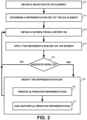
- a representation set of the GUI element is determined.
- the representation set comprises a plurality of alternative representations, each of which provides a manner of identifying the GUI element in the GUI of a program.
- a GUI from a historical database is obtained.
- the historical database retains GUIs, such as screens previously encountered by computerized agents, such as web crawlers, Agents 115 of Figure 1 , screens manually saved or archived by users, or the like.
- the GUI obtained from the historical database may be a different version of the GUI from which GUI element was selected.
- the historical GUI may comprise the GUI element and as a result, the GUI element may be acquired therein.
- the historical GUI may have the same GUI context as the GUI from which the GUI element was selected or have a shared common property therebetween.
- GUIs having the same URL may be obtained on Step 220.
- the historical GUIs may be screens having the same identifier as the GUI from which the GUI element was selected.
- Step 230 the representation set is applied on the GUI obtained on Step 220. Applying the representation set comprises applying each of the alternative representations comprised by the representation set. The results of said applying each of the alternative representations are retained and compared to one another.
- some alternative representations are associated with a GUI context.
- the GUI context comprises a property describing the OS from which the GUI was obtained.
- Said applying the representation set comprises selecting a subset of the alternative representations based on the GUI context and applying only the subset, for the purpose of uniquely identifying the GUI element.
- the homepage of Google TM may be displayed differently for ANDROID TM smartphones.
- the search box may be placed in the 8 th div element and the id may be "searchBox_android".
- the representation set comprises two different alternative representations: a first and a second alternative representation.
- Each of the different alternative representation provides a unique identification of a different GUI element.
- an indefinite result is due to a single alternative representation identifying two different GUI elements, not providing any GUI element, or the like.
- Step 220 in case the representation set provided a definite result using the GUI obtained in Step 220, additional versions of the GUI are obtained and the representation set is applied thereon on Steps 220-240.
- Step 250 is performed.
- the representation set is modified.
- the modification of the representation set is performed to improve the representation set. Additionally or alternatively, the modification is aimed at creating a more robust representation that would provide definite results in different versions of the GUI.
- an alternative representation is removed from the representation set.
- a representation set comprises a plurality of alternative representations. Applying the representation set provides an indefinite result due a first alternative representation.
- the first alternative representation is removed from the representation set.
- the modified representation set comprises the alternative representations without the first alternative representation. Re-applying the modified representation set in a GUI of the program provides a definite result.
- the another alternative representation is a representation that, when applied on the screen of Step 220, would provide a definite result, consistent with the other alternative representations of the modified representation set.
- the another alternative representation is added in response to determining that the number of alternative representations in the modified representation set is below a minimal threshold number, such as below five, below ten, or the like.
- an original screen is stored.
- the original screen is a screen comprising the original GUI element.
- the original screen is the screen used when the representation set for the GUI element was originally determined.
- the another alternative representation is added only if the another alternative representation also identifies the GUI element in the original screen. Such restriction may be useful for ensuring that the newly added alternative representation that is added to the representation set, would not lead to an indefinite result, should the modified representation set be applied on the original screen.
- the original screen may be an historic screen, that is no longer relevant.
- the original screen may be replaced by another historic screen, such as after a major release, modifications caused by an operation system update, or the like. The screen that replaces the original screen may be used instead of the original screen to ensure robustness of the another alternative representation.
- Steps 220-250 may be repeated, using the modified representation set, determined on Step 250.
- the modified representation set may be applied on other versions of the screen, as retained in the history database.
- screens not yet analyzed in Steps 220-240 may be processed. Additionally or alternatively, screens that were analyzed using the previous representation set, which was modified due to a determination of indefinite results on Step 240, may also be re-processed, such as to ensure that the modified representation set yield definite results with respect to them. In some cases, the screens that are re-processed may be re-processed after processing screens that were not previously processed.
- a server determines a representation set. The determination is similar to Step 210 of Figure 2 .
- the server determines the representation set to be used for acquiring a GUI element, such as selected by a user, for preforming, in the future, an action by a client device.
- the server broadcasts the representation set to a plurality of client devices.
- the server transmits the representation set to each of the client agents, such as Agents 115 of Figure 1 .
- the server stores the representation set on a data storage, accessible to the client devices, thereby allowing the client devices to retrieve the representation set, in a pull model.
- a client device obtains the representation set.
- the representation set is obtained from the server, and as a result of the server broadcasting the representation on Step 306.
- a client device obtains a screen or another GUI.
- the screen may be obtained for the purpose of performing an action, such as but not limited to, tracking usage of the screen, presenting a digital walkthrough, performing an automated process, performing automated testing, modifying the visual representation of the screen, presenting another display layer over the screen, augmenting the functionality of the screen, performing analytics, or the like.
- the action is performed with respect to a GUI element of the screen.
- the screen is obtained by an agent such as Agent 115 of Figure 1 .
- the representation set is applied on the screen.
- the application of the representation set is performed similarly to Step 230 of Figure 2 .
- the representation set is applied so as to acquire, by the client device, the GUI element, to allow performing the action.
- Step 320 it is determined whether the application of the representation set yielded an indefinite result. In case that an indefinite result is provided, the representation set had failed to uniquely identify the GUI element and it is desired to modify the representation set to improve its robustness. Steps 330-350 are performed. In the other cases, if the GUI element was uniquely identified using the representation set, Step 360 may be performed.
- the information may be communicated to the server.
- the information may comprise the screen, the GUI context, the representation set that was applied, the results of applying the representation set, or the like.
- the information is provided to the server, so as to improve the representation set. Additionally or alternatively, the server retains the information to be used by a machine learning algorithm, for quality assurance, or the like.
- the server determines a modified representation set.
- the server is configured to modify the representation set in order to determine the modified representation set.
- the representation set is modified in a similar manner to that of Step 250 of Figure 2 .
- the modification is based on user input, performed automatically using machine learning, using combination thereof, or the like.
- client devices obtain the modified representation set.
- the server is configured to transmit the modified representation set to the plurality of client devices of Step 306.
- the client devices are updated with the modified representation set, so as to enable each of the client devices, when obtaining a screen and attempting to acquire the GUI element (e.g., Steps 314-318), to use the modified representation set, instead of the original representation set.
- an action is taken by the client device regarding the GUI element that was acquired.
- an acquired GUI element may be GUI element that is uniquely identified by an application of a representation set.
- an estimated acquired element is selected and Step 360 is performed with respect to the estimated acquired element, such as based on a selection criteria, e.g., majority vote, weighted selection, or the like.
- a selection criteria e.g., majority vote, weighted selection, or the like.
- the modified representation set may be validated by a human user, who may validate it within a reasonable timeframe, such as, an hour, 24 hours, 72 hours, 2 weeks, or the like.
- the client device may require an immediate acquisition, on the fly, of the GUI element, for its purposes. Such acquisition may be performed using the estimation, which may be available immediately.
- Steps 318-360 may be repeated as long as the client agent is running.
- the information collected by the client agent is communicated to the server.
- the information may be used in a machine learning algorithm configured to optimize the determination of representation sets over time.
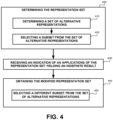
- Step 400 a representation set is determined.
- the determination is performed by a server, such as Server 120 of Figure 1 .
- the determination is based on history of previously obtained screens.
- determining a representation set comprises Step 410 and Step 420.
- a crawler bot may be configured to crawl over web sites, retrieving the web documents of each web page.
- the retrieved web documents may be retained in a historic database.
- plurality of computerized agents may be deployed in client devices, and obtain each screen viewed by the client, generally or with regard to a specific set of tracked programs. Each such screen may be transmitted to the server and retained in the historic database.
- an alternative representation comprises one or more attributes of a GUI element. Additionally or alternatively, an alternative representation comprises a relative path to a GUI element in a hierarchy of elements. Additionally or alternatively, an alternative representations comprises an absolute path to the GUI element in hierarchy of a GUI element. In some exemplary embodiments, all possible combinations of attributes representing the element, paths leading to the elements, attributes representing intermediate elements and paths between the intermediate elements and the GUI element may be determined. In some exemplary embodiments, the number of generated alterative representations may be capped by a maximal number, such as 1,000 representations.
- a subset of alternative representations is selected.
- the subset is selected from the set of alternative representations that was determined on Step 410.
- the selection may be of a subset with a limited number of alternative representations.
- there may be a maximal number of alternative representations, such as about 5, about 10, about 20.
- the representation set may include exactly or no more than the maximal number of alternative representations.
- the maximal number of alternative representations may reflect a balance between robustness and performance, in view of each agent needing to apply each alternative representation in production, potentially wasting computational resources.
- the maximal number of alternative representations may provide a limitation on the number of alternative representations applicable per context of the GUI.
- the selection of the alternative representations to the subset may be based on a selection criteria, such as an estimated robustness score of each alternative representation. Additionally or alternatively, the selection may be performed so as to maximize an estimated robustness score of the representation set, such as in view of different alternative representation accounting for different aspects of the GUI element. For example, some selected representations may be based on the textual attributes of the element, where others may be based on hierarchical properties of the element and yet others may be based on visual attributes of the element. It may be considered unlikely that all different aspects would be modified at the same time, and therefore the representation may continue to be useful for acquiring the GUI element.
- an indication is received.
- the indication is an indication of an application of the representation set yielding an indefinite result.
- the indication is sent by an agent, such as Agent 115 of Figure 1 .
- the indication comprises the representation set that was applied, the GUI context, the GUI on which the representation set was applied (e.g., a screen), or the like.
- a modified representation set is determined.
- the determined representation set comprises a different subset of the previously generated set of alternative representations, determined in Step 410.
- the different subset is selected. The selection is performed based on the robustness score, in view of which alternative representation has failed to provide a correct result.
- the set is re-computed and a selection may be made therefrom.
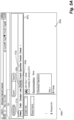
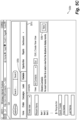
- Figure 5A may illustrate a web page of a sales portal.
- the GUI of the web page is shown as Screen 500a.
- a user by the name of John Doe may be logged in (503a).
- Screen 500a comprises Menu 501a.
- Menu 501a comprises categories such as Home 511a, Accounts 502a, Contacts 505a, or the like.
- Screen 500a visually indicates that Home 511a is selected and that Pane 520a currently shows the "home" sub-page.
- a new sub-page "Accounts" may be loaded to Pane 520a. Additionally or alternatively, the new sub-page may be loaded by loading a different web page, by replacing the content of Pane 520a, or the like.
- Menu item Accounts 502a may be acquired by applying a representation set, in accordance with the disclosed subject matter.
- the representation set may be based on several alternative attributes of Accounts 502a.
- the representation set may comprise two alternative representations.
- the first alternative representation may be being "the 5 th menu item under the menu”.
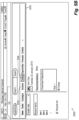
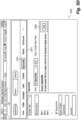
- Figure 5B may illustrate another web page of the same sales portal as Figure 5A .
- Figure 5B shows Screen 500b.
- the 5 th element in Menu 501b is Contacts 505b, and not Accounts 502b.
- the difference between the order of menu items between Screens 500a and 500b may be the result of rendering in a different platform, programmatic change of the web page, or the like.
- the difference may be a result of rendering the same source code file using different configurations.
- the result would be indefinite.
- the first alternative representation would point to Contacts 505b, while the second alternative representation would point to the correct target GUI element, Accounts 502b.
- the first alternative representation is not robust and does not guarantee acquisition of the correct element in different embodiments of the same GUI.
- the representation set may comprise additional alternative representations and a majority vote may be used to select the correct element in between the potential elements for acquisition, 502b and 505b.
- an administrator may be shown Screen 500a, with a highlighting of the target GUI element, Accounts 502a, side-by-side with Screen 500b, with a highlighting of the potentially acquired elements.
- a most likely correct element out of a plurality of potentially identified elements may be shown to the user for selection. For example, if the representation set identified both elements 502b and 505b as potential element for acquisition based on the alternative representations, one of such elements may be highlighted, and the user may confirm or reject the selection.
- Such a representation may provide with the user a simple graphical manner to visually determine whether the acquired element in Screen 500b is indeed the element whose acquisition was defined based on Screen 500a. Additionally or alternatively, in case no potential candidate for acquisition is identified, the user may select the element for acquisition from Screen 500b, while viewing the element as shown in Screen 500a.
- alternative representations may be associated with different GUI contexts, and applied only to screens matching their respective GUI contexts.
- a GUI context may comprise the configuration file.
- the configuration file may indicate whether the screen being displayed is Screen 500a or Screen 500b. In such a case, it may be determined that an alternative representation that is based on the 5 th position in the menu ("the 5 th menu item under the menu") can be used in the configuration indicating Screen 500a, whereas a different alternative representation, such as "the 4 th menu item under the menu", may be applicable to the configuration indicating Screen 500b.
- the GUI context may be determined automatically by a context resolution algorithm.
- the context resolution algorithm may collect information from the device on which the GUI is displayed such as the hardware of the device, the OS of the device, or the like. Additionally or alternatively, the context resolution algorithm may obtain data from files that are associated with the program displaying the GUI such as cookies files, configuration files, or the like. Additionally or alternatively, the context resolution algorithm may obtain data from a back end server configured to serve the program displaying the GUI.
- Figure 5C may illustrate a Screen 500c, showing a "contacts" web page, where Contacts 505c is selected.
- Screen 500c is a screen of a web browser, comprising also a URL Field 502c, indicating the URL being "ga.com/contacts".
- Screen 500c may be loaded after a user pressed Contacts 505a in Screen 500a of Figure 5A .
- Screen 500c comprises New Button 506c.
- New Button 506c has the label "New”. Pressing New Button 506c may, for example, create a new contact.
- Figure 5D may illustrate a Screen 500d, showing an "opportunity" web page, where Opportunities 512d is selected.
- Screen 500d comprises URL Field 502d, indicating the URL being "ga.com/opportunities".
- the web page may be loaded after a user pressing Opportunity 512a of Figure 5A .
- Screen 500d also comprises New Button 506d.
- New Button 506d is also labeled simply as "New”.
- their functionality is different, as clicking on New Button 506d may create a new opportunity rather than a new contact.
- Figure 5E illustrates Screen 500e similar to that shown in Figure 5A .
- Augmented functionality to Screen 500a may provide an additional element not present in the original GUI (Screen 500a).
- a display layer may add elements to the GUI.
- a tooltip element may be introduced into Screen 500a and presented in 500e.
- Container 521e may be acquired and modified to introduce a Tooltip Element 510e, which is displayed when a "mouse hover" event is identified with respect to Container 521e. A robust and automatic acquisition of Container 521e may therefore be desired.
- Apparatus 600 may be configured to provide backend services to client devices. Additionally or alternatively, Apparatus 600 is configured to determining representation sets of one or more GUI elements. Additionally or alternatively, Apparatus 600 is able to transmit, broadcast, or the like a representation set to a client device, to a plurality of client devices, or the like.
- Apparatus 600 comprises one or more Processor(s) 602
- Processor 602 may be a Central Processing Unit (CPU), a Graphical Processing Unit (GPU), a microprocessor, an electronic circuit, an Integrated Circuit (IC) or the like.
- Processor 602 may be utilized to perform computations required by Apparatus 600 or any of it subcomponents.
- Apparatus 600 comprises an Input/Output (I/O) Module 604.
- I/O Module 604 is utilized to provide an output to and receive input from a user, such as, for example obtaining selection of GUI elements, obtaining a confirmation regarding applying a representation set, or the like.
- applying a representation set may provide an indefinite result.
- a user may observe two or more different results and may provide a selection of a GUI element.
- Apparatus 600 comprises Memory Unit 606.
- Memory Unit 606 may be a hard disk drive, a Flash disk, a Random Access Memory (RAM), a memory chip, or the like.
- Memory Unit 606 retains program code operative to cause Processor 602 to perform acts associated with any of the subcomponents of Apparatus 600.
- Memory Unit 606 may retain representation sets to be distributed to agents, alternative representations for each element, historic database of screens (e.g., retained in Historic Screens Database 660), or the like.
- Memory Unit 606 comprises one or more components as detailed below, implemented as executables, libraries, static libraries, functions, or any other executable components.
- Memory Unit 606 comprises a Representation Determinator 610.
- Representation Determinator 610 is configured to determine a representation set for a GUI element in a GUI of a program.
- Representation Determinator 610 is configured to generate a set of alternative representations of the GUI element to be used in a representation set.
- Representation Determinator 610 generates a set of alterative representations, a subset of which may be selected and used in the representation set.
- Representation Determinator 610 obtains screens from Historic Screens Database 660 to apply the set of alternative representations thereon. Representation Determinator 610 applies each of the alternative representations comprising the subset in order to build a representation set.
- the representation set is built, by including alternative representations that have proved, using screens from Historic Screens Database 660, to provide correct and definite results.
- Representation Determinator 610 is configured to store the set of alternative representations that provided correct results.
- the alternative representations for each GUI element are retained in Alternative Representations Database 680. Additionally or alternatively, the alternative representations are retained together with accuracy metrics, indications of screens in which the representation did not function properly, such as GUI context thereof, indications of screens in which the presentation did function properly, or the like.
- the Representation Determinator 610 is configured to determine the representation set to be obtained by client agents, enabling such agents to acquire the GUI element.
- a maximum number of allowed alternative representations per representation set may be provided to Representation Determinator 610.
- the number of potential alternative representations may be very large, such as millions or even billions of potential combinations, providing a supremum to the number of alternative representations in the representation set may yield an improvement in the resource consumption of the disclosed subject matter.
- a minimum number of alternative representations in the representation set may be provided to Representation Determinator 610. Providing an infimum to the number of alternative representations may ensure a confidence level to the acquisition of a GUI element.
- Representation Determinator 610 may generate a representation set comprising five (5) alternative representations. The representation set may provide mixed results when functioning in the field.
- a potentially optimal number of alternative representations to be used to represent a GUI element may be automatically learned based on the attributes of the GUI element, in view of the actual outcomes of applying representation sets of similar GUI elements. The potentially optimal number may balance performance issues related to applying many alternative representations, on one hand, and confidence level related to applying few alternative representations.
- Representation Determinator 610 is configured to determine different representation sets for the same GUI element in different GUI contexts.
- the GUI context is indicative for the platform from which the screen was obtained, indicative to characterizations of the user, or the like.
- a GUI context may comprise the language in which a web site is presented to the end user. There may be a button comprising a label "END" for the English version and a label "FIN" for the French version.
- Representation Determinator 610 determines two different representation sets, one for each language.
- all representation sets may be distributed to all agents to be selected thereby on-the-fly. Additionally or alternatively, each agent may provide a set of relevant GUI contexts thereto, and obtain the representation sets that match the relevant GUI contexts.
- Representation Determinator 610 stores the set of alternative representations to be used by Representation Learner 650. In some embodiments, Representation Determinator 610 may store the alternative representations that provided a correct result. Additionally or alternatively, Representation Determinator 610 may store the alternative representations that failed to provide the correct result. Such information may be useful for automated learning performed by Representation Learner 650.
- Memory Unit 606 may comprise Representation Transmitter 620.
- Representation Transmitter 620 isconfigured to transmit a representation set to a client device, such as Apparatus 601 of Figure 6B , 110 of Figure 1 , or the like.
- Representation Transmitter 620 is configured to broadcast a representation set to a plurality of client devices. Additionally or alternatively, the transmission may be invoked by a request from the client device.
- the transmitted representation set whether broadcasted, or specifically addressed to the client device, is received thereby and processed by the agent executed thereon.
- Memory Unit 606 comprises Indefinite Results Obtainer 630.
- Indefinite Results Obtainer 630 is configured to obtain indefinite results from client devices.
- a client device applies a representation set, such as in production, that yields an indefinite result.
- the indefinite result is reported to Apparatus 600 and obtained by Indefinite Results Obtainer 630.
- Indefinite Results Obtainer 630 invokes the Representation Updater 640 to modify the representation set in view of the indefinite result.
- the updating is performed immediately after receiving the indefinite result. Additionally or alternatively, the updating is performed after manual input is provided. Additionally or alternatively, the updating is performed periodically.
- the indefinite result obtained by Indefinite Results Obtainer 630 is stored in Indefinite Results Database 670.
- Alternative Representations Database 680 may be updated to indicate which alternative representation caused the indefinite result, in which GUI contexts, in which GUI, or the like.
- Memory Unit 606 comprises Representation Updater 640.
- Representation Updater 640 is configured to update the representation set which provided an indefinite result.
- Representation Updater 640 is responsive to an instruction by Indefinite Results Obtainer 630.
- Representation Updater 640 in response to every indefinite result that is obtained, Representation Updater 640 is configured to modify the representation set by removing therefrom one or more alternative representations. Additionally or alternatively, Representation Updater 640 is configured to add new alternative representations to the representation set.
- the new alternative representations are selected from a set of alternative representations generated by Representation Determinator 610, or from a similar set generated on demand by Representation Updater 640.
- the indefinite result includes two or more different candidate elements for acquisition.
- Representation Updater 640 displays the candidate elements, or portion thereof, to an administrator user, offering the administrator user to select the correct element for acquisition.
- the display shows to the administrator user the original screen and the acquired GUI element thereon, as well as the current screen which resulted in the indefinite result.
- the candidate elements are highlighted in the current screen.
- candidates having a likelihood score of being correct above a predetermined threshold may be highlighted. Additionally or alternatively, a top candidate may be highlighted. Based on the administrator user selection, Representation Updater 640 may determine which alternative representations misperformed.
- the user's selection may be retained in databases, such as 660-680, and utilized for training a machine learning model to automatically select between alternative representations when indefinite results are determined, such as based on attributes of the GUI element, GUI contexts, parameters of the candidate alternative representations, or the like.
- Memory Unit 606 comprises Representation Learner 650.
- Representation Learner 650 is configured to train a predictive model based on alternative representations, based on representation sets, based on GUI elements, based on GUIs of programs, or the like.
- the output of Representation Learner 650 are applied on a currently obtained selection of a GUI element and on alternative representations in order to select the alternative representations to be included in the representation set for the GUI element.
- Representation Learner 650 may implement a "bag of words" model. Each of the alternative representation may be viewed as a word. Representation Learner 650 may be configured to train a predictive model in which the alternative representations are the features. For each GUI element, the output of Representation Learner 650 may be a representation set comprising a plurality of alternative representations, each of which may be associated with a score, allowing a weighted majority decision. In some embodiments, in case that applying the representation set provided an indefinite result, a majority decision may provide the GUI element. Additionally or alternatively, the weights may be used to select a subset of the plurality of alternative representations to be used as the representation set.
- Apparatus 601 is a client device, such as Client Device 110 of Figure 1 .
- Apparatus 600 comprises one or more Processor(s) 602, an I/O Module 604, a Memory Unit 606, or the like.
- Processor 602 is utilized to perform computations required by Apparatus 601 or any of it subcomponents.
- I/O Module 604 is utilized to communicate with other computerized devices, such as Server 120 of Figure 1 , Apparatus 600 of Figure 6A , or the like, to receive a representation set, to notify the server of an indefinite result and provide the relevant information thereto, to provide usage information and success rates of each representation set, or the like.
- Memory Unit 606 is utilized to retain representation sets to be used for acquisition of GUI elements.
- Memory Unit 606 comprises Screen Obtainer 650.
- Screen Obtainer 650 is configured to obtain a GUI of a program.
- a user (not shown) uses Apparatus 601 for her needs, such as for utilizing a web-based application, a mobile application or the like.
- Screen Obtainer 650 obtains the current screen in which the user is using.
- the screen is obtained by capturing a digital representation of the GUI, such as obtaining an XML file representing the screen, obtaining an HTML file representing the screen, obtaining a layout file representing the screen, obtaining a playground object representing the screen, obtaining a DOM file, such as in JavaScript TM -based GUIs, obtaining a screen-capture image of the screen, or the like.
- a digital representation of the GUI such as obtaining an XML file representing the screen, obtaining an HTML file representing the screen, obtaining a layout file representing the screen, obtaining a playground object representing the screen, obtaining a DOM file, such as in JavaScript TM -based GUIs, obtaining a screen-capture image of the screen, or the like.
- GUI Element Acquisition Module 655 is configured to acquire a GUI element.
- a GUI element is acquired automatically, based on an application of a representation set on the GUI, obtained by Screen Obtainer 650.
- the acquired element is reached, such as to allow access to properties thereof or modification of such properties, using a pointer, an identifier, a node in a DOM object, or the like.
- GUI Element Acquisition Module 655 triggers the execution of other components of Memory Unit 606 such as Representation Set Obtainer 660, Indefinite Acquisition Identifier 665, Indefinite Acquisition Resolver 670, or the like.
- GUI Element Acquisition Module 655 obtains a representation set provided by Representation Set Obtainer 660. Additionally or alternatively, after applying a representation set, GUI Element Acquisition Module 655 is configured to invoke Indefinite Acquisition Identifier 665 in order to determine whether said applying the representation set provided an indefinite result.
- Memory Unit 606 comprises Representation Set Obtainer 660.
- Representation Set Obtainer 660 is configured to obtain representation sets, such as from a server.
- Representation Set Obtainer 660 receives the representation set based on a broadcast of the server, by sending a query to the server in a pull communication model, or the like.
- Representation Set Obtainer 660 obtains the representation set in advance and stores the representation set in Memory Unit 606. Additionally or alternatively, Representation Set Obtainer 660 obtains the representation set on demand, when a process that requires acquisition of a GUI element is made available.
- Representation Set Obtainer 660 obtains a plurality of representation sets, each of which useful for acquiring a different GUI element.
- Memory Unit 606 comprises Indefinite Acquisition Identifier 665.
- Indefinite Acquisition Identifier 665 is configured to identify an indefinite result when attempting to acquire a GUI element. In some embodiments, in response to GUI Element Acquisition Module 655 applying the representation set, Indefinite Acquisition Identifier 665 determines whether the outcome is an indefinite result or a definite result. Indefinite Acquisition Identifier 665 identifies an indefinite result in case that an alternative representation comprising the representation set provided more than one result. Additionally or alternatively, Indefinite Acquisition Identifier 665 identifies an indefinite result in case that two different alternative representations comprised by the representation set provided different results, such as identified two or more different elements as the element to be acquired, or identified one element to be acquired on the one hand and no element to be acquired on the other hand.
- Memory Unit 606 comprises Indefinite Acquisition Resolver 670.
- Indefinite Acquisition Resolver 670 is configured to resolve indefinite result of a GUI element for the purpose of acquiring an element albeit the indefinite result.
- Indefinite Acquisition Resolver 670 is configured to select a GUI element from a set of potential candidates that were identified by the application of the representation set on the GUI.
- a majority vote or other quorum decision may be made to select between the potential candidates.
- a score may be associated with each candidate, allowing to use a weighted majority decision.
- the score of the candidate may be based on a confidence level associated with the alternative representation that provided the candidate, the number of alternative representations that provided the candidate, success rate of application of the alternative representation on other GUIs, or the like.
- Indefinite Acquisition Resolver 670 may apply a machine learning model to select the correct candidate out of the potential candidates provided by the application of the representation set.
- the machine learning model may be provided by Representation Learner 650 of Figure 6A .
- the predictive model determined by Representation Learner 650 of Figure 6A is provided to Apparatus 601 and applied so as to resolve indefinite results automatically.
- Memory Unit 606 may comprise Server Updater 675.
- Server Updater 675 is configured to send updates to a server such as Server 120 of Figure 1 , Apparatus 600 of Figure 6a , or the like.
- Server Updater 675 in response to an indefinite result of applying a representation set, Server Updater 675 communicates the relevant information to the server, so as to invoke a modification of the representation set.
- the information is obtained by Indefinite Results Obtainer 630 of Figure 6A .
- additional information may be transmitted by Server Updater 675 to the server. For example, usage statistics of application of representation set may be transmitted.
- GUIs obtained by Screen Obtainer 650 may be transmitted to the server, and retained in a database, such as Historic Screens Database 660.
- the present invention may be a system, a method, and/or a computer program product.
- the computer program product may include a computer readable storage medium (or media) having computer readable program instructions thereon for causing a processor to carry out aspects of the present invention.
- the computer readable storage medium can be a tangible device that can retain and store instructions for use by an instruction execution device.
- the computer readable storage medium may be, for example, but is not limited to, an electronic storage device, a magnetic storage device, an optical storage device, an electromagnetic storage device, a semiconductor storage device, or any suitable combination of the foregoing.
- a non-exhaustive list of more specific examples of the computer readable storage medium includes the following: a portable computer diskette, a hard disk, a random access memory (RAM), a read-only memory (ROM), an erasable programmable read-only memory (EPROM or Flash memory), a static random access memory (SRAM), a portable compact disc read-only memory (CD-ROM), a digital versatile disk (DVD), a memory stick, a floppy disk, a mechanically encoded device such as punch-cards or raised structures in a groove having instructions recorded thereon, and any suitable combination of the foregoing.
- RAM random access memory
- ROM read-only memory
- EPROM or Flash memory erasable programmable read-only memory
- SRAM static random access memory
- CD-ROM compact disc read-only memory
- DVD digital versatile disk
- memory stick a floppy disk
- a mechanically encoded device such as punch-cards or raised structures in a groove having instructions recorded thereon
- Computer readable program instructions described herein can be downloaded to respective computing/processing devices from a computer readable storage medium or to an external computer or external storage device via a network, for example, the Internet, a local area network, a wide area network and/or a wireless network.
- the network may comprise copper transmission cables, optical transmission fibers, wireless transmission, routers, firewalls, switches, gateway computers and/or edge servers.
- a network adapter card or network interface in each computing/processing device receives computer readable program instructions from the network and forwards the computer readable program instructions for storage in a computer readable storage medium within the respective computing/processing device.
- Computer readable program instructions for carrying out operations of the present invention may be assembler instructions, instruction-set-architecture (ISA) instructions, machine instructions, machine dependent instructions, microcode, firmware instructions, state-setting data, or either source code or object code written in any combination of one or more programming languages, including an object oriented programming language such as Smalltalk, C++ or the like, and conventional procedural programming languages, such as the "C" programming language or similar programming languages.
- the computer readable program instructions may execute entirely on the user's computer, partly on the user's computer, as a stand-alone software package, partly on the user's computer and partly on a remote computer or entirely on the remote computer or server.
- the remote computer may be connected to the user's computer through any type of network, including a local area network (LAN) or a wide area network (WAN), or the connection may be made to an external computer (for example, through the Internet using an Internet Service Provider).
- electronic circuitry including, for example, programmable logic circuitry, field-programmable gate arrays (FPGA), or programmable logic arrays (PLA) may execute the computer readable program instructions by utilizing state information of the computer readable program instructions to personalize the electronic circuitry, in order to perform aspects of the present invention.
- the computer readable program instructions may also be loaded onto a computer, other programmable data processing apparatus, or other device to cause a series of operational steps to be performed on the computer, other programmable apparatus or other device to produce a computer implemented process, such that the instructions which execute on the computer, other programmable apparatus, or other device implement the functions/acts specified in the flowchart and/or block diagram block or blocks.
- each block in the flowchart or block diagrams may represent a module, segment, or portion of instructions, which comprises one or more executable instructions for implementing the specified logical function(s).
- the functions noted in the block may occur out of the order noted in the figures.
- two blocks shown in succession may, in fact, be executed substantially concurrently, or the blocks may sometimes be executed in the reverse order, depending upon the functionality involved.
Landscapes
- Engineering & Computer Science (AREA)
- Theoretical Computer Science (AREA)
- General Engineering & Computer Science (AREA)
- Physics & Mathematics (AREA)
- General Physics & Mathematics (AREA)
- Databases & Information Systems (AREA)
- Software Systems (AREA)
- Human Computer Interaction (AREA)
- Computing Systems (AREA)
- Data Mining & Analysis (AREA)
- Quality & Reliability (AREA)
- Mathematical Physics (AREA)
- User Interface Of Digital Computer (AREA)
Claims (18)
- Verfahren, das umfasst:Erhalten (200) einer Auswahl eines Elements einer grafischen Benutzeroberfläche (GUI, Graphical User Interface);Erhalten (210, 310) eines Darstellungssatzes des GUI-Elements, wobei der Darstellungssatz eine Vielzahl alternativer Darstellungen umfasst, von denen jede eine Art und Weise bietet, das GUI-Element in GUls zu identifizieren;Anwenden (230, 318) des Darstellungssatzes, um das GUI-Element in einer GUI eines Programms zu identifizieren, wobei das Anwenden (230, 318) des Darstellungssatzes für jede Darstellung der Vielzahl alternativer Darstellungen das unabhängige Anwenden der jeweiligen Darstellung umfasst, um ein oder mehrere GUI-Elemente zu identifizieren, die der jeweiligen Darstellung entsprechen; undals Reaktion auf das Bestimmen (240), dass das Anwenden des Darstellungssatzes ein unbestimmtes Ergebnis liefert, Erhalten (250, 350) eines modifizierten Darstellungssatzes, wobei das Anwenden (230, 318) des Darstellungssatzes das unbestimmte Ergebnis aufgrund einer alternativen Darstellung der Vielzahl von alternativen Darstellungen liefert, wobei der modifizierte Darstellungssatz durch Entfernen (260) der alternativen Darstellung aus dem Darstellungssatz erhalten wird, wodurch das Anwenden des modifizierten Darstellungssatzes in der GUI des Programms ein bestimmtes Ergebnis liefert.
- Verfahren nach Anspruch 1, wobei das Anwenden (230, 318) des Darstellungssatzes das unbestimmte Ergebnis liefert, weil es nicht gelingt, unter Verwendung der alternativen Darstellung irgendein Element in der GUI zu identifizieren.
- Verfahren nach Anspruch 1, wobei die Vielzahl alternativer Darstellungen die alternative Darstellung und eine zweite alternative Darstellung umfasst; wobei das Anwenden (230, 318) des Darstellungssatzes das unbestimmte Ergebnis liefert, weil ein erstes Element unter Verwendung der alternativen Darstellung identifiziert wird und ein zweites Element unter Verwendung der zweiten alternativen Darstellung identifiziert wird, wobei das erste Element und das zweite Element verschieden sind.
- Verfahren nach Anspruch 1, wobei das Anwenden (230, 318) des Darstellungssatzes das unbestimmte Ergebnis liefert, weil zwei oder mehr Elemente unter Verwendung der alternativen Darstellung identifiziert werden.
- Verfahren nach Anspruch 1,wobei das Erhalten (250, 350) des modifizierten Darstellungssatzes das Hinzufügen einer neuen Darstellung zum Darstellungssatz umfasst,wobei die neue Darstellung konfiguriert ist, um das GUI-Element in der GUI des Programms eindeutig zu identifizieren,wodurch das Anwenden des modifizierten Darstellungssatzes auf die GUI des Programms das bestimmte Ergebnis liefert.
- Verfahren nach Anspruch 1,wobei ein Server konfiguriert ist, um den Darstellungssatz zu definieren, wobei der Server konfiguriert ist, um den Darstellungssatz an eine Vielzahl von Client-Vorrichtungen zu übertragen;wobei das Anwenden (230, 318) des Darstellungssatzes auf einer Client-Vorrichtung erfolgt;wobei als Reaktion auf das Bestimmen der Client-Vorrichtung, dass das Anwenden des Darstellungssatzes das unbestimmte Ergebnis liefert, Informationen an den Server übermittelt werden, wobei der Server konfiguriert ist, um den Darstellungssatz zu modifizieren, um den modifizierten Darstellungssatz zu bestimmen, und den modifizierten Darstellungssatz an die Vielzahl von Client-Vorrichtungen zu übertragen; undwobei das Erhalten (250, 350) des modifizierten Darstellungssatzes das Erhalten, durch eine Vorrichtung, des modifizierten Darstellungssatzes vom Server umfasst, wobei die Vorrichtung von der Vielzahl von Client-Vorrichtungen umfasst ist.
- Verfahren nach Anspruch 1,
wobei das Anwenden (230, 318) des Darstellungssatzes eine Vielzahl von Malen erfolgt, jedes Mal in Bezug auf eine andere GUI, wobei die verschiedenen GUIs aus einer historischen Datenbank abgerufen werden, in der GUIs gespeichert sind, die zuvor von computergestützten Agenten gefunden wurden. - Verfahren nach Anspruch 1,
wobei die alternative Darstellung mindestens eines der Folgenden verwendet:ein oder mehrere Attribute des GUI-Elements;ein oder mehrere Attribute eines anderen GUI-Elements;einen relativen Pfad zum GUI-Element in einer Hierarchie von Elementen; undeinen absoluten Pfad zum GUI-Element in der Hierarchie von Elementen. - Verfahren nach Anspruch 1,wobei das Erhalten (210, 310) des Darstellungssatzes umfasst:Bestimmen eines Satzes alternativer Darstellungen; undAuswählen einer Teilmenge aus dem Satz alternativer Darstellungen,wodurch die Vielzahl alternativer Darstellungen ausgewählt wird; undwobei der modifizierte Darstellungssatz durch Auswählen einer anderen Teilmenge aus der Menge alternativer Darstellungen erhalten wird.
- Verfahren nach Anspruch 1 umfassend ferner als Reaktion auf das Bestimmen, dass das Anwenden (230, 318) des Darstellungssatzes das unbestimmte Ergebnis liefert:Anzeigen der GUI einem Benutzer;Identifizieren des GUI-Elements in der GUI anhand von Benutzereingaben des Benutzers; undwobei das Erhalten (250, 350) des modifizierten Darstellungssatzes das Bestimmen eines neuen Satzes alternativer Darstellungen umfasst, die das GUI-Element in der GUI eindeutig identifizieren, wobei der modifizierte Darstellungssatz den neuen Satz alternativer Darstellungen umfasst.
- Verfahren nach Anspruch 10, wobei das Anzeigen der GUI das Anzeigen der GUI und das Markieren eines vorgeschlagenen Elements umfasst, wobei die Benutzereingabe eine Bestätigung des vorgeschlagenen Elements ist.
- Verfahren nach Anspruch 1,wobei der Darstellungssatz die Vielzahl alternativer Darstellungen und eine oder mehrere zusätzliche alternative Darstellungen umfasst;wobei das Verfahren weiterhin umfasst:Erhalten eines aktuellen GUI-Kontexts der GUI; undwobei das Anwenden des Darstellungssatzes das Auswählen der Vielzahl alternativer Darstellungen anhand des GUI-Kontexts und das Anwenden nur der Vielzahl alternativer Darstellungen, ohne die eine oder mehreren zusätzlichen alternativen Darstellungen anzuwenden, umfasst.
- Verfahren nach Anspruch 1, wobei das GUI-Element aus einer Gruppe, bestehend aus einem Kontrollkästchen, einer Klick-Schaltfläche, einer Optionsschaltfläche, einer Dropdown-Liste, einer Dropdown-Schaltfläche, einer Umschaltfläche, einem Textfeld, einer Datums- und Uhrzeitauswahl, einem Suchfeld, einer Breadcrumb-Navigationshilfe, einer Seitennummerierung, einem Tag, einem Schieberegler, einem Symbol, einem Bildkarussell, einer Benachrichtigung, einem Fortschrittsbalken, einem Tooltip, einem Nachrichtenfeld, einem modalen Fenster, einem Widget, einer Menüleiste, einer Registerkarte, einer Tabelle, einem Bildelement, einer Beschriftung und einem Akkordeon, ausgewählt ist.
- Verfahren nach Anspruch 1,wobei der Darstellungssatz einen Satz alternativer Darstellungen umfasst, wobei der Satz alternativer Darstellungen die Vielzahl alternativer Darstellungen und mindestens eine weitere alternative Darstellung umfasst; undwobei das Anwenden (230, 318) des Darstellungssatzes das Bestimmen einer Teilmenge des Satzes alternativer Darstellungen umfasst, die auf die GUI angewendet werden sollen, wobei die Teilmenge aus der Vielzahl alternativer Darstellungen besteht, wodurch bei dem Anwenden selektiv nur ein Teil der verfügbaren alternativen Darstellungen angewendet wird.
- Computerprogrammprodukt, umfassend ein nichtflüchtiges, computerlesbares Speichermedium, das Programmanweisungen speichert, wobei diese Programmanweisungen, wenn sie von einem Prozessor gelesen werden, den Prozessor veranlassen, Folgendes auszuführen:Erhalten (200) einer Auswahl eines Elements einer grafischen Benutzeroberfläche (GUI);Erhalten (210, 310) eines Darstellungssatzes des GUI-Elements, wobei der Darstellungssatz eine Vielzahl alternativer Darstellungen umfasst, von denen jede eine Art und Weise bietet, das GUI-Element in GUIs zu identifizieren;Anwenden (230, 318) des Darstellungssatzes, um das GUI-Element in einer GUI eines Programms zu identifizieren, wobei das Anwenden des Darstellungssatzes für jede Darstellung der Vielzahl alternativer Darstellungen das unabhängige Anwenden der jeweiligen Darstellung umfasst, um ein oder mehrere GUI-Elemente zu identifizieren, die der jeweiligen Darstellung entsprechen; undals Reaktion auf das Bestimmen (240), dass das Anwenden des Darstellungssatzes ein unbestimmtes Ergebnis liefert, Erhalten (250, 350) eines modifizierten Darstellungssatzes, wobei das Anwenden (230, 318) des Darstellungssatzes das unbestimmte Ergebnis aufgrund einer alternativen Darstellung der Vielzahl von alternativen Darstellungen liefert, wobei der modifizierte Darstellungssatz durch Entfernen (260) der alternativen Darstellung aus dem Darstellungssatz erhalten wird, wodurch das Anwenden des modifizierten Darstellungssatzes in der GUI des Programms ein bestimmtes Ergebnis liefert.
- Computerprogrammprodukt nach Anspruch 15, wobei das Erhalten (210, 310) des Darstellungssatzes das Anwenden eines Vorhersagemodells umfasst, um die Vielzahl alternativer Darstellungen für den Darstellungssatz aus einem Satz alternativer Darstellungen auszuwählen; wobei das Vorhersagemodell anhand von GUI-Elementen und alternativen Darstellungen davon trainiert ist.
- Computerprogrammprodukt nach Anspruch 15, wobei das Erhalten (250, 350) des modifizierten Darstellungssatzes das Anwenden eines Vorhersagemodells umfasst, um die aus dem Darstellungssatz zu entfernende alternative Darstellung auszuwählen, wobei das Vorhersagemodell anhand von Daten trainiert ist, die manuelle Modifikationen an Darstellungssätzen umfassen.
- Vorrichtung, die einen Prozessor und einen gekoppelten Speicher umfasst, wobei der Prozessor dazu ausgelegt ist, die folgenden Schritte auszuführen:Erhalten (200) einer Auswahl eines Elements einer grafischen Benutzeroberfläche (GUI);Erhalten (210, 310) eines Darstellungssatzes des GUI-Elements, wobei der Darstellungssatz eine Vielzahl alternativer Darstellungen umfasst, von denen jede eine Art und Weise bietet, das GUI-Element in GUls zu identifizieren;Anwenden (230, 318) des Darstellungssatzes, um das GUI-Element in einer GUI eines Programms zu identifizieren, wobei das Anwenden (230, 318) des Darstellungssatzes für jede Darstellung der alternativen Darstellungen das unabhängige Anwenden der jeweiligen Darstellung umfasst, um ein oder mehrere GUI-Elemente zu identifizieren, die der jeweiligen Darstellung entsprechen; undals Reaktion auf das Bestimmen (240), dass das Anwenden des Darstellungssatzes ein unbestimmtes Ergebnis liefert, Erhalten (250, 350) eines modifizierten Darstellungssatzes, wobei das Anwenden (230, 318) des Darstellungssatzes das unbestimmte Ergebnis aufgrund einer alternativen Darstellung der Vielzahl von alternativen Darstellungen liefert, wobei der modifizierte Darstellungssatz durch Entfernen (260) der alternativen Darstellung aus dem Darstellungssatz erhalten wird, wodurch das Anwenden des modifizierten Darstellungssatzes in der GUI des Programms ein bestimmtes Ergebnis liefert.
Applications Claiming Priority (1)
| Application Number | Priority Date | Filing Date | Title |
|---|---|---|---|
| PCT/IL2019/050475 WO2020222219A1 (en) | 2019-04-30 | 2019-04-30 | Gui element acquisition using a plurality of alternative representations of the gui element |
Publications (4)
| Publication Number | Publication Date |
|---|---|
| EP3963441A1 EP3963441A1 (de) | 2022-03-09 |
| EP3963441A4 EP3963441A4 (de) | 2023-01-11 |
| EP3963441C0 EP3963441C0 (de) | 2025-06-11 |
| EP3963441B1 true EP3963441B1 (de) | 2025-06-11 |
Family
ID=70223385
Family Applications (1)
| Application Number | Title | Priority Date | Filing Date |
|---|---|---|---|
| EP19927556.1A Active EP3963441B1 (de) | 2019-04-30 | 2019-04-30 | Erfassung von gui-element unter verwendung einer vielzahl von alternativen darstellungen des gui-elements |
Country Status (7)
| Country | Link |
|---|---|
| US (4) | US10620975B1 (de) |
| EP (1) | EP3963441B1 (de) |
| JP (1) | JP7386889B2 (de) |
| AU (1) | AU2019443684B2 (de) |
| ES (1) | ES3035135T3 (de) |
| IL (1) | IL287314B2 (de) |
| WO (1) | WO2020222219A1 (de) |
Families Citing this family (14)
| Publication number | Priority date | Publication date | Assignee | Title |
|---|---|---|---|---|
| AU2019466416B2 (en) | 2019-09-19 | 2024-01-25 | Walkme Ltd. | Improving acquisition process of GUI elements using user input |
| US20210349430A1 (en) * | 2020-05-11 | 2021-11-11 | UiPath, Inc. | Graphical element search technique selection, fuzzy logic selection of anchors and targets, and/or hierarchical graphical element identification for robotic process automation |
| US11748069B2 (en) | 2020-07-07 | 2023-09-05 | UiPath, Inc. | User interface (UI) descriptors, UI object libraries, UI object repositories, and UI object browsers for robotic process automation |
| WO2022026394A1 (en) * | 2020-07-31 | 2022-02-03 | Google Llc | Platform independent lightweight user interface framework for glanceable surfaces |
| US11373005B2 (en) | 2020-08-10 | 2022-06-28 | Walkme Ltd. | Privacy-preserving data collection |
| US11269712B1 (en) | 2020-08-26 | 2022-03-08 | Spirent Communications, Inc. | Customized categorial error handling framework for heterogeneous component-based testing in a portable automation framework |
| US11310680B2 (en) | 2020-08-26 | 2022-04-19 | Spirent Communications, Inc. | Reusing provisioned resources during heterogeneous component-based testing in a portable automation framework |
| US11449414B2 (en) | 2020-08-26 | 2022-09-20 | Spirent Communications, Inc. | Mapping test parameter data elements during heterogeneous component-based testing in a portable automation framework in both API mode and UI mode |
| US12013777B2 (en) * | 2020-08-26 | 2024-06-18 | Spirent Communications, Inc. | Controlling heterogeneous component-based testing in a portable automation framework with test scripts in both API mode and UI mode |
| US11216347B1 (en) * | 2020-08-26 | 2022-01-04 | Spirent Communications, Inc. | Automatically locating resources using alternative locator expressions during heterogeneous component-based testing in a portable automation framework |
| US11573889B2 (en) * | 2020-11-10 | 2023-02-07 | Micro Focus Llc | Using graphical image analysis for identifying image objects |
| US11200073B1 (en) * | 2020-11-20 | 2021-12-14 | UiPath, Inc. | Automatic anchor determination and target graphical element identification in user interface automation |
| US11520690B2 (en) | 2021-02-08 | 2022-12-06 | Walkme Ltd. | Automated testing of walkthroughs |
| US11922191B1 (en) * | 2021-06-01 | 2024-03-05 | Amazon Technologies, Inc. | Identification of missing content features in rendered user interfaces |
Family Cites Families (43)
| Publication number | Priority date | Publication date | Assignee | Title |
|---|---|---|---|---|
| JP3168829B2 (ja) * | 1993-10-30 | 2001-05-21 | 富士ゼロックス株式会社 | 検索式作成支援システム |
| US5583983A (en) * | 1994-11-17 | 1996-12-10 | Objectware, Inc. | Multi-platform object-oriented software development and deployment system |
| US5727129A (en) * | 1996-06-04 | 1998-03-10 | International Business Machines Corporation | Network system for profiling and actively facilitating user activities |
| US6407753B1 (en) * | 1999-05-04 | 2002-06-18 | International Business Machines Corporation | System and method for integrating entities via user-interactive rule-based matching and difference reconciliation |
| US7032229B1 (en) * | 2001-06-04 | 2006-04-18 | Palmsource, Inc. | Automatic tracking of user progress in a software application |
| US8645848B2 (en) * | 2004-06-02 | 2014-02-04 | Open Text S.A. | Systems and methods for dynamic menus |
| US7487177B2 (en) * | 2004-11-08 | 2009-02-03 | Sap Aktiengesellschaft | Set identifiers for objects |
| US7752077B2 (en) * | 2005-01-21 | 2010-07-06 | Amazon Technologies, Inc. | Method and system for automated comparison of items |
| US7395456B2 (en) * | 2005-08-17 | 2008-07-01 | Microsoft Corporation | Query-based identification of user interface elements |
| US7912801B2 (en) * | 2007-05-31 | 2011-03-22 | Red Hat, Inc. | Method and apparatus to define a ruleflow |
| US8041746B2 (en) * | 2007-10-30 | 2011-10-18 | Sap Ag | Mapping schemas using a naming rule |
| WO2009066762A1 (ja) | 2007-11-21 | 2009-05-28 | Nec Corporation | ユーザインタフェース認識装置及びユーザインタフェース認識方法 |
| EP2105837B1 (de) * | 2008-02-27 | 2018-08-15 | Accenture Global Services Limited | Testscriptumwandlungsanalysiergerät mit Wechselführungsmaschine |
| US9760347B2 (en) * | 2009-01-07 | 2017-09-12 | Oracle International Corporation | Method and system to identify GUI objects for non-markup-language-presented applications |
| US8533664B2 (en) * | 2009-01-07 | 2013-09-10 | Oracle International Corporation | Method and system to automatically generate GUI object addressing queries |
| EP2504748B1 (de) | 2009-11-23 | 2018-05-30 | EntIT Software LLC | System und verfahren zur identifizierung von objektbeziehungen bei einer benutzerschnitstelle |
| US10095485B2 (en) * | 2009-12-29 | 2018-10-09 | International Business Machines Corporation | Analyzing objects from a graphical interface for standards verification |
| JP5408623B2 (ja) | 2010-02-17 | 2014-02-05 | 株式会社日立製作所 | 検索式提供方法、プログラム、及び、検索式提供システム |
| US9262396B1 (en) * | 2010-03-26 | 2016-02-16 | Amazon Technologies, Inc. | Browser compatibility checker tool |
| CN102207857B (zh) | 2010-03-29 | 2014-08-27 | 日电(中国)有限公司 | Gui元素识别方法、装置及系统 |
| US9460232B2 (en) * | 2010-04-07 | 2016-10-04 | Oracle International Corporation | Searching document object model elements by attribute order priority |
| US9424236B2 (en) * | 2011-04-26 | 2016-08-23 | Oracle International Corporation | Filtered Stylesheets |
| EP2771874A4 (de) | 2011-10-24 | 2015-07-15 | Walkme Ltd | Aufruf von auf skripten beruhenden tutorials |
| US8655913B1 (en) * | 2012-03-26 | 2014-02-18 | Google Inc. | Method for locating web elements comprising of fuzzy matching on attributes and relative location/position of element |
| US9015666B2 (en) * | 2012-07-11 | 2015-04-21 | International Business Machines Corporation | Updating product documentation using automated test scripts |
| JP5885204B2 (ja) | 2012-11-19 | 2016-03-15 | 日本電信電話株式会社 | ユーザ操作支援方法およびその装置 |
| US20140280165A1 (en) * | 2013-03-15 | 2014-09-18 | Rhapsody International Inc. | Grouping equivalent content items |
| US10990924B2 (en) * | 2013-08-30 | 2021-04-27 | Messagepoint Inc. | System and method for variant content management |
| US10268702B2 (en) * | 2014-08-15 | 2019-04-23 | Sydney Nicole Epstein | Iterative image search algorithm informed by continuous human-machine input feedback |
| CA2958764C (en) * | 2014-08-15 | 2023-08-08 | Sydney Nicole EPSTEIN | System and computer method for visually guiding a user to a current interest |
| US10257592B2 (en) | 2015-03-23 | 2019-04-09 | Smart Tower Systems, Llc | Remote tower monitoring |
| US20170031877A1 (en) * | 2015-07-27 | 2017-02-02 | Adp, Llc | Web Page Design System |
| US9934782B2 (en) | 2015-09-22 | 2018-04-03 | Meshrose Ltd. | Automatic performance of user interaction operations on a computing device |
| US9600401B1 (en) * | 2016-01-29 | 2017-03-21 | International Business Machines Corporation | Automated GUI testing |
| US11436133B2 (en) * | 2016-03-23 | 2022-09-06 | Micro Focus Llc | Comparable user interface object identifications |
| US10452627B2 (en) * | 2016-06-02 | 2019-10-22 | International Business Machines Corporation | Column weight calculation for data deduplication |
| CN207485608U (zh) | 2017-11-27 | 2018-06-12 | 中节能港建(甘肃)风力发电有限公司 | 一种风力发电机组塔筒空间姿态及形变状态监测装置 |
| CN107939617A (zh) | 2018-01-11 | 2018-04-20 | 浙江中自庆安新能源技术有限公司 | 一种风力发电机组倾覆监测系统和方法 |
| US20190303269A1 (en) * | 2018-03-28 | 2019-10-03 | Layout.io Ltd | Methods and systems for testing visual aspects of a web page |
| US10901879B2 (en) * | 2018-05-02 | 2021-01-26 | TestCraft Technologies LTD. | Method and apparatus for automatic testing of web pages |
| US20190340255A1 (en) * | 2018-05-07 | 2019-11-07 | Apple Inc. | Digital asset search techniques |
| US10949225B2 (en) * | 2019-02-06 | 2021-03-16 | Sap Se | Automatic detection of user interface elements |
| US11074162B2 (en) * | 2019-04-15 | 2021-07-27 | Cognizant Technology Solutions India Pvt. Ltd. | System and a method for automated script generation for application testing |
-
2019
- 2019-04-30 JP JP2021558769A patent/JP7386889B2/ja active Active
- 2019-04-30 EP EP19927556.1A patent/EP3963441B1/de active Active
- 2019-04-30 IL IL287314A patent/IL287314B2/en unknown
- 2019-04-30 ES ES19927556T patent/ES3035135T3/es active Active
- 2019-04-30 AU AU2019443684A patent/AU2019443684B2/en active Active
- 2019-04-30 WO PCT/IL2019/050475 patent/WO2020222219A1/en not_active Ceased
- 2019-06-12 US US16/438,951 patent/US10620975B1/en active Active
- 2019-12-18 US US16/719,182 patent/US10877782B2/en active Active
-
2021
- 2021-10-28 US US17/513,291 patent/US12405809B2/en active Active
-
2025
- 2025-08-05 US US19/290,992 patent/US20250355686A1/en active Pending
Also Published As
| Publication number | Publication date |
|---|---|
| US12405809B2 (en) | 2025-09-02 |
| IL287314B1 (en) | 2025-02-01 |
| US20200348951A1 (en) | 2020-11-05 |
| EP3963441C0 (de) | 2025-06-11 |
| US20220050564A1 (en) | 2022-02-17 |
| WO2020222219A1 (en) | 2020-11-05 |
| IL287314A (en) | 2022-07-01 |
| AU2019443684B2 (en) | 2022-01-20 |
| US20250355686A1 (en) | 2025-11-20 |
| ES3035135T3 (en) | 2025-08-29 |
| IL287314B2 (en) | 2025-06-01 |
| JP7386889B2 (ja) | 2023-11-27 |
| AU2019443684A1 (en) | 2021-10-21 |
| JP2022530607A (ja) | 2022-06-30 |
| EP3963441A1 (de) | 2022-03-09 |
| US10877782B2 (en) | 2020-12-29 |
| US10620975B1 (en) | 2020-04-14 |
| EP3963441A4 (de) | 2023-01-11 |
Similar Documents
| Publication | Publication Date | Title |
|---|---|---|
| US12405809B2 (en) | GUI element acquisition using a plurality of alternative representations of the GUI element | |
| US11720379B2 (en) | Acquisition process of GUI elements using user input | |
| US10169206B2 (en) | Simultaneous multi-platform testing | |
| US11409640B2 (en) | Machine learning based test case prediction and automation leveraging the HTML document object model | |
| US20210081294A1 (en) | Processing screenshots of an application user interface to detect errors | |
| US7917755B1 (en) | Identification of localized web page element | |
| US20210081308A1 (en) | Generating automated tests based on user interaction with an application | |
| US20210081309A1 (en) | Mapping interactive elements in an application user interface | |
| EP3333712B1 (de) | Simultane mehrplattformprüfung | |
| Chezelles et al. | The browsergym ecosystem for web agent research | |
| WO2014209263A1 (en) | Contextual-based localization based on manual testing | |
| US20220237108A1 (en) | Source traceability-based impact analysis | |
| Grigera et al. | Kobold: web usability as a service | |
| US20250026022A1 (en) | Systems and Methods of Providing Alternative Robotic Form-Filling Activities | |
| US12105615B2 (en) | Webpage component tracker | |
| Yardimci | Agriculture insurance LLM conversational assistant | |
| Azimi et al. | Model-based test execution from high-level natural language instructions using GPT-4 | |
| US11455311B2 (en) | Multi-locator system for tracking data elements in resources | |
| Vansjariya | FilmHive Movie App | |
| De Barros | Automated Synthetic Exploratory Monitoring of Dynamic Web Sites Using Selenium |
Legal Events
| Date | Code | Title | Description |
|---|---|---|---|
| STAA | Information on the status of an ep patent application or granted ep patent |
Free format text: STATUS: THE INTERNATIONAL PUBLICATION HAS BEEN MADE |
|
| PUAI | Public reference made under article 153(3) epc to a published international application that has entered the european phase |
Free format text: ORIGINAL CODE: 0009012 |
|
| STAA | Information on the status of an ep patent application or granted ep patent |
Free format text: STATUS: REQUEST FOR EXAMINATION WAS MADE |
|
| 17P | Request for examination filed |
Effective date: 20211022 |
|
| AK | Designated contracting states |
Kind code of ref document: A1 Designated state(s): AL AT BE BG CH CY CZ DE DK EE ES FI FR GB GR HR HU IE IS IT LI LT LU LV MC MK MT NL NO PL PT RO RS SE SI SK SM TR |
|
| DAV | Request for validation of the european patent (deleted) | ||
| DAX | Request for extension of the european patent (deleted) | ||
| A4 | Supplementary search report drawn up and despatched |
Effective date: 20221214 |
|
| RIC1 | Information provided on ipc code assigned before grant |
Ipc: G06F 11/30 20060101ALI20221208BHEP Ipc: G06F 11/36 20060101ALI20221208BHEP Ipc: G06F 8/41 20180101ALI20221208BHEP Ipc: G06F 9/451 20180101ALI20221208BHEP Ipc: G06F 8/38 20180101AFI20221208BHEP |
|
| GRAP | Despatch of communication of intention to grant a patent |
Free format text: ORIGINAL CODE: EPIDOSNIGR1 |
|
| STAA | Information on the status of an ep patent application or granted ep patent |
Free format text: STATUS: GRANT OF PATENT IS INTENDED |
|
| INTG | Intention to grant announced |
Effective date: 20250102 |
|
| GRAS | Grant fee paid |
Free format text: ORIGINAL CODE: EPIDOSNIGR3 |
|
| GRAA | (expected) grant |
Free format text: ORIGINAL CODE: 0009210 |
|
| STAA | Information on the status of an ep patent application or granted ep patent |
Free format text: STATUS: THE PATENT HAS BEEN GRANTED |
|
| AK | Designated contracting states |
Kind code of ref document: B1 Designated state(s): AL AT BE BG CH CY CZ DE DK EE ES FI FR GB GR HR HU IE IS IT LI LT LU LV MC MK MT NL NO PL PT RO RS SE SI SK SM TR |
|
| REG | Reference to a national code |
Ref country code: GB Ref legal event code: FG4D |
|
| REG | Reference to a national code |
Ref country code: CH Ref legal event code: EP |
|
| REG | Reference to a national code |
Ref country code: IE Ref legal event code: FG4D |
|
| REG | Reference to a national code |
Ref country code: DE Ref legal event code: R096 Ref document number: 602019071152 Country of ref document: DE |
|
| U01 | Request for unitary effect filed |
Effective date: 20250708 |
|
| U07 | Unitary effect registered |
Designated state(s): AT BE BG DE DK EE FI FR IT LT LU LV MT NL PT RO SE SI Effective date: 20250714 |
|
| REG | Reference to a national code |
Ref country code: ES Ref legal event code: FG2A Ref document number: 3035135 Country of ref document: ES Kind code of ref document: T3 Effective date: 20250829 |
|
| PG25 | Lapsed in a contracting state [announced via postgrant information from national office to epo] |
Ref country code: NO Free format text: LAPSE BECAUSE OF FAILURE TO SUBMIT A TRANSLATION OF THE DESCRIPTION OR TO PAY THE FEE WITHIN THE PRESCRIBED TIME-LIMIT Effective date: 20250911 Ref country code: GR Free format text: LAPSE BECAUSE OF FAILURE TO SUBMIT A TRANSLATION OF THE DESCRIPTION OR TO PAY THE FEE WITHIN THE PRESCRIBED TIME-LIMIT Effective date: 20250912 |
|
| PG25 | Lapsed in a contracting state [announced via postgrant information from national office to epo] |
Ref country code: HR Free format text: LAPSE BECAUSE OF FAILURE TO SUBMIT A TRANSLATION OF THE DESCRIPTION OR TO PAY THE FEE WITHIN THE PRESCRIBED TIME-LIMIT Effective date: 20250611 |
|
| PG25 | Lapsed in a contracting state [announced via postgrant information from national office to epo] |
Ref country code: RS Free format text: LAPSE BECAUSE OF FAILURE TO SUBMIT A TRANSLATION OF THE DESCRIPTION OR TO PAY THE FEE WITHIN THE PRESCRIBED TIME-LIMIT Effective date: 20250911 |