EP3962091B1 - Verfahren und systeme zur aufrechterhaltung der erlebnisqualität beim live-videostreaming in echtzeit - Google Patents
Verfahren und systeme zur aufrechterhaltung der erlebnisqualität beim live-videostreaming in echtzeit Download PDFInfo
- Publication number
- EP3962091B1 EP3962091B1 EP20212515.9A EP20212515A EP3962091B1 EP 3962091 B1 EP3962091 B1 EP 3962091B1 EP 20212515 A EP20212515 A EP 20212515A EP 3962091 B1 EP3962091 B1 EP 3962091B1
- Authority
- EP
- European Patent Office
- Prior art keywords
- critical
- packets
- packet
- mcu
- encoded
- Prior art date
- Legal status (The legal status is an assumption and is not a legal conclusion. Google has not performed a legal analysis and makes no representation as to the accuracy of the status listed.)
- Active
Links
Images



Classifications
-
- H—ELECTRICITY
- H04—ELECTRIC COMMUNICATION TECHNIQUE
- H04N—PICTORIAL COMMUNICATION, e.g. TELEVISION
- H04N19/00—Methods or arrangements for coding, decoding, compressing or decompressing digital video signals
- H04N19/65—Methods or arrangements for coding, decoding, compressing or decompressing digital video signals using error resilience
- H04N19/66—Methods or arrangements for coding, decoding, compressing or decompressing digital video signals using error resilience involving data partitioning, i.e. separation of data into packets or partitions according to importance
-
- H—ELECTRICITY
- H04—ELECTRIC COMMUNICATION TECHNIQUE
- H04N—PICTORIAL COMMUNICATION, e.g. TELEVISION
- H04N21/00—Selective content distribution, e.g. interactive television or video on demand [VOD]
- H04N21/20—Servers specifically adapted for the distribution of content, e.g. VOD servers; Operations thereof
- H04N21/23—Processing of content or additional data; Elementary server operations; Server middleware
- H04N21/238—Interfacing the downstream path of the transmission network, e.g. adapting the transmission rate of a video stream to network bandwidth; Processing of multiplex streams
- H04N21/2381—Adapting the multiplex stream to a specific network, e.g. an Internet Protocol [IP] network
-
- H—ELECTRICITY
- H04—ELECTRIC COMMUNICATION TECHNIQUE
- H04L—TRANSMISSION OF DIGITAL INFORMATION, e.g. TELEGRAPHIC COMMUNICATION
- H04L65/00—Network arrangements, protocols or services for supporting real-time applications in data packet communication
- H04L65/60—Network streaming of media packets
- H04L65/61—Network streaming of media packets for supporting one-way streaming services, e.g. Internet radio
-
- H—ELECTRICITY
- H04—ELECTRIC COMMUNICATION TECHNIQUE
- H04L—TRANSMISSION OF DIGITAL INFORMATION, e.g. TELEGRAPHIC COMMUNICATION
- H04L65/00—Network arrangements, protocols or services for supporting real-time applications in data packet communication
- H04L65/60—Network streaming of media packets
- H04L65/70—Media network packetisation
-
- H—ELECTRICITY
- H04—ELECTRIC COMMUNICATION TECHNIQUE
- H04L—TRANSMISSION OF DIGITAL INFORMATION, e.g. TELEGRAPHIC COMMUNICATION
- H04L65/00—Network arrangements, protocols or services for supporting real-time applications in data packet communication
- H04L65/60—Network streaming of media packets
- H04L65/75—Media network packet handling
- H04L65/764—Media network packet handling at the destination
-
- H—ELECTRICITY
- H04—ELECTRIC COMMUNICATION TECHNIQUE
- H04L—TRANSMISSION OF DIGITAL INFORMATION, e.g. TELEGRAPHIC COMMUNICATION
- H04L65/00—Network arrangements, protocols or services for supporting real-time applications in data packet communication
- H04L65/80—Responding to QoS
-
- H—ELECTRICITY
- H04—ELECTRIC COMMUNICATION TECHNIQUE
- H04L—TRANSMISSION OF DIGITAL INFORMATION, e.g. TELEGRAPHIC COMMUNICATION
- H04L69/00—Network arrangements, protocols or services independent of the application payload and not provided for in the other groups of this subclass
- H04L69/22—Parsing or analysis of headers
-
- H—ELECTRICITY
- H04—ELECTRIC COMMUNICATION TECHNIQUE
- H04N—PICTORIAL COMMUNICATION, e.g. TELEVISION
- H04N19/00—Methods or arrangements for coding, decoding, compressing or decompressing digital video signals
- H04N19/10—Methods or arrangements for coding, decoding, compressing or decompressing digital video signals using adaptive coding
- H04N19/102—Methods or arrangements for coding, decoding, compressing or decompressing digital video signals using adaptive coding characterised by the element, parameter or selection affected or controlled by the adaptive coding
- H04N19/119—Adaptive subdivision aspects, e.g. subdivision of a picture into rectangular or non-rectangular coding blocks
-
- H—ELECTRICITY
- H04—ELECTRIC COMMUNICATION TECHNIQUE
- H04N—PICTORIAL COMMUNICATION, e.g. TELEVISION
- H04N19/00—Methods or arrangements for coding, decoding, compressing or decompressing digital video signals
- H04N19/10—Methods or arrangements for coding, decoding, compressing or decompressing digital video signals using adaptive coding
- H04N19/102—Methods or arrangements for coding, decoding, compressing or decompressing digital video signals using adaptive coding characterised by the element, parameter or selection affected or controlled by the adaptive coding
- H04N19/132—Sampling, masking or truncation of coding units, e.g. adaptive resampling, frame skipping, frame interpolation or high-frequency transform coefficient masking
-
- H—ELECTRICITY
- H04—ELECTRIC COMMUNICATION TECHNIQUE
- H04N—PICTORIAL COMMUNICATION, e.g. TELEVISION
- H04N19/00—Methods or arrangements for coding, decoding, compressing or decompressing digital video signals
- H04N19/10—Methods or arrangements for coding, decoding, compressing or decompressing digital video signals using adaptive coding
- H04N19/169—Methods or arrangements for coding, decoding, compressing or decompressing digital video signals using adaptive coding characterised by the coding unit, i.e. the structural portion or semantic portion of the video signal being the object or the subject of the adaptive coding
- H04N19/17—Methods or arrangements for coding, decoding, compressing or decompressing digital video signals using adaptive coding characterised by the coding unit, i.e. the structural portion or semantic portion of the video signal being the object or the subject of the adaptive coding the unit being an image region, e.g. an object
- H04N19/172—Methods or arrangements for coding, decoding, compressing or decompressing digital video signals using adaptive coding characterised by the coding unit, i.e. the structural portion or semantic portion of the video signal being the object or the subject of the adaptive coding the unit being an image region, e.g. an object the region being a picture, frame or field
-
- H—ELECTRICITY
- H04—ELECTRIC COMMUNICATION TECHNIQUE
- H04N—PICTORIAL COMMUNICATION, e.g. TELEVISION
- H04N19/00—Methods or arrangements for coding, decoding, compressing or decompressing digital video signals
- H04N19/10—Methods or arrangements for coding, decoding, compressing or decompressing digital video signals using adaptive coding
- H04N19/169—Methods or arrangements for coding, decoding, compressing or decompressing digital video signals using adaptive coding characterised by the coding unit, i.e. the structural portion or semantic portion of the video signal being the object or the subject of the adaptive coding
- H04N19/17—Methods or arrangements for coding, decoding, compressing or decompressing digital video signals using adaptive coding characterised by the coding unit, i.e. the structural portion or semantic portion of the video signal being the object or the subject of the adaptive coding the unit being an image region, e.g. an object
- H04N19/176—Methods or arrangements for coding, decoding, compressing or decompressing digital video signals using adaptive coding characterised by the coding unit, i.e. the structural portion or semantic portion of the video signal being the object or the subject of the adaptive coding the unit being an image region, e.g. an object the region being a block, e.g. a macroblock
-
- H—ELECTRICITY
- H04—ELECTRIC COMMUNICATION TECHNIQUE
- H04N—PICTORIAL COMMUNICATION, e.g. TELEVISION
- H04N19/00—Methods or arrangements for coding, decoding, compressing or decompressing digital video signals
- H04N19/10—Methods or arrangements for coding, decoding, compressing or decompressing digital video signals using adaptive coding
- H04N19/169—Methods or arrangements for coding, decoding, compressing or decompressing digital video signals using adaptive coding characterised by the coding unit, i.e. the structural portion or semantic portion of the video signal being the object or the subject of the adaptive coding
- H04N19/188—Methods or arrangements for coding, decoding, compressing or decompressing digital video signals using adaptive coding characterised by the coding unit, i.e. the structural portion or semantic portion of the video signal being the object or the subject of the adaptive coding the unit being a video data packet, e.g. a network abstraction layer [NAL] unit
-
- H—ELECTRICITY
- H04—ELECTRIC COMMUNICATION TECHNIQUE
- H04N—PICTORIAL COMMUNICATION, e.g. TELEVISION
- H04N19/00—Methods or arrangements for coding, decoding, compressing or decompressing digital video signals
- H04N19/46—Embedding additional information in the video signal during the compression process
-
- H—ELECTRICITY
- H04—ELECTRIC COMMUNICATION TECHNIQUE
- H04N—PICTORIAL COMMUNICATION, e.g. TELEVISION
- H04N19/00—Methods or arrangements for coding, decoding, compressing or decompressing digital video signals
- H04N19/70—Methods or arrangements for coding, decoding, compressing or decompressing digital video signals characterised by syntax aspects related to video coding, e.g. related to compression standards
-
- H—ELECTRICITY
- H04—ELECTRIC COMMUNICATION TECHNIQUE
- H04N—PICTORIAL COMMUNICATION, e.g. TELEVISION
- H04N19/00—Methods or arrangements for coding, decoding, compressing or decompressing digital video signals
- H04N19/85—Methods or arrangements for coding, decoding, compressing or decompressing digital video signals using pre-processing or post-processing specially adapted for video compression
- H04N19/89—Methods or arrangements for coding, decoding, compressing or decompressing digital video signals using pre-processing or post-processing specially adapted for video compression involving methods or arrangements for detection of transmission errors at the decoder
- H04N19/895—Methods or arrangements for coding, decoding, compressing or decompressing digital video signals using pre-processing or post-processing specially adapted for video compression involving methods or arrangements for detection of transmission errors at the decoder in combination with error concealment
-
- H—ELECTRICITY
- H04—ELECTRIC COMMUNICATION TECHNIQUE
- H04N—PICTORIAL COMMUNICATION, e.g. TELEVISION
- H04N21/00—Selective content distribution, e.g. interactive television or video on demand [VOD]
- H04N21/40—Client devices specifically adapted for the reception of or interaction with content, e.g. set-top-box [STB]; Operations thereof
- H04N21/43—Processing of content or additional data, e.g. demultiplexing additional data from a digital video stream; Elementary client operations, e.g. monitoring of home network or synchronising decoder's clock; Client middleware
- H04N21/438—Interfacing the downstream path of the transmission network originating from a server, e.g. retrieving encoded video stream packets from an IP network
- H04N21/4382—Demodulation or channel decoding, e.g. QPSK demodulation
-
- H—ELECTRICITY
- H04—ELECTRIC COMMUNICATION TECHNIQUE
- H04N—PICTORIAL COMMUNICATION, e.g. TELEVISION
- H04N21/00—Selective content distribution, e.g. interactive television or video on demand [VOD]
- H04N21/60—Network structure or processes for video distribution between server and client or between remote clients; Control signalling between clients, server and network components; Transmission of management data between server and client, e.g. sending from server to client commands for recording incoming content stream; Communication details between server and client
- H04N21/63—Control signaling related to video distribution between client, server and network components; Network processes for video distribution between server and clients or between remote clients, e.g. transmitting basic layer and enhancement layers over different transmission paths, setting up a peer-to-peer communication via Internet between remote STB's; Communication protocols; Addressing
- H04N21/643—Communication protocols
- H04N21/6437—Real-time Transport Protocol [RTP]
Definitions
- the disclosure herein generally relates to the field of real-time video streaming, and, more particularly, to methods and systems for maintaining quality of experience (QoE) in real-time live video streaming.
- QoE quality of experience
- QoE Quality of Experience
- AR augmented reality
- the above mentioned AR applications demand receiving visual content not only with a good quality but also at the right time, for meeting the QoE more stringent than normal applications that are not time critical or delay critical in nature.
- visual feedback (content) from a remote end device for example, drone
- a master device for example, a computing device
- the visual feedback must be a faithful representation of a remote environment captured by the remote end device, despite variations in an end-to-end transmission channel between the remote end device and the master device.
- the variations in the end-to-end transmission channel may be due to poor network or signal quality, a low network bandwidth, and so on.
- Document EP 3 528 469 A1 discloses a single streaming solution which can change the protocol semantics and maintains a balance between reliability and delay-performance, thereby optimizing the overall system goodput.
- the protocol does this intelligently by inferring the criticality of the segment in flight and enable live video streaming for Internet of Things (IoT).
- IoT Internet of Things
- Embodiments of the present disclosure present technological improvements as solutions to one or more of the above-mentioned technical problems recognized by the inventors in conventional systems.
- Typical Augmented Reality (AR) applications such as tele-presence and tele-operation applications demand the visual content to be received not only with a good quality but also in real time, to meet Quality of Experience (QoE).
- the AR applications especially that are time critical or delay critical such as tele-medicine, search and rescue operations, and so on, demand the QoE more stringent than normal AR applications.
- the said AR applications consider the quality of visual content received in the real time, as critical information for taking next course of action. But a capability to maintain the QoE, despite time varying capacity of an end-to-end transmission channel, is important in terms of ensuring the QoE of the overall application.
- FIG. 1 illustrates an application scenario for methods and systems of the present disclosure.
- a video producing unit 120 may be a remote end device such as a robot including a humanoid robot or an avatar, a drone and a like based on the application.
- the video producing unit 120 is a drone in case of search and rescue applications, the robot may be in the form of avatar in case of tele-medicine applications, and so on.
- the video producing unit 120 may be a constrained device with limited resources.
- the video producing unit 120 may have to move around in the remote environment with lossy connectivity marred with frequently intermittent connections through the time varying end-to-end transmission channel.
- the intermittence may occur both in indoor or in outdoor conditions due to radio impairments through shadowing, destructive interference, etc. and also due to congestion in the communication network 140.
- the video producing unit 120 may be present at remote end and may be configured to acquire the visual information of the remote environment and transmit the visual information of the remote environment over the end-to-end transmission channel to the video consuming unit 130.
- the video consuming unit 130 may be a master device such as a computing device operated by a human, an intelligent machinelearning unit, and so on.
- the video consuming unit 130 may be a server, desktop computer, laptops, portable computers, smart phone device, and so on.
- the video consuming unit 130 may include associated electronic assembly to view the visual information of the remote environment sent by the video producing unit 120 and send kinematic control commands to the video producing unit 120, based on a situation.
- the kinematic control commands are essentially real-time, tightly synchronized reactions against a contextual inference perceived by the video consuming unit 130 from the visual information sent by the video producing unit 120.
- the video consuming unit 130 has to maintain a same bounding condition as the video producing unit 120, for rendering at play-out.
- the bounding condition mentioned in equation 1 is important for the concerned AR applications, as the visual information captured in each video frame is tightly coupled with a snapshot of the remote environment at a given time and a relationship must be maintained in the relative local time reference of the video consuming unit 130.
- I( ⁇ _A ) is the visual information in ⁇ _A
- I( ⁇ _M ) is that for ⁇ _M.
- ⁇ ⁇ i ⁇ i ⁇ ⁇ ⁇ i ⁇ 0
- Best-effort real-time streaming techniques may prioritize the bounding condition (1), but at the same time may not achieve the conditions (2) and (3), as no attempt is made to recover the lost information and thus ⁇ I increases. Also, in a jittery channel, strictly maintaining the bounding condition (1) may lead to increase in ⁇ fi as information segments corresponding to f i might be delayed than the play-out deadline causing poorly constructed f ⁇ i .
- Applicant in the Indian patent application number 201821005659 (titled ADAPTIVE RESTful REAL-TIME LIVE MEDIA STREAMING), partially addressed to achieve the QoE, by using an Adaptive RESTful Real-time Live Streaming for Things (here after referred as A-REaLiST ) as an application protocol to carry the video stream.
- A-REaLiST Adaptive RESTful Real-time Live Streaming for Things
- the A-REaLiST tries to maintain a balance between a reliability and a real-time delivery.
- the A-REaLiST infer criticality of the information segment on the fly and delivers that information segment through reliable or unreliable (best-effort) semantics for critical and non-critical information segments respectively.
- ⁇ ⁇ i P R ⁇ ⁇ i _ crit
- the present disclosure herein provides methods and systems that solves the technical problem of maintaining the QoE in the real-time video streaming is achieved without the additional bandwidth and without degrading the latency.
- the present disclosure provides an effective rendering mechanism at the video consuming unit 130 to compensate for lost entropy without attempting to regain exact lost packet(s) information.
- the effective rendering mechanism enhances the QoE by regaining structural continuity of the lost packet(s) information despite variations in the end-to-end transmission channel.
- FIG. 2 through FIG. 8 where similar reference characters denote corresponding features consistently throughout the figures, there are shown preferred embodiments and these embodiments are described in the context of the following systems and/or methods.
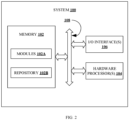
- FIG. 2 is ablock diagram of a system 100 for maintaining quality of experience (QoE) in real-time live video streaming, in accordance with some embodiments of the present disclosure.
- the system 100 includes or is otherwise in communication with one or more hardware processors 104, communication interface device(s) or input/output (I/O) interface(s) 106, and one or more data storage devices or memory 102 operatively coupled to the one or more hardware processors 104.
- the one or more hardware processors 104, the memory 102, and the I/O interface(s) 106 may be coupled to a system bus 108 or a similar mechanism.
- the I/O interface(s) 106 may include a variety of software and hardware interfaces, for example, a web interface, a graphical user interface, and the like.
- the I/O interface(s) 106 may include a variety of software and hardware interfaces, for example, interfaces for peripheral device(s), such as a keyboard, a mouse, an external memory, a plurality of sensor devices, a printer and the like. Further, the I/O interface(s) 106 may enable the system 100 to communicate with other devices, such as web servers and external databases.
- the I/O interface(s) 106 can facilitate multiple communications within a wide variety of networks and protocol types, including wired networks, for example, local area network (LAN), cable, etc., and wireless networks, such as Wireless LAN (WLAN), cellular, or satellite.
- the I/O interface(s) 106 may include one or more ports for connecting a number of computing systems with one another or to another server computer. Further, the I/O interface(s) 106 may include one or more ports for connecting a number of devices to one another or to another server.
- the one or more hardware processors 104 may be implemented as one or more microprocessors, microcomputers, microcontrollers, digital signal processors, central processing units, state machines, logic circuitries, and/or any devices that manipulate signals based on operational instructions.
- the one or more hardware processors 104 are configured to fetch and execute computer-readable instructions stored in the memory 102.
- the expressions 'processors' and ⁇ hardware processors' may be used interchangeably.
- the system 100 is implemented in a variety of computing systems, such as laptop computers, portable computer, notebooks, hand-held devices, workstations, mainframe computers, servers, a network cloud and the like.
- the memory 102 may include any computer-readable medium known in the art including, for example, volatile memory, such as static random access memory (SRAM) and dynamic random access memory (DRAM), and/or non-volatile memory, such as read only memory (ROM), erasable programmable ROM, flash memories, hard disks, optical disks, and magnetic tapes.
- volatile memory such as static random access memory (SRAM) and dynamic random access memory (DRAM)
- non-volatile memory such as read only memory (ROM), erasable programmable ROM, flash memories, hard disks, optical disks, and magnetic tapes.
- the memory 102 includes a plurality of modules 102a and a repository 102b for storing data processed, received, and generated by one or more of the plurality of modules 102a.
- the plurality of modules 102a may include routines, programs, objects, components, data structures, and so on, which perform particular tasks or implement particular abstract data types.
- the plurality of modules 102a may include programs or computer-readable instructions or coded instructions that supplement applications or functions performed by the system 100.
- the plurality of modules 102a may also be used as, signal processor(s), state machine(s), logic circuitries, and/or any other device or component that manipulates signals based on operational instructions.
- the plurality of modules 102a are used by hardware, by computer-readable instructions executed by the one or more hardware processors 104, or by a combination thereof.
- the plurality of modules 102a include various sub-modules (not shown in FIG. 1 ).
- the memory 102 may include information pertaining to input(s)/output(s) of each step performed by the processor(s) 104 of the system 100 and methods of the present disclosure.
- the repository 102b may include a database or a data engine. Further, the repository 102b, amongst other things, may serve as a database or includes a plurality of databases for storing the data that is processed, received, or generated as a result of the execution of the plurality of modules 102a. Although the repository 102a is shown internal to the system 100, it will be noted that, in alternate embodiments, the repository 102b is also implemented external to the system 100, where the repository 102b may be stored within an external database (not shown in FIG. 1 ) communicatively coupled to the system 100. The data contained within such external database may be periodically updated.
- new data may be added into the external database and/or existing data may be modified and/or non-useful data may be deleted from the external database.
- the data may be stored in an external system, such as a Lightweight Directory Access Protocol (LDAP) directory and a Relational Database Management System (RDBMS).
- LDAP Lightweight Directory Access Protocol
- RDBMS Relational Database Management System
- the data stored in the repository 102b may be distributed between the system 100 and the external database.
- system 100 is configured to store instructions configured for execution of steps of a method 200 by the one or more hardware processors 104.
- the one or more hardware processors 104 may be implemented in the video producing unit 120, and in the video consuming unit 130.
- FIG. 3A and FIG. 3B are flow diagrams illustrating a computer implemented method 200 for maintaining quality of experience (QoE) in real-time live video streaming, in accordance with some embodiments of the present disclosure.
- QoE quality of experience
- the steps of the method 200 will now be explained in detail with reference to the components of the system 100 of FIG. 2 and FIG. 3A through FIG. 8 .
- process steps, method steps, techniques or the like may be described in a sequential order, such processes, methods and techniques may be configured to work in alternate orders. In other words, any sequence or order of steps that may be described does not necessarily indicate a requirement that the steps be performed in that order.
- the steps of processes described herein may be performed in any order practical. Further, some steps may be performed simultaneously.
- the video producing unit 120 is configured to receive a real-time video being acquired by a video acquisition unit.
- the video acquisition unit may be installed in the video producing unit 120.
- the real-time video may include a scene of the remote environment that the video acquisition unit has to be captured.
- the video producing unit 120 is configured to encode the real-time video, to obtain one or more encoded frames.
- Each encoded frame of the one or more encoded frames comprises one or more minimum coded unit (MCU) blocks indicating encoded visual information and a metadata.
- MCU minimum coded unit
- a video encoding technique such as JPEG encoding may be used for encoding the real-time video.
- the JPEG encoding includes an entropy encoder such as Huffman encoder for encoding each frame present in the real-time video.
- Each frame in the real-time video (for example, an MJPEG stream), after encoding, essentially consists of required meta-data for identifying essential markers, quantization and entropy encoding (Huffman encoding) tables to decode the encoded frame.
- Rest of the encoded frame consists of MCU (Minimum Coded Unit) blocks containing a preprocessed, a quantized and an entropy encoded colour-space information in DCT (Discrete Cosine Transform) domain.
- Each MCU block contains average DPCM (Differential Pulse Code Modulation) encoded DC components for the entire MCU block indicating the block-by-block change in average values of Y (brightness), C b (blue component) and C r (red component).
- Time varying AC coefficients in the MCU block may be encoded by Run Length Encoding (RLE) (For example).
- RLE Run Length Encoding
- the video producing unit 120 is configured to segment each encoded frame obtained at step 204 of the method 200, into one or more packets using a segmentation algorithm.
- the segmentation algorithm of the present disclosure ensure that each packet comprises an integer number of MCU blocks and a maximum packet size of each packet is limited by a maximum transmission unit (MTU) size of the end-to-end transmission channel.
- MTU maximum transmission unit
- the segmentation algorithm also ensure that each packet boundary aligns with an MCU block boundary. If the MCU block is segmented across two packets, then under a lossy condition, identifying an exact sequence of lost MCU blocks, from an index of lost packets may not possible.
- the A-REaLiST uses a simple segmentation algorithm and does not ensure dealing with the packet loss.
- Each packet includes a packet size.
- a packet buffer is initialized with a current packet size, for a current packet.
- a maximum current packet size is limited to the maximum transmission unit (MTU) size. If metadata is still remaining from a previous packet, then such remaining metadata is considered for inclusion in the current packet. If a sum of the current packet size and a remaining metadata size is greater than the maximum current packet size, then the remaining metadata is truncated at a current packet boundary and leaving rest of the remaining metadata for putting in a next packet. Else the remaining metadata is directly included in the current packet.
- MTU maximum transmission unit
- next MCU block While including MCU blocks in the packet buffer, if the next MCU block is available, and a sum of the current packet size and a next MCU block size is greater than the maximum current packet size, then such next MCU block is considered for putting in the next packet rather than in the current packet.
- the current packet is then included with a set of padding bits to get byte alignment to the current packet. If the sum of the current packet size and the next MCU block size is less than or equal to the maximum current packet size, then the next MCU block is included in the current packet.
- a key objective of the segmentation algorithm in the present disclosure is to ensure that each packet should include the integer number of MCU blocks. This in other words ensure that no MCU block is fragmented across two packets. Each packet is considered as a payload while transmitting the packets.
- the payload specific header includes two unsigned 16-bit fields each indicating a 'start_MCU_index' and an 'end_MCU_index', and an unsigned 8-bit field for indicating 'padded_bit_length'.
- the 'padded_bit_length' is used to keep track of how many bits have been padded to byte align the payload.
- FIG. 4 shows a bit map of payload specific header, in accordance with some embodiment of the present disclosure.
- the video producing unit 120 is configured to identify one or more critical packets and one or more non-critical packets, from the one or more packets obtained after segmentation performed at step 206 of the method 200.
- the one or more critical packets and the one or more non-critical packets are identified based on the metadata present in the one or more packets.
- the packets having the metadata are considered to be the critical packets.
- Rest of the packets not having the metadata but including the entropy encoded pixel information are considered to be non-critical packets.
- Such one or more critical packets and one or more non-critical packets are identified from the one or more packets.
- the one or more critical packets are critical and important for rendering the real-time video at the video consuming unit 130.
- the RESTful application protocol may be a protocol of A-REaLiST built on Constrained Application Protocol (CoAP) mentioned in the patent application number 201821005659 of the applicant. Semantics of the RESTful application protocol may be adapted to transmit the one or more critical packets as reliable requests with a guaranteed delivery and transmit the one or more non-critical packets as unreliable requests with best-effort delivery.
- CoAP Constrained Application Protocol
- the application protocol may include one or more header fields out of which one header field may be called as a 'header_option', which may be used to indicate a presence of the payload specific header.
- a header field 'Stream_info' may be re-defined to include the header_option. More specifically, a lowest bit of 'Stream_id' component of the header field 'Stream_info' may be used to define the header_option.
- an optional header field called as 'payload_type' may be included to specify media types. The media types include media specific entries present in the payload (packet).
- a size of the 'payload_type' may be an unsigned byte.
- the video consuming unit 130 is configured to parse the one or more critical packets and the one or more non-critical packets that are received from the video producing unit 120.
- the video consuming unit 130 may parse the one or more critical packets and the one or more non-critical packets, may in an order in which they are received from the video producing unit 120.
- the video consuming unit 130 is configured to reconstruct the real-time video streaming while playing-out, by rendering the one or more critical packets and the one or more non-critical packets using a rendering algorithm, to maintain the QoE of the real-time video streaming.
- a play-out buffer may be used to store the one or more critical packets and the one or more non-critical packets in an order received.
- the rendering algorithm may render the one or more critical packets and the one or more non-critical packets that are stored in the play-out buffer, while playing-out.
- the loss of the non-critical packets may essentially loss of the entropy corresponding to the encoded MCU blocks. Since the average colour-space information in each MCU block is differentially encoded, the loss of entropy destroys the decoding chain for the corresponding packet.
- the rendering algorithm of the present disclosure first identify one or more missing non-critical packets out of the one or more non-critical packets, based on an associated position indicator corresponding to an associated timestamp.
- the associated position indicator information and the associated timestamp information may be obtained from corresponding header fields associated with such non-critical packets.
- the rendering algorithm identify one or more missing MCU blocks associated with each missing non-critical packet.
- the one or more missing MCU blocks for each missing non-critical packet may be identified, based on the payload specific header of the next non-critical packet successfully received and the payload specific header of the previous non-critical packet successfully received.
- FIG. 5 shows a mechanism for identifying one or more missing MCU blocks associated with each missing non-critical packet for compensation, in accordance with some embodiments of the present disclosure.
- the rendering algorithm compensate for the lost entropy such that encoder structure is maintained and a faithful representation of the packet may be constructed despite the losses.
- the rendering algorithm in the present disclosure compensate for the DC components of each missing MCU block with entropy encoded zeros (Huffman coded zeros), while decoding, so that the decoder gets to maintain the average values of the transformed colour-space across the lost MCU blocks.
- the entropy coded zeros may be obtained from the metadata of the corresponding critical packet. As a result, corresponding filled MCU blocks and corresponding filled non-critical packets may be obtained.
- the filled non-critical packets are indicative of near-faithful structural restoration of the encoded frame after the decoding, to regain the structural continuity of the real-time video while transmitted.
- the one or more missing non-critical packets are replaced with the respective filled non-critical packets, in the play-out buffer for smooth play-out of the real-time video at the video consuming unit 130.
- a complexity of the rendering algorithm may be computed based on a complexity of replacing lost MCU blocks with Huffman encoded zero for 3 colour space (Y, C b , C r ) and a complexity for one-time determination of the value of Huffman encoded zeros.
- the rendering algorithm ensure to fill all the missing MCU blocks and hence the missing non-critical packets. Hence the methods and systems of the present disclosure reconstruct the faithful representation of the frame despite losses of the MCU blocks. As the methods and systems of the present disclosure make use of all the packets while rendering during the play-out, the QoE of the overall application in real-time video streaming is achieved. Also, the rendering algorithm of the present disclosure enhances the QoE by regaining the structural continuity of the lossy frames (packets) despite variations in the end-to-end transmission channel. This is achieved without trading off the bandwidth efficiency or the latency.
- the rendering algorithm does not perform computationally intensive inverse Discrete Courier Transforms (DCT), this ensures a low-computation latency and at the same time allowing recovery of the missing packets within strict timelines (deadlines).
- DCT inverse Discrete Courier Transforms
- the methods and systems of the present disclosure provides a loss resilient solution without trading off the bandwidth efficiency and the network latency. Also, the methods and systems of the present disclosure provide a robust solution which reconciles among apparently diverging aspects of the real-time live video delivery for the delay-critical applications and yet improves the overall QoE.
- the methods and system may be extended to temporally compressed videos as well by improving the QoE of I-frames (standard JPEG frames) under lossy conditions and thereby reducing throttling in play-out.
- the present disclosure may be employed in mobile edge computing (MEC) based video distribution architectures in 5G arena.
- the rendering algorithm may be implemented at one or more edge computing devices present in the architecture itself.
- the one or more edge computing devices may render the video streams by compensating the loss in the received frames before distribution to the video consuming unit 130, for improving the collective QoE.
- the one or more edge computing devices present in the 5G architecture may be one or more virtual computing devices, one or more physical computing devices, or a combination thereof.
- the present disclosure is particularly directed to the application protocol which may improve the QoE in real-time video streaming in delay-critical applications having the constrained devices.
- the segmentation algorithm and the rendering algorithm may be implemented in the application protocols including the CoAP, the A-REaLiST of the applicant, and so on., that are suitable with some adjustments.
- RTP Real-time Transfer Protocol
- A-REaLiST A-REaLiST
- R-pi camera assemblies are used as Avatars (video producing units) and Ubuntu PCs as the master device (video consuming units).
- Avatars video producing units
- Ubuntu PCs the master device (video consuming units).
- An "R-pi - Ubuntu” pair as "Avatar - Master” combination.
- All the Avatars are connected to corresponding master devices through Layer-2 switches connected over a gateway Ubuntu PC which acted as the end-to-end network channel emulator.
- All the Avatars are configured to capture the same scene to maintain the information content same through all the channels.
- a FFmpeg tool is used for the RTP.
- ⁇ f i 1 - S i , where S i is the SSIM corresponding to the i th transmitted frame ( f i ).
- ⁇ I is measured in terms of average SSIM over the whole sequence of frames received over the given time.
- PSNR Peak Signal-to-noise ratio
- the SSIM is marked as 0 for dropped frames.
- a threshold value of SSIM is set at 0.9 to consider a frame acceptable in the interest of overall QoE of the video stream.
- N acc indicate a number of acceptable frames with SSIM ⁇ .9
- B is bandwidth consumption in terms of total bytes exchanged in the network for the entire duration.
- FIG. 6A is a graph showing a comparison of the present disclosure with the real-time transport protocol (RTP) and the Adaptive RESTful Real-time Streaming for Things ( A-REaLiST ), in terms of a percentage (%) of frames (frame rate) received with acceptable QoE.
- FIG. 6A shows that the rate of frame reception has significantly increased for the present disclosure, because of the QoE aware frame recovery.
- A-REaLiST performs better than RTP since in case of loss of the critical packets A-REaLiST may able to recover the critical metadata.
- FIG. 6B is a graph showing an information efficiency comparison of the present disclosure with the RTP and the A-REaLiST, in terms of acceptable frames received against the total bandwidth consumption in a normalized scale.
- FIG. 6C is a graph showing a comparison of the present disclosure with the RTP and the A REaLiST, in terms of the average structural similarity (SSIM) of the stream for different percentage of packet losses in the end-to-end channel. This shows how the average SSIM has improved over increasing packet loss percentage, hence the present disclosure exhibits the improved QoE over the RTP and the A-REaLiST.
- SSIM average structural similarity
- FIG. 6D is a graph showing a comparison of the present disclosure with the RTP and the A-REaLiST, in terms of the average frame rate under lossy conditions.
- the graph shows how the present disclosure improves real-time performance by increasing the average frame rate. This is because the present disclosure reduces the rate of frame rejection and is able to push more frames to the play-out buffer in real-time. From FIG. 6A through FIG. 6D , the present disclosure shows the considerable improvement over the RTP and the A-REaLiST.
- FIG. 7A is a graph showing a comparison of the present disclosure over the RTP and the A-REaLiST, in terms of the average SSIM, in a jittery channel with 0.5% loss average 60 ms delay.
- FIG. 7B is a graph showing a comparison of the present disclosure over the RTP and the A-REaLiST, in terms of the rate of receiving acceptable frames, in a jittery channel with 0.5% loss average 60 ms delay.
- the present disclosure is having the improved overall QoE. Based on the performance, the present disclosure is efficient in terms of maintaining the QoE for extremely delay-sensitive applications.
- FIG. 7A is a graph showing a comparison of the present disclosure over the RTP and the A-REaLiST, in terms of the average SSIM, in a jittery channel with 0.5% loss average 60 ms delay.
- FIG. 8 is a graph showing a comparison of the present disclosure over the A-REaLiST, in terms of the peak signal-to-noise ratio (PSNR). From FIG. 8 , the present disclosure has expectedly no impact on PSNR because, while retrieving the QoE, the lost bits are not retrieved according to the present disclosure. Rather, the lost entropy is compensated through encoded zeros (0's) to regain the structural continuity. Thus FIG. 8 shows an interesting insight on how the QoE is improved without attempting to regain the lost bits through BEC or FEC.
- PSNR peak signal-to-noise ratio
- the hardware device can be any kind of device which can be programmed including e.g. any kind of computer like a server or a personal computer, or the like, or any combination thereof.
- the device may also include means which could be e.g. hardware means like e.g. an application-specific integrated circuit (ASIC), a field-programmable gate array (FPGA), or a combination of hardware and software means, e.g.
- ASIC application-specific integrated circuit
- FPGA field-programmable gate array
- the means can include both hardware means and software means.
- the method embodiments described herein could be implemented in hardware and software.
- the device may also include software means.
- the embodiments may be implemented on different hardware devices, e.g. using a plurality of CPUs.
- the embodiments herein can comprise hardware and software elements.
- the embodiments that are implemented in software include but are not limited to, firmware, resident software, microcode, etc.
- the functions performed by various modules described herein may be implemented in other modules or combinations of other modules.
- a computerusable or computer readable medium can be any apparatus that can comprise, store, communicate, propagate, or transport the program for use by or in connection with the instruction execution system, apparatus, or device.
- a computer-readable storage medium refers to any type of physical memory on which information or data readable by a processor may be stored.
- a computer-readable storage medium may store instructions for execution by one or more processors, including instructions for causing the processor(s) to perform steps or stages consistent with the embodiments described herein.
- the term "computer-readable medium” should be understood to include tangible items and exclude carrier waves and transient signals, i.e., be non-transitory. Examples include random access memory (RAM), read-only memory (ROM), volatile memory, nonvolatile memory, hard drives, CD ROMs, DVDs, flash drives, disks, and any other known physical storage media.
Landscapes
- Engineering & Computer Science (AREA)
- Multimedia (AREA)
- Signal Processing (AREA)
- Computer Networks & Wireless Communication (AREA)
- Computer Security & Cryptography (AREA)
- Compression Or Coding Systems Of Tv Signals (AREA)
Claims (5)
- Verfahren (200), das die folgenden Schritte umfasst:Empfangen, über einen oder mehrere Hardwareprozessoren (104), eines Echtzeitvideos, das von einer Videoerfassungseinheit erfasst wird, die in einer Videoproduktionseinheit (202) installiert ist;Codieren, über den einen oder die mehreren Hardwareprozessoren (104), des Echtzeitvideos, um einen oder mehrere codierte Rahmen zu erhalten, unter Verwendung einer Codiertechnik, wobei jeder codierte Rahmen des einen oder der mehreren codierten Rahmen einen oder mehrere Blöcke einer minimal codierten Einheit (MCU), die codierte visuelle Informationen angeben, und Metadaten (204) umfasst, wobei die Codiertechnik eine JPEG-Codierung ist, wobei die JPEG-Codierung verwendet wird, um das Echtzeitvideo zu codieren, und wobei die JPEG-Codierung einen Entropiecodierer zum Codieren jedes Rahmens, der in dem Echtzeitvideo vorhanden ist, beinhaltet;Segmentieren, über den einen oder die mehreren Hardwareprozessoren (104), jedes codierten Rahmens in ein oder mehrere Pakete unter Verwendung eines Segmentierungsalgorithmus, wobei jedes Paket des einen oder der mehreren Pakete eine ganzzahlige Anzahl von MCU-Blöcken mit einer Paketgröße umfasst, wobei die maximale Paketgröße jedes Pakets durch eine Größe einer maximalen Übertragungseinheit MTU (206) begrenzt ist, wobei jeder der MCU-Blöcke eine durchschnittliche Differentialpulscodemodulation DPCM, codierte DC für den gesamten MCU-Block, enthält, die eine blockweise Änderung der Durchschnittswerte der Helligkeit Y, der blauen Cb-Komponente und der roten Cr-Komponente angibt;Identifizieren, über den einen oder die mehreren Hardwareprozessoren (104), eines oder mehrerer kritischer Pakete und eines oder mehrerer nicht-kritischer Pakete aus dem einen oder den mehreren Paketen, basierend auf den Metadaten, die in dem einen oder den mehreren Paketen vorhanden sind, wobei das Identifizieren des einen oder der mehreren kritischen Pakete und des einen oder der mehreren nicht-kritischen Pakete aus dem einen oder den mehreren Paketen das Identifizieren jedes Pakets, das die Metadaten aufweist, als ein kritisches Paket und das Identifizieren jedes Pakets, das die Metadaten nicht aufweist, als ein nicht-kritisches Paket umfasst, wobei Metadaten des kritischen Pakets Informationen wie essentielle Marker, Quantisierung und Entropiecodierungs-Huffman-Codierungs-Tabellen zum Erhalten der entropiecodierten Nullen Huffman-codierter Nullen enthalten, um DC-Komponenten jedes fehlenden MCU-Blocks zu kompensieren;Übertragen, über den einen oder die mehreren Hardwareprozessoren (104), des einen oder der mehreren kritischen Pakete und des einen oder der mehreren nicht-kritischen Pakete über einen Netzwerkkommunikationskanal (210);Parsen des einen oder der mehreren kritischen Pakete und des einen oder der mehreren nicht-kritischen Pakete, die in der Videoverbrauchseinheit (212) empfangen werden; undRekonstruieren des Echtzeitvideos während des Abspielens in der Videoverbrauchseinheit durch Speichern des einen oder der mehreren kritischen Pakete und des einen oder der mehreren nicht-kritischen Pakete in einem Abspielpuffer in einer Reihenfolge, die unter Verwendung eines Rendering-Algorithmus empfangen wird, um eine Qualität der Erfahrung (QoE) des Echtzeitvideos aufrechtzuerhalten, wobei der Rendering-Algorithmus Folgendes umfasst:Identifizieren eines oder mehrerer fehlender nicht-kritischer Pakete aus dem einen oder den mehreren nicht-kritischen Paketen, basierend auf einem assoziierten Positionsindikator, der einem assoziierten Zeitstempel entspricht, wobei Informationen, die sich auf die assoziierten Positionsindikatorinformationen und die assoziierten Zeitstempelinformationen beziehen, aus entsprechenden Header-Feldern erhalten werden, die mit dem einen oder den mehreren fehlenden nicht-kritischen Paketen assoziiert sind;Identifizieren eines oder mehrerer fehlender MCU-Blöcke, die mit jedem fehlenden nicht-kritischen Paket assoziiert sind, basierend auf einem nutzlastspezifischen Header des nächsten nicht-kritischen Pakets, das erfolgreich empfangen wurde, und dem nutzlastspezifischen Header des vorherigen nicht-kritischen Pakets, das erfolgreich empfangen wurde, und Identifizieren des Vorhandenseins des nutzlastspezifischen Headers durch Verwenden eines Anwendungsprotokolls, wobei eines der Header-Felder eine Header_Option aufweist, um ein Vorhandensein des nutzlastspezifischen Headers anzuzeigen, der zwei vorzeichenlose 16-Bit-Felder, die jeweils einen Start_MCU_Index und einen Ende_MCU_Index anzeigen, und ein vorzeichenloses 8-Bit-Feld umfasst, das eine aufgefüllte Bit_Länge für die Byte-Ausrichtung anzeigt;Kompensieren der DC-Komponenten jedes fehlenden MCU-Blocks mit codierten Nullen während des Decodierens, um entsprechende gefüllte MCU-Blöcke und entsprechende gefüllte nicht-kritische Pakete zu erhalten, wobei die codierten Nullen aus dem entsprechenden kritischen Paket erhalten werden, wobei die codierten Nullen entropiecodierte Nullen Huffman-codierter Nullen sind und die gefüllten nicht-kritischen Pakete zur Wiederherstellung des codierten Rahmens nach dem Decodieren verwendet werden; undErsetzen des einen oder der mehreren fehlenden nicht-kritischen Pakete durch die jeweiligen gefüllten nicht-kritischen Pakete in dem Abspielpuffer (214) und wobei das Ersetzen verlorener MCU-Blöcke durch eine Huffman-codierte Null für einen 3-Farbraum (Y, Cb, Cr) durchgeführt wird.
- Verfahren nach Anspruch 1, wobei das Segmentieren jedes codierten Rahmens in das eine oder die mehreren Pakete unter Verwendung des Segmentierungsalgorithmus Folgendes umfasst:Initialisieren eines Paketpuffers mit einer aktuellen Paketgröße für ein aktuelles Paket, wobei eine maximale aktuelle Paketgröße auf die Größe der maximalen Übertragungseinheit MTU begrenzt ist;Abschneiden verbleibender Metadaten an einer aktuellen Paketgrenze und Belassen des Rests der verbleibenden Metadaten zum Einfügen eines nächsten Pakets, wenn eine Summe der aktuellen Paketgröße und einer verbleibenden Metadatengröße größer als die maximale aktuelle Paketgröße ist, andernfalls Einfügen der verbleibenden Metadaten in das aktuelle Paket;Verwerfen eines nächsten MCU-Blocks zum Einfügen des nächsten Pakets und Einfügen von Füllbits zur Byteausrichtung in das aktuelle Paket, wenn: (i) der nächste MCU-Block verfügbar ist und (ii) eine Summe der aktuellen Paketgröße und einer nächsten MCU-Blockgröße größer als die maximale aktuelle Paketgröße ist; undEinfügen des nächsten MCU-Blocks in das aktuelle Paket, wenn die Summe der aktuellen Paketgröße und der nächsten MCU-Blockgröße kleiner oder gleich der maximalen aktuellen Paketgröße ist.
- System (100), das Folgendes umfasst:einen oder mehrere Hardwareprozessoren (104);eine oder mehrere Eingabe/Ausgabe(E/A)-Schnittstellen (106); undden Speicher (102), der operativ mit einem oder mehreren Hardwareprozessoren (104) gekoppelt ist, zum Speichern von Anweisungen, die zur Ausführung durch den einen oder die mehreren Hardwareprozessoren (104) konfiguriert sind, wobei die Anweisungen in Folgendem enthalten sind:die Videoverbrauchseinheit (130), die zu Folgendem konfiguriert ist:
einer Videoproduktionseinheit (120), die zu Folgendem konfiguriert ist:Empfangen eines Echtzeitvideos, das von einer Videoerfassungseinheit erfasst wird;Codieren des Echtzeitvideos, um einen oder mehrere codierte Rahmen zu erhalten, unter Verwendung einer Codiertechnik, wobei jeder codierte Rahmen des einen oder der mehreren codierten Rahmen einen oder mehrere Blöcke einer minimal codierten Einheit MCU, die codierte visuelle Informationen angeben, und Metadaten umfasst, wobei die Codiertechnik eine JPEG-Codierung ist, wobei die JPEG-Codierung verwendet wird, um das Echtzeitvideo zu codieren, und wobei die JPEG-Codierung einen Entropiecodierer zum Codieren jedes Rahmens, der in dem Echtzeitvideo vorhanden ist, beinhaltet;Segmentieren jedes codierten Rahmens in ein oder mehrere Pakete unter Verwendung eines Segmentierungsalgorithmus, wobei jedes Paket des einen oder der mehreren Pakete eine ganzzahlige Anzahl von MCU-Blöcken mit einer Paketgröße umfasst, wobei die maximale Paketgröße jedes Pakets durch eine Größe einer maximalen Übertragungseinheit MTU begrenzt ist, wobei jeder der MCU-Blöcke eine durchschnittliche Differentialpulscodemodulation DPCM, codierte DC für den gesamten MCU-Block, enthält, die eine blockweise Änderung der Durchschnittswerte der Helligkeit Y, der blauen Cb-Komponente und der roten Cr-Komponente angibt;Identifizieren eines oder mehrerer kritischer Pakete und eines oder mehrerer nicht-kritischer Pakete aus dem einen oder den mehreren Paketen, basierend auf den Metadaten, die in dem einen oder den mehreren Paketen vorhanden sind, wobei die Videoproduktionseinheit (120) ferner dazu konfiguriert ist, ein oder mehrere kritische Pakete und das eine oder die mehreren nicht-kritischen Pakete aus dem einen oder den mehreren Paketen zu identifizieren, durch Identifizieren jedes Pakets, das die Metadaten aufweist, als ein kritisches Paket und Identifizieren jedes Pakets, das die Metadaten nicht aufweist, als ein nicht-kritisches Paket, wobei Metadaten des kritischen Pakets Informationen wie essentielle Marker, Quantisierung und Entropiecodierungs-Huffman-Codierungs-Tabellen zum Erhalten der entropiecodierten Nullen Huffman-codierter Nullen enthalten, um DC-Komponenten jedes fehlenden MCU-Blocks zu kompensieren;Übertragen des einen oder der mehreren kritischen Pakete und des einen oder der mehreren nicht-kritischen Pakete über einen Netzwerkkommunikationskanal; undParsen des einen oder der mehreren kritischen Pakete und des einen oder der mehreren nicht-kritischen Pakete, die von der Videoproduktionseinheit (120) empfangen werden; undRekonstruieren des Echtzeitvideos während des Abspielens in der Videoverbrauchseinheit (130) durch Speichern des einen oder der mehreren kritischen Pakete und des einen oder der mehreren nicht-kritischen Pakete in einem Abspielpuffer in einer Reihenfolge, die unter Verwendung eines Rendering-Algorithmus empfangen wird, um eine Qualität der Erfahrung QoE des Echtzeitvideos aufrechtzuerhalten, wobei der Rendering-Algorithmus Folgendes umfasst:Identifizieren eines oder mehrerer fehlender nicht-kritischer Pakete aus dem einen oder den mehreren nicht-kritischen Paketen, basierend auf einem assoziierten Positionsindikator, der einem assoziierten Zeitstempel entspricht, wobei Informationen, die sich auf die assoziierten Positionsindikatorinformationen und die assoziierten Zeitstempelinformationen beziehen, aus entsprechenden Header-Feldern erhalten werden, die mit dem einen oder den mehreren fehlenden nicht-kritischen Paketen assoziiert sind;Identifizieren eines oder mehrerer fehlender MCU-Blöcke, die mit jedem fehlenden nicht-kritischen Paket assoziiert sind, basierend auf einem nutzlastspezifischen Header des nächsten nicht-kritischen Pakets, das erfolgreich empfangen wurde, und dem nutzlastspezifischen Header des vorherigen nicht-kritischen Pakets, das erfolgreich empfangen wurde, und Identifizieren des Vorhandenseins des nutzlastspezifischen Headers durch Verwenden eines Anwendungsprotokolls, wobei eines der Header-Felder eine Header _Option aufweist, um ein Vorhandensein des nutzlastspezifischen Headers anzuzeigen, der zwei vorzeichenlose 16-Bit-Felder, die jeweils einen Start_MCU_Index und einen Ende_MCU_Index anzeigen, und ein vorzeichenloses 8-Bit-Feld umfasst, das eine aufgefüllte_Bit_Länge für die Byte-Ausrichtung anzeigt;Kompensieren von DC-Komponenten jedes fehlenden MCU-Blocks mit codierten Nullen, wobei die codierten Nullen entropiecodierte Nullen Huffman-codierter Nullen sind, während des Decodierens, um entsprechende gefüllte MCU-Blöcke und entsprechende gefüllte nicht-kritische Pakete zu erhalten, wobei die codierten Nullen aus dem entsprechenden kritischen Paket erhalten werden und die gefüllten nicht-kritischen Pakete zur Wiederherstellung des codierten Rahmens nach dem Decodieren verwendet werden; undErsetzen des einen oder der mehreren fehlenden nicht-kritischen Pakete durch die jeweiligen gefüllten nicht-kritischen Pakete in dem Abspielpuffer und wobei das Ersetzen verlorener MCU-Blöcke durch eine Huffman-codierte Null für einen 3-Farbraum (Y, Cb, Cr) durchgeführt wird. - System nach Anspruch 3, wobei die Videoproduktionseinheit (120) ferner dazu konfiguriert ist, jeden codierten Rahmen unter Verwendung des Segmentierungsalgorithmus in das eine oder die mehreren Pakete zu segmentieren durch:Initialisieren eines Paketpuffers mit einer aktuellen Paketgröße für ein aktuelles Paket, wobei eine maximale aktuelle Paketgröße auf die Größe der maximalen Übertragungseinheit MTU begrenzt ist;Abschneiden verbleibender Metadaten an einer aktuellen Paketgrenze und Belassen des Rests der verbleibenden Metadaten zum Einfügen eines nächsten Pakets, wenn eine Summe der aktuellen Paketgröße und einer verbleibenden Metadatengröße größer als die maximale aktuelle Paketgröße ist, andernfalls Einfügen der verbleibenden Metadaten in das aktuelle Paket;Verwerfen eines nächsten MCU-Blocks zum Einfügen des nächsten Pakets und Einfügen von Füllbits zur Byteausrichtung in das aktuelle Paket, wenn: (i) der nächste MCU-Block verfügbar ist und (ii) eine Summe der aktuellen Paketgröße und einer nächsten MCU-Blockgröße größer als die maximale aktuelle Paketgröße ist; undEinfügen des nächsten MCU-Blocks in das aktuelle Paket, wenn die Summe der aktuellen Paketgröße und der nächsten MCU-Blockgröße kleiner oder gleich der maximalen aktuellen Paketgröße ist.
- Computerprogrammprodukt, das ein nichtflüchtiges computerlesbares Medium umfasst, in dem ein computerlesbares Programm verkörpert ist, wobei das computerlesbare Programm, wenn es auf einer Rechenvorrichtung ausgeführt wird, die Rechenvorrichtung zu Folgendem veranlasst:
einer Videoproduktionseinheit, die zu Folgendem konfiguriert ist:Empfangen eines Echtzeitvideos, das von einer Videoerfassungseinheit erfasst wird;Codieren des Echtzeitvideos, um einen oder mehrere codierte Rahmen zu erhalten, unter Verwendung einer Codiertechnik, wobei jeder codierte Rahmen des einen oder der mehreren codierten Rahmen einen oder mehrere Blöcke einer minimal codierten Einheit (MCU), die codierte visuelle Informationen angeben, und Metadaten umfasst, wobei die Codiertechnik eine JPEG-Codierung ist, wobei die JPEG-Codierung verwendet wird, um das Echtzeitvideo zu codieren, und wobei die JPEG-Codierung einen Entropiecodierer zum Codieren jedes Rahmens, der in dem Echtzeitvideo vorhanden ist, beinhaltet;Segmentieren jedes codierten Rahmens in ein oder mehrere Pakete unter Verwendung eines Segmentierungsalgorithmus, wobei jedes Paket des einen oder der mehreren Pakete eine ganzzahlige Anzahl von MCU-Blöcken mit einer Paketgröße umfasst, wobei die maximale Paketgröße jedes Pakets durch eine Größe einer maximalen Übertragungseinheit (MTU) begrenzt ist, wobei jeder der MCU-Blöcke eine durchschnittliche Differentialpulscodemodulation DPCM, codierte DC für den gesamten MCU-Block, enthält, die eine blockweise Änderung der Durchschnittswerte der Helligkeit Y, der blauen Cb-Komponente und der roten Cr-Komponente angibt;Identifizieren eines oder mehrerer kritischer Pakete und eines oder mehrerer nicht-kritischer Pakete aus dem einen oder den mehreren Paketen, basierend auf den Metadaten, die in dem einen oder den mehreren Paketen vorhanden sind, wobei das Identifizieren des einen oder der mehreren kritischen Pakete und des einen oder der mehreren nicht-kritischen Pakete aus dem einen oder den mehreren Paketen das Identifizieren jedes Pakets, das die Metadaten aufweist, als ein kritisches Paket und das Identifizieren jedes Pakets, das die Metadaten nicht aufweist, als ein nicht-kritisches Paket umfasst, wobei Metadaten des kritischen Pakets Informationen wie essentielle Marker, Quantisierung und Entropiecodierungs-Huffman-Codierungs-Tabellen zum Erhalten der entropiecodierten Nullen Huffman-codierter Nullen enthalten, um DC-Komponenten jedes fehlenden MCU-Blocks zu kompensieren;Übertragen des einen oder der mehreren kritischen Pakete und des einen oder der mehreren nicht-kritischen Pakete über einen Netzwerkkommunikationskanal; undwobei das computerlesbare Programm ferner die Rechenvorrichtung zu Folgendem veranlasst:
die Videoverbrauchseinheit, die zu Folgendem konfiguriert ist:Parsen des einen oder der mehreren kritischen Pakete und des einen oder der mehreren nicht-kritischen Pakete, die von der Videoproduktionseinheit empfangen werden; undRekonstruieren des Echtzeitvideos während des Abspielens in der Videoverbrauchseinheit durch Speichern des einen oder der mehreren kritischen Pakete und des einen oder der mehreren nicht-kritischen Pakete in einem Abspielpuffer in einer Reihenfolge, die unter Verwendung eines Rendering-Algorithmus empfangen wird, um eine Qualität der Erfahrung (QoE) des Echtzeitvideos aufrechtzuerhalten, wobei der Rendering-Algorithmus Folgendes umfasst:Identifizieren eines oder mehrerer fehlender nicht-kritischer Pakete aus dem einen oder den mehreren nicht-kritischen Paketen, basierend auf einem assoziierten Positionsindikator, der einem assoziierten Zeitstempel entspricht, wobei Informationen, die sich auf die assoziierten Positionsindikatorinformationen und die assoziierten Zeitstempelinformationen beziehen, aus entsprechenden Header-Feldern erhalten werden, die mit dem einen oder den mehreren fehlenden nicht-kritischen Paketen assoziiert sind;Identifizieren eines oder mehrerer fehlender MCU-Blöcke, die mit jedem fehlenden nicht-kritischen Paket assoziiert sind, basierend auf einem nutzlastspezifischen Header des nächsten nicht-kritischen Pakets, das erfolgreich empfangen wurde, und dem nutzlastspezifischen Header des vorherigen nicht-kritischen Pakets, das erfolgreich empfangen wurde, und Identifizieren des Vorhandenseins des nutzlastspezifischen Headers durch Verwenden eines Anwendungsprotokolls, wobei eines der Header-Felder eine Header_Option aufweist, um ein Vorhandensein des nutzlastspezifischen Headers anzuzeigen, der zwei vorzeichenlose 16-Bit-Felder, die jeweils einen Start_MCU_Index und einen Ende_MCU_Index anzeigen, und ein vorzeichenloses 8-Bit-Feld umfasst, das eine aufgefüllte Bit_Länge für die Byte-Ausrichtung anzeigt;Kompensieren von DC-Komponenten jedes fehlenden MCU-Blocks mit codierten Nullen während des Decodierens, um entsprechende gefüllte MCU-Blöcke und entsprechende gefüllte nicht-kritische Pakete zu erhalten, wobei die codierten Nullen aus dem entsprechenden kritischen Paket erhalten werden, wobei die codierten Nullen entropiecodierte (Huffman-codierte Nullen) Nullen sind und die gefüllten nicht-kritischen Pakete zur Wiederherstellung des codierten Rahmens nach dem Decodieren verwendet werden; undErsetzen des einen oder der mehreren fehlenden nicht-kritischen Pakete durch die jeweiligen gefüllten nicht-kritischen Pakete in dem Abspielpuffer und wobei das Ersetzen verlorener MCU-Blöcke durch eine Huffman-codierte Null für einen 3-Farbraum durchgeführt wird.3-Farbraum (Y, Cb, Cr).
Applications Claiming Priority (1)
| Application Number | Priority Date | Filing Date | Title |
|---|---|---|---|
| IN202021036740 | 2020-08-26 |
Publications (3)
| Publication Number | Publication Date |
|---|---|
| EP3962091A1 EP3962091A1 (de) | 2022-03-02 |
| EP3962091B1 true EP3962091B1 (de) | 2024-08-28 |
| EP3962091C0 EP3962091C0 (de) | 2024-08-28 |
Family
ID=73747986
Family Applications (1)
| Application Number | Title | Priority Date | Filing Date |
|---|---|---|---|
| EP20212515.9A Active EP3962091B1 (de) | 2020-08-26 | 2020-12-08 | Verfahren und systeme zur aufrechterhaltung der erlebnisqualität beim live-videostreaming in echtzeit |
Country Status (2)
| Country | Link |
|---|---|
| US (1) | US11089334B1 (de) |
| EP (1) | EP3962091B1 (de) |
Families Citing this family (4)
| Publication number | Priority date | Publication date | Assignee | Title |
|---|---|---|---|---|
| EP4210332A1 (de) * | 2022-01-11 | 2023-07-12 | Tata Consultancy Services Limited | Verfahren und system zum live-video-streamen mit integrierter codierung und übertragungssemantik |
| CN114466224B (zh) * | 2022-01-26 | 2024-04-16 | 广州繁星互娱信息科技有限公司 | 视频数据的编解码方法和装置、存储介质及电子设备 |
| WO2023184206A1 (en) * | 2022-03-30 | 2023-10-05 | Intel Corporation | Enhanced presentation of tiles of residual sub-layers in low complexity enhancement video coding encoded bitstream |
| US20250227173A1 (en) * | 2024-01-04 | 2025-07-10 | Dish Wireless L.L.C. | Dynamic modification of communication operations exchanged between interconnected networks |
Family Cites Families (6)
| Publication number | Priority date | Publication date | Assignee | Title |
|---|---|---|---|---|
| US6876705B2 (en) * | 2001-03-05 | 2005-04-05 | Intervideo, Inc. | Systems and methods for decoding of partially corrupted reversible variable length code (RVLC) intra-coded macroblocks and partial block decoding of corrupted macroblocks in a video decoder |
| US8824553B2 (en) * | 2003-05-12 | 2014-09-02 | Google Inc. | Video compression method |
| US9380091B2 (en) | 2012-06-12 | 2016-06-28 | Wi-Lan Labs, Inc. | Systems and methods for using client-side video buffer occupancy for enhanced quality of experience in a communication network |
| MX2014010243A (es) * | 2012-02-28 | 2014-11-12 | Ericsson Telefon Ab L M | Metodo y servidor para enviar un flujo de datos a un cliente y metodo y cliente para recibir un flujo de datos de un servidor. |
| US10389773B2 (en) | 2015-10-20 | 2019-08-20 | Intel Corporation | Technologies for end of frame detection in streaming content |
| EP3528469B1 (de) * | 2018-02-14 | 2021-06-30 | Tata Consultancy Services Limited | Adaptives, entspannendes echtzeit-live-media-streaming |
-
2020
- 2020-12-08 EP EP20212515.9A patent/EP3962091B1/de active Active
- 2020-12-10 US US17/117,579 patent/US11089334B1/en active Active
Also Published As
| Publication number | Publication date |
|---|---|
| US11089334B1 (en) | 2021-08-10 |
| EP3962091A1 (de) | 2022-03-02 |
| EP3962091C0 (de) | 2024-08-28 |
Similar Documents
| Publication | Publication Date | Title |
|---|---|---|
| EP3962091B1 (de) | Verfahren und systeme zur aufrechterhaltung der erlebnisqualität beim live-videostreaming in echtzeit | |
| US7957307B2 (en) | Reducing effects of packet loss in video transmissions | |
| US10862945B2 (en) | Adaptive restful real-time live media streaming | |
| US11368389B2 (en) | Data transfer method, data transfer device and program | |
| Wu et al. | Modeling and optimization of high frame rate video transmission over wireless networks | |
| CN112866746A (zh) | 一种多路串流云游戏控制方法、装置、设备及存储介质 | |
| US11303690B1 (en) | Method and system for enhancing quality of experience (QOE) of video reception at receiver | |
| US8914834B2 (en) | Source rate and channel rate matching for scalable video transmission | |
| He et al. | Nerve: Real-time neural video recovery and enhancement on mobile devices | |
| Wang et al. | Reparo: QoE-aware live video streaming in low-rate networks by intelligent frame recovery | |
| US10116415B2 (en) | Transmission device, receiving device, transmission method, and receiving method | |
| US11778219B2 (en) | Method and system for live video streaming with integrated encoding and transmission semantics | |
| CN119562120A (zh) | 一种基于人工智能的媒体画面渲染优化方法及系统 | |
| Bhattacharyya et al. | Improving live-streaming experience for delay-sensitive iot applications: A restful approach | |
| Khilenko et al. | Improving the Quality of Automated Vehicle Control Systems Using Video Compression Technologies for Networks with Unstable Bandwidth | |
| EP4024811B1 (de) | Verfahren und system zur verbesserung der erfahrungsqualität (qoe) des videoempfangs beim empfänger | |
| CN115942009A (zh) | 基于混合式编码的远程视频业务办理方法和装置 | |
| US12309388B2 (en) | Methods and systems for quality of experience-centric adaptive bitrate encoding for live video streaming | |
| US12483753B2 (en) | Kalman filter based predictive jitter buffer adaptation for smooth live video streaming | |
| Smirnov et al. | Exploring the Dynamics of Data Transmission in 5G Networks: A Conceptual Analysis | |
| US20250267311A1 (en) | Methods and systems to synergize context of end-user with quality-of-experience of live video feed | |
| Singh et al. | Modeling and optimization of video transmission in data compression & source coding | |
| Li et al. | FrameCorr: Adaptive, Autoencoder-based Neural Compression for Video Reconstruction in Resource and Timing Constrained Network Settings | |
| US20250385944A1 (en) | Dynamic systems and methods for media-aware low- to ultralow-latency, real-time transport protocol content delivery | |
| US20240340696A1 (en) | Method and apparatus for provisioning of payload data structure information for efficient data transmission in lower layer |
Legal Events
| Date | Code | Title | Description |
|---|---|---|---|
| PUAI | Public reference made under article 153(3) epc to a published international application that has entered the european phase |
Free format text: ORIGINAL CODE: 0009012 |
|
| STAA | Information on the status of an ep patent application or granted ep patent |
Free format text: STATUS: THE APPLICATION HAS BEEN PUBLISHED |
|
| AK | Designated contracting states |
Kind code of ref document: A1 Designated state(s): AL AT BE BG CH CY CZ DE DK EE ES FI FR GB GR HR HU IE IS IT LI LT LU LV MC MK MT NL NO PL PT RO RS SE SI SK SM TR |
|
| STAA | Information on the status of an ep patent application or granted ep patent |
Free format text: STATUS: REQUEST FOR EXAMINATION WAS MADE |
|
| 17P | Request for examination filed |
Effective date: 20220516 |
|
| RBV | Designated contracting states (corrected) |
Designated state(s): AL AT BE BG CH CY CZ DE DK EE ES FI FR GB GR HR HU IE IS IT LI LT LU LV MC MK MT NL NO PL PT RO RS SE SI SK SM TR |
|
| REG | Reference to a national code |
Ref legal event code: R079 Ref country code: DE Ref document number: 602020036574 Country of ref document: DE Free format text: PREVIOUS MAIN CLASS: H04N0021238100 Ipc: H04L0065610000 |
|
| STAA | Information on the status of an ep patent application or granted ep patent |
Free format text: STATUS: EXAMINATION IS IN PROGRESS |
|
| RIC1 | Information provided on ipc code assigned before grant |
Ipc: H04N 21/6437 20110101ALI20230110BHEP Ipc: H04N 21/438 20110101ALI20230110BHEP Ipc: H04N 21/2381 20110101ALI20230110BHEP Ipc: H04L 69/06 20220101ALI20230110BHEP Ipc: H04L 69/22 20220101ALI20230110BHEP Ipc: H04L 65/80 20220101ALI20230110BHEP Ipc: H04L 65/75 20220101ALI20230110BHEP Ipc: H04L 65/70 20220101ALI20230110BHEP Ipc: H04L 65/61 20220101AFI20230110BHEP |
|
| 17Q | First examination report despatched |
Effective date: 20230118 |
|
| GRAP | Despatch of communication of intention to grant a patent |
Free format text: ORIGINAL CODE: EPIDOSNIGR1 |
|
| STAA | Information on the status of an ep patent application or granted ep patent |
Free format text: STATUS: GRANT OF PATENT IS INTENDED |
|
| GRAS | Grant fee paid |
Free format text: ORIGINAL CODE: EPIDOSNIGR3 |
|
| GRAA | (expected) grant |
Free format text: ORIGINAL CODE: 0009210 |
|
| STAA | Information on the status of an ep patent application or granted ep patent |
Free format text: STATUS: THE PATENT HAS BEEN GRANTED |
|
| INTG | Intention to grant announced |
Effective date: 20240702 |
|
| AK | Designated contracting states |
Kind code of ref document: B1 Designated state(s): AL AT BE BG CH CY CZ DE DK EE ES FI FR GB GR HR HU IE IS IT LI LT LU LV MC MK MT NL NO PL PT RO RS SE SI SK SM TR |
|
| REG | Reference to a national code |
Ref country code: CH Ref legal event code: EP |
|
| REG | Reference to a national code |
Ref country code: DE Ref legal event code: R096 Ref document number: 602020036574 Country of ref document: DE |
|
| REG | Reference to a national code |
Ref country code: IE Ref legal event code: FG4D |
|
| U01 | Request for unitary effect filed |
Effective date: 20240828 |
|
| U07 | Unitary effect registered |
Designated state(s): AT BE BG DE DK EE FI FR IT LT LU LV MT NL PT RO SE SI Effective date: 20240905 |
|
| PG25 | Lapsed in a contracting state [announced via postgrant information from national office to epo] |
Ref country code: NO Free format text: LAPSE BECAUSE OF FAILURE TO SUBMIT A TRANSLATION OF THE DESCRIPTION OR TO PAY THE FEE WITHIN THE PRESCRIBED TIME-LIMIT Effective date: 20241128 |
|
| PG25 | Lapsed in a contracting state [announced via postgrant information from national office to epo] |
Ref country code: PL Free format text: LAPSE BECAUSE OF FAILURE TO SUBMIT A TRANSLATION OF THE DESCRIPTION OR TO PAY THE FEE WITHIN THE PRESCRIBED TIME-LIMIT Effective date: 20240828 Ref country code: GR Free format text: LAPSE BECAUSE OF FAILURE TO SUBMIT A TRANSLATION OF THE DESCRIPTION OR TO PAY THE FEE WITHIN THE PRESCRIBED TIME-LIMIT Effective date: 20241129 |
|
| PG25 | Lapsed in a contracting state [announced via postgrant information from national office to epo] |
Ref country code: IS Free format text: LAPSE BECAUSE OF FAILURE TO SUBMIT A TRANSLATION OF THE DESCRIPTION OR TO PAY THE FEE WITHIN THE PRESCRIBED TIME-LIMIT Effective date: 20241228 |
|
| PG25 | Lapsed in a contracting state [announced via postgrant information from national office to epo] |
Ref country code: HR Free format text: LAPSE BECAUSE OF FAILURE TO SUBMIT A TRANSLATION OF THE DESCRIPTION OR TO PAY THE FEE WITHIN THE PRESCRIBED TIME-LIMIT Effective date: 20240828 |
|
| PG25 | Lapsed in a contracting state [announced via postgrant information from national office to epo] |
Ref country code: RS Free format text: LAPSE BECAUSE OF FAILURE TO SUBMIT A TRANSLATION OF THE DESCRIPTION OR TO PAY THE FEE WITHIN THE PRESCRIBED TIME-LIMIT Effective date: 20241128 Ref country code: ES Free format text: LAPSE BECAUSE OF FAILURE TO SUBMIT A TRANSLATION OF THE DESCRIPTION OR TO PAY THE FEE WITHIN THE PRESCRIBED TIME-LIMIT Effective date: 20240828 |
|
| U20 | Renewal fee for the european patent with unitary effect paid |
Year of fee payment: 5 Effective date: 20241225 |
|
| PG25 | Lapsed in a contracting state [announced via postgrant information from national office to epo] |
Ref country code: RS Free format text: LAPSE BECAUSE OF FAILURE TO SUBMIT A TRANSLATION OF THE DESCRIPTION OR TO PAY THE FEE WITHIN THE PRESCRIBED TIME-LIMIT Effective date: 20241128 Ref country code: PL Free format text: LAPSE BECAUSE OF FAILURE TO SUBMIT A TRANSLATION OF THE DESCRIPTION OR TO PAY THE FEE WITHIN THE PRESCRIBED TIME-LIMIT Effective date: 20240828 Ref country code: NO Free format text: LAPSE BECAUSE OF FAILURE TO SUBMIT A TRANSLATION OF THE DESCRIPTION OR TO PAY THE FEE WITHIN THE PRESCRIBED TIME-LIMIT Effective date: 20241128 Ref country code: IS Free format text: LAPSE BECAUSE OF FAILURE TO SUBMIT A TRANSLATION OF THE DESCRIPTION OR TO PAY THE FEE WITHIN THE PRESCRIBED TIME-LIMIT Effective date: 20241228 Ref country code: HR Free format text: LAPSE BECAUSE OF FAILURE TO SUBMIT A TRANSLATION OF THE DESCRIPTION OR TO PAY THE FEE WITHIN THE PRESCRIBED TIME-LIMIT Effective date: 20240828 Ref country code: GR Free format text: LAPSE BECAUSE OF FAILURE TO SUBMIT A TRANSLATION OF THE DESCRIPTION OR TO PAY THE FEE WITHIN THE PRESCRIBED TIME-LIMIT Effective date: 20241129 Ref country code: ES Free format text: LAPSE BECAUSE OF FAILURE TO SUBMIT A TRANSLATION OF THE DESCRIPTION OR TO PAY THE FEE WITHIN THE PRESCRIBED TIME-LIMIT Effective date: 20240828 |
|
| PG25 | Lapsed in a contracting state [announced via postgrant information from national office to epo] |
Ref country code: SM Free format text: LAPSE BECAUSE OF FAILURE TO SUBMIT A TRANSLATION OF THE DESCRIPTION OR TO PAY THE FEE WITHIN THE PRESCRIBED TIME-LIMIT Effective date: 20240828 |
|
| PGFP | Annual fee paid to national office [announced via postgrant information from national office to epo] |
Ref country code: CH Payment date: 20250101 Year of fee payment: 5 |
|
| PG25 | Lapsed in a contracting state [announced via postgrant information from national office to epo] |
Ref country code: CZ Free format text: LAPSE BECAUSE OF FAILURE TO SUBMIT A TRANSLATION OF THE DESCRIPTION OR TO PAY THE FEE WITHIN THE PRESCRIBED TIME-LIMIT Effective date: 20240828 |
|
| PG25 | Lapsed in a contracting state [announced via postgrant information from national office to epo] |
Ref country code: SK Free format text: LAPSE BECAUSE OF FAILURE TO SUBMIT A TRANSLATION OF THE DESCRIPTION OR TO PAY THE FEE WITHIN THE PRESCRIBED TIME-LIMIT Effective date: 20240828 |
|
| PLBE | No opposition filed within time limit |
Free format text: ORIGINAL CODE: 0009261 |
|
| STAA | Information on the status of an ep patent application or granted ep patent |
Free format text: STATUS: NO OPPOSITION FILED WITHIN TIME LIMIT |
|
| PG25 | Lapsed in a contracting state [announced via postgrant information from national office to epo] |
Ref country code: MC Free format text: LAPSE BECAUSE OF FAILURE TO SUBMIT A TRANSLATION OF THE DESCRIPTION OR TO PAY THE FEE WITHIN THE PRESCRIBED TIME-LIMIT Effective date: 20240828 |
|
| 26N | No opposition filed |
Effective date: 20250530 |
|
| PG25 | Lapsed in a contracting state [announced via postgrant information from national office to epo] |
Ref country code: IE Free format text: LAPSE BECAUSE OF NON-PAYMENT OF DUE FEES Effective date: 20241208 |
|
| REG | Reference to a national code |
Ref country code: CH Ref legal event code: U11 Free format text: ST27 STATUS EVENT CODE: U-0-0-U10-U11 (AS PROVIDED BY THE NATIONAL OFFICE) Effective date: 20260101 |
|
| PGFP | Annual fee paid to national office [announced via postgrant information from national office to epo] |
Ref country code: GB Payment date: 20251223 Year of fee payment: 6 |
|
| U20 | Renewal fee for the european patent with unitary effect paid |
Year of fee payment: 6 Effective date: 20251223 |