EP3962002B1 - Kommunikationsoptimierungssysteme von blockchain netzwerk, registrierungsmethoden und nachrichtenweiterleitung - Google Patents
Kommunikationsoptimierungssysteme von blockchain netzwerk, registrierungsmethoden und nachrichtenweiterleitung Download PDFInfo
- Publication number
- EP3962002B1 EP3962002B1 EP21182263.0A EP21182263A EP3962002B1 EP 3962002 B1 EP3962002 B1 EP 3962002B1 EP 21182263 A EP21182263 A EP 21182263A EP 3962002 B1 EP3962002 B1 EP 3962002B1
- Authority
- EP
- European Patent Office
- Prior art keywords
- node
- blockchain
- relay node
- proxy
- relay
- Prior art date
- Legal status (The legal status is an assumption and is not a legal conclusion. Google has not performed a legal analysis and makes no representation as to the accuracy of the status listed.)
- Active
Links
Images








Classifications
-
- H—ELECTRICITY
- H04—ELECTRIC COMMUNICATION TECHNIQUE
- H04L—TRANSMISSION OF DIGITAL INFORMATION, e.g. TELEGRAPHIC COMMUNICATION
- H04L67/00—Network arrangements or protocols for supporting network services or applications
- H04L67/01—Protocols
- H04L67/10—Protocols in which an application is distributed across nodes in the network
- H04L67/104—Peer-to-peer [P2P] networks
- H04L67/1042—Peer-to-peer [P2P] networks using topology management mechanisms
-
- H—ELECTRICITY
- H04—ELECTRIC COMMUNICATION TECHNIQUE
- H04L—TRANSMISSION OF DIGITAL INFORMATION, e.g. TELEGRAPHIC COMMUNICATION
- H04L45/00—Routing or path finding of packets in data switching networks
- H04L45/16—Multipoint routing
-
- H—ELECTRICITY
- H04—ELECTRIC COMMUNICATION TECHNIQUE
- H04L—TRANSMISSION OF DIGITAL INFORMATION, e.g. TELEGRAPHIC COMMUNICATION
- H04L12/00—Data switching networks
- H04L12/02—Details
- H04L12/16—Arrangements for providing special services to substations
- H04L12/18—Arrangements for providing special services to substations for broadcast or conference, e.g. multicast
- H04L12/1854—Arrangements for providing special services to substations for broadcast or conference, e.g. multicast with non-centralised forwarding system, e.g. chaincast
-
- H—ELECTRICITY
- H04—ELECTRIC COMMUNICATION TECHNIQUE
- H04L—TRANSMISSION OF DIGITAL INFORMATION, e.g. TELEGRAPHIC COMMUNICATION
- H04L45/00—Routing or path finding of packets in data switching networks
- H04L45/02—Topology update or discovery
-
- H—ELECTRICITY
- H04—ELECTRIC COMMUNICATION TECHNIQUE
- H04L—TRANSMISSION OF DIGITAL INFORMATION, e.g. TELEGRAPHIC COMMUNICATION
- H04L45/00—Routing or path finding of packets in data switching networks
- H04L45/02—Topology update or discovery
- H04L45/028—Dynamic adaptation of the update intervals, e.g. event-triggered updates
-
- H—ELECTRICITY
- H04—ELECTRIC COMMUNICATION TECHNIQUE
- H04L—TRANSMISSION OF DIGITAL INFORMATION, e.g. TELEGRAPHIC COMMUNICATION
- H04L47/00—Traffic control in data switching networks
- H04L47/10—Flow control; Congestion control
- H04L47/12—Avoiding congestion; Recovering from congestion
- H04L47/125—Avoiding congestion; Recovering from congestion by balancing the load, e.g. traffic engineering
-
- H—ELECTRICITY
- H04—ELECTRIC COMMUNICATION TECHNIQUE
- H04L—TRANSMISSION OF DIGITAL INFORMATION, e.g. TELEGRAPHIC COMMUNICATION
- H04L67/00—Network arrangements or protocols for supporting network services or applications
- H04L67/01—Protocols
- H04L67/10—Protocols in which an application is distributed across nodes in the network
- H04L67/1001—Protocols in which an application is distributed across nodes in the network for accessing one among a plurality of replicated servers
- H04L67/1004—Server selection for load balancing
-
- H—ELECTRICITY
- H04—ELECTRIC COMMUNICATION TECHNIQUE
- H04L—TRANSMISSION OF DIGITAL INFORMATION, e.g. TELEGRAPHIC COMMUNICATION
- H04L67/00—Network arrangements or protocols for supporting network services or applications
- H04L67/01—Protocols
- H04L67/10—Protocols in which an application is distributed across nodes in the network
- H04L67/104—Peer-to-peer [P2P] networks
-
- H—ELECTRICITY
- H04—ELECTRIC COMMUNICATION TECHNIQUE
- H04L—TRANSMISSION OF DIGITAL INFORMATION, e.g. TELEGRAPHIC COMMUNICATION
- H04L67/00—Network arrangements or protocols for supporting network services or applications
- H04L67/01—Protocols
- H04L67/10—Protocols in which an application is distributed across nodes in the network
- H04L67/104—Peer-to-peer [P2P] networks
- H04L67/1074—Peer-to-peer [P2P] networks for supporting data block transmission mechanisms
- H04L67/1078—Resource delivery mechanisms
-
- H—ELECTRICITY
- H04—ELECTRIC COMMUNICATION TECHNIQUE
- H04L—TRANSMISSION OF DIGITAL INFORMATION, e.g. TELEGRAPHIC COMMUNICATION
- H04L67/00—Network arrangements or protocols for supporting network services or applications
- H04L67/50—Network services
- H04L67/51—Discovery or management thereof, e.g. service location protocol [SLP] or web services
-
- H—ELECTRICITY
- H04—ELECTRIC COMMUNICATION TECHNIQUE
- H04L—TRANSMISSION OF DIGITAL INFORMATION, e.g. TELEGRAPHIC COMMUNICATION
- H04L67/00—Network arrangements or protocols for supporting network services or applications
- H04L67/50—Network services
- H04L67/56—Provisioning of proxy services
-
- H—ELECTRICITY
- H04—ELECTRIC COMMUNICATION TECHNIQUE
- H04L—TRANSMISSION OF DIGITAL INFORMATION, e.g. TELEGRAPHIC COMMUNICATION
- H04L9/00—Cryptographic mechanisms or cryptographic arrangements for secret or secure communications; Network security protocols
- H04L9/32—Cryptographic mechanisms or cryptographic arrangements for secret or secure communications; Network security protocols including means for verifying the identity or authority of a user of the system or for message authentication, e.g. authorization, entity authentication, data integrity or data verification, non-repudiation, key authentication or verification of credentials
- H04L9/3236—Cryptographic mechanisms or cryptographic arrangements for secret or secure communications; Network security protocols including means for verifying the identity or authority of a user of the system or for message authentication, e.g. authorization, entity authentication, data integrity or data verification, non-repudiation, key authentication or verification of credentials using cryptographic hash functions
- H04L9/3239—Cryptographic mechanisms or cryptographic arrangements for secret or secure communications; Network security protocols including means for verifying the identity or authority of a user of the system or for message authentication, e.g. authorization, entity authentication, data integrity or data verification, non-repudiation, key authentication or verification of credentials using cryptographic hash functions involving non-keyed hash functions, e.g. modification detection codes [MDCs], MD5, SHA or RIPEMD
-
- H—ELECTRICITY
- H04—ELECTRIC COMMUNICATION TECHNIQUE
- H04L—TRANSMISSION OF DIGITAL INFORMATION, e.g. TELEGRAPHIC COMMUNICATION
- H04L9/00—Cryptographic mechanisms or cryptographic arrangements for secret or secure communications; Network security protocols
- H04L9/50—Cryptographic mechanisms or cryptographic arrangements for secret or secure communications; Network security protocols using hash chains, e.g. blockchains or hash trees
-
- H—ELECTRICITY
- H04—ELECTRIC COMMUNICATION TECHNIQUE
- H04L—TRANSMISSION OF DIGITAL INFORMATION, e.g. TELEGRAPHIC COMMUNICATION
- H04L67/00—Network arrangements or protocols for supporting network services or applications
- H04L67/01—Protocols
- H04L67/10—Protocols in which an application is distributed across nodes in the network
- H04L67/104—Peer-to-peer [P2P] networks
- H04L67/1087—Peer-to-peer [P2P] networks using cross-functional networking aspects
- H04L67/1089—Hierarchical topologies
-
- H—ELECTRICITY
- H04—ELECTRIC COMMUNICATION TECHNIQUE
- H04L—TRANSMISSION OF DIGITAL INFORMATION, e.g. TELEGRAPHIC COMMUNICATION
- H04L67/00—Network arrangements or protocols for supporting network services or applications
- H04L67/01—Protocols
- H04L67/10—Protocols in which an application is distributed across nodes in the network
- H04L67/104—Peer-to-peer [P2P] networks
- H04L67/1087—Peer-to-peer [P2P] networks using cross-functional networking aspects
- H04L67/1093—Some peer nodes performing special functions
Definitions
- the present specification relates to the field of information technologies, and in particular, to communication optimization systems of a blockchain network, registration methods and message forwarding methods.
- Blockchain networks are constructed based on peer to peer (P2P) networks.
- P2P peer to peer
- a blockchain node needs to generate a plurality of broadcast messages and transmits the broadcast messages to other blockchain nodes respectively, resulting in the occupation of a large uplink bandwidth and a large cross-regional bandwidth by the blockchain node. This problem is more severe in a consortium blockchain with relatively frequent broadcastings.
- Document CN110445882 discloses a method of outing in a Blockchain network, wherein a control node keeps the routing information and informs the relay nodes about the routing information.
- the present invention is defined by the appended set of claims. Preferred embodiments are defined by dependent claims.
- One of embodiments of the present specification provides a communication optimization system of a blockchain network.
- the communication optimization system includes: two or more relay nodes, and a global node.
- the relay node is configured to: establish a connection with a blockchain node in response to a connection request of the blockchain node; receive a registration request transmitted by the blockchain node, where the registration request includes an ID of the blockchain node and an ID of a relay node connected to the blockchain node; generate a registration event based on the registration request and transmit the registration event to the global node, where the registration event includes the ID of the blockchain node and the ID of the relay node connected to the blockchain node; update a local routing table based on the obtained registration event, where the local routing table includes a corresponding relationship between the ID of the blockchain node and the ID of the relay node connected to the blockchain node; and forward a message of the blockchain node based on the local routing table
- the communication optimization system includes: two or more relay nodes, and a global node.
- the relay node includes an IP module, a first load balancing module, a group of proxy nodes, a service discovery module, and a first database.
- the method is performed by any proxy node in the relay node, and includes the following: a registration request of a blockchain node is received from a first load balancing module of the same relay node, and a connection with the blockchain node is established in response to the registration request; a registration event is generated based on the registration request; the registration event is transmitted to a service discovery module of the same relay node, so the service discovery module of the same relay node transmits the registration event to the global node, and the global node transmits the registration event to a service discovery module of another relay node; a registration event of another relay node is received from the service discovery module of the same relay node; and a local routing table is updated based on the obtained registration event.
- the communication optimization system includes: two or more relay nodes, and a global node.
- the relay node includes a first load balancing module, a group of proxy nodes, a service discovery module, and a first database.
- the registration system is implemented on any proxy node in the relay node, and includes: a connection module, configured to receive a registration request of a blockchain node from a first load balancing module of the same relay node, and establish a connection with the blockchain node in response to the registration request; a registration event generation module, configured to generate a registration event based on the registration request; a registration event transmission module, configured to transmit the registration event to a service discovery module of the relay node, so the service discovery module of the same relay node transmits the registration event to the global node, and the global node transmits the registration event to a service discovery module of another relay node; a registration event receiving module, configured to receive a registration events of another relay node from the service discovery module of the relay node; and a local routing table updating module, configured to update a local routing table based on the obtained registration event.
- a connection module configured to receive a registration request of a blockchain node from a first load balancing module of the same relay node, and establish a
- the registration apparatus includes a processor and a storage device, where the storage device is configured to store an instruction that, when executed by the processor, implements the registration method according to any one of the embodiments of the present specification.
- the communication optimization system includes two or more relay nodes.
- the relay node includes a first load balancing module and a group of proxy nodes.
- a local routing table of the proxy node includes a corresponding relationship among an ID of a blockchain node, an IP of a proxy node connected to the blockchain node, and an ID of a relay node connected to the blockchain node.
- the method is performed by any proxy node in the relay node, and includes the following: a unicast message including an ID of a destination blockchain node is received from a first load balancing module of the same relay node; whether a relay node that is connected to the destination blockchain node is a current relay node is determined; if not, an IP of a first load balancing module of the relay node connected to the destination blockchain node is determined based on an ID of the relay node connected to the destination blockchain node, and the unicast message is transmitted to the first load balancing module of the relay node connected to the destination blockchain node based on the IP of the first load balancing module of the relay node connected to the destination blockchain node; and if yes, whether a proxy node connected to the destination blockchain node is a current proxy node is determined, if yes, the unicast message is transmitted to the connected destination blockchain node, and otherwise the unicast message is transmitted to the proxy node connected to the destination blockchain node based on an IP of
- One of the embodiments of the present specification provides a message forwarding system of a blockchain network-based communication optimization system, where the communication optimization system includes two or more relay nodes.
- the relay node includes a first load balancing module and a group of proxy nodes.
- a local routing table of the proxy node includes a corresponding relationship among an ID of a blockchain node, an IP of a proxy node connected to the blockchain node, and an ID of a relay node connected to the blockchain node.
- the message forwarding system is implemented on any proxy node in the relay node, and includes: a message receiving module, configured to receive a unicast message including an ID of a destination blockchain node from a first load balancing module of the same relay node; and a unicast message forwarding module, configured to: determine whether a relay node connected to the destination blockchain node is a current relay node; if no, determine an IP of a first load balancing module of the relay node connected to the destination blockchain node based on an ID of the relay node connected to the destination blockchain node, and transmit the unicast message to the first load balancing module of the relay node connected to the destination blockchain node based on the IP of the first load balancing module of the relay node connected to the destination blockchain node; and if yes, determine whether a proxy node connected to the destination blockchain node is a current proxy node, if yes, transmit the unicast message to the connected destination blockchain node, and otherwise transmit the unicast message to the proxy no
- the communication optimization system includes two or more relay nodes.
- the relay node includes a first load balancing module and a group of proxy nodes.
- a local routing table of the proxy node includes a corresponding relationship among an ID of a blockchain network, an ID of a blockchain node in the blockchain network, an IP of a proxy node connected to the blockchain node in the blockchain network, and an ID of a relay node connected to the blockchain node in the blockchain network.
- the method is performed by any proxy node in the relay node, and includes the following: a broadcast message including an ID of a destination blockchain network is received from a first load balancing module of the same relay node; a target corresponding relationship including the ID of the destination blockchain network is searched for in a broadcast routing table; whether the target corresponding relationship includes an ID of a current relay node is checked, and if yes, the broadcast message is transmitted to another proxy node in the current relay node; whether the target corresponding relationship includes an ID of another relay node is checked; if yes, an IP of a first load balancing module of the another relay node is determined based on the checked ID of the another relay node; and the broadcast message is transmitted to the first load balancing module of the another relay node based on the determined IP of the first load balancing module of the another relay node; whether the broadcast routing table includes a destination corresponding relationship including the ID of the destination blockchain network and an IP of a current proxy node is checked, and if yes, the broadcast message is transmitted to
- the communication optimization system includes two or more relay nodes.
- the relay node includes a first load balancing module and a group of proxy nodes.
- a local routing table of the proxy node includes a corresponding relationship among an ID of a blockchain network, an ID of a blockchain node in the blockchain network, an IP of a proxy node connected to the blockchain node in the blockchain network, and an ID of a relay node connected to the blockchain node in the blockchain network.
- the message forwarding system is performed on any proxy node in the relay node, and includes: a message receiving module, configured to receive a broadcast message including an ID of a destination blockchain network from a first load balancing module of the same relay node; a target corresponding relationship searching module, configured to search for a target corresponding relationship including the ID of the destination blockchain network in a broadcast routing table; a first broadcast message forwarding module, configured to check whether the target corresponding relationship includes an ID of a current relay node, and if yes, transmit the broadcast message to another proxy node in the current relay node; a second broadcast message forwarding module, configured to check whether the target corresponding relationship includes an ID of another relay node, and if yes, determine an IP of a first load balancing module of the another relay node based on the checked ID of the another relay node, and transmit the broadcast message to the first load balancing module of the another relay node based on the determined IP of the first load balancing module of the another relay node; and a third broadcast message forwarding
- the communication optimization system includes two or more relay nodes.
- the relay node includes a first load balancing module and a group of proxy nodes.
- a local routing table of the proxy node includes a corresponding relationship among an ID of a blockchain network, an ID of a blockchain node in the blockchain network, an IP of a proxy node connected to the blockchain node in the blockchain network, and an ID of a relay node connected to the blockchain node in the blockchain network.
- the method is performed by any proxy node in the relay node, and includes the following: a broadcast message is received from a first load balancing module of the same relay node; the broadcast message is transmitted to another proxy node in a current relay node; the broadcast message is transmitted to a first load balancing module of another relay node; whether the local routing table includes an IP of a current proxy node is checked, and if yes, the broadcast message is transmitted to a connected blockchain node based on an ID of the blockchain node in a corresponding relationship including the IP of the current proxy node.
- the communication optimization system includes two or more relay nodes.
- the relay node includes a first load balancing module and a group of proxy nodes.
- a local routing table of the proxy node includes a corresponding relationship among an ID of a blockchain network, an ID of a blockchain node in the blockchain network, an IP of a proxy node connected to the blockchain node in the blockchain network, and an ID of a relay node connected to the blockchain node in the blockchain network.
- the message forwarding system is implemented on any proxy node in the relay node, and includes: a message receiving module, configured to receive a broadcast message from a first load balancing module of the same relay node; a fourth broadcast message forwarding module, configured to transmit the broadcast message to another proxy node in a current relay node; a fifth broadcast message forwarding module, configured to transmit the broadcast message to a first load balancing module of another relay node; and a sixth broadcast message forwarding module, configured to check whether the local routing table includes an IP of a current proxy node, and if yes, transmit the broadcast message to a connected blockchain node based on an ID of the blockchain node in a corresponding relationship including the IP of the current proxy node.
- the registration apparatus includes a processor and a storage device, where the storage device is configured to store an instruction that, when executed by the processor, implements the message forwarding method according to any one of the embodiments of the present specification.
- system means for distinguishing between different components, elements, parts, portions, or assemblies at different levels.
- device means for distinguishing between different components, elements, parts, portions, or assemblies at different levels.
- unit means for distinguishing between different components, elements, parts, portions, or assemblies at different levels.
- module means for distinguishing between different components, elements, parts, portions, or assemblies at different levels.
- the terms can be replaced by other expressions.
- the terms “a”, “an”, and/or “the” do not specifically refer to the singular, and can include the plural, unless the context clearly dictates otherwise.
- the terms “comprise” and “include” are intended to include only those steps and elements that have been specifically identified, but which do not constitute an exclusive list, and methods or devices may include other steps and elements.
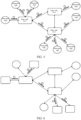
- FIG. 1 is a schematic diagram illustrating a transmission path of a broadcast message in a blockchain network, according to some embodiments of the present specification.
- P2P that has a full name of peer-to-peer network and is also known as point-to-point technology, is an internet system that does not have a central server and relies on peers to exchange information. Unlike a central network system having a central server, each user device of the peer-to-peer network is a node and can function as a server. A central server means that, when attacked, once the central server goes down, the entire network and services will become problematic.
- the P2P network has the advantage that each node is both a client device and a server, so when attacked, any machine going down does not affect the overall service.
- the core of blockchain is decentralization, which is the same as the concept of the P2P network, so the blockchain network generally uses P2P as the bottom layer implementation, and most public blockchain networks (public blockchain) and consortium blockchain networks (consortium blockchain) use similar bottom layer implementation.
- the underlying P2P network can include one or more P2P nodes, and such a P2P node also typically is a node in the blockchain network, for example, a node 1 to a node 8 in FIG. 1 .
- node 1 needs to transmit 7 repeated messages when broadcasting one message in a blockchain network, and each message is transmitted to one of other 7 nodes.
- the number of messages needed to be transmitted also increases each time after the node in the blockchain network broadcasts a message, and the occupation of an uplink bandwidth and a cross-regional bandwidth by the blockchain node also increase.
- a consortium blockchain often uses a Practical Byzantine Fault Tolerance (PBFT) algorithm or a similar consensus algorithm to cause nodes to reach a consensus.
- PBFT Practical Byzantine Fault Tolerance
- Consensus nodes need to broadcast a large number of messages. If each consensus node transmits broadcast messages through a direct connection with another consensus node, the previous bandwidth occupation problem is more severe.
- the consortium blockchain has high security requirements, the consortium node needs to set an IP white list, and when a new consortium node joins the consortium blockchain, each consortium node needs to update its own IP white list so as to ensure that the nodes in the consortium blockchain can directly communicate with each other. Taking FIG.
- the node 1 to the node 8 belong to the same consortium blockchain, and assume that a consortium node 8 is a newly joined node, to ensure that the nodes in the consortium blockchain can directly communicate with each other, a consortium node 1 to a consortium node 7 respectively need to add an IP of the consortium node 8 into their respective IP white lists, and the consortium node 8 needs to add IPs of the consortium node 1 to the consortium node 7 into its IP white list.
- FIG. 2 is a schematic diagram illustrating a transmission path of a broadcast message after a blockchain node is connected to a relay node, according to some embodiments of the present specification.
- any blockchain node can establish a connection with at least one relay node.
- the blockchain node needs only transmit one broadcast message to the connected relay node, and only one broadcast message needs to be forwarded between the relay nodes, so the occupation of the uplink bandwidth and the cross-regional bandwidth by the blockchain node can be greatly reduced.
- a node 1 to a node 8 belong to the same blockchain network. Assume that the node 1 needs to broadcast one message, the node 1 can transmit one broadcast message to a connected relay node 1.
- the relay node 1 respectively transmits one broadcast message to connected node 2 and node 3 after receiving the broadcast message, and respectively transmits one broadcast message to a relay node 2 and a relay node 3.
- the relay node 2 respectively transmits one broadcast message to connected node 6, node 7 and node 8 after receiving the broadcast message.
- the relay node 3 respectively transmits one broadcast message to connected node 4 and node 5 after receiving the broadcast message.
- consortium node can transmit a message to another consortium node through a relay node after being connected to the relay node, that is, the consortium node directly communicates with the relay node, and the consortium node can add an IP of the relay node in an IP white list. That is, as long as the IP of the connected relay node is added into the IP white list of the consortium node, the consortium node does not need to update the IP white list to communicate with a newly joined consortium node that is connected to the relay node or another relay node. Taking FIG.
- the node 1 to the node 8 belong to the same consortium blockchain, and the consortium node 1 can add an IP of the relay node 1 into an IP white list, so the consortium node 1 can communicate with another consortium node by transmitting a message to the relay node 1 no matter how many nodes newly join the consortium blockchain.
- composition and workflow of a communication optimization system including the relay node will be described in detail with reference to FIG. 3 to FIG. 6 .
- FIG. 3 is an example block diagram illustrating a communication optimization system of a blockchain network, according to some embodiments of the present specification.
- a system 300 can include two or more relay nodes (e.g. a node 310-1, a node 310-2, ..., and a node 310-n) and a global node 320.
- relay nodes e.g. a node 310-1, a node 310-2, ..., and a node 310-n
- the relay node can have an IP (short for IP address) exposed to an outside of the system 300 such that a blockchain node establishes a connection with the relay node based on the IP.
- the blockchain node can initiate a connection request including the IP of the relay node such that the relay node establishes a connection with the blockchain node in response to the connection request.
- the blockchain node can establish a persistent connection with the relay node through the IP of the relay node.
- the persistent connection can remain open for multiple transactions.
- a heartbeat mechanism can be used for two devices that establish a persistent connection with each other to determine whether the other device remains "alive", and false connections can be eliminated periodically to achieve the purpose of connection reuse.
- the relay node can have a group of (at least two) IPs exposed to the outside of the system 300 for disaster recovery.
- the blockchain node can first establish a connection with the relay node based on any IP in the group of IPs, and can switch to another IP in the group of IPs to establish a connection with the relay node when identifying that the communication based on any IP fails (e.g. no message can be transmitted, no reply is received after transmitting a message to the other party, etc.).
- the blockchain node can select a nearby relay node to establish a connection for better quality of service (QoS).
- QoS quality of service
- at least one relay node can be provided in a single physical region based on the division of physical regions, and specifically, one city/country/region/continent can be taken as one physical region.
- two relay nodes can be provided in a single city in China, and any blockchain node located in the city can select one of the relay nodes to be a main relay node and the other relay node to be a standby relay node.
- two relay nodes can be provided in Europe, and any blockchain node located in Europe can select one of the relay nodes to be a main relay node and the other relay node to be a standby relay node.
- any blockchain node located in Europe can select one of the relay nodes to be a main relay node and the other relay node to be a standby relay node.
- the blockchain node can initiate a registration request to the relay node after establishing a connection with the relay node, and the registration request can include an ID of the blockchain node and an ID of the relay node connected to the blockchain node.
- the relay node can generate a registration event based on the registration request after receiving the registration request and transmit the registration event to the global node 320.
- the registration event can include the ID of the blockchain node and the ID of the relay node connected to the blockchain node.
- the blockchain node can communicate with the relay node over a public network.
- a message body in a message transmitted by the blockchain node to the relay node can be encrypted.
- the global node 320 can be configured to transmit a registration event of any relay node to another relay node.
- the relay node (a node 310-i can be taken as an example) can update a local routing table based on the obtained registration event.
- the local routing table includes a corresponding relationship between the ID of the blockchain node and the ID of the relay node connected to the blockchain node for indicating a connection relationship between the blockchain node and the relay node, so the relay node 310-i can forward a message of the blockchain node based on the local routing table.
- the updating of the local routing table of the relay node 310-i includes two types, one is updating of the local routing table based on an own received registration request or an own generated registration event of the relay node 310-i, and the other is updating of the local routing table based on a registration event of another relay node 310-j (j ⁇ I) received from the global node 320.
- the local routing tables of all relay nodes within the system 300 can remain consistent (synchronized) after updating.
- the relay node 310-i forwards the unicast message to the relay node 310-j connected to the destination blockchain node, and the relay node 310 j can identify that the ID of the relay node corresponding to the ID of the destination blockchain node is an ID of the relay node 310-j (i.e. an ID of the current relay node) by querying the local routing table after receiving the unicast message including the ID of the destination blockchain node, it indicates that the destination blockchain node is connected to the current relay node, and then the relay node 310 j can transmit the unicast message to the destination blockchain node.
- the relay node 310 j can identify that the ID of the relay node corresponding to the ID of the destination blockchain node is an ID of the relay node 310-j (i.e. an ID of the current relay node) by querying the local routing table after receiving the unicast message including the ID of the destination blockchain node, it indicates that the destination blockchain node is connected to the current relay node, and then
- a blockchain node 1 wants to transmit a unicast message to a blockchain node 6; the blockchain node 1 is connected to a relay node 310-1; the blockchain node 6 is connected to a relay node 310-2; the relay node 310-1 can search for an ID of a relay node corresponding to an ID of the blockchain node 6 based on a local routing table after receiving a unicast message including the ID of the blockchain node 6, an ID of the relay node 310-2 is obtained, it indicates that the blockchain node 6 is connected to the relay node 310-2, and then the relay node 310-1 transmits the unicast message to the relay node 310-2.
- the relay node 310-2 can search for the ID of the relay node corresponding to the ID of the blockchain node 6 based on the local routing table after receiving the unicast message including the ID of the blockchain node 6, an ID of a current relay node (the relay node 310-2) is obtained, it indicates that the blockchain node 6 is connected to the current relay node, and then the relay node 310-2 transmits the unicast message to the connected blockchain node 6.
- a relay node 310-i can respectively transmit one broadcast message to each blockchain node (excluding a blockchain node that transmits the broadcast message) connected to the current relay node after receiving a broadcast message of a blockchain node.
- the relay node 310-i can transmit one broadcast message to another relay node 310-j, and the relay node 310-j can respectively transmit one broadcast message to each blockchain node connected to the current relay node (excluding the blockchain node that transmits the broadcast message) after receiving the broadcast message.
- blockchain nodes connected to the system 300 belong to the same blockchain network.
- a relay node 310-1 can respectively transmit one broadcast message to each blockchain node (excluding a blockchain node 1 that transmits the broadcast message), i.e. a blockchain node 2 and a blockchain node 3, connected to the current relay node after receiving the broadcast message of the blockchain node 1.
- the relay node 310-1 can respectively transmit one broadcast message to a relay node 310-2 and a relay node 310-3.
- the relay node 310-2 can respectively transmit one broadcast message to each blockchain node, i.e.
- the relay node 310-3 can transmit one broadcast message to a blockchain node 4 connected to the current relay node after receiving the broadcast message.
- blockchain nodes connected to the relay nodes within the system 300 can belong to different blockchain networks, so it is necessary to distinguish the blockchain networks that include the blockchain nodes through IDs of the blockchain networks.
- a registration request initiated by a blockchain node includes not only an ID of the blockchain node, but also an ID of a blockchain network that includes the blockchain node.
- a registration event obtained by the relay node includes not only the ID of the blockchain node, but also the ID of the blockchain network that includes the blockchain node.
- a local routing table of a relay node can includes two parts, one part can be referred to as a unicast routing table and the other part can be referred to as a broadcast routing table, the unicast routing table can include an ID of a blockchain node and an ID of a relay node connected to the blockchain node, and the broadcast routing table can include an ID of a blockchain network, and an ID of a blockchain node in the blockchain network, and an ID of a relay node connected to the blockchain node in the blockchain network.
- a relay node 310-i can search for a corresponding relationship (hereinafter referred to as a target corresponding relationship) including an ID of a destination blockchain network in the local routing table after receiving a broadcast message including the ID of the destination blockchain network.
- the relay node 310-i can check whether any identified target corresponding relationship includes an ID of a current relay node. If yes, the relay node 310-i can determine an ID of a blockchain node connected to the current relay node in the destination blockchain network from the target corresponding relationship, and then transmit one broadcast message to the blockchain node corresponding to the ID.
- the relay node 310-i can check whether the target corresponding relationship includes an ID of another relay node (denoted as a node 310-j, where j ⁇ i). If yes, the relay node 310-i can transmit one broadcast message to the another relay node 310-j.
- the relay node 310-j can search for a corresponding relationship including the ID of the destination blockchain network and the ID of the current relay node (the relay node 310-j) in the local routing table after receiving the broadcast message including the ID of the destination blockchain network, and then transmit one broadcast message to each blockchain node connected to the relay node 310-j and included in the destination blockchain network based on an ID of a blockchain node (denoted as a blockchain node connected to the relay node 310-j in the destination blockchain network) in each identified corresponding relationship including the ID of the destination blockchain network and the ID of the current relay node (the relay node 310 j).
- a blockchain node 1, a blockchain node 3, a blockchain node 7, and a blockchain node 8 belong to the same blockchain network, and a blockchain node 2, a blockchain node 4, a blockchain node 5, and a blockchain node 6 belong to another blockchain network.
- the blockchain node 1 transmits one broadcast message including an ID of a blockchain network that includes the blockchain node 1 to a relay node 310-1, and the ID of the blockchain network that includes the blockchain node 1 is an ID of a destination blockchain network.
- the relay node 310-1 can search for a target corresponding relationship including the ID of the destination blockchain network in a local routing table after receiving the broadcast message of the blockchain node 1.
- the relay node 310-1 can check that the target corresponding relationship include an ID of a current relay node (the relay node 310-1), the relay node 310-1 can further determine an ID of a blockchain node (the blockchain node 3) connected to the current relay node in the destination blockchain network, and then transmit one broadcast message to the blockchain node 3.
- the relay node 310-1 can check that the target corresponding relationship include an ID of another relay node (i.e. a relay node 310-2), and the relay node 310-1 can transmit one broadcast message to the relay node 310-2.
- the relay node 310-2 can check that the target corresponding relationships include the ID of the current relay node (the relay node 310-2) after receiving the broadcast message, the relay node 310-2 can further determine the ID of the blockchain node (the blockchain node 7 and the blockchain node 8) connected to the current relay node in the destination blockchain network, and then respectively transmit one broadcast message to the blockchain node 7 and the blockchain node 8.
- a port configured to transmit a message between a blockchain node and a relay node and a port configured to transmit a message between relay nodes can be different, so any relay node can distinguish whether a received message is transmitted by the blockchain node (not forwarded by another relay node) or forwarded by another relay node based on the different ports. Based on this, any relay node may not repeatedly forward the received broadcast message again to another relay node when determining that the received broadcast message is forwarded by the another relay node.
- connections can be established between devices within the system 300 through Intranet (an internal network of an enterprise or institution, i.e. intranet).
- Intranet an internal network of an enterprise or institution, i.e. intranet.
- a message of the blockchain node transmitted between the relay nodes within the system 300 can obtain a lower transmission latency.
- a distance between (two) relay nodes connected to the two blockchain nodes is usually much farther than a distance between any blockchain node and a connected relay node. Therefore, the time for transmitting broadcast messages between the blockchain nodes will be greatly reduced by establishing a connection between the relay nodes through the intranet and transmitting only one broadcast message.
- a persistent connection can be established between the relay nodes within the system 300, for example, a persistent connected can be established through an IP of the intranet.
- a persistent connection can also be established between the relay node and the global node 320 within the system 300, for example, a persistent connection can be established through the IP of the intranet.
- a registration request transmitted by a consortium node to a connected relay node can be transmitted by the relay node to other consortium nodes connected to the relay node, and the relay node and the other consortium nodes (belonging to the same consortium blockchain as the consortium node) connected to the relay node can respectively verify the registration request. If the relay node passes the verification of the registration request and more than a predetermined proportion of other consortium nodes (belonging to the same consortium blockchain as the consortium node) connected to the relay node pass the verification of the registration request, it can be considered that the consortium node "formally" accesses the system 300, and each relay node within the system 300 will update a corresponding relationship associated with the consortium node to a local routing table. If the verification fails, the system 300 will not provide communication optimization services for the consortium node, that is, each relay node within the system 300 will not update the corresponding relationship associated with the consortium node to the local routing table.
- a blockchain node can select two relay nodes to access the system 300, one is a main relay node and the other is a standby relay node.
- a registration request initiated by the blockchain node to the relay node includes not only an ID of the blockchain node and an ID of the relay node, but also a main/standby identifier of the relay node for indicating that the relay node is the main/standby relay node of the blockchain node.
- a registration event generated based on the registration request can also include the main/standby identifier of the relay node connected to the blockchain node, and a local routing table of any relay node can include a corresponding relationship among the ID of the blockchain node, the ID of the relay node connected to the blockchain node, and the main/standby identifier of the relay node connected to the blockchain node, as such any relay node can distinguish between the main relay node and the standby relay node of the blockchain node based on the local routing table.
- the standby relay node of the blockchain node is configured to receive a message transmitted by the blockchain node or a message transmitted to the blockchain node when the main relay node of the blockchain node fails.
- a blockchain node that transmits a message can switch to a connection with a standby relay node when determining that a main relay node of the blockchain node fails (e.g. a message cannot be transmitted, or no response is received after a message is transmitted to the main relay node), and transmit the message to the standby relay node, that is, the source blockchain node can transmit the message through the standby relay node of the source blockchain node.
- a relay node connected to the source blockchain node can switch to a connection with a standby relay node of a destination blockchain node when determining that a main relay node of the destination blockchain node fails (e.g.
- a message cannot be transmitted, or no response is received after a message is transmitted to the main relay node of the destination blockchain node), and forward the message to the standby relay node of the destination blockchain node, that is, the relay node connected to the source blockchain node transmits the message through the standby relay node of the destination blockchain node.
- the blockchain node can also initiate a deregistration request to the connected relay node, where the deregistration request can include the ID of the blockchain node.
- the relay node can generate a deregistration event based on the deregistration request after receiving the deregistration request, and transmit the deregistration event to the global node 320, where the deregistration event can include the ID of the blockchain node.
- the global node 320 can transmit a deregistration event of any relay node to another relay node.
- the relay node can update the local routing table based on the received deregistration request or the deregistration event.
- deregistration means that a blockchain node is disconnected to the system 300, and any relay node can delete a corresponding relationship including an ID of the blockchain node from the local routing table after receiving the deregistration request or deregistration event including the ID of the blockchain node.
- a unicast routing table/registration event can include a key pair taking an ID of a blockchain node as a key (taking information corresponding to the ID of the blockchain node as a value).
- a broadcast routing table can include a key pair taking an ID of a blockchain network as a key (taking information corresponding to the ID of the blockchain node as a value).
- any relay node or the global node in the communication optimization system can be implemented by one subsystem, and each subsystem includes several modules having different functions to achieve load balancing. Illustration will be made below by taking an example in conjunction with FIG. 7 and FIG. 8 .
- FIG. 7 is an example block diagram illustrating a relay node, according to some embodiments of the present specification.
- the relay node can include an IP module 710, a first load balancing module 720, a group of proxy nodes 730, a service discovery module 740, and a first database 750.
- a group of proxy nodes within a single relay node are elastically scalable, that is, the number of proxy nodes within a single relay node is variable.
- the relay node in FIG. 7 includes a proxy node 730-1, a proxy node 730-2, a proxy node 730-3,..., and a proxy node 730-n.
- the number of proxy nodes within a single relay node can be consistent with the trend in the number of blockchain nodes connected to the relay node. That is, when the number of the blockchain nodes connected to the relay node increases, the number of the proxy nodes within the relay node can be appropriately increased.
- An IP of the IP module 710 can be used as an IP exposed to an outside of the system 300 (that is, to the blockchain nodes) of the relay node, that is, a blockchain node can transmit a connection request including the IP of the IP module 710 to the IP module 710 of the relay node, so the IP module 710 of the relay node can establish a connection with the blockchain node in response to the connection request.
- the IP module 710 can receive a message of the blockchain node after establishing a connection with the blockchain node and transmit the message to the first load balancing module 720 within the relay node.
- the first load balancing module 720 can be configured to transmit the registration request received from the IP module 710 within the relay node to one of the group of proxy nodes 730 within the relay node, and transmit the message received from the IP module 710 within the relay node to one of the group of proxy nodes 730 within the relay node.
- the first load balancing module 720 can determine a proxy node 730-m from the group of proxy nodes 730 within the relay node to receive the registration request/message based on a round robin scheduling algorithm.
- a persistent connection can be established between the relay nodes through an IP of the first load balancing module 720.
- the IP of the first load balancing module 720 can be a virtual IP (VIP).
- VIP virtual IP
- a persistent connection can be established between proxy nodes in the same relay node through the IP of the proxy node.
- Each node in the group of proxy nodes acts as a core work unit in the relay node, and has the functions of establishing a connection with a blockchain node and forwarding a message of the blockchain node based on a local routing table.
- the workflow of a proxy node can refer to FIG. 8 to FIG. 11 and related descriptions about FIG. 8 to FIG. 11 .
- the service discovery module 740 can be configured to write a registration event received from any proxy node of a current relay node into the first database 750, and transmit a registration event generated by any proxy node of the current relay node to another proxy node of the current relay node.
- the service discovery module 740 of any relay node can further transmit the registration event of the current relay node to the global node 320 such that the global node 320 transmits the registration event to the service discovery modules 740 of another relay node. Accordingly, the service discovery module 740 of any relay node can receive a registration event of another relay node from the global node 320 and forward the registration event to each proxy node in the current relay node.
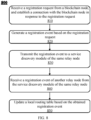
- FIG. 8 is an example flowchart illustrating a registration method of a blockchain network-based communication optimization system, according to some embodiments of the present specification.
- a subject performing a process 800 can be denoted as a proxy node 730-m in a relay node 310-i, and it should be understood that another proxy node 730-j (j ⁇ i) within the relay node 3 10-i, as well as a proxy node in another relay node 310 j (j ⁇ i) within the system 300 can update a local routing tables by referring to the process 800.
- the process 800 can include:
- a registration request of a blockchain node is received, and a connection with the blockchain node is established in response to the registration request.
- the proxy node can establish a persistent connection with the blockchain node.
- a registration event is generated based on the registration request.
- the registration event can include not only an ID of the blockchain node, an ID of a relay node connected to the blockchain node, but also an IP of a proxy node connected to the blockchain node; accordingly, the local routing table can include not only a corresponding relationship between the ID of the blockchain node and the ID of the relay node connected to the blockchain node, but also a corresponding relationship between the ID of the blockchain node and the IP of the proxy node connected to the blockchain node, so the proxy node can determine whether a proxy node connected to a blockchain node for receiving the message is a current proxy node.
- the proxy node can transmit the message to the blockchain node for receiving the message after determining that the proxy node connected to the blockchain node for receiving the message is the current proxy node.
- the proxy node can transmit the message to the proxy node connected to the blockchain node for receiving the message based on the IP after determining that the proxy node connected to the blockchain node for receiving the message is not the current proxy node.
- the registration event is transmitted to a service discovery module of the same relay node.
- the service discovery module 740 in the relay node 310-i can transmit the registration event to another proxy node 730-n (n ⁇ m) in the relay node 310-i after receiving the registration event generated by the proxy node 730-m of the relay node 310-i based on the registration request.
- each proxy node within any relay node can update a local routing table based on a registration event generated by a current proxy node or a registration event generated by another proxy node in a current relay node.
- a registration event of another relay node is received from the service discovery module of the same relay node.
- the service discovery module 740 in the relay node 310-i can further transmit the registration event of the current relay node to the global node 320 after receiving the registration event of the current relay node.
- the global node 320 can transmit the registration event of the relay node 310-i to the service discovery module 740 of the another relay node 310-j (j ⁇ i) within the system 300 after receiving the registration event of relay node 310-i.
- the service discovery module 740 of the relay node 310-j can transmit a registration event of the another relay node 310-i to each proxy node in the relay node 310-j after receiving the registration event of the another relay node 310-i.
- each proxy node within the relay node 310-i can also receive the registration event of the another relay node 310-j (j ⁇ i) from the service discovery module 740 of the relay node 310-i. That is, each proxy node within any relay node can obtain a registration event of another relay node and update a local routing table based on the registration event of the another relay node.
- a local routing table is updated based on the obtained registration event.
- registration events obtained by the proxy node 730-m of the relay node 310-i can include a registration event generated by a current proxy node (i.e. the proxy node 730-m), a registration event (that is, of a current relay node) generated by the another proxy node 730-n (n ⁇ m) in the relay node 310-i, and a registration event (that is, of another relay node) generated by a proxy node in the another relay node 310-j (j ⁇ i) within the system 300.
- the local routing tables of all proxy node within the system 300 can remain consistent (synchronized) after updating.
- the registration request can include an ID of a blockchain node, an ID of a blockchain network that includes the blockchain node, and an ID of a relay node connected to the blockchain node.
- the registration event can include the ID of the blockchain node, the ID of the blockchain network that includes the blockchain node, an IP of a proxy node connected to the blockchain node, and the ID of the relay node connected to the blockchain node.
- a local routing table of each proxy node can includes two parts, i.e.
- the unicast routing table can include a corresponding relationship among an ID of a blockchain node, an IP of a proxy node connected to the blockchain node, and an ID of a relay node connected to the blockchain node; and the broadcast routing table includes a corresponding relationship among an ID of a blockchain network, an ID of a blockchain node in the blockchain network, an IP of a proxy node connected to the blockchain node in the blockchain network, and an ID of a relay node connected to the blockchain node in the blockchain network.
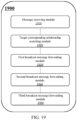
- FIG. 9 is an example flowchart illustrating forwarding of a unicast message by a proxy node, according to some embodiments of the present specification.
- a subject performing a process 900 can be denoted as a proxy node 730-m in a relay node 310-i, and it should be understood that another proxy node 730-j (j ⁇ i) in the relay node 310-i, as well as a proxy node in another relay node 310-j (j ⁇ i) within the system 300 can forward a message by referring to the process 900.
- the process 900 can include:
- a unicast message including an ID of a destination blockchain node is received.
- a blockchain node connected to the relay node 310-i first transmits a unicast message to the IP module 710 of the relay node 310-i, and the IP module 710 of the relay node 310-i then transmits a broadcast message to the first load balancing module 720 of the relay node 310-i, further, the first load balancing module 720 of the relay node 310-i can transmit the broadcast message to a certain proxy node (denoted as the proxy node 730-m) in the relay node 310-i.
- an ID of a relay node corresponding to the ID of the destination blockchain node is determined based on a local routing table, and the ID of the relay node connected to the destination blockchain node is obtained.
- step 930 whether the relay node connected to the destination blockchain node is a current relay node is determined.
- the current relay node is the relay node 310-i. It can be understood that any proxy node can save an ID of the current relay node, so whether the relay node connected to the destination blockchain node is the current relay node can be determined by comparing the ID of the relay node connected to the destination blockchain node with the ID of the current relay node.
- step 940 is performed. If yes, step 960 is performed.
- an IP of a first load balancing module of the relay node connected to the destination blockchain node is determined based on the ID of the relay node connected to the destination blockchain node.
- the unicast message is transmitted to the first load balancing module of the relay node connected to the destination blockchain node based on the IP of the first load balancing module of the relay node connected to the destination blockchain node.
- the proxy node 730-m of the relay node 310-i can search for an IP of a first load balancing module corresponding to an ID of the relay node 310-j when determining that the destination blockchain node is connected to another relay node (can be denoted as the relay node 310-j, where j ⁇ i) within the system 300, obtain the IP of the first load balancing module in the relay node 310-j, and then transmit the unicast message to the first load balancing module in the relay node 310 j based on the IP of the first load balancing module in the relay node 310-j.
- a proxy node of each relay node can store a corresponding relationship between an ID of another relay node and an IP of a first load balancing module of the another relay node to determine the IP of the first load balancing module of the another relay node based on the ID of the another relay node.
- the proxy node of the relay node 310-i can store a correspondence between the ID of the relay node 310-j (j ⁇ i) and the IP of the first load balancing module of the relay node 310-j to determine the IP of the first load balancing module of the relay node 310-j based on the ID of the relay node 310-j.
- the first load balancing module in the relay node 310-j can transmit the unicast message to a certain proxy node in the relay node 310-j after receiving the unicast message, and the proxy node can forward the unicast message by referring to the process 900. It can be understood that a proxy node in relay node 310-j that first receives the unicast message will continue to perform step 960 after performing step 920 and step 930.
- the proxy node in the relay node 310-j that first receives the unicast message can also skip step 920 to directly perform step 960.
- the proxy node that receives the unicast message can determine whether step 920 needs to be skipped in a certain way. For example, a port configured to transmit a message by a blockchain node and a port configured to transmit a message by a proxy node can be different, and thus the proxy node that receives the unicast message can determine whether the unicast message is forwarded through a proxy node by identifying a transmission port of the unicast message, if yes, step 960 can be directly executed by skipping step 920, and otherwise step 920 can be executed.
- an ID of a proxy node corresponding to the ID of the destination blockchain node is determined based on the local routing table, and an IP of the proxy node connected to the destination blockchain node is obtained.
- step 970 whether the proxy node connected to the destination blockchain node is a current proxy node is determined.
- the proxy node 730-m in the relay node 310-i can further determine whether the destination blockchain node is connected to a current proxy node when determining that the destination blockchain node is connected to the current relay node.
- any proxy node can save an IP of the current proxy node, so whether the proxy node connected to the destination blockchain node is the current proxy node can be determined by comparing the IP of the proxy node connected to the destination blockchain node with the IP of the current proxy node.
- step 980 is performed, and otherwise step 990 is performed.
- the unicast message is transmitted to the connected destination blockchain node.
- the unicast message is transmitted to the proxy node connected to the destination blockchain node based on the IP of the proxy node connected to the destination blockchain node.
- the proxy node 730-m in the relay node 310-i can transmit the unicast broadcast message to the connected destination blockchain node when determining that the destination blockchain node is connected to the current proxy node.
- the proxy node 730-m in the relay node 310-i can transmit the unicast message to a proxy node 730-n in the same relay node based on an IP of the proxy node 730-n in the same relay node when determining that the destination blockchain node is connected to another proxy node (can be denoted as the proxy node 730-n) in the same relay node.
- the proxy node 730-n in the relay node 310-i can transmit the unicast messages to the connected destination blockchain node.
- the proxy node 730-n in the relay node 310-i can perform step 920 or can skip step 920 to directly perform step 960.
- FIG. 10 is an example flowchart illustrating forwarding of a broadcast message by a proxy node in a multi-chain scenario, according to some embodiments of the present specification.
- a subject performing a process 1000 can be denoted as a proxy node 730-m in a relay node 310-i, and it should be understood that another proxy node 730-n (n ⁇ m) within the relay node 310-i and a proxy node in another relay node 310-j (j ⁇ i) within the system 300 can forward a message by referring to the process 1000.
- the process 1000 can include:
- a broadcast message including an ID of a destination blockchain network is received.
- the destination blockchain network refers to a blockchain network that includes a blockchain node for receiving a broadcast message.
- a target corresponding relationship including the ID of the destination blockchain network is searched for in a broadcast routing table.
- the target corresponding relationship further includes an ID of a blockchain node in the destination blockchain network and an ID of a relay node connected to the blockchain node in the destination blockchain network for indicating the relay node connected to the blockchain node in the destination blockchain network.
- step 1030 whether the target corresponding relationship includes an ID of a current relay node is checked.
- step 1040 is performed.
- the broadcast message is transmitted to another proxy node in the current relay node.
- the target corresponding relationship includes the ID of the current relay node, it indicates that a proxy node in the relay node 310-i is connected to the blockchain node in the destination blockchain network, and therefore the proxy node 730-m in the relay node 310-i that first receives the broadcast message can transmit one broadcast message to the another proxy node 730-n (n ⁇ m) in the relay node 310-i. As such, each proxy node in the relay node 310-i can receive one broadcast message.
- step 1050 whether the target corresponding relationship includes an ID of another relay node is checked.
- step 1060 is performed.
- an IP of a first load balancing module of the another relay node is determined based on the checked ID of the another relay node.
- the broadcast message is transmitted to the first load balancing module of the another relay node based on the determined IP of the first load balancing module of the another relay node.
- the relay node 310-i checks that the target corresponding relationship includes an ID of the relay node 310 j (j ⁇ i), and the relay node 310-i can determine an IP of a first load balancing module of the relay node 310-j based on the ID of the relay node 310-j.
- the relay node 310-i can transmit the broadcast message to the first load balancing module of the relay node 310 j based on the IP of the first load balancing module of the relay node 310-j.
- the first load balancing module of the relay node 310-j can transmit the broadcast message to a certain proxy node (can be denoted as a proxy node 730-p) in the relay node 310-j after receiving the broadcast message, and the proxy node 730-p can transmit one broadcast message to another proxy node 730-q (q ⁇ p) in the relay node 310-j after receiving the broadcast message.
- a proxy node 730-p can be denoted as a proxy node 730-p in the relay node 310-j after receiving the broadcast message
- the proxy node 730-p can transmit one broadcast message to another proxy node 730-q (q ⁇ p) in the relay node 310-j after receiving the broadcast message.
- a proxy in any relay node may not necessarily repeatedly forward a broadcast message to (a first load balancing module of) another relay node when receiving the broadcast message forwarded by a proxy node within the another relay node from a first load balancing module of a current relay node.
- the proxy node 730-m in a relay node 310-1 checks an ID of a relay node 310-2 from the target corresponding relationship, and the proxy node 730-m in the relay node 310-1 can transmit one broadcast message to a first load balancing module of the relay node 310-2.
- the proxy node 730-p in the relay node 310-2 can skip step 1020 and step 1050 to directly perform step 1040 and step 1080 after receiving the broadcast message from the first load balancing module of the relay node 310-2.
- the proxy node that receives the broadcast message can determine whether step 1050 needs to be performed in a certain way.
- a port configured to transmit a message by a blockchain node and a port configured to transmit a message by a proxy node can be different, so the proxy node that receives the broadcast message can determine whether the broadcast message is forwarded through a proxy node by identifying a transmission port of the broadcast message, if yes, step 1050 is performed, and otherwise, step 1050 is not performed.
- step 1080 whether the broadcast routing table includes a destination corresponding relationship including the ID of the destination blockchain network and an IP of a current proxy node is determined.
- step 1090 is performed.
- the broadcast message is transmitted to a connected blockchain node in the destination blockchain network based on an ID of the blockchain node in the destination corresponding relationship.
- each proxy node in the relay node connected to the blockchain node in the destination blockchain network can receive one broadcast message.
- the proxy node that receives the broadcast message can check whether the broadcast routing table includes the destination corresponding relationship including the ID of the destination blockchain network and the IP of the current proxy node, if yes, it indicates that the current proxy node is connected to a blockchain node in the destination blockchain network, and the broadcast message can be transmitted to the connected blockchain node in the destination blockchain network based on an ID of the blockchain node in the destination corresponding relationship.
- any proxy node can directly check whether the broadcast routing table includes the destination corresponding relationship including the ID of the destination blockchain network ID and the IP of the current proxy node when receiving a broadcast message transmitted by another proxy node within the same relay node, it is not necessary to repeatedly transmit the broadcast message to the another proxy node in the same relay node, and it is also not necessary to repeatedly transmit the broadcast message to another relay node.
- the proxy node that receives the broadcast message can determine whether the broadcast message is forwarded through a proxy node by identifying a transmission port of the broadcast message.
- FIG. 11 is an example flowchart illustrating forwarding a broadcast message by a proxy node in a single-chain scenario, according to some embodiments of the present specification.
- a subject performing a process 1100 can be denoted as a proxy node 730-m in a relay node 310-i, and it should be understood that another proxy node 730-n (n ⁇ m) within the relay node 310-i and a proxy node in another relay node 310-j (j ⁇ i) within the system 300 can forward a message by referring to the process 1100.
- the process 1100 can include:
- a broadcast message is received.
- the broadcast message is transmitted to another proxy node in a current relay node.
- the broadcast message is transmitted to a first load balancing module of another relay node.
- the proxy node 730-m in the relay node 310-i can transmit a broadcast message to the another proxy node 730-n in a current relay node (the relay node 310-i) after receiving the broadcast message, and on the other hand, the proxy node 730-m in the relay node 310-i can transmit the broadcast message to a first load balancing module of the another relay nodes 310-j.
- the first load balancing module of the relay node 310-j can transmit the broadcast message to a certain proxy node (can be denoted as a proxy node 730-p) in the relay node 310-j after receiving the broadcast message, and the proxy node 730-p can transmit one broadcast message to another proxy node 730-q (q ⁇ p) in the relay node 310-j after receiving the broadcast message.
- a proxy node 730-p can be denoted as a proxy node 730-p in the relay node 310-j after receiving the broadcast message
- the proxy node 730-p can transmit one broadcast message to another proxy node 730-q (q ⁇ p) in the relay node 310-j after receiving the broadcast message.
- a proxy node in any relay node may not necessarily repeatedly forward a broadcast message to another relay node after receiving the broadcast message forwarded by a proxy node within the another relay node from a first load balancing module of a current relay node.
- the proxy node 730-m in a relay node 310-1 checks an ID of the relay node 310-2 from the target corresponding relationship, and the proxy node 730-m in the relay node 310-1 can transmit one broadcast message to a first load balancing module of the relay node 310-2.
- the proxy node 730-p in the relay node 310-2 may not perform step 1130 after receiving the broadcast message from the first load balancing module of the relay node 310-2.
- the proxy node that receives the broadcast message can determine whether step 1130 needs to be performed in a certain way.
- a port configured to transmit a message by a blockchain node and a port configured to transmit a message by a proxy node can be different, so the proxy node that receives the broadcast message can determine whether the broadcast message is forwarded through a proxy node by identifying a transmission port of the broadcast message, if yes, step 1130 is performed, and otherwise, step 1130 is not performed.
- step 1140 whether a local routing table includes an IP of a current proxy node is checked.
- step 1150 can be performed.
- the broadcast message is transmitted to a connected blockchain node based on an ID of the blockchain node in a corresponding relationship including the IP of the current proxy node.
- each proxy node in the relay node connected to the blockchain node can receive one broadcast message.
- the proxy node that receives the broadcast message can check whether the local routing table includes the IP of the current proxy node, if yes, it indicates that the current proxy node is connected to a blockchain node, and the broadcast message can be transmitted to the connected blockchain node based on an ID of the blockchain node in a corresponding relationship including the IP of the current proxy node.
- any proxy node can directly check whether the local routing table includes the IP of the current proxy node when receiving a broadcast message transmitted by another proxy node within the same relay node, it is not necessary to repeatedly transmit the broadcast message to the another proxy node in the same relay node, and it is also not necessary to repeatedly transmit the broadcast message to another relay node.
- the broadcast message can further include an ID of a source blockchain node, and any proxy node can determine an IP of a proxy node corresponding to the ID of the source blockchain node based on the local routing table, obtain the IP of the proxy node connected to the source blockchain node to determine whether the proxy node connected to the source blockchain node is a current proxy node, and if yes, the proxy node connected to the source blockchain node does not necessarily transmit the broadcast message to the source blockchain node.
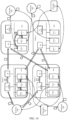
- a first region is provided with two relay nodes having IDs of a region 1 and a region 2, respectively
- a second region is provided with two relay nodes having IDs of a region 3 and a region 4, respectively
- a blockchain node 1, a blockchain node 2, and a blockchain node 3 in the first region all use the region 1 as a main relay node and the region 2 as a standby relay node
- a blockchain node 4 a blockchain node 5, and a blockchain node 6 in the second region all use the region 3 as a main relay node and the region 4 as a standby relay node.
- a first load balancer module is referred to as a server load balancer (SLB), and a proxy node is referred to as proxy.
- SLB server load balancer
- proxy a proxy node
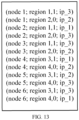
- the local routing table of each proxy node after updating is shown in FIG. 13 .
- “ 1 " is an identifier of a main relay node
- "0" is an identifier of a node standby relay node
- a node 1 to a node 6 respectively represent IDs of the blockchain node 1 to the blockchain node 6
- ip_m represents an IP (address) of a proxy node numbered m in a corresponding relay node.
- (node 1; region 1, 1; ip_3) indicates that the main relay node of the blockchain node 1 is the region 1, and includes an IP (address) of a proxy 3 (in region 1) connected to the blockchain node 1.
- the blockchain node 1 transmits a unicast message to the blockchain node 4, the blockchain node 1 preferentially transmits a unicast message including the ID (i.e. a node 4) of the blockchain node 4 to an IP module of the main relay node region 1.
- an IP module transmits the unicast message to an SLB, the SLB then transmits the unicast message to one (can be denoted as a first proxy node) of a group of proxy nodes, and the first proxy node can search for an ID of a region corresponding to the ID of the blockchain node 4 based on the local routing table.
- corresponding relationships associated with the blockchain node 4 in the local routing table are (node 4; region 3, 1; ip_1) and (node 4; region 4, 0; ip_2).
- the first proxy node preferentially transmits the unicast message to an SLB of the main relay node region 3 of the blockchain node 4.
- the SLB transmits the unicast message to one (denoted as a second proxy node) of a group of proxy nodes, and the second proxy node can search for the ID of the region corresponding to the ID of the blockchain node 4 based on the local routing table to obtain an ID of a current relay node region 3, and thus can continue to search for an IP of a proxy node corresponding to the ID of the blockchain node 4.
- the second proxy node is a proxy 1 in the region 3, then the proxy 1 in the region 3 can search for an IP of a current proxy node, it indicates that the blockchain node 4 is connected to the current proxy node, and then the proxy 1 in the region 3 can transmit the unicast message to the connected blockchain node 4.
- the second proxy node is an IP of a proxy node (such as a proxy 2 or a proxy 3) other than the proxy 1 in the region 3, the second proxy node can identify the IP of the proxy 1 and transmit the unicast message to the proxy 2 based on the IP of the proxy 1.
- the blockchain node 1 determines that the main relay node region 1 fails (e.g. a message cannot be transmitted, or no response is received after a message is transmitted to the region 1), the blockchain node 1 can transmit the unicast message to an IP module of the standby relay node region 2. Similarly, inside the region 2, the IP module transmits the unicast message to an SLB, the SLB then transmits the unicast message to one (still denoted as a first proxy node) of a group of proxy nodes; and the first proxy node can search for the ID of the region corresponding to the ID of the blockchain node 4 based on the local routing table. As shown in FIG.
- the corresponding relationships associated with the blockchain node 4 in the local routing table are (node 4; region 3, 1; ip_2) and (node 4; region 4, 0; ip_1).
- the first proxy node preferentially transmits the unicast message to an SLB of the main relay node region 3 of the blockchain node 4.
- the SLB transmits the unicast message to one (still denoted as a second proxy node) of a group of proxy nodes, and the second proxy node can search for the ID of the region corresponding to the ID of the blockchain node 4 based on the local routing table to obtain the ID of the current relay node region 3, and thus can continue to search for the IP of the proxy node corresponding to the ID of the blockchain node 4.
- the second proxy node can transmit the unicast message to the connected blockchain node 4. If an IP of another proxy node in the region 3 is identified, the unicast message is transmitted to the another proxy node in the region 3 based on the IP.
- the first proxy node in the region 1/region 2 determines that the main relay node region 3 of the blockchain node 4 fails (e.g. a message cannot be transmitted, or no response is received after a message is transmitted to the region 3), the first proxy node in the region 1/region 2 can transmit the unicast message to an SLB of the standby relay node region 4 of the blockchain node 4.
- the flow of forwarding a unicast message by the region 4 can refer to the flow of forwarding a unicast message by the region 3.
- FIG. 14 The flow of forwarding a unicast message is illustrated below in conjunction with FIG. 14 and FIG. 15 .
- the same parts of FIG. 14 as those of FIG. 12 can refer to the related description about FIG. 12 .
- a blockchain node 1, a blockchain node 3, a blockchain node 4, and a blockchain node 5 belong to the same blockchain network (denoted as a first blockchain network), and a blockchain node 2 and a blockchain node 6 belong to another blockchain network (denoted as a second blockchain network).
- a broadcast routing table of each proxy node after updating is shown in FIG. 13 .
- a node 1 to a node 6 respectively represent IDs of the blockchain node 1 to the blockchain node 6;
- ip_m represents an IP (address) of a proxy node numbered m in a corresponding relay node;
- A represents an ID of the first blockchain network; and
- B represents an ID of the second blockchain network.
- (A; region 1, 1; ip_3) indicates that a main relay node of the blockchain node 1 in the first blockchain network is a region 1, and includes an IP (address) of a proxy 3 (in the region 1) connected to the blockchain node 1.
- the blockchain node 1 preferentially transmits a broadcast message including the ID (i.e. A) of the first blockchain network to an IP module of the main relay node region 1. Inside the region 1, the IP module transmits a unicast message to an SLB, and the SLB then transmits the unicast message to one of a group of proxy nodes. As shown in FIG. 14 , it can be assumed that a proxy 2 in the region 1 receives the broadcast message from the SLB.
- corresponding relationships including the ID i.e.
- A) of the first blockchain network includes (A; node 3; region 1, 1; ip_3), (A; node 3; region 2, 0; ip_2), (A; node 4; region 3, 1; ip_1), (A; node 4; region 4, 0; ip_2), (A; node 5; region 3, 1; ip_2), and (A; node 5; region 4, 0; ip_3) in addition to (A; node 1; region 1, 1; ip_3) and (A; node 1; region 2, 0; ip_2).
- the proxy 2 respectively transmits one broadcast message to another proxy node (e.g. a proxy 1 or a proxy 3).
- the proxy 2 in the region 1 preferentially transmits one broadcast message to an SLB of the region 3.
- the SLB transmits the unicast message to one of a group of proxy nodes.
- a proxy 3 in the region 3 receives the broadcast message from the SLB.
- the proxy 3 can respectively transmit one unicast message to another proxy node (e.g. a proxy 1 or a proxy 2).
- each proxy node in the region 1 and the region 3 can receive one broadcast message, where the proxy 3 in the region 1 connected to the blockchain node 3, the proxy 1 in the region 3 connected to the blockchain node 4, and the proxy 2 in the region 3 connected to the blockchain node 5 can respectively search for a corresponding relationship including the ID (i.e. A) of the first blockchain network and an IP of a current proxy node in the broadcast routing table after receiving the broadcast message, and respectively identify the ID of the blockchain node 3, the ID of the blockchain node 4, and the ID of the blockchain node 5. Accordingly, the proxy 3 in the region 1, the proxy 1 in the region 3, and the proxy 2 in the region 3 can respectively transmit the broadcast message to the connected blockchain node 3, blockchain node 4, and blockchain node 5.
- the blockchain node 1 determines that the main relay node region 1 fails (e.g. a message cannot be transmitted, or no response is received after a message is transmitted to the region 1), the blockchain node 1 can transmit the broadcast message to an IP module of the standby relay node region 2. Inside the region 2, the IP module transmits the unicast message to an SLB, and then the SLB transmits the unicast message to one of a group of proxy nodes. Referring to the previous content, each proxy node within the region 2 can receive one broadcast message.
- a proxy 3 in the region 2 can search for the corresponding relationship (A; node 3; region 1, 1; ip_3) including the ID (i.e. A) of the first blockchain network and the IP of the current proxy node, it indicates that the blockchain node 3 is connected to the current proxy node (the proxy 3), so the proxy 3 in the region 2 can transmit the broadcast message to the connected blockchain node 3.
- the proxy 3 in the region 2 can further preferentially transmit one broadcast message to the SLB of the main relay node region 3 of the blockchain node 4 and the blockchain node 5 based on the broadcast routing table.
- the flow of forwarding a broadcast message by the region 3, can refer to the related description in the previous content.
- the proxy node (e.g. the proxy 2 in region 1) in the region 1/region 2 that first receives the broadcast message determines that the main relay node region 3 of the blockchain node 4 and the blockchain node 5 fails (e.g. a message cannot be transmitted, or no response is received after a message is transmitted to the region 3)
- the first proxy node in the region 1/region 2 can transmit the broadcast message to an SLB of the standby relay node region 4 of the blockchain node 4 and the blockchain node 5.
- the flow of forwarding a broadcast message by the region 4 can refer to the flow of forwarding a broadcast message by the region 3.
- FIG. 16 is an example block diagram illustrating a global node, according to some embodiments of the present specification.
- the global node 320 can include a second load balancing module 1610, a group of work nodes 1620, and a second database 1630.
- the second load balancing module 1610 is configured to receive a registration event from a service discovery module and transmit the registration event to one of the group of work nodes 1620. In some embodiments, the second load balancing module 1610 can determine a work node from the group of work nodes 1620 to receive the registration event by using a roll polling algorithm.
- the work node is configured to write the received registration event into the second database 1630.
- the group of work nodes within the global node are elastically scalable, that is, the number of the work nodes within the global node is variable.
- the global node 320 in FIG. 16 includes a work node 1620-1, a work node 1620-2, a work node 1620-3,..., and a work node 1620-n.
- the number of the work nodes within the global node can be consistent with the trend of the number of the relay nodes within the communication optimization system. That is, when the number of the relay nodes within the communication optimization system increases, the number of the work nodes within the global node can appropriately increase.
- the work node is further configured to transmit a registration event of any relay node to a first load balancing module of another relay node.
- the work node can respectively transmit a registration event of a relay node 310-2 to a relay node 310-1, a relay node 310-3,..., and a relay node 310-n after writing the registration event of the relay node 310-2 into the second database.
- any relay node can include at least two IP modules/first load balancing modules/first databases for main-standby switching, and the global node can also include at least two second load balancing modules/second databases for main-standby switching.
- FIG. 17 is an example block diagram illustrating a registration system of a blockchain network-based communication optimization system, according to some embodiments of the present specification.
- a registration system 1700 can be implemented on any relay node (can be denoted as a relay node 310-i) in a relay node.
- the registration system 1700 can include a connection module 1710, a registration event generation module 1720, a registration event transmission module 1730, a registration event receiving module 1740, and a local routing table updating module 1750.
- the connection module 1710 can be configured to receive a registration request of a blockchain node from a first load balancing module of the relay node 310-i, and establish a connection with the blockchain node in response to the registration request.
- the registration event generation module 1720 can be configured to generate a registration event based on the registration request.
- the registration event transmission module 1730 can be configured to transmit the registration event to a service discovery module of the relay node 310-i, so: the service discovery module of the relay node 310-i transmits the registration event to a global node, and the global node transmits the registration event to a service discovery module of another relay node 310-j (j ⁇ i).
- the registration event receiving module 1740 can be configured to receive a registration event of the another relay node 310 j from the service discovery module of the relay node 310-i.
- the local routing table updating module 1750 can be configured to update a local routing table based on the obtained registration event.
- FIG. 8 More details regarding the registration system 1700 and its modules can refer to FIG. 8 and the related description about FIG. 8 , and are not repeated here.
- FIG. 18 is an example block diagram illustrating a message forwarding system of a blockchain network-based communication optimization system, according to some embodiments of the present specification.
- a message forwarding system 1800 can be implemented on any relay node (can be denoted as a relay node 310-i) in a relay node.
- the message forwarding system 1800 can include a message receiving module 1810 and a unicast message forwarding module 1820.
- the message receiving module 1810 can be configured to receive a unicast message including an ID of a destination blockchain node from a first load balancing module of the relay node 310-i.
- a detailed description of receiving the unicast message including the ID of the destination blockchain node from the first load balancing module of the relay node 310-i can refer to FIG. 9 and will not be repeated here.
- the unicast message forwarding module 1820 can be configured to: determine whether a relay node connected to the destination blockchain node is a current relay node; if no, determine an IP of a first load balancing module of the relay node connected to the destination blockchain node based on an ID of the relay node connected to the destination blockchain node, and transmit the unicast message to the first load balancing module of the relay node connected to the destination blockchain node based on the IP of the first load balancing module of the relay node connected to the destination blockchain node; and if yes, determine whether a proxy node connected to the destination blockchain node is a current proxy node, if yes, transmit the unicast message to the connected destination blockchain node, and otherwise transmit the unicast message to the proxy node connected to the destination blockchain node based on the IP of the proxy node connected to the destination blockchain node.
- FIG. 9 More details regarding the message forwarding system 1800 and its modules can refer to FIG. 9 and the related description about FIG. 9 , and are not repeated here.
- FIG. 19 is an example block diagram illustrating a message forwarding system of a blockchain network-based communication optimization system, according to some embodiments of the present specification.
- a message forwarding system 1900 can be implemented on any relay node (can be denoted as a relay node 310-i) in a relay node.
- the message forwarding system 1900 can include a message receiving module 1910, a target corresponding relationship searching module 1920, a first broadcast message forwarding module 1930, a second broadcast message forwarding module 1940, and a third broadcast message forwarding module 1950.
- the message receiving module 1910 can be configured to receive a broadcast message including an ID of a destination blockchain network from a first load balancing module of the relay node 310-i.
- the target corresponding relationship searching module 1920 can be configured to search for a target corresponding relationship including the ID of the destination blockchain network in a broadcast routing table.
- the first broadcast message forwarding module 1930 can be configured to check whether the target corresponding relationship includes an ID of a current relay node, and if yes, transmit the broadcast message to another proxy node in the current relay node. For checking whether the target corresponding relationship includes the ID of the current relay node, if yes, the broadcast message is transmitted to the another proxy node in the current relay node.
- the second broadcast message forwarding module 1940 can be configured to check whether the target corresponding relationship includes an ID of another relay node 310-j, and if yes, determine an IP of a first load balancing module of the another relay node 310-j based on the checked ID of the another relay node 310-j, and transmit the broadcast message to the first load balancing module of the another relay node 310-j based on the determined IP of the first load balancing module of the another relay node.
- the third broadcast message forwarding module 1950 can be configured to check whether the broadcast routing table includes a destination corresponding relationship including the ID of the destination blockchain network and an IP of a current proxy node, and if yes, transmit the broadcast message to a connected blockchain node in the destination blockchain network based on an ID of the blockchain node in the destination corresponding relationship.
- FIG. 10 More details regarding the message forwarding system 1900 and its modules can refer to FIG. 10 and the related description about FIG. 10 , and are not repeated here.
- FIG. 20 is an example block diagram illustrating a message forwarding system of a blockchain network-based communication optimization system, according to some embodiments of the present specification.
- a message forwarding system 2000 can be implemented on any relay node (can be denoted as a relay node 310-i) in a relay node.
- the message forwarding system 2000 can include a message receiving module 2010, a fourth broadcast message forwarding module 2020, a fifth broadcast message forwarding module 2030, and a sixth broadcast message forwarding module 2040.
- the message receiving module 2010 can be configured to receive a broadcast message from a first load balancing module of the relay node 310-i.
- the fourth broadcast message forwarding module 2020 can be configured to transmit the broadcast message to another proxy node in a current relay node.
- the fifth broadcast message forwarding module 2030 can be configured to transmit the broadcast message to a first load balancing module of another relay node 310-j.
- the sixth broadcast message forwarding module 2040 can be configured to check whether a local routing table includes an IP of a current proxy node, and if yes, transmit the broadcast message to a connected blockchain node based on an ID of the blockchain node in a corresponding relationship including the IP of the current proxy node.
- FIG. 11 More details regarding the message forwarding system 2000 and its modules can refer to FIG. 11 and the related description about FIG. 11 , and are not repeated here.
- the systems and their modules shown in FIG. 17 to FIG. 20 can be implemented in various ways.
- the system and the modules of the system can be implemented in hardware, software, or a combination of software and hardware.
- the hardware portion can be implemented by using dedicated logic;
- the software portion can be stored in a memory and executed by a suitable instruction execution system, such as a microprocessor or specially designed hardware.
- processor control code can be implemented by using computer-executable instructions and/or being embodied in processor control code, and such code is provided, for example, on a carrier medium such as a disk, CD, or DVD-ROM, a programmable memory such as a read-only memory (firmware), or a data carrier such as an optical or electronic signal carrier.
- a carrier medium such as a disk, CD, or DVD-ROM
- a programmable memory such as a read-only memory (firmware)
- a data carrier such as an optical or electronic signal carrier.
- the devices and the modules of the devices of present specification can be implemented not only by a hardware circuit of, for example, a super-large-scale integrated circuit or gate array, a semiconductor such as a logic chip or transistor, or a programmable hardware device such as a field programmable gate array or programmable logic device, but also by software executed by, for example, various types of processors, as well as a combination of the previously described hardware circuit and software (e.g. firmware).
- firmware e.g. firmware
- fourth broadcast message forwarding module 2020, fifth broadcast message forwarding module 2030, and sixth broadcast message forwarding module 2040 can be three separate modules or can be combined into one module. Such variations are within the scope of protection of the present specification.
- a blockchain node in a single broadcast, can transmit one broadcast message to a relay node, so the occupation of an uplink bandwidth and a cross-regional bandwidth by the blockchain node can be effectively reduced; (2) a consortium node transmits a message through a relay node, an IP of the relay node can be added into a white list, so the IP white list does not need to be updated when a new consortium node joins the consortium blockchain; (3) the communication optimization system can be built based on an internal network, so the transmission time of a message is effectively reduced by forwarding the message of a blockchain node through a relay node; (4) a blockchain node establishes a connection with a nearby relay node in the communication optimization system, and the communication optimization system is built based on an internal network, so one broadcast message can be transmitted between the relay nodes in a single broadcast, and the transmission time of the message is effectively reduced. It is worthwhile to note that different embodiments can have different beneficial effects,
- a computer storage medium can include a propagated data signal including computer program code, for example, on a baseband or as part of a carrier wave.
- the propagated signal may be in a variety of forms, including an electromagnetic form, an optical form, etc. or a suitable combination of these forms.
- the computer storage medium can be any computer readable medium other than the computer readable storage medium that can communicate, propagate, or transmit the program for use by being connected to an instruction execution system, apparatus, or device.
- Program code in the computer storage medium can be propagated through any suitable medium including a radio, a cable, a fiber optic cable, RF, etc., or any combination of the previous media.
- Computer program code needed for the operation of various portions of the embodiments of the present specification can be written in any one or more programming languages, including object oriented programming languages such as Java, Scala, Smalltalk, Eiffel, JADE, Emerald, C ++, C #, VB. NET, and Python, conventional procedural programming languages such as C, VisualBasic, Fortran 2003, Perl, COBOL 2002, PHP, and ABAP, dynamic programming languages such as Python, Ruby, and Groovy, or other programming languages, etc.
- the program code can run entirely on a user's computer, or as a stand-alone software package on the user's computer, or partially on the user's computer and partially on a remote computer, or entirely on a remote computer or processing device.
- the remote computer can be connected to the user's computer through any form of network, such as a local area network (LAN) or a wide area network (WAN), or to an external computer (e.g. through the Internet), or in a cloud computing environment, or used as a service, such as software as a service (SaaS).
- LAN local area network
- WAN wide area network
- SaaS software as a service
Landscapes
- Engineering & Computer Science (AREA)
- Computer Networks & Wireless Communication (AREA)
- Signal Processing (AREA)
- Computer Security & Cryptography (AREA)
- Business, Economics & Management (AREA)
- General Business, Economics & Management (AREA)
- Data Exchanges In Wide-Area Networks (AREA)
Claims (14)
- Kommunikationsoptimierungssystem (300) eines Blockchain-Netzwerks, umfassend Blockchain-Knoten, wobei das Kommunikationsoptimierungssystem Folgendes umfasst: zwei oder mehr Relaisknoten (310-1, 310-2, ...310-n) und einen globalen Knoten (320);
wobei ein erster Relaisknoten (310-1) unter den zwei oder mehr Relaisknoten (310-1, 310-2, ...310-n) eingerichtet ist zum:Herstellen einer Verbindung mit einem Blockchain-Knoten der Blockchain-Knoten als Reaktion auf eine Verbindungsanforderung des Blockchain-Knotens;Empfangen einer durch den Blockchain-Knoten übertragenen Registrierungsanforderung, wobei die Registrierungsanforderung eine ID des Blockchain-Knotens und eine ID des mit dem Blockchain-Knoten verbundenen ersten Relaisknotens (310-1) umfasst;Erzeugen eines Registrierungsereignisses basierend auf der Registrierungsanforderung und Übertragen des Registrierungsereignisses an den globalen Knoten (320), wobei das Registrierungsereignis die ID des Blockchain-Knotens und die ID des mit dem Blockchain-Knoten verbundenen ersten Relaisknotens (310-1) umfasst;Aktualisieren einer lokalen Routingtabelle basierend auf dem Registrierungsereignis, wobei die lokale Routingtabelle eine entsprechende Beziehung zwischen der ID des Blockchain-Knotens und der ID des mit dem Blockchain-Knoten verbundenen ersten Relaisknotens (310-1) umfasst; undWeiterleiten einer Nachricht des Blockchain-Knotens basierend auf der lokalen Routingtabelle; undder globale Knoten (320) eingerichtet ist zum Übertragen eines Registrierungsereignisses eines beliebigen Relaisknotens an einen anderen Relaisknoten (310-2) der zwei oder mehr Relaisknoten (310-1, 310-2, ...310-n). - System (300) nach Anspruch 1, wobei der erste Relaisknoten (310-1) ein IP-Modul (710), ein erstes Lastausgleichsmodul (720), eine Gruppe von Proxy-Knoten (730-1, 730-2, ...730-n), ein Diensterkennungsmodul (740) und eine erste Datenbank (750) umfasst;das IP-Modul (710) eingerichtet ist zum:Empfangen einer Verbindungsanforderung, die eine IP-Adresse des IP-Moduls (710) umfasst, von dem Blockchain-Knoten und Herstellen einer Verbindung mit dem Blockchain-Knoten;Empfangen der Registrierungsanforderung des Blockchain-Knotens und Übertragen der Registrierungsanforderung an das erste Lastausgleichsmodul (720) des ersten Relaisknotens (310-1); undEmpfangen der Nachricht des Blockchain-Knotens und Übertragen der Nachricht an das erste Lastausgleichsmodul (720) des ersten Relaisknotens (310-1);das erste Lastausgleichsmodul (720) des ersten Relaisknotens (310-1) eingerichtet ist zum:Empfangen der Registrierungsanforderung des Blockchain-Knotens von dem IP-Modul (710) des ersten Relaisknotens (310-1) und Übertragen der Registrierungsanforderung an einen Proxy-Knoten einer Gruppe von Proxy-Knoten (730-1, 730-2, ...730-n) innerhalb des ersten Relaisknotens (301-1); undEmpfangen der Nachricht des Blockchain-Knotens von dem IP-Modul (710) des ersten Relaisknotens (310-1) und Übertragen der Nachricht an den Proxy-Knoten der Gruppe von Proxy-Knoten (730-1, 730-2, ...730-n) innerhalb des ersten Relaisknotens (310-1);der Proxy-Knoten eingerichtet ist zum: Herstellen einer Verbindung mit dem Blockchain-Knoten als Reaktion auf die Registrierungsanforderung;Erzeugen eines Registrierungsereignisses basierend auf der Registrierungsanforderung und Übertragen des Registrierungsereignisses an das Diensterkennungsmodul (740); Aktualisieren der lokalen Routingtabelle basierend auf dem Registrierungsereignis; undWeiterleiten der Nachricht des Blockchain-Knotens basierend auf der lokalen Routingtabelle; wobei das Registrierungsereignis ferner eine IP-Adresse des mit dem Blockchain-Knoten verbundenen Proxy-Knotens umfasst; und die lokale Routingtabelle ferner eine entsprechende Beziehung zwischen der ID des Blockchain-Knotens und der IP-Adresse des mit dem Blockchain-Knoten verbundenen Proxy-Knotens umfasst; unddas Diensterkennungsmodul (740) eingerichtet ist zum:Übertragen eines durch einen beliebigen Proxy-Knoten im ersten Relaisknoten (310-1) erzeugten Registrierungsereignisses an einen anderen Proxy-Knoten im ersten Relaisknoten (310-1);Übertragen des durch einen beliebigen Proxy-Knoten im ersten Relaisknoten (310-1) erzeugten Registrierungsereignisses an den globalen Knoten (320), so dass der globale Knoten (320) das Registrierungsereignis an ein Diensterkennungsmodul des anderen Relaisknotens (310-2) überträgt;Schreiben des von einem beliebigen Proxy-Knoten im ersten Relaisknoten (310-1) empfangenen Registrierungsereignisses in die erste Datenbank (750); undEmpfangen eines Registrierungsereignisses des anderen Relaisknotens (310-2) vom globalen Knoten (320) und Weiterleiten des Registrierungsereignisses an jeden Proxy-Knoten im ersten Relaisknoten (310-1).
- System (300) nach Anspruch 2, wobei der Proxy-Knoten jedes Relaisknotens eine entsprechende Beziehung zwischen einer ID des anderen Relaisknotens (310-2) und einer IP-Adresse eines ersten Lastausgleichsmoduls des anderen Relaisknotens (310-2) speichert;
wobei das Weiterleiten der Nachricht des Blockchain-Knotens basierend auf der lokalen Routingtabelle Folgendes umfasst:Suchen nach einer ID eines Relaisknotens, die einer ID eines Ziel-Blockchain-Knotens entspricht, basierend auf der lokalen Routingtabelle nach dem Empfangen einer Unicast-Nachricht, die die ID des Ziel-Blockchain-Knotens umfasst;Erhalten der ID des mit dem Ziel-Blockchain-Knoten verbundenen ersten Relaisknotens (310-1), um zu bestimmen, ob der mit dem Ziel-Blockchain-Knoten verbundene erste Relaisknoten (310-1) ein aktueller Relaisknoten ist;falls nein, Bestimmen einer IP-Adresse eines ersten Lastausgleichsmoduls eines mit dem Ziel-Blockchain-Knoten verbundenen zweiten Relaisknotens (310-2) basierend auf der ID des mit dem Ziel-Blockchain-Knoten verbundenen zweiten Relaisknotens (310-2) und Übertragen der Unicast-Nachricht an das erste Lastausgleichsmodul des mit dem Ziel-Blockchain-Knoten verbundenen zweiten Relaisknotens (310-2) basierend auf der IP-Adresse des ersten Lastausgleichsmoduls des zweiten Relaisknotens (310-2); undfalls ja, Suchen nach einer IP-Adresse eines Proxy-Knotens, die der ID des Ziel-Blockchain-Knotens entspricht, basierend auf der lokalen Routingtabelle, Erhalten der IP-Adresse des mit dem Ziel-Blockchain-Knoten verbundenen Proxy-Knotens, um zu bestimmen, ob der mit dem Ziel-Blockchain-Knoten verbundene Proxy-Knoten ein aktueller Proxy-Knoten ist, falls ja, Übertragen der Unicast-Nachricht an den Ziel-Blockchain-Knoten und andernfalls Übertragen der Unicast-Nachricht an den mit dem Ziel-Blockchain-Knoten verbundenen Proxy-Knoten basierend auf der IP-Adresse des mit dem Ziel-Blockchain-Knoten verbundenen Proxy-Knotens. - System (300) nach Anspruch 2, wobei das Weiterleiten der Nachricht basierend auf der lokalen Routingtabelle Folgendes umfasst:
Übertragen einer Broadcast-Nachricht an einen anderen Proxy-Knoten in einem aktuellen Relaisknoten nach dem Empfangen der Broadcast-Nachricht, Übertragen der Broadcast-Nachricht an ein erstes Lastausgleichsmodul des anderen Relaisknotens (310-2), Suchen nach einer entsprechenden Beziehung, die eine IP-Adresse eines aktuellen Proxy-Knotens in der lokalen Routingtabelle umfasst, und Übertragen der Broadcast-Nachricht an einen verbundenen Blockchain-Knoten basierend auf einer ID eines Blockchain-Knotens in der entsprechenden Beziehung. - System (300) nach Anspruch 2, wobei die Registrierungsanforderung ferner eine ID eines Blockchain-Netzwerks umfasst, das den Blockchain-Knoten umfasst, und das Registrierungsereignis ferner die ID des Blockchain-Netzwerks umfasst, das den Blockchain-Knoten umfasst;
die lokale Routingtabelle eine Unicast-Routingtabelle und eine Broadcast-Routingtabelle umfasst, wobei die Unicast-Routingtabelle eine entsprechende Beziehung zwischen der ID des Blockchain-Knotens, der IP-Adresse des mit dem Blockchain-Knoten verbundenen Proxy-Knotens und der ID des mit dem Blockchain-Knoten verbundenen ersten Relaisknotens (310-1) umfasst, und die Broadcast-Routingtabelle eine entsprechende Beziehung zwischen der ID des Blockchain-Netzwerks, der ID des Blockchain-Knotens im Blockchain-Netzwerk, der IP-Adresse des mit dem Blockchain-Knoten verbundenen Proxy-Knotens im Blockchain-Netzwerk und der ID des mit dem Blockchain-Knoten verbundenen ersten Relaisknotens (310-1) im Blockchain-Netzwerk umfasst. - System (300) nach Anspruch 5, wobei der Proxy-Knoten jedes Relaisknotens eine entsprechende Beziehung zwischen einer ID des anderen Relaisknotens (310-2) und einer IP-Adresse eines ersten Lastausgleichsmoduls des anderen Relaisknotens (310-2) speichert;
wobei das Weiterleiten der Nachricht basierend auf der lokalen Routingtabelle Folgendes umfasst:Suchen nach einer einem Ziel entsprechenden Beziehung, die eine ID eines Ziel-Blockchain-Netzwerks umfasst, in der Broadcast-Routingtabelle nach dem Empfangen einer Broadcast-Nachricht, die die ID des Ziel-Blockchain-Netzwerks umfasst;Prüfen, ob die dem Ziel entsprechende Beziehung eine ID eines aktuellen Relaisknotens umfasst, falls ja, Übertragen der Broadcast-Nachricht an einen anderen Proxy-Knoten im aktuellen Relaisknoten;Prüfen, ob die dem Ziel entsprechende Beziehung eine ID des anderen Relaisknotens (310-2) umfasst, falls ja, Bestimmen einer IP-Adresse des ersten Lastausgleichsmoduls des anderen Relaisknotens (310-2) basierend auf der ID des anderen Relaisknotens (310-2) und Übertragen der Broadcast-Nachricht an das erste Lastausgleichsmodul (720) des anderen Relaisknotens (310-2) basierend auf der IP-Adresse des ersten Lastausgleichsmoduls (720);Prüfen, ob die Broadcast-Routingtabelle eine dem Ziel entsprechende Beziehung umfasst, die die ID des Ziel-Blockchain-Netzwerks und eine IP-Adresse eines aktuellen Proxy-Knotens umfasst, und falls ja, Übertragen der Broadcast-Nachricht an einen verbundenen Blockchain-Knoten im Ziel-Blockchain-Netzwerk basierend auf einer ID des Blockchain-Knotens in der dem Ziel entsprechenden Beziehung. - System (300) nach Anspruch 1, wobei die Registrierungsanforderung ferner eine Haupt-/Standby-Kennung des mit dem Blockchain-Knoten verbundenen ersten Relaisknotens (310-1) umfasst, um anzuzeigen, dass der erste Relaisknoten (310-1) ein Haupt-Relaisknoten oder ein Standby-Relaisknoten des Blockchain-Knotens ist;das Registrierungsereignis ferner die Haupt-/Standby-Kennung des mit dem Blockchain-Knoten verbundenen ersten Relaisknotens (310-1) umfasst; und die lokale Routingtabelle eine entsprechende Beziehung zwischen der ID des Blockchain-Knotens, der ID des mit dem Blockchain-Knoten verbundenen ersten Relaisknotens (310-1) und der Haupt-/Standby-Kennung des mit dem Blockchain-Knoten verbundenen ersten Relaisknotens (310-1) umfasst;der Standby-Relaisknoten des Blockchain-Knotens eingerichtet ist zum Empfangen einer durch den Blockchain-Knoten übertragenen Nachricht oder einer an den Blockchain-Knoten übertragenen Nachricht, wenn der Haupt-Relaisknoten des Blockchain-Knotens ausfällt.
- System (300) nach Anspruch 1, wobei eine dauerhafte Verbindung zwischen dem Blockchain-Knoten und dem ersten Relaisknoten (310-1) über eine IP-Adresse des ersten Relaisknotens (310-1) hergestellt wird.
- System (300) nach Anspruch 2, wobei eine dauerhafte Verbindung zwischen Relaisknoten über IP-Adressen der ersten Lastausgleichsmodule des ersten Relaisknotens (310-1) und des anderen Relaisknotens (310-2) hergestellt wird.
- System (300) nach Anspruch 2, wobei eine dauerhafte Verbindung zwischen Proxy-Knoten im ersten Relaisknoten (310-1) über IP-Adressen der Proxy-Knoten hergestellt wird.
- System (300) nach Anspruch 1, wobei ein Nachrichtenhauptteil in der Nachricht verschlüsselt ist.
- System (300) nach Anspruch 2, wobei der globale Knoten (320) ein zweites Lastausgleichsmodul (1610), eine Gruppe von Arbeitsknoten (1620-1, 1620, ...1620-n) und eine zweite Datenbank (1630) umfasst;das zweite Lastausgleichsmodul (1610) eingerichtet ist zum Empfangen des Registrierungsereignisses vom Diensterkennungsmodul (740) und Übertragen des Registrierungsereignisses an einen Arbeitsknoten der Gruppe von Arbeitsknoten (1620-1,1620, ...1620-n); undder Arbeitsknoten eingerichtet ist zum Schreiben des Registrierungsereignisses in die zweite Datenbank (1630) und Übertragen eines Registrierungsereignisses eines beliebigen Relaisknotens an ein Diensterkennungsmodul (740) des anderen Relaisknotens (310-2).
- System (300) nach Anspruch 1, wobei der erste Relaisknoten (310-1) ferner eingerichtet ist zum: Empfangen einer durch den Blockchain-Knoten übertragenen Abmeldeanforderung, wobei die Abmeldeanforderung die ID des Blockchain-Knotens umfasst; Erzeugen eines Abmeldeereignisses basierend auf der Abmeldeanforderung und Übertragen des Abmeldeereignisses an den globalen Knoten (320), wobei das Abmeldeereignis die ID des Blockchain-Knotens umfasst; und Aktualisieren der lokalen Routingtabelle basierend auf dem Abmeldeereignis; und
der globale Knoten (320) eingerichtet ist zum Übertragen eines Abmeldeereignisses eines beliebigen Relaisknotens an den anderen Relaisknoten (320-2). - Erster Relaisknoten (310-1) eines Blockchain-Netzwerk-basierten Kommunikationsoptimierungssystems (300) nach einem der vorhergehenden Ansprüche, wobei der erste Relaisknoten (310-1) ein erstes Lastausgleichsmodul (720) und eine Gruppe von Proxy-Knoten (730-1, 730-2, ...730-n) umfasst; eine lokale Routingtabelle jedes Proxy-Knotens in der Gruppe von Proxy-Knoten (730-1, 730-2, ...730-n) eine entsprechende Beziehung zwischen einer ID eines Blockchain-Netzwerks, einer ID eines Blockchain-Knotens im Blockchain-Netzwerk, einer IP-Adresse eines Proxy-Knotens der Gruppe von Proxy-Knoten, die mit dem Blockchain-Knoten im Blockchain-Netzwerk verbunden sind, und einer ID eines Relaisknotens, der mit dem Blockchain-Knoten im Blockchain-Netzwerk verbunden ist, umfasst; und ein Nachrichtenweiterleitungssystem (2000) auf einem beliebigen Proxy-Knoten im ersten Relaisknoten (310-1) implementiert ist, und das Nachrichtenweiterleitungssystem (2000) Folgendes umfasst:ein Nachrichtenempfangsmodul (2010), das eingerichtet ist zum Empfangen einer Broadcast-Nachricht von dem ersten Lastausgleichsmodul (720) des ersten Relaisknotens (310-1);ein viertes Broadcast-Nachrichtenweiterleitungsmodul (2020), das eingerichtet ist zum Übertragen der Broadcast-Nachricht an einen anderen Proxy-Knoten im ersten Relaisknoten (310-1) basierend auf der lokalen Routingtabelle;ein fünftes Broadcast-Nachrichtenweiterleitungsmodul (2030), das eingerichtet ist zum Übertragen der Broadcast-Nachricht an ein erstes Lastausgleichsmodul (720) eines anderen Relaisknotens (310-2) basierend auf der lokalen Routingtabelle; undein sechstes Broadcast-Nachrichtenweiterleitungsmodul (2040), das eingerichtet ist zum Prüfen, ob die lokale Routingtabelle eine IP-Adresse eines aktuellen Proxy-Knotens der Gruppe von Proxy-Knoten umfasst, und falls ja, Übertragen der Broadcast-Nachricht an einen verbundenen Blockchain-Knoten basierend auf einer ID des Blockchain-Knotens in einer entsprechenden Beziehung, die die IP-Adresse des aktuellen Proxy-Knotens umfasst.
Applications Claiming Priority (1)
| Application Number | Priority Date | Filing Date | Title |
|---|---|---|---|
| CN202010884713.4A CN111817967B (zh) | 2020-08-28 | 2020-08-28 | 区块链网络的通信优化系统及报文转发方法 |
Publications (2)
| Publication Number | Publication Date |
|---|---|
| EP3962002A1 EP3962002A1 (de) | 2022-03-02 |
| EP3962002B1 true EP3962002B1 (de) | 2023-04-26 |
Family
ID=72860226
Family Applications (1)
| Application Number | Title | Priority Date | Filing Date |
|---|---|---|---|
| EP21182263.0A Active EP3962002B1 (de) | 2020-08-28 | 2021-06-29 | Kommunikationsoptimierungssysteme von blockchain netzwerk, registrierungsmethoden und nachrichtenweiterleitung |
Country Status (3)
| Country | Link |
|---|---|
| US (1) | US11388017B2 (de) |
| EP (1) | EP3962002B1 (de) |
| CN (2) | CN112929285B (de) |
Families Citing this family (13)
| Publication number | Priority date | Publication date | Assignee | Title |
|---|---|---|---|---|
| CN112804358B (zh) * | 2021-03-30 | 2021-07-23 | 支付宝(杭州)信息技术有限公司 | 一种基于中继设备网络跨链中转数据的方法和装置 |
| CN113676553A (zh) * | 2021-03-30 | 2021-11-19 | 支付宝(杭州)信息技术有限公司 | 一种基于中继设备网络跨链读取数据的方法和装置 |
| CN113242305B (zh) * | 2021-05-13 | 2022-11-11 | 杭州趣链科技有限公司 | 跨链事务处理方法、装置、计算机设备及介质 |
| CN113342901B (zh) * | 2021-08-06 | 2021-11-02 | 支付宝(杭州)信息技术有限公司 | 区块链节点注册至节点集合的方法及装置 |
| CN114157671B (zh) * | 2021-11-26 | 2024-06-18 | 支付宝(杭州)信息技术有限公司 | 将区块链网络承载的信息向多个客户端节点分发的方法 |
| CN115190162B (zh) * | 2022-06-27 | 2023-11-28 | 杭州溪塔科技有限公司 | 区块链中的代理服务配置方法及代理服务系统 |
| CN115297009B (zh) * | 2022-07-08 | 2023-11-17 | 中电信数智科技有限公司 | 一种基于区块链分布式网络数字加密一致性优化的方法 |
| CN115314273B (zh) * | 2022-07-29 | 2024-03-26 | 蚂蚁区块链科技(上海)有限公司 | 一种数据传输系统、方法、电子设备和可读存储介质 |
| WO2024069868A1 (en) * | 2022-09-29 | 2024-04-04 | Rakuten Symphony, Inc. | System, method and non-transitory computer readable medium for an internet-enabled network radio node |
| US12463839B2 (en) | 2022-10-11 | 2025-11-04 | Electronics And Telecommunications Research Institute | Apparatus and method for electing committee node in blockchain |
| CN115834578B (zh) * | 2022-10-31 | 2025-10-10 | 蚂蚁区块链科技(上海)有限公司 | 一种加入区块链网络的方法、装置、电子设备和存储介质 |
| JP2024142121A (ja) * | 2023-03-29 | 2024-10-10 | 株式会社シーズ | 情報処理システム、情報処理方法、及びプログラム |
| CN119788263B (zh) * | 2024-12-31 | 2025-12-02 | 中国工商银行股份有限公司 | 交易数据广播方法、装置、设备、存储介质及程序产品 |
Family Cites Families (19)
| Publication number | Priority date | Publication date | Assignee | Title |
|---|---|---|---|---|
| CN1158615C (zh) * | 2001-09-06 | 2004-07-21 | 华为技术有限公司 | 对流媒体服务器实现负载均衡的方法和设备 |
| US20140244746A1 (en) * | 2013-02-26 | 2014-08-28 | Red Hat, Inc. | Systems and Methods for Message Routing Using Link State Information |
| CN103475566A (zh) * | 2013-07-10 | 2013-12-25 | 北京发发时代信息技术有限公司 | 一种实时消息交换平台及分布式集群组建方法 |
| CN110622474B (zh) | 2017-05-15 | 2022-06-28 | 维萨国际服务协会 | 安全区块链路由技术 |
| EP3639229A4 (de) | 2017-06-16 | 2020-06-17 | Visa International Service Association | Interaktionssteuerung für blockchain-netzwerk |
| EP3445009B1 (de) * | 2017-08-17 | 2020-09-23 | Nokia Solutions and Networks Oy | Auswahl der netzwerkleitweglenkungstopologie |
| CN109996306B (zh) * | 2017-12-29 | 2022-02-25 | 华为技术有限公司 | 通信方法和通信设备 |
| CN109639550B (zh) * | 2018-12-06 | 2022-02-18 | 北京磁云数字科技有限公司 | 一种多区块链网络组网方法、装置及系统 |
| US20200213215A1 (en) * | 2019-01-02 | 2020-07-02 | Hewlett Packard Enterprise Development Lp | Access device blockchain network systems and methods |
| US20200236031A1 (en) * | 2019-01-23 | 2020-07-23 | Hewlett Packard Enterprise Development Lp | Blockchain Routing Protocols |
| US20200236032A1 (en) * | 2019-01-23 | 2020-07-23 | Hewlett Packard Enterprise Development Lp | Blockchain Routing Protocols |
| EP3619889B1 (de) * | 2019-03-27 | 2021-07-07 | Advanced New Technologies Co., Ltd. | Abrufen von öffentlichen daten für blockchain-netzwerke unter verwendung von hochverfügbaren sicheren ausführungsumgebungen |
| CN110535697B (zh) * | 2019-08-22 | 2021-05-11 | 杭州趣链科技有限公司 | 一种均衡区块链跨域广播网络负载的方法 |
| CN110445882A (zh) * | 2019-09-19 | 2019-11-12 | 腾讯科技(深圳)有限公司 | 通信连接方法、装置、计算机设备及存储介质 |
| CN110650189B (zh) | 2019-09-20 | 2022-01-18 | 深圳供电局有限公司 | 一种基于中继的区块链的交互系统及方法 |
| CN110751475A (zh) * | 2019-10-24 | 2020-02-04 | 杭州趣链科技有限公司 | 一种区块链交易的跨链方法及系统、设备和存储介质 |
| CN110944058B (zh) * | 2019-12-04 | 2022-03-04 | 杭州复杂美科技有限公司 | 区块链内网节点中继连接方法 |
| CN111416808B (zh) * | 2020-03-13 | 2021-04-13 | 财付通支付科技有限公司 | 跨区块链的数据互存方法、装置、设备及存储介质 |
| CN112383473B (zh) * | 2020-06-12 | 2023-02-07 | 支付宝(杭州)信息技术有限公司 | 辅助区块链网络中的节点建立p2p直连的方法 |
-
2020
- 2020-08-28 CN CN202110110434.7A patent/CN112929285B/zh active Active
- 2020-08-28 CN CN202010884713.4A patent/CN111817967B/zh active Active
-
2021
- 2021-06-28 US US17/360,392 patent/US11388017B2/en active Active
- 2021-06-29 EP EP21182263.0A patent/EP3962002B1/de active Active
Also Published As
| Publication number | Publication date |
|---|---|
| CN111817967A (zh) | 2020-10-23 |
| US11388017B2 (en) | 2022-07-12 |
| US20210344519A1 (en) | 2021-11-04 |
| CN112929285B (zh) | 2022-05-31 |
| CN112929285A (zh) | 2021-06-08 |
| EP3962002A1 (de) | 2022-03-02 |
| CN111817967B (zh) | 2020-12-18 |
Similar Documents
| Publication | Publication Date | Title |
|---|---|---|
| US11388017B2 (en) | Communication optimization systems of blockchain network, registration methods and message forwarding methods | |
| JP6302050B2 (ja) | 改善された発見のためのシステムおよび方法 | |
| KR101858542B1 (ko) | 컨테이너 명칭 서버 및 컨테이너 명칭 해석 방법 | |
| WO2020147466A1 (zh) | 调用服务器的方法和代理服务器 | |
| US20160127199A1 (en) | Adaptive Allocation of Server Resources | |
| EP3041198B1 (de) | Auffinden von diensten in einem dienstorientierten architektur (soa)-netzwerk | |
| CN115079935B (zh) | 用于存储和查询数据的方法、电子设备和计算机程序产品 | |
| JP2016515339A (ja) | サービス指向アーキテクチャバスを介したインターネットルーティング | |
| US12192878B2 (en) | Methods, systems, and computer readable media for identifying alternate delivery endpoints for mobile originated data and monitoring reports in a communications network | |
| US20240244414A1 (en) | Session binding relationship processing method and apparatus, electronic device, and readable medium | |
| CN119256531A (zh) | 用于利用与分层网络中注册的nf服务生产者相关联的网络功能(nf)服务属性的方法、系统和计算机可读介质 | |
| US20230179481A1 (en) | Methods, systems, and computer readable media for registering application functions using common application programming interface framework | |
| US12200585B2 (en) | Method of performing dynamic edge application server (EAS) instantiation triggering and apparatus for performing the same | |
| US20220263759A1 (en) | Addressing method, addressing system, and addressing apparatus | |
| WO2023148124A1 (en) | Session management for redundant pdu sessions | |
| US9888001B2 (en) | Methods, systems, and computer readable media for negotiating diameter capabilities | |
| US9270772B2 (en) | System and method for providing access to presence status for mobile devices | |
| US20130227119A1 (en) | System and method for providing access to presence status for mobile devices | |
| CN110071872B (zh) | 业务报文转发方法、装置、电子设备 | |
| US20220272092A1 (en) | Decentralized network access systems and methods | |
| US12432284B2 (en) | Shared caching in a virtualized network | |
| CN113824785B (zh) | 一种基于点对点网络的资源下载方法、系统及存储介质 | |
| HK40043754A (en) | Communication optimization system and message forwarding method for block chain network | |
| HK40043754B (en) | Communication optimization system and message forwarding method for block chain network | |
| CN119697266A (zh) | 一种数据转发方法、装置、电子设备和存储介质 |
Legal Events
| Date | Code | Title | Description |
|---|---|---|---|
| PUAI | Public reference made under article 153(3) epc to a published international application that has entered the european phase |
Free format text: ORIGINAL CODE: 0009012 |
|
| STAA | Information on the status of an ep patent application or granted ep patent |
Free format text: STATUS: REQUEST FOR EXAMINATION WAS MADE |
|
| 17P | Request for examination filed |
Effective date: 20210629 |
|
| AK | Designated contracting states |
Kind code of ref document: A1 Designated state(s): AL AT BE BG CH CY CZ DE DK EE ES FI FR GB GR HR HU IE IS IT LI LT LU LV MC MK MT NL NO PL PT RO RS SE SI SK SM TR |
|
| RBV | Designated contracting states (corrected) |
Designated state(s): AL AT BE BG CH CY CZ DE DK EE ES FI FR GB GR HR HU IE IS IT LI LT LU LV MC MK MT NL NO PL PT RO RS SE SI SK SM TR |
|
| REG | Reference to a national code |
Ref country code: DE Ref legal event code: R079 Ref document number: 602021002041 Country of ref document: DE Free format text: PREVIOUS MAIN CLASS: H04L0012701000 Ipc: H04L0009320000 |
|
| GRAP | Despatch of communication of intention to grant a patent |
Free format text: ORIGINAL CODE: EPIDOSNIGR1 |
|
| STAA | Information on the status of an ep patent application or granted ep patent |
Free format text: STATUS: GRANT OF PATENT IS INTENDED |
|
| RIC1 | Information provided on ipc code assigned before grant |
Ipc: H04L 67/104 20220101ALI20221014BHEP Ipc: H04L 47/125 20220101ALI20221014BHEP Ipc: H04L 12/18 20060101ALI20221014BHEP Ipc: H04L 9/00 20220101ALI20221014BHEP Ipc: H04L 45/16 20220101ALI20221014BHEP Ipc: H04L 45/02 20220101ALI20221014BHEP Ipc: H04L 67/1042 20220101ALI20221014BHEP Ipc: H04L 9/32 20060101AFI20221014BHEP |
|
| INTG | Intention to grant announced |
Effective date: 20221115 |
|
| GRAS | Grant fee paid |
Free format text: ORIGINAL CODE: EPIDOSNIGR3 |
|
| GRAA | (expected) grant |
Free format text: ORIGINAL CODE: 0009210 |
|
| STAA | Information on the status of an ep patent application or granted ep patent |
Free format text: STATUS: THE PATENT HAS BEEN GRANTED |
|
| AK | Designated contracting states |
Kind code of ref document: B1 Designated state(s): AL AT BE BG CH CY CZ DE DK EE ES FI FR GB GR HR HU IE IS IT LI LT LU LV MC MK MT NL NO PL PT RO RS SE SI SK SM TR |
|
| REG | Reference to a national code |
Ref country code: GB Ref legal event code: FG4D |
|
| REG | Reference to a national code |
Ref country code: CH Ref legal event code: EP |
|
| REG | Reference to a national code |
Ref country code: DE Ref legal event code: R096 Ref document number: 602021002041 Country of ref document: DE |
|
| REG | Reference to a national code |
Ref country code: AT Ref legal event code: REF Ref document number: 1563625 Country of ref document: AT Kind code of ref document: T Effective date: 20230515 |
|
| REG | Reference to a national code |
Ref country code: IE Ref legal event code: FG4D |
|
| P01 | Opt-out of the competence of the unified patent court (upc) registered |
Effective date: 20230524 |
|
| REG | Reference to a national code |
Ref country code: LT Ref legal event code: MG9D |
|
| REG | Reference to a national code |
Ref country code: NL Ref legal event code: MP Effective date: 20230426 |
|
| REG | Reference to a national code |
Ref country code: AT Ref legal event code: MK05 Ref document number: 1563625 Country of ref document: AT Kind code of ref document: T Effective date: 20230426 |
|
| PG25 | Lapsed in a contracting state [announced via postgrant information from national office to epo] |
Ref country code: NL Free format text: LAPSE BECAUSE OF FAILURE TO SUBMIT A TRANSLATION OF THE DESCRIPTION OR TO PAY THE FEE WITHIN THE PRESCRIBED TIME-LIMIT Effective date: 20230426 |
|
| PG25 | Lapsed in a contracting state [announced via postgrant information from national office to epo] |
Ref country code: SE Free format text: LAPSE BECAUSE OF FAILURE TO SUBMIT A TRANSLATION OF THE DESCRIPTION OR TO PAY THE FEE WITHIN THE PRESCRIBED TIME-LIMIT Effective date: 20230426 Ref country code: PT Free format text: LAPSE BECAUSE OF FAILURE TO SUBMIT A TRANSLATION OF THE DESCRIPTION OR TO PAY THE FEE WITHIN THE PRESCRIBED TIME-LIMIT Effective date: 20230828 Ref country code: NO Free format text: LAPSE BECAUSE OF FAILURE TO SUBMIT A TRANSLATION OF THE DESCRIPTION OR TO PAY THE FEE WITHIN THE PRESCRIBED TIME-LIMIT Effective date: 20230726 Ref country code: ES Free format text: LAPSE BECAUSE OF FAILURE TO SUBMIT A TRANSLATION OF THE DESCRIPTION OR TO PAY THE FEE WITHIN THE PRESCRIBED TIME-LIMIT Effective date: 20230426 Ref country code: AT Free format text: LAPSE BECAUSE OF FAILURE TO SUBMIT A TRANSLATION OF THE DESCRIPTION OR TO PAY THE FEE WITHIN THE PRESCRIBED TIME-LIMIT Effective date: 20230426 |
|
| PG25 | Lapsed in a contracting state [announced via postgrant information from national office to epo] |
Ref country code: RS Free format text: LAPSE BECAUSE OF FAILURE TO SUBMIT A TRANSLATION OF THE DESCRIPTION OR TO PAY THE FEE WITHIN THE PRESCRIBED TIME-LIMIT Effective date: 20230426 Ref country code: PL Free format text: LAPSE BECAUSE OF FAILURE TO SUBMIT A TRANSLATION OF THE DESCRIPTION OR TO PAY THE FEE WITHIN THE PRESCRIBED TIME-LIMIT Effective date: 20230426 Ref country code: LV Free format text: LAPSE BECAUSE OF FAILURE TO SUBMIT A TRANSLATION OF THE DESCRIPTION OR TO PAY THE FEE WITHIN THE PRESCRIBED TIME-LIMIT Effective date: 20230426 Ref country code: LT Free format text: LAPSE BECAUSE OF FAILURE TO SUBMIT A TRANSLATION OF THE DESCRIPTION OR TO PAY THE FEE WITHIN THE PRESCRIBED TIME-LIMIT Effective date: 20230426 Ref country code: IS Free format text: LAPSE BECAUSE OF FAILURE TO SUBMIT A TRANSLATION OF THE DESCRIPTION OR TO PAY THE FEE WITHIN THE PRESCRIBED TIME-LIMIT Effective date: 20230826 Ref country code: HR Free format text: LAPSE BECAUSE OF FAILURE TO SUBMIT A TRANSLATION OF THE DESCRIPTION OR TO PAY THE FEE WITHIN THE PRESCRIBED TIME-LIMIT Effective date: 20230426 Ref country code: GR Free format text: LAPSE BECAUSE OF FAILURE TO SUBMIT A TRANSLATION OF THE DESCRIPTION OR TO PAY THE FEE WITHIN THE PRESCRIBED TIME-LIMIT Effective date: 20230727 |
|
| PG25 | Lapsed in a contracting state [announced via postgrant information from national office to epo] |
Ref country code: FI Free format text: LAPSE BECAUSE OF FAILURE TO SUBMIT A TRANSLATION OF THE DESCRIPTION OR TO PAY THE FEE WITHIN THE PRESCRIBED TIME-LIMIT Effective date: 20230426 |
|
| PG25 | Lapsed in a contracting state [announced via postgrant information from national office to epo] |
Ref country code: SK Free format text: LAPSE BECAUSE OF FAILURE TO SUBMIT A TRANSLATION OF THE DESCRIPTION OR TO PAY THE FEE WITHIN THE PRESCRIBED TIME-LIMIT Effective date: 20230426 |
|
| PG25 | Lapsed in a contracting state [announced via postgrant information from national office to epo] |
Ref country code: MC Free format text: LAPSE BECAUSE OF FAILURE TO SUBMIT A TRANSLATION OF THE DESCRIPTION OR TO PAY THE FEE WITHIN THE PRESCRIBED TIME-LIMIT Effective date: 20230426 |
|
| REG | Reference to a national code |
Ref country code: DE Ref legal event code: R097 Ref document number: 602021002041 Country of ref document: DE |
|
| PG25 | Lapsed in a contracting state [announced via postgrant information from national office to epo] |
Ref country code: SM Free format text: LAPSE BECAUSE OF FAILURE TO SUBMIT A TRANSLATION OF THE DESCRIPTION OR TO PAY THE FEE WITHIN THE PRESCRIBED TIME-LIMIT Effective date: 20230426 Ref country code: SK Free format text: LAPSE BECAUSE OF FAILURE TO SUBMIT A TRANSLATION OF THE DESCRIPTION OR TO PAY THE FEE WITHIN THE PRESCRIBED TIME-LIMIT Effective date: 20230426 Ref country code: RO Free format text: LAPSE BECAUSE OF FAILURE TO SUBMIT A TRANSLATION OF THE DESCRIPTION OR TO PAY THE FEE WITHIN THE PRESCRIBED TIME-LIMIT Effective date: 20230426 Ref country code: MC Free format text: LAPSE BECAUSE OF FAILURE TO SUBMIT A TRANSLATION OF THE DESCRIPTION OR TO PAY THE FEE WITHIN THE PRESCRIBED TIME-LIMIT Effective date: 20230426 Ref country code: EE Free format text: LAPSE BECAUSE OF FAILURE TO SUBMIT A TRANSLATION OF THE DESCRIPTION OR TO PAY THE FEE WITHIN THE PRESCRIBED TIME-LIMIT Effective date: 20230426 Ref country code: DK Free format text: LAPSE BECAUSE OF FAILURE TO SUBMIT A TRANSLATION OF THE DESCRIPTION OR TO PAY THE FEE WITHIN THE PRESCRIBED TIME-LIMIT Effective date: 20230426 Ref country code: CZ Free format text: LAPSE BECAUSE OF FAILURE TO SUBMIT A TRANSLATION OF THE DESCRIPTION OR TO PAY THE FEE WITHIN THE PRESCRIBED TIME-LIMIT Effective date: 20230426 |
|
| REG | Reference to a national code |
Ref country code: BE Ref legal event code: MM Effective date: 20230630 |
|
| PG25 | Lapsed in a contracting state [announced via postgrant information from national office to epo] |
Ref country code: LU Free format text: LAPSE BECAUSE OF NON-PAYMENT OF DUE FEES Effective date: 20230629 |
|
| PLBE | No opposition filed within time limit |
Free format text: ORIGINAL CODE: 0009261 |
|
| STAA | Information on the status of an ep patent application or granted ep patent |
Free format text: STATUS: NO OPPOSITION FILED WITHIN TIME LIMIT |
|
| REG | Reference to a national code |
Ref country code: IE Ref legal event code: MM4A |
|
| PG25 | Lapsed in a contracting state [announced via postgrant information from national office to epo] |
Ref country code: LU Free format text: LAPSE BECAUSE OF NON-PAYMENT OF DUE FEES Effective date: 20230629 |
|
| 26N | No opposition filed |
Effective date: 20240129 |
|
| PG25 | Lapsed in a contracting state [announced via postgrant information from national office to epo] |
Ref country code: IE Free format text: LAPSE BECAUSE OF NON-PAYMENT OF DUE FEES Effective date: 20230629 |
|
| PG25 | Lapsed in a contracting state [announced via postgrant information from national office to epo] |
Ref country code: IE Free format text: LAPSE BECAUSE OF NON-PAYMENT OF DUE FEES Effective date: 20230629 |
|
| PG25 | Lapsed in a contracting state [announced via postgrant information from national office to epo] |
Ref country code: SI Free format text: LAPSE BECAUSE OF FAILURE TO SUBMIT A TRANSLATION OF THE DESCRIPTION OR TO PAY THE FEE WITHIN THE PRESCRIBED TIME-LIMIT Effective date: 20230426 |
|
| PG25 | Lapsed in a contracting state [announced via postgrant information from national office to epo] |
Ref country code: SI Free format text: LAPSE BECAUSE OF FAILURE TO SUBMIT A TRANSLATION OF THE DESCRIPTION OR TO PAY THE FEE WITHIN THE PRESCRIBED TIME-LIMIT Effective date: 20230426 Ref country code: IT Free format text: LAPSE BECAUSE OF FAILURE TO SUBMIT A TRANSLATION OF THE DESCRIPTION OR TO PAY THE FEE WITHIN THE PRESCRIBED TIME-LIMIT Effective date: 20230426 Ref country code: FR Free format text: LAPSE BECAUSE OF NON-PAYMENT OF DUE FEES Effective date: 20230630 Ref country code: BE Free format text: LAPSE BECAUSE OF NON-PAYMENT OF DUE FEES Effective date: 20230630 |
|
| PG25 | Lapsed in a contracting state [announced via postgrant information from national office to epo] |
Ref country code: BG Free format text: LAPSE BECAUSE OF FAILURE TO SUBMIT A TRANSLATION OF THE DESCRIPTION OR TO PAY THE FEE WITHIN THE PRESCRIBED TIME-LIMIT Effective date: 20230426 |
|
| PG25 | Lapsed in a contracting state [announced via postgrant information from national office to epo] |
Ref country code: BG Free format text: LAPSE BECAUSE OF FAILURE TO SUBMIT A TRANSLATION OF THE DESCRIPTION OR TO PAY THE FEE WITHIN THE PRESCRIBED TIME-LIMIT Effective date: 20230426 |
|
| REG | Reference to a national code |
Ref country code: CH Ref legal event code: PL |
|
| PG25 | Lapsed in a contracting state [announced via postgrant information from national office to epo] |
Ref country code: CH Free format text: LAPSE BECAUSE OF NON-PAYMENT OF DUE FEES Effective date: 20240630 |
|
| PGFP | Annual fee paid to national office [announced via postgrant information from national office to epo] |
Ref country code: DE Payment date: 20250402 Year of fee payment: 5 |
|
| PG25 | Lapsed in a contracting state [announced via postgrant information from national office to epo] |
Ref country code: CY Free format text: LAPSE BECAUSE OF FAILURE TO SUBMIT A TRANSLATION OF THE DESCRIPTION OR TO PAY THE FEE WITHIN THE PRESCRIBED TIME-LIMIT; INVALID AB INITIO Effective date: 20210629 |
|
| PG25 | Lapsed in a contracting state [announced via postgrant information from national office to epo] |
Ref country code: HU Free format text: LAPSE BECAUSE OF FAILURE TO SUBMIT A TRANSLATION OF THE DESCRIPTION OR TO PAY THE FEE WITHIN THE PRESCRIBED TIME-LIMIT; INVALID AB INITIO Effective date: 20210629 |
|
| PG25 | Lapsed in a contracting state [announced via postgrant information from national office to epo] |
Ref country code: TR Free format text: LAPSE BECAUSE OF FAILURE TO SUBMIT A TRANSLATION OF THE DESCRIPTION OR TO PAY THE FEE WITHIN THE PRESCRIBED TIME-LIMIT Effective date: 20230426 |
|
| GBPC | Gb: european patent ceased through non-payment of renewal fee |
Effective date: 20250629 |
|
| PG25 | Lapsed in a contracting state [announced via postgrant information from national office to epo] |
Ref country code: GB Free format text: LAPSE BECAUSE OF NON-PAYMENT OF DUE FEES Effective date: 20250629 |