EP3961618B1 - Informationsverarbeitungsvorrichtung, schallmaskierungssystem, steuerungsverfahren und steuerungsprogramm - Google Patents
Informationsverarbeitungsvorrichtung, schallmaskierungssystem, steuerungsverfahren und steuerungsprogramm Download PDFInfo
- Publication number
- EP3961618B1 EP3961618B1 EP19929955.3A EP19929955A EP3961618B1 EP 3961618 B1 EP3961618 B1 EP 3961618B1 EP 19929955 A EP19929955 A EP 19929955A EP 3961618 B1 EP3961618 B1 EP 3961618B1
- Authority
- EP
- European Patent Office
- Prior art keywords
- sound
- information
- masking
- acoustic feature
- work
- Prior art date
- Legal status (The legal status is an assumption and is not a legal conclusion. Google has not performed a legal analysis and makes no representation as to the accuracy of the status listed.)
- Active
Links
Images


Classifications
-
- G—PHYSICS
- G10—MUSICAL INSTRUMENTS; ACOUSTICS
- G10K—SOUND-PRODUCING DEVICES; METHODS OR DEVICES FOR PROTECTING AGAINST, OR FOR DAMPING, NOISE OR OTHER ACOUSTIC WAVES IN GENERAL; ACOUSTICS NOT OTHERWISE PROVIDED FOR
- G10K11/00—Methods or devices for transmitting, conducting or directing sound in general; Methods or devices for protecting against, or for damping, noise or other acoustic waves in general
- G10K11/16—Methods or devices for protecting against, or for damping, noise or other acoustic waves in general
- G10K11/175—Methods or devices for protecting against, or for damping, noise or other acoustic waves in general using interference effects; Masking sound
- G10K11/1752—Masking
-
- G—PHYSICS
- G10—MUSICAL INSTRUMENTS; ACOUSTICS
- G10K—SOUND-PRODUCING DEVICES; METHODS OR DEVICES FOR PROTECTING AGAINST, OR FOR DAMPING, NOISE OR OTHER ACOUSTIC WAVES IN GENERAL; ACOUSTICS NOT OTHERWISE PROVIDED FOR
- G10K11/00—Methods or devices for transmitting, conducting or directing sound in general; Methods or devices for protecting against, or for damping, noise or other acoustic waves in general
- G10K11/16—Methods or devices for protecting against, or for damping, noise or other acoustic waves in general
- G10K11/175—Methods or devices for protecting against, or for damping, noise or other acoustic waves in general using interference effects; Masking sound
- G10K11/1752—Masking
- G10K11/1754—Speech masking
-
- G—PHYSICS
- G10—MUSICAL INSTRUMENTS; ACOUSTICS
- G10L—SPEECH ANALYSIS TECHNIQUES OR SPEECH SYNTHESIS; SPEECH RECOGNITION; SPEECH OR VOICE PROCESSING TECHNIQUES; SPEECH OR AUDIO CODING OR DECODING
- G10L25/00—Speech or voice analysis techniques not restricted to a single one of groups G10L15/00 - G10L21/00
- G10L25/48—Speech or voice analysis techniques not restricted to a single one of groups G10L15/00 - G10L21/00 specially adapted for particular use
- G10L25/51—Speech or voice analysis techniques not restricted to a single one of groups G10L15/00 - G10L21/00 specially adapted for particular use for comparison or discrimination
- G10L25/60—Speech or voice analysis techniques not restricted to a single one of groups G10L15/00 - G10L21/00 specially adapted for particular use for comparison or discrimination for measuring the quality of voice signals
-
- G—PHYSICS
- G10—MUSICAL INSTRUMENTS; ACOUSTICS
- G10L—SPEECH ANALYSIS TECHNIQUES OR SPEECH SYNTHESIS; SPEECH RECOGNITION; SPEECH OR VOICE PROCESSING TECHNIQUES; SPEECH OR AUDIO CODING OR DECODING
- G10L25/00—Speech or voice analysis techniques not restricted to a single one of groups G10L15/00 - G10L21/00
- G10L25/48—Speech or voice analysis techniques not restricted to a single one of groups G10L15/00 - G10L21/00 specially adapted for particular use
- G10L25/51—Speech or voice analysis techniques not restricted to a single one of groups G10L15/00 - G10L21/00 specially adapted for particular use for comparison or discrimination
- G10L25/63—Speech or voice analysis techniques not restricted to a single one of groups G10L15/00 - G10L21/00 specially adapted for particular use for comparison or discrimination for estimating an emotional state
-
- G—PHYSICS
- G10—MUSICAL INSTRUMENTS; ACOUSTICS
- G10L—SPEECH ANALYSIS TECHNIQUES OR SPEECH SYNTHESIS; SPEECH RECOGNITION; SPEECH OR VOICE PROCESSING TECHNIQUES; SPEECH OR AUDIO CODING OR DECODING
- G10L25/00—Speech or voice analysis techniques not restricted to a single one of groups G10L15/00 - G10L21/00
- G10L25/78—Detection of presence or absence of voice signals
- G10L25/84—Detection of presence or absence of voice signals for discriminating voice from noise
Definitions
- the present invention relates to an information processing device, a sound masking system, a control method and a control program.
- Sound occurs in places like offices.
- the sound is voice, typing noise or the like.
- a user's ability to concentrate is deteriorated by sound.
- a sound masking system is used. The deterioration in the user's ability to concentrate can be prevented by using the sound masking system.
- Patent Reference 2 discloses adaptive sound masking in which a computer analyzes a surrounding of one or more users and stores it in a database.
- An object of the present invention is to execute sound masking control based on the work type of the user.
- the information processing device includes a first acquisition unit that acquires a sound signal outputted from a microphone, an acoustic feature detection unit that detects an acoustic feature based on the sound signal, an identification unit that identifies first discomfort condition information corresponding to a first work type of work performed by a user, among one or more pieces of discomfort condition information specifying discomfort conditions using the acoustic feature and corresponding to one or more work types, based on work type information indicating the first work type, and an output judgment unit that judges whether first masking sound should be outputted or not based on the acoustic feature detected by the acoustic feature detection unit and the first discomfort condition information.
- Fig. 1 is a diagram showing a sound masking system.
- the sound masking system includes an information processing device 100 and a speaker 14. Further, the sound masking system may include a mic 11, a terminal device 12 and an image capturing device 13.
- the mic is a microphone.
- the microphone will hereinafter be referred to as a mic.
- the mic 11, the terminal device 12, the image capturing device 13 and the speaker 14 exist in an office.
- the information processing device 100 is installed in the office or in a place other than the office.
- the information processing device 100 is a device that executes a control method.
- Fig. 1 shows a user U1.
- the user U1 is assumed to be in the office.
- the mic 11 acquires sound. Incidentally, this sound may be represented as environmental sound.
- the terminal device 12 is a device used by the user U1.
- the terminal device 12 is a Personal Computer (PC), a tablet device, a smartphone or the like.
- the image capturing device 13 captures an image of the user U1.
- the speaker 14 outputs masking sound.
- Fig. 2 is a diagram showing the configuration of the hardware included in the information processing device.
- the information processing device 100 includes a processor 101, a volatile storage device 102 and a nonvolatile storage device 103.
- the processor 101 controls the whole of the information processing device 100.
- the processor 101 is a Central Processing Unit (CPU), a Field Programmable Gate Array (FPGA) or the like.
- the processor 101 can also be a multiprocessor.
- the information processing device 100 may be implemented by a processing circuitry or may be implemented by software, firmware or a combination of software and firmware.
- the processing circuitry can be either a single circuit or a combined circuit.
- the volatile storage device 102 is main storage of the information processing device 100.
- the volatile storage device 102 is a Random Access Memory (RAM).
- the nonvolatile storage device 103 is auxiliary storage of the information processing device 100.
- the nonvolatile storage device 103 is a Hard Disk Drive (HDD) or a Solid State Drive (SSD).
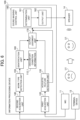
- Fig. 3 is a functional block diagram showing the configuration of the information processing device.
- the information processing device 100 includes a storage unit 110, a first acquisition unit 120, an acoustic feature detection unit 130, a second acquisition unit 140, a work type detection unit 150, an identification unit 160, an output judgment unit 170 and a sound masking control unit 180.
- the sound masking control unit 180 includes a determination unit 181 and an output unit 182.
- the storage unit 110 may be implemented as a storage area secured in the volatile storage device 102 or the nonvolatile storage device 103.
- Part or all of the first acquisition unit 120, the acoustic feature detection unit 130, the second acquisition unit 140, the work type detection unit 150, the identification unit 160, the output judgment unit 170 and the sound masking control unit 180 may be implemented by the processor 101.
- Part or all of the first acquisition unit 120, the acoustic feature detection unit 130, the second acquisition unit 140, the work type detection unit 150, the identification unit 160, the output judgment unit 170 and the sound masking control unit 180 may be implemented as modules of a program executed by the processor 101.
- the program executed by the processor 101 is referred to also as a control program.
- the control program has been recorded in a record medium, for example.
- Fig. 4 is a diagram showing a concrete example of the information stored in the storage unit.
- the storage unit 110 may store schedule information 111.
- the schedule information 111 is information indicating a work schedule of the user U1. Further, the schedule information 111 indicates the correspondence between a time slot and a work type. Specifically, the schedule information 111 indicates the correspondence between a time slot and the type of work performed by the user U1.
- the work type can be document preparation work, creative work, office work, document reading work, investigation work, data processing work, and so forth.
- the schedule information 111 indicates that the user U1 performs document preparation work from 10 o'clock to 11 o'clock.
- the storage unit 110 stores one or more pieces of discomfort condition information. Specifically, the storage unit 110 stores discomfort condition information 112_1, 112_2, ..., 112_n (n: integer greater than or equal to 3).
- the one or more pieces of discomfort condition information specify discomfort conditions using acoustic features and corresponding to one or more work types. This sentence can also be expressed as follows: The one or more pieces of discomfort condition information specify discomfort conditions based on acoustic features and corresponding to one or more work types.
- the discomfort condition information 112_1 indicates a discomfort condition in document preparation work.
- the discomfort condition information 112_1 is used as the discomfort condition.
- the discomfort condition information 112_2 indicates a discomfort condition in creative work.
- the discomfort condition information 112_2 is used as the discomfort condition.
- the discomfort condition indicated by the discomfort condition information 112_1 is that frequency is 4 kHz or less, a sound pressure level is 6 dB or more higher than background noise, and fluctuation strength is high.
- the discomfort condition indicated by the discomfort condition information 112_1 includes three elements.
- the discomfort condition indicated by the discomfort condition information 112_1 can also be determined as one or more elements among the three elements.
- the discomfort condition indicated by each of the discomfort condition information 112_1, 112_2, ..., 112_n may differ from each other. Further, it is permissible even if a plurality of discomfort conditions among the discomfort conditions indicated by the discomfort condition information 112_1, 112_2, ..., 112_n are the same as each other. Furthermore, the discomfort condition indicated by each of the discomfort condition information 112_1, 112_2, ..., 112_n may be a condition using a threshold value or a range.
- the information processing device 100 may refer to the schedule information 111 and the discomfort condition information 112_1, 112_2, ..., 112_n stored in the different device. Incidentally, illustration of the different device is left out in the drawings.
- the first acquisition unit 120 acquires a sound signal outputted from the mic 11.
- the acoustic feature detection unit 130 detects acoustic features based on the sound signal.
- the acoustic features are the frequency, the sound pressure level, the fluctuation strength, the direction in which a sound source exists, and so forth.
- the second acquisition unit 140 acquires application software information as information regarding application software activated in the terminal device 12.
- the information processing device 100 can recognize the application software activated in the terminal device 12.
- the second acquisition unit 140 acquires an image obtained by the image capturing device 13 by capturing an image of the user U1.
- the second acquisition unit 140 acquires sound caused by the user U1 performing the work. For example, the sound is typing noise.
- the second acquisition unit 140 acquires the sound from the mic 11 or a mic other than the mic 11.
- the second acquisition unit 140 acquires voice uttered by the user U1.
- the second acquisition unit 140 acquires the voice from the mic 11 or a mic other than the mic 11.
- the work type detection unit 150 detects the work type of the work performed by the user U1.
- the detected work type will be referred to also as a first work type.
- a process that the work type detection unit 150 is capable of executing will be described below.
- the work type detection unit 150 detects the work type of the user U1 based on the application software information acquired by the second acquisition unit 140. For example, when the application software is document preparation software, the work type detection unit 150 detects that the user U1 is performing document preparation work.
- the work type detection unit 150 detects the work type of the user U1 based on the image acquired by the second acquisition unit 140. For example, when the image indicates a state in which the user U1 is reading a book, the work type detection unit 150 uses an image recognition technology and thereby detects that the user U1 is performing work of reading a document.
- the work type detection unit 150 detects the work type of the user U1 based on the sound caused by the user U1 performing the work. For example, the work type detection unit 150 analyzes the sound. As the result of the analysis, the work type detection unit 150 detects that the sound is typing noise. Then, based on the result of the detection, the work type detection unit 150 detects that the user U1 is performing document preparation work.
- the work type detection unit 150 detects the work type of the user U1 based on the voice. For example, the work type detection unit 150 analyzes the content of the voice by using a voice recognition technology. As the result of the analysis, the work type detection unit 150 detects that the user U1 is performing creative work.
- the work type detection unit 150 acquires the schedule information 111.
- the work type detection unit 150 detects the work type of the user U1 based on the present time and the schedule information 111. For example, when the present time is 10:30, the work type detection unit 150 detects that the user U1 is performing document preparation work.
- the identification unit 160 identifies discomfort condition information corresponding to the work type detected by the work type detection unit 150, among the discomfort condition information 112_1, 112_2, ..., 112_n, based on work type information indicating the work type detected by the work type detection unit 150. For example, when the user U1 is performing document preparation work, the identification unit 160 identifies the discomfort condition information 112_1. Incidentally, the identified discomfort condition information is referred to also as first discomfort condition information. The identification unit 160 acquires the identified discomfort condition information.
- the output judgment unit 170 judges whether the masking sound should be outputted or not based on the acoustic features detected by the acoustic feature detection unit 130 and the discomfort condition information identified by the identification unit 160. In other words, the output judgment unit 170 judges whether the user U1 is feeling discomfort or not based on the acoustic features detected by the acoustic feature detection unit 130 and the discomfort condition information identified by the identification unit 160. As above, the output judgment unit 170 judges whether the user U1 is feeling discomfort or not by using the discomfort condition information corresponding to the type of the work performed by the user U1.
- the output judgment unit 170 may also be described to judge whether new masking sound should be outputted or not based on the acoustic features detected by the acoustic feature detection unit 130 and the discomfort condition information identified by the identification unit 160.
- the sound masking control unit 180 When it is judged that the masking sound should be outputted, the sound masking control unit 180 has masking sound based on the acoustic features outputted from the speaker 14. Specifically, processes executed by the sound masking control unit 180 are executed by the determination unit 181 and the output unit 182. The processes executed by the determination unit 181 and the output unit 182 will be described later. Incidentally, the masking sound is referred to also as first masking sound.
- Fig. 5 is a flowchart showing an example of the process executed by the information processing device. There are cases where the process of Fig. 5 is started in a state in which the speaker 14 is outputting no masking sound. There are also cases where the process of Fig. 5 is started in a state in which the speaker 14 is outputting masking sound.
- Step S11 The first acquisition unit 120 acquires the sound signal outputted from the mic 11.
- Step S12 The acoustic feature detection unit 130 detects acoustic features based on the sound signal acquired by the first acquisition unit 120.
- the second acquisition unit 140 acquires the application software information from the terminal device 12.
- the second acquisition unit 140 may also acquire an image or the like.
- the work type detection unit 15C detects the work type of the user U1 by using the schedule information 111, the step S13 is left out.
- Step S14 The work type detection unit 150 detects the work type.
- Step S15 The identification unit 160 identifies the discomfort condition information corresponding to the type of the work performed by the user U1.
- Step S16 The output judgment unit 170 judges whether the user U1 is feeling discomfort or not based on the acoustic features detected by the acoustic feature detection unit 130 and the discomfort condition information identified by the identification unit 160. Specifically, the output judgment unit 170 judges that the user U1 is feeling discomfort if the acoustic features detected by the acoustic feature detection unit 130 satisfy the discomfort condition indicated by the discomfort condition information identified by the identification unit 160. When the user U1 is feeling discomfort, the process advances to step S17.
- the output judgment unit 170 judges that the user U1 is not feeling discomfort.
- the process ends.
- the sound masking control unit 180 does nothing. Namely, the sound masking control unit 180 executes control of outputting no masking sound. Thus, no masking sound is outputted from the speaker 14.
- the sound masking control unit 180 executes control to continue the outputting of the masking sound.
- Step S17 The output judgment unit 170 judges that the masking sound should be outputted from the speaker 14. Specifically, when the speaker 14 is outputting no masking sound, the output judgment unit 170 judges that the masking sound should be outputted from the speaker 14 based on the acoustic features.
- the determination unit 181 executes a determination process. For example, the determination unit 181 determines the output direction of the masking sound, the volume level of the masking sound, the type of the masking sound, and so forth.
- the determination unit 181 determines to change the already outputted masking sound to new masking sound based on the acoustic features.
- the already outputted masking sound is referred to also as second masking sound.
- the new masking sound is referred to also as the first masking sound.
- Step S18 The output unit 182 has the masking sound outputted from the speaker 14 based on the determination process.
- the information processing device 100 is capable of putting the user U1 in a comfortable state by outputting the masking sound from the speaker 14.
- the sound masking control unit 180 determines to change the already outputted masking sound to new masking sound and has the new masking sound outputted from the speaker 14. By this operation, the information processing device 100 is capable of putting the user U1 in the comfortable state.
- Fig. 6 is a diagram showing a concrete example of the process executed by the information processing device.
- Fig. 6 shows a state in which the user U1 is performing document preparation work by using the terminal device 12.
- the document preparation software has been activated in the terminal device 12.
- a meeting suddenly starts in a front left direction from the user U1.
- the user U1 feels that voices from participants in the meeting or the like are noisy. Accordingly, the user U1 becomes uncomfortable.
- the mic 11 acquires sound. This sound includes voices from the participants in the meeting or the like.
- the first acquisition unit 120 acquires the sound signal from the mic 11.
- the acoustic feature detection unit 130 detects the acoustic features based on the sound signal. The detected acoustic features indicate that the frequency is 4 kHz or less. The detected acoustic features indicate that the sound pressure level of the sound from the meeting is 48 dB. The detected acoustic features indicate that the fluctuation strength is high. The detected acoustic features indicate that the direction in which the sound source exists is the front left direction.
- the acoustic feature detection unit 130 may also detect the sound pressure level of the background noise as an acoustic feature.
- the acoustic feature detection unit 130 detects the sound pressure level of the background noise in a silent interval in the meeting.
- the sound pressure level of the background noise may also be measured previously.
- the sound pressure level of the background noise is assumed to be 40 dB.
- the second acquisition unit 140 acquires the application software information from the terminal device 12.
- the application software information indicates the document preparation software.
- the work type detection unit 150 detects that the user U1 is performing document preparation work.
- the identification unit 160 identifies the discomfort condition information 112_1 corresponding to the document preparation work.
- the discomfort condition information 112_1 indicates that discomfort occurs when the frequency is 4 kHz or less, the sound pressure level is 6 dB or more higher than the background noise, and the fluctuation strength is high.
- the output judgment unit 170 judges that the user U1 is feeling discomfort.
- the output judgment unit 170 judges that the masking sound should be outputted from the speaker 14.
- the determination unit 181 acquires the acoustic features from the acoustic feature detection unit 130.
- the determination unit 181 determines the masking sound based on the acoustic features. Further, the determination unit 181 determines the output direction of the masking sound based on the acoustic features. For example, the determination unit 181 determines that the masking sound should be outputted in the front left direction based on the direction in which the sound source exists.
- the determination unit 181 determines the sound pressure level based on the acoustic features. For example, the determination unit 181 may determine the sound pressure level at a sound pressure level lower than the sound pressure level of the sound from the meeting indicated by the acoustic feature. The determined sound pressure level is 42 dB, for example.
- the output unit 182 has the masking sound outputted from the speaker 14 based on the result of the determination by the determination unit 181.
- the speaker 14 outputs the masking sound.
- the information processing device 100 executes the sound masking control based on the acoustic features and the discomfort condition information corresponding to the work type of the user U1.
- the information processing device 100 is capable of executing sound masking control based on the work type of the user U1.
- U1 user, 11: mic, 12: terminal device, 13: image capturing device, 14: speaker, 100: information processing device, 101: processor, 102: volatile storage device, 103: nonvolatile storage device, 110: storage unit, 111: schedule information, 112_1, 112_2, ..., 112_n: discomfort condition information, 120: first acquisition unit, 130: acoustic feature detection unit, 140: second acquisition unit, 150: work type detection unit, 160: identification unit, 170: output judgment unit, 180: sound masking control unit, 181: determination unit, 182: output unit.
Landscapes
- Engineering & Computer Science (AREA)
- Health & Medical Sciences (AREA)
- Physics & Mathematics (AREA)
- Multimedia (AREA)
- Acoustics & Sound (AREA)
- Audiology, Speech & Language Pathology (AREA)
- Human Computer Interaction (AREA)
- Signal Processing (AREA)
- Computational Linguistics (AREA)
- General Health & Medical Sciences (AREA)
- Child & Adolescent Psychology (AREA)
- Hospice & Palliative Care (AREA)
- Psychiatry (AREA)
- Quality & Reliability (AREA)
- User Interface Of Digital Computer (AREA)
- Soundproofing, Sound Blocking, And Sound Damping (AREA)
Claims (7)
- Informationsverarbeitungseinrichtung (100), umfassend:eine erste Beschaffungseinheit (120), die eingerichtet ist, ein von einem Mikrofon (11) ausgegebenes Tonsignal zu beschaffen;eine Akustisches-Merkmal-Erfassungseinheit (130), die eingerichtet ist, ein akustisches Merkmal auf der Grundlage des Tonsignals zu erfassen;eine Identifizierungseinheit (160), die eingerichtet ist, erste Unbehaglichkeitszustandsinformationen, die einem ersten Arbeitstyp einer von einem Benutzer ausgeführten Arbeit entsprechen, unter einer oder mehreren Unbehaglichkeitszustandsinformationen zu identifizieren, die Unbehaglichkeitszustände unter Verwendung des akustischen Merkmals spezifizieren und einem oder mehreren Arbeitstypen entsprechen, auf Grundlage von Arbeitstypinformationen, die den ersten Arbeitstyp angeben; und
eine Ausgabebeurteilungseinheit (170), die eingerichtet ist, auf Grundlage des von der Akustisches-Merkmal-Erfassungseinheit (130) erfassten akustischen Merkmals und der ersten Unbehaglichkeitszustandsinformationen zu beurteilen, ob der erste Maskierungston ausgegeben werden sollte oder nicht,gekennzeichnet durch eine zweite Beschaffungseinheit (140), die eingerichtet ist, Anwendungssoftwareinformationen als Informationen bezüglich der in einem von einem Benutzer verwendeten Endgerät aktivierten Anwendungssoftware zu beschaffen;eine Arbeitstyp-Erfassungseinheit (150), die eingerichtet ist, den ersten Arbeitstyp der vom Benutzer ausgeführten Arbeit auf der Grundlage der Anwendungssoftwareinformationen zu erfassen. - Informationsverarbeitungseinrichtung (100) nach Anspruch 1, wobei die Ausgabebeurteilungseinheit (170) eingerichtet ist, zu beurteilen, dass der erste Maskierungston ausgegeben werden sollte, wenn das von der Akustisches-Merkmal-Erfassungseinheit (130) erfasste akustische Merkmal den von den ersten Unbehaglichkeitszustandsinformationen angegebenen Unbehaglichkeitszustand erfüllt.
- Informationsverarbeitungseinrichtung (100) nach Anspruch 1 oder 2, ferner umfassend eine Tonmaskierungssteuereinheit (180), die eingerichtet ist, den ersten Maskierungston auf der Grundlage des akustischen Merkmals von einem Lautsprecher ausgeben zu lassen, wenn beurteilt wird, dass der erste Maskierungston ausgegeben werden sollte.
- Informationsverarbeitungseinrichtung nach Anspruch 3, wobei, wenn beurteilt wird, dass der erste Maskierungston ausgegeben werden sollte und der zweite Maskierungston von dem Lautsprecher ausgegeben wird, die Tonmaskierungssteuereinheit (180) bestimmt, den zweiten Maskierungston in den ersten Maskierungston zu verändern und den ersten Maskierungston von dem Lautsprecher ausgeben lässt.
- Tonmaskierungssystem, umfassend:einen Lautsprecher (14); undeine Informationsverarbeitungseinrichtung (100) nach Anspruch 1.
- Steuerverfahren, das von einer Informationsverarbeitungseinrichtung (100) durchgeführt wird, wobei das Steuerverfahren umfasst:Beschaffen eines von einem Mikrofon ausgegebenen Tonsignals, Erfassen eines akustischen Merkmals auf der Grundlage des Tonsignals, Beschaffen von Anwendungssoftwareinformationen als Informationen bezüglich der in einem von einem Benutzer verwendeten Endgerät aktivierten Anwendungssoftware, Erfassen eines ersten Arbeitstyps der vom Benutzer durchgeführten Arbeit auf der Grundlage von Anwendungssoftwareinformationen, und Identifizieren erster Unbehaglichkeitszustandsinformationen, die dem ersten Arbeitstyp entsprechen, unter einer oder mehreren Unbehaglichkeitszustandsinformationen, die Unbehaglichkeitszustände unter Verwendung des akustischen Merkmals spezifizieren und einem oder mehreren Arbeitstypen entsprechen, auf Grundlage von Arbeitstypinformationen, die den ersten Arbeitstyp angeben; undBeurteilen, auf Grundlage des erfassten akustischen Merkmals und der ersten Unbehaglichkeitszustandsinformationen, ob der erste Maskierungston ausgegeben werden sollte oder nicht.
- Steuerprogramm, das, wenn es von einer Informationsverarbeitungseinrichtung (100) ausgeführt wird, die eine Beschaffungseinheit umfasst, die eingerichtet ist, ein von einem Mikrofon ausgegebenes Tonsignal zu beschaffen, die Informationsverarbeitungseinrichtung veranlasst, einen Prozess auszuführen des:Beschaffen eines von einem Mikrofon ausgegebenen Tonsignals, Erfassen eines akustischen Merkmals auf der Grundlage des Tonsignals, Beschaffen von Anwendungssoftwareinformationen als Informationen bezüglich der in einem von einem Benutzer verwendeten Endgerät aktivierten Anwendungssoftware, Erfassen eines ersten Arbeitstyps der vom Benutzer durchgeführten Arbeit auf der Grundlage von Anwendungssoftwareinformationen, Identifizierens erster Unbehaglichkeitszustandsinformationen, die dem ersten Arbeitstyp entsprechen, unter einer oder mehreren Unbehaglichkeitszustandsinformationen, die Unbehaglichkeitszustände unter Verwendung des akustischen Merkmals spezifizieren und einem oder mehreren Arbeitstypen entsprechen, auf Grundlage von Arbeitstypinformationen, die den ersten Arbeitstyp angeben, undBeurteilen, auf Grundlage des erfassten akustischen Merkmals und der ersten Unbehaglichkeitszustandsinformationen, ob der erste Maskierungston ausgegeben werden sollte oder nicht.
Applications Claiming Priority (1)
| Application Number | Priority Date | Filing Date | Title |
|---|---|---|---|
| PCT/JP2019/020250 WO2020235039A1 (ja) | 2019-05-22 | 2019-05-22 | 情報処理装置、サウンドマスキングシステム、制御方法、及び制御プログラム |
Publications (3)
| Publication Number | Publication Date |
|---|---|
| EP3961618A1 EP3961618A1 (de) | 2022-03-02 |
| EP3961618A4 EP3961618A4 (de) | 2022-04-13 |
| EP3961618B1 true EP3961618B1 (de) | 2024-07-17 |
Family
ID=73459319
Family Applications (1)
| Application Number | Title | Priority Date | Filing Date |
|---|---|---|---|
| EP19929955.3A Active EP3961618B1 (de) | 2019-05-22 | 2019-05-22 | Informationsverarbeitungsvorrichtung, schallmaskierungssystem, steuerungsverfahren und steuerungsprogramm |
Country Status (5)
| Country | Link |
|---|---|
| US (1) | US11935510B2 (de) |
| EP (1) | EP3961618B1 (de) |
| JP (1) | JP6942289B2 (de) |
| AU (1) | AU2019447456B2 (de) |
| WO (1) | WO2020235039A1 (de) |
Families Citing this family (1)
| Publication number | Priority date | Publication date | Assignee | Title |
|---|---|---|---|---|
| AU2019446488B2 (en) * | 2019-05-22 | 2023-02-02 | Mitsubishi Electric Corporation | Information processing device, sound masking system, control method, and control program |
Family Cites Families (8)
| Publication number | Priority date | Publication date | Assignee | Title |
|---|---|---|---|---|
| JP2002323898A (ja) * | 2001-04-26 | 2002-11-08 | Matsushita Electric Ind Co Ltd | 環境制御機器 |
| JP4736981B2 (ja) | 2006-07-05 | 2011-07-27 | ヤマハ株式会社 | オーディオ信号処理装置およびホール |
| JP5849411B2 (ja) * | 2010-09-28 | 2016-01-27 | ヤマハ株式会社 | マスカ音出力装置 |
| JP5610229B2 (ja) | 2011-06-24 | 2014-10-22 | 株式会社ダイフク | 音声マスキングシステム |
| JP6140469B2 (ja) | 2013-02-13 | 2017-05-31 | 株式会社イトーキ | 執務環境調整システム |
| JP6629625B2 (ja) * | 2016-02-19 | 2020-01-15 | 学校法人 中央大学 | 作業環境改善システム |
| US10748518B2 (en) * | 2017-07-05 | 2020-08-18 | International Business Machines Corporation | Adaptive sound masking using cognitive learning |
| US20190205839A1 (en) * | 2017-12-29 | 2019-07-04 | Microsoft Technology Licensing, Llc | Enhanced computer experience from personal activity pattern |
-
2019
- 2019-05-22 WO PCT/JP2019/020250 patent/WO2020235039A1/ja not_active Ceased
- 2019-05-22 EP EP19929955.3A patent/EP3961618B1/de active Active
- 2019-05-22 AU AU2019447456A patent/AU2019447456B2/en active Active
- 2019-05-22 JP JP2021519972A patent/JP6942289B2/ja active Active
-
2021
- 2021-11-04 US US17/518,940 patent/US11935510B2/en active Active
Also Published As
| Publication number | Publication date |
|---|---|
| JP6942289B2 (ja) | 2021-09-29 |
| EP3961618A4 (de) | 2022-04-13 |
| US20220059068A1 (en) | 2022-02-24 |
| WO2020235039A1 (ja) | 2020-11-26 |
| AU2019447456A1 (en) | 2021-12-16 |
| US11935510B2 (en) | 2024-03-19 |
| AU2019447456B2 (en) | 2023-03-16 |
| EP3961618A1 (de) | 2022-03-02 |
| JPWO2020235039A1 (ja) | 2021-09-30 |
Similar Documents
| Publication | Publication Date | Title |
|---|---|---|
| US8838447B2 (en) | Method for classifying voice conference minutes, device, and system | |
| CN109644192B (zh) | 具有语音检测周期持续时间补偿的音频传送方法和设备 | |
| US20130253924A1 (en) | Speech Conversation Support Apparatus, Method, and Program | |
| WO2019002831A1 (en) | REPRODUCTIVE ATTACK DETECTION | |
| US20170243581A1 (en) | Using combined audio and vision-based cues for voice command-and-control | |
| CN110875059B (zh) | 收音结束的判断方法、装置以及储存装置 | |
| US11024330B2 (en) | Signal processing apparatus, signal processing method, and storage medium | |
| US11935510B2 (en) | Information processing device, sound masking system, control method, and recording medium | |
| CN110197663B (zh) | 一种控制方法、装置及电子设备 | |
| US20110123056A1 (en) | Fully learning classification system and method for hearing aids | |
| US9641912B1 (en) | Intelligent playback resume | |
| KR20160047822A (ko) | 화자 유형 정의 방법 및 장치 | |
| US20150279373A1 (en) | Voice response apparatus, method for voice processing, and recording medium having program stored thereon | |
| CN109271480B (zh) | 一种语音搜题方法及电子设备 | |
| US20220215854A1 (en) | Speech sound response device and speech sound response method | |
| CN111028860B (zh) | 音频数据处理方法、装置、计算机设备以及存储介质 | |
| CN115346533A (zh) | 基于声纹的账号判别方法、系统、电子设备和介质 | |
| KR20220122355A (ko) | 비대면 계약을 관리하는 계약 관리 시스템 및 방법 | |
| US20220172735A1 (en) | Method and system for speech separation | |
| JP2020024310A (ja) | 音声処理システム及び音声処理方法 | |
| JP6341078B2 (ja) | サーバ装置、プログラム及び情報処理方法 | |
| CN118737160B (zh) | 一种声纹注册方法、装置、计算机设备及存储介质 | |
| CN112655043A (zh) | 关键字检测装置、关键字检测方法以及程序 | |
| US20250022470A1 (en) | Speaker identification method, speaker identification device, and non-transitory computer readable recording medium storing speaker identification program | |
| US11538473B2 (en) | Processing and visualising audio signals |
Legal Events
| Date | Code | Title | Description |
|---|---|---|---|
| STAA | Information on the status of an ep patent application or granted ep patent |
Free format text: STATUS: THE INTERNATIONAL PUBLICATION HAS BEEN MADE |
|
| PUAI | Public reference made under article 153(3) epc to a published international application that has entered the european phase |
Free format text: ORIGINAL CODE: 0009012 |
|
| STAA | Information on the status of an ep patent application or granted ep patent |
Free format text: STATUS: REQUEST FOR EXAMINATION WAS MADE |
|
| 17P | Request for examination filed |
Effective date: 20211116 |
|
| AK | Designated contracting states |
Kind code of ref document: A1 Designated state(s): AL AT BE BG CH CY CZ DE DK EE ES FI FR GB GR HR HU IE IS IT LI LT LU LV MC MK MT NL NO PL PT RO RS SE SI SK SM TR |
|
| A4 | Supplementary search report drawn up and despatched |
Effective date: 20220316 |
|
| RIC1 | Information provided on ipc code assigned before grant |
Ipc: G10K 11/175 20060101AFI20220310BHEP |
|
| DAV | Request for validation of the european patent (deleted) | ||
| DAX | Request for extension of the european patent (deleted) | ||
| GRAP | Despatch of communication of intention to grant a patent |
Free format text: ORIGINAL CODE: EPIDOSNIGR1 |
|
| STAA | Information on the status of an ep patent application or granted ep patent |
Free format text: STATUS: GRANT OF PATENT IS INTENDED |
|
| INTG | Intention to grant announced |
Effective date: 20240221 |
|
| GRAS | Grant fee paid |
Free format text: ORIGINAL CODE: EPIDOSNIGR3 |
|
| GRAA | (expected) grant |
Free format text: ORIGINAL CODE: 0009210 |
|
| STAA | Information on the status of an ep patent application or granted ep patent |
Free format text: STATUS: THE PATENT HAS BEEN GRANTED |
|
| AK | Designated contracting states |
Kind code of ref document: B1 Designated state(s): AL AT BE BG CH CY CZ DE DK EE ES FI FR GB GR HR HU IE IS IT LI LT LU LV MC MK MT NL NO PL PT RO RS SE SI SK SM TR |
|
| REG | Reference to a national code |
Ref country code: CH Ref legal event code: EP |
|
| REG | Reference to a national code |
Ref country code: DE Ref legal event code: R096 Ref document number: 602019055557 Country of ref document: DE |
|
| REG | Reference to a national code |
Ref country code: IE Ref legal event code: FG4D |
|
| REG | Reference to a national code |
Ref country code: LT Ref legal event code: MG9D |
|
| REG | Reference to a national code |
Ref country code: NL Ref legal event code: MP Effective date: 20240717 |
|
| PG25 | Lapsed in a contracting state [announced via postgrant information from national office to epo] |
Ref country code: PT Free format text: LAPSE BECAUSE OF FAILURE TO SUBMIT A TRANSLATION OF THE DESCRIPTION OR TO PAY THE FEE WITHIN THE PRESCRIBED TIME-LIMIT Effective date: 20241118 |
|
| REG | Reference to a national code |
Ref country code: AT Ref legal event code: MK05 Ref document number: 1704918 Country of ref document: AT Kind code of ref document: T Effective date: 20240717 |
|
| PG25 | Lapsed in a contracting state [announced via postgrant information from national office to epo] |
Ref country code: NL Free format text: LAPSE BECAUSE OF FAILURE TO SUBMIT A TRANSLATION OF THE DESCRIPTION OR TO PAY THE FEE WITHIN THE PRESCRIBED TIME-LIMIT Effective date: 20240717 |
|
| PG25 | Lapsed in a contracting state [announced via postgrant information from national office to epo] |
Ref country code: PT Free format text: LAPSE BECAUSE OF FAILURE TO SUBMIT A TRANSLATION OF THE DESCRIPTION OR TO PAY THE FEE WITHIN THE PRESCRIBED TIME-LIMIT Effective date: 20241118 Ref country code: NL Free format text: LAPSE BECAUSE OF FAILURE TO SUBMIT A TRANSLATION OF THE DESCRIPTION OR TO PAY THE FEE WITHIN THE PRESCRIBED TIME-LIMIT Effective date: 20240717 |
|
| PG25 | Lapsed in a contracting state [announced via postgrant information from national office to epo] |
Ref country code: NO Free format text: LAPSE BECAUSE OF FAILURE TO SUBMIT A TRANSLATION OF THE DESCRIPTION OR TO PAY THE FEE WITHIN THE PRESCRIBED TIME-LIMIT Effective date: 20241017 |
|
| PG25 | Lapsed in a contracting state [announced via postgrant information from national office to epo] |
Ref country code: FI Free format text: LAPSE BECAUSE OF FAILURE TO SUBMIT A TRANSLATION OF THE DESCRIPTION OR TO PAY THE FEE WITHIN THE PRESCRIBED TIME-LIMIT Effective date: 20240717 Ref country code: PL Free format text: LAPSE BECAUSE OF FAILURE TO SUBMIT A TRANSLATION OF THE DESCRIPTION OR TO PAY THE FEE WITHIN THE PRESCRIBED TIME-LIMIT Effective date: 20240717 Ref country code: GR Free format text: LAPSE BECAUSE OF FAILURE TO SUBMIT A TRANSLATION OF THE DESCRIPTION OR TO PAY THE FEE WITHIN THE PRESCRIBED TIME-LIMIT Effective date: 20241018 |
|
| PG25 | Lapsed in a contracting state [announced via postgrant information from national office to epo] |
Ref country code: BG Free format text: LAPSE BECAUSE OF FAILURE TO SUBMIT A TRANSLATION OF THE DESCRIPTION OR TO PAY THE FEE WITHIN THE PRESCRIBED TIME-LIMIT Effective date: 20240717 |
|
| PG25 | Lapsed in a contracting state [announced via postgrant information from national office to epo] |
Ref country code: LV Free format text: LAPSE BECAUSE OF FAILURE TO SUBMIT A TRANSLATION OF THE DESCRIPTION OR TO PAY THE FEE WITHIN THE PRESCRIBED TIME-LIMIT Effective date: 20240717 |
|
| PG25 | Lapsed in a contracting state [announced via postgrant information from national office to epo] |
Ref country code: IS Free format text: LAPSE BECAUSE OF FAILURE TO SUBMIT A TRANSLATION OF THE DESCRIPTION OR TO PAY THE FEE WITHIN THE PRESCRIBED TIME-LIMIT Effective date: 20241117 Ref country code: AT Free format text: LAPSE BECAUSE OF FAILURE TO SUBMIT A TRANSLATION OF THE DESCRIPTION OR TO PAY THE FEE WITHIN THE PRESCRIBED TIME-LIMIT Effective date: 20240717 |
|
| PG25 | Lapsed in a contracting state [announced via postgrant information from national office to epo] |
Ref country code: HR Free format text: LAPSE BECAUSE OF FAILURE TO SUBMIT A TRANSLATION OF THE DESCRIPTION OR TO PAY THE FEE WITHIN THE PRESCRIBED TIME-LIMIT Effective date: 20240717 |
|
| PG25 | Lapsed in a contracting state [announced via postgrant information from national office to epo] |
Ref country code: RS Free format text: LAPSE BECAUSE OF FAILURE TO SUBMIT A TRANSLATION OF THE DESCRIPTION OR TO PAY THE FEE WITHIN THE PRESCRIBED TIME-LIMIT Effective date: 20241017 Ref country code: ES Free format text: LAPSE BECAUSE OF FAILURE TO SUBMIT A TRANSLATION OF THE DESCRIPTION OR TO PAY THE FEE WITHIN THE PRESCRIBED TIME-LIMIT Effective date: 20240717 |
|
| PG25 | Lapsed in a contracting state [announced via postgrant information from national office to epo] |
Ref country code: RS Free format text: LAPSE BECAUSE OF FAILURE TO SUBMIT A TRANSLATION OF THE DESCRIPTION OR TO PAY THE FEE WITHIN THE PRESCRIBED TIME-LIMIT Effective date: 20241017 Ref country code: PL Free format text: LAPSE BECAUSE OF FAILURE TO SUBMIT A TRANSLATION OF THE DESCRIPTION OR TO PAY THE FEE WITHIN THE PRESCRIBED TIME-LIMIT Effective date: 20240717 Ref country code: NO Free format text: LAPSE BECAUSE OF FAILURE TO SUBMIT A TRANSLATION OF THE DESCRIPTION OR TO PAY THE FEE WITHIN THE PRESCRIBED TIME-LIMIT Effective date: 20241017 Ref country code: LV Free format text: LAPSE BECAUSE OF FAILURE TO SUBMIT A TRANSLATION OF THE DESCRIPTION OR TO PAY THE FEE WITHIN THE PRESCRIBED TIME-LIMIT Effective date: 20240717 Ref country code: IS Free format text: LAPSE BECAUSE OF FAILURE TO SUBMIT A TRANSLATION OF THE DESCRIPTION OR TO PAY THE FEE WITHIN THE PRESCRIBED TIME-LIMIT Effective date: 20241117 Ref country code: HR Free format text: LAPSE BECAUSE OF FAILURE TO SUBMIT A TRANSLATION OF THE DESCRIPTION OR TO PAY THE FEE WITHIN THE PRESCRIBED TIME-LIMIT Effective date: 20240717 Ref country code: GR Free format text: LAPSE BECAUSE OF FAILURE TO SUBMIT A TRANSLATION OF THE DESCRIPTION OR TO PAY THE FEE WITHIN THE PRESCRIBED TIME-LIMIT Effective date: 20241018 Ref country code: FI Free format text: LAPSE BECAUSE OF FAILURE TO SUBMIT A TRANSLATION OF THE DESCRIPTION OR TO PAY THE FEE WITHIN THE PRESCRIBED TIME-LIMIT Effective date: 20240717 Ref country code: ES Free format text: LAPSE BECAUSE OF FAILURE TO SUBMIT A TRANSLATION OF THE DESCRIPTION OR TO PAY THE FEE WITHIN THE PRESCRIBED TIME-LIMIT Effective date: 20240717 Ref country code: BG Free format text: LAPSE BECAUSE OF FAILURE TO SUBMIT A TRANSLATION OF THE DESCRIPTION OR TO PAY THE FEE WITHIN THE PRESCRIBED TIME-LIMIT Effective date: 20240717 Ref country code: AT Free format text: LAPSE BECAUSE OF FAILURE TO SUBMIT A TRANSLATION OF THE DESCRIPTION OR TO PAY THE FEE WITHIN THE PRESCRIBED TIME-LIMIT Effective date: 20240717 |
|
| PG25 | Lapsed in a contracting state [announced via postgrant information from national office to epo] |
Ref country code: SM Free format text: LAPSE BECAUSE OF FAILURE TO SUBMIT A TRANSLATION OF THE DESCRIPTION OR TO PAY THE FEE WITHIN THE PRESCRIBED TIME-LIMIT Effective date: 20240717 Ref country code: DK Free format text: LAPSE BECAUSE OF FAILURE TO SUBMIT A TRANSLATION OF THE DESCRIPTION OR TO PAY THE FEE WITHIN THE PRESCRIBED TIME-LIMIT Effective date: 20240717 Ref country code: RO Free format text: LAPSE BECAUSE OF FAILURE TO SUBMIT A TRANSLATION OF THE DESCRIPTION OR TO PAY THE FEE WITHIN THE PRESCRIBED TIME-LIMIT Effective date: 20240717 |
|
| REG | Reference to a national code |
Ref country code: DE Ref legal event code: R097 Ref document number: 602019055557 Country of ref document: DE |
|
| PG25 | Lapsed in a contracting state [announced via postgrant information from national office to epo] |
Ref country code: EE Free format text: LAPSE BECAUSE OF FAILURE TO SUBMIT A TRANSLATION OF THE DESCRIPTION OR TO PAY THE FEE WITHIN THE PRESCRIBED TIME-LIMIT Effective date: 20240717 |
|
| PG25 | Lapsed in a contracting state [announced via postgrant information from national office to epo] |
Ref country code: CZ Free format text: LAPSE BECAUSE OF FAILURE TO SUBMIT A TRANSLATION OF THE DESCRIPTION OR TO PAY THE FEE WITHIN THE PRESCRIBED TIME-LIMIT Effective date: 20240717 |
|
| PG25 | Lapsed in a contracting state [announced via postgrant information from national office to epo] |
Ref country code: SK Free format text: LAPSE BECAUSE OF FAILURE TO SUBMIT A TRANSLATION OF THE DESCRIPTION OR TO PAY THE FEE WITHIN THE PRESCRIBED TIME-LIMIT Effective date: 20240717 |
|
| PLBE | No opposition filed within time limit |
Free format text: ORIGINAL CODE: 0009261 |
|
| STAA | Information on the status of an ep patent application or granted ep patent |
Free format text: STATUS: NO OPPOSITION FILED WITHIN TIME LIMIT |
|
| 26N | No opposition filed |
Effective date: 20250422 |
|
| PGFP | Annual fee paid to national office [announced via postgrant information from national office to epo] |
Ref country code: DE Payment date: 20250402 Year of fee payment: 7 |
|
| PGFP | Annual fee paid to national office [announced via postgrant information from national office to epo] |
Ref country code: GB Payment date: 20250401 Year of fee payment: 7 |
|
| PG25 | Lapsed in a contracting state [announced via postgrant information from national office to epo] |
Ref country code: SE Free format text: LAPSE BECAUSE OF FAILURE TO SUBMIT A TRANSLATION OF THE DESCRIPTION OR TO PAY THE FEE WITHIN THE PRESCRIBED TIME-LIMIT Effective date: 20240717 |
|
| P01 | Opt-out of the competence of the unified patent court (upc) registered |
Free format text: CASE NUMBER: UPC_APP_4938_3961618/2025 Effective date: 20250827 |