EP3960795A1 - Water-absorbent resin particles, absorbent body, and absorbent article - Google Patents
Water-absorbent resin particles, absorbent body, and absorbent article Download PDFInfo
- Publication number
- EP3960795A1 EP3960795A1 EP20794330.9A EP20794330A EP3960795A1 EP 3960795 A1 EP3960795 A1 EP 3960795A1 EP 20794330 A EP20794330 A EP 20794330A EP 3960795 A1 EP3960795 A1 EP 3960795A1
- Authority
- EP
- European Patent Office
- Prior art keywords
- water
- resin particles
- absorbent resin
- absorbent
- pressurization
- Prior art date
- Legal status (The legal status is an assumption and is not a legal conclusion. Google has not performed a legal analysis and makes no representation as to the accuracy of the status listed.)
- Pending
Links
- 239000002245 particle Substances 0.000 title claims abstract description 211
- 239000002250 absorbent Substances 0.000 title claims abstract description 208
- 229920005989 resin Polymers 0.000 title claims abstract description 146
- 239000011347 resin Substances 0.000 title claims abstract description 146
- 230000002745 absorbent Effects 0.000 title claims description 52
- 230000006866 deterioration Effects 0.000 claims abstract description 56
- 238000000034 method Methods 0.000 claims abstract description 42
- 238000002156 mixing Methods 0.000 claims abstract description 32
- 229910001220 stainless steel Inorganic materials 0.000 claims abstract description 6
- 239000010935 stainless steel Substances 0.000 claims abstract description 6
- 239000006096 absorbing agent Substances 0.000 claims description 71
- 230000014759 maintenance of location Effects 0.000 claims description 10
- 239000002504 physiological saline solution Substances 0.000 claims description 9
- 239000007788 liquid Substances 0.000 description 70
- 239000000178 monomer Substances 0.000 description 70
- -1 N,N-diethylaminopropyl Chemical group 0.000 description 69
- 238000006116 polymerization reaction Methods 0.000 description 56
- 229920000642 polymer Polymers 0.000 description 54
- XLYOFNOQVPJJNP-UHFFFAOYSA-N water Substances O XLYOFNOQVPJJNP-UHFFFAOYSA-N 0.000 description 49
- 229910001868 water Inorganic materials 0.000 description 47
- IMNFDUFMRHMDMM-UHFFFAOYSA-N N-Heptane Chemical compound CCCCCCC IMNFDUFMRHMDMM-UHFFFAOYSA-N 0.000 description 44
- 239000003431 cross linking reagent Substances 0.000 description 41
- 239000007864 aqueous solution Substances 0.000 description 29
- PEDCQBHIVMGVHV-UHFFFAOYSA-N Glycerine Chemical compound OCC(O)CO PEDCQBHIVMGVHV-UHFFFAOYSA-N 0.000 description 21
- DNIAPMSPPWPWGF-UHFFFAOYSA-N Propylene glycol Chemical compound CC(O)CO DNIAPMSPPWPWGF-UHFFFAOYSA-N 0.000 description 21
- 150000001875 compounds Chemical class 0.000 description 21
- 229930195733 hydrocarbon Natural products 0.000 description 21
- 238000003756 stirring Methods 0.000 description 21
- UWFRVQVNYNPBEF-UHFFFAOYSA-N 1-(2,4-dimethylphenyl)propan-1-one Chemical compound CCC(=O)C1=CC=C(C)C=C1C UWFRVQVNYNPBEF-UHFFFAOYSA-N 0.000 description 19
- 150000002430 hydrocarbons Chemical class 0.000 description 19
- 239000007870 radical polymerization initiator Substances 0.000 description 19
- 239000004215 Carbon black (E152) Substances 0.000 description 18
- 239000002612 dispersion medium Substances 0.000 description 18
- 238000005259 measurement Methods 0.000 description 18
- 238000004132 cross linking Methods 0.000 description 17
- RTZKZFJDLAIYFH-UHFFFAOYSA-N ether Substances CCOCC RTZKZFJDLAIYFH-UHFFFAOYSA-N 0.000 description 17
- 239000000126 substance Substances 0.000 description 17
- 238000004519 manufacturing process Methods 0.000 description 16
- LYCAIKOWRPUZTN-UHFFFAOYSA-N Ethylene glycol Chemical compound OCCO LYCAIKOWRPUZTN-UHFFFAOYSA-N 0.000 description 15
- FAPWRFPIFSIZLT-UHFFFAOYSA-M Sodium chloride Chemical compound [Na+].[Cl-] FAPWRFPIFSIZLT-UHFFFAOYSA-M 0.000 description 15
- CERQOIWHTDAKMF-UHFFFAOYSA-N Methacrylic acid Chemical compound CC(=C)C(O)=O CERQOIWHTDAKMF-UHFFFAOYSA-N 0.000 description 14
- 229920003171 Poly (ethylene oxide) Polymers 0.000 description 14
- VYPSYNLAJGMNEJ-UHFFFAOYSA-N Silicium dioxide Chemical compound O=[Si]=O VYPSYNLAJGMNEJ-UHFFFAOYSA-N 0.000 description 14
- 239000004094 surface-active agent Substances 0.000 description 14
- 238000010557 suspension polymerization reaction Methods 0.000 description 14
- 238000010521 absorption reaction Methods 0.000 description 13
- 229920001577 copolymer Polymers 0.000 description 13
- 235000014113 dietary fatty acids Nutrition 0.000 description 13
- 239000000194 fatty acid Substances 0.000 description 13
- 229930195729 fatty acid Natural products 0.000 description 13
- 150000003839 salts Chemical class 0.000 description 13
- 239000011780 sodium chloride Substances 0.000 description 13
- 239000004743 Polypropylene Substances 0.000 description 12
- HEMHJVSKTPXQMS-UHFFFAOYSA-M Sodium hydroxide Chemical compound [OH-].[Na+] HEMHJVSKTPXQMS-UHFFFAOYSA-M 0.000 description 12
- 239000010954 inorganic particle Substances 0.000 description 12
- 239000000203 mixture Substances 0.000 description 12
- 229920001155 polypropylene Polymers 0.000 description 12
- 239000004698 Polyethylene Substances 0.000 description 11
- 239000002270 dispersing agent Substances 0.000 description 11
- 229920000573 polyethylene Polymers 0.000 description 11
- 229920000742 Cotton Polymers 0.000 description 10
- 235000011187 glycerol Nutrition 0.000 description 10
- 238000002360 preparation method Methods 0.000 description 10
- 239000000243 solution Substances 0.000 description 10
- 238000001035 drying Methods 0.000 description 9
- 229920001223 polyethylene glycol Polymers 0.000 description 9
- 239000003795 chemical substances by application Substances 0.000 description 8
- 239000000835 fiber Substances 0.000 description 8
- 210000002700 urine Anatomy 0.000 description 8
- HRPVXLWXLXDGHG-UHFFFAOYSA-N Acrylamide Chemical compound NC(=O)C=C HRPVXLWXLXDGHG-UHFFFAOYSA-N 0.000 description 7
- 238000010533 azeotropic distillation Methods 0.000 description 7
- USHAGKDGDHPEEY-UHFFFAOYSA-L potassium persulfate Chemical compound [K+].[K+].[O-]S(=O)(=O)OOS([O-])(=O)=O USHAGKDGDHPEEY-UHFFFAOYSA-L 0.000 description 7
- 239000002002 slurry Substances 0.000 description 7
- NIXOWILDQLNWCW-UHFFFAOYSA-M Acrylate Chemical compound [O-]C(=O)C=C NIXOWILDQLNWCW-UHFFFAOYSA-M 0.000 description 6
- 239000004677 Nylon Substances 0.000 description 6
- KWYUFKZDYYNOTN-UHFFFAOYSA-M Potassium hydroxide Chemical compound [OH-].[K+] KWYUFKZDYYNOTN-UHFFFAOYSA-M 0.000 description 6
- LXEKPEMOWBOYRF-UHFFFAOYSA-N [2-[(1-azaniumyl-1-imino-2-methylpropan-2-yl)diazenyl]-2-methylpropanimidoyl]azanium;dichloride Chemical compound Cl.Cl.NC(=N)C(C)(C)N=NC(C)(C)C(N)=N LXEKPEMOWBOYRF-UHFFFAOYSA-N 0.000 description 6
- 239000002253 acid Substances 0.000 description 6
- 239000011230 binding agent Substances 0.000 description 6
- GYZLOYUZLJXAJU-UHFFFAOYSA-N diglycidyl ether Chemical compound C1OC1COCC1CO1 GYZLOYUZLJXAJU-UHFFFAOYSA-N 0.000 description 6
- 238000009826 distribution Methods 0.000 description 6
- 230000003472 neutralizing effect Effects 0.000 description 6
- 229920001778 nylon Polymers 0.000 description 6
- LCPVQAHEFVXVKT-UHFFFAOYSA-N 2-(2,4-difluorophenoxy)pyridin-3-amine Chemical compound NC1=CC=CN=C1OC1=CC=C(F)C=C1F LCPVQAHEFVXVKT-UHFFFAOYSA-N 0.000 description 5
- 239000000853 adhesive Substances 0.000 description 5
- 230000001070 adhesive effect Effects 0.000 description 5
- 239000000470 constituent Substances 0.000 description 5
- 229920006037 cross link polymer Polymers 0.000 description 5
- 238000006386 neutralization reaction Methods 0.000 description 5
- CHQMHPLRPQMAMX-UHFFFAOYSA-L sodium persulfate Substances [Na+].[Na+].[O-]S(=O)(=O)OOS([O-])(=O)=O CHQMHPLRPQMAMX-UHFFFAOYSA-L 0.000 description 5
- 229920002994 synthetic fiber Polymers 0.000 description 5
- 239000012209 synthetic fiber Substances 0.000 description 5
- 239000012085 test solution Substances 0.000 description 5
- SYEWHONLFGZGLK-UHFFFAOYSA-N 2-[1,3-bis(oxiran-2-ylmethoxy)propan-2-yloxymethyl]oxirane Chemical compound C1OC1COCC(OCC1OC1)COCC1CO1 SYEWHONLFGZGLK-UHFFFAOYSA-N 0.000 description 4
- 239000005057 Hexamethylene diisocyanate Substances 0.000 description 4
- NIXOWILDQLNWCW-UHFFFAOYSA-N acrylic acid group Chemical group C(C=C)(=O)O NIXOWILDQLNWCW-UHFFFAOYSA-N 0.000 description 4
- WERYXYBDKMZEQL-UHFFFAOYSA-N butane-1,4-diol Chemical compound OCCCCO WERYXYBDKMZEQL-UHFFFAOYSA-N 0.000 description 4
- 238000006243 chemical reaction Methods 0.000 description 4
- 238000001816 cooling Methods 0.000 description 4
- 230000000694 effects Effects 0.000 description 4
- 229920001971 elastomer Polymers 0.000 description 4
- 125000000524 functional group Chemical group 0.000 description 4
- RRAMGCGOFNQTLD-UHFFFAOYSA-N hexamethylene diisocyanate Chemical compound O=C=NCCCCCCN=C=O RRAMGCGOFNQTLD-UHFFFAOYSA-N 0.000 description 4
- 230000002401 inhibitory effect Effects 0.000 description 4
- 239000007924 injection Substances 0.000 description 4
- 238000002347 injection Methods 0.000 description 4
- 239000010410 layer Substances 0.000 description 4
- 239000000463 material Substances 0.000 description 4
- 229910052757 nitrogen Inorganic materials 0.000 description 4
- 229920005862 polyol Polymers 0.000 description 4
- 150000003077 polyols Chemical class 0.000 description 4
- 239000005060 rubber Substances 0.000 description 4
- 238000010558 suspension polymerization method Methods 0.000 description 4
- 229920003002 synthetic resin Polymers 0.000 description 4
- 239000000057 synthetic resin Substances 0.000 description 4
- DVKJHBMWWAPEIU-UHFFFAOYSA-N toluene 2,4-diisocyanate Chemical compound CC1=CC=C(N=C=O)C=C1N=C=O DVKJHBMWWAPEIU-UHFFFAOYSA-N 0.000 description 4
- 210000000689 upper leg Anatomy 0.000 description 4
- XAZKFISIRYLAEE-UHFFFAOYSA-N (+-)-trans-1,3-Dimethyl-cyclopentan Natural products CC1CCC(C)C1 XAZKFISIRYLAEE-UHFFFAOYSA-N 0.000 description 3
- HDPLHDGYGLENEI-UHFFFAOYSA-N 2-[1-(oxiran-2-ylmethoxy)propan-2-yloxymethyl]oxirane Chemical compound C1OC1COC(C)COCC1CO1 HDPLHDGYGLENEI-UHFFFAOYSA-N 0.000 description 3
- IJGRMHOSHXDMSA-UHFFFAOYSA-N Atomic nitrogen Chemical compound N#N IJGRMHOSHXDMSA-UHFFFAOYSA-N 0.000 description 3
- UHOVQNZJYSORNB-UHFFFAOYSA-N Benzene Chemical compound C1=CC=CC=C1 UHOVQNZJYSORNB-UHFFFAOYSA-N 0.000 description 3
- BRLQWZUYTZBJKN-UHFFFAOYSA-N Epichlorohydrin Chemical compound ClCC1CO1 BRLQWZUYTZBJKN-UHFFFAOYSA-N 0.000 description 3
- WSFSSNUMVMOOMR-UHFFFAOYSA-N Formaldehyde Chemical compound O=C WSFSSNUMVMOOMR-UHFFFAOYSA-N 0.000 description 3
- 239000004831 Hot glue Substances 0.000 description 3
- 229920000663 Hydroxyethyl cellulose Polymers 0.000 description 3
- 239000002202 Polyethylene glycol Substances 0.000 description 3
- 229930006000 Sucrose Natural products 0.000 description 3
- YXFVVABEGXRONW-UHFFFAOYSA-N Toluene Chemical compound CC1=CC=CC=C1 YXFVVABEGXRONW-UHFFFAOYSA-N 0.000 description 3
- ZJCCRDAZUWHFQH-UHFFFAOYSA-N Trimethylolpropane Chemical compound CCC(CO)(CO)CO ZJCCRDAZUWHFQH-UHFFFAOYSA-N 0.000 description 3
- 210000001015 abdomen Anatomy 0.000 description 3
- 150000005215 alkyl ethers Chemical class 0.000 description 3
- 125000003277 amino group Chemical group 0.000 description 3
- ROOXNKNUYICQNP-UHFFFAOYSA-N ammonium peroxydisulfate Substances [NH4+].[NH4+].[O-]S(=O)(=O)OOS([O-])(=O)=O ROOXNKNUYICQNP-UHFFFAOYSA-N 0.000 description 3
- VAZSKTXWXKYQJF-UHFFFAOYSA-N ammonium persulfate Chemical compound [NH4+].[NH4+].[O-]S(=O)OOS([O-])=O VAZSKTXWXKYQJF-UHFFFAOYSA-N 0.000 description 3
- 229910001870 ammonium persulfate Inorganic materials 0.000 description 3
- 230000000052 comparative effect Effects 0.000 description 3
- GKIPXFAANLTWBM-UHFFFAOYSA-N epibromohydrin Chemical compound BrCC1CO1 GKIPXFAANLTWBM-UHFFFAOYSA-N 0.000 description 3
- 238000011156 evaluation Methods 0.000 description 3
- 230000004927 fusion Effects 0.000 description 3
- 239000003292 glue Substances 0.000 description 3
- 238000010438 heat treatment Methods 0.000 description 3
- WGCNASOHLSPBMP-UHFFFAOYSA-N hydroxyacetaldehyde Natural products OCC=O WGCNASOHLSPBMP-UHFFFAOYSA-N 0.000 description 3
- 230000001965 increasing effect Effects 0.000 description 3
- 230000027939 micturition Effects 0.000 description 3
- 239000004745 nonwoven fabric Substances 0.000 description 3
- 229920000223 polyglycerol Polymers 0.000 description 3
- 229920001451 polypropylene glycol Polymers 0.000 description 3
- 238000010992 reflux Methods 0.000 description 3
- 239000005720 sucrose Substances 0.000 description 3
- 239000002562 thickening agent Substances 0.000 description 3
- MYRTYDVEIRVNKP-UHFFFAOYSA-N 1,2-Divinylbenzene Chemical compound C=CC1=CC=CC=C1C=C MYRTYDVEIRVNKP-UHFFFAOYSA-N 0.000 description 2
- WGECXQBGLLYSFP-UHFFFAOYSA-N 2,3-dimethylpentane Chemical compound CCC(C)C(C)C WGECXQBGLLYSFP-UHFFFAOYSA-N 0.000 description 2
- SMZOUWXMTYCWNB-UHFFFAOYSA-N 2-(2-methoxy-5-methylphenyl)ethanamine Chemical compound COC1=CC=C(C)C=C1CCN SMZOUWXMTYCWNB-UHFFFAOYSA-N 0.000 description 2
- KFNAHVKJFHDCSK-UHFFFAOYSA-N 2-[2-(4,5-dihydro-1,3-oxazol-2-yl)ethyl]-4,5-dihydro-1,3-oxazole Chemical compound N=1CCOC=1CCC1=NCCO1 KFNAHVKJFHDCSK-UHFFFAOYSA-N 0.000 description 2
- FLKBKUFGKQPPRY-UHFFFAOYSA-N 2-[2-[2-[2-[1-(2-hydroxyethyl)-4,5-dihydroimidazol-2-yl]propan-2-yldiazenyl]propan-2-yl]-4,5-dihydroimidazol-1-yl]ethanol;dihydrochloride Chemical compound Cl.Cl.N=1CCN(CCO)C=1C(C)(C)N=NC(C)(C)C1=NCCN1CCO FLKBKUFGKQPPRY-UHFFFAOYSA-N 0.000 description 2
- GXDHCNNESPLIKD-UHFFFAOYSA-N 2-methylhexane Chemical compound CCCCC(C)C GXDHCNNESPLIKD-UHFFFAOYSA-N 0.000 description 2
- AORMDLNPRGXHHL-UHFFFAOYSA-N 3-ethylpentane Chemical compound CCC(CC)CC AORMDLNPRGXHHL-UHFFFAOYSA-N 0.000 description 2
- VLJXXKKOSFGPHI-UHFFFAOYSA-N 3-methylhexane Chemical compound CCCC(C)CC VLJXXKKOSFGPHI-UHFFFAOYSA-N 0.000 description 2
- GVNWZKBFMFUVNX-UHFFFAOYSA-N Adipamide Chemical compound NC(=O)CCCCC(N)=O GVNWZKBFMFUVNX-UHFFFAOYSA-N 0.000 description 2
- 239000005995 Aluminium silicate Substances 0.000 description 2
- QGZKDVFQNNGYKY-UHFFFAOYSA-N Ammonia Chemical compound N QGZKDVFQNNGYKY-UHFFFAOYSA-N 0.000 description 2
- CIWBSHSKHKDKBQ-JLAZNSOCSA-N Ascorbic acid Chemical compound OC[C@H](O)[C@H]1OC(=O)C(O)=C1O CIWBSHSKHKDKBQ-JLAZNSOCSA-N 0.000 description 2
- KAKZBPTYRLMSJV-UHFFFAOYSA-N Butadiene Chemical compound C=CC=C KAKZBPTYRLMSJV-UHFFFAOYSA-N 0.000 description 2
- 229920002134 Carboxymethyl cellulose Polymers 0.000 description 2
- XDTMQSROBMDMFD-UHFFFAOYSA-N Cyclohexane Chemical compound C1CCCCC1 XDTMQSROBMDMFD-UHFFFAOYSA-N 0.000 description 2
- RGSFGYAAUTVSQA-UHFFFAOYSA-N Cyclopentane Chemical compound C1CCCC1 RGSFGYAAUTVSQA-UHFFFAOYSA-N 0.000 description 2
- FBPFZTCFMRRESA-FSIIMWSLSA-N D-Glucitol Natural products OC[C@H](O)[C@H](O)[C@@H](O)[C@H](O)CO FBPFZTCFMRRESA-FSIIMWSLSA-N 0.000 description 2
- 229920002943 EPDM rubber Polymers 0.000 description 2
- KMTRUDSVKNLOMY-UHFFFAOYSA-N Ethylene carbonate Chemical compound O=C1OCCO1 KMTRUDSVKNLOMY-UHFFFAOYSA-N 0.000 description 2
- VZCYOOQTPOCHFL-OWOJBTEDSA-N Fumaric acid Chemical compound OC(=O)\C=C\C(O)=O VZCYOOQTPOCHFL-OWOJBTEDSA-N 0.000 description 2
- MHAJPDPJQMAIIY-UHFFFAOYSA-N Hydrogen peroxide Chemical compound OO MHAJPDPJQMAIIY-UHFFFAOYSA-N 0.000 description 2
- 239000004354 Hydroxyethyl cellulose Substances 0.000 description 2
- TWRXJAOTZQYOKJ-UHFFFAOYSA-L Magnesium chloride Chemical compound [Mg+2].[Cl-].[Cl-] TWRXJAOTZQYOKJ-UHFFFAOYSA-L 0.000 description 2
- 239000004952 Polyamide Substances 0.000 description 2
- AZUZXOSWBOBCJY-UHFFFAOYSA-N Polyethylene, oxidized Polymers OC(=O)CCC(=O)C(C)C(O)CCCCC=O AZUZXOSWBOBCJY-UHFFFAOYSA-N 0.000 description 2
- 239000004372 Polyvinyl alcohol Substances 0.000 description 2
- ATUOYWHBWRKTHZ-UHFFFAOYSA-N Propane Chemical compound CCC ATUOYWHBWRKTHZ-UHFFFAOYSA-N 0.000 description 2
- CDBYLPFSWZWCQE-UHFFFAOYSA-L Sodium Carbonate Chemical compound [Na+].[Na+].[O-]C([O-])=O CDBYLPFSWZWCQE-UHFFFAOYSA-L 0.000 description 2
- UIIMBOGNXHQVGW-UHFFFAOYSA-M Sodium bicarbonate Chemical compound [Na+].OC([O-])=O UIIMBOGNXHQVGW-UHFFFAOYSA-M 0.000 description 2
- 229920002472 Starch Polymers 0.000 description 2
- PPBRXRYQALVLMV-UHFFFAOYSA-N Styrene Chemical compound C=CC1=CC=CC=C1 PPBRXRYQALVLMV-UHFFFAOYSA-N 0.000 description 2
- ONAIRGOTKJCYEY-UHFFFAOYSA-N Sucrose monostearate Chemical compound CCCCCCCCCCCCCCCCCC(O)=O.OC1C(O)C(CO)OC1(CO)OC1C(O)C(O)C(O)C(CO)O1 ONAIRGOTKJCYEY-UHFFFAOYSA-N 0.000 description 2
- GWEVSGVZZGPLCZ-UHFFFAOYSA-N Titan oxide Chemical compound O=[Ti]=O GWEVSGVZZGPLCZ-UHFFFAOYSA-N 0.000 description 2
- VKTHZHSHTVVWPN-UHFFFAOYSA-N [Na].[Na].[Na].[Na].[Na].CC(O)=O.CC(O)=O.CC(O)=O.CC(O)=O.CC(O)=O.NCCNCCN Chemical compound [Na].[Na].[Na].[Na].[Na].CC(O)=O.CC(O)=O.CC(O)=O.CC(O)=O.CC(O)=O.NCCNCCN VKTHZHSHTVVWPN-UHFFFAOYSA-N 0.000 description 2
- 150000007513 acids Chemical class 0.000 description 2
- 150000001338 aliphatic hydrocarbons Chemical class 0.000 description 2
- 235000012211 aluminium silicate Nutrition 0.000 description 2
- 239000003945 anionic surfactant Substances 0.000 description 2
- 239000002585 base Substances 0.000 description 2
- LBSPZZSGTIBOFG-UHFFFAOYSA-N bis[2-(4,5-dihydro-1h-imidazol-2-yl)propan-2-yl]diazene;dihydrochloride Chemical compound Cl.Cl.N=1CCNC=1C(C)(C)N=NC(C)(C)C1=NCCN1 LBSPZZSGTIBOFG-UHFFFAOYSA-N 0.000 description 2
- 239000008280 blood Substances 0.000 description 2
- 210000004369 blood Anatomy 0.000 description 2
- 210000001124 body fluid Anatomy 0.000 description 2
- 239000010839 body fluid Substances 0.000 description 2
- 125000004432 carbon atom Chemical group C* 0.000 description 2
- 150000004649 carbonic acid derivatives Chemical class 0.000 description 2
- 239000001768 carboxy methyl cellulose Substances 0.000 description 2
- 235000010948 carboxy methyl cellulose Nutrition 0.000 description 2
- 239000008112 carboxymethyl-cellulose Substances 0.000 description 2
- 239000004359 castor oil Substances 0.000 description 2
- 235000019438 castor oil Nutrition 0.000 description 2
- 239000012986 chain transfer agent Substances 0.000 description 2
- 239000000839 emulsion Substances 0.000 description 2
- 230000002708 enhancing effect Effects 0.000 description 2
- YYXLGGIKSIZHSF-UHFFFAOYSA-N ethene;furan-2,5-dione Chemical group C=C.O=C1OC(=O)C=C1 YYXLGGIKSIZHSF-UHFFFAOYSA-N 0.000 description 2
- 229920001038 ethylene copolymer Polymers 0.000 description 2
- 238000010528 free radical solution polymerization reaction Methods 0.000 description 2
- 239000000499 gel Substances 0.000 description 2
- ZEMPKEQAKRGZGQ-XOQCFJPHSA-N glycerol triricinoleate Natural products CCCCCC[C@@H](O)CC=CCCCCCCCC(=O)OC[C@@H](COC(=O)CCCCCCCC=CC[C@@H](O)CCCCCC)OC(=O)CCCCCCCC=CC[C@H](O)CCCCCC ZEMPKEQAKRGZGQ-XOQCFJPHSA-N 0.000 description 2
- 235000019447 hydroxyethyl cellulose Nutrition 0.000 description 2
- 239000012948 isocyanate Substances 0.000 description 2
- NLYAJNPCOHFWQQ-UHFFFAOYSA-N kaolin Chemical compound O.O.O=[Al]O[Si](=O)O[Si](=O)O[Al]=O NLYAJNPCOHFWQQ-UHFFFAOYSA-N 0.000 description 2
- 210000002414 leg Anatomy 0.000 description 2
- UAEPNZWRGJTJPN-UHFFFAOYSA-N methylcyclohexane Chemical compound CC1CCCCC1 UAEPNZWRGJTJPN-UHFFFAOYSA-N 0.000 description 2
- GDOPTJXRTPNYNR-UHFFFAOYSA-N methylcyclopentane Chemical compound CC1CCCC1 GDOPTJXRTPNYNR-UHFFFAOYSA-N 0.000 description 2
- VLKZOEOYAKHREP-UHFFFAOYSA-N n-Hexane Chemical compound CCCCCC VLKZOEOYAKHREP-UHFFFAOYSA-N 0.000 description 2
- QYZFTMMPKCOTAN-UHFFFAOYSA-N n-[2-(2-hydroxyethylamino)ethyl]-2-[[1-[2-(2-hydroxyethylamino)ethylamino]-2-methyl-1-oxopropan-2-yl]diazenyl]-2-methylpropanamide Chemical compound OCCNCCNC(=O)C(C)(C)N=NC(C)(C)C(=O)NCCNCCO QYZFTMMPKCOTAN-UHFFFAOYSA-N 0.000 description 2
- QJGQUHMNIGDVPM-UHFFFAOYSA-N nitrogen group Chemical group [N] QJGQUHMNIGDVPM-UHFFFAOYSA-N 0.000 description 2
- 239000002736 nonionic surfactant Substances 0.000 description 2
- TVMXDCGIABBOFY-UHFFFAOYSA-N octane Chemical compound CCCCCCCC TVMXDCGIABBOFY-UHFFFAOYSA-N 0.000 description 2
- 239000003921 oil Substances 0.000 description 2
- 150000002918 oxazolines Chemical group 0.000 description 2
- TWNQGVIAIRXVLR-UHFFFAOYSA-N oxo(oxoalumanyloxy)alumane Chemical compound O=[Al]O[Al]=O TWNQGVIAIRXVLR-UHFFFAOYSA-N 0.000 description 2
- 150000003014 phosphoric acid esters Chemical class 0.000 description 2
- 229920002647 polyamide Polymers 0.000 description 2
- 230000000379 polymerizing effect Effects 0.000 description 2
- 229920002451 polyvinyl alcohol Polymers 0.000 description 2
- 235000019422 polyvinyl alcohol Nutrition 0.000 description 2
- 229920000036 polyvinylpyrrolidone Polymers 0.000 description 2
- 239000001267 polyvinylpyrrolidone Substances 0.000 description 2
- 235000013855 polyvinylpyrrolidone Nutrition 0.000 description 2
- BWHMMNNQKKPAPP-UHFFFAOYSA-L potassium carbonate Substances [K+].[K+].[O-]C([O-])=O BWHMMNNQKKPAPP-UHFFFAOYSA-L 0.000 description 2
- 239000000843 powder Substances 0.000 description 2
- 239000000377 silicon dioxide Substances 0.000 description 2
- GEHJYWRUCIMESM-UHFFFAOYSA-L sodium sulfite Chemical compound [Na+].[Na+].[O-]S([O-])=O GEHJYWRUCIMESM-UHFFFAOYSA-L 0.000 description 2
- 239000000600 sorbitol Substances 0.000 description 2
- 239000008107 starch Substances 0.000 description 2
- 235000019698 starch Nutrition 0.000 description 2
- 229920006132 styrene block copolymer Polymers 0.000 description 2
- 210000004243 sweat Anatomy 0.000 description 2
- 239000000454 talc Substances 0.000 description 2
- 229910052623 talc Inorganic materials 0.000 description 2
- VZCYOOQTPOCHFL-UHFFFAOYSA-N trans-butenedioic acid Natural products OC(=O)C=CC(O)=O VZCYOOQTPOCHFL-UHFFFAOYSA-N 0.000 description 2
- RIRARCHMRDHZAR-UHFFFAOYSA-N (+-)-trans-1,2-Dimethyl-cyclopentan Natural products CC1CCCC1C RIRARCHMRDHZAR-UHFFFAOYSA-N 0.000 description 1
- RIRARCHMRDHZAR-RNFRBKRXSA-N (1r,2r)-1,2-dimethylcyclopentane Chemical compound C[C@@H]1CCC[C@H]1C RIRARCHMRDHZAR-RNFRBKRXSA-N 0.000 description 1
- XAZKFISIRYLAEE-RNFRBKRXSA-N (1r,3r)-1,3-dimethylcyclopentane Chemical compound C[C@@H]1CC[C@@H](C)C1 XAZKFISIRYLAEE-RNFRBKRXSA-N 0.000 description 1
- XAZKFISIRYLAEE-KNVOCYPGSA-N (1r,3s)-1,3-dimethylcyclopentane Chemical compound C[C@H]1CC[C@@H](C)C1 XAZKFISIRYLAEE-KNVOCYPGSA-N 0.000 description 1
- UNMJLQGKEDTEKJ-UHFFFAOYSA-N (3-ethyloxetan-3-yl)methanol Chemical compound CCC1(CO)COC1 UNMJLQGKEDTEKJ-UHFFFAOYSA-N 0.000 description 1
- NLQMSBJFLQPLIJ-UHFFFAOYSA-N (3-methyloxetan-3-yl)methanol Chemical compound OCC1(C)COC1 NLQMSBJFLQPLIJ-UHFFFAOYSA-N 0.000 description 1
- AYMDJPGTQFHDSA-UHFFFAOYSA-N 1-(2-ethenoxyethoxy)-2-ethoxyethane Chemical compound CCOCCOCCOC=C AYMDJPGTQFHDSA-UHFFFAOYSA-N 0.000 description 1
- IXPNQXFRVYWDDI-UHFFFAOYSA-N 1-methyl-2,4-dioxo-1,3-diazinane-5-carboximidamide Chemical compound CN1CC(C(N)=N)C(=O)NC1=O IXPNQXFRVYWDDI-UHFFFAOYSA-N 0.000 description 1
- BZHMBWZPUJHVEE-UHFFFAOYSA-N 2,3-dimethylpentane Natural products CC(C)CC(C)C BZHMBWZPUJHVEE-UHFFFAOYSA-N 0.000 description 1
- NQIGSEBFOJIXSE-UHFFFAOYSA-N 2-(3-ethyloxetan-3-yl)ethanol Chemical compound OCCC1(CC)COC1 NQIGSEBFOJIXSE-UHFFFAOYSA-N 0.000 description 1
- GOXQRTZXKQZDDN-UHFFFAOYSA-N 2-Ethylhexyl acrylate Chemical compound CCCCC(CC)COC(=O)C=C GOXQRTZXKQZDDN-UHFFFAOYSA-N 0.000 description 1
- MYECVPCGFLCGQX-UHFFFAOYSA-N 2-[(1-amino-2-methyl-1-phenyliminopropan-2-yl)diazenyl]-2-methyl-n'-phenylpropanimidamide;dihydrochloride Chemical compound Cl.Cl.C=1C=CC=CC=1NC(=N)C(C)(C)N=NC(C)(C)C(=N)NC1=CC=CC=C1 MYECVPCGFLCGQX-UHFFFAOYSA-N 0.000 description 1
- WFUGQJXVXHBTEM-UHFFFAOYSA-N 2-hydroperoxy-2-(2-hydroperoxybutan-2-ylperoxy)butane Chemical compound CCC(C)(OO)OOC(C)(CC)OO WFUGQJXVXHBTEM-UHFFFAOYSA-N 0.000 description 1
- 125000000954 2-hydroxyethyl group Chemical group [H]C([*])([H])C([H])([H])O[H] 0.000 description 1
- AUZRCMMVHXRSGT-UHFFFAOYSA-N 2-methylpropane-1-sulfonic acid;prop-2-enamide Chemical compound NC(=O)C=C.CC(C)CS(O)(=O)=O AUZRCMMVHXRSGT-UHFFFAOYSA-N 0.000 description 1
- BIISIZOQPWZPPS-UHFFFAOYSA-N 2-tert-butylperoxypropan-2-ylbenzene Chemical compound CC(C)(C)OOC(C)(C)C1=CC=CC=C1 BIISIZOQPWZPPS-UHFFFAOYSA-N 0.000 description 1
- MECNWXGGNCJFQJ-UHFFFAOYSA-N 3-piperidin-1-ylpropane-1,2-diol Chemical compound OCC(O)CN1CCCCC1 MECNWXGGNCJFQJ-UHFFFAOYSA-N 0.000 description 1
- VFXXTYGQYWRHJP-UHFFFAOYSA-N 4,4'-azobis(4-cyanopentanoic acid) Chemical compound OC(=O)CCC(C)(C#N)N=NC(C)(CCC(O)=O)C#N VFXXTYGQYWRHJP-UHFFFAOYSA-N 0.000 description 1
- NLHHRLWOUZZQLW-UHFFFAOYSA-N Acrylonitrile Chemical compound C=CC#N NLHHRLWOUZZQLW-UHFFFAOYSA-N 0.000 description 1
- SGHZXLIDFTYFHQ-UHFFFAOYSA-L Brilliant Blue Chemical compound [Na+].[Na+].C=1C=C(C(=C2C=CC(C=C2)=[N+](CC)CC=2C=C(C=CC=2)S([O-])(=O)=O)C=2C(=CC=CC=2)S([O-])(=O)=O)C=CC=1N(CC)CC1=CC=CC(S([O-])(=O)=O)=C1 SGHZXLIDFTYFHQ-UHFFFAOYSA-L 0.000 description 1
- GAWIXWVDTYZWAW-UHFFFAOYSA-N C[CH]O Chemical group C[CH]O GAWIXWVDTYZWAW-UHFFFAOYSA-N 0.000 description 1
- UXVMQQNJUSDDNG-UHFFFAOYSA-L Calcium chloride Chemical compound [Cl-].[Cl-].[Ca+2] UXVMQQNJUSDDNG-UHFFFAOYSA-L 0.000 description 1
- SJIXRGNQPBQWMK-UHFFFAOYSA-N DEAEMA Natural products CCN(CC)CCOC(=O)C(C)=C SJIXRGNQPBQWMK-UHFFFAOYSA-N 0.000 description 1
- 229920001353 Dextrin Polymers 0.000 description 1
- 239000004375 Dextrin Substances 0.000 description 1
- 239000004641 Diallyl-phthalate Substances 0.000 description 1
- KCXVZYZYPLLWCC-UHFFFAOYSA-N EDTA Chemical compound OC(=O)CN(CC(O)=O)CCN(CC(O)=O)CC(O)=O KCXVZYZYPLLWCC-UHFFFAOYSA-N 0.000 description 1
- VGGSQFUCUMXWEO-UHFFFAOYSA-N Ethene Chemical compound C=C VGGSQFUCUMXWEO-UHFFFAOYSA-N 0.000 description 1
- 229920000896 Ethulose Polymers 0.000 description 1
- 239000001856 Ethyl cellulose Substances 0.000 description 1
- ZZSNKZQZMQGXPY-UHFFFAOYSA-N Ethyl cellulose Chemical compound CCOCC1OC(OC)C(OCC)C(OCC)C1OC1C(O)C(O)C(OC)C(CO)O1 ZZSNKZQZMQGXPY-UHFFFAOYSA-N 0.000 description 1
- 239000001859 Ethyl hydroxyethyl cellulose Substances 0.000 description 1
- 239000005977 Ethylene Substances 0.000 description 1
- 229920002153 Hydroxypropyl cellulose Polymers 0.000 description 1
- 206010021639 Incontinence Diseases 0.000 description 1
- 239000002211 L-ascorbic acid Substances 0.000 description 1
- 235000000069 L-ascorbic acid Nutrition 0.000 description 1
- CERQOIWHTDAKMF-UHFFFAOYSA-M Methacrylate Chemical compound CC(=C)C([O-])=O CERQOIWHTDAKMF-UHFFFAOYSA-M 0.000 description 1
- UIHCLUNTQKBZGK-UHFFFAOYSA-N Methyl isobutyl ketone Natural products CCC(C)C(C)=O UIHCLUNTQKBZGK-UHFFFAOYSA-N 0.000 description 1
- VVQNEPGJFQJSBK-UHFFFAOYSA-N Methyl methacrylate Chemical compound COC(=O)C(C)=C VVQNEPGJFQJSBK-UHFFFAOYSA-N 0.000 description 1
- QPCDCPDFJACHGM-UHFFFAOYSA-N N,N-bis{2-[bis(carboxymethyl)amino]ethyl}glycine Chemical compound OC(=O)CN(CC(O)=O)CCN(CC(=O)O)CCN(CC(O)=O)CC(O)=O QPCDCPDFJACHGM-UHFFFAOYSA-N 0.000 description 1
- CTQNGGLPUBDAKN-UHFFFAOYSA-N O-Xylene Chemical compound CC1=CC=CC=C1C CTQNGGLPUBDAKN-UHFFFAOYSA-N 0.000 description 1
- 239000005062 Polybutadiene Substances 0.000 description 1
- 229920002873 Polyethylenimine Polymers 0.000 description 1
- 229920001214 Polysorbate 60 Polymers 0.000 description 1
- OFOBLEOULBTSOW-UHFFFAOYSA-N Propanedioic acid Natural products OC(=O)CC(O)=O OFOBLEOULBTSOW-UHFFFAOYSA-N 0.000 description 1
- 229920001131 Pulp (paper) Polymers 0.000 description 1
- 229920000297 Rayon Polymers 0.000 description 1
- DWAQJAXMDSEUJJ-UHFFFAOYSA-M Sodium bisulfite Chemical compound [Na+].OS([O-])=O DWAQJAXMDSEUJJ-UHFFFAOYSA-M 0.000 description 1
- 239000013504 Triton X-100 Substances 0.000 description 1
- 229920004890 Triton X-100 Polymers 0.000 description 1
- XTXRWKRVRITETP-UHFFFAOYSA-N Vinyl acetate Chemical compound CC(=O)OC=C XTXRWKRVRITETP-UHFFFAOYSA-N 0.000 description 1
- 229910021536 Zeolite Inorganic materials 0.000 description 1
- 150000003926 acrylamides Chemical class 0.000 description 1
- 150000001252 acrylic acid derivatives Chemical class 0.000 description 1
- 229910052783 alkali metal Inorganic materials 0.000 description 1
- 150000001412 amines Chemical class 0.000 description 1
- 229910021529 ammonia Inorganic materials 0.000 description 1
- 239000003242 anti bacterial agent Substances 0.000 description 1
- 239000003963 antioxidant agent Substances 0.000 description 1
- 230000003078 antioxidant effect Effects 0.000 description 1
- 235000006708 antioxidants Nutrition 0.000 description 1
- 150000004945 aromatic hydrocarbons Chemical class 0.000 description 1
- 229960005070 ascorbic acid Drugs 0.000 description 1
- 229920005601 base polymer Polymers 0.000 description 1
- 239000000440 bentonite Substances 0.000 description 1
- 229910000278 bentonite Inorganic materials 0.000 description 1
- SVPXDRXYRYOSEX-UHFFFAOYSA-N bentoquatam Chemical compound O.O=[Si]=O.O=[Al]O[Al]=O SVPXDRXYRYOSEX-UHFFFAOYSA-N 0.000 description 1
- QUDWYFHPNIMBFC-UHFFFAOYSA-N bis(prop-2-enyl) benzene-1,2-dicarboxylate Chemical compound C=CCOC(=O)C1=CC=CC=C1C(=O)OCC=C QUDWYFHPNIMBFC-UHFFFAOYSA-N 0.000 description 1
- 229920001400 block copolymer Polymers 0.000 description 1
- 238000012662 bulk polymerization Methods 0.000 description 1
- CQEYYJKEWSMYFG-UHFFFAOYSA-N butyl acrylate Chemical compound CCCCOC(=O)C=C CQEYYJKEWSMYFG-UHFFFAOYSA-N 0.000 description 1
- 239000001110 calcium chloride Substances 0.000 description 1
- 229910001628 calcium chloride Inorganic materials 0.000 description 1
- 125000003917 carbamoyl group Chemical group [H]N([H])C(*)=O 0.000 description 1
- 125000003178 carboxy group Chemical group [H]OC(*)=O 0.000 description 1
- 229920002678 cellulose Polymers 0.000 description 1
- 239000001913 cellulose Substances 0.000 description 1
- 229920002301 cellulose acetate Polymers 0.000 description 1
- 239000002738 chelating agent Substances 0.000 description 1
- 239000003638 chemical reducing agent Substances 0.000 description 1
- 239000004927 clay Substances 0.000 description 1
- 239000002131 composite material Substances 0.000 description 1
- 230000001186 cumulative effect Effects 0.000 description 1
- 238000010908 decantation Methods 0.000 description 1
- 230000018044 dehydration Effects 0.000 description 1
- 238000006297 dehydration reaction Methods 0.000 description 1
- 239000008367 deionised water Substances 0.000 description 1
- 229910021641 deionized water Inorganic materials 0.000 description 1
- 239000002781 deodorant agent Substances 0.000 description 1
- 235000019425 dextrin Nutrition 0.000 description 1
- LSXWFXONGKSEMY-UHFFFAOYSA-N di-tert-butyl peroxide Chemical compound CC(C)(C)OOC(C)(C)C LSXWFXONGKSEMY-UHFFFAOYSA-N 0.000 description 1
- GDVKFRBCXAPAQJ-UHFFFAOYSA-A dialuminum;hexamagnesium;carbonate;hexadecahydroxide Chemical compound [OH-].[OH-].[OH-].[OH-].[OH-].[OH-].[OH-].[OH-].[OH-].[OH-].[OH-].[OH-].[OH-].[OH-].[OH-].[OH-].[Mg+2].[Mg+2].[Mg+2].[Mg+2].[Mg+2].[Mg+2].[Al+3].[Al+3].[O-]C([O-])=O GDVKFRBCXAPAQJ-UHFFFAOYSA-A 0.000 description 1
- 229910001873 dinitrogen Inorganic materials 0.000 description 1
- HNPSIPDUKPIQMN-UHFFFAOYSA-N dioxosilane;oxo(oxoalumanyloxy)alumane Chemical compound O=[Si]=O.O=[Al]O[Al]=O HNPSIPDUKPIQMN-UHFFFAOYSA-N 0.000 description 1
- 239000006185 dispersion Substances 0.000 description 1
- 239000012153 distilled water Substances 0.000 description 1
- 125000003700 epoxy group Chemical group 0.000 description 1
- 229920001249 ethyl cellulose Polymers 0.000 description 1
- 235000019325 ethyl cellulose Nutrition 0.000 description 1
- 235000019326 ethyl hydroxyethyl cellulose Nutrition 0.000 description 1
- 229920006242 ethylene acrylic acid copolymer Polymers 0.000 description 1
- 239000005038 ethylene vinyl acetate Substances 0.000 description 1
- 238000001704 evaporation Methods 0.000 description 1
- 229960001781 ferrous sulfate Drugs 0.000 description 1
- 239000011790 ferrous sulphate Substances 0.000 description 1
- 235000003891 ferrous sulphate Nutrition 0.000 description 1
- 238000001914 filtration Methods 0.000 description 1
- 239000010419 fine particle Substances 0.000 description 1
- 238000005189 flocculation Methods 0.000 description 1
- 230000016615 flocculation Effects 0.000 description 1
- 235000013305 food Nutrition 0.000 description 1
- 239000003205 fragrance Substances 0.000 description 1
- 239000001530 fumaric acid Substances 0.000 description 1
- 230000020169 heat generation Effects 0.000 description 1
- DMEGYFMYUHOHGS-UHFFFAOYSA-N heptamethylene Natural products C1CCCCCC1 DMEGYFMYUHOHGS-UHFFFAOYSA-N 0.000 description 1
- 239000000017 hydrogel Substances 0.000 description 1
- 229910001701 hydrotalcite Inorganic materials 0.000 description 1
- 229960001545 hydrotalcite Drugs 0.000 description 1
- 239000001863 hydroxypropyl cellulose Substances 0.000 description 1
- 235000010977 hydroxypropyl cellulose Nutrition 0.000 description 1
- 239000003999 initiator Substances 0.000 description 1
- BAUYGSIQEAFULO-UHFFFAOYSA-L iron(2+) sulfate (anhydrous) Chemical compound [Fe+2].[O-]S([O-])(=O)=O BAUYGSIQEAFULO-UHFFFAOYSA-L 0.000 description 1
- 229910000359 iron(II) sulfate Inorganic materials 0.000 description 1
- IQPQWNKOIGAROB-UHFFFAOYSA-N isocyanate group Chemical group [N-]=C=O IQPQWNKOIGAROB-UHFFFAOYSA-N 0.000 description 1
- 238000010030 laminating Methods 0.000 description 1
- 238000007561 laser diffraction method Methods 0.000 description 1
- 239000000314 lubricant Substances 0.000 description 1
- 229910001629 magnesium chloride Inorganic materials 0.000 description 1
- VZCYOOQTPOCHFL-UPHRSURJSA-N maleic acid Chemical compound OC(=O)\C=C/C(O)=O VZCYOOQTPOCHFL-UPHRSURJSA-N 0.000 description 1
- 239000011976 maleic acid Substances 0.000 description 1
- 230000002175 menstrual effect Effects 0.000 description 1
- 229910052751 metal Inorganic materials 0.000 description 1
- 239000002184 metal Substances 0.000 description 1
- FQPSGWSUVKBHSU-UHFFFAOYSA-N methacrylamide Chemical compound CC(=C)C(N)=O FQPSGWSUVKBHSU-UHFFFAOYSA-N 0.000 description 1
- 125000005395 methacrylic acid group Chemical group 0.000 description 1
- 229920000609 methyl cellulose Polymers 0.000 description 1
- GYNNXHKOJHMOHS-UHFFFAOYSA-N methyl-cycloheptane Natural products CC1CCCCCC1 GYNNXHKOJHMOHS-UHFFFAOYSA-N 0.000 description 1
- 239000001923 methylcellulose Substances 0.000 description 1
- 235000010981 methylcellulose Nutrition 0.000 description 1
- 230000000877 morphologic effect Effects 0.000 description 1
- 229940088644 n,n-dimethylacrylamide Drugs 0.000 description 1
- YLGYACDQVQQZSW-UHFFFAOYSA-N n,n-dimethylprop-2-enamide Chemical compound CN(C)C(=O)C=C YLGYACDQVQQZSW-UHFFFAOYSA-N 0.000 description 1
- WVFLGSMUPMVNTQ-UHFFFAOYSA-N n-(2-hydroxyethyl)-2-[[1-(2-hydroxyethylamino)-2-methyl-1-oxopropan-2-yl]diazenyl]-2-methylpropanamide Chemical compound OCCNC(=O)C(C)(C)N=NC(C)(C)C(=O)NCCO WVFLGSMUPMVNTQ-UHFFFAOYSA-N 0.000 description 1
- 230000003204 osmotic effect Effects 0.000 description 1
- 150000002921 oxetanes Chemical class 0.000 description 1
- 229960003330 pentetic acid Drugs 0.000 description 1
- 150000002978 peroxides Chemical class 0.000 description 1
- JRKICGRDRMAZLK-UHFFFAOYSA-L persulfate group Chemical group S(=O)(=O)([O-])OOS(=O)(=O)[O-] JRKICGRDRMAZLK-UHFFFAOYSA-L 0.000 description 1
- ACVYVLVWPXVTIT-UHFFFAOYSA-N phosphinic acid Chemical class O[PH2]=O ACVYVLVWPXVTIT-UHFFFAOYSA-N 0.000 description 1
- 239000000049 pigment Substances 0.000 description 1
- 239000004014 plasticizer Substances 0.000 description 1
- 229920001200 poly(ethylene-vinyl acetate) Polymers 0.000 description 1
- 229920002401 polyacrylamide Polymers 0.000 description 1
- 229920002857 polybutadiene Polymers 0.000 description 1
- 229920000647 polyepoxide Polymers 0.000 description 1
- 229920000728 polyester Polymers 0.000 description 1
- 229920006149 polyester-amide block copolymer Polymers 0.000 description 1
- 239000005056 polyisocyanate Substances 0.000 description 1
- 229920001228 polyisocyanate Polymers 0.000 description 1
- 239000003505 polymerization initiator Substances 0.000 description 1
- 229920000098 polyolefin Polymers 0.000 description 1
- 229920000056 polyoxyethylene ether Polymers 0.000 description 1
- 229920002503 polyoxyethylene-polyoxypropylene Polymers 0.000 description 1
- 229920000346 polystyrene-polyisoprene block-polystyrene Polymers 0.000 description 1
- 229920000915 polyvinyl chloride Polymers 0.000 description 1
- 239000004800 polyvinyl chloride Substances 0.000 description 1
- 239000011148 porous material Substances 0.000 description 1
- 229910000027 potassium carbonate Inorganic materials 0.000 description 1
- 238000012673 precipitation polymerization Methods 0.000 description 1
- 239000011164 primary particle Substances 0.000 description 1
- 239000001294 propane Substances 0.000 description 1
- QLNJFJADRCOGBJ-UHFFFAOYSA-N propionamide Chemical compound CCC(N)=O QLNJFJADRCOGBJ-UHFFFAOYSA-N 0.000 description 1
- 229940080818 propionamide Drugs 0.000 description 1
- 239000002964 rayon Substances 0.000 description 1
- 239000011541 reaction mixture Substances 0.000 description 1
- 230000035484 reaction time Effects 0.000 description 1
- 238000007717 redox polymerization reaction Methods 0.000 description 1
- 229920006395 saturated elastomer Polymers 0.000 description 1
- 238000000790 scattering method Methods 0.000 description 1
- 238000007789 sealing Methods 0.000 description 1
- 150000003333 secondary alcohols Chemical class 0.000 description 1
- 239000011163 secondary particle Substances 0.000 description 1
- 238000004904 shortening Methods 0.000 description 1
- 235000010413 sodium alginate Nutrition 0.000 description 1
- 239000000661 sodium alginate Substances 0.000 description 1
- 229940005550 sodium alginate Drugs 0.000 description 1
- 229910000030 sodium bicarbonate Inorganic materials 0.000 description 1
- 235000017557 sodium bicarbonate Nutrition 0.000 description 1
- 229910000029 sodium carbonate Inorganic materials 0.000 description 1
- 229940079827 sodium hydrogen sulfite Drugs 0.000 description 1
- 235000010267 sodium hydrogen sulphite Nutrition 0.000 description 1
- 229940001482 sodium sulfite Drugs 0.000 description 1
- 235000010265 sodium sulphite Nutrition 0.000 description 1
- 239000007787 solid Substances 0.000 description 1
- 239000003381 stabilizer Substances 0.000 description 1
- 229920000468 styrene butadiene styrene block copolymer Polymers 0.000 description 1
- QAOWNCQODCNURD-UHFFFAOYSA-N sulfuric acid Substances OS(O)(=O)=O QAOWNCQODCNURD-UHFFFAOYSA-N 0.000 description 1
- 239000002344 surface layer Substances 0.000 description 1
- 239000000725 suspension Substances 0.000 description 1
- 239000008399 tap water Substances 0.000 description 1
- 235000020679 tap water Nutrition 0.000 description 1
- 229940104261 taurate Drugs 0.000 description 1
- XOAAWQZATWQOTB-UHFFFAOYSA-N taurine Chemical compound NCCS(O)(=O)=O XOAAWQZATWQOTB-UHFFFAOYSA-N 0.000 description 1
- OPQYOFWUFGEMRZ-UHFFFAOYSA-N tert-butyl 2,2-dimethylpropaneperoxoate Chemical compound CC(C)(C)OOC(=O)C(C)(C)C OPQYOFWUFGEMRZ-UHFFFAOYSA-N 0.000 description 1
- SWAXTRYEYUTSAP-UHFFFAOYSA-N tert-butyl ethaneperoxoate Chemical compound CC(=O)OOC(C)(C)C SWAXTRYEYUTSAP-UHFFFAOYSA-N 0.000 description 1
- 238000012360 testing method Methods 0.000 description 1
- 150000003573 thiols Chemical class 0.000 description 1
- 239000004408 titanium dioxide Substances 0.000 description 1
- 238000012549 training Methods 0.000 description 1
- 238000013519 translation Methods 0.000 description 1
- 229920006305 unsaturated polyester Polymers 0.000 description 1
- 239000003232 water-soluble binding agent Substances 0.000 description 1
- 229920003169 water-soluble polymer Polymers 0.000 description 1
- 239000002759 woven fabric Substances 0.000 description 1
- 239000008096 xylene Substances 0.000 description 1
- 239000010457 zeolite Substances 0.000 description 1
Images


Classifications
-
- C—CHEMISTRY; METALLURGY
- C08—ORGANIC MACROMOLECULAR COMPOUNDS; THEIR PREPARATION OR CHEMICAL WORKING-UP; COMPOSITIONS BASED THEREON
- C08J—WORKING-UP; GENERAL PROCESSES OF COMPOUNDING; AFTER-TREATMENT NOT COVERED BY SUBCLASSES C08B, C08C, C08F, C08G or C08H
- C08J3/00—Processes of treating or compounding macromolecular substances
- C08J3/02—Making solutions, dispersions, lattices or gels by other methods than by solution, emulsion or suspension polymerisation techniques
- C08J3/03—Making solutions, dispersions, lattices or gels by other methods than by solution, emulsion or suspension polymerisation techniques in aqueous media
- C08J3/075—Macromolecular gels
-
- C—CHEMISTRY; METALLURGY
- C08—ORGANIC MACROMOLECULAR COMPOUNDS; THEIR PREPARATION OR CHEMICAL WORKING-UP; COMPOSITIONS BASED THEREON
- C08J—WORKING-UP; GENERAL PROCESSES OF COMPOUNDING; AFTER-TREATMENT NOT COVERED BY SUBCLASSES C08B, C08C, C08F, C08G or C08H
- C08J3/00—Processes of treating or compounding macromolecular substances
- C08J3/12—Powdering or granulating
-
- C—CHEMISTRY; METALLURGY
- C08—ORGANIC MACROMOLECULAR COMPOUNDS; THEIR PREPARATION OR CHEMICAL WORKING-UP; COMPOSITIONS BASED THEREON
- C08J—WORKING-UP; GENERAL PROCESSES OF COMPOUNDING; AFTER-TREATMENT NOT COVERED BY SUBCLASSES C08B, C08C, C08F, C08G or C08H
- C08J3/00—Processes of treating or compounding macromolecular substances
- C08J3/24—Crosslinking, e.g. vulcanising, of macromolecules
- C08J3/245—Differential crosslinking of one polymer with one crosslinking type, e.g. surface crosslinking
-
- A—HUMAN NECESSITIES
- A61—MEDICAL OR VETERINARY SCIENCE; HYGIENE
- A61F—FILTERS IMPLANTABLE INTO BLOOD VESSELS; PROSTHESES; DEVICES PROVIDING PATENCY TO, OR PREVENTING COLLAPSING OF, TUBULAR STRUCTURES OF THE BODY, e.g. STENTS; ORTHOPAEDIC, NURSING OR CONTRACEPTIVE DEVICES; FOMENTATION; TREATMENT OR PROTECTION OF EYES OR EARS; BANDAGES, DRESSINGS OR ABSORBENT PADS; FIRST-AID KITS
- A61F13/00—Bandages or dressings; Absorbent pads
- A61F13/15—Absorbent pads, e.g. sanitary towels, swabs or tampons for external or internal application to the body; Supporting or fastening means therefor; Tampon applicators
- A61F13/53—Absorbent pads, e.g. sanitary towels, swabs or tampons for external or internal application to the body; Supporting or fastening means therefor; Tampon applicators characterised by the absorbing medium
- A61F2013/530481—Absorbent pads, e.g. sanitary towels, swabs or tampons for external or internal application to the body; Supporting or fastening means therefor; Tampon applicators characterised by the absorbing medium having superabsorbent materials, i.e. highly absorbent polymer gel materials
-
- C—CHEMISTRY; METALLURGY
- C08—ORGANIC MACROMOLECULAR COMPOUNDS; THEIR PREPARATION OR CHEMICAL WORKING-UP; COMPOSITIONS BASED THEREON
- C08J—WORKING-UP; GENERAL PROCESSES OF COMPOUNDING; AFTER-TREATMENT NOT COVERED BY SUBCLASSES C08B, C08C, C08F, C08G or C08H
- C08J2333/00—Characterised by the use of homopolymers or copolymers of compounds having one or more unsaturated aliphatic radicals, each having only one carbon-to-carbon double bond, and only one being terminated by only one carboxyl radical, or of salts, anhydrides, esters, amides, imides, or nitriles thereof; Derivatives of such polymers
- C08J2333/02—Homopolymers or copolymers of acids; Metal or ammonium salts thereof
Definitions
- the present invention relates to water-absorbent resin particles, an absorber, and an absorbent article.
- Patent Literature 1 discloses water-absorbent resin particles having a particle diameter that is suitably used for absorbent articles such as diapers.
- Patent Literature 2 discloses a method of using a hydrogel-absorbent polymer having specific saline flow inducibility, performance under pressure, and the like as an effective absorbent member for storing a body fluid such as urine.
- An object of an aspect of the present invention is to provide water-absorbent resin particles capable of obtaining an absorbent article from which liquid leakage during use is suppressed.
- An object of another aspect of the present invention is to provide an absorber and an absorbent article using the water-absorbent resin particles.
- An aspect of the present invention relates to water-absorbent resin particles in which a deterioration rate in terms of 3-minute values of non-pressurization DW is 15% or less.
- the deterioration rate in terms of 3-minute values of non-pressurization DW is measured by the following procedure.
- Another aspect of the present invention provides an absorber containing the above-mentioned water-absorbent resin particles. Still another aspect of the present invention provides an absorbent article including the above-mentioned absorber.
- water-absorbent resin particles capable of obtaining an absorbent article from which liquid leakage during use is suppressed.
- an absorber and an absorbent article using the water-absorbent resin particles it is possible to provide use of resin particles, an absorber, and an absorbent article to absorption of a liquid.
- acrylic and “methacrylic” are collectively referred to as “(meth)acrylic”.
- Acrylate” and “methacrylate” are also referred to as “(meth)acrylate”.
- (Poly) means both of a case where there is a prefix of "poly” and a case where there is no prefix thereof.
- an upper limit value or a lower limit value of a numerical value range in a certain step can be arbitrarily combined with an upper limit value or a lower limit value of a numerical value range in another step.
- an upper limit value or a lower limit value of the numerical value range may be replaced with a value shown in Examples.
- a or B means that any one of A and B may be contained, and both thereof may be contained.
- Water-soluble means that a solubility of 5% by mass or more is exhibited in water at 25°C.
- one kind may be used alone, or two or more kinds may be used in combination.
- a content of each of the components in the composition means the total amount of the plurality of substances present in the composition unless otherwise specified.
- a deterioration rate of water-absorbent resin particles of an embodiment in terms of 3-minute values of non-pressurization DW is 15% or less, which is measured by the following procedure.
- the deterioration rate may be 14% or less, 13% or less, 12% or less, 11% or less, 10% or less, 9% or less, 8% or less, 7% or less, 6% or less, 5% or less, 4% or less, 3% or less, 2% or less, or 1% or less.
- the deterioration rate may be 0%. That is, in the water-absorbent resin particles of an embodiment, the 3-minute value of non-pressurization DW before and after the deterioration treatment may not be changed.
- the water-absorbent resin particles showing the deterioration rate of 15% or less can be obtained by adjusting the crosslinking density in the inside and/or surface layer of the water-absorbent resin particles (for example, uniformly performing crosslinking).
- the deterioration rate in terms of 3-minute values of non-pressurization DW can be specifically measured by a method described in Examples to be described later.
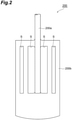
- a mixing container it is possible to use a container having the inlet inner diameter of 4.1 cm, the body inner diameter of 10.0 cm, and the height of 20.6 cm, for example.
- the deterioration treatment is performed using a mixer in which a rotation speed and a revolution speed can be adjusted in the above-mentioned range.
- the mixer include, but are not limited to, a cross rotary mixer (CM-3 type) manufactured by Meiwa Kogyo Co., Ltd. or Tsukasa Industry Co., Ltd.
- Fig. 4 is a schematic view for showing directions of rotation and revolution of the mixing container.
- a mixing container 300 is pivoted in a state where the bottom surface and the upper surface of the mixing container 300 are rotatably and revolvably fixed.
- the mixing container 300 revolves in the direction of b around a revolution axis C2 that is located at the center in a height direction of the mixing container 300 and is orthogonal to a rotation axis C1 that is a central axis in a height direction of the mixing container 300 while rotating in the direction of a (clockwise direction when viewed from the upper surface side of the mixing container) around the rotation axis C1.
- the 3-minute value of non-pressurization DW (3-minute value of non-pressurization DW before the deterioration treatment) of the water-absorbent resin particles according to the present embodiment may be, for example, 5 mL/g or more or 10 mL/g or more, and may be 60 mL/g or less, 55 mL/g or less, 50 mL/g or less, 40 mL/g or less, or 30 mL/g or less.
- the 10-minute value of non-pressurization DW (10-minute value of non-pressurization DW before the deterioration treatment) of the water-absorbent resin particles according to the present embodiment may be, for example, 25 mL/g or more or 35 mL/g or more, and may be 80 mL/g or less or 70 mL/g or less.
- the 3-minute value and 10-minute value of non-pressurization DW are measured by a method described in Examples to be described later.
- the water-absorbent resin particles of the present embodiment may be any water-absorbent resin particles as long as the water-absorbent resin particles can retain water, and the liquid to be absorbed can contain water.
- the water-absorbent resin particles of the present embodiment are better in absorbency of a body fluid such as urine, sweat, blood (for example, menstrual blood).
- the water-absorbent resin particles of the present embodiment can be used as a constituent component of the absorber of the present embodiment.
- the physiological saline retention amount of the water-absorbent resin particles of the present embodiment may be 20 g/g or more, 25 g/g or more, 30 g/g or more, 35 g/g or more, more than 40 g/g, or 41 g/g or more.
- the physiological saline retention amount of the water-absorbent resin particles of the present embodiment may be 80 g/g or less, 75 g/g or less, 70 g/g or less, 65 g/g or less, 60 g/g or less, or 55 g/g or less.
- the physiological saline retention amount of the water-absorbent resin particles of the present embodiment may be 20 to 80 g/g, 30 to 70 g/g, 35 to 60 g/g, or 40 to 55 g/g.
- the water retention amount may be a water retention amount at room temperature (25°C ⁇ 2°C). The water retention amount can be measured by a method described in Examples to be described later.
- Examples of the shape of the water-absorbent resin particles of the present embodiment include a substantially spherical shape, a crushed shape, and a granular shape. Furthermore, the water-absorbent resin particles of the present embodiment may be in the form (secondary particles) in which fine particles (primary particles) are aggregated, in addition to the form in which each is composed of a single particle.
- the median particle diameter of the water-absorbent resin particles (water-absorbent resin particles before absorbing water) of the present embodiment is preferably within the following range.
- the median particle diameter may be 100 ⁇ m or more, 140 ⁇ m or more, 200 ⁇ m or more, 250 ⁇ m or more, 300 ⁇ m or more, 330 ⁇ m or more, or 350 ⁇ m or more.
- the median particle diameter may be 600 ⁇ m or less, 550 ⁇ m or less, 500 ⁇ m or less, 450 ⁇ m or less, 400 ⁇ m or less, or 380 ⁇ m or less.
- the median particle diameter may be 100 to 600 ⁇ m, for example.
- the water-absorbent resin particles of the present embodiment may have a desired particle size distribution at the time of being obtained by a production method to be described later, but the particle size distribution may be adjusted by performing an operation such as particle size adjustment using classification with a sieve.
- the water-absorbent resin particles of the present embodiment can contain a crosslinked polymer (a crosslinked polymer having a structural unit derived from an ethylenically unsaturated monomer) obtained by polymerizing a monomer containing an ethylenically unsaturated monomer, as polymer particles, for example. That is, the water-absorbent resin particles of the present embodiment can have a polymer having a structural unit derived from an ethylenically unsaturated monomer, and can contain polymer particles including a crosslinked polymer having a structural unit derived from an ethylenically unsaturated monomer.
- a water-soluble ethylenically unsaturated monomer can be used as the ethylenically unsaturated monomer.
- the polymerization method include a reverse phase suspension polymerization method, an aqueous solution polymerization method, a bulk polymerization method, and a precipitation polymerization method.
- the reverse phase suspension polymerization method or the aqueous solution polymerization method is preferable from the viewpoint of ensuring good water-absorbent characteristics (such as a water retention amount) of the obtained water-absorbent resin particles and facilitating control of the polymerization reaction.
- a reverse phase suspension polymerization method will be described as an example.
- the ethylenically unsaturated monomer is preferably water-soluble, and examples thereof include (meth)acrylic acid and a salt thereof, 2-(meth)acrylamide-2-methylpropanesulfonic acid and a salt thereof, (meth)acrylamide, N,N-dimethyl (meth)acrylamide, 2-hydroxyethyl (meth)acrylate, N-methylol (meth)acrylamide, polyethylene glycol mono(meth)acrylate, N,N-diethylaminoethyl (meth)acrylate, N,N-diethylaminopropyl (meth)acrylate, and diethylaminopropyl (meth)acrylamide.
- the amino group may be quaternized.
- the ethylenically unsaturated monomer may be used alone, or may be used in combination of two or more kinds thereof.
- the functional group, such as a carboxyl group and an amino group, of the above-mentioned monomer can function as a functional group capable of crosslinking in a surface crosslinking step to be described later.
- the ethylenically unsaturated monomer preferably contains at least one compound selected from the group consisting of (meth)acrylic acid and a salt thereof, acrylamide, methacrylamide, and N,N-dimethyl acrylamide, and more preferably contains at least one compound selected from the group consisting of (meth)acrylic acid and a salt thereof, and acrylamide.
- the ethylenically unsaturated monomer further more preferably contains at least one compound selected from the group consisting of (meth)acrylic acid and a salt thereof.
- the water-absorbent resin particles preferably contain a polymer having at least one structural unit selected from the group consisting of a structural unit derived from (meth)acrylic acid and a structural unit derived from a salt of (meth)acrylic acid.
- a monomer other than the above-mentioned ethylenically unsaturated monomer may be used as the monomer for obtaining the water-absorbent resin particles.
- a monomer can be used by being mixed with an aqueous solution containing the above-mentioned ethylenically unsaturated monomer, for example.
- the use amount of the ethylenically unsaturated monomer may be 70 to 100 mol%, and may be 80 to 100 mol%, 90 to 100 mol%, 95 to 100 mol%, or 100 mol% with respect to the total amount of the monomer (the total amount of the monomer for obtaining the water-absorbent resin particles.
- the total amount of the monomers that provide a structural unit of the crosslinked polymer may be 70 to 100 mol%, and may be 80 to 100 mol%, 90 to 100 mol%, 95 to 100 mol%, or 100 mol% with respect to the total amount of the monomers.
- Ratio of (meth)acrylic acid and a salt thereof' means the ratio of the total amount of (meth)acrylic acid and a salt thereof.
- the water-absorbent resin particles containing a crosslinked polymer having a structural unit derived from an ethylenically unsaturated monomer, in which the ethylenically unsaturated monomer contains at least one compound selected from the group consisting of (meth)acrylic acid and a salt thereof, and the ratio of (meth)acrylic acid and a salt thereof is 70 to 100 mol% with respect to the total amount of the monomer for obtaining the water-absorbent resin particles.
- the ethylenically unsaturated monomer is usually preferably used as an aqueous solution.
- concentration of the ethylenically unsaturated monomer in the aqueous solution containing the ethylenically unsaturated monomer (hereinafter, simply referred to as "monomer aqueous solution”) is preferably 20% by mass or more and a saturated concentration or less, more preferably 25 to 70% by mass, and further more preferably 30 to 55% by mass.
- Examples of the water used in the aqueous solution include tap water, distilled water, and ion-exchanged water.
- the monomer aqueous solution may be used by neutralizing the acid group with an alkaline neutralizing agent.
- the degree of neutralization of the ethylenically unsaturated monomer by the alkaline neutralizing agent is preferably 10 to 100 mol%, more preferably 50 to 90 mol%, and further more preferably 60 to 80 mol% of the acid group in the ethylenically unsaturated monomer, from the viewpoint of increasing an osmotic pressure of the obtained water-absorbent resin particles, and further enhancing water-absorbent characteristics (such as a water retention amount).
- alkaline neutralizing agent examples include alkali metal salts such as sodium hydroxide, sodium carbonate, sodium hydrogen carbonate, potassium hydroxide, and potassium carbonate; and ammonia.
- the alkaline neutralizing agent may be used alone, or may be used in combination of two or more kinds thereof.
- the alkaline neutralizing agent may be used in the form of an aqueous solution to simplify the neutralization operation.
- Neutralization of the acid group of the ethylenically unsaturated monomer can be performed by adding an aqueous solution of sodium hydroxide, potassium hydroxide, or the like dropwise in the above-mentioned monomer aqueous solution and mixing therewith.
- a monomer aqueous solution is dispersed in a hydrocarbon dispersion medium in the presence of a surfactant, and polymerization of the ethylenically unsaturated monomer can be performed using a radical polymerization initiator or the like.
- a radical polymerization initiator a water-soluble radical polymerization initiator can be used.
- the surfactant examples include a nonionic surfactant and an anionic surfactant.
- the nonionic surfactant include sorbitan fatty acid esters, polyglycerin fatty acid esters, sucrose fatty acid esters, polyoxyethylene sorbitan fatty acid esters, polyoxyethylene glycerin fatty acid esters, sorbitol fatty acid esters, polyoxyethylene sorbitol fatty acid esters, polyoxyethylene alkyl ethers, polyoxyethylene alkylphenyl ethers, polyoxyethylene castor oil, polyoxyethylene hydrogenated castor oil, alkylallyl formaldehyde condensed polyoxyethylene ethers, polyoxyethylene polyoxypropylene block copolymers, polyoxyethylene polyoxypropyl alkyl ethers, and polyethylene glycol fatty acid esters.
- anionic surfactant examples include fatty acid salts, alkylbenzene sulfonate, alkylmethyl taurate, polyoxyethylene alkylphenyl ether sulfuric acid ester salts, polyoxyethylene alkyl ether sulfonic acid salts, phosphoric acid esters of polyoxyethylene alkyl ethers, and phosphoric acid esters of polyoxyethylene alkyl allyl ethers.
- the surfactant may be used alone, or may be used in combination of two or more kinds thereof.
- the surfactant preferably contains at least one compound selected from the group consisting of sorbitan fatty acid esters, polyglycerin fatty acid esters, and sucrose fatty acid esters.
- the surfactant preferably contains sucrose fatty acid ester, and more preferably contains sucrose stearic acid ester.
- the use amount of the surfactant is preferably 0.05 to 10 parts by mass, more preferably 0.08 to 5 parts by mass, and further more preferably 0.1 to 3 parts by mass with respect to 100 parts by mass of the monomer aqueous solution, from the viewpoint of obtaining a sufficient effect on the use amount and economic efficiency.
- a polymeric dispersant may be used in combination with the above-mentioned surfactant.
- the polymeric dispersant include maleic anhydride-modified polyethylene, maleic anhydride-modified polypropylene, a maleic anhydride-modified ethylene-propylene copolymer, a maleic anhydride-modified EPDM (ethylene propylene diene terpolymer), maleic anhydride-modified polybutadiene, a maleic anhydride-ethylene copolymer, a maleic anhydride-propylene copolymer, a maleic anhydride-ethylene-propylene copolymer, a maleic anhydride-butadiene copolymer, polyethylene, polypropylene, an ethylene-propylene copolymer, oxidized polyethylene, oxidized polypropylene, an oxidized ethylene-propylene copolymer, an ethylene-acrylic acid copolymer, e
- the polymeric dispersant may be used alone or may be used in combination of two or more kinds thereof.
- the polymeric dispersant is preferably at least one selected from the group consisting of maleic anhydride-modified polyethylene, maleic anhydride-modified polypropylene, a maleic anhydride-modified ethylene-propylene copolymer, a maleic anhydride-ethylene copolymer, a maleic anhydride-propylene copolymer, a maleic anhydride-ethylene-propylene copolymer, polyethylene, polypropylene, an ethylene-propylene copolymer, oxidized polyethylene, oxidized polypropylene, and an oxidized ethylene-propylene copolymer.
- the use amount of the polymeric dispersant is preferably 0.05 to 10 parts by mass, more preferably 0.08 to 5 parts by mass, and further more preferably 0.1 to 3 parts by mass with respect to 100 parts by mass of the monomer aqueous solution, from the viewpoint of obtaining a sufficient effect on the use amount and economic efficiency.
- the hydrocarbon dispersion medium may contain at least one compound selected from the group consisting of chain aliphatic hydrocarbons having 6 to 8 carbon atoms and alicyclic hydrocarbons having 6 to 8 carbon atoms.
- the hydrocarbon dispersion medium include chain aliphatic hydrocarbons such as n-hexane, n-heptane, 2-methylhexane, 3-methylhexane, 2,3-dimethylpentane, 3-ethylpentane, and n-octane; alicyclic hydrocarbons such as cyclohexane, methylcyclohexane, cyclopentane, methylcyclopentane, trans-1,2-dimethylcyclopentane, cis-1,3-dimethylcyclopentane, and trans-1,3-dimethylcyclopentane; and aromatic hydrocarbons such as benzene, toluene, and xylene.
- the hydrocarbon dispersion medium may be
- the hydrocarbon dispersion medium may contain at least one selected from the group consisting of n-heptane and cyclohexane from the viewpoint of industrial availability and stable quality.
- n-heptane and cyclohexane from the viewpoint of industrial availability and stable quality.
- a commercially available Exxsol Heptane manufactured by ExxonMobil: containing 75% to 85% of n-heptane and isomeric hydrocarbons
- the use amount of the hydrocarbon dispersion medium is preferably 30 to 1000 parts by mass, more preferably 40 to 500 parts by mass, and further more preferably 50 to 400 parts by mass with respect to 100 parts by mass of the monomer aqueous solution, from the viewpoint of appropriately removing the heat of polymerization and easily controlling the polymerization temperature.
- the use amount of the hydrocarbon dispersion medium is 30 parts by mass or more, the polymerization temperature tends to be easily controlled.
- the productivity of polymerization tends to be improved, which is economical.
- the radical polymerization initiator is preferably water-soluble, and examples thereof include persulfates such as potassium persulfate, ammonium persulfate, and sodium persulfate; peroxides such as methyl ethyl ketone peroxide, methyl isobutyl ketone peroxide, di-t-butyl peroxide, t-butyl cumyl peroxide, t-butyl peroxyacetate, t-butyl peroxyisobutyrate, t-butyl peroxypivalate, and hydrogen peroxide; and azo compounds such as 2,2'-azobis(2-amidinopropane) dihydrochloride, 2,2'-azobis[2-(N-phenylamidino)propane] dihydrochloride, 2,2'-azobis[2-(N-allylamidino)propane] dihydrochloride, 2,2'-azobis[2-(2-imidazolin-2-yl)propan
- the radical polymerization initiator may be used alone, or may be used in combination of two or more kinds thereof.
- the radical polymerization initiator is preferably at least one selected from the group consisting of potassium persulfate, ammonium persulfate, sodium persulfate, 2,2'-azobis(2-amidinopropane) dihydrochloride, 2,2'-azobis[2-(2-imidazolin-2-yl)propane] dihydrochloride, and 2,2'-azobis ⁇ 2-[1-(2-hydroxyethyl)-2-imidazolin-2-yl]propane ⁇ dihydrochloride; and more preferably potassium persulfate, ammonium persulfate, or sodium persulfate.
- the use amount of the radical polymerization initiator may be 0.05 to 10 mmol with respect to 1 mol of the ethylenically unsaturated monomer. In a case where the use amount of the radical polymerization initiator is 0.05 mmol or more, the polymerization reaction does not require a long time and is efficient. In a case where the use amount of the radical polymerization initiator is 10 mmol or less, the occurrence of a rapid polymerization reaction is easily suppressed.
- the above-mentioned radical polymerization initiator can also be used as a redox polymerization initiator in combination with a reducing agent such as sodium sulfite, sodium hydrogen sulfite, ferrous sulfate, and L-ascorbic acid.
- a reducing agent such as sodium sulfite, sodium hydrogen sulfite, ferrous sulfate, and L-ascorbic acid.
- the monomer aqueous solution used for the polymerization may contain a chain transfer agent.
- chain transfer agent include hypophosphites, thiols, thiolic acids, secondary alcohols, and amines.
- the monomer aqueous solution used for the polymerization may contain a thickener in order to control the particle diameter of the water-absorbent resin particles.
- a thickener examples include hydroxyethyl cellulose, hydroxypropyl cellulose, methyl cellulose, carboxymethyl cellulose, polyethylene glycol, polyacrylamide, polyethyleneimine, dextrin, sodium alginate, polyvinyl alcohol, polyvinylpyrrolidone, and polyethylene oxide.
- the stirring speed at the time of polymerization is the same, the higher the viscosity of the monomer aqueous solution, the larger the median particle diameter of the obtained particles tends to be.
- Internal crosslinking by self-crosslinking may occur during polymerization, but crosslinking may be performed by using an internal crosslinking agent.
- an internal crosslinking agent In a case where an internal crosslinking agent is used, water-absorbent characteristics (such as a water retention amount) of the water-absorbent resin particles are easily controlled.
- the internal crosslinking agent is usually added to a reaction solution during the polymerization reaction.
- the internal crosslinking agent examples include di or tri (meth)acrylic acid esters of polyols such as ethylene glycol, propylene glycol, trimethylolpropane, glycerin, polyoxyethylene glycol, polyoxypropylene glycol, and polyglycerin; unsaturated polyesters obtained by reacting the above-mentioned polyols with unsaturated acids (such as maleic acid and fumaric acid); bis(meth)acrylamides such as N,N'-methylenebis(meth)acrylamide; di or tri (meth)acrylic acid esters obtained by reacting a polyepoxide with (meth)acrylic acid; carbamyl di(meth)acrylate esters obtained by reacting a polyisocyanate (such as tolylene diisocyanate and hexamethylene diisocyanate) with hydroxyethyl (meth)acrylate; compounds having two or more polymerizable unsaturated groups, such as allylated starch, allyl
- the internal crosslinking agent may be used alone, or may be used in combination of two or more kinds thereof.
- the internal crosslinking agent is preferably a polyglycidyl compound, is more preferably a diglycidyl ether compound, and is further more preferably at least one selected from the group consisting of (poly)ethylene glycol diglycidyl ether, (poly)propylene glycol diglycidyl ether, and (poly)glycerin diglycidyl ether.
- the use amount of the internal crosslinking agent is preferably 30 mmol or less, more preferably 0.01 to 10 mmol, further more preferably 0.012 to 5 mmol, particularly preferably 0.015 to 1 mmol, extremely preferably 0.02 to 0.1 mmol, and extraordinarily preferably 0.025 to 0.06 mmol, per 1 mol of the ethylenically unsaturated monomer, from the viewpoint of suppressing water-soluble property by appropriately crosslinking the obtained polymer to easily obtain the sufficient water absorption amount.
- a monomer aqueous solution containing an ethylenically unsaturated monomer is dispersed in a hydrocarbon dispersion medium in the presence of a surfactant (if necessary, additionally a polymeric dispersant).
- a surfactant if necessary, additionally a polymeric dispersant.
- the timing of adding the surfactant, the polymeric dispersant, or the like may be either before or after the addition of the monomer aqueous solution.
- Reverse phase suspension polymerization can be performed in one stage, or in multiple stages of two or more stages. Reverse phase suspension polymerization is preferably performed in two to three stages from the viewpoint of increasing productivity.
- reverse phase suspension polymerization In a case where reverse phase suspension polymerization is performed in multiple stages of two or more stages, a first stage reverse phase suspension polymerization is performed, an ethylenically unsaturated monomer is added to the reaction mixture obtained in the first polymerization reaction and mixed therewith, and second and subsequent stages of reverse phase suspension polymerization may be performed in the same method as the first stage.
- the above-mentioned radical polymerization initiator and/or internal crosslinking agent is preferably added in a range of a molar ratio of each component with respect to the above-mentioned ethylenically unsaturated monomer, based on an amount of the ethylenically unsaturated monomer added at the time of the second and subsequent stages of reverse phase suspension polymerization, to perform reverse phase suspension polymerization.
- an internal crosslinking agent may be used if necessary.
- the internal crosslinking agent is preferably added within a range of the molar ratio of each component with respect to the above-mentioned ethylenically unsaturated monomer based on the amount of the ethylenically unsaturated monomer provided in each stage, to perform reverse phase suspension polymerization.
- the temperature of the polymerization reaction varies depending on the used radical polymerization initiator, and the temperature is preferably 20°C to 150°C, and more preferably 40°C to 120°C, from the viewpoint of rapidly proceeding the polymerization and shortening the polymerization time to enhance economic efficiency, and easily removing polymerization heat and smoothly performing reaction.
- the reaction time is usually 0.5 to 4 hours.
- the completion of the polymerization reaction can be confirmed by stopping the temperature rise in the reaction system.
- the polymer of the ethylenically unsaturated monomer is usually obtained in a state of a hydrogel.
- a post-polymerization crosslinking agent may be added to the obtained hydrogel-like polymer and heated to perform crosslinking.
- a degree of crosslinking of the hydrogel-like polymer can be increased, and water-absorbent characteristics (such as a water retention amount) can be further improved.
- post-polymerization crosslinking agent examples include polyols such as ethylene glycol, propylene glycol, 1,4-butanediol, trimethylolpropane, glycerin, polyoxyethylene glycol, polyoxypropylene glycol, and polyglycerin; compounds having two or more epoxy groups, such as (poly)ethylene glycol diglycidyl ether, (poly)propylene glycol diglycidyl ether, and (poly)glycerin diglycidyl ether; haloepoxy compounds such as epichlorohydrin, epibromohydrin, and ⁇ -methyl epichlorohydrin; compounds having two or more isocyanate groups such as 2,4-tolylene diisocyanate and hexamethylene diisocyanate; oxazoline compounds such as 1,2-ethylenebisoxazoline; carbonate compounds such as ethylene carbonate; and hydroxyalkylamide compounds such as bis[N,N-di( ⁇ -hydroxy-
- polyglycidyl compounds such as (poly)ethylene glycol diglycidyl ether, (poly)glycerin diglycidyl ether, (poly)glycerin triglycidyl ether, (poly)propylene glycol polyglycidyl ether, and polyglycerol polyglycidyl ether are preferable.
- the crosslinking agent may be used alone, or may be used in combination of two or more kinds thereof.
- the amount of the post-polymerization crosslinking agent is preferably 30 mmol or less, more preferably 10 mmol or less, further more preferably 0.01 to 5 mmol, particularly preferably 0.012 to 1 mmol, extremely preferably 0.015 to 0.1 mmol, and extraordinarily preferably 0.02 to 0.05 mmol per 1 mol of the ethylenically unsaturated monomer, from the viewpoint of easily obtaining suitable water-absorbent characteristics (such as a water retention amount).
- the timing of adding the post-polymerization crosslinking agent may be after the polymerization of the ethylenically unsaturated monomer used for the polymerization, and in the case of multiple-stage polymerization, it is preferable to add after the multiple-stage polymerization.
- the post-polymerization crosslinking agent is preferably added in a region of [water content (immediately after polymerization) ⁇ 3% by mass] from the viewpoint of water content (to be described later).
- the polymer particles for example, polymer particles containing a polymer having a structural unit derived from an ethylenically unsaturated monomer
- a drying method include (a) a method of removing water by performing azeotropic distillation by heating from outside in a state where a hydrogel-like polymer is dispersed in a hydrocarbon dispersion medium, and refluxing the hydrocarbon dispersion medium, (b) a method of taking out a hydrogel-like polymer by decantation and drying under reduced pressure, and (c) a method of filtering the hydrogel-like polymer with a filter and drying under reduced pressure.
- the particle diameter of water-absorbent resin particles by adjusting a rotation speed of a stirrer during the polymerization reaction, or by adding a flocculant into the system after the polymerization reaction or in the initial stage of drying.
- a flocculant By adding a flocculant, it is possible to increase the particle diameter of the obtained water-absorbent resin particles.
- an inorganic flocculant can be used as the flocculant.
- the inorganic flocculant include silica, zeolite, bentonite, aluminum oxide, talc, titanium dioxide, kaolin, clay, and hydrotalcite. From the viewpoint of better flocculation effect, the flocculant is preferably at least one selected from the group consisting of silica, aluminum oxide, talc, and kaolin.
- a method of adding the flocculant is preferably a method of preliminarily dispersing a flocculant in a hydrocarbon dispersion medium or water of the same type as that used in the polymerization, and then mixing into a hydrocarbon dispersion medium containing a hydrogel-like polymer under stirring.
- the addition amount of the flocculant is preferably 0.001 to 1 part by mass, more preferably 0.005 to 0.5 part by mass, and further more preferably 0.01 to 0.2 parts by mass with respect to 100 parts by mass of the ethylenically unsaturated monomer used for the polymerization.
- the addition amount of the flocculant is within the above-mentioned range, water-absorbent resin particles having a target particle size distribution can be easily obtained.
- the water-absorbent resin particles it is preferable to perform surface crosslinking of a surface portion (surface and in the vicinity of surface) of a hydrogel-like polymer using a surface crosslinking agent in a drying step (water removing step) or any subsequent steps.
- a surface crosslinking agent By performing surface crosslinking, water-absorbent characteristics (such as a water retention amount) and the like of the water-absorbent resin particles are easily controlled.
- the surface crosslinking is preferably performed at the timing when the hydrogel-like polymer has a specific water content.
- the timing of surface crosslinking is preferably when the water content of the hydrogel-like polymer is 5% to 50% by mass, more preferably when the water content of the hydrogel-like polymer is 10% to 40% by mass, and further more preferably when the water content of the hydrogel-like polymer is 15% to 35% by mass.
- Ww Water amount of a hydrogel-like polymer obtained by adding water amount used if necessary when mixing a flocculant, a surface crosslinking agent, or the like to an amount obtained by subtracting water amount discharged to the outside of the system in the drying step, from water amount contained in a monomer aqueous solution before polymerization in the entire polymerization step.
- Ws Solid content calculated from the charged amount of materials such as ethylenically unsaturated monomer, crosslinking agent, and initiator that constitute a hydrogel-like polymer.
- Examples of the surface crosslinking agent include compounds having two or more reactive functional groups.
- Examples of the surface crosslinking agent include polyols such as ethylene glycol, propylene glycol, 1,4-butanediol, trimethylolpropane, glycerin, polyoxyethylene glycol, polyoxypropylene glycol, and polyglycerin; polyglycidyl compounds such as (poly)ethylene glycol diglycidyl ether, (poly)glycerin diglycidyl ether, (poly)glycerin triglycidyl ether, trimethylolpropane triglycidyl ether, (poly)propylene glycol polyglycidyl ether, and (poly)glycerol polyglycidyl ether; haloepoxy compounds such as epichlorohydrin, epibromohydrin, and ⁇ -methyl epichlorohydrin; isocyanate compounds such as 2,4-tolylene diiso
- the surface crosslinking agent may be used alone, or may be used in combination of two or more kinds thereof.
- the surface crosslinking agent is preferably a polyglycidyl compound, and more preferably at least one selected from the group consisting of (poly)ethylene glycol diglycidyl ether, (poly)glycerin diglycidyl ether, (poly)glycerin triglycidyl ether, (poly)propylene glycol polyglycidyl ether, and polyglycerol polyglycidyl ether.
- the use amount of the surface crosslinking agent is preferably 0.01 to 20 mmol, more preferably 0.05 to 10 mmol, further more preferably 0.1 to 5 mmol, particularly preferably 0.15 to 1 mmol, and extremely preferably 0.2 to 0.5 mmol per 1 mol of the ethylenically unsaturated monomer used for polymerization, from the viewpoint of easily obtaining suitable water-absorbent characteristics (such as a water retention amount).
- the polymerization reaction can be performed using various stirrers having a stirring blade.
- a stirring blade it is possible to use a flat plate blade, a lattice blade, a paddle blade, a propeller blade, an anchor blade, a turbine blade, a Pfaudler blade, a ribbon blade, a full zone blade, a max blend blade, or the like.
- a flat plate blade has a shaft (stirring shaft) and a flat plate portion (stirring portion) disposed around the shaft.
- the flat plate portion may have a slit or the like.
- the flat plate blade is used as the stirring blade, it is easy to uniformly perform the crosslinking reaction in polymer particles, and it is easy to adjust the deterioration rate in terms of 3-minute values of non-pressurization DW within a suitable range while maintaining water-absorbent characteristics such as a water retention amount.
- the water-absorbent resin particles of the present embodiment can further contain additional components such as a gel stabilizer, a metal chelating agent (ethylenediaminetetraacetic acid and a salt thereof, diethylenetriamine pentaacetic acid and a salt thereof, and the like, for example, diethylenetriamine pentaacetic acid pentasodium), and a flowability improver (lubricant). Additional components can be disposed inside the polymer particles, on the surface of the polymer particles, or both thereof.
- additional components such as a gel stabilizer, a metal chelating agent (ethylenediaminetetraacetic acid and a salt thereof, diethylenetriamine pentaacetic acid and a salt thereof, and the like, for example, diethylenetriamine pentaacetic acid pentasodium), and a flowability improver (lubricant). Additional components can be disposed inside the polymer particles, on the surface of the polymer particles, or both thereof.
- the water-absorbent resin particles may contain a plurality of inorganic particles disposed on the surface of the polymer particles. For example, by mixing the polymer particles and the inorganic particles, it is possible to dispose the inorganic particles on the surface of the polymer particles.
- the inorganic particles may be silica particles such as amorphous silica.
- the content of the inorganic particles may be within the following range based on the total mass of the polymer particles.
- the content of the inorganic particles may be 0.05% by mass or more, 0.1% by mass or more, 0.15% by mass or more, or 0.2% by mass or more.
- the content of the inorganic particles may be 5.0% by mass or less, 3.0% by mass or less, 1.0% by mass or less, or 0.5% by mass or less.
- the inorganic particles here usually have a minute size as compared with the size of the polymer particles.
- the average particle diameter of the inorganic particles may be 0.1 to 50 ⁇ m, 0.5 to 30 ⁇ m, or 1 to 20 ⁇ m.
- the average particle diameter can be measured by a pore electric resistance method or a laser diffraction/scattering method depending on the characteristics of the particles.
- the absorber of the present embodiment contains the water-absorbent resin particles of the present embodiment.
- the absorber of the present embodiment may contain a fibrous substance, for example, may be a mixture containing water-absorbent resin particles and the fibrous substance.
- the structure of the absorber may be a structure in which the water-absorbent resin particles and the fibrous substance are uniformly mixed, may be a structure in which the water-absorbent resin particles are sandwiched between the fibrous substances formed in the shape of a sheet or a layer, or may be other structures.
- the fibrous substance examples include finely pulverized wood pulp; cotton; cotton linter; rayon; cellulosic fibers such as cellulose acetate; synthetic fibers such as polyamide, polyester and polyolefin; and a mixture of these fibers.
- the average fiber length of the fibrous substance is usually 0.1 to 10 mm, and may be 0.5 to 5 mm.
- the fibrous substance may be used alone, or may be used in combination of two or more.
- hydrophilic fibers can be used.
- the fibers may be adhered to each other by adding an adhesive binder to the fibrous substance.
- the adhesive binder include thermal bonding synthetic fibers, hot melt adhesives, and adhesive emulsions.
- the adhesive binder may be used alone, or may be used in combination of two or more.
- thermal bonding synthetic fiber examples include a total fusion type binder such as polyethylene, polypropylene, and an ethylene-propylene copolymer; and a non-total fusion type binder made of a side-by-side or core-sheath structure of polypropylene and polyethylene.
- a total fusion type binder such as polyethylene, polypropylene, and an ethylene-propylene copolymer
- non-total fusion type binder made of a side-by-side or core-sheath structure of polypropylene and polyethylene.
- hot melt adhesive examples include a mixture of a base polymer such as ethylene-vinyl acetate copolymer, styrene-isoprene-styrene block copolymer, styrene-butadiene-styrene block copolymer, styrene-ethylene-butylene-styrene block copolymer, styrene-ethylene-propylene-styrene block copolymer, and amorphous polypropylene with a tackifier, a plasticizer, an antioxidant, or the like.
- a base polymer such as ethylene-vinyl acetate copolymer, styrene-isoprene-styrene block copolymer, styrene-butadiene-styrene block copolymer, styrene-ethylene-butylene-styrene block copolymer, styrene
- Examples of the adhesive emulsion include a polymerization product of at least one monomer selected from the group consisting of methyl methacrylate, styrene, acrylonitrile, 2-ethylhexyl acrylate, butyl acrylate, butadiene, ethylene, and vinyl acetate.
- the absorber of the present embodiment may contain an inorganic powder (for example, amorphous silica), a deodorant, an antibacterial agent, a dye, a pigment, a fragrance, a sticking agent, or the like.
- an inorganic powder for example, amorphous silica
- the absorber may contain an inorganic powder in addition to the inorganic particles of the water-absorbent resin particles.
- the shape of the absorber of the present embodiment may be a sheet shape, for example.
- the thickness of the absorber (for example, thickness of the sheet shaped absorber) may be 0.1 to 20 mm or 0.3 to 15 mm.
- the content of the water-absorbent resin particles in the absorber may be 2% to 100% by mass, 10% to 80% by mass, or 20% to 60% by mass with respect to a total of the water-absorbent resin particles and the fibrous substance, from the viewpoint of easily obtaining sufficient absorption characteristics.
- the content of the water-absorbent resin particles in the absorber is preferably 100 to 1000 g, more preferably 150 to 800 g, and further more preferably 200 to 700 g per 1 m 2 of the absorber from the viewpoint of easily obtaining sufficient absorption characteristics.
- the content of the fibrous substance in the absorber is preferably 50 to 800 g, more preferably 100 to 600 g, and further more preferably 150 to 500 g per 1 m 2 of the absorber from the viewpoint of easily obtaining sufficient absorption characteristics.
- the absorbent article of the present embodiment includes an absorber of the present embodiment.
- Examples of other constituent members of the absorbent article of the present embodiment include a core wrap that retains an absorber and prevents falloff or flow of a constituent member of the absorber; a liquid permeable sheet disposed on the outermost part at the side where the liquid to be absorbed enters; and a liquid impermeable sheet disposed on the outermost part at the opposite side to the side where the liquid to be absorbed enters.
- the absorbent article include diapers (for example, paper diapers), toilet training pants, incontinence pads, sanitary materials (sanitary napkins, tampons, and the like), sweat pads, pet sheets, portal toilet members, and animal excrement treatment materials.
- Fig. 1 is a cross-sectional view showing an example of an absorbent article.
- An absorbent article 100 shown in Fig. 1 includes an absorber 10, core wraps 20a and 20b, a liquid permeable sheet 30, and a liquid impermeable sheet 40.
- the liquid impermeable sheet 40, the core wrap 20b, the absorber 10, the core wrap 20a, and the liquid permeable sheet 30 are laminated in this order.
- the absorber 10 has a water-absorbent resin particle 10a of the present embodiment and a fiber layer 10b containing a fibrous substance.
- the water-absorbent resin particles 10a are dispersed in the fiber layer 10b.
- the core wrap 20a is disposed on one surface side of the absorber 10 (an upper side of the absorber 10 in Fig. 1 ) in a state of being in contact with the absorber 10.
- the core wrap 20b is disposed on the other surface side of the absorber 10 (a lower side of the absorber 10 in Fig. 1 ) in a state of being in contact with the absorber 10.
- the absorber 10 is disposed between the core wrap 20a and the core wrap 20b.
- Examples of the core wraps 20a and 20b include tissues, non-woven fabrics, woven fabrics, synthetic resin films having liquid permeation holes, and net-like sheets having a mesh.
- the core wrap 20a and the core wrap 20b each have a main surface having the same size as that of the absorber 10, for example.
- the liquid permeable sheet 30 is disposed on the outermost part at the side where the liquid to be absorbed enters.
- the liquid permeable sheet 30 is disposed on the core wrap 20a in a state of being in contact with the core wrap 20a.
- Examples of the liquid permeable sheet 30 include a non-woven fabric made of a synthetic resin such as polyethylene, polypropylene, polyester, and polyamide, and a porous sheet.
- the liquid impermeable sheet 40 is disposed on the outermost part at the opposite side to the liquid permeable sheet 30 in the absorbent article 100.
- the liquid impermeable sheet 40 is disposed on a lower side of the core wrap 20b in a state of being in contact with the core wrap 20b.
- liquid impermeable sheet 40 examples include a sheet made of a synthetic resin such as polyethylene, polypropylene, and polyvinyl chloride, and a sheet made of a composite material of these synthetic resins and a non-woven fabric.
- the liquid permeable sheet 30 and the liquid impermeable sheet 40 have a main surface wider than the main surface of the absorber 10, and outer edges of the liquid permeable sheet 30 and the liquid impermeable sheet 40 are present around the absorber 10 and the core wraps 20a and 20b.
- the magnitude relationship between the absorber 10, the core wraps 20a and 20b, the liquid permeable sheet 30, and the liquid impermeable sheet 40 is not particularly limited, and is appropriately adjusted according to the use of the absorbent article or the like.
- the method of retaining the shape of the absorber 10 using the core wraps 20a and 20b is not particularly limited, and as shown in Fig. 1 , the absorber may be wrapped by a plurality of core wraps, and the absorber is wrapped by one core wrap.
- the absorber may be adhered to a top sheet.
- the absorber is sandwiched or covered by the core wrap, it is preferable that at least the core wrap and the top sheet are adhered to each other, and it is more preferable that the core wrap and the top sheet are adhered to each other and the core wrap and the absorber are adhered to each other.
- Examples of a method of adhering the absorber include a method of adhering by applying a hot melt adhesive to the top sheet at predetermined intervals in a striped shape, a spiral shape, or the like in a width direction; and a method of adhering using a water-soluble binder such as starch, carboxymethyl cellulose, polyvinyl alcohol, polyvinylpyrrolidone, and other water-soluble polymers.
- a method of adhering by thermal bonding of the thermal bonding synthetic fibers may be adopted.
- the liquid absorbing method of the present embodiment includes a step of bringing the liquid to be absorbed into contact with the water-absorbent resin particles, the absorber or the absorbent article of the present embodiment.
- the present embodiment it is possible to provide a method for inhibiting liquid leakage in the absorbent article which is a method for inhibiting liquid leakage using the water-absorbent resin particles, the absorber or the absorbent article of the present embodiment.
- the method for inhibiting liquid leakage of the present embodiment includes an adjustment step of adjusting a deterioration rate in terms of 3-minute values of non-pressurization DW measured by the above-mentioned procedures having (1) to (3) relating to the water-absorbent resin particles of the present embodiment.
- the deterioration rate in terms of 3-minute values of non-pressurization DW can be adjusted to be within each of the above-mentioned ranges (for example, 15% or less).
- the present embodiment it is possible to provide a method for producing water-absorbent resin particles, the method including a selection step of selecting water-absorbent resin particles based on a deterioration rate in terms of 3-minute values of non-pressurization DW measured by the above-mentioned procedures having (1) to (3) relating to the water-absorbent resin particles of the present embodiment.
- the selection step the deterioration rate in terms of 3-minute values of non-pressurization DW can be adjusted to be within each of the above-mentioned ranges (for example, 15% or less).
- the present embodiment it is possible to provide a method for producing an absorber by using the water-absorbent resin particles obtained by the above-mentioned method for producing water-absorbent resin particles.
- the method for producing an absorber of the present embodiment includes a particle producing step of obtaining water-absorbent resin particles by the above-mentioned method for producing water-absorbent resin particles.
- the method for producing an absorber of the present embodiment may include a step of mixing the water-absorbent resin particles and a fibrous substance after the particle producing step. According to the present embodiment, it is possible to provide a method for producing an absorbent article by using the absorber obtained by the above-mentioned method for producing an absorber.
- the method for producing an absorbent article of the present embodiment includes an absorber producing step of obtaining an absorber by the above-mentioned method for producing an absorber.
- the method for producing an absorbent article of the present embodiment may include a step of obtaining an absorbent article by using the absorber and other constituent member for an absorbent article after the absorber producing step, and in this step, for example, an absorbent article is obtained by laminating the absorber and other constituent member for an absorbent article with each other.
- a round-bottomed cylindrical separable flask with the inner diameter of 11 cm and the internal volume of 2 L equipped with a reflux cooling device, a dropping funnel, a nitrogen gas introduction tube, and a stirrer was prepared.
- the stirrer was equipped with a stirring blade 200 of which an outline is shown in Fig. 2 .
- the stirring blade 200 includes a shaft 200a and a flat plate portion 200b.
- the flat plate portion 200b is welded to the shaft 200a and has a curved distal end.
- Four slits S extending along an axial direction of the shaft 200a are formed in the flat plate portion 200b.
- the four slits S are arranged in a width direction of the flat plate portion 200b, where the width of the two slits S at the inner side is 1 cm, and the width of the two slits S at the outer side is 0.5 cm.
- the length of the flat plate portion 200b is about 10 cm, and the width of the flat plate portion 200b is about 6 cm.
- a dispersant maleic anhydride-modified ethylene-propylene copolymer, manufactured by Mitsui Chemicals, Inc., Hi-Wax 1105A
- the dispersant was dissolved in n-heptane by raising the temperature to 80°C while stirring the mixture in the separable flask with the stirrer.
- the formed solution was cooled to 50°C.
- hydroxyethyl cellulose Suditomo Seika Chemicals Co., Ltd., HEC AW-15F
- 0.0648 g (0.272 mmol) of sodium persulfate as a water-soluble radical polymerization initiator 0.0648 g (0.272 mmol) of sodium persulfate as a water-soluble radical polymerization initiator
- 0.0156 g (0.090 mmol) of ethylene glycol diglycidyl ether as an internal crosslinking agent were added in the above-mentioned beaker and dissolved to prepare a first stage aqueous liquid.
- aqueous liquid prepared above was added into the separable flask, and stirring was performed for 10 minutes.
- sucrose stearic acid ester Mitsubishi-Chemical Foods Corporation, Ryoto Sugar Ester S-370, HLB: 3
- a surfactant solution was heat-dissolved in 6.62 g of n-heptane to obtain a surfactant solution.
- the above-mentioned surfactant solution was added into the above-mentioned flask, and the inside of the system was sufficiently replaced with nitrogen while stirring at the rotation speed of 350 rpm of the stirrer. Thereafter, the above-mentioned flask was immersed in a water bath at 70°C to raise the temperature, and polymerization was performed for 60 minutes to obtain a first stage polymerization slurry solution.
- the inside of the above-mentioned separable flask system was cooled to 25°C, and then the total amount of the above-mentioned second stage aqueous liquid was added to the first stage polymerization slurry solution, and the inside of the system was replaced with nitrogen for 30 minutes. Thereafter, the flask was immersed again in a water bath at 70°C to raise the temperature, and the polymerization reaction was performed for 60 minutes to obtain a hydrogel-like polymer.
- polymer particles dried product.
- These polymer particles were passed through a sieve having the opening of 850 ⁇ m, and 0.5% by mass of amorphous silica (Oriental Silicas Corporation, Tokusil NP-S) with respect to the mass of the polymer particles was mixed to obtain 231.8 g of water-absorbent resin particles containing amorphous silica.
- the median particle diameter of the water-absorbent resin particles was 368 ⁇ m.
- the physiological saline retention amount (room temperature, 25°C ⁇ 2°C) of the water-absorbent resin particles was measured by the following procedure. First, a cotton bag (cotton broadcloth No. 60, 100 mm in width ⁇ 200 mm in length) into which 2.0 g of the water-absorbent resin particles had been weighed was placed in a beaker having the capacity of 500 mL.
- Median particle diameter 50 g of the water-absorbent resin particles was used for median particle diameter measurement. The measurement was performed in the environment of the temperature of 25°C ⁇ 2°C and the humidity of 50% ⁇ 10%.
- JIS standard sieves were combined in the following order from the top: a sieve having the opening of 850 ⁇ m, a sieve having the opening of 500 ⁇ m, a sieve having the opening of 425 ⁇ m, a sieve having the opening of 300 ⁇ m, a sieve having the opening of 250 ⁇ m, a sieve having the opening of 180 ⁇ m, a sieve having the opening of 150 ⁇ m, and a tray.
- the water-absorbent resin particles were put in the topmost sieve among the combined sieves, and classification was performed using a Ro-tap shaker (manufactured by Iida-seisakusho Japan Corporation) according to JIS Z 8815 (1994). After the classification, the mass of the water-absorbent resin particles remaining on each of the sieves was calculated as a mass percentage with respect to the total amount to determine a particle size distribution. The relationship between the opening of the sieve and the integrated value of the mass percentage of the water-absorbent resin particles remaining on the sieve was plotted on a logarithmic probability paper by integrating in the order from the one having the largest particle diameter on the sieve with respect to this particle size distribution. By connecting the plots on the probability paper with a straight line, the particle diameter corresponding to the cumulative mass percentage of 50% by mass was defined as the median particle diameter.
- the following deterioration treatment was performed in the environment of the temperature of 25°C and the humidity of 50% ⁇ 10%.
- 15 g of the water-absorbent resin particles was injected into a mixing container made of stainless steel, having an opening, and having the volume of 1 L, the inlet inner diameter of 4.1 cm, the body inner diameter of 10.0 cm, and the height of 20.6 cm.
- a lid made of stainless steel was put on the opening of the mixing container so as not to spill the water-absorbent resin particles.
- the deterioration treatment was performed on the water-absorbent resin particles by setting the mixing container, to which the water-absorbent resin particles were put, on a cross rotary mixer (manufactured by Meiwa Kogyo Co., Ltd., CM-3 type), and pivoting the mixing container in which the water-absorbent resin particles were disposed for 2 hours under conditions of the rotation speed of 45 rpm and the revolution speed of 45 rpm. Fluctuations of ⁇ 2 rpm were allowed for both rotation speed and revolution speed.
- Fig. 4 is a schematic view showing the direction of rotation and the direction of revolution of the mixing container.
- a direction a in Fig. 4 (clockwise direction when viewed from above the mixing container 300) indicates the direction of rotation, and a direction b in Fig. 4 indicates the direction of revolution.
- the mixing container 300 pivots (rotates) around a rotation axis C1 and pivots (revolves) around a revolution axis C2.
- the rotation axis C1 is the central axis in a height direction of the mixing container 300.
- the revolution axis C2 is located at the center in a height direction of the mixing container 300 and is an axis orthogonal to the rotation axis.
- the deterioration rate in terms of 3-minute values of non-pressurization DW is a value calculated by the following formula, when I is a 3-minute value of non-pressurization DW of the water-absorbent resin particles before the deterioration treatment (original particles) and II is a 3-minute value of non-pressurization DW of the water-absorbent resin particles after the deterioration treatment.
- the deterioration rate in terms of a 10-minute value of non-pressurization DW is a value calculated by the following formula, when III is a 10-minute value of non-pressurization DW of the water-absorbent resin particles before the deterioration treatment (original particles) and IV is a 10-minute value of non-pressurization DW of the water-absorbent resin particles after the deterioration treatment.
- the non-pressurization DW of the particles of water-absorbent resin after the deterioration treatment was measured using a measurement device shown in Fig. 3 .
- the measurement was performed three times for one type of water-absorbent resin particles, and an average value of the measurement values was obtained.
- the measurement device has a burette unit 1, a conduit 5, a measurement table 13, a nylon mesh sheet 15, a stand 11, and a clamp 3.
- the burette unit 1 has a burette tube 21 on which a scale is engraved, a rubber stopper 23 for sealing the opening at the upper part of the burette tube 21, a cock 22 connected to the distal end of the lower part of the burette tube 21, an air introduction tube 25 connected to the lower part of the burette tube 21, and a cock 24.
- the burette unit 1 is fixed by the clamp 3.
- the flat plate-shaped measurement table 13 has a through hole 13a having the diameter of 2 mm and formed in the central portion thereof, and is supported by the height-variable stand 11.
- the through hole 13a of the measurement table 13, and the cock 22 of the burette unit 1 are connected by the conduit 5.
- the inner diameter of the conduit 5 is 6 mm.
- the measurement was performed in the environment of the temperature of 25°C and the humidity of 50% ⁇ 10%.
- the cock 22 and the cock 24 of the burette unit 1 were closed, and 0.9% by mass saline 50 adjusted to 25°C was put into the burette tube 21 from the opening at the upper part of the burette tube 21.
- the concentration 0.9% by mass of the saline is a concentration based on the mass of the saline.
- the opening of the burette tube 21 was sealed with the rubber stopper 23, and then the cock 22 and the cock 24 were opened.
- the inside of the conduit 5 was filled with the 0.9% by mass saline 50 to prevent air bubbles from entering.
- the height of the measurement table 13 was adjusted so that the height of the water surface of the 0.9% by mass saline reached the inside of the through hole 13a was the same as the height of the upper surface of the measurement table 13. After the adjustment, the height of the water surface of the 0.9% by mass saline 50 in the burette tube 21 was read by the scale on the burette tube 21, and this position was defined as a zero point (value read at 0 seconds).
- the nylon mesh sheet 15 (100 mm ⁇ 100 mm, 250 mesh, thickness about 50 ⁇ m) was laid in the vicinity of the through hole 13a on the measurement table 13, and a cylinder having the inner diameter of 30 mm and the height of 20 mm was placed on the central portion thereof. 1.00 g of water-absorbent resin particles 10a were uniformly scattered in this cylinder. Thereafter, the cylinder was carefully removed to obtain a sample in which the water-absorbent resin particles 10a were dispersed in a circle shape in the central portion of the nylon mesh sheet 15.
- the nylon mesh sheet 15 on which the water-absorbent resin particles 10a were placed was moved at a high speed to the extent that the water-absorbent resin particles 10a did not dissipate so that the center of the nylon mesh sheet was at the position of the through hole 13a, and the measurement was started.
- the timing when air bubbles were first introduced from the air introduction tube 25 into the burette tube 21 was defined as the start of water absorption (0 seconds).
- the amount of reduction in the 0.9% by mass saline 50 in the burette tube 21 was sequentially read by units of 0.1 mL, and the amount of reduction Wc (g) of the 0.9% by mass saline 50 was read after 3 minutes and 10 minutes calculating from the start of water absorption by the water-absorbent resin particles 10a.
- the 3-minute value and 10-minute value of non-pressurization DW were obtained from Wc by the following formula.
- the non-pressurization DW is a water absorption amount per 1.00 g of the water-absorbent resin particles 10a.
- Value of non - pressurization DW mL / g Wc / 1.00
- the graduated cylinder was used at the time of calibration.
- the liquid sending pump manufactured by INTEGRA Biosciences AG. was assembled. A test condition method in which the test solution injection amount was 40 mL and the injection rate was 8 mL/sec was set. Artificial urine was sent to the distal end of the tube. The distal end of the tube was put into the graduated cylinder, and the artificial urine was put into the graduated cylinder by starting the liquid sending pump. The value of the graduated cylinder into which the artificial urine was put was read, and calibration was completed by confirming that the value was the set value (40 mL).
- an air-through type porous liquid permeable sheet (15.5 cm ⁇ 47 cm) made of polyethylene-polypropylene and having the basis weight of 22 g/m 2 was bonded to the back sheet from the upper part of the absorber.
- a portion (rolled up portion) of the central portion side of the back sheet in the pair of side gathers was returned to the original position while bonding to the liquid permeable sheet with the glue tape, and an absorbent article (diaper) in a state where the portion overlapped the liquid permeable sheet was obtained.
- a doll (mannequin for girls, upright, a human body model for children from the lower abdomen to the thigh, transparent) manufactured by Kato Tech Co., Ltd. was prepared in the environment of the temperature of 25°C ⁇ 2°C and the humidity of 50% ⁇ 10%.
- the dimensions of the doll are as follows.
- the above-described test solution was adjusted to the temperature of 25°C ⁇ 2°C in a constant-temperature tank. After connecting a tube linked to the urination part of the doll and a tube of the liquid sending pump, the test solution was sent to a liquid outlet of the urination part of the doll.
- the length between the thighs (length between the bases of both legs): 36 mm
- the length between the navel and the urination part 145 mm
- the absorbent article was worn on the doll.
- a tape stopping position "1" printed on the surface of the back sheet was adopted.
- the gathers of the absorbent article were in contact with the thigh part of the doll, that the gathers were raised up, that there is no bias in the length of the worn part in the front and rear of the absorbent article, and that there is no looseness around the back and the abdomen.
- the doll was placed in the bat on its back. 40 mL of the test solution was sent every 5 minutes at the injection rate of 8 mL/sec, and the sending was repeated until leakage from the absorbent article (liquid outflow from the back side or thigh side) occurred. After the leakage occurred, the absorbent article was removed from the doll, and the mass W2 of the absorbent article was measured. Then, the liquid absorption amount "W2 - W1" of the test solution was calculated. The results are shown in Table 1. It is shown that, in a case where the liquid absorption amount is large, the liquid amount that can be absorbed until leakage occurs becomes large.
- the deterioration rate in terms of 3-minute values of non-pressurization DW of the examples was sufficiently smaller than that of the comparative examples. All of the deterioration rates in terms of the 10-minute value of non-pressurization DW before and after the deterioration treatment were about the same levels. From these results, it is presumed that the deterioration rate in terms of 3-minute values of non-pressurization DW is an effective index for inhibiting liquid leakage during use.
Landscapes
- Chemical & Material Sciences (AREA)
- Health & Medical Sciences (AREA)
- Chemical Kinetics & Catalysis (AREA)
- Medicinal Chemistry (AREA)
- Polymers & Plastics (AREA)
- Organic Chemistry (AREA)
- Dispersion Chemistry (AREA)
- Absorbent Articles And Supports Therefor (AREA)
- Addition Polymer Or Copolymer, Post-Treatments, Or Chemical Modifications (AREA)
- Solid-Sorbent Or Filter-Aiding Compositions (AREA)
Abstract

Description
- The present invention relates to water-absorbent resin particles, an absorber, and an absorbent article.
- In the related art, an absorber containing water-absorbent resin particles has been used in an absorbent article for absorbing a liquid (for example, urine) having water as a main component. For example,
Patent Literature 1 below discloses water-absorbent resin particles having a particle diameter that is suitably used for absorbent articles such as diapers. In addition, Patent Literature 2 discloses a method of using a hydrogel-absorbent polymer having specific saline flow inducibility, performance under pressure, and the like as an effective absorbent member for storing a body fluid such as urine. -
- Patent Literature 1:
Japanese Unexamined Patent Publication No. H06-345819 - Patent Literature 2: Published
Japanese Translation No. H09-510889 - It is desirable that occurrence of liquid leakage from an absorbent article during use is suppressed as much as possible.
- An object of an aspect of the present invention is to provide water-absorbent resin particles capable of obtaining an absorbent article from which liquid leakage during use is suppressed. An object of another aspect of the present invention is to provide an absorber and an absorbent article using the water-absorbent resin particles.
- An aspect of the present invention relates to water-absorbent resin particles in which a deterioration rate in terms of 3-minute values of non-pressurization DW is 15% or less. The deterioration rate in terms of 3-minute values of non-pressurization DW is measured by the following procedure.
- (1) 15 g of water-absorbent resin particles is disposed in a mixing container having a volume of 1 L and made of stainless steel.
- (2) Deterioration treatment is performed on the water-absorbent resin particles by pivoting the mixing container in which the water-absorbent resin particles are disposed for 2 hours under conditions of a rotation speed of 45 rpm and a revolution speed of 45 rpm.
- (3) A deterioration rate in terms of 3-minute values of non-pressurization DW is calculated by the following formula is obtained, when I is a 3-minute value of non-pressurization DW of the water-absorbent resin particles before the deterioration treatment and II is a 3-minute value of non-pressurization DW of the water-absorbent resin particles after the deterioration treatment.

- According to the above-mentioned water-absorbent resin particles, it is possible to obtain an absorbent article from which liquid leakage during use is suppressed.
- Another aspect of the present invention provides an absorber containing the above-mentioned water-absorbent resin particles. Still another aspect of the present invention provides an absorbent article including the above-mentioned absorber.
- According to an aspect of the present invention, it is possible to provide water-absorbent resin particles capable of obtaining an absorbent article from which liquid leakage during use is suppressed. According to another aspect of the present invention, it is possible to provide an absorber and an absorbent article using the water-absorbent resin particles. According to still another aspect of the present invention, it is possible to provide use of resin particles, an absorber, and an absorbent article to absorption of a liquid.
-
-
Fig. 1 is a cross-sectional view showing an embodiment of an absorbent article. -
Fig. 2 is a plan view showing an outline of a stirring blade used in Examples. -
Fig. 3 is a schematic view showing an example of a method for measuring non-pressurization DW. -
Fig. 4 is a schematic view showing an example of a method for measuring a deterioration rate. - Hereinafter, some embodiments of the present invention will be described in detail. However, the present invention is not limited to the following embodiments.
- In the present specification, "acrylic" and "methacrylic" are collectively referred to as "(meth)acrylic". "Acrylate" and "methacrylate" are also referred to as "(meth)acrylate". "(Poly)" means both of a case where there is a prefix of "poly" and a case where there is no prefix thereof. In a numerical value range described in a stepwise manner in the present specification, an upper limit value or a lower limit value of a numerical value range in a certain step can be arbitrarily combined with an upper limit value or a lower limit value of a numerical value range in another step. In a numerical value range described in the present specification, an upper limit value or a lower limit value of the numerical value range may be replaced with a value shown in Examples. "A or B" means that any one of A and B may be contained, and both thereof may be contained. "Water-soluble" means that a solubility of 5% by mass or more is exhibited in water at 25°C. For materials exemplified in the present specification, one kind may be used alone, or two or more kinds may be used in combination. In a case where there are a plurality of substances corresponding to each of components in a composition, a content of each of the components in the composition means the total amount of the plurality of substances present in the composition unless otherwise specified.
- A deterioration rate of water-absorbent resin particles of an embodiment in terms of 3-minute values of non-pressurization DW is 15% or less, which is measured by the following procedure.
- (1) 15 g of water-absorbent resin particles is disposed in a mixing container having a volume of 1 L and made of stainless steel.
- (2) Deterioration treatment is performed on the water-absorbent resin particles by pivoting the mixing container in which the water-absorbent resin particles are disposed for 2 hours under conditions of a rotation speed of 45 rpm and a revolution speed of 45 rpm.
- (3) A deterioration rate in terms of 3-minute values of non-pressurization DW calculated by the following formula is obtained, when I is a 3-minute value of non-pressurization DW of the water-absorbent resin particles before the deterioration treatment and II is a 3-minute value of non-pressurization DW of the water-absorbent resin particles after the deterioration treatment.

- When the deterioration rate in terms of 3-minute values of non-pressurization DW is small, liquid leakage during use of an absorbent article using the water-absorbent resin particles tends to be more effectively suppressed.
- The deterioration rate may be 14% or less, 13% or less, 12% or less, 11% or less, 10% or less, 9% or less, 8% or less, 7% or less, 6% or less, 5% or less, 4% or less, 3% or less, 2% or less, or 1% or less. The deterioration rate may be 0%. That is, in the water-absorbent resin particles of an embodiment, the 3-minute value of non-pressurization DW before and after the deterioration treatment may not be changed.
- For example, the water-absorbent resin particles showing the deterioration rate of 15% or less can be obtained by adjusting the crosslinking density in the inside and/or surface layer of the water-absorbent resin particles (for example, uniformly performing crosslinking).
- The deterioration rate in terms of 3-minute values of non-pressurization DW can be specifically measured by a method described in Examples to be described later. In measurement of the deterioration rate in terms of 3-minute values of non-pressurization DW, as a mixing container, it is possible to use a container having the inlet inner diameter of 4.1 cm, the body inner diameter of 10.0 cm, and the height of 20.6 cm, for example. The deterioration treatment is performed using a mixer in which a rotation speed and a revolution speed can be adjusted in the above-mentioned range. Examples of the mixer include, but are not limited to, a cross rotary mixer (CM-3 type) manufactured by Meiwa Kogyo Co., Ltd. or Tsukasa Industry Co., Ltd.
-
Fig. 4 is a schematic view for showing directions of rotation and revolution of the mixing container. Amixing container 300 is pivoted in a state where the bottom surface and the upper surface of themixing container 300 are rotatably and revolvably fixed. As shown inFig. 4 , themixing container 300 revolves in the direction of b around a revolution axis C2 that is located at the center in a height direction of themixing container 300 and is orthogonal to a rotation axis C1 that is a central axis in a height direction of themixing container 300 while rotating in the direction of a (clockwise direction when viewed from the upper surface side of the mixing container) around the rotation axis C1. - The 3-minute value of non-pressurization DW (3-minute value of non-pressurization DW before the deterioration treatment) of the water-absorbent resin particles according to the present embodiment may be, for example, 5 mL/g or more or 10 mL/g or more, and may be 60 mL/g or less, 55 mL/g or less, 50 mL/g or less, 40 mL/g or less, or 30 mL/g or less.
- The 10-minute value of non-pressurization DW (10-minute value of non-pressurization DW before the deterioration treatment) of the water-absorbent resin particles according to the present embodiment may be, for example, 25 mL/g or more or 35 mL/g or more, and may be 80 mL/g or less or 70 mL/g or less.
- The 3-minute value and 10-minute value of non-pressurization DW are measured by a method described in Examples to be described later.
- The water-absorbent resin particles of the present embodiment may be any water-absorbent resin particles as long as the water-absorbent resin particles can retain water, and the liquid to be absorbed can contain water. The water-absorbent resin particles of the present embodiment are better in absorbency of a body fluid such as urine, sweat, blood (for example, menstrual blood). The water-absorbent resin particles of the present embodiment can be used as a constituent component of the absorber of the present embodiment.
- The physiological saline retention amount of the water-absorbent resin particles of the present embodiment may be 20 g/g or more, 25 g/g or more, 30 g/g or more, 35 g/g or more, more than 40 g/g, or 41 g/g or more. The physiological saline retention amount of the water-absorbent resin particles of the present embodiment may be 80 g/g or less, 75 g/g or less, 70 g/g or less, 65 g/g or less, 60 g/g or less, or 55 g/g or less. For example, the physiological saline retention amount of the water-absorbent resin particles of the present embodiment may be 20 to 80 g/g, 30 to 70 g/g, 35 to 60 g/g, or 40 to 55 g/g. The water retention amount may be a water retention amount at room temperature (25°C ± 2°C). The water retention amount can be measured by a method described in Examples to be described later.
- Examples of the shape of the water-absorbent resin particles of the present embodiment include a substantially spherical shape, a crushed shape, and a granular shape. Furthermore, the water-absorbent resin particles of the present embodiment may be in the form (secondary particles) in which fine particles (primary particles) are aggregated, in addition to the form in which each is composed of a single particle. The median particle diameter of the water-absorbent resin particles (water-absorbent resin particles before absorbing water) of the present embodiment is preferably within the following range. The median particle diameter may be 100 µm or more, 140 µm or more, 200 µm or more, 250 µm or more, 300 µm or more, 330 µm or more, or 350 µm or more. The median particle diameter may be 600 µm or less, 550 µm or less, 500 µm or less, 450 µm or less, 400 µm or less, or 380 µm or less. The median particle diameter may be 100 to 600 µm, for example. The water-absorbent resin particles of the present embodiment may have a desired particle size distribution at the time of being obtained by a production method to be described later, but the particle size distribution may be adjusted by performing an operation such as particle size adjustment using classification with a sieve.
- The water-absorbent resin particles of the present embodiment can contain a crosslinked polymer (a crosslinked polymer having a structural unit derived from an ethylenically unsaturated monomer) obtained by polymerizing a monomer containing an ethylenically unsaturated monomer, as polymer particles, for example. That is, the water-absorbent resin particles of the present embodiment can have a polymer having a structural unit derived from an ethylenically unsaturated monomer, and can contain polymer particles including a crosslinked polymer having a structural unit derived from an ethylenically unsaturated monomer. As the ethylenically unsaturated monomer, a water-soluble ethylenically unsaturated monomer can be used. Examples of the polymerization method include a reverse phase suspension polymerization method, an aqueous solution polymerization method, a bulk polymerization method, and a precipitation polymerization method. Among these, the reverse phase suspension polymerization method or the aqueous solution polymerization method is preferable from the viewpoint of ensuring good water-absorbent characteristics (such as a water retention amount) of the obtained water-absorbent resin particles and facilitating control of the polymerization reaction. In the following, as a method for polymerizing an ethylenically unsaturated monomer, a reverse phase suspension polymerization method will be described as an example.
- The ethylenically unsaturated monomer is preferably water-soluble, and examples thereof include (meth)acrylic acid and a salt thereof, 2-(meth)acrylamide-2-methylpropanesulfonic acid and a salt thereof, (meth)acrylamide, N,N-dimethyl (meth)acrylamide, 2-hydroxyethyl (meth)acrylate, N-methylol (meth)acrylamide, polyethylene glycol mono(meth)acrylate, N,N-diethylaminoethyl (meth)acrylate, N,N-diethylaminopropyl (meth)acrylate, and diethylaminopropyl (meth)acrylamide. In a case where the ethylenically unsaturated monomer has an amino group, the amino group may be quaternized. The ethylenically unsaturated monomer may be used alone, or may be used in combination of two or more kinds thereof. The functional group, such as a carboxyl group and an amino group, of the above-mentioned monomer can function as a functional group capable of crosslinking in a surface crosslinking step to be described later.
- Among these, from the viewpoint of industrial availability, the ethylenically unsaturated monomer preferably contains at least one compound selected from the group consisting of (meth)acrylic acid and a salt thereof, acrylamide, methacrylamide, and N,N-dimethyl acrylamide, and more preferably contains at least one compound selected from the group consisting of (meth)acrylic acid and a salt thereof, and acrylamide. From the viewpoint of further enhancing water-absorbent characteristics (such as a water retention amount), the ethylenically unsaturated monomer further more preferably contains at least one compound selected from the group consisting of (meth)acrylic acid and a salt thereof. That is, the water-absorbent resin particles preferably contain a polymer having at least one structural unit selected from the group consisting of a structural unit derived from (meth)acrylic acid and a structural unit derived from a salt of (meth)acrylic acid.
- As the monomer for obtaining the water-absorbent resin particles, a monomer other than the above-mentioned ethylenically unsaturated monomer may be used. Such a monomer can be used by being mixed with an aqueous solution containing the above-mentioned ethylenically unsaturated monomer, for example. The use amount of the ethylenically unsaturated monomer may be 70 to 100 mol%, and may be 80 to 100 mol%, 90 to 100 mol%, 95 to 100 mol%, or 100 mol% with respect to the total amount of the monomer (the total amount of the monomer for obtaining the water-absorbent resin particles. For example, the total amount of the monomers that provide a structural unit of the crosslinked polymer. The same applies hereinafter). Among these, the ratio of (meth)acrylic acid and a salt thereof may be 70 to 100 mol%, and may be 80 to 100 mol%, 90 to 100 mol%, 95 to 100 mol%, or 100 mol% with respect to the total amount of the monomers. "Ratio of (meth)acrylic acid and a salt thereof' means the ratio of the total amount of (meth)acrylic acid and a salt thereof.
- According to the present embodiment, as an example of the water-absorbent resin particles, it is possible to provide the water-absorbent resin particle containing a crosslinked polymer having a structural unit derived from an ethylenically unsaturated monomer, in which the ethylenically unsaturated monomer contains at least one compound selected from the group consisting of (meth)acrylic acid and a salt thereof, and the ratio of (meth)acrylic acid and a salt thereof is 70 to 100 mol% with respect to the total amount of the monomer for obtaining the water-absorbent resin particles.
- The ethylenically unsaturated monomer is usually preferably used as an aqueous solution. The concentration of the ethylenically unsaturated monomer in the aqueous solution containing the ethylenically unsaturated monomer (hereinafter, simply referred to as "monomer aqueous solution") is preferably 20% by mass or more and a saturated concentration or less, more preferably 25 to 70% by mass, and further more preferably 30 to 55% by mass. Examples of the water used in the aqueous solution include tap water, distilled water, and ion-exchanged water.
- In a case where the ethylenically unsaturated monomer has an acid group, the monomer aqueous solution may be used by neutralizing the acid group with an alkaline neutralizing agent. The degree of neutralization of the ethylenically unsaturated monomer by the alkaline neutralizing agent is preferably 10 to 100 mol%, more preferably 50 to 90 mol%, and further more preferably 60 to 80 mol% of the acid group in the ethylenically unsaturated monomer, from the viewpoint of increasing an osmotic pressure of the obtained water-absorbent resin particles, and further enhancing water-absorbent characteristics (such as a water retention amount). Examples of the alkaline neutralizing agent include alkali metal salts such as sodium hydroxide, sodium carbonate, sodium hydrogen carbonate, potassium hydroxide, and potassium carbonate; and ammonia. The alkaline neutralizing agent may be used alone, or may be used in combination of two or more kinds thereof. The alkaline neutralizing agent may be used in the form of an aqueous solution to simplify the neutralization operation. Neutralization of the acid group of the ethylenically unsaturated monomer can be performed by adding an aqueous solution of sodium hydroxide, potassium hydroxide, or the like dropwise in the above-mentioned monomer aqueous solution and mixing therewith.
- In a reverse phase suspension polymerization method, a monomer aqueous solution is dispersed in a hydrocarbon dispersion medium in the presence of a surfactant, and polymerization of the ethylenically unsaturated monomer can be performed using a radical polymerization initiator or the like. As the radical polymerization initiator, a water-soluble radical polymerization initiator can be used.
- Examples of the surfactant include a nonionic surfactant and an anionic surfactant. Examples of the nonionic surfactant include sorbitan fatty acid esters, polyglycerin fatty acid esters, sucrose fatty acid esters, polyoxyethylene sorbitan fatty acid esters, polyoxyethylene glycerin fatty acid esters, sorbitol fatty acid esters, polyoxyethylene sorbitol fatty acid esters, polyoxyethylene alkyl ethers, polyoxyethylene alkylphenyl ethers, polyoxyethylene castor oil, polyoxyethylene hydrogenated castor oil, alkylallyl formaldehyde condensed polyoxyethylene ethers, polyoxyethylene polyoxypropylene block copolymers, polyoxyethylene polyoxypropyl alkyl ethers, and polyethylene glycol fatty acid esters. Examples of the anionic surfactant include fatty acid salts, alkylbenzene sulfonate, alkylmethyl taurate, polyoxyethylene alkylphenyl ether sulfuric acid ester salts, polyoxyethylene alkyl ether sulfonic acid salts, phosphoric acid esters of polyoxyethylene alkyl ethers, and phosphoric acid esters of polyoxyethylene alkyl allyl ethers. The surfactant may be used alone, or may be used in combination of two or more kinds thereof.
- From the viewpoint of a good state of the W/O type reverse phase suspension, easily obtaining water-absorbent resin particles having a suitable particle diameter, and industrial availability, the surfactant preferably contains at least one compound selected from the group consisting of sorbitan fatty acid esters, polyglycerin fatty acid esters, and sucrose fatty acid esters. From the viewpoint of easily obtaining an appropriate particle size distribution of the water-absorbent resin particles, and from the viewpoint of easily improving water-absorbent characteristics (such as a water retention amount) of the water-absorbent resin particles and performances of the absorbent article using the same, the surfactant preferably contains sucrose fatty acid ester, and more preferably contains sucrose stearic acid ester.
- The use amount of the surfactant is preferably 0.05 to 10 parts by mass, more preferably 0.08 to 5 parts by mass, and further more preferably 0.1 to 3 parts by mass with respect to 100 parts by mass of the monomer aqueous solution, from the viewpoint of obtaining a sufficient effect on the use amount and economic efficiency.
- In the reverse phase suspension polymerization, a polymeric dispersant may be used in combination with the above-mentioned surfactant. Examples of the polymeric dispersant include maleic anhydride-modified polyethylene, maleic anhydride-modified polypropylene, a maleic anhydride-modified ethylene-propylene copolymer, a maleic anhydride-modified EPDM (ethylene propylene diene terpolymer), maleic anhydride-modified polybutadiene, a maleic anhydride-ethylene copolymer, a maleic anhydride-propylene copolymer, a maleic anhydride-ethylene-propylene copolymer, a maleic anhydride-butadiene copolymer, polyethylene, polypropylene, an ethylene-propylene copolymer, oxidized polyethylene, oxidized polypropylene, an oxidized ethylene-propylene copolymer, an ethylene-acrylic acid copolymer, ethyl cellulose, and ethyl hydroxyethyl cellulose. The polymeric dispersant may be used alone or may be used in combination of two or more kinds thereof. From the viewpoint of better dispersion stability of the monomer, the polymeric dispersant is preferably at least one selected from the group consisting of maleic anhydride-modified polyethylene, maleic anhydride-modified polypropylene, a maleic anhydride-modified ethylene-propylene copolymer, a maleic anhydride-ethylene copolymer, a maleic anhydride-propylene copolymer, a maleic anhydride-ethylene-propylene copolymer, polyethylene, polypropylene, an ethylene-propylene copolymer, oxidized polyethylene, oxidized polypropylene, and an oxidized ethylene-propylene copolymer.
- The use amount of the polymeric dispersant is preferably 0.05 to 10 parts by mass, more preferably 0.08 to 5 parts by mass, and further more preferably 0.1 to 3 parts by mass with respect to 100 parts by mass of the monomer aqueous solution, from the viewpoint of obtaining a sufficient effect on the use amount and economic efficiency.
- The hydrocarbon dispersion medium may contain at least one compound selected from the group consisting of chain aliphatic hydrocarbons having 6 to 8 carbon atoms and alicyclic hydrocarbons having 6 to 8 carbon atoms. Examples of the hydrocarbon dispersion medium include chain aliphatic hydrocarbons such as n-hexane, n-heptane, 2-methylhexane, 3-methylhexane, 2,3-dimethylpentane, 3-ethylpentane, and n-octane; alicyclic hydrocarbons such as cyclohexane, methylcyclohexane, cyclopentane, methylcyclopentane, trans-1,2-dimethylcyclopentane, cis-1,3-dimethylcyclopentane, and trans-1,3-dimethylcyclopentane; and aromatic hydrocarbons such as benzene, toluene, and xylene. The hydrocarbon dispersion medium may be used alone, or may be used in combination of two or more kinds thereof.
- The hydrocarbon dispersion medium may contain at least one selected from the group consisting of n-heptane and cyclohexane from the viewpoint of industrial availability and stable quality. In addition, from the same viewpoint, as the mixture of the above-mentioned hydrocarbon dispersion medium, for example, a commercially available Exxsol Heptane (manufactured by ExxonMobil: containing 75% to 85% of n-heptane and isomeric hydrocarbons) may be used.
- The use amount of the hydrocarbon dispersion medium is preferably 30 to 1000 parts by mass, more preferably 40 to 500 parts by mass, and further more preferably 50 to 400 parts by mass with respect to 100 parts by mass of the monomer aqueous solution, from the viewpoint of appropriately removing the heat of polymerization and easily controlling the polymerization temperature. In a case where the use amount of the hydrocarbon dispersion medium is 30 parts by mass or more, the polymerization temperature tends to be easily controlled. In a case where the use amount of the hydrocarbon dispersion medium is 1000 parts by mass or less, the productivity of polymerization tends to be improved, which is economical.
- The radical polymerization initiator is preferably water-soluble, and examples thereof include persulfates such as potassium persulfate, ammonium persulfate, and sodium persulfate; peroxides such as methyl ethyl ketone peroxide, methyl isobutyl ketone peroxide, di-t-butyl peroxide, t-butyl cumyl peroxide, t-butyl peroxyacetate, t-butyl peroxyisobutyrate, t-butyl peroxypivalate, and hydrogen peroxide; and azo compounds such as 2,2'-azobis(2-amidinopropane) dihydrochloride, 2,2'-azobis[2-(N-phenylamidino)propane] dihydrochloride, 2,2'-azobis[2-(N-allylamidino)propane] dihydrochloride, 2,2'-azobis[2-(2-imidazolin-2-yl)propane] dihydrochloride, 2,2'-azobis{2-[1-(2-hydroxyethyl)-2-imidazolin-2-yl]propane} dihydrochloride,
2,2'-azobis{2-methyl-N-[1,1-bis(hydroxymethyl)-2-hydroxyethyl]propi onamide}, 2,2'-azobis[2-methyl-N-(2-hydroxyethyl)-propionamide], and 4,4'-azobis(4-cyanovaleric acid). The radical polymerization initiator may be used alone, or may be used in combination of two or more kinds thereof. The radical polymerization initiator is preferably at least one selected from the group consisting of potassium persulfate, ammonium persulfate, sodium persulfate, 2,2'-azobis(2-amidinopropane) dihydrochloride, 2,2'-azobis[2-(2-imidazolin-2-yl)propane] dihydrochloride, and 2,2'-azobis{2-[1-(2-hydroxyethyl)-2-imidazolin-2-yl]propane} dihydrochloride; and more preferably potassium persulfate, ammonium persulfate, or sodium persulfate. - The use amount of the radical polymerization initiator may be 0.05 to 10 mmol with respect to 1 mol of the ethylenically unsaturated monomer. In a case where the use amount of the radical polymerization initiator is 0.05 mmol or more, the polymerization reaction does not require a long time and is efficient. In a case where the use amount of the radical polymerization initiator is 10 mmol or less, the occurrence of a rapid polymerization reaction is easily suppressed.
- The above-mentioned radical polymerization initiator can also be used as a redox polymerization initiator in combination with a reducing agent such as sodium sulfite, sodium hydrogen sulfite, ferrous sulfate, and L-ascorbic acid.
- At the time of the polymerization reaction, the monomer aqueous solution used for the polymerization may contain a chain transfer agent. Examples of the chain transfer agent include hypophosphites, thiols, thiolic acids, secondary alcohols, and amines.
- The monomer aqueous solution used for the polymerization may contain a thickener in order to control the particle diameter of the water-absorbent resin particles. Examples of the thickener include hydroxyethyl cellulose, hydroxypropyl cellulose, methyl cellulose, carboxymethyl cellulose, polyethylene glycol, polyacrylamide, polyethyleneimine, dextrin, sodium alginate, polyvinyl alcohol, polyvinylpyrrolidone, and polyethylene oxide. In a case where the stirring speed at the time of polymerization is the same, the higher the viscosity of the monomer aqueous solution, the larger the median particle diameter of the obtained particles tends to be.
- Internal crosslinking by self-crosslinking may occur during polymerization, but crosslinking may be performed by using an internal crosslinking agent. In a case where an internal crosslinking agent is used, water-absorbent characteristics (such as a water retention amount) of the water-absorbent resin particles are easily controlled. The internal crosslinking agent is usually added to a reaction solution during the polymerization reaction. Examples of the internal crosslinking agent include di or tri (meth)acrylic acid esters of polyols such as ethylene glycol, propylene glycol, trimethylolpropane, glycerin, polyoxyethylene glycol, polyoxypropylene glycol, and polyglycerin; unsaturated polyesters obtained by reacting the above-mentioned polyols with unsaturated acids (such as maleic acid and fumaric acid); bis(meth)acrylamides such as N,N'-methylenebis(meth)acrylamide; di or tri (meth)acrylic acid esters obtained by reacting a polyepoxide with (meth)acrylic acid; carbamyl di(meth)acrylate esters obtained by reacting a polyisocyanate (such as tolylene diisocyanate and hexamethylene diisocyanate) with hydroxyethyl (meth)acrylate; compounds having two or more polymerizable unsaturated groups, such as allylated starch, allylated cellulose, diallyl phthalate, N,N',N"-triallyl isocyanurate, and divinylbenzene; polyglycidyl compounds such as (poly)ethylene glycol diglycidyl ether, (poly)propylene glycol diglycidyl ether, (poly)glycerin diglycidyl ether, (poly)glycerin triglycidyl ether, (poly)propylene glycol polyglycidyl ether, and polyglycerol polyglycidyl ether; haloepoxy compounds such as epichlorohydrin, epibromohydrin, and α-methyl epichlorohydrin; and compounds having two or more reactive functional groups, such as isocyanate compounds (such as 2,4-tolylene diisocyanate and hexamethylene diisocyanate). The internal crosslinking agent may be used alone, or may be used in combination of two or more kinds thereof. The internal crosslinking agent is preferably a polyglycidyl compound, is more preferably a diglycidyl ether compound, and is further more preferably at least one selected from the group consisting of (poly)ethylene glycol diglycidyl ether, (poly)propylene glycol diglycidyl ether, and (poly)glycerin diglycidyl ether.
- The use amount of the internal crosslinking agent is preferably 30 mmol or less, more preferably 0.01 to 10 mmol, further more preferably 0.012 to 5 mmol, particularly preferably 0.015 to 1 mmol, extremely preferably 0.02 to 0.1 mmol, and extraordinarily preferably 0.025 to 0.06 mmol, per 1 mol of the ethylenically unsaturated monomer, from the viewpoint of suppressing water-soluble property by appropriately crosslinking the obtained polymer to easily obtain the sufficient water absorption amount.
- It is possible to perform heating while stirring in a state of mixing an ethylenically unsaturated monomer, a radical polymerization initiator, a surfactant, a polymeric dispersant, a hydrocarbon dispersion medium, or the like (if necessary, additionally an internal crosslinking agent), and to perform reverse phase suspension polymerization in a water-in-oil system.
- When performing the reverse phase suspension polymerization, a monomer aqueous solution containing an ethylenically unsaturated monomer is dispersed in a hydrocarbon dispersion medium in the presence of a surfactant (if necessary, additionally a polymeric dispersant). At this time, before the start of the polymerization reaction, the timing of adding the surfactant, the polymeric dispersant, or the like may be either before or after the addition of the monomer aqueous solution.
- Among these, from the viewpoint of easily reducing the amount of the hydrocarbon dispersion medium remaining in the obtained water-absorbent resin, it is preferable to perform polymerization after dispersing the monomer aqueous solution in the hydrocarbon dispersion medium in which the polymeric dispersant is dispersed and then further dispersing the surfactant.
- Reverse phase suspension polymerization can be performed in one stage, or in multiple stages of two or more stages. Reverse phase suspension polymerization is preferably performed in two to three stages from the viewpoint of increasing productivity.
- In a case where reverse phase suspension polymerization is performed in multiple stages of two or more stages, a first stage reverse phase suspension polymerization is performed, an ethylenically unsaturated monomer is added to the reaction mixture obtained in the first polymerization reaction and mixed therewith, and second and subsequent stages of reverse phase suspension polymerization may be performed in the same method as the first stage. In the reverse phase suspension polymerization in each stage of the second and subsequent stages, in addition to the ethylenically unsaturated monomer, the above-mentioned radical polymerization initiator and/or internal crosslinking agent is preferably added in a range of a molar ratio of each component with respect to the above-mentioned ethylenically unsaturated monomer, based on an amount of the ethylenically unsaturated monomer added at the time of the second and subsequent stages of reverse phase suspension polymerization, to perform reverse phase suspension polymerization. In the reverse phase suspension polymerization in each stage of second and subsequent stages, an internal crosslinking agent may be used if necessary. In a case of using the internal crosslinking agent, the internal crosslinking agent is preferably added within a range of the molar ratio of each component with respect to the above-mentioned ethylenically unsaturated monomer based on the amount of the ethylenically unsaturated monomer provided in each stage, to perform reverse phase suspension polymerization.
- The temperature of the polymerization reaction varies depending on the used radical polymerization initiator, and the temperature is preferably 20°C to 150°C, and more preferably 40°C to 120°C, from the viewpoint of rapidly proceeding the polymerization and shortening the polymerization time to enhance economic efficiency, and easily removing polymerization heat and smoothly performing reaction. The reaction time is usually 0.5 to 4 hours. The completion of the polymerization reaction can be confirmed by stopping the temperature rise in the reaction system. Thus, the polymer of the ethylenically unsaturated monomer is usually obtained in a state of a hydrogel.
- After the polymerization, a post-polymerization crosslinking agent may be added to the obtained hydrogel-like polymer and heated to perform crosslinking. By performing post-polymerization crosslinking, a degree of crosslinking of the hydrogel-like polymer can be increased, and water-absorbent characteristics (such as a water retention amount) can be further improved.
- Examples of the post-polymerization crosslinking agent include polyols such as ethylene glycol, propylene glycol, 1,4-butanediol, trimethylolpropane, glycerin, polyoxyethylene glycol, polyoxypropylene glycol, and polyglycerin; compounds having two or more epoxy groups, such as (poly)ethylene glycol diglycidyl ether, (poly)propylene glycol diglycidyl ether, and (poly)glycerin diglycidyl ether; haloepoxy compounds such as epichlorohydrin, epibromohydrin, and α-methyl epichlorohydrin; compounds having two or more isocyanate groups such as 2,4-tolylene diisocyanate and hexamethylene diisocyanate; oxazoline compounds such as 1,2-ethylenebisoxazoline; carbonate compounds such as ethylene carbonate; and hydroxyalkylamide compounds such as bis[N,N-di(β-hydroxyethyl)]adipamide. Among these, polyglycidyl compounds such as (poly)ethylene glycol diglycidyl ether, (poly)glycerin diglycidyl ether, (poly)glycerin triglycidyl ether, (poly)propylene glycol polyglycidyl ether, and polyglycerol polyglycidyl ether are preferable. The crosslinking agent may be used alone, or may be used in combination of two or more kinds thereof.
- The amount of the post-polymerization crosslinking agent is preferably 30 mmol or less, more preferably 10 mmol or less, further more preferably 0.01 to 5 mmol, particularly preferably 0.012 to 1 mmol, extremely preferably 0.015 to 0.1 mmol, and extraordinarily preferably 0.02 to 0.05 mmol per 1 mol of the ethylenically unsaturated monomer, from the viewpoint of easily obtaining suitable water-absorbent characteristics (such as a water retention amount).
- The timing of adding the post-polymerization crosslinking agent may be after the polymerization of the ethylenically unsaturated monomer used for the polymerization, and in the case of multiple-stage polymerization, it is preferable to add after the multiple-stage polymerization. Considering fluctuation in water due to heat generation at the time of polymerization and after polymerization, retention due to process delay, opening of the system at the time of addition of the crosslinking agent, addition of water due to the addition of the crosslinking agent, or the like, the post-polymerization crosslinking agent is preferably added in a region of [water content (immediately after polymerization) ± 3% by mass] from the viewpoint of water content (to be described later).
- Subsequently, the polymer particles (for example, polymer particles containing a polymer having a structural unit derived from an ethylenically unsaturated monomer) are obtained by drying in order to remove water from the obtained hydrogel-like polymer. Examples of a drying method include (a) a method of removing water by performing azeotropic distillation by heating from outside in a state where a hydrogel-like polymer is dispersed in a hydrocarbon dispersion medium, and refluxing the hydrocarbon dispersion medium, (b) a method of taking out a hydrogel-like polymer by decantation and drying under reduced pressure, and (c) a method of filtering the hydrogel-like polymer with a filter and drying under reduced pressure. Among these, it is preferable to use the method (a) due to the simplicity in the production process.
- It is possible to adjust the particle diameter of water-absorbent resin particles by adjusting a rotation speed of a stirrer during the polymerization reaction, or by adding a flocculant into the system after the polymerization reaction or in the initial stage of drying. By adding a flocculant, it is possible to increase the particle diameter of the obtained water-absorbent resin particles. As the flocculant, an inorganic flocculant can be used. Examples of the inorganic flocculant (for example, powdered inorganic flocculant) include silica, zeolite, bentonite, aluminum oxide, talc, titanium dioxide, kaolin, clay, and hydrotalcite. From the viewpoint of better flocculation effect, the flocculant is preferably at least one selected from the group consisting of silica, aluminum oxide, talc, and kaolin.
- In the reverse phase suspension polymerization, a method of adding the flocculant is preferably a method of preliminarily dispersing a flocculant in a hydrocarbon dispersion medium or water of the same type as that used in the polymerization, and then mixing into a hydrocarbon dispersion medium containing a hydrogel-like polymer under stirring.
- The addition amount of the flocculant is preferably 0.001 to 1 part by mass, more preferably 0.005 to 0.5 part by mass, and further more preferably 0.01 to 0.2 parts by mass with respect to 100 parts by mass of the ethylenically unsaturated monomer used for the polymerization. In a case where the addition amount of the flocculant is within the above-mentioned range, water-absorbent resin particles having a target particle size distribution can be easily obtained.
- In the production of the water-absorbent resin particles, it is preferable to perform surface crosslinking of a surface portion (surface and in the vicinity of surface) of a hydrogel-like polymer using a surface crosslinking agent in a drying step (water removing step) or any subsequent steps. By performing surface crosslinking, water-absorbent characteristics (such as a water retention amount) and the like of the water-absorbent resin particles are easily controlled. The surface crosslinking is preferably performed at the timing when the hydrogel-like polymer has a specific water content. The timing of surface crosslinking is preferably when the water content of the hydrogel-like polymer is 5% to 50% by mass, more preferably when the water content of the hydrogel-like polymer is 10% to 40% by mass, and further more preferably when the water content of the hydrogel-like polymer is 15% to 35% by mass. The water content (mass%) of the hydrogel-like polymer is calculated by the following formula.

- Ww: Water amount of a hydrogel-like polymer obtained by adding water amount used if necessary when mixing a flocculant, a surface crosslinking agent, or the like to an amount obtained by subtracting water amount discharged to the outside of the system in the drying step, from water amount contained in a monomer aqueous solution before polymerization in the entire polymerization step.
- Ws: Solid content calculated from the charged amount of materials such as ethylenically unsaturated monomer, crosslinking agent, and initiator that constitute a hydrogel-like polymer.
- Examples of the surface crosslinking agent include compounds having two or more reactive functional groups. Examples of the surface crosslinking agent include polyols such as ethylene glycol, propylene glycol, 1,4-butanediol, trimethylolpropane, glycerin, polyoxyethylene glycol, polyoxypropylene glycol, and polyglycerin; polyglycidyl compounds such as (poly)ethylene glycol diglycidyl ether, (poly)glycerin diglycidyl ether, (poly)glycerin triglycidyl ether, trimethylolpropane triglycidyl ether, (poly)propylene glycol polyglycidyl ether, and (poly)glycerol polyglycidyl ether; haloepoxy compounds such as epichlorohydrin, epibromohydrin, and α-methyl epichlorohydrin; isocyanate compounds such as 2,4-tolylene diisocyanate and hexamethylene diisocyanate; oxetane compounds such as 3-methyl-3-oxetane methanol, 3-ethyl-3-oxetane methanol, 3-butyl-3-oxetane methanol, 3-methyl-3-oxetane ethanol, 3-ethyl-3-oxetane ethanol, and 3-butyl-3-oxetane ethanol; oxazoline compounds such as 1,2-ethylenebisoxazoline; carbonate compounds such as ethylene carbonate; and hydroxyalkylamide compounds such as bis[N,N-di(β-hydroxyethyl)]adipamide. The surface crosslinking agent may be used alone, or may be used in combination of two or more kinds thereof. The surface crosslinking agent is preferably a polyglycidyl compound, and more preferably at least one selected from the group consisting of (poly)ethylene glycol diglycidyl ether, (poly)glycerin diglycidyl ether, (poly)glycerin triglycidyl ether, (poly)propylene glycol polyglycidyl ether, and polyglycerol polyglycidyl ether.
- The use amount of the surface crosslinking agent is preferably 0.01 to 20 mmol, more preferably 0.05 to 10 mmol, further more preferably 0.1 to 5 mmol, particularly preferably 0.15 to 1 mmol, and extremely preferably 0.2 to 0.5 mmol per 1 mol of the ethylenically unsaturated monomer used for polymerization, from the viewpoint of easily obtaining suitable water-absorbent characteristics (such as a water retention amount).
- After the surface crosslinking, it is possible to obtain polymer particles which are surface-crosslinked dried products by distilling off water and a hydrocarbon dispersion medium, drying under heating and reduced pressure, or the like with a known method.
- The polymerization reaction can be performed using various stirrers having a stirring blade. As the stirring blade, it is possible to use a flat plate blade, a lattice blade, a paddle blade, a propeller blade, an anchor blade, a turbine blade, a Pfaudler blade, a ribbon blade, a full zone blade, a max blend blade, or the like. A flat plate blade has a shaft (stirring shaft) and a flat plate portion (stirring portion) disposed around the shaft. The flat plate portion may have a slit or the like. In a case where the flat plate blade is used as the stirring blade, it is easy to uniformly perform the crosslinking reaction in polymer particles, and it is easy to adjust the deterioration rate in terms of 3-minute values of non-pressurization DW within a suitable range while maintaining water-absorbent characteristics such as a water retention amount.
- In addition to the polymer particles, the water-absorbent resin particles of the present embodiment can further contain additional components such as a gel stabilizer, a metal chelating agent (ethylenediaminetetraacetic acid and a salt thereof, diethylenetriamine pentaacetic acid and a salt thereof, and the like, for example, diethylenetriamine pentaacetic acid pentasodium), and a flowability improver (lubricant). Additional components can be disposed inside the polymer particles, on the surface of the polymer particles, or both thereof.
- The water-absorbent resin particles may contain a plurality of inorganic particles disposed on the surface of the polymer particles. For example, by mixing the polymer particles and the inorganic particles, it is possible to dispose the inorganic particles on the surface of the polymer particles. The inorganic particles may be silica particles such as amorphous silica.
- In a case where the water-absorbent resin particles include inorganic particles disposed on the surface of the polymer particles, the content of the inorganic particles may be within the following range based on the total mass of the polymer particles. The content of the inorganic particles may be 0.05% by mass or more, 0.1% by mass or more, 0.15% by mass or more, or 0.2% by mass or more. The content of the inorganic particles may be 5.0% by mass or less, 3.0% by mass or less, 1.0% by mass or less, or 0.5% by mass or less.
- The inorganic particles here usually have a minute size as compared with the size of the polymer particles. For example, the average particle diameter of the inorganic particles may be 0.1 to 50 µm, 0.5 to 30 µm, or 1 to 20 µm. The average particle diameter can be measured by a pore electric resistance method or a laser diffraction/scattering method depending on the characteristics of the particles.
- The absorber of the present embodiment contains the water-absorbent resin particles of the present embodiment. The absorber of the present embodiment may contain a fibrous substance, for example, may be a mixture containing water-absorbent resin particles and the fibrous substance. For example, the structure of the absorber may be a structure in which the water-absorbent resin particles and the fibrous substance are uniformly mixed, may be a structure in which the water-absorbent resin particles are sandwiched between the fibrous substances formed in the shape of a sheet or a layer, or may be other structures.
- Examples of the fibrous substance include finely pulverized wood pulp; cotton; cotton linter; rayon; cellulosic fibers such as cellulose acetate; synthetic fibers such as polyamide, polyester and polyolefin; and a mixture of these fibers. The average fiber length of the fibrous substance is usually 0.1 to 10 mm, and may be 0.5 to 5 mm. The fibrous substance may be used alone, or may be used in combination of two or more. As the fibrous substance, hydrophilic fibers can be used.
- In order to enhance the morphological retention before and during use of the absorber, the fibers may be adhered to each other by adding an adhesive binder to the fibrous substance. Examples of the adhesive binder include thermal bonding synthetic fibers, hot melt adhesives, and adhesive emulsions. The adhesive binder may be used alone, or may be used in combination of two or more.
- Examples of the thermal bonding synthetic fiber include a total fusion type binder such as polyethylene, polypropylene, and an ethylene-propylene copolymer; and a non-total fusion type binder made of a side-by-side or core-sheath structure of polypropylene and polyethylene. In the above-mentioned non-total fusion type binder, only the polyethylene portion can be thermal-bonded.
- Examples of the hot melt adhesive include a mixture of a base polymer such as ethylene-vinyl acetate copolymer, styrene-isoprene-styrene block copolymer, styrene-butadiene-styrene block copolymer, styrene-ethylene-butylene-styrene block copolymer, styrene-ethylene-propylene-styrene block copolymer, and amorphous polypropylene with a tackifier, a plasticizer, an antioxidant, or the like.
- Examples of the adhesive emulsion include a polymerization product of at least one monomer selected from the group consisting of methyl methacrylate, styrene, acrylonitrile, 2-ethylhexyl acrylate, butyl acrylate, butadiene, ethylene, and vinyl acetate.
- The absorber of the present embodiment may contain an inorganic powder (for example, amorphous silica), a deodorant, an antibacterial agent, a dye, a pigment, a fragrance, a sticking agent, or the like. In a case where the water-absorbent resin particles contain inorganic particles, the absorber may contain an inorganic powder in addition to the inorganic particles of the water-absorbent resin particles.
- The shape of the absorber of the present embodiment may be a sheet shape, for example. The thickness of the absorber (for example, thickness of the sheet shaped absorber) may be 0.1 to 20 mm or 0.3 to 15 mm.
- The content of the water-absorbent resin particles in the absorber may be 2% to 100% by mass, 10% to 80% by mass, or 20% to 60% by mass with respect to a total of the water-absorbent resin particles and the fibrous substance, from the viewpoint of easily obtaining sufficient absorption characteristics.
- The content of the water-absorbent resin particles in the absorber is preferably 100 to 1000 g, more preferably 150 to 800 g, and further more preferably 200 to 700 g per 1 m2 of the absorber from the viewpoint of easily obtaining sufficient absorption characteristics. The content of the fibrous substance in the absorber is preferably 50 to 800 g, more preferably 100 to 600 g, and further more preferably 150 to 500 g per 1 m2 of the absorber from the viewpoint of easily obtaining sufficient absorption characteristics.
- The absorbent article of the present embodiment includes an absorber of the present embodiment. Examples of other constituent members of the absorbent article of the present embodiment include a core wrap that retains an absorber and prevents falloff or flow of a constituent member of the absorber; a liquid permeable sheet disposed on the outermost part at the side where the liquid to be absorbed enters; and a liquid impermeable sheet disposed on the outermost part at the opposite side to the side where the liquid to be absorbed enters. Examples of the absorbent article include diapers (for example, paper diapers), toilet training pants, incontinence pads, sanitary materials (sanitary napkins, tampons, and the like), sweat pads, pet sheets, portal toilet members, and animal excrement treatment materials.
-
Fig. 1 is a cross-sectional view showing an example of an absorbent article. Anabsorbent article 100 shown inFig. 1 includes anabsorber 10, core wraps 20a and 20b, a liquidpermeable sheet 30, and a liquidimpermeable sheet 40. In theabsorbent article 100, the liquidimpermeable sheet 40, thecore wrap 20b, theabsorber 10, thecore wrap 20a, and the liquidpermeable sheet 30 are laminated in this order. InFig. 1 , there is a portion shown so that there is a gap between the members, but the members may be in close contact with each other without the gap. - The
absorber 10 has a water-absorbent resin particle 10a of the present embodiment and afiber layer 10b containing a fibrous substance. The water-absorbent resin particles 10a are dispersed in thefiber layer 10b. - The
core wrap 20a is disposed on one surface side of the absorber 10 (an upper side of theabsorber 10 inFig. 1 ) in a state of being in contact with theabsorber 10. Thecore wrap 20b is disposed on the other surface side of the absorber 10 (a lower side of theabsorber 10 inFig. 1 ) in a state of being in contact with theabsorber 10. Theabsorber 10 is disposed between thecore wrap 20a and thecore wrap 20b. Examples of the core wraps 20a and 20b include tissues, non-woven fabrics, woven fabrics, synthetic resin films having liquid permeation holes, and net-like sheets having a mesh. Thecore wrap 20a and thecore wrap 20b each have a main surface having the same size as that of theabsorber 10, for example. - The liquid
permeable sheet 30 is disposed on the outermost part at the side where the liquid to be absorbed enters. The liquidpermeable sheet 30 is disposed on thecore wrap 20a in a state of being in contact with thecore wrap 20a. Examples of the liquidpermeable sheet 30 include a non-woven fabric made of a synthetic resin such as polyethylene, polypropylene, polyester, and polyamide, and a porous sheet. The liquidimpermeable sheet 40 is disposed on the outermost part at the opposite side to the liquidpermeable sheet 30 in theabsorbent article 100. The liquidimpermeable sheet 40 is disposed on a lower side of thecore wrap 20b in a state of being in contact with thecore wrap 20b. Examples of the liquidimpermeable sheet 40 include a sheet made of a synthetic resin such as polyethylene, polypropylene, and polyvinyl chloride, and a sheet made of a composite material of these synthetic resins and a non-woven fabric. The liquidpermeable sheet 30 and the liquidimpermeable sheet 40 have a main surface wider than the main surface of theabsorber 10, and outer edges of the liquidpermeable sheet 30 and the liquidimpermeable sheet 40 are present around theabsorber 10 and the core wraps 20a and 20b. - The magnitude relationship between the
absorber 10, the core wraps 20a and 20b, the liquidpermeable sheet 30, and the liquidimpermeable sheet 40 is not particularly limited, and is appropriately adjusted according to the use of the absorbent article or the like. In addition, the method of retaining the shape of theabsorber 10 using the core wraps 20a and 20b is not particularly limited, and as shown inFig. 1 , the absorber may be wrapped by a plurality of core wraps, and the absorber is wrapped by one core wrap. - The absorber may be adhered to a top sheet. In a case where the absorber is sandwiched or covered by the core wrap, it is preferable that at least the core wrap and the top sheet are adhered to each other, and it is more preferable that the core wrap and the top sheet are adhered to each other and the core wrap and the absorber are adhered to each other. Examples of a method of adhering the absorber include a method of adhering by applying a hot melt adhesive to the top sheet at predetermined intervals in a striped shape, a spiral shape, or the like in a width direction; and a method of adhering using a water-soluble binder such as starch, carboxymethyl cellulose, polyvinyl alcohol, polyvinylpyrrolidone, and other water-soluble polymers. In addition, in a case where the absorber contains thermal bonding synthetic fibers, a method of adhering by thermal bonding of the thermal bonding synthetic fibers may be adopted.
- According to the present embodiment, it is possible to provide a liquid absorbing method using the water-absorbent resin particles, the absorber or the absorbent article of the present embodiment. The liquid absorbing method of the present embodiment includes a step of bringing the liquid to be absorbed into contact with the water-absorbent resin particles, the absorber or the absorbent article of the present embodiment.
- According to the present embodiment, it is possible to provide a method for inhibiting liquid leakage in the absorbent article which is a method for inhibiting liquid leakage using the water-absorbent resin particles, the absorber or the absorbent article of the present embodiment. The method for inhibiting liquid leakage of the present embodiment includes an adjustment step of adjusting a deterioration rate in terms of 3-minute values of non-pressurization DW measured by the above-mentioned procedures having (1) to (3) relating to the water-absorbent resin particles of the present embodiment. In the adjustment step, the deterioration rate in terms of 3-minute values of non-pressurization DW can be adjusted to be within each of the above-mentioned ranges (for example, 15% or less).
- According to the present embodiment, it is possible to provide a method for producing water-absorbent resin particles, the method including a selection step of selecting water-absorbent resin particles based on a deterioration rate in terms of 3-minute values of non-pressurization DW measured by the above-mentioned procedures having (1) to (3) relating to the water-absorbent resin particles of the present embodiment. In the selection step, the deterioration rate in terms of 3-minute values of non-pressurization DW can be adjusted to be within each of the above-mentioned ranges (for example, 15% or less).
- According to the present embodiment, it is possible to provide a method for producing an absorber by using the water-absorbent resin particles obtained by the above-mentioned method for producing water-absorbent resin particles. The method for producing an absorber of the present embodiment includes a particle producing step of obtaining water-absorbent resin particles by the above-mentioned method for producing water-absorbent resin particles. The method for producing an absorber of the present embodiment may include a step of mixing the water-absorbent resin particles and a fibrous substance after the particle producing step. According to the present embodiment, it is possible to provide a method for producing an absorbent article by using the absorber obtained by the above-mentioned method for producing an absorber. The method for producing an absorbent article of the present embodiment includes an absorber producing step of obtaining an absorber by the above-mentioned method for producing an absorber. The method for producing an absorbent article of the present embodiment may include a step of obtaining an absorbent article by using the absorber and other constituent member for an absorbent article after the absorber producing step, and in this step, for example, an absorbent article is obtained by laminating the absorber and other constituent member for an absorbent article with each other.
- Hereinafter, the present invention will be more specifically described with reference to examples. However, the present invention is not limited to these examples.
- A round-bottomed cylindrical separable flask with the inner diameter of 11 cm and the internal volume of 2 L equipped with a reflux cooling device, a dropping funnel, a nitrogen gas introduction tube, and a stirrer was prepared. The stirrer was equipped with a
stirring blade 200 of which an outline is shown inFig. 2 . Thestirring blade 200 includes ashaft 200a and aflat plate portion 200b. Theflat plate portion 200b is welded to theshaft 200a and has a curved distal end. Four slits S extending along an axial direction of theshaft 200a are formed in theflat plate portion 200b. The four slits S are arranged in a width direction of theflat plate portion 200b, where the width of the two slits S at the inner side is 1 cm, and the width of the two slits S at the outer side is 0.5 cm. The length of theflat plate portion 200b is about 10 cm, and the width of theflat plate portion 200b is about 6 cm. In the prepared separable flask, 293 g of n-heptane, and 0.736 g of a dispersant (maleic anhydride-modified ethylene-propylene copolymer, manufactured by Mitsui Chemicals, Inc., Hi-Wax 1105A) were mixed. The dispersant was dissolved in n-heptane by raising the temperature to 80°C while stirring the mixture in the separable flask with the stirrer. The formed solution was cooled to 50°C. - Meanwhile, 92.0 g (1.03 mol) of an aqueous solution of 80.5% by mass acrylic acid was weighed in a beaker having the internal volume of 300 mL as a water-soluble ethylenically unsaturated monomer, and while cooling from the outside, 147.7 g of an aqueous solution of 20.9% by mass sodium hydroxide was added dropwise to perform 75 mol% of neutralization. Thereafter, 0.092 g of hydroxyethyl cellulose (Sumitomo Seika Chemicals Co., Ltd., HEC AW-15F) as a thickener, 0.0648 g (0.272 mmol) of sodium persulfate as a water-soluble radical polymerization initiator, and 0.0156 g (0.090 mmol) of ethylene glycol diglycidyl ether as an internal crosslinking agent were added in the above-mentioned beaker and dissolved to prepare a first stage aqueous liquid.
- Then, the aqueous liquid prepared above was added into the separable flask, and stirring was performed for 10 minutes. Separately, 0.736 g of sucrose stearic acid ester (Mitsubishi-Chemical Foods Corporation, Ryoto Sugar Ester S-370, HLB: 3) as a surfactant was heat-dissolved in 6.62 g of n-heptane to obtain a surfactant solution. The above-mentioned surfactant solution was added into the above-mentioned flask, and the inside of the system was sufficiently replaced with nitrogen while stirring at the rotation speed of 350 rpm of the stirrer. Thereafter, the above-mentioned flask was immersed in a water bath at 70°C to raise the temperature, and polymerization was performed for 60 minutes to obtain a first stage polymerization slurry solution.
- Meanwhile, 128.8 g (1.44 mol) of an aqueous solution of 80.5% by mass acrylic acid was weighed in another beaker having the internal volume of 500 mL as a water-soluble ethylenically unsaturated monomer, and while cooling from the outside, 159.0 g of an aqueous solution of 27% by mass sodium hydroxide was added dropwise to perform 75 mol% of neutralization. Thereafter, 0.0907 g (0.381 mmol) of sodium persulfate as a water-soluble radical polymerization initiator and 0.0129 g (0.074 mmol) of ethylene glycol diglycidyl ether as an internal crosslinking agent were added into the above-mentioned beaker and dissolved to prepare a second stage aqueous liquid.
- While stirring at the rotation speed of 650 rpm of the stirrer, the inside of the above-mentioned separable flask system was cooled to 25°C, and then the total amount of the above-mentioned second stage aqueous liquid was added to the first stage polymerization slurry solution, and the inside of the system was replaced with nitrogen for 30 minutes. Thereafter, the flask was immersed again in a water bath at 70°C to raise the temperature, and the polymerization reaction was performed for 60 minutes to obtain a hydrogel-like polymer.
- To the hydrogel-like polymer after the second stage polymerization, 0.589 g of an aqueous solution of 45% by mass diethylenetriamine pentaacetic acid pentasodium was added under stirring. Thereafter, the flask was immersed in an oil bath set at 125°C, and 254.5 g of water was extracted to the outside of the system while refluxing n-heptane by azeotropic distillation of n-heptane and water. Thereafter, 4.42 g (0.507 mmol) of an aqueous solution of 2% by mass ethylene glycol diglycidyl ether was added into the flask as a surface crosslinking agent, and the mixture was maintained at 83°C for 2 hours.
- Thereafter, drying was performed by evaporating n-heptane at 125°C to obtain polymer particles (dried product). These polymer particles were passed through a sieve having the opening of 850 µm, and 0.5% by mass of amorphous silica (Oriental Silicas Corporation, Tokusil NP-S) with respect to the mass of the polymer particles was mixed to obtain 231.8 g of water-absorbent resin particles containing amorphous silica. The median particle diameter of the water-absorbent resin particles was 368 µm.
- 231.2 g of water-absorbent resin particles was obtained in the same manner as in Example 1, except that, in preparation of a first stage aqueous liquid, 0.010 g (0.057 mmol) of ethylene glycol diglycidyl ether was added as an internal crosslinking agent; in preparation of a second stage aqueous liquid, 0.0116 g (0.067 mmol) of ethylene glycol diglycidyl ether was added as an internal crosslinking agent; the amount of water extracted by azeotropic distillation of n-heptane and water was 257.2 g; and 0.2% by mass of amorphous silica with respect to the mass of the polymer particles was mixed with the polymer particles. The median particle diameter of the water-absorbent resin particles was 359 µm.
- 229.0 g of water-absorbent resin particles was obtained in the same manner as in Example 1, except that, in preparation of a first stage aqueous liquid, 0.010 g (0.057 mmol) of ethylene glycol diglycidyl ether was added as an internal crosslinking agent; the rotation speed of the stirrer when obtaining a first stage polymerization slurry solution was changed to 425 rpm; in preparation of a second stage aqueous liquid, 0.0116 g (0.067 mmol) of ethylene glycol diglycidyl ether was added as an internal crosslinking agent; the amount of water extracted by azeotropic distillation of n-heptane and water was 271.0 g; and 0.2% by mass of amorphous silica with respect to the mass of the polymer particles was mixed with the polymer particles. The median particle diameter of the water-absorbent resin particles was 360 µm.
- 232.0 g of water-absorbent resin particles was obtained in the same manner as in Example 1, except that, in preparation of a first stage aqueous liquid, 0.010 g (0.057 mmol) of ethylene glycol diglycidyl ether was added as an internal crosslinking agent; the rotation speed of the stirrer when obtaining a first stage polymerization slurry solution was changed to 425 rpm; in preparation of a second stage aqueous liquid, 0.0116 g (0.067 mmol) of ethylene glycol diglycidyl ether was added as an internal crosslinking agent; when obtaining a hydrogel-like polymer, after cooling the inside of the separable flask system to 31°C, the total amount of the second stage aqueous liquid was added to the first stage polymerization slurry solution; the amount of water extracted by azeotropic distillation of n-heptane and water was 275.8 g; and 0.2% by mass of amorphous silica with respect to the mass of the polymer particles was mixed with the polymer particles. The median particle diameter of the water-absorbent resin particles was 148 µm.
- 232.5 g of water-absorbent resin particles was obtained in the same manner as in Example 1 except that, a stirring blade having two stages of four inclined paddle blades with the blade diameter of 5 cm was used as a stirring blade; in preparation of a first stage aqueous liquid, 0.092 g (0.339 mmol) of 2,2'-azobis(2-amidinopropane) dihydrochloride and 0.018 g (0.068 mmol) of potassium persulfate were added as a water-soluble radical polymerization initiator, and 0.0046 g (0.026 mmol) of ethylene glycol diglycidyl ether was added as an internal crosslinking agent; the rotation speed of the stirrer when obtaining a first stage polymerization slurry was changed to 550 rpm; in preparation of a second stage aqueous liquid, 0.129 g (0.475 mmol) of 2,2'-azobis(2-amidinopropane) dihydrochloride and 0.026 g (0.095 mmol) of potassium persulfate were added as a water-soluble radical polymerization initiator, and 0.0116 g (0.067 mmol) of ethylene glycol diglycidyl ether was added as an internal crosslinking agent; the rotation speed of the stirrer when obtaining a hydrogel-like polymer was changed to 1000 rpm; the amount of water extracted by azeotropic distillation of n-heptane and water was changed to 207.9 g; and 0.2% by mass of amorphous silica with respect to the mass of the polymer particles was mixed with the polymer particles. The median particle diameter of the water-absorbent resin particles was 360 µm.
- 229.1 g of water-absorbent resin particles was obtained in the same manner as in Example 1 except that, a stirring blade having two stages of four inclined paddle blades with the blade diameter of 5 cm was used as a stirring blade; in preparation of a first stage aqueous liquid, 0.092 g (0.339 mmol) of 2,2'-azobis(2-amidinopropane) dihydrochloride and 0.018 g (0.068 mmol) of potassium persulfate were added as a water-soluble radical polymerization initiator, and 0.0046 g (0.026 mmol) of ethylene glycol diglycidyl ether was added as an internal crosslinking agent; the rotation speed of the stirrer when obtaining a first stage polymerization slurry was changed to 550 rpm; in preparation of a second stage aqueous liquid, 0.129 g (0.475 mmol) of 2,2'-azobis(2-amidinopropane) dihydrochloride and 0.026 g (0.095 mmol) of potassium persulfate were added as a water-soluble radical polymerization initiator, and 0.0116 g (0.067 mmol) of ethylene glycol diglycidyl ether was added as an internal crosslinking agent; the rotation speed of the stirrer when obtaining a hydrogel-like polymer was changed to 1000 rpm; the amount of water extracted by azeotropic distillation of n-heptane and water was changed to 207.9 g; and 0.2% by mass of amorphous silica with respect to the mass of the polymer particles was mixed with the polymer particles. The median particle diameter of the water-absorbent resin particles was 355 µm.
- The physiological saline retention amount (room temperature, 25°C ± 2°C) of the water-absorbent resin particles was measured by the following procedure. First, a cotton bag (cotton broadcloth No. 60, 100 mm in width × 200 mm in length) into which 2.0 g of the water-absorbent resin particles had been weighed was placed in a beaker having the capacity of 500 mL. 500 g of an aqueous solution of 0.9% by mass sodium chloride (physiological saline) was poured in the cotton bag containing the water-absorbent resin particles at one time so that lumps could not be produced, the upper part of the cotton bag was bound with a rubber band, and the cotton bag was left to stand for 30 minutes to swell the water-absorbent resin particles. The cotton bag after an elapse of 30 minutes was dehydrated for 1 minute using a dehydrator (manufactured by KOKUSAN Co., Ltd., product number: H-122) which had been set to have the centrifugal force of 167 G, and the mass Wa (g) of the cotton bag containing the swollen gel after dehydration was measured. The same operation was performed without addition of the water-absorbent resin particles, the empty mass Wb (g) at the time when the cotton bag was wet was measured, and the physiological saline retention amount was calculated from the following formula.

- Median particle diameter 50 g of the water-absorbent resin particles was used for median particle diameter measurement. The measurement was performed in the environment of the temperature of 25°C ± 2°C and the humidity of 50% ± 10%.
- JIS standard sieves were combined in the following order from the top: a sieve having the opening of 850 µm, a sieve having the opening of 500 µm, a sieve having the opening of 425 µm, a sieve having the opening of 300 µm, a sieve having the opening of 250 µm, a sieve having the opening of 180 µm, a sieve having the opening of 150 µm, and a tray.
- The water-absorbent resin particles were put in the topmost sieve among the combined sieves, and classification was performed using a Ro-tap shaker (manufactured by Iida-seisakusho Japan Corporation) according to JIS Z 8815 (1994). After the classification, the mass of the water-absorbent resin particles remaining on each of the sieves was calculated as a mass percentage with respect to the total amount to determine a particle size distribution. The relationship between the opening of the sieve and the integrated value of the mass percentage of the water-absorbent resin particles remaining on the sieve was plotted on a logarithmic probability paper by integrating in the order from the one having the largest particle diameter on the sieve with respect to this particle size distribution. By connecting the plots on the probability paper with a straight line, the particle diameter corresponding to the cumulative mass percentage of 50% by mass was defined as the median particle diameter.
- The following deterioration treatment was performed in the environment of the temperature of 25°C and the humidity of 50% ± 10%. 15 g of the water-absorbent resin particles was injected into a mixing container made of stainless steel, having an opening, and having the volume of 1 L, the inlet inner diameter of 4.1 cm, the body inner diameter of 10.0 cm, and the height of 20.6 cm. A lid made of stainless steel was put on the opening of the mixing container so as not to spill the water-absorbent resin particles. The deterioration treatment was performed on the water-absorbent resin particles by setting the mixing container, to which the water-absorbent resin particles were put, on a cross rotary mixer (manufactured by Meiwa Kogyo Co., Ltd., CM-3 type), and pivoting the mixing container in which the water-absorbent resin particles were disposed for 2 hours under conditions of the rotation speed of 45 rpm and the revolution speed of 45 rpm. Fluctuations of ± 2 rpm were allowed for both rotation speed and revolution speed.
-
Fig. 4 is a schematic view showing the direction of rotation and the direction of revolution of the mixing container. A direction a inFig. 4 (clockwise direction when viewed from above the mixing container 300) indicates the direction of rotation, and a direction b inFig. 4 indicates the direction of revolution. As shown inFig. 4 , the mixingcontainer 300 pivots (rotates) around a rotation axis C1 and pivots (revolves) around a revolution axis C2. The rotation axis C1 is the central axis in a height direction of the mixingcontainer 300. The revolution axis C2 is located at the center in a height direction of the mixingcontainer 300 and is an axis orthogonal to the rotation axis. - The deterioration rate in terms of 3-minute values of non-pressurization DW is a value calculated by the following formula, when I is a 3-minute value of non-pressurization DW of the water-absorbent resin particles before the deterioration treatment (original particles) and II is a 3-minute value of non-pressurization DW of the water-absorbent resin particles after the deterioration treatment.

- The deterioration rate in terms of a 10-minute value of non-pressurization DW is a value calculated by the following formula, when III is a 10-minute value of non-pressurization DW of the water-absorbent resin particles before the deterioration treatment (original particles) and IV is a 10-minute value of non-pressurization DW of the water-absorbent resin particles after the deterioration treatment.

- The non-pressurization DW of the particles of water-absorbent resin after the deterioration treatment was measured using a measurement device shown in
Fig. 3 . The measurement was performed three times for one type of water-absorbent resin particles, and an average value of the measurement values was obtained. - The measurement device has a
burette unit 1, aconduit 5, a measurement table 13, anylon mesh sheet 15, astand 11, and aclamp 3. Theburette unit 1 has aburette tube 21 on which a scale is engraved, arubber stopper 23 for sealing the opening at the upper part of theburette tube 21, acock 22 connected to the distal end of the lower part of theburette tube 21, anair introduction tube 25 connected to the lower part of theburette tube 21, and acock 24. Theburette unit 1 is fixed by theclamp 3. The flat plate-shaped measurement table 13 has a throughhole 13a having the diameter of 2 mm and formed in the central portion thereof, and is supported by the height-variable stand 11. The throughhole 13a of the measurement table 13, and thecock 22 of theburette unit 1 are connected by theconduit 5. The inner diameter of theconduit 5 is 6 mm. - The measurement was performed in the environment of the temperature of 25°C and the humidity of 50% ± 10%. First, the
cock 22 and thecock 24 of theburette unit 1 were closed, and 0.9% bymass saline 50 adjusted to 25°C was put into theburette tube 21 from the opening at the upper part of theburette tube 21. The concentration 0.9% by mass of the saline is a concentration based on the mass of the saline. The opening of theburette tube 21 was sealed with therubber stopper 23, and then thecock 22 and thecock 24 were opened. The inside of theconduit 5 was filled with the 0.9% bymass saline 50 to prevent air bubbles from entering. The height of the measurement table 13 was adjusted so that the height of the water surface of the 0.9% by mass saline reached the inside of the throughhole 13a was the same as the height of the upper surface of the measurement table 13. After the adjustment, the height of the water surface of the 0.9% bymass saline 50 in theburette tube 21 was read by the scale on theburette tube 21, and this position was defined as a zero point (value read at 0 seconds). - The nylon mesh sheet 15 (100 mm × 100 mm, 250 mesh, thickness about 50 µm) was laid in the vicinity of the through
hole 13a on the measurement table 13, and a cylinder having the inner diameter of 30 mm and the height of 20 mm was placed on the central portion thereof. 1.00 g of water-absorbent resin particles 10a were uniformly scattered in this cylinder. Thereafter, the cylinder was carefully removed to obtain a sample in which the water-absorbent resin particles 10a were dispersed in a circle shape in the central portion of thenylon mesh sheet 15. Then, thenylon mesh sheet 15 on which the water-absorbent resin particles 10a were placed was moved at a high speed to the extent that the water-absorbent resin particles 10a did not dissipate so that the center of the nylon mesh sheet was at the position of the throughhole 13a, and the measurement was started. The timing when air bubbles were first introduced from theair introduction tube 25 into theburette tube 21 was defined as the start of water absorption (0 seconds). - The amount of reduction in the 0.9% by
mass saline 50 in the burette tube 21 (that is, the amount of the 0.9% by mass saline absorbed by the water-absorbent resin particles 10a) was sequentially read by units of 0.1 mL, and the amount of reduction Wc (g) of the 0.9% bymass saline 50 was read after 3 minutes and 10 minutes calculating from the start of water absorption by the water-absorbent resin particles 10a. The 3-minute value and 10-minute value of non-pressurization DW were obtained from Wc by the following formula. The non-pressurization DW is a water absorption amount per 1.00 g of the water-absorbent resin particles 10a.
- Artificial urine having the following composition was prepared.
- Composition of artificial urine
- Deionized water 5919.6 g
- NaCl 60.0g
- CaCl2·H2O 1.8g
- MgCl2·6H2O 3.6g
- Food Blue No. 1 (for coloration)
- 1% -Triton X-100 15.0g
- The following instruments were prepared.
- Doll manufactured by Kato Tech Co., Ltd.
- Liquid sending pump manufactured by INTEGRA Biosciences AG. (DOSE IT P910, injection slot diameter 0.5 cmϕ)
- Tube (inner diameter 0.5 cm)
- Electronic balance
- Bat
- Graduated cylinder
- Constant-temperature tank
- The graduated cylinder was used at the time of calibration.
- The liquid sending pump manufactured by INTEGRA Biosciences AG. was assembled. A test condition method in which the test solution injection amount was 40 mL and the injection rate was 8 mL/sec was set. Artificial urine was sent to the distal end of the tube. The distal end of the tube was put into the graduated cylinder, and the artificial urine was put into the graduated cylinder by starting the liquid sending pump. The value of the graduated cylinder into which the artificial urine was put was read, and calibration was completed by confirming that the value was the set value (40 mL).
- Production of absorbent article 10 g of the water-absorbent resin particles and 8 g of pulverized pulp were uniformly mixed by air papermaking using an air flow type mixer (Padformer manufactured by O-tec Co., Ltd.), and thereby a sheet shaped absorber having the size of 40 cm × 12 cm was produced. Subsequently, in a state where the sheet shaped absorber was sandwiched from its upper and lower sides with two sheets of tissue paper having the basis weight of 16 g/m2 and having the same size as that of the absorber, a laminate was obtained by applying the load of 196 kPa to the entire absorber for 30 seconds to press.
- From a diaper (trade name: Pampers Smooth Care, tape type, L size, purchased in 2018)) manufactured by Procter & Gamble Japan K.K., the original top sheet and absorption core were removed, and a back sheet having a pair of side gathers adhered to each of both ends in a lateral direction was collected. The side gathers were rolled up in a lateral direction so that the central portion of the back sheet was exposed. Next, with glue tape, so as not to cover waist gathers, a polyethylene sheet (12 cm × 42 cm) was bonded to the central region, excluding both ends (width: 3 cm) in a longitudinal direction in the back sheet, to reinforce. Next, the absorber produced in the same manner described above was disposed in the center of the polyethylene sheet. Subsequently, after disposing the glue tape on the back sheet along the outer circumferential portion of the absorber, an air-through type porous liquid permeable sheet (15.5 cm × 47 cm) made of polyethylene-polypropylene and having the basis weight of 22 g/m2 was bonded to the back sheet from the upper part of the absorber. In addition, a portion (rolled up portion) of the central portion side of the back sheet in the pair of side gathers was returned to the original position while bonding to the liquid permeable sheet with the glue tape, and an absorbent article (diaper) in a state where the portion overlapped the liquid permeable sheet was obtained.
- Measurement of liquid absorption amount of absorbent article
- A doll (mannequin for girls, upright, a human body model for children from the lower abdomen to the thigh, transparent) manufactured by Kato Tech Co., Ltd. was prepared in the environment of the temperature of 25°C ± 2°C and the humidity of 50% ± 10%. The dimensions of the doll are as follows. The above-described test solution was adjusted to the temperature of 25°C ± 2°C in a constant-temperature tank. After connecting a tube linked to the urination part of the doll and a tube of the liquid sending pump, the test solution was sent to a liquid outlet of the urination part of the doll.
- The length around the abdomen (around the navel position): 475 mm
- The length around the hips: 465 mm
- The length around the base of the leg: 280 mm
- The length between the thighs (length between the bases of both legs): 36 mm
- The length between the navel and the urination part: 145 mm
- After measuring the mass W1 of the above-mentioned absorbent article, the absorbent article was worn on the doll. For a fixing position of a fastening tape in the absorbent article, a tape stopping position "1" printed on the surface of the back sheet was adopted. At this time, it was confirmed that the gathers of the absorbent article were in contact with the thigh part of the doll, that the gathers were raised up, that there is no bias in the length of the worn part in the front and rear of the absorbent article, and that there is no looseness around the back and the abdomen.
- The doll was placed in the bat on its back. 40 mL of the test solution was sent every 5 minutes at the injection rate of 8 mL/sec, and the sending was repeated until leakage from the absorbent article (liquid outflow from the back side or thigh side) occurred. After the leakage occurred, the absorbent article was removed from the doll, and the mass W2 of the absorbent article was measured. Then, the liquid absorption amount "W2 - W1" of the test solution was calculated. The results are shown in Table 1. It is shown that, in a case where the liquid absorption amount is large, the liquid amount that can be absorbed until leakage occurs becomes large.
-
Table 1 Water-absorbent resin particles Absorbent article Before deterioration treatment (original particles) After deterioration treatment Deterioration rate Liquid absorption amount [g] Water retention amount [g/g] DW 3-min. value [mL/g] DW 10-min. value [mL/g] DW 3-min. value [mL/g] DW 10-min. value [mL/g] DW 3-min. value [%] DW 10-min. value [%] Ex. 1 35 51 57 45 56 12 2 280 Ex. 2 41 27 60 27 60 0 0 310 Ex. 3 50 23 65 22 64 4 2 308 Ex. 4 54 11 37 11 37 0 0 306 Comp. Ex. 1 34 27 44 12 43 56 2 230 Comp. Ex. 2 44 19 47 11 46 42 2 230 - Before and after the deterioration treatment, the deterioration rate in terms of 3-minute values of non-pressurization DW of the examples was sufficiently smaller than that of the comparative examples. All of the deterioration rates in terms of the 10-minute value of non-pressurization DW before and after the deterioration treatment were about the same levels. From these results, it is presumed that the deterioration rate in terms of 3-minute values of non-pressurization DW is an effective index for inhibiting liquid leakage during use.
- 1: burette unit, 3: clamp, 5: conduit, 10: absorber, 10a: water-absorbent resin particle, 10b: fiber layer, 11: stand, 13: measurement table, 13a: through hole, 15: nylon mesh sheet, 20a, 20b:
- core wrap, 21: burette tube, 22: cock, 23: rubber stopper, 24: cock, 25: air introduction tube, 50: 0.9% by mass saline, 30: liquid permeable sheet, 40: liquid impermeable sheet, 100: absorbent article, 200: stirring blade, 200a: shaft, 200b: flat plate portion, 300: mixing container, S: slit.
Claims (5)
- Water-absorbent resin particles,
wherein a deterioration rate in terms of 3-minute values of non-pressurization DW is 15% or less, the deterioration rate being measured by the following procedure:(1) 15 g of water-absorbent resin particles is disposed in a mixing container having a volume of 1 L and made of stainless steel;(2) deterioration treatment is performed on the water-absorbent resin particles by pivoting the mixing container in which the water-absorbent resin particles are disposed for 2 hours under conditions of a rotation speed of 45 rpm and a revolution speed of 45 rpm; and(3) a deterioration rate in terms of 3-minute value of non-pressurization DW calculated by the following formula is obtained, wherein I is a 3-minute value of non-pressurization DW of the water-absorbent resin particles before the deterioration treatment and II is a 3-minute value of non-pressurization DW of the water-absorbent resin particles after the deterioration treatment,
- The water-absorbent resin particles according to claim 1, wherein a physiological saline retention amount is more than 40 g/g.
- An absorber comprising the water-absorbent resin particles according to claim 1 or 2.
- An absorbent article comprising the absorber according to claim 3.
- The absorbent article according to claim 4, which is a diaper.
Applications Claiming Priority (2)
| Application Number | Priority Date | Filing Date | Title |
|---|---|---|---|
| JP2019082027 | 2019-04-23 | ||
| PCT/JP2020/016751 WO2020218163A1 (en) | 2019-04-23 | 2020-04-16 | Water-absorbent resin particles, absorbent body, and absorbent article |
Publications (2)
| Publication Number | Publication Date |
|---|---|
| EP3960795A1 true EP3960795A1 (en) | 2022-03-02 |
| EP3960795A4 EP3960795A4 (en) | 2023-03-01 |
Family
ID=72942540
Family Applications (1)
| Application Number | Title | Priority Date | Filing Date |
|---|---|---|---|
| EP20794330.9A Pending EP3960795A4 (en) | 2019-04-23 | 2020-04-16 | Water-absorbent resin particles, absorbent body, and absorbent article |
Country Status (3)
| Country | Link |
|---|---|
| EP (1) | EP3960795A4 (en) |
| JP (1) | JP7629850B2 (en) |
| WO (1) | WO2020218163A1 (en) |
Family Cites Families (9)
| Publication number | Priority date | Publication date | Assignee | Title |
|---|---|---|---|---|
| JPH06345819A (en) | 1993-06-08 | 1994-12-20 | Nippon Synthetic Chem Ind Co Ltd:The | Super absorbent resin manufacturing method |
| JPH0725917A (en) * | 1993-07-09 | 1995-01-27 | Idemitsu Petrochem Co Ltd | Production of water-absorbing resin powder |
| US5599335A (en) | 1994-03-29 | 1997-02-04 | The Procter & Gamble Company | Absorbent members for body fluids having good wet integrity and relatively high concentrations of hydrogel-forming absorbent polymer |
| JP4380873B2 (en) * | 1999-02-15 | 2009-12-09 | 株式会社日本触媒 | Water absorbent resin powder and use thereof |
| JP4607379B2 (en) * | 2001-07-13 | 2011-01-05 | 住友精化株式会社 | Continuous agglomeration apparatus and multistage polymerization apparatus equipped with the same |
| JP2007321007A (en) * | 2006-05-30 | 2007-12-13 | Nippon Shokubai Co Ltd | Method for producing modified water-absorbing resin |
| WO2008015980A1 (en) * | 2006-08-04 | 2008-02-07 | Sumitomo Seika Chemicals Co., Ltd. | Water-absorbable resin particle, method for production thereof, and absorber material using the same |
| KR101523799B1 (en) * | 2007-10-24 | 2015-05-28 | 스미또모 세이까 가부시키가이샤 | Process for the production of water-absorbing resins and water-absorbing resins obtained by the process |
| PL2615117T3 (en) * | 2010-09-06 | 2021-08-09 | Sumitomo Seika Chemicals Co., Ltd. | Water absorbent resin and method for producing same |
-
2020
- 2020-04-16 EP EP20794330.9A patent/EP3960795A4/en active Pending
- 2020-04-16 WO PCT/JP2020/016751 patent/WO2020218163A1/en not_active Ceased
- 2020-04-16 JP JP2021516060A patent/JP7629850B2/en active Active
Also Published As
| Publication number | Publication date |
|---|---|
| EP3960795A4 (en) | 2023-03-01 |
| JPWO2020218163A1 (en) | 2020-10-29 |
| JP7629850B2 (en) | 2025-02-14 |
| WO2020218163A1 (en) | 2020-10-29 |
Similar Documents
| Publication | Publication Date | Title |
|---|---|---|
| US10265226B2 (en) | Water-absorbent resin, water-absorbent material, and water-absorbent article | |
| EP3896120B1 (en) | Water-absorbing resin particles, absorbent, and absorbent article | |
| JP7588579B2 (en) | Water-absorbent resin particles, absorbent body, absorbent article, method for measuring liquid permeability maintenance rate of water-absorbent resin particles, and method for producing water-absorbent resin particles | |
| BR112016027495B1 (en) | process to produce water absorbent resin | |
| JP6856826B1 (en) | Water-absorbent resin particles | |
| JP7561117B2 (en) | Water-absorbent resin particles | |
| EP3936549A1 (en) | Water absorbing resin particles, absorbent article, method for manufacturing water absorbing resin particles, method for facilitating permeation of physiological saline solution into absorbent body | |
| EP3936540A1 (en) | Water absorbing resin particles and method for producing same, absorbent body, and absorbent article | |
| EP3936529A1 (en) | Water absorbent resin particles, absorber and absorbent article | |
| EP3936530A1 (en) | Absorbent body, absorbent article and method for adjusting permeation speed | |
| JP7443330B2 (en) | Water-absorbing resin particles and their manufacturing method, absorbers, absorbent articles, and methods for adjusting penetration rate | |
| EP3936536A1 (en) | Water absorbing resin particles and method for producing same, absorbent body, and absorbent article | |
| EP3896095A1 (en) | Water-absorbent resin particles, absorbent body, and absorbent article | |
| JP7733572B2 (en) | Water-absorbing resin particles | |
| JP7470496B2 (en) | Particulate water-absorbent resin composition | |
| EP3936537A1 (en) | Water-absorbing resin particles and method for producing same | |
| JP7629850B2 (en) | Water-absorbent resin particles, absorbent body and absorbent article | |
| JP7117456B2 (en) | Water-absorbent resin particles, method for producing the same, absorbent body, and absorbent article | |
| JP7733571B2 (en) | Water-absorbing resin particles | |
| JPWO2020218168A1 (en) | Water-absorbent resin particles, absorbers and absorbent articles | |
| JP7847137B2 (en) | Absorbent articles | |
| JP7143513B2 (en) | Water-absorbent resin particles, method for producing the same, absorbent body, and absorbent article | |
| JP7470494B2 (en) | Water-absorbent resin particles | |
| JP6752320B2 (en) | Absorbent article and its manufacturing method | |
| WO2025204969A1 (en) | Water-absorbent resin particles, absorber, and absorbent article |
Legal Events
| Date | Code | Title | Description |
|---|---|---|---|
| STAA | Information on the status of an ep patent application or granted ep patent |
Free format text: STATUS: THE INTERNATIONAL PUBLICATION HAS BEEN MADE |
|
| TPAC | Observations filed by third parties |
Free format text: ORIGINAL CODE: EPIDOSNTIPA |
|
| PUAI | Public reference made under article 153(3) epc to a published international application that has entered the european phase |
Free format text: ORIGINAL CODE: 0009012 |
|
| STAA | Information on the status of an ep patent application or granted ep patent |
Free format text: STATUS: REQUEST FOR EXAMINATION WAS MADE |
|
| 17P | Request for examination filed |
Effective date: 20211115 |
|
| AK | Designated contracting states |
Kind code of ref document: A1 Designated state(s): AL AT BE BG CH CY CZ DE DK EE ES FI FR GB GR HR HU IE IS IT LI LT LU LV MC MK MT NL NO PL PT RO RS SE SI SK SM TR |
|
| DAV | Request for validation of the european patent (deleted) | ||
| DAX | Request for extension of the european patent (deleted) | ||
| RIC1 | Information provided on ipc code assigned before grant |
Ipc: C08J 3/12 19740701ALI20230111BHEP Ipc: A61F 13/53 20000101ALI20230111BHEP Ipc: C08J 3/24 19740701AFI20230111BHEP |
|
| RIC1 | Information provided on ipc code assigned before grant |
Ipc: C08J 3/12 20060101ALI20230119BHEP Ipc: A61F 13/53 20060101ALI20230119BHEP Ipc: C08J 3/24 20060101AFI20230119BHEP |
|
| A4 | Supplementary search report drawn up and despatched |
Effective date: 20230126 |