EP3958599A1 - Network roaming and intercommunication method, device, and system - Google Patents
Network roaming and intercommunication method, device, and system Download PDFInfo
- Publication number
- EP3958599A1 EP3958599A1 EP20732463.3A EP20732463A EP3958599A1 EP 3958599 A1 EP3958599 A1 EP 3958599A1 EP 20732463 A EP20732463 A EP 20732463A EP 3958599 A1 EP3958599 A1 EP 3958599A1
- Authority
- EP
- European Patent Office
- Prior art keywords
- network
- network element
- deployment manner
- user
- roaming
- Prior art date
- Legal status (The legal status is an assumption and is not a legal conclusion. Google has not performed a legal analysis and makes no representation as to the accuracy of the status listed.)
- Granted
Links
Images



Classifications
-
- H—ELECTRICITY
- H04—ELECTRIC COMMUNICATION TECHNIQUE
- H04W—WIRELESS COMMUNICATION NETWORKS
- H04W12/00—Security arrangements; Authentication; Protecting privacy or anonymity
- H04W12/06—Authentication
-
- H—ELECTRICITY
- H04—ELECTRIC COMMUNICATION TECHNIQUE
- H04W—WIRELESS COMMUNICATION NETWORKS
- H04W76/00—Connection management
- H04W76/10—Connection setup
-
- H—ELECTRICITY
- H04—ELECTRIC COMMUNICATION TECHNIQUE
- H04W—WIRELESS COMMUNICATION NETWORKS
- H04W8/00—Network data management
- H04W8/02—Processing of mobility data, e.g. registration information at HLR [Home Location Register] or VLR [Visitor Location Register]; Transfer of mobility data, e.g. between HLR, VLR or external networks
Definitions
- the present disclosure relates to, but is not limited to, the field of communications.
- the 5 th Generation (5G) mobile communication network is introduced into the 3 rd Generation Partnership Project (3GPP).
- 5G network deployment of telecom operators is divided into two manners, i.e., a non-standalone (NSA) deployment manner and a standalone (SA) deployment manner.
- NSA non-standalone
- SA standalone
- a user of the telecom operator under the SA deployment manner can roam and register normally in a 5G network under the NSA deployment manner via a dual-mode terminal with a 5G capability.
- a user of a 5G network under the NSA deployment manner when roaming to a 5G network under the SA deployment manner, can only use a 4G network and is unable to use the 5G network.
- An embodiment of the present disclosure provides a network roaming and intercommunication method, including steps of:
- An embodiment of the present disclosure provides a network roaming and intercommunication method, including steps of:
- An embodiment of the present disclosure provides a network roaming and intercommunication method, including one of the following steps of:
- An embodiment of the present disclosure provides a network roaming and intercommunication method, including steps of:
- An embodiment of the present disclosure provides a network roaming and intercommunication device, including:
- An embodiment of the present disclosure provides a network roaming and intercommunication device, including:
- An embodiment of the present disclosure provides a network roaming and intercommunication device, including: a third communication module, which is configured to perform one of the following steps of:
- An embodiment of the present disclosure provides a network roaming and intercommunication device, including:
- An embodiment of the present disclosure provides a network roaming and intercommunication device, including: a processor and a computer readable storage medium, wherein the computer readable storage medium stores instructions, wherein the instructions, when executed by the processor, implement any of network roaming and intercommunication methods provided in the present disclosure.
- An embodiment of the present disclosure provides a computer readable storage medium, on which computer programs are stored, wherein the computer programs, when executed by the processor, implement steps of any of network roaming and intercommunication methods provided in the present disclosure.
- An embodiment of the present disclosure provides a network roaming and intercommunication system, including: a roaming and intercommunication apparatus, and at least one of a first network element and a second network element, wherein
- Steps illustrated in the flowcharts of the drawings may be executed in, for example, a computer system with a set of computer executable instructions. Moreover, although logical orders are illustrated in the flowcharts, in some cases, the steps illustrated or described may be executed in orders different from the orders described herein.
- the 5G network architecture includes a visited public land mobile network (VPLMN) and a home public land mobile network (HPLMN).
- VPN visited public land mobile network
- HPLMN home public land mobile network
- the VPLMN includes the following network functions (NF): a network slice selection function (NSSF), a network exposure function (NEF), a network repository function (NRF), a policy control function (PCF), an access and mobility management function (AMF), a session management function (SMF), a (radio) access network ((R)AN), a user plane function (UPF), a data network (DN), and user equipment (UE).
- NF network functions
- NSF network slice selection function
- NEF network exposure function
- NRF network repository function
- PCF policy control function
- AMF access and mobility management function
- SMF session management function
- R radio access network
- UPF user plane function
- DN data network
- UE user equipment
- the NSSF provides a service to the AMF via an Nnssf interface; the NEF provides a service to an AF and the SMF via an Nnef interface; the NRF provides a service to the AMF, the SMF, the UDM, an AUSF, the NEF, the PCF, the NSSF, and the UPF via an Nnrf interface; the PCF provides a service to the AMF, the NEF, the SMF, and the AF via an Npcf interface; the AMF provides a service to the SMF, the PCF, a UDM, and the NEF via an Namf interface; the SMF provides a service to the AMF, other SMF, the NEF, and the AF via an Nsmf interface; the AMF is connected to the UE via an N1 interface; the AMF is connected to the (R)AN via an N2 interface; the SMF is connected to the UPF via an N4 interface; the (R)AN is connected to the UPF via an N3 interface; and
- the AMF is responsible for security management, mobility management, and connection management of a user.
- the SMF supports establishment, modification and release of 3GPP and Non-3GPP sessions, is responsible for distribution and management of an internet protocol (IP) address of the UE, and implements and terminates a unified control strategy.
- IP internet protocol
- the HPLMN includes: a unified data management (UDM), an NRF, an application function (AF), an authentication server function (AUSF), a PCF, and an NEF.
- UDM unified data management
- NRF an application function
- AUSF authentication server function
- PCF PCF
- the UDM provides a service to the AMF, the SMF, the NEF, and the AUSF via an Nudm interface;
- the NRF provides a service to the AMF, the SMF, the UDM, the AUSF, the NEF, the PCF, the NSSF, the UPF via an Nnrf interface;
- the AF is connected to the NEF via an Naf interface;
- the AUSF provides a service to the AMF via an Nausf interface;
- the PCF provides a service to the AMF, the NEF, the SMF, and the AF via an Npcf; and the NEF provides a service to the SMF and the AF via an Nnef interface.
- the AUSF provides unified authentication for 3GPP and Non-3GPP access, i.e., security authentication of a user.
- the UDM provides a user subscription data management function and a mobility management function.
- 5G network deployment of telecom operators is divided into two manners, i.e., a non-standalone (NSA) deployment manner and a standalone (SA) deployment manner.
- the NSA deployment manner is shown in Fig. 2 (a) and Fig. 2 (b)
- the SA deployment manner is shown in Fig. 3 .
- the telecom operator For an operator which selects the NSA deployment manner to provide a 5G service, the telecom operator provides a 5G high-speed data service to a user through a 4G core network (i.e., an evolved packet core (EPC) network), a new radio (NR), and an evolved NodeB (eNB).
- EPC evolved packet core
- NR new radio
- eNB evolved NodeB
- Security authentication and subscription data of the user are provided by a home location register (HLR) or a home subscriber server (HSS) of the 4G core network.
- HLR home location register
- HSS home subscriber server
- the operator For an operator which selects the SA deployment manner to provide a 5G service, the operator provides a 5G service to a user through a deployed 5G core network (i.e., a next generation core (NGC) network and a next generation radio access network (NG RAN)).
- a deployed 5G core network i.e., a next generation core (NGC) network and a next generation radio access network (NG RAN)
- NNC next generation core
- NG RAN next generation radio access network
- a network of a telecom operator which adopts the NSA deployment manner faces a problem of roaming in and intercommunication with a network of a telecom operator which adopts the SA deployment manner.
- a user of the telecom operator under the SA deployment manner can roam and register normally in a 5G network under the NSA deployment manner via a dual-mode terminal with a 5G capability.
- a user of the telecom operator under the NSA deployment manner roams and registers in a 5G network under the SA deployment manner via a dual-mode terminal with a 5G capability
- HTTP hyper text transport protocol
- a roaming and intercommunication apparatus is deployed between networks which are of the same generation and under different deployment manners, so as to realize network roaming and intercommunication between networks which are of the same generation and under different deployment manners for a user through the roaming and intercommunication apparatus. It is certain that the roaming and intercommunication apparatus may also be deployed in a network under one of the deployment manners.
- an embodiment of the present disclosure provides a network roaming and intercommunication method, which may include step 500 and step 501.
- a first network element receives a registration request of a user of an NG network which is under a second deployment manner.
- the first network element is a network element in an NG network under a first deployment manner and is responsible for security management, mobility management, and connection management of the user, and N is an integer greater than or equal to 2.
- the user in the present embodiment may be any kind of terminal, and may be at least one of the following terminals: an LTE/NR multiple mode multiple standby terminal, and an LTE/NR multiple mode single standby terminal.
- the first deployment manner may be the SA deployment manner; the second deployment manner may be the NSA deployment manner; and the first network element may be an AMF. That is, a user of a 5G network under the NSA deployment manner roams to a 5G network under the SA deployment manner.
- the first deployment manner may be the NSA deployment manner; the second deployment manner may be the SA deployment manner; and the first network element may be an HLR or HSS. That is, a user of a 5G network under the SA deployment manner roams to a 5G network under the NSA deployment manner.
- the method in the present embodiment may also be used to realize roaming and intercommunication, when different deployment manners are adopted in any one of 4G, 3G, and 2G mobile communication networks or in a higher generation mobile communication network.
- the first network element acquires first security authentication information and first subscription data through communicating with a roaming and intercommunication apparatus.
- the first security authentication information is the user's security authentication information in the NG network under the first deployment manner, the user being in the NG network under the second deployment manner
- the first subscription data is the user's subscription data in the NG network under the first deployment manner, the user being in the NG network under the second deployment manner.
- the step that the first network element acquires first security authentication information through communicating with a roaming and intercommunication apparatus includes the following steps:
- the first invoking message and the first invoking result may be any invoking message and any invoking result, as long as the invoking message and the invoking result are used for acquiring the first security authentication information.
- the first invoking message may be an invoking message for an authentication request service (Nausf UEAuthentication)
- the first invoking result may be an invoking result for the authentication request service.
- the step that the first network element acquires first subscription data through communicating with a roaming and intercommunication apparatus includes the following steps:
- the second invoking message and the second invoking result may be any invoking message and any invoking result, as long as the invoking message and the invoking result are used for acquiring the first subscription data.
- the second invoking message may be an invoking message for registering and acquiring a user subscription service
- the second invoking result may be an invoking result for registering and acquiring the user subscription service.
- this method further includes one of the following steps:
- FIG. 6 another embodiment of the present disclosure provides a network roaming and intercommunication method, which may include step 600 and step 601.
- a second network element receives a data service session request of a user being in an NG network which is under a second deployment manner.
- the second network element is a network element in an NG network under a first deployment manner and is responsible for establishment, modification and release of a session, and N is an integer greater than or equal to 2.
- the user in the present embodiment may be any kind of terminal, and may be at least one of the following terminals: an LTE/NR multiple mode multiple standby terminal, and an LTE/NR multiple mode single standby terminal.
- the first deployment manner may be the SA deployment manner; the second deployment manner may be the NSA deployment manner; and the second network element may be an SMF. That is, a user of a 5G network under the NSA deployment manner roams to a 5G network under the SA deployment manner.
- the first deployment manner may be the NSA deployment manner; the second deployment manner may be the SA deployment manner; and the second network element may be a public data network (PDN) gateway (PGW). That is, a user of a 5G network under the SA deployment manner roams to a 5G network under the NSA deployment manner.
- PDN public data network gateway
- the method in the present embodiment may also be used to realize roaming and intercommunication, when different deployment manners are adopted in any one of 4G, 3G, and 2G mobile communication networks or in a higher generation mobile communication network.
- the second network element completes service request processing through communicating with a roaming and intercommunication apparatus.
- the step that the second network element completes service request processing through communicating with a roaming and intercommunication apparatus comprises the following steps:
- FIG. 7 another embodiment of the present disclosure provides a network roaming and intercommunication method, which includes one of the following steps: step 700, step 701, and step 702.
- a first invoking message from a first network element is received; second security authentication information is acquired; the second security authentication information is converted into first security authentication information; and a first invoking result is sent to the first network element, herein, the first invoking result including the first security authentication information.
- the step that second security authentication information is acquired includes the following steps:
- the step that the first invoking message is converted into a first service request means performing a modification to a message name and mapping of parameters.
- the first invoking message and the first invoking result may be any invoking message and any invoking result, as long as the invoking message and the invoking result are used for acquiring the first security authentication information.
- the first invoking message may be an invoking message for an authentication request service (Nausf UEAuthentication);
- the first service request may be a request for an authentication service (for example, MAP (mobile application part) SEND AUTHENTICATION INFO REQUEST) or DIAMETER Authentication-Information-Request);
- the first response result may be an authentication service response (for example, MAP SEND AUTHENTICATION INFO RESPONSE or DIAMETER Authentication-Information-Answer); and the first invoking result may be an invoking result for the authentication request service.
- the third network element receives the first service request, sets a separation bit of an authentication management field (AMF) as "1", performs a calculation to generate authentication vector quintuplets ⁇ a random challenge (RAND), an expected response (XRES), an integrity key (IK), a cipher key (CK), and an authentication token (AUTN) ⁇ , returns a first response result to the roaming and intercommunication apparatus, the first response result carrying the authentication vector quintuplets, i.e., the above second security authentication information.
- AMF authentication management field
- the second security authentication information in the first response result is converted into the first security authentication information.
- a calculation is performed based on the authentication vector quintuplets to generate 5G home environment authentication vectors (5G HE AVs), the 5G HE AVs include (a RAND, an AUTN, an XRES*, and a Kausf); and a calculation is further performed based on the 5G HE AVs to generate 5G authentication vectors (5G AVs), the 5G AVs including (a RAND, an HXRES*, an AUTN, and a Kseaf).
- the above first security authentication information includes the 5G AVs.
- the XRES* is generated by performing a calculation using a key driver function (KDF) based on a serving network name and the RAND, the CK, the IK, and the XRES in the authentication vector quintuplets, and the Kausf is generated by performing a calculation using the key driver function based on the serving network name and a sequence number (SQN) included in the AUTN of the authentication vector quintuplets.
- KDF key driver function
- SQN sequence number
- the HXRES* is generated by performing a calculation using a SHA-256 hash algorithm based on the XRES* and the RAND, and the Kseaf is generated by performing a calculation using the key driver function based on the serving network name and the Kausf.
- the third network element receives the first service request, sets a separation bit of an authentication management field (AMF) as "1", performs a calculation to generate 5G HE AVs, and returns a first response result to the roaming and intercommunication apparatus, the first response result carrying the 5G HE AVs, i.e., the above second security authentication information.
- AMF authentication management field
- the step that a calculation is performed to generate 5G HE AVs includes the following steps: a calculation is performed to generate authentication vector quintuplets ⁇ a random challenge (RAND), an expected response (XRES), an integrity key (IK), a cipher key (CK), and an authentication token (AUTN) ⁇ ; and a calculation is performed based on the authentication vector quintuplets to generate 5G home environment authentication vectors (5G HE AVs), the 5G HE AVs include (a RAND, an AUTN, an XRES*, and a Kausf).
- the second security authentication information in the first response result is converted into the first security authentication information. For example, a calculation is further performed based on the 5G HE AVs to generate 5G authentication vectors (5G AVs), the 5G AVs including (a RAND, an HXRES*, an AUTN, and a Kseaf).
- the above first security authentication information includes the 5G AVs.
- a second invoking message from the first network element is received; second subscription data is acquired; the second subscription data is converted into first subscription data; and a second invoking result is sent to the first network element, herein, the second invoking result including the first subscription data.
- the step that second subscription data is acquired includes the following steps:
- the step that the second invoking message is converted into a second service request means performing a modification to a message name and mapping of parameters.
- the second invoking message and the second invoking result may be any invoking message and any invoking result, as long as the invoking message and the invoking result are used for acquiring the first subscription data.
- the second invoking message may be an invoking message for registering and acquiring a user subscription service
- the second invoking result may be an invoking result for registering and acquiring the user subscription service.
- the second service request may be MAP_UPDATE_LOCATION_REQUEST
- the second response result may be MAP_UPDATE_LOCATION_ACK.
- the second subscription data in the second response result is converted into the first subscription data
- a value of the corresponding field in the second subscription data is mapped to the same field in the first subscription data
- values of these fields can be determined according to a default subscription template.
- a service invoking request from the second network element is received; the service invoking request is converted into a third service request in the NG network under the second deployment manner; and the third service request is sent to a fifth network element.
- a third response result from the fifth network element is received; the third response result is converted into a service invoking result in an NG network under a first deployment manner; and the service invoking result is sent to the second network element.
- the step that the service invoking request is converted into a third service request means performing a modification to a message name and mapping of parameters
- the step that the third response result is converted into a service invoking result means performing a modification to a message name and mapping of parameters
- the third service request may be a session establishment request
- the third response result may be a session establishment response
- the first network element is a network element in the NG network under the first deployment manner and is responsible for security management, mobility management, and connection management of the user;
- the second network element is a network element in the NG network under the first deployment manner and is responsible for establishment, modification and release of a session;
- the fifth network element is a network element in the NG network under the second deployment manner and is used for providing a data service; and
- N is an integer greater than or equal to 1.
- the second security authentication information is the user's security authentication information in the NG network under the second deployment manner, the user being in the NG network under the second deployment manner; or the second security authentication information is the user's information in the NG network under the first deployment manner used for generating the first security authentication information, the user being in the NG network under the second deployment manner.
- the first security authentication information is the user's security authentication information in the NG network under the first deployment manner, the user being in the NG network under the second deployment manner.
- the first subscription data is the user's subscription data in the NG network under the first deployment manner, the user being in the NG network under the second deployment manner.
- the second subscription data is the user's subscription data in the NG network under the second deployment manner, the user being in the NG network under the second deployment manner.
- the user in the present embodiment may be any kind of terminal, and may be at least one of the following terminals: an LTE/NR multiple mode multiple standby terminal, and an LTE/NR multiple mode single standby terminal.
- the first deployment manner may be the SA deployment manner; the second deployment manner may be the NSA deployment manner; the first network element may be an AMF; the second network element may be an SMF; the third network element may be an HLR/HSS; and the fourth network element may be a PGW. That is, a user of a 5G network under the NSA deployment manner roams to a 5G network under the SA deployment manner.
- the first deployment manner may be the NSA deployment manner; the second deployment manner may be the SA deployment manner; the first network element may be an HLR/HSS; the second network element may be a PGW; the third network element may be an AUSF; and the fourth network element may be a UDM. That is, a user of a 5G network under the SA deployment manner roams to a 5G network under the NSA deployment manner.
- the method in the present embodiment may also be used to realize roaming and intercommunication, when different deployment manners are adopted in any one of 4G, 3G, and 2G mobile communication networks or in a higher generation mobile communication network.
- the first service request may be an authentication service request. It is certain that, other service request names are not excluded, as long as the service request is used for acquiring the second security authentication information.
- the present embodiment realizes network roaming and intercommunication between networks which are of the same generation and under different deployment manners for a user through a roaming and intercommunication apparatus, so that a user's experience of a roaming service can be improved. For example, when a user of an operator of a 5G network under a home NSA deployment manner roams to a 5G network under an SA deployment manner, access registration in the 5G network under the SA deployment manner can be completed through the roaming and intercommunication apparatus to normally access the 5G network and use a data service, so that an operator of the 5G network under the SA deployment manner can realize 5G roaming of a user without the need to additionally support the NSA deployment manner.
- Another embodiment of the present disclosure provides a network roaming and intercommunication method, which includes the following steps.
- a first service request is received; second security authentication information is generated by performing a calculation; and a first response result is sent.
- the first response result includes the second security authentication information.
- a second service request is received, and second subscription data is acquired; and a second response result is sent.
- the second response result includes second subscription data.
- a third service request is received; service processing is performed; and a third response result is sent.
- the step that second security authentication information is generated by performing a calculation is the same as that in the foregoing embodiments, and is not repeated herein.
- Fig. 8 is a registration flowchart when a user of an operator of a 5G network under a home NSA deployment manner roams to a 5G network under an SA deployment manner provided in an embodiment of the present disclosure. This process may include step 801 to step 810.
- a terminal under an NSA deployment manner initiates registration in a 5G network under an SA deployment manner. That is, the terminal sends a registration request to an AMF.
- the AMF sends an invoking message for an authentication request service to a roaming and intercommunication apparatus.
- the roaming and intercommunication apparatus receives the invoking message for the authentication request service from the AMF, and converts the invoking message for the authentication request service into an authentication service request in the 5G network which is under the NSA deployment manner, and sends the authentication service request to an HLR/HSS in the 5G network under the NSA deployment manner.
- the HLR/HSS in the 5G network under the NSA deployment manner receives the authentication service request, sets a separation bit of the AMF as "1", performs a calculation to generate second security authentication information, and returns a first response result to the roaming and intercommunication apparatus.
- the first response result includes the second security authentication information.
- the second security authentication information is the terminal's security authentication information in the 5G network under the SA deployment manner, or is the terminal's information in the 5G network under the NSA deployment manner used for generating first security authentication information.
- the second security authentication information is authentication vector quintuplets ⁇ a RAND, an XRES, an IK, a CK, and an AUTN ⁇ or 5G HE AVs, the 5G HE AVs including (a RAND, an AUTN, an XRES*, and a Kausf).
- the roaming and intercommunication apparatus converts the second security authentication information in the first response result from the HLR/HSS into first security authentication information by performing a calculation.
- the first security authentication information is the terminal's security authentication information in the 5G network under the SA deployment manner.
- the second security authentication information is the authentication vector quintuplets ⁇ a RAND, an XRES, an IK, a CK, and an AUTN ⁇
- a calculation is performed based on the authentication vector quintuplets to generate 5G HE AVs, and a calculation is further performed based on the 5G HE AVs to generate 5GAVs.
- the second security authentication information is 5G HE AVs
- a calculation is further performed based on the 5G HE AVs to generate 5G AVs.
- the roaming and intercommunication apparatus returns an invoking result for the authentication request service to the AMF.
- the invoking result for the authentication request service includes the first security authentication information.
- the first security authentication information is 5G HE AVs and 5G AVs.
- the roaming and intercommunication apparatus receives an invoking message for registering and acquiring a user subscription service, converts the invoking message for registering and acquiring the user subscription service into a second service request of the HLR/HSS in the 5G network which is under the NSA deployment manner, and sends the second service request to the HLR/HSS.
- the HLR/HSS completes processing of the second service request, and returns a second response result to the roaming and intercommunication apparatus.
- the second response result includes second subscription data.
- the roaming and intercommunication apparatus converts the second subscription data in the second response result from the HLR/HSS into 5G subscription data (i.e., first subscription data) in the 5G network under the SA deployment manner, and returns an invoking result for registering and acquiring the user subscription service to the AMF.
- the invoking result for registering and acquiring the user subscription service includes the 5G subscription data.
- the AMF returns a registration response to the terminal.
- Fig. 9 is a data service flowchart when a user of an operator of a 5G network under a home NSA deployment manner roams to a 5G network under an SA deployment manner provided in an embodiment of the present disclosure.
- a terminal under an NSA deployment manner initiates a data service session request in a 5G network under an SA deployment manner. That is, the terminal sends a data service session request to an SMF.
- the SMF initiates a service invoking request to the roaming and intercommunication apparatus.
- the roaming and intercommunication apparatus receives the service invoking request from the SMF in the 5G network which is under the SA deployment manner, converts the service invoking request into a third service request of a PGW in a 5G network under an NSA deployment manner, and sends the third service request to the PGW.
- the PGW completes processing of the third service request, and returns a third response result.
- the roaming and intercommunication apparatus converts the third response result to a service invoking result in the 5G network under the SA deployment manner, and returns the service invoking result to the SMF.
- the network roaming and intercommunication device includes: a first communication module 1001 and a security authentication and subscription data acquiring module 1002.
- the first communication module 1001 is configured to receive a registration request of a user of an NG network which is under a second deployment manner.
- the first network element is a network element in an NG network under a first deployment manner and is responsible for security management, mobility management, and connection management of the user, and N is an integer greater than or equal to 2.
- the security authentication and subscription data acquiring module 1002 is configured to acquire first security authentication information and first subscription data through communicating with a roaming and intercommunication apparatus.
- the first security authentication information is the user's security authentication information in the NG network under the first deployment manner, the user being in the NG network under the second deployment manner
- the first subscription data is the user's subscription data in the NG network under the first deployment manner, the user being in the NG network under the second deployment manner.
- the user in the present embodiment may be any kind of terminal, and may be at least one of the following terminals: an LTE/NR multiple mode multiple standby terminal, and an LTE/NR multiple mode single standby terminal.
- the first deployment manner may be the SA deployment manner; the second deployment manner may be the NSA deployment manner; and the second network element may be an AMF. That is, a user of a 5G network under the NSA deployment manner roams to a 5G network under the SA deployment manner.
- the first deployment manner may be the NSA deployment manner; the second deployment manner may be the SA deployment manner; and the first network element may be an HLR or HSS. That is, a user of a 5G network under the SA deployment manner roams to a 5G network under the NSA deployment manner.
- the method in the present embodiment may also be used to realize roaming and intercommunication, when different deployment manners are adopted in any one of 4G, 3G, and 2G mobile communication networks or in a higher generation mobile communication network.
- the security authentication and subscription data acquiring module 1002 may be configured to use the following manners to realize acquiring the first security authentication information through communicating with a roaming and intercommunication apparatus: a first invoking message is sent to the roaming and intercommunication apparatus; and a first invoking result from the roaming and intercommunication apparatus is received, herein, the first invoking result including the first security authentication information.
- the first invoking message and the first invoking result may be any invoking message and any invoking result, as long as the invoking message and the invoking result are used for acquiring the first security authentication information.
- the first invoking message may be an invoking message for an authentication request service (Nausf UEAuthentication)
- the first invoking result may be an invoking result for the authentication request service.
- the security authentication and subscription data acquiring module 1002 may be configured to use the following manners to realize acquiring first subscription data through communicating with a roaming and intercommunication apparatus: a second invoking message is sent to the roaming and intercommunication apparatus; and a second invoking result from the roaming and intercommunication apparatus is received, herein, the second invoking result including the first subscription data.
- the second invoking message and the second invoking result may be any invoking message and any invoking result, as long as the invoking message and the invoking result are used for acquiring the first subscription data.
- the second invoking message may be an invoking message for registering and acquiring a user subscription service
- the first invoking result may be an invoking result for registering and acquiring the user subscription service.
- the security authentication and subscription data acquiring module 1002 may be further configured to: complete the user's security authentication in the NG network under the first deployment manner based on the first security authentication information, the user being in the NG network under the second deployment manner, and complete the user's registration in the NG network under the first deployment manner based on the first subscription data, the user being in the NG network under the second deployment manner.
- the first communication module 1001 may be further configured to: return a registration response to the user being in the NG network under the second deployment manner.
- the network roaming and intercommunication device includes: a second communication module 1101, and a service processing module 1102.
- the second communication module 1101 is configured to receive a data service session request of a user being in an NG network which is under a second deployment manner.
- the second network element is a network element in an NG network under a first deployment manner and is responsible for establishment, modification and release of a session, and N is an integer greater than or equal to 2.
- the service processing module 1102 is configured to complete service request processing through communicating with a roaming and intercommunication apparatus.
- the user in the present embodiment may be any kind of terminal, and may be at least one of the following terminals: an LTE/NR multiple mode multiple standby terminal, and an LTE/NR multiple mode single standby terminal.
- the first deployment manner may be the SA deployment manner; the second deployment manner may be the NSA deployment manner; and the second network element may be an SMF. That is, a user of a 5G network under the NSA deployment manner roams to a 5G network under the SA deployment manner.
- the first deployment manner may be the NSA deployment manner; the second deployment manner may be the SA deployment manner; and the second network element may be a public data network (PDN) gateway (PGW). That is, a user of a 5G network under the SA deployment manner roams to a 5G network under the NSA deployment manner.
- PDN public data network gateway
- the method in the present embodiment may also be used to realize roaming and intercommunication, when different deployment manners are adopted in any one of 4G, 3G, and 2G mobile communication networks or in a higher generation mobile communication network.
- the service processing module 1102 may be configured to use the following manners to realize completing service request processing through communicating with a roaming and intercommunication apparatus: a service invoking request is sent to the roaming and intercommunication apparatus; and a service invoking result from the roaming and intercommunication apparatus is received.
- FIG. 12 another embodiment of the present disclosure provides a network roaming and intercommunication device (for example, a roaming and intercommunication apparatus).
- the network roaming and intercommunication device comprises a third communication module 1201 and a converting module 1202.
- the third communication module 1201 is configured to perform one of the following steps of:
- the converting module 1202 is configured to perform one of the following steps of:
- the first network element is a network element in the NG network under the first deployment manner and is responsible for security management, mobility management, and connection management of the user;
- the second network element is a network element in the NG network under the first deployment manner and is responsible for establishment, modification and release of a session;
- the third network element is a network element in the NG network under the second deployment manner and is used for providing security authentication for a user;
- the fourth network element is a network element in the NG network under the second deployment manner and being used for providing subscription data;
- the fifth network element is a network element in the NG network under the second deployment manner and is used for providing a data service; and
- N is an integer greater than or equal to 2.
- the second security authentication information is the user's security authentication information in the NG network under the second deployment manner, the user being in the NG network under the second deployment manner; or the second security authentication information is the user's information in the NG network under the first deployment manner used for generating the first security authentication information, the user being in the NG network under the second deployment manner.
- the first security authentication information is the user's security authentication information in the NG network under the first deployment manner, the user being in the NG network under the second deployment manner.
- the first subscription data is the user's subscription data in the NG network under the first deployment manner, the user being in the NG network under the second deployment manner.
- the second subscription data is the user's subscription data in the NG network under the second deployment manner, the user being in the NG network under the second deployment manner.
- the user in the present embodiment may be any kind of terminal, and may be at least one of the following terminals: an LTE/NR multiple mode multiple standby terminal, and an LTE/NR multiple mode single standby terminal.
- the first deployment manner may be the SA deployment manner; the second deployment manner may be the NSA deployment manner; the first network element may be an AMF; the second network element may be an SMF; the third network element may be an HLR/HSS; and the fourth network element may be a PGW. That is, a user of a 5G network under the NSA deployment manner roams to a 5G network under the SA deployment manner.
- the first deployment manner may be the NSA deployment manner; the second deployment manner may be the SA deployment manner; the first network element may be an HLR/HSS; the second network element may be a PGW; the third network element may be an AUSF; and the fourth network element may be a UDM. That is, a user of a 5G network under the SA deployment manner roams to a 5G network under the NSA deployment manner.
- the method in the present embodiment may also be used to realize roaming and intercommunication, when different deployment manners are adopted in any one of 4G, 3G, and 2G mobile communication networks or in a higher generation mobile communication network.
- the third communication module 1201 may be configured to use the following manners to realize acquiring the second security authentication information:
- the third communication module 1201 may be configured to use the following manners to realize acquiring the second subscription data:
- the first invoking message and the first invoking result may be any invoking message and any invoking result, as long as the invoking message and the invoking result are used for acquiring the first security authentication information.
- the first invoking message may be an invoking message for an authentication request service (Nausf UEAuthentication);
- the first service request may be a request for an authentication service (for example, MAP (mobile application part) SEND AUTHENTICATION INFO REQUEST) or DIAMETER Authentication-Information-Request);
- the first response result may be an authentication service response (for example, MAP SEND AUTHENTICATION INFO RESPONSE or DIAMETER Authentication-Information-Answer); and the first invoking result may be an invoking result for the authentication request service.
- the third network element receives the first service request, sets a separation bit of an authentication management field (AMF) as "1", performs a calculation to generate authentication vector quintuplets ⁇ a random challenge (RAND), an expected response (XRES), an integrity key (IK), a cipher key (CK), and an authentication token (AUTN) ⁇ , returns a first response result to the roaming and intercommunication apparatus, the first response result carrying the authentication vector quintuplets, i.e., the above second security authentication information.
- AMF authentication management field
- the second security authentication information in the first response result is converted into the first security authentication information.
- a calculation is performed based on the authentication vector quintuplets to generate 5G home environment authentication vectors (5G HE AVs), the 5G HE AVs include (a RAND, an AUTN, an XRES*, and a Kausf); and a calculation is further performed based on the 5G HE AVs to generate 5G authentication vectors (5G AVs), the 5G AVs including (a RAND, an HXRES*, an AUTN, and a Kseaf).
- the above first security authentication information includes the 5G AVs.
- the XRES* is generated by performing a calculation using a key driver function (KDF) based on a serving network name and the RAND, the CK, the IK, and the XRES in the authentication vector quintuplets, and the Kausf is generated by performing a calculation using the key driver function based on the serving network name and a sequence number (SQN) included in the AUTN of the authentication vector quintuplets.
- KDF key driver function
- SQN sequence number
- the HXRES* is generated by performing a calculation using a SHA-256 hash algorithm based on the XRES* and the RAND, and the Kseaf is generated by performing a calculation using the key driver function based on the serving network name and the Kausf.
- the third network element receives the first service request, sets a separation bit of an authentication management field (AMF) as "1", performs a calculation to generate 5G HE AVs, and returns a first response result to the roaming and intercommunication apparatus, the first response result carrying the 5G HE AVs, i.e., the above second security authentication information.
- AMF authentication management field
- the step that a calculation is performed to generate 5G HE AVs includes the following steps: a calculation is performed to generate authentication vector quintuplets ⁇ a random challenge (RAND), an expected response (XRES), an integrity key (IK), a cipher key (CK), and an authentication token (AUTN) ⁇ ; and a calculation is performed based on the authentication vector quintuplets to generate 5G home environment authentication vectors (5G HE AVs), the 5G HE AVs include (a RAND, an AUTN, an XRES*, and a Kausf).
- the second security authentication information in the first response result is converted into the first security authentication information. For example, a calculation is further performed based on the 5G HE AVs to generate 5G authentication vectors (5G AVs), the 5G AVs including (a RAND, an HXRES*, an AUTN, and a Kseaf).
- the above first security authentication information includes the 5G AVs.
- the first service request may be an authentication service request. It is certain that, other service request names are not excluded, as long as the service request is used for acquiring the second security authentication information.
- Another embodiment of the present disclosure provides a network roaming and intercommunication device, which includes a fourth communication module.
- the fourth communication module is configured to perform the following steps.
- a first service request is received; second security authentication information is generated by performing a calculation; and a first response result is sent.
- the first response result includes the second security authentication information.
- a second service request is received, and second subscription data is acquired; and a second response result is sent.
- the second response result includes second subscription data.
- a third service request is received; service processing is performed; and a third response result is sent.
- the specific implementation process of the above network roaming and intercommunication device is the same as the specific implementation process of the network roaming and intercommunication method in the foregoing embodiments, and is not repeated herein.
- the present embodiment realizes network roaming and intercommunication between networks which are of the same generation and under different deployment manners for a user through a roaming and intercommunication apparatus, so that a user's experience of a roaming service can be improved. For example, when a user of an operator of a 5G network under a home NSA deployment manner roams to a 5G network under an SA deployment manner, access registration in the 5G network under the SA deployment manner can be completed through the roaming and intercommunication apparatus to normally access the 5G network and use a data service, so that an operator of the 5G network under the SA deployment manner can realize 5G roaming of a user without the need to additionally support the NSA deployment manner.
- Another embodiment of the present disclosure provides a network roaming and intercommunication device, which includes a processor and a computer readable storage medium.
- the computer readable storage medium stores instructions, and the instructions, when executed by the processor, implement any of network roaming and intercommunication methods described herein.
- Another embodiment of the present disclosure provides a computer readable storage medium, on which computer programs are stored.
- the computer programs when executed by the processor, implement steps of any of network roaming and intercommunication methods described herein.
- FIG. 13 another embodiment of the present disclosure provides a network roaming and intercommunication system, which includes: a roaming and intercommunication apparatus 1301, and at least one of a first network element 1302 and a second network element 1303.
- the first network element 1302 is configured to receive a registration request of a user in an NG network which is under a second deployment manner.
- the first network element is a network element in an NG network under a first deployment manner and is responsible for security management, mobility management, and connection management of a user.
- N is an integer greater than or equal to 2.
- the first network element acquires first security authentication information and first subscription data through communicating with the roaming and intercommunication apparatus.
- the first security authentication information is the user's security authentication information in the NG network under the first deployment manner, the user being in the NG network under the second deployment manner
- the first subscription data is the user's subscription data in the NG network under the first deployment manner, the user being in the NG network under the second deployment manner.
- the second network element 1303 is configured to receive a data service session request of the user being in the NG network which is under the second deployment manner.
- the second network element is a network element in the NG network under the first deployment manner and is responsible for establishment, modification and release of a session, and N is an integer greater than or equal to 2.
- the second network element completes service request processing through communicating with the roaming and intercommunication apparatus.
- the first network element 1302 may be configured to use the following manners to realize acquiring first security authentication information through communicating with the roaming and intercommunication apparatus: a first invoking message is sent to the roaming and intercommunication apparatus; and a first invoking result from the roaming and intercommunication apparatus is received, herein, the first invoking result including the first security authentication information.
- the first network element 1302 may be configured to use the following manners to realize acquiring first subscription data through communicating with the roaming and intercommunication apparatus: a second invoking message is sent to the roaming and intercommunication apparatus; and a second invoking result from the roaming and intercommunication apparatus is received, herein, the second invoking result including the first subscription data.
- the second network element 1303 may be configured to use the following manners to realize completing service request processing through communicating with the roaming and intercommunication apparatus: a service invoking request is sent to the roaming and intercommunication apparatus; and a service invoking result from the roaming and intercommunication apparatus is received.
- the roaming and intercommunication apparatus 1301 may be configured to perform at least one of groups of steps.
- a first invoking message from a first network element is received; second security authentication information is acquired; the second security authentication information is converted into first security authentication information; and a first invoking result is sent to the first network element, herein, the first invoking result including the first security authentication information.
- a second invoking message from the first network element is received; second subscription data is acquired; the second subscription data is converted into first subscription data; and a second invoking result is sent to the first network element, herein, the second invoking result including the first subscription data.
- a service invoking request from the second network element is received; the service invoking request is converted into a third service request in the NG network under the second deployment manner; and the third service request is sent to a fifth network element.
- a third response result from the fifth network element is received; the third response result is converted into a service invoking result in the NG network under the first deployment manner; and the service invoking result is sent to the second network element.
- the fifth network element is a network element in the NG network under the second deployment manner and is used for providing a data service; and N is an integer greater than or equal to 2.
- the roaming and intercommunication apparatus 1301 may be configured to use the following manners to realize acquiring the second security authentication information:
- the roaming and intercommunication apparatus 1301 may be configured to use the following manners to realize acquiring the second subscription data:
- the network roaming and intercommunication system further includes one of a third network element 1304, a fourth network element 1305, and a fifth network element 1306.
- the third network element 1304 is configured to receive a first service request from the roaming and intercommunication apparatus 1301, completes processing of the first service request, and returns a first response result to the roaming and intercommunication apparatus 1301, herein, the first response result including second security authentication information.
- the fourth network element 1305 is configured to receive a second service request from the roaming and intercommunication apparatus 1301, completes processing of the second service request, and returns a second response result to the roaming and intercommunication apparatus 1301, herein, the second response result including second subscription data.
- the fifth network element 1306 is configured to receive a third service request from the roaming and intercommunication apparatus 1301, completes processing of the third service request, and returns a third response result to the roaming and intercommunication apparatus 1301.
- the computer readable medium may include a computer storage medium (or non-transitory medium) and a communication medium (or transitory medium).
- the term computer storage medium includes volatile and nonvolatile, removable and non-removable mediums implemented in any method or technology for storing information (such as a computer readable instruction, a data structure, a program module or other data).
- the computer storage medium includes, but is not limited to: RAM, ROM, EEPROM, flash memory or other memory technologies; CD-ROM, digital versatile disc (DVD) or other optical disc storage; magnetic cassette, magnetic tape, magnetic disk storage or other magnetic storage devices; or any other medium that may be used to store desired information and may be accessed by the computer.
- the communication medium typically includes a computer readable instruction, a data structure, a program module, or other data in a modulated data signal, such as a carrier wave or other transport mechanisms, and may include any information delivery medium.
Landscapes
- Engineering & Computer Science (AREA)
- Computer Networks & Wireless Communication (AREA)
- Signal Processing (AREA)
- Computer Security & Cryptography (AREA)
- Databases & Information Systems (AREA)
- Mobile Radio Communication Systems (AREA)
Abstract
Description
- The present disclosure relates to, but is not limited to, the field of communications.
- The 5th Generation (5G) mobile communication network is introduced into the 3rd Generation Partnership Project (3GPP). 5G network deployment of telecom operators is divided into two manners, i.e., a non-standalone (NSA) deployment manner and a standalone (SA) deployment manner. With the continuous acceleration of the process of the 5G network deployment, a network of a telecom operator which adopts the NSA deployment manner faces a problem of roaming in and intercommunication with a network of a telecom operator which adopts the SA deployment manner.
- A user of the telecom operator under the SA deployment manner can roam and register normally in a 5G network under the NSA deployment manner via a dual-mode terminal with a 5G capability. However, a user of a 5G network under the NSA deployment manner, when roaming to a 5G network under the SA deployment manner, can only use a 4G network and is unable to use the 5G network.
- Therefore, researching on a more effective solution of network roaming and intercommunication between the 5G network under the NSA deployment manner and the 5G network under the SA deployment manner for a user, so as to solve a problem arising when a user of a 5G terminal roams in 5G networks under the two deployment manners, i.e., the NSA deployment manner and the SA deployment manner, is beneficial for providing the user with better experience of a roaming service.
- An embodiment of the present disclosure provides a network roaming and intercommunication method, including steps of:
- receiving, by a first network element, a registration request of a user of an NG network which is under a second deployment manner, wherein the first network element is a network element in an NG network under a first deployment manner and is responsible for security management, mobility management, and connection management of the user, and N is an integer greater than or equal to 2; and
- acquiring, by the first network element, first security authentication information and first subscription data through communicating with a roaming and intercommunication apparatus, wherein the first security authentication information is the user's security authentication information in the NG network under the first deployment manner, the user being in the NG network under the second deployment manner, and the first subscription data is the user's subscription data in the NG network under the first deployment manner, the user being in the NG network under the second deployment manner.
- An embodiment of the present disclosure provides a network roaming and intercommunication method, including steps of:
- receiving, by a second network element, a data service session request of a user being in an NG network which is under a second deployment manner, wherein the second network element is a network element in an NG network under a first deployment manner and is responsible for establishment, modification and release of a session, and N is an integer greater than or equal to 1; and
- completing, by the second network element, service request processing through communicating with a roaming and intercommunication apparatus.
- An embodiment of the present disclosure provides a network roaming and intercommunication method, including one of the following steps of:
- receiving a first invoking message from a first network element, acquiring second security authentication information, converting the second security authentication information into first security authentication information, and sending a first invoking result to the first network element, wherein the first invoking result includes the first security authentication information;
- receiving a second invoking message from the first network element, acquiring second subscription data, converting the second subscription data into first subscription data, and sending a second invoking result to the first network element, wherein the second invoking result includes the first subscription data; and
- receiving a service invoking request from the second network element, converting the service invoking request into a third service request in an NG network which is under a second deployment manner, and sending the third service request to a fifth network element; and receiving a third response result from the fifth network element, converting the third response result into a service invoking result in an NG network which is under a first deployment manner, and sending the service invoking result to the second network element,
- wherein, the first network element is a network element in the NG network under the first deployment manner and is responsible for security management, mobility management, and connection management of a user; the second network element is a network element in the NG network under the first deployment manner and is responsible for establishment, modification and release of a session; the fifth network element is a network element in the NG network under the second deployment manner and is used for providing a data service; and N is an integer greater than or equal to 2; and
- wherein, the second security authentication information is the user's security authentication information in the NG network under the second deployment manner, the user being in the NG network under the second deployment manner, or the second security authentication information is the user's information in the NG network under the first deployment manner used for generating the first security authentication information, the user being in the NG network under the second deployment manner; and the first security authentication information is the user's security authentication information in the NG network under the first deployment manner, the user being in the NG network under the second deployment manner; the first subscription data is the user's subscription data in the NG network under the first deployment manner, the user being in the NG network under the second deployment manner; and the second subscription data is the user's subscription data in the NG network under the second deployment manner, the user being in the NG network under the second deployment manner.
- An embodiment of the present disclosure provides a network roaming and intercommunication method, including steps of:
- receiving a first service request, generating second security authentication information by performing a calculation, and sending a first response result, wherein the first response result includes the second security authentication information; or
- receiving a second service request, and acquiring second subscription data; and sending a second response result, wherein the second response result includes second subscription data; or
- receiving a third service request, performing service processing, and sending a third response result.
- An embodiment of the present disclosure provides a network roaming and intercommunication device, including:
- a first communication module, which is configured to receive a registration request of a user of an NG network which is under a second deployment manner, wherein the first network element is a network element in an NG network under a first deployment manner and is responsible for security management, mobility management, and connection management of the user, and N is an integer greater than or equal to 2; and
- a security authentication and subscription data acquiring module, which is configured to acquire first security authentication information and first subscription data through communicating with a roaming and intercommunication apparatus, wherein the first security authentication information is the user's security authentication information in the NG network under the first deployment manner, the user being in the NG network under the second deployment manner, and the first subscription data is the user's subscription data in the NG network under the first deployment manner, the user being in the NG network under the second deployment manner.
- An embodiment of the present disclosure provides a network roaming and intercommunication device, including:
- a second communication module, which is configured to receive a data service session request of a user being in an NG network which is under a second deployment manner, wherein the second network element is a network element in an NG network under a first deployment manner and is responsible for establishment, modification and release of a session, and N is an integer greater than or equal to 2; and
- a service processing module, which is configured to complete service request processing through communicating with a roaming and intercommunication apparatus.
- An embodiment of the present disclosure provides a network roaming and intercommunication device, including:
a third communication module, which is configured to perform one of the following steps of: - receiving a first invoking message from a first network element, and acquiring second security authentication information;
- receiving a second invoking message from the first network element, and acquiring second subscription data; and
- receiving a service invoking request from a second network element, and sending a third service request to a fifth network element; and receiving a third response result from the fifth network element, and sending a service invoking result to the second network element, and
- a converting module, which is configured to perform one of the following steps of:
- converting the second security authentication information into first security authentication information;
- converting the second subscription data into first subscription data; and
- converting the service invoking request into a third service request in an NG network which is under a second deployment manner; and converting the third response result into a service invoking result in an NG network which is under a first deployment manner,
- wherein, the first network element is a network element in the NG network under the first deployment manner and is responsible for security management, mobility management, and connection management of a user; the second network element is a network element in the NG network under the first deployment manner and is responsible for establishment, modification and release of a session; the fifth network element is a network element in the NG network under the second deployment manner and is used for providing a data service; and N is an integer greater than or equal to 2, and
- wherein, the second security authentication information is the user's security authentication information in the NG network under the second deployment manner, the user being in the NG network under the second deployment manner, or the second security authentication information is the user's information in the NG network under the first deployment manner used for generating the first security authentication information, the user being in the NG network under the second deployment manner; the first security authentication information is the user's security authentication information in the NG network under the first deployment manner, the user being in the NG network under the second deployment manner; the first subscription data is the user's subscription data in the NG network under the first deployment manner, the user being in the NG network under the second deployment manner; and the second subscription data is the user's subscription data in the NG network under the second deployment manner, the user being in the NG network under the second deployment manner.
- An embodiment of the present disclosure provides a network roaming and intercommunication device, including:
- a fourth communication module, which is configured to: receive a first service request, generate second security authentication information by performing a calculation, and send a first response result, wherein the first response result includes the second security authentication information; or
- the fourth communication module is configured to: receive a second service request, and acquire second subscription data; and send a second response result, wherein the second response result includes second subscription data; or
- the fourth communication module is configured to: receive a third service request, perform service processing, and send a third response result.
- An embodiment of the present disclosure provides a network roaming and intercommunication device, including: a processor and a computer readable storage medium, wherein the computer readable storage medium stores instructions, wherein the instructions, when executed by the processor, implement any of network roaming and intercommunication methods provided in the present disclosure.
- An embodiment of the present disclosure provides a computer readable storage medium, on which computer programs are stored, wherein the computer programs, when executed by the processor, implement steps of any of network roaming and intercommunication methods provided in the present disclosure.
- An embodiment of the present disclosure provides a network roaming and intercommunication system, including: a roaming and intercommunication apparatus, and at least one of a first network element and a second network element, wherein
- the first network element is configured to receive a registration request of a user in an NG network which is under a second deployment manner, wherein the first network element is a network element in an NG network under a first deployment manner and is responsible for security management, mobility management, and connection management of the user; N is an integer greater than or equal to 2; the first network element acquires first security authentication information and first subscription data through communicating with the roaming and intercommunication apparatus, wherein the first security authentication information is the user's security authentication information in the NG network under the first deployment manner, the user being in the NG network under the second deployment manner, and the first subscription data is the user's subscription data in the NG network under the first deployment manner, the user being in the NG network under the second deployment manner; and
- the second network element is configured to receive a data service session request of the user being in the NG network which is under the second deployment manner, wherein the second network element is a network element in the NG network under the first deployment manner and is responsible for establishment, modification and release of a session, and N is an integer greater than or equal to 2; and the second network element completes service request processing through communicating with the roaming and intercommunication apparatus.
- The accompanying drawings are used to provide further understanding of technical solutions of embodiments of the present disclosure and constitute one part of the description. The drawings are used for interpreting the technical solutions of embodiments of the present disclosure together with the embodiments of the present disclosure, not for limiting the technical solutions of embodiments of the present disclosure. In the drawings:
-
Fig. 1 is a schematic diagram of a service-based 5G network architecture in related technologies of 3GPP; -
Fig. 2(a) is a first schematic diagram of an NSA 5G deployment manner for a 5G network architecture in related technologies; -
Fig. 2(b) is a second schematic diagram of the NSA 5G deployment manner for a 5G network architecture in related technologies; -
Fig. 3 is a schematic diagram of anSA 5G deployment manner for a 5G network architecture in related technologies; -
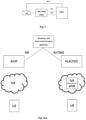
Fig. 4(a) is schematic diagram showing deployment of a roaming and intercommunication apparatus between a 5G network under an NSA deployment manner and a 5G network under an SA deployment manner so as to realize roaming registration; -
Fig. 4(b) is schematic diagram showing deployment of a roaming and intercommunication apparatus between a 5G network under an NSA deployment manner and a 5G network under an SA deployment manner so as to realize a roaming data service; -
Fig. 5 is a schematic diagram of a network roaming and intercommunication method provided in an embodiment of the present disclosure; -
Fig. 6 is a schematic diagram of a network roaming and intercommunication method provided in another embodiment of the present disclosure; -
Fig. 7 is a schematic diagram of a network roaming and intercommunication method provided in another embodiment of the present disclosure; -
Fig. 8 is a registration flowchart when a user of an operator of a 5G network under a home NSA deployment manner roams to a 5G network under an SA deployment manner provided in an embodiment of the present disclosure; -
Fig. 9 is a data service flowchart when a user of an operator of a 5G network under a home NSA deployment manner roams to a 5G network under an SA deployment manner provided in an embodiment of the present disclosure; -
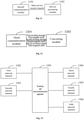
Fig. 10 is a schematic diagram of a structure of a network roaming and intercommunication device provided in another embodiment of the present disclosure; -
Fig. 11 is a schematic diagram of a structure of a network roaming and intercommunication device provided in another embodiment of the present disclosure; -
Fig. 12 is a schematic diagram of a structure of a network roaming and intercommunication device provided in another embodiment of the present disclosure; and -
Fig. 13 is a schematic diagram of a structure of a network roaming and intercommunication system provided in another embodiment of the present disclosure. - Embodiments of the present disclosure will be described below with reference to the drawings. It should be noted that, as long as there is no conflict, the embodiments in the present disclosure and the features in the embodiments may be combined with one another in any manner.
- Steps illustrated in the flowcharts of the drawings may be executed in, for example, a computer system with a set of computer executable instructions. Moreover, although logical orders are illustrated in the flowcharts, in some cases, the steps illustrated or described may be executed in orders different from the orders described herein.
- At present, a 5G network architecture based on a service interface provided by 3GPP is shown in
Fig. 1 . The 5G network architecture includes a visited public land mobile network (VPLMN) and a home public land mobile network (HPLMN). - The VPLMN includes the following network functions (NF): a network slice selection function (NSSF), a network exposure function (NEF), a network repository function (NRF), a policy control function (PCF), an access and mobility management function (AMF), a session management function (SMF), a (radio) access network ((R)AN), a user plane function (UPF), a data network (DN), and user equipment (UE).
- The NSSF provides a service to the AMF via an Nnssf interface; the NEF provides a service to an AF and the SMF via an Nnef interface; the NRF provides a service to the AMF, the SMF, the UDM, an AUSF, the NEF, the PCF, the NSSF, and the UPF via an Nnrf interface; the PCF provides a service to the AMF, the NEF, the SMF, and the AF via an Npcf interface; the AMF provides a service to the SMF, the PCF, a UDM, and the NEF via an Namf interface; the SMF provides a service to the AMF, other SMF, the NEF, and the AF via an Nsmf interface; the AMF is connected to the UE via an N1 interface; the AMF is connected to the (R)AN via an N2 interface; the SMF is connected to the UPF via an N4 interface; the (R)AN is connected to the UPF via an N3 interface; and the UPF is connected to the DN via an N6 interface.
- The AMF is responsible for security management, mobility management, and connection management of a user. The SMF supports establishment, modification and release of 3GPP and Non-3GPP sessions, is responsible for distribution and management of an internet protocol (IP) address of the UE, and implements and terminates a unified control strategy.
- The HPLMN includes: a unified data management (UDM), an NRF, an application function (AF), an authentication server function (AUSF), a PCF, and an NEF.
- The UDM provides a service to the AMF, the SMF, the NEF, and the AUSF via an Nudm interface; the NRF provides a service to the AMF, the SMF, the UDM, the AUSF, the NEF, the PCF, the NSSF, the UPF via an Nnrf interface; the AF is connected to the NEF via an Naf interface; the AUSF provides a service to the AMF via an Nausf interface; the PCF provides a service to the AMF, the NEF, the SMF, and the AF via an Npcf; and the NEF provides a service to the SMF and the AF via an Nnef interface.
- The AUSF provides unified authentication for 3GPP and Non-3GPP access, i.e., security authentication of a user. The UDM provides a user subscription data management function and a mobility management function.
- 5G network deployment of telecom operators is divided into two manners, i.e., a non-standalone (NSA) deployment manner and a standalone (SA) deployment manner. The NSA deployment manner is shown in
Fig. 2 (a) and Fig. 2 (b) , and the SA deployment manner is shown inFig. 3 . - For an operator which selects the NSA deployment manner to provide a 5G service, the telecom operator provides a 5G high-speed data service to a user through a 4G core network (i.e., an evolved packet core (EPC) network), a new radio (NR), and an evolved NodeB (eNB). Security authentication and subscription data of the user are provided by a home location register (HLR) or a home subscriber server (HSS) of the 4G core network.
- For an operator which selects the SA deployment manner to provide a 5G service, the operator provides a 5G service to a user through a deployed 5G core network (i.e., a next generation core (NGC) network and a next generation radio access network (NG RAN)). Security authentication of a user is provided by an AUSF apparatus of the 5G core network, and subscription data of the user is provided by a UDM apparatus of the 5G core network.
- With the continuous acceleration of the process of the 5G network deployment, a network of a telecom operator which adopts the NSA deployment manner faces a problem of roaming in and intercommunication with a network of a telecom operator which adopts the SA deployment manner.
- A user of the telecom operator under the SA deployment manner can roam and register normally in a 5G network under the NSA deployment manner via a dual-mode terminal with a 5G capability. However, when a user of the telecom operator under the NSA deployment manner roams and registers in a 5G network under the SA deployment manner via a dual-mode terminal with a 5G capability, since invoking an authentication service of the AUSF and a registration service of the UDM through a hyper text transport protocol (HTTP) for a service-based interface of the 5G network cannot be realized, when a user of a 5G network under the NSA deployment manner roams to a 5G network under the SA deployment manner, the user can only use a 4G network and is unable to use the 5G network.
- Therefore, researching on a more effective solution of network roaming and intercommunication between the 5G network under the NSA deployment manner and the 5G network under the SA deployment manner for a user, so as to solve a problem arising when a user of a 5G terminal roams in 5G networks under the two deployment manners, i.e., the NSA deployment manner and the SA deployment manner, is beneficial for providing the user with better experience of a roaming service.
- As shown in
Fig. 4 (a) andFig. 4 (b) , a roaming and intercommunication apparatus is deployed between networks which are of the same generation and under different deployment manners, so as to realize network roaming and intercommunication between networks which are of the same generation and under different deployment manners for a user through the roaming and intercommunication apparatus. It is certain that the roaming and intercommunication apparatus may also be deployed in a network under one of the deployment manners. - Referring to
Fig. 5 , an embodiment of the present disclosure provides a network roaming and intercommunication method, which may includestep 500 andstep 501. - At
step 500, a first network element receives a registration request of a user of an NG network which is under a second deployment manner. Herein, the first network element is a network element in an NG network under a first deployment manner and is responsible for security management, mobility management, and connection management of the user, and N is an integer greater than or equal to 2. - The user in the present embodiment may be any kind of terminal, and may be at least one of the following terminals: an LTE/NR multiple mode multiple standby terminal, and an LTE/NR multiple mode single standby terminal.
- For example, when N is 5, the first deployment manner may be the SA deployment manner; the second deployment manner may be the NSA deployment manner; and the first network element may be an AMF. That is, a user of a 5G network under the NSA deployment manner roams to a 5G network under the SA deployment manner.
- Alternatively, the first deployment manner may be the NSA deployment manner; the second deployment manner may be the SA deployment manner; and the first network element may be an HLR or HSS. That is, a user of a 5G network under the SA deployment manner roams to a 5G network under the NSA deployment manner.
- It is certain that the method in the present embodiment may also be used to realize roaming and intercommunication, when different deployment manners are adopted in any one of 4G, 3G, and 2G mobile communication networks or in a higher generation mobile communication network.
- At
step 501, the first network element acquires first security authentication information and first subscription data through communicating with a roaming and intercommunication apparatus. Herein, the first security authentication information is the user's security authentication information in the NG network under the first deployment manner, the user being in the NG network under the second deployment manner, and the first subscription data is the user's subscription data in the NG network under the first deployment manner, the user being in the NG network under the second deployment manner. - In the present embodiment, the step that the first network element acquires first security authentication information through communicating with a roaming and intercommunication apparatus includes the following steps:
- the first network element sends a first invoking message to the roaming and intercommunication apparatus; and
- the first network element receives a first invoking result from the roaming and intercommunication apparatus, herein, the first invoking result including the first security authentication information.
- The first invoking message and the first invoking result may be any invoking message and any invoking result, as long as the invoking message and the invoking result are used for acquiring the first security authentication information. For example, the first invoking message may be an invoking message for an authentication request service (Nausf UEAuthentication), and the first invoking result may be an invoking result for the authentication request service.
- In the present embodiment, the step that the first network element acquires first subscription data through communicating with a roaming and intercommunication apparatus includes the following steps:
- the first network element sends a second invoking message to the roaming and intercommunication apparatus; and
- the first network element receives a second invoking result from the roaming and intercommunication apparatus, herein, the second invoking result including the first subscription data.
- The second invoking message and the second invoking result may be any invoking message and any invoking result, as long as the invoking message and the invoking result are used for acquiring the first subscription data. For example, the second invoking message may be an invoking message for registering and acquiring a user subscription service, and the second invoking result may be an invoking result for registering and acquiring the user subscription service.
- In another embodiment of the present disclosure, this method further includes one of the following steps:
- the first network element completes the user's security authentication in the NG network under the first deployment manner based on the first security authentication information, the user being in the NG network under the second deployment manner, and completes the user's registration in the NG network under the first deployment manner based on the first subscription data, the user being in the NG network under the second deployment manner; and
- the first network element returns a registration response to the user being in the NG network under the second deployment manner.
- Referring to
Fig. 6 , another embodiment of the present disclosure provides a network roaming and intercommunication method, which may includestep 600 andstep 601. - At
step 600, a second network element receives a data service session request of a user being in an NG network which is under a second deployment manner. Herein, the second network element is a network element in an NG network under a first deployment manner and is responsible for establishment, modification and release of a session, and N is an integer greater than or equal to 2. - The user in the present embodiment may be any kind of terminal, and may be at least one of the following terminals: an LTE/NR multiple mode multiple standby terminal, and an LTE/NR multiple mode single standby terminal.
- For example, when N is 5, the first deployment manner may be the SA deployment manner; the second deployment manner may be the NSA deployment manner; and the second network element may be an SMF. That is, a user of a 5G network under the NSA deployment manner roams to a 5G network under the SA deployment manner.
- Alternatively, the first deployment manner may be the NSA deployment manner; the second deployment manner may be the SA deployment manner; and the second network element may be a public data network (PDN) gateway (PGW). That is, a user of a 5G network under the SA deployment manner roams to a 5G network under the NSA deployment manner.
- It is certain that the method in the present embodiment may also be used to realize roaming and intercommunication, when different deployment manners are adopted in any one of 4G, 3G, and 2G mobile communication networks or in a higher generation mobile communication network.
- At
step 601, the second network element completes service request processing through communicating with a roaming and intercommunication apparatus. - In the present embodiment, the step that the second network element completes service request processing through communicating with a roaming and intercommunication apparatus comprises the following steps:
- the second network element sends a service invoking request to the roaming and intercommunication apparatus; and
- the second network element receives a service invoking result from the roaming and intercommunication apparatus.
- Referring to
Fig. 7 , another embodiment of the present disclosure provides a network roaming and intercommunication method, which includes one of the following steps:step 700,step 701, and step 702. - At
step 700, a first invoking message from a first network element is received; second security authentication information is acquired; the second security authentication information is converted into first security authentication information; and a first invoking result is sent to the first network element, herein, the first invoking result including the first security authentication information. - In the present embodiment, the step that second security authentication information is acquired includes the following steps:
- the first invoking message is converted into a first service request in an NG network under a second deployment manner, and the first service request is sent to a third network element; and a first response result from the third network element is received, herein, the first response result including the second security authentication information, and
- the third network element being a network element in the NG network under the second deployment manner and is used for providing security authentication for a user.
- In the present embodiment, the step that the first invoking message is converted into a first service request means performing a modification to a message name and mapping of parameters.
- In the present embodiment, the first invoking message and the first invoking result may be any invoking message and any invoking result, as long as the invoking message and the invoking result are used for acquiring the first security authentication information. For example, the first invoking message may be an invoking message for an authentication request service (Nausf UEAuthentication); the first service request may be a request for an authentication service (for example, MAP (mobile application part) SEND AUTHENTICATION INFO REQUEST) or DIAMETER Authentication-Information-Request); the first response result may be an authentication service response (for example, MAP SEND AUTHENTICATION INFO RESPONSE or DIAMETER Authentication-Information-Answer); and the first invoking result may be an invoking result for the authentication request service.
- In the present embodiment, the third network element receives the first service request, sets a separation bit of an authentication management field (AMF) as "1", performs a calculation to generate authentication vector quintuplets {a random challenge (RAND), an expected response (XRES), an integrity key (IK), a cipher key (CK), and an authentication token (AUTN)}, returns a first response result to the roaming and intercommunication apparatus, the first response result carrying the authentication vector quintuplets, i.e., the above second security authentication information.
- The second security authentication information in the first response result is converted into the first security authentication information. For example, a calculation is performed based on the authentication vector quintuplets to generate 5G home environment authentication vectors (5G HE AVs), the 5G HE AVs include (a RAND, an AUTN, an XRES*, and a Kausf); and a calculation is further performed based on the 5G HE AVs to generate 5G authentication vectors (5G AVs), the 5G AVs including (a RAND, an HXRES*, an AUTN, and a Kseaf). The above first security authentication information includes the 5G AVs.
- The XRES* is generated by performing a calculation using a key driver function (KDF) based on a serving network name and the RAND, the CK, the IK, and the XRES in the authentication vector quintuplets, and the Kausf is generated by performing a calculation using the key driver function based on the serving network name and a sequence number (SQN) included in the AUTN of the authentication vector quintuplets.
- The HXRES* is generated by performing a calculation using a SHA-256 hash algorithm based on the XRES* and the RAND, and the Kseaf is generated by performing a calculation using the key driver function based on the serving network name and the Kausf.
- In another embodiment of the present disclosure, the third network element receives the first service request, sets a separation bit of an authentication management field (AMF) as "1", performs a calculation to generate 5G HE AVs, and returns a first response result to the roaming and intercommunication apparatus, the first response result carrying the 5G HE AVs, i.e., the above second security authentication information.
- The step that a calculation is performed to generate 5G HE AVs includes the following steps:
a calculation is performed to generate authentication vector quintuplets {a random challenge (RAND), an expected response (XRES), an integrity key (IK), a cipher key (CK), and an authentication token (AUTN)}; and a calculation is performed based on the authentication vector quintuplets to generate 5G home environment authentication vectors (5G HE AVs), the 5G HE AVs include (a RAND, an AUTN, an XRES*, and a Kausf). - The second security authentication information in the first response result is converted into the first security authentication information. For example, a calculation is further performed based on the 5G HE AVs to generate 5G authentication vectors (5G AVs), the 5G AVs including (a RAND, an HXRES*, an AUTN, and a Kseaf). The above first security authentication information includes the 5G AVs.
- At
step 701, a second invoking message from the first network element is received; second subscription data is acquired; the second subscription data is converted into first subscription data; and a second invoking result is sent to the first network element, herein, the second invoking result including the first subscription data. - In the present embodiment, the step that second subscription data is acquired includes the following steps:
- the second invoking message is converted into a second service request in the NG network under the second deployment manner, and the second service request is sent to a fourth network element; a second response result from the fourth network element is received, herein, the second response result including the second subscription data,
- herein, the fourth network element being a network element in the NG network under the second deployment manner and being used for providing subscription data.
- In the present embodiment, the step that the second invoking message is converted into a second service request means performing a modification to a message name and mapping of parameters.
- In the present embodiment, the second invoking message and the second invoking result may be any invoking message and any invoking result, as long as the invoking message and the invoking result are used for acquiring the first subscription data. For example, the second invoking message may be an invoking message for registering and acquiring a user subscription service, and the second invoking result may be an invoking result for registering and acquiring the user subscription service. The second service request may be MAP_UPDATE_LOCATION_REQUEST, and the second response result may be MAP_UPDATE_LOCATION_ACK.
- In the present embodiment, when the second subscription data in the second response result is converted into the first subscription data, in a case that the second subscription data has a field (for example, user number, network access point name, charging characteristic and so on) which has the same meaning with a field in the first subscription data, a value of the corresponding field in the second subscription data is mapped to the same field in the first subscription data; and when the first subscription data has fields that are not present in the second subscription data and thus mapping cannot be performed, values of these fields can be determined according to a default subscription template.
- At
step 702, a service invoking request from the second network element is received; the service invoking request is converted into a third service request in the NG network under the second deployment manner; and the third service request is sent to a fifth network element. A third response result from the fifth network element is received; the third response result is converted into a service invoking result in an NG network under a first deployment manner; and the service invoking result is sent to the second network element. - In the present embodiment, the step that the service invoking request is converted into a third service request means performing a modification to a message name and mapping of parameters, and the step that the third response result is converted into a service invoking result means performing a modification to a message name and mapping of parameters.
- In the present embodiment, the third service request may be a session establishment request, and the third response result may be a session establishment response.
- In the present embodiment, the first network element is a network element in the NG network under the first deployment manner and is responsible for security management, mobility management, and connection management of the user; the second network element is a network element in the NG network under the first deployment manner and is responsible for establishment, modification and release of a session; the fifth network element is a network element in the NG network under the second deployment manner and is used for providing a data service; and N is an integer greater than or equal to 1.
- In the present embodiment, the second security authentication information is the user's security authentication information in the NG network under the second deployment manner, the user being in the NG network under the second deployment manner; or the second security authentication information is the user's information in the NG network under the first deployment manner used for generating the first security authentication information, the user being in the NG network under the second deployment manner. The first security authentication information is the user's security authentication information in the NG network under the first deployment manner, the user being in the NG network under the second deployment manner. The first subscription data is the user's subscription data in the NG network under the first deployment manner, the user being in the NG network under the second deployment manner. The second subscription data is the user's subscription data in the NG network under the second deployment manner, the user being in the NG network under the second deployment manner.
- The user in the present embodiment may be any kind of terminal, and may be at least one of the following terminals: an LTE/NR multiple mode multiple standby terminal, and an LTE/NR multiple mode single standby terminal.
- For example, when N is 5, the first deployment manner may be the SA deployment manner; the second deployment manner may be the NSA deployment manner; the first network element may be an AMF; the second network element may be an SMF; the third network element may be an HLR/HSS; and the fourth network element may be a PGW. That is, a user of a 5G network under the NSA deployment manner roams to a 5G network under the SA deployment manner.
- Alternatively, the first deployment manner may be the NSA deployment manner; the second deployment manner may be the SA deployment manner; the first network element may be an HLR/HSS; the second network element may be a PGW; the third network element may be an AUSF; and the fourth network element may be a UDM. That is, a user of a 5G network under the SA deployment manner roams to a 5G network under the NSA deployment manner.
- It is certain that the method in the present embodiment may also be used to realize roaming and intercommunication, when different deployment manners are adopted in any one of 4G, 3G, and 2G mobile communication networks or in a higher generation mobile communication network.
- In the present embodiment, the first service request may be an authentication service request. It is certain that, other service request names are not excluded, as long as the service request is used for acquiring the second security authentication information.
- The present embodiment realizes network roaming and intercommunication between networks which are of the same generation and under different deployment manners for a user through a roaming and intercommunication apparatus, so that a user's experience of a roaming service can be improved. For example, when a user of an operator of a 5G network under a home NSA deployment manner roams to a 5G network under an SA deployment manner, access registration in the 5G network under the SA deployment manner can be completed through the roaming and intercommunication apparatus to normally access the 5G network and use a data service, so that an operator of the 5G network under the SA deployment manner can realize 5G roaming of a user without the need to additionally support the NSA deployment manner.
- Another embodiment of the present disclosure provides a network roaming and intercommunication method, which includes the following steps.
- A first service request is received; second security authentication information is generated by performing a calculation; and a first response result is sent. Herein, the first response result includes the second security authentication information.
- Alternatively, a second service request is received, and second subscription data is acquired; and a second response result is sent. Herein, the second response result includes second subscription data.
- Alternatively, a third service request is received; service processing is performed; and a third response result is sent.
- In the present embodiment, the step that second security authentication information is generated by performing a calculation is the same as that in the foregoing embodiments, and is not repeated herein.
- The specific implementation process of the present embodiment in various application scenarios is described below.
-
Fig. 8 is a registration flowchart when a user of an operator of a 5G network under a home NSA deployment manner roams to a 5G network under an SA deployment manner provided in an embodiment of the present disclosure. This process may include step 801 to step 810. - At
step 801, a terminal under an NSA deployment manner initiates registration in a 5G network under an SA deployment manner. That is, the terminal sends a registration request to an AMF. - At
step 802, the AMF sends an invoking message for an authentication request service to a roaming and intercommunication apparatus. - At
step 803, the roaming and intercommunication apparatus receives the invoking message for the authentication request service from the AMF, and converts the invoking message for the authentication request service into an authentication service request in the 5G network which is under the NSA deployment manner, and sends the authentication service request to an HLR/HSS in the 5G network under the NSA deployment manner. - At
step 804, the HLR/HSS in the 5G network under the NSA deployment manner receives the authentication service request, sets a separation bit of the AMF as "1", performs a calculation to generate second security authentication information, and returns a first response result to the roaming and intercommunication apparatus. - In this step, the first response result includes the second security authentication information. The second security authentication information is the terminal's security authentication information in the 5G network under the SA deployment manner, or is the terminal's information in the 5G network under the NSA deployment manner used for generating first security authentication information.
- For example, the second security authentication information is authentication vector quintuplets {a RAND, an XRES, an IK, a CK, and an AUTN} or 5G HE AVs, the 5G HE AVs including (a RAND, an AUTN, an XRES*, and a Kausf).
- At
step 805, the roaming and intercommunication apparatus converts the second security authentication information in the first response result from the HLR/HSS into first security authentication information by performing a calculation. Herein, the first security authentication information is the terminal's security authentication information in the 5G network under the SA deployment manner. - When the second security authentication information is the authentication vector quintuplets {a RAND, an XRES, an IK, a CK, and an AUTN}, a calculation is performed based on the authentication vector quintuplets to generate 5G HE AVs, and a calculation is further performed based on the 5G HE AVs to generate 5GAVs.
- When the second security authentication information is 5G HE AVs, a calculation is further performed based on the 5G HE AVs to generate 5G AVs.
- At
step 806, the roaming and intercommunication apparatus returns an invoking result for the authentication request service to the AMF. - In the present embodiment, the invoking result for the authentication request service includes the first security authentication information. For example, the first security authentication information is 5G HE AVs and 5G AVs.
- Since the process is known to those skilled in the art, the subsequent safety authentication process by the AMF is not described in the present embodiment.
- At
step 807, the roaming and intercommunication apparatus receives an invoking message for registering and acquiring a user subscription service, converts the invoking message for registering and acquiring the user subscription service into a second service request of the HLR/HSS in the 5G network which is under the NSA deployment manner, and sends the second service request to the HLR/HSS. - At
step 808, the HLR/HSS completes processing of the second service request, and returns a second response result to the roaming and intercommunication apparatus. Herein, the second response result includes second subscription data. - At
step 809, the roaming and intercommunication apparatus converts the second subscription data in the second response result from the HLR/HSS into 5G subscription data (i.e., first subscription data) in the 5G network under the SA deployment manner, and returns an invoking result for registering and acquiring the user subscription service to the AMF. Herein, the invoking result for registering and acquiring the user subscription service includes the 5G subscription data. - At
step 810, the AMF returns a registration response to the terminal. - Since the process is known to those skilled in the art, the subsequent process performed by the AMF is not described in the present embodiment.
- It can be seen by those skilled in the art who know the basic process of mobile network mobility management that, the process described in the present embodiment differs from a 3GPP standard process only in the roaming and intercommunication apparatus, and there is no need to make any change to existing network apparatuses and tasks of the process.
-
Fig. 9 is a data service flowchart when a user of an operator of a 5G network under a home NSA deployment manner roams to a 5G network under an SA deployment manner provided in an embodiment of the present disclosure. - At
step 901, a terminal under an NSA deployment manner initiates a data service session request in a 5G network under an SA deployment manner. That is, the terminal sends a data service session request to an SMF. - At
step 902, the SMF initiates a service invoking request to the roaming and intercommunication apparatus. - At
step 903, the roaming and intercommunication apparatus receives the service invoking request from the SMF in the 5G network which is under the SA deployment manner, converts the service invoking request into a third service request of a PGW in a 5G network under an NSA deployment manner, and sends the third service request to the PGW. - At
step 904, the PGW completes processing of the third service request, and returns a third response result. - At
step 905, the roaming and intercommunication apparatus converts the third response result to a service invoking result in the 5G network under the SA deployment manner, and returns the service invoking result to the SMF. - Since the process is known to those skilled in the art, the subsequent process performed by the SMF is not described in the present embodiment.
- It can be seen by those skilled in the art who know the basic process of mobile network mobility management that, the process described in the present embodiment differs from a 3GPP standard process only in the roaming and intercommunication apparatus, and there is no need to make any change to existing network apparatuses and tasks of the process.
- Referring to
Fig. 10 , another embodiment of the present disclosure provides a network roaming and intercommunication device (for example, a first network element). The network roaming and intercommunication device includes: afirst communication module 1001 and a security authentication and subscriptiondata acquiring module 1002. - The
first communication module 1001 is configured to receive a registration request of a user of an NG network which is under a second deployment manner. Herein, the first network element is a network element in an NG network under a first deployment manner and is responsible for security management, mobility management, and connection management of the user, and N is an integer greater than or equal to 2. - The security authentication and subscription
data acquiring module 1002 is configured to acquire first security authentication information and first subscription data through communicating with a roaming and intercommunication apparatus. Herein, the first security authentication information is the user's security authentication information in the NG network under the first deployment manner, the user being in the NG network under the second deployment manner, and the first subscription data is the user's subscription data in the NG network under the first deployment manner, the user being in the NG network under the second deployment manner. - The user in the present embodiment may be any kind of terminal, and may be at least one of the following terminals: an LTE/NR multiple mode multiple standby terminal, and an LTE/NR multiple mode single standby terminal.
- For example, when N is 5, the first deployment manner may be the SA deployment manner; the second deployment manner may be the NSA deployment manner; and the second network element may be an AMF. That is, a user of a 5G network under the NSA deployment manner roams to a 5G network under the SA deployment manner.
- Alternatively, the first deployment manner may be the NSA deployment manner; the second deployment manner may be the SA deployment manner; and the first network element may be an HLR or HSS. That is, a user of a 5G network under the SA deployment manner roams to a 5G network under the NSA deployment manner.
- It is certain that the method in the present embodiment may also be used to realize roaming and intercommunication, when different deployment manners are adopted in any one of 4G, 3G, and 2G mobile communication networks or in a higher generation mobile communication network.
- In the present embodiment, the security authentication and subscription
data acquiring module 1002 may be configured to use the following manners to realize acquiring the first security authentication information through communicating with a roaming and intercommunication apparatus:
a first invoking message is sent to the roaming and intercommunication apparatus; and a first invoking result from the roaming and intercommunication apparatus is received, herein, the first invoking result including the first security authentication information. - The first invoking message and the first invoking result may be any invoking message and any invoking result, as long as the invoking message and the invoking result are used for acquiring the first security authentication information. For example, the first invoking message may be an invoking message for an authentication request service (Nausf UEAuthentication), and the first invoking result may be an invoking result for the authentication request service.
- In the present embodiment, the security authentication and subscription
data acquiring module 1002 may be configured to use the following manners to realize acquiring first subscription data through communicating with a roaming and intercommunication apparatus:
a second invoking message is sent to the roaming and intercommunication apparatus; and a second invoking result from the roaming and intercommunication apparatus is received, herein, the second invoking result including the first subscription data. - The second invoking message and the second invoking result may be any invoking message and any invoking result, as long as the invoking message and the invoking result are used for acquiring the first subscription data. For example, the second invoking message may be an invoking message for registering and acquiring a user subscription service, and the first invoking result may be an invoking result for registering and acquiring the user subscription service.
- In another embodiment the present disclosure, the security authentication and subscription
data acquiring module 1002 may be further configured to:
complete the user's security authentication in the NG network under the first deployment manner based on the first security authentication information, the user being in the NG network under the second deployment manner, and complete the user's registration in the NG network under the first deployment manner based on the first subscription data, the user being in the NG network under the second deployment manner. - The
first communication module 1001 may be further configured to: return a registration response to the user being in the NG network under the second deployment manner. - Referring to
Fig. 11 , another embodiment of the present disclosure provides a network roaming and intercommunication device (for example, a second network element). The network roaming and intercommunication device includes: asecond communication module 1101, and aservice processing module 1102. - The
second communication module 1101 is configured to receive a data service session request of a user being in an NG network which is under a second deployment manner. Herein, the second network element is a network element in an NG network under a first deployment manner and is responsible for establishment, modification and release of a session, and N is an integer greater than or equal to 2. - The
service processing module 1102 is configured to complete service request processing through communicating with a roaming and intercommunication apparatus. - The user in the present embodiment may be any kind of terminal, and may be at least one of the following terminals: an LTE/NR multiple mode multiple standby terminal, and an LTE/NR multiple mode single standby terminal.
- For example, when N is 5, the first deployment manner may be the SA deployment manner; the second deployment manner may be the NSA deployment manner; and the second network element may be an SMF. That is, a user of a 5G network under the NSA deployment manner roams to a 5G network under the SA deployment manner.
- Alternatively, the first deployment manner may be the NSA deployment manner; the second deployment manner may be the SA deployment manner; and the second network element may be a public data network (PDN) gateway (PGW). That is, a user of a 5G network under the SA deployment manner roams to a 5G network under the NSA deployment manner.
- It is certain that the method in the present embodiment may also be used to realize roaming and intercommunication, when different deployment manners are adopted in any one of 4G, 3G, and 2G mobile communication networks or in a higher generation mobile communication network.
- In the present embodiment, the
service processing module 1102 may be configured to use the following manners to realize completing service request processing through communicating with a roaming and intercommunication apparatus:
a service invoking request is sent to the roaming and intercommunication apparatus; and a service invoking result from the roaming and intercommunication apparatus is received. - Referring to
Fig. 12 , another embodiment of the present disclosure provides a network roaming and intercommunication device (for example, a roaming and intercommunication apparatus). The network roaming and intercommunication device comprises athird communication module 1201 and a convertingmodule 1202. - The
third communication module 1201 is configured to perform one of the following steps of: - receiving a first invoking message from a first network element, and acquiring second security authentication information;
- receiving a second invoking message from the first network element, and acquiring second subscription data; and
- receiving a service invoking request from a second network element, and sending a third service request to a fifth network element; and receiving a third response result from the fifth network element, and sending a service invoking result to the second network element.
- The converting
module 1202 is configured to perform one of the following steps of: - converting the second security authentication information into first security authentication information;
- converting the second subscription data into first subscription data; and
- converting the service invoking request into a third service request in an NG network under a second deployment manner; and converting the third response result into a service invoking result in an NG network under a first deployment manner.
- The first network element is a network element in the NG network under the first deployment manner and is responsible for security management, mobility management, and connection management of the user; the second network element is a network element in the NG network under the first deployment manner and is responsible for establishment, modification and release of a session; the third network element is a network element in the NG network under the second deployment manner and is used for providing security authentication for a user; the fourth network element is a network element in the NG network under the second deployment manner and being used for providing subscription data; the fifth network element is a network element in the NG network under the second deployment manner and is used for providing a data service; and N is an integer greater than or equal to 2.
- The second security authentication information is the user's security authentication information in the NG network under the second deployment manner, the user being in the NG network under the second deployment manner; or the second security authentication information is the user's information in the NG network under the first deployment manner used for generating the first security authentication information, the user being in the NG network under the second deployment manner. The first security authentication information is the user's security authentication information in the NG network under the first deployment manner, the user being in the NG network under the second deployment manner. The first subscription data is the user's subscription data in the NG network under the first deployment manner, the user being in the NG network under the second deployment manner. The second subscription data is the user's subscription data in the NG network under the second deployment manner, the user being in the NG network under the second deployment manner.
- The user in the present embodiment may be any kind of terminal, and may be at least one of the following terminals: an LTE/NR multiple mode multiple standby terminal, and an LTE/NR multiple mode single standby terminal.
- For example, when N is 5, the first deployment manner may be the SA deployment manner; the second deployment manner may be the NSA deployment manner; the first network element may be an AMF; the second network element may be an SMF; the third network element may be an HLR/HSS; and the fourth network element may be a PGW. That is, a user of a 5G network under the NSA deployment manner roams to a 5G network under the SA deployment manner.
- Alternatively, the first deployment manner may be the NSA deployment manner; the second deployment manner may be the SA deployment manner; the first network element may be an HLR/HSS; the second network element may be a PGW; the third network element may be an AUSF; and the fourth network element may be a UDM. That is, a user of a 5G network under the SA deployment manner roams to a 5G network under the NSA deployment manner.
- It is certain that the method in the present embodiment may also be used to realize roaming and intercommunication, when different deployment manners are adopted in any one of 4G, 3G, and 2G mobile communication networks or in a higher generation mobile communication network.
- In the present embodiment, the
third communication module 1201 may be configured to use the following manners to realize acquiring the second security authentication information: - the first invoking message is converted into a first service request in the NG network under the second deployment manner, and the first service request is sent to a third network element; and a first response result from the third network element is received, herein, the first response result including the second security authentication information, and
- herein, the third network element being a network element in the NG network under the second deployment manner and is used for providing security authentication for a user.
- In the present embodiment, the
third communication module 1201 may be configured to use the following manners to realize acquiring the second subscription data: - the second invoking message is converted into a second service request in the NG network under the second deployment manner, and the second service request is sent to a fourth network element; a second response result from the fourth network element is received, herein, the second response result including the second subscription data,
- herein, the fourth network element being a network element in the NG network under the second deployment manner and being used for providing subscription data.
- In the present embodiment, the first invoking message and the first invoking result may be any invoking message and any invoking result, as long as the invoking message and the invoking result are used for acquiring the first security authentication information. For example, the first invoking message may be an invoking message for an authentication request service (Nausf UEAuthentication); the first service request may be a request for an authentication service (for example, MAP (mobile application part) SEND AUTHENTICATION INFO REQUEST) or DIAMETER Authentication-Information-Request); the first response result may be an authentication service response (for example, MAP SEND AUTHENTICATION INFO RESPONSE or DIAMETER Authentication-Information-Answer); and the first invoking result may be an invoking result for the authentication request service.
- In the present embodiment, the third network element receives the first service request, sets a separation bit of an authentication management field (AMF) as "1", performs a calculation to generate authentication vector quintuplets {a random challenge (RAND), an expected response (XRES), an integrity key (IK), a cipher key (CK), and an authentication token (AUTN)}, returns a first response result to the roaming and intercommunication apparatus, the first response result carrying the authentication vector quintuplets, i.e., the above second security authentication information.
- The second security authentication information in the first response result is converted into the first security authentication information. For example, a calculation is performed based on the authentication vector quintuplets to generate 5G home environment authentication vectors (5G HE AVs), the 5G HE AVs include (a RAND, an AUTN, an XRES*, and a Kausf); and a calculation is further performed based on the 5G HE AVs to generate 5G authentication vectors (5G AVs), the 5G AVs including (a RAND, an HXRES*, an AUTN, and a Kseaf). The above first security authentication information includes the 5G AVs.
- The XRES* is generated by performing a calculation using a key driver function (KDF) based on a serving network name and the RAND, the CK, the IK, and the XRES in the authentication vector quintuplets, and the Kausf is generated by performing a calculation using the key driver function based on the serving network name and a sequence number (SQN) included in the AUTN of the authentication vector quintuplets.
- The HXRES* is generated by performing a calculation using a SHA-256 hash algorithm based on the XRES* and the RAND, and the Kseaf is generated by performing a calculation using the key driver function based on the serving network name and the Kausf.
- In another embodiment of the present disclosure, the third network element receives the first service request, sets a separation bit of an authentication management field (AMF) as "1", performs a calculation to generate 5G HE AVs, and returns a first response result to the roaming and intercommunication apparatus, the first response result carrying the 5G HE AVs, i.e., the above second security authentication information.
- The step that a calculation is performed to generate 5G HE AVs includes the following steps:
a calculation is performed to generate authentication vector quintuplets {a random challenge (RAND), an expected response (XRES), an integrity key (IK), a cipher key (CK), and an authentication token (AUTN)}; and a calculation is performed based on the authentication vector quintuplets to generate 5G home environment authentication vectors (5G HE AVs), the 5G HE AVs include (a RAND, an AUTN, an XRES*, and a Kausf). - The second security authentication information in the first response result is converted into the first security authentication information. For example, a calculation is further performed based on the 5G HE AVs to generate 5G authentication vectors (5G AVs), the 5G AVs including (a RAND, an HXRES*, an AUTN, and a Kseaf). The above first security authentication information includes the 5G AVs.
- In the present embodiment, the first service request may be an authentication service request. It is certain that, other service request names are not excluded, as long as the service request is used for acquiring the second security authentication information.
- Another embodiment of the present disclosure provides a network roaming and intercommunication device, which includes a fourth communication module.
- The fourth communication module is configured to perform the following steps. A first service request is received; second security authentication information is generated by performing a calculation; and a first response result is sent. Herein, the first response result includes the second security authentication information.
- Alternatively, a second service request is received, and second subscription data is acquired; and a second response result is sent. Herein, the second response result includes second subscription data.
- Alternatively, a third service request is received; service processing is performed; and a third response result is sent.
- The specific implementation process of the above network roaming and intercommunication device is the same as the specific implementation process of the network roaming and intercommunication method in the foregoing embodiments, and is not repeated herein.
- The present embodiment realizes network roaming and intercommunication between networks which are of the same generation and under different deployment manners for a user through a roaming and intercommunication apparatus, so that a user's experience of a roaming service can be improved. For example, when a user of an operator of a 5G network under a home NSA deployment manner roams to a 5G network under an SA deployment manner, access registration in the 5G network under the SA deployment manner can be completed through the roaming and intercommunication apparatus to normally access the 5G network and use a data service, so that an operator of the 5G network under the SA deployment manner can realize 5G roaming of a user without the need to additionally support the NSA deployment manner.
- Another embodiment of the present disclosure provides a network roaming and intercommunication device, which includes a processor and a computer readable storage medium. The computer readable storage medium stores instructions, and the instructions, when executed by the processor, implement any of network roaming and intercommunication methods described herein.
- Another embodiment of the present disclosure provides a computer readable storage medium, on which computer programs are stored. The computer programs, when executed by the processor, implement steps of any of network roaming and intercommunication methods described herein.
- Referring to
Fig. 13 , another embodiment of the present disclosure provides a network roaming and intercommunication system, which includes: a roaming andintercommunication apparatus 1301, and at least one of afirst network element 1302 and asecond network element 1303. - The
first network element 1302 is configured to receive a registration request of a user in an NG network which is under a second deployment manner. Herein, the first network element is a network element in an NG network under a first deployment manner and is responsible for security management, mobility management, and connection management of a user. N is an integer greater than or equal to 2. The first network element acquires first security authentication information and first subscription data through communicating with the roaming and intercommunication apparatus. Herein, the first security authentication information is the user's security authentication information in the NG network under the first deployment manner, the user being in the NG network under the second deployment manner, and the first subscription data is the user's subscription data in the NG network under the first deployment manner, the user being in the NG network under the second deployment manner. - The
second network element 1303 is configured to receive a data service session request of the user being in the NG network which is under the second deployment manner. Herein, the second network element is a network element in the NG network under the first deployment manner and is responsible for establishment, modification and release of a session, and N is an integer greater than or equal to 2. The second network element completes service request processing through communicating with the roaming and intercommunication apparatus. - In the present embodiment, the
first network element 1302 may be configured to use the following manners to realize acquiring first security authentication information through communicating with the roaming and intercommunication apparatus:
a first invoking message is sent to the roaming and intercommunication apparatus; and a first invoking result from the roaming and intercommunication apparatus is received, herein, the first invoking result including the first security authentication information. - The
first network element 1302 may be configured to use the following manners to realize acquiring first subscription data through communicating with the roaming and intercommunication apparatus:
a second invoking message is sent to the roaming and intercommunication apparatus; and a second invoking result from the roaming and intercommunication apparatus is received, herein, the second invoking result including the first subscription data. - The
second network element 1303 may be configured to use the following manners to realize completing service request processing through communicating with the roaming and intercommunication apparatus:
a service invoking request is sent to the roaming and intercommunication apparatus; and a service invoking result from the roaming and intercommunication apparatus is received. - The roaming and
intercommunication apparatus 1301 may be configured to perform at least one of groups of steps. - A first invoking message from a first network element is received; second security authentication information is acquired; the second security authentication information is converted into first security authentication information; and a first invoking result is sent to the first network element, herein, the first invoking result including the first security authentication information.
- A second invoking message from the first network element is received; second subscription data is acquired; the second subscription data is converted into first subscription data; and a second invoking result is sent to the first network element, herein, the second invoking result including the first subscription data.
- A service invoking request from the second network element is received; the service invoking request is converted into a third service request in the NG network under the second deployment manner; and the third service request is sent to a fifth network element. A third response result from the fifth network element is received; the third response result is converted into a service invoking result in the NG network under the first deployment manner; and the service invoking result is sent to the second network element.
- The fifth network element is a network element in the NG network under the second deployment manner and is used for providing a data service; and N is an integer greater than or equal to 2.
- In the present embodiment, the roaming and
intercommunication apparatus 1301 may be configured to use the following manners to realize acquiring the second security authentication information: - the first invoking message is converted into a first service request in the NG network under the second deployment manner, and the first service request is sent to a third network element; and a first response result from the third network element is received, herein, the first response result including the second security authentication information, and
- herein, the third network element being a network element in the NG network under the second deployment manner and is used for providing security authentication for a user.
- In the present embodiment, the roaming and
intercommunication apparatus 1301 may be configured to use the following manners to realize acquiring the second subscription data: - the second invoking message is converted into a second service request in the NG network under the second deployment manner, and the second service request is sent to a fourth network element; a second response result from the fourth network element is received, herein, the second response result including the second subscription data,
- herein, the fourth network element being a network element in the NG network under the second deployment manner and being used for providing subscription data.
- In another embodiment of the present disclosure, the network roaming and intercommunication system further includes one of a
third network element 1304, afourth network element 1305, and afifth network element 1306. - Herein, the
third network element 1304 is configured to receive a first service request from the roaming andintercommunication apparatus 1301, completes processing of the first service request, and returns a first response result to the roaming andintercommunication apparatus 1301, herein, the first response result including second security authentication information. - The
fourth network element 1305 is configured to receive a second service request from the roaming andintercommunication apparatus 1301, completes processing of the second service request, and returns a second response result to the roaming andintercommunication apparatus 1301, herein, the second response result including second subscription data. - The
fifth network element 1306 is configured to receive a third service request from the roaming andintercommunication apparatus 1301, completes processing of the third service request, and returns a third response result to the roaming andintercommunication apparatus 1301. - The specific implementation process of the above network roaming and intercommunication system is the same as the specific implementation process of the network roaming and intercommunication methods in the foregoing embodiments, and is not repeated herein.
- Those ordinary skilled in the art may appreciate that functional modules/units in all or some steps in the method, the system, and the device disclosed above may be implemented as software, firmware, hardware, and suitable combinations thereof. In a hardware implementation, division of the functional modules/units mentioned in the above description does not necessarily correspond to division of physical components. For example, one physical component may have multiple functions, or one function or step may be executed by cooperation of several physical components. Some or all of the components may be implemented as software executed by a processor, such as a digital signal processor or a microprocessor, or as hardware, or as an integrated circuit, such as a special integrated circuit. Such software may be distributed on a computer readable medium. The computer readable medium may include a computer storage medium (or non-transitory medium) and a communication medium (or transitory medium). As is well known to those ordinary skilled in the art, the term computer storage medium includes volatile and nonvolatile, removable and non-removable mediums implemented in any method or technology for storing information (such as a computer readable instruction, a data structure, a program module or other data). The computer storage medium includes, but is not limited to: RAM, ROM, EEPROM, flash memory or other memory technologies; CD-ROM, digital versatile disc (DVD) or other optical disc storage; magnetic cassette, magnetic tape, magnetic disk storage or other magnetic storage devices; or any other medium that may be used to store desired information and may be accessed by the computer. Moreover, it is well known to those skilled in the art that the communication medium typically includes a computer readable instruction, a data structure, a program module, or other data in a modulated data signal, such as a carrier wave or other transport mechanisms, and may include any information delivery medium.
- Although implementation manners disclosed in embodiments of the present disclosure are as above, the above contents are implementation manners used only for better understanding, rather than restricting, the embodiments of the present disclosure. Any person skilled in the art of the embodiments of the present disclosure can make any modification or change to the implementing forms or details without departing from the spirit and scope disclosed in the embodiments of the present disclosure. The protection scope of the present disclosure shall be determined by the scope as defined in the claims.
Claims (18)
- A network roaming and intercommunication method, comprising steps of:receiving, by a first network element, a registration request of a user of an NG network under a second deployment manner, wherein the first network element is a network element in an NG network under a first deployment manner and is responsible for security management, mobility management, and connection management of the user, and N is an integer greater than or equal to 2; andacquiring, by the first network element, first security authentication information and first subscription data through communicating with a roaming and intercommunication apparatus, wherein the first security authentication information is the user's security authentication information in the NG network under the first deployment manner, the user being in the NG network under the second deployment manner, and the first subscription data is the user's subscription data in the NG network under the first deployment manner, the user being in the NG network under the second deployment manner.
- The method according to claim 1, comprising one of the following steps of:completing, by the first network element, the user's security authentication in the NG network under the first deployment manner based on the first security authentication information, the user being in the NG network under the second deployment manner, and completing the user's registration in the NG network under the first deployment manner based on the first subscription data, the user being in the NG network under the second deployment manner; andreturning, by the first network element, a registration response to the user being in the NG network under the second deployment manner.
- The method according to claim 1 or claim 2, wherein the step of acquiring, by the first network element, first security authentication information through communicating with a roaming and intercommunication apparatus comprises steps of:sending, by the first network element, a first invoking message to the roaming and intercommunication apparatus; andreceiving, by the first network element, a first invoking result from the roaming and intercommunication apparatus, wherein the first invoking result comprises the first security authentication information.
- The method according to claim 1 or claim 2, wherein the step of acquiring, by the first network element, first subscription data through communicating with a roaming and intercommunication apparatus comprises steps of:sending, by the first network element, a second invoking message to the roaming and intercommunication apparatus; andreceiving, by the first network element, a second invoking result from the roaming and intercommunication apparatus, wherein the second invoking result comprises the first subscription data.
- A network roaming and intercommunication method, comprising steps of:receiving, by a second network element, a data service session request of a user being in an NG network under a second deployment manner, wherein the second network element is a network element in an NG network under a first deployment manner and is responsible for establishment, modification and release of a session, and N is an integer greater than or equal to 2; andcompleting, by the second network element, service request processing through communicating with a roaming and intercommunication apparatus.
- The method according to claim 5, wherein the step of completing, by the second network element, service request processing through communicating with a roaming and intercommunication apparatus comprises steps of:sending, by the second network element, a service invoking request to the roaming and intercommunication apparatus; andreceiving, by the second network element, a service invoking result from the roaming and intercommunication apparatus.
- A network roaming and intercommunication method, comprising one of the following steps of:receiving a first invoking message from a first network element, acquiring second security authentication information, converting the second security authentication information into first security authentication information, and sending a first invoking result to the first network element, wherein the first invoking result comprises the first security authentication information;receiving a second invoking message from the first network element, acquiring second subscription data, converting the second subscription data into first subscription data, and sending a second invoking result to the first network element, wherein the second invoking result comprises the first subscription data; andreceiving a service invoking request from the second network element, converting the service invoking request into a third service request in an NG network under a second deployment manner, and sending the third service request to a fifth network element; and receiving a third response result from the fifth network element, converting the third response result into a service invoking result in an NG network under a first deployment manner, and sending the service invoking result to the second network element,wherein, the first network element is a network element in the NG network under the first deployment manner and is responsible for security management, mobility management, and connection management of a user; the second network element is a network element in the NG network under the first deployment manner and is responsible for establishment, modification and release of a session; the fifth network element is a network element in the NG network under the second deployment manner and is used for providing a data service; and N is an integer greater than or equal to 2; andwherein, the second security authentication information is the user's security authentication information in the NG network under the second deployment manner, the user being in the NG network under the second deployment manner, or the second security authentication information is the user's information in the NG network under the first deployment manner used for generating the first security authentication information, the user being in the NG network under the second deployment manner; and the first security authentication information is the user's security authentication information in the NG network under the first deployment manner, the user being in the NG network under the second deployment manner; the first subscription data is the user's subscription data in the NG network under the first deployment manner, the user being in the NG network under the second deployment manner; and the second subscription data is the user's subscription data in the NG network under the second deployment manner, the user being in the NG network under the second deployment manner.
- The method according to claim 7, wherein the step of acquiring second security authentication information comprises steps of:converting the first invoking message into a first service request in the NG network under the second deployment manner, and sending the first service request to a third network element; and receiving a first response result from the third network element, wherein the first response result comprises the second security authentication information, andwherein the third network element is a network element in the NG network under the second deployment manner and is used for providing security authentication for the user.
- The method according to claim 7, wherein the step of acquiring second subscription data comprises the following steps of:converting the second invoking message into a second service request in the NG network under the second deployment manner, and sending the second service request to a fourth network element; and receiving a second response result from the fourth network element, wherein the second response result comprises the second subscription data,wherein the fourth network element is a network element in the NG network under the second deployment manner and is used for providing subscription data.
- A network roaming and intercommunication method, comprising steps of:receiving a first service request, generating second security authentication information by performing a calculation, and sending a first response result, wherein the first response result comprises the second security authentication information; orreceiving a second service request, and acquiring second subscription data; and sending a second response result, wherein the second response result comprises second subscription data; orreceiving a third service request, performing service processing, and sending a third response result.
- A network roaming and intercommunication device, comprising:a first communication module, which is configured to receive a registration request of a user of an NG network under a second deployment manner, wherein the first network element is a network element in an NG network under a first deployment manner and is responsible for security management, mobility management, and connection management of the user, and N is an integer greater than or equal to 2; anda security authentication and subscription data acquiring module, which is configured to acquire first security authentication information and first subscription data through communicating with a roaming and intercommunication apparatus, wherein the first security authentication information is the user's security authentication information in the NG network under the first deployment manner, the user being in the NG network under the second deployment manner, and the first subscription data is the user's subscription data in the NG network under the first deployment manner, the user being in the NG network under the second deployment manner.
- A network roaming and intercommunication device, comprising:a second communication module, which is configured to receive a data service session request of a user being in an NG network under a second deployment manner, wherein the second network element is a network element in an NG network under a first deployment manner and is responsible for establishment, modification and release of a session, and N is an integer greater than or equal to 2; anda service processing module, which is configured to complete service request processing through communicating with a roaming and intercommunication apparatus.
- A network roaming and intercommunication device, comprising:
a third communication module, which is configured to perform one of the following steps of:receiving a first invoking message from a first network element, and acquiring second security authentication information;receiving a second invoking message from the first network element, and acquiring second subscription data; andreceiving a service invoking request from a second network element, and sending a third service request to a fifth network element; and receiving a third response result from the fifth network element, and sending a service invoking result to the second network element, anda converting module, which is configured to perform one of the following steps of:converting the second security authentication information into first security authentication information;converting the second subscription data into first subscription data; andconverting the service invoking request into a third service request in an NG network under a second deployment manner; and converting the third response result into a service invoking result in an NG network under a first deployment manner,wherein, the first network element is a network element in the NG network under the first deployment manner and is responsible for security management, mobility management, and connection management of a user; the second network element is a network element in the NG network under the first deployment manner and is responsible for establishment, modification and release of a session; the fifth network element is a network element in the NG network under the second deployment manner and is used for providing a data service; and N is an integer greater than or equal to 2, andwherein, the second security authentication information is the user's security authentication information in the NG network under the second deployment manner, the user being in the NG network under the second deployment manner, or the second security authentication information is the user's information in the NG network under the first deployment manner used for generating the first security authentication information, the user being in the NG network under the second deployment manner; the first security authentication information is the user's security authentication information in the NG network under the first deployment manner, the user being in the NG network under the second deployment manner; the first subscription data is the user's subscription data in the NG network under the first deployment manner, the user being in the NG network under the second deployment manner; and the second subscription data is the user's subscription data in the NG network under the second deployment manner, the user being in the NG network under the second deployment manner. - A network roaming and intercommunication device, comprising:a fourth communication module, which is configured to: receive a first service request, generate second security authentication information by performing a calculation, and send a first response result, wherein the first response result comprises the second security authentication information; orthe fourth communication module is configured to: receive a second service request, and acquire second subscription data; and send a second response result, wherein the second response result comprises second subscription data; orthe fourth communication module is configured to: receive a third service request, perform service processing, and send a third response result.
- A network roaming and intercommunication device, comprising: a processor and a computer readable storage medium, wherein the computer readable storage medium stores instructions, wherein the instructions, when executed by the processor, implement any of network roaming and intercommunication methods according to any of claims 1 to 10.
- A computer readable storage medium, on which computer programs are stored, wherein the computer programs, when executed by the processor, implement steps of any of network roaming and intercommunication methods described according to any of claims 1 to 10.
- A network roaming and intercommunication system, comprising: a roaming and intercommunication apparatus, and at least one of a first network element and a second network element, whereinthe first network element is configured to receive a registration request of a user in an NG network under a second deployment manner, wherein the first network element is a network element in an NG network under a first deployment manner and is responsible for security management, mobility management, and connection management of the user; N is an integer greater than or equal to 2; the first network element acquires first security authentication information and first subscription data through communicating with the roaming and intercommunication apparatus, wherein the first security authentication information is the user's security authentication information in the NG network under the first deployment manner, the user being in the NG network under the second deployment manner, and the first subscription data is the user's subscription data in the NG network under the first deployment manner, the user being in the NG network under the second deployment manner; andthe second network element is configured to receive a data service session request of the user being in the NG network under the second deployment manner, wherein the second network element is a network element in the NG network under the first deployment manner and is responsible for establishment, modification and release of a session, and N is an integer greater than or equal to 2; and the second network element completes service request processing through communicating with the roaming and intercommunication apparatus.
- The system according to claim 17, wherein the first network element is configured to use the following manners to realize acquiring first security authentication information through communicating with the roaming and intercommunication apparatus:sending a first invoking message to the roaming and intercommunication apparatus, and receiving a first invoking result from the roaming and intercommunication apparatus, wherein the first invoking result comprises the first security authentication information;the first network element is configured to use the following manners to realize acquiring first subscription data through communicating with the roaming and intercommunication apparatus:sending a second invoking message to the roaming and intercommunication apparatus, and receiving a second invoking result from the roaming and intercommunication apparatus, wherein the second invoking result comprises the first subscription data;the second network element is configured to use the following manners to realize completing service request processing through communicating with the roaming and intercommunication apparatus:sending a service invoking request to the roaming and intercommunication apparatus, and receiving a service invoking result from the roaming and intercommunication apparatus; andthe roaming and intercommunication apparatus is configured to perform at least one of groups of steps of:receiving a first invoking message from a first network element, acquiring second security authentication information, converting the second security authentication information into first security authentication information, and sending a first invoking result to the first network element, wherein the first invoking result comprises the first security authentication information;receiving a second invoking message from the first network element, acquiring second subscription data, converting the second subscription data into first subscription data, and sending a second invoking result to the first network element, wherein the second invoking result comprises the first subscription data; andreceiving a service invoking request from the second network element, converting the service invoking request into a third service request in the NG network under the second deployment manner, and sending the third service request to a fifth network element; and receiving a third response result from the fifth network element, converting the third response result into a service invoking result in the NG network under the first deployment manner, and sending the service invoking result to the second network element,wherein the fifth network element is a network element in the NG network under the second deployment manner and is used for providing a data service, and N is an integer greater than or equal to 2.
Applications Claiming Priority (2)
| Application Number | Priority Date | Filing Date | Title |
|---|---|---|---|
| CN201910320128.9A CN110191458B (en) | 2019-04-19 | 2019-04-19 | Network roaming intercommunication method, device and system |
| PCT/CN2020/075962 WO2020119833A1 (en) | 2019-04-19 | 2020-02-20 | Network roaming and intercommunication method, device, and system |
Publications (3)
| Publication Number | Publication Date |
|---|---|
| EP3958599A1 true EP3958599A1 (en) | 2022-02-23 |
| EP3958599A4 EP3958599A4 (en) | 2023-01-11 |
| EP3958599B1 EP3958599B1 (en) | 2025-04-30 |
Family
ID=67714822
Family Applications (1)
| Application Number | Title | Priority Date | Filing Date |
|---|---|---|---|
| EP20732463.3A Active EP3958599B1 (en) | 2019-04-19 | 2020-02-20 | Network roaming and intercommunication method and system |
Country Status (4)
| Country | Link |
|---|---|
| EP (1) | EP3958599B1 (en) |
| CN (1) | CN110191458B (en) |
| WO (1) | WO2020119833A1 (en) |
| ZA (1) | ZA202102096B (en) |
Cited By (1)
| Publication number | Priority date | Publication date | Assignee | Title |
|---|---|---|---|---|
| US20250260976A1 (en) * | 2024-02-14 | 2025-08-14 | Verizon Patent And Licensing Inc. | Systems and methods for accessing cellular network via wireless local area network |
Families Citing this family (7)
| Publication number | Priority date | Publication date | Assignee | Title |
|---|---|---|---|---|
| CN110191458B (en) * | 2019-04-19 | 2021-11-09 | 中兴通讯股份有限公司 | Network roaming intercommunication method, device and system |
| CN112714407B (en) * | 2019-10-24 | 2024-05-28 | 中兴通讯股份有限公司 | Method, device and network management system for intercommunication between NSA network and SA network |
| CN113543112B (en) * | 2020-04-15 | 2024-12-31 | 中兴通讯股份有限公司 | Network roaming authentication method, device, electronic device and storage medium |
| CN113556798B (en) * | 2020-04-26 | 2022-06-10 | 华为技术有限公司 | Network searching method and related device for automatic account opening of SA (Security Association) network 5G |
| CN114554474B (en) * | 2020-11-18 | 2025-02-25 | 中国电信股份有限公司 | Access method, system and network intercommunication functional entity for NSA users roaming to SA |
| CN116567801A (en) * | 2022-01-28 | 2023-08-08 | 维沃移动通信有限公司 | Registration method, device, communication device, system and storage medium of service-oriented user plane |
| CN119865798B (en) * | 2023-10-20 | 2025-11-18 | 中国联合网络通信集团有限公司 | Communication method, device and storage medium |
Family Cites Families (7)
| Publication number | Priority date | Publication date | Assignee | Title |
|---|---|---|---|---|
| US8472371B1 (en) * | 2007-02-21 | 2013-06-25 | At&T Mobility Ii Llc | Roaming support for wireless access subscriber over fixed IP access networks |
| CN107950056B (en) * | 2015-10-06 | 2021-02-23 | 苹果公司 | Dual radio operation between access systems using 3GPP radio access technologies |
| CN107105399B (en) * | 2016-02-23 | 2020-03-17 | 中国移动通信集团公司 | Data processing method, server and network element |
| BR112019001606A2 (en) * | 2016-11-10 | 2019-04-30 | Lg Electronics Inc. | user method and equipment (eu) for registering through a first network access and a second network access in a wireless communication system |
| CN109660978A (en) * | 2017-10-11 | 2019-04-19 | 中兴通讯股份有限公司 | A kind of communication network roaming management method, apparatus, intercommunication equipment and communication system |
| CN115038081B (en) * | 2019-03-30 | 2023-04-28 | 华为技术有限公司 | Communication method and communication device |
| CN110191458B (en) * | 2019-04-19 | 2021-11-09 | 中兴通讯股份有限公司 | Network roaming intercommunication method, device and system |
-
2019
- 2019-04-19 CN CN201910320128.9A patent/CN110191458B/en active Active
-
2020
- 2020-02-20 EP EP20732463.3A patent/EP3958599B1/en active Active
- 2020-02-20 WO PCT/CN2020/075962 patent/WO2020119833A1/en not_active Ceased
-
2021
- 2021-03-29 ZA ZA2021/02096A patent/ZA202102096B/en unknown
Cited By (1)
| Publication number | Priority date | Publication date | Assignee | Title |
|---|---|---|---|---|
| US20250260976A1 (en) * | 2024-02-14 | 2025-08-14 | Verizon Patent And Licensing Inc. | Systems and methods for accessing cellular network via wireless local area network |
Also Published As
| Publication number | Publication date |
|---|---|
| CN110191458B (en) | 2021-11-09 |
| ZA202102096B (en) | 2024-07-31 |
| CN110191458A (en) | 2019-08-30 |
| WO2020119833A1 (en) | 2020-06-18 |
| EP3958599B1 (en) | 2025-04-30 |
| EP3958599A4 (en) | 2023-01-11 |
Similar Documents
| Publication | Publication Date | Title |
|---|---|---|
| EP3958599B1 (en) | Network roaming and intercommunication method and system | |
| AU2023201713B2 (en) | Systems and method for security protection of NAS messages | |
| US12432550B2 (en) | Systems and method for secure updates of configuration parameters provisioned in user equipment | |
| EP3753227B1 (en) | Security management in communication systems with security-based architecture using application layer security | |
| AU2018261590B2 (en) | Privacy indicators for controlling authentication requests | |
| US11570617B2 (en) | Communication method and communications apparatus | |
| EP3815401B1 (en) | Security management for service access in a communication system | |
| EP3487196B1 (en) | Privacy managing entity selection in communication system | |
| US20220418038A1 (en) | Selection of ip version | |
| ES2919302T3 (en) | Methods and devices to support network-initiated PDU session establishment between a User Equipment, UE, and a Data Network Name, DNN, in a telecommunications network | |
| US9100796B2 (en) | Methods, systems, and computer readable media for seamless roaming between diameter and non-diameter networks | |
| EP3662691A1 (en) | Interfaces for privacy management as service or function | |
| EP4271014A1 (en) | Authentication proxy for akma authentication service | |
| US20260025656A1 (en) | Method and device for terminal authentication in wireless communication system | |
| JP7542676B2 (en) | AKMA Certification Service Extension A-KID | |
| EP4485861A1 (en) | Gatekeeping for roaming wifi callers | |
| WO2020208295A1 (en) | Establishing secure communication paths to multipath connection server with initial connection over private network | |
| EP4525497A1 (en) | Key management method and apparatus, device, and storage medium | |
| CN113543112B (en) | Network roaming authentication method, device, electronic device and storage medium | |
| RU2804273C2 (en) | Method, device and system of network roaming and intercom | |
| US20250380131A1 (en) | Method and apparatus for authentication of user equipment in wireless communication system | |
| US20250119732A1 (en) | Encryption key transfer method and device for roaming users in communication networks | |
| WO2025171639A1 (en) | Method, device and system for akma roaming control in communication networks | |
| RU2783383C1 (en) | Systems and method for safe updates of configuration parameters provided in user equipment |
Legal Events
| Date | Code | Title | Description |
|---|---|---|---|
| STAA | Information on the status of an ep patent application or granted ep patent |
Free format text: STATUS: THE INTERNATIONAL PUBLICATION HAS BEEN MADE |
|
| PUAI | Public reference made under article 153(3) epc to a published international application that has entered the european phase |
Free format text: ORIGINAL CODE: 0009012 |
|
| STAA | Information on the status of an ep patent application or granted ep patent |
Free format text: STATUS: REQUEST FOR EXAMINATION WAS MADE |
|
| 17P | Request for examination filed |
Effective date: 20210331 |
|
| AK | Designated contracting states |
Kind code of ref document: A1 Designated state(s): AL AT BE BG CH CY CZ DE DK EE ES FI FR GB GR HR HU IE IS IT LI LT LU LV MC MK MT NL NO PL PT RO RS SE SI SK SM TR |
|
| DAV | Request for validation of the european patent (deleted) | ||
| DAX | Request for extension of the european patent (deleted) | ||
| A4 | Supplementary search report drawn up and despatched |
Effective date: 20221209 |
|
| RIC1 | Information provided on ipc code assigned before grant |
Ipc: H04W 60/04 20090101ALN20221205BHEP Ipc: H04W 76/10 20180101ALI20221205BHEP Ipc: H04W 12/06 20210101ALI20221205BHEP Ipc: H04W 8/02 20090101AFI20221205BHEP |
|
| GRAP | Despatch of communication of intention to grant a patent |
Free format text: ORIGINAL CODE: EPIDOSNIGR1 |
|
| STAA | Information on the status of an ep patent application or granted ep patent |
Free format text: STATUS: GRANT OF PATENT IS INTENDED |
|
| RIC1 | Information provided on ipc code assigned before grant |
Ipc: H04W 60/04 20090101ALN20241112BHEP Ipc: H04W 76/10 20180101ALI20241112BHEP Ipc: H04W 12/06 20210101ALI20241112BHEP Ipc: H04W 8/02 20090101AFI20241112BHEP |
|
| INTG | Intention to grant announced |
Effective date: 20241205 |
|
| GRAS | Grant fee paid |
Free format text: ORIGINAL CODE: EPIDOSNIGR3 |
|
| GRAA | (expected) grant |
Free format text: ORIGINAL CODE: 0009210 |
|
| STAA | Information on the status of an ep patent application or granted ep patent |
Free format text: STATUS: THE PATENT HAS BEEN GRANTED |
|
| AK | Designated contracting states |
Kind code of ref document: B1 Designated state(s): AL AT BE BG CH CY CZ DE DK EE ES FI FR GB GR HR HU IE IS IT LI LT LU LV MC MK MT NL NO PL PT RO RS SE SI SK SM TR |
|
| REG | Reference to a national code |
Ref country code: CH Ref legal event code: EP Ref country code: GB Ref legal event code: FG4D |
|
| REG | Reference to a national code |
Ref country code: IE Ref legal event code: FG4D |
|
| REG | Reference to a national code |
Ref country code: DE Ref legal event code: R096 Ref document number: 602020050395 Country of ref document: DE |
|
| REG | Reference to a national code |
Ref country code: NL Ref legal event code: MP Effective date: 20250430 |
|
| REG | Reference to a national code |
Ref country code: AT Ref legal event code: MK05 Ref document number: 1791227 Country of ref document: AT Kind code of ref document: T Effective date: 20250430 |
|
| PG25 | Lapsed in a contracting state [announced via postgrant information from national office to epo] |
Ref country code: FI Free format text: LAPSE BECAUSE OF FAILURE TO SUBMIT A TRANSLATION OF THE DESCRIPTION OR TO PAY THE FEE WITHIN THE PRESCRIBED TIME-LIMIT Effective date: 20250430 Ref country code: PT Free format text: LAPSE BECAUSE OF FAILURE TO SUBMIT A TRANSLATION OF THE DESCRIPTION OR TO PAY THE FEE WITHIN THE PRESCRIBED TIME-LIMIT Effective date: 20250901 Ref country code: ES Free format text: LAPSE BECAUSE OF FAILURE TO SUBMIT A TRANSLATION OF THE DESCRIPTION OR TO PAY THE FEE WITHIN THE PRESCRIBED TIME-LIMIT Effective date: 20250430 |
|
| REG | Reference to a national code |
Ref country code: LT Ref legal event code: MG9D |
|
| PG25 | Lapsed in a contracting state [announced via postgrant information from national office to epo] |
Ref country code: GR Free format text: LAPSE BECAUSE OF FAILURE TO SUBMIT A TRANSLATION OF THE DESCRIPTION OR TO PAY THE FEE WITHIN THE PRESCRIBED TIME-LIMIT Effective date: 20250731 Ref country code: NO Free format text: LAPSE BECAUSE OF FAILURE TO SUBMIT A TRANSLATION OF THE DESCRIPTION OR TO PAY THE FEE WITHIN THE PRESCRIBED TIME-LIMIT Effective date: 20250730 |
|
| PG25 | Lapsed in a contracting state [announced via postgrant information from national office to epo] |
Ref country code: NL Free format text: LAPSE BECAUSE OF FAILURE TO SUBMIT A TRANSLATION OF THE DESCRIPTION OR TO PAY THE FEE WITHIN THE PRESCRIBED TIME-LIMIT Effective date: 20250430 Ref country code: PL Free format text: LAPSE BECAUSE OF FAILURE TO SUBMIT A TRANSLATION OF THE DESCRIPTION OR TO PAY THE FEE WITHIN THE PRESCRIBED TIME-LIMIT Effective date: 20250430 |
|
| PG25 | Lapsed in a contracting state [announced via postgrant information from national office to epo] |
Ref country code: BG Free format text: LAPSE BECAUSE OF FAILURE TO SUBMIT A TRANSLATION OF THE DESCRIPTION OR TO PAY THE FEE WITHIN THE PRESCRIBED TIME-LIMIT Effective date: 20250430 |
|
| PG25 | Lapsed in a contracting state [announced via postgrant information from national office to epo] |
Ref country code: HR Free format text: LAPSE BECAUSE OF FAILURE TO SUBMIT A TRANSLATION OF THE DESCRIPTION OR TO PAY THE FEE WITHIN THE PRESCRIBED TIME-LIMIT Effective date: 20250430 |
|
| PG25 | Lapsed in a contracting state [announced via postgrant information from national office to epo] |
Ref country code: AT Free format text: LAPSE BECAUSE OF FAILURE TO SUBMIT A TRANSLATION OF THE DESCRIPTION OR TO PAY THE FEE WITHIN THE PRESCRIBED TIME-LIMIT Effective date: 20250430 |
|
| PG25 | Lapsed in a contracting state [announced via postgrant information from national office to epo] |
Ref country code: RS Free format text: LAPSE BECAUSE OF FAILURE TO SUBMIT A TRANSLATION OF THE DESCRIPTION OR TO PAY THE FEE WITHIN THE PRESCRIBED TIME-LIMIT Effective date: 20250731 |
|
| PG25 | Lapsed in a contracting state [announced via postgrant information from national office to epo] |
Ref country code: IS Free format text: LAPSE BECAUSE OF FAILURE TO SUBMIT A TRANSLATION OF THE DESCRIPTION OR TO PAY THE FEE WITHIN THE PRESCRIBED TIME-LIMIT Effective date: 20250830 |
|
| PG25 | Lapsed in a contracting state [announced via postgrant information from national office to epo] |
Ref country code: LV Free format text: LAPSE BECAUSE OF FAILURE TO SUBMIT A TRANSLATION OF THE DESCRIPTION OR TO PAY THE FEE WITHIN THE PRESCRIBED TIME-LIMIT Effective date: 20250430 |
|
| PG25 | Lapsed in a contracting state [announced via postgrant information from national office to epo] |
Ref country code: SM Free format text: LAPSE BECAUSE OF FAILURE TO SUBMIT A TRANSLATION OF THE DESCRIPTION OR TO PAY THE FEE WITHIN THE PRESCRIBED TIME-LIMIT Effective date: 20250430 Ref country code: DK Free format text: LAPSE BECAUSE OF FAILURE TO SUBMIT A TRANSLATION OF THE DESCRIPTION OR TO PAY THE FEE WITHIN THE PRESCRIBED TIME-LIMIT Effective date: 20250430 |
|
| PG25 | Lapsed in a contracting state [announced via postgrant information from national office to epo] |
Ref country code: CZ Free format text: LAPSE BECAUSE OF FAILURE TO SUBMIT A TRANSLATION OF THE DESCRIPTION OR TO PAY THE FEE WITHIN THE PRESCRIBED TIME-LIMIT Effective date: 20250430 |
|
| PG25 | Lapsed in a contracting state [announced via postgrant information from national office to epo] |
Ref country code: EE Free format text: LAPSE BECAUSE OF FAILURE TO SUBMIT A TRANSLATION OF THE DESCRIPTION OR TO PAY THE FEE WITHIN THE PRESCRIBED TIME-LIMIT Effective date: 20250430 |
|
| PG25 | Lapsed in a contracting state [announced via postgrant information from national office to epo] |
Ref country code: SK Free format text: LAPSE BECAUSE OF FAILURE TO SUBMIT A TRANSLATION OF THE DESCRIPTION OR TO PAY THE FEE WITHIN THE PRESCRIBED TIME-LIMIT Effective date: 20250430 Ref country code: RO Free format text: LAPSE BECAUSE OF FAILURE TO SUBMIT A TRANSLATION OF THE DESCRIPTION OR TO PAY THE FEE WITHIN THE PRESCRIBED TIME-LIMIT Effective date: 20250430 |
|
| PG25 | Lapsed in a contracting state [announced via postgrant information from national office to epo] |
Ref country code: IT Free format text: LAPSE BECAUSE OF FAILURE TO SUBMIT A TRANSLATION OF THE DESCRIPTION OR TO PAY THE FEE WITHIN THE PRESCRIBED TIME-LIMIT Effective date: 20250430 |
|
| REG | Reference to a national code |
Ref country code: DE Ref legal event code: R097 Ref document number: 602020050395 Country of ref document: DE |
|
| PLBE | No opposition filed within time limit |
Free format text: ORIGINAL CODE: 0009261 |
|
| STAA | Information on the status of an ep patent application or granted ep patent |
Free format text: STATUS: NO OPPOSITION FILED WITHIN TIME LIMIT |
|
| REG | Reference to a national code |
Ref country code: CH Ref legal event code: L10 Free format text: ST27 STATUS EVENT CODE: U-0-0-L10-L00 (AS PROVIDED BY THE NATIONAL OFFICE) Effective date: 20260311 |
|
| 26N | No opposition filed |
Effective date: 20260202 |
|
| PGFP | Annual fee paid to national office [announced via postgrant information from national office to epo] |
Ref country code: GB Payment date: 20260220 Year of fee payment: 7 |
|
| PGFP | Annual fee paid to national office [announced via postgrant information from national office to epo] |
Ref country code: DE Payment date: 20260218 Year of fee payment: 7 |
|
| PGFP | Annual fee paid to national office [announced via postgrant information from national office to epo] |
Ref country code: FR Payment date: 20260219 Year of fee payment: 7 |
|
| PG25 | Lapsed in a contracting state [announced via postgrant information from national office to epo] |
Ref country code: LT Free format text: LAPSE BECAUSE OF FAILURE TO SUBMIT A TRANSLATION OF THE DESCRIPTION OR TO PAY THE FEE WITHIN THE PRESCRIBED TIME-LIMIT Effective date: 20250430 |
|
| PG25 | Lapsed in a contracting state [announced via postgrant information from national office to epo] |
Ref country code: SE Free format text: LAPSE BECAUSE OF FAILURE TO SUBMIT A TRANSLATION OF THE DESCRIPTION OR TO PAY THE FEE WITHIN THE PRESCRIBED TIME-LIMIT Effective date: 20250430 |