EP3957627A1 - 6-membered heterocyclic derivative and pharmaceutical composition comprising same - Google Patents
6-membered heterocyclic derivative and pharmaceutical composition comprising same Download PDFInfo
- Publication number
- EP3957627A1 EP3957627A1 EP21196697.3A EP21196697A EP3957627A1 EP 3957627 A1 EP3957627 A1 EP 3957627A1 EP 21196697 A EP21196697 A EP 21196697A EP 3957627 A1 EP3957627 A1 EP 3957627A1
- Authority
- EP
- European Patent Office
- Prior art keywords
- group
- aromatic
- substituted
- unsubstituted
- optionally substituted
- Prior art date
- Legal status (The legal status is an assumption and is not a legal conclusion. Google has not performed a legal analysis and makes no representation as to the accuracy of the status listed.)
- Granted
Links
- 0 C*C1(*C1)N(C)* Chemical compound C*C1(*C1)N(C)* 0.000 description 90
- YNMAHCSDLWHZRX-UHFFFAOYSA-N CC1C(CCC2)C2CCC1 Chemical compound CC1C(CCC2)C2CCC1 YNMAHCSDLWHZRX-UHFFFAOYSA-N 0.000 description 2
- DHWSRALDOICJIX-UHFFFAOYSA-N Cc([s]c1c2)nc1cc(C)c2NC(N(Cc(cc1Cl)ccc1F)C=C1OC)=NC1=O Chemical compound Cc([s]c1c2)nc1cc(C)c2NC(N(Cc(cc1Cl)ccc1F)C=C1OC)=NC1=O DHWSRALDOICJIX-UHFFFAOYSA-N 0.000 description 2
- ZNOUFEDMLSSPQS-UHFFFAOYSA-N Cc(c(Cl)ccc1)c1NC(N(Cc1ccccc1)C=C1C(O)=O)=NC1=O Chemical compound Cc(c(Cl)ccc1)c1NC(N(Cc1ccccc1)C=C1C(O)=O)=NC1=O ZNOUFEDMLSSPQS-UHFFFAOYSA-N 0.000 description 2
- XOYNUWMKKGUOOZ-UHFFFAOYSA-N Cc(cc(c(OC)c1)OC)c1NC(N(Cc(cc1F)cc(F)c1F)N=C1)=NC1=O Chemical compound Cc(cc(c(OC)c1)OC)c1NC(N(Cc(cc1F)cc(F)c1F)N=C1)=NC1=O XOYNUWMKKGUOOZ-UHFFFAOYSA-N 0.000 description 2
- BQTITRBTNXTSPW-UHFFFAOYSA-N Cc1c(CN(C=C2)C(Nc(cccc3C(F)(F)F)c3Cl)=CC2=O)cccc1 Chemical compound Cc1c(CN(C=C2)C(Nc(cccc3C(F)(F)F)c3Cl)=CC2=O)cccc1 BQTITRBTNXTSPW-UHFFFAOYSA-N 0.000 description 2
- GCIPWKQYPZZMMN-XNWCZRBMSA-N C/N=C/c(cnc(Cl)n1)c1Cl Chemical compound C/N=C/c(cnc(Cl)n1)c1Cl GCIPWKQYPZZMMN-XNWCZRBMSA-N 0.000 description 1
- ZJRNMGAAXJDMKP-UHFFFAOYSA-N CC(C(C1)NC(N(Cc(cc2)cc(F)c2F)C=C2OC)=NC2=O)=CC=C1c1cccnc1 Chemical compound CC(C(C1)NC(N(Cc(cc2)cc(F)c2F)C=C2OC)=NC2=O)=CC=C1c1cccnc1 ZJRNMGAAXJDMKP-UHFFFAOYSA-N 0.000 description 1
- RODYDMBLWGXQQO-UHFFFAOYSA-N CC(C(C=C1O2)NC(N(Cc(cc3Cl)ccc3F)C=C3OC)=NC3=O)C=C1OC2(F)F Chemical compound CC(C(C=C1O2)NC(N(Cc(cc3Cl)ccc3F)C=C3OC)=NC3=O)C=C1OC2(F)F RODYDMBLWGXQQO-UHFFFAOYSA-N 0.000 description 1
- MTGCZQGMVHWWOL-UHFFFAOYSA-N CC(C(C=C1OC)NC(N(Cc2cc(F)cc(F)c2)C=C2OC)=NC2=O)C=C1OC Chemical compound CC(C(C=C1OC)NC(N(Cc2cc(F)cc(F)c2)C=C2OC)=NC2=O)C=C1OC MTGCZQGMVHWWOL-UHFFFAOYSA-N 0.000 description 1
- VNRWYOLAVRGPHM-UHFFFAOYSA-N CC(C(NC(N(Cc1cccc(F)c1)C=C1OC)=NC1=O)=CC1OC)=CC1Cl Chemical compound CC(C(NC(N(Cc1cccc(F)c1)C=C1OC)=NC1=O)=CC1OC)=CC1Cl VNRWYOLAVRGPHM-UHFFFAOYSA-N 0.000 description 1
- WFVLPYIUKWSEBA-UHFFFAOYSA-N CC(C)(C)OC(NC1=CN(CC2=CC=CCC2)C(NC2=C(C)C(Cl)=CCC#C2)=NC1=O)=O Chemical compound CC(C)(C)OC(NC1=CN(CC2=CC=CCC2)C(NC2=C(C)C(Cl)=CCC#C2)=NC1=O)=O WFVLPYIUKWSEBA-UHFFFAOYSA-N 0.000 description 1
- WGWUXZHGEXUKNX-UHFFFAOYSA-N CC(C)(c1cc(NC(N(CC(C=C(C2)F)=CC2F)C=C2OC)=NC2=O)c(C)cc1)O Chemical compound CC(C)(c1cc(NC(N(CC(C=C(C2)F)=CC2F)C=C2OC)=NC2=O)c(C)cc1)O WGWUXZHGEXUKNX-UHFFFAOYSA-N 0.000 description 1
- AQZGEVPHECTMAW-UHFFFAOYSA-N CC(C)(c1cc(NC(N(Cc(cc2)cc(Cl)c2F)C=C2OC)=NC2=O)c(C)cc1)O Chemical compound CC(C)(c1cc(NC(N(Cc(cc2)cc(Cl)c2F)C=C2OC)=NC2=O)c(C)cc1)O AQZGEVPHECTMAW-UHFFFAOYSA-N 0.000 description 1
- FQABBRBACPLUTH-UHFFFAOYSA-N CC(C)(c1cc(NC(N(Cc2ccccc2)C=C2OC)=NC2=O)c(C)cc1)O Chemical compound CC(C)(c1cc(NC(N(Cc2ccccc2)C=C2OC)=NC2=O)c(C)cc1)O FQABBRBACPLUTH-UHFFFAOYSA-N 0.000 description 1
- VZZBCAJKDFVXCJ-UHFFFAOYSA-N CC(C)OC1=CCC(C)C(NC(N(CC(C2)=CC(F)=CC2Cl)C=C2OC)=NC2=O)=C1 Chemical compound CC(C)OC1=CCC(C)C(NC(N(CC(C2)=CC(F)=CC2Cl)C=C2OC)=NC2=O)=C1 VZZBCAJKDFVXCJ-UHFFFAOYSA-N 0.000 description 1
- RFJDCWGAZAWIKO-UHFFFAOYSA-N CC(C)OC1=CN(Cc2ccccc2)C(Nc2cccc(Cl)c2C)=NC1=O Chemical compound CC(C)OC1=CN(Cc2ccccc2)C(Nc2cccc(Cl)c2C)=NC1=O RFJDCWGAZAWIKO-UHFFFAOYSA-N 0.000 description 1
- NUTJXFJOKFXZPS-UHFFFAOYSA-N CC(C)c(cccc1)c1NC(N(Cc1ccccc1)C=C1OC)=NC1=O Chemical compound CC(C)c(cccc1)c1NC(N(Cc1ccccc1)C=C1OC)=NC1=O NUTJXFJOKFXZPS-UHFFFAOYSA-N 0.000 description 1
- JEVRJZUDVJQAPG-UHFFFAOYSA-N CC(C)c1cc(NC(N(Cc(cc2F)cc(F)c2F)C=C2F)=NC2=O)c(C)cc1OC Chemical compound CC(C)c1cc(NC(N(Cc(cc2F)cc(F)c2F)C=C2F)=NC2=O)c(C)cc1OC JEVRJZUDVJQAPG-UHFFFAOYSA-N 0.000 description 1
- OJKZQPPNYAYPAP-UHFFFAOYSA-N CC(C1)C(NC(N(Cc2cccc(F)c2)C=C2OC)=NC2=O)=CC(C)=C1Cl Chemical compound CC(C1)C(NC(N(Cc2cccc(F)c2)C=C2OC)=NC2=O)=CC(C)=C1Cl OJKZQPPNYAYPAP-UHFFFAOYSA-N 0.000 description 1
- RKRNBVSDAQHEIV-UHFFFAOYSA-N CC(C=C(CC1)C(F)F)=C1NC(N(Cc(cc1F)c(C)c(F)c1F)C=C1F)=NC1=O Chemical compound CC(C=C(CC1)C(F)F)=C1NC(N(Cc(cc1F)c(C)c(F)c1F)C=C1F)=NC1=O RKRNBVSDAQHEIV-UHFFFAOYSA-N 0.000 description 1
- UDWJKQRMYRSTQB-UHFFFAOYSA-N CC(C=C(CC1)N2CCOCC2)=C1NC(N(Cc(cc1)cc(Cl)c1F)C=C1OC)=NC1=O Chemical compound CC(C=C(CC1)N2CCOCC2)=C1NC(N(Cc(cc1)cc(Cl)c1F)C=C1OC)=NC1=O UDWJKQRMYRSTQB-UHFFFAOYSA-N 0.000 description 1
- IAZNNLIWXQNBSN-UHFFFAOYSA-N CC(C=C(CC1)OC)=C1NC(N(Cc(cc1F)cc(F)c1F)C=C1C(O)=O)=NC1=O Chemical compound CC(C=C(CC1)OC)=C1NC(N(Cc(cc1F)cc(F)c1F)C=C1C(O)=O)=NC1=O IAZNNLIWXQNBSN-UHFFFAOYSA-N 0.000 description 1
- XVLVDTVVUBJORE-UHFFFAOYSA-N CC(C=C(CC1)OC)=C1NC(N(Cc(cc1F)cc(F)c1F)C=C1F)=NC1=O Chemical compound CC(C=C(CC1)OC)=C1NC(N(Cc(cc1F)cc(F)c1F)C=C1F)=NC1=O XVLVDTVVUBJORE-UHFFFAOYSA-N 0.000 description 1
- APNACIAYUNIDAS-UHFFFAOYSA-N CC(C=C1OCCC1C1)=C1NC(N(Cc(cc1F)cc(F)c1F)C=C1F)=NC1=O Chemical compound CC(C=C1OCCC1C1)=C1NC(N(Cc(cc1F)cc(F)c1F)C=C1F)=NC1=O APNACIAYUNIDAS-UHFFFAOYSA-N 0.000 description 1
- OCCCKNHUEFCSPV-UHFFFAOYSA-N CC(CC(C=C1)OC(F)(F)F)=C1NC(N(Cc1cc(F)cc(F)c1)C=C1F)=NC1=O Chemical compound CC(CC(C=C1)OC(F)(F)F)=C1NC(N(Cc1cc(F)cc(F)c1)C=C1F)=NC1=O OCCCKNHUEFCSPV-UHFFFAOYSA-N 0.000 description 1
- NOIDOYJLIPVSOK-UHFFFAOYSA-N CC(CC1)C2C1CCCC2 Chemical compound CC(CC1)C2C1CCCC2 NOIDOYJLIPVSOK-UHFFFAOYSA-N 0.000 description 1
- ZBWVYPIBYSXOEE-UHFFFAOYSA-N CC(O1)=NC(CC=C2)C1=C2NC(N(Cc1ccccc1)C=C1OC)=NC1=O Chemical compound CC(O1)=NC(CC=C2)C1=C2NC(N(Cc1ccccc1)C=C1OC)=NC1=O ZBWVYPIBYSXOEE-UHFFFAOYSA-N 0.000 description 1
- YYKVJCREOHMRQU-UHFFFAOYSA-N CC(c1cc(NC(N(CC(CC=C2F)C=C2Cl)C=C2OC)=NC2=O)c(C)cc1)=C Chemical compound CC(c1cc(NC(N(CC(CC=C2F)C=C2Cl)C=C2OC)=NC2=O)c(C)cc1)=C YYKVJCREOHMRQU-UHFFFAOYSA-N 0.000 description 1
- TVGXLIXDVDMXOC-UHFFFAOYSA-N CC1(CC(C2)C3)CC3=CC2C1 Chemical compound CC1(CC(C2)C3)CC3=CC2C1 TVGXLIXDVDMXOC-UHFFFAOYSA-N 0.000 description 1
- OVOOOLKLONTFQC-UHFFFAOYSA-N CC1(CC2)CC=C2CC1 Chemical compound CC1(CC2)CC=C2CC1 OVOOOLKLONTFQC-UHFFFAOYSA-N 0.000 description 1
- DLHGEIMBTIHQGR-UHFFFAOYSA-N CC1(CC2)CCN2CC1 Chemical compound CC1(CC2)CCN2CC1 DLHGEIMBTIHQGR-UHFFFAOYSA-N 0.000 description 1
- BNOUGMQMLUZQEK-UHFFFAOYSA-N CC1=C(C)C(NC(N(Cc(cc2)ccc2F)C=C2OC)=NC2=O)=CCC1 Chemical compound CC1=C(C)C(NC(N(Cc(cc2)ccc2F)C=C2OC)=NC2=O)=CCC1 BNOUGMQMLUZQEK-UHFFFAOYSA-N 0.000 description 1
- FRTBZEFYTQNSRI-UHFFFAOYSA-N CC1C(C)C(C2)C2CC1 Chemical compound CC1C(C)C(C2)C2CC1 FRTBZEFYTQNSRI-UHFFFAOYSA-N 0.000 description 1
- NHCREQREVZBOCH-UHFFFAOYSA-N CC1C(CCCC2)C2CCC1 Chemical compound CC1C(CCCC2)C2CCC1 NHCREQREVZBOCH-UHFFFAOYSA-N 0.000 description 1
- KETAXDZQQPBXQP-UHFFFAOYSA-N CC1C(Cl)=CC=CC1NC(N(Cc1ccccc1)C=C1CC(O)=O)=NC1=O Chemical compound CC1C(Cl)=CC=CC1NC(N(Cc1ccccc1)C=C1CC(O)=O)=NC1=O KETAXDZQQPBXQP-UHFFFAOYSA-N 0.000 description 1
- LNTHDABVEUMMQZ-UHFFFAOYSA-N CC1C(NC(N(Cc(c(F)ccc2)c2F)C=C2OC)=NC2=O)=CCCC1Cl Chemical compound CC1C(NC(N(Cc(c(F)ccc2)c2F)C=C2OC)=NC2=O)=CCCC1Cl LNTHDABVEUMMQZ-UHFFFAOYSA-N 0.000 description 1
- LPMYMDRFUZDWJJ-UHFFFAOYSA-N CC1C2(COC2)CCCC1 Chemical compound CC1C2(COC2)CCCC1 LPMYMDRFUZDWJJ-UHFFFAOYSA-N 0.000 description 1
- CLJOZWOFHYEHIK-UHFFFAOYSA-N CC1C=CC(c2cccnc2)=CC1NC(N(Cc(cc1Cl)ccc1F)C=C1OC)=NC1=O Chemical compound CC1C=CC(c2cccnc2)=CC1NC(N(Cc(cc1Cl)ccc1F)C=C1OC)=NC1=O CLJOZWOFHYEHIK-UHFFFAOYSA-N 0.000 description 1
- YTMKMACMRIABOQ-UHFFFAOYSA-N CCC(C=CCC1)=C1NC(N(Cc1ccccc1)C1=O)=NC=C1OC Chemical compound CCC(C=CCC1)=C1NC(N(Cc1ccccc1)C1=O)=NC=C1OC YTMKMACMRIABOQ-UHFFFAOYSA-N 0.000 description 1
- PQXAPVOKLYINEI-UHFFFAOYSA-N CCC1CC(C)CC1 Chemical compound CCC1CC(C)CC1 PQXAPVOKLYINEI-UHFFFAOYSA-N 0.000 description 1
- QXECFUUCULXOSU-UHFFFAOYSA-N CCOC(C1=CN(Cc(cc2F)cc(F)c2F)C(Nc(cc2)c(C)cc2OC)=NC1=O)=O Chemical compound CCOC(C1=CN(Cc(cc2F)cc(F)c2F)C(Nc(cc2)c(C)cc2OC)=NC1=O)=O QXECFUUCULXOSU-UHFFFAOYSA-N 0.000 description 1
- BNSHVNOCOWJVNP-UHFFFAOYSA-N CCOC(C1=CN(Cc2ccccc2)C(Nc2c(C)c(Cl)ccc2)=NC1=O)=O Chemical compound CCOC(C1=CN(Cc2ccccc2)C(Nc2c(C)c(Cl)ccc2)=NC1=O)=O BNSHVNOCOWJVNP-UHFFFAOYSA-N 0.000 description 1
- MCWXGAHPKLJDPX-UHFFFAOYSA-N CCOC(C1=CN(Cc2ccccc2)C(SC)=NC1=O)=O Chemical compound CCOC(C1=CN(Cc2ccccc2)C(SC)=NC1=O)=O MCWXGAHPKLJDPX-UHFFFAOYSA-N 0.000 description 1
- HDIWKNXVBQPJCO-UHFFFAOYSA-N CCOC(C1=CNC(SC)=NC1=O)=O Chemical compound CCOC(C1=CNC(SC)=NC1=O)=O HDIWKNXVBQPJCO-UHFFFAOYSA-N 0.000 description 1
- FJIRRPOGOYNBAP-UHFFFAOYSA-N CCOC(C1=NN(Cc(cc2F)cc(F)c2F)C(Nc(cc2OC)c(C)cc2OC)=NC1=O)=O Chemical compound CCOC(C1=NN(Cc(cc2F)cc(F)c2F)C(Nc(cc2OC)c(C)cc2OC)=NC1=O)=O FJIRRPOGOYNBAP-UHFFFAOYSA-N 0.000 description 1
- ZFIBKQCUCWERRK-UHFFFAOYSA-N CCOC1=CCC(C)(C)C(NC(N(Cc(cc2)cc(Cl)c2F)C=C2OC)=NC2=O)=C1 Chemical compound CCOC1=CCC(C)(C)C(NC(N(Cc(cc2)cc(Cl)c2F)C=C2OC)=NC2=O)=C1 ZFIBKQCUCWERRK-UHFFFAOYSA-N 0.000 description 1
- UCDXBEIICKGMTQ-UHFFFAOYSA-N CCOC1=CN(Cc(cc2Cl)ccc2F)C(Nc(c(C)c2)cc(C)c2OC)=NC1=O Chemical compound CCOC1=CN(Cc(cc2Cl)ccc2F)C(Nc(c(C)c2)cc(C)c2OC)=NC1=O UCDXBEIICKGMTQ-UHFFFAOYSA-N 0.000 description 1
- MIVQMSCMQCQNFK-UHFFFAOYSA-N CCOC1=CN(Cc2ccccc2)C(Nc2c(C)c(Cl)ccc2)=NC1=O Chemical compound CCOC1=CN(Cc2ccccc2)C(Nc2c(C)c(Cl)ccc2)=NC1=O MIVQMSCMQCQNFK-UHFFFAOYSA-N 0.000 description 1
- IYCLUPSAWHXIFF-UHFFFAOYSA-N CCOc(c(C)c1)cc(C)c1NC(N(Cc1cccc(F)c1)C=C1OC)=NC1=O Chemical compound CCOc(c(C)c1)cc(C)c1NC(N(Cc1cccc(F)c1)C=C1OC)=NC1=O IYCLUPSAWHXIFF-UHFFFAOYSA-N 0.000 description 1
- ZVNDBLCIYUZNNN-UHFFFAOYSA-N CCOc(cc1)cc(C)c1NC(N(Cc(cc1F)ccc1F)C=C1OC)=NC1=O Chemical compound CCOc(cc1)cc(C)c1NC(N(Cc(cc1F)ccc1F)C=C1OC)=NC1=O ZVNDBLCIYUZNNN-UHFFFAOYSA-N 0.000 description 1
- ZZMGAAYHQIUXFR-UHFFFAOYSA-N CCOc(cc1)cc(C)c1NC(N(Cc1cc(Cl)ccc1)C=C1OC)=NC1=O Chemical compound CCOc(cc1)cc(C)c1NC(N(Cc1cc(Cl)ccc1)C=C1OC)=NC1=O ZZMGAAYHQIUXFR-UHFFFAOYSA-N 0.000 description 1
- REZHXMAZPUILBE-UHFFFAOYSA-N CCOc(cc1)cc(C)c1NC(N(Cc1cc(F)cc(F)c1)C=C1F)=NC1=O Chemical compound CCOc(cc1)cc(C)c1NC(N(Cc1cc(F)cc(F)c1)C=C1F)=NC1=O REZHXMAZPUILBE-UHFFFAOYSA-N 0.000 description 1
- NSTAWHWYMUFAJN-UHFFFAOYSA-N CCOc(cc1)cc(NC(N(Cc(cc2F)cc(F)c2F)C=C2F)=NC2=O)c1Cl Chemical compound CCOc(cc1)cc(NC(N(Cc(cc2F)cc(F)c2F)C=C2F)=NC2=O)c1Cl NSTAWHWYMUFAJN-UHFFFAOYSA-N 0.000 description 1
- QGRORMNHXUSDKX-UHFFFAOYSA-N CCOc(cc1C)c(C)cc1NC(N(Cc(cc1F)ccc1F)C=C1OC)=NC1=O Chemical compound CCOc(cc1C)c(C)cc1NC(N(Cc(cc1F)ccc1F)C=C1OC)=NC1=O QGRORMNHXUSDKX-UHFFFAOYSA-N 0.000 description 1
- SVUDQTVZHPVLPP-UHFFFAOYSA-N CCOc(cc1C)ccc1NC(N(Cc(cc1)cc(F)c1F)C=C1F)=NC1=O Chemical compound CCOc(cc1C)ccc1NC(N(Cc(cc1)cc(F)c1F)C=C1F)=NC1=O SVUDQTVZHPVLPP-UHFFFAOYSA-N 0.000 description 1
- UDTWVUOIKFZTDS-UHFFFAOYSA-N CCOc1cc(NC(N(Cc(cc2Cl)ccc2F)C=C2OC)=NC2=O)c(C)cc1F Chemical compound CCOc1cc(NC(N(Cc(cc2Cl)ccc2F)C=C2OC)=NC2=O)c(C)cc1F UDTWVUOIKFZTDS-UHFFFAOYSA-N 0.000 description 1
- QZEGSKNVYWILDK-UHFFFAOYSA-N CCOc1cc(NC(N(Cc(cc2F)cc(F)c2F)C=C2F)=NC2=O)c(C)cc1F Chemical compound CCOc1cc(NC(N(Cc(cc2F)cc(F)c2F)C=C2F)=NC2=O)c(C)cc1F QZEGSKNVYWILDK-UHFFFAOYSA-N 0.000 description 1
- IFKTZGIYVMAYSJ-UHFFFAOYSA-N CCOc1cc(NC(N(Cc(cc2F)ccc2F)C=C2OC)=NC2=O)c(C)cc1 Chemical compound CCOc1cc(NC(N(Cc(cc2F)ccc2F)C=C2OC)=NC2=O)c(C)cc1 IFKTZGIYVMAYSJ-UHFFFAOYSA-N 0.000 description 1
- IZZNMBDVQCFSFU-UHFFFAOYSA-N CCOc1cc(NC(N(Cc2cc(Cl)cc(F)c2)C=C2OC)=NC2=O)c(C)cc1C Chemical compound CCOc1cc(NC(N(Cc2cc(Cl)cc(F)c2)C=C2OC)=NC2=O)c(C)cc1C IZZNMBDVQCFSFU-UHFFFAOYSA-N 0.000 description 1
- VBELLBSDVQHJGL-UHFFFAOYSA-N CCOc1cc(NC(N(Cc2cccc(Cl)c2)C=C2OC)=NC2=O)c(C)cc1C Chemical compound CCOc1cc(NC(N(Cc2cccc(Cl)c2)C=C2OC)=NC2=O)c(C)cc1C VBELLBSDVQHJGL-UHFFFAOYSA-N 0.000 description 1
- LXSSKUPQFAHAGH-UHFFFAOYSA-N CCc(c(NC(N(Cc(cc1)ccc1F)C=C1OC)=NC1=O)c1)ccc1Cl Chemical compound CCc(c(NC(N(Cc(cc1)ccc1F)C=C1OC)=NC1=O)c1)ccc1Cl LXSSKUPQFAHAGH-UHFFFAOYSA-N 0.000 description 1
- WSPJTKKICBUSMC-UHFFFAOYSA-N CCc(c(NC(N(Cc1ccccc1)C=C1Cl)=NC1=O)c1)cc(OC)c1OC Chemical compound CCc(c(NC(N(Cc1ccccc1)C=C1Cl)=NC1=O)c1)cc(OC)c1OC WSPJTKKICBUSMC-UHFFFAOYSA-N 0.000 description 1
- NUFBERBCXXXOQA-UHFFFAOYSA-N CCc(c(NC(N(Cc1ccccc1)C=C1OC)=NC1=O)c1)cc(F)c1OC Chemical compound CCc(c(NC(N(Cc1ccccc1)C=C1OC)=NC1=O)c1)cc(F)c1OC NUFBERBCXXXOQA-UHFFFAOYSA-N 0.000 description 1
- RIGYCBLECWOCRO-UHFFFAOYSA-N CCc(c(OC)cc(OC)c1)c1NC(N(Cc(cc1)cc(Cl)c1F)C=C1OC)=NC1=O Chemical compound CCc(c(OC)cc(OC)c1)c1NC(N(Cc(cc1)cc(Cl)c1F)C=C1OC)=NC1=O RIGYCBLECWOCRO-UHFFFAOYSA-N 0.000 description 1
- RMVJYIJSFXQLLQ-UHFFFAOYSA-N CCc(c(OC)cc(OC)c1)c1NC(N(Cc1ccccc1)C=C1OC)=NC1=O Chemical compound CCc(c(OC)cc(OC)c1)c1NC(N(Cc1ccccc1)C=C1OC)=NC1=O RMVJYIJSFXQLLQ-UHFFFAOYSA-N 0.000 description 1
- MARBFUONXORJKE-UHFFFAOYSA-N CCc(c(OC)ccc1)c1NC(N(Cc1ccccc1)C=C1OC)=NC1=O Chemical compound CCc(c(OC)ccc1)c1NC(N(Cc1ccccc1)C=C1OC)=NC1=O MARBFUONXORJKE-UHFFFAOYSA-N 0.000 description 1
- GKLLDQGBPUQBQD-UHFFFAOYSA-N CCc(cc(C)c(C)c1)c1NC(N(Cc1ccccc1)C=C1OC)=NC1=O Chemical compound CCc(cc(C)c(C)c1)c1NC(N(Cc1ccccc1)C=C1OC)=NC1=O GKLLDQGBPUQBQD-UHFFFAOYSA-N 0.000 description 1
- PXKYMKPYERLYSN-UHFFFAOYSA-N CCc(cc(CCC1)c1c1)c1NC(N(Cc(cc1)ccc1Cl)C=C1OC)=NC1=O Chemical compound CCc(cc(CCC1)c1c1)c1NC(N(Cc(cc1)ccc1Cl)C=C1OC)=NC1=O PXKYMKPYERLYSN-UHFFFAOYSA-N 0.000 description 1
- ZRHWBMXTSBRFDE-UHFFFAOYSA-N CCc(cc(CCC1)c1c1)c1NC(N(Cc(cc1)ccc1F)C=C1OC)=NC1=O Chemical compound CCc(cc(CCC1)c1c1)c1NC(N(Cc(cc1)ccc1F)C=C1OC)=NC1=O ZRHWBMXTSBRFDE-UHFFFAOYSA-N 0.000 description 1
- GJDBRBWPFSPUST-UHFFFAOYSA-N CCc(cc(CCC1)c1c1)c1NC(N(Cc1cccc(F)c1)C=C1OC)=NC1=O Chemical compound CCc(cc(CCC1)c1c1)c1NC(N(Cc1cccc(F)c1)C=C1OC)=NC1=O GJDBRBWPFSPUST-UHFFFAOYSA-N 0.000 description 1
- XYDJLZFSDCNSEY-UHFFFAOYSA-N CCc(cc(c(O1)c2)OC1(F)F)c2NC(N(Cc(cc1Cl)ccc1F)C=C1OC)=NC1=O Chemical compound CCc(cc(c(O1)c2)OC1(F)F)c2NC(N(Cc(cc1Cl)ccc1F)C=C1OC)=NC1=O XYDJLZFSDCNSEY-UHFFFAOYSA-N 0.000 description 1
- LCQRFZXPGBJPDR-UHFFFAOYSA-N CCc(cc(c(O1)c2)OC1(F)F)c2NC(N(Cc1ccccc1)C=C1OC)=NC1=O Chemical compound CCc(cc(c(O1)c2)OC1(F)F)c2NC(N(Cc1ccccc1)C=C1OC)=NC1=O LCQRFZXPGBJPDR-UHFFFAOYSA-N 0.000 description 1
- MEQSBVTYGTYSCV-UHFFFAOYSA-N CCc(cc(c(OC)c1)F)c1NC(N(Cc(cc1)cc(F)c1F)C=C1OC)=NC1=O Chemical compound CCc(cc(c(OC)c1)F)c1NC(N(Cc(cc1)cc(F)c1F)C=C1OC)=NC1=O MEQSBVTYGTYSCV-UHFFFAOYSA-N 0.000 description 1
- BENGNPIZSWOHHL-UHFFFAOYSA-N CCc(cc(c(OC)c1)F)c1NC(N(Cc(cc1Cl)ccc1F)C=C1OC)=NC1=O Chemical compound CCc(cc(c(OC)c1)F)c1NC(N(Cc(cc1Cl)ccc1F)C=C1OC)=NC1=O BENGNPIZSWOHHL-UHFFFAOYSA-N 0.000 description 1
- ASLYLWQDODSOKB-UHFFFAOYSA-N CCc(cc(c(OC)c1)F)c1NC(N(Cc1cc(F)cc(F)c1)C=C1OC)=NC1=O Chemical compound CCc(cc(c(OC)c1)F)c1NC(N(Cc1cc(F)cc(F)c1)C=C1OC)=NC1=O ASLYLWQDODSOKB-UHFFFAOYSA-N 0.000 description 1
- UXPIHQWDRWNPPT-UHFFFAOYSA-N CCc(cc(c(OC)c1)OC)c1NC(N(CCC(CC=C1)C=C1Cl)C=C1F)=NC1=O Chemical compound CCc(cc(c(OC)c1)OC)c1NC(N(CCC(CC=C1)C=C1Cl)C=C1F)=NC1=O UXPIHQWDRWNPPT-UHFFFAOYSA-N 0.000 description 1
- OCIVTWNEOJVPTP-UHFFFAOYSA-N CCc(cc(c(OC)c1)OC)c1NC(N(Cc(cc1)ccc1F)C=C1F)=NC1=O Chemical compound CCc(cc(c(OC)c1)OC)c1NC(N(Cc(cc1)ccc1F)C=C1F)=NC1=O OCIVTWNEOJVPTP-UHFFFAOYSA-N 0.000 description 1
- HZQCIQATWGEYMR-UHFFFAOYSA-N CCc(cc(c(OC)c1)OC)c1NC(N(Cc(cc1Cl)ccc1F)C=C1OCC)=NC1=O Chemical compound CCc(cc(c(OC)c1)OC)c1NC(N(Cc(cc1Cl)ccc1F)C=C1OCC)=NC1=O HZQCIQATWGEYMR-UHFFFAOYSA-N 0.000 description 1
- AQYZCGAOPUHKMB-UHFFFAOYSA-N CCc(cc(c(OC)c1)OC)c1NC(N(Cc(cc1F)cc(F)c1F)C=C1F)=NC1=O Chemical compound CCc(cc(c(OC)c1)OC)c1NC(N(Cc(cc1F)cc(F)c1F)C=C1F)=NC1=O AQYZCGAOPUHKMB-UHFFFAOYSA-N 0.000 description 1
- ZZNXFLQORXRLQQ-UHFFFAOYSA-N CCc(cc(c(OC)c1)OC)c1NC(N(Cc1cccc(Cl)c1)C=C1OC)=NC1=O Chemical compound CCc(cc(c(OC)c1)OC)c1NC(N(Cc1cccc(Cl)c1)C=C1OC)=NC1=O ZZNXFLQORXRLQQ-UHFFFAOYSA-N 0.000 description 1
- ZPHQNIQNMYUCFG-UHFFFAOYSA-N CCc(cc(cc1)Br)c1NC(N(Cc1cc(F)cc(Cl)c1)C=C1OC)=NC1=O Chemical compound CCc(cc(cc1)Br)c1NC(N(Cc1cc(F)cc(Cl)c1)C=C1OC)=NC1=O ZPHQNIQNMYUCFG-UHFFFAOYSA-N 0.000 description 1
- GQUJHOTUAQDOMC-UHFFFAOYSA-N CCc(cc(cc1)F)c1NC(N(Cc1ccccc1)C=C1OC)=NC1=O Chemical compound CCc(cc(cc1)F)c1NC(N(Cc1ccccc1)C=C1OC)=NC1=O GQUJHOTUAQDOMC-UHFFFAOYSA-N 0.000 description 1
- ALBXKJDWLVJGKG-UHFFFAOYSA-N CCc(cc(cc1)OC)c1NC(N(Cc(cc1F)ccc1F)C=C1OC)=NC1=O Chemical compound CCc(cc(cc1)OC)c1NC(N(Cc(cc1F)ccc1F)C=C1OC)=NC1=O ALBXKJDWLVJGKG-UHFFFAOYSA-N 0.000 description 1
- ZNBCBXNEYZGBIJ-UHFFFAOYSA-N CCc(cc(cc1)OC)c1NC(N(Cc1cccc(F)c1)C=C1OC)=NC1=O Chemical compound CCc(cc(cc1)OC)c1NC(N(Cc1cccc(F)c1)C=C1OC)=NC1=O ZNBCBXNEYZGBIJ-UHFFFAOYSA-N 0.000 description 1
- AORWHQRODRUTTP-UHFFFAOYSA-N CCc(cc1)cc(C)c1NC(N(Cc1cc(F)cc(F)c1)C=C1F)=NC1=O Chemical compound CCc(cc1)cc(C)c1NC(N(Cc1cc(F)cc(F)c1)C=C1F)=NC1=O AORWHQRODRUTTP-UHFFFAOYSA-N 0.000 description 1
- NLGAZNKWEIPMKM-UHFFFAOYSA-N CCc(cc1)cc(NC(N(Cc(cc2F)cc(F)c2F)C=C2F)=NC2=O)c1F Chemical compound CCc(cc1)cc(NC(N(Cc(cc2F)cc(F)c2F)C=C2F)=NC2=O)c1F NLGAZNKWEIPMKM-UHFFFAOYSA-N 0.000 description 1
- DDZIXXBOMYQDOG-UHFFFAOYSA-N CCc(cc1OCCOc1c1)c1NC(N(Cc1ccccc1)C=C1OC)=NC1=O Chemical compound CCc(cc1OCCOc1c1)c1NC(N(Cc1ccccc1)C=C1OC)=NC1=O DDZIXXBOMYQDOG-UHFFFAOYSA-N 0.000 description 1
- IOEJWJXBGMUGOO-UHFFFAOYSA-N CCc(cc1OCOc1c1)c1NC(N(Cc(cc1Cl)ccc1F)C=C1OC)=NC1=O Chemical compound CCc(cc1OCOc1c1)c1NC(N(Cc(cc1Cl)ccc1F)C=C1OC)=NC1=O IOEJWJXBGMUGOO-UHFFFAOYSA-N 0.000 description 1
- POLPTVJYOWSPJA-UHFFFAOYSA-N CCc(cc1OCOc1c1)c1NC(N(Cc1ccccc1)C=C1OC)=NC1=O Chemical compound CCc(cc1OCOc1c1)c1NC(N(Cc1ccccc1)C=C1OC)=NC1=O POLPTVJYOWSPJA-UHFFFAOYSA-N 0.000 description 1
- HMYHSMGMHFCIFU-UHFFFAOYSA-N CCc(ccc(Cl)c1)c1NC(N(Cc(cc1F)cc(F)c1F)C=C1F)=NC1=O Chemical compound CCc(ccc(Cl)c1)c1NC(N(Cc(cc1F)cc(F)c1F)C=C1F)=NC1=O HMYHSMGMHFCIFU-UHFFFAOYSA-N 0.000 description 1
- MJOOWCIEFZKMSU-UHFFFAOYSA-N CCc(ccc(Cl)c1)c1NC(N(Cc1ccccc1)C=C1OC)=NC1=O Chemical compound CCc(ccc(Cl)c1)c1NC(N(Cc1ccccc1)C=C1OC)=NC1=O MJOOWCIEFZKMSU-UHFFFAOYSA-N 0.000 description 1
- XRTMZERGJIHJHY-UHFFFAOYSA-N CCc(ccc(F)c1)c1NC(N(Cc1cccc(Cl)c1)C=C1OC)=NC1=O Chemical compound CCc(ccc(F)c1)c1NC(N(Cc1cccc(Cl)c1)C=C1OC)=NC1=O XRTMZERGJIHJHY-UHFFFAOYSA-N 0.000 description 1
- FCMJBXBRTHIIMY-UHFFFAOYSA-N CCc(ccc(OC)c1)c1NC(N(Cc(cc1Br)ccc1F)C=C1OC)=NC1=O Chemical compound CCc(ccc(OC)c1)c1NC(N(Cc(cc1Br)ccc1F)C=C1OC)=NC1=O FCMJBXBRTHIIMY-UHFFFAOYSA-N 0.000 description 1
- NJXXSHZAWNZLJL-UHFFFAOYSA-N CCc(ccc(OC)c1)c1NC(N(Cc(cc1F)ccc1F)C=C1OC)=NC1=O Chemical compound CCc(ccc(OC)c1)c1NC(N(Cc(cc1F)ccc1F)C=C1OC)=NC1=O NJXXSHZAWNZLJL-UHFFFAOYSA-N 0.000 description 1
- JQLMAZXHNPVVAN-UHFFFAOYSA-N CCc(ccc(OC)c1)c1NC(N(Cc1cc(Cl)ccc1)C=C1OC)=NC1=O Chemical compound CCc(ccc(OC)c1)c1NC(N(Cc1cc(Cl)ccc1)C=C1OC)=NC1=O JQLMAZXHNPVVAN-UHFFFAOYSA-N 0.000 description 1
- JMMOQFHVZHUCHZ-UHFFFAOYSA-N CCc(cccc1)c1NC(N(Cc(cc1)ccc1F)C=C1F)=NC1=O Chemical compound CCc(cccc1)c1NC(N(Cc(cc1)ccc1F)C=C1F)=NC1=O JMMOQFHVZHUCHZ-UHFFFAOYSA-N 0.000 description 1
- APCMKRQJSAMPDP-UHFFFAOYSA-N CCc(cccc1)c1NC(N(Cc(cc1)ccc1F)C=C1OC)=NC1=O Chemical compound CCc(cccc1)c1NC(N(Cc(cc1)ccc1F)C=C1OC)=NC1=O APCMKRQJSAMPDP-UHFFFAOYSA-N 0.000 description 1
- XFYVTQPJUIZBRZ-UHFFFAOYSA-N CCc(cccc1)c1NC(N(Cc(cc1F)cc(F)c1F)C=C1F)=NC1=O Chemical compound CCc(cccc1)c1NC(N(Cc(cc1F)cc(F)c1F)C=C1F)=NC1=O XFYVTQPJUIZBRZ-UHFFFAOYSA-N 0.000 description 1
- ZUTPTXPYFYUSTO-UHFFFAOYSA-N CCc(cccc1)c1NC(N(Cc(cc1F)ccc1F)C=C1OC)=NC1=O Chemical compound CCc(cccc1)c1NC(N(Cc(cc1F)ccc1F)C=C1OC)=NC1=O ZUTPTXPYFYUSTO-UHFFFAOYSA-N 0.000 description 1
- YHCNRJYRIPBZMQ-UHFFFAOYSA-N CCc(cccc1)c1NC(N(Cc1cc(F)cc(Cl)c1)C=C1OC)=NC1=O Chemical compound CCc(cccc1)c1NC(N(Cc1cc(F)cc(Cl)c1)C=C1OC)=NC1=O YHCNRJYRIPBZMQ-UHFFFAOYSA-N 0.000 description 1
- BLOADXIJDGEYII-UHFFFAOYSA-N CCc(cccc1)c1NC(N(Cc1cccc(Cl)c1)C=C1OC)=NC1=O Chemical compound CCc(cccc1)c1NC(N(Cc1cccc(Cl)c1)C=C1OC)=NC1=O BLOADXIJDGEYII-UHFFFAOYSA-N 0.000 description 1
- DXSDGHMSOHSUHD-UHFFFAOYSA-N CCc(cccc1)c1NC(N(Cc1ccccc1)C=C1Br)=NC1=O Chemical compound CCc(cccc1)c1NC(N(Cc1ccccc1)C=C1Br)=NC1=O DXSDGHMSOHSUHD-UHFFFAOYSA-N 0.000 description 1
- XKLLXNAFIFMANJ-UHFFFAOYSA-N CCc(cccc1)c1NC(N(Cc1ccccc1)C=C1Cl)=NC1=O Chemical compound CCc(cccc1)c1NC(N(Cc1ccccc1)C=C1Cl)=NC1=O XKLLXNAFIFMANJ-UHFFFAOYSA-N 0.000 description 1
- PJBIGIDFBGJLSV-UHFFFAOYSA-N CCc(cccc1)c1NC(N(Cc1ccccc1)C=C1OC)=NC1=O Chemical compound CCc(cccc1)c1NC(N(Cc1ccccc1)C=C1OC)=NC1=O PJBIGIDFBGJLSV-UHFFFAOYSA-N 0.000 description 1
- RVKNZKXVMPQSBL-UHFFFAOYSA-N CCc1cc(NC(N(Cc2ccccc2)C=C2OC)=NC2=O)c(CC)cc1 Chemical compound CCc1cc(NC(N(Cc2ccccc2)C=C2OC)=NC2=O)c(CC)cc1 RVKNZKXVMPQSBL-UHFFFAOYSA-N 0.000 description 1
- YMXDNADVAKKFFX-UHFFFAOYSA-N CCc1cc(OC)ccc1NC(N(Cc1cccc(Cl)c1)C=C1OC)=NC1=O Chemical compound CCc1cc(OC)ccc1NC(N(Cc1cccc(Cl)c1)C=C1OC)=NC1=O YMXDNADVAKKFFX-UHFFFAOYSA-N 0.000 description 1
- DYTHELPRGJHEEC-UHFFFAOYSA-N CCc1ccccc1NC(N(Cc1cccc(Cl)c1)C=C1F)=NC1=O Chemical compound CCc1ccccc1NC(N(Cc1cccc(Cl)c1)C=C1F)=NC1=O DYTHELPRGJHEEC-UHFFFAOYSA-N 0.000 description 1
- LSHQNXGXGZDRRS-UHFFFAOYSA-N CN(C=Cc(c1ccc2)c2NC(N(Cc2ccccc2)C=C2OC)=NC2=O)C1=O Chemical compound CN(C=Cc(c1ccc2)c2NC(N(Cc2ccccc2)C=C2OC)=NC2=O)C1=O LSHQNXGXGZDRRS-UHFFFAOYSA-N 0.000 description 1
- DGZNCGPXNWHUDC-UHFFFAOYSA-N CN(c1cccc(NC(N(Cc2cc(F)cc(F)c2)C=C2OC)=NC2=O)c1C=C1)C1=O Chemical compound CN(c1cccc(NC(N(Cc2cc(F)cc(F)c2)C=C2OC)=NC2=O)c1C=C1)C1=O DGZNCGPXNWHUDC-UHFFFAOYSA-N 0.000 description 1
- YMBYQUMRFQYHFP-UHFFFAOYSA-N CN1Cc2cccc(NC(N(Cc(cc3F)cc(F)c3F)C=C3F)=NC3=O)c2CC1 Chemical compound CN1Cc2cccc(NC(N(Cc(cc3F)cc(F)c3F)C=C3F)=NC3=O)c2CC1 YMBYQUMRFQYHFP-UHFFFAOYSA-N 0.000 description 1
- CCPYNJFRGGXLGS-UHFFFAOYSA-N COC1=CN(Cc(cc2)cc(Cl)c2F)C(Nc2c(cc[s]3)c3ccc2)=NC1=O Chemical compound COC1=CN(Cc(cc2)cc(Cl)c2F)C(Nc2c(cc[s]3)c3ccc2)=NC1=O CCPYNJFRGGXLGS-UHFFFAOYSA-N 0.000 description 1
- WRXRKMLMGLNHPE-UHFFFAOYSA-N COC1=CN(Cc(cc2)ccc2F)C(Nc(cccc2C(F)(F)F)c2Cl)=NC1=O Chemical compound COC1=CN(Cc(cc2)ccc2F)C(Nc(cccc2C(F)(F)F)c2Cl)=NC1=O WRXRKMLMGLNHPE-UHFFFAOYSA-N 0.000 description 1
- YPEPWXHQNKZLPZ-UHFFFAOYSA-N COC1=CN(Cc(cc2Cl)ccc2F)C(Cl)=NC1=O Chemical compound COC1=CN(Cc(cc2Cl)ccc2F)C(Cl)=NC1=O YPEPWXHQNKZLPZ-UHFFFAOYSA-N 0.000 description 1
- WVWNIWSGDKXOGO-UHFFFAOYSA-N COC1=CN(Cc(cc2F)ccc2F)C(Nc2c(C=CNC3=O)c3ccc2)=NC1=O Chemical compound COC1=CN(Cc(cc2F)ccc2F)C(Nc2c(C=CNC3=O)c3ccc2)=NC1=O WVWNIWSGDKXOGO-UHFFFAOYSA-N 0.000 description 1
- LUMOMKNQHNORHE-UHFFFAOYSA-N COC1=CN(Cc(cc2F)ccc2F)C(Nc2c(cc[nH]3)c3cc(Cl)c2)=NC1=O Chemical compound COC1=CN(Cc(cc2F)ccc2F)C(Nc2c(cc[nH]3)c3cc(Cl)c2)=NC1=O LUMOMKNQHNORHE-UHFFFAOYSA-N 0.000 description 1
- SJLAXANBHDOCKU-UHFFFAOYSA-N COC1=CN(Cc2cc(F)cc(Cl)c2)C(Nc2c(C=CNC3=O)c3ccc2)=NC1=O Chemical compound COC1=CN(Cc2cc(F)cc(Cl)c2)C(Nc2c(C=CNC3=O)c3ccc2)=NC1=O SJLAXANBHDOCKU-UHFFFAOYSA-N 0.000 description 1
- KEFPHMDNGILASJ-UHFFFAOYSA-N COC1=CN(Cc2ccccc2)C(NC(CC2)c3c2cccc3)=NC1=O Chemical compound COC1=CN(Cc2ccccc2)C(NC(CC2)c3c2cccc3)=NC1=O KEFPHMDNGILASJ-UHFFFAOYSA-N 0.000 description 1
- FVGJVKNFQWJWMX-UHFFFAOYSA-N COC1=CN(Cc2ccccc2)C(NC2=C(C=CC(N3)=O)C3=CCC2)=NC1=O Chemical compound COC1=CN(Cc2ccccc2)C(NC2=C(C=CC(N3)=O)C3=CCC2)=NC1=O FVGJVKNFQWJWMX-UHFFFAOYSA-N 0.000 description 1
- ZXILYMASOGDGJV-YSPPHNQVSA-N COC1=CN(Cc2ccccc2)C(NC2[C@@H](CC3)C[C@@H]3C2)=NC1=O Chemical compound COC1=CN(Cc2ccccc2)C(NC2[C@@H](CC3)C[C@@H]3C2)=NC1=O ZXILYMASOGDGJV-YSPPHNQVSA-N 0.000 description 1
- QHOWTRVYIQVRJC-UHFFFAOYSA-N COC1=CN(Cc2ccccc2)C(NCc(cccc2C(F)(F)F)c2Cl)=NC1=O Chemical compound COC1=CN(Cc2ccccc2)C(NCc(cccc2C(F)(F)F)c2Cl)=NC1=O QHOWTRVYIQVRJC-UHFFFAOYSA-N 0.000 description 1
- NMYXVJQRPDMSFY-IBGZPJMESA-N COC1=CN(Cc2ccccc2)C(N[C@@H]2c3ccccc3CCC2)=NC1=O Chemical compound COC1=CN(Cc2ccccc2)C(N[C@@H]2c3ccccc3CCC2)=NC1=O NMYXVJQRPDMSFY-IBGZPJMESA-N 0.000 description 1
- YVTWJFUDVSARRA-UHFFFAOYSA-N COC1=CN(Cc2ccccc2)C(Nc(cc(cc2)O)c2Cl)=NC1=O Chemical compound COC1=CN(Cc2ccccc2)C(Nc(cc(cc2)O)c2Cl)=NC1=O YVTWJFUDVSARRA-UHFFFAOYSA-N 0.000 description 1
- RXBZRJAPYKYZFM-UHFFFAOYSA-N COC1=CN(Cc2ccccc2)C(Nc(cc(cc2Cl)Cl)c2Cl)=NC1=O Chemical compound COC1=CN(Cc2ccccc2)C(Nc(cc(cc2Cl)Cl)c2Cl)=NC1=O RXBZRJAPYKYZFM-UHFFFAOYSA-N 0.000 description 1
- BYUZKBKMUFDFIR-UHFFFAOYSA-N COC1=CN(Cc2ccccc2)C(Nc(cccc2)c2Cl)=NC1=O Chemical compound COC1=CN(Cc2ccccc2)C(Nc(cccc2)c2Cl)=NC1=O BYUZKBKMUFDFIR-UHFFFAOYSA-N 0.000 description 1
- JJDXBWDFDDYAOY-UHFFFAOYSA-N COC1=CN(Cc2ccccc2)C(Nc(cccc2)c2OC(F)(F)F)=NC1=O Chemical compound COC1=CN(Cc2ccccc2)C(Nc(cccc2)c2OC(F)(F)F)=NC1=O JJDXBWDFDDYAOY-UHFFFAOYSA-N 0.000 description 1
- QKZVDTGPSUNQCC-UHFFFAOYSA-N COC1=CN(Cc2ccccc2)C(Nc2c(C=CNC3=O)c3ccc2)=NC1=O Chemical compound COC1=CN(Cc2ccccc2)C(Nc2c(C=CNC3=O)c3ccc2)=NC1=O QKZVDTGPSUNQCC-UHFFFAOYSA-N 0.000 description 1
- DERDIXCIKXRDJY-UHFFFAOYSA-N COC1=CN(Cc2ccccc2)C(Nc2c(CCC3)c3ccc2)=NC1=O Chemical compound COC1=CN(Cc2ccccc2)C(Nc2c(CCC3)c3ccc2)=NC1=O DERDIXCIKXRDJY-UHFFFAOYSA-N 0.000 description 1
- REUMHFBTMSWLSY-UHFFFAOYSA-N COC1=CN(Cc2ccccc2)C(Nc2c(CCNC3)c3ccc2)=NC1=O Chemical compound COC1=CN(Cc2ccccc2)C(Nc2c(CCNC3)c3ccc2)=NC1=O REUMHFBTMSWLSY-UHFFFAOYSA-N 0.000 description 1
- IDARDWVQNKIZDL-UHFFFAOYSA-N COC1=CN(Cc2ccccc2)C(Nc2c(cc(-c3ccccc3)[nH]3)c3ccc2)=NC1=O Chemical compound COC1=CN(Cc2ccccc2)C(Nc2c(cc(-c3ccccc3)[nH]3)c3ccc2)=NC1=O IDARDWVQNKIZDL-UHFFFAOYSA-N 0.000 description 1
- DCJKVOTZLWXROO-UHFFFAOYSA-N COC1=CN(Cc2ccccc2)C(Nc2c(cc[nH]3)c3cc(Cl)c2)=NC1=O Chemical compound COC1=CN(Cc2ccccc2)C(Nc2c(cc[nH]3)c3cc(Cl)c2)=NC1=O DCJKVOTZLWXROO-UHFFFAOYSA-N 0.000 description 1
- SFUQZHZPINLHAR-UHFFFAOYSA-N COC1=CN(Cc2ccccc2)C(Nc2c3OCCOc3ccc2)=NC1=O Chemical compound COC1=CN(Cc2ccccc2)C(Nc2c3OCCOc3ccc2)=NC1=O SFUQZHZPINLHAR-UHFFFAOYSA-N 0.000 description 1
- RMTZPJKIKHZTHB-UHFFFAOYSA-N COC1=CN(Cc2ccccc2)C(Nc2cc(C(N)=O)ccc2Cl)=NC1=O Chemical compound COC1=CN(Cc2ccccc2)C(Nc2cc(C(N)=O)ccc2Cl)=NC1=O RMTZPJKIKHZTHB-UHFFFAOYSA-N 0.000 description 1
- HTBRLESLFBHCPM-UHFFFAOYSA-N COC1=CN(Cc2ccccc2)C(Nc2cccc3c2OCO3)=NC1=O Chemical compound COC1=CN(Cc2ccccc2)C(Nc2cccc3c2OCO3)=NC1=O HTBRLESLFBHCPM-UHFFFAOYSA-N 0.000 description 1
- MBRXHQRELPSWKY-UHFFFAOYSA-N COC1=CN(Cc2ccccc2)C(Nc2ccccc2Cc2ccccc2)=NC1=O Chemical compound COC1=CN(Cc2ccccc2)C(Nc2ccccc2Cc2ccccc2)=NC1=O MBRXHQRELPSWKY-UHFFFAOYSA-N 0.000 description 1
- XUXHGKYNUXLZJS-UHFFFAOYSA-N COCc(cccc1)c1NC(N(Cc(cc1)cc(Cl)c1F)C=C1OC)=NC1=O Chemical compound COCc(cccc1)c1NC(N(Cc(cc1)cc(Cl)c1F)C=C1OC)=NC1=O XUXHGKYNUXLZJS-UHFFFAOYSA-N 0.000 description 1
- JOXBEMAEVOZOGE-UHFFFAOYSA-N COc(c(OC)c1)cc(NC(N(Cc(cc2F)cc(F)c2F)C=C2OC)=NC2=O)c1Cl Chemical compound COc(c(OC)c1)cc(NC(N(Cc(cc2F)cc(F)c2F)C=C2OC)=NC2=O)c1Cl JOXBEMAEVOZOGE-UHFFFAOYSA-N 0.000 description 1
- SRTITJZGFIOWSA-UHFFFAOYSA-N COc(cc1)cc(NC(N(Cc(cc2F)cc(F)c2F)C=C2F)=NC2=O)c1F Chemical compound COc(cc1)cc(NC(N(Cc(cc2F)cc(F)c2F)C=C2F)=NC2=O)c1F SRTITJZGFIOWSA-UHFFFAOYSA-N 0.000 description 1
- HDTLYFSVSHBLKD-UHFFFAOYSA-N COc(cccc1)c1NC(N(Cc(cc1F)ccc1F)C=C1OC)=NC1=O Chemical compound COc(cccc1)c1NC(N(Cc(cc1F)ccc1F)C=C1OC)=NC1=O HDTLYFSVSHBLKD-UHFFFAOYSA-N 0.000 description 1
- UAFWGXKQLJFFTL-UHFFFAOYSA-N COc(cccc1NC(N(Cc(cc2Cl)ccc2F)C=C2OC)=NC2=O)c1Cl Chemical compound COc(cccc1NC(N(Cc(cc2Cl)ccc2F)C=C2OC)=NC2=O)c1Cl UAFWGXKQLJFFTL-UHFFFAOYSA-N 0.000 description 1
- QFYBRHZPMJKBMX-UHFFFAOYSA-N COc(cnc(Cl)n1)c1O Chemical compound COc(cnc(Cl)n1)c1O QFYBRHZPMJKBMX-UHFFFAOYSA-N 0.000 description 1
- NFMLPZCIARFRGH-UHFFFAOYSA-N COc1ccccc1CNC(N(Cc1ccccc1)C=C1OC)=NC1=O Chemical compound COc1ccccc1CNC(N(Cc1ccccc1)C=C1OC)=NC1=O NFMLPZCIARFRGH-UHFFFAOYSA-N 0.000 description 1
- WWRSETSEOSASOO-UHFFFAOYSA-N CSC(N(Cc(cc1F)cc(F)c1F)N=C1)=NC1=O Chemical compound CSC(N(Cc(cc1F)cc(F)c1F)N=C1)=NC1=O WWRSETSEOSASOO-UHFFFAOYSA-N 0.000 description 1
- KWPKHFRYGUXGJQ-UHFFFAOYSA-N C[n]1c2cccc(NC(N(Cc(cc3)cc(F)c3F)C=C3F)=NC3=O)c2cc1 Chemical compound C[n]1c2cccc(NC(N(Cc(cc3)cc(F)c3F)C=C3F)=NC3=O)c2cc1 KWPKHFRYGUXGJQ-UHFFFAOYSA-N 0.000 description 1
- WLPMLPQJIUGNGX-UHFFFAOYSA-N C[n]1c2cccc(NC(N(Cc3ccccc3)C=C3OC)=NC3=O)c2cc1 Chemical compound C[n]1c2cccc(NC(N(Cc3ccccc3)C=C3OC)=NC3=O)c2cc1 WLPMLPQJIUGNGX-UHFFFAOYSA-N 0.000 description 1
- YSZJWRBTFAKJBB-UHFFFAOYSA-N Cc([nH]c1ccc2)cc1c2NC(N(Cc1cc(F)cc(Cl)c1)C=C1OC)=NC1=O Chemical compound Cc([nH]c1ccc2)cc1c2NC(N(Cc1cc(F)cc(Cl)c1)C=C1OC)=NC1=O YSZJWRBTFAKJBB-UHFFFAOYSA-N 0.000 description 1
- KSQCAOVNBONGGF-UHFFFAOYSA-N Cc([o]c1c2)nc1cc(C)c2NC(N(Cc(cc1F)cc(F)c1F)C=C1F)=NC1=O Chemical compound Cc([o]c1c2)nc1cc(C)c2NC(N(Cc(cc1F)cc(F)c1F)C=C1F)=NC1=O KSQCAOVNBONGGF-UHFFFAOYSA-N 0.000 description 1
- ORNYCBPAAAPUKH-UHFFFAOYSA-N Cc([o]c1c2)nc1cc(Cl)c2NC(N(Cc1cc(F)cc(F)c1)C=C1F)=NC1=O Chemical compound Cc([o]c1c2)nc1cc(Cl)c2NC(N(Cc1cc(F)cc(F)c1)C=C1F)=NC1=O ORNYCBPAAAPUKH-UHFFFAOYSA-N 0.000 description 1
- XCXPKRRVKFKUMB-UHFFFAOYSA-N Cc([s]c1c2)nc1cc(C)c2NC(N(Cc(cc1)ccc1F)C=C1F)=NC1=O Chemical compound Cc([s]c1c2)nc1cc(C)c2NC(N(Cc(cc1)ccc1F)C=C1F)=NC1=O XCXPKRRVKFKUMB-UHFFFAOYSA-N 0.000 description 1
- BLKPNTQNEVCKQB-UHFFFAOYSA-N Cc([s]c1c2)nc1cc(C)c2NC(N(Cc(cc1Cl)ccc1F)C1=O)=NC=C1OC Chemical compound Cc([s]c1c2)nc1cc(C)c2NC(N(Cc(cc1Cl)ccc1F)C1=O)=NC=C1OC BLKPNTQNEVCKQB-UHFFFAOYSA-N 0.000 description 1
- MPOVWDFQVXKLQT-UHFFFAOYSA-N Cc([s]c1c2)nc1cc(C)c2NC(N(Cc(cc1F)cc(F)c1F)C(C)=C1)=NC1=O Chemical compound Cc([s]c1c2)nc1cc(C)c2NC(N(Cc(cc1F)cc(F)c1F)C(C)=C1)=NC1=O MPOVWDFQVXKLQT-UHFFFAOYSA-N 0.000 description 1
- UAHXUMYIFUTXKS-OAQYLSRUSA-N Cc([s]c1c2)nc1cc(C)c2NC(N(Cc(cc1F)cc(F)c1F)C=C1OC)=N[C@H]1NC#N Chemical compound Cc([s]c1c2)nc1cc(C)c2NC(N(Cc(cc1F)cc(F)c1F)C=C1OC)=N[C@H]1NC#N UAHXUMYIFUTXKS-OAQYLSRUSA-N 0.000 description 1
- IJBXMFKDNHHTTI-UHFFFAOYSA-N Cc([s]c1c2)nc1cc(C)c2NC(N(Cc1cc(F)cc(F)c1)C=C1F)=NC1=O Chemical compound Cc([s]c1c2)nc1cc(C)c2NC(N(Cc1cc(F)cc(F)c1)C=C1F)=NC1=O IJBXMFKDNHHTTI-UHFFFAOYSA-N 0.000 description 1
- FKJPOQLZDJMDED-UHFFFAOYSA-N Cc([s]c1c2)nc1cc(C)c2NC1=NC(CNC#N)C(F)=CN1Cc(cc1F)cc(F)c1F Chemical compound Cc([s]c1c2)nc1cc(C)c2NC1=NC(CNC#N)C(F)=CN1Cc(cc1F)cc(F)c1F FKJPOQLZDJMDED-UHFFFAOYSA-N 0.000 description 1
- BSVYHFBLPOVXNZ-UHFFFAOYSA-N Cc([s]c1c2)nc1cc(C)c2OC(N(Cc(cc1F)cc(F)c1F)C=C1OC)=NC1=O Chemical compound Cc([s]c1c2)nc1cc(C)c2OC(N(Cc(cc1F)cc(F)c1F)C=C1OC)=NC1=O BSVYHFBLPOVXNZ-UHFFFAOYSA-N 0.000 description 1
- FZDIEZBPTYZAMY-UHFFFAOYSA-N Cc(c(-[n]1cccc1)ccc1)c1NC(N(Cc1ccccc1)C=C1OC)=NC1=O Chemical compound Cc(c(-[n]1cccc1)ccc1)c1NC(N(Cc1ccccc1)C=C1OC)=NC1=O FZDIEZBPTYZAMY-UHFFFAOYSA-N 0.000 description 1
- KMSIBYYIAVOESQ-UHFFFAOYSA-N Cc(c(C)c(cc1)OC)c1NC(N(Cc(cc1Cl)ccc1F)C=C1OC)=NC1=O Chemical compound Cc(c(C)c(cc1)OC)c1NC(N(Cc(cc1Cl)ccc1F)C=C1OC)=NC1=O KMSIBYYIAVOESQ-UHFFFAOYSA-N 0.000 description 1
- CYDHTQBCHPHUSL-UHFFFAOYSA-N Cc(c(C)c1)cc(C)c1NC(N(CC1C=CC=CC1)C=C1Cl)=NC1=O Chemical compound Cc(c(C)c1)cc(C)c1NC(N(CC1C=CC=CC1)C=C1Cl)=NC1=O CYDHTQBCHPHUSL-UHFFFAOYSA-N 0.000 description 1
- BBDWVCMSYPVMBR-UHFFFAOYSA-N Cc(c(C)c1)cc(C)c1NC(N(Cc(cc1)ccc1F)C=C1F)=NC1=O Chemical compound Cc(c(C)c1)cc(C)c1NC(N(Cc(cc1)ccc1F)C=C1F)=NC1=O BBDWVCMSYPVMBR-UHFFFAOYSA-N 0.000 description 1
- SZDPCFWKZRSKGJ-UHFFFAOYSA-N Cc(c(C)c1)cc(C)c1NC(N(Cc1cccc(Cl)c1)C=C1OC)=NC1=O Chemical compound Cc(c(C)c1)cc(C)c1NC(N(Cc1cccc(Cl)c1)C=C1OC)=NC1=O SZDPCFWKZRSKGJ-UHFFFAOYSA-N 0.000 description 1
- QRTOEQVUTQKAJA-UHFFFAOYSA-N Cc(c(C)c1)cc(C)c1NC(N(Cc1ccccc1)C=C1C(NCC(N(C)C)=O)=O)=NC1=O Chemical compound Cc(c(C)c1)cc(C)c1NC(N(Cc1ccccc1)C=C1C(NCC(N(C)C)=O)=O)=NC1=O QRTOEQVUTQKAJA-UHFFFAOYSA-N 0.000 description 1
- UIXUASABHNRJGD-UHFFFAOYSA-N Cc(c(C)c1)cc(C)c1OC(N(Cc1ccccc1)C=C1OC)=NC1=O Chemical compound Cc(c(C)c1)cc(C)c1OC(N(Cc1ccccc1)C=C1OC)=NC1=O UIXUASABHNRJGD-UHFFFAOYSA-N 0.000 description 1
- BIHDPJZIFAXBLT-UHFFFAOYSA-N Cc(c(C1[IH]C1)ccc1)c1NC(N(Cc1cc(F)cc(F)c1)C=C1OC)=NC1=O Chemical compound Cc(c(C1[IH]C1)ccc1)c1NC(N(Cc1cc(F)cc(F)c1)C=C1OC)=NC1=O BIHDPJZIFAXBLT-UHFFFAOYSA-N 0.000 description 1
- OILGQFXBXPGXTF-UHFFFAOYSA-N Cc(c(Cl)ccc1)c1NC(CC1=CN(Cc2ccccc2)C(Nc2c(C)c(Cl)ccc2)=NC1=O)=O Chemical compound Cc(c(Cl)ccc1)c1NC(CC1=CN(Cc2ccccc2)C(Nc2c(C)c(Cl)ccc2)=NC1=O)=O OILGQFXBXPGXTF-UHFFFAOYSA-N 0.000 description 1
- AEJPWRWAYBINKQ-UHFFFAOYSA-N Cc(c(Cl)ccc1)c1NC(N(CC1=CCCC=C1OC(F)(F)F)C=C1OC)=NC1=O Chemical compound Cc(c(Cl)ccc1)c1NC(N(CC1=CCCC=C1OC(F)(F)F)C=C1OC)=NC1=O AEJPWRWAYBINKQ-UHFFFAOYSA-N 0.000 description 1
- ZUKCBMQSCROGOJ-UHFFFAOYSA-N Cc(c(Cl)ccc1)c1NC(N(CCc1ccccc1)C=C1)=NC1=O Chemical compound Cc(c(Cl)ccc1)c1NC(N(CCc1ccccc1)C=C1)=NC1=O ZUKCBMQSCROGOJ-UHFFFAOYSA-N 0.000 description 1
- WNNWEMVKPWKSOV-UHFFFAOYSA-N Cc(c(Cl)ccc1)c1NC(N(Cc(cc(cc1)F)c1F)C=C1OC)=NC1=O Chemical compound Cc(c(Cl)ccc1)c1NC(N(Cc(cc(cc1)F)c1F)C=C1OC)=NC1=O WNNWEMVKPWKSOV-UHFFFAOYSA-N 0.000 description 1
- RAKPZRLIRKLUHJ-UHFFFAOYSA-N Cc(c(Cl)ccc1)c1NC(N(Cc(cc1F)cc(F)c1F)C=C1OC)=NC1=O Chemical compound Cc(c(Cl)ccc1)c1NC(N(Cc(cc1F)cc(F)c1F)C=C1OC)=NC1=O RAKPZRLIRKLUHJ-UHFFFAOYSA-N 0.000 description 1
- QFWBKJYZGNSCCX-UHFFFAOYSA-N Cc(c(Cl)ccc1)c1NC(N(Cc1cc(Cl)cc(Cl)c1)C=C1OC)=NC1=O Chemical compound Cc(c(Cl)ccc1)c1NC(N(Cc1cc(Cl)cc(Cl)c1)C=C1OC)=NC1=O QFWBKJYZGNSCCX-UHFFFAOYSA-N 0.000 description 1
- WOLZELRYRKWVGY-UHFFFAOYSA-N Cc(c(Cl)ccc1)c1NC(N(Cc1ccccc1)C1=O)=NC=C1OC Chemical compound Cc(c(Cl)ccc1)c1NC(N(Cc1ccccc1)C1=O)=NC=C1OC WOLZELRYRKWVGY-UHFFFAOYSA-N 0.000 description 1
- OHUIPLXQBUPSAY-UHFFFAOYSA-N Cc(c(Cl)ccc1)c1NC(N(Cc1ccccc1)C=C1C(NCCS=O)=O)=NC1=O Chemical compound Cc(c(Cl)ccc1)c1NC(N(Cc1ccccc1)C=C1C(NCCS=O)=O)=NC1=O OHUIPLXQBUPSAY-UHFFFAOYSA-N 0.000 description 1
- TUJVSSXWHFGVEM-UHFFFAOYSA-N Cc(c(Cl)ccc1)c1NC(N(Cc1ccccc1)C=C1CC(NC2CCOCC2)=O)=NC1=O Chemical compound Cc(c(Cl)ccc1)c1NC(N(Cc1ccccc1)C=C1CC(NC2CCOCC2)=O)=NC1=O TUJVSSXWHFGVEM-UHFFFAOYSA-N 0.000 description 1
- MXEQDNNPCNUEQC-UHFFFAOYSA-N Cc(c(Cl)ccc1)c1NC(N(Cc1ccccc1)C=C1CC(NCC#N)=O)=NC1=O Chemical compound Cc(c(Cl)ccc1)c1NC(N(Cc1ccccc1)C=C1CC(NCC#N)=O)=NC1=O MXEQDNNPCNUEQC-UHFFFAOYSA-N 0.000 description 1
- FCYIGHVWLUDXJN-UHFFFAOYSA-N Cc(c(Cl)ccc1)c1NC(N(Cc1ccccc1)C=C1CCO)=NC1=O Chemical compound Cc(c(Cl)ccc1)c1NC(N(Cc1ccccc1)C=C1CCO)=NC1=O FCYIGHVWLUDXJN-UHFFFAOYSA-N 0.000 description 1
- JMQURVURSUGEQU-UHFFFAOYSA-N Cc(c(Cl)ccc1)c1NC(N(Cc1ccccc1)C=C1F)=NC1=O Chemical compound Cc(c(Cl)ccc1)c1NC(N(Cc1ccccc1)C=C1F)=NC1=O JMQURVURSUGEQU-UHFFFAOYSA-N 0.000 description 1
- QQNOFTOFSAJQEE-UHFFFAOYSA-N Cc(c(Cl)ccc1)c1NC(N(Cc1ccccc1)C=C1N)=NC1=O Chemical compound Cc(c(Cl)ccc1)c1NC(N(Cc1ccccc1)C=C1N)=NC1=O QQNOFTOFSAJQEE-UHFFFAOYSA-N 0.000 description 1
- DEJJBIBFQNJXFP-UHFFFAOYSA-N Cc(c(Cl)ccc1)c1NC(N(Cc1ccccc1)C=C1OC)=NC1=O Chemical compound Cc(c(Cl)ccc1)c1NC(N(Cc1ccccc1)C=C1OC)=NC1=O DEJJBIBFQNJXFP-UHFFFAOYSA-N 0.000 description 1
- ZLWRVQXOYHCIJF-UHFFFAOYSA-N Cc(c(Cl)ccc1)c1NC(N(Cc1ccccc1)C=C1c2ccccc2)=NC1=O Chemical compound Cc(c(Cl)ccc1)c1NC(N(Cc1ccccc1)C=C1c2ccccc2)=NC1=O ZLWRVQXOYHCIJF-UHFFFAOYSA-N 0.000 description 1
- QPMBPHIJQRLXGQ-UHFFFAOYSA-N Cc(c(Cl)ccc1)c1NC(N(Cc1ccccc1Cl)C=C1OC)=NC1=O Chemical compound Cc(c(Cl)ccc1)c1NC(N(Cc1ccccc1Cl)C=C1OC)=NC1=O QPMBPHIJQRLXGQ-UHFFFAOYSA-N 0.000 description 1
- WMWHZGNIJIDSAI-UHFFFAOYSA-N Cc(c(F)c1)cc(NC(N(Cc2cc(F)cc(F)c2)C=C2F)=NC2=O)c1Cl Chemical compound Cc(c(F)c1)cc(NC(N(Cc2cc(F)cc(F)c2)C=C2F)=NC2=O)c1Cl WMWHZGNIJIDSAI-UHFFFAOYSA-N 0.000 description 1
- QRLRAUIRHWZBSG-UHFFFAOYSA-N Cc(c(F)ccc1)c1NC(N(Cc1ccccc1)C=C1OC)=NC1=O Chemical compound Cc(c(F)ccc1)c1NC(N(Cc1ccccc1)C=C1OC)=NC1=O QRLRAUIRHWZBSG-UHFFFAOYSA-N 0.000 description 1
- QBMDHDIPLCIHNR-UHFFFAOYSA-M Cc(c(N(C)C)ccc1)c1[N-]C([N-](Cc(cc1)ccc1F)C=C1OC)=NC1=O Chemical compound Cc(c(N(C)C)ccc1)c1[N-]C([N-](Cc(cc1)ccc1F)C=C1OC)=NC1=O QBMDHDIPLCIHNR-UHFFFAOYSA-M 0.000 description 1
- DXYXLSMMPZDYDS-UHFFFAOYSA-N Cc(c(NC(N(CC1C=CC(F)=CC1)C=C1OC)=NC1=O)ccc1)c1OC Chemical compound Cc(c(NC(N(CC1C=CC(F)=CC1)C=C1OC)=NC1=O)ccc1)c1OC DXYXLSMMPZDYDS-UHFFFAOYSA-N 0.000 description 1
- NIHBNRIIMCUNOL-UHFFFAOYSA-N Cc(c(NC(N(CC1CC1)C1=O)=NC=C1OC)ccc1)c1Cl Chemical compound Cc(c(NC(N(CC1CC1)C1=O)=NC=C1OC)ccc1)c1Cl NIHBNRIIMCUNOL-UHFFFAOYSA-N 0.000 description 1
- NXYTWADFMYPCEH-UHFFFAOYSA-N Cc(c(NC(N(Cc(cc1)cc(Cl)c1Cl)C1=O)=N[I]=C1OC)ccc1)c1Cl Chemical compound Cc(c(NC(N(Cc(cc1)cc(Cl)c1Cl)C1=O)=N[I]=C1OC)ccc1)c1Cl NXYTWADFMYPCEH-UHFFFAOYSA-N 0.000 description 1
- SARNKLNXHSWYCI-UHFFFAOYSA-N Cc(c(NC(N(Cc(cc1)cc(Cl)c1F)C1=O)=NC=C1OC)ccc1)c1Cl Chemical compound Cc(c(NC(N(Cc(cc1)cc(Cl)c1F)C1=O)=NC=C1OC)ccc1)c1Cl SARNKLNXHSWYCI-UHFFFAOYSA-N 0.000 description 1
- GIDYKIPGCMXTMJ-UHFFFAOYSA-N Cc(c(NC(N(Cc(cc1)ccc1Cl)C=C1OC)=NC1=O)ccc1)c1Cl Chemical compound Cc(c(NC(N(Cc(cc1)ccc1Cl)C=C1OC)=NC1=O)ccc1)c1Cl GIDYKIPGCMXTMJ-UHFFFAOYSA-N 0.000 description 1
- ZPVIPDATYPAODW-UHFFFAOYSA-N Cc(c(NC(N(Cc(cc1)ccc1F)C=C1C=N)=NC1=O)ccc1)c1Cl Chemical compound Cc(c(NC(N(Cc(cc1)ccc1F)C=C1C=N)=NC1=O)ccc1)c1Cl ZPVIPDATYPAODW-UHFFFAOYSA-N 0.000 description 1
- MXKIVNSGULMZJC-UHFFFAOYSA-N Cc(c(NC(N(Cc(cc1Cl)ccc1F)C=C1OC)=NC1=O)c1)ccc1Cl Chemical compound Cc(c(NC(N(Cc(cc1Cl)ccc1F)C=C1OC)=NC1=O)c1)ccc1Cl MXKIVNSGULMZJC-UHFFFAOYSA-N 0.000 description 1
- IFXJRCZQFBHBJN-UHFFFAOYSA-N Cc(c(NC(N(Cc(cc1Cl)ccc1F)C=C1OC)=NC1=O)c1)ccc1N(CCC1)C1=O Chemical compound Cc(c(NC(N(Cc(cc1Cl)ccc1F)C=C1OC)=NC1=O)c1)ccc1N(CCC1)C1=O IFXJRCZQFBHBJN-UHFFFAOYSA-N 0.000 description 1
- KZBGJYXCWUJHNF-UHFFFAOYSA-N Cc(c(NC(N(Cc(cc1Cl)ccc1F)C=C1OC)=NC1=O)ccc1)c1N(C)C Chemical compound Cc(c(NC(N(Cc(cc1Cl)ccc1F)C=C1OC)=NC1=O)ccc1)c1N(C)C KZBGJYXCWUJHNF-UHFFFAOYSA-N 0.000 description 1
- UZRFHSYZSYIZSD-UHFFFAOYSA-N Cc(c(NC(N(Cc(cc1F)cc(F)c1F)C=C1C(O)=O)=NC1=O)c1)ccc1OC Chemical compound Cc(c(NC(N(Cc(cc1F)cc(F)c1F)C=C1C(O)=O)=NC1=O)c1)ccc1OC UZRFHSYZSYIZSD-UHFFFAOYSA-N 0.000 description 1
- BCPJKCHTEKZEBP-UHFFFAOYSA-N Cc(c(NC(N(Cc(cc1F)cc(F)c1F)C=C1F)=NC1=O)c1)cc(OC)c1F Chemical compound Cc(c(NC(N(Cc(cc1F)cc(F)c1F)C=C1F)=NC1=O)c1)cc(OC)c1F BCPJKCHTEKZEBP-UHFFFAOYSA-N 0.000 description 1
- JOUFCPOHZSLZDM-UHFFFAOYSA-N Cc(c(NC(N(Cc(cc1F)cc(F)c1F)C=C1OC)=NC1=O)c1)ccc1OCC(F)(F)F Chemical compound Cc(c(NC(N(Cc(cc1F)cc(F)c1F)C=C1OC)=NC1=O)c1)ccc1OCC(F)(F)F JOUFCPOHZSLZDM-UHFFFAOYSA-N 0.000 description 1
- DLPMMAOWRAHRJB-UHFFFAOYSA-N Cc(c(NC(N(Cc(cc1F)ccc1Cl)C=C1OC)=NC1=O)c1)cc2c1OCCO2 Chemical compound Cc(c(NC(N(Cc(cc1F)ccc1Cl)C=C1OC)=NC1=O)c1)cc2c1OCCO2 DLPMMAOWRAHRJB-UHFFFAOYSA-N 0.000 description 1
- KDTYMBTXFCYPCC-UHFFFAOYSA-N Cc(c(NC(N(Cc(cc1F)ccc1F)C=C1OC)=NC1=O)c1)cc(Cl)c1OC Chemical compound Cc(c(NC(N(Cc(cc1F)ccc1F)C=C1OC)=NC1=O)c1)cc(Cl)c1OC KDTYMBTXFCYPCC-UHFFFAOYSA-N 0.000 description 1
- XZUGYYFSIFYWEC-UHFFFAOYSA-N Cc(c(NC(N(Cc(cc1F)ccc1F)C=C1OC)=NC1=O)c1)ccc1OC(F)F Chemical compound Cc(c(NC(N(Cc(cc1F)ccc1F)C=C1OC)=NC1=O)c1)ccc1OC(F)F XZUGYYFSIFYWEC-UHFFFAOYSA-N 0.000 description 1
- GFVRCOFYSGSCFG-UHFFFAOYSA-N Cc(c(NC(N(Cc(cccc1)c1OC(F)F)C1=O)=NC=C1OC)ccc1)c1Cl Chemical compound Cc(c(NC(N(Cc(cccc1)c1OC(F)F)C1=O)=NC=C1OC)ccc1)c1Cl GFVRCOFYSGSCFG-UHFFFAOYSA-N 0.000 description 1
- QGSQHWWETVPMQB-UHFFFAOYSA-N Cc(c(NC(N(Cc1c(C(F)(F)F)cccc1)C=C1OC)=NC1=O)ccc1)c1Cl Chemical compound Cc(c(NC(N(Cc1c(C(F)(F)F)cccc1)C=C1OC)=NC1=O)ccc1)c1Cl QGSQHWWETVPMQB-UHFFFAOYSA-N 0.000 description 1
- OXERVDUHLYZUCA-UHFFFAOYSA-N Cc(c(NC(N(Cc1cc(F)cc(Cl)c1)C=C1OC)=NC1=O)c1)ccc1-c1ncc[o]1 Chemical compound Cc(c(NC(N(Cc1cc(F)cc(Cl)c1)C=C1OC)=NC1=O)c1)ccc1-c1ncc[o]1 OXERVDUHLYZUCA-UHFFFAOYSA-N 0.000 description 1
- TXQFMFFIHURYNU-UHFFFAOYSA-N Cc(c(NC(N(Cc1cc(F)cc(Cl)c1)C=C1OC)=NC1=O)ccc1)c1Cl Chemical compound Cc(c(NC(N(Cc1cc(F)cc(Cl)c1)C=C1OC)=NC1=O)ccc1)c1Cl TXQFMFFIHURYNU-UHFFFAOYSA-N 0.000 description 1
- IFJKAQGUVVESKN-UHFFFAOYSA-N Cc(c(NC(N(Cc1cc(F)cc(Cl)c1)C=C1OC)=NC1=O)ccc1)c1OC Chemical compound Cc(c(NC(N(Cc1cc(F)cc(Cl)c1)C=C1OC)=NC1=O)ccc1)c1OC IFJKAQGUVVESKN-UHFFFAOYSA-N 0.000 description 1
- GEYSKMXMMQHJSJ-UHFFFAOYSA-N Cc(c(NC(N(Cc1cc(F)cc(F)c1)C=C1OC)=NC1=O)c1)ccc1-c1nccnc1 Chemical compound Cc(c(NC(N(Cc1cc(F)cc(F)c1)C=C1OC)=NC1=O)c1)ccc1-c1nccnc1 GEYSKMXMMQHJSJ-UHFFFAOYSA-N 0.000 description 1
- VFQJKBNJCKOILO-UHFFFAOYSA-N Cc(c(NC(N(Cc1cc(F)cc(F)c1)C=C1OC)=NC1=O)ccc1)c1OC Chemical compound Cc(c(NC(N(Cc1cc(F)cc(F)c1)C=C1OC)=NC1=O)ccc1)c1OC VFQJKBNJCKOILO-UHFFFAOYSA-N 0.000 description 1
- TWILQNZMVUACBR-UHFFFAOYSA-N Cc(c(NC(N(Cc1cc(F)ccc1)C=C1OC)=NC1=O)c1)cc(OC)c1OC Chemical compound Cc(c(NC(N(Cc1cc(F)ccc1)C=C1OC)=NC1=O)c1)cc(OC)c1OC TWILQNZMVUACBR-UHFFFAOYSA-N 0.000 description 1
- SMEBBWKGVNJWIE-UHFFFAOYSA-N Cc(c(NC(N(Cc1cccc(Cl)c1)C=C1OC)=NC1=O)c1)cc(OC)c1Cl Chemical compound Cc(c(NC(N(Cc1cccc(Cl)c1)C=C1OC)=NC1=O)c1)cc(OC)c1Cl SMEBBWKGVNJWIE-UHFFFAOYSA-N 0.000 description 1
- JDYFLIASDXGDDB-UHFFFAOYSA-N Cc(c(NC(N(Cc1ccccc1)C=C1)=NC1=O)ccc1)c1Cl Chemical compound Cc(c(NC(N(Cc1ccccc1)C=C1)=NC1=O)ccc1)c1Cl JDYFLIASDXGDDB-UHFFFAOYSA-N 0.000 description 1
- PRIIMLKUIZIYAF-SSDVNMTOSA-N Cc(c(NC(N(Cc1ccccc1)C=C1/C=N/C)=NC1=O)ccc1)c1Cl Chemical compound Cc(c(NC(N(Cc1ccccc1)C=C1/C=N/C)=NC1=O)ccc1)c1Cl PRIIMLKUIZIYAF-SSDVNMTOSA-N 0.000 description 1
- RUNPGWRKGHYRAR-UHFFFAOYSA-N Cc(c(NC(N(Cc1ccccc1)C=C1CC(N2CCOCC2)=O)=NC1=O)ccc1)c1Cl Chemical compound Cc(c(NC(N(Cc1ccccc1)C=C1CC(N2CCOCC2)=O)=NC1=O)ccc1)c1Cl RUNPGWRKGHYRAR-UHFFFAOYSA-N 0.000 description 1
- YRRHGVRWVWRARM-UHFFFAOYSA-N Cc(c(NC(N(Cc1ccccc1)C=C1CC(NC)=O)=NC1=O)ccc1)c1Cl Chemical compound Cc(c(NC(N(Cc1ccccc1)C=C1CC(NC)=O)=NC1=O)ccc1)c1Cl YRRHGVRWVWRARM-UHFFFAOYSA-N 0.000 description 1
- ZXRIBFLCIRKMMU-UHFFFAOYSA-N Cc(c(NC(N(Cc1ccccc1)C=C1OC)=NC1=O)c1)cc(C)c1S(C)(=O)=O Chemical compound Cc(c(NC(N(Cc1ccccc1)C=C1OC)=NC1=O)c1)cc(C)c1S(C)(=O)=O ZXRIBFLCIRKMMU-UHFFFAOYSA-N 0.000 description 1
- CEPZKXUBQDODED-UHFFFAOYSA-N Cc(c(NC(N(Cc1ccccc1)C=C1OC)=NC1=O)c1)cc(OC)c1Cl Chemical compound Cc(c(NC(N(Cc1ccccc1)C=C1OC)=NC1=O)c1)cc(OC)c1Cl CEPZKXUBQDODED-UHFFFAOYSA-N 0.000 description 1
- JZJAPJNYBISTTI-UHFFFAOYSA-N Cc(c(NC(N(Cc1ccccc1)C=C1OC)=NC1=O)c1)ccc1-c1nccnc1 Chemical compound Cc(c(NC(N(Cc1ccccc1)C=C1OC)=NC1=O)c1)ccc1-c1nccnc1 JZJAPJNYBISTTI-UHFFFAOYSA-N 0.000 description 1
- ZNGCWJATYCPQLA-UHFFFAOYSA-N Cc(c(NC(N(Cc1ccccc1)C=C1OC)=NC1=O)c1)ccc1OC Chemical compound Cc(c(NC(N(Cc1ccccc1)C=C1OC)=NC1=O)c1)ccc1OC ZNGCWJATYCPQLA-UHFFFAOYSA-N 0.000 description 1
- MRHSJDDWMFBUSF-UHFFFAOYSA-N Cc(c(NC(N(Cc1ncccc1)C=C1OC)=NC1=O)ccc1)c1Cl Chemical compound Cc(c(NC(N(Cc1ncccc1)C=C1OC)=NC1=O)ccc1)c1Cl MRHSJDDWMFBUSF-UHFFFAOYSA-N 0.000 description 1
- JCOBCHYMVSTQKX-UHFFFAOYSA-N Cc(c(Nc(nc1)nc(O)c1C1=NC1)ccc1)c1Cl Chemical compound Cc(c(Nc(nc1)nc(O)c1C1=NC1)ccc1)c1Cl JCOBCHYMVSTQKX-UHFFFAOYSA-N 0.000 description 1
- YRUTVRVVQHITPL-RGVLZGJSSA-N Cc(c(Nc1nc(OCC[Si+](C)(C)C)c(/C=N/C)cn1)ccc1)c1Cl Chemical compound Cc(c(Nc1nc(OCC[Si+](C)(C)C)c(/C=N/C)cn1)ccc1)c1Cl YRUTVRVVQHITPL-RGVLZGJSSA-N 0.000 description 1
- OEOLMQVJBFWCFJ-UHFFFAOYSA-N Cc(c(OC)ccc1)c1NC(N(Cc(cc1Cl)ccc1F)C=C1OC)=NC1=O Chemical compound Cc(c(OC)ccc1)c1NC(N(Cc(cc1Cl)ccc1F)C=C1OC)=NC1=O OEOLMQVJBFWCFJ-UHFFFAOYSA-N 0.000 description 1
- SUPZTDQRTXKEER-UHFFFAOYSA-N Cc(c(SC)ccc1)c1NC(N(Cc1ccccc1)C=C1OC)=NC1=O Chemical compound Cc(c(SC)ccc1)c1NC(N(Cc1ccccc1)C=C1OC)=NC1=O SUPZTDQRTXKEER-UHFFFAOYSA-N 0.000 description 1
- QDXGTLJIPKFBEK-UHFFFAOYSA-N Cc(c1c(cc2)[nH]cc1)c2NC(N(Cc(cc1F)cc(F)c1F)C=C1F)=NC1=O Chemical compound Cc(c1c(cc2)[nH]cc1)c2NC(N(Cc(cc1F)cc(F)c1F)C=C1F)=NC1=O QDXGTLJIPKFBEK-UHFFFAOYSA-N 0.000 description 1
- FVYLVXMYQANLBC-UHFFFAOYSA-N Cc(c1c(cc2)[nH]cc1)c2NC(N(Cc(cc1F)cc(F)c1F)N=C1)=NC1=O Chemical compound Cc(c1c(cc2)[nH]cc1)c2NC(N(Cc(cc1F)cc(F)c1F)N=C1)=NC1=O FVYLVXMYQANLBC-UHFFFAOYSA-N 0.000 description 1
- ZBWJUZAWSFYCLX-UHFFFAOYSA-N Cc(c1c(cc2)[nH]cc1)c2NC(N(Cc1cc(F)cc(F)c1)C=C1F)=NC1=O Chemical compound Cc(c1c(cc2)[nH]cc1)c2NC(N(Cc1cc(F)cc(F)c1)C=C1F)=NC1=O ZBWJUZAWSFYCLX-UHFFFAOYSA-N 0.000 description 1
- ZRRRJELOIGLNHD-UHFFFAOYSA-N Cc(c1c(cc2)[s]cn1)c2NC(N(Cc(cc1F)cc(F)c1F)C=C1F)=NC1=O Chemical compound Cc(c1c(cc2)[s]cn1)c2NC(N(Cc(cc1F)cc(F)c1F)C=C1F)=NC1=O ZRRRJELOIGLNHD-UHFFFAOYSA-N 0.000 description 1
- LYQKFWMMLOWZRR-UHFFFAOYSA-N Cc(c1c(cc2)nc[s]1)c2NC(N(Cc1cc(F)cc(F)c1)C=C1OC)=NC1=O Chemical compound Cc(c1c(cc2)nc[s]1)c2NC(N(Cc1cc(F)cc(F)c1)C=C1OC)=NC1=O LYQKFWMMLOWZRR-UHFFFAOYSA-N 0.000 description 1
- HGRSVDRNDFULGC-UHFFFAOYSA-N Cc(cc(C)c(OC(F)F)c1)c1NC(N(Cc1cc(F)cc(Cl)c1)C=C1OC)=NC1=O Chemical compound Cc(cc(C)c(OC(F)F)c1)c1NC(N(Cc1cc(F)cc(Cl)c1)C=C1OC)=NC1=O HGRSVDRNDFULGC-UHFFFAOYSA-N 0.000 description 1
- PZDRFSMIUJLPOA-UHFFFAOYSA-N Cc(cc(C)c(OC(F)F)c1)c1NC(N(Cc1ccccc1)C=C1OC)=NC1=O Chemical compound Cc(cc(C)c(OC(F)F)c1)c1NC(N(Cc1ccccc1)C=C1OC)=NC1=O PZDRFSMIUJLPOA-UHFFFAOYSA-N 0.000 description 1
- FZNMZZKUOVIBEB-UHFFFAOYSA-N Cc(cc(C)c(S(C)(=O)=O)c1)c1NC(N(Cc(cc1F)ccc1F)C=C1OC)=NC1=O Chemical compound Cc(cc(C)c(S(C)(=O)=O)c1)c1NC(N(Cc(cc1F)ccc1F)C=C1OC)=NC1=O FZNMZZKUOVIBEB-UHFFFAOYSA-N 0.000 description 1
- MIJBMMVTVGJZSF-UHFFFAOYSA-N Cc(cc(COC1)c1c1)c1NC(N(CC(CC1F)=CC(F)=C1F)C=C1CCO)=NC1=O Chemical compound Cc(cc(COC1)c1c1)c1NC(N(CC(CC1F)=CC(F)=C1F)C=C1CCO)=NC1=O MIJBMMVTVGJZSF-UHFFFAOYSA-N 0.000 description 1
- IJWMTXPQDBEBSI-UHFFFAOYSA-N Cc(cc(COC1)c1c1)c1NC(N(Cc(cc1)cc(Cl)c1F)C=C1OC)=NC1=O Chemical compound Cc(cc(COC1)c1c1)c1NC(N(Cc(cc1)cc(Cl)c1F)C=C1OC)=NC1=O IJWMTXPQDBEBSI-UHFFFAOYSA-N 0.000 description 1
- XWXXYTMITHYGPF-UHFFFAOYSA-N Cc(cc(COC1)c1c1)c1NC(N(Cc(cc1)cc(F)c1F)C=C1F)=NC1=O Chemical compound Cc(cc(COC1)c1c1)c1NC(N(Cc(cc1)cc(F)c1F)C=C1F)=NC1=O XWXXYTMITHYGPF-UHFFFAOYSA-N 0.000 description 1
- HHORUGSYTACWCJ-UHFFFAOYSA-N Cc(cc(COC1)c1c1)c1NC(N(Cc(cc1F)cc(F)c1F)C=C1COC)=NC1=O Chemical compound Cc(cc(COC1)c1c1)c1NC(N(Cc(cc1F)cc(F)c1F)C=C1COC)=NC1=O HHORUGSYTACWCJ-UHFFFAOYSA-N 0.000 description 1
- YQJYSTDQTOLQOE-UHFFFAOYSA-N Cc(cc(COC1)c1c1)c1NC(N(Cc1cc(F)cc(F)c1)C=C1F)=NC1=O Chemical compound Cc(cc(COC1)c1c1)c1NC(N(Cc1cc(F)cc(F)c1)C=C1F)=NC1=O YQJYSTDQTOLQOE-UHFFFAOYSA-N 0.000 description 1
- ROAKPOWVYCVOEU-UHFFFAOYSA-N Cc(cc(c(C)c1)Cl)c1NC(N(Cc(cccc1)c1Cl)C=C1OC)=NC1=O Chemical compound Cc(cc(c(C)c1)Cl)c1NC(N(Cc(cccc1)c1Cl)C=C1OC)=NC1=O ROAKPOWVYCVOEU-UHFFFAOYSA-N 0.000 description 1
- MGJJTELHTRQUET-UHFFFAOYSA-N Cc(cc(c(C)c1)F)c1NC(N(Cc(cc1)ccc1F)C=C1OC)=NC1=O Chemical compound Cc(cc(c(C)c1)F)c1NC(N(Cc(cc1)ccc1F)C=C1OC)=NC1=O MGJJTELHTRQUET-UHFFFAOYSA-N 0.000 description 1
- VDZUGDNPECUHHG-UHFFFAOYSA-N Cc(cc(c(C)c1)F)c1NC(N(Cc1ccccc1)C=C1OC)=NC1=O Chemical compound Cc(cc(c(C)c1)F)c1NC(N(Cc1ccccc1)C=C1OC)=NC1=O VDZUGDNPECUHHG-UHFFFAOYSA-N 0.000 description 1
- GGJGHWFNQRKXID-UHFFFAOYSA-N Cc(cc(c(C)c1)OC(F)(F)F)c1NC(N(Cc(cc1)cc(Cl)c1F)C=C1OC)=NC1=O Chemical compound Cc(cc(c(C)c1)OC(F)(F)F)c1NC(N(Cc(cc1)cc(Cl)c1F)C=C1OC)=NC1=O GGJGHWFNQRKXID-UHFFFAOYSA-N 0.000 description 1
- FHAMTRHXADAFKI-UHFFFAOYSA-N Cc(cc(c(C)c1)OC(F)(F)F)c1NC(N(Cc1cc(F)cc(F)c1)C=C1OC)=NC1=O Chemical compound Cc(cc(c(C)c1)OC(F)(F)F)c1NC(N(Cc1cc(F)cc(F)c1)C=C1OC)=NC1=O FHAMTRHXADAFKI-UHFFFAOYSA-N 0.000 description 1
- ZGDNDOOXXLEINH-UHFFFAOYSA-N Cc(cc(c(C)c1)OC(F)F)c1NC(N(Cc(cc1F)cc(F)c1F)C=C1OC)=NC1=O Chemical compound Cc(cc(c(C)c1)OC(F)F)c1NC(N(Cc(cc1F)cc(F)c1F)C=C1OC)=NC1=O ZGDNDOOXXLEINH-UHFFFAOYSA-N 0.000 description 1
- KRANBLPLCVZHCK-UHFFFAOYSA-N Cc(cc(c(C)c1)OC(F)F)c1NC(N(Cc(cc1F)ccc1F)C=C1F)=NC1=O Chemical compound Cc(cc(c(C)c1)OC(F)F)c1NC(N(Cc(cc1F)ccc1F)C=C1F)=NC1=O KRANBLPLCVZHCK-UHFFFAOYSA-N 0.000 description 1
- ADGBZKCPCYYPMF-UHFFFAOYSA-N Cc(cc(c(C)c1)OC(F)F)c1NC(N(Cc1cc(F)cc(F)c1)C=C1F)=NC1=O Chemical compound Cc(cc(c(C)c1)OC(F)F)c1NC(N(Cc1cc(F)cc(F)c1)C=C1F)=NC1=O ADGBZKCPCYYPMF-UHFFFAOYSA-N 0.000 description 1
- OIBCTOUEOAQCJI-UHFFFAOYSA-N Cc(cc(c(C)c1)OC(F)F)c1NC(N(Cc1ccccc1)C=C1OC)=CC1=O Chemical compound Cc(cc(c(C)c1)OC(F)F)c1NC(N(Cc1ccccc1)C=C1OC)=CC1=O OIBCTOUEOAQCJI-UHFFFAOYSA-N 0.000 description 1
- MCOATXPKQHZPGT-UHFFFAOYSA-N Cc(cc(c(C)c1)OC)c1N(C)C(N(Cc(cc1)cc(Cl)c1F)C=C1OC)=CC1=O Chemical compound Cc(cc(c(C)c1)OC)c1N(C)C(N(Cc(cc1)cc(Cl)c1F)C=C1OC)=CC1=O MCOATXPKQHZPGT-UHFFFAOYSA-N 0.000 description 1
- WCANCIJWFJFAHY-UHFFFAOYSA-N Cc(cc(c(C)c1)OC)c1NC(N(Cc(cc1)cc(F)c1F)C=C1C(N)=O)=NC1=O Chemical compound Cc(cc(c(C)c1)OC)c1NC(N(Cc(cc1)cc(F)c1F)C=C1C(N)=O)=NC1=O WCANCIJWFJFAHY-UHFFFAOYSA-N 0.000 description 1
- IPXOSNPPXIRTEG-UHFFFAOYSA-N Cc(cc(c(C)c1)OC)c1NC(N(Cc(cc1Cl)ccc1F)C=C1OC)=CC1=O Chemical compound Cc(cc(c(C)c1)OC)c1NC(N(Cc(cc1Cl)ccc1F)C=C1OC)=CC1=O IPXOSNPPXIRTEG-UHFFFAOYSA-N 0.000 description 1
- JGDPZUCNGWKRKA-UHFFFAOYSA-N Cc(cc(c(C)c1)OC)c1NC(N(Cc(cc1F)cc(F)c1F)C(N1C)=O)=CC1=O Chemical compound Cc(cc(c(C)c1)OC)c1NC(N(Cc(cc1F)cc(F)c1F)C(N1C)=O)=CC1=O JGDPZUCNGWKRKA-UHFFFAOYSA-N 0.000 description 1
- JMLKNDBHQHWXLW-UHFFFAOYSA-N Cc(cc(c(C)c1)OC)c1NC(N(Cc(cc1F)cc(F)c1F)C=C1C(N)=O)=NC1=O Chemical compound Cc(cc(c(C)c1)OC)c1NC(N(Cc(cc1F)cc(F)c1F)C=C1C(N)=O)=NC1=O JMLKNDBHQHWXLW-UHFFFAOYSA-N 0.000 description 1
- QIQILPZSCZACKD-UHFFFAOYSA-N Cc(cc(c(C)c1)OC)c1NC(N(Cc(cc1F)cc(F)c1F)C=C1OC)=NC1=O Chemical compound Cc(cc(c(C)c1)OC)c1NC(N(Cc(cc1F)cc(F)c1F)C=C1OC)=NC1=O QIQILPZSCZACKD-UHFFFAOYSA-N 0.000 description 1
- VWBAQTOXQMKOCI-UHFFFAOYSA-N Cc(cc(c(C)c1)OC)c1NC(N(Cc1cccc(Cl)c1)C=C1F)=NC1=O Chemical compound Cc(cc(c(C)c1)OC)c1NC(N(Cc1cccc(Cl)c1)C=C1F)=NC1=O VWBAQTOXQMKOCI-UHFFFAOYSA-N 0.000 description 1
- QAMHDDCYOGHTMC-UHFFFAOYSA-N Cc(cc(c(C)c1)OC)c1NC(N(Cc1cccc(F)c1)C=C1OC)=NC1=O Chemical compound Cc(cc(c(C)c1)OC)c1NC(N(Cc1cccc(F)c1)C=C1OC)=NC1=O QAMHDDCYOGHTMC-UHFFFAOYSA-N 0.000 description 1
- KYTCWRUWYKYVFV-UHFFFAOYSA-N Cc(cc(c(C1=CC=CN(C)C1=O)c1)F)c1NC(N(Cc(cc1Cl)ccc1F)C=C1OC)=NC1=O Chemical compound Cc(cc(c(C1=CC=CN(C)C1=O)c1)F)c1NC(N(Cc(cc1Cl)ccc1F)C=C1OC)=NC1=O KYTCWRUWYKYVFV-UHFFFAOYSA-N 0.000 description 1
- FOTPFQATLKMIHH-UHFFFAOYSA-N Cc(cc(c(Cl)c1)Cl)c1NC(N(Cc1cc(F)cc(Cl)c1)C=C1OC)=NC1=O Chemical compound Cc(cc(c(Cl)c1)Cl)c1NC(N(Cc1cc(F)cc(Cl)c1)C=C1OC)=NC1=O FOTPFQATLKMIHH-UHFFFAOYSA-N 0.000 description 1
- ZLZGWYOPZFXKSH-UHFFFAOYSA-N Cc(cc(c(Cl)c1)Cl)c1NC(N(Cc1cc(F)cc(F)c1)C=C1OC)=NC1=O Chemical compound Cc(cc(c(Cl)c1)Cl)c1NC(N(Cc1cc(F)cc(F)c1)C=C1OC)=NC1=O ZLZGWYOPZFXKSH-UHFFFAOYSA-N 0.000 description 1
- LKHGKQQHAYDDGU-UHFFFAOYSA-N Cc(cc(c(Cl)c1)F)c1NC(N(Cc(cc1)cc(Cl)c1F)C=C1OC)=NC1=O Chemical compound Cc(cc(c(Cl)c1)F)c1NC(N(Cc(cc1)cc(Cl)c1F)C=C1OC)=NC1=O LKHGKQQHAYDDGU-UHFFFAOYSA-N 0.000 description 1
- LILRTFVNYKGEGM-UHFFFAOYSA-N Cc(cc(c(Cl)c1)F)c1NC(N(Cc1cc(F)cc(Cl)c1)C=C1OC)=NC1=O Chemical compound Cc(cc(c(Cl)c1)F)c1NC(N(Cc1cc(F)cc(Cl)c1)C=C1OC)=NC1=O LILRTFVNYKGEGM-UHFFFAOYSA-N 0.000 description 1
- GLLBHFGACWTHJT-UHFFFAOYSA-N Cc(cc(c(Cl)c1)OC)c1NC(N(Cc1cc(F)cc(Cl)c1)C=C1OC)=NC1=O Chemical compound Cc(cc(c(Cl)c1)OC)c1NC(N(Cc1cc(F)cc(Cl)c1)C=C1OC)=NC1=O GLLBHFGACWTHJT-UHFFFAOYSA-N 0.000 description 1
- OGOPAQXTRLRNTD-UHFFFAOYSA-N Cc(cc(c(F)c1)Cl)c1NC(N(Cc1ccccc1)C=C1OC)=NC1=O Chemical compound Cc(cc(c(F)c1)Cl)c1NC(N(Cc1ccccc1)C=C1OC)=NC1=O OGOPAQXTRLRNTD-UHFFFAOYSA-N 0.000 description 1
- DNBMELGWMLSJSN-UHFFFAOYSA-N Cc(cc(c(F)c1)F)c1NC(N(Cc1ccccc1)C=C1OC)=NC1=O Chemical compound Cc(cc(c(F)c1)F)c1NC(N(Cc1ccccc1)C=C1OC)=NC1=O DNBMELGWMLSJSN-UHFFFAOYSA-N 0.000 description 1
- MBJGZQQDRUEZTP-UHFFFAOYSA-N Cc(cc(c(OC)c1)Cl)c1NC(N(Cc1cc(Cl)cc(F)c1)C=C1OC)=NC1=O Chemical compound Cc(cc(c(OC)c1)Cl)c1NC(N(Cc1cc(Cl)cc(F)c1)C=C1OC)=NC1=O MBJGZQQDRUEZTP-UHFFFAOYSA-N 0.000 description 1
- LPHISQXSAUOMCG-UHFFFAOYSA-N Cc(cc(c(OC)c1)Cl)c1NC(N(Cc1cc(F)cc(F)c1)C=C1F)=NC1=O Chemical compound Cc(cc(c(OC)c1)Cl)c1NC(N(Cc1cc(F)cc(F)c1)C=C1F)=NC1=O LPHISQXSAUOMCG-UHFFFAOYSA-N 0.000 description 1
- JBENVBSJJZEEAW-UHFFFAOYSA-N Cc(cc(c(OC)c1)Cl)c1NC(N(Cc1ccccc1)C=C1OC)=NC1=O Chemical compound Cc(cc(c(OC)c1)Cl)c1NC(N(Cc1ccccc1)C=C1OC)=NC1=O JBENVBSJJZEEAW-UHFFFAOYSA-N 0.000 description 1
- HUPOEVZADBMTRF-UHFFFAOYSA-N Cc(cc(c(OC)c1)OC)c1NC(N(CC1=CC=CCC1)C=C1F)=NC1=O Chemical compound Cc(cc(c(OC)c1)OC)c1NC(N(CC1=CC=CCC1)C=C1F)=NC1=O HUPOEVZADBMTRF-UHFFFAOYSA-N 0.000 description 1
- VFDAPHFUGPRJSK-UHFFFAOYSA-N Cc(cc(c(OC)c1)OC)c1NC(N(Cc(cc1)ccc1F)C=C1F)=NC1=O Chemical compound Cc(cc(c(OC)c1)OC)c1NC(N(Cc(cc1)ccc1F)C=C1F)=NC1=O VFDAPHFUGPRJSK-UHFFFAOYSA-N 0.000 description 1
- ZWKQHRAYXDKIMT-UHFFFAOYSA-N Cc(cc(c(OC)c1)OC)c1NC(N(Cc(cc1Cl)ccc1F)C=C1Cl)=NC1=O Chemical compound Cc(cc(c(OC)c1)OC)c1NC(N(Cc(cc1Cl)ccc1F)C=C1Cl)=NC1=O ZWKQHRAYXDKIMT-UHFFFAOYSA-N 0.000 description 1
- NJCFFIHWBXPGOY-UHFFFAOYSA-N Cc(cc(c(OC)c1)OC)c1NC(N(Cc(cc1F)cc(F)c1F)C(C)=C1)=NC1=O Chemical compound Cc(cc(c(OC)c1)OC)c1NC(N(Cc(cc1F)cc(F)c1F)C(C)=C1)=NC1=O NJCFFIHWBXPGOY-UHFFFAOYSA-N 0.000 description 1
- WMLBLTJVYLTXMN-UHFFFAOYSA-N Cc(cc(c(OC)c1)OC)c1NC(N(Cc(cc1F)cc(F)c1F)C(COC)=C1)=NC1=O Chemical compound Cc(cc(c(OC)c1)OC)c1NC(N(Cc(cc1F)cc(F)c1F)C(COC)=C1)=NC1=O WMLBLTJVYLTXMN-UHFFFAOYSA-N 0.000 description 1
- VMOCRDBKCYAJOP-UHFFFAOYSA-N Cc(cc(c(OC)c1)OC)c1NC(N(Cc(cc1F)cc(F)c1F)N=C1CF)=NC1=O Chemical compound Cc(cc(c(OC)c1)OC)c1NC(N(Cc(cc1F)cc(F)c1F)N=C1CF)=NC1=O VMOCRDBKCYAJOP-UHFFFAOYSA-N 0.000 description 1
- NNVOFBOPNODIBI-UHFFFAOYSA-N Cc(cc(c(OC)c1)OC)c1NC(N(Cc(cc1F)ccc1F)C=C1OC)=NC1=O Chemical compound Cc(cc(c(OC)c1)OC)c1NC(N(Cc(cc1F)ccc1F)C=C1OC)=NC1=O NNVOFBOPNODIBI-UHFFFAOYSA-N 0.000 description 1
- VACYKNSNFUOJLJ-UHFFFAOYSA-N Cc(cc(c(OC)c1)OC)c1NC(N(Cc1cc(F)cc(F)c1)C(COC)=C1)=NC1=O Chemical compound Cc(cc(c(OC)c1)OC)c1NC(N(Cc1cc(F)cc(F)c1)C(COC)=C1)=NC1=O VACYKNSNFUOJLJ-UHFFFAOYSA-N 0.000 description 1
- SXPLDSNSBBUOIS-UHFFFAOYSA-N Cc(cc(c(OC)c1)OC)c1NC(N(Cc1cccc(Cl)c1)C=C1F)=NC1=O Chemical compound Cc(cc(c(OC)c1)OC)c1NC(N(Cc1cccc(Cl)c1)C=C1F)=NC1=O SXPLDSNSBBUOIS-UHFFFAOYSA-N 0.000 description 1
- CYMIFFMHQMZCPX-UHFFFAOYSA-N Cc(cc(c(OC)c1)OC)c1NC(N(Cc1ccccc1)C=C1OC)=NC1=O Chemical compound Cc(cc(c(OC)c1)OC)c1NC(N(Cc1ccccc1)C=C1OC)=NC1=O CYMIFFMHQMZCPX-UHFFFAOYSA-N 0.000 description 1
- YEZZWYHKQKNSAP-UHFFFAOYSA-N Cc(cc(c(OCCOC)c1)F)c1NC(N(Cc(cc1F)cc(F)c1F)C=C1F)=NC1=O Chemical compound Cc(cc(c(OCCOC)c1)F)c1NC(N(Cc(cc1F)cc(F)c1F)C=C1F)=NC1=O YEZZWYHKQKNSAP-UHFFFAOYSA-N 0.000 description 1
- FIHDIFGNCCEDKX-UHFFFAOYSA-N Cc(cc(cc1)Cl)c1NC(N(Cc1cc(F)cc(F)c1)C=C1OC)=NC1=O Chemical compound Cc(cc(cc1)Cl)c1NC(N(Cc1cc(F)cc(F)c1)C=C1OC)=NC1=O FIHDIFGNCCEDKX-UHFFFAOYSA-N 0.000 description 1
- KQWNFJIFUOBAAJ-UHFFFAOYSA-N Cc(cc(cc1)N(C)C)c1NC(N(Cc(cc1Cl)ccc1F)C=C1OC)=NC1=O Chemical compound Cc(cc(cc1)N(C)C)c1NC(N(Cc(cc1Cl)ccc1F)C=C1OC)=NC1=O KQWNFJIFUOBAAJ-UHFFFAOYSA-N 0.000 description 1
- FCADKHMOSFCKCV-UHFFFAOYSA-N Cc(cc(cc1)N2CCOCC2)c1NC(N(CC(C=C(C1F)F)=CC1F)C=C1)=NC1=O Chemical compound Cc(cc(cc1)N2CCOCC2)c1NC(N(CC(C=C(C1F)F)=CC1F)C=C1)=NC1=O FCADKHMOSFCKCV-UHFFFAOYSA-N 0.000 description 1
- BJLGXGMNPUEYDD-UHFFFAOYSA-N Cc(cc(cc1)OC(F)(F)F)c1NC(N(Cc(cc1Cl)ccc1F)C=C1OC)=NC1=O Chemical compound Cc(cc(cc1)OC(F)(F)F)c1NC(N(Cc(cc1Cl)ccc1F)C=C1OC)=NC1=O BJLGXGMNPUEYDD-UHFFFAOYSA-N 0.000 description 1
- HYADNZNTJHPWOT-UHFFFAOYSA-N Cc(cc(cc1)OC(F)(F)F)c1NC(N(Cc(cc1F)cc(F)c1F)C=C1F)=NC1=O Chemical compound Cc(cc(cc1)OC(F)(F)F)c1NC(N(Cc(cc1F)cc(F)c1F)C=C1F)=NC1=O HYADNZNTJHPWOT-UHFFFAOYSA-N 0.000 description 1
- WXAKJXCLVHPQLG-UHFFFAOYSA-N Cc(cc(cc1)OC(F)F)c1NC(N(Cc1cc(F)cc(F)c1)C=C1F)=NC1=O Chemical compound Cc(cc(cc1)OC(F)F)c1NC(N(Cc1cc(F)cc(F)c1)C=C1F)=NC1=O WXAKJXCLVHPQLG-UHFFFAOYSA-N 0.000 description 1
- WDLWWZBAGFUJTM-UHFFFAOYSA-N Cc(cc(cc1)OC(F)F)c1NC(N(Cc1cc(F)cc(F)c1)C=C1OC)=NC1=O Chemical compound Cc(cc(cc1)OC(F)F)c1NC(N(Cc1cc(F)cc(F)c1)C=C1OC)=NC1=O WDLWWZBAGFUJTM-UHFFFAOYSA-N 0.000 description 1
- COYNOGZZKPLAPK-UHFFFAOYSA-N Cc(cc(cc1)OC)c1NC(N(Cc(cc1)cc(Cl)c1F)N=C1)=NC1=O Chemical compound Cc(cc(cc1)OC)c1NC(N(Cc(cc1)cc(Cl)c1F)N=C1)=NC1=O COYNOGZZKPLAPK-UHFFFAOYSA-N 0.000 description 1
- XAZNJBWLLPHUGL-UHFFFAOYSA-N Cc(cc(cc1)OC)c1NC(N(Cc(cc1)cc(F)c1Cl)N=C1)=NC1=O Chemical compound Cc(cc(cc1)OC)c1NC(N(Cc(cc1)cc(F)c1Cl)N=C1)=NC1=O XAZNJBWLLPHUGL-UHFFFAOYSA-N 0.000 description 1
- JIAAYLQXASRONG-UHFFFAOYSA-N Cc(cc(cc1)OC)c1NC(N(Cc(cc1Cl)ccc1F)C=C1Cl)=NC1=O Chemical compound Cc(cc(cc1)OC)c1NC(N(Cc(cc1Cl)ccc1F)C=C1Cl)=NC1=O JIAAYLQXASRONG-UHFFFAOYSA-N 0.000 description 1
- NCQSTTVEWUAKDE-UHFFFAOYSA-N Cc(cc(cc1)OC)c1NC(N(Cc(cc1F)cc(F)c1F)C=C1C)=NC1=O Chemical compound Cc(cc(cc1)OC)c1NC(N(Cc(cc1F)cc(F)c1F)C=C1C)=NC1=O NCQSTTVEWUAKDE-UHFFFAOYSA-N 0.000 description 1
- YNKCQBQUEPRXKC-UHFFFAOYSA-N Cc(cc(cc1)OC)c1NC(N(Cc(cc1F)cc(F)c1F)N=C1CO)=NC1=O Chemical compound Cc(cc(cc1)OC)c1NC(N(Cc(cc1F)cc(F)c1F)N=C1CO)=NC1=O YNKCQBQUEPRXKC-UHFFFAOYSA-N 0.000 description 1
- OMOBIIRSNMOUFY-UHFFFAOYSA-N Cc(cc(cc1)OC)c1NC(N(Cc(cc1F)cc(F)c1F)N=C1Cl)=NC1=O Chemical compound Cc(cc(cc1)OC)c1NC(N(Cc(cc1F)cc(F)c1F)N=C1Cl)=NC1=O OMOBIIRSNMOUFY-UHFFFAOYSA-N 0.000 description 1
- KDXLLGDXKBBKSM-UHFFFAOYSA-N Cc(cc(cc1)OC)c1NC(N(Cc1ccccc1)C=C1OC)=NC1=O Chemical compound Cc(cc(cc1)OC)c1NC(N(Cc1ccccc1)C=C1OC)=NC1=O KDXLLGDXKBBKSM-UHFFFAOYSA-N 0.000 description 1
- OLFVDUFRKJDWMT-UHFFFAOYSA-N Cc(cc(cc1)OC)c1NC(N(Cc1ccccc1)N=C1)=NC1=O Chemical compound Cc(cc(cc1)OC)c1NC(N(Cc1ccccc1)N=C1)=NC1=O OLFVDUFRKJDWMT-UHFFFAOYSA-N 0.000 description 1
- ZLVLEIKOVLUXSC-UHFFFAOYSA-N Cc(cc(cc1)OCF)c1NC(N(Cc(cc1F)cc(F)c1F)C=C1OC)=NC1=O Chemical compound Cc(cc(cc1)OCF)c1NC(N(Cc(cc1F)cc(F)c1F)C=C1OC)=NC1=O ZLVLEIKOVLUXSC-UHFFFAOYSA-N 0.000 description 1
- SFZHESLKIMXOJU-UHFFFAOYSA-N Cc(cc(cc[nH]1)c1c1)c1NC(N(Cc(cc1Cl)ccc1F)C=C1OC)=NC1=O Chemical compound Cc(cc(cc[nH]1)c1c1)c1NC(N(Cc(cc1Cl)ccc1F)C=C1OC)=NC1=O SFZHESLKIMXOJU-UHFFFAOYSA-N 0.000 description 1
- VGZNNKYJSWIVOU-UHFFFAOYSA-N Cc(cc(cn[nH]1)c1c1)c1NC(N(Cc(cc1Cl)ccc1F)C=C1OC)=NC1=O Chemical compound Cc(cc(cn[nH]1)c1c1)c1NC(N(Cc(cc1Cl)ccc1F)C=C1OC)=NC1=O VGZNNKYJSWIVOU-UHFFFAOYSA-N 0.000 description 1
- LANGNKXVTYBMIO-UHFFFAOYSA-N Cc(cc(cn[nH]1)c1c1)c1NC(N(Cc1cc(F)cc(Cl)c1)C=C1OC)=NC1=O Chemical compound Cc(cc(cn[nH]1)c1c1)c1NC(N(Cc1cc(F)cc(Cl)c1)C=C1OC)=NC1=O LANGNKXVTYBMIO-UHFFFAOYSA-N 0.000 description 1
- KNWNHPLDQKOZBM-UHFFFAOYSA-N Cc(cc1)cc(C)c1NC(N(Cc(cc1Cl)ccc1F)C=C1OC)=NC1=O Chemical compound Cc(cc1)cc(C)c1NC(N(Cc(cc1Cl)ccc1F)C=C1OC)=NC1=O KNWNHPLDQKOZBM-UHFFFAOYSA-N 0.000 description 1
- NCJAODVUNCMSJW-UHFFFAOYSA-N Cc(cc1)cc(C)c1NC(N(Cc(cc1F)cc(F)c1F)C=C1OC)=NC1=O Chemical compound Cc(cc1)cc(C)c1NC(N(Cc(cc1F)cc(F)c1F)C=C1OC)=NC1=O NCJAODVUNCMSJW-UHFFFAOYSA-N 0.000 description 1
- LUAVOXILDVOQMP-UHFFFAOYSA-N Cc(cc1)cc(Cl)c1NC(N(Cc(cc1F)cc(F)c1F)C=C1F)=NC1=O Chemical compound Cc(cc1)cc(Cl)c1NC(N(Cc(cc1F)cc(F)c1F)C=C1F)=NC1=O LUAVOXILDVOQMP-UHFFFAOYSA-N 0.000 description 1
- YFEOSEFCVOYIAD-UHFFFAOYSA-N Cc(cc1)cc(NC(N(Cc(cc2F)cc(F)c2F)C=C2OC)=NC2=O)c1OC Chemical compound Cc(cc1)cc(NC(N(Cc(cc2F)cc(F)c2F)C=C2OC)=NC2=O)c1OC YFEOSEFCVOYIAD-UHFFFAOYSA-N 0.000 description 1
- YZFZUGZHUXQYBD-UHFFFAOYSA-N Cc(cc1)ccc1Oc1ccccc1CNC(N(CC1=CC#CCC1)C=C1OC)=NC1=O Chemical compound Cc(cc1)ccc1Oc1ccccc1CNC(N(CC1=CC#CCC1)C=C1OC)=NC1=O YZFZUGZHUXQYBD-UHFFFAOYSA-N 0.000 description 1
- MKSPDAXERKFZLC-UHFFFAOYSA-N Cc(cc1C)c(C)cc1NC(N(Cc1cc(Cl)cc(F)c1)C=C1OC)=NC1=O Chemical compound Cc(cc1C)c(C)cc1NC(N(Cc1cc(Cl)cc(F)c1)C=C1OC)=NC1=O MKSPDAXERKFZLC-UHFFFAOYSA-N 0.000 description 1
- PBTKHRPDXIRPNK-UHFFFAOYSA-N Cc(cc1C)c(C)cc1NC(N(Cc1cccc(F)c1)C=C1OC)=NC1=O Chemical compound Cc(cc1C)c(C)cc1NC(N(Cc1cccc(F)c1)C=C1OC)=NC1=O PBTKHRPDXIRPNK-UHFFFAOYSA-N 0.000 description 1
- UBTMJOWREHJSKU-UHFFFAOYSA-N Cc(cc1C)c(CO)cc1NC(N(Cc1cc(F)cc(Cl)c1)C=C1OC)=NC1=O Chemical compound Cc(cc1C)c(CO)cc1NC(N(Cc1cc(F)cc(Cl)c1)C=C1OC)=NC1=O UBTMJOWREHJSKU-UHFFFAOYSA-N 0.000 description 1
- BFOHSAJWFASELX-UHFFFAOYSA-N Cc(cc1C)c(CO)cc1NC(N(Cc1cc(F)cc(F)c1)C=C1OC)=NC1=O Chemical compound Cc(cc1C)c(CO)cc1NC(N(Cc1cc(F)cc(F)c1)C=C1OC)=NC1=O BFOHSAJWFASELX-UHFFFAOYSA-N 0.000 description 1
- IGEHVLHSZZAZKQ-UHFFFAOYSA-N Cc(cc1NC(N(Cc(cc2F)cc(F)c2F)C=C2F)=NC2=O)ccc1Cl Chemical compound Cc(cc1NC(N(Cc(cc2F)cc(F)c2F)C=C2F)=NC2=O)ccc1Cl IGEHVLHSZZAZKQ-UHFFFAOYSA-N 0.000 description 1
- OMIXQNYZCIUXNY-UHFFFAOYSA-N Cc(cc1OCCCc1c1)c1NC(N(Cc(cc1)cc(Cl)c1F)C=C1OC)=NC1=O Chemical compound Cc(cc1OCCCc1c1)c1NC(N(Cc(cc1)cc(Cl)c1F)C=C1OC)=NC1=O OMIXQNYZCIUXNY-UHFFFAOYSA-N 0.000 description 1
- JMYHSBATFIAQJJ-UHFFFAOYSA-N Cc(cc1OCCOc1c1)c1NC(N(Cc(cc1Cl)ccc1F)C=C1OC)=NC1=O Chemical compound Cc(cc1OCCOc1c1)c1NC(N(Cc(cc1Cl)ccc1F)C=C1OC)=NC1=O JMYHSBATFIAQJJ-UHFFFAOYSA-N 0.000 description 1
- CAPBZKKMMMIJCT-UHFFFAOYSA-N Cc(cc1OCCOc1c1)c1NC(N(Cc1cccc(F)c1)C=C1OC)=NC1=O Chemical compound Cc(cc1OCCOc1c1)c1NC(N(Cc1cccc(F)c1)C=C1OC)=NC1=O CAPBZKKMMMIJCT-UHFFFAOYSA-N 0.000 description 1
- PAXSMMFSLRDBGJ-UHFFFAOYSA-N Cc(cc1[nH]ccc1c1)c1NC(N(Cc(cc1)cc(F)c1F)C=C1F)=NC1=O Chemical compound Cc(cc1[nH]ccc1c1)c1NC(N(Cc(cc1)cc(F)c1F)C=C1F)=NC1=O PAXSMMFSLRDBGJ-UHFFFAOYSA-N 0.000 description 1
- YOKCCIDDEHUZHW-UHFFFAOYSA-N Cc(cc1[nH]ccc1c1)c1NC(N(Cc(cc1F)cc(F)c1F)C=C1OC)=NC1=O Chemical compound Cc(cc1[nH]ccc1c1)c1NC(N(Cc(cc1F)cc(F)c1F)C=C1OC)=NC1=O YOKCCIDDEHUZHW-UHFFFAOYSA-N 0.000 description 1
- CIAFHDVXYRCJRU-UHFFFAOYSA-N Cc(cc1nc(C(F)F)[s]c1c1)c1NC(N(Cc(cc1F)cc(F)c1F)C=C1OC)=NC1=O Chemical compound Cc(cc1nc(C(F)F)[s]c1c1)c1NC(N(Cc(cc1F)cc(F)c1F)C=C1OC)=NC1=O CIAFHDVXYRCJRU-UHFFFAOYSA-N 0.000 description 1
- ICWFYEFZSPJIFO-UHFFFAOYSA-N Cc(ccc(-[n]1cccc1)c1)c1NC(N(Cc(cc1F)cc(F)c1F)C=C1OC)=NC1=O Chemical compound Cc(ccc(-[n]1cccc1)c1)c1NC(N(Cc(cc1F)cc(F)c1F)C=C1OC)=NC1=O ICWFYEFZSPJIFO-UHFFFAOYSA-N 0.000 description 1
- YPXJSIRMFOEDTO-UHFFFAOYSA-N Cc(ccc(-c(cccn1)c1OC)c1)c1NC(N(Cc(cc1F)cc(F)c1F)C=C1OC)=NC1=O Chemical compound Cc(ccc(-c(cccn1)c1OC)c1)c1NC(N(Cc(cc1F)cc(F)c1F)C=C1OC)=NC1=O YPXJSIRMFOEDTO-UHFFFAOYSA-N 0.000 description 1
- FFMOWCKXDSEQBA-UHFFFAOYSA-N Cc(ccc(-c1c[s]cn1)c1)c1NC(N(Cc1cc(F)cc(F)c1)C=C1F)=NC1=O Chemical compound Cc(ccc(-c1c[s]cn1)c1)c1NC(N(Cc1cc(F)cc(F)c1)C=C1F)=NC1=O FFMOWCKXDSEQBA-UHFFFAOYSA-N 0.000 description 1
- DKBXZSYAKINWHC-UHFFFAOYSA-N Cc(ccc(-c1ccccc1)c1)c1NC(N(Cc1ccccc1)C=C1OC)=NC1=O Chemical compound Cc(ccc(-c1ccccc1)c1)c1NC(N(Cc1ccccc1)C=C1OC)=NC1=O DKBXZSYAKINWHC-UHFFFAOYSA-N 0.000 description 1
- ADLBAIYEPUFSOM-UHFFFAOYSA-N Cc(ccc(-c1ccn[n]1C)c1)c1NC(N(Cc(cc1Cl)ccc1F)C=C1OC)=NC1=O Chemical compound Cc(ccc(-c1ccn[n]1C)c1)c1NC(N(Cc(cc1Cl)ccc1F)C=C1OC)=NC1=O ADLBAIYEPUFSOM-UHFFFAOYSA-N 0.000 description 1
- IQULMUGCIUIYAV-UHFFFAOYSA-N Cc(ccc(-c1ccn[n]1C)c1)c1NC(N(Cc1cc(F)cc(Cl)c1)C=C1OC)=NC1=O Chemical compound Cc(ccc(-c1ccn[n]1C)c1)c1NC(N(Cc1cc(F)cc(Cl)c1)C=C1OC)=NC1=O IQULMUGCIUIYAV-UHFFFAOYSA-N 0.000 description 1
- QKQJVROEIBUPAU-UHFFFAOYSA-N Cc(ccc(-c1cnccc1)c1)c1NC(N(Cc1cc(F)cc(F)c1)C=C1OC)=NC1=O Chemical compound Cc(ccc(-c1cnccc1)c1)c1NC(N(Cc1cc(F)cc(F)c1)C=C1OC)=NC1=O QKQJVROEIBUPAU-UHFFFAOYSA-N 0.000 description 1
- MCGNZQLKPJZDAS-UHFFFAOYSA-N Cc(ccc(-c1nc(nccc2)c2[o]1)c1)c1NC(N(Cc(cc1Cl)ccc1F)C=C1OC)=NC1=O Chemical compound Cc(ccc(-c1nc(nccc2)c2[o]1)c1)c1NC(N(Cc(cc1Cl)ccc1F)C=C1OC)=NC1=O MCGNZQLKPJZDAS-UHFFFAOYSA-N 0.000 description 1
- DFJDZQCTNKJBPZ-UHFFFAOYSA-N Cc(ccc(-c1ncc[o]1)c1)c1NC(N(Cc(cc1)cc(Cl)c1F)C=C1OC)=CC1=O Chemical compound Cc(ccc(-c1ncc[o]1)c1)c1NC(N(Cc(cc1)cc(Cl)c1F)C=C1OC)=CC1=O DFJDZQCTNKJBPZ-UHFFFAOYSA-N 0.000 description 1
- IJPJIIAITREUAG-UHFFFAOYSA-N Cc(ccc(-c1ncc[o]1)c1)c1NC(N(Cc(cc1F)ccc1F)C=C1Cl)=NC1=O Chemical compound Cc(ccc(-c1ncc[o]1)c1)c1NC(N(Cc(cc1F)ccc1F)C=C1Cl)=NC1=O IJPJIIAITREUAG-UHFFFAOYSA-N 0.000 description 1
- NIAIAQJHEJHIJF-UHFFFAOYSA-N Cc(ccc(-c1nnc[o]1)c1)c1NC(N(Cc(cc1Cl)ccc1F)C=C1OC)=NC1=O Chemical compound Cc(ccc(-c1nnc[o]1)c1)c1NC(N(Cc(cc1Cl)ccc1F)C=C1OC)=NC1=O NIAIAQJHEJHIJF-UHFFFAOYSA-N 0.000 description 1
- GPGZQUQSKULUEM-UHFFFAOYSA-N Cc(ccc(-c1nnc[o]1)c1)c1NC(N(Cc(cc1F)cc(F)c1F)C=C1COC)=NC1=O Chemical compound Cc(ccc(-c1nnc[o]1)c1)c1NC(N(Cc(cc1F)cc(F)c1F)C=C1COC)=NC1=O GPGZQUQSKULUEM-UHFFFAOYSA-N 0.000 description 1
- VUDGTOZBPJANJZ-UHFFFAOYSA-N Cc(ccc(-c1nnc[o]1)c1)c1NC(N(Cc(cc1F)cc(F)c1F)C=C1Cl)=NC1=O Chemical compound Cc(ccc(-c1nnc[o]1)c1)c1NC(N(Cc(cc1F)cc(F)c1F)C=C1Cl)=NC1=O VUDGTOZBPJANJZ-UHFFFAOYSA-N 0.000 description 1
- XAGRQWPCOOMISS-UHFFFAOYSA-N Cc(ccc(-c1nnc[s]1)c1)c1NC(N(Cc(cc1)cc(Cl)c1F)C1=O)=NCC1OC Chemical compound Cc(ccc(-c1nnc[s]1)c1)c1NC(N(Cc(cc1)cc(Cl)c1F)C1=O)=NCC1OC XAGRQWPCOOMISS-UHFFFAOYSA-N 0.000 description 1
- KBFGOYMSYJAIGZ-VOTSOKGWSA-N Cc(ccc(/C=C/C(OC)=O)c1)c1NC(N(Cc(cc1F)cc(F)c1F)C=C1OC)=NC1=O Chemical compound Cc(ccc(/C=C/C(OC)=O)c1)c1NC(N(Cc(cc1F)cc(F)c1F)C=C1OC)=NC1=O KBFGOYMSYJAIGZ-VOTSOKGWSA-N 0.000 description 1
- KNHHWMIPQIIJQO-UHFFFAOYSA-N Cc(ccc(C1=CC=CN(C)C1=O)c1)c1NC(N(Cc(cc1Cl)ccc1F)C=C1OC)=NC1=O Chemical compound Cc(ccc(C1=CC=CN(C)C1=O)c1)c1NC(N(Cc(cc1Cl)ccc1F)C=C1OC)=NC1=O KNHHWMIPQIIJQO-UHFFFAOYSA-N 0.000 description 1
- JKJCENIVLCKANS-UHFFFAOYSA-N Cc(ccc(C1=CC=CN(C)C1=O)c1)c1NC(N(Cc1ccccc1)C=C1OC)=NC1=O Chemical compound Cc(ccc(C1=CC=CN(C)C1=O)c1)c1NC(N(Cc1ccccc1)C=C1OC)=NC1=O JKJCENIVLCKANS-UHFFFAOYSA-N 0.000 description 1
- NLYKYYRSTKDZAD-UHFFFAOYSA-N Cc(ccc(C=N)c1)c1NC(N(Cc(cc1)cc(Cl)c1F)C=C1OC)=CC1=O Chemical compound Cc(ccc(C=N)c1)c1NC(N(Cc(cc1)cc(Cl)c1F)C=C1OC)=CC1=O NLYKYYRSTKDZAD-UHFFFAOYSA-N 0.000 description 1
- MOHDKJDZLAMURJ-UHFFFAOYSA-N Cc(ccc(CN1CCCC1)c1)c1NC(N(Cc(cc1)cc(Cl)c1F)C=C1OC)=NC1=O Chemical compound Cc(ccc(CN1CCCC1)c1)c1NC(N(Cc(cc1)cc(Cl)c1F)C=C1OC)=NC1=O MOHDKJDZLAMURJ-UHFFFAOYSA-N 0.000 description 1
- PNAYNLOZNWXTLN-UHFFFAOYSA-N Cc(ccc(CO)c1)c1NC(N(Cc(cc1Cl)ccc1F)C=C1F)=NC1=O Chemical compound Cc(ccc(CO)c1)c1NC(N(Cc(cc1Cl)ccc1F)C=C1F)=NC1=O PNAYNLOZNWXTLN-UHFFFAOYSA-N 0.000 description 1
- SMGZHEWIEAPUPG-UHFFFAOYSA-N Cc(ccc(COC)c1)c1NC(N(Cc(cc1F)cc(F)c1F)C=C1F)=NC1=O Chemical compound Cc(ccc(COC)c1)c1NC(N(Cc(cc1F)cc(F)c1F)C=C1F)=NC1=O SMGZHEWIEAPUPG-UHFFFAOYSA-N 0.000 description 1
- SKXGPNKUBDCKRU-UHFFFAOYSA-N Cc(ccc(Cl)c1)c1NC(N(Cc(cc1F)cc(F)c1F)C=C1F)=NC1=O Chemical compound Cc(ccc(Cl)c1)c1NC(N(Cc(cc1F)cc(F)c1F)C=C1F)=NC1=O SKXGPNKUBDCKRU-UHFFFAOYSA-N 0.000 description 1
- FIPFVQKPXXRNOD-UHFFFAOYSA-N Cc(ccc(F)c1)c1NC(N(Cc1ccccc1)C=C1OC)=NC1=O Chemical compound Cc(ccc(F)c1)c1NC(N(Cc1ccccc1)C=C1OC)=NC1=O FIPFVQKPXXRNOD-UHFFFAOYSA-N 0.000 description 1
- BLNNEEDFUAIXJU-UHFFFAOYSA-N Cc(ccc(N(CCC1)C1=O)c1)c1NC(N(Cc1cc(F)cc(F)c1)C=C1F)=NC1=O Chemical compound Cc(ccc(N(CCC1)C1=O)c1)c1NC(N(Cc1cc(F)cc(F)c1)C=C1F)=NC1=O BLNNEEDFUAIXJU-UHFFFAOYSA-N 0.000 description 1
- OCGHCCBWFXSHCZ-UHFFFAOYSA-N Cc(ccc(N(CCC1)C1=O)c1)c1NC(N(Cc1cc(F)cc(F)c1)C=C1OC)=NC1=O Chemical compound Cc(ccc(N(CCC1)C1=O)c1)c1NC(N(Cc1cc(F)cc(F)c1)C=C1OC)=NC1=O OCGHCCBWFXSHCZ-UHFFFAOYSA-N 0.000 description 1
- LRYFJTRLUFOBGT-UHFFFAOYSA-N Cc(ccc(N(CCC1)S1(=O)=O)c1)c1NC(N(Cc(cc1)ccc1F)C=C1F)=NC1=O Chemical compound Cc(ccc(N(CCC1)S1(=O)=O)c1)c1NC(N(Cc(cc1)ccc1F)C=C1F)=NC1=O LRYFJTRLUFOBGT-UHFFFAOYSA-N 0.000 description 1
- RINKTRDQTLKEQH-UHFFFAOYSA-N Cc(ccc(N1C(CC2)CC2C1)c1)c1NC(N(Cc(cc1F)cc(F)c1F)C=C1F)=NC1=O Chemical compound Cc(ccc(N1C(CC2)CC2C1)c1)c1NC(N(Cc(cc1F)cc(F)c1F)C=C1F)=NC1=O RINKTRDQTLKEQH-UHFFFAOYSA-N 0.000 description 1
- FARAGNQJOZCHBL-UHFFFAOYSA-N Cc(ccc(N1CCCC1)c1)c1NC(N(Cc1ccccc1)C=C1OC)=NC1=O Chemical compound Cc(ccc(N1CCCC1)c1)c1NC(N(Cc1ccccc1)C=C1OC)=NC1=O FARAGNQJOZCHBL-UHFFFAOYSA-N 0.000 description 1
- HQENVJGQFALRMD-UHFFFAOYSA-N Cc(ccc(N1CCOCC1)c1)c1NC(N(Cc(cc1Br)ccc1F)C=C1OC)=NC1=O Chemical compound Cc(ccc(N1CCOCC1)c1)c1NC(N(Cc(cc1Br)ccc1F)C=C1OC)=NC1=O HQENVJGQFALRMD-UHFFFAOYSA-N 0.000 description 1
- FOQFWPDSPZIRFL-UHFFFAOYSA-N Cc(ccc(N1CCOCC1)c1)c1NC(N(Cc(cc1F)cc(F)c1F)C=C1OC)=NC1=O Chemical compound Cc(ccc(N1CCOCC1)c1)c1NC(N(Cc(cc1F)cc(F)c1F)C=C1OC)=NC1=O FOQFWPDSPZIRFL-UHFFFAOYSA-N 0.000 description 1
- JJLFEMRVEPUQKR-UHFFFAOYSA-N Cc(ccc(N1CCOCC1)c1)c1NC(N(Cc(cc1F)ccc1F)C=C1OC)=NC1=O Chemical compound Cc(ccc(N1CCOCC1)c1)c1NC(N(Cc(cc1F)ccc1F)C=C1OC)=NC1=O JJLFEMRVEPUQKR-UHFFFAOYSA-N 0.000 description 1
- NUVZPEWXNGRYKQ-UHFFFAOYSA-N Cc(ccc(N1CCOCC1)c1)c1NC(N(Cc1cc(Cl)cc(F)c1)C=C1OC)=NC1=O Chemical compound Cc(ccc(N1CCOCC1)c1)c1NC(N(Cc1cc(Cl)cc(F)c1)C=C1OC)=NC1=O NUVZPEWXNGRYKQ-UHFFFAOYSA-N 0.000 description 1
- WTVQOVGJQOPJTO-UHFFFAOYSA-N Cc(ccc(N1CCOCC1)c1)c1NC(N(Cc1ccccc1)C=C1OC)=NC1=O Chemical compound Cc(ccc(N1CCOCC1)c1)c1NC(N(Cc1ccccc1)C=C1OC)=NC1=O WTVQOVGJQOPJTO-UHFFFAOYSA-N 0.000 description 1
- BVIBTAQPXQPGTA-UHFFFAOYSA-N Cc(ccc(NC(N(Cc1cc(F)cc(Cl)c1)C=C1OC)=NC1=O)c1C)c1OC Chemical compound Cc(ccc(NC(N(Cc1cc(F)cc(Cl)c1)C=C1OC)=NC1=O)c1C)c1OC BVIBTAQPXQPGTA-UHFFFAOYSA-N 0.000 description 1
- BVHIKMRQQDTIEF-UHFFFAOYSA-N Cc(ccc(NC(N(Cc1ccccc1)C=C1OC)=NC1=O)c1C)c1OC Chemical compound Cc(ccc(NC(N(Cc1ccccc1)C=C1OC)=NC1=O)c1C)c1OC BVHIKMRQQDTIEF-UHFFFAOYSA-N 0.000 description 1
- HXWSADXEOSGQQN-UHFFFAOYSA-M Cc(ccc(NC)c1)c1[N-]C(N(Cc(cc1F)ccc1F)C=C1F)=NC1=O Chemical compound Cc(ccc(NC)c1)c1[N-]C(N(Cc(cc1F)ccc1F)C=C1F)=NC1=O HXWSADXEOSGQQN-UHFFFAOYSA-M 0.000 description 1
- CPWCBYHSTRNNCF-UHFFFAOYSA-N Cc(ccc(OC(F)(F)F)c1)c1NC(N(Cc(cc1F)cc(F)c1F)C=C1OC)=NC1=O Chemical compound Cc(ccc(OC(F)(F)F)c1)c1NC(N(Cc(cc1F)cc(F)c1F)C=C1OC)=NC1=O CPWCBYHSTRNNCF-UHFFFAOYSA-N 0.000 description 1
- JXLCQGAKEXEIJF-UHFFFAOYSA-N Cc(ccc(OC(F)(F)F)c1)c1NC(N(Cc(cc1F)ccc1F)C=C1OC)=NC1=O Chemical compound Cc(ccc(OC(F)(F)F)c1)c1NC(N(Cc(cc1F)ccc1F)C=C1OC)=NC1=O JXLCQGAKEXEIJF-UHFFFAOYSA-N 0.000 description 1
- WEEVPCDZOCYVEX-UHFFFAOYSA-N Cc(ccc(OC(F)(F)F)c1)c1NC(N(Cc1cc(F)cc(F)c1)C=C1OC)=NC1=O Chemical compound Cc(ccc(OC(F)(F)F)c1)c1NC(N(Cc1cc(F)cc(F)c1)C=C1OC)=NC1=O WEEVPCDZOCYVEX-UHFFFAOYSA-N 0.000 description 1
- INDDOKGUXFFIIT-UHFFFAOYSA-N Cc(ccc(OC(F)F)c1)c1NC(N(Cc1cc(F)cc(Cl)c1)C=C1OC)=NC1=O Chemical compound Cc(ccc(OC(F)F)c1)c1NC(N(Cc1cc(F)cc(Cl)c1)C=C1OC)=NC1=O INDDOKGUXFFIIT-UHFFFAOYSA-N 0.000 description 1
- QSDNFCDXQDEOEV-UHFFFAOYSA-N Cc(ccc(OC)c1)c1NC(N(Cc(cc1)cc(Cl)c1F)C=C1OC)=NC1=O Chemical compound Cc(ccc(OC)c1)c1NC(N(Cc(cc1)cc(Cl)c1F)C=C1OC)=NC1=O QSDNFCDXQDEOEV-UHFFFAOYSA-N 0.000 description 1
- DPYZVYVHXSETNO-UHFFFAOYSA-N Cc(ccc(OC)c1)c1NC(N(Cc1cc(Cl)cc(F)c1)C=C1OC)=NC1=O Chemical compound Cc(ccc(OC)c1)c1NC(N(Cc1cc(Cl)cc(F)c1)C=C1OC)=NC1=O DPYZVYVHXSETNO-UHFFFAOYSA-N 0.000 description 1
- SEXABXYMNUVULK-UHFFFAOYSA-N Cc(ccc(OC)c1)c1OC(N(Cc(cc1)cc(Cl)c1F)C=C1OC)=CC1=O Chemical compound Cc(ccc(OC)c1)c1OC(N(Cc(cc1)cc(Cl)c1F)C=C1OC)=CC1=O SEXABXYMNUVULK-UHFFFAOYSA-N 0.000 description 1
- VYFJYVRNZBGHJB-UHFFFAOYSA-N Cc(ccc(OCC(F)(F)F)c1)c1NC(N(Cc1ccccc1)C=C1OC)=NC1=O Chemical compound Cc(ccc(OCC(F)(F)F)c1)c1NC(N(Cc1ccccc1)C=C1OC)=NC1=O VYFJYVRNZBGHJB-UHFFFAOYSA-N 0.000 description 1
- IFOVQVVBOGVBCS-UHFFFAOYSA-N Cc(ccc(OCCO)c1)c1NC(N(Cc(cc1F)cc(F)c1F)C=C1F)=NC1=O Chemical compound Cc(ccc(OCCO)c1)c1NC(N(Cc(cc1F)cc(F)c1F)C=C1F)=NC1=O IFOVQVVBOGVBCS-UHFFFAOYSA-N 0.000 description 1
- KIKMXWLPOUPHRU-UHFFFAOYSA-N Cc(ccc(S(C)(=O)=O)c1)c1NC(N(Cc(cc1Cl)ccc1F)C=C1OC)=NC1=O Chemical compound Cc(ccc(S(C)(=O)=O)c1)c1NC(N(Cc(cc1Cl)ccc1F)C=C1OC)=NC1=O KIKMXWLPOUPHRU-UHFFFAOYSA-N 0.000 description 1
- KEJXWEZQBBATLF-UHFFFAOYSA-N Cc(ccc(SC(F)(F)F)c1)c1NC(N(Cc(cc1Cl)ccc1F)C=C1OC)=NC1=O Chemical compound Cc(ccc(SC(F)(F)F)c1)c1NC(N(Cc(cc1Cl)ccc1F)C=C1OC)=NC1=O KEJXWEZQBBATLF-UHFFFAOYSA-N 0.000 description 1
- KDAQPPPEZJOHKG-UHFFFAOYSA-N Cc(ccc(SC(F)(F)F)c1)c1NC(N(Cc1ccccc1)C=C1OC)=NC1=O Chemical compound Cc(ccc(SC(F)(F)F)c1)c1NC(N(Cc1ccccc1)C=C1OC)=NC1=O KDAQPPPEZJOHKG-UHFFFAOYSA-N 0.000 description 1
- IQUKEVHKWOLNQB-UHFFFAOYSA-N Cc(cccc1)c1NC(N(Cc(cc1Cl)ccc1F)C=C1OC)=NC1=O Chemical compound Cc(cccc1)c1NC(N(Cc(cc1Cl)ccc1F)C=C1OC)=NC1=O IQUKEVHKWOLNQB-UHFFFAOYSA-N 0.000 description 1
- QUFFQNNALZPMSB-UHFFFAOYSA-N Cc(cccc1)c1NC(N(Cc(cc1F)cc(F)c1F)C=C1OC)=NC1=O Chemical compound Cc(cccc1)c1NC(N(Cc(cc1F)cc(F)c1F)C=C1OC)=NC1=O QUFFQNNALZPMSB-UHFFFAOYSA-N 0.000 description 1
- UMEMIMGVIQJXOJ-UHFFFAOYSA-N Cc(cccc1NC(N(Cc(cc2F)ccc2F)C=C2OC)=NC2=O)c1Cl Chemical compound Cc(cccc1NC(N(Cc(cc2F)ccc2F)C=C2OC)=NC2=O)c1Cl UMEMIMGVIQJXOJ-UHFFFAOYSA-N 0.000 description 1
- WTPNWBKIPRSSBJ-UHFFFAOYSA-N Cc(cccc1NC(N(Cc2cc(F)cc(F)c2)C=C2OC)=NC2=O)c1Cl Chemical compound Cc(cccc1NC(N(Cc2cc(F)cc(F)c2)C=C2OC)=NC2=O)c1Cl WTPNWBKIPRSSBJ-UHFFFAOYSA-N 0.000 description 1
- XNTIXKSXLWFLNN-UHFFFAOYSA-N Cc1cc(C)c(C)c(NC(N(Cc2ccccc2)C=C2OC)=NC2=O)c1 Chemical compound Cc1cc(C)c(C)c(NC(N(Cc2ccccc2)C=C2OC)=NC2=O)c1 XNTIXKSXLWFLNN-UHFFFAOYSA-N 0.000 description 1
- HPUFTJOOYPNCSJ-UHFFFAOYSA-N Cc1cc(CN(C=C2OC)C(Nc3c(C)c(Cl)ccc3)=NC2=O)cc(C)c1 Chemical compound Cc1cc(CN(C=C2OC)C(Nc3c(C)c(Cl)ccc3)=NC2=O)cc(C)c1 HPUFTJOOYPNCSJ-UHFFFAOYSA-N 0.000 description 1
- LIDLFUMGDKZRDN-UHFFFAOYSA-N Cc1cc(CN(C=C2OC)C(Nc3c(C)c(Cl)ccc3)=NC2=O)ccc1 Chemical compound Cc1cc(CN(C=C2OC)C(Nc3c(C)c(Cl)ccc3)=NC2=O)ccc1 LIDLFUMGDKZRDN-UHFFFAOYSA-N 0.000 description 1
- XXDQYFFRRBWDNR-UHFFFAOYSA-N Cc1cc(Cl)c(C)cc1NC(N(CC1=CCCC=C1)C1=O)=NC=C1OC Chemical compound Cc1cc(Cl)c(C)cc1NC(N(CC1=CCCC=C1)C1=O)=NC=C1OC XXDQYFFRRBWDNR-UHFFFAOYSA-N 0.000 description 1
- DGJDADVARUHKAA-UHFFFAOYSA-N Cc1cc(F)c(C)cc1NC(N(Cc1cc(F)cc(F)c1)C=C1OC)=NC1=O Chemical compound Cc1cc(F)c(C)cc1NC(N(Cc1cc(F)cc(F)c1)C=C1OC)=NC1=O DGJDADVARUHKAA-UHFFFAOYSA-N 0.000 description 1
- CWDWSJOBRMANGI-UHFFFAOYSA-N Cc1cc(NC(N(CC(C2)=CC(F)=CC2F)C=C2F)=NC2=O)c(cc[nH]2)c2c1 Chemical compound Cc1cc(NC(N(CC(C2)=CC(F)=CC2F)C=C2F)=NC2=O)c(cc[nH]2)c2c1 CWDWSJOBRMANGI-UHFFFAOYSA-N 0.000 description 1
- LBHWHKHFXPJBII-UHFFFAOYSA-N Cc1cc(NC(N(Cc(cc2)cc(Cl)c2F)C=C2OC)=NC2=O)c(cc[nH]2)c2c1 Chemical compound Cc1cc(NC(N(Cc(cc2)cc(Cl)c2F)C=C2OC)=NC2=O)c(cc[nH]2)c2c1 LBHWHKHFXPJBII-UHFFFAOYSA-N 0.000 description 1
- UIPWWJIVHAQBBH-UHFFFAOYSA-N Cc1cc(NC(N(Cc(cc2)ccc2F)C=C2OC)=NC2=O)c(C)cc1 Chemical compound Cc1cc(NC(N(Cc(cc2)ccc2F)C=C2OC)=NC2=O)c(C)cc1 UIPWWJIVHAQBBH-UHFFFAOYSA-N 0.000 description 1
- QIOMITSQVMLPMF-UHFFFAOYSA-N Cc1cc(NC(N(Cc(cc2Cl)ccc2F)C=C2F)=NC2=O)c(C)nc1OC Chemical compound Cc1cc(NC(N(Cc(cc2Cl)ccc2F)C=C2F)=NC2=O)c(C)nc1OC QIOMITSQVMLPMF-UHFFFAOYSA-N 0.000 description 1
- LHVMXPRCXBTLEY-UHFFFAOYSA-N Cc1cc(NC(N(Cc(cc2F)cc(F)c2F)C=C2F)=NC2=O)c(C)c(F)c1 Chemical compound Cc1cc(NC(N(Cc(cc2F)cc(F)c2F)C=C2F)=NC2=O)c(C)c(F)c1 LHVMXPRCXBTLEY-UHFFFAOYSA-N 0.000 description 1
- WAXNDZSHGREGND-UHFFFAOYSA-N Cc1cc(NC(N(Cc(cc2F)cc(F)c2F)C=C2F)=NC2=O)c(C)nc1OC(F)F Chemical compound Cc1cc(NC(N(Cc(cc2F)cc(F)c2F)C=C2F)=NC2=O)c(C)nc1OC(F)F WAXNDZSHGREGND-UHFFFAOYSA-N 0.000 description 1
- JQNVWAQFQTXSLP-UHFFFAOYSA-N Cc1cc(NC(N(Cc(cc2F)cc(F)c2F)C=C2OC)=NC2=O)c(C)cc1 Chemical compound Cc1cc(NC(N(Cc(cc2F)cc(F)c2F)C=C2OC)=NC2=O)c(C)cc1 JQNVWAQFQTXSLP-UHFFFAOYSA-N 0.000 description 1
- VEJFJFDEYAAJST-UHFFFAOYSA-N Cc1cc(NC(N(Cc(cc2F)ccc2F)C=C2F)=NC2=O)c(C)nc1OC Chemical compound Cc1cc(NC(N(Cc(cc2F)ccc2F)C=C2F)=NC2=O)c(C)nc1OC VEJFJFDEYAAJST-UHFFFAOYSA-N 0.000 description 1
- DMCSOMJDIWVOTJ-UHFFFAOYSA-N Cc1cc(NC(N(Cc2cc(Cl)cc(F)c2)C=C2OC)=NC2=O)c(cc[nH]2)c2c1 Chemical compound Cc1cc(NC(N(Cc2cc(Cl)cc(F)c2)C=C2OC)=NC2=O)c(cc[nH]2)c2c1 DMCSOMJDIWVOTJ-UHFFFAOYSA-N 0.000 description 1
- MMWJGBSVRIDTCA-UHFFFAOYSA-N Cc1cc(NC(N(Cc2cccc(Cl)c2)C=C2OC)=NC2=O)c(C)cc1 Chemical compound Cc1cc(NC(N(Cc2cccc(Cl)c2)C=C2OC)=NC2=O)c(C)cc1 MMWJGBSVRIDTCA-UHFFFAOYSA-N 0.000 description 1
- FQKVWXTXDNFIFW-UHFFFAOYSA-N Cc1cc(NC(N(Cc2ccccc2)C=C2OC)=NC2=O)c(cc[nH]2)c2c1 Chemical compound Cc1cc(NC(N(Cc2ccccc2)C=C2OC)=NC2=O)c(cc[nH]2)c2c1 FQKVWXTXDNFIFW-UHFFFAOYSA-N 0.000 description 1
- JDBAGQDBTYXOAK-UHFFFAOYSA-N Cc1cc(OC)c(C)c(NC(N(Cc2cc(F)cc(Cl)c2)C=C2OC)=NC2=O)c1 Chemical compound Cc1cc(OC)c(C)c(NC(N(Cc2cc(F)cc(Cl)c2)C=C2OC)=NC2=O)c1 JDBAGQDBTYXOAK-UHFFFAOYSA-N 0.000 description 1
- QWLMRXXFRJSDDS-UHFFFAOYSA-N Cc1cc(OC)c(C)cc1NC(N(Cc(cc1)ccc1F)C=C1OC)=NC1=O Chemical compound Cc1cc(OC)c(C)cc1NC(N(Cc(cc1)ccc1F)C=C1OC)=NC1=O QWLMRXXFRJSDDS-UHFFFAOYSA-N 0.000 description 1
- JVGUXYJEIUTLCM-UHFFFAOYSA-N Cc1cc(OC)c(C)cc1NC(N(Cc(cc1Cl)ccc1F)C=C1OC)=NC1=O Chemical compound Cc1cc(OC)c(C)cc1NC(N(Cc(cc1Cl)ccc1F)C=C1OC)=NC1=O JVGUXYJEIUTLCM-UHFFFAOYSA-N 0.000 description 1
- JIXLDQIGIZZJND-UHFFFAOYSA-N Cc1cc(OC)c(C)cc1NC(N(Cc1cc(F)cc(F)c1)C=C1OC)=NC1=O Chemical compound Cc1cc(OC)c(C)cc1NC(N(Cc1cc(F)cc(F)c1)C=C1OC)=NC1=O JIXLDQIGIZZJND-UHFFFAOYSA-N 0.000 description 1
- XZVQQGBPNQZVQF-UHFFFAOYSA-N Cc1cc(OC)ccc1NC(N(Cc(cc1)ccc1F)C=C1OC)=NC1=O Chemical compound Cc1cc(OC)ccc1NC(N(Cc(cc1)ccc1F)C=C1OC)=NC1=O XZVQQGBPNQZVQF-UHFFFAOYSA-N 0.000 description 1
- CGORXTLXNHGASR-UHFFFAOYSA-N Cc1cc(OC)ccc1NC(N(Cc(cc1F)cc(F)c1F)C=C1COC)=NC1=O Chemical compound Cc1cc(OC)ccc1NC(N(Cc(cc1F)cc(F)c1F)C=C1COC)=NC1=O CGORXTLXNHGASR-UHFFFAOYSA-N 0.000 description 1
- JJMAPYLPHXEUHE-UHFFFAOYSA-N Cc1cc(OC)ccc1NC(N(Cc(cc1F)cc(F)c1F)C=C1OC)=NC1=O Chemical compound Cc1cc(OC)ccc1NC(N(Cc(cc1F)cc(F)c1F)C=C1OC)=NC1=O JJMAPYLPHXEUHE-UHFFFAOYSA-N 0.000 description 1
- JKGUWFBVZBOFSN-UHFFFAOYSA-N Cc1cc(OC)ccc1NC(N(Cc1cc(Cl)cc(F)c1)C=C1OC)=NC1=O Chemical compound Cc1cc(OC)ccc1NC(N(Cc1cc(Cl)cc(F)c1)C=C1OC)=NC1=O JKGUWFBVZBOFSN-UHFFFAOYSA-N 0.000 description 1
- YEQPEOZQNCXELJ-UHFFFAOYSA-N Cc1cc(S(C)(=O)=O)cc(NC(N(Cc(cc2)cc(Cl)c2F)C=C2OC)=NC2=O)c1C Chemical compound Cc1cc(S(C)(=O)=O)cc(NC(N(Cc(cc2)cc(Cl)c2F)C=C2OC)=NC2=O)c1C YEQPEOZQNCXELJ-UHFFFAOYSA-N 0.000 description 1
- KNXGOINLAIFEQN-UHFFFAOYSA-N Cc1cc(S(C)(=O)=O)cc(NC(N(Cc2cc(F)cc(Cl)c2)C=C2OC)=NC2=O)c1C Chemical compound Cc1cc(S(C)(=O)=O)cc(NC(N(Cc2cc(F)cc(Cl)c2)C=C2OC)=NC2=O)c1C KNXGOINLAIFEQN-UHFFFAOYSA-N 0.000 description 1
- UNPKOCUAMQPBHK-UHFFFAOYSA-N Cc1cc([nH]cc2)c2cc1NC(N(Cc(cc1)cc(Cl)c1F)C=C1F)=NC1=O Chemical compound Cc1cc([nH]cc2)c2cc1NC(N(Cc(cc1)cc(Cl)c1F)C=C1F)=NC1=O UNPKOCUAMQPBHK-UHFFFAOYSA-N 0.000 description 1
- YXPVJFNMWBTOCB-UHFFFAOYSA-N Cc1cc2c(C)c(NC(N(Cc(cc3)cc(Cl)c3F)C=C3OC)=NC3=O)c(C)cc2[o]1 Chemical compound Cc1cc2c(C)c(NC(N(Cc(cc3)cc(Cl)c3F)C=C3OC)=NC3=O)c(C)cc2[o]1 YXPVJFNMWBTOCB-UHFFFAOYSA-N 0.000 description 1
- HTPCCUOOJWELDE-UHFFFAOYSA-N Cc1cc2cc(NC(N(Cc(cc3)cc(Cl)c3F)C=C3F)=NC3=O)c(C)cc2[nH]1 Chemical compound Cc1cc2cc(NC(N(Cc(cc3)cc(Cl)c3F)C=C3F)=NC3=O)c(C)cc2[nH]1 HTPCCUOOJWELDE-UHFFFAOYSA-N 0.000 description 1
- ROAFQAQGANJICV-UHFFFAOYSA-N Cc1ccc(C)[n]1-c1cc(NC(N(CC(CC=C2F)C=C2Cl)C=C2OC)=NC2=O)c(C)cc1 Chemical compound Cc1ccc(C)[n]1-c1cc(NC(N(CC(CC=C2F)C=C2Cl)C=C2OC)=NC2=O)c(C)cc1 ROAFQAQGANJICV-UHFFFAOYSA-N 0.000 description 1
- GMHDFNSXCFQGEM-UHFFFAOYSA-N Cc1ccc(C)c(NC(N(Cc(cc2)cc(Cl)c2F)C=C2OC)=NC2=O)c1 Chemical compound Cc1ccc(C)c(NC(N(Cc(cc2)cc(Cl)c2F)C=C2OC)=NC2=O)c1 GMHDFNSXCFQGEM-UHFFFAOYSA-N 0.000 description 1
- SKYQTSLQRJJYMC-UHFFFAOYSA-N Cc1ccc(C)c(NC(N(Cc2cc(F)cc(Cl)c2)C=C2OC)=NC2=O)c1 Chemical compound Cc1ccc(C)c(NC(N(Cc2cc(F)cc(Cl)c2)C=C2OC)=NC2=O)c1 SKYQTSLQRJJYMC-UHFFFAOYSA-N 0.000 description 1
- DMOGSZOCIJSRBD-UHFFFAOYSA-N Cc1cccc(NC(N(Cc(cc2F)cc(F)c2F)C=C2F)=NC2=O)c1C Chemical compound Cc1cccc(NC(N(Cc(cc2F)cc(F)c2F)C=C2F)=NC2=O)c1C DMOGSZOCIJSRBD-UHFFFAOYSA-N 0.000 description 1
- CQBYGHPYZQQKEH-UHFFFAOYSA-N Cc1cccc(NC(N(Cc(cc2F)ccc2F)C=C2OC)=NC2=O)c1C Chemical compound Cc1cccc(NC(N(Cc(cc2F)ccc2F)C=C2OC)=NC2=O)c1C CQBYGHPYZQQKEH-UHFFFAOYSA-N 0.000 description 1
- NZZGIHKBXYWAPG-UHFFFAOYSA-N Cc1cccc(NC(N(Cc2cc(F)cc(Cl)c2)C=C2OC)=NC2=O)c1C Chemical compound Cc1cccc(NC(N(Cc2cc(F)cc(Cl)c2)C=C2OC)=NC2=O)c1C NZZGIHKBXYWAPG-UHFFFAOYSA-N 0.000 description 1
- VBNNWRACEVZDBF-UHFFFAOYSA-N Cc1cccc(NC(N(Cc2cc(F)cc(Cl)c2)C=C2OC)=NC2=O)c1Cl Chemical compound Cc1cccc(NC(N(Cc2cc(F)cc(Cl)c2)C=C2OC)=NC2=O)c1Cl VBNNWRACEVZDBF-UHFFFAOYSA-N 0.000 description 1
- NCBAJSIHAUMWIR-UHFFFAOYSA-N Cc1cccc(NC(N(Cc2cccc(Cl)c2)C=C2OC)=NC2=O)c1Cl Chemical compound Cc1cccc(NC(N(Cc2cccc(Cl)c2)C=C2OC)=NC2=O)c1Cl NCBAJSIHAUMWIR-UHFFFAOYSA-N 0.000 description 1
- DOKXTQFBMAUHDC-UHFFFAOYSA-N Cc1cccc(NC(N(Cc2cccc(F)c2)C=C2OC)=NC2=O)c1C Chemical compound Cc1cccc(NC(N(Cc2cccc(F)c2)C=C2OC)=NC2=O)c1C DOKXTQFBMAUHDC-UHFFFAOYSA-N 0.000 description 1
- KFROCGFLMQHSDS-UHFFFAOYSA-N Cc1cccc(NC(N(Cc2ccccc2)C=C2OC)=NC2=O)c1OC Chemical compound Cc1cccc(NC(N(Cc2ccccc2)C=C2OC)=NC2=O)c1OC KFROCGFLMQHSDS-UHFFFAOYSA-N 0.000 description 1
- AMGIMLLVCLLLOO-UHFFFAOYSA-N Cc1ccccc1CNC(N(Cc1ccccc1)C=C1OC)=NC1=O Chemical compound Cc1ccccc1CNC(N(Cc1ccccc1)C=C1OC)=NC1=O AMGIMLLVCLLLOO-UHFFFAOYSA-N 0.000 description 1
- RBRPUPOQJCDNDP-UHFFFAOYSA-N Cc1ccccc1NC(N(Cc1ccccc1)C1=O)=NC=C1OC Chemical compound Cc1ccccc1NC(N(Cc1ccccc1)C1=O)=NC=C1OC RBRPUPOQJCDNDP-UHFFFAOYSA-N 0.000 description 1
- MDADJKAOSYXQPQ-UHFFFAOYSA-N Cc1nc([nH]cc2)c2cc1NC(N(Cc(cc1F)cc(F)c1F)C=C1F)=NC1=O Chemical compound Cc1nc([nH]cc2)c2cc1NC(N(Cc(cc1F)cc(F)c1F)C=C1F)=NC1=O MDADJKAOSYXQPQ-UHFFFAOYSA-N 0.000 description 1
- XZAPDJQMAHDLBL-UHFFFAOYSA-N Cc1nc(cc(C)c(N)c2)c2[s]1 Chemical compound Cc1nc(cc(C)c(N)c2)c2[s]1 XZAPDJQMAHDLBL-UHFFFAOYSA-N 0.000 description 1
- FLXPDXUIHOWLAH-UHFFFAOYSA-N Cc1nc(cc(C)c(NC(N(Cc(cc2)ccc2F)C=C2OC)=NC2=O)c2)c2[s]1 Chemical compound Cc1nc(cc(C)c(NC(N(Cc(cc2)ccc2F)C=C2OC)=NC2=O)c2)c2[s]1 FLXPDXUIHOWLAH-UHFFFAOYSA-N 0.000 description 1
- VAPFTCGKFZZJEG-UHFFFAOYSA-N Cc1nc(cc(C)c(NC(N(Cc2ccccc2)C=C2Cl)=NC2=O)c2)c2[s]1 Chemical compound Cc1nc(cc(C)c(NC(N(Cc2ccccc2)C=C2Cl)=NC2=O)c2)c2[s]1 VAPFTCGKFZZJEG-UHFFFAOYSA-N 0.000 description 1
- OHKNJBSSIRTMPX-UHFFFAOYSA-N Cc1nc(ccc(NC(N(Cc2ccccc2)C=C2OC)=NC2=O)c2C)c2[s]1 Chemical compound Cc1nc(ccc(NC(N(Cc2ccccc2)C=C2OC)=NC2=O)c2C)c2[s]1 OHKNJBSSIRTMPX-UHFFFAOYSA-N 0.000 description 1
- MPEKZIYOLQCWLL-UHFFFAOYSA-N Fc(cc(CBr)cc1F)c1F Chemical compound Fc(cc(CBr)cc1F)c1F MPEKZIYOLQCWLL-UHFFFAOYSA-N 0.000 description 1
- WHPFEQUEHBULBW-UHFFFAOYSA-N Fc(cnc(Cl)n1)c1Cl Chemical compound Fc(cnc(Cl)n1)c1Cl WHPFEQUEHBULBW-UHFFFAOYSA-N 0.000 description 1
- GTQWPLBHLKNONJ-UHFFFAOYSA-N O=C(C(F)=CN1Cc2ccccc2)N=C1Cl Chemical compound O=C(C(F)=CN1Cc2ccccc2)N=C1Cl GTQWPLBHLKNONJ-UHFFFAOYSA-N 0.000 description 1
- JHSNVCFCQVSJKY-UHFFFAOYSA-N O=C(c1ccc2)NC=Cc1c2NC(N(Cc1cc(F)cc(F)c1)C=C1F)=NC1=O Chemical compound O=C(c1ccc2)NC=Cc1c2NC(N(Cc1cc(F)cc(F)c1)C=C1F)=NC1=O JHSNVCFCQVSJKY-UHFFFAOYSA-N 0.000 description 1
- UIZSCHQFZNGMCZ-UHFFFAOYSA-N O=C1N=C(Nc2c(CCN3)c3ccc2)N(Cc2cc(F)cc(F)c2)C=C1F Chemical compound O=C1N=C(Nc2c(CCN3)c3ccc2)N(Cc2cc(F)cc(F)c2)C=C1F UIZSCHQFZNGMCZ-UHFFFAOYSA-N 0.000 description 1
- FHTLMXYURUPWJB-UHFFFAOYSA-N Oc(nc(nc1)Cl)c1F Chemical compound Oc(nc(nc1)Cl)c1F FHTLMXYURUPWJB-UHFFFAOYSA-N 0.000 description 1
Classifications
-
- C—CHEMISTRY; METALLURGY
- C07—ORGANIC CHEMISTRY
- C07D—HETEROCYCLIC COMPOUNDS
- C07D213/00—Heterocyclic compounds containing six-membered rings, not condensed with other rings, with one nitrogen atom as the only ring hetero atom and three or more double bonds between ring members or between ring members and non-ring members
- C07D213/02—Heterocyclic compounds containing six-membered rings, not condensed with other rings, with one nitrogen atom as the only ring hetero atom and three or more double bonds between ring members or between ring members and non-ring members having three double bonds between ring members or between ring members and non-ring members
- C07D213/04—Heterocyclic compounds containing six-membered rings, not condensed with other rings, with one nitrogen atom as the only ring hetero atom and three or more double bonds between ring members or between ring members and non-ring members having three double bonds between ring members or between ring members and non-ring members having no bond between the ring nitrogen atom and a non-ring member or having only hydrogen or carbon atoms directly attached to the ring nitrogen atom
- C07D213/60—Heterocyclic compounds containing six-membered rings, not condensed with other rings, with one nitrogen atom as the only ring hetero atom and three or more double bonds between ring members or between ring members and non-ring members having three double bonds between ring members or between ring members and non-ring members having no bond between the ring nitrogen atom and a non-ring member or having only hydrogen or carbon atoms directly attached to the ring nitrogen atom with hetero atoms or with carbon atoms having three bonds to hetero atoms with at the most one bond to halogen, e.g. ester or nitrile radicals, directly attached to ring carbon atoms
- C07D213/62—Oxygen or sulfur atoms
- C07D213/69—Two or more oxygen atoms
-
- A—HUMAN NECESSITIES
- A61—MEDICAL OR VETERINARY SCIENCE; HYGIENE
- A61K—PREPARATIONS FOR MEDICAL, DENTAL OR TOILETRY PURPOSES
- A61K31/00—Medicinal preparations containing organic active ingredients
- A61K31/33—Heterocyclic compounds
- A61K31/395—Heterocyclic compounds having nitrogen as a ring hetero atom, e.g. guanethidine or rifamycins
- A61K31/435—Heterocyclic compounds having nitrogen as a ring hetero atom, e.g. guanethidine or rifamycins having six-membered rings with one nitrogen as the only ring hetero atom
- A61K31/44—Non condensed pyridines; Hydrogenated derivatives thereof
- A61K31/4412—Non condensed pyridines; Hydrogenated derivatives thereof having oxo groups directly attached to the heterocyclic ring
-
- A—HUMAN NECESSITIES
- A61—MEDICAL OR VETERINARY SCIENCE; HYGIENE
- A61K—PREPARATIONS FOR MEDICAL, DENTAL OR TOILETRY PURPOSES
- A61K31/00—Medicinal preparations containing organic active ingredients
- A61K31/33—Heterocyclic compounds
- A61K31/395—Heterocyclic compounds having nitrogen as a ring hetero atom, e.g. guanethidine or rifamycins
- A61K31/495—Heterocyclic compounds having nitrogen as a ring hetero atom, e.g. guanethidine or rifamycins having six-membered rings with two or more nitrogen atoms as the only ring heteroatoms, e.g. piperazine or tetrazines
- A61K31/505—Pyrimidines; Hydrogenated pyrimidines, e.g. trimethoprim
-
- A—HUMAN NECESSITIES
- A61—MEDICAL OR VETERINARY SCIENCE; HYGIENE
- A61K—PREPARATIONS FOR MEDICAL, DENTAL OR TOILETRY PURPOSES
- A61K31/00—Medicinal preparations containing organic active ingredients
- A61K31/33—Heterocyclic compounds
- A61K31/395—Heterocyclic compounds having nitrogen as a ring hetero atom, e.g. guanethidine or rifamycins
- A61K31/495—Heterocyclic compounds having nitrogen as a ring hetero atom, e.g. guanethidine or rifamycins having six-membered rings with two or more nitrogen atoms as the only ring heteroatoms, e.g. piperazine or tetrazines
- A61K31/505—Pyrimidines; Hydrogenated pyrimidines, e.g. trimethoprim
- A61K31/506—Pyrimidines; Hydrogenated pyrimidines, e.g. trimethoprim not condensed and containing further heterocyclic rings
-
- A—HUMAN NECESSITIES
- A61—MEDICAL OR VETERINARY SCIENCE; HYGIENE
- A61K—PREPARATIONS FOR MEDICAL, DENTAL OR TOILETRY PURPOSES
- A61K31/00—Medicinal preparations containing organic active ingredients
- A61K31/33—Heterocyclic compounds
- A61K31/395—Heterocyclic compounds having nitrogen as a ring hetero atom, e.g. guanethidine or rifamycins
- A61K31/495—Heterocyclic compounds having nitrogen as a ring hetero atom, e.g. guanethidine or rifamycins having six-membered rings with two or more nitrogen atoms as the only ring heteroatoms, e.g. piperazine or tetrazines
- A61K31/505—Pyrimidines; Hydrogenated pyrimidines, e.g. trimethoprim
- A61K31/513—Pyrimidines; Hydrogenated pyrimidines, e.g. trimethoprim having oxo groups directly attached to the heterocyclic ring, e.g. cytosine
-
- A—HUMAN NECESSITIES
- A61—MEDICAL OR VETERINARY SCIENCE; HYGIENE
- A61K—PREPARATIONS FOR MEDICAL, DENTAL OR TOILETRY PURPOSES
- A61K31/00—Medicinal preparations containing organic active ingredients
- A61K31/33—Heterocyclic compounds
- A61K31/395—Heterocyclic compounds having nitrogen as a ring hetero atom, e.g. guanethidine or rifamycins
- A61K31/53—Heterocyclic compounds having nitrogen as a ring hetero atom, e.g. guanethidine or rifamycins having six-membered rings with three nitrogens as the only ring hetero atoms, e.g. chlorazanil, melamine
-
- A—HUMAN NECESSITIES
- A61—MEDICAL OR VETERINARY SCIENCE; HYGIENE
- A61K—PREPARATIONS FOR MEDICAL, DENTAL OR TOILETRY PURPOSES
- A61K31/00—Medicinal preparations containing organic active ingredients
- A61K31/33—Heterocyclic compounds
- A61K31/395—Heterocyclic compounds having nitrogen as a ring hetero atom, e.g. guanethidine or rifamycins
- A61K31/535—Heterocyclic compounds having nitrogen as a ring hetero atom, e.g. guanethidine or rifamycins having six-membered rings with at least one nitrogen and one oxygen as the ring hetero atoms, e.g. 1,2-oxazines
- A61K31/5375—1,4-Oxazines, e.g. morpholine
- A61K31/5377—1,4-Oxazines, e.g. morpholine not condensed and containing further heterocyclic rings, e.g. timolol
-
- A—HUMAN NECESSITIES
- A61—MEDICAL OR VETERINARY SCIENCE; HYGIENE
- A61P—SPECIFIC THERAPEUTIC ACTIVITY OF CHEMICAL COMPOUNDS OR MEDICINAL PREPARATIONS
- A61P1/00—Drugs for disorders of the alimentary tract or the digestive system
- A61P1/02—Stomatological preparations, e.g. drugs for caries, aphtae, periodontitis
-
- A—HUMAN NECESSITIES
- A61—MEDICAL OR VETERINARY SCIENCE; HYGIENE
- A61P—SPECIFIC THERAPEUTIC ACTIVITY OF CHEMICAL COMPOUNDS OR MEDICINAL PREPARATIONS
- A61P1/00—Drugs for disorders of the alimentary tract or the digestive system
- A61P1/04—Drugs for disorders of the alimentary tract or the digestive system for ulcers, gastritis or reflux esophagitis, e.g. antacids, inhibitors of acid secretion, mucosal protectants
-
- A—HUMAN NECESSITIES
- A61—MEDICAL OR VETERINARY SCIENCE; HYGIENE
- A61P—SPECIFIC THERAPEUTIC ACTIVITY OF CHEMICAL COMPOUNDS OR MEDICINAL PREPARATIONS
- A61P1/00—Drugs for disorders of the alimentary tract or the digestive system
- A61P1/16—Drugs for disorders of the alimentary tract or the digestive system for liver or gallbladder disorders, e.g. hepatoprotective agents, cholagogues, litholytics
-
- A—HUMAN NECESSITIES
- A61—MEDICAL OR VETERINARY SCIENCE; HYGIENE
- A61P—SPECIFIC THERAPEUTIC ACTIVITY OF CHEMICAL COMPOUNDS OR MEDICINAL PREPARATIONS
- A61P1/00—Drugs for disorders of the alimentary tract or the digestive system
- A61P1/18—Drugs for disorders of the alimentary tract or the digestive system for pancreatic disorders, e.g. pancreatic enzymes
-
- A—HUMAN NECESSITIES
- A61—MEDICAL OR VETERINARY SCIENCE; HYGIENE
- A61P—SPECIFIC THERAPEUTIC ACTIVITY OF CHEMICAL COMPOUNDS OR MEDICINAL PREPARATIONS
- A61P11/00—Drugs for disorders of the respiratory system
-
- A—HUMAN NECESSITIES
- A61—MEDICAL OR VETERINARY SCIENCE; HYGIENE
- A61P—SPECIFIC THERAPEUTIC ACTIVITY OF CHEMICAL COMPOUNDS OR MEDICINAL PREPARATIONS
- A61P11/00—Drugs for disorders of the respiratory system
- A61P11/06—Antiasthmatics
-
- A—HUMAN NECESSITIES
- A61—MEDICAL OR VETERINARY SCIENCE; HYGIENE
- A61P—SPECIFIC THERAPEUTIC ACTIVITY OF CHEMICAL COMPOUNDS OR MEDICINAL PREPARATIONS
- A61P11/00—Drugs for disorders of the respiratory system
- A61P11/08—Bronchodilators
-
- A—HUMAN NECESSITIES
- A61—MEDICAL OR VETERINARY SCIENCE; HYGIENE
- A61P—SPECIFIC THERAPEUTIC ACTIVITY OF CHEMICAL COMPOUNDS OR MEDICINAL PREPARATIONS
- A61P13/00—Drugs for disorders of the urinary system
-
- A—HUMAN NECESSITIES
- A61—MEDICAL OR VETERINARY SCIENCE; HYGIENE
- A61P—SPECIFIC THERAPEUTIC ACTIVITY OF CHEMICAL COMPOUNDS OR MEDICINAL PREPARATIONS
- A61P13/00—Drugs for disorders of the urinary system
- A61P13/08—Drugs for disorders of the urinary system of the prostate
-
- A—HUMAN NECESSITIES
- A61—MEDICAL OR VETERINARY SCIENCE; HYGIENE
- A61P—SPECIFIC THERAPEUTIC ACTIVITY OF CHEMICAL COMPOUNDS OR MEDICINAL PREPARATIONS
- A61P13/00—Drugs for disorders of the urinary system
- A61P13/10—Drugs for disorders of the urinary system of the bladder
-
- A—HUMAN NECESSITIES
- A61—MEDICAL OR VETERINARY SCIENCE; HYGIENE
- A61P—SPECIFIC THERAPEUTIC ACTIVITY OF CHEMICAL COMPOUNDS OR MEDICINAL PREPARATIONS
- A61P13/00—Drugs for disorders of the urinary system
- A61P13/12—Drugs for disorders of the urinary system of the kidneys
-
- A—HUMAN NECESSITIES
- A61—MEDICAL OR VETERINARY SCIENCE; HYGIENE
- A61P—SPECIFIC THERAPEUTIC ACTIVITY OF CHEMICAL COMPOUNDS OR MEDICINAL PREPARATIONS
- A61P17/00—Drugs for dermatological disorders
- A61P17/02—Drugs for dermatological disorders for treating wounds, ulcers, burns, scars, keloids, or the like
-
- A—HUMAN NECESSITIES
- A61—MEDICAL OR VETERINARY SCIENCE; HYGIENE
- A61P—SPECIFIC THERAPEUTIC ACTIVITY OF CHEMICAL COMPOUNDS OR MEDICINAL PREPARATIONS
- A61P17/00—Drugs for dermatological disorders
- A61P17/04—Antipruritics
-
- A—HUMAN NECESSITIES
- A61—MEDICAL OR VETERINARY SCIENCE; HYGIENE
- A61P—SPECIFIC THERAPEUTIC ACTIVITY OF CHEMICAL COMPOUNDS OR MEDICINAL PREPARATIONS
- A61P17/00—Drugs for dermatological disorders
- A61P17/06—Antipsoriatics
-
- A—HUMAN NECESSITIES
- A61—MEDICAL OR VETERINARY SCIENCE; HYGIENE
- A61P—SPECIFIC THERAPEUTIC ACTIVITY OF CHEMICAL COMPOUNDS OR MEDICINAL PREPARATIONS
- A61P19/00—Drugs for skeletal disorders
-
- A—HUMAN NECESSITIES
- A61—MEDICAL OR VETERINARY SCIENCE; HYGIENE
- A61P—SPECIFIC THERAPEUTIC ACTIVITY OF CHEMICAL COMPOUNDS OR MEDICINAL PREPARATIONS
- A61P19/00—Drugs for skeletal disorders
- A61P19/02—Drugs for skeletal disorders for joint disorders, e.g. arthritis, arthrosis
-
- A—HUMAN NECESSITIES
- A61—MEDICAL OR VETERINARY SCIENCE; HYGIENE
- A61P—SPECIFIC THERAPEUTIC ACTIVITY OF CHEMICAL COMPOUNDS OR MEDICINAL PREPARATIONS
- A61P19/00—Drugs for skeletal disorders
- A61P19/06—Antigout agents, e.g. antihyperuricemic or uricosuric agents
-
- A—HUMAN NECESSITIES
- A61—MEDICAL OR VETERINARY SCIENCE; HYGIENE
- A61P—SPECIFIC THERAPEUTIC ACTIVITY OF CHEMICAL COMPOUNDS OR MEDICINAL PREPARATIONS
- A61P19/00—Drugs for skeletal disorders
- A61P19/08—Drugs for skeletal disorders for bone diseases, e.g. rachitism, Paget's disease
-
- A—HUMAN NECESSITIES
- A61—MEDICAL OR VETERINARY SCIENCE; HYGIENE
- A61P—SPECIFIC THERAPEUTIC ACTIVITY OF CHEMICAL COMPOUNDS OR MEDICINAL PREPARATIONS
- A61P19/00—Drugs for skeletal disorders
- A61P19/08—Drugs for skeletal disorders for bone diseases, e.g. rachitism, Paget's disease
- A61P19/10—Drugs for skeletal disorders for bone diseases, e.g. rachitism, Paget's disease for osteoporosis
-
- A—HUMAN NECESSITIES
- A61—MEDICAL OR VETERINARY SCIENCE; HYGIENE
- A61P—SPECIFIC THERAPEUTIC ACTIVITY OF CHEMICAL COMPOUNDS OR MEDICINAL PREPARATIONS
- A61P21/00—Drugs for disorders of the muscular or neuromuscular system
- A61P21/02—Muscle relaxants, e.g. for tetanus or cramps
-
- A—HUMAN NECESSITIES
- A61—MEDICAL OR VETERINARY SCIENCE; HYGIENE
- A61P—SPECIFIC THERAPEUTIC ACTIVITY OF CHEMICAL COMPOUNDS OR MEDICINAL PREPARATIONS
- A61P25/00—Drugs for disorders of the nervous system
-
- A—HUMAN NECESSITIES
- A61—MEDICAL OR VETERINARY SCIENCE; HYGIENE
- A61P—SPECIFIC THERAPEUTIC ACTIVITY OF CHEMICAL COMPOUNDS OR MEDICINAL PREPARATIONS
- A61P25/00—Drugs for disorders of the nervous system
- A61P25/02—Drugs for disorders of the nervous system for peripheral neuropathies
-
- A—HUMAN NECESSITIES
- A61—MEDICAL OR VETERINARY SCIENCE; HYGIENE
- A61P—SPECIFIC THERAPEUTIC ACTIVITY OF CHEMICAL COMPOUNDS OR MEDICINAL PREPARATIONS
- A61P25/00—Drugs for disorders of the nervous system
- A61P25/04—Centrally acting analgesics, e.g. opioids
-
- A—HUMAN NECESSITIES
- A61—MEDICAL OR VETERINARY SCIENCE; HYGIENE
- A61P—SPECIFIC THERAPEUTIC ACTIVITY OF CHEMICAL COMPOUNDS OR MEDICINAL PREPARATIONS
- A61P25/00—Drugs for disorders of the nervous system
- A61P25/06—Antimigraine agents
-
- A—HUMAN NECESSITIES
- A61—MEDICAL OR VETERINARY SCIENCE; HYGIENE
- A61P—SPECIFIC THERAPEUTIC ACTIVITY OF CHEMICAL COMPOUNDS OR MEDICINAL PREPARATIONS
- A61P25/00—Drugs for disorders of the nervous system
- A61P25/08—Antiepileptics; Anticonvulsants
-
- A—HUMAN NECESSITIES
- A61—MEDICAL OR VETERINARY SCIENCE; HYGIENE
- A61P—SPECIFIC THERAPEUTIC ACTIVITY OF CHEMICAL COMPOUNDS OR MEDICINAL PREPARATIONS
- A61P25/00—Drugs for disorders of the nervous system
- A61P25/14—Drugs for disorders of the nervous system for treating abnormal movements, e.g. chorea, dyskinesia
-
- A—HUMAN NECESSITIES
- A61—MEDICAL OR VETERINARY SCIENCE; HYGIENE
- A61P—SPECIFIC THERAPEUTIC ACTIVITY OF CHEMICAL COMPOUNDS OR MEDICINAL PREPARATIONS
- A61P25/00—Drugs for disorders of the nervous system
- A61P25/14—Drugs for disorders of the nervous system for treating abnormal movements, e.g. chorea, dyskinesia
- A61P25/16—Anti-Parkinson drugs
-
- A—HUMAN NECESSITIES
- A61—MEDICAL OR VETERINARY SCIENCE; HYGIENE
- A61P—SPECIFIC THERAPEUTIC ACTIVITY OF CHEMICAL COMPOUNDS OR MEDICINAL PREPARATIONS
- A61P25/00—Drugs for disorders of the nervous system
- A61P25/18—Antipsychotics, i.e. neuroleptics; Drugs for mania or schizophrenia
-
- A—HUMAN NECESSITIES
- A61—MEDICAL OR VETERINARY SCIENCE; HYGIENE
- A61P—SPECIFIC THERAPEUTIC ACTIVITY OF CHEMICAL COMPOUNDS OR MEDICINAL PREPARATIONS
- A61P25/00—Drugs for disorders of the nervous system
- A61P25/20—Hypnotics; Sedatives
-
- A—HUMAN NECESSITIES
- A61—MEDICAL OR VETERINARY SCIENCE; HYGIENE
- A61P—SPECIFIC THERAPEUTIC ACTIVITY OF CHEMICAL COMPOUNDS OR MEDICINAL PREPARATIONS
- A61P25/00—Drugs for disorders of the nervous system
- A61P25/24—Antidepressants
-
- A—HUMAN NECESSITIES
- A61—MEDICAL OR VETERINARY SCIENCE; HYGIENE
- A61P—SPECIFIC THERAPEUTIC ACTIVITY OF CHEMICAL COMPOUNDS OR MEDICINAL PREPARATIONS
- A61P25/00—Drugs for disorders of the nervous system
- A61P25/28—Drugs for disorders of the nervous system for treating neurodegenerative disorders of the central nervous system, e.g. nootropic agents, cognition enhancers, drugs for treating Alzheimer's disease or other forms of dementia
-
- A—HUMAN NECESSITIES
- A61—MEDICAL OR VETERINARY SCIENCE; HYGIENE
- A61P—SPECIFIC THERAPEUTIC ACTIVITY OF CHEMICAL COMPOUNDS OR MEDICINAL PREPARATIONS
- A61P25/00—Drugs for disorders of the nervous system
- A61P25/30—Drugs for disorders of the nervous system for treating abuse or dependence
-
- A—HUMAN NECESSITIES
- A61—MEDICAL OR VETERINARY SCIENCE; HYGIENE
- A61P—SPECIFIC THERAPEUTIC ACTIVITY OF CHEMICAL COMPOUNDS OR MEDICINAL PREPARATIONS
- A61P25/00—Drugs for disorders of the nervous system
- A61P25/30—Drugs for disorders of the nervous system for treating abuse or dependence
- A61P25/34—Tobacco-abuse
-
- A—HUMAN NECESSITIES
- A61—MEDICAL OR VETERINARY SCIENCE; HYGIENE
- A61P—SPECIFIC THERAPEUTIC ACTIVITY OF CHEMICAL COMPOUNDS OR MEDICINAL PREPARATIONS
- A61P25/00—Drugs for disorders of the nervous system
- A61P25/30—Drugs for disorders of the nervous system for treating abuse or dependence
- A61P25/36—Opioid-abuse
-
- A—HUMAN NECESSITIES
- A61—MEDICAL OR VETERINARY SCIENCE; HYGIENE
- A61P—SPECIFIC THERAPEUTIC ACTIVITY OF CHEMICAL COMPOUNDS OR MEDICINAL PREPARATIONS
- A61P27/00—Drugs for disorders of the senses
-
- A—HUMAN NECESSITIES
- A61—MEDICAL OR VETERINARY SCIENCE; HYGIENE
- A61P—SPECIFIC THERAPEUTIC ACTIVITY OF CHEMICAL COMPOUNDS OR MEDICINAL PREPARATIONS
- A61P27/00—Drugs for disorders of the senses
- A61P27/02—Ophthalmic agents
-
- A—HUMAN NECESSITIES
- A61—MEDICAL OR VETERINARY SCIENCE; HYGIENE
- A61P—SPECIFIC THERAPEUTIC ACTIVITY OF CHEMICAL COMPOUNDS OR MEDICINAL PREPARATIONS
- A61P29/00—Non-central analgesic, antipyretic or antiinflammatory agents, e.g. antirheumatic agents; Non-steroidal antiinflammatory drugs [NSAID]
-
- A—HUMAN NECESSITIES
- A61—MEDICAL OR VETERINARY SCIENCE; HYGIENE
- A61P—SPECIFIC THERAPEUTIC ACTIVITY OF CHEMICAL COMPOUNDS OR MEDICINAL PREPARATIONS
- A61P29/00—Non-central analgesic, antipyretic or antiinflammatory agents, e.g. antirheumatic agents; Non-steroidal antiinflammatory drugs [NSAID]
- A61P29/02—Non-central analgesic, antipyretic or antiinflammatory agents, e.g. antirheumatic agents; Non-steroidal antiinflammatory drugs [NSAID] without antiinflammatory effect
-
- A—HUMAN NECESSITIES
- A61—MEDICAL OR VETERINARY SCIENCE; HYGIENE
- A61P—SPECIFIC THERAPEUTIC ACTIVITY OF CHEMICAL COMPOUNDS OR MEDICINAL PREPARATIONS
- A61P3/00—Drugs for disorders of the metabolism
- A61P3/08—Drugs for disorders of the metabolism for glucose homeostasis
- A61P3/10—Drugs for disorders of the metabolism for glucose homeostasis for hyperglycaemia, e.g. antidiabetics
-
- A—HUMAN NECESSITIES
- A61—MEDICAL OR VETERINARY SCIENCE; HYGIENE
- A61P—SPECIFIC THERAPEUTIC ACTIVITY OF CHEMICAL COMPOUNDS OR MEDICINAL PREPARATIONS
- A61P31/00—Antiinfectives, i.e. antibiotics, antiseptics, chemotherapeutics
- A61P31/04—Antibacterial agents
-
- A—HUMAN NECESSITIES
- A61—MEDICAL OR VETERINARY SCIENCE; HYGIENE
- A61P—SPECIFIC THERAPEUTIC ACTIVITY OF CHEMICAL COMPOUNDS OR MEDICINAL PREPARATIONS
- A61P35/00—Antineoplastic agents
-
- A—HUMAN NECESSITIES
- A61—MEDICAL OR VETERINARY SCIENCE; HYGIENE
- A61P—SPECIFIC THERAPEUTIC ACTIVITY OF CHEMICAL COMPOUNDS OR MEDICINAL PREPARATIONS
- A61P35/00—Antineoplastic agents
- A61P35/02—Antineoplastic agents specific for leukemia
-
- A—HUMAN NECESSITIES
- A61—MEDICAL OR VETERINARY SCIENCE; HYGIENE
- A61P—SPECIFIC THERAPEUTIC ACTIVITY OF CHEMICAL COMPOUNDS OR MEDICINAL PREPARATIONS
- A61P35/00—Antineoplastic agents
- A61P35/04—Antineoplastic agents specific for metastasis
-
- A—HUMAN NECESSITIES
- A61—MEDICAL OR VETERINARY SCIENCE; HYGIENE
- A61P—SPECIFIC THERAPEUTIC ACTIVITY OF CHEMICAL COMPOUNDS OR MEDICINAL PREPARATIONS
- A61P37/00—Drugs for immunological or allergic disorders
- A61P37/02—Immunomodulators
- A61P37/06—Immunosuppressants, e.g. drugs for graft rejection
-
- A—HUMAN NECESSITIES
- A61—MEDICAL OR VETERINARY SCIENCE; HYGIENE
- A61P—SPECIFIC THERAPEUTIC ACTIVITY OF CHEMICAL COMPOUNDS OR MEDICINAL PREPARATIONS
- A61P37/00—Drugs for immunological or allergic disorders
- A61P37/08—Antiallergic agents
-
- A—HUMAN NECESSITIES
- A61—MEDICAL OR VETERINARY SCIENCE; HYGIENE
- A61P—SPECIFIC THERAPEUTIC ACTIVITY OF CHEMICAL COMPOUNDS OR MEDICINAL PREPARATIONS
- A61P43/00—Drugs for specific purposes, not provided for in groups A61P1/00-A61P41/00
-
- A—HUMAN NECESSITIES
- A61—MEDICAL OR VETERINARY SCIENCE; HYGIENE
- A61P—SPECIFIC THERAPEUTIC ACTIVITY OF CHEMICAL COMPOUNDS OR MEDICINAL PREPARATIONS
- A61P9/00—Drugs for disorders of the cardiovascular system
- A61P9/10—Drugs for disorders of the cardiovascular system for treating ischaemic or atherosclerotic diseases, e.g. antianginal drugs, coronary vasodilators, drugs for myocardial infarction, retinopathy, cerebrovascula insufficiency, renal arteriosclerosis
-
- C—CHEMISTRY; METALLURGY
- C07—ORGANIC CHEMISTRY
- C07D—HETEROCYCLIC COMPOUNDS
- C07D213/00—Heterocyclic compounds containing six-membered rings, not condensed with other rings, with one nitrogen atom as the only ring hetero atom and three or more double bonds between ring members or between ring members and non-ring members
- C07D213/02—Heterocyclic compounds containing six-membered rings, not condensed with other rings, with one nitrogen atom as the only ring hetero atom and three or more double bonds between ring members or between ring members and non-ring members having three double bonds between ring members or between ring members and non-ring members
- C07D213/04—Heterocyclic compounds containing six-membered rings, not condensed with other rings, with one nitrogen atom as the only ring hetero atom and three or more double bonds between ring members or between ring members and non-ring members having three double bonds between ring members or between ring members and non-ring members having no bond between the ring nitrogen atom and a non-ring member or having only hydrogen or carbon atoms directly attached to the ring nitrogen atom
- C07D213/60—Heterocyclic compounds containing six-membered rings, not condensed with other rings, with one nitrogen atom as the only ring hetero atom and three or more double bonds between ring members or between ring members and non-ring members having three double bonds between ring members or between ring members and non-ring members having no bond between the ring nitrogen atom and a non-ring member or having only hydrogen or carbon atoms directly attached to the ring nitrogen atom with hetero atoms or with carbon atoms having three bonds to hetero atoms with at the most one bond to halogen, e.g. ester or nitrile radicals, directly attached to ring carbon atoms
- C07D213/72—Nitrogen atoms
- C07D213/74—Amino or imino radicals substituted by hydrocarbon or substituted hydrocarbon radicals
-
- C—CHEMISTRY; METALLURGY
- C07—ORGANIC CHEMISTRY
- C07D—HETEROCYCLIC COMPOUNDS
- C07D239/00—Heterocyclic compounds containing 1,3-diazine or hydrogenated 1,3-diazine rings
- C07D239/02—Heterocyclic compounds containing 1,3-diazine or hydrogenated 1,3-diazine rings not condensed with other rings
- C07D239/24—Heterocyclic compounds containing 1,3-diazine or hydrogenated 1,3-diazine rings not condensed with other rings having three or more double bonds between ring members or between ring members and non-ring members
- C07D239/28—Heterocyclic compounds containing 1,3-diazine or hydrogenated 1,3-diazine rings not condensed with other rings having three or more double bonds between ring members or between ring members and non-ring members with hetero atoms or with carbon atoms having three bonds to hetero atoms with at the most one bond to halogen, directly attached to ring carbon atoms
- C07D239/46—Two or more oxygen, sulphur or nitrogen atoms
- C07D239/47—One nitrogen atom and one oxygen or sulfur atom, e.g. cytosine
-
- C—CHEMISTRY; METALLURGY
- C07—ORGANIC CHEMISTRY
- C07D—HETEROCYCLIC COMPOUNDS
- C07D239/00—Heterocyclic compounds containing 1,3-diazine or hydrogenated 1,3-diazine rings
- C07D239/02—Heterocyclic compounds containing 1,3-diazine or hydrogenated 1,3-diazine rings not condensed with other rings
- C07D239/24—Heterocyclic compounds containing 1,3-diazine or hydrogenated 1,3-diazine rings not condensed with other rings having three or more double bonds between ring members or between ring members and non-ring members
- C07D239/28—Heterocyclic compounds containing 1,3-diazine or hydrogenated 1,3-diazine rings not condensed with other rings having three or more double bonds between ring members or between ring members and non-ring members with hetero atoms or with carbon atoms having three bonds to hetero atoms with at the most one bond to halogen, directly attached to ring carbon atoms
- C07D239/46—Two or more oxygen, sulphur or nitrogen atoms
- C07D239/48—Two nitrogen atoms
-
- C—CHEMISTRY; METALLURGY
- C07—ORGANIC CHEMISTRY
- C07D—HETEROCYCLIC COMPOUNDS
- C07D239/00—Heterocyclic compounds containing 1,3-diazine or hydrogenated 1,3-diazine rings
- C07D239/02—Heterocyclic compounds containing 1,3-diazine or hydrogenated 1,3-diazine rings not condensed with other rings
- C07D239/24—Heterocyclic compounds containing 1,3-diazine or hydrogenated 1,3-diazine rings not condensed with other rings having three or more double bonds between ring members or between ring members and non-ring members
- C07D239/28—Heterocyclic compounds containing 1,3-diazine or hydrogenated 1,3-diazine rings not condensed with other rings having three or more double bonds between ring members or between ring members and non-ring members with hetero atoms or with carbon atoms having three bonds to hetero atoms with at the most one bond to halogen, directly attached to ring carbon atoms
- C07D239/46—Two or more oxygen, sulphur or nitrogen atoms
- C07D239/52—Two oxygen atoms
-
- C—CHEMISTRY; METALLURGY
- C07—ORGANIC CHEMISTRY
- C07D—HETEROCYCLIC COMPOUNDS
- C07D239/00—Heterocyclic compounds containing 1,3-diazine or hydrogenated 1,3-diazine rings
- C07D239/02—Heterocyclic compounds containing 1,3-diazine or hydrogenated 1,3-diazine rings not condensed with other rings
- C07D239/24—Heterocyclic compounds containing 1,3-diazine or hydrogenated 1,3-diazine rings not condensed with other rings having three or more double bonds between ring members or between ring members and non-ring members
- C07D239/28—Heterocyclic compounds containing 1,3-diazine or hydrogenated 1,3-diazine rings not condensed with other rings having three or more double bonds between ring members or between ring members and non-ring members with hetero atoms or with carbon atoms having three bonds to hetero atoms with at the most one bond to halogen, directly attached to ring carbon atoms
- C07D239/46—Two or more oxygen, sulphur or nitrogen atoms
- C07D239/52—Two oxygen atoms
- C07D239/54—Two oxygen atoms as doubly bound oxygen atoms or as unsubstituted hydroxy radicals
-
- C—CHEMISTRY; METALLURGY
- C07—ORGANIC CHEMISTRY
- C07D—HETEROCYCLIC COMPOUNDS
- C07D239/00—Heterocyclic compounds containing 1,3-diazine or hydrogenated 1,3-diazine rings
- C07D239/02—Heterocyclic compounds containing 1,3-diazine or hydrogenated 1,3-diazine rings not condensed with other rings
- C07D239/24—Heterocyclic compounds containing 1,3-diazine or hydrogenated 1,3-diazine rings not condensed with other rings having three or more double bonds between ring members or between ring members and non-ring members
- C07D239/28—Heterocyclic compounds containing 1,3-diazine or hydrogenated 1,3-diazine rings not condensed with other rings having three or more double bonds between ring members or between ring members and non-ring members with hetero atoms or with carbon atoms having three bonds to hetero atoms with at the most one bond to halogen, directly attached to ring carbon atoms
- C07D239/46—Two or more oxygen, sulphur or nitrogen atoms
- C07D239/52—Two oxygen atoms
- C07D239/54—Two oxygen atoms as doubly bound oxygen atoms or as unsubstituted hydroxy radicals
- C07D239/545—Two oxygen atoms as doubly bound oxygen atoms or as unsubstituted hydroxy radicals with other hetero atoms or with carbon atoms having three bonds to hetero atoms with at the most one bond to halogen, directly attached to ring carbon atoms
-
- C—CHEMISTRY; METALLURGY
- C07—ORGANIC CHEMISTRY
- C07D—HETEROCYCLIC COMPOUNDS
- C07D239/00—Heterocyclic compounds containing 1,3-diazine or hydrogenated 1,3-diazine rings
- C07D239/02—Heterocyclic compounds containing 1,3-diazine or hydrogenated 1,3-diazine rings not condensed with other rings
- C07D239/24—Heterocyclic compounds containing 1,3-diazine or hydrogenated 1,3-diazine rings not condensed with other rings having three or more double bonds between ring members or between ring members and non-ring members
- C07D239/28—Heterocyclic compounds containing 1,3-diazine or hydrogenated 1,3-diazine rings not condensed with other rings having three or more double bonds between ring members or between ring members and non-ring members with hetero atoms or with carbon atoms having three bonds to hetero atoms with at the most one bond to halogen, directly attached to ring carbon atoms
- C07D239/46—Two or more oxygen, sulphur or nitrogen atoms
- C07D239/60—Three or more oxygen or sulfur atoms
-
- C—CHEMISTRY; METALLURGY
- C07—ORGANIC CHEMISTRY
- C07D—HETEROCYCLIC COMPOUNDS
- C07D253/00—Heterocyclic compounds containing six-membered rings having three nitrogen atoms as the only ring hetero atoms, not provided for by group C07D251/00
- C07D253/02—Heterocyclic compounds containing six-membered rings having three nitrogen atoms as the only ring hetero atoms, not provided for by group C07D251/00 not condensed with other rings
- C07D253/06—1,2,4-Triazines
-
- C—CHEMISTRY; METALLURGY
- C07—ORGANIC CHEMISTRY
- C07D—HETEROCYCLIC COMPOUNDS
- C07D253/00—Heterocyclic compounds containing six-membered rings having three nitrogen atoms as the only ring hetero atoms, not provided for by group C07D251/00
- C07D253/02—Heterocyclic compounds containing six-membered rings having three nitrogen atoms as the only ring hetero atoms, not provided for by group C07D251/00 not condensed with other rings
- C07D253/06—1,2,4-Triazines
- C07D253/065—1,2,4-Triazines having three double bonds between ring members or between ring members and non-ring members
- C07D253/07—1,2,4-Triazines having three double bonds between ring members or between ring members and non-ring members with hetero atoms, or with carbon atoms having three bonds to hetero atoms with at the most one bond to halogen, e.g. ester or nitrile radicals, directly attached to ring carbon atoms
- C07D253/075—Two hetero atoms, in positions 3 and 5
-
- C—CHEMISTRY; METALLURGY
- C07—ORGANIC CHEMISTRY
- C07D—HETEROCYCLIC COMPOUNDS
- C07D401/00—Heterocyclic compounds containing two or more hetero rings, having nitrogen atoms as the only ring hetero atoms, at least one ring being a six-membered ring with only one nitrogen atom
- C07D401/02—Heterocyclic compounds containing two or more hetero rings, having nitrogen atoms as the only ring hetero atoms, at least one ring being a six-membered ring with only one nitrogen atom containing two hetero rings
- C07D401/06—Heterocyclic compounds containing two or more hetero rings, having nitrogen atoms as the only ring hetero atoms, at least one ring being a six-membered ring with only one nitrogen atom containing two hetero rings linked by a carbon chain containing only aliphatic carbon atoms
-
- C—CHEMISTRY; METALLURGY
- C07—ORGANIC CHEMISTRY
- C07D—HETEROCYCLIC COMPOUNDS
- C07D401/00—Heterocyclic compounds containing two or more hetero rings, having nitrogen atoms as the only ring hetero atoms, at least one ring being a six-membered ring with only one nitrogen atom
- C07D401/02—Heterocyclic compounds containing two or more hetero rings, having nitrogen atoms as the only ring hetero atoms, at least one ring being a six-membered ring with only one nitrogen atom containing two hetero rings
- C07D401/12—Heterocyclic compounds containing two or more hetero rings, having nitrogen atoms as the only ring hetero atoms, at least one ring being a six-membered ring with only one nitrogen atom containing two hetero rings linked by a chain containing hetero atoms as chain links
-
- C—CHEMISTRY; METALLURGY
- C07—ORGANIC CHEMISTRY
- C07D—HETEROCYCLIC COMPOUNDS
- C07D403/00—Heterocyclic compounds containing two or more hetero rings, having nitrogen atoms as the only ring hetero atoms, not provided for by group C07D401/00
- C07D403/02—Heterocyclic compounds containing two or more hetero rings, having nitrogen atoms as the only ring hetero atoms, not provided for by group C07D401/00 containing two hetero rings
- C07D403/12—Heterocyclic compounds containing two or more hetero rings, having nitrogen atoms as the only ring hetero atoms, not provided for by group C07D401/00 containing two hetero rings linked by a chain containing hetero atoms as chain links
-
- C—CHEMISTRY; METALLURGY
- C07—ORGANIC CHEMISTRY
- C07D—HETEROCYCLIC COMPOUNDS
- C07D405/00—Heterocyclic compounds containing both one or more hetero rings having oxygen atoms as the only ring hetero atoms, and one or more rings having nitrogen as the only ring hetero atom
- C07D405/02—Heterocyclic compounds containing both one or more hetero rings having oxygen atoms as the only ring hetero atoms, and one or more rings having nitrogen as the only ring hetero atom containing two hetero rings
- C07D405/12—Heterocyclic compounds containing both one or more hetero rings having oxygen atoms as the only ring hetero atoms, and one or more rings having nitrogen as the only ring hetero atom containing two hetero rings linked by a chain containing hetero atoms as chain links
-
- C—CHEMISTRY; METALLURGY
- C07—ORGANIC CHEMISTRY
- C07D—HETEROCYCLIC COMPOUNDS
- C07D409/00—Heterocyclic compounds containing two or more hetero rings, at least one ring having sulfur atoms as the only ring hetero atoms
- C07D409/02—Heterocyclic compounds containing two or more hetero rings, at least one ring having sulfur atoms as the only ring hetero atoms containing two hetero rings
- C07D409/06—Heterocyclic compounds containing two or more hetero rings, at least one ring having sulfur atoms as the only ring hetero atoms containing two hetero rings linked by a carbon chain containing only aliphatic carbon atoms
-
- C—CHEMISTRY; METALLURGY
- C07—ORGANIC CHEMISTRY
- C07D—HETEROCYCLIC COMPOUNDS
- C07D409/00—Heterocyclic compounds containing two or more hetero rings, at least one ring having sulfur atoms as the only ring hetero atoms
- C07D409/02—Heterocyclic compounds containing two or more hetero rings, at least one ring having sulfur atoms as the only ring hetero atoms containing two hetero rings
- C07D409/12—Heterocyclic compounds containing two or more hetero rings, at least one ring having sulfur atoms as the only ring hetero atoms containing two hetero rings linked by a chain containing hetero atoms as chain links
-
- C—CHEMISTRY; METALLURGY
- C07—ORGANIC CHEMISTRY
- C07D—HETEROCYCLIC COMPOUNDS
- C07D413/00—Heterocyclic compounds containing two or more hetero rings, at least one ring having nitrogen and oxygen atoms as the only ring hetero atoms
- C07D413/02—Heterocyclic compounds containing two or more hetero rings, at least one ring having nitrogen and oxygen atoms as the only ring hetero atoms containing two hetero rings
- C07D413/12—Heterocyclic compounds containing two or more hetero rings, at least one ring having nitrogen and oxygen atoms as the only ring hetero atoms containing two hetero rings linked by a chain containing hetero atoms as chain links
-
- C—CHEMISTRY; METALLURGY
- C07—ORGANIC CHEMISTRY
- C07D—HETEROCYCLIC COMPOUNDS
- C07D417/00—Heterocyclic compounds containing two or more hetero rings, at least one ring having nitrogen and sulfur atoms as the only ring hetero atoms, not provided for by group C07D415/00
- C07D417/02—Heterocyclic compounds containing two or more hetero rings, at least one ring having nitrogen and sulfur atoms as the only ring hetero atoms, not provided for by group C07D415/00 containing two hetero rings
- C07D417/12—Heterocyclic compounds containing two or more hetero rings, at least one ring having nitrogen and sulfur atoms as the only ring hetero atoms, not provided for by group C07D415/00 containing two hetero rings linked by a chain containing hetero atoms as chain links
-
- C—CHEMISTRY; METALLURGY
- C07—ORGANIC CHEMISTRY
- C07D—HETEROCYCLIC COMPOUNDS
- C07D471/00—Heterocyclic compounds containing nitrogen atoms as the only ring hetero atoms in the condensed system, at least one ring being a six-membered ring with one nitrogen atom, not provided for by groups C07D451/00 - C07D463/00
- C07D471/02—Heterocyclic compounds containing nitrogen atoms as the only ring hetero atoms in the condensed system, at least one ring being a six-membered ring with one nitrogen atom, not provided for by groups C07D451/00 - C07D463/00 in which the condensed system contains two hetero rings
- C07D471/04—Ortho-condensed systems
-
- C—CHEMISTRY; METALLURGY
- C07—ORGANIC CHEMISTRY
- C07D—HETEROCYCLIC COMPOUNDS
- C07D487/00—Heterocyclic compounds containing nitrogen atoms as the only ring hetero atoms in the condensed system, not provided for by groups C07D451/00 - C07D477/00
- C07D487/02—Heterocyclic compounds containing nitrogen atoms as the only ring hetero atoms in the condensed system, not provided for by groups C07D451/00 - C07D477/00 in which the condensed system contains two hetero rings
- C07D487/04—Ortho-condensed systems
-
- C—CHEMISTRY; METALLURGY
- C07—ORGANIC CHEMISTRY
- C07D—HETEROCYCLIC COMPOUNDS
- C07D498/00—Heterocyclic compounds containing in the condensed system at least one hetero ring having nitrogen and oxygen atoms as the only ring hetero atoms
- C07D498/02—Heterocyclic compounds containing in the condensed system at least one hetero ring having nitrogen and oxygen atoms as the only ring hetero atoms in which the condensed system contains two hetero rings
- C07D498/04—Ortho-condensed systems
Definitions
- the invention relates to a compound useful for the treatment of diseases or conditions associated with the P2X7 receptor and a pharmaceutical composition containing thereof.
- Adenosine triphosphate is known to serve as a source of energy in cells and a substrate of phosphorylation, as well as an extracellular messenger. It is known that ATP is released from a cell by various stimulation such as cellular injury, inflammation, nociceptive stimulus, reduced blood oxygen level, and also known to be released together with another messenger from a primary sensory nerve terminal. (Non-Patent Document 1) ATP thus released mediates various extracellular signal transductions through an ATP receptor.
- ATP receptor is categorized into ionotropic P2X family and G protein-coupled P2Y family.
- P2X family seven subtypes have been reported, and a member of this family forms a homo-trimeric structure or a hetero-trimeric structure together with another member of this subtype and functions as a non-specific cation channel.
- the P2X7 receptor a non-selective cation channel, belongs to the P2X family, and forms a homo-trimeric structure. Activation of P2X7 by extracellular ATP allows for the passage of cations across the plasma membrane. Prolonged or repeated ATP stimulation leads to the pore formation of pannexin hemichannel, and induces the cellular activation following the release of small molecule such as ATP.
- Non-Patent Document 2 It is reported that the activation of P2X7 is involved in inflammation, immune and pain by the maturation and secretion of proinflammatory cytokines such as interleukin-1 beta and interleukin-18.
- proinflammatory cytokines such as interleukin-1 beta and interleukin-18.
- Patent Document 3 Thus, it is known that the P2X7 receptor is involved in pain, central nervous system disease, immune disease and inflammatory disease.
- P2X7 is distributed in macrophages, mast cells, microglia, and astrocytes. It is known that disruption of the P2X7 receptor gene abolishes chronic inflammatory and neuropathic pain. (Non-Patent Document 4) It is reported that the P451L mutation of the mouse P2X7 gene has impaired pore formation and shows less mechanical sensitivity of neuropathic pain model mice. (Non-Patent Document 5) Additionally, an association between lower pain intensity in chronic pain patients and the hypofunctional allele of P2X7 has been reported, suggesting that P2X7 antagonist is useful in the treatment of chronic pain such as rheumatoid arthritis, osteoarthritis and neuropathic pain.
- P2X7 may be involved in multiple sclerosis, spinal cord injury, stroke, Alzheimer's disease, and depression(Non-Patent Document 6), suggesting that P2X7 antagonist is useful in the treatment of these central nervous system disease.
- the compounds having an antagonistic activity for the P2X7 receptor are described in Patent Document 16. However, the compounds have different chemi cal structures from the compounds of the present invention.
- the objective of the present invention is to provide novel compounds having an antagonistic activity for the P2X7 receptor and a pharmaceutical composition having an antagonistic activity for the P2X7 receptor.
- the present invention relates to the following (1), (1 ⁇ ), (1 ⁇ '), (2) to (96) and (1001) to (1007):
- the compounds of the present invention have an antagonistic activity for the P2X7 receptor, and are useful as a therapeutic and/or preventive agent for diseases or conditions associated with the P2X7 receptor.
- Halogen includes a fluorine atom, a chlorine atom, a bromine atom and an iodine atom. A fluorine atom and a chlorine atom are preferable.
- Alkyl includes a C1 to C15, preferably C1 to C10, more preferably C1 to C6 and further preferably C1 to C4 linear or branched hydrocarbon group. For example, it includes methyl, ethyl, n-propyl, isopropyl, n-butyl, isobutyl, sec-butyl, tert-butyl, n-pentyl, isopentyl, neopentyl, n-hexyl, isohexyl, n-heptyl, isoheptyl, n-octyl, isooctyl, n-nonyl, n-decyl and the like.
- alkyl is methyl, ethyl, n-propyl, isopropyl, n-butyl, isobutyl, sec-butyl, tert-butyl or n-pentyl.
- a more preferred embodiment is methyl, ethyl, n-propyl, isopropyl or tert-butyl.
- Alkenyl includes a C2 to C15, preferably C2 to C10, more preferably C2 to C6 and further preferably C2 to C4 linear or branched hydrocarbon group having one or more double bond(s) at any position(s).
- it includes vinyl, allyl, propenyl, isopropenyl, butenyl, isobutenyl, prenyl, butadienyl, pentenyl, isopentenyl, pentadienyl, hexenyl, isohexenyl, hexadienyl, heptenyl, octenyl, nonenyl, decenyl, undecenyl, dodecenyl, tridecenyl, tetradecenyl, pentadecenyl and the like.
- alkenyl is vinyl, allyl, propenyl, isopropenyl or butenyl.
- Alkynyl includes a C2 to C10, preferably C2 to C8, more preferably C2 to C6 and further preferably C2 to C4 linear or branched hydrocarbon group having one or more triple bond(s) at any position(s). For example, it includes ethynyl, propynyl, butynyl, pentynyl, hexynyl, heptynyl, octynyl, nonynyl, decynyl and the like. Furthermore, it may have double bond(s) at any position(s).
- alkynyl is ethynyl, propynyl, butynyl or pentynyl.
- Aromatic carbocycle means a cyclic aromatic hydrocarbon ring which is monocyclic or polycyclic having two or more rings. For example, it includes benzene, naphthalene, anthracene, phenanthrene and the like.
- aromatic carbocycle is benzene
- Aromatic carbocyclyl means a cyclic aromatic hydrocarbon group which is monocyclic or polycyclic having two or more rings. For example, it includes phenyl, naphthyl, anthryl, phenanthryl and the like.
- aromatic carbocyclyl is phenyl
- Non-aromatic carbocycle means a cyclic saturated hydrocarbon ring or a cyclic unsaturated non-aromatic hydrocarbon ring, which is monocyclic or polycyclic having two or more rings.
- Non-aromatic carbocycle which is polycyclic having two or more rings, includes a fused ring wherein a non-aromatic carbocycle, which is monocyclic or polycyclic having two or more rings, is fused with a ring of the above "aromatic carbocycle”.
- non-aromatic carbocycle also includes a ring having a bridge or a ring to form a spiro ring as follows.
- a non-aromatic carbocycle which is monocyclic is preferably C3 to C16, more preferably C3 to C12 and further preferably C4 to C8 carbocycle.
- it includes cyclopropane, cyclobutane, cyclopentane, cyclohexane, cycloheptane, cyclooctane, cyclononane, cyclodecane, cyclopropene, cyclobutene, cyclopentene, cyclohexene, cycloheptene, cyclohexadiene and the like.
- a non-aromatic carbocycle which is polycyclic having two or more rings includes, for example, indane, indene, acenaphthalene, tetrahydronaphthalene, fluorene and the like.
- Non-aromatic carbocyclyl means a cyclic saturated hydrocarbon group or a cyclic unsaturated non-aromatic hydrocarbon group, which is monocyclic or polycyclic having two or more rings.
- Non-aromatic carbocyclyl which is polycyclic having two or more rings, includes a fused ring group wherein a non-aromatic carbocyclyl, which is monocyclic or polycyclic having two or more rings, is fused with a ring of the above "aromatic carbocyclyl”.
- non-aromatic carbocyclyl also includes a group having a bridge or a group to form a spiro ring as follows:
- a non-aromatic carbocyclyl which is monocyclic is preferably C3 to C16, more preferably C3 to C12 and further preferably C4 to C8 carbocyclyl.
- it includes cyclopropyl, cyclobutyl, cyclopentyl, cyclohexyl, cycloheptyl, cyclooctyl, cyclononyl, cyclodecyl, cyclopropenyl, cyclobutenyl, cyclopentenyl, cyclohexenyl, cycloheptenyl, cyclohexadienyl and the like.
- a non-aromatic carbocyclyl which is polycyclic having two or more rings includes, for example, indanyl, indenyl, acenaphthyl, tetrahydronaphthyl, fluorenyl and the like.
- Aromatic heterocycle means an aromatic ring, which is monocyclic or polycyclic having two or more rings, containing one or more and same or different of heteroatom(s) selected independently from O, S and N.
- Aromatic heterocycle which is polycyclic having two or more rings, includes a fused ring wherein an aromatic heterocycle, which is monocyclic or polycyclic having two or more rings, is fused with a ring of the above "aromatic carbocycle”.
- An aromatic heterocycle which is monocyclic is preferably a 5- to 8-membered and more preferably 5- to 6- membered ring.
- it includes pyrrole, imidazole, pyrazole, pyridine, pyridazine, pyrimidine, pyrazine, triazole, triazine, tetrazole, furan, thiophene, isoxazole, oxazole, oxadiazole, isothiazole, thiazole, thiadiazole and the like.
- An aromatic heterocycle which is bicyclic includes, for example, indole, isoindole, indazole, indolizine, quinoline, isoquinoline, cinnoline, phthalazine, quinazoline, naphthyridine, quinoxaline, purine, pteridine, benzimidazole, benzisoxazole, benzoxazole, benzoxadiazole, benzisothiazole, benzothiazole, benzothiadiazole, benzofuran, isobenzofuran, benzothiophene, benzotriazole, imidazopyridine, triazolopyridine, imidazothiazole, pyrazinopyridazine, oxazolopyridine, thiazolopyridine and the like.
- An aromatic heterocycle which is polycyclic having three or more rings includes, for example, carbazole, acridine, xanthene, phenothiazine, phenoxathiine, phenoxazine, dibenzofuran and the like.
- Aromatic heterocyclyl means an aromatic cyclyl, which is monocyclic or polycyclic having two or more rings, containing one or more and same or different of heteroatom(s) selected independently from O, S and N.
- Aromatic heterocyclyl which is polycyclic having two or more rings, includes a fused ring group wherein an aromatic heterocyclyl, which is monocyclic or polycyclic having two or more rings, is fused with a ring of the above "aromatic carbocyclyl".
- An aromatic heterocyclyl which is monocyclic is preferably a 5- to 8-membered and more preferably 5- to 6- membered ring.
- it includes pyrrolyl, imidazolyl, pyrazolyl, pyridyl, pyridazinyl, pyrimidinyl, pyrazinyl, triazolyl, triazinyl, tetrazolyl, furyl, thienyl, isoxazolyl, oxazolyl, oxadiazolyl, isothiazolyl, thiazolyl, thiadiazolyl and the like.
- An aromatic heterocyclyl which is bicyclic includes, for example, indolyl, isoindolyl, indazolyl, indolizinyl, quinolinyl, isoquinolinyl, cinnolinyl, phthalazinyl, quinazolinyl, naphthyridinyl, quinoxalinyl, purinyl, pteridinyl, benzimidazolyl, benzisoxazolyl, benzoxazolyl, benzoxadiazolyl, benzisothiazolyl, benzothiazolyl, benzothiadiazolyl, benzofuryl, isobenzofuryl, benzothienyl, benzotriazolyl, imidazopyridyl, triazolopyridyl, imidazothiazolyl, pyrazinopyridazinyl, oxazolopyridyl, thiazolopyridyl and the like.
- An aromatic heterocyclyl which is polycyclic having three or more rings includes, for example, carbazolyl, acridinyl, xanthenyl, phenothiazinyl, phenoxathiinyl, phenoxazinyl, dibenzofuryl and the like.
- Non-aromatic heterocycle means a non-aromatic ring, which is monocyclic or polycyclic having two or more rings, containing one or more and same or different of heteroatom(s) selected independently from O, S and N.
- Non-aromatic heterocycle which is polycyclic having two or more rings, includes a fused ring wherein a non-aromatic heterocycle, which is monocyclic or polycyclic having two or more ring(s), is fused with a ring of the above "aromatic carbocycle", “non-aromatic carbocycle” and/or "aromatic heterocycle”.
- the non-aromatic heterocycle, which is polycyclic having two or more rings further includes a fused ring wherein an aromatic heterocycle, which is monocyclic or polycyclic having two or more rings, is fused with a ring of the above "non-aromatic carbocycle".
- non-aromatic heterocycle also includes a ring having a bridge or a ring to form a spiro ring as follows.
- a non-aromatic heterocycle which is monocyclic is preferably a 3- to 8-membered and more preferably 5- to 6- membered ring.
- it includes dioxane, thiirane, oxirane, oxetane, oxathiolane, azetidine, thiane, thiazolidine, pyrrolidine, pyrroline, imidazolidine, imidazoline, pyrazolidine, pyrazoline, piperidine, piperazine, morpholine, thiomorpholine, dihydropyridine, tetrahydropyridine, tetrahydrofuran, tetrahydropyrane, dihydrothiazole, tetrahydrothiazole, tetrahydroisothiazole, dihydrooxazine, hexahydroazepine, tetrahydrodiazepine, tetrahydropyridazine, hexa
- a non-aromatic heterocycle which is polycyclic having two or more rings includes, for example, indoline, isoindolinel, chromane, isochromane and the like.
- Non-aromatic heterocyclyl means a non-aromatic cyclyl, which is monocyclic or polycyclic having two or more rings, containing one or more and same or different of heteroatom(s) selected independently from O, S and N.
- Non-aromatic heterocyclyl which is polycyclic having two or more rings, includes a fused ring group wherein a non-aromatic heterocycle, which is monocyclic or polycyclic having two or more ring(s), is fused with a ring of the above "aromatic carbocyclyl", “non-aromatic carbocyclyl” and/or "aromatic heterocyclyl".
- the non-aromatic heterocyclyl, which is polycyclic having two or more rings further includes a fused ring wherein an aromatic heterocyclyl, which is monocyclic or polycyclic having two or more rings, is fused with a ring of the above "non-aromatic carbocyclyl".
- non-aromatic heterocyclyl also includes a group having a bridge or a group to form a spiro ring as follows:
- a non-aromatic heterocyclyl which is monocyclic is preferably a 3- to 8-membered and more preferably 5- to 6- membered ring.
- it includes dioxanyl, thiiranyl, oxiranyl, oxetanyl, oxathiolanyl, azetidinyl, thianyl, thiazolidinyl, pyrrolidinyl, pyrrolinyl, imidazolidinyl, imidazolinyl, pyrazolidinyl, pyrazolinyl, piperidinyl, piperazinyl, morpholinyl, morpholino, thiomorpholinyl, thiomorpholino, dihydropyridinyl, tetrahydropyridinyl, tetrahydrofuryl, tetrahydropyranyl, dihydrothiazolinyl, tetrahydrothiazolinyl, te
- a non-aromatic heterocyclyl which is polycyclic having two or more rings includes, for example, indolinyl, isoindolinyl, chromanyl, isochromanyl and the like.
- Alkyloxy means a group wherein the above “alkyl” is bonded to an oxygen atom. For example, it includes methyloxy, ethyloxy, n-propyloxy, isopropyloxy, n-butyloxy, tert-butyloxy, isobutyloxy, sec-butyloxy, pentyloxy, isopentyloxy, hexyloxy and the like.
- alkyloxy is methyloxy, ethyloxy, n-propyloxy, isopropyloxy or tert-butyloxy.
- Alkenyloxy means a group wherein the above “alkenyl” is bonded to an oxygen atom.
- it includes vinyloxy, allyloxy, 1-propenyloxy, 2-butenyloxy, 2-pentenyloxy, 2-hexenyloxy, 2-heptenyloxy, 2-octenyloxy and the like.
- Alkynyloxy means a group wherein the above “alkynyl” is bonded to an oxygen atom. For example, it includes ethynyloxy, 1-propynyloxy, 2-propynyloxy, 2-butynyloxy, 2-pentynyloxy, 2-hexynyloxy, 2-heptynyloxy, 2-octynyloxy and the like.
- Alkylsulfanyl means a group wherein a hydrogen atom bonded to a sulfur atom of a sulfanyl group is replaced with the above “alkyl”. For example, it includes methylsulfanyl, ethylsulfanyl, n-propylsulfanyl, isopropylsulfanyl and the like.
- Alkenylsulfanyl means a group wherein a hydrogen atom bonded to a sulfur atom of a sulfanyl group is replaced with the above “alkenyl”. For example, it includes ethylenylsulfanyl, propenylsulfanyl and the like.
- Alkynylsulfanyl means a group wherein a hydrogen atom bonded to a sulfur atom of a sulfanyl group is replaced with the above “alkynyl”. For example, it includes ethynylsulfanyl, propynylsulfanyl and the like.
- Alkylamino means a group wherein a hydrogen atom attached to a nitrogen atom of an amino group is replaced with the above “alkyl". For example, it includes methylamino, ethylamino, isopropylamino and the like. Another hydrogen atom attached to the nitrogen atom of the amino group may be replaced with the above "alkyl”.
- alkylamino is methylamino or ethylamino.
- Alkenylamino means a group wherein a hydrogen atom attached to a nitrogen atom of an amino group is replaced with the above “alkenyl”. For example, it includes ethylenylamino, propenylamino and the like. Another hydrogen atom attached to the nitrogen atom of the amino group may be replaced with the above "alkyl”.
- Alkynylamino means a group wherein a hydrogen atom attached to a nitrogen atom of an amino group is replaced with the above “alkynyl". For example, it includes ethynylamino, propynylamino and the like. Another hydrogen atom attached to the nitrogen atom of the amino group may be replaced with the above "alkyl”.
- Alkylcarbonyl means a group wherein the above “alkyl” is bonded to a carbonyl group. For example, it includes methylcarbonyl, ethylcarbonyl, propylcarbonyl, isopropylcarbonyl, tert-butylcarbonyl, isobutylcarbonyl, sec-butylcarbonyl, penthylcarbonyl, isopenthylcarbonyl, hexylcarbonyl and the like.
- alkylcarbonyl is methylcarbonyl, ethylcarbonyl or n-propylcarbonyl.
- Alkenylcarbonyl means a group wherein the above “alkenyl” is bonded to a carbonyl group. For example, it includes ethylenylcarbonyl, propenylcarbonyl and the like.
- Alkynylcarbonyl means a group wherein the above “alkynyl” is bonded to a carbonyl group. For example, it includes ethynylcarbonyl, propynylcarbonyl and the like.
- Alkylsulfonyl means a group wherein the above “alkyl” is bonded to a sulfonyl group. For example, it includes methylsulfonyl, ethylsulfonyl, propylsulfonyl, isopropylsulfonyl, tert-butylsulfonyl, isobutylsulfonyl, sec-butylsulfonyl and the like.
- alkylsulfonyl is methylsulfonyl or ethylsulfonyl.
- Alkenylsulfonyl means a group wherein the above “alkenyl” is bonded to a sulfonyl group. For example, it includes ethylenylsulfonyl, propenylsulfonyl and the like.
- Alkynylsulfonyl means a group wherein the above “alkynyl” is bonded to a sulfonyl group. For example, it includes ethynylsulfonyl, propynylsulfonyl and the like.
- Alkylcarbonyloxy means a group wherein the above “alkylcarbonyl” is bonded to an oxygen atom. For example, it includes methylcarbonyloxy, ethylcarbonyloxy, propylcarbonyloxy, isopropylcarbonyloxy, tert-butylcarbonyloxy, isobutylcarbonyloxy, sec-butylcarbonyloxy and the like.
- alkylcarbonyloxy is methylcarbonyloxy or ethylcarbonyloxy.
- Alkenylcarbonyloxy means a group wherein the above “alkenylcarbonyl” is bonded to an oxygen atom. For example, it includes ethylenylcarbonyloxy, propenylcarbonyloxy and the like.
- Alkynylcarbonyloxy means a group wherein the above “alkynylcarbonyl” is bonded to an oxygen atom. For example, it includes ethynylcarbonyloxy, propynylcarbonyloxy and the like.
- Alkyloxycarbonyl means a group wherein the above “alkyloxy” is bonded to a carbonyl group. For example, it includes methyloxycarbonyl, ethyloxycarbonyl, propyloxycarbonyl, isopropyloxycarbonyl, tert-butyloxycarbonyl, isobutyloxycarbonyl, sec-butyloxycarbonyl, penthyloxycarbonyl, isopenthyloxycarbonyl, hexyloxycarbonyl and the like.
- alkyloxycarbonyl is methyloxycarbonyl, ethyloxycarbonyl or propyloxycarbonyl.
- Alkenyloxycarbonyl means a group wherein the above “alkenyloxy” is bonded to a carbonyl group. For example, it includes ethylenyloxycarbonyl, propenyloxycarbonyl and the like.
- Alkynyloxycarbonyl means a group wherein the above “alkynyloxy” is bonded to a carbonyl group. For example, it includes ethynyloxycarbonyl, propynyloxycarbonyl and the like.
- Alkylsulfonyloxy means a group wherein the above “alkylsulfonyl” is bonded to an oxygen atom. For example, it includes methylsulfonyloxy, ethylsulfonyloxy, propylsulfonyloxy, isopropylsulfonyloxy, tert-butylsulfonyloxy, isobutylsulfonyloxy, sec-butylsulfonyloxy and the like.
- alkylsulfonyloxy is methylsulfonyloxy or ethylsulfonyloxy.
- Alkenylsulfonyloxy means a group wherein the above “alkenylsulfonyl” is bonded to an oxygen atom. For example, it includes ethylenylsulfonyloxy, propenylsulfonyloxy and the like.
- Alkynylsulfonyloxy means a group wherein the above “alkynylsulfonyl” is bonded to an oxygen atom. For example, it includes ethynylsulfonyloxy, propynylsulfonyloxy and the like.
- Alkyloxysulfonyl means a group wherein the above “alkyloxy” is bonded to a sulfonyl group. For example, it includes methyloxysulfonyl, ethyloxysulfonyl, propyloxysulfonyl, isopropyloxysulfonyl, tert-butyloxysulfonyl, isobutyloxysulfonyl, sec-butyloxysulfonyl, pentyloxysulfonyl, isopentyloxysulfonyl, hexyloxysulfonyl and the like.
- alkyloxysulfonyl is methyloxysulfonyl, ethyloxysulfonyl, or propyloxysulfonyl.
- Alkenyloxysulfonyl means a group wherein the above “alkenyloxy” is bonded to a sulfonyl group. For example, it includes ethylenyloxysulfonyl, propenyloxysulfonyl and the like.
- Alkynyloxysulfonyl means a group wherein the above “alkynyloxy” is bonded to a sulfonyl group. For example, it includes ethynyloxysulfonyl, propynyloxysulfonyl and the like.
- Alkylcarbamoyl means a group wherein a hydrogen atom bonded to a nitrogen atom of a carbamoyl group is replaced with the above “alkyl". For example, it includes methylcarbamoyl, ethylcarbamoyl and the like. Another hydrogen atom bonded to the nitrogen atom of the carbamoyl group may be replaced with the above "alkyl”.
- Alkenylcarbamoyl means a group wherein a hydrogen atom bonded to a nitrogen atom of a carbamoyl group is replaced with the above “alkenyl”. For example, it includes ethylenylcarbamoyl, propenylcarbamoyl and the like. Another hydrogen atom bonded to the nitrogen atom of the carbamoyl group may be replaced with the above "alkyl".
- Alkynylcarbamoyl means a group wherein a hydrogen atom bonded to a nitrogen atom of a carbamoyl group is replaced with the above “alkynyl”. For example, it includes ethynylcarbamoyl, propynylcarbamoyl and the like. Another hydrogen atom bonded to the nitrogen atom of the carbamoyl group may be replaced with the above "alkyl".
- Alkylsulfamoyl means a group wherein a hydrogen atom bonded to a nitrogen atom of a sulfamoyl group is replaced with the above “alkyl”. For example, it includes methylsulfamoyl, dimethylsulfamoyl and the like. Another hydrogen atom bonded to the nitrogen atom of the sulfamoyl group may be replaced with the above "alkyl”.
- Alkenylsulfamoyl means a group wherein a hydrogen atom bonded to a nitrogen atom of a sulfamoyl group is replaced with the above “alkenyl”. For example, it includes ethylenylsulfamoyl, propenylsulfamoyl and the like. Another hydrogen atom bonded to the nitrogen atom of the carbamoyl group may be replaced with the above "alkyl".
- Alkynylsulfamoyl means a group wherein a hydrogen atom bonded to a nitrogen atom of a sulfamoyl group is replaced with the above “alkynyl”. For example, it includes ethynylsulfamoyl, propynylsulfamoyl and the like. Another hydrogen atom bonded to the nitrogen atom of the carbamoyl group may be replaced with the above "alkyl”.
- Alkylcarbonylamino means a group wherein a hydrogen atom bonded to a nitrogen atom of an amino group is replaced with the above “alkylcarbonyl". For example, it includes methylcarbonylamino, ethylcarbonylamino, propylcarbonylamino, isopropylcarbonylamino, tert-butylcarbonylamino, isobutylcarbonylamino, sec-butylcarbonylamino and the like. Another hydrogen atom bonded to the nitrogen atom of the amino group may be replaced with the above "alkyl".
- alkylcarbonylamino is methylcarbonylamino or ethylcarbonylamino.
- Alkenylcarbonylamino means a group wherein a hydrogen atom bonded to a nitrogen atom of an amino group is replaced with the above “alkenylcarbonyl”. For example, it includes ethylenylcarbonylamino, propenylcarbonylamino and the like. Another hydrogen atom bonded to the nitrogen atom of the amino group may be replaced with the above "alkyl”.
- Alkynylcarbonylamino means a group wherein a hydrogen atom bonded to a nitrogen atom of an amino group is replaced with the above “alkynylcarbonyl”. For example, it includes ethynylcarbonylamino, propynylcarbonylamino and the like. Another hydrogen atom bonded to the nitrogen atom of the amino group may be replaced with the above "alkyl”.
- Alkylsulfonylamino means a group wherein a hydrogen atom bonded to a nitrogen atom of an amino group is replaced with the above “alkylsulfonyl”. For example, it includes methylsulfonylamino, ethylsulfonylamino, propylsulfonylamino, isopropylsulfonylamino, tert-butylsulfonylamino, isobutylsulfonylamino, sec-butylsulfonylamino and the like. Another hydrogen atom bonded to the nitrogen atom of the amino group may be replaced with the above "alkyl".
- alkylsulfonylamino is methylsulfonylamino or ethylsulfonylamino.
- Alkenylsulfonylamino means a group wherein a hydrogen atom bonded to a nitrogen atom of an amino group is replaced with the above “alkenylsulfonyl”. For example, it includes ethylenylsulfonylamino, propenylsulfonylamino and the like. Another hydrogen atom bonded to the nitrogen atom of the amino group may be replaced with the above "alkyl".
- Alkynylsulfonylamino means a group wherein a hydrogen atom bonded to a nitrogen atom of an amino group is replaced with the above “alkynylsulfonyl". For example, it includes ethynylsulfonylamino, propynylsulfonylamino and the like. Another hydrogen atom bonded to the nitrogen atom of the amino group may be replaced with the above "alkyl”.
- Alkyloxycarbonylamino means a group wherein a hydrogen atom bonded to a nitrogen atom of an amino group is replaced with the above “alkyloxycarbonyl”. For example, it includes methyloxycarbonylamino, ethyloxycarbonylamino, propyloxycarbonylamino, isopropyloxycarbonylamino, tert-butyloxycarbonylamino, isobutyloxycarbonylamino, sec-butyloxycarbonylamino, pentyloxycarbonylamino, isopentyloxycarbonylamino, hexyloxycarbonylamino and the like. Another hydrogen atom bonded to the nitrogen atom of the amino group may be replaced with the above "alkyl".
- alkyloxycarbonyl is methyloxycarbonylamino, ethyloxycarbonylamino, propyloxycarbonylamino and the like.
- Alkenyloxycarbonylamino means a group wherein a hydrogen atom bonded to a nitrogen atom of an amino group is replaced with the above “alkenyloxycarbonyl”. For example, it includes ethylenyloxycarbonylamino, propenyloxycarbonylamino and the like. Another hydrogen atom bonded to the nitrogen atom of the amino group may be replaced with the above "alkyl”.
- Alkynyloxycarbonylamino means a group wherein a hydrogen atom bonded to a nitrogen atom of an amino group is replaced with the above “alkynyloxycarbonyl". For example, it includes ethynyloxycarbonylamino, propynyloxycarbonylamino and the like. Another hydrogen atom bonded to the nitrogen atom of the amino group may be replaced with the above "alkyl”.
- Haloalkyl means a group wherein one or more "halogen” described above is bonded to the above “alkyl”. For example, it includes monofluoromethyl, monofluoroethyl, monofluoropropyl, 2,2,3,3,3-pentafluoropropyl, monochloromethyl, trifluoromethyl, trichloromethyl, 2,2,2-trifluoroethyl, 2,2,2-trichloroethyl, 1,2-dibromoethyl, 1,1,1-trifluoropropan-2-yl and the like.
- haloalkyl is trifluoromethyl or trichloromethyl.
- Haloalkyloxy means a group wherein the above “haloalkyl” is bonded to an oxygen atom. For example, it includes monofluoromethoxy, monofluoroethoxy, trifluoromethoxy, trichloromethoxy, trifluoroethoxy, trichloroethoxy and the like.
- haloalkyloxy is trifluoromethoxy or trichloromethoxy.
- Haloalkylamino means a group wherein a hydrogen atom bonded to a nitrogen atom of an amino group is replaced with the above “haloalkyl". For example, it includes monofluoromethylamino, monofluoroethylamino, trifluoromethylamino, trichloromethylamino, trifluoroethylamino, trichloroethylamino and the like. Another hydrogen atom bonded to the nitrogen atom of the amino group may be replaced with the above "alkyl” or the above "haloalkyl".
- haloalkylamino is trifluoromethylamino or trichloromethylamino.
- Haloalkylsulfanyl means a group wherein the above “haloalkyl” is bonded to a sulfanyl group. For example, it includes monofluoromethylsulfanyl, monofluoroethylsulfanyl, trifluoromethylsulfanyl, trichloromethylsulfanyl, trifluoroethylsulfanyl, trichloroethylsulfanyl and the like.
- haloalkylsulfanyl is trifluoromethylsulfanyl or trichloromethylsulfanyl.
- Haloalkylcarbonyl means a group wherein the above “haloalkyl” is bonded to a carbonyl group. For example, it includes monofluoromethylcarbonyl, monofluoroethylcarbonyl, trifluoromethylcarbonyl, trichloromethylcarbonyl, trifluoroethylcarbonyl, trichloroethylcarbonyl and the like.
- haloalkylcarbonyl is trifluoromethylcarbonyl or trichloromethylcarbonyl.
- Haloalkylsulfonyl means a group wherein the above “haloalkyl” is bonded to a sulfonyl group. For example, it includes monofluoromethylsulfonyl, monofluoroethylsulfonyl, trifluoromethylsulfonyl, trichloromethylsulfonyl, trifluoroethylsulfonyl, trichloroethylsulfonyl and the like.
- haloalkylsulfonyl is trifluoromethylsulfonyl or trichloromethylsulfonyl.
- Haloalkylcarbamoyl means a group wherein a hydrogen atom bonded to a nitrogen atom of a carbamoyl group is replaced with the above "haloalkyl". For example, it includes monofluoromethylcarbamoyl, monofluoroethylcarbamoyl, trifluoromethylcarbamoyl, trichloromethylcarbamoyl, trifluoroethylcarbamoyl, trichloroethylcarbamoyl and the like. Another hydrogen atom bonded to the nitrogen atom of the carbamoyl group may be replaced with the above "alkyl” or the above "haloalkyl”.
- haloalkylcarbamoyl is trifluoromethylcarbamoyl or trichloromethylcarbamoyl.
- Haloalkylsulfamoyl means a group wherein a hydrogen atom bonded to a nitrogen atom of a sulfamoyl group is replaced with the above "haloalkyl". For example, it includes monofluoromethylsulfamoyl, monofluoroethylsulfamoyl, trifluoromethylsulfamoyl, trichloromethylsulfamoyl, trifluoroethylsulfamoyl, trichloroethylsulfamoyl and the like. Another hydrogen atom bonded to the nitrogen atom of the sulfamoyl group may be replaced with the above "alkyl” or the above "haloalkyl”.
- haloalkylsulfamoyl is trifluoromethylsulfamoyl or trichloromethylsulfamoyl.
- Haloalkylcarbonylamino means a group wherein a hydrogen atom bonded to a nitrogen atom of an amino group is replaced with the above "haloalkylcarbonyl". For example, it includes monofluoromethylcarbonylamino, monofluoroethylcarbonylamino, trifluoromethylcarbonylamino, trichloromethylcarbonylamino, trifluoroethylcarbonylamino, trichloroethylcarbonylamino and the like. Another hydrogen atom bonded to the nitrogen atom of the amino group may be replaced with the above "alkyl” or the above "haloalkyl".
- haloalkylcarbonylamino is trifluoromethylcarbonylamino or trichloromethylcarbonylamino.
- Haloalkylsulfonylamino means a group wherein a hydrogen atom bonded to a nitrogen atom of an amino group is replaced with the above “haloalkylsulfonyl". For example, it includes monofluoromethylsulfonylamino, monofluoroethylsulfonylamino, trifluoromethylsulfonylamino, trichloromethylsulfonylamino, trifluoroethylsulfonylamino, trichloroethylsulfonylamino and the like. Another hydrogen atom bonded to the nitrogen atom of the amino group may be replaced with the above "alkyl” or the above "haloalkyl".
- haloalkylsulfonylamino is trifluoromethylsulfon ylamino or trichloromethylsulfonylamino.
- Aromatic carbocyclyloxy means a group wherein “aromatic carbocycle” is bonded to an oxygen atom. For example, it includes phenyloxy, naphthyloxy and the like.
- Aromatic carbocyclylamino means a group wherein a hydrogen atom attached to a nitrogen atom of an amino group is replaced with the "aromatic carbocycle". For example, it includes phenylamino, naphthylamino and the like. Another hydrogen atom bonded to the nitrogen atom of the amino group may be replaced with the above “alkyl”.
- Aromatic carbocyclylsulfanyl means a group wherein a hydrogen atom bonded to a sulfur atom of a sulfanyl group is replaced with "aromatic carbocycle". For example, it includes phenylsulfanyl, naphthylsulfanyl and the like.
- Aromatic carbocyclylcarbonyl means a group wherein “aromatic carbocycle” is bonded to a carbonyl group. For example, it includes phenylcarbonyl, naphthylcarbonyl and the like.
- Aromatic carbocyclylsulfonyl means a group wherein “aromatic carbocycle” is bonded to a sulfonyl group. For example, it includes phenylsulfonyl, naphthylsulfonyl and the like.
- Aromatic carbocyclylcarbonyloxy means a group wherein the above “aromatic carbocyclylcarbonyl” is bonded to an oxygen atom. For example, it includes phenylcarbonyloxy, naphthylcarbonyloxy and the like.
- Aromatic carbocyclylsulfonyloxy means a group wherein the above “aromatic carbocyclylsulfonyl” is bonded to an oxygen atom.
- aromatic carbocyclylsulfonyl for example, it includes phenylsulfonyloxy, naphthylsulfonyloxy and the like.
- Aromatic carbocyclyloxycarbonyl means a group wherein the above “aromatic carbocyclyloxy” is bonded to a carbonyl group. For example, it includes phenyloxycarbonyl, naphthyloxycarbonyl and the like.
- Aromatic carbocyclyloxysulfonyl means a group wherein the above “aromatic carbocyclyloxy” is bonded to a sulfonyl group. For example, it includes phenyloxysulfonyl, naphthyloxysulfonyl and the like.
- Aromatic carbocyclylcarbamoyl means a group wherein a hydrogen atom bonded to a nitrogen atom of a carbamoyl group is replaced with the "aromatic carbocycle". For example, it includes phenylcarbamoyl, naphthylcarbamoyl and the like. Another hydrogen atom bonded to the nitrogen atom of the carbamoyl group may be replaced with the above "alkyl".
- Aromatic carbocyclylsulfamoyl means a group wherein a hydrogen atom bonded to a nitrogen atom of a sulfamoyl group is replaced with the "aromatic carbocycle". For example, it includes phenylsulfamoyl, naphthylsulfamoyl and the like. Another hydrogen atom bonded to the nitrogen atom of the sulfamoyl group may be replaced with the above "alkyl".
- Aromatic carbocyclylcarbonylamino means a group wherein a hydrogen atom attached to a nitrogen atom of an amino group is replaced with the above "aromatic carbocyclylcarbonyl". For example, it includes phenylcarbonylamino, naphthylcarbonylamino and the like. Another hydrogen atom bonded to the nitrogen atom of the amino group may be replaced with the above "alkyl”.
- Aromatic carbocyclylsulfonylamino means a group wherein a hydrogen atom bonded to a nitrogen atom of an amino group is replaced with the above "aromatic carbocyclylsulfonyl". For example, it includes phenylsulfonylamino, naphthylsulfonylamino and the like. Another hydrogen atom bonded to the nitrogen atom of the amino group may be replaced with the above "alkyl".
- Aromatic carbocyclyloxycarbonylamino means a group wherein a hydrogen atom attached to a nitrogen atom of an amino group is replaced with the above "aromatic carbocyclyloxycarbonyl". For example, it includes phenyloxycarbonylamino, naphthyloxycarbonylamino and the like. Another hydrogen atom bonded to the nitrogen atom of the amino group may be replaced with the above "alkyl”.
- non-aromatic carbocycle part of "non-aromatic carbocyclyloxy", “non-aromatic carbocyclylamino", “non-aromatic carbocyclylsulfanyl", “non-aromatic carbocyclylcarbonyl", “non-aromatic carbocyclylsulfonyl", “non-aromatic carbocyclylcarbonyloxy", “non-aromatic carbocyclylsulfonyloxy", “non-aromatic carbocyclyloxycarbonyl", “non-aromatic carbocyclyloxysulfonyl", “non-aromatic carbocyclylcarbamoyl", “non-aromatic carbocyclylsulfamoyl", “non-aromatic carbocyclylcarbonylamino", “non-aromatic carbocyclylsulfonylamino", and "non-aromatic carbo
- Non-aromatic carbocyclyloxy means a group wherein “non-aromatic carbocycle” is bonded to an oxygen atom. For example, it includes cyclopropyloxy, cyclohexyloxy, cyclohexenyloxy and the like.
- Non-aromatic carbocyclylamino means a group wherein a hydrogen atom attached to a nitrogen atom of an amino group is replaced with the "non-aromatic carbocycle". For example, it includes cyclopropylamino, cyclohexylamino, cyclohexenylamino and the like. Another hydrogen atom bonded to the nitrogen atom of the amino group may be replaced with the above "alkyl”.
- Non-aromatic carbocyclylsulfanyl means a group wherein a hydrogen atom bonded to a sulfur atom of a sulfanyl group is replaced with “non-aromatic carbocycle”. For example, it includes cyclopropylsulfanyl, cyclohexylsulfanyl, cyclohexenylsulfanyl and the like.
- Non-aromatic carbocyclylcarbonyl means a group wherein “non-aromatic carbocycle” is bonded to a carbonyl group. For example, it includes cyclopropylcarbonyl, cyclohexylcarbonyl, cyclohexenylcarbonyl and the like.
- Non-aromatic carbocyclylsulfonyl means a group wherein “non-aromatic carbocycle” is bonded to a sulfonyl group. For example, it includes cyclopropylsulfonyl, cyclohexylsulfonyl, cyclohexenylsulfonyl and the like.
- Non-aromatic carbocyclylcarbonyloxy means a group wherein the above “non-aromatic carbocyclylcarbonyl” is bonded to an oxygen atom. For example, it includes cyclopropylcarbonyloxy, cyclohexylcarbonyloxy, cyclohexenylcarbonyloxy and the like.
- Non-aromatic carbocyclylsulfonyloxy means a group wherein the above “non-aromatic carbocyclylsulfonyl” is bonded to an oxygen atom. For example, it includes cyclopropylsulfonyloxy, cyclohexylsulfonyloxy, cyclohexenylsulfonyloxy and the like.
- Non-aromatic carbocyclyloxycarbonyl means a group wherein the above "non-aromatic carbocyclyloxy” is bonded to a carbonyl group.
- it includes cyclopropyloxycarbonyl, cyclohexyloxycarbonyl, cyclohexenyloxycarbonyl and the like.
- Non-aromatic carbocyclyloxysulfonyl means a group wherein the above “non-aromatic carbocyclyloxy” is bonded to a sulfonyl group. For example, it includes cyclopropyloxysulfonyl, cyclohexyloxysulfonyl, cyclohexenyloxysulfonyl and the like.
- Non-aromatic carbocyclylcarbamoyl means a group wherein a hydrogen atom bonded to a nitrogen atom of a carbamoyl group is replaced with the "non-aromatic carbocycle". For example, it includes cyclopropylcarbamoyl, cyclohexylcarbamoyl, cyclohexenylcarbamoyl and the like. Another hydrogen atom bonded to the nitrogen atom of the carbamoyl group may be replaced with the above "alkyl”.
- Non-aromatic carbocyclylsulfamoyl means a group wherein a hydrogen atom bonded to a nitrogen atom of a sulfamoyl group is replaced with the "non-aromatic carbocycle". For example, it includes cyclopropylsulfamoyl, cyclohexylsulfamoyl, cyclohexenylsulfamoyl and the like. Another hydrogen atom bonded to the nitrogen atom of the sulfamoyl group may be replaced with the above "alkyl".
- Non-aromatic carbocyclylcarbonylamino means a group wherein a hydrogen atom attached to a nitrogen atom of an amino group is replaced with the above “non-aromatic carbocyclylcarbonyl". For example, it includes cyclopropylcarbonylamino, cyclohexylcarbonylamino, cyclohexenylcarbonylamino and the like. Another hydrogen atom bonded to the nitrogen atom of the amino group may be replaced with the above "alkyl”.
- Non-aromatic carbocyclylsulfonylamino means a group wherein a hydrogen atom bonded to a nitrogen atom of an amino group is replaced with the above “non-aromatic carbocyclylsulfonyl". For example, it includes cyclopropylsulfonylamino, cyclohexylsulfonylamino, cyclohexenylsulfonylamino and the like. Another hydrogen atom bonded to the nitrogen atom of the amino group may be replaced with the above "alkyl".
- Non-aromatic carbocyclyloxycarbonylamino means a group wherein a hydrogen atom attached to a nitrogen atom of an amino group is replaced with the above "non-aromatic carbocyclyloxycarbonyl". For example, it includes cyclopropyloxycarbonylamino, cyclohexyloxycarbonylamino, cyclohexenyloxycarbonylamino and the like. Another hydrogen atom bonded to the nitrogen atom of the amino group may be replaced with the above "alkyl”.
- Aromatic heterocyclyloxy means a group wherein “aromatic heterocycle” is bonded to an oxygen atom. For example, it includes pyridyloxy, oxazolyloxy and the like.
- Aromatic heterocyclylamino means a group wherein a hydrogen atom attached to a nitrogen atom of an amino group is replaced with the "aromatic heterocycle". For example, it includes pyridylamino, oxazolylamino and the like. Another hydrogen atom bonded to the nitrogen atom of the amino group may be replaced with the above “alkyl”.
- Aromatic heterocyclylsulfanyl means a group wherein a hydrogen atom bonded to a sulfur atom of a sulfanyl group is replaced with "aromatic heterocycle". For example, it includes pyridylsulfanyl, oxazolylsulfanyl and the like.
- Aromatic heterocyclylcarbonyl means a group wherein “aromatic heterocycle” is bonded to a carbonyl group. For example, it includes pyridylcarbonyl, oxazolylcarbonyl and the like.
- Aromatic heterocyclylsulfonyl means a group wherein “aromatic heterocycle” is bonded to a sulfonyl group. For example, it includes pyridylsulfonyl, oxazolylsulfonyl and the like.
- Aromatic heterocyclylcarbonyloxy means a group wherein the above “aromatic heterocyclylcarbonyl” is bonded to an oxygen atom.
- aromatic heterocyclylcarbonyl includes pyridylcarbonyloxy, oxazolylcarbonyloxy and the like.
- Aromatic heterocyclylsulfonyloxy means a group wherein the above “aromatic heterocyclylsulfonyl” is bonded to an oxygen atom.
- aromatic heterocyclylsulfonyl includes pyridylsulfonyloxy, oxazolylsulfonyloxy and the like.
- Aromatic heterocyclyloxycarbonyl means a group wherein the above “aromatic heterocyclyloxy” is bonded to a carbonyl group. For example, it includes pyridyloxycarbonyl, oxazolyloxycarbonyl and the like.
- Aromatic heterocyclyloxysulfonyl means a group wherein the above “aromatic heterocyclyloxy” is bonded to a sulfonyl group.
- aromatic heterocyclyloxy means a group wherein the above “aromatic heterocyclyloxy” is bonded to a sulfonyl group.
- it includes pyridyloxysulfonyl, oxazolyloxysulfonyl and the like.
- Aromatic heterocyclylcarbamoyl means a group wherein a hydrogen atom bonded to a nitrogen atom of a carbamoyl group is replaced with the "aromatic heterocycle". For example, it includes pyridylcarbamoyl, oxazolylcarbamoyl and the like. Another hydrogen atom bonded to the nitrogen atom of the carbamoyl group may be replaced with the above "alkyl".
- Aromatic heterocyclylsulfamoyl means a group wherein a hydrogen atom bonded to a nitrogen atom of a sulfamoyl group is replaced with the "aromatic heterocycle". For example, it includes pyridylsulfamoyl, oxazolylsulfamoyl and the like. Another hydrogen atom bonded to the nitrogen atom of the sulfamoyl group may be replaced with the above "alkyl".
- Aromatic heterocyclylcarbonylamino means a group wherein a hydrogen atom attached to a nitrogen atom of an amino group is replaced with the above “aromatic heterocyclylcarbonyl". For example, it includes pyridylcarbonylamino, oxazolylcarbonylamino and the like. Another hydrogen atom bonded to the nitrogen atom of the amino group may be replaced with the above "alkyl”.
- Aromatic heterocyclylsulfonylamino means a group wherein a hydrogen atom bonded to a nitrogen atom of an amino group is replaced with the above "aromatic heterocyclylsulfonyl". For example, it includes pyridylsulfonylamino, oxazolylsulfonylamino and the like. Another hydrogen atom bonded to the nitrogen atom of the amino group may be replaced with the above "alkyl”.
- Aromatic heterocyclyloxycarbonylamino means a group wherein a hydrogen atom attached to a nitrogen atom of an amino group is replaced with the above "aromatic heterocyclyloxycarbonyl". For example, it includes pyridyloxycarbonylamino, oxazolyloxycarbonylamino and the like. Another hydrogen atom bonded to the nitrogen atom of the amino group may be replaced with the above "alkyl".
- Non-aromatic heterocyclyloxy means a group wherein “non-aromatic heterocycle” is bonded to an oxygen atom.
- non-aromatic heterocycle is bonded to an oxygen atom.
- it includes piperidinyloxy, tetrahydrofuryloxy and the like.
- Non-aromatic heterocyclylamino means a group wherein a hydrogen atom attached to a nitrogen atom of an amino group is replaced with the "non-aromatic heterocycle". For example, it includes piperidinylamino, tetrahydrofurylamino and the like. Another hydrogen atom bonded to the nitrogen atom of the amino group may be replaced with the above “alkyl”.
- Non-aromatic heterocyclylsulfanyl means a group wherein a hydrogen atom bonded to a sulfur atom of a sulfanyl group is replaced with “non-aromatic heterocycle”. For example, it includes piperidinylsulfanyl, tetrahydrofurylsulfanyl and the like.
- Non-aromatic heterocyclylcarbonyl means a group wherein “non-aromatic heterocycle” is bonded to a carbonyl group.
- it includes piperidinylcarbonyl, tetrahydrofurylcarbonyl and the like.
- Non-aromatic heterocyclylsulfonyl means a group wherein “non-aromatic heterocycle” is bonded to a sulfonyl group.
- it includes piperidinylsulfonyl, tetrahydrofurylsulfonyl and the like.
- Non-aromatic heterocyclylcarbonyloxy means a group wherein the above “non-aromatic heterocyclylcarbonyl” is bonded to an oxygen atom.
- it includes piperidinylcarbonyloxy, tetrahydrofurylcarbonyloxy and the like.
- Non-aromatic heterocyclylsulfonyloxy means a group wherein the above “non-aromatic heterocyclylsulfonyl” is bonded to an oxygen atom.
- it includes piperidinylsulfonyloxy, tetrahydrofurylsulfonyloxy and the like.
- Non-aromatic heterocyclyloxycarbonyl means a group wherein the above “non-aromatic heterocyclyloxy” is bonded to a carbonyl group.
- it includes piperidinyloxycarbonyl, tetrahydrofuryloxycarbonyl and the like.
- Non-aromatic heterocyclyloxysulfonyl means a group wherein the above “non-aromatic heterocyclyloxy” is bonded to a sulfonyl group.
- it includes piperidinyloxysulfonyl, tetrahydrofuryloxysulfonyl and the like.
- Non-aromatic heterocyclylcarbamoyl means a group wherein a hydrogen atom bonded to a nitrogen atom of a carbamoyl group is replaced with the "non-aromatic heterocycle". For example, it includes piperidinylcarbamoyl, tetrahydrofurylcarbamoyl and the like. Another hydrogen atom bonded to the nitrogen atom of the carbamoyl group may be replaced with the above "alkyl”.
- Non-aromatic heterocyclylsulfamoyl means a group wherein a hydrogen atom bonded to a nitrogen atom of a sulfamoyl group is replaced with the "non-aromatic heterocycle". For example, it includes piperidinylsulfamoyl, tetrahydrofurylsulfamoyl and the like. Another hydrogen atom bonded to the nitrogen atom of the sulfamoyl group may be replaced with the above "alkyl”.
- Non-aromatic heterocyclylcarbonylamino means a group wherein a hydrogen atom attached to a nitrogen atom of an amino group is replaced with the above “non-aromatic heterocyclylcarbonyl". For example, it includes piperidinylcarbonylamino, tetrahydrofurylcarbonylamino and the like. Another hydrogen atom bonded to the nitrogen atom of the amino group may be replaced with the above "alkyl”.
- Non-aromatic heterocyclylsulfonylamino means a group wherein a hydrogen atom bonded to a nitrogen atom of an amino group is replaced with the above “non-aromatic heterocyclylsulfonyl".
- it includes piperidinylsulfonylamino, tetrahydrofurylsulfonylamino and the like.
- Another hydrogen atom bonded to the nitrogen atom of the amino group may be replaced with the above "alkyl”.
- Non-aromatic heterocyclyloxycarbonylamino means a group wherein a hydrogen atom attached to a nitrogen atom of an amino group is replaced with the above “non-aromatic heterocyclyloxycarbonyl". For example, it includes piperidinyloxycarbonylamino, tetrahydrofuryloxycarbonylamino and the like. Another hydrogen atom bonded to the nitrogen atom of the amino group may be replaced with the above "alkyl”.
- Haloalkyl means a group wherein one or more "halogen” described above is bonded to the above “alkyl”. For example, it includes monofluoromethyl, monofluoroethyl, monofluoropropyl, 2,2,3,3,3-pentafluoropropyl, monochloromethyl, trifluoromethyl, trichloromethyl, 2,2,2-trifluoroethyl, 2,2,2-trichloroethyl, 1,2-dibromoethyl, 1,1,1-trifluoropropan-2-yl and the like.
- haloalkyl is trifluoromethyl or trichloromethyl.
- Haloalkyloxy means a group wherein the above “haloalkyl” is bonded to an oxygen atom. For example, it includes monofluoromethoxy, monofluoroethoxy, trifluoromethoxy, trichloromethoxy, trifluoroethoxy, trichloroethoxy and the like.
- haloalkyloxy is trifluoromethoxy or trichloromethoxy.
- Haloalkylamino means a group wherein a hydrogen atom bonded to a nitrogen atom of an amino group is replaced with the above “haloalkyl". For example, it includes monofluoromethylamino, monofluoroethylamino, trifluoromethylamino, trichloromethylamino, trifluoroethylamino, trichloroethylamino and the like. Another hydrogen atom bonded to the nitrogen atom of the amino group may be replaced with the above "alkyl” or the above "haloalkyl".
- haloalkylamino is trifluoromethylamino or trichloromethylamino.
- Haloalkylsulfanyl means a group wherein the above “haloalkyl” is bonded to a sulfanyl group. For example, it includes monofluoromethylsulfanyl, monofluoroethylsulfanyl, trifluoromethylsulfanyl, trichloromethylsulfanyl, trifluoroethylsulfanyl, trichloroethylsulfanyl and the like.
- haloalkylsulfanyl is trifluoromethylsulfanyl or trichloromethylsulfanyl.
- Haloalkylcarbonyl means a group wherein the above “haloalkyl” is bonded to a carbonyl group. For example, it includes monofluoromethylcarbonyl, monofluoroethylcarbonyl, trifluoromethylcarbonyl, trichloromethylcarbonyl, trifluoroethylcarbonyl, trichloroethylcarbonyl and the like.
- haloalkylcarbonyl is trifluoromethylcarbonyl or trichloromethylcarbonyl.
- Haloalkylsulfonyl means a group wherein the above “haloalkyl” is bonded to a sulfonyl group. For example, it includes monofluoromethylsulfonyl, monofluoroethylsulfonyl, trifluoromethylsulfonyl, trichloromethylsulfonyl, trifluoroethylsulfonyl, trichloroethylsulfonyl and the like.
- haloalkylsulfonyl is trifluoromethylsulfonyl or trichloromethylsulfonyl.
- Haloalkylcarbamoyl means a group wherein a hydrogen atom bonded to a nitrogen atom of a carbamoyl group is replaced with the above "haloalkyl". For example, it includes monofluoromethylcarbamoyl, monofluoroethylcarbamoyl, trifluoromethylcarbamoyl, trichloromethylcarbamoyl, trifluoroethylcarbamoyl, trichloroethylcarbamoyl and the like. Another hydrogen atom bonded to the nitrogen atom of the carbamoyl group may be replaced with the above "alkyl” or the above "haloalkyl”.
- haloalkylcarbamoyl is trifluoromethylcarbamoyl or trichloromethylcarbamoyl.
- Haloalkylsulfamoyl means a group wherein a hydrogen atom bonded to a nitrogen atom of a sulfamoyl group is replaced with the above "haloalkyl". For example, it includes monofluoromethylsulfamoyl, monofluoroethylsulfamoyl, trifluoromethylsulfamoyl, trichloromethylsulfamoyl, trifluoroethylsulfamoyl, trichloroethylsulfamoyl and the like. Another hydrogen atom bonded to the nitrogen atom of the sulfamoyl group may be replaced with the above "alkyl” or the above "haloalkyl”.
- haloalkylsulfamoyl is trifluoromethylsulfamoyl or trichloromethylsulfamoyl.
- Haloalkylcarbonylamino means a group wherein a hydrogen atom bonded to a nitrogen atom of an amino group is replaced with the above "haloalkylcarbonyl". For example, it includes monofluoromethylcarbonylamino, monofluoroethylcarbonylamino, trifluoromethylcarbonylamino, trichloromethylcarbonylamino, trifluoroethylcarbonylamino, trichloroethylcarbonylamino and the like. Another hydrogen atom bonded to the nitrogen atom of the amino group may be replaced with the above "alkyl” or the above "haloalkyl".
- haloalkylcarbonylamino is trifluoromethylcarbonylamino or trichloromethylcarbonylamino.
- Haloalkylsulfonylamino means a group wherein a hydrogen atom bonded to a nitrogen atom of an amino group is replaced with the above “haloalkylsulfonyl". For example, it includes monofluoromethylsulfonylamino, monofluoroethylsulfonylamino, trifluoromethylsulfonylamino, trichloromethylsulfonylamino, trifluoroethylsulfonylamino, trichloroethylsulfonylamino and the like. Another hydrogen atom bonded to the nitrogen atom of the amino group may be replaced with the above "alkyl” or the above "haloalkyl".
- haloalkylsulfonylamino is trifluoromethylsulfonylamino or trichloromethylsulfonylamino.
- Haloalkylcarbonyloxy means a group wherein the above “haloalkylcarbonyl” is bonded to an oxygen atom. For example, it includes monofluoromethylcarbonyloxy, monofluoroethylcarbonyloxy, trifluoromethylcarbonyloxy, trichloromethylcarbonyloxy, trifluoroethylcarbonyloxy, trichloroethylcarbonyloxy and the like.
- haloalkylcarbonyloxy is trifluoromethylcarbonyloxy or trichloromethylcarbonyloxy.
- Haloalkylsulfonyloxy means a group wherein the above “haloalkylsulfonyl” is bonded to an oxygen atom. For example, it includes monofluoromethylsulfonyloxy, monofluoroethylsulfonyloxy, trifluoromethylsulfonyloxy, trichloromethylsulfonyloxy, trifluoroethylsulfonyloxy, trichloroethylsulfonyloxy and the like.
- haloalkylsulfonyloxy is trifluoromethylsulfonyloxy or trichloromethylsulfonyloxy.
- Haloalkyloxycarbonyl means a group wherein the above “haloalkyloxy” is bonded to a carbonyl group. For example, it includes monofluoromethyloxycarbonyl, monofluoroethyloxycarbonyl, trifluoromethyloxycarbonyl, trichloromethyloxycarbonyl, trifluoroethyloxycarbonyl, trichloroethyloxycarbonyl and the like.
- haloalkyloxycarbonyl is trifluoromethyloxycarbonyl or trichloromethyloxycarbonyl.
- Haloalkyloxysulfonyl means a group wherein the above “haloalkyloxy” is bonded to a sulfonyl group. For example, it includes monofluoromethyloxysulfonyl, monofluoroethyloxysulfonyl, trifluoromethyloxysulfonyl, trichloromethyloxysulfonyl, trifluoroethyloxysulfonyl, trichloroethyloxysulfonyl and the like.
- haloalkyloxysulfonyl is trifluoromethyloxysulfonyl or trichloromethyloxysulfonyl.
- substituents of "substituted or unsubstituted alkyl” include the substituent group A.
- a carbon atom at any position(s) may be bonded to one or more group(s) selected from the substituent group A.
- the substituent group A halogen, hydroxy, carboxy, amino, carbamoyl, sulfamoyl, sulfo, cyano, alkyloxy optionally substituted with one or more group(s) selected from the substituent group C, alkylamino optionally substituted with one or more group(s) selected from the substituent group C, alkylsulfanyl optionally substituted with one or more group(s) selected from the substituent group C, alkylcarbonyl optionally substituted with one or more group(s) selected from the substituent group C, alkylsulfonyl optionally substituted with one or more group(s) selected from the substituent group C, alkylcarbonylamino optionally substituted with one or more group(s) selected from the substituent group C, alkylsulfonylamino optionally substituted with one or more group(s) selected from the substituent group C, alkylcarbamoyl optionally substituted with one or more group(s)
- the substituent group B halogen, hydroxy, carboxy, amino, carbamoyl, sulfamoyl, sulfo, cyano, alkyloxy optionally substituted with one or more group(s) selected from the substituent group D, alkylamino optionally substituted with one or more group(s) selected from the substituent group D, alkylsulfanyl optionally substituted with one or more group(s) selected from the substituent group D, alkylcarbonyl optionally substituted with one or more group(s) selected from the substituent group D, alkylsulfonyl optionally substituted with one or more group(s) selected from the substituent group D, alkylcarbonylamino optionally substituted with one or more group(s) selected from the substituent group D, alkylsulfonylamino optionally substituted with one or more group(s) selected from the substituent group D, alkylcarbamoyl optionally substituted with one or more group(s)
- the substituent group C halogen, hydroxy, carboxy, amino, carbamoyl, sulfamoyl, sulfo, cyano, alkyl optionally substituted with one or more group(s) selected from the substituent group D, alkenyl optionally substituted with one or more group(s) selected from the substituent group D, alkynyl optionally substituted with one or more group(s) selected from the substituent group D, alkyloxy optionally substituted with one or more group(s) selected from the substituent group D, alkenyloxy optionally substituted with one or more group(s) selected from the substituent group D, alkynyloxy optionally substituted with one or more group(s) selected from the substituent group D, alkylamino optionally substituted with one or more group(s) selected from the substituent group D, alkenylamino optionally substituted with one or more group(s) selected from the substituent group D, alkynylamino optionally substituted with one or
- the substituent group C halogen, hydroxy, carboxy, amino, carbamoyl, sulfamoyl, sulfo, cyano, alkyloxy, haloalkyloxy, alkylamino, haloalkylamino, alkylsulfanyl, haloalkylsulfanyl, and aromatic carbocyclyl optionally substituted with one or more group(s) selected from the substituent group F, non-aromatic carbocyclyl optionally substituted with one or more group(s) selected from the substituent group F, aromatic heterocyclyl optionally substituted with one or more group(s) selected from the substituent group F, and non-aromatic heterocyclyl optionally substituted with one or more group(s) selected from the substituent group F.
- the substituent group D halogen, hydroxy, carboxy, amino, carbamoyl, sulfamoyl, sulfo, and cyano.
- the substituent group E halogen, hydroxy, carboxy, amino, carbamoyl, sulfamoyl, sulfo, and cyano, and alkyl optionally substituted with one or more group(s) selected from the substituent group D, alkyloxy optionally substituted with one or more group(s) selected from the substituent group D, alkylamino optionally substituted with one or more group(s) selected from the substituent group D, alkylsulfanyl optionally substituted with one or more group(s) selected from the substituent group D, alkylcarbonyl optionally substituted with one or more group(s) selected from the substituent group D, alkylsulfonyl optionally substituted with one or more group(s) selected from the substituent group D, alkylcarbonylamino optionally substituted with one or more group(s) selected from the substituent group D, alkylsulfonylamino optionally substituted with one or more group(s) selected from the substitu
- the substituent group F halogen, hydroxy, carboxy, amino, carbamoyl, sulfamoyl, sulfo, cyano, alkyl, haloalkyl, alkyloxy, haloalkyloxy, alkylamino, haloalkylamino, alkylsulfanyl, haloalkylsulfanyl, alkylcarbonyl, haloalkylcarbonyl, alkylsulfonyl, haloalkylsulfonyl, alkylcarbonylamino, haloalkylcarbonylamino, alkylsulfonylamino, haloalkylsulfonylamino, alkylcarbamoyl, haloalkylcarbamoyl, alkylsulfamoyl, and haloalkylsulfamoyl.
- Substituted or unsubstituted non-aromatic carbocyclyl and “substituted or unsubstituted non-aromatic heterocyclyl” may be optionally substituted with one or more group(s) selected from “oxo”. In this case, it means a group wherein two hydrogen atoms on a carbon atom are replaced as below.
- non-aromatic carbocycle or non-aromatic heterocycle part of the above "non-aromatic carbocyclyloxy", “non-aromatic carbocyclylamino", “non-aromatic carbocyclylsulfanyl", “non-aromatic carbocyclylcarbonyl", “non-aromatic carbocyclylsulfonyl", “non-aromatic carbocyclylcarbonyloxy", “non-aromatic carbocyclylsulfonyloxy", “non-aromatic carbocyclyloxycarbonyl", “non-aromatic carbocyclyloxysulfonyl", “non-aromatic carbocyclylcarbamoyl", “non-aromatic carbocyclylsulfamoyl", “non-aromatic carbocyclylcarbonylamino", “non-aromatic carbocyclylsulfonylamino",
- One embodiment is, for example, halogen, hydroxy, carboxy, amino, carbamoyl, sulfamoyl, sulfo, cyano, alkyl, haloalkyl, alkyloxy, haloalkyloxy, alkylamino, haloalkylamino, alkylsulfanyl, haloalkylsulfanyl, alkylcarbonyl, haloalkylcarbonyl, alkylsulfonyl, haloalkylsulfonyl, alkylcarbonylamino, haloalkylcarbonylamino, alkylsulfonylamino, haloalkylsulfonylamino, alkylcarbamoyl, haloalkylcarbamoyl, alkylsulfamoyl, haloalkylsulfamoyl, or the like.
- One embodiment is, for example, halogen, hydroxy, cyano, alkyl optionally substituted with one or more group(s) selected from the substituent group D, alkyloxy optionally substituted with one or more group(s) selected from the substituent group D, alkylamino optionally substituted with one or more group(s) selected from the substituent group D, alkylsulfanyl optionally substituted with one or more group(s) selected from the substituent group D or the like.
- One embodiment is, for example, halogen, alkyl, haloalkyl, alkyloxy, haloalkyloxy, alkylamino, haloalkylamino, alkylsulfanyl, haloalkylsulfanyl or the like.
- One embodiment is, for example, halogen, alkyl optionally substituted with one or more group(s) selected from the substituent group D, alkyloxy optionally substituted with one or more group(s) selected from the substituent group D or the like.
- One embodiment is, for example, halogen, alkyl, haloalkyl, alkyloxy, haloalkyloxy or the like.
- One embodiment is, for example, halogen, alkyl, haloalkyl or the like.
- One embodiment is, for example, halogen.
- One embodiment is, for example, halogen, cyano, alkyl optionally substituted with one or more group(s) selected from the substituent group D, alkyloxy optionally substituted with one or more group(s) selected from the substituent group D or the like.
- One embodiment is, for example, halogen, cyano, alkyl, haloalkyl, alkyloxy, haloalkyloxy or the like.
- substituents of "substituted or unsubstituted alkyl", and “substituted or unsubstituted alkyloxy" in R 2a , R 2b , R 2c , R 2d , R 8a and R 8b include, for example, halogen, hydroxy, carboxy, amino, carbamoyl, sulfamoyl, sulfo, cyano, alkyloxy optionally substituted with one or more group(s) selected from the substituent group D, alkylamino optionally substituted with one or more group(s) selected from the substituent group D, alkylsulfanyl optionally substituted with one or more group(s) selected from the substituent group D, alkylcarbonyl optionally substituted with one or more group(s) selected from the substituent group D, alkylsulfonyl optionally substituted with one or more group(s) selected from the substituent group D, alkylcarbonylamino optionally substituted
- One embodiment is, for example, halogen, hydroxy, carboxy, amino, carbamoyl, sulfamoyl, sulfo, cyano or the like.
- One embodiment is, for example, halogen, hydroxy, cyano or the like.
- One embodiment is, for example, halogen or the like.
- substituents of "substituted or unsubstituted alkyl", and “substituted or unsubstituted alkylcarbonyl” in R 7a include, for example, halogen, hydroxy, carboxy, amino, carbamoyl, sulfamoyl, sulfo, cyano, alkyloxy optionally substituted with one or more group(s) selected from the substituent group D, alkylamino optionally substituted with one or more group(s) selected from the substituent group D, alkylsulfanyl optionally substituted with one or more group(s) selected from the substituent group D, alkylcarbonyl optionally substituted with one or more group(s) selected from the substituent group D, alkylsulfonyl optionally substituted with one or more group(s) selected from the substituent group D, alkylcarbonylamino optionally substituted with one or more group(s) selected from the substituent group D, alkylsulf
- One embodiment is, for example, halogen, hydroxy, carboxy, amino, carbamoyl, sulfamoyl, sulfo, cyano or the like.
- One embodiment is, for example, halogen, hydroxy, cyano or the like.
- One embodiment is, for example, halogen or the like.
- One embodiment is, for example, halogen, hydroxy, carboxy, amino, carbamoyl, sulfamoyl, sulfo, cyano or the like.
- One embodiment is, for example, halogen, hydroxy, cyano or the like.
- One embodiment is, for example, halogen.
- substituents of "substituted or unsubstituted alkyl" in R 5a , R 5a' and R 5b include halogen, hydroxy, carboxy, amino, carbamoyl, sulfamoyl, sulfo, cyano, alkyloxy optionally substituted with one or more group(s) selected from the substituent group C, alkylamino optionally substituted with one or more group(s) selected from the substituent group C, alkylsulfanyl optionally substituted with one or more group(s) selected from the substituent group C, alkylcarbonyl optionally substituted with one or more group(s) selected from the substituent group C, alkylsulfonyl optionally substituted with one or more group(s) selected from the substituent group C, alkylcarbonylamino optionally substituted with one or more group(s) selected from the substituent group C, alkylsulfonylamino optionally substituted with one or more group(
- One embodiment is, for example, halogen, hydroxy, carboxy, amino, carbamoyl, sulfamoyl, sulfo, cyano, alkylcarbonyl optionally substituted with one or more group(s) selected from the substituent group C, alkylcarbonylamino optionally substituted with one or more group(s) selected from the substituent group C, alkylcarbamoyl optionally substituted with one or more group(s) selected from the substituent group C, aromatic carbocyclylcarbonyl optionally substituted with one or more group(s) selected from the substituent group F, non-aromatic carbocyclylcarbonyl optionally substituted with one or more group(s) selected from the substituent group F, aromatic heterocyclylcarbonyl optionally substituted with one or more group(s) selected from the substituent group F, non-aromatic heterocyclylcarbonyl optionally substituted with one or more group(s) selected from the substituent group F, aromatic carbocycly
- One embodiment is, for example, halogen, hydroxy, carboxy, carbamoyl, cyano, alkylcarbamoyl optionally substituted with one or more group(s) selected from the substituent group C, aromatic carbocyclylcarbonyl optionally substituted with one or more group(s) selected from the substituent group F, non-aromatic carbocyclylcarbonyl optionally substituted with one or more group(s) selected from the substituent group F, aromatic heterocyclylcarbonyl optionally substituted with one or more group(s) selected from the substituent group F, non-aromatic heterocyclylcarbonyl optionally substituted with one or more group(s) selected from the substituent group F, aromatic carbocyclylcarbamoyl optionally substituted with one or more group(s) selected from the substituent group F, non-aromatic carbocyclylcarbamoyl optionally substituted with one or more group(s) selected from the substituent group F, aromatic heterocyclylcarbam
- One embodiment is, for example, halogen, hydroxy, carboxy, carbamoyl, alkylcarbamoyl optionally substituted with one or more group(s) selected from (hydroxy, cyano and alkyloxy), non-aromatic heterocyclylcarbonyl, aromatic carbocyclylcarbamoyl optionally substituted with one or more group(s) selected from (halogen and alkyl), non-aromatic heterocyclylcarbamoyl, or the like.
- substituents of "substituted or unsubstituted alkylcarbamoyl" in R 5a , R 5a' and R 5b include halogen, hydroxy, carboxy, amino, carbamoyl, sulfamoyl, sulfo, cyano, alkyloxy optionally substituted with one or more group(s) selected from the substituent group D, alkylamino optionally substituted with one or more group(s) selected from the substituent group D, alkylsulfanyl optionally substituted with one or more group(s) selected from the substituent group D, alkylcarbonyl optionally substituted with one or more group(s) selected from the substituent group D, alkylsulfonyl optionally substituted with one or more group(s) selected from the substituent group D, alkylcarbonylamino optionally substituted with one or more group(s) selected from the substituent group D, alkylsulfonylamino optionally substituted
- One embodiment is, for example, halogen, hydroxy, carboxy, amino, carbamoyl, sulfamoyl, sulfo, cyano, alkyloxy optionally substituted with one or more group(s) selected from the substituent group D, alkylamino optionally substituted with one or more group(s) selected from the substituent group D, alkylsulfanyl optionally substituted with one or more group(s) selected from the substituent group D, alkylcarbonyl optionally substituted with one or more group(s) selected from the substituent group D, alkylsulfonyl optionally substituted with one or more group(s) selected from the substituent group D, alkylcarbonylamino optionally substituted with one or more group(s) selected from the substituent group D, alkylsulfonylamino optionally substituted with one or more group(s) selected from the substituent group D, alkylcarbamoyl optionally substituted with one or more group(
- One embodiment is, for example, halogen, hydroxy, cyano, alkyloxy optionally substituted with one or more group(s) selected from the substituent group D, alkylcarbonyl optionally substituted with one or more group(s) selected from the substituent group D, alkylsulfonyl optionally substituted with one or more group(s) selected from the substituent group D, alkylcarbamoyl optionally substituted with one or more group(s) selected from the substituent group D, aromatic carbocyclyl optionally substituted with one or more group(s) selected from the substituent group F, non-aromatic carbocyclyl optionally substituted with one or more group(s) selected from the substituent group F, aromatic heterocyclyl optionally substituted with one or more group(s) selected from the substituent group F, non-aromatic heterocyclyl optionally substituted with one or more group(s) selected from the substituent group F or the like.
- One embodiment is, for example, halogen, cyano, alkyloxy, alkylcarbonyl, a lkylsulfonyl, alkylcarbamoyl, aromatic carbocyclyl or the like.
- One embodiment is, for example, halogen, hydroxy, carboxy, amino, carbamoyl, sulfamoyl, sulfo, cyano, alkyloxy optionally substituted with one or more group(s) selected from the substituent group D, alkylamino optionally substituted with one or more group(s) selected from the substituent group D, alkylsulfanyl optionally substituted with one or more group(s) selected from the substituent group D, alkylcarbonyl optionally substituted with one or more group(s) selected from the substituent group D, alkylsulfonyl optionally substituted with one or more group(s) selected from the substituent group D, alkylcarbonylamino optionally substituted with one or more group(s) selected from the substituent group D, alkylsulfonylamino optionally substituted with one or more group(s) selected from the substituent group D, aromatic carbocyclyl optionally substituted with one or more group(s) selected
- One embodiment is, for example, halogen, hydroxy, cyano, aromatic carbocyclyl optionally substituted with one or more group(s) selected from the substituent group F, non-aromatic carbocyclyl optionally substituted with one or more group(s) selected from the substituent group F, aromatic heterocyclyl optionally substituted with one or more group(s) selected from the substituent group F, non-aromatic heterocyclyl optionally substituted with one or more group(s) selected from the substituent group F or the like.
- One embodiment is, for example, halogen, aromatic carbocyclyl or the like.
- One embodiment is, for example, halogen or the like.
- One embodiment is, for example, halogen, hydroxy, carboxy, amino, carbamoyl, sulfamoyl, sulfo, cyano, alkyloxy optionally substituted with one or more group(s) selected from the substituent group D, alkylamino optionally substituted with one or more group(s) selected from the substituent group D, alkylsulfanyl optionally substituted with one or more group(s) selected from the substituent group D, aromatic carbocyclyl optionally substituted with one or more group(s) selected from the substituent group F, non-aromatic carbocyclyl optionally substituted with one or more group(s) selected from the substituent group F, aromatic heterocyclyl optionally substituted with one or more group(s) selected from the substituent group F, non-aromatic heterocyclyl optionally substituted with one or more group(s) selected from the substituent group F or the like.
- One embodiment is, for example, halogen, alkyloxy optionally substituted with one or more group(s) selected from the substituent group D, aromatic carbocyclyl optionally substituted with one or more group(s) selected from the substituent group F, non-aromatic carbocyclyl optionally substituted with one or more group(s) selected from the substituent group F, aromatic heterocyclyl optionally substituted with one or more group(s) selected from the substituent group F, non-aromatic heterocyclyl optionally substituted with one or more group(s) selected from the substituent group F or the like.
- One embodiment is, for example, halogen, aromatic carbocyclyl optionally substituted with one or more group(s) selected from the substituent group F, non-aromatic carbocyclyl optionally substituted with one or more group(s) selected from the substituent group F, aromatic heterocyclyl optionally substituted with one or more group(s) selected from the substituent group F, non-aromatic heterocyclyl optionally substituted with one or more group(s) selected from the substituent group F or the like.
- One embodiment is, for example, halogen, aromatic carbocyclyl, aromatic heterocyclyl or the like.
- One embodiment is, for example, halogen or the like.
- One embodiment is, for example, halogen, hydroxy, cyano, alkyl optionally substituted with one or more group(s) selected from the substituent group D, alkyloxy optionally substituted with one or more group(s) selected from the substituent group D, alkylamino optionally substituted with one or more group(s) selected from the substituent group D, alkylsulfanyl optionally substituted with one or more group(s) selected from the substituent group D or the like.
- One embodiment is, for example, halogen, alkyl optionally substituted with one or more group(s) selected from the substituent group D, alkyloxy optionally substituted with one or more group(s) selected from the substituent group D or the like.
- One embodiment is, for example, halogen, alkyl, haloalkyl, alkyloxy, haloalkyloxy or the like.
- One embodiment is, for example, halogen or the like.
- One embodiment is, for example, halogen, hydroxy, carboxy, amino, carbamoyl, sulfamoyl, sulfo, cyano, alkyloxy optionally substituted with one or more group(s) selected from the substituent group D, alkylamino optionally substituted with one or more group(s) selected from the substituent group D, alkylsulfanyl optionally substituted with one or more group(s) selected from the substituent group D, aromatic carbocyclyl optionally substituted with one or more group(s) selected from the substituent group F, non-aromatic carbocyclyl optionally substituted with one or more group(s) selected from the substituent group F, aromatic heterocyclyl optionally substituted with one or more group(s) selected from the substituent group F, non-aromatic heterocyclyl optionally substituted with one or more group(s) selected from the substituent group F or the like.
- One embodiment is, for example, halogen, hydroxy, cyano, alkyloxy optionally substituted with one or more group(s) selected from the substituent group D, aromatic carbocyclyl optionally substituted with one or more group(s) selected from the substituent group F, non-aromatic carbocyclyl optionally substituted with one or more group(s) selected from the substituent group F, aromatic heterocyclyl optionally substituted with one or more group(s) selected from the substituent group F, non-aromatic heterocyclyl optionally substituted with one or more group(s) selected from the substituent group F or the like.
- One embodiment is, for example, halogen, hydroxy, alkyloxy, haloalkyloxy, aromatic carbocyclyl optionally substituted with one or more group(s) selected from the substituent group F, non-aromatic carbocyclyl optionally substituted with one or more group(s) selected from the substituent group F, aromatic heterocyclyl optionally substituted with one or more group(s) selected from the substituent group F, non-aromatic heterocyclyl optionally substituted with one or more group(s) selected from the substituent group F or the like.
- One embodiment is, for example, halogen, hydroxy, alkyloxy optionally substituted with one or more group(s) selected from the substituent group D, non-aromatic heterocyclyl optionally substituted with one or more group(s) selected from the substituent group F or the like.
- One embodiment is, for example, halogen, hydroxy, alkyloxy, haloalkyloxy, aromatic carbocyclyl, non-aromatic carbocyclyl, aromatic heterocyclyl, non-aromatic heterocyclyl or the like.
- One embodiment is, for example, halogen, hydroxy, alkyloxy, non-aromatic heterocyclyl or the like.
- One embodiment is, for example, halogen, hydroxy, alkyloxy or the like.
- One embodiment is, for example, halogen, hydroxy, carboxy, amino, carbamoyl, sulfamoyl, sulfo, cyano, alkyl optionally substituted with one or more group(s) selected from the substituent group D, alkyloxy optionally substituted with one or more group(s) selected from the substituent group D, alkylamino optionally substituted with one or more group(s) selected from the substituent group D, alkylsulfanyl optionally substituted with one or more group(s) selected from the substituent group D or the like.
- One embodiment is, for example, halogen, alkyl optionally substituted with one or more group(s) selected from the substituent group D, alkyloxy optionally substituted with one or more group(s) selected from the substituent group D or the like.
- One embodiment is, for example, halogen, alkyl, haloalkyl, alkyloxy, haloalkyloxy or the like.
- One embodiment is, for example, halogen, alkyl, haloalkyl or the like.
- One embodiment is, for example, halogen, alkyl or the like.
- substituents of "substituted or unsubstituted alkyl", and “substituted or unsubstituted alkyloxy" in R 10e include, for example, halogen, hydroxy, carboxy, amino, carbamoyl, sulfamoyl, sulfo, cyano and the like.
- One embodiment is, for example, halogen, hydroxy, cyano or the like.
- One embodiment is, for example, halogen or the like.
- One embodiment is, for example, halogen, hydroxy, carboxy, amino, carbamoyl, sulfamoyl, sulfo, cyano, alkyl optionally substituted with one or more group(s) selected from the substituent group D, alkyloxy optionally substituted with one or more group(s) selected from the substituent group D, alkylamino optionally substituted with one or more group(s) selected from the substituent group D, alkylsulfanyl optionally substituted with one or more group(s) selected from the substituent group D, alkylcarbonyl optionally substituted with one or more group(s) selected from the substituent group D, alkylsulfonyl optionally substituted with one or more group(s) selected from the substituent group D, alkylcarbonylamino optionally substituted with one or more group(s) selected from the substituent group D, alkylsulfonylamino optionally substituted with one or more group(s) selected from the substitu
- One embodiment is, for example, halogen, hydroxy, carboxy, amino, carbamoyl, sulfamoyl, sulfo, cyano, alkyl optionally substituted with one or more group(s) selected from the substituent group D, alkyloxy optionally substituted with one or more group(s) selected from the substituent group D, alkylamino optionally substituted with one or more group(s) selected from the substituent group D, alkylsulfanyl optionally substituted with one or more group(s) selected from the substituent group D or the like.
- One embodiment is, for example, halogen, alkyl optionally substituted with one or more group(s) selected from the substituent group D, alkyloxy optionally substituted with one or more group(s) selected from the substituent group D or the like.
- One embodiment is, for example, halogen, alkyl, haloalkyl, alkyloxy, haloalkyloxy or the like.
- One embodiment is, for example, halogen, alkyl or the like.
- One embodiment is, for example, halogen, hydroxy, alkyl optionally substituted with one or more group(s) selected from the substituent group D, alkyloxy optionally substituted with one or more group(s) selected from the substituent group D, alkyloxycarbonyl optionally substituted with one or more group(s) selected from the substituent group D, aromatic carbocyclyl optionally substituted with one or more group(s) selected from the substituent group F, non-aromatic carbocyclyl optionally substituted with one or more group(s) selected from the substituent group F, aromatic heterocyclyl optionally substituted with one or more group(s) selected from the substituent group F, non-aromatic heterocyclyl optionally substituted with one or more group(s) selected from the substituent group F or the like.
- One embodiment is, for example, halogen, hydroxy, alkyl optionally substituted with one or more group(s) selected from the substituent group D, alkyloxycarbonyl optionally substituted with one or more group(s) selected from the substituent group D, aromatic carbocyclyl optionally substituted with one or more group(s) selected from the substituent group F or the like.
- One embodiment is, for example, halogen, hydroxy, alkyl, alkyloxyoxycarbo nyl, aromatic carbocyclyl or the like.
- One embodiment is, for example, halogen, hydroxy, carboxy, amino, carbamoyl, sulfamoyl, sulfo, cyano, alkyl optionally substituted with one or more group(s) selected from the substituent group D, alkyloxy optionally substituted with one or more group(s) selected from the substituent group D, alkylamino optionally substituted with one or more group(s) selected from the substituent group D, alkylsulfanyl optionally substituted with one or more group(s) selected from the substituent group D or the like.
- One embodiment is, for example, halogen, alkyl optionally substituted with one or more group(s) selected from the substituent group D, alkyloxy optionally substituted with one or more group(s) selected from the substituent group D or the like.
- One embodiment is, for example, halogen, alkyl, haloalkyl, alkyloxy, haloalkyloxy or the like.
- One embodiment is, for example, halogen, alkyl, haloalkyl, alkyloxy or the like.
- One embodiment is, for example, halogen, hydroxy, carboxy, amino, carbamoyl, sulfamoyl, sulfo, cyano, alkyloxy optionally substituted with one or more group(s) selected from the substituent group D, alkylamino optionally substituted with one or more group(s) selected from the substituent group D, alkylsulfanyl optionally substituted with one or more group(s) selected from the substituent group D or the like.
- One embodiment is, for example, halogen, hydroxy, cyano or the like.
- One embodiment is, for example, halogen or the like.
- One embodiment is, for example, halogen, hydroxy, carboxy, amino, carbamoyl, sulfamoyl, sulfo, cyano, alkyl optionally substituted with one or more group(s) selected from the substituent group D, alkyloxy optionally substituted with one or more group(s) selected from the substituent group D, alkylamino optionally substituted with one or more group(s) selected from the substituent group D, alkylsulfanyl optionally substituted with one or more group(s) selected from the substituent group D or the like.
- One embodiment is, for example, halogen, alkyl optionally substituted with one or more group(s) selected from the substituent group D, alkyloxy optionally substituted with one or more group(s) selected from the substituent group D or the like.
- One embodiment is, for example, halogen, alkyl, haloalkyl, alkyloxy, haloalkyloxy or the like.
- One embodiment is, for example, halogen, alkyl, haloalkyl or the like.
- One embodiment is, for example, halogen or the like.
- substituents of "substituted or unsubstituted alkyl", “substituted or unsubstituted alkenyl", “substituted or unsubstituted alkynyl", “substituted or unsubstituted alkyloxy", “substituted or unsubstituted alkenyloxy", and “substituted or unsubstituted alkynyloxy” in R Y include, for example, halogen, hydroxy, carboxy, amino, carbamoyl, sulfamoyl, sulfo, cyano, alkyloxy optionally substituted with one or more group(s) selected from the substituent group D, alkylamino optionally substituted with one or more group(s) selected from the substituent group D, alkylsulfanyl optionally substituted with one or more group(s) selected from the substituent group D, alkylcarbonyl optionally substituted with one or more group
- One embodiment is, for example, halogen, hydroxy, carboxy, amino, carbamoyl, sulfamoyl, sulfo, cyano or the like.
- One embodiment is, for example, halogen, hydroxy, cyano or the like.
- One embodiment is, for example, halogen.
- substituents on the rings of "substituted or unsubstituted aromatic carbocyclyl", “substituted or unsubstituted non-aromatic carbocyclyl", “substituted or unsubstituted aromatic heterocyclyl”, and “substituted or unsubstituted non-aromatic heterocyclyl” in R Y include, for example, halogen, hydroxy, carboxy, amino, carbamoyl, sulfamoyl, sulfo, cyano, alkyl optionally substituted with one or more group(s) selected from the substituent group D, alkyloxy optionally substituted with one or more group(s) selected from the substituent group D, alkylamino optionally substituted with one or more group(s) selected from the substituent group D, alkylsulfanyl optionally substituted with one or more group(s) selected from the substituent group D, alkylcarbonyl optionally substituted with one or more
- One embodiment is, for example, halogen, hydroxy, carboxy, amino, carbamoyl, sulfamoyl, sulfo, cyano, alkyl optionally substituted with one or more group(s) selected from the substituent group D, alkyloxy optionally substituted with one or more group(s) selected from the substituent group D, alkylamino optionally substituted with one or more group(s) selected from the substituent group D, alkylsulfanyl optionally substituted with one or more group(s) selected from the substituent group D or the like.
- One embodiment is, for example, halogen, alkyl optionally substituted with one or more group(s) selected from the substituent group D, alkyloxy optionally substituted with one or more group(s) selected from the substituent group D or the like.
- One embodiment is, for example, halogen, alkyl, haloalkyl, alkyloxy, haloalkyloxy or the like.
- One embodiment is, for example, halogen, alkyl, haloalkyl or the like.
- One embodiment is, for example, halogen or the like.
- the compounds represented by Formula (I) are not limited to specific isomers but include all possible isomers (e.g., keto-enol isomers, imine-enamine isomers, diastereoisomers, enantiomers, rotamers or the like), racemates or mixtures thereof.
- a compound represented by Formula (I) wherein R 7a is a hydrogen atom includes the following tautomer.
- q1 hydrogen atom(s) which is attached to a ring-constituting atom on Ring E can be replaced with R 12 .
- q2 hydrogen atom(s) which is attached to a ring-constituting atom on Ring E can be replaced with R 13 .
- q3 hydrogen atom(s) which is attached to a ring-constituting atom on Ring F can be replaced with R 14 .
- p1d hydrogen atom(s) which is attached to a ring-constituting atom on Ring B can be replaced with R 10a2 .
- p2b hydrogen atom(s) which is attached to a ring-constituting atom on Ring C can be replaced with R 10b1 .
- One or more hydrogen, carbon and/or other atoms in the compounds represented by Formula (I) may be replaced with isotopes of hydrogen, carbon and/or other atoms respectively.
- Example s of isotopes include hydrogen, carbon, nitrogen, oxygen, phosphorus, sulfur, fluorine, iodine and chlorine, such as 2 H, 3 H, 11 C, 13 C, 14 C, 15 N, 18 O, 17 O, 31 P, 32 P, 35 S, 18 F, 123 I and 36 Cl respectively.
- the compounds represented by Formula (I) include the compounds replaced with these isotopes.
- the compounds replaced with the above isotopes are useful as medicines and include all of radiolabeled compounds of the compound of Formula (I).
- a "method of radiolabeling" in the manufacture of the “radiolabeled compounds” is encompassed by the present invention, and the “radiolabeled compounds” are useful for studies on metabolized drug pharmacokinetics, studies on binding assay and/or diagnostic tools.
- a radiolabeled compound of the compounds represented by Formula (I) can be prepared using well-known methods in the art.
- a tritium-labeled compound represented by Formula (I) can be prepared by introducing a tritium to a certain compound represented by Formula (I), through a catalytic dehalogenation reaction using a tritium. This method comprises reacting with an appropriately-halogenated precursor of the compound represented by Formula (I) with tritium gas in the presence of an appropriate catalyst, such as Pd/C, and in the presence or absent of a base.
- an appropriate catalyst such as Pd/C
- the other appropriate method of preparing a tritium-labeled compound can be referred to " Isotopes in the Physical and Biomedical Sciences, Vol. 1, Labeled Compounds (Part A), Chapter 6 (1987 )".
- a 14 C-labeled compound can be prepared by using a raw material having 14 C.
- the pharmaceutically acceptable salts of the compounds represented by Formula (I) include, for example, salts with alkaline metal (e.g., lithium, sodium, potassium or the like), alkaline earth metal (e.g., calcium, barium or the like), magnesium, transition metal (e.g., zinc, iron or the like), ammonia, organic bases (e.g., trimethylamine, triethylamine, dicyclohexylamine, ethanolamine, diethanolamine, triethanolamine, meglumine, ethylenediamine, pyridine, picoline, quinoline or the like) or amino acids, or salts with inorganic acids (e.g., hydrochloric acid, sulfuric acid, nitric acid, carbonic acid, hydrobromic acid, phosphoric acid, hydroiodic acid or the like) or organic acids (e.g., formic acid, acetic acid, propionic acid, trifluoroacetic acid, citric acid, lactic acid, tartaric acid, oxalic acid
- the compounds represented by Formula (I) of the present invention or pharmaceutically acceptable salts thereof may form solvates (e.g., hydrates or the like) and/or crystal polymorphs.
- the present invention encompasses those various solvates and crystal polymorphs.
- “Solvates” may be those wherein any numbers of solvent molecules (e.g., water molecules or the like) are coordinated with the compounds represented by Formula (I).
- solvent molecules e.g., water molecules or the like
- Recrystallization of the compounds represented by Formula (I) or pharmaceutically acceptable salts thereof may produce crystal polymorphs.
- the compounds represented by Formula (I) of the present invention or pharmaceutically acceptable salts thereof may form prodrugs.
- the present invention also encompasses such various prodrugs.
- Prodrugs are derivatives of the compounds of the present invention that have chemically or metabolically degradable groups, and compounds that are converted to the pharmaceutically active compounds of the present invention through solvolysis or under physiological conditions in vivo.
- Prodrugs include compounds that are converted to the compounds represented by Formula (I) through enzymatic oxidation, reduction, hydrolysis or the like under physiological conditions in vivo, compounds that are converted to the compounds represented by Formula (I) through hydrolysis by gastric acid etc., and the like. Methods for selecting and preparing suitable prodrug derivatives are described in, for example, " Design of Prodrugs, Elsevier, Amsrdam, 1985 ". Prodrugs themselves may have some activity.
- prodrugs include acyloxy derivatives and sulfonyloxy derivatives that are prepared by, for example, reacting compounds having hydroxyl group(s) with suitable acyl halide, suitable acid anhydride, suitable sulfonyl chloride, suitable sulfonyl anhydride and mixed anhydride, or with a condensing agent.
- they include CH 3 COO-, C 2 H 5 COO-, tert-BuCOO-, C 15 H 31 COO-, PhCOO-, (m-NaOOCPh)COO-, NaOOCCH 2 CH 2 COO-, CH 3 CH(NH 2 )COO-, CH 2 N(CH 3 ) 2 COO-, CH 3 SO 3 -, CH 3 CH 2 SO 3 -, CF 3 SO 3 -, CH 2 FSO 3 -, CF 3 CH 2 SO 3 -, p-CH 3 O-PhSO 3 -, PhSO 3 - and p-CH 3 PhSO 3 .
- the compounds of the present invention have an antagonistic activity for the P2X7 receptor, and therefore, are useful as a therapeutic and/or preventive agent for diseases associated with the P2X7 receptor.
- diseases associated with the P2X7 receptor pain, central nervous system diseases, immune diseases and inflammatory diseases and the like, preferably pain are exemplified (Non-patent Document 7-8 and Patent Document 1 etc.).
- Alzheimer's disease Cerebral amyloid angiopathy
- Parkinson's disease Creutzfeldt-Jakob disease
- Huntington's chorea depression
- schizophrenia attention deficit hyperactivity disorder
- sleep disorder autism spectrum disorder
- epilepsy stroke
- multiple sclerosis spinal cord injury
- amyotrophic lateral sclerosis opioid dependence
- cocaine dependence nicotine dependence and the like
- central nervous system diseases Alzheimer's disease, Cerebral amyloid angiopathy, Parkinson's disease, depression, schizophrenia, attention deficit hyperactivity disorder, sleep disorder, autism spectrum disorder, epilepsy, stroke, multiple sclerosis, spinal cord injury, amyotrophic lateral sclerosis, opioid dependence, cocaine dependence, nicotine dependence and the like are exemplified.
- rheumatoid arthritis As immune diseases and inflammatory diseases, rheumatoid arthritis, osteoarthritis, asthma, bronchitis, chronic obstructive pulmonary disease, pulmonary emphysema, septic shock, hepatitis, hepatic fibrosis, hepatic cirrhosis, cholecystitis, glomerulonephritis, nephrotic syndrome, pancreatitis, cystitis, urethritis, prostatitis, ulcerative colitis, Crohn's disease, irritable bowel syndrome, psoriasis, atopic dermatitis, contact dermatitis, eczematous dermatitis, delayed-type hypersensitivity reaction, conjunctivitis, uveitis, growth and metastasis of malignant cell (prostate cancer, breast cancer, lung cancer, uterine cancer, pancreatic cancer, colorectal cancer etc.), leukemia, meningit
- P2X7 receptor rejection associated with allograft or blood transfusion is involved in the P2X7 receptor.
- circulatory diseases such as atherosclerosis, ischemic heart disease, diabetes and the like, bone diseases such as osteoporosis, bone Paget's disease, osteonecrosis, temporomandibular arthrosis and the like, and urologic diseases such as overactive bladder, stress urinary incontinence, prostatomegaly and the like are exemplified.
- immune diseases and inflammatory diseases rheumatoid arthritis, arthritis, osteoarthritis, asthma, bronchitis, chronic obstructive pulmonary disease, cystitis, ulcerative colitis, Crohn's disease and the like are exemplified.
- the compounds represented by Formula (I) of the present invention can be prepared by the general procedures described below.
- the starting materials and reaction reagents used in such synthesis are commercially available or can be synthesized according to methods well known in the art using the compounds commercially available.
- the methods for extraction, purification and the like may be carried out by using the usual method for the experiments of organic chemistry.
- the compounds of the present invention can be synthesized by referring to the known methods in the art.
- G 1 , G 2 and G 3 are each independently a leaving group such as halogen, substituted or unsubstituted alkylsulfanyl, substituted or unsubstituted alkylsulfinyl, or substituted or unsubstituted alkylsulfonyl; and the other symbols are the same as the above (1).
- a compound (A-2) can be synthesized by the reaction of a compound (A-1) with a basic aqueous solution.
- metal hydroxide e.g., sodium hydroxide, potassium hydroxide, lithium hydroxide etc.
- metal carbonate e.g., sodium carbonate, potassium carbonate, cesium carbonate etc.
- 1.0 or more mole equivalent(s), preferably 1.0 to 5.0 mole equivalent(s) can be used per an equivalent of the compound (A-1).
- ethers e.g., tetrahydrofuran, diethyl ether, dioxane, dimethoxyethane etc.
- DMF dimethyl methoxyethane
- DMSO dioxane
- NMP water and a mixed solvent thereof and the like
- the reaction temperature is 0°C to 40°C, preferably 0°C to 20°C.
- the reaction time is 0.5 to 48 hours, preferably 1 to 16 hours.
- the obtained desired compound (A-2) can be purified as necessary by the methods which are usually used (e.g., column chromatography, recrystallization etc.).
- a compound (A-4) can be synthesized by the reaction of the compound (A-2) with a compound (A-3) in the presence of a base in the appropriate solvent.
- metal hydroxide e.g., sodium hydroxide, potassium hydroxide, tripotassium phosphate etc.
- metal hydride e.g., sodium hydride, lithium hydride etc.
- metal carbonate e.g., sodium carbonate, potassium carbonate, cesium carbonate etc.
- metal alkoxide e.g., sodium methoxide, sodium ethoxide, potassium tert-butoxide etc.
- metal alkyl e.g., butyllithium etc.
- pyridine triethylamine, DIEA and the like
- reaction solvent aromatic hydrocarbons (e.g., toluene, benzene, xylene etc.), saturated hydrocarbons (e.g., cyclohexane, hexane etc.), ethers (e.g., tetrahydrofuran, diethyl ether, dioxane, dimethoxyethane etc.), halogenated hydrocarbons (e.g., chloroform, dichloromethane etc.), DMF, DMSO, NMP, acetonitrile, pyridine, water and the like are exemplified.
- aromatic hydrocarbons e.g., toluene, benzene, xylene etc.
- saturated hydrocarbons e.g., cyclohexane, hexane etc.
- ethers e.g., tetrahydrofuran, diethyl ether, dioxane, dimethoxyethane etc.
- the reaction temperature is 0 to 200°C, under microwave irradiation as necessary, preferably 0 to 150°C.
- the reaction time is 0.1 to 72 hours, preferably 0.5 hours to 18 hours.
- the obtained desired compound (A-4) can be purified as necessary by the methods which are usually used (e.g., column chromatography, recrystallization etc.).
- a compound (I ⁇ ) can be synthesized by the reaction of the compound (A-4) with a compound (A-5) in the presence of a palladium catalyst and a base or an acid without any solvent or in the appropriate solvent as necessary.
- metal hydroxide e.g., sodium hydroxide, potassium hydroxide, tripotassium phosphate etc.
- metal hydride e.g., sodium hydride, lithium hydride etc.
- metal carbonate e.g., sodium carbonate, potassium carbonate, cesium carbonate etc.
- metal alkoxide e.g., sodium methoxide, sodium ethoxide, potassium tert-butoxide etc.
- metal alkyl e.g., butyllithium etc.
- pyridine triethylamine, DIEA and the like
- acetic acid for example, acetic acid, propionic acid and the like are exemplified.
- 1.0 or more mole equivalent(s), preferably 1.0 to 5.0 mole equivalent(s) can be used per an equivalent of the compound (A-4).
- palladium catalyst palladium acetate, bis(dibenzylideneacetone)palladium, tetrakis(triphenylphosphine)palladium, bis(triphenylphosphine)palladium(II) dichloride, bis(tri-tert-butylphosphine)palladium, PdCl 2 (dppf) CH 2 Cl 2 and the like are exemplified. 0.001 to 0.5 mole equivalents can be used per an equivalent of the compound (A-4).
- reaction solvent examples include alcohols (e.g., tert-butanol, isopropanol etc.), aromatic hydrocarbons (e.g., toluene, benzene, xylene etc.), saturated hydrocarbons (e.g., cyclohexane, hexane etc.), ethers (e.g., tetrahydrofuran, diethyl ether, dioxane, dimethoxyethane etc.), halogenated hydrocarbons (e.g., chloroform, dichloromethane etc.), DMF, DMSO, NMP, acetonitrile, pyridine, water and the like are exemplified.
- the reaction solvent may be used alone or in combination.
- the reaction temperature is 0 to 200°C, under microwave irradiation as necessary, preferably 0 to 150°C.
- the reaction time is 0.1 to 72 hours, preferably 0.5 hours to 18 hours.
- the obtained desired compound (I ⁇ ) can be purified as necessary by the methods which are usually used (e.g., column chromatography, recrystallization etc.).
- G 1 and G 3 are the same as the method A, and the other symbols are the same as the above (1).
- a compound (B-2) can be synthesized by the reaction of a compound (B-1) with the compound (A-3) according to the synthetic procedures described in the step 2 of the method A.
- the obtained desired compound (B-2) can be purified as necessary by the methods which are usually used (e.g., column chromatography, recrystallization etc.).
- a compound (I ⁇ ) can be synthesized by the reaction of the compound (B-2) with the compound (A-5) according to the synthetic procedures described in the step 3 of the method A.
- the obtained desired compound (I ⁇ ) can be purified as necessary by the methods which are usually used (e.g., column chromatography, recrystallization etc.).
- G 1 and G 3 are the same as the method A, and the other symbols are the same as the above (1).
- a compound (C-2) can be synthesized by the reaction of a compound (C-1) with the compound (A-3) according to the synthetic procedures described in the step 2 of the method A.
- the obtained desired compound (C-2) can be purified as necessary by the methods which are usually used (e.g., column chromatography, recrystallization etc.).
- a compound (I ⁇ ) can be synthesized by the reaction of the compound (C-2) with the compound (A-5) according to the synthetic procedures described in the step 3 of the method A.
- the obtained desired compound (I ⁇ ) can be purified as necessary by the methods which are usually used (e.g., column chromatography, recrystallization etc.).
- PG 1 is an appropriate protecting group of a hydroxy group
- G 1 and G 3 are the same as the method A, and the other symbols are the same as the above (1).
- a compound (D-2) can be synthesized by the reaction of a compound (A-1) with a compound (D-1) in the presence of a base in the appropriate solvent.
- metal hydride e.g., sodium hydride, lithium hydride etc.
- metal carbonate e.g., sodium carbonate, potassium bicarbonate, cesium carbonate etc.
- metal alkoxide e.g., sodium methoxide, sodium ethoxide, potassium tert-butoxide etc.
- metal alkyl e.g., butyllithium etc.
- 1.0 or more mole equivalent(s) preferably 1.0 to 1.5 mole equivalent(s) can be used per an equivalent of the compound (A-1).
- reaction solvent examples include alcohols (e.g., tert-butanol, isopropanol etc.), aromatic hydrocarbons (e.g., toluene, benzene, xylene etc.), saturated hydrocarbons (e.g., cyclohexane, hexane etc.), ethers (e.g., tetrahydrofuran, diethyl ether, dioxane, dimethoxyethane etc.), DMF, DMSO, NMP, a mixed solvent thereof and the like are exemplified.
- aromatic hydrocarbons e.g., toluene, benzene, xylene etc.
- saturated hydrocarbons e.g., cyclohexane, hexane etc.
- ethers e.g., tetrahydrofuran, diethyl ether, dioxane, dimethoxyethane etc.
- DMF DM
- reaction temperature -20°C to 200°C, preferably 0°C to 30°C are exemplified.
- reaction time 0.1 to 80 hours, preferably 1 to 16 hours are exemplified.
- the obtained desired compound (D-2) can be purified as necessary by the methods which are usually used (e.g., column chromatography, recrystallization etc.).
- a compound (D-3) can be synthesized by the reaction of the compound (D-2) with the compound (A-5) according to the synthetic procedures described in the step 3 of the method A.
- the obtained desired compound (D-3) can be purified as necessary by the methods which are usually used (e.g., column chromatography, recrystallization etc.).
- a compound (D-4) can be synthesized by the deprotection of the compound (D-3) in the presence of an acid or a Lewis acid or a base in the appropriate solvent.
- hydrochloric acid-ethyl acetate, hydrochloric acid-methanol, hydrochloric acid-dioxane, hydrobromic acid-acetic acid, hydrobromic acid, sulfuric acid, formic acid, trifluoroacetic acid and the like are exemplified.
- Lewis acid trimethylsilyl iodide, BBr 3 , AlCl 3 , BF 3 • (Et 2 O) and the like are exemplified.
- base tetrabutyl ammonium fluoride, hydrogen fluoride-pyridine and the like are exemplified. 0.01 or more mole equivalents, preferably 0.5 to 10.0 mole equivalents can be used per an equivalent of the compound (D-3).
- reaction solvent examples include alcohols (e.g., methanol, ethanol, isopropanol etc.), aromatic hydrocarbons (e.g., toluene, benzene, xylene etc.), saturated hydrocarbons (e.g., cyclohexane, hexane etc.), ethers (e.g., tetrahydrofuran, diethyl ether, dioxane, dimethoxyethane etc.), halogenated hydrocarbons (e.g., chloroform, dichloromethane etc.), DMF, DMSO, NMP, acetonitrile, DMA, pyridine, water and the like are exemplified.
- the reaction solvent may be used alone or in combination.
- the reaction temperature is 0 to 200°C, under microwave irradiation as necessary, preferably 0 to 150°C.
- the reaction time is 0.1 to 72 hours, preferably 0.5 hours to 18 hours.
- the obtained desired compound (D-4) can be purified as necessary by the methods which are usually used (e.g., column chromatography, recrystallization etc.).
- a compound (I ⁇ ) can be synthesized by the reaction of the compound (D-4) with the compound (A-3) according to the synthetic procedures described in the step 2 of the method B.
- the obtained desired compound (I ⁇ ) can be purified as necessary by the methods which are usually used (e.g., column chromatography, recrystallization etc.).
- a compound (E-3) can be synthesized by the reaction of the compound (E-1) with boronic acid or boronate ester (E-2) in the presence of a metal catalyst and a base in the appropriate solvent.
- 1.0 or more mole equivalent(s) of boronic acid or boronate ester (E-2), preferably 1.0 to 5.0 mole equivalent(s) can be used per an equivalent of the compound (E-1).
- palladium (II) acetate bis(dibenzylideneacetone)palladium, Tetrakis(triphenylphosphine)palladium, bis(triphenylphosphine)palladium (II) dichloride, bis(tri-tert-butylphosphine)palladium, PdCl 2 (dppf)CH 2 Cl 2 and the like are exemplified. 0.001 to 1.0 mole equivalent(s) can be used per an equivalent of the compound (E-1).
- lithium hydroxide, sodium hydroxide, potassium hydroxide, potassium tert-butoxide, sodium tert-butoxide, sodium carbonate, cesium carbonate, potassium bicarbonate, sodium hydrogen carbonate, sodium phosphate, sodium hydrogen phosphate, potassium phosphate, potassium hydrogen phosphate and the like can be exemplified. 1.0 to 10.0 mole equivalent(s) can be used per an equivalent of the compound (E-1).
- aromatic hydrocarbons e.g., toluene, benzene, xylene etc.
- saturated hydrocarbons e.g., cyclohexane, hexane etc.
- ethers e.g., tetrahydrofuran, diethyl ether, dioxane, dimethoxyethane etc.
- DMF DMA
- NMP NMP
- DMSO water and a mixed solvent thereof and the like
- the reaction temperature is 20 to 250°C, under microwave irradiation as necessary, preferably 0 to 200°C.
- the reaction time is 0.1 to 48 hours, preferably 0.5 to 12 hours.
- the obtained desired compound (E-3) can be purified as necessary by the methods which are usually used (e.g., column chromatography, recrystallization etc.).
- a compound (E-4) can be synthesized by the reaction of the compound (E-3) with the compound (A-5) according to the synthetic procedures described in the step 2 of the method D.
- the obtained desired compound (E-4) can be purified as necessary by the methods which are usually used (e.g., column chromatography, recrystallization etc.).
- a compound (E-5) can be synthesized by the deprotection of the protecting group of the hydroxy group of the compound (E-4) according to the synthetic procedures described in the step 3 of the method D.
- the obtained desired compound (E-5) can be purified as necessary by the methods which are usually used (e.g., column chromatography, recrystallization etc.).
- a compound (I ⁇ -1) can be synthesized by the reaction of the compound (E-5) with the compound (A-3) according to the synthetic procedures described in the step 2 of the method B.
- the obtained desired compound (I ⁇ -1) can be purified as necessary by the methods which are usually used (e.g., column chromatography, recrystallization etc.).
- a compound (F-2) can be synthesized by the reaction of the compound (F-1) with 2,2,2,6-tetramethylpiperidine 1-oxyl in the presence of an oxidizing agent.
- oxidizing agent for example, sodium hypochlorite, iodobenzene diacetate and the like are exemplified.
- 1.0 or more mole equivalent(s), preferably 1.0 to 5.0 mole equivalent(s) can be used per an equivalent of the compound (F-1).
- reaction solvent ethers (e.g., tetrahydrofuran, diethyl ether, dioxane, dimethoxyethane etc.), halogenated hydrocarbons (e.g., chloroform, dichloromethane etc.), acetonitrile, water and the like are exemplified.
- the reaction solvent may be used alone or in combination.
- the reaction temperature is 0 to 100°C, preferably 0 to 60°C.
- the reaction time is 0.1 to 72 hours, preferably 0.5 hours to 18 hours.
- the obtained desired compound (F-2) can be purified as necessary by the methods which are usually used (e.g., column chromatography, recrystallization etc.).
- a compound (F-4) can be synthesized by the reaction of the compound (F-2) with a compound (F-3) in the presence of a base in the appropriate solvent.
- metal hydroxide e.g., sodium hydroxide, potassium hydroxide, tripotassium phosphate etc.
- metal hydride e.g., sodium hydride, lithium hydride etc.
- metal carbonate e.g., sodium carbonate, potassium carbonate, cesium carbonate etc.
- metal alkoxide e.g., sodium methoxide, sodium ethoxide, potassium tert-butoxide etc.
- metal alkyl e.g., butyllithium etc.
- pyridine triethylamine, DIEA and the like
- reaction solvent examples include alcohols (e.g., tert-butanol, isopropanol etc.), aromatic hydrocarbons (e.g., toluene, benzene, xylene etc.), saturated hydrocarbons (e.g., cyclohexane, hexane etc.), ethers (e.g., tetrahydrofuran, diethyl ether, dioxane, dimethoxyethane etc.), halogenated hydrocarbons (e.g., chloroform, dichloromethane etc.), DMF, DMSO, NMP, acetonitrile, pyridine, water and the like are exemplified.
- the reaction solvent may be used alone or in combination.
- the reaction temperature is 0 to 200°C, under microwave irradiation as necessary, preferably 0 to 150°C.
- the reaction time is 0.1 to 72 hours, preferably 0.5 to 18 hours.
- the obtained desired compound (F-4) can be purified as necessary by the methods which are usually used (e.g., column chromatography, recrystallization etc.).
- a compound (F-5) can be synthesized by the reaction of the compound (F-4) with iodine in a DMSO solution.
- the reaction temperature is -10°C to 200°C, preferably 0°C to 150°C.
- the reaction time is 0.1 to 72 hours, preferably 0.5 hours to 18 hours.
- the obtained desired compound (F-5) can be purified as necessary by the methods which are usually used (e.g., column chromatography, recrystallization etc.).
- a compound (Ia-2) can be synthesized by the reaction of the compound (F-5) with the compound (A-5) according to the synthetic procedures described in the step 3 of the method A.
- the obtained desired compound (Ia-2) can be purified as necessary by the methods which are usually used (e.g., column chromatography, recrystallization etc.).
- R D and R E are each independently substituted or unsubstituted alkyl; G 3 is the same as the method A, and the other symbols are the same as the above (1).
- a compound (G-1) can be synthesized by the reaction of the compound (A-5) with 1-amidinopyrazole hydrochloride.
- 1.0 or more mole equivalent(s) of the 1-amidinopyrazole hydrochloride preferably 1.0 to 5.0 mole equivalent(s) can be used per an equivalent of the compound (A-5).
- metal hydroxide e.g., sodium hydroxide, potassium hydroxide, tripotassium phosphate etc.
- metal hydride e.g., sodium hydride, lithium hydride etc.
- metal carbonate e.g., sodium carbonate, potassium bicarbonate, cesium carbonate etc.
- metal alkoxide e.g., sodium methoxide, sodium ethoxide, potassium tert-butoxide etc.
- metal alkyl e.g., butyllithium etc.
- pyridine triethylamine, DIEA and the like
- reaction solvent aromatic hydrocarbons (e.g., toluene, benzene, xylene etc.), saturated hydrocarbons (e.g., cyclohexane, hexane etc.), ethers (e.g., tetrahydrofuran, diethyl ether, dioxane, dimethoxyethane etc.), halogenated hydrocarbons (e.g., chloroform, dichloromethane etc.), DMF, DMSO, NMP, acetonitrile, DMA and the like are exemplified.
- aromatic hydrocarbons e.g., toluene, benzene, xylene etc.
- saturated hydrocarbons e.g., cyclohexane, hexane etc.
- ethers e.g., tetrahydrofuran, diethyl ether, dioxane, dimethoxyethane etc.
- the reaction temperature is 0 to 200°C, under microwave irradiation as necessary, preferably 0 to 150°C.
- the reaction time is 0.1 to 72 hours, preferably 0.5 to 18 hours.
- the obtained desired compound (G-1) can be purified as necessary by the methods which are usually used (e.g., column chromatography, recrystallization etc.).
- a compound (G-3) can be synthesized by the reaction of the compound (G-1) with a compound (G-2) in the presence of a base in the appropriate solvent.
- metal hydroxide e.g., sodium hydroxide, potassium hydroxide, tripotassium phosphate etc.
- metal hydride e.g., sodium hydride, lithium hydride etc.
- metal carbonate e.g., sodium carbonate, potassium carbonate, cesium carbonate etc.
- metal alkoxide e.g., sodium methoxide, sodium ethoxide, potassium tert-butoxide etc.
- metal alkyl e.g., butyllithium etc.
- DIEA DIEA
- DBU triethylamine
- reaction solvent examples include alcohols (e.g., tert-butanol, isopropanol etc.), aromatic hydrocarbons (e.g., toluene, benzene, xylene etc.), saturated hydrocarbons (e.g., cyclohexane, hexane etc.), ethers (e.g., tetrahydrofuran, diethyl ether, dioxane, dimethoxyethane etc.), DMF, NMP, acetonitrile, DMA and the like are exemplified.
- the reaction solvent can be used alone or in combination.
- the reaction temperature is 0 to 200°C, under microwave irradiation as necessary, preferably 0 to 150°C.
- the reaction time is 0.1 to 72 hours, preferably 0.5 hours to 18 hours.
- the obtained desired compound (G-3) can be purified as necessary by the methods which are usually used (e.g., column chromatography, recrystallization etc.).
- a compound (I ⁇ -1) can be synthesized by the reaction of the compound (G-3) and a compound (A-3) according to the synthetic procedures described in the step 2 of the method A.
- the obtained desired compound (I ⁇ -1) can be purified as necessary by the methods which are usually used (e.g., column chromatography, recrystallization etc.).
- PG 2 is an appropriate protecting group of a hydroxy group
- a compound (H-2) can be synthesized by the deprotection of the protecting group of the hydroxy group of the compound (H-1) obtained by the method A according to the synthetic procedures described in the step 3 of the method D.
- the obtained desired compound (H-2) can be purified as necessary by the methods which are usually used (e.g., column chromatography, recrystallization etc.).
- a compound (H-4) can be synthesized by the reaction of the compound (H-2) and a compound (H-3) according to the synthetic procedures described in the step 2 of the method A.
- the obtained desired compound (H-4) can be purified as necessary by the methods which are usually used (e.g., column chromatography, recrystallization etc.).
- a compound represented by a compound (Ia-3) can be synthesized by the reaction of the compound (H-4) and a compound (A-5) according to the synthetic procedures described in the step 3 of the method A.
- the obtained desired compound (I ⁇ -3) can be purified as necessary by the methods which are usually used (e.g., column chromatography, recrystallization etc.).
- R 5ab is substituted or unsubstituted alkyl; and the other symbols are the same as the above (1).
- a compound (I ⁇ -5) can be synthesized by reduction using the compound (I ⁇ -4) obtained by the method A in the appropriate solvent.
- sodium borohydride, lithium borohydride, lithium aluminum hydride and the like are exemplified.
- 1 or more mole equivalent(s), preferably 1.0 to 5.0 mole equivalent(s) can be used per an equivalent of the compound (I ⁇ -4).
- reaction solvent examples include alcohols (e.g., methanol, ethanol, isopropanol etc.), ethers (e.g., tetrahydrofuran, diethyl ether, dioxane, dimethoxyethane etc.), dichloromethane, water and the like are exemplified.
- the reaction solvent may be used alone or in combination.
- the reaction temperature is -10 to 100°C, preferably 0 to 100°C.
- the reaction time is 0.1 to 72 hours, preferably 0.5 hours to 18 hours.
- the obtained desired compound (Ia-5) can be purified as necessary by the methods which are usually used (e.g., column chromatography, recrystallization etc.).
- R 5ab is substituted or unsubstituted alkyl
- a compound (I ⁇ -6) can be synthesized by hydrolysis using the compound (I ⁇ -4) obtained by the method A in the presence of an acid or a base.
- hydrochloric acid hydrochloric acid, p-toluenesulfonic acid, sulfuric acid, formic acid, trifluoroacetic acid and the like are exemplified.
- lithium hydroxide, sodium hydroxide, potassium hydroxide, sodium carbonate, cesium carbonate, potassium carbonate, sodium hydrogen carbonate, sodium phosphate, sodium hydrogen phosphate, potassium phosphate, potassium hydrogen phosphate, tetrabutyl ammonium fluoride and the like are exemplified.
- reaction solvent examples include alcohols (e.g., methanol, ethanol, isopropanol etc.), aromatic hydrocarbons (e.g., toluene, benzene, xylene etc.), saturated hydrocarbons (e.g., cyclohexane, hexane etc.), ethers (e.g., tetrahydrofuran, diethyl ether, dioxane, dimethoxyethane etc.), DMF, DMSO, NMP, acetonitrile, DMA, water and the like are exemplified.
- the reaction solvent may be used alone or in combination.
- the reaction temperature is -10 to 200°C, preferably 0 to 150°C.
- the reaction time is 0.1 to 72 hours, preferably 0.5 hours to 18 hours.
- the obtained desired compound (I ⁇ -6) can be purified as necessary by the methods which are usually used (e.g., column chromatography, recrystallization etc.).
- a compound (I ⁇ -7) can be synthesized by the condensation of the compound (I ⁇ -6) with the compound (J-1) in the appropriate solvent.
- condensing agents such as 1-hydroxybenzotriazole, HOAt, 1-ethyl-3-(3-dimethylaminopropyl)carbodiimide hydrochloride, HATU, and (benzotriazol-1-yloxyhripyrrolidinophosphonium hexafluorophosphate, and bases such as triethylamine and diisopropylethylamine, and the like are exemplified. 1 or more mole equivalent(s), preferably 1 to 5 mole equivalent(s) can be used per an equivalent of the compound (I ⁇ -6).
- reaction solvent aromatic hydrocarbons (e.g., toluene, benzene, xylene etc.), saturated hydrocarbons (e.g., cyclohexane, hexane etc.), ethers (e.g., tetrahydrofuran, diethyl ether, dioxane, dimethoxyethane etc.), DMF, NMP, acetonitrile, DMA and the like are exemplified.
- aromatic hydrocarbons e.g., toluene, benzene, xylene etc.
- saturated hydrocarbons e.g., cyclohexane, hexane etc.
- ethers e.g., tetrahydrofuran, diethyl ether, dioxane, dimethoxyethane etc.
- DMF NMP
- acetonitrile acetonitrile
- DMA acetonitrile
- the reaction temperature is -10 to 200°C, preferably 0 to 150°C.
- the reaction time is 0.1 to 72 hours, preferably 0.5 hours to 18 hours.
- the obtained desired compound (I ⁇ -7) can be purified as necessary by the methods which are usually used (e.g., column chromatography, recrystallization etc.).
- Hal is halogen
- R A and R B are the same as the method E, and the other symbols are the same as the above (1).
- a compound (Ia-9) can be synthesized by the reaction of the compound (Ia-8) obtained by the method A with a boronic acid or a boronic acid ester (E-2) according to the synthetic procedures described in the method E.
- the obtained desired compound (Ia-9) can be purified as necessary by the methods which are usually used (e.g., column chromatography, recrystallization etc.).
- R 5ae is substituted or unsubstituted alkyl, and the other symbols are the same as the above (1).
- a compound (I ⁇ -11) can be synthesized by the hydrolysis of the compound (I ⁇ -10) obtained by the method A according to the synthetic procedures described in the step 1 of the method J.
- the obtained desired compound (I ⁇ -11) can be purified as necessary by the methods which are usually used (e.g., column chromatography, recrystallization etc.).
- R 5ac and 5ad are the same as the method J, and the other symbols are the same as the above (1).
- a compound (I ⁇ -12) can be synthesized by the condensation of the compound (I ⁇ -10) obtained by the method K with the compound (J-1) according to the synthetic procedures described in the step 2 of the method J.
- the obtained desired compound (I ⁇ -12) can be purified as necessary by the methods which are usually used (e.g., column chromatography, recrystallization etc.).
- R 5af is substituted or unsubstituted alkyl, substituted or unsubstituted aromatic carbocyclyl, or substituted or unsubstituted aromatic heterocyclyl, and the other symbols are the same as the above (1).
- a compound (I ⁇ -13) can be synthesized by the reaction of the compound (I ⁇ -11) obtained by the method K with an alcohol (N-1) in the presence of DPPA in the appropriate solvent.
- reaction solvent aromatic hydrocarbons (e.g., toluene, benzene, xylene etc.), saturated hydrocarbons (e.g., cyclohexane, hexane etc.), ethers (e.g., tetrahydrofuran, diethyl ether, dioxane, dimethoxyethane etc.), DMF, DMSO, NMP, acetonitrile, DMA and the like are exemplified.
- aromatic hydrocarbons e.g., toluene, benzene, xylene etc.
- saturated hydrocarbons e.g., cyclohexane, hexane etc.
- ethers e.g., tetrahydrofuran, diethyl ether, dioxane, dimethoxyethane etc.
- DMF DMSO
- NMP acetonitrile
- DMA acetonitrile
- the reaction temperature is -10 to 200°C, preferably 0 to 150°C.
- the reaction time is 0.1 to 72 hours, preferably 0.5 hours to 18 hours.
- the obtained desired compound (I ⁇ -13) can be purified as necessary by the methods which are usually used (e.g., column chromatography, recrystallization etc.).
- a compound (I ⁇ ') can be synthesized by the reaction of the compound (I ⁇ ) obtained by the method A with 2,4-bis(4-methoxyphenyl)-1,3,2,4-dithiadiphosphethane-2,4-disulfide in the appropriate solvent.
- reaction solvent aromatic hydrocarbons (e.g., toluene, benzene, xylene etc.), saturated hydrocarbons (e.g., cyclohexane, hexane etc.), ethers (e.g., tetrahydrofuran, diethyl ether, dioxane, dimethoxyethane etc.), acetonitrile and the like are exemplified.
- aromatic hydrocarbons e.g., toluene, benzene, xylene etc.
- saturated hydrocarbons e.g., cyclohexane, hexane etc.
- ethers e.g., tetrahydrofuran, diethyl ether, dioxane, dimethoxyethane etc.
- acetonitrile and the like are exemplified.
- the reaction solvent can be used alone or in combination.
- the reaction temperature is -10 to 110°C, preferably 0 to 80°C.
- the reaction time is 0.1 to 72 hours, preferably 0.5 hours to 18 hours.
- the obtained desired compound (I ⁇ ') can be purified as necessary by the methods which are usually used (e.g., column chromatography, recrystallization etc.).
- R 5ag is substituted or unsubstituted alkyl, substituted or unsubstituted aromatic carbocyclyl, or substituted or unsubstituted aromatic heterocyclyl
- G 1 and G 3 are the same as the method A, and the other symbols are the same as the above (1).
- a compound (P-2) can be synthesized by the reaction of a compound (P-1) with an acid chloride in the presence of a base in the appropriate solvent.
- acid chloride for example, phosphoryl chloride, thionyl chloride, oxalyl chloride and the like are exemplified.
- 1.0 or more mole equivalent(s), preferably 1.0 to 5.0 mole equivalent(s) can be used per an equivalent of the compound (P-1).
- pyridine triethylamine
- DIEA diethylamine
- aromatic hydrocarbons e.g., toluene, benzene, xylene etc.
- saturated hydrocarbons e.g., cyclohexane, hexane etc.
- ethers e.g., tetrahydrofuran, diethyl ether, dioxane, dimethoxyethane etc.
- halogenated hydrocarbons e.g., chloroform, dichloromethane etc.
- ethers e.g., tetrahydrofuran, diethyl ether, dioxane, dimethoxyethane etc.
- a mixed solvent thereof and the like are exemplified.
- the reaction temperature is 0°C to 100°C, preferably 0°C to 20°C.
- the reaction time is 0.5 hours to 48 hours, preferably 1 hour to 12 hours.
- the obtained desired compound (P-2) can be purified as necessary by the methods which are usually used (e.g., column chromatography, recrystallization etc.).
- a compound (P-4) can be synthesized by the reaction of the compound (P-2) with a compound (P-3) in the appropriate solvent.
- reaction solvent examples include alcohols (e.g., methanol, ethanol, tert-butanol, isopropanol etc.), aromatic hydrocarbons (e.g., toluene, benzene, xylene etc.), saturated hydrocarbons (e.g., cyclohexane, hexane etc.), ethers (e.g., tetrahydrofuran, diethyl ether, dioxane, dimethoxyethane etc.), DMF, NMP, acetonitrile, DMA and the like are exemplified.
- the reaction solvent can be used alone or in combination.
- the reaction temperature is 0 to 100°C, preferably 0 to 40°C.
- the reaction time is 0.5 to 48 hours, preferably 1 hour to 8 hours.
- the obtained desired compound (P-4) can be purified as necessary by the methods which are usually used (e.g., column chromatography, recrystallization etc.).
- a compound (P-5) can be synthesized by the reaction of the compound (P-4) with a basic aqueous solution according to the synthetic procedures described in the step 1 of the method A.
- the obtained desired compound (P-5) can be purified as necessary by the methods which are usually used (e.g., column chromatography, recrystallization etc.).
- a compound (P-6) can be synthesized by the reaction of the compound (P-5) with the compound (A-3) according to the synthetic procedures described in the step 2 of the method A.
- the obtained desired compound (P-6) can be purified as necessary by the methods which are usually used (e.g., column chromatography, recrystallization etc.).
- a compound (I ⁇ -14) can be synthesized by the reaction of the compound (P-6) with the compound (A-5) according to the synthetic procedures described in the step 3 of the method A.
- the obtained desired compound (I ⁇ -14) can be purified as necessary by the methods which are usually used (e.g., column chromatography, recrystallization etc.).
- R F is substituted or unsubstituted alkyl; and the other symbols are the same as the above (1).
- a compound (Q-3) can be synthesized by the reaction of a compound (Q-1) with a compound (Q-2) in the presence of an acid in the appropriate solvent.
- acetic acid for example, acetic acid, trifluoroacetic acid, p-toluenesulfonic acid and the like are exemplified.
- 0.05 or more mole equivalents preferably 0.1 to 2.0 mole equivalents can be used per an equivalent of the compound (Q-1).
- reaction solvent examples include alcohols (e.g., methanol, ethanol, tert-butanol, isopropanol etc.), aromatic hydrocarbons (e.g., toluene, benzene, xylene etc.), saturated hydrocarbons (e.g., cyclohexane, hexane etc.), ethers (e.g., tetrahydrofuran, diethyl ether, dioxane, dimethoxyethane etc.), DMF, NMP, acetonitrile, DMA and the like are exemplified.
- the reaction solvent can be used alone or in combination.
- the reaction temperature is 0°C to 100°C, preferably 0°C to 20°C.
- the reaction time is 0.5 hours to 48 hours, preferably 1 hour to 12 hours.
- the obtained desired compound (Q-3) can be purified as necessary by the methods which are usually used (e.g., column chromatography, recrystallization etc.).
- a compound (Q-4) can be synthesized by the reaction of the compound (Q-3) with trimethylsilyl isothiocyanate in the appropriate solvent or without any solvent.
- reaction solvent examples include alcohols (e.g., methanol, ethanol, tert-butanol, isopropanol etc.), aromatic hydrocarbons (e.g., toluene, benzene, xylene etc.), saturated hydrocarbons (e.g., cyclohexane, hexane etc.), ethers (e.g., tetrahydrofuran, diethyl ether, dioxane, dimethoxyethane etc.), DMF, NMP, acetonitrile, DMA and the like are exemplified.
- the reaction solvent can be used alone or in combination.
- the reaction temperature is 0°C to 200°C, preferably 40°C to 150°C.
- the reaction time is 0.5 hours to 48 hours, preferably 1 hour to 12 hours.
- the obtained desired compound (Q-4) can be purified as necessary by the methods which are usually used (e.g., column chromatography, recrystallization etc.).
- a compound (Q-5) can be synthesized by the reaction of the compound (Q-4) with methyl iodide in the presence of a base in the appropriate solvent.
- metal hydroxide e.g., sodium hydroxide, potassium hydroxide, tripotassium phosphate etc.
- metal hydride e.g., sodium hydride, lithium hydride etc.
- metal carbonate e.g., sodium carbonate, potassium carbonate, cesium carbonate etc.
- metal alkoxide e.g., sodium methoxide, sodium ethoxide, potassium tert-butoxide etc.
- metal alkyl e.g., butyllithium etc.
- pyridine triethylamine, DIEA and the like
- reaction solvent aromatic hydrocarbons (e.g., toluene, benzene, xylene etc.), saturated hydrocarbons (e.g., cyclohexane, hexane etc.), ethers (e.g., tetrahydrofuran, diethyl ether, dioxane, dimethoxyethane etc.), DMF, NMP, acetonitrile, DMA and the like are exemplified.
- aromatic hydrocarbons e.g., toluene, benzene, xylene etc.
- saturated hydrocarbons e.g., cyclohexane, hexane etc.
- ethers e.g., tetrahydrofuran, diethyl ether, dioxane, dimethoxyethane etc.
- DMF NMP
- acetonitrile acetonitrile
- DMA acetonitrile
- the reaction temperature is 0°C to 100°C, preferably 0°C to 40°C.
- the reaction time is 0.5 hours to 48 hours, preferably 1 hour to 8 hours.
- the obtained desired compound (Q-5) can be purified as necessary by the methods which are usually used (e.g., column chromatography, recrystallization etc.).
- a compound (I ⁇ -15) can be synthesized by the reaction of the compound (Q-5) with the compound (A-5) according to the synthetic procedures described in the step 3 of the method A.
- the obtained desired compound (I ⁇ -15) can be purified as necessary by the methods which are usually used (e.g., column chromatography, recrystallization etc.).
- a compound (I ⁇ ") can be synthesized by the reaction of the compound (I ⁇ ') obtained by the method Q with a compound (R-1) in the presence of an acid or a base in the appropriate solvent.
- acetic acid for example, acetic acid, trifluoroacetic acid, p-toluenesulfonic acid and the like are exemplified.
- 0.05 or more mole equivalents preferably 0.1 to 2.0 mole equivalents can be used per an equivalent of the compound (I ⁇ ').
- pyridine triethylamine, DIEA and the like are exemplified.
- 1.0 or more mole equivalent(s), preferably 1.0 to 20.0 mole equivalent(s) can be used per an equivalent of the compound (I ⁇ ').
- reaction solvent examples include alcohols (e.g., methanol, ethanol, tert-butanol, isopropanol etc.), aromatic hydrocarbons (e.g., toluene, benzene, xylene etc.), saturated hydrocarbons (e.g., cyclohexane, hexane etc.), ethers (e.g., tetrahydrofuran, diethyl ether, dioxane, dimethoxyethane etc.), DMF, NMP, acetonitrile, DMA and the like are exemplified.
- the reaction solvent can be used alone or in combination.
- the reaction temperature is 0 to 150°C, preferably 0 to 80°C.
- the reaction time is 0.1 to 72 hours, preferably 0.5 hours to 18 hours.
- the obtained desired compound (I ⁇ ) can be purified as necessary by the methods which are usually used (e.g., column chromatography, recrystallization etc.).
- An optically active form of the compound represented by Formula (I) can be produced by using an optically active starting material, synthesizing an optically active intermediate by asymmetric synthesis at an appropriate step, or optically resolving racemic intermediates or final products at an appropriate step.
- the approach for the optical resolution includes a method of resolving optical isomers using an optically active column, kinetic optical resolution using enzymatic reaction or the like, crystallization and resolution of diastereomers by salt formation using a chiral acid or a chiral base, preferential crystallization and the like.
- the preferred compound of the present invention not only has an antagonistic activity for the P2X7 receptor but also is useful as a medicine and has any or all of the following superior characteristics:
- a pharmaceutical composition of the present invention can be administered orally or parenterally.
- Methods for parenteral administration include dermal, subcutaneous, intravenous, intraarterial, intramuscular, intraperitoneal, transmucosal, inhalation, transnasal, ophthalmic, inner ear or vaginal administration and the like.
- any forms, which are usually used such as oral solid formulations (e.g., tablets, powders, granules, capsules, pills, films or the like), oral liquid formulations (e.g., suspension, emulsion, elixir, syrup, lemonade, spirit, aromatic water, extract, decoction, tincture or the like) and the like may prepared according to the usual method and administered.
- the tablets can be sugar-coated tablets, film-coated tablets, enteric-coating tablets, sustained-release tablets, troche tablets, sublingual tablets, buccal tablets, chewable tablets or orally dispersing tablets. Powders and granules can be dry syrups.
- Capsules can be soft capsules, micro capsules or sustained-release capsules.
- any forms which are usually used, such as injections, drips, external preparations (e.g., ophthalmic drops, nasal drops, ear drops, aerosols, inhalations, lotion, infusion, liniment, mouthwash, enema, ointment, plaster, jelly, cream, patch, cataplasm, external powder, suppository or the like) and the like can be preferably administered.
- Injections can be emulsions whose type is O/W, W/O, O/W/O, W/O/W or the like.
- the pharmaceutical composition may be manufactured by mixing an effective amount of the compound of the present invention with various pharmaceutical additives suitable for the formulation, such as excipients, binders, moistening agents, disintegrants, lubricants, diluents and the like.
- the pharmaceutical composition can be for pediatric patients, geriatric patients, serious cases or operations by appropriately changing the effective amount of the compound of the present invention, formulation and/or various pharmaceutical additives.
- the pediatric pharmaceutical compositions are preferably administered to patients under 12 or 15 years old.
- the pediatric pharmaceutical compositions can be administered to patients who are under 27 days old after the birth, 28 days to 23 months old after the birth, 2 to 11 years old, 12 to 16 years old, or 18 years old.
- the geriatric pharmaceutical compositions are preferably administered to patients who are 65 years old or over.
- a usual oral dosage is 0.05 to 100 and preferably 0.1 to 10 mg/kg/day.
- a usual dosage is 0.005 to 10 and preferably 0.01 to 1 mg/kg/day. The dosage may be administered in one to several divisions per day.
- the following bonding pattern means a double bond and represents that stereoscopic information on E-Z conformation is unknown.
- a compound having the bond represented by the following bonding pattern is only an E form, only a Z form, or a mixture of an E form and a Z form.
- the compound 2 (1.0 g, 3.83 mmol) was dissolved in dioxane (10 mL). 3-chloro-2-methylaniline (760 mg, 5.37 mmol), bis(dibenzylideneacetone)palladium (220 mg, 0.383 mmol), Xantphos (333 mg, 0.575 mmol) and cesium carbonate (1.75 g, 5.37 mmol) were added to the solution. The mixture was stirred under reflux for 8 hours. Water was added to the mixture. The mixture was extracted with ethyl acetate. The organic layer was washed by brine, and dried over anhydrous sodium sulfate. The solvent was evaporated under reduced pressure.
- the compound 3 (1.14 g, 3.12 mmol) was dissolved in tetrahydrofuran (5 mL). Tetrabutyl ammonium fluoride (1 mol/L tetrahydrofuran solution, 6.2 mL, 6.2 mmol) was added to the solution. The mixture was stirred at room temperature for 3 days. The solvent was evaporated under reduced pressure. The obtained residue was purified by silica-gel column chromatography (chloroform-methanol) to give the compound 4 (828 mg, yield 100%).
- the compound 4 (53 mg, 0.199 mmol) was dissolved in a mixed solution of DMF (0.3 mL) and dimethoxyethane (1.5 mL).
- Sodium hydride (60% oil dispersion, 9 mg, 0.225 mmol) was added to the solution. The mixture was stirred at room temperature for 5 minutes. Then, lithium bromide (35 mg, 0.403 mmol) was added to the mixture. The mixture was stirred for 10 minutes.
- p-Fluorobenzyl bromide (50 pL, 0.402 mmol) was added to the mixture. The mixture was stirred at room temperature for 2 days. A 2 mol/L aqueous solution of hydrochloric acid was added to the mixture.
- the compound 1 (40.0 g, 223 mmol) was dissolved in tetrahydrofuran (80 mL). A 1 mol/L aqueous solution of sodium hydroxide (447 mL, 447 mmol) was added to the solution. The mixture was stirred at room temperature for 4 hours. The reaction mixture was washed by ethyl ether. A 2 mol/L hydrochloric acid solution (230 mL, 460 mmol) was added to the aqueous layer. The mixture was stirred. The precipitates were filtered, washed by water, and dried to give the compound 5 (30.8 g, yield 86%).
- 1 H-NMR (DMSO-d 6 ) ⁇ : 3.76 (s, 3H), 7.60 (s, 1H)
- the compound 6 (100 mg, 0.35 mmol) was dissolved in dioxane (2 mL). 3-chloro-2-methylaniline (74 mg, 0.52 mmol) was added to the solution. The mixture was stirred under microwave irradiation at 170°C for 10 minutes. The solvent in the reaction mixture was evaporated under reduced pressure. The obtained residue was purified by silica-gel column chromatography (ethyl acetate- n-hexane) to give the compound I-0002 (33 mg, yield 24%).
- the compound 8 (5.63 g, 34.1 mmol) was dissolved in ethanol (56 mL). Tin chloride dihydrate (23.1 g, 102 mmol) was added to the solution. The mixture was stirred at 70°C for 1 hour. After cooled to room temperature, water and 2 mol/L aqueous solution of sodium hydroxide were added to the reaction mixture to adjust the pH to 7. The reaction mixture was extracted with ethyl acetate. The organic layer was washed by brine. The solvent was evaporated under reduced pressure to give the crude product of the compound 9 (4.6 g, yield 98%).
- the mixture 10 (3.68 g, 17.2 mmol) was dissolved in dioxane (36 mL) and water (7.2 mL). Trimethylboroxine (2.88 mL, 20.6 mmol), PdCl 2 (dppf) CH 2 Cl 2 (1.40 g, 1.72 mmol) and potassium carbonate (7.13 g, 51.6 mmol) were added to the solution. The mixture was stirred under reflux for 3 hours. Water was added to the reaction mixture. The mixture was extracted with ethyl acetate. The organic layer was washed by water and brine. The solvent was evaporated under reduced pressure. The obtained residue was purified by silica-gel column chromatography (hexane-ethyl acetate).
- the compound 11 (122 mg, 0.82 mmol) was dissolved in dioxane (4 mL).
- the compound 6 (213 mg, 0.74 mmol) was added to the solution.
- the mixture was stirred under microwave irradiation at 150°C for 10 minutes. Water was added to the reaction mixture.
- the mixture was extracted with ethyl acetate.
- the organic layer was washed by brine.
- the solvent was evaporated.
- the obtained residue was purified by amino column chromatography (chloroform-methanol) to give the compound I-0003 (17 mg, yield 5%).
- the compound 5 (5 g, 31.1 mmol) was dissolved in dichloromethane (50 mL). DIEA (8.2 mL, 46.7 mmol) was added to the solution. The mixture was stirred until dissolved. Then, 3-chloro-4-fluorobenzyl bromide (5.03 mL, 37.4 mmol) was added to the mixture. The mixture was stirred at room temperature for 8 hours. After the mixture was left standing overnight, the precipitated solids were filtered, and dried to give the compound 13 (3.0 g, yield 32%).
- the compound 13 (250 mg, 0.83 mmol) was dissolved in dioxane (4 mL).
- the compound 14 (191 mg, 1.07 mmol) was added to the solution.
- the mixture was stirred under microwave irradiation at 150°C for 20 minutes. Water was added to the reaction mixture.
- the mixture was extracted with ethyl acetate.
- the organic layer was washed by brine.
- the solvent was evaporated under reduced pressure.
- the obtained residue was purified by silica-gel column chromatography (chloroform-methanol) to give the compound I-0005 (194 mg, yield 53%).
- the compound 13 (100 mg, 0.330 mmol) was dissolved in dioxane (2.0 mL). 4-Chloro-2,5-dimethylaniline (103 mg, 0.660 mmol) was added to the solution. The mixture was stirred under microwave irradiation at 130°C for 10 minutes. The solvent was evaporated under reduced pressure. The obtained residue was purified by reverse-phase silica-gel column chromatography (water-acetonitrile) to give the compound I-0006 (61.6 mg, yield 44%) as a white powder.
- the compound 5 (10 g, 62.3 mmol) was dissolved in dichloromethane (100 mL). DIEA (16.32 mL, 93 mmol) was added to the solution. The mixture was stirred until dissolved. Then, benzyl bromide (8.89 mL, 74.7 mmol) was added to the mixture. The mixture was stirred at room temperature for 3 hours. After the mixture was left standing overnight, 2 mol/L aqueous solution of hydrochloric acid was added to the reaction mixture. The mixture was extracted with chloroform. The organic layer was washed by the saturated aqueous solution of sodium hydrogen carbonate and brine, and dried over anhydrous sodium sulfate.
- the compound 2 (80 mg, 0.319 mmol) was dissolved in dioxane (1.6 mL). 2-methyl-3-methoxyaniline (52.5 mg, 0.383 mmol), palladium acetate (2.85 mg, 0.013 mmol), Xantphos (11.04 mg, 0.019 mmol) and cesium carbonate (104 mg, 0.318 mmol) were added to the solution. The mixture was stirred under reflux for 5 hours. Water was added to the reaction mixture. The mixture was extracted with dichloromethane. The organic layer was washed by the saturated aqueous solution of ammonium chloride and brine, and dried over anhydrous sodium sulfate. The solvent was evaporated under reduced pressure.
- the compound 5 (300 mg, 1.87 mmol) was dissolved in dichloromethane (3 mL). DIEA (0.359 mL, 2.06 mmol) was added to the solution. The mixture was stirred until dissolved. Then, 2-bromoethylbenzene (380 mg, 2.06 mmol) was added to the mixture. The mixture was stirred at room temperature for 1.5 hours. After the mixture was left standing overnight, the reaction mixture was poured into water. The mixture was extracted with ethyl acetate. The organic layer was washed by brine, and dried over anhydrous sodium sulfate. The solvent was evaporated under reduced pressure.
- the compound 17 (500 mg, 3.52 mmol) was dissolved in dichloromethane (5 mL). DIEA (921 ⁇ L, 5.28 mmol) and benzyl bromide (501 ⁇ L, 4.22 mmol) were added to the solution. The mixture was stirred at room temperature for 1 day. A 2 mol/L aqueous solution of hydrochloric acid was added to the mixture. The mixture was extracted with ethyl acetate. The organic layer was washed by brine, and dried over anhydrous sodium sulfate. The solvent was evaporated under reduced pressure. The obtained residue was purified by silica-gel column chromatography (chloroform-methanol) to give the compound 18 (567 mg, yield 69.4%).
- the compound 18 (100 mg, 0.430 mmol) was dissolved in tert-butanol (2 mL). Acetic acid (369 pL, 6.46 mmol) and 3-chloro-2-methylaniline (91 mg, 0.646 mmol) were added to the solution. The mixture was stirred under reflux for 33 hours. After cooled to room temperature, the mixture was diluted with ethyl acetate. The mixture was washed by the saturated aqueous solution of sodium hydrogen carbonate and brine, and dried over anhydrous sodium sulfate. The solvent was evaporated under reduced pressure.
- the compound 19 (5.0 g, 29.9 mmol) was dissolved in tetrahydrofuran (10 mL). A 1 mol/L aqueous solution of sodium hydroxide (45 mL, 45.0 mmol) was added to the solution. The mixture was stirred at room temperature for 24 hours. The reaction mixture was washed by diethyl ether. Under ice cooling, 2 mol/L aqueous solution of hydrochloric acid was added to the mixture to adjust the pH to 3. The precipitated solids were filtered, and washed by cold water. The obtained solid was dried to give the compound 20 (2.5 g, yield 56.2%). 1 H-NMR (DMSO-d 6 ) ⁇ : 8.15 (s, 1H).
- the compound 20 (500 mg, 3.37 mmol) was dissolved in dichloromethane (5 mL). DIEA (882 pL, 5.05 mmol) and benzyl bromide (480 pL, 4.04 mmol) were added to the solution. The mixture was stirred at room temperature for 2 days. A 2 mol/L aqueous solution of hydrochloric acid was added to the mixture. The mixture was extracted with ethyl acetate. The organic layer was washed by brine, and dried over anhydrous sodium sulfate. The solvent was evaporated under reduced pressure. The obtained residue was purified by silica-gel column chromatography (chloroform-methanol) to afford the compound 21 (331 mg, yield 41.2%). 1 H-NMR (CDCl 3 ) ⁇ : 5.22 (s, 2H), 7.22-7.30(m, 2H), 7.38-7.50 (m, 3H).
- the compound 21 (100 mg, 0.419 mmol) was dissolved in dioxane (3 mL). 3-Chloro-2-methylaniline (71 mg, 0.501 mmol), palladium acetate (9 mg, 0.04 mmol), Xantphos (36 mg, 0.062 mmol) and cesium carbonate (191 mg, 0.587 mmol) were added to the solution. The mixture was stirred under microwave irradiation at 130°C for 90 minutes. Water was added to the reaction mixture. The mixture was extracted with ethyl acetate. The organic layer was washed by brine, and dried over anhydrous sodium sulfate. The solvent was evaporated under reduced pressure.
- the compound 22 (7.2 g, 39.3 mmol) was dissolved in tetrahydrofuran (28 mL). A 1 mol/L aqueous solution of sodium hydroxide (56 mL, 56 mmol) was added to the solution. The mixture was stirred at room temperature for 1.5 hours. A 2 mol/L hydrochloric acid solution (6 mL, 12 mmol) was added to the mixture. The mixture was extracted with ethyl acetate. The organic layer was washed by water and brine, and dried over anhydrous sodium sulfate. The solvent was evaporated under reduced pressure. Ethyl acetate-hexane was added to the obtained residue. The precipitated solids were filtered to give the compound 23 (3.4 g, yield 53%).
- the compound 23 (3.0 g, 18.18 mmol) was dissolved in dichloromethane (30 mL). DIEA (4.76 mL, 27.30 mmol) was added to the solution. The mixture was stirred until dissolved. Then, benzyl bromide (2.34 mL, 20.00 mmol) was added to the mixture. The mixture was stirred at room temperature for 1.5 hours. After the mixture was left standing overnight, the reaction mixture was poured into water. The mixture was extracted with ethyl acetate. The organic layer was washed by 5% aqueous solution of citric acid and water, and dried over anhydrous sodium sulfate. The solvent was evaporated under reduced pressure. Ethyl ether was added to the obtained residue.
- the compound 24 (100 mg, 0.39 mmol) was dissolved in dioxane (2 mL). 3-Chloro-2-methylaniline (83 mg, 0.59 mmol) was added to the solution. The mixture was stirred under microwave irradiation at 130°C for 10 minutes. The solvent was evaporated under reduced pressure. The obtained residue was purified by silica-gel column chromatography (ethyl acetate- n-hexane) to give the compound I-0011 (73 mg, yield 52%).
- the compound 25 (5.0 g, 30.7 mmol) was dissolved in tetrahydrofuran (10 mL). A 1 mol/L aqueous solution of sodium hydroxide (46 mL, 46.0 mmol) was added to the solution. The mixture was stirred at room temperature for 24 hours. The reaction mixture was washed by diethyl ether. Under ice cooling, a 2 mol/L aqueous solution of hydrochloric acid was added to the mixture to adjust the pH to 3. The precipitated solids were filtered, and washed by cold water. The obtained solid was dried to give the compound 26 (1.9 g, yield 42.8%).
- 1 H-NMR (DMSO-d 6 ) ⁇ : 1.95 (s, 3H), 7.94 (s, 1H), 12.80-13.80 (br, 1H).
- the compound 26 (500 mg, 3.46 mmol) was dissolved in dichloromethane (5 mL). DIEA (904 ⁇ L, 5.19 mmol) and benzyl bromide (494 pL, 4.15 mmol) were added to the solution. The mixture was stirred at room temperature for 1 day. A 2 mol/L aqueous solution of hydrochloric acid was added to the mixture. The mixture was extracted with chloroform. The organic layer was washed by brine, and dried over anhydrous sodium sulfate. The solvent was evaporated under reduced pressure. The obtained residue was purified by silica-gel column chromatography (chloroform-methanol) to give the compound 27 (416 mg, yield 51.2%). 1 H-NMR (CDCl 3 ) ⁇ : 2.00 (s, 3H), 5.17 (s, 2H), 7.18-7.24 (m, 3H), 7.37-7.48 (m, 3H).
- the compound 27 (50 mg, 0.213 mmol) was dissolved in dioxane (3 mL). 3-Chloro-2-methylaniline (151 mg, 1.07 mmol) was added to the solution. The mixture was stirred under microwave irradiation at 100°C for 120 minutes. Insoluble materials were filtered off, and rinced by ethyl acetate. The filtrate was evaporated under reduced pressure. The obtained residue was purified by silica-gel column chromatography (hexane-ethyl acetate) to give the compound I-0012 (52 mg, yield 71.8%).
- the compound 29 (693 mg, 2.71 mmol) was dissolved in dioxane (10 mL). 3-Chloro-2-methylaniline (537 mg, 3.79 mmol), palladium acetate (61 mg, 0.271 mmol), Xantphos (235 mg, 0.406 mmol) and cesium carbonate (1.24 g, 3.81 mmol) were added to the solution. The mixture was stirred under reflux for 1.5 hours. A 2 mol/L aqueous solution of hydrochloric acid was added to the mixture. The mixture was extracted with ethyl acetate. The organic layer was washed by the saturated aqueous solution of sodium hydrogen carbonate and brine, and dried over anhydrous sodium sulfate.
- the compound 30 (150 mg, 0.416 mmol) was dissolved in tetrahydrofuran (1 mL). Tetrabutyl ammonium fluoride (1 mol/L tetrahydrofuran solution, 831 ⁇ L, 0.831 mmol) was added to the solution. The mixture was stirred at room temperature for 1 day. The solvent was evaporated under reduced pressure. The obtained residue was purified by silica-gel column chromatography (chloroform-methanol) to give the compound 31 (92 mg, yield 84.9%).
- the compound 31 (45 mg, 0.173 mmol) was dissolved in dichloromethane (3 mL). DIEA (90 pL, 0.518 mmol) and benzyl bromide (41 ⁇ L, 0.345 mmol) were added to the solution. The mixture was stirred at room temperature for 2 days. The solvent was evaporated under reduced pressure. The obtained residue was purified by silica-gel column chromatography (hexane-ethyl acetate) to give the compound I-0013 (14 mg, yield 23.1%).
- the compound I-0014 (15 mg, 0.037 mmol) obtained by the similar synthesis of Example 2 was dissolved in dichloromethane (2 mL). A 1 mol/L boron tribromide (8.33 pL, 0.088 mmol) was added to the solution. The mixture was stirred at room temperature for 3 hours. The saturated aqueous solution of sodium hydrogen carbonate was added to the mixture. The mixture was extracted with ethyl acetate. The organic layer was washed by brine, and dried over anhydrous magnesium sulfate. The solvent was evaporated under reduced pressure.
- the compound 32 (200 mg, 0.845 mmol) was dissolved in NMP (4.0 mL). 2,2,2-Trifluoroethyl trifluoromethanesulfonate (1960 mg, 8.45 mmol) and potassium carbonate (350 mg, 2.54 mmol) were added to the solution. The mixture was stirred at 50°C for 4 hours. Water was added to the reaction mixture. The mixture was extracted with chloroform. The organic layer was dried over anhydrous magnesium sulfate. The solvent was evaporated under reduced pressure.
- the compound 33 (1.0 g, 4.67 mmol) was dissolved in dichloromethane (10 mL). DIEA (1.22 mL, 7.00 mmol) and benzyl bromide (665 pL, 5.60 mmol) were added to the solution. The mixture was stirred at room temperature for 1 day. A 2 mol/L aqueous solution of hydrochloric acid was added to the mixture. The mixture was extracted with ethyl acetate. The organic layer was washed by brine, and dried over anhydrous sodium sulfate. The solvent was evaporated under reduced pressure.
- the compound 34 (927 mg, 3.05 mmol) was dissolved in tert-butanol (18 mL). Acetic acid (2.6 mL, 45.7 mmol) and 3-chloro-2-methylaniline (647 mg, 4.57 mmol) were added to the solution. The mixture was stirred under reflux for 96 hours. After cooled to room temperature, the mixture was diluted with ethyl acetate. The mixture was washed by the saturated aqueous solution of sodium hydrogen carbonate and brine. The mixture was dried over anhydrous sodium sulfate. The solvent was evaporated under reduced pressure.
- the compound I-0017 (757 mg, 1.90 mmol) was dissolved in a mixed solution of ethanol (5.7 mL) and tetrahydrofuran (5.7 mL). A 1 mol/L aqueous solution of lithium hydroxide (5.7 mL, 5.7 mmol) was added to the solution. The mixture was stirred at 50°C for 2.5 hours. A 10% aqueous solution of citric acid was added to the mixture. The mixture was extracted with ethyl acetate. The organic layer was washed by brine, and dried over anhydrous sodium sulfate. The solvent was evaporated under reduced pressure. The obtained solids were washed by IPE to give the compound I-0018 (631 mg, yield 89.7%).
- the compound I-0018 (50 mg, 0.135 mmol) was dissolved in toluene (5.0 mL). Methanol (55 pL, 1.35 mmol), triethylamine (22 pL, 0.162 mmol) and DPPA (32 ⁇ L, 0.149 mmol) were added to the solution. The mixture was stirred at 100°C for 4 hours and then stirred under reflux for 1 hour. The saturated aqueous solution of sodium hydrogen carbonate was added to the mixture. The mixture was extracted with ethyl acetate. The organic layer was washed by brine, and dried over anhydrous sodium sulfate. The solvent was evaporated under reduced pressure.
- DPPA (0.103 mL, 0.48 mmol) and triethylamine (0.067 mL, 0.48 mmol) were added to a mixed solution of the compound I-0018 (148 mg, 0.4 mmol), dioxane (1 mL) and tert-butanol (0.5 mL). The mixture was stirred under reflux for 2 hours. Water was added to the reaction mixture. The mixture was extracted with ethyl acetate. The organic layer was washed by brine, and dried over anhydrous magnesium sulfate. The solvent was evaporated under reduced pressure. The obtained residue was purified by silica-gel column chromatography (ethyl acetate-hexane).
- a 4 mol/L hydrochloric acid-dioxane solution (0.10 mL, 0.4 mmol) was added to a mixed solution of the compound I-0021 (35 mg, 0.08 mmol) and dioxane (1 mL). The mixture was stirred at 50°C for 2 hours. The saturated aqueous solution of sodium hydrogen carbonate (20 mL) was added to the reaction mixture. The mixture was extracted with ethyl acetate (50 mL). The organic layer was washed by brine, and dried over anhydrous magnesium sulfate. The solvent was evaporated under reduced pressure.
- Lithium borohydride (10.6 mg, 0.486 mmol) was added to a tetrahydrofuran (2.0 mL) solution of the compound I-0023 (100 mg, 0.243 mmol). The mixture was stirred at room temperature for 2 hours. Lithium borohydride (10.6 mg, 0.486 mmol) was further added to the mixture. The mixture was stirred at room temperature for 2 hours. The saturated aqueous solution of ammonium was added to the reaction mixture. The mixture was extracted with ethyl acetate. The organic layer was dried over anhydrous magnesium sulfate. The solvent was evaporated under reduced pressure.
- HATU 149 mg, 0.391 mmol
- ammonium chloride 20.9 mg, 0.391 mmol
- triethylamine 0.10 mL, 0.782 mmol
- the mixture was stirred at room temperature for 1.5 hours.
- the saturated aqueous solution of sodium hydrogen carbonate was added to the reaction mixture.
- the mixture was extracted with ethyl acetate.
- the organic layer was dried over anhydrous magnesium sulfate. The solvent was evaporated under reduced pressure.
- Phenylboronic acid (36.2 mg, 0.297 mmol), [1,1'-bis(di-tert-butylphosphino)ferrocene]palladium(II) dichloride (8.0 mg, 0.012 mmol) and sodium carbonate (0.49 mL, 0.988 mmol) were added to a DMF (15 mL) solution of the compound I-0027 (100 mg, 0.247 mmol). The mixture was stirred at 100°C for 3 hours. Water was added to the reaction mixture. The mixture was extracted with ethyl acetate. The organic layer was dried over anhydrous magnesium sulfate. The solvent was evaporated under reduced pressure.
- the compound 40 (181 mg, 0.590 mmol) was dissolved in dioxane (4 mL). 2-Chloro-3-trifluoromethylphenol (151 mg, 0.767 mmol) and cesium carbonate (288 mg, 0.885 mmol) were added to the solution. The mixture was stirred under microwave irradiation at 100°C for 4.5 hours. Water was added to the mixture. The mixture was washed by ethyl acetate. The organic layer was washed by brine, and dried over anhydrous sodium sulfate. The solvent was evaporated under reduced pressure.
- the compound 41 (127 mg, 0.272 mmol) was dissolved in tetrahydrofuran (0.5 mL). Tetrabutyl ammonium fluoride (1 mol/L tetrahydrofuran solution, 408 ⁇ L, 0.408 mmol) was added to the solution. The mixture was stirred at room temperature for 4 days. The solvent was evaporated under reduced pressure. The obtained residue was purified by silica-gel column chromatography (chloroform-methanol) to give the compound 42 (77 mg, yield 77.2%).
- 1 H-NMR (DMSO-d 6 ) ⁇ : 7.30-7.43 (m, 3H), 7.58-7.72 (m, 3H), 7.82-8.06 (m, 3H), 13.20-13.65 (br, 1H).
- the compound 42 (75 mg, 0.205 mmol) was dissolved in dichloromethane (2 mL). DIEA (54 pL, 0.307 mmol) and benzyl bromide (32 pL, 0.266 mmol) were added to the solution. The mixture was stirred at room temperature for 1 day. A 2 mol/L aqueous solution of hydrochloric acid was added to the mixture. The mixture was extracted with chloroform. The organic layer was washed by brine, and dried over anhydrous sodium sulfate. The solvent was evaporated under reduced pressure. The obtained residue was purified by silica-gel column chromatography (chloroform-methanol) to give the compound I-0029 (78 mg, yield 83.5%).
- the compound 43 (200 mg, 0.66 mmol) obtained by the similar synthesis of Example 2 was dissolved in dioxane (6 mL).
- the compound 14 (117 mg, 0.66 mmol), palladium acetate (15 mg, 0.07 mmol), Xantphos (57 mg, 0.10 mmol) and cesium carbonate (299 mg, 0.92 mmol) were added to the solution. Under nitrogen atmosphere, the mixture was stirred under reflux for 1.5 hours. A 5% aqueous solution of citric acid was added to the mixture. The mixture was extracted with ethyl acetate. The organic layer was washed by the aqueous solution of sodium hydrogen carbonate, water and brine, and dried over anhydrous sodium sulfate.
- the compound 45 (30 mg, 0.095 mmol) was dissolved in DMF (1 mL). Cesium carbonate (93 mg, 0.286 mmol) and 2-chloro-3-trifluoromethyl-phenol (19 ⁇ L, 0.143 mmol) were added to the solution. The mixture was stirred at 70°C for 5 hours. Then, the mixture was stirred at 100°C for 16 hours. Water was added to the reaction mixture. The mixture was extracted with chloroform-methanol (9/1). The solvent was evaporated under reduced pressure. The obtained residue was purified by a preparative high performance liquid chromatography to give the compound I-0031 (9.4 mg, yield 25%).
- the compound 14 (50 mg, 0.279 mmol), Xantphos (29 mg, 0.051 mmol), palladium acetate (8.6 mg, 0.038 mmol) and cesium carbonate (207 mg, 0.635 mmol) were added to a 1,4-dioxane (2 mL) solution of the compound 50 (100 mg, 0.254 mmol) at room temperature. The mixture was stirred at 80°C for 5 hours. After cooled to room temperature, the reaction mixture was poured into brine. The mixture was extracted with ethyl acetate. The organic layer was washed by brine, and dried over anhydrous magnesium sulfate. The solvent was evaporated under reduced pressure.
- the compound 51 (900 mg, 5.35 mmol) was dissolved in acetonitrile (10 mL). Silver(II) fluoride (2.34 g, 16.06 mmol) was added to the solution. The mixture was vigorously stirred at room temperature for 1.5 hours. The reaction mixture was warmed to 50°C, and vigorously stirred for 3 hours. Silver(II) fluoride (1.56 g, 10.70 mmol) was further added to the mixture. The mixture was vigorously stirred at 50°C for 2.5 hours. Silver(II) fluoride (0.78 g, 5.35 mmol) was further added to the mixture. The mixture was vigorously stirred at 50°C for 2 hours.
- the compound 54 (2 g, 14.1 mmol) was dissolved in phosphoryl chloride (2.62 mL, 28.1 mmol). Under ice cooling, DIEA (2.46 mL, 14.1 mmol) was added to the solution. The mixture was stirred at 125°C for 5 hours. Under ice cooling, water was added to the reaction mixture. Water was added to the reaction mixture in an ice bath. The mixture was extracted with ethyl acetate. The organic layer was washed by brine, and dried over sodium sulfate. The solvent was evaporated under reduced pressure. The obtained residue was purified by silica-gel column chromatography (chloroform) to give the compound 55 (2.42 g, yield 87%). 1H-NMR (CDCls) ⁇ : 4.58 (s, 2H), 8.61 (s, 1H).
- the compound 55 (2.42 g, 12.3 mmol) was dissolved in methanol (24.2 mL). Under ice cooling, NaOMe (28% MeOH solution, 2.37 g, 12.26 mmol) was slowly added to the solution. The mixture was stirred for 5 hours. Under ice cooling, 10% citric acid was added to the reaction mixture to render the reaction mixture acidic. The mixture was extracted with ethyl acetate. The organic layer was washed by brine, and dried over sodium sulfate. The solvent was evaporated under reduced pressure. The obtained residue was purified by silica-gel column chromatography (ethyl acetate-n-hexane) to give the compound 56 (1.41 g, yield 59%).
- the compound 58 (70.0 mg, 0.22 mmol) and the compound 59 (39.0 mg, 0.286 mmol) were dissolved in dioxane (2 mL). The solution was stirred at 80°C for 1.5 hours. Water was added to the reaction mixture. The mixture was extracted with ethyl acetate. The organic layer was washed by brine, and dried over sodium sulfate. The solvent was evaporated under reduced pressure. The obtained residue was purified by silica-gel column chromatography (ethyl acetate-n-hexane) to give the compound I-1138 (25.1 mg, yield 27%).
- the compound 60 (2.00 g, 12.4 mmol) was dissolved in ethanol (20 mL). Acetoacetic acid ethyl ester (1.60 mL, 12.4 mmol) and p-toluenesulfonic acid (0.24 g, 0.12 mmol) were added to the solution. The mixture was stirred at room temperature for 3.5 hours. The solvent was evaporated under reduced pressure. Water and the aqueous solution of sodium hydrogen carbonate were added to the residue. The mixture was extracted with ethyl acetate. The organic layer was washed by water, and dried over anhydrous sodium sulfate. The solvent was evaporated under reduced pressure.
- the compound 62 (1.00 g, 3.49 mmol) was dissolved in acetonitrile (10 mL). DIEA (1.22 mL, 6.99 mmol) and methyl iodide (1.09 mL, 17.47 mmol) were added to the solution. The mixture was stirred at 50°C for 1.5 hours. The reaction mixture was poured into ice water, and rendered the reaction mixture acidic with a 5% aqueous solution of citric acid. The mixture was extracted with ethyl acetate. The organic layer was washed by the aqueous solution of sodium hydrogen carbonate and water, and dried over anhydrous sodium sulfate. The solvent was evaporated under reduced pressure.
- the compound 63 (100 mg, 0.33 mmol) was dissolved in propionic acid (1 mL). 4,5-dimethoxy-2-methylaniline (223 mg, 1.33 mmol) was added to the solution. The mixture was stirred at 150°C for 30 minutes. The reaction mixture was poured into ice water, and neutralized with the aqueous solution of sodium hydrogen carbonate. The mixture was extracted with ethyl acetate. The organic layer was washed by water and brine, and dried over anhydrous sodium sulfate. The solvent was evaporated under reduced pressure. The obtained oil was purified by silica-gel column chromatography (hexane-ethyl acetate).
- the compound 67 (100 mg, 0.465 mmol) was dissolved in dichloromethane (0.5 mL).
- the compound 65 (0.082 mL, 0.604 mmol) and DIEA (0.105 mL, 0.604 mmol) were added to the solution.
- the mixture was stirred for 4 hours. Water was added to the reaction mixture.
- the mixture was extracted with ethyl acetate.
- the organic layer was washed by brine, and dried over sodium sulfate.
- the solvent was evaporated under reduced pressure.
- the obtained residue was solidified with ethyl acetate to give the compound 68 (113 mg, yield 67%).
- the compound 68 (150 mg, 0.415 mmol) was dissolved in acetic acid (0.75 mL). 4,5-dimethoxy-2-methylaniline (84 mg, 0.501 mmol) was added to the solution. The mixture was stirred at 100°C for 3 hours. Water was added to the reaction mixture. The mixture was extracted with ethyl acetate. The organic layer was washed by brine, and dried over sodium sulfate. The solvent was evaporated under reduced pressure. The obtained residue was purified by silica-gel column chromatography (ethyl acetate-n-hexane) to give the compound I-1252 (112 mg, yield 56%).
- the compound I-1252 (200 mg, 0.418 mmol) was dissolved in tetrahydrofuran (1 mL). A 4 mol/L aqueous solution of lithium hydroxide (146 mL, 0.585 mmol) was added to the solution. The mixture was stirred for 30 minutes. The reaction mixture was washed by Diethyl ether. A 5% citric acid was added to the aqueous layer to render the aqueous layer acidic. The aqueous layer was extracted with ethyl acetate. The organic layer was washed by brine, and dried over sodium sulfate. The solvent was evaporated under reduced pressure.
- the compound I-1251 (650 mg, 1.44 mmol) was dissolved in tetrahydrofuran (6.5 mL). Triethylamine (0.30 mL, 2.17 mmol) and ethyl chloroformate (0.206 mL, 2.17 mmol) were added to the solution. The mixture was stirred at room temperature for 30 minutes. Insoluble materials were filtered off. Under ice cooling, the filtrate was added to the aqueous solution of sodium borohydride (mixture of sodium borohydride (82 mg, 2.17 mmol) and water (6.5 mL)). The mixture was stirred for 1 hour. Water was added to the reaction mixture. The mixture was extracted with ethyl acetate.
- the compound I-1256 (51 mg, 0.117 mmol) was dissolved in dichloromethane (0.510 mL). N,N-diethylaminosulfur trifluoride (18.5 pL, 0.14 mmol) was added to the solution. The mixture was stirred at room temperature for 30 minutes. Under ice cooling, the saturated aqueous solution of sodium hydrogen carbonate was added to the mixture. The mixture was extracted with ethyl acetate. The organic layer was washed by brine, and dried over sodium sulfate. The solvent was evaporated under reduced pressure. The obtained residue was purified by silica-gel column chromatography (ethyl acetate-n-hexane) to afford the compound I-1248 (17 mg, yield 33%).
- the compound 69 (300 mg, 1.91 mmol) was dissolved in DMF (6 mL). N-chlorosuccinimide (255 mg, 1.91 mmol) was added to the solution. The mixture was stirred for 3 hours. Water was added to the reaction mixture. The mixture was extracted with ethyl acetate. The organic layer was washed by brine, and dried over sodium sulfate. The solvent was evaporated under reduced pressure. The obtained residue was solidified with ethyl acetate to give the compound 70 (321 mg, yield 87%).
- the compound 70 (100 mg, 0.522 mmol) was dissolved in dichloromethane (0.5 mL).
- the compound 65 132 mg, 0.574 mmol
- DIEA 0.109 mL, 0.626 mmol
- the mixture was stirred for 3 hours. Water was added to the reaction mixture.
- the mixture was extracted with ethyl acetate.
- the organic layer was washed by brine, and dried over sodium sulfate.
- the solvent was evaporated under reduced pressure.
- the obtained residue was purified by silica-gel column chromatography (ethyl acetate-n-hexane) to give the compound 71 (98 mg, yield 55%).
- the compound 71 (75 mg, 0.223 mmol) was dissolved in acetic acid (0.375 mL). 4,5-Dimethoxy-2-methylaniline (374 mg, 2.23 mmol) was added to the solution. The mixture was stirred at 100°C for 3 hours. Water was added to the reaction mixture. The mixture was extracted with ethyl acetate. The organic layer was washed by brine, and dried over sodium sulfate. The solvent was evaporated under reduced pressure. The obtained residue was purified by silica-gel column chromatography (ethyl acetate-n-hexane) to give the compound I-1264 (19.3 mg, yield 19%).
- the compound 64 (231 mg, 1.61 mmol) was dissolved in dichloromethane (2.31 mL).
- the compound 65 (0.255 mL, 1.94 mmol) and DIEA (0.423 mL, 2.42 mmol) were added to the solution.
- the mixture was stirred for 3 hours. Water was added to the reaction mixture.
- the mixture was extracted with ethyl acetate.
- the organic layer was washed by brine, and dried over sodium sulfate. The solvent was evaporated under reduced pressure. The obtained residue was solidified with ethyl acetate to give the compound 66 (104 mg, yield 22%).
- the compound 66 (830 mg, 2.75 mmol) was dissolved in acetic acid (6.64 mL). 4,5-dimethoxy-2-methylaniline (2.30 g, 13.7 mmol) was added to the solution. The mixture was stirred at 100°C for 3 hours. Water was added to the reaction mixture. The mixture was extracted with ethyl acetate. The organic layer was washed by brine, and dried over sodium sulfate. The solvent was evaporated under reduced pressure. The obtained residue was solidified with ethyl acetate to give the compound I-1281 (450 mg, yield 40%).
- the compound I-0937 (100 mg, 0.342 mmol) was dissolved in dioxane (2 mL). A Lawesson's reagent (180 mg, 0.444 mmol) was added to the solution. The mixture was stirred at 100°C for 1 hour. Pyridine (541 mg, 6.83 mmol) and cyanamide (71.8 mg, 1.709 mmol) were added to the reaction mixture. The mixture was stirred at 60°C for 1 hour. Ethyl acetate and 1 mol/L hydrochloric acid solution were added to the reaction mixture. The mixture was extracted with ethyl acetate. The organic layer was dried over sodium sulfate, and filtered. The Solvent was evaporated under reduced pressure .
- I-0369 420 1.79 [3] I-0370 384 1.68 [3] I-0371 402 1.71 [3] I-0372 1H-NMR (DMSO-D6) ⁇ : 1.83 (s, 3H), 2.08 (s, 3H), 3.59 (s, 3H), 3.75 (s, 3H), 5.19 (s, 2H), 6.74-6.79 (m, 2H), 6.97-7.02 (m, 2H), 7.24 (m, 1H), 7.30 (s, 1H), 8.18 (s, 1H).
- I-1042 401 1.8 [3] I-1043 385 1.7 [3] I-1044 385 1.65 [3] I-1045 403 1.77 [3] I-1046 406 1.8 [3] I-1047 390 1.77 [3] [Table 195] I-1048 390 1.83 [3] I-1049 377 1.37 [1] I-1050 1H-NMR (DMSO-D6) ⁇ : 1.77 (s, 3H), 3.77 (s, 3H), 5.20 (br s, 2H), 6.89 (m, 1H), 7.20-7.15 (m, 3H), 7.26 (m, 1H), 8.05 (m, 1H), 8.63 (br s, 1H).
Landscapes
- Chemical & Material Sciences (AREA)
- Organic Chemistry (AREA)
- Health & Medical Sciences (AREA)
- Veterinary Medicine (AREA)
- Medicinal Chemistry (AREA)
- Pharmacology & Pharmacy (AREA)
- Life Sciences & Earth Sciences (AREA)
- Animal Behavior & Ethology (AREA)
- General Health & Medical Sciences (AREA)
- Public Health (AREA)
- General Chemical & Material Sciences (AREA)
- Nuclear Medicine, Radiotherapy & Molecular Imaging (AREA)
- Chemical Kinetics & Catalysis (AREA)
- Bioinformatics & Cheminformatics (AREA)
- Engineering & Computer Science (AREA)
- Neurology (AREA)
- Biomedical Technology (AREA)
- Neurosurgery (AREA)
- Epidemiology (AREA)
- Physical Education & Sports Medicine (AREA)
- Pain & Pain Management (AREA)
- Rheumatology (AREA)
- Psychiatry (AREA)
- Immunology (AREA)
- Pulmonology (AREA)
- Addiction (AREA)
- Urology & Nephrology (AREA)
- Orthopedic Medicine & Surgery (AREA)
- Oncology (AREA)
- Diabetes (AREA)
- Dermatology (AREA)
- Psychology (AREA)
- Hematology (AREA)
- Emergency Medicine (AREA)
- Heart & Thoracic Surgery (AREA)
- Endocrinology (AREA)
- Communicable Diseases (AREA)
- Obesity (AREA)
- Anesthesiology (AREA)
- Transplantation (AREA)
Abstract
Description
- The invention relates to a compound useful for the treatment of diseases or conditions associated with the P2X7 receptor and a pharmaceutical composition containing thereof.
- Adenosine triphosphate (ATP) is known to serve as a source of energy in cells and a substrate of phosphorylation, as well as an extracellular messenger. It is known that ATP is released from a cell by various stimulation such as cellular injury, inflammation, nociceptive stimulus, reduced blood oxygen level, and also known to be released together with another messenger from a primary sensory nerve terminal. (Non-Patent Document 1) ATP thus released mediates various extracellular signal transductions through an ATP receptor.
- ATP receptor is categorized into ionotropic P2X family and G protein-coupled P2Y family. For P2X family, seven subtypes have been reported, and a member of this family forms a homo-trimeric structure or a hetero-trimeric structure together with another member of this subtype and functions as a non-specific cation channel.
- The P2X7 receptor, a non-selective cation channel, belongs to the P2X family, and forms a homo-trimeric structure. Activation of P2X7 by extracellular ATP allows for the passage of cations across the plasma membrane. Prolonged or repeated ATP stimulation leads to the pore formation of pannexin hemichannel, and induces the cellular activation following the release of small molecule such as ATP. (Non-Patent Document 2) It is reported that the activation of P2X7 is involved in inflammation, immune and pain by the maturation and secretion of proinflammatory cytokines such as interleukin-1 beta and interleukin-18. (Non-Patent Document 3) Thus, it is known that the P2X7 receptor is involved in pain, central nervous system disease, immune disease and inflammatory disease. (Non-Patent Document 7-8, and Patent Document 1)
- P2X7 is distributed in macrophages, mast cells, microglia, and astrocytes. It is known that disruption of the P2X7 receptor gene abolishes chronic inflammatory and neuropathic pain. (Non-Patent Document 4) It is reported that the P451L mutation of the mouse P2X7 gene has impaired pore formation and shows less mechanical sensitivity of neuropathic pain model mice. (Non-Patent Document 5) Additionally, an association between lower pain intensity in chronic pain patients and the hypofunctional allele of P2X7 has been reported, suggesting that P2X7 antagonist is useful in the treatment of chronic pain such as rheumatoid arthritis, osteoarthritis and neuropathic pain.
- Additionally, it has been reported that P2X7 may be involved in multiple sclerosis, spinal cord injury, stroke, Alzheimer's disease, and depression(Non-Patent Document 6), suggesting that P2X7 antagonist is useful in the treatment of these central nervous system disease.
- The compounds having an analgesic effect are described in Patent Documents 2-5 and 8-11. However, the compounds have different chemical structures from the compounds of the present invention, and there is neither disclosure nor suggestion about an antagonistic activity for the P2X7 receptor.
- The compounds having similar chemical structures to the compounds of the present invention and having an analgesic activity are described in Patent Documents 6, 7, and 12-15. However, there is neither disclosure nor suggestion about an antagonistic activity for the P2X7 receptor.
- The compounds having an antagonistic activity for the P2X7 receptor are described in Patent Document 16. However, the compounds have different chemi cal structures from the compounds of the present invention.
-
- [Patent Document 1]
International Publication WO 2012/036193A - [Patent Document 2]
International Publication WO 2014/200078A - [Patent Document 3]
International Publication WO 2013/089212A - [Patent Document 4]
International Publication WO 2012/020749A - [Patent Document 5]
International Publication WO 2010/092966A - [Patent Document 6]
International Publication WO 2013/118855A - [Patent Document 7]
International Publication WO 2012/020742A - [Patent Document 8]
US Publication No. 2011/0319418A - [Patent Document 9]
International Publication WO 2006/104715A - [Patent Document 10]
International Publication WO 2006/104713A - [Patent Document 11]
International Publication WO 2006/102112A - [Patent Document 12]
US Publication No. 2011/0319400A - [Patent Document 13]
International Publication WO 2009/058653A - [Patent Document 14]
International Publication WO 2007/079214A - [Patent Document 15]
International Publication WO 2007/079163A - [Patent Document 16]
International Publication WO 2015/099107A -
- [Non-patent Document 1] Burnstock G., Mol Pain. 2009. 5. 69
- [Non-patent Document 2] Baroja-Mazo A et al., Biochim Biophys Acta. 2013. 1828. 79-93
- [Non-patent Document 3] MacKenzie A et al., Immunity. 2001. 15. 825-835
- [Non-patent Document 4] Chessell IP et al., Pain. 2005. 114. 386-396
- [Non-patent Document 5] Sorge RE et al., Nature Med. 2012. 18. 595-599
- [Non-patent Document 6] Skaper SD et al., FASEB J. 2010. 24. 337-345
- [Non-patent Document 7] Takenouchi T et al., Arch Immunol Ther Exp (Warsz). 2010 Apr;58(2): 91-6
- [Non-patent Document 8] Friedle SA et al., Recent Pat CNS Drug Discov. 2010 Jan;5(1): 35-45
- [Non-patent Document 9] Journal of Medicinal Chemistry 2010, 53(22), 7918-7931
- The objective of the present invention is to provide novel compounds having an antagonistic activity for the P2X7 receptor and a pharmaceutical composition having an antagonistic activity for the P2X7 receptor.
- The present invention relates to the following (1), (1α), (1α'), (2) to (96) and (1001) to (1007):
- (1) A compound represented by Formula (I):

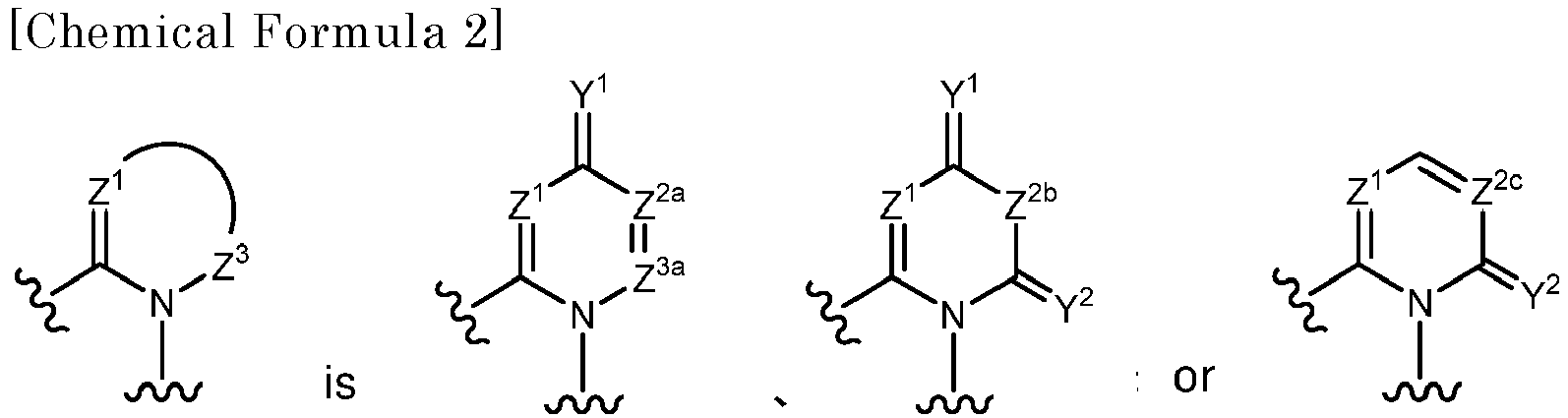
- Y1 and Y2 are each independently N(RY), O or S;
- Z1 is C(R4) or N;
- Z2a is C(R5a) or N;
- Z2b is C(R5a)(R5a') or N(R5b);
- Z2c is C(R5a) or N;
- Z3a is C(R6) or N;
- provided that when Z1 is N, then each of Z2a, Z2b and Z2c is C(R5a);
- when Z1 is C(R4), then Z2c is N; and
- when Z2a is N, then Z3a is C(R6);
- RY is each independently a hydrogen atom, hydroxy, cyano, carboxy, carbamoyl, substituted or unsubstituted alkyl, substituted or unsubstituted alkenyl, substituted or unsubstituted alkynyl, substituted or unsubstituted alkyloxy, substituted or unsubstituted alkenyloxy, substituted or unsubstituted alkynyloxy, substituted or unsubstituted aromatic carbocyclyl, substituted or unsubstituted non-aromatic carbocyclyl, substituted or unsubstituted aromatic heterocyclyl, or substituted or unsubstituted non-aromatic heterocyclyl;
- R4 and R6 are each independently a hydrogen atom, halogen, hydroxy, carboxy, amino, carbamoyl, sulfamoyl, sulfo, cyano, substituted or unsubstituted alkyl, substituted or unsubstituted alkenyl, substituted or unsubstituted alkynyl, substituted or unsubstituted alkyloxy, substituted or unsubstituted alkenyloxy, substituted or unsubstituted alkynyloxy, substituted or unsubstituted alkylsulfanyl, substituted or unsubstituted alkenylsulfanyl, substituted or unsubstituted alkynylsulfanyl, substituted or unsubstituted alkylamino, substituted or unsubstituted alkenylamino, or substituted or unsubstituted alkynylamino;
- R5a and R5a' are each independently a hydrogen atom, halogen, hydroxy, carboxy, amino, carbamoyl, sulfamoyl, sulfo, cyano, substituted or unsubstituted alkyl, substituted or unsubstituted alkenyl, substituted or unsubstituted alkynyl, substituted or unsubstituted alkyloxy, substituted or unsubstituted alkenyloxy, substituted or unsubstituted alkynyloxy, substituted or unsubstituted alkylsulfanyl, substituted or unsubstituted alkenylsulfanyl, substituted or unsubstituted alkynylsulfanyl, substituted or unsubstituted alkylamino, substituted or unsubstituted alkenylamino, substituted or unsubstituted alkynylamino, substituted or unsubstituted alkylcarbonyl, substituted or unsubstituted alkenylcarbonyl, substituted or unsubstituted alkynylcarbonyl, substituted or unsubstituted alkylsulfonyl, substituted or unsubstituted alkenylsulfonyl, substituted or unsubstituted alkynylsulfonyl, substituted or unsubstituted alkylcarbonyloxy, substituted or unsubstituted alkenylcarbonyloxy, substituted or unsubstituted alkynylcarbonyloxy, substituted or unsubstituted alkyloxycarbonyl, substituted or unsubstituted alkenyloxycarbonyl, substituted or unsubstituted alkynyloxycarbonyl, substituted or unsubstituted alkylsulfonyloxy, substituted or unsubstituted alkenylsulfonyloxy, substituted or unsubstituted alkynylsulfonyloxy, substituted or unsubstituted alkyloxysulfonyl, substituted or unsubstituted alkenyloxysulfonyl, substituted or unsubstituted alkynyloxysulfonyl, substituted or unsubstituted alkylcarbamoyl, substituted or unsubstituted alkenylcarbamoyl, substituted or unsubstituted alkynylcarbamoyl, substituted or unsubstituted alkylsulfamoyl, substituted or unsubstituted alkenylsulfamoyl, substituted or unsubstituted alkynylsulfamoyl, substituted or unsubstituted alkylcarbonylamino, substituted or unsubstituted alkenylcarbonylamino, substituted or unsubstituted alkynylcarbonylamino, substituted or unsubstituted alkylsulfonylamino, substituted or unsubstituted alkenylsulfonylamino, substituted or unsubstituted alkynylsulfonylamino, substituted or unsubstituted alkyloxycarbonylamino, substituted or unsubstituted alkenyloxycarbonylamino, substituted or unsubstituted alkynyloxycarbonylamino, substituted or unsubstituted aromatic carbocyclyl, substituted or unsubstituted non-aromatic carbocyclyl, substituted or unsubstituted aromatic heterocyclyl, substituted or unsubstituted non-aromatic heterocyclyl, substituted or unsubstituted aromatic carbocyclyloxy, substituted or unsubstituted non-aromatic carbocyclyloxy, substituted or unsubstituted aromatic heterocyclyloxy, substituted or unsubstituted non-aromatic heterocyclyloxy, substituted or unsubstituted aromatic carbocyclylamino, substituted or unsubstituted non-aromatic carbocyclylamino, substituted or unsubstituted aromatic heterocyclylamino, substituted or unsubstituted non-aromatic heterocyclylamino, substituted or unsubstituted aromatic carbocyclylsulfanyl, substituted or unsubstituted non-aromatic carbocyclylsulfanyl, substituted or unsubstituted aromatic heterocyclylsulfanyl, substituted or unsubstituted non-aromatic heterocyclylsulfanyl, substituted or unsubstituted aromatic carbocyclylcarbonyl, substituted or unsubstituted non-aromatic carbocyclylcarbonyl, substituted or unsubstituted aromatic heterocyclylcarbonyl, substituted or unsubstituted non-aromatic heterocyclylcarbonyl, substituted or unsubstituted aromatic carbocyclylsulfonyl, substituted or unsubstituted non-aromatic carbocyclylsulfonyl, substituted or unsubstituted aromatic heterocyclylsulfonyl, substituted or unsubstituted non-aromatic heterocyclylsulfonyl, substituted or unsubstituted aromatic carbocyclylcarbonyloxy, substituted or unsubstituted non-aromatic carbocyclylcarbonyloxy, substituted or unsubstituted aromatic heterocyclylcarbonyloxy, substituted or unsubstituted non-aromatic heterocyclylcarbonyloxy, substituted or unsubstituted aromatic carbocyclyloxycarbonyl, substituted or unsubstituted non-aromatic carbocyclyloxycarbonyl, substituted or unsubstituted aromatic heterocyclyloxycarbonyl, substituted or unsubstituted non-aromatic heterocyclyloxycarbonyl, substituted or unsubstituted aromatic carbocyclylsulfonyloxy, substituted or unsubstituted non-aromatic carbocyclylsulfonyloxy, substituted or unsubstituted aromatic heterocyclylsulfonyloxy, substituted or unsubstituted non-aromatic heterocyclylsulfonyloxy, substituted or unsubstituted aromatic carbocyclyloxysulfonyl, substituted or unsubstituted non-aromatic carbocyclyloxysulfonyl, substituted or unsubstituted aromatic heterocyclyloxysulfonyl, substituted or unsubstituted non-aromatic heterocyclyloxysulfonyl, substituted or unsubstituted aromatic carbocyclylcarbamoyl, substituted or unsubstituted non-aromatic carbocyclylcarbamoyl, substituted or unsubstituted aromatic heterocyclylcarbamoyl, substituted or unsubstituted non-aromatic heterocyclylcarbamoyl, substituted or unsubstituted aromatic carbocyclylsulfamoyl, substituted or unsubstituted non-aromatic carbocyclylsulfamoyl, substituted or unsubstituted aromatic heterocyclylsulfamoyl, substituted or unsubstituted non-aromatic heterocyclylsulfamoyl, substituted or unsubstituted aromatic carbocyclylcarbonylamino, substituted or unsubstituted non-aromatic carbocyclylcarbonylamino, substituted or unsubstituted aromatic heterocyclylcarbonylamino, substituted or unsubstituted non-aromatic heterocyclylcarbonylamino, substituted or unsubstituted aromatic carbocyclylsulfonylamino, substituted or unsubstituted non-aromatic carbocyclylsulfonylamino, substituted or unsubstituted aromatic heterocyclylsulfonylamino, substituted or unsubstituted non-aromatic heterocyclylsulfonylamino, substituted or unsubstituted aromatic carbocyclyloxycarbonylamino, substituted or unsubstituted non-aromatic carbocyclyloxycarbonylamino, substituted or unsubstituted aromatic heterocyclyloxycarbonylamino, or substituted or unsubstituted non-aromatic heterocyclyloxycarbonylamino;
- R5b is a hydrogen atom, carboxy, carbamoyl, sulfamoyl, sulfo, cyano, substituted or unsubstituted alkyl, substituted or unsubstituted alkenyl, substituted or unsubstituted alkynyl, substituted or unsubstituted alkylcarbonyl, substituted or unsubstituted alkenylcarbonyl, substituted or unsubstituted alkynylcarbonyl, substituted or unsubstituted alkyloxycarbonyl, substituted or unsubstituted alkenyloxycarbonyl, substituted or unsubstituted alkynyloxycarbonyl, substituted or unsubstituted alkylcarbamoyl, substituted or unsubstituted alkenylcarbamoyl, substituted or unsubstituted alkynylcarbamoyl, substituted or unsubstituted aromatic carbocyclyl, substituted or unsubstituted non-aromatic carbocyclyl, substituted or unsubstituted aromatic heterocyclyl, substituted or unsubstituted non-aromatic heterocyclyl, substituted or unsubstituted aromatic carbocyclylcarbonyl, substituted or unsubstituted non-aromatic carbocyclylcarbonyl, substituted or unsubstituted aromatic heterocyclylcarbonyl, substituted or unsubstituted non-aromatic heterocyclylcarbonyl, substituted or unsubstituted aromatic carbocyclyloxycarbonyl, substituted or unsubstituted non-aromatic carbocyclyloxycarbonyl, substituted or unsubstituted aromatic heterocyclyloxycarbonyl, substituted or unsubstituted non-aromatic heterocyclyloxycarbonyl, substituted or unsubstituted aromatic carbocyclylcarbamoyl, substituted or unsubstituted non-aromatic carbocyclylcarbamoyl, substituted or unsubstituted aromatic heterocyclylcarbamoyl, or substituted or unsubstituted non-aromatic heterocyclylcarbamoyl;
- R1 is substituted or unsubstituted aromatic carbocyclyl, substituted or unsubstituted non-aromatic carbocyclyl, substituted or unsubstituted aromatic heterocyclyl, or substituted or unsubstituted non-aromatic heterocyclyl;
- R2a is each independently a hydrogen atom, halogen, hydroxy, substituted or unsubstituted alkyl, or substituted or unsubstituted alkyloxy;
- R2b is each independently a hydrogen atom, halogen, hydroxy, substituted or unsubstituted alkyl, or substituted or unsubstituted alkyloxy;
- R2a and R2b which are attached to the same carbon atom may be taken together to form oxo;
- X is N(R7a), C(R8a)(R8b), O or S;
- R7a is a hydrogen atom, substituted or unsubstituted alkyl, or substituted or unsubstituted alkylcarbonyl;
- R8a and R8b are each independently a hydrogen atom, halogen, hydroxy, substituted or unsubstituted alkyl, or substituted or unsubstituted alkyloxy;
- R2c is each independently a hydrogen atom, halogen, hydroxy, substituted or unsubstituted alkyl, or substituted or unsubstituted alkyloxy;
- R2d is each independently a hydrogen atom, halogen, hydroxy, substituted or unsubstituted alkyl, or substituted or unsubstituted alkyloxy;
- R2c and R2d which are attached to the same carbon atom may be taken together to form a substituted or unsubstituted non-aromatic carbocycle, or two R2c may be taken together to form a substituted or unsubstituted non-aromatic carbocycle;
- R3 is a group represented by the Formula:

- Ring B is a 6-membered aromatic carbocycle, a 6-membered non-aromatic carbocycle, a 6-membered aromatic heterocycle, or a 6-membered non-aromatic heterocycle;
- Ring C is a 5-membered non-aromatic carbocycle, a 5-membered aromatic heterocycle, or a 5-membered non-aromatic heterocycle;
- Ring D is a 5-membered non-aromatic carbocycle, or a 6-membered non-aromatic carbocycle;
- R9a and R9b are each independently halogen, hydroxy, carboxy, amino, carbamoyl, sulfamoyl, sulfo, cyano, substituted or unsubstituted alkyl, substituted or unsubstituted alkenyl, substituted or unsubstituted alkynyl, substituted or unsubstituted alkyloxy, substituted or unsubstituted alkenyloxy, substituted or unsubstituted alkynyloxy, substituted or unsubstituted alkylsulfanyl, substituted or unsubstituted alkenylsulfanyl, substituted or unsubstituted alkynylsulfanyl, substituted or unsubstituted alkylamino, substituted or unsubstituted alkenylamino, substituted or unsubstituted alkynylamino, substituted or unsubstituted alkylcarbonyl, substituted or unsubstituted alkenylcarbonyl, substituted or unsubstituted alkynylcarbonyl, substituted or unsubstituted alkylsulfonyl, substituted or unsubstituted alkenylsulfonyl, substituted or unsubstituted alkynylsulfonyl, substituted or unsubstituted alkylcarbonyloxy, substituted or unsubstituted alkenylcarbonyloxy, substituted or unsubstituted alkynylcarbonyloxy, substituted or unsubstituted alkyloxycarbonyl, substituted or unsubstituted alkenyloxycarbonyl, substituted or unsubstituted alkynyloxycarbonyl, substituted or unsubstituted alkylsulfonyloxy, substituted or unsubstituted alkenylsulfonyloxy, substituted or unsubstituted alkynylsulfonyloxy, substituted or unsubstituted alkyloxysulfonyl, substituted or unsubstituted alkenyloxysulfonyl, substituted or unsubstituted alkynyloxysulfonyl, substituted or unsubstituted alkylcarbamoyl, substituted or unsubstituted alkenylcarbamoyl, substituted or unsubstituted alkynylcarbamoyl, substituted or unsubstituted alkylsulfamoyl, substituted or unsubstituted alkenylsulfamoyl, substituted or unsubstituted alkynylsulfamoyl, substituted or unsubstituted alkylcarbonylamino, substituted or unsubstituted alkenylcarbonylamino, substituted or unsubstituted alkynylcarbonylamino, substituted or unsubstituted alkylsulfonylamino, substituted or unsubstituted alkenylsulfonylamino, substituted or unsubstituted aromatic carbocyclyl, substituted or unsubstituted non-aromatic carbocyclyl, substituted or unsubstituted aromatic heterocyclyl, substituted or unsubstituted non-aromatic heterocyclyl, substituted or unsubstituted aromatic carbocyclyloxy, substituted or unsubstituted non-aromatic carbocyclyloxy, substituted or unsubstituted aromatic heterocyclyloxy, substituted or unsubstituted non-aromatic heterocyclyloxy, substituted or unsubstituted aromatic carbocyclylamino, substituted or unsubstituted non-aromatic carbocyclylamino, substituted or unsubstituted aromatic heterocyclylamino, substituted or unsubstituted non-aromatic heterocyclylamino, substituted or unsubstituted aromatic carbocyclylsulfanyl, substituted or unsubstituted non-aromatic carbocyclylsulfanyl, substituted or unsubstituted aromatic heterocyclylsulfanyl, substituted or unsubstituted non-aromatic heterocyclylsulfanyl, substituted or unsubstituted aromatic carbocyclylcarbonyl, substituted or unsubstituted non-aromatic carbocyclylcarbonyl, substituted or unsubstituted aromatic heterocyclylcarbonyl, substituted or unsubstituted non-aromatic heterocyclylcarbonyl, substituted or unsubstituted aromatic carbocyclylsulfonyl, substituted or unsubstituted non-aromatic carbocyclylsulfonyl, substituted or unsubstituted aromatic heterocyclylsulfonyl, substituted or unsubstituted non-aromatic heterocyclylsulfonyl, substituted or unsubstituted aromatic carbocyclylcarbonyloxy, substituted or unsubstituted non-aromatic carbocyclylcarbonyloxy, substituted or unsubstituted aromatic heterocyclylcarbonyloxy, substituted or unsubstituted non-aromatic heterocyclylcarbonyloxy, substituted or unsubstituted aromatic carbocyclyloxycarbonyl, substituted or unsubstituted non-aromatic carbocyclyloxycarbonyl, substituted or unsubstituted aromatic heterocyclyloxycarbonyl, substituted or unsubstituted non-aromatic heterocyclyloxycarbonyl, substituted or unsubstituted aromatic carbocyclylsulfonyloxy, substituted or unsubstituted non-aromatic carbocyclylsulfonyloxy, substituted or unsubstituted aromatic heterocyclylsulfonyloxy, substituted or unsubstituted non-aromatic heterocyclylsulfonyloxy, substituted or unsubstituted aromatic carbocyclyloxysulfonyl, substituted or unsubstituted non-aromatic carbocyclyloxysulfonyl, substituted or unsubstituted aromatic heterocyclyloxysulfonyl, substituted or unsubstituted non-aromatic heterocyclyloxysulfonyl, substituted or unsubstituted aromatic carbocyclylcarbamoyl, substituted or unsubstituted non-aromatic carbocyclylcarbamoyl, substituted or unsubstituted aromatic heterocyclylcarbamoyl, substituted or unsubstituted non-aromatic heterocyclylcarbamoyl, substituted or unsubstituted aromatic carbocyclylsulfamoyl, substituted or unsubstituted non-aromatic carbocyclylsulfamoyl, substituted or unsubstituted aromatic heterocyclylsulfamoyl, substituted or unsubstituted non-aromatic heterocyclylsulfamoyl, substituted or unsubstituted aromatic carbocyclylcarbonylamino, substituted or unsubstituted non-aromatic carbocyclylcarbonylamino, substituted or unsubstituted aromatic heterocyclylcarbonylamino, substituted or unsubstituted non-aromatic heterocyclylcarbonylamino, substituted or unsubstituted aromatic carbocyclylsulfonylamino, substituted or unsubstituted non-aromatic carbocyclylsulfonylamino, substituted or unsubstituted aromatic heterocyclylsulfonylamino, substituted or unsubstituted non-aromatic heterocyclylsulfonylamino, substituted or unsubstituted aromatic carbocyclyloxycarbonylamino, substituted or unsubstituted non-aromatic carbocyclyloxycarbonylamino, substituted or unsubstituted aromatic heterocyclyloxycarbonylamino, or substituted or unsubstituted non-aromatic heterocyclyloxycarbonylamino;
- R10a, R10b, R10c and R10d are each independently halogen, hydroxy, carboxy, amino, carbamoyl, sulfamoyl, sulfo, cyano, substituted or unsubstituted alkyl, substituted or unsubstituted alkenyl, substituted or unsubstituted alkynyl, substituted or unsubstituted alkyloxy, substituted or unsubstituted alkenyloxy, substituted or unsubstituted alkynyloxy, substituted or unsubstituted alkylsulfanyl, substituted or unsubstituted alkenylsulfanyl, substituted or unsubstituted alkynylsulfanyl, substituted or unsubstituted alkylamino, substituted or unsubstituted alkenylamino, substituted or unsubstituted alkynylamino, substituted or unsubstituted alkylcarbonyl, substituted or unsubstituted alkenylcarbonyl, substituted or unsubstituted alkynylcarbonyl, substituted or unsubstituted alkylsulfonyl, substituted or unsubstituted alkenylsulfonyl, substituted or unsubstituted alkynylsulfonyl, substituted or unsubstituted alkylcarbonyloxy, substituted or unsubstituted alkenylcarbonyloxy, substituted or unsubstituted alkynylcarbonyloxy, substituted or unsubstituted alkyloxycarbonyl, substituted or unsubstituted alkenyloxycarbonyl, substituted or unsubstituted alkynyloxycarbonyl, substituted or unsubstituted alkylsulfonyloxy, substituted or unsubstituted alkenylsulfonyloxy, substituted or unsubstituted alkynylsulfonyloxy, substituted or unsubstituted alkyloxysulfonyl, substituted or unsubstituted alkenyloxysulfonyl, substituted or unsubstituted alkynyloxysulfonyl, substituted or unsubstituted alkylcarbamoyl, substituted or unsubstituted alkenylcarbamoyl, substituted or unsubstituted alkynylcarbamoyl, substituted or unsubstituted alkylsulfamoyl, substituted or unsubstituted alkenylsulfamoyl, substituted or unsubstituted alkynylsulfamoyl, substituted or unsubstituted alkylcarbonylamino, substituted or unsubstituted alkenylcarbonylamino, substituted or unsubstituted alkynylcarbonylamino, substituted or unsubstituted alkylsulfonylamino, substituted or unsubstituted alkenylsulfonylamino, substituted or unsubstituted alkynylsulfonylamino, substituted or unsubstituted aromatic carbocyclyl, substituted or unsubstituted non-aromatic carbocyclyl, substituted or unsubstituted aromatic heterocyclyl, substituted or unsubstituted non-aromatic heterocyclyl, substituted or unsubstituted aromatic carbocyclyloxy, substituted or unsubstituted non-aromatic carbocyclyloxy, substituted or unsubstituted aromatic heterocyclyloxy, substituted or unsubstituted non-aromatic heterocyclyloxy, substituted or unsubstituted aromatic carbocyclylamino, substituted or unsubstituted non-aromatic carbocyclylamino, substituted or unsubstituted aromatic heterocyclylamino, substituted or unsubstituted non-aromatic heterocyclylamino, substituted or unsubstituted aromatic carbocyclylsulfanyl, substituted or unsubstituted non-aromatic carbocyclylsulfanyl, substituted or unsubstituted aromatic heterocyclylsulfanyl, substituted or unsubstituted non-aromatic heterocyclylsulfanyl, substituted or unsubstituted aromatic carbocyclylcarbonyl, substituted or unsubstituted non-aromatic carbocyclylcarbonyl, substituted or unsubstituted aromatic heterocyclylcarbonyl, substituted or unsubstituted non-aromatic heterocyclylcarbonyl, substituted or unsubstituted aromatic carbocyclylsulfonyl, substituted or unsubstituted non-aromatic carbocyclylsulfonyl, substituted or unsubstituted aromatic heterocyclylsulfonyl, substituted or unsubstituted non-aromatic heterocyclylsulfonyl, substituted or unsubstituted aromatic carbocyclylcarbonyloxy, substituted or unsubstituted non-aromatic carbocyclylcarbonyloxy, substituted or unsubstituted aromatic heterocyclylcarbonyloxy, substituted or unsubstituted non-aromatic heterocyclylcarbonyloxy, substituted or unsubstituted aromatic carbocyclyloxycarbonyl, substituted or unsubstituted non-aromatic carbocyclyloxycarbonyl, substituted or unsubstituted aromatic heterocyclyloxycarbonyl, substituted or unsubstituted non-aromatic heterocyclyloxycarbonyl, substituted or unsubstituted aromatic carbocyclylsulfonyloxy, substituted or unsubstituted non-aromatic carbocyclylsulfonyloxy, substituted or unsubstituted aromatic heterocyclylsulfonyloxy, substituted or unsubstituted non-aromatic heterocyclylsulfonyloxy, substituted or unsubstituted aromatic carbocyclyloxysulfonyl, substituted or unsubstituted non-aromatic carbocyclyloxysulfonyl, substituted or unsubstituted aromatic heterocyclyloxysulfonyl, substituted or unsubstituted non-aromatic heterocyclyloxysulfonyl, substituted or unsubstituted aromatic carbocyclylcarbamoyl, substituted or unsubstituted non-aromatic carbocyclylcarbamoyl, substituted or unsubstituted aromatic heterocyclylcarbamoyl, substituted or unsubstituted non-aromatic heterocyclylcarbamoyl, substituted or unsubstituted aromatic carbocyclylsulfamoyl, substituted or unsubstituted non-aromatic carbocyclylsulfamoyl, substituted or unsubstituted aromatic heterocyclylsulfamoyl, substituted or unsubstituted non-aromatic heterocyclylsulfamoyl, substituted or unsubstituted aromatic carbocyclylcarbonylamino, substituted or unsubstituted non-aromatic carbocyclylcarbonylamino, substituted or unsubstituted aromatic heterocyclylcarbonylamino, substituted or unsubstituted non-aromatic heterocyclylcarbonylamino, substituted or unsubstituted aromatic carbocyclylsulfonylamino, substituted or unsubstituted non-aromatic carbocyclylsulfonylamino, substituted or unsubstituted aromatic heterocyclylsulfonylamino, substituted or unsubstituted non-aromatic heterocyclylsulfonylamino, substituted or unsubstituted aromatic carbocyclyloxycarbonylamino, substituted or unsubstituted non-aromatic carbocyclyloxycarbonylamino, substituted or unsubstituted aromatic heterocyclyloxycarbonylamino, or substituted or unsubstituted non-aromatic heterocyclyloxycarbonylamino;
- R9a, R9b, R10a and R10b may be any of the following a) to c):
- a) R9a and R10a, or R9b and R10b are taken together to form a (C1-C3) bridge, wherein one of the carbon atoms constituting the bridge may be replaced with an oxygen atom or a nitrogen atom;
- b) R9a and R10a which are attached to the adjacent atoms, or R9b and R10b which are attached to the adjacent atoms are taken together to form a substituted or unsubstituted aromatic carbocycle, a substituted or unsubstituted non-aromatic carbocycle, a substituted or unsubstituted aromatic heterocycle, or a substituted or unsubstituted non-aromatic heterocycle; and
- c) two R10a which are attached to the adjacent atom, or two R10b which are attached to the adjacent atom are taken together to form a substituted or unsubstituted aromatic carbocycle, a substituted or unsubstituted non-aromatic carbocycle, a substituted or unsubstituted aromatic heterocycle, or a substituted or unsubstituted non-aromatic heterocycle; and
- R10e is each independently halogen, hydroxy, substituted or unsubstituted alkyl, or substituted or unsubstituted alkyloxy;
- n is an integer from 1 to 5;
- m is an integer from 0 to 4;
- p1 is an integer from 0 to 3;
- p2 is an integer from 0 to 2;
- p3 is an integer from 0 to 2;
provided that- i) when X is C(R7a)(R7b), O or S and one of R5a and R5a' is hydrogen, then the other of R5a and R5a' is not a hydrogen atom, hydroxy, methyl substituted with a substituted or unsubstituted 6-membered cyclic group, octadecyloxy, or ethyloxycarbonyl,
- i') when X is C(R7a)(R7b), O or S, then R5b is not a hydrogen atom or methyl substituted with a substituted or unsubstituted 6-membered cyclic group; and
- ii) when X is O, n is 1, and


The above definition of R3 means that R10e is a substituent on Ring D, R10 c is a substituent on Ring B, and R10d is a substituent on Ring C. - (1α) The compound according to the above (1), wherein
- Y1 and Y2 are each independently O or S; and
- Z2b is CH(R5a) or N(R5b),
- (1α') A compound represented by Formula (I):


- Y1 and Y2 are each independently O or S;
- Z1 is C(R4) or N;
- Z2a is C(R5a) or N;
- Z2b is CH(R5a) or N(R5b);
- Z2c is C(R5a) or N;
- Z3a is C(R6) or N;
- provided that when Z1 is N, then each of Z2a, Z2b and Z2c is C(R5a);
- when Z1 is C(R4), then Z2c is N; and
- when Z2a is N, then Z3a is C(R6);
- R4 and R6 are each independently a hydrogen atom, halogen, hydroxy, carboxy, amino, carbamoyl, sulfamoyl, sulfo, cyano, substituted or unsubstituted alkyl, substituted or unsubstituted alkenyl, substituted or unsubstituted alkynyl, substituted or unsubstituted alkyloxy, substituted or unsubstituted alkenyloxy, substituted or unsubstituted alkynyloxy, substituted or unsubstituted alkylsulfanyl, substituted or unsubstituted alkenylsulfanyl, substituted or unsubstituted alkynylsulfanyl, substituted or unsubstituted alkylamino, substituted or unsubstituted alkenylamino, or substituted or unsubstituted alkynylamino;
- R5a is a hydrogen atom, halogen, hydroxy, carboxy, amino, carbamoyl, sulfamoyl, sulfo, cyano, substituted or unsubstituted alkyl, substituted or unsubstituted alkenyl, substituted or unsubstituted alkynyl, substituted or unsubstituted alkyloxy, substituted or unsubstituted alkenyloxy, substituted or unsubstituted alkynyloxy, substituted or unsubstituted alkylsulfanyl, substituted or unsubstituted alkenylsulfanyl, substituted or unsubstituted alkynylsulfanyl, substituted or unsubstituted alkylamino, substituted or unsubstituted alkenylamino, substituted or unsubstituted alkynylamino, substituted or unsubstituted alkylcarbonyl, substituted or unsubstituted alkenylcarbonyl, substituted or unsubstituted alkynylcarbonyl, substituted or unsubstituted alkylsulfonyl, substituted or unsubstituted alkenylsulfonyl, substituted or unsubstituted alkynylsulfonyl, substituted or unsubstituted alkylcarbonyloxy, substituted or unsubstituted alkenylcarbonyloxy, substituted or unsubstituted alkynylcarbonyloxy, substituted or unsubstituted alkyloxycarbonyl, substituted or unsubstituted alkenyloxycarbonyl, substituted or unsubstituted alkynyloxycarbonyl, substituted or unsubstituted alkylsulfonyloxy, substituted or unsubstituted alkenylsulfonyloxy, substituted or unsubstituted alkynylsulfonyloxy, substituted or unsubstituted alkyloxysulfonyl, substituted or unsubstituted alkenyloxysulfonyl, substituted or unsubstituted alkynyloxysulfonyl, substituted or unsubstituted alkylcarbamoyl, substituted or unsubstituted alkenylcarbamoyl, substituted or unsubstituted alkynylcarbamoyl, substituted or unsubstituted alkylsulfamoyl, substituted or unsubstituted alkenylsulfamoyl, substituted or unsubstituted alkynylsulfamoyl, substituted or unsubstituted alkylcarbonylamino, substituted or unsubstituted alkenylcarbonylamino, substituted or unsubstituted alkynylcarbonylamino, substituted or unsubstituted alkylsulfonylamino, substituted or unsubstituted alkenylsulfonylamino, substituted or unsubstituted alkynylsulfonylamino, substituted or unsubstituted alkyloxycarbonylamino, substituted or unsubstituted alkenyloxycarbonylamino, substituted or unsubstituted alkynyloxycarbonylamino, substituted or unsubstituted aromatic carbocyclyl, substituted or unsubstituted non-aromatic carbocyclyl, substituted or unsubstituted aromatic heterocyclyl, substituted or unsubstituted non-aromatic heterocyclyl, substituted or unsubstituted aromatic carbocyclyloxy, substituted or unsubstituted non-aromatic carbocyclyloxy, substituted or unsubstituted aromatic heterocyclyloxy, substituted or unsubstituted non-aromatic heterocyclyloxy, substituted or unsubstituted aromatic carbocyclylamino, substituted or unsubstituted non-aromatic carbocyclylamino, substituted or unsubstituted aromatic heterocyclylamino, substituted or unsubstituted non-aromatic heterocyclylamino, substituted or unsubstituted aromatic carbocyclylsulfanyl, substituted or unsubstituted non-aromatic carbocyclylsulfanyl, substituted or unsubstituted aromatic heterocyclylsulfanyl, substituted or unsubstituted non-aromatic heterocyclylsulfanyl, substituted or unsubstituted aromatic carbocyclylcarbonyl, substituted or unsubstituted non-aromatic carbocyclylcarbonyl, substituted or unsubstituted aromatic heterocyclylcarbonyl, substituted or unsubstituted non-aromatic heterocyclylcarbonyl, substituted or unsubstituted aromatic carbocyclylsulfonyl, substituted or unsubstituted non-aromatic carbocyclylsulfonyl, substituted or unsubstituted aromatic heterocyclylsulfonyl, substituted or unsubstituted non-aromatic heterocyclylsulfonyl, substituted or unsubstituted aromatic carbocyclylcarbonyloxy, substituted or unsubstituted non-aromatic carbocyclylcarbonyloxy, substituted or unsubstituted aromatic heterocyclylcarbonyloxy, substituted or unsubstituted non-aromatic heterocyclylcarbonyloxy, substituted or unsubstituted aromatic carbocyclyloxycarbonyl, substituted or unsubstituted non-aromatic carbocyclyloxycarbonyl, substituted or unsubstituted aromatic heterocyclyloxycarbonyl, substituted or unsubstituted non-aromatic heterocyclyloxycarbonyl, substituted or unsubstituted aromatic carbocyclylsulfonyloxy, substituted or unsubstituted non-aromatic carbocyclylsulfonyloxy, substituted or unsubstituted aromatic heterocyclylsulfonyloxy, substituted or unsubstituted non-aromatic heterocyclylsulfonyloxy, substituted or unsubstituted aromatic carbocyclyloxysulfonyl, substituted or unsubstituted non-aromatic carbocyclyloxysulfonyl, substituted or unsubstituted aromatic heterocyclyloxysulfonyl, substituted or unsubstituted non-aromatic heterocyclyloxysulfonyl, substituted or unsubstituted aromatic carbocyclylcarbamoyl, substituted or unsubstituted non-aromatic carbocyclylcarbamoyl, substituted or unsubstituted aromatic heterocyclylcarbamoyl, substituted or unsubstituted non-aromatic heterocyclylcarbamoyl, substituted or unsubstituted aromatic carbocyclylsulfamoyl, substituted or unsubstituted non-aromatic carbocyclylsulfamoyl, substituted or unsubstituted aromatic heterocyclylsulfamoyl, substituted or unsubstituted non-aromatic heterocyclylsulfamoyl, substituted or unsubstituted aromatic carbocyclylcarbonylamino, substituted or unsubstituted non-aromatic carbocyclylcarbonylamino, substituted or unsubstituted aromatic heterocyclylcarbonylamino, substituted or unsubstituted non-aromatic heterocyclylcarbonylamino, substituted or unsubstituted aromatic carbocyclylsulfonylamino, substituted or unsubstituted non-aromatic carbocyclylsulfonylamino, substituted or unsubstituted aromatic heterocyclylsulfonylamino, substituted or unsubstituted non-aromatic heterocyclylsulfonylamino, substituted or unsubstituted aromatic carbocyclyloxycarbonylamino, substituted or unsubstituted non-aromatic carbocyclyloxycarbonylamino, substituted or unsubstituted aromatic heterocyclyloxycarbonylamino, or substituted or unsubstituted non-aromatic heterocyclyloxycarbonylamino;
- R5b is a hydrogen atom, carboxy, carbamoyl, sulfamoyl, sulfo, cyano, substituted or unsubstituted alkyl, substituted or unsubstituted alkenyl, substituted or unsubstituted alkynyl, substituted or unsubstituted alkylcarbonyl, substituted or unsubstituted alkenylcarbonyl, substituted or unsubstituted alkynylcarbonyl, substituted or unsubstituted alkyloxycarbonyl, substituted or unsubstituted alkenyloxycarbonyl, substituted or unsubstituted alkynyloxycarbonyl, substituted or unsubstituted alkylcarbamoyl, substituted or unsubstituted alkenylcarbamoyl, substituted or unsubstituted alkynylcarbamoyl, substituted or unsubstituted aromatic carbocyclyl, substituted or unsubstituted non-aromatic carbocyclyl, substituted or unsubstituted aromatic heterocyclyl, substituted or unsubstituted non-aromatic heterocyclyl, substituted or unsubstituted aromatic carbocyclylcarbonyl, substituted or unsubstituted non-aromatic carbocyclylcarbonyl, substituted or unsubstituted aromatic heterocyclylcarbonyl, substituted or unsubstituted non-aromatic heterocyclylcarbonyl, substituted or unsubstituted aromatic carbocyclyloxycarbonyl, substituted or unsubstituted non-aromatic carbocyclyloxycarbonyl, substituted or unsubstituted aromatic heterocyclyloxycarbonyl, substituted or unsubstituted non-aromatic heterocyclyloxycarbonyl, substituted or unsubstituted aromatic carbocyclylcarbamoyl, substituted or unsubstituted non-aromatic carbocyclylcarbamoyl, substituted or unsubstituted aromatic heterocyclylcarbamoyl, or substituted or unsubstituted non-aromatic heterocyclylcarbamoyl;
- R1 is substituted or unsubstituted aromatic carbocyclyl, substituted or unsubstituted non-aromatic carbocyclyl, substituted or unsubstituted aromatic heterocyclyl, or substituted or unsubstituted non-aromatic heterocyclyl;
- R2a is each independently a hydrogen atom, halogen, hydroxy, substituted or unsubstituted alkyl, or substituted or unsubstituted alkyloxy;
- R2b is each independently a hydrogen atom, halogen, hydroxy, substituted or unsubstituted alkyl, or substituted or unsubstituted alkyloxy;
- R2a and R2b which are attached to the same carbon atom may be taken together to form oxo;
- X is N(R7a), C(R8a)(R8b), O or S;
- R7a is a hydrogen atom, substituted or unsubstituted alkyl, or substituted or unsubstituted alkylcarbonyl;
- R8a and R8b are each independently a hydrogen atom, halogen, hydroxy, substituted or unsubstituted alkyl, or substituted or unsubstituted alkyloxy;
- R2c is each independently a hydrogen atom, halogen, hydroxy, substituted or unsubstituted alkyl, or substituted or unsubstituted alkyloxy;
- R2d is each independently a hydrogen atom, halogen, hydroxy, substituted or unsubstituted alkyl, or substituted or unsubstituted alkyloxy;
- R2c and R2d which are attached to the same carbon atom may be taken together to form a substituted or unsubstituted non-aromatic carbocycle, or two R2c may be taken together to form a substituted or unsubstituted non-aromatic carbocycle;
- R3 is a group represented by the Formula:

- Ring B is a 6-membered aromatic carbocycle, a 6-membered non-aromatic carbocycle, a 6-membered aromatic heterocycle, or a 6-membered non-aromatic heterocycle;
- Ring C is a 5-membered non-aromatic carbocycle, a 5-membered aromatic heterocycle, or a 5-membered non-aromatic heterocycle;
- Ring D is a 5-membered non-aromatic carbocycle, or a 6-membered non-aromatic carbocycle;
- R9a and R9b are each independently halogen, hydroxy, carboxy, amino, carbamoyl, sulfamoyl, sulfo, cyano, substituted or unsubstituted alkyl, substituted or unsubstituted alkenyl, substituted or unsubstituted alkynyl, substituted or unsubstituted alkyloxy, substituted or unsubstituted alkenyloxy, substituted or unsubstituted alkynyloxy, substituted or unsubstituted alkylsulfanyl, substituted or unsubstituted alkenylsulfanyl, substituted or unsubstituted alkynylsulfanyl, substituted or unsubstituted alkylamino, substituted or unsubstituted alkenylamino, substituted or unsubstituted alkynylamino, substituted or unsubstituted alkylcarbonyl, substituted or unsubstituted alkenylcarbonyl, substituted or unsubstituted alkynylcarbonyl, substituted or unsubstituted alkylsulfonyl, substituted or unsubstituted alkenylsulfonyl, substituted or unsubstituted alkynylsulfonyl, substituted or unsubstituted alkylcarbonyloxy, substituted or unsubstituted alkenylcarbonyloxy, substituted or unsubstituted alkynylcarbonyloxy, substituted or unsubstituted alkyloxycarbonyl, substituted or unsubstituted alkenyloxycarbonyl, substituted or unsubstituted alkynyloxycarbonyl, substituted or unsubstituted alkylsulfonyloxy, substituted or unsubstituted alkenylsulfonyloxy, substituted or unsubstituted alkynylsulfonyloxy, substituted or unsubstituted alkyloxysulfonyl, substituted or unsubstituted alkenyloxysulfonyl, substituted or unsubstituted alkynyloxysulfonyl, substituted or unsubstituted alkylcarbamoyl, substituted or unsubstituted alkenylcarbamoyl, substituted or unsubstituted alkynylcarbamoyl, substituted or unsubstituted alkylsulfamoyl, substituted or unsubstituted alkenylsulfamoyl, substituted or unsubstituted alkynylsulfamoyl, substituted or unsubstituted alkylcarbonylamino, substituted or unsubstituted alkenylcarbonylamino, substituted or unsubstituted alkynylcarbonylamino, substituted or unsubstituted alkylsulfonylamino, substituted or unsubstituted alkenylsulfonylamino, substituted or unsubstituted aromatic carbocyclyl, substituted or unsubstituted non-aromatic carbocyclyl, substituted or unsubstituted aromatic heterocyclyl, substituted or unsubstituted non-aromatic heterocyclyl, substituted or unsubstituted aromatic carbocyclyloxy, substituted or unsubstituted non-aromatic carbocyclyloxy, substituted or unsubstituted aromatic heterocyclyloxy, substituted or unsubstituted non-aromatic heterocyclyloxy, substituted or unsubstituted aromatic carbocyclylamino, substituted or unsubstituted non-aromatic carbocyclylamino, substituted or unsubstituted aromatic heterocyclylamino, substituted or unsubstituted non-aromatic heterocyclylamino, substituted or unsubstituted aromatic carbocyclylsulfanyl, substituted or unsubstituted non-aromatic carbocyclylsulfanyl, substituted or unsubstituted aromatic heterocyclylsulfanyl, substituted or unsubstituted non-aromatic heterocyclylsulfanyl, substituted or unsubstituted aromatic carbocyclylcarbonyl, substituted or unsubstituted non-aromatic carbocyclylcarbonyl, substituted or unsubstituted aromatic heterocyclylcarbonyl, substituted or unsubstituted non-aromatic heterocyclylcarbonyl, substituted or unsubstituted aromatic carbocyclylsulfonyl, substituted or unsubstituted non-aromatic carbocyclylsulfonyl, substituted or unsubstituted aromatic heterocyclylsulfonyl, substituted or unsubstituted non-aromatic heterocyclylsulfonyl, substituted or unsubstituted aromatic carbocyclylcarbonyloxy, substituted or unsubstituted non-aromatic carbocyclylcarbonyloxy, substituted or unsubstituted aromatic heterocyclylcarbonyloxy, substituted or unsubstituted non-aromatic heterocyclylcarbonyloxy, substituted or unsubstituted aromatic carbocyclyloxycarbonyl, substituted or unsubstituted non-aromatic carbocyclyloxycarbonyl, substituted or unsubstituted aromatic heterocyclyloxycarbonyl, substituted or unsubstituted non-aromatic heterocyclyloxycarbonyl, substituted or unsubstituted aromatic carbocyclylsulfonyloxy, substituted or unsubstituted non-aromatic carbocyclylsulfonyloxy, substituted or unsubstituted aromatic heterocyclylsulfonyloxy, substituted or unsubstituted non-aromatic heterocyclylsulfonyloxy, substituted or unsubstituted aromatic carbocyclyloxysulfonyl, substituted or unsubstituted non-aromatic carbocyclyloxysulfonyl, substituted or unsubstituted aromatic heterocyclyloxysulfonyl, substituted or unsubstituted non-aromatic heterocyclyloxysulfonyl, substituted or unsubstituted aromatic carbocyclylcarbamoyl, substituted or unsubstituted non-aromatic carbocyclylcarbamoyl, substituted or unsubstituted aromatic heterocyclylcarbamoyl, substituted or unsubstituted non-aromatic heterocyclylcarbamoyl, substituted or unsubstituted aromatic carbocyclylsulfamoyl, substituted or unsubstituted non-aromatic carbocyclylsulfamoyl, substituted or unsubstituted aromatic heterocyclylsulfamoyl, substituted or unsubstituted non-aromatic heterocyclylsulfamoyl, substituted or unsubstituted aromatic carbocyclylcarbonylamino, substituted or unsubstituted non-aromatic carbocyclylcarbonylamino, substituted or unsubstituted aromatic heterocyclylcarbonylamino, substituted or unsubstituted non-aromatic heterocyclylcarbonylamino, substituted or unsubstituted aromatic carbocyclylsulfonylamino, substituted or unsubstituted non-aromatic carbocyclylsulfonylamino, substituted or unsubstituted aromatic heterocyclylsulfonylamino, substituted or unsubstituted non-aromatic heterocyclylsulfonylamino, substituted or unsubstituted aromatic carbocyclyloxycarbonylamino, substituted or unsubstituted non-aromatic carbocyclyloxycarbonylamino, substituted or unsubstituted aromatic heterocyclyloxycarbonylamino, or substituted or unsubstituted non-aromatic heterocyclyloxycarbonylamino;
- R10a, R10b, R10c and R10d are each independently halogen, hydroxy, carboxy, amino, carbamoyl, sulfamoyl, sulfo, cyano, substituted or unsubstituted alkyl, substituted or unsubstituted alkenyl, substituted or unsubstituted alkynyl, substituted or unsubstituted alkyloxy, substituted or unsubstituted alkenyloxy, substituted or unsubstituted alkynyloxy, substituted or unsubstituted alkylsulfanyl, substituted or unsubstituted alkenylsulfanyl, substituted or unsubstituted alkynylsulfanyl, substituted or unsubstituted alkylamino, substituted or unsubstituted alkenylamino, substituted or unsubstituted alkynylamino, substituted or unsubstituted alkylcarbonyl, substituted or unsubstituted alkenylcarbonyl, substituted or unsubstituted alkynylcarbonyl, substituted or unsubstituted alkylsulfonyl, substituted or unsubstituted alkenylsulfonyl, substituted or unsubstituted alkynylsulfonyl, substituted or unsubstituted alkylcarbonyloxy, substituted or unsubstituted alkenylcarbonyloxy, substituted or unsubstituted alkynylcarbonyloxy, substituted or unsubstituted alkyloxycarbonyl, substituted or unsubstituted alkenyloxycarbonyl, substituted or unsubstituted alkynyloxycarbonyl, substituted or unsubstituted alkylsulfonyloxy, substituted or unsubstituted alkenylsulfonyloxy, substituted or unsubstituted alkynylsulfonyloxy, substituted or unsubstituted alkyloxysulfonyl, substituted or unsubstituted alkenyloxysulfonyl, substituted or unsubstituted alkynyloxysulfonyl, substituted or unsubstituted alkylcarbamoyl, substituted or unsubstituted alkenylcarbamoyl, substituted or unsubstituted alkynylcarbamoyl, substituted or unsubstituted alkylsulfamoyl, substituted or unsubstituted alkenylsulfamoyl, substituted or unsubstituted alkynylsulfamoyl, substituted or unsubstituted alkylcarbonylamino, substituted or unsubstituted alkenylcarbonylamino, substituted or unsubstituted alkynylcarbonylamino, substituted or unsubstituted alkylsulfonylamino, substituted or unsubstituted alkenylsulfonylamino, substituted or unsubstituted alkynylsulfonylamino, substituted or unsubstituted aromatic carbocyclyl, substituted or unsubstituted non-aromatic carbocyclyl, substituted or unsubstituted aromatic heterocyclyl, substituted or unsubstituted non-aromatic heterocyclyl, substituted or unsubstituted aromatic carbocyclyloxy, substituted or unsubstituted non-aromatic carbocyclyloxy, substituted or unsubstituted aromatic heterocyclyloxy, substituted or unsubstituted non-aromatic heterocyclyloxy, substituted or unsubstituted aromatic carbocyclylamino, substituted or unsubstituted non-aromatic carbocyclylamino, substituted or unsubstituted aromatic heterocyclylamino, substituted or unsubstituted non-aromatic heterocyclylamino, substituted or unsubstituted aromatic carbocyclylsulfanyl, substituted or unsubstituted non-aromatic carbocyclylsulfanyl, substituted or unsubstituted aromatic heterocyclylsulfanyl, substituted or unsubstituted non-aromatic heterocyclylsulfanyl, substituted or unsubstituted aromatic carbocyclylcarbonyl, substituted or unsubstituted non-aromatic carbocyclylcarbonyl, substituted or unsubstituted aromatic heterocyclylcarbonyl, substituted or unsubstituted non-aromatic heterocyclylcarbonyl, substituted or unsubstituted aromatic carbocyclylsulfonyl, substituted or unsubstituted non-aromatic carbocyclylsulfonyl, substituted or unsubstituted aromatic heterocyclylsulfonyl, substituted or unsubstituted non-aromatic heterocyclylsulfonyl, substituted or unsubstituted aromatic carbocyclylcarbonyloxy, substituted or unsubstituted non-aromatic carbocyclylcarbonyloxy, substituted or unsubstituted aromatic heterocyclylcarbonyloxy, substituted or unsubstituted non-aromatic heterocyclylcarbonyloxy, substituted or unsubstituted aromatic carbocyclyloxycarbonyl, substituted or unsubstituted non-aromatic carbocyclyloxycarbonyl, substituted or unsubstituted aromatic heterocyclyloxycarbonyl, substituted or unsubstituted non-aromatic heterocyclyloxycarbonyl, substituted or unsubstituted aromatic carbocyclylsulfonyloxy, substituted or unsubstituted non-aromatic carbocyclylsulfonyloxy, substituted or unsubstituted aromatic heterocyclylsulfonyloxy, substituted or unsubstituted non-aromatic heterocyclylsulfonyloxy, substituted or unsubstituted aromatic carbocyclyloxysulfonyl, substituted or unsubstituted non-aromatic carbocyclyloxysulfonyl, substituted or unsubstituted aromatic heterocyclyloxysulfonyl, substituted or unsubstituted non-aromatic heterocyclyloxysulfonyl, substituted or unsubstituted aromatic carbocyclylcarbamoyl, substituted or unsubstituted non-aromatic carbocyclylcarbamoyl, substituted or unsubstituted aromatic heterocyclylcarbamoyl, substituted or unsubstituted non-aromatic heterocyclylcarbamoyl, substituted or unsubstituted aromatic carbocyclylsulfamoyl, substituted or unsubstituted non-aromatic carbocyclylsulfamoyl, substituted or unsubstituted aromatic heterocyclylsulfamoyl, substituted or unsubstituted non-aromatic heterocyclylsulfamoyl, substituted or unsubstituted aromatic carbocyclylcarbonylamino, substituted or unsubstituted non-aromatic carbocyclylcarbonylamino, substituted or unsubstituted aromatic heterocyclylcarbonylamino, substituted or unsubstituted non-aromatic heterocyclylcarbonylamino, substituted or unsubstituted aromatic carbocyclylsulfonylamino, substituted or unsubstituted non-aromatic carbocyclylsulfonylamino, substituted or unsubstituted aromatic heterocyclylsulfonylamino, substituted or unsubstituted non-aromatic heterocyclylsulfonylamino, substituted or unsubstituted aromatic carbocyclyloxycarbonylamino, substituted or unsubstituted non-aromatic carbocyclyloxycarbonylamino, substituted or unsubstituted aromatic heterocyclyloxycarbonylamino, or substituted or unsubstituted non-aromatic heterocyclyloxycarbonylamino;
- R9a, R9b, R10a and R10b may be any of the following a) to c):
- a) R9a and R10a, or R9b and R10b are taken together to form a (C1-C3) bridge, wherein one of the carbon atoms constituting the bridge may be replaced with an oxygen atom or a nitrogen atom;
- b) R9a and R10a which are attached to the adjacent atoms, or R9b and R10b which are attached to the adjacent atoms are taken together to form a substituted or unsubstituted aromatic carbocycle, a substituted or unsubstituted non-aromatic carbocycle, a substituted or unsubstituted aromatic heterocycle, or a substituted or unsubstituted non-aromatic heterocycle; and
- c) two R10a which are attached to the adjacent atom, or two R10b which are attached to the adjacent atom are taken together to form a substituted or unsubstituted aromatic carbocycle, a substituted or unsubstituted non-aromatic carbocycle, a substituted or unsubstituted aromatic heterocycle, or a substituted or unsubstituted non-aromatic heterocycle; and
- R10e is each independently halogen, hydroxy, substituted or unsubstituted alkyl, or substituted or unsubstituted alkyloxy;
- n is an integer from 1 to 5;
- m is an integer from 0 to 4;
- p1 is an integer from 0 to 3;
- p2 is an integer from 0 to 2;
- p3 is an integer from 0 to 2;
provided that- i) when X is C(R7a)(R7b), O or S, then R5a is not a hydrogen atom, hydroxy, methyl substituted with a substituted or unsubstituted 6-membered cyclic group, octadecyloxy, or ethyloxycarbonyl, and
- i') when X is C(R7a)(R7b), O or S, then R5b is not a hydrogen atom or methyl substituted with a substituted or unsubstituted 6-membered cyclic group; and
- ii) when X is O, n is 1, and


- (2) The compound according to the above (1), (1α) or (1α'), wherein X is N(R7a) or O, or a pharmaceutically acceptable salt thereof.
- (3) The compound according to the above (1), (1α) or (1α'), wherein
X is N(R7a),
or a pharmaceutically acceptable salt thereof. - (4) The compound according to any one of the above (1), (1α), (la') and (2) to (3), wherein
R7a is a hydrogen atom or substituted or unsubstituted alkyl, or a pharmaceutically acceptable salt thereof. - (5) The compound according to any one of the above (1), (1α), (1α') and (2) to (3), wherein
R7a is a hydrogen atom,
or a pharmaceutically acceptable salt thereof. - (6) The compound according to any one of the above (1), (1α), (1α') and (2) to (5), wherein


- (7) The compound according to any one of the above (1), (1α), (1α') and (2) to (5), wherein


- (8) The compound according to any one of the above (1), (1α), (1α') and (2) to (5), wherein

- (9) The compound according to any one of the above (1), (1α), (1α') and (2) to (5), wherein

- (10) The compound according to any one of the above (1), (1α), (1α') and (2) to (9), wherein
R1 is substituted or unsubstituted 6- to 10-membered aromatic carbocyclyl, substituted or unsubstituted 3- to 10-membered non-aromatic carbocyclyl, substituted or unsubstituted 5- to 10-membered aromatic heterocyclyl, or substituted or unsubstituted 3- to 10-membered non-aromatic heterocyclyl,
or a pharmaceutically acceptable salt thereof. - (11) The compound according to any one of the above (1), (1α), (1α') and (2) to (9), wherein
R1 is substituted or unsubstituted 6-membered aromatic carbocyclyl, substituted or unsubstituted 3- to 6-membered non-aromatic carbocyclyl, substituted or unsubstituted 5- to 6-membered aromatic heterocyclyl, or substituted or unsubstituted 5- to 6-membered non-aromatic heterocyclyl,
or a pharmaceutically acceptable salt thereof. - (12) The compound according to any one of the above (1), (1α), (1α') and (2) to (9), wherein
R1 is substituted or unsubstituted 6-membered aromatic carbocyclyl, or substituted or unsubstituted 5- to 6-membered aromatic heterocyclyl,
or a pharmaceutically acceptable salt thereof. - (13) The compound according to any one of the above (1), (1α), (1α') and (2) to (9), wherein
R1 is 6-membered aromatic carbocyclyl substituted with one or more halogen atom(s) and optionally substituted with one or more and same or different substituent(s), 3- to 6-membered non-aromatic carbocyclyl substituted with one or more halogen atom(s) and optionally substituted with one or more and same or different substituent(s), 5- to 6-membered aromatic heterocyclyl substituted with one or more halogen atom(s) and optionally substituted with one or more and same or different substituent(s), or 5- to 6-membered non-aromatic heterocyclyl substituted with one or more halogen atom(s) and optionally substituted with one or more and same or different substituent(s),
or a pharmaceutically acceptable salt thereof. - (14) The compound according to any one of the above (1), (1α), (1α') and (2) to (9), wherein
R1 is 6-membered aromatic carbocyclyl substituted with one or more halogen atom(s) and optionally substituted with one or more and same or different substituent(s), or 5- to 6-membered aromatic heterocyclyl substituted with one or more halogen atom(s) and optionally substituted with one or more and same or different substituent(s),
or a pharmaceutically acceptable salt thereof. - (15) The compound according to any one of the above (1), (1α), (1α') and (2) to (14), wherein
R3 is
- (16) The compound according to any one of the above (1), (1α), (1α') and (2) to (15), wherein
R9a and R9b are each independently halogen, hydroxy, carboxy, amino, carbamoyl, sulfamoyl, sulfo, cyano, substituted or unsubstituted alkyl, substituted or unsubstituted alkenyl, substituted or unsubstituted alkynyl, substituted or unsubstituted alkyloxy, substituted or unsubstituted alkenyloxy, substituted or unsubstituted alkynyloxy, substituted or unsubstituted alkylsulfanyl, substituted or unsubstituted alkenylsulfanyl, substituted or unsubstituted alkynylsulfanyl, substituted or unsubstituted alkylamino, substituted or unsubstituted alkenylamino, substituted or unsubstituted alkynylamino, substituted or unsubstituted alkylcarbonyl, substituted or unsubstituted alkenylcarbonyl, substituted or unsubstituted alkynylcarbonyl, substituted or unsubstituted alkylsulfonyl, substituted or unsubstituted alkenylsulfonyl, substituted or unsubstituted alkynylsulfonyl, substituted or unsubstituted alkylcarbonyloxy, substituted or unsubstituted alkenylcarbonyloxy, substituted or unsubstituted alkynylcarbonyloxy, substituted or unsubstituted alkyloxycarbonyl, substituted or unsubstituted alkenyloxycarbonyl, substituted or unsubstituted alkynyloxycarbonyl, substituted or unsubstituted alkylsulfonyloxy, substituted or unsubstituted alkenylsulfonyloxy, substituted or unsubstituted alkynylsulfonyloxy, substituted or unsubstituted alkyloxysulfonyl, substituted or unsubstituted alkenyloxysulfonyl, substituted or unsubstituted alkynyloxysulfonyl, substituted or unsubstituted alkylcarbamoyl, substituted or unsubstituted alkenylcarbamoyl, substituted or unsubstituted alkynylcarbamoyl, substituted or unsubstituted alkylsulfamoyl, substituted or unsubstituted alkenylsulfamoyl, substituted or unsubstituted alkynylsulfamoyl, substituted or unsubstituted alkylcarbonylamino, substituted or unsubstituted alkenylcarbonylamino, substituted or unsubstituted alkynylcarbonylamino, substituted or unsubstituted alkylsulfonylamino, substituted or unsubstituted alkenylsulfonylamino, substituted or unsubstituted aromatic carbocyclyl, substituted or unsubstituted non-aromatic carbocyclyl, substituted or unsubstituted aromatic heterocyclyl, substituted or unsubstituted non-aromatic heterocyclyl, substituted or unsubstituted aromatic carbocyclyloxy, substituted or unsubstituted non-aromatic carbocyclyloxy, substituted or unsubstituted aromatic heterocyclyloxy, substituted or unsubstituted non-aromatic heterocyclyloxy, substituted or unsubstituted aromatic carbocyclylamino, substituted or unsubstituted non-aromatic carbocyclylamino, substituted or unsubstituted aromatic heterocyclylamino, substituted or unsubstituted non-aromatic heterocyclylamino, substituted or unsubstituted aromatic carbocyclylsulfanyl, substituted or unsubstituted non-aromatic carbocyclylsulfanyl, substituted or unsubstituted aromatic heterocyclylsulfanyl, substituted or unsubstituted non-aromatic heterocyclylsulfanyl, substituted or unsubstituted aromatic carbocyclylcarbonyl, substituted or unsubstituted non-aromatic carbocyclylcarbonyl, substituted or unsubstituted aromatic heterocyclylcarbonyl, substituted or unsubstituted non-aromatic heterocyclylcarbonyl, substituted or unsubstituted aromatic carbocyclylsulfonyl, substituted or unsubstituted non-aromatic carbocyclylsulfonyl, substituted or unsubstituted aromatic heterocyclylsulfonyl, substituted or unsubstituted non-aromatic heterocyclylsulfonyl, substituted or unsubstituted aromatic carbocyclylcarbonyloxy, substituted or unsubstituted non-aromatic carbocyclylcarbonyloxy, substituted or unsubstituted aromatic heterocyclylcarbonyloxy, substituted or unsubstituted non-aromatic heterocyclylcarbonyloxy, substituted or unsubstituted aromatic carbocyclyloxycarbonyl, substituted or unsubstituted non-aromatic carbocyclyloxycarbonyl, substituted or unsubstituted aromatic heterocyclyloxycarbonyl, substituted or unsubstituted non-aromatic heterocyclyloxycarbonyl, substituted or unsubstituted aromatic carbocyclylsulfonyloxy, substituted or unsubstituted non-aromatic carbocyclylsulfonyloxy, substituted or unsubstituted aromatic heterocyclylsulfonyloxy, substituted or unsubstituted non-aromatic heterocyclylsulfonyloxy, substituted or unsubstituted aromatic carbocyclyloxysulfonyl, substituted or unsubstituted non-aromatic carbocyclyloxysulfonyl, substituted or unsubstituted aromatic heterocyclyloxysulfonyl, substituted or unsubstituted non-aromatic heterocyclyloxysulfonyl, substituted or unsubstituted aromatic carbocyclylcarbamoyl, substituted or unsubstituted non-aromatic carbocyclylcarbamoyl, substituted or unsubstituted aromatic heterocyclylcarbamoyl, substituted or unsubstituted non-aromatic heterocyclylcarbamoyl, substituted or unsubstituted aromatic carbocyclylsulfamoyl, substituted or unsubstituted non-aromatic carbocyclylsulfamoyl, substituted or unsubstituted aromatic heterocyclylsulfamoyl, substituted or unsubstituted non-aromatic heterocyclylsulfamoyl, substituted or unsubstituted aromatic carbocyclylcarbonylamino, substituted or unsubstituted non-aromatic carbocyclylcarbonylamino, substituted or unsubstituted aromatic heterocyclylcarbonylamino, substituted or unsubstituted non-aromatic heterocyclylcarbonylamino, substituted or unsubstituted aromatic carbocyclylsulfonylamino, substituted or unsubstituted non-aromatic carbocyclylsulfonylamino, substituted or unsubstituted aromatic heterocyclylsulfonylamino, substituted or unsubstituted non-aromatic heterocyclylsulfonylamino, substituted or unsubstituted aromatic carbocyclyloxycarbonylamino, substituted or unsubstituted non-aromatic carbocyclyloxycarbonylamino, substituted or unsubstituted aromatic heterocyclyloxycarbonylamino, or substituted or unsubstituted non-aromatic heterocyclyloxycarbonylamino
or a pharmaceutically acceptable salt thereof. - (17) The compound according to any one of the above (1), (1α), (1α') and (2) to (15), wherein
R9a and R9b are each independently halogen, hydroxy, amino, substituted or unsubstituted alkyl, substituted or unsubstituted alkenyl, substituted or unsubstituted alkynyl, substituted or unsubstituted alkyloxy, substituted or unsubstituted alkenyloxy, substituted or unsubstituted alkynyloxy, substituted or unsubstituted alkylsulfanyl, substituted or unsubstituted alkenylsulfanyl, substituted or unsubstituted alkynylsulfanyl, substituted or unsubstituted alkylamino, substituted or unsubstituted alkenylamino, substituted or unsubstituted alkynylamino, substituted or unsubstituted aromatic carbocyclyl, substituted or unsubstituted non-aromatic carbocyclyl, substituted or unsubstituted aromatic heterocyclyl, substituted or unsubstituted non-aromatic heterocyclyl, substituted or unsubstituted aromatic carbocyclyloxy, substituted or unsubstituted non-aromatic carbocyclyloxy, substituted or unsubstituted aromatic heterocyclyloxy, or substituted or unsubstituted non-aromatic heterocyclyloxy,
or a pharmaceutically acceptable salt thereof. - (18) The compound according to any one of the above (1), (1α), (1α') and (2) to (15), wherein
R9a and R9b are each independently halogen, hydroxy, amino, substituted or unsubstituted alkyl, substituted or unsubstituted alkyloxy, substituted or unsubstituted alkylsulfanyl, substituted or unsubstituted alkylamino, substituted or unsubstituted aromatic carbocyclyl, substituted or unsubstituted non-aromatic carbocyclyl, substituted or unsubstituted aromatic heterocyclyl, substituted or unsubstituted non-aromatic heterocyclyl, substituted or unsubstituted aromatic carbocyclyloxy, substituted or unsubstituted non-aromatic carbocyclyloxy, substituted or unsubstituted aromatic heterocyclyloxy, or substituted or unsubstituted non-aromatic heterocyclyloxy,
or a pharmaceutically acceptable salt thereof. - (19) The compound according to any one of the above (1), (1α), (1α') and (2) to (15), wherein
R9a and R9b are each independently halogen, substituted or unsubstituted alkyl, substituted or unsubstituted alkenyl, substituted or unsubstituted alkynyl, substituted or unsubstituted alkylsulfanyl, substituted or unsubstituted alkenylsulfanyl, or substituted or unsubstituted alkynylsulfanyl,
or a pharmaceutically acceptable salt thereof. - (20) The compound according to any one of the above (1), (1α), (1α') and (2) to (15), wherein
R9a and R9b are each independently halogen, substituted or unsubstituted alkyl, substituted or unsubstituted alkenyl, or substituted or unsubstituted alkynyl, or a pharmaceutically acceptable salt thereof. - (21) The compound according to any one of the above (1), (1α), (1α') and (2) to (15), wherein
R9a and R9b are each independently substituted or unsubstituted alkyl,
or a pharmaceutically acceptable salt thereof. - (22) The compound according to any one of the above (1), (1α), (1α') and (2) to (21), wherein
R10a and R10b are each independently halogen, hydroxy, carboxy, amino, carbamoyl, sulfamoyl, sulfo, cyano, substituted or unsubstituted alkyl, substituted or unsubstituted alkenyl, substituted or unsubstituted alkynyl, substituted or unsubstituted alkyloxy, substituted or unsubstituted alkenyloxy, substituted or unsubstituted alkynyloxy, substituted or unsubstituted alkylsulfanyl, substituted or unsubstituted alkenylsulfanyl, substituted or unsubstituted alkynylsulfanyl, substituted or unsubstituted alkylamino, substituted or unsubstituted alkenylamino, substituted or unsubstituted alkynylamino, substituted or unsubstituted alkylcarbonyl, substituted or unsubstituted alkenylcarbonyl, substituted or unsubstituted alkynylcarbonyl, substituted or unsubstituted alkylsulfonyl, substituted or unsubstituted alkenylsulfonyl, substituted or unsubstituted alkynylsulfonyl, substituted or unsubstituted alkylcarbonyloxy, substituted or unsubstituted alkenylcarbonyloxy, substituted or unsubstituted alkynylcarbonyloxy, substituted or unsubstituted alkyloxycarbonyl, substituted or unsubstituted alkenyloxycarbonyl, substituted or unsubstituted alkynyloxycarbonyl, substituted or unsubstituted alkylsulfonyloxy, substituted or unsubstituted alkenylsulfonyloxy, substituted or unsubstituted alkynylsulfonyloxy, substituted or unsubstituted alkyloxysulfonyl, substituted or unsubstituted alkenyloxysulfonyl, substituted or unsubstituted alkynyloxysulfonyl, substituted or unsubstituted alkylcarbamoyl, substituted or unsubstituted alkenylcarbamoyl, substituted or unsubstituted alkynylcarbamoyl, substituted or unsubstituted alkylsulfamoyl, substituted or unsubstituted alkenylsulfamoyl, substituted or unsubstituted alkynylsulfamoyl, substituted or unsubstituted alkylcarbonylamino, substituted or unsubstituted alkenylcarbonylamino, substituted or unsubstituted alkynylcarbonylamino, substituted or unsubstituted alkylsulfonylamino, substituted or unsubstituted alkenylsulfonylamino, substituted or unsubstituted alkynylsulfonylamino, substituted or unsubstituted aromatic carbocyclyl, substituted or unsubstituted non-aromatic carbocyclyl, substituted or unsubstituted aromatic heterocyclyl, substituted or unsubstituted non-aromatic heterocyclyl, substituted or unsubstituted aromatic carbocyclyloxy, substituted or unsubstituted non-aromatic carbocyclyloxy, substituted or unsubstituted aromatic heterocyclyloxy, substituted or unsubstituted non-aromatic heterocyclyloxy, substituted or unsubstituted aromatic carbocyclylamino, substituted or unsubstituted non-aromatic carbocyclylamino, substituted or unsubstituted aromatic heterocyclylamino, substituted or unsubstituted non-aromatic heterocyclylamino, substituted or unsubstituted aromatic carbocyclylsulfanyl, substituted or unsubstituted non-aromatic carbocyclylsulfanyl, substituted or unsubstituted aromatic heterocyclylsulfanyl, substituted or unsubstituted non-aromatic heterocyclylsulfanyl, substituted or unsubstituted aromatic carbocyclylcarbonyl, substituted or unsubstituted non-aromatic carbocyclylcarbonyl, substituted or unsubstituted aromatic heterocyclylcarbonyl, substituted or unsubstituted non-aromatic heterocyclylcarbonyl, substituted or unsubstituted aromatic carbocyclylsulfonyl, substituted or unsubstituted non-aromatic carbocyclylsulfonyl, substituted or unsubstituted aromatic heterocyclylsulfonyl, substituted or unsubstituted non-aromatic heterocyclylsulfonyl, substituted or unsubstituted aromatic carbocyclylcarbonyloxy, substituted or unsubstituted non-aromatic carbocyclylcarbonyloxy, substituted or unsubstituted aromatic heterocyclylcarbonyloxy, substituted or unsubstituted non-aromatic heterocyclylcarbonyloxy, substituted or unsubstituted aromatic carbocyclyloxycarbonyl, substituted or unsubstituted non-aromatic carbocyclyloxycarbonyl, substituted or unsubstituted aromatic heterocyclyloxycarbonyl, substituted or unsubstituted non-aromatic heterocyclyloxycarbonyl, substituted or unsubstituted aromatic carbocyclylsulfonyloxy, substituted or unsubstituted non-aromatic carbocyclylsulfonyloxy, substituted or unsubstituted aromatic heterocyclylsulfonyloxy, substituted or unsubstituted non-aromatic heterocyclylsulfonyloxy, substituted or unsubstituted aromatic carbocyclyloxysulfonyl, substituted or unsubstituted non-aromatic carbocyclyloxysulfonyl, substituted or unsubstituted aromatic heterocyclyloxysulfonyl, substituted or unsubstituted non-aromatic heterocyclyloxysulfonyl, substituted or unsubstituted aromatic carbocyclylcarbamoyl, substituted or unsubstituted non-aromatic carbocyclylcarbamoyl, substituted or unsubstituted aromatic heterocyclylcarbamoyl, substituted or unsubstituted non-aromatic heterocyclylcarbamoyl, substituted or unsubstituted aromatic carbocyclylsulfamoyl, substituted or unsubstituted non-aromatic carbocyclylsulfamoyl, substituted or unsubstituted aromatic heterocyclylsulfamoyl, substituted or unsubstituted non-aromatic heterocyclylsulfamoyl, substituted or unsubstituted aromatic carbocyclylcarbonylamino, substituted or unsubstituted non-aromatic carbocyclylcarbonylamino, substituted or unsubstituted aromatic heterocyclylcarbonylamino, substituted or unsubstituted non-aromatic heterocyclylcarbonylamino, substituted or unsubstituted aromatic carbocyclylsulfonylamino, substituted or unsubstituted non-aromatic carbocyclylsulfonylamino, substituted or unsubstituted aromatic heterocyclylsulfonylamino, substituted or unsubstituted non-aromatic heterocyclylsulfonylamino, substituted or unsubstituted aromatic carbocyclyloxycarbonylamino, substituted or unsubstituted non-aromatic carbocyclyloxycarbonylamino, substituted or unsubstituted aromatic heterocyclyloxycarbonylamino, or substituted or unsubstituted non-aromatic heterocyclyloxycarbonylamino,
or a pharmaceutically acceptable salt thereof. - (23) The compound according to any one of the above (1), (1α), (1α') and (2) to (21), wherein
R10a and R10b are each independently halogen, hydroxy, amino, carbamoyl, cyano, substituted or unsubstituted alkyl, substituted or unsubstituted alkenyl, substituted or unsubstituted alkynyl, substituted or unsubstituted alkyloxy, substituted or unsubstituted alkenyloxy, substituted or unsubstituted alkynyloxy, substituted or unsubstituted alkylsulfanyl, substituted or unsubstituted alkenylsulfanyl, substituted or unsubstituted alkynylsulfanyl, substituted or unsubstituted alkylamino, substituted or unsubstituted alkenylamino, substituted or unsubstituted alkynylamino, substituted or unsubstituted alkylcarbonyl, substituted or unsubstituted alkenylcarbonyl, substituted or unsubstituted alkynylcarbonyl, substituted or unsubstituted alkylsulfonyl, substituted or unsubstituted alkenylsulfonyl, substituted or unsubstituted alkynylsulfonyl, substituted or unsubstituted alkyloxycarbonyl, substituted or unsubstituted alkenyloxycarbonyl, substituted or unsubstituted alkynyloxycarbonyl, substituted or unsubstituted aromatic carbocyclyl, substituted or unsubstituted non-aromatic carbocyclyl, substituted or unsubstituted aromatic heterocyclyl, substituted or unsubstituted non-aromatic heterocyclyl, substituted or unsubstituted aromatic carbocyclyloxy, substituted or unsubstituted non-aromatic carbocyclyloxy, substituted or unsubstituted aromatic heterocyclyloxy, substituted or unsubstituted non-aromatic heterocyclyloxy, substituted or unsubstituted aromatic carbocyclylsulfamoyl, substituted or unsubstituted non-aromatic carbocyclylsulfamoyl, substituted or unsubstituted aromatic heterocyclylsulfamoyl, or substituted or unsubstituted non-aromatic heterocyclylsulfamoyl,
or a pharmaceutically acceptable salt thereof. - (24) The compound according to any one of the above (1), (1α), (1α') and (2) to (21), wherein
R10a and R10b are each independently halogen, hydroxy, amino, carbamoyl, cyano, substituted or unsubstituted alkyl, substituted or unsubstituted alkenyl, substituted or unsubstituted alkyloxy, substituted or unsubstituted alkylsulfanyl, substituted or unsubstituted alkylamino, substituted or unsubstituted alkylcarbonyl, substituted or unsubstituted alkylsulfonyl, substituted or unsubstituted alkyloxycarbonyl, substituted or unsubstituted aromatic carbocyclyl, substituted or unsubstituted non-aromatic carbocyclyl, substituted or unsubstituted aromatic heterocyclyl, substituted or unsubstituted non-aromatic heterocyclyl, substituted or unsubstituted aromatic carbocyclyloxy, substituted or unsubstituted non-aromatic carbocyclyloxy, substituted or unsubstituted aromatic heterocyclyloxy, substituted or unsubstituted non-aromatic heterocyclyloxy, substituted or unsubstituted aromatic carbocyclylsulfamoyl, substituted or unsubstituted non-aromatic carbocyclylsulfamoyl, substituted or unsubstituted aromatic heterocyclylsulfamoyl, or substituted or unsubstituted non-aromatic heterocyclylsulfamoyl,
or a pharmaceutically acceptable salt thereof. - (25) The compound according to any one of the above (1), (1α), (1α') and (2) to (21), wherein
R10a and R10b are each independently halogen, substituted or unsubstituted alkyl, substituted or unsubstituted alkenyl, substituted or unsubstituted alkynyl, substituted or unsubstituted alkyloxy, substituted or unsubstituted alkenyloxy, substituted or unsubstituted alkynyloxy, substituted or unsubstituted aromatic carbocyclyl, substituted or unsubstituted non-aromatic carbocyclyl, substituted or unsubstituted aromatic heterocyclyl, substituted or unsubstituted non-aromatic heterocyclyl, substituted or unsubstituted aromatic carbocyclyloxy, substituted or unsubstituted non-aromatic carbocyclyloxy, substituted or unsubstituted aromatic heterocyclyloxy, or substituted or unsubstituted non-aromatic heterocyclyloxy,
or a pharmaceutically acceptable salt thereof. - (26) The compound according to any one of the above (1), (1α), (1α') and (2) to (21), wherein
R10a and R10b are each independently halogen, substituted or unsubstituted alkyl, substituted or unsubstituted alkyloxy, substituted or unsubstituted aromatic carbocyclyl, substituted or unsubstituted non-aromatic carbocyclyl, substituted or unsubstituted aromatic heterocyclyl, substituted or unsubstituted non-aromatic heterocyclyl, substituted or unsubstituted aromatic carbocyclyloxy, substituted or unsubstituted non-aromatic carbocyclyloxy, substituted or unsubstituted aromatic heterocyclyloxy, or substituted or unsubstituted non-aromatic heterocyclyloxy,
or a pharmaceutically acceptable salt thereof. - (27) The compound according to any one of the above (1), (1α), (1α') and (2) to (26), wherein
p1 is 1 or 2,
or a pharmaceutically acceptable salt thereof. - (28) The compound according to any one of the above (1), (1α), (1α') and (2) to (27), wherein
p2 is 1, or a pharmaceutically acceptable salt thereof. - (29) The compound according to any one of the above (1), (1α), (1α') and (2) to (28), wherein
R3 is
- (30) The compound according to any one of the above (1), (1α), (1α') and (2) to (29), wherein
R10c and R10d are each independently halogen, substituted or unsubstituted alkyl, substituted or unsubstituted alkenyl, substituted or unsubstituted alkynyl, substituted or unsubstituted alkyloxy, substituted or unsubstituted alkenyloxy, substituted or unsubstituted alkynyloxy, substituted or unsubstituted aromatic carbocyclyl, substituted or unsubstituted non-aromatic carbocyclyl, substituted or unsubstituted aromatic heterocyclyl, substituted or unsubstituted non-aromatic heterocyclyl, substituted or unsubstituted aromatic carbocyclyloxy, substituted or unsubstituted non-aromatic carbocyclyloxy, substituted or unsubstituted aromatic heterocyclyloxy, or substituted or unsubstituted non-aromatic heterocyclyloxy,
or a pharmaceutically acceptable salt thereof. - (31) The compound according to any one of the above (1), (1α), (1α') and (2) to (29), wherein
R10c and R10d are each independently halogen, substituted or unsubstituted alkyl, substituted or unsubstituted alkyloxy, substituted or unsubstituted aromatic carbocyclyl, substituted or unsubstituted non-aromatic carbocyclyl, substituted or unsubstituted aromatic heterocyclyl, substituted or unsubstituted non-aromatic heterocyclyl, substituted or unsubstituted aromatic carbocyclyloxy, substituted or unsubstituted non-aromatic carbocyclyloxy, substituted or unsubstituted aromatic heterocyclyloxy, or substituted or unsubstituted non-aromatic heterocyclyloxy,
or a pharmaceutically acceptable salt thereof. - (32) The compound according to any one of the above (1), (1α), (1α') and (2) to (29), wherein
R10c and R10d are each independently halogen, substituted or unsubstituted alkyl, or substituted or unsubstituted alkyloxy,
or a pharmaceutically acceptable salt thereof. - (33) The compound according to any one of the above (1), (1α), (1α') and (2) to (32), wherein
R10e is each independently halogen, or substituted or unsubstituted alkyl,
or a pharmaceutically acceptable salt thereof. - (34) The compound according to any one of the above (1), (1α), (1α') and (2) to (33), wherein
p3 is 0,
or a pharmaceutically acceptable salt thereof. - (35) The compound according to any one of the above (1), (1α), (1α') and (2) to (28), wherein
R3 is a group represented by the formula:
- R11a and R11b are each independently halogen, hydroxy, carboxy, amino, carbamoyl, sulfamoyl, sulfo, cyano, substituted or unsubstituted alkyl, substituted or unsubstituted alkenyl, substituted or unsubstituted alkynyl, substituted or unsubstituted alkyloxy, substituted or unsubstituted alkenyloxy, substituted or unsubstituted alkynyloxy, substituted or unsubstituted alkylsulfanyl, substituted or unsubstituted alkenylsulfanyl, substituted or unsubstituted alkynylsulfanyl, substituted or unsubstituted alkylamino, substituted or unsubstituted alkenylamino, substituted or unsubstituted alkynylamino, substituted or unsubstituted alkylcarbonyl, substituted or unsubstituted alkenylcarbonyl, substituted or unsubstituted alkynylcarbonyl, substituted or unsubstituted alkylsulfonyl, substituted or unsubstituted alkenylsulfonyl, substituted or unsubstituted alkynylsulfonyl, substituted or unsubstituted alkylcarbonyloxy, substituted or unsubstituted alkenylcarbonyloxy, substituted or unsubstituted alkynylcarbonyloxy, substituted or unsubstituted alkyloxycarbonyl, substituted or unsubstituted alkenyloxycarbonyl, substituted or unsubstituted alkynyloxycarbonyl, substituted or unsubstituted alkylsulfonyloxy, substituted or unsubstituted alkenylsulfonyloxy, substituted or unsubstituted alkynylsulfonyloxy, substituted or unsubstituted alkyloxysulfonyl, substituted or unsubstituted alkenyloxysulfonyl, substituted or unsubstituted alkynyloxysulfonyl, substituted or unsubstituted alkylcarbamoyl, substituted or unsubstituted alkenylcarbamoyl, substituted or unsubstituted alkynylcarbamoyl, substituted or unsubstituted alkylsulfamoyl, substituted or unsubstituted alkenylsulfamoyl, substituted or unsubstituted alkynylsulfamoyl, substituted or unsubstituted alkylcarbonylamino, substituted or unsubstituted alkenylcarbonylamino, substituted or unsubstituted alkynylcarbonylamino, substituted or unsubstituted alkylsulfonylamino, substituted or unsubstituted alkenylsulfonylamino, substituted or unsubstituted alkynylsulfonylamino, substituted or unsubstituted aromatic carbocyclyl, substituted or unsubstituted non-aromatic carbocyclyl, substituted or unsubstituted aromatic heterocyclyl, substituted or unsubstituted non-aromatic heterocyclyl, substituted or unsubstituted aromatic carbocyclyloxy, substituted or unsubstituted non-aromatic carbocyclyloxy, substituted or unsubstituted aromatic heterocyclyloxy, substituted or unsubstituted non-aromatic heterocyclyloxy, substituted or unsubstituted aromatic carbocyclylamino, substituted or unsubstituted non-aromatic carbocyclylamino, substituted or unsubstituted aromatic heterocyclylamino, substituted or unsubstituted non-aromatic heterocyclylamino, substituted or unsubstituted aromatic carbocyclylsulfanyl, substituted or unsubstituted non-aromatic carbocyclylsulfanyl, substituted or unsubstituted aromatic heterocyclylsulfanyl, substituted or unsubstituted non-aromatic heterocyclylsulfanyl, substituted or unsubstituted aromatic carbocyclylcarbonyl, substituted or unsubstituted non-aromatic carbocyclylcarbonyl, substituted or unsubstituted aromatic heterocyclylcarbonyl, substituted or unsubstituted non-aromatic heterocyclylcarbonyl, substituted or unsubstituted aromatic carbocyclylsulfonyl, substituted or unsubstituted non-aromatic carbocyclylsulfonyl, substituted or unsubstituted aromatic heterocyclylsulfonyl, substituted or unsubstituted non-aromatic heterocyclylsulfonyl, substituted or unsubstituted aromatic carbocyclylcarbonyloxy, substituted or unsubstituted non-aromatic carbocyclylcarbonyloxy, substituted or unsubstituted aromatic heterocyclylcarbonyloxy, substituted or unsubstituted non-aromatic heterocyclylcarbonyloxy, substituted or unsubstituted aromatic carbocyclyloxycarbonyl, substituted or unsubstituted non-aromatic carbocyclyloxycarbonyl, substituted or unsubstituted aromatic heterocyclyloxycarbonyl, substituted or unsubstituted non-aromatic heterocyclyloxycarbonyl, substituted or unsubstituted aromatic carbocyclylsulfonyloxy, substituted or unsubstituted non-aromatic carbocyclylsulfonyloxy, substituted or unsubstituted aromatic heterocyclylsulfonyloxy, substituted or unsubstituted non-aromatic heterocyclylsulfonyloxy, substituted or unsubstituted aromatic carbocyclyloxysulfonyl, substituted or unsubstituted non-aromatic carbocyclyloxysulfonyl, substituted or unsubstituted aromatic heterocyclyloxysulfonyl, substituted or unsubstituted non-aromatic heterocyclyloxysulfonyl, substituted or unsubstituted aromatic carbocyclylcarbamoyl, substituted or unsubstituted non-aromatic carbocyclylcarbamoyl, substituted or unsubstituted aromatic heterocyclylcarbamoyl, substituted or unsubstituted non-aromatic heterocyclylcarbamoyl, substituted or unsubstituted aromatic carbocyclylsulfamoyl, substituted or unsubstituted non-aromatic carbocyclylsulfamoyl, substituted or unsubstituted aromatic heterocyclylsulfamoyl, substituted or unsubstituted non-aromatic heterocyclylsulfamoyl, substituted or unsubstituted aromatic carbocyclylcarbonylamino, substituted or unsubstituted non-aromatic carbocyclylcarbonylamino, substituted or unsubstituted aromatic heterocyclylcarbonylamino, substituted or unsubstituted non-aromatic heterocyclylcarbonylamino, substituted or unsubstituted aromatic carbocyclylsulfonylamino, substituted or unsubstituted non-aromatic carbocyclylsulfonylamino, substituted or unsubstituted aromatic heterocyclylsulfonylamino, substituted or unsubstituted non-aromatic heterocyclylsulfonylamino, substituted or unsubstituted aromatic carbocyclyloxycarbonylamino, substituted or unsubstituted non-aromatic carbocyclyloxycarbonylamino, substituted or unsubstituted aromatic heterocyclyloxycarbonylamino, or substituted or unsubstituted non-aromatic heterocyclyloxycarbonylamino;
- R11c is taken together with R9a which is attached to the adjacent atom to form a substituted or unsubstituted aromatic carbocycle, a substituted or unsubstituted non-aromatic carbocycle, a substituted or unsubstituted aromatic heterocycle, or a substituted or unsubstituted non-aromatic heterocycle; is taken together with R11a which is attached to the adjacent atom to form a substituted or unsubstituted aromatic carbocycle, a substituted or unsubstituted non-aromatic carbocycle, a substituted or unsubstituted aromatic heterocycle, or a substituted or unsubstituted non-aromatic heterocycle; or is taken together with R11a which is attached to a non-adjacent atom to form a (C1-C3) bridge, wherein one of the carbon atoms constituting the bridge may be replaced with an oxygen atom or a nitrogen atom;
- R11d is taken together with R9b which is attached to the adjacent atom to form a substituted or unsubstituted aromatic carbocycle, a substituted or unsubstituted non-aromatic carbocycle, a substituted or unsubstituted aromatic heterocycle, or a substituted or unsubstituted non-aromatic heterocycle;
- is taken together with R11b which is attached to the adjacent atom to form a substituted or unsubstituted aromatic carbocycle, a substituted or unsubstituted non-aromatic carbocycle, a substituted or unsubstituted aromatic heterocycle, or a substituted or unsubstituted non-aromatic heterocycle; or
- is taken together with R11b which is attached to a non-adjacent atom to form a (C1-C3) bridge, wherein one of the carbon atoms constituting the bridge may be replaced with an oxygen atom or a nitrogen atom;
- p1a is an integer from 0 to 2; and
- p2a is 0 or 1,
- (36) The compound according to the above (35), wherein
R11c is taken together with R9a which is attached to the adjacent atom to form a substituted or unsubstituted 5- to 6-membered non-aromatic carbocycle, a substituted or unsubstituted 5- to 6-membered aromatic heterocycle, or a substituted or unsubstituted 5- to 6-membered non-aromatic heterocycle,
or a pharmaceutically acceptable salt thereof. - (37) The compound according to the above (35), wherein
R11d is taken together with R9b which is attached to the adjacent atom to form a substituted or unsubstituted 6-membered aromatic carbocycle, or a substituted or unsubstituted 6-membered aromatic heterocycle,
or a pharmaceutically acceptable salt thereof. - (38) The compound according to the above (35), wherein
R11c is taken together with R11a which is attached to the adjacent atom to form a substituted or unsubstituted 5- to 6-membered non-aromatic carbocycle, a substituted or unsubstituted 5- to 6-membered aromatic heterocycle, or a substituted or unsubstituted 5- to 6-membered non-aromatic heterocycle,
or a pharmaceutically acceptable salt thereof. - (39) The compound according to the above (35), wherein
R11d is taken together with R11b which is attached to the adjacent atom to form a substituted or unsubstituted 6-membered aromatic carbocycle, or a substituted or unsubstituted 6-membered aromatic heterocycle,
or a pharmaceutically acceptable salt thereof. - (40) The compound according to the above (35), wherein
- Ring B is a 6-membered non-aromatic carbocycle, or a 6-membered non-aromatic heterocycle; and
- R11c is taken together with R11a which is attached to a non-adjacent atom to form a (C1-C3) bridge consisting of carbon,
- (41) The compound according to the above (35), wherein
- Ring C is a 5-membered non-aromatic carbocycle, or a 5-membered non-aromatic heterocycle; and
- R11d is taken together with R11b which is attached to a non-adjacent atom to form a (C1-C3) bridge consisting of carbon,
- (42) The compound according to any one of the above (35) to (41), wherein
R11a and R11b are each independently halogen, hydroxy, amino, carbamoyl, substituted or unsubstituted alkyl, substituted or unsubstituted alkenyl, substituted or unsubstituted alkynyl, substituted or unsubstituted alkyloxy, substituted or unsubstituted alkenyloxy, substituted or unsubstituted alkynyloxy, substituted or unsubstituted alkylsulfanyl, substituted or unsubstituted alkenylsulfanyl, substituted or unsubstituted alkynylsulfanyl, substituted or unsubstituted alkylamino, substituted or unsubstituted alkenylamino, or substituted or unsubstituted alkynylamino,
or a pharmaceutically acceptable salt thereof. - (43) The compound according to any one of the above (35) to (41), wherein
R11a and R11b are each independently halogen, hydroxy, amino, carbamoyl, substituted or unsubstituted alkyl, substituted or unsubstituted alkenyl, substituted or unsubstituted alkynyl, substituted or unsubstituted alkyloxy, substituted or unsubstituted alkenyloxy, or substituted or unsubstituted alkynyloxy,
or a pharmaceutically acceptable salt thereof. - (44) The compound according to any one of the above (35) to (41), wherein
R11a and R11b are each independently halogen, or substituted or unsubstituted alkyl,
or a pharmaceutically acceptable salt thereof. - (45) The compound according to any one of the above (35) to (44), wherein
p1a is 0 or 1,
or a pharmaceutically acceptable salt thereof. - (46) The compound according to any one of the above (35) to (45), wherein
p2a is 0,
or a pharmaceutically acceptable salt thereof. - (47) The compound according to any one of the above (1), (1α), (1α') and (2) to (46), wherein
Ring B is a 6-membered aromatic carbocycle or a 6-membered aromatic heterocycle,
or a pharmaceutically acceptable salt thereof. - (48) The compound according to any one of the above (1), (1α), (1α') and (2) to (46), wherein
Ring C is a 5-membered aromatic heterocycle, or a pharmaceutically acceptable salt thereof. - (49) The compound according to any one of the above (1), (1α), (1α') and (2) to (48), wherein
R5a is a hydrogen atom, halogen, hydroxy, carboxy, amino, carbamoyl, sulfamoyl, sulfo, cyano, substituted or unsubstituted alkyl, substituted or unsubstituted alkenyl, substituted or unsubstituted alkynyl, substituted or unsubstituted alkyloxy, substituted or unsubstituted alkenyloxy, substituted or unsubstituted alkynyloxy, substituted or unsubstituted alkylamino, substituted or unsubstituted alkenylamino, substituted or unsubstituted alkynylamino, substituted or unsubstituted alkylsulfanyl, substituted or unsubstituted alkenylsulfanyl, substituted or unsubstituted alkynylsulfanyl, substituted or unsubstituted alkyloxycarbonyl, substituted or unsubstituted alkenyloxycarbonyl, substituted or unsubstituted alkynyloxycarbonyl, substituted or unsubstituted alkylcarbamoyl, substituted or unsubstituted alkenylcarbamoyl, substituted or unsubstituted alkynylcarbamoyl, substituted or unsubstituted alkylcarbonylamino, substituted or unsubstituted alkenylcarbonylamino, substituted or unsubstituted alkynylcarbonylamino, substituted or unsubstituted alkyloxycarbonylamino, substituted or unsubstituted alkenyloxycarbonylamino, substituted or unsubstituted alkynyloxycarbonylamino, substituted or unsubstituted aromatic carbocyclyl, substituted or unsubstituted non-aromatic carbocyclyl, substituted or unsubstituted aromatic heterocyclyl, or substituted or unsubstituted non-aromatic heterocyclyl,
or a pharmaceutically acceptable salt thereof. - (50) The compound according to any one of the above (1), (1α), (1α') and (2) to (48), wherein
R5a is a hydrogen atom, halogen, hydroxy, carboxy, amino, carbamoyl, cyano, substituted or unsubstituted alkyl, substituted or unsubstituted alkyloxy, substituted or unsubstituted alkyloxycarbonyl, substituted or unsubstituted alkylcarbamoyl, substituted or unsubstituted alkyloxycarbonylamino, substituted or unsubstituted aromatic carbocyclyl, substituted or unsubstituted non-aromatic carbocyclyl, substituted or unsubstituted aromatic heterocyclyl, or substituted or unsubstituted non-aromatic heterocyclyl,
or a pharmaceutically acceptable salt thereof. - (51) The compound according to any one of the above (1), (1α), (1α') and (2) to (48), wherein
R5a is a hydrogen atom, halogen, amino, carbamoyl, cyano, substituted or unsubstituted alkyl, substituted or unsubstituted alkyloxy, substituted or unsubstituted alkylamino, substituted or unsubstituted aromatic carbocyclyl, substituted or unsubstituted non-aromatic carbocyclyl, substituted or unsubstituted aromatic heterocyclyl, or substituted or unsubstituted non-aromatic heterocyclyl,
or a pharmaceutically acceptable salt thereof. - (52) The compound according to any one of the above (1), (1α), (1α') and (2) to (48), wherein
R5a is a hydrogen atom, halogen, substituted or unsubstituted alkyl, or substituted or unsubstituted alkyloxy, or a pharmaceutically acceptable salt thereof. - (53) The compound according to any one of the above (1), (1α), (1α') and (2) to (52), wherein
R5b is a hydrogen atom, carboxy, carbamoyl, cyano, substituted or unsubstituted alkyl, substituted or unsubstituted alkenyl, substituted or unsubstituted alkynyl, substituted or unsubstituted alkylcarbonyl, substituted or unsubstituted alkenylcarbonyl, substituted or unsubstituted alkynylcarbonyl, substituted or unsubstituted aromatic carbocyclyl, substituted or unsubstituted non-aromatic carbocyclyl, substituted or unsubstituted aromatic heterocyclyl, or substituted or unsubstituted non-aromatic heterocyclyl,
or a pharmaceutically acceptable salt thereof. - (54) The compound according to any one of the above (1), (1α), (1α') and (2) to (52), wherein
R5b is a hydrogen atom, or substituted or unsubstituted alkyl,
or a pharmaceutically acceptable salt thereof. - (55) The compound according to any one of the above (1), (1α), (1α') and (2) to (52), wherein
R5b is substituted or unsubstituted alkyl,
or a pharmaceutically acceptable salt thereof. - (56) The compound according to any one of the above (1), (1α), (1α') and (2) to (55), wherein
n is an integer from 1 to 3,
or a pharmaceutically acceptable salt thereof. - (57) The compound according to any one of the above (1), (1α), (1α') and (2) to (55), wherein
n is 1,
or a pharmaceutically acceptable salt thereof. - (58) The compound according to any one of the above (1), (1α), (1α') and (2) to (57), wherein
R2a is each independently a hydrogen atom, halogen, or substituted or unsubstituted alkyl, or R2a and R2b which are attached to the same carbon atom are taken together to form oxo,
or a pharmaceutically acceptable salt thereof. - (59) The compound according to any one of the above (1), (1α), (1α') and (2) to (57), wherein
R2a is each independently a hydrogen atom, halogen, or substituted or unsubstituted alkyl,
or a pharmaceutically acceptable salt thereof. - (60) The compound according to any one of the above (1), (1α), (1α') and (2) to (57), wherein
R2a is a hydrogen atom,
or a pharmaceutically acceptable salt thereof. - (61) The compound according to any one of the above (1), (1α), (1α') and (2) to (60), wherein
R2b is each independently a hydrogen atom, halogen, or substituted or unsubstituted alkyl, or R2a and R2b which are attached to the same carbon atom are taken together to form oxo,
or a pharmaceutically acceptable salt thereof. - (62) The compound according to any one of the above (1), (1α), (1α') and (2) to (60), wherein
R2b is each independently a hydrogen atom, halogen, or substituted or unsubstituted alkyl,
or a pharmaceutically acceptable salt thereof. - (63) The compound according to any one of the above (1), (1α), (1α') and (2) to (60), wherein
R2b is a hydrogen atom,
or a pharmaceutically acceptable salt thereof. - (64) The compound according to any one of the above (1), (1α), (1α') and (2) to (63), wherein
m is an integer from 0 to 2,
or a pharmaceutically acceptable salt thereof. - (65) The compound according to any one of the above (1), (1α), (1α') and (2) to (63), wherein
m is 0,
or a pharmaceutically acceptable salt thereof. - (66) The compound according to any one of the above (1), (1α), (1α') and (2) to (65), wherein
R2c is each independently a hydrogen atom, halogen, or substituted or unsubstituted alkyl,
or a pharmaceutically acceptable salt thereof. - (67) The compound according to any one of the above (1), (1α), (1α') and (2) to (65), wherein
R2c is a hydrogen atom,
or a pharmaceutically acceptable salt thereof. - (68) The compound according to any one of the above (1), (1α), (1α') and (2) to (67), wherein
R2d is each independently a hydrogen atom, halogen, or substituted or unsubstituted alkyl,
or a pharmaceutically acceptable salt thereof. - (69) The compound according to any one of the above (1), (1α), (1α') and (2) to (67), wherein
R2d is a hydrogen atom,
or a pharmaceutically acceptable salt thereof. - (70) The compound according to any one of the above (1), (1α), (1α') and (2) to (69), wherein
Y1 is O,
or a pharmaceutically acceptable salt thereof. - (71) The compound according to any one of the above (1), (1α), (1α') and (2) to (70), wherein
Y2 is O,
or a pharmaceutically acceptable salt thereof. - (72) The compound according to any one of the above (1), (1α), (1α') and (2) to (71), wherein
R4 is a hydrogen atom, halogen, or substituted or unsubstituted alkyl,
or a pharmaceutically acceptable salt thereof. - (73) The compound according to any one of the above (1), (1α), (1α') and (2) to (71), wherein
R4 is a hydrogen atom,
or a pharmaceutically acceptable salt thereof. - (74) The compound according to any one of the above (1), (1α), (1α') and (2) to (73), wherein
R6 is a hydrogen atom, halogen, or substituted or unsubstituted alkyl,
or a pharmaceutically acceptable salt thereof. - (75) The compound according to any one of the above (1), (1α), (1α') and (2) to (73), wherein
R6 is a hydrogen atom,
or a pharmaceutically acceptable salt thereof. - (76) The compound according to any one of the above (1), (1α), (1α') and (2) to (75), wherein
R5a' is a hydrogen atom, halogen, hydroxy, carboxy, amino, carbamoyl, sulfamoyl, sulfo, cyano, substituted or unsubstituted alkyl, substituted or unsubstituted alkenyl, substituted or unsubstituted alkynyl, substituted or unsubstituted alkyloxy, substituted or unsubstituted alkenyloxy, substituted or unsubstituted alkynyloxy, substituted or unsubstituted alkylamino, substituted or unsubstituted alkenylamino, substituted or unsubstituted alkynylamino, substituted or unsubstituted alkylsulfanyl, substituted or unsubstituted alkenylsulfanyl, substituted or unsubstituted alkynylsulfanyl, substituted or unsubstituted alkyloxycarbonyl, substituted or unsubstituted alkenyloxycarbonyl, substituted or unsubstituted alkynyloxycarbonyl, substituted or unsubstituted alkylcarbamoyl, substituted or unsubstituted alkenylcarbamoyl, substituted or unsubstituted alkynylcarbamoyl, substituted or unsubstituted alkylcarbonylamino, substituted or unsubstituted alkenylcarbonylamino, substituted or unsubstituted alkynylcarbonylamino, substituted or unsubstituted alkyloxycarbonylamino, substituted or unsubstituted alkenyloxycarbonylamino, substituted or unsubstituted alkynyloxycarbonylamino, substituted or unsubstituted aromatic carbocyclyl, substituted or unsubstituted non-aromatic carbocyclyl, substituted or unsubstituted aromatic heterocyclyl, or substituted or unsubstituted non-aromatic heterocyclyl, or a pharmaceutically acceptable salt thereof. - (77) The compound according to any one of the above (1), (1α), (1α') and (2) to (75), wherein
R5a' is a hydrogen atom, halogen, hydroxy, carboxy, amino, carbamoyl, cyano, substituted or unsubstituted alkyl, substituted or unsubstituted alkyloxy, substituted or unsubstituted alkyloxycarbonyl, substituted or unsubstituted alkylcarbamoyl, substituted or unsubstituted alkyloxycarbonylamino, substituted or unsubstituted aromatic carbocyclyl, substituted or unsubstituted non-aromatic carbocyclyl, substituted or unsubstituted aromatic heterocyclyl, or substituted or unsubstituted non-aromatic heterocyclyl,
or a pharmaceutically acceptable salt thereof. - (78) The compound according to any one of the above (1), (1α), (1α') and (2) to (75), wherein
R5a' is a hydrogen atom, halogen, amino, carbamoyl, cyano, substituted or unsubstituted alkyl, substituted or unsubstituted alkyloxy, substituted or unsubstituted alkylamino, substituted or unsubstituted aromatic carbocyclyl, substituted or unsubstituted non-aromatic carbocyclyl, substituted or unsubstituted aromatic heterocyclyl, or substituted or unsubstituted non-aromatic heterocyclyl, or a pharmaceutically acceptable salt thereof. - (79) The compound according to any one of the above (1), (1α), (1α') and (2) to (75), wherein
R5a' is a hydrogen atom, halogen, substituted or unsubstituted alkyl, or substituted or unsubstituted alkyloxy,
or a pharmaceutically acceptable salt thereof. - (80) The compound according to any one of the above (1), (1α), (1α') and (2) to (75), wherein
R5a' is a hydrogen atom,
or a pharmaceutically acceptable salt thereof. - (81) The compound according to any one of the above (1), (1α), (1α') and (2) to (80), wherein
RY is each independently a hydrogen atom, hydroxy, cyano, substituted or unsubstituted alkyl, substituted or unsubstituted alkenyl, substituted or unsubstituted alkynyl, substituted or unsubstituted alkyloxy, substituted or unsubstituted alkenyloxy, substituted or unsubstituted alkynyloxy, substituted or unsubstituted aromatic carbocyclyl, substituted or unsubstituted non-aromatic carbocyclyl, substituted or unsubstituted aromatic heterocyclyl, or substituted or unsubstituted non-aromatic heterocyclyl,
or a pharmaceutically acceptable salt thereof. - (82) The compound according to any one of the above (1), (1α), (1α') and (2) to (80), wherein
RY is each independently a hydrogen atom, hydroxy, cyano, substituted or unsubstituted alkyl, substituted or unsubstituted alkenyl, substituted or unsubstituted alkynyl, substituted or unsubstituted alkyloxy, substituted or unsubstituted alkenyloxy, or substituted or unsubstituted alkynyloxy,
or a pharmaceutically acceptable salt thereof. - (83) The compound according to any one of the above (1), (1α), (1α') and (2) to (80), wherein
RY is each independently a hydrogen atom, hydroxy, cyano, substituted or unsubstituted alkyl, or substituted or unsubstituted alkyloxy,
or a pharmaceutically acceptable salt thereof. - (84) The compound according to the above (1), (1α) or (1α'), wherein


- each of Y1 and Y2 is O;
- each of R4 and R6 is a hydrogen atom;
- R5a is a hydrogen atom, halogen, hydroxy, carboxy, amino, carbamoyl, cyano, substituted or unsubstituted alkyl, substituted or unsubstituted alkyloxy, substituted or unsubstituted alkyloxycarbonyl, substituted or unsubstituted alkylcarbamoyl, or substituted or unsubstituted alkyloxycarbonylamino;
- R5b is a hydrogen atom, carboxy, carbamoyl, cyano, substituted or unsubstituted alkyl, or substituted or unsubstituted alkylcarbonyl;
- X is N(H);
- R1 is substituted or unsubstituted 6-membered aromatic carbocyclyl, or substituted or unsubstituted 5- to 6-membered aromatic heterocyclyl;
- each of R2a and R2b is a hydrogen atom;
- R3 is

- R9a is halogen, or substituted or unsubstituted alkyl;
- R10a is halogen, hydroxy, amino, carbamoyl, cyano, substituted or unsubstituted alkyl, substituted or unsubstituted alkenyl, substituted or unsubstituted alkynyl, substituted or unsubstituted alkyloxy, substituted or unsubstituted alkenyloxy, substituted or unsubstituted alkynyloxy, substituted or unsubstituted alkylsulfanyl, substituted or unsubstituted alkenylsulfanyl, substituted or unsubstituted alkynylsulfanyl, substituted or unsubstituted alkylamino, substituted or unsubstituted alkenylamino, substituted or unsubstituted alkynylamino, substituted or unsubstituted alkylcarbonyl, substituted or unsubstituted alkenylcarbonyl, substituted or unsubstituted alkynylcarbonyl, substituted or unsubstituted alkylsulfonyl, substituted or unsubstituted alkenylsulfonyl, substituted or unsubstituted alkynylsulfonyl, substituted or unsubstituted alkyloxycarbonyl, substituted or unsubstituted alkenyloxycarbonyl, substituted or unsubstituted alkynyloxycarbonyl, substituted or unsubstituted aromatic carbocyclyl, substituted or unsubstituted non-aromatic carbocyclyl, substituted or unsubstituted aromatic heterocyclyl, substituted or unsubstituted non-aromatic heterocyclyl, substituted or unsubstituted aromatic carbocyclyloxy, substituted or unsubstituted non-aromatic carbocyclyloxy, substituted or unsubstituted aromatic heterocyclyloxy, substituted or unsubstituted non-aromatic heterocyclyloxy, substituted or unsubstituted aromatic carbocyclylsulfamoyl, substituted or unsubstituted non-aromatic carbocyclylsulfamoyl, substituted or unsubstituted aromatic heterocyclylsulfamoyl, or substituted or unsubstituted non-aromatic heterocyclylsulfamoyl;
- m is 0;
- n is 1; and
- p1 is an integer from 0 to 2,
- (85) The compound according to the above (84), wherein


- (86) The compound according to the above (84), wherein

- (87) The compound according to the above (84), wherein

- (88) The compound according to the above (1), (1α) or (1α'), wherein
the compound is Compound I-0005, Compound I-0006, Compound I-0354, Compound I-0365, Compound I-0372, Compound I-0702, Compound I-0707, Compound I-0842, Compound I-0910, or Compound I-1040,
or a pharmaceutically acceptable salt thereof. - (89) The compound according to the above (1), (1α) or (1α'), wherein
the compound is Compound I-1041, Compound I-1050, Compound I-1066, Compound I-1108, Compound I-1232, Compound I-1261, Compound I-1281, Compound I-1295, Compound I-1296, or Compound I-1297,
or a pharmaceutically acceptable salt thereof. - (90) The compound according to the above (1), (1α) or (1α'), wherein
the compound is
- (91) The compound according to the above (1), (1α) or (1α'), wherein
the compound is
- (92) A pharmaceutical composition comprising the compound according to any one of the above (1) to (91), or a pharmaceutically acceptable salt thereof.
- (93) The pharmaceutical composition according to the above (92) having an antagonistic activity for the P2X7 receptor.
- (94) The compound according to any one of the above (1) to (91), or a pharmaceutically acceptable salt thereof for use in treating and/or preventing a disease associated with the P2X7 receptor.
- (95) A method for treating and/or preventing a disease associated with the P2X7 receptor characterized by administering the compound according to any one of the above (1) to (91), or a pharmaceutically acceptable salt thereof.
- (96) Use of the compound according to any one of the above (1) to (91), or a pharmaceutically acceptable salt thereof for manufacture of a medicament for treating and/or preventing a disease associated with the P2X7 receptor.
- (1001) A pharmaceutical composition comprising the compound according to any one of the above (1) to (91), or a pharmaceutically acceptable salt thereof, for oral administration.
- (1002) The pharmaceutical composition according to (1001), which is a tablet, powder, granule, capsule, pill, film, suspension, emulsion, elixir, syrup, lemonade, spirit, aromatic water, extract, decoction or tincture.
- (1003) The pharmaceutical composition according to (1002), which is a sugar-coated tablet, film-coated tablet, enteric-coated tablet, sustained-release tablet, troche tablet, sublingual tablet, buccal tablet, chewable tablet, orally dispersing tablet, dry syrup, soft capsule, micro capsule or sustained-release capsule.
- (1004) A pharmaceutical composition comprising the compound according to any one of the above (1) to (91), or a pharmaceutically acceptable salt thereof, for parenteral administration.
- (1005) The pharmaceutical composition according to (1004), for dermal, subcutaneous, intravenous, intraarterial, intramuscular, intraperitoneal, transmucosal, inhalation, transnasal, ophthalmic, inner ear or vaginal administration.
- (1006) The pharmaceutical composition according to (1004) or (1005), which is injection, infusion, eye drop, nose drop, ear drop, aerosol, inhalation, lotion, impregnation, liniment, mouthwash, enema, ointment, plaster, jelly, cream, patch, cataplasm, external powder or suppository.
- (1007) A pharmaceutical composition comprising the compound according to any one of the above (1) to (91), or a pharmaceutically acceptable salt thereof, for a pediatric or geriatric patient.
- The compounds of the present invention have an antagonistic activity for the P2X7 receptor, and are useful as a therapeutic and/or preventive agent for diseases or conditions associated with the P2X7 receptor.
- Terms used in this description are explained below. Each term, unless otherwise indicated, has the same meaning when it is used alone or together with other terms.
- The term "consist of" means having only a component.
- The term "comprise" means that an element that is not described is not excluded without limitations to a component.
- "Halogen" includes a fluorine atom, a chlorine atom, a bromine atom and an iodine atom. A fluorine atom and a chlorine atom are preferable.
- "Alkyl" includes a C1 to C15, preferably C1 to C10, more preferably C1 to C6 and further preferably C1 to C4 linear or branched hydrocarbon group. For example, it includes methyl, ethyl, n-propyl, isopropyl, n-butyl, isobutyl, sec-butyl, tert-butyl, n-pentyl, isopentyl, neopentyl, n-hexyl, isohexyl, n-heptyl, isoheptyl, n-octyl, isooctyl, n-nonyl, n-decyl and the like.
- A preferred embodiment of "alkyl" is methyl, ethyl, n-propyl, isopropyl, n-butyl, isobutyl, sec-butyl, tert-butyl or n-pentyl. A more preferred embodiment is methyl, ethyl, n-propyl, isopropyl or tert-butyl.
- "Alkenyl" includes a C2 to C15, preferably C2 to C10, more preferably C2 to C6 and further preferably C2 to C4 linear or branched hydrocarbon group having one or more double bond(s) at any position(s). For example, it includes vinyl, allyl, propenyl, isopropenyl, butenyl, isobutenyl, prenyl, butadienyl, pentenyl, isopentenyl, pentadienyl, hexenyl, isohexenyl, hexadienyl, heptenyl, octenyl, nonenyl, decenyl, undecenyl, dodecenyl, tridecenyl, tetradecenyl, pentadecenyl and the like.
- A preferred embodiment of "alkenyl" is vinyl, allyl, propenyl, isopropenyl or butenyl.
- "Alkynyl" includes a C2 to C10, preferably C2 to C8, more preferably C2 to C6 and further preferably C2 to C4 linear or branched hydrocarbon group having one or more triple bond(s) at any position(s). For example, it includes ethynyl, propynyl, butynyl, pentynyl, hexynyl, heptynyl, octynyl, nonynyl, decynyl and the like. Furthermore, it may have double bond(s) at any position(s).
- A preferred embodiment of "alkynyl" is ethynyl, propynyl, butynyl or pentynyl.
- "Aromatic carbocycle" means a cyclic aromatic hydrocarbon ring which is monocyclic or polycyclic having two or more rings. For example, it includes benzene, naphthalene, anthracene, phenanthrene and the like.
- A preferred embodiment of "aromatic carbocycle" is benzene.
- "Aromatic carbocyclyl" means a cyclic aromatic hydrocarbon group which is monocyclic or polycyclic having two or more rings. For example, it includes phenyl, naphthyl, anthryl, phenanthryl and the like.
- A preferred embodiment of "aromatic carbocyclyl" is phenyl.
- "Non-aromatic carbocycle" means a cyclic saturated hydrocarbon ring or a cyclic unsaturated non-aromatic hydrocarbon ring, which is monocyclic or polycyclic having two or more rings. "Non-aromatic carbocycle", which is polycyclic having two or more rings, includes a fused ring wherein a non-aromatic carbocycle, which is monocyclic or polycyclic having two or more rings, is fused with a ring of the above "aromatic carbocycle".
- In addition, the "non-aromatic carbocycle" also includes a ring having a bridge or a ring to form a spiro ring as follows.

- A non-aromatic carbocycle which is monocyclic is preferably C3 to C16, more preferably C3 to C12 and further preferably C4 to C8 carbocycle. For example, it includes cyclopropane, cyclobutane, cyclopentane, cyclohexane, cycloheptane, cyclooctane, cyclononane, cyclodecane, cyclopropene, cyclobutene, cyclopentene, cyclohexene, cycloheptene, cyclohexadiene and the like.
- A non-aromatic carbocycle which is polycyclic having two or more rings includes, for example, indane, indene, acenaphthalene, tetrahydronaphthalene, fluorene and the like.
- "Non-aromatic carbocyclyl" means a cyclic saturated hydrocarbon group or a cyclic unsaturated non-aromatic hydrocarbon group, which is monocyclic or polycyclic having two or more rings. "Non-aromatic carbocyclyl", which is polycyclic having two or more rings, includes a fused ring group wherein a non-aromatic carbocyclyl, which is monocyclic or polycyclic having two or more rings, is fused with a ring of the above "aromatic carbocyclyl".
- In addition, the "non-aromatic carbocyclyl" also includes a group having a bridge or a group to form a spiro ring as follows:

- A non-aromatic carbocyclyl which is monocyclic is preferably C3 to C16, more preferably C3 to C12 and further preferably C4 to C8 carbocyclyl. For example, it includes cyclopropyl, cyclobutyl, cyclopentyl, cyclohexyl, cycloheptyl, cyclooctyl, cyclononyl, cyclodecyl, cyclopropenyl, cyclobutenyl, cyclopentenyl, cyclohexenyl, cycloheptenyl, cyclohexadienyl and the like.
- A non-aromatic carbocyclyl which is polycyclic having two or more rings includes, for example, indanyl, indenyl, acenaphthyl, tetrahydronaphthyl, fluorenyl and the like.
- "Aromatic heterocycle" means an aromatic ring, which is monocyclic or polycyclic having two or more rings, containing one or more and same or different of heteroatom(s) selected independently from O, S and N.
- "Aromatic heterocycle", which is polycyclic having two or more rings, includes a fused ring wherein an aromatic heterocycle, which is monocyclic or polycyclic having two or more rings, is fused with a ring of the above "aromatic carbocycle".
- An aromatic heterocycle which is monocyclic is preferably a 5- to 8-membered and more preferably 5- to 6- membered ring. For example, it includes pyrrole, imidazole, pyrazole, pyridine, pyridazine, pyrimidine, pyrazine, triazole, triazine, tetrazole, furan, thiophene, isoxazole, oxazole, oxadiazole, isothiazole, thiazole, thiadiazole and the like.
- An aromatic heterocycle which is bicyclic includes, for example, indole, isoindole, indazole, indolizine, quinoline, isoquinoline, cinnoline, phthalazine, quinazoline, naphthyridine, quinoxaline, purine, pteridine, benzimidazole, benzisoxazole, benzoxazole, benzoxadiazole, benzisothiazole, benzothiazole, benzothiadiazole, benzofuran, isobenzofuran, benzothiophene, benzotriazole, imidazopyridine, triazolopyridine, imidazothiazole, pyrazinopyridazine, oxazolopyridine, thiazolopyridine and the like.
- An aromatic heterocycle which is polycyclic having three or more rings includes, for example, carbazole, acridine, xanthene, phenothiazine, phenoxathiine, phenoxazine, dibenzofuran and the like.
- "Aromatic heterocyclyl" means an aromatic cyclyl, which is monocyclic or polycyclic having two or more rings, containing one or more and same or different of heteroatom(s) selected independently from O, S and N.
- "Aromatic heterocyclyl", which is polycyclic having two or more rings, includes a fused ring group wherein an aromatic heterocyclyl, which is monocyclic or polycyclic having two or more rings, is fused with a ring of the above "aromatic carbocyclyl".
- An aromatic heterocyclyl which is monocyclic is preferably a 5- to 8-membered and more preferably 5- to 6- membered ring. For example, it includes pyrrolyl, imidazolyl, pyrazolyl, pyridyl, pyridazinyl, pyrimidinyl, pyrazinyl, triazolyl, triazinyl, tetrazolyl, furyl, thienyl, isoxazolyl, oxazolyl, oxadiazolyl, isothiazolyl, thiazolyl, thiadiazolyl and the like.
- An aromatic heterocyclyl which is bicyclic includes, for example, indolyl, isoindolyl, indazolyl, indolizinyl, quinolinyl, isoquinolinyl, cinnolinyl, phthalazinyl, quinazolinyl, naphthyridinyl, quinoxalinyl, purinyl, pteridinyl, benzimidazolyl, benzisoxazolyl, benzoxazolyl, benzoxadiazolyl, benzisothiazolyl, benzothiazolyl, benzothiadiazolyl, benzofuryl, isobenzofuryl, benzothienyl, benzotriazolyl, imidazopyridyl, triazolopyridyl, imidazothiazolyl, pyrazinopyridazinyl, oxazolopyridyl, thiazolopyridyl and the like.
- An aromatic heterocyclyl which is polycyclic having three or more rings includes, for example, carbazolyl, acridinyl, xanthenyl, phenothiazinyl, phenoxathiinyl, phenoxazinyl, dibenzofuryl and the like.
- "Non-aromatic heterocycle" means a non-aromatic ring, which is monocyclic or polycyclic having two or more rings, containing one or more and same or different of heteroatom(s) selected independently from O, S and N.
- "Non-aromatic heterocycle", which is polycyclic having two or more rings, includes a fused ring wherein a non-aromatic heterocycle, which is monocyclic or polycyclic having two or more ring(s), is fused with a ring of the above "aromatic carbocycle", "non-aromatic carbocycle" and/or "aromatic heterocycle". The non-aromatic heterocycle, which is polycyclic having two or more rings, further includes a fused ring wherein an aromatic heterocycle, which is monocyclic or polycyclic having two or more rings, is fused with a ring of the above "non-aromatic carbocycle".
- In addition, the "non-aromatic heterocycle" also includes a ring having a bridge or a ring to form a spiro ring as follows.

- A non-aromatic heterocycle which is monocyclic is preferably a 3- to 8-membered and more preferably 5- to 6- membered ring. For example, it includes dioxane, thiirane, oxirane, oxetane, oxathiolane, azetidine, thiane, thiazolidine, pyrrolidine, pyrroline, imidazolidine, imidazoline, pyrazolidine, pyrazoline, piperidine, piperazine, morpholine, thiomorpholine, dihydropyridine, tetrahydropyridine, tetrahydrofuran, tetrahydropyrane, dihydrothiazole, tetrahydrothiazole, tetrahydroisothiazole, dihydrooxazine, hexahydroazepine, tetrahydrodiazepine, tetrahydropyridazine, hexahydropyrimidine, dioxolane, dioxazine, aziridine, dioxoline, oxepane, thiolane, thiine, thiazine and the like.
- A non-aromatic heterocycle which is polycyclic having two or more rings includes, for example, indoline, isoindolinel, chromane, isochromane and the like.
- "Non-aromatic heterocyclyl" means a non-aromatic cyclyl, which is monocyclic or polycyclic having two or more rings, containing one or more and same or different of heteroatom(s) selected independently from O, S and N.
- "Non-aromatic heterocyclyl", which is polycyclic having two or more rings, includes a fused ring group wherein a non-aromatic heterocycle, which is monocyclic or polycyclic having two or more ring(s), is fused with a ring of the above "aromatic carbocyclyl", "non-aromatic carbocyclyl" and/or "aromatic heterocyclyl". The non-aromatic heterocyclyl, which is polycyclic having two or more rings, further includes a fused ring wherein an aromatic heterocyclyl, which is monocyclic or polycyclic having two or more rings, is fused with a ring of the above "non-aromatic carbocyclyl".
- In addition, the "non-aromatic heterocyclyl" also includes a group having a bridge or a group to form a spiro ring as follows:

- A non-aromatic heterocyclyl which is monocyclic is preferably a 3- to 8-membered and more preferably 5- to 6- membered ring. For example, it includes dioxanyl, thiiranyl, oxiranyl, oxetanyl, oxathiolanyl, azetidinyl, thianyl, thiazolidinyl, pyrrolidinyl, pyrrolinyl, imidazolidinyl, imidazolinyl, pyrazolidinyl, pyrazolinyl, piperidinyl, piperazinyl, morpholinyl, morpholino, thiomorpholinyl, thiomorpholino, dihydropyridinyl, tetrahydropyridinyl, tetrahydrofuryl, tetrahydropyranyl, dihydrothiazolinyl, tetrahydrothiazolinyl, tetrahydroisothiazolinyl, dihydrooxazinyl, hexahydroazepinyl, tetrahydrodiazepinyl, tetrahydropyridazinyl, hexahydropyrimidinyl, dioxolanyl, dioxazinyl, aziridinyl, dioxolinyl, oxepanyl, thiolanyl, thiinyl, thiazinyl and the like.
- A non-aromatic heterocyclyl which is polycyclic having two or more rings includes, for example, indolinyl, isoindolinyl, chromanyl, isochromanyl and the like.
- "Alkyloxy" means a group wherein the above "alkyl" is bonded to an oxygen atom. For example, it includes methyloxy, ethyloxy, n-propyloxy, isopropyloxy, n-butyloxy, tert-butyloxy, isobutyloxy, sec-butyloxy, pentyloxy, isopentyloxy, hexyloxy and the like.
- A preferred embodiment of "alkyloxy" is methyloxy, ethyloxy, n-propyloxy, isopropyloxy or tert-butyloxy.
- "Alkenyloxy" means a group wherein the above "alkenyl" is bonded to an oxygen atom. For example, it includes vinyloxy, allyloxy, 1-propenyloxy, 2-butenyloxy, 2-pentenyloxy, 2-hexenyloxy, 2-heptenyloxy, 2-octenyloxy and the like.
- "Alkynyloxy" means a group wherein the above "alkynyl" is bonded to an oxygen atom. For example, it includes ethynyloxy, 1-propynyloxy, 2-propynyloxy, 2-butynyloxy, 2-pentynyloxy, 2-hexynyloxy, 2-heptynyloxy, 2-octynyloxy and the like.
- "Alkylsulfanyl" means a group wherein a hydrogen atom bonded to a sulfur atom of a sulfanyl group is replaced with the above "alkyl". For example, it includes methylsulfanyl, ethylsulfanyl, n-propylsulfanyl, isopropylsulfanyl and the like.
- "Alkenylsulfanyl" means a group wherein a hydrogen atom bonded to a sulfur atom of a sulfanyl group is replaced with the above "alkenyl". For example, it includes ethylenylsulfanyl, propenylsulfanyl and the like.
- "Alkynylsulfanyl" means a group wherein a hydrogen atom bonded to a sulfur atom of a sulfanyl group is replaced with the above "alkynyl". For example, it includes ethynylsulfanyl, propynylsulfanyl and the like.
- "Alkylamino" means a group wherein a hydrogen atom attached to a nitrogen atom of an amino group is replaced with the above "alkyl". For example, it includes methylamino, ethylamino, isopropylamino and the like. Another hydrogen atom attached to the nitrogen atom of the amino group may be replaced with the above "alkyl".
- A preferred embodiment of "alkylamino" is methylamino or ethylamino.
- "Alkenylamino" means a group wherein a hydrogen atom attached to a nitrogen atom of an amino group is replaced with the above "alkenyl". For example, it includes ethylenylamino, propenylamino and the like. Another hydrogen atom attached to the nitrogen atom of the amino group may be replaced with the above "alkyl".
- "Alkynylamino" means a group wherein a hydrogen atom attached to a nitrogen atom of an amino group is replaced with the above "alkynyl". For example, it includes ethynylamino, propynylamino and the like. Another hydrogen atom attached to the nitrogen atom of the amino group may be replaced with the above "alkyl".
- "Alkylcarbonyl" means a group wherein the above "alkyl" is bonded to a carbonyl group. For example, it includes methylcarbonyl, ethylcarbonyl, propylcarbonyl, isopropylcarbonyl, tert-butylcarbonyl, isobutylcarbonyl, sec-butylcarbonyl, penthylcarbonyl, isopenthylcarbonyl, hexylcarbonyl and the like.
- A preferred embodiment of "alkylcarbonyl" is methylcarbonyl, ethylcarbonyl or n-propylcarbonyl.
- "Alkenylcarbonyl" means a group wherein the above "alkenyl" is bonded to a carbonyl group. For example, it includes ethylenylcarbonyl, propenylcarbonyl and the like.
- "Alkynylcarbonyl" means a group wherein the above "alkynyl" is bonded to a carbonyl group. For example, it includes ethynylcarbonyl, propynylcarbonyl and the like.
- "Alkylsulfonyl" means a group wherein the above "alkyl" is bonded to a sulfonyl group. For example, it includes methylsulfonyl, ethylsulfonyl, propylsulfonyl, isopropylsulfonyl, tert-butylsulfonyl, isobutylsulfonyl, sec-butylsulfonyl and the like.
- A preferred embodiment of "alkylsulfonyl" is methylsulfonyl or ethylsulfonyl.
- "Alkenylsulfonyl" means a group wherein the above "alkenyl" is bonded to a sulfonyl group. For example, it includes ethylenylsulfonyl, propenylsulfonyl and the like.
- "Alkynylsulfonyl" means a group wherein the above "alkynyl" is bonded to a sulfonyl group. For example, it includes ethynylsulfonyl, propynylsulfonyl and the like.
- "Alkylcarbonyloxy" means a group wherein the above "alkylcarbonyl" is bonded to an oxygen atom. For example, it includes methylcarbonyloxy, ethylcarbonyloxy, propylcarbonyloxy, isopropylcarbonyloxy, tert-butylcarbonyloxy, isobutylcarbonyloxy, sec-butylcarbonyloxy and the like.
- A preferred embodiment of "alkylcarbonyloxy" is methylcarbonyloxy or ethylcarbonyloxy.
- "Alkenylcarbonyloxy" means a group wherein the above "alkenylcarbonyl" is bonded to an oxygen atom. For example, it includes ethylenylcarbonyloxy, propenylcarbonyloxy and the like.
- "Alkynylcarbonyloxy" means a group wherein the above "alkynylcarbonyl" is bonded to an oxygen atom. For example, it includes ethynylcarbonyloxy, propynylcarbonyloxy and the like.
- "Alkyloxycarbonyl" means a group wherein the above "alkyloxy" is bonded to a carbonyl group. For example, it includes methyloxycarbonyl, ethyloxycarbonyl, propyloxycarbonyl, isopropyloxycarbonyl, tert-butyloxycarbonyl, isobutyloxycarbonyl, sec-butyloxycarbonyl, penthyloxycarbonyl, isopenthyloxycarbonyl, hexyloxycarbonyl and the like.
- A preferred embodiment of "alkyloxycarbonyl" is methyloxycarbonyl, ethyloxycarbonyl or propyloxycarbonyl.
- "Alkenyloxycarbonyl" means a group wherein the above "alkenyloxy" is bonded to a carbonyl group. For example, it includes ethylenyloxycarbonyl, propenyloxycarbonyl and the like.
- "Alkynyloxycarbonyl" means a group wherein the above "alkynyloxy" is bonded to a carbonyl group. For example, it includes ethynyloxycarbonyl, propynyloxycarbonyl and the like.
- "Alkylsulfonyloxy" means a group wherein the above "alkylsulfonyl" is bonded to an oxygen atom. For example, it includes methylsulfonyloxy, ethylsulfonyloxy, propylsulfonyloxy, isopropylsulfonyloxy, tert-butylsulfonyloxy, isobutylsulfonyloxy, sec-butylsulfonyloxy and the like.
- A preferred embodiment of "alkylsulfonyloxy" is methylsulfonyloxy or ethylsulfonyloxy.
- "Alkenylsulfonyloxy" means a group wherein the above "alkenylsulfonyl" is bonded to an oxygen atom. For example, it includes ethylenylsulfonyloxy, propenylsulfonyloxy and the like.
- "Alkynylsulfonyloxy" means a group wherein the above "alkynylsulfonyl" is bonded to an oxygen atom. For example, it includes ethynylsulfonyloxy, propynylsulfonyloxy and the like.
- "Alkyloxysulfonyl" means a group wherein the above "alkyloxy" is bonded to a sulfonyl group. For example, it includes methyloxysulfonyl, ethyloxysulfonyl, propyloxysulfonyl, isopropyloxysulfonyl, tert-butyloxysulfonyl, isobutyloxysulfonyl, sec-butyloxysulfonyl, pentyloxysulfonyl, isopentyloxysulfonyl, hexyloxysulfonyl and the like.
- A preferred embodiment of "alkyloxysulfonyl" is methyloxysulfonyl, ethyloxysulfonyl, or propyloxysulfonyl.
- "Alkenyloxysulfonyl" means a group wherein the above "alkenyloxy" is bonded to a sulfonyl group. For example, it includes ethylenyloxysulfonyl, propenyloxysulfonyl and the like.
- "Alkynyloxysulfonyl" means a group wherein the above "alkynyloxy" is bonded to a sulfonyl group. For example, it includes ethynyloxysulfonyl, propynyloxysulfonyl and the like.
- "Alkylcarbamoyl" means a group wherein a hydrogen atom bonded to a nitrogen atom of a carbamoyl group is replaced with the above "alkyl". For example, it includes methylcarbamoyl, ethylcarbamoyl and the like. Another hydrogen atom bonded to the nitrogen atom of the carbamoyl group may be replaced with the above "alkyl".
- "Alkenylcarbamoyl" means a group wherein a hydrogen atom bonded to a nitrogen atom of a carbamoyl group is replaced with the above "alkenyl". For example, it includes ethylenylcarbamoyl, propenylcarbamoyl and the like. Another hydrogen atom bonded to the nitrogen atom of the carbamoyl group may be replaced with the above "alkyl".
- "Alkynylcarbamoyl" means a group wherein a hydrogen atom bonded to a nitrogen atom of a carbamoyl group is replaced with the above "alkynyl". For example, it includes ethynylcarbamoyl, propynylcarbamoyl and the like. Another hydrogen atom bonded to the nitrogen atom of the carbamoyl group may be replaced with the above "alkyl".
- "Alkylsulfamoyl" means a group wherein a hydrogen atom bonded to a nitrogen atom of a sulfamoyl group is replaced with the above "alkyl". For example, it includes methylsulfamoyl, dimethylsulfamoyl and the like. Another hydrogen atom bonded to the nitrogen atom of the sulfamoyl group may be replaced with the above "alkyl".
- "Alkenylsulfamoyl" means a group wherein a hydrogen atom bonded to a nitrogen atom of a sulfamoyl group is replaced with the above "alkenyl". For example, it includes ethylenylsulfamoyl, propenylsulfamoyl and the like. Another hydrogen atom bonded to the nitrogen atom of the carbamoyl group may be replaced with the above "alkyl".
- "Alkynylsulfamoyl" means a group wherein a hydrogen atom bonded to a nitrogen atom of a sulfamoyl group is replaced with the above "alkynyl". For example, it includes ethynylsulfamoyl, propynylsulfamoyl and the like. Another hydrogen atom bonded to the nitrogen atom of the carbamoyl group may be replaced with the above "alkyl".
- "Alkylcarbonylamino" means a group wherein a hydrogen atom bonded to a nitrogen atom of an amino group is replaced with the above "alkylcarbonyl". For example, it includes methylcarbonylamino, ethylcarbonylamino, propylcarbonylamino, isopropylcarbonylamino, tert-butylcarbonylamino, isobutylcarbonylamino, sec-butylcarbonylamino and the like. Another hydrogen atom bonded to the nitrogen atom of the amino group may be replaced with the above "alkyl".
- A preferred embodiment of "alkylcarbonylamino" is methylcarbonylamino or ethylcarbonylamino.
- "Alkenylcarbonylamino" means a group wherein a hydrogen atom bonded to a nitrogen atom of an amino group is replaced with the above "alkenylcarbonyl". For example, it includes ethylenylcarbonylamino, propenylcarbonylamino and the like. Another hydrogen atom bonded to the nitrogen atom of the amino group may be replaced with the above "alkyl".
- "Alkynylcarbonylamino" means a group wherein a hydrogen atom bonded to a nitrogen atom of an amino group is replaced with the above "alkynylcarbonyl". For example, it includes ethynylcarbonylamino, propynylcarbonylamino and the like. Another hydrogen atom bonded to the nitrogen atom of the amino group may be replaced with the above "alkyl".
- "Alkylsulfonylamino" means a group wherein a hydrogen atom bonded to a nitrogen atom of an amino group is replaced with the above "alkylsulfonyl". For example, it includes methylsulfonylamino, ethylsulfonylamino, propylsulfonylamino, isopropylsulfonylamino, tert-butylsulfonylamino, isobutylsulfonylamino, sec-butylsulfonylamino and the like. Another hydrogen atom bonded to the nitrogen atom of the amino group may be replaced with the above "alkyl".
- A preferred embodiment of "alkylsulfonylamino" is methylsulfonylamino or ethylsulfonylamino.
- "Alkenylsulfonylamino" means a group wherein a hydrogen atom bonded to a nitrogen atom of an amino group is replaced with the above "alkenylsulfonyl". For example, it includes ethylenylsulfonylamino, propenylsulfonylamino and the like. Another hydrogen atom bonded to the nitrogen atom of the amino group may be replaced with the above "alkyl".
- "Alkynylsulfonylamino" means a group wherein a hydrogen atom bonded to a nitrogen atom of an amino group is replaced with the above "alkynylsulfonyl". For example, it includes ethynylsulfonylamino, propynylsulfonylamino and the like. Another hydrogen atom bonded to the nitrogen atom of the amino group may be replaced with the above "alkyl".
- "Alkyloxycarbonylamino" means a group wherein a hydrogen atom bonded to a nitrogen atom of an amino group is replaced with the above "alkyloxycarbonyl". For example, it includes methyloxycarbonylamino, ethyloxycarbonylamino, propyloxycarbonylamino, isopropyloxycarbonylamino, tert-butyloxycarbonylamino, isobutyloxycarbonylamino, sec-butyloxycarbonylamino, pentyloxycarbonylamino, isopentyloxycarbonylamino, hexyloxycarbonylamino and the like. Another hydrogen atom bonded to the nitrogen atom of the amino group may be replaced with the above "alkyl".
- A preferred embodiment of "alkyloxycarbonyl" is methyloxycarbonylamino, ethyloxycarbonylamino, propyloxycarbonylamino and the like.
- "Alkenyloxycarbonylamino" means a group wherein a hydrogen atom bonded to a nitrogen atom of an amino group is replaced with the above "alkenyloxycarbonyl". For example, it includes ethylenyloxycarbonylamino, propenyloxycarbonylamino and the like. Another hydrogen atom bonded to the nitrogen atom of the amino group may be replaced with the above "alkyl".
- "Alkynyloxycarbonylamino" means a group wherein a hydrogen atom bonded to a nitrogen atom of an amino group is replaced with the above "alkynyloxycarbonyl". For example, it includes ethynyloxycarbonylamino, propynyloxycarbonylamino and the like. Another hydrogen atom bonded to the nitrogen atom of the amino group may be replaced with the above "alkyl".
- "Haloalkyl" means a group wherein one or more "halogen" described above is bonded to the above "alkyl". For example, it includes monofluoromethyl, monofluoroethyl, monofluoropropyl, 2,2,3,3,3-pentafluoropropyl, monochloromethyl, trifluoromethyl, trichloromethyl, 2,2,2-trifluoroethyl, 2,2,2-trichloroethyl, 1,2-dibromoethyl, 1,1,1-trifluoropropan-2-yl and the like.
- A preferred embodiment of "haloalkyl" is trifluoromethyl or trichloromethyl.
- "Haloalkyloxy" means a group wherein the above "haloalkyl" is bonded to an oxygen atom. For example, it includes monofluoromethoxy, monofluoroethoxy, trifluoromethoxy, trichloromethoxy, trifluoroethoxy, trichloroethoxy and the like.
- A preferred embodiment of "haloalkyloxy" is trifluoromethoxy or trichloromethoxy.
- "Haloalkylamino" means a group wherein a hydrogen atom bonded to a nitrogen atom of an amino group is replaced with the above "haloalkyl". For example, it includes monofluoromethylamino, monofluoroethylamino, trifluoromethylamino, trichloromethylamino, trifluoroethylamino, trichloroethylamino and the like. Another hydrogen atom bonded to the nitrogen atom of the amino group may be replaced with the above "alkyl" or the above "haloalkyl".
- A preferred embodiment of "haloalkylamino" is trifluoromethylamino or trichloromethylamino.
- "Haloalkylsulfanyl" means a group wherein the above "haloalkyl" is bonded to a sulfanyl group. For example, it includes monofluoromethylsulfanyl, monofluoroethylsulfanyl, trifluoromethylsulfanyl, trichloromethylsulfanyl, trifluoroethylsulfanyl, trichloroethylsulfanyl and the like.
- A preferred embodiment of "haloalkylsulfanyl" is trifluoromethylsulfanyl or trichloromethylsulfanyl.
- "Haloalkylcarbonyl" means a group wherein the above "haloalkyl" is bonded to a carbonyl group. For example, it includes monofluoromethylcarbonyl, monofluoroethylcarbonyl, trifluoromethylcarbonyl, trichloromethylcarbonyl, trifluoroethylcarbonyl, trichloroethylcarbonyl and the like.
- A preferred embodiment of "haloalkylcarbonyl" is trifluoromethylcarbonyl or trichloromethylcarbonyl.
- "Haloalkylsulfonyl" means a group wherein the above "haloalkyl" is bonded to a sulfonyl group. For example, it includes monofluoromethylsulfonyl, monofluoroethylsulfonyl, trifluoromethylsulfonyl, trichloromethylsulfonyl, trifluoroethylsulfonyl, trichloroethylsulfonyl and the like.
- A preferred embodiment of "haloalkylsulfonyl" is trifluoromethylsulfonyl or trichloromethylsulfonyl.
- "Haloalkylcarbamoyl" means a group wherein a hydrogen atom bonded to a nitrogen atom of a carbamoyl group is replaced with the above "haloalkyl". For example, it includes monofluoromethylcarbamoyl, monofluoroethylcarbamoyl, trifluoromethylcarbamoyl, trichloromethylcarbamoyl, trifluoroethylcarbamoyl, trichloroethylcarbamoyl and the like. Another hydrogen atom bonded to the nitrogen atom of the carbamoyl group may be replaced with the above "alkyl" or the above "haloalkyl".
- A preferred embodiment of "haloalkylcarbamoyl" is trifluoromethylcarbamoyl or trichloromethylcarbamoyl.
- "Haloalkylsulfamoyl" means a group wherein a hydrogen atom bonded to a nitrogen atom of a sulfamoyl group is replaced with the above "haloalkyl". For example, it includes monofluoromethylsulfamoyl, monofluoroethylsulfamoyl, trifluoromethylsulfamoyl, trichloromethylsulfamoyl, trifluoroethylsulfamoyl, trichloroethylsulfamoyl and the like. Another hydrogen atom bonded to the nitrogen atom of the sulfamoyl group may be replaced with the above "alkyl" or the above "haloalkyl".
- A preferred embodiment of "haloalkylsulfamoyl" is trifluoromethylsulfamoyl or trichloromethylsulfamoyl.
- "Haloalkylcarbonylamino" means a group wherein a hydrogen atom bonded to a nitrogen atom of an amino group is replaced with the above "haloalkylcarbonyl". For example, it includes monofluoromethylcarbonylamino, monofluoroethylcarbonylamino, trifluoromethylcarbonylamino, trichloromethylcarbonylamino, trifluoroethylcarbonylamino, trichloroethylcarbonylamino and the like. Another hydrogen atom bonded to the nitrogen atom of the amino group may be replaced with the above "alkyl" or the above "haloalkyl".
- A preferred embodiment of "haloalkylcarbonylamino" is trifluoromethylcarbonylamino or trichloromethylcarbonylamino.
- "Haloalkylsulfonylamino" means a group wherein a hydrogen atom bonded to a nitrogen atom of an amino group is replaced with the above "haloalkylsulfonyl". For example, it includes monofluoromethylsulfonylamino, monofluoroethylsulfonylamino, trifluoromethylsulfonylamino, trichloromethylsulfonylamino, trifluoroethylsulfonylamino, trichloroethylsulfonylamino and the like. Another hydrogen atom bonded to the nitrogen atom of the amino group may be replaced with the above "alkyl" or the above "haloalkyl".
- A preferred embodiment of "haloalkylsulfonylamino" is trifluoromethylsulfon ylamino or trichloromethylsulfonylamino.
- The "aromatic carbocycle" part of "aromatic carbocyclyloxy", "aromatic carbocyclylamino", "aromatic carbocyclylsulfanyl", "aromatic carbocyclylcarbonyl", "aromatic carbocyclylsulfonyl", "aromatic carbocyclylcarbonyloxy", "aromatic carbocyclylsulfonyloxy", "aromatic carbocyclyloxycarbonyl", "aromatic carbocyclyloxysulfonyl", "aromatic carbocyclylcarbamoyl", "aromatic carbocyclylsulfamoyl", "aromatic carbocyclylcarbonylamino", "aromatic carbocyclylsulfonylamino", and "aromatic carbocyclyloxycarbonylamino" is the same as the above "aromatic carbocyclyl".
- "Aromatic carbocyclyloxy" means a group wherein "aromatic carbocycle" is bonded to an oxygen atom. For example, it includes phenyloxy, naphthyloxy and the like.
- "Aromatic carbocyclylamino" means a group wherein a hydrogen atom attached to a nitrogen atom of an amino group is replaced with the "aromatic carbocycle". For example, it includes phenylamino, naphthylamino and the like. Another hydrogen atom bonded to the nitrogen atom of the amino group may be replaced with the above "alkyl".
- "Aromatic carbocyclylsulfanyl" means a group wherein a hydrogen atom bonded to a sulfur atom of a sulfanyl group is replaced with "aromatic carbocycle". For example, it includes phenylsulfanyl, naphthylsulfanyl and the like.
- "Aromatic carbocyclylcarbonyl" means a group wherein "aromatic carbocycle" is bonded to a carbonyl group. For example, it includes phenylcarbonyl, naphthylcarbonyl and the like.
- "Aromatic carbocyclylsulfonyl" means a group wherein "aromatic carbocycle" is bonded to a sulfonyl group. For example, it includes phenylsulfonyl, naphthylsulfonyl and the like.
- "Aromatic carbocyclylcarbonyloxy" means a group wherein the above "aromatic carbocyclylcarbonyl" is bonded to an oxygen atom. For example, it includes phenylcarbonyloxy, naphthylcarbonyloxy and the like.
- "Aromatic carbocyclylsulfonyloxy" means a group wherein the above "aromatic carbocyclylsulfonyl" is bonded to an oxygen atom. For example, it includes phenylsulfonyloxy, naphthylsulfonyloxy and the like.
- "Aromatic carbocyclyloxycarbonyl" means a group wherein the above "aromatic carbocyclyloxy" is bonded to a carbonyl group. For example, it includes phenyloxycarbonyl, naphthyloxycarbonyl and the like.
- "Aromatic carbocyclyloxysulfonyl" means a group wherein the above "aromatic carbocyclyloxy" is bonded to a sulfonyl group. For example, it includes phenyloxysulfonyl, naphthyloxysulfonyl and the like.
- "Aromatic carbocyclylcarbamoyl" means a group wherein a hydrogen atom bonded to a nitrogen atom of a carbamoyl group is replaced with the "aromatic carbocycle". For example, it includes phenylcarbamoyl, naphthylcarbamoyl and the like. Another hydrogen atom bonded to the nitrogen atom of the carbamoyl group may be replaced with the above "alkyl".
- "Aromatic carbocyclylsulfamoyl" means a group wherein a hydrogen atom bonded to a nitrogen atom of a sulfamoyl group is replaced with the "aromatic carbocycle". For example, it includes phenylsulfamoyl, naphthylsulfamoyl and the like. Another hydrogen atom bonded to the nitrogen atom of the sulfamoyl group may be replaced with the above "alkyl".
- "Aromatic carbocyclylcarbonylamino" means a group wherein a hydrogen atom attached to a nitrogen atom of an amino group is replaced with the above "aromatic carbocyclylcarbonyl". For example, it includes phenylcarbonylamino, naphthylcarbonylamino and the like. Another hydrogen atom bonded to the nitrogen atom of the amino group may be replaced with the above "alkyl".
- "Aromatic carbocyclylsulfonylamino" means a group wherein a hydrogen atom bonded to a nitrogen atom of an amino group is replaced with the above "aromatic carbocyclylsulfonyl". For example, it includes phenylsulfonylamino, naphthylsulfonylamino and the like. Another hydrogen atom bonded to the nitrogen atom of the amino group may be replaced with the above "alkyl".
- "Aromatic carbocyclyloxycarbonylamino" means a group wherein a hydrogen atom attached to a nitrogen atom of an amino group is replaced with the above "aromatic carbocyclyloxycarbonyl". For example, it includes phenyloxycarbonylamino, naphthyloxycarbonylamino and the like. Another hydrogen atom bonded to the nitrogen atom of the amino group may be replaced with the above "alkyl".
- The "non-aromatic carbocycle" part of "non-aromatic carbocyclyloxy", "non-aromatic carbocyclylamino", "non-aromatic carbocyclylsulfanyl", "non-aromatic carbocyclylcarbonyl", "non-aromatic carbocyclylsulfonyl", "non-aromatic carbocyclylcarbonyloxy", "non-aromatic carbocyclylsulfonyloxy", "non-aromatic carbocyclyloxycarbonyl", "non-aromatic carbocyclyloxysulfonyl", "non-aromatic carbocyclylcarbamoyl", "non-aromatic carbocyclylsulfamoyl", "non-aromatic carbocyclylcarbonylamino", "non-aromatic carbocyclylsulfonylamino", and "non-aromatic carbocyclyloxycarbonylamino" is the same as the above "non-aromatic carbocyclyl".
- "Non-aromatic carbocyclyloxy" means a group wherein "non-aromatic carbocycle" is bonded to an oxygen atom. For example, it includes cyclopropyloxy, cyclohexyloxy, cyclohexenyloxy and the like.
- "Non-aromatic carbocyclylamino" means a group wherein a hydrogen atom attached to a nitrogen atom of an amino group is replaced with the "non-aromatic carbocycle". For example, it includes cyclopropylamino, cyclohexylamino, cyclohexenylamino and the like. Another hydrogen atom bonded to the nitrogen atom of the amino group may be replaced with the above "alkyl".
- "Non-aromatic carbocyclylsulfanyl" means a group wherein a hydrogen atom bonded to a sulfur atom of a sulfanyl group is replaced with "non-aromatic carbocycle". For example, it includes cyclopropylsulfanyl, cyclohexylsulfanyl, cyclohexenylsulfanyl and the like.
- "Non-aromatic carbocyclylcarbonyl" means a group wherein "non-aromatic carbocycle" is bonded to a carbonyl group. For example, it includes cyclopropylcarbonyl, cyclohexylcarbonyl, cyclohexenylcarbonyl and the like.
- "Non-aromatic carbocyclylsulfonyl" means a group wherein "non-aromatic carbocycle" is bonded to a sulfonyl group. For example, it includes cyclopropylsulfonyl, cyclohexylsulfonyl, cyclohexenylsulfonyl and the like.
- "Non-aromatic carbocyclylcarbonyloxy" means a group wherein the above "non-aromatic carbocyclylcarbonyl" is bonded to an oxygen atom. For example, it includes cyclopropylcarbonyloxy, cyclohexylcarbonyloxy, cyclohexenylcarbonyloxy and the like.
- "Non-aromatic carbocyclylsulfonyloxy" means a group wherein the above "non-aromatic carbocyclylsulfonyl" is bonded to an oxygen atom. For example, it includes cyclopropylsulfonyloxy, cyclohexylsulfonyloxy, cyclohexenylsulfonyloxy and the like.
- Non-aromatic carbocyclyloxycarbonyl" means a group wherein the above "non-aromatic carbocyclyloxy" is bonded to a carbonyl group. For example, it includes cyclopropyloxycarbonyl, cyclohexyloxycarbonyl, cyclohexenyloxycarbonyl and the like.
- "Non-aromatic carbocyclyloxysulfonyl" means a group wherein the above "non-aromatic carbocyclyloxy" is bonded to a sulfonyl group. For example, it includes cyclopropyloxysulfonyl, cyclohexyloxysulfonyl, cyclohexenyloxysulfonyl and the like.
- "Non-aromatic carbocyclylcarbamoyl" means a group wherein a hydrogen atom bonded to a nitrogen atom of a carbamoyl group is replaced with the "non-aromatic carbocycle". For example, it includes cyclopropylcarbamoyl, cyclohexylcarbamoyl, cyclohexenylcarbamoyl and the like. Another hydrogen atom bonded to the nitrogen atom of the carbamoyl group may be replaced with the above "alkyl".
- "Non-aromatic carbocyclylsulfamoyl" means a group wherein a hydrogen atom bonded to a nitrogen atom of a sulfamoyl group is replaced with the "non-aromatic carbocycle". For example, it includes cyclopropylsulfamoyl, cyclohexylsulfamoyl, cyclohexenylsulfamoyl and the like. Another hydrogen atom bonded to the nitrogen atom of the sulfamoyl group may be replaced with the above "alkyl".
- "Non-aromatic carbocyclylcarbonylamino" means a group wherein a hydrogen atom attached to a nitrogen atom of an amino group is replaced with the above "non-aromatic carbocyclylcarbonyl". For example, it includes cyclopropylcarbonylamino, cyclohexylcarbonylamino, cyclohexenylcarbonylamino and the like. Another hydrogen atom bonded to the nitrogen atom of the amino group may be replaced with the above "alkyl".
- "Non-aromatic carbocyclylsulfonylamino" means a group wherein a hydrogen atom bonded to a nitrogen atom of an amino group is replaced with the above "non-aromatic carbocyclylsulfonyl". For example, it includes cyclopropylsulfonylamino, cyclohexylsulfonylamino, cyclohexenylsulfonylamino and the like. Another hydrogen atom bonded to the nitrogen atom of the amino group may be replaced with the above "alkyl".
- "Non-aromatic carbocyclyloxycarbonylamino" means a group wherein a hydrogen atom attached to a nitrogen atom of an amino group is replaced with the above "non-aromatic carbocyclyloxycarbonyl". For example, it includes cyclopropyloxycarbonylamino, cyclohexyloxycarbonylamino, cyclohexenyloxycarbonylamino and the like. Another hydrogen atom bonded to the nitrogen atom of the amino group may be replaced with the above "alkyl".
- The "aromatic heterocycle" part of "aromatic heterocyclyloxy", "aromatic heterocyclylamino", "aromatic heterocyclylsulfanyl", "aromatic heterocyclylcarbonyl", "aromatic heterocyclylsulfonyl", "aromatic heterocyclylcarbonyloxy", "aromatic heterocyclylsulfonyloxy", "aromatic heterocyclyloxycarbonyl", "aromatic heterocyclyloxysulfonyl", "aromatic heterocyclylcarbamoyl", "aromatic heterocyclylsulfamoyl", "aromatic heterocyclylcarbonylamino", "aromatic heterocyclylsulfonylamino", and "aromatic heterocyclyloxycarbonylamino" is the same as the above "aromatic heterocyclyl".
- "Aromatic heterocyclyloxy" means a group wherein "aromatic heterocycle" is bonded to an oxygen atom. For example, it includes pyridyloxy, oxazolyloxy and the like.
- "Aromatic heterocyclylamino" means a group wherein a hydrogen atom attached to a nitrogen atom of an amino group is replaced with the "aromatic heterocycle". For example, it includes pyridylamino, oxazolylamino and the like. Another hydrogen atom bonded to the nitrogen atom of the amino group may be replaced with the above "alkyl".
- "Aromatic heterocyclylsulfanyl" means a group wherein a hydrogen atom bonded to a sulfur atom of a sulfanyl group is replaced with "aromatic heterocycle". For example, it includes pyridylsulfanyl, oxazolylsulfanyl and the like.
- "Aromatic heterocyclylcarbonyl" means a group wherein "aromatic heterocycle" is bonded to a carbonyl group. For example, it includes pyridylcarbonyl, oxazolylcarbonyl and the like.
- "Aromatic heterocyclylsulfonyl" means a group wherein "aromatic heterocycle" is bonded to a sulfonyl group. For example, it includes pyridylsulfonyl, oxazolylsulfonyl and the like.
- "Aromatic heterocyclylcarbonyloxy" means a group wherein the above "aromatic heterocyclylcarbonyl" is bonded to an oxygen atom. For example, it includes pyridylcarbonyloxy, oxazolylcarbonyloxy and the like.
- "Aromatic heterocyclylsulfonyloxy" means a group wherein the above "aromatic heterocyclylsulfonyl" is bonded to an oxygen atom. For example, it includes pyridylsulfonyloxy, oxazolylsulfonyloxy and the like.
- "Aromatic heterocyclyloxycarbonyl" means a group wherein the above "aromatic heterocyclyloxy" is bonded to a carbonyl group. For example, it includes pyridyloxycarbonyl, oxazolyloxycarbonyl and the like.
- "Aromatic heterocyclyloxysulfonyl" means a group wherein the above "aromatic heterocyclyloxy" is bonded to a sulfonyl group. For example, it includes pyridyloxysulfonyl, oxazolyloxysulfonyl and the like.
- "Aromatic heterocyclylcarbamoyl" means a group wherein a hydrogen atom bonded to a nitrogen atom of a carbamoyl group is replaced with the "aromatic heterocycle". For example, it includes pyridylcarbamoyl, oxazolylcarbamoyl and the like. Another hydrogen atom bonded to the nitrogen atom of the carbamoyl group may be replaced with the above "alkyl".
- "Aromatic heterocyclylsulfamoyl" means a group wherein a hydrogen atom bonded to a nitrogen atom of a sulfamoyl group is replaced with the "aromatic heterocycle". For example, it includes pyridylsulfamoyl, oxazolylsulfamoyl and the like. Another hydrogen atom bonded to the nitrogen atom of the sulfamoyl group may be replaced with the above "alkyl".
- "Aromatic heterocyclylcarbonylamino" means a group wherein a hydrogen atom attached to a nitrogen atom of an amino group is replaced with the above "aromatic heterocyclylcarbonyl". For example, it includes pyridylcarbonylamino, oxazolylcarbonylamino and the like. Another hydrogen atom bonded to the nitrogen atom of the amino group may be replaced with the above "alkyl".
- "Aromatic heterocyclylsulfonylamino" means a group wherein a hydrogen atom bonded to a nitrogen atom of an amino group is replaced with the above "aromatic heterocyclylsulfonyl". For example, it includes pyridylsulfonylamino, oxazolylsulfonylamino and the like. Another hydrogen atom bonded to the nitrogen atom of the amino group may be replaced with the above "alkyl".
- "Aromatic heterocyclyloxycarbonylamino" means a group wherein a hydrogen atom attached to a nitrogen atom of an amino group is replaced with the above "aromatic heterocyclyloxycarbonyl". For example, it includes pyridyloxycarbonylamino, oxazolyloxycarbonylamino and the like. Another hydrogen atom bonded to the nitrogen atom of the amino group may be replaced with the above "alkyl".
- The "non-aromatic heterocycle" part of "non-aromatic heterocyclyloxy", "non-aromatic heterocyclylamino", "non-aromatic heterocyclylsulfanyl", "non-aromatic heterocyclylcarbonyl", "non-aromatic heterocyclylsulfonyl", "non-aromatic heterocyclylcarbonyloxy", "non-aromatic heterocyclylsulfonyloxy", "non-aromatic heterocyclyloxycarbonyl", "non-aromatic heterocyclyloxysulfonyl", "non-aromatic heterocyclylcarbamoyl", "non-aromatic heterocyclylsulfamoyl", "non-aromatic heterocyclylcarbonylamino", "non-aromatic heterocyclylsulfonylamino", and "non-aromatic heterocyclyloxycarbonylamino" is the same as the above "non-aromatic heterocyclyl".
- "Non-aromatic heterocyclyloxy" means a group wherein "non-aromatic heterocycle" is bonded to an oxygen atom. For example, it includes piperidinyloxy, tetrahydrofuryloxy and the like.
- "Non-aromatic heterocyclylamino" means a group wherein a hydrogen atom attached to a nitrogen atom of an amino group is replaced with the "non-aromatic heterocycle". For example, it includes piperidinylamino, tetrahydrofurylamino and the like. Another hydrogen atom bonded to the nitrogen atom of the amino group may be replaced with the above "alkyl".
- "Non-aromatic heterocyclylsulfanyl" means a group wherein a hydrogen atom bonded to a sulfur atom of a sulfanyl group is replaced with "non-aromatic heterocycle". For example, it includes piperidinylsulfanyl, tetrahydrofurylsulfanyl and the like.
- "Non-aromatic heterocyclylcarbonyl" means a group wherein "non-aromatic heterocycle" is bonded to a carbonyl group. For example, it includes piperidinylcarbonyl, tetrahydrofurylcarbonyl and the like.
- "Non-aromatic heterocyclylsulfonyl" means a group wherein "non-aromatic heterocycle" is bonded to a sulfonyl group. For example, it includes piperidinylsulfonyl, tetrahydrofurylsulfonyl and the like.
- "Non-aromatic heterocyclylcarbonyloxy" means a group wherein the above "non-aromatic heterocyclylcarbonyl" is bonded to an oxygen atom. For example, it includes piperidinylcarbonyloxy, tetrahydrofurylcarbonyloxy and the like.
- "Non-aromatic heterocyclylsulfonyloxy" means a group wherein the above "non-aromatic heterocyclylsulfonyl" is bonded to an oxygen atom. For example, it includes piperidinylsulfonyloxy, tetrahydrofurylsulfonyloxy and the like.
- "Non-aromatic heterocyclyloxycarbonyl" means a group wherein the above "non-aromatic heterocyclyloxy" is bonded to a carbonyl group. For example, it includes piperidinyloxycarbonyl, tetrahydrofuryloxycarbonyl and the like.
- "Non-aromatic heterocyclyloxysulfonyl" means a group wherein the above "non-aromatic heterocyclyloxy" is bonded to a sulfonyl group. For example, it includes piperidinyloxysulfonyl, tetrahydrofuryloxysulfonyl and the like.
- "Non-aromatic heterocyclylcarbamoyl" means a group wherein a hydrogen atom bonded to a nitrogen atom of a carbamoyl group is replaced with the "non-aromatic heterocycle". For example, it includes piperidinylcarbamoyl, tetrahydrofurylcarbamoyl and the like. Another hydrogen atom bonded to the nitrogen atom of the carbamoyl group may be replaced with the above "alkyl".
- "Non-aromatic heterocyclylsulfamoyl" means a group wherein a hydrogen atom bonded to a nitrogen atom of a sulfamoyl group is replaced with the "non-aromatic heterocycle". For example, it includes piperidinylsulfamoyl, tetrahydrofurylsulfamoyl and the like. Another hydrogen atom bonded to the nitrogen atom of the sulfamoyl group may be replaced with the above "alkyl".
- "Non-aromatic heterocyclylcarbonylamino" means a group wherein a hydrogen atom attached to a nitrogen atom of an amino group is replaced with the above "non-aromatic heterocyclylcarbonyl". For example, it includes piperidinylcarbonylamino, tetrahydrofurylcarbonylamino and the like. Another hydrogen atom bonded to the nitrogen atom of the amino group may be replaced with the above "alkyl".
- "Non-aromatic heterocyclylsulfonylamino" means a group wherein a hydrogen atom bonded to a nitrogen atom of an amino group is replaced with the above "non-aromatic heterocyclylsulfonyl". For example, it includes piperidinylsulfonylamino, tetrahydrofurylsulfonylamino and the like. Another hydrogen atom bonded to the nitrogen atom of the amino group may be replaced with the above "alkyl".
- "Non-aromatic heterocyclyloxycarbonylamino" means a group wherein a hydrogen atom attached to a nitrogen atom of an amino group is replaced with the above "non-aromatic heterocyclyloxycarbonyl". For example, it includes piperidinyloxycarbonylamino, tetrahydrofuryloxycarbonylamino and the like. Another hydrogen atom bonded to the nitrogen atom of the amino group may be replaced with the above "alkyl".
- "Haloalkyl" means a group wherein one or more "halogen" described above is bonded to the above "alkyl". For example, it includes monofluoromethyl, monofluoroethyl, monofluoropropyl, 2,2,3,3,3-pentafluoropropyl, monochloromethyl, trifluoromethyl, trichloromethyl, 2,2,2-trifluoroethyl, 2,2,2-trichloroethyl, 1,2-dibromoethyl, 1,1,1-trifluoropropan-2-yl and the like.
- A preferred embodiment of "haloalkyl" is trifluoromethyl or trichloromethyl.
- "Haloalkyloxy" means a group wherein the above "haloalkyl" is bonded to an oxygen atom. For example, it includes monofluoromethoxy, monofluoroethoxy, trifluoromethoxy, trichloromethoxy, trifluoroethoxy, trichloroethoxy and the like.
- A preferred embodiment of "haloalkyloxy" is trifluoromethoxy or trichloromethoxy.
- "Haloalkylamino" means a group wherein a hydrogen atom bonded to a nitrogen atom of an amino group is replaced with the above "haloalkyl". For example, it includes monofluoromethylamino, monofluoroethylamino, trifluoromethylamino, trichloromethylamino, trifluoroethylamino, trichloroethylamino and the like. Another hydrogen atom bonded to the nitrogen atom of the amino group may be replaced with the above "alkyl" or the above "haloalkyl".
- A preferred embodiment of "haloalkylamino" is trifluoromethylamino or trichloromethylamino.
- "Haloalkylsulfanyl" means a group wherein the above "haloalkyl" is bonded to a sulfanyl group. For example, it includes monofluoromethylsulfanyl, monofluoroethylsulfanyl, trifluoromethylsulfanyl, trichloromethylsulfanyl, trifluoroethylsulfanyl, trichloroethylsulfanyl and the like.
- A preferred embodiment of "haloalkylsulfanyl" is trifluoromethylsulfanyl or trichloromethylsulfanyl.
- "Haloalkylcarbonyl" means a group wherein the above "haloalkyl" is bonded to a carbonyl group. For example, it includes monofluoromethylcarbonyl, monofluoroethylcarbonyl, trifluoromethylcarbonyl, trichloromethylcarbonyl, trifluoroethylcarbonyl, trichloroethylcarbonyl and the like.
- A preferred embodiment of "haloalkylcarbonyl" is trifluoromethylcarbonyl or trichloromethylcarbonyl.
- "Haloalkylsulfonyl" means a group wherein the above "haloalkyl" is bonded to a sulfonyl group. For example, it includes monofluoromethylsulfonyl, monofluoroethylsulfonyl, trifluoromethylsulfonyl, trichloromethylsulfonyl, trifluoroethylsulfonyl, trichloroethylsulfonyl and the like.
- A preferred embodiment of "haloalkylsulfonyl" is trifluoromethylsulfonyl or trichloromethylsulfonyl.
- "Haloalkylcarbamoyl" means a group wherein a hydrogen atom bonded to a nitrogen atom of a carbamoyl group is replaced with the above "haloalkyl". For example, it includes monofluoromethylcarbamoyl, monofluoroethylcarbamoyl, trifluoromethylcarbamoyl, trichloromethylcarbamoyl, trifluoroethylcarbamoyl, trichloroethylcarbamoyl and the like. Another hydrogen atom bonded to the nitrogen atom of the carbamoyl group may be replaced with the above "alkyl" or the above "haloalkyl".
- A preferred embodiment of "haloalkylcarbamoyl" is trifluoromethylcarbamoyl or trichloromethylcarbamoyl.
- "Haloalkylsulfamoyl" means a group wherein a hydrogen atom bonded to a nitrogen atom of a sulfamoyl group is replaced with the above "haloalkyl". For example, it includes monofluoromethylsulfamoyl, monofluoroethylsulfamoyl, trifluoromethylsulfamoyl, trichloromethylsulfamoyl, trifluoroethylsulfamoyl, trichloroethylsulfamoyl and the like. Another hydrogen atom bonded to the nitrogen atom of the sulfamoyl group may be replaced with the above "alkyl" or the above "haloalkyl".
- A preferred embodiment of "haloalkylsulfamoyl" is trifluoromethylsulfamoyl or trichloromethylsulfamoyl.
- "Haloalkylcarbonylamino" means a group wherein a hydrogen atom bonded to a nitrogen atom of an amino group is replaced with the above "haloalkylcarbonyl". For example, it includes monofluoromethylcarbonylamino, monofluoroethylcarbonylamino, trifluoromethylcarbonylamino, trichloromethylcarbonylamino, trifluoroethylcarbonylamino, trichloroethylcarbonylamino and the like. Another hydrogen atom bonded to the nitrogen atom of the amino group may be replaced with the above "alkyl" or the above "haloalkyl".
- A preferred embodiment of "haloalkylcarbonylamino" is trifluoromethylcarbonylamino or trichloromethylcarbonylamino.
- "Haloalkylsulfonylamino" means a group wherein a hydrogen atom bonded to a nitrogen atom of an amino group is replaced with the above "haloalkylsulfonyl". For example, it includes monofluoromethylsulfonylamino, monofluoroethylsulfonylamino, trifluoromethylsulfonylamino, trichloromethylsulfonylamino, trifluoroethylsulfonylamino, trichloroethylsulfonylamino and the like. Another hydrogen atom bonded to the nitrogen atom of the amino group may be replaced with the above "alkyl" or the above "haloalkyl".
- A preferred embodiment of "haloalkylsulfonylamino" is trifluoromethylsulfonylamino or trichloromethylsulfonylamino.
- "Haloalkylcarbonyloxy" means a group wherein the above "haloalkylcarbonyl" is bonded to an oxygen atom. For example, it includes monofluoromethylcarbonyloxy, monofluoroethylcarbonyloxy, trifluoromethylcarbonyloxy, trichloromethylcarbonyloxy, trifluoroethylcarbonyloxy, trichloroethylcarbonyloxy and the like.
- A preferred embodiment of "haloalkylcarbonyloxy" is trifluoromethylcarbonyloxy or trichloromethylcarbonyloxy.
- "Haloalkylsulfonyloxy" means a group wherein the above "haloalkylsulfonyl" is bonded to an oxygen atom. For example, it includes monofluoromethylsulfonyloxy, monofluoroethylsulfonyloxy, trifluoromethylsulfonyloxy, trichloromethylsulfonyloxy, trifluoroethylsulfonyloxy, trichloroethylsulfonyloxy and the like.
- A preferred embodiment of "haloalkylsulfonyloxy" is trifluoromethylsulfonyloxy or trichloromethylsulfonyloxy.
- "Haloalkyloxycarbonyl" means a group wherein the above "haloalkyloxy" is bonded to a carbonyl group. For example, it includes monofluoromethyloxycarbonyl, monofluoroethyloxycarbonyl, trifluoromethyloxycarbonyl, trichloromethyloxycarbonyl, trifluoroethyloxycarbonyl, trichloroethyloxycarbonyl and the like.
- A preferred embodiment of "haloalkyloxycarbonyl" is trifluoromethyloxycarbonyl or trichloromethyloxycarbonyl.
- "Haloalkyloxysulfonyl" means a group wherein the above "haloalkyloxy" is bonded to a sulfonyl group. For example, it includes monofluoromethyloxysulfonyl, monofluoroethyloxysulfonyl, trifluoromethyloxysulfonyl, trichloromethyloxysulfonyl, trifluoroethyloxysulfonyl, trichloroethyloxysulfonyl and the like.
- A preferred embodiment of "haloalkyloxysulfonyl" is trifluoromethyloxysulfonyl or trichloromethyloxysulfonyl.
- The substituents of "substituted or unsubstituted alkyl" include the substituent group A. A carbon atom at any position(s) may be bonded to one or more group(s) selected from the substituent group A.
- The substituent group A: halogen, hydroxy, carboxy, amino, carbamoyl, sulfamoyl, sulfo, cyano, alkyloxy optionally substituted with one or more group(s) selected from the substituent group C, alkylamino optionally substituted with one or more group(s) selected from the substituent group C, alkylsulfanyl optionally substituted with one or more group(s) selected from the substituent group C, alkylcarbonyl optionally substituted with one or more group(s) selected from the substituent group C, alkylsulfonyl optionally substituted with one or more group(s) selected from the substituent group C, alkylcarbonylamino optionally substituted with one or more group(s) selected from the substituent group C, alkylsulfonylamino optionally substituted with one or more group(s) selected from the substituent group C, alkylcarbamoyl optionally substituted with one or more group(s) selected from the substituent group C, alkylsulfamoyl optionally substituted with one or more group(s) selected from the substituent group C, alkylcarbonyloxy optionally substituted with one or more group(s) selected from the substituent group C, alkyloxycarbonyl optionally substituted with one or more group(s) selected from the substituent group C, alkylsulfonyloxy optionally substituted with one or more group(s) selected from the substituent group C, alkyloxysulfonyl optionally substituted with one or more group(s) selected from the substituent group C, aromatic carbocyclyl optionally substituted with one or more group(s) selected from the substituent group E, non-aromatic carbocyclyl optionally substituted with one or more group(s) selected from the substituent group E, aromatic heterocyclyl optionally substituted with one or more group(s) selected from the substituent group E, non-aromatic heterocyclyl optionally substituted with one or more group(s) selected from the substituent group E, aromatic carbocyclyloxy optionally substituted with one or more group(s) selected from the substituent group E, non-aromatic carbocyclyloxy optionally substituted with one or more group(s) selected from the substituent group E, aromatic heterocyclyloxy optionally substituted with one or more group(s) selected from the substituent group E, non-aromatic heterocyclyloxy optionally substituted with one or more group(s) selected from the substituent group E, aromatic carbocyclylsulfanyl optionally substituted with one or more group(s) selected from the substituent group E, non-aromatic carbocyclylsulfanyl optionally substituted with one or more group(s) selected from the substituent group E, aromatic heterocyclylsulfanyl optionally substituted with one or more group(s) selected from the substituent group E, non-aromatic heterocyclylsulfanyl optionally substituted with one or more group(s) selected from the substituent group E, aromatic carbocyclylamino optionally substituted with one or more group(s) selected from the substituent group E, non-aromatic carbocyclylamino optionally substituted with one or more group(s) selected from the substituent group E, aromatic heterocyclylamino optionally substituted with one or more group(s) selected from the substituent group E, non-aromatic heterocyclylamino optionally substituted with one or more group(s) selected from the substituent group E, aromatic carbocyclylcarbonyl optionally substituted with one or more group(s) selected from the substituent group E, non-aromatic carbocyclylcarbonyl optionally substituted with one or more group(s) selected from the substituent group E, aromatic heterocyclylcarbonyl optionally substituted with one or more group(s) selected from the substituent group E, non-aromatic heterocyclylcarbonyl optionally substituted with one or more group(s) selected from the substituent group E, aromatic carbocyclylsulfonyl optionally substituted with one or more group(s) selected from the substituent group E, non-aromatic carbocyclylsulfonyl optionally substituted with one or more group(s) selected from the substituent group E, aromatic heterocyclylsulfonyl optionally substituted with one or more group(s) selected from the substituent group E, non-aromatic heterocyclylsulfonyl optionally substituted with one or more group(s) selected from the substituent group E, aromatic carbocyclylcarbonylamino optionally substituted with one or more group(s) selected from the substituent group E, non-aromatic carbocyclylcarbonylamino optionally substituted with one or more group(s) selected from the substituent group E, aromatic heterocyclylcarbonylamino optionally substituted with one or more group(s) selected from the substituent group E, non-aromatic heterocyclylcarbonylamino optionally substituted with one or more group(s) selected from the substituent group E, aromatic carbocyclylsulfonylamino optionally substituted with one or more group(s) selected from the substituent group E, non-aromatic carbocyclylsulfonylamino optionally substituted with one or more group(s) selected from the substituent group E, aromatic heterocyclylsulfonylamino optionally substituted with one or more group(s) selected from the substituent group E, non-aromatic heterocyclylsulfonylamino optionally substituted with one or more group(s) selected from the substituent group E, aromatic carbocyclylcarbamoyl optionally substituted with one or more group(s) selected from the substituent group E, non-aromatic carbocyclylcarbamoyl optionally substituted with one or more group(s) selected from the substituent group E, aromatic heterocyclylcarbamoyl optionally substituted with one or more group(s) selected from the substituent group E, non-aromatic heterocyclylcarbamoyl optionally substituted with one or more group(s) selected from the substituent group E, aromatic carbocyclylsulfamoyl optionally substituted with one or more group(s) selected from the substituent group E, non-aromatic carbocyclylsulfamoyl optionally substituted with one or more group(s) selected from the substituent group E, aromatic heterocyclylsulfamoyl optionally substituted with one or more group(s) selected from the substituent group E, non-aromatic heterocyclylsulfamoyl optionally substituted with one or more group(s) selected from the substituent group E, aromatic carbocyclyloxycarbonyl optionally substituted with one or more group(s) selected from the substituent group E, non-aromatic carbocyclyloxycarbonyl optionally substituted with one or more group(s) selected from the substituent group E, aromatic heterocyclyloxycarbonyl optionally substituted with one or more group(s) selected from the substituent group E, non-aromatic heterocyclyloxycarbonyl optionally substituted with one or more group(s) selected from the substituent group E, aromatic carbocyclyloxysulfonyl optionally substituted with one or more group(s) selected from the substituent group E, non-aromatic carbocyclyloxysulfonyl optionally substituted with one or more group(s) selected from the substituent group E, aromatic heterocyclyloxysulfonyl optionally substituted with one or more group(s) selected from the substituent group E, non-aromatic heterocyclyloxysulfonyl optionally substituted with one or more group(s) selected from the substituent group E, aromatic carbocyclylcarbonyloxy optionally substituted with one or more group(s) selected from the substituent group E, non-aromatic carbocyclylcarbonyloxy optionally substituted with one or more group(s) selected from the substituent group E, aromatic heterocyclylcarbonyloxy optionally substituted with one or more group(s) selected from the substituent group E, non-aromatic heterocyclylcarbonyloxy optionally substituted with one or more group(s) selected from the substituent group E, aromatic carbocyclylsulfonyloxy optionally substituted with one or more group(s) selected from the substituent group E, non-aromatic carbocyclylsulfonyloxy optionally substituted with one or more group(s) selected from the substituent group E, aromatic heterocyclylsulfonyloxy optionally substituted with one or more group(s) selected from the substituent group E, and non-aromatic heterocyclylsulfonyloxy optionally substituted with one or more group(s) selected from the substituent group E.
- The substituents of "substituted or unsubstituted alkenyl", "substituted or unsubstituted alkynyl", "substituted or unsubstituted alkyloxy", "substituted or unsubstituted alkenyloxy", "substituted or unsubstituted alkynyloxy", "substituted or unsubstituted alkylsulfanyl", "substituted or unsubstituted alkenylsulfanyl", "substituted or unsubstituted alkynylsulfanyl", "substituted or unsubstituted alkylamino", "substituted or unsubstituted alkenylamino", "substituted or unsubstituted alkynylamino", "substituted or unsubstituted alkylcarbonyl", "substituted or unsubstituted alkenylcarbonyl", "substituted or unsubstituted alkynylcarbonyl", "substituted or unsubstituted alkylsulfonyl", "substituted or unsubstituted alkenylsulfonyl", "substituted or unsubstituted alkynylsulfonyl", "substituted or unsubstituted alkylcarbonyloxy", "substituted or unsubstituted alkenylcarbonyloxy", "substituted or unsubstituted alkynylcarbonyloxy", "substituted or unsubstituted alkyloxycarbonyl", "substituted or unsubstituted alkenyloxycarbonyl", "substituted or unsubstituted alkynyloxycarbonyl", "substituted or unsubstituted alkylsulfonyloxy", "substituted or unsubstituted alkenylsulfonyloxy", "substituted or unsubstituted alkynylsulfonyloxy", "substituted or unsubstituted alkyloxysulfonyl", "substituted or unsubstituted alkenyloxysulfonyl", "substituted or unsubstituted alkynyloxysulfonyl", "substituted or unsubstituted alkylcarbamoyl", "substituted or unsubstituted alkenylcarbamoyl", "substituted or unsubstituted alkynylcarbamoyl", "substituted or unsubstituted alkylsulfamoyl", "substituted or unsubstituted alkenylsulfamoyl", "substituted or unsubstituted alkynylsulfamoyl", "substituted or unsubstituted alkylcarbonylamino", "substituted or unsubstituted alkenylcarbonylamino", "substituted or unsubstituted alkynylcarbonylamino", "substituted or unsubstituted alkylsulfonylamino", "substituted or unsubstituted alkenylsulfonylamino", "substituted or unsubstituted alkyloxycarbonylamino", "substituted or unsubstituted alkenyloxycarbonylamino", and "substituted or unsubstituted alkynyloxycarbonylamino" include the substituent group B. A carbon atom at any position(s) may be bonded to one or more group(s) selected from the substituent group B.
- The substituent group B: halogen, hydroxy, carboxy, amino, carbamoyl, sulfamoyl, sulfo, cyano, alkyloxy optionally substituted with one or more group(s) selected from the substituent group D, alkylamino optionally substituted with one or more group(s) selected from the substituent group D, alkylsulfanyl optionally substituted with one or more group(s) selected from the substituent group D, alkylcarbonyl optionally substituted with one or more group(s) selected from the substituent group D, alkylsulfonyl optionally substituted with one or more group(s) selected from the substituent group D, alkylcarbonylamino optionally substituted with one or more group(s) selected from the substituent group D, alkylsulfonylamino optionally substituted with one or more group(s) selected from the substituent group D, alkylcarbamoyl optionally substituted with one or more group(s) selected from the substituent group D, alkylsulfamoyl optionally substituted with one or more group(s) selected from the substituent group D, alkylcarbonyloxy optionally substituted with one or more group(s) selected from the substituent group D, alkyloxycarbonyl optionally substituted with one or more group(s) selected from the substituent group D, alkylsulfonyloxy optionally substituted with one or more group(s) selected from the substituent group D, alkyloxysulfonyl optionally substituted with one or more group(s) selected from the substituent group D, aromatic carbocyclyl optionally substituted with one or more group(s) selected from the substituent group E, non-aromatic carbocyclyl optionally substituted with one or more group(s) selected from the substituent group E, aromatic heterocyclyl optionally substituted with one or more group(s) selected from the substituent group E, non-aromatic heterocyclyl optionally substituted with one or more group(s) selected from the substituent group E, aromatic carbocyclyloxy optionally substituted with one or more group(s) selected from the substituent group E, non-aromatic carbocyclyloxy optionally substituted with one or more group(s) selected from the substituent group E, aromatic heterocyclyloxy optionally substituted with one or more group(s) selected from the substituent group E, non-aromatic heterocyclyloxy optionally substituted with one or more group(s) selected from the substituent group E, aromatic carbocyclylsulfanyl optionally substituted with one or more group(s) selected from the substituent group E, non-aromatic carbocyclylsulfanyl optionally substituted with one or more group(s) selected from the substituent group E, aromatic heterocyclylsulfanyl optionally substituted with one or more group(s) selected from the substituent group E, non-aromatic heterocyclylsulfanyl optionally substituted with one or more group(s) selected from the substituent group E, aromatic carbocyclylamino optionally substituted with one or more group(s) selected from the substituent group E, non-aromatic carbocyclylamino optionally substituted with one or more group(s) selected from the substituent group E, aromatic heterocyclylamino optionally substituted with one or more group(s) selected from the substituent group E, non-aromatic heterocyclylamino optionally substituted with one or more group(s) selected from the substituent group E, aromatic carbocyclylcarbonyl optionally substituted with one or more group(s) selected from the substituent group E, non-aromatic carbocyclylcarbonyl optionally substituted with one or more group(s) selected from the substituent group E, aromatic heterocyclylcarbonyl optionally substituted with one or more group(s) selected from the substituent group E, non-aromatic heterocyclylcarbonyl optionally substituted with one or more group(s) selected from the substituent group E, aromatic carbocyclylsulfonyl optionally substituted with one or more group(s) selected from the substituent group E, non-aromatic carbocyclylsulfonyl optionally substituted with one or more group(s) selected from the substituent group E, aromatic heterocyclylsulfonyl optionally substituted with one or more group(s) selected from the substituent group E, non-aromatic heterocyclylsulfonyl optionally substituted with one or more group(s) selected from the substituent group E, aromatic carbocyclylcarbonylamino optionally substituted with one or more group(s) selected from the substituent group E, non-aromatic carbocyclylcarbonylamino optionally substituted with one or more group(s) selected from the substituent group E, aromatic heterocyclylcarbonylamino optionally substituted with one or more group(s) selected from the substituent group E, non-aromatic heterocyclylcarbonylamino optionally substituted with one or more group(s) selected from the substituent group E, aromatic carbocyclylsulfonylamino optionally substituted with one or more group(s) selected from the substituent group E, non-aromatic carbocyclylsulfonylamino optionally substituted with one or more group(s) selected from the substituent group E, aromatic heterocyclylsulfonylamino optionally substituted with one or more group(s) selected from the substituent group E, non-aromatic heterocyclylsulfonylamino optionally substituted with one or more group(s) selected from the substituent group E, aromatic carbocyclylcarbamoyl optionally substituted with one or more group(s) selected from the substituent group E, non-aromatic carbocyclylcarbamoyl optionally substituted with one or more group(s) selected from the substituent group E, aromatic heterocyclylcarbamoyl optionally substituted with one or more group(s) selected from the substituent group E, non-aromatic heterocyclylcarbamoyl optionally substituted with one or more group(s) selected from the substituent group E, aromatic carbocyclylsulfamoyl optionally substituted with one or more group(s) selected from the substituent group E, non-aromatic carbocyclylsulfamoyl optionally substituted with one or more group(s) selected from the substituent group E, aromatic heterocyclylsulfamoyl optionally substituted with one or more group(s) selected from the substituent group E, non-aromatic heterocyclylsulfamoyl optionally substituted with one or more group(s) selected from the substituent group E, aromatic carbocyclyloxycarbonyl optionally substituted with one or more group(s) selected from the substituent group E, non-aromatic carbocyclyloxycarbonyl optionally substituted with one or more group(s) selected from the substituent group E, aromatic heterocyclyloxycarbonyl optionally substituted with one or more group(s) selected from the substituent group E, non-aromatic heterocyclyloxycarbonyl optionally substituted with one or more group(s) selected from the substituent group E, aromatic carbocyclyloxysulfonyl optionally substituted with one or more group(s) selected from the substituent group E, non-aromatic carbocyclyloxysulfonyl optionally substituted with one or more group(s) selected from the substituent group E, aromatic heterocyclyloxysulfonyl optionally substituted with one or more group(s) selected from the substituent group E, non-aromatic heterocyclyloxysulfonyl optionally substituted with one or more group(s) selected from the substituent group E, aromatic carbocyclylcarbonyloxy optionally substituted with one or more group(s) selected from the substituent group E, non-aromatic carbocyclylcarbonyloxy optionally substituted with one or more group(s) selected from the substituent group E, aromatic heterocyclylcarbonyloxy optionally substituted with one or more group(s) selected from the substituent group E, non-aromatic heterocyclylcarbonyloxy optionally substituted with one or more group(s) selected from the substituent group E, aromatic carbocyclylsulfonyloxy optionally substituted with one or more group(s) selected from the substituent group E, non-aromatic carbocyclylsulfonyloxy optionally substituted with one or more group(s) selected from the substituent group E, aromatic heterocyclylsulfonyloxy optionally substituted with one or more group(s) selected from the substituent group E, and non-aromatic heterocyclylsulfonyloxy optionally substituted with one or more group(s) selected from the substituent group E.
- The substituents on the rings of "aromatic carbocycle", "non-aromatic carbocycle", "aromatic heterocycle", and "non-aromatic heterocycle" of
- "substituted or unsubstituted aromatic carbocycle", "substituted or unsubstituted non-aromatic carbocycle", "substituted or unsubstituted aromatic heterocycle", and "substituted or unsubstituted non-aromatic heterocycle",
- "substituted or unsubstituted 6-membered aromatic carbocycle", "substituted or unsubstituted 5- to 6-membered non-aromatic carbocycle", "substituted or unsubstituted 5- to 6-membered aromatic heterocycle", and "substituted or unsubstituted 5- to 6-membered non-aromatic heterocycle",
- "substituted or unsubstituted aromatic carbocyclyl", "substituted or unsubstituted non-aromatic carbocyclyl", "substituted or unsubstituted aromatic heterocyclyl", and "substituted or unsubstituted non-aromatic heterocyclyl",
- "substituted or unsubstituted 6- to 10-membered aromatic carbocyclyl", "substituted or unsubstituted 3- to 10-membered non-aromatic carbocyclyl", "substituted or unsubstituted 5- to 10-membered aromatic heterocyclyl", and "substituted or unsubstituted 3- to 10-membered non-aromatic heterocyclyl",
- "substituted or unsubstituted 6-membered aromatic carbocyclyl", "substituted or unsubstituted 3- to 6-membered non-aromatic carbocyclyl", "substituted or unsubstituted 5- to 6-membered aromatic heterocyclyl", and "substituted or unsubstituted 5- to 6-membered non-aromatic heterocyclyl",
- "substituted or unsubstituted aromatic carbocyclyl", "substituted or unsubstituted non-aromatic carbocyclyl", "substituted or unsubstituted aromatic heterocyclyl", and "substituted or unsubstituted non-aromatic heterocyclyl",
- "substituted or unsubstituted aromatic carbocyclyloxy", "substituted or unsubstituted non-aromatic carbocyclyloxy", "substituted or unsubstituted aromatic heterocyclyloxy", and "substituted or unsubstituted non-aromatic heterocyclyloxy", "substituted or unsubstituted aromatic carbocyclylamino", "substituted or unsubstituted non-aromatic carbocyclylamino", "substituted or unsubstituted aromatic heterocyclylamino", and "substituted or unsubstituted non-aromatic heterocyclylamino",
- "substituted or unsubstituted aromatic carbocyclylsulfanyl", "substituted or unsubstituted non-aromatic carbocyclylsulfanyl", "substituted or unsubstituted aromatic heterocyclylsulfanyl", and "substituted or unsubstituted non-aromatic heterocyclylsulfanyl",
- "substituted or unsubstituted aromatic carbocyclylcarbonyl", "substituted or unsubstituted non-aromatic carbocyclylcarbonyl", "substituted or unsubstituted aromatic heterocyclylcarbonyl", and "substituted or unsubstituted non-aromatic heterocyclylcarbonyl",
- "substituted or unsubstituted aromatic carbocyclylsulfonyl", "substituted or unsubstituted non-aromatic carbocyclylsulfonyl", "substituted or unsubstituted aromatic heterocyclylsulfonyl", and "substituted or unsubstituted non-aromatic heterocyclylsulfonyl",
- "substituted or unsubstituted aromatic carbocyclylcarbonyloxy", "substituted or unsubstituted non-aromatic carbocyclylcarbonyloxy", "substituted or unsubstituted aromatic heterocyclylcarbonyloxy", and "substituted or unsubstituted non-aromatic heterocyclylcarbonyloxy",
- "substituted or unsubstituted aromatic carbocyclyloxycarbonyl", "substituted or unsubstituted non-aromatic carbocyclyloxycarbonyl", "substituted or unsubstituted aromatic heterocyclyloxycarbonyl", and "substituted or unsubstituted non-aromatic heterocyclyloxycarbonyl",
- "substituted or unsubstituted aromatic carbocyclylsulfonyloxy", "substituted or unsubstituted non-aromatic carbocyclylsulfonyloxy", "substituted or unsubstituted aromatic heterocyclylsulfonyloxy", and "substituted or unsubstituted non-aromatic heterocyclylsulfonyloxy",
- "substituted or unsubstituted aromatic carbocyclyloxysulfonyl", "substituted or unsubstituted non-aromatic carbocyclyloxysulfonyl", "substituted or unsubstituted aromatic heterocyclyloxysulfonyl", and "substituted or unsubstituted non-aromatic heterocyclyloxysulfonyl",
- "substituted or unsubstituted aromatic carbocyclylcarbamoyl", "substituted or unsubstituted non-aromatic carbocyclylcarbamoyl", "substituted or unsubstituted aromatic heterocyclylcarbamoyl", and "substituted or unsubstituted non-aromatic heterocyclylcarbamoyl" ,
- "substituted or unsubstituted aromatic carbocyclylsulfamoyl", "substituted or unsubstituted non-aromatic carbocyclylsulfamoyl", "substituted or unsubstituted aromatic heterocyclylsulfamoyl", and "substituted or unsubstituted non-aromatic heterocyclylsulfamoyl",
- "substituted or unsubstituted aromatic carbocyclylcarbonylamino", "substituted or unsubstituted non-aromatic carbocyclylcarbonylamino", "substituted or unsubstituted aromatic heterocyclylcarbonylamino", and "substituted or unsubstituted non-aromatic heterocyclylcarbonylamino" ,
- "substituted or unsubstituted aromatic carbocyclylsulfonylamino", "substituted or unsubstituted non-aromatic carbocyclylsulfonylamino", "substituted or unsubstituted aromatic heterocyclylsulfonylamino", and "substituted or unsubstituted non-aromatic heterocyclylsulfonylamino", and
- "substituted or unsubstituted aromatic carbocyclyloxycarbonylamino", "substituted or unsubstituted non-aromatic carbocyclyloxycarbonylamino", "substituted or unsubstituted aromatic heterocyclyloxycarbonylamino", and "substituted or unsubstituted non-aromatic heterocyclyloxycarbonylamino" include the substituent group D. An atom at any position(s) on the ring may be bonded to one or more group(s) selected from the substituent group C.
- The substituent group C: halogen, hydroxy, carboxy, amino, carbamoyl, sulfamoyl, sulfo, cyano, alkyl optionally substituted with one or more group(s) selected from the substituent group D, alkenyl optionally substituted with one or more group(s) selected from the substituent group D, alkynyl optionally substituted with one or more group(s) selected from the substituent group D, alkyloxy optionally substituted with one or more group(s) selected from the substituent group D, alkenyloxy optionally substituted with one or more group(s) selected from the substituent group D, alkynyloxy optionally substituted with one or more group(s) selected from the substituent group D, alkylamino optionally substituted with one or more group(s) selected from the substituent group D, alkenylamino optionally substituted with one or more group(s) selected from the substituent group D, alkynylamino optionally substituted with one or more group(s) selected from the substituent group D, alkylsulfanyl optionally substituted with one or more group(s) selected from the substituent group D, alkenylsulfanyl optionally substituted with one or more group(s) selected from the substituent group D, alkynylsulfanyl optionally substituted with one or more group(s) selected from the substituent group D, alkylcarbonyl optionally substituted with one or more group(s) selected from the substituent group D, alkylsulfonyl optionally substituted with one or more group(s) selected from the substituent group D, alkylcarbonylamino optionally substituted with one or more group(s) selected from the substituent group D, alkylsulfonylamino optionally substituted with one or more group(s) selected from the substituent group D, alkylcarbamoyl optionally substituted with one or more group(s) selected from the substituent group D, alkylsulfamoyl optionally substituted with one or more group(s) selected from the substituent group D, alkylcarbonyloxy optionally substituted with one or more group(s) selected from the substituent group D, alkyloxycarbonyl optionally substituted with one or more group(s) selected from the substituent group D, alkylsulfonyloxy optionally substituted with one or more group(s) selected from the substituent group D, alkyloxysulfonyl optionally substituted with one or more group(s) selected from the substituent group D, aromatic carbocyclyl optionally substituted with one or more group(s) selected from the substituent group E, non-aromatic carbocyclyl optionally substituted with one or more group(s) selected from the substituent group E, aromatic heterocyclyl optionally substituted with one or more group(s) selected from the substituent group E, non-aromatic heterocyclyl optionally substituted with one or more group(s) selected from the substituent group E, aromatic carbocyclyloxy optionally substituted with one or more group(s) selected from the substituent group E, non-aromatic carbocyclyloxy optionally substituted with one or more group(s) selected from the substituent group E, aromatic heterocyclyloxy optionally substituted with one or more group(s) selected from the substituent group E, non-aromatic heterocyclyloxy optionally substituted with one or more group(s) selected from the substituent group E, aromatic carbocyclylsulfanyl optionally substituted with one or more group(s) selected from the substituent group E, non-aromatic carbocyclylsulfanyl optionally substituted with one or more group(s) selected from the substituent group E, aromatic heterocyclylsulfanyl optionally substituted with one or more group(s) selected from the substituent group E, non-aromatic heterocyclylsulfanyl optionally substituted with one or more group(s) selected from the substituent group E, aromatic carbocyclylamino optionally substituted with one or more group(s) selected from the substituent group E, non-aromatic carbocyclylamino optionally substituted with one or more group(s) selected from the substituent group E, aromatic heterocyclylamino optionally substituted with one or more group(s) selected from the substituent group E, non-aromatic heterocyclylamino optionally substituted with one or more group(s) selected from the substituent group E, aromatic carbocyclylcarbonyl optionally substituted with one or more group(s) selected from the substituent group E, non-aromatic carbocyclylcarbonyl optionally substituted with one or more group(s) selected from the substituent group E, aromatic heterocyclylcarbonyl optionally substituted with one or more group(s) selected from the substituent group E, non-aromatic heterocyclylcarbonyl optionally substituted with one or more group(s) selected from the substituent group E, aromatic carbocyclylsulfonyl optionally substituted with one or more group(s) selected from the substituent group E, non-aromatic carbocyclylsulfonyl optionally substituted with one or more group(s) selected from the substituent group E, aromatic heterocyclylsulfonyl optionally substituted with one or more group(s) selected from the substituent group E, non-aromatic heterocyclylsulfonyl optionally substituted with one or more group(s) selected from the substituent group E, aromatic carbocyclylcarbonylamino optionally substituted with one or more group(s) selected from the substituent group E, non-aromatic carbocyclylcarbonylamino optionally substituted with one or more group(s) selected from the substituent group E, aromatic heterocyclylcarbonylamino optionally substituted with one or more group(s) selected from the substituent group E, non-aromatic heterocyclylcarbonylamino optionally substituted with one or more group(s) selected from the substituent group E, aromatic carbocyclylsulfonylamino optionally substituted with one or more group(s) selected from the substituent group E, non-aromatic carbocyclylsulfonylamino optionally substituted with one or more group(s) selected from the substituent group E, aromatic heterocyclylsulfonylamino optionally substituted with one or more group(s) selected from the substituent group E, non-aromatic heterocyclylsulfonylamino optionally substituted with one or more group(s) selected from the substituent group E, aromatic carbocyclylcarbamoyl optionally substituted with one or more group(s) selected from the substituent group E, non-aromatic carbocyclylcarbamoyl optionally substituted with one or more group(s) selected from the substituent group E, aromatic heterocyclylcarbamoyl optionally substituted with one or more group(s) selected from the substituent group E, non-aromatic heterocyclylcarbamoyl optionally substituted with one or more group(s) selected from the substituent group E, aromatic carbocyclylsulfamoyl optionally substituted with one or more group(s) selected from the substituent group E, non-aromatic carbocyclylsulfamoyl optionally substituted with one or more group(s) selected from the substituent group E, aromatic heterocyclylsulfamoyl optionally substituted with one or more group(s) selected from the substituent group E, non-aromatic heterocyclylsulfamoyl optionally substituted with one or more group(s) selected from the substituent group E, aromatic carbocyclyloxycarbonyl optionally substituted with one or more group(s) selected from the substituent group E, non-aromatic carbocyclyloxycarbonyl optionally substituted with one or more group(s) selected from the substituent group E, aromatic heterocyclyloxycarbonyl optionally substituted with one or more group(s) selected from the substituent group E, non-aromatic heterocyclyloxycarbonyl optionally substituted with one or more group(s) selected from the substituent group E, aromatic carbocyclyloxysulfonyl optionally substituted with one or more group(s) selected from the substituent group E, non-aromatic carbocyclyloxysulfonyl optionally substituted with one or more group(s) selected from the substituent group E, aromatic heterocyclyloxysulfonyl optionally substituted with one or more group(s) selected from the substituent group E, non-aromatic heterocyclyloxysulfonyl optionally substituted with one or more group(s) selected from the substituent group E, aromatic carbocyclylcarbonyloxy optionally substituted with one or more group(s) selected from the substituent group E, non-aromatic carbocyclylcarbonyloxy optionally substituted with one or more group(s) selected from the substituent group E, aromatic heterocyclylcarbonyloxy optionally substituted with one or more group(s) selected from the substituent group E, non-aromatic heterocyclylcarbonyloxy optionally substituted with one or more group(s) selected from the substituent group E, aromatic carbocyclylsulfonyloxy optionally substituted with one or more group(s) selected from the substituent group E, non-aromatic carbocyclylsulfonyloxy optionally substituted with one or more group(s) selected from the substituent group E, aromatic heterocyclylsulfonyloxy optionally substituted with one or more group(s) selected from the substituent group E, and non-aromatic heterocyclylsulfonyloxy optionally substituted with one or more group(s) selected from the substituent group E.
- The substituent group C: halogen, hydroxy, carboxy, amino, carbamoyl, sulfamoyl, sulfo, cyano, alkyloxy, haloalkyloxy, alkylamino, haloalkylamino, alkylsulfanyl, haloalkylsulfanyl, and
aromatic carbocyclyl optionally substituted with one or more group(s) selected from the substituent group F, non-aromatic carbocyclyl optionally substituted with one or more group(s) selected from the substituent group F, aromatic heterocyclyl optionally substituted with one or more group(s) selected from the substituent group F, and non-aromatic heterocyclyl optionally substituted with one or more group(s) selected from the substituent group F. - The substituent group D: halogen, hydroxy, carboxy, amino, carbamoyl, sulfamoyl, sulfo, and cyano.
- The substituent group E: halogen, hydroxy, carboxy, amino, carbamoyl, sulfamoyl, sulfo, and cyano, and
alkyl optionally substituted with one or more group(s) selected from the substituent group D, alkyloxy optionally substituted with one or more group(s) selected from the substituent group D, alkylamino optionally substituted with one or more group(s) selected from the substituent group D, alkylsulfanyl optionally substituted with one or more group(s) selected from the substituent group D, alkylcarbonyl optionally substituted with one or more group(s) selected from the substituent group D, alkylsulfonyl optionally substituted with one or more group(s) selected from the substituent group D, alkylcarbonylamino optionally substituted with one or more group(s) selected from the substituent group D, alkylsulfonylamino optionally substituted with one or more group(s) selected from the substituent group D, alkylcarbamoyl optionally substituted with one or more group(s) selected from the substituent group D, alkylsulfamoyl optionally substituted with one or more group(s) selected from the substituent group D, alkylcarbonyloxy optionally substituted with one or more group(s) selected from the substituent group D, alkyloxycarbonyl optionally substituted with one or more group(s) selected from the substituent group D, alkylsulfonyloxy optionally substituted with one or more group(s) selected from the substituent group D, and alkyloxysulfonyl optionally substituted with one or more group(s) selected from the substituent group D. - The substituent group F: halogen, hydroxy, carboxy, amino, carbamoyl, sulfamoyl, sulfo, cyano, alkyl, haloalkyl, alkyloxy, haloalkyloxy, alkylamino, haloalkylamino, alkylsulfanyl, haloalkylsulfanyl, alkylcarbonyl, haloalkylcarbonyl, alkylsulfonyl, haloalkylsulfonyl, alkylcarbonylamino, haloalkylcarbonylamino, alkylsulfonylamino, haloalkylsulfonylamino, alkylcarbamoyl, haloalkylcarbamoyl, alkylsulfamoyl, and haloalkylsulfamoyl.
- "Substituted or unsubstituted non-aromatic carbocyclyl" and "substituted or unsubstituted non-aromatic heterocyclyl" may be optionally substituted with one or more group(s) selected from "oxo". In this case, it means a group wherein two hydrogen atoms on a carbon atom are replaced as below.

- The non-aromatic carbocycle or non-aromatic heterocycle part of the above "non-aromatic carbocyclyloxy", "non-aromatic carbocyclylamino", "non-aromatic carbocyclylsulfanyl", "non-aromatic carbocyclylcarbonyl", "non-aromatic carbocyclylsulfonyl", "non-aromatic carbocyclylcarbonyloxy", "non-aromatic carbocyclylsulfonyloxy", "non-aromatic carbocyclyloxycarbonyl", "non-aromatic carbocyclyloxysulfonyl", "non-aromatic carbocyclylcarbamoyl", "non-aromatic carbocyclylsulfamoyl", "non-aromatic carbocyclylcarbonylamino", "non-aromatic carbocyclylsulfonylamino", "non-aromatic carbocyclyloxycarbonylamino", "non-aromatic heterocyclyloxy", "non-aromatic heterocyclylamino", "non-aromatic heterocyclylsulfanyl", "non-aromatic heterocyclylcarbonyl", "non-aromatic heterocyclylsulfonyl", "non-aromatic heterocyclylcarbonyloxy", "non-aromatic heterocyclylsulfonyloxy", "non-aromatic heterocyclyloxycarbonyl", "non-aromatic heterocyclyloxysulfonyl", "non-aromatic heterocyclylcarbamoyl", "non-aromatic heterocyclylsulfamoyl", "non-aromatic heterocyclylcarbonylamino", "non-aromatic heterocyclylsulfonylamino", and "non-aromatic heterocyclyloxycarbonylamino" may be optionally substituted with one or more group(s) selected from "oxo" as above.
- The substituents on the rings of "substituted or unsubstituted aromatic carbocyclyl", "substituted or unsubstituted non-aromatic carbocyclyl", "substituted or unsubstituted aromatic heterocyclyl", "substituted or unsubstituted non-aromatic heterocyclyl", "substituted or unsubstituted 6- to 10-membered aromatic carbocyclyl", "substituted or unsubstituted 3- to 10-membered non-aromatic carbocyclyl", "substituted or unsubstituted 5- to 10-membered aromatic heterocyclyl", "substituted or unsubstituted 3- to 10-membered non-aromatic heterocyclyl", "substituted or unsubstituted 6-membered aromatic carbocyclyl", "substituted or unsubstituted 3- to 6-membered non-aromatic carbocyclyl", "substituted or unsubstituted 5- to 6-membered aromatic heterocyclyl", and "substituted or unsubstituted 5- to 6-membered non-aromatic heterocyclyl" in R1 include, for example, halogen, hydroxy, carboxy, amino, carbamoyl, sulfamoyl, sulfo, cyano, alkyl optionally substituted with one or more group(s) selected from the substituent group D, alkyloxy optionally substituted with one or more group(s) selected from the substituent group D, alkylamino optionally substituted with one or more group(s) selected from the substituent group D, alkylsulfanyl optionally substituted with one or more group(s) selected from the substituent group D, alkylcarbonyl optionally substituted with one or more group(s) selected from the substituent group D, alkylsulfonyl optionally substituted with one or more group(s) selected from the substituent group D, alkylcarbonylamino optionally substituted with one or more group(s) selected from the substituent group D, alkylsulfonylamino optionally substituted with one or more group(s) selected from the substituent group D, alkylcarbamoyl optionally substituted with one or more group(s) selected from the substituent group D, alkylsulfamoyl optionally substituted with one or more group(s) selected from the substituent group D and the like.
- One embodiment is, for example, halogen, hydroxy, carboxy, amino, carbamoyl, sulfamoyl, sulfo, cyano, alkyl, haloalkyl, alkyloxy, haloalkyloxy, alkylamino, haloalkylamino, alkylsulfanyl, haloalkylsulfanyl, alkylcarbonyl, haloalkylcarbonyl, alkylsulfonyl, haloalkylsulfonyl, alkylcarbonylamino, haloalkylcarbonylamino, alkylsulfonylamino, haloalkylsulfonylamino, alkylcarbamoyl, haloalkylcarbamoyl, alkylsulfamoyl, haloalkylsulfamoyl, or the like.
- One embodiment is, for example, halogen, hydroxy, cyano, alkyl optionally substituted with one or more group(s) selected from the substituent group D, alkyloxy optionally substituted with one or more group(s) selected from the substituent group D, alkylamino optionally substituted with one or more group(s) selected from the substituent group D, alkylsulfanyl optionally substituted with one or more group(s) selected from the substituent group D or the like.
- One embodiment is, for example, halogen, alkyl, haloalkyl, alkyloxy, haloalkyloxy, alkylamino, haloalkylamino, alkylsulfanyl, haloalkylsulfanyl or the like.
- One embodiment is, for example, halogen, alkyl optionally substituted with one or more group(s) selected from the substituent group D, alkyloxy optionally substituted with one or more group(s) selected from the substituent group D or the like.
- One embodiment is, for example, halogen, alkyl, haloalkyl, alkyloxy, haloalkyloxy or the like.
- One embodiment is, for example, halogen, alkyl, haloalkyl or the like.
- One embodiment is, for example, halogen.
- One embodiment is, for example, halogen, cyano, alkyl optionally substituted with one or more group(s) selected from the substituent group D, alkyloxy optionally substituted with one or more group(s) selected from the substituent group D or the like.
- One embodiment is, for example, halogen, cyano, alkyl, haloalkyl, alkyloxy, haloalkyloxy or the like.
- The substituents of "substituted or unsubstituted alkyl", and "substituted or unsubstituted alkyloxy" in R2a, R2b, R2c, R2d, R8a and R8b include, for example, halogen, hydroxy, carboxy, amino, carbamoyl, sulfamoyl, sulfo, cyano, alkyloxy optionally substituted with one or more group(s) selected from the substituent group D, alkylamino optionally substituted with one or more group(s) selected from the substituent group D, alkylsulfanyl optionally substituted with one or more group(s) selected from the substituent group D, alkylcarbonyl optionally substituted with one or more group(s) selected from the substituent group D, alkylsulfonyl optionally substituted with one or more group(s) selected from the substituent group D, alkylcarbonylamino optionally substituted with one or more group(s) selected from the substituent group D, alkylsulfonylamino optionally substituted with one or more group(s) selected from the substituent group D, aromatic carbocyclyl optionally substituted with one or more group(s) selected from the substituent group F, non-aromatic carbocyclyl optionally substituted with one or more group(s) selected from the substituent group F, aromatic heterocyclyl optionally substituted with one or more group(s) selected from the substituent group F, non-aromatic heterocyclyl optionally substituted with one or more group(s) selected from the substituent group F and the like.
- One embodiment is, for example, halogen, hydroxy, carboxy, amino, carbamoyl, sulfamoyl, sulfo, cyano or the like.
- One embodiment is, for example, halogen, hydroxy, cyano or the like.
- One embodiment is, for example, halogen or the like.
- The substituents of "substituted or unsubstituted alkyl", and "substituted or unsubstituted alkylcarbonyl" in R7a include, for example, halogen, hydroxy, carboxy, amino, carbamoyl, sulfamoyl, sulfo, cyano, alkyloxy optionally substituted with one or more group(s) selected from the substituent group D, alkylamino optionally substituted with one or more group(s) selected from the substituent group D, alkylsulfanyl optionally substituted with one or more group(s) selected from the substituent group D, alkylcarbonyl optionally substituted with one or more group(s) selected from the substituent group D, alkylsulfonyl optionally substituted with one or more group(s) selected from the substituent group D, alkylcarbonylamino optionally substituted with one or more group(s) selected from the substituent group D, alkylsulfonylamino optionally substituted with one or more group(s) selected from the substituent group D, aromatic carbocyclyl optionally substituted with one or more group(s) selected from the substituent group F, non-aromatic carbocyclyl optionally substituted with one or more group(s) selected from the substituent group F, aromatic heterocyclyl optionally substituted with one or more group(s) selected from the substituent group F, non-aromatic heterocyclyl optionally substituted with one or more group(s) selected from the substituent group F and the like.
- One embodiment is, for example, halogen, hydroxy, carboxy, amino, carbamoyl, sulfamoyl, sulfo, cyano or the like.
- One embodiment is, for example, halogen, hydroxy, cyano or the like.
- One embodiment is, for example, halogen or the like.
- The substituents of "substituted or unsubstituted alkyl", "substituted or unsubstituted alkenyl", "substituted or unsubstituted alkynyl", "substituted or unsubstituted alkyloxy", "substituted or unsubstituted alkenyloxy", "substituted or unsubstituted alkynyloxy", "substituted or unsubstituted alkylsulfanyl", "substituted or unsubstituted alkenylsulfanyl", "substituted or unsubstituted alkynylsulfanyl", "substituted or unsubstituted alkylamino", "substituted or unsubstituted alkenylamino", and "substituted or unsubstituted alkynylamino" in R4 and R6 include, for example, halogen, hydroxy, carboxy, amino, carbamoyl, sulfamoyl, sulfo, cyano, alkyloxy optionally substituted with one or more group(s) selected from the substituent group D, alkylamino optionally substituted with one or more group(s) selected from the substituent group D, alkylsulfanyl optionally substituted with one or more group(s) selected from the substituent group D, alkylcarbonyl optionally substituted with one or more group(s) selected from the substituent group D, alkylsulfonyl optionally substituted with one or more group(s) selected from the substituent group D, alkylcarbonylamino optionally substituted with one or more group(s) selected from the substituent group D, alkylsulfonylamino optionally substituted with one or more group(s) selected from the substituent group D, aromatic carbocyclyl optionally substituted with one or more group(s) selected from the substituent group F, non-aromatic carbocyclyl optionally substituted with one or more group(s) selected from the substituent group F, aromatic heterocyclyl optionally substituted with one or more group(s) selected from the substituent group F, non-aromatic heterocyclyl optionally substituted with one or more group(s) selected from the substituent group F and the like.
- One embodiment is, for example, halogen, hydroxy, carboxy, amino, carbamoyl, sulfamoyl, sulfo, cyano or the like.
- One embodiment is, for example, halogen, hydroxy, cyano or the like.
- One embodiment is, for example, halogen.
- The substituents of "substituted or unsubstituted alkyl" in R5a, R5a' and R5b include halogen, hydroxy, carboxy, amino, carbamoyl, sulfamoyl, sulfo, cyano, alkyloxy optionally substituted with one or more group(s) selected from the substituent group C, alkylamino optionally substituted with one or more group(s) selected from the substituent group C, alkylsulfanyl optionally substituted with one or more group(s) selected from the substituent group C, alkylcarbonyl optionally substituted with one or more group(s) selected from the substituent group C, alkylsulfonyl optionally substituted with one or more group(s) selected from the substituent group C, alkylcarbonylamino optionally substituted with one or more group(s) selected from the substituent group C, alkylsulfonylamino optionally substituted with one or more group(s) selected from the substituent group C, alkylcarbamoyl optionally substituted with one or more group(s) selected from the substituent group C, alkylsulfamoyl optionally substituted with one or more group(s) selected from the substituent group C, aromatic carbocyclyl optionally substituted with one or more group(s) selected from the substituent group E, non-aromatic carbocyclyl optionally substituted with one or more group(s) selected from the substituent group E, aromatic heterocyclyl optionally substituted with one or more group(s) selected from the substituent group E, non-aromatic heterocyclyl optionally substituted with one or more group(s) selected from the substituent group E, aromatic carbocyclyloxy optionally substituted with one or more group(s) selected from the substituent group E, non-aromatic carbocyclyloxy optionally substituted with one or more group(s) selected from the substituent group E, aromatic heterocyclyloxy optionally substituted with one or more group(s) selected from the substituent group E, non-aromatic heterocyclyloxy optionally substituted with one or more group(s) selected from the substituent group E, aromatic carbocyclylsulfanyl optionally substituted with one or more group(s) selected from the substituent group E, non-aromatic carbocyclylsulfanyl optionally substituted with one or more group(s) selected from the substituent group E, aromatic heterocyclylsulfanyl optionally substituted with one or more group(s) selected from the substituent group E, non-aromatic heterocyclylsulfanyl optionally substituted with one or more group(s) selected from the substituent group E, aromatic carbocyclylamino optionally substituted with one or more group(s) selected from the substituent group E, non-aromatic carbocyclylamino optionally substituted with one or more group(s) selected from the substituent group E, aromatic heterocyclylamino optionally substituted with one or more group(s) selected from the substituent group E, non-aromatic heterocyclylamino optionally substituted with one or more group(s) selected from the substituent group E, aromatic carbocyclylcarbonyl optionally substituted with one or more group(s) selected from the substituent group E, non-aromatic carbocyclylcarbonyl optionally substituted with one or more group(s) selected from the substituent group E, aromatic heterocyclylcarbonyl optionally substituted with one or more group(s) selected from the substituent group E, non-aromatic heterocyclylcarbonyl optionally substituted with one or more group(s) selected from the substituent group E, aromatic carbocyclylsulfonyl optionally substituted with one or more group(s) selected from the substituent group E, non-aromatic carbocyclylsulfonyl optionally substituted with one or more group(s) selected from the substituent group E, aromatic heterocyclylsulfonyl optionally substituted with one or more group(s) selected from the substituent group E, non-aromatic heterocyclylsulfonyl optionally substituted with one or more group(s) selected from the substituent group E, aromatic carbocyclylcarbonylamino optionally substituted with one or more group(s) selected from the substituent group E, non-aromatic carbocyclylcarbonylamino optionally substituted with one or more group(s) selected from the substituent group E, aromatic heterocyclylcarbonylamino optionally substituted with one or more group(s) selected from the substituent group E, non-aromatic heterocyclylcarbonylamino optionally substituted with one or more group(s) selected from the substituent group E, aromatic carbocyclylsulfonylamino optionally substituted with one or more group(s) selected from the substituent group E, non-aromatic carbocyclylsulfonylamino optionally substituted with one or more group(s) selected from the substituent group E, aromatic heterocyclylsulfonylamino optionally substituted with one or more group(s) selected from the substituent group E, non-aromatic heterocyclylsulfonylamino optionally substituted with one or more group(s) selected from the substituent group E, aromatic carbocyclylcarbamoyl optionally substituted with one or more group(s) selected from the substituent group E, non-aromatic carbocyclylcarbamoyl optionally substituted with one or more group(s) selected from the substituent group E, aromatic heterocyclylcarbamoyl optionally substituted with one or more group(s) selected from the substituent group E, non-aromatic heterocyclylcarbamoyl optionally substituted with one or more group(s) selected from the substituent group E, aromatic carbocyclylsulfamoyl optionally substituted with one or more group(s) selected from the substituent group E, non-aromatic carbocyclylsulfamoyl optionally substituted with one or more group(s) selected from the substituent group E, aromatic heterocyclylsulfamoyl optionally substituted with one or more group(s) selected from the substituent group E, non-aromatic heterocyclylsulfamoyl optionally substituted with one or more group(s) selected from the substituent group E and the like.
- One embodiment is, for example, halogen, hydroxy, carboxy, amino, carbamoyl, sulfamoyl, sulfo, cyano, alkylcarbonyl optionally substituted with one or more group(s) selected from the substituent group C, alkylcarbonylamino optionally substituted with one or more group(s) selected from the substituent group C, alkylcarbamoyl optionally substituted with one or more group(s) selected from the substituent group C, aromatic carbocyclylcarbonyl optionally substituted with one or more group(s) selected from the substituent group F, non-aromatic carbocyclylcarbonyl optionally substituted with one or more group(s) selected from the substituent group F, aromatic heterocyclylcarbonyl optionally substituted with one or more group(s) selected from the substituent group F, non-aromatic heterocyclylcarbonyl optionally substituted with one or more group(s) selected from the substituent group F, aromatic carbocyclylcarbonylamino optionally substituted with one or more group(s) selected from the substituent group F, non-aromatic carbocyclylcarbonylamino optionally substituted with one or more group(s) selected from the substituent group F, aromatic heterocyclylcarbonylamino optionally substituted with one or more group(s) selected from the substituent group F, non-aromatic heterocyclylcarbonylamino optionally substituted with one or more group(s) selected from the substituent group F, aromatic carbocyclylcarbamoyl optionally substituted with one or more group(s) selected from the substituent group F, non-aromatic carbocyclylcarbamoyl optionally substituted with one or more group(s) selected from the substituent group F, aromatic heterocyclylcarbamoyl optionally substituted with one or more group(s) selected from the substituent group F, non-aromatic heterocyclylcarbamoyl optionally substituted with one or more group(s) selected from the substituent group F or the like.
- One embodiment is, for example, halogen, hydroxy, carboxy, carbamoyl, cyano, alkylcarbamoyl optionally substituted with one or more group(s) selected from the substituent group C, aromatic carbocyclylcarbonyl optionally substituted with one or more group(s) selected from the substituent group F, non-aromatic carbocyclylcarbonyl optionally substituted with one or more group(s) selected from the substituent group F, aromatic heterocyclylcarbonyl optionally substituted with one or more group(s) selected from the substituent group F, non-aromatic heterocyclylcarbonyl optionally substituted with one or more group(s) selected from the substituent group F, aromatic carbocyclylcarbamoyl optionally substituted with one or more group(s) selected from the substituent group F, non-aromatic carbocyclylcarbamoyl optionally substituted with one or more group(s) selected from the substituent group F, aromatic heterocyclylcarbamoyl optionally substituted with one or more group(s) selected from the substituent group F, non-aromatic heterocyclylcarbamoyl optionally substituted with one or more group(s) selected from the substituent group F or the like.
- One embodiment is, for example, halogen, hydroxy, carboxy, carbamoyl, alkylcarbamoyl optionally substituted with one or more group(s) selected from (hydroxy, cyano and alkyloxy), non-aromatic heterocyclylcarbonyl, aromatic carbocyclylcarbamoyl optionally substituted with one or more group(s) selected from (halogen and alkyl), non-aromatic heterocyclylcarbamoyl, or the like.
- The substituents of "substituted or unsubstituted alkylcarbamoyl" in R5a, R5a' and R5b include halogen, hydroxy, carboxy, amino, carbamoyl, sulfamoyl, sulfo, cyano, alkyloxy optionally substituted with one or more group(s) selected from the substituent group D, alkylamino optionally substituted with one or more group(s) selected from the substituent group D, alkylsulfanyl optionally substituted with one or more group(s) selected from the substituent group D, alkylcarbonyl optionally substituted with one or more group(s) selected from the substituent group D, alkylsulfonyl optionally substituted with one or more group(s) selected from the substituent group D, alkylcarbonylamino optionally substituted with one or more group(s) selected from the substituent group D, alkylsulfonylamino optionally substituted with one or more group(s) selected from the substituent group D, alkylcarbamoyl optionally substituted with one or more group(s) selected from the substituent group D, alkylsulfamoyl optionally substituted with one or more group(s) selected from the substituent group D, aromatic carbocyclyl optionally substituted with one or more group(s) selected from the substituent group F, non-aromatic carbocyclyl optionally substituted with one or more group(s) selected from the substituent group F, aromatic heterocyclyl optionally substituted with one or more group(s) selected from the substituent group F, non-aromatic heterocyclyl optionally substituted with one or more group(s) selected from the substituent group F, aromatic carbocyclyloxy optionally substituted with one or more group(s) selected from the substituent group F, non-aromatic carbocyclyloxy optionally substituted with one or more group(s) selected from the substituent group F, aromatic heterocyclyloxy optionally substituted with one or more group(s) selected from the substituent group F, non-aromatic heterocyclyloxy optionally substituted with one or more group(s) selected from the substituent group F, aromatic carbocyclylsulfanyl optionally substituted with one or more group(s) selected from the substituent group F, non-aromatic carbocyclylsulfanyl optionally substituted with one or more group(s) selected from the substituent group F, aromatic heterocyclylsulfanyl optionally substituted with one or more group(s) selected from the substituent group F, non-aromatic heterocyclylsulfanyl optionally substituted with one or more group(s) selected from the substituent group F, aromatic carbocyclylamino optionally substituted with one or more group(s) selected from the substituent group F, non-aromatic carbocyclylamino optionally substituted with one or more group(s) selected from the substituent group F, aromatic heterocyclylamino optionally substituted with one or more group(s) selected from the substituent group F, non-aromatic heterocyclylamino optionally substituted with one or more group(s) selected from the substituent group F and the like.
- One embodiment is, for example, halogen, hydroxy, carboxy, amino, carbamoyl, sulfamoyl, sulfo, cyano, alkyloxy optionally substituted with one or more group(s) selected from the substituent group D, alkylamino optionally substituted with one or more group(s) selected from the substituent group D, alkylsulfanyl optionally substituted with one or more group(s) selected from the substituent group D, alkylcarbonyl optionally substituted with one or more group(s) selected from the substituent group D, alkylsulfonyl optionally substituted with one or more group(s) selected from the substituent group D, alkylcarbonylamino optionally substituted with one or more group(s) selected from the substituent group D, alkylsulfonylamino optionally substituted with one or more group(s) selected from the substituent group D, alkylcarbamoyl optionally substituted with one or more group(s) selected from the substituent group D, alkylsulfamoyl optionally substituted with one or more group(s) selected from the substituent group D, aromatic carbocyclyl optionally substituted with one or more group(s) selected from the substituent group F, non-aromatic carbocyclyl optionally substituted with one or more group(s) selected from the substituent group F, aromatic heterocyclyl optionally substituted with one or more group(s) selected from the substituent group F, non-aromatic heterocyclyl optionally substituted with one or more group(s) selected from the substituent group F or the like.
- One embodiment is, for example, halogen, hydroxy, cyano, alkyloxy optionally substituted with one or more group(s) selected from the substituent group D, alkylcarbonyl optionally substituted with one or more group(s) selected from the substituent group D, alkylsulfonyl optionally substituted with one or more group(s) selected from the substituent group D, alkylcarbamoyl optionally substituted with one or more group(s) selected from the substituent group D, aromatic carbocyclyl optionally substituted with one or more group(s) selected from the substituent group F, non-aromatic carbocyclyl optionally substituted with one or more group(s) selected from the substituent group F, aromatic heterocyclyl optionally substituted with one or more group(s) selected from the substituent group F, non-aromatic heterocyclyl optionally substituted with one or more group(s) selected from the substituent group F or the like.
- One embodiment is, for example, halogen, cyano, alkyloxy, alkylcarbonyl, a lkylsulfonyl, alkylcarbamoyl, aromatic carbocyclyl or the like.
- The substituents of "substituted or unsubstituted alkenyl", "substituted or unsubstituted alkynyl", "substituted or unsubstituted alkyloxy", "substituted or unsubstituted alkenyloxy", "substituted or unsubstituted alkynyloxy", "substituted or unsubstituted alkylsulfanyl", "substituted or unsubstituted alkenylsulfanyl", "substituted or unsubstituted alkynylsulfanyl", "substituted or unsubstituted alkylamino", "substituted or unsubstituted alkenylamino", "substituted or unsubstituted alkynylamino", "substituted or unsubstituted alkylcarbonyl", "substituted or unsubstituted alkenylcarbonyl", "substituted or unsubstituted alkynylcarbonyl", "substituted or unsubstituted alkylsulfonyl", "substituted or unsubstituted alkenylsulfonyl", "substituted or unsubstituted alkynylsulfonyl", "substituted or unsubstituted alkylcarbonyloxy", "substituted or unsubstituted alkenylcarbonyloxy", "substituted or unsubstituted alkynylcarbonyloxy", "substituted or unsubstituted alkyloxycarbonyl", "substituted or unsubstituted alkenyloxycarbonyl", "substituted or unsubstituted alkynyloxycarbonyl", "substituted or unsubstituted alkylsulfonyloxy", "substituted or unsubstituted alkenylsulfonyloxy", "substituted or unsubstituted alkynylsulfonyloxy", "substituted or unsubstituted alkyloxysulfonyl", "substituted or unsubstituted alkenyloxysulfonyl", "substituted or unsubstituted alkynyloxysulfonyl", "substituted or unsubstituted alkylcarbamoyl", "substituted or unsubstituted alkenylcarbamoyl", "substituted or unsubstituted alkynylcarbamoyl", "substituted or unsubstituted alkylsulfamoyl", "substituted or unsubstituted alkenylsulfamoyl", "substituted or unsubstituted alkynylsulfamoyl", "substituted or unsubstituted alkylcarbonylamino", "substituted or unsubstituted alkenylcarbonylamino", "substituted or unsubstituted alkynylcarbonylamino", "substituted or unsubstituted alkylsulfonylamino", "substituted or unsubstituted alkenylsulfonylamino", "substituted or unsubstituted alkyloxycarbonylamino", "substituted or unsubstituted alkenyloxycarbonylamino", and "substituted or unsubstituted alkynyloxycarbonylamino" in R5a, R5a' and R5b include halogen, hydroxy, carboxy, amino, carbamoyl, sulfamoyl, sulfo, cyano, alkyloxy optionally substituted with one or more group(s) selected from the substituent group D, alkylamino optionally substituted with one or more group(s) selected from the substituent group D, alkylsulfanyl optionally substituted with one or more group(s) selected from the substituent group D, alkylcarbonyl optionally substituted with one or more group(s) selected from the substituent group D, alkylsulfonyl optionally substituted with one or more group(s) selected from the substituent group D, alkylcarbonylamino optionally substituted with one or more group(s) selected from the substituent group D, alkylsulfonylamino optionally substituted with one or more group(s) selected from the substituent group D, alkylcarbamoyl optionally substituted with one or more group(s) selected from the substituent group D, alkylsulfamoyl optionally substituted with one or more group(s) selected from the substituent group D, aromatic carbocyclyl optionally substituted with one or more group(s) selected from the substituent group F, non-aromatic carbocyclyl optionally substituted with one or more group(s) selected from the substituent group F, aromatic heterocyclyl optionally substituted with one or more group(s) selected from the substituent group F, non-aromatic heterocyclyl optionally substituted with one or more group(s) selected from the substituent group F, aromatic carbocyclyloxy optionally substituted with one or more group(s) selected from the substituent group F, non-aromatic carbocyclyloxy optionally substituted with one or more group(s) selected from the substituent group F, aromatic heterocyclyloxy optionally substituted with one or more group(s) selected from the substituent group F, non-aromatic heterocyclyloxy optionally substituted with one or more group(s) selected from the substituent group F, aromatic carbocyclylsulfanyl optionally substituted with one or more group(s) selected from the substituent group F, non-aromatic carbocyclylsulfanyl optionally substituted with one or more group(s) selected from the substituent group F, aromatic heterocyclylsulfanyl optionally substituted with one or more group(s) selected from the substituent group F, non-aromatic heterocyclylsulfanyl optionally substituted with one or more group(s) selected from the substituent group F, aromatic carbocyclylamino optionally substituted with one or more group(s) selected from the substituent group F, non-aromatic carbocyclylamino optionally substituted with one or more group(s) selected from the substituent group F, aromatic heterocyclylamino optionally substituted with one or more group(s) selected from the substituent group F, and non-aromatic heterocyclylamino optionally substituted with one or more group(s) selected from the substituent group F and the like.
- One embodiment is, for example, halogen, hydroxy, carboxy, amino, carbamoyl, sulfamoyl, sulfo, cyano, alkyloxy optionally substituted with one or more group(s) selected from the substituent group D, alkylamino optionally substituted with one or more group(s) selected from the substituent group D, alkylsulfanyl optionally substituted with one or more group(s) selected from the substituent group D, alkylcarbonyl optionally substituted with one or more group(s) selected from the substituent group D, alkylsulfonyl optionally substituted with one or more group(s) selected from the substituent group D, alkylcarbonylamino optionally substituted with one or more group(s) selected from the substituent group D, alkylsulfonylamino optionally substituted with one or more group(s) selected from the substituent group D, aromatic carbocyclyl optionally substituted with one or more group(s) selected from the substituent group F, non-aromatic carbocyclyl optionally substituted with one or more group(s) selected from the substituent group F, aromatic heterocyclyl optionally substituted with one or more group(s) selected from the substituent group F, non-aromatic heterocyclyl optionally substituted with one or more group(s) selected from the substituent group F or the like.
- One embodiment is, for example, halogen, hydroxy, cyano, aromatic carbocyclyl optionally substituted with one or more group(s) selected from the substituent group F, non-aromatic carbocyclyl optionally substituted with one or more group(s) selected from the substituent group F, aromatic heterocyclyl optionally substituted with one or more group(s) selected from the substituent group F, non-aromatic heterocyclyl optionally substituted with one or more group(s) selected from the substituent group F or the like.
- One embodiment is, for example, halogen, aromatic carbocyclyl or the like.
- One embodiment is, for example, halogen or the like.
- The substituents of "substituted or unsubstituted alkyl", "substituted or unsubstituted alkenyl", "substituted or unsubstituted alkynyl", "substituted or unsubstituted alkyloxy", "substituted or unsubstituted alkenyloxy", "substituted or unsubstituted alkynyloxy", "substituted or unsubstituted alkylsulfanyl", "substituted or unsubstituted alkenylsulfanyl", "substituted or unsubstituted alkynylsulfanyl", "substituted or unsubstituted alkylamino", "substituted or unsubstituted alkenylamino", "substituted or unsubstituted alkynylamino", "substituted or unsubstituted alkylcarbonyl", "substituted or unsubstituted alkenylcarbonyl", "substituted or unsubstituted alkynylcarbonyl", "substituted or unsubstituted alkylsulfonyl", "substituted or unsubstituted alkenylsulfonyl", "substituted or unsubstituted alkynylsulfonyl", "substituted or unsubstituted alkylcarbonyloxy", "substituted or unsubstituted alkenylcarbonyloxy", "substituted or unsubstituted alkynylcarbonyloxy", "substituted or unsubstituted alkyloxycarbonyl", "substituted or unsubstituted alkenyloxycarbonyl", "substituted or unsubstituted alkynyloxycarbonyl", "substituted or unsubstituted alkylsulfonyloxy", "substituted or unsubstituted alkenylsulfonyloxy", "substituted or unsubstituted alkynylsulfonyloxy", "substituted or unsubstituted alkyloxysulfonyl", "substituted or unsubstituted alkenyloxysulfonyl", "substituted or unsubstituted alkynyloxysulfonyl", "substituted or unsubstituted alkylcarbamoyl", "substituted or unsubstituted alkenylcarbamoyl", "substituted or unsubstituted alkynylcarbamoyl", "substituted or unsubstituted alkylsulfamoyl", "substituted or unsubstituted alkenylsulfamoyl", "substituted or unsubstituted alkynylsulfamoyl", "substituted or unsubstituted alkylcarbonylamino", "substituted or unsubstituted alkenylcarbonylamino", "substituted or unsubstituted alkynylcarbonylamino", "substituted or unsubstituted alkylsulfonylamino", "substituted or unsubstituted alkenylsulfonylamino", "substituted or unsubstituted alkyloxycarbonylamino", "substituted or unsubstituted alkenyloxycarbonylamino", and "substituted or unsubstituted alkynyloxycarbonylamino" in R9a and R9b include, for example, halogen, hydroxy, carboxy, amino, carbamoyl, sulfamoyl, sulfo, cyano, alkyloxy optionally substituted with one or more group(s) selected from the substituent group D, alkylamino optionally substituted with one or more group(s) selected from the substituent group D, alkylsulfanyl optionally substituted with one or more group(s) selected from the substituent group D, alkylcarbonyl optionally substituted with one or more group(s) selected from the substituent group D, alkylsulfonyl optionally substituted with one or more group(s) selected from the substituent group D, alkylcarbonylamino optionally substituted with one or more group(s) selected from the substituent group D, alkylsulfonylamino optionally substituted with one or more group(s) selected from the substituent group D, alkylcarbamoyl optionally substituted with one or more group(s) selected from the substituent group D, alkylsulfamoyl optionally substituted with one or more group(s) selected from the substituent group D, aromatic carbocyclyl optionally substituted with one or more group(s) selected from the substituent group F, non-aromatic carbocyclyl optionally substituted with one or more group(s) selected from the substituent group F, aromatic heterocyclyl optionally substituted with one or more group(s) selected from the substituent group F, non-aromatic heterocyclyl optionally substituted with one or more group(s) selected from the substituent group F, aromatic carbocyclyloxy optionally substituted with one or more group(s) selected from the substituent group F, non-aromatic carbocyclyloxy optionally substituted with one or more group(s) selected from the substituent group F, aromatic heterocyclyloxy optionally substituted with one or more group(s) selected from the substituent group F, non-aromatic heterocyclyloxy optionally substituted with one or more group(s) selected from the substituent group F, aromatic carbocyclylsulfanyl optionally substituted with one or more group(s) selected from the substituent group F, non-aromatic carbocyclylsulfanyl optionally substituted with one or more group(s) selected from the substituent group F, aromatic heterocyclylsulfanyl optionally substituted with one or more group(s) selected from the substituent group F, non-aromatic heterocyclylsulfanyl optionally substituted with one or more group(s) selected from the substituent group F, aromatic carbocyclylamino optionally substituted with one or more group(s) selected from the substituent group F, non-aromatic carbocyclylamino optionally substituted with one or more group(s) selected from the substituent group F, aromatic heterocyclylamino optionally substituted with one or more group(s) selected from the substituent group F, and non-aromatic heterocyclylamino optionally substituted with one or more group(s) selected from the substituent group F and the like.
- One embodiment is, for example, halogen, hydroxy, carboxy, amino, carbamoyl, sulfamoyl, sulfo, cyano, alkyloxy optionally substituted with one or more group(s) selected from the substituent group D, alkylamino optionally substituted with one or more group(s) selected from the substituent group D, alkylsulfanyl optionally substituted with one or more group(s) selected from the substituent group D, aromatic carbocyclyl optionally substituted with one or more group(s) selected from the substituent group F, non-aromatic carbocyclyl optionally substituted with one or more group(s) selected from the substituent group F, aromatic heterocyclyl optionally substituted with one or more group(s) selected from the substituent group F, non-aromatic heterocyclyl optionally substituted with one or more group(s) selected from the substituent group F or the like.
- One embodiment is, for example, halogen, alkyloxy optionally substituted with one or more group(s) selected from the substituent group D, aromatic carbocyclyl optionally substituted with one or more group(s) selected from the substituent group F, non-aromatic carbocyclyl optionally substituted with one or more group(s) selected from the substituent group F, aromatic heterocyclyl optionally substituted with one or more group(s) selected from the substituent group F, non-aromatic heterocyclyl optionally substituted with one or more group(s) selected from the substituent group F or the like.
- One embodiment is, for example, halogen, aromatic carbocyclyl optionally substituted with one or more group(s) selected from the substituent group F, non-aromatic carbocyclyl optionally substituted with one or more group(s) selected from the substituent group F, aromatic heterocyclyl optionally substituted with one or more group(s) selected from the substituent group F, non-aromatic heterocyclyl optionally substituted with one or more group(s) selected from the substituent group F or the like.
- One embodiment is, for example, halogen, aromatic carbocyclyl, aromatic heterocyclyl or the like.
- One embodiment is, for example, halogen or the like.
- The substituents on the rings of "aromatic carbocycle", "non-aromatic carbocycle", "aromatic heterocycle", and "non-aromatic heterocycle" of "substituted or unsubstituted aromatic carbocyclyl", "substituted or unsubstituted non-aromatic carbocyclyl", "substituted or unsubstituted aromatic heterocyclyl", and "substituted or unsubstituted non-aromatic heterocyclyl",
- "substituted or unsubstituted aromatic carbocyclyloxy", "substituted or unsubstituted non-aromatic carbocyclyloxy", "substituted or unsubstituted aromatic heterocyclyloxy", and "substituted or unsubstituted non-aromatic heterocyclyloxy", "substituted or unsubstituted aromatic carbocyclylamino", "substituted or unsubstituted non-aromatic carbocyclylamino", "substituted or unsubstituted aromatic heterocyclylamino", and "substituted or unsubstituted non-aromatic heterocyclylamino",
- "substituted or unsubstituted aromatic carbocyclylsulfanyl", "substituted or unsubstituted non-aromatic carbocyclylsulfanyl", "substituted or unsubstituted aromatic heterocyclylsulfanyl", and "substituted or unsubstituted non-aromatic heterocyclylsulfanyl",
- "substituted or unsubstituted aromatic carbocyclylcarbonyl", "substituted or unsubstituted non-aromatic carbocyclylcarbonyl", "substituted or unsubstituted aromatic heterocyclylcarbonyl", and "substituted or unsubstituted non-aromatic heterocyclylcarbonyl",
- "substituted or unsubstituted aromatic carbocyclylsulfonyl", "substituted or unsubstituted non-aromatic carbocyclylsulfonyl", "substituted or unsubstituted aromatic heterocyclylsulfonyl", and "substituted or unsubstituted non-aromatic heterocyclylsulfonyl",
- "substituted or unsubstituted aromatic carbocyclylcarbonyloxy", "substituted or unsubstituted non-aromatic carbocyclylcarbonyloxy", "substituted or unsubstituted aromatic heterocyclylcarbonyloxy", and "substituted or unsubstituted non-aromatic heterocyclylcarbonyloxy",
- "substituted or unsubstituted aromatic carbocyclyloxycarbonyl", "substituted or unsubstituted non-aromatic carbocyclyloxycarbonyl", "substituted or unsubstituted aromatic heterocyclyloxycarbonyl", and "substituted or unsubstituted non-aromatic heterocyclyloxycarbonyl",
- "substituted or unsubstituted aromatic carbocyclylsulfonyloxy", "substituted or unsubstituted non-aromatic carbocyclylsulfonyloxy", "substituted or unsubstituted aromatic heterocyclylsulfonyloxy", and "substituted or unsubstituted non-aromatic heterocyclylsulfonyloxy",
- "substituted or unsubstituted aromatic carbocyclyloxysulfonyl", "substituted or unsubstituted non-aromatic carbocyclyloxysulfonyl", "substituted or unsubstituted aromatic heterocyclyloxysulfonyl", and "substituted or unsubstituted non-aromatic heterocyclyloxysulfonyl",
- "substituted or unsubstituted aromatic carbocyclylcarbamoyl", "substituted or unsubstituted non-aromatic carbocyclylcarbamoyl", "substituted or unsubstituted aromatic heterocyclylcarbamoyl", and "substituted or unsubstituted non-aromatic heterocyclylcarbamoyl" ,
- "substituted or unsubstituted aromatic carbocyclylsulfamoyl", "substituted or unsubstituted non-aromatic carbocyclylsulfamoyl", "substituted or unsubstituted aromatic heterocyclylsulfamoyl", and "substituted or unsubstituted non-aromatic heterocyclylsulfamoyl",
- "substituted or unsubstituted aromatic carbocyclylcarbonylamino", "substituted or unsubstituted non-aromatic carbocyclylcarbonylamino", "substituted or unsubstituted aromatic heterocyclylcarbonylamino", and "substituted or unsubstituted non-aromatic heterocyclylcarbonylamino" ,
- "substituted or unsubstituted aromatic carbocyclylsulfonylamino", "substituted or unsubstituted non-aromatic carbocyclylsulfonylamino", "substituted or unsubstituted aromatic heterocyclylsulfonylamino", and "substituted or unsubstituted non-aromatic heterocyclylsulfonylamino", and
- "substituted or unsubstituted aromatic carbocyclyloxycarbonylamino", "substituted or unsubstituted non-aromatic carbocyclyloxycarbonylamino", "substituted or unsubstituted aromatic heterocyclyloxycarbonylamino", and "substituted or unsubstituted non-aromatic heterocyclyloxycarbonylamino" in R9a and R9b include, for example, halogen, hydroxy, carboxy, amino, carbamoyl, sulfamoyl, sulfo, cyano, alkyl optionally substituted with one or more group(s) selected from the substituent group D, alkyloxy optionally substituted with one or more group(s) selected from the substituent group D, alkylamino optionally substituted with one or more group(s) selected from the substituent group D, alkylsulfanyl optionally substituted with one or more group(s) selected from the substituent group D, alkylcarbonyl optionally substituted with one or more group(s) selected from the substituent group D, alkylsulfonyl optionally substituted with one or more group(s) selected from the substituent group D, alkylcarbonylamino optionally substituted with one or more group(s) selected from the substituent group D, alkylsulfonylamino optionally substituted with one or more group(s) selected from the substituent group D, alkylcarbamoyl optionally substituted with one or more group(s) selected from the substituent group D, alkylsulfamoyl optionally substituted with one or more group(s) selected from the substituent group D and the like.
- One embodiment is, for example, halogen, hydroxy, cyano, alkyl optionally substituted with one or more group(s) selected from the substituent group D, alkyloxy optionally substituted with one or more group(s) selected from the substituent group D, alkylamino optionally substituted with one or more group(s) selected from the substituent group D, alkylsulfanyl optionally substituted with one or more group(s) selected from the substituent group D or the like.
- One embodiment is, for example, halogen, alkyl optionally substituted with one or more group(s) selected from the substituent group D, alkyloxy optionally substituted with one or more group(s) selected from the substituent group D or the like.
- One embodiment is, for example, halogen, alkyl, haloalkyl, alkyloxy, haloalkyloxy or the like.
- One embodiment is, for example, halogen or the like.
- The substituents of "substituted or unsubstituted alkyl", "substituted or unsubstituted alkenyl", "substituted or unsubstituted alkynyl", "substituted or unsubstituted alkyloxy", "substituted or unsubstituted alkenyloxy", "substituted or unsubstituted alkynyloxy", "substituted or unsubstituted alkylsulfanyl", "substituted or unsubstituted alkenylsulfanyl", "substituted or unsubstituted alkynylsulfanyl", "substituted or unsubstituted alkylamino", "substituted or unsubstituted alkenylamino", "substituted or unsubstituted alkynylamino", "substituted or unsubstituted alkylcarbonyl", "substituted or unsubstituted alkenylcarbonyl", "substituted or unsubstituted alkynylcarbonyl", "substituted or unsubstituted alkylsulfonyl", "substituted or unsubstituted alkenylsulfonyl", "substituted or unsubstituted alkynylsulfonyl", "substituted or unsubstituted alkylcarbonyloxy", "substituted or unsubstituted alkenylcarbonyloxy", "substituted or unsubstituted alkynylcarbonyloxy", "substituted or unsubstituted alkyloxycarbonyl", "substituted or unsubstituted alkenyloxycarbonyl", "substituted or unsubstituted alkynyloxycarbonyl", "substituted or unsubstituted alkylsulfonyloxy", "substituted or unsubstituted alkenylsulfonyloxy", "substituted or unsubstituted alkynylsulfonyloxy", "substituted or unsubstituted alkyloxysulfonyl", "substituted or unsubstituted alkenyloxysulfonyl", "substituted or unsubstituted alkynyloxysulfonyl", "substituted or unsubstituted alkylcarbamoyl", "substituted or unsubstituted alkenylcarbamoyl", "substituted or unsubstituted alkynylcarbamoyl", "substituted or unsubstituted alkylsulfamoyl", "substituted or unsubstituted alkenylsulfamoyl", "substituted or unsubstituted alkynylsulfamoyl", "substituted or unsubstituted alkylcarbonylamino", "substituted or unsubstituted alkenylcarbonylamino", "substituted or unsubstituted alkynylcarbonylamino", "substituted or unsubstituted alkylsulfonylamino", "substituted or unsubstituted alkenylsulfonylamino", "substituted or unsubstituted alkyloxycarbonylamino", "substituted or unsubstituted alkenyloxycarbonylamino", and "substituted or unsubstituted alkynyloxycarbonylamino" in R10a, R10aa, R10ab, R10ac, R10b, R10c and R10d include, for example, halogen, hydroxy, carboxy, amino, carbamoyl, sulfamoyl, sulfo, cyano, alkyloxy optionally substituted with one or more group(s) selected from the substituent group D, alkylamino optionally substituted with one or more group(s) selected from the substituent group D, alkylsulfanyl optionally substituted with one or more group(s) selected from the substituent group D, alkylcarbonyl optionally substituted with one or more group(s) selected from the substituent group D, alkylsulfonyl optionally substituted with one or more group(s) selected from the substituent group D, alkylcarbonylamino optionally substituted with one or more group(s) selected from the substituent group D, alkylsulfonylamino optionally substituted with one or more group(s) selected from the substituent group D, alkylcarbamoyl optionally substituted with one or more group(s) selected from the substituent group D, alkylsulfamoyl optionally substituted with one or more group(s) selected from the substituent group D, aromatic carbocyclyl optionally substituted with one or more group(s) selected from the substituent group F, non-aromatic carbocyclyl optionally substituted with one or more group(s) selected from the substituent group F, aromatic heterocyclyl optionally substituted with one or more group(s) selected from the substituent group F, non-aromatic heterocyclyl optionally substituted with one or more group(s) selected from the substituent group F, aromatic carbocyclyloxy optionally substituted with one or more group(s) selected from the substituent group F, non-aromatic carbocyclyloxy optionally substituted with one or more group(s) selected from the substituent group F, aromatic heterocyclyloxy optionally substituted with one or more group(s) selected from the substituent group F, non-aromatic heterocyclyloxy optionally substituted with one or more group(s) selected from the substituent group F, aromatic carbocyclylsulfanyl optionally substituted with one or more group(s) selected from the substituent group F, non-aromatic carbocyclylsulfanyl optionally substituted with one or more group(s) selected from the substituent group F, aromatic heterocyclylsulfanyl optionally substituted with one or more group(s) selected from the substituent group F, non-aromatic heterocyclylsulfanyl optionally substituted with one or more group(s) selected from the substituent group F, aromatic carbocyclylamino optionally substituted with one or more group(s) selected from the substituent group F, non-aromatic carbocyclylamino optionally substituted with one or more group(s) selected from the substituent group F, aromatic heterocyclylamino optionally substituted with one or more group(s) selected from the substituent group F, and non-aromatic heterocyclylamino optionally substituted with one or more group(s) selected from the substituent group F and the like.
- One embodiment is, for example, halogen, hydroxy, carboxy, amino, carbamoyl, sulfamoyl, sulfo, cyano, alkyloxy optionally substituted with one or more group(s) selected from the substituent group D, alkylamino optionally substituted with one or more group(s) selected from the substituent group D, alkylsulfanyl optionally substituted with one or more group(s) selected from the substituent group D, aromatic carbocyclyl optionally substituted with one or more group(s) selected from the substituent group F, non-aromatic carbocyclyl optionally substituted with one or more group(s) selected from the substituent group F, aromatic heterocyclyl optionally substituted with one or more group(s) selected from the substituent group F, non-aromatic heterocyclyl optionally substituted with one or more group(s) selected from the substituent group F or the like.
- One embodiment is, for example, halogen, hydroxy, cyano, alkyloxy optionally substituted with one or more group(s) selected from the substituent group D, aromatic carbocyclyl optionally substituted with one or more group(s) selected from the substituent group F, non-aromatic carbocyclyl optionally substituted with one or more group(s) selected from the substituent group F, aromatic heterocyclyl optionally substituted with one or more group(s) selected from the substituent group F, non-aromatic heterocyclyl optionally substituted with one or more group(s) selected from the substituent group F or the like.
- One embodiment is, for example, halogen, hydroxy, alkyloxy, haloalkyloxy, aromatic carbocyclyl optionally substituted with one or more group(s) selected from the substituent group F, non-aromatic carbocyclyl optionally substituted with one or more group(s) selected from the substituent group F, aromatic heterocyclyl optionally substituted with one or more group(s) selected from the substituent group F, non-aromatic heterocyclyl optionally substituted with one or more group(s) selected from the substituent group F or the like.
- One embodiment is, for example, halogen, hydroxy, alkyloxy optionally substituted with one or more group(s) selected from the substituent group D, non-aromatic heterocyclyl optionally substituted with one or more group(s) selected from the substituent group F or the like.
- One embodiment is, for example, halogen, hydroxy, alkyloxy, haloalkyloxy, aromatic carbocyclyl, non-aromatic carbocyclyl, aromatic heterocyclyl, non-aromatic heterocyclyl or the like.
- One embodiment is, for example, halogen, hydroxy, alkyloxy, non-aromatic heterocyclyl or the like.
- One embodiment is, for example, halogen, hydroxy, alkyloxy or the like.
- The substituents on the rings of "aromatic carbocycle", "non-aromatic carbocycle", "aromatic heterocycle", and "non-aromatic heterocycle" of
- "substituted or unsubstituted aromatic carbocyclyl", "substituted or unsubstituted non-aromatic carbocyclyl", "substituted or unsubstituted aromatic heterocyclyl", and "substituted or unsubstituted non-aromatic heterocyclyl",
- "substituted or unsubstituted aromatic carbocyclyloxy", "substituted or unsubstituted non-aromatic carbocyclyloxy", "substituted or unsubstituted aromatic heterocyclyloxy", and "substituted or unsubstituted non-aromatic heterocyclyloxy", "substituted or unsubstituted aromatic carbocyclylamino", "substituted or unsubstituted non-aromatic carbocyclylamino", "substituted or unsubstituted aromatic heterocyclylamino", and "substituted or unsubstituted non-aromatic heterocyclylamino",
- "substituted or unsubstituted aromatic carbocyclylsulfanyl", "substituted or unsubstituted non-aromatic carbocyclylsulfanyl", "substituted or unsubstituted aromatic heterocyclylsulfanyl", and "substituted or unsubstituted non-aromatic heterocyclylsulfanyl",
- "substituted or unsubstituted aromatic carbocyclylcarbonyl", "substituted or unsubstituted non-aromatic carbocyclylcarbonyl", "substituted or unsubstituted aromatic heterocyclylcarbonyl", and "substituted or unsubstituted non-aromatic heterocyclylcarbonyl",
- "substituted or unsubstituted aromatic carbocyclylsulfonyl", "substituted or unsubstituted non-aromatic carbocyclylsulfonyl", "substituted or unsubstituted aromatic heterocyclylsulfonyl", and "substituted or unsubstituted non-aromatic heterocyclylsulfonyl",
- "substituted or unsubstituted aromatic carbocyclylcarbonyloxy", "substituted or unsubstituted non-aromatic carbocyclylcarbonyloxy", "substituted or unsubstituted aromatic heterocyclylcarbonyloxy", and "substituted or unsubstituted non-aromatic heterocyclylcarbonyloxy",
- "substituted or unsubstituted aromatic carbocyclyloxycarbonyl", "substituted or unsubstituted non-aromatic carbocyclyloxycarbonyl", "substituted or unsubstituted aromatic heterocyclyloxycarbonyl", and "substituted or unsubstituted non-aromatic heterocyclyloxycarbonyl",
- "substituted or unsubstituted aromatic carbocyclylsulfonyloxy", "substituted or unsubstituted non-aromatic carbocyclylsulfonyloxy", "substituted or unsubstituted aromatic heterocyclylsulfonyloxy", and "substituted or unsubstituted non-aromatic heterocyclylsulfonyloxy",
- "substituted or unsubstituted aromatic carbocyclyloxysulfonyl", "substituted or unsubstituted non-aromatic carbocyclyloxysulfonyl", "substituted or unsubstituted aromatic heterocyclyloxysulfonyl", and "substituted or unsubstituted non-aromatic heterocyclyloxysulfonyl",
- "substituted or unsubstituted aromatic carbocyclylcarbamoyl", "substituted or unsubstituted non-aromatic carbocyclylcarbamoyl", "substituted or unsubstituted aromatic heterocyclylcarbamoyl", and "substituted or unsubstituted non-aromatic heterocyclylcarbamoyl" ,
- "substituted or unsubstituted aromatic carbocyclylsulfamoyl", "substituted or unsubstituted non-aromatic carbocyclylsulfamoyl", "substituted or unsubstituted aromatic heterocyclylsulfamoyl", and "substituted or unsubstituted non-aromatic heterocyclylsulfamoyl",
- "substituted or unsubstituted aromatic carbocyclylcarbonylamino", "substituted or unsubstituted non-aromatic carbocyclylcarbonylamino", "substituted or unsubstituted aromatic heterocyclylcarbonylamino", and "substituted or unsubstituted non-aromatic heterocyclylcarbonylamino" ,
- "substituted or unsubstituted aromatic carbocyclylsulfonylamino", "substituted or unsubstituted non-aromatic carbocyclylsulfonylamino", "substituted or unsubstituted aromatic heterocyclylsulfonylamino", and "substituted or unsubstituted non-aromatic heterocyclylsulfonylamino", and
- "substituted or unsubstituted aromatic carbocyclyloxycarbonylamino", "substituted or unsubstituted non-aromatic carbocyclyloxycarbonylamino", "substituted or unsubstituted aromatic heterocyclyloxycarbonylamino", and "substituted or unsubstituted non-aromatic heterocyclyloxycarbonylamino" in R10a, R10aa, R10ab, R10ac, R10b, R10c and R10d include, for example, halogen, hydroxy, carboxy, amino, carbamoyl, sulfamoyl, sulfo, cyano, alkyl optionally substituted with one or more group(s) selected from the substituent group D, alkyloxy optionally substituted with one or more group(s) selected from the substituent group D, alkylamino optionally substituted with one or more group(s) selected from the substituent group D, alkylsulfanyl optionally substituted with one or more group(s) selected from the substituent group D, alkylcarbonyl optionally substituted with one or more group(s) selected from the substituent group D, alkylsulfonyl optionally substituted with one or more group(s) selected from the substituent group D, alkylcarbonylamino optionally substituted with one or more group(s) selected from the substituent group D, alkylsulfonylamino optionally substituted with one or more group(s) selected from the substituent group D, alkylcarbamoyl optionally substituted with one or more group(s) selected from the substituent group D, alkylsulfamoyl optionally substituted with one or more group(s) selected from the substituent group D and the like.
- One embodiment is, for example, halogen, hydroxy, carboxy, amino, carbamoyl, sulfamoyl, sulfo, cyano, alkyl optionally substituted with one or more group(s) selected from the substituent group D, alkyloxy optionally substituted with one or more group(s) selected from the substituent group D, alkylamino optionally substituted with one or more group(s) selected from the substituent group D, alkylsulfanyl optionally substituted with one or more group(s) selected from the substituent group D or the like.
- One embodiment is, for example, halogen, alkyl optionally substituted with one or more group(s) selected from the substituent group D, alkyloxy optionally substituted with one or more group(s) selected from the substituent group D or the like.
- One embodiment is, for example, halogen, alkyl, haloalkyl, alkyloxy, haloalkyloxy or the like.
- One embodiment is, for example, halogen, alkyl, haloalkyl or the like.
- One embodiment is, for example, halogen, alkyl or the like.
- The substituents of "substituted or unsubstituted alkyl", and "substituted or unsubstituted alkyloxy" in R10e include, for example, halogen, hydroxy, carboxy, amino, carbamoyl, sulfamoyl, sulfo, cyano and the like.
- One embodiment is, for example, halogen, hydroxy, cyano or the like.
- One embodiment is, for example, halogen or the like.
- The substituents on the rings of "substituted or unsubstituted aromatic carbocycle", "substituted or unsubstituted non-aromatic carbocycle", "substituted or unsubstituted aromatic heterocycle", and "substituted or unsubstituted non-aromatic heterocycle" when
- "R9a and R10a which are attached to the adjacent atoms, or R9b and R10b which are attached to the adjacent atoms are taken together to form a substituted or unsubstituted aromatic carbocycle, a substituted or unsubstituted non-aromatic carbocycle, a substituted or unsubstituted aromatic heterocycle, or a substituted or unsubstituted non-aromatic heterocycle",
- "R11c is taken together with R9a which is attached to the adjacent atom to form a substituted or unsubstituted aromatic carbocycle, a substituted or unsubstituted non-aromatic carbocycle, a substituted or unsubstituted aromatic heterocycle, or a substituted or unsubstituted non-aromatic heterocycle", and
- "R11d is taken together with R9b which is attached to the adjacent atoms to form a substituted or unsubstituted aromatic carbocycle, a substituted or unsubstituted non-aromatic carbocycle, a substituted or unsubstituted aromatic heterocycle, or a substituted or unsubstituted non-aromatic heterocycle,
- and
- the substituents on the rings of "substituted or unsubstituted 5-membered non-aromatic carbocycle", "substituted or unsubstituted 5-membered aromatic heterocycle", "substituted or unsubstituted 5-membered non-aromatic heterocycle", "substituted or unsubstituted 6-membered aromatic carbocycle", "substituted or unsubstituted 6-membered non-aromatic carbocycle", "substituted or unsubstituted 6-membered aromatic heterocycle" and "substituted or unsubstituted 6-membered non-aromatic heterocycle" in Ring F3, Ring G3, and Ring H2 include,
- for example, halogen, hydroxy, carboxy, amino, carbamoyl, sulfamoyl, sulfo, cyano, alkyl optionally substituted with one or more group(s) selected from the substituent group D, alkyloxy optionally substituted with one or more group(s) selected from the substituent group D, alkylamino optionally substituted with one or more group(s) selected from the substituent group D, alkylsulfanyl optionally substituted with one or more group(s) selected from the substituent group D, alkylcarbonyl optionally substituted with one or more group(s) selected from the substituent group D, alkylsulfonyl optionally substituted with one or more group(s) selected from the substituent group D, alkylcarbonylamino optionally substituted with one or more group(s) selected from the substituent group D, alkylsulfonylamino optionally substituted with one or more group(s) selected from the substituent group D, alkylcarbamoyl optionally substituted with one or more group(s) selected from the substituent group D, alkylsulfamoyl optionally substituted with one or more group(s) selected from the substituent group D and the like.
- One embodiment is, for example, halogen, hydroxy, carboxy, amino, carbamoyl, sulfamoyl, sulfo, cyano, alkyl optionally substituted with one or more group(s) selected from the substituent group D, alkyloxy optionally substituted with one or more group(s) selected from the substituent group D, alkylamino optionally substituted with one or more group(s) selected from the substituent group D, alkylsulfanyl optionally substituted with one or more group(s) selected from the substituent group D, alkylcarbonyl optionally substituted with one or more group(s) selected from the substituent group D, alkylsulfonyl optionally substituted with one or more group(s) selected from the substituent group D, alkylcarbonylamino optionally substituted with one or more group(s) selected from the substituent group D, alkylsulfonylamino optionally substituted with one or more group(s) selected from the substituent group D, alkylcarbamoyl optionally substituted with one or more group(s) selected from the substituent group D, alkylsulfamoyl optionally substituted with one or more group(s) selected from the substituent group D, alkylcarbonyloxy optionally substituted with one or more group(s) selected from the substituent group D, alkyloxycarbonyl optionally substituted with one or more group(s) selected from the substituent group D, alkylsulfonyloxy optionally substituted with one or more group(s) selected from the substituent group D, alkyloxysulfonyl optionally substituted with one or more group(s) selected from the substituent group D, aromatic carbocyclyl optionally substituted with one or more group(s) selected from the substituent group F, non-aromatic carbocyclyl optionally substituted with one or more group(s) selected from the substituent group F, aromatic heterocyclyl optionally substituted with one or more group(s) selected from the substituent group F, non-aromatic heterocyclyl optionally substituted with one or more group(s) selected from the substituent group F or the like.
- One embodiment is, for example, halogen, hydroxy, carboxy, amino, carbamoyl, sulfamoyl, sulfo, cyano, alkyl optionally substituted with one or more group(s) selected from the substituent group D, alkyloxy optionally substituted with one or more group(s) selected from the substituent group D, alkylamino optionally substituted with one or more group(s) selected from the substituent group D, alkylsulfanyl optionally substituted with one or more group(s) selected from the substituent group D or the like.
- One embodiment is, for example, halogen, alkyl optionally substituted with one or more group(s) selected from the substituent group D, alkyloxy optionally substituted with one or more group(s) selected from the substituent group D or the like.
- One embodiment is, for example, halogen, alkyl, haloalkyl, alkyloxy, haloalkyloxy or the like.
- One embodiment is, for example, halogen, alkyl or the like.
- One embodiment is, for example, halogen, hydroxy, alkyl optionally substituted with one or more group(s) selected from the substituent group D, alkyloxy optionally substituted with one or more group(s) selected from the substituent group D, alkyloxycarbonyl optionally substituted with one or more group(s) selected from the substituent group D, aromatic carbocyclyl optionally substituted with one or more group(s) selected from the substituent group F, non-aromatic carbocyclyl optionally substituted with one or more group(s) selected from the substituent group F, aromatic heterocyclyl optionally substituted with one or more group(s) selected from the substituent group F, non-aromatic heterocyclyl optionally substituted with one or more group(s) selected from the substituent group F or the like.
- One embodiment is, for example, halogen, hydroxy, alkyl optionally substituted with one or more group(s) selected from the substituent group D, alkyloxycarbonyl optionally substituted with one or more group(s) selected from the substituent group D, aromatic carbocyclyl optionally substituted with one or more group(s) selected from the substituent group F or the like.
- One embodiment is, for example, halogen, hydroxy, alkyl, alkyloxyoxycarbo nyl, aromatic carbocyclyl or the like.
- The substituents on the rings of "substituted or unsubstituted aromatic carbocycle", "substituted or unsubstituted non-aromatic carbocycle", "substituted or unsubstituted aromatic heterocycle", and "substituted or unsubstituted non-aromatic heterocycle" when
- "two R10a which are attached to the adjacent atoms, or two R10b which are attached to the adjacent atoms are taken together to form a substituted or unsubstituted aromatic carbocycle, a substituted or unsubstituted non-aromatic carbocycle, a substituted or unsubstituted aromatic heterocycle, or a substituted or unsubstituted non-aromatic heterocycle",
- "R11c is taken together with R11a which is attached to the adjacent atom to form a substituted or unsubstituted aromatic carbocycle, a substituted or unsubstituted non-aromatic carbocycle, a substituted or unsubstituted aromatic heterocycle, or a substituted or unsubstituted non-aromatic heterocycle", and
- "R11d is taken together with R11bb which is attached to the adjacent atoms to form a substituted or unsubstituted aromatic carbocycle, a substituted or unsubstituted non-aromatic carbocycle, a substituted or unsubstituted aromatic heterocycle, or a substituted or unsubstituted non-aromatic heterocycle",
- ,and
- the substituents on the rings of "substituted or unsubstituted 5-membered non-aromatic carbocycle", "substituted or unsubstituted 5-membered aromatic heterocycle", "substituted or unsubstituted 5-membered non-aromatic heterocycle", "substituted or unsubstituted 6-membered aromatic carbocycle", "substituted or unsubstituted 6-membered non-aromatic carbocycle", "substituted or unsubstituted 6-membered aromatic heterocycle" and "substituted or unsubstituted 6-membered non-aromatic heterocycle" in Ring F1, Ring F2, Ring G1, Ring G2, and Ring HI include, for example, halogen, hydroxy, carboxy, amino, carbamoyl, sulfamoyl, sulfo, cyano, alkyl optionally substituted with one or more group(s) selected from the substituent group D, alkyloxy optionally substituted with one or more group(s) selected from the substituent group D, alkylamino optionally substituted with one or more group(s) selected from the substituent group D, alkylsulfanyl optionally substituted with one or more group(s) selected from the substituent group D, alkylcarbonyl optionally substituted with one or more group(s) selected from the substituent group D, alkylsulfonyl optionally substituted with one or more group(s) selected from the substituent group D, alkylcarbonylamino optionally substituted with one or more group(s) selected from the substituent group D, alkylsulfonylamino optionally substituted with one or more group(s) selected from the substituent group D, alkylcarbamoyl optionally substituted with one or more group(s) selected from the substituent group D, alkylsulfamoyl optionally substituted with one or more group(s) selected from the substituent group D and the like.
- One embodiment is, for example, halogen, hydroxy, carboxy, amino, carbamoyl, sulfamoyl, sulfo, cyano, alkyl optionally substituted with one or more group(s) selected from the substituent group D, alkyloxy optionally substituted with one or more group(s) selected from the substituent group D, alkylamino optionally substituted with one or more group(s) selected from the substituent group D, alkylsulfanyl optionally substituted with one or more group(s) selected from the substituent group D or the like.
- One embodiment is, for example, halogen, alkyl optionally substituted with one or more group(s) selected from the substituent group D, alkyloxy optionally substituted with one or more group(s) selected from the substituent group D or the like.
- One embodiment is, for example, halogen, alkyl, haloalkyl, alkyloxy, haloalkyloxy or the like.
- One embodiment is, for example, halogen, alkyl, haloalkyl, alkyloxy or the like.
- The substituents of "substituted or unsubstituted alkyl", "substituted or unsubstituted alkenyl", "substituted or unsubstituted alkynyl", "substituted or unsubstituted alkyloxy", "substituted or unsubstituted alkenyloxy", "substituted or unsubstituted alkynyloxy", "substituted or unsubstituted alkylsulfanyl", "substituted or unsubstituted alkenylsulfanyl", "substituted or unsubstituted alkynylsulfanyl", "substituted or unsubstituted alkylamino", "substituted or unsubstituted alkenylamino", "substituted or unsubstituted alkynylamino", "substituted or unsubstituted alkylcarbonyl", "substituted or unsubstituted alkenylcarbonyl", "substituted or unsubstituted alkynylcarbonyl", "substituted or unsubstituted alkylsulfonyl", "substituted or unsubstituted alkenylsulfonyl", "substituted or unsubstituted alkynylsulfonyl", "substituted or unsubstituted alkylcarbonyloxy", "substituted or unsubstituted alkenylcarbonyloxy", "substituted or unsubstituted alkynylcarbonyloxy", "substituted or unsubstituted alkyloxycarbonyl", "substituted or unsubstituted alkenyloxycarbonyl", "substituted or unsubstituted alkynyloxycarbonyl", "substituted or unsubstituted alkylsulfonyloxy", "substituted or unsubstituted alkenylsulfonyloxy", "substituted or unsubstituted alkynylsulfonyloxy", "substituted or unsubstituted alkyloxysulfonyl", "substituted or unsubstituted alkenyloxysulfonyl", "substituted or unsubstituted alkynyloxysulfonyl", "substituted or unsubstituted alkylcarbamoyl", "substituted or unsubstituted alkenylcarbamoyl", "substituted or unsubstituted alkynylcarbamoyl", "substituted or unsubstituted alkylsulfamoyl", "substituted or unsubstituted alkenylsulfamoyl", "substituted or unsubstituted alkynylsulfamoyl", "substituted or unsubstituted alkylcarbonylamino", "substituted or unsubstituted alkenylcarbonylamino", "substituted or unsubstituted alkynylcarbonylamino", "substituted or unsubstituted alkylsulfonylamino", "substituted or unsubstituted alkenylsulfonylamino", "substituted or unsubstituted alkyloxycarbonylamino", "substituted or unsubstituted alkenyloxycarbonylamino", and "substituted or unsubstituted alkynyloxycarbonylamino" in R11a and R11b include, for example, halogen, hydroxy, carboxy, amino, carbamoyl, sulfamoyl, sulfo, cyano, alkyloxy optionally substituted with one or more group(s) selected from the substituent group D, alkylamino optionally substituted with one or more group(s) selected from the substituent group D, alkylsulfanyl optionally substituted with one or more group(s) selected from the substituent group D, alkylcarbonyl optionally substituted with one or more group(s) selected from the substituent group D, alkylsulfonyl optionally substituted with one or more group(s) selected from the substituent group D, alkylcarbonylamino optionally substituted with one or more group(s) selected from the substituent group D, alkylsulfonylamino optionally substituted with one or more group(s) selected from the substituent group D, alkylcarbamoyl optionally substituted with one or more group(s) selected from the substituent group D, alkylsulfamoyl optionally substituted with one or more group(s) selected from the substituent group D, aromatic carbocyclyl optionally substituted with one or more group(s) selected from the substituent group F, non-aromatic carbocyclyl optionally substituted with one or more group(s) selected from the substituent group F, aromatic heterocyclyl optionally substituted with one or more group(s) selected from the substituent group F, non-aromatic heterocyclyl optionally substituted with one or more group(s) selected from the substituent group F, aromatic carbocyclyloxy optionally substituted with one or more group(s) selected from the substituent group F, non-aromatic carbocyclyloxy optionally substituted with one or more group(s) selected from the substituent group F, aromatic heterocyclyloxy optionally substituted with one or more group(s) selected from the substituent group F, non-aromatic heterocyclyloxy optionally substituted with one or more group(s) selected from the substituent group F, aromatic carbocyclylsulfanyl optionally substituted with one or more group(s) selected from the substituent group F, non-aromatic carbocyclylsulfanyl optionally substituted with one or more group(s) selected from the substituent group F, aromatic heterocyclylsulfanyl optionally substituted with one or more group(s) selected from the substituent group F, non-aromatic heterocyclylsulfanyl optionally substituted with one or more group(s) selected from the substituent group F, aromatic carbocyclylamino optionally substituted with one or more group(s) selected from the substituent group F, non-aromatic carbocyclylamino optionally substituted with one or more group(s) selected from the substituent group F, aromatic heterocyclylamino optionally substituted with one or more group(s) selected from the substituent group F, and non-aromatic heterocyclylamino optionally substituted with one or more group(s) selected from the substituent group F and the like.
- One embodiment is, for example, halogen, hydroxy, carboxy, amino, carbamoyl, sulfamoyl, sulfo, cyano, alkyloxy optionally substituted with one or more group(s) selected from the substituent group D, alkylamino optionally substituted with one or more group(s) selected from the substituent group D, alkylsulfanyl optionally substituted with one or more group(s) selected from the substituent group D or the like.
- One embodiment is, for example, halogen, hydroxy, cyano or the like.
- One embodiment is, for example, halogen or the like.
- The substituents on the rings of "aromatic carbocycle", "non-aromatic carbocycle", "aromatic heterocycle", and "non-aromatic heterocycle" of
- "substituted or unsubstituted aromatic carbocyclyl", "substituted or unsubstituted non-aromatic carbocyclyl", "substituted or unsubstituted aromatic heterocyclyl", and "substituted or unsubstituted non-aromatic heterocyclyl",
- "substituted or unsubstituted aromatic carbocyclyloxy", "substituted or unsubstituted non-aromatic carbocyclyloxy", "substituted or unsubstituted aromatic heterocyclyloxy", and "substituted or unsubstituted non-aromatic heterocyclyloxy", "substituted or unsubstituted aromatic carbocyclylamino", "substituted or unsubstituted non-aromatic carbocyclylamino", "substituted or unsubstituted aromatic heterocyclylamino", and "substituted or unsubstituted non-aromatic heterocyclylamino",
- "substituted or unsubstituted aromatic carbocyclylsulfanyl", "substituted or unsubstituted non-aromatic carbocyclylsulfanyl", "substituted or unsubstituted aromatic heterocyclylsulfanyl", and "substituted or unsubstituted non-aromatic heterocyclylsulfanyl",
- "substituted or unsubstituted aromatic carbocyclylcarbonyl", "substituted or unsubstituted non-aromatic carbocyclylcarbonyl", "substituted or unsubstituted aromatic heterocyclylcarbonyl", and "substituted or unsubstituted non-aromatic heterocyclylcarbonyl",
- "substituted or unsubstituted aromatic carbocyclylsulfonyl", "substituted or unsubstituted non-aromatic carbocyclylsulfonyl", "substituted or unsubstituted aromatic heterocyclylsulfonyl", and "substituted or unsubstituted non-aromatic heterocyclylsulfonyl",
- "substituted or unsubstituted aromatic carbocyclylcarbonyloxy", "substituted or unsubstituted non-aromatic carbocyclylcarbonyloxy", "substituted or unsubstituted aromatic heterocyclylcarbonyloxy", and "substituted or unsubstituted non-aromatic heterocyclylcarbonyloxy",
- "substituted or unsubstituted aromatic carbocyclyloxycarbonyl", "substituted or unsubstituted non-aromatic carbocyclyloxycarbonyl", "substituted or unsubstituted aromatic heterocyclyloxycarbonyl", and "substituted or unsubstituted non-aromatic heterocyclyloxycarbonyl",
- "substituted or unsubstituted aromatic carbocyclylsulfonyloxy", "substituted or unsubstituted non-aromatic carbocyclylsulfonyloxy", "substituted or unsubstituted aromatic heterocyclylsulfonyloxy", and "substituted or unsubstituted non-aromatic heterocyclylsulfonyloxy",
- "substituted or unsubstituted aromatic carbocyclyloxysulfonyl", "substituted or unsubstituted non-aromatic carbocyclyloxysulfonyl", "substituted or unsubstituted aromatic heterocyclyloxysulfonyl", and "substituted or unsubstituted non-aromatic heterocyclyloxysulfonyl",
- "substituted or unsubstituted aromatic carbocyclylcarbamoyl", "substituted or unsubstituted non-aromatic carbocyclylcarbamoyl", "substituted or unsubstituted aromatic heterocyclylcarbamoyl", and "substituted or unsubstituted non-aromatic heterocyclylcarbamoyl" ,
- "substituted or unsubstituted aromatic carbocyclylsulfamoyl", "substituted or unsubstituted non-aromatic carbocyclylsulfamoyl", "substituted or unsubstituted aromatic heterocyclylsulfamoyl", and "substituted or unsubstituted non-aromatic heterocyclylsulfamoyl",
- "substituted or unsubstituted aromatic carbocyclylcarbonylamino", "substituted or unsubstituted non-aromatic carbocyclylcarbonylamino", "substituted or unsubstituted aromatic heterocyclylcarbonylamino", and "substituted or unsubstituted non-aromatic heterocyclylcarbonylamino" ,
- "substituted or unsubstituted aromatic carbocyclylsulfonylamino", "substituted or unsubstituted non-aromatic carbocyclylsulfonylamino", "substituted or unsubstituted aromatic heterocyclylsulfonylamino", and "substituted or unsubstituted non-aromatic heterocyclylsulfonylamino", and
- "substituted or unsubstituted aromatic carbocyclyloxycarbonylamino", "substituted or unsubstituted non-aromatic carbocyclyloxycarbonylamino", "substituted or unsubstituted aromatic heterocyclyloxycarbonylamino", and "substituted or unsubstituted non-aromatic heterocyclyloxycarbonylamino" in R10a1, R10a2, R10b1, R11a and R11b include, for example, halogen, hydroxy, carboxy, amino, carbamoyl, sulfamoyl, sulfo, cyano, alkyl optionally substituted with one or more group(s) selected from the substituent group D, alkyloxy optionally substituted with one or more group(s) selected from the substituent group D, alkylamino optionally substituted with one or more group(s) selected from the substituent group D, alkylsulfanyl optionally substituted with one or more group(s) selected from the substituent group D, alkylcarbonyl optionally substituted with one or more group(s) selected from the substituent group D, alkylsulfonyl optionally substituted with one or more group(s) selected from the substituent group D, alkylcarbonylamino optionally substituted with one or more group(s) selected from the substituent group D, alkylsulfonylamino optionally substituted with one or more group(s) selected from the substituent group D, alkylcarbamoyl optionally substituted with one or more group(s) selected from the substituent group D, alkylsulfamoyl optionally substituted with one or more group(s) selected from the substituent group D and the like.
- One embodiment is, for example, halogen, hydroxy, carboxy, amino, carbamoyl, sulfamoyl, sulfo, cyano, alkyl optionally substituted with one or more group(s) selected from the substituent group D, alkyloxy optionally substituted with one or more group(s) selected from the substituent group D, alkylamino optionally substituted with one or more group(s) selected from the substituent group D, alkylsulfanyl optionally substituted with one or more group(s) selected from the substituent group D or the like.
- One embodiment is, for example, halogen, alkyl optionally substituted with one or more group(s) selected from the substituent group D, alkyloxy optionally substituted with one or more group(s) selected from the substituent group D or the like.
- One embodiment is, for example, halogen, alkyl, haloalkyl, alkyloxy, haloalkyloxy or the like.
- One embodiment is, for example, halogen, alkyl, haloalkyl or the like.
- One embodiment is, for example, halogen or the like.
- The substituents of "substituted or unsubstituted alkyl", "substituted or unsubstituted alkenyl", "substituted or unsubstituted alkynyl", "substituted or unsubstituted alkyloxy", "substituted or unsubstituted alkenyloxy", and "substituted or unsubstituted alkynyloxy" in RY include, for example, halogen, hydroxy, carboxy, amino, carbamoyl, sulfamoyl, sulfo, cyano, alkyloxy optionally substituted with one or more group(s) selected from the substituent group D, alkylamino optionally substituted with one or more group(s) selected from the substituent group D, alkylsulfanyl optionally substituted with one or more group(s) selected from the substituent group D, alkylcarbonyl optionally substituted with one or more group(s) selected from the substituent group D, alkylsulfonyl optionally substituted with one or more group(s) selected from the substituent group D, alkylcarbonylamino optionally substituted with one or more group(s) selected from the substituent group D, alkylsulfonylamino optionally substituted with one or more group(s) selected from the substituent group D, aromatic carbocyclyl optionally substituted with one or more group(s) selected from the substituent group F, non-aromatic carbocyclyl optionally substituted with one or more group(s) selected from the substituent group F, aromatic heterocyclyl optionally substituted with one or more group(s) selected from the substituent group F, non-aromatic heterocyclyl optionally substituted with one or more group(s) selected from the substituent group F and the like.
- One embodiment is, for example, halogen, hydroxy, carboxy, amino, carbamoyl, sulfamoyl, sulfo, cyano or the like.
- One embodiment is, for example, halogen, hydroxy, cyano or the like.
- One embodiment is, for example, halogen.
- The substituents on the rings of "substituted or unsubstituted aromatic carbocyclyl", "substituted or unsubstituted non-aromatic carbocyclyl", "substituted or unsubstituted aromatic heterocyclyl", and "substituted or unsubstituted non-aromatic heterocyclyl" in RY include, for example, halogen, hydroxy, carboxy, amino, carbamoyl, sulfamoyl, sulfo, cyano, alkyl optionally substituted with one or more group(s) selected from the substituent group D, alkyloxy optionally substituted with one or more group(s) selected from the substituent group D, alkylamino optionally substituted with one or more group(s) selected from the substituent group D, alkylsulfanyl optionally substituted with one or more group(s) selected from the substituent group D, alkylcarbonyl optionally substituted with one or more group(s) selected from the substituent group D, alkylsulfonyl optionally substituted with one or more group(s) selected from the substituent group D, alkylcarbonylamino optionally substituted with one or more group(s) selected from the substituent group D, alkylsulfonylamino optionally substituted with one or more group(s) selected from the substituent group D, alkylcarbamoyl optionally substituted with one or more group(s) selected from the substituent group D, alkylsulfamoyl optionally substituted with one or more group(s) selected from the substituent group D and the like.
- One embodiment is, for example, halogen, hydroxy, carboxy, amino, carbamoyl, sulfamoyl, sulfo, cyano, alkyl optionally substituted with one or more group(s) selected from the substituent group D, alkyloxy optionally substituted with one or more group(s) selected from the substituent group D, alkylamino optionally substituted with one or more group(s) selected from the substituent group D, alkylsulfanyl optionally substituted with one or more group(s) selected from the substituent group D or the like.
- One embodiment is, for example, halogen, alkyl optionally substituted with one or more group(s) selected from the substituent group D, alkyloxy optionally substituted with one or more group(s) selected from the substituent group D or the like.
- One embodiment is, for example, halogen, alkyl, haloalkyl, alkyloxy, haloalkyloxy or the like.
- One embodiment is, for example, halogen, alkyl, haloalkyl or the like.
- One embodiment is, for example, halogen or the like.
- One aspect of the present invention is illustrated below.
- Specific examples of each substituent in the compound represented by Formula (I) or pharmaceutically acceptable salt thereof are shown below. All combinations of these specific examples are illustrated for the compound represented by Formula (I).
- (a) A compound according to any one of the following (a-1) to (a-3) or a pharmaceutically acceptable salt thereof.
- (a-1) The compound represented by formula (I) wherein X is N(R7a) or O, or pharmaceutically acceptable salt thereof.
- (a-2) The compound represented by formula (I) wherein X is N(R7a), or pharmaceutically acceptable salt thereof.
- (a-3) The compound represented by formula (I) wherein X is O, or pharmaceutically acceptable salt thereof.
- (b) A compound according to any one of the following (b-1) to (b-3) or a pharmaceutically acceptable salt thereof.
- (b-1) The compound of formula (I) or the above (a), wherein R7a is a hydrogen atom, or substituted or unsubstituted alkyl, or pharmaceutically acceptable salt thereof.
- (b-2) The compound of formula (I) or the above (a), wherein R7a is a hydrogen atom, alkyl, or haloalkyl, or pharmaceutically acceptable salt thereof.
- (b-3) The compound of formula (I) or the above (a), wherein R7a is a hydrogen atom, or pharmaceutically acceptable salt thereof.
- (c) A compound according to any one of the following (c-1) to (c-4) or a pharmaceutically acceptable salt thereof. (c-1) The compound of formula (I) or the above (a) or (b), wherein R8a and R8b are each independently a hydrogen atom, halogen or substituted or unsubstituted alkyl, or pharmaceutically acceptable salt thereof.
- (c-2) The compound of formula (I) or the above (a) or (b), wherein R8a and R8b are each independently a hydrogen atom, halogen, alkyl, or haloalkyl, or pharmaceutically acceptable salt thereof.
- (c-3) The compound of formula (I) or the above (a) or (b) wherein R8a and R8b are each independently a hydrogen atom, or halogen, or pharmaceutically acceptable salt thereof.
- (c-4) The compound of formula (I) or the above (a) or (b) wherein each of R8a and R8b is a hydrogen atom, or pharmaceutically acceptable salt thereof.
- (d) A compound according to any one of the following (d-1) to (d-7) or a pharmaceutically acceptable salt thereof.
- (d-1) The compound of any one of formula (I) and the above (a) to (c), wherein


- (d-2) The compound of any one of formula (I) and the above (a) to (c), wherein


- (d-3) The compound of any one of formula (I) and the above (a) to (c), wherein


- (d-4) The compound of any one of formula (I) and the above (a) to (c), wherein

- (d-5) The compound of any one of formula (I) and the above (a) to (c), wherein

- (d-6) The compound of any one of formula (I) and the above (a) to (c), wherein

- (d-7) The compound of any one of formula (I) and the above (a) to (c), wherein

- (d-1) The compound of any one of formula (I) and the above (a) to (c), wherein
- (e) A compound according to any one of the following (e-1) to (e-37) or a pharmaceutically acceptable salt thereof.
- (e-1) The compound of any one of formula (I) and the above (a) to (d), wherein R1 is substituted or unsubstituted 6- to 10-membered aromatic carbocyclyl, substituted or unsubstituted 3- to 10-membered non-aromatic carbocyclyl, substituted or unsubstituted 5- to 10-membered aromatic heterocyclyl, or substituted or unsubstituted 3- to 10-membered non-aromatic heterocyclyl, or pharmaceutically acceptable salt thereof.
- (e-2) The compound of any one of formula (I) and the above (a) to (d), wherein R1 is substituted or unsubstituted 6-membered aromatic carbocyclyl, substituted or unsubstituted 3- to 6-membered non-aromatic carbocyclyl, substituted or unsubstituted 5- to 6-membered aromatic heterocyclyl, or substituted or unsubstituted 5- to 6-membered non-aromatic heterocyclyl, or pharmaceutically acceptable salt thereof.
- (e-3) The compound of any one of formula (I) and the above (a) to (d), wherein R1 is substituted or unsubstituted 6-membered aromatic carbocyclyl, or substituted or unsubstituted 5- to 6-membered aromatic heterocyclyl, or pharmaceutically acceptable salt thereof.
- (e-4) The compound of any one of formula (I) and the above (a) to (d), wherein R1 is substituted or unsubstituted phenyl, or substituted or unsubstituted thienyl, or pharmaceutically acceptable salt thereof.
- (e-5) The compound of any one of formula (I) and the above (a) to (d), wherein R1 is 6-membered aromatic carbocyclyl substituted with one or more halogen atom(s) and optionally substituted with one or more and same or different substituent(s), 3- to 6-membered non-aromatic carbocyclyl substituted with one or more halogen atom(s) and optionally substituted with one or more and same or different substituent(s), 5-to 6-membered aromatic heterocyclyl substituted with one or more halogen atom(s) and optionally substituted with one or more and same or different substituent(s), or 5- to 6-membered non-aromatic heterocyclyl substituted with one or more halogen atom(s) and optionally substituted with one or more and same or different substituent(s), or pharmaceutically acceptable salt thereof.
- (e-6) The compound of any one of formula (I) and the above (a) to (d), wherein R1 is 6-membered aromatic carbocyclyl substituted with one or more halogen atom(s) and optionally substituted with one or more and same or different substituent(s), or 5- to 6-membered aromatic heterocyclyl substituted with one or more halogen atom(s) and optionally substituted with one or more and same or different substituent(s), or pharmaceutically acceptable salt thereof.
- (e-7) The compound of any one of formula (I) and the above (a) to (d), wherein R1 is phenyl substituted with one or more halogen atom(s) and optionally substituted with one or more and same or different substituent(s), or thienyl substituted with one or more halogen atom(s) and optionally substituted with one or more and same or different substituent(s), or pharmaceutically acceptable salt thereof.
- (e-8) The compound of any one of formula (I) and the above (a) to (d), wherein R1 is phenyl substituted with one or more halogen atom(s) and optionally substituted with one or more group(s) selected from halogen, alkyl, haloalkyl, alkyloxy, and haloalkyloxy, or thienyl substituted with one or more halogen atom(s) and optionally substituted with one or more group(s) selected from halogen, alkyl, haloalkyl, alkyloxy, and haloalkyloxy, or pharmaceutically acceptable salt thereof.
- (e-9) The compound of any one of formula (I) and the above (a) to (d), wherein R1 is phenyl substituted with one or more halogen atom(s) and optionally substituted with one or more group(s) selected from halogen, alkyl, and haloalkyl, or pharmaceutically acceptable salt thereof.
- (e-10) The compound of any one of formula (I) and the above (a) to (d), wherein R1 is a group represented by the formula:

- Ring E is a 6-membered aromatic carbocycle, a 6-membered non-aromatic carbocycle, a 6-membered aromatic heterocycle, or a 6-membered non-aromatic heterocycle; Ring F is a 5-membered non-aromatic carbocycle, a 5-membered aromatic heterocycle, or a 5-membered non-aromatic heterocycle;
- R12a, R13a, and R14a are each independently halogen;
- R12, R13, and R14 are each independently a group selected from the substituent group C;
- q1 is an integer from 0 to 2;
- q2 is an integer from 0 to 2; and
- q3 is 0 or 1,
- or pharmaceutically acceptable salt thereof.
- (e-11) The compound of any one of formula (I) and the above (a) to (d), wherein R1 is a group represented by the formula:

- R12 and R13 are each independently a group selected from the substituent group C; R12a and R13a are each independently halogen;
- R12b and R13b are each independently halogen, alkyl optionally substituted with one or more group(s) selected from the substituent group D, or alkyloxy optionally substituted with one or more group(s) selected from the substituent group D;
- q1a is 0 or 1; and
- q2a is 0 or 1,
- or pharmaceutically acceptable salt thereof.
- (e-12) The compound of any one of formula (I) and the above (a) to (d), wherein R1 is a group represented by the formula:

- R12a and R13a are each independently halogen; and
- each of R12b, R12c, and R13b is halogen, alkyl optionally substituted with one or more group(s) selected from the substituent group D, or alkyloxy optionally substituted with one or more group(s) selected from the substituent group D,
- or pharmaceutically acceptable salt thereof.
- (e-13) The compound of any one of the above (e-10) to (e-12), wherein R12a, R13a and R14a are each independently a fluorine atom, or a chlorine atom, or pharmaceutically acceptable salt thereof.
- (e-14) The compound of any one of the above (e-10) to (e-12), wherein each of R12a, R13a and R14a is a fluorine atom, or pharmaceutically acceptable salt thereof.
- (e-15) The compound of any one of the above (e-10) to (e-14), wherein R12b, R12c and R13b are each independently halogen, or alkyl optionally substituted with one or more group(s) selected from the substituent group D, or pharmaceutically acceptable salt thereof.
- (e-16) The compound of any one of the above (e-10) to (e-14), wherein R12b, R12c and R13b are each independently halogen, alkyl, or haloalkyl, or pharmaceutically acceptable salt thereof.
- (e-17) The compound of any one of the above (e-10) to (e-14), wherein R12b, R12c and R13b are each independently halogen, methyl, or halomethyl, or pharmaceutically acceptable salt thereof.
- (e-18) The compound of any one of the above (e-10) to (e-14), wherein R12b, R12c and R13b are each independently a fluorine atom, or a chlorine atom, or pharmaceutically acceptable salt thereof.
- (e-19) The compound of any one of the above (e-10) to (e-14), wherein each of R12b, R12c and R13b is a fluorine atom, or pharmaceutically acceptable salt thereof.
- (e-20) The compound of any one of the above (e-10) to (e-19), wherein R12, R13, and R14 are each independently halogen, hydroxy, carboxy, amino, carbamoyl, sulfamoyl, sulfo, cyano, alkyl optionally substituted with one or more group(s) selected from the substituent group D, alkyloxy optionally substituted with one or more group(s) selected from the substituent group D, alkylamino optionally substituted with one or more group(s) selected from the substituent group D, or alkylsulfanyl optionally substituted with one or more group(s) selected from the substituent group D, or pharmaceutically acceptable salt thereof.
- (e-21) The compound of any one of the above (e-10) to (e-19), wherein R12, R13, and R14 are each independently halogen, cyano, alkyl optionally substituted with one or more group(s) selected from the substituent group D, or alkyloxy optionally substituted with one or more group(s) selected from the substituent group D, or pharmaceutically acceptable salt thereof.
- (e-22) The compound of any one of the above (e-10) to (e-19), wherein R12, R13, and R14 are each independently halogen, alkyl, or haloalkyl, or pharmaceutically acceptable salt thereof.
- (e-23) The compound of any one of the above (e-10) to (e-19), wherein R12, R13, and R14 are each independently halogen, methyl, or halomethyl, or pharmaceutically acceptable salt thereof.
- (e-24) The compound of any one of the above (e-10) to (e-19), wherein R12, R13, and R14 are each independently a fluorine atom, or a chlorine atom, or pharmaceutically acceptable salt thereof.
- (e-25) The compound of any one of the above (e-10) to (e-19), wherein each of R12, R13, and R14 is a fluorine atom, or pharmaceutically acceptable salt thereof.
- (e-26) The compound of any one of the above (e-10) to (e-25), wherein each of q1, q2, and q3 is 0, or pharmaceutically acceptable salt thereof.
- (e-27) The compound of any one of the above (e-10) to (e-25), wherein each of q1, q2, and q3 is 1, or pharmaceutically acceptable salt thereof.
- (e-28) The compound of any one of the above (e-10) to (e-25), wherein each of q1 and q2 is 2, or pharmaceutically acceptable salt thereof.
- (e-29) The compound of any one of the above (e-10) to (e-25), wherein each of q1a and q2a is 0, or pharmaceutically acceptable salt thereof.
- (e-30) The compound of any one of the above (e-10) to (e-25), wherein each of q1a and q2a is 1, or pharmaceutically acceptable salt thereof.
- (e-31) The compound of any one of the above (e-10) to (e-30), wherein Ring E is cyclohexene, benzene or a 6-membered aromatic heterocycle, or pharmaceutically acceptable salt thereof.
- (e-32) The compound of any one of the above (e-10) to (e-30), wherein Ring E is benzene, or a 6-membered aromatic heterocycle, or pharmaceutically acceptable salt thereof.
- (e-33) The compound of any one of the above (e-10) to (e-30), wherein Ring E is benzene, pyridine, pyrimidine, or pyrazine, or pharmaceutically acceptable salt thereof.
- (e-34) The compound of any one of the above (e-10) to (e-30), wherein Ring E is benzene, or pyridine, or pharmaceutically acceptable salt thereof.
- (e-35) The compound of any one of the above (e-10) to (e-30), wherein Ring E is benzene, or pharmaceutically acceptable salt thereof.
- (e-36) The compound of any one of the above (e-10) to (e-35), wherein Ring F is a 5-membered aromatic heterocycle, or pharmaceutically acceptable salt thereof.
- (e-37) The compound of any one of the above (e-10) to (e-35), wherein Ring F is thiophene, or pharmaceutically acceptable salt thereof.
- (f) A compound according to any one of the following (f-1) to (f-21) or a pharmaceutically acceptable salt thereof.
- (f-1) The compound of any one of formula (I) and the above (a) to (e), wherein R3 is a group represented by the Formula:

- R9a and R9b are each independently halogen, hydroxy, carboxy, amino, carbamoyl, sulfamoyl, sulfo, cyano, substituted or unsubstituted alkyl, substituted or unsubstituted alkenyl, substituted or unsubstituted alkynyl, substituted or unsubstituted alkyloxy, substituted or unsubstituted alkenyloxy, substituted or unsubstituted alkynyloxy, substituted or unsubstituted alkylsulfanyl, substituted or unsubstituted alkenylsulfanyl, substituted or unsubstituted alkynylsulfanyl, substituted or unsubstituted alkylamino, substituted or unsubstituted alkenylamino, substituted or unsubstituted alkynylamino, substituted or unsubstituted alkylcarbonyl, substituted or unsubstituted alkenylcarbonyl, substituted or unsubstituted alkynylcarbonyl, substituted or unsubstituted alkylsulfonyl, substituted or unsubstituted alkenylsulfonyl, substituted or unsubstituted alkynylsulfonyl, substituted or unsubstituted alkylcarbonyloxy, substituted or unsubstituted alkenylcarbonyloxy, substituted or unsubstituted alkynylcarbonyloxy, substituted or unsubstituted alkyloxycarbonyl, substituted or unsubstituted alkenyloxycarbonyl, substituted or unsubstituted alkynyloxycarbonyl, substituted or unsubstituted alkylsulfonyloxy, substituted or unsubstituted alkenylsulfonyloxy, substituted or unsubstituted alkynylsulfonyloxy, substituted or unsubstituted alkyloxysulfonyl, substituted or unsubstituted alkenyloxysulfonyl, substituted or unsubstituted alkynyloxysulfonyl, substituted or unsubstituted alkylcarbamoyl, substituted or unsubstituted alkenylcarbamoyl, substituted or unsubstituted alkynylcarbamoyl, substituted or unsubstituted alkylsulfamoyl, substituted or unsubstituted alkenylsulfamoyl, substituted or unsubstituted alkynylsulfamoyl, substituted or unsubstituted alkylcarbonylamino, substituted or unsubstituted alkenylcarbonylamino, substituted or unsubstituted alkynylcarbonylamino, substituted or unsubstituted alkylsulfonylamino, substituted or unsubstituted alkenylsulfonylamino, substituted or unsubstituted aromatic carbocyclyl, substituted or unsubstituted non-aromatic carbocyclyl, substituted or unsubstituted aromatic heterocyclyl, substituted or unsubstituted non-aromatic heterocyclyl, substituted or unsubstituted aromatic carbocyclyloxy, substituted or unsubstituted non-aromatic carbocyclyloxy, substituted or unsubstituted aromatic heterocyclyloxy, substituted or unsubstituted non-aromatic heterocyclyloxy, substituted or unsubstituted aromatic carbocyclylamino, substituted or unsubstituted non-aromatic carbocyclylamino, substituted or unsubstituted aromatic heterocyclylamino, substituted or unsubstituted non-aromatic heterocyclylamino, substituted or unsubstituted aromatic carbocyclylsulfanyl, substituted or unsubstituted non-aromatic carbocyclylsulfanyl, substituted or unsubstituted aromatic heterocyclylsulfanyl, substituted or unsubstituted non-aromatic heterocyclylsulfanyl, substituted or unsubstituted aromatic carbocyclylcarbonyl, substituted or unsubstituted non-aromatic carbocyclylcarbonyl, substituted or unsubstituted aromatic heterocyclylcarbonyl, substituted or unsubstituted non-aromatic heterocyclylcarbonyl, substituted or unsubstituted aromatic carbocyclylsulfonyl, substituted or unsubstituted non-aromatic carbocyclylsulfonyl, substituted or unsubstituted aromatic heterocyclylsulfonyl, substituted or unsubstituted non-aromatic heterocyclylsulfonyl, substituted or unsubstituted aromatic carbocyclylcarbonyloxy, substituted or unsubstituted non-aromatic carbocyclylcarbonyloxy, substituted or unsubstituted aromatic heterocyclylcarbonyloxy, substituted or unsubstituted non-aromatic heterocyclylcarbonyloxy, substituted or unsubstituted aromatic carbocyclyloxycarbonyl, substituted or unsubstituted non-aromatic carbocyclyloxycarbonyl, substituted or unsubstituted aromatic heterocyclyloxycarbonyl, substituted or unsubstituted non-aromatic heterocyclyloxycarbonyl, substituted or unsubstituted aromatic carbocyclylsulfonyloxy, substituted or unsubstituted non-aromatic carbocyclylsulfonyloxy, substituted or unsubstituted aromatic heterocyclylsulfonyloxy, substituted or unsubstituted non-aromatic heterocyclylsulfonyloxy, substituted or unsubstituted aromatic carbocyclyloxysulfonyl, substituted or unsubstituted non-aromatic carbocyclyloxysulfonyl, substituted or unsubstituted aromatic heterocyclyloxysulfonyl, substituted or unsubstituted non-aromatic heterocyclyloxysulfonyl, substituted or unsubstituted aromatic carbocyclylcarbamoyl, substituted or unsubstituted non-aromatic carbocyclylcarbamoyl, substituted or unsubstituted aromatic heterocyclylcarbamoyl, substituted or unsubstituted non-aromatic heterocyclylcarbamoyl, substituted or unsubstituted aromatic carbocyclylsulfamoyl, substituted or unsubstituted non-aromatic carbocyclylsulfamoyl, substituted or unsubstituted aromatic heterocyclylsulfamoyl, substituted or unsubstituted non-aromatic heterocyclylsulfamoyl, substituted or unsubstituted aromatic carbocyclylcarbonylamino, substituted or unsubstituted non-aromatic carbocyclylcarbonylamino, substituted or unsubstituted aromatic heterocyclylcarbonylamino, substituted or unsubstituted non-aromatic heterocyclylcarbonylamino, substituted or unsubstituted aromatic carbocyclylsulfonylamino, substituted or unsubstituted non-aromatic carbocyclylsulfonylamino, substituted or unsubstituted aromatic heterocyclylsulfonylamino, substituted or unsubstituted non-aromatic heterocyclylsulfonylamino, substituted or unsubstituted aromatic carbocyclyloxycarbonylamino, substituted or unsubstituted non-aromatic carbocyclyloxycarbonylamino, substituted or unsubstituted aromatic heterocyclyloxycarbonylamino, or substituted or unsubstituted non-aromatic heterocyclyloxycarbonylamino;
- R10a and R10b are each independently halogen, hydroxy, carboxy, amino, carbamoyl, sulfamoyl, sulfo, cyano, substituted or unsubstituted alkyl, substituted or unsubstituted alkenyl, substituted or unsubstituted alkynyl, substituted or unsubstituted alkyloxy, substituted or unsubstituted alkenyloxy, substituted or unsubstituted alkynyloxy, substituted or unsubstituted alkylsulfanyl, substituted or unsubstituted alkenylsulfanyl, substituted or unsubstituted alkynylsulfanyl, substituted or unsubstituted alkylamino, substituted or unsubstituted alkenylamino, substituted or unsubstituted alkynylamino, substituted or unsubstituted alkylcarbonyl, substituted or unsubstituted alkenylcarbonyl, substituted or unsubstituted alkynylcarbonyl, substituted or unsubstituted alkylsulfonyl, substituted or unsubstituted alkenylsulfonyl, substituted or unsubstituted alkynylsulfonyl, substituted or unsubstituted alkylcarbonyloxy, substituted or unsubstituted alkenylcarbonyloxy, substituted or unsubstituted alkynylcarbonyloxy, substituted or unsubstituted alkyloxycarbonyl, substituted or unsubstituted alkenyloxycarbonyl, substituted or unsubstituted alkynyloxycarbonyl, substituted or unsubstituted alkylsulfonyloxy, substituted or unsubstituted alkenylsulfonyloxy, substituted or unsubstituted alkynylsulfonyloxy, substituted or unsubstituted alkyloxysulfonyl, substituted or unsubstituted alkenyloxysulfonyl, substituted or unsubstituted alkynyloxysulfonyl, substituted or unsubstituted alkylcarbamoyl, substituted or unsubstituted alkenylcarbamoyl, substituted or unsubstituted alkynylcarbamoyl, substituted or unsubstituted alkylsulfamoyl, substituted or unsubstituted alkenylsulfamoyl, substituted or unsubstituted alkynylsulfamoyl, substituted or unsubstituted alkylcarbonylamino, substituted or unsubstituted alkenylcarbonylamino, substituted or unsubstituted alkynylcarbonylamino, substituted or unsubstituted alkylsulfonylamino, substituted or unsubstituted alkenylsulfonylamino, substituted or unsubstituted alkynylsulfonylamino, substituted or unsubstituted aromatic carbocyclyl, substituted or unsubstituted non-aromatic carbocyclyl, substituted or unsubstituted aromatic heterocyclyl, substituted or unsubstituted non-aromatic heterocyclyl, substituted or unsubstituted aromatic carbocyclyloxy, substituted or unsubstituted non-aromatic carbocyclyloxy, substituted or unsubstituted aromatic heterocyclyloxy, substituted or unsubstituted non-aromatic heterocyclyloxy, substituted or unsubstituted aromatic carbocyclylamino, substituted or unsubstituted non-aromatic carbocyclylamino, substituted or unsubstituted aromatic heterocyclylamino, substituted or unsubstituted non-aromatic heterocyclylamino, substituted or unsubstituted aromatic carbocyclylsulfanyl, substituted or unsubstituted non-aromatic carbocyclylsulfanyl, substituted or unsubstituted aromatic heterocyclylsulfanyl, substituted or unsubstituted non-aromatic heterocyclylsulfanyl, substituted or unsubstituted aromatic carbocyclylcarbonyl, substituted or unsubstituted non-aromatic carbocyclylcarbonyl, substituted or unsubstituted aromatic heterocyclylcarbonyl, substituted or unsubstituted non-aromatic heterocyclylcarbonyl, substituted or unsubstituted aromatic carbocyclylsulfonyl, substituted or unsubstituted non-aromatic carbocyclylsulfonyl, substituted or unsubstituted aromatic heterocyclylsulfonyl, substituted or unsubstituted non-aromatic heterocyclylsulfonyl, substituted or unsubstituted aromatic carbocyclylcarbonyloxy, substituted or unsubstituted non-aromatic carbocyclylcarbonyloxy, substituted or unsubstituted aromatic heterocyclylcarbonyloxy, substituted or unsubstituted non-aromatic heterocyclylcarbonyloxy, substituted or unsubstituted aromatic carbocyclyloxycarbonyl, substituted or unsubstituted non-aromatic carbocyclyloxycarbonyl, substituted or unsubstituted aromatic heterocyclyloxycarbonyl, substituted or unsubstituted non-aromatic heterocyclyloxycarbonyl, substituted or unsubstituted aromatic carbocyclylsulfonyloxy, substituted or unsubstituted non-aromatic carbocyclylsulfonyloxy, substituted or unsubstituted aromatic heterocyclylsulfonyloxy, substituted or unsubstituted non-aromatic heterocyclylsulfonyloxy, substituted or unsubstituted aromatic carbocyclyloxysulfonyl, substituted or unsubstituted non-aromatic carbocyclyloxysulfonyl, substituted or unsubstituted aromatic heterocyclyloxysulfonyl, substituted or unsubstituted non-aromatic heterocyclyloxysulfonyl, substituted or unsubstituted aromatic carbocyclylcarbamoyl, substituted or unsubstituted non-aromatic carbocyclylcarbamoyl, substituted or unsubstituted aromatic heterocyclylcarbamoyl, substituted or unsubstituted non-aromatic heterocyclylcarbamoyl, substituted or unsubstituted aromatic carbocyclylsulfamoyl, substituted or unsubstituted non-aromatic carbocyclylsulfamoyl, substituted or unsubstituted aromatic heterocyclylsulfamoyl, substituted or unsubstituted non-aromatic heterocyclylsulfamoyl, substituted or unsubstituted aromatic carbocyclylcarbonylamino, substituted or unsubstituted non-aromatic carbocyclylcarbonylamino, substituted or unsubstituted aromatic heterocyclylcarbonylamino, substituted or unsubstituted non-aromatic heterocyclylcarbonylamino, substituted or unsubstituted aromatic carbocyclylsulfonylamino, substituted or unsubstituted non-aromatic carbocyclylsulfonylamino, substituted or unsubstituted aromatic heterocyclylsulfonylamino, substituted or unsubstituted non-aromatic heterocyclylsulfonylamino, substituted or unsubstituted aromatic carbocyclyloxycarbonylamino, substituted or unsubstituted non-aromatic carbocyclyloxycarbonylamino, substituted or unsubstituted aromatic heterocyclyloxycarbonylamino, or substituted or unsubstituted non-aromatic heterocyclyloxycarbonylamino;
- p1 is an integer from 0 to 3; and
- p2 is an integer from 0 to 2,
- or pharmaceutically acceptable salt thereof.
- (f-2) The compound of the above (f-1), wherein R3 is

- (f-3) The compound of the above (f-1), wherein R3 is

- (f-4) The compound of any one of the above (f-1) to (f-3), wherein R10a and R10b are each independently halogen, hydroxy, amino, carbamoyl, cyano, substituted or unsubstituted alkyl, substituted or unsubstituted alkenyl, substituted or unsubstituted alkynyl, substituted or unsubstituted alkyloxy, substituted or unsubstituted alkenyloxy, substituted or unsubstituted alkynyloxy, substituted or unsubstituted alkylsulfanyl, substituted or unsubstituted alkenylsulfanyl, substituted or unsubstituted alkynylsulfanyl, substituted or unsubstituted alkylamino, substituted or unsubstituted alkenylamino, substituted or unsubstituted alkynylamino, substituted or unsubstituted alkylcarbonyl, substituted or unsubstituted alkenylcarbonyl, substituted or unsubstituted alkynylcarbonyl, substituted or unsubstituted alkylsulfonyl, substituted or unsubstituted alkenylsulfonyl, substituted or unsubstituted alkynylsulfonyl, substituted or unsubstituted alkyloxycarbonyl, substituted or unsubstituted alkenyloxycarbonyl, substituted or unsubstituted alkynyloxycarbonyl, substituted or unsubstituted alkyloxysulfonyl, substituted or unsubstituted alkenyloxysulfonyl, substituted or unsubstituted alkynyloxysulfonyl, substituted or unsubstituted aromatic carbocyclyl, substituted or unsubstituted non-aromatic carbocyclyl, substituted or unsubstituted aromatic heterocyclyl, substituted or unsubstituted non-aromatic heterocyclyl, substituted or unsubstituted aromatic carbocyclyloxy, substituted or unsubstituted non-aromatic carbocyclyloxy, substituted or unsubstituted aromatic heterocyclyloxy, substituted or unsubstituted non-aromatic heterocyclyloxy, substituted or unsubstituted aromatic carbocyclylamino, substituted or unsubstituted non-aromatic carbocyclylamino, substituted or unsubstituted aromatic heterocyclylamino, substituted or unsubstituted non-aromatic heterocyclylamino, substituted or unsubstituted aromatic carbocyclylsulfanyl, substituted or unsubstituted non-aromatic carbocyclylsulfanyl, substituted or unsubstituted aromatic heterocyclylsulfanyl, or substituted or unsubstituted non-aromatic heterocyclylsulfanyl, or pharmaceutically acceptable salt thereof.
- (f-5) The compound of any one of the above (f-1) to (f-3), wherein R10a and R10b are each independently halogen, hydroxy, amino, carbamoyl, cyano, substituted or unsubstituted alkyl, substituted or unsubstituted alkenyl, substituted or unsubstituted alkyloxy, substituted or unsubstituted alkylsulfanyl, substituted or unsubstituted alkylamino, substituted or unsubstituted alkylcarbonyl, substituted or unsubstituted alkylsulfonyl, substituted or unsubstituted alkyloxycarbonyl, substituted or unsubstituted alkyloxysulfonyl, substituted or unsubstituted aromatic carbocyclyl, substituted or unsubstituted non-aromatic carbocyclyl, substituted or unsubstituted aromatic heterocyclyl, substituted or unsubstituted non-aromatic heterocyclyl, substituted or unsubstituted aromatic carbocyclyloxy, substituted or unsubstituted non-aromatic carbocyclyloxy, substituted or unsubstituted aromatic heterocyclyloxy, substituted or unsubstituted non-aromatic heterocyclyloxy, substituted or unsubstituted aromatic carbocyclylamino, substituted or unsubstituted non-aromatic carbocyclylamino, substituted or unsubstituted aromatic heterocyclylamino, substituted or unsubstituted non-aromatic heterocyclylamino, substituted or unsubstituted aromatic carbocyclylsulfanyl, substituted or unsubstituted non-aromatic carbocyclylsulfanyl, substituted or unsubstituted aromatic heterocyclylsulfanyl, or substituted or unsubstituted non-aromatic heterocyclylsulfanyl, or pharmaceutically acceptable salt thereof.
- (f-6) The compound of any one of the above (f-1) to (f-3), wherein R10a and R10b are each independently halogen, hydroxy, amino, carbamoyl, cyano, substituted or unsubstituted alkyl, substituted or unsubstituted alkenyl, substituted or unsubstituted alkynyl, substituted or unsubstituted alkyloxy, substituted or unsubstituted alkylsulfanyl, substituted or unsubstituted alkylamino, substituted or unsubstituted alkylcarbonyl, substituted or unsubstituted alkylsulfonyl, substituted or unsubstituted alkyloxycarbonyl, substituted or unsubstituted alkyloxysulfonyl, substituted or unsubstituted aromatic carbocyclyl, substituted or unsubstituted non-aromatic carbocyclyl, substituted or unsubstituted aromatic heterocyclyl, substituted or unsubstituted non-aromatic heterocyclyl, substituted or unsubstituted aromatic carbocyclyloxy, substituted or unsubstituted non-aromatic carbocyclyloxy, substituted or unsubstituted aromatic heterocyclyloxy, or substituted or unsubstituted non-aromatic heterocyclyloxy, or pharmaceutically acceptable salt thereof.
- (f-7) The compound of any one of the above (f-1) to (f-3), wherein R10a and R10b are each independently halogen, hydroxy, carbamoyl, cyano, substituted or unsubstituted alkyl, substituted or unsubstituted alkenyl, substituted or unsubstituted alkynyl, substituted or unsubstituted alkyloxy, substituted or unsubstituted alkylsulfanyl, substituted or unsubstituted alkylamino, substituted or unsubstituted alkylcarbonyl, substituted or unsubstituted alkylsulfonyl, substituted or unsubstituted alkyloxycarbonyl, substituted or unsubstituted aromatic heterocyclyl, substituted or unsubstituted non-aromatic heterocyclyl, substituted or unsubstituted aromatic carbocyclyloxy, or substituted or unsubstituted aromatic heterocyclyloxy, or pharmaceutically acceptable salt thereof.
- (f-8) The compound of any one of the above (f-1) to (f-3), wherein R10a and R10b are each independently halogen; hydroxy; carbamoyl; cyano;
- alkyl substituted with one or more group(s) selected from halogen, hydroxy, alkyloxy, and a non-aromatic heterocycle; unsubstituted alkyl;
- alkenyl substituted with one or more group(s) selected from halogen, hydroxy, alkyloxy, and a non-aromatic heterocycle; unsubstituted alkenyl;
- alkynyl substituted with one or more group(s) selected from halogen, hydroxy, alkyloxy, and a non-aromatic heterocycle; unsubstituted alkynyl;
- alkyloxy substituted with one or more group(s) selected from halogen, hydroxy, alkyloxy, and a non-aromatic heterocycle; unsubstituted alkyloxy;
- alkylsulfanyl substituted with one or more group(s) selected from halogen, hydroxy, alkyloxy, and a non-aromatic heterocycle; unsubstituted alkylsulfanyl;
- alkylamino substituted with one or more group(s) selected from halogen, hydroxy, alkyloxy, and a non-aromatic heterocycle; unsubstituted alkylamino; alkylcarbonyl substituted with one or more group(s) selected from halogen, hydroxy, alkyloxy, and a non-aromatic heterocycle; unsubstituted alkylcarbonyl;
- alkylsulfonyl substituted with one or more group(s) selected from halogen, hydroxy, alkyloxy, and a non-aromatic heterocycle; unsubstituted alkylsulfonyl;
- alkyloxycarbonyl substituted with one or more group(s) selected from halogen, hydroxy, alkyloxy, and a non-aromatic heterocycle; unsubstituted alkyloxycarbonyl;
- aromatic heterocyclyl substituted with one or more group(s) selected from halogen, alkyl, alkyloxy, and alkyloxycarbonyl; unsubstituted aromatic heterocyclyl;
- non-aromatic heterocyclyl substituted with one or more group(s) selected from halogen, alkyl, alkyloxy, and alkyloxycarbonyl; unsubstituted non-aromatic heterocyclyl;
- aromatic carbocyclyloxy substituted with one or more group(s) selected from halogen, alkyl, alkyloxy, and alkyloxycarbonyl; unsubstituted aromatic carbocyclyloxy; aromatic heterocyclyloxy substituted with one or more group(s) selected from halogen, alkyl, alkyloxy, and alkyloxycarbonyl; or unsubstituted aromatic heterocyclyloxy, or pharmaceutically acceptable salt thereof.
- (f-9) The compound of any one of the above (f-1) to (f-3), wherein R10a and R10b are each independently halogen; hydroxy; carbamoyl; cyano;
- alkyl substituted with one or more group(s) selected from halogen, hydroxy, alkyloxy, and a non-aromatic heterocycle; unsubstituted alkyl;
- unsubstituted alkenyl; unsubstituted alkynyl;
- alkyloxy substituted with one or more group(s) selected from halogen; unsubstituted alkyloxy;
- alkylsulfanyl substituted with one or more group(s) selected from halogen; unsubstituted alkylsulfanyl;
- unsubstituted alkylamino; unsubstituted alkylcarbonyl; unsubstituted alkylsulfonyl; unsubstituted alkyloxycarbonyl;
- aromatic heterocyclyl substituted with one or more group(s) selected from alkyl and alkyloxy; unsubstituted aromatic heterocyclyl;
- non-aromatic heterocyclyl substituted with one or more group(s) selected from alkyl and alkyloxycarbonyl; unsubstituted non-aromatic heterocyclyl; unsubstituted aromatic carbocyclyloxy;
- aromatic heterocyclyloxy substituted with one or more group(s) selected from halogen; or
- unsubstituted aromatic heterocyclyloxy, or pharmaceutically acceptable salt thereof.
- (f-10) The compound of any one of the above (f-1) to (f-3), wherein R10a and R10b are each independently halogen, substituted or unsubstituted alkyl, substituted or unsubstituted alkenyl, substituted or unsubstituted alkynyl, substituted or unsubstituted alkyloxy, substituted or unsubstituted alkenyloxy, substituted or unsubstituted alkynyloxy, substituted or unsubstituted aromatic carbocyclyl, substituted or unsubstituted non-aromatic carbocyclyl, substituted or unsubstituted aromatic heterocyclyl, substituted or unsubstituted non-aromatic heterocyclyl, substituted or unsubstituted aromatic carbocyclyloxy, substituted or unsubstituted non-aromatic carbocyclyloxy, substituted or unsubstituted aromatic heterocyclyloxy, or substituted or unsubstituted non-aromatic heterocyclyloxy, or pharmaceutically acceptable salt thereof.
- (f-11) The compound of any one of the above (f-1) to (f-3), wherein R10a and R10b are each independently halogen, substituted or unsubstituted alkyl, substituted or unsubstituted alkyloxy, substituted or unsubstituted alkylsulfanyl, substituted or unsubstituted alkylamino, substituted or unsubstituted alkylcarbonyl, substituted or unsubstituted alkylsulfonyl, substituted or unsubstituted aromatic carbocyclyl, substituted or unsubstituted non-aromatic carbocyclyl, substituted or unsubstituted aromatic heterocyclyl, substituted or unsubstituted non-aromatic heterocyclyl, substituted or unsubstituted aromatic carbocyclyloxy, substituted or unsubstituted non-aromatic carbocyclyloxy, substituted or unsubstituted aromatic heterocyclyloxy, substituted or unsubstituted non-aromatic heterocyclyloxy, substituted or unsubstituted aromatic carbocyclylamino, substituted or unsubstituted non-aromatic carbocyclylamino, substituted or unsubstituted aromatic heterocyclylamino, substituted or unsubstituted non-aromatic heterocyclylamino, substituted or unsubstituted aromatic carbocyclylsulfanyl, substituted or unsubstituted non-aromatic carbocyclylsulfanyl, substituted or unsubstituted aromatic heterocyclylsulfanyl, or substituted or unsubstituted non-aromatic heterocyclylsulfanyl, or pharmaceutically acceptable salt thereof.
- (f-12) The compound of any one of the above (f-1) to (f-3), wherein R10a and R10b are each independently halogen, substituted or unsubstituted alkyl, substituted or unsubstituted alkyloxy, substituted or unsubstituted aromatic carbocyclyl, substituted or unsubstituted non-aromatic carbocyclyl, substituted or unsubstituted aromatic heterocyclyl, substituted or unsubstituted non-aromatic heterocyclyl, substituted or unsubstituted aromatic carbocyclyloxy, substituted or unsubstituted non-aromatic carbocyclyloxy, substituted or unsubstituted aromatic heterocyclyloxy, or substituted or unsubstituted non-aromatic heterocyclyloxy, or pharmaceutically acceptable salt thereof.
- (f-13) The compound of any one of the above (f-1) to (f-3), wherein R10a and R10b are each independently halogen, substituted or unsubstituted alkyl, substituted or unsubstituted alkyloxy, substituted or unsubstituted alkylsulfanyl, substituted or unsubstituted alkylamino, substituted or unsubstituted aromatic heterocyclyl, substituted or unsubstituted non-aromatic heterocyclyl, substituted or unsubstituted aromatic heterocyclyloxy, substituted or unsubstituted non-aromatic heterocyclyloxy, substituted or unsubstituted aromatic heterocyclylamino, substituted or unsubstituted non-aromatic heterocyclylamino, substituted or unsubstituted aromatic heterocyclylsulfanyl, or substituted or unsubstituted non-aromatic heterocyclylsulfanyl, or pharmaceutically acceptable salt thereof.
- (f-14) The compound of any one of the above (f-1) to (f-3), wherein R10a and R10b are each independently halogen, substituted or unsubstituted alkyl, substituted or unsubstituted alkyloxy, substituted or unsubstituted aromatic heterocyclyl, substituted or unsubstituted non-aromatic heterocyclyl, substituted or unsubstituted aromatic heterocyclyloxy, or substituted or unsubstituted non-aromatic heterocyclyloxy, or pharmaceutically acceptable salt thereof.
- (f-15) The compound of any one of the above (f-1) to (f-3), wherein R10a and R10b are each independently halogen; alkyl; haloalkyl; alkyloxy; haloalkyloxy; aromatic heterocyclyl substituted with one or more group(s) selected from halogen, alkyl, haloalkyl, alkyloxy, and haloalkyloxy; unsubstituted aromatic heterocyclyl; non-aromatic heterocyclyl substituted with one or more group(s) selected from halogen, alkyl, haloalkyl, alkyloxy, and haloalkyloxy; unsubstituted non-aromatic heterocyclyl; aromatic heterocyclyloxy substituted with one or more group(s) selected from halogen, alkyl, haloalkyl, alkyloxy, and haloalkyloxy; or unsubstituted aromatic heterocyclyloxy, or pharmaceutically acceptable salt thereof.
- (f-16) The compound of any one of the above (f-1) to (f-15), wherein p1 is 1 or 2, or pharmaceutically acceptable salt thereof.
- (f-17) The compound of any one of the above (f-1) to (f-15), wherein p1 is 2, or pharmaceutically acceptable salt thereof.
- (f-18) The compound of any one of the above (f-1) to (f-15), wherein p1 is 1, or pharmaceutically acceptable salt thereof.
- (f-19) The compound of any one of the above (f-1) to (f-15), wherein p1 is 0, or pharmaceutically acceptable salt thereof.
- (f-20) The compound of any one of the above (f-1) to (f-19), wherein p2 is 1, or pharmaceutically acceptable salt thereof.
- (f-21) The compound of any one of the above (f-1) to (f-19), wherein p2 is 0, or pharmaceutically acceptable salt thereof.
- (f-1) The compound of any one of formula (I) and the above (a) to (e), wherein R3 is a group represented by the Formula:
- (g) A compound according to any one of the following (g-1) to (g-51) or a pharmaceutically acceptable salt thereof.
- (g-1) The compound of any one of Formula (I) and the above (a) to (f), wherein R3 is a group represented by the Formula:

or pharmaceutically acceptable salt thereof. - (g-2) The compound of any one of Formula (I) and the above (a) to (f), wherein R3 is

- (g-3) The compound of any one of Formula (I) and the above (a) to (f), wherein R3 is

- (g-4) The compound of any one of Formula (I) and the above (a) to (f), wherein R3 is

- (g-5) The compound of any one of Formula (I) and the above (a) to (f), wherein R3 is

- (g-6) The compound of any one of Formula (I) and the above (a) to (f), wherein R3 is

- (g-7) The compound of any one of Formula (I) and the above (a) to (f), wherein R3 is

- (g-8) The compound of any one of Formula (I) and the above (a) to (f), wherein R3 is

- (g-9) The compound of any one of Formula (I) and the above (a) to (f), wherein R3 is

- (g-10) The compound of any one of the above (g-1) to (g-9), wherein R10aa is halogen, substituted or unsubstituted alkyl, substituted or unsubstituted alkenyl, substituted or unsubstituted alkynyl, substituted or unsubstituted alkyloxy, substituted or unsubstituted alkenyloxy, substituted or unsubstituted alkynyloxy, substituted or unsubstituted alkylsulfanyl, substituted or unsubstituted alkenylsulfanyl, substituted or unsubstituted alkynylsulfanyl, substituted or unsubstituted alkylamino, substituted or unsubstituted alkenylamino, substituted or unsubstituted alkynylamino, substituted or unsubstituted alkyloxycarbonyl, substituted or unsubstituted alkenyloxycarbonyl, substituted or unsubstituted alkynyloxycarbonyl, substituted or unsubstituted aromatic carbocyclyl, substituted or unsubstituted non-aromatic carbocyclyl, substituted or unsubstituted aromatic heterocyclyl, substituted or unsubstituted non-aromatic heterocyclyl, substituted or unsubstituted aromatic carbocyclyloxy, substituted or unsubstituted non-aromatic carbocyclyloxy, substituted or unsubstituted aromatic heterocyclyloxy, or substituted or unsubstituted non-aromatic heterocyclyloxy, or pharmaceutically acceptable salt thereof.
- (g-11) The compound of any one of the above (g-1) to (g-9), wherein R10aa is halogen, substituted or unsubstituted alkyl, substituted or unsubstituted alkyloxy, substituted or unsubstituted alkylsulfanyl, substituted or unsubstituted alkylamino, substituted or unsubstituted alkyloxycarbonyl, substituted or unsubstituted aromatic carbocyclyl, substituted or unsubstituted non-aromatic carbocyclyl, substituted or unsubstituted aromatic heterocyclyl, substituted or unsubstituted non-aromatic heterocyclyl, substituted or unsubstituted aromatic carbocyclyloxy, substituted or unsubstituted non-aromatic carbocyclyloxy, substituted or unsubstituted aromatic heterocyclyloxy, or substituted or unsubstituted non-aromatic heterocyclyloxy, or pharmaceutically acceptable salt thereof.
- (g-12) The compound of any one of the above (g-1) to (g-9), wherein R10aa is halogen, substituted or unsubstituted alkyl, substituted or unsubstituted alkyloxy, substituted or unsubstituted alkylsulfanyl, substituted or unsubstituted alkylamino, substituted or unsubstituted alkyloxycarbonyl, substituted or unsubstituted aromatic heterocyclyl, or substituted or unsubstituted aromatic carbocyclyloxy, or pharmaceutically acceptable salt thereof.
- (g-13) The compound of any one of the above (g-1) to (g-9), wherein R10aa is halogen, substituted or unsubstituted alkyl, substituted or unsubstituted alkenyl, substituted or unsubstituted alkynyl, substituted or unsubstituted alkyloxy, substituted or unsubstituted alkenyloxy, substituted or unsubstituted alkynyloxy, substituted or unsubstituted alkylsulfanyl, substituted or unsubstituted alkenylsulfanyl, substituted or unsubstituted alkynylsulfanyl, substituted or unsubstituted alkylamino, substituted or unsubstituted alkenylamino, or substituted or unsubstituted alkynylamino, or pharmaceutically acceptable salt thereof.
- (g-14) The compound of any one of the above (g-1) to (g-9), wherein R10aa is halogen, substituted or unsubstituted alkyl, substituted or unsubstituted alkyloxy, substituted or unsubstituted alkylsulfanyl, or substituted or unsubstituted alkylamino, or pharmaceutically acceptable salt thereof.
- (g-15) The compound of any one of the above (g-1) to (g-9), wherein R10aa is halogen, substituted or unsubstituted alkyl, or substituted or unsubstituted alkyloxy, or pharmaceutically acceptable salt thereof.
- (g-16) The compound of any one of the above (g-1) to (g-9), wherein R10aa is halogen, alkyl, haloalkyl, alkyloxy, or haloalkyloxy, or pharmaceutically acceptable salt thereof.
- (g-17) The compound of any one of the above (g-1) to (g-9), wherein R10aa is alkyl substituted with one or more group(s) selected from halogen, hydroxy, and alkyloxy; unsubstituted alkyl;
- alkyloxy substituted with one or more group(s) selected from halogen, hydroxy, and alkyloxy; unsubstituted alkyloxy;
- alkylamino substituted with one or more group(s) selected from halogen, hydroxy, and alkyloxy; unsubstituted alkylamino;
- alkylsulfanyl substituted with one or more group(s) selected from halogen, hydroxy, and alkyloxy; unsubstituted alkylsulfanyl;
- alkyloxycarbonyl substituted with one or more group(s) selected from halogen, hydroxy, and alkyloxy; unsubstituted alkyloxycarbonyl;
- unsubstituted aromatic heterocyclyl; or unsubstituted aromatic carbocyclyloxy, or pharmaceutically acceptable salt thereof.
- (g-18) The compound of any one of the above (g-1) to (g-9), wherein R10aa is
- alkyl substituted with one or more group(s) selected from halogen, hydroxy, and alkyloxy; unsubstituted alkyl;
- alkyloxy substituted with one or more group(s) selected from halogen; unsubstituted alkyloxy;
- unsubstituted alkylamino;
- unsubstituted alkylsulfanyl;
- unsubstituted alkyloxycarbonyl;
- unsubstituted aromatic heterocyclyl; or
- unsubstituted aromatic carbocyclyloxy,
- or pharmaceutically acceptable salt thereof.
- (g-19) The compound of any one of the above (g-1) to (g-9), wherein R10aa is halogen, or pharmaceutically acceptable salt thereof.
- (g-20) The compound of any one of the above (g-1) to (g-19), wherein R10ab is halogen, hydroxy, cyano, substituted or unsubstituted alkyl, substituted or unsubstituted alkenyl, substituted or unsubstituted alkynyl, substituted or unsubstituted alkyloxy, substituted or unsubstituted alkenyloxy, substituted or unsubstituted alkynyloxy, substituted or unsubstituted alkylsulfanyl, substituted or unsubstituted alkenylsulfanyl, substituted or unsubstituted alkynylsulfanyl, substituted or unsubstituted alkylamino, substituted or unsubstituted alkenylamino, substituted or unsubstituted alkynylamino, substituted or unsubstituted aromatic carbocyclyl, substituted or unsubstituted non-aromatic carbocyclyl, substituted or unsubstituted aromatic heterocyclyl, substituted or unsubstituted non-aromatic heterocyclyl, substituted or unsubstituted aromatic carbocyclyloxy, substituted or unsubstituted non-aromatic carbocyclyloxy, substituted or unsubstituted aromatic heterocyclyloxy, or substituted or unsubstituted non-aromatic heterocyclyloxy, or pharmaceutically acceptable salt thereof.
- (g-21) The compound of any one of the above (g-1) to (g-19), wherein R10ab is halogen, hydroxy, cyano, substituted or unsubstituted alkyl, substituted or unsubstituted alkyloxy, substituted or unsubstituted alkylsulfanyl, substituted or unsubstituted alkylamino, substituted or unsubstituted aromatic carbocyclyl, substituted or unsubstituted non-aromatic carbocyclyl, substituted or unsubstituted aromatic heterocyclyl, substituted or unsubstituted non-aromatic heterocyclyl, substituted or unsubstituted aromatic carbocyclyloxy, substituted or unsubstituted non-aromatic carbocyclyloxy, substituted or unsubstituted aromatic heterocyclyloxy, or substituted or unsubstituted non-aromatic heterocyclyloxy, or pharmaceutically acceptable salt thereof.
- (g-22) The compound of any one of the above (g-1) to (g-19), wherein R10ab is halogen, cyano, substituted or unsubstituted alkyl, substituted or unsubstituted alkyloxy, substituted or unsubstituted non-aromatic heterocyclyl, or substituted or unsubstituted aromatic heterocyclyloxy, or pharmaceutically acceptable salt thereof.
- (g-23) The compound of any one of the above (g-1) to (g-19), wherein R10ab is halogen, hydroxy, cyano, substituted or unsubstituted alkyl, substituted or unsubstituted alkenyl, substituted or unsubstituted alkynyl, substituted or unsubstituted alkyloxy, substituted or unsubstituted alkenyloxy, substituted or unsubstituted alkynyloxy, substituted or unsubstituted alkylsulfanyl, substituted or unsubstituted alkenylsulfanyl, substituted or unsubstituted alkynylsulfanyl, substituted or unsubstituted alkylamino, substituted or unsubstituted alkenylamino, or substituted or unsubstituted alkynylamino, or pharmaceutically acceptable salt thereof.
- (g-24) The compound of any one of the above (g-1) to (g-19), wherein R10ab is halogen, substituted or unsubstituted alkyl, substituted or unsubstituted alkyloxy, substituted or unsubstituted alkylsulfanyl, or substituted or unsubstituted alkylamino, or pharmaceutically acceptable salt thereof.
- (g-25) The compound of any one of the above (g-1) to (g-19), wherein R10ab is halogen, substituted or unsubstituted alkyl, or substituted or unsubstituted alkyloxy, or pharmaceutically acceptable salt thereof.
- (g-26) The compound of any one of the above (g-1) to (g-19), wherein R10ab is halogen, alkyl, haloalkyl, alkyloxy, or haloalkyloxy, or pharmaceutically acceptable salt thereof.
- (g-27) The compound of any one of the above (g-1) to (g-19), wherein R10ab is halogen; cyano;
- alkyl substituted with one or more group(s) selected from halogen; unsubstituted alkyl;
- alkyloxy substituted with one or more group(s) selected from halogen; unsubstituted alkyloxy;
- alkylamino substituted with one or more group(s) selected from halogen; unsubstituted alkyloxy;
- non-aromatic heterocyclyl substituted with one or more group(s) selected from halogen; unsubstituted non-aromatic heterocyclyl;
- aromatic heterocyclyloxy substituted with one or more group(s) selected from halogen; or unsubstituted aromatic heterocyclyloxy,
- or pharmaceutically acceptable salt thereof.
- (g-28) The compound of any one of the above (g-1) to (g-19), wherein R10ab is halogen; cyano;
- unsubstituted alkyl;
- alkyloxy substituted with one or more group(s) selected from halogen; unsubstituted alkyloxy;
- unsubstituted alkylamino;
- unsubstituted non-aromatic heterocyclyl; or
- aromatic heterocyclyloxy substituted with one or more group(s) selected from halogen,
- or pharmaceutically acceptable salt thereof.
- (g-29) The compound of any one of the above (g-1) to (g-19), wherein R10ab is halogen or pharmaceutically acceptable salt thereof.
- (g-30) The compound of any one of the above (g-1) to (g-19), wherein R10ab is a fluorine atom or a chlorine atom, or pharmaceutically acceptable salt thereof.
- (g-31) The compound of any one of the above (g-1) to (g-19), wherein R10ab is substituted or unsubstituted alkyl, or pharmaceutically acceptable salt thereof.
- (g-32) The compound of any one of the above (g-1) to (g-19), wherein R10ab is alkyl or haloalkyl, or pharmaceutically acceptable salt thereof.
- (g-33) The compound of any one of the above (g-1) to (g-19), wherein R10ab is substituted or unsubstituted alkyloxy, or pharmaceutically acceptable salt thereof.
- (g-34) The compound of any one of the above (g-1) to (g-19), wherein R10ab is alkyloxy or haloalkyloxy, or pharmaceutically acceptable salt thereof.
- (g-35) The compound of any one of the above (g-1) to (g-34), wherein R10ac is halogen, hydroxy, cyano, substituted or unsubstituted alkyl, substituted or unsubstituted alkenyl, substituted or unsubstituted alkynyl, substituted or unsubstituted alkyloxy, substituted or unsubstituted alkenyloxy, substituted or unsubstituted alkynyloxy, substituted or unsubstituted alkylsulfanyl, substituted or unsubstituted alkenylsulfanyl, substituted or unsubstituted alkynylsulfanyl, substituted or unsubstituted alkylamino, substituted or unsubstituted alkenylamino, substituted or unsubstituted alkynylamino, substituted or unsubstituted alkylcarbonyl, substituted or unsubstituted alkenylcarbonyl, substituted or unsubstituted alkynylcarbonyl, substituted or unsubstituted alkylsulfonyl, substituted or unsubstituted alkenylsulfonyl, substituted or unsubstituted alkynylsulfonyl, substituted or unsubstituted alkyloxycarbonyl, substituted or unsubstituted alkenyloxycarbonyl, substituted or unsubstituted alkynyloxycarbonyl, substituted or unsubstituted alkyloxysulfonyl, substituted or unsubstituted alkenyloxysulfonyl, substituted or unsubstituted alkynyloxysulfonyl, substituted or unsubstituted aromatic carbocyclyl, substituted or unsubstituted non-aromatic carbocyclyl, substituted or unsubstituted aromatic heterocyclyl, substituted or unsubstituted non-aromatic heterocyclyl, substituted or unsubstituted aromatic carbocyclyloxy, substituted or unsubstituted non-aromatic carbocyclyloxy, substituted or unsubstituted aromatic heterocyclyloxy, substituted or unsubstituted non-aromatic heterocyclyloxy, substituted or unsubstituted aromatic carbocyclylamino, substituted or unsubstituted non-aromatic carbocyclylamino, substituted or unsubstituted aromatic heterocyclylamino, substituted or unsubstituted non-aromatic heterocyclylamino, substituted or unsubstituted aromatic carbocyclylsulfanyl, substituted or unsubstituted non-aromatic carbocyclylsulfanyl, substituted or unsubstituted aromatic heterocyclylsulfanyl, or substituted or unsubstituted non-aromatic heterocyclylsulfanyl, or pharmaceutically acceptable salt thereof.
- (g-36) The compound of any one of the above (g-1) to (g-34), wherein R10ac is halogen, hydroxy, cyano, substituted or unsubstituted alkyl, substituted or unsubstituted alkenyl, substituted or unsubstituted alkynyl, substituted or unsubstituted alkyloxy, substituted or unsubstituted alkylsulfanyl, substituted or unsubstituted alkylamino, substituted or unsubstituted alkylcarbonyl, substituted or unsubstituted alkylsulfonyl, substituted or unsubstituted alkyloxycarbonyl, substituted or unsubstituted alkyloxysulfonyl, substituted or unsubstituted aromatic carbocyclyl, substituted or unsubstituted non-aromatic carbocyclyl, substituted or unsubstituted aromatic heterocyclyl, substituted or unsubstituted non-aromatic heterocyclyl, substituted or unsubstituted aromatic carbocyclyloxy, substituted or unsubstituted non-aromatic carbocyclyloxy, substituted or unsubstituted aromatic heterocyclyloxy, substituted or unsubstituted non-aromatic heterocyclyloxy, substituted or unsubstituted aromatic carbocyclylamino, substituted or unsubstituted non-aromatic carbocyclylamino, substituted or unsubstituted aromatic heterocyclylamino, substituted or unsubstituted non-aromatic heterocyclylamino, substituted or unsubstituted aromatic carbocyclylsulfanyl, substituted or unsubstituted non-aromatic carbocyclylsulfanyl, substituted or unsubstituted aromatic heterocyclylsulfanyl, or substituted or unsubstituted non-aromatic heterocyclylsulfanyl, or pharmaceutically acceptable salt thereof.
- (g-37) The compound of any one of the above (g-1) to (g-34), wherein R10ac is halogen, hydroxy, cyano, substituted or unsubstituted alkyl, substituted or unsubstituted alkenyl, substituted or unsubstituted alkynyl, substituted or unsubstituted alkyloxy, substituted or unsubstituted alkylsulfanyl, substituted or unsubstituted alkylamino, substituted or unsubstituted alkylcarbonyl, substituted or unsubstituted alkylsulfonyl, substituted or unsubstituted alkyloxycarbonyl, substituted or unsubstituted alkyloxysulfonyl, substituted or unsubstituted aromatic carbocyclyl, substituted or unsubstituted non-aromatic carbocyclyl, substituted or unsubstituted aromatic heterocyclyl, substituted or unsubstituted non-aromatic heterocyclyl, substituted or unsubstituted aromatic carbocyclyloxy, substituted or unsubstituted non-aromatic carbocyclyloxy, substituted or unsubstituted aromatic heterocyclyloxy, or substituted or unsubstituted non-aromatic heterocyclyloxy, or pharmaceutically acceptable salt thereof.
- (g-38) The compound of any one of the above (g-1) to (g-34), wherein R10ac is substituted or unsubstituted alkyl, substituted or unsubstituted alkenyl, substituted or unsubstituted alkynyl, substituted or unsubstituted alkyloxy, substituted or unsubstituted alkylsulfanyl, substituted or unsubstituted alkylsulfonyl, substituted or unsubstituted alkyloxycarbonyl, substituted or unsubstituted aromatic carbocyclyl, substituted or unsubstituted aromatic heterocyclyl, substituted or unsubstituted non-aromatic heterocyclyl, substituted or unsubstituted non-aromatic carbocyclyloxy, or substituted or unsubstituted aromatic heterocyclyloxy, or pharmaceutically acceptable salt thereof.
- (g-39) The compound of any one of the above (g-1) to (g-34), wherein R10ac is alkyl substituted with one or more group(s) selected from halogen, hydroxy, and non-aromatic heterocyclyl; unsubstituted alkyl;
- alkyl substituted with one or more group(s) selected from halogen, hydroxy, and non-aromatic heterocyclyl;
- unsubstituted alkenyl;
- unsubstituted alkenyl;
- alkyl substituted with one or more group(s) selected from halogen, hydroxy, and non-aromatic heterocyclyl;
- unsubstituted alkynyl;
- unsubstituted alkynyl;
- alkyloxy substituted with one or more group(s) selected from halogen, hydroxy, and non-aromatic heterocyclyl; unsubstituted alkyloxy;
- alkylsulfanyl substituted with one or more group(s) selected from halogen, hydroxy, and non-aromatic heterocyclyl; unsubstituted alkylsulfanyl;
- alkylsulfonyl substituted with one or more group(s) selected from halogen, hydroxy, and non-aromatic heterocyclyl; unsubstituted alkylsulfonyl;
- alkyloxycarbonyl substituted with one or more group(s) selected from halogen, hydroxy, and non-aromatic heterocyclyl; unsubstituted alkyloxycarbonyl;
- aromatic carbocyclyl substituted with one or more group(s) selected from alkyl, alkyloxy, and alkyloxycarbonyl; unsubstituted aromatic carbocyclyl;
- aromatic heterocyclyl substituted with one or more group(s) selected from alkyl, alkyloxy, and alkyloxycarbonyl; unsubstituted aromatic heterocyclyl;
- non-aromatic heterocyclyl substituted with one or more group(s) selected from alkyl, alkyloxy, and alkyloxycarbonyl; unsubstituted non-aromatic heterocyclyl;
- non-aromatic carbocyclyloxy substituted with one or more group(s) selected from alkyl, alkyloxy, and alkyloxycarbonyl; unsubstituted non-aromatic carbocyclyloxy;
- (g-40) The compound of any one of the above (g-1) to (g-34), wherein R10ac is alkyl substituted with one or more group(s) selected from halogen, hydroxy, and non-aromatic heterocyclyl; unsubstituted alkyl;
- unsubstituted alkenyl;
- unsubstituted alkynyl;
- alkyloxy substituted with one or more group(s) selected from halogen; unsubstituted alkyloxy;
- alkylsulfanyl substituted with one or more group(s) selected from halogen;
- unsubstituted alkylsulfonyl;
- unsubstituted alkyloxycarbonyl;
- unsubstituted aromatic carbocyclyl;
- aromatic heterocyclyl substituted with one or more group(s) selected from alkyl and alkyloxy; unsubstituted aromatic heterocyclyl;
- non-aromatic heterocyclyl substituted with one or more group(s) selected from alkyl and alkyloxycarbonyl; unsubstituted non-aromatic heterocyclyl;
- unsubstituted non-aromatic carbocyclyloxy;
- or unsubstituted aromatic heterocyclyloxy,
- or pharmaceutically acceptable salt thereof.
- (g-41) The compound of any one of the above (g-1) to (g-34), wherein R10ac is halogen, substituted or unsubstituted alkyl, substituted or unsubstituted alkyloxy, substituted or unsubstituted alkylsulfanyl, substituted or unsubstituted alkylamino, substituted or unsubstituted aromatic carbocyclyl, substituted or unsubstituted non-aromatic carbocyclyl, substituted or unsubstituted aromatic heterocyclyl, substituted or unsubstituted non-aromatic heterocyclyl, substituted or unsubstituted aromatic carbocyclyloxy, substituted or unsubstituted non-aromatic carbocyclyloxy, substituted or unsubstituted aromatic heterocyclyloxy, or substituted or unsubstituted non-aromatic heterocyclyloxy, or pharmaceutically acceptable salt thereof.
- (g-42) The compound of any one of the above (g-1) to (g-34), wherein R10ac is halogen, substituted or unsubstituted alkyl, substituted or unsubstituted alkyloxy, substituted or unsubstituted aromatic heterocyclyl, substituted or unsubstituted non-aromatic heterocyclyl, substituted or unsubstituted aromatic heterocyclyloxy, or substituted or unsubstituted non-aromatic heterocyclyloxy, or pharmaceutically acceptable salt thereof.
- (g-43) The compound of any one of the above (g-1) to (g-34), wherein R10ac is halogen; alkyl; haloalkyl; alkyloxy; haloalkyloxy;
- aromatic heterocyclyl substituted with one or more group(s) selected from halogen, alkyl, haloalkyl, alkyloxy, and haloalkyloxy; unsubstituted aromatic heterocyclyl; non-aromatic heterocyclyl substituted with one or more group(s) selected from halogen, alkyl, haloalkyl, alkyloxy, and haloalkyloxy; unsubstituted non-aromatic heterocyclyl;
- aromatic heterocyclyloxy substituted with one or more group(s) selected from halogen, alkyl, haloalkyl, alkyloxy, and haloalkyloxy; or unsubstituted aromatic heterocyclyloxy, or pharmaceutically acceptable salt thereof.
- (g-44) The compound of any one of the above (g-1) to (g-34), wherein R10ac is halogen, or pharmaceutically acceptable salt thereof.
- (g-45) The compound of any one of the above (g-1) to (g-34), wherein R10ac is a fluorine atom or a chlorine atom, or pharmaceutically acceptable salt thereof.
- (g-46) The compound of any one of the above (g-1) to (g-34), wherein R10ac is substituted or unsubstituted alkyl, or pharmaceutically acceptable salt thereof.
- (g-47) The compound of any one of the above (g-1) to (g-34), wherein R10ac is alkyl or haloalkyl, or pharmaceutically acceptable salt thereof.
- (g-48) The compound of any one of the above (g-1) to (g-34), wherein R10ac is substituted or unsubstituted alkyloxy, or pharmaceutically acceptable salt thereof.
- (g-49) The compound of any one of the above (g-1) to (g-34), wherein R10ac is alkyloxy or haloalkyloxy, or pharmaceutically acceptable salt thereof.
- (g-50) The compound of any one of the above (g-1) to (g-34), wherein R10ac is substituted or unsubstituted aromatic heterocyclyl or substituted or unsubstituted non-aromatic heterocyclyl, or pharmaceutically acceptable salt thereof.
- (g-51) The compound of any one of the above (g-1) to (g-34), wherein R10ac is substituted or unsubstituted aromatic heterocyclyloxy or substituted or unsubstituted non-aromatic heterocyclyloxy, or pharmaceutically acceptable salt thereof.
- (g-1) The compound of any one of Formula (I) and the above (a) to (f), wherein R3 is a group represented by the Formula:
- (h) A compound according to any one of the following (h-1) to (h-34) or a pharmaceutically acceptable salt thereof.
- (h-1) The compound of any one of Formula (I) and the above (a) to (e), wherein R3 is a group represented by the formula:

- Ring G1 and Ring G2 are each independently a substituted or unsubstituted 6-membered aromatic carbocycle, a substituted or unsubstituted 6-membered non-aromatic carbocycle, a substituted or unsubstituted 6-membered aromatic heterocycle, or a substituted or unsubstituted 6-membered non-aromatic heterocycle; Ring HI is a substituted or unsubstituted 6-membered aromatic carbocycle, a substituted or unsubstituted 6-membered non-aromatic carbocycle, a substituted or unsubstituted 6-membered aromatic heterocycle, or a substituted or unsubstituted 6-membered non-aromatic heterocycle;
- p1b and p1c are each independently 0 or 1;
- R9a and R9b are the same as the above (f-1); and
- R10a1 is the same as R10a of the above (f-1),
- or pharmaceutically acceptable salt thereof.
- (h-2) The compound of any one of Formula (I) and the above (a) to (e), wherein R3 is
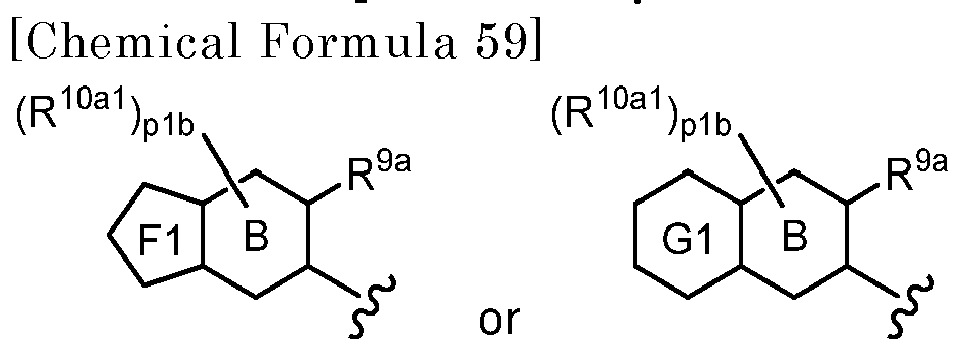
- (h-3) The compound of any one of Formula (I) and the above (a) to (e), wherein R3 is

- (h-4) The compound of any one of Formula (I) and the above (a) to (e), wherein R3 is

- (h-5) The compound of any one of Formula (I) and the above (a) to (e), wherein R3 is

- (h-6) The compound of any one of Formula (I) and the above (a) to (e), wherein R3 is

- (h-7) The compound of any one of Formula (I) and the above (a) to (e), wherein R3 is

- (h-8) The compound of any one of the above (h-1) to (h-7), wherein Ring F1 is substituted or unsubstituted cyclopentane, substituted or unsubstituted furan, substituted or unsubstituted thiophene, substituted or unsubstituted pyrrole, substituted or unsubstituted pyrazole, substituted or unsubstituted imidazole, substituted or unsubstituted thiazole, substituted or unsubstituted oxazole, substituted or unsubstituted dihydrofuran, substituted or unsubstituted dihydrothiophene, substituted or unsubstituted dihydropyrrole, or substituted or unsubstituted dioxole, or pharmaceutically acceptable salt thereof.
- (h-9) The compound of any one of the above (h-1) to (h-7), wherein Ring F1 is substituted or unsubstituted cyclopentane, substituted or unsubstituted furan, substituted or unsubstituted pyrrole, substituted or unsubstituted pyrazole, substituted or unsubstituted thiazole, substituted or unsubstituted oxazole, substituted or unsubstituted dihydrofuran, or substituted or unsubstituted dioxole, or pharmaceutically acceptable salt thereof.
- (h-10) The compound of any one of the above (h-1) to (h-7), wherein Ring F1 is cyclopentane substituted with one or more group(s) selected from halogen and alkyl; unsubstituted cyclopentane;
- furan substituted with one or more group(s) selected from halogen and alkyl; unsubstituted furan;
- pyrrole substituted with one or more group(s) selected from halogen and alkyl; unsubstituted pyrrole;
- pyrazole substituted with one or more group(s) selected from halogen and alkyl; unsubstituted pyrazole;
- thiazole substituted with one or more group(s) selected from halogen and alkyl; unsubstituted thiazole;
- oxazole substituted with one or more group(s) selected from halogen and alkyl; unsubstituted oxazole;
- dihydrofuran substituted with one or more group(s) selected from halogen and alkyl; unsubstituted dihydrofuran;
- dioxole substituted with one or more group(s) selected from halogen and alkyl; or unsubstituted dioxole,
- or pharmaceutically acceptable salt thereof.
- (h-11) The compound of any one of the above (h-1) to (h-7), wherein Ring F1 is unsubstituted cyclopentane; furan substituted with one or more group(s) selected from alkyl; unsubstituted pyrrole; unsubstituted pyrazole; thiazole substituted with one or more group(s) selected from alkyl; unsubstituted oxazole; unsubstituted dihydrofuran; dioxole substituted with one or more group(s) selected from halogen; or unsubstituted dioxole, or pharmaceutically acceptable salt thereof.
- (h-12) The compound of any one of the above (h-1) to (h-7), wherein Ring F2 is substituted or unsubstituted cyclopentane, substituted or unsubstituted furan, substituted or unsubstituted thiophene, substituted or unsubstituted pyrrole, substituted or unsubstituted pyrazole, substituted or unsubstituted imidazole, substituted or unsubstituted thiazole, substituted or unsubstituted oxazole, substituted or unsubstituted dihydrofuran, substituted or unsubstituted dihydrothiophene, or substituted or unsubstituted dihydropyrrole, or pharmaceutically acceptable salt thereof.
- (h-13) The compound of any one of the above (h-1) to (h-7), wherein Ring F2 is substituted or unsubstituted furan, substituted or unsubstituted pyrrole, substituted or unsubstituted thiazole, or substituted or unsubstituted dihydrofuran, or pharmaceutically acceptable salt thereof.
- (h-14) The compound of any one of the above (h-1) to (h-7), wherein Ring F2 is furan substituted with one or more group(s) selected from alkyl and alkyloxy; unsubstituted furan;
- pyrrole substituted with one or more group(s) selected from alkyl and alkyloxy; unsubstituted pyrrole;
- thiazole substituted with one or more group(s) selected from alkyl and alkyloxy; unsubstituted thiazole;
- dihydrofuran substituted with one or more group(s) selected from alkyl and alkyloxy; or unsubstituted dihydrofuran,
- or pharmaceutically acceptable salt thereof.
- (h-15) The compound of any one of the above (h-1) to (h-7), wherein Ring F2 is furan substituted with one or more group(s) selected from alkyl; unsubstituted furan; unsubstituted pyrrole; thiazole substituted with one or more group(s) selected from alkyl and alkyloxy; unsubstituted thiazole; or unsubstituted dihydrofuran, or pharmaceutically acceptable salt thereof.
- (h-16) The compound of any one of the above (h-1) to (h-15), wherein Ring G1 and Ring G2 are each independently substituted or unsubstituted benzene, substituted or unsubstituted cyclohexane, substituted or unsubstituted pyridine, substituted or unsubstituted pyrazine, substituted or unsubstituted pyrimidine, substituted or unsubstituted pyran, substituted or unsubstituted dihydropyran, substituted or unsubstituted dihydropyridine, substituted or unsubstituted tetrahydropyridine, substituted or unsubstituted dihydropyrazine, substituted or unsubstituted tetrahydropyrazine, substituted or unsubstituted oxazine, substituted or unsubstituted dihydrooxazine, substituted or unsubstituted dioxin, or substituted or unsubstituted dihydrodioxin, or pharmaceutically acceptable salt thereof.
- (h-17) The compound of any one of the above (h-1) to (h-15), wherein Ring G1 and Ring G2 are each independently substituted or unsubstituted pyridine, substituted or unsubstituted pyrazine, substituted or unsubstituted pyrimidine, substituted or unsubstituted pyran, substituted or unsubstituted dihydropyran, or substituted or unsubstituted dihydrodioxin, or pharmaceutically acceptable salt thereof.
- (h-18) The compound of any one of the above (h-1) to (h-15), wherein Ring G1 and Ring G2 are each independently substituted or unsubstituted pyridine, substituted or unsubstituted pyran, substituted or unsubstituted dihydropyran, or substituted or unsubstituted dihydrodioxin, or pharmaceutically acceptable salt thereof.
- (h-19) The compound of any one of the above (h-1) to (h-15), wherein Ring G1 and Ring G2 are each independently
- pyridine substituted with one or more group(s) selected from halogen; unsubstituted pyridine;
- pyran substituted with one or more group(s) selected from halogen; unsubstituted pyran;
- dihydropyran substituted with one or more group(s) selected from halogen; unsubstituted dihydropyran;
- dihydrodioxin substituted with one or more group(s) selected from halogen; or unsubstituted dihydrodioxin,
- or pharmaceutically acceptable salt thereof.
- (h-20) The compound of any one of the above (h-1) to (h-15), wherein Ring G1 and Ring G2 are each independently unsubstituted pyridine; unsubstituted pyran; unsubstituted dihydropyran; dihydrodioxin substituted with one or more group(s) selected from halogen; or unsubstituted dihydrodioxin, or pharmaceutically acceptable salt thereof.
- (h-21) The compound of any one of the above (h-1) to (h-20), wherein Ring HI is substituted or unsubstituted benzene, substituted or unsubstituted cyclohexane, substituted or unsubstituted pyridine, substituted or unsubstituted pyrazine, substituted or unsubstituted pyrimidine, or pharmaceutically acceptable salt thereof.
- (h-22) The compound of any one of the above (h-1) to (h-20), wherein Ring HI is each independently substituted or unsubstituted benzene, or pharmaceutically acceptable salt thereof.
- (h-23) The compound of any one of the above (h-1) to (h-20), wherein Ring HI is benzene substituted with one or more group(s) selected from halogen, or pharmaceutically acceptable salt thereof.
- (h-24) The compound of any one of the above (h-1) to (h-20), wherein Ring HI is unsubstituted benzene, or pharmaceutically acceptable salt thereof.
- (h-25) The compound of any one of the above (h-1) to (h-24), wherein p1b is 0, or pharmaceutically acceptable salt thereof.
- (h-26) The compound of any one of the above (h-1) to (h-24), wherein p1b is 1, or pharmaceutically acceptable salt thereof.
- (h-27) The compound of any one of the above (h-1) to (h-26), wherein p1c is 0, or pharmaceutically acceptable salt thereof.
- (h-28) The compound of any one of the above (h-1) to (h-26), wherein p1c is 1, or pharmaceutically acceptable salt thereof.
- (h-29) The compound of any one of the above (h-1) to (h-28), wherein R10a1 is halogen, hydroxy, amino, carbamoyl, substituted or unsubstituted alkyl, substituted or unsubstituted alkenyl, substituted or unsubstituted alkynyl, substituted or unsubstituted alkyloxy, substituted or unsubstituted alkenyloxy, substituted or unsubstituted alkynyloxy, substituted or unsubstituted alkylsulfanyl, substituted or unsubstituted alkenylsulfanyl, substituted or unsubstituted alkynylsulfanyl, substituted or unsubstituted alkylamino, substituted or unsubstituted alkenylamino, or substituted or unsubstituted alkynylamino, or pharmaceutically acceptable salt thereof.
- (h-30) The compound of any one of the above (h-1) to (h-28), wherein R10a1 is halogen, substituted or unsubstituted alkyl, substituted or unsubstituted alkyloxy, substituted or unsubstituted alkylsulfanyl, or substituted or unsubstituted alkylamino, or pharmaceutically acceptable salt thereof.
- (h-31) The compound of any one of the above (h-1) to (h-28), wherein R10a1 is halogen, substituted or unsubstituted alkyl, or substituted or unsubstituted alkyloxy, or pharmaceutically acceptable salt thereof.
- (h-32) The compound of any one of the above (h-1) to (h-28), wherein R10a1 is halogen, alkyl, haloalkyl, alkyloxy, or haloalkyloxy, or pharmaceutically acceptable salt thereof.
- (h-33) The compound of any one of the above (h-1) to (h-28), wherein R10a1 is unsubstituted or unsubstituted alkyl, or pharmaceutically acceptable salt thereof.
- (h-34) The compound of any one of the above (h-1) to (h-28), wherein R10a1 is unsubstituted alkyl, or pharmaceutically acceptable salt thereof.
- (h-1) The compound of any one of Formula (I) and the above (a) to (e), wherein R3 is a group represented by the formula:
- (i) A compound according to any one of the following (i-1) to (i-16) or a pharmaceutically acceptable salt thereof.
- (i-1) The compound of any one of Formula (I) and the above (a) to (h), wherein R9a and R9b are each independently halogen, hydroxy, amino, substituted or unsubstituted alkyl, substituted or unsubstituted alkenyl, substituted or unsubstituted alkynyl, substituted or unsubstituted alkyloxy, substituted or unsubstituted alkenyloxy, substituted or unsubstituted alkynyloxy, substituted or unsubstituted alkylsulfanyl, substituted or unsubstituted alkenylsulfanyl, substituted or unsubstituted alkynylsulfanyl, substituted or unsubstituted alkylamino, substituted or unsubstituted alkenylamino, substituted or unsubstituted alkynylamino, substituted or unsubstituted aromatic carbocyclyl, substituted or unsubstituted non-aromatic carbocyclyl, substituted or unsubstituted aromatic heterocyclyl, substituted or unsubstituted non-aromatic heterocyclyl, substituted or unsubstituted aromatic carbocyclyloxy, substituted or unsubstituted non-aromatic carbocyclyloxy, substituted or unsubstituted aromatic heterocyclyloxy, or substituted or unsubstituted non-aromatic heterocyclyloxy, or pharmaceutically acceptable salt thereof.
- (i-2) The compound of any one of Formula (I) and the above (a) to (h), wherein R9a and R9b are each independently halogen, hydroxy, amino, substituted or unsubstituted alkyl, substituted or unsubstituted alkyloxy, substituted or unsubstituted alkylsulfanyl, substituted or unsubstituted alkylamino, substituted or unsubstituted aromatic carbocyclyl, substituted or unsubstituted non-aromatic carbocyclyl, substituted or unsubstituted aromatic heterocyclyl, substituted or unsubstituted non-aromatic heterocyclyl, substituted or unsubstituted aromatic carbocyclyloxy, substituted or unsubstituted non-aromatic carbocyclyloxy, substituted or unsubstituted aromatic heterocyclyloxy, or substituted or unsubstituted non-aromatic heterocyclyloxy, or pharmaceutically acceptable salt thereof.
- (i-3) The compound of any one of Formula (I) and the above (a) to (h), wherein R9a and R9b are each independently halogen, substituted or unsubstituted alkyl, substituted or unsubstituted alkyloxy, substituted or unsubstituted alkylsulfanyl, substituted or unsubstituted alkylamino, substituted or unsubstituted aromatic carbocyclyl, or substituted or unsubstituted aromatic carbocyclyloxy, or pharmaceutically acceptable salt thereof.
- (i-4) The compound of any one of Formula (I) and the above (a) to (h), wherein R9a and R9b are each independently halogen;
- alkyl substituted with one or more group(s) selected from halogen, alkyloxy, aromatic carbocyclyl, and aromatic heterocyclyl; unsubstituted alkyl;
- alkyloxy substituted with one or more group(s) selected from halogen, alkyloxy, aromatic carbocyclyl, and aromatic heterocyclyl; unsubstituted alkyloxy;
- alkylsulfanyl substituted with one or more group(s) selected from halogen, alkyloxy, aromatic carbocyclyl, and aromatic heterocyclyl; unsubstituted alkylsulfanyl;
- alkylamino substituted with one or more group(s) selected from halogen, alkyloxy, aromatic carbocyclyl, and aromatic heterocyclyl; unsubstituted alkylamino;
- aromatic carbocyclyl substituted with one or more group(s) selected from halogen, alkyl, and alkyloxy; unsubstituted aromatic carbocyclyl;
- aromatic carbocyclyloxy substituted with one or more group(s) selected from halogen, alkyl, and alkyloxy; or unsubstituted aromatic carbocyclyloxy,
- or pharmaceutically acceptable salt thereof.
- (i-5) The compound of any one of Formula (I) and the above (a) to (h), wherein R9a and R9b are each independently halogen;
- alkyl substituted with one or more group(s) selected from halogen, alkyloxy, aromatic carbocyclyl, and aromatic heterocyclyl; unsubstituted alkyl;
- alkyloxy substituted with one or more group(s) selected from halogen; unsubstituted alkyloxy;
- unsubstituted alkylsulfanyl;
- unsubstituted alkylamino;
- unsubstituted aromatic carbocyclyl;
- aromatic carbocyclyloxy substituted with one or more group(s) selected from alkyl; or unsubstituted aromatic carbocyclyloxy,
- or pharmaceutically acceptable salt thereof.
- (i-6) The compound of any one of Formula (I) and the above (a) to (h), wherein R9a and R9b are each independently halogen;
alkyl substituted with one or more group(s) selected from halogen, alkyloxy, aromatic carbocyclyl, and aromatic heterocyclyl; or unsubstituted alkyl, or pharmaceutically acceptable salt thereof. - (i-7) The compound of any one of Formula (I) and the above (a) to (h), wherein R9a and R9b are each independently halogen, substituted or unsubstituted alkyl, substituted or unsubstituted alkenyl, substituted or unsubstituted alkynyl, substituted or unsubstituted alkyloxy, substituted or unsubstituted alkenyloxy, substituted or unsubstituted alkynyloxy, substituted or unsubstituted alkylsulfanyl, substituted or unsubstituted alkenylsulfanyl, substituted or unsubstituted alkynylsulfanyl, substituted or unsubstituted alkylamino, substituted or unsubstituted alkenylamino, or substituted or unsubstituted alkynylamino, or pharmaceutically acceptable salt thereof.
- (i-8) The compound of any one of Formula (I) and the above (a) to (h), wherein R9a and R9b are each independently halogen, substituted or unsubstituted alkyl, substituted or unsubstituted alkyloxy, substituted or unsubstituted alkylsulfanyl, or substituted or unsubstituted alkylamino, or pharmaceutically acceptable salt thereof.
- (i-9) The compound of any one of Formula (I) and the above (a) to (h), wherein R9a and R9b are each independently halogen, substituted or unsubstituted alkyl, or substituted or unsubstituted alkylsulfanyl, or pharmaceutically acceptable salt thereof.
- (i-10) The compound of any one of Formula (I) and the above (a) to (h), wherein R9a and R9b are each independently halogen, substituted or unsubstituted alkyl, substituted or unsubstituted alkenyl, or substituted or unsubstituted alkynyl, or pharmaceutically acceptable salt thereof.
- (i-11) The compound of any one of Formula (I) and the above (a) to (h), wherein R9a and R9b are each independently halogen, or substituted or unsubstituted alkyl, or pharmaceutically acceptable salt thereof.
- (i-12) The compound of any one of Formula (I) and the above (a) to (h), wherein R9a and R9b are each independently halogen, or substituted or unsubstituted alkyl, or pharmaceutically acceptable salt thereof.
- (i-13) The compound of any one of Formula (I) and the above (a) to (h), wherein R9a and R9b are each independently halogen, alkyl, or haloalkyl, or pharmaceutically acceptable salt thereof.
- (i-14) The compound of any one of Formula (I) and the above (a) to (h), wherein R9a and R9b are each independently substituted or unsubstituted C1 to C3 alkyl, or pharmaceutically acceptable salt thereof.
- (i-15) The compound of any one of Formula (I) and the above (a) to (h), wherein R9a and R9b are each independently unsubstituted C1 to C3 alkyl, or pharmaceutically acceptable salt thereof.
- (i-16) The compound of any one of Formula (I) and the above (a) to (h), wherein R9a and R9b are each independently unsubstituted methyl or unsubstituted ethyl, or pharmaceutically acceptable salt thereof.
- (j) A compound according to any one of the following (j-1) to (j-30) or a pharmaceutically acceptable salt thereof.
- (j-1) The compound of any one of Formula (I) and the above (a) to (e), wherein R3 is a group represented by the Formula:

- Ring G3 is a substituted or unsubstituted 6-membered aromatic carbocycle, a substituted or unsubstituted 6-membered non-aromatic carbocycle, a substituted or unsubstituted 6-membered aromatic heterocycle, or a substituted or unsubstituted 6-membered non-aromatic heterocycle;
- Ring H2 is a substituted or unsubstituted 6-membered aromatic carbocycle, a substituted or unsubstituted 6-membered non-aromatic carbocycle, a substituted or unsubstituted 6-membered aromatic heterocycle, or a substituted or unsubstituted 6-membered non-aromatic heterocycle;
- p1d and p2b are each independently 0 or 1; and
- R10a2 and R10b1 are the same as R10a and R10b of the above (f-1),
- or pharmaceutically acceptable salt thereof.
- (j-2) The compound of any one of Formula (I) and the above (a) to (e), wherein R3 is

- (j-3) The compound of any one of Formula (I) and the above (a) to (e), wherein R3 is

- (j-4) The compound of any one of Formula (I) and the above (a) to (e), wherein R3 is
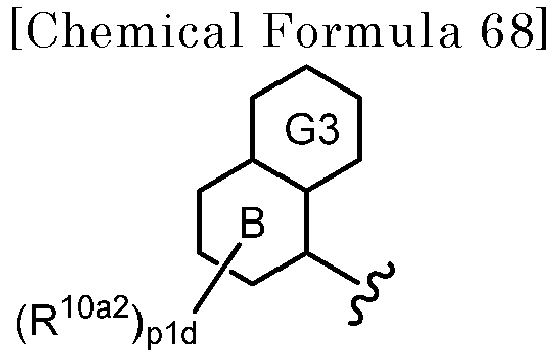
- (j-5) The compound of any one of the above (j-1) to (j-4), wherein Ring F3 is substituted or unsubstituted cyclopentane, substituted or unsubstituted furan, substituted or unsubstituted thiophene, substituted or unsubstituted pyrrole, substituted or unsubstituted pyrazole, substituted or unsubstituted imidazole, substituted or unsubstituted thiazole, substituted or unsubstituted oxazole, substituted or unsubstituted dihydrofuran, substituted or unsubstituted dihydrothiophene, substituted or unsubstituted dihydropyrrole, or substituted or unsubstituted dioxole, or pharmaceutically acceptable salt thereof.
- (j-6) The compound of any one of the above (j-1) to (j-4), wherein Ring F3 is cyclopentane substituted with one or more group(s) selected from alkyl; unsubstituted cyclopentane;
- furan substituted with one or more group(s) selected from alkyl; unsubstituted furan; thiophene substituted with one or more group(s) selected from alkyl; unsubstituted thiophene;
- pyrrole substituted with one or more group(s) selected from alkyl; unsubstituted pyrrole;
- imidazole substituted with one or more group(s) selected from alkyl; unsubstituted imidazole;
- thiazole substituted with one or more group(s) selected from alkyl; unsubstituted thiazole;
- oxazole substituted with one or more group(s) selected from alkyl; unsubstituted oxazole;
- dihydrofuran substituted with one or more group(s) selected from alkyl; unsubstituted dihydrofuran;
- dioxole substituted with one or more group(s) selected from alkyl; or unsubstituted dioxole,
- or pharmaceutically acceptable salt thereof.
- (j-7) The compound of any one of the above (j-1) to (j-4), wherein Ring F3 is unsubstituted cyclopentane;
- unsubstituted furan;
- unsubstituted thiophene;
- pyrrole substituted with one or more group(s) selected from alkyl and an aromatic carbocycle; unsubstituted pyrrole;
- unsubstituted imidazole;
- unsubstituted thiazole;
- unsubstituted oxazole;
- unsubstituted dihydrofuran;
- or unsubstituted dioxole, or pharmaceutically acceptable salt thereof.
- (j-8) The compound of any one of the above (j-1) to (j-4), wherein Ring F3 is substituted or unsubstituted cyclopentane, substituted or unsubstituted furan, substituted or unsubstituted thiophene, substituted or unsubstituted pyrrole, or substituted or unsubstituted dihydrofuran, or pharmaceutically acceptable salt thereof.
- (j-9) The compound of any one of the above (j-1) to (j-4), wherein Ring F3 is substituted or unsubstituted furan, substituted or unsubstituted thiophene, or substituted or unsubstituted pyrrole, or pharmaceutically acceptable salt thereof.
- (j-10) The compound of any one of the above (j-1) to (j-4), wherein Ring F3 is furan substituted with one or more group(s) selected from alkyl; unsubstituted furan; thiophene substituted with one or more group(s) selected from alkyl; unsubstituted thiophene;
pyrrole substituted with one or more group(s) selected from alkyl; or unsubstituted pyrrole, or pharmaceutically acceptable salt thereof. - (j-11) The compound of any one of the above (j-1) to (j-4), wherein Ring F3 is substituted furan;
- unsubstituted thiophene;
- pyrrole substituted with one or more group(s) selected from alkyl; or unsubstituted pyrrole, or pharmaceutically acceptable salt thereof.
- (j-12) The compound of any one of the above (j-1) to (j-11), wherein Ring G3 is substituted or unsubstituted benzene, substituted or unsubstituted cyclohexane, substituted or unsubstituted pyridine, substituted or unsubstituted pyrazine, substituted or unsubstituted pyrimidine, substituted or unsubstituted pyran, substituted or unsubstituted dihydropyran, substituted or unsubstituted dihydropyridine, substituted or unsubstituted tetrahydropyridine, substituted or unsubstituted dihydropyrazine, substituted or unsubstituted tetrahydropyrazine, substituted or unsubstituted oxazine, substituted or unsubstituted dihydrooxazine, substituted or unsubstituted dioxin, or substituted or unsubstituted dihydrodioxin, or pharmaceutically acceptable salt thereof.
- (j-13) The compound of any one of the above (j-1) to (j-11), wherein Ring G3 is substituted or unsubstituted cyclohexane, substituted or unsubstituted dihydropyridine, substituted or unsubstituted tetrahydropyridine, or substituted or unsubstituted dihydrodioxin, or pharmaceutically acceptable salt thereof.
- (j-14) The compound of any one of the above (j-1) to (j-11), wherein Ring G3 is cyclohexane substituted with one or more group(s) selected from alkyl; unsubstituted cyclohexane;
- dihydropyridine substituted with one or more group(s) selected from alkyl; unsubstituted dihydropyridine;
- tetrahydropyridine substituted with one or more group(s) selected from alkyl; unsubstituted tetrahydropyridine;
- dihydrodioxin substituted with one or more group(s) selected from alkyl; or unsubstituted dihydrodioxin,
- or pharmaceutically acceptable salt thereof.
- (j-15) The compound of any one of the above (j-1) to (j-11), wherein Ring G3 is unsubstituted cyclohexane;
- dihydropyridine substituted with one or more group(s) selected from alkyl; unsubstituted dihydropyridine;
- unsubstituted tetrahydropyridine,
- or unsubstituted dihydrodioxin, or pharmaceutically acceptable salt thereof.
- (j-16) The compound of any one of the above (j-1) to (j-11), wherein Ring G3 is unsubstituted cyclohexane;
dihydropyridine substituted with one or more group(s) selected from alkyl; or unsubstituted dihydropyridine, or pharmaceutically acceptable salt thereof. - (j-17) The compound of any one of the above (j-1) to (j-16), wherein Ring H2 is substituted or unsubstituted benzene, substituted or unsubstituted cyclohexane, substituted or unsubstituted pyridine, substituted or unsubstituted pyrazine, substituted or unsubstituted pyrimidine, or pharmaceutically acceptable salt thereof.
- (j-18) The compound of any one of the above (j-1) to (j-16), wherein Ring H2 is each independently substituted or unsubstituted benzene, or pharmaceutically acceptable salt thereof.
- (j-19) The compound of any one of the above (j-1) to (j-16), wherein Ring H2 is benzene substituted with one or more group(s) selected from halogen, or pharmaceutically acceptable salt thereof.
- (j-20) The compound of any one of the above (j-1) to (j-16), wherein Ring H2 is unsubstituted benzene, or pharmaceutically acceptable salt thereof.
- (j-21) The compound of any one of the above (j-1) to (j-20), wherein p1d is 0, or pharmaceutically acceptable salt thereof.
- (j-22) The compound of any one of the above (j-1) to (j-20), wherein p1d is 1, or pharmaceutically acceptable salt thereof.
- (j-23) The compound of any one of the above (j-1) to (j-22), wherein p2b is 0, or pharmaceutically acceptable salt thereof.
- (j-24) The compound of any one of the above (j-1) to (j-22), wherein p2b is 1, or pharmaceutically acceptable salt thereof.
- (j-25) The compound of any one of the above (j-1) to (j-24), wherein R10a2 and R10b1 are each independently halogen, hydroxy, amino, carbamoyl, substituted or unsubstituted alkyl, substituted or unsubstituted alkenyl, substituted or unsubstituted alkynyl, substituted or unsubstituted alkyloxy, substituted or unsubstituted alkenyloxy, substituted or unsubstituted alkynyloxy, substituted or unsubstituted alkylsulfanyl, substituted or unsubstituted alkenylsulfanyl, substituted or unsubstituted alkynylsulfanyl, substituted or unsubstituted alkylamino, substituted or unsubstituted alkenylamino, or substituted or unsubstituted alkynylamino, or pharmaceutically acceptable salt thereof.
- (j-26) The compound of any one of the above (j-1) to (j-24), wherein R10a2 and R10b1 are each independently halogen, substituted or unsubstituted alkyl, substituted or unsubstituted alkyloxy, substituted or unsubstituted alkylsulfanyl, or substituted or unsubstituted alkylamino, or pharmaceutically acceptable salt thereof.
- (j-27) The compound of any one of the above (j-1) to (j-24), wherein R10a2 and R10b1 are each independently halogen, substituted or unsubstituted alkyl, or substituted or unsubstituted alkyloxy, or pharmaceutically acceptable salt thereof.
- (j-28) The compound of any one of the above (j-1) to (j-24), wherein R10a2 and R10b1 are each independently halogen, alkyl, haloalkyl, alkyloxy, or haloalkyloxy, or pharmaceutically acceptable salt thereof.
- (j-29) The compound of any one of the above (j-1) to (j-24), wherein R10a2 and R10b1 are each independently halogen or unsubstituted or unsubstituted alkyl, or pharmaceutically acceptable salt thereof.
- (j-30) The compound of any one of the above (j-1) to (j-24), wherein R10a2 and R10b1 are each independently halogen or unsubstituted alkyl, or pharmaceutically acceptable salt thereof.
- (j-1) The compound of any one of Formula (I) and the above (a) to (e), wherein R3 is a group represented by the Formula:
- (k) A compound according to any one of the following (k-1) to (k-11) or a pharmaceutically acceptable salt thereof.
- (k-1) The compound of any one of Formula (I) and the above (a) to (e), wherein R3 is

The above definition of R3 means that R10c is a substituent on Ring B, and R10e is a substituent on Ring D. - (k-2) The compound of any one of Formula (I) and the above (a) to (e), wherein R3 is

- (k-3) The compound of the above (k-1) or (k-2), wherein R10c and R10d are each independently halogen, substituted or unsubstituted alkyl, substituted or unsubstituted alkenyl, substituted or unsubstituted alkynyl, substituted or unsubstituted alkyloxy, substituted or unsubstituted alkenyloxy, substituted or unsubstituted alkynyloxy, substituted or unsubstituted aromatic carbocyclyl, substituted or unsubstituted non-aromatic carbocyclyl, substituted or unsubstituted aromatic heterocyclyl, substituted or unsubstituted non-aromatic heterocyclyl, substituted or unsubstituted aromatic carbocyclyloxy, substituted or unsubstituted non-aromatic carbocyclyloxy, substituted or unsubstituted aromatic heterocyclyloxy, or substituted or unsubstituted non-aromatic heterocyclyloxy, or pharmaceutically acceptable salt thereof.
- (k-4) The compound of the above (k-1) or (k-2), wherein R10c and R10d are each independently halogen, substituted or unsubstituted alkyl, substituted or unsubstituted alkyloxy, substituted or unsubstituted aromatic carbocyclyl, substituted or unsubstituted non-aromatic carbocyclyl, substituted or unsubstituted aromatic heterocyclyl, substituted or unsubstituted non-aromatic heterocyclyl, substituted or unsubstituted aromatic carbocyclyloxy, substituted or unsubstituted non-aromatic carbocyclyloxy, substituted or unsubstituted aromatic heterocyclyloxy, or substituted or unsubstituted non-aromatic heterocyclyloxy, or pharmaceutically acceptable salt thereof.
- (k-5) The compound of the above (k-1) or (k-2), wherein R10c and R10d are each independently halogen, substituted or unsubstituted alkyl, substituted or unsubstituted alkyloxy, or pharmaceutically acceptable salt thereof.
- (k-6) The compound of the above (k-1) or (k-2), wherein R10c and R10d are each independently halogen, alkyl, haloalkyl, alkyloxy, haloalkyloxy, or pharmaceutically acceptable salt thereof.
- (k-7) The compound of the above (k-1) or (k-2), wherein R10c and R10d are each independently halogen, or pharmaceutically acceptable salt thereof.
- (k-8) The compound of any one of the above (k-1) to (k-7), wherein R10e is each independently halogen, or substituted or unsubstituted alkyl, or pharmaceutically acceptable salt thereof.
- (k-9) The compound of any one of the above (k-1) to (k-7), wherein R10e is each independently halogen, alkyl, or haloalkyl, or pharmaceutically acceptable salt thereof.
- (k-10) The compound of any one of the above (k-1) to (k-7), wherein R10e is each independently halogen, or pharmaceutically acceptable salt thereof.
- (k-11) The compound of any one of the above (k-1) to (k-10), wherein p3 is 0, or pharmaceutically acceptable salt thereof.
- (k-1) The compound of any one of Formula (I) and the above (a) to (e), wherein R3 is
- (l) A compound according to any one of the following (l-1) to (1-6) or a pharmaceutically acceptable salt thereof.
- (1-1) The compound of any one of Formula (I) and the above (a) to (k), wherein Ring B is benzene, cyclohexene, or a 6-membered aromatic heterocycle, or pharmaceutically acceptable salt thereof.
- (1-2) The compound of any one of Formula (I) and the above (a) to (k), wherein Ring B is benzene, or a 6-membered aromatic heterocycle, or pharmaceutically acceptable salt thereof.
- (1-3) The compound of any one of Formula (I) and the above (a) to (k), wherein Ring B is benzene, cyclohexene, pyridine, pyrimidine, or pyrazine, or pharmaceutically acceptable salt thereof.
- (1-4) The compound of any one of Formula (I) and the above (a) to (k), wherein Ring B is benzene, pyridine, pyrimidine, or pyrazine, or pharmaceutically acceptable salt thereof.
- (1-5) The compound of any one of Formula (I) and the above (a) to (k), wherein Ring B is benzene, or pyridine, or pharmaceutically acceptable salt thereof.
- (1-6) The compound of any one of Formula (I) and the above (a) to (k), wherein Ring B is benzene, or pharmaceutically acceptable salt thereof.
- (m) A compound according to any one of the following (m-1) to (m-4) or a pharmaceutically acceptable salt thereof.
- (m-1) The compound of any one of Formula (I) and the above (a) to (1), wherein Ring C is cyclopentane, or a 5-membered aromatic heterocycle, or pharmaceutically acceptable salt thereof.
- (m-2) The compound of any one of Formula (I) and the above (a) to (1), wherein Ring C is a 5-membered aromatic heterocycle, or pharmaceutically acceptable salt thereof.
- (m-3) The compound of any one of Formula (I) and the above (a) to (1), wherein Ring C is cyclopentane, pyrrole, imidazole, pyrazole, furan, thiophene, isoxazole, oxazole, isothiazole, or thiazole, or pharmaceutically acceptable salt thereof.
- (m-4) The compound of any one of Formula (I) and the above (a) to (1), wherein Ring C is thiophene, or pharmaceutically acceptable salt thereof.
- (n) A compound according to any one of the following (n-1) to (n-19) or a pharmaceutically acceptable salt thereof.
- (n-1) The compound of any one of Formula (I) and the above (a) to (m), wherein R5a is a hydrogen atom, halogen, hydroxy, carboxy, amino, carbamoyl, sulfamoyl, sulfo, cyano, substituted or unsubstituted alkyl, substituted or unsubstituted alkyloxy, substituted or unsubstituted alkylsulfanyl, substituted or unsubstituted alkylamino, substituted or unsubstituted alkylcarbonyl, substituted or unsubstituted alkylsulfonyl, substituted or unsubstituted alkylcarbamoyl, substituted or unsubstituted alkylsulfamoyl, substituted or unsubstituted alkylcarbonylamino, substituted or unsubstituted alkylsulfonylamino, substituted or unsubstituted alkyloxycarbonylamino, substituted or unsubstituted aromatic carbocyclyl, substituted or unsubstituted non-aromatic carbocyclyl, substituted or unsubstituted aromatic heterocyclyl, substituted or unsubstituted non-aromatic heterocyclyl, substituted or unsubstituted aromatic carbocyclyloxy, substituted or unsubstituted non-aromatic carbocyclyloxy, substituted or unsubstituted aromatic heterocyclyloxy, substituted or unsubstituted non-aromatic heterocyclyloxy, substituted or unsubstituted aromatic carbocyclylamino, substituted or unsubstituted non-aromatic carbocyclylamino, substituted or unsubstituted aromatic heterocyclylamino, substituted or unsubstituted non-aromatic heterocyclylamino, substituted or unsubstituted aromatic carbocyclylsulfanyl, substituted or unsubstituted non-aromatic carbocyclylsulfanyl, substituted or unsubstituted aromatic heterocyclylsulfanyl, substituted or unsubstituted non-aromatic heterocyclylsulfanyl, substituted or unsubstituted aromatic carbocyclylcarbonyl, substituted or unsubstituted non-aromatic carbocyclylcarbonyl, substituted or unsubstituted aromatic heterocyclylcarbonyl, substituted or unsubstituted non-aromatic heterocyclylcarbonyl, substituted or unsubstituted aromatic carbocyclylsulfonyl, substituted or unsubstituted non-aromatic carbocyclylsulfonyl, substituted or unsubstituted aromatic heterocyclylsulfonyl, substituted or unsubstituted non-aromatic heterocyclylsulfonyl, substituted or unsubstituted aromatic carbocyclylcarbamoyl, substituted or unsubstituted non-aromatic carbocyclylcarbamoyl, substituted or unsubstituted aromatic heterocyclylcarbamoyl, substituted or unsubstituted non-aromatic heterocyclylcarbamoyl, substituted or unsubstituted aromatic carbocyclylsulfamoyl, substituted or unsubstituted non-aromatic carbocyclylsulfamoyl, substituted or unsubstituted aromatic heterocyclylsulfamoyl, substituted or unsubstituted non-aromatic heterocyclylsulfamoyl, substituted or unsubstituted aromatic carbocyclylcarbonylamino, substituted or unsubstituted non-aromatic carbocyclylcarbonylamino, substituted or unsubstituted aromatic heterocyclylcarbonylamino, substituted or unsubstituted non-aromatic heterocyclylcarbonylamino, substituted or unsubstituted aromatic carbocyclylsulfonylamino, substituted or unsubstituted non-aromatic carbocyclylsulfonylamino, substituted or unsubstituted aromatic heterocyclylsulfonylamino, or substituted or unsubstituted non-aromatic heterocyclylsulfonylamino, or pharmaceutically acceptable salt thereof.
- (n-2) The compound of any one of Formula (I) and the above (a) to (m), wherein R5a is a hydrogen atom, halogen, hydroxy, amino, carbamoyl, cyano, substituted or unsubstituted alkyl, substituted or unsubstituted alkyloxy, substituted or unsubstituted alkylamino, substituted or unsubstituted alkylcarbonyl, substituted or unsubstituted alkylcarbamoyl, substituted or unsubstituted alkylcarbonylamino, substituted or unsubstituted alkyloxycarbonylamino, substituted or unsubstituted aromatic carbocyclyl, substituted or unsubstituted non-aromatic carbocyclyl, substituted or unsubstituted aromatic heterocyclyl, substituted or unsubstituted non-aromatic heterocyclyl, substituted or unsubstituted aromatic carbocyclyloxy, substituted or unsubstituted non-aromatic carbocyclyloxy, substituted or unsubstituted aromatic heterocyclyloxy, substituted or unsubstituted non-aromatic heterocyclyloxy, substituted or unsubstituted aromatic carbocyclylamino, substituted or unsubstituted non-aromatic carbocyclylamino, substituted or unsubstituted aromatic heterocyclylamino, substituted or unsubstituted non-aromatic heterocyclylamino, substituted or unsubstituted aromatic carbocyclylcarbonyl, substituted or unsubstituted non-aromatic carbocyclylcarbonyl, substituted or unsubstituted aromatic heterocyclylcarbonyl, substituted or unsubstituted non-aromatic heterocyclylcarbonyl, substituted or unsubstituted aromatic carbocyclylcarbamoyl, substituted or unsubstituted non-aromatic carbocyclylcarbamoyl, substituted or unsubstituted aromatic heterocyclylcarbamoyl, substituted or unsubstituted non-aromatic heterocyclylcarbamoyl, substituted or unsubstituted aromatic carbocyclylcarbonylamino, substituted or unsubstituted non-aromatic carbocyclylcarbonylamino, substituted or unsubstituted aromatic heterocyclylcarbonylamino, or substituted or unsubstituted non-aromatic heterocyclylcarbonylamino, or pharmaceutically acceptable salt thereof.
- (n-3) The compound of any one of Formula (I) and the above (a) to (m), wherein R5a is a hydrogen atom, halogen, hydroxy, carboxy, amino, carbamoyl, sulfamoyl, sulfo, cyano, substituted or unsubstituted alkyl, substituted or unsubstituted alkenyl, substituted or unsubstituted alkynyl, substituted or unsubstituted alkyloxy, substituted or unsubstituted alkenyloxy, substituted or unsubstituted alkynyloxy, substituted or unsubstituted alkylamino, substituted or unsubstituted alkenylamino, substituted or unsubstituted alkynylamino, substituted or unsubstituted alkylsulfanyl, substituted or unsubstituted alkenylsulfanyl, substituted or unsubstituted alkynylsulfanyl, substituted or unsubstituted alkyloxycarbonyl, substituted or unsubstituted alkenyloxycarbonyl, substituted or unsubstituted alkynyloxycarbonyl, substituted or unsubstituted alkylcarbamoyl, substituted or unsubstituted alkenylcarbamoyl, substituted or unsubstituted alkynylcarbamoyl, substituted or unsubstituted alkylcarbonylamino, substituted or unsubstituted alkenylcarbonylamino, substituted or unsubstituted alkynylcarbonylamino, substituted or unsubstituted alkyloxycarbonylamino, substituted or unsubstituted alkenyloxycarbonylamino, substituted or unsubstituted alkynyloxycarbonylamino, substituted or unsubstituted aromatic carbocyclyl, substituted or unsubstituted non-aromatic carbocyclyl, substituted or unsubstituted aromatic heterocyclyl, or substituted or unsubstituted non-aromatic heterocyclyl, or pharmaceutically acceptable salt thereof.
- (n-4) The compound of any one of Formula (I) and the above (a) to (m), wherein R5a is a hydrogen atom, halogen, hydroxy, carboxy, amino, carbamoyl, sulfamoyl, sulfo, cyano, substituted or unsubstituted alkyl, substituted or unsubstituted alkyloxy, substituted or unsubstituted alkylamino, substituted or unsubstituted alkyloxycarbonyl, substituted or unsubstituted alkylcarbamoyl, substituted or unsubstituted alkylcarbonylamino, substituted or unsubstituted alkyloxycarbonylamino, substituted or unsubstituted aromatic carbocyclyl, substituted or unsubstituted non-aromatic carbocyclyl, substituted or unsubstituted aromatic heterocyclyl, or substituted or unsubstituted non-aromatic heterocyclyl, or pharmaceutically acceptable salt thereof.
- (n-5) The compound of any one of Formula (I) and the above (a) to (m), wherein R5a is a hydrogen atom, halogen, hydroxy, carboxy, amino, carbamoyl, cyano, substituted or unsubstituted alkyl, substituted or unsubstituted alkyloxy, substituted or unsubstituted alkyloxycarbonyl, substituted or unsubstituted alkylcarbamoyl, substituted or unsubstituted alkyloxycarbonylamino, substituted or unsubstituted aromatic carbocyclyl, substituted or unsubstituted non-aromatic carbocyclyl, substituted or unsubstituted aromatic heterocyclyl, or substituted or unsubstituted non-aromatic heterocyclyl, or pharmaceutically acceptable salt thereof.
- (n-6) The compound of any one of Formula (I) and the above (a) to (m), wherein R5a is a hydrogen atom, halogen, hydroxy, carboxy, amino, carbamoyl, cyano, substituted or unsubstituted alkyl, substituted or unsubstituted alkyloxy, substituted or unsubstituted alkyloxycarbonyl, substituted or unsubstituted alkylcarbamoyl, substituted or unsubstituted alkyloxycarbonylamino, or substituted or unsubstituted aromatic carbocyclyl, or pharmaceutically acceptable salt thereof.
- (n-7) The compound of any one of Formula (I) and the above (a) to (m), wherein R5a is a hydrogen atom;
- halogen;
- hydroxy;
- carboxy;
- amino;
- carbamoyl;
- cyano;
- alkyl substituted with one or more group(s) selected from halogen, hydroxy, carboxy, carbamoyl, alkylcarbamoyl optionally substituted with one or more group(s) selected from (hydroxy, cyano and alkyloxy), non-aromatic heterocyclylcarbonyl, aromatic carbocyclylcarbamoyl optionally substituted with one or more group(s) selected from (halogen and alkyl), and non-aromatic heterocyclylcarbamoyl; unsubstituted alkyl; alkyloxy substituted with one or more group(s) selected from halogen and an aromatic carbocycle; unsubstituted alkyloxy;
- unsubstituted alkyloxycarbonyl;
- alkylcarbamoyl substituted with one or more group(s) selected from halogen, cyano, alkyloxy, alkylcarbonyl, alkylsulfonyl, alkylcarbamoyl, and aromatic carbocyclyl; unsubstituted alkylcarbamoyl;
- unsubstituted alkyloxycarbonylamino; or
- unsubstituted aromatic carbocyclyl,
- or pharmaceutically acceptable salt thereof.
- (n-8) The compound of any one of Formula (I) and the above (a) to (m), wherein R5a is a hydrogen atom;
- halogen;
- alkyl substituted with one or more group(s) selected from halogen, hydroxy, carboxy, carbamoyl, alkylcarbamoyl optionally substituted with one or more group(s) selected from (hydroxy, cyano and alkyloxy), non-aromatic heterocyclylcarbonyl, aromatic carbocyclylcarbamoyl optionally substituted with one or more group(s) selected from (halogen and alkyl), and non-aromatic heterocyclylcarbamoyl;
- unsubstituted alkyl;
- alkyloxy substituted with one or more group(s) selected from halogen and an aromatic carbocycle; or
- unsubstituted alkyloxy,
- or pharmaceutically acceptable salt thereof.
- (n-9) The compound of any one of Formula (I) and the above (a) to (m), wherein R5a is a hydrogen atom, halogen, amino, carbamoyl, cyano, substituted or unsubstituted alkyl, substituted or unsubstituted alkyloxy, substituted or unsubstituted alkylamino, substituted or unsubstituted aromatic carbocyclyl, substituted or unsubstituted non-aromatic carbocyclyl, substituted or unsubstituted aromatic heterocyclyl, or substituted or unsubstituted non-aromatic heterocyclyl, or pharmaceutically acceptable salt thereof.
- (n-10) The compound of any one of Formula (I) and the above (a) to (m), wherein R5a is a hydrogen atom, halogen, amino, carbamoyl, cyano, alkyl, haloalkyl, alkyloxy, haloalkyloxy, alkylamino, haloalkylamino, substituted or unsubstituted aromatic carbocyclyl, substituted or unsubstituted non-aromatic carbocyclyl, substituted or unsubstituted aromatic heterocyclyl, or substituted or unsubstituted non-aromatic heterocyclyl, or pharmaceutically acceptable salt thereof.
- (n-11) The compound of any one of Formula (I) and the above (a) to (m), wherein R5a is a hydrogen atom, halogen, substituted or unsubstituted alkyl, or substituted or unsubstituted alkyloxy, or pharmaceutically acceptable salt thereof.
- (n-12) The compound of any one of Formula (I) and the above (a) to (m), wherein R5a is a hydrogen atom, halogen, alkyl, haloalkyl, alkyloxy, or haloalkyloxy, or pharmaceutically acceptable salt thereof.
- (n-13) The compound of any one of Formula (I) and the above (a) to (m), wherein R5a is substituted or unsubstituted alkyloxy, or pharmaceutically acceptable salt thereof.
- (n-14) The compound of any one of Formula (I) and the above (a) to (m), wherein R5a is alkyloxy or haloalkyloxy, or pharmaceutically acceptable salt thereof.
- (n-15) The compound of any one of Formula (I) and the above (a) to (m), wherein R5a is substituted or unsubstituted alkyl, or pharmaceutically acceptable salt thereof.
- (n-16) The compound of any one of Formula (I) and the above (a) to (m), wherein R5a is alkyl or haloalkyl, or pharmaceutically acceptable salt thereof.
- (n-17) The compound of any one of Formula (I) and the above (a) to (m), wherein R5a is halogen, or pharmaceutically acceptable salt thereof.
- (n-18) The compound of any one of Formula (I) and the above (a) to (m), wherein R5a is a fluorine atom or a chlorine atom, or pharmaceutically acceptable salt thereof.
- (n-19) The compound of any one of Formula (I) and the above (a) to (m), wherein R5a is a fluorine atom, or pharmaceutically acceptable salt thereof.
- (o) A compound according to any one of the following (o-1) to (o-9) or a pharmaceutically acceptable salt thereof.
- (o-1) The compound of any one of Formula (I) and the above (a) to (n), wherein R5b is a hydrogen atom, carboxy, carbamoyl, sulfamoyl, sulfo, cyano, substituted or unsubstituted alkyl, substituted or unsubstituted alkylcarbonyl, substituted or unsubstituted alkyloxycarbonyl, substituted or unsubstituted alkylcarbamoyl, substituted or unsubstituted aromatic carbocyclyl, substituted or unsubstituted non-aromatic carbocyclyl, substituted or unsubstituted aromatic heterocyclyl, substituted or unsubstituted non-aromatic heterocyclyl, substituted or unsubstituted aromatic carbocyclylcarbonyl, substituted or unsubstituted non-aromatic carbocyclylcarbonyl, substituted or unsubstituted aromatic heterocyclylcarbonyl, substituted or unsubstituted non-aromatic heterocyclylcarbonyl, substituted or unsubstituted aromatic carbocyclylcarbamoyl, substituted or unsubstituted non-aromatic carbocyclylcarbamoyl, substituted or unsubstituted aromatic heterocyclylcarbamoyl, or substituted or unsubstituted non-aromatic heterocyclylcarbamoyl, or pharmaceutically acceptable salt thereof.
- (o-2) The compound of any one of Formula (I) and the above (a) to (n), wherein R5b is a hydrogen atom, carboxy, carbamoyl, cyano, substituted or unsubstituted alkyl, substituted or unsubstituted alkylcarbonyl, substituted or unsubstituted alkyloxycarbonyl, substituted or unsubstituted alkylcarbamoyl, substituted or unsubstituted aromatic carbocyclyl, substituted or unsubstituted non-aromatic carbocyclyl, substituted or unsubstituted aromatic heterocyclyl, substituted or unsubstituted non-aromatic heterocyclyl, substituted or unsubstituted aromatic carbocyclylcarbonyl, substituted or unsubstituted non-aromatic carbocyclylcarbonyl, substituted or unsubstituted aromatic heterocyclylcarbonyl, substituted or unsubstituted non-aromatic heterocyclylcarbonyl, substituted or unsubstituted aromatic carbocyclylcarbamoyl, substituted or unsubstituted non-aromatic carbocyclylcarbamoyl, substituted or unsubstituted aromatic heterocyclylcarbamoyl, or substituted or unsubstituted non-aromatic heterocyclylcarbamoyl, or pharmaceutically acceptable salt thereof.
- (o-3) The compound of any one of Formula (I) and the above (a) to (n), wherein R5b is a hydrogen atom, carboxy, carbamoyl, cyano, substituted or unsubstituted alkyl, substituted or unsubstituted alkenyl, substituted or unsubstituted alkynyl, substituted or unsubstituted alkylcarbonyl, substituted or unsubstituted alkenylcarbonyl, substituted or unsubstituted alkynylcarbonyl, substituted or unsubstituted aromatic carbocyclyl, substituted or unsubstituted non-aromatic carbocyclyl, substituted or unsubstituted aromatic heterocyclyl, or substituted or unsubstituted non-aromatic heterocyclyl, or pharmaceutically acceptable salt thereof.
- (o-4) The compound of any one of Formula (I) and the above (a) to (n), wherein R5b is a hydrogen atom, substituted or unsubstituted alkyl, substituted or unsubstituted alkylcarbonyl, substituted or unsubstituted aromatic carbocyclyl, substituted or unsubstituted non-aromatic carbocyclyl, substituted or unsubstituted aromatic heterocyclyl, or substituted or unsubstituted non-aromatic heterocyclyl, or pharmaceutically acceptable salt thereof.
- (o-5) The compound of any one of Formula (I) and the above (a) to (n), wherein R5b is a hydrogen atom, or substituted or unsubstituted alkyl, or pharmaceutically acceptable salt thereof.
- (o-6) The compound of any one of Formula (I) and the above (a) to (n), wherein R5b is a hydrogen atom, alkyl, or haloalkyl, or pharmaceutically acceptable salt thereof.
- (o-7) The compound of any one of Formula (I) and the above (a) to (n), wherein R5b is unsubstituted alkyl, or pharmaceutically acceptable salt thereof.
- (o-8) The compound of any one of Formula (I) and the above (a) to (n), wherein R5b is a hydrogen atom;
- carboxy;
- carbamoyl;
- cyano;
- alkyl substituted with one or more group(s) selected from halogen, hydroxy, carboxy, carbamoyl, alkylcarbamoyl optionally substituted with one or more group(s) selected from (hydroxy, cyano and alkyloxy), non-aromatic heterocyclylcarbonyl, aromatic carbocyclylcarbamoyl optionally substituted with one or more group(s) selected from (halogen and alkyl), and non-aromatic heterocyclylcarbamoyl;
- unsubstituted alkyl;
- unsubstituted alkyloxycarbonyl;
- alkylcarbamoyl substituted with one or more group(s) selected from halogen, cyano, alkyloxy, alkylcarbonyl, alkylsulfonyl, alkylcarbamoyl, and aromatic carbocyclyl;
- unsubstituted alkylcarbamoyl; or
- unsubstituted aromatic carbocyclyl,
- or pharmaceutically acceptable salt thereof.
- (o-9) The compound of any one of Formula (I) and the above (a) to (n), wherein R5b is a hydrogen atom;
- halogen;
- alkyl substituted with one or more group(s) selected from halogen, hydroxy, carboxy, carbamoyl, alkylcarbamoyl optionally substituted with one or more group(s) selected from (hydroxy, cyano and alkyloxy), non-aromatic heterocyclylcarbonyl, aromatic carbocyclylcarbamoyl optionally substituted with one or more group(s) selected from (halogen and alkyl), and non-aromatic heterocyclylcarbamoyl;
- or unsubstituted alkyl, or pharmaceutically acceptable salt thereof.
- (p) A compound of any one of the following (p-1) to (p-3) or a pharmaceutically acceptable salt thereof.
- (p-1) The compound of any one of Formula (I) and the above (a) to (o), wherein n is an integer from 1 to 3, or pharmaceutically acceptable salt thereof.
- (p-2) The compound of any one of Formula (I) and the above (a) to (o), wherein n is 1 or 2, or pharmaceutically acceptable salt thereof.
- (p-3) The compound of any one of Formula (I) and the above (a) to (o), wherein n is 1, or pharmaceutically acceptable salt thereof.
- (q) A compound according to any one of the following (q-1) to (q-7) or a pharmaceutically acceptable salt thereof.
- (q-1) The compound of any one of Formula (I) and the above (a) to (p), wherein R2a is a hydrogen atom, halogen, or substituted or unsubstituted alkyl, or R2a and R2b which are attached to the same carbon atom are taken together to form oxo, or pharmaceutically acceptable salt thereof.
- (q-2) The compound of any one of Formula (I) and the above (a) to (p), wherein R2a is a hydrogen atom, or halogen, or R2a and R2b which are attached to the same carbon atom are taken together to form oxo, or pharmaceutically acceptable salt thereof.
- (q-3) The compound of any one of Formula (I) and the above (a) to (p), wherein R2a is a hydrogen atom, or R2a and R2b which are attached to the same carbon atom are taken together to form oxo, or pharmaceutically acceptable salt thereof.
- (q-4) The compound of any one of Formula (I) and the above (a) to (p), wherein R2a is a hydrogen atom, halogen, or substituted or unsubstituted alkyl, or pharmaceutically acceptable salt thereof.
- (q-5) The compound of any one of Formula (I) and the above (a) to (p), wherein R2a is a hydrogen atom, halogen, alkyl, or haloalkyl, or pharmaceutically acceptable salt thereof.
- (q-6) The compound of any one of Formula (I) and the above (a) to (p), wherein R2a is a hydrogen atom, or halogen, or pharmaceutically acceptable salt thereof.
- (q-7) The compound of any one of Formula (I) and the above (a) to (p), wherein R2a is a hydrogen atom, or pharmaceutically acceptable salt thereof.
- (r) A compound according to any one of the following (r-1) to (r-7) or a pharmaceutically acceptable salt thereof.
- (r-1) The compound of any one of Formula (I) and the above (a) to (q), wherein R2b is a hydrogen atom, halogen, or substituted or unsubstituted alkyl, or R2a and R2b which are attached to the same carbon atom are taken together to form oxo, or pharmaceutically acceptable salt thereof.
- (r-2) The compound of any one of Formula (I) and the above (a) to (q), wherein R2b is a hydrogen atom, or halogen, or R2a and R2b which are attached to the same carbon atom are taken together to form oxo, or pharmaceutically acceptable salt thereof.
- (r-3) The compound of any one of Formula (I) and the above (a) to (q), wherein R2b is a hydrogen atom, or R2a and R2b which are attached to the same carbon atom are taken together to form oxo, or pharmaceutically acceptable salt thereof.
- (r-4) The compound of any one of Formula (I) and the above (a) to (q), wherein R2b is a hydrogen atom, halogen, or substituted or unsubstituted alkyl, or pharmaceutically acceptable salt thereof.
- (r-5) The compound of any one of Formula (I) and the above (a) to (q), wherein R2b is a hydrogen atom, halogen, alkyl, or haloalkyl, or pharmaceutically acceptable salt thereof.
- (r-6) The compound of any one of Formula (I) and the above (a) to (q), wherein R2b is a hydrogen atom, or halogen, or pharmaceutically acceptable salt thereof.
- (r-7) The compound of any one of Formula (I) and the above (a) to (q), wherein R2b is a hydrogen atom, or pharmaceutically acceptable salt thereof.
- (s) A compound according to any one of the following (s-1) to (s-3) or a pharmaceutically acceptable salt thereof.
- (s-1) The compound of any one of Formula (I) and the above (a) to (r), wherein m is an integer from 0 to 2, or pharmaceutically acceptable salt thereof.
- (s-2) The compound of any one of Formula (I) and the above (a) to (r), wherein m is 0 or 1, or pharmaceutically acceptable salt thereof.
- (s-3) The compound of any one of Formula (I) and the above (a) to (r), wherein m is 0, or pharmaceutically acceptable salt thereof.
- (t) A compound according to any one of the following (t-1) to (t-4) or a pharmaceutically acceptable salt thereof.
- (t-1) The compound of any one of Formula (I) and the above (a) to (s), wherein R2c is a hydrogen atom, halogen, or substituted or unsubstituted alkyl, or pharmaceutically acceptable salt thereof.
- (t-2) The compound of any one of Formula (I) and the above (a) to (s), wherein R2c is a hydrogen atom, halogen, alkyl, or haloalkyl, or pharmaceutically acceptable salt thereof.
- (t-3) The compound of any one of Formula (I) and the above (a) to (s), wherein R2c is a hydrogen atom, or halogen, or pharmaceutically acceptable salt thereof.
- (t-4) The compound of any one of Formula (I) and the above (a) to (s), wherein R2c is a hydrogen atom, or pharmaceutically acceptable salt thereof.
- (u) A compound according to any one of the following (u-1) to (u-4) or a pharmaceutically acceptable salt thereof.
- (u-1) The compound of any one of Formula (I) and the above (a) to (t), wherein R2d is a hydrogen atom, halogen, or substituted or unsubstituted alkyl, or pharmaceutically acceptable salt thereof.
- (u-2) The compound of any one of Formula (I) and the above (a) to (t), wherein R2d is a hydrogen atom, halogen, alkyl, or haloalkyl, or pharmaceutically acceptable salt thereof.
- (u-3) The compound of any one of Formula (I) and the above (a) to (t), wherein R2d is a hydrogen atom, or halogen, or pharmaceutically acceptable salt thereof.
- (u-4) The compound of any one of Formula (I) and the above (a) to (t), wherein R2d is a hydrogen atom, or pharmaceutically acceptable salt thereof.
- (v) A compound according to any one of the following (v-1) to (v-4) or a pharmaceutically acceptable salt thereof.
- (v-1) The compound of any one of Formula (I) and the above (a) to (u), wherein Y1 is O, or pharmaceutically acceptable salt thereof.
- (v-2) The compound of any one of Formula (I) and the above (a) to (u), wherein Y2 is O, or pharmaceutically acceptable salt thereof.
- (v-3) The compound of any one of Formula (I) and the above (a) to (u), wherein each of Y1 and Y2 is O, or pharmaceutically acceptable salt thereof.
- (v-4) The compound of any one of Formula (I) and the above (a) to (u), wherein Y1 and Y2 are each independently O or S, or pharmaceutically acceptable salt thereof.
- (w) A compound according to any one of the following (w-1) to (w-4) or a pharmaceutically acceptable salt thereof.
- (w-1) The compound of any one of Formula (I) and the above (a) to (v), wherein R4 is a hydrogen atom, halogen, or substituted or unsubstituted alkyl, or pharmaceutically acceptable salt thereof.
- (w-2) The compound of any one of Formula (I) and the above (a) to (v), wherein R4 is a hydrogen atom, halogen, alkyl, or haloalkyl, or pharmaceutically acceptable salt thereof.
- (w-3) The compound of any one of Formula (I) and the above (a) to (v), wherein R4 is a hydrogen atom, or halogen, or pharmaceutically acceptable salt thereof.
- (w-4) The compound of any one of Formula (I) and the above (a) to (v), wherein R4 is a hydrogen atom, or pharmaceutically acceptable salt thereof.
- (x) A compound according to any one of the following (x-1) to (x-4) or a pharmaceutically acceptable salt thereof.
- (x-1) The compound of any one of Formula (I) and the above (a) to (w), wherein R6 is a hydrogen atom, halogen, or substituted or unsubstituted alkyl, or pharmaceutically acceptable salt thereof.
- (x-2) The compound of any one of Formula (I) and the above (a) to (w), wherein R6 is a hydrogen atom, halogen, alkyl, or haloalkyl, or pharmaceutically acceptable salt thereof.
- (x-3) The compound of any one of Formula (I) and the above (a) to (w), wherein R6 is a hydrogen atom, or halogen, or pharmaceutically acceptable salt thereof.
- (x-4) The compound of any one of Formula (I) and the above (a) to (w), wherein R6 is a hydrogen atom, or pharmaceutically acceptable salt thereof.
- (y) A compound according to any one of the following (y-1) to (y-8) or a pharmaceutically acceptable salt thereof.
- (y-1) The compound of any one of Formula (I) and the above (a) to (x), wherein R5a' is a hydrogen atom, halogen, hydroxy, carboxy, amino, carbamoyl, sulfamoyl, sulfo, cyano, substituted or unsubstituted alkyl, substituted or unsubstituted alkenyl, substituted or unsubstituted alkynyl, substituted or unsubstituted alkyloxy, substituted or unsubstituted alkenyloxy, substituted or unsubstituted alkynyloxy, substituted or unsubstituted alkylamino, substituted or unsubstituted alkenylamino, substituted or unsubstituted alkynylamino, substituted or unsubstituted alkylsulfanyl, substituted or unsubstituted alkenylsulfanyl, substituted or unsubstituted alkynylsulfanyl, substituted or unsubstituted alkyloxycarbonyl, substituted or unsubstituted alkenyloxycarbonyl, substituted or unsubstituted alkynyloxycarbonyl, substituted or unsubstituted alkylcarbamoyl, substituted or unsubstituted alkenylcarbamoyl, substituted or unsubstituted alkynylcarbamoyl, substituted or unsubstituted alkylcarbonylamino, substituted or unsubstituted alkenylcarbonylamino, substituted or unsubstituted alkynylcarbonylamino, substituted or unsubstituted alkyloxycarbonylamino, substituted or unsubstituted alkenyloxycarbonylamino, substituted or unsubstituted alkynyloxycarbonylamino, substituted or unsubstituted aromatic carbocyclyl, substituted or unsubstituted non-aromatic carbocyclyl, substituted or unsubstituted aromatic heterocyclyl, or substituted or unsubstituted non-aromatic heterocyclyl, or pharmaceutically acceptable salt thereof.
- (y-2) The compound of any one of Formula (I) and the above (a) to (x), wherein R5a' is a hydrogen atom, halogen, hydroxy, carboxy, amino, carbamoyl, cyano, substituted or unsubstituted alkyl, substituted or unsubstituted alkyloxy, substituted or unsubstituted alkyloxycarbonyl, substituted or unsubstituted alkylcarbamoyl, substituted or unsubstituted alkyloxycarbonylamino, substituted or unsubstituted aromatic carbocyclyl, substituted or unsubstituted non-aromatic carbocyclyl, substituted or unsubstituted aromatic heterocyclyl, or substituted or unsubstituted non-aromatic heterocyclyl, or pharmaceutically acceptable salt thereof.
- (y-3) The compound of any one of Formula (I) and the above (a) to (x), wherein R5a' is a hydrogen atom, halogen, amino, carbamoyl, cyano, substituted or unsubstituted alkyl, substituted or unsubstituted alkyloxy, substituted or unsubstituted alkylamino, substituted or unsubstituted aromatic carbocyclyl, substituted or unsubstituted non-aromatic carbocyclyl, substituted or unsubstituted aromatic heterocyclyl, or substituted or unsubstituted non-aromatic heterocyclyl, or pharmaceutically acceptable salt thereof.
- (y-4) The compound of any one of Formula (I) and the above (a) to (x), wherein R5a' is a hydrogen atom, halogen, substituted or unsubstituted alkyl, or substituted or unsubstituted alkyloxy, or pharmaceutically acceptable salt thereof.
- (y-5) The compound of any one of Formula (I) and the above (a) to (x), wherein R5a' is a hydrogen atom, halogen, alkyl, haloalkyl, alkyloxy, or haloalkyloxy, or pharmaceutically acceptable salt thereof.
- (y-6) The compound of any one of Formula (I) and the above (a) to (x), wherein R5a' is a hydrogen atom, halogen, alkyl, or haloalkyl, or pharmaceutically acceptable salt thereof.
- (y-7) The compound of any one of Formula (I) and the above (a) to (x), wherein R5a' is a hydrogen atom, or halogen, or pharmaceutically acceptable salt thereof.
- (y-8) The compound of any one of Formula (I) and the above (a) to (x), wherein R5a' is a hydrogen atom, or pharmaceutically acceptable salt thereof.
- (z) A compound according to any one of the following (z-1) to (z-4) or a pharmaceutically acceptable salt thereof.
- (z-1) The compound of any one of Formula (I) and the above (a) to (y), wherein RY is each independently a hydrogen atom, hydroxy, cyano, substituted or unsubstituted alkyl, substituted or unsubstituted alkenyl, substituted or unsubstituted alkynyl, substituted or unsubstituted alkyloxy, substituted or unsubstituted alkenyloxy, substituted or unsubstituted alkynyloxy, substituted or unsubstituted aromatic carbocyclyl, substituted or unsubstituted non-aromatic carbocyclyl, substituted or unsubstituted aromatic heterocyclyl, or substituted or unsubstituted non-aromatic heterocyclyl, or pharmaceutically acceptable salt thereof.
- (z-2) The compound of any one of Formula (I) and the above (a) to (y), wherein RY is each independently a hydrogen atom, hydroxy, cyano, substituted or unsubstituted alkyl, substituted or unsubstituted alkenyl, substituted or unsubstituted alkynyl, substituted or unsubstituted alkyloxy, substituted or unsubstituted alkenyloxy, or substituted or unsubstituted alkynyloxy, or pharmaceutically acceptable salt thereof.
- (z-3) The compound of any one of Formula (I) and the above (a) to (y), wherein RY is each independently a hydrogen atom, hydroxy, cyano, substituted or unsubstituted alkyl, or substituted or unsubstituted alkyloxy, or pharmaceutically acceptable salt thereof.
- (z-4) The compound of any one of Formula (I) and the above (a) to (y), wherein RY is each independently a hydrogen atom, hydroxy, cyano, alkyl, haloalkyl, alkyloxy, or haloalkyloxy, or pharmaceutically acceptable salt thereof.
- The compounds represented by Formula (I) are not limited to specific isomers but include all possible isomers (e.g., keto-enol isomers, imine-enamine isomers, diastereoisomers, enantiomers, rotamers or the like), racemates or mixtures thereof.
- For example, a compound represented by Formula (I) wherein R7a is a hydrogen atom includes the following tautomer.

- Likewise, a tautomer of the ring represented by the Formula:
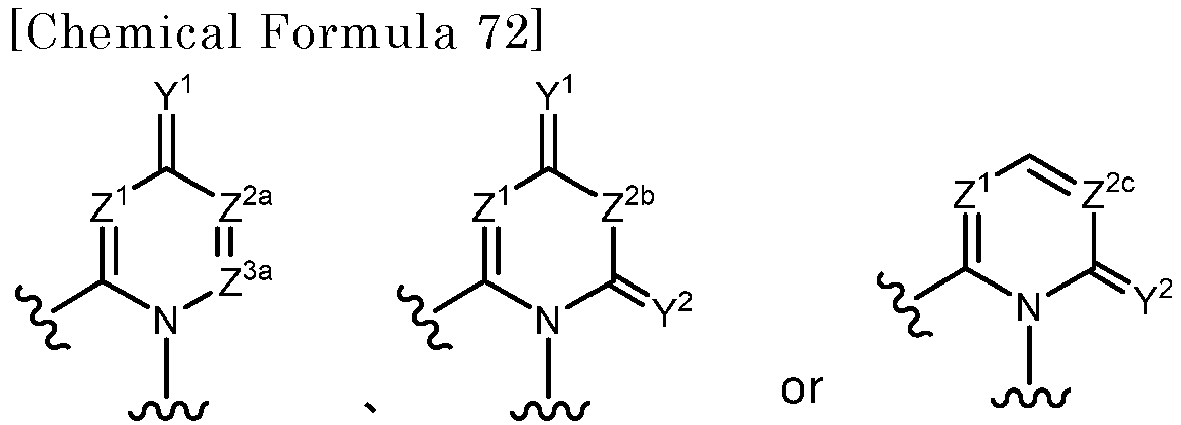
- In the present specification, in a group represented by the Formula:

- In the present specification, in a group represented by the Formula:
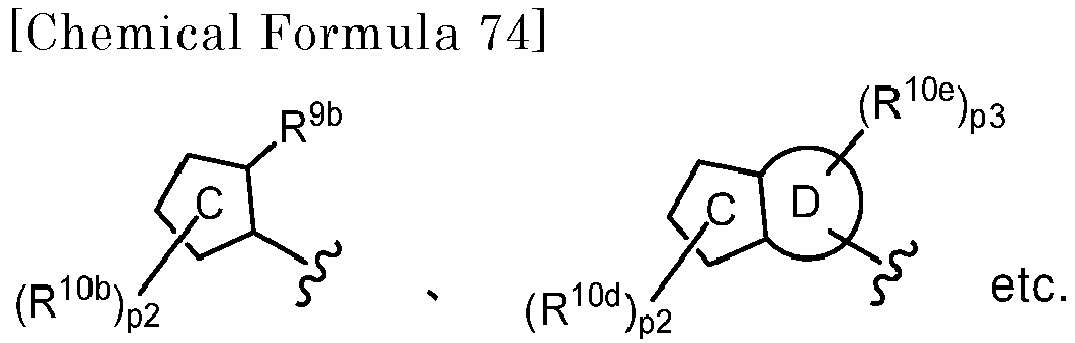
- In the present specification, in a group represented by the Formula:

- In the present specification, in a group represented by the formula:

- In the present specification, in a group represented by the Formula:

- In the present specification, in a group represented by the Formula:

- In the present specification, in a group represented by the Formula:

p1b hydrogen atom(s) which is attached to a ring-constituting atom on Ring B can be replaced with R10a1. - In the present specification, in a group represented by the Formula:

- In the present specification, in a group represented by the Formula:

- One or more hydrogen, carbon and/or other atoms in the compounds represented by Formula (I) may be replaced with isotopes of hydrogen, carbon and/or other atoms respectively. Example s of isotopes include hydrogen, carbon, nitrogen, oxygen, phosphorus, sulfur, fluorine, iodine and chlorine, such as 2H, 3H, 11C, 13C, 14C, 15N, 18O, 17O, 31P, 32P, 35S, 18F, 123I and 36Cl respectively. The compounds represented by Formula (I) include the compounds replaced with these isotopes. The compounds replaced with the above isotopes are useful as medicines and include all of radiolabeled compounds of the compound of Formula (I). A "method of radiolabeling" in the manufacture of the "radiolabeled compounds" is encompassed by the present invention, and the "radiolabeled compounds" are useful for studies on metabolized drug pharmacokinetics, studies on binding assay and/or diagnostic tools.
- A radiolabeled compound of the compounds represented by Formula (I) can be prepared using well-known methods in the art. For example, a tritium-labeled compound represented by Formula (I) can be prepared by introducing a tritium to a certain compound represented by Formula (I), through a catalytic dehalogenation reaction using a tritium. This method comprises reacting with an appropriately-halogenated precursor of the compound represented by Formula (I) with tritium gas in the presence of an appropriate catalyst, such as Pd/C, and in the presence or absent of a base. The other appropriate method of preparing a tritium-labeled compound can be referred to "Isotopes in the Physical and Biomedical Sciences, Vol. 1, Labeled Compounds (Part A), Chapter 6 (1987)". A 14C-labeled compound can be prepared by using a raw material having 14C.
- The pharmaceutically acceptable salts of the compounds represented by Formula (I) include, for example, salts with alkaline metal (e.g., lithium, sodium, potassium or the like), alkaline earth metal (e.g., calcium, barium or the like), magnesium, transition metal (e.g., zinc, iron or the like), ammonia, organic bases (e.g., trimethylamine, triethylamine, dicyclohexylamine, ethanolamine, diethanolamine, triethanolamine, meglumine, ethylenediamine, pyridine, picoline, quinoline or the like) or amino acids, or salts with inorganic acids (e.g., hydrochloric acid, sulfuric acid, nitric acid, carbonic acid, hydrobromic acid, phosphoric acid, hydroiodic acid or the like) or organic acids (e.g., formic acid, acetic acid, propionic acid, trifluoroacetic acid, citric acid, lactic acid, tartaric acid, oxalic acid, maleic acid, fumaric acid, mandelic acid, glutaric acid, malic acid, benzoic acid, phthalic acid, ascorbic acid, benzenesulfonic acid, p-toluenesulfonic acid, methanesulfonic acid, ethanesulfonic acid or the like). Especially, salts with hydrochloric acid, sulfuric acid, phosphoric acid, tartaric acid, methanesulfonic acid and the like are included. These salts can be formed by the usual methods.
- The compounds represented by Formula (I) of the present invention or pharmaceutically acceptable salts thereof may form solvates (e.g., hydrates or the like) and/or crystal polymorphs. The present invention encompasses those various solvates and crystal polymorphs. "Solvates" may be those wherein any numbers of solvent molecules (e.g., water molecules or the like) are coordinated with the compounds represented by Formula (I). When the compounds represented by Formula (I) or pharmaceutically acceptable salts thereof are allowed to stand in the atmosphere, the compounds may absorb water, resulting in attachment of adsorbed water or formation of hydrates. Recrystallization of the compounds represented by Formula (I) or pharmaceutically acceptable salts thereof may produce crystal polymorphs.
- The compounds represented by Formula (I) of the present invention or pharmaceutically acceptable salts thereof may form prodrugs. The present invention also encompasses such various prodrugs. Prodrugs are derivatives of the compounds of the present invention that have chemically or metabolically degradable groups, and compounds that are converted to the pharmaceutically active compounds of the present invention through solvolysis or under physiological conditions in vivo. Prodrugs include compounds that are converted to the compounds represented by Formula (I) through enzymatic oxidation, reduction, hydrolysis or the like under physiological conditions in vivo, compounds that are converted to the compounds represented by Formula (I) through hydrolysis by gastric acid etc., and the like. Methods for selecting and preparing suitable prodrug derivatives are described in, for example, "Design of Prodrugs, Elsevier, Amsrdam, 1985". Prodrugs themselves may have some activity.
- When the compounds represented by Formula (I) or pharmaceutically acceptable salts thereof have hydroxyl group(s), prodrugs include acyloxy derivatives and sulfonyloxy derivatives that are prepared by, for example, reacting compounds having hydroxyl group(s) with suitable acyl halide, suitable acid anhydride, suitable sulfonyl chloride, suitable sulfonyl anhydride and mixed anhydride, or with a condensing agent. For example, they include CH3COO-, C2H5COO-, tert-BuCOO-, C15H31COO-, PhCOO-, (m-NaOOCPh)COO-, NaOOCCH2CH2COO-, CH3CH(NH2)COO-, CH2N(CH3)2COO-, CH3SO3-, CH3CH2SO3-, CF3SO3-, CH2FSO3-, CF3CH2SO3-, p-CH3O-PhSO3-, PhSO3- and p-CH3PhSO3.
- The compounds of the present invention have an antagonistic activity for the P2X7 receptor, and therefore, are useful as a therapeutic and/or preventive agent for diseases associated with the P2X7 receptor. As the diseases associated with the P2X7 receptor, pain, central nervous system diseases, immune diseases and inflammatory diseases and the like, preferably pain are exemplified (Non-patent Document 7-8 and Patent Document 1 etc.).
- As pain, pain associated with zoster, postherpetic neuralgia, trigeminal neuralgia, thalamic pain, cancer pain, postoperative pain, menstrual pain, labor pain, chest pain, abdominal pain, colic pain, lumbar backache, headache, migraine, sciatica, sore muscle, orofacial pain, toothache, glossagra, shoulder pain, nociceptive pain, pain associated with deafferentation, psychogenic pain and the like; pain associated with the disease such as entrapment neuropathy, carpal canal syndrome, diabetes, Guillain-Barre syndrome, myofascial pain syndrome, fibromyalgia syndrome, complex regional pain syndrome, causalgia, Hansen's disease, spinal cord injury, stroke, multiple sclerosis, Parkinson's disease, endometriosis, hernia of intervertebral disk, arthritis, rheumatoid arthritis, osteoarthritis, cervical spondylosis deformans, spinal canal stenosis, thoracic outlet syndrome, traumatic brachial plexus injury syndrome, shoulder-hand syndrome, whiplash injury, cholelithiasis, pancreatitis, cystitis, urethritis, urinary calculosis, prostatitis, ulcerative colitis, Crohn's disease, irritable bowel syndrome, bone fracture, osteoporosis, gout, cauda equina syndrome, ankylosing spondylitis, painful spasm, ABC syndrome, skin disease, arteriosclerosis obliterans, Buerger's disease, Raynaud's phenomenon, gangrene, temporomandibular arthrosis, somatoform disorder, somatization disorder, depression and the like; pain associated with drug therapy, and pain associated with radiation therapy are exemplified.
- Additionally, effects for opioid tolerance can be expected.
- As central nervous system diseases, Alzheimer's disease, Cerebral amyloid angiopathy, Parkinson's disease, Creutzfeldt-Jakob disease, Huntington's chorea, depression, schizophrenia, attention deficit hyperactivity disorder, sleep disorder, autism spectrum disorder, epilepsy, stroke, multiple sclerosis, spinal cord injury, amyotrophic lateral sclerosis, opioid dependence, cocaine dependence, nicotine dependence and the like are exemplified.
- Preferably, as central nervous system diseases, Alzheimer's disease, Cerebral amyloid angiopathy, Parkinson's disease, depression, schizophrenia, attention deficit hyperactivity disorder, sleep disorder, autism spectrum disorder, epilepsy, stroke, multiple sclerosis, spinal cord injury, amyotrophic lateral sclerosis, opioid dependence, cocaine dependence, nicotine dependence and the like are exemplified.
- As immune diseases and inflammatory diseases, rheumatoid arthritis, osteoarthritis, asthma, bronchitis, chronic obstructive pulmonary disease, pulmonary emphysema, septic shock, hepatitis, hepatic fibrosis, hepatic cirrhosis, cholecystitis, glomerulonephritis, nephrotic syndrome, pancreatitis, cystitis, urethritis, prostatitis, ulcerative colitis, Crohn's disease, irritable bowel syndrome, psoriasis, atopic dermatitis, contact dermatitis, eczematous dermatitis, delayed-type hypersensitivity reaction, conjunctivitis, uveitis, growth and metastasis of malignant cell (prostate cancer, breast cancer, lung cancer, uterine cancer, pancreatic cancer, colorectal cancer etc.), leukemia, meningitis, burn injury, glossitis, gingivitis, periodontal disease, esophagitis and the like are exemplified. It is possible that rejection associated with allograft or blood transfusion is involved in the P2X7 receptor. As the other diseases associated with the P2X7 receptor, circulatory diseases such as atherosclerosis, ischemic heart disease, diabetes and the like, bone diseases such as osteoporosis, bone Paget's disease, osteonecrosis, temporomandibular arthrosis and the like, and urologic diseases such as overactive bladder, stress urinary incontinence, prostatomegaly and the like are exemplified.
- Preferably, as immune diseases and inflammatory diseases, rheumatoid arthritis, arthritis, osteoarthritis, asthma, bronchitis, chronic obstructive pulmonary disease, cystitis, ulcerative colitis, Crohn's disease and the like are exemplified.
- For example, the compounds represented by Formula (I) of the present invention can be prepared by the general procedures described below. The starting materials and reaction reagents used in such synthesis are commercially available or can be synthesized according to methods well known in the art using the compounds commercially available. The methods for extraction, purification and the like may be carried out by using the usual method for the experiments of organic chemistry.
- The compounds of the present invention can be synthesized by referring to the known methods in the art.
- In all the following steps, when a substituent which interferes with the reaction, e.g. hydroxy, mercapto, amino, formyl, carbonyl, carboxy, is possessed, the substituent is protected by the method such as those described in Protective Groups in Organic Synthesis, Theodora W Greene(John Wiley & Sons) in advance, and the protective group may be removed at a desirable step.
- During all the following steps, the order of the steps to be performed may be appropriately changed. In each step, an intermediate may be isolated and then used in the next step.
- In this description, meanings of each abbreviation are as follows:
- DIEA: N,N-diisopropylethylamine
- DMF: N,N-dimethylformamide
- DMSO: Dimethyl sulfoxide
- DPPA: Diphenylphosphoryl azide
- IPE: Diisopropyl ether
- NBS: N-bromosuccinimide
- NMP: N-methylpyrrolidone
- HATU: O-(7-azabenzotriazol-1-yl)-1,1,3,3-tetramethyluronium hexafluorophosphate
- HOAt: 1-hydroxy-7-azabenzotriazole
- PdCl2(dppf): [1,1'-bis(diphenylphosphino)ferrocene]palladium (II) dichloride
- Xantphos: 4,5'-bis(diphenylphosphino)-9,9'-dimethylxanthene
-

- A compound (A-2) can be synthesized by the reaction of a compound (A-1) with a basic aqueous solution.
- As the base, for example, metal hydroxide (e.g., sodium hydroxide, potassium hydroxide, lithium hydroxide etc.), metal carbonate (e.g., sodium carbonate, potassium carbonate, cesium carbonate etc.) and the like are exemplified. 1.0 or more mole equivalent(s), preferably 1.0 to 5.0 mole equivalent(s) can be used per an equivalent of the compound (A-1).
- As the reaction solvent, ethers (e.g., tetrahydrofuran, diethyl ether, dioxane, dimethoxyethane etc.), DMF, DMSO, NMP, water and a mixed solvent thereof and the like are exemplified.
- The reaction temperature is 0°C to 40°C, preferably 0°C to 20°C.
- The reaction time is 0.5 to 48 hours, preferably 1 to 16 hours.
- The obtained desired compound (A-2) can be purified as necessary by the methods which are usually used (e.g., column chromatography, recrystallization etc.).
- A compound (A-4) can be synthesized by the reaction of the compound (A-2) with a compound (A-3) in the presence of a base in the appropriate solvent.
- In this reaction, 1.0 or more mole equivalent(s) of the compound (A-3), preferably 1.0 to 5.0 mole equivalent(s) can be used per an equivalent of the compound (A-2).
- As the base, for example, metal hydroxide (e.g., sodium hydroxide, potassium hydroxide, tripotassium phosphate etc.), metal hydride (e.g., sodium hydride, lithium hydride etc.), metal carbonate (e.g., sodium carbonate, potassium carbonate, cesium carbonate etc.), metal alkoxide (e.g., sodium methoxide, sodium ethoxide, potassium tert-butoxide etc.), metal alkyl (e.g., butyllithium etc.), pyridine, triethylamine, DIEA and the like are exemplified. 1.0 or more mole equivalent(s), preferably 1.0 to 5.0 mole equivalent(s) can be used per an equivalent of the compound (A-2).
- As the reaction solvent, aromatic hydrocarbons (e.g., toluene, benzene, xylene etc.), saturated hydrocarbons (e.g., cyclohexane, hexane etc.), ethers (e.g., tetrahydrofuran, diethyl ether, dioxane, dimethoxyethane etc.), halogenated hydrocarbons (e.g., chloroform, dichloromethane etc.), DMF, DMSO, NMP, acetonitrile, pyridine, water and the like are exemplified. The reaction solvent may be used alone or in combination.
- The reaction temperature is 0 to 200°C, under microwave irradiation as necessary, preferably 0 to 150°C.
- The reaction time is 0.1 to 72 hours, preferably 0.5 hours to 18 hours.
- The obtained desired compound (A-4) can be purified as necessary by the methods which are usually used (e.g., column chromatography, recrystallization etc.).
- A compound (Iα) can be synthesized by the reaction of the compound (A-4) with a compound (A-5) in the presence of a palladium catalyst and a base or an acid without any solvent or in the appropriate solvent as necessary.
- In this reaction, 1.0 or more mole equivalent(s) of the compound (A-5), preferably 1.0 to 5.0 mole equivalent(s) can be used per an equivalent of the compound (A-4).
- As the base, for example, metal hydroxide (e.g., sodium hydroxide, potassium hydroxide, tripotassium phosphate etc.), metal hydride (e.g., sodium hydride, lithium hydride etc.), metal carbonate (e.g., sodium carbonate, potassium carbonate, cesium carbonate etc.), metal alkoxide (e.g., sodium methoxide, sodium ethoxide, potassium tert-butoxide etc.), metal alkyl (e.g., butyllithium etc.), pyridine, triethylamine, DIEA and the like are exemplified. 1.0 or more mole equivalent(s), preferably 1.0 to 5.0 mole equivalent(s) can be used per an equivalent of the compound (A-4).
- As the acid, for example, acetic acid, propionic acid and the like are exemplified. 1.0 or more mole equivalent(s), preferably 1.0 to 5.0 mole equivalent(s) can be used per an equivalent of the compound (A-4).
- As the palladium catalyst, palladium acetate, bis(dibenzylideneacetone)palladium, tetrakis(triphenylphosphine)palladium, bis(triphenylphosphine)palladium(II) dichloride, bis(tri-tert-butylphosphine)palladium, PdCl2(dppf) CH2Cl2 and the like are exemplified. 0.001 to 0.5 mole equivalents can be used per an equivalent of the compound (A-4).
- As the reaction solvent, alcohols (e.g., tert-butanol, isopropanol etc.), aromatic hydrocarbons (e.g., toluene, benzene, xylene etc.), saturated hydrocarbons (e.g., cyclohexane, hexane etc.), ethers (e.g., tetrahydrofuran, diethyl ether, dioxane, dimethoxyethane etc.), halogenated hydrocarbons (e.g., chloroform, dichloromethane etc.), DMF, DMSO, NMP, acetonitrile, pyridine, water and the like are exemplified. The reaction solvent may be used alone or in combination.
- The reaction temperature is 0 to 200°C, under microwave irradiation as necessary, preferably 0 to 150°C.
- The reaction time is 0.1 to 72 hours, preferably 0.5 hours to 18 hours.
- The obtained desired compound (Iα) can be purified as necessary by the methods which are usually used (e.g., column chromatography, recrystallization etc.).
-
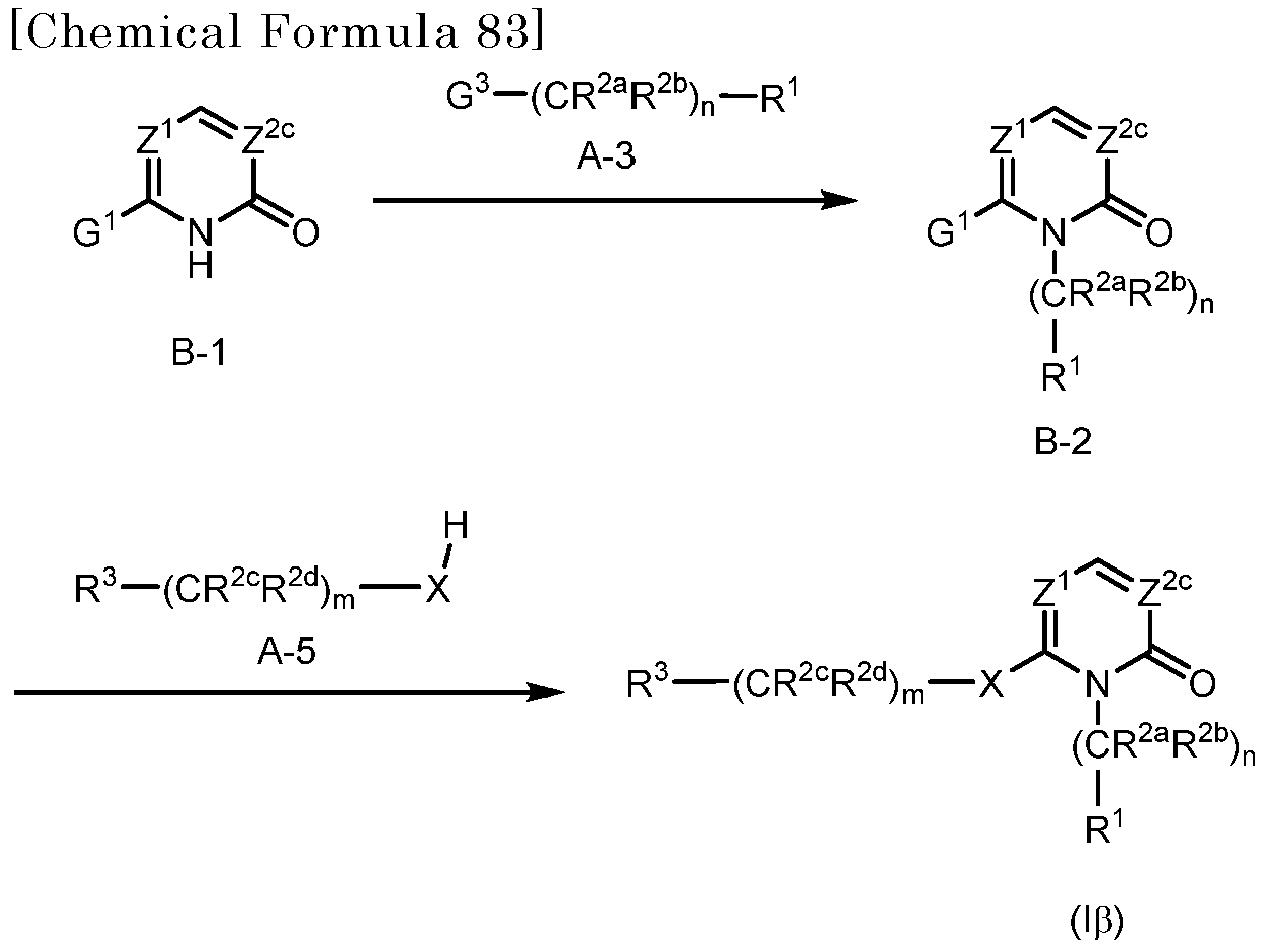
- A compound (B-2) can be synthesized by the reaction of a compound (B-1) with the compound (A-3) according to the synthetic procedures described in the step 2 of the method A.
- The obtained desired compound (B-2) can be purified as necessary by the methods which are usually used (e.g., column chromatography, recrystallization etc.).
- A compound (Iβ) can be synthesized by the reaction of the compound (B-2) with the compound (A-5) according to the synthetic procedures described in the step 3 of the method A.
- The obtained desired compound (Iβ) can be purified as necessary by the methods which are usually used (e.g., column chromatography, recrystallization etc.).
-

- A compound (C-2) can be synthesized by the reaction of a compound (C-1) with the compound (A-3) according to the synthetic procedures described in the step 2 of the method A.
- The obtained desired compound (C-2) can be purified as necessary by the methods which are usually used (e.g., column chromatography, recrystallization etc.).
- A compound (Iγ) can be synthesized by the reaction of the compound (C-2) with the compound (A-5) according to the synthetic procedures described in the step 3 of the method A.
- The obtained desired compound (Iγ) can be purified as necessary by the methods which are usually used (e.g., column chromatography, recrystallization etc.).
-

G1 and G3 are the same as the method A, and the other symbols are the same as the above (1). - A compound (D-2) can be synthesized by the reaction of a compound (A-1) with a compound (D-1) in the presence of a base in the appropriate solvent.
- In this reaction, 1.0 or more mole equivalent(s) of the compound (D-1), preferably 1.0 to 5.0 mole equivalent(s) can be used per an equivalent of the compound (A-1).
- As the base which can be used, for example, metal hydride (e.g., sodium hydride, lithium hydride etc.), metal carbonate (e.g., sodium carbonate, potassium bicarbonate, cesium carbonate etc.), metal alkoxide (e.g., sodium methoxide, sodium ethoxide, potassium tert-butoxide etc.), metal alkyl (e.g., butyllithium etc.) are exemplified. 1.0 or more mole equivalent(s), preferably 1.0 to 1.5 mole equivalent(s) can be used per an equivalent of the compound (A-1).
- As the reaction solvent, alcohols (e.g., tert-butanol, isopropanol etc.), aromatic hydrocarbons (e.g., toluene, benzene, xylene etc.), saturated hydrocarbons (e.g., cyclohexane, hexane etc.), ethers (e.g., tetrahydrofuran, diethyl ether, dioxane, dimethoxyethane etc.), DMF, DMSO, NMP, a mixed solvent thereof and the like are exemplified.
- As the reaction temperature, -20°C to 200°C, preferably 0°C to 30°C are exemplified.
- As the reaction time, 0.1 to 80 hours, preferably 1 to 16 hours are exemplified.
- The obtained desired compound (D-2) can be purified as necessary by the methods which are usually used (e.g., column chromatography, recrystallization etc.).
- A compound (D-3) can be synthesized by the reaction of the compound (D-2) with the compound (A-5) according to the synthetic procedures described in the step 3 of the method A.
- The obtained desired compound (D-3) can be purified as necessary by the methods which are usually used (e.g., column chromatography, recrystallization etc.).
- A compound (D-4) can be synthesized by the deprotection of the compound (D-3) in the presence of an acid or a Lewis acid or a base in the appropriate solvent.
- As the acid, hydrochloric acid-ethyl acetate, hydrochloric acid-methanol, hydrochloric acid-dioxane, hydrobromic acid-acetic acid, hydrobromic acid, sulfuric acid, formic acid, trifluoroacetic acid and the like are exemplified. As the Lewis acid, trimethylsilyl iodide, BBr3, AlCl3, BF3 • (Et2O) and the like are exemplified. As the base, tetrabutyl ammonium fluoride, hydrogen fluoride-pyridine and the like are exemplified. 0.01 or more mole equivalents, preferably 0.5 to 10.0 mole equivalents can be used per an equivalent of the compound (D-3).
- As the reaction solvent, alcohols (e.g., methanol, ethanol, isopropanol etc.), aromatic hydrocarbons (e.g., toluene, benzene, xylene etc.), saturated hydrocarbons (e.g., cyclohexane, hexane etc.), ethers (e.g., tetrahydrofuran, diethyl ether, dioxane, dimethoxyethane etc.), halogenated hydrocarbons (e.g., chloroform, dichloromethane etc.), DMF, DMSO, NMP, acetonitrile, DMA, pyridine, water and the like are exemplified. The reaction solvent may be used alone or in combination.
- The reaction temperature is 0 to 200°C, under microwave irradiation as necessary, preferably 0 to 150°C.
- The reaction time is 0.1 to 72 hours, preferably 0.5 hours to 18 hours.
- The obtained desired compound (D-4) can be purified as necessary by the methods which are usually used (e.g., column chromatography, recrystallization etc.).
- A compound (Iα) can be synthesized by the reaction of the compound (D-4) with the compound (A-3) according to the synthetic procedures described in the step 2 of the method B.
- The obtained desired compound (Iα) can be purified as necessary by the methods which are usually used (e.g., column chromatography, recrystallization etc.).
-

- wherein RA and RB are each independently hydrogen, or substituted or unsubstituted alkyl, or are taken together to form a substituted or unsubstituted non-aromatic heterocycle;
- Hal is halogen;
- PG1 is an appropriate protecting group of a hydroxy group;
- G1 and G3 are the same as the method A, and the other symbols are the same as the above (1).
- A compound (E-3) can be synthesized by the reaction of the compound (E-1) with boronic acid or boronate ester (E-2) in the presence of a metal catalyst and a base in the appropriate solvent.
- In this reaction, 1.0 or more mole equivalent(s) of boronic acid or boronate ester (E-2), preferably 1.0 to 5.0 mole equivalent(s) can be used per an equivalent of the compound (E-1).
- As the metal catalyst, palladium (II) acetate, bis(dibenzylideneacetone)palladium, Tetrakis(triphenylphosphine)palladium, bis(triphenylphosphine)palladium (II) dichloride, bis(tri-tert-butylphosphine)palladium, PdCl2(dppf)CH2Cl2 and the like are exemplified. 0.001 to 1.0 mole equivalent(s) can be used per an equivalent of the compound (E-1).
- As the base, lithium hydroxide, sodium hydroxide, potassium hydroxide, potassium tert-butoxide, sodium tert-butoxide, sodium carbonate, cesium carbonate, potassium bicarbonate, sodium hydrogen carbonate, sodium phosphate, sodium hydrogen phosphate, potassium phosphate, potassium hydrogen phosphate and the like can be exemplified. 1.0 to 10.0 mole equivalent(s) can be used per an equivalent of the compound (E-1).
- As the reaction solvent, aromatic hydrocarbons (e.g., toluene, benzene, xylene etc.), saturated hydrocarbons (e.g., cyclohexane, hexane etc.), ethers (e.g., tetrahydrofuran, diethyl ether, dioxane, dimethoxyethane etc.), DMF, DMA, NMP, DMSO, water and a mixed solvent thereof and the like are exemplified.
- The reaction temperature is 20 to 250°C, under microwave irradiation as necessary, preferably 0 to 200°C.
- The reaction time is 0.1 to 48 hours, preferably 0.5 to 12 hours.
- The obtained desired compound (E-3) can be purified as necessary by the methods which are usually used (e.g., column chromatography, recrystallization etc.).
- A compound (E-4) can be synthesized by the reaction of the compound (E-3) with the compound (A-5) according to the synthetic procedures described in the step 2 of the method D.
- The obtained desired compound (E-4) can be purified as necessary by the methods which are usually used (e.g., column chromatography, recrystallization etc.).
- A compound (E-5) can be synthesized by the deprotection of the protecting group of the hydroxy group of the compound (E-4) according to the synthetic procedures described in the step 3 of the method D.
- The obtained desired compound (E-5) can be purified as necessary by the methods which are usually used (e.g., column chromatography, recrystallization etc.).
- A compound (Iα-1) can be synthesized by the reaction of the compound (E-5) with the compound (A-3) according to the synthetic procedures described in the step 2 of the method B.
- The obtained desired compound (Iα-1) can be purified as necessary by the methods which are usually used (e.g., column chromatography, recrystallization etc.).
-

- A compound (F-2) can be synthesized by the reaction of the compound (F-1) with 2,2,2,6-tetramethylpiperidine 1-oxyl in the presence of an oxidizing agent.
- As the oxidizing agent, for example, sodium hypochlorite, iodobenzene diacetate and the like are exemplified. 1.0 or more mole equivalent(s), preferably 1.0 to 5.0 mole equivalent(s) can be used per an equivalent of the compound (F-1).
- As the reaction solvent, ethers (e.g., tetrahydrofuran, diethyl ether, dioxane, dimethoxyethane etc.), halogenated hydrocarbons (e.g., chloroform, dichloromethane etc.), acetonitrile, water and the like are exemplified. The reaction solvent may be used alone or in combination.
- The reaction temperature is 0 to 100°C, preferably 0 to 60°C.
- The reaction time is 0.1 to 72 hours, preferably 0.5 hours to 18 hours.
- The obtained desired compound (F-2) can be purified as necessary by the methods which are usually used (e.g., column chromatography, recrystallization etc.).
- A compound (F-4) can be synthesized by the reaction of the compound (F-2) with a compound (F-3) in the presence of a base in the appropriate solvent.
- In this reaction, 1.0 or more mole equivalent(s) of the compound (F-3), preferably 1.0 to 5.0 mole equivalent(s) can be used per an equivalent of the compound (F-2).
- As the base, for example, metal hydroxide (e.g., sodium hydroxide, potassium hydroxide, tripotassium phosphate etc.), metal hydride (e.g., sodium hydride, lithium hydride etc.), metal carbonate (e.g., sodium carbonate, potassium carbonate, cesium carbonate etc.), metal alkoxide (e.g., sodium methoxide, sodium ethoxide, potassium tert-butoxide etc.), metal alkyl (e.g., butyllithium etc.), pyridine, triethylamine, DIEA and the like are exemplified. 1.0 or more mole equivalent(s), preferably 1.0 to 5.0 mole equivalent(s) can be used per an equivalent of the compound (F-2).
- As the reaction solvent, alcohols (e.g., tert-butanol, isopropanol etc.), aromatic hydrocarbons (e.g., toluene, benzene, xylene etc.), saturated hydrocarbons (e.g., cyclohexane, hexane etc.), ethers (e.g., tetrahydrofuran, diethyl ether, dioxane, dimethoxyethane etc.), halogenated hydrocarbons (e.g., chloroform, dichloromethane etc.), DMF, DMSO, NMP, acetonitrile, pyridine, water and the like are exemplified. The reaction solvent may be used alone or in combination.
- The reaction temperature is 0 to 200°C, under microwave irradiation as necessary, preferably 0 to 150°C.
- The reaction time is 0.1 to 72 hours, preferably 0.5 to 18 hours.
- The obtained desired compound (F-4) can be purified as necessary by the methods which are usually used (e.g., column chromatography, recrystallization etc.).
- A compound (F-5) can be synthesized by the reaction of the compound (F-4) with iodine in a DMSO solution.
- The reaction temperature is -10°C to 200°C, preferably 0°C to 150°C.
- The reaction time is 0.1 to 72 hours, preferably 0.5 hours to 18 hours.
- The obtained desired compound (F-5) can be purified as necessary by the methods which are usually used (e.g., column chromatography, recrystallization etc.).
- A compound (Ia-2) can be synthesized by the reaction of the compound (F-5) with the compound (A-5) according to the synthetic procedures described in the step 3 of the method A.
- The obtained desired compound (Ia-2) can be purified as necessary by the methods which are usually used (e.g., column chromatography, recrystallization etc.).
-

- A compound (G-1) can be synthesized by the reaction of the compound (A-5) with 1-amidinopyrazole hydrochloride.
- In this reaction, 1.0 or more mole equivalent(s) of the 1-amidinopyrazole hydrochloride, preferably 1.0 to 5.0 mole equivalent(s) can be used per an equivalent of the compound (A-5).
- As the base, for example, metal hydroxide (e.g., sodium hydroxide, potassium hydroxide, tripotassium phosphate etc.), metal hydride (e.g., sodium hydride, lithium hydride etc.), metal carbonate (e.g., sodium carbonate, potassium bicarbonate, cesium carbonate etc.), metal alkoxide (e.g., sodium methoxide, sodium ethoxide, potassium tert-butoxide etc.), metal alkyl (e.g., butyllithium etc.), pyridine, triethylamine, DIEA and the like are exemplified. 1.0 or more mole equivalent(s), preferably 1.0 to 5.0 mole equivalent(s) can be used per an equivalent of the compound (A-5).
- As the reaction solvent, aromatic hydrocarbons (e.g., toluene, benzene, xylene etc.), saturated hydrocarbons (e.g., cyclohexane, hexane etc.), ethers (e.g., tetrahydrofuran, diethyl ether, dioxane, dimethoxyethane etc.), halogenated hydrocarbons (e.g., chloroform, dichloromethane etc.), DMF, DMSO, NMP, acetonitrile, DMA and the like are exemplified. The reaction solvent may be used alone or in combination.
- The reaction temperature is 0 to 200°C, under microwave irradiation as necessary, preferably 0 to 150°C.
- The reaction time is 0.1 to 72 hours, preferably 0.5 to 18 hours.
- The obtained desired compound (G-1) can be purified as necessary by the methods which are usually used (e.g., column chromatography, recrystallization etc.).
- A compound (G-3) can be synthesized by the reaction of the compound (G-1) with a compound (G-2) in the presence of a base in the appropriate solvent.
- In this reaction, 1.0 or more mole equivalent(s) of the compound (G-2), preferably 1.0 to 5.0 mole equivalent(s) can be used per an equivalent of the compound (G-1).
- As the base, for example, metal hydroxide (e.g., sodium hydroxide, potassium hydroxide, tripotassium phosphate etc.), metal hydride (e.g., sodium hydride, lithium hydride etc.), metal carbonate (e.g., sodium carbonate, potassium carbonate, cesium carbonate etc.), metal alkoxide (e.g., sodium methoxide, sodium ethoxide, potassium tert-butoxide etc.), metal alkyl (e.g., butyllithium etc.), triethylamine, DIEA, DBU and the like are exemplified. 1.0 or more mole equivalent(s), preferably 1.0 to 5.0 mole equivalent(s) can be used per an equivalent of the compound (G-1).
- As the reaction solvent, alcohols (e.g., tert-butanol, isopropanol etc.), aromatic hydrocarbons (e.g., toluene, benzene, xylene etc.), saturated hydrocarbons (e.g., cyclohexane, hexane etc.), ethers (e.g., tetrahydrofuran, diethyl ether, dioxane, dimethoxyethane etc.), DMF, NMP, acetonitrile, DMA and the like are exemplified. The reaction solvent can be used alone or in combination.
- The reaction temperature is 0 to 200°C, under microwave irradiation as necessary, preferably 0 to 150°C.
- The reaction time is 0.1 to 72 hours, preferably 0.5 hours to 18 hours.
- The obtained desired compound (G-3) can be purified as necessary by the methods which are usually used (e.g., column chromatography, recrystallization etc.).
- A compound (Iγ-1) can be synthesized by the reaction of the compound (G-3) and a compound (A-3) according to the synthetic procedures described in the step 2 of the method A.
- The obtained desired compound (Iγ-1) can be purified as necessary by the methods which are usually used (e.g., column chromatography, recrystallization etc.).
- The synthesis methods of methods H to N shown below can be used not only in the synthesis of a compound represented by formula (Iα) but also in the synthesis of compounds represented by formula (Iβ) and formula (IY).
-

- G1 and G4 are each independently a leaving group such as halogen, substituted or unsubstituted alkylsulfanyl, substituted or unsubstituted alkylsulfinyl, or substituted or unsubstituted alkylsulfonyl;
- R5aa is a hydrogen atom, a hydrogen atom, a substituent selected from the substituent group B, or the like; and
- the other symbols are the same as the above (1).
- A compound (H-2) can be synthesized by the deprotection of the protecting group of the hydroxy group of the compound (H-1) obtained by the method A according to the synthetic procedures described in the step 3 of the method D.
- The obtained desired compound (H-2) can be purified as necessary by the methods which are usually used (e.g., column chromatography, recrystallization etc.).
- A compound (H-4) can be synthesized by the reaction of the compound (H-2) and a compound (H-3) according to the synthetic procedures described in the step 2 of the method A.
- The obtained desired compound (H-4) can be purified as necessary by the methods which are usually used (e.g., column chromatography, recrystallization etc.).
- A compound represented by a compound (Ia-3) can be synthesized by the reaction of the compound (H-4) and a compound (A-5) according to the synthetic procedures described in the step 3 of the method A.
- The obtained desired compound (Iα-3) can be purified as necessary by the methods which are usually used (e.g., column chromatography, recrystallization etc.).
-

the other symbols are the same as the above (1). - A compound (Iα-5) can be synthesized by reduction using the compound (Iα-4) obtained by the method A in the appropriate solvent.
- As the reducing agent, sodium borohydride, lithium borohydride, lithium aluminum hydride and the like are exemplified. 1 or more mole equivalent(s), preferably 1.0 to 5.0 mole equivalent(s) can be used per an equivalent of the compound (Iα-4).
- As the reaction solvent, alcohols (e.g., methanol, ethanol, isopropanol etc.), ethers (e.g., tetrahydrofuran, diethyl ether, dioxane, dimethoxyethane etc.), dichloromethane, water and the like are exemplified. The reaction solvent may be used alone or in combination.
- The reaction temperature is -10 to 100°C, preferably 0 to 100°C.
- The reaction time is 0.1 to 72 hours, preferably 0.5 hours to 18 hours.
- The obtained desired compound (Ia-5) can be purified as necessary by the methods which are usually used (e.g., column chromatography, recrystallization etc.).
-

- R5ac and 5ad are each independently a hydrogen atom, substituted or unsubstituted alkyl, substituted or unsubstituted alkenyl, substituted or unsubstituted alkynyl, substituted or unsubstituted aromatic carbocyclyl, substituted or unsubstituted non-aromatic carbocyclyl, substituted or unsubstituted aromatic heterocyclyl, substituted or unsubstituted non-aromatic heterocyclyl or the like; and
- the other symbols are the same as the above (1).
- A compound (Iα-6) can be synthesized by hydrolysis using the compound (Iα-4) obtained by the method A in the presence of an acid or a base.
- As the acid, hydrochloric acid, p-toluenesulfonic acid, sulfuric acid, formic acid, trifluoroacetic acid and the like are exemplified.
- As the base, lithium hydroxide, sodium hydroxide, potassium hydroxide, sodium carbonate, cesium carbonate, potassium carbonate, sodium hydrogen carbonate, sodium phosphate, sodium hydrogen phosphate, potassium phosphate, potassium hydrogen phosphate, tetrabutyl ammonium fluoride and the like are exemplified.
- 1 or more mole equivalent(s), preferably 5 mole equivalents can be used per an equivalent of the compound (Iα-4).
- As the reaction solvent, alcohols (e.g., methanol, ethanol, isopropanol etc.), aromatic hydrocarbons (e.g., toluene, benzene, xylene etc.), saturated hydrocarbons (e.g., cyclohexane, hexane etc.), ethers (e.g., tetrahydrofuran, diethyl ether, dioxane, dimethoxyethane etc.), DMF, DMSO, NMP, acetonitrile, DMA, water and the like are exemplified. The reaction solvent may be used alone or in combination.
- The reaction temperature is -10 to 200°C, preferably 0 to 150°C.
- The reaction time is 0.1 to 72 hours, preferably 0.5 hours to 18 hours.
- The obtained desired compound (Iα-6) can be purified as necessary by the methods which are usually used (e.g., column chromatography, recrystallization etc.).
- A compound (Iα-7) can be synthesized by the condensation of the compound (Iα-6) with the compound (J-1) in the appropriate solvent.
- As the condensing agent, condensing agents such as 1-hydroxybenzotriazole, HOAt, 1-ethyl-3-(3-dimethylaminopropyl)carbodiimide hydrochloride, HATU, and (benzotriazol-1-yloxyhripyrrolidinophosphonium hexafluorophosphate, and bases such as triethylamine and diisopropylethylamine, and the like are exemplified. 1 or more mole equivalent(s), preferably 1 to 5 mole equivalent(s) can be used per an equivalent of the compound (Iα-6).
- As the reaction solvent, aromatic hydrocarbons (e.g., toluene, benzene, xylene etc.), saturated hydrocarbons (e.g., cyclohexane, hexane etc.), ethers (e.g., tetrahydrofuran, diethyl ether, dioxane, dimethoxyethane etc.), DMF, NMP, acetonitrile, DMA and the like are exemplified. The reaction solvent can be used alone or in combination.
- The reaction temperature is -10 to 200°C, preferably 0 to 150°C.
- The reaction time is 0.1 to 72 hours, preferably 0.5 hours to 18 hours.
- The obtained desired compound (Iα-7) can be purified as necessary by the methods which are usually used (e.g., column chromatography, recrystallization etc.).
-

RA and RB are the same as the method E, and the other symbols are the same as the above (1). - A compound (Ia-9) can be synthesized by the reaction of the compound (Ia-8) obtained by the method A with a boronic acid or a boronic acid ester (E-2) according to the synthetic procedures described in the method E.
- The obtained desired compound (Ia-9) can be purified as necessary by the methods which are usually used (e.g., column chromatography, recrystallization etc.).
-

- A compound (Iα-11) can be synthesized by the hydrolysis of the compound (Iα-10) obtained by the method A according to the synthetic procedures described in the step 1 of the method J.
- The obtained desired compound (Iα-11) can be purified as necessary by the methods which are usually used (e.g., column chromatography, recrystallization etc.).
-

- A compound (Iα-12) can be synthesized by the condensation of the compound (Iα-10) obtained by the method K with the compound (J-1) according to the synthetic procedures described in the step 2 of the method J.
- The obtained desired compound (Iα-12) can be purified as necessary by the methods which are usually used (e.g., column chromatography, recrystallization etc.).
-

- A compound (Iα-13) can be synthesized by the reaction of the compound (Iα-11) obtained by the method K with an alcohol (N-1) in the presence of DPPA in the appropriate solvent.
- As the reaction solvent, aromatic hydrocarbons (e.g., toluene, benzene, xylene etc.), saturated hydrocarbons (e.g., cyclohexane, hexane etc.), ethers (e.g., tetrahydrofuran, diethyl ether, dioxane, dimethoxyethane etc.), DMF, DMSO, NMP, acetonitrile, DMA and the like are exemplified. The reaction solvent can be used alone or in combination.
- The reaction temperature is -10 to 200°C, preferably 0 to 150°C.
- The reaction time is 0.1 to 72 hours, preferably 0.5 hours to 18 hours.
- The obtained desired compound (Iα-13) can be purified as necessary by the methods which are usually used (e.g., column chromatography, recrystallization etc.).
- In the synthesis of the compound of the present invention, C=O can be appropriately converted to C=S at a desirable step on the basis of the synthesis method of method O shown below.
-

- A compound (Iα') can be synthesized by the reaction of the compound (Iα) obtained by the method A with 2,4-bis(4-methoxyphenyl)-1,3,2,4-dithiadiphosphethane-2,4-disulfide in the appropriate solvent.
- As the reaction solvent, aromatic hydrocarbons (e.g., toluene, benzene, xylene etc.), saturated hydrocarbons (e.g., cyclohexane, hexane etc.), ethers (e.g., tetrahydrofuran, diethyl ether, dioxane, dimethoxyethane etc.), acetonitrile and the like are exemplified. The reaction solvent can be used alone or in combination.
- The reaction temperature is -10 to 110°C, preferably 0 to 80°C.
- The reaction time is 0.1 to 72 hours, preferably 0.5 hours to 18 hours.
- The obtained desired compound (Iα') can be purified as necessary by the methods which are usually used (e.g., column chromatography, recrystallization etc.).
-

- A compound (P-2) can be synthesized by the reaction of a compound (P-1) with an acid chloride in the presence of a base in the appropriate solvent.
- As the acid chloride, for example, phosphoryl chloride, thionyl chloride, oxalyl chloride and the like are exemplified. 1.0 or more mole equivalent(s), preferably 1.0 to 5.0 mole equivalent(s) can be used per an equivalent of the compound (P-1).
- As the base, for example, pyridine, triethylamine, DIEA and the like are exemplified.
- As the reaction solvent, aromatic hydrocarbons (e.g., toluene, benzene, xylene etc.), saturated hydrocarbons (e.g., cyclohexane, hexane etc.), ethers (e.g., tetrahydrofuran, diethyl ether, dioxane, dimethoxyethane etc.), halogenated hydrocarbons (e.g., chloroform, dichloromethane etc.) ethers (e.g., tetrahydrofuran, diethyl ether, dioxane, dimethoxyethane etc.), and a mixed solvent thereof and the like are exemplified.
- The reaction temperature is 0°C to 100°C, preferably 0°C to 20°C.
- The reaction time is 0.5 hours to 48 hours, preferably 1 hour to 12 hours.
- The obtained desired compound (P-2) can be purified as necessary by the methods which are usually used (e.g., column chromatography, recrystallization etc.).
- A compound (P-4) can be synthesized by the reaction of the compound (P-2) with a compound (P-3) in the appropriate solvent.
- In this reaction, 1.0 or more mole equivalent(s) of the compound (P-3), preferably 1.0 to 3.0 mole equivalent(s) can be used per an equivalent of the compound (P-2).
- As the reaction solvent, alcohols (e.g., methanol, ethanol, tert-butanol, isopropanol etc.), aromatic hydrocarbons (e.g., toluene, benzene, xylene etc.), saturated hydrocarbons (e.g., cyclohexane, hexane etc.), ethers (e.g., tetrahydrofuran, diethyl ether, dioxane, dimethoxyethane etc.), DMF, NMP, acetonitrile, DMA and the like are exemplified. The reaction solvent can be used alone or in combination.
- The reaction temperature is 0 to 100°C, preferably 0 to 40°C.
- The reaction time is 0.5 to 48 hours, preferably 1 hour to 8 hours.
- The obtained desired compound (P-4) can be purified as necessary by the methods which are usually used (e.g., column chromatography, recrystallization etc.).
- A compound (P-5) can be synthesized by the reaction of the compound (P-4) with a basic aqueous solution according to the synthetic procedures described in the step 1 of the method A.
- The obtained desired compound (P-5) can be purified as necessary by the methods which are usually used (e.g., column chromatography, recrystallization etc.).
- A compound (P-6) can be synthesized by the reaction of the compound (P-5) with the compound (A-3) according to the synthetic procedures described in the step 2 of the method A.
- The obtained desired compound (P-6) can be purified as necessary by the methods which are usually used (e.g., column chromatography, recrystallization etc.).
- A compound (Iα-14) can be synthesized by the reaction of the compound (P-6) with the compound (A-5) according to the synthetic procedures described in the step 3 of the method A.
- The obtained desired compound (Iα-14) can be purified as necessary by the methods which are usually used (e.g., column chromatography, recrystallization etc.).
-

- A compound (Q-3) can be synthesized by the reaction of a compound (Q-1) with a compound (Q-2) in the presence of an acid in the appropriate solvent.
- In this reaction, 1.0 or more mole equivalent(s) of the compound (Q-2), preferably 1.0 to 2.0 mole equivalent(s) can be used per an equivalent of the compound (Q-1).
- As the acid, for example, acetic acid, trifluoroacetic acid, p-toluenesulfonic acid and the like are exemplified. 0.05 or more mole equivalents, preferably 0.1 to 2.0 mole equivalents can be used per an equivalent of the compound (Q-1).
- As the reaction solvent, alcohols (e.g., methanol, ethanol, tert-butanol, isopropanol etc.), aromatic hydrocarbons (e.g., toluene, benzene, xylene etc.), saturated hydrocarbons (e.g., cyclohexane, hexane etc.), ethers (e.g., tetrahydrofuran, diethyl ether, dioxane, dimethoxyethane etc.), DMF, NMP, acetonitrile, DMA and the like are exemplified. The reaction solvent can be used alone or in combination.
- The reaction temperature is 0°C to 100°C, preferably 0°C to 20°C.
- The reaction time is 0.5 hours to 48 hours, preferably 1 hour to 12 hours.
- The obtained desired compound (Q-3) can be purified as necessary by the methods which are usually used (e.g., column chromatography, recrystallization etc.).
- A compound (Q-4) can be synthesized by the reaction of the compound (Q-3) with trimethylsilyl isothiocyanate in the appropriate solvent or without any solvent.
- As the reaction solvent, alcohols (e.g., methanol, ethanol, tert-butanol, isopropanol etc.), aromatic hydrocarbons (e.g., toluene, benzene, xylene etc.), saturated hydrocarbons (e.g., cyclohexane, hexane etc.), ethers (e.g., tetrahydrofuran, diethyl ether, dioxane, dimethoxyethane etc.), DMF, NMP, acetonitrile, DMA and the like are exemplified. The reaction solvent can be used alone or in combination.
- The reaction temperature is 0°C to 200°C, preferably 40°C to 150°C.
- The reaction time is 0.5 hours to 48 hours, preferably 1 hour to 12 hours.
- The obtained desired compound (Q-4) can be purified as necessary by the methods which are usually used (e.g., column chromatography, recrystallization etc.).
- A compound (Q-5) can be synthesized by the reaction of the compound (Q-4) with methyl iodide in the presence of a base in the appropriate solvent.
- As the base, for example, metal hydroxide (e.g., sodium hydroxide, potassium hydroxide, tripotassium phosphate etc.), metal hydride (e.g., sodium hydride, lithium hydride etc.), metal carbonate (e.g., sodium carbonate, potassium carbonate, cesium carbonate etc.), metal alkoxide (e.g., sodium methoxide, sodium ethoxide, potassium tert-butoxide etc.), metal alkyl (e.g., butyllithium etc.), pyridine, triethylamine, DIEA and the like are exemplified. 1.0 or more mole equivalent(s), preferably 1.0 to 5.0 mole equivalent(s) can be used per an equivalent of the compound (Q-4).
- As the reaction solvent, aromatic hydrocarbons (e.g., toluene, benzene, xylene etc.), saturated hydrocarbons (e.g., cyclohexane, hexane etc.), ethers (e.g., tetrahydrofuran, diethyl ether, dioxane, dimethoxyethane etc.), DMF, NMP, acetonitrile, DMA and the like are exemplified. The reaction solvent can be used alone or in combination.
- The reaction temperature is 0°C to 100°C, preferably 0°C to 40°C.
- The reaction time is 0.5 hours to 48 hours, preferably 1 hour to 8 hours.
- The obtained desired compound (Q-5) can be purified as necessary by the methods which are usually used (e.g., column chromatography, recrystallization etc.).
- A compound (Iα-15) can be synthesized by the reaction of the compound (Q-5) with the compound (A-5) according to the synthetic procedures described in the step 3 of the method A.
- The obtained desired compound (Iα-15) can be purified as necessary by the methods which are usually used (e.g., column chromatography, recrystallization etc.).
- In the synthesis of the compound of the present invention, C=S can be appropriately converted to C=N(RY) at a desirable step on the basis of the synthesis method of method R shown below.
-

- A compound (Iα") can be synthesized by the reaction of the compound (Iα') obtained by the method Q with a compound (R-1) in the presence of an acid or a base in the appropriate solvent.
- In this reaction, 1.0 or more mole equivalent(s) of the compound (R-1), preferably 1.0 to 5.0 mole equivalent(s) can be used per an equivalent of the compound (Iα').
- As the acid, for example, acetic acid, trifluoroacetic acid, p-toluenesulfonic acid and the like are exemplified. 0.05 or more mole equivalents, preferably 0.1 to 2.0 mole equivalents can be used per an equivalent of the compound (Iα').
- As the base, for example, pyridine, triethylamine, DIEA and the like are exemplified. 1.0 or more mole equivalent(s), preferably 1.0 to 20.0 mole equivalent(s) can be used per an equivalent of the compound (Iα').
- As the reaction solvent, alcohols (e.g., methanol, ethanol, tert-butanol, isopropanol etc.), aromatic hydrocarbons (e.g., toluene, benzene, xylene etc.), saturated hydrocarbons (e.g., cyclohexane, hexane etc.), ethers (e.g., tetrahydrofuran, diethyl ether, dioxane, dimethoxyethane etc.), DMF, NMP, acetonitrile, DMA and the like are exemplified. The reaction solvent can be used alone or in combination.
- The reaction temperature is 0 to 150°C, preferably 0 to 80°C.
- The reaction time is 0.1 to 72 hours, preferably 0.5 hours to 18 hours.
- The obtained desired compound (Iα") can be purified as necessary by the methods which are usually used (e.g., column chromatography, recrystallization etc.).
- An optically active form of the compound represented by Formula (I) can be produced by using an optically active starting material, synthesizing an optically active intermediate by asymmetric synthesis at an appropriate step, or optically resolving racemic intermediates or final products at an appropriate step. The approach for the optical resolution includes a method of resolving optical isomers using an optically active column, kinetic optical resolution using enzymatic reaction or the like, crystallization and resolution of diastereomers by salt formation using a chiral acid or a chiral base, preferential crystallization and the like.
- The preferred compound of the present invention not only has an antagonistic activity for the P2X7 receptor but also is useful as a medicine and has any or all of the following superior characteristics:
- a) The inhibitory activity for CYP enzymes (e.g., CYP1A2, CYP2C9, CYP2C19, CYP2D6, CYP3A4 and the like) is weak.
- b) The compound demonstrates good pharmacokinetics, such as a high bioavailability, moderate clearance and the like.
- c) The compound has a high metabolic stability.
- d) The compound has no irreversible inhibitory effect against CYP enzymes (e.g., CYP3A4) when the concentration is within the range described in the present description as the measurement conditions.
- e) The compound has no mutagenicity.
- f) The compound is associated with a low cardiovascular risk.
- g) The compound has a high solubility.
- h) The compound has a high selectivity for the P2X7 receptor (e.g., high selectivity in the other receptors of the P2X family).
- i) The compound has a high brain distribution.
- A pharmaceutical composition of the present invention can be administered orally or parenterally. Methods for parenteral administration include dermal, subcutaneous, intravenous, intraarterial, intramuscular, intraperitoneal, transmucosal, inhalation, transnasal, ophthalmic, inner ear or vaginal administration and the like.
- In case of oral administration, any forms, which are usually used, such as oral solid formulations (e.g., tablets, powders, granules, capsules, pills, films or the like), oral liquid formulations (e.g., suspension, emulsion, elixir, syrup, lemonade, spirit, aromatic water, extract, decoction, tincture or the like) and the like may prepared according to the usual method and administered. The tablets can be sugar-coated tablets, film-coated tablets, enteric-coating tablets, sustained-release tablets, troche tablets, sublingual tablets, buccal tablets, chewable tablets or orally dispersing tablets. Powders and granules can be dry syrups. Capsules can be soft capsules, micro capsules or sustained-release capsules.
- In case of parenteral administration, any forms, which are usually used, such as injections, drips, external preparations (e.g., ophthalmic drops, nasal drops, ear drops, aerosols, inhalations, lotion, infusion, liniment, mouthwash, enema, ointment, plaster, jelly, cream, patch, cataplasm, external powder, suppository or the like) and the like can be preferably administered. Injections can be emulsions whose type is O/W, W/O, O/W/O, W/O/W or the like.
- The pharmaceutical composition may be manufactured by mixing an effective amount of the compound of the present invention with various pharmaceutical additives suitable for the formulation, such as excipients, binders, moistening agents, disintegrants, lubricants, diluents and the like. Furthermore, the pharmaceutical composition can be for pediatric patients, geriatric patients, serious cases or operations by appropriately changing the effective amount of the compound of the present invention, formulation and/or various pharmaceutical additives. The pediatric pharmaceutical compositions are preferably administered to patients under 12 or 15 years old. In addition, the pediatric pharmaceutical compositions can be administered to patients who are under 27 days old after the birth, 28 days to 23 months old after the birth, 2 to 11 years old, 12 to 16 years old, or 18 years old. The geriatric pharmaceutical compositions are preferably administered to patients who are 65 years old or over.
- Although the dosage of a pharmaceutical composition of the present invention should be determined in consideration of the patient's age and body weight, the type and degree of diseases, the administration route and the like, a usual oral dosage is 0.05 to 100 and preferably 0.1 to 10 mg/kg/day. For parenteral administration, although the dosage highly varies with administration routes, a usual dosage is 0.005 to 10 and preferably 0.01 to 1 mg/kg/day. The dosage may be administered in one to several divisions per day.
- The present invention will be described in more detail with reference to, but not limited to, the following Examples, Reference Examples and Test Examples.
- NMR analysis of each example was performed by 400 MHz using DMSO-d6 or CDCl3. "RT" in tables means retention time in LC/MS: liquid column chromatography/mass analysis and these are measured under the conditions as below:
- Condition[1]
- Column: Shim-pack XR-ODS (2.2µm, i.d.50x3.0mm) (Shimadzu)
- Flow rate: 1.6 mL/min
- UV detection wavelength: 254nm
- Mobile phases: [A] is 0.1% formic acid solution, and [B] is 0.1% formic acid in acetonitrile solvent.
- Gradient: linear gradient of 10% to 100% solvent [B] for 3 minutes was performed, and 100% solvent [B] was maintained for 0.5 minute.
- Condition[2]
- Column: ACQUITY UPLC (registered trademark BEH C18(1.7µm
- i.d.2.1x50mm)(Waters)
- Flow rate: 0.8 mL/min
- UV detection wavelength: 254nm
- Mobile phases: [A] is 10 mmol/L Ammonium Carbonate solution, and [B] is acetonitrile.
- Gradient: linear gradient of 5% to 100% solvent [B] for 3.5 minutes was performed, and 100% solvent [B] was maintained for 0.5 minute.
- Condition[3]
- Column: ACQUITY UPLC (registered trademark) BEH C18(1.7µm i.d.2.1x50mm)(Waters)
- Flow rate: 0.8 mL/min
- UV detection wavelength: 254nm
- Mobile phases: [A] is 0.1% formic acid solution, and [B] is 0.1% formic acid in acetonitrile solvent.
- Gradient: linear gradient of 5% to 100% solvent [B] for 3.5 minutes was performed, and 100% solvent [B] was maintained for 0.5 minute.
- In the structural formulas of the compounds described in Examples, the following bonding pattern means a double bond and represents that stereoscopic information on E-Z conformation is unknown. A compound having the bond represented by the following bonding pattern is only an E form, only a Z form, or a mixture of an E form and a Z form.

-

- Under nitrogen atmosphere, 2-(trimethylsilyl)ethanol (6.04 mL, 41.9 mmol) was dissolved in tetrahydrofuran (100 mL). Under ice cooling, sodium hydride (60% oil dispersion, 1.23 g, 30.7 mmol) was added to the solution. The mixture was stirred at room temperature for 30 minutes. Under ice cooling, the compound 1 (5.0 g, 27.9 mmol) in 50 mL of tetrahydrofuran solution was added dropwise to the mixture. The mixture was stirred at room temperature for 3 hours. 1 mol/L aqueous solution of hydrochloric acid was added to the mixture. The mixture was extracted with ethyl acetate. The organic layer was washed by the saturated aqueous solution of sodium hydrogen carbonate and brine, and dried over anhydrous sodium sulfate. The solvent was evaporated under reduced pressure. The obtained residue was purified by silica-gel column chromatography (hexane-ethyl acetate) to give the compound 2 (6.24 g, yield 85.7%).
1H-NMR (CDCl3) δ: 0.09 (s, 9H), 1.20 (t, J = 8.0Hz, 2H), 3.91 (s, 3H), 4.54 (t, J = 8.0Hz, 2H), 7.86 (s, 1H). - The compound 2 (1.0 g, 3.83 mmol) was dissolved in dioxane (10 mL). 3-chloro-2-methylaniline (760 mg, 5.37 mmol), bis(dibenzylideneacetone)palladium (220 mg, 0.383 mmol), Xantphos (333 mg, 0.575 mmol) and cesium carbonate (1.75 g, 5.37 mmol) were added to the solution. The mixture was stirred under reflux for 8 hours. Water was added to the mixture. The mixture was extracted with ethyl acetate. The organic layer was washed by brine, and dried over anhydrous sodium sulfate. The solvent was evaporated under reduced pressure. The obtained residue was purified by silica-gel column chromatography (hexane-ethyl acetate) to give the compound 3 (1.15 g, yield 82.0%).
1H-NMR (CDCl3) δ: 0.07 (s, 9H), 1.19 (t, J = 8.4Hz, 2H), 2.38 (s, 3H), 3.84 (s, 3H), 4.47 (t, J = 8.4Hz, 2H), 6.58 (s, 1H), 7.08-7.10 (m, 2H), 7.79 (s, 1H), 7.87-7.95 (m, 1H). - The compound 3 (1.14 g, 3.12 mmol) was dissolved in tetrahydrofuran (5 mL). Tetrabutyl ammonium fluoride (1 mol/L tetrahydrofuran solution, 6.2 mL, 6.2 mmol) was added to the solution. The mixture was stirred at room temperature for 3 days. The solvent was evaporated under reduced pressure. The obtained residue was purified by silica-gel column chromatography (chloroform-methanol) to give the compound 4 (828 mg, yield 100%).
1H-NMR (DMSO-d6) δ: 2.25 (s, 3H), 3.64 (s, 3H), 7.13-7.40 (m, 3H), 7.67-7.82 (m, 1H), 7.90-8.11 (br, 1H), 11.20-11.65 (br, 1H). - Under nitrogen atmosphere, the compound 4 (53 mg, 0.199 mmol) was dissolved in a mixed solution of DMF (0.3 mL) and dimethoxyethane (1.5 mL). Sodium hydride (60% oil dispersion, 9 mg, 0.225 mmol) was added to the solution. The mixture was stirred at room temperature for 5 minutes. Then, lithium bromide (35 mg, 0.403 mmol) was added to the mixture. The mixture was stirred for 10 minutes. p-Fluorobenzyl bromide (50 pL, 0.402 mmol) was added to the mixture. The mixture was stirred at room temperature for 2 days. A 2 mol/L aqueous solution of hydrochloric acid was added to the mixture. The mixture was extracted with ethyl acetate. The organic layer was washed by water, and dried over anhydrous sodium sulfate. The solvent was evaporated under reduced pressure. The obtained residue was purified by silica-gel column chromatography (chloroform-methanol) to give the compound I-0001 (12 mg, yield 16.0%).
1H-NMR (CDCl3) δ: 2.06 (s, 3H), 3.71 (s, 3H), 5.01 (s, 2H), 6.66 (d, J = 6.4Hz, 1H), 6.80 (s, 1H), 7.04-7.15 (m, 4H), 7.32-7.40 (m, 2H), 7.53-7.61 (br, 1H). -

- The compound 1 (40.0 g, 223 mmol) was dissolved in tetrahydrofuran (80 mL). A 1 mol/L aqueous solution of sodium hydroxide (447 mL, 447 mmol) was added to the solution. The mixture was stirred at room temperature for 4 hours. The reaction mixture was washed by ethyl ether. A 2 mol/L hydrochloric acid solution (230 mL, 460 mmol) was added to the aqueous layer. The mixture was stirred. The precipitates were filtered, washed by water, and dried to give the compound 5 (30.8 g, yield 86%).
1H-NMR (DMSO-d6) δ: 3.76 (s, 3H), 7.60 (s, 1H) - The compound 5 (2.0 g, 12.46 mmol) was dissolved in dichloromethane (20 mL). DIEA (3.26 mL, 18.68 mmol) was added to the solution. The mixture was stirred until dissolved. Then, 3,5-difluorobenzyl bromide (1.91 mL, 14.95 mmol) was added to the mixture. The mixture was stirred at room temperature for 4 hours. After the mixture was left standing overnight, the precipited solids were filtered, and dried to give the compound 6 (1.1 g, yield 31%).
1H-NMR (DMSO-d6) δ: 3.70 (s, 3H), 5.30 (s, 2H), 7.05-7.13 (m, 2H), 7.82 (m, 1H) - The compound 6 (100 mg, 0.35 mmol) was dissolved in dioxane (2 mL). 3-chloro-2-methylaniline (74 mg, 0.52 mmol) was added to the solution. The mixture was stirred under microwave irradiation at 170°C for 10 minutes. The solvent in the reaction mixture was evaporated under reduced pressure. The obtained residue was purified by silica-gel column chromatography (ethyl acetate- n-hexane) to give the compound I-0002 (33 mg, yield 24%).
1H-NMR (CDCl3) δ: 2.05 (s, 3H), 3.73 (s, 3H), 5.01 (s, 2H), 6.65 (m, 1H), 6.75-6.95 (m, 4H), 7.05-7.15 (m, 2H), 7.59 (s, 1H) -

- The compound 7 (5 g, 41.6 mmol) was dissolved in concentrated sulfuric acid (35 mL). Under ice cooling, potassium nitrate (3.82 g, 37.8 mmol) dissolved in sulfuric acid (8 mL) was added to the solution. The mixture was stirred for 30 minutes. Water and ice were added to the reaction mixture. The precipited solids were filtered to give the compound 8 (5.63 g, yield 90%).
1H-NMR (CDCl3) δ: 5.18 (s, 4H), 7.39 (d, J = 8.2 Hz, 1H), 8.11 (s, 1H), 8.18 (dd, J = 8.3, 1.8 Hz, 1H). - The compound 8 (5.63 g, 34.1 mmol) was dissolved in ethanol (56 mL). Tin chloride dihydrate (23.1 g, 102 mmol) was added to the solution. The mixture was stirred at 70°C for 1 hour. After cooled to room temperature, water and 2 mol/L aqueous solution of sodium hydroxide were added to the reaction mixture to adjust the pH to 7. The reaction mixture was extracted with ethyl acetate. The organic layer was washed by brine. The solvent was evaporated under reduced pressure to give the crude product of the compound 9 (4.6 g, yield 98%).
1H-NMR (CDCl3) δ: 3.71 (br s, 2H), 5.02 (s, 4H), 6.57 (s, 1H), 6.60 (dd, J = 7.9, 2.0 Hz, 1H), 7.01 (d, J = 7.9 Hz, 1H). - The compound 9 (7.5 g, 27.7 mmol) was dissolved in acetonitrile (90 mL). NBS (5.18 g, 29.1 mmol) was added to the solution at -10°C. The mixture was stirred at - 10°C for 30 minutes. Water was added to the reaction mixture. The mixture was extracted with ethyl acetate. The organic layer was washed by water and brine. The solvent was evaporated under reduced pressure. The obtained residue was purified by silica-gel column chromatography (hexane-ethyl acetate) to give the mixture 10 (5:1 mixture of the compound 10-a and the compound 10-b) (3.68 g, yield 62%).
1H-NMR (CDCl3) δ: 4.08 (s, 2H), 4.98 (dd, J = 7.8, 1.3 Hz, 4H), 6.64 (s, 1H), 7.28 (s, 1H). - The mixture 10 (3.68 g, 17.2 mmol) was dissolved in dioxane (36 mL) and water (7.2 mL). Trimethylboroxine (2.88 mL, 20.6 mmol), PdCl2(dppf) CH2Cl2 (1.40 g, 1.72 mmol) and potassium carbonate (7.13 g, 51.6 mmol) were added to the solution. The mixture was stirred under reflux for 3 hours. Water was added to the reaction mixture. The mixture was extracted with ethyl acetate. The organic layer was washed by water and brine. The solvent was evaporated under reduced pressure. The obtained residue was purified by silica-gel column chromatography (hexane-ethyl acetate). The obtained residue was solidified with ethyl acetate. The precipitated solids were filtered to afford the compound 11 (694 mg, yield 27%).
1H-NMR (CDCls) δ: 2.18 (s, 3H), 3.62 (s, 2H), 5.01 (s, 4H), 6.56 (s, 1H), 6.92 (s, 1H). - The compound 11 (122 mg, 0.82 mmol) was dissolved in dioxane (4 mL). The compound 6 (213 mg, 0.74 mmol) was added to the solution. The mixture was stirred under microwave irradiation at 150°C for 10 minutes. Water was added to the reaction mixture. The mixture was extracted with ethyl acetate. The organic layer was washed by brine. The solvent was evaporated. The obtained residue was purified by amino column chromatography (chloroform-methanol) to give the compound I-0003 (17 mg, yield 5%).
1H-NMR (DMSO-D6) δ: 3.59 (s, 3H), 4.94 (s, 4H), 5.20 (s, 2H), 7.01-7.03 (m, 3H), 7.11 (s, 1H), 7.24 (t, J = 9.0 Hz, 1H), 7.34 (s, 1H), 8.36 (s, 1H). -

- The compound 5 (0.5 g, 3.11 mmol) was dissolved in dichloromethane (5 mL). DIEA (0.82 mL, 4.67 mmol) was added to the solution. The mixture was stirred until dissolved. Then, 3,4,5-trifluorobenzyl bromide (0.50 mL, 4.67 mmol) was added to the mixture. The mixture was stirred at room temperature for 1 hour. After the mixture was left standing overnight, the precipitated solids were filtered, and dried to give the compound 12 (0.2 g, yield 22%).
1H-NMR (DMSO-d6) δ: 3.70 (s, 3H), 5.26 (s, 2H), 7.33-7.43 (m, 2H), 7.79 (s, 1H) - The compound 12 (100 mg, 0.35 mmol) was dissolved in dioxane (2 mL). 3-chloro-2-methylaniline (70 mg, 0.49 mmol) was added to the solution. The mixture was stirred under microwave irradiation at 170°C for 10 minutes. The solvent was evaporated under reduced pressure. The obtained residue was purified by silica-gel column chromatography (ethyl acetate-n-hexane, subsequently chloroform-methanol-water) to give the compound I-0004 (47 mg, yield 35%).
1H-NMR (DMSO-d6) δ: 1.90 (s, 3H), 3.61 (s, 3H), 5.14 (brs, 2H), 6.90-7.60 (m, 7H) -

- The compound 5 (5 g, 31.1 mmol) was dissolved in dichloromethane (50 mL). DIEA (8.2 mL, 46.7 mmol) was added to the solution. The mixture was stirred until dissolved. Then, 3-chloro-4-fluorobenzyl bromide (5.03 mL, 37.4 mmol) was added to the mixture. The mixture was stirred at room temperature for 8 hours. After the mixture was left standing overnight, the precipitated solids were filtered, and dried to give the compound 13 (3.0 g, yield 32%).
1H-NMR (DMSO-d6) δ: 3.70 (s, 3H), 5.29 (s, 2H), 7.32-7.38 (m, 1H), 7.46 (t, 1H, J = 8.9 Hz), 7.64 (1H, dd, J = 7.0, 1.9 Hz), 7.84 (1H, s) - The compound 13 (250 mg, 0.83 mmol) was dissolved in dioxane (4 mL). The compound 14 (191 mg, 1.07 mmol) was added to the solution. The mixture was stirred under microwave irradiation at 150°C for 20 minutes. Water was added to the reaction mixture. The mixture was extracted with ethyl acetate. The organic layer was washed by brine. The solvent was evaporated under reduced pressure. The obtained residue was purified by silica-gel column chromatography (chloroform-methanol) to give the compound I-0005 (194 mg, yield 53%).
1H-NMR (DMSO-D6) δ: 1.95 (s, 3H), 2.77 (s, 3H), 3.60 (s, 5H), 5.20 (s, 2H), 7.37 (s, 3H), 7.48 (s, 1H), 7.58 (s, 1H), 7.74 (s, 1H), 8.49 (s, 1H). -

- The compound 13 (100 mg, 0.330 mmol) was dissolved in dioxane (2.0 mL). 4-Chloro-2,5-dimethylaniline (103 mg, 0.660 mmol) was added to the solution. The mixture was stirred under microwave irradiation at 130°C for 10 minutes. The solvent was evaporated under reduced pressure. The obtained residue was purified by reverse-phase silica-gel column chromatography (water-acetonitrile) to give the compound I-0006 (61.6 mg, yield 44%) as a white powder.
LC-MS (Condition [3]): RT = 2.07, 422 [M+H]+
1H-NMR (DMSO-D6) δ: 1.79 (3H, s), 2.26 (3H, s), 3.60 (3H, s), 5.17 (2H, br s), 6.95-7.55 (6H, m), 8.38 (1H, s). -

- The compound 5 (10 g, 62.3 mmol) was dissolved in dichloromethane (100 mL). DIEA (16.32 mL, 93 mmol) was added to the solution. The mixture was stirred until dissolved. Then, benzyl bromide (8.89 mL, 74.7 mmol) was added to the mixture. The mixture was stirred at room temperature for 3 hours. After the mixture was left standing overnight, 2 mol/L aqueous solution of hydrochloric acid was added to the reaction mixture. The mixture was extracted with chloroform. The organic layer was washed by the saturated aqueous solution of sodium hydrogen carbonate and brine, and dried over anhydrous sodium sulfate. The obtained residue was solidified with ethyl acetate. The precipitated solids were filtered, and dried to give the compound 15 (8.42 g, yield 54%).
1H-NMR (DMSO-D6) δ: 1.95 (s, 3H), 2.77 (s, 3H), 3.60 (s, 5H), 5.20 (s, 2H), 7.37 (s, 3H), 7.48 (s, 1H), 7.58 (s, 1H), 7.74 (s, 1H), 8.49 (s, 1H). - Under nitrogen atmosphere, the compound 2 (80 mg, 0.319 mmol) was dissolved in dioxane (1.6 mL). 2-methyl-3-methoxyaniline (52.5 mg, 0.383 mmol), palladium acetate (2.85 mg, 0.013 mmol), Xantphos (11.04 mg, 0.019 mmol) and cesium carbonate (104 mg, 0.318 mmol) were added to the solution. The mixture was stirred under reflux for 5 hours. Water was added to the reaction mixture. The mixture was extracted with dichloromethane. The organic layer was washed by the saturated aqueous solution of ammonium chloride and brine, and dried over anhydrous sodium sulfate. The solvent was evaporated under reduced pressure. The obtained residue was purified by silica-gel column chromatography (chloroform-methanol) to give the compound I-0007 (12.5 mg, yield 11%).
LC-MS (Condition [3]): RT = 1.53, 352 [M+H]+
1H-NMR (DMSO-D6) δ: 1.67 (s, 3H), 3.62 (s, 3H), 3.74 (s, 3H), 5.21 (s, 2H), 6.68(1H, d, J = 7.8Hz), 6.84(1H, d, J = 8.3Hz), 7.33-7.44 (m, 7H), 8.37 (s, 1H). -

- The compound 5 (300 mg, 1.87 mmol) was dissolved in dichloromethane (3 mL). DIEA (0.359 mL, 2.06 mmol) was added to the solution. The mixture was stirred until dissolved. Then, 2-bromoethylbenzene (380 mg, 2.06 mmol) was added to the mixture. The mixture was stirred at room temperature for 1.5 hours. After the mixture was left standing overnight, the reaction mixture was poured into water. The mixture was extracted with ethyl acetate. The organic layer was washed by brine, and dried over anhydrous sodium sulfate. The solvent was evaporated under reduced pressure. The obtained residue was purified by silica-gel column chromatography (methanol-chloroform) to give the compound 16 (15.3 mg, yield 3%). 1H-NMR (CDCl3) δ: 3.11 (t, 2H), 3.49 (s, 3H), 4.25 (t, 2H), 6.36 (s, 1H), 7.12-7.14 (m, 2H), 7.28-7.35 (m, 3H)
- The compound 2 (15.0 mg, 0.057 mmol) was dissolved in dioxane (0.75 mL). 3-Chloro-2-methylaniline (16.0 mg, 0.113 mmol) was added to the solution. The mixture was stirred under microwave irradiation at 130°C for 10 minutes. The solvent was evaporated under reduced pressure. The obtained residue was purified by silica-gel column chromatography (ethyl acetate-n-hexane) to give the compound I-0008 (13.1 mg, yield 63%).
1H-NMR (CDCl3) δ: 3.12 (t, 2H), 2.22 (s, 3H), 3.48 (s, 3H), 4.07 (t, 2H), 6.30 (s, 1H), 6.67-6.69 (d, 2H), 7.09-7.12 (m, 2H), 7.21-7.23 (m, 2H), 7.26-7.28 (m, 1H), 7.28-7.35 (m, 2H), 7.53 (m, 1H) -

- The compound 17 (500 mg, 3.52 mmol) was dissolved in dichloromethane (5 mL). DIEA (921 µL, 5.28 mmol) and benzyl bromide (501 µL, 4.22 mmol) were added to the solution. The mixture was stirred at room temperature for 1 day. A 2 mol/L aqueous solution of hydrochloric acid was added to the mixture. The mixture was extracted with ethyl acetate. The organic layer was washed by brine, and dried over anhydrous sodium sulfate. The solvent was evaporated under reduced pressure. The obtained residue was purified by silica-gel column chromatography (chloroform-methanol) to give the compound 18 (567 mg, yield 69.4%).
1H-NMR (CDCls) δ: 2.60 (s, 3H), 5.03 (s, 2H), 6.07 (d, J = 7.6Hz, 1H), 7.16-7.29 (m, 3H), 7.35-7.49 (m, 3H). - The compound 18 (100 mg, 0.430 mmol) was dissolved in tert-butanol (2 mL). Acetic acid (369 pL, 6.46 mmol) and 3-chloro-2-methylaniline (91 mg, 0.646 mmol) were added to the solution. The mixture was stirred under reflux for 33 hours. After cooled to room temperature, the mixture was diluted with ethyl acetate. The mixture was washed by the saturated aqueous solution of sodium hydrogen carbonate and brine, and dried over anhydrous sodium sulfate. The solvent was evaporated under reduced pressure. The obtained residue was purified by silica-gel column chromatography (hexane-ethyl acetate) to give the compound I-0009 (65 mg, yield 46.3%).
1H-NMR (CDCls) δ: 2.03 (s, 3H), 5.07 (s, 2H), 5.43 (d, J = 7.6Hz, 1H), 6.68 (d, J = 6.8Hz, 1H), 7.05-7.13 (m, 2H), 7.20 (d, J = 7.6Hz, 1H), 7.32-7.49 (m, 6H). -

- The compound 19 (5.0 g, 29.9 mmol) was dissolved in tetrahydrofuran (10 mL). A 1 mol/L aqueous solution of sodium hydroxide (45 mL, 45.0 mmol) was added to the solution. The mixture was stirred at room temperature for 24 hours. The reaction mixture was washed by diethyl ether. Under ice cooling, 2 mol/L aqueous solution of hydrochloric acid was added to the mixture to adjust the pH to 3. The precipitated solids were filtered, and washed by cold water. The obtained solid was dried to give the compound 20 (2.5 g, yield 56.2%).
1H-NMR (DMSO-d6) δ: 8.15 (s, 1H). - The compound 20 (500 mg, 3.37 mmol) was dissolved in dichloromethane (5 mL). DIEA (882 pL, 5.05 mmol) and benzyl bromide (480 pL, 4.04 mmol) were added to the solution. The mixture was stirred at room temperature for 2 days. A 2 mol/L aqueous solution of hydrochloric acid was added to the mixture. The mixture was extracted with ethyl acetate. The organic layer was washed by brine, and dried over anhydrous sodium sulfate. The solvent was evaporated under reduced pressure. The obtained residue was purified by silica-gel column chromatography (chloroform-methanol) to afford the compound 21 (331 mg, yield 41.2%).
1H-NMR (CDCl3) δ: 5.22 (s, 2H), 7.22-7.30(m, 2H), 7.38-7.50 (m, 3H). - The compound 21 (100 mg, 0.419 mmol) was dissolved in dioxane (3 mL). 3-Chloro-2-methylaniline (71 mg, 0.501 mmol), palladium acetate (9 mg, 0.04 mmol), Xantphos (36 mg, 0.062 mmol) and cesium carbonate (191 mg, 0.587 mmol) were added to the solution. The mixture was stirred under microwave irradiation at 130°C for 90 minutes. Water was added to the reaction mixture. The mixture was extracted with ethyl acetate. The organic layer was washed by brine, and dried over anhydrous sodium sulfate. The solvent was evaporated under reduced pressure. The obtained residue was purified by silica-gel column chromatography (chloroform-methanol) to give the compound I-0010 (15 mg, yield 10.4%).
1H-NMR (CDCls) δ: 2.06 (s, 3H), 5.04(s, 2H), 6.67 (d, J = 6.8Hz, 1H), 7.06-7.65 (m, 9H). -

- The compound 22 (7.2 g, 39.3 mmol) was dissolved in tetrahydrofuran (28 mL). A 1 mol/L aqueous solution of sodium hydroxide (56 mL, 56 mmol) was added to the solution. The mixture was stirred at room temperature for 1.5 hours. A 2 mol/L hydrochloric acid solution (6 mL, 12 mmol) was added to the mixture. The mixture was extracted with ethyl acetate. The organic layer was washed by water and brine, and dried over anhydrous sodium sulfate. The solvent was evaporated under reduced pressure. Ethyl acetate-hexane was added to the obtained residue. The precipitated solids were filtered to give the compound 23 (3.4 g, yield 53%). 1H-NMR (CDCl3) δ: 8.07 (s, 1H)
- The compound 23 (3.0 g, 18.18 mmol) was dissolved in dichloromethane (30 mL). DIEA (4.76 mL, 27.30 mmol) was added to the solution. The mixture was stirred until dissolved. Then, benzyl bromide (2.34 mL, 20.00 mmol) was added to the mixture. The mixture was stirred at room temperature for 1.5 hours. After the mixture was left standing overnight, the reaction mixture was poured into water. The mixture was extracted with ethyl acetate. The organic layer was washed by 5% aqueous solution of citric acid and water, and dried over anhydrous sodium sulfate. The solvent was evaporated under reduced pressure. Ethyl ether was added to the obtained residue. The obtained solid was filtered to give the compound 24 (1.5 g, yield 32%).
1H-NMR (CDCl3) δ: 5.22 (s, 2H), 7.20-7.30 (m, 2H), 7.40-7.50 (m, 3H), 7.58 (s, 1H) - The compound 24 (100 mg, 0.39 mmol) was dissolved in dioxane (2 mL). 3-Chloro-2-methylaniline (83 mg, 0.59 mmol) was added to the solution. The mixture was stirred under microwave irradiation at 130°C for 10 minutes. The solvent was evaporated under reduced pressure. The obtained residue was purified by silica-gel column chromatography (ethyl acetate- n-hexane) to give the compound I-0011 (73 mg, yield 52%).
1H-NMR (CDCl3) δ: 2.04 (s, 3H), 5.08 (s, 2H), 6.66 (d, J = 7.2Hz, 1H), 7.05-7.14 (m, 2H), 7.30-7.44 (m, 6H), 7.57 (s, 1H) -

- The compound 25 (5.0 g, 30.7 mmol) was dissolved in tetrahydrofuran (10 mL). A 1 mol/L aqueous solution of sodium hydroxide (46 mL, 46.0 mmol) was added to the solution. The mixture was stirred at room temperature for 24 hours. The reaction mixture was washed by diethyl ether. Under ice cooling, a 2 mol/L aqueous solution of hydrochloric acid was added to the mixture to adjust the pH to 3. The precipitated solids were filtered, and washed by cold water. The obtained solid was dried to give the compound 26 (1.9 g, yield 42.8%).
1H-NMR (DMSO-d6) δ: 1.95 (s, 3H), 7.94 (s, 1H), 12.80-13.80 (br, 1H). - The compound 26 (500 mg, 3.46 mmol) was dissolved in dichloromethane (5 mL). DIEA (904 µL, 5.19 mmol) and benzyl bromide (494 pL, 4.15 mmol) were added to the solution. The mixture was stirred at room temperature for 1 day. A 2 mol/L aqueous solution of hydrochloric acid was added to the mixture. The mixture was extracted with chloroform. The organic layer was washed by brine, and dried over anhydrous sodium sulfate. The solvent was evaporated under reduced pressure. The obtained residue was purified by silica-gel column chromatography (chloroform-methanol) to give the compound 27 (416 mg, yield 51.2%).
1H-NMR (CDCl3) δ: 2.00 (s, 3H), 5.17 (s, 2H), 7.18-7.24 (m, 3H), 7.37-7.48 (m, 3H). - The compound 27 (50 mg, 0.213 mmol) was dissolved in dioxane (3 mL). 3-Chloro-2-methylaniline (151 mg, 1.07 mmol) was added to the solution. The mixture was stirred under microwave irradiation at 100°C for 120 minutes. Insoluble materials were filtered off, and rinced by ethyl acetate. The filtrate was evaporated under reduced pressure. The obtained residue was purified by silica-gel column chromatography (hexane-ethyl acetate) to give the compound I-0012 (52 mg, yield 71.8%).
1H-NMR (CDCls) δ: 1.86 (s, 3H), 2.04 (s, 3H), 5.05 (s, 2H), 6.67 (d, J = 6.0Hz, 1H), 7.02-7.12 (m, 3H), 7.32-7.43 (m, 5H), 7.46-7.52 (br, 1H). -

- Under nitrogen atmosphere, 2-(trimethylsilyl)ethanol (2.5 mL, 17.3 mmol) was dissolved in tetrahydrofuran (25 mL). Under ice cooling, sodium hydride (60% oil dispersion, 506 mg, 12.6 mmol) was added to the solution. The mixture was stirred at room temperature for 1 hour. Under ice cooling, the tetrahydrofuran solution (5 mL) of the compound 28 (2.0 g, 11.5 mmol) was added dropwise to the mixture. The mixture was stirred at room temperature for 5.5 hours. A 2 mol/L aqueous solution of hydrochloric acid was added to the mixture. The mixture was extracted with ethyl acetate. The organic layer was washed by brine, and dried over anhydrous sodium sulfate. The solvent was evaporated under reduced pressure. The obtained residue was purified by silica-gel column chromatography (hexane-ethyl acetate) to give the compound 29 (1.07 g, yield 36.4%).
1H-NMR (CDCls) δ: 0.11 (s, 9H), 1.18-1.26 (m, 2H), 4.63-4.67 (m, 2H), 8.59 (s, 1H). - The compound 29 (693 mg, 2.71 mmol) was dissolved in dioxane (10 mL). 3-Chloro-2-methylaniline (537 mg, 3.79 mmol), palladium acetate (61 mg, 0.271 mmol), Xantphos (235 mg, 0.406 mmol) and cesium carbonate (1.24 g, 3.81 mmol) were added to the solution. The mixture was stirred under reflux for 1.5 hours. A 2 mol/L aqueous solution of hydrochloric acid was added to the mixture. The mixture was extracted with ethyl acetate. The organic layer was washed by the saturated aqueous solution of sodium hydrogen carbonate and brine, and dried over anhydrous sodium sulfate. The solvent was evaporated under reduced pressure. The obtained residue was purified by silica-gel column chromatography (hexane-ethyl acetate) to give the compound 30 (153 mg, yield 15.6%).
1H-NMR (CDCl3) δ: 0.06 (s, 9H), 1.14(t, J = 8.4Hz, 2H), 2.36 (s, 3H), 4.47 (t, J = 8.4Hz, 2H), 7.02-7.11 (br, 1H), 7.17(t, J = 8.0Hz, 1H), 7.27 (d, J = 8.0Hz, 1H), 7.59 (d, J = 8.0Hz, 1H), 8.38 (s, 1H). - The compound 30 (150 mg, 0.416 mmol) was dissolved in tetrahydrofuran (1 mL). Tetrabutyl ammonium fluoride (1 mol/L tetrahydrofuran solution, 831 µL, 0.831 mmol) was added to the solution. The mixture was stirred at room temperature for 1 day. The solvent was evaporated under reduced pressure. The obtained residue was purified by silica-gel column chromatography (chloroform-methanol) to give the compound 31 (92 mg, yield 84.9%).
1H-NMR (DMSO-d6) δ: 2.22 (s, 3H), 7.24 (t, J = 8.0Hz, 1H), 7.37 (d, J = 8.0Hz, 2H), 8.25 (s, 1H), 9.25-9.90 (br, 1H), 11.70-12.60 (br, 1H). - The compound 31 (45 mg, 0.173 mmol) was dissolved in dichloromethane (3 mL). DIEA (90 pL, 0.518 mmol) and benzyl bromide (41 µL, 0.345 mmol) were added to the solution. The mixture was stirred at room temperature for 2 days. The solvent was evaporated under reduced pressure. The obtained residue was purified by silica-gel column chromatography (hexane-ethyl acetate) to give the compound I-0013 (14 mg, yield 23.1%).
1H-NMR (CDCl3) δ: 2.02 (s, 3H), 5.15 (s, 2H), 6.65 (d, J = 8.0Hz, 1H), 7.10-7.20(m, 2H), 7.34-7.49 (m, 5H), 7.55-7.61 (br, 1H), 7.79 (s, 1H). -


- Under nitrogen atmosphere, the compound I-0014 (15 mg, 0.037 mmol) obtained by the similar synthesis of Example 2 was dissolved in dichloromethane (2 mL). A 1 mol/L boron tribromide (8.33 pL, 0.088 mmol) was added to the solution. The mixture was stirred at room temperature for 3 hours. The saturated aqueous solution of sodium hydrogen carbonate was added to the mixture. The mixture was extracted with ethyl acetate. The organic layer was washed by brine, and dried over anhydrous magnesium sulfate. The solvent was evaporated under reduced pressure. The obtained residue was purified by silica-gel column chromatography (n-hexane-ethyl acetate) to give the compound I-0015 (8 mg, yield 55%).
1H-NMR (DMSO-D6) δ: 1.95 (3H, s), 4.80 (1H, d, J = 15.8 Hz), 5.03 (1H, d, J = 15.8 Hz), 6.82 (1H, d, J = 7.5 Hz), 7.09-7.20 (3H, m), 7.54-7.61 (2H, m), 7.70 (1H, d, J = 7.8 Hz), 7.97 (1H, d, J = 7.8 Hz) -

- The compound 15 (2.0 g, 7.98 mmol) was dissolved in dichloromethane (40 mL). The solution was cooled to 0°C. Boron tribromide (dichloromethane solution, 1 mol/L) was added to the solution. The mixture was stirred at 0°C for 1 hour. The saturated aqueous solution of sodium hydrogen carbonate and chloroform were added to the reaction mixture. The mixture was stirred at room temperature for 15 minutes. A 2 mol/L hydrochloric acid solution was added to the reaction mixture. The mixture was extracted with chloroform. The organic layer was dried over anhydrous magnesium sulfate. The solvent was evaporated under reduced pressure. Ethyl acetate and hexane were added to the obtained residue. The resulting powder was filtered to give the compound 32 (2.0 g) as a crude product.
LC-MS (Condition [1]): RT = 1.07, 236 [M+H]+ - The compound 32 (200 mg, 0.845 mmol) was dissolved in NMP (4.0 mL). 2,2,2-Trifluoroethyl trifluoromethanesulfonate (1960 mg, 8.45 mmol) and potassium carbonate (350 mg, 2.54 mmol) were added to the solution. The mixture was stirred at 50°C for 4 hours. Water was added to the reaction mixture. The mixture was extracted with chloroform. The organic layer was dried over anhydrous magnesium sulfate. The solvent was evaporated under reduced pressure.
- The obtained crude product was dissolved in NMP (4.0 mL). 3-Chloro-2-methylaniline (0.200 mL, 1.69 mmol) was added to the solution. The mixture was stirred under microwave irradiation at 130°C for 10 minutes. Water was added to the reaction mixture. The mixture was extracted with ethyl acetate. The organic layer was dried over anhydrous magnesium sulfate. The solvent was evaporated under reduced pressure. The obtained residue was purified by reverse-phase silica-gel column chromatography (water-acetonitrile) to give the compound I-0016 (22 mg, yield 6%) as a white powder.
LC-MS (Condition [1]): RT = 2.03, 424 [M+H]+
1H-NMR (DMSO-D6) δ: 1.82 (3H, s), 4.59 (2H, q, J = 9.0 Hz), 5.22 (2H, s), 7.05-7.44 (8H, m), 7.74 (1H, s), 8.73 (1H, s). -

- The compound 33 (1.0 g, 4.67 mmol) was dissolved in dichloromethane (10 mL). DIEA (1.22 mL, 7.00 mmol) and benzyl bromide (665 pL, 5.60 mmol) were added to the solution. The mixture was stirred at room temperature for 1 day. A 2 mol/L aqueous solution of hydrochloric acid was added to the mixture. The mixture was extracted with ethyl acetate. The organic layer was washed by brine, and dried over anhydrous sodium sulfate. The solvent was evaporated under reduced pressure. The obtained residue was purified by silica-gel column chromatography (chloroform-methanol) to give the compound 34 (1.09 g, yield 76.7%).
1H-NMR (CDCls) δ: 1.34 (t, J = 6.8Hz, 3H), 2.61 (s, 3H), 4.33 (q, J = 6.8Hz, 2H), 5.09 (s, 2H), 7.21-7.26 (m, 2H), 7.38-7.47 (m, 3H), 8.06 (s, 1H). - The compound 34 (927 mg, 3.05 mmol) was dissolved in tert-butanol (18 mL). Acetic acid (2.6 mL, 45.7 mmol) and 3-chloro-2-methylaniline (647 mg, 4.57 mmol) were added to the solution. The mixture was stirred under reflux for 96 hours. After cooled to room temperature, the mixture was diluted with ethyl acetate. The mixture was washed by the saturated aqueous solution of sodium hydrogen carbonate and brine. The mixture was dried over anhydrous sodium sulfate. The solvent was evaporated under reduced pressure. The obtained residue was purified by silica-gel column chromatography (hexane-ethyl acetate) to give the compound I-0017 (770 mg, yield 63.5%).
1H-NMR (CDCls) δ: 1.33 (t, J = 7.2Hz, 3H), 1.96 (s, 3H), 4.31 (q, J = 7.2Hz, 2H), 5.16 (s, 2H), 6.64 (d, J = 7.6Hz, 1H), 7.06-7.17 (m, 2H), 7.35-7.47 (m, 6H), 8.32 (s, 1H). - The compound I-0017 (757 mg, 1.90 mmol) was dissolved in a mixed solution of ethanol (5.7 mL) and tetrahydrofuran (5.7 mL). A 1 mol/L aqueous solution of lithium hydroxide (5.7 mL, 5.7 mmol) was added to the solution. The mixture was stirred at 50°C for 2.5 hours. A 10% aqueous solution of citric acid was added to the mixture. The mixture was extracted with ethyl acetate. The organic layer was washed by brine, and dried over anhydrous sodium sulfate. The solvent was evaporated under reduced pressure. The obtained solids were washed by IPE to give the compound I-0018 (631 mg, yield 89.7%).
1H-NMR (CDCls) δ: 1.99 (s, 3H), 5.19 (s, 2H), 6.66 (d, J = 7.6Hz, 1H), 7.10-7.21 (m, 2H), 7.35-7.49 (m, 5H), 7.55-7.90 (br, 1H), 8.52 (s, 1H), 11.78-12.30 (br, 1H). -

- 4-aminotetrahydro-2H-pyran hydrochloride (41 mg, 0.3 mmol), 1-hydroxybenzotriazole (41 mg, 0.3 mmol) and 1-ethyl-3-(3-dimethylaminopropyl)carbodiimide hydrochloride (58 mg, 0.3 mmol) were added to a mixed solution of the compound I-0018 (74 mg, 0.2 mmol) and DMF (2 mL). Then, triethylamine (0.042 mL, 0.3 mmol) was added to the mixture. The mixture was stirred at room temperature for 8 hours. Water was added to the reaction mixture. The mixture was extracted with ethyl acetate. The organic layer was washed by the saturated aqueous solution of sodium hydrogen carbonate and brine, and dried over anhydrous magnesium sulfate. The solvent was evaporated under reduced pressure. Ethyl acetate and hexane were added to the obtained residue. The resulting powder was filtered to give the compound I-0019 (0.08 g, yield 88%) as a white powder. 1H-NMR (DMSO-d6) δ: 1.40-1.46 (2H, m), 1.78-1.83 (5H, m), 3.35-3.44 (2H, m), 3.77-3.81 (2H, m), 3.93 (1H, m), 5.26 (2H, brs), 6.68 (1H, brs), 7.10 (2H, brs), 7.34-7.39 (5H, m), 8.59 (1H, brs), 10.43 (1H, brs).
-

- The compound I-0018 (50 mg, 0.135 mmol) was dissolved in toluene (5.0 mL). Methanol (55 pL, 1.35 mmol), triethylamine (22 pL, 0.162 mmol) and DPPA (32 µL, 0.149 mmol) were added to the solution. The mixture was stirred at 100°C for 4 hours and then stirred under reflux for 1 hour. The saturated aqueous solution of sodium hydrogen carbonate was added to the mixture. The mixture was extracted with ethyl acetate. The organic layer was washed by brine, and dried over anhydrous sodium sulfate. The solvent was evaporated under reduced pressure. The obtained residue was purified by silica-gel column chromatography (hexane-ethyl acetate) to give the compound I-0020 (20 mg, yield 37.1%).
1H-NMR (DMSO-d6) δ: 1.88 (s, 3H), 3.61 (s, 3H), 5.15-5.34 (br, 2H), 6.93-7.51 (m, 8H), 7.95-8.20 (br, 1H), 8.01 (s, 1H), 8.72-9.00 (br, 1H). -

- DPPA (0.103 mL, 0.48 mmol) and triethylamine (0.067 mL, 0.48 mmol) were added to a mixed solution of the compound I-0018 (148 mg, 0.4 mmol), dioxane (1 mL) and tert-butanol (0.5 mL). The mixture was stirred under reflux for 2 hours. Water was added to the reaction mixture. The mixture was extracted with ethyl acetate. The organic layer was washed by brine, and dried over anhydrous magnesium sulfate. The solvent was evaporated under reduced pressure. The obtained residue was purified by silica-gel column chromatography (ethyl acetate-hexane). Ethyl acetate and hexane were added to the obtained residue. The resulting powder was filtered to give the compound I-0021 (50 mg, yield 28%) as a white powder.
1H-NMR (CDCl3) δ: 1.49 (1.51) (9H, s), 1.98 (1.75) (3H, s), 5.06 (5.03) (2H, s), 5.83-8.18 (10H, m). -

- A 4 mol/L hydrochloric acid-dioxane solution (0.10 mL, 0.4 mmol) was added to a mixed solution of the compound I-0021 (35 mg, 0.08 mmol) and dioxane (1 mL). The mixture was stirred at 50°C for 2 hours. The saturated aqueous solution of sodium hydrogen carbonate (20 mL) was added to the reaction mixture. The mixture was extracted with ethyl acetate (50 mL). The organic layer was washed by brine, and dried over anhydrous magnesium sulfate. The solvent was evaporated under reduced pressure. The obtained residue was purified by silica-gel column chromatography (ethyl acetate-hexane) to give the compound I-0022 (23 mg, yield 84%) as a white powder.
1H-NMR (CDCl3) δ: 2.07 (2H, s), 3.24 (2H, brs), 5.01 (2H, s), 6.72 (2H, brs), 7.05-7.10 (2H, m), 7.34-7.42 (5H, m), 7.61 (1H, brs). -

- DIEA (11.5 mL, 65.7 mmol) and benzyl bromide (6.2 mL, 52.6 mmol) were added to a suspension of the compound 35 (10 g, 43.8 mmol) in dichloromethane (10 mL). The mixture was stirred at room temperature for 20 hours. A 2 mol/L hydrochloric acid solution was added to the reaction mixture. The mixture was extracted with ethyl acetate. The organic layer was dried over anhydrous magnesium sulfate. The solvent was evaporated under reduced pressure. Hexane was added to the obtained residue. The resulting powder was filtered to give the compound 36 (12.3 g) as a crude product.
LC-MS (Condition [1]): RT = 1.46, 319 [M+H]+ - 3-chloro-2-methylaniline (100 mg, 0.707 mmol) was added to an acetic acid (0.40 mL, 7.07 mmol) solution of the compound 36 (0.15 g, 0.471 mmol). The mixture was stirred under reflux for 4 hours. Water was added to the reaction mixture. The mixture was extracted with ethyl acetate. The organic layer was dried over anhydrous magnesium sulfate. The solvent was evaporated under reduced pressure. The obtained residue was purified by reverse-phase silica-gel column chromatography (water-acetonitrile) to give the compound I-0023 (41.0 mg, yield 21%) as a white powder.
LC-MS (Condition [3]): RT = 2.33, 412 [M+H]+
1H-NMR (DMSO-D6) δ: 1.17 (3H, t, J = 7.2 Hz), 1.86 (3H, s), 3.20 (2H, s), 4.05 (2H, q, J = 7.1 Hz), 5.06 (2H, br s), 6.55-7.45 (8H, m), 7.79 (1H, s), 9.93 (1H, s). -

- Lithium borohydride (10.6 mg, 0.486 mmol) was added to a tetrahydrofuran (2.0 mL) solution of the compound I-0023 (100 mg, 0.243 mmol). The mixture was stirred at room temperature for 2 hours. Lithium borohydride (10.6 mg, 0.486 mmol) was further added to the mixture. The mixture was stirred at room temperature for 2 hours. The saturated aqueous solution of ammonium was added to the reaction mixture. The mixture was extracted with ethyl acetate. The organic layer was dried over anhydrous magnesium sulfate. The solvent was evaporated under reduced pressure. The obtained residue was purified by reverse-phase silica-gel column chromatography (water-acetonitrile) to give the compound I-0024 (72.9 mg, yield 99%) as a white powder.
LC-MS (Condition [3]): RT = 1.87, 370 [M+H]+
1H-NMR (DMSO-D6) δ: 1.85 (3H, s), 2.32 (2H, t, J = 6.5 Hz), 3.46 (2H, q, J = 6.1 Hz), 4.58 (1H, br s), 5.05 (2H, br s), 6.55-7.70 (9H, m), 9.66 (1H, s). -


- A 2 mol/L aqueous solution of sodium hydroxide (9.71 mL, 19.42 mmol) was added to a tetrahydrofuran (20 mL) and methanol (20 mL) solution of the compound I-0023 (2.0 g, 4.86 mmol). The mixture was stirred at room temperature for 1 hour. The solvent in the reaction mixture was evaporated under reduced pressure. A 2 mol/L hydrochloric acid solution was added to the mixture. The resulting powder was filtered to give the compound I-0025 (1.75 g, yield 94%) as a crude product. LC-MS (Condition [3]): RT = 1.79, 384 [M+H]+
1H-NMR (DMSO-D6) δ: 1.88 (3H, s), 3.17 (2H, s), 5.16 (2H, br s), 6.70-7.60 (8H, m), 7.83 (1H, s), 9.88 (1H, br s), 12.30 (1H, br s). - HATU (149 mg, 0.391 mmol), ammonium chloride (20.9 mg, 0.391 mmol) and triethylamine (0.10 mL, 0.782 mmol) were added to a DMF (2.0 mL) solution of the compound I-0025 (100 mg, 0.261 mmol). The mixture was stirred at room temperature for 1.5 hours. The saturated aqueous solution of sodium hydrogen carbonate was added to the reaction mixture. The mixture was extracted with ethyl acetate. The organic layer was dried over anhydrous magnesium sulfate. The solvent was evaporated under reduced pressure. The obtained residue was purified by reverse-phase silica-gel column chromatography (water-acetonitrile) to give the compound I-0026 (100.0 mg, yield 96%) as a white powder.
LC-MS (Condition [3]): RT = 1.77, 383 [M+H]+
1H-NMR (DMSO-D6) δ: 1.87 (3H, s), 2.98 (2H, s), 5.08 (2H, s), 6.65-7.50 (10H, m), 7.69 (1H, s), 9.73 (1H, br s). -

- 3-Chloro-2-methylaniline (496 mg, 3.51 mmol) was added to a dioxane (15 mL) solution of the compound 37 (0.7 g, 2.33 mmol). The mixture was stirred under microwave irradiation at 130°C for 10 minutes. The solvent in the reaction mixture was evaporated under reduced pressure. Ethyl acetate and hexane were added to the residue. The resulting powder was filtered to give the compound I-0027 (850 mg) as a crude product.
LC-MS (Condition [1]): RT = 1.96, 405 [M+H]+ - Phenylboronic acid (36.2 mg, 0.297 mmol), [1,1'-bis(di-tert-butylphosphino)ferrocene]palladium(II) dichloride (8.0 mg, 0.012 mmol) and sodium carbonate (0.49 mL, 0.988 mmol) were added to a DMF (15 mL) solution of the compound I-0027 (100 mg, 0.247 mmol). The mixture was stirred at 100°C for 3 hours. Water was added to the reaction mixture. The mixture was extracted with ethyl acetate. The organic layer was dried over anhydrous magnesium sulfate. The solvent was evaporated under reduced pressure. The obtained residue was purified by reverse-phase silica-gel column chromatography (water-acetonitrile) to give the compound I-0028 (14.3 mg, yield 14%) as a white powder.
LC-MS (Condition [3]): RT = 2.73, 402 [M+H]+
1H-NMR (DMSO-D6) δ: 1.93 (3H, s), 4.92 (2H, dd, J = 46.8, 14.9 Hz), 7.01-7.33 (13H, m), 7.61 (1H, s), 9.84 (1H, s). -


- Under nitrogen atmosphere, 2-(trimethylsilyl)ethanol (2.85 mL, 19.8 mmol) was dissolved in tetrahydrofuran (30 mL). Sodium hydride (60% oil dispersion, 632 mg, 15.8 mmol) was added to the solution under ice cooling. The mixture was stirred at room temperature for 1 hour. A 15 mL of tetrahydrofuran solution of the compound 38 (3.0 g, 13.2 mmol) was added dropwise to the mixture under ice cooling. The mixture was stirred at room temperature for 2.5 hours. A 2 mol/L aqueous solution of hydrochloric acid was added to the mixture. The mixture was extracted with ethyl acetate. The organic layer was washed by brine, and dried over anhydrous sodium sulfate. The solvent was evaporated under reduced pressure. The obtained residue was purified by silica-gel column chromatography (hexane-ethyl acetate) to give the compound 39 (3.81 g, yield 93.5%).
1H-NMR (CDCls) δ: 0.10 (s, 9H), 1.12 (t, J = 8.0Hz, 2H), 4.57 (t, J = 8.0Hz, 2H), 8.41 (s, 1H). - Under nitrogen atmosphere, the compound 39 (500 mg, 1.62 mmol) was dissolved in dioxane (15 mL). Phenylboronic acid (276 mg, 2.26 mmol), [1,1'-bis(diphenylphosphino)ferrocene]palladium(II) dichloride dichloromethane adduct (132 mg, 0.161 mmol) and a 2 mol/L aqueous solution of sodium carbonate (2.4 mL, 4.8 mmol) were added to the solution. The mixture was stirred under reflux for 4 hours. After cooled to room temperature, water was added to the mixture. The mixture was extracted with ethyl acetate. The organic layer was washed by brine, and dried over anhydrous sodium sulfate. The solvent was evaporated under reduced pressure. The obtained residue was purified by silica-gel column chromatography (hexane-ethyl acetate) to give the compound 40 (407 mg, yield 82.1%).
- The compound 40 (181 mg, 0.590 mmol) was dissolved in dioxane (4 mL). 2-Chloro-3-trifluoromethylphenol (151 mg, 0.767 mmol) and cesium carbonate (288 mg, 0.885 mmol) were added to the solution. The mixture was stirred under microwave irradiation at 100°C for 4.5 hours. Water was added to the mixture. The mixture was washed by ethyl acetate. The organic layer was washed by brine, and dried over anhydrous sodium sulfate. The solvent was evaporated under reduced pressure. The obtained residue was purified by silica-gel column chromatography (hexane-ethyl acetate) to give the compound 41 (132 mg, yield 47.9%).
1H-NMR (CDCl3) δ: -0.05 (s, 9H), 1.05 (t, J = 8.0Hz, 2H), 4.38 (t, J = 8.0Hz, 2H), 7.20-7.52 (m, 7H), 7.64 (d, J = 7.6Hz, 1H), 8.26 (s, 1H). - The compound 41 (127 mg, 0.272 mmol) was dissolved in tetrahydrofuran (0.5 mL). Tetrabutyl ammonium fluoride (1 mol/L tetrahydrofuran solution, 408 µL, 0.408 mmol) was added to the solution. The mixture was stirred at room temperature for 4 days. The solvent was evaporated under reduced pressure. The obtained residue was purified by silica-gel column chromatography (chloroform-methanol) to give the compound 42 (77 mg, yield 77.2%).
1H-NMR (DMSO-d6) δ: 7.30-7.43 (m, 3H), 7.58-7.72 (m, 3H), 7.82-8.06 (m, 3H), 13.20-13.65 (br, 1H). - The compound 42 (75 mg, 0.205 mmol) was dissolved in dichloromethane (2 mL). DIEA (54 pL, 0.307 mmol) and benzyl bromide (32 pL, 0.266 mmol) were added to the solution. The mixture was stirred at room temperature for 1 day. A 2 mol/L aqueous solution of hydrochloric acid was added to the mixture. The mixture was extracted with chloroform. The organic layer was washed by brine, and dried over anhydrous sodium sulfate. The solvent was evaporated under reduced pressure. The obtained residue was purified by silica-gel column chromatography (chloroform-methanol) to give the compound I-0029 (78 mg, yield 83.5%).
1H-NMR (DMSO-d6) δ: 5.35 (s, 2H), 7.31-7.51 (m, 8H), 7.61-7.78 (m, 4H), 7.87 (d, J = 8.0Hz, 1H), 8.34 (s, 1H). -

- The compound 43 (200 mg, 0.66 mmol) obtained by the similar synthesis of Example 2 was dissolved in dioxane (6 mL). The compound 14 (117 mg, 0.66 mmol), palladium acetate (15 mg, 0.07 mmol), Xantphos (57 mg, 0.10 mmol) and cesium carbonate (299 mg, 0.92 mmol) were added to the solution. Under nitrogen atmosphere, the mixture was stirred under reflux for 1.5 hours. A 5% aqueous solution of citric acid was added to the mixture. The mixture was extracted with ethyl acetate. The organic layer was washed by the aqueous solution of sodium hydrogen carbonate, water and brine, and dried over anhydrous sodium sulfate. The solvent was evaporated under reduced pressure. The obtained residue was purified by silica-gel column chromatography (ethyl acetate-n-hexane) to give the compound I-0030 (70 mg, yield 24%).
1H-NMR (CDCl3) δ: 2.04 (s, 3H), 2.83 (s, 3H), 3.35 (s, 3H), 4.65 (s, 1H), 5.30 (s, 2H), 5.87 (s, 1H), 6.95-7.05 (m, 2H), 7.46 (s, 1H), 7.76 (s, 1H) -

- The compound 44 (3 g, 17.24 mmol) was dissolved in DMF (20 mL). DIEA (3.61 mL, 20.69 mmol) and 2-methylbenzyl bromide (2.43 mL, 18.10 mmol) were added to the solution. The mixture was stirred at room temperature for 7 hours. After the mixture was left standing overnight, water was added to the mixture. The mixture was extracted with ethyl acetate. The organic layer was washed by brine, and dried over anhydrous sodium sulfate. The solvent was evaporated under reduced pressure. The obtained residue was solidified with ethyl acetate and IPE. The precipitated solids were filtered, and dried to give the compound 45 (812 mg, yield 15%).
LC-MS (Condition [2]): RT = 1.40, 278 [M+H]+ - The compound 45 (30 mg, 0.095 mmol) was dissolved in DMF (1 mL). Cesium carbonate (93 mg, 0.286 mmol) and 2-chloro-3-trifluoromethyl-phenol (19 µL, 0.143 mmol) were added to the solution. The mixture was stirred at 70°C for 5 hours. Then, the mixture was stirred at 100°C for 16 hours. Water was added to the reaction mixture. The mixture was extracted with chloroform-methanol (9/1). The solvent was evaporated under reduced pressure. The obtained residue was purified by a preparative high performance liquid chromatography to give the compound I-0031 (9.4 mg, yield 25%).
1H-NMR (CDCl3) δ: 2.31(3H, s), 5.08(1H, s), 5.31(2H,s), 6.08(1H, d, J = 7.6Hz), 6.94(1H, s), 7.23(3H, s), 7.62-7.67(2H, m), 7.73(1H, d, J = 7.6Hz), 7.85(1H, d, J = 7.3Hz) -

- Under nitrogen atmosphere, the compound 45 (40 mg, 0.127 mmol) was dissolved in dioxane (1 mL). 3-Chloro-2-methylaniline (34.8 mg, 0.178 mmol), palladium acetate (2.85 mg, 0.013 mmol), Xantphos (11.04 mg, 0.019 mmol) and cesium carbonate (104 mg, 0.318 mmol) were added to the solution. The mixture was stirred under reflux for 5 hours. Water was added to the reaction mixture. The mixture was extracted with ethyl acetate. The organic layer was washed by brine, and dried over anhydrous sodium sulfate. The solvent was evaporated under reduced pressure. The obtained residue was purified by a preparative high performance liquid chromatography to give the compound I-0032 (9.4 mg, yield 19%). LC-MS (Condition [2]): RT = 1.99, 393 [M+H]+
-

- Dimethylsulfuric acid (106 mL, 1.11 mmol) was added dropwise to a 10% aqueous solution of potassium hydroxide (651 mL) of the compound 46 (150 g, 1.06 mmol) at 3°C to 5°C. The mixture was stirred at 0°C to 5°C for 4 hours. The precipitates were filtered, and washed by IPE. The obtained solids were dried under reduced pressure to give the compound 47 (106.5 g, yield 65%).
- 2,2,2,6-tetramethylpiperidine 1-oxyl (2.60 g, 16.7 mmol) and sodium hydrogen carbonate (14.0 g, 167 mmol) were added to a tetrahydrofuran solution (120 mL) of the compound 47 (52.0 g, 333 mmol) at 0°C. Then, a 5% aqueous solution of sodium hypochlorite (1.15 L, 833 mmol) was added dropwise to the mixture at 0°C to 15°C over 2.5 hours. The mixture was stirred at 5°C for 45 minutes. Sodium sulfite (35 g) was added to the mixture. The reaction mixture was washed by ethyl acetate. Concentrated hydrochloric acid was added to the obtained aqueous layer. The white precipitated solids were filtered, and dried under reduced pressure to give the compound 48 (20.0 g, yield 35%).
- 3-Chloro-4-fluorobenzylamine (20 g, 125 mmol) and a 2 mol/L aqueous solution of sodium hydroxide (80 mL, 160 mmol) were added to an ethanol (80 mL) solution of the compound 48 (19.4 g, 114 mmol) at room temperature. The mixture was stirred at 90°C for 1 hour. The reaction mixture was concentrated under reduced pressure. Water was added to the residue. The mixture was washed by chloroform. A 2 mol/L hydrochloric acid solution was added to the obtained aqueous layer. The yellow precipitated solids were filtered, and dried under reduced pressure to give the compound 49 (18.6 g, yield 52%).
1H-NMR (d6-DMSO) δ: 3.72 (s, 3H), 5.51 (s, 2H), 6.67 (s, 1H), 7.18 (ddd, J = 8.5, 4.5, 1.8Hz, 1H), 7.42 (dd, J = 9.0, 8.5Hz, 1H), 7.46 (dd, J = 7.0, 1.8Hz, 1H), 7.78 (s, 1H). - Iodine (5.86 g, 23.1 mmol) was added to a dimethyl sulfoxide (40 mL) solution of the compound 49 (6.00 g, 114 mmol) at room temperature. The mixture was stirred at 120°C for 3 hours. After cooled to room temperature, a 5% aqueous solution of sodium thiosulfate was added to the reaction mixture. The mixture was extracted with ethyl acetate. The organic layer was washed by brine, and dried over anhydrous magnesium sulfate. The solvent was evaporated under reduced pressure. The obtained residue was purified by silica-gel column chromatography (chloroform-methanol) to give the compound 50 (3.10 g, yield 39%) as colorless foam.
1H-NMR (d6-DMSO) δ: 3.65 (s, 3H), 5.36 (s, 2H), 6.77 (s, 1H), 7.11 (ddd, J = 8.5, 4.5, 2.3Hz, 1H), 7.43 (dd, J = 7.0, 2.3Hz, 1H), 7.45 (dd, J = 9.0, 8.5Hz, 1H), 7.88 (s, 1H). - The compound 14 (50 mg, 0.279 mmol), Xantphos (29 mg, 0.051 mmol), palladium acetate (8.6 mg, 0.038 mmol) and cesium carbonate (207 mg, 0.635 mmol) were added to a 1,4-dioxane (2 mL) solution of the compound 50 (100 mg, 0.254 mmol) at room temperature. The mixture was stirred at 80°C for 5 hours. After cooled to room temperature, the reaction mixture was poured into brine. The mixture was extracted with ethyl acetate. The organic layer was washed by brine, and dried over anhydrous magnesium sulfate. The solvent was evaporated under reduced pressure. The obtained residue was purified by silica-gel column chromatography (chloroform-methanol) to give the compound I-0033 (60 mg, yield 53%) as colorless solids. 1H-NMR (CDCls) δ: 2.05 (s, 3H), 2.80 (s, 3H), 3.79 (s, 3H), 5.04 (s, 2H), 5.37 (s, 1H), 5.83 (s, 1H), 6.81 (s, 1H), 7.05 (m, 1H), 7.20 (dd, J = 8.5, 8.5Hz, 1H), 7.25 (m, 1H), 7.29 (m, 1H), 7.72 (s, 1H).
-

- The compound 51 (900 mg, 5.35 mmol) was dissolved in acetonitrile (10 mL). Silver(II) fluoride (2.34 g, 16.06 mmol) was added to the solution. The mixture was vigorously stirred at room temperature for 1.5 hours. The reaction mixture was warmed to 50°C, and vigorously stirred for 3 hours. Silver(II) fluoride (1.56 g, 10.70 mmol) was further added to the mixture. The mixture was vigorously stirred at 50°C for 2.5 hours. Silver(II) fluoride (0.78 g, 5.35 mmol) was further added to the mixture. The mixture was vigorously stirred at 50°C for 2 hours. Under ice cooling, the saturated aqueous solution of sodium hydrogen carbonate was added to the reaction mixture. Insoluble materials were filtered off. The filtrate was extracted with ethyl acetate. The organic layer was washed by water and brine, and dried over anhydrous sodium sulfate. The solvent was evaporated under reduced pressure. The obtained residue was purified by silica-gel column chromatography (ethyl acetate/hexane) to give the compound 52 (374 mg, yield 38%).
LC-MS (Condition [3]): RT = 1.60, 187 [M+H]+ - The compound 52 (370 mg, 1.98 mmol) was dissolved in methanol (3 mL). A 10% palladium-carbon (containing 50% water, 423 mg, 0.199 mmol) was added to the solution. The mixture was stirred under stream of 1 atm hydrogen at room temperature for 52 hours. The reaction mixture was filtered through Celite. The solvent was evaporated under reduced pressure to give the crude product of the compound 53 (267 mg, yield 77%).
1H-NMR (DMSO-D6) δ: 2.09 (s, 3H), 3.74 (s, 3H), 4.94 (s, 2H), 6.86 (d, 1H) - The crude product of the compound 3 (50 mg, 0.32 mmol) was dissolved in dioxane (1 mL). 2-Chloro-1-(3,5-difluorobenzyl)-5-fluoropyrimidin-4(1H)-one (88 mg, 0.32 mmol) was added to the solution. The mixture was stirred under microwave irradiation at 130°C for 15 minutes. Water was added to the reaction mixture. The precipitated solids were filtered. The crude was resolidized by EtOAc. The obtained precipitated solids were filtered, and then dried to give the compound I-1118 (43.1 mg, yield 34%).
LC-MS (Condition [2]): RT = 1.47, 395 [M+H]+
1H-NMR (DMSO-D6) δ: 8.82 (10.70) (1H, s), 8.09 (1H, s), 7.45(7.11) (1H, s), 7.24 (1H, brs), 7.11 (2H, d, J = 5.0 Hz), 5.20 (2H, brs), 3.81 (3H, s), 1.90 (3H, s). -

- The compound 54 (2 g, 14.1 mmol) was dissolved in phosphoryl chloride (2.62 mL, 28.1 mmol). Under ice cooling, DIEA (2.46 mL, 14.1 mmol) was added to the solution. The mixture was stirred at 125°C for 5 hours. Under ice cooling, water was added to the reaction mixture. Water was added to the reaction mixture in an ice bath. The mixture was extracted with ethyl acetate. The organic layer was washed by brine, and dried over sodium sulfate. The solvent was evaporated under reduced pressure. The obtained residue was purified by silica-gel column chromatography (chloroform) to give the compound 55 (2.42 g, yield 87%).
1H-NMR (CDCls) δ: 4.58 (s, 2H), 8.61 (s, 1H). - The compound 55 (2.42 g, 12.3 mmol) was dissolved in methanol (24.2 mL). Under ice cooling, NaOMe (28% MeOH solution, 2.37 g, 12.26 mmol) was slowly added to the solution. The mixture was stirred for 5 hours. Under ice cooling, 10% citric acid was added to the reaction mixture to render the reaction mixture acidic. The mixture was extracted with ethyl acetate. The organic layer was washed by brine, and dried over sodium sulfate. The solvent was evaporated under reduced pressure. The obtained residue was purified by silica-gel column chromatography (ethyl acetate-n-hexane) to give the compound 56 (1.41 g, yield 59%).
- The compound 56 (1.41 g, 7.30 mmol) was dissolved in tetrahydrofuran (14.1 mL). A 2 mol/L aqueous solution of sodium hydroxide (7.30 mL, 14.6 mmol) was added to the solution. The mixture was stirred for 8 hours. Under ice cooling, a 2 mol/L aqueous solution of hydrochloric acid was added to the reaction mixture to render the reaction mixture acidic. NaCl was added to the mixture until saturated. The mixture was extracted with chloroform. The organic layer was washed by brine, and dried over sodium sulfate. The solvent was evaporated under reduced pressure. The obtained solids were washed by a solvent of ethyl acetate:n-hexane = 1:1 to give the compound 57 (0.75 g, yield 58%).
- The compound 57 (0.75 g, 4.30 mmol) was dissolved in dichloromethane (7.50 mL). DIEA (1.05 mL, 6.01 mmol) was added to the solution. The mixture was stirred for 15 hours. Water was added to the reaction mixture. The mixture was extracted with ethyl acetate. The organic layer was washed by brine, and dried over sodium sulfate. The solvent was evaporated under reduced pressure. The obtained residue was purified by silica-gel column chromatography (ethyl acetate-n-hexane) to give the compound 58 (0.361 mg, yield 26%).
1H-NMR (DMSO-D6) δ: 3.34 (m, 3H), 4.16 (s, 2H), 5.31 (s, 2H), 7.34 (dd, J = 6.8 Hz, 2H), 7.97 (s, 1H). - The compound 58 (70.0 mg, 0.22 mmol) and the compound 59 (39.0 mg, 0.286 mmol) were dissolved in dioxane (2 mL). The solution was stirred at 80°C for 1.5 hours. Water was added to the reaction mixture. The mixture was extracted with ethyl acetate. The organic layer was washed by brine, and dried over sodium sulfate. The solvent was evaporated under reduced pressure. The obtained residue was purified by silica-gel column chromatography (ethyl acetate-n-hexane) to give the compound I-1138 (25.1 mg, yield 27%).
1H-NMR (DMSO-D6) δ: 1.90 (s, 3H), 3.42 (s, 3H), 3.77 (s, 3H), 4.16 (s, 2H), 4.99 (s, 2H), 6.29 (s, 1H), 6.58 (d, J = 8.4 Hz, 1H), 7.05 (dd, J = 6.8 Hz, 2H), 7.10 (d, J = 8.4 Hz, 1H), 7.26 (s, 1H), 7.58 (s, 1H). -


- The compound 60 (2.00 g, 12.4 mmol) was dissolved in ethanol (20 mL). Acetoacetic acid ethyl ester (1.60 mL, 12.4 mmol) and p-toluenesulfonic acid (0.24 g, 0.12 mmol) were added to the solution. The mixture was stirred at room temperature for 3.5 hours. The solvent was evaporated under reduced pressure. Water and the aqueous solution of sodium hydrogen carbonate were added to the residue. The mixture was extracted with ethyl acetate. The organic layer was washed by water, and dried over anhydrous sodium sulfate. The solvent was evaporated under reduced pressure. The obtained light brown oil was purified by silica-gel column chromatography (hexane-ethyl acetate) to give the compound 61 (2.00 g, yield 59%).
1H-NMR (CDCl3) δ: 1.27 (t, J = 5.4 Hz, 3H), 1.87 (s, 3H), 4.12 (q, J = 5.4 Hz, 2H), 4.36 (d, J = 5.1 Hz, 2H), 4.59 (s, 1H), 6.89 (m, 2H), 8.95 (br s, 1H). - The compound 61 (2.00 g, 7.32 mmol) and trimethylsilyl isothiocyanate (10.32 mL, 73.20 mmol) were stirred at 150°C for 1.5 hours. The reaction mixture was cooled to room temperature. Diethyl ether (10 mL) was added to the mixture. The obtained solids were filtered to give the compound 62 (1.53 g, yield 73%).
1H-NMR (DMSO-D6) δ: 2.16 (s, 3H), 5.67 (s, 2H), 5.96 (s, 1H), 7.18-7.25 (m, 2H), 12.72 (s, 1H). - The compound 62 (1.00 g, 3.49 mmol) was dissolved in acetonitrile (10 mL). DIEA (1.22 mL, 6.99 mmol) and methyl iodide (1.09 mL, 17.47 mmol) were added to the solution. The mixture was stirred at 50°C for 1.5 hours. The reaction mixture was poured into ice water, and rendered the reaction mixture acidic with a 5% aqueous solution of citric acid. The mixture was extracted with ethyl acetate. The organic layer was washed by the aqueous solution of sodium hydrogen carbonate and water, and dried over anhydrous sodium sulfate. The solvent was evaporated under reduced pressure. The obtained solid was solidified with hexane-ethyl acetate to give the compound 63 (0.66 g, yield 63%).
1H-NMR (DMSO-D6) δ: 2.15 (s, 3H), 2.45 (s, 3H), 5.25 (s, 2H), 5.90 (s, 1H), 7.12-7.20 (m, 2H). - The compound 63 (100 mg, 0.33 mmol) was dissolved in propionic acid (1 mL). 4,5-dimethoxy-2-methylaniline (223 mg, 1.33 mmol) was added to the solution. The mixture was stirred at 150°C for 30 minutes. The reaction mixture was poured into ice water, and neutralized with the aqueous solution of sodium hydrogen carbonate. The mixture was extracted with ethyl acetate. The organic layer was washed by water and brine, and dried over anhydrous sodium sulfate. The solvent was evaporated under reduced pressure. The obtained oil was purified by silica-gel column chromatography (hexane-ethyl acetate). The obtained residue was solidified with ethyl acetate-hexane to give the compound 5 (66 mg, yield 47%).
1H-NMR (CDCl3) δ: 1.91 (s, 3H), 2.20 (s, 3H), 3.81 (s, 3H), 3.85 (s, 3H), 5.24 (br s, 2H), 5.38 (s, 1H), 6.26 (s, 1H), 6.70 (s, 1H), 6.50-6.85 (m, 2H), 7.52 (br s, 1H). -

- The compound 67 (100 mg, 0.465 mmol) was dissolved in dichloromethane (0.5 mL). The compound 65 (0.082 mL, 0.604 mmol) and DIEA (0.105 mL, 0.604 mmol) were added to the solution. The mixture was stirred for 4 hours. Water was added to the reaction mixture. The mixture was extracted with ethyl acetate. The organic layer was washed by brine, and dried over sodium sulfate. The solvent was evaporated under reduced pressure. The obtained residue was solidified with ethyl acetate to give the compound 68 (113 mg, yield 67%).
1H-NMR (DMSO-D6) δ: 1.40 (t, J = 6.8 Hz, 3H), 2.61 (m, 3H), 4.44 (q, J = 5.6, 13.6 Hz, 2H), 5.17 (s, 2H), 7.01 (dd, J = 6.8 Hz, 2H), 7.27 (s, 1H). - The compound 68 (150 mg, 0.415 mmol) was dissolved in acetic acid (0.75 mL). 4,5-dimethoxy-2-methylaniline (84 mg, 0.501 mmol) was added to the solution. The mixture was stirred at 100°C for 3 hours. Water was added to the reaction mixture. The mixture was extracted with ethyl acetate. The organic layer was washed by brine, and dried over sodium sulfate. The solvent was evaporated under reduced pressure. The obtained residue was purified by silica-gel column chromatography (ethyl acetate-n-hexane) to give the compound I-1252 (112 mg, yield 56%).
1H-NMR (DMSO-D6) δ: 1.24 (t, J = 7.2 Hz, 3H), 1.98 (s, 3H), 3.69 (s, 3H), 3.74 (s, 3H), 4.26 (q, J = 6.8, 14.0 Hz, 2H), 5.37 (s, 2H), 6.76 (s, 1H), 6.83 (s, 1H), 7.36 (dd, J = 6.8 Hz, 2H), 9.05 (s, 1H). - The compound I-1252 (200 mg, 0.418 mmol) was dissolved in tetrahydrofuran (1 mL). A 4 mol/L aqueous solution of lithium hydroxide (146 mL, 0.585 mmol) was added to the solution. The mixture was stirred for 30 minutes. The reaction mixture was washed by Diethyl ether. A 5% citric acid was added to the aqueous layer to render the aqueous layer acidic. The aqueous layer was extracted with ethyl acetate. The organic layer was washed by brine, and dried over sodium sulfate. The solvent was evaporated under reduced pressure. The obtained residue was washed by ethyl acetate to give the compound I-1251 (169 mg, yield 89%).
1H-NMR (DMSO-D6) δ: 1.89 (s, 3H), 3.69 (s, 3H), 3.75 (s, 3H), 5.50 (s, 2H), 6.75 (s, 1H), 6.85 (s, 1H), 7.39 (dd, J = 7.6 Hz, 2H), 9.41 (br, 1H), 14.9 (br, 1H). - The compound I-1251 (650 mg, 1.44 mmol) was dissolved in tetrahydrofuran (6.5 mL). Triethylamine (0.30 mL, 2.17 mmol) and ethyl chloroformate (0.206 mL, 2.17 mmol) were added to the solution. The mixture was stirred at room temperature for 30 minutes. Insoluble materials were filtered off. Under ice cooling, the filtrate was added to the aqueous solution of sodium borohydride (mixture of sodium borohydride (82 mg, 2.17 mmol) and water (6.5 mL)). The mixture was stirred for 1 hour. Water was added to the reaction mixture. The mixture was extracted with ethyl acetate. The organic layer was washed by brine, and dried over sodium sulfate. The solvent was evaporated under reduced pressure. The obtained residue was purified by silica-gel column chromatography (ethyl acetate-n-hexane) to give the compound I-1256 (332 mg, yield 52%).
1H-NMR (DMSO-D6) δ: 1.88 (s, 3H), 3.69 (s, 3H), 3.75 (s, 3H), 4.03 (d, J = 6.4 Hz, 2H), 4.98 (t, J = 6.0 Hz, 1H), 5.33 (s, 2H), 6.73 (s, 1H), 6.82 (s, 1H), 7.34 (dd, J = 7.2 Hz, 2H), 8.74 (s, 1H). - The compound I-1256 (51 mg, 0.117 mmol) was dissolved in dichloromethane (0.510 mL). N,N-diethylaminosulfur trifluoride (18.5 pL, 0.14 mmol) was added to the solution. The mixture was stirred at room temperature for 30 minutes. Under ice cooling, the saturated aqueous solution of sodium hydrogen carbonate was added to the mixture. The mixture was extracted with ethyl acetate. The organic layer was washed by brine, and dried over sodium sulfate. The solvent was evaporated under reduced pressure. The obtained residue was purified by silica-gel column chromatography (ethyl acetate-n-hexane) to afford the compound I-1248 (17 mg, yield 33%).
1H-NMR (DMSO-D6) δ: 1.90 (s, 3H), 3.70 (s, 3H), 3.75 (s, 3H), 5.33 (s, 2H), 6.75 (s, 1H), 6.83 (s, 1H), 7.33 (dd, J = 8.0 Hz, 2H), 7.40 (s, 1H), 8.83 (s, 1H). -

- The compound 69 (300 mg, 1.91 mmol) was dissolved in DMF (6 mL). N-chlorosuccinimide (255 mg, 1.91 mmol) was added to the solution. The mixture was stirred for 3 hours. Water was added to the reaction mixture. The mixture was extracted with ethyl acetate. The organic layer was washed by brine, and dried over sodium sulfate. The solvent was evaporated under reduced pressure. The obtained residue was solidified with ethyl acetate to give the compound 70 (321 mg, yield 87%).
- The compound 70 (100 mg, 0.522 mmol) was dissolved in dichloromethane (0.5 mL). The compound 65 (132 mg, 0.574 mmol) and DIEA (0.109 mL, 0.626 mmol) were added to the solution. The mixture was stirred for 3 hours. Water was added to the reaction mixture. The mixture was extracted with ethyl acetate. The organic layer was washed by brine, and dried over sodium sulfate. The solvent was evaporated under reduced pressure. The obtained residue was purified by silica-gel column chromatography (ethyl acetate-n-hexane) to give the compound 71 (98 mg, yield 55%).
1H-NMR (DMSO-D6) δ: 1.40 (t, J = 7.2 Hz, 3H), 3.23 (q, J = 7.2, 14.8 Hz, 2H), 5.07 (s, 2H), 6.99 (dd, J = 6.8 Hz, 2H). - The compound 71 (75 mg, 0.223 mmol) was dissolved in acetic acid (0.375 mL). 4,5-Dimethoxy-2-methylaniline (374 mg, 2.23 mmol) was added to the solution. The mixture was stirred at 100°C for 3 hours. Water was added to the reaction mixture. The mixture was extracted with ethyl acetate. The organic layer was washed by brine, and dried over sodium sulfate. The solvent was evaporated under reduced pressure. The obtained residue was purified by silica-gel column chromatography (ethyl acetate-n-hexane) to give the compound I-1264 (19.3 mg, yield 19%).
1H-NMR (DMSO-D6) δ: 1.92 (s, 3H), 3.68 (s, 3H), 3.74 (s, 3H), 5.31 (s, 2H), 6.74 (s, 1H), 6.81 (s, 1H), 7.36 (dd, J = 7.2 Hz, 2H), 9.05 (br, 1H). -

- The compound 64 (231 mg, 1.61 mmol) was dissolved in dichloromethane (2.31 mL). The compound 65 (0.255 mL, 1.94 mmol) and DIEA (0.423 mL, 2.42 mmol) were added to the solution. The mixture was stirred for 3 hours. Water was added to the reaction mixture. The mixture was extracted with ethyl acetate. The organic layer was washed by brine, and dried over sodium sulfate. The solvent was evaporated under reduced pressure. The obtained residue was solidified with ethyl acetate to give the compound 66 (104 mg, yield 22%).
1H-NMR (DMSO-D6) δ: 2.60 (m, 3H), 5.12 (s, 2H), 7.00 (dd, J = 6.8 Hz, 2H), 7.62 (s, 1H). - The compound 66 (830 mg, 2.75 mmol) was dissolved in acetic acid (6.64 mL). 4,5-dimethoxy-2-methylaniline (2.30 g, 13.7 mmol) was added to the solution. The mixture was stirred at 100°C for 3 hours. Water was added to the reaction mixture. The mixture was extracted with ethyl acetate. The organic layer was washed by brine, and dried over sodium sulfate. The solvent was evaporated under reduced pressure. The obtained residue was solidified with ethyl acetate to give the compound I-1281 (450 mg, yield 40%).
1H-NMR (DMSO-D6) δ: 1.90 (s, 3H), 3.70 (s, 3H), 3.75 (s, 3H), 5.33 (s, 2H), 6.75 (s, 1H), 6.83 (s, 1H), 7.33 (dd, J = 8.0 Hz, 2H), 7.40 (s, 1H), 8.83 (s, 1H). -

- The compound I-0937 (100 mg, 0.342 mmol) was dissolved in dioxane (2 mL). A Lawesson's reagent (180 mg, 0.444 mmol) was added to the solution. The mixture was stirred at 100°C for 1 hour. Pyridine (541 mg, 6.83 mmol) and cyanamide (71.8 mg, 1.709 mmol) were added to the reaction mixture. The mixture was stirred at 60°C for 1 hour. Ethyl acetate and 1 mol/L hydrochloric acid solution were added to the reaction mixture. The mixture was extracted with ethyl acetate. The organic layer was dried over sodium sulfate, and filtered. The Solvent was evaporated under reduced pressure . The obtained residue was purified by silica-gel column chromatography (ethyl acetate-n-hexane) to give the compound I-1286 (25.5 mg, yield 16%).
1H-NMR (DMSO-D6) δ: 2.06 (s, 3H), 2.77 (s, 3H), 5.26 (s, 3H), 7.41 (m, 2H), 7.75 (s, 1H), 7.91 (s, 1H), 8.19 (s, 1H), 9.16 (s, 1H). - The following compounds were synthesized according to the general synthetic procedures and the procedures described in Examples. Their chemical structural formulas and physical properties (LC/MS data or NMR spectrum) are shown below.
[Table 1] Compound No. Chemical structure NMR [M+H] Retention time (min) LC/MS condition I-0001 
1H-NMR (CDCl3)δ:2.06 (s, 3H), 3.71 (s, 3H), 5.01 (s, 2H), 6.66 (d, J=6.4Hz, 1H), 6.80 (s, 1H), 7.04-7.15 (m, 4H), 7.32-7.40 (m, 2H), 7.53-7.61 (br, 1 H). 374 1.72 [1] I-0002 
1H-NMR (CDCl3)δ: 2.05 (s, 3H), 3.73 (s, 3H), 5.01 (s, 2H), 6.65 (m, 1H), 6.75-6.95 (m, 4H), 7.05-7.15 (m, 2H), 7.59 (s, 1H) 392 1.77 [1] I-0003 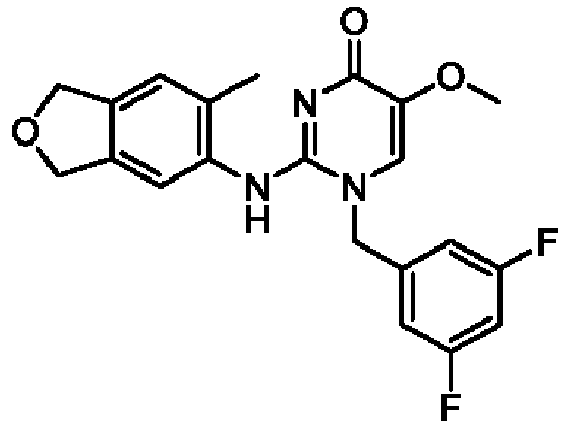
1H-NMR (DMSO-D6)δ: 3.59 (s, 3H), 4.94 (s, 4H), 5.20 (s, 2H), 7.01-7.03 (m, 3H), 7.11 (s, 1H), 7.24 (t, J = 9.0 Hz, 1H), 7.34 (s, 1H), 8.36 (s, 1H). 400 1.44 [3] I-0004 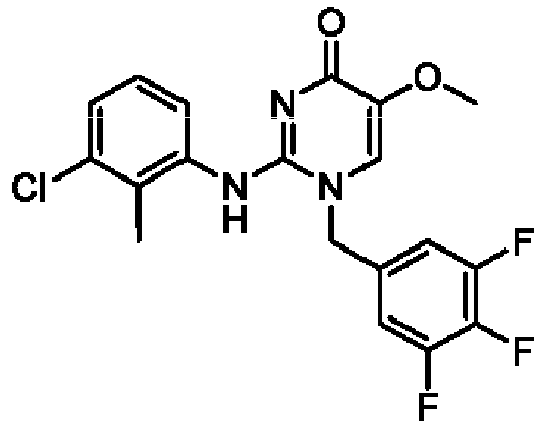
1H-NMR (DMSO-d6)δ: 1.90 (s, 3H), 3.61 (s, 3H), 5.14 (brs, 2H), 6.90-7.60 (m, 7H) 409 1.88 [1] I-0005 
1H-NMR (DMSO-D6) δ: 1.95 (s, 3H), 2.77 (s, 3H), 3.60 (s, 5H), 5.20 (s, 2H), 7.37 (s, 3H), 7.48 (s, 1H), 7.58 (s, 1H), 7.74 (s, 1H), 8.49 (s, 1H). 445 1.6 [3] [Table 2] I-0006 
1H-NMR (DMSO-D6) δ: 1.79 (3H, s), 2.26 (3H, s), 3.60 (3H, s), 5.17 (2H, br s), 6.95-7.55 (6H, m), 8.38 (1H, s). 422 2.07 [3] I-0007 
1H-NMR (DMSO-D6)δ: 1.67 (s, 3H), 3.62 (s, 3H), 3.74 (s, 3H), 5.21 (s, 2H), 6.68(1H, d, J=7.8Hz), 6.84(1H, d, J=8.3Hz), 7.33-7.44 (m, 7H), 8.37 (s, 1H). 352 1.53 [3] I-0008 
1H-NMR (CDCl3)δ: 3.12 (t, 2H), 2.22 (s, 3H), 3.48 (s, 3H), 4.07 (t, 2H), 6.30 (s, 1H), 6.67-6.69 (d, 2H), 7.09-7.12 (m, 2H), 7.21-7.23 (m, 2H), 7.26-7.28 (m, 1H), 7.28-7.35 (m, 2H), 7.53 (m, 1H) 370 1.71 [1] I-0009 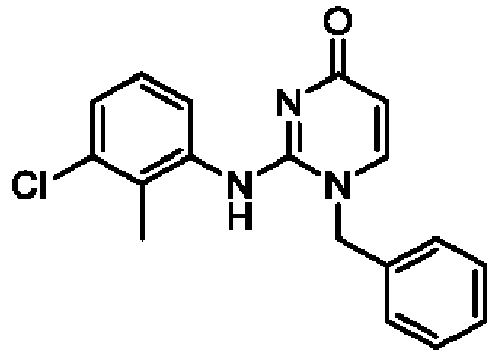
1H-NMR (CDCl3)δ: 2.03 (s, 3H), 5.07 (s, 2H), 5.43 (d, J=7.6Hz, 1H), 6.68 (d, J=6.8Hz, 1H), 7.05-7.13 (m, 2H), 7.20 (d, J=7.6Hz, 1H), 7.32-7.49 (m, 6H). 326 2 [1] I-0010 
1H-NMR (CDCl3)δ: 2.06 (s, 3H), 5.04(s, 2H), 6.67 (d, J=6.8Hz, 1H), 7.06-7.65 (m, 9H). 344 1.72 [1] I-0011 
1H-NMR (CDCl3)δ: 2.04 (s, 3H), 5.08 (s, 2H), 6.66 (d, J = 7.2Hz, 1H), 7.05-7.14 (m, 2H), 7.30-7.44 (m, 6H), 7.57 (s, 1H) 359 1.89 [1] [Table 3] I-0012 
1H-NMR (CDCl3)δ: 1.86 (s, 3H), 2.04 (s, 3H), 5.05 (s, 2H), 6.67 (d, J=6.0Hz, 1H), 7.02-7.12 (m, 3H), 7.32-7.43 (m, 5H), 7.46-7.52 (br, 1H). 340 2.03 [1] I-0013 
1H-NMR (CDCl3)δ: 2.02 (s, 3H), 5.15 (s, 2H), 6.65 (d, J=8.0Hz, 1H), 7.10-7.20(m, 2H), 7.34-7.49 (m, 5H), 7.55-7.61 (br, 1H), 7.79 (s, 1H). 351 2.11 [1] I-0014 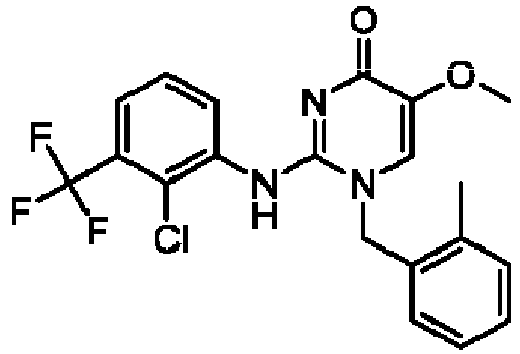
409 1.79 [1] I-0015 
1H-NMR (DMSO-D6) δ: 1.95 (3H, s), 4.80 (1H, d, J = 15.8 Hz), 5.03 (1H, d, J = 15.8 Hz), 6.82 (1H, d, J = 7.5 Hz), 7.09-7.20 (3H, m), 7.54-7.61 (2H, m), 7.70 (1H, d, J = 7.8 Hz), 7.97 (1H, d, J = 7.8 Hz). 395 1.81 [1] I-0016 
1H-NMR (DMSO-D6) δ: 1.82 (3H, s), 4.59 (2H, q, J = 9.0 Hz), 5.22 (2H, s), 7.05-7.44 (8H, m), 7.74 (1H, s), 8.73 (1 H, s). 424 2.03 [1] I-0017 
1H-NMR (CDCl3)δ: 1.33 (t, J=7.2Hz, 3H), 1.96 (s, 3H), 4.31 (q, J=7.2Hz, 2H), 5.16 (s, 2H), 6.64 (d, J=7.6Hz, 1H), 7.06-7.17 (m, 2H), 7.35-7.47 (m, 6H), 8.32 (s, 1H) [Table 4] I-0018 
1H-NMR (CDCl3)δ: 1.99 (s, 3H), 5.19 (s, 2H), 6.66 (d, J=7.6Hz, 1H), 7.10-7.21 (m, 2H), 7.35-7.49 (m, 5H), 7.55-7.90 (br, 1H), 8.52 (s, 1H), 11.78-12.30 (br, 1H). 370 1.96 [1] I-0019 
1H-NMR (DMSO-d6)δ: 1.40-1.46 (2H, m), 1.78-1.83 (5H, m), 3.35-3.44 (2H, m), 3.77-3.81 (2H, m), 3.93 (1H, m), 5.26 (2H, brs), 6.68 (1H, brs), 7.10 (2H, brs), 7.34-7.39 (5H, m), 8.59 (1H, brs), 10.43 (1H, brs). 453 2.14 [1] I-0020 
1H-NMR (DMSO-d6)δ: 1.88 (s, 3H), 3.61 (s, 3H), 5.15-5.34 (br, 2H), 6.93-7.51 (m, 8H), 7.95-8.20 (br, 1H), 8.01 (s, 1H), 8.72-9.00 (br, 1H). 399 1.83 [1] I-0021 
1H-NMR (CDCl3)δ: 1.49 (1.51) (9H, s), 1.98 (1.75) (3H, s), 5.06 (5.03) (2H, s), 5.83-8.18 (10H, m). 441 2.25 [1] I-0022 
1H-NMR (CDCl3)δ: 2.07 (2H, s), 3.24 (2H, brs), 5.01 (2H, s), 6.72 (2H, brs), 7.05-7.10 (2H, m), 7.34-7.42 (5H, m), 7.61 (1H, brs). 341 1.44 [1] I-0023 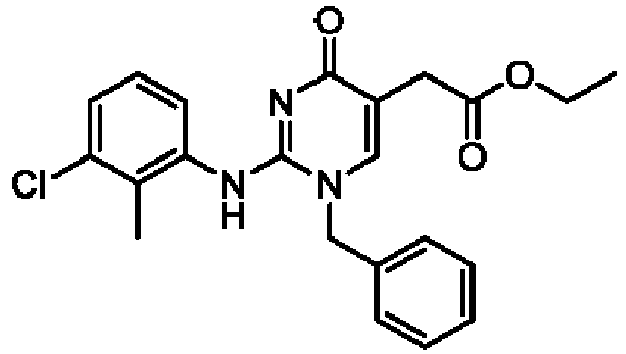
1H-NMR (DMSO-D6) δ: 1.17 (3H, t, J = 7.2 Hz), 1.86 (3H, s), 3.20 (2H, s), 4.05 (2H, q, J = 7.1 Hz), 5.06 (2H, brs), 6.55-7.45 (8H, m), 7.79 (1H, s), 9.93 (1H, s). 412 2.33 [3] [Table 5] I-0024 
1H-NMR (DMSO-D6) δ: 1.85 (3H, s), 2.32 (2H, t, J = 6.5 Hz), 3.46 (2H, q, J = 6.1 Hz), 4.58 (1H, br s), 5.05 (2H, br s), 6.55-7.70 (9H, m), 9.66 (1 H, s). 370 1.87 [3] I-0025 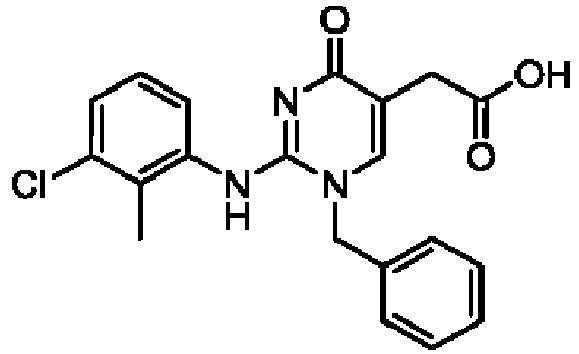
1H-NMR (DMSO-D6)δ: 1.88 (3H, s), 3.17 (2H, s), 5.16 (2H, br s), 6.70-7.60 (8H, m), 7.83 (1H, s), 9.88 (1H, br s), 12.30 (1H, br s). 384 1.79 [1] I-0026 
1H-NMR (DMSO-D6) δ: 1.87 (3H, s), 2.98 (2H, s), 5.08 (2H, s), 6.65-7.50 (10H, m), 7.69 (1H, s), 9.73 (1H, br s). 383 1.77 [3] I-0027 
405 1.96 [1] I-0028 
1H-NMR (DMSO-D6) δ: 1.93 (3H, s), 4.92 (2H, dd, J = 46.8, 14.9 Hz), 7.01-7.33 (13H, m), 7.61 (1H, s), 9.84 (1 H, s). 402 2.73 [3] I-0029 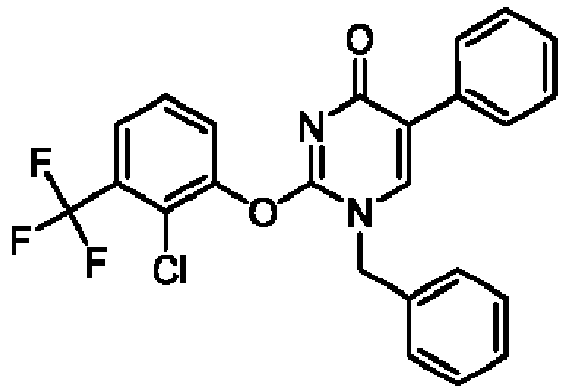
1H-NMR (DMSO-d6)δ:5.35 (s, 2H), 7.31-7.51 (m, 8H), 7.61-7.78 (m, 4H), 7.87 (d, J=8.0Hz, 1H), 8.34 (s, 1H). 457 2.41 [1] [Table 6] I-0030 
1H-NMR (CDCl3)δ: 2.04 (s, 3H), 2.83 (s, 3H), 3.35 (s, 3H), 4.65 (s, 1H), 5.30 (s, 2H), 5.87 (s, 1H), 6.95-7.05 (m, 2H), 7.46 (s, 1H), 7.76 (s, 1H) 447 1.81 [1] I-0031 
1H-NMR (CDCl3)δ: 2.31 (3H, s), 5.08(1H, s), 5.31 (2H,s), 6.08(1H, d, J=7.6Hz), 6.94(1H, s), 7.23(3H, s), 7.62-7.67(2H, m), 7.73(1H, d, J=7.6Hz), 7.85(1H, d, J=7.3Hz) 394 2.13 [2] I-0032 
393 1.99 [2] I-0033 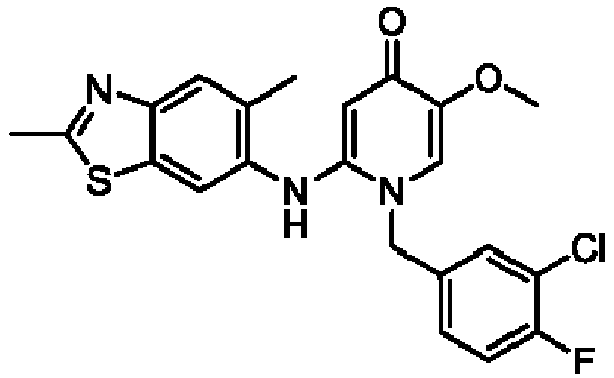
1H-NMR (CDCl3)δ: 2.05 (s, 3H), 2.80 (s, 3H), 3.79 (s, 3H), 5.04 (s, 2H), 5.37 (s, 1H), 5.83 (s, 1H), 6.81 (s, 1H), 7.05 (m, 1H), 7.20 (dd, J = 8.5, 8.5Hz, 1H), 7.25 (m, 1H), 7.29 (m, 1H), 7.72 (s, 1 H). 444 1.47 [1] I-0034 
411 2.01 [1] [Table 7] I-0035 
424 1.8 [1] I-0036 
410 1.94 [1] I-0037 
428 1.61 [1] I-0038 
428 1.94 [1] I-0039 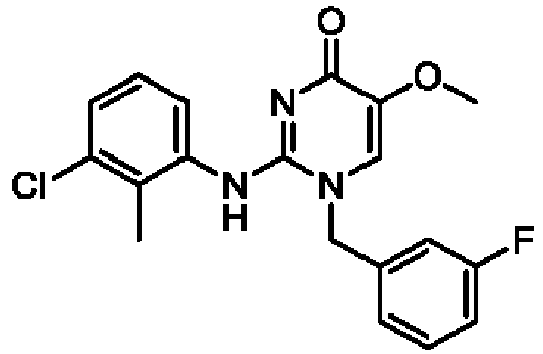
374 1.72 [1] I-0040 
374 1.73 [1] [Table 8] I-0041 
362 1.73 [1] I-0042 
326 1.64 [3] I-0043 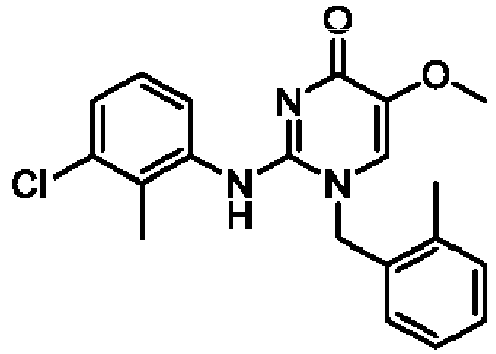
371 1.8 [1] I-0044 
371 1.81 [1] I-0045 
371 1.81 [1] I-0046 
381 1.64 [1] [Table 9] I-0047 
381 1.55 [1] I-0048 
381 1.54 [1] I-0049 
463 1.86 [3] I-0050 
363 0.87 [3] I-0051 
357 1.44 [1] I-0052 
386 1.64 [1] [Table 10] I-0053 
386 1.62 [1] I-0054 
386 1.69 [1] I-0055 
340 2.09 [1] I-0056 
369 2.15 [1] I-0057 
338 1.51 [3] I-0058 
384 1.7 [3] [Table 11] I-0059 
326 1.32 [3] I-0060 
342 1.48 [3] I-0061 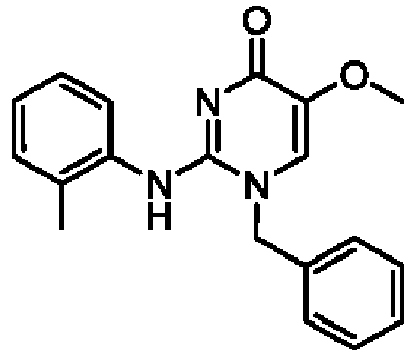
322 1.45 [3] I-0062 
348 1.56 [3] I-0063 
400 1.81 [3] I-0064 
340 1.52 [3] [Table 12] I-0065 
390 1.75 [3] I-0066 
428 2.11 [3] I-0067 
365 1.06 [3] I-0068 
336 1.59 [3] I-0069 
365 1.2 [3] I-0070 
441 1.45 [3] [Table 13] I-0071 
376 1.87 [3] I-0072 
356 1.69 [3] I-0073 
348 1.67 [3] I-0074 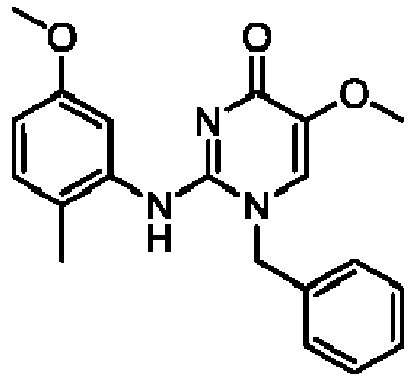
352 1.51 [3] I-0075 
408 2.1 [1] I-0076 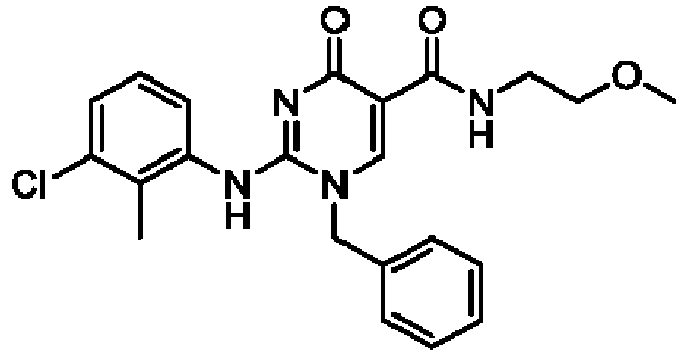
427 2.12 [1] [Table 14] I-0077 
475 1.99 [1] I-0078 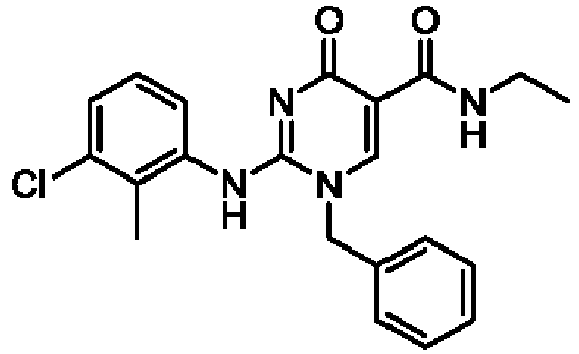
397 2.22 [1] I-0079 
350 1.61 [1] I-0080 
376 1.79 [1] I-0081 
392 1.67 [1] I-0082 
340 1.47 [1] [Table 15] I-0083 
376 1.79 [1] I-0084 
336 1.6 [3] I-0085 
390 1.74 [1] I-0086 
388 1.7 [1] I-0087 
352 1.31 [1] I-0088 
380 1.42 [1] [Table 16] I-0089 
376 1.71 [1] I-0090 
340 1.47 [1] I-0091 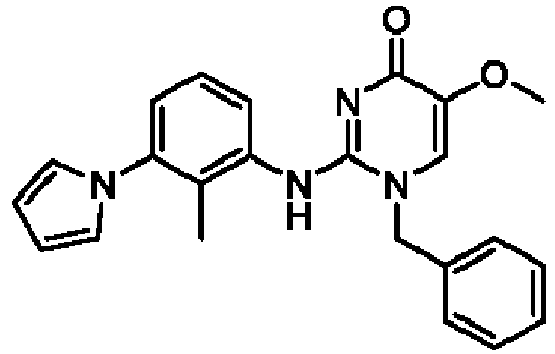
387 1.7 [1] I-0092 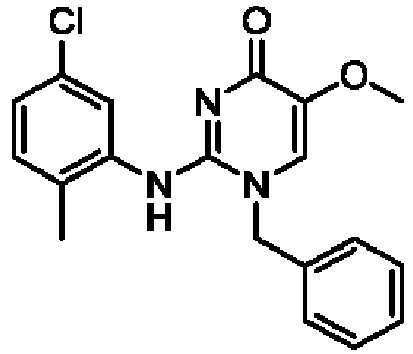
356 1.65 [1] I-0093 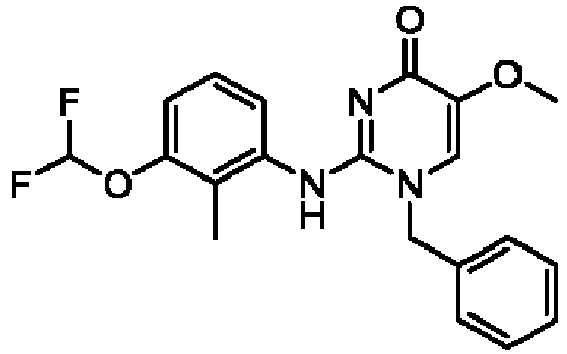
388 1.6 [1] I-0094 
410 1.78 [1] [Table 17] I-0095 
336 1.47 [1] I-0096 
376 1.77 [1] I-0097 
390 1.72 [1] I-0098 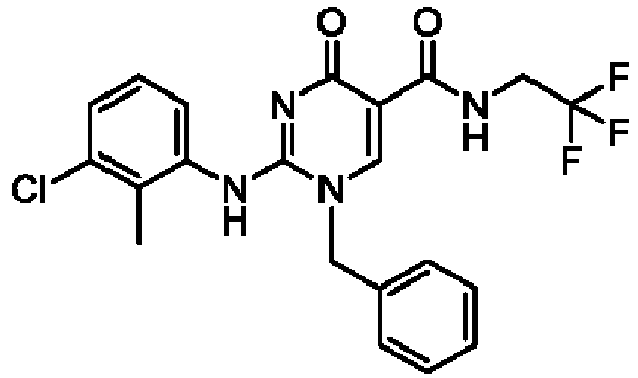
451 2.37 [1] I-0099 
384 1.83 [1] I-0100 
397 1.82 [1] [Table 18] I-0101 
414 1.78 [1] I-0102 
336 1.48 [1] I-0103 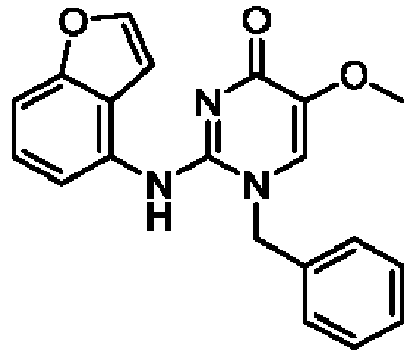
348 1.41 [1] I-0104 
364 1.52 [1] I-0105 
340 1.72 [1] I-0106 
336 1.61 [3] [Table 19] I-0107 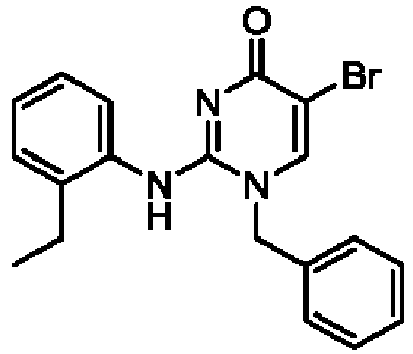
384 1.78 [1] I-0108 
384 1.74 [1] I-0109 
350 1.63 [1] I-0110 
352 1.1 [1] I-0111 
426 2.5 [1] I-0112 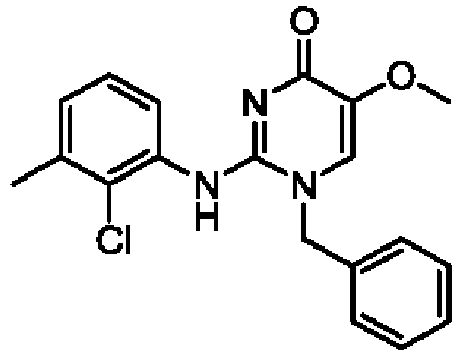
356 1.64 [1] [Table 20] I-0113 
352 1.44 [1] I-0114 
350 1.6 [1] I-0115 
372 1.51 [1] I-0116 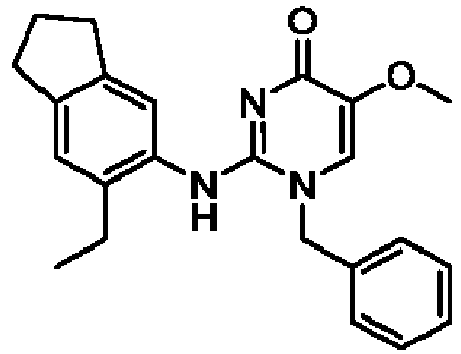
376 1.78 [1] I-0117 
361 1.39 [1] I-0118 
398 1.77 [1] [Table 21] I-0119 
365 1.58 [3] I-0120 
350 1.42 [3] I-0121 
370 1.79 [3] I-0122 
366 1.45 [3] I-0123 
344 1.47 [1] I-0124 
350 1.6 [1] [Table 22] I-0125 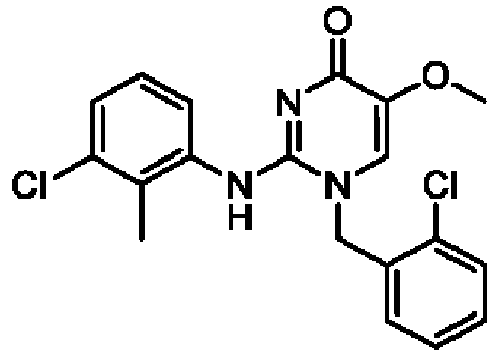
390 1.81 [1] I-0126 
390 1.82 [1] I-0127 
390 1.82 [1] I-0128 
324 1.55 [1] I-0129 
380 1.7 [1] I-0130 
352 1.53 [1] [Table 23] I-0131 
350 1.61 [1] I-0132 
410 2.03 [1] I-0133 
408 1.72 [1] I-0134 
361 1.3 [1] I-0135 
362 0.80 [1] I-0136 
364 1.75 [1] [Table 24] I-0137 
370 1.86 [3] I-0138 
414 1.92 [1] I-0139 
342 1.59 [1] I-0140 
342 1.6 [1] I-0141 
354 1.52 [1] I-0142 
384 1.9 [1] [Table 25] I-0143 
364 1.76 [1] I-0144 
420 1.84 [1] I-0145 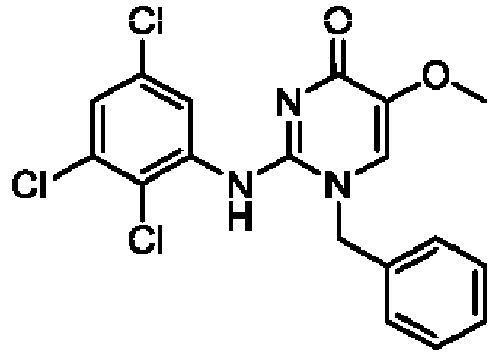
410 2.16 [1] I-0146 
356 1.64 [1] I-0147 
352 1.36 [1] I-0148 
429 1.39 [1] [Table 26] I-0149 
432 2.06 [1] I-0150 
380 1.57 [3] I-0151 
406 2.05 [3] I-0152 
372 1.71 [3] I-0153 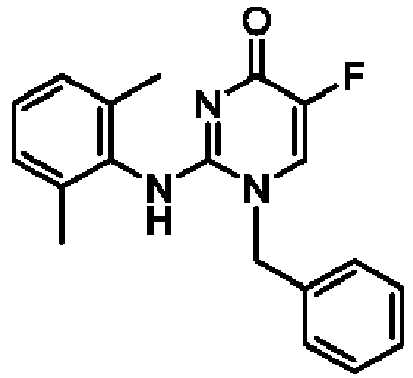
324 1.51 [1] I-0154 
410 2.09 [1] [Table 27] I-0155 
367 1.62 [3] I-0156 
358 1.53 [3] I-0157 
324 1.57 [1] I-0158 
340 1.69 [1] I-0159 
363 1.23 [1] I-0160 
381 1.2 [1] [Table 28] I-0161 
370 1.73 [1] I-0162 
368 1.64 [1] I-0163 
394 1.81 [1] I-0164 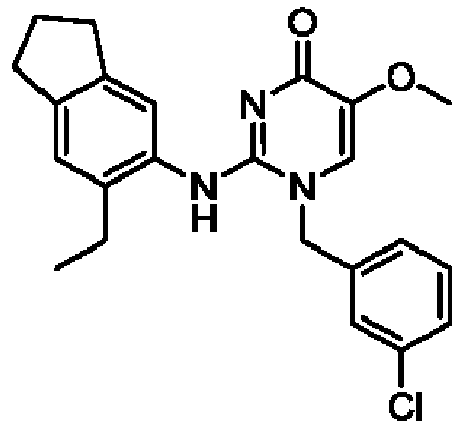
410 1.93 [1] I-0165 
384 1.73 [1] I-0166 
408 1.99 [3] [Table 29] I-0167 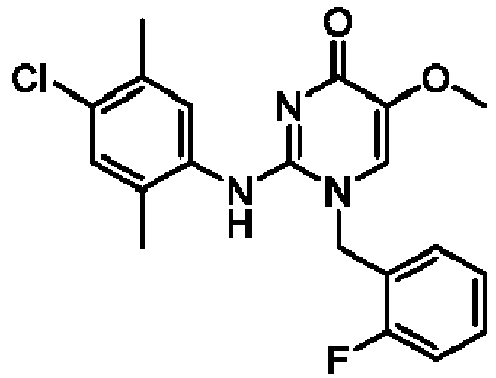
388 1.89 [3] I-0168 
388 1.89 [3] I-0169 
388 1.76 [1] I-0170 
404 2.03 [3] I-0171 
404 2.05 [3] [Table 30] I-0172 
404 2.03 [3] I-0173 
362 1.78 [3] I-0174 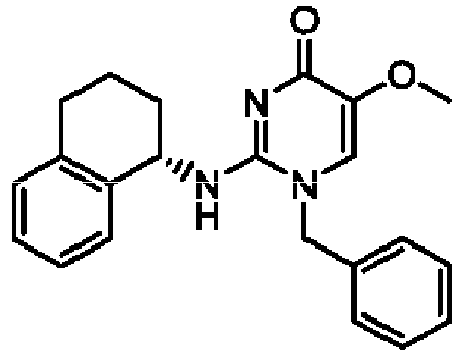
362 1.78 [3] I-0175 
370 1.75 [1] I-0176 
368 1.64 [1] [Table 31] I-0177 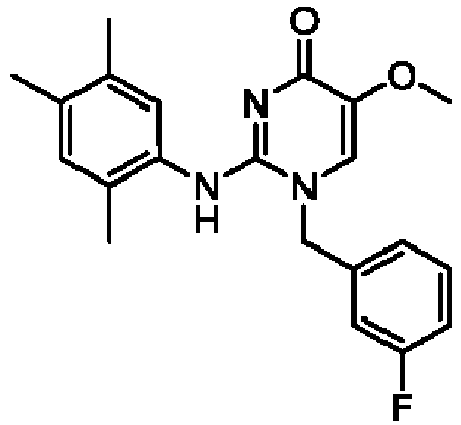
368 1.63 [1] I-0178 
394 1.8 [1] I-0179 
394 1.82 [1] I-0180 
352 1.29 [3] I-0181 
385 1.36 [3] I-0182 
382 1.29 [1] [Table 32] I-0183 
370 1.37 [1] I-0184 
476 2.05 [1] I-0185 
337 1.35 [1] I-0186 
382 1.93 [1] I-0187 
362 1.8 [3] I-0188 
320 1.46 [3] [Table 33] I-0189 
348 1.69 [3] I-0190 
362 1.65 [1] I-0191 
380 1.61 [1] I-0192 
384 1.77 [1] I-0193 
384 1.78 [1] I-0194 
410 1.99 [1] [Table 34] I-0195 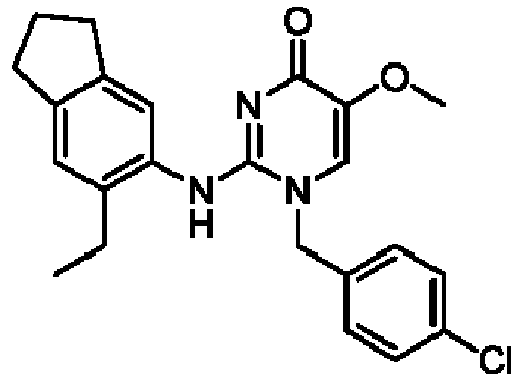
410 1.98 [1] I-0196 
392 2.22 [1] I-0197 
325 1.91 [1] I-0198 
415 1.54 [1] I-0199 
337 1.8 [1] I-0200 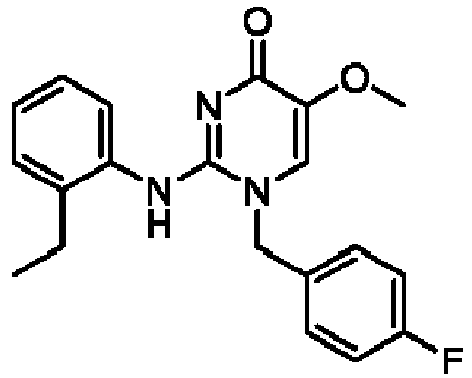
354 1.54 [1] [Table 35] I-0201 
348 1.56 [1] I-0202 
406 1.88 [1] I-0203 
342 1.59 [1] I-0204 
407 1.25 [1] I-0205 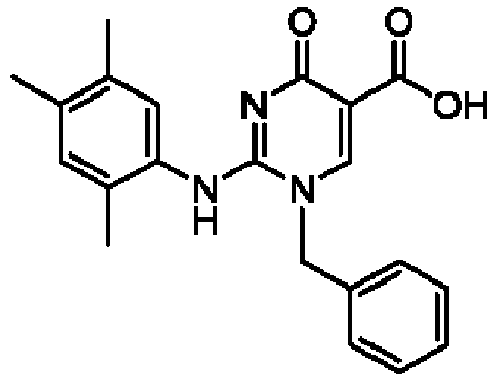
364 1.89 [1] I-0206 
380 1.65 [1] [Table 36] I-0207 
447 1.43 [1] I-0208 
416 1.46 [1] I-0209 
388 1.41 [1] I-0210 
364 1.76 [1] I-0211 
364 1.76 [1] [Table 37] I-0212 
366 1.57 [1] I-0213 
384 1.61 [1] I-0214 
400 1.78 [1] I-0215 
370 1.78 [1] I-0216 
394 2.49 [3] I-0217 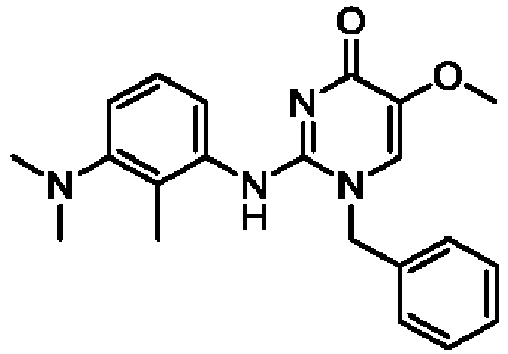
365 0.81 [1] [Table 38] I-0218 
363 1.86 [1] I-0219 
447 2.02 [1] I-0220 
366 1.49 [1] I-0221 
362 1.36 [3] I-0222 
392 1.87 [3] I-0223 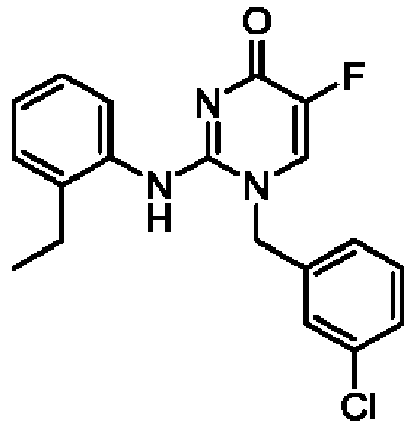
358 1.73 [1] [Table 39] I-0224 
358 1.72 [1] I-0225 
288 1.72 [1] I-0226 
448 1.85 [1] I-0227 
404 1.57 [1] I-0228 
416 2.09 [3] [Table 40] I-0229 
434 1.61 [3] I-0230 
418 1.82 [3] I-0231 
432 1.98 [3] I-0232 
493 1.68 [3] I-0233 
370 1.4 [1] [Table 41] I-0234 
386 1.53 [1] I-0235 
369 1.48 [1] I-0236 
366 1.56 [1] I-0237 
402 1.67 [1] I-0238 
507 2.4 [1] [Table 42] I-0239 
387 1.71 [1] I-0240 
390 1.28 [1] I-0241 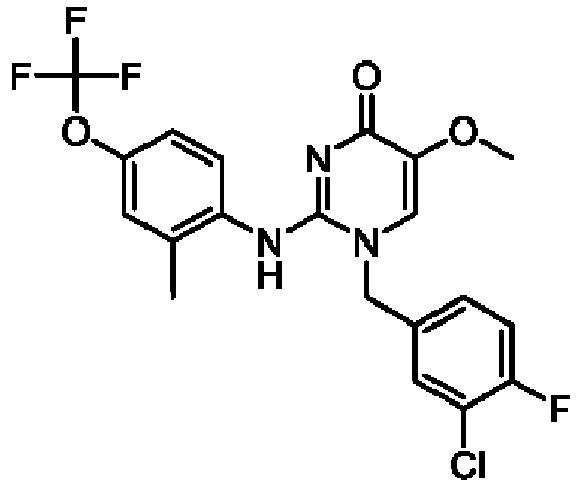
458 2.13 [3] I-0242 
428 2.11 [3] I-0243 
402 1.93 [3] [Table 43] I-0244 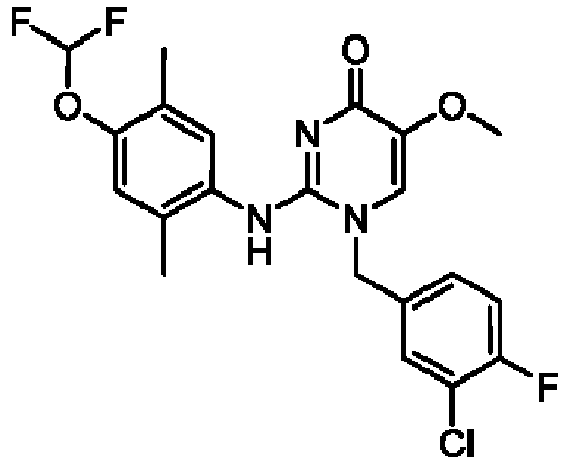
454 2.01 [3] I-0245 
418 1.8 [3] I-0246 
418 1.89 [3] I-0247 
418 1.62 [3] I-0248 
417 1.24 [3] [Table 44] I-0249 
384 1.53 [1] I-0250 
400 1.65 [1] I-0251 
384 1.59 [1] I-0252 
388 1.78 [1] I-0253 
384 1.59 [1] [Table 45] I-0254 
400 1.72 [1] I-0255 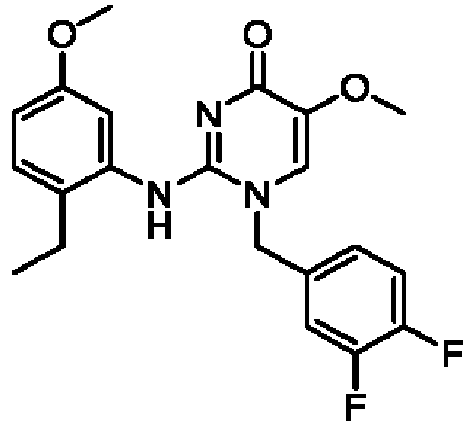
402 1.66 [1] I-0256 
396 1.41 [1] I-0257 
398 1.81 [3] I-0258 
398 1.82 [3] [Table 46] I-0259 
414 1.94 [3] I-0260 
416 1.88 [3] I-0261 
384 1.63 [3] I-0262 
384 1.63 [3] I-0263 
400 1.76 [3] [Table 47] I-0264 
402 1.69 [3] I-0265 
364 1.72 [1] I-0266 
384 1.49 [1] I-0267 
402 1.52 [1] I-0268 
436 1.67 [1] [Table 48] I-0269 
414 1.54 [3] I-0270 
414 1.56 [3] I-0271 
430 1.68 [3] I-0272 
432 1.61 [3] I-0273 
448 1.72 [3] [Table 49] I-0274 
400 1.42 [3] I-0275 
400 1.43 [3] I-0276 
418 1.5 [3] I-0277 
386 1.82 [3] I-0278 
366 1.4 [3] [Table 50] I-0279 
406 1.96 [3] I-0280 
408 1.89 [1] I-0281 
366 1.62 [1] I-0282 
384 1.54 [1] I-0283 
402 1.59 [1] [Table 51] I-0284 
453 2.29 [1] I-0285 
408 1.92 [1] I-0286 
392 1.77 [1] I-0287 
380 1.48 [3] I-0288 
398 1.52 [3] [Table 52] I-0289 
398 1.52 [3] I-0290 
414 1.66 [3] I-0291 
416 1.59 [3] I-0292 
432 1.7 [3] I-0293 
432 1.72 [3] [Table 53] I-0294 
424 2.11 [3] I-0295 
424 2.04 [3] I-0296 
424 2.14 [3] I-0297 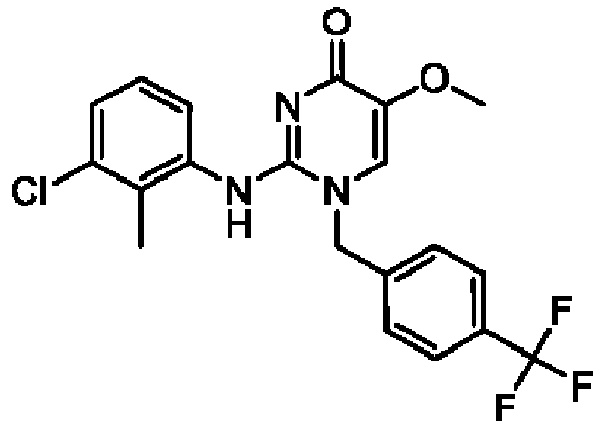
424 1.92 [1] I-0298 
350 1.64 [1] [Table 54] I-0299 
436 1.83 [1] I-0300 
420 1.71 [1] I-0301 
420 1.71 [1] I-0302 
438 1.77 [1] I-0303 
440 1.99 [1] [Table 55] I-0304 
440 1.99 [1] I-0305 
440 1.97 [1] I-0306 
356 1.73 [1] I-0307 
354 1.81 [1] I-0308 
404 1.53 [1] [Table 56] I-0309 
422 1.58 [1] I-0310 
386 1.47 [1] I-0311 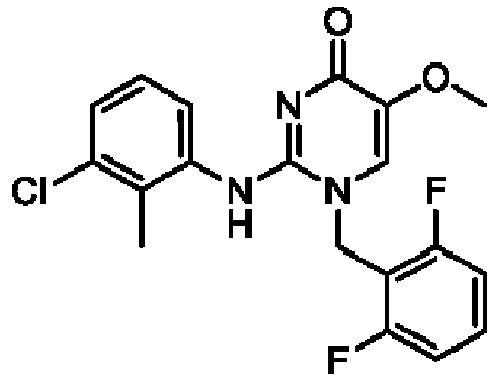
392 1.71 [1] I-0312 
370 1.65 [1] I-0313 
445 1.52 [1] [Table 57] I-0314 
402 1.8 [1] I-0315 
418 1.87 [1] I-0316 
436 1.97 [1] I-0317 
424 2.08 [1] I-0318 
354 1.59 [1] [Table 58] I-0319 
372 1.63 [1] I-0320 
380 1.66 [1] I-0321 
432 1.87 [1] I-0322 
370 1.67 [1] I-0323 
354 1.52 [1] [Table 59] I-0324 
372 1.59 [1] I-0325 
388 1.7 [1] I-0326 
372 1.59 [1] I-0327 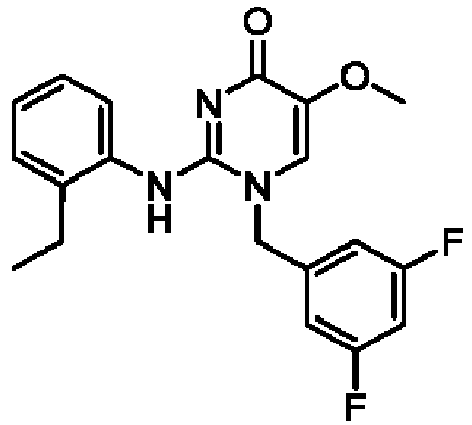
372 1.61 [1] I-0328 
392 1.75 [1] [Table 60] I-0329 
392 1.76 [1] I-0330 
397 1.84 [3] I-0331 
411 1.89 [3] I-0332 
354 1.65 [3] I-0333 
370 1.79 [3] [Table 61] I-0334 
388 1.84 [3] I-0335 
400 1.87 [3] I-0336 
414 1.95 [3] I-0337 
427 1.72 [3] I-0338 
467 1.9 [3] [Table 62] I-0339 
453 1.9 [3] I-0340 
441 1.89 [3] I-0341 
473 2.29 [3] I-0342 
439 2.28 [3] I-0343 
422 1.87 [3] [Table 63] I-0344 
422 1.81 [1] I-0345 
438 1.7 [1] I-0346 
420 1.65 [1] I-0347 
409 1.85 [1] I-0348 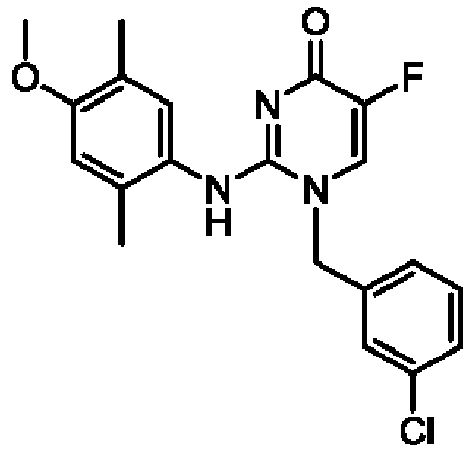
388 1.75 [1] [Table 64] I-0349 
406 1.78 [1] I-0350 
418 1.64 [1] I-0351 
400 1.61 [1] I-0352 
366 1.37 [1] I-0353 
418 1.59 [1] [Table 65] I-0354 
1H-NMR (DMSO-D6) δ: 1.74 (s, 3H), 3.60 (s, 3H), 3.70 (s, 3H), 5.17 (s, 2H), 6.65 (s, 1H), 6.72 (d, J = 6.4 Hz, 1H), 7.06 (d, J = 8.0 Hz, 2H) , 7.30-7.40 (m, 2H), 7.47 (t, J = 9.6 Hz, 1H), 7.54 (d, J = 6.8 Hz, 1H), 8.32 (s, 1H). 404 1.74 [1] I-0355 
438 1.78 [1] I-0356 
404 1.64 [1] I-0357 
351 1.99 [1] I-0358 
403 2.34 [3] [Table 66] I-0359 
358 1.63 [3] I-0360 
410 1.77 [1] I-0361 
396 1.77 [3] I-0362 
430 1.94 [3] I-0363 
448 1.98 [3] [Table 67] I-0364 
388 1.7 [3] I-0365 
1H-NMR (DMSO-D6) δ: 1.84 (s, 3H), 3.60 (s, 3H), 5.17 (br s, 2H), 6.88-7.20 (m, 4H), 7.25-7.40 (m, 2H), 7.48 (m, 1H), 7.56 (m, 1H), 8.38 (br s, 1H). 440 1.92 [1] I-0366 
368 1.57 [3] I-0367 
386 1.61 [3] I-0368 
402 1.75 [3] [Table 68] I-0369 
420 1.79 [3] I-0370 
384 1.68 [3] I-0371 
402 1.71 [3] I-0372 
1H-NMR (DMSO-D6) δ: 1.83 (s, 3H), 2.08 (s, 3H), 3.59 (s, 3H), 3.75 (s, 3H), 5.19 (s, 2H), 6.74-6.79 (m, 2H), 6.97-7.02 (m, 2H), 7.24 (m, 1H), 7.30 (s, 1H), 8.18 (s, 1H). 402 1.59 [1] I-0373 
352 1.41 [1] [Table 69] I-0374 
370 1.67 [1] I-0375 
354 1.59 [1] I-0376 
388 1.76 [1] I-0377 
386 1.7 [1] I-0378 
406 1.84 [1] [Table 70] I-0379 
442 1.57 [1] I-0380 
354 1.55 [1] I-0381 
402 1.83 [1] I-0382 
354 1.52 [1] I-0383 
416 1.75 [1] [Table 71] I-0384 
432 1.86 [1] I-0385 
422 2.11 [3] I-0386 
400 1.76 [3] I-0387 
405 2.01 [1] I-0388 
525 1.87 [1] [Table 72] I-0389 
422 2.06 [1] I-0390 
361 1.37 [3] I-0391 
375 1.07 [1] I-0392 
375 1.05 [1] I-0393 
405 1.36 [1] [Table 73] I-0394 
418 1.71 [3] I-0395 
418 1.81 [1] I-0396 
413 1.54 [3] I-0397 
427 1.33 [1] I-0398 
427 1.35 [1] [Table 74] I-0399 
457 1.52 [1] I-0400 
354 1.55 [1] I-0401 
383 0.87 [1] I-0402 
417 1.11 [1] I-0403 
388 1.73 [1] [Table 75] I-0404 
402 1.68 [1] I-0405 
384 1.61 [1] I-0406 
403 1.52 [1] I-0407 
388 1.54 [1] I-0408 
388 1.64 [3] [Table 76] I-0409 
404 1.67 [1] I-0410 
366 1.48 [1] I-0411 
506 1.82 [1] I-0412 
558 2.06 [1] [Table 77] I-0413 
495 1.29 [1] I-0414 
547 1.41 [1] I-0415 
495 1.67 [1] I-0416 
440 1.49 [1] [Table 78] I-0417 
492 1.44 [1] I-0418 
547 1.94 [1] I-0419 
418 1.7 [1] I-0420 
406 1.79 [1] [Table 79] I-0421 
422 1.95 [3] I-0422 
422 1.93 [3] I-0423 
390 2 [3] I-0424 
418 1.77 [1] I-0425 
388 1.81 [1] [Table 80] I-0426 
442 2.1 [3] I-0427 
404 1.72 [1] I-0428 
400 1.73 [1] I-0429 
368 1.7 [3] I-0430 
420 1.92 [3] [Table 81] I-0431 
393 1.47 [3] I-0432 
399 1.02 [1] I-0433 
354 1.67 [3] I-0434 
372 1.73 [3] I-0435 
388 1.74 [1] [Table 82] I-0436 
372 1.73 [3] I-0437 
390 165 [1] I-0438 
388 1.67 [3] I-0439 
418 1.52 [3] I-0440 
402 1.7 [3] [Table 83] I-0441 
400 1.86 [3] I-0442 
372 1.71 [3] I-0443 
372 1.71 [3] I-0444 
424 1.58 [3] I-0445 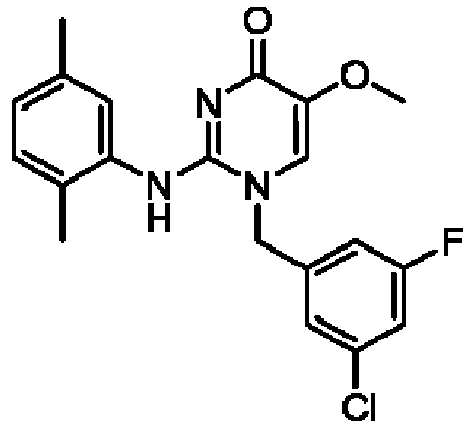
388 1.87 [3] [Table 84] I-0446 
418 1.85 [3] I-0447 
418 1.85 [3] I-0448 
414 1.48 [3] I-0449 
466 1.71 [3] I-0450 
354 1.62 [1] I-0451 
422 1.95 [3] [Table 85] I-0452 
406 1.85 [3] I-0453 
402 1.93 [3] I-0454 
386 1.82 [3] I-0455 
366 1.56 [1] I-0456 
400 1.73 [1] [Table 86] I-0457 
402 1.67 [1] I-0458 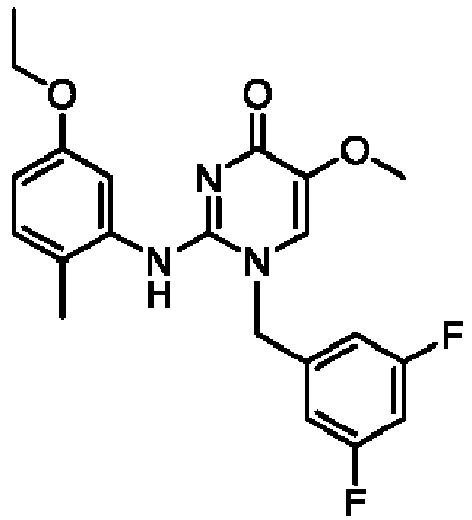
402 1.67 [1] I-0459 
418 1.77 [1] I-0460 
418 1.8 [1] I-0461 
372 1.63 [1] [Table 87] I-0462 
388 1.75 [1] I-0463 
372 1.66 [1] I-0464 
386 1.57 [1] I-0465 
438 1.75 [1] I-0466 
424 2.07 [3] I-0467 
426 2 [3] [Table 88] I-0468 
442 2.12 [3] I-0469 
434 1.64 [3] I-0470 
426 2.03 [3] I-0471 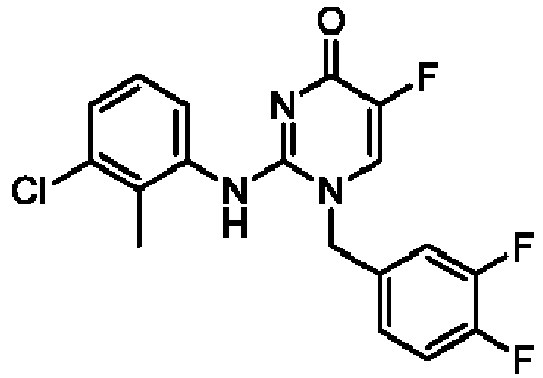
380 1.94 [3] I-0472 
396 2.2 [3] I-0473 
386 1.77 [3] [Table 89] I-0474 
404 1.8 [3] I-0475 
404 1.8 [3] I-0476 
386 1.75 [3] I-0477 
388 1.67 [3] I-0478 
404 1.79 [3] [Table 90] I-0479 
422 1.92 [3] I-0480 
424 1.86 [3] I-0481 
390 1.95 [3] I-0482 
392 1.88 [3] I-0483 
408 2 [3] [Table 91] I-0484 
398 1.86 [3] I-0485 
400 1.79 [3] I-0486 
416 1.91 [3] I-0487 
395 1.59 [3] I-0488 
397 1.53 [3] I-0489 
413 1.64 [3] [Table 92] I-0490 
396 1.57 [3] I-0491 
398 1.49 [3] I-0492 
414 1.6 [3] I-0493 
420 1.73 [1] I-0494 
454 1.88 [1] [Table 93] I-0495 
456 1.83 [1] I-0496 
456 1.83 [1] I-0497 
472 1.92 [1] I-0498 
472 1.96 [1] [Table 94] I-0499 
366 1.5 [3] I-0500 
378 1.88 [3] I-0501 
430 2.04 [3] I-0502 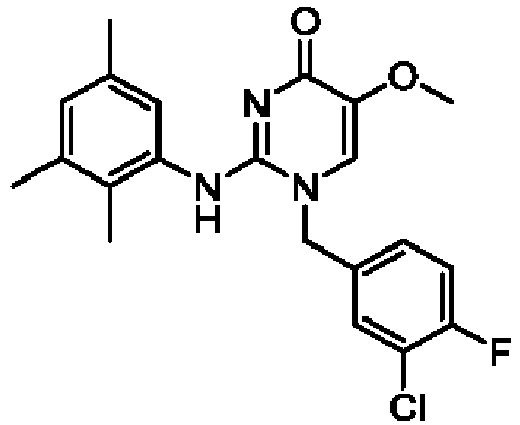
402 1.39 [3] I-0503 
390 1.79 [3] [Table 95] I-0504 
424 1.86 [3] I-0505 
392 1.89 [3] I-0506 
388 1.83 [3] I-0507 
406 1.9 [3] I-0508 
406 1.92 [3] [Table 96] I-0509 
404 1.82 [3] I-0510 
422 1.88 [3] I-0511 
440 1.97 [3] I-0512 
422 2.04 [3] I-0513 
400 1.39 [3] [Table 97] I-0514 
416 1.82 [1] I-0515 
432 1.92 [1] I-0516 
424 1.72 [3] I-0517 
402 1.72 [3] I-0518 
426 2.13 [3] [Table 98] I-0519 
443 1.47 [3] I-0520 
388 1.81 [1] I-0521 
384 1.91 [1] I-0522 
405 1.09 [1] I-0523 
426 1.41 [1] [Table 99] I-0524 
457 1.41 [1] I-0525 
415 1.92 [1] I-0526 
467 2.13 [1] I-0527 
423 1.67 [1] [Table 100] I-0528 
476 1.81 [1] I-0529 
454 1.9 [1] I-0530 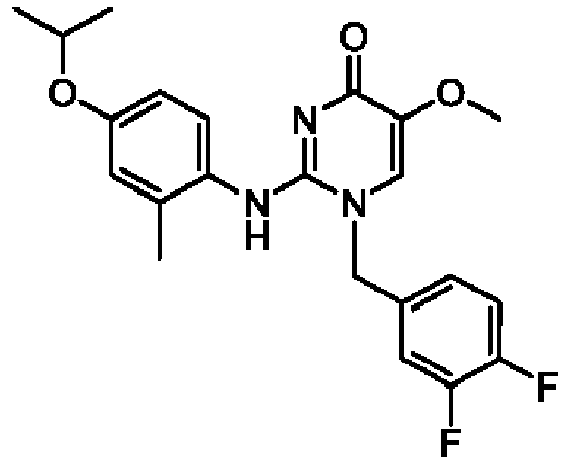
416 1.71 [1] I-0531 
416 1.71 [1] I-0532 
432 1.81 [1] [Table 101] I-0533 
426 2.13 [3] I-0534 
420 2.01 [3] I-0535 
422 1.95 [3] I-0536 
438 2.06 [3] I-0537 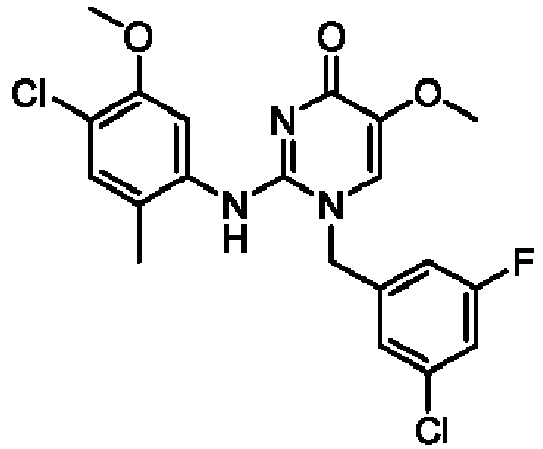
438 2.1 [3] [Table 102] I-0538 
388 1.74 [3] I-0539 
424 1.97 [3] I-0540 
402 1.85 [3] I-0541 
426 2.28 [3] I-0542 
406 2.13 [3] [Table 103] I-0543 
408 1.98 [3] I-0544 
424 1.95 [3] I-0545 
422 2.08 [3] I-0546 
474 2.25 [3] I-0547 
452 1.62 [3] [Table 104] I-0548 
459 1.56 [3] I-0549 
441 1.76 [3] I-0550 
404 1.8 [3] I-0551 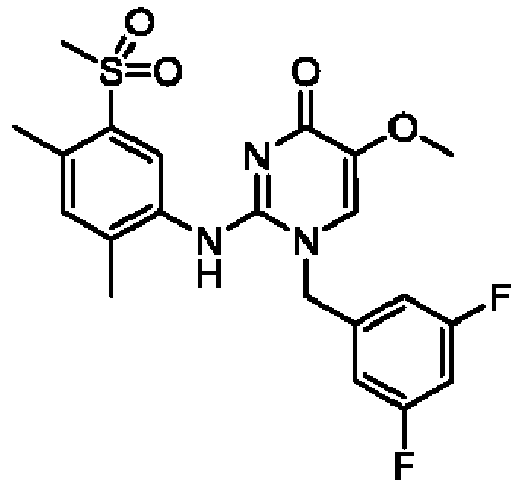
450 1.58 [3] I-0552 
477 1.57 [3] [Table 105] I-0553 
429 1.56 [3] I-0554 
425 1.55 [1] I-0555 
416 1.77 [1] I-0556 
416 1.77 [1] I-0557 
432 1.91 [1] [Table 106] I-0558 
389 1.45 [1] I-0559 
411 1.49 [3] I-0560 
384 1.73 [3] I-0561 
411 1.5 [3] I-0562 
427 1.63 [3] [Table 107] I-0563 
392 1.72 [1] I-0564 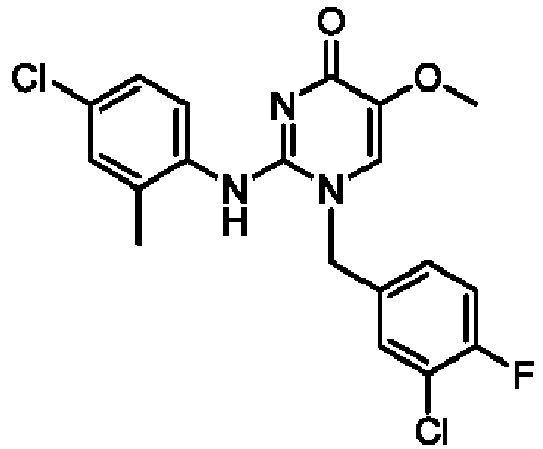
408 1.82 [1] I-0565 
372 1.66 [1] I-0566 
388 1.81 [1] I-0567 
406 1.86 [1] [Table 108] I-0568 
390 1.71 [1] I-0569 
390 1.69 [1] I-0570 
390 1.69 [1] I-0571 
390 1.71 [1] I-0572 
406 1.65 [1] [Table 109] I-0573 
420 1.66 [1] I-0574 
404 1.79 [1] I-0575 
424 1.94 [1] I-0576 
440 1.98 [3] I-0577 
408 2.01 [3] [Table 110] I-0578 
418 1.63 [3] I-0579 
413 1.63 [3] I-0580 
414 1.6 [3] I-0581 
406 1.56 [1] I-0582 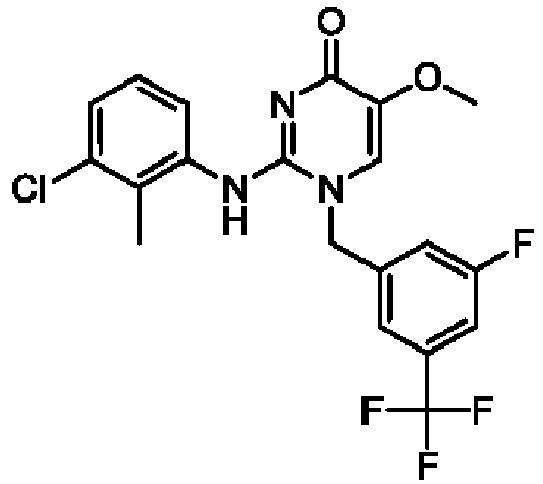
442 2.01 [1] [Table 111] I-0583 
361 1.3 [1] I-0584 
413 1.5 [1] I-0585 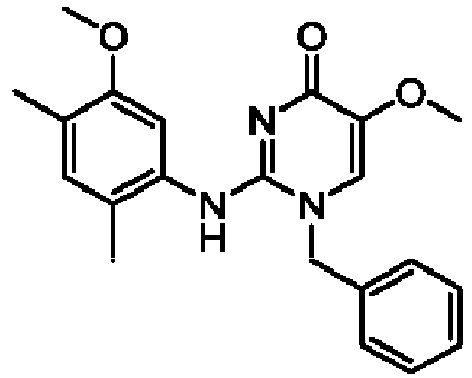
366 1.57 [1] I-0586 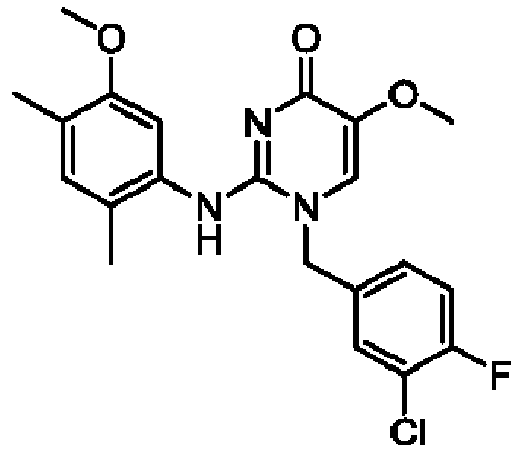
418 1.77 [1] I-0587 
429 1.37 [3] [Table 112] I-0588 
481 1.58 [3] I-0589 
465 1.48 [3] I-0590 
447 1.37 [3] I-0591 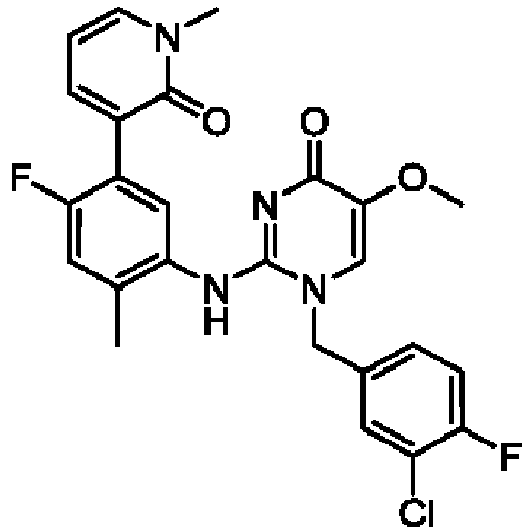
499 1.59 [3] [Table 113] I-0592 
483 1.48 [3] I-0593 
392 1.75 [1] I-0594 
408 1.85 [1] I-0595 
451 1.3 [1] I-0596 
460 1.98 [1] [Table 114] I-0597 
398 1.47 [3] I-0598 
397 1.39 [1] I-0599 
426 1.49 [3] I-0600 
402 1.5 [3] I-0601 
420 1.76 [1] [Table 115] I-0602 
429 1.33 [1] I-0603 
429 1.29 [1] I-0604 
425 1.63 [3] I-0605 
450 1.58 [3] I-0606 
404 1.79 [3] [Table 116] I-0607 
456 1.86 [1] I-0608 
404 1.71 [3] I-0609 
458 2.16 [3] I-0610 
418 1.83 [3] I-0611 
422 2.13 [3] [Table 117] I-0612 
459 1.57 [3] I-0613 
440 1.93 [3] I-0614 
404 1.67 [3] I-0615 
404 1.68 [3] I-0616 
422 1.74 [3] [Table 118] 1-0617 
422 1.74 [3] I-0618 
361 1.52 [3] I-0619 
413 1.74 [3] I-0620 
397 1.63 [3] I-0621 
414 1.91 [3] I-0622 
365 0.94 [1] [Table 119] I-0623 
436 1.49 [1] I-0624 
434 1.83 [1] I-0625 
406 1.64 [1] I-0626 
418 1.78 [1] I-0627 
386 1.59 [1] [Table 120] I-0628 
406 1.78 [1] I-0629 
442 1.89 [1] I-0630 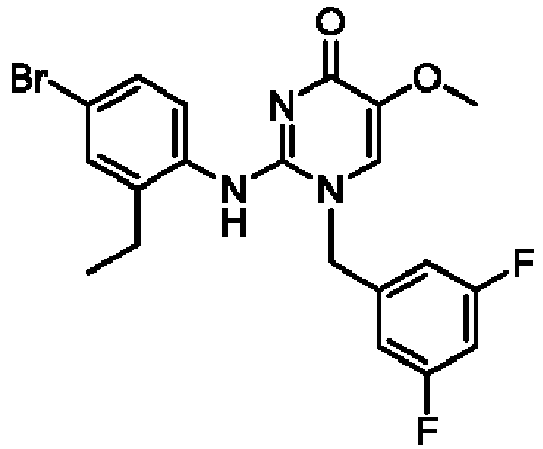
452 2.02 [1] I-0631 
468 2.1 [1] I-0632 
420 1.67 [1] [Table 121] I-0633 
434 1.86 [1] I-0634 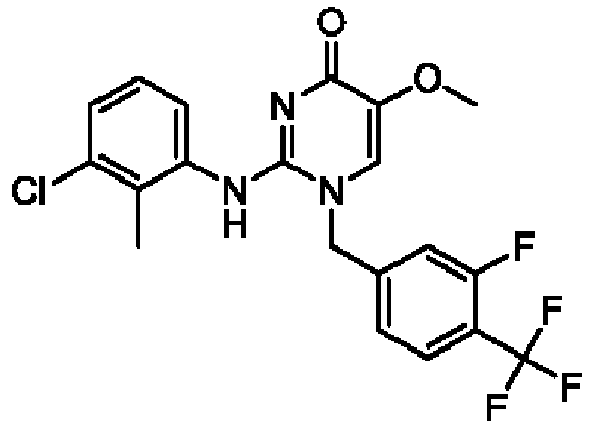
442 1.99 [1] I-0635 
442 1.97 [1] I-0636 
400 1.65 [1] I-0637 
402 1.78 [3] [Table 122] I-0638 
408 1.73 [3] I-0639 
408 1.83 [3] I-0640 
384 1.64 [3] I-0641 
406 1.76 [3] I-0642 
370 1.58 [3] [Table 123] I-0643 
374 1.78 [3] I-0644 
354 1.64 [3] I-0645 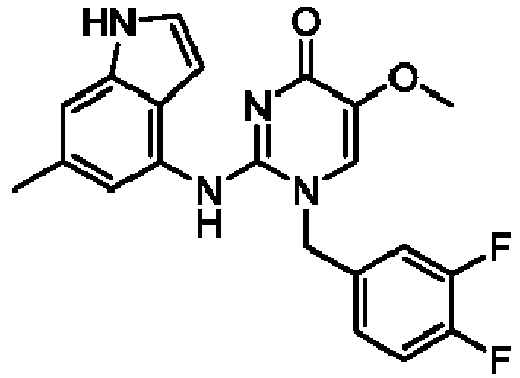
397 1.44 [1] I-0646 
441 1.49 [1] I-0647 
457 1.61 [1] [Table 124] I-0648 
441 1.48 [1] I-0649 
413 1.55 [1] I-0650 
397 1.43 [1] I-0651 
427 1.31 [1] I-0652 
411 1.18 [1] [Table 125] I-0653 
423 1.88 [1] I-0654 
439 2.03 [1] I-0655 
423 1.88 [1] I-0656 
468 2.26 [1] I-0657 
418 2.03 [1] [Table 126] I-0658 
402 1.89 [1] I-0659 
454 2.08 [1] I-0660 
406 1.76 [3] I-0661 
370 1.58 [3] I-0662 
374 1.79 [3] [Table 127] I-0663 
400 1.46 [3] I-0664 
452 1.68 [3] I-0665 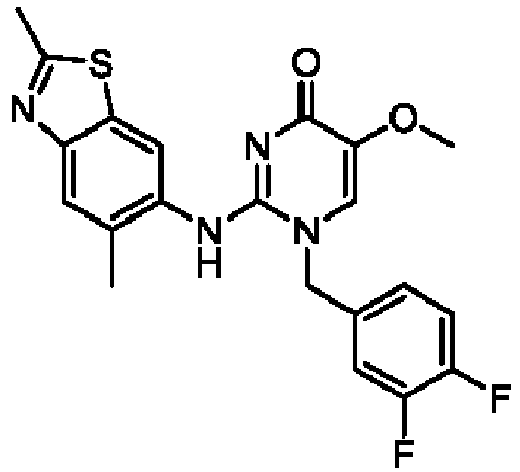
429 1.56 [3] I-0666 
442 2.28 [3] I-0667 
442 1.64 [3] [Table 128] I-0668 
441 1.78 [3] I-0669 
445 1.7 [3] I-0670 
416 1.91 [3] I-0671 
420 1.8 [3] I-0672 
438 1.87 [3] [Table 129] I-0673 
420 1.91 [1] I-0674 
372 1.7 [3] I-0675 
374 1.6 [3] I-0676 
366 1.61 [3] I-0677 
400 1.78 [3] [Table 130] I-0678 
402 1.72 [3] I-0679 
418 1.82 [3] I-0680 
402 1.71 [3] I-0681 
418 1.84 [3] I-0682 
420 1.94 [3] [Table 131] I-0683 
424 1.85 [3] I-0684 
436 1.56 [3] I-0685 
358 1.58 [3] I-0686 
422 1.67 [1] I-0687 
380 1.48 [1] [Table 132] I-0688 
432 1.67 [1] I-0689 
411 1.19 [1] I-0690 
399 1.09 [3] I-0691 
406 1.91 [3] I-0692 
458 2.15 [3] [Table 133] I-0693 
442 2.03 [3] I-0694 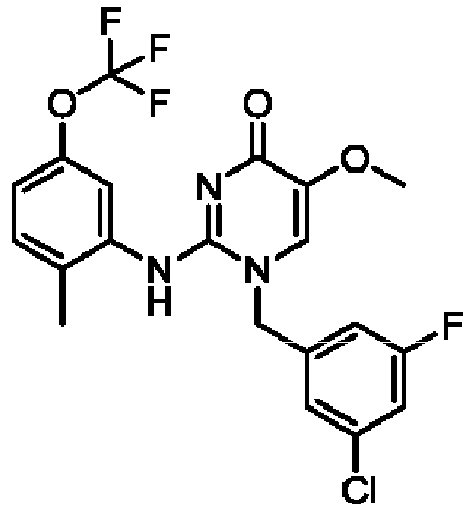
458 2.2 [3] I-0695 
442 2.05 [3] I-0696 
451 1.35 [3] I-0697 
447 1.59 [1] [Table 134] I-0698 
404 1.67 [1] I-0699 
430 1.68 [3] I-0700 
429 1.5 [3] I-0701 
445 1.66 [3] I-0702 
1H-NMR (DMSO-D6) δ: 1.31 (t, J = 5.1Hz, 3H), 1.85 (s, 3H), 3.59 (s, 3H), 3.99 (q, J = 5.4Hz, 2H), 5.15 (s, 2H), 6.69-6.78 (m, 2H), 6.94 (m, 1H), 7.23-7.34 (m, 3H), 8.39 (br s, 1H). 420 1.68 [1] [Table 135] I-0703 
399 1.22 [3] I-0704 
422 1.78 [1] I-0705 
385 1.57 [3] I-0706 
401 1.78 [3] I-0707 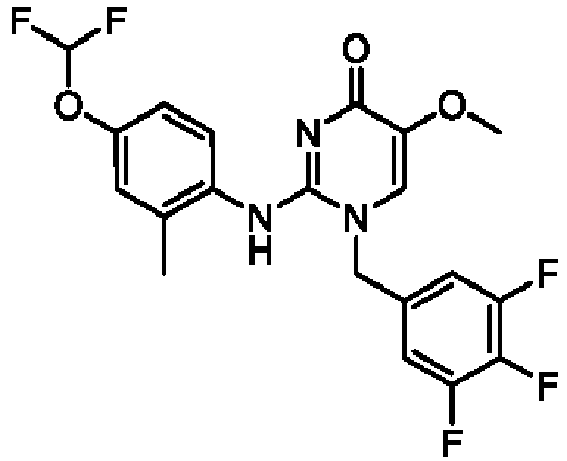
1H-NMR (DMSO-D6) δ: 1.88 (s, 3H), 3.60 (s, 3H), 5.17 (br s, 2H), 6.88-7.40 (m, 7H), 8.35 (br s, 1H). 442 1.76 [1] [Table 136] I-0708 
434 1.56 [1] I-0709 
1H-NMR (DMSO-D6) δ: 1.72 (s, 3H), 3.59 (s, 3H), 4.20 (s, 4H), 5.18 (s, 2H), 6.55 (s, 1H), 6.66 (s, 1H), 6.99 (d, J = 6.9 Hz, 2H), 7.24 (t, J = 9.7 Hz, 1H), 7.30 (s, 1H), 8.16 (s, 1H). 416 1.38 [3] I-0710 
1H-NMR (DMSO-D6) δ: 1.73 (s, 3H), 3.59 (s, 3H), 4.20 (s, 4H), 5.17 (s, 2H), 6.54 (s, 1H), 6.67 (s, 1H), 7.11 (d, J = 9.3 Hz, 1H), 7.18 (s, 1H), 7.31 (s, 1H), 7.44 (d, J = 8.4 Hz, 1H), 8.17 (s, 1H). 432 1.67 [3] I-0711 
1H-NMR (CDCl3) δ: 1.97 (s, 3H), 3.69 (s, 3H), 5.04 (s, 2H), 6.51 (s, 1H), 6.81 (s, 1H), 6.90 (s, 1 H), 7.37-7.39 (m, 5H), 7.52 (s, 1H). 402 1.78 [3] I-0712 
408 1.75 [1] [Table 137] I-0713 
380 1.59 [1] I-0714 
432 1.78 [1] I-0715 
420 1.77 [1] I-0716 
432 1.87 [1] I-0717 
380 1.66 [1] I-0718 
370 1.43 [1] [Table 138] I-0719 
422 1.64 [1] I-0720 
1H-NMR (CDCl3) δ: 1.92 (s, 3H), 3.68 (s, 3H), 5.05 (s, 2H), 5.90 (s, 2H), 6.29 (s, 1H), 6.68 (s, 1H), 6.79 (s, 1 H), 7.37-7.39 (m, 5H), 7.62 (s, 1H). 366 1.78 [3] I-0721 
406 1.53 [1] I-0722 
362 1.8 [3] I-0723 
414 203 [3] I-0724 
336 1.49 [3] [Table 139] I-0726 
1H-NMR (CDCl3) δ: 3.73 (s, 3H), 4.86 (s, 2H), 6.62 (s, 1H), 6.79-6.82 (m, 4H), 6.91 (s, 1H), 8.28 (s, 1H). 438 1.9 [3] I-0727 
1H-NMR (CDCl3) δ: 3.73 (s, 3H), 4.97 (s, 2H), 6.79 (s, 1H), 6.91 (s, 1H), 7.15-7.19 (m, 2H), 7.36 (d, J = 6.8 Hz, 1H), 7.45 (d, J = 7.3 Hz, 1H), 7.53 (s, 1 H). 454 2 [3] I-0728 
1H-NMR (CDCl3) δ: 0.99 (t, J = 7.5 Hz, 3H), 2.30 (q, J = 7.5 Hz, 2H), 3.70 (s, 3H), 5.04 (s, 2H), 6.50 (s, 1H), 6.82 (s, 1H), 6.91 (s, 1 H), 7.30-7.42 (m, 5H), 7.58 (s, 1H). 416 1.91 [3] I-0729 
1H-NMR (CDCl3) δ: 0.98 (t, J = 7.5 Hz, 3H), 2.27 (q, J = 7.5 Hz, 2H), 3.74 (s, 3H), 5.00 (s, 2H), 6.48 (s, 1H), 6.78 (s, 1H), 6.81 (dd, J = 8.9, 2.3 Hz, 1H), 6.87 (d, J = 5.9 Hz, 2H), 6.92 (s, 1H), 7.60 (s, 1H). 452 2.02 [3] I-0730 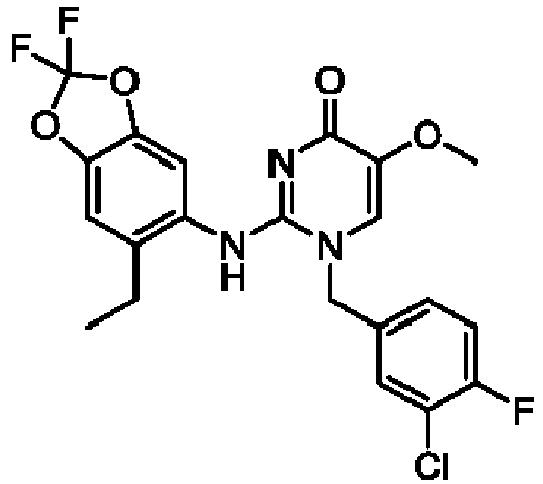
1H-NMR (CDCl3) δ: 1.00 (t, J = 7.5 Hz, 3H), 2.29 (q, J = 7.5 Hz, 2H), 3.73 (s, 3H), 4.97 (s, 2H), 6.48 (s, 1H), 6.80 (s, 1H), 6.93 (s, 1H), 7.17 (t, J = 8.5 Hz, 1H), 7.22 (dd, J = 4.4, 2.0 Hz, 1H), 7.43 (dd, J = 6.8, 1.9 Hz, 1H), 7.58 (s, 1H). 468 2.14 [3] [Table 140] I-0731 
380 1.46 [3] I-0732 
416 1.56 [3] I-0733 
454 1.73 [3] I-0734 
454 1.75 [3] I-0735 
459 1.61 [3] [Table 141] I-0736 
443 1.49 [3] I-0737 
459 1.63 [3] I-0738 
356 1.54 [1] I-0739 
370 1.4 [1] I-0740 
407 1.37 [3] [Table 142] I-0741 
402 1.51 [3] I-0742 
418 1.64 [3] I-0743 
416 1.64 [3] I-0744 
393 1.49 [3] I-0745 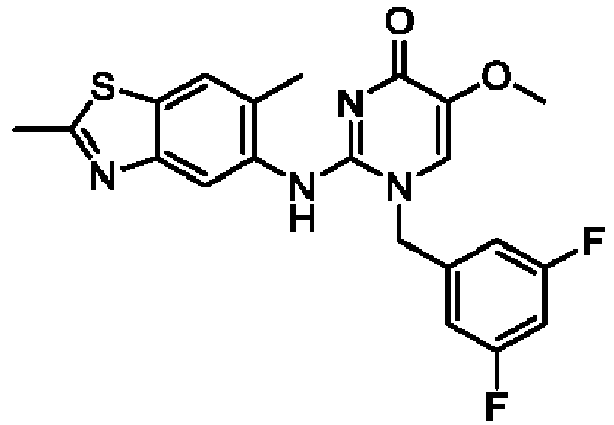
429 1.59 [3] I-0746 
445 1.71 [3] [Table 143] I-0747 
398 1.59 [3] I-0748 
414 2.02 [3] I-0749 
398 1.87 [3] I-0750 
405 1.54 [3] I-0751 
441 1.64 [3] I-0752 
458 1.76 [3] [Table 144] I-0753 
441 1.64 [3] I-0754 
414 1.47 [3] I-0755 
467 1.66 [3] I-0756 
450 1.55 [3] I-0757 
467 1.69 [3] I-0758 
450 1.55 [3] [Table 145] I-0759 
396 1.4 [1] I-0760 
447 1.66 [1] I-0761 
340 1.5 [1] I-0762 
340 1.49 [1] I-0763 
440 1.72 [1] I-0764 
435 1.21 [3] [Table 146] I-0765 
451 1.49 [3] I-0766 
435 1.38 [3] I-0767 
438 2.05 [3] I-0768 
454 2.19 [3] I-0769 
438 2.03 [3] I-0770 
373 1.12 [3] [Table 147] I-0771 
425 1.4 [3] I-0772 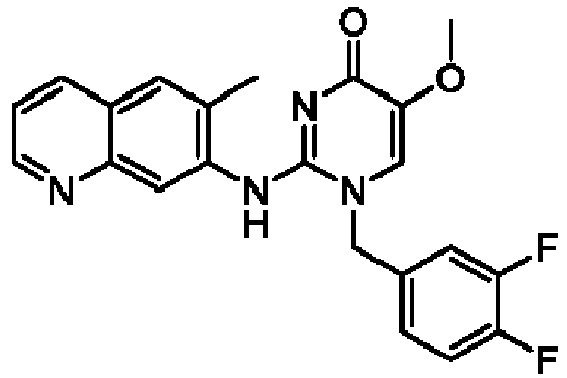
409 1.27 [3] I-0773 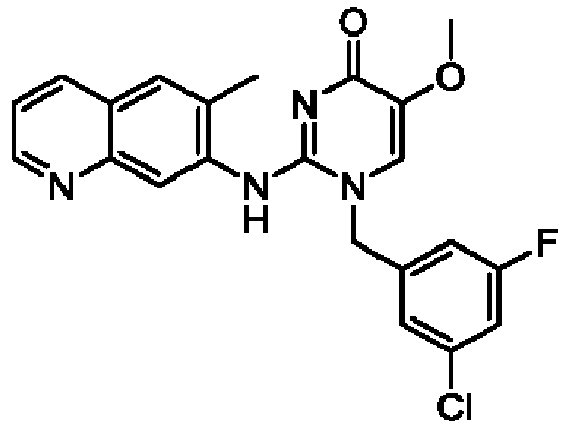
425 1.43 [3] I-0774 
409 1.29 [3] I-0775 
432 1.67 [3] I-0776 
432 1.68 [3] [Table 148] I-0777 
434 1.91 [1] I-0778 
433 1.68 [3] I-0779 
406 1.66 [3] I-0780 
422 1.8 [3] I-0781 
406 1.66 [3] I-0782 
402 1.53 [3] [Table 149] I-0783 
438 1.63 [3] I-0784 
438 1.62 [3] I-0785 
416 1.55 [3] I-0786 
397 1.61 [3] I-0787 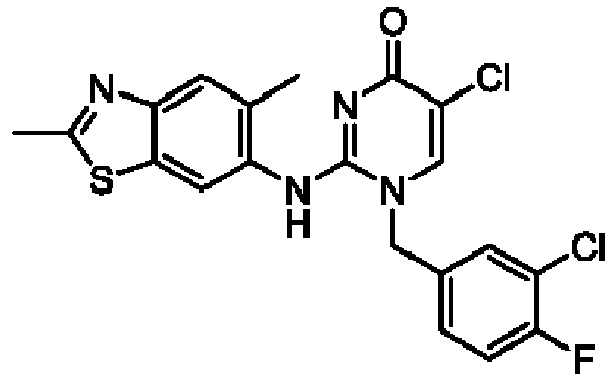
449 1.89 [3] I-0788 
381 1.45 [3] [Table 150] I-0789 
432 1.94 [1] I-0790 
380 1.72 [1] I-0791 
414 1.87 [1] I-0792 
432 1.91 [1] I-0793 
416 1.81 [1] I-0794 
416 1.81 [1] [Table 151] I-0795 
448 1.6 [1] I-0796 
394 1.57 [3] I-0797 
430 1.56 [3] I-0798 
446 1.77 [3] I-0799 
414 1.73 [3] I-0800 
434 1.79 [1] [Table 152] I-0801 
374 1.73 [1] I-0802 
459 1.69 [1] I-0803 
459 1.52 [1] I-0804 
424 1.63 [1] I-0805 
456 1.91 [1] [Table 153] I-0806 
470 1.87 [1] I-0807 
486 1.95 [1] I-0808 
432 1.55 [1] I-0809 
426 2.13 [3] I-0810 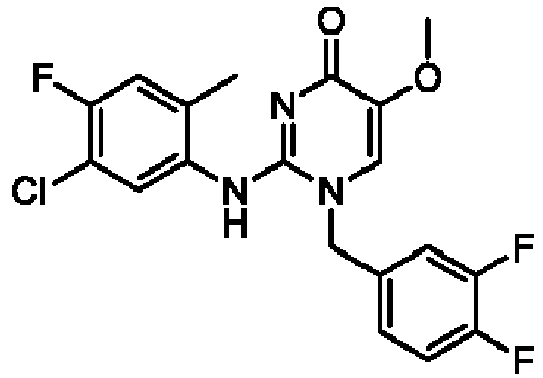
410 2.02 [3] I-0811 
426 2.04 [3] [Table 154] I-0812 
410 1.88 [3] I-0813 
385 1.69 [3] I-0814 
436 1.91 [3] I-0815 
420 1.81 [3] I-0816 
436 1.94 [3] I-0817 
420 1.82 [3] [Table 155] I-0818 
381 1.45 [1] I-0819 
433 1.66 [1] I-0820 
417 1.57 [1] I-0821 
433 1.76 [1] I-0822 
417 1.63 [1] I-0823 
504 2.31 [3] [Table 156] I-0824 
504 2.31 [3] I-0825 
428 1.87 [3] I-0826 
461 1.55 [3] I-0827 
398 1.93 [3] I-0828 
450 2.12 [3] I-0829 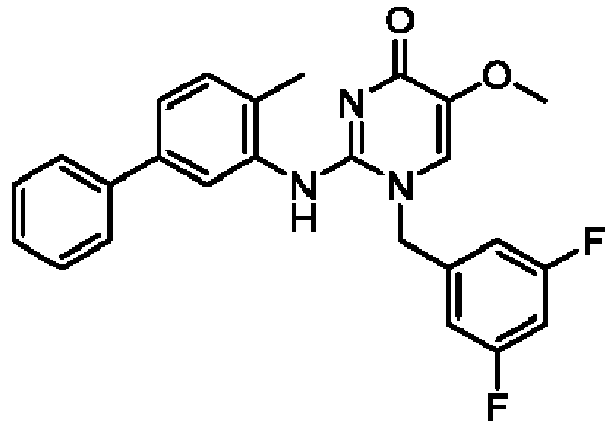
434 2.02 [3] [Table 157] I-0830 
445 1.68 [3] I-0831 
465 1.82 [3] I-0832 
483 1.91 [3] I-0833 
442 1.87 [3] I-0834 
442 2.09 [3] I-0835 
426 1.98 [3] [Table 158] I-0836 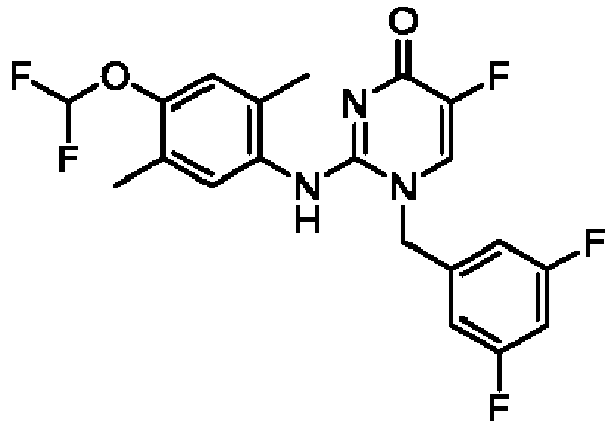
426 1.98 [3] I-0837 
458 2.25 [3] I-0838 
442 2.13 [3] I-0839 
442 2.15 [3] I-0840 
392 1.79 [3] I-0841 
376 1.67 [3] [Table 159] I-0842 
1H-NMR (DMSO-D6) δ: 1.84 (s, 3H), 3.73 (s, 3H), 5.19 (s, 2H), 6.73-6.79 (m, 2H), 6.96 (d, J = 8.4 Hz, 1H), 7.05 (d, J = 6.4 Hz, 2H), 7.25 (t, J = 9.6 Hz, 1H), 8.02 (d, J = 6.4 Hz, 1H), 8.47 (br, 1H). 376 1.66 [3] I-0843 
408 1.9 [3] I-0844 
392 1.78 [3] I-0845 
392 1.77 [3] I-0846 
426 1.84 [1] [Table 160] I-0847 
426 1.7 [1] I-0848 
456 1.67 [1] I-0849 
429 1.99 [1] I-0850 
413 1.87 [1] I-0851 
413 1.87 [1] I-0852 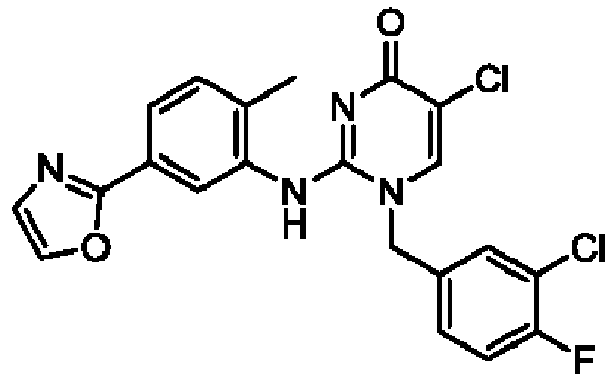
445 2.19 [1] [Table 161] I-0853 
429 2.05 [1] I-0854 
429 2.07 [1] I-0855 
379 1.5 [1] I-0856 
431 1.75 [1] I-0857 
415 1.63 [1] I-0858 
393 1.63 [1] [Table 162] I-0859 
445 1.87 [1] I-0860 
429 1.76 [1] I-0861 
429 1.71 [3] I-0862 
420 1.78 [3] I-0863 
424 1.67 [3] [Table 163] I-0864 
416 1.65 [3] I-0865 
400 1.52 [3] I-0866 
418 1.62 [3] I-0867 
429 1.7 [3] I-0868 
438 1.77 [1] [Table 164] I-0869 
460 2.04 [1] I-0870 
388 1.83 [3] I-0871 
440 2.06 [3] I-0872 
440 2.09 [3] I-0873 
424 1.94 [3] I-0874 
424 1.95 [3] [Table 165] I-0875 
402 1.95 [3] I-0876 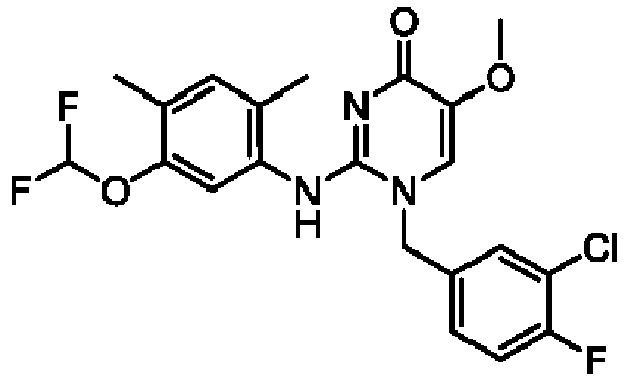
454 2.16 [3] I-0877 
454 2.16 [3] I-0878 
438 2.05 [3] I-0879 
438 2.06 [3] I-0880 
389 1.25 [3] [Table 166] I-0881 
441 1.53 [3] I-0882 
425 1.42 [3] I-0883 
391 1.43 [3] I-0884 
443 1.71 [3] I-0885 
427 1.56 [3] [Table 167] I-0886 
374 1.73 [3] I-0887 
426 1.99 [3] I-0888 
379 1.88 [3] I-0889 
430 2.1 [3] I-0890 
414 1.84 [3] I-0891 
430 2.12 [3] [Table 168] I-0892 
415 1.98 [3] I-0893 
410 1.52 [1] I-0894 
441 1.92 [1] I-0895 
415 1.65 [3] I-0896 
667 1.89 [3] I-0897 
451 1.79 [3] [Table 169] I-0898 
433 1.7 [3] I-0899 
469 1.89 [3] I-0900 
400 1.41 [3] I-0901 
389 1.22 [3] I-0902 
441 1.48 [3] [Table 170] I-0903 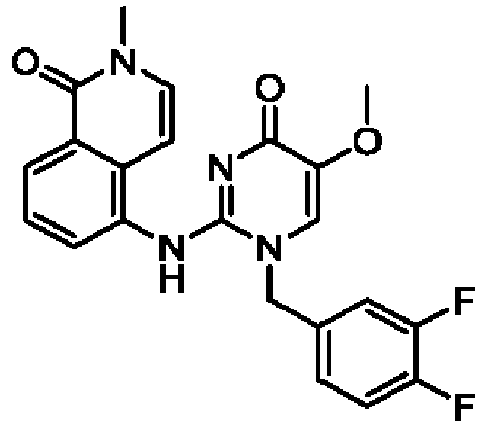
425 1.36 [3] I-0904 
441 1.64 [3] I-0905 
425 1.51 [3] I-0906 
416 1.57 [3] I-0907 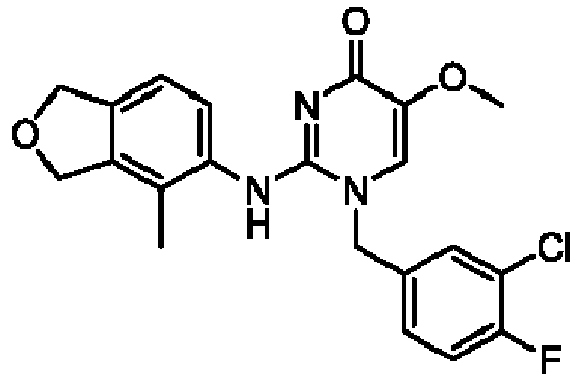
416 1.54 [3] [Table 171] I-0908 
450 1.61 [1] I-0909 
462 1.71 [1] I-0910 
1H-NMR (DMSO-D6) δ: 1.87 (s, 3H), 3.59 (s, 3H), 4.94 (s, 4H), 5.16 (s, 2H), 7.02 (s, 1H), 7.11 (s, 1H), 7.30-7.32 (m, 4H), 8.35 (s, 1H). 418 1.54 [3] I-0911 
418 1.54 [3] I-0912 
448 1.53 [3] [Table 172] I-0913 
414 1.63 [3] I-0914 
430 1.75 [3] I-0915 
400 1.75 [3] I-0916 
416 1.86 [3] I-0917 
432 1.73 [3] I-0918 
384 1.8 [3] [Table 173] I-0919 
436 2.03 [3] I-0920 
420 1.91 [3] I-0921 
438 2.01 [3] I-0922 
421 2.12 [3] I-0923 
472 2.33 [3] I-0924 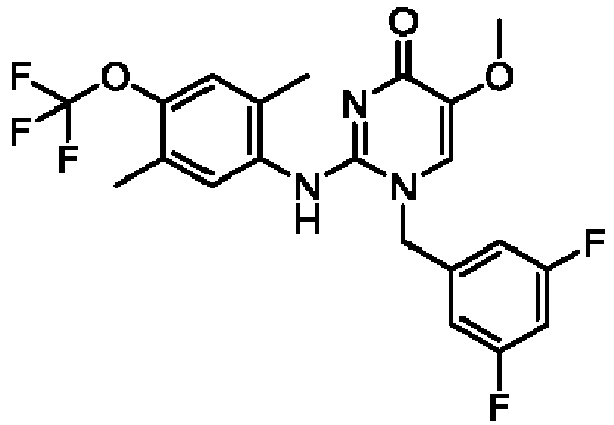
456 2.23 [3] [Table 174] I-0925 
474 2.32 [3] I-0926 
354 1.56 [3] I-0927 
407 1.79 [3] I-0928 
390 1.67 [3] I-0929 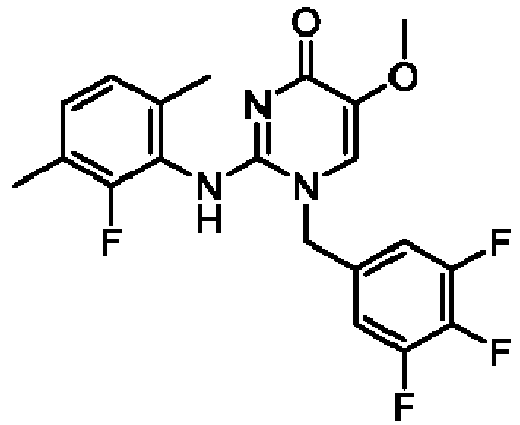
408 1.77 [3] I-0930 
444 1.61 [3] [Table 175] I-0931 
461 1.53 [1] I-0932 
474 1.93 [1] I-0933 
487 1.8 [1] I-0934 
483 1.89 [1] I-0935 
433 1.52 [1] [Table 176] I-0936 
406 1.71 [1] I-0937 
435 1.63 [1] I-0938 
415 1.56 [3] I-0939 
415 1.59 [3] I-0940 
448 1.87 [3] [Table 177] I-0941 
413 1.6 [3] I-0942 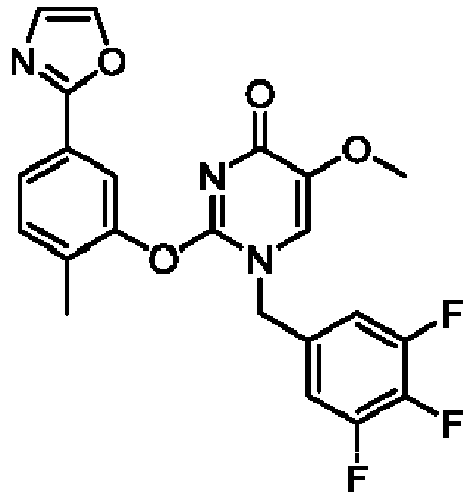
444 1.92 [3] I-0943 
424 1.63 [1] I-0944 
403 1.47 [1] I-0945 
365 1.42 [1] I-0946 
353 1.43 [1] [Table 178] I-0947 
403 1.51 [1] I-0948 
435 1.66 [1] I-0949 
421 1.74 [1] I-0950 
355 1.43 [1] I-0951 
401 1.5 [1] I-0952 
351 1.32 [1] [Table 179] I-0953 
440 1.48 [1] I-0954 
417 1.57 [1] I-0955 
423 1.62 [1] I-0956 
441 1.71 [1] I-0957 
398 1.48 [1] I-0958 
398 1.53 [1] [Table 180] I-0959 
351 1.35 [1] I-0960 
403 1.85 [1] I-0961 
404 1.87 [1] I-0962 
431 1.78 [1] I-0963 
431 1.83 [1] I-0964 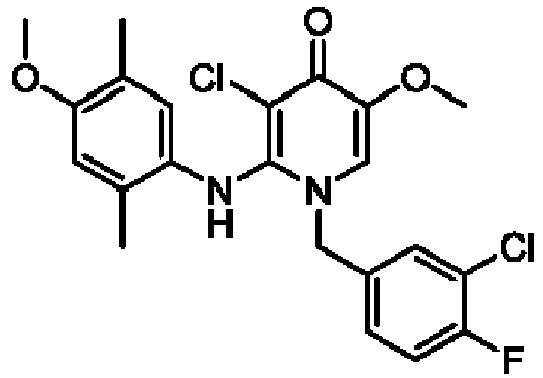
452 1.97 [1] [Table 181] I-0965 
441 1.82 [1] I-0966 
445 1.8 [1] I-0967 
356 1.93 [1] I-0968 
390 2.11 [1] I-0969 
390 2.32 [3] I-0970 
320 1.77 [3] [Table 182] I-0971 
408 2.37 [3] I-0972 
384 1.96 [3] I-0973 
392 2.23 [3] I-0974 
424 2.4 [3] I-0975 
424 2.41 [3] I-0976 
440 2.45 [3] [Table 183] I-0977 
440 2.47 [3] I-0978 
424 2.52 [3] I-0979 
422 2.3 [3] I-0980 
422 2.28 [3] I-0981 
370 2.24 [3] I-0982 
322 1.74 [3] [Table 184] I-0983 
336 1.89 [3] I-0984 
338 1.96 [3] I-0985 
418 2.01 [1] I-0986 
456 1.95 [3] I-0987 
445 1.87 [1] I-0988 
458 1.63 [1] I-0989 
413 1.8 [3] [Table 185] I-0990 
356 1.94 [1] I-0991 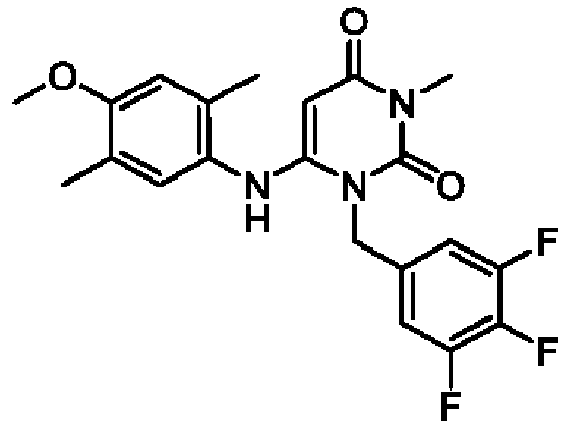
420 2.01 [1] I-0993 
410 1.78 [1] I-0994 
412 1.78 [3] I-0995 
391 1.4 [3] I-0996 
390 1.63 [3] [Table 186] I-0997 
416 1.97 [3] I-0998 
406 1.84 [1] I-0999 
390 1.74 [1] I-1000 
409 1.72 [1] I-1001 
388 1.56 [3] I-1002 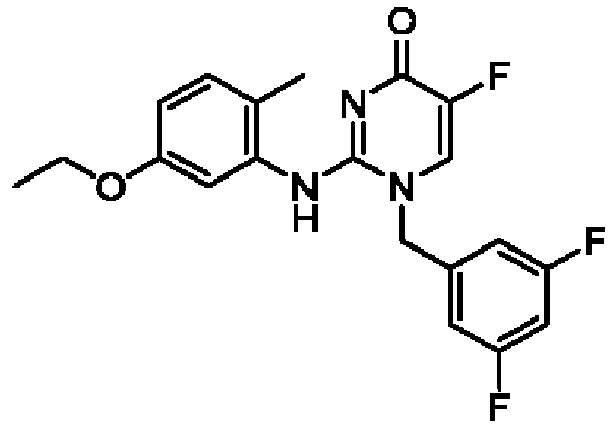
390 1.74 [1] [Table 187] I-1003 
391 1.6 [1] I-1004 
407 1.72 [1] I-1005 
410 1.72 [1] I-1006 
428 1.83 [1] I-1007 
409 1.82 [1] [Table 188] I-1008 
391 1.62 [1] I-1009 
417 1.57 [3] I-1010 
417 1.57 [3] I-1011 
399 1.5 [3] I-1012 
376 1.4 [3] I-1013 
392 1.46 [3] [Table 189] I-1014 
376 1.36 [3] I-1015 
394 1.47 [3] I-1016 
386 1.1 [3] I-1017 
404 1.21 [3] I-1018 
403 1.72 [3] [Table 190] I-1019 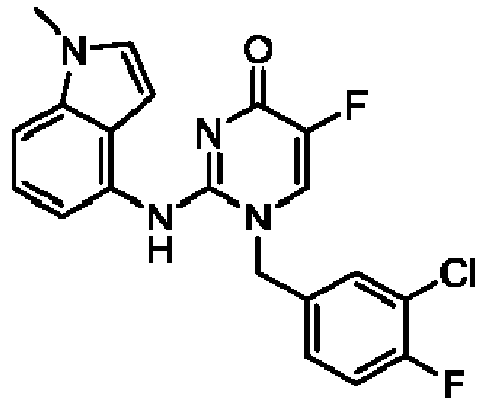
401 1.73 [3] I-1020 
385 1.64 [3] I-1021 
385 1.64 [3] I-1022 
371 1.47 [3] I-1023 
389 1.57 [3] I-1024 
387 1.6 [3] [Table 191] I-1025 
371 1.49 [3] I-1026 
404 1.65 [3] I-1027 
388 1.53 [3] I-1028 
388 1.55 [3] I-1029 
420 1.95 [3] I-1030 
426 1.92 [3] [Table 192] I-1031 
424 1.94 [3] I-1032 
408 1.83 [3] I-1033 
408 1.83 [3] I-1034 
408 1.86 [3] I-1035 
406 1.88 [3] I-1036 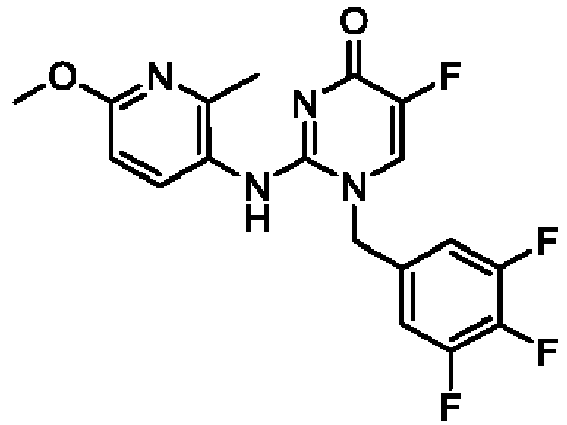
395 1.45 [1] [Table 193] I-1037 
377 1.34 [1] I-1038 
426 1.92 [3] I-1039 
430 1.92 [3] I-1040 
1H-NMR (DMSO-D6) δ: 1.87 (s, 3H), 3.73 (s, 3H), 5.14 (s, 2H), 6.74-6.79 (m, 2H), 6.98 (d, J = 8.4 Hz, 1H), 7.33 (dd, J = 8.0 Hz, 2H), 7.99 (d, J = 4.8 Hz, 1H), 8.45 (s, 1H). 394 1.62 [1] I-1041 
1H-NMR (DMSO-D6) δ: 1.89 (s, 3H), 4.95 (s, 4H), 5.17 (s, 2H), 7.03 (s, 1H), 7.15 (s, 1H), 7.34 (t, J = 7.7 Hz, 2H), 8.02 (d, J = 5.5 Hz, 1H), 8.60 (s, 1H). 406 1.77 [3] [Table 194] I-1042 
401 1.8 [3] I-1043 
385 1.7 [3] I-1044 
385 1.65 [3] I-1045 
403 1.77 [3] I-1046 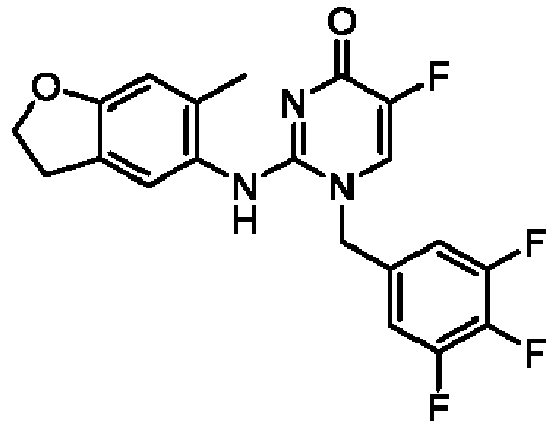
406 1.8 [3] I-1047 
390 1.77 [3] [Table 195] I-1048 
390 1.83 [3] I-1049 
377 1.37 [1] I-1050 
1H-NMR (DMSO-D6) δ: 1.77 (s, 3H), 3.77 (s, 3H), 5.20 (br s, 2H), 6.89 (m, 1H), 7.20-7.15 (m, 3H), 7.26 (m, 1H), 8.05 (m, 1H), 8.63 (br s, 1H). 394 1.61 [1] I-1051 
410 1.72 [1] I-1052 
394 1.61 [1] I-1053 
459 1.93 [3] [Table 196] I-1054 
417 1.75 [3] I-1055 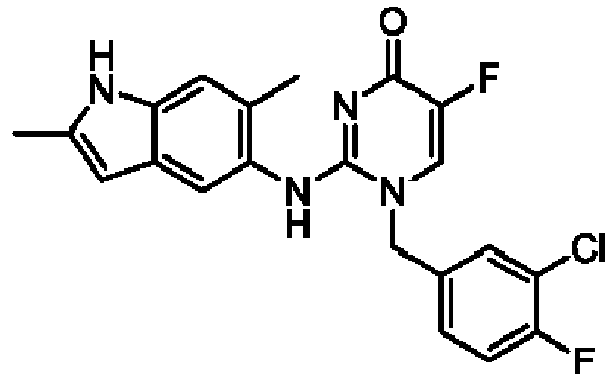
415 1.78 [3] I-1056 
399 1.68 [3] I-1057 
399 1.58 [3] I-1058 
412 1.7 [1] I-1059 
393 1.47 [1] [Table 197] I-1060 
424 1.93 [3] I-1061 
408 1.81 [3] I-1062 
408 1.81 [3] I-1063 
428 1.93 [3] I-1064 
412 1.83 [3] I-1065 
412 1.84 [3] [Table 198] I-1066 
1H-NMR (DMSO-D6) δ: 8.58 (1H, s), 8.03 (1H, d, J = 5.8 Hz), 7.35 (2H, t, J = 7.5 Hz), 7.10 (1H, d, J = 8.2 Hz), 6.77 (1H, d, J = 7.4 Hz), 6.69 (1H, s), 5.16 (2H, s), 3.71 (3H, s), 1.79 (3H, s). 394 1.76 [3] I-1067 
392 1.77 [3] I-1068 
376 1.65 [3] I-1069 
376 1.64 [3] I-1070 
436 2.11 [3] [Table 199] I-1071 
418 2.19 [3] I-1072 
388 1.59 [3] I-1073 
404 1.71 [3] I-1074 
373 1.23 [3] I-1075 
421 1.62 [3] I-1076 
421 1.61 [3] [Table 200] I-1077 
437 1.74 [3] I-1078 
439 1.73 [3] I-1079 
460 1.78 [1] I-1080 
448 2.1 [1] I-1081 
433 1.94 [1] [Table 201] I-1082 
364 1.64 [1] I-1083 
415 2.07 [1] I-1084 
390 1.62 [3] I-1085 
406 1.75 [3] I-1086 
408 1.72 [3] I-1087 
412 1.78 [3] [Table 202] I-1088 
461 1.77 [1] I-1089 
406 1.56 [1] I-1090 
386 1.15 [3] I-1091 
402 1.3 [3] I-1092 
386 1.33 [3] I-1093 
402 1.12 [3] [Table 203] I-1094 
404 1.43 [3] I-1095 
386 1.34 [3] I-1096 
401 1.23 [3] I-1097 
376 1.58 [1] I-1098 
360 1.89 [1] [Table 204] I-1099 
420 1.8 [1] I-1100 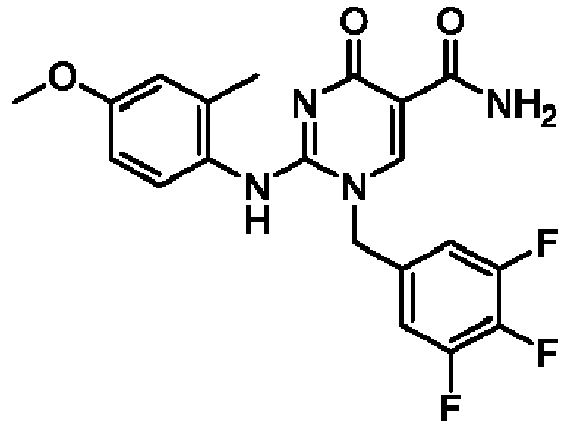
419 1.77 [1] I-1101 
394 1.69 [3] I-1102 
430 2.04 [3] I-1103 
412 1.78 [3] [Table 205] I-1104 
420 1.51 [1] I-1105 
416 1.64 [3] I-1106 
433 1.78 [3] I-1107 
419 1.11 [3] I-1108 
1H-NMR (DMSO-D6) δ: 1.88 (t, J = 5.9 Hz, 2H), 2.45 (s, 2H), 2.56 (s, 2H), 5.19 (s, 2H), 7.39 (d, J = 7.8 Hz, 4H), 7.82 (s, 1H), 8.05 (s, 1H), 8.75 (s, 1 H). 418 1.62 [3] [Table 206] I-1109 
444 2.15 [1] I-1110 
408 1.53 [1] I-1111 
390 1.46 [1] I-1112 
401 1.91 [1] I-1113 
434 1.99 [1] [Table 207] I-1114 
398 1.52 [3] I-1115 
398 1.54 [3] I-1116 
414 1.64 [3] I-1117 
413 1.58 [2] I-1118 
1H-NMR (DMSO-D6) δ: 8.82 (10.70) (1H, s), 8.09 (1H, s), 7.45(7.11) (1H, s), 7.24 (1H, brs), 7.11 (2H, d, J = 5.0 Hz), 5.20 (2H, brs), 3.81 (3H, s), 1.90 (3H, s). 395 1.47 [2] [Table 208] I-1119 
385 1.6 [2] I-1120 
403 1.69 [2] I-1121 
484 2.31 [2] I-1122 
465 2.25 [2] I-1123 
383 2.04 [3] [Table 209] I-1124 
456 2.2 [3] I-1125 
450 1.74 [3] I-1126 
432 1.86 [3] I-1127 
432 1.57 [1] I-1128 
420 2.01 [3] [Table 210] I-1129 
457 2.06 [3] I-1130 
413 1.95 [3] I-1131 
458 1.89 [3] I-1132 
445 1.6 [3] I-1133 
424 1.83 [1] [Table 211] I-1134 
424 1.75 [1] I-1135 
416 1.58 [1] I-1136 
431 1.97 [1] I-1137 
471 1.84 [3] I-1138 
1H-NMR (DMSO-D6) δ: 1.90 (s, 3H), 3.42 (s, 3H), 3.77 (s, 3H), 4.16 (s, 2H), 4.99 (s, 2H), 6.29 (s, 1H), 6.58 (d, J = 8.4 Hz, 1H), 7.05 (dd, J = 6.8 Hz, 2H), 7.10 (d, J = 8.4 Hz, 1H), 7.26 (s, 1H), 7.58 (s, 1H). 420 2.07 [3] [Table 212] I-1139 
440 2.02 [1] I-1140 
420 1.83 [3] I-1141 
461 1.99 [1] I-1142 
432 1.73 [1] I-1143 
467 1.79 [3] [Table 213] I-1144 
450 1.76 [3] I-1145 
420 1.66 [3] I-1146 
454 2.15 [3] I-1147 
450 1.84 [1] I-1148 
485 1.83 [3] [Table 214] I-1149 
431 1.58 [3] I-1150 
406 1.68 [3] I-1151 
401 2.15 [3] I-1152 
420 1.66 [3] I-1153 
1H-NMR (CDCl3) δ: 1.91 (s, 3H), 2.20 (s, 3H), 3.81 (s, 3H), 3.85 (s, 3H), 5.24 (br s, 2H), 5.38 (s, 1H), 6.26 (s, 1H), 6.70 (s, 1 H), 6.50-6.85 (m, 2H), 7.52 (br s, 1H). 420 1.76 [1] [Table 215] I-1154 
390 1.69 [3] I-1155 
429 1.88 [3] I-1156 
434 1.97 [3] I-1157 
448 1.77 [3] I-1158 
415 1.81 [1] [Table 216] I-1159 
404 1.66 [1] I-1160 
397 1.97 [1] I-1161 
385 1.76 [1] I-1162 
434 1.83 [3] I-1163 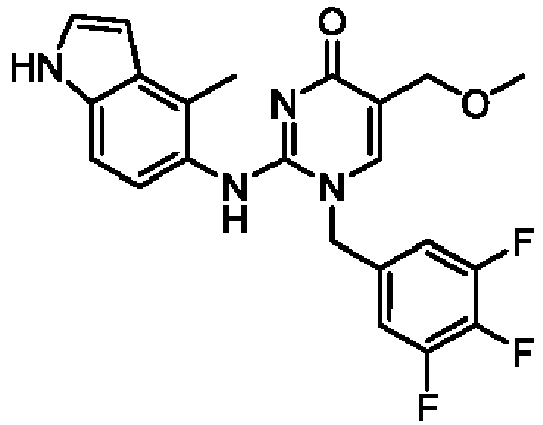
429 1.63 [3] [Table 217] I-1164 
381 1.46 [1] I-1165 
399 1.55 [3] I-1166 
404 2.09 [3] I-1167 
390 1.82 [1] I-1168 
381 1.45 [3] I-1169 
385 1.49 [1] [Table 218] I-1170 
383 1.51 [1] I-1171 
367 1.36 [1] I-1172 
399 1.79 [1] I-1173 
406 1.72 [3] I-1174 
410 1.77 [3] [Table 219] I-1175 
428 1.87 [3] I-1176 
378 1.75 [1] I-1177 
394 1.4 [3] I-1178 
408 1.68 [3] I-1179 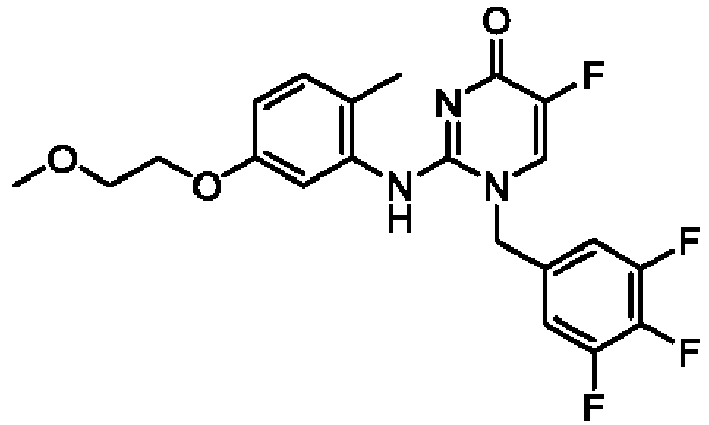
438 1.76 [3] [Table 220] I-1180 
408 1.77 [1] I-1181 
382 1.76 [1] I-1182 
455 1.82 [1] I-1183 
419 1.57 [3] I-1184 
398 1.88 [1] [Table 221] I-1185 
382 1.76 [1] I-1186 
414 1.82 [3] I-1187 
444 1.7 [1] I-1188 
376 1.75 [1] I-1189 
378 1.76 [1] [Table 222] I-1190 
412 2.02 [3] I-1191 
408 1.88 [3] I-1192 
398 1.87 [1] I-1193 
378 1.77 [1] I-1194 
378 1.78 [1] [Table 223] I-1195 
398 1.91 [1] I-1196 
414 1.88 [1] I-1197 
408 1.8 [3] I-1198 
417 1.57 [3] I-1199 
435 1.71 [3] [Table 224] I-1200 
392 1.87 [1] I-1201 
422 1.92 [1] I-1202 
403 1.49 [3] I-1203 
421 1.59 [3] I-1204 
456 1.79 [3] [Table 225] I-1205 
424 1.53 [3] I-1206 
394 1.95 [3] I-1207 
412 2.05 [3] I-1208 
396 1.86 [3] I-1209 
398 1.89 [1] [Table 226] I-1210 
444 1.91 [1] I-1211 
426 1.89 [3] I-1212 
456 1.7 [3] I-1213 
380 1.77 [1] I-1214 
389 1.7 [3] [Table 227] I-1215 
412 1.84 [1] I-1216 
432 1.57 [3] I-1217 
428 2.01 [1] I-1218 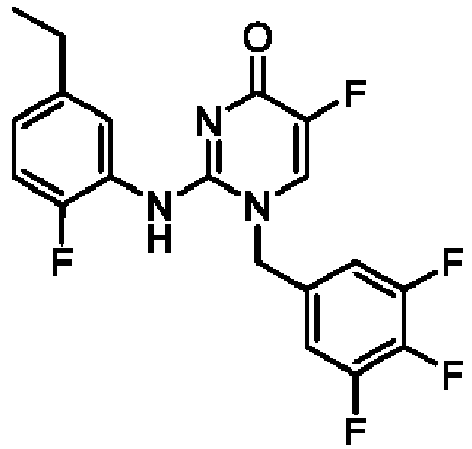
396 1.89 [1] I-1219 
398 1.89 [1] [Table 228] I-1220 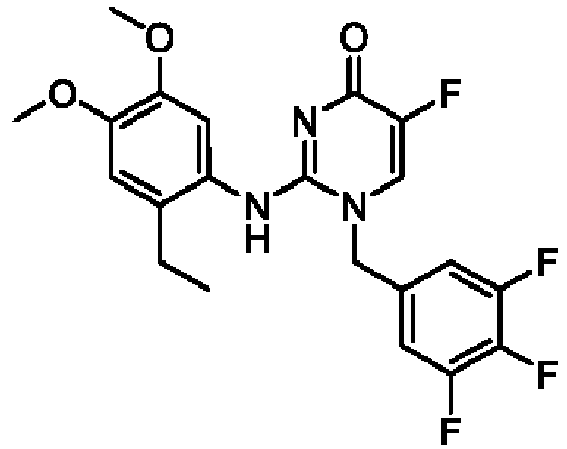
438 1.67 [1] I-1221 
471 1.62 [3] I-1222 
489 1.62 [3] I-1223 
408 1.87 [1] I-1224 
398 2.04 [3] [Table 229] I-1225 
416 2.12 [3] I-1226 
392 1.91 [1] I-1227 
396 1.86 [3] I-1228 
374 1.82 [1] I-1229 
443 1.67 [3] [Table 230] I-1230 
444 1.95 [1] I-1231 
396 1.71 [1] I-1232 
1H-NMR (DMSO-D6) δ: 2.02 (s, 3H), 2.16 (s, 3H), 5.15 (br s, 2H), 7.32-7.41 (m, 2H), 7.50 (m, 1H), 7.65 (m, 1H), 8.04 (br s, 1H), 8.71 (br s, 1H) 445 1.92 [1] I-1233 
390 1.9 [3] I-1234 
427 1.84 [1] [Table 231] I-1235 
426 1.55 [1] I-1236 
394 1.38 [1] I-1237 
414 1.72 [1] I-1238 
396 1.86 [1] I-1239 
432 1.84 [1] I-1240 
378 1.62 [1] [Table 232] I-1241 
389 1.19 [1] I-1242 
407 1.28 [1] I-1243 
424 1.78 [1] I-1244 
396 1.89 [1] I-1245 
412 1.69 [1] I-1246 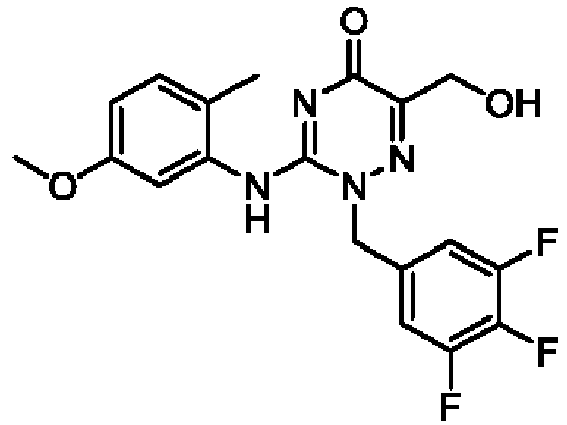
407 1.59 [1] [Table 233] I-1247 
407 1.56 [1] I-1248 
1H-NMR (DMSO-D6) δ: 1.92 (s, 3H), 3.82 (s, 3H), 3.86 (s, 3H), 5.21 (d, J = 47.2 Hz, 2H), 5.50 (s, 2H), 6.25 (s, 1H), 6.73 (s, 1H), 7.16 (dd, J = 7.2 Hz, 2H), 7.26 (m, 1H), 7.87 (s, 1H). 439 1.81 [1] I-1249 
421 2.03 [1] I-1250 
421 2.01 [1] I-1251 
1H-NMR (DMSO-D6) δ: 1.89 (s, 3H), 3.69 (s, 3H), 3.75 (s, 3H), 5.50 (s, 2H), 6.75 (s, 1H), 6.85 (s, 1H), 7.39 (dd, J = 7.6 Hz, 2H), 9.41 (br, 1H), 14.9 (br, 1H). 451 1.74 [1] [Table 234] I-1252 
1H-NMR (DMSO-D6) δ: 1.24 (t, J = 7.2 Hz, 3H), 1.98 (s, 3H), 3.69 (s, 3H), 3.74 (s, 3H), 4.26 (q, J = 6.8, 14.0 Hz, 2H), 5.37 (s, 2H), 6.76 (s, 1H), 6.83 (s, 1H), 7.36 (dd, J = 6.8 Hz, 2H), 9.05 (s, 1H). 479 1.89 [1] I-1253 
395 1.64 [1] I-1254 
391 1.72 [1] I-1255 
377 1.62 [1] I-1256 
1H-NMR (DMSO-D6) δ: 1.88 (s, 3H), 3.69 (s, 3H), 3.75 (s, 3H), 4.03 (d, J = 6.4 Hz, 2H), 4.98 (t, J = 6.0 Hz, 1H), 5.33 (s, 2H), 6.73 (s, 1H), 6.82 (s, 1H), 7.34 (dd, J = 7.2 Hz, 2H), 8.74 (s, 1H). 437 1.5 [1] [Table 235] I-1257 
424 1.86 [1] I-1258 
411 1.76 [1] I-1259 
392 1.88 [3] I-1260 
414 1.88 [3] I-1261 
1H-NMR (DMSO-D6) δ: 1.87 (s, 3H), 2.05 (s, 3H), 3.69 (s, 3H), 3.74 (s, 3H), 5.33 (s, 2H), 6.70 (s, 1H), 6.81 (s, 1H), 7.04 (d, J = 6.4 Hz, 2H), 7.23 (t, J = 8.8 Hz, 1H), 8.68 (s, 1H). 403 1.86 [3] [Table 236] I-1262 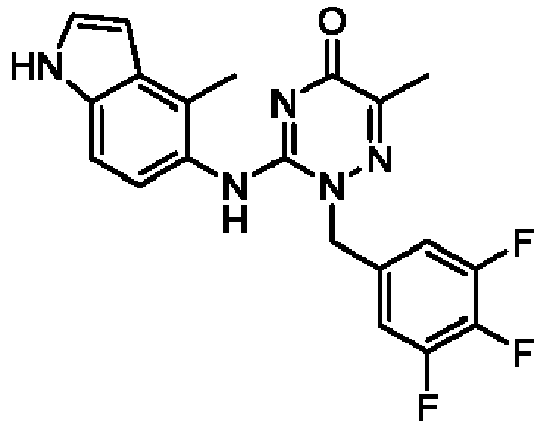
400 2.01 [3] I-1263 
386 1.78 [3] I-1264 
1H-NMR (DMSO-D6) δ: 1.92 (s, 3H), 3.68 (s, 3H), 3.74 (s, 3H), 5.31 (s, 2H), 6.74 (s, 1H), 6.81 (s, 1H), 7.36 (dd, J = 7.2 Hz, 2H), 9.05 (br, 1H). 441 2.02 [3] I-1265 
411 2.04 [3] I-1266 
421 1.82 [3] [Table 237] I-1267 
432 1.9 [3] I-1268 
375 1.85 [3] I-1269 
375 1.89 [3] I-1270 
375 1.83 [2] I-1271 
360 1.7 [3] I-1272 
360 1.71 [3] [Table 238] I-1273 
341 1.64 [2] I-1274 
341 1.64 [3] I-1275 
341 1.62 [3] I-1276 
323 1.6 [2] I-1277 
391 1.94 [3] I-1278 
411 1.95 [3] [Table 239] I-1279 
411 1.85 [3] I-1280 
389 1.67 [1] I-1281 
1H-NMR (DMSO-D6) δ: 1.90 (s, 3H), 3.70 (s, 3H), 3.75 (s, 3H), 5.33 (s, 2H), 6.75 (s, 1H), 6.83 (s, 1H), 7.33 (dd, J = 8.0 Hz, 2H), 7.40 (s, 1H), 8.83 (s, 1H). 407 1.64 [1] I-1282 
377 1.77 [3] I-1283 
377 1.75 [1] I-1284 
418 1.71 [1] [Table 240] I-1285 
471 1.77 [1] I-1286 
1H-NMR (DMSO-D6) δ: 2.06 (s, 3H), 2.77 (s, 3H), 5.26 (s, 3H), 7.41 (m, 2H), 7.75 (s, 1H), 7.91 (s, 1H), 8.19 (s, 1H), 9.16 (s, 1H). 459 1.86 [1] I-1287 
460 1.79 [1] I-1288 
448 1.87 [1] I-1289 
391 1.76 [3] [Table 241] I-1290 
393 1.64 [3] I-1291 
464 1.76 [3] I-1292 
407 2.01 [3] I-1293 
402 2.07 [3] 1-1294 
376 2.61 [3] [Table 242] I-1295 
1H-NMR (DMSO-d6) δ: 1.85 (s, 3H), 5.17 (s, 2H), 6.98-7.10 (m, 2H), 7.23 (m, 1H), 7.30-7.40 (m, 2H), 7.26 (m, 1H), 8.04 (br s, 1H), 8.62 (br s, 1H). 382 1.76 [1] I-1296 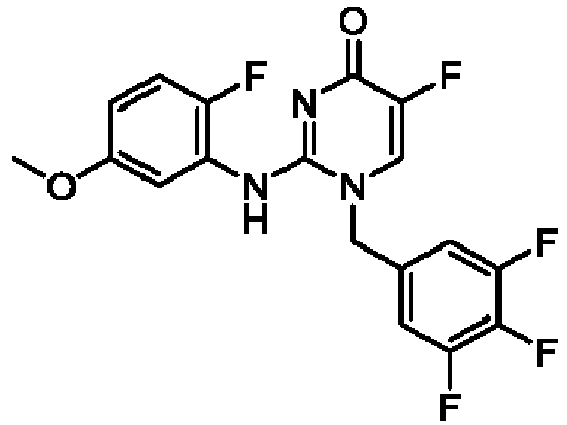
1H-NMR (DMSO-d6) δ: 3.72 (s, 3H), 5.18 (s, 2H), 6.77-6.92 ((m, 2H), 7.16 (m, 1H), 7.23-7.40 (m, 2H), 8.03 (br s, 1H), 8.34 (br s, 1H). 420 2.01 [1] I-1297 
1H-NMR (DMSO-d6) δ: 1.78 (s, 3H), 3.82 (s, 3H), 5.20 (s, 2H), 6.76 (m, 1H), 6.99 (m, 1H), 7.03-7.10 (m, 2H), 7.26 (m, 1H), 8.04 (m, 1H), 8.65 (br s, 1H). 394 1.60 [1] - Biological test examples for the compounds of the present invention are described below.
Test Example 1 Evaluation of a human P2X7 receptor inhibitory activity Stably expressing cell line (1321N1 cell transfected with the human P2X7 receptor gene (GenBank accession number NM_002562.5 including T606C and G952A SNP)) was used. The cells were seeded in a 384-well microtiter plate at a concentration of 8000 cells/well and cultured in the medium (10% fetal bovine serum, 25mM HEPES, 1% penicillin and streptomycin in DMEM) for one day at 37°C under 5 % carbon dioxide atmosphere. After replacing with 20 µL of the HBSS buffer (20 mM HEPES, 55.6 mM D-glucose, 1x HBSS(-), pH7.4-7.5), 15 µL of 17.3 µM Yo-Pro solution in the HBSS buffer was added. The plate was placed in high-throughput cellular screening system FLIPR TETRA (Molecullar Devices, LLC.) and 15µL of 130µM BzATP solution in the HBSS buffer was added. Measurement of fluorescence intensity by FLIPR TETRA was started. After eight minutes, 15 µL of DMSO solutions containing different concentrations of the compound of the present invention as prepared by dilution with the HBSS buffer were dispensed to each well through the built-in automatic dispenser, and the measurement of fluorescence intensity was continued for 20 minutes. The maximum fluorescence intensity without the compound of the present invention is calculated as 0% inhibition and the maximum fluorescence intensity when the reference compound was added is calculated as 100% inhibition. Changing values of fluorescence intensity by the compound of the present invention were calculated by difference between maximum and minimum fluorescence intensity for 20 minutes. Inhibition ratios (%) were calculated from the following equation: Inhibition ratio:
- The antagonistic activity for the human P2X7 receptor of the compounds of the present invention is shown in the following table.
[Table 243] Compound No. IC50 (nM) Compound No. IC50 (nM) Compound No. IC50 (nM) Compound No. IC50 (nM) I-0005 5 I-0358 160 I-0792 9 I-1066 3 I-0006 6 I-0365 18 I-0817 4 I-1071 15 I-0008 37 I-0366 35 I-0821 5 I-1108 4 I-0013 39 I-0367 13 I-0825 9 I-1188 4 I-0014 250 I-0370 47 I-0833 39 I-1216 6 I-0019 49 I-0372 5 I-0836 2 I-1232 6 I-0020 17 I-0382 350 I-0842 5 I-1267 10 I-0022 17 I-0384 10 I-0849 3 I-1261 16 I-0030 34 I-0397 67 I-0857 26 I-1263 3 I-0033 49 I-0405 2 I-0858 10 I-1281 4 I-0042 830 I-0407 6 I-0865 8 I-1285 27 I-0052 130 I-0425 19 I-0900 12 I-1290 21 I-0055 26 I-0437 8 I-0910 14 I-1295 13 I-0062 590 I-0452 110 I-0912 22 I-1296 11 I-0104 41 I-0453 73 I-0914 22 I-1297 16 I-0120 670 I-0480 4 I-0924 17 I-0121 280 I-0487 25 I-0928 10 I-0149 26 I-0520 9 I-0935 6 I-0176 13 I-0550 2 I-0939 4 I-0178 21 I-0561 19 I-0940 240 I-0185 270 I-0597 20 I-0941 12 I-0186 2 I-0618 7 I-0942 230 I-0187 230 I-0626 4 I-0945 170 I-0190 71 I-0636 50 I-0953 25 I-0193 18 I-0652 34 I-0957 110 I-0195 26 I-0670 20 I-0961 410 I-0196 13 I-0675 190 I-0965 440 I-0203 18 I-0698 100 I-0966 480 I-0205 91 I-0702 11 I-0967 450 I-0207 9 I-0703 16 I-0985 65 I-0218 19 I-0706 15 I-0986 24 I-0242 12 I-0707 14 I-0987 110 I-0289 27 I-0738 3 I-0989 300 I-0294 250 I-0742 16 I-0990 320 I-0295 170 I-0744 180 I-0991 29 I-0297 250 I-0755 12 I-1019 4 I-0335 170 I-0771 43 I-1040 6 I-0336 120 I-0774 110 I-1041 9 I-0347 20 I-0786 25 I-1050 10 I-0354 3 I-0788 12 I-1059 11 - The antagonistic activity for the human P2X7 receptor of the other compounds of the present invention is shown in the following table. As for IC50 value, value from 0 nmol/L to below 10 nmol/L is represented as "A", value from 10 nmol/L to below 100 nmol/L is represented as "B", value from 100 nmol/L to below 500 nmol/L is represented as "C", and value from 500 nmol/L to below 1 pmol/L is represented as "D".
[Table 244] Compound No. IC50 Compound No. IC50 Compound No. IC50 Compound No. IC50 I-0001 A I-0071 C I-0117 B I-0167 B I-0002 A I-0072 B I-0118 B I-0168 A I-0003 A I-0073 D I-0124 A I-0169 A I-0004 A I-0074 B I-0125 B I-0170 C I-0007 B I-0075 C I-0126 B I-0171 B I-0009 A I-0076 C I-0127 B I-0172 B I-0010 A I-0077 B I-0128 B I-0173 C I-0011 B I-0078 C I-0129 C I-0175 B I-0012 B I-0080 C I-0130 C I-0177 A I-0015 D I-0082 C I-0131 C I-0179 A I-0016 B I-0083 D I-0132 C I-0180 B I-0018 C I-0084 B I-0133 C I-0181 D I-0021 C I-0085 B I-0134 B I-0182 A I-0023 C I-0088 C I-0136 A I-0183 B I-0024 B I-0089 D I-0137 B I-0184 C I-0025 D I-0090 C I-0138 D I-0191 C I-0026 B I-0091 C I-0139 A I-0192 B I-0027 B I-0092 C I-0140 B I-0194 B I-0028 D I-0093 B I-0141 B I-0198 C I-0035 C I-0095 B I-0142 B I-0200 B I-0036 C I-0096 B I-0143 B I-0201 D I-0037 A I-0097 C I-0144 C I-0204 C I-0038 B I-0098 D I-0145 B I-0206 B I-0039 B I-0099 C I-0146 B I-0208 A I-0040 B I-0100 C I-0147 B I-0209 A I-0041 A I-0101 B I-0148 B I-0210 B I-0043 C I-0102 C I-0150 C I-0211 A I-0044 B I-0103 C I-0152 C I-0212 A I-0045 D I-0105 C I-0153 B I-0213 A I-0047 D I-0106 B I-0154 C I-0214 A I-0050 D I-0107 C I-0155 D I-0215 A I-0054 C I-0108 B I-0156 C I-0216 C I-0056 B I-0109 D I-0157 B I-0217 B I-0060 D I-0110 C I-0158 B I-0219 B I-0061 D I-0111 C I-0161 B I-0220 A I-0065 D I-0112 B I-0162 A I-0221 B I-0066 D I-0113 D I-0163 A I-0222 A I-0067 D I-0114 C I-0164 A I-0223 B I-0068 B I-0115 B I-0165 A I-0224 A I-0070 B I-0116 A I-0166 A I-0225 C [Table 245] Compound No. IC50 Compound No. IC50 Compound No. IC50 Compound No. IC50 I-0226 B I-0267 A I-0312 B I-0357 D I-0227 B I-0268 A I-0313 B I-0359 D I-0228 B I-0269 A I-0314 A I-0360 B I-0229 A I-0270 A I-0315 A I-0361 A I-0230 A I-0271 A I-0316 A I-0362 A I-0231 A I-0272 A I-0317 C I-0363 A I-0232 A I-0273 A I-0318 A I-0364 C I-0233 A I-0274 A I-0319 A I-0368 B I-0234 B I-0275 B I-0320 C I-0369 A I-0235 B I-0276 B I-0321 B I-0371 A I-0236 B I-0277 A I-0322 B I-0374 B I-0237 A I-0278 A I-0323 A I-0375 B I-0238 C I-0279 A I-0324 A I-0376 A I-0239 C I-0280 B I-0325 A I-0377 A I-0240 B I-0281 A I-0326 A I-0378 A I-0241 B I-0282 A I-0327 B I-0379 A I-0243 A I-0283 A I-0328 B I-0380 B I-0244 A I-0284 D I-0329 B I-0381 A I-0245 A I-0285 B I-0330 C I-0383 A I-0246 A I-0286 B I-0331 C I-0385 B I-0247 A I-0287 B I-0332 B I-0386 B I-0248 B I-0288 B I-0333 B I-0387 B I-0249 A I-0290 B I-0334 A I-0388 B I-0250 A I-0291 B I-0337 C I-0389 A I-0251 B I-0292 B I-0338 C I-0390 B I-0252 A I-0293 B I-0339 C I-0392 B I-0253 B I-0296 B I-0340 C I-0393 B I-0254 B I-0298 B I-0341 C I-0394 A I-0255 A I-0299 B I-0342 C I-0395 A I-0256 A I-0300 A I-0344 C I-0396 A I-0257 A I-0301 A I-0345 A I-0398 B I-0258 A I-0302 A I-0346 A I-0399 A I-0259 A I-0303 C I-0348 A I-0400 C I-0260 A I-0304 D I-0349 A I-0401 B I-0261 A I-0306 A I-0350 A I-0402 A I-0262 A I-0307 A I-0351 A I-0403 B I-0263 A I-0308 A I-0352 C I-0404 A I-0264 A I-0309 A I-0353 B I-0406 A I-0265 A I-0310 B I-0355 A I-0408 B I-0266 A I-0311 C I-0356 C I-0409 B [Table 246] Compound No. IC50 Compound No. IC50 Compound No. IC50 Compound No. IC50 I-0410 A I-0457 A I-0499 B I-0542 B I-0411 C I-0458 B I-0500 B I-0543 B I-0412 C I-0459 A I-0501 B I-0544 B I-0415 D I-0460 B I-0502 B I-0545 A I-0416 B I-0461 A I-0503 A I-0546 B I-0417 C I-0462 B I-0504 A I-0547 B I-0419 A I-0463 A I-0505 B I-0548 B I-0420 B I-0464 A I-0506 A I-0549 A I-0421 B I-0465 A I-0507 A I-0551 B I-0422 D I-0466 B I-0508 B I-0552 B I-0423 B I-0467 A I-0509 A I-0553 B I-0424 A I-0468 B I-0510 A I-0554 B I-0426 B I-0469 A I-0511 A I-0555 B I-0427 C I-0470 B I-0512 C I-0556 B I-0428 A I-0471 A I-0513 C I-0557 B I-0429 A I-0472 A I-0514 B I-0558 B I-0430 A I-0473 A I-0515 B I-0559 B I-0431 B I-0474 A I-0516 B I-0560 A I-0432 B I-0475 A I-0517 A I-0562 B I-0433 A I-0476 A I-0518 B I-0563 B I-0434 A I-0477 A I-0519 B I-0564 B I-0435 B I-0478 A I-0521 D I-0565 C I-0436 A I-0479 B I-0523 B I-0566 B I-0438 A I-0481 B I-0524 C I-0567 B I-0439 A I-0482 A I-0525 C I-0568 B I-0440 A I-0483 A I-0526 B I-0569 A I-0441 A I-0484 B I-0527 D I-0570 A I-0442 A I-0485 A I-0529 B I-0571 A I-0443 A I-0486 A I-0530 B I-0572 A I-0444 B I-0488 B I-0531 B I-0573 A I-0445 B I-0489 A I-0532 B I-0574 A I-0446 A I-0490 A I-0533 A I-0575 A I-0447 A I-0491 A I-0534 A I-0576 B I-0448 B I-0492 A I-0535 A I-0577 B I-0449 A I-0493 B I-0536 A I-0578 A I-0450 B I-0494 B I-0537 A I-0579 B I-0451 C I-0495 B I-0538 B I-0580 B I-0454 B I-0496 B I-0539 B I-0581 A I-0455 B I-0497 B I-0540 A I-0582 C I-0456 B I-0498 C I-0541 B I-0583 A [Table 247] Compound No. IC50 Compound No. IC50 Compound No. IC50 Compound No. IC50 I-0584 A I-0627 B I-0669 B I-0716 A I-0585 A I-0628 C I-0671 A I-0717 A I-0586 A I-0629 B I-0672 A I-0718 B I-0587 B I-0630 A I-0673 A I-0719 A I-0588 A I-0631 B I-0674 B I-0720 B I-0589 A I-0632 A I-0676 C I-0721 A I-0590 B I-0633 A I-0677 B I-0722 B I-0591 B I-0634 C I-0678 A I-0723 B I-0592 B I-0635 B I-0679 A I-0724 C I-0593 B I-0637 A I-0680 B I-0725 A I-0594 B I-0638 A I-0681 B I-0726 C I-0595 A I-0639 B I-0682 B I-0727 C I-0596 B I-0640 B I-0683 A I-0728 C I-0598 B I-0641 B I-0684 B I-0729 C I-0599 B I-0642 A I-0685 B I-0730 B I-0600 A I-0643 B I-0686 A I-0731 B I-0601 A I-0644 B I-0687 B I-0732 B I-0602 C I-0645 B I-0688 A I-0733 B I-0603 B I-0646 B I-0689 B I-0734 B I-0604 A I-0647 B I-0690 B I-0735 B I-0605 B I-0648 B I-0691 C I-0736 B I-0606 A I-0649 B I-0692 B I-0737 B I-0607 A I-0650 B I-0693 B I-0739 B I-0608 B I-0651 B I-0694 C I-0740 C I-0609 C I-0653 A I-0695 B I-0741 B I-0610 B I-0654 B I-0696 A I-0743 B I-0611 B I-0655 B I-0697 A I-0745 C I-0612 C I-0656 B I-0699 A I-0746 B I-0613 B I-0657 B I-0700 A I-0747 B I-0614 A I-0658 B I-0701 A I-0748 B I-0615 A I-0659 B I-0704 A I-0749 B I-0616 A I-0660 B I-0705 A I-0750 B I-0617 A I-0661 A I-0708 A I-0751 A I-0619 A I-0662 B I-0709 A I-0752 B I-0620 A I-0663 B I-0710 B I-0753 A I-0621 A I-0664 A I-0711 C I-0754 B I-0622 B I-0665 A I-0712 A I-0756 B I-0623 A I-0666 C I-0713 A I-0757 B I-0624 A I-0667 B I-0714 A I-0758 B I-0625 A I-0668 B I-0715 A I-0759 B [Table 248] Compound No. IC50 Compound No. IC50 Compound No. IC50 Compound No. IC50 I-0760 B I-0805 A I-0852 A I-0896 A I-0761 C I-0806 B I-0853 A I-0897 A I-0762 C I-0807 B I-0854 A I-0898 B I-0763 A I-0808 A I-0855 B I-0899 A I-0764 A I-0809 B I-0856 B I-0901 C I-0765 B I-0810 B I-0859 B I-0902 B I-0766 A I-0811 B I-0860 B I-0903 B I-0767 B I-0812 B I-0861 A I-0904 B I-0768 B I-0813 A I-0862 A I-0905 C I-0769 B I-0814 A I-0863 A I-0906 B I-0770 C I-0815 A I-0864 A I-0907 A I-0772 B I-0816 A I-0866 A I-0908 A I-0773 C I-0818 B I-0867 A I-0909 B I-0775 B I-0819 B I-0868 B I-0911 B I-0776 B I-0820 B I-0869 B I-0913 B I-0777 A I-0822 B I-0870 B I-0915 B I-0778 A I-0823 C I-0871 B I-0916 B I-0779 A I-0824 B I-0872 B I-0917 B I-0780 B I-0826 B I-0873 B I-0918 B I-0781 B I-0827 B I-0874 B I-0919 B I-0782 C I-0828 B I-0875 B I-0920 B I-0783 B I-0829 B I-0876 A I-0921 A I-0784 B I-0830 B I-0877 B I-0922 A I-0785 B I-0831 A I-0878 A I-0923 B I-0787 A I-0832 A I-0879 A I-0925 B I-0789 A I-0834 A I-0881 C I-0926 B I-0790 A I-0835 A I-0882 D I-0927 A I-0791 A I-0837 A I-0883 B I-0929 A I-0793 A I-0838 A I-0884 B I-0930 C I-0794 A I-0839 A I-0885 B I-0931 B I-0795 A I-0840 A I-0886 B I-0932 B I-0796 B I-0841 A I-0887 B I-0933 C I-0797 B I-0843 B I-0888 B I-0934 B I-0798 B I-0844 A I-0889 A I-0936 B I-0799 A I-0845 B I-0890 B I-0937 A I-0800 B I-0846 A I-0891 B I-0938 A I-0801 C I-0847 A I-0892 B I-0943 A I-0802 A I-0848 A I-0893 A I-0944 C I-0803 B I-0850 A I-0894 A I-0946 D I-0804 A I-0851 A I-0895 B I-0947 B [Table 249] Compound No. IC50 Compound No. IC50 Compound No. IC50 Compound No. IC50 I-0948 B I-1018 A I-1064 B I-1107 B I-0949 C I-1020 A I-1065 B I-1109 A I-0950 C I-1021 A I-1067 A I-1110 A I-0951 C I-1022 A I-1068 A I-1111 A I-0952 C I-1023 A I-1069 B I-1112 B I-0954 B I-1024 A I-1070 B I-1113 A I-0955 B I-1025 A I-1072 A I-1114 A I-0956 C I-1026 A I-1073 A I-1115 A I-0958 C I-1027 B I-1074 B I-1116 A I-0959 D I-1028 A I-1075 A I-1117 B I-0964 C I-1030 A I-1076 A I-1118 C I-0969 D I-1031 A I-1077 A I-1119 A I-0971 C I-1032 B I-1078 A I-1120 A I-0973 C I-1033 A I-1079 B I-1121 C I-0981 D I-1034 A I-1080 B I-1122 B I-0993 A I-1035 B I-1081 B I-1123 C I-0994 B I-1036 B I-1082 A I-1124 B I-0995 B I-1037 B I-1083 A I-1125 B I-0996 B I-1038 B I-1084 A I-1126 B I-0997 B I-1039 B I-1085 A I-1127 B I-0998 A I-1042 A I-1086 A I-1128 B I-0999 A I-1043 A I-1087 A I-1129 B I-1000 A I-1044 A I-1088 B I-1130 B I-1001 A I-1045 A I-1089 A I-1131 B I-1002 B I-1046 A I-1090 B I-1132 B I-1003 A I-1047 B I-1091 B I-1133 B I-1004 A I-1048 B I-1092 B I-1134 B I-1005 A I-1049 B I-1093 B I-1135 B I-1006 A I-1051 A I-1094 A I-1136 B I-1007 A I-1052 A I-1095 B I-1137 B I-1008 A I-1053 B I-1096 B I-1138 B I-1009 A I-1054 A I-1097 B I-1139 B I-1010 A I-1055 B I-1098 B I-1140 B I-1011 A I-1056 B I-1099 B I-1141 B I-1012 A I-1057 B I-1100 B I-1142 B I-1013 A I-1058 A I-1101 B I-1143 B I-1014 A I-1060 B I-1102 B I-1144 B I-1015 A I-1061 B I-1103 B I-1145 B I-1016 B I-1062 B I-1104 B I-1146 B I-1017 B I-1063 B I-1105 A I-1147 B [Table 250] Compound No. IC50 Compound No. IC50 Compound No. IC50 Compound No. IC50 I-1148 B I-1190 A I-1231 A I-1275 C I-1149 B I-1191 A I-1233 A I-1276 B I-1150 B I-1192 A I-1234 A I-1277 A I-1151 B I-1193 A I-1235 A I-1278 A I-1152 A I-1194 A I-1236 A I-1279 A I-1153 A I-1195 A I-1237 A I-1280 A I-1154 A I-1196 A I-1238 A I-1282 A I-1155 A I-1197 A I-1239 A I-1283 A I-1156 A I-1198 A I-1240 A I-1284 A I-1157 A I-1199 A I-1241 A I-1286 A I-1158 A I-1200 A I-1242 A I-1287 B I-1159 A I-1201 A I-1243 A I-1288 B I-1160 A I-1202 A I-1244 A I-1289 C I-1161 A I-1203 A I-1245 A I-1291 C I-1162 A I-1204 A I-1246 A I-1292 C I-1163 A I-1205 A I-1247 A I-1293 A I-1164 A I-1206 A I-1248 B I-1294 B I-1165 A I-1207 A I-1249 B I-1166 A I-1208 A I-1250 C I-1167 A I-1209 A I-1251 B I-1168 A I-1210 A I-1252 B I-1169 A I-1211 A I-1253 B I-1170 A I-1212 A I-1254 A I-1171 A I-1213 A I-1255 A I-1173 A I-1214 A I-1256 B I-1174 A I-1215 A I-1257 B I-1175 A I-1217 A I-1258 A I-1176 A I-1218 A I-1259 B I-1177 A I-1219 A I-1260 B I-1178 A I-1220 A I-1262 A I-1179 A I-1221 A 1-1264 A I-1180 A I-1222 A I-1265 B I-1181 A I-1223 A I-1266 B 1-1182 A I-1224 A I-1268 B I-1183 A I-1225 A I-1269 B I-1184 A I-1226 A I-1270 A I-1185 A I-1227 A I-1271 A I-1186 A I-1228 A I-1272 A I-1187 A I-1229 A I-1273 A I-1189 A I-1230 A I-1274 A - Stably expressing cell line (1321N1 cell transfected with the rat P2X7 receptor gene (GenBank accession number NM_019256.1 including C586T and C652A SNP)) is used. The cells are seeded in a 384-well microtiter plate at a concentration of 10000 cells/well and cultured in the medium (10% fetal bovine serum, 2mM ClutaMax-1, 1% penicillin and streptomycin in DMEM) for one day at 37°C under 5 % carbon dioxide atmosphere. After replacing with 20µL of the HBSS buffer (20mM HEPES, 55.6mM D-glucose, 1x HBSS(+), pH7.4), 15µL of 17.3 µM Yo-Pro solution in the HBSS buffer is added. The plate is placed in high-throughput cellular screening system FLIPR TETRA (Molecullar Devices, LLC.) and 15µL of 1083µM BzATP solution in the HBSS buffer is added. Measurement of fluorescence intensity by FLIPR TETRA is started. Eight minutes after, 15 µL of DMSO solutions containing different concentrations of the compound of the present invention as prepared by dilution with the HBSS buffer are dispensed to each well through the built-in automatic dispenser, and the measurement of fluorescence intensity is continued for 20 minutes. The maximum fluorescence intensity without the compound of the present invention is calculated as 0% inhibition and the maximum fluorescence intensity when the reference compound is added is calculated as 100% inhibition. Changing values of fluorescence intensity by the compound of the present invention are calculated by difference between maximum and minimum fluorescence intensity for 20 minutes. Inhibition ratios (%) are calculated from the following equation:
-

- Rats are anaesthetized using isoflurane/O2 inhalation anaesthesia. After induction of anesthesia, the left thigh is shaved. An incision was made in the skin just below the hip bone. The muscle was bluntly dissected to expose the sciatic nerve. About one half (1/2) of the sciatic nerve thickness is tightly ligated with a nylon thread and the wound is closed. The right thigh was used as a sham-operated control. The right thigh underwent an identical procedure with the left hind limb, however, the sciatic nerve was not manipulated or ligated.
- Two weeks after nerve ligation, the effect on mechanical allodynia was assessed using a series of von Frey filaments. For habituation, the rats were placed into a plastic cage on a wire mesh bottom. Von Frey filaments (0.4 to 26 g) were applied to the plantar surface of the rat hind paws from the wire mesh side, and the value of the filament pressure at which the paw was withdrawn was used as a pain threshold. The measurement of mechanical sensitivity of the right and left hind paws was performed to obtain predose mechanical sensitivity. The rats showing the threshold change from 0.6 to 2 g (in nerve ligated side) and 8 to 15 g (in sham operated side) were used in the experiments. On the day before the experiment, the rats were evaluated with a series of von Frey filaments to familiarize them with the test procedure. The adopted animal was administrated with the compounds of the present invention. The compounds of the present invention were homogenized with mortar and pestle and suspended or diluted in 0.5% Methyl Cellulose to prepare 0.03 - 100 mg/2 mL/kg suspension and orally administered to rat using a syringe attached with a sonde. Post-dose mechanical sensitivities of the right and left hind paws were measured at approximately 1 to 7 hours after drug administration. Percent reversal of mechanical allodynia for each rat was calculated using the following formula. The analgesic effects of the compounds were compared.

- The analgesic effects of the compounds of the present invention at 3 hours after the oral administration of 3 mg/kg in the above evaluation (1) are shown below as % reversal.
- Compound I-0005: 45% reversal
- Compound I-0006: 49% reversal
- Compound I-0354: 51% reversal
- Compound I-0372: 64% reversal
- Compound I-1040: 49% reversal
- Compound I-1295: 51% reversal
- Compound I-1296: 59% reversal
- The analgesic effects of the compounds of the present invention at 5 hours after the oral administration of 3 mg/kg in the above evaluation (1) are shown below as % reversal.
- Compound I-0365: 55% reversal
- Compound I-0702: 58% reversal
- Compound I-0842: 69% reversal
- Compound I-0910: 45% reversal
- Compound I-1041: 48% reversal
- Compound I-1050: 46% reversal
- Compound I-1066: 63% reversal
- Compound I-1108: 42% reversal
- Compound I-1232: 55% reversal
- Compound I-1261: 54% reversal
- Compound I-1281: 48% reversal
- Compound I-1297: 49% reversal
- The analgesic effects of the compounds of the present invention at 7 hours after the oral administration of 3 mg/kg in the above evaluation (1) are shown below as % reversal.
Compound I-0707: 53% reversal - Mechanical hyperalgesia is evaluated using an analgesy meter (Randall Selitto). Two weeks after nerve ligation, the paw pressure test is performed using an analgesy meter (stimulus pressure increased 16 g per second) to obtain paw withdrawal thresholds (PWT). Measurements are made on both sides of the hind paw and to obtain pre-dose PWT. The rats showing the threshold change from 60 to 90 g (in nerve ligated side) and 100 to 175 g (in sham operated side) are used in the experiments. On the day before the experiment, the rats have their hind paws set on the apparatus to familiarize them with the test procedure. The adopted animal is administrated with the compound of the present invention. The compound of the present invention are homogenized with mortar and pestle and suspended or diluted in 0.5% Methyl Cellulose to prepare 0.03 - 100 mg/2mL/kg suspension and orally administered to rat using a syringe attached with a sonde. Post-dose PWT of the right and left hind paws are measured at approximately 1 to 5 hours after drug administration. Percent reversal of mechanical hyperalgesia for each rat is calculated using the following formula. The analgesic effects of the compounds are compared.

- In order to prepare animal models, an incision is made in the lumbar portions of the back of rats under anesthesia to expose the fourth, fifth, and sixth lumbar vertebras. An incision is made in the 4-5 and 5-6 lumbar vertebral joints. Silicon rubber is inserted into the fourth and sixth lumbar vertebral canals from the wounds of the vertebral joints, and indwelled. The wounds are closed.
- In order to sham-operated animals, rats are operated by the above procedures except for the insertion and indwelling of silicon rubber.
- Two weeks after operation, the effect on mechanical allodynia is assessed using a series of von Frey filaments. For habituation, the rats are placed into a plastic cage on a wire mesh bottom. Von Frey filaments (0.4 to 26 g) were applied to the plantar surface of the rat hind paws from the wire mesh side, and the value of the filament pressure at which the paw was withdrawn was used as a pain threshold. The measurement of mechanical sensitivity of the right and left hind paws is performed to obtain predose mechanical sensitivity. The mechanical sensitivity of both hind paws is evaluated to obtain predose mechanical sensitivity in the animal models showing the threshold change from 0.4 to 1 g and a higher pain threshold. The rats showing the threshold change from 8 to 15 g (in sham-operated group) are used in the experiments. On the day before the experiment, the rats are evaluated with a series of von Frey filaments to familiarize them with the test procedure. The adopted animal is administrated with the compounds of the present invention. The compounds of the present invention are homogenized with mortar and pestle and suspended or diluted in 0.5% Methyl Cellulose to prepare 0.03 - 100 mg/2 mL/kg suspension and orally administered to rat using a syringe attached with a sonde. Post-dose mechanical sensitivities of the right and left hind paws are measured at approximately 1 to 5 hours after drug administration. Percent reversal of mechanical allodynia for each rat is calculated using the following formula. The analgesic effects of the compounds are compared.
- Rats (Lewis rats, female) are anaesthetized using isoflurane. The backs at the tail bases are shaved. 1 g/L of an emulsion containing CFA (complete Freund's adjuvant) and the saline solution of MBP (myelin basic protein) mixed at 1:1 is prepared, and subcutaneously administered at 100 uL/animal to the backs at the rat tail bases for immunization. This is used as an operated group. An emulsion with CFA is prepared using MBP-free saline, and similar treatment is performed. This is used as a sham-operated group.
- Three weeks after immunization, the effect on mechanical allodynia is assessed using a series of von Frey filaments. For habituation, the rats are placed into a plastic cage on a wire mesh bottom. Von Frey filaments (0.4 to 26 g) were applied to the plantar surface of the rat hind paws from the wire mesh side, and the value of the filament pressure at which the paw was withdrawn was used as a pain threshold. The mechanical sensitivity of both hind paws is evaluated to obtain predose mechanical sensitivity in the animal models showing the threshold change from 4 g or less and a higher pain threshold from 0.6 to 2 g. The rats showing the threshold change from 6 to 15 g (in sham-operated group) are used in the experiments. On the day before the experiment, the rats are evaluated with a series of von Frey filaments to familiarize them with the test procedure. The adopted animal is administrated with the compounds of the present invention. The compounds of the present invention are homogenized with mortar and pestle and suspended or diluted in 0.5% Methyl Cellulose to prepare 0.03 - 100 mg/2 mL/kg suspension and orally administered to rat using a syringe attached with a sonde. Post-dose mechanical sensitivities of the hind paws are measured at approximately 1 to 5 hours after drug administration. Percent reversal of mechanical allodynia for each rat is calculated using the following formula. The analgesic effects of the compounds are compared. % Reversal = Log10 (Postdose mechanical sensitivity in the operated group) - Log 10 (Predose mechanical sensitivity in the operated group) / Log10 (Predose mecha nical sensitivity in the sham-operated group) - Log10 (Predose mechanical sensiti vity in the operated group)
- The antagonistic activity for the P2X7 receptor of the compounds of the present invention can be also evaluated by using the method described in British Journal of Pharmacology (2013) 170 624-640.
- Using commercially available pooled human liver microsomes, an inhibitory degree of each metabolite production amount by the compound of the present invention is assessed as marker reactions of human main five CYP isoforms (CYP1A2, 2C9, 2C19, 2D6, and 3A4), 7-ethoxyresorufin O-deethylation (CYP1A2), tolbutamide methyl-hydroxylation (CYP2C9), mephenytoin 4'-hydroxylation (CYP2C19), dextromethorphan O-demethylation (CYP2D6), and terfenedine hydroxylation.
- The reaction conditions are as follows: substrate, 0.5 µmol/L ethoxyresorufin (CYP1A2), 100 µmol/L tolbutamide (CYP2C9), 50 µmol/L S-mephenitoin (CYP2C19), 5 µmol/L dextromethorphan (CYP2D6), 1 pmol/L terfenedine (CYP3A4); reaction time, 15 minutes; reaction temperature, 37°C; enzyme, pooled human liver microsomes 0.2 mg protein/mL; concentration of the compound of the present invention, 1.0, 5.0, 10, 20 µmol/L (four points).
- Each five kinds of substrates, human liver microsomes, or the compound of the present invention in 50 mmol/L Hepes buffer are added to a 96-well plate at the composition as described above, and NADPH, as a cofactor is added to initiate metabolism reactions. After the incubation at 37°C for 15 minutes, a methanol/acetonitrile = 1/1 (V/V) solution is added to stop the reaction. After the centrifugation at 3000 rpm for 15 minutes, resorufin (CYP1A2 metabolite) in the supernatant is quantified by a fluorescent multilabel counter or LC/MS/MS and hydroxytolbutamide (CYP2C9 metabolite), 4' hydroxymephenytoin (CYP2C19 metabolite), dextromethorphan (CYP2D6 metabolite), and terfenadine alcohol metabolite (CYP3A4 metabolite) are quantified by LC/MS/MS.
- The sample addingDMSO as a solvent to a reaction system instead of a solution dissolving a compound of the present invention is adopted as a control (100%). Remaining activity (%) is calculated at each concentration of the compound of the present invention compared to control, and IC50 is calculated by reverse presumption by a logistic model using a concentration and an inhibition rate.
- The CYP3A4 fluorescent MBI test is a test of investigating mechanism based inhibition (MBI) potential on CYP3A4 by the enhancement of inhibitory degree of metabolic reaction caused by the compound of the present invention. The test is performed using CYP3A4 enzyme expressed in Escherichia coli, as a marker reaction in which 7-benzyloxytrifluoromethylcoumarin (7-BFC) is debenzylated to produce a metabolite, 7-hydroxytrifluoromethylcoumarin (HFC) emitting fluorescent light by CYP3A4 enzyme.
- The reaction conditions are as follows: substrate, 5.6 µmol/L 7-BFC; pre-reaction time, 0 or 30 minutes; substrate reaction time, 15 minutes; reaction temperature, 25°C (room temperature); CYP3A4 content (expressed in Escherichia coli), at pre-reaction 62.5 pmol/mL, at reaction 6.25 pmol/mL (at 10-fold dilution); concentrations of the compound of the present invention, 0.625, 1.25, 2.5, 5, 10, 20 µmol/L (six points).
- An enzyme and a solution of the compound of the present invention in K-Pi buffer (pH 7.4) as a pre-reaction solution are added to a 96-well plate at the composition of the pre-reaction as described above. A part of pre-reaction solution is transferred to another 96-well plate, and 1/10 diluted by a K-Pi buffer containing a substrate. NADPH as a co-factor is added to initiate a reaction as a marker rection (without preincubation). After a predetermined time of a reaction, acetonitrile/0.5 mol/L Tris (trishydroxyaminomethane) = 4/1 (V/V) is added to stop the reaction. In addition, NADPH is added to a remaining pre-reaction solution to initiate a pre-reaction (with preincubation). After a predetermined time of a pre-reaction, a part is transferred to another plate, and 1/10 diluted by a K-Pi buffer containing a substrate to initiate a reaction as a marker reaction. After a predetermined time of a reaction, acetonitrile/0.5 mol/L Tris (trishydroxyaminomethane) = 4/1 (V/V) is added to stop the reaction. For the plate on which each marker reaction has been performed, a fluorescent value of 7-HFC which is a metabolite is measured with a fluorescent plate reader. (Ex = 420 nm, Em = 535 nm).
- The sample adding DMSO as a solvent to reaction system instead of a solution dissolving the compound of the present invention is adopted as a control (100 %). Remaining activity (%) is calculated at each concentration of the compound of the present invention compared to a control. IC50 is calculated by reverse-presumption by a logistic model using a concentration and an inhibition rate. If a difference between IC50 values with or without preincubation is 5 µmol/L or more, this is defined as (+). If the difference is 3 µmol/L or less, this is defined as (-).
- CYP3A4(MDZ) MBI test is a test of investigating MBI potential on CYP3A4 by the enhancement of inhibitory degree of a metabolic reaction caused by the compound of the present invention. CYP3A4 inhibition is evaluated using pooled human liver microsomes by 1-hydroxylation reaction of midazolam (MDZ) as a marker reaction.
- The reaction conditions are as follows: substrate, 10 µmol/L MDZ; pre-reaction time, 0 or 30 minutes; substrate reaction time, 2 minutes; reaction temperature, 37°C; protein content of pooled human liver microsomes, at pre-reaction time 0.5 mg/mL, at reaction time 0.05 pmg/mL (at 10-fold dilution); concentrations of the compound of the present invention, 1, 5, 10, 20 µmol/L (four points).
- Pooled human liver microsomes and a solution of the compound of the present invention in K-Pi buffer (pH 7.4) as a pre-reaction solution are added to a 96-well plate at the composition of the pre-reaction. A part of pre-reaction solution is transferred to another 96-well plate, and 1/10 diluted by K-Pi buffer containing a substrate. NADPH as a co-factor is added to initiate a reaction as a marker reaction (without preincubation). After a predetermined time of a reaction, methanol/acetonitrile=1/1 (V/V) solution is added to stop the reaction. In addition, NADPH is added to a remaining pre-reaction solution to initiate a pre-reaction (with preincubation). After a predetermined time of a pre-reaction, a part is transferred to another 96-well plate, and 1/10 diluted by K-Pi buffer containing a substrate to initiate a reaction as a markerreaction. After a predetermined time of a reaction, methanol/acetonitrile=1/1 (V/V) solution is added to stop the reaction. After centrifuged at 3000rpm for 15 minutes, 1-hydroxymidazolam in the supernatant is quantified by LC/MS/MS.
- The sample adding DMSO to a reaction system instead of a solution dissolving the compound of the present invention is adopted as a control (100 %). Remaining activity (%) is calculated at each concentration of the compound of the present invention compared to control, and IC value is calculated by reverse-presumption by a logistic model using a concentration and an inhibition rate. Shifted IC value is calculated as "IC of preincubation at 0 min/ IC of preincubation at 30min". When a shifted IC is 1.5 or more, this is defined as positive. When a shifted IC is 1.0 or less, this is defined as negative.
-
- (1) Animals: The mice or rats are used
- (2) Breeding conditions: The mice or rats are allowed to freely take solid food and sterilized tap water.
- (3) Dose and grouping: orally or intravenously administered at a predetermined dose; grouping is as follows (Dose depends on the compound)
- Oral administration: 1 ∼ 30 mg/kg (n=2 ∼ 3)
- Intravenous administration: 0.5 ∼ 10 mg/kg (n=2 ∼ 3)
- (4) Preparation of dosing solution: for oral administration, in a solution or a suspension state; for intravenous administration, in a solubilized state
- (5) Administration method: in oral administration, forcedly administer into ventriculus with oral probe; in intravenous administration, administer from caudal vein with a needle-equipped syringe
- (6) Evaluation items: blood is collected over time, and the plasma concentration of drug is measured by LC/MS/MS
- (7) Statistical analysis: regarding the transition of the plasma concentration of the compound of the present invention, the area under the plasma concentration-time curve (AUC) is calculated by non-linear least squares program WinNonlin (Registered trade name), and the bioavailability (BA) is calculated from the AUCs of the oral administration group and intravenous administration group.
- Mutagenicity of the compound of the present invention is evaluated.
- A 20 µL of freezing-stored Salmonella typhimurium (TA98 strain, TA100 strain) is inoculated on 10 mL of a liquid nutrient medium (2.5% Oxoid nutrient broth No.2), and this is incubated at 37°C for 10 hours under shaking. The 7.70 mL of TA98 culture medium is centrifuged (2000 × g, 10 minutes) and TA98 is suspended in 7.70 mL Micro F buffer (K2HPO4: 3.5 g/L, KH2PO4: 1 g/L, (NH4)2SO4: 1 g/L, trisodium citrate dehydrate: 0.25 g/L, MgSO4 · 7H2O: 0.1 g/L) after removing the culture medium. The TA98 suspension is mixed with 120 mL Exposure medium (Micro F buffer containing Biotin: 8 µg/mL, histidine: 0.2 µg/mL, glucose: 8 mg/mL). The 3.42 mL of TA100 culture medium strain is mixed with 130 mL Exposure medium. Each 12 µL of DMSO solution of the compound of the present invention (several stage dilution from maximum dose 50 mg/mL at 2 to 3 fold ratio), DMSO as a negative control, and 50 µg/mL of 4-nitroquinoline 1-oxide DMSO solution for the TA98 strain and 0.25 µg/mL of 2-(2-furyl)-3-(5-nitro-2-furyl)acrylamide DMSO solution for the TA100 strain in the assay without metabolic activation, 40 µg/mL of 2-aminoanthracene DMSO solution for the TA98 strain and 20 µg/mL of 2-aminoanthracene DMSO solution for the TA100 strain in the assay with metabolic activation as a positive control, and 588 µL of the test bacterial suspension (498 µL and 90 µL of S9 mixture in the case of metabolic activation assay) are mixed, and this is incubated at 37°C for 90 minutes under shaking. A 460 µL of the mixture is mixed with 2300 µL of Indicator medium (Micro F buffer containing 8 µg/mL biotin, 0.2 µg/mL histidine, 8 mg/mL glucose, 37.5 µg/mL bromocresol purple), each 50 µL is dispensed to microplate 48 wells/dose, and this is incubated at 37°C for 3 days.
- Since the wells containing the bacteria which gained growth ability by point mutation in amino acid (histidine) synthesizing enzyme gene turns from purple to yellow due to a pH change, the number of yellow wells in 48 wells is counted per dose, and is compared with the negative control group. (-) and (+) means negative and positive in mutagenicity respectively.
- For the purpose of assessing risk of an electrocardiogram QT interval prolongation of the compound of the present invention, effects of the compound of the present invention on delayed rectifier K+ current (IKr), which plays an important role in the ventricular repolarization process, is studied using CHO cells expressing human ether-a-go-go related gene (hERG) channel.
- After a cell is retained at a membrane potential of -80 mV by whole cell patch clamp method using an automated patch clamp system (QPatch; Sophion Bioscience A/S) and gave a leak potential of -50 mV, IKr induced by depolarization pulse stimulation at +20 mV for 2 seconds and, further, repolarization pulse stimulation at -50 mV for 2 seconds, is recorded. After the generated current is stabilized, extracellular solution (NaCl: 145 mmol/L, KCl: 4 mmol/L, CaCl2: 2 mmol/L, MgCl2: 1 mmol/L, glucose: 10 mmol/L, HEPES (4-(2-hydroxyethyl)-1-piperazineethanesulfonic acid): 10 mmol/L, pH=7.4), in which the compound of the present invention had been dissolved at an objective concentration in the extracellular solution, is applied to the cell at room temperature for 10 minutes. From the recording IKr, an absolute value of the tail peak current is measured based on the current value at the resting membrane potential using analysis software (Falster Patch; Sophion Bioscience A/S). Further, the % inhibition of tail peak current for the compound of the present invention relative to the tail peak current after application of the vehicle (0.1% dimethyl sulfoxide solution) is calculated to assess influence of the compound of the present invention on IKr.
- The solubility of the compound of the present invention is determined under 1% DMSO addition conditions. 10 mmol/L solution of the compound is prepared with DMSO. 2 µL of the solution of the compound of the present invention is respectively added to 198 µL of JP-1 fluid or JP-2 fluid, or 6 µL of the solution of the compound of the present invention is respectively added to 594 µL of JP-1 fluid or JP-2 fluid. The mixture is left standing for 16 hours at 25°C (condition 1) or shaking at room temperature for 1 hour (condition 2), and the mixture is vacuum-filtered. The filtrate is 10- or 100-fold diluted with methanol/water = 1/1 (v/v) or acetonitrile/methanol/water = 1/1/2 (v/v/v), and the compound concentration in the filtrate is measured with LC/MS or Solid-Phase Extraction (SPE) /MS by the absolute calibration method.
- The composition of the JP-1 fluid is as below.
- Water is added to 2.0 g of sodium chloride and 7.0 mL of hydrochloric acid to reach 1000 mL.
- The composition of the JP-2 fluid is as below.
- Composition 1. About 200 mL of 0.2 mol/L sodium hydroxide test solution is added to 200 mL of 0.2 mol/L potassium dihydrogen phosphate test solution to adjust the pH to 6.8, followed by addition of 600 mL of water.
- Composition 2. 3.40 g of potassium dihydrogen phosphate and 3.55 g of anhydrous disodium hydrogen phosphate are dissolved in water to reach 1000 mL.
- Composition 3. 1 volume of water is added to 1 volume of the solution in whic h 3.40 g of potassium dihydrogen phosphate and 3.55 g of anhydrous disodium h ydrogen phosphate are dissolved in water to reach 1000 mL.
- Using commercially available pooled human liver microsomes, the compound of the present invention is reacted for a constant time, a remaining rate is calculated by comparing a reacted sample and an unreacted sample, thereby, a degree of metabolism in liver is assessed.
- A reaction is performed (oxidative reaction) at 37°C for 0 minute or 30 minutes in the presence of 1 mmol/L NADPH in 0.2 mL of a buffer (50 mmol/L Tris-HCl pH 7.4, 150 mmol/L potassium chloride, 10 mmol/L magnesium chloride) containing 0.5 mg protein/mL of human liver microsomes. After the reaction, 50 µL of the reaction solution is added to 100 µL of a methanol/acetonitrile = 1/1 (v/v), mixed and centrifuged at 3000 rpm for 15 minutes. The compound of the present invention in the supernatant is quantified by LC/MS/MS or Solid-Phase Extraction (SPE) /MS, and a remaining amount of the compound of the present invention after the reaction is calculated, letting a compound amount at 0 minute reaction time to be 100%.
- Appropriate quantity of the compound of the present invention is put in suitable containers. 200 µL of JP-1 fluid (water is added to 2.0 g of sodium chloride and 7.0 mL of hydrochloric acid to reach 1000 mL), 200 µL of JP-2 fluid (1 volume of water is added to 1 volume of the solution which 3.40 g of potassium dihydrogen phosphate and 3.55 g of anhydrous disodium hydrogen phosphate dissolve in water to reach 1000 mL) or 20 mmol/L sodium taurocholate (TCA)/JP-2 fluid (JP-2 fluid is added to 1.08 g of TCA to reach 100 mL) is independently added to each container. When total amount is dissolved after adding the test reagent, the compound of the present invention is added appropriately. After sealing and shaking at 37°C for 1 hour, solution is filtrated and 100µL of methanol is added to 100 µL of each filtrate to dilute two-fold. The dilution rate is changed as necessary. After checking that there is no bubble and precipitate, the container is sealed and shaken. The compound of the present invention is measured using HPLC by absolute calibration curve method.
- The compound according to the present invention is intravenous administered at a dose of 0.5 mg/mL/kg to rats. After 30 minutes, the rats are killed by exsanguination through whole blood collection from the inferior vena cava under isoflurane anesthesia.
- Then, the brain is excised, and 20 to 25% homogenate is prepared with distilled water.
- The obtained blood is centrifuged, and plasma is then obtained. Then, control plasma and control brain are added to the brain sample and the plasma sample, respectively, at 1:1, and each sample is assayed using LC/MS/MS. The measured area ratio (blain/plasma) obtained is used as a brain Kp value.
- The compound according to the present invention is added to one side of Transwell (registered trademark, CORNING) where human MDR1-expressing cells or parent cells have been monolayer-cultured. The cells are reacted for a constant time. The membrane permeability coefficients from the apical side toward the basolateral side (A → B) and from the basolateral side toward the apical side (B → A) are calculated for the MDR1-expressing cells or the parent cells, and the efflux ratio (ER; ratio of the membrane permeability coefficients of B → A and A → B) values of the MDR1-expressing cells and the parent cells are calculated. The efflux ratio (ER) values of the MDR1-expressing cells and the parent cells are compared to confirm whether or not the compound of the present invention would be a P-gp substrate.
-
- 1. The mice are allowed to freely take solid food and sterilized tap water.
- 2. The compound of the present invention is administered to 3 animals at each point in time. Blood and brain samples are collected at a predetermined point in time (e.g., 15 minutes, 30 minutes, 1 hour, 2 hours, 4 hours, 6 hours, 8 hours or 24 hours) after administration. The blood (0.3 - 0.7 mL) is collected with a syringe containing anticoagulants (EDTA and heparin). The blood and brain samples are immediately cooled in ice.
- 3. The blood sample is centrifugated (1780 x g, 10 minutes) for removal of cells to obtain plasma. Then, the plasma sample is transferred to a tube, and stored at - 70°C.
- 4. The brain sample is homogenized at a tissue weight:distilled water weight ratio = 1:3, transferred to a tube, and stored at -70°C.
- 5. The plasma and brain samples are deproteinized, and analyzed by LC/MS/MS. A calibration curve prepared from blank plasma or blank brain is used in measurement. A sample for quality control is used to confirm measurement trueness and accuracy.
- 6. Concentrations (ng/mL and ng/g) in the plasma and the brain are analyzed by an appropriate method for determining pharmacokinetic parameters, for example, WinNonlin (registered trademark) pharmacokinetic analysis software program.
- Kp; brain/blood concentration ratio


- The following Formulation Example s are only exemplified and not intended to limit the scope of the invention.
- The compounds of the present invention, lactose and calcium stearate are mixed. The mixture is crushed, granulated and dried to give a suitable size of granules. Next, calcium stearate is added to the granules, and the mixture is compressed and molded to give tablets.
- The compounds of the present invention, lactose and calcium stearate are mixed uniformly to obtain powder medicines in the form of powders or fine granules. The powder medicines are filled into capsule containers to give capsules.
- The compounds of the present invention, lactose and calcium stearate are mixed uniformly and the mixture is compressed and molded. Then, it is crushed, granulated and sieved to give suitable sizes of granules.
- The compounds of the present invention and crystalline cellulose are mixed, granulated and tablets are made to give orally dispersing tablets.
- The compounds of the present invention and lactose are mixed, crushed, granulated and sieved to give suitable sizes of dry syrups.
- The compounds of the present invention and phosphate buffer are mixed to give injections.
- The compounds of the present invention and phosphate buffer are mixed to give infusions.
- The compound of the present invention and lactose are mixed and crushed finely to give inhalations.
- The compounds of the present invention and petrolatum are mixed to give ointments.
- The compounds of the present invention and base such as adhesive plaster or the like are mixed to give patches.
- The compounds of the present invention have an antagonistic activity for the P2X7 receptor and are considered to be useful as a therapeutic and/or preventive agent for diseases or conditions associated with the P2X7 receptor.
- The present invention is also exemplified by the following numbered clauses:
- [Clause 1] A compound represented by Formula (I):


- Y1 and Y2 are each independently N(RY), O or S;
- Z1 is C(R4) or N;
- Z2a is C(R5a) or N;
- Z2b is C(R5a)(R5a') or N(R5b);
- Z2c is C(R5a) or N;
- Z3a is C(R6) or N;
- provided that when Z1 is N, then each of Z2a, Z2b and Z2c is C(R5a);
- when Z1 is C(R4), then Z2c is N; and
- when Z2a is N, then Z3a is C(R6);
- RY is each independently a hydrogen atom, hydroxy, cyano, carboxy, carbamoyl, substituted or unsubstituted alkyl, substituted or unsubstituted alkenyl, substituted or unsubstituted alkynyl, substituted or unsubstituted alkyloxy, substituted or unsubstituted alkenyloxy, substituted or unsubstituted alkynyloxy, substituted or unsubstituted aromatic carbocyclyl, substituted or unsubstituted non-aromatic carbocyclyl, substituted or unsubstituted aromatic heterocyclyl, or substituted or unsubstituted non-aromatic heterocyclyl;
- R4 and R6 are each independently a hydrogen atom, halogen, hydroxy, carboxy, amino, carbamoyl, sulfamoyl, sulfo, cyano, substituted or unsubstituted alkyl, substituted or unsubstituted alkenyl, substituted or unsubstituted alkynyl, substituted or unsubstituted alkyloxy, substituted or unsubstituted alkenyloxy, substituted or unsubstituted alkynyloxy, substituted or unsubstituted alkylsulfanyl, substituted or unsubstituted alkenylsulfanyl, substituted or unsubstituted alkynylsulfanyl, substituted or unsubstituted alkylamino, substituted or unsubstituted alkenylamino, or substituted or unsubstituted alkynylamino;
- R5a and R5a' are each independently a hydrogen atom, halogen, hydroxy, carboxy, amino, carbamoyl, sulfamoyl, sulfo, cyano, substituted or unsubstituted alkyl, substituted or unsubstituted alkenyl, substituted or unsubstituted alkynyl, substituted or unsubstituted alkyloxy, substituted or unsubstituted alkenyloxy, substituted or unsubstituted alkynyloxy, substituted or unsubstituted alkylsulfanyl, substituted or unsubstituted alkenylsulfanyl, substituted or unsubstituted alkynylsulfanyl, substituted or unsubstituted alkylamino, substituted or unsubstituted alkenylamino, substituted or unsubstituted alkynylamino, substituted or unsubstituted alkylcarbonyl, substituted or unsubstituted alkenylcarbonyl, substituted or unsubstituted alkynylcarbonyl, substituted or unsubstituted alkylsulfonyl, substituted or unsubstituted alkenylsulfonyl, substituted or unsubstituted alkynylsulfonyl, substituted or unsubstituted alkylcarbonyloxy, substituted or unsubstituted alkenylcarbonyloxy, substituted or unsubstituted alkynylcarbonyloxy, substituted or unsubstituted alkyloxycarbonyl, substituted or unsubstituted alkenyloxycarbonyl, substituted or unsubstituted alkynyloxycarbonyl, substituted or unsubstituted alkylsulfonyloxy, substituted or unsubstituted alkenylsulfonyloxy, substituted or unsubstituted alkynylsulfonyloxy, substituted or unsubstituted alkyloxysulfonyl, substituted or unsubstituted alkenyloxysulfonyl, substituted or unsubstituted alkynyloxysulfonyl, substituted or unsubstituted alkylcarbamoyl, substituted or unsubstituted alkenylcarbamoyl, substituted or unsubstituted alkynylcarbamoyl, substituted or unsubstituted alkylsulfamoyl, substituted or unsubstituted alkenylsulfamoyl, substituted or unsubstituted alkynylsulfamoyl, substituted or unsubstituted alkylcarbonylamino, substituted or unsubstituted alkenylcarbonylamino, substituted or unsubstituted alkynylcarbonylamino, substituted or unsubstituted alkylsulfonylamino, substituted or unsubstituted alkenylsulfonylamino, substituted or unsubstituted alkynylsulfonylamino, substituted or unsubstituted alkyloxycarbonylamino, substituted or unsubstituted alkenyloxycarbonylamino, substituted or unsubstituted alkynyloxycarbonylamino, substituted or unsubstituted aromatic carbocyclyl, substituted or unsubstituted non-aromatic carbocyclyl, substituted or unsubstituted aromatic heterocyclyl, substituted or unsubstituted non-aromatic heterocyclyl, substituted or unsubstituted aromatic carbocyclyloxy, substituted or unsubstituted non-aromatic carbocyclyloxy, substituted or unsubstituted aromatic heterocyclyloxy, substituted or unsubstituted non-aromatic heterocyclyloxy, substituted or unsubstituted aromatic carbocyclylamino, substituted or unsubstituted non-aromatic carbocyclylamino, substituted or unsubstituted aromatic heterocyclylamino, substituted or unsubstituted non-aromatic heterocyclylamino, substituted or unsubstituted aromatic carbocyclylsulfanyl, substituted or unsubstituted non-aromatic carbocyclylsulfanyl, substituted or unsubstituted aromatic heterocyclylsulfanyl, substituted or unsubstituted non-aromatic heterocyclylsulfanyl, substituted or unsubstituted aromatic carbocyclylcarbonyl, substituted or unsubstituted non-aromatic carbocyclylcarbonyl, substituted or unsubstituted aromatic heterocyclylcarbonyl, substituted or unsubstituted non-aromatic heterocyclylcarbonyl, substituted or unsubstituted aromatic carbocyclylsulfonyl, substituted or unsubstituted non-aromatic carbocyclylsulfonyl, substituted or unsubstituted aromatic heterocyclylsulfonyl, substituted or unsubstituted non-aromatic heterocyclylsulfonyl, substituted or unsubstituted aromatic carbocyclylcarbonyloxy, substituted or unsubstituted non-aromatic carbocyclylcarbonyloxy, substituted or unsubstituted aromatic heterocyclylcarbonyloxy, substituted or unsubstituted non-aromatic heterocyclylcarbonyloxy, substituted or unsubstituted aromatic carbocyclyloxycarbonyl, substituted or unsubstituted non-aromatic carbocyclyloxycarbonyl, substituted or unsubstituted aromatic heterocyclyloxycarbonyl, substituted or unsubstituted non-aromatic heterocyclyloxycarbonyl, substituted or unsubstituted aromatic carbocyclylsulfonyloxy, substituted or unsubstituted non-aromatic carbocyclylsulfonyloxy, substituted or unsubstituted aromatic heterocyclylsulfonyloxy, substituted or unsubstituted non-aromatic heterocyclylsulfonyloxy, substituted or unsubstituted aromatic carbocyclyloxysulfonyl, substituted or unsubstituted non-aromatic carbocyclyloxysulfonyl, substituted or unsubstituted aromatic heterocyclyloxysulfonyl, substituted or unsubstituted non-aromatic heterocyclyloxysulfonyl, substituted or unsubstituted aromatic carbocyclylcarbamoyl, substituted or unsubstituted non-aromatic carbocyclylcarbamoyl, substituted or unsubstituted aromatic heterocyclylcarbamoyl, substituted or unsubstituted non-aromatic heterocyclylcarbamoyl, substituted or unsubstituted aromatic carbocyclylsulfamoyl, substituted or unsubstituted non-aromatic carbocyclylsulfamoyl, substituted or unsubstituted aromatic heterocyclylsulfamoyl, substituted or unsubstituted non-aromatic heterocyclylsulfamoyl, substituted or unsubstituted aromatic carbocyclylcarbonylamino, substituted or unsubstituted non-aromatic carbocyclylcarbonylamino, substituted or unsubstituted aromatic heterocyclylcarbonylamino, substituted or unsubstituted non-aromatic heterocyclylcarbonylamino, substituted or unsubstituted aromatic carbocyclylsulfonylamino, substituted or unsubstituted non-aromatic carbocyclylsulfonylamino, substituted or unsubstituted aromatic heterocyclylsulfonylamino, substituted or unsubstituted non-aromatic heterocyclylsulfonylamino, substituted or unsubstituted aromatic carbocyclyloxycarbonylamino, substituted or unsubstituted non-aromatic carbocyclyloxycarbonylamino, substituted or unsubstituted aromatic heterocyclyloxycarbonylamino, or substituted or unsubstituted non-aromatic heterocyclyloxycarbonylamino;
- R5b is a hydrogen atom, carboxy, carbamoyl, sulfamoyl, sulfo, cyano, substituted or unsubstituted alkyl, substituted or unsubstituted alkenyl, substituted or unsubstituted alkynyl, substituted or unsubstituted alkylcarbonyl, substituted or unsubstituted alkenylcarbonyl, substituted or unsubstituted alkynylcarbonyl, substituted or unsubstituted alkyloxycarbonyl, substituted or unsubstituted alkenyloxycarbonyl, substituted or unsubstituted alkynyloxycarbonyl, substituted or unsubstituted alkylcarbamoyl, substituted or unsubstituted alkenylcarbamoyl, substituted or unsubstituted alkynylcarbamoyl, substituted or unsubstituted aromatic carbocyclyl, substituted or unsubstituted non-aromatic carbocyclyl, substituted or unsubstituted aromatic heterocyclyl, substituted or unsubstituted non-aromatic heterocyclyl, substituted or unsubstituted aromatic carbocyclylcarbonyl, substituted or unsubstituted non-aromatic carbocyclylcarbonyl, substituted or unsubstituted aromatic heterocyclylcarbonyl, substituted or unsubstituted non-aromatic heterocyclylcarbonyl, substituted or unsubstituted aromatic carbocyclyloxycarbonyl, substituted or unsubstituted non-aromatic carbocyclyloxycarbonyl, substituted or unsubstituted aromatic heterocyclyloxycarbonyl, substituted or unsubstituted non-aromatic heterocyclyloxycarbonyl, substituted or unsubstituted aromatic carbocyclylcarbamoyl, substituted or unsubstituted non-aromatic carbocyclylcarbamoyl, substituted or unsubstituted aromatic heterocyclylcarbamoyl, or substituted or unsubstituted non-aromatic heterocyclylcarbamoyl;
- R1 is substituted or unsubstituted aromatic carbocyclyl, substituted or unsubstituted non-aromatic carbocyclyl, substituted or unsubstituted aromatic heterocyclyl, or substituted or unsubstituted non-aromatic heterocyclyl;
- R2a is each independently a hydrogen atom, halogen, hydroxy, substituted or unsubstituted alkyl, or substituted or unsubstituted alkyloxy;
- R2b is each independently a hydrogen atom, halogen, hydroxy, substituted or unsubstituted alkyl, or substituted or unsubstituted alkyloxy;
- R2a and R2b which are attached to the same carbon atom may be taken together to form oxo;
- X is N(R7a), C(R8a)(R8b), O or S;
- R7a is a hydrogen atom, substituted or unsubstituted alkyl, or substituted or unsubstituted alkylcarbonyl;
- R8a and R8b are each independently a hydrogen atom, halogen, hydroxy, substituted or unsubstituted alkyl, or substituted or unsubstituted alkyloxy;
- R2c is each independently a hydrogen atom, halogen, hydroxy, substituted or unsubstituted alkyl, or substituted or unsubstituted alkyloxy;
- R2d is each independently a hydrogen atom, halogen, hydroxy, substituted or unsubstituted alkyl, or substituted or unsubstituted alkyloxy;
- R2c and R2d which are attached to the same carbon atom may be taken together to form a substituted or unsubstituted non-aromatic carbocycle, or two R2c may be taken together to form a substituted or unsubstituted non-aromatic carbocycle;
- R3 is a group represented by the Formula:

- Ring B is a 6-membered aromatic carbocycle, a 6-membered non-aromatic carbocycle, a 6-membered aromatic heterocycle, or a 6-membered non-aromatic heterocycle;
- Ring C is a 5-membered non-aromatic carbocycle, a 5-membered aromatic heterocycle, or a 5-membered non-aromatic heterocycle;
- Ring D is a 5-membered non-aromatic carbocycle, or a 6-membered non-aromatic carbocycle;
- R9a and R9b are each independently halogen, hydroxy, carboxy, amino, carbamoyl, sulfamoyl, sulfo, cyano, substituted or unsubstituted alkyl, substituted or unsubstituted alkenyl, substituted or unsubstituted alkynyl, substituted or unsubstituted alkyloxy, substituted or unsubstituted alkenyloxy, substituted or unsubstituted alkynyloxy, substituted or unsubstituted alkylsulfanyl, substituted or unsubstituted alkenylsulfanyl, substituted or unsubstituted alkynylsulfanyl, substituted or unsubstituted alkylamino, substituted or unsubstituted alkenylamino, substituted or unsubstituted alkynylamino, substituted or unsubstituted alkylcarbonyl, substituted or unsubstituted alkenylcarbonyl, substituted or unsubstituted alkynylcarbonyl, substituted or unsubstituted alkylsulfonyl, substituted or unsubstituted alkenylsulfonyl, substituted or unsubstituted alkynylsulfonyl, substituted or unsubstituted alkylcarbonyloxy, substituted or unsubstituted alkenylcarbonyloxy, substituted or unsubstituted alkynylcarbonyloxy, substituted or unsubstituted alkyloxycarbonyl, substituted or unsubstituted alkenyloxycarbonyl, substituted or unsubstituted alkynyloxycarbonyl, substituted or unsubstituted alkylsulfonyloxy, substituted or unsubstituted alkenylsulfonyloxy, substituted or unsubstituted alkynylsulfonyloxy, substituted or unsubstituted alkyloxysulfonyl, substituted or unsubstituted alkenyloxysulfonyl, substituted or unsubstituted alkynyloxysulfonyl, substituted or unsubstituted alkylcarbamoyl, substituted or unsubstituted alkenylcarbamoyl, substituted or unsubstituted alkynylcarbamoyl, substituted or unsubstituted alkylsulfamoyl, substituted or unsubstituted alkenylsulfamoyl, substituted or unsubstituted alkynylsulfamoyl, substituted or unsubstituted alkylcarbonylamino, substituted or unsubstituted alkenylcarbonylamino, substituted or unsubstituted alkynylcarbonylamino, substituted or unsubstituted alkylsulfonylamino, substituted or unsubstituted alkenylsulfonylamino, substituted or unsubstituted aromatic carbocyclyl, substituted or unsubstituted non-aromatic carbocyclyl, substituted or unsubstituted aromatic heterocyclyl, substituted or unsubstituted non-aromatic heterocyclyl, substituted or unsubstituted aromatic carbocyclyloxy, substituted or unsubstituted non-aromatic carbocyclyloxy, substituted or unsubstituted aromatic heterocyclyloxy, substituted or unsubstituted non-aromatic heterocyclyloxy, substituted or unsubstituted aromatic carbocyclylamino, substituted or unsubstituted non-aromatic carbocyclylamino, substituted or unsubstituted aromatic heterocyclylamino, substituted or unsubstituted non-aromatic heterocyclylamino, substituted or unsubstituted aromatic carbocyclylsulfanyl, substituted or unsubstituted non-aromatic carbocyclylsulfanyl, substituted or unsubstituted aromatic heterocyclylsulfanyl, substituted or unsubstituted non-aromatic heterocyclylsulfanyl, substituted or unsubstituted aromatic carbocyclylcarbonyl, substituted or unsubstituted non-aromatic carbocyclylcarbonyl, substituted or unsubstituted aromatic heterocyclylcarbonyl, substituted or unsubstituted non-aromatic heterocyclylcarbonyl, substituted or unsubstituted aromatic carbocyclylsulfonyl, substituted or unsubstituted non-aromatic carbocyclylsulfonyl, substituted or unsubstituted aromatic heterocyclylsulfonyl, substituted or unsubstituted non-aromatic heterocyclylsulfonyl, substituted or unsubstituted aromatic carbocyclylcarbonyloxy, substituted or unsubstituted non-aromatic carbocyclylcarbonyloxy, substituted or unsubstituted aromatic heterocyclylcarbonyloxy, substituted or unsubstituted non-aromatic heterocyclylcarbonyloxy, substituted or unsubstituted aromatic carbocyclyloxycarbonyl, substituted or unsubstituted non-aromatic carbocyclyloxycarbonyl, substituted or unsubstituted aromatic heterocyclyloxycarbonyl, substituted or unsubstituted non-aromatic heterocyclyloxycarbonyl, substituted or unsubstituted aromatic carbocyclylsulfonyloxy, substituted or unsubstituted non-aromatic carbocyclylsulfonyloxy, substituted or unsubstituted aromatic heterocyclylsulfonyloxy, substituted or unsubstituted non-aromatic heterocyclylsulfonyloxy, substituted or unsubstituted aromatic carbocyclyloxysulfonyl, substituted or unsubstituted non-aromatic carbocyclyloxysulfonyl, substituted or unsubstituted aromatic heterocyclyloxysulfonyl, substituted or unsubstituted non-aromatic heterocyclyloxysulfonyl, substituted or unsubstituted aromatic carbocyclylcarbamoyl, substituted or unsubstituted non-aromatic carbocyclylcarbamoyl, substituted or unsubstituted aromatic heterocyclylcarbamoyl, substituted or unsubstituted non-aromatic heterocyclylcarbamoyl, substituted or unsubstituted aromatic carbocyclylsulfamoyl, substituted or unsubstituted non-aromatic carbocyclylsulfamoyl, substituted or unsubstituted aromatic heterocyclylsulfamoyl, substituted or unsubstituted non-aromatic heterocyclylsulfamoyl, substituted or unsubstituted aromatic carbocyclylcarbonylamino, substituted or unsubstituted non-aromatic carbocyclylcarbonylamino, substituted or unsubstituted aromatic heterocyclylcarbonylamino, substituted or unsubstituted non-aromatic heterocyclylcarbonylamino, substituted or unsubstituted aromatic carbocyclylsulfonylamino, substituted or unsubstituted non-aromatic carbocyclylsulfonylamino, substituted or unsubstituted aromatic heterocyclylsulfonylamino, substituted or unsubstituted non-aromatic heterocyclylsulfonylamino, substituted or unsubstituted aromatic carbocyclyloxycarbonylamino, substituted or unsubstituted non-aromatic carbocyclyloxycarbonylamino, substituted or unsubstituted aromatic heterocyclyloxycarbonylamino, or substituted or unsubstituted non-aromatic heterocyclyloxycarbonylamino;
- R10a, R10b, R10c and R10d are each independently halogen, hydroxy, carboxy, amino, carbamoyl, sulfamoyl, sulfo, cyano, substituted or unsubstituted alkyl, substituted or unsubstituted alkenyl, substituted or unsubstituted alkynyl, substituted or unsubstituted alkyloxy, substituted or unsubstituted alkenyloxy, substituted or unsubstituted alkynyloxy, substituted or unsubstituted alkylsulfanyl, substituted or unsubstituted alkenylsulfanyl, substituted or unsubstituted alkynylsulfanyl, substituted or unsubstituted alkylamino, substituted or unsubstituted alkenylamino, substituted or unsubstituted alkynylamino, substituted or unsubstituted alkylcarbonyl, substituted or unsubstituted alkenylcarbonyl, substituted or unsubstituted alkynylcarbonyl, substituted or unsubstituted alkylsulfonyl, substituted or unsubstituted alkenylsulfonyl, substituted or unsubstituted alkynylsulfonyl, substituted or unsubstituted alkylcarbonyloxy, substituted or unsubstituted alkenylcarbonyloxy, substituted or unsubstituted alkynylcarbonyloxy, substituted or unsubstituted alkyloxycarbonyl, substituted or unsubstituted alkenyloxycarbonyl, substituted or unsubstituted alkynyloxycarbonyl, substituted or unsubstituted alkylsulfonyloxy, substituted or unsubstituted alkenylsulfonyloxy, substituted or unsubstituted alkynylsulfonyloxy, substituted or unsubstituted alkyloxysulfonyl, substituted or unsubstituted alkenyloxysulfonyl, substituted or unsubstituted alkynyloxysulfonyl, substituted or unsubstituted alkylcarbamoyl, substituted or unsubstituted alkenylcarbamoyl, substituted or unsubstituted alkynylcarbamoyl, substituted or unsubstituted alkylsulfamoyl, substituted or unsubstituted alkenylsulfamoyl, substituted or unsubstituted alkynylsulfamoyl, substituted or unsubstituted alkylcarbonylamino, substituted or unsubstituted alkenylcarbonylamino, substituted or unsubstituted alkynylcarbonylamino, substituted or unsubstituted alkylsulfonylamino, substituted or unsubstituted alkenylsulfonylamino, substituted or unsubstituted alkynylsulfonylamino, substituted or unsubstituted aromatic carbocyclyl, substituted or unsubstituted non-aromatic carbocyclyl, substituted or unsubstituted aromatic heterocyclyl, substituted or unsubstituted non-aromatic heterocyclyl, substituted or unsubstituted aromatic carbocyclyloxy, substituted or unsubstituted non-aromatic carbocyclyloxy, substituted or unsubstituted aromatic heterocyclyloxy, substituted or unsubstituted non-aromatic heterocyclyloxy, substituted or unsubstituted aromatic carbocyclylamino, substituted or unsubstituted non-aromatic carbocyclylamino, substituted or unsubstituted aromatic heterocyclylamino, substituted or unsubstituted non-aromatic heterocyclylamino, substituted or unsubstituted aromatic carbocyclylsulfanyl, substituted or unsubstituted non-aromatic carbocyclylsulfanyl, substituted or unsubstituted aromatic heterocyclylsulfanyl, substituted or unsubstituted non-aromatic heterocyclylsulfanyl, substituted or unsubstituted aromatic carbocyclylcarbonyl, substituted or unsubstituted non-aromatic carbocyclylcarbonyl, substituted or unsubstituted aromatic heterocyclylcarbonyl, substituted or unsubstituted non-aromatic heterocyclylcarbonyl, substituted or unsubstituted aromatic carbocyclylsulfonyl, substituted or unsubstituted non-aromatic carbocyclylsulfonyl, substituted or unsubstituted aromatic heterocyclylsulfonyl, substituted or unsubstituted non-aromatic heterocyclylsulfonyl, substituted or unsubstituted aromatic carbocyclylcarbonyloxy, substituted or unsubstituted non-aromatic carbocyclylcarbonyloxy, substituted or unsubstituted aromatic heterocyclylcarbonyloxy, substituted or unsubstituted non-aromatic heterocyclylcarbonyloxy, substituted or unsubstituted aromatic carbocyclyloxycarbonyl, substituted or unsubstituted non-aromatic carbocyclyloxycarbonyl, substituted or unsubstituted aromatic heterocyclyloxycarbonyl, substituted or unsubstituted non-aromatic heterocyclyloxycarbonyl, substituted or unsubstituted aromatic carbocyclylsulfonyloxy, substituted or unsubstituted non-aromatic carbocyclylsulfonyloxy, substituted or unsubstituted aromatic heterocyclylsulfonyloxy, substituted or unsubstituted non-aromatic heterocyclylsulfonyloxy, substituted or unsubstituted aromatic carbocyclyloxysulfonyl, substituted or unsubstituted non-aromatic carbocyclyloxysulfonyl, substituted or unsubstituted aromatic heterocyclyloxysulfonyl, substituted or unsubstituted non-aromatic heterocyclyloxysulfonyl, substituted or unsubstituted aromatic carbocyclylcarbamoyl, substituted or unsubstituted non-aromatic carbocyclylcarbamoyl, substituted or unsubstituted aromatic heterocyclylcarbamoyl, substituted or unsubstituted non-aromatic heterocyclylcarbamoyl, substituted or unsubstituted aromatic carbocyclylsulfamoyl, substituted or unsubstituted non-aromatic carbocyclylsulfamoyl, substituted or unsubstituted aromatic heterocyclylsulfamoyl, substituted or unsubstituted non-aromatic heterocyclylsulfamoyl, substituted or unsubstituted aromatic carbocyclylcarbonylamino, substituted or unsubstituted non-aromatic carbocyclylcarbonylamino, substituted or unsubstituted aromatic heterocyclylcarbonylamino, substituted or unsubstituted non-aromatic heterocyclylcarbonylamino, substituted or unsubstituted aromatic carbocyclylsulfonylamino, substituted or unsubstituted non-aromatic carbocyclylsulfonylamino, substituted or unsubstituted aromatic heterocyclylsulfonylamino, substituted or unsubstituted non-aromatic heterocyclylsulfonylamino, substituted or unsubstituted aromatic carbocyclyloxycarbonylamino, substituted or unsubstituted non-aromatic carbocyclyloxycarbonylamino, substituted or unsubstituted aromatic heterocyclyloxycarbonylamino, or substituted or unsubstituted non-aromatic heterocyclyloxycarbonylamino;
- R9a, R9b, R10a and R10b may be any of the following a) to c):
- a) R9a and R10a, or R9b and R10b are taken together to form a (C1-C3) bridge, wherein one of the carbon atoms constituting the bridge may be replaced with an oxygen atom or a nitrogen atom;
- b) R9a and R10a which are attached to the adjacent atoms, or R9b and R10b which are attached to the adjacent atoms are taken together to form a substituted or unsubstituted aromatic carbocycle, a substituted or unsubstituted non-aromatic carbocycle, a substituted or unsubstituted aromatic heterocycle, or a substituted or unsubstituted non-aromatic heterocycle; and
- c) two R10a which are attached to the adjacent atom, or two R10b which are attached to the adjacent atom are taken together to form a substituted or unsubstituted aromatic carbocycle, a substituted or unsubstituted non-aromatic carbocycle, a substituted or unsubstituted aromatic heterocycle, or a substituted or unsubstituted non-aromatic heterocycle; and
- R10e is each independently halogen, hydroxy, substituted or unsubstituted alkyl, or substituted or unsubstituted alkyloxy;
- n is an integer from 1 to 5;
- m is an integer from 0 to 4;
- p1 is an integer from 0 to 3;
- p2 is an integer from 0 to 2;
- p3 is an integer from 0 to 2;
- i) when X is C(R7a)(R7b), O or S and one of R5a and R5a' is hydrogen, then the other of R5a and R5a' is not a hydrogen atom, hydroxy, methyl substituted with a substituted or unsubstituted 6-membered cyclic group, octadecyloxy, or ethyloxycarbonyl,
- i') when X is C(R7a)(R7b), O or S, then R5b is not a hydrogen atom or methyl substituted with a substituted or unsubstituted 6-membered cyclic group; and
- ii) when X is O, n is 1, and


- [Clause 2] The compound according to clause 1, wherein
- Y1 and Y2 are each independently O or S; and
- Z2b is CH(R5a) or N(R5b),
- [Clause 3] The compound according to clause 1 or 2, wherein
X is N(R7a) or O,
or a pharmaceutically acceptable salt thereof. - [Clause 4] The compound according to clause 1 or 2, wherein
X is N(R7a),
or a pharmaceutically acceptable salt thereof. - [Clause 5] The compound according to any one of clauses 1 to 4, wherein


- [Clause 6] The compound according to any one of clauses 1 to 4, wherein


- [Clause 7] The compound according to any one of clauses 1 to 4, wherein

- [Clause 8] The compound according to any one of clauses 1 to 4, wherein

- [Clause 9] The compound according to any one of clauses 1 to 8, wherein
R1 is substituted or unsubstituted 6- to 10-membered aromatic carbocyclyl, substituted or unsubstituted 3- to 10-membered non-aromatic carbocyclyl, substituted or unsubstituted 5- to 10-membered aromatic heterocyclyl, or substituted or unsubstituted 3- to 10-membered non-aromatic heterocyclyl,
or a pharmaceutically acceptable salt thereof. - [Clause 10] The compound according to any one of clauses 1 to 8, wherein
R1 is substituted or unsubstituted 6-membered aromatic carbocyclyl, or substituted or unsubstituted 5- to 6-membered aromatic heterocyclyl,
or a pharmaceutically acceptable salt thereof. - [Clause 11] The compound according to any one of clauses 1 to 8, wherein
R1 is 6-membered aromatic carbocyclyl substituted with one or more halogen atom(s) and optionally substituted with one or more and same or different substituent(s), or 5- to 6-membered aromatic heterocyclyl substituted with one or more halogen atom(s) and optionally substituted with one or more and same or different substituent(s),
or a pharmaceutically acceptable salt thereof. - [Clause 12] The compound according to any one of clauses 1 to 11, wherein
R3 is
- [Clause 13] The compound according to any one of clauses 1 to 12, wherein
Ring B is a 6-membered aromatic carbocycle or a 6-membered aromatic heterocycle, and Ring C is a 5-membered aromatic heterocycle, or a pharmaceutically acceptable salt thereof. - [Clause 14] The compound according to any one of clauses 1 to 13, wherein
R9a and R9b are each independently halogen, hydroxy, amino, substituted or unsubstituted alkyl, substituted or unsubstituted alkenyl, substituted or unsubstituted alkynyl, substituted or unsubstituted alkyloxy, substituted or unsubstituted alkenyloxy, substituted or unsubstituted alkynyloxy, substituted or unsubstituted alkylsulfanyl, substituted or unsubstituted alkenylsulfanyl, substituted or unsubstituted alkynylsulfanyl, substituted or unsubstituted alkylamino, substituted or unsubstituted alkenylamino, substituted or unsubstituted alkynylamino, substituted or unsubstituted aromatic carbocyclyl, substituted or unsubstituted non-aromatic carbocyclyl, substituted or unsubstituted aromatic heterocyclyl, substituted or unsubstituted non-aromatic heterocyclyl, substituted or unsubstituted aromatic carbocyclyloxy, substituted or unsubstituted non-aromatic carbocyclyloxy, substituted or unsubstituted aromatic heterocyclyloxy, or substituted or unsubstituted non-aromatic heterocyclyloxy,
or a pharmaceutically acceptable salt thereof. - [Clause 15] The compound according to any one of clauses 1 to 13, wherein
R9a and R9b are each independently halogen, substituted or unsubstituted alkyl, substituted or unsubstituted alkenyl, or substituted or unsubstituted alkynyl, or a pharmaceutically acceptable salt thereof. - [Clause 16] The compound according to any one of clauses 1 to 15, wherein
R10a and R10b are each independently halogen, hydroxy, amino, carbamoyl, cyano, substituted or unsubstituted alkyl, substituted or unsubstituted alkenyl, substituted or unsubstituted alkynyl, substituted or unsubstituted alkyloxy, substituted or unsubstituted alkenyloxy, substituted or unsubstituted alkynyloxy, substituted or unsubstituted alkylsulfanyl, substituted or unsubstituted alkenylsulfanyl, substituted or unsubstituted alkynylsulfanyl, substituted or unsubstituted alkylamino, substituted or unsubstituted alkenylamino, substituted or unsubstituted alkynylamino, substituted or unsubstituted alkylcarbonyl, substituted or unsubstituted alkenylcarbonyl, substituted or unsubstituted alkynylcarbonyl, substituted or unsubstituted alkylsulfonyl, substituted or unsubstituted alkenylsulfonyl, substituted or unsubstituted alkynylsulfonyl, substituted or unsubstituted alkyloxycarbonyl, substituted or unsubstituted alkenyloxycarbonyl, substituted or unsubstituted alkynyloxycarbonyl, substituted or unsubstituted aromatic carbocyclyl, substituted or unsubstituted non-aromatic carbocyclyl, substituted or unsubstituted aromatic heterocyclyl, substituted or unsubstituted non-aromatic heterocyclyl, substituted or unsubstituted aromatic carbocyclyloxy, substituted or unsubstituted non-aromatic carbocyclyloxy, substituted or unsubstituted aromatic heterocyclyloxy, substituted or unsubstituted non-aromatic heterocyclyloxy, substituted or unsubstituted aromatic carbocyclylsulfamoyl, substituted or unsubstituted non-aromatic carbocyclylsulfamoyl, substituted or unsubstituted aromatic heterocyclylsulfamoyl, or substituted or unsubstituted non-aromatic heterocyclylsulfamoyl,
or a pharmaceutically acceptable salt thereof. - [Clause 17] The compound according to any one of clauses 1 to 16, wherein
R5a is a hydrogen atom, halogen, hydroxy, carboxy, amino, carbamoyl, sulfamoyl, sulfo, cyano, substituted or unsubstituted alkyl, substituted or unsubstituted alkenyl, substituted or unsubstituted alkynyl, substituted or unsubstituted alkyloxy, substituted or unsubstituted alkenyloxy, substituted or unsubstituted alkynyloxy, substituted or unsubstituted alkylamino, substituted or unsubstituted alkenylamino, substituted or unsubstituted alkynylamino, substituted or unsubstituted alkylsulfanyl, substituted or unsubstituted alkenylsulfanyl, substituted or unsubstituted alkynylsulfanyl, substituted or unsubstituted alkyloxycarbonyl, substituted or unsubstituted alkenyloxycarbonyl, substituted or unsubstituted alkynyloxycarbonyl, substituted or unsubstituted alkylcarbamoyl, substituted or unsubstituted alkenylcarbamoyl, substituted or unsubstituted alkynylcarbamoyl, substituted or unsubstituted alkylcarbonylamino, substituted or unsubstituted alkenylcarbonylamino, substituted or unsubstituted alkynylcarbonylamino, substituted or unsubstituted alkyloxycarbonylamino, substituted or unsubstituted alkenyloxycarbonylamino, substituted or unsubstituted alkynyloxycarbonylamino, substituted or unsubstituted aromatic carbocyclyl, substituted or unsubstituted non-aromatic carbocyclyl, substituted or unsubstituted aromatic heterocyclyl, or substituted or unsubstituted non-aromatic heterocyclyl,
or a pharmaceutically acceptable salt thereof. - [Clause 18] The compound according to any one of clauses 1 to 16, wherein
R5a is a hydrogen atom, halogen, hydroxy, carboxy, amino, carbamoyl, cyano, substituted or unsubstituted alkyl, substituted or unsubstituted alkyloxy, substituted or unsubstituted alkyloxycarbonyl, substituted or unsubstituted alkylcarbamoyl, substituted or unsubstituted alkyloxycarbonylamino, substituted or unsubstituted aromatic carbocyclyl, substituted or unsubstituted non-aromatic carbocyclyl, substituted or unsubstituted aromatic heterocyclyl, or substituted or unsubstituted non-aromatic heterocyclyl,
or a pharmaceutically acceptable salt thereof. - [Clause 19] The compound according to any one of clauses 1 to 18, wherein
R5b is a hydrogen atom, carboxy, carbamoyl, cyano, substituted or unsubstituted alkyl, substituted or unsubstituted alkenyl, substituted or unsubstituted alkynyl, substituted or unsubstituted alkylcarbonyl, substituted or unsubstituted alkenylcarbonyl, substituted or unsubstituted alkynylcarbonyl, substituted or unsubstituted aromatic carbocyclyl, substituted or unsubstituted non-aromatic carbocyclyl, substituted or unsubstituted aromatic heterocyclyl, or substituted or unsubstituted non-aromatic heterocyclyl,
or a pharmaceutically acceptable salt thereof. - [Clause 20] The compound according to any one of clauses 1 to 19, wherein
n is an integer from 1 to 3,
or a pharmaceutically acceptable salt thereof. - [Clause 21] The compound according to any one of clauses 1 to 19, wherein
n is 1,
or a pharmaceutically acceptable salt thereof. - [Clause 22] The compound according to any one of clauses 1 to 21, wherein
each of R2a and R2b is a hydrogen atom,
or a pharmaceutically acceptable salt thereof. - [Clause23] The compound according to any one of clauses 1 to 22, wherein
m is an integer from 0 to 2,
or a pharmaceutically acceptable salt thereof. - [Clause 24] The compound according to any one of clauses 1 to 22, wherein
m is 0,
or a pharmaceutically acceptable salt thereof. - [Clause 25] The compound according to any one of clauses 1 to 24, wherein
each of R2c and R2d is a hydrogen atom,
or a pharmaceutically acceptable salt thereof. - [Clause 26] The compound according to any one of clauses 1 to 25, wherein
each of Y1 and Y2 is O,
or a pharmaceutically acceptable salt thereof. - [Clause 27] The compound according to any one of clauses 1 to 26, wherein
R4 and R6 are each independently a hydrogen atom, halogen, or substituted or unsubstituted alkyl,
or a pharmaceutically acceptable salt thereof. - [Clause 28] The compound according to clause 1, wherein
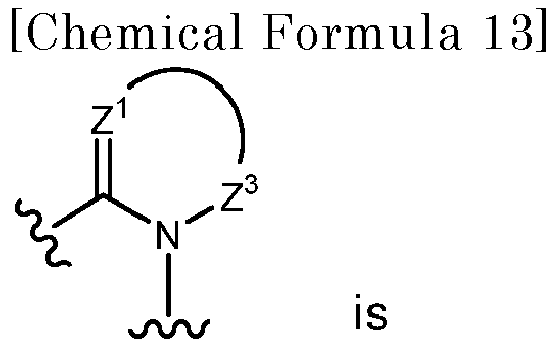

- each of Y1 and Y2 is O;
- each of R4 and R6 is a hydrogen atom;
- R5a is a hydrogen atom, halogen, hydroxy, carboxy, amino, carbamoyl, cyano, substituted or unsubstituted alkyl, substituted or unsubstituted alkyloxy, substituted or unsubstituted alkyloxycarbonyl, substituted or unsubstituted alkylcarbamoyl, or substituted or unsubstituted alkyloxycarbonylamino;
- R5b is a hydrogen atom, carboxy, carbamoyl, cyano, substituted or unsubstituted alkyl, or substituted or unsubstituted alkylcarbonyl;
- X is N(H);
- R1 is substituted or unsubstituted 6-membered aromatic carbocyclyl, or substituted or unsubstituted 5- to 6-membered aromatic heterocyclyl;
- each of R2a and R2b is a hydrogen atom;
- R3 is

- R9a is halogen, or substituted or unsubstituted alkyl;
- R10a is halogen, hydroxy, amino, carbamoyl, cyano, substituted or unsubstituted alkyl, substituted or unsubstituted alkenyl, substituted or unsubstituted alkynyl, substituted or unsubstituted alkyloxy, substituted or unsubstituted alkenyloxy, substituted or unsubstituted alkynyloxy, substituted or unsubstituted alkylsulfanyl, substituted or unsubstituted alkenylsulfanyl, substituted or unsubstituted alkynylsulfanyl, substituted or unsubstituted alkylamino, substituted or unsubstituted alkenylamino, substituted or unsubstituted alkynylamino, substituted or unsubstituted alkylcarbonyl, substituted or unsubstituted alkenylcarbonyl, substituted or unsubstituted alkynylcarbonyl, substituted or unsubstituted alkylsulfonyl, substituted or unsubstituted alkenylsulfonyl, substituted or unsubstituted alkynylsulfonyl, substituted or unsubstituted alkyloxycarbonyl, substituted or unsubstituted alkenyloxycarbonyl, substituted or unsubstituted alkynyloxycarbonyl, substituted or unsubstituted aromatic carbocyclyl, substituted or unsubstituted non-aromatic carbocyclyl, substituted or unsubstituted aromatic heterocyclyl, substituted or unsubstituted non-aromatic heterocyclyl, substituted or unsubstituted aromatic carbocyclyloxy, substituted or unsubstituted non-aromatic carbocyclyloxy, substituted or unsubstituted aromatic heterocyclyloxy, substituted or unsubstituted non-aromatic heterocyclyloxy, substituted or unsubstituted aromatic carbocyclylsulfamoyl, substituted or unsubstituted non-aromatic carbocyclylsulfamoyl, substituted or unsubstituted aromatic heterocyclylsulfamoyl, or substituted or unsubstituted non-aromatic heterocyclylsulfamoyl;
- m is 0;
- n is 1; and
- p1 is an integer from 0 to 2,
- [Clause 29] The compound according to clause 28, wherein


- [Clause 30] The compound according to clause 28, wherein

- [Clause 31] The compound according to clause 28, wherein

- [Clause 32] The compound according to clause 1, wherein
the compound is compound I-0005, compound I-0006, compound I-0354, compound I-0365, compound I-0372, compound I-0702, compound I-0707, compound I-0842, compound I-0910, or compound I-1040,
or a pharmaceutically acceptable salt thereof. - [Clause33] The compound according to clause 1, wherein
the compound is Compound I-1041, Compound I-1050, Compound I-1066, Compound I-1108, Compound I-1232, Compound I-1261, Compound I-1281, Compound I-1295, Compound I-1296, or Compound I-1297,
or a pharmaceutically acceptable salt thereof. - [Clause 34] A pharmaceutical composition comprising the compound according to any one of clauses 1 to 33, or a pharmaceutically acceptable salt thereof.
- [Clause 35] The pharmaceutical composition according to clause 34 having an antagonistic activity for the P2X7 receptor.
- [Clause 36] The compound according to any one of clauses 1 to 33, or a pharmaceutically acceptable salt thereof for use in treating and/or preventing a disease associated with the P2X7 receptor.
- [Clause 37] A method for treating and/or preventing a disease associated with the P2X7 receptor characterized by administering the compound according to any one of clauses 1 to 33, or a pharmaceutically acceptable salt thereof.
Claims (9)
- A compound represented by Formula (I):


 Y1 and Y2 are O;each of R4 and R6 is a hydrogen atom;R5a is a hydrogen atom, halogen, hydroxy, carboxy, amino, carbamoyl, cyano, substituted or unsubstituted alkyl, substituted or unsubstituted alkyloxy, substituted or unsubstituted alkyloxycarbonyl, substituted or unsubstituted alkylcarbamoyl, substituted or unsubstituted alkyloxycarbonylamino;R5b is a hydrogen atom, carboxy, carbamoyl, cyano, substituted or unsubstituted alkyl, substituted or unsubstituted alkylcarbonyl;
R1 is 6-membered aromatic carbocyclyl substituted with one or more halogen atom(s) and optionally substituted with one or more and same or different substituent(s), or 5- to 6-membered aromatic heterocyclyl substituted with one or more halogen atom(s) and optionally substituted with one or more and same or different substituent(s);R2a is a hydrogen atom;R2b is a hydrogen atom;X is N(H);R3 is a group represented by the Formula:or a pharmaceutically acceptable salt thereof. Ring B is a 6-membered aromatic carbocycle, a 6-membered non-aromatic carbocycle, a 6-membered aromatic heterocycle, or a 6-membered non-aromatic heterocycle;R9a is halogen, or substituted or unsubstituted alkyl;R10a is halogen, hydroxy, amino, carbamoyl, cyano, substituted or unsubstituted alkyl, substituted or unsubstituted alkenyl, substituted or unsubstituted alkynyl, substituted or unsubstituted alkyloxy, substituted or unsubstituted alkenyloxy, substituted or unsubstituted alkynyloxy, substituted or unsubstituted alkylsulfanyl, substituted or unsubstituted alkenylsulfanyl, substituted or unsubstituted alkynylsulfanyl, substituted or unsubstituted alkylamino, substituted or unsubstituted alkenylamino, substituted or unsubstituted alkynylamino, substituted or unsubstituted alkylcarbonyl, substituted or unsubstituted alkenylcarbonyl, substituted or unsubstituted alkynylcarbonyl, substituted or unsubstituted alkylsulfonyl, substituted or unsubstituted alkenylsulfonyl, substituted or unsubstituted alkynylsulfonyl, substituted or unsubstituted alkyloxycarbonyl, substituted or unsubstituted alkenyloxycarbonyl, substituted or unsubstituted alkynyloxycarbonyl, substituted or unsubstituted aromatic carbocyclyl, substituted or unsubstituted non-aromatic carbocyclyl, substituted or unsubstituted aromatic heterocyclyl, substituted or unsubstituted non-aromatic heterocyclyl, substituted or unsubstituted aromatic carbocyclyloxy, substituted or unsubstituted non-aromatic carbocyclyloxy, substituted or unsubstituted aromatic heterocyclyloxy, substituted or unsubstituted non-aromatic heterocyclyloxy, substituted or unsubstituted aromatic carbocyclylsulfamoyl, substituted or unsubstituted non-aromatic carbocyclylsulfamoyl, substituted or unsubstituted aromatic heterocyclylsulfamoyl, substituted or unsubstituted non-aromatic heterocyclylsulfamoyl;R9a and R10a may be any of the following a) to c):a) R9a and R10a are taken together to form a (C1-C3) bridge, wherein one of the carbon atoms constituting the bridge may be replaced with an oxygen atom or a nitrogen atom;b) R9a and R10a which are attached to the adjacent atoms are taken together to form a substituted or unsubstituted aromatic carbocycle, a substituted or unsubstituted non-aromatic carbocycle, a substituted or unsubstituted aromatic heterocycle, or a substituted or unsubstituted non-aromatic heterocycle; andc) two R10a which are attached to the adjacent atom are taken together to form a substituted or unsubstituted aromatic carbocycle, a substituted or unsubstituted non-aromatic carbocycle, a substituted or unsubstituted aromatic heterocycle, or a substituted or unsubstituted non-aromatic heterocycle; andn is 1;m is 0;p1 is an integer from 0 to 2;the substituents of "substituted or unsubstituted alkyl" include the substituent group A, a carbon atom at any position(s) may be bonded to one or more group(s) selected from the substituent group A;the substituent group A: halogen, hydroxy, carboxy, amino, carbamoyl, sulfamoyl, sulfo, cyano, alkyloxy optionally substituted with one or more group(s) selected from the substituent group C, alkylamino optionally substituted with one or more group(s) selected from the substituent group C, alkylsulfanyl optionally substituted with one or more group(s) selected from the substituent group C, alkylcarbonyl optionally substituted with one or more group(s) selected from the substituent group C, alkylsulfonyl optionally substituted with one or more group(s) selected from the substituent group C, alkylcarbonylamino optionally substituted with one or more group(s) selected from the substituent group C, alkylsulfonylamino optionally substituted with one or more group(s) selected from the substituent group C, alkylcarbamoyl optionally substituted with one or more group(s) selected from the substituent group C, alkylsulfamoyl optionally substituted with one or more group(s) selected from the substituent group C, alkylcarbonyloxy optionally substituted with one or more group(s) selected from the substituent group C, alkyloxycarbonyl optionally substituted with one or more group(s) selected from the substituent group C, alkylsulfonyloxy optionally substituted with one or more group(s) selected from the substituent group C, alkyloxysulfonyl optionally substituted with one or more group(s) selected from the substituent group C, aromatic carbocyclyl optionally substituted with one or more group(s) selected from the substituent group E, non-aromatic carbocyclyl optionally substituted with one or more group(s) selected from the substituent group E, aromatic heterocyclyl optionally substituted with one or more group(s) selected from the substituent group E, non-aromatic heterocyclyl optionally substituted with one or more group(s) selected from the substituent group E, aromatic carbocyclyloxy optionally substituted with one or more group(s) selected from the substituent group E, non-aromatic carbocyclyloxy optionally substituted with one or more group(s) selected from the substituent group E, aromatic heterocyclyloxy optionally substituted with one or more group(s) selected from the substituent group E, non-aromatic heterocyclyloxy optionally substituted with one or more group(s) selected from the substituent group E, aromatic carbocyclylsulfanyl optionally substituted with one or more group(s) selected from the substituent group E, non-aromatic carbocyclylsulfanyl optionally substituted with one or more group(s) selected from the substituent group E, aromatic heterocyclylsulfanyl optionally substituted with one or more group(s) selected from the substituent group E, non-aromatic heterocyclylsulfanyl optionally substituted with one or more group(s) selected from the substituent group E, aromatic carbocyclylamino optionally substituted with one or more group(s) selected from the substituent group E, non-aromatic carbocyclylamino optionally substituted with one or more group(s) selected from the substituent group E, aromatic heterocyclylamino optionally substituted with one or more group(s) selected from the substituent group E, non-aromatic heterocyclylamino optionally substituted with one or more group(s) selected from the substituent group E, aromatic carbocyclylcarbonyl optionally substituted with one or more group(s) selected from the substituent group E, non-aromatic carbocyclylcarbonyl optionally substituted with one or more group(s) selected from the substituent group E, aromatic heterocyclylcarbonyl optionally substituted with one or more group(s) selected from the substituent group E, non-aromatic heterocyclylcarbonyl optionally substituted with one or more group(s) selected from the substituent group E, aromatic carbocyclylsulfonyl optionally substituted with one or more group(s) selected from the substituent group E, non-aromatic carbocyclylsulfonyl optionally substituted with one or more group(s) selected from the substituent group E, aromatic heterocyclylsulfonyl optionally substituted with one or more group(s) selected from the substituent group E, non-aromatic heterocyclylsulfonyl optionally substituted with one or more group(s) selected from the substituent group E, aromatic carbocyclylcarbonylamino optionally substituted with one or more group(s) selected from the substituent group E, non-aromatic carbocyclylcarbonylamino optionally substituted with one or more group(s) selected from the substituent group E, aromatic heterocyclylcarbonylamino optionally substituted with one or more group(s) selected from the substituent group E, non-aromatic heterocyclylcarbonylamino optionally substituted with one or more group(s) selected from the substituent group E, aromatic carbocyclylsulfonylamino optionally substituted with one or more group(s) selected from the substituent group E, non-aromatic carbocyclylsulfonylamino optionally substituted with one or more group(s) selected from the substituent group E, aromatic heterocyclylsulfonylamino optionally substituted with one or more group(s) selected from the substituent group E, non-aromatic heterocyclylsulfonylamino optionally substituted with one or more group(s) selected from the substituent group E, aromatic carbocyclylcarbamoyl optionally substituted with one or more group(s) selected from the substituent group E, non-aromatic carbocyclylcarbamoyl optionally substituted with one or more group(s) selected from the substituent group E, aromatic heterocyclylcarbamoyl optionally substituted with one or more group(s) selected from the substituent group E, non-aromatic heterocyclylcarbamoyl optionally substituted with one or more group(s) selected from the substituent group E, aromatic carbocyclylsulfamoyl optionally substituted with one or more group(s) selected from the substituent group E, non-aromatic carbocyclylsulfamoyl optionally substituted with one or more group(s) selected from the substituent group E, aromatic heterocyclylsulfamoyl optionally substituted with one or more group(s) selected from the substituent group E, non-aromatic heterocyclylsulfamoyl optionally substituted with one or more group(s) selected from the substituent group E, aromatic carbocyclyloxycarbonyl optionally substituted with one or more group(s) selected from the substituent group E, non-aromatic carbocyclyloxycarbonyl optionally substituted with one or more group(s) selected from the substituent group E, aromatic heterocyclyloxycarbonyl optionally substituted with one or more group(s) selected from the substituent group E, non-aromatic heterocyclyloxycarbonyl optionally substituted with one or more group(s) selected from the substituent group E, aromatic carbocyclyloxysulfonyl optionally substituted with one or more group(s) selected from the substituent group E, non-aromatic carbocyclyloxysulfonyl optionally substituted with one or more group(s) selected from the substituent group E, aromatic heterocyclyloxysulfonyl optionally substituted with one or more group(s) selected from the substituent group E, non-aromatic heterocyclyloxysulfonyl optionally substituted with one or more group(s) selected from the substituent group E, aromatic carbocyclylcarbonyloxy optionally substituted with one or more group(s) selected from the substituent group E, non-aromatic carbocyclylcarbonyloxy optionally substituted with one or more group(s) selected from the substituent group E, aromatic heterocyclylcarbonyloxy optionally substituted with one or more group(s) selected from the substituent group E, non-aromatic heterocyclylcarbonyloxy optionally substituted with one or more group(s) selected from the substituent group E, aromatic carbocyclylsulfonyloxy optionally substituted with one or more group(s) selected from the substituent group E, non-aromatic carbocyclylsulfonyloxy optionally substituted with one or more group(s) selected from the substituent group E, aromatic heterocyclylsulfonyloxy optionally substituted with one or more group(s) selected from the substituent group E, and non-aromatic heterocyclylsulfonyloxy optionally substituted with one or more group(s) selected from the substituent group E;the substituents of "substituted or unsubstituted alkenyl", "substituted or unsubstituted alkynyl", "substituted or unsubstituted alkyloxy", "substituted or unsubstituted alkenyloxy", "substituted or unsubstituted alkynyloxy", "substituted or unsubstituted alkylsulfanyl", "substituted or unsubstituted alkenylsulfanyl", "substituted or unsubstituted alkynylsulfanyl", "substituted or unsubstituted alkylamino", "substituted or unsubstituted alkenylamino", "substituted or unsubstituted alkynylamino", "substituted or unsubstituted alkylcarbonyl", "substituted or unsubstituted alkenylcarbonyl", "substituted or unsubstituted alkynylcarbonyl", "substituted or unsubstituted alkylsulfonyl", "substituted or unsubstituted alkenylsulfonyl", "substituted or unsubstituted alkynylsulfonyl", "substituted or unsubstituted alkyloxycarbonyl", "substituted or unsubstituted alkenyloxycarbonyl", "substituted or unsubstituted alkynyloxycarbonyl", "substituted or unsubstituted alkylcarbamoyl", and "substituted or unsubstituted alkynyloxycarbonylamino" include the substituent group B, a carbon atom at any position(s) may be bonded to one or more group(s) selected from the substituent group B;the substituent group B: halogen, hydroxy, carboxy, amino, carbamoyl, sulfamoyl, sulfo, cyano, alkyloxy optionally substituted with one or more group(s) selected from the substituent group D, alkylamino optionally substituted with one or more group(s) selected from the substituent group D, alkylsulfanyl optionally substituted with one or more group(s) selected from the substituent group D, alkylcarbonyl optionally substituted with one or more group(s) selected from the substituent group D, alkylsulfonyl optionally substituted with one or more group(s) selected from the substituent group D, alkylcarbonylamino optionally substituted with one or more group(s) selected from the substituent group D, alkylsulfonylamino optionally substituted with one or more group(s) selected from the substituent group D, alkylcarbamoyl optionally substituted with one or more group(s) selected from the substituent group D, alkylsulfamoyl optionally substituted with one or more group(s) selected from the substituent group D, alkylcarbonyloxy optionally substituted with one or more group(s) selected from the substituent group D, alkyloxycarbonyl optionally substituted with one or more group(s) selected from the substituent group D, alkylsulfonyloxy optionally substituted with one or more group(s) selected from the substituent group D, alkyloxysulfonyl optionally substituted with one or more group(s) selected from the substituent group D, aromatic carbocyclyl optionally substituted with one or more group(s) selected from the substituent group E, non-aromatic carbocyclyl optionally substituted with one or more group(s) selected from the substituent group E, aromatic heterocyclyl optionally substituted with one or more group(s) selected from the substituent group E, non-aromatic heterocyclyl optionally substituted with one or more group(s) selected from the substituent group E, aromatic carbocyclyloxy optionally substituted with one or more group(s) selected from the substituent group E, non-aromatic carbocyclyloxy optionally substituted with one or more group(s) selected from the substituent group E, aromatic heterocyclyloxy optionally substituted with one or more group(s) selected from the substituent group E, non-aromatic heterocyclyloxy optionally substituted with one or more group(s) selected from the substituent group E, aromatic carbocyclylsulfanyl optionally substituted with one or more group(s) selected from the substituent group E, non-aromatic carbocyclylsulfanyl optionally substituted with one or more group(s) selected from the substituent group E, aromatic heterocyclylsulfanyl optionally substituted with one or more group(s) selected from the substituent group E, non-aromatic heterocyclylsulfanyl optionally substituted with one or more group(s) selected from the substituent group E, aromatic carbocyclylamino optionally substituted with one or more group(s) selected from the substituent group E, non-aromatic carbocyclylamino optionally substituted with one or more group(s) selected from the substituent group E, aromatic heterocyclylamino optionally substituted with one or more group(s) selected from the substituent group E, non-aromatic heterocyclylamino optionally substituted with one or more group(s) selected from the substituent group E, aromatic carbocyclylcarbonyl optionally substituted with one or more group(s) selected from the substituent group E, non-aromatic carbocyclylcarbonyl optionally substituted with one or more group(s) selected from the substituent group E, aromatic heterocyclylcarbonyl optionally substituted with one or more group(s) selected from the substituent group E, non-aromatic heterocyclylcarbonyl optionally substituted with one or more group(s) selected from the substituent group E, aromatic carbocyclylsulfonyl optionally substituted with one or more group(s) selected from the substituent group E, non-aromatic carbocyclylsulfonyl optionally substituted with one or more group(s) selected from the substituent group E, aromatic heterocyclylsulfonyl optionally substituted with one or more group(s) selected from the substituent group E, non-aromatic heterocyclylsulfonyl optionally substituted with one or more group(s) selected from the substituent group E, aromatic carbocyclylcarbonylamino optionally substituted with one or more group(s) selected from the substituent group E, non-aromatic carbocyclylcarbonylamino optionally substituted with one or more group(s) selected from the substituent group E, aromatic heterocyclylcarbonylamino optionally substituted with one or more group(s) selected from the substituent group E, non-aromatic heterocyclylcarbonylamino optionally substituted with one or more group(s) selected from the substituent group E, aromatic carbocyclylsulfonylamino optionally substituted with one or more group(s) selected from the substituent group E, non-aromatic carbocyclylsulfonylamino optionally substituted with one or more group(s) selected from the substituent group E, aromatic heterocyclylsulfonylamino optionally substituted with one or more group(s) selected from the substituent group E, non-aromatic heterocyclylsulfonylamino optionally substituted with one or more group(s) selected from the substituent group E, aromatic carbocyclylcarbamoyl optionally substituted with one or more group(s) selected from the substituent group E, non-aromatic carbocyclylcarbamoyl optionally substituted with one or more group(s) selected from the substituent group E, aromatic heterocyclylcarbamoyl optionally substituted with one or more group(s) selected from the substituent group E, non-aromatic heterocyclylcarbamoyl optionally substituted with one or more group(s) selected from the substituent group E, aromatic carbocyclylsulfamoyl optionally substituted with one or more group(s) selected from the substituent group E, non-aromatic carbocyclylsulfamoyl optionally substituted with one or more group(s) selected from the substituent group E, aromatic heterocyclylsulfamoyl optionally substituted with one or more group(s) selected from the substituent group E, non-aromatic heterocyclylsulfamoyl optionally substituted with one or more group(s) selected from the substituent group E, aromatic carbocyclyloxycarbonyl optionally substituted with one or more group(s) selected from the substituent group E, non-aromatic carbocyclyloxycarbonyl optionally substituted with one or more group(s) selected from the substituent group E, aromatic heterocyclyloxycarbonyl optionally substituted with one or more group(s) selected from the substituent group E, non-aromatic heterocyclyloxycarbonyl optionally substituted with one or more group(s) selected from the substituent group E, aromatic carbocyclyloxysulfonyl optionally substituted with one or more group(s) selected from the substituent group E, non-aromatic carbocyclyloxysulfonyl optionally substituted with one or more group(s) selected from the substituent group E, aromatic heterocyclyloxysulfonyl optionally substituted with one or more group(s) selected from the substituent group E, non-aromatic heterocyclyloxysulfonyl optionally substituted with one or more group(s) selected from the substituent group E, aromatic carbocyclylcarbonyloxy optionally substituted with one or more group(s) selected from the substituent group E, non-aromatic carbocyclylcarbonyloxy optionally substituted with one or more group(s) selected from the substituent group E, aromatic heterocyclylcarbonyloxy optionally substituted with one or more group(s) selected from the substituent group E, non-aromatic heterocyclylcarbonyloxy optionally substituted with one or more group(s) selected from the substituent group E, aromatic carbocyclylsulfonyloxy optionally substituted with one or more group(s) selected from the substituent group E, non-aromatic carbocyclylsulfonyloxy optionally substituted with one or more group(s) selected from the substituent group E, aromatic heterocyclylsulfonyloxy optionally substituted with one or more group(s) selected from the substituent group E, and non-aromatic heterocyclylsulfonyloxy optionally substituted with one or more group(s) selected from the substituent group E;the substituents on the rings of "substituted or unsubstituted aromatic carbocycle", "substituted or unsubstituted non-aromatic carbocycle", "substituted or unsubstituted aromatic heterocycle", "substituted or unsubstituted non-aromatic heterocycle", "substituted or unsubstituted 6-membered aromatic carbocycle", "substituted or unsubstituted 6-membered non-aromatic carbocycle", "substituted or unsubstituted 6-membered aromatic heterocycle", "substituted or unsubstituted 6-membered non-aromatic heterocycle", "substituted or unsubstituted aromatic carbocyclyl", "substituted or unsubstituted non-aromatic carbocyclyl", "substituted or unsubstituted aromatic heterocyclyl", "substituted or unsubstituted non-aromatic heterocyclyl", "substituted or unsubstituted aromatic carbocyclyloxy", "substituted or unsubstituted non-aromatic carbocyclyloxy", "substituted or unsubstituted aromatic heterocyclyloxy", "substituted or unsubstituted non-aromatic heterocyclyloxy", "substituted or unsubstituted aromatic carbocyclylsulfamoyl", "substituted or unsubstituted non-aromatic carbocyclylsulfamoyl", "substituted or unsubstituted aromatic heterocyclylsulfamoyl", and "substituted or unsubstituted non-aromatic heterocyclylsulfamoyl", include the substituent group D, an atom at any position(s) on the ring may be bonded to one or more group(s) selected from the substituent group C;the substituent group C: halogen, hydroxy, carboxy, amino, carbamoyl, sulfamoyl, sulfo, cyano, alkyl optionally substituted with one or more group(s) selected from the substituent group D, alkenyl optionally substituted with one or more group(s) selected from the substituent group D, alkynyl optionally substituted with one or more group(s) selected from the substituent group D, alkyloxy optionally substituted with one or more group(s) selected from the substituent group D, alkenyloxy optionally substituted with one or more group(s) selected from the substituent group D, alkynyloxy optionally substituted with one or more group(s) selected from the substituent group D, alkylamino optionally substituted with one or more group(s) selected from the substituent group D, alkenylamino optionally substituted with one or more group(s) selected from the substituent group D, alkynylamino optionally substituted with one or more group(s) selected from the substituent group D, alkylsulfanyl optionally substituted with one or more group(s) selected from the substituent group D, alkenylsulfanyl optionally substituted with one or more group(s) selected from the substituent group D, alkynylsulfanyl optionally substituted with one or more group(s) selected from the substituent group D, alkylcarbonyl optionally substituted with one or more group(s) selected from the substituent group D, alkylsulfonyl optionally substituted with one or more group(s) selected from the substituent group D, alkylcarbonylamino optionally substituted with one or more group(s) selected from the substituent group D, alkylsulfonylamino optionally substituted with one or more group(s) selected from the substituent group D, alkylcarbamoyl optionally substituted with one or more group(s) selected from the substituent group D, alkylsulfamoyl optionally substituted with one or more group(s) selected from the substituent group D, alkylcarbonyloxy optionally substituted with one or more group(s) selected from the substituent group D, alkyloxycarbonyl optionally substituted with one or more group(s) selected from the substituent group D, alkylsulfonyloxy optionally substituted with one or more group(s) selected from the substituent group D, alkyloxysulfonyl optionally substituted with one or more group(s) selected from the substituent group D, aromatic carbocyclyl optionally substituted with one or more group(s) selected from the substituent group E, non-aromatic carbocyclyl optionally substituted with one or more group(s) selected from the substituent group E, aromatic heterocyclyl optionally substituted with one or more group(s) selected from the substituent group E, non-aromatic heterocyclyl optionally substituted with one or more group(s) selected from the substituent group E, aromatic carbocyclyloxy optionally substituted with one or more group(s) selected from the substituent group E, non-aromatic carbocyclyloxy optionally substituted with one or more group(s) selected from the substituent group E, aromatic heterocyclyloxy optionally substituted with one or more group(s) selected from the substituent group E, non-aromatic heterocyclyloxy optionally substituted with one or more group(s) selected from the substituent group E, aromatic carbocyclylsulfanyl optionally substituted with one or more group(s) selected from the substituent group E, non-aromatic carbocyclylsulfanyl optionally substituted with one or more group(s) selected from the substituent group E, aromatic heterocyclylsulfanyl optionally substituted with one or more group(s) selected from the substituent group E, non-aromatic heterocyclylsulfanyl optionally substituted with one or more group(s) selected from the substituent group E, aromatic carbocyclylamino optionally substituted with one or more group(s) selected from the substituent group E, non-aromatic carbocyclylamino optionally substituted with one or more group(s) selected from the substituent group E, aromatic heterocyclylamino optionally substituted with one or more group(s) selected from the substituent group E, non-aromatic heterocyclylamino optionally substituted with one or more group(s) selected from the substituent group E, aromatic carbocyclylcarbonyl optionally substituted with one or more group(s) selected from the substituent group E, non-aromatic carbocyclylcarbonyl optionally substituted with one or more group(s) selected from the substituent group E, aromatic heterocyclylcarbonyl optionally substituted with one or more group(s) selected from the substituent group E, non-aromatic heterocyclylcarbonyl optionally substituted with one or more group(s) selected from the substituent group E, aromatic carbocyclylsulfonyl optionally substituted with one or more group(s) selected from the substituent group E, non-aromatic carbocyclylsulfonyl optionally substituted with one or more group(s) selected from the substituent group E, aromatic heterocyclylsulfonyl optionally substituted with one or more group(s) selected from the substituent group E, non-aromatic heterocyclylsulfonyl optionally substituted with one or more group(s) selected from the substituent group E, aromatic carbocyclylcarbonylamino optionally substituted with one or more group(s) selected from the substituent group E, non-aromatic carbocyclylcarbonylamino optionally substituted with one or more group(s) selected from the substituent group E, aromatic heterocyclylcarbonylamino optionally substituted with one or more group(s) selected from the substituent group E, non-aromatic heterocyclylcarbonylamino optionally substituted with one or more group(s) selected from the substituent group E, aromatic carbocyclylsulfonylamino optionally substituted with one or more group(s) selected from the substituent group E, non-aromatic carbocyclylsulfonylamino optionally substituted with one or more group(s) selected from the substituent group E, aromatic heterocyclylsulfonylamino optionally substituted with one or more group(s) selected from the substituent group E, non-aromatic heterocyclylsulfonylamino optionally substituted with one or more group(s) selected from the substituent group E, aromatic carbocyclylcarbamoyl optionally substituted with one or more group(s) selected from the substituent group E, non-aromatic carbocyclylcarbamoyl optionally substituted with one or more group(s) selected from the substituent group E, aromatic heterocyclylcarbamoyl optionally substituted with one or more group(s) selected from the substituent group E, non-aromatic heterocyclylcarbamoyl optionally substituted with one or more group(s) selected from the substituent group E, aromatic carbocyclylsulfamoyl optionally substituted with one or more group(s) selected from the substituent group E, non-aromatic carbocyclylsulfamoyl optionally substituted with one or more group(s) selected from the substituent group E, aromatic heterocyclylsulfamoyl optionally substituted with one or more group(s) selected from the substituent group E, non-aromatic heterocyclylsulfamoyl optionally substituted with one or more group(s) selected from the substituent group E, aromatic carbocyclyloxycarbonyl optionally substituted with one or more group(s) selected from the substituent group E, non-aromatic carbocyclyloxycarbonyl optionally substituted with one or more group(s) selected from the substituent group E, aromatic heterocyclyloxycarbonyl optionally substituted with one or more group(s) selected from the substituent group E, non-aromatic heterocyclyloxycarbonyl optionally substituted with one or more group(s) selected from the substituent group E, aromatic carbocyclyloxysulfonyl optionally substituted with one or more group(s) selected from the substituent group E, non-aromatic carbocyclyloxysulfonyl optionally substituted with one or more group(s) selected from the substituent group E, aromatic heterocyclyloxysulfonyl optionally substituted with one or more group(s) selected from the substituent group E, non-aromatic heterocyclyloxysulfonyl optionally substituted with one or more group(s) selected from the substituent group E, aromatic carbocyclylcarbonyloxy optionally substituted with one or more group(s) selected from the substituent group E, non-aromatic carbocyclylcarbonyloxy optionally substituted with one or more group(s) selected from the substituent group E, aromatic heterocyclylcarbonyloxy optionally substituted with one or more group(s) selected from the substituent group E, non-aromatic heterocyclylcarbonyloxy optionally substituted with one or more group(s) selected from the substituent group E, aromatic carbocyclylsulfonyloxy optionally substituted with one or more group(s) selected from the substituent group E, non-aromatic carbocyclylsulfonyloxy optionally substituted with one or more group(s) selected from the substituent group E, aromatic heterocyclylsulfonyloxy optionally substituted with one or more group(s) selected from the substituent group E, and non-aromatic heterocyclylsulfonyloxy optionally substituted with one or more group(s) selected from the substituent group E;the substituent group C: halogen, hydroxy, carboxy, amino, carbamoyl, sulfamoyl, sulfo, cyano, alkyloxy, haloalkyloxy, alkylamino, haloalkylamino, alkylsulfanyl, haloalkylsulfanyl, and aromatic carbocyclyl optionally substituted with one or more group(s) selected from the substituent group F, non-aromatic carbocyclyl optionally substituted with one or more group(s) selected from the substituent group F, aromatic heterocyclyl optionally substituted with one or more group(s) selected from the substituent group F, and non-aromatic heterocyclyl optionally substituted with one or more group(s) selected from the substituent group F;the substituent group D: halogen, hydroxy, carboxy, amino, carbamoyl, sulfamoyl, sulfo, and cyano;the substituent group E: halogen, hydroxy, carboxy, amino, carbamoyl, sulfamoyl, sulfo, and cyano, and alkyl optionally substituted with one or more group(s) selected from the substituent group D, alkyloxy optionally substituted with one or more group(s) selected from the substituent group D, alkylamino optionally substituted with one or more group(s) selected from the substituent group D, alkylsulfanyl optionally substituted with one or more group(s) selected from the substituent group D, alkylcarbonyl optionally substituted with one or more group(s) selected from the substituent group D, alkylsulfonyl optionally substituted with one or more group(s) selected from the substituent group D, alkylcarbonylamino optionally substituted with one or more group(s) selected from the substituent group D, alkylsulfonylamino optionally substituted with one or more group(s) selected from the substituent group D, alkylcarbamoyl optionally substituted with one or more group(s) selected from the substituent group D, alkylsulfamoyl optionally substituted with one or more group(s) selected from the substituent group D, alkylcarbonyloxy optionally substituted with one or more group(s) selected from the substituent group D, alkyloxycarbonyl optionally substituted with one or more group(s) selected from the substituent group D, alkylsulfonyloxy optionally substituted with one or more group(s) selected from the substituent group D, and alkyloxysulfonyl optionally substituted with one or more group(s) selected from the substituent group D;the substituent group F: halogen, hydroxy, carboxy, amino, carbamoyl, sulfamoyl, sulfo, cyano, alkyl, haloalkyl, alkyloxy, haloalkyloxy, alkylamino, haloalkylamino, alkylsulfanyl, haloalkylsulfanyl, alkylcarbonyl, haloalkylcarbonyl, alkylsulfonyl, haloalkylsulfonyl, alkylcarbonylamino, haloalkylcarbonylamino, alkylsulfonylamino, haloalkylsulfonylamino, alkylcarbamoyl, haloalkylcarbamoyl, alkylsulfamoyl, and haloalkylsulfamoyl; or"Substituted or unsubstituted non-aromatic carbocyclyl" and "substituted or unsubstituted non-aromatic heterocyclyl" may be optionally substituted with one or more group(s) selected from
"oxo"; - The compound according to claim 1, wherein

- The compound according to claim 1 or 2, wherein R5a is a hydrogen atom, halogen, substituted or unsubstituted alkyl, or substituted or unsubstituted alkyloxy, or a pharmaceutically acceptable salt thereof.
- The compound according to any one of claim 1 to 3, wherein R1 is phenyl substituted with one or more halogen atom(s) and optionally substituted with one or more group(s) selected from halogen, alkyl, and haloalkyl, or a pharmaceutically acceptable salt thereof.
- The compound according to any one of claims 1 to 4, wherein Ring B is benzene, or a pharmaceutically acceptable salt thereof.
- The compound according to any one of claims 1 to 5, wherein R10a is halogen, substituted or unsubstituted alkyl, substituted or unsubstituted alkyloxy, substituted or unsubstituted aromatic heterocyclyl, substituted or unsubstituted non-aromatic heterocyclyl, substituted or unsubstituted aromatic heterocyclyloxy, or substituted or unsubstituted non-aromatic heterocyclyloxy, or a pharmaceutically acceptable salt thereof.
- A pharmaceutical composition comprising the compound according to any one of claims 1 to 6, or a pharmaceutically acceptable salt thereof.
- The pharmaceutical composition according to claim 7 having an antagonistic activity for the P2X7 receptor.
- The compound according to any one of claims 1 to 6, or a pharmaceutically acceptable salt thereof for use in treating and/or preventing a disease associated with the P2X7 receptor.
Applications Claiming Priority (4)
| Application Number | Priority Date | Filing Date | Title |
|---|---|---|---|
| JP2015089431 | 2015-04-24 | ||
| JP2015127214 | 2015-06-25 | ||
| PCT/JP2016/062759 WO2016171249A1 (en) | 2015-04-24 | 2016-04-22 | 6-membered heterocyclic derivative and pharmaceutical composition comprising same |
| EP16783270.8A EP3287443B1 (en) | 2015-04-24 | 2016-04-22 | 6-membered heterocyclic derivative and pharmaceutical composition comprising same |
Related Parent Applications (2)
| Application Number | Title | Priority Date | Filing Date |
|---|---|---|---|
| EP16783270.8A Division EP3287443B1 (en) | 2015-04-24 | 2016-04-22 | 6-membered heterocyclic derivative and pharmaceutical composition comprising same |
| EP16783270.8A Division-Into EP3287443B1 (en) | 2015-04-24 | 2016-04-22 | 6-membered heterocyclic derivative and pharmaceutical composition comprising same |
Publications (2)
| Publication Number | Publication Date |
|---|---|
| EP3957627A1 true EP3957627A1 (en) | 2022-02-23 |
| EP3957627B1 EP3957627B1 (en) | 2024-06-19 |
Family
ID=57143154
Family Applications (2)
| Application Number | Title | Priority Date | Filing Date |
|---|---|---|---|
| EP16783270.8A Active EP3287443B1 (en) | 2015-04-24 | 2016-04-22 | 6-membered heterocyclic derivative and pharmaceutical composition comprising same |
| EP21196697.3A Active EP3957627B1 (en) | 2015-04-24 | 2016-04-22 | 6-membered heterocyclic derivative and pharmaceutical composition comprising same |
Family Applications Before (1)
| Application Number | Title | Priority Date | Filing Date |
|---|---|---|---|
| EP16783270.8A Active EP3287443B1 (en) | 2015-04-24 | 2016-04-22 | 6-membered heterocyclic derivative and pharmaceutical composition comprising same |
Country Status (15)
| Country | Link |
|---|---|
| US (3) | US10774051B2 (en) |
| EP (2) | EP3287443B1 (en) |
| JP (2) | JP6358639B2 (en) |
| KR (2) | KR20190123812A (en) |
| CN (1) | CN107709299B (en) |
| AU (1) | AU2016252686B2 (en) |
| BR (1) | BR112017022654A2 (en) |
| CA (1) | CA2983721A1 (en) |
| DK (1) | DK3287443T3 (en) |
| ES (1) | ES2905399T3 (en) |
| MX (1) | MX391647B (en) |
| PL (1) | PL3287443T3 (en) |
| RU (1) | RU2683245C1 (en) |
| TW (1) | TWI715569B (en) |
| WO (1) | WO2016171249A1 (en) |
Families Citing this family (12)
| Publication number | Priority date | Publication date | Assignee | Title |
|---|---|---|---|---|
| EP3287443B1 (en) * | 2015-04-24 | 2021-10-27 | Shionogi & Co., Ltd | 6-membered heterocyclic derivative and pharmaceutical composition comprising same |
| PE20181197A1 (en) | 2015-10-14 | 2018-07-23 | Bristol Myers Squibb Co | 2,4-DIHYDROXY-NICOTINAMIDES AS AGONISTS OF THE APELIN RECEPTOR (APJ) |
| TWI744301B (en) | 2016-03-24 | 2021-11-01 | 美商必治妥美雅史谷比公司 | 6-hydroxy-4-oxo-1,4-dihydropyrimidine-5-carboxamides as apj agonists |
| WO2017204316A1 (en) * | 2016-05-27 | 2017-11-30 | 塩野義製薬株式会社 | 5-oxo-1,2,4-triazine derivative, and pharmaceutical composition thereof |
| WO2018074390A1 (en) | 2016-10-17 | 2018-04-26 | 塩野義製薬株式会社 | Bicyclic nitrogenated heterocyclic derivative and pharmaceutical composition containing same |
| TW201821411A (en) * | 2016-10-21 | 2018-06-16 | 日商鹽野義製藥股份有限公司 | Nitrogen containing 6-membered heterocyclyc derivatives and pharmaceutical composition comprising the same |
| WO2020132820A1 (en) * | 2018-12-24 | 2020-07-02 | 广东莱佛士制药技术有限公司 | Synthesis method for 3-(benzyloxy)-4-oxo-4h-pyran-2-carboxylic acid |
| CN113735838B (en) * | 2021-09-27 | 2022-07-08 | 成都施贝康生物医药科技有限公司 | Dihydropyrimidine compound, preparation method and application thereof |
| CN113801097B (en) * | 2021-09-27 | 2022-11-22 | 成都施贝康生物医药科技有限公司 | Dihydropyrimidine compound, preparation method and application thereof |
| CN113666914B (en) * | 2021-09-27 | 2022-06-07 | 成都施贝康生物医药科技有限公司 | Dihydropyrimidine compound and preparation method and application thereof |
| CN113620888B (en) * | 2021-09-27 | 2023-06-06 | 成都施贝康生物医药科技有限公司 | Dihydropyrimidine compound and preparation method and application thereof |
| CN116514783A (en) | 2022-11-21 | 2023-08-01 | 歌礼生物科技(杭州)有限公司 | Triazine derivatives |
Citations (19)
| Publication number | Priority date | Publication date | Assignee | Title |
|---|---|---|---|---|
| WO1990001477A1 (en) | 1988-08-06 | 1990-02-22 | Gödecke Aktiengesellschaft | Alkoxy-4(1h)-pyridone derivatives, processes for preparing them and their use as drugs |
| WO1999024420A1 (en) | 1997-11-06 | 1999-05-20 | Smithkline Beecham Plc | Pyrimidinone compounds and pharmaceutical compositions containing them |
| WO2006102112A2 (en) | 2005-03-24 | 2006-09-28 | Janssen Pharmaceutica N.V. | Prokineticin 1 receptor |
| WO2006104715A1 (en) | 2005-03-24 | 2006-10-05 | Janssen Pharmaceutica, N.V. | Prokineticin 1 receptor antagonists |
| WO2006104713A1 (en) | 2005-03-24 | 2006-10-05 | Janssen Pharmaceutica, N.V. | Pyrimidindione derivatives as prokineticin 2 receptor antagonists |
| WO2007079214A2 (en) | 2005-12-29 | 2007-07-12 | Janssen Pharmaceutica N.V. | Prokineticin 2 receptor antagonists |
| WO2007079163A2 (en) | 2005-12-29 | 2007-07-12 | Janssen Pharmaceutica N.V. | Prokineticin 1 receptor antagonists |
| WO2009058653A1 (en) | 2007-10-30 | 2009-05-07 | Janssen Pharmaceutica N.V. | Amino-heteroaryl-containing prokineticin 1 receptor antagonists |
| WO2010092966A1 (en) | 2009-02-13 | 2010-08-19 | 塩野義製薬株式会社 | Novel triazine derivative and pharmaceutical composition containing same |
| US20110319418A1 (en) | 2010-06-28 | 2011-12-29 | Flores Christopher M | Prokineticin 1 receptor antagonists for the treatment of pain |
| US20110319400A1 (en) | 2010-06-28 | 2011-12-29 | Flores Christopher M | Prokineticin 1 receptor antagonists for the treatment of pain |
| WO2012020742A1 (en) | 2010-08-10 | 2012-02-16 | 塩野義製薬株式会社 | Novel heterocyclic derivatives and pharmaceutical composition containing same |
| WO2012020749A1 (en) | 2010-08-10 | 2012-02-16 | 塩野義製薬株式会社 | Triazine derivative and pharmaceutical compound that contains same and exhibits analgesic activity |
| WO2012036193A1 (en) | 2010-09-15 | 2012-03-22 | アステラス製薬株式会社 | Therapeutic agent for fatty liver disease containing p2x7 receptor inhibitory substance as active ingredient |
| KR20120089074A (en) * | 2011-02-01 | 2012-08-09 | 광주과학기술원 | Novel Uracil Derivatives and Uses Thereof |
| WO2013089212A1 (en) | 2011-12-15 | 2013-06-20 | 塩野義製薬株式会社 | Substituted triazine derivative and pharmaceutical composition containing same |
| WO2013118855A1 (en) | 2012-02-09 | 2013-08-15 | 塩野義製薬株式会社 | Heterocyclic ring and carbocyclic derivative |
| WO2014200078A1 (en) | 2013-06-14 | 2014-12-18 | 塩野義製薬株式会社 | Amino-triazine derivatives and pharmaceutical composition containing said derivatives |
| WO2015099107A1 (en) | 2013-12-26 | 2015-07-02 | 塩野義製薬株式会社 | Nitrogen-containing six-membered ring derivative and pharmaceutical composition containing same |
Family Cites Families (47)
| Publication number | Priority date | Publication date | Assignee | Title |
|---|---|---|---|---|
| PA8557501A1 (en) | 2001-11-12 | 2003-06-30 | Pfizer Prod Inc | BENZAMIDA, HETEROARILAMIDA AND INVESTED AMIDAS |
| WO2003042190A1 (en) | 2001-11-12 | 2003-05-22 | Pfizer Products Inc. | N-alkyl-adamantyl derivatives as p2x7-receptor antagonists |
| AU2003231799A1 (en) * | 2002-05-23 | 2003-12-12 | Merck & Co., Inc. | Mitotic kinesin inhibitors |
| WO2004058731A1 (en) | 2002-12-31 | 2004-07-15 | Pfizer Products Inc. | Benzamide inhibitors of the p2x7 receptor |
| PA8591801A1 (en) | 2002-12-31 | 2004-07-26 | Pfizer Prod Inc | BENZAMID INHIBITORS OF THE P2X7 RECEIVER. |
| ES2281801T3 (en) | 2003-05-12 | 2007-10-01 | Pfizer Products Inc. | BENZAMIDE INHIBITORS OF THE P2X7 RECEIVER. |
| BRPI0512781A (en) * | 2004-06-29 | 2008-04-08 | Pfizer Prod Inc | Method for preparing 5- {4- (2-hydroxy-propyl) -3,5-dioxo-4,5-dihydro-3h- [1,2,4] triazin-2-yl} -benzamide derivatives by of the unprotection of hydroxyl protector precursors |
| CA2572119A1 (en) | 2004-06-29 | 2006-01-12 | Warner-Lambert Company Llc | Combination therapies utilizing benzamide inhibitors of the p2x7 receptor |
| JP2008504362A (en) | 2004-06-29 | 2008-02-14 | ファイザー・プロダクツ・インク | 5- [4- (2-hydroxy-ethyl) -3,5-dioxo-4,5-dihydro-3H- [1,2,4] triazin-2-yl] -benzamide derivatives having P2X7 inhibitory activity, Method for producing triazine by reacting an unsubstituted derivative with oxirane in the presence of a Lewis acid |
| US20060211739A1 (en) | 2005-02-08 | 2006-09-21 | Arturo Perez-Medrano | Use of selective P2X7 receptor antagonists |
| FR2909090B1 (en) | 2006-11-23 | 2009-01-09 | Sanofi Aventis Sa | SUBSTITUTED 2,5-DIHYDRO-3H-PYRAZOLO [4,3-C] PYRIDAZIN-3-ONE DERIVATIVES, THEIR PREPARATION AND THEIR THERAPEUTIC USE. |
| CA2670636A1 (en) | 2006-11-27 | 2008-06-05 | H. Lundbeck A/S | Heteroaryl amide derivatives |
| AU2008236649B2 (en) | 2007-04-10 | 2013-05-02 | H. Lundbeck A/S | Heteroaryl amide analogues as P2X7 antagonists |
| JP2010530427A (en) | 2007-06-21 | 2010-09-09 | シェーリング コーポレイション | Polycyclic guanine derivatives and methods of use thereof |
| CA2699631A1 (en) | 2007-10-31 | 2009-05-07 | Nissan Chemical Industries, Ltd. | Pyridazinone compounds and p2x7 receptor inhibitors |
| US8153808B2 (en) | 2008-12-23 | 2012-04-10 | Roche Palo Alto Llc | Dihydropyridone amides as P2X7 modulators |
| EP2393781B1 (en) | 2008-12-23 | 2014-03-12 | F. Hoffmann-La Roche AG | Dihydropyridone ureas as p2x7 modulators |
| BRPI0923488A2 (en) | 2008-12-23 | 2019-09-24 | Hoffmann La Roche | didropyridone amides as modular p2x7 |
| CA2745952A1 (en) | 2008-12-23 | 2010-07-01 | F.Hoffmann-La Roche Ag | Dihydropyridone amides as p2x7 modulators |
| JP5478637B2 (en) | 2008-12-23 | 2014-04-23 | エフ.ホフマン−ラ ロシュ アーゲー | Dihydropyridone amide as a P2X7 modulator |
| JP5686365B2 (en) | 2009-04-24 | 2015-03-18 | 公立大学法人大阪市立大学 | Collagen production promoter, photoaging inhibitor, moisturizing function improving agent and dermatological composition |
| JP2012131708A (en) | 2009-04-28 | 2012-07-12 | Nissan Chem Ind Ltd | 4-substituted pyridazinone compound and p2x7 receptor inhibitor |
| US8501946B2 (en) | 2009-04-29 | 2013-08-06 | Glaxo Group Limited | 5,6,7,8-tetrahydro[1,2,4]triazolo[4,3-a]pyrazine derivatives as P2X7 modulators |
| GB0907515D0 (en) | 2009-04-30 | 2009-06-10 | Glaxo Group Ltd | Compounds |
| EP2261211A1 (en) | 2009-05-20 | 2010-12-15 | Université de Lille 2 Droit et Santé | 1,4-dihydropyridine derivatives and their uses |
| CA2768396A1 (en) * | 2009-07-30 | 2011-02-03 | F. Hoffmann-La Roche Ag | Dihydropyrimidone amides as p2x7 modulators |
| US8871760B2 (en) | 2009-09-21 | 2014-10-28 | Roche Palo Alto Llc | [1,2,4]triazolo[3,4-C][1,4]oxazines as P2X7 modulators |
| WO2011047323A2 (en) | 2009-10-16 | 2011-04-21 | Rib-X Pharmaceuticals, Inc. | Antimicrobial compounds and methods of making and using the same |
| US20120316176A1 (en) | 2009-12-22 | 2012-12-13 | Deen Tulshian | DERIVATIVES OF 7,8-DIHYDRO-1H-IMIDAZO[2,1-b] PURIN-4(5H)-ONE and METHODS OF USE THEREOF |
| CA2789471C (en) | 2010-03-04 | 2018-01-02 | Merck Sharp & Dohme Corp. | Inhibitors of catechol o-methyl transferase and their use in the treatment of psychotic disorders |
| KR20150039832A (en) * | 2012-08-06 | 2015-04-13 | 사피라 파르마슈티칼즈 게엠베하 | Dihydroxypyrimidine Carbonic Acid Derivatives and Their Use in the Treatment, Amelioration or Prevention of a Viral Disease |
| TWI599567B (en) | 2013-03-14 | 2017-09-21 | 健生藥品公司 | P2X7 regulator |
| US9040534B2 (en) | 2013-03-14 | 2015-05-26 | Janssen Pharmaceutica Nv | [1,2,4]triazolo[4,3-a]pyrazines as P2X7 modulators |
| TWI627174B (en) | 2013-03-14 | 2018-06-21 | 比利時商健生藥品公司 | P2x7 modulators |
| AU2014242907B2 (en) | 2013-03-29 | 2018-06-28 | Ogeda Sa | Novel N-acyl-(3-substituted)-5,6,7,8-tetrahydro-[1,2,4]triazolo[4,3-a]pyrazines as selective NK-3 receptor antagonists, pharmaceutical composition, methods for use in NK-3 receptor-mediated disorders |
| JP6571756B2 (en) | 2014-07-31 | 2019-09-04 | メルク パテント ゲゼルシャフト ミット ベシュレンクテル ハフツングMerck Patent Gesellschaft mit beschraenkter Haftung | Indolizine derivatives applicable to neurodegenerative diseases |
| JP6625616B2 (en) | 2014-09-12 | 2019-12-25 | ヤンセン ファーマシューティカ エヌ.ベー. | P2X7 regulated N-acyl-triazolopyrazine |
| WO2016084922A1 (en) | 2014-11-28 | 2016-06-02 | 塩野義製薬株式会社 | 1,2,4-triazine derivative and pharmaceutical composition thereof |
| JPWO2016088838A1 (en) | 2014-12-04 | 2017-09-14 | 塩野義製薬株式会社 | Purine derivatives and pharmaceutical compositions thereof |
| EP3287443B1 (en) * | 2015-04-24 | 2021-10-27 | Shionogi & Co., Ltd | 6-membered heterocyclic derivative and pharmaceutical composition comprising same |
| JP6323860B2 (en) | 2015-12-15 | 2018-05-16 | 塩野義製薬株式会社 | A medicine for treating influenza characterized by combining a cap-dependent endonuclease inhibitor and an anti-influenza drug |
| WO2017204318A1 (en) | 2016-05-27 | 2017-11-30 | 塩野義製薬株式会社 | 1,2,4-triazine derivative |
| WO2017204316A1 (en) | 2016-05-27 | 2017-11-30 | 塩野義製薬株式会社 | 5-oxo-1,2,4-triazine derivative, and pharmaceutical composition thereof |
| WO2017209265A1 (en) | 2016-06-03 | 2017-12-07 | 塩野義製薬株式会社 | Bicyclic heterocyclic derivative and pharmaceutical composition containing same |
| WO2017209267A1 (en) | 2016-06-03 | 2017-12-07 | 塩野義製薬株式会社 | Purine derivative |
| WO2018074390A1 (en) | 2016-10-17 | 2018-04-26 | 塩野義製薬株式会社 | Bicyclic nitrogenated heterocyclic derivative and pharmaceutical composition containing same |
| TW201821411A (en) | 2016-10-21 | 2018-06-16 | 日商鹽野義製藥股份有限公司 | Nitrogen containing 6-membered heterocyclyc derivatives and pharmaceutical composition comprising the same |
-
2016
- 2016-04-22 EP EP16783270.8A patent/EP3287443B1/en active Active
- 2016-04-22 CA CA2983721A patent/CA2983721A1/en not_active Abandoned
- 2016-04-22 TW TW105112745A patent/TWI715569B/en not_active IP Right Cessation
- 2016-04-22 DK DK16783270.8T patent/DK3287443T3/en active
- 2016-04-22 EP EP21196697.3A patent/EP3957627B1/en active Active
- 2016-04-22 CN CN201680037127.8A patent/CN107709299B/en active Active
- 2016-04-22 RU RU2017140830A patent/RU2683245C1/en active
- 2016-04-22 ES ES16783270T patent/ES2905399T3/en active Active
- 2016-04-22 KR KR1020197031631A patent/KR20190123812A/en not_active Withdrawn
- 2016-04-22 WO PCT/JP2016/062759 patent/WO2016171249A1/en not_active Ceased
- 2016-04-22 PL PL16783270T patent/PL3287443T3/en unknown
- 2016-04-22 US US15/568,822 patent/US10774051B2/en active Active
- 2016-04-22 JP JP2017514205A patent/JP6358639B2/en active Active
- 2016-04-22 AU AU2016252686A patent/AU2016252686B2/en not_active Ceased
- 2016-04-22 MX MX2017013678A patent/MX391647B/en unknown
- 2016-04-22 KR KR1020177033887A patent/KR102059333B1/en not_active Expired - Fee Related
- 2016-04-22 BR BR112017022654-5A patent/BR112017022654A2/en not_active Application Discontinuation
-
2018
- 2018-06-12 JP JP2018112035A patent/JP2018162273A/en active Pending
-
2020
- 2020-04-17 US US16/851,419 patent/US11124486B2/en active Active
-
2021
- 2021-05-27 US US17/331,902 patent/US20210292283A1/en not_active Abandoned
Patent Citations (21)
| Publication number | Priority date | Publication date | Assignee | Title |
|---|---|---|---|---|
| WO1990001477A1 (en) | 1988-08-06 | 1990-02-22 | Gödecke Aktiengesellschaft | Alkoxy-4(1h)-pyridone derivatives, processes for preparing them and their use as drugs |
| WO1999024420A1 (en) | 1997-11-06 | 1999-05-20 | Smithkline Beecham Plc | Pyrimidinone compounds and pharmaceutical compositions containing them |
| WO2006102112A2 (en) | 2005-03-24 | 2006-09-28 | Janssen Pharmaceutica N.V. | Prokineticin 1 receptor |
| WO2006104715A1 (en) | 2005-03-24 | 2006-10-05 | Janssen Pharmaceutica, N.V. | Prokineticin 1 receptor antagonists |
| WO2006104713A1 (en) | 2005-03-24 | 2006-10-05 | Janssen Pharmaceutica, N.V. | Pyrimidindione derivatives as prokineticin 2 receptor antagonists |
| WO2007079214A2 (en) | 2005-12-29 | 2007-07-12 | Janssen Pharmaceutica N.V. | Prokineticin 2 receptor antagonists |
| WO2007079163A2 (en) | 2005-12-29 | 2007-07-12 | Janssen Pharmaceutica N.V. | Prokineticin 1 receptor antagonists |
| WO2009058653A1 (en) | 2007-10-30 | 2009-05-07 | Janssen Pharmaceutica N.V. | Amino-heteroaryl-containing prokineticin 1 receptor antagonists |
| WO2010092966A1 (en) | 2009-02-13 | 2010-08-19 | 塩野義製薬株式会社 | Novel triazine derivative and pharmaceutical composition containing same |
| US20110319400A1 (en) | 2010-06-28 | 2011-12-29 | Flores Christopher M | Prokineticin 1 receptor antagonists for the treatment of pain |
| US20110319418A1 (en) | 2010-06-28 | 2011-12-29 | Flores Christopher M | Prokineticin 1 receptor antagonists for the treatment of pain |
| WO2012020742A1 (en) | 2010-08-10 | 2012-02-16 | 塩野義製薬株式会社 | Novel heterocyclic derivatives and pharmaceutical composition containing same |
| WO2012020749A1 (en) | 2010-08-10 | 2012-02-16 | 塩野義製薬株式会社 | Triazine derivative and pharmaceutical compound that contains same and exhibits analgesic activity |
| EP2604260A1 (en) * | 2010-08-10 | 2013-06-19 | Shionogi&Co., Ltd. | Novel heterocyclic derivatives and pharmaceutical composition containing same |
| EP2604595A1 (en) * | 2010-08-10 | 2013-06-19 | Shionogi&Co., Ltd. | Triazine derivative and pharmaceutical compound that contains same and exhibits analgesic activity |
| WO2012036193A1 (en) | 2010-09-15 | 2012-03-22 | アステラス製薬株式会社 | Therapeutic agent for fatty liver disease containing p2x7 receptor inhibitory substance as active ingredient |
| KR20120089074A (en) * | 2011-02-01 | 2012-08-09 | 광주과학기술원 | Novel Uracil Derivatives and Uses Thereof |
| WO2013089212A1 (en) | 2011-12-15 | 2013-06-20 | 塩野義製薬株式会社 | Substituted triazine derivative and pharmaceutical composition containing same |
| WO2013118855A1 (en) | 2012-02-09 | 2013-08-15 | 塩野義製薬株式会社 | Heterocyclic ring and carbocyclic derivative |
| WO2014200078A1 (en) | 2013-06-14 | 2014-12-18 | 塩野義製薬株式会社 | Amino-triazine derivatives and pharmaceutical composition containing said derivatives |
| WO2015099107A1 (en) | 2013-12-26 | 2015-07-02 | 塩野義製薬株式会社 | Nitrogen-containing six-membered ring derivative and pharmaceutical composition containing same |
Non-Patent Citations (11)
| Title |
|---|
| "Design of Prodrugs", 1985, ELSEVIER |
| BAROJA-MAZO A ET AL., BIOCHIM BIOPHYS ACTA, vol. 1828, 2013, pages 79 - 93 |
| BURNSTOCK G., MOL PAIN, vol. 5, 2009, pages 69 |
| CHESSELL IP ET AL., PAIN, vol. 114, 2005, pages 386 - 396 |
| FRIEDLE SA ET AL., RECENT PAT CNS DRUG DISCOV, vol. 5, no. l, January 2010 (2010-01-01), pages 35 - 45 |
| JOURNAL OF MEDICINAL CHEMISTRY, vol. 53, no. 22, 2010, pages 7918 - 7931 |
| MACKENZIE A ET AL., IMMUNITY, vol. 15, 2001, pages 825 - 835 |
| SKAPER SD ET AL., FASEB J, vol. 24, 2010, pages 337 - 345 |
| SORGE RE ET AL., NATURE MED, vol. 18, 2012, pages 595 - 599 |
| TAKENOUCHI T ET AL., ARCH IMMUNOL THER EXP (WARSZ, vol. 58, no. 2, April 2010 (2010-04-01), pages 91 - 6 |
| THEODORA W GREENE: "Protective Groups in Organic Synthesis", JOHN WILEY & SONS |
Also Published As
| Publication number | Publication date |
|---|---|
| KR20170139144A (en) | 2017-12-18 |
| ES2905399T3 (en) | 2022-04-08 |
| CN107709299B (en) | 2021-07-16 |
| MX2017013678A (en) | 2018-03-15 |
| JP2018162273A (en) | 2018-10-18 |
| DK3287443T3 (en) | 2022-02-07 |
| JP6358639B2 (en) | 2018-07-18 |
| TW201643140A (en) | 2016-12-16 |
| EP3957627B1 (en) | 2024-06-19 |
| PL3287443T3 (en) | 2022-02-21 |
| US20180118694A1 (en) | 2018-05-03 |
| RU2683245C1 (en) | 2019-03-27 |
| US20200262796A1 (en) | 2020-08-20 |
| AU2016252686B2 (en) | 2019-03-14 |
| EP3287443A4 (en) | 2018-09-26 |
| AU2016252686A1 (en) | 2017-10-26 |
| US11124486B2 (en) | 2021-09-21 |
| BR112017022654A2 (en) | 2018-07-10 |
| US10774051B2 (en) | 2020-09-15 |
| MX391647B (en) | 2025-03-21 |
| EP3287443B1 (en) | 2021-10-27 |
| KR102059333B1 (en) | 2019-12-26 |
| CA2983721A1 (en) | 2016-10-27 |
| TWI715569B (en) | 2021-01-11 |
| JPWO2016171249A1 (en) | 2018-03-01 |
| EP3287443A1 (en) | 2018-02-28 |
| KR20190123812A (en) | 2019-11-01 |
| CN107709299A (en) | 2018-02-16 |
| WO2016171249A1 (en) | 2016-10-27 |
| US20210292283A1 (en) | 2021-09-23 |
Similar Documents
| Publication | Publication Date | Title |
|---|---|---|
| EP3957627B1 (en) | 6-membered heterocyclic derivative and pharmaceutical composition comprising same | |
| CN113501821B (en) | Fused ring derivatives having MGAT-2 inhibitory activity | |
| AU2016271762B2 (en) | Nitrogen-containing tricyclic derivatives having HIV replication inhibitory activity | |
| EP2952503B1 (en) | Carboxylic acid derivatives as hiv replication inhibitor | |
| KR20160141849A (en) | Dihydrothiazine and dihydrooxazine derivatives having bace1 inhibitory activity | |
| CA2930414A1 (en) | Tetrahydroquinoline compositions as bet bromodomain inhibitors | |
| US11685740B2 (en) | Bicyclic nitrogen-containing heterocyclic derivatives and pharmaceutical composition comprising the same | |
| WO2016159082A1 (en) | 9-membered fused ring derivative | |
| JP6579549B2 (en) | Tricyclic heterocyclic derivatives having HIV replication inhibitory action | |
| WO2017209265A1 (en) | Bicyclic heterocyclic derivative and pharmaceutical composition containing same | |
| WO2018074565A1 (en) | Nitrogen-containing 6-membered heterocycle derivative and pharmaceutical composition containing same | |
| JP2017071603A (en) | Pharmaceutical composition comprising dihydrothiazine or dihydrooxazine derivative | |
| JP6692113B2 (en) | Pharmaceutical composition containing 6-membered heterocyclic derivative | |
| TW202539664A (en) | Nitrogen-containing aromatic heterocyclic derivatives and aromatic carbocyclic derivatives having serotonin receptor binding activity |
Legal Events
| Date | Code | Title | Description |
|---|---|---|---|
| PUAI | Public reference made under article 153(3) epc to a published international application that has entered the european phase |
Free format text: ORIGINAL CODE: 0009012 |
|
| STAA | Information on the status of an ep patent application or granted ep patent |
Free format text: STATUS: THE APPLICATION HAS BEEN PUBLISHED |
|
| AC | Divisional application: reference to earlier application |
Ref document number: 3287443 Country of ref document: EP Kind code of ref document: P |
|
| AK | Designated contracting states |
Kind code of ref document: A1 Designated state(s): AL AT BE BG CH CY CZ DE DK EE ES FI FR GB GR HR HU IE IS IT LI LT LU LV MC MK MT NL NO PL PT RO RS SE SI SK SM TR |
|
| TPAC | Observations filed by third parties |
Free format text: ORIGINAL CODE: EPIDOSNTIPA |
|
| STAA | Information on the status of an ep patent application or granted ep patent |
Free format text: STATUS: REQUEST FOR EXAMINATION WAS MADE |
|
| 17P | Request for examination filed |
Effective date: 20220810 |
|
| RBV | Designated contracting states (corrected) |
Designated state(s): AL AT BE BG CH CY CZ DE DK EE ES FI FR GB GR HR HU IE IS IT LI LT LU LV MC MK MT NL NO PL PT RO RS SE SI SK SM TR |
|
| GRAP | Despatch of communication of intention to grant a patent |
Free format text: ORIGINAL CODE: EPIDOSNIGR1 |
|
| STAA | Information on the status of an ep patent application or granted ep patent |
Free format text: STATUS: GRANT OF PATENT IS INTENDED |
|
| INTG | Intention to grant announced |
Effective date: 20230714 |
|
| GRAJ | Information related to disapproval of communication of intention to grant by the applicant or resumption of examination proceedings by the epo deleted |
Free format text: ORIGINAL CODE: EPIDOSDIGR1 |
|
| STAA | Information on the status of an ep patent application or granted ep patent |
Free format text: STATUS: REQUEST FOR EXAMINATION WAS MADE |
|
| INTC | Intention to grant announced (deleted) | ||
| GRAP | Despatch of communication of intention to grant a patent |
Free format text: ORIGINAL CODE: EPIDOSNIGR1 |
|
| STAA | Information on the status of an ep patent application or granted ep patent |
Free format text: STATUS: GRANT OF PATENT IS INTENDED |
|
| INTG | Intention to grant announced |
Effective date: 20240118 |
|
| GRAS | Grant fee paid |
Free format text: ORIGINAL CODE: EPIDOSNIGR3 |
|
| GRAA | (expected) grant |
Free format text: ORIGINAL CODE: 0009210 |
|
| STAA | Information on the status of an ep patent application or granted ep patent |
Free format text: STATUS: THE PATENT HAS BEEN GRANTED |
|
| AC | Divisional application: reference to earlier application |
Ref document number: 3287443 Country of ref document: EP Kind code of ref document: P |
|
| AK | Designated contracting states |
Kind code of ref document: B1 Designated state(s): AL AT BE BG CH CY CZ DE DK EE ES FI FR GB GR HR HU IE IS IT LI LT LU LV MC MK MT NL NO PL PT RO RS SE SI SK SM TR |
|
| REG | Reference to a national code |
Ref country code: GB Ref legal event code: FG4D |
|
| REG | Reference to a national code |
Ref country code: CH Ref legal event code: EP |
|
| REG | Reference to a national code |
Ref country code: DE Ref legal event code: R096 Ref document number: 602016088085 Country of ref document: DE |
|
| P01 | Opt-out of the competence of the unified patent court (upc) registered |
Free format text: CASE NUMBER: APP_35118/2024 Effective date: 20240611 |
|
| PG25 | Lapsed in a contracting state [announced via postgrant information from national office to epo] |
Ref country code: BG Free format text: LAPSE BECAUSE OF FAILURE TO SUBMIT A TRANSLATION OF THE DESCRIPTION OR TO PAY THE FEE WITHIN THE PRESCRIBED TIME-LIMIT Effective date: 20240619 |
|
| PG25 | Lapsed in a contracting state [announced via postgrant information from national office to epo] |
Ref country code: FI Free format text: LAPSE BECAUSE OF FAILURE TO SUBMIT A TRANSLATION OF THE DESCRIPTION OR TO PAY THE FEE WITHIN THE PRESCRIBED TIME-LIMIT Effective date: 20240619 Ref country code: HR Free format text: LAPSE BECAUSE OF FAILURE TO SUBMIT A TRANSLATION OF THE DESCRIPTION OR TO PAY THE FEE WITHIN THE PRESCRIBED TIME-LIMIT Effective date: 20240619 |
|
| REG | Reference to a national code |
Ref country code: LT Ref legal event code: MG9D |
|
| PG25 | Lapsed in a contracting state [announced via postgrant information from national office to epo] |
Ref country code: GR Free format text: LAPSE BECAUSE OF FAILURE TO SUBMIT A TRANSLATION OF THE DESCRIPTION OR TO PAY THE FEE WITHIN THE PRESCRIBED TIME-LIMIT Effective date: 20240920 |
|
| REG | Reference to a national code |
Ref country code: NL Ref legal event code: MP Effective date: 20240619 |
|
| PG25 | Lapsed in a contracting state [announced via postgrant information from national office to epo] |
Ref country code: LV Free format text: LAPSE BECAUSE OF FAILURE TO SUBMIT A TRANSLATION OF THE DESCRIPTION OR TO PAY THE FEE WITHIN THE PRESCRIBED TIME-LIMIT Effective date: 20240619 |
|
| PG25 | Lapsed in a contracting state [announced via postgrant information from national office to epo] |
Ref country code: NO Free format text: LAPSE BECAUSE OF FAILURE TO SUBMIT A TRANSLATION OF THE DESCRIPTION OR TO PAY THE FEE WITHIN THE PRESCRIBED TIME-LIMIT Effective date: 20240919 Ref country code: LV Free format text: LAPSE BECAUSE OF FAILURE TO SUBMIT A TRANSLATION OF THE DESCRIPTION OR TO PAY THE FEE WITHIN THE PRESCRIBED TIME-LIMIT Effective date: 20240619 Ref country code: HR Free format text: LAPSE BECAUSE OF FAILURE TO SUBMIT A TRANSLATION OF THE DESCRIPTION OR TO PAY THE FEE WITHIN THE PRESCRIBED TIME-LIMIT Effective date: 20240619 Ref country code: GR Free format text: LAPSE BECAUSE OF FAILURE TO SUBMIT A TRANSLATION OF THE DESCRIPTION OR TO PAY THE FEE WITHIN THE PRESCRIBED TIME-LIMIT Effective date: 20240920 Ref country code: FI Free format text: LAPSE BECAUSE OF FAILURE TO SUBMIT A TRANSLATION OF THE DESCRIPTION OR TO PAY THE FEE WITHIN THE PRESCRIBED TIME-LIMIT Effective date: 20240619 Ref country code: BG Free format text: LAPSE BECAUSE OF FAILURE TO SUBMIT A TRANSLATION OF THE DESCRIPTION OR TO PAY THE FEE WITHIN THE PRESCRIBED TIME-LIMIT Effective date: 20240619 Ref country code: RS Free format text: LAPSE BECAUSE OF FAILURE TO SUBMIT A TRANSLATION OF THE DESCRIPTION OR TO PAY THE FEE WITHIN THE PRESCRIBED TIME-LIMIT Effective date: 20240919 |
|
| PG25 | Lapsed in a contracting state [announced via postgrant information from national office to epo] |
Ref country code: NL Free format text: LAPSE BECAUSE OF FAILURE TO SUBMIT A TRANSLATION OF THE DESCRIPTION OR TO PAY THE FEE WITHIN THE PRESCRIBED TIME-LIMIT Effective date: 20240619 |
|
| REG | Reference to a national code |
Ref country code: AT Ref legal event code: MK05 Ref document number: 1695851 Country of ref document: AT Kind code of ref document: T Effective date: 20240619 |
|
| PG25 | Lapsed in a contracting state [announced via postgrant information from national office to epo] |
Ref country code: NL Free format text: LAPSE BECAUSE OF FAILURE TO SUBMIT A TRANSLATION OF THE DESCRIPTION OR TO PAY THE FEE WITHIN THE PRESCRIBED TIME-LIMIT Effective date: 20240619 |
|
| PG25 | Lapsed in a contracting state [announced via postgrant information from national office to epo] |
Ref country code: PT Free format text: LAPSE BECAUSE OF FAILURE TO SUBMIT A TRANSLATION OF THE DESCRIPTION OR TO PAY THE FEE WITHIN THE PRESCRIBED TIME-LIMIT Effective date: 20241021 |
|
| PG25 | Lapsed in a contracting state [announced via postgrant information from national office to epo] |
Ref country code: PT Free format text: LAPSE BECAUSE OF FAILURE TO SUBMIT A TRANSLATION OF THE DESCRIPTION OR TO PAY THE FEE WITHIN THE PRESCRIBED TIME-LIMIT Effective date: 20241021 |
|
| PG25 | Lapsed in a contracting state [announced via postgrant information from national office to epo] |
Ref country code: PL Free format text: LAPSE BECAUSE OF FAILURE TO SUBMIT A TRANSLATION OF THE DESCRIPTION OR TO PAY THE FEE WITHIN THE PRESCRIBED TIME-LIMIT Effective date: 20240619 |
|
| PG25 | Lapsed in a contracting state [announced via postgrant information from national office to epo] |
Ref country code: EE Free format text: LAPSE BECAUSE OF FAILURE TO SUBMIT A TRANSLATION OF THE DESCRIPTION OR TO PAY THE FEE WITHIN THE PRESCRIBED TIME-LIMIT Effective date: 20240619 |
|
| PG25 | Lapsed in a contracting state [announced via postgrant information from national office to epo] |
Ref country code: IS Free format text: LAPSE BECAUSE OF FAILURE TO SUBMIT A TRANSLATION OF THE DESCRIPTION OR TO PAY THE FEE WITHIN THE PRESCRIBED TIME-LIMIT Effective date: 20241019 Ref country code: AT Free format text: LAPSE BECAUSE OF FAILURE TO SUBMIT A TRANSLATION OF THE DESCRIPTION OR TO PAY THE FEE WITHIN THE PRESCRIBED TIME-LIMIT Effective date: 20240619 |
|
| PG25 | Lapsed in a contracting state [announced via postgrant information from national office to epo] |
Ref country code: CZ Free format text: LAPSE BECAUSE OF FAILURE TO SUBMIT A TRANSLATION OF THE DESCRIPTION OR TO PAY THE FEE WITHIN THE PRESCRIBED TIME-LIMIT Effective date: 20240619 |
|
| PG25 | Lapsed in a contracting state [announced via postgrant information from national office to epo] |
Ref country code: RO Free format text: LAPSE BECAUSE OF FAILURE TO SUBMIT A TRANSLATION OF THE DESCRIPTION OR TO PAY THE FEE WITHIN THE PRESCRIBED TIME-LIMIT Effective date: 20240619 Ref country code: SK Free format text: LAPSE BECAUSE OF FAILURE TO SUBMIT A TRANSLATION OF THE DESCRIPTION OR TO PAY THE FEE WITHIN THE PRESCRIBED TIME-LIMIT Effective date: 20240619 |
|
| PG25 | Lapsed in a contracting state [announced via postgrant information from national office to epo] |
Ref country code: ES Free format text: LAPSE BECAUSE OF FAILURE TO SUBMIT A TRANSLATION OF THE DESCRIPTION OR TO PAY THE FEE WITHIN THE PRESCRIBED TIME-LIMIT Effective date: 20240619 Ref country code: SM Free format text: LAPSE BECAUSE OF FAILURE TO SUBMIT A TRANSLATION OF THE DESCRIPTION OR TO PAY THE FEE WITHIN THE PRESCRIBED TIME-LIMIT Effective date: 20240619 |
|
| PG25 | Lapsed in a contracting state [announced via postgrant information from national office to epo] |
Ref country code: SM Free format text: LAPSE BECAUSE OF FAILURE TO SUBMIT A TRANSLATION OF THE DESCRIPTION OR TO PAY THE FEE WITHIN THE PRESCRIBED TIME-LIMIT Effective date: 20240619 Ref country code: SK Free format text: LAPSE BECAUSE OF FAILURE TO SUBMIT A TRANSLATION OF THE DESCRIPTION OR TO PAY THE FEE WITHIN THE PRESCRIBED TIME-LIMIT Effective date: 20240619 Ref country code: RO Free format text: LAPSE BECAUSE OF FAILURE TO SUBMIT A TRANSLATION OF THE DESCRIPTION OR TO PAY THE FEE WITHIN THE PRESCRIBED TIME-LIMIT Effective date: 20240619 Ref country code: PL Free format text: LAPSE BECAUSE OF FAILURE TO SUBMIT A TRANSLATION OF THE DESCRIPTION OR TO PAY THE FEE WITHIN THE PRESCRIBED TIME-LIMIT Effective date: 20240619 Ref country code: IS Free format text: LAPSE BECAUSE OF FAILURE TO SUBMIT A TRANSLATION OF THE DESCRIPTION OR TO PAY THE FEE WITHIN THE PRESCRIBED TIME-LIMIT Effective date: 20241019 Ref country code: ES Free format text: LAPSE BECAUSE OF FAILURE TO SUBMIT A TRANSLATION OF THE DESCRIPTION OR TO PAY THE FEE WITHIN THE PRESCRIBED TIME-LIMIT Effective date: 20240619 Ref country code: EE Free format text: LAPSE BECAUSE OF FAILURE TO SUBMIT A TRANSLATION OF THE DESCRIPTION OR TO PAY THE FEE WITHIN THE PRESCRIBED TIME-LIMIT Effective date: 20240619 Ref country code: CZ Free format text: LAPSE BECAUSE OF FAILURE TO SUBMIT A TRANSLATION OF THE DESCRIPTION OR TO PAY THE FEE WITHIN THE PRESCRIBED TIME-LIMIT Effective date: 20240619 Ref country code: AT Free format text: LAPSE BECAUSE OF FAILURE TO SUBMIT A TRANSLATION OF THE DESCRIPTION OR TO PAY THE FEE WITHIN THE PRESCRIBED TIME-LIMIT Effective date: 20240619 |
|
| PG25 | Lapsed in a contracting state [announced via postgrant information from national office to epo] |
Ref country code: IT Free format text: LAPSE BECAUSE OF FAILURE TO SUBMIT A TRANSLATION OF THE DESCRIPTION OR TO PAY THE FEE WITHIN THE PRESCRIBED TIME-LIMIT Effective date: 20240619 |
|
| REG | Reference to a national code |
Ref country code: DE Ref legal event code: R097 Ref document number: 602016088085 Country of ref document: DE |
|
| PG25 | Lapsed in a contracting state [announced via postgrant information from national office to epo] |
Ref country code: DK Free format text: LAPSE BECAUSE OF FAILURE TO SUBMIT A TRANSLATION OF THE DESCRIPTION OR TO PAY THE FEE WITHIN THE PRESCRIBED TIME-LIMIT Effective date: 20240619 |
|
| PLBE | No opposition filed within time limit |
Free format text: ORIGINAL CODE: 0009261 |
|
| STAA | Information on the status of an ep patent application or granted ep patent |
Free format text: STATUS: NO OPPOSITION FILED WITHIN TIME LIMIT |
|
| 26N | No opposition filed |
Effective date: 20250320 |
|
| PGFP | Annual fee paid to national office [announced via postgrant information from national office to epo] |
Ref country code: DE Payment date: 20250305 Year of fee payment: 10 |
|
| PG25 | Lapsed in a contracting state [announced via postgrant information from national office to epo] |
Ref country code: SE Free format text: LAPSE BECAUSE OF FAILURE TO SUBMIT A TRANSLATION OF THE DESCRIPTION OR TO PAY THE FEE WITHIN THE PRESCRIBED TIME-LIMIT Effective date: 20240619 |
|
| REG | Reference to a national code |
Ref country code: CH Ref legal event code: H13 Free format text: ST27 STATUS EVENT CODE: U-0-0-H10-H13 (AS PROVIDED BY THE NATIONAL OFFICE) Effective date: 20251125 |
|
| PG25 | Lapsed in a contracting state [announced via postgrant information from national office to epo] |
Ref country code: LU Free format text: LAPSE BECAUSE OF NON-PAYMENT OF DUE FEES Effective date: 20250422 |
|
| PG25 | Lapsed in a contracting state [announced via postgrant information from national office to epo] |
Ref country code: MC Free format text: LAPSE BECAUSE OF FAILURE TO SUBMIT A TRANSLATION OF THE DESCRIPTION OR TO PAY THE FEE WITHIN THE PRESCRIBED TIME-LIMIT Effective date: 20240619 |
|
| REG | Reference to a national code |
Ref country code: BE Ref legal event code: MM Effective date: 20250430 |
|
| PG25 | Lapsed in a contracting state [announced via postgrant information from national office to epo] |
Ref country code: BE Free format text: LAPSE BECAUSE OF NON-PAYMENT OF DUE FEES Effective date: 20250430 |
|
| PG25 | Lapsed in a contracting state [announced via postgrant information from national office to epo] |
Ref country code: CH Free format text: LAPSE BECAUSE OF NON-PAYMENT OF DUE FEES Effective date: 20250430 |
|
| PGFP | Annual fee paid to national office [announced via postgrant information from national office to epo] |
Ref country code: GB Payment date: 20260313 Year of fee payment: 11 |
|
| PG25 | Lapsed in a contracting state [announced via postgrant information from national office to epo] |
Ref country code: IE Free format text: LAPSE BECAUSE OF NON-PAYMENT OF DUE FEES Effective date: 20250422 |
|
| PGFP | Annual fee paid to national office [announced via postgrant information from national office to epo] |
Ref country code: FR Payment date: 20260309 Year of fee payment: 11 |