EP3957602A2 - Method for the synthesis of mxenes, mxene nanosheets and their use - Google Patents
Method for the synthesis of mxenes, mxene nanosheets and their use Download PDFInfo
- Publication number
- EP3957602A2 EP3957602A2 EP21192066.5A EP21192066A EP3957602A2 EP 3957602 A2 EP3957602 A2 EP 3957602A2 EP 21192066 A EP21192066 A EP 21192066A EP 3957602 A2 EP3957602 A2 EP 3957602A2
- Authority
- EP
- European Patent Office
- Prior art keywords
- mxene
- alc
- nanosheets
- mxenes
- gac
- Prior art date
- Legal status (The legal status is an assumption and is not a legal conclusion. Google has not performed a legal analysis and makes no representation as to the accuracy of the status listed.)
- Pending
Links
- 239000002135 nanosheet Substances 0.000 title claims abstract description 65
- 238000000034 method Methods 0.000 title claims abstract description 31
- 230000015572 biosynthetic process Effects 0.000 title claims abstract description 14
- 238000003786 synthesis reaction Methods 0.000 title claims abstract description 14
- 238000005530 etching Methods 0.000 claims abstract description 25
- 238000004146 energy storage Methods 0.000 claims abstract description 5
- 239000002131 composite material Substances 0.000 claims abstract description 4
- 239000010411 electrocatalyst Substances 0.000 claims abstract description 4
- 230000002787 reinforcement Effects 0.000 claims abstract description 4
- 239000011232 storage material Substances 0.000 claims abstract description 4
- PNDPGZBMCMUPRI-UHFFFAOYSA-N iodine Chemical compound II PNDPGZBMCMUPRI-UHFFFAOYSA-N 0.000 claims abstract 2
- 229910009819 Ti3C2 Inorganic materials 0.000 claims description 25
- 239000010410 layer Substances 0.000 claims description 25
- -1 Hf2C Inorganic materials 0.000 claims description 23
- 239000003960 organic solvent Substances 0.000 claims description 19
- 229910052723 transition metal Inorganic materials 0.000 claims description 18
- WEVYAHXRMPXWCK-UHFFFAOYSA-N Acetonitrile Chemical compound CC#N WEVYAHXRMPXWCK-UHFFFAOYSA-N 0.000 claims description 16
- 150000003624 transition metals Chemical class 0.000 claims description 13
- 229910009818 Ti3AlC2 Inorganic materials 0.000 claims description 10
- 229910052718 tin Inorganic materials 0.000 claims description 8
- 229910052720 vanadium Inorganic materials 0.000 claims description 8
- 229910052782 aluminium Inorganic materials 0.000 claims description 7
- 229910052733 gallium Inorganic materials 0.000 claims description 7
- 229910052738 indium Inorganic materials 0.000 claims description 7
- 229910052758 niobium Inorganic materials 0.000 claims description 7
- LFQSCWFLJHTTHZ-UHFFFAOYSA-N Ethanol Chemical compound CCO LFQSCWFLJHTTHZ-UHFFFAOYSA-N 0.000 claims description 6
- 229910052787 antimony Inorganic materials 0.000 claims description 6
- 229910052785 arsenic Inorganic materials 0.000 claims description 6
- 229910052797 bismuth Inorganic materials 0.000 claims description 6
- 229910052793 cadmium Inorganic materials 0.000 claims description 6
- 229910052732 germanium Inorganic materials 0.000 claims description 6
- 229910052745 lead Inorganic materials 0.000 claims description 6
- 229910052751 metal Inorganic materials 0.000 claims description 6
- 239000002184 metal Substances 0.000 claims description 6
- 229910052698 phosphorus Inorganic materials 0.000 claims description 6
- 229910052710 silicon Inorganic materials 0.000 claims description 6
- 229910052717 sulfur Inorganic materials 0.000 claims description 6
- 239000000725 suspension Substances 0.000 claims description 6
- 229910052726 zirconium Inorganic materials 0.000 claims description 6
- UHOVQNZJYSORNB-UHFFFAOYSA-N Benzene Chemical compound C1=CC=CC=C1 UHOVQNZJYSORNB-UHFFFAOYSA-N 0.000 claims description 5
- 229910052752 metalloid Inorganic materials 0.000 claims description 5
- 150000002738 metalloids Chemical class 0.000 claims description 5
- 229910016469 AlC Inorganic materials 0.000 claims description 4
- 229910003178 Mo2C Inorganic materials 0.000 claims description 4
- 229910015421 Mo2N Inorganic materials 0.000 claims description 4
- 229910019762 Nb4C3 Inorganic materials 0.000 claims description 4
- 229910004448 Ta2C Inorganic materials 0.000 claims description 4
- 229910004470 Ta4AlC3 Inorganic materials 0.000 claims description 4
- 229910004472 Ta4C3 Inorganic materials 0.000 claims description 4
- 239000002356 single layer Substances 0.000 claims description 4
- 229910019829 Cr2AlC Inorganic materials 0.000 claims description 3
- 229910019637 Nb2AlC Inorganic materials 0.000 claims description 3
- 229910004447 Ta2AlC Inorganic materials 0.000 claims description 3
- 229910009594 Ti2AlN Inorganic materials 0.000 claims description 3
- 229910009846 Ti4AlN3 Inorganic materials 0.000 claims description 3
- 229910052716 thallium Inorganic materials 0.000 claims description 3
- 229910019855 Cr2GaN Inorganic materials 0.000 claims description 2
- 229910002601 GaN Inorganic materials 0.000 claims description 2
- 229910003842 Hf2InC Inorganic materials 0.000 claims description 2
- 229910003836 Hf2SnC Inorganic materials 0.000 claims description 2
- 229910003837 Hf2SnN Inorganic materials 0.000 claims description 2
- 229910015419 Mo2GaC Inorganic materials 0.000 claims description 2
- 229910019707 Nb2AsC Inorganic materials 0.000 claims description 2
- 229910019710 Nb2GaC Inorganic materials 0.000 claims description 2
- 229910019701 Nb2InC Inorganic materials 0.000 claims description 2
- 229910019698 Nb2SnC Inorganic materials 0.000 claims description 2
- 229910004477 Ta2GaC Inorganic materials 0.000 claims description 2
- 229910009600 Ti2CdC Inorganic materials 0.000 claims description 2
- 229910009930 Ti2GaC Inorganic materials 0.000 claims description 2
- 229910009925 Ti2GaN Inorganic materials 0.000 claims description 2
- 229910009926 Ti2GeC Inorganic materials 0.000 claims description 2
- 229910009927 Ti2InC Inorganic materials 0.000 claims description 2
- 229910009928 Ti2InN Inorganic materials 0.000 claims description 2
- 229910009966 Ti2PbC Inorganic materials 0.000 claims description 2
- 229910010013 Ti2SnC Inorganic materials 0.000 claims description 2
- 229910010014 Ti2TlC Inorganic materials 0.000 claims description 2
- 229910009821 Ti3GeC2 Inorganic materials 0.000 claims description 2
- 229910009817 Ti3SiC2 Inorganic materials 0.000 claims description 2
- 229910008196 Zr2InC Inorganic materials 0.000 claims description 2
- 229910008255 Zr2PbC Inorganic materials 0.000 claims description 2
- 229910008248 Zr2SnC Inorganic materials 0.000 claims description 2
- 229910003838 Hf2TlC Inorganic materials 0.000 claims 1
- 229910008244 Zr2TlC Inorganic materials 0.000 claims 1
- 229910008237 Zr2TlN Inorganic materials 0.000 claims 1
- 239000003125 aqueous solvent Substances 0.000 abstract description 2
- 239000010936 titanium Substances 0.000 description 65
- 239000011651 chromium Substances 0.000 description 25
- XLYOFNOQVPJJNP-UHFFFAOYSA-N water Substances O XLYOFNOQVPJJNP-UHFFFAOYSA-N 0.000 description 17
- 239000011572 manganese Substances 0.000 description 16
- 238000004630 atomic force microscopy Methods 0.000 description 13
- 230000003647 oxidation Effects 0.000 description 11
- 238000007254 oxidation reaction Methods 0.000 description 11
- IAZDPXIOMUYVGZ-UHFFFAOYSA-N Dimethylsulphoxide Chemical compound CS(C)=O IAZDPXIOMUYVGZ-UHFFFAOYSA-N 0.000 description 10
- 239000002904 solvent Substances 0.000 description 10
- 230000032798 delamination Effects 0.000 description 9
- CECABOMBVQNBEC-UHFFFAOYSA-K aluminium iodide Chemical compound I[Al](I)I CECABOMBVQNBEC-UHFFFAOYSA-K 0.000 description 7
- 239000000243 solution Substances 0.000 description 7
- 238000005406 washing Methods 0.000 description 7
- 150000001875 compounds Chemical class 0.000 description 6
- PQXKHYXIUOZZFA-UHFFFAOYSA-M lithium fluoride Chemical compound [Li+].[F-] PQXKHYXIUOZZFA-UHFFFAOYSA-M 0.000 description 6
- ZCYVEMRRCGMTRW-UHFFFAOYSA-N 7553-56-2 Chemical compound [I] ZCYVEMRRCGMTRW-UHFFFAOYSA-N 0.000 description 5
- KRHYYFGTRYWZRS-UHFFFAOYSA-N Fluorane Chemical compound F KRHYYFGTRYWZRS-UHFFFAOYSA-N 0.000 description 5
- 238000004833 X-ray photoelectron spectroscopy Methods 0.000 description 5
- 229910052740 iodine Inorganic materials 0.000 description 5
- 239000011630 iodine Substances 0.000 description 5
- PPASLZSBLFJQEF-RXSVEWSESA-M sodium-L-ascorbate Chemical compound [Na+].OC[C@H](O)[C@H]1OC(=O)C(O)=C1[O-] PPASLZSBLFJQEF-RXSVEWSESA-M 0.000 description 5
- 235000019187 sodium-L-ascorbate Nutrition 0.000 description 5
- 239000011755 sodium-L-ascorbate Substances 0.000 description 5
- 229910052719 titanium Inorganic materials 0.000 description 5
- 238000004627 transmission electron microscopy Methods 0.000 description 5
- RTZKZFJDLAIYFH-UHFFFAOYSA-N Diethyl ether Chemical compound CCOCC RTZKZFJDLAIYFH-UHFFFAOYSA-N 0.000 description 4
- YCKRFDGAMUMZLT-UHFFFAOYSA-N Fluorine atom Chemical compound [F] YCKRFDGAMUMZLT-UHFFFAOYSA-N 0.000 description 4
- VYPSYNLAJGMNEJ-UHFFFAOYSA-N Silicium dioxide Chemical compound O=[Si]=O VYPSYNLAJGMNEJ-UHFFFAOYSA-N 0.000 description 4
- GWEVSGVZZGPLCZ-UHFFFAOYSA-N Titan oxide Chemical compound O=[Ti]=O GWEVSGVZZGPLCZ-UHFFFAOYSA-N 0.000 description 4
- 238000005119 centrifugation Methods 0.000 description 4
- 229910052731 fluorine Inorganic materials 0.000 description 4
- 239000011737 fluorine Substances 0.000 description 4
- 238000002173 high-resolution transmission electron microscopy Methods 0.000 description 4
- 238000009830 intercalation Methods 0.000 description 4
- 238000005259 measurement Methods 0.000 description 4
- 229910052760 oxygen Inorganic materials 0.000 description 4
- 239000000843 powder Substances 0.000 description 4
- 239000000126 substance Substances 0.000 description 4
- 238000000026 X-ray photoelectron spectrum Methods 0.000 description 3
- 150000001298 alcohols Chemical class 0.000 description 3
- 239000003963 antioxidant agent Substances 0.000 description 3
- 235000006708 antioxidants Nutrition 0.000 description 3
- QVGXLLKOCUKJST-UHFFFAOYSA-N atomic oxygen Chemical compound [O] QVGXLLKOCUKJST-UHFFFAOYSA-N 0.000 description 3
- 239000006185 dispersion Substances 0.000 description 3
- 238000001914 filtration Methods 0.000 description 3
- 238000004519 manufacturing process Methods 0.000 description 3
- 239000000463 material Substances 0.000 description 3
- 239000000203 mixture Substances 0.000 description 3
- 229910052750 molybdenum Inorganic materials 0.000 description 3
- QPJSUIGXIBEQAC-UHFFFAOYSA-N n-(2,4-dichloro-5-propan-2-yloxyphenyl)acetamide Chemical compound CC(C)OC1=CC(NC(C)=O)=C(Cl)C=C1Cl QPJSUIGXIBEQAC-UHFFFAOYSA-N 0.000 description 3
- 239000001301 oxygen Substances 0.000 description 3
- 150000003839 salts Chemical class 0.000 description 3
- 238000004626 scanning electron microscopy Methods 0.000 description 3
- 239000007787 solid Substances 0.000 description 3
- 238000001228 spectrum Methods 0.000 description 3
- MTPVUVINMAGMJL-UHFFFAOYSA-N trimethyl(1,1,2,2,2-pentafluoroethyl)silane Chemical compound C[Si](C)(C)C(F)(F)C(F)(F)F MTPVUVINMAGMJL-UHFFFAOYSA-N 0.000 description 3
- CIWBSHSKHKDKBQ-JLAZNSOCSA-N Ascorbic acid Chemical compound OC[C@H](O)[C@H]1OC(=O)C(O)=C1O CIWBSHSKHKDKBQ-JLAZNSOCSA-N 0.000 description 2
- KRHYYFGTRYWZRS-UHFFFAOYSA-M Fluoride anion Chemical compound [F-] KRHYYFGTRYWZRS-UHFFFAOYSA-M 0.000 description 2
- OAKJQQAXSVQMHS-UHFFFAOYSA-N Hydrazine Chemical compound NN OAKJQQAXSVQMHS-UHFFFAOYSA-N 0.000 description 2
- VEXZGXHMUGYJMC-UHFFFAOYSA-N Hydrochloric acid Chemical compound Cl VEXZGXHMUGYJMC-UHFFFAOYSA-N 0.000 description 2
- 238000005481 NMR spectroscopy Methods 0.000 description 2
- 229920000388 Polyphosphate Polymers 0.000 description 2
- 238000003917 TEM image Methods 0.000 description 2
- 238000000137 annealing Methods 0.000 description 2
- 239000007864 aqueous solution Substances 0.000 description 2
- 239000012298 atmosphere Substances 0.000 description 2
- 239000003990 capacitor Substances 0.000 description 2
- 230000015556 catabolic process Effects 0.000 description 2
- 238000012512 characterization method Methods 0.000 description 2
- 238000002144 chemical decomposition reaction Methods 0.000 description 2
- 238000006243 chemical reaction Methods 0.000 description 2
- 229910052804 chromium Inorganic materials 0.000 description 2
- 229910052681 coesite Inorganic materials 0.000 description 2
- 229910052906 cristobalite Inorganic materials 0.000 description 2
- 239000013078 crystal Substances 0.000 description 2
- 238000006731 degradation reaction Methods 0.000 description 2
- 238000002149 energy-dispersive X-ray emission spectroscopy Methods 0.000 description 2
- 150000002170 ethers Chemical class 0.000 description 2
- 239000012467 final product Substances 0.000 description 2
- 229910052735 hafnium Inorganic materials 0.000 description 2
- 229910052736 halogen Inorganic materials 0.000 description 2
- 150000002367 halogens Chemical class 0.000 description 2
- 239000011261 inert gas Substances 0.000 description 2
- 230000002687 intercalation Effects 0.000 description 2
- 239000007788 liquid Substances 0.000 description 2
- 239000010808 liquid waste Substances 0.000 description 2
- 238000002156 mixing Methods 0.000 description 2
- 150000004767 nitrides Chemical class 0.000 description 2
- 229920000447 polyanionic polymer Polymers 0.000 description 2
- 239000001205 polyphosphate Substances 0.000 description 2
- 235000011176 polyphosphates Nutrition 0.000 description 2
- 239000002243 precursor Substances 0.000 description 2
- 238000002360 preparation method Methods 0.000 description 2
- 239000000523 sample Substances 0.000 description 2
- 229910052706 scandium Inorganic materials 0.000 description 2
- 239000000377 silicon dioxide Substances 0.000 description 2
- 229910052682 stishovite Inorganic materials 0.000 description 2
- 229910052715 tantalum Inorganic materials 0.000 description 2
- JTDNNCYXCFHBGG-UHFFFAOYSA-L tin(ii) iodide Chemical compound I[Sn]I JTDNNCYXCFHBGG-UHFFFAOYSA-L 0.000 description 2
- 231100000331 toxic Toxicity 0.000 description 2
- 230000002588 toxic effect Effects 0.000 description 2
- 229910052905 tridymite Inorganic materials 0.000 description 2
- TUSDEZXZIZRFGC-UHFFFAOYSA-N 1-O-galloyl-3,6-(R)-HHDP-beta-D-glucose Natural products OC1C(O2)COC(=O)C3=CC(O)=C(O)C(O)=C3C3=C(O)C(O)=C(O)C=C3C(=O)OC1C(O)C2OC(=O)C1=CC(O)=C(O)C(O)=C1 TUSDEZXZIZRFGC-UHFFFAOYSA-N 0.000 description 1
- KRQUFUKTQHISJB-YYADALCUSA-N 2-[(E)-N-[2-(4-chlorophenoxy)propoxy]-C-propylcarbonimidoyl]-3-hydroxy-5-(thian-3-yl)cyclohex-2-en-1-one Chemical compound CCC\C(=N/OCC(C)OC1=CC=C(Cl)C=C1)C1=C(O)CC(CC1=O)C1CCCSC1 KRQUFUKTQHISJB-YYADALCUSA-N 0.000 description 1
- OKTJSMMVPCPJKN-UHFFFAOYSA-N Carbon Chemical compound [C] OKTJSMMVPCPJKN-UHFFFAOYSA-N 0.000 description 1
- 239000001263 FEMA 3042 Substances 0.000 description 1
- 229910021621 Indium(III) iodide Inorganic materials 0.000 description 1
- HBBGRARXTFLTSG-UHFFFAOYSA-N Lithium ion Chemical compound [Li+] HBBGRARXTFLTSG-UHFFFAOYSA-N 0.000 description 1
- 229910017665 NH4HF2 Inorganic materials 0.000 description 1
- LRBQNJMCXXYXIU-PPKXGCFTSA-N Penta-digallate-beta-D-glucose Natural products OC1=C(O)C(O)=CC(C(=O)OC=2C(=C(O)C=C(C=2)C(=O)OC[C@@H]2[C@H]([C@H](OC(=O)C=3C=C(OC(=O)C=4C=C(O)C(O)=C(O)C=4)C(O)=C(O)C=3)[C@@H](OC(=O)C=3C=C(OC(=O)C=4C=C(O)C(O)=C(O)C=4)C(O)=C(O)C=3)[C@H](OC(=O)C=3C=C(OC(=O)C=4C=C(O)C(O)=C(O)C=4)C(O)=C(O)C=3)O2)OC(=O)C=2C=C(OC(=O)C=3C=C(O)C(O)=C(O)C=3)C(O)=C(O)C=2)O)=C1 LRBQNJMCXXYXIU-PPKXGCFTSA-N 0.000 description 1
- ATJFFYVFTNAWJD-UHFFFAOYSA-N Tin Chemical compound [Sn] ATJFFYVFTNAWJD-UHFFFAOYSA-N 0.000 description 1
- RTAQQCXQSZGOHL-UHFFFAOYSA-N Titanium Chemical compound [Ti] RTAQQCXQSZGOHL-UHFFFAOYSA-N 0.000 description 1
- 229910003077 Ti−O Inorganic materials 0.000 description 1
- XSQUKJJJFZCRTK-UHFFFAOYSA-N Urea Chemical compound NC(N)=O XSQUKJJJFZCRTK-UHFFFAOYSA-N 0.000 description 1
- PTFCDOFLOPIGGS-UHFFFAOYSA-N Zinc dication Chemical compound [Zn+2] PTFCDOFLOPIGGS-UHFFFAOYSA-N 0.000 description 1
- YNQLUTRBYVCPMQ-UHFFFAOYSA-N alpha-methyl toluene Natural products CCC1=CC=CC=C1 YNQLUTRBYVCPMQ-UHFFFAOYSA-N 0.000 description 1
- 230000003078 antioxidant effect Effects 0.000 description 1
- 239000012300 argon atmosphere Substances 0.000 description 1
- 150000004945 aromatic hydrocarbons Chemical class 0.000 description 1
- 239000011668 ascorbic acid Substances 0.000 description 1
- 229960005070 ascorbic acid Drugs 0.000 description 1
- 235000010323 ascorbic acid Nutrition 0.000 description 1
- 239000004202 carbamide Substances 0.000 description 1
- UMUXBDSQTCDPJZ-UHFFFAOYSA-N chromium titanium Chemical compound [Ti].[Cr] UMUXBDSQTCDPJZ-UHFFFAOYSA-N 0.000 description 1
- 239000004927 clay Substances 0.000 description 1
- 230000003247 decreasing effect Effects 0.000 description 1
- 238000001035 drying Methods 0.000 description 1
- 230000000694 effects Effects 0.000 description 1
- 230000007613 environmental effect Effects 0.000 description 1
- 230000005496 eutectics Effects 0.000 description 1
- 238000007306 functionalization reaction Methods 0.000 description 1
- 229910021389 graphene Inorganic materials 0.000 description 1
- 230000006872 improvement Effects 0.000 description 1
- 229910001416 lithium ion Inorganic materials 0.000 description 1
- MECMQNITHCOSAF-UHFFFAOYSA-N manganese titanium Chemical compound [Ti].[Mn] MECMQNITHCOSAF-UHFFFAOYSA-N 0.000 description 1
- 238000000386 microscopy Methods 0.000 description 1
- 238000012986 modification Methods 0.000 description 1
- 230000004048 modification Effects 0.000 description 1
- 239000002073 nanorod Substances 0.000 description 1
- 150000002825 nitriles Chemical class 0.000 description 1
- 239000002245 particle Substances 0.000 description 1
- VBKNTGMWIPUCRF-UHFFFAOYSA-M potassium;fluoride;hydrofluoride Chemical compound F.[F-].[K+] VBKNTGMWIPUCRF-UHFFFAOYSA-M 0.000 description 1
- 238000001556 precipitation Methods 0.000 description 1
- 230000008569 process Effects 0.000 description 1
- 238000012545 processing Methods 0.000 description 1
- 238000011160 research Methods 0.000 description 1
- 238000010079 rubber tapping Methods 0.000 description 1
- 238000001878 scanning electron micrograph Methods 0.000 description 1
- 238000007493 shaping process Methods 0.000 description 1
- BFXAWOHHDUIALU-UHFFFAOYSA-M sodium;hydron;difluoride Chemical compound F.[F-].[Na+] BFXAWOHHDUIALU-UHFFFAOYSA-M 0.000 description 1
- 238000003756 stirring Methods 0.000 description 1
- 239000000758 substrate Substances 0.000 description 1
- LRBQNJMCXXYXIU-NRMVVENXSA-N tannic acid Chemical compound OC1=C(O)C(O)=CC(C(=O)OC=2C(=C(O)C=C(C=2)C(=O)OC[C@@H]2[C@H]([C@H](OC(=O)C=3C=C(OC(=O)C=4C=C(O)C(O)=C(O)C=4)C(O)=C(O)C=3)[C@@H](OC(=O)C=3C=C(OC(=O)C=4C=C(O)C(O)=C(O)C=4)C(O)=C(O)C=3)[C@@H](OC(=O)C=3C=C(OC(=O)C=4C=C(O)C(O)=C(O)C=4)C(O)=C(O)C=3)O2)OC(=O)C=2C=C(OC(=O)C=3C=C(O)C(O)=C(O)C=3)C(O)=C(O)C=2)O)=C1 LRBQNJMCXXYXIU-NRMVVENXSA-N 0.000 description 1
- 229940033123 tannic acid Drugs 0.000 description 1
- 235000015523 tannic acid Nutrition 0.000 description 1
- 229920002258 tannic acid Polymers 0.000 description 1
- GFNGCDBZVSLSFT-UHFFFAOYSA-N titanium vanadium Chemical compound [Ti].[V] GFNGCDBZVSLSFT-UHFFFAOYSA-N 0.000 description 1
- RMUKCGUDVKEQPL-UHFFFAOYSA-K triiodoindigane Chemical compound I[In](I)I RMUKCGUDVKEQPL-UHFFFAOYSA-K 0.000 description 1
- ZBZHVBPVQIHFJN-UHFFFAOYSA-N trimethylalumane Chemical compound C[Al](C)C.C[Al](C)C ZBZHVBPVQIHFJN-UHFFFAOYSA-N 0.000 description 1
Images


Classifications
-
- C—CHEMISTRY; METALLURGY
- C01—INORGANIC CHEMISTRY
- C01B—NON-METALLIC ELEMENTS; COMPOUNDS THEREOF; METALLOIDS OR COMPOUNDS THEREOF NOT COVERED BY SUBCLASS C01C
- C01B32/00—Carbon; Compounds thereof
- C01B32/90—Carbides
-
- C—CHEMISTRY; METALLURGY
- C01—INORGANIC CHEMISTRY
- C01B—NON-METALLIC ELEMENTS; COMPOUNDS THEREOF; METALLOIDS OR COMPOUNDS THEREOF NOT COVERED BY SUBCLASS C01C
- C01B21/00—Nitrogen; Compounds thereof
- C01B21/06—Binary compounds of nitrogen with metals, with silicon, or with boron, or with carbon, i.e. nitrides; Compounds of nitrogen with more than one metal, silicon or boron
- C01B21/0602—Binary compounds of nitrogen with metals, with silicon, or with boron, or with carbon, i.e. nitrides; Compounds of nitrogen with more than one metal, silicon or boron with two or more other elements chosen from metals, silicon or boron
-
- C—CHEMISTRY; METALLURGY
- C01—INORGANIC CHEMISTRY
- C01B—NON-METALLIC ELEMENTS; COMPOUNDS THEREOF; METALLOIDS OR COMPOUNDS THEREOF NOT COVERED BY SUBCLASS C01C
- C01B32/00—Carbon; Compounds thereof
- C01B32/90—Carbides
- C01B32/914—Carbides of single elements
-
- C—CHEMISTRY; METALLURGY
- C01—INORGANIC CHEMISTRY
- C01B—NON-METALLIC ELEMENTS; COMPOUNDS THEREOF; METALLOIDS OR COMPOUNDS THEREOF NOT COVERED BY SUBCLASS C01C
- C01B32/00—Carbon; Compounds thereof
- C01B32/90—Carbides
- C01B32/914—Carbides of single elements
- C01B32/921—Titanium carbide
-
- C—CHEMISTRY; METALLURGY
- C01—INORGANIC CHEMISTRY
- C01B—NON-METALLIC ELEMENTS; COMPOUNDS THEREOF; METALLOIDS OR COMPOUNDS THEREOF NOT COVERED BY SUBCLASS C01C
- C01B32/00—Carbon; Compounds thereof
- C01B32/90—Carbides
- C01B32/914—Carbides of single elements
- C01B32/949—Tungsten or molybdenum carbides
-
- C—CHEMISTRY; METALLURGY
- C01—INORGANIC CHEMISTRY
- C01P—INDEXING SCHEME RELATING TO STRUCTURAL AND PHYSICAL ASPECTS OF SOLID INORGANIC COMPOUNDS
- C01P2004/00—Particle morphology
- C01P2004/20—Particle morphology extending in two dimensions, e.g. plate-like
-
- C—CHEMISTRY; METALLURGY
- C01—INORGANIC CHEMISTRY
- C01P—INDEXING SCHEME RELATING TO STRUCTURAL AND PHYSICAL ASPECTS OF SOLID INORGANIC COMPOUNDS
- C01P2004/00—Particle morphology
- C01P2004/60—Particles characterised by their size
- C01P2004/61—Micrometer sized, i.e. from 1-100 micrometer
-
- C—CHEMISTRY; METALLURGY
- C01—INORGANIC CHEMISTRY
- C01P—INDEXING SCHEME RELATING TO STRUCTURAL AND PHYSICAL ASPECTS OF SOLID INORGANIC COMPOUNDS
- C01P2004/00—Particle morphology
- C01P2004/60—Particles characterised by their size
- C01P2004/62—Submicrometer sized, i.e. from 0.1-1 micrometer
-
- C—CHEMISTRY; METALLURGY
- C01—INORGANIC CHEMISTRY
- C01P—INDEXING SCHEME RELATING TO STRUCTURAL AND PHYSICAL ASPECTS OF SOLID INORGANIC COMPOUNDS
- C01P2006/00—Physical properties of inorganic compounds
- C01P2006/40—Electric properties
Definitions
- the present invention relates to a method for the synthesis of MXenes comprising the etching in non-aqueous solvents, the MXene nanosheets and the use of the MXenes nanosheets in electronic devices, sensors, reinforcement for composites, electrocatalysts or energy storage materials.
- MXenes are a group of transition metal carbides and/or carbonitrides that exhibit superior potential for energy storage. Jun et al. describe energy and environmental applications of MXenes, their fabrication and properties (Jun et al. 2018).
- Sun et al. disclose double transistion metal MXenes with wide band gaps and their magnetic properties, in particular titanium-vanadium, titanium-chromium and titanium-manganese carbide and nitride based MXenes (Sun et al. 2018).
- MXenes are usually prepared by the etching out of the A element layers, in particular Al layers, from MAX phases.
- Jun et al. describe in particular the production by etching an A layer from a MAX phase of Ti 3 AlC 2 using fluoride-based compounds (Jun et al. 2018).
- MXene nanosheets have attracted significant scientific and industrial attention, these materials are highly susceptible to oxidation, which leads to their chemical degradation and loss of functional properties owing to the contact with water and oxygen.
- MXenes rely on the A element etching from MAX phases, which are metallically conductive, layered solids connected by strong metallic, ionic and/or covalent bonds, such as Ti 2 AlC, Ti 3 AlC 2 , and Ta 4 AlC 3 .
- Naguib et al. describe the use of hydrofluoric acid (HF) for the etching of Al layers (Naguib et al. 2014).
- Ghidiu et al. disclose the use of a solution of lithium fluoride and hydrochloric acid for etching of Al layers from titanium aluminium carbide (LiF/HCI) (Ghidiu et al. 2014). Karlsson et al.
- the methods rely on the A element etching from MAX phases in water, which results in the oxidation of MXene nanosheets during the etching and the functionalization of MXene surfaces, in particular Ti 3 C 2 surfaces, with O-, OH- and fluorine-containing terminations.
- MXene nanosheets dispersed in water, as well as dried MXenes stored in ambient conditions are susceptible to oxidation, which leads to their chemical degradation and loss of functional properties in a matter of days.
- Antioxidants such as sodium L-ascorbate and polyanions are used to prevent the oxidation of MXene nanosheets.
- Zhao et al. disclose the use of sodium L-ascorbate, ascorbic acid or tannic acid to prevent the oxidation of colloidal and dehydrated Ti 3 C 2 T x MXene nanosheets for 21 days (Zhao et al. 2019). Zhao et al. assume the protection of the edges of the nanosheets by sodium L-ascorbate from water molecules.
- Natu et al. disclose the use of polyanions, such as polyphosphates, polysilicates or polyborates, to slow the oxidation of an aqueous, colloidal Ti 3 C 2 T z or V 2 CT z MXene nanosheet suspension for weeks, in particular three weeks or a month (Natu et al. 2019). Furthermore, the polyphosphate salt worked the best among the three salts.
- polyanions such as polyphosphates, polysilicates or polyborates
- dispersed MXene nanosheets Using antioxidants, the stability of dispersed MXene nanosheets has an obvious improvement. For example, they have no apparent changes in composition, morphology, electrical conductivity for at least three weeks.
- Zhao measured an increase in the TiO 2 fraction from 6.1 at-% of Ti 3 C 2 T x as prepared to 13.1 at-% of Ti 3 C 2 T x stored for 21 days in a sodium L-ascorbate solution.
- the electrical conductivity of the MXene film comprising of Ti 3 C 2 T x nanosheets decreased from 3.2 ⁇ 0.3 10 5 S/m after preparation to 5.7 ⁇ 0.5 10 4 S/m after 21 days in a sodium L-ascorbate solution.
- MXenes form less stable suspensions in the latter compared to water is a major drawback.
- CN 110 540 236 A describes an MXene material according to formula M n+1 X n Br 2 or M n+1 X n I 2 , a preparation method and application thereof.
- CN111943207A discloses a method for preparing fluoride-free two-dimensional material MXene according to formula M n+1 X n I 2 , in particular mixing iodine eutectic and a MAX phase uniformly, transferring into a sealed reaction chamber and heated in an inert environment. Disadvantageously, high temperatures up to 800 °C are necessary. Furthermore, Li et al.
- halogenated MXenes in particular Ti 3 C 2 MXene with unitary, binary and ternary halogen terminals, e. g. -CI, -Br, -I, -Brl and -ClBrI, and their electrochemical activity, such as the electrochemical performance as cathodes for aqueous zinc ion batteries (Li et al. 2020).
- the object of the present invention is to provide a method for synthesis of MXenes with an increased stability.
- the method for the synthesis of MXenes comprises the steps
- the method according to the invention is carried out in the order of the steps a), b) and c).
- the method according to the invention is fluorine-free and does not cause the production of toxic liquid waste. Additionally, the use of I 2 to etch A element layers instead of fluorine-based compounds is much safer.
- the removing of A element layers in the MAX phase is carried out in a non-aqueous solution, in particular in an organic solvent, to avoid the oxidation and thus the degradation of the MXenes caused by water.
- the MXene nanosheets obtained by the method according to the invention have a higher quality and higher stability.
- MXene refers to a group of transition metal carbides, carbonitrides or nitrides.
- the MXene is selected from the group comprising Sc 2 C, Ti 2 C, V 2 C, Cr 2 C, Zr 2 C, Nb 2 C, Mo 2 C, Hf 2 C, Ta 2 C, W 2 C, (Ti 0,5 V 0,5 ) 2 C, (Ti 0,5 Nb 0,5 ) 2 C, Mo 1,33 Y 0,67 C, Ti 2 N, V 2 N, Cr 2 N, Zr 2 N, Mo 2 N, Hf 2 N, Ti 3 C 2 , V 3 C 2 , Zr 3 C 2 , Hf 3 C 2 , Ta 3 C 2 , (Ti,V) 3 C 2 , (Ti 2 Nb)C 2 , (Ti 2 Ta)C 2 , (Ti 2 Mn)C 2 , (Hf 2 V)C 2 , (Hf 2 Mn)C 2 , (V 2 Ti)C 2 , (Cr 2 Ti)C 2 , (Cr 2 V)C 2 , (Cr 2 Nb)C 2 , Mo
- the MXenes are synthesized by etching of A element layers from a MAX phase according to formula (I) M n+1 AX n (I).
- MAX phase refers to a compound with an atomically layered crystal structure, in which M n+1 X n layers are interleaved by a layer of the A element.
- M is a transition metal, preferably an early transition metal, in particular M is selected from the group comprising Sc, Ti, V, Cr, Zr, Nb, Mo, Hf and Ta.
- M is selected from the group comprising Ti, V and Mo.
- A is a metal or metalloid, in particular A is selected from the group comprising Al, Si, P, S, Ga, Ge, As, Cd, In, Sn, Sb, TI, Bi and Pb.
- A is at least one metal or metalloid selected from the group comprising Al, Si, P, S, Ga, Ge, As, Cd, In, Sn, Sb, TI, Bi or Pb.
- A is one metal or metalloid selected from the group comprising Al, Si, P, S, Ga, Ge, As, Cd, In, Sn, Sb, TI, Bi or Pb.
- A is selected from the group comprising Al, Sn, In and Ga, mostly preferred Al.
- Al m is AlI 3 , SnI 2 , InI 3 or Gal 2 , mostly preferred Al m is AlI 3 .
- the method for the synthesis of MXenes comprises the steps
- the MAX phase is selected from the group comprising Ti 3 AlC 2 , Ti 2 AlC, V 2 AlC, Ti 2 AlN, Cr 2 AlC, Nb 2 AlC, Ta 2 AlC, Ti 3 AlC 2 , V 3 AlC 2 , Ta 3 AlC 2 , Ti 4 AlN 3 , V 4 AlC 3 , Nb 4 AlC 3 , Ta 4 AlC 3 , Ti 2 CdC, Sc 2 InC, Ti 2 GaC, Ti 2 InC, Ti 2 TlC, V 2 GaC, Cr 2 GaC, Ti 2 GaN, Ti 2 InN, V 2 GaN, Cr 2 GaN, Ti 2 GeC, Ti 2 SnC, Ti 2 PbC, V 2 GeC, V 2 AsC, Ti 2 SC, Zr 2 InC, Zr 2 TIC, Nb 2 GaC, Nb 2 InC, Mo 2 GaC, Zr 2 InN, Zr 2 TIN, Zr 2 SnC, Zr 2 PbC, Nb 2 SnC, Nb
- the MAX phase is selected from the group comprising Ti 3 AlC 2 , Ti 2 AlC, V 2 AlC, Ti 2 AlN, Cr 2 AlC, Nb 2 AlC, Ta 2 AlC, Ti 3 AlC 2 , V 3 AlC 2 , Ta 3 AlC 2 , Ti 4 AlN 3 , V 4 AlC 3 , Nb 4 AlC 3 , Ta 4 AlC 3 .
- the MAX phase is in the form of a suspension.
- the MAX phase is prepared by mixing at least two precursor compounds, preferably in a stoichiometric ratio, and thermal annealing at high temperatures, preferably of at least 1000 °C, more preferably at a temperature in the range of 1,200 °C to 1,400 °C.
- the thermal annealing is carried out under an inert gas atmosphere, in particular argon atmosphere.
- the etching of A layers from a MAX phase is carried out in an organic solvent.
- no inert gas is required for the etching of A layers from a MAX phase.
- organic solvent refers to an organic liquid, which can dissolve other liquid or solid substances by physical means. A requirement for suitability as a solvent is that neither the dissolving nor the dissolved substance is chemically changed during the dissolving process.
- the organic solvent is water-free and thus, the synthesized MXenes are not oxidized and/or degraded.
- the organic solvent is selected from the group comprising nitriles, alcohols, ethers and aromatic hydrocarbons, preferably the group comprising acetonitrile, ethanol, ethyl ether and benzene.
- the organic solvent is anhydrous.
- the etching of A layers from a MAX phase is carried out using I 2 .
- I 2 is applied as a solid, as dispersion or suspension, preferably as a powder.
- the etching of A layers from a MAX phase is carried out for a time period in the range of 12 hours to 7 days, preferably 2 days to 4 days.
- the etching is carried out at a temperature in the range of 25°C to 200°C, preferably in the range of 50°C to 150°C.
- the etching is carried out in a sealed system.
- the removal of the dissolved Al m is carried out by centrifugation and/or filtration and/or washing.
- the removal of the dissolved Al m is carried out by centrifugation and washing or filtration and washing.
- the washing is carried out with a solvent, selected from the group comprising an organic solvent and/or water, preferably acetonitrile, alcohols, ethers, such as ethyl ether; and/or water.
- a solvent selected from the group comprising an organic solvent and/or water, preferably acetonitrile, alcohols, ethers, such as ethyl ether; and/or water.
- the washing is carried out for at least one time, preferably two to five times, especially preferred three times.
- a delamination of the MXene (M n+1 X n ) is carried out, preferably in a further solvent.
- the delamination of the etched MAX phases in a further solvent is carried out using slight shaking or stirring.
- no sonification is required.
- the further solvent is selected from the group comprising an organic solvent and/or water, preferably dimethyl sulfoxide (DMSO), alcohols and/or water.
- DMSO dimethyl sulfoxide
- the delamination of the etched MAX phases in a further solvent is carried out for a time period in the range of 15 minutes to 30 minutes.
- the delamination of the etched MAX phases in a further solvent is carried out at a temperature in the range of 0 °C to 35 °C, preferably at room temperature.
- the method comprises at least one further step, wherein the at least one further step is selected from filtration, washing, intercalation, drying and/or shaping.
- intercalation refers to the introduction of molecules in between the layers of the MXenes.
- intercalating molecules are selected from dimethyl sulfoxide (DMSO), hydrazine, water and urea.
- a further aspect of the present invention is the MXene synthesized by the method according to the invention.
- a further aspect of the present invention are the MXene nanosheets according to formula (II) M n+1 X n T x (II),
- the MXene nanosheets are free of halogens, including fluorine.
- the composition of the MXene nanosheets can be measured by Energy-dispersive X-ray spectroscopy (EDS) or X-ray photoelectron spectroscopy (XPS).
- the weight ratio of oxygen to fluorine is at least 200, preferably at least 1,000, more preferably at least 2,000.
- the MXene nanosheets according to the invention are stable as an aqueous dispersion for at least two weeks at room temperature.
- the stability can be determined optically, in particular by microscopy, preferably by atomic force microscopy (AFM); or with nuclear magnetic resonance spectroscopy (NMR).
- AFM atomic force microscopy
- NMR nuclear magnetic resonance spectroscopy
- the morphology of the MXene nanosheets according the invention can be measured by scanning electron microscopy (SEM) or transmission electron microscopy (TEM), and the structure can be measured by high resolution (HR)-TEM.
- the MXene nanosheets have an amount of oxidation groups (O and OH) of at least 20 wt% (oxygen in relation to the sum of all elements).
- the MXene nanosheets according to the state of the art have an amount of oxidation groups (O and OH) of about 10 wt% (Alhabeb et al. 2017).
- the MXene is selected from M 2 X, M 3 X 2 and M 4 X 3 , wherein M is a transition metal and wherein X is C and/or N.
- the MXene is a double transition metal MXene according to formula (IIa) or formula (IIb) M' 2 M"X 2 (IIa) or M' 2 M" 2 X 3 (IIb) , wherein M' and M" are different transition metals and wherein X is C and/or N.
- the MXene is selected from the group comprising Sc 2 C, Ti 2 C, V 2 C, Cr 2 C, Zr 2 C, Nb 2 C, Mo 2 C, Hf 2 C, Ta 2 C, W 2 C, (Ti 0,5 V 0,5 ) 2 C, (Ti 0,5 Nb 0,5 ) 2 C, Mo 1,33 Y 0,67 C, Ti 2 N, V 2 N, Cr 2 N, Zr 2 N, Mo 2 N, Hf 2 N, Ti 3 C 2 , V 3 C 2 , Zr 3 C 2 , Hf 3 C 2 , Ta 3 C 2 , (Ti,V) 3 C 2 , (Ti 2 Nb)C 2 , (Ti 2 Ta)C 2 , (Ti 2 Mn)C 2 , (Hf 2 V)C 2 , (Hf 2 Mn)C 2 , (V 2 Ti)C 2 , (Cr 2 Ti)C 2 , (Cr 2 V)C 2 , (Cr 2 Nb)C, Mo 2 C
- the MXene nanosheets are in the form of a monolayer or a multilayer.
- the thickness of the MXene nanosheets is in the range of the thickness of one monolayer to several layers, preferably in the range of the thickness of one monolayer to five layers.
- the thickness of the MXene nanosheets is in the range of 1 nm to 50 nm, preferably in the range of 1 nm to 5 nm.
- the film thickness of the MXene nanosheets synthesized with the method according to the invention is adjustable by the delamination conditions, in particular by the use of centrifugation.
- the thickness can be determined by atomic force microscopy (AFM) or transmission electron microscopy (TEM).
- the MXene nanosheets according to the invention have an average size, in particular at least one side with a length, in the range of 0.1 ⁇ m to 2 ⁇ m, preferably in the range of 0.5 ⁇ m to 1.9 ⁇ m.
- the MXene nanosheets according to the invention are larger than MXenes synthesized so far.
- the average size can be determined by AFM, TEM and SEM.
- the MXene nanosheets according to the invention have a conductivity in the range of 1,000 S/cm to 1,500 S/cm.
- the conductivity is comparable with MXenes synthesized by different methods.
- the conductivity of the MXenes can be measured with four point probe or four-terminal sensing, respectively.
- the term "four point probe” or “four-terminal sensing” refers to an electrical impedance measuring technique that uses separate pairs of current-carrying and voltage-sensing electrodes for the precise measurement of low resistance values.
- the MXene nanosheets according to the invention are in the form of a colloidal solution, preferably in the form of an aqueous colloidal solution.
- colloidal solution refers to a mixture in which one substance of microscopically dispersed insoluble or soluble particles, in particular the MXene nanosheets, is suspended throughout another substance, in particular an aqueous solution.
- Another aspect of the invention is the use of the MXene nanosheets according to the invention or synthesized with the method according to the invention in electronic devices, sensors, reinforcement for composites, electrocatalysts or energy storage materials.
- the MXene nanosheets are used in supercapacitors.
- the term "supercapacitor” refers to a high-capacity capacitor with a lower voltage limit than a capacitor.
- the recently described embodiments can be combined; in particular, the characteristics of the method according to the invention can be applied to the MXene nanosheets and the use of the MXene nanosheets according to the invention. Furthermore, the characteristics of the MXene nanosheets according to the invention can be applied to the method according to the invention.
- the Ti 3 C 2 T x nanosheets were transferred onto 300 nm SiO 2 /Si substrates atomic force microscopy (AFM).
- AFM was performed in a tapping mode in air on a customized Ntegra Aura/Spectra from NT-MDT (Moscow, Russia) with a SMENA head operated in contact mode.
- AFM measurements on the SiO 2 /Si wafer show a film thickness of about 5 nm to 30 nm, corresponding to about 1 to 5 layers (see Fig. 2 ). Furthermore, AFM measurements disclose a content of 71% of the Ti 3 C 2 T x nanosheets to have 1 to 5 layers. The average size of the Ti 3 C 2 T x nanosheets is 1.8 ⁇ m.
- MXenes produced by HF easily oxidized to TiO 2 in water, but MXenes produced by I 2 are stable in water for at least 2 weeks (see Fig. 5 ).
Landscapes
- Chemical & Material Sciences (AREA)
- Organic Chemistry (AREA)
- Inorganic Chemistry (AREA)
- Catalysts (AREA)
- Organic Low-Molecular-Weight Compounds And Preparation Thereof (AREA)
Abstract
Description
- The present invention relates to a method for the synthesis of MXenes comprising the etching in non-aqueous solvents, the MXene nanosheets and the use of the MXenes nanosheets in electronic devices, sensors, reinforcement for composites, electrocatalysts or energy storage materials.
- MXenes are a group of transition metal carbides and/or carbonitrides that exhibit superior potential for energy storage. Jun et al. describe energy and environmental applications of MXenes, their fabrication and properties (Jun et al. 2018).
- Nam et al. describe functionalized titanium carbide nanorods on Ti3C2 nanosheets, prepared via selective etching using LiF in a solution of 9 M HCI, for high capacity anode for lithium-ion batteries (Nam et al. 2019).
- Sun et al. disclose double transistion metal MXenes with wide band gaps and their magnetic properties, in particular titanium-vanadium, titanium-chromium and titanium-manganese carbide and nitride based MXenes (Sun et al. 2018).
- MXenes are usually prepared by the etching out of the A element layers, in particular Al layers, from MAX phases. Jun et al. describe in particular the production by etching an A layer from a MAX phase of Ti3AlC2 using fluoride-based compounds (Jun et al. 2018).
- Although MXene nanosheets have attracted significant scientific and industrial attention, these materials are highly susceptible to oxidation, which leads to their chemical degradation and loss of functional properties owing to the contact with water and oxygen.
- The methods for synthesis of MXenes rely on the A element etching from MAX phases, which are metallically conductive, layered solids connected by strong metallic, ionic and/or covalent bonds, such as Ti2AlC, Ti3AlC2, and Ta4AlC3.
- The currently used methods usually require the handling of fluoride-based compounds. Naguib et al. describe the use of hydrofluoric acid (HF) for the etching of Al layers (Naguib et al. 2014). Ghidiu et al. disclose the use of a solution of lithium fluoride and hydrochloric acid for etching of Al layers from titanium aluminium carbide (LiF/HCI) (Ghidiu et al. 2014). Karlsson et al. describe the use of NaHF2, KHF2 and NH4HF2 for the synthesis of Ti3C2TxIC MXene sheets, wherein Tx corresponds to the surface groups and IC to the intercalating compound (Karlsson et al. 2015).
- Disadvantageously, the methods rely on the A element etching from MAX phases in water, which results in the oxidation of MXene nanosheets during the etching and the functionalization of MXene surfaces, in particular Ti3C2 surfaces, with O-, OH- and fluorine-containing terminations.
- Furthermore, the methods produce highly toxic liquid waste.
- MXene nanosheets dispersed in water, as well as dried MXenes stored in ambient conditions are susceptible to oxidation, which leads to their chemical degradation and loss of functional properties in a matter of days. Antioxidants such as sodium L-ascorbate and polyanions are used to prevent the oxidation of MXene nanosheets.
- Zhao et al. disclose the use of sodium L-ascorbate, ascorbic acid or tannic acid to prevent the oxidation of colloidal and dehydrated Ti3C2Tx MXene nanosheets for 21 days (Zhao et al. 2019). Zhao et al. assume the protection of the edges of the nanosheets by sodium L-ascorbate from water molecules.
- Natu et al. disclose the use of polyanions, such as polyphosphates, polysilicates or polyborates, to slow the oxidation of an aqueous, colloidal Ti3C2Tz or V2CTz MXene nanosheet suspension for weeks, in particular three weeks or a month (Natu et al. 2019). Furthermore, the polyphosphate salt worked the best among the three salts.
- Using antioxidants, the stability of dispersed MXene nanosheets has an obvious improvement. For example, they have no apparent changes in composition, morphology, electrical conductivity for at least three weeks.
- However, the antioxidant does not completely prevent the nanosheets from degradation. Zhao measured an increase in the TiO2 fraction from 6.1 at-% of Ti3C2Tx as prepared to 13.1 at-% of Ti3C2Tx stored for 21 days in a sodium L-ascorbate solution. The electrical conductivity of the MXene film comprising of Ti3C2Tx nanosheets decreased from 3.2 ± 0.3 105 S/m after preparation to 5.7 ± 0.5 104 S/m after 21 days in a sodium L-ascorbate solution.
- One further way to prevent oxidation is to store MXenes in organic solvents. However, the fact that MXenes form less stable suspensions in the latter compared to water is a major drawback.
-
CN 110 540 236 A describes an MXene material according to formula Mn+1XnBr2 or Mn+1XnI2, a preparation method and application thereof. Furthermore,CN111943207A discloses a method for preparing fluoride-free two-dimensional material MXene according to formula Mn+1XnI2, in particular mixing iodine eutectic and a MAX phase uniformly, transferring into a sealed reaction chamber and heated in an inert environment. Disadvantageously, high temperatures up to 800 °C are necessary. Furthermore, Li et al. describe halogenated MXenes, in particular Ti3C2 MXene with unitary, binary and ternary halogen terminals, e. g. -CI, -Br, -I, -Brl and -ClBrI, and their electrochemical activity, such as the electrochemical performance as cathodes for aqueous zinc ion batteries (Li et al. 2020). - The object of the present invention is to provide a method for synthesis of MXenes with an increased stability.
- The object has been solved by a method for the synthesis of MXenes comprising the steps
- a) etching of A layers from a MAX phase according to formula (I)
Mn+1AXn (I),
- wherein M is a transition metal,
- wherein A is at least one metal or metalloid selected from the group comprising Al, Si, P, S, Ga, Ge, As, Cd, In, Sn, Sb, Tl, Bi or Pb,
- wherein X is C and/or N, and
- wherein n is 1, 2 or 3,
- with an organic solvent comprising iodine (I2),
- wherein at least a portion of A is dissolved in the organic solvent,
- wherein dissolved Alm (aluminium iodide) and MXene (Mn+1Xn) forms,
- wherein m is 1, 2, 3 or 4;
- b) removing the dissolved Alm and
- c) optionally delamination of the MXene (Mn+1Xn), preferably in a further solvent.
- In embodiments, the method for the synthesis of MXenes comprises the steps
- a) etching of A layers from a MAX phase according to formula (I)
Mn+1AXn (I),
- wherein M is a transition metal,
- wherein A is Al, Si, P, S, Ga, Ge, As, Cd, In, Sn, Sb, Tl, Bi or Pb,
- wherein X is C and/or N, and
- wherein n is 1, 2 or 3,
- with I2 in an organic solvent,
- wherein Alm forms and resolves in the organic solvent,
- wherein m is 1, 2, 3 or 4;
- b) removing of Alm and
- c) delamination of the etched MAX phases in a further solvent.
- In embodiments, the method according to the invention is carried out in the order of the steps a), b) and c).
- Advantageously, the method according to the invention is fluorine-free and does not cause the production of toxic liquid waste. Additionally, the use of I2 to etch A element layers instead of fluorine-based compounds is much safer.
- Further advantageously, the removing of A element layers in the MAX phase is carried out in a non-aqueous solution, in particular in an organic solvent, to avoid the oxidation and thus the degradation of the MXenes caused by water. Thus, the MXene nanosheets obtained by the method according to the invention have a higher quality and higher stability.
- Advantageously, there is no iodine left in the final product, in particular in the MXenes.
- As used herein, the term "MXene" refers to a group of transition metal carbides, carbonitrides or nitrides.
- In embodiments, the MXene is selected from the group comprising Sc2C, Ti2C, V2C, Cr2C, Zr2C, Nb2C, Mo2C, Hf2C, Ta2C, W2C, (Ti0,5V0,5)2C, (Ti0,5Nb0,5)2C, Mo1,33Y0,67C, Ti2N, V2N, Cr2N, Zr2N, Mo2N, Hf2N, Ti3C2, V3C2, Zr3C2, Hf3C2, Ta3C2, (Ti,V)3C2, (Ti2Nb)C2, (Ti2Ta)C2, (Ti2Mn)C2, (Hf2V)C2, (Hf2Mn)C2, (V2Ti)C2, (Cr2Ti)C2, (Cr2V)C2, (Cr2Nb)C2, (Cr2Ta)C2, (Mo2Sc)C2, (Mo2Ti)C2, (Mo2Zr)C2, (Mo2Hf)C2, (Mo2V)C2, (Mo2Nb)C2, (Mo2Ta)C2, (W2Ti)C2, (W2Zr)C2, (W2Hf)C2, Ti3N2, Ti3CN, Ti4C3, V4C3, Cr4C3, Nb4C3, Mo4C3, Ta4C3, W4C3, (Ti,Nb)4C3, (Ti2Nb2)C3, (Ti2Ta2)C3, (V2Ti2)C3, (V2Nb2)C3, (V2Ta2)C3, (Nb,Zr)4C3, (Nb2Ta2)C3, (Cr2Ti2)C3, (Cr2V2)C3, (Cr2Nb2)C3, (Cr2Ta2)C3, (Mo2Ti2)C3, (Mo2Zr2)C3, (Mo2Hf2)C3, (Mo2V2)C3, (Mo2Nb2)C3, (Mo2Ta2)C3, (W2Ti2)C3, (W2Zr2)C3, (W2Hf2)C3, and Ti4N3.
- According to the invention, the MXenes are synthesized by etching of A element layers from a MAX phase according to formula (I) Mn+1AXn (I).
- As used herein, the term "MAX phase" refers to a compound with an atomically layered crystal structure, in which Mn+1Xn layers are interleaved by a layer of the A element.
- According to the invention, M is a transition metal, preferably an early transition metal, in particular M is selected from the group comprising Sc, Ti, V, Cr, Zr, Nb, Mo, Hf and Ta.
- In preferred embodiments, M is selected from the group comprising Ti, V and Mo.
- According to the invention, A is a metal or metalloid, in particular A is selected from the group comprising Al, Si, P, S, Ga, Ge, As, Cd, In, Sn, Sb, TI, Bi and Pb.
- According to the invention, A is at least one metal or metalloid selected from the group comprising Al, Si, P, S, Ga, Ge, As, Cd, In, Sn, Sb, TI, Bi or Pb. In embodiments, A is one metal or metalloid selected from the group comprising Al, Si, P, S, Ga, Ge, As, Cd, In, Sn, Sb, TI, Bi or Pb.
- In preferred embodiments, A is selected from the group comprising Al, Sn, In and Ga, mostly preferred Al.
- In preferred embodiments, Alm is AlI3, SnI2, InI3 or Gal2, mostly preferred Alm is AlI3.
- In preferred embodiments, the method for the synthesis of MXenes comprises the steps
- a) etching of Al layers from a MAX phase according to formula (I)
Mn+1AlXn (I)
- with an organic solvent comprising iodine (I2),
- wherein at least a portion of AI is dissolved in the organic solvent,
- wherein dissolved AlI3 and MXene forms,
- wherein M is a transition metal,
- wherein X is C and/or N, and
- wherein n is 1, 2 or 3;
- b) removing the dissolved AlI3 and
- c) optionally delamination of MXene, preferably in a further solvent.
- In embodiments, the MAX phase is selected from the group comprising Ti3AlC2, Ti2AlC, V2AlC, Ti2AlN, Cr2AlC, Nb2AlC, Ta2AlC, Ti3AlC2, V3AlC2, Ta3AlC2, Ti4AlN3, V4AlC3, Nb4AlC3, Ta4AlC3, Ti2CdC, Sc2InC, Ti2GaC, Ti2InC, Ti2TlC, V2GaC, Cr2GaC, Ti2GaN, Ti2InN, V2GaN, Cr2GaN, Ti2GeC, Ti2SnC, Ti2PbC, V2GeC, V2AsC, Ti2SC, Zr2InC, Zr2TIC, Nb2GaC, Nb2InC, Mo2GaC, Zr2InN, Zr2TIN, Zr2SnC, Zr2PbC, Nb2SnC, Nb2PC, Nb2AsC, Zr2SC, Nb2SC, Hf2InC, Hf2TIC, Ta2GaC, Hf2SnC, Hf2PbC, Hf2SnN, Hf2SC, Ti3SiC2, Ti3GeC2, Ti3SnC2, Ti4GaC3, Ti4SiC3 and Ti4GeC3.
- In preferred embodiments, the MAX phase is selected from the group comprising Ti3AlC2, Ti2AlC, V2AlC, Ti2AlN, Cr2AlC, Nb2AlC, Ta2AlC, Ti3AlC2, V3AlC2, Ta3AlC2, Ti4AlN3, V4AlC3, Nb4AlC3, Ta4AlC3.
- In embodiments, the MAX phase is in the form of a suspension.
- In embodiments, the MAX phase is prepared by mixing at least two precursor compounds, preferably in a stoichiometric ratio, and thermal annealing at high temperatures, preferably of at least 1000 °C, more preferably at a temperature in the range of 1,200 °C to 1,400 °C. In embodiments, the thermal annealing is carried out under an inert gas atmosphere, in particular argon atmosphere.
- According to the invention, the etching of A layers from a MAX phase is carried out in an organic solvent. Advantageously, no inert gas is required for the etching of A layers from a MAX phase.
- As used herein, the term "organic solvent" refers to an organic liquid, which can dissolve other liquid or solid substances by physical means. A requirement for suitability as a solvent is that neither the dissolving nor the dissolved substance is chemically changed during the dissolving process. Advantageously, the organic solvent is water-free and thus, the synthesized MXenes are not oxidized and/or degraded.
- In embodiments, the organic solvent is selected from the group comprising nitriles, alcohols, ethers and aromatic hydrocarbons, preferably the group comprising acetonitrile, ethanol, ethyl ether and benzene. Preferably, the organic solvent is anhydrous.
- According to the invention, the etching of A layers from a MAX phase is carried out using I2.
- In embodiments, I2 is applied as a solid, as dispersion or suspension, preferably as a powder.
- In embodiments, the etching of A layers from a MAX phase is carried out for a time period in the range of 12 hours to 7 days, preferably 2 days to 4 days.
- In embodiments, the etching is carried out at a temperature in the range of 25°C to 200°C, preferably in the range of 50°C to 150°C.
- In embodiments, the etching is carried out in a sealed system.
- In embodiments, the removal of the dissolved Alm is carried out by centrifugation and/or filtration and/or washing.
- In further embodiments, the removal of the dissolved Alm is carried out by centrifugation and washing or filtration and washing.
- In embodiments, the washing is carried out with a solvent, selected from the group comprising an organic solvent and/or water, preferably acetonitrile, alcohols, ethers, such as ethyl ether; and/or water. In further embodiments, the washing is carried out for at least one time, preferably two to five times, especially preferred three times.
- In embodiments, after steps a) and b) a delamination of the MXene (Mn+1Xn) is carried out, preferably in a further solvent.
- In embodiments, the delamination of the etched MAX phases in a further solvent is carried out using slight shaking or stirring. Advantageously, no sonification is required.
- In embodiments, the further solvent is selected from the group comprising an organic solvent and/or water, preferably dimethyl sulfoxide (DMSO), alcohols and/or water.
- In embodiments, the delamination of the etched MAX phases in a further solvent is carried out for a time period in the range of 15 minutes to 30 minutes.
- In embodiments, the delamination of the etched MAX phases in a further solvent is carried out at a temperature in the range of 0 °C to 35 °C, preferably at room temperature.
- In embodiments, the method comprises at least one further step, wherein the at least one further step is selected from filtration, washing, intercalation, drying and/or shaping.
- As used herein, the term "intercalation" refers to the introduction of molecules in between the layers of the MXenes. In embodiments, intercalating molecules are selected from dimethyl sulfoxide (DMSO), hydrazine, water and urea.
- A further aspect of the present invention is the MXene synthesized by the method according to the invention.
- A further aspect of the present invention are the MXene nanosheets according to formula (II)
Mn+1XnTx (II),
- wherein M represents a transition metal element, preferably an early transition metal element, in particular selected from the group comprising Sc, Ti, V, Cr, Zr, Nb, Mo, Hf and Ta, preferably Ti, V or Nb;
- wherein X is C and/or N,
- wherein T is at least one terminal group selected from O and OH,
- wherein n is 1, 2 or 3, and
- wherein x is the number of terminal groups;
- According to the invention, the MXene nanosheets are free of halogens, including fluorine. The composition of the MXene nanosheets can be measured by Energy-dispersive X-ray spectroscopy (EDS) or X-ray photoelectron spectroscopy (XPS).
- In embodiments, the weight ratio of oxygen to fluorine is at least 200, preferably at least 1,000, more preferably at least 2,000.
- Advantageously, the MXene nanosheets according to the invention are stable as an aqueous dispersion for at least two weeks at room temperature. The stability can be determined optically, in particular by microscopy, preferably by atomic force microscopy (AFM); or with nuclear magnetic resonance spectroscopy (NMR).
- The morphology of the MXene nanosheets according the invention can be measured by scanning electron microscopy (SEM) or transmission electron microscopy (TEM), and the structure can be measured by high resolution (HR)-TEM.
- In embodiments, the MXene nanosheets have an amount of oxidation groups (O and OH) of at least 20 wt% (oxygen in relation to the sum of all elements). In comparison, the MXene nanosheets according to the state of the art have an amount of oxidation groups (O and OH) of about 10 wt% (Alhabeb et al. 2017).
- In embodiments, the MXene is selected from M2X, M3X2 and M4X3, wherein M is a transition metal and wherein X is C and/or N.
- In further embodiments, the MXene is a double transition metal MXene according to formula (IIa) or formula (IIb)
M'2M"X2 (IIa) or M'2M"2X3 (IIb)
, wherein M' and M" are different transition metals and wherein X is C and/or N. - In preferred embodiments, the MXene is selected from the group comprising Sc2C, Ti2C, V2C, Cr2C, Zr2C, Nb2C, Mo2C, Hf2C, Ta2C, W2C, (Ti0,5V0,5)2C, (Ti0,5Nb0,5)2C, Mo1,33Y0,67C, Ti2N, V2N, Cr2N, Zr2N, Mo2N, Hf2N, Ti3C2, V3C2, Zr3C2, Hf3C2, Ta3C2, (Ti,V)3C2, (Ti2Nb)C2, (Ti2Ta)C2, (Ti2Mn)C2, (Hf2V)C2, (Hf2Mn)C2, (V2Ti)C2, (Cr2Ti)C2, (Cr2V)C2, (Cr2Nb)C2, (Cr2Ta)C2, (Mo2Sc)C2, (Mo2Ti)C2, (Mo2Zr)C2, (Mo2Hf)C2, (Mo2V)C2, (Mo2Nb)C2, (Mo2Ta)C2, (W2Ti)C2, (W2Zr)C2, (W2Hf)C2, Ti3N2, Ti3CN, Ti4C3, V4C3, Cr4C3, Nb4C3, Mo4C3, Ta4C3, W4C3, (Ti,Nb)4C3, (Ti2Nb2)C3, (Ti2Ta2)C3, (V2Ti2)C3, (V2Nb2)C3, (V2Ta2)C3, (Nb,Zr)4C3, (Nb2Ta2)C3, (Cr2Ti2)C3, (Cr2V2)C3, (Cr2Nb2)C3, (Cr2Ta2)C3, (Mo2Ti2)C3, (Mo2Zr2)C3, (Mo2Hf2)C3, (Mo2V2)C3, (Mo2Nb2)C3, (Mo2Ta2)C3, (W2Ti2)C3, (W2Zr2)C3, (W2Hf2)C3, and Ti4N3.
- In embodiments, the MXene nanosheets are in the form of a monolayer or a multilayer.
- In embodiments, the thickness of the MXene nanosheets is in the range of the thickness of one monolayer to several layers, preferably in the range of the thickness of one monolayer to five layers.
- In further embodiments, the thickness of the MXene nanosheets is in the range of 1 nm to 50 nm, preferably in the range of 1 nm to 5 nm. Advantageously, the film thickness of the MXene nanosheets synthesized with the method according to the invention is adjustable by the delamination conditions, in particular by the use of centrifugation.
- The thickness can be determined by atomic force microscopy (AFM) or transmission electron microscopy (TEM).
- In embodiments, the MXene nanosheets according to the invention have an average size, in particular at least one side with a length, in the range of 0.1 µm to 2 µm, preferably in the range of 0.5 µm to 1.9 µm. Advantageously, the MXene nanosheets according to the invention are larger than MXenes synthesized so far.
- The average size can be determined by AFM, TEM and SEM.
- In embodiments, the MXene nanosheets according to the invention have a conductivity in the range of 1,000 S/cm to 1,500 S/cm. Advantageously, the conductivity is comparable with MXenes synthesized by different methods.
- The conductivity of the MXenes can be measured with four point probe or four-terminal sensing, respectively. The term "four point probe" or "four-terminal sensing" refers to an electrical impedance measuring technique that uses separate pairs of current-carrying and voltage-sensing electrodes for the precise measurement of low resistance values.
- In embodiments, the MXene nanosheets according to the invention are in the form of a colloidal solution, preferably in the form of an aqueous colloidal solution.
- As used herein, the term "colloidal solution" refers to a mixture in which one substance of microscopically dispersed insoluble or soluble particles, in particular the MXene nanosheets, is suspended throughout another substance, in particular an aqueous solution.
- Another aspect of the invention is the use of the MXene nanosheets according to the invention or synthesized with the method according to the invention in electronic devices, sensors, reinforcement for composites, electrocatalysts or energy storage materials.
- In embodiments, the MXene nanosheets are used in supercapacitors.
- As used herein, the term "supercapacitor" refers to a high-capacity capacitor with a lower voltage limit than a capacitor.
- In further embodiments, the recently described embodiments can be combined; in particular, the characteristics of the method according to the invention can be applied to the MXene nanosheets and the use of the MXene nanosheets according to the invention. Furthermore, the characteristics of the MXene nanosheets according to the invention can be applied to the method according to the invention. Various changes and modifications within the spirit and scope of the disclosed invention will become readily apparent to those skilled in the art from reading the description and the other parts of the present disclosure.
- This project has received funding from the European Union's Horizon 2020 research and innovation programme under grant agreement Graphene FPA 649953.
- The present invention will now be further explained by the following non-limiting figures and examples.
-
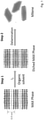
Fig. 1 shows a schematic of the method according to the invention using bulk MAX Phase (e.g. Ti3AlC2) for the synthesis of MXene nanosheets (e.g. Ti3C2Tx). -
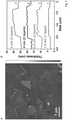
Fig. 2 shows A) an atomic force microscopy (AFM) image of Ti3C2Tx nanosheets according to the invention, and B) the by AFM determined thickness of the nanosheets. -
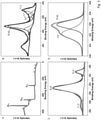
Fig. 3 shows XPS measurements of Ti3C2Tx nanosheets according to the invention: A) XPS survey spectrum of Ti3C2Tx powder. B) High resolution XPS spectrum of Ti 2p. C) High resolution XPS spectrum of C 1s. D) High resolution XPS spectrum of O 1s. -
Fig. 4 shows A) transmission electron microscopy (TEM) image of Ti3C2Tx nanosheets and B) high-resolution TEM (HRTEM) of Ti3C2Tx nanosheets. -
Fig. 5 shows SEM images of Ti3C2Tx nanosheets produced by etching with HF (A, B, C) and produced by etching with I2 (D, E, F): after synthesis (A, D), after 4 days in water (B), after 7 days in water (C, E) and after 14 days in water (F). - The precursor Ti3AlC2 and I2 powder (molar ratio = 1:1) were immersed and stirred in anhydrous acetonitrile (CH3CN). The reaction was carried out at 100 °C for 4 days in a sealed atmosphere, wherein AlI3 formed. After centrifugation and washing with anhydrous acetonitrile for three times to remove AlI3, the precipitation was added into DMSO/water for delamination with slightly shaking for 15 minutes.
- For structural characterizations, the Ti3C2Tx nanosheets were transferred onto 300 nm SiO2/Si substrates atomic force microscopy (AFM). AFM was performed in a tapping mode in air on a customized Ntegra Aura/Spectra from NT-MDT (Moscow, Russia) with a SMENA head operated in contact mode.
- AFM measurements on the SiO2/Si wafer show a film thickness of about 5 nm to 30 nm, corresponding to about 1 to 5 layers (see
Fig. 2 ). Furthermore, AFM measurements disclose a content of 71% of the Ti3C2Tx nanosheets to have 1 to 5 layers. The average size of the Ti3C2Tx nanosheets is 1.8 µm. - For XPS measurements, a powder of Ti3C2Tx was used (see
Fig. 3 ). The survey spectrum shows three major bands including O 1s, Ti 2p and C 1s. The Al peak is not observed due to complete etching. Moreover, there is no iodine left in the final product. High-resolution C 1s, O 1s and Ti 2p bands confirm the presence of C-O, Ti-O and OH bonds from the surface groups. These results confirm that Tx is O and OH. - For TEM, the measurements was performed on TEM grids. The TEM image confirms the thin and flexible features of the MXene nanosheets. HR-TEM images (see
Fig. 4 ) demonstrate an orthogonally symmetric structure of defect-free crystal lattice, reflecting the advantages of etching in organic solvents. - Aliquots were taken from an aqueous dispersion of Ti3C2Tx nanosheets after different time intervals (0 days, 4 days, 7 days and 14 days). Afterwards, SEM samples were prepared and measured from each aliquots.
- MXenes produced by HF easily oxidized to TiO2 in water, but MXenes produced by I2 are stable in water for at least 2 weeks (see
Fig. 5 ). -
- Alhabeb M, Maleski K, Anasori B, Lelyukh P, Clark L, Sin S, Gogotsi Y (2017) Guidelines for Synthesis and Processing of Two-Dimensional Titanium Carbide (Ti3C2Tx MXene). Chem. Mater. 29, 18, 7633-7644.
- Ghidiu M, Lukatskaya MR, Zhao M-Q, Gogotsi Y, Barsoum MW (2014) Conductive two-dimensional titanium carbide 'clay' with high volumetric capacitance. Nature 516, 78-81.
- Jun B-M, Kim S, Heo J, Park CM, Her N, Jang M, Huang Y, Han J, Yoon Y (2018) Review of MXenes as new nanomaterials for energy storage/delivery and selected environmental applications. Nano Research 12 (3), 471-487.
- Karlsson LH, Birch J, Halim J, Barsoum MW, Persson POA (2015) Atomically resolved structural and chemical investigation of single MXene sheets. Nano Lett. 15, 4955-4960.
- Li M, Li XL, Qin G, Luo K, Lu J, Li Y, Liang G, Huang Z, Hultman L, Eklund P, Persson POA, Du S, Chai Z, Zhi C, Huang Q (2020) Halogenated MXenes with Electrochemically Active Terminals for High Performance Zinc Ion Batteries. ARXIV.ORG, Cornell University Library, 201.
- Naguib M, Mochalin VN, Barsoum MW, Gogotsi Y (2014) MXenes: a new family of two-dimensional materials. Adv. Mater. 26, 992-1005.
- Nam S, Umrao S, Oh S, Shin KH, Park HS, Oh I-K (2020) Sonochemical self-growth of functionalized titanium carbide nanorods on TiSC2 nanosheets for high capacity anode for lithium-ion batteries. Composites: Part B 181, DOI: 10.1016/J.COMPOSITESB.2019.107583.
- Natu V, Hart JL, Sokol M, Chiang H, Taheri ML, Barsoum MW (2019) Edge Capping of 2D-MXene Sheets with Polyanionic Salts to Mitigate Oxidation in Aqueous Colloidal Suspensions. Angew. Chem. Int. Ed. 58, 12785-12790.
- Sun W, Xie Y, Kent PRC (2018) Double transition metal MXenes with wide band gaps and novel magnetic properties. Nanoscale 10 (25) 11962-11968.
- Zhao X, Vashisth A, Prehn E, Sun W, Shah SA, Habib T, Chen Y, Tan Z, Lutkenhaus JL, Radovic M, Green MJ (2019) Antioxidants Unlock Shelf-Stable Ti3C2Tx (MXene) Nanosheet Dispersions. .
Claims (14)
- A method for the synthesis of MXenes comprising the stepsa) etching of A layers from a MAX phase according to formula (I)
Mn+1AXn (I)
wherein M is a transition metal,wherein A is at least one metal or metalloid selected from the group comprising Al, Si, P, S, Ga, Ge, As, Cd, In, Sn, Sb, Tl, Bi or Pb,wherein X is C and/or N, andwherein n is 1, 2 or 3,with an organic solvent comprising iodine,wherein at least a portion of A is dissolved in the organic solvent,wherein dissolved Alm and MXene forms, wherein m is 1,2, 3, 4; andb) removing the dissolved Alm. - The method according to claim 1, wherein MXene is selected from Sc2C, Ti2C, V2C, Cr2C, Zr2C, Nb2C, Mo2C, Hf2C, Ta2C, W2C, (Ti0,5V0,5)2C, (Ti0,5Nb0,5)2C, Mo1,33Y0,67C, Ti2N, V2N, Cr2N, Zr2N, Mo2N, Hf2N, Ti3C2, V3C2, Zr3C2, Hf3C2, Ta3C2, (Ti,V)3C2, (Ti2Nb)C2, (Ti2Ta)C2, (Ti2Mn)C2, (Hf2V)C2, (Hf2Mn)C2, (V2Ti)C2, (Cr2Ti)C2, (Cr2V)C2, (Cr2Nb)C2, (Cr2Ta)C2, (Mo2Sc)C2, (Mo2Ti)C2, (Mo2Zr)C2, (Mo2Hf)C2, (Mo2V)C2, (Mo2Nb)C2, (Mo2Ta)C2, (W2Ti)C2, (W2Zr)C2, (W2Hf)C2, Ti3N2, Ti3CN, Ti4C3, V4C3, Cr4C3, Nb4C3, Mo4C3, Ta4C3, W4C3, (Ti,Nb)4C3, (Ti2Nb2)C3, (Ti2Ta2)C3, (V2Ti2)C3, (V2Nb2)C3, (V2Ta2)C3, (Nb,Zr)4C3, (Nb2Ta2)C3, (Cr2Ti2)C3, (Cr2V2)C3, (Cr2Nb2)C3, (Cr2Ta2)C3, (Mo2Ti2)C3, (Mo2Zr2)C3, (Mo2Hf2)C3, (Mo2V2)C3, (Mo2Nb2)C3, (Mo2Ta2)C3, (W2Ti2)C3, (W2Zr2)C3, (W2Hf2)C3, and Ti4N3.
- The method according to claims 1 or 2, wherein the MAX phase is selected from the group comprising Ti3AlC2, Ti2AlC, V2AlC, Ti2AlN, Cr2AlC, Nb2AlC, Ta2AlC, Ti3AlC2, V3AlC2, Ta3AlC2, Ti4AlN3, V4AlC3, Nb4AlC3, Ta4AlC3, Ti2CdC, Sc2InC, Ti2GaC, Ti2InC, Ti2TlC, V2GaC, Cr2GaC, Ti2GaN, Ti2InN, V2GaN, Cr2GaN, Ti2GeC, Ti2SnC, Ti2PbC, V2GeC, V2AsC, Ti2SC, Zr2InC, Zr2TlC, Nb2GaC, Nb2InC, Mo2GaC, Zr2InN, Zr2TlN, Zr2SnC, Zr2PbC, Nb2SnC, Nb2PC, Nb2AsC, Zr2SC, Nb2SC, Hf2InC, Hf2TlC, Ta2GaC, Hf2SnC, Hf2PbC, Hf2SnN, Hf2SC, Ti3SiC2, Ti3GeC2, Ti3SnC2, Ti4GaC3, Ti4SiC3, Ti4GeC3.
- The method according to one of the claims 1 to 3, wherein the MAX phase is in the form of a suspension.
- The method according to one of the claims 1 to 4, wherein the organic solvent is selected from the group comprising acetonitrile, ethanol and benzene.
- MXene nanosheets according to formula (II)
Mn+1XnTx (II),
wherein M represents a transition metal element;wherein X is C and/or N,wherein T is at least one terminal group selected from O and OH,wherein n is 1, 2 or 3, andwherein x is the number of terminal groups;wherein the MXene nanosheets comprise a two-dimensional (2D) layer structure. - The MXene nanosheets according to claim 6, wherein the MXene is selected from M2X, M3X and M4X3, wherein M is a transition metal and wherein X is C and/or N.
- The MXene nanosheets according to claim 6, wherein MXene is a double transition metal MXenes according to formula (IIa) or formula (IIb)
M'2M"X2 (IIa) or M'2M"2X3 (IIb),
wherein M' and M" are different transition metals and wherein X is C and/or N. - The MXene nanosheets according to one of the claims 6 to 8, wherein the MXene is selected from the group comprising Sc2C, Ti2C, V2C, Cr2C, Zr2C, Nb2C, Mo2C, Hf2C, Ta2C, W2C, (Ti0,5V0,5)2C, (Ti0,5Nb0,5)2C, Mo1,33Y0,67C, Ti2N, V2N, Cr2N, Zr2N, Mo2N, Hf2N, Ti3C2, V3C2, Zr3C2, Hf3C2, Ta3C2, (Ti,V)3C2, (Ti2Nb)C2, (Ti2Ta)C2, (Ti2Mn)C2, (Hf2V)C2, (Hf2Mn)C2, (V2Ti)C2, (Cr2Ti)C2, (Cr2V)C2, (Cr2Nb)C2, (Cr2Ta)C2, (Mo2Sc)C2, (Mo2Ti)C2, (Mo2Zr)C2, (Mo2Hf)C2, (Mo2V)C2, (Mo2Nb)C2, (Mo2Ta)C2, (W2Ti)C2, (W2Zr)C2, (W2Hf)C2, Ti3N2, Ti3CN, Ti4C3, V4C3, Cr4C3, Nb4C3, Mo4C3, Ta4C3, W4C3, (Ti,Nb)4C3, (Ti2Nb2)C3, (Ti2Ta2)C3, (V2Ti2)C3, (V2Nb2)C3, (V2Ta2)C3, (Nb,Zr)4C3, (Nb2Ta2)C3, (Cr2Ti2)C3, (Cr2V2)C3, (Cr2Nb2)C3, (Cr2Ta2)C3, (Mo2Ti2)C3, (Mo2Zr2)C3, (Mo2Hf2)C3, (Mo2V2)C3, (Mo2Nb2)C3, (Mo2Ta2)C3, (W2Ti2)C3, (W2Zr2)C3, (W2Hf2)C3, and Ti4N3.
- The MXene nanosheets according to one of the claims 6 to 9 in the form of a monolayer or a multilayer.
- The MXene nanosheets according to one of the claims 6 to 10, wherein the average size of at least one side of MXene nanosheets determined by AFM, TEM or SEM is in the range 0.1 µm to 2 µm.
- The MXene nanosheets according to one of the claims 6 to 11, wherein the conductivity is in the range of 1,000 S/cm to 1,500 S/cm.
- Use of the MXene nanosheets according to one of the claims 6 to 12 or synthesized with the method according to one of the claims 1 to 5 in electronic devices, sensors, reinforcement for composites, electrocatalysts or energy storage materials.
- The use of the MXene nanosheets according to claim 13 in supercapacitors.
Applications Claiming Priority (1)
| Application Number | Priority Date | Filing Date | Title |
|---|---|---|---|
| EP20191753.1A EP3957601A1 (en) | 2020-08-19 | 2020-08-19 | Method for the synthesis of mxenes, mxene nanosheets and their use |
Publications (2)
| Publication Number | Publication Date |
|---|---|
| EP3957602A2 true EP3957602A2 (en) | 2022-02-23 |
| EP3957602A3 EP3957602A3 (en) | 2022-04-27 |
Family
ID=72148008
Family Applications (2)
| Application Number | Title | Priority Date | Filing Date |
|---|---|---|---|
| EP20191753.1A Withdrawn EP3957601A1 (en) | 2020-08-19 | 2020-08-19 | Method for the synthesis of mxenes, mxene nanosheets and their use |
| EP21192066.5A Pending EP3957602A3 (en) | 2020-08-19 | 2021-08-19 | Method for the synthesis of mxenes, mxene nanosheets and their use |
Family Applications Before (1)
| Application Number | Title | Priority Date | Filing Date |
|---|---|---|---|
| EP20191753.1A Withdrawn EP3957601A1 (en) | 2020-08-19 | 2020-08-19 | Method for the synthesis of mxenes, mxene nanosheets and their use |
Country Status (1)
| Country | Link |
|---|---|
| EP (2) | EP3957601A1 (en) |
Cited By (12)
| Publication number | Priority date | Publication date | Assignee | Title |
|---|---|---|---|---|
| CN115266829A (en) * | 2022-07-28 | 2022-11-01 | 电子科技大学 | Sodium ascorbate surface modified titanium carbon MXene functional ink and humidity sensor |
| CN115353108A (en) * | 2022-08-23 | 2022-11-18 | 太原理工大学 | Preparation method of large-size MXene nanosheet |
| CN115559109A (en) * | 2022-11-18 | 2023-01-03 | 四川大学华西医院 | A kind of breathable antibacterial nanocomposite fiber material and its preparation method and application |
| CN115831480A (en) * | 2022-12-20 | 2023-03-21 | 西安交通大学 | Preparation method of alkali-induced three-dimensional porous MXene-bacterial cellulose flexible membrane electrode |
| CN115819788A (en) * | 2022-12-08 | 2023-03-21 | 万华化学集团股份有限公司 | A preparation method of lightweight nylon powder with high adhesion and high wear resistance |
| CN116040631A (en) * | 2022-12-06 | 2023-05-02 | 延边大学 | One-dimensional MXene nanowire and its preparation method |
| CN116040595A (en) * | 2023-01-16 | 2023-05-02 | 赣南科技学院 | Preparation method of transition metal phosphide/C/MXene composites |
| CN116322232A (en) * | 2023-01-18 | 2023-06-23 | 东华大学 | A fluorine-rich hydroxyl-free MXene additive for improving the stability of perovskite solar cells |
| CN116477625A (en) * | 2023-02-28 | 2023-07-25 | 惠州学院 | Method for enhancing environmental stability of MXees aqueous solution by hydrogen ions |
| CN116731587A (en) * | 2023-07-05 | 2023-09-12 | 苏州久美玻璃钢股份有限公司 | Preparation method of anti-corrosion wear-resistant coating for high-molecular pipe |
| CN117069113A (en) * | 2023-08-10 | 2023-11-17 | 西安建筑科技大学 | Nano porous flaky TiC and preparation method and application thereof |
| CN120304402A (en) * | 2025-06-13 | 2025-07-15 | 四川大学华西医院 | A method for preparing nanozyme and anti-Klebsiella pneumoniae organ preservation solution composed of the nanozyme |
Families Citing this family (9)
| Publication number | Priority date | Publication date | Assignee | Title |
|---|---|---|---|---|
| CN114195151B (en) * | 2021-12-13 | 2023-01-13 | 河北科技大学 | Preparation method of single-layer MXene material |
| CN114436261B (en) * | 2022-03-07 | 2023-04-14 | 安徽大学 | Self-curling fiber, preparation method and application of a two-dimensional Ti3C2Tx material |
| CN114975895B (en) * | 2022-06-08 | 2023-08-18 | 北京航空航天大学 | Positive electrode paste for lead-acid battery, positive electrode and preparation method thereof, battery and electric vehicle |
| CN114944489B (en) * | 2022-06-15 | 2023-08-01 | 北京航空航天大学 | Thin film layer with accordion MXene array and its preparation method, current collector, electrode and battery |
| CN115818644B (en) * | 2022-11-16 | 2024-07-02 | 北京航空航天大学 | A method for preparing a synergistically densified titanium carbide composite film |
| CN116553549B (en) * | 2023-04-18 | 2024-07-05 | 燕山大学 | MXees material with controllable terminal groups and preparation method |
| CN116730382A (en) * | 2023-06-09 | 2023-09-12 | 广州大学 | Binary transition metal composite anode material and preparation method thereof |
| CN117285362B (en) * | 2023-11-23 | 2024-02-02 | 中国航发北京航空材料研究院 | SiC/SiC composite material high temperature resistance and anti-oxidation interface layer and preparation method |
| CN120504322B (en) * | 2025-05-09 | 2026-01-27 | 渤海大学 | A method for preparing melamine-modified MXene materials and their applications |
Citations (2)
| Publication number | Priority date | Publication date | Assignee | Title |
|---|---|---|---|---|
| CN110540236A (en) | 2019-09-09 | 2019-12-06 | 中国科学院宁波材料技术与工程研究所 | MXene material and preparation method and application thereof |
| CN111943207A (en) | 2020-07-17 | 2020-11-17 | 郑州骋憬材料科技有限公司 | Method for preparing fluorine-free two-dimensional material MXene simply and in pollution-free manner |
-
2020
- 2020-08-19 EP EP20191753.1A patent/EP3957601A1/en not_active Withdrawn
-
2021
- 2021-08-19 EP EP21192066.5A patent/EP3957602A3/en active Pending
Patent Citations (2)
| Publication number | Priority date | Publication date | Assignee | Title |
|---|---|---|---|---|
| CN110540236A (en) | 2019-09-09 | 2019-12-06 | 中国科学院宁波材料技术与工程研究所 | MXene material and preparation method and application thereof |
| CN111943207A (en) | 2020-07-17 | 2020-11-17 | 郑州骋憬材料科技有限公司 | Method for preparing fluorine-free two-dimensional material MXene simply and in pollution-free manner |
Non-Patent Citations (10)
| Title |
|---|
| ALHABEB MMALESKI KANASORI BLELYUKH PCLARK LSIN SGOGOTSI Y: "Guidelines for Synthesis and Processing of Two-Dimensional Titanium Carbide (Ti3C2Tx MXene", CHEM. MATER., vol. 29, no. 18, 2017, pages 7633 - 7644, XP055790920, DOI: 10.1021/acs.chemmater.7b02847 |
| GHIDIU MLUKATSKAYA MRZHAO M-QGOGOTSI YBARSOUM MW: "Conductive two-dimensional titanium carbide 'clay' with high volumetric capacitance", NATURE, vol. 516, 2014, pages 78 - 81 |
| JUN B-MKIM SHEO JPARK CMHER NJANG MHUANG YHAN JYOON Y: "Review of MXenes as new nanomaterials for energy storage/delivery and selected environmental applications", NANO RESEARCH, vol. 12, no. 3, 2018, pages 471 - 487, XP036705721, DOI: 10.1007/s12274-018-2225-3 |
| KARLSSON LHBIRCH JHALIM JBARSOUM MWPERSSON POA: "Atomically resolved structural and chemical investigation of single MXene sheets", NANO LETT., vol. 15, 2015, pages 4955 - 4960 |
| LI MLI XLQIN GLUO KLU JLI YLIANG GHUANG ZHULTMAN LEKLUND P: "ARXIV.ORG", vol. 201, 2020, CORNELL UNIVERSITY LIBRARY, article "Halogenated MXenes with Electrochemically Active Terminals for High Performance Zinc Ion Batteries" |
| NAGUIB MMOCHALIN VNBARSOUM MWGOGOTSI Y: "MXenes: a new family of two-dimensional materials", ADV. MATER., vol. 26, 2014, pages 992 - 1005, XP055350812, DOI: 10.1002/adma.201304138 |
| NAM SUMRAO SOH SSHIN KHPARK HSOH I-K: "Sonochemical self-growth of functionalized titanium carbide nanorods on TiSC2 nanosheets for high capacity anode for lithium-ion batteries", COMPOSITES: PART B, vol. 181, 2020 |
| NATU VHART JLSOKOL MCHIANG HTAHERI MLBARSOUM MW: "Edge Capping of 2D-MXene Sheets with Polyanionic Salts to Mitigate Oxidation in Aqueous Colloidal Suspensions", ANGEW. CHEM. INT. ED., vol. 58, 2019, pages 12785 - 12790, XP055771962, DOI: 10.1002/ange.201906138 |
| SUN WXIE YKENT PRC: "Double transition metal MXenes with wide band gaps and novel magnetic properties", NANOSCALE, vol. 10, no. 25, 2018, pages 11962 - 11968, XP055781647, DOI: 10.1039/C8NR00513C |
| ZHAO XVASHISTH APREHN ESUN WSHAH SAHABIB TCHEN YTAN ZLUTKENHAUS JLRADOVIC M: "Antioxidants Unlock Shelf-Stable TisC Tx (MXene) Nanosheet Dispersions", MATTER, vol. 1, 2019, pages 513 - 526 |
Cited By (13)
| Publication number | Priority date | Publication date | Assignee | Title |
|---|---|---|---|---|
| CN115266829A (en) * | 2022-07-28 | 2022-11-01 | 电子科技大学 | Sodium ascorbate surface modified titanium carbon MXene functional ink and humidity sensor |
| CN115353108A (en) * | 2022-08-23 | 2022-11-18 | 太原理工大学 | Preparation method of large-size MXene nanosheet |
| CN115559109A (en) * | 2022-11-18 | 2023-01-03 | 四川大学华西医院 | A kind of breathable antibacterial nanocomposite fiber material and its preparation method and application |
| CN116040631A (en) * | 2022-12-06 | 2023-05-02 | 延边大学 | One-dimensional MXene nanowire and its preparation method |
| CN115819788B (en) * | 2022-12-08 | 2024-02-02 | 万华化学集团股份有限公司 | A method for preparing lightweight nylon powder with high adhesion and high wear resistance |
| CN115819788A (en) * | 2022-12-08 | 2023-03-21 | 万华化学集团股份有限公司 | A preparation method of lightweight nylon powder with high adhesion and high wear resistance |
| CN115831480A (en) * | 2022-12-20 | 2023-03-21 | 西安交通大学 | Preparation method of alkali-induced three-dimensional porous MXene-bacterial cellulose flexible membrane electrode |
| CN116040595A (en) * | 2023-01-16 | 2023-05-02 | 赣南科技学院 | Preparation method of transition metal phosphide/C/MXene composites |
| CN116322232A (en) * | 2023-01-18 | 2023-06-23 | 东华大学 | A fluorine-rich hydroxyl-free MXene additive for improving the stability of perovskite solar cells |
| CN116477625A (en) * | 2023-02-28 | 2023-07-25 | 惠州学院 | Method for enhancing environmental stability of MXees aqueous solution by hydrogen ions |
| CN116731587A (en) * | 2023-07-05 | 2023-09-12 | 苏州久美玻璃钢股份有限公司 | Preparation method of anti-corrosion wear-resistant coating for high-molecular pipe |
| CN117069113A (en) * | 2023-08-10 | 2023-11-17 | 西安建筑科技大学 | Nano porous flaky TiC and preparation method and application thereof |
| CN120304402A (en) * | 2025-06-13 | 2025-07-15 | 四川大学华西医院 | A method for preparing nanozyme and anti-Klebsiella pneumoniae organ preservation solution composed of the nanozyme |
Also Published As
| Publication number | Publication date |
|---|---|
| EP3957601A1 (en) | 2022-02-23 |
| EP3957602A3 (en) | 2022-04-27 |
Similar Documents
| Publication | Publication Date | Title |
|---|---|---|
| EP3957601A1 (en) | Method for the synthesis of mxenes, mxene nanosheets and their use | |
| JP6477760B2 (en) | Non-aqueous secondary battery negative electrode and non-aqueous secondary battery, negative electrode active material and production method thereof, composite comprising nanosilicon, carbon layer and cationic polymer layer, production of composite comprising nanosilicon and carbon layer Method | |
| Guo et al. | MXene derivatives for energy storage and conversions | |
| US11183676B2 (en) | Continuous process for producing electrodes and alkali metal batteries having ultra-high energy densities | |
| Wu et al. | Exploring MXene-based materials for next-generation rechargeable batteries | |
| US10224125B2 (en) | Compositions comprising free-standing two-dimensional nanocrystals | |
| EP3613094B1 (en) | Electrochemical systems comprising mxenes and max phase compositions and methods of using the same | |
| KR102326633B1 (en) | Method for manufacturing lithium battery with ultra-high energy density | |
| KR101543971B1 (en) | Method for preparing metal oxide nanoparticles/graphene composite using supercritical fluides and metal oxide nanoparticles/graphene composite prepared thereby | |
| EP3153605B1 (en) | Method for producing a layered (semi-)conductive material | |
| EP3805186A1 (en) | Polymer composite comprising free-standing two-dimensional nanocrystals | |
| JP2018525795A (en) | Rechargeable lithium battery with ultra-high volume energy density and required manufacturing method | |
| Epur et al. | A simple and scalable approach to hollow silicon nanotube (h-SiNT) anode architectures of superior electrochemical stability and reversible capacity | |
| JP2018520488A (en) | Stable lithium fluoride based cathode for metal and metal ion batteries | |
| KR20160025547A (en) | Anodes active material containing Si composite for lithium secondary batteries and its preparation method and lithium secondary batteries comprising the same | |
| Goswami et al. | Two‐dimensional MXenes: fundamentals, characteristics, synthesis methods, processing, compositions, structure, and applications | |
| WO2023047861A1 (en) | Conductive two-dimensional particle-containing composition, conductive film, and method for manufacturing conductive two-dimensional particle-containing composition | |
| Khatun | Progresses and challenges in 2D MXenes: synthesis, intercalation/delamination, and storage | |
| Ye et al. | MXene-based zinc-ion batteries: synthesis, applications, and strategies for performance optimization | |
| EP2375478A1 (en) | Transition metal borate comprising cathode for rechargeable battery | |
| Simon et al. | 2D Materials for Developing Bendable Li-Ion Cells for Next-Generation Flexible Energy Storage Devices |
Legal Events
| Date | Code | Title | Description |
|---|---|---|---|
| PUAI | Public reference made under article 153(3) epc to a published international application that has entered the european phase |
Free format text: ORIGINAL CODE: 0009012 |
|
| STAA | Information on the status of an ep patent application or granted ep patent |
Free format text: STATUS: THE APPLICATION HAS BEEN PUBLISHED |
|
| AK | Designated contracting states |
Kind code of ref document: A2 Designated state(s): AL AT BE BG CH CY CZ DE DK EE ES FI FR GB GR HR HU IE IS IT LI LT LU LV MC MK MT NL NO PL PT RO RS SE SI SK SM TR |
|
| PUAL | Search report despatched |
Free format text: ORIGINAL CODE: 0009013 |
|
| AK | Designated contracting states |
Kind code of ref document: A3 Designated state(s): AL AT BE BG CH CY CZ DE DK EE ES FI FR GB GR HR HU IE IS IT LI LT LU LV MC MK MT NL NO PL PT RO RS SE SI SK SM TR |
|
| RIC1 | Information provided on ipc code assigned before grant |
Ipc: C08K 3/14 20060101ALI20220323BHEP Ipc: C01B 32/949 20170101ALI20220323BHEP Ipc: C01B 32/921 20170101ALI20220323BHEP Ipc: C01B 32/914 20170101ALI20220323BHEP Ipc: C01B 21/076 20060101ALI20220323BHEP Ipc: C01B 21/06 20060101ALI20220323BHEP Ipc: C01B 32/90 20170101AFI20220323BHEP |
|
| STAA | Information on the status of an ep patent application or granted ep patent |
Free format text: STATUS: REQUEST FOR EXAMINATION WAS MADE |
|
| 17P | Request for examination filed |
Effective date: 20221026 |
|
| RBV | Designated contracting states (corrected) |
Designated state(s): AL AT BE BG CH CY CZ DE DK EE ES FI FR GB GR HR HU IE IS IT LI LT LU LV MC MK MT NL NO PL PT RO RS SE SI SK SM TR |
|
| STAA | Information on the status of an ep patent application or granted ep patent |
Free format text: STATUS: EXAMINATION IS IN PROGRESS |
|
| 17Q | First examination report despatched |
Effective date: 20240906 |