EP3957559B1 - Marine vessel propulsion system and method, communication terminal, and keycode server - Google Patents
Marine vessel propulsion system and method, communication terminal, and keycode server Download PDFInfo
- Publication number
- EP3957559B1 EP3957559B1 EP21190756.3A EP21190756A EP3957559B1 EP 3957559 B1 EP3957559 B1 EP 3957559B1 EP 21190756 A EP21190756 A EP 21190756A EP 3957559 B1 EP3957559 B1 EP 3957559B1
- Authority
- EP
- European Patent Office
- Prior art keywords
- keycode
- marine vessel
- function
- controller
- server
- Prior art date
- Legal status (The legal status is an assumption and is not a legal conclusion. Google has not performed a legal analysis and makes no representation as to the accuracy of the status listed.)
- Active
Links
Images



Classifications
-
- B—PERFORMING OPERATIONS; TRANSPORTING
- B63—SHIPS OR OTHER WATERBORNE VESSELS; RELATED EQUIPMENT
- B63H—MARINE PROPULSION OR STEERING
- B63H21/00—Use of propulsion power plant or units on vessels
- B63H21/21—Control means for engine or transmission, specially adapted for use on marine vessels
-
- B—PERFORMING OPERATIONS; TRANSPORTING
- B60—VEHICLES IN GENERAL
- B60R—VEHICLES, VEHICLE FITTINGS, OR VEHICLE PARTS, NOT OTHERWISE PROVIDED FOR
- B60R25/00—Fittings or systems for preventing or indicating unauthorised use or theft of vehicles
- B60R25/20—Means to switch the anti-theft system on or off
- B60R25/24—Means to switch the anti-theft system on or off using electronic identifiers containing a code not memorised by the user
-
- G—PHYSICS
- G05—CONTROLLING; REGULATING
- G05D—SYSTEMS FOR CONTROLLING OR REGULATING NON-ELECTRIC VARIABLES
- G05D1/00—Control of position, course, altitude or attitude of land, water, air or space vehicles, e.g. using automatic pilots
- G05D1/0011—Control of position, course, altitude or attitude of land, water, air or space vehicles, e.g. using automatic pilots associated with a remote control arrangement
- G05D1/0016—Control of position, course, altitude or attitude of land, water, air or space vehicles, e.g. using automatic pilots associated with a remote control arrangement characterised by the operator's input device
-
- G—PHYSICS
- G05—CONTROLLING; REGULATING
- G05D—SYSTEMS FOR CONTROLLING OR REGULATING NON-ELECTRIC VARIABLES
- G05D1/00—Control of position, course, altitude or attitude of land, water, air or space vehicles, e.g. using automatic pilots
- G05D1/0011—Control of position, course, altitude or attitude of land, water, air or space vehicles, e.g. using automatic pilots associated with a remote control arrangement
- G05D1/0022—Control of position, course, altitude or attitude of land, water, air or space vehicles, e.g. using automatic pilots associated with a remote control arrangement characterised by the communication link
-
- G—PHYSICS
- G05—CONTROLLING; REGULATING
- G05D—SYSTEMS FOR CONTROLLING OR REGULATING NON-ELECTRIC VARIABLES
- G05D1/00—Control of position, course, altitude or attitude of land, water, air or space vehicles, e.g. using automatic pilots
- G05D1/02—Control of position or course in two dimensions
- G05D1/0206—Control of position or course in two dimensions specially adapted to water vehicles
-
- G—PHYSICS
- G05—CONTROLLING; REGULATING
- G05D—SYSTEMS FOR CONTROLLING OR REGULATING NON-ELECTRIC VARIABLES
- G05D1/00—Control of position, course, altitude or attitude of land, water, air or space vehicles, e.g. using automatic pilots
- G05D1/20—Control system inputs
- G05D1/22—Command input arrangements
- G05D1/221—Remote-control arrangements
- G05D1/222—Remote-control arrangements operated by humans
- G05D1/223—Command input arrangements on the remote controller, e.g. joysticks or touch screens
-
- G—PHYSICS
- G05—CONTROLLING; REGULATING
- G05D—SYSTEMS FOR CONTROLLING OR REGULATING NON-ELECTRIC VARIABLES
- G05D1/00—Control of position, course, altitude or attitude of land, water, air or space vehicles, e.g. using automatic pilots
- G05D1/20—Control system inputs
- G05D1/22—Command input arrangements
- G05D1/221—Remote-control arrangements
- G05D1/226—Communication links with the remote-control arrangements
-
- G—PHYSICS
- G05—CONTROLLING; REGULATING
- G05D—SYSTEMS FOR CONTROLLING OR REGULATING NON-ELECTRIC VARIABLES
- G05D1/00—Control of position, course, altitude or attitude of land, water, air or space vehicles, e.g. using automatic pilots
- G05D1/40—Control within particular dimensions
- G05D1/43—Control of position or course in two dimensions [2D]
-
- B—PERFORMING OPERATIONS; TRANSPORTING
- B63—SHIPS OR OTHER WATERBORNE VESSELS; RELATED EQUIPMENT
- B63B—SHIPS OR OTHER WATERBORNE VESSELS; EQUIPMENT FOR SHIPPING
- B63B17/00—Vessels parts, details, or accessories, not otherwise provided for
- B63B2017/0009—Methods or devices specially adapted for preventing theft, or unauthorized use of vessels, or parts or accessories thereof, other than by using locks
-
- B—PERFORMING OPERATIONS; TRANSPORTING
- B63—SHIPS OR OTHER WATERBORNE VESSELS; RELATED EQUIPMENT
- B63B—SHIPS OR OTHER WATERBORNE VESSELS; EQUIPMENT FOR SHIPPING
- B63B34/00—Vessels specially adapted for water sports or leisure; Body-supporting devices specially adapted for water sports or leisure
- B63B34/05—Vessels specially adapted for hunting or fishing
-
- B—PERFORMING OPERATIONS; TRANSPORTING
- B63—SHIPS OR OTHER WATERBORNE VESSELS; RELATED EQUIPMENT
- B63B—SHIPS OR OTHER WATERBORNE VESSELS; EQUIPMENT FOR SHIPPING
- B63B35/00—Vessels or similar floating structures specially adapted for specific purposes and not otherwise provided for
- B63B35/14—Fishing vessels
-
- B—PERFORMING OPERATIONS; TRANSPORTING
- B63—SHIPS OR OTHER WATERBORNE VESSELS; RELATED EQUIPMENT
- B63H—MARINE PROPULSION OR STEERING
- B63H21/00—Use of propulsion power plant or units on vessels
- B63H21/21—Control means for engine or transmission, specially adapted for use on marine vessels
- B63H2021/216—Control means for engine or transmission, specially adapted for use on marine vessels using electric control means
-
- Y—GENERAL TAGGING OF NEW TECHNOLOGICAL DEVELOPMENTS; GENERAL TAGGING OF CROSS-SECTIONAL TECHNOLOGIES SPANNING OVER SEVERAL SECTIONS OF THE IPC; TECHNICAL SUBJECTS COVERED BY FORMER USPC CROSS-REFERENCE ART COLLECTIONS [XRACs] AND DIGESTS
- Y02—TECHNOLOGIES OR APPLICATIONS FOR MITIGATION OR ADAPTATION AGAINST CLIMATE CHANGE
- Y02T—CLIMATE CHANGE MITIGATION TECHNOLOGIES RELATED TO TRANSPORTATION
- Y02T70/00—Maritime or waterways transport
- Y02T70/50—Measures to reduce greenhouse gas emissions related to the propulsion system
Definitions
- the present invention relates to a marine vessel propulsion system, and a communication terminal and a keycode server for the marine vessel propulsion system and a marine vessel propulsion method for applying a propulsive force to a marine vessel.
- JP 2014/85758 A discloses a system which is configured to check the payment of a monthly lease fee of a car and enable or disable the startup of the engine of the car based on the check result. Specifically, when a customer pays the monthly lease fee, a monthly unlock code is sent to the customer from a lease server. On the other hand, monthly unlock codes for respective lease months are registered in a microcomputer provided in the car. When the customer inputs the sent monthly unlock code to the microcomputer, the microcomputer compares the inputted code with a monthly unlock code for that month. If these codes match each other, an engine startup electric system is unlocked, permitting the customer to start up the engine. If the codes do not match each other, the engine startup electric system cannot be unlocked, so that the customer cannot start up the engine.
- JP 2014/85758 A the car lease system is described in detail, and the application of this system to a marine vessel having an engine startup system is described briefly but not by way of specific example. It is actually impossible to apply the lease system disclosed in JP 2014/85758 A as it is to the lease of a marine vessel. There are various problems to be solved for the application of the lease system to a marine vessel. In reality, therefore, there is no motivation to apply the lease system disclosed in JP 2014/85758 A to a marine vessel.
- Prior art document GB 2 442 020 A describes a marine vessel control system integrating monitoring and control of various machine components via a centralized control server and a network of I/O elements.
- the system uses user terminals with hierarchical access levels to manage control functions based on user permissions. It includes functionality for monitoring and controlling engines, steering systems, and other components, with user-specific restrictions implemented through server-based access controls.
- Prior art document US 2020/180744 A1 discloses a marine vessel control system integrating control of propulsion and steering via a feature control system (FCS).
- FCS feature control system
- the system enables or disables features using software keys, which can include time-based expiration validated by system clocks or GNSS signals.
- Prior art document US 2020/180744 A1 describes general feature activation through transactions like payments.
- Prior art document US 9 110 774 B1 discloses a vehicle profiling system enabling dynamic configuration of vehicle operating parameters through profile packages associated with mobile devices.
- a server communicates with a vehicle's head unit to transmit profile packages, which are activated based on the mobile device's position.
- the profiles may restrict parameters like speed or enhance performance for specific driving scenarios.
- Prior art document JP 2013 0952245 A discloses a marine vessel propulsion system method for applying a propulsive force to a marine vessel.
- the marine vessel propulsion system a propulsive force generator configured to generate the propulsive force, a drive source configured to drive the propulsive force generator, and a controller configured or programmed to control the drive source to perform a plurality of marine vessel maneuvering-related functions including at least one limited function.
- the controller includes an interface and provides an immobilizer function. Accordingly, it is provided an immobilizer receiver and a key possessed by the operator includes the immobilizer transmitter. The immobilizer receiver receives the ID code stored in the immobilizer transmitter.
- the controller determines whether or not the ID code of the immobilizer transmitter matches the ID code of the immobilizer receiver preset in the controller.
- the controller makes it impossible to start the drive source and enables the start of the drive source when the ID code of the immobilizer transmitter matches the ID code set in the controller.
- the controller includes a restriction unit to restrict a control operation for the at least one limited function, and a restriction cancellation unit to cancel the restriction effected by the restriction unit to permit the control operation for the at least one limited function when a predetermined ID code is inputted.
- a comparable security system can be taken from the prior art document US 2020/0180744 A1 .
- the prior art document WO 2019/114659 A1 discusses an automotive electronic communication, and in particular, relates to a vehicle authorization management method and system.
- the prior art document US 2018/134254 A1 discloses vehicles and cloud systems for sharing e-keys to access and use vehicles.
- Prior art document US 2020/0108795 A1 discloses a system for limiting operation of a vehicle. This vehicle can be boat.
- the system comprises one or more memory units for storing instructions and one or more processors configured to execute the instructions to perform operations as well as I/O devices and a vehicle control. Said operations comprises several modes including an autonomous driving mode, an unrestricted mode and a restricted mode.
- a propulsion system e.g., outboard motor
- said object is solved by a marine vessel propulsion system according to the independent claim 1 or a marine vessel propulsion method for applying a propulsive force to a marine vessel according to the independent claim 10.
- Preferred embodiments are laid down in the dependent claims.
- preferred embodiments of the present invention provide marine vessel propulsion systems which embody the systems described above.
- a marine vessel propulsion system applies a propulsive force to a marine vessel, and includes a propulsive force generator to generate the propulsive force, a drive source to drive the propulsive force generator, and a controller configured or programmed to control the drive source to perform a plurality of marine vessel maneuvering-related functions including at least one limited function.
- the controller includes an interface, and is further configured or programmed to include a restriction unit to restrict a control operation for the limited function, and a restriction cancellation unit to cancel the restriction effected by the restriction unit to permit the control operation for the limited function if a predetermined keycode is inputted from the interface or is registered in the controller.
- the controller is configured or programmed to perform the plurality of marine vessel maneuvering-related functions including at least one limited function.
- the control operation for the limited function is restricted by the restriction unit.
- the restriction is cancelled by the restriction cancellation unit such that the use of the limited function is permitted.
- the restriction cancellation unit cancels the restriction effected by the restriction unit to enable the limited function based on a condition that the predetermined keycode is inputted from the interface of the controller or is registered in the controller. Therefore, the limited function is enabled by the input of a genuine keycode.
- the keycode may be issued (provided) based on a condition that a user pays a fee.
- the limited function includes a function to cause the marine vessel to travel at a constant speed.
- the limited function further includes at least one of a function to increase a maximum output of the drive source; a function to maintain the marine vessel at a position; a function to cooperate with a marine vessel maneuvering assisting device other than the marine vessel propulsion system; and a function to automatically operate the marine vessel.
- a common keycode may be used to collectively cancel the restriction of two or more limited functions, or different keycodes may be used in one-to-one correspondence with the plurality of functions.
- the function of maintaining the marine vessel at a position may be a so-called fixed-point holding function.
- the function of causing the marine vessel to travel at a constant speed may be a cruise control function or a trolling function.
- the function of automatically operating the marine vessel may be a so-called autopilot function.
- the function of cooperating with the marine vessel assisting device is, for example, a function of permitting cooperation with any of various marine vessel maneuvering assisting devices connected to the controller.
- a keycode having valid period information is inputted as the keycode from the interface or is registered as the keycode in the controller, and the restriction cancellation unit cancels the restriction effected by the restriction unit only during a valid period indicated by the valid period information.
- the limited function corresponding to the keycode inputted to the controller or the keycode registered in the controller is able to be used only during the valid period indicated by the valid period information.
- the limited function is used according to the user's need and other factors.
- the interface includes a communication interface to communicate with a keycode server via a communication line, and to acquire the keycode from the keycode server.
- the keycode for the limited function is maintained in the keycode server, and the keycode is acquired through communication.
- a genuine keycode is properly maintained, and speedily provided to the user. Therefore, the user is able to use the limited function properly and easily.
- the controller communicates with the keycode server via the communication line so that the genuine keycode is provided to the controller in an errorless manner.
- the interface includes a communication interface to communicate with a communication terminal operated by the user, and to acquire the keycode from the communication terminal.
- the controller communicates with the communication terminal owned by the user to acquire the keycode so that the genuine keycode is easily provided to the controller.
- the keycode server is able to properly manage the issuing of the keycode in association with the individual identification information of the marine vessel propulsion system.
- the user interface 6 may be a communication terminal wired to or wirelessly connected to the communication interface 53a of the controller 5 via its communication interface 64.
- the user interface 6 may be fixed to the propulsion unit 3 or the hull 2, or may be separate from the propulsion unit 3 and the hull 2.
- the communication interface 53a includes a wireless communication interface
- the user interface 6 may be a mobile device held by the user, i.e., a mobile information terminal. More specifically, the user interface 6 may be a smartphone or a computer loaded with an appropriate application program.
- the user interface 6 is not required to be always connected to the communication interface 53a of the controller 5, but may be connected to the communication interface 53a as required.
- the interface 53 of the controller 5 may include a communication interface 53b to connect to a wide area network (WAN) such as the internet 7. Communication between the communication interface 53b and the internet 7 may be wired communication, or may be wireless communication. The controller 5 is able to communicate with a keycode server 8 connected to the internet 7 via the communication interface 53b.
- WAN wide area network
- the interface 53 may further include a device interface 53c to connect to various devices.
- a marine vessel maneuvering assisting device 70 a theft prevention device 74, and the like may be connected to the device interface 53c.
- Examples of the marine vessel maneuvering assisting device 70 include an autopilot device 71, a GPS (Global Positioning System) device 72, and a fish finder 73.
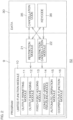
- FIG. 2 is a diagram that describes the program 9 and the data 30 stored in the memory 52 of the controller 5.
- the program 9 includes a plurality of program modules.
- the program modules include limited function modules 10 to perform limited functions, a restriction module 21 (restriction unit) to restrict any of the functions to be performed by the limited function modules 10, and a restriction cancellation module 22 (restriction cancellation unit) to cancel the function restriction effected by the restriction module 21.
- the limited function module 10 includes a constant-speed travelling module 14 to cause the marine vessel 1 to travel at a constant speed.
- Examples of further limited function modules 10 include an output permitting module 11 to permit the output of the drive source 32, an output increasing module 12 to increase the maximum output of the drive source 32, a fixed-point holding module 13 to maintain the marine vessel 1 at a position, an automatic operation module 15 to automatically operate the marine vessel 1, and a cooperative function module 16 to perform a cooperative function with the marine vessel maneuvering assisting device 70.
- the keycode server 8 provides the keycode to the user based on the registered information based on a condition that the payment procedure is completed.
- the keycode may be transmitted to the user interface 6 from the keycode server 8. Further, the keycode may be transmitted to the controller 5 from the keycode server 8.
- the keycode may be transmitted to an information terminal owned by the user and connectable to the internet 7. Further, the keycode may be provided to the user from the keycode server 8 not only by electronic communication but also by conventional communication such as postal service.
- the keycode may be provided as electronic information (e.g., as encrypted data), or may be provided as text information.
- the marine vessel propulsion system 100 that applies the propulsive force to the marine vessel 1 includes the propulsion unit 3 and the controller 5.
- the propulsion unit 3 includes the propulsive force generator 31 and the drive source 32 that drives the propulsive force generator 31.
- the controller 5 controls the various control objects including the drive source 32 for the plurality of marine vessel maneuvering-related functions.
- the controller 5 executes the program 9 to control the control objects to perform the various functions.
- the functions to be performed by the program 9 include the limited functions.
- the program 9 includes the limited function modules 10 to perform the limited functions.
- the limited function modules 10 are disabled in the initial state. Accordingly, the functions to be provided by the limited function modules 10 are disabled.
- the keycode is issued (provided), for example, based on a condition that the user pays the fee.
- the keycode is issued (provided), for example, based on a condition that the user pays the fee.
- an output increasing function to increase the maximum output of the drive source 32 is defined as the limited function
- the maximum output is able to be changed according to the user's need.
- a user who needs a greater propulsive force enables the output increasing module 12 by paying a fee, performing a keycode issuing procedure to enable the output increasing module 12, and then inputting or registering an issued keycode in the controller 5.
- the price of the marine vessel propulsion system 100 is generally increased, as the output (propulsive force) increases. Therefore, it is reasonable that the fee to be paid by the user varies depending on the enabled/disabled status of the output increasing module 12.
- a marine vessel propulsion system 100 having an output less than a predetermined level requires no use license
- a marine vessel propulsion system 100 having an output not less than the predetermined level requires a use license.
- the keycode is issued after it is confirmed that the user has the license such that the maximum output is properly restricted depending on whether or not the user has the license.
- a similar system may be utilized in a country or region where the maximum output is restricted depending on the age of the user (operator). That is, the keycode is issued after it is confirmed that the user is older than a predetermined age such that the maximum output is properly restricted depending on the age of the user.
- whether or not to input the keycode may be selected according to a statement made by the user on whether or not to use the fixed-point holding function.
- an optional fee may be added to the rental fee.
- a function to cause the marine vessel 1 to travel at a constant speed may be a cruise control function or a trolling function.
- the cruise control function causes the marine vessel 1 to travel at a relatively high constant speed.
- the trolling function causes the marine vessel 1 to travel at a relatively low constant speed (at a very low constant speed).
- the trolling function is typically used for fishing while moving the marine vessel 1.
- the constant-speed traveling function (the cruise control function or the trolling function) may be optional. The fee may be charged to the user depending on the statement of the user, and then the corresponding keycode may be inputted to the controller 5 or may be provided to the user.
- the automatic operation module 15 performs an autopilot function to cause the controller 5 to automatically control the control objects such as the drive source 32 to navigate the marine vessel 1 along a preset sailing route.
- the sailing route may be set by the user, or may be set by automatic calculation based on a destination set by the user (e.g., on a map).
- the function to automatically operate the marine vessel 1 may be an automatic berthing function.
- the automatic berthing function is a function to cause the controller 5 to automatically control the control objects such as the drive source 32 to berth the marine vessel 1 at a preset target berthing position (e.g., for docking).
- the target berthing position may be set by the user on a map displayed on the display, or may be set by the user in an image around the marine vessel 1 photographed and outputted by a camera and displayed on the display. Further, the controller 5 may analyze the image around the marine vessel 1, extract some candidate berthing positions, and then display the candidate berthing positions on the display. The user may select one of the candidate berthing positions to set the target berthing position.
- the automatic operation function may be optional. The fee may be charged to the user depending on the statement of the user, and then the corresponding keycode may be inputted to the controller 5 or may be provided to the user.
- the cooperative function module 16 performs a cooperative function to cooperate with the various devices of the marine vessel maneuvering assisting device 70 connected to the controller 5.
- Specific examples of the marine vessel maneuvering assisting device 70 include the fish finder 73 and the GPS device 72.
- the fish finder 73 may be provided onboard and connected to the controller 5, and a function to cause the controller 5 to control the control objects such as the drive source 32 so as to track a fish shoal may be provided as the cooperative function.
- the autopilot function described above may be performed by using the autopilot device 71 connected to the interface 53. In this case, the autopilot function is performed as the cooperative function.
- the cooperative function may be optional.
- the fee may be charged to the user depending on the statement of the user, and the corresponding keycode may be inputted or provided to the user.
- the marine vessel maneuvering assisting device 70 is often added to the marine vessel 1 after the purchase of the marine vessel 1. In this case, the cooperative function may be required afterward.
- the interface 53 of the controller 5 includes the communication interface 53a which communicates with the user interface 6, which is an example of the communication terminal to be operated by the user.
- the controller 5 may acquire the keycode from the user interface 6 via the communication interface 53a.
- the controller 5 communicates with the user interface 6 to acquire the keycode and, therefore, the genuine keycode is easily provided to the controller 5.
- An input (e.g., a key input) may be connected to the interface 53 of the controller 5, and the user may operate the input to input the keycode to the controller 5.
Landscapes
- Engineering & Computer Science (AREA)
- Physics & Mathematics (AREA)
- Aviation & Aerospace Engineering (AREA)
- Radar, Positioning & Navigation (AREA)
- Remote Sensing (AREA)
- General Physics & Mathematics (AREA)
- Automation & Control Theory (AREA)
- Mechanical Engineering (AREA)
- Combustion & Propulsion (AREA)
- Chemical & Material Sciences (AREA)
- Ocean & Marine Engineering (AREA)
- Computing Systems (AREA)
- Mathematical Physics (AREA)
- Theoretical Computer Science (AREA)
- Management, Administration, Business Operations System, And Electronic Commerce (AREA)
- Lock And Its Accessories (AREA)
- Traffic Control Systems (AREA)
Description
- The present invention relates to a marine vessel propulsion system, and a communication terminal and a keycode server for the marine vessel propulsion system and a marine vessel propulsion method for applying a propulsive force to a marine vessel.
-
JP 2014/85758 A - In
JP 2014/85758 A JP 2014/85758 A JP 2014/85758 A - Prior
art document GB 2 442 020 A US 2020/180744 A1 discloses a marine vessel control system integrating control of propulsion and steering via a feature control system (FCS). The system enables or disables features using software keys, which can include time-based expiration validated by system clocks or GNSS signals. Prior art documentUS 2020/180744 A1 describes general feature activation through transactions like payments. Prior art documentUS 9 110 774 B1 - Prior art document
JP 2013 0952245 A US 2020/0180744 A1 . Moreover, the prior art documentWO 2019/114659 A1 discusses an automotive electronic communication, and in particular, relates to a vehicle authorization management method and system. Furthermore, the prior art documentUS 2018/134254 A1 discloses vehicles and cloud systems for sharing e-keys to access and use vehicles. Prior art documentUS 2020/0108795 A1 discloses a system for limiting operation of a vehicle. This vehicle can be boat. The system comprises one or more memory units for storing instructions and one or more processors configured to execute the instructions to perform operations as well as I/O devices and a vehicle control. Said operations comprises several modes including an autonomous driving mode, an unrestricted mode and a restricted mode. - It is an object of the present invention to provide a marine vessel propulsion system and method which refers on the fact that not all of the users of a marine vessel always need to use the various functions of a propulsion system (e.g., outboard motor) of the marine vessel, and contemplated a system which permits the users to use necessary functions upon payment of proper fees according to the various needs of the individual users.
- According to the present invention said object is solved by a marine vessel propulsion system according to the
independent claim 1 or a marine vessel propulsion method for applying a propulsive force to a marine vessel according to theindependent claim 10. Preferred embodiments are laid down in the dependent claims. - In order to overcome the previously unrecognized and unsolved challenges described above, preferred embodiments of the present invention provide marine vessel propulsion systems which embody the systems described above.
- A marine vessel propulsion system according to a preferred embodiment applies a propulsive force to a marine vessel, and includes a propulsive force generator to generate the propulsive force, a drive source to drive the propulsive force generator, and a controller configured or programmed to control the drive source to perform a plurality of marine vessel maneuvering-related functions including at least one limited function. The controller includes an interface, and is further configured or programmed to include a restriction unit to restrict a control operation for the limited function, and a restriction cancellation unit to cancel the restriction effected by the restriction unit to permit the control operation for the limited function if a predetermined keycode is inputted from the interface or is registered in the controller.
- With the above-described arrangement, the controller is configured or programmed to perform the plurality of marine vessel maneuvering-related functions including at least one limited function. The control operation for the limited function is restricted by the restriction unit. The restriction is cancelled by the restriction cancellation unit such that the use of the limited function is permitted. The restriction cancellation unit cancels the restriction effected by the restriction unit to enable the limited function based on a condition that the predetermined keycode is inputted from the interface of the controller or is registered in the controller. Therefore, the limited function is enabled by the input of a genuine keycode.
- The keycode may be issued (provided) based on a condition that a user pays a fee. Thus, only a user who needs the limited function has to pay the fee, while a user who does not need the limited function does not have to pay the fee. In this manner, users are able to use necessary functions by paying fees according to their individual needs. The limited function includes a function to cause the marine vessel to travel at a constant speed.
- According to a preferred embodiment, the limited function further includes at least one of a function to increase a maximum output of the drive source; a function to maintain the marine vessel at a position; a function to cooperate with a marine vessel maneuvering assisting device other than the marine vessel propulsion system; and a function to automatically operate the marine vessel.
- A common keycode may be used to collectively cancel the restriction of two or more limited functions, or different keycodes may be used in one-to-one correspondence with the plurality of functions.
- When the function of increasing the maximum output of the drive source is the limited function, the maximum output is able to be changed according to the need of the user. The function of maintaining the marine vessel at a position may be a so-called fixed-point holding function. The function of causing the marine vessel to travel at a constant speed may be a cruise control function or a trolling function. The function of automatically operating the marine vessel may be a so-called autopilot function. The function of cooperating with the marine vessel assisting device is, for example, a function of permitting cooperation with any of various marine vessel maneuvering assisting devices connected to the controller.
- According to the invention, a keycode having valid period information is inputted as the keycode from the interface or is registered as the keycode in the controller, and the restriction cancellation unit cancels the restriction effected by the restriction unit only during a valid period indicated by the valid period information.
- With the above-described arrangement, the limited function corresponding to the keycode inputted to the controller or the keycode registered in the controller is able to be used only during the valid period indicated by the valid period information. Thus, the limited function is used according to the user's need and other factors.
- According to a preferred embodiment, the interface includes a communication interface to communicate with a keycode server via a communication line, and to acquire the keycode from the keycode server.
- With the above-described arrangement, the keycode for the limited function is maintained in the keycode server, and the keycode is acquired through communication. Thus, a genuine keycode is properly maintained, and speedily provided to the user. Therefore, the user is able to use the limited function properly and easily. In addition, the controller communicates with the keycode server via the communication line so that the genuine keycode is provided to the controller in an errorless manner.
- According to a preferred embodiment, the interface includes a communication interface to communicate with a communication terminal operated by the user, and to acquire the keycode from the communication terminal.
- With the above-described arrangement, the controller communicates with the communication terminal owned by the user to acquire the keycode so that the genuine keycode is easily provided to the controller.
- According to a preferred embodiment, a keycode issuing request is transmitted to the keycode server from the communication terminal operated by the user, and the keycode server checks an issuing requirement and then issues a keycode corresponding to the keycode issuing request.
- With the above-described arrangement, the keycode for the limited function is maintained in the keycode server, and the user is able to transmit the keycode issuing request to the keycode server by operating the terminal device. Upon receiving the keycode issuing request from the communication terminal, the keycode server checks the issuing requirement and then issues the corresponding keycode. Therefore, the issuing of the keycode is properly managed.
- According to a preferred embodiment, the keycode issuing request to be transmitted to the keycode server from the communication terminal includes individual identification information of the marine vessel propulsion system, and the keycode server uses the individual identification information to manage the issuing of the keycode.
- With the above-described arrangement, the keycode server is able to properly manage the issuing of the keycode in association with the individual identification information of the marine vessel propulsion system.
- Another preferred embodiment provides a communication terminal to be used in combination with the marine vessel propulsion system described above. The communication terminal may be a mobile information terminal to be held by the user.
- A further preferred embodiment provides a keycode server to be used in combination with the marine vessel propulsion system.
- The above and other elements, features, steps, characteristics and advantages of the present teaching will become more apparent from the following detailed description of the preferred embodiments with reference to the attached drawings.
-
-
FIG. 1 is a block diagram that shows an electrical configuration of a marine vessel including a marine vessel propulsion system according to a preferred embodiment. -
FIG. 2 is a diagram that describes a program and data stored in a memory of a controller of the marine vessel propulsion system. -
FIG. 3 is a flow chart, not according to the invention, that describes an operation to be performed by the controller. -
FIG. 4 is a flow chart that describes an operation to be performed by the controller when valid period information is added to a keycode. -
FIG. 5 is a communication flow diagram that describes an exemplary keycode acquiring operation. -
FIG. 1 is a block diagram that shows an electrical configuration of a marine vessel including a marine vessel propulsion system according to a preferred embodiment. Themarine vessel 1 includes ahull 2, apropulsion unit 3 provided in thehull 2, a marinevessel maneuvering system 4 provided in thehull 2, and acontroller 5 provided in thehull 2. Thepropulsion unit 3 and thecontroller 5 define the marinevessel propulsion system 100 that applies a propulsive force to thehull 2. Thepropulsion unit 3 includes a propulsive force generator 31 (propeller), adrive source 32 to drive thepropulsive force generator 31, and asteering device 33. Thecontroller 5 controls various control objects provided in themarine vessel 1 to perform various functions related to marine vessel maneuvering. The control objects include, for example, thepropulsion unit 3, particularly thedrive source 32 for thepropulsion unit 3. The control objects may further include thesteering device 33. Thecontroller 5 may be integral with thepropulsion unit 3. Further, thecontroller 5 may be integral with the marinevessel maneuvering system 4. - The
propulsion unit 3 may include an electric outboard motor. In this case, thedrive source 32 is an electric motor. Thepropulsive force generator 31 is driven by thedrive source 32 to generate the propulsive force. The propulsive force is applied to thehull 2. Thesteering device 33 changes the direction of the propulsive force laterally of thehull 2. - The marine
vessel maneuvering system 4 is operated by a user in order to control the magnitude of the propulsive force generated by thepropulsion unit 3 and to control the direction of the propulsive force generated by thepropulsion unit 3. Specifically, the marinevessel maneuvering system 4 includes asteering wheel 41 to control the direction of the propulsive force, and a throttle lever 42 to control the output of thedrive source 32. - The
controller 5 includes a processor 51 (CPU) and a memory 52 (storage device). A program for the plurality of marine vessel maneuvering-related functions and various data are stored in thememory 52. Thememory 52 is able to retain the stored data in at least a portion of its storage area even after the power supply to thecontroller 5 is turned off. More specifically, thememory 52 includes a nonvolatile memory. Theprocessor 51 executes the program stored in thememory 52 such that thecontroller 5 controls the control objects to perform the various functions. Thecontroller 5 includes an interface 53 (I/F). - A
user interface 6 is connectable to theinterface 53. More specifically, theinterface 53 includes acommunication interface 53a to connect thecontroller 5 to theuser interface 6 to perform communication. The communication may be wired or may be wireless. - The
user interface 6 may include aprocessor 61, adisplay 62, aninput 63, and a communication interface 64 (I/F). Theinput 63 may include a keyboard and/or a pointing device, or may be a touch panel disposed on the screen of thedisplay 62. - The
user interface 6 may be a communication terminal wired to or wirelessly connected to thecommunication interface 53a of thecontroller 5 via itscommunication interface 64. Theuser interface 6 may be fixed to thepropulsion unit 3 or thehull 2, or may be separate from thepropulsion unit 3 and thehull 2. When thecommunication interface 53a includes a wireless communication interface, theuser interface 6 may be a mobile device held by the user, i.e., a mobile information terminal. More specifically, theuser interface 6 may be a smartphone or a computer loaded with an appropriate application program. Theuser interface 6 is not required to be always connected to thecommunication interface 53a of thecontroller 5, but may be connected to thecommunication interface 53a as required. - The
interface 53 of thecontroller 5 may include acommunication interface 53b to connect to a wide area network (WAN) such as theinternet 7. Communication between thecommunication interface 53b and theinternet 7 may be wired communication, or may be wireless communication. Thecontroller 5 is able to communicate with akeycode server 8 connected to theinternet 7 via thecommunication interface 53b. - The
interface 53 may further include adevice interface 53c to connect to various devices. For example, a marine vessel maneuvering assistingdevice 70, atheft prevention device 74, and the like may be connected to thedevice interface 53c. Examples of the marine vessel maneuvering assistingdevice 70 include anautopilot device 71, a GPS (Global Positioning System)device 72, and afish finder 73. -
FIG. 2 is a diagram that describes theprogram 9 and thedata 30 stored in thememory 52 of thecontroller 5. Theprogram 9 includes a plurality of program modules. The program modules includelimited function modules 10 to perform limited functions, a restriction module 21 (restriction unit) to restrict any of the functions to be performed by thelimited function modules 10, and a restriction cancellation module 22 (restriction cancellation unit) to cancel the function restriction effected by therestriction module 21. Thelimited function module 10 includes a constant-speed travelling module 14 to cause themarine vessel 1 to travel at a constant speed. Examples of furtherlimited function modules 10 include anoutput permitting module 11 to permit the output of thedrive source 32, anoutput increasing module 12 to increase the maximum output of thedrive source 32, a fixed-point holding module 13 to maintain themarine vessel 1 at a position, anautomatic operation module 15 to automatically operate themarine vessel 1, and acooperative function module 16 to perform a cooperative function with the marine vessel maneuvering assistingdevice 70. - A
cancellation code area 35 is provided in the storage area of thememory 52 of thecontroller 5. Thecancellation code area 35 is a nonvolatile storage area. Cancellation codes to enable the limited function modules 10 (to cancel the restriction) are stored in thecancellation code area 35. The cancellation codes include a cancellation code to enable theoutput permitting module 11, a cancellation code to enable theoutput increasing module 12, a cancellation code to enable the fixed-point holding module 13, a cancellation code to enable the constant-speed traveling module 14, a cancellation code to enable theautomatic operation module 15, a cancellation code to enable thecooperative function module 16, and the like. These cancellation codes may include at least two identical cancellation codes (i.e., some or all of the cancellation codes may be identical), or all of the cancellation codes may be different. Here, an exemplary case in which all of the cancellation codes for thelimited function modules 10 are different will be described. - The functions to be performed by the
limited function modules 10 are each a limited function. The user acquires a restriction cancellation keycode from thekeycode server 8 such that the limited function is enabled (i.e., the restriction is cancelled). For example, the user accesses thekeycode server 8, and performs an acquisition procedure to acquire a desired limited function to acquire a keycode. The acquisition procedure may be, for example, a purchase procedure to purchase a use license to use the desired limited function. The purchase procedure includes, for example, a registration procedure to register an identification number as individual identification information solely assigned to thepropulsion unit 3, user information, and the like in thekeycode server 8, and a payment procedure to pay a purchase fee. - The
keycode server 8 provides the keycode to the user based on the registered information based on a condition that the payment procedure is completed. The keycode may be transmitted to theuser interface 6 from thekeycode server 8. Further, the keycode may be transmitted to thecontroller 5 from thekeycode server 8. The keycode may be transmitted to an information terminal owned by the user and connectable to theinternet 7. Further, the keycode may be provided to the user from thekeycode server 8 not only by electronic communication but also by conventional communication such as postal service. The keycode may be provided as electronic information (e.g., as encrypted data), or may be provided as text information. - A
keycode area 36 to register the keycode acquired by the user may be provided in the storage area of thememory 52 of thecontroller 5. Thekeycode area 36 is preferably a nonvolatile storage area. The user operates theuser interface 6 to input the acquired keycode to thecontroller 5. Thecontroller 5 registers the inputted keycode in thekeycode area 36. When the keycode is provided directly to thecontroller 5, thecontroller 5 registers the provided keycode in thekeycode area 36. - The
controller 5 compares the keycode inputted via theinterface 53 or the keycode registered in thekeycode area 36 with the cancellation codes registered in thecancellation code area 35. If the keycode matches (e.g., coincides with) a cancellation code for a certain limited function, therestriction cancellation module 22 enables the corresponding limited function module 10 (cancels the restriction of the corresponding limited function module 10). If the keycode does not match (e.g., does not coincide with) the cancellation code for the certain limited function, therestriction module 21 maintains the correspondinglimited function module 10 in a disabled state. Thus, only thelimited function module 10 corresponding to the limited function for which the genuine keycode is inputted or registered is enabled, and the user is able to use the limited function. -
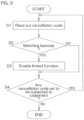
FIG. 3 is a flowchart, not according to the invention, that describes an operation to be performed by thecontroller 5. When thecontroller 5 is activated, thecontroller 5 compares the keycode registered in thekeycode area 36 with the cancellation codes registered in thecancellation code area 35. Specifically, thecontroller 5 sequentially reads out the cancellation codes corresponding to the respective limited functions one by one from the cancellation code area 35 (Step S1), and determines if a keycode matching the cancellation code thus read out is present in the keycode area 36 (Step S2). If the matching keycode is present in thekeycode area 36, thecontroller 5 enables alimited function module 10 corresponding to the keycode (Step S3). If the matching keycode is not present in thekeycode area 36, thecontroller 5 maintains the correspondinglimited function module 10 in the disabled state. This operation is performed for all of the cancellation codes (Step S4). - Valid period information is added to the keycode according to the invention. In this case, the
controller 5 enables the corresponding limited function only during a valid period indicated by the valid period information. In this case, thecontroller 5 operates as shown inFIG. 4 . When thecontroller 5 is activated, thecontroller 5 compares the keycode registered in thekeycode area 36 with the cancellation codes registered in thecancellation code area 35. Specifically, thecontroller 5 sequentially reads out the cancellation codes corresponding to the respective limited functions one by one from the cancellation code area 35 (Step S1), and determines if a keycode matching the cancellation code thus read out is present in the keycode area 36 (Step S2). If the matching keycode is present in thekeycode area 36, thecontroller 5 further determines if the current time is within the valid period with reference to the valid period information added to the keycode (Step S5). If the current time is within the valid period, thecontroller 5 enables alimited function module 10 corresponding to the keycode (Step S3). If the matching keycode is not present in the keycode area 36 (NO in Step S2), thecontroller 5 maintains the correspondinglimited function module 10 in the disabled state. If the matching keycode is present in the keycode area 36 (YES in Step S2) and the current time is not within the valid period of the keycode (NO in Step S5), thecontroller 5 maintains the correspondinglimited function module 10 in the disabled state. This operation is performed for all of the cancellation codes (Step S4). - The current time may be acquired with reference to a clock incorporated in the
controller 5. Further, when a device (e.g., the GPS device 72) that is able to generate current time information is connected to thecontroller 5, thecontroller 5 may acquire the current time information from such a device. -
FIG. 5 is a communication flow diagram that describes an exemplary keycode acquiring operation. - The user operates the
user interface 6 to access the keycode server 8 (T1). Thekeycode server 8 transmits a keycode acquisition screen to the user interface 6 (T2). On the keycode acquisition screen, the user inputs a desired limited function, the identification number (individual identification information) of thepropulsion unit 3, the user information, and the like to perform the purchase procedure (T3), and transmits a keycode issuing request (T4). The inputted information is registered in thekeycode server 8. Thekeycode server 8 transmits, for example, a payment screen for the payment of the purchase fee for the use license of the desired limited function to theuser interface 6. The user performs the purchase procedure to purchase the use license by inputting necessary payment information on the payment screen. - If the purchase procedure is properly completed, the
keycode server 8 transmits a keycode to the user interface 6 (T5). The user operates theuser interface 6 to register the keycode in the controller 5 (T6). Alternatively, theuser interface 6 may automatically register the keycode acquired from thekeycode server 8 in thecontroller 5 without waiting for the operation by the user. As described above, thekeycode server 8 may transmit the keycode directly to the controller 5 (T5A). - Since the use license purchase information for the limited function is retained in the
keycode server 8, the user is able to acquire the keycode again from thekeycode server 8 if necessary. In this case, the user accesses thekeycode server 8 to perform a predetermined reacquisition operation. That is, the user is able to request thekeycode server 8 to reissue the keycode by operating theuser interface 6 or the like (T3). In this case, also, the keycode issuing request including the identification number (individual identification information) of thepropulsion unit 3, the user information, and the like is preferably transmitted to thekeycode server 8. Thekeycode server 8 retrieves the use license purchase information and, if it is confirmed that the use license has been purchased, reissues the keycode and transmits the keycode to the user interface 6 (or the controller 5). - For example, the
output permitting module 11 performs a process to permit the output of thedrive source 32, i.e., to permit thepropulsion unit 3 to output the propulsive force, to provide an essential function. Therefore, a keycode for theoutput permitting module 11 may be issued by properly performing the purchase procedure for thepropulsion unit 3. Specifically, thekeycode server 8 may issue an unlimited-period keycode based on a condition that it is confirmed that all of the purchase fees for thepropulsion unit 3 have been paid. Further, when thepropulsion unit 3 is purchased on a loan basis or utilized on a lease basis, thekeycode server 8 issues a keycode having a valid period for which the payment has been made. Therefore, the user is able to utilize thepropulsion unit 3 based on a condition that the proper payment has been made. - According to the present preferred embodiment, as described above, the marine
vessel propulsion system 100 that applies the propulsive force to themarine vessel 1 includes thepropulsion unit 3 and thecontroller 5. Thepropulsion unit 3 includes thepropulsive force generator 31 and thedrive source 32 that drives thepropulsive force generator 31. Thecontroller 5 controls the various control objects including thedrive source 32 for the plurality of marine vessel maneuvering-related functions. Specifically, thecontroller 5 executes theprogram 9 to control the control objects to perform the various functions. The functions to be performed by theprogram 9 include the limited functions. Theprogram 9 includes thelimited function modules 10 to perform the limited functions. Thelimited function modules 10 are disabled in the initial state. Accordingly, the functions to be provided by thelimited function modules 10 are disabled. When a predetermined keycode is inputted from theinterface 53 or is registered in thecontroller 5, thecontroller 5 enables the correspondinglimited function module 10. Thus, the restriction of the limited function is cancelled to permit the control operation for the limited function. Therefore, the limited function is enabled by the input or the registration of the genuine keycode. - The keycode is issued (provided), for example, based on a condition that the user pays the fee. Thus, only the user who needs the limited function has to pay the fee, while a user who does not need the limited function does not have to pay the fee. In this manner, the users are able to use necessary functions by paying fees according to their individual needs.
- In the present preferred embodiment, the
limited function modules 10 include theoutput permitting module 11, theoutput increasing module 12, the fixed-point holding module 13, the constant-speed traveling module 14, theautomatic operation module 15, and thecooperative function module 16. - By properly paying the purchase fee for the marine
vessel propulsion system 100, the keycode for the output permission is issued. If this keycode is inputted or registered in thecontroller 5, theoutput permitting module 11 is enabled to permit the use of the marinevessel propulsion system 100. - When an output increasing function to increase the maximum output of the
drive source 32 is defined as the limited function, the maximum output is able to be changed according to the user's need. A user who needs a greater propulsive force enables theoutput increasing module 12 by paying a fee, performing a keycode issuing procedure to enable theoutput increasing module 12, and then inputting or registering an issued keycode in thecontroller 5. In the market, the price of the marinevessel propulsion system 100 is generally increased, as the output (propulsive force) increases. Therefore, it is reasonable that the fee to be paid by the user varies depending on the enabled/disabled status of theoutput increasing module 12. In some country or region, for example, a marinevessel propulsion system 100 having an output less than a predetermined level requires no use license, while a marinevessel propulsion system 100 having an output not less than the predetermined level requires a use license. In such a county or region, the keycode is issued after it is confirmed that the user has the license such that the maximum output is properly restricted depending on whether or not the user has the license. A similar system may be utilized in a country or region where the maximum output is restricted depending on the age of the user (operator). That is, the keycode is issued after it is confirmed that the user is older than a predetermined age such that the maximum output is properly restricted depending on the age of the user. When themarine vessel 1 including the marinevessel propulsion system 100 is used on a rental basis and a plurality of users are expected to use themarine vessel 1, for example, the maximum output can be restricted according to the skill of the user by selecting whether or not to input the keycode (or whether or not to provide the keycode to the user) according to the statement of the user. When the keycode is inputted (or the keycode is provided to the user) to increase the maximum output (or to permit the increase of the maximum output), for example, an optional fee may be added to the rental fee. - It is sometimes desired to increase the maximum output not only to provide a greater propulsive force but also to increase the electric power generation amount of a power generator. In some case, specifically, the
drive source 32 includes an engine, and the output of the engine is utilized to cause thepropulsive force generator 31 to generate the propulsive force and to drive the power generator. If the power consumption is increased in themarine vessel 1 and the electric power generation amount of the power generator is correspondingly increased, the maximum output (maximum propulsive force) is reduced. In a pleasure boat, particularly, inboard electric appliances are often used, so that a greater electric power generation capacity is desired. Therefore, it is desirable to use the maximum output increasing function for a greater electric power demand. - A fixed-point holding function to be performed by the fixed-
point holding module 13 is convenient, for example, when themarine vessel 1 is maintained at a fixed position after arriving at a fishing point. The fixed-point holding function is performed, for example, by automatically controlling the magnitude and the direction of the propulsive force based on a positioning result obtained by a positioning device such as theGPS device 72. The use of the fixed-point holding function is permitted by inputting a predetermined keycode from theinterface 53 to register the keycode in thecontroller 5. Therefore, whether or not to input the keycode may be selected depending on whether or not to use the fixed-point holding function. When themarine vessel 1 including the marinevessel propulsion system 100 is rented, for example, whether or not to input the keycode (or whether or not to provide the keycode to the user) may be selected according to a statement made by the user on whether or not to use the fixed-point holding function. When the keycode is inputted (or the keycode is provided to the user) to use the fixed-point holding function, for example, an optional fee may be added to the rental fee. - A function to cause the
marine vessel 1 to travel at a constant speed (the function of the constant-speed traveling module 14) may be a cruise control function or a trolling function. The cruise control function causes themarine vessel 1 to travel at a relatively high constant speed. The trolling function causes themarine vessel 1 to travel at a relatively low constant speed (at a very low constant speed). The trolling function is typically used for fishing while moving themarine vessel 1. When themarine vessel 1 or the marinevessel propulsion system 100 is rented, the constant-speed traveling function (the cruise control function or the trolling function) may be optional. The fee may be charged to the user depending on the statement of the user, and then the corresponding keycode may be inputted to thecontroller 5 or may be provided to the user. - The
automatic operation module 15 performs an autopilot function to cause thecontroller 5 to automatically control the control objects such as thedrive source 32 to navigate themarine vessel 1 along a preset sailing route. The sailing route may be set by the user, or may be set by automatic calculation based on a destination set by the user (e.g., on a map). The function to automatically operate themarine vessel 1 may be an automatic berthing function. The automatic berthing function is a function to cause thecontroller 5 to automatically control the control objects such as thedrive source 32 to berth themarine vessel 1 at a preset target berthing position (e.g., for docking). The target berthing position may be set by the user on a map displayed on the display, or may be set by the user in an image around themarine vessel 1 photographed and outputted by a camera and displayed on the display. Further, thecontroller 5 may analyze the image around themarine vessel 1, extract some candidate berthing positions, and then display the candidate berthing positions on the display. The user may select one of the candidate berthing positions to set the target berthing position. When themarine vessel 1 or the marinevessel propulsion system 100 is rented, the automatic operation function may be optional. The fee may be charged to the user depending on the statement of the user, and then the corresponding keycode may be inputted to thecontroller 5 or may be provided to the user. - The
cooperative function module 16 performs a cooperative function to cooperate with the various devices of the marine vessel maneuvering assistingdevice 70 connected to thecontroller 5. Specific examples of the marine vessel maneuvering assistingdevice 70 include thefish finder 73 and theGPS device 72. For example, thefish finder 73 may be provided onboard and connected to thecontroller 5, and a function to cause thecontroller 5 to control the control objects such as thedrive source 32 so as to track a fish shoal may be provided as the cooperative function. The autopilot function described above may be performed by using theautopilot device 71 connected to theinterface 53. In this case, the autopilot function is performed as the cooperative function. When themarine vessel 1 or the marinevessel propulsion system 100 is rented, the cooperative function may be optional. The fee may be charged to the user depending on the statement of the user, and the corresponding keycode may be inputted or provided to the user. The marine vessel maneuvering assistingdevice 70 is often added to themarine vessel 1 after the purchase of themarine vessel 1. In this case, the cooperative function may be required afterward. - According to the invention, the valid period information is added to the keycode, and the limited function corresponding to the keycode is enabled only during the valid period indicated by the valid period information. Thus, the limited function is able to be used according to the user's need and other factors. When the fee for the marine
vessel propulsion system 100 is paid on a loan basis or on a lease basis, the valid period is able to be limited to a period for which the payment has been made. This makes it possible to urge the user to pay the fee. When the marinevessel propulsion system 100 or themarine vessel 1 is rented, the valid period may be set, for example, to a rental period. When an optional use period for which the limited function selected as the optional function is used is separately defined, the optional use period may be set as the valid period. Thus, the user is able to use the limited function according to the fee paid by the user. Particularly, a pleasure marine vessel (e.g., for fishing or boarding) is generally used in a limited season or at a reduced frequency. In this case, a keycode having valid period information which defines a marine vessel using period as the valid period may be used such that the cost efficiency is increased. - In the present preferred embodiment, the
interface 53 of thecontroller 5 includes thecommunication interface 53b which communicates with thekeycode server 8 via the communication line (internet 7), making it possible to acquire the keycode directly from thekeycode server 8. Therefore, the keycode for the limited function is maintained in thekeycode server 8, and is acquired via communication. Thus, the genuine keycode is properly maintained, and is speedily provided to the user. Accordingly, the user is able to use the limited function properly and easily. In addition, thecontroller 5 communicates with thekeycode server 8 via the communication line (internet 7), so that the genuine keycode is provided to thecontroller 5 in an errorless manner. - As described above, the
interface 53 of thecontroller 5 includes thecommunication interface 53a which communicates with theuser interface 6, which is an example of the communication terminal to be operated by the user. Thecontroller 5 may acquire the keycode from theuser interface 6 via thecommunication interface 53a. Thus, thecontroller 5 communicates with theuser interface 6 to acquire the keycode and, therefore, the genuine keycode is easily provided to thecontroller 5. - In the present preferred embodiment, the keycode issuing request is transmitted to the
keycode server 8 from theuser interface 6, and thekeycode server 8 checks an issuing requirement and then issues a keycode corresponding to the keycode issuing request. That is, the keycode for the limited function is maintained in thekeycode server 8, and is acquired through communication between theuser interface 6 and thekeycode server 8. Upon receiving the keycode issuing request from theuser interface 6, thekeycode server 8 checks the issuing requirement, and then issues the corresponding keycode so that the issuing of the keycode is properly managed. The issuing requirement may include a condition that the fee for the cancellation of the restriction of the corresponding limited function is paid. Thus, the fee to enable the limited function is reliably received. - In the present preferred embodiment, the
user interface 6 transmits the keycode issuing request including the identification number (individual identification information) of the marinevessel propulsion system 100 to thekeycode server 8, and thekeycode server 8 manages the issuing of the keycode with the use of the identification number. Thus, thekeycode server 8 properly manages the issuing of the keycode in association with the identification number of the marinevessel propulsion system 100. For example, the keycode may be issued in one-to-one correspondence with the identification number. Thus, the issued keycode is effective only for the single marinevessel propulsion system 100, and is used to enable the limited function of the marinevessel propulsion system 100. Therefore, the issuing of the keycode is properly managed. - In the preferred embodiments described above, the keycode is registered in the
controller 5 from theuser interface 6 or thekeycode server 8 by way of example, but the registration of the keycode may be achieved in other ways. Specifically, an electronic key 90 (seeFIG. 1 ) in which a keycode (preferably an encrypted keycode) is stored may be connected to theinterface 53, and thecontroller 5 may read out the keycode and compare the keycode with the cancellation code. The electronic key 90 may include an interface connectable to theinterface 53, and is typically a dongle as a USB memory. When a plurality of users share themarine vessel 1, for example, a plurality ofelectronic keys 90 are prepared, in which keycodes for the limited functions needed by the respective users are stored such that the limited functions are provided according to the individual users' needs. Specifically, when a parent and a child share themarine vessel 1, an electronic key 90 in which the keycode to enable the output increasing function is stored may be held by the parent, and an electronic key 90 in which the keycode to enable the output increasing function is not stored may be held by the child. A preferred embodiment that utilizes theelectronic key 90 is often advantageous because the keycode is inputted to thecontroller 5 without the need for communication via theinternet 7. - The same function as the electronic key 90 may be achieved by utilizing a cancellation key 74K (see
FIG. 1 ) for thetheft prevention device 74. That is, the cancellation key 74K may generate a keycode (preferably an encrypted keycode), which is in turn sent to theinterface 53 from thetheft prevention device 74. - In the preferred embodiments described above, the keycode sent from the
user interface 6 or thekeycode server 8 is registered in thememory 52 of thecontroller 5 by way of example. However, the keycode is not necessarily required to be registered in thecontroller 5. For example, the keycode may be inputted to thecontroller 5 from theuser interface 6 through communication between theuser interface 6 and thecontroller 5 whenever the marinevessel propulsion system 100 is utilized. Further, the keycode issuing request may be sent to thekeycode server 8 from theuser interface 6 whenever the marinevessel propulsion system 100 is utilized and, in response to the keycode issuing request, the keycode may be sent to thecontroller 5 from thekeycode server 8 via theinternet 7. However, this system should be employed when the connection to theinternet 7 is ensured. - An input (e.g., a key input) may be connected to the
interface 53 of thecontroller 5, and the user may operate the input to input the keycode to thecontroller 5. - In the preferred embodiments described above, the keycode is inputted to the
controller 5 by using theuser interface 6 by way of example, but a dedicated tool to be used by a service person may be connected to theinterface 53, and the keycode may be registered in thecontroller 5 from the dedicated tool.
Claims (11)
- A marine vessel propulsion system (100) for applying a propulsive force to a marine vessel (1), the marine vessel propulsion system (100) comprising:a propulsive force generator (31) configured to generate the propulsive force;a drive source (32) configured to drive the propulsive force generator (31); anda controller (5) configured or programmed to control the drive source (32) to perform a plurality of marine vessel maneuvering-related functions including at least one limited function, whereinthe controller (5) includes an interface (53),the controller (5) is further configured and programmed to include a restriction unit (21) to restrict a control operation for the at least one limited function, and a restriction cancellation unit (22) to cancel the restriction effected by the restriction unit (21) to permit the control operation for the at least one limited function when a predetermined keycode is inputted from the interface (53) or is registered in the controller (5),the predetermined keycode includes valid period information, and the restriction cancellation unit (22) cancels the restriction effected by the restriction unit (21) only during a valid period indicated by the valid period information, andthe at least one limited function includes a function (14) to cause the marine vessel (1) to travel at a constant speed.
- The marine vessel propulsion system (100) according to claim 1, wherein the limited function further includes at least one of:a function (12) to increase a maximum output of the drive source (32);a function to maintain the marine vessel at a position;a function (15) to automatically operate the marine vessel (1); ora function to cooperate with a marine vessel maneuvering assisting device other than the marine vessel propulsion system.
- The marine vessel propulsion system (100) according to claim 1 or 2, wherein the interface (53) includes a communication interface (53b) configured to communicate with a keycode server (8) via a communication line (7), and to acquire the keycode from the keycode server (8).
- The marine vessel propulsion system (100) according to claim 3, wherein the interface (53) includes a communication interface (53a) configured to communicate with a communication terminal (6) operated by a user, and to acquire the keycode from the communication terminal (6).
- The marine vessel propulsion system (100) according to claim 3 or 4, wherein, the keycode server (8) is configured to check an issuing requirement and then configured to issue a keycode corresponding to the keycode issuing request, when a keycode issuing request is transmitted to a keycode server (8) from a communication terminal (6) operated by a user.
- The marine vessel propulsion system (100) according to claim 5, wherein the keycode issuing request to be transmitted to the keycode server (8) from the communication terminal (6) includes individual identification information of the marine vessel propulsion system (100); and
the keycode server (8) is configured to use the individual identification information to manage the issuing of the keycode. - A communication terminal (6) in combination with the marine vessel propulsion system (100) according to any one of claims 4 to 6.
- The communication terminal (6) according to claim 7, wherein the communication terminal is a mobile information terminal (6) configured to be held by the user.
- A keycode server (8) in combination with the marine vessel propulsion system (100) according to claim 5 or 6.
- A marine vessel propulsion method for applying a propulsive force to a marine vessel (1) by a propulsive force generator (31) configured to generate the propulsive force and a drive source (32) configured to drive the propulsive force generator (31),
the marine vessel propulsion method comprising:controlling the drive source (32) to perform a plurality of marine vessel maneuvering-related functions including at least one limited function;restricting a control operation for the at least one limited function; andcancelling the restriction to permit the control operation for the at least one limited function when a predetermined keycode is inputted or registered, whereinthe predetermined keycode includes valid period information, and the restriction is cancelled only during a valid period indicated by the valid period information, andthe at least one limited function includes a function (14) to cause the marine vessel (1) to travel at a constant speed. - The marine vessel propulsion method according to claim 11, wherein the limited function further includes at least one of:a function (12) to increase a maximum output of the drive source (32); anda function (15) to automatically operate the marine vessel (1).
Applications Claiming Priority (1)
| Application Number | Priority Date | Filing Date | Title |
|---|---|---|---|
| JP2020140328A JP2022035778A (en) | 2020-08-21 | 2020-08-21 | Ship propulsion device, communication terminal, and key code sever |
Publications (2)
| Publication Number | Publication Date |
|---|---|
| EP3957559A1 EP3957559A1 (en) | 2022-02-23 |
| EP3957559B1 true EP3957559B1 (en) | 2025-07-02 |
Family
ID=77300806
Family Applications (1)
| Application Number | Title | Priority Date | Filing Date |
|---|---|---|---|
| EP21190756.3A Active EP3957559B1 (en) | 2020-08-21 | 2021-08-11 | Marine vessel propulsion system and method, communication terminal, and keycode server |
Country Status (3)
| Country | Link |
|---|---|
| US (1) | US12103654B2 (en) |
| EP (1) | EP3957559B1 (en) |
| JP (1) | JP2022035778A (en) |
Families Citing this family (2)
| Publication number | Priority date | Publication date | Assignee | Title |
|---|---|---|---|---|
| WO2022107362A1 (en) * | 2020-11-17 | 2022-05-27 | ヤマハ発動機株式会社 | Usage management system for ship propulsion apparatus, ship propulsion apparatus, user terminal device, and usage rights management server |
| EP4632521B1 (en) * | 2024-04-12 | 2026-03-18 | CPAC Systems AB | Autopilot control of a marine vessel |
Citations (4)
| Publication number | Priority date | Publication date | Assignee | Title |
|---|---|---|---|---|
| GB2442020A (en) * | 2006-09-20 | 2008-03-26 | Northrop Gruman Sperry Marine | Control system for a marine vessel |
| US9110774B1 (en) * | 2013-03-15 | 2015-08-18 | Sprint Communications Company L.P. | System and method of utilizing driving profiles via a mobile device |
| US20200062365A1 (en) * | 2014-07-16 | 2020-02-27 | Neil D. Anderson | Networked architecture for a control system for a steerable thrusting device |
| US20200108795A1 (en) * | 2018-10-05 | 2020-04-09 | Capital One Services, Llc | Multifactor authentication for vehicle operation |
Family Cites Families (7)
| Publication number | Priority date | Publication date | Assignee | Title |
|---|---|---|---|---|
| JP2004044537A (en) | 2002-07-15 | 2004-02-12 | Denso Corp | Data change system of vehicle electronic control device, vehicle electronic control device capable of changing data, client computer and server computer |
| US9365188B1 (en) * | 2011-04-22 | 2016-06-14 | Angel A. Penilla | Methods and systems for using cloud services to assign e-keys to access vehicles |
| JP5827872B2 (en) | 2011-10-31 | 2015-12-02 | ヤマハ発動機株式会社 | Small ship |
| JP2014085758A (en) | 2012-10-22 | 2014-05-12 | Itako Auto Service Co Ltd | Lease system with engine-start/renewal control apparatus, and lease method |
| CN108108598A (en) | 2017-12-15 | 2018-06-01 | 蔚来汽车有限公司 | Vehicle authorization management method and system |
| US11046410B2 (en) | 2018-12-05 | 2021-06-29 | Brunswick Corporation | Configurable remote control system and method for a marine vessel |
| WO2020174544A1 (en) * | 2019-02-25 | 2020-09-03 | 本田技研工業株式会社 | Vehicle, vehicle onboard device, and management method |
-
2020
- 2020-08-21 JP JP2020140328A patent/JP2022035778A/en active Pending
-
2021
- 2021-07-12 US US17/372,583 patent/US12103654B2/en active Active
- 2021-08-11 EP EP21190756.3A patent/EP3957559B1/en active Active
Patent Citations (4)
| Publication number | Priority date | Publication date | Assignee | Title |
|---|---|---|---|---|
| GB2442020A (en) * | 2006-09-20 | 2008-03-26 | Northrop Gruman Sperry Marine | Control system for a marine vessel |
| US9110774B1 (en) * | 2013-03-15 | 2015-08-18 | Sprint Communications Company L.P. | System and method of utilizing driving profiles via a mobile device |
| US20200062365A1 (en) * | 2014-07-16 | 2020-02-27 | Neil D. Anderson | Networked architecture for a control system for a steerable thrusting device |
| US20200108795A1 (en) * | 2018-10-05 | 2020-04-09 | Capital One Services, Llc | Multifactor authentication for vehicle operation |
Also Published As
| Publication number | Publication date |
|---|---|
| JP2022035778A (en) | 2022-03-04 |
| EP3957559A1 (en) | 2022-02-23 |
| US20220055729A1 (en) | 2022-02-24 |
| US12103654B2 (en) | 2024-10-01 |
Similar Documents
| Publication | Publication Date | Title |
|---|---|---|
| US11189170B2 (en) | Automated parking system and server | |
| JP6917827B2 (en) | Vehicle control devices, vehicles, vehicle control methods and programs | |
| US20200387153A1 (en) | Parking lot management system, parking lot management device, parking lot management method, and storage medium | |
| EP3957559B1 (en) | Marine vessel propulsion system and method, communication terminal, and keycode server | |
| US20180091930A1 (en) | Systems and methods for vehicle access and management | |
| JP7592520B2 (en) | Control device | |
| EP2590103B1 (en) | Control device | |
| JP7623146B2 (en) | Information processing device, information processing method, and program | |
| JP7072297B2 (en) | Electronic payment agency type system combination | |
| US20250381846A1 (en) | Vehicle control system, vehicle control method, and storage medium thereof | |
| US11292485B2 (en) | Method for granting access and driving authorisations | |
| US11610490B2 (en) | Control device for vehicle and method of operating vehicle | |
| CN116032956B (en) | Server, information processing system, and information processing method | |
| CN112837112B (en) | Information processing device and operation management method | |
| JP7600956B2 (en) | Server, information processing system and information processing method | |
| JP6722622B2 (en) | Usage judgment system | |
| KR20220096327A (en) | Sharing method and system of remote parking control | |
| US20230278670A1 (en) | Marine vessel rental system and marine vessel rental method | |
| JP2023106790A (en) | ship management system | |
| JP7748563B2 (en) | Rental vehicle management device | |
| JP7798045B2 (en) | Information processing device | |
| US20250304037A1 (en) | Control system and control method | |
| US20250365345A1 (en) | Vehicle authentication system, vehicle authentication method, and storage medium storing vehicle authentication program | |
| JP7579897B2 (en) | Vehicle control device | |
| JP7819708B2 (en) | Vehicle control system, vehicle control method, and vehicle control program |
Legal Events
| Date | Code | Title | Description |
|---|---|---|---|
| PUAI | Public reference made under article 153(3) epc to a published international application that has entered the european phase |
Free format text: ORIGINAL CODE: 0009012 |
|
| STAA | Information on the status of an ep patent application or granted ep patent |
Free format text: STATUS: THE APPLICATION HAS BEEN PUBLISHED |
|
| AK | Designated contracting states |
Kind code of ref document: A1 Designated state(s): AL AT BE BG CH CY CZ DE DK EE ES FI FR GB GR HR HU IE IS IT LI LT LU LV MC MK MT NL NO PL PT RO RS SE SI SK SM TR |
|
| STAA | Information on the status of an ep patent application or granted ep patent |
Free format text: STATUS: REQUEST FOR EXAMINATION WAS MADE |
|
| 17P | Request for examination filed |
Effective date: 20220707 |
|
| RBV | Designated contracting states (corrected) |
Designated state(s): AL AT BE BG CH CY CZ DE DK EE ES FI FR GB GR HR HU IE IS IT LI LT LU LV MC MK MT NL NO PL PT RO RS SE SI SK SM TR |
|
| STAA | Information on the status of an ep patent application or granted ep patent |
Free format text: STATUS: EXAMINATION IS IN PROGRESS |
|
| 17Q | First examination report despatched |
Effective date: 20231107 |
|
| GRAP | Despatch of communication of intention to grant a patent |
Free format text: ORIGINAL CODE: EPIDOSNIGR1 |
|
| STAA | Information on the status of an ep patent application or granted ep patent |
Free format text: STATUS: GRANT OF PATENT IS INTENDED |
|
| INTG | Intention to grant announced |
Effective date: 20250218 |
|
| GRAS | Grant fee paid |
Free format text: ORIGINAL CODE: EPIDOSNIGR3 |
|
| GRAA | (expected) grant |
Free format text: ORIGINAL CODE: 0009210 |
|
| STAA | Information on the status of an ep patent application or granted ep patent |
Free format text: STATUS: THE PATENT HAS BEEN GRANTED |
|
| AK | Designated contracting states |
Kind code of ref document: B1 Designated state(s): AL AT BE BG CH CY CZ DE DK EE ES FI FR GB GR HR HU IE IS IT LI LT LU LV MC MK MT NL NO PL PT RO RS SE SI SK SM TR |
|
| REG | Reference to a national code |
Ref country code: GB Ref legal event code: FG4D |
|
| REG | Reference to a national code |
Ref country code: CH Ref legal event code: EP |
|
| REG | Reference to a national code |
Ref country code: DE Ref legal event code: R096 Ref document number: 602021033225 Country of ref document: DE |
|
| REG | Reference to a national code |
Ref country code: IE Ref legal event code: FG4D |
|
| REG | Reference to a national code |
Ref country code: NL Ref legal event code: FP |
|
| P01 | Opt-out of the competence of the unified patent court (upc) registered |
Free format text: CASE NUMBER: UPC_APP_1322_3957559/2025 Effective date: 20250729 |
|
| PGFP | Annual fee paid to national office [announced via postgrant information from national office to epo] |
Ref country code: NL Payment date: 20250821 Year of fee payment: 5 |
|
| PGFP | Annual fee paid to national office [announced via postgrant information from national office to epo] |
Ref country code: DE Payment date: 20250820 Year of fee payment: 5 |
|
| PGFP | Annual fee paid to national office [announced via postgrant information from national office to epo] |
Ref country code: GB Payment date: 20250820 Year of fee payment: 5 |
|
| PGFP | Annual fee paid to national office [announced via postgrant information from national office to epo] |
Ref country code: AT Payment date: 20251020 Year of fee payment: 5 Ref country code: FR Payment date: 20250829 Year of fee payment: 5 |
|
| PG25 | Lapsed in a contracting state [announced via postgrant information from national office to epo] |
Ref country code: PT Free format text: LAPSE BECAUSE OF FAILURE TO SUBMIT A TRANSLATION OF THE DESCRIPTION OR TO PAY THE FEE WITHIN THE PRESCRIBED TIME-LIMIT Effective date: 20251103 |
|
| REG | Reference to a national code |
Ref country code: AT Ref legal event code: MK05 Ref document number: 1808971 Country of ref document: AT Kind code of ref document: T Effective date: 20250702 |
|
| PG25 | Lapsed in a contracting state [announced via postgrant information from national office to epo] |
Ref country code: IS Free format text: LAPSE BECAUSE OF FAILURE TO SUBMIT A TRANSLATION OF THE DESCRIPTION OR TO PAY THE FEE WITHIN THE PRESCRIBED TIME-LIMIT Effective date: 20251102 |
|
| PG25 | Lapsed in a contracting state [announced via postgrant information from national office to epo] |
Ref country code: NO Free format text: LAPSE BECAUSE OF FAILURE TO SUBMIT A TRANSLATION OF THE DESCRIPTION OR TO PAY THE FEE WITHIN THE PRESCRIBED TIME-LIMIT Effective date: 20251002 |
|
| REG | Reference to a national code |
Ref country code: LT Ref legal event code: MG9D |
|
| PG25 | Lapsed in a contracting state [announced via postgrant information from national office to epo] |
Ref country code: AT Free format text: LAPSE BECAUSE OF FAILURE TO SUBMIT A TRANSLATION OF THE DESCRIPTION OR TO PAY THE FEE WITHIN THE PRESCRIBED TIME-LIMIT Effective date: 20250702 |
|
| PG25 | Lapsed in a contracting state [announced via postgrant information from national office to epo] |
Ref country code: FI Free format text: LAPSE BECAUSE OF FAILURE TO SUBMIT A TRANSLATION OF THE DESCRIPTION OR TO PAY THE FEE WITHIN THE PRESCRIBED TIME-LIMIT Effective date: 20250702 |
|
| PGFP | Annual fee paid to national office [announced via postgrant information from national office to epo] |
Ref country code: IT Payment date: 20251030 Year of fee payment: 5 |
|
| PG25 | Lapsed in a contracting state [announced via postgrant information from national office to epo] |
Ref country code: HR Free format text: LAPSE BECAUSE OF FAILURE TO SUBMIT A TRANSLATION OF THE DESCRIPTION OR TO PAY THE FEE WITHIN THE PRESCRIBED TIME-LIMIT Effective date: 20250702 |
|
| PG25 | Lapsed in a contracting state [announced via postgrant information from national office to epo] |
Ref country code: GR Free format text: LAPSE BECAUSE OF FAILURE TO SUBMIT A TRANSLATION OF THE DESCRIPTION OR TO PAY THE FEE WITHIN THE PRESCRIBED TIME-LIMIT Effective date: 20251003 |
|
| PG25 | Lapsed in a contracting state [announced via postgrant information from national office to epo] |
Ref country code: CZ Free format text: LAPSE BECAUSE OF FAILURE TO SUBMIT A TRANSLATION OF THE DESCRIPTION OR TO PAY THE FEE WITHIN THE PRESCRIBED TIME-LIMIT Effective date: 20250702 Ref country code: SE Free format text: LAPSE BECAUSE OF FAILURE TO SUBMIT A TRANSLATION OF THE DESCRIPTION OR TO PAY THE FEE WITHIN THE PRESCRIBED TIME-LIMIT Effective date: 20250702 |
|
| PG25 | Lapsed in a contracting state [announced via postgrant information from national office to epo] |
Ref country code: LV Free format text: LAPSE BECAUSE OF FAILURE TO SUBMIT A TRANSLATION OF THE DESCRIPTION OR TO PAY THE FEE WITHIN THE PRESCRIBED TIME-LIMIT Effective date: 20250702 |
|
| PG25 | Lapsed in a contracting state [announced via postgrant information from national office to epo] |
Ref country code: PL Free format text: LAPSE BECAUSE OF FAILURE TO SUBMIT A TRANSLATION OF THE DESCRIPTION OR TO PAY THE FEE WITHIN THE PRESCRIBED TIME-LIMIT Effective date: 20250702 Ref country code: BG Free format text: LAPSE BECAUSE OF FAILURE TO SUBMIT A TRANSLATION OF THE DESCRIPTION OR TO PAY THE FEE WITHIN THE PRESCRIBED TIME-LIMIT Effective date: 20250702 |
|
| PG25 | Lapsed in a contracting state [announced via postgrant information from national office to epo] |
Ref country code: RS Free format text: LAPSE BECAUSE OF FAILURE TO SUBMIT A TRANSLATION OF THE DESCRIPTION OR TO PAY THE FEE WITHIN THE PRESCRIBED TIME-LIMIT Effective date: 20251002 |
|
| PG25 | Lapsed in a contracting state [announced via postgrant information from national office to epo] |
Ref country code: ES Free format text: LAPSE BECAUSE OF FAILURE TO SUBMIT A TRANSLATION OF THE DESCRIPTION OR TO PAY THE FEE WITHIN THE PRESCRIBED TIME-LIMIT Effective date: 20250702 |
|
| PG25 | Lapsed in a contracting state [announced via postgrant information from national office to epo] |
Ref country code: RO Free format text: LAPSE BECAUSE OF FAILURE TO SUBMIT A TRANSLATION OF THE DESCRIPTION OR TO PAY THE FEE WITHIN THE PRESCRIBED TIME-LIMIT Effective date: 20250702 |
|
| REG | Reference to a national code |
Ref country code: CH Ref legal event code: H13 Free format text: ST27 STATUS EVENT CODE: U-0-0-H10-H13 (AS PROVIDED BY THE NATIONAL OFFICE) Effective date: 20260324 |
|
| PG25 | Lapsed in a contracting state [announced via postgrant information from national office to epo] |
Ref country code: SM Free format text: LAPSE BECAUSE OF FAILURE TO SUBMIT A TRANSLATION OF THE DESCRIPTION OR TO PAY THE FEE WITHIN THE PRESCRIBED TIME-LIMIT Effective date: 20250702 |
|
| PG25 | Lapsed in a contracting state [announced via postgrant information from national office to epo] |
Ref country code: DK Free format text: LAPSE BECAUSE OF FAILURE TO SUBMIT A TRANSLATION OF THE DESCRIPTION OR TO PAY THE FEE WITHIN THE PRESCRIBED TIME-LIMIT Effective date: 20250702 |
|
| PG25 | Lapsed in a contracting state [announced via postgrant information from national office to epo] |
Ref country code: LU Free format text: LAPSE BECAUSE OF NON-PAYMENT OF DUE FEES Effective date: 20250811 |
|
| PG25 | Lapsed in a contracting state [announced via postgrant information from national office to epo] |
Ref country code: CH Free format text: LAPSE BECAUSE OF NON-PAYMENT OF DUE FEES Effective date: 20250831 |
|
| PG25 | Lapsed in a contracting state [announced via postgrant information from national office to epo] |
Ref country code: EE Free format text: LAPSE BECAUSE OF FAILURE TO SUBMIT A TRANSLATION OF THE DESCRIPTION OR TO PAY THE FEE WITHIN THE PRESCRIBED TIME-LIMIT Effective date: 20250702 Ref country code: SK Free format text: LAPSE BECAUSE OF FAILURE TO SUBMIT A TRANSLATION OF THE DESCRIPTION OR TO PAY THE FEE WITHIN THE PRESCRIBED TIME-LIMIT Effective date: 20250702 |