EP3957039B1 - Lawful interception in rcs - Google Patents
Lawful interception in rcs Download PDFInfo
- Publication number
- EP3957039B1 EP3957039B1 EP19720207.0A EP19720207A EP3957039B1 EP 3957039 B1 EP3957039 B1 EP 3957039B1 EP 19720207 A EP19720207 A EP 19720207A EP 3957039 B1 EP3957039 B1 EP 3957039B1
- Authority
- EP
- European Patent Office
- Prior art keywords
- sip
- message
- media content
- intercepted
- early media
- Prior art date
- Legal status (The legal status is an assumption and is not a legal conclusion. Google has not performed a legal analysis and makes no representation as to the accuracy of the status listed.)
- Active
Links
Images



Classifications
-
- H—ELECTRICITY
- H04—ELECTRIC COMMUNICATION TECHNIQUE
- H04L—TRANSMISSION OF DIGITAL INFORMATION, e.g. TELEGRAPHIC COMMUNICATION
- H04L63/00—Network architectures or network communication protocols for network security
- H04L63/30—Network architectures or network communication protocols for network security for supporting lawful interception, monitoring or retaining of communications or communication related information
- H04L63/306—Network architectures or network communication protocols for network security for supporting lawful interception, monitoring or retaining of communications or communication related information intercepting packet switched data communications, e.g. Web, Internet or IMS communications
-
- H—ELECTRICITY
- H04—ELECTRIC COMMUNICATION TECHNIQUE
- H04L—TRANSMISSION OF DIGITAL INFORMATION, e.g. TELEGRAPHIC COMMUNICATION
- H04L63/00—Network architectures or network communication protocols for network security
- H04L63/30—Network architectures or network communication protocols for network security for supporting lawful interception, monitoring or retaining of communications or communication related information
- H04L63/308—Network architectures or network communication protocols for network security for supporting lawful interception, monitoring or retaining of communications or communication related information retaining data, e.g. retaining successful, unsuccessful communication attempts, internet access, or e-mail, internet telephony, intercept related information or call content
Definitions
- Embodiments herein relate to methods of handling lawful interception (LI) in a rich communication services (RCS) context in a communication system, a corresponding computer system as well as computer programs and carriers of such computer programs.
- LI lawful interception
- RCS rich communication services
- Rich Communication Suite is a communication protocol between mobile telephone carriers and between phone and carrier.
- GSM global system for mobile communications
- GSMA global system for mobile communications
- SMS short message service
- RCS messaging was launched in 2008, but full adoption has since then stalled and has yet to take off, but since Google has decided to adopt RCS as an alternative to the iMessage ® service provided by Apple ® , it promises to upgrade today's business about messaging and to rapidly grow.
- the main RCS services are message session relay protocol (MSRP) 1-1 chat, group chat and file transfer.
- MSRP message session relay protocol
- the base network element is the Internet protocol multimedia subsystem (IMS) core system which enables peer-to-peer communication between RCS clients and uses session initiation protocol (SIP) and MSRP as protocols for signalling and media, respectively.
- IMS Internet protocol multimedia subsystem
- SIP INVITE is used in session mode messaging and the MESSAGE in pager mode messaging.
- IM sessions i.e. chat
- MSRP request for comments
- the main referenced standards for LI interception in IMS domain are the technical specification 33.108 by the third generation partnership project (3GPP), the 232-5 specification by the European telecommunications standards institute (ETSI) and the alliance for telecommunications industry solutions (ATIS) specification 0700005.
- the current LI standards used to intercept in the IMS domain do not take in consideration the current implementations of the RCS in the network and of communication terminals using the "early media" mode (RFC3960); in fact at present they require the delivering of intercepted signalling over the HI2 interface and intercepted traffic over the HI3 interface.
- the delivery of call content (CC) over HI2 is foreseen only in some special cases, e.g. SMS over IMS where the message content is carried inside the SIP signalling.
- a SIP message may carry the encapsulated message content of a chat (e.g. text, audio, emoji) in the final section of Message/CPIM body (see RFC 3862).
- the first SIP INVITE carries the text "hello Bob" inside the body of the message/common profile for instant messaging (CPIM) part.
- An example of how LI functionality reports the SIP INVITE to the LEA may be illustrated in the following table: HI2 or HI3 interface Reported intercept related information / content of communication (IRI/CC) HI2 CSeq: 1 INVITE INVITE Bob (contains the string "hello Bob") HI2 CSeq: 1 INVITE SIP/2.0 100 Trying HI2 CSeq: 1 INVITE SIP/2.0 100 Ringing HI2 CSeq: 1 INVITE SIP/2.0 200 OK HI2 CSeq: 1 ACK ACK HI3 MSRP content HI2 CSeq: 2 BYE BYE HI2 CSeq: 2 BYE SIP/2.0 200 OK
- all the SIP messages (including the SIP INVITE message containing text "hello Bob") exchanged between endpoints during the IM channel negotiation are delivered over the HI2 interface and the contents of the MSRP session established after the SIP session is up is delivered over the HI3 interface.
- an object of the present disclosure is to overcome drawbacks related to lawful interception in an RCS context.
- a method performed by a LI mediation system in a communication system comprising a mediation and delivery function for intercept related information (MF2/DF2) and a mediation and delivery function for call content (MF3/DF3).
- the method comprises receiving, by the MF2/DF2 from an intercept access point (IAP) in an RCS network element (NE), an intercepted message.
- IAP intercept access point
- NE RCS network element
- the MF2/DF2 determines that the intercepted message comprises SIP early media content associated with RCS traffic, and as a consequence:
- such a method identifies the early media content in RCS traffic and provides the whole CC on the HI3 interface to the LEA.
- This is advantageous at least in that it enables the LEA to use fewer resources for collating the intercepted content of an RCS session.
- This advantage is further accentuated when considering various embodiments that involve identifying the "early media mode" in an RCS service, extracting the message content from the intercepted SIP messages carrying it and building an "artificial" MSRP packet and send it to the LEA over the HI3 interface.
- the artificial MSRP packet may be identifiable by a new flag put in the HI3 header and named, e.g.,
- the original SIP message carrying the content of communication is still sent to the LEA but it may be marked with a new flag, e.g., ContentDuplicated-onHI3 , to inform the LEA that a copy of it has been also delivered over HI3.
- a new flag e.g., ContentDuplicated-onHI3
- the LEA receives all the CC over the HI3 interface and the LEA is informed that there may be an "artificial" flags introduced over HI2 and HI3.
- the LEA may discard the message content received over HI2 and instead obtaining the whole content of the RCS session via the HI3 interface only.
- the determination by the MF2/DF2 that the intercepted message comprises SIP early media content associated with RCS traffic may comprise determining that the intercepted message is a SIP INVITE message, determining that the SIP INVITE message comprises session description protocol (SDP) data, determining that the SDP data comprises a MSRP media description and determining that a content type of the SIP INVITE message is CPIM.
- SDP session description protocol
- Some embodiments comprises storing, by the MF2/DF2, as a consequence of the determination that the intercepted message comprises SIP early media content associated with RCS traffic, the SIP early media content having the CPIM content type and at least part of the SDP data.
- the transmission of the intercepted SIP INVITE message by the MF2/DF2 via the HI2 interface to the LEA may comprise transmission of information that specifies that content of the intercepted message is provided to the LEA also via the HI3 interface from the MF3/DF3.
- the MF3/DF3 performs:
- the creation of the MSRP packet may comprise inclusion of early media content obtained from stored CPIM content.
- the creation of the MSRP packet may comprise inclusion of any of the SDP media descriptions m, c and a, as well as inclusion of a session identity.
- the HI3 packet may comprise information that specifies that the SIP early media content originates in a SIP message, and in various embodiments the HI3 packet may comprise information that specifies that the MSRP packet is created by the MF3/DF3.
- a computer system of a communication system configured to communicate with a LEA and an IAP and comprises an MF2/DF2 and an MF3/DF3.
- the computer system comprises a plurality of server blades, each server blade comprising a processor and a memory.
- the memory contains instructions executable by the processor whereby the computer system is operative to perform a method according to the first aspect.
- a computer program comprising instructions which, when executed on at least one processor in a server blade in a computer system of a communication system, wherein the computer system is configured to communicate with a LEA and an IAP and comprises an MF2/DF2 and an MF3/DF3, cause the computer system to carry out a method according to the first aspect.
- a carrier comprising such a computer program, wherein the carrier is one of an electronic signal, an optical signal, a radio signal and a computer readable storage medium.
- FIG. 1a schematically illustrates a first functional representation of a communication system 100 comprising an IMS 101 and entities involved in lawful interception as summarized above.
- the IMS 101 is connected to two access networks: a radio access network (RAN) 112, e.g. any 3GPP RAN, and a local area network (LAN) that may include a wireless LAN 116 that operates according to, e.g. an institute of electrical and electronics engineers (IEEE) 802.11 standard.
- the access networks 112, 116 are connected to the IMS 100 via interface functionality 121, 123 in appropriate gateway nodes that are not illustrated in figure 1a .
- a first communication unit 110 is connected via an air interface 111 to the RAN 112 and a second communication unit 114 is connected to the LAN 116 via an appropriate connection interface 115.
- An LI mediation system 102 connected to the IMS 101, comprises lawful interception mediation functionality in the form of an MF2/DF2 for intercept related information and an MF3/DF3 for call content that communicate with a LEA 117 for performing lawful interception of RCS traffic (as well as, e.g., telephone calls and other types of media sessions) involving, e.g., the communication units 110 and 114.
- the IMS 101 comprises at least one RCS network element (NE) 107 that provides appropriate RCS functionality to the communication units 110, 114.
- the RCS NE 107 comprises an intercept access point (IAP) 135 that is configured to communicate with the LI mediation system 102.
- An LI administrative function (ADMF) 108 is configured to communicate with the LEA 117 and the IAP 135.
- the IAP 135 in the RCS NE 107 in the IMS 101 interfaces with the mediation system 102 via an X2 interface and via an X3 interface, and the mediation function 102 interfaces with the LEA 117 via an HI2 interface and via an HI3 interface.
- the ADMF 108 interfaces with the IAP 135 via an X1 interface and interfaces with the LEA 117 via an HI1 interface.
- the IMS 101 typically comprises a plurality of functional entities such as a proxy call/session control functions (P-CSCF) 103 and a serving call/session control function (S-CSCF) 105 etc. that may interact within the IMS 101 as well as interact with the mediation function 102, the RAN 112 and the LAN 116.
- P-CSCF proxy call/session control functions
- S-CSCF serving call/session control function
- Typical implementations of an IMS and the connected functional entities, including the mediation system 102 may in various embodiments realize the entities in a larger and more general processing system, e.g. in the form of one or more computer servers (e.g. a so-called cloud implementation) having functional blocks that operate to realize functionality of the IMS 101 as well as the mediation system 102.
- Figure 1b schematically illustrates such a cloud implemented functional representation of the communication system 100.
- the communication system 100 is realized at least in part by virtualized functions that are executed on virtual nodes 161 that utilize a hardware server platform 170.
- the P-CSCF 103, the S-CSCF 105, the RCS NE 107 with the included IAP 135, the ADMF 108, the MF2/DF2 118 and the MF3/DF3 119 are realized in a functional layer 130 of virtualized network functions (VNF) that execute in the virtual nodes 110 via a virtualization layer 120.
- VNF virtualized network functions
- the communication units 110, 114 are connected to the hardware platform 170 via the RAN 112 and the LAN 116, respectively.
- the LEA 117 is connected to the hardware platform 170, the details of which are outside the scope of the present disclosure.
- the RCS NE 107 with the included IAP 135, the ADMF 108, the MF2/DF2 118 and the MF3/DF3 119, as well as the LEA 117 all comprise processing and storage resources that are configured to realize and handle LI in a RCS context as will be exemplified in detail below. That is, communication units in the communication system 100 such as the communication units 110 and 114 may be a target of lawful interception when operating in an RCS context, as requested by the LEA 117. In such cases, the ADMF 108, having received the request for LI from the LEA 117, sends an interception order for the requested target to the IAP 135 in the RCS NE 107, whereupon LI of RCS traffic takes place as will be discussed further below.
- the embodiments comprise a number of actions performed by the LI mediation system 102 comprising the MF2/DF2 118 and the MF3/DF3 119 introduced and described above in connection with figure 1a and figure 1b :
- the MF2/DF2 118 receives, from the IAP 135 in the RCS NE 107, an intercepted message.
- the IAP 135 has been ordered by the ADMF 108 to perform LI of RCS traffic and provides the intercepted messages to the MF2/DF2, the details of which is outside the scope of the present disclosure.
- the MF2/DF2 118 determines that the intercepted message comprises SIP early media content associated with RCS traffic, and as a consequence performs the following actions:
- the MF2/DF2 118 transmits, via the HI2 interface to the LEA 117, the intercepted message.
- the transmission of the intercepted message by the MF2/DF2 118 via the HI2 interface to the LEA 117 may comprise transmission of information that specifies that content of the intercepted message is provided to the LEA 117 also via the HI3 interface from the MF3/DF3 119.
- the MF2/DF2 118 transmits the SIP early media content to the MF3/DF3 119.
- the MF3/DF3 119 transmits, via the HI3 interface to the LEA 117, the SIP early media content.
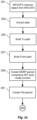
- the determination in action 203 by the MF2/DF2 118 that the intercepted message comprises SIP early media content associated with RCS traffic may comprise:
- the MF2/DF2 continues with normal operations. For example, formatting and delivering the received message to the LEA 117 according to the LI standard, the details of which is outside the scope of the present disclosure.
- the MF2/DF2 118 may in various embodiments perform:
- the object that was prepared as described in connection with action 229 is then transmitted to the LEA 117 via the HI2 interface.
- Storing the SIP early media content having the CPIM content type and at least part of the SDP data Any of the SDP media descriptions m, c and a of the SIP INVITE message as well as a session identity may be stored.
- session identity is available and that any mechanism for calculating or obtaining the session identity are outside the scope of the present disclosure.
- SIP INVITE message As described above, further SIP messages may then be received and processed as follows:
- the MF2/DF2 118 receives, from the IAP 135, an intercepted SIP 200 OK message.
- the MF2/DF2 118 determines that a session identity of the intercepted SIP 200 OK message is equal to a session identity of the intercepted SIP INVITE message, and as a consequence performs the following actions:
- the MF2/DF2 118 transmits the intercepted SIP 200 OK message via the HI2 interface to the LEA 117.
- the MF2/DF2 118 obtains the SIP early media content having the CPIM content type and said at least part of the SDP data that was stored by the MF2/DF2 118 in action 231. Any of the SDP media descriptions m, c and a of the SIP INVITE message as well as a session identity may be obtained.
- the MF2/DF2 118 transmits the SIP early media content to the MF3/DF3 119, said transmission including said at least part of the SDP data.
- the transmission may be in the form of an object that comprises the information obtained as described in connection with action 237.
- the MF2/DF2 continues with normal operations. For example, formatting and delivering the received message to the LEA 117 according to the LI standard, the details of which is outside the scope of the present disclosure.
- the MF3/DF3 119 may perform a number of actions:
- the MF3/DF3 119 receives, from the MF2/DF2 118, an object that comprises the SIP early media content.
- the received object may comprise further data as will be exemplified below.
- the MF3/DF3 119 creates an MSRP packet comprising the received SIP early media content.
- the MSRP packet may comprise further data such as SDP data obtained from the at least part of the SDP data that has been stored as described in connection with action 231.
- the creation of the MSRP packet may comprise inclusion of any of the SDP media descriptions m, c and a and inclusion of a session identity.
- the MF3/DF3 119 creates an HI3 packet comprising the created MSRP packet.
- the transmission in action 209 of the SIP early media content by the MF3/DF3 119 to the LEA 117 then comprises transmission of the created HI3 packet.
- HI3 packet created as described in connection with action 261 comprises information that specifies that the MSRP packet is created by the MF3/DF3. In other words, such information conveys the fact that the HI3 packet is an "artificial" HI3 packet.
- the MF3/DF3 119 may perform the following actions 253-257:
- the MF3/DF3 119 extracts data from the object received from the MF2/DF2 118.
- the extracted data may comprise SDP media descriptions m, c and a of the intercepted SIP INVITE and the 200 OK messages as well as a session identity.
- the MF3/DF3 119 then builds a to-path using the uniform resource identifier (URI) of the a line, if available, or a c and m line of the intercepted SIP 200 OK message received as described in connection with action 202.
- the to-path may then be included in the MSRP packet that is created as described in action 259.
- the MF3/DF3 119 then builds a from-path using the MSRP URI of the a line, if available, or a c and m line of the intercepted SIP INVITE message received as described in connection with actions 201 and 221.
- the from-path may then be included in the MSRP packet that is created as described in action 259.
- FIG 3 a LI scenario in a RCS context is illustrated in the form of a signalling diagram where a sequence (time increasing downwards) of message transmissions are illustrated as arrows.
- the LI scenario commences by a transmission 301 from the LEA 117 to the ADMF 108.
- the transmission 301 comprises a warrant for LI of a specified target, for example the any of the communication units 110 and 114.
- the ADMF 108 then communicates with the IAP 135 in the RCS NE107 by generating a transmission 303 comprising a target activation request and subsequently receiving from the IAP 135 a target activation response transmission 305 that comprises a confirmation that LI is activated for the specified target.
- the specified target e.g. the first communication unit 110
- an MSRP session setup sequence 306 takes place during which SIP signalling takes place between the involved entities. Details regarding such signalling are outside the scope of the present disclosure.
- Subsequent intercepted SIP messages during the MSRP session setup sequence 306 include messages such as "100 trying", “180 Ringing” and "200 OK” (corresponding to action 202 as described above). These SIP messages are conveyed via the MF2/DF2 118 to the LEA 117 in the form of a plurality of transmissions 311 and 313, respectively, among which transmission of a "200 OK" message is denoted 315 and 317
- the MSRP session i.e. the RCS chat 312 commences.
- SIP early media content having the CPIM content type and said at least part of the SDP data is provided by the MF2/DF2 118 to the MF3/DF3 119 in a transmission 319 (corresponding to action 241 as described above).
- the object received by the MF3/DF3 119 from the MF2/DF2 118 in transmission 319 is then processed, e.g. as described above in connection with actions 253-261.
- the MSRP session 312 then continues and RCS traffic in the form of, e.g., media content intercepted by the IAP 135 is conveyed via the MF3/DF3 119 to the LEA 117 as exemplified by transmissions 323 and 325.
- RCS traffic in the form of, e.g., media content intercepted by the IAP 135 is conveyed via the MF3/DF3 119 to the LEA 117 as exemplified by transmissions 323 and 325.
- the computer system 400 which may correspond to at least part of the communication system 100, comprises a plurality of server blades 411 that comprise a processor 402 and a memory 404.
- the memory 404 contains instructions executable by the processor 402 whereby the computer system 400 is operative, as an MF2DF2 and an MF3/DF3, to:
- the instructions that are executable by the processor 402 may be software in the form of a computer program 443.
- the computer program 443 may be contained in or by a carrier 442, which may provide the computer program 443 to the memory 404 and processor 402.
- the carrier 442 may be in any suitable form including an electronic signal, an optical signal, a radio signal or a computer readable storage medium.
- the computer system 400 is operative to:
- the computer system 400 is operative to:
- the computer system 400 is operative to:
- the computer system 400 is operative such that the transmission of the intercepted SIP INVITE message by the MF2/DF2 via the HI2 interface to the LEA comprises transmission of information that specifies that content of the intercepted message is provided to the LEA also via the HI3 interface from the MF3/DF3.
- the computer system 400 is operative to:
- the computer system 400 is operative such that the creation of the MSRP packet comprises inclusion of early media content obtained from the stored (231) CPIM content.
- the computer system 400 is operative such that the creation of the MSRP packet comprises inclusion of any of the SDP media descriptions m, c and a and inclusion of a session identity.
- the computer system 400 is operative such that the HI3 packet comprises information that specifies that the SIP early media content originates in a SIP message.
- the computer system 400 is operative such that the HI3 packet comprises information that specifies that the MSRP packet is created by the MF3/DF3.
- the computer system 500 comprises:
- the computer system 500 may comprise further modules that are configured to perform in a similar manner as, e.g., the computer system 400 described above in connection with figure 4 .
Landscapes
- Engineering & Computer Science (AREA)
- Technology Law (AREA)
- Computer Hardware Design (AREA)
- Computer Security & Cryptography (AREA)
- Computing Systems (AREA)
- General Engineering & Computer Science (AREA)
- Computer Networks & Wireless Communication (AREA)
- Signal Processing (AREA)
- Telephonic Communication Services (AREA)
Description
- Embodiments herein relate to methods of handling lawful interception (LI) in a rich communication services (RCS) context in a communication system, a corresponding computer system as well as computer programs and carriers of such computer programs.
- Rich Communication Suite (RCS) is a communication protocol between mobile telephone carriers and between phone and carrier. The global system for mobile communications (GSM) association (GSMA) controls the development of RCS and a desired goal of RCS is the replacement of short message service (SMS) messages with a text message system that is richer, a system that provides phonebook polling (for service discovery) as well as transmission of in-call multimedia such as audio, images and video sequences.
- RCS messaging was launched in 2008, but full adoption has since then stalled and has yet to take off, but since Google has decided to adopt RCS as an alternative to the iMessage® service provided by Apple®, it promises to upgrade today's business about messaging and to rapidly grow. The main RCS services are message session relay protocol (MSRP) 1-1 chat, group chat and file transfer.
- For RCS, the base network element is the Internet protocol multimedia subsystem (IMS) core system which enables peer-to-peer communication between RCS clients and uses session initiation protocol (SIP) and MSRP as protocols for signalling and media, respectively.
- There are some SIP communications that do not require a session establishment (e.g, SMS over IMS), but most of the IMS/SIP based communication (e.g. voice over long term evolution (VoLTE), video, file transfer etc.) are taking place in sessions. For RCS the GSMA, has defined (in the official document RCC.07 - "Rich Communication Suite 8.0 Advanced Communications Services and Client Specification") two modes for delivering messages:
- "Session Mode Messaging", which requires the establishment of a SIP session and later an MSRP session for delivering message content, and
- the "Pager Mode Messaging" used for standalone messaging and that does not require the establishment of a SIP session.
- Depending on the mode used in a service, specific SIP messages can be used (e.g. SIP INVITE is used in session mode messaging and the MESSAGE in pager mode messaging).
- Instant messaging (IM) sessions (i.e. chat) require the "session-mode messaging" and the contents of the messages are carried using MSRP (see request for comments (RFC) 4975). To achieve this, a SIP session is established between the interested parties (sender and all receivers) with MSRP as the media component. All data communications during IM sessions should be transmitted using MSRP, regardless of the size of individual messages, but most communication terminals use the "early media" mode (as defined in RFC3960) to include the message content within the SIP signalling (e.g. SIP INVITE) before the MSRP session is established (see RFC 4975).
- From an LI perspective, at present, there is no specific LI standard for the interception of RCS services and then this service is intercepted as a generic application within the IMS domain. The main referenced standards for LI interception in IMS domain are the technical specification 33.108 by the third generation partnership project (3GPP), the 232-5 specification by the European telecommunications standards institute (ETSI) and the alliance for telecommunications industry solutions (ATIS) specification 0700005.
- The current LI standards used to intercept in the IMS domain do not take in consideration the current implementations of the RCS in the network and of communication terminals using the "early media" mode (RFC3960); in fact at present they require the delivering of intercepted signalling over the HI2 interface and intercepted traffic over the HI3 interface. The delivery of call content (CC) over HI2 is foreseen only in some special cases, e.g. SMS over IMS where the message content is carried inside the SIP signalling.
- During test deployment of RCS it has been experienced that the "early media mode" is often used (e.g. in IM communications) and due to that the content of chats (usually exclusively handled as CC) is spread on both HI2 and HI3. In fact, it has been found that some message content intercepted within one and the same session is retrieved from the SIP messages (e.g. INVITE) and delivered to the law enforcement agency (LEA) via the HI2 interface, while some other message content is intercepted over the MSRP traffic and delivered to the LEA via the HI3 interface. In particular, a SIP message may carry the encapsulated message content of a chat (e.g. text, audio, emoji) in the final section of Message/CPIM body (see RFC 3862).
- Example: Alice is inviting Bob to an IM session (session mode messaging) and the early media mode is used. The first SIP INVITE carries the text "hello Bob" inside the body of the message/common profile for instant messaging (CPIM) part. An example of how LI functionality reports the SIP INVITE to the LEA may be illustrated in the following table:
HI2 or HI3 interface Reported intercept related information / content of communication (IRI/CC) HI2 CSeq: 1 INVITE INVITE Bob (contains the string "hello Bob") HI2 CSeq: 1 INVITE SIP/2.0 100 Trying HI2 CSeq: 1 INVITE SIP/2.0 100 Ringing HI2 CSeq: 1 INVITE SIP/2.0 200 OK HI2 CSeq: 1 ACK ACK HI3 MSRP content HI2 CSeq: 2 BYE BYE HI2 CSeq: 2 BYE SIP/2.0 200 OK - That is, as exemplified in the table, all the SIP messages (including the SIP INVITE message containing text "hello Bob") exchanged between endpoints during the IM channel negotiation are delivered over the HI2 interface and the contents of the MSRP session established after the SIP session is up is delivered over the HI3 interface.
- This behaviour produces a big processing effort for the LEA because the LEA has to correlate and assemble the whole call content by getting part of it via the HI2 and the other part via the HI3 despite the fact that the contents received via the HI2 and the HI3 interfaces belong to the same session. Consequently, service providers will complain about the great complexity of the work needed in order to provide evidence of what has been delivered to the LEA, also because statistics reporting associated with distinct counters for HI2 (that should carry IRI only) and HI3 (that should carry CC only) are no longer valid since part of CC is delivered over HI2.
WO 2018/038652 discloses the use of lawful interception in for instance IMS when packets contain a mix of signaling and content. It does however not disclose the use of MF2/DF2 to determine that intercepted messages comprise early media content associated with RSC traffic. - In view of the above, an object of the present disclosure is to overcome drawbacks related to lawful interception in an RCS context.
- This object is achieved in a first aspect by a method performed by a LI mediation system in a communication system, the mediation system comprising a mediation and delivery function for intercept related information (MF2/DF2) and a mediation and delivery function for call content (MF3/DF3). The method comprises receiving, by the MF2/DF2 from an intercept access point (IAP) in an RCS network element (NE), an intercepted message. The MF2/DF2 determines that the intercepted message comprises SIP early media content associated with RCS traffic, and as a consequence:
- the MF2/DF2 transmits the intercepted message to a LEA via an HI2 interface,
- the MF2/DF2 transmits the SIP early media content to the MF3/DF3, and
- the MF3/DF3 transmits the SIP early media content to the LEA via an HI3 interface.
- That is, such a method identifies the early media content in RCS traffic and provides the whole CC on the HI3 interface to the LEA. This is advantageous at least in that it enables the LEA to use fewer resources for collating the intercepted content of an RCS session. This advantage is further accentuated when considering various embodiments that involve identifying the "early media mode" in an RCS service, extracting the message content from the intercepted SIP messages carrying it and building an "artificial" MSRP packet and send it to the LEA over the HI3 interface. The artificial MSRP packet may be identifiable by a new flag put in the HI3 header and named, e.g.,
- ContentExtractedFromSipMessage. The original SIP message carrying the content of communication is still sent to the LEA but it may be marked with a new flag, e.g., ContentDuplicated-onHI3, to inform the LEA that a copy of it has been also delivered over HI3. In this way the LEA receives all the CC over the HI3 interface and the LEA is informed that there may be an "artificial" HI3 packet by checking the new "optional" flags introduced over HI2 and HI3. In this way the LEA may discard the message content received over HI2 and instead obtaining the whole content of the RCS session via the HI3 interface only. The optionality of these flags will allow the LEA to interwork with LI mediation systems that do not implement the method as disclosed herein and thereby assuring backward compatibility. In other words, various embodiments may be summarized as follows:
The determination by the MF2/DF2 that the intercepted message comprises SIP early media content associated with RCS traffic may comprise determining that the intercepted message is a SIP INVITE message, determining that the SIP INVITE message comprises session description protocol (SDP) data, determining that the SDP data comprises a MSRP media description and determining that a content type of the SIP INVITE message is CPIM. - Some embodiments comprises storing, by the MF2/DF2, as a consequence of the determination that the intercepted message comprises SIP early media content associated with RCS traffic, the SIP early media content having the CPIM content type and at least part of the SDP data.
- Various embodiments comprise:
- receiving, by the MF2/DF2 from the IAP, an intercepted
SIP 200 OK message, - determining, by the MF2/DF2, that a session identity of the intercepted
SIP 200 OK message is equal to a session identity of the SIP INVITE message, and as a consequence performing: - transmitting the intercepted
SIP 200 OK message by the MF2/DF2 via the HI2 interface to the LEA, - obtaining, by the MF2/DF2, the stored SIP early media content having the CPIM content type and said at least part of the SDP data, and
- transmitting the SIP early media content from the MF2/DF2 to the MF3/DF3, said transmission including said at least part of the SDP data.
- In some embodiments, the transmission of the intercepted SIP INVITE message by the MF2/DF2 via the HI2 interface to the LEA may comprise transmission of information that specifies that content of the intercepted message is provided to the LEA also via the HI3 interface from the MF3/DF3.
- In various embodiments, the MF3/DF3 performs:
- reception from the MF2/DF2 of the SIP early media content,
- creation of an MSRP packet comprising the received SIP early media content,
- creation of an HI3 packet comprising the created MSRP packet, and wherein:
- transmission of the SIP early media content by the MF3/DF3 to the LEA comprises transmission of the created HI3 packet.
- In various embodiments, the creation of the MSRP packet may comprise inclusion of early media content obtained from stored CPIM content. In such embodiments the creation of the MSRP packet may comprise inclusion of any of the SDP media descriptions m, c and a, as well as inclusion of a session identity.
- In various embodiments, the HI3 packet may comprise information that specifies that the SIP early media content originates in a SIP message, and in various embodiments the HI3 packet may comprise information that specifies that the MSRP packet is created by the MF3/DF3.
- In a further aspect there is provided a computer system of a communication system. The computer system is configured to communicate with a LEA and an IAP and comprises an MF2/DF2 and an MF3/DF3. The computer system comprises a plurality of server blades, each server blade comprising a processor and a memory. The memory contains instructions executable by the processor whereby the computer system is operative to perform a method according to the first aspect.
- In yet a further aspect there are provided a computer program comprising instructions which, when executed on at least one processor in a server blade in a computer system of a communication system, wherein the computer system is configured to communicate with a LEA and an IAP and comprises an MF2/DF2 and an MF3/DF3, cause the computer system to carry out a method according to the first aspect. In yet a further aspect there is provided a carrier comprising such a computer program, wherein the carrier is one of an electronic signal, an optical signal, a radio signal and a computer readable storage medium.
- These further aspects and embodiments of these further aspects provide the same effects and advantages as summarized above in connection with the method of the first aspect.
-
-
Figures 1a and1b are schematically illustrated block diagrams of communication systems, -
figures 2a-c are flowcharts of methods, -
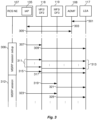
figure 3 is a signaling diagram, -
figure 4 schematically illustrates a computer system, and -
figure 5 schematically illustrates a computer system. -
Figure 1a schematically illustrates a first functional representation of acommunication system 100 comprising anIMS 101 and entities involved in lawful interception as summarized above. In some more detail, theIMS 101 is connected to two access networks: a radio access network (RAN) 112, e.g. any 3GPP RAN, and a local area network (LAN) that may include awireless LAN 116 that operates according to, e.g. an institute of electrical and electronics engineers (IEEE) 802.11 standard. Theaccess networks IMS 100 viainterface functionality figure 1a . Afirst communication unit 110 is connected via an air interface 111 to theRAN 112 and asecond communication unit 114 is connected to theLAN 116 via anappropriate connection interface 115. - An
LI mediation system 102, connected to theIMS 101, comprises lawful interception mediation functionality in the form of an MF2/DF2 for intercept related information and an MF3/DF3 for call content that communicate with aLEA 117 for performing lawful interception of RCS traffic (as well as, e.g., telephone calls and other types of media sessions) involving, e.g., thecommunication units IMS 101 comprises at least one RCS network element (NE) 107 that provides appropriate RCS functionality to thecommunication units RCS NE 107 comprises an intercept access point (IAP) 135 that is configured to communicate with theLI mediation system 102. An LI administrative function (ADMF) 108 is configured to communicate with theLEA 117 and theIAP 135. - Signalling between the entities in the
IMS 101 and the connected entities takes place by means of SIP signalling and associated SDP data. TheIAP 135 in theRCS NE 107 in theIMS 101 interfaces with themediation system 102 via an X2 interface and via an X3 interface, and themediation function 102 interfaces with theLEA 117 via an HI2 interface and via an HI3 interface. TheADMF 108 interfaces with theIAP 135 via an X1 interface and interfaces with theLEA 117 via an HI1 interface. - As the skilled person realizes, the
IMS 101 typically comprises a plurality of functional entities such as a proxy call/session control functions (P-CSCF) 103 and a serving call/session control function (S-CSCF) 105 etc. that may interact within theIMS 101 as well as interact with themediation function 102, theRAN 112 and theLAN 116. Detailed description of how thesefunctional entities reference numerals - Typical implementations of an IMS and the connected functional entities, including the
mediation system 102, may in various embodiments realize the entities in a larger and more general processing system, e.g. in the form of one or more computer servers (e.g. a so-called cloud implementation) having functional blocks that operate to realize functionality of theIMS 101 as well as themediation system 102.Figure 1b schematically illustrates such a cloud implemented functional representation of thecommunication system 100. In this functional representation, thecommunication system 100 is realized at least in part by virtualized functions that are executed onvirtual nodes 161 that utilize ahardware server platform 170. - The P-
CSCF 103, the S-CSCF 105, theRCS NE 107 with the includedIAP 135, theADMF 108, the MF2/DF2 118 and the MF3/DF3 119 are realized in afunctional layer 130 of virtualized network functions (VNF) that execute in thevirtual nodes 110 via avirtualization layer 120. Thecommunication units hardware platform 170 via theRAN 112 and theLAN 116, respectively. TheLEA 117 is connected to thehardware platform 170, the details of which are outside the scope of the present disclosure. - The
RCS NE 107 with the includedIAP 135, theADMF 108, the MF2/DF2 118 and the MF3/DF3 119, as well as theLEA 117 all comprise processing and storage resources that are configured to realize and handle LI in a RCS context as will be exemplified in detail below. That is, communication units in thecommunication system 100 such as thecommunication units LEA 117. In such cases, theADMF 108, having received the request for LI from theLEA 117, sends an interception order for the requested target to theIAP 135 in theRCS NE 107, whereupon LI of RCS traffic takes place as will be discussed further below. - Turning now to
figures 2a -c, and with continued reference tofigures 1a and1b , embodiments of methods related to LI in a RCS context will be described in detail. The embodiments comprise a number of actions performed by theLI mediation system 102 comprising the MF2/DF2 118 and the MF3/DF3 119 introduced and described above in connection withfigure 1a andfigure 1b : - The MF2/
DF2 118 receives, from theIAP 135 in theRCS NE 107, an intercepted message. - As will be schematically illustrated below, the
IAP 135 has been ordered by theADMF 108 to perform LI of RCS traffic and provides the intercepted messages to the MF2/DF2, the details of which is outside the scope of the present disclosure. - The MF2/
DF2 118 determines that the intercepted message comprises SIP early media content associated with RCS traffic, and as a consequence performs the following actions: - The MF2/
DF2 118 transmits, via the HI2 interface to theLEA 117, the intercepted message. - The transmission of the intercepted message by the MF2/
DF2 118 via the HI2 interface to theLEA 117 may comprise transmission of information that specifies that content of the intercepted message is provided to theLEA 117 also via the HI3 interface from the MF3/DF3 119. - The MF2/
DF2 118 transmits the SIP early media content to the MF3/DF3 119. - The MF3/
DF3 119 transmits, via the HI3 interface to theLEA 117, the SIP early media content. - The determination in
action 203 by the MF2/DF2 118 that the intercepted message comprises SIP early media content associated with RCS traffic may comprise: - Determining that the intercepted message is a SIP INVITE message.
- Determining that the SIP INVITE message comprises SDP data.
- Determining that the SDP data comprises an MSRP media description.
- Determining that a content type of the SIP INVITE message is CPIM.
- As indicated in
figure 2b , if any of thedeterminations LEA 117 according to the LI standard, the details of which is outside the scope of the present disclosure. - As a consequence of the determination that the intercepted SIP INVITE message comprises SIP early media content associated with RCS traffic, the MF2/
DF2 118 may in various embodiments perform: - Preparing an object that comprises the intercepted SIP INVITE message. The object may comprise information that specifies that content of the intercepted SIP INVITE message is provided to the
LEA 117 also via the HI3 interface from the MF3/DF3 119. For example, a parameter "ContentDuplicated-onHI3=true" may be included. - The object that was prepared as described in connection with
action 229 is then transmitted to theLEA 117 via the HI2 interface. - Storing the SIP early media content having the CPIM content type and at least part of the SDP data. Any of the SDP media descriptions m, c and a of the SIP INVITE message as well as a session identity may be stored.
- It is to be noted that it is assumed that the session identity is available and that any mechanism for calculating or obtaining the session identity are outside the scope of the present disclosure.
- Having received and processed an SIP INVITE message as described above, further SIP messages may then be received and processed as follows:
- The MF2/
DF2 118 receives, from theIAP 135, an interceptedSIP 200 OK message. - Having determined, in
action 221 that the message is not a SIP INVITE message, the MF2/DF2 118 determines that a session identity of the interceptedSIP 200 OK message is equal to a session identity of the intercepted SIP INVITE message, and as a consequence performs the following actions: - The MF2/
DF2 118 transmits the interceptedSIP 200 OK message via the HI2 interface to theLEA 117. - The MF2/
DF2 118 obtains the SIP early media content having the CPIM content type and said at least part of the SDP data that was stored by the MF2/DF2 118 inaction 231. Any of the SDP media descriptions m, c and a of the SIP INVITE message as well as a session identity may be obtained. - The MF2/
DF2 118 transmits the SIP early media content to the MF3/DF3 119, said transmission including said at least part of the SDP data. - For example, the transmission may be in the form of an object that comprises the information obtained as described in connection with
action 237. - As indicated in
figure 2b , if thedetermination 235 is negative, then the MF2/DF2 continues with normal operations. For example, formatting and delivering the received message to theLEA 117 according to the LI standard, the details of which is outside the scope of the present disclosure. - As illustrated in
figure 2c , the MF3/DF3 119 may perform a number of actions: - The MF3/
DF3 119 receives, from the MF2/DF2 118, an object that comprises the SIP early media content. The received object may comprise further data as will be exemplified below. - The MF3/
DF3 119 creates an MSRP packet comprising the received SIP early media content. The MSRP packet may comprise further data such as SDP data obtained from the at least part of the SDP data that has been stored as described in connection withaction 231. For example, the creation of the MSRP packet may comprise inclusion of any of the SDP media descriptions m, c and a and inclusion of a session identity. - The MF3/
DF3 119 creates an HI3 packet comprising the created MSRP packet. The transmission inaction 209 of the SIP early media content by the MF3/DF3 119 to theLEA 117 then comprises transmission of the created HI3 packet. - Various embodiments include those where the HI3 packet created as described in connection with
action 261 comprises information that specifies that the SIP early media content originates in a SIP INVITE message. For example, a parameter "ContentExtractedFromSipMessage=true" may be included. - Various embodiments include those where the HI3 packet created as described in connection with
action 261 comprises information that specifies that the MSRP packet is created by the MF3/DF3. In other words, such information conveys the fact that the HI3 packet is an "artificial" HI3 packet. - As
figure 2c illustrates, in order to create the MSRP packet as described in connection withaction 259, the MF3/DF3 119 may perform the following actions 253-257: - The MF3/
DF3 119 extracts data from the object received from the MF2/DF2 118. The extracted data may comprise SDP media descriptions m, c and a of the intercepted SIP INVITE and the 200 OK messages as well as a session identity. - The MF3/
DF3 119 then builds a to-path using the uniform resource identifier (URI) of the a line, if available, or a c and m line of the interceptedSIP 200 OK message received as described in connection withaction 202. The to-path may then be included in the MSRP packet that is created as described inaction 259. - The MF3/
DF3 119 then builds a from-path using the MSRP URI of the a line, if available, or a c and m line of the intercepted SIP INVITE message received as described in connection withactions action 259. - Turning now to
figure 3 , and with continued reference tofigures 1a-b andfigures 2a-c , a LI scenario in a RCS context is illustrated in the form of a signalling diagram where a sequence (time increasing downwards) of message transmissions are illustrated as arrows. - The LI scenario commences by a
transmission 301 from theLEA 117 to theADMF 108. Thetransmission 301 comprises a warrant for LI of a specified target, for example the any of thecommunication units - The
ADMF 108 then communicates with theIAP 135 in the RCS NE107 by generating atransmission 303 comprising a target activation request and subsequently receiving from the IAP 135 a targetactivation response transmission 305 that comprises a confirmation that LI is activated for the specified target. - At some point in time, the specified target, e.g. the
first communication unit 110, initiates a RCS chat with, e.g., thesecond communication unit 114. In order to initiate the RCS chat an MSRPsession setup sequence 306 takes place during which SIP signalling takes place between the involved entities. Details regarding such signalling are outside the scope of the present disclosure. - Due to the fact that LI has been activated, the SIP messages that are transmitted during the MSRP
session setup sequence 306 are intercepted by theIAP 135 and conveyed to theLEA 117 as illustrated. That is, an intercepted SIP INVITE message (comprising early media content as discussed above) is provided by theIAP 135 to the MF2/DF2 118 in a transmission 307 (corresponding toaction 201 as described above), whereupon the MF2/DF2 118 conveys the SIP INVITE message to theLEA 117, including the parameter "ContentDuplicated-onHI3=true", in a transmission 309 (corresponding toaction 233 as described above). - Subsequent intercepted SIP messages during the MSRP
session setup sequence 306 include messages such as "100 trying", "180 Ringing" and "200 OK" (corresponding toaction 202 as described above). These SIP messages are conveyed via the MF2/DF2 118 to theLEA 117 in the form of a plurality oftransmissions - As discussed above, once the MSRP session is setup, as confirmed by the "200 OK" message (as determined in
actions - The obtained (in
action 237 as described above) SIP early media content having the CPIM content type and said at least part of the SDP data is provided by the MF2/DF2 118 to the MF3/DF3 119 in a transmission 319 (corresponding toaction 241 as described above). - The object received by the MF3/
DF3 119 from the MF2/DF2 118 intransmission 319 is then processed, e.g. as described above in connection with actions 253-261. The HI3 packet resulting from this processing by the MF3/DF3 119, comprising the early media content and further data such as the parameter "ContentExtractedFromSipMessage=true" , is then provided by the MF3/DF3 119 to theLEA 117 in a transmission 321 (corresponding toaction 209 as described above). - The
MSRP session 312 then continues and RCS traffic in the form of, e.g., media content intercepted by theIAP 135 is conveyed via the MF3/DF3 119 to theLEA 117 as exemplified bytransmissions - Turning now to
figure 4 , and with continued reference tofigures 1 to 3 , acomputer system 400 will be described in some more detail. Thecomputer system 400, which may correspond to at least part of thecommunication system 100, comprises a plurality ofserver blades 411 that comprise aprocessor 402 and amemory 404. Thememory 404 contains instructions executable by theprocessor 402 whereby thecomputer system 400 is operative, as an MF2DF2 and an MF3/DF3, to: - receive, by the MF2/DF2 from an IAP in a RCS NE, an intercepted message,
- determine, by the MF2/DF2, that the intercepted message comprises SIP early media content associated with RCS traffic, and as a consequence:
- transmit, by the MF2/DF2 via an HI2 interface to an LEA, the intercepted message,
- transmit, by the MF2/DF2 to the MF3/DF3, the SIP early media content, and
- transmit, by the MF3/DF3 via an HI3 interface to the LEA, the SIP early media content.
- The instructions that are executable by the
processor 402 may be software in the form of acomputer program 443. Thecomputer program 443 may be contained in or by acarrier 442, which may provide thecomputer program 443 to thememory 404 andprocessor 402. Thecarrier 442 may be in any suitable form including an electronic signal, an optical signal, a radio signal or a computer readable storage medium. - In some embodiments, the
computer system 400 is operative to: - determine that the intercepted message is a SIP INVITE message,
- determine that the SIP INVITE message comprises session description protocol, SDP, data,
- determine that the SDP data comprises a message session relay protocol, MSRP, media description, and
- determine that a content type of the SIP INVITE message is common profile for instant messaging, CPIM.
- In some embodiments, the
computer system 400 is operative to: - store, by the MF2/DF2, as a consequence of the determination that the intercepted message comprises SIP early media content associated with RCS traffic, the SIP early media content having the CPIM content type and at least part of the SDP data.
- In some embodiments, the
computer system 400 is operative to: - receive, by the MF2/DF2 from the IAP, an intercepted
SIP 200 OK message, - determine, by the MF2/DF2, that a session identity of the intercepted
SIP 200 OK message is equal to a session identity of the SIP INVITE message, and as a consequence: - transmit the intercepted
SIP 200 OK message by the MF2/MF2 via the HI2 interface to the LEA, - obtain, by the MF2/DF2, the stored SIP early media content having the CPIM content type and said at least part of the SDP data, and
- transmit the SIP early media content from the MF2/DF2 to the MF3/DF3, said transmission including said at least part of the SDP data.
- In some embodiments, the
computer system 400 is operative such that the transmission of the intercepted SIP INVITE message by the MF2/DF2 via the HI2 interface to the LEA comprises transmission of information that specifies that content of the intercepted message is provided to the LEA also via the HI3 interface from the MF3/DF3. - In some embodiments, the
computer system 400 is operative to: - receive, by the MF3/DF3 from the MF2/DF2, the SIP early media content,
- create, by the MF3/DF3, an MSRP packet comprising the received SIP early media content,
- create, by the MF3/DF3, an HI3 packet comprising the created MSRP packet, and wherein:
- the transmission of the SIP early media content by the MF3/DF3 to the LEA comprises transmission of the created HI3 packet.
- In some embodiments, the
computer system 400 is operative such that the creation of the MSRP packet comprises inclusion of early media content obtained from the stored (231) CPIM content. - In some embodiments, the
computer system 400 is operative such that the creation of the MSRP packet comprises inclusion of any of the SDP media descriptions m, c and a and inclusion of a session identity. - In some embodiments, the
computer system 400 is operative such that the HI3 packet comprises information that specifies that the SIP early media content originates in a SIP message. - In some embodiments, the
computer system 400 is operative such that the HI3 packet comprises information that specifies that the MSRP packet is created by the MF3/DF3. - Turning now to
figure 5 , and with continued reference tofigures 1 to 4 , acomputer system 500 will be described in some more detail. Thecomputer system 500 comprises: - a
receiving module 501 configured to receive, as an MF2/DF2 from an IAP in a RCS NE, an intercepted message, - a determining
module 503 configured to determine, as the MF2/DF2, that the intercepted message comprises SIP early media content associated with RCS traffic, - a
transmitting module 505 configured to transmit, as the MF2/DF2 via an HI2 interface to an LEA, the intercepted message, - a
transmitting module 507 configured to transmit, as the MF2/DF2 to the MF3/DF3, the SIP early media content, and - a
transmitting module 509 configured to transmit, as the MF3/DF3 via an HI3 interface to the LEA, the SIP early media content. - The
computer system 500 may comprise further modules that are configured to perform in a similar manner as, e.g., thecomputer system 400 described above in connection withfigure 4 .
Claims (13)
- A method performed by a lawful interception, LI, mediation system (102) comprising a mediation and delivery function for intercept related information, MF2/DF2 (118) and a mediation and delivery function for call content, MF3/DF3 (119), in a communication system (100), the method comprising:- receiving (201, 307), by the MF2/DF2 (118) from an intercept access point, IAP, (135) in a rich communication suite, RCS, network element, NE, (107), an intercepted message,- determining (203), by the MF2/DF2 (118), that the intercepted message comprises session initiation protocol, SIP, early media content associated with RCS traffic, and as a consequence:- transmitting (205, 309), by the MF2/DF2 (118) via an HI2 interface to a law enforcement agency, LEA (117), the intercepted message,- transmitting (207, 317), by the MF2/DF2 (118) to the MF3/DF3 (119), the SIP early media content, and- transmitting (209, 319), by the MF3/DF3 (119) via an HI3 interface to the LEA (117), the SIP early media content.
- The method of claim 1, wherein the determination (203) by the MF2/DF2 (118) that the intercepted message comprises SIP early media content associated with RCS traffic comprises:- determining (221) that the intercepted message is a SIP INVITE message,- determining (223) that the SIP INVITE message comprises session description protocol, SDP, data,- determining (225) that the SDP data comprises a message session relay protocol, MSRP, media description, and- determining (227) that a content type of the SIP INVITE message is common profile for instant messaging, CPIM.
- The method of claim 2, comprising:- storing (231), by the MF2/DF2 (118), as a consequence of the determination that the intercepted message comprises SIP early media content associated with RCS traffic, the SIP early media content having the CPIM content type and at least part of the SDP data.
- The method of claim 3, comprising:- receiving (202, 315), by the MF2/DF2 (118) from the IAP (135), an intercepted SIP 200 OK message,- determining (235), by the MF2/DF2 (118), that a session identity of the intercepted SIP 200 OK message is equal to a session identity of the SIP INVITE message, and as a consequence performing:- transmitting (239, 315) the intercepted SIP 200 OK message by the MF2/DF2 (118) via the HI2 interface to the LEA (117),- obtaining (237), by the MF2/DF2 (118), the stored SIP early media content having the CPIM content type and said at least part of the SDP data, and- transmitting (241, 317) the SIP early media content from the MF2/DF2 (118) to the MF3/DF3 (119), said transmission including said at least part of the SDP data.
- The method of any of claims 1 to 4, wherein:- the transmission (205, 233, 309) of the intercepted SIP INVITE message by the MF2/DF2 (118) via the HI2 interface to the LEA (117) comprises transmission of information that specifies that content of the intercepted message is provided to the LEA (117) also via the HI3 interface from the MF3/DF3 (119).
- The method of any of claims 1 to 5, comprising:- receiving (251, 319), by the MF3/DF3 (119) from the MF2/DF2 (118), the SIP early media content,- creating (259), by the MF3/DF3 (119), an MSRP packet comprising the received SIP early media content,- creating (261), by the MF3/DF3 (119), an HI3 packet comprising the created MSRP packet, and wherein:- the transmission (209, 321) of the SIP early media content by the MF3/DF3 (119) to the LEA (117) comprises transmission of the created HI3 packet.
- The method of claim 6, when depending on any of claims 3 to 5, wherein the creation (259) of the MSRP packet comprises inclusion of early media content obtained from the stored (231) CPIM content.
- The method of claim 7, wherein the creation (259) of the MSRP packet comprises inclusion of any of the SDP media descriptions m, c and a and inclusion of a session identity.
- The method of any of claims 6 to 8, wherein:- the HI3 packet comprises information that specifies that the SIP early media content originates in a SIP message.
- The method of claim 9, wherein:- the HI3 packet comprises information that specifies that the MSRP packet is created by the MF3/DF3.
- A computer system (400) of a communication system (100), the computer system (400) being configured to communicate with a Law Enforcement Agency (117) and an intercept access point and comprises a mediation and delivery function for intercept related information, MF2/DF2 (118), a mediation and delivery function for call content, MF3/DF3 (119), and a plurality of server blades (411), each server blade (411) comprising a processor (402) and a memory (404), said memory (404) containing instructions executable by said processor (402) whereby said computer system (400) is operative to perform a method according to any of claims 1 to 10.
- A computer program (443) comprising instructions which, when executed on at least one processor (402) in a server blade (411) in a computer system (400) of a communication system (100), wherein the computer system (400) is configured to communicate with a Law Enforcement Agency (117) and an intercept access point and comprises a mediation and delivery function for intercept related information, MF2/DF2 (118), and a mediation and delivery function for call content, MF3/DF3 (119) , cause the computer system (400) to carry out the method according to any one of claims 1 to 10.
- A carrier (442), comprising the computer program of claim 12, wherein the carrier is one of an electronic signal, an optical signal, a radio signal and a computer readable storage medium.
Applications Claiming Priority (1)
| Application Number | Priority Date | Filing Date | Title |
|---|---|---|---|
| PCT/SE2019/050350 WO2020214070A1 (en) | 2019-04-16 | 2019-04-16 | Lawful interception in rcs |
Publications (2)
| Publication Number | Publication Date |
|---|---|
| EP3957039A1 EP3957039A1 (en) | 2022-02-23 |
| EP3957039B1 true EP3957039B1 (en) | 2024-10-09 |
Family
ID=66323889
Family Applications (1)
| Application Number | Title | Priority Date | Filing Date |
|---|---|---|---|
| EP19720207.0A Active EP3957039B1 (en) | 2019-04-16 | 2019-04-16 | Lawful interception in rcs |
Country Status (2)
| Country | Link |
|---|---|
| EP (1) | EP3957039B1 (en) |
| WO (1) | WO2020214070A1 (en) |
Family Cites Families (2)
| Publication number | Priority date | Publication date | Assignee | Title |
|---|---|---|---|---|
| CN101218785B (en) * | 2005-07-01 | 2010-06-16 | 艾利森电话股份有限公司 | Method and device for monitoring in a telecommunication system |
| WO2018038652A1 (en) * | 2016-08-23 | 2018-03-01 | Telefonaktiebolaget Lm Ericsson (Publ) | Improved lawful interception |
-
2019
- 2019-04-16 WO PCT/SE2019/050350 patent/WO2020214070A1/en not_active Ceased
- 2019-04-16 EP EP19720207.0A patent/EP3957039B1/en active Active
Also Published As
| Publication number | Publication date |
|---|---|
| EP3957039A1 (en) | 2022-02-23 |
| WO2020214070A1 (en) | 2020-10-22 |
Similar Documents
| Publication | Publication Date | Title |
|---|---|---|
| EP2619964B1 (en) | Systems and methods for peer-to-peer ims | |
| US11438831B2 (en) | Network slicing awareness in IP multimedia subsystem | |
| US20040037406A1 (en) | Method and system for exchanging instant messages in a multi-party conference call | |
| EP2107755A1 (en) | Method and apparatus for CPM session management | |
| CA2776863A1 (en) | Method and internet protocol short message gateway (ip-sm-gw) for providing an interworking service between converged ip messaging (cpm) and short message service (sms) | |
| EP3515096B1 (en) | Processing sms messages | |
| CN102685138A (en) | Offline message pushing method and device | |
| US20100212011A1 (en) | Method and system for spam reporting by reference | |
| US20250202955A1 (en) | Methods, and network nodes for handling communication in a communication network | |
| CN103428208B (en) | Distributed SIP redirection server and construction method thereof | |
| KR101319066B1 (en) | Protection against unsolicited communication for internet protocol multimedia subsystem | |
| CN101374254A (en) | Method and apparatus for transmitting report in communication system | |
| EP2429256A1 (en) | Method for negotiating message session relay protocol connection parameters | |
| WO2018038652A1 (en) | Improved lawful interception | |
| WO2020214070A1 (en) | Lawful interception in rcs | |
| JP2010507302A (en) | Improved signaling for “push-to-talk” type communication sessions by inserting business cards | |
| WO2023155739A1 (en) | Data transmission method, network device, and user equipment | |
| CN100581197C (en) | Method and system for acquiring media characteristic information and terminal equipment | |
| US20160127314A1 (en) | Front End Processor for Short Message Service Centers | |
| CN102056101A (en) | Intercepting system and method of multimedia information | |
| US12574321B2 (en) | System and method for facilitating routing of level 1 numbers | |
| EP4239977B1 (en) | Methods of initiating telecommunications sessions and devices, servers and computer software for performing the methods | |
| US11870820B2 (en) | Handling of lawfully intercepted SIP messages | |
| JP2025512634A (en) | SYSTEMS AND METHODS FOR FACILITAING MACHINE-TO-MACHINE COMMUNICATIONS - Patent application | |
| KR20250110669A (en) | Method and apparatus for supporting store and access management of user data in a wireless communication system |
Legal Events
| Date | Code | Title | Description |
|---|---|---|---|
| STAA | Information on the status of an ep patent application or granted ep patent |
Free format text: STATUS: UNKNOWN |
|
| STAA | Information on the status of an ep patent application or granted ep patent |
Free format text: STATUS: THE INTERNATIONAL PUBLICATION HAS BEEN MADE |
|
| PUAI | Public reference made under article 153(3) epc to a published international application that has entered the european phase |
Free format text: ORIGINAL CODE: 0009012 |
|
| STAA | Information on the status of an ep patent application or granted ep patent |
Free format text: STATUS: REQUEST FOR EXAMINATION WAS MADE |
|
| 17P | Request for examination filed |
Effective date: 20211101 |
|
| AK | Designated contracting states |
Kind code of ref document: A1 Designated state(s): AL AT BE BG CH CY CZ DE DK EE ES FI FR GB GR HR HU IE IS IT LI LT LU LV MC MK MT NL NO PL PT RO RS SE SI SK SM TR |
|
| DAV | Request for validation of the european patent (deleted) | ||
| DAX | Request for extension of the european patent (deleted) | ||
| REG | Reference to a national code |
Ref country code: DE Ref legal event code: R079 Free format text: PREVIOUS MAIN CLASS: H04L0029060000 Ipc: H04L0009400000 Ref document number: 602019060038 Country of ref document: DE |
|
| GRAP | Despatch of communication of intention to grant a patent |
Free format text: ORIGINAL CODE: EPIDOSNIGR1 |
|
| STAA | Information on the status of an ep patent application or granted ep patent |
Free format text: STATUS: GRANT OF PATENT IS INTENDED |
|
| RIC1 | Information provided on ipc code assigned before grant |
Ipc: H04L 9/40 20220101AFI20240624BHEP |
|
| INTG | Intention to grant announced |
Effective date: 20240711 |
|
| GRAS | Grant fee paid |
Free format text: ORIGINAL CODE: EPIDOSNIGR3 |
|
| GRAA | (expected) grant |
Free format text: ORIGINAL CODE: 0009210 |
|
| STAA | Information on the status of an ep patent application or granted ep patent |
Free format text: STATUS: THE PATENT HAS BEEN GRANTED |
|
| AK | Designated contracting states |
Kind code of ref document: B1 Designated state(s): AL AT BE BG CH CY CZ DE DK EE ES FI FR GB GR HR HU IE IS IT LI LT LU LV MC MK MT NL NO PL PT RO RS SE SI SK SM TR |
|
| REG | Reference to a national code |
Ref country code: CH Ref legal event code: EP |
|
| REG | Reference to a national code |
Ref country code: DE Ref legal event code: R096 Ref document number: 602019060038 Country of ref document: DE |
|
| REG | Reference to a national code |
Ref country code: IE Ref legal event code: FG4D |
|
| REG | Reference to a national code |
Ref country code: LT Ref legal event code: MG9D |
|
| REG | Reference to a national code |
Ref country code: NL Ref legal event code: MP Effective date: 20241009 |
|
| REG | Reference to a national code |
Ref country code: AT Ref legal event code: MK05 Ref document number: 1731803 Country of ref document: AT Kind code of ref document: T Effective date: 20241009 |
|
| PG25 | Lapsed in a contracting state [announced via postgrant information from national office to epo] |
Ref country code: NL Free format text: LAPSE BECAUSE OF FAILURE TO SUBMIT A TRANSLATION OF THE DESCRIPTION OR TO PAY THE FEE WITHIN THE PRESCRIBED TIME-LIMIT Effective date: 20241009 |
|
| PG25 | Lapsed in a contracting state [announced via postgrant information from national office to epo] |
Ref country code: NL Free format text: LAPSE BECAUSE OF FAILURE TO SUBMIT A TRANSLATION OF THE DESCRIPTION OR TO PAY THE FEE WITHIN THE PRESCRIBED TIME-LIMIT Effective date: 20241009 |
|
| PG25 | Lapsed in a contracting state [announced via postgrant information from national office to epo] |
Ref country code: IS Free format text: LAPSE BECAUSE OF FAILURE TO SUBMIT A TRANSLATION OF THE DESCRIPTION OR TO PAY THE FEE WITHIN THE PRESCRIBED TIME-LIMIT Effective date: 20250209 Ref country code: HR Free format text: LAPSE BECAUSE OF FAILURE TO SUBMIT A TRANSLATION OF THE DESCRIPTION OR TO PAY THE FEE WITHIN THE PRESCRIBED TIME-LIMIT Effective date: 20241009 Ref country code: PT Free format text: LAPSE BECAUSE OF FAILURE TO SUBMIT A TRANSLATION OF THE DESCRIPTION OR TO PAY THE FEE WITHIN THE PRESCRIBED TIME-LIMIT Effective date: 20250210 |
|
| PG25 | Lapsed in a contracting state [announced via postgrant information from national office to epo] |
Ref country code: FI Free format text: LAPSE BECAUSE OF FAILURE TO SUBMIT A TRANSLATION OF THE DESCRIPTION OR TO PAY THE FEE WITHIN THE PRESCRIBED TIME-LIMIT Effective date: 20241009 |
|
| PG25 | Lapsed in a contracting state [announced via postgrant information from national office to epo] |
Ref country code: BG Free format text: LAPSE BECAUSE OF FAILURE TO SUBMIT A TRANSLATION OF THE DESCRIPTION OR TO PAY THE FEE WITHIN THE PRESCRIBED TIME-LIMIT Effective date: 20241009 |
|
| PG25 | Lapsed in a contracting state [announced via postgrant information from national office to epo] |
Ref country code: ES Free format text: LAPSE BECAUSE OF FAILURE TO SUBMIT A TRANSLATION OF THE DESCRIPTION OR TO PAY THE FEE WITHIN THE PRESCRIBED TIME-LIMIT Effective date: 20241009 |
|
| PG25 | Lapsed in a contracting state [announced via postgrant information from national office to epo] |
Ref country code: NO Free format text: LAPSE BECAUSE OF FAILURE TO SUBMIT A TRANSLATION OF THE DESCRIPTION OR TO PAY THE FEE WITHIN THE PRESCRIBED TIME-LIMIT Effective date: 20250109 |
|
| PG25 | Lapsed in a contracting state [announced via postgrant information from national office to epo] |
Ref country code: LV Free format text: LAPSE BECAUSE OF FAILURE TO SUBMIT A TRANSLATION OF THE DESCRIPTION OR TO PAY THE FEE WITHIN THE PRESCRIBED TIME-LIMIT Effective date: 20241009 Ref country code: GR Free format text: LAPSE BECAUSE OF FAILURE TO SUBMIT A TRANSLATION OF THE DESCRIPTION OR TO PAY THE FEE WITHIN THE PRESCRIBED TIME-LIMIT Effective date: 20250110 Ref country code: AT Free format text: LAPSE BECAUSE OF FAILURE TO SUBMIT A TRANSLATION OF THE DESCRIPTION OR TO PAY THE FEE WITHIN THE PRESCRIBED TIME-LIMIT Effective date: 20241009 |
|
| PG25 | Lapsed in a contracting state [announced via postgrant information from national office to epo] |
Ref country code: PL Free format text: LAPSE BECAUSE OF FAILURE TO SUBMIT A TRANSLATION OF THE DESCRIPTION OR TO PAY THE FEE WITHIN THE PRESCRIBED TIME-LIMIT Effective date: 20241009 |
|
| PG25 | Lapsed in a contracting state [announced via postgrant information from national office to epo] |
Ref country code: RS Free format text: LAPSE BECAUSE OF FAILURE TO SUBMIT A TRANSLATION OF THE DESCRIPTION OR TO PAY THE FEE WITHIN THE PRESCRIBED TIME-LIMIT Effective date: 20250109 |
|
| PG25 | Lapsed in a contracting state [announced via postgrant information from national office to epo] |
Ref country code: SM Free format text: LAPSE BECAUSE OF FAILURE TO SUBMIT A TRANSLATION OF THE DESCRIPTION OR TO PAY THE FEE WITHIN THE PRESCRIBED TIME-LIMIT Effective date: 20241009 |
|
| PGFP | Annual fee paid to national office [announced via postgrant information from national office to epo] |
Ref country code: DE Payment date: 20250429 Year of fee payment: 7 |
|
| PG25 | Lapsed in a contracting state [announced via postgrant information from national office to epo] |
Ref country code: DK Free format text: LAPSE BECAUSE OF FAILURE TO SUBMIT A TRANSLATION OF THE DESCRIPTION OR TO PAY THE FEE WITHIN THE PRESCRIBED TIME-LIMIT Effective date: 20241009 |
|
| PGFP | Annual fee paid to national office [announced via postgrant information from national office to epo] |
Ref country code: GB Payment date: 20250428 Year of fee payment: 7 |
|
| REG | Reference to a national code |
Ref country code: DE Ref legal event code: R097 Ref document number: 602019060038 Country of ref document: DE |
|
| PG25 | Lapsed in a contracting state [announced via postgrant information from national office to epo] |
Ref country code: EE Free format text: LAPSE BECAUSE OF FAILURE TO SUBMIT A TRANSLATION OF THE DESCRIPTION OR TO PAY THE FEE WITHIN THE PRESCRIBED TIME-LIMIT Effective date: 20241009 |
|
| PG25 | Lapsed in a contracting state [announced via postgrant information from national office to epo] |
Ref country code: RO Free format text: LAPSE BECAUSE OF FAILURE TO SUBMIT A TRANSLATION OF THE DESCRIPTION OR TO PAY THE FEE WITHIN THE PRESCRIBED TIME-LIMIT Effective date: 20241009 |
|
| PG25 | Lapsed in a contracting state [announced via postgrant information from national office to epo] |
Ref country code: SK Free format text: LAPSE BECAUSE OF FAILURE TO SUBMIT A TRANSLATION OF THE DESCRIPTION OR TO PAY THE FEE WITHIN THE PRESCRIBED TIME-LIMIT Effective date: 20241009 |
|
| PG25 | Lapsed in a contracting state [announced via postgrant information from national office to epo] |
Ref country code: CZ Free format text: LAPSE BECAUSE OF FAILURE TO SUBMIT A TRANSLATION OF THE DESCRIPTION OR TO PAY THE FEE WITHIN THE PRESCRIBED TIME-LIMIT Effective date: 20241009 |
|
| PG25 | Lapsed in a contracting state [announced via postgrant information from national office to epo] |
Ref country code: IT Free format text: LAPSE BECAUSE OF FAILURE TO SUBMIT A TRANSLATION OF THE DESCRIPTION OR TO PAY THE FEE WITHIN THE PRESCRIBED TIME-LIMIT Effective date: 20241009 |
|
| PLBE | No opposition filed within time limit |
Free format text: ORIGINAL CODE: 0009261 |
|
| STAA | Information on the status of an ep patent application or granted ep patent |
Free format text: STATUS: NO OPPOSITION FILED WITHIN TIME LIMIT |
|
| PG25 | Lapsed in a contracting state [announced via postgrant information from national office to epo] |
Ref country code: SE Free format text: LAPSE BECAUSE OF FAILURE TO SUBMIT A TRANSLATION OF THE DESCRIPTION OR TO PAY THE FEE WITHIN THE PRESCRIBED TIME-LIMIT Effective date: 20241009 |
|
| 26N | No opposition filed |
Effective date: 20250710 |
|
| REG | Reference to a national code |
Ref country code: CH Ref legal event code: H13 Free format text: ST27 STATUS EVENT CODE: U-0-0-H10-H13 (AS PROVIDED BY THE NATIONAL OFFICE) Effective date: 20251125 |
|
| PG25 | Lapsed in a contracting state [announced via postgrant information from national office to epo] |
Ref country code: LU Free format text: LAPSE BECAUSE OF NON-PAYMENT OF DUE FEES Effective date: 20250416 |
|
| PG25 | Lapsed in a contracting state [announced via postgrant information from national office to epo] |
Ref country code: MC Free format text: LAPSE BECAUSE OF FAILURE TO SUBMIT A TRANSLATION OF THE DESCRIPTION OR TO PAY THE FEE WITHIN THE PRESCRIBED TIME-LIMIT Effective date: 20241009 |
|
| REG | Reference to a national code |
Ref country code: BE Ref legal event code: MM Effective date: 20250430 |
|
| PG25 | Lapsed in a contracting state [announced via postgrant information from national office to epo] |
Ref country code: FR Free format text: LAPSE BECAUSE OF NON-PAYMENT OF DUE FEES Effective date: 20250430 |
|
| PG25 | Lapsed in a contracting state [announced via postgrant information from national office to epo] |
Ref country code: BE Free format text: LAPSE BECAUSE OF NON-PAYMENT OF DUE FEES Effective date: 20250430 |
|
| PG25 | Lapsed in a contracting state [announced via postgrant information from national office to epo] |
Ref country code: CH Free format text: LAPSE BECAUSE OF NON-PAYMENT OF DUE FEES Effective date: 20250430 |
|
| PG25 | Lapsed in a contracting state [announced via postgrant information from national office to epo] |
Ref country code: IE Free format text: LAPSE BECAUSE OF NON-PAYMENT OF DUE FEES Effective date: 20250416 |