EP3955217A2 - Verfahren zur erkennung menschlichen verhaltens, vorrichtung, speichermedium und programmprodukt - Google Patents
Verfahren zur erkennung menschlichen verhaltens, vorrichtung, speichermedium und programmprodukt Download PDFInfo
- Publication number
- EP3955217A2 EP3955217A2 EP21200368.5A EP21200368A EP3955217A2 EP 3955217 A2 EP3955217 A2 EP 3955217A2 EP 21200368 A EP21200368 A EP 21200368A EP 3955217 A2 EP3955217 A2 EP 3955217A2
- Authority
- EP
- European Patent Office
- Prior art keywords
- behavior
- target
- related information
- information
- human
- Prior art date
- Legal status (The legal status is an assumption and is not a legal conclusion. Google has not performed a legal analysis and makes no representation as to the accuracy of the status listed.)
- Withdrawn
Links
Images




Classifications
-
- G—PHYSICS
- G06—COMPUTING OR CALCULATING; COUNTING
- G06V—IMAGE OR VIDEO RECOGNITION OR UNDERSTANDING
- G06V40/00—Recognition of biometric, human-related or animal-related patterns in image or video data
- G06V40/20—Movements or behaviour, e.g. gesture recognition
-
- G—PHYSICS
- G06—COMPUTING OR CALCULATING; COUNTING
- G06F—ELECTRIC DIGITAL DATA PROCESSING
- G06F18/00—Pattern recognition
- G06F18/20—Analysing
- G06F18/24—Classification techniques
-
- G—PHYSICS
- G06—COMPUTING OR CALCULATING; COUNTING
- G06N—COMPUTING ARRANGEMENTS BASED ON SPECIFIC COMPUTATIONAL MODELS
- G06N3/00—Computing arrangements based on biological models
- G06N3/02—Neural networks
- G06N3/04—Architecture, e.g. interconnection topology
-
- G—PHYSICS
- G06—COMPUTING OR CALCULATING; COUNTING
- G06N—COMPUTING ARRANGEMENTS BASED ON SPECIFIC COMPUTATIONAL MODELS
- G06N3/00—Computing arrangements based on biological models
- G06N3/02—Neural networks
- G06N3/08—Learning methods
- G06N3/084—Backpropagation, e.g. using gradient descent
-
- G—PHYSICS
- G06—COMPUTING OR CALCULATING; COUNTING
- G06V—IMAGE OR VIDEO RECOGNITION OR UNDERSTANDING
- G06V10/00—Arrangements for image or video recognition or understanding
- G06V10/40—Extraction of image or video features
-
- G—PHYSICS
- G06—COMPUTING OR CALCULATING; COUNTING
- G06V—IMAGE OR VIDEO RECOGNITION OR UNDERSTANDING
- G06V10/00—Arrangements for image or video recognition or understanding
- G06V10/70—Arrangements for image or video recognition or understanding using pattern recognition or machine learning
- G06V10/74—Image or video pattern matching; Proximity measures in feature spaces
- G06V10/75—Organisation of the matching processes, e.g. simultaneous or sequential comparisons of image or video features; Coarse-fine approaches, e.g. multi-scale approaches; using context analysis; Selection of dictionaries
- G06V10/751—Comparing pixel values or logical combinations thereof, or feature values having positional relevance, e.g. template matching
-
- G—PHYSICS
- G06—COMPUTING OR CALCULATING; COUNTING
- G06V—IMAGE OR VIDEO RECOGNITION OR UNDERSTANDING
- G06V20/00—Scenes; Scene-specific elements
- G06V20/50—Context or environment of the image
- G06V20/52—Surveillance or monitoring of activities, e.g. for recognising suspicious objects
Definitions
- the present disclosure relates to the field of artificial intelligence, specifically to the computer vision and deep learning technologies.
- human behavior analysis and recognition are widely used, for example, monitoring whether employees play on the phone, make a call, read newspapers, and the like in the office; and monitoring whether workers smoke, do not wear masks, and the like in industrial scenes. In this way, inappropriate behaviors can be warned or recorded in time to help managers better manage the team.
- the recognition accuracy of human behavior recognition technology is low, and there are many cases of misrecognition, leading to low user satisfaction.
- the present disclosure provides a human behavior recognition method, apparatus, device, and storage medium.
- a first aspect of the present disclosure provides a human behavior recognition method, including:
- a second aspect of the present disclosure provides a human behavior recognition apparatus, including:
- a third aspect of the present disclosure provides an electronic device, including:
- a fourth aspect of the present disclosure provides a non-transitory computer readable storage medium storing computer instructions, wherein the computer instructions are executed by a computer to enable the computer to perform the method according to any embodiment of the present disclosure.
- a fifth aspect of the present disclosure provides a computer program product, including a computer program, wherein the computer program is executed by the processor to enable the processor to perform the method according to any embodiment of the present disclosure.
- a category of a candidate behavior corresponding to the candidate behavior-related information is not directly determined as the human behavior recognition result. Instead, attribute information of a target object in the target image that is associated with the human is used for comparison with candidate behavior-related information, the target behavior-related information is determined based on the comparison result, and the behavior recognition result of the target human is determined based on the target behavior-related information. This may improve accuracy of the obtained target behavior-related information, improve precision and accuracy of human behavior recognition, and avoid misrecognition, thereby improving user satisfaction.
- classification method is a standard, supervised, end-to-end learning method, which requires label data to calculate loss and perform back propagation to update weights in the network, to achieve the effect of learning.
- a classification model corresponding to the classification method is a standard classification model. After the human location is determined from the image, the image of a domain where the human is located is input into the classification model, and the classification model outputs a human behavior and a score.
- Such classification model has low accuracy and misrecognition, which degrades user experience. Moreover, such classification model has domain gap problem. In a case that an input image is not similar to a training sample image, the effect of the classification model is significantly reduced, and the model is not robust. Moreover, such classification model is difficult to adjust. In a case that there is a classification error, it can only rely on increasing training data to adjust the effect of the model, which is not suitable for commercial scenarios.
- FIG. 1 is a schematic diagram of a human behavior recognition method according to an embodiment of the present disclosure. As shown in FIG. 1 , the human behavior recognition method may include:
- candidate behaviors corresponding to the candidate behavior-related informations are not directly determined as the behavior recognition result of the target human. Instead, the N pieces of candidate behavior-related information are compared with the attribute information of the target object, the target behavior-related information is determined based on the comparison results, and the behavior recognition result of the target human is determined based on the target behavior-related information.
- image information can be fully excavated, and related information in the target image can be fully utilized.
- a category of a candidate behavior corresponding to the candidate behavior-related information is not directly determined as the human behavior recognition result. Instead, a target object in the target image that is associated with the human is used for comparison and verification of the candidate behavior, the target behavior-related information is determined based on the comparison result, and the behavior recognition result of the target human is determined based on the target behavior-related information.
- the human behavior recognition method according to the present disclosure can improve accuracy of the obtained target behavior-related information, improve precision and accuracy of human behavior recognition, and avoid misrecognition, thereby improving user satisfaction.
- the technical solutions of the embodiments of the present disclosure can be applied in a smart city scenario.
- the target image may be an image collected by a user, or an image captured in an original video stream.
- the source of the target image is not specifically limited herein.
- the target image may include a human and an object located in a certain range around the human.
- the target image may be an image illustrating the interaction between a human and an object.
- the target image may include a human and an object, wherein the human and the object may have behavioral interactions.
- the target image may include one or more humans, and a human on which the human behavior recognition is to be performed may be the target human, and an object within a certain range of the target human or interacting with the target human may be the target object.
- the attribute information of the target object may include at least one of a category and location information of the target object.
- the location information of the target object may be location information of the target object in the target image.
- N candidate behaviors of the target human may be obtained from the target image, and each candidate behavior has corresponding relevant information.
- a piece of candidate behavior-related information may include at least one of a category and location information of a candidate behavior.
- the N pieces of candidate behavior-related information may be respectively corresponding to confidence scores of the candidate behaviors.
- the above determining target behavior-related information based on comparison results between the N pieces of candidate behavior-related information and the attribute information of the target object may include: determining a comparison sequence of the N pieces of candidate behavior-related information based on confidence scores respectively corresponding to the N pieces of candidate behavior-related information; selecting, based on the comparison sequence, a piece of candidate behavior to be compared-related information from the N pieces of candidate behavior-related information, for comparison with the attribute information of the target object; and taking the piece of candidate behavior to be compared-related information as the target behavior-related information in a case that a comparison result is that the piece of candidate behavior to be compared-related information matches the attribute information of the target object.
- a confidence score of a candidate behavior may represent a probability that a category of the corresponding candidate behavior is the behavior recognition result.
- the higher the confidence score the higher the credibility that the category of the candidate behavior is the behavior recognition result. Therefore, determining the comparison sequence of the N pieces of candidate behavior-related information based on the confidence scores respectively corresponding to the N pieces of candidate behavior-related information may optimize a comparison process and improve the efficiency of recognizing human behaviors.
- the comparison sequence of the N pieces of candidate behavior-related information may be determined based on an order from highest to lowest of confidence scores of candidate behaviors in the N pieces of candidate behavior-related information.
- the higher the confidence score the higher the credibility that the category of the candidate behavior is the behavior recognition result.
- prioritizing a candidate behavior with a higher confidence score may quickly determine the target behavior-related information, and then quickly determine the behavior recognition result of the target human, thereby improving the efficiency of behavior identification.
- the comparison sequence of the N pieces of candidate behavior-related information is determined based on confidence scores. It may be understood that the present disclosure is not limited to determining the comparison sequence based on the confidence scores. In other embodiments, other methods may be used to determine the comparison sequence. For example, the comparison sequence may be determined based on pieces of location information of the candidate behaviors. In actual implementation, the comparison sequence of the N pieces of candidate behavior-related information may be determined based on actual requirements.
- the attribute information of the target object includes the category of the target object
- the candidate behavior-related information includes the category of the candidate behavior.
- the human behavior recognition method may further include: determining, in a case that a category of a candidate behavior to be compared included in a piece of candidate behavior to be compared-related information from the N pieces of candidate behavior-related information matches a category of the target object, a comparison result that the piece of candidate behavior to be compared-related information matches the attribute information of the target object.
- the candidate behavior to be compared-related information is a group of information in the N pieces of candidate behavior-related information, and the category of a candidate behavior to be compared may be one candidate behavior of the N candidate behaviors.
- the piece of candidate behavior to be compared-related information is selected from the N pieces of candidate behavior-related information, and the category of the candidate behavior included in the piece of candidate behavior to be compared-related information is compared with the category of the target object.
- the comparison result is that the piece of candidate behavior to be compared-related information matches the attribute information of the target object.
- the category of a candidate behavior to be compared matches the category of the target object, which may be that the category of the candidate behavior to be compared is corresponding to the category of the target object, for example, the category of the target object is "football", and the category of the candidate behavior to be compared is "kick". "Football" is corresponding to "kick”, so the comparison result is that the category of the candidate behavior to be compared, i.e. "kick”, matches the category of the target object, i.e. "football”.
- the category of the target object is "schoolbag”, and the category of the candidate behavior to be compared is "kick", "schoolbag” is not corresponding to "kick”, so the comparison result is that the category of the candidate behavior to be compared doesn't match the category of the target object. If the category of the target object is "schoolbag”, and the category of the candidate behavior to be compared is "walk”, “schoolbag” is not corresponding to "walk”, so the comparison result is that the category of the candidate behavior to be compared, i.e. "walk”, doesn't match the category of the target object, i.e. "schoolbag”.
- the attribute information of the target object includes location information of the target object
- the candidate behavior-related information includes location information of the candidate behavior.
- the human behavior recognition method may further include: determining, in a case that a difference between location information of a candidate behavior to be compared included in a piece of candidate behavior to be compared-related information from the N pieces of candidate behavior-related information and location information of the target object is within a preset range, a comparison result that the piece of candidate behavior to be compared-related information matches the attribute information of the target object.
- the location information of the target object may be location information of the target object in the target image
- the location information of the candidate behavior to be compared may be location information of the candidate behavior to be compared in the target image.
- the difference between the location information of the candidate behavior to be compared and the location information of the target object is within the preset range
- the difference between the location information of the candidate behavior to be compared and the location information of the target object is not within the preset range, it may be determined that the location information of the candidate behavior to be compared doesn't match the location information of the target object.
- a human has a certain behavior, if there is an object interacting with the behavior, a difference between the location of the object and the location of the behavior will satisfy a reasonable range, which may be set as the preset range. In a case that the difference between the location of the object and the location of the behavior does not satisfy the reasonable range, the human does not interact with the object, and therefore, the human will not perform a behavior for interaction with the object.
- the human has a behavior of "kick", but a difference between a location of a subject for performing the behavior of "kick", i.e. the leg, and the location of the object "football" is not within the reasonable range. Therefore, it is considered that the human is "walking" instead of "kicking".
- the N pieces of candidate behavior-related information may be respectively corresponding to a location difference preset range.
- location information of a candidate behavior included in the candidate behavior to be compared-related information is compared with the location information of the target object
- the difference between the location information of the candidate behavior to be compared and the location information of the target object may be calculated, and the difference is compared with the preset range. If the difference is within the preset range, the comparison result is that the candidate behavior to be compared-related information matches the attribute information of the target object. If the difference is not within the preset range, the comparison result is that the candidate behavior to be compared-related information doesn't match the attribute information of the target object.
- the N pieces of candidate behavior-related information may be respectively corresponding to a location difference preset range, and the preset range may be determined according to a category of a candidate behavior.
- the preset range of the behavior "kick" may be determined to be X centimeters, or greater or smaller according to actual conditions, and the specific value of the preset range may be determined according to actual conditions.
- the preset range is not specifically limited in this embodiment.
- the preset range corresponding to the candidate behavior to be compared-related information is a range of A
- the category of the candidate behavior in the candidate behavior to be compared-related information is "kick”
- the location information of the candidate behavior is corresponding to a first location in the target image
- the location information of the target object is corresponding to a second location in the target image.
- the first location is compared with the second location to calculate a difference between them. If the difference is within the range of A, the comparison result is that the candidate behavior to be compared-related information matches the attribute information of the target object. If the difference between the first location and the second location is not within the range of A, the comparison result is that the candidate behavior to be compared-related information doesn't match the attribute information of the target object.
- the attribute information of the target object includes the category of the target object, and the candidate behavior-related information includes the category of the candidate behavior.
- the attribute information of the target object includes the location information of the target object, and the candidate behavior-related information includes the location information of the candidate behavior.
- the human behavior recognition method may further include: determining, in a case that a category of a candidate behavior to be compared included in a piece of candidate behavior to be compared-related information from the N pieces of candidate behavior-related information matches a category of the target object, and a difference between location information of the candidate behavior included in the piece of candidate behavior to be compared-related information from the N pieces of candidate behavior-related information and location information of the target object is within a preset range, a comparison result that the piece of candidate behavior to be compared-related information matches the attribute information of the target object.
- the standard of double-determination for comparison result can further improve the accuracy of behavior recognition, and improve the accuracy of recognition results, thereby improving user satisfaction.
- the category of the candidate behavior is matched with the category of the target object, and/or the location information of the candidate behavior is matched with the location information of the target object.
- Information such as the category of the candidate behavior, the category of the target object, the location information of the candidate behavior, and the location information of the target object may be all identified and obtained from the target image. This not only fully excavates the image information in the target image, such matching method is also more in line with interactive behavior habits of the human, facilitates obtaining the comparison result, and improves the practicability of the human behavior recognition method of the present disclosure.
- the category of the candidate behavior is "kick", the location of the candidate behavior is the human foot, the location information of the candidate behavior is the first location.
- the category of the target object is "football”, and the location information of the target object is the second location.
- the category of the candidate behavior "kick” is corresponding to the category of the target object "football”, so the comparison result is that the above two are matched.
- the difference between the first location and the second location is within the preset range, the comparison result is that the location information of the candidate behavior matches the location information of the target object, so it is determined that the candidate behavior to be compared-related information matches the attribute information of the target object.
- the N pieces of candidate behavior-related information may be compared with the attribute information of the target object through a multilayer perceptron to obtain the comparison result, and the target behavior-related information is determined based on the comparison result.
- the candidate behavior-related information and the attribute information of the target object are input into the multilayer perceptron, and the multilayer perceptron analyzes them to obtain the comparison result of the candidate behavior-related information and the attribute information of the target object, and outputs the target behavior-related information according to the comparison result.
- determining a behavior recognition result of the target human based on the target behavior-related information may include: taking a category of a target behavior in the target behavior-related information as the behavior recognition result of the target human.
- the target behavior-related information may include multiple pieces of information, and a behavior corresponding to the target behavior-related information needs to be determined after determining the target behavior-related information. Therefore, the category of the target behavior in the target behavior-related information is used as the behavior recognition result of the target human, and thus the behavior recognition result of the human can be directly obtained. This avoids a user looking for the recognition result from the target behavior-related information.
- determining target behavior-related information based on comparison results between the N pieces of candidate behavior-related information and the attribute information of the target object further includes: determining basic behavior-related information in the N pieces of candidate behavior-related information as the target behavior-related information, in a case that the comparison results indicate that all the N pieces of candidate behavior-related information do not match the attribute information of the target object.
- human image information is input into a classification model, and the classification model may determine the N pieces of candidate behavior-related information and confidence scores of the pieces of candidate behavior-related information according to key features in the human image information.
- the basic behavior-related information may be candidate behavior-related information with a relatively low confidence score.
- the basic behavior-related information may be determined as the target candidate behavior-related information in a case that the comparison results indicate that all the N pieces of candidate behavior-related information do not match the attribute information of the target object.
- the behavior recognition result may always be obtained, avoiding that the behavior recognition result cannot be obtained if the comparison results are all mismatch.
- a behavior category included in the basic behavior-related information may be matched with the human. Determining the basic behavior as the behavior recognition result may avoid misrecognition, and will not affect user satisfaction.
- obtaining N pieces of candidate behavior-related information of a target human from a target image may include: obtaining human image information of the target human from the target image; and inputting the human image information into a classification model, to obtain the N pieces of candidate behavior-related information of the target human output by the classification model, wherein a piece of candidate behavior-related information includes at least one of a category and location information of a candidate behavior.
- the candidate behavior-related information is set to include at least one of the category and the location information of the candidate behavior. Both of these two kinds of information may reflect key information of the candidate behavior in the target image. Using such key information is helpful to determine the behavior recognition result of the target human and improve the accuracy of behavior recognition.
- the human image may be a sub-image corresponding to a region in the target image where the target human is located, and the sub-image corresponding to the region where the target human is located may be captured from the target image as a human image of the target human.
- the classification model may be one of Resnet18, MobileNet, and ShuffleNet.
- the human image may be preprocessed after the human image of the target human is captured from the target image.
- a preprocessing process may include: scaling the human image of the target human to 412 ⁇ 412, normalizing pixel values, subtracting a mean value (such as [0.485, 0.456, 0.406]), and dividing by a variance (such as [0.229, 0.224, 0.225]), to obtain preprocessed human image information.
- the preprocessed human image information is used as human image information input into the classification model.
- the method for preprocessing the human image is not limited to the foregoing method, and other preprocessing methods may also be used, as long as the human image information input into the classification model matches the classification model, and is beneficial to the processing of the classification model.
- the classification model may be trained by using both a category and a location of a behavior, and the trained classification model may output the category and the location information of the candidate behavior.
- the location information of the candidate behavior may be calculated according to the location information of the human image information in the target image and relative location information of the candidate behavior relative to the human.
- the location information of the candidate behavior may be location information of the candidate behavior in the target image.
- the human behavior recognition method may further include: extracting an image feature of the target image; determining, based on the image feature, the target human, location information of the target human, and the attribute information of the target object from the target image; and capturing, based on the location information of the target human, the human image information of the target human corresponding to the location information of the target human from the target image.
- the image feature of the target image is used to determine the target human, the location information of the target human, the category of the target object, and the location information of the target object from the target image, which is easy to implement and may improve the efficiency of behavior recognition.
- a first neural network model such as one of DarkNet-53 and ResNet, may be used to extract the image feature of the target image.
- the target image may be preprocessed before the target image is input into the neural network model.
- a preprocessing process may include: scaling the target image to 412 ⁇ 412, normalizing pixel values, subtracting a mean value (such as [0.485, 0.456, 0.406]), and dividing by a variance (such as [0.229, 0.224, 0.225]), to obtain preprocessed target image information.
- the preprocessed target image information is input into the first neural network model for image feature extraction.
- a second neural network model such as a YOLO head module, may be used to obtain the location information of the human and the location information of the object in the target image from the image feature.
- the target image may include a plurality of humans and a plurality of objects, and the plurality of humans and objects may be obtained based on the image feature of the target image.
- Human behavior analysis is performed on a target human in analyzing human behaviors. For example, a plurality of humans and a plurality of objects are obtained based on the image feature of the target image, threshold processing may be performed on the plurality of humans, and non-maximum suppression processing may be performed on the humans, so that the target human may be determined from the plurality of humans to avoid getting a non-target human.
- Threshold processing may be performed on the plurality of objects, and non-maximum suppression processing may be performed on the plurality of objects, so that the target object may be determined from the plurality of objects to avoid getting a non-target object. In this way, the accuracy of the human behavior recognition may be further improved.
- Location information of the target human may be determined from the target image based on the determined target human, and the human image information of the target human corresponding to the location information of the target human may be captured from the target image based on the location information of the target human.
- FIG. 2 is a schematic diagram of application of a human behavior recognition method according to an embodiment of the present disclosure. With reference to FIG. 2 , the following describes a process of performing human behavior recognition by using the human behavior recognition method in an embodiment of the present disclosure.
- An image feature of a target image in FIG. 2 is extracted. Object detection and human detection are performed based on the image feature, and a target human (the human occupying a larger area in the image), location information of the target human, a category of a target object ("football”), and location information of the target object are determined from the target image.
- the category of the target object is "football”.
- Human image information of the target human is captured from the target image based on the location information of the target human.
- the human image information is input into a classification model, to obtain three pieces of candidate behavior-related information of the target human output by the classification model, namely, first candidate behavior-related information, second candidate behavior-related information, and third candidate behavior-related information.
- Each piece of candidate behavior-related information includes a category and location information of a candidate behavior.
- the category of a candidate behavior in the first candidate behavior-related information is "kick", and the location information of the candidate behavior is first location information.
- the category of a candidate behavior in the second candidate behavior-related information is "run”, and the location information of the candidate behavior is second location information.
- the category of a candidate behavior in the third candidate behavior-related information is "walk", and the location information of the candidate behavior is third location information.
- Each piece of candidate behavior-related information is corresponding to a confidence score, and the comparison sequence is determined based on confidence scores as follows: the first candidate behavior-related information, the second candidate behavior-related information, and the third candidate behavior-related information.
- the first candidate behavior-related information is selected as candidate behavior to be compared-related information, and the first candidate behavior-related information is compared with the attribute information of the target object.
- the category "kick" of the candidate behavior in the first candidate behavior-related information may be compared with the category "football" of the target object, and the first location information in the first candidate behavior-related information may be compared with the location information of the target object.
- the comparison result is determined that the first candidate behavior-related information matches the attribute information of the target object, and the first candidate behavior-related information is determined as the target behavior-related information.
- the category "kick" of the target behavior in the target behavior-related information is used as the behavior recognition result of the target human.
- the third candidate behavior-related information in the three pieces of candidate behavior-related information is basic behavior-related information.
- the third candidate behavior-related information (namely, the basic behavior-related information) is determined as the target behavior-related information in a case that the comparison results indicate that all the three pieces of candidate behavior-related information do not match the attribute information of the target object.
- the category "walk" of the target behavior in the target behavior-related information is used as the behavior recognition result of the target human.
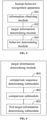
- FIG. 3 is a structural block diagram of a human behavior recognition apparatus according to an embodiment of the present disclosure.
- the human behavior recognition apparatus includes:
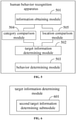
- FIG. 4 is a structural block diagram of a target information determining module according to an embodiment of the present disclosure.
- the target information determining module includes: a comparison sequence determining submodule 401, configured to determine a comparison sequence of the N pieces of candidate behavior-related information based on confidence scores respectively corresponding to the N pieces of candidate behavior-related information; a comparison submodule 402, configured to select, based on the comparison sequence, a piece of candidate behavior to be compared-related information from the N pieces of candidate behavior-related information for comparison with the attribute information of the target object; and a first target information determining submodule 403, configured to take the piece of candidate behavior to be compared-related information as the target behavior-related information in a case that a comparison result is that the piece of candidate behavior to be compared-related information matches the attribute information of the target object.
- FIG. 5 is a structural block diagram of a human behavior recognition apparatus according to an embodiment of the present disclosure.
- the apparatus may include an information obtaining module 501, a target information determining module 502, a behavior determining module 503, and at least one of the following: a category comparison module 504, configured to determine, in a case that a category of a candidate behavior to be compared included in a piece of candidate behavior to be compared-related information from the N pieces of candidate behavior-related information matches a category of the target object, a comparison result that the piece of candidate behavior to be compared-related information matches the attribute information of the target object; and a location comparison module 505, configured to determine, in a case that a difference between location information of a candidate behavior included in a piece of candidate behavior to be compared-related information from the N pieces of candidate behavior-related information and location information of the target object is within a preset range, a comparison result that the piece of candidate behavior to be compared-related information matches the attribute information of the target object
- the information obtaining module 501, the target information determining module 502, and the behavior determining module 503 in FIG. 5 may be respectively identical or similar to the information obtaining module 301, the target information determining module 302, and the behavior determining module 303 in FIG. 3 .
- the behavior determining module is configured to take a category of a target behavior in the target behavior-related information as the behavior recognition result of the target human.
- FIG. 6 is a structural block diagram of a target information determining module in an embodiment of the present disclosure.
- the target information determining module includes: a second target information determining submodule 601, configured to determine basic behavior-related information in the N pieces of candidate behavior-related information as the target behavior-related information, in a case that the comparison results indicate that all the N pieces of candidate behavior-related information do not match the attribute information of the target object.
- FIG. 7 is a structural block diagram of an information obtaining module according to an embodiment of the present disclosure.
- the information obtaining module includes: a human image obtaining submodule 701, configured to obtain human image information of the target human from the target image; and a candidate behavior information obtaining submodule 702, configured to input the human image information into a classification model, to obtain the N pieces of candidate behavior-related information of the target human output by the classification model, wherein a piece of candidate behavior-related information includes at least one of a category and location information of a candidate behavior.
- FIG. 8 is a structural block diagram of a human behavior recognition apparatus according to an embodiment of the present disclosure.
- the apparatus further includes: an image feature extracting module 801, configured to extract an image feature of the target image; a feature determining module 802, configured to determine, based on the image feature, the target human, location information of the target human, and the attribute information of the target object from the target image; and a human image capturing module 803, configured to capture, based on the location information of the target human, the human image information of the target human corresponding to the location information of the target human from the target image.
- an image feature extracting module 801 configured to extract an image feature of the target image
- a feature determining module 802 configured to determine, based on the image feature, the target human, location information of the target human, and the attribute information of the target object from the target image
- a human image capturing module 803 configured to capture, based on the location information of the target human, the human image information of the target human corresponding to the location information of the target human from the target image
- the present disclosure also provides an electronic device, a readable storage medium, and a computer program product.
- FIG. 9 is a schematic block diagram of an exemplary electronic device 900 that may be used to implement the embodiments of the present disclosure.
- the electronic device is intended to represent various forms of digital computers, such as a laptop, a desktop, a workbench, a personal digital assistant, a server, a blade server, a mainframe computer, and other suitable computers.
- the electronic device may also represent various forms of mobile devices, such as a personal digital processor, a cellular phone, a smart phone, a wearable device, and other similar computing devices.
- the components, their connections and relationships, and their functions shown in the present disclosure are merely examples, and will not limit the implementation described and/or required in the present disclosure.
- the device 900 includes a computing unit 901, which may perform various appropriate actions and processes according to a computer program stored in a read-only memory (ROM) 902 or a computer program loaded from a storage unit 908 into a random-access memory (RAM) 903.
- Various programs and data required for the operation of the device 900 may also be stored in the RAM 903.
- the computing unit 901, the ROM 902, and the RAM 903 are connected to each other through a bus 904.
- An input/output (I/O) interface 905 is also connected to the bus 904.
- a plurality of components in the device 900 are connected to the I/O interface 905, including: an input unit 906, such as a keyboard and a mouse; an output unit 907, such as various types of displays and speakers; a storage unit 908, such as a magnetic disk and an optical disk; and a communication unit 909, such as a network card, a modem, and a wireless communication transceiver.
- the communication unit 909 allows the device 900 to exchange information/data with other devices through a computer network such as the Internet and/or various telecommunication networks.
- the computing unit 901 may be various general-purpose and/or special-purpose processing components with processing and calculating capabilities. Some examples of the computing unit 901 include but not limited to central processing unit (CPU), graphics processing unit (GPU), various dedicated artificial intelligence (AI) computing chips, various computing units running machine learning model algorithms, digital signal processors (DSP), and any appropriate processors, controllers, microcontrollers, and the like.
- the computing unit 901 performs the various methods and processes described above, such as the human behavior recognition method.
- the human behavior recognition method may be implemented as a computer software program, which is physically included in a machine-readable medium, such as the storage unit 908.
- part or all of the computer program may be loaded and/or installed on the device 900 via the ROM 902 and/or the communication unit 909. If the computer program is loaded into the RAM 903 and executed by the computing unit 901, one or more steps of the human behavior recognition method described above may be performed. Alternatively, in other embodiments, the computing unit 901 may be configured to perform the human behavior recognition method in any other appropriate manner (for example, with the help of firmware).
- Various implementations of the systems and technologies described in the present disclosure may be implemented in a digital electronic circuit system, an integrated circuit system, a field programmable gate array (FPGA), an application specific integrated circuit (ASIC), an application-specific standard product (ASSP), a system-on-chip (SOC), a complex programmable logical device (CPLD), computer hardware, firmware, software, and/or their combination.
- FPGA field programmable gate array
- ASIC application specific integrated circuit
- ASSP application-specific standard product
- SOC system-on-chip
- CPLD complex programmable logical device
- These various implementations may include: being implemented in one or more computer programs, wherein the one or more computer programs may be executed and/or interpreted on a programmable system including at least one programmable processor, the programmable processor may be a dedicated or general-purpose programmable processor that may receive data and instructions from a storage system, at least one input apparatus, and at least one output apparatus, and transmit the data and instructions to the storage system, the at least one input apparatus, and the at least one output apparatus.
- Program code used to implement the method of the present disclosure may be written in any combination of one or more programming languages.
- the program code may be provided for processors or controllers of the general-purpose computer, the special-purpose computer, or other programmable data processing apparatus, so that if the program code is executed by the processor or controller, functions/operations specified in the flowcharts and/or block diagrams will be implemented.
- the program code may be executed entirely or partially on a machine, partly executed on a machine and a remote machine, or entirely executed on a remote machine or a server as an independent software package.
- the machine-readable medium may be a tangible medium, which may include or store a program used by an instruction execution system, apparatus, or device or in combination with the instruction execution system, apparatus, or device.
- the machine-readable medium may be a machine-readable signal medium or a machine-readable storage medium.
- the machine-readable medium may include, but is not limited to an electronic, magnetic, optical, electromagnetic, infrared, or semiconductor system, apparatus, or device, or any appropriate combination of the above.
- a more specific example of the machine-readable storage medium may include an electrical connection based on one or more wires, a portable computer disk, a hard disk, a random-access memory (RAM), a read-only memory (ROM), an erasable programmable read-only memory (EPROM or flash memory), optical fiber, a portable compact disc read-only memory (CD-ROM), an optical storage device, a magnetic storage device, or any appropriate combination of the above.
- the system and technique described herein may be implemented on a computer.
- the computer includes: a display apparatus for displaying information to the user (for example, a CRT (cathode ray tube) or LCD (liquid crystal display) monitor)); and a keyboard and a pointing apparatus (for example, a mouse or a trackball), through which the user may provide input for the computer.
- a display apparatus for displaying information to the user
- a keyboard and a pointing apparatus for example, a mouse or a trackball
- Other types of apparatuses may also be configured to provide interaction with the user; for example, feedback provided to the user may be any form of sensory feedback (for example, visual feedback, auditory feedback, or tactile feedback); and input from the user may be received in any form, including acoustic input, voice input, or tactile input.
- the system and technique described herein may be implemented in a computing system that includes daemon components (for example, a data server), or a computing system that includes middleware components (for example, an application server), or a computing system that includes front-end components (for example, a user computer with a graphical user interface or web browser, through which the user may interact with an implementation of the system and technique described herein), or a computing system that includes any combination of such daemon components, middleware components, or front-end components.
- Components of the system may be connected to each other through any form or medium of digital data communication (for example, a communication network). Examples of the communication network include: local area network (LAN), wide area network (WAN), and the Internet.
- the computer system may include a client and a server.
- the client and server are generally far away from each other and usually interact with each other through a communication network.
- a relationship between the client and the server is generated by running a computer program that has a client-server relationship on a corresponding computer.
Landscapes
- Engineering & Computer Science (AREA)
- Theoretical Computer Science (AREA)
- Physics & Mathematics (AREA)
- General Physics & Mathematics (AREA)
- Multimedia (AREA)
- Computer Vision & Pattern Recognition (AREA)
- General Health & Medical Sciences (AREA)
- Health & Medical Sciences (AREA)
- Evolutionary Computation (AREA)
- Artificial Intelligence (AREA)
- Data Mining & Analysis (AREA)
- Software Systems (AREA)
- Human Computer Interaction (AREA)
- Computing Systems (AREA)
- Social Psychology (AREA)
- Psychiatry (AREA)
- General Engineering & Computer Science (AREA)
- Life Sciences & Earth Sciences (AREA)
- Biomedical Technology (AREA)
- Computational Linguistics (AREA)
- Molecular Biology (AREA)
- Biophysics (AREA)
- Mathematical Physics (AREA)
- Medical Informatics (AREA)
- Databases & Information Systems (AREA)
- Evolutionary Biology (AREA)
- Bioinformatics & Computational Biology (AREA)
- Bioinformatics & Cheminformatics (AREA)
- Image Analysis (AREA)
Applications Claiming Priority (1)
| Application Number | Priority Date | Filing Date | Title |
|---|---|---|---|
| CN202110099947.2A CN112784760B (zh) | 2021-01-25 | 2021-01-25 | 人体行为识别方法、装置、设备以及存储介质 |
Publications (2)
| Publication Number | Publication Date |
|---|---|
| EP3955217A2 true EP3955217A2 (de) | 2022-02-16 |
| EP3955217A3 EP3955217A3 (de) | 2022-04-27 |
Family
ID=75759041
Family Applications (1)
| Application Number | Title | Priority Date | Filing Date |
|---|---|---|---|
| EP21200368.5A Withdrawn EP3955217A3 (de) | 2021-01-25 | 2021-09-30 | Verfahren zur erkennung menschlichen verhaltens, vorrichtung, speichermedium und programmprodukt |
Country Status (3)
| Country | Link |
|---|---|
| US (1) | US11823494B2 (de) |
| EP (1) | EP3955217A3 (de) |
| CN (1) | CN112784760B (de) |
Cited By (1)
| Publication number | Priority date | Publication date | Assignee | Title |
|---|---|---|---|---|
| TWI889427B (zh) * | 2024-06-28 | 2025-07-01 | 關貿網路股份有限公司 | 物品觸及辨識系統、物品觸及辨識方法及其電腦程式產品 |
Families Citing this family (6)
| Publication number | Priority date | Publication date | Assignee | Title |
|---|---|---|---|---|
| CN112784760B (zh) * | 2021-01-25 | 2024-04-12 | 北京百度网讯科技有限公司 | 人体行为识别方法、装置、设备以及存储介质 |
| CN114511930B (zh) * | 2022-02-18 | 2025-04-29 | 创新奇智(重庆)科技有限公司 | 行为检测方法、装置、电子设备及计算机可读存储介质 |
| CN114913602A (zh) * | 2022-05-20 | 2022-08-16 | 深圳市商汤科技有限公司 | 行为识别方法、装置、设备及存储介质 |
| CN115713715B (zh) * | 2022-11-22 | 2023-10-31 | 天津安捷物联科技股份有限公司 | 一种基于深度学习的人体行为识别方法及识别系统 |
| CN115795347B (zh) * | 2022-12-06 | 2026-01-06 | 中国科学院计算技术研究所 | 一种行为识别模型的构建方法、行为识别模型及方法 |
| CN116912947B (zh) * | 2023-08-25 | 2024-03-12 | 东莞市触美电子科技有限公司 | 智能屏幕、屏幕控制方法、装置、设备及其存储介质 |
Family Cites Families (24)
| Publication number | Priority date | Publication date | Assignee | Title |
|---|---|---|---|---|
| KR102425578B1 (ko) * | 2017-08-08 | 2022-07-26 | 삼성전자주식회사 | 객체를 인식하는 방법 및 장치 |
| US10798313B2 (en) * | 2017-08-22 | 2020-10-06 | Alarm.Com Incorporated | Preserving privacy in surveillance |
| US11106902B2 (en) * | 2018-03-13 | 2021-08-31 | Adobe Inc. | Interaction detection model for identifying human-object interactions in image content |
| CN110149530B (zh) * | 2018-06-15 | 2021-08-24 | 腾讯科技(深圳)有限公司 | 一种视频处理方法和装置 |
| CN110889314B (zh) * | 2018-09-10 | 2022-09-13 | 北京市商汤科技开发有限公司 | 图像处理方法、装置、电子设备、服务器及系统 |
| CN109389068A (zh) * | 2018-09-28 | 2019-02-26 | 百度在线网络技术(北京)有限公司 | 用于识别驾驶行为的方法和装置 |
| CN111507125A (zh) * | 2019-01-30 | 2020-08-07 | 佳能株式会社 | 检测装置和方法及图像处理装置和系统 |
| CN110135246B (zh) * | 2019-04-03 | 2023-10-20 | 平安科技(深圳)有限公司 | 一种人体动作的识别方法及设备 |
| KR102895049B1 (ko) * | 2019-05-14 | 2025-12-02 | 삼성전자주식회사 | 차량의 주행을 보조하는 전자 장치 및 방법 |
| CN110363220B (zh) * | 2019-06-11 | 2021-08-20 | 北京奇艺世纪科技有限公司 | 行为类别检测方法、装置、电子设备和计算机可读介质 |
| CN110348335B (zh) * | 2019-06-25 | 2022-07-12 | 平安科技(深圳)有限公司 | 行为识别的方法、装置、终端设备及存储介质 |
| CN110674712A (zh) | 2019-09-11 | 2020-01-10 | 苏宁云计算有限公司 | 交互行为识别方法、装置、计算机设备和存储介质 |
| CN111062239A (zh) * | 2019-10-15 | 2020-04-24 | 平安科技(深圳)有限公司 | 人体目标检测方法、装置、计算机设备及存储介质 |
| CN111079536B (zh) | 2019-11-18 | 2023-08-29 | 高新兴科技集团股份有限公司 | 基于人体关键点时序的行为分析方法、存储介质及设备 |
| CN111241989B (zh) * | 2020-01-08 | 2023-06-13 | 腾讯科技(深圳)有限公司 | 图像识别方法及装置、电子设备 |
| CN111274945B (zh) * | 2020-01-19 | 2023-08-08 | 北京百度网讯科技有限公司 | 一种行人属性的识别方法、装置、电子设备和存储介质 |
| CN111584714A (zh) * | 2020-05-27 | 2020-08-25 | 京东方科技集团股份有限公司 | Oled显示结构制备方法及oled显示结构 |
| CN111753721B (zh) * | 2020-06-24 | 2024-10-18 | 上海依图网络科技有限公司 | 一种人体姿态的识别方法及装置 |
| CN115803790A (zh) * | 2020-07-10 | 2023-03-14 | 松下电器(美国)知识产权公司 | 行动识别装置、行动识别方法以及程序 |
| CN111931701B (zh) * | 2020-09-11 | 2021-01-15 | 平安国际智慧城市科技股份有限公司 | 基于人工智能的姿态识别方法、装置、终端和存储介质 |
| CN112784760B (zh) * | 2021-01-25 | 2024-04-12 | 北京百度网讯科技有限公司 | 人体行为识别方法、装置、设备以及存储介质 |
| US11921831B2 (en) * | 2021-03-12 | 2024-03-05 | Intellivision Technologies Corp | Enrollment system with continuous learning and confirmation |
| US12106531B2 (en) * | 2021-07-22 | 2024-10-01 | Microsoft Technology Licensing, Llc | Focused computer detection of objects in images |
| CN114004985B (zh) * | 2021-10-29 | 2023-10-31 | 北京百度网讯科技有限公司 | 人物交互检测方法、神经网络及其训练方法、设备和介质 |
-
2021
- 2021-01-25 CN CN202110099947.2A patent/CN112784760B/zh active Active
- 2021-09-30 EP EP21200368.5A patent/EP3955217A3/de not_active Withdrawn
- 2021-10-05 US US17/494,724 patent/US11823494B2/en active Active
Cited By (1)
| Publication number | Priority date | Publication date | Assignee | Title |
|---|---|---|---|---|
| TWI889427B (zh) * | 2024-06-28 | 2025-07-01 | 關貿網路股份有限公司 | 物品觸及辨識系統、物品觸及辨識方法及其電腦程式產品 |
Also Published As
| Publication number | Publication date |
|---|---|
| US11823494B2 (en) | 2023-11-21 |
| US20220027606A1 (en) | 2022-01-27 |
| CN112784760A (zh) | 2021-05-11 |
| CN112784760B (zh) | 2024-04-12 |
| EP3955217A3 (de) | 2022-04-27 |
Similar Documents
| Publication | Publication Date | Title |
|---|---|---|
| US11823494B2 (en) | Human behavior recognition method, device, and storage medium | |
| US20220270382A1 (en) | Method and apparatus of training image recognition model, method and apparatus of recognizing image, and electronic device | |
| US20230096921A1 (en) | Image recognition method and apparatus, electronic device and readable storage medium | |
| US20220351398A1 (en) | Depth detection method, method for training depth estimation branch network, electronic device, and storage medium | |
| CN113971751A (zh) | 训练特征提取模型、检测相似图像的方法和装置 | |
| CN113591864B (zh) | 文本识别模型框架的训练方法、装置及系统 | |
| CN113420681A (zh) | 行为识别及模型训练的方法、设备、存储介质和程序产品 | |
| CN113869253A (zh) | 活体检测方法、训练方法、装置、电子设备及介质 | |
| CN113033431B (zh) | 光学字符识别模型训练和识别方法、装置、设备及介质 | |
| CN112507090B (zh) | 用于输出信息的方法、装置、设备和存储介质 | |
| CN112861885A (zh) | 图像识别方法、装置、电子设备及存储介质 | |
| CN114067394A (zh) | 人脸活体检测方法、装置、电子设备及存储介质 | |
| CN114387651A (zh) | 一种人脸识别方法、装置、设备及存储介质 | |
| CN114445682A (zh) | 训练模型的方法、装置、电子设备、存储介质及产品 | |
| US20220392192A1 (en) | Target re-recognition method, device and electronic device | |
| CN116894242A (zh) | 轨迹验证码的识别方法、装置、电子设备及存储介质 | |
| CN114220163B (zh) | 人体姿态估计方法、装置、电子设备及存储介质 | |
| CN114417029A (zh) | 模型训练方法、装置、电子设备及存储介质 | |
| CN114155589B (zh) | 一种图像处理方法、装置、设备以及存储介质 | |
| CN114140851B (zh) | 图像检测方法和用于训练图像检测模型的方法 | |
| CN114037865B (zh) | 图像处理方法、装置、设备、存储介质和程序产品 | |
| CN113642495B (zh) | 用于评价时序提名的模型的训练方法、设备、程序产品 | |
| CN113010721B (zh) | 一种图片审核方法、装置、电子设备及存储介质 | |
| CN115359574A (zh) | 人脸活体检测及相应模型的训练方法、装置及存储介质 | |
| CN116524516B (zh) | 文本结构化信息确定方法、装置、设备及存储介质 |
Legal Events
| Date | Code | Title | Description |
|---|---|---|---|
| PUAI | Public reference made under article 153(3) epc to a published international application that has entered the european phase |
Free format text: ORIGINAL CODE: 0009012 |
|
| STAA | Information on the status of an ep patent application or granted ep patent |
Free format text: STATUS: REQUEST FOR EXAMINATION WAS MADE |
|
| 17P | Request for examination filed |
Effective date: 20210930 |
|
| AK | Designated contracting states |
Kind code of ref document: A2 Designated state(s): AL AT BE BG CH CY CZ DE DK EE ES FI FR GB GR HR HU IE IS IT LI LT LU LV MC MK MT NL NO PL PT RO RS SE SI SK SM TR |
|
| PUAL | Search report despatched |
Free format text: ORIGINAL CODE: 0009013 |
|
| AK | Designated contracting states |
Kind code of ref document: A3 Designated state(s): AL AT BE BG CH CY CZ DE DK EE ES FI FR GB GR HR HU IE IS IT LI LT LU LV MC MK MT NL NO PL PT RO RS SE SI SK SM TR |
|
| RIC1 | Information provided on ipc code assigned before grant |
Ipc: G06V 40/20 20220101ALI20220323BHEP Ipc: G06V 20/52 20220101AFI20220323BHEP |
|
| STAA | Information on the status of an ep patent application or granted ep patent |
Free format text: STATUS: THE APPLICATION HAS BEEN WITHDRAWN |
|
| 18W | Application withdrawn |
Effective date: 20240320 |