EP3955174A2 - Verfahren, vorrichtung und speichermedium zum trainieren eines tiefenlernrahmens - Google Patents
Verfahren, vorrichtung und speichermedium zum trainieren eines tiefenlernrahmens Download PDFInfo
- Publication number
- EP3955174A2 EP3955174A2 EP21202496.2A EP21202496A EP3955174A2 EP 3955174 A2 EP3955174 A2 EP 3955174A2 EP 21202496 A EP21202496 A EP 21202496A EP 3955174 A2 EP3955174 A2 EP 3955174A2
- Authority
- EP
- European Patent Office
- Prior art keywords
- task
- training
- deep learning
- node
- learning framework
- Prior art date
- Legal status (The legal status is an assumption and is not a legal conclusion. Google has not performed a legal analysis and makes no representation as to the accuracy of the status listed.)
- Pending
Links
Images

Classifications
-
- G—PHYSICS
- G06—COMPUTING OR CALCULATING; COUNTING
- G06N—COMPUTING ARRANGEMENTS BASED ON SPECIFIC COMPUTATIONAL MODELS
- G06N3/00—Computing arrangements based on biological models
- G06N3/02—Neural networks
- G06N3/08—Learning methods
- G06N3/088—Non-supervised learning, e.g. competitive learning
-
- G—PHYSICS
- G06—COMPUTING OR CALCULATING; COUNTING
- G06N—COMPUTING ARRANGEMENTS BASED ON SPECIFIC COMPUTATIONAL MODELS
- G06N20/00—Machine learning
-
- G—PHYSICS
- G06—COMPUTING OR CALCULATING; COUNTING
- G06N—COMPUTING ARRANGEMENTS BASED ON SPECIFIC COMPUTATIONAL MODELS
- G06N3/00—Computing arrangements based on biological models
- G06N3/02—Neural networks
- G06N3/08—Learning methods
-
- G—PHYSICS
- G06—COMPUTING OR CALCULATING; COUNTING
- G06F—ELECTRIC DIGITAL DATA PROCESSING
- G06F9/00—Arrangements for program control, e.g. control units
- G06F9/06—Arrangements for program control, e.g. control units using stored programs, i.e. using an internal store of processing equipment to receive or retain programs
- G06F9/46—Multiprogramming arrangements
- G06F9/48—Program initiating; Program switching, e.g. by interrupt
- G06F9/4806—Task transfer initiation or dispatching
- G06F9/4843—Task transfer initiation or dispatching by program, e.g. task dispatcher, supervisor, operating system
-
- G—PHYSICS
- G06—COMPUTING OR CALCULATING; COUNTING
- G06F—ELECTRIC DIGITAL DATA PROCESSING
- G06F9/00—Arrangements for program control, e.g. control units
- G06F9/06—Arrangements for program control, e.g. control units using stored programs, i.e. using an internal store of processing equipment to receive or retain programs
- G06F9/46—Multiprogramming arrangements
- G06F9/48—Program initiating; Program switching, e.g. by interrupt
- G06F9/4806—Task transfer initiation or dispatching
- G06F9/4843—Task transfer initiation or dispatching by program, e.g. task dispatcher, supervisor, operating system
- G06F9/485—Task life-cycle, e.g. stopping, restarting, resuming execution
-
- G—PHYSICS
- G06—COMPUTING OR CALCULATING; COUNTING
- G06F—ELECTRIC DIGITAL DATA PROCESSING
- G06F9/00—Arrangements for program control, e.g. control units
- G06F9/06—Arrangements for program control, e.g. control units using stored programs, i.e. using an internal store of processing equipment to receive or retain programs
- G06F9/46—Multiprogramming arrangements
- G06F9/50—Allocation of resources, e.g. of the central processing unit [CPU]
- G06F9/5061—Partitioning or combining of resources
- G06F9/5066—Algorithms for mapping a plurality of inter-dependent sub-tasks onto a plurality of physical CPUs
-
- G—PHYSICS
- G06—COMPUTING OR CALCULATING; COUNTING
- G06F—ELECTRIC DIGITAL DATA PROCESSING
- G06F9/00—Arrangements for program control, e.g. control units
- G06F9/06—Arrangements for program control, e.g. control units using stored programs, i.e. using an internal store of processing equipment to receive or retain programs
- G06F9/46—Multiprogramming arrangements
- G06F9/52—Program synchronisation; Mutual exclusion, e.g. by means of semaphores
-
- G—PHYSICS
- G06—COMPUTING OR CALCULATING; COUNTING
- G06N—COMPUTING ARRANGEMENTS BASED ON SPECIFIC COMPUTATIONAL MODELS
- G06N3/00—Computing arrangements based on biological models
- G06N3/02—Neural networks
- G06N3/04—Architecture, e.g. interconnection topology
- G06N3/0464—Convolutional networks [CNN, ConvNet]
-
- G—PHYSICS
- G06—COMPUTING OR CALCULATING; COUNTING
- G06N—COMPUTING ARRANGEMENTS BASED ON SPECIFIC COMPUTATIONAL MODELS
- G06N3/00—Computing arrangements based on biological models
- G06N3/02—Neural networks
- G06N3/08—Learning methods
- G06N3/0895—Weakly supervised learning, e.g. semi-supervised or self-supervised learning
-
- G—PHYSICS
- G06—COMPUTING OR CALCULATING; COUNTING
- G06N—COMPUTING ARRANGEMENTS BASED ON SPECIFIC COMPUTATIONAL MODELS
- G06N3/00—Computing arrangements based on biological models
- G06N3/02—Neural networks
- G06N3/08—Learning methods
- G06N3/098—Distributed learning, e.g. federated learning
-
- G—PHYSICS
- G16—INFORMATION AND COMMUNICATION TECHNOLOGY [ICT] SPECIALLY ADAPTED FOR SPECIFIC APPLICATION FIELDS
- G16H—HEALTHCARE INFORMATICS, i.e. INFORMATION AND COMMUNICATION TECHNOLOGY [ICT] SPECIALLY ADAPTED FOR THE HANDLING OR PROCESSING OF MEDICAL OR HEALTHCARE DATA
- G16H70/00—ICT specially adapted for the handling or processing of medical references
- G16H70/40—ICT specially adapted for the handling or processing of medical references relating to drugs, e.g. their side effects or intended usage
-
- G—PHYSICS
- G06—COMPUTING OR CALCULATING; COUNTING
- G06F—ELECTRIC DIGITAL DATA PROCESSING
- G06F2209/00—Indexing scheme relating to G06F9/00
- G06F2209/48—Indexing scheme relating to G06F9/48
- G06F2209/485—Resource constraint
-
- G—PHYSICS
- G06—COMPUTING OR CALCULATING; COUNTING
- G06F—ELECTRIC DIGITAL DATA PROCESSING
- G06F2209/00—Indexing scheme relating to G06F9/00
- G06F2209/50—Indexing scheme relating to G06F9/50
- G06F2209/5022—Workload threshold
-
- G—PHYSICS
- G06—COMPUTING OR CALCULATING; COUNTING
- G06F—ELECTRIC DIGITAL DATA PROCESSING
- G06F2209/00—Indexing scheme relating to G06F9/00
- G06F2209/50—Indexing scheme relating to G06F9/50
- G06F2209/503—Resource availability
-
- G—PHYSICS
- G06—COMPUTING OR CALCULATING; COUNTING
- G06N—COMPUTING ARRANGEMENTS BASED ON SPECIFIC COMPUTATIONAL MODELS
- G06N3/00—Computing arrangements based on biological models
- G06N3/02—Neural networks
- G06N3/04—Architecture, e.g. interconnection topology
- G06N3/045—Combinations of networks
Definitions
- the present disclosure relates to technical fields such as deep learning and big data processing, and in particular to a method, an apparatus and a storage medium for training a deep learning framework.
- the present disclosure provides a method, an apparatus and a storage medium for training a deep learning framework, for reducing manpower investment for task training in a cluster and improving training efficiency.
- a method for training a deep learning framework includes: acquiring at least one task node in a current task node cluster, that meets a preset opening condition when a target task meets a training start condition; judging whether a number of nodes of the at least one task node is greater than a preset number; synchronously training the deep learning framework of the target task by the at least one task node according to sample data when the number of nodes is greater than the preset number; and acquiring a synchronously trained target deep learning framework when the target task meets a training completion condition.
- an apparatus for training a deep learning framework which includes: a first acquiring module, configured to acquire at least one task node in a current task node cluster, that meets a preset opening condition when a target task meets a training start condition; a judging module, configured to judge whether a number of nodes of the at least one task node is greater than a preset number; a training module, configured to synchronously train the deep learning framework of the target task by the at least one task node according to sample data when the number of nodes is greater than the preset number; and a second acquiring module, configured to acquire a synchronously trained target deep learning framework when the target task meets a training completion condition.
- an electronic device which includes: at least one processor; and a memory communicatively connected with the at least one processor; wherein instructions executable by the at least one processor are stored in the memory, and the instructions are executed by the at least one processor, so that the at least one processor can execute the method for training a deep learning framework according to the embodiment of the first aspect.
- a non-transitory computer-readable storage medium in which computer instructions are stored, wherein the computer instructions are configured to cause the computer execute the method for training a deep learning framework according to the embodiment of the first aspect.
- a computer program product comprising a computer program that, when executed by a processor, implements the method for training a deep learning framework according to the embodiment of the first aspect.
- the embodiments of the present disclosure have at least the following technical effects: at least one task node in a current task node cluster is acquired, which meets a preset opening condition when a target task meets a training start condition, and then it is judged whether the number of nodes of the at least one task node is greater than a preset number, if the number of nodes is greater than the preset number, the deep learning framework of the target task is synchronously trained according to the at least one task node according to sample data; at last a synchronously trained target deep learning framework is acquired when the target task meets a training completion condition.
- the present disclosure proposes a method for flexible training a deep learning framework for a deep learning model.
- the cluster resources are idle, the execution of our pre-training tasks is automatically performed without human monitoring. And our tasks will be killed when there are tasks of higher priority to avoid affecting the execution of other tasks of high priority.
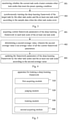
- Fig. 1 is a flowchart of a method for training a deep learning framework according to an embodiment of the present disclosure. As shown in Fig. 1 , the method includes: a step 101 of acquiring at least one task node in a current task node cluster, that meets a preset opening condition when a target task meets a training start condition.
- target task may be any task used for training the deep learning framework by deep learning, including recognition of image categories, label classification of medicines, semantic recognition of images and the like.
- the cluster resources may carry a large number of training tasks, and the execution of the training of the target task requires a certain amount of resources. Therefore, in order to ensure that the target task can be executed, at least one task node in a current task node cluster will be acquired, that meets a preset opening condition when a target task meets a training start condition, wherein each node in the cluster may be understood as a machine resource, which can be used for the training of the deep learning framework according to the sample data. a step 102 of judging whether the number of nodes of the at least one task node is greater than a preset number.
- the preset number may be determined according to the amount of the training task of the target task.
- a deep learning model can be obtained in advance by training according to experimental data, and the input of the deep learning model is the task type of the target task, and the output is the preset number, so that the corresponding task type can be obtained according to the deep learning model.
- the target task can be started, and the deep learning framework of the task is synchronously trained according to all task nodes that meet the condition.
- the deep learning framework may be the initial architecture of any form of deep learning model, which may include a convolutional layer, a pooling layer, a fully connected layer, and so on.
- the deep learning framework of the task will be trained synchronously according to all task nodes that meet the condition, that is, the training results of all task nodes will be synchronized.
- the deep learning framework will be trained in each task node, and the framework parameters of the deep learning framework in each task node in each period will be read according to a preset period.
- the framework parameters may be understood as the model parameters of the deep learning model, etc.
- a first average value will be determined, which is the average value of the framework parameters of all task nodes, and the deep learning framework in each task node will be synchronized according to the first average value, thus the synchronization of training between different task nodes is realized.
- the deep learning framework is divided into multiple training stages, and when each training stage is reached, the framework parameters for the training stage in each task node will be acquired, and the synchronization of each training stage will be realized after the frame parameters of the stage are averaged.
- a training task completion condition sent by a user if a training task completion condition sent by a user is received, the target task is considered to meet the training completion condition; in other possible embodiments, in each task node, according to a loss function, a loss value of the deep learning framework will be calculated. When the loss value of all task nodes is less than a preset threshold, it is considered that the target task meets the training completion condition.
- the target task meets the training completion condition, since all task nodes are trained synchronously, the synchronously trained target deep learning framework of all task nodes will be acquired, and the target deep learning framework is the training result of all task nodes, which are synchronized, and then according to the target deep learning framework, any scenario, which requires the target deep learning framework, will be performed, such as semantic recognition of images through the target deep learning framework; such as image classification through the target deep learning framework; such as determination of labels of medicines in the field of medicine through the target deep learning framework, etc.
- recognition of image semantics will be performed through the target deep learning framework.
- the training start condition will be determined according to the requirements of recognition of image semantics.
- the training start condition is the preset number of the nodes in the idle state is greater than 5, and then the nodes in the idle state will be determined as the task nodes when the number of the nodes in the idle state in the current task node cluster is greater than or equal to 5.
- the training of the deep learning framework for image semantic recognition will start at each task node.
- the training sample images of each task node may be acquired online or may also be read locally from the task node.
- the training sample images of each task node may be not completely the same.
- Unsupervised training methods will be used so that the frame parameters corresponding to the image semantics will be learned and obtained by the deep learning framework of each task node, and in the present embodiment, the average value of the frame parameters of all task nodes will be calculated at regular time intervals, and the deep learning framework in each task node will be synchronized according to the average value.
- a semantic loss value of the last synchronized deep learning framework may be calculated according to a loss function. For example, a reference training image annotated with standard semantics may be input into the last synchronized deep learning framework to acquire reference semantics output by the last synchronized deep learning framework, and the semantic loss value of the reference semantics and the standard semantics may be calculated. And when the loss value is less than a preset threshold, the last synchronized deep learning framework may be considered to be the target deep learning framework that can be used to recognize the image semantics.
- images, for which semantics is to be recognized may be input into the deep learning framework, and the image semantics output by the target deep learning framework may be acquired.
- determination of category labels of medicine categories will be performed through the target deep learning framework.
- the training start condition will be determined according to the medicine categories.
- the training start condition is the preset number of the nodes in the idle state is greater than 20, and then the nodes in the idle state will be determined as the task nodes when the number of the nodes in the idle state in the current task node cluster is greater than or equal to 20.
- the training of the deep learning framework for category labels of medicine categories will start at each task node.
- the training sample data of each task node may be acquired online or may also be read locally from the task node, wherein the training sample data may be information on the medicine ingredients, medicine manufacturer of various medicines, etc.
- the training sample images of each task node may be not completely the same.
- Unsupervised training methods will be used so that the frame parameters corresponding to the category recognition will be learned and obtained by the deep learning framework of each task node, and in the present embodiment, the average value of the frame parameters of all task nodes will be calculated at regular time intervals, and the deep learning framework in each task node will be synchronized according to the average value.
- a category label loss value of the last synchronized deep learning framework may be calculated according to a loss function.
- a reference medicine information annotated with standard category labels may be input into the last synchronized deep learning framework to acquire reference category labels output by the last synchronized deep learning framework, and the category label loss value of the reference category labels and the standard category labels may be calculated.
- the loss value is less than a preset threshold, the last synchronized deep learning framework may be considered to be the target deep learning framework that can be used to recognize the category labels of the medicines.
- At least one task node in a current task node cluster is acquired, which meets a preset opening condition when a target task meets a training start condition, and then it is judged whether the number of the at least one task node is greater than a preset number, if the number of nodes is greater than the preset number, the deep learning framework of the target task is synchronously trained by the at least one task node according to sample data; at last a target deep learning framework synchronously trained by the task nodes is acquired when the target task meets a training completion condition.
- the training start conditions corresponding to the target task and the preset opening conditions corresponding to the at least one task node are different.
- the training start conditions corresponding to the target task will be exemplified, and the description is as follows:
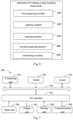
- the four states of the training of the task include: activated, waiting, running, finished. Refer to Fig. 2 for the transition relationship between them.
- the initial state of each task is "activated".
- the running state means that the task is running normally. In the case that it is interrupted, preempted, fails due to machine failure or other reasons, it will switch to the waiting state.
- the waiting state when the cluster resource meets the relevant requirements for the start of training again, the training task will turn to the running state again.
- the finished state which indicates that the training is completed.
- the target task meets the training start condition, and it is possible that the target task is started to the activated state, or the target task is in the waiting state.
- the framework parameters of the corresponding deep learning framework and the like will be saved at regular time intervals, so as to facilitate an automatic hot start of the next training from the last saved framework parameters in the waiting state when the machine resources are satisfied again and turn the training task to the running state again.
- an interface for artificially triggering the training start is provided.
- a keyword for starting the training of the target task which is contained in a voice message from a user, is received, or the user triggers a preset training start control, it is determined that the target task meets the training start condition.
- the task in order not to hinder the progress of other tasks of high priority, only when there is no task of high level needed to be performed, the task meets the training start condition.
- a priority level of a task to be executed in the current task node cluster will be monitored and it is determined that the target task meets the training start condition if the priority level is less than a preset level.
- the cluster resources may carry a large number of training tasks, and the execution of the training of the target task requires a certain amount of resources. Therefore, in order to ensure that the target task can be executed, at least one task node in a current task node cluster will be acquired, that meets a preset opening condition when a target task meets a training start condition, wherein each node in the cluster may be understood as a machine resource, which can be used for the training of the deep learning framework according to the sample data.
- the preset opening condition is the node state being the idle state.
- the node state of each node in the current task node cluster will be determined.
- the node state may include a task execution state and the idle state and the like.
- the node, the node state of which is the idle state will be determined to be the task node that meets the preset opening condition.
- a query request for the status bit may be sent to each node, and the node state of each node may be determined according to feedback information from each node.
- the preset opening condition is the amount of idle resources being greater than a certain value.
- the amount of idle resources for example, the amount of idle memories, of each node in the current task node cluster will be determined.
- the amount of idle resources may be the number of byte points, which are idle in each node, etc.
- a node the amount of idle resources of which is greater than a preset threshold, will be determined as the task node that meets the preset opening condition, wherein the preset threshold can be determined according to the training amount of the target task.
- the task node corresponding to the target task will be determined by flexibly using different methods according to the requirements of the scenarios, which further improves the automation of the training of the target task.
- an automatic flexible pre-training framework which can make full use of the idle resources of the cluster to complete self-supervised training, which is a very time-consuming task. More importantly, the globalized requirements of the above training requirements enable the synchronization of the framework parameters of the training among multiple task nodes, which then ensures that the flexible training has no loss in effects. And the automatic detection and retrieval mechanism can save the investigator from checking the task status frequently, and free up manpower to do more meaningful things.
- Fig. 3 is a flowchart of a method for training a deep learning framework according to an embodiment of the present disclosure. As shown in Fig. 3 , the method further includes before obtaining the training completion instruction of the task in the above step: a step 301 of monitoring whether the current task node cluster contains other task nodes that meet the preset opening condition.
- the deep learning framework will be trained synchronously by the other task nodes and the at least one task node according to the sample data. For example, in a certain task, 4 task nodes were used for the training for the first time; and the task enters the waiting state because of being preempted; and when the training start condition of the target task was met again, there are 8 idle task nodes, and then we will automatically assign 8 task nodes to the task at this time, so as to achieve the purpose of flexibility.
- the training will not be performed by the other task nodes from the initial state of the deep learning framework, but from a state, in which it has been trained by a task node.
- the synchronously training the deep learning framework of the target task according to the other task nodes and the at least one task node includes: a step 401 of acquiring current framework parameters of the deep learning framework in each task node of the at least one task node.
- the frame parameters of the deep learning framework in each task node are the results of the current task node, which has trained.
- the second average value of the frame parameters of all task nodes will be calculated, and the frame parameters of the deep learning framework will be updated according to the second average value to obtain updated reference frame parameters, which contain the current training results of all the task nodes.
- the deep learning framework of the target task will be trained according to the other task nodes and the at least one task node, which improves the training efficiency of the task nodes.
- an upper limit of the other nodes may also be set according to the training amount of the target task.
- the nodes of the number corresponding to the upper limit may be randomly selected from the task nodes that meet the preset condition, as the other nodes.
- an automatic flexible pre-training framework is used, which can make full use of the idle resources of the cluster to complete self-supervised training, which is a very time-consuming task, and improve the training efficiency while ensuring the training effects.
- Fig. 5 is a schematic structural diagram of the apparatus for training the deep learning framework according to one embodiment of the present disclosure. As shown in Fig. 5 , the apparatus includes: a first acquiring module 510, a judging module 520, a training module 530, and a second acquiring module 540, wherein
- the first acquiring module 510 is configured for acquiring at least one task node in a current task node cluster, that meets a preset opening condition when a target task meets a training start condition;
- the first acquiring module 510 is specifically configured for:
- the first acquiring module 510 is specifically configured for:
- the training module 530 is specifically configured for:
- At least one task node in a current task node cluster is acquired, which meets a preset opening condition when a target task meets a training start condition, and then it is judged whether the number of the at least one task node is greater than a preset number, if the number of nodes is greater than the preset number, the deep learning framework of the target task is synchronously trained by the at least one task node according to sample data; at last a target deep learning framework synchronously trained by the at least one task nodes is acquired when the target task meets a training completion condition.
- the apparatus for training the deep learning framework includes: a first acquiring module 610, a judging module 620, a training module 630, a second acquiring module 640 and a monitoring module 650, wherein the functions of the first acquiring module 610, the judging module 620, the training module 630 and the second acquiring module 640 are the same as those of the first acquiring module 510, the judging module 520, the training module 530, and the second acquiring module 540 in the above described embodiment, and will not repeated here.
- the monitoring module 650 is configured for monitoring whether the current task node cluster contains other task nodes that meet the preset opening condition; the training module 630 is further configured for synchronously training the deep learning framework of the target task by the other task nodes and the at least one task node according to the sample data if the other task nodes exist.
- the training module 630 is specifically configured for:
- the first acquiring module 510 is specifically configured for:
- an automatic flexible pre-training framework is used, which can make full use of the idle resources of the cluster to complete self-supervised training, which is a very time-consuming task, and improve the training efficiency while ensuring the training effects.
- the present disclosure also provides an electronic device, a readable storage medium, and a computer program product.
- Fig. 7 shows a schematic block diagram of an example electronic device 700 that can be used to implement embodiments of the present disclosure.
- An electronic device is intended to represent various forms of digital computers, such as a laptop computer, a desktop computer, a workstation, a personal digital assistant, a server, a blade server, a mainframe computer and other suitable computers.
- An electronic device can also represent various forms of mobile apparatuses, such as personal digital processing, cellular phone, smart phone, a wearable device and other similar computing apparatuses.
- the components shown herein, their connections and relationships and their functions are merely examples, and are not intended to limit the implementation of the present disclosure described and/or required herein.
- the device 700 includes a computing unit 701, which can perform various suitable actions and processing according to a computer program stored in a read-only memory (ROM) 702 or a computer program loaded from a storage unit 708 to a random access memory (RAM) 703.
- ROM read-only memory
- RAM random access memory
- various programs and data required for operations of the device 700 may also be stored.
- the computing unit 701, the ROM 702 and the RAM 703 are connected to each other through a bus 704.
- An input/output (I/O) interface 705 is also connected to the bus 704.
- the I/O interface 705 includes: an input unit 706, such as a keyboard, a mouse, etc.; an output unit 707, such as various types of displays, speakers, etc.; and the storage unit 708, such as a disk, an optical disc, etc.; and a communication unit 709, such as a network card, a modem, a wireless communication transceiver, etc.
- the communication unit 709 allows the device 700 to exchange information/data with other devices through a computer network such as the Internet and/or various telecommunication networks.
- the computing unit 701 may be various general-purpose and/or special-purpose processing components with processing and computing capabilities. Some examples of the computing unit 701 include, but are not limited to, a central processing unit (CPU), a graphics processing unit (GPU), various dedicated artificial intelligence (AI) computing chips, various computing units that run machine learning model algorithms, a digital signal processing (DSP), and any suitable processor, controller, microcontroller, etc.
- the computing unit 701 executes the various methods and processes described above, such as the method for training the deep learning framework.
- the method for training the deep learning framework may be implemented as a computer software program, which is tangibly contained in a machine-readable medium, such as the storage unit 708.
- part or all of the computer program may be loaded and/or installed onto the device 700 via the ROM 702 and/or the communication unit 709.
- the computer program When the computer program is loaded into the RAM 703 and executed by the computing unit 701, one or more steps of the method for training the deep learning framework described above can be executed.
- the computing unit 701 may be configured to perform the method for training the deep learning framework in any other suitable manner (for example, by means of firmware).
- programmable processor may be a dedicated or general-purpose programmable processor that can receive data and instructions from a storage system, at least one input device and at least one output device, and transmit data and instructions to the storage system, the at least one input device and the at least one output device.
- the program codes used to implement the method of the present disclosure can be written in any combination of one or more programming languages. These program codes can be provided to a processor or controller of a general-purpose computer, a special-purpose computer or other programmable data processing devices, so that when the program codes are executed by the processor or controller, the functions/operations specified in the flowcharts and/or block diagrams are implemented.
- the program codes can be executed entirely on a machine, partly executed on a machine, partly executed on a machine and partly executed on a remote machine as an independent software package, or entirely executed on a remote machine or a server.
- a machine-readable medium may be a tangible medium, which may contain or store a program for use by an instruction execution system, an apparatus or a device or for use in combination with an instruction execution system, an apparatus or a device.
- the machine-readable medium may be a machine-readable signal medium or a machine-readable storage medium.
- the machine-readable medium may include, but is not limited to, an electronic, magnetic, optical, electromagnetic, infrared or semiconductor system, an apparatus or a device or any suitable combination of the foregoing.
- machine-readable storage medium may include electrical connection based on one or more wires, a portable computer disk, a hard disk, a random access memory (RAM), a read-only memory (ROM), an erasable programmable read-only memory (EPROM or flash memory), an optical fiber, a portable compact disk read-only memory (CD-ROM), an optical storage device, a magnetic storage device or any suitable combination of the foregoing.
- RAM random access memory
- ROM read-only memory
- EPROM or flash memory erasable programmable read-only memory
- CD-ROM compact disk read-only memory
- magnetic storage device any suitable combination of the foregoing.
- a computer which has: a display apparatus for displaying information to the user (for example, a CRT (cathode ray tube) or LCD (liquid crystal display) monitor); and a keyboard and pointing apparatus (for example, a mouse or a trackball), through which the user can provide input to the computer.
- a display apparatus for displaying information to the user
- LCD liquid crystal display
- keyboard and pointing apparatus for example, a mouse or a trackball
- Other types of apparatuses can also be used to provide interaction with the user; for example, the feedback provided to the user can be any form of sensory feedback (for example, visual feedback, auditory feedback or tactile feedback); and input from the user can be received in any form (including acoustic input, voice input or tactile input).
- the systems and technologies described here can be implemented in a computing system that includes back-end components (for example, as a data server), or a computing system that includes middleware components (for example, an application server), or a computing system that includes front-end components (for example, a user computer with a graphical user interface or a web browser, through which the user can interact with the embodiments of the systems and technologies described herein), or a computing system that includes any combination of such background components, middleware Components or front-end components.
- the components of the system can be connected to each other through any form or medium of digital data communication (for example, a communication network). Examples of the communication network include: a local area network (LAN), a wide area network (WAN), the Internet, and a blockchain network.
- the computer system may include a client and a server.
- the client and the server are generally far away from each other and usually interact through a communication network.
- the relationship between the client and the server will be generated by a computer program that runs on a corresponding computer and has a client-server relationship with each other.
- the server may be a cloud server, also known as a cloud computing server or a cloud host, which is a host product in a cloud computing service system to solve the defect of the existed shortcomings of difficult management and weak business scalability in the traditional physical host and VPS service ("Virtual Private Server", or "VPS" for short).
- the server may also be a server of a distributed system, or a server combined with a blockchain.
- the server may also be a server of a distributed system, or a server combined with a blockchain.
Landscapes
- Engineering & Computer Science (AREA)
- Theoretical Computer Science (AREA)
- Software Systems (AREA)
- Physics & Mathematics (AREA)
- General Physics & Mathematics (AREA)
- General Engineering & Computer Science (AREA)
- Health & Medical Sciences (AREA)
- Data Mining & Analysis (AREA)
- Evolutionary Computation (AREA)
- Computing Systems (AREA)
- Mathematical Physics (AREA)
- Artificial Intelligence (AREA)
- General Health & Medical Sciences (AREA)
- Computational Linguistics (AREA)
- Molecular Biology (AREA)
- Biophysics (AREA)
- Biomedical Technology (AREA)
- Life Sciences & Earth Sciences (AREA)
- Medical Informatics (AREA)
- Computer Vision & Pattern Recognition (AREA)
- Chemical & Material Sciences (AREA)
- Bioinformatics & Cheminformatics (AREA)
- Medicinal Chemistry (AREA)
- Pharmacology & Pharmacy (AREA)
- Toxicology (AREA)
- Epidemiology (AREA)
- Primary Health Care (AREA)
- Public Health (AREA)
- Management, Administration, Business Operations System, And Electronic Commerce (AREA)
- Image Analysis (AREA)
- Machine Translation (AREA)
- Electrically Operated Instructional Devices (AREA)
Applications Claiming Priority (1)
| Application Number | Priority Date | Filing Date | Title |
|---|---|---|---|
| CN202110266288.7A CN113032117A (zh) | 2021-03-10 | 2021-03-10 | 深度学习框架的训练方法、装置及存储介质 |
Publications (2)
| Publication Number | Publication Date |
|---|---|
| EP3955174A2 true EP3955174A2 (de) | 2022-02-16 |
| EP3955174A3 EP3955174A3 (de) | 2022-05-04 |
Family
ID=76470214
Family Applications (1)
| Application Number | Title | Priority Date | Filing Date |
|---|---|---|---|
| EP21202496.2A Pending EP3955174A3 (de) | 2021-03-10 | 2021-10-13 | Verfahren, vorrichtung und speichermedium zum trainieren eines tiefenlernrahmens |
Country Status (5)
| Country | Link |
|---|---|
| US (1) | US20220036241A1 (de) |
| EP (1) | EP3955174A3 (de) |
| JP (1) | JP2022017588A (de) |
| KR (1) | KR102920351B1 (de) |
| CN (1) | CN113032117A (de) |
Families Citing this family (13)
| Publication number | Priority date | Publication date | Assignee | Title |
|---|---|---|---|---|
| CN113327598B (zh) * | 2021-06-30 | 2023-11-14 | 北京有竹居网络技术有限公司 | 模型的训练方法、语音识别方法、装置、介质及设备 |
| EP4364062A1 (de) * | 2021-07-01 | 2024-05-08 | Google LLC | Erkennung inaktiver projekte auf basis von benutzungssignalen und maschinenlernen |
| CN114139605A (zh) * | 2021-11-04 | 2022-03-04 | 乐视新生代(北京)文化传媒有限公司 | 分布式的模型训练方法、系统、设备以及存储介质 |
| CN114741175B (zh) * | 2022-04-15 | 2024-10-18 | 支付宝(杭州)信息技术有限公司 | 任务执行方法、装置、中心节点和下游节点设备 |
| CN114860411B (zh) * | 2022-05-17 | 2023-05-05 | 北京百度网讯科技有限公司 | 多任务学习方法、装置、电子设备和存储介质 |
| CN114820279B (zh) * | 2022-05-18 | 2023-03-24 | 北京百度网讯科技有限公司 | 基于多gpu的分布式深度学习方法、装置及电子设备 |
| CN115222041B (zh) * | 2022-06-22 | 2023-09-01 | 北京百度网讯科技有限公司 | 用于模型训练的图生成方法、装置、电子设备及存储介质 |
| CN115169540A (zh) * | 2022-08-04 | 2022-10-11 | 浙江工业大学 | 基于分布式类脑图的深度学习计算框架缺陷溯源方法 |
| CN116341663A (zh) * | 2023-03-09 | 2023-06-27 | 北京百度网讯科技有限公司 | 深度学习推理框架的扩展方法、装置、设备及介质 |
| CN116402127A (zh) * | 2023-04-03 | 2023-07-07 | 南京大学 | 一种用于深度学习模型训练的框架系统构建方法 |
| KR102665470B1 (ko) * | 2023-06-09 | 2024-05-10 | 주식회사 노타 | 인공지능 기반의 모델의 벤치마크 결과를 포함하는 사용자 인터페이스를 제공하기 위한 방법 및 장치 |
| CN116935158B (zh) * | 2023-07-14 | 2026-05-05 | 杭州海康机器人股份有限公司 | 一种模型训练时长确定方法及装置 |
| CN119376889B (zh) * | 2024-10-25 | 2026-01-16 | 杭州群核信息技术有限公司 | 应用于多机多卡的任务处理方法和分布式训练管理系统 |
Family Cites Families (14)
| Publication number | Priority date | Publication date | Assignee | Title |
|---|---|---|---|---|
| JP2007244887A (ja) * | 2001-12-03 | 2007-09-27 | Ziosoft Inc | ボリュームレンダリング処理方法、ボリュームレンダリング処理システム、計算機及びプログラム |
| US8417715B1 (en) * | 2007-12-19 | 2013-04-09 | Tilmann Bruckhaus | Platform independent plug-in methods and systems for data mining and analytics |
| US10540608B1 (en) * | 2015-05-22 | 2020-01-21 | Amazon Technologies, Inc. | Dynamically scaled training fleets for machine learning |
| CN107729126A (zh) * | 2016-08-12 | 2018-02-23 | 中国移动通信集团浙江有限公司 | 一种容器云的任务调度方法和装置 |
| US20180314971A1 (en) * | 2017-04-26 | 2018-11-01 | Midea Group Co., Ltd. | Training Machine Learning Models On A Large-Scale Distributed System Using A Job Server |
| CN109993299B (zh) * | 2017-12-29 | 2024-02-27 | 中兴通讯股份有限公司 | 数据训练方法及装置、存储介质、电子装置 |
| CN108876702A (zh) * | 2018-06-21 | 2018-11-23 | 北京邮电大学 | 一种加速分布式深度神经网络的训练方法及装置 |
| CN109117265A (zh) * | 2018-07-12 | 2019-01-01 | 北京百度网讯科技有限公司 | 在集群中调度作业的方法、装置、设备及存储介质 |
| US12050577B1 (en) * | 2019-02-04 | 2024-07-30 | Architecture Technology Corporation | Systems and methods of generating dynamic event tree for computer based scenario training |
| US20200311583A1 (en) * | 2019-04-01 | 2020-10-01 | Hewlett Packard Enterprise Development Lp | System and methods for fault tolerance in decentralized model building for machine learning using blockchain |
| CN110889492B (zh) * | 2019-11-25 | 2022-03-08 | 北京百度网讯科技有限公司 | 用于训练深度学习模型的方法和装置 |
| CN111768006B (zh) * | 2020-06-24 | 2024-09-06 | 北京金山云网络技术有限公司 | 一种人工智能模型的训练方法、装置、设备及存储介质 |
| CN112000473A (zh) * | 2020-08-12 | 2020-11-27 | 中国银联股份有限公司 | 深度学习模型的分布式训练方法以及装置 |
| CN112416599B (zh) * | 2020-12-03 | 2023-03-24 | 腾讯科技(深圳)有限公司 | 一种资源调度方法、装置、设备及计算机可读存储介质 |
-
2021
- 2021-03-10 CN CN202110266288.7A patent/CN113032117A/zh active Pending
- 2021-10-13 EP EP21202496.2A patent/EP3955174A3/de active Pending
- 2021-10-14 US US17/501,003 patent/US20220036241A1/en active Pending
- 2021-11-15 JP JP2021185382A patent/JP2022017588A/ja active Pending
- 2021-12-07 KR KR1020210173825A patent/KR102920351B1/ko active Active
Non-Patent Citations (1)
| Title |
|---|
| ANONYMOUS: "Elastic Deep Learning with Horovod on Ray | Uber Blog", 8 March 2021 (2021-03-08), pages 1 - 19, XP093301574, Retrieved from the Internet <URL:https://www.uber.com/en-NL/blog/horovod-ray/> [retrieved on 20250801] * |
Also Published As
| Publication number | Publication date |
|---|---|
| US20220036241A1 (en) | 2022-02-03 |
| JP2022017588A (ja) | 2022-01-25 |
| KR20210156243A (ko) | 2021-12-24 |
| CN113032117A (zh) | 2021-06-25 |
| KR102920351B1 (ko) | 2026-01-30 |
| EP3955174A3 (de) | 2022-05-04 |
Similar Documents
| Publication | Publication Date | Title |
|---|---|---|
| US20220036241A1 (en) | Method, device and storage medium for training a deep learning framework | |
| US12423576B2 (en) | Method and apparatus for updating parameter of multi-task model, and storage medium | |
| US20250036920A1 (en) | Mixture-of-experts model implementation method and system, electronic device, and storage medium | |
| EP3905126A2 (de) | Bildgruppierungsverfahren und -vorrichtung | |
| US20230020324A1 (en) | Task Processing Method and Device, and Electronic Device | |
| US20230144949A1 (en) | Virtual-machine cold migration method and apparatus, electronic device and storage medium | |
| CN117057411B (zh) | 一种大语言模型训练方法、装置、设备及存储介质 | |
| CN113778644B (zh) | 任务的处理方法、装置、设备及存储介质 | |
| CN113963186A (zh) | 目标检测模型的训练方法、目标检测方法及相关装置 | |
| WO2017206893A1 (zh) | 界面刷新同步方法、装置、终端及存储介质 | |
| CN115390992A (zh) | 一种虚拟机创建方法、装置、设备和存储介质 | |
| CN116341663A (zh) | 深度学习推理框架的扩展方法、装置、设备及介质 | |
| CN115658311A (zh) | 一种资源的调度方法、装置、设备和介质 | |
| CN115237725A (zh) | 任务智能调度方法、装置、计算机设备及存储介质 | |
| EP4583039A1 (de) | Bildverarbeitungsverfahren und -vorrichtung, vorrichtung und medium | |
| CN113326888A (zh) | 标注能力信息确定方法、相关装置及计算机程序产品 | |
| CN117271121A (zh) | 一种任务处理进度控制方法、装置、设备及其存储介质 | |
| CN113641929B (zh) | 页面渲染的方法、装置、电子设备和计算机可读存储介质 | |
| CN116069497A (zh) | 执行分布式任务的方法、装置、设备以及存储介质 | |
| CN114201564A (zh) | 地图生产任务处理方法、装置、电子设备以及存储介质 | |
| CN120780506B (zh) | 一种分布式微服务组件系统和请求处理方法 | |
| CN113835706A (zh) | 基于人工智能的骨架屏生成方法、装置、电子设备及介质 | |
| CN115331089B (zh) | 用于识别图像文字的方法、装置、设备、介质和产品 | |
| CN115827526B (zh) | 数据处理方法、装置、设备以及存储介质 | |
| CN117033015B (zh) | 消息处理方法、装置、系统、设备及存储介质 |
Legal Events
| Date | Code | Title | Description |
|---|---|---|---|
| PUAI | Public reference made under article 153(3) epc to a published international application that has entered the european phase |
Free format text: ORIGINAL CODE: 0009012 |
|
| STAA | Information on the status of an ep patent application or granted ep patent |
Free format text: STATUS: THE APPLICATION HAS BEEN PUBLISHED |
|
| AK | Designated contracting states |
Kind code of ref document: A2 Designated state(s): AL AT BE BG CH CY CZ DE DK EE ES FI FR GB GR HR HU IE IS IT LI LT LU LV MC MK MT NL NO PL PT RO RS SE SI SK SM TR |
|
| PUAL | Search report despatched |
Free format text: ORIGINAL CODE: 0009013 |
|
| AK | Designated contracting states |
Kind code of ref document: A3 Designated state(s): AL AT BE BG CH CY CZ DE DK EE ES FI FR GB GR HR HU IE IS IT LI LT LU LV MC MK MT NL NO PL PT RO RS SE SI SK SM TR |
|
| RIC1 | Information provided on ipc code assigned before grant |
Ipc: G06F 9/50 20060101ALI20220330BHEP Ipc: G06N 3/08 20060101AFI20220330BHEP |
|
| STAA | Information on the status of an ep patent application or granted ep patent |
Free format text: STATUS: REQUEST FOR EXAMINATION WAS MADE |
|
| 17P | Request for examination filed |
Effective date: 20221102 |
|
| RBV | Designated contracting states (corrected) |
Designated state(s): AL AT BE BG CH CY CZ DE DK EE ES FI FR GB GR HR HU IE IS IT LI LT LU LV MC MK MT NL NO PL PT RO RS SE SI SK SM TR |
|
| STAA | Information on the status of an ep patent application or granted ep patent |
Free format text: STATUS: EXAMINATION IS IN PROGRESS |
|
| 17Q | First examination report despatched |
Effective date: 20250807 |