EP3952182B1 - Procédé de détermination de dai (downlink assignment index), terminal, et dispositif de réseau - Google Patents
Procédé de détermination de dai (downlink assignment index), terminal, et dispositif de réseau Download PDFInfo
- Publication number
- EP3952182B1 EP3952182B1 EP20778059.4A EP20778059A EP3952182B1 EP 3952182 B1 EP3952182 B1 EP 3952182B1 EP 20778059 A EP20778059 A EP 20778059A EP 3952182 B1 EP3952182 B1 EP 3952182B1
- Authority
- EP
- European Patent Office
- Prior art keywords
- information
- signaling
- dai
- type
- identifying
- Prior art date
- Legal status (The legal status is an assumption and is not a legal conclusion. Google has not performed a legal analysis and makes no representation as to the accuracy of the status listed.)
- Active
Links
Images



Classifications
-
- H—ELECTRICITY
- H04—ELECTRIC COMMUNICATION TECHNIQUE
- H04W—WIRELESS COMMUNICATION NETWORKS
- H04W72/00—Local resource management
- H04W72/12—Wireless traffic scheduling
- H04W72/1263—Mapping of traffic onto schedule, e.g. scheduled allocation or multiplexing of flows
- H04W72/1273—Mapping of traffic onto schedule, e.g. scheduled allocation or multiplexing of flows of downlink data flows
-
- H—ELECTRICITY
- H04—ELECTRIC COMMUNICATION TECHNIQUE
- H04L—TRANSMISSION OF DIGITAL INFORMATION, e.g. TELEGRAPHIC COMMUNICATION
- H04L1/00—Arrangements for detecting or preventing errors in the information received
- H04L1/12—Arrangements for detecting or preventing errors in the information received by using return channel
- H04L1/16—Arrangements for detecting or preventing errors in the information received by using return channel in which the return channel carries supervisory signals, e.g. repetition request signals
- H04L1/18—Automatic repetition systems, e.g. Van Duuren systems
- H04L1/1812—Hybrid protocols; Hybrid automatic repeat request [HARQ]
-
- H—ELECTRICITY
- H04—ELECTRIC COMMUNICATION TECHNIQUE
- H04L—TRANSMISSION OF DIGITAL INFORMATION, e.g. TELEGRAPHIC COMMUNICATION
- H04L1/00—Arrangements for detecting or preventing errors in the information received
- H04L1/12—Arrangements for detecting or preventing errors in the information received by using return channel
- H04L1/16—Arrangements for detecting or preventing errors in the information received by using return channel in which the return channel carries supervisory signals, e.g. repetition request signals
- H04L1/18—Automatic repetition systems, e.g. Van Duuren systems
- H04L1/1812—Hybrid protocols; Hybrid automatic repeat request [HARQ]
- H04L1/1819—Hybrid protocols; Hybrid automatic repeat request [HARQ] with retransmission of additional or different redundancy
-
- H—ELECTRICITY
- H04—ELECTRIC COMMUNICATION TECHNIQUE
- H04L—TRANSMISSION OF DIGITAL INFORMATION, e.g. TELEGRAPHIC COMMUNICATION
- H04L1/00—Arrangements for detecting or preventing errors in the information received
- H04L1/12—Arrangements for detecting or preventing errors in the information received by using return channel
- H04L1/16—Arrangements for detecting or preventing errors in the information received by using return channel in which the return channel carries supervisory signals, e.g. repetition request signals
- H04L1/18—Automatic repetition systems, e.g. Van Duuren systems
- H04L1/1829—Arrangements specially adapted for the receiver end
- H04L1/1858—Transmission or retransmission of more than one copy of acknowledgement message
-
- H—ELECTRICITY
- H04—ELECTRIC COMMUNICATION TECHNIQUE
- H04L—TRANSMISSION OF DIGITAL INFORMATION, e.g. TELEGRAPHIC COMMUNICATION
- H04L1/00—Arrangements for detecting or preventing errors in the information received
- H04L1/12—Arrangements for detecting or preventing errors in the information received by using return channel
- H04L1/16—Arrangements for detecting or preventing errors in the information received by using return channel in which the return channel carries supervisory signals, e.g. repetition request signals
- H04L1/18—Automatic repetition systems, e.g. Van Duuren systems
- H04L1/1829—Arrangements specially adapted for the receiver end
- H04L1/1864—ARQ related signaling
-
- H—ELECTRICITY
- H04—ELECTRIC COMMUNICATION TECHNIQUE
- H04L—TRANSMISSION OF DIGITAL INFORMATION, e.g. TELEGRAPHIC COMMUNICATION
- H04L1/00—Arrangements for detecting or preventing errors in the information received
- H04L1/12—Arrangements for detecting or preventing errors in the information received by using return channel
- H04L1/16—Arrangements for detecting or preventing errors in the information received by using return channel in which the return channel carries supervisory signals, e.g. repetition request signals
- H04L1/18—Automatic repetition systems, e.g. Van Duuren systems
- H04L1/1867—Arrangements specially adapted for the transmitter end
- H04L1/1887—Scheduling and prioritising arrangements
-
- H—ELECTRICITY
- H04—ELECTRIC COMMUNICATION TECHNIQUE
- H04L—TRANSMISSION OF DIGITAL INFORMATION, e.g. TELEGRAPHIC COMMUNICATION
- H04L5/00—Arrangements affording multiple use of the transmission path
- H04L5/003—Arrangements for allocating sub-channels of the transmission path
- H04L5/0053—Allocation of signalling, i.e. of overhead other than pilot signals
-
- H—ELECTRICITY
- H04—ELECTRIC COMMUNICATION TECHNIQUE
- H04L—TRANSMISSION OF DIGITAL INFORMATION, e.g. TELEGRAPHIC COMMUNICATION
- H04L5/00—Arrangements affording multiple use of the transmission path
- H04L5/003—Arrangements for allocating sub-channels of the transmission path
- H04L5/0053—Allocation of signalling, i.e. of overhead other than pilot signals
- H04L5/0057—Physical resource allocation for CQI
-
- H—ELECTRICITY
- H04—ELECTRIC COMMUNICATION TECHNIQUE
- H04L—TRANSMISSION OF DIGITAL INFORMATION, e.g. TELEGRAPHIC COMMUNICATION
- H04L5/00—Arrangements affording multiple use of the transmission path
- H04L5/0091—Signalling for the administration of the divided path, e.g. signalling of configuration information
- H04L5/0094—Indication of how sub-channels of the path are allocated
-
- H—ELECTRICITY
- H04—ELECTRIC COMMUNICATION TECHNIQUE
- H04W—WIRELESS COMMUNICATION NETWORKS
- H04W72/00—Local resource management
- H04W72/20—Control channels or signalling for resource management
- H04W72/23—Control channels or signalling for resource management in the downlink direction of a wireless link, i.e. towards a terminal
-
- H—ELECTRICITY
- H04—ELECTRIC COMMUNICATION TECHNIQUE
- H04W—WIRELESS COMMUNICATION NETWORKS
- H04W72/00—Local resource management
- H04W72/50—Allocation or scheduling criteria for wireless resources
- H04W72/56—Allocation or scheduling criteria for wireless resources based on priority criteria
-
- H—ELECTRICITY
- H04—ELECTRIC COMMUNICATION TECHNIQUE
- H04L—TRANSMISSION OF DIGITAL INFORMATION, e.g. TELEGRAPHIC COMMUNICATION
- H04L5/00—Arrangements affording multiple use of the transmission path
- H04L5/003—Arrangements for allocating sub-channels of the transmission path
- H04L5/0053—Allocation of signalling, i.e. of overhead other than pilot signals
- H04L5/0055—Physical resource allocation for ACK/NACK
Definitions
- the present disclosure relates to the field of communications technologies, and in particular, to a downlink assignment index (Downlink Assignment Index, DAI) determining method, a terminal and a network device.
- DAI Downlink Assignment Index
- a downlink assignment index may indicate an amount of signaling sent by a serving cell until a current subframe.
- a terminal can discover, in time based on a value of the DAI, that no signaling is received.
- the DAI may indicate an amount of downlink control information (Downlink Control Information, DCI) sent in a hybrid automatic repeat request (Hybrid Automatic Repeat Request, HARQ) feedback window of a serving cell until the current subframe.
- the terminal can discover, in time based on the value of the DAI, that no DCI is received.
- a terminal receives a low-latency service of ultra reliable low latency communications (Ultra Reliable Low Latency Communications, URLLC) while performing high-speed enhanced mobile broadband (Enhanced Mobile Broadband, eMBB) downloading.
- ultra reliable low latency communications Ultra Reliable Low Latency Communications, URLLC
- Enhanced Mobile Broadband, eMBB enhanced Mobile Broadband
- different services have different requirements. In this way, multiple services are counted by using a uniform DAI. Therefore, it is prone to errors, and the reliability of signaling transmission is poor.
- WO 2019/033384 A1 discloses that in a terminal, an HARQ-ACK generator generates one or more response signals for respective code block groups based on a parameter included in each of a plurality of downlink control signals, the code block groups forming each of a plurality of transport blocks to be assigned by the plurality of downlink control signals, the parameter relating to the number of code block groups.
- a transmitter collectively transmits the response signals for the respective code block groups.
- a value of the parameter herein is to be configured, at least using a first granularity coarser than a second granularity in units of the code block groups.
- a UE may receive a physical downlink control channel (PDCCH) that schedules a physical downlink shared channel (PDSCH) in a slot, and on a component carrier (CC) of a plurality of CCs.
- the PDCCH may include a total downlink assignment index (DAI) and a counter DAI for hybrid automatic repeat request acknowledgement (HARQ-ACK) feedback of the PDSCH.
- the total DAI may indicate a total number of pairs of CCs and slots for the HARQ-ACK feedback.
- the UE may encode the HARQ-ACK feedback to include a bit that indicates whether the PDSCH is successfully decoded.
- a size of the HARQ-ACK feedback may be based on the total DAI, and a position of the bit may be based on the counter DAI.
- Embodiments of the present disclosure provide a DAI determining method, a terminal and a network device, to resolve a problem of relatively poor reliability of signaling transmission.
- the object of the invention is achieved by the subject-matter of the independent claims.
- the dependent claims describe advantageous embodiments.
- the scope of protection of the invention is limited by the appended claims.
- an embodiment of the present disclosure provides a DAI determining method, which is defined in claim 1.
- an embodiment of the present disclosure provides a DAI determining method, which is defined in claim 7.
- an embodiment of the present disclosure provides a terminal, which is defined in claim 11.
- an embodiment of the present disclosure provides a network device, which is defined in claim 12.
- words such as “exemplary” or “for example” are used to indicate an example, an instance, or descriptions. Any embodiment or design scheme described as “exemplary” or “an example” in the embodiments of the present disclosure should not be construed as being optional or advantageous than other embodiments or design schemes. Specifically, the words such as “exemplary” or “for example” are used to present related concepts in a specific manner.
- a downlink assignment index determining method, a terminal, and a network device that are provided in the embodiments of the present disclosure may be applied to a wireless communications system.
- the wireless communications system may be a 5G system, an evolved long term evolution (Evolved Long Term Evolution, eLTE) system, a long term evolution (Long Term Evolution, LTE) system, a subsequent evolved communications system, or the like.
- eLTE evolved Long Term Evolution
- LTE long term evolution
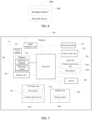
- FIG. 1 is a structural diagram of a network system to which an embodiment of the present disclosure is applicable.
- the network system includes a terminal 11 and a network device 12.
- the terminal 11 may be user equipment (User Equipment, UE) or another terminal device side device such as a mobile phone, a tablet personal computer (Tablet Personal Computer), a laptop computer (Laptop Computer), a personal digital assistant (Personal Digital Assistant, PDA), a mobile internet device (Mobile Internet Device, MID), a wearable device (Wearable Device), or a robot.
- UE User Equipment
- PDA Personal Digital Assistant
- a mobile internet device Mobile Internet Device, MID
- a wearable device wearable Device
- robot a robot.
- a specific type of the terminal 11 is not limited in the embodiments of the present disclosure.
- the network device 12 may be a fourth generation (the fourth generation, 4G) base station, a 5G base station, a base station of a later version, or a base station in another communications system, or may be referred to as a NodeB, an evolved NodeB, a transmission reception point (Transmission Reception Point, TRP), an access point (Access Point, AP), or another word in the field.
- the network device is not limited to a specific technical term provided that a same technical effect is achieved.
- the network device 12 may be a master node (Master Node, MN) or a secondary node (Secondary Node, SN). It should be noted that in the embodiments of the present disclosure, only the 5G base station is used as an example, but a specific type of the network device is not limited.
- FIG. 2 is a flowchart of a DAI determining method according to an embodiment of the present disclosure. The method is applied to a terminal. As shown in FIG. 2 , the method includes the following steps.
- Step 201 Receive signaling, where the signaling includes first information.
- the signaling may be physical layer signaling or higher layer signaling, for example, the signaling is physical downlink control channel (Physical downlink control channel, PDCCH) signaling, such as DCI.
- PDCCH Physical downlink control channel
- the first information may be used to indicate whether the signaling includes the DAI, or is used to indicate a type of the DAI in the signaling.
- the indication herein may be an explicit indication or an implicit indication.
- Step 202 Perform DAI identification in the signaling based on the first information, where the DAI identification includes at least one of the following:
- the determining whether the signaling includes a DAI may be: determining whether the signaling includes the DAI. This is because in this embodiment of the present disclosure, the signaling may include or may not include the DAI, to adapt to requirements for multiple services and multiple scenarios.
- the identifying a type of the DAI in the signaling may be: identifying the type of the DAI when the signaling includes the DAI, to support configuration of different DAIs for different types.
- the type of the DAI may be a service type, a signaling type, an identifier type, a control channel configuration type, a service priority type, a resource type, a modulation and coding scheme (Modulation and Coding Scheme, MCS) type, a codebook type, or the like corresponding to the DAI.
- MCS Modulation and Coding Scheme
- the identifying a type of the DAI in the signaling may be: identifying the type of the DAI in the signaling when the signaling includes the DAI by default; or may be: identifying the type of the DAI in the signaling when it is determined, by using the foregoing steps, that the signaling includes the DAI.
- whether the signaling includes the DAI may be determined based on the first information, so that a case in which the signaling includes or does not include the DAI can be supported.
- the signaling may be flexibly configured to include or not include the DAI, for example, some services are not configured with the DAI, and other services are configured with the DAI, to avoid errors caused when different services share the same DAI, thereby improving the reliability of signaling transmission.
- the type of the DAI in the signaling may be identified based on the first information, so that corresponding DAIs can be independently configured for different types, to avoid errors caused when different types share the same DAI, thereby improving the reliability of signaling transmission.
- the signaling when the signaling is signaling for a first service, the signaling includes the DAI; or when the signaling is signaling for a second service, the signaling does not include the DAI.
- the first service and the second service may be two concurrent services, or certainly, may be two nonconcurrent services.
- first service and the second service may be services of two different service types, for example, URLLC and eMBB; or the first service and the second service may be services in two different signaling formats; or the first service and the second service may be services of two different control channel configurations; or the first service and the second service may be services of two different priorities; or the first service and the second service may be services of two different transmission resources; or the first service and the second service may be services of two different pilot mapping types; or the first service and the second service may be services of two different MCS configurations; or the first service and the second service may be services of two different hybrid automatic repeat request acknowledgment codebooks (Hybrid Automatic Repeat request Acknowledgement codebook, HARQ-ACK codebook).
- Hybrid Automatic Repeat request Acknowledgement codebook Hybrid Automatic Repeat request Acknowledgement codebook, HARQ-ACK codebook
- signaling for example, a PDCCH
- PDCCH Physical Downlink Control Channel
- a future 5G mobile communications system needs to adapt to more diversified scenarios and service requirements.
- Main scenarios of 5G may include: eMBB, URLLC, and massive machine type communication (Massive Machine Type Communication, mMTC). These scenarios impose requirements such as high reliability, a low delay, high bandwidth, and wide coverage on a system.
- these different services may have different quality of service (quality of service, QoS) requirements.
- the URLLC supports low-delay and high-reliability services. To achieve higher reliability, data needs to be transmitted by using a lower bit rate, and a faster and more accurate channel state information (Channel State Information, CSI) feedback is required.
- CSI Channel State Information
- An eMBB service supports a requirement for a high throughput, but is less sensitive to a delay and reliability than a URLLC service.
- some terminals may support services of different numerologies (numerology).
- the terminals support both low-delay and high-reliability URLLC services and large-capacity and high-rate eMBB services.
- a PDCCH for scheduling the eMBB service needs to include a DAI field.
- the URLLC service has relatively high reliability, so that a PDCCH for scheduling the URLLC service may not need to include the DAI field. In this way, DCI overheads are reduced, and performance of control signaling receiving is improved.
- a DAI mechanism can ensure that the terminal can detect a PDCCH in a timely manner when the PDCCH is missing and not received.
- the type of the DAI corresponds to a type of the signaling.
- the type of the signaling may be another type such as a service type, a format type, an identifier type, a control channel configuration type, a service priority type, a resource type, an MCS type, or a HARQ-ACK codebook type.
- That the type of the DAI corresponds to a type of the signaling may be that the type of the DAI matches or is the same as the type of the signaling.
- a service priority type of the signaling is a priority 1
- the type of the DAI is the priority 1, that is, the DAI is used to count signaling of the priority 1.
- a signaling format type of the signaling is a signaling format 1
- the type of the DAI is the signaling format 1, that is, the DAI is used to count signaling in the signaling format 1.
- the signaling is signaling of a service type 1
- the type of the DAI is the service type 1, that is, the DAI is used to count signaling of the service type 1.
- independent DAIs may be configured for different types, so that DAI counting is separately performed on each type of signaling, to further improve the reliability of signaling transmission.
- independent DAI_1 counting is used for the eMBB service and independent DAI_2 counting is used for the URLLC service, so that the terminal can discover a missing eMBB service and a missing URLLC service in a timely manner.
- a separate counter (counter DAI) counting function may be used to independently calculate a quantity of PDCCHs for PDCCHs scheduled by different services.
- the first information includes at least one of the following: signaling format information, identifier information, control channel configuration information, priority information, resource indication information, modulation and coding scheme information, and feedback acknowledgement information.
- independent DAIs may be configured for different signaling formats, or that the signaling includes or does not include the DAI is configured for different signaling formats;
- a separate counter DAI field may be configured for a feature of each service, to independently perform DAI counting for each service, thereby further improving the reliability of signaling transmission.
- the signaling format information is used to indicate a format of the signaling, for example, a DCI format.
- the control channel configuration information may include at least one of the following: control resource set (control resource set, CORESET) information for the signaling and search space information for the signaling.
- control resource set control resource set, CORESET
- search space information for the signaling.
- the CORESET information for the signaling is used to indicate a CORESET corresponding to the signaling
- the search space information for the signaling is used to indicate search space corresponding to the signaling.
- the identifier information may include at least one of the following: a radio network temporary identifier (Radio Network Temporary Identifier, RNTI) of the signaling and scrambling information for the signaling.
- RNTI Radio Network Temporary Identifier
- the RNTI of the signaling may be an RNTI corresponding to the signaling, and the scrambling information for the signaling may be scrambling information corresponding to the signaling.
- the priority information may include at least one of the following: priority indication information and service type indication information.
- the priority indication information may be a service priority corresponding to the signaling, and the service type indication information may be a service type corresponding to the signaling.
- the feedback acknowledgement information includes type information of a HARQ-ACK codebook corresponding to the signaling.
- the modulation and coding scheme information may be an MCS table corresponding to the signaling, index information of the MCS table, or the like.
- the resource indication information may include at least one of the following:
- the transmission resource may be at least one of a time domain resource and a frequency domain resource.
- the signaling is DCI
- the first information may include one or more items in the following table.
- Table 1 Signaling list Related to a DCI format: DCI format Related to an identifier: Radio network temporary identifier RNTI corresponding to the DCI and scrambling information corresponding to the DCI Related to control channel configuration: Control resource set CORESET corresponding to the DCI and search space corresponding to the DCI Related to a service priority: Priority indication information carried in the DCI, and service type indication information carried in the DCI Related to a resource indication: Resource indication information carried in the DCI, where the resource indication is used to indicate a time domain resource and/or a frequency domain resource for transmitting data or control information; or pilot mapping type information that is carried in the DCI and that is used to indicate data or control information transmission Other correlation: Modulation and coding scheme MCS table corresponding to the DCI, and a type of a HARQ-ACK codebook corresponding to the DCI
- a relationship between each type of first information and whether the signaling includes the DAI may be preconfigured, so that the terminal may accurately determine, based on the first information, whether the signaling includes the DAI.
- the network may configure, in advance for each service by using higher layer signaling or other signaling, whether DAI information needs to be carried in the PDCCH.
- a type of a DAI corresponding to each type of first information may be preconfigured, for example, a HARQ-ACK codebook or a service corresponding to a DAI corresponding to each type of first information is preconfigured.
- the determining whether the signaling includes a DAI includes: determining, based on first configuration information, whether the signaling includes the DAI, where the first configuration information is used to configure a relationship between the first information and whether the signaling includes the DAI.
- the first configuration information may be preconfigured by the terminal, preconfigured by a network for the terminal, or agreed in a protocol.
- the configuring a relationship between the first information and whether the signaling includes the DAI may be: indicating first information corresponding to a case in which the signaling includes the DAI, and indicating first information corresponding to a case in which the signaling does not include the DAI.
- whether the signaling includes the DAI may be accurately determined based on the first configuration information.
- the identifying a type of the DAI in the signaling includes:
- the HARQ-ACK codebook corresponding to the DAI may be a HARQ-ACK codebook to which the DAI belongs, and the service corresponding to the DAI may be a service to which the DAI belongs. Therefore, a HARQ-ACK codebook or a service to which the DAI belongs can be determined.
- separate DAI counting may be configured for different HARQ-ACK codebooks or services, that is, the counter DAI is counted separately based on each service or HARQ-ACK codebook, to further improve reliability of signaling transmission.
- a HARQ-ACK process fed back by a transport block-level may be supported.
- each TB corresponds to feedback of one HARQ-ACK bit, supports multiple DL HARQ processes of each terminal, and also supports a single DL HARQ process of each terminal.
- the terminal may indicate a minimum HARQ processing time capability of the terminal, where the minimum HARQ processing time means minimum time required from receiving of downlink (Downlink) data to corresponding HARQ-ACK transmission timing.
- the eMBB and the URLLC can support asynchronous and adaptive Downlink HARQ.
- HARQ-ACK feedbacks of multiple PDSCHs may be transmitted in one UL data/control area in terms of time, thereby forming a HARQ-ACK codebook in UL.
- timing between receiving of a PDSCH and a corresponding ACK/NACK may be specified in the DCI. For the timing, refer to PDCSCH-to-HARQ timing indicators in DCI 1_0 and DCI 1_1.
- the identifying a type of the DAI in the signaling includes: identifying the type of the DAI in the signaling based on second configuration information, where the second configuration information is used to configure a relationship between the first information and the type of the DAI.
- the configuring a relationship between the first information and the type of the DAI may be: indicating a type of a DAI corresponding to each type of first information. For example, in each type of first information, a HARQ-ACK codebook or a service corresponding to the DAI is indicated, to dynamically determine, based on the second configuration information and the first information, a HARQ-ACK codebook or a service to which the DAI belongs.
- the type of the DAI may be accurately determined based on the second configuration information.
- the reliability of signaling transmission can be improved by using the foregoing DAI determining method.
- a future 5G system is used as an example.
- the future 5G system there is a case in which multiple services are concurrent. For example, a user is performing high-speed eMBB downloading while receiving a low-delay URLLC service. Reliability and a time sequence of PDCCHs used to schedule different types of services are not the same.
- the counter DAI field may be separately configured based on a feature of each service, and the counter DAI is separately counted based on each service or HARQ-ACK codebook, to ensure that PDCCH receiving meets different reliability requirements based on different services.
- FIG. 4 is a flowchart of another DAI determining method according to an embodiment of the present disclosure. The method is applied to a network device. As shown in FIG. 4 , the method includes the following steps.
- Step 401 Send signaling to a terminal, where the signaling includes first information, the first information is used by the terminal to perform DAI identification in the signaling, and the DAI identification includes at least one of the following:
- the signaling when the signaling is signaling for a first service, the signaling includes the DAI; or when the signaling is signaling for a second service, the signaling does not include the DAI.
- the type of the DAI corresponds to a type of the signaling.
- the first information includes at least one of the following: signaling format information, identifier information, control channel configuration information, priority information, resource indication information, modulation and coding scheme information, and feedback acknowledgement information.
- control channel configuration information includes at least one of the following: CORESET information for the signaling and search space information for the signaling.
- the identifier information includes at least one of the following: an RNTI of the signaling and scrambling information for the signaling.
- the priority information includes at least one of the following: priority indication information and service type indication information.
- the feedback acknowledgement information includes type information of a hybrid automatic repeat request acknowledgement codebook HARQ-ACK codebook corresponding to the signaling.
- the resource indication information includes at least one of the following:
- the identifying a type of the DAI in the signaling includes:
- the signaling is physical layer signaling or higher layer signaling.
- this embodiment is used as an implementation of a network device side corresponding to the embodiment shown in FIG. 2 .
- the reliability of signaling transmission can also be improved.
- FIG. 5 is a structural diagram of a terminal according to an embodiment of the present disclosure. As shown in FIG. 5 , a terminal 500 includes:
- the signaling when the signaling is signaling for a first service, the signaling includes the DAI; or when the signaling is signaling for a second service, the signaling does not include the DAI.
- the type of the DAI corresponds to a type of the signaling.
- the first information includes at least one of the following: signaling format information, identifier information, control channel configuration information, priority information, resource indication information, modulation and coding scheme information, and feedback acknowledgement information.
- control channel configuration information includes at least one of the following: control resource set CORESET information for the signaling and search space information for the signaling.
- the identifier information includes at least one of the following: an RNTI of the signaling and scrambling information for the signaling.
- the priority information includes at least one of the following: priority indication information and service type indication information.
- the feedback acknowledgement information includes type information of a HARQ-ACK codebook corresponding to the signaling.
- the resource indication information includes at least one of the following:
- the determining whether the signaling includes a DAI includes: determining, based on first configuration information, whether the signaling includes the DAI, where the first configuration information is used to configure a relationship between the first information and whether the signaling includes the DAI.
- the identifying a type of the DAI in the signaling includes:
- the identifying a type of the DAI in the signaling includes: identifying the type of the DAI in the signaling based on second configuration information, where the second configuration information is used to configure a relationship between the first information and the type of the DAI.
- the signaling is physical layer signaling or higher layer signaling.
- the terminal provided in this embodiment of the present disclosure can implement processes implemented by the terminal in the method embodiment of FIG. 2 . To avoid repetition, details are not described herein again. In addition, reliability of signaling transmission can be improved.
- FIG. 6 is a structural diagram of a network device according to an embodiment of the present disclosure.
- a network device 600 includes: a sending module 601, configured to send signaling to a terminal, where the signaling includes first information, the first information is used by the terminal to perform DAI identification in the signaling, and the DAI identification includes at least one of the following:
- the signaling when the signaling is signaling for a first service, the signaling includes the DAI; or when the signaling is signaling for a second service, the signaling does not include the DAI.
- the type of the DAI corresponds to a type of the signaling.
- the first information includes at least one of the following: signaling format information, identifier information, control channel configuration information, priority information, resource indication information, modulation and coding scheme information, and feedback acknowledgement information.
- control channel configuration information includes at least one of the following: CORESET information for the signaling and search space information for the signaling.
- the identifier information includes at least one of the following: an RNTI of the signaling and scrambling information for the signaling.
- the priority information includes at least one of the following: priority indication information and service type indication information.
- the resource indication information includes at least one of the following:
- the identifying a type of the DAI in the signaling includes: identifying a HARQ-ACK codebook corresponding to the DAI in the signaling, or identifying a service corresponding to the DAI in the signaling.
- the signaling is physical layer signaling or higher layer signaling.
- the network device provided in this embodiment of the present disclosure can implement processes implemented by the network device in the method embodiment of FIG. 4 . To avoid repetition, details are not described herein again. In addition, reliability of signaling transmission can be improved.
- FIG. 7 is a schematic diagram of a hardware structure of a terminal according to embodiments of the present disclosure.
- a terminal 700 includes but is not limited to components such as a radio frequency unit 701, a network module 702, an audio output unit 703, an input unit 704, a sensor 705, a display unit 706, a user input unit 707, an interface unit 708, a memory 709, a processor 710, and a power supply 711.
- a radio frequency unit 701 includes but is not limited to components such as a radio frequency unit 701, a network module 702, an audio output unit 703, an input unit 704, a sensor 705, a display unit 706, a user input unit 707, an interface unit 708, a memory 709, a processor 710, and a power supply 711.
- a structure of the terminal shown in FIG. 7 does not constitute a limitation on the terminal, and the terminal may include more or fewer components than those shown in the figure, or combine some components, or have different component arrangements.
- the terminal includes but is not limited to a mobile phone, a tablet computer, a laptop computer, a palmtop computer, an in-vehicle terminal, a robot, a wearable device, a pedometer, and the like.
- the radio frequency unit 701 is configured to receive signaling, where the signaling includes first information.
- the processor 710 is configured to perform DAI identification in the signaling based on the first information, where the DAI identification includes at least one of the following:
- the signaling when the signaling is signaling for a first service, the signaling includes the DAI; or when the signaling is signaling for a second service, the signaling does not include the DAI.
- the type of the DAI corresponds to a type of the signaling.
- the first information includes at least one of the following: signaling format information, identifier information, control channel configuration information, priority information, resource indication information, modulation and coding scheme information, and feedback acknowledgement information.
- control channel configuration information includes at least one of the following: CORESET information for the signaling and search space information for the signaling.
- the identifier information includes at least one of the following: a radio network temporary identifier RNTI of the signaling and scrambling information for the signaling.
- the priority information includes at least one of the following: priority indication information and service type indication information.
- the feedback acknowledgement information includes type information of a HARQ-ACK codebook corresponding to the signaling.
- the resource indication information includes at least one of the following:
- the determining whether the signaling includes a DAI includes: determining, based on first configuration information, whether the signaling includes the DAI, where the first configuration information is used to configure a relationship between the first information and whether the signaling includes the DAI.
- the identifying a type of the DAI in the signaling includes: identifying a HARQ-ACK codebook corresponding to the DAI in the signaling, or identifying a service corresponding to the DAI in the signaling.
- the identifying a type of the DAI in the signaling includes: identifying the type of the DAI in the signaling based on second configuration information, where the second configuration information is used to configure a relationship between the first information and the type of the DAI.
- the signaling is physical layer signaling or higher layer signaling.
- the terminal can improve the reliability of signaling transmission.
- the radio frequency unit 701 may be configured to receive and send information or receive and send a signal in a call process. Specifically, after downlink data from a base station is received, the processor 710 processes the downlink data. In addition, uplink data is sent to the base station.
- the radio frequency unit 701 includes but is not limited to an antenna, at least one amplifier, a transceiver, a coupler, a low noise amplifier, a duplexer, and the like.
- the radio frequency unit 701 may further communicate with a network and another device by using a wireless communication system.
- the terminal provides wireless broadband Internet access for a user by using the network module 702, for example, helping the user send and receive an email, browse a web page, and access streaming media.
- the audio output unit 703 may convert audio data received by the radio frequency unit 701 or the network module 702 or stored in the memory 709 into an audio signal and output as sound. In addition, the audio output unit 703 may further provide audio output (for example, call signal receiving sound or message receiving sound) related to a specific function performed by the terminal 700.
- the audio output unit 703 includes a loudspeaker, a buzzer, a telephone receiver, and the like.
- the input unit 704 is configured to receive an audio or video signal.
- the input unit 704 may include a graphics processing unit (Graphics Processing Unit, GPU) 7041 and a microphone 7042.
- the graphics processing unit 7041 processes image data of a static picture or a video obtained by an image capture apparatus (such as a camera) in a video capture mode or an image capture mode.
- a processed image frame may be displayed on the display unit 706.
- the image frame processed by the graphics processing unit 7041 may be stored in the memory 709 (or another storage medium) or sent by using the radio frequency unit 701 or the network module 702.
- the microphone 7042 may receive sound and can process such sound into audio data.
- the processed audio data may be output by being converted into a format that may be sent to a mobile communications base station by using the radio frequency unit 701 in a telephone call mode.
- the terminal 700 further includes at least one sensor 705, such as an optional sensor, a motion sensor, and another sensor.
- the optional sensor includes an ambient light sensor and a proximity sensor.
- the ambient light sensor may adjust luminance of the display panel 7061 based on brightness of ambient light
- the proximity sensor may disable the display panel 7061 and/or backlight when the terminal 700 approaches an ear.
- an accelerometer sensor may detect magnitude of an acceleration in each direction (generally three axes), and may detect magnitude and a direction of gravity when being static.
- the accelerometer sensor may be used for recognizing a terminal gesture (for example, horizontal and vertical screen switching, a related game, or magnetometer posture calibration), a function related to vibration recognition (for example, a pedometer or a strike), or the like.
- the sensor 705 may further include a fingerprint sensor, a pressure sensor, an iris sensor, a molecular sensor, a gyroscope, a barometer, a hygrometer, a thermometer, an infrared sensor, and the like. This is not described herein.
- the display unit 706 is configured to display information entered by the user or information provided for the user.
- the display unit 706 may include a display panel 7061, and the display panel 7061 may be configured in a form of a liquid crystal display (Liquid Crystal Display, LCD), an organic light-emitting diode (Organic Light-Emitting Diode, OLED), or the like.
- LCD Liquid Crystal Display
- OLED Organic Light-Emitting Diode
- the touch controller receives touch information from the touch detection apparatus, converts the touch information into contact coordinates, sends the contact coordinates to the processor 710, and can receive and execute a command sent by the processor 710.
- the touch panel 7071 may be implemented by using a plurality of types such as a resistive type, a capacitive type, an infrared ray, and a surface acoustic wave.
- the user input unit 707 may include another input device 7072 in addition to the touch panel 7071.
- the another input device 7072 may include but is not limited to one or more of a physical keyboard, a function key (such as a volume control key or an on/off key), a trackball, a mouse, a joystick, and the like. Details are not described herein.
- the touch panel 7071 may cover the display panel 7061. After detecting the touch operation on or near the touch panel 7071, the touch panel 7061 transmits the touch operation to the processor 710 to determine a type of a touch event, and then the processor 710 provides corresponding visual output on the display panel 7061 based on the type of the touch event.
- the touch panel 7071 and the display panel 7061 are used as two independent components to implement input and output functions of the terminal. However, in some embodiments, the touch panel 7071 and the display panel 7061 may be integrated to implement the input and output functions of the terminal. This is not specifically limited herein.
- the interface unit 708 is an interface connecting an external apparatus to the terminal 700.
- the external apparatus may include a wired or wireless headset port, an external power supply (or battery charger) port, a wired or wireless data port, a storage card port, a port configured to connect to an apparatus with an identification module, an audio input/output (input/output, I/O) port, a video I/O port, a headset port, and the like.
- the interface unit 708 may be configured to receive input (for example, data information and power) from the external apparatus and transmit the received input to one or more elements in the terminal 700, or may be configured to transmit data between the terminal 700 and the external apparatus.
- the memory 709 may be configured to store a software program and various data.
- the memory 709 may mainly include a program storage area and a data storage area.
- the program storage area may store an operating system, an application program required by at least one function (such as a sound play function or an image play function), and the like.
- the data storage area may store data (such as audio data or an address book) or the like created based on use of the mobile phone.
- the memory 709 may include a high-speed random access memory, and may further include a non-volatile memory such as at least one magnetic disk storage component, a flash memory component, or another volatile solid-state storage component.
- the processor 710 is a control center of the terminal, and is connected to all parts of the entire terminal by using various interfaces and lines, and performs various functions of the terminal and processes data by running or executing the software program and/or the module that are stored in the memory 709 and invoking the data stored in the memory 709, to implement overall monitoring on the terminal.
- the processor 710 may include one or more processing units.
- the processor 710 may be integrated with an application processor and a modem processor.
- the application processor mainly processes an operating system, a user interface, an application program, and the like, and the modem processor mainly processes wireless communication. It may be understood that the modem processor may also not be integrated into the processor 710.
- the terminal 700 may further include the power supply 711 (such as a battery) that supplies power to each component.
- the power supply 711 may be logically connected to the processor 710 by using a power management system, to implement functions such as charging, discharging, and power consumption management by using the power management system.
- the terminal 700 includes some function modules not shown, and details are not described herein.
- an embodiment of the present disclosure further provides a terminal, including a processor 710, a memory 709, and a computer program that is stored in the memory 709 and executable on the processor 710.
- a terminal including a processor 710, a memory 709, and a computer program that is stored in the memory 709 and executable on the processor 710.
- the computer program is executed by the processor 710, the process of the DAI determining method in the foregoing method embodiments is implemented, and a same technical effect can be achieved. To avoid repetition, details are not described herein.
- FIG. 8 is a structural diagram of another network device according to an embodiment of the present disclosure.
- a network device 800 includes a processor 801, a transceiver 802, a memory 803, and a bus interface.
- the transceiver 802 is configured to send signaling to a terminal, where the signaling includes first information, the first information is used by the terminal to perform DAI identification in the signaling, and the DAI identification includes at least one of the following:
- the signaling when the signaling is signaling for a first service, the signaling includes the DAI; or when the signaling is signaling for a second service, the signaling does not include the DAI.
- the type of the DAI corresponds to a type of the signaling.
- the first information includes at least one of the following: signaling format information, identifier information, control channel configuration information, priority information, resource indication information, modulation and coding scheme information, and feedback acknowledgement information.
- control channel configuration information includes at least one of the following: CORESET information for the signaling and search space information for the signaling.
- the identifier information includes at least one of the following: an RNTI of the signaling and scrambling information for the signaling.
- the priority information includes at least one of the following: priority indication information and service type indication information.
- the feedback acknowledgement information includes type information of a HARQ-ACK codebook corresponding to the signaling.
- the resource indication information includes at least one of the following:
- the identifying a type of the DAI in the signaling includes: identifying a HARQ-ACK codebook corresponding to the DAI in the signaling, or identifying a service corresponding to the DAI in the signaling.
- the signaling is physical layer signaling or higher layer signaling.
- the network device can improve reliability of signaling transmission.
- the transceiver 802 is configured to receive and send data under the control of the processor 801, and the transceiver 802 includes at least two antenna ports.
- a bus architecture may include any quantity of interconnected buses and bridges, and is specifically linked by various circuits of one or more processors represented by the processor 801 and a memory represented by the memory 803.
- the bus architecture may further link various other circuits such as a periphery device, a voltage regulator, and a power management circuit that are known in the art. Therefore, these are not further described in the present specification.
- the bus interface provides interfaces.
- the transceiver 802 may be a plurality of elements, in other words, includes a transmitter and a receiver, and provides a unit configured to communicate with various other apparatuses on a transmission medium.
- the user interface 804 may further be an interface that can be externally or internally connected to a required device.
- the connected device includes but is not limited to a keypad, a display, a loudspeaker, a microphone, a joystick, and the like.
- the processor 801 is responsible for managing the bus architecture and common processing, and the memory 803 may store data used when the processor 801 performs an operation.
- an embodiment of the present disclosure further provides a network device, including a processor 801, a memory 803, and a computer program that is stored in the memory 803 and executable on the processor 801.
- a network device including a processor 801, a memory 803, and a computer program that is stored in the memory 803 and executable on the processor 801.
- the computer program is executed by the processor 801, the process of the DAI determining method in the foregoing method embodiments is implemented, and a same technical effect can be achieved. To avoid repetition, details are not described herein.
- An embodiment of the present disclosure further provides a computer-readable storage medium.
- a computer program is stored in the computer-readable storage medium.
- the DAI determining method on a terminal side provided in the embodiments of the present disclosure is implemented; or when the computer program is executed by the processor, the DAI determining method on a network device side provided in the embodiments of the present disclosure is implemented, and a same technical effect can be achieved. To avoid repetition, details are not described herein again.
- the computer-readable storage medium includes a read-only memory (Read-Only Memory, ROM for short), a random access memory (Random Access Memory, RAM for short), a magnetic disk, an optical disc, or the like.
- the foregoing method embodiments may be implemented by using software and a required universal hardware platform, or certainly may be implemented by using hardware. However, in many cases, the former is a better implementation.
- the technical solutions of the present disclosure essentially or the part contributing to related technologies may be implemented in a form of a software product.
- the computer software product is stored in a storage medium (such as a ROM/RAM, a magnetic disk, or an optical disc) and includes several instructions for instructing a terminal (which may be a mobile phone, a computer, a server, an air conditioner, or a network device) to execute the methods described in the embodiments of the present disclosure.
- the disclosed apparatus and method may be implemented in another manner.
- the described apparatus embodiment is merely an example.
- the unit division is merely logical function division.
- multiple units or components may be combined or integrated into another system, or some features may be ignored or not performed.
- displayed or discussed mutual coupling or direct coupling or communication connection may be implemented by using some interfaces, an indirect coupling or communication connection between apparatuses or units may be in an electrical, mechanical, or another form.
- Units described as separate parts may or may not be physically separate, and parts displayed as units may or may not be physical units, may be located in one place, or may be distributed on multiple network units. Some or all of the units may be selected according to an actual requirement to implement the objectives of the solutions in the embodiments.
- functional units in the embodiments of the present disclosure may be integrated into one processing unit, or each unit may exist separately physically, or two or more units may be integrated into one unit.
- the function may be stored in a computer-readable storage medium when being implemented in the form of a software functional unit and sold or used as an independent product. Based on such an understanding, the technical solutions of the present disclosure essentially or the part contributing to related technologies may be implemented in a form of a software product.
- the computer software product is stored in a storage medium and includes several instructions for instructing a computer device (which may be a personal computer, a server, or a network device) to perform all or some steps in the methods described in the embodiments of the present disclosure.
- the foregoing storage medium includes any medium that can store program code, such as a USB flash drive, a removable hard disk, a ROM, a RAM, a magnetic disk, or an optical disc.
- the program may be stored in a computer-readable storage medium.
- the storage medium may be a magnetic disk, an optical disc, a read-only memory (Read-Only Memory, ROM), a random access memory (Random Access Memory, RAM), or the like.
- a module, a unit, and a subunit may be implemented in one or more application-specific integrated circuits (Application Specific Integrated Circuits, ASIC), a digital signal processor (Digital Signal Processor, DSP), a digital signal processing device (DSP Device, DSPD), a programmable logic device (Programmable Logic Device, PLD), a field-programmable gate array (Field-Programmable Gate Array, FPGA), a general-purpose processor, a controller, a microcontroller, a microprocessor, another electronic unit configured to perform the functions described in the present disclosure, or a combination thereof.
- ASIC Application Specific Integrated Circuits
- DSP Digital Signal Processor
- DSP Device digital signal processing device
- PLD programmable logic device
- FPGA field-programmable gate array
- a general-purpose processor a controller, a microcontroller, a microprocessor, another electronic unit configured to perform the functions described in the present disclosure, or a combination thereof.
- the techniques described in the embodiments of the present disclosure may be implemented by modules (for example, processes or functions) that perform the functions described in the embodiments of the present disclosure.
- Software code may be stored in a memory and executed by a processor.
- the memory may be implemented in or outside the processor.
Landscapes
- Engineering & Computer Science (AREA)
- Signal Processing (AREA)
- Computer Networks & Wireless Communication (AREA)
- Mobile Radio Communication Systems (AREA)
Claims (12)
- Procédé de détermination de l'indice d'assignation de la liaison descendante (DAI) appliquée à un terminal (11), le procédé
comprenant:recevoir (201) une signalisation, dans lequel la signalisation comprend une première information ; etidentifier un type de DAI dans la signalisation sur la base des premières informations, dans lequella première information comprend une information d'accusé de réception de retour, et l'information d'accusé de réception de retour comprend une information de type d'un livre de code d'accusé de réception de demande de répétition automatique hybride, HARQ-ACK, correspondant à la signalisation. - Procédé selon la revendication 1, dans lequel la première information comprend en outre au moins l'une des informations suivantes : informations sur le format de signalisation, informations sur l'identifiant, informations sur la configuration du canal de contrôle, informations sur la priorité, informations sur l'indication des ressources, et informations sur le schéma de modulation et de codage.
- Procédé selon la revendication 2, dans lequel les informations de configuration de canal de contrôle comprennent au moins l'un des éléments suivants :les informations relatives à l'ensemble de ressources de contrôle, CORESET, pour la signalisation et les informations relatives à l'espace de recherche pour la signalisation ;les informations d'identification comprennent au moins l'un des éléments suivants : un identificateur temporaire de réseau radio, RNTI, de la signalisation et des informations de brouillage pour la signalisation ;les informations d'indication de ressource comprennent au moins l'un des éléments suivants :les informations d'indication de ressource utilisées pour indiquer une ressource de transmission de données ou d'informations de contrôle ; etles informations d'indication utilisées pour indiquer les informations de type de mappage pilote pour la transmission de données ou la transmission d'informations de contrôle.
- Procédé selon la revendication 2, dans lequel les informations de priorité comprennent au moins l'une des informations suivantes : informations d'indication de priorité et informations d'indication de type de service.
- Procédé selon l'une quelconque des revendications 1 à 4, dans lequel l'identification du type de DAI dans la signalisation comprend :
identifier le type de DAI dans la signalisation sur la base de la deuxième information de configuration, la deuxième information de configuration étant utilisée pour configurer une relation entre la première information et le type de DAI. - Procédé selon l'une quelconque des revendications 1 à 5, dans lequel l'identification d'un type de DAI dans la signalisation comprend :
l'identification d'un livre de codes d'accusé de réception de demande de répétition automatique hybride, HARQ-ACK, correspondant au DAI dans la signalisation, ou l'identification d'un service correspondant au DAI dans la signalisation. - Procédé de détermination de l'indice d'assignation de la liaison descendante (DAI) appliqué à un dispositif de réseau (12) comprenant :envoyer (401) une signalisation à un terminal (11), dans laquelle la signalisation comprend une première information, la première information étant utilisée par le terminal (11) pour identifier un type de DAI dans la signalisation, dans lequella première information comprend une information d'accusé de réception de retour, et l'information d'accusé de réception de retour comprend une information de type d'un livre de code d'accusé de réception de demande de répétition automatique hybride, HARQ-ACK, correspondant à la signalisation.
- Procédé selon la revendication 7, dans lequel la première information comprend en outre au moins l'une des informations suivantes : informations sur le format de signalisation, informations sur l'identifiant, informations sur la configuration du canal de contrôle, informations sur la priorité, informations sur l'indication des ressources, et informations sur le schéma de modulation et de codage.
- Procédé selon la revendication 8, dans lequel l'information de priorité comprend au moins l'un des éléments suivants :
l'information d'indication de priorité et l'information d'indication du type de service. - Procédé selon l'une quelconque des revendications 7 à 9, dans lequel l'identification d'un type de DAI dans la signalisation comprend :identifier un livre de codes d'accusé de réception de demande de répétition automatique hybride HARQ-ACK correspondant au DAI dans la signalisation ; ouidentifier un service correspondant au DAI dans la signalisation.
- Terminal (700) comprenant : une mémoire (709), un processeur (710)et un programme stocké dans la mémoire (709) et pouvant être exécuté sur le processeur (710), dans lequel lorsque le programme est exécuté par le processeur (710), des étapes du procédé de détermination du DAI selon l'une quelconque des revendications 1 à 6 sont mises en œuvre.
- Terminal (800) comprenant : une mémoire (803), un processeur (801) et un programme stocké dans la mémoire (803) et pouvant être exécuté sur le processeur (801), dans lequel lorsque le programme est exécuté par le processeur (801), des étapes du procédé de détermination du DAI selon l'une quelconque des revendications 7 à 10 sont mises en œuvre.
Applications Claiming Priority (2)
| Application Number | Priority Date | Filing Date | Title |
|---|---|---|---|
| CN201910245274.XA CN111277386B (zh) | 2019-03-28 | 2019-03-28 | 下行分配索引确定方法、终端和网络设备 |
| PCT/CN2020/079889 WO2020192516A1 (fr) | 2019-03-28 | 2020-03-18 | Procédé de détermination de dai (downlink assignment index), terminal, et dispositif de réseau |
Publications (3)
| Publication Number | Publication Date |
|---|---|
| EP3952182A1 EP3952182A1 (fr) | 2022-02-09 |
| EP3952182A4 EP3952182A4 (fr) | 2022-05-18 |
| EP3952182B1 true EP3952182B1 (fr) | 2025-04-23 |
Family
ID=71003077
Family Applications (1)
| Application Number | Title | Priority Date | Filing Date |
|---|---|---|---|
| EP20778059.4A Active EP3952182B1 (fr) | 2019-03-28 | 2020-03-18 | Procédé de détermination de dai (downlink assignment index), terminal, et dispositif de réseau |
Country Status (5)
| Country | Link |
|---|---|
| US (1) | US20220015124A1 (fr) |
| EP (1) | EP3952182B1 (fr) |
| CN (1) | CN111277386B (fr) |
| ES (1) | ES3029863T3 (fr) |
| WO (1) | WO2020192516A1 (fr) |
Families Citing this family (4)
| Publication number | Priority date | Publication date | Assignee | Title |
|---|---|---|---|---|
| WO2021185229A1 (fr) * | 2020-03-20 | 2021-09-23 | 上海朗帛通信技术有限公司 | Procédé et dispositif utilisés dans un nœud pour une communication sans fil |
| CN116232553B (zh) * | 2020-04-10 | 2024-09-27 | Oppo广东移动通信有限公司 | Dai配置方法、指示方法、发送方法、装置及介质 |
| CN115804224A (zh) * | 2020-06-30 | 2023-03-14 | 瑞典爱立信有限公司 | 用于多播通信的方法和装置 |
| US20240291592A1 (en) * | 2023-02-24 | 2024-08-29 | Qualcomm Incorporated | Timeline and cancellation considerations for distributed network-encoding |
Family Cites Families (22)
| Publication number | Priority date | Publication date | Assignee | Title |
|---|---|---|---|---|
| CN103384191B (zh) * | 2010-01-11 | 2017-05-31 | 三星电子株式会社 | 针对无线通信系统的下行数据传输执行ack/nack反馈的方法 |
| CN102263620B (zh) * | 2010-05-28 | 2014-11-05 | 华为技术有限公司 | 一种对多载波应答信息的反馈方法、装置和系统 |
| US9526091B2 (en) * | 2012-03-16 | 2016-12-20 | Intel Corporation | Method and apparatus for coordination of self-optimization functions in a wireless network |
| CN103532688B (zh) * | 2012-07-04 | 2016-11-02 | 电信科学技术研究院 | 一种跨频带载波聚合下的dci传输方法及装置 |
| EP3043601A4 (fr) * | 2013-09-26 | 2016-09-28 | Huawei Tech Co Ltd | Procédé et appareil d'envoi d'informations de liaison montante, procédé et appareil de réception, et système de communication |
| CN105208664B (zh) * | 2014-06-12 | 2019-07-12 | 上海朗帛通信技术有限公司 | 一种tdd d2d的调度方法和装置 |
| EP3661092B1 (fr) * | 2015-08-10 | 2021-10-06 | Huawei Technologies Co., Ltd. | Procédé de transmission d'informations de commande de liaison montante et appareil |
| EP3309986B1 (fr) * | 2015-08-10 | 2020-07-29 | Huawei Technologies Co., Ltd. | Procédé d'envoi et de réception d'informations de rétroaction, et équipement d'utilisateur et dispositif de réseau d'accès |
| WO2017030489A1 (fr) * | 2015-08-14 | 2017-02-23 | Telefonaktiebolaget Lm Ericsson (Publ) | Procédés pour déterminer une taille de livre de codes d'accusé de réception de demande de répétition automatique hybride (harq-ack) pour un équipement utilisateur et station de base |
| CN107925523B (zh) * | 2015-09-11 | 2021-04-13 | 苹果公司 | 无线系统中的上行链路控制信息的传输 |
| CN108289015B (zh) * | 2017-01-09 | 2023-04-07 | 北京三星通信技术研究有限公司 | 发送harq-ack/nack的方法和设备及下行传输方法和设备 |
| CN108633020B (zh) * | 2017-03-23 | 2021-06-15 | 华为技术有限公司 | 一种控制信息发送、接收方法及相关设备 |
| CN108809534B (zh) * | 2017-05-05 | 2022-07-01 | 北京三星通信技术研究有限公司 | 调度方法、harq-ack反馈方法和相应设备 |
| CN109391422B (zh) * | 2017-08-11 | 2020-11-17 | 华为技术有限公司 | 一种反馈码本确定的方法及终端设备、网络设备 |
| WO2019033384A1 (fr) * | 2017-08-18 | 2019-02-21 | Panasonic Intellectual Property Corporation Of America | Terminal et procédé de communication |
| US10750488B2 (en) * | 2017-09-11 | 2020-08-18 | Apple Inc. | Hybrid automatic repeat request (HARQ) based on codeblock groups in new radio systems |
| BR112020014567A2 (pt) * | 2018-01-19 | 2020-12-08 | Ntt Docomo, Inc. | Terminal de usuário e método de radiocomunicação |
| CN110086579B (zh) * | 2018-01-26 | 2024-04-09 | 华为技术有限公司 | 一种通信方法及设备 |
| CN113938264B (zh) * | 2018-05-10 | 2024-05-24 | 北京三星通信技术研究有限公司 | 一种用于发送信号的方法与设备 |
| CN110635871B (zh) * | 2018-06-22 | 2021-08-31 | 华为技术有限公司 | 生成混合自动重传请求harq信息的方法和装置 |
| WO2020027577A1 (fr) * | 2018-07-31 | 2020-02-06 | 엘지전자 주식회사 | Procédé d'émission/de réception de canal physique en liaison montante dans un système de communication sans fil et dispositif associé |
| JP7516405B2 (ja) * | 2019-02-14 | 2024-07-16 | インターデイジタル パテント ホールディングス インコーポレイテッド | アップリンク伝送でのue内の優先順位付け |
-
2019
- 2019-03-28 CN CN201910245274.XA patent/CN111277386B/zh active Active
-
2020
- 2020-03-18 ES ES20778059T patent/ES3029863T3/es active Active
- 2020-03-18 EP EP20778059.4A patent/EP3952182B1/fr active Active
- 2020-03-18 WO PCT/CN2020/079889 patent/WO2020192516A1/fr not_active Ceased
-
2021
- 2021-09-27 US US17/486,511 patent/US20220015124A1/en active Pending
Also Published As
| Publication number | Publication date |
|---|---|
| EP3952182A4 (fr) | 2022-05-18 |
| ES3029863T3 (en) | 2025-06-25 |
| CN111277386A (zh) | 2020-06-12 |
| EP3952182A1 (fr) | 2022-02-09 |
| US20220015124A1 (en) | 2022-01-13 |
| CN111277386B (zh) | 2021-09-17 |
| WO2020192516A1 (fr) | 2020-10-01 |
Similar Documents
| Publication | Publication Date | Title |
|---|---|---|
| US11968676B2 (en) | Uplink control information transmission method and terminal | |
| US12323992B2 (en) | HARQ-ACK codebook generation method, information transmitting method, and device | |
| EP3780844B1 (fr) | Procédé et terminal de transmission de liaison latérale | |
| US12149481B2 (en) | Hybrid automatic repeat request-acknowledgement (HARQ-ACK) feedback position determining method and communications device | |
| US11881947B2 (en) | Hybrid automatic repeat request acknowledgement sending method and terminal | |
| CN111262668B (zh) | 物理上行控制信道传输方法、网络侧设备和终端 | |
| CN111835489B (zh) | 一种传输方法、配置方法、终端及网络侧设备 | |
| US20220015124A1 (en) | Downlink assignment index determining method, terminal and network device | |
| US12058684B2 (en) | Resource configuration method, resource determining method, network side device and terminal | |
| CN111614444A (zh) | 混合自动重传请求确认反馈方法和终端 | |
| US12452002B2 (en) | Method for reporting channel state information (CSI), terminal, and computer-readable storage medium | |
| US20250254699A1 (en) | Acquisition and transmission of hybrid automatic repeat request acknowledgement feedback, terminal and network side device | |
| CN113676292B (zh) | 信息传输、harq-ack码本的生成、传输方法及设备 | |
| EP4145737A1 (fr) | Procédé de comptage d'indice dai, procédé de commande de comptage d'indice dai, terminal et dispositif de réseau | |
| CN112787769A (zh) | 确定nfi的方法、装置、设备和存储介质 | |
| JP7564884B2 (ja) | 情報伝送方法及び機器 | |
| CN112804033B (zh) | 一种harq-ack处理方法及相关设备 | |
| CN113676949B (zh) | 传输处理方法、装置及电子设备 | |
| CN112825495B (zh) | Harq-ack处理方法及相关设备 | |
| HK40072154A (en) | Harq-ack codebook generation method, information transmission method, and device | |
| CN111246517A (zh) | 数据反馈信息处理方法、装置、移动终端及存储介质 |
Legal Events
| Date | Code | Title | Description |
|---|---|---|---|
| STAA | Information on the status of an ep patent application or granted ep patent |
Free format text: STATUS: THE INTERNATIONAL PUBLICATION HAS BEEN MADE |
|
| PUAI | Public reference made under article 153(3) epc to a published international application that has entered the european phase |
Free format text: ORIGINAL CODE: 0009012 |
|
| STAA | Information on the status of an ep patent application or granted ep patent |
Free format text: STATUS: REQUEST FOR EXAMINATION WAS MADE |
|
| 17P | Request for examination filed |
Effective date: 20211026 |
|
| AK | Designated contracting states |
Kind code of ref document: A1 Designated state(s): AL AT BE BG CH CY CZ DE DK EE ES FI FR GB GR HR HU IE IS IT LI LT LU LV MC MK MT NL NO PL PT RO RS SE SI SK SM TR |
|
| A4 | Supplementary search report drawn up and despatched |
Effective date: 20220419 |
|
| RIC1 | Information provided on ipc code assigned before grant |
Ipc: H04L 5/00 20060101AFI20220411BHEP |
|
| DAV | Request for validation of the european patent (deleted) | ||
| DAX | Request for extension of the european patent (deleted) | ||
| GRAP | Despatch of communication of intention to grant a patent |
Free format text: ORIGINAL CODE: EPIDOSNIGR1 |
|
| STAA | Information on the status of an ep patent application or granted ep patent |
Free format text: STATUS: GRANT OF PATENT IS INTENDED |
|
| INTG | Intention to grant announced |
Effective date: 20241010 |
|
| GRAS | Grant fee paid |
Free format text: ORIGINAL CODE: EPIDOSNIGR3 |
|
| GRAA | (expected) grant |
Free format text: ORIGINAL CODE: 0009210 |
|
| STAA | Information on the status of an ep patent application or granted ep patent |
Free format text: STATUS: THE PATENT HAS BEEN GRANTED |
|
| AK | Designated contracting states |
Kind code of ref document: B1 Designated state(s): AL AT BE BG CH CY CZ DE DK EE ES FI FR GB GR HR HU IE IS IT LI LT LU LV MC MK MT NL NO PL PT RO RS SE SI SK SM TR |
|
| REG | Reference to a national code |
Ref country code: GB Ref legal event code: FG4D |
|
| REG | Reference to a national code |
Ref country code: CH Ref legal event code: EP |
|
| REG | Reference to a national code |
Ref country code: DE Ref legal event code: R096 Ref document number: 602020050010 Country of ref document: DE |
|
| REG | Reference to a national code |
Ref country code: IE Ref legal event code: FG4D |
|
| REG | Reference to a national code |
Ref country code: NL Ref legal event code: FP |
|
| REG | Reference to a national code |
Ref country code: ES Ref legal event code: FG2A Ref document number: 3029863 Country of ref document: ES Kind code of ref document: T3 Effective date: 20250625 |
|
| REG | Reference to a national code |
Ref country code: AT Ref legal event code: MK05 Ref document number: 1788853 Country of ref document: AT Kind code of ref document: T Effective date: 20250423 |
|
| PG25 | Lapsed in a contracting state [announced via postgrant information from national office to epo] |
Ref country code: FI Free format text: LAPSE BECAUSE OF FAILURE TO SUBMIT A TRANSLATION OF THE DESCRIPTION OR TO PAY THE FEE WITHIN THE PRESCRIBED TIME-LIMIT Effective date: 20250423 Ref country code: PT Free format text: LAPSE BECAUSE OF FAILURE TO SUBMIT A TRANSLATION OF THE DESCRIPTION OR TO PAY THE FEE WITHIN THE PRESCRIBED TIME-LIMIT Effective date: 20250825 |
|
| REG | Reference to a national code |
Ref country code: LT Ref legal event code: MG9D |
|
| PG25 | Lapsed in a contracting state [announced via postgrant information from national office to epo] |
Ref country code: GR Free format text: LAPSE BECAUSE OF FAILURE TO SUBMIT A TRANSLATION OF THE DESCRIPTION OR TO PAY THE FEE WITHIN THE PRESCRIBED TIME-LIMIT Effective date: 20250724 Ref country code: NO Free format text: LAPSE BECAUSE OF FAILURE TO SUBMIT A TRANSLATION OF THE DESCRIPTION OR TO PAY THE FEE WITHIN THE PRESCRIBED TIME-LIMIT Effective date: 20250723 |
|
| PG25 | Lapsed in a contracting state [announced via postgrant information from national office to epo] |
Ref country code: PL Free format text: LAPSE BECAUSE OF FAILURE TO SUBMIT A TRANSLATION OF THE DESCRIPTION OR TO PAY THE FEE WITHIN THE PRESCRIBED TIME-LIMIT Effective date: 20250423 |
|
| PG25 | Lapsed in a contracting state [announced via postgrant information from national office to epo] |
Ref country code: BG Free format text: LAPSE BECAUSE OF FAILURE TO SUBMIT A TRANSLATION OF THE DESCRIPTION OR TO PAY THE FEE WITHIN THE PRESCRIBED TIME-LIMIT Effective date: 20250423 |
|
| PG25 | Lapsed in a contracting state [announced via postgrant information from national office to epo] |
Ref country code: HR Free format text: LAPSE BECAUSE OF FAILURE TO SUBMIT A TRANSLATION OF THE DESCRIPTION OR TO PAY THE FEE WITHIN THE PRESCRIBED TIME-LIMIT Effective date: 20250423 |
|
| PG25 | Lapsed in a contracting state [announced via postgrant information from national office to epo] |
Ref country code: AT Free format text: LAPSE BECAUSE OF FAILURE TO SUBMIT A TRANSLATION OF THE DESCRIPTION OR TO PAY THE FEE WITHIN THE PRESCRIBED TIME-LIMIT Effective date: 20250423 |
|
| PG25 | Lapsed in a contracting state [announced via postgrant information from national office to epo] |
Ref country code: RS Free format text: LAPSE BECAUSE OF FAILURE TO SUBMIT A TRANSLATION OF THE DESCRIPTION OR TO PAY THE FEE WITHIN THE PRESCRIBED TIME-LIMIT Effective date: 20250723 |
|
| PG25 | Lapsed in a contracting state [announced via postgrant information from national office to epo] |
Ref country code: IS Free format text: LAPSE BECAUSE OF FAILURE TO SUBMIT A TRANSLATION OF THE DESCRIPTION OR TO PAY THE FEE WITHIN THE PRESCRIBED TIME-LIMIT Effective date: 20250823 |
|
| PG25 | Lapsed in a contracting state [announced via postgrant information from national office to epo] |
Ref country code: LV Free format text: LAPSE BECAUSE OF FAILURE TO SUBMIT A TRANSLATION OF THE DESCRIPTION OR TO PAY THE FEE WITHIN THE PRESCRIBED TIME-LIMIT Effective date: 20250423 |
|
| PG25 | Lapsed in a contracting state [announced via postgrant information from national office to epo] |
Ref country code: DK Free format text: LAPSE BECAUSE OF FAILURE TO SUBMIT A TRANSLATION OF THE DESCRIPTION OR TO PAY THE FEE WITHIN THE PRESCRIBED TIME-LIMIT Effective date: 20250423 Ref country code: SM Free format text: LAPSE BECAUSE OF FAILURE TO SUBMIT A TRANSLATION OF THE DESCRIPTION OR TO PAY THE FEE WITHIN THE PRESCRIBED TIME-LIMIT Effective date: 20250423 |
|
| PG25 | Lapsed in a contracting state [announced via postgrant information from national office to epo] |
Ref country code: CZ Free format text: LAPSE BECAUSE OF FAILURE TO SUBMIT A TRANSLATION OF THE DESCRIPTION OR TO PAY THE FEE WITHIN THE PRESCRIBED TIME-LIMIT Effective date: 20250423 |
|
| PG25 | Lapsed in a contracting state [announced via postgrant information from national office to epo] |
Ref country code: EE Free format text: LAPSE BECAUSE OF FAILURE TO SUBMIT A TRANSLATION OF THE DESCRIPTION OR TO PAY THE FEE WITHIN THE PRESCRIBED TIME-LIMIT Effective date: 20250423 |
|
| REG | Reference to a national code |
Ref country code: DE Ref legal event code: R097 Ref document number: 602020050010 Country of ref document: DE |
|
| PG25 | Lapsed in a contracting state [announced via postgrant information from national office to epo] |
Ref country code: SK Free format text: LAPSE BECAUSE OF FAILURE TO SUBMIT A TRANSLATION OF THE DESCRIPTION OR TO PAY THE FEE WITHIN THE PRESCRIBED TIME-LIMIT Effective date: 20250423 Ref country code: RO Free format text: LAPSE BECAUSE OF FAILURE TO SUBMIT A TRANSLATION OF THE DESCRIPTION OR TO PAY THE FEE WITHIN THE PRESCRIBED TIME-LIMIT Effective date: 20250423 |
|
| PG25 | Lapsed in a contracting state [announced via postgrant information from national office to epo] |
Ref country code: IT Free format text: LAPSE BECAUSE OF FAILURE TO SUBMIT A TRANSLATION OF THE DESCRIPTION OR TO PAY THE FEE WITHIN THE PRESCRIBED TIME-LIMIT Effective date: 20250423 |
|
| PLBE | No opposition filed within time limit |
Free format text: ORIGINAL CODE: 0009261 |
|
| STAA | Information on the status of an ep patent application or granted ep patent |
Free format text: STATUS: NO OPPOSITION FILED WITHIN TIME LIMIT |
|
| REG | Reference to a national code |
Ref country code: CH Ref legal event code: L10 Free format text: ST27 STATUS EVENT CODE: U-0-0-L10-L00 (AS PROVIDED BY THE NATIONAL OFFICE) Effective date: 20260304 |
|
| PGFP | Annual fee paid to national office [announced via postgrant information from national office to epo] |
Ref country code: NL Payment date: 20260213 Year of fee payment: 7 |
|
| 26N | No opposition filed |
Effective date: 20260126 |
|
| PGFP | Annual fee paid to national office [announced via postgrant information from national office to epo] |
Ref country code: GB Payment date: 20260202 Year of fee payment: 7 |
|
| PGFP | Annual fee paid to national office [announced via postgrant information from national office to epo] |
Ref country code: DE Payment date: 20260128 Year of fee payment: 7 |
|
| PGFP | Annual fee paid to national office [announced via postgrant information from national office to epo] |
Ref country code: FR Payment date: 20260209 Year of fee payment: 7 |