EP3950389B1 - Arithmetic model generation system, wear amount estimation system, and arithmetic model generation method - Google Patents
Arithmetic model generation system, wear amount estimation system, and arithmetic model generation method Download PDFInfo
- Publication number
- EP3950389B1 EP3950389B1 EP20784643.7A EP20784643A EP3950389B1 EP 3950389 B1 EP3950389 B1 EP 3950389B1 EP 20784643 A EP20784643 A EP 20784643A EP 3950389 B1 EP3950389 B1 EP 3950389B1
- Authority
- EP
- European Patent Office
- Prior art keywords
- tire
- wear amount
- arithmetic model
- data
- model generation
- Prior art date
- Legal status (The legal status is an assumption and is not a legal conclusion. Google has not performed a legal analysis and makes no representation as to the accuracy of the status listed.)
- Active
Links
Images



Classifications
-
- B—PERFORMING OPERATIONS; TRANSPORTING
- B60—VEHICLES IN GENERAL
- B60C—VEHICLE TYRES; TYRE INFLATION; TYRE CHANGING; CONNECTING VALVES TO INFLATABLE ELASTIC BODIES IN GENERAL; DEVICES OR ARRANGEMENTS RELATED TO TYRES
- B60C11/00—Tyre tread bands; Tread patterns; Anti-skid inserts
- B60C11/24—Wear-indicating arrangements
- B60C11/246—Tread wear monitoring systems
-
- B—PERFORMING OPERATIONS; TRANSPORTING
- B60—VEHICLES IN GENERAL
- B60C—VEHICLE TYRES; TYRE INFLATION; TYRE CHANGING; CONNECTING VALVES TO INFLATABLE ELASTIC BODIES IN GENERAL; DEVICES OR ARRANGEMENTS RELATED TO TYRES
- B60C23/00—Devices for measuring, signalling, controlling, or distributing tyre pressure or temperature, specially adapted for mounting on vehicles; Arrangement of tyre inflating devices on vehicles, e.g. of pumps or of tanks; Tyre cooling arrangements
- B60C23/02—Signalling devices actuated by tyre pressure
- B60C23/04—Signalling devices actuated by tyre pressure mounted on the wheel or tyre
- B60C23/0408—Signalling devices actuated by tyre pressure mounted on the wheel or tyre transmitting the signals by non-mechanical means from the wheel or tyre to a vehicle body mounted receiver
-
- B—PERFORMING OPERATIONS; TRANSPORTING
- B60—VEHICLES IN GENERAL
- B60C—VEHICLE TYRES; TYRE INFLATION; TYRE CHANGING; CONNECTING VALVES TO INFLATABLE ELASTIC BODIES IN GENERAL; DEVICES OR ARRANGEMENTS RELATED TO TYRES
- B60C23/00—Devices for measuring, signalling, controlling, or distributing tyre pressure or temperature, specially adapted for mounting on vehicles; Arrangement of tyre inflating devices on vehicles, e.g. of pumps or of tanks; Tyre cooling arrangements
- B60C23/02—Signalling devices actuated by tyre pressure
- B60C23/04—Signalling devices actuated by tyre pressure mounted on the wheel or tyre
- B60C23/0408—Signalling devices actuated by tyre pressure mounted on the wheel or tyre transmitting the signals by non-mechanical means from the wheel or tyre to a vehicle body mounted receiver
- B60C23/0415—Automatically identifying wheel mounted units, e.g. after replacement or exchange of wheels
- B60C23/0416—Automatically identifying wheel mounted units, e.g. after replacement or exchange of wheels allocating a corresponding wheel position on vehicle, e.g. front/left or rear/right
-
- B—PERFORMING OPERATIONS; TRANSPORTING
- B60—VEHICLES IN GENERAL
- B60C—VEHICLE TYRES; TYRE INFLATION; TYRE CHANGING; CONNECTING VALVES TO INFLATABLE ELASTIC BODIES IN GENERAL; DEVICES OR ARRANGEMENTS RELATED TO TYRES
- B60C23/00—Devices for measuring, signalling, controlling, or distributing tyre pressure or temperature, specially adapted for mounting on vehicles; Arrangement of tyre inflating devices on vehicles, e.g. of pumps or of tanks; Tyre cooling arrangements
- B60C23/02—Signalling devices actuated by tyre pressure
- B60C23/04—Signalling devices actuated by tyre pressure mounted on the wheel or tyre
- B60C23/0408—Signalling devices actuated by tyre pressure mounted on the wheel or tyre transmitting the signals by non-mechanical means from the wheel or tyre to a vehicle body mounted receiver
- B60C23/0479—Communicating with external units being not part of the vehicle, e.g. tools for diagnostic, mobile phones, electronic keys or service stations
-
- B—PERFORMING OPERATIONS; TRANSPORTING
- B60—VEHICLES IN GENERAL
- B60C—VEHICLE TYRES; TYRE INFLATION; TYRE CHANGING; CONNECTING VALVES TO INFLATABLE ELASTIC BODIES IN GENERAL; DEVICES OR ARRANGEMENTS RELATED TO TYRES
- B60C23/00—Devices for measuring, signalling, controlling, or distributing tyre pressure or temperature, specially adapted for mounting on vehicles; Arrangement of tyre inflating devices on vehicles, e.g. of pumps or of tanks; Tyre cooling arrangements
- B60C23/02—Signalling devices actuated by tyre pressure
- B60C23/04—Signalling devices actuated by tyre pressure mounted on the wheel or tyre
- B60C23/0486—Signalling devices actuated by tyre pressure mounted on the wheel or tyre comprising additional sensors in the wheel or tyre mounted monitoring device, e.g. movement sensors, microphones or earth magnetic field sensors
- B60C23/0488—Movement sensor, e.g. for sensing angular speed, acceleration or centripetal force
-
- B—PERFORMING OPERATIONS; TRANSPORTING
- B60—VEHICLES IN GENERAL
- B60C—VEHICLE TYRES; TYRE INFLATION; TYRE CHANGING; CONNECTING VALVES TO INFLATABLE ELASTIC BODIES IN GENERAL; DEVICES OR ARRANGEMENTS RELATED TO TYRES
- B60C2200/00—Tyres specially adapted for particular applications
- B60C2200/04—Tyres specially adapted for particular applications for road vehicles, e.g. passenger cars
Definitions
- the present invention relates to an arithmetic model generation system, a wear amount estimation system, and an arithmetic model generation method.
- Patent literature 1 discloses a tire wear estimation system according to the related art.
- the tire wear estimation system includes: at least one sensor affixed to the tire to generate a first predictor; at least one of a lookup table and a database storing data for a second predictor; one of the predictors including at least one vehicle effect; and a model receiving the predictors and generating an estimated wear rate for the at least one tire.
- Patent Literature 1 JP2018-158722
- Document US 2006/156790 A1 describes a technique for predicting the wear of at least one tire whose tread has pattern elements and which is fitted to a terrestrial motor vehicle, and a system for implementing the technique that enables a user, such as the vehicle's driver, to know reliably at any given moment the level of wear on the tire or on all the tires, or how long the residual wear will last, or even the remaining available running distance.
- a user such as the vehicle's driver
- the piloting of drive-aid systems such as "ABS” (anti-block braking system) or "ESP” (electric programmed stability device) systems can be adapted as a function of the wear characteristics of the vehicle.
- the tire wear estimation system disclosed in Patent Literature 1 estimates tire wear by using a wheel position and drivetrains as the vehicle effect.
- the impact of wheel position and drivetrains on tire wear varies depending on the vehicle type, and, in the case of large vehicles like trucks, for example, the wheel position and drivetrains are not necessarily factors with great impact so that there is room for improvement in estimation of tire wear.
- the present invention addresses the issue and a purpose thereof is to provide an arithmetic model generation system, a wear amount estimation system, and an arithmetic model generation method capable of estimating the tire wear amount accurately.
- the tire wear amount can be estimated accurately.
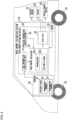
- Fig. 1 is a block diagram illustrating a functional configuration of an arithmetic model generation system 100 according to embodiment 1.
- the arithmetic model generation system 100 calculates the tire wear amount by using an arithmetic model 33b, based on the air pressure and temperature measured by a sensor 20 provided in a tire 10 and position information acquired by a position information acquisition unit 32.
- the arithmetic model generation system 100 increases accuracy of the arithmetic model 33b by using a learning type model such as a neural network as the arithmetic model, using the tire wear amount actually measured in the tire 10 as training data, and repeating learning by executing calculation and updating the arithmetic model.
- a wear amount estimation device 30 functions as a device that estimates the tire wear amount after the arithmetic model has been trained.
- the arithmetic model generation system 100 can train the arithmetic model by running a vehicle on which the tire 10 is mounted.
- the tire specifications include, for example, information on tire performance such as a manufacturer, a product name, a tire size, a tire width, flatness, a tire strength, static rigidity, dynamic rigidity, a tire outer diameter, a road index, and a date of manufacture.
- the arithmetic model generation system 100 may construct the arithmetic model 33b to which measurement data for acceleration generated in the tire 10 is input in addition to the air pressure and temperature of the tire 10.
- the acceleration generated in the tire 10 is, for example, triaxial acceleration in the radial direction, axial direction, and longitudinal direction of the tire 10, and the triaxial acceleration is input to the arithmetic model 33b.
- biaxial acceleration in the radial direction and the axial direction of the tire 10 may, for example, be input to the arithmetic model 33b.
- a pressure gauge 21, a temperature sensor 22, and an acceleration sensor 23 are provided in the tire 10.
- the pressure gauge 21 and the temperature sensor 22 are provided in, for example, the air valve of the tire 10 and respectively measure the air pressure and temperature of the tire 10.
- the temperature sensor 22 may be provided in the inner line of the tire 10.
- the acceleration sensor 23 is provided in, for example, the tire 10, the wheel, etc. and measures the acceleration generated in the tire 10.
- An RFID, etc. to which, for example, unique identification information is assigned to may be mounted on the tire 10 in order to identify each tire.
- the wear amount estimation device 30 includes a tire information acquisition unit 31, a position information acquisition unit 32, a wear amount calculator 33, and an arithmetic model update unit 34.
- the wear amount estimation device 30 is an information processing device such as a PC (personal computer).
- the units in the wear amount estimation device 30 can be realized in hardware by an electronic element such as a CPU of a computer or a machine part, and in software by a computer program and the like.
- functional blocks realized through collaboration among them are described. Accordingly, those skilled in the art will understand that these functional blocks can be realized in various forms by a combination of hardware and software.
- the tire information acquisition unit 31 acquires tire data from the pressure gauge 21, the temperature sensor 22, and the acceleration sensor 23 by wireless communication, etc. and outputs the tire data to the wear amount calculator 33, the tire data including the air pressure, temperature, and acceleration measured in the tire 10, and the point of time of measurement.
- the position information acquisition unit 32 acquires position data and outputs the position data to the wear amount calculator 33, the position data including the position of a vehicle on which the tire 10 is mounted calculated by a GPS receiver etc. and the point of time of calculation.
- the wear amount calculator 33 includes a preprocessor 33a and an arithmetic model 33b.
- the preprocessor 33a maps the tire data acquired by the tire information acquisition unit 31 to the position data acquired by the position information acquisition unit 32 such that data occurring at the same point of time or within a predetermined time difference is mapped to each other. Further, the preprocessor 33a determines, by interpolation, the position of the vehicle at a point of time corresponding to the point of time included in, for example, the tire data acquired.
- the preprocessor 332 calculates the travel distance, speed, and radius of turn of the vehicle based on the position data input from the position information acquisition unit 32.
- the preprocessor 33a acquires position data minute by minute from the position information acquisition unit 32 and can determine the travel distance based on the position data since the start of travel up to the current point of time and determine the speed and radius of turn based on the time change of the position data. Notwithstanding, the radius of turn may be calculated based on information from a steering angle sensor of a steering mechanism.
- Fig. 2 is a schematic diagram for explaining learning in the arithmetic model 33b.
- the input data for the arithmetic model 33b includes tire data including the air pressure, temperature, and acceleration, and the travel distance, speed, radius of turn, etc. calculated by based on the position data.
- weather data, data of a digital tachograph mounted on the vehicle, and information on the road surface condition may be used as the input data.
- weather data the atmospheric temperature, precipitation, etc. in the area traveled may for example be used as the input data input for the arithmetic model 33b.
- digital tachograph data the vehicle weight, speed data, etc. may for example be used as the input data for the arithmetic model 33b.
- information on the road surface condition conditions such as irregularities, temperature, dryness/wetness on the road surface on which the vehicle is traveling may be used as the input data for the arithmetic model 33b.
- a learning type model such as a neural network is used as the arithmetic model 33b.
- the arithmetic model 33b inputs the travel distance, speed, radius of turn, etc. to a node of an input layer, and executes calculation using a path provided with a weight from the input layer to an intermediate layer.
- the arithmetic model 33b further performs calculation using a path provided with a weight from the intermediate layer to an output layer, and outputs the tire wear amount from a node of the output layer.
- a non-linear operation may be executed using an activation function in addition to a linear operation.
- the arithmetic model update unit 34 compares the calculated tire wear amount with the training data to update the arithmetic model 33b.
- the arithmetic model update unit 34 includes a wear amount comparison unit 34a and an update processor 34b.
- the wear amount comparison unit 34a compares the tire wear amount calculated by the arithmetic model 33b with the tire wear amount measured as the training data by a tire measurement device 40 and outputs an error to the update processor 34b.
- the update processor 34b updates a path weight on the arithmetic model based on an error in the wear amount calculated by the arithmetic model 33b.
- the accuracy of the arithmetic model is increased by repeating the calculation of the tire wear amount by the arithmetic model 33b, the comparison with the training data by the wear amount comparison unit 34a, and the update of the arithmetic model by the update processor 34b.
- the tire measurement device 40 directly measures a depth of a groove provided on a tread of the tire 10. It is also possible that a worker measures the depth of each groove by a measuring instrument, a camera, visual inspection and the like, and the tire measurement device 40 may store the measurement data input by the worker.
- the tire measurement device 40 may also be a dedicated measurement device that measures the depth of a groove by a mechanical or optical method and stores the depth. Given four tire grooves, for example, the tire measurement device 40 performs measurements at four locations in the width direction and, further, at three locations in the same groove in the circumferential direction (e.g., at the intervals of 120°). This causes uneven wear amount data in the width direction or circumferential direction of the tire to be also stored in the tire measurement device 40.
- the tire measurement device 40 may indirectly measure the depth of a groove by calculation from the travel distance and information on the revolutions and speed of the tire.
- direct measurement of the depth of a groove and calculation-based prediction of the depth from the travel distance and information on the revolutions and speed of the tire may be used in combination.
- Fig. 3 is a flowchart showing a procedure for generating the arithmetic model by the arithmetic model generation system 100.
- the wear amount estimation device 30 uses the tire information acquisition unit 31 to start acquiring tire data from the pressure gauge 21, the temperature sensor 22, and the acceleration sensor 23, the tire data including the air pressure, temperature, and acceleration measured in the tire 10 (S1). Further, the position information acquisition unit 32 is used to start acquiring the position data (S2).
- the preprocessor 33a maps the tire data to the position data such that data occurring at the same point of time or within a predetermined time difference is mapped to each other, based on the point of time information included in the respective data (S3).
- the preprocessor 33a also calculates the travel distance, speed, and radius of turn based on the position data (S4).
- the preprocessor 33a accumulates the data over a predetermined period of time (S5).
- the predetermined period of time may be a period of time for which the vehicle is driven at a time, or several days or one week, although these should be construed as limiting the scope.
- the preprocessor 33a inputs the data to the arithmetic model 33b after the predetermined period of time has elapsed to estimate the tire wear amount (S6).
- the wear amount comparison unit 34a compares the tire wear amount calculated by the arithmetic model 33b with the tire wear amount as the training data measured by the tire measurement device 40 (S7).
- the wear amount comparison unit 34a outputs an error between the tire wear amount calculated by the arithmetic model 33b and the tire wear amount as the training data measured by the tire measurement device 40, which error results from the comparison, to the update processor 34b.
- the update processor 34b updates the arithmetic model based on the error in tire wear amount input from the wear amount comparison unit 34a (S8) and terminates the process.
- the wear amount estimation device 30 repeats these steps to update the arithmetic model, thereby increasing the accuracy of estimation of the tire wear amount.
- the arithmetic model generation system 100 can calculate traveling condition such as the travel distance, speed, radius of turn of the vehicle from the position data for the vehicle on which the tire 10 is mounted. These traveling condition are major factors in estimation of tire wear amount.
- the arithmetic model generation system 100 can generate an arithmetic model that estimates the tire wear amount accurately, by generating the arithmetic model according to the air pressure and temperature of the tire 10, and the travel distance, speed, radius of turn, etc. based on the position data for the vehicle.
- the arithmetic model generation system 100 also trains the arithmetic model 33b on uneven wear.
- the arithmetic model generation system 100 can also acquire data such as traveling route, acceleration, and deceleration and predict uneven wear of the tires based on the position data as well as on the travel distance of the vehicle. This makes it possible to propose a rotation to suit the condition of uneven wear of the tires of the vehicle.
- the arithmetic model generation system 100 also maps the input data for the arithmetic model 33b such that the tire data and the position data occurring at the same point of time or within a predetermined time difference are mapped to each other, based on the point of time information included in the data. Given, for example, that there is a time difference of 1 second between the point of time when the tire data is acquired and the point of time when the position data is acquired and that the vehicle is traveling at 60 km per hour, the vehicle will have traveled 16.7 m in the time difference of 1 second, creating a gap between the points of time that the tire data and the position data are acquired.
- the tire data and the position data are acquired within a time difference of about 0.1 second, although this depends on the average traveling speed of the vehicle.
- the arithmetic model generation system 100 can align the points of time of acquisition of the tire data and the position data.
- the arithmetic model generation system 100 may subject at least one of the tire data and the position data to data interpolation based on the point of time.
- the arithmetic model generation system 100 can align the points of time of the tire data and the position data and generate an arithmetic model that estimates the tire wear amount more accurately by subjecting the data to data interpolation based on the points of time of acquisition of the respective data.
- Fig. 4 is a block diagram illustrating a functional configuration of a wear amount estimation system 110 according to the embodiment 2.
- the wear amount estimation device 30 includes the tire information acquisition unit 31, the position information acquisition unit 32, the wear amount calculator 33, and an alert unit 35 and can be mounted on the vehicle for use.
- the tire information acquisition unit 31 and the position information acquisition unit 32 have the same function and working as those of embodiment 1, and a description thereof is omitted for brevity.
- the wear amount calculator 33 uses, as the arithmetic model 33b, the arithmetic model generated by the arithmetic model generation system 100 according to embodiment 1.
- the wear amount calculator 33 may calculate the tire wear amount after integrating the data acquired by the tire information acquisition unit 31 and the position information acquisition unit 32 over a predetermined period of time. Alternatively, the wear amount calculator 33 may calculate the tire wear amount minute by minute at the point of time of acquisition.
- the preprocessor 33a has the same function and working as those of embodiment 1.
- the preprocessor 33a calculates traveling conditions such as the travel distance, speed, radius of turn, etc. from the position data and uses the calculated data as the input data for the arithmetic model 33b.
- the preprocessor 33a also maps the tire data and the position data occurring at the same point of time or within a predetermined time difference to each other based on the point of time information included in the respective data and subjects the data to data interpolation based on the point of time of acquisition of the data as necessary.
- the alert unit 35 alerts the passenger of the tire wear amount by displaying the amount on a display device 51, outputting an sound from a speaker 52, etc.
- the alert unit 35 may alert a vehicle control device 53 mounted on the vehicle of the current tire wear amount.
- the vehicle control device 53 can perform vehicle control such as automatic driving and collision avoidance based on the current tire wear amount.
- Fig. 5 is a block diagram illustrating a functional configuration of the wear amount estimation system 110 according to a variation.
- the wear amount estimation system 110 according to the variation communicates with a communication network 9 by using a communication unit 55 mounted on the vehicle and transmits the tire data measured by the sensor 20 and the position data for the vehicle acquired by a GPS receiver 54.
- the wear amount estimation device 30 receives the tire data and the position data transmitted from the vehicle via the communication network 9 and estimates the tire wear amount.
- the wear amount estimation device 30 have the same function and working as those of embodiment 2.
- the tire information acquisition unit 31 acquires the tire data from the received data
- the position information acquisition unit 32 acquires the position data from the received data.
- the tire information acquisition unit 31 and the position information acquisition unit 32 may be integrated as an information acquisition unit for acquiring tire data and position data.
- the wear amount estimation device 30 can be provided as a device distanced from the vehicle to estimate, for example, the tire wear amount in a plurality of vehicles. Further, the wear amount estimation device 30 may communicate the current tire wear amount to the vehicle or an operation manager who manages the vehicle at a transportation company. The vehicle can receive the tire wear amount transmitted from the wear amount estimation device 30 to let a passenger (e.g., the driver) of the vehicle know the tire wear amount or to notify the vehicle control device.
- a passenger e.g., the driver
- unique information may be added for each tire 10 to construct the arithmetic model 33b.
- the tire 10 has unique specification information such as tire size, tire width, flatness, tire strength, static rigidity, dynamic rigidity, tire outer diameter, road index, etc. These items of information are input as parameters in the arithmetic model 33b to estimate the tire wear amount.
- the arithmetic model generation system 100 includes the tire information acquisition unit 31, the position information acquisition unit 32, the wear amount calculator 33, and the arithmetic model update unit 34.
- the tire information acquisition unit 31 acquires the tire data including the temperature and pressure of the tire 10.
- the position information acquisition unit 32 acquires the position data for the vehicle on which the tire 10 is mounted.
- the wear amount calculator 33 has the arithmetic model 33b for calculating the tire wear amount based on the temperature, pressure, and position, the wear amount calculator calculating a wear amount of the tire 10 by using the arithmetic model 33b by inputting the tire data and the position data corresponding to the tire data.
- the arithmetic model update unit 34 compares the wear amount measured in the tire 10 with the wear amount calculated by the wear amount calculator 33 and updates the arithmetic model 33b accordingly. Further, the arithmetic model 33b calculates the uneven wear amount of the tire 10. This allows the arithmetic model generation system 100 to generate an arithmetic model that estimates the tire wear amount accurately. Also, the arithmetic model generation system 100 estimates the uneven wear amount of the tire 10 for tire rotation.
- the tire information acquisition unit 31 acquires the tire data including the point of time of acquisition of the temperature and pressure of the tire 10.
- the position information acquisition unit 32 acquires the position data including the point of time of acquisition of the position of the vehicle. This allows the arithmetic model generation system 100 to map the tire data and the position data in the time domain based on the information on the point of time included in the tire data and the position data.
- the tire data and the position data are acquired within a predetermined time difference. This allows the arithmetic model generation system 100 to generate an arithmetic model that estimates the tire wear amount accurately.
- the wear amount calculator 33 subjects at least one of the tire data and the position data to data interpolation based on the point of time. This allows the arithmetic model generation system 100 to align the timing by data interpolation even if there is a gap between the points of time of acquisition of the respective data and to use the data as the input data for the arithmetic model 33b.
- the tire data includes the acceleration measured by the acceleration sensor 23 provided in the tire 10, and the wear amount calculator 33 calculates the tire wear amount by also inputting the acceleration measured in the tire 10 to the arithmetic model 33b.
- the wear amount calculator 33 inputs the position data or weather data to the arithmetic model to calculate the tire wear amount. This allows the arithmetic model generation system 100 to generate an arithmetic model that includes the weather data as the input data and estimates the tire wear amount accordingly.
- the wear amount estimation system 110 includes the tire information acquisition unit 31, the position information acquisition unit 32, and the wear amount calculator 33.
- the tire information acquisition unit 31 acquires the tire data including the temperature and pressure of the tire 10.
- the position information acquisition unit 32 acquires the position data for the vehicle on which the tire 10 is mounted.
- the wear amount calculator 33 includes the arithmetic model 33b that calculates the tire wear amount based on the temperature, pressure, and position, the wear amount calculator calculating the wear amount of the tire 10 by using the arithmetic model 33b by inputting the tire data and the position data corresponding to the tire data.
- the arithmetic model 33b calculates the uneven wear amount of the tire 10. This allows the wear amount estimation system 110 to estimate the tire wear amount accurately based on the travel distance, speed, and radius of turn calculated based on, for example, the position data for the vehicle.
- the arithmetic model generation method includes a tire information acquisition step, a position information acquisition step, a wear amount calculation step, and an arithmetic model update step.
- the tire information acquisition step acquires the tire data including the temperature and pressure of the tire 10.
- the position information acquisition step acquires position data for the vehicle on which the tire 10 is mounted.
- the wear amount calculation step calculates the wear amount of the tire 10 based on the arithmetic model 33b that calculates the tire wear amount based on the temperature, pressure, and position, using the arithmetic model 33b by inputting the tire data and the position data corresponding to the tire data.
- the arithmetic model update step compares the wear amount measured in the tire 10 with the wear amount calculated by the wear amount calculation step and updates the arithmetic model 33b accordingly.
- the arithmetic model 33b calculates the uneven wear amount of the tire 10. According to the arithmetic model generation method, an arithmetic model that estimates the tire wear amount accurately can be generated.
- the present invention relates to an arithmetic model generation system, a wear amount estimation system, and an arithmetic model generation method for tire wear amount.
Landscapes
- Engineering & Computer Science (AREA)
- Mechanical Engineering (AREA)
- Tires In General (AREA)
Description
- The present invention relates to an arithmetic model generation system, a wear amount estimation system, and an arithmetic model generation method.
- Generally, wear of a tire progresses depending on the traveling condition, travel distance, etc. These days, products provided with a sensor on the tire for measuring the pressure and temperature of the tire and displaying the pressure and temperature measured are commercialized.
- Patent literature 1 discloses a tire wear estimation system according to the related art. The tire wear estimation system includes: at least one sensor affixed to the tire to generate a first predictor; at least one of a lookup table and a database storing data for a second predictor; one of the predictors including at least one vehicle effect; and a model receiving the predictors and generating an estimated wear rate for the at least one tire.
[Patent Literature 1]JP2018-158722 - Document
US 2006/156790 A1 describes a technique for predicting the wear of at least one tire whose tread has pattern elements and which is fitted to a terrestrial motor vehicle, and a system for implementing the technique that enables a user, such as the vehicle's driver, to know reliably at any given moment the level of wear on the tire or on all the tires, or how long the residual wear will last, or even the remaining available running distance. Also, the piloting of drive-aid systems such as "ABS" (anti-block braking system) or "ESP" (electric programmed stability device) systems can be adapted as a function of the wear characteristics of the vehicle. - The tire wear estimation system disclosed in Patent Literature 1 estimates tire wear by using a wheel position and drivetrains as the vehicle effect. We have realized that the impact of wheel position and drivetrains on tire wear varies depending on the vehicle type, and, in the case of large vehicles like trucks, for example, the wheel position and drivetrains are not necessarily factors with great impact so that there is room for improvement in estimation of tire wear. In other words, it is necessary, for more accurate estimation of tire wear, to allow for factors like turns made while the vehicle is traveling, and, additionally, the timing of acquisition of input data in wear estimation.
- The present invention addresses the issue and a purpose thereof is to provide an arithmetic model generation system, a wear amount estimation system, and an arithmetic model generation method capable of estimating the tire wear amount accurately.
- The claimed invention is defined by the features set forth in the appended independent claims. Additional embodiments of the claimed invention are defined by the dependent claims.
- According to the present invention, the tire wear amount can be estimated accurately.
-
-
Fig. 1 is a block diagram illustrating a functional configuration of an arithmetic model generation system according to embodiment 1; -
Fig. 2 is a schematic diagram for explaining learning in the arithmetic model; -
Fig. 3 is a flowchart showing a procedure for generating the arithmetic model by the arithmetic model generation system; -
Fig. 4 is a block diagram illustrating a functional configuration of a wear amount estimation system according toembodiment 2; and -
Fig. 5 is a block diagram illustrating a functional configuration of the wear amount estimation system according to a variation. - Hereinafter, the invention will be described based on preferred embodiments with reference to
Figs. 1 through 5 . Identical or like constituting elements and members shown in the drawings are represented by identical symbols and a duplicate description will be omitted as appropriate. The dimension of members in the drawings shall be enlarged or reduced as appropriate to facilitate understanding. Those of the members that are not important in describing the embodiment are omitted from the drawings. -
Fig. 1 is a block diagram illustrating a functional configuration of an arithmeticmodel generation system 100 according to embodiment 1. The arithmeticmodel generation system 100 calculates the tire wear amount by using anarithmetic model 33b, based on the air pressure and temperature measured by asensor 20 provided in atire 10 and position information acquired by a positioninformation acquisition unit 32. The arithmeticmodel generation system 100 increases accuracy of thearithmetic model 33b by using a learning type model such as a neural network as the arithmetic model, using the tire wear amount actually measured in thetire 10 as training data, and repeating learning by executing calculation and updating the arithmetic model. A wearamount estimation device 30 functions as a device that estimates the tire wear amount after the arithmetic model has been trained. - For a
tire 10 having certain specifications, the arithmeticmodel generation system 100 can train the arithmetic model by running a vehicle on which thetire 10 is mounted. The tire specifications include, for example, information on tire performance such as a manufacturer, a product name, a tire size, a tire width, flatness, a tire strength, static rigidity, dynamic rigidity, a tire outer diameter, a road index, and a date of manufacture. - The arithmetic
model generation system 100 may construct thearithmetic model 33b to which measurement data for acceleration generated in thetire 10 is input in addition to the air pressure and temperature of thetire 10. The acceleration generated in thetire 10 is, for example, triaxial acceleration in the radial direction, axial direction, and longitudinal direction of thetire 10, and the triaxial acceleration is input to thearithmetic model 33b. Alternatively, biaxial acceleration in the radial direction and the axial direction of thetire 10 may, for example, be input to thearithmetic model 33b. - A
pressure gauge 21, atemperature sensor 22, and anacceleration sensor 23 are provided in thetire 10. Thepressure gauge 21 and thetemperature sensor 22 are provided in, for example, the air valve of thetire 10 and respectively measure the air pressure and temperature of thetire 10. Thetemperature sensor 22 may be provided in the inner line of thetire 10. Theacceleration sensor 23 is provided in, for example, thetire 10, the wheel, etc. and measures the acceleration generated in thetire 10. An RFID, etc. to which, for example, unique identification information is assigned to may be mounted on thetire 10 in order to identify each tire. - The wear
amount estimation device 30 includes a tireinformation acquisition unit 31, a positioninformation acquisition unit 32, awear amount calculator 33, and an arithmeticmodel update unit 34. The wearamount estimation device 30 is an information processing device such as a PC (personal computer). The units in the wearamount estimation device 30 can be realized in hardware by an electronic element such as a CPU of a computer or a machine part, and in software by a computer program and the like. Here, functional blocks realized through collaboration among them are described. Accordingly, those skilled in the art will understand that these functional blocks can be realized in various forms by a combination of hardware and software. - The tire
information acquisition unit 31 acquires tire data from thepressure gauge 21, thetemperature sensor 22, and theacceleration sensor 23 by wireless communication, etc. and outputs the tire data to thewear amount calculator 33, the tire data including the air pressure, temperature, and acceleration measured in thetire 10, and the point of time of measurement. The positioninformation acquisition unit 32 acquires position data and outputs the position data to thewear amount calculator 33, the position data including the position of a vehicle on which thetire 10 is mounted calculated by a GPS receiver etc. and the point of time of calculation. - The
wear amount calculator 33 includes apreprocessor 33a and anarithmetic model 33b. Thepreprocessor 33a maps the tire data acquired by the tireinformation acquisition unit 31 to the position data acquired by the positioninformation acquisition unit 32 such that data occurring at the same point of time or within a predetermined time difference is mapped to each other. Further, thepreprocessor 33a determines, by interpolation, the position of the vehicle at a point of time corresponding to the point of time included in, for example, the tire data acquired. - Further, the preprocessor 332 calculates the travel distance, speed, and radius of turn of the vehicle based on the position data input from the position
information acquisition unit 32. Thepreprocessor 33a acquires position data minute by minute from the positioninformation acquisition unit 32 and can determine the travel distance based on the position data since the start of travel up to the current point of time and determine the speed and radius of turn based on the time change of the position data. Notwithstanding, the radius of turn may be calculated based on information from a steering angle sensor of a steering mechanism. -
Fig. 2 is a schematic diagram for explaining learning in thearithmetic model 33b. The input data for thearithmetic model 33b includes tire data including the air pressure, temperature, and acceleration, and the travel distance, speed, radius of turn, etc. calculated by based on the position data. Besides, weather data, data of a digital tachograph mounted on the vehicle, and information on the road surface condition may be used as the input data. As regards weather data, the atmospheric temperature, precipitation, etc. in the area traveled may for example be used as the input data input for thearithmetic model 33b. As regards digital tachograph data, the vehicle weight, speed data, etc. may for example be used as the input data for thearithmetic model 33b. As regards information on the road surface condition, conditions such as irregularities, temperature, dryness/wetness on the road surface on which the vehicle is traveling may be used as the input data for thearithmetic model 33b. - For example, a learning type model such as a neural network is used as the
arithmetic model 33b. Thearithmetic model 33b inputs the travel distance, speed, radius of turn, etc. to a node of an input layer, and executes calculation using a path provided with a weight from the input layer to an intermediate layer. Thearithmetic model 33b further performs calculation using a path provided with a weight from the intermediate layer to an output layer, and outputs the tire wear amount from a node of the output layer. In the learning type model such as a neural network, a non-linear operation may be executed using an activation function in addition to a linear operation. - The arithmetic
model update unit 34 compares the calculated tire wear amount with the training data to update thearithmetic model 33b. The arithmeticmodel update unit 34 includes a wear amount comparison unit 34a and an update processor 34b. The wear amount comparison unit 34a compares the tire wear amount calculated by thearithmetic model 33b with the tire wear amount measured as the training data by atire measurement device 40 and outputs an error to the update processor 34b. - The update processor 34b updates a path weight on the arithmetic model based on an error in the wear amount calculated by the
arithmetic model 33b. The accuracy of the arithmetic model is increased by repeating the calculation of the tire wear amount by thearithmetic model 33b, the comparison with the training data by the wear amount comparison unit 34a, and the update of the arithmetic model by the update processor 34b. - The
tire measurement device 40 directly measures a depth of a groove provided on a tread of thetire 10. It is also possible that a worker measures the depth of each groove by a measuring instrument, a camera, visual inspection and the like, and thetire measurement device 40 may store the measurement data input by the worker. Thetire measurement device 40 may also be a dedicated measurement device that measures the depth of a groove by a mechanical or optical method and stores the depth. Given four tire grooves, for example, thetire measurement device 40 performs measurements at four locations in the width direction and, further, at three locations in the same groove in the circumferential direction (e.g., at the intervals of 120°). This causes uneven wear amount data in the width direction or circumferential direction of the tire to be also stored in thetire measurement device 40. Since the tire diameter may change due to wear, thetire measurement device 40 may indirectly measure the depth of a groove by calculation from the travel distance and information on the revolutions and speed of the tire. In addition, direct measurement of the depth of a groove and calculation-based prediction of the depth from the travel distance and information on the revolutions and speed of the tire may be used in combination. - The operation of the arithmetic
model generation system 100 will now be described.Fig. 3 is a flowchart showing a procedure for generating the arithmetic model by the arithmeticmodel generation system 100. The wearamount estimation device 30 uses the tireinformation acquisition unit 31 to start acquiring tire data from thepressure gauge 21, thetemperature sensor 22, and theacceleration sensor 23, the tire data including the air pressure, temperature, and acceleration measured in the tire 10 (S1). Further, the positioninformation acquisition unit 32 is used to start acquiring the position data (S2). Thepreprocessor 33a maps the tire data to the position data such that data occurring at the same point of time or within a predetermined time difference is mapped to each other, based on the point of time information included in the respective data (S3). Thepreprocessor 33a also calculates the travel distance, speed, and radius of turn based on the position data (S4). - The
preprocessor 33a accumulates the data over a predetermined period of time (S5). The predetermined period of time may be a period of time for which the vehicle is driven at a time, or several days or one week, although these should be construed as limiting the scope. Thepreprocessor 33a inputs the data to thearithmetic model 33b after the predetermined period of time has elapsed to estimate the tire wear amount (S6). The wear amount comparison unit 34a compares the tire wear amount calculated by thearithmetic model 33b with the tire wear amount as the training data measured by the tire measurement device 40 (S7). The wear amount comparison unit 34a outputs an error between the tire wear amount calculated by thearithmetic model 33b and the tire wear amount as the training data measured by thetire measurement device 40, which error results from the comparison, to the update processor 34b. - The update processor 34b updates the arithmetic model based on the error in tire wear amount input from the wear amount comparison unit 34a (S8) and terminates the process. The wear
amount estimation device 30 repeats these steps to update the arithmetic model, thereby increasing the accuracy of estimation of the tire wear amount. - As described above, the arithmetic
model generation system 100 can calculate traveling condition such as the travel distance, speed, radius of turn of the vehicle from the position data for the vehicle on which thetire 10 is mounted. These traveling condition are major factors in estimation of tire wear amount. The arithmeticmodel generation system 100 can generate an arithmetic model that estimates the tire wear amount accurately, by generating the arithmetic model according to the air pressure and temperature of thetire 10, and the travel distance, speed, radius of turn, etc. based on the position data for the vehicle. The arithmeticmodel generation system 100 also trains thearithmetic model 33b on uneven wear. Therefore, the arithmeticmodel generation system 100 can also acquire data such as traveling route, acceleration, and deceleration and predict uneven wear of the tires based on the position data as well as on the travel distance of the vehicle. This makes it possible to propose a rotation to suit the condition of uneven wear of the tires of the vehicle. - The arithmetic
model generation system 100 also maps the input data for thearithmetic model 33b such that the tire data and the position data occurring at the same point of time or within a predetermined time difference are mapped to each other, based on the point of time information included in the data. Given, for example, that there is a time difference of 1 second between the point of time when the tire data is acquired and the point of time when the position data is acquired and that the vehicle is traveling at 60 km per hour, the vehicle will have traveled 16.7 m in the time difference of 1 second, creating a gap between the points of time that the tire data and the position data are acquired. - It is preferred that the tire data and the position data are acquired within a time difference of about 0.1 second, although this depends on the average traveling speed of the vehicle. By mapping the tire data and the position data occurring at the same point of time or within a predetermined time difference to each other based on the point of time information included in the respective data, the arithmetic
model generation system 100 can align the points of time of acquisition of the tire data and the position data. - Further, if the arithmetic
model generation system 100 cannot acquire the tire data and the position data at the same point of time or within a predetermined time difference, the arithmeticmodel generation system 100 may subject at least one of the tire data and the position data to data interpolation based on the point of time. The arithmeticmodel generation system 100 can align the points of time of the tire data and the position data and generate an arithmetic model that estimates the tire wear amount more accurately by subjecting the data to data interpolation based on the points of time of acquisition of the respective data. -
Fig. 4 is a block diagram illustrating a functional configuration of a wearamount estimation system 110 according to theembodiment 2. Once thearithmetic model 33b that estimates the tire wear amount is generated by the arithmeticmodel generation system 100 according to embodiment 1 as described above, it is possible to construct the wearamount estimation device 30 provided with thearithmetic model 33b. The wearamount estimation system 110 includes thesensor 20 and the wearamount estimation device 30 and uses thearithmetic model 33b constructed by the arithmeticmodel generation system 100 to estimate the wear amount of thetire 10 mounted on the vehicle accurately. - The wear
amount estimation device 30 includes the tireinformation acquisition unit 31, the positioninformation acquisition unit 32, thewear amount calculator 33, and analert unit 35 and can be mounted on the vehicle for use. The tireinformation acquisition unit 31 and the positioninformation acquisition unit 32 have the same function and working as those of embodiment 1, and a description thereof is omitted for brevity. - The
wear amount calculator 33 uses, as thearithmetic model 33b, the arithmetic model generated by the arithmeticmodel generation system 100 according to embodiment 1. Thewear amount calculator 33 may calculate the tire wear amount after integrating the data acquired by the tireinformation acquisition unit 31 and the positioninformation acquisition unit 32 over a predetermined period of time. Alternatively, thewear amount calculator 33 may calculate the tire wear amount minute by minute at the point of time of acquisition. - The
preprocessor 33a has the same function and working as those of embodiment 1. Thepreprocessor 33a calculates traveling conditions such as the travel distance, speed, radius of turn, etc. from the position data and uses the calculated data as the input data for thearithmetic model 33b. Thepreprocessor 33a also maps the tire data and the position data occurring at the same point of time or within a predetermined time difference to each other based on the point of time information included in the respective data and subjects the data to data interpolation based on the point of time of acquisition of the data as necessary. - To let a passenger (e.g., the driver) of the vehicle know the current tire wear amount, the
alert unit 35 alerts the passenger of the tire wear amount by displaying the amount on adisplay device 51, outputting an sound from aspeaker 52, etc. Alternatively, thealert unit 35 may alert avehicle control device 53 mounted on the vehicle of the current tire wear amount. Thevehicle control device 53 can perform vehicle control such as automatic driving and collision avoidance based on the current tire wear amount. -
Fig. 5 is a block diagram illustrating a functional configuration of the wearamount estimation system 110 according to a variation. The wearamount estimation system 110 according to the variation communicates with acommunication network 9 by using acommunication unit 55 mounted on the vehicle and transmits the tire data measured by thesensor 20 and the position data for the vehicle acquired by aGPS receiver 54. The wearamount estimation device 30 receives the tire data and the position data transmitted from the vehicle via thecommunication network 9 and estimates the tire wear amount. - The wear
amount estimation device 30 have the same function and working as those ofembodiment 2. The tireinformation acquisition unit 31 acquires the tire data from the received data, and the positioninformation acquisition unit 32 acquires the position data from the received data. The tireinformation acquisition unit 31 and the positioninformation acquisition unit 32 may be integrated as an information acquisition unit for acquiring tire data and position data. - In the wear
amount estimation system 110 according to the variation, the wearamount estimation device 30 can be provided as a device distanced from the vehicle to estimate, for example, the tire wear amount in a plurality of vehicles. Further, the wearamount estimation device 30 may communicate the current tire wear amount to the vehicle or an operation manager who manages the vehicle at a transportation company. The vehicle can receive the tire wear amount transmitted from the wearamount estimation device 30 to let a passenger (e.g., the driver) of the vehicle know the tire wear amount or to notify the vehicle control device. - In the embodiments and variation described above, unique information may be added for each
tire 10 to construct thearithmetic model 33b. Thetire 10 has unique specification information such as tire size, tire width, flatness, tire strength, static rigidity, dynamic rigidity, tire outer diameter, road index, etc. These items of information are input as parameters in thearithmetic model 33b to estimate the tire wear amount. - A description will now be given of the features of the arithmetic
model generation system 100, the wearamount estimation system 110, and the arithmetic model generation method according to the embodiments and the variation. The arithmeticmodel generation system 100 includes the tireinformation acquisition unit 31, the positioninformation acquisition unit 32, thewear amount calculator 33, and the arithmeticmodel update unit 34. The tireinformation acquisition unit 31 acquires the tire data including the temperature and pressure of thetire 10. The positioninformation acquisition unit 32 acquires the position data for the vehicle on which thetire 10 is mounted. Thewear amount calculator 33 has thearithmetic model 33b for calculating the tire wear amount based on the temperature, pressure, and position, the wear amount calculator calculating a wear amount of thetire 10 by using thearithmetic model 33b by inputting the tire data and the position data corresponding to the tire data. The arithmeticmodel update unit 34 compares the wear amount measured in thetire 10 with the wear amount calculated by thewear amount calculator 33 and updates thearithmetic model 33b accordingly. Further, thearithmetic model 33b calculates the uneven wear amount of thetire 10. This allows the arithmeticmodel generation system 100 to generate an arithmetic model that estimates the tire wear amount accurately. Also, the arithmeticmodel generation system 100 estimates the uneven wear amount of thetire 10 for tire rotation. - Further, the tire
information acquisition unit 31 acquires the tire data including the point of time of acquisition of the temperature and pressure of thetire 10. The positioninformation acquisition unit 32 acquires the position data including the point of time of acquisition of the position of the vehicle. This allows the arithmeticmodel generation system 100 to map the tire data and the position data in the time domain based on the information on the point of time included in the tire data and the position data. - Further, the tire data and the position data are acquired within a predetermined time difference. This allows the arithmetic
model generation system 100 to generate an arithmetic model that estimates the tire wear amount accurately. - Further, the
wear amount calculator 33 subjects at least one of the tire data and the position data to data interpolation based on the point of time. This allows the arithmeticmodel generation system 100 to align the timing by data interpolation even if there is a gap between the points of time of acquisition of the respective data and to use the data as the input data for thearithmetic model 33b. - Further, the tire data includes the acceleration measured by the
acceleration sensor 23 provided in thetire 10, and thewear amount calculator 33 calculates the tire wear amount by also inputting the acceleration measured in thetire 10 to thearithmetic model 33b. This allows the arithmeticmodel generation system 100 to generate an arithmetic model that estimates the tire wear amount that allows for the impact from irregularities on the road surface, etc. - Further, the
wear amount calculator 33 inputs the position data or weather data to the arithmetic model to calculate the tire wear amount. This allows the arithmeticmodel generation system 100 to generate an arithmetic model that includes the weather data as the input data and estimates the tire wear amount accordingly. - The wear
amount estimation system 110 includes the tireinformation acquisition unit 31, the positioninformation acquisition unit 32, and thewear amount calculator 33. The tireinformation acquisition unit 31 acquires the tire data including the temperature and pressure of thetire 10. The positioninformation acquisition unit 32 acquires the position data for the vehicle on which thetire 10 is mounted. Thewear amount calculator 33 includes thearithmetic model 33b that calculates the tire wear amount based on the temperature, pressure, and position, the wear amount calculator calculating the wear amount of thetire 10 by using thearithmetic model 33b by inputting the tire data and the position data corresponding to the tire data. Thearithmetic model 33b calculates the uneven wear amount of thetire 10. This allows the wearamount estimation system 110 to estimate the tire wear amount accurately based on the travel distance, speed, and radius of turn calculated based on, for example, the position data for the vehicle. - The arithmetic model generation method includes a tire information acquisition step, a position information acquisition step, a wear amount calculation step, and an arithmetic model update step. The tire information acquisition step acquires the tire data including the temperature and pressure of the
tire 10. The position information acquisition step acquires position data for the vehicle on which thetire 10 is mounted. The wear amount calculation step calculates the wear amount of thetire 10 based on thearithmetic model 33b that calculates the tire wear amount based on the temperature, pressure, and position, using thearithmetic model 33b by inputting the tire data and the position data corresponding to the tire data. The arithmetic model update step compares the wear amount measured in thetire 10 with the wear amount calculated by the wear amount calculation step and updates thearithmetic model 33b accordingly. Thearithmetic model 33b calculates the uneven wear amount of thetire 10. According to the arithmetic model generation method, an arithmetic model that estimates the tire wear amount accurately can be generated. - Described above is an explanation based on an exemplary embodiment. The embodiments are intended to be illustrative only and it will be understood by those skilled in the art that variations and modifications are possible within the claim scope of the present invention and that such variations and modifications are also within the claim scope of the present invention. Accordingly, the description and drawings in the specification shall be interpreted as being illustration instead of limitation.
- The present invention relates to an arithmetic model generation system, a wear amount estimation system, and an arithmetic model generation method for tire wear amount.
-
- 10 tire, 31 tire information acquisition unit, 32 position information acquisition unit
- 33 wear amount calculator, 33b arithmetic model, 34 arithmetic model update unit
- 100 arithmetic model generation system, 110 wear amount estimation system
Claims (8)
- An arithmetic model generation system (100) comprising:a tire information acquisition unit (31) that is configured to acquire tire data including a temperature and pressure of a tire (10) ;a position information acquisition unit (32) that is configured to acquire position data for a vehicle on which the tire (10) is mounted;a wear amount calculator (33) that includes an arithmetic model (33b) that is configured to calculate a tire wear amount based on the temperature, pressure, and position, the wear amount calculator (33) is configured to calculate a wear amount of the tire (10) by using the arithmetic model (33b) by inputting the tire data and the position data corresponding to the tire data; andan arithmetic model update unit (34) that is configured to compare the wear amount measured in the tire (10) with the wear amount calculated by the wear amount calculator (33) and to update the arithmetic model (33b) accordingly,characterized in thatthe arithmetic model (33b) is also configured to calculate an uneven wear amount of the tire (10).
- The arithmetic model generation system (100) according to claim 1, whereinthe tire information acquisition unit (31) is configured to acquire the tire data including a point of time of acquisition of the temperature and pressure of the tire (10), andthe position information acquisition unit (32) is configured to acquire the position data including a point of time of acquisition of a position of the vehicle.
- The arithmetic model generation system (100) according to claim 2, wherein
the tire data and the position data are acquired within a predetermined time difference. - The arithmetic model generation system (100) according to claim 2, wherein
the wear amount calculator (33) subjects at least one of the tire data and the position data to data interpolation based on the point of time. - The arithmetic model generation system (100) according to any one of claims 1 through 4, wherein
the tire data also includes an acceleration measured by an acceleration sensor (23) provided in the tire (10), and the wear amount calculator (33) is configured to calculate the tire wear amount by also inputting the acceleration to the arithmetic model (33b). - The arithmetic model generation system (100) according to any one of claims 1 through 4, wherein
the wear amount calculator (33) is also configured to input the position data or weather data to the arithmetic model (33b) to calculate the tire wear amount. - A wear amount estimation system (110) comprising: arithmetic model generation system (100)according to claim 1.
- An arithmetic model generation method comprising:acquiring tire data including a temperature and pressure of a tire (10);acquiring position data for a vehicle on which the tire (10) is mounted;calculating a wear amount of the tire (10) based on an arithmetic model (33b) that calculates a tire wear amount based on the temperature, pressure, and position, using the arithmetic model (33b) by inputting the tire data and the position data corresponding to the tire data; andcomparing the wear amount measured in the tire (10) with the wear amount calculated by the calculating, and updating the arithmetic model (33b) accordingly,characterized in thatthe arithmetic model (33b) also calculates an uneven wear amount of the tire (10).
Applications Claiming Priority (2)
| Application Number | Priority Date | Filing Date | Title |
|---|---|---|---|
| JP2019069249A JP7194066B2 (en) | 2019-03-29 | 2019-03-29 | Calculation model generation system, wear amount estimation system, and calculation model generation method |
| PCT/JP2020/011560 WO2020203233A1 (en) | 2019-03-29 | 2020-03-16 | Arithmetic model generation system, wear amount estimation system, and arithmetic model generation method |
Publications (3)
| Publication Number | Publication Date |
|---|---|
| EP3950389A1 EP3950389A1 (en) | 2022-02-09 |
| EP3950389A4 EP3950389A4 (en) | 2022-12-07 |
| EP3950389B1 true EP3950389B1 (en) | 2024-04-24 |
Family
ID=72668607
Family Applications (1)
| Application Number | Title | Priority Date | Filing Date |
|---|---|---|---|
| EP20784643.7A Active EP3950389B1 (en) | 2019-03-29 | 2020-03-16 | Arithmetic model generation system, wear amount estimation system, and arithmetic model generation method |
Country Status (4)
| Country | Link |
|---|---|
| US (1) | US11772432B2 (en) |
| EP (1) | EP3950389B1 (en) |
| JP (3) | JP7194066B2 (en) |
| WO (1) | WO2020203233A1 (en) |
Families Citing this family (21)
| Publication number | Priority date | Publication date | Assignee | Title |
|---|---|---|---|---|
| US11498371B2 (en) * | 2018-12-12 | 2022-11-15 | The Goodyear Tire & Rubber Company | Tire data information system |
| JP7194066B2 (en) | 2019-03-29 | 2022-12-21 | Toyo Tire株式会社 | Calculation model generation system, wear amount estimation system, and calculation model generation method |
| EP3946983B1 (en) * | 2019-04-01 | 2024-10-30 | Bridgestone Americas Tire Operations, LLC | System and method for vehicle tire performance modeling and feedback |
| JP2022082175A (en) * | 2020-11-20 | 2022-06-01 | Toyo Tire株式会社 | Arithmetic model creation system and arithmetic model creation method |
| JP7578488B2 (en) * | 2020-12-28 | 2024-11-06 | Toyo Tire株式会社 | Wear amount estimation system, computation model generation system, and wear amount estimation method |
| CN116762000A (en) * | 2021-01-07 | 2023-09-15 | 普利司通美国轮胎运营有限责任公司 | Systems and methods for estimating tire wear using acoustic signature analysis |
| JP7595494B2 (en) * | 2021-03-17 | 2024-12-06 | Toyo Tire株式会社 | Wear amount estimation system, computation model generation system, and wear amount estimation method |
| JP7609682B2 (en) * | 2021-03-30 | 2025-01-07 | Toyo Tire株式会社 | Wear amount estimation system, computation model generation system, and wear amount estimation method |
| JP7700494B2 (en) * | 2021-04-09 | 2025-07-01 | 住友ゴム工業株式会社 | TIRE CONDITION DETERMINATION SYSTEM, TIRE CONDITION DETERMINATION DEVICE, TIRE CONDITION DETERMINATION METHOD, AND PROGRAM |
| US20230011981A1 (en) * | 2021-07-08 | 2023-01-12 | Volvo Car Corporation | Real-time tire monitoring system |
| JP7572921B2 (en) * | 2021-07-29 | 2024-10-24 | 本田技研工業株式会社 | Wear calculation system |
| JP7845830B2 (en) * | 2021-07-30 | 2026-04-14 | Toyo Tire株式会社 | Tire damage accumulation estimation system, computational model generation system, and tire damage accumulation estimation method |
| EP4194230B1 (en) * | 2021-12-13 | 2024-11-20 | Bridgestone Europe NV/SA | Apparatus and methods for calculating and/or monitoring a tire wear rate of a vehicle |
| JP7761474B2 (en) * | 2021-12-23 | 2025-10-28 | Toyo Tire株式会社 | Data processing device, data processing method and computational model generation system |
| JP2024082105A (en) | 2022-12-07 | 2024-06-19 | 株式会社ブリヂストン | Tire wear condition prediction device, tire wear condition prediction method and program |
| CN121285473A (en) * | 2023-04-17 | 2026-01-06 | 韩国轮胎与科技株式会社 | Tire wear estimation device and wear estimation method |
| JP2025015279A (en) * | 2023-07-20 | 2025-01-30 | 株式会社ブリヂストン | Information processing apparatus, information processing system, program, and information processing method |
| DE102024112906A1 (en) * | 2024-05-08 | 2025-11-13 | Dr. Ing. H.C. F. Porsche Aktiengesellschaft | Method and system for estimating the tire tread depth of a tire on a vehicle |
| CN119239624B (en) * | 2024-09-29 | 2025-12-30 | 中国第一汽车股份有限公司 | Methods, devices, equipment, and vehicles for determining tire tread wear |
| JP7684505B1 (en) * | 2024-12-27 | 2025-05-27 | Toyo Tire株式会社 | Tire wear estimation system, tire wear estimation method, and computation model generation system |
| JP7684504B1 (en) * | 2024-12-27 | 2025-05-27 | Toyo Tire株式会社 | Tire wear estimation system, tire wear estimation method, and computation model generation system |
Family Cites Families (26)
| Publication number | Priority date | Publication date | Assignee | Title |
|---|---|---|---|---|
| FR2856343B1 (en) * | 2003-06-18 | 2007-04-13 | Michelin Soc Tech | METHOD FOR PREDICTING WEAR OF A TIRE AND SYSTEM FOR ITS IMPLEMENTATION |
| JP2007153034A (en) * | 2005-12-01 | 2007-06-21 | Toyota Motor Corp | Tire wear state judgment device |
| JP2008143460A (en) * | 2006-12-13 | 2008-06-26 | Bridgestone Corp | Tire wear loss estimating device and vehicle mounted therewith |
| DE102009006458A1 (en) * | 2009-01-28 | 2010-08-05 | Continental Automotive Gmbh | Device and method for measuring the tread depth of a motor vehicle tire |
| DE102012217901B3 (en) * | 2012-10-01 | 2014-05-28 | Continental Automotive Gmbh | Method, controller and system for determining a tread depth of a tread of a tire |
| US20150057877A1 (en) * | 2013-08-22 | 2015-02-26 | The Goodyear Tire & Rubber Company | Tire wear state estimation system utilizing cornering stiffness and method |
| DE102013219662B3 (en) * | 2013-09-30 | 2015-03-19 | Continental Automotive Gmbh | Method, control unit and system for determining a tread depth of a profile of at least one tire |
| DE102013220882B4 (en) * | 2013-10-15 | 2019-05-29 | Continental Automotive Gmbh | Method, control unit and system for determining a tread depth of a profile of at least one tire |
| EP2982521B1 (en) * | 2014-08-04 | 2017-07-19 | Dr. Ing. h.c. F. Porsche AG | System and method for determining tire wear properties |
| US9719886B2 (en) * | 2015-07-21 | 2017-08-01 | The Goodyear Tire & Rubber Company | Tread wear estimation system and method |
| US9821611B2 (en) * | 2015-10-21 | 2017-11-21 | The Goodyear Tire & Rubber Company | Indirect tire wear state estimation system |
| KR102616222B1 (en) * | 2016-12-22 | 2023-12-21 | 에스케이플래닛 주식회사 | Tire abrasion confirmation system, method thereof and computer readable medium having computer program recorded thereon |
| WO2018137920A1 (en) * | 2017-01-26 | 2018-08-02 | Jaguar Land Rover Limited | A system and method for monitoring and detecting tyre wear |
| DE102017204648A1 (en) * | 2017-03-21 | 2018-09-27 | Continental Automotive Gmbh | Method, control device and system for determining a tread depth of a profile of a tire |
| US20180272813A1 (en) | 2017-03-23 | 2018-09-27 | The Goodyear Tire & Rubber Company | Model based tire wear estimation system and method |
| US10603962B2 (en) * | 2017-06-29 | 2020-03-31 | The Goodyear Tire & Rubber Company | Tire wear state estimation system and method |
| US11644386B2 (en) * | 2018-12-11 | 2023-05-09 | The Goodyear Tire & Rubber Company | Tire wear state estimation system and method |
| JP6736652B2 (en) * | 2018-12-28 | 2020-08-05 | Toyo Tire株式会社 | Operation model generation system and operation model generation method |
| JP7194066B2 (en) | 2019-03-29 | 2022-12-21 | Toyo Tire株式会社 | Calculation model generation system, wear amount estimation system, and calculation model generation method |
| US11376899B2 (en) * | 2019-06-24 | 2022-07-05 | Infineon Technologies Ag | Structure borne sound for TPMS localization and communication |
| AU2020220054A1 (en) * | 2019-08-30 | 2021-03-18 | The Goodyear Tire & Rubber Company | Tire wear state estimation system and method employing footprint length |
| JP6772351B1 (en) * | 2019-09-18 | 2020-10-21 | Toyo Tire株式会社 | Tire physical information estimation system |
| JP7368181B2 (en) * | 2019-10-29 | 2023-10-24 | Toyo Tire株式会社 | Wear amount estimation system and calculation model generation system |
| AU2020286203A1 (en) * | 2019-12-17 | 2021-07-01 | The Goodyear Tire & Rubber Company | Method of estimating tire conditions |
| JP7845830B2 (en) * | 2021-07-30 | 2026-04-14 | Toyo Tire株式会社 | Tire damage accumulation estimation system, computational model generation system, and tire damage accumulation estimation method |
| JP7734042B2 (en) * | 2021-10-19 | 2025-09-04 | Toyo Tire株式会社 | Tire physical information estimation system and computational model generation system |
-
2019
- 2019-03-29 JP JP2019069249A patent/JP7194066B2/en active Active
-
2020
- 2020-03-16 EP EP20784643.7A patent/EP3950389B1/en active Active
- 2020-03-16 WO PCT/JP2020/011560 patent/WO2020203233A1/en not_active Ceased
-
2021
- 2021-09-09 US US17/470,402 patent/US11772432B2/en active Active
- 2021-09-16 JP JP2021151417A patent/JP7065241B2/en active Active
-
2022
- 2022-06-14 JP JP2022095776A patent/JP2022133305A/en active Pending
Also Published As
| Publication number | Publication date |
|---|---|
| WO2020203233A1 (en) | 2020-10-08 |
| EP3950389A1 (en) | 2022-02-09 |
| US20210402829A1 (en) | 2021-12-30 |
| US11772432B2 (en) | 2023-10-03 |
| JP7065241B2 (en) | 2022-05-11 |
| JP2022133305A (en) | 2022-09-13 |
| EP3950389A4 (en) | 2022-12-07 |
| JP2020164126A (en) | 2020-10-08 |
| JP2021185085A (en) | 2021-12-09 |
| JP7194066B2 (en) | 2022-12-21 |
Similar Documents
| Publication | Publication Date | Title |
|---|---|---|
| EP3950389B1 (en) | Arithmetic model generation system, wear amount estimation system, and arithmetic model generation method | |
| JP7493647B2 (en) | Wear amount estimation device and wear amount estimation method | |
| US12039812B2 (en) | Tire force estimation system and tire force estimation method | |
| KR101912109B1 (en) | Detection of short term irregularities in a road surface | |
| JP7368181B2 (en) | Wear amount estimation system and calculation model generation system | |
| CN112292271A (en) | Tread wear monitoring system and method | |
| CN111868479B (en) | Vehicle operation based on vehicle measurement data processing | |
| US20220274452A1 (en) | Tire physical information estimation system | |
| CN112533775A (en) | Tread wear monitoring system and method | |
| EP2722202A1 (en) | Vehicle tire load estimation | |
| US12275280B2 (en) | Enhanced tracking of tire tread wear | |
| EP4124472A1 (en) | Cumulative tire damage estimation system, arithmetic model generation system, and cumulative tire damage estimation method | |
| CN109641496A (en) | Method and apparatus for determining wheel load and method and apparatus for determining vehicle weight | |
| JP2025522614A (en) | Apparatus and method for calculating and/or monitoring tire wear rate - Patents.com | |
| JP7595494B2 (en) | Wear amount estimation system, computation model generation system, and wear amount estimation method | |
| JP2024532318A (en) | Estimation of normal load acting on tires as a function of tire inflation pressure | |
| JP7456749B2 (en) | Wear amount estimation system and calculation model generation system | |
| JP2024514773A (en) | System and method for identifying tire contact length from radial acceleration signals - Patents.com | |
| JP7684505B1 (en) | Tire wear estimation system, tire wear estimation method, and computation model generation system | |
| US20250146237A1 (en) | Road surface evaluation apparatus | |
| JP2023094268A (en) | Tire abrasion amount estimation system, arithmetic model generation system, and tire abrasion amount estimation method |
Legal Events
| Date | Code | Title | Description |
|---|---|---|---|
| STAA | Information on the status of an ep patent application or granted ep patent |
Free format text: STATUS: THE INTERNATIONAL PUBLICATION HAS BEEN MADE |
|
| PUAI | Public reference made under article 153(3) epc to a published international application that has entered the european phase |
Free format text: ORIGINAL CODE: 0009012 |
|
| STAA | Information on the status of an ep patent application or granted ep patent |
Free format text: STATUS: REQUEST FOR EXAMINATION WAS MADE |
|
| 17P | Request for examination filed |
Effective date: 20210923 |
|
| AK | Designated contracting states |
Kind code of ref document: A1 Designated state(s): AL AT BE BG CH CY CZ DE DK EE ES FI FR GB GR HR HU IE IS IT LI LT LU LV MC MK MT NL NO PL PT RO RS SE SI SK SM TR |
|
| DAV | Request for validation of the european patent (deleted) | ||
| DAX | Request for extension of the european patent (deleted) | ||
| A4 | Supplementary search report drawn up and despatched |
Effective date: 20221109 |
|
| RIC1 | Information provided on ipc code assigned before grant |
Ipc: B60C 11/24 20060101ALI20221103BHEP Ipc: B60C 19/00 20060101AFI20221103BHEP |
|
| REG | Reference to a national code |
Ref country code: DE Ref legal event code: R079 Free format text: PREVIOUS MAIN CLASS: B60C0019000000 Ipc: B60C0023040000 Ref country code: DE Ref legal event code: R079 Ref document number: 602020029715 Country of ref document: DE Free format text: PREVIOUS MAIN CLASS: B60C0019000000 Ipc: B60C0023040000 |
|
| RIC1 | Information provided on ipc code assigned before grant |
Ipc: B60C 11/24 20060101ALI20230928BHEP Ipc: B60C 23/04 20060101AFI20230928BHEP |
|
| GRAP | Despatch of communication of intention to grant a patent |
Free format text: ORIGINAL CODE: EPIDOSNIGR1 |
|
| STAA | Information on the status of an ep patent application or granted ep patent |
Free format text: STATUS: GRANT OF PATENT IS INTENDED |
|
| INTG | Intention to grant announced |
Effective date: 20231130 |
|
| P01 | Opt-out of the competence of the unified patent court (upc) registered |
Effective date: 20240202 |
|
| GRAS | Grant fee paid |
Free format text: ORIGINAL CODE: EPIDOSNIGR3 |
|
| GRAA | (expected) grant |
Free format text: ORIGINAL CODE: 0009210 |
|
| STAA | Information on the status of an ep patent application or granted ep patent |
Free format text: STATUS: THE PATENT HAS BEEN GRANTED |
|
| AK | Designated contracting states |
Kind code of ref document: B1 Designated state(s): AL AT BE BG CH CY CZ DE DK EE ES FI FR GB GR HR HU IE IS IT LI LT LU LV MC MK MT NL NO PL PT RO RS SE SI SK SM TR |
|
| REG | Reference to a national code |
Ref country code: GB Ref legal event code: FG4D |
|
| REG | Reference to a national code |
Ref country code: CH Ref legal event code: EP |
|
| REG | Reference to a national code |
Ref country code: DE Ref legal event code: R096 Ref document number: 602020029715 Country of ref document: DE |
|
| REG | Reference to a national code |
Ref country code: IE Ref legal event code: FG4D |
|
| REG | Reference to a national code |
Ref country code: LT Ref legal event code: MG9D |
|
| REG | Reference to a national code |
Ref country code: NL Ref legal event code: MP Effective date: 20240424 |
|
| REG | Reference to a national code |
Ref country code: AT Ref legal event code: MK05 Ref document number: 1679217 Country of ref document: AT Kind code of ref document: T Effective date: 20240424 |
|
| PG25 | Lapsed in a contracting state [announced via postgrant information from national office to epo] |
Ref country code: NL Free format text: LAPSE BECAUSE OF FAILURE TO SUBMIT A TRANSLATION OF THE DESCRIPTION OR TO PAY THE FEE WITHIN THE PRESCRIBED TIME-LIMIT Effective date: 20240424 |
|
| PG25 | Lapsed in a contracting state [announced via postgrant information from national office to epo] |
Ref country code: NL Free format text: LAPSE BECAUSE OF FAILURE TO SUBMIT A TRANSLATION OF THE DESCRIPTION OR TO PAY THE FEE WITHIN THE PRESCRIBED TIME-LIMIT Effective date: 20240424 |
|
| PG25 | Lapsed in a contracting state [announced via postgrant information from national office to epo] |
Ref country code: IS Free format text: LAPSE BECAUSE OF FAILURE TO SUBMIT A TRANSLATION OF THE DESCRIPTION OR TO PAY THE FEE WITHIN THE PRESCRIBED TIME-LIMIT Effective date: 20240824 |
|
| PG25 | Lapsed in a contracting state [announced via postgrant information from national office to epo] |
Ref country code: BG Free format text: LAPSE BECAUSE OF FAILURE TO SUBMIT A TRANSLATION OF THE DESCRIPTION OR TO PAY THE FEE WITHIN THE PRESCRIBED TIME-LIMIT Effective date: 20240424 |
|
| PG25 | Lapsed in a contracting state [announced via postgrant information from national office to epo] |
Ref country code: FI Free format text: LAPSE BECAUSE OF FAILURE TO SUBMIT A TRANSLATION OF THE DESCRIPTION OR TO PAY THE FEE WITHIN THE PRESCRIBED TIME-LIMIT Effective date: 20240424 Ref country code: HR Free format text: LAPSE BECAUSE OF FAILURE TO SUBMIT A TRANSLATION OF THE DESCRIPTION OR TO PAY THE FEE WITHIN THE PRESCRIBED TIME-LIMIT Effective date: 20240424 |
|
| PG25 | Lapsed in a contracting state [announced via postgrant information from national office to epo] |
Ref country code: GR Free format text: LAPSE BECAUSE OF FAILURE TO SUBMIT A TRANSLATION OF THE DESCRIPTION OR TO PAY THE FEE WITHIN THE PRESCRIBED TIME-LIMIT Effective date: 20240725 |
|
| PG25 | Lapsed in a contracting state [announced via postgrant information from national office to epo] |
Ref country code: PT Free format text: LAPSE BECAUSE OF FAILURE TO SUBMIT A TRANSLATION OF THE DESCRIPTION OR TO PAY THE FEE WITHIN THE PRESCRIBED TIME-LIMIT Effective date: 20240826 |
|
| PG25 | Lapsed in a contracting state [announced via postgrant information from national office to epo] |
Ref country code: ES Free format text: LAPSE BECAUSE OF FAILURE TO SUBMIT A TRANSLATION OF THE DESCRIPTION OR TO PAY THE FEE WITHIN THE PRESCRIBED TIME-LIMIT Effective date: 20240424 |
|
| PG25 | Lapsed in a contracting state [announced via postgrant information from national office to epo] |
Ref country code: AT Free format text: LAPSE BECAUSE OF FAILURE TO SUBMIT A TRANSLATION OF THE DESCRIPTION OR TO PAY THE FEE WITHIN THE PRESCRIBED TIME-LIMIT Effective date: 20240424 |
|
| PG25 | Lapsed in a contracting state [announced via postgrant information from national office to epo] |
Ref country code: PL Free format text: LAPSE BECAUSE OF FAILURE TO SUBMIT A TRANSLATION OF THE DESCRIPTION OR TO PAY THE FEE WITHIN THE PRESCRIBED TIME-LIMIT Effective date: 20240424 |
|
| PG25 | Lapsed in a contracting state [announced via postgrant information from national office to epo] |
Ref country code: LV Free format text: LAPSE BECAUSE OF FAILURE TO SUBMIT A TRANSLATION OF THE DESCRIPTION OR TO PAY THE FEE WITHIN THE PRESCRIBED TIME-LIMIT Effective date: 20240424 |
|
| PG25 | Lapsed in a contracting state [announced via postgrant information from national office to epo] |
Ref country code: PT Free format text: LAPSE BECAUSE OF FAILURE TO SUBMIT A TRANSLATION OF THE DESCRIPTION OR TO PAY THE FEE WITHIN THE PRESCRIBED TIME-LIMIT Effective date: 20240826 Ref country code: PL Free format text: LAPSE BECAUSE OF FAILURE TO SUBMIT A TRANSLATION OF THE DESCRIPTION OR TO PAY THE FEE WITHIN THE PRESCRIBED TIME-LIMIT Effective date: 20240424 Ref country code: NO Free format text: LAPSE BECAUSE OF FAILURE TO SUBMIT A TRANSLATION OF THE DESCRIPTION OR TO PAY THE FEE WITHIN THE PRESCRIBED TIME-LIMIT Effective date: 20240724 Ref country code: LV Free format text: LAPSE BECAUSE OF FAILURE TO SUBMIT A TRANSLATION OF THE DESCRIPTION OR TO PAY THE FEE WITHIN THE PRESCRIBED TIME-LIMIT Effective date: 20240424 Ref country code: IS Free format text: LAPSE BECAUSE OF FAILURE TO SUBMIT A TRANSLATION OF THE DESCRIPTION OR TO PAY THE FEE WITHIN THE PRESCRIBED TIME-LIMIT Effective date: 20240824 Ref country code: HR Free format text: LAPSE BECAUSE OF FAILURE TO SUBMIT A TRANSLATION OF THE DESCRIPTION OR TO PAY THE FEE WITHIN THE PRESCRIBED TIME-LIMIT Effective date: 20240424 Ref country code: GR Free format text: LAPSE BECAUSE OF FAILURE TO SUBMIT A TRANSLATION OF THE DESCRIPTION OR TO PAY THE FEE WITHIN THE PRESCRIBED TIME-LIMIT Effective date: 20240725 Ref country code: FI Free format text: LAPSE BECAUSE OF FAILURE TO SUBMIT A TRANSLATION OF THE DESCRIPTION OR TO PAY THE FEE WITHIN THE PRESCRIBED TIME-LIMIT Effective date: 20240424 Ref country code: ES Free format text: LAPSE BECAUSE OF FAILURE TO SUBMIT A TRANSLATION OF THE DESCRIPTION OR TO PAY THE FEE WITHIN THE PRESCRIBED TIME-LIMIT Effective date: 20240424 Ref country code: BG Free format text: LAPSE BECAUSE OF FAILURE TO SUBMIT A TRANSLATION OF THE DESCRIPTION OR TO PAY THE FEE WITHIN THE PRESCRIBED TIME-LIMIT Effective date: 20240424 Ref country code: AT Free format text: LAPSE BECAUSE OF FAILURE TO SUBMIT A TRANSLATION OF THE DESCRIPTION OR TO PAY THE FEE WITHIN THE PRESCRIBED TIME-LIMIT Effective date: 20240424 Ref country code: RS Free format text: LAPSE BECAUSE OF FAILURE TO SUBMIT A TRANSLATION OF THE DESCRIPTION OR TO PAY THE FEE WITHIN THE PRESCRIBED TIME-LIMIT Effective date: 20240724 |
|
| PG25 | Lapsed in a contracting state [announced via postgrant information from national office to epo] |
Ref country code: DK Free format text: LAPSE BECAUSE OF FAILURE TO SUBMIT A TRANSLATION OF THE DESCRIPTION OR TO PAY THE FEE WITHIN THE PRESCRIBED TIME-LIMIT Effective date: 20240424 |
|
| PG25 | Lapsed in a contracting state [announced via postgrant information from national office to epo] |
Ref country code: EE Free format text: LAPSE BECAUSE OF FAILURE TO SUBMIT A TRANSLATION OF THE DESCRIPTION OR TO PAY THE FEE WITHIN THE PRESCRIBED TIME-LIMIT Effective date: 20240424 |
|
| PG25 | Lapsed in a contracting state [announced via postgrant information from national office to epo] |
Ref country code: CZ Free format text: LAPSE BECAUSE OF FAILURE TO SUBMIT A TRANSLATION OF THE DESCRIPTION OR TO PAY THE FEE WITHIN THE PRESCRIBED TIME-LIMIT Effective date: 20240424 |
|
| PG25 | Lapsed in a contracting state [announced via postgrant information from national office to epo] |
Ref country code: SK Free format text: LAPSE BECAUSE OF FAILURE TO SUBMIT A TRANSLATION OF THE DESCRIPTION OR TO PAY THE FEE WITHIN THE PRESCRIBED TIME-LIMIT Effective date: 20240424 Ref country code: RO Free format text: LAPSE BECAUSE OF FAILURE TO SUBMIT A TRANSLATION OF THE DESCRIPTION OR TO PAY THE FEE WITHIN THE PRESCRIBED TIME-LIMIT Effective date: 20240424 |
|
| REG | Reference to a national code |
Ref country code: DE Ref legal event code: R097 Ref document number: 602020029715 Country of ref document: DE |
|
| PG25 | Lapsed in a contracting state [announced via postgrant information from national office to epo] |
Ref country code: SM Free format text: LAPSE BECAUSE OF FAILURE TO SUBMIT A TRANSLATION OF THE DESCRIPTION OR TO PAY THE FEE WITHIN THE PRESCRIBED TIME-LIMIT Effective date: 20240424 |
|
| PG25 | Lapsed in a contracting state [announced via postgrant information from national office to epo] |
Ref country code: SM Free format text: LAPSE BECAUSE OF FAILURE TO SUBMIT A TRANSLATION OF THE DESCRIPTION OR TO PAY THE FEE WITHIN THE PRESCRIBED TIME-LIMIT Effective date: 20240424 Ref country code: SK Free format text: LAPSE BECAUSE OF FAILURE TO SUBMIT A TRANSLATION OF THE DESCRIPTION OR TO PAY THE FEE WITHIN THE PRESCRIBED TIME-LIMIT Effective date: 20240424 Ref country code: RO Free format text: LAPSE BECAUSE OF FAILURE TO SUBMIT A TRANSLATION OF THE DESCRIPTION OR TO PAY THE FEE WITHIN THE PRESCRIBED TIME-LIMIT Effective date: 20240424 Ref country code: EE Free format text: LAPSE BECAUSE OF FAILURE TO SUBMIT A TRANSLATION OF THE DESCRIPTION OR TO PAY THE FEE WITHIN THE PRESCRIBED TIME-LIMIT Effective date: 20240424 Ref country code: DK Free format text: LAPSE BECAUSE OF FAILURE TO SUBMIT A TRANSLATION OF THE DESCRIPTION OR TO PAY THE FEE WITHIN THE PRESCRIBED TIME-LIMIT Effective date: 20240424 Ref country code: CZ Free format text: LAPSE BECAUSE OF FAILURE TO SUBMIT A TRANSLATION OF THE DESCRIPTION OR TO PAY THE FEE WITHIN THE PRESCRIBED TIME-LIMIT Effective date: 20240424 |
|
| PLBE | No opposition filed within time limit |
Free format text: ORIGINAL CODE: 0009261 |
|
| STAA | Information on the status of an ep patent application or granted ep patent |
Free format text: STATUS: NO OPPOSITION FILED WITHIN TIME LIMIT |
|
| 26N | No opposition filed |
Effective date: 20250127 |
|
| PG25 | Lapsed in a contracting state [announced via postgrant information from national office to epo] |
Ref country code: SI Free format text: LAPSE BECAUSE OF FAILURE TO SUBMIT A TRANSLATION OF THE DESCRIPTION OR TO PAY THE FEE WITHIN THE PRESCRIBED TIME-LIMIT Effective date: 20240424 |
|
| PG25 | Lapsed in a contracting state [announced via postgrant information from national office to epo] |
Ref country code: SE Free format text: LAPSE BECAUSE OF FAILURE TO SUBMIT A TRANSLATION OF THE DESCRIPTION OR TO PAY THE FEE WITHIN THE PRESCRIBED TIME-LIMIT Effective date: 20240424 |
|
| PG25 | Lapsed in a contracting state [announced via postgrant information from national office to epo] |
Ref country code: MC Free format text: LAPSE BECAUSE OF FAILURE TO SUBMIT A TRANSLATION OF THE DESCRIPTION OR TO PAY THE FEE WITHIN THE PRESCRIBED TIME-LIMIT Effective date: 20240424 |
|
| REG | Reference to a national code |
Ref country code: CH Ref legal event code: H13 Free format text: ST27 STATUS EVENT CODE: U-0-0-H10-H13 (AS PROVIDED BY THE NATIONAL OFFICE) Effective date: 20251023 |
|
| PG25 | Lapsed in a contracting state [announced via postgrant information from national office to epo] |
Ref country code: LU Free format text: LAPSE BECAUSE OF NON-PAYMENT OF DUE FEES Effective date: 20250316 |
|
| GBPC | Gb: european patent ceased through non-payment of renewal fee |
Effective date: 20250316 |
|
| REG | Reference to a national code |
Ref country code: BE Ref legal event code: MM Effective date: 20250331 |
|
| PG25 | Lapsed in a contracting state [announced via postgrant information from national office to epo] |
Ref country code: GB Free format text: LAPSE BECAUSE OF NON-PAYMENT OF DUE FEES Effective date: 20250316 |
|
| PG25 | Lapsed in a contracting state [announced via postgrant information from national office to epo] |
Ref country code: FR Free format text: LAPSE BECAUSE OF NON-PAYMENT OF DUE FEES Effective date: 20250331 |
|
| PG25 | Lapsed in a contracting state [announced via postgrant information from national office to epo] |
Ref country code: BE Free format text: LAPSE BECAUSE OF NON-PAYMENT OF DUE FEES Effective date: 20250331 |
|
| PG25 | Lapsed in a contracting state [announced via postgrant information from national office to epo] |
Ref country code: CH Free format text: LAPSE BECAUSE OF NON-PAYMENT OF DUE FEES Effective date: 20250331 |
|
| PG25 | Lapsed in a contracting state [announced via postgrant information from national office to epo] |
Ref country code: IE Free format text: LAPSE BECAUSE OF NON-PAYMENT OF DUE FEES Effective date: 20250316 |
|
| PG25 | Lapsed in a contracting state [announced via postgrant information from national office to epo] |
Ref country code: IT Free format text: LAPSE BECAUSE OF FAILURE TO SUBMIT A TRANSLATION OF THE DESCRIPTION OR TO PAY THE FEE WITHIN THE PRESCRIBED TIME-LIMIT Effective date: 20240424 |
|
| PGFP | Annual fee paid to national office [announced via postgrant information from national office to epo] |
Ref country code: DE Payment date: 20260128 Year of fee payment: 7 |