EP3950382B1 - Tire, wheel and vehicle - Google Patents
Tire, wheel and vehicle Download PDFInfo
- Publication number
- EP3950382B1 EP3950382B1 EP21189163.5A EP21189163A EP3950382B1 EP 3950382 B1 EP3950382 B1 EP 3950382B1 EP 21189163 A EP21189163 A EP 21189163A EP 3950382 B1 EP3950382 B1 EP 3950382B1
- Authority
- EP
- European Patent Office
- Prior art keywords
- tire
- inner tube
- lubricating layer
- casing
- tire casing
- Prior art date
- Legal status (The legal status is an assumption and is not a legal conclusion. Google has not performed a legal analysis and makes no representation as to the accuracy of the status listed.)
- Active
Links
Images



Classifications
-
- B—PERFORMING OPERATIONS; TRANSPORTING
- B60—VEHICLES IN GENERAL
- B60C—VEHICLE TYRES; TYRE INFLATION; TYRE CHANGING; CONNECTING VALVES TO INFLATABLE ELASTIC BODIES IN GENERAL; DEVICES OR ARRANGEMENTS RELATED TO TYRES
- B60C5/00—Inflatable pneumatic tyres or inner tubes
- B60C5/02—Inflatable pneumatic tyres or inner tubes having separate inflatable inserts, e.g. with inner tubes; Means for lubricating, venting, preventing relative movement between tyre and inner tube
-
- B—PERFORMING OPERATIONS; TRANSPORTING
- B60—VEHICLES IN GENERAL
- B60C—VEHICLE TYRES; TYRE INFLATION; TYRE CHANGING; CONNECTING VALVES TO INFLATABLE ELASTIC BODIES IN GENERAL; DEVICES OR ARRANGEMENTS RELATED TO TYRES
- B60C11/00—Tyre tread bands; Tread patterns; Anti-skid inserts
- B60C11/01—Shape of the shoulders between tread and sidewall, e.g. rounded, stepped or cantilevered
-
- B—PERFORMING OPERATIONS; TRANSPORTING
- B60—VEHICLES IN GENERAL
- B60C—VEHICLE TYRES; TYRE INFLATION; TYRE CHANGING; CONNECTING VALVES TO INFLATABLE ELASTIC BODIES IN GENERAL; DEVICES OR ARRANGEMENTS RELATED TO TYRES
- B60C17/00—Tyres characterised by means enabling restricted operation in damaged or deflated condition; Accessories therefor
-
- B—PERFORMING OPERATIONS; TRANSPORTING
- B60—VEHICLES IN GENERAL
- B60C—VEHICLE TYRES; TYRE INFLATION; TYRE CHANGING; CONNECTING VALVES TO INFLATABLE ELASTIC BODIES IN GENERAL; DEVICES OR ARRANGEMENTS RELATED TO TYRES
- B60C17/00—Tyres characterised by means enabling restricted operation in damaged or deflated condition; Accessories therefor
- B60C17/10—Internal lubrication
-
- B—PERFORMING OPERATIONS; TRANSPORTING
- B60—VEHICLES IN GENERAL
- B60C—VEHICLE TYRES; TYRE INFLATION; TYRE CHANGING; CONNECTING VALVES TO INFLATABLE ELASTIC BODIES IN GENERAL; DEVICES OR ARRANGEMENTS RELATED TO TYRES
- B60C17/00—Tyres characterised by means enabling restricted operation in damaged or deflated condition; Accessories therefor
- B60C17/10—Internal lubrication
- B60C17/103—Internal lubrication by means of surface coating, e.g. PTFE
-
- B—PERFORMING OPERATIONS; TRANSPORTING
- B60—VEHICLES IN GENERAL
- B60C—VEHICLE TYRES; TYRE INFLATION; TYRE CHANGING; CONNECTING VALVES TO INFLATABLE ELASTIC BODIES IN GENERAL; DEVICES OR ARRANGEMENTS RELATED TO TYRES
- B60C17/00—Tyres characterised by means enabling restricted operation in damaged or deflated condition; Accessories therefor
- B60C17/10—Internal lubrication
- B60C17/106—Composition of the lubricant
-
- B—PERFORMING OPERATIONS; TRANSPORTING
- B60—VEHICLES IN GENERAL
- B60C—VEHICLE TYRES; TYRE INFLATION; TYRE CHANGING; CONNECTING VALVES TO INFLATABLE ELASTIC BODIES IN GENERAL; DEVICES OR ARRANGEMENTS RELATED TO TYRES
- B60C5/00—Inflatable pneumatic tyres or inner tubes
- B60C5/02—Inflatable pneumatic tyres or inner tubes having separate inflatable inserts, e.g. with inner tubes; Means for lubricating, venting, preventing relative movement between tyre and inner tube
- B60C5/04—Shape or construction of inflatable inserts
-
- B—PERFORMING OPERATIONS; TRANSPORTING
- B60—VEHICLES IN GENERAL
- B60C—VEHICLE TYRES; TYRE INFLATION; TYRE CHANGING; CONNECTING VALVES TO INFLATABLE ELASTIC BODIES IN GENERAL; DEVICES OR ARRANGEMENTS RELATED TO TYRES
- B60C9/00—Reinforcements or ply arrangement of pneumatic tyres
- B60C9/02—Carcasses
-
- B—PERFORMING OPERATIONS; TRANSPORTING
- B60—VEHICLES IN GENERAL
- B60C—VEHICLE TYRES; TYRE INFLATION; TYRE CHANGING; CONNECTING VALVES TO INFLATABLE ELASTIC BODIES IN GENERAL; DEVICES OR ARRANGEMENTS RELATED TO TYRES
- B60C17/00—Tyres characterised by means enabling restricted operation in damaged or deflated condition; Accessories therefor
- B60C2017/0081—Tyres characterised by means enabling restricted operation in damaged or deflated condition; Accessories therefor comprising special reinforcing means in the crown area
Definitions
- Embodiments of the present invention belong to a technical field of vehicle equipment, and more particularly relates to a tire, a wheel and a vehicle.
- an inner tube is fitted with a tire casing, in the case of zero or low tire pressure, the tire casing would be flattened where the tire casing is in contact with the ground, and the tire casing and the hub will slip when vehicle travels. Since a valve of the inner tube is fixed on the hub, the inner tube and the tire casing will slide relative to each other, and due to tight fitting and a relatively high friction between the inner tube and the tire casing, the inner tube is easy to be worn out and then results in air leakage.
- GB835334A relates to a multiple chambered tire.
- the air space is divided into inner and outer chambers by an annular flexible air-impervious diaphragm, slip friction between opposed outer and inner surfaces of the diaphragm and tyre respectively when the diaphragm becomes operative on collapse of the outer chamber is reduced by providing on one or both such surfaces a layer of rubber having a lubricant physically embedded therein.
- the lubricant used must be heat stable, and incompatible with the rubber base to prevent absorption thereby.
- Suitable solid lubricants are those which have flat cleavage planes, such as graphite, mica and molybdenum disulphide, and these may be used in amounts up to 40% by weight of the mix.
- Liquid lubricants may be used either alone, or in combination with a solid lubricant, in amounts up to 5% of the mix, and such liquid lubricants include silicone oils, glycerine, castor oil, olive oil, transformer oil and like non-drying triolein oils or a chlorinated bi-phenyl.
- the rubber base of the mix may be natural, GR-S, GR-A, neoprene or butyl rubber or compatible blends thereof, and the lubricant may be incorporated in the base rubber by means of a banbury mixer, warm-up mill or the like.
- the composition may include the usual anti-oxidants, accelerators and vulcanizing agents and may be self-curing.
- the Specification includes a specific example of a composition based on 70/30 blend of natural rubber and a 75/25 copolymer of butadiene/styrene, in which blend is embedded 60 parts of graphite and 10 parts of castor oil.
- JP2009083717A relates to a safety tire.
- the safety tire is provided with the tire and the air bladder arranged in the tire, and forming a hollow circular ring shape, and the safety tire has such a structure that a space is formed between the outer surface of the air bladder and the inner surface of the tire in an air filling state that these items are attached to a rim and a predetermined internal pressure is applied.
- the air bladder is enlarged and deformed accompanied by the reduction of the internal pressure of the tire and the support of a load is taken over from the tire in the run flat state that the internal pressure of the tire is reduced,
- the tire is provided with a lubricant layer least at a part of an inner surface area contacted with the outer surface of the air bladder in the run flat state in the air filling state.
- a tire insert assembly includes an elastomeric tire insert constructed to be received within a tire, the tire having sidewalls and a tread portion.
- An upper crown surface of the tire insert and a lower surface of the tire define an outer chamber and the tire insert defines an inner chamber.
- the tire insert may be configured to support a substantial portion of the sidewall of the tire when the inner chamber is inflated.
- US3837064A discloses a method and device for introducing inner tubes which are inflated to a predetermined pressure into tyres, and especially inner tubes of the so-called "puncture-proof" type.
- embodiments of the present invention provide a tire, a wheel and a vehicle.
- embodiments of the present invention provide a tire, the tire is defined in the independent claim 1, and the preferable features according to the present invention are defined in the dependent claims.
- embodiments of the present invention provide a wheel comprising the tire according to any of the above embodiments.
- embodiments of the present invention provide a vehicle comprising the wheel according to the second aspect.
- a lubricating layer is provided between the inner tube and the tire casing of the tire, so as to reduce friction force caused by relative sliding between the inner tube and the tire casing slide when the tire pressure is zero or insufficient, avoid the inner tube from being worn out and then causing the air leakage, and improve driving safety of the vehicle.
- first device may be directly electrically coupled to the second device, or indirectly electrically coupled to the second device via other devices or coupling means.
- first device may be directly electrically coupled to the second device, or indirectly electrically coupled to the second device via other devices or coupling means.
- FIG. 1 a schematic cross-sectional view of a tire is provided for an embodiment of the present invention.
- the tire includes an inner tube 10, a tire casing 20, and a lubricating layer 30.
- the inner tube 10 is a pneumatic tire
- the tire casing 20 is defined with an inner cavity 210 in which the inner tube is provided
- the tire casing 20 is a semi-closed annular structure
- the lubricating layer 30 is provided between the inner tube 10 and the tire casing 20.
- the inner tube 10 is an annular closed structure and provided with a valve 110
- the valve 110 is provided on a surface of the inner tube 10 and extends toward a center of an annular closed structure
- the inner tube 10 may be inflated through the valve 110 to be a pneumatic tire.
- the material of the inner tube 10 includes but is not limited to, natural rubber, butyl rubber, etc.
- the tire casing 20 is in a semi-closed annular structure, that is, a semi-closed inner cavity 210 is formed, and the inner tube 10 is put into the inner cavity 210 from an opening of the semi-closed annular structure, such that the tire casing 20 semi-wraps the inner tube 10 so as to protect the inner tube 10.
- the lubricating layer 30 is provided between the inner tube 10 and the tire casing 20. Specifically, the lubricating layer 30 is provided between an outer surface of the inner tube 10 and a surface of the inner cavity 210, the tire casing 20 completely wraps the lubricating layer 30, and the lubricating layer 30 covers a part of the outer surface of the inner tube 10, that is, the inner tube 10, the lubricating layer 30 and the tire casing 20 are laminated.
- an air pressure of the inner tube 10 is around standard air pressure, a layered structure in tight contact is formed among the surface of the inner tube 10, the lubricating layer 30 and the tire casing 20 under tension of the inner tube 10, and the tire rotates normally on the road surface driven by a wheel hub. If the air pressure of the inner tube 10 is reduced to a certain extent or is zero, tension of the inner tube 10 is reduced or even disappears, the tire casing 20 is flattened by reaction force of the ground, and slip occurs between the tire casing 20 and the wheel hub when the wheel hub rotates.
- the inner tube 10 is fixed on the wheel hub by a valve 110, that is the inner tube 10 rotates along the wheel hub, and a relative slip inevitably occurs between the inner tube 10 and the tire casing 20.
- the tight fitting of the two and the reaction force of the ground against the tire casing 20 make friction force between the inner tube 10 and the tire casing 20 to be large, thereby causing the inner tube 10 easy to be worn out.
- the lubricating layer 30 is provided between the inner tube 10 and the tire casing 20, the friction force when the inner tube 10 and the tire casing 20 slide relative to each other may be effectively reduced by the lubricating layer 30, so as to avoid the inner tube 10 from being worn out and then causing the air leakage.
- Each side of the inner tube 10 is provided with a tire shoulder 120, a thickness of each tire shoulder 120 is 1.1 to 2 times a thickness of any other part of the inner tube 10.
- each tire shoulder 120 of the inner tube 10 is 1.1-2 times the thickness of any other part of the inner tube 10
- overall elasticity of the inner tube 10 may be ensured, thus deformation and deviation do not occur when the air pressure meets driving requirements, and when the air pressure of the inner tube 10 is reduced, the tire shoulders 120 of the inner tube 10 contract firstly and then is separated from the tire casing 20, such that the tire shoulders 120 of the inner tube 10 and the tire casing 20 do not rub with each other when the tire shoulders 120 of the inner tube 10 and the tire casing 20 slide relative to each other.
- the thickness of each tire shoulder 120 of the inner tube 10 is 1.2 times the thickness of any other part of the inner tube 10.
- At least 4 layers of cord fabric are provided in the tire crown 220 of the tire casing 20.
- At least 6 layers of the cord fabric are provided in two tire sides 230 of the tire casing 20, respectively.
- the cord fabric is woven from yarn, and the selected yarn is two yarns with a weight of not less than 1260 grams per 9000 meters to be twisted together to weave the cord fabric.
- the woven cord fabric has good toughness and strength.
- Table 1 shows a comparison between a column pressure strength test and the outer tire test in a prior art, in which the column pressure strength test is performed when 4 layers of the cord fabric are provided in the tire crown 220, 6 layers of the cord fabric are provided in the tire side 230 and the specification of the cord fabric is 1260D/2.
- Table 1 Comparative Examples Embodiment Specifications of cord fabric 630D/2 1260D/2 Number of layers of cord fabric in tire crown 2 4 Number of layers of cord fabric in tire side 4 6 Column pressure strength (J) 35.6 87.2
- Table 2 shows a comparison between a rigid displacement value test and a test in the prior art, in which the rigid displacement value test is preformed when the air pressure of the inner tube 10 is 344.75kPa, 206.85kPa and 0 kPa, using a needle with a column rod diameter of 8 mm, a head speed of 50 mm/min, and a load of 600 N: Table 2 Prior art This Example Air pressure (kPa) 344.75 206.85 0 344.75 206.85 0 Load (N) 600 Rigid displacement value (mm) 7.21 10.77 13.21 5.34 7.13 8.19
- the column pressure strength of the tire casing 20 may be improved, ant that is the supportability of the tire casing 20 may be effectively increased, so as to ensure that the tire casing 20 does not collapse when the air pressure of the inner tube 10 decreases or even becomes zero and the tire casing 20 does not contact the tire casing 20 after the inner tube 10 contracts, thereby avoiding the inner tube 10 from being worn out by the friction when the inner tube 10 and the tire casing 20 slide relative to each other.
- risk of the tire being punctured may be effectively reduced, and driving safety of the vehicle is further improved.
- Table 2 shows a rigidity test of the tire with an instron tensile machine under a certain load. As illustrated in the table, with the same applied load, a rigidity displacement value of the tire in the embodiment of the present invention at a plurality of air pressure values (344.75kPa, 206.85kPa and 0 kPa) is less than that of the tire in the prior art, which again proves that the tire of the embodiment of the present invention has better rigidity performance, such that the driving experience and the driving safety of the vehicle may be further improved.
- the tire casing 20 remains in its original shape.
- the standard vehicle air pressure herein refers to the air pressure of the inner tube 10 when the vehicle runs at normal load and normal speed.
- the tire casing 20 is made of a special material, such that the formed tire casing 20 has good supporting performance. Generally, when the air pressure of the inner tube 10 is less than the standard vehicle air pressure, tires of the vehicle may collapse.
- the tire casing 20 of the embodiment of the present invention may still keep its original shape, and volume of the inner tube 10 decreases with the reduction of the air pressure of the inner tube 10, such that a certain distance is formed between the inner tube 10 and the tire casing 20, thereby avoiding contact of the inner tube 10 and the tire casing 20, and accordingly avoiding the inner tube 10 from being damaged due to friction.
- the lubricating layer 30 is formed by coating one of an oil, graphite, an emulsion, a grease and a release agent.
- the lubricating layer 30 is provided between the inner tube 10 and the tire casing 20 through a coating process, and the lubricating layer 30 is made of any one of, but not limited to, an oil, graphite, an emulsion, a grease and a release agent, and those materials have good lubricating performance so as to effectively reduce the friction force when the inner tube 10 and the tire casing 20 slide relative to each other, and further reduce possibility that the inner tube 10 is worn out and leaks air.
- the lubricant layer 30 is formed by spraying a release agent.
- the release agent has good placing adhesion characteristics, that is, through the arrangement of the release agent the inner tube 10 and the tire casing 20 may be effectively separated, so as to effectively reduce the friction force when the inner tube 10 and the tire casing 20 slide relative to each other, and further reduce the possibility that the inner tube 10 is worn out and leaks air.
- the release agent may be more uniformly distributed between the inner tube 10 and the tire casing 20 through a spraying process, such that a more uniform lubricating layer 30 is formed, and thus the lubricating performance of the lubricating layer 30 is further improved.
- the lubricating layer 30 is provided on the outer surface of the inner tube 10.
- the lubricating layer 30 is provided on the outer surface of the inner tube 10 in contact with the inner cavity 210 by coating, spraying, or the like. It should be noted here that, in order to ensure a relative rest between the inner tube 10 and the wheel hub, the lubricating layer is generally not provided on the surface of the inner tube 10 in contact with the wheel hub, and that is, only part of the outer surface of the inner tube 10 is provided with the lubricating layer 30.
- the lubricating layer 30 is provided on a surface of the inner cavity 210.
- the lubricating layer 30 is provided on the tire casing 20 by coating, spraying or the like. Since the inner cavity 210 of the tire casing 20 is in full contact with the inner tube 10, that is the lubricating layer 30 is specifically provided on the surface of the inner cavity 210, as illustrated in the drawings, shape of the lubricating layer 30 is similar to shape of the inner cavity 210 of the tire casing 20.
- a cross section of the inner tube 10 is in a shape of a water droplet.
- a width of one end of the inner tube 10 close to the ground is greater than a width of one end away from the ground, and the width of the inner tube 10 gradually decreases from one end close to the ground to one end away from the ground, such that the cross section of the inner tube 10 is in shape of a water droplet.
- each two tire shoulders 120 of the inner tube 10 is designed to be greater than the thickness of any other part of the inner tube 10 to ensure that when the air pressure in the inner tube 10 is reduced, the part with large thickness firstly contracts, so as to further separate the part from the tire casing 120, and the inner tube 10 and the tire casing 20 do not rub against each other when the inner tube 10 and the tire casing 20 slide relative to each other, so as to further avoid the inner tube 10 from being worn out by the tire casing 20 and then causing the air leakage.
- FIG. 4 a schematic cross-sectional view of an inner tube of a tire is provided according to an embodiment of the present invention
- radially upper portions of the two tire shoulders 120 are a contact portion 130 of the inner tube 10
- radially lower portions of the two tire shoulders 120 are a support portion 140 of the inner tube 10
- a length of the support portion 140 is greater than a length of the contact portion 130 in a circumferential direction of the inner tube 10
- a width of the support portion 140 gradually decreases from the two tire shoulders 120 to an inner side of the inner tube 10.
- the contact portion 130 is an upper part of the tire shoulder 120, and is in contact with a tire crown of the tire casing 20 when the inner tube 10 is in an inflated state.
- the support portion 140 is a lower portion of the tire shoulder 120 and plays a supporting role when the inner tube 10 is in the inflated state.
- a length of the support portion 140 is longer than that of the contact portion 130, such that the support portion 140 has a relatively high height in the cross section of the inner tube 10, and in the cross section of the inner tube 10, the width of the support portion 140 gradually decreases from the two tire shoulders 120 to the inner side of the inner tube 10, such that the cross section of the inner tube 10 is made to be large at top and small at bottom, such as an inverted water droplet.
- the inner tube 10 designed in such a shape has a relatively good supportability when the inner tube 10 is in the inflated state, and when the air pressure of the inner tube 10 is reduced, the tire shoulder 120 of the inner tube 10 contracts firstly and then is separated from the tire casing 20, thereby further avoiding the inner tube 10 from being damaged due to friction.
- FIG. 5 a schematic cross-sectional view of a wheel according to an embodiment of the present invention is provided, and the wheel includes a tire 1 and a hub 2.
- the tire 1 includes an inner tube 10, a tire casing 20, and a lubricating layer 30, the tire 1 is any one of the tires in the above embodiments, and for the specific structure thereof, reference is made to the description of the above embodiments, which will not be described in detail herein.
- the hub 2 is defined with a mounting groove 21, the tire 1 is mounted on the mounting groove 21 of the hub 2, other configurations of the wheel and associated connection relationships being known to those skilled in the art, and to which the embodiment of the present invention will not be described.
- an embodiment of the present invention also provides a vehicle including the wheels mentioned in the above embodiments, through which the vehicle may be driven on the ground, with reference to the above description of the embodiments.
Landscapes
- Engineering & Computer Science (AREA)
- Mechanical Engineering (AREA)
- Tires In General (AREA)
Description
- Embodiments of the present invention belong to a technical field of vehicle equipment, and more particularly relates to a tire, a wheel and a vehicle.
- With regard to an existing tire with a pneumatic inner tube, an inner tube is fitted with a tire casing, in the case of zero or low tire pressure, the tire casing would be flattened where the tire casing is in contact with the ground, and the tire casing and the hub will slip when vehicle travels. Since a valve of the inner tube is fixed on the hub, the inner tube and the tire casing will slide relative to each other, and due to tight fitting and a relatively high friction between the inner tube and the tire casing, the inner tube is easy to be worn out and then results in air leakage.
-
GB835334A -
JP2009083717A -
US9834039B2 -
US3837064A discloses a method and device for introducing inner tubes which are inflated to a predetermined pressure into tyres, and especially inner tubes of the so-called "puncture-proof" type. - In order to solve technical problems existing in a prior art, embodiments of the present invention provide a tire, a wheel and a vehicle.
- In a first aspect, embodiments of the present invention provide a tire, the tire is defined in the
independent claim 1, and the preferable features according to the present invention are defined in the dependent claims. - In a second aspect, embodiments of the present invention provide a wheel comprising the tire according to any of the above embodiments.
- In a third aspect, embodiments of the present invention provide a vehicle comprising the wheel according to the second aspect.
- Any embodiment in the present invention that does not fall within the scope of the present invention should be regarded as an example for understanding the present invention.
- According to a technical solution provided by embodiments of the present invention, a lubricating layer is provided between the inner tube and the tire casing of the tire, so as to reduce friction force caused by relative sliding between the inner tube and the tire casing slide when the tire pressure is zero or insufficient, avoid the inner tube from being worn out and then causing the air leakage, and improve driving safety of the vehicle.
- In order to describe the embodiments of the present invention or technical solutions in the prior art more clearly, the following will briefly introduce the accompanying drawings that need to be used in the description of the embodiments or the prior art. Obviously, the drawings in the following description are merely some embodiments of the present invention. For those skilled in the art, other drawings may be obtained based on these drawings without creative efforts.
-
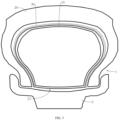
FIG. 1 is a schematic cross-sectional view of a tire provided by an embodiment of the present invention; -
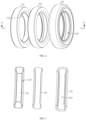
FIG. 2 is an exploded perspective view of a tire provided by an embodiment of the present invention; -
FIG. 3 is a schematic cross-sectional view A-A ofFIG. 2 ; -
FIG. 4 is a schematic cross-sectional view of an inner tube of a tire provided by an embodiment of the present invention; -
FIG. 5 is a schematic cross-sectional view of a wheel provided by an embodiment of the present invention; -
FIG. 6 is a schematic view of a vehicle according to an embodiment of the present invention. - Implementations of the present invention will be described in detail below with reference to the accompanying drawings and embodiments, so as to fully understand and implement the realization process of how the present invention applies technical means to solve technical problems and achieve technical effects.
- Some terms are used throughout the description and claims to refer to particular components. It should be understood by those skilled in the art that hardware manufacturers may refer to the same component in different terms. The description and claims do not intend to use differences in names as a way to distinguish components, but rather the differences in functions of the components as a criterion for distinction. For example, the term "include" mentioned throughout the description and the claims is used in an open-ended fashion, and thus should be interpreted as "include, but not limited to. "Substantially" refers to that, within an acceptable error range, those skilled in the art may solve the technical problem within a certain error range to substantially achieve the technical effect. In addition, the terms "coupled" or "electrically connected" herein encompass any direct or indirect electrical coupling means. Thus, if a first device is described to be coupled to a second device, it means that the first device may be directly electrically coupled to the second device, or indirectly electrically coupled to the second device via other devices or coupling means. The following specification is described as a preferred embodiment of the present invention, and the description is for the purpose of illustrating the general principles of the present invention and is not intended to limit the scope of the present invention. The scope of the present invention should be determined with reference to the appended claims.
- It should also be noted that the terms "comprises", "comprising", or any other variation thereof, are intended to cover a non-exclusive inclusion, such that a process, method, article, or system that comprises a list of elements does not include only those elements but may include other elements not expressly listed or inherent to such process, method, article, or system. Without further limitation, an element defined by the phrase "comprising a ... ..." does not exclude the presence of other identical elements in the process, method, article, or system in which the element is included.
- Referring to
FIG. 1 , a schematic cross-sectional view of a tire is provided for an embodiment of the present invention. The tire includes aninner tube 10, atire casing 20, and a lubricatinglayer 30. - The
inner tube 10 is a pneumatic tire, thetire casing 20 is defined with aninner cavity 210 in which the inner tube is provided, thetire casing 20 is a semi-closed annular structure and the lubricatinglayer 30 is provided between theinner tube 10 and thetire casing 20. - Specifically, referring to
FIGS. 2 and 3 , theinner tube 10 is an annular closed structure and provided with avalve 110, thevalve 110 is provided on a surface of theinner tube 10 and extends toward a center of an annular closed structure, and theinner tube 10 may be inflated through thevalve 110 to be a pneumatic tire. The material of theinner tube 10 includes but is not limited to, natural rubber, butyl rubber, etc., and thetire casing 20 is in a semi-closed annular structure, that is, a semi-closedinner cavity 210 is formed, and theinner tube 10 is put into theinner cavity 210 from an opening of the semi-closed annular structure, such that thetire casing 20 semi-wraps theinner tube 10 so as to protect theinner tube 10. Position of a part of theinner tube 10 corresponding to the opening of the semi-closed annular structure is not wrapped by the tire casing herein, and thevalve 110 is provided at the position. The lubricatinglayer 30 is provided between theinner tube 10 and thetire casing 20. Specifically, thelubricating layer 30 is provided between an outer surface of theinner tube 10 and a surface of theinner cavity 210, thetire casing 20 completely wraps the lubricatinglayer 30, and thelubricating layer 30 covers a part of the outer surface of theinner tube 10, that is, theinner tube 10, thelubricating layer 30 and thetire casing 20 are laminated. - In use, if an air pressure of the
inner tube 10 is around standard air pressure, a layered structure in tight contact is formed among the surface of theinner tube 10, thelubricating layer 30 and thetire casing 20 under tension of theinner tube 10, and the tire rotates normally on the road surface driven by a wheel hub. If the air pressure of theinner tube 10 is reduced to a certain extent or is zero, tension of theinner tube 10 is reduced or even disappears, thetire casing 20 is flattened by reaction force of the ground, and slip occurs between thetire casing 20 and the wheel hub when the wheel hub rotates. Since theinner tube 10 is fixed on the wheel hub by avalve 110, that is theinner tube 10 rotates along the wheel hub, and a relative slip inevitably occurs between theinner tube 10 and thetire casing 20. The tight fitting of the two and the reaction force of the ground against thetire casing 20 make friction force between theinner tube 10 and thetire casing 20 to be large, thereby causing theinner tube 10 easy to be worn out. However, in the embodiment of the present invention, thelubricating layer 30 is provided between theinner tube 10 and thetire casing 20, the friction force when theinner tube 10 and thetire casing 20 slide relative to each other may be effectively reduced by thelubricating layer 30, so as to avoid theinner tube 10 from being worn out and then causing the air leakage. - Each side of the
inner tube 10 is provided with atire shoulder 120, a thickness of eachtire shoulder 120 is 1.1 to 2 times a thickness of any other part of theinner tube 10. - Herein, a plurality of tests show that when the thickness of each
tire shoulder 120 of theinner tube 10 is 1.1-2 times the thickness of any other part of theinner tube 10, overall elasticity of theinner tube 10 may be ensured, thus deformation and deviation do not occur when the air pressure meets driving requirements, and when the air pressure of theinner tube 10 is reduced, the tire shoulders 120 of theinner tube 10 contract firstly and then is separated from thetire casing 20, such that the tire shoulders 120 of theinner tube 10 and thetire casing 20 do not rub with each other when the tire shoulders 120 of theinner tube 10 and thetire casing 20 slide relative to each other. In a preferred embodiment, the thickness of eachtire shoulder 120 of theinner tube 10 is 1.2 times the thickness of any other part of theinner tube 10. - At least 4 layers of cord fabric are provided in the
tire crown 220 of thetire casing 20. - At least 6 layers of the cord fabric are provided in two
tire sides 230 of thetire casing 20, respectively. - Furthermore, specification of the cord fabric should not be less than 1260D/2. The cord fabric is woven from yarn, and the selected yarn is two yarns with a weight of not less than 1260 grams per 9000 meters to be twisted together to weave the cord fabric. The woven cord fabric has good toughness and strength.
- Specifically, please refer to Tables 1 and 2 below.
- Table 1 shows a comparison between a column pressure strength test and the outer tire test in a prior art, in which the column pressure strength test is performed when 4 layers of the cord fabric are provided in the
tire crown 220, 6 layers of the cord fabric are provided in thetire side 230 and the specification of the cord fabric is 1260D/2.Table 1 Comparative Examples Embodiment Specifications of cord fabric 630D/2 1260D/2 Number of layers of cord fabric in tire crown 2 4 Number of layers of cord fabric in tire side 4 6 Column pressure strength (J) 35.6 87.2 - Table 2 shows a comparison between a rigid displacement value test and a test in the prior art, in which the rigid displacement value test is preformed when the air pressure of the
inner tube 10 is 344.75kPa, 206.85kPa and 0 kPa, using a needle with a column rod diameter of 8 mm, a head speed of 50 mm/min, and a load of 600 N:Table 2 Prior art This Example Air pressure (kPa) 344.75 206.85 0 344.75 206.85 0 Load (N) 600 Rigid displacement value (mm) 7.21 10.77 13.21 5.34 7.13 8.19 - As illustrated in Table 1, by increasing the number of layers of the cord fabric in the
tire crown 220 and the number of layers of cord fabric intire side 230 of the tire casing, and increasing the specification of the cord fabric, the column pressure strength of thetire casing 20 may be improved, ant that is the supportability of thetire casing 20 may be effectively increased, so as to ensure that thetire casing 20 does not collapse when the air pressure of theinner tube 10 decreases or even becomes zero and thetire casing 20 does not contact thetire casing 20 after theinner tube 10 contracts, thereby avoiding theinner tube 10 from being worn out by the friction when theinner tube 10 and thetire casing 20 slide relative to each other. Moreover, by improving the column pressure strength of thetire casing 20, risk of the tire being punctured may be effectively reduced, and driving safety of the vehicle is further improved. - Table 2 shows a rigidity test of the tire with an instron tensile machine under a certain load. As illustrated in the table, with the same applied load, a rigidity displacement value of the tire in the embodiment of the present invention at a plurality of air pressure values (344.75kPa, 206.85kPa and 0 kPa) is less than that of the tire in the prior art, which again proves that the tire of the embodiment of the present invention has better rigidity performance, such that the driving experience and the driving safety of the vehicle may be further improved.
- Furthermore, if the air pressure of the
inner tube 10 is less than standard vehicle air pressure, thetire casing 20 remains in its original shape. - Specifically, the standard vehicle air pressure herein refers to the air pressure of the
inner tube 10 when the vehicle runs at normal load and normal speed. Thetire casing 20 is made of a special material, such that the formedtire casing 20 has good supporting performance. Generally, when the air pressure of theinner tube 10 is less than the standard vehicle air pressure, tires of the vehicle may collapse. However, since thetire casing 20 of the embodiment of the present invention has good supporting performance, thetire casing 20 of the embodiment of the present invention may still keep its original shape, and volume of theinner tube 10 decreases with the reduction of the air pressure of theinner tube 10, such that a certain distance is formed between theinner tube 10 and thetire casing 20, thereby avoiding contact of theinner tube 10 and thetire casing 20, and accordingly avoiding theinner tube 10 from being damaged due to friction. - Furthermore, the
lubricating layer 30 is formed by coating one of an oil, graphite, an emulsion, a grease and a release agent. - Specifically, the
lubricating layer 30 is provided between theinner tube 10 and thetire casing 20 through a coating process, and thelubricating layer 30 is made of any one of, but not limited to, an oil, graphite, an emulsion, a grease and a release agent, and those materials have good lubricating performance so as to effectively reduce the friction force when theinner tube 10 and thetire casing 20 slide relative to each other, and further reduce possibility that theinner tube 10 is worn out and leaks air. - In another preferred embodiments of the present invention, the
lubricant layer 30 is formed by spraying a release agent. - The release agent has good placing adhesion characteristics, that is, through the arrangement of the release agent the
inner tube 10 and thetire casing 20 may be effectively separated, so as to effectively reduce the friction force when theinner tube 10 and thetire casing 20 slide relative to each other, and further reduce the possibility that theinner tube 10 is worn out and leaks air. - The release agent may be more uniformly distributed between the
inner tube 10 and thetire casing 20 through a spraying process, such that a moreuniform lubricating layer 30 is formed, and thus the lubricating performance of thelubricating layer 30 is further improved. - Furthermore, in a possible embodiment of the present invention, the
lubricating layer 30 is provided on the outer surface of theinner tube 10. - Specifically, the
lubricating layer 30 is provided on the outer surface of theinner tube 10 in contact with theinner cavity 210 by coating, spraying, or the like. It should be noted here that, in order to ensure a relative rest between theinner tube 10 and the wheel hub, the lubricating layer is generally not provided on the surface of theinner tube 10 in contact with the wheel hub, and that is, only part of the outer surface of theinner tube 10 is provided with thelubricating layer 30. - In addition, in another possible embodiment of the present invention, the
lubricating layer 30 is provided on a surface of theinner cavity 210. - Herein, the
lubricating layer 30 is provided on thetire casing 20 by coating, spraying or the like. Since theinner cavity 210 of thetire casing 20 is in full contact with theinner tube 10, that is thelubricating layer 30 is specifically provided on the surface of theinner cavity 210, as illustrated in the drawings, shape of thelubricating layer 30 is similar to shape of theinner cavity 210 of thetire casing 20. - In addition, in another preferred embodiments of the present invention, a cross section of the
inner tube 10 is in a shape of a water droplet. - Specifically, when the tire stands on the ground, a width of one end of the
inner tube 10 close to the ground is greater than a width of one end away from the ground, and the width of theinner tube 10 gradually decreases from one end close to the ground to one end away from the ground, such that the cross section of theinner tube 10 is in shape of a water droplet. The thickness of each twotire shoulders 120 of theinner tube 10 is designed to be greater than the thickness of any other part of theinner tube 10 to ensure that when the air pressure in theinner tube 10 is reduced, the part with large thickness firstly contracts, so as to further separate the part from thetire casing 120, and theinner tube 10 and thetire casing 20 do not rub against each other when theinner tube 10 and thetire casing 20 slide relative to each other, so as to further avoid theinner tube 10 from being worn out by thetire casing 20 and then causing the air leakage. - Furthermore, referring to
FIG. 4 , a schematic cross-sectional view of an inner tube of a tire is provided according to an embodiment of the present invention, radially upper portions of the twotire shoulders 120 are acontact portion 130 of theinner tube 10, and radially lower portions of the twotire shoulders 120 are asupport portion 140 of theinner tube 10, and a length of thesupport portion 140 is greater than a length of thecontact portion 130 in a circumferential direction of theinner tube 10, and a width of thesupport portion 140 gradually decreases from the twotire shoulders 120 to an inner side of theinner tube 10. - Specifically, the
contact portion 130 is an upper part of thetire shoulder 120, and is in contact with a tire crown of thetire casing 20 when theinner tube 10 is in an inflated state. Thesupport portion 140 is a lower portion of thetire shoulder 120 and plays a supporting role when theinner tube 10 is in the inflated state. A length of thesupport portion 140 is longer than that of thecontact portion 130, such that thesupport portion 140 has a relatively high height in the cross section of theinner tube 10, and in the cross section of theinner tube 10, the width of thesupport portion 140 gradually decreases from the twotire shoulders 120 to the inner side of theinner tube 10, such that the cross section of theinner tube 10 is made to be large at top and small at bottom, such as an inverted water droplet. Theinner tube 10 designed in such a shape has a relatively good supportability when theinner tube 10 is in the inflated state, and when the air pressure of theinner tube 10 is reduced, thetire shoulder 120 of theinner tube 10 contracts firstly and then is separated from thetire casing 20, thereby further avoiding theinner tube 10 from being damaged due to friction. - Referring to
FIG. 5 , a schematic cross-sectional view of a wheel according to an embodiment of the present invention is provided, and the wheel includes atire 1 and ahub 2. - The
tire 1 includes aninner tube 10, atire casing 20, and alubricating layer 30, thetire 1 is any one of the tires in the above embodiments, and for the specific structure thereof, reference is made to the description of the above embodiments, which will not be described in detail herein. - The
hub 2 is defined with a mountinggroove 21, thetire 1 is mounted on the mountinggroove 21 of thehub 2, other configurations of the wheel and associated connection relationships being known to those skilled in the art, and to which the embodiment of the present invention will not be described. - In addition, an embodiment of the present invention also provides a vehicle including the wheels mentioned in the above embodiments, through which the vehicle may be driven on the ground, with reference to the above description of the embodiments.
Claims (7)
- A tire (1) comprising an inner tube (10), a tire casing (20) being a semi-closed annular structure and a lubricating layer (30);the inner tube (10) being an annular closed structure and provided with a valve (110), the valve (110) being provided on a surface of the inner tube (10) and extending toward a center of the annular closed structure, the inner tube (10) being inflated through the valve (110) to be a pneumatic tire, the tire casing (20) being defined with an inner cavity (210), the inner tube (10) being provided in the inner cavity (210), and the lubricating layer (30) being provided between the inner tube (10) and the tire casing (20);wherein each side of the inner tube (10) is provided with a tire shoulder (120);wherein the lubricating layer (30) is provided on an outer surface of the inner tube (10) or a surface of the inner cavity (210);wherein a cross section of the inner tube (10) is in a shape of a water droplet, characterized in thata thickness of each tire shoulder (120) is 1.1 to 2 times a thickness of any other part of the inner tube (10);at least 4 layers of cord fabric are provided in a tire crown of the tire casing (20);at least 6 layers of cord fabric are provided in two tire sides (230) of the tire casing (20), respectively; andspecification of the cord fabric is less than 1260D/2, and the cord fabric is woven from yarn.
- The tire (1) according to claim 1, wherein the lubricating layer (30) is formed by coating one of an oil, graphite, an emulsion, a grease and a release agent.
- The tire (1) according to claim 1, wherein the lubricating layer (30) is formed by spraying a release agent.
- The tire (1) according to claim 3 wherein radially upper portions of the two tire shoulders (120) are a contact portion (130) of the inner tube (10), radially lower portions of the two tire shoulders (120) are a support portion (140) of the inner tube (10), a length of the support portion (140) is greater than a length of the contact portion (130) in a circumferential direction of the inner tube (10), and a width of the support portion (140) gradually decreases from the two tire shoulders (120) to an inner side of the inner tube (10).
- The tire (1) according to claim 1, wherein the thickness of each tire shoulder (120) is 1.2 times the thickness of any other part of the inner tube (10).
- A wheel, comprising:the tire (1) according to any one of claims 1 to 5; anda hub (2), the tire (1) being mounted to a mounting groove (21) of the hub (2).
- A vehicle, comprising:
the wheel according to claim 6.
Applications Claiming Priority (1)
| Application Number | Priority Date | Filing Date | Title |
|---|---|---|---|
| CN202010778773.8A CN114056005A (en) | 2020-08-05 | 2020-08-05 | Tire, wheel and vehicle |
Publications (2)
| Publication Number | Publication Date |
|---|---|
| EP3950382A1 EP3950382A1 (en) | 2022-02-09 |
| EP3950382B1 true EP3950382B1 (en) | 2024-05-29 |
Family
ID=77179911
Family Applications (1)
| Application Number | Title | Priority Date | Filing Date |
|---|---|---|---|
| EP21189163.5A Active EP3950382B1 (en) | 2020-08-05 | 2021-08-02 | Tire, wheel and vehicle |
Country Status (4)
| Country | Link |
|---|---|
| US (1) | US20220041014A1 (en) |
| EP (1) | EP3950382B1 (en) |
| CN (1) | CN114056005A (en) |
| ES (1) | ES2983054T3 (en) |
Family Cites Families (29)
| Publication number | Priority date | Publication date | Assignee | Title |
|---|---|---|---|---|
| US551088A (en) * | 1895-12-10 | Pneumatic tire | ||
| US1122249A (en) * | 1914-12-29 | Herman A Brandenburger | Tire. | |
| US646710A (en) * | 1900-01-15 | 1900-04-03 | Frank A Seiberling | Pneumatic tire. |
| FR433493A (en) * | 1911-02-27 | 1912-01-08 | George Herbert Neville Howes | Inner tube for pneumatic tires |
| US1206948A (en) * | 1913-03-18 | 1916-12-05 | Garrat B Van Wagenen | Pneumatic tire. |
| US1223302A (en) * | 1916-10-24 | 1917-04-17 | Frank S Walton | Method or process of treating automobile-tires and the inner tubes thereof. |
| US1237977A (en) * | 1917-04-12 | 1917-08-21 | Frank S Walton | Method or process of treating automobile-tires and the inner tubes thereof. |
| US1237978A (en) * | 1917-04-14 | 1917-08-21 | Frank S Walton | Method or process of treating automobile-tires and the inner tubes thereof. |
| US1377729A (en) * | 1919-04-23 | 1921-05-10 | William F Ray | Process of applying lubricant to tire-casings |
| US1346632A (en) * | 1919-10-11 | 1920-07-13 | Frank S Bennett | Inner-tube covering for tires |
| US1413557A (en) * | 1920-06-01 | 1922-04-18 | Barrett Co | Composition of matter and process of producing the same |
| US1519268A (en) * | 1920-09-04 | 1924-12-16 | Charles W Schnell | Composition for use in automobile tire casings |
| FR542878A (en) * | 1920-11-03 | 1922-08-23 | Tire Inner Tube Protectors | |
| US1559702A (en) * | 1921-03-07 | 1925-11-03 | Hopkinson Ernest | Vulcanizing process |
| US1601759A (en) * | 1924-10-21 | 1926-10-05 | Clyde E Lowe | Mandrel for tire tubes |
| GB544757A (en) * | 1940-02-15 | 1942-04-27 | Us Rubber Co | Improvements in a pneumatic tyre and method of making same |
| US2428478A (en) * | 1945-03-13 | 1947-10-07 | Sr Bernard P Thurber | Antifriction medium for pneumatic tires |
| US2760542A (en) * | 1954-03-23 | 1956-08-28 | Us Rubber Co | Inner tube |
| LU35561A1 (en) * | 1957-07-22 | |||
| FR2185516B1 (en) * | 1972-05-25 | 1974-09-27 | Boussois Souchon Neuvesel Sa | |
| GB2049573A (en) * | 1979-05-25 | 1980-12-31 | Parish N W L | Tyre |
| JP3509351B2 (en) * | 1995-12-26 | 2004-03-22 | 本田技研工業株式会社 | Tube tires |
| US5795414A (en) * | 1996-04-10 | 1998-08-18 | Shih; Choon J. | Puncture resistant tire assembly |
| JP2009083717A (en) * | 2007-10-01 | 2009-04-23 | Bridgestone Corp | Safety tire and air bladder for safety tire |
| US20120085477A1 (en) * | 2010-10-07 | 2012-04-12 | Yves Donckels | Pneumatic tire with a woven or knitted reinforcement |
| KR20140044902A (en) * | 2011-07-28 | 2014-04-15 | 스미토모 고무 고교 가부시키가이샤 | Pneumatic tire |
| WO2015047780A1 (en) * | 2013-09-24 | 2015-04-02 | Bridgestone Americas Tire Operations, Llc | Tire with toroidal element |
| US9834039B2 (en) * | 2015-01-16 | 2017-12-05 | Brian Geddis | 2-chamber tire pressure tuning system |
| CN105196798B (en) * | 2015-09-21 | 2020-04-17 | 唐克强 | Manufacturing method of bulletproof and explosion-proof pomegranate tire |
-
2020
- 2020-08-05 CN CN202010778773.8A patent/CN114056005A/en active Pending
-
2021
- 2021-08-02 EP EP21189163.5A patent/EP3950382B1/en active Active
- 2021-08-02 ES ES21189163T patent/ES2983054T3/en active Active
- 2021-08-04 US US17/393,547 patent/US20220041014A1/en not_active Abandoned
Also Published As
| Publication number | Publication date |
|---|---|
| ES2983054T3 (en) | 2024-10-21 |
| CN114056005A (en) | 2022-02-18 |
| US20220041014A1 (en) | 2022-02-10 |
| EP3950382A1 (en) | 2022-02-09 |
Similar Documents
| Publication | Publication Date | Title |
|---|---|---|
| EP2177378A1 (en) | Pneumatic tire | |
| US12070972B2 (en) | Truck tire with stiff outer bead products | |
| US11964517B2 (en) | Pneumatic tire | |
| EP3173257B1 (en) | Run-flat tire | |
| US20210016610A1 (en) | Sealant Material Composition and Pneumatic Tire | |
| JP2019055702A (en) | Pneumatic tire | |
| JP6610149B2 (en) | Pneumatic tire | |
| EP3659829A1 (en) | Tire | |
| US20170036494A1 (en) | Side-reinforcement-type run-flat radial tire | |
| EP3950382B1 (en) | Tire, wheel and vehicle | |
| JP6720537B2 (en) | Pneumatic tire | |
| JP2022062978A (en) | Pneumatic tire | |
| JP2015209004A (en) | Side-reinforced run-flat radial tire | |
| EP4434774B1 (en) | Pneumatic tire | |
| EP3978275B1 (en) | Pneumatic tire | |
| US20080277039A1 (en) | Run Flat Tire | |
| JP7639412B2 (en) | Pneumatic tires | |
| JP7498391B2 (en) | Pneumatic tires | |
| CN107074024A (en) | Tire with asymmetric carcass ply Rotating fields | |
| JP7669751B2 (en) | Pneumatic tires | |
| JP7786174B2 (en) | pneumatic tires | |
| KR20200022621A (en) | Pneumatic low weight tire | |
| JP6133066B2 (en) | Pneumatic tire | |
| JP5133610B2 (en) | Pneumatic run flat tire | |
| JP2002200906A (en) | Safety pneumatic tire |
Legal Events
| Date | Code | Title | Description |
|---|---|---|---|
| PUAI | Public reference made under article 153(3) epc to a published international application that has entered the european phase |
Free format text: ORIGINAL CODE: 0009012 |
|
| STAA | Information on the status of an ep patent application or granted ep patent |
Free format text: STATUS: THE APPLICATION HAS BEEN PUBLISHED |
|
| AK | Designated contracting states |
Kind code of ref document: A1 Designated state(s): AL AT BE BG CH CY CZ DE DK EE ES FI FR GB GR HR HU IE IS IT LI LT LU LV MC MK MT NL NO PL PT RO RS SE SI SK SM TR |
|
| STAA | Information on the status of an ep patent application or granted ep patent |
Free format text: STATUS: REQUEST FOR EXAMINATION WAS MADE |
|
| 17P | Request for examination filed |
Effective date: 20220706 |
|
| RBV | Designated contracting states (corrected) |
Designated state(s): AL AT BE BG CH CY CZ DE DK EE ES FI FR GB GR HR HU IE IS IT LI LT LU LV MC MK MT NL NO PL PT RO RS SE SI SK SM TR |
|
| STAA | Information on the status of an ep patent application or granted ep patent |
Free format text: STATUS: EXAMINATION IS IN PROGRESS |
|
| 17Q | First examination report despatched |
Effective date: 20230213 |
|
| GRAP | Despatch of communication of intention to grant a patent |
Free format text: ORIGINAL CODE: EPIDOSNIGR1 |
|
| STAA | Information on the status of an ep patent application or granted ep patent |
Free format text: STATUS: GRANT OF PATENT IS INTENDED |
|
| INTG | Intention to grant announced |
Effective date: 20240103 |
|
| GRAS | Grant fee paid |
Free format text: ORIGINAL CODE: EPIDOSNIGR3 |
|
| GRAA | (expected) grant |
Free format text: ORIGINAL CODE: 0009210 |
|
| STAA | Information on the status of an ep patent application or granted ep patent |
Free format text: STATUS: THE PATENT HAS BEEN GRANTED |
|
| AK | Designated contracting states |
Kind code of ref document: B1 Designated state(s): AL AT BE BG CH CY CZ DE DK EE ES FI FR GB GR HR HU IE IS IT LI LT LU LV MC MK MT NL NO PL PT RO RS SE SI SK SM TR |
|
| REG | Reference to a national code |
Ref country code: CH Ref legal event code: EP |
|
| REG | Reference to a national code |
Ref country code: IE Ref legal event code: FG4D |
|
| REG | Reference to a national code |
Ref country code: DE Ref legal event code: R096 Ref document number: 602021013748 Country of ref document: DE |
|
| REG | Reference to a national code |
Ref country code: LT Ref legal event code: MG9D |
|
| REG | Reference to a national code |
Ref country code: NL Ref legal event code: MP Effective date: 20240529 |
|
| PG25 | Lapsed in a contracting state [announced via postgrant information from national office to epo] |
Ref country code: IS Free format text: LAPSE BECAUSE OF FAILURE TO SUBMIT A TRANSLATION OF THE DESCRIPTION OR TO PAY THE FEE WITHIN THE PRESCRIBED TIME-LIMIT Effective date: 20240929 |
|
| PG25 | Lapsed in a contracting state [announced via postgrant information from national office to epo] |
Ref country code: BG Free format text: LAPSE BECAUSE OF FAILURE TO SUBMIT A TRANSLATION OF THE DESCRIPTION OR TO PAY THE FEE WITHIN THE PRESCRIBED TIME-LIMIT Effective date: 20240529 |
|
| PG25 | Lapsed in a contracting state [announced via postgrant information from national office to epo] |
Ref country code: FI Free format text: LAPSE BECAUSE OF FAILURE TO SUBMIT A TRANSLATION OF THE DESCRIPTION OR TO PAY THE FEE WITHIN THE PRESCRIBED TIME-LIMIT Effective date: 20240529 Ref country code: HR Free format text: LAPSE BECAUSE OF FAILURE TO SUBMIT A TRANSLATION OF THE DESCRIPTION OR TO PAY THE FEE WITHIN THE PRESCRIBED TIME-LIMIT Effective date: 20240529 |
|
| PGFP | Annual fee paid to national office [announced via postgrant information from national office to epo] |
Ref country code: DE Payment date: 20240806 Year of fee payment: 4 |
|
| PG25 | Lapsed in a contracting state [announced via postgrant information from national office to epo] |
Ref country code: GR Free format text: LAPSE BECAUSE OF FAILURE TO SUBMIT A TRANSLATION OF THE DESCRIPTION OR TO PAY THE FEE WITHIN THE PRESCRIBED TIME-LIMIT Effective date: 20240830 |
|
| REG | Reference to a national code |
Ref country code: AT Ref legal event code: MK05 Ref document number: 1690334 Country of ref document: AT Kind code of ref document: T Effective date: 20240529 |
|
| PGFP | Annual fee paid to national office [announced via postgrant information from national office to epo] |
Ref country code: FR Payment date: 20240829 Year of fee payment: 4 |
|
| PGFP | Annual fee paid to national office [announced via postgrant information from national office to epo] |
Ref country code: ES Payment date: 20240909 Year of fee payment: 4 |
|
| REG | Reference to a national code |
Ref country code: ES Ref legal event code: FG2A Ref document number: 2983054 Country of ref document: ES Kind code of ref document: T3 Effective date: 20241021 |
|
| PG25 | Lapsed in a contracting state [announced via postgrant information from national office to epo] |
Ref country code: AT Free format text: LAPSE BECAUSE OF FAILURE TO SUBMIT A TRANSLATION OF THE DESCRIPTION OR TO PAY THE FEE WITHIN THE PRESCRIBED TIME-LIMIT Effective date: 20240529 |
|
| PG25 | Lapsed in a contracting state [announced via postgrant information from national office to epo] |
Ref country code: PL Free format text: LAPSE BECAUSE OF FAILURE TO SUBMIT A TRANSLATION OF THE DESCRIPTION OR TO PAY THE FEE WITHIN THE PRESCRIBED TIME-LIMIT Effective date: 20240529 |
|
| PG25 | Lapsed in a contracting state [announced via postgrant information from national office to epo] |
Ref country code: LV Free format text: LAPSE BECAUSE OF FAILURE TO SUBMIT A TRANSLATION OF THE DESCRIPTION OR TO PAY THE FEE WITHIN THE PRESCRIBED TIME-LIMIT Effective date: 20240529 |
|
| PG25 | Lapsed in a contracting state [announced via postgrant information from national office to epo] |
Ref country code: PL Free format text: LAPSE BECAUSE OF FAILURE TO SUBMIT A TRANSLATION OF THE DESCRIPTION OR TO PAY THE FEE WITHIN THE PRESCRIBED TIME-LIMIT Effective date: 20240529 Ref country code: NO Free format text: LAPSE BECAUSE OF FAILURE TO SUBMIT A TRANSLATION OF THE DESCRIPTION OR TO PAY THE FEE WITHIN THE PRESCRIBED TIME-LIMIT Effective date: 20240829 Ref country code: LV Free format text: LAPSE BECAUSE OF FAILURE TO SUBMIT A TRANSLATION OF THE DESCRIPTION OR TO PAY THE FEE WITHIN THE PRESCRIBED TIME-LIMIT Effective date: 20240529 Ref country code: IS Free format text: LAPSE BECAUSE OF FAILURE TO SUBMIT A TRANSLATION OF THE DESCRIPTION OR TO PAY THE FEE WITHIN THE PRESCRIBED TIME-LIMIT Effective date: 20240929 Ref country code: HR Free format text: LAPSE BECAUSE OF FAILURE TO SUBMIT A TRANSLATION OF THE DESCRIPTION OR TO PAY THE FEE WITHIN THE PRESCRIBED TIME-LIMIT Effective date: 20240529 Ref country code: GR Free format text: LAPSE BECAUSE OF FAILURE TO SUBMIT A TRANSLATION OF THE DESCRIPTION OR TO PAY THE FEE WITHIN THE PRESCRIBED TIME-LIMIT Effective date: 20240830 Ref country code: FI Free format text: LAPSE BECAUSE OF FAILURE TO SUBMIT A TRANSLATION OF THE DESCRIPTION OR TO PAY THE FEE WITHIN THE PRESCRIBED TIME-LIMIT Effective date: 20240529 Ref country code: BG Free format text: LAPSE BECAUSE OF FAILURE TO SUBMIT A TRANSLATION OF THE DESCRIPTION OR TO PAY THE FEE WITHIN THE PRESCRIBED TIME-LIMIT Effective date: 20240529 Ref country code: AT Free format text: LAPSE BECAUSE OF FAILURE TO SUBMIT A TRANSLATION OF THE DESCRIPTION OR TO PAY THE FEE WITHIN THE PRESCRIBED TIME-LIMIT Effective date: 20240529 Ref country code: RS Free format text: LAPSE BECAUSE OF FAILURE TO SUBMIT A TRANSLATION OF THE DESCRIPTION OR TO PAY THE FEE WITHIN THE PRESCRIBED TIME-LIMIT Effective date: 20240829 |
|
| PGFP | Annual fee paid to national office [announced via postgrant information from national office to epo] |
Ref country code: IT Payment date: 20240831 Year of fee payment: 4 |
|
| PG25 | Lapsed in a contracting state [announced via postgrant information from national office to epo] |
Ref country code: NL Free format text: LAPSE BECAUSE OF FAILURE TO SUBMIT A TRANSLATION OF THE DESCRIPTION OR TO PAY THE FEE WITHIN THE PRESCRIBED TIME-LIMIT Effective date: 20240529 |
|
| PG25 | Lapsed in a contracting state [announced via postgrant information from national office to epo] |
Ref country code: NL Free format text: LAPSE BECAUSE OF FAILURE TO SUBMIT A TRANSLATION OF THE DESCRIPTION OR TO PAY THE FEE WITHIN THE PRESCRIBED TIME-LIMIT Effective date: 20240529 |
|
| PG25 | Lapsed in a contracting state [announced via postgrant information from national office to epo] |
Ref country code: DK Free format text: LAPSE BECAUSE OF FAILURE TO SUBMIT A TRANSLATION OF THE DESCRIPTION OR TO PAY THE FEE WITHIN THE PRESCRIBED TIME-LIMIT Effective date: 20240529 |
|
| PG25 | Lapsed in a contracting state [announced via postgrant information from national office to epo] |
Ref country code: EE Free format text: LAPSE BECAUSE OF FAILURE TO SUBMIT A TRANSLATION OF THE DESCRIPTION OR TO PAY THE FEE WITHIN THE PRESCRIBED TIME-LIMIT Effective date: 20240529 |
|
| PG25 | Lapsed in a contracting state [announced via postgrant information from national office to epo] |
Ref country code: CZ Free format text: LAPSE BECAUSE OF FAILURE TO SUBMIT A TRANSLATION OF THE DESCRIPTION OR TO PAY THE FEE WITHIN THE PRESCRIBED TIME-LIMIT Effective date: 20240529 |
|
| PG25 | Lapsed in a contracting state [announced via postgrant information from national office to epo] |
Ref country code: SK Free format text: LAPSE BECAUSE OF FAILURE TO SUBMIT A TRANSLATION OF THE DESCRIPTION OR TO PAY THE FEE WITHIN THE PRESCRIBED TIME-LIMIT Effective date: 20240529 Ref country code: RO Free format text: LAPSE BECAUSE OF FAILURE TO SUBMIT A TRANSLATION OF THE DESCRIPTION OR TO PAY THE FEE WITHIN THE PRESCRIBED TIME-LIMIT Effective date: 20240529 |
|
| PG25 | Lapsed in a contracting state [announced via postgrant information from national office to epo] |
Ref country code: SM Free format text: LAPSE BECAUSE OF FAILURE TO SUBMIT A TRANSLATION OF THE DESCRIPTION OR TO PAY THE FEE WITHIN THE PRESCRIBED TIME-LIMIT Effective date: 20240529 |
|
| PG25 | Lapsed in a contracting state [announced via postgrant information from national office to epo] |
Ref country code: SM Free format text: LAPSE BECAUSE OF FAILURE TO SUBMIT A TRANSLATION OF THE DESCRIPTION OR TO PAY THE FEE WITHIN THE PRESCRIBED TIME-LIMIT Effective date: 20240529 Ref country code: SK Free format text: LAPSE BECAUSE OF FAILURE TO SUBMIT A TRANSLATION OF THE DESCRIPTION OR TO PAY THE FEE WITHIN THE PRESCRIBED TIME-LIMIT Effective date: 20240529 Ref country code: RO Free format text: LAPSE BECAUSE OF FAILURE TO SUBMIT A TRANSLATION OF THE DESCRIPTION OR TO PAY THE FEE WITHIN THE PRESCRIBED TIME-LIMIT Effective date: 20240529 Ref country code: EE Free format text: LAPSE BECAUSE OF FAILURE TO SUBMIT A TRANSLATION OF THE DESCRIPTION OR TO PAY THE FEE WITHIN THE PRESCRIBED TIME-LIMIT Effective date: 20240529 Ref country code: DK Free format text: LAPSE BECAUSE OF FAILURE TO SUBMIT A TRANSLATION OF THE DESCRIPTION OR TO PAY THE FEE WITHIN THE PRESCRIBED TIME-LIMIT Effective date: 20240529 Ref country code: CZ Free format text: LAPSE BECAUSE OF FAILURE TO SUBMIT A TRANSLATION OF THE DESCRIPTION OR TO PAY THE FEE WITHIN THE PRESCRIBED TIME-LIMIT Effective date: 20240529 |
|
| REG | Reference to a national code |
Ref country code: DE Ref legal event code: R097 Ref document number: 602021013748 Country of ref document: DE |
|
| REG | Reference to a national code |
Ref country code: CH Ref legal event code: PL |
|
| PLBE | No opposition filed within time limit |
Free format text: ORIGINAL CODE: 0009261 |
|
| STAA | Information on the status of an ep patent application or granted ep patent |
Free format text: STATUS: NO OPPOSITION FILED WITHIN TIME LIMIT |
|
| PG25 | Lapsed in a contracting state [announced via postgrant information from national office to epo] |
Ref country code: LU Free format text: LAPSE BECAUSE OF NON-PAYMENT OF DUE FEES Effective date: 20240802 |
|
| PG25 | Lapsed in a contracting state [announced via postgrant information from national office to epo] |
Ref country code: CH Free format text: LAPSE BECAUSE OF NON-PAYMENT OF DUE FEES Effective date: 20240831 Ref country code: MC Free format text: LAPSE BECAUSE OF FAILURE TO SUBMIT A TRANSLATION OF THE DESCRIPTION OR TO PAY THE FEE WITHIN THE PRESCRIBED TIME-LIMIT Effective date: 20240529 Ref country code: SI Free format text: LAPSE BECAUSE OF FAILURE TO SUBMIT A TRANSLATION OF THE DESCRIPTION OR TO PAY THE FEE WITHIN THE PRESCRIBED TIME-LIMIT Effective date: 20240529 |
|
| 26N | No opposition filed |
Effective date: 20250303 |
|
| REG | Reference to a national code |
Ref country code: BE Ref legal event code: MM Effective date: 20240831 |
|
| PG25 | Lapsed in a contracting state [announced via postgrant information from national office to epo] |
Ref country code: BE Free format text: LAPSE BECAUSE OF NON-PAYMENT OF DUE FEES Effective date: 20240831 |
|
| PG25 | Lapsed in a contracting state [announced via postgrant information from national office to epo] |
Ref country code: IE Free format text: LAPSE BECAUSE OF NON-PAYMENT OF DUE FEES Effective date: 20240802 |
|
| PG25 | Lapsed in a contracting state [announced via postgrant information from national office to epo] |
Ref country code: SE Free format text: LAPSE BECAUSE OF FAILURE TO SUBMIT A TRANSLATION OF THE DESCRIPTION OR TO PAY THE FEE WITHIN THE PRESCRIBED TIME-LIMIT Effective date: 20240529 |
|
| PG25 | Lapsed in a contracting state [announced via postgrant information from national office to epo] |
Ref country code: CY Free format text: LAPSE BECAUSE OF FAILURE TO SUBMIT A TRANSLATION OF THE DESCRIPTION OR TO PAY THE FEE WITHIN THE PRESCRIBED TIME-LIMIT; INVALID AB INITIO Effective date: 20210802 |
|
| REG | Reference to a national code |
Ref country code: DE Ref legal event code: R119 Ref document number: 602021013748 Country of ref document: DE |
|
| PG25 | Lapsed in a contracting state [announced via postgrant information from national office to epo] |
Ref country code: HU Free format text: LAPSE BECAUSE OF FAILURE TO SUBMIT A TRANSLATION OF THE DESCRIPTION OR TO PAY THE FEE WITHIN THE PRESCRIBED TIME-LIMIT; INVALID AB INITIO Effective date: 20210802 |