EP3948336B1 - Apparatus for joint calibration of radar and camera systems for autonomous vehicle applications - Google Patents
Apparatus for joint calibration of radar and camera systems for autonomous vehicle applications Download PDFInfo
- Publication number
- EP3948336B1 EP3948336B1 EP20792094.3A EP20792094A EP3948336B1 EP 3948336 B1 EP3948336 B1 EP 3948336B1 EP 20792094 A EP20792094 A EP 20792094A EP 3948336 B1 EP3948336 B1 EP 3948336B1
- Authority
- EP
- European Patent Office
- Prior art keywords
- calibration target
- radar
- sensor calibration
- joint
- joint sensor
- Prior art date
- Legal status (The legal status is an assumption and is not a legal conclusion. Google has not performed a legal analysis and makes no representation as to the accuracy of the status listed.)
- Active
Links
Images



Classifications
-
- B—PERFORMING OPERATIONS; TRANSPORTING
- B60—VEHICLES IN GENERAL
- B60R—VEHICLES, VEHICLE FITTINGS, OR VEHICLE PARTS, NOT OTHERWISE PROVIDED FOR
- B60R11/00—Arrangements for holding or mounting articles, not otherwise provided for
- B60R11/04—Mounting of cameras operative during drive; Arrangement of controls thereof relative to the vehicle
-
- G—PHYSICS
- G01—MEASURING; TESTING
- G01S—RADIO DIRECTION-FINDING; RADIO NAVIGATION; DETERMINING DISTANCE OR VELOCITY BY USE OF RADIO WAVES; LOCATING OR PRESENCE-DETECTING BY USE OF THE REFLECTION OR RERADIATION OF RADIO WAVES; ANALOGOUS ARRANGEMENTS USING OTHER WAVES
- G01S13/00—Systems using the reflection or reradiation of radio waves, e.g. radar systems; Analogous systems using reflection or reradiation of waves whose nature or wavelength is irrelevant or unspecified
- G01S13/86—Combinations of radar systems with non-radar systems, e.g. sonar, direction finder
- G01S13/865—Combination of radar systems with lidar systems
-
- G—PHYSICS
- G01—MEASURING; TESTING
- G01S—RADIO DIRECTION-FINDING; RADIO NAVIGATION; DETERMINING DISTANCE OR VELOCITY BY USE OF RADIO WAVES; LOCATING OR PRESENCE-DETECTING BY USE OF THE REFLECTION OR RERADIATION OF RADIO WAVES; ANALOGOUS ARRANGEMENTS USING OTHER WAVES
- G01S13/00—Systems using the reflection or reradiation of radio waves, e.g. radar systems; Analogous systems using reflection or reradiation of waves whose nature or wavelength is irrelevant or unspecified
- G01S13/86—Combinations of radar systems with non-radar systems, e.g. sonar, direction finder
- G01S13/867—Combination of radar systems with cameras
-
- G—PHYSICS
- G01—MEASURING; TESTING
- G01S—RADIO DIRECTION-FINDING; RADIO NAVIGATION; DETERMINING DISTANCE OR VELOCITY BY USE OF RADIO WAVES; LOCATING OR PRESENCE-DETECTING BY USE OF THE REFLECTION OR RERADIATION OF RADIO WAVES; ANALOGOUS ARRANGEMENTS USING OTHER WAVES
- G01S13/00—Systems using the reflection or reradiation of radio waves, e.g. radar systems; Analogous systems using reflection or reradiation of waves whose nature or wavelength is irrelevant or unspecified
- G01S13/88—Radar or analogous systems specially adapted for specific applications
- G01S13/93—Radar or analogous systems specially adapted for specific applications for anti-collision purposes
- G01S13/931—Radar or analogous systems specially adapted for specific applications for anti-collision purposes of land vehicles
-
- G—PHYSICS
- G01—MEASURING; TESTING
- G01S—RADIO DIRECTION-FINDING; RADIO NAVIGATION; DETERMINING DISTANCE OR VELOCITY BY USE OF RADIO WAVES; LOCATING OR PRESENCE-DETECTING BY USE OF THE REFLECTION OR RERADIATION OF RADIO WAVES; ANALOGOUS ARRANGEMENTS USING OTHER WAVES
- G01S17/00—Systems using the reflection or reradiation of electromagnetic waves other than radio waves, e.g. lidar systems
- G01S17/88—Lidar systems specially adapted for specific applications
- G01S17/93—Lidar systems specially adapted for specific applications for anti-collision purposes
- G01S17/931—Lidar systems specially adapted for specific applications for anti-collision purposes of land vehicles
-
- G—PHYSICS
- G01—MEASURING; TESTING
- G01S—RADIO DIRECTION-FINDING; RADIO NAVIGATION; DETERMINING DISTANCE OR VELOCITY BY USE OF RADIO WAVES; LOCATING OR PRESENCE-DETECTING BY USE OF THE REFLECTION OR RERADIATION OF RADIO WAVES; ANALOGOUS ARRANGEMENTS USING OTHER WAVES
- G01S7/00—Details of systems according to groups G01S13/00, G01S15/00, G01S17/00
- G01S7/02—Details of systems according to groups G01S13/00, G01S15/00, G01S17/00 of systems according to group G01S13/00
- G01S7/40—Means for monitoring or calibrating
- G01S7/4004—Means for monitoring or calibrating of parts of a radar system
- G01S7/4026—Antenna boresight
-
- G—PHYSICS
- G05—CONTROLLING; REGULATING
- G05D—SYSTEMS FOR CONTROLLING OR REGULATING NON-ELECTRIC VARIABLES
- G05D1/00—Control of position, course, altitude or attitude of land, water, air or space vehicles, e.g. using automatic pilots
- G05D1/02—Control of position or course in two dimensions
- G05D1/021—Control of position or course in two dimensions specially adapted to land vehicles
- G05D1/0231—Control of position or course in two dimensions specially adapted to land vehicles using optical position detecting means
- G05D1/0246—Control of position or course in two dimensions specially adapted to land vehicles using optical position detecting means using a video camera in combination with image processing means
- G05D1/0248—Control of position or course in two dimensions specially adapted to land vehicles using optical position detecting means using a video camera in combination with image processing means in combination with a laser
-
- G—PHYSICS
- G05—CONTROLLING; REGULATING
- G05D—SYSTEMS FOR CONTROLLING OR REGULATING NON-ELECTRIC VARIABLES
- G05D1/00—Control of position, course, altitude or attitude of land, water, air or space vehicles, e.g. using automatic pilots
- G05D1/02—Control of position or course in two dimensions
- G05D1/021—Control of position or course in two dimensions specially adapted to land vehicles
- G05D1/0257—Control of position or course in two dimensions specially adapted to land vehicles using a radar
-
- H—ELECTRICITY
- H01—ELECTRIC ELEMENTS
- H01Q—ANTENNAS, i.e. RADIO AERIALS
- H01Q1/00—Details of, or arrangements associated with, antennas
- H01Q1/27—Adaptation for use in or on movable bodies
- H01Q1/32—Adaptation for use in or on road or rail vehicles
- H01Q1/3208—Adaptation for use in or on road or rail vehicles characterised by the application wherein the antenna is used
- H01Q1/3233—Adaptation for use in or on road or rail vehicles characterised by the application wherein the antenna is used particular used as part of a sensor or in a security system, e.g. for automotive radar, navigation systems
-
- H—ELECTRICITY
- H01—ELECTRIC ELEMENTS
- H01Q—ANTENNAS, i.e. RADIO AERIALS
- H01Q15/00—Devices for reflection, refraction, diffraction or polarisation of waves radiated from an antenna, e.g. quasi-optical devices
- H01Q15/14—Reflecting surfaces; Equivalent structures
- H01Q15/18—Reflecting surfaces; Equivalent structures comprising plurality of mutually inclined plane surfaces, e.g. corner reflector
-
- H—ELECTRICITY
- H01—ELECTRIC ELEMENTS
- H01Q—ANTENNAS, i.e. RADIO AERIALS
- H01Q5/00—Arrangements for simultaneous operation of antennas on two or more different wavebands, e.g. dual-band or multi-band arrangements
- H01Q5/20—Arrangements for simultaneous operation of antennas on two or more different wavebands, e.g. dual-band or multi-band arrangements characterised by the operating wavebands
- H01Q5/22—RF wavebands combined with non-RF wavebands, e.g. infrared or optical
-
- G—PHYSICS
- G01—MEASURING; TESTING
- G01S—RADIO DIRECTION-FINDING; RADIO NAVIGATION; DETERMINING DISTANCE OR VELOCITY BY USE OF RADIO WAVES; LOCATING OR PRESENCE-DETECTING BY USE OF THE REFLECTION OR RERADIATION OF RADIO WAVES; ANALOGOUS ARRANGEMENTS USING OTHER WAVES
- G01S7/00—Details of systems according to groups G01S13/00, G01S15/00, G01S17/00
- G01S7/02—Details of systems according to groups G01S13/00, G01S15/00, G01S17/00 of systems according to group G01S13/00
- G01S7/40—Means for monitoring or calibrating
-
- G—PHYSICS
- G01—MEASURING; TESTING
- G01S—RADIO DIRECTION-FINDING; RADIO NAVIGATION; DETERMINING DISTANCE OR VELOCITY BY USE OF RADIO WAVES; LOCATING OR PRESENCE-DETECTING BY USE OF THE REFLECTION OR RERADIATION OF RADIO WAVES; ANALOGOUS ARRANGEMENTS USING OTHER WAVES
- G01S7/00—Details of systems according to groups G01S13/00, G01S15/00, G01S17/00
- G01S7/02—Details of systems according to groups G01S13/00, G01S15/00, G01S17/00 of systems according to group G01S13/00
- G01S7/40—Means for monitoring or calibrating
- G01S7/4052—Means for monitoring or calibrating by simulation of echoes
- G01S7/4082—Means for monitoring or calibrating by simulation of echoes using externally generated reference signals, e.g. via remote reflector or transponder
- G01S7/4086—Means for monitoring or calibrating by simulation of echoes using externally generated reference signals, e.g. via remote reflector or transponder in a calibrating environment, e.g. anechoic chamber
Definitions
- This invention relates to a joint sensor calibration target for joint calibration of vision and radar sensors, a system for joint calibration of vision and radar sensors and a method of forming the joint sensor calibration target according to the preambles of independent claims 1, 11 and 13.
- an autonomous vehicle utilizes various on-board sensors to detect obstacles, other aspects of the roadway, and/or other aspects of an environment around the vehicle.
- sensors include, for example, one or more of vision sensors (e.g., camera(s)), radio detection and ranging (i.e., radar) sensors, and/or light detection and ranging (i.e., LiDAR) sensors. While it is possible for only one type of sensor to be utilized, it is far more preferable to fuse data from different types of sensors so as to provide the autonomous vehicle's control systems with more accurate, complete, and dependable information.
- each sensor modality has been calibrated separately, often using separate calibration targets optimized for each modality. Due to the low-resolution, high-variance nature of radar, radar calibration tolerances are much larger than those of other modalities. When fusion of low-level sensor data is desired, the larger variance nature of radar may lead to a mismatch in detection pairing with other sensor types, such as vision sensors. Thus, in order to utilize low-level sensor data for pairing, radar and vision sensors should ideally be calibrated simultaneously using a common target.
- a joint sensor calibration target for joint calibration of vision sensors and detection and ranging sensors is disclosed in KUMMERLE JULIUS ET AL, "Automatic Calibration of Multiple Cameras and Depth Sensors with a Spherical Target", 2018 IEEE/RSJ INTERNATIONAL CONFERENCE ON INTELLIGENT ROBOTS AND SYSTEMS (IROS), IEEE, (20181001), doi:10.1109/IROS.2018.8593955 .
- the detection and ranging sensors are LiDAR sensors.
- US 4 531 128 A discloses a sensor calibration target in the form of a trihedral radar reflector having three mutually perpendicular surfaces bounded outwardly by circular segments running along the equator and two mutually perpendicular meridians of an imaginary sphere, respectively.
- DE 23 08 701 A discloses a trihedral radar reflector for maritime navigation, having three mutually perpendicular surfaces bounded outwardly by circular segments running along the equator and two mutually perpendicular meridians of a hard foam sphere, respectively, wherein the trihedral radar reflector forms a cutout portion of the sphere.
- COHEN M ET AL "A dual-standard for radar echo measurements", IRE TRANSACTIONS ON ANTENNAS AND PROPAGATION, IEEE, USA, (19550701), vol. 10, no. 3, ISSN 0096-1973 , discloses a trihedral radar reflector having three mutually perpendicular surfaces bounded outwardly by circular segments running along the equator and two mutually perpendicular meridians of a aluminum sphere, respectively, wherein the trihedral radar reflector forms a cutout portion of the sphere.
- US 2006/164295 A1 discloses a joint sensor calibration target for joint calibration of vision sensors and radar sensors of a vehicle.
- the calibration target contains two reference features which are spaced from each other.
- One of the reference features is suited for calibration of vision sensors, and the other reference feature is suited for calibration of radar sensors and may be a triple mirror.
- Calibration system 10 includes an autonomous vehicle 20, which may capable of fully-autonomous or semi-autonomous operation. While illustrated as a conventional passenger car, it is to be understood that autonomous vehicle 20 may be configured as any appropriate automated device, e.g., a car, truck, van, train, aircraft, aerial drone and the like.
- Autonomous vehicle 20 includes a plurality of sensor types used in the gathering of information used in vehicle navigation, obstacle avoidance, etc.
- one or more cameras 23 may be provided, as well as one or more radar sensors 24.
- one or more LiDAR sensors 25 may also be present. While not shown in FIG. 1 , it is to be understood that the camera(s) 23, radar sensor(s) 24, and/or LiDAR sensor(s) 25 are electrically coupled to an on-board processor configured to perform calculations and logic operations required to execute programming instructions. In this way, data from the camera(s) 23, radar sensor(s) 24, and/or LiDAR sensor(s) 25 may be combined so as to provide the autonomous vehicle's control systems with more accurate, complete, and dependable information.
- Calibration system 10 also includes a calibration target 30.
- calibration target 30 is configured as a single target capable of providing joint calibration of the camera(s) 23 and radar sensor(s) 24.
- Calibration target 30 may be mounted upon a post 31 or other structure capable of elevating calibration target 30 above the ground surface 21 and in the field-of-view of both the camera(s) 23 and radar sensor(s) 24.
- calibration target 30 may be elevated above the ground surface 21 using any appropriate means and/or at any appropriate height.
- the autonomous vehicle 20 may be positioned such that both the camera(s) 23 and radar sensor(s) 24 are positioned at a distance of 4-to-6 meters away from the calibration target 30.
- the distance between the camera(s) 23 and radar sensor(s) 24 is not limited to 4-to-6 meters, and the calibration target 30 may vary based on, e.g., the size of the calibration target 30, the position of the calibration target 30, the positions of the camera(s) 23 and radar sensor(s) 24 on the autonomous vehicle 20, etc.
- calibration target 30 is configured as a single target capable of aiding the calibration of both vision and radar sensors.
- calibration target 30 includes a substantially spherical portion 32, which may be formed of one or more appropriate non-metallic material(s) having a low radar signature (e.g., less than 0 dB/m 2 ).
- Such appropriate non-metallic material(s) may be, e.g., polystyrene, polypropylene, polyvinyl chloride (PVC), polyamide, polycarbonate (PC), polycarbonate and polybutylene terephthalate blend (PC-PBT), acrylonitrile butadiene styrene (ABS), acrylonitrile styrene acrylate (ASA), etc.
- spherical portion 32 is visually opaque, may be painted or otherwise colored, and may have any suitable diameter, such as, e.g., 12 inches (30.48 cm).
- spherical portion 32 provides for an ideal target for the calibration of camera(s) 23, as the spherical shape and/or colored surface enables a low-variance vision angle and range estimate for the camera(s) 23. Additionally, the spherical portion 32 does not interfere in any substantial respect with returns from the radar sensor(s) 24, as the material (e.g., polystyrene, PVC, PC, etc.) has a low radar signature, and the spherical shape and relatively small diameter resists reflection of the electromagnetic waves from the radar sensor(s) 24.
- the material e.g., polystyrene, PVC, PC, etc.
- a cutout portion 34 Within substantially spherical portion 32 is a cutout portion 34, with cutout portion 34 accounting for approximately 1/8 of the overall volume of the calibration target 30.
- a trihedral reflector 35 is provided within the cutout portion 34, wherein the trihedral reflector 35 acts as a corner reflector capable of generating a strong radar echo for use in calibration of the radar sensor(s) 24. More specifically, the trihedral reflector 35 includes three electrically-conductive surfaces 36A, 36B, 36C mounted at a 90° angle relative to one another, allowing incoming electromagnetic waves from the radar sensor(s) 24 shown in FIG. 1 to be accurately backscattered in the direction from which they came.
- the trihedral reflector 35 provides a strong radar echo, particularly when compared with other surfaces (e.g., spheres, planar surfaces, etc.) of similar size.
- a trihedral reflector 35 in which the length R of each opposite and adjacent side of triangular surfaces 36A, 36B, 36C is approximately 6 inches (15.24 cm) may provide for a stable ⁇ 20 dB/m 2 radar signal, thereby allowing for low-variance angle detection and a large radar field-of-view, particularly given the relatively small overall size of the trihedral reflector 35.
- the cutout portion 34 and trihedral reflector 35 sized and positioned such that they do not greatly interfere with the ability of the camera(s) 23 to calibrate using the spherical portion 32.
- trihedral reflector 35 is shown as an insert secured within the cutout portion 34.
- trihedral reflector 35 is a solid metallic insert, preformed and then placed into (i.e., completely embedded within) cutout portion 34, leaving portions of the internal surfaces 37A, 37B, 37C of the cutout portion 34 uncovered.
- Each triangular surface 36A, 36B, 36C may be of equal size and shape.
- the trihedral reflector may instead be formed of a metallic coating applied to the internal surfaces of the cutout portion 34, thereby leaving no surfaces of the cutout portion 34 uncovered.
- a calibration target 42 in accordance with one embodiment is shown, with the cutout portion of spherical portion 32 having metallically coated surfaces 46A, 46B, 46C to form a trihedral reflector 45.
- the metallic coating may be applied via any appropriate method, such as spray coating, adhesive coating, etc.
- each surface 46A, 46B, 46C of the trihedral reflector 45 may be any appropriate thickness (e.g., about 50 microns) capable of the reflection of electromagnetic waves. Furthermore, each surface 46A, 46B, 46C should be non-porous, thereby allowing for accurate backscatter of the electromagnetic waves.
- each opposite and adjacent side of triangular surfaces 36A, 36B, 36C is described above as being 6 inches (15.24 cm) (i.e., equal to the radius of the spherical portion 32 ), it is to be understood that the length of each surface 36A, 36B, 36C may be longer or shorter. In such an instance, the change x-y-z position of each surface 36A, 36B, 36C relative to the sphere center would need to be accounted for such that the calibration of the radar sensor(s) and the calibration of the camera(s) remains consistent.
- calibration target 30 further includes a base member 38, which allows calibration target 30 to be mounted in a desired location (e.g., upon post 31, as shown in FIG. 1 ).
- base member 38 may include an inwardly-directed stem portion 39, along with a circular face portion 40, wherein the stem portion 39 is configured to extend within the spherical portion 32 so as to secure the base member 38 and allow for coupling at a mounting location.
- the base member 38 is formed of a material (or materials) which have a low radar signal, such as, e.g., polypropylene, polyamide, PVC, PC, PC-PBT, ABS, ASA, etc.
- the base member 38 is essentially transparent to the radar signal and does not alter the calibration of the radar sensor(s). At the very least, the radar signal of the base member 38 should be low enough that it is essentially rendered moot relative to the high radar signal provided by the trihedral reflector 35.
- the trihedral reflectors 35, 45 shown and described above with respect to FIGS. 2-4 may be angularly positioned within a cutout of the spherical portion 32 relative to the base member 38 such that each surface of the trihedral reflector 35, 45 has equal exposure from a line-of-sight aligned with the shared corner of the three surfaces and parallel to the ground, similar to that which is shown in FIG. 1 .
- the calibration target may be more tolerant of misalignment during calibration set-up.
- FIG. 5 depicts an example of internal hardware that may be included in any of the electronic components of the calibration system, such as internal processing systems, external monitoring and reporting systems, or remote servers.
- An electrical bus 50 serves as an information highway interconnecting the other illustrated components of the hardware.
- Processor 52 is a central processing device of the system, configured to perform calculations and logic operations required to execute programming instructions.
- processor and “processing device” may refer to a single processor or any number of processors in a set of processors that collectively perform a set of operations, such as a central processing unit (CPU), a graphics processing unit (GPU), a remote server, or a combination of these.
- CPU central processing unit
- GPU graphics processing unit
- remote server or a combination of these.
- ROM Read only memory
- RAM random access memory
- flash memory hard drives and other devices capable of storing electronic data constitute examples of memory devices 56.
- a memory device may include a single device or a collection of devices across which data and/or instructions are stored.
- Various embodiments of the invention may include a computer-readable medium containing programming instructions that are configured to cause one or more processors, print devices and/or scanning devices to perform the functions described in the context of the previous figures.
- An optional display interface 59 may permit information from the bus 50 to be displayed on a display device 58 in visual, graphic or alphanumeric format.
- An audio interface and audio output (such as a speaker) also may be provided.
- Communication with external devices may occur using various communication devices 60 such as a wireless antenna, an RFID tag and/or short-range or near-field communication transceiver, each of which may optionally communicatively connect with other components of the device via one or more communication system.
- the communication device(s) 60 may be configured to be communicatively connected to a communications network, such as the Internet, a local area network or a cellular telephone data network.
- the hardware may also include a user interface sensor 62 that allows for receipt of data from input devices 64 such as a keyboard, a mouse, a joystick, a touchscreen, a touch pad, a remote control, a pointing device and/or microphone. Digital image frames also may be received from one or more cameras 54 that can capture video and/or still images.
- the system also may receive data from a motion and/or position sensor 70 such as an accelerometer, gyroscope or inertial measurement unit.
- the system also may receive data from a radar system 68 and/or a LiDAR system 66 such as that which was described above.
- vehicle refers to any moving form of conveyance that is capable of carrying either one or more human occupants and/or cargo and is powered by any form of energy.
- vehicle includes, but is not limited to, cars, trucks, vans, trains, autonomous vehicles, aircraft, aerial drones and the like.
- An “autonomous vehicle” is a vehicle having a processor, programming instructions and drivetrain components that are controllable by the processor without requiring a human operator.
- An autonomous vehicle may be fully autonomous in that it does not require a human operator for most or all driving conditions and functions, or it may be semi-autonomous in that a human operator may be required in certain conditions or for certain operations, or that a human operator may override the vehicle's autonomous system and may take control of the vehicle.
Landscapes
- Engineering & Computer Science (AREA)
- Remote Sensing (AREA)
- Radar, Positioning & Navigation (AREA)
- Physics & Mathematics (AREA)
- General Physics & Mathematics (AREA)
- Computer Networks & Wireless Communication (AREA)
- Electromagnetism (AREA)
- Aviation & Aerospace Engineering (AREA)
- Automation & Control Theory (AREA)
- Mechanical Engineering (AREA)
- Optics & Photonics (AREA)
- Computer Vision & Pattern Recognition (AREA)
- Multimedia (AREA)
- Computer Security & Cryptography (AREA)
- Radar Systems Or Details Thereof (AREA)
Description
- This invention relates to a joint sensor calibration target for joint calibration of vision and radar sensors, a system for joint calibration of vision and radar sensors and a method of forming the joint sensor calibration target according to the preambles of independent claims 1, 11 and 13.
- Accurate and consistent obstacle detection and navigation are key elements of autonomous driving applications. Typically, an autonomous vehicle utilizes various on-board sensors to detect obstacles, other aspects of the roadway, and/or other aspects of an environment around the vehicle. Examples of such sensors include, for example, one or more of vision sensors (e.g., camera(s)), radio detection and ranging (i.e., radar) sensors, and/or light detection and ranging (i.e., LiDAR) sensors. While it is possible for only one type of sensor to be utilized, it is far more preferable to fuse data from different types of sensors so as to provide the autonomous vehicle's control systems with more accurate, complete, and dependable information.
- In order for sensor fusion to provide desired outputs, the individual sensors must be calibrated prior to usage of the autonomous vehicle and, over time, recalibrated to assure accurate results. In the past, each sensor modality has been calibrated separately, often using separate calibration targets optimized for each modality. Due to the low-resolution, high-variance nature of radar, radar calibration tolerances are much larger than those of other modalities. When fusion of low-level sensor data is desired, the larger variance nature of radar may lead to a mismatch in detection pairing with other sensor types, such as vision sensors. Thus, in order to utilize low-level sensor data for pairing, radar and vision sensors should ideally be calibrated simultaneously using a common target. However, vision sensor calibration in autonomous vehicles has often relied upon the use of a large, planar checkerboard pattern as the calibration target. These large checkerboard patterns are not suitable for calibration of radar sensors, as they result in a high variance radar signature and may create multipath patterns, leading to inaccurate calibration of the radar sensors.
- A joint sensor calibration target for joint calibration of vision sensors and detection and ranging sensors is disclosed in KUMMERLE JULIUS ET AL, "Automatic Calibration of Multiple Cameras and Depth Sensors with a Spherical Target", 2018 IEEE/RSJ INTERNATIONAL CONFERENCE ON INTELLIGENT ROBOTS AND SYSTEMS (IROS), IEEE, (20181001), doi:10.1109/IROS.2018.8593955. The detection and ranging sensors are LiDAR sensors.
-
US 4 531 128 A discloses a sensor calibration target in the form of a trihedral radar reflector having three mutually perpendicular surfaces bounded outwardly by circular segments running along the equator and two mutually perpendicular meridians of an imaginary sphere, respectively. -
DE 23 08 701 A discloses a trihedral radar reflector for maritime navigation, having three mutually perpendicular surfaces bounded outwardly by circular segments running along the equator and two mutually perpendicular meridians of a hard foam sphere, respectively, wherein the trihedral radar reflector forms a cutout portion of the sphere. - COHEN M ET AL, "A dual-standard for radar echo measurements", IRE TRANSACTIONS ON ANTENNAS AND PROPAGATION, IEEE, USA, (19550701), vol. 10, no. 3, ISSN 0096-1973, discloses a trihedral radar reflector having three mutually perpendicular surfaces bounded outwardly by circular segments running along the equator and two mutually perpendicular meridians of a aluminum sphere, respectively, wherein the trihedral radar reflector forms a cutout portion of the sphere.
-
US 2006/164295 A1 discloses a joint sensor calibration target for joint calibration of vision sensors and radar sensors of a vehicle. The calibration target contains two reference features which are spaced from each other. One of the reference features is suited for calibration of vision sensors, and the other reference feature is suited for calibration of radar sensors and may be a triple mirror. - Accordingly, there is a need for a calibration target capable of simultaneously providing both radar and vision sensor calibration without interfering with the other's sensing modality and having other advantages.
- The problems described above are addressed by the subject-matters of independent claims 1, 11 and 13.
-
-
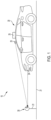
FIG. 1 illustrates a calibration system for an autonomous device in accordance with an aspect of the disclosure; -
FIG. 2 illustrates a perspective view of a calibration target for use in vision sensor and radar sensor calibration in accordance with an aspect of the disclosure; -
FIG. 3 illustrates a perspective view of a calibration target for use in vision sensor and radar sensor calibration in accordance with another aspect of the disclosure; -
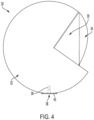
FIG. 4 illustrates a cross-sectional view of the calibration target ofFIG. 2 ; and -
FIG. 5 is a block diagram of elements of a computing device on which the various systems and methods in this document could be implemented. - As used in this document, the singular forms "a," "an," and "the" include plural references unless the context clearly dictates otherwise. Unless defined otherwise, all technical and scientific terms used herein have the same meanings as commonly understood by one of ordinary skill in the art. As used in this document, the term "comprising" means "including, but not limited to." Definitions for additional terms that are relevant to this document are included at the end of this Detailed Description.
- Referring to
FIG. 1 , an autonomous vehicle calibration system 10 in accordance with an aspect of the disclosure is shown. Calibration system 10 includes an autonomous vehicle 20, which may capable of fully-autonomous or semi-autonomous operation. While illustrated as a conventional passenger car, it is to be understood that autonomous vehicle 20 may be configured as any appropriate automated device, e.g., a car, truck, van, train, aircraft, aerial drone and the like. - Autonomous vehicle 20 includes a plurality of sensor types used in the gathering of information used in vehicle navigation, obstacle avoidance, etc. Specifically, one or more cameras 23 may be provided, as well as one or more radar sensors 24. Additionally, in some embodiments, one or more LiDAR sensors 25 may also be present. While not shown in
FIG. 1 , it is to be understood that the camera(s) 23, radar sensor(s) 24, and/or LiDAR sensor(s) 25 are electrically coupled to an on-board processor configured to perform calculations and logic operations required to execute programming instructions. In this way, data from the camera(s) 23, radar sensor(s) 24, and/or LiDAR sensor(s) 25 may be combined so as to provide the autonomous vehicle's control systems with more accurate, complete, and dependable information. - Calibration system 10 also includes a
calibration target 30. As will be described in further detail below,calibration target 30 is configured as a single target capable of providing joint calibration of the camera(s) 23 and radar sensor(s) 24.Calibration target 30 may be mounted upon a post 31 or other structure capable of elevatingcalibration target 30 above the ground surface 21 and in the field-of-view of both the camera(s) 23 and radar sensor(s) 24. However, it is to be understood thatcalibration target 30 may be elevated above the ground surface 21 using any appropriate means and/or at any appropriate height. Furthermore, in some embodiments, during a calibration process, the autonomous vehicle 20 may be positioned such that both the camera(s) 23 and radar sensor(s) 24 are positioned at a distance of 4-to-6 meters away from thecalibration target 30. However, it is to be understood that the distance between the camera(s) 23 and radar sensor(s) 24 is not limited to 4-to-6 meters, and thecalibration target 30 may vary based on, e.g., the size of thecalibration target 30, the position of thecalibration target 30, the positions of the camera(s) 23 and radar sensor(s) 24 on the autonomous vehicle 20, etc. - Next, referring to
FIG. 2 , a detailed view ofcalibration target 30 in accordance with an aspect of the disclosure is shown. As noted above,calibration target 30 is configured as a single target capable of aiding the calibration of both vision and radar sensors. First,calibration target 30 includes a substantiallyspherical portion 32, which may be formed of one or more appropriate non-metallic material(s) having a low radar signature (e.g., less than 0 dB/m2). Such appropriate non-metallic material(s) may be, e.g., polystyrene, polypropylene, polyvinyl chloride (PVC), polyamide, polycarbonate (PC), polycarbonate and polybutylene terephthalate blend (PC-PBT), acrylonitrile butadiene styrene (ABS), acrylonitrile styrene acrylate (ASA), etc. Additionally,spherical portion 32 is visually opaque, may be painted or otherwise colored, and may have any suitable diameter, such as, e.g., 12 inches (30.48 cm). In this way,spherical portion 32 provides for an ideal target for the calibration of camera(s) 23, as the spherical shape and/or colored surface enables a low-variance vision angle and range estimate for the camera(s) 23. Additionally, thespherical portion 32 does not interfere in any substantial respect with returns from the radar sensor(s) 24, as the material (e.g., polystyrene, PVC, PC, etc.) has a low radar signature, and the spherical shape and relatively small diameter resists reflection of the electromagnetic waves from the radar sensor(s) 24. - Within substantially
spherical portion 32 is acutout portion 34, withcutout portion 34 accounting for approximately 1/8 of the overall volume of thecalibration target 30. Atrihedral reflector 35 is provided within thecutout portion 34, wherein thetrihedral reflector 35 acts as a corner reflector capable of generating a strong radar echo for use in calibration of the radar sensor(s) 24. More specifically, thetrihedral reflector 35 includes three electrically-conductive surfaces FIG. 1 to be accurately backscattered in the direction from which they came. - Accordingly, even with a relatively small size, the
trihedral reflector 35 provides a strong radar echo, particularly when compared with other surfaces (e.g., spheres, planar surfaces, etc.) of similar size. For example, atrihedral reflector 35 in which the length R of each opposite and adjacent side oftriangular surfaces trihedral reflector 35. Additionally, thecutout portion 34 andtrihedral reflector 35 sized and positioned such that they do not greatly interfere with the ability of the camera(s) 23 to calibrate using thespherical portion 32. - Referring still to
FIG. 2 , thetrihedral reflector 35 is shown as an insert secured within thecutout portion 34. In some embodiments,trihedral reflector 35 is a solid metallic insert, preformed and then placed into (i.e., completely embedded within)cutout portion 34, leaving portions of theinternal surfaces cutout portion 34 uncovered. Eachtriangular surface - However, as shown in
FIG. 3 , and in accordance with another aspect of the disclosure, it is to be understood that the trihedral reflector may instead be formed of a metallic coating applied to the internal surfaces of thecutout portion 34, thereby leaving no surfaces of thecutout portion 34 uncovered. Specifically, referring toFIG. 3 , acalibration target 42 in accordance with one embodiment is shown, with the cutout portion ofspherical portion 32 having metallically coatedsurfaces trihedral reflector 45. The metallic coating may be applied via any appropriate method, such as spray coating, adhesive coating, etc. The thickness of eachsurface trihedral reflector 45 may be any appropriate thickness (e.g., about 50 microns) capable of the reflection of electromagnetic waves. Furthermore, eachsurface - Referring again to
FIG. 2 , while the length R of each opposite and adjacent side oftriangular surfaces surface surface - Next, referring to both
FIG. 2 andFIG. 4 ,calibration target 30 further includes abase member 38, which allowscalibration target 30 to be mounted in a desired location (e.g., upon post 31, as shown inFIG. 1 ). As shown inFIG. 3 ,base member 38 may include an inwardly-directedstem portion 39, along with a circular face portion 40, wherein thestem portion 39 is configured to extend within thespherical portion 32 so as to secure thebase member 38 and allow for coupling at a mounting location. In some embodiments, thebase member 38 is formed of a material (or materials) which have a low radar signal, such as, e.g., polypropylene, polyamide, PVC, PC, PC-PBT, ABS, ASA, etc. In this way, thebase member 38 is essentially transparent to the radar signal and does not alter the calibration of the radar sensor(s). At the very least, the radar signal of thebase member 38 should be low enough that it is essentially rendered moot relative to the high radar signal provided by thetrihedral reflector 35. - Additionally, in accordance with another aspect of the disclosure, the
trihedral reflectors FIGS. 2-4 may be angularly positioned within a cutout of thespherical portion 32 relative to thebase member 38 such that each surface of thetrihedral reflector FIG. 1 . With such a configuration, the calibration target may be more tolerant of misalignment during calibration set-up. -
FIG. 5 depicts an example of internal hardware that may be included in any of the electronic components of the calibration system, such as internal processing systems, external monitoring and reporting systems, or remote servers. An electrical bus 50 serves as an information highway interconnecting the other illustrated components of the hardware. Processor 52 is a central processing device of the system, configured to perform calculations and logic operations required to execute programming instructions. As used in this document and in the claims, the terms "processor" and "processing device" may refer to a single processor or any number of processors in a set of processors that collectively perform a set of operations, such as a central processing unit (CPU), a graphics processing unit (GPU), a remote server, or a combination of these. Read only memory (ROM), random access memory (RAM), flash memory, hard drives and other devices capable of storing electronic data constitute examples ofmemory devices 56. A memory device may include a single device or a collection of devices across which data and/or instructions are stored. Various embodiments of the invention may include a computer-readable medium containing programming instructions that are configured to cause one or more processors, print devices and/or scanning devices to perform the functions described in the context of the previous figures. - An
optional display interface 59 may permit information from the bus 50 to be displayed on adisplay device 58 in visual, graphic or alphanumeric format. An audio interface and audio output (such as a speaker) also may be provided. Communication with external devices may occur usingvarious communication devices 60 such as a wireless antenna, an RFID tag and/or short-range or near-field communication transceiver, each of which may optionally communicatively connect with other components of the device via one or more communication system. The communication device(s) 60 may be configured to be communicatively connected to a communications network, such as the Internet, a local area network or a cellular telephone data network. - The hardware may also include a
user interface sensor 62 that allows for receipt of data frominput devices 64 such as a keyboard, a mouse, a joystick, a touchscreen, a touch pad, a remote control, a pointing device and/or microphone. Digital image frames also may be received from one or more cameras 54 that can capture video and/or still images. The system also may receive data from a motion and/orposition sensor 70 such as an accelerometer, gyroscope or inertial measurement unit. The system also may receive data from a radar system 68 and/or a LiDAR system 66 such as that which was described above. - The above-disclosed features and functions, as well as alternatives, may be combined into many other different systems or applications. Various components may be implemented in hardware or software or embedded software.
- Terminology that is relevant to the disclosure provided above includes;
- The term "vehicle" refers to any moving form of conveyance that is capable of carrying either one or more human occupants and/or cargo and is powered by any form of energy. The term "vehicle" includes, but is not limited to, cars, trucks, vans, trains, autonomous vehicles, aircraft, aerial drones and the like. An "autonomous vehicle" is a vehicle having a processor, programming instructions and drivetrain components that are controllable by the processor without requiring a human operator. An autonomous vehicle may be fully autonomous in that it does not require a human operator for most or all driving conditions and functions, or it may be semi-autonomous in that a human operator may be required in certain conditions or for certain operations, or that a human operator may override the vehicle's autonomous system and may take control of the vehicle.
- In this document, when terms such "first" and "second" are used to modify a noun, such use is simply intended to distinguish one item from another, and is not intended to require a sequential order unless specifically stated. In addition, terms of relative position such as "vertical" and "horizontal", or "front" and "rear", when used, are intended to be relative to each other and need not be absolute, and only refer to one possible position of the device associated with those terms depending on the device's orientation.
Claims (13)
- A joint sensor calibration target (30) for joint calibration of vision and radar sensors comprising:a spherical portion (32) which comprises one or more non-metallic materials;a cutout portion (34), wherein the cutout portion (34) is formed within the spherical portion (32) and comprises three equal surfaces (36); anda trihedral reflector (35) positioned within the cutout portion (34).
- The joint sensor calibration target (30) of claim 1,
wherein the material is one or more of polystyrene, polypropylene, polyvinyl chloride (PVC), polyamide, polycarbonate (PC), polycarbonate and polybutylene terephthalate blend (PC-PBT), acrylonitrile butadiene styrene (ABS), and acrylonitrile styrene acrylate (ASA). - The joint sensor calibration target (30) of claim 1 or 2, wherein the spherical portion (32) is visually opaque.
- The joint sensor calibration target (30) of any of the preceding claims, wherein the trihedral reflector (35) comprises a metallic material.
- The joint sensor calibration target (30) of claim 4, wherein the trihedral reflector (35) comprises a preformed metallic insert having three surfaces (36) of equal size and shape.
- The joint sensor calibration target (30) of claim 4, wherein the trihedral reflector (35) comprises a metallic coating applied to the three surfaces (36) of the cutout portion (34).
- The joint sensor calibration target (30) of any of the preceding claims, wherein a volume of the cutout portion (34) is ⅛ of a volume of the spherical portion (32).
- The joint sensor calibration target (30) of any of the preceding claims, wherein a length of each opposite and adjacent side of each triangular surface (36) of the trihedral reflector (35) is equal to the radius of the spherical portion (32).
- The joint sensor calibration target (30) of any of the preceding claims, further comprising a base portion (31) coupled to the spherical portion (32).
- The joint sensor calibration target (30) of claim 9, wherein the base portion (31) comprises one or more of a polystyrene, polypropylene, polyvinyl chloride (PVC), polyamide, polycarbonate (PC), polycarbonate and polybutylene terephthalate blend (PC-PBT), acrylonitrile butadiene styrene (ABS), or acrylonitrile styrene acrylate (ASA) material.
- A system for joint calibration of vision and radar sensors (23, 24, 25), characterized in that the system comprises:an autonomous device having at least one camera sensor (23) and at least one radar sensor (24); andthe joint sensor calibration target (30) of any of claims 1-10, wherein the joint sensor calibration target (30) is configured to aid calibration of the at least one camera sensor (23) and the at least one radar sensor (24) simultaneously.
- The system of claim 11, wherein the autonomous device comprises an autonomous vehicle (20).
- A method of forming the joint sensor calibration target (30) of any of claims 1-10, characterized in that the method comprises:forming the spherical portion (32);forming the cutout portion (34) within the spherical portion (32), wherein the cutout portion (34) is formed so as to comprise three surfaces (36) of equal size and shape; andproviding a metallic trihedral reflector (35) positioned within the cutout portion (34).
Applications Claiming Priority (2)
| Application Number | Priority Date | Filing Date | Title |
|---|---|---|---|
| US16/383,829 US11112490B2 (en) | 2019-04-15 | 2019-04-15 | Apparatus for joint calibration of radar and camera systems for autonomous vehicle applications |
| PCT/US2020/026336 WO2020214426A1 (en) | 2019-04-15 | 2020-04-02 | Apparatus for joint calibration of radar and camera systems for autonomous vehicle applications |
Publications (3)
| Publication Number | Publication Date |
|---|---|
| EP3948336A1 EP3948336A1 (en) | 2022-02-09 |
| EP3948336A4 EP3948336A4 (en) | 2022-12-28 |
| EP3948336B1 true EP3948336B1 (en) | 2025-05-21 |
Family
ID=72747871
Family Applications (1)
| Application Number | Title | Priority Date | Filing Date |
|---|---|---|---|
| EP20792094.3A Active EP3948336B1 (en) | 2019-04-15 | 2020-04-02 | Apparatus for joint calibration of radar and camera systems for autonomous vehicle applications |
Country Status (3)
| Country | Link |
|---|---|
| US (1) | US11112490B2 (en) |
| EP (1) | EP3948336B1 (en) |
| WO (1) | WO2020214426A1 (en) |
Families Citing this family (10)
| Publication number | Priority date | Publication date | Assignee | Title |
|---|---|---|---|---|
| US11313946B2 (en) * | 2018-11-12 | 2022-04-26 | Hunter Engineering Company | Method and apparatus for identification of calibration targets during vehicle radar system service procedures |
| CN110619666B (en) * | 2019-09-20 | 2022-05-27 | 阿波罗智能技术(北京)有限公司 | Method and device for calibrating camera |
| CN112558023B (en) * | 2019-09-25 | 2024-03-26 | 华为技术有限公司 | Calibration methods and devices for sensors |
| US11668794B2 (en) * | 2020-01-07 | 2023-06-06 | Ford Global Technologies, Llc | Sensor calibration |
| US11453348B2 (en) | 2020-04-14 | 2022-09-27 | Gm Cruise Holdings Llc | Polyhedral sensor calibration target for calibrating multiple types of sensors |
| CN112558028B (en) * | 2021-02-26 | 2021-05-07 | 中智行科技有限公司 | Roadside sensor calibration method and device |
| US12315197B2 (en) * | 2021-08-23 | 2025-05-27 | Volkswagen Group of America Investments, LLC | Systems and methods for validating camera calibration in real-time |
| US20230064232A1 (en) * | 2021-08-27 | 2023-03-02 | Motional Ad Llc | Universal calibration targets and calibration spaces |
| CN113888652A (en) * | 2021-10-22 | 2022-01-04 | 智能移动机器人(中山)研究院 | Automatic calibration technology of internal and external parameters of 4D millimeter wave radar and thermal camera |
| US20230168363A1 (en) * | 2021-11-30 | 2023-06-01 | Argo AI, LLC | Method to detect radar installation error for pitch angle on autonomous vehicles |
Family Cites Families (45)
| Publication number | Priority date | Publication date | Assignee | Title |
|---|---|---|---|---|
| US3126544A (en) * | 1964-03-24 | Method of deception for an aircraft | ||
| US2746035A (en) * | 1951-06-04 | 1956-05-15 | Virginia T Norwood | Radar reflector |
| US3167769A (en) * | 1960-09-26 | 1965-01-26 | Northrop Corp | Radio frequency reflector |
| US3365790A (en) * | 1963-06-18 | 1968-01-30 | Joseph B. Brauer | Method of fabricating a radar reflector |
| US3965234A (en) * | 1973-02-01 | 1976-06-22 | Lane Jr Noel W | Method of making radar reflective buoy |
| DE2308701C3 (en) * | 1973-02-22 | 1982-03-04 | Norddeutsche Seekabelwerke Ag, 2890 Nordenham | Method of manufacturing a radar reflector |
| US4120259A (en) * | 1977-02-23 | 1978-10-17 | The Raymond Lee Organization, Inc. | Visual and radar emergency detection balloon |
| US4176355A (en) * | 1978-01-12 | 1979-11-27 | Harris Stanley R | Radiation reflecting target surface |
| US4531128A (en) * | 1982-07-26 | 1985-07-23 | The United States Of America As Represented By The Secretary Of The Navy | Buoyant radar reflector |
| US4503101A (en) * | 1983-09-06 | 1985-03-05 | The United States Of America As Represented By The Secretary Of The Army | Foldable, pop-open corner reflector decoy target articles |
| US4642469A (en) * | 1983-12-27 | 1987-02-10 | Office National D'etudes Et De Recherches Aerospatiales | Three-dimensional reflectors for object attitude recognition |
| US4673934A (en) * | 1984-11-13 | 1987-06-16 | Gabb Corporation | Inflatable radar reflector |
| US4733236A (en) * | 1985-12-10 | 1988-03-22 | The United States Of America As Represented By The Secretary Of The Air Force | Space target with multi-spectral energy reflectivity |
| US4740056A (en) * | 1986-04-24 | 1988-04-26 | Bennett John G | Collapsible corner reflector |
| US5212488A (en) * | 1992-01-21 | 1993-05-18 | Konotchick John A | Ellipsoidal chaff |
| US20130009801A1 (en) * | 1996-03-20 | 2013-01-10 | Conny Carlsson | Decoy for Deceiving Doppler Radar Systems |
| SE529844C2 (en) * | 1996-03-20 | 2007-12-11 | Foersvarets Materielverk | Track targets for misleading radar systems, especially Doppler radar systems |
| US5699048A (en) * | 1996-10-03 | 1997-12-16 | Industrial Technology Inc. | Omnidirectional passive electrical marker for underground use |
| US5953159A (en) * | 1997-02-21 | 1999-09-14 | Pathfinder Technology | Electromagnetic signaling reflector |
| AU1812497A (en) * | 1997-02-27 | 1998-09-18 | Sakimura Corporation | Foldable handy reflector |
| US6542840B2 (en) | 2000-01-27 | 2003-04-01 | Matsushita Electric Industrial Co., Ltd. | Calibration system, target apparatus and calibration method |
| US6300893B1 (en) * | 2000-03-27 | 2001-10-09 | The United States Of America As Represented By The Secretary Of The Navy | Emergency passive radar locating device |
| FR2835099B1 (en) * | 2002-01-18 | 2004-04-23 | Lacroix Soc E | ELECTROMAGNETIC REFLECTOR WITH DEPLOYABLE JUNC |
| DE10229334B4 (en) * | 2002-06-29 | 2010-09-23 | Robert Bosch Gmbh | Method and device for calibrating sensors in motor vehicles by means of a calibration object with triple mirror as a reference feature |
| DE10246067B4 (en) | 2002-10-02 | 2008-01-03 | Robert Bosch Gmbh | Method and device for calibrating an image sensor system in a motor vehicle |
| US20040080447A1 (en) * | 2002-10-17 | 2004-04-29 | Bas Christophe F. | Miniature omni-directional corner reflector |
| US7400287B2 (en) * | 2006-02-17 | 2008-07-15 | Honeywell International Inc. | Smart chaff |
| US9279882B2 (en) * | 2008-09-19 | 2016-03-08 | Caterpillar Inc. | Machine sensor calibration system |
| US8918302B2 (en) | 2008-09-19 | 2014-12-23 | Caterpillar Inc. | Machine sensor calibration system |
| US20110216412A1 (en) * | 2010-03-05 | 2011-09-08 | David Reed | Master tools with selectively orientable regions for manufacture of patterned sheeting |
| EP2530647A1 (en) * | 2011-06-01 | 2012-12-05 | Harman Becker Automotive Systems GmbH | Method of calibrating a vehicle vision system and vehicle vision system |
| JP6042811B2 (en) * | 2011-07-08 | 2016-12-14 | 株式会社Ihiエアロスペース | Corner reflector |
| JP6042810B2 (en) * | 2011-07-08 | 2016-12-14 | 株式会社Ihiエアロスペース | Corner reflector |
| US10014587B1 (en) * | 2011-12-08 | 2018-07-03 | The United States Of America As Represented By The Secretary Of The Navy | Retroreflecting chaff for laser defense |
| US9124004B2 (en) * | 2012-05-10 | 2015-09-01 | Roy Rard | Low profile conforming radar reflector |
| WO2015144741A1 (en) | 2014-03-27 | 2015-10-01 | Sony Corporation | Camera with radar system |
| CN103983961A (en) | 2014-05-20 | 2014-08-13 | 南京理工大学 | Three-dimensional calibration target for joint calibration of 3D laser radar and camera |
| US9933515B2 (en) * | 2014-12-09 | 2018-04-03 | Toyota Motor Engineering & Manufacturing North America, Inc. | Sensor calibration for autonomous vehicles |
| KR101786237B1 (en) | 2015-12-09 | 2017-10-17 | 현대자동차주식회사 | Apparatus and method for processing failure detection and calibration of sensor in driver assist system |
| US10705184B2 (en) * | 2016-02-29 | 2020-07-07 | Hitachi, Ltd. | Sensor calibration system |
| US10527713B2 (en) | 2017-03-06 | 2020-01-07 | GM Global Technology Operations LLC | Radar I-Q mismatching measurement and calibration |
| CN107656259B (en) | 2017-09-14 | 2021-04-30 | 同济大学 | Combined calibration system and method for external field environment calibration |
| US10852419B2 (en) * | 2017-10-20 | 2020-12-01 | Texas Instruments Incorporated | System and method for camera radar fusion |
| US10476611B2 (en) * | 2017-12-29 | 2019-11-12 | Rohde & Schwarz Gmbh & Co. Kg | Compact antenna range reflector with reduced edge diffraction |
| US10796453B1 (en) * | 2019-06-28 | 2020-10-06 | GM Cruise Holdings, LLC | Vehicle sensor calibration system using dynamic scene |
-
2019
- 2019-04-15 US US16/383,829 patent/US11112490B2/en active Active
-
2020
- 2020-04-02 WO PCT/US2020/026336 patent/WO2020214426A1/en not_active Ceased
- 2020-04-02 EP EP20792094.3A patent/EP3948336B1/en active Active
Also Published As
| Publication number | Publication date |
|---|---|
| WO2020214426A1 (en) | 2020-10-22 |
| US20200326410A1 (en) | 2020-10-15 |
| EP3948336A4 (en) | 2022-12-28 |
| EP3948336A1 (en) | 2022-02-09 |
| US11112490B2 (en) | 2021-09-07 |
Similar Documents
| Publication | Publication Date | Title |
|---|---|---|
| EP3948336B1 (en) | Apparatus for joint calibration of radar and camera systems for autonomous vehicle applications | |
| US11668815B2 (en) | Systems and methods for detecting objects | |
| EP3935405B1 (en) | Radar-aided single image three-dimensional depth reconstruction | |
| US11027653B2 (en) | Apparatus, system and method for preventing collision | |
| US11544940B2 (en) | Hybrid lane estimation using both deep learning and computer vision | |
| US10739784B2 (en) | Radar aided visual inertial odometry initialization | |
| JP7441800B2 (en) | Systems and methods for enhancing target detection | |
| US10545229B2 (en) | Systems and methods for unified mapping of an environment | |
| US20200218909A1 (en) | Lane marker detection and lane instance recognition | |
| JP2021516401A (en) | Data fusion method and related equipment | |
| CN106164931B (en) | Method and device for displaying objects on a vehicle display device | |
| US20170299714A1 (en) | Systems and methods for side-directed radar from a vehicle | |
| US10514456B2 (en) | Radar aided visual inertial odometry outlier removal | |
| CN111736153A (en) | Environmental detection systems, methods, apparatus and media for unmanned vehicles | |
| CN109313452A (en) | UAV obstacle avoidance control method, radar system and UAV | |
| CN105835891A (en) | System and method for preventing lane departure | |
| EP3546884B1 (en) | Ranging objects external to an aircraft using multi-camera triangulation | |
| EP3683780A1 (en) | Obstacle detection using camera mounted on protrusion of vehicle | |
| EP2641138A2 (en) | Automated landing of unmanned aerial vehicles | |
| CN115273542A (en) | Port vehicle anti-collision system and method | |
| JP2001215276A (en) | Helicopter collision prevention warning method and apparatus | |
| Lemmen et al. | Evaluation of pedestrian targets for use in automomous emergengy brake system testing-a report from the harmonistion platform 2 dealing with test equipment | |
| Seger et al. | Sensor vision and collision warning systems | |
| KR20160037651A (en) | System for measuring location of moving object | |
| CN117664174A (en) | Multi-sensor joint calibration method applied to mobile devices |
Legal Events
| Date | Code | Title | Description |
|---|---|---|---|
| STAA | Information on the status of an ep patent application or granted ep patent |
Free format text: STATUS: THE INTERNATIONAL PUBLICATION HAS BEEN MADE |
|
| PUAI | Public reference made under article 153(3) epc to a published international application that has entered the european phase |
Free format text: ORIGINAL CODE: 0009012 |
|
| STAA | Information on the status of an ep patent application or granted ep patent |
Free format text: STATUS: REQUEST FOR EXAMINATION WAS MADE |
|
| 17P | Request for examination filed |
Effective date: 20211103 |
|
| AK | Designated contracting states |
Kind code of ref document: A1 Designated state(s): AL AT BE BG CH CY CZ DE DK EE ES FI FR GB GR HR HU IE IS IT LI LT LU LV MC MK MT NL NO PL PT RO RS SE SI SK SM TR |
|
| DAV | Request for validation of the european patent (deleted) | ||
| DAX | Request for extension of the european patent (deleted) | ||
| A4 | Supplementary search report drawn up and despatched |
Effective date: 20221125 |
|
| RIC1 | Information provided on ipc code assigned before grant |
Ipc: H01Q 15/18 20060101ALI20221121BHEP Ipc: G02B 5/08 20060101ALI20221121BHEP Ipc: G01S 17/931 20200101ALI20221121BHEP Ipc: G05D 1/02 20200101ALI20221121BHEP Ipc: G01S 17/86 20200101ALI20221121BHEP Ipc: G01S 7/497 20060101AFI20221121BHEP |
|
| GRAP | Despatch of communication of intention to grant a patent |
Free format text: ORIGINAL CODE: EPIDOSNIGR1 |
|
| STAA | Information on the status of an ep patent application or granted ep patent |
Free format text: STATUS: GRANT OF PATENT IS INTENDED |
|
| RIC1 | Information provided on ipc code assigned before grant |
Ipc: H01Q 15/18 20060101ALI20241113BHEP Ipc: G02B 5/08 20060101ALI20241113BHEP Ipc: G01S 17/931 20200101ALI20241113BHEP Ipc: G01S 17/86 20200101ALI20241113BHEP Ipc: G01S 7/497 20060101AFI20241113BHEP |
|
| INTG | Intention to grant announced |
Effective date: 20241129 |
|
| GRAS | Grant fee paid |
Free format text: ORIGINAL CODE: EPIDOSNIGR3 |
|
| GRAA | (expected) grant |
Free format text: ORIGINAL CODE: 0009210 |
|
| STAA | Information on the status of an ep patent application or granted ep patent |
Free format text: STATUS: THE PATENT HAS BEEN GRANTED |
|
| AK | Designated contracting states |
Kind code of ref document: B1 Designated state(s): AL AT BE BG CH CY CZ DE DK EE ES FI FR GB GR HR HU IE IS IT LI LT LU LV MC MK MT NL NO PL PT RO RS SE SI SK SM TR |
|
| REG | Reference to a national code |
Ref country code: GB Ref legal event code: FG4D |
|
| REG | Reference to a national code |
Ref country code: CH Ref legal event code: EP |
|
| REG | Reference to a national code |
Ref country code: DE Ref legal event code: R096 Ref document number: 602020051701 Country of ref document: DE |
|
| REG | Reference to a national code |
Ref country code: IE Ref legal event code: FG4D |
|
| REG | Reference to a national code |
Ref country code: NL Ref legal event code: MP Effective date: 20250521 |
|
| PG25 | Lapsed in a contracting state [announced via postgrant information from national office to epo] |
Ref country code: PT Free format text: LAPSE BECAUSE OF FAILURE TO SUBMIT A TRANSLATION OF THE DESCRIPTION OR TO PAY THE FEE WITHIN THE PRESCRIBED TIME-LIMIT Effective date: 20250922 Ref country code: FI Free format text: LAPSE BECAUSE OF FAILURE TO SUBMIT A TRANSLATION OF THE DESCRIPTION OR TO PAY THE FEE WITHIN THE PRESCRIBED TIME-LIMIT Effective date: 20250521 Ref country code: ES Free format text: LAPSE BECAUSE OF FAILURE TO SUBMIT A TRANSLATION OF THE DESCRIPTION OR TO PAY THE FEE WITHIN THE PRESCRIBED TIME-LIMIT Effective date: 20250521 |
|
| REG | Reference to a national code |
Ref country code: LT Ref legal event code: MG9D |
|
| PG25 | Lapsed in a contracting state [announced via postgrant information from national office to epo] |
Ref country code: NO Free format text: LAPSE BECAUSE OF FAILURE TO SUBMIT A TRANSLATION OF THE DESCRIPTION OR TO PAY THE FEE WITHIN THE PRESCRIBED TIME-LIMIT Effective date: 20250821 Ref country code: GR Free format text: LAPSE BECAUSE OF FAILURE TO SUBMIT A TRANSLATION OF THE DESCRIPTION OR TO PAY THE FEE WITHIN THE PRESCRIBED TIME-LIMIT Effective date: 20250822 |
|
| PG25 | Lapsed in a contracting state [announced via postgrant information from national office to epo] |
Ref country code: NL Free format text: LAPSE BECAUSE OF FAILURE TO SUBMIT A TRANSLATION OF THE DESCRIPTION OR TO PAY THE FEE WITHIN THE PRESCRIBED TIME-LIMIT Effective date: 20250521 Ref country code: PL Free format text: LAPSE BECAUSE OF FAILURE TO SUBMIT A TRANSLATION OF THE DESCRIPTION OR TO PAY THE FEE WITHIN THE PRESCRIBED TIME-LIMIT Effective date: 20250521 |
|
| PG25 | Lapsed in a contracting state [announced via postgrant information from national office to epo] |
Ref country code: BG Free format text: LAPSE BECAUSE OF FAILURE TO SUBMIT A TRANSLATION OF THE DESCRIPTION OR TO PAY THE FEE WITHIN THE PRESCRIBED TIME-LIMIT Effective date: 20250521 |
|
| PG25 | Lapsed in a contracting state [announced via postgrant information from national office to epo] |
Ref country code: HR Free format text: LAPSE BECAUSE OF FAILURE TO SUBMIT A TRANSLATION OF THE DESCRIPTION OR TO PAY THE FEE WITHIN THE PRESCRIBED TIME-LIMIT Effective date: 20250521 |
|
| PG25 | Lapsed in a contracting state [announced via postgrant information from national office to epo] |
Ref country code: RS Free format text: LAPSE BECAUSE OF FAILURE TO SUBMIT A TRANSLATION OF THE DESCRIPTION OR TO PAY THE FEE WITHIN THE PRESCRIBED TIME-LIMIT Effective date: 20250821 |
|
| PG25 | Lapsed in a contracting state [announced via postgrant information from national office to epo] |
Ref country code: IS Free format text: LAPSE BECAUSE OF FAILURE TO SUBMIT A TRANSLATION OF THE DESCRIPTION OR TO PAY THE FEE WITHIN THE PRESCRIBED TIME-LIMIT Effective date: 20250921 |
|
| PG25 | Lapsed in a contracting state [announced via postgrant information from national office to epo] |
Ref country code: LV Free format text: LAPSE BECAUSE OF FAILURE TO SUBMIT A TRANSLATION OF THE DESCRIPTION OR TO PAY THE FEE WITHIN THE PRESCRIBED TIME-LIMIT Effective date: 20250521 |
|
| REG | Reference to a national code |
Ref country code: AT Ref legal event code: MK05 Ref document number: 1797197 Country of ref document: AT Kind code of ref document: T Effective date: 20250521 |
|
| PG25 | Lapsed in a contracting state [announced via postgrant information from national office to epo] |
Ref country code: AT Free format text: LAPSE BECAUSE OF FAILURE TO SUBMIT A TRANSLATION OF THE DESCRIPTION OR TO PAY THE FEE WITHIN THE PRESCRIBED TIME-LIMIT Effective date: 20250521 Ref country code: DK Free format text: LAPSE BECAUSE OF FAILURE TO SUBMIT A TRANSLATION OF THE DESCRIPTION OR TO PAY THE FEE WITHIN THE PRESCRIBED TIME-LIMIT Effective date: 20250521 Ref country code: SM Free format text: LAPSE BECAUSE OF FAILURE TO SUBMIT A TRANSLATION OF THE DESCRIPTION OR TO PAY THE FEE WITHIN THE PRESCRIBED TIME-LIMIT Effective date: 20250521 |
|
| PG25 | Lapsed in a contracting state [announced via postgrant information from national office to epo] |
Ref country code: CZ Free format text: LAPSE BECAUSE OF FAILURE TO SUBMIT A TRANSLATION OF THE DESCRIPTION OR TO PAY THE FEE WITHIN THE PRESCRIBED TIME-LIMIT Effective date: 20250521 |
|
| PG25 | Lapsed in a contracting state [announced via postgrant information from national office to epo] |
Ref country code: EE Free format text: LAPSE BECAUSE OF FAILURE TO SUBMIT A TRANSLATION OF THE DESCRIPTION OR TO PAY THE FEE WITHIN THE PRESCRIBED TIME-LIMIT Effective date: 20250521 |
|
| PG25 | Lapsed in a contracting state [announced via postgrant information from national office to epo] |
Ref country code: SK Free format text: LAPSE BECAUSE OF FAILURE TO SUBMIT A TRANSLATION OF THE DESCRIPTION OR TO PAY THE FEE WITHIN THE PRESCRIBED TIME-LIMIT Effective date: 20250521 Ref country code: RO Free format text: LAPSE BECAUSE OF FAILURE TO SUBMIT A TRANSLATION OF THE DESCRIPTION OR TO PAY THE FEE WITHIN THE PRESCRIBED TIME-LIMIT Effective date: 20250521 |
|
| PG25 | Lapsed in a contracting state [announced via postgrant information from national office to epo] |
Ref country code: IT Free format text: LAPSE BECAUSE OF FAILURE TO SUBMIT A TRANSLATION OF THE DESCRIPTION OR TO PAY THE FEE WITHIN THE PRESCRIBED TIME-LIMIT Effective date: 20250521 |
|
| REG | Reference to a national code |
Ref country code: DE Ref legal event code: R097 Ref document number: 602020051701 Country of ref document: DE |
|
| PLBE | No opposition filed within time limit |
Free format text: ORIGINAL CODE: 0009261 |
|
| STAA | Information on the status of an ep patent application or granted ep patent |
Free format text: STATUS: NO OPPOSITION FILED WITHIN TIME LIMIT |
|
| REG | Reference to a national code |
Ref country code: CH Ref legal event code: L10 Free format text: ST27 STATUS EVENT CODE: U-0-0-L10-L00 (AS PROVIDED BY THE NATIONAL OFFICE) Effective date: 20260402 |
|
| 26N | No opposition filed |
Effective date: 20260224 |