EP3948160B1 - Calibration tool and method - Google Patents
Calibration tool and method Download PDFInfo
- Publication number
- EP3948160B1 EP3948160B1 EP20713399.2A EP20713399A EP3948160B1 EP 3948160 B1 EP3948160 B1 EP 3948160B1 EP 20713399 A EP20713399 A EP 20713399A EP 3948160 B1 EP3948160 B1 EP 3948160B1
- Authority
- EP
- European Patent Office
- Prior art keywords
- calibration
- apex
- reference plane
- bead
- positions
- Prior art date
- Legal status (The legal status is an assumption and is not a legal conclusion. Google has not performed a legal analysis and makes no representation as to the accuracy of the status listed.)
- Active
Links
Images




Classifications
-
- B—PERFORMING OPERATIONS; TRANSPORTING
- B29—WORKING OF PLASTICS; WORKING OF SUBSTANCES IN A PLASTIC STATE IN GENERAL
- B29D—PRODUCING PARTICULAR ARTICLES FROM PLASTICS OR FROM SUBSTANCES IN A PLASTIC STATE
- B29D30/00—Producing pneumatic or solid tyres or parts thereof
- B29D30/0061—Accessories, details or auxiliary operations not otherwise provided for
-
- B—PERFORMING OPERATIONS; TRANSPORTING
- B29—WORKING OF PLASTICS; WORKING OF SUBSTANCES IN A PLASTIC STATE IN GENERAL
- B29D—PRODUCING PARTICULAR ARTICLES FROM PLASTICS OR FROM SUBSTANCES IN A PLASTIC STATE
- B29D30/00—Producing pneumatic or solid tyres or parts thereof
- B29D30/06—Pneumatic tyres or parts thereof (e.g. produced by casting, moulding, compression moulding, injection moulding, centrifugal casting)
- B29D30/08—Building tyres
- B29D30/20—Building tyres by the flat-tyre method, i.e. building on cylindrical drums
- B29D30/24—Drums
- B29D30/244—Drums for manufacturing substantially cylindrical tyre components with cores or beads, e.g. carcasses
-
- B—PERFORMING OPERATIONS; TRANSPORTING
- B29—WORKING OF PLASTICS; WORKING OF SUBSTANCES IN A PLASTIC STATE IN GENERAL
- B29D—PRODUCING PARTICULAR ARTICLES FROM PLASTICS OR FROM SUBSTANCES IN A PLASTIC STATE
- B29D30/00—Producing pneumatic or solid tyres or parts thereof
- B29D30/06—Pneumatic tyres or parts thereof (e.g. produced by casting, moulding, compression moulding, injection moulding, centrifugal casting)
- B29D30/08—Building tyres
- B29D30/20—Building tyres by the flat-tyre method, i.e. building on cylindrical drums
- B29D30/24—Drums
- B29D30/26—Accessories or details, e.g. membranes, transfer rings
-
- B—PERFORMING OPERATIONS; TRANSPORTING
- B29—WORKING OF PLASTICS; WORKING OF SUBSTANCES IN A PLASTIC STATE IN GENERAL
- B29D—PRODUCING PARTICULAR ARTICLES FROM PLASTICS OR FROM SUBSTANCES IN A PLASTIC STATE
- B29D30/00—Producing pneumatic or solid tyres or parts thereof
- B29D30/06—Pneumatic tyres or parts thereof (e.g. produced by casting, moulding, compression moulding, injection moulding, centrifugal casting)
- B29D30/08—Building tyres
- B29D30/20—Building tyres by the flat-tyre method, i.e. building on cylindrical drums
- B29D30/32—Fitting the bead-rings or bead-cores; Folding the textile layers around the rings or cores
-
- B—PERFORMING OPERATIONS; TRANSPORTING
- B29—WORKING OF PLASTICS; WORKING OF SUBSTANCES IN A PLASTIC STATE IN GENERAL
- B29D—PRODUCING PARTICULAR ARTICLES FROM PLASTICS OR FROM SUBSTANCES IN A PLASTIC STATE
- B29D30/00—Producing pneumatic or solid tyres or parts thereof
- B29D30/06—Pneumatic tyres or parts thereof (e.g. produced by casting, moulding, compression moulding, injection moulding, centrifugal casting)
- B29D30/48—Bead-rings or bead-cores; Treatment thereof prior to building the tyre
-
- G—PHYSICS
- G01—MEASURING; TESTING
- G01B—MEASURING LENGTH, THICKNESS OR SIMILAR LINEAR DIMENSIONS; MEASURING ANGLES; MEASURING AREAS; MEASURING IRREGULARITIES OF SURFACES OR CONTOURS
- G01B11/00—Measuring arrangements characterised by the use of optical techniques
-
- G—PHYSICS
- G01—MEASURING; TESTING
- G01B—MEASURING LENGTH, THICKNESS OR SIMILAR LINEAR DIMENSIONS; MEASURING ANGLES; MEASURING AREAS; MEASURING IRREGULARITIES OF SURFACES OR CONTOURS
- G01B11/00—Measuring arrangements characterised by the use of optical techniques
- G01B11/02—Measuring arrangements characterised by the use of optical techniques for measuring length, width or thickness
- G01B11/022—Measuring arrangements characterised by the use of optical techniques for measuring length, width or thickness by means of tv-camera scanning
-
- G—PHYSICS
- G01—MEASURING; TESTING
- G01B—MEASURING LENGTH, THICKNESS OR SIMILAR LINEAR DIMENSIONS; MEASURING ANGLES; MEASURING AREAS; MEASURING IRREGULARITIES OF SURFACES OR CONTOURS
- G01B11/00—Measuring arrangements characterised by the use of optical techniques
- G01B11/24—Measuring arrangements characterised by the use of optical techniques for measuring contours or curvatures
- G01B11/25—Measuring arrangements characterised by the use of optical techniques for measuring contours or curvatures by projecting a pattern, e.g. one or more lines, moiré fringes on the object
- G01B11/2504—Calibration devices
-
- G—PHYSICS
- G01—MEASURING; TESTING
- G01C—MEASURING DISTANCES, LEVELS OR BEARINGS; SURVEYING; NAVIGATION; GYROSCOPIC INSTRUMENTS; PHOTOGRAMMETRY OR VIDEOGRAMMETRY
- G01C11/00—Photogrammetry or videogrammetry, e.g. stereogrammetry; Photographic surveying
- G01C11/02—Picture taking arrangements specially adapted for photogrammetry or photographic surveying, e.g. controlling overlapping of pictures
-
- G—PHYSICS
- G01—MEASURING; TESTING
- G01C—MEASURING DISTANCES, LEVELS OR BEARINGS; SURVEYING; NAVIGATION; GYROSCOPIC INSTRUMENTS; PHOTOGRAMMETRY OR VIDEOGRAMMETRY
- G01C11/00—Photogrammetry or videogrammetry, e.g. stereogrammetry; Photographic surveying
- G01C11/04—Interpretation of pictures
- G01C11/30—Interpretation of pictures by triangulation
-
- G—PHYSICS
- G01—MEASURING; TESTING
- G01C—MEASURING DISTANCES, LEVELS OR BEARINGS; SURVEYING; NAVIGATION; GYROSCOPIC INSTRUMENTS; PHOTOGRAMMETRY OR VIDEOGRAMMETRY
- G01C15/00—Surveying instruments or accessories not provided for in groups G01C1/00 - G01C13/00
- G01C15/002—Active optical surveying means
- G01C15/004—Reference lines, planes or sectors
-
- G—PHYSICS
- G01—MEASURING; TESTING
- G01C—MEASURING DISTANCES, LEVELS OR BEARINGS; SURVEYING; NAVIGATION; GYROSCOPIC INSTRUMENTS; PHOTOGRAMMETRY OR VIDEOGRAMMETRY
- G01C3/00—Measuring distances in line of sight; Optical rangefinders
- G01C3/10—Measuring distances in line of sight; Optical rangefinders using a parallactic triangle with variable angles and a base of fixed length in the observation station, e.g. in the instrument
- G01C3/12—Measuring distances in line of sight; Optical rangefinders using a parallactic triangle with variable angles and a base of fixed length in the observation station, e.g. in the instrument with monocular observation at a single point, e.g. coincidence type
-
- G—PHYSICS
- G01—MEASURING; TESTING
- G01M—TESTING STATIC OR DYNAMIC BALANCE OF MACHINES OR STRUCTURES; TESTING OF STRUCTURES OR APPARATUS, NOT OTHERWISE PROVIDED FOR
- G01M11/00—Testing of optical apparatus; Testing structures by optical methods not otherwise provided for
- G01M11/02—Testing optical properties
- G01M11/0242—Testing optical properties by measuring geometrical properties or aberrations
- G01M11/0257—Testing optical properties by measuring geometrical properties or aberrations by analyzing the image formed by the object to be tested
- G01M11/0264—Testing optical properties by measuring geometrical properties or aberrations by analyzing the image formed by the object to be tested by using targets or reference patterns
-
- G—PHYSICS
- G01—MEASURING; TESTING
- G01S—RADIO DIRECTION-FINDING; RADIO NAVIGATION; DETERMINING DISTANCE OR VELOCITY BY USE OF RADIO WAVES; LOCATING OR PRESENCE-DETECTING BY USE OF THE REFLECTION OR RERADIATION OF RADIO WAVES; ANALOGOUS ARRANGEMENTS USING OTHER WAVES
- G01S17/00—Systems using the reflection or reradiation of electromagnetic waves other than radio waves, e.g. lidar systems
- G01S17/02—Systems using the reflection of electromagnetic waves other than radio waves
- G01S17/06—Systems determining position data of a target
- G01S17/46—Indirect determination of position data
- G01S17/48—Active triangulation systems, i.e. using the transmission and reflection of electromagnetic waves other than radio waves
-
- G—PHYSICS
- G01—MEASURING; TESTING
- G01S—RADIO DIRECTION-FINDING; RADIO NAVIGATION; DETERMINING DISTANCE OR VELOCITY BY USE OF RADIO WAVES; LOCATING OR PRESENCE-DETECTING BY USE OF THE REFLECTION OR RERADIATION OF RADIO WAVES; ANALOGOUS ARRANGEMENTS USING OTHER WAVES
- G01S17/00—Systems using the reflection or reradiation of electromagnetic waves other than radio waves, e.g. lidar systems
- G01S17/88—Lidar systems specially adapted for specific applications
-
- G—PHYSICS
- G01—MEASURING; TESTING
- G01S—RADIO DIRECTION-FINDING; RADIO NAVIGATION; DETERMINING DISTANCE OR VELOCITY BY USE OF RADIO WAVES; LOCATING OR PRESENCE-DETECTING BY USE OF THE REFLECTION OR RERADIATION OF RADIO WAVES; ANALOGOUS ARRANGEMENTS USING OTHER WAVES
- G01S7/00—Details of systems according to groups G01S13/00, G01S15/00, G01S17/00
- G01S7/48—Details of systems according to groups G01S13/00, G01S15/00, G01S17/00 of systems according to group G01S17/00
- G01S7/497—Means for monitoring or calibrating
-
- G—PHYSICS
- G06—COMPUTING OR CALCULATING; COUNTING
- G06T—IMAGE DATA PROCESSING OR GENERATION, IN GENERAL
- G06T7/00—Image analysis
- G06T7/50—Depth or shape recovery
- G06T7/521—Depth or shape recovery from laser ranging, e.g. using interferometry; from the projection of structured light
-
- G—PHYSICS
- G06—COMPUTING OR CALCULATING; COUNTING
- G06T—IMAGE DATA PROCESSING OR GENERATION, IN GENERAL
- G06T7/00—Image analysis
- G06T7/80—Analysis of captured images to determine intrinsic or extrinsic camera parameters, i.e. camera calibration
-
- B—PERFORMING OPERATIONS; TRANSPORTING
- B29—WORKING OF PLASTICS; WORKING OF SUBSTANCES IN A PLASTIC STATE IN GENERAL
- B29D—PRODUCING PARTICULAR ARTICLES FROM PLASTICS OR FROM SUBSTANCES IN A PLASTIC STATE
- B29D30/00—Producing pneumatic or solid tyres or parts thereof
- B29D30/06—Pneumatic tyres or parts thereof (e.g. produced by casting, moulding, compression moulding, injection moulding, centrifugal casting)
- B29D30/08—Building tyres
- B29D30/20—Building tyres by the flat-tyre method, i.e. building on cylindrical drums
- B29D30/32—Fitting the bead-rings or bead-cores; Folding the textile layers around the rings or cores
- B29D2030/3207—Positioning the beads
-
- B—PERFORMING OPERATIONS; TRANSPORTING
- B29—WORKING OF PLASTICS; WORKING OF SUBSTANCES IN A PLASTIC STATE IN GENERAL
- B29D—PRODUCING PARTICULAR ARTICLES FROM PLASTICS OR FROM SUBSTANCES IN A PLASTIC STATE
- B29D30/00—Producing pneumatic or solid tyres or parts thereof
- B29D30/06—Pneumatic tyres or parts thereof (e.g. produced by casting, moulding, compression moulding, injection moulding, centrifugal casting)
- B29D30/48—Bead-rings or bead-cores; Treatment thereof prior to building the tyre
- B29D2030/482—Applying fillers or apexes to bead cores
-
- G—PHYSICS
- G01—MEASURING; TESTING
- G01C—MEASURING DISTANCES, LEVELS OR BEARINGS; SURVEYING; NAVIGATION; GYROSCOPIC INSTRUMENTS; PHOTOGRAMMETRY OR VIDEOGRAMMETRY
- G01C25/00—Manufacturing, calibrating, cleaning, or repairing instruments or devices referred to in the other groups of this subclass
Definitions
- the invention relates to a calibration tool and a method for calibrating a measuring system, in particular a laser-triangulation measuring system.
- Measuring systems are used in the field of tire building during various stages of production to measure the quality and/or characteristics of one or more tire components.
- One of said stages is the production of a bead-apex.
- the bead-apex is formed by subsequently applying a bead and an apex around the circumference of a bead-apex drum.
- the bead-apex drum may receive beads and apexes in a wide variety of shapes and sizes.
- the bead-apex drum also comes in various shapes and sizes and may be replaced by another bead-apex drum when appropriate.
- the part of the bead-apex drum that supports the apex is typically conical to support the apex at an oblique angle to the radial direction.
- XP004062828 concerns a study evaluating the accuracy of different camera calibration and measurement methods used in 3D stereo vision with CCD cameras.
- the study discloses a non-coplanar calibration object comprising calibration positions arranged in a pattern of rows and columns, wherein the calibration positions have mutually different heights ( Fig.2 (right)).
- a disadvantage of the known laser-triangulation measuring system is that it may become inaccurate over time. It is known to calibrate a laser-triangulation measuring system by measuring a stationary object with predetermined dimensions and by comparing the measurements with the predetermined dimensions. However, this process of calibration only provides a limited amount of feedback based on the dimensions of the stationary object. Although the measuring system may be properly calibrated for the dimensions of the stationary object, measurements in other dimension ranges are still uncalibrated and may be inaccurate.
- the tool body can conveniently be rotated relative to the measuring system in the same way as the bead-apex drum.
- the columns can be positioned, one-by-one, in a measuring position for measuring of the calibration positions within each column by the measuring system.
- the measuring system may project a laser line onto the tool body in or parallel to the radial direction so that all calibration positions in a respective one of the columns can be measured simultaneously along the same projected laser line.
- Each column of calibration positions represents or forms a specific height profile that can serve as a calibration for the measuring system.
- the calibration positions are varied in height in both the columns as well as the rows, the measurements can be calibrated for a considerable number of calibration positions, thus providing the measuring system with a relatively large amount of feedback for various height positions.
- each calibration position within the pattern has a height in the height direction relative to the reference plane that is different from the heights of the other calibration positions relative to the reference plane in the same column and the same row. Hence, each calibration position within the pattern generates unique calibration information for the calibration of the measuring system.
- the calibration surfaces within the respective row are stepped in the height direction from one of the calibration surfaces to the next one of the calibration surfaces in the circumferential direction.
- the stepped height from one calibration surface to the next means that - with each subsequent column - the calibration surfaces can be easily distinguished from the calibration surfaces of the previous column in the circumferential direction of the respective row.
- the height of each calibration surface may be constant in the circumferential direction between the steps, so that representative measurements for the respective calibration position can be taken at any position in the circumferential direction between the steps. Therefore, the accuracy of the rotational positioning of the calibration tool relative to the measuring system is less critical.
- the invention provides a method for calibrating a laser-triangulation measuring system with the use of the calibration tool according to any one of the aforementioned embodiments, wherein the laser-triangulation measuring system comprises a laser and a camera with a field of view, wherein the method comprises the steps of:
- the calibration tool has a longitudinal direction, wherein the calibration section and the validation section are arranged adjacent to each other in a lateral direction perpendicular to the longitudinal direction, wherein the inverting axis extends perpendicular to the longitudinal direction and the lateral direction between the calibration section and the validation section.
- the calibration tool comprises one or more mounting elements for mounting the calibration tool to a support relative to the measuring system, wherein the at least one of the one or more mounting elements is in the same position after inverting the calibration tool about the inverting axis.
- the same one or more mounting elements can be used to mount the calibration tool in either one of the positions.
- the one or more calibration elements comprises a plurality of calibration elements arranged in a pattern extending in a longitudinal direction of the calibration tool, wherein the one or more validation elements comprises a plurality of validation elements which are in different positions in the longitudinal direction with respect to the plurality of calibration elements.
- the one or more calibration elements and/or the one or more validation elements are through-holes.
- the calibration tool can be used in a back-light system where a light bar is provided at one side of the calibration tool and the camera is provided at an opposite side of the calibration tool to capture the light that passes through the through holes.
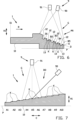
- Figures 1 , 2 and 3 show a bead-apex drum 7 for producing a bead-apex 8.
- the bead-apex drum 7 is formed as a circular disc 70 having a central hub 71 and a bead-apex support surface 72 extending circumferentially about the central hub 71.
- the bead-apex drum 7 has a reference plane P, i.e. its mounting plane or its bottom surface, and a base profile B for supporting a bead-apex 8 relative to the reference plane P.
- the bead-apex drum 7 is typically mounted to a drum seat or drum drive (not shown) and driven in rotation about a rotation axis S1 extending concentrically through the central hub 71 in a direction perpendicular to the reference plane P.
- a bead-apex 8 is formed by first applying a bead 80 on the bead-apex support surface 72 around the central hub 71 of the bead-apex drum 7, followed by an apex 81 that is applied around the bead 80.
- the bead-apex support surface 72 may be slightly angled to assume a conical orientation, i.e. at an oblique angle to the reference plane P.
- Different bead-apex drums may be provided for different bead-apexes, depending on their respective dimensions, i.e. diameter, thickness and conicity.
- FIGS 1 , 2 and 3 further show a measuring system 9 for measuring the bead-apex 8 on the bead-apex drum 7.
- Said measuring system 9 is preferably a laser-triangulation measuring system, having a laser 90 for projecting a laser line L on the bead-apex 8 and a camera 91 for capturing an image of said projected laser line L.
- the camera 91 has a field of view FOV as shown in figure 2 .
- Figures 4-7 show a calibration tool 1 for calibrating the measuring system 9 as shown in figures 1 , 2 and 3 .
- the calibration tool 1 is arranged to be placed in the same position as the bead-apex drum 7. In other words, the calibration tool 1 temporarily replaces the bead-apex drum 7 when the measuring system 9 is to be calibrated.
- the calibration tool 1 comprises a tool body 10 that is rotatable relative to the measuring system 9 about a rotation axis S1 perpendicular to a reference plane P.
- the calibration tool 1 replaces the bead-apex drum such that the rotation axis S1 of the calibration tool 1 corresponds to the rotation axis S1 of the bead-apex drum 7 prior to its removal.
- the tool body 10 may have similar mounting features, i.e. a mounting plane that extends in the same plane as the mounting plane of the bead-apex drum prior to its removal.
- the reference planes P for measuring height on the bead-apex drum 7 and the calibration tool 1 may be the same.
- the calibration tool 1 can be representative of at least some characteristics of the bead-apex drum 7.
- the rotation axis S1 extends in an axial direction and defines a radial direction R perpendicular to the rotation axis S1 and a circumferential direction C about said rotation axis S1.
- the tool body 10 extends over only a part of a full circumference about the rotation axis S1.
- the tool body 10 is formed as a circular segment.
- the tool body 10 may for example extend over less than one-hundred-and-eighty degrees of the circumference about the rotation axis S1, preferably over less than one-hundred-and-twenty degrees.
- the tool body may extend over a full circumference, i.e. to form a disc-like tool body similar to the disc-like bead-apex drum.
- the tool body may also be shaped as an annulus or ring, provided that it can still be rotatably mounted about the rotation axis S1.
- the tool body 10 may have an integral or Monobloc shape.
- the tool body 10 may comprise several interconnected parts, elements, segments or sections that form the different features of the tool body 10, as described below.
- the tool body 10 is provided with a plurality of calibration surfaces 11 that define a pattern G of calibration positions K.
- every calibration surface 11 is distinct from the other calibration surfaces 11, i.e. delimited from the other calibration surfaces 11 by a clear boundary.
- the calibration surfaces 11 may for example be formed by distinct interconnected parts of the tool body 10. Hence, every calibration surface 11 can be measured as an individual surface.
- the pattern G may be formed by a single, continuous calibration surface (not shown), in which case the calibration positions K are merely virtual or imaginary, i.e. the calibration positions K are chosen by the measuring system 9 according a predetermined pattern.
- a continuous surface may hold an infinite number of calibration positions K, only limited by the accuracy of the camera 91.
- the pattern G comprises ten columns A1-A10 extending in the radial direction R away from the rotation axis S1 and five rows B1-B5 extending in the circumferential direction C about the rotation axis S1.
- a radial grid of calibration positions K can be formed.
- the number of columns A1-A10 and rows B1-B5 may be chosen differently when a higher or lower amount of calibration positions K is required. A minimum of three columns and three rows seems necessary to provide at least some useful amount of feedback to the measuring system 9.
- the calibration positions K within said respective column A1-A10 vary in height relative to the reference plane P in a height direction H perpendicular to said reference plane P and/or parallel to the rotation axis S1.
- the calibration positions K within the respective row also vary in height in the height direction H relative to the reference plane P.
- the calibration surfaces 11 within the respective column A1-A10 extend in a common plane D, as shown in figure 6 .
- the common plane D extends at an oblique angle to the reference plane P.
- the calibration surfaces 11 may be in different planes, i.e. in stepped and/or parallel planes (not shown).
- the recesses 12 are not necessary to distinguish between the calibration surfaces 11.
- the oblique angle may be different or the same for every column A1-A10 to reflect different shapes of apexes.
- the calibration surfaces 11 within the respective row are stepped in the height direction H from one of the calibration surfaces 11 to the next one of the calibration surfaces 11 in the circumferential direction C. Because of the steps between the calibration surfaces 11, no recesses are necessary. If the calibration surfaces 11 in the respective row B1-B5 are however arranged in a common plane (not shown) similar to the calibration surfaces 11 in the columns A1-A10, then recesses may be provided between the calibration surfaces 11 in the respective row B1-B5 as well.
- the shape and relative orientation of the calibration surfaces 11 is open to variation and that the scope of the present invention is not necessarily limited to any particular shape, as long as the technical effect of providing a plurality of calibration positions K in a pattern G is obtained.
- the transition from one calibration surface 11 to another can for example be stepped, abrupt, gradual or smooth.
- each column A1-A10 all calibration positions K within the respective column A1-A10 have different heights in the height direction H relative to the reference plane P. More in particular, the calibration positions K within the respective column A1-A10 are sequentially or progressively reduced in height relative to the reference plane P in the radial direction R away from the rotation axis S1. Preferably, the sequential reduction in height has a constant decrement or decrease relative to the reference plane P.
- each row B1-B5 all calibration positions K within the respective row B1-B5 have different heights in the height direction H relative to the reference plane P. More in particular, the calibration positions K within the respective row B1-B5 are sequentially or progressively increased in height relative to the reference plane P in the circumferential direction C. Preferably, the sequential increase in height has a constant increment relative to the reference plane P.
- each calibration position K within the pattern G has a height in the height direction H relative to the reference plane P that is different from the heights of the other calibration positions K relative to the reference plane P in the same column A1-A10 and the same row B1-B5.
- each column A1-A10 of calibration positions K forms a height profile with a different height at each calibration position K, while each calibration position K in the respective column A1-A10 also has a different height compared to the other calibration positions K in the same row B1-B5.
- the decrement in the columns A1-A10 is the same for each column A1-A10 and/or the increment in each row B1-B5 is the same for each row B1-B5. In that case, the height profiles are all equally offset from one column A1-A10 to the next.
- the varying heights of the calibration surfaces 11 relative to the reference plane P are predetermined, i.e. measured and verified prior to the calibration, so that the measurements of the measuring system 9 may be compared to the predetermined heights of the calibration surfaces 11 to calibrate the measuring system 9.
- the method comprises the steps of:
- step a) the calibration tool 1 may be provided with its reference plane P in the same position as the reference plane P of the bead-apex drum 7 during the bead-apex production. Hence, the measuring system 9 does not have to be adjusted to capture images of the calibration tool 1.
- step e) involves repeating steps c) and d) for all of the other columns A1-A10. Hence, the maximum amount of calibration data can be collected.
- the measuring system 9 can be calibrated by correlating pixels in each captured image corresponding to the calibration positions K of a respective column A1-A10 to the predetermined heights of said calibration positions K within said respective column A1-A10.
- the captured heights of the calibration positions K within the respective column A1-A10 can be used to determine a scale for a pixel to real-world units conversion, i.e. from pixels to micrometers, millimeters or centimeters.
- the method may further comprises the step of:
- step f) the bead-apex drum 7 is provided with its reference plane P in the same position as the reference plane P of the calibration tool.
- the measuring system 9 does not have to be adjusted.
- the height of the determined base profile B can be easily compared to the heights of the calibration positions K as they are measured relative to the same reference plane P.
- the method may comprise the steps of:
- FIG 8 shows a strip production line 507 for producing strips 508, in particular for the tire manufacturing.
- the strip production line 507 comprises a conveyor 570, in this example a roller conveyor, which is interrupted along a measuring line T at a measuring position to allow a measuring system 509 to measure of characteristics of the strip 508, i.e. a tread, a carcass or a breaker ply, or the folding of a gum strip around the edge of a breaker, as it passes across the interruption.
- the width of the strip 508 is measured at the measuring line T.
- the measuring system 509 comprises a back-light unit 590 for emitting light towards the measuring line T and a first camera 591 and a second camera 592 opposite to the back-light unit 590 to detect the light passing at the measuring line T along the side edges of the strip 508 in a manner known per se.
- a calibration tool 501 is provided.
- the calibration tool 501 is arranged to be mounted between the back-light unit 590 and the cameras 591, 592 in the measuring position.
- the calibration tool 501 comprises a tool body 510 extending in a longitudinal direction Y3.
- the tool body 510 comprises a calibration section 502 with one or more calibration elements 521 and a validation section 503 with one or more validation elements 531.
- the calibration tool 501 is positioned in a calibration position in which the longitudinal direction Y of the tool body 510 extends parallel or substantially parallel to the measuring line T. In the calibration position the measuring line T extends across the one or more calibration elements 521 of the calibration section 502.
- the calibration tool 501 is reversible or invertible about an inverting axis V1 between the calibration position, as shown in figure 9 , and a validation position, as shown in figure 10 .
- the measuring line T extends across the one or more validation elements 531 of the validation section 503.
- the calibration section 502 and the validation section 503 are effectively inverted.
- the calibration section 502 and the validation section 503 alternate positions at the measuring line T or switch positions when inverting about the inverting axis V1.
- the one or more calibration elements 521 comprises a plurality of calibration elements 521 arranged in a pattern extending in the longitudinal direction Y3 of the calibration tool 501.
- the one or more validation elements 531 comprises a plurality of validation elements 531.
- the validation elements 531 are offset in the longitudinal direction Y3 with respect to the calibration elements 521.
- the first camera 591 and the second camera 592 are arranged for observing a first end portion 511 and a second end portion 512, respectively, of the calibration tool 501.
- the camera 591, 592 observe a region of the calibration tool 501 where the side edges of the strip 508 would normally pass across the measuring line T.
- the one or more validation elements 531 comprises a first group of two or more validation elements 531 at the first end portion 511 and a second group of two or more validation elements 531 at the second end portion 512.
- each group comprises three or more validation elements 531.
- the one or more calibration elements 521 and/or the one or more validation elements 531 are through-holes. This makes the calibration tool 501 suitable for use in a back-light measuring system.
- the calibration elements and validation elements may be provided as slits or protrusions, for example when calibrating and validating a laser-triangulation measuring system.
- Figures 11 and 12 show an alternative calibration tool 601 according to a third embodiment of the invention that differs from the calibration tool 501 according to the second embodiment of the invention in that has a calibration section 602 with one or more calibration elements 621 which are stepped or have stepped features 622 in a height direction H3 perpendicular to the longitudinal direction Y3 to allow for a more accurate calibration of the height measurements of the cameras.
- the validation section 603 again has validation elements 631 that are offset in the longitudinal direction Y3 with respect to the calibration elements 621.
- the alternative calibration tool 601 is reversible or invertible about an inverting axis V2 between the calibration position and a validation position.
- the inverting axis V2 in this case extends in the longitudinal direction Y3 between the calibration section 602 and the validation section 603.
Landscapes
- Engineering & Computer Science (AREA)
- Physics & Mathematics (AREA)
- General Physics & Mathematics (AREA)
- Radar, Positioning & Navigation (AREA)
- Remote Sensing (AREA)
- Mechanical Engineering (AREA)
- Electromagnetism (AREA)
- Computer Networks & Wireless Communication (AREA)
- Computer Vision & Pattern Recognition (AREA)
- Multimedia (AREA)
- Theoretical Computer Science (AREA)
- Manufacturing & Machinery (AREA)
- Optics & Photonics (AREA)
- Geometry (AREA)
- Chemical & Material Sciences (AREA)
- Analytical Chemistry (AREA)
- Length Measuring Devices By Optical Means (AREA)
Description
- The invention relates to a calibration tool and a method for calibrating a measuring system, in particular a laser-triangulation measuring system.
- Measuring systems are used in the field of tire building during various stages of production to measure the quality and/or characteristics of one or more tire components. One of said stages is the production of a bead-apex. The bead-apex is formed by subsequently applying a bead and an apex around the circumference of a bead-apex drum. The bead-apex drum may receive beads and apexes in a wide variety of shapes and sizes. Moreover, the bead-apex drum also comes in various shapes and sizes and may be replaced by another bead-apex drum when appropriate. Finally, the part of the bead-apex drum that supports the apex is typically conical to support the apex at an oblique angle to the radial direction.
- XP004062828 concerns a study evaluating the accuracy of different camera calibration and measurement methods used in 3D stereo vision with CCD cameras. In this context, the study discloses a non-coplanar calibration object comprising calibration positions arranged in a pattern of rows and columns, wherein the calibration positions have mutually different heights (
Fig.2 (right)). - A disadvantage of the known laser-triangulation measuring system is that it may become inaccurate over time. It is known to calibrate a laser-triangulation measuring system by measuring a stationary object with predetermined dimensions and by comparing the measurements with the predetermined dimensions. However, this process of calibration only provides a limited amount of feedback based on the dimensions of the stationary object. Although the measuring system may be properly calibrated for the dimensions of the stationary object, measurements in other dimension ranges are still uncalibrated and may be inaccurate.
- It is an object of the present invention to provide a calibration tool and a method for calibrating a measuring system, in particular a laser-triangulation measuring system, wherein the calibration can be improved.
- According to a first aspect, the invention provides a calibration tool for calibrating a laser-triangulation measuring system, wherein the calibration tool comprises a tool body that is rotatable relative to the measuring system about a rotation axis perpendicular to a reference plane, wherein the tool body is provided with one or more calibration surfaces that define a pattern, in particular a radial grid, of calibration positions, wherein the pattern comprises at least three columns extending in a radial direction away from the rotation axis and at least three rows extending in a circumferential direction about the rotation axis, wherein for each column the calibration positions within said respective column vary in height relative to the reference plane in a height direction perpendicular to said reference plane and wherein for each row the calibration positions within the respective row vary in height in the height direction relative to the reference plane.
- The tool body can conveniently be rotated relative to the measuring system in the same way as the bead-apex drum. By rotating the tool body, the columns can be positioned, one-by-one, in a measuring position for measuring of the calibration positions within each column by the measuring system. In particular, the measuring system may project a laser line onto the tool body in or parallel to the radial direction so that all calibration positions in a respective one of the columns can be measured simultaneously along the same projected laser line. Each column of calibration positions represents or forms a specific height profile that can serve as a calibration for the measuring system. As the calibration positions are varied in height in both the columns as well as the rows, the measurements can be calibrated for a considerable number of calibration positions, thus providing the measuring system with a relatively large amount of feedback for various height positions.
- Preferably, for each column at least half of the calibration positions and preferably all calibration positions within the respective column have different heights in the height direction relative to the reference plane. Hence, at least half of the calibration positions within the respective column generates unique calibration information for the calibration of the measuring system.
- In one embodiment, for each column the calibration positions within the respective column are sequentially reduced in height relative to the reference plane in the radial direction away from the rotation axis. The sequential reduction in height can be similar to or representative of the declining height of a bead-apex supported on the bead-apex drum and can therefore provide useful calibration information for the calibration of the measuring system.
- Preferably, the sequential reduction in height has a constant decrement relative to the reference plane. The calibration information generated by the calibration positions within the respective column can thus be used to determine a scale of the measuring system, in particular a scale for converting pixels to real-world units, i.e. millimeters. Alternatively, the sequential reduction in height follows a curvature. Said curvature can for example be chosen to match or correct for a certain lens distortion effect as a result of the camera used in the measuring system.
- Additionally or alternatively, for each row at least half of the calibration positions and preferably all calibration positions within the respective row have different heights in the height direction relative to the reference plane. Hence, at least half of the calibration positions within the respective row generates unique calibration information for the calibration of the measuring system.
- In one embodiment, for each row the calibration positions within the respective row are sequentially increased in height relative to the reference plane in the circumferential direction. The calibration positions within the respective row can thus be representative of the various heights of different bead-apexes that are supported on the bead-apex drum at the radial position of the respective row. When combined with the sequential reduction of height in the radial direction within the columns, a pattern can be formed with columns of radially declining calibration positions that per column collectively increase in height in the circumferential direction with each row.
- Preferably, the sequential increase in height has a constant increment relative to the reference plane. The calibration information generated by the calibration positions within the respective row can thus be used to determine a scale of the measuring system, in particular a scale for converting pixels to real-world units, i.e. millimeters.
- In one embodiment, each calibration position within the pattern has a height in the height direction relative to the reference plane that is different from the heights of the other calibration positions relative to the reference plane in the same column and the same row. Hence, each calibration position within the pattern generates unique calibration information for the calibration of the measuring system.
- The skilled person will appreciate that the calibration tool according to the invention may comprises only a single calibration surface in each column, in each row or for the pattern as a whole. Such a single calibration surface could for example have a gradually declining height in the radial direction and a gradually inclining height in the circumferential direction. The measuring system would then be configured to measure at certain locations on the single calibration surface, said locations corresponding to the calibration positions. The single calibration surface could hold an infinite number of calibration positions.
- In contrast, in the embodiment as shown in the drawings, for each column the one or more calibration surfaces comprises an individual calibration surface for each calibration position within the respective column. By having distinct, individual calibration surfaces, the calibration positions are not easily confused and can be easily recognized by the measuring system, i.e. by detecting transitions from one calibration surface to another.
- Preferably, for each column the tool body is provided with recesses extending between the calibration surfaces within the respective column to space apart said calibration surfaces in the radial direction. By spacing the columns apart, the calibration positions are even less likely to be confused. Moreover, the presence of the recess between the calibration surfaces allows for a distinct edge and/or a base level or zero level measurement in the recess.
- More preferably, each calibration surface within the respective column defines a calibration edge at each transition from the respective calibration surface to an adjacent one of the recesses, wherein at least one of the calibration positions is located at one of said calibration edges. The calibration edges are easily detectable and/or measurable and can therefore serve as an excellent calibration position.
- In a further embodiment, for each column the calibration surfaces within the respective column extend in a common plane, wherein said common plane extends at an oblique angle to the reference plane. The obliquely angled common plane is similar to or representative of the obliquely declining or conical surface of the bead-apex supported on the bead-apex drum. The common plane has the additional advantage that all calibration positions are also positioned in the same common plane.
- Additionally or alternatively, for each row the one or more calibration surfaces comprises an individual calibration surface for each calibration position within the respective row. By having distinct, individual calibration surfaces, the calibration positions are not easily confused and can be easily recognized by the measuring system, i.e. by detecting transitions from one calibration surface to another.
- Preferably, for each row the calibration surfaces within the respective row are stepped in the height direction from one of the calibration surfaces to the next one of the calibration surfaces in the circumferential direction. The stepped height from one calibration surface to the next means that - with each subsequent column - the calibration surfaces can be easily distinguished from the calibration surfaces of the previous column in the circumferential direction of the respective row. Moreover, the height of each calibration surface may be constant in the circumferential direction between the steps, so that representative measurements for the respective calibration position can be taken at any position in the circumferential direction between the steps. Therefore, the accuracy of the rotational positioning of the calibration tool relative to the measuring system is less critical.
- In another embodiment, the pattern comprises at least five columns, preferably at least eight columns. Additionally or alternatively, the pattern comprises at least four rows, preferably at least five rows. The amount of columns determines the amount of height profiles that can be calibrated. The number of rows determines the amount of calibration positions within each column, i.e. within each height profile.
- In a further embodiment the tool body extends over only a part of a full circumference about the rotation axis. Preferably, the tool body is formed as a circular segment. When the tool body is not a full ring or annulus, the tool body can be relatively compact, i.e. compared to the bead-apex drum.
- According to a second aspect, the invention provides a method for calibrating a laser-triangulation measuring system with the use of the calibration tool according to any one of the aforementioned embodiments, wherein the laser-triangulation measuring system comprises a laser and a camera with a field of view, wherein the method comprises the steps of:
- a) providing the calibration tool at least partially within the field of view of the camera;
- b) projecting a laser line onto the calibration tool with the laser-triangulation measuring system;
- c) rotating the calibration tool about the rotation axis such that the laser line is projected on all calibration positions of a respective one of the columns; and
- d) capturing an image of the laser line projected on all calibration positions of the respective column with the camera.
- The method relates to the practical implementation of the calibration tool according to the first aspect of the invention and thus has the same technical advantages, which will not be repeated hereafter.
- In a preferred embodiment of the method, step d) comprises the step of repeating steps c) and d) for another one or all of the other columns. Hence, more or all calibration positions can be measured to have a maximum amount of calibration data.
- In a further embodiment of the method the heights of the calibration positions of each column relative to the reference plane are predetermined, wherein the method further comprises the step of calibrating the laser-triangulation measuring system by correlating pixels in each captured image corresponding to the calibration positions of a respective column to the predetermined heights of said calibration positions within said respective column. The correlation can result in a scale for each calibration position that converts the pixels to real-world units, i.e. micrometers, millimeters or centimeters.
- In a further embodiment the method further comprises the step of:
- f) providing an empty bead-apex drum relative to the laser-triangulation measuring system prior to or after steps a) to e), wherein the bead-apex drum has a reference plane and a base profile for supporting a bead-apex relative to the reference plane, wherein the empty bead-apex drum is provided with its reference plane in the same position as the reference plane of the calibration tool;
- g) projecting a laser line onto the empty bead-apex drum with the laser-triangulation measuring system;
- h) capturing an image of the laser line projected on the empty bead-apex drum; and
- i) determining the base profile of the empty bead-apex drum relative to the reference plane of the empty bead-apex drum.
- During production of the bead-apexes, the base profile of the bead-apex drum is covered by the bead-apex currently supported on the bead-apex drum. Although the height of the bead-apex can be measured relative to reference plane can be measured, this measurement is not indicative of the actual height of the bead-apex relative to the bead-apex drum. Hence, when the base profile is determined prior to the production, i.e. when the bead-apex drum is still empty, the measuring system has more information from which the actual height of the bead-apex relative to the bead-apex drum can be determined.
- Preferably, the method further comprises the steps of:
- j) providing a bead-apex on the bead-apex drum;
- k) measuring the bead-apex using the measuring system; and
- l) subtracting the base profile of the empty bead-apex drum as determined in step i) from the measurements.
- The result of the subtraction can be representative of the actual height of the bead-apex relative to the bead-apex drum.
- According to an third, unclaimed aspect, the invention provides a calibration tool for calibrating a measuring system, wherein the calibration tool comprises a calibration section with one or more calibration elements and a validation section with one or more validation elements, wherein the calibration tool is invertible about an inverting axis between a calibration position and a validation position, wherein the calibration section and the validation section switch positions when inverting about the inverting axis.
- The calibration tool can therefore also function as a validation tool, simply be changing its orientation, i.e. by flipping, reversing or inverting about the inverting axis. Consequently, no separate tooling is required to validate the measuring system after the initial calibration.
- Preferably, the calibration tool has a longitudinal direction, wherein the calibration section and the validation section are arranged adjacent to each other in a lateral direction perpendicular to the longitudinal direction, wherein the inverting axis extends perpendicular to the longitudinal direction and the lateral direction between the calibration section and the validation section.
- In a further embodiment the calibration tool comprises one or more mounting elements for mounting the calibration tool to a support relative to the measuring system, wherein the at least one of the one or more mounting elements is in the same position after inverting the calibration tool about the inverting axis. Hence, the same one or more mounting elements can be used to mount the calibration tool in either one of the positions.
- In another embodiment the one or more calibration elements comprises a plurality of calibration elements arranged in a pattern extending in a longitudinal direction of the calibration tool, wherein the one or more validation elements comprises a plurality of validation elements which are in different positions in the longitudinal direction with respect to the plurality of calibration elements. By having the validation elements and the calibration elements in different positions, the measuring system can be validated using different values to determine if the scale determined during calibration correctly interpolates to the value that is expected at the validation elements.
- In another embodiment the measuring system comprises a first camera and a second camera for observing a first end portion and a second end portion, respectively, of the calibration tool, wherein the one or more validation elements comprises at least one validation element at the first end portion and at least one validation element at the second end portion. Consequently, each camera can be calibrated by capturing an image of the validation elements in the respective portion. Preferably, the one or more validation elements comprises a first group of two or more validation elements at the first end portion and a second group of two or more validation elements at the second end portion. More preferably, each group comprises three or more validation elements.
- In another embodiment the one or more calibration elements and/or the one or more validation elements are through-holes. Hence, the calibration tool can be used in a back-light system where a light bar is provided at one side of the calibration tool and the camera is provided at an opposite side of the calibration tool to capture the light that passes through the through holes.
- In another embodiment the one or more calibration elements comprise stepped features that enable the measuring system to be calibrated in the height direction as well.
- The various aspects and features described and shown in the specification can be applied, individually, wherever possible. These individual aspects, in particular the aspects and features described in the attached dependent claims, can be made subject of divisional patent applications.
- The invention will be elucidated on the basis of an exemplary embodiment shown in the attached schematic drawings, in which:
-
figure 1 shows a top view of a bead-apex drum with a bead-apex applied to it and a measuring system for measuring the bead-apex; -
figure 2 shows a cross section view of the bead-apex drum and the bead-apex according to line II-II infigure 1 ; -
figure 3 shows a cross section view of the bead-apex drum and the bead-apex according to line III-III infigure 1 ; -
figure 4 shows a view of a calibration tool according to a first embodiment of the invention to replace the bead-apex drum during a calibration method; -
figure 5 shows a top view of the calibration tool according tofigure 4 ; -
figure 6 shows a cross section view of the calibration tool according to line VI-VI infigure 5 ; -
figure 7 shows a cross section view of the calibration tool according to line VII-VII infigure 5 ; -
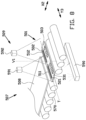
figure 8 shows an isometric view of a production line for strips or sheets, a measuring system and a calibration tool according to a second embodiment of the invention; -
figure 9 shows a top view of the calibration tool offigure 8 in isolation in a calibration position; -
figure 10 shows a top view of the calibration tool offigure 9 in a validation position; -
figure 11 shows a top view of a calibration tool according to a third embodiment of the invention; and -
figure 12 shows an isometric view of the calibration tool according tofigure 11 . -
Figures 1 ,2 and 3 show a bead-apex drum 7 for producing a bead-apex 8. In this exemplary embodiment, the bead-apex drum 7 is formed as acircular disc 70 having acentral hub 71 and a bead-apex support surface 72 extending circumferentially about thecentral hub 71. The bead-apex drum 7 has a reference plane P, i.e. its mounting plane or its bottom surface, and a base profile B for supporting a bead-apex 8 relative to the reference plane P. The bead-apex drum 7 is typically mounted to a drum seat or drum drive (not shown) and driven in rotation about a rotation axis S1 extending concentrically through thecentral hub 71 in a direction perpendicular to the reference plane P. - A bead-
apex 8 is formed by first applying abead 80 on the bead-apex support surface 72 around thecentral hub 71 of the bead-apex drum 7, followed by an apex 81 that is applied around thebead 80. The bead-apex support surface 72 may be slightly angled to assume a conical orientation, i.e. at an oblique angle to the reference plane P. Different bead-apex drums may be provided for different bead-apexes, depending on their respective dimensions, i.e. diameter, thickness and conicity. -
Figures 1 ,2 and 3 further show ameasuring system 9 for measuring the bead-apex 8 on the bead-apex drum 7. Said measuringsystem 9 is preferably a laser-triangulation measuring system, having alaser 90 for projecting a laser line L on the bead-apex 8 and acamera 91 for capturing an image of said projected laser line L. Thecamera 91 has a field of view FOV as shown infigure 2 . -
Figures 4-7 show acalibration tool 1 for calibrating themeasuring system 9 as shown infigures 1 ,2 and 3 . Thecalibration tool 1 is arranged to be placed in the same position as the bead-apex drum 7. In other words, thecalibration tool 1 temporarily replaces the bead-apex drum 7 when the measuringsystem 9 is to be calibrated. - As shown in
figure 4 , thecalibration tool 1 comprises atool body 10 that is rotatable relative to themeasuring system 9 about a rotation axis S1 perpendicular to a reference plane P. Preferably, thecalibration tool 1 replaces the bead-apex drum such that the rotation axis S1 of thecalibration tool 1 corresponds to the rotation axis S1 of the bead-apex drum 7 prior to its removal. Moreover, thetool body 10 may have similar mounting features, i.e. a mounting plane that extends in the same plane as the mounting plane of the bead-apex drum prior to its removal. More in particular, the reference planes P for measuring height on the bead-apex drum 7 and thecalibration tool 1 may be the same. Hence, thecalibration tool 1 can be representative of at least some characteristics of the bead-apex drum 7. - The rotation axis S1 extends in an axial direction and defines a radial direction R perpendicular to the rotation axis S1 and a circumferential direction C about said rotation axis S1.
- In this exemplary embodiment, the
tool body 10 extends over only a part of a full circumference about the rotation axis S1. In particular, thetool body 10 is formed as a circular segment. Thetool body 10 may for example extend over less than one-hundred-and-eighty degrees of the circumference about the rotation axis S1, preferably over less than one-hundred-and-twenty degrees. Alternatively, the tool body may extend over a full circumference, i.e. to form a disc-like tool body similar to the disc-like bead-apex drum. The tool body may also be shaped as an annulus or ring, provided that it can still be rotatably mounted about the rotation axis S1. Thetool body 10 may have an integral or Monobloc shape. Alternatively, thetool body 10 may comprise several interconnected parts, elements, segments or sections that form the different features of thetool body 10, as described below. - As best seen in
figures 4 and 5 , thetool body 10 is provided with a plurality of calibration surfaces 11 that define a pattern G of calibration positions K. In this exemplary embodiment everycalibration surface 11 is distinct from the other calibration surfaces 11, i.e. delimited from the other calibration surfaces 11 by a clear boundary. The calibration surfaces 11 may for example be formed by distinct interconnected parts of thetool body 10. Hence, everycalibration surface 11 can be measured as an individual surface. Alternatively, the pattern G may be formed by a single, continuous calibration surface (not shown), in which case the calibration positions K are merely virtual or imaginary, i.e. the calibration positions K are chosen by the measuringsystem 9 according a predetermined pattern. A continuous surface may hold an infinite number of calibration positions K, only limited by the accuracy of thecamera 91. - In
figure 5 , the pattern G comprises ten columns A1-A10 extending in the radial direction R away from the rotation axis S1 and five rows B1-B5 extending in the circumferential direction C about the rotation axis S1. As such, a radial grid of calibration positions K can be formed. The number of columns A1-A10 and rows B1-B5 may be chosen differently when a higher or lower amount of calibration positions K is required. A minimum of three columns and three rows seems necessary to provide at least some useful amount of feedback to themeasuring system 9. - As best seen in the radial cross section of
figure 6 , for each column A1-A10 the tool body is provided withrecesses 12 extending between the calibration surfaces 11 within the respective column A1-A10. Eachrecess 12 spaces apart twocalibration surfaces 11 in the radial direction R. At each transition from therespective calibration surface 11 to an adjacent one of therecesses 12 eachcalibration surface 11 within the respective column A1-A10 defines acalibration edge 13. Conveniently, at least one of the calibration positions K may be chosen at one of said calibration edges 13. - As best seen in the radial cross section of
figure 6 , for each column A1-A10 the calibration positions K within said respective column A1-A10 vary in height relative to the reference plane P in a height direction H perpendicular to said reference plane P and/or parallel to the rotation axis S1. Similarly, as best seen in the circumferential cross section offigure 7 , for each row B1-B5 the calibration positions K within the respective row also vary in height in the height direction H relative to the reference plane P. - In this exemplary embodiment, for each column A1-A10, the calibration surfaces 11 within the respective column A1-A10 extend in a common plane D, as shown in
figure 6 . The common plane D extends at an oblique angle to the reference plane P. Alternatively, the calibration surfaces 11 may be in different planes, i.e. in stepped and/or parallel planes (not shown). When using steppedcalibration surfaces 11 in the columns A1-A10, therecesses 12 are not necessary to distinguish between the calibration surfaces 11. The oblique angle may be different or the same for every column A1-A10 to reflect different shapes of apexes. - As shown in
figure 7 , for each row, the calibration surfaces 11 within the respective row are stepped in the height direction H from one of the calibration surfaces 11 to the next one of the calibration surfaces 11 in the circumferential direction C. Because of the steps between the calibration surfaces 11, no recesses are necessary. If the calibration surfaces 11 in the respective row B1-B5 are however arranged in a common plane (not shown) similar to the calibration surfaces 11 in the columns A1-A10, then recesses may be provided between the calibration surfaces 11 in the respective row B1-B5 as well. - The skilled person will appreciate from the above paragraphs that the shape and relative orientation of the calibration surfaces 11 is open to variation and that the scope of the present invention is not necessarily limited to any particular shape, as long as the technical effect of providing a plurality of calibration positions K in a pattern G is obtained. The transition from one
calibration surface 11 to another can for example be stepped, abrupt, gradual or smooth. - As best seen in
figure 6 , for each column A1-A10, all calibration positions K within the respective column A1-A10 have different heights in the height direction H relative to the reference plane P. More in particular, the calibration positions K within the respective column A1-A10 are sequentially or progressively reduced in height relative to the reference plane P in the radial direction R away from the rotation axis S1. Preferably, the sequential reduction in height has a constant decrement or decrease relative to the reference plane P. - As best seen in
figure 7 , for each row B1-B5 all calibration positions K within the respective row B1-B5 have different heights in the height direction H relative to the reference plane P. More in particular, the calibration positions K within the respective row B1-B5 are sequentially or progressively increased in height relative to the reference plane P in the circumferential direction C. Preferably, the sequential increase in height has a constant increment relative to the reference plane P. - Consequently, as shown in
figure 4 , each calibration position K within the pattern G has a height in the height direction H relative to the reference plane P that is different from the heights of the other calibration positions K relative to the reference plane P in the same column A1-A10 and the same row B1-B5. In other words, each column A1-A10 of calibration positions K forms a height profile with a different height at each calibration position K, while each calibration position K in the respective column A1-A10 also has a different height compared to the other calibration positions K in the same row B1-B5. Preferably, the decrement in the columns A1-A10 is the same for each column A1-A10 and/or the increment in each row B1-B5 is the same for each row B1-B5. In that case, the height profiles are all equally offset from one column A1-A10 to the next. - The varying heights of the calibration surfaces 11 relative to the reference plane P are predetermined, i.e. measured and verified prior to the calibration, so that the measurements of the
measuring system 9 may be compared to the predetermined heights of the calibration surfaces 11 to calibrate themeasuring system 9. - A method for calibrating the
measurement system 9, in particular the laser-triangulation measurement system, with the use of theaforementioned calibration tool 1 will be elucidated below with reference tofigures 1-7 . - The method comprises the steps of:
- a) providing the
calibration tool 1 at least partially within the field of view FOV of thecamera 91, as shown infigure 6 ; - b) projecting a laser line L onto the
calibration tool 1 with the laser-triangulation measuring system 9, as shown infigure 5 ; - c) rotating the
calibration tool 1 about the rotation axis S1 such that the laser line L is projected on all calibration positions K of a respective one of the columns A1-A10; - d) capturing an image of the laser line L projected on all calibration positions K of the respective column A1-A10 with the
camera 91; and - e) repeating the steps c) and d) for another one of the columns A1-A10.
- In step a) the
calibration tool 1 may be provided with its reference plane P in the same position as the reference plane P of the bead-apex drum 7 during the bead-apex production. Hence, the measuringsystem 9 does not have to be adjusted to capture images of thecalibration tool 1. - By capturing the image of the laser line L in step d), calibration data can be collected regarding the height profile of the respective column A1-A10. In particular, any transitions, edges or changes in height can be captured and processed by a suitable processor in the
measuring system 9. Preferably, step e) involves repeating steps c) and d) for all of the other columns A1-A10. Hence, the maximum amount of calibration data can be collected. - For each column A1-A10, the calibration positions K may be located on the calibration edges 13, as shown in
figure 6 , so that the measuringsystem 9 can recognize the transition at thecalibration edge 13 as a calibration position K. - When the image is captured in step e), the measuring
system 9 can be calibrated by correlating pixels in each captured image corresponding to the calibration positions K of a respective column A1-A10 to the predetermined heights of said calibration positions K within said respective column A1-A10. In particular, the captured heights of the calibration positions K within the respective column A1-A10 can be used to determine a scale for a pixel to real-world units conversion, i.e. from pixels to micrometers, millimeters or centimeters. - Optionally, the method may further comprises the step of:
- f) providing an empty bead-
apex drum 7 relative to the laser-triangulation measuring system 9 prior to or after steps a) to e), as shown infigures 1-3 but without the bead-apex 8; - g) projecting a laser line L onto the empty bead-
apex drum 7 with the laser-triangulation measuring system 9; - h) capturing an image of the laser line L projected on the empty bead-
apex drum 7; and - i) determining the base profile B of the empty bead-
apex drum 7 relative to the reference plane P of the empty bead-apex drum 7. - In step f) the bead-
apex drum 7 is provided with its reference plane P in the same position as the reference plane P of the calibration tool. Hence, the measuringsystem 9 does not have to be adjusted. Moreover, the height of the determined base profile B can be easily compared to the heights of the calibration positions K as they are measured relative to the same reference plane P. - Finally, the method may comprise the steps of:
- j) providing a bead-
apex 8 on the bead-apex drum 7, as shown infigures 1-3 ; - k) measuring the bead-
apex 8 using themeasuring system 9, as shown infigures 1-3 ; and - l) subtracting the base profile B of the empty bead-
apex drum 7 as determined in step i) from the measurements. - The result of the subtraction can be representative of the actual height of the bead-
apex 8 relative to the bead-apex drum 7 in the height direction H. -
Figure 8 shows astrip production line 507 for producingstrips 508, in particular for the tire manufacturing. Thestrip production line 507 comprises aconveyor 570, in this example a roller conveyor, which is interrupted along a measuring line T at a measuring position to allow ameasuring system 509 to measure of characteristics of thestrip 508, i.e. a tread, a carcass or a breaker ply, or the folding of a gum strip around the edge of a breaker, as it passes across the interruption. In particular, the width of thestrip 508 is measured at the measuring line T. In this example, the measuringsystem 509 comprises a back-light unit 590 for emitting light towards the measuring line T and afirst camera 591 and asecond camera 592 opposite to the back-light unit 590 to detect the light passing at the measuring line T along the side edges of thestrip 508 in a manner known per se. - To calibrate the measurements of the
measuring system 509, acalibration tool 501 is provided. Thecalibration tool 501 is arranged to be mounted between the back-light unit 590 and thecameras figure 9 , thecalibration tool 501 comprises atool body 510 extending in a longitudinal direction Y3. - The
tool body 510 comprises acalibration section 502 with one ormore calibration elements 521 and avalidation section 503 with one ormore validation elements 531. Infigure 9 , thecalibration tool 501 is positioned in a calibration position in which the longitudinal direction Y of thetool body 510 extends parallel or substantially parallel to the measuring line T. In the calibration position the measuring line T extends across the one ormore calibration elements 521 of thecalibration section 502. - The
calibration tool 501 is reversible or invertible about an inverting axis V1 between the calibration position, as shown infigure 9 , and a validation position, as shown infigure 10 . In the validation position, the measuring line T extends across the one ormore validation elements 531 of thevalidation section 503. Hence, thecalibration section 502 and thevalidation section 503 are effectively inverted. In other words, thecalibration section 502 and thevalidation section 503 alternate positions at the measuring line T or switch positions when inverting about the inverting axis V1. - Preferably, the
calibration section 502 and thevalidation section 503 are arranged adjacent to each other in a lateral direction X2 perpendicular to the longitudinal direction Y3. In this exemplary embodiment, the inverting axis V1 extends perpendicular to the longitudinal direction Y3 and the lateral direction X2 between thecalibration section 502 and thevalidation section 503. More in particular, in this specific embodiment, the inverting axis V1 is upright, vertical or substantially vertical. Alternatively, the inverting axis may also extend parallel to the measuring line T between thecalibration section 502 and thevalidation section 503 or parallel to the lateral direction X2 through the center of bothsections - As shown in
figure 9 , thecalibration tool 501 comprises one or moremounting elements 505 for mounting thecalibration tool 501 to a support relative to themeasuring system 509 offigure 8 . As shown by comparingfigure 9 and figure 10 , preferably, at least one of the one or moremounting elements 505 is in the same position after inverting thecalibration tool 501 about the inverting axis V1. Hence, thecalibration tool 501 can be mounted in substantially the same way in both positions. - As shown in
figures 9 and 10 , the one ormore calibration elements 521 comprises a plurality ofcalibration elements 521 arranged in a pattern extending in the longitudinal direction Y3 of thecalibration tool 501. Similarly, the one ormore validation elements 531 comprises a plurality ofvalidation elements 531. However, thevalidation elements 531 are offset in the longitudinal direction Y3 with respect to thecalibration elements 521. - As best seen in
figure 9 , thefirst camera 591 and thesecond camera 592 are arranged for observing afirst end portion 511 and asecond end portion 512, respectively, of thecalibration tool 501. In particular, thecamera calibration tool 501 where the side edges of thestrip 508 would normally pass across the measuring line T. The one ormore validation elements 531 comprises a first group of two ormore validation elements 531 at thefirst end portion 511 and a second group of two ormore validation elements 531 at thesecond end portion 512. Preferably, each group comprises three ormore validation elements 531. - In this exemplary embodiment, the one or
more calibration elements 521 and/or the one ormore validation elements 531 are through-holes. This makes thecalibration tool 501 suitable for use in a back-light measuring system. Alternatively, the calibration elements and validation elements may be provided as slits or protrusions, for example when calibrating and validating a laser-triangulation measuring system. -
Figures 11 and12 show analternative calibration tool 601 according to a third embodiment of the invention that differs from thecalibration tool 501 according to the second embodiment of the invention in that has acalibration section 602 with one ormore calibration elements 621 which are stepped or have steppedfeatures 622 in a height direction H3 perpendicular to the longitudinal direction Y3 to allow for a more accurate calibration of the height measurements of the cameras. Thevalidation section 603 again hasvalidation elements 631 that are offset in the longitudinal direction Y3 with respect to thecalibration elements 621. Like the previously discussedcalibration tool 501 according to the second embodiment of the invention, thealternative calibration tool 601 is reversible or invertible about an inverting axis V2 between the calibration position and a validation position. The inverting axis V2 in this case extends in the longitudinal direction Y3 between thecalibration section 602 and thevalidation section 603. - In some of the embodiments described above, the verification of the measurements of the measuring system can be performed in-line, meaning that the tire components can be measured while simultaneously measuring one or more of the verification elements. In such embodiments, the verification element is provided within the field of view of at least one of the cameras of the measuring system. The verification step can then be repeated over time, during regular intervals or even continuously.
- It is to be understood that the above description is included to illustrate the operation of the preferred embodiments and is not meant to limit the scope of the invention. From the above discussion, many variations will be apparent to one skilled in the art that would yet be encompassed by the scope of the present invention, as defined by the appended claims.
-
- 1
- calibration tool
- 10
- tool body
- 11
- calibration surface
- 12
- recess
- 13
- calibration edge
- 7
- bead-apex drum
- 70
- circular disc
- 71
- central hub
- 72
- bead-apex support surface
- 8
- bead-apex
- 80
- bead
- 81
- apex
- 9
- measuring system
- 90
- laser
- 91
- camera
- 501
- calibration tool
- 502
- calibration section
- 521
- calibration element
- 503
- validation section
- 531
- validation element
- 510
- tool body
- 511
- first end portion
- 512
- second end portion
- 505
- mounting elements
- 507
- strip production line
- 570
- conveyor
- 508
- strip
- 509
- measuring system
- 590
- back-light unit
- 591
- first camera
- 592
- second camera
- 601
- calibration tool
- 602
- calibration section
- 621
- calibration element
- 622
- steps
- 603
- validation section
- 631
- validation element
- A1-A10
- columns
- B1-B5
- rows
- C
- circumferential direction
- D
- common plane
- FOV
- field of view
- G
- pattern or radial grid
- H1
- height direction
- H3
- height direction
- K
- calibration position
- L
- laser line
- M
- optical axis
- P
- reference plane
- R
- radial direction
- S1
- rotation axis
- S2
- rotation axis
- T
- measuring line
- V1
- inverting axis
- V2
- inverting axis
- W2
- axial direction
- X2
- lateral direction
- Y3
- longitudinal direction
- Z
- central axis
Claims (15)
- Calibration tool (1) for calibrating a laser-triangulation measuring system, wherein the calibration tool comprises a tool body (10) that is rotatable relative tc the measuring system about a rotation axis (S1) perpendicular tc a reference plane (P), wherein the tool body is provided with one or more calibration surfaces (11) that define a pattern (G), in particular a radial grid, of calibration positions (K), wherein the pattern comprises at least three columns (A1-A10) extending in a radial direction (R) away from the rotation axis and at least three rows (B1-B5) extending in a circumferential direction (C) about the rotation axis, wherein for each column the calibration positions within said respective column vary in height relative to the reference plane in a height direction (H) perpendicular to said reference plane and wherein for each row the calibration positions within the respective row vary in height in the height direction relative to the reference plane.
- Calibration tool according to claim 1, wherein for each column at least half of the calibration positions and preferably all calibration positions within the respective column have different heights in the height direction relative to the reference plane.
- Calibration tool according to any one of the preceding claims, wherein for each column the calibration positions within the respective column are sequentially reduced in height relative to the reference plane in the radial direction away from the rotation axis, wherein the sequential reduction in height has a constant decrement relative to the reference plane or follows a curvature.
- Calibration tool according to any one of the preceding claims, wherein for each row at least half of the calibration positions and preferably all calibration positions within the respective row have different heights in the height direction relative to the reference plane.
- Calibration tool according to any one of the preceding claims, wherein for each row the calibration positions within the respective row are sequentially increased in height relative to the reference plane in the circumferential direction,
preferably wherein the sequential increase in height has a constant increment relative to the reference plane. - Calibration tool according to any one of the preceding claims, wherein each calibration position within the pattern has a height in the height direction relative to the reference plane that is different from the heights of the other calibration positions relative to the reference plane in the same column and the same row.
- Calibration tool according to any one of the preceding claims, wherein for each column the one or more calibration surfaces comprises an individual calibration surface for each calibration position within the respective column,preferably wherein for each column the tool body is provided with recesses extending between the calibration surfaces within the respective column to space apart said calibration surfaces in the radial direction,more preferably wherein each calibration surface within the respective column defines a calibration edge at each transition from the respective calibration surface to an adjacent one of the recesses, wherein at least one of the calibration positions is located at one of said calibration edges.
- Calibration tool according to claim 7, wherein for each column the calibration surfaces within the respective column extend in a common plane, wherein said common plane extends at an oblique angle to the reference plane.
- Calibration tool according to any one of the preceding claims, wherein for each row the one or more calibration surfaces comprises an individual calibration surface for each calibration position within the respective row,
preferably wherein for each row the calibration surfaces within the respective row are stepped in the height direction from one of the calibration surfaces to the next one of the calibration surfaces in the circumferential direction. - Calibration tool according to any one of the preceding claims, wherein the pattern comprises at least five columns, preferably at least eight columns; and/or
wherein the pattern comprises at least four rows, preferably at least five rows. - Calibration tool according to any one of the preceding claims, wherein the tool body extends over only a part of a full circumference about the rotation axis,
preferably wherein the tool body is formed as a circular segment. - Method for calibrating a laser-triangulation measuring system with the use of the calibration tool according to any one of the preceding claims, wherein the laser-triangulation measuring system comprises a laser and a camera with a field of view, wherein the method comprises the steps of:a) providing the calibration tool at least partially within the field of view of the camera;b) projecting a laser line onto the calibration tool with the laser-triangulation measuring system;c) rotating the calibration tool about the rotation axis such that the laser line is projected on all calibration positions of a respective one of the columns; andd) capturing an image of the laser line projected on all calibration positions of the respective column with the camera.
- Method according to claim 12, wherein the method further comprises the step of;
e) repeating the steps c) and d) for another one of the columns or for all of the other columns. - Method according to claim 12 or 13, wherein the heights of the calibration positions of each column relative to the reference plane are predetermined, wherein the method further comprises the step of calibrating the laser-triangulation measuring system by correlating pixels in each captured image corresponding to the calibration positions of a respective column to the predetermined heights of said calibration positions within said respective column.
- Method according to any one of claims 12-14, wherein the method further comprises the step of:f) providing an empty bead-apex drum relative to the laser-triangulation measuring system prior to or after steps a) to d), wherein the bead-apex drum has a reference plane and a base profile for supporting a bead-apex relative to the reference plane, wherein the empty bead-apex drum is provided with its reference plane in the same position as the reference plane of the calibration tool;g) projecting a laser line onto the empty bead-apex drum with the laser-triangulation measuring system;h) capturing an image of the laser line projected on the empty bead-apex drum; andi) determining the base profile of the empty bead-apex drum relative to the reference plane of the empty bead-apex drum,preferably wherein the method further comprises the steps of:j) providing a bead-apex on the bead-apex drum;k) measuring the bead-apex using the measuring system; andl) subtracting the base profile of the empty bead-apex drum as determined in step i) from the measurements.
Priority Applications (1)
| Application Number | Priority Date | Filing Date | Title |
|---|---|---|---|
| RS20250671A RS66985B1 (en) | 2019-04-05 | 2020-03-13 | CALIBRATION TOOL AND CALIBRATION PROCEDURE |
Applications Claiming Priority (2)
| Application Number | Priority Date | Filing Date | Title |
|---|---|---|---|
| NL2022874A NL2022874B1 (en) | 2019-04-05 | 2019-04-05 | Calibration tool and method |
| PCT/NL2020/050167 WO2020204698A1 (en) | 2019-04-05 | 2020-03-13 | Calibration tool and method |
Publications (3)
| Publication Number | Publication Date |
|---|---|
| EP3948160A1 EP3948160A1 (en) | 2022-02-09 |
| EP3948160C0 EP3948160C0 (en) | 2025-05-28 |
| EP3948160B1 true EP3948160B1 (en) | 2025-05-28 |
Family
ID=66589840
Family Applications (1)
| Application Number | Title | Priority Date | Filing Date |
|---|---|---|---|
| EP20713399.2A Active EP3948160B1 (en) | 2019-04-05 | 2020-03-13 | Calibration tool and method |
Country Status (14)
| Country | Link |
|---|---|
| US (1) | US12085381B2 (en) |
| EP (1) | EP3948160B1 (en) |
| JP (2) | JP7434356B2 (en) |
| KR (2) | KR102559483B1 (en) |
| CN (3) | CN111795682B (en) |
| BR (1) | BR112021017741A2 (en) |
| ES (1) | ES3031169T3 (en) |
| HU (1) | HUE072577T2 (en) |
| MX (1) | MX2021011547A (en) |
| NL (1) | NL2022874B1 (en) |
| PL (1) | PL3948160T3 (en) |
| RS (1) | RS66985B1 (en) |
| TW (1) | TW202104845A (en) |
| WO (1) | WO2020204698A1 (en) |
Families Citing this family (7)
| Publication number | Priority date | Publication date | Assignee | Title |
|---|---|---|---|---|
| NL2022874B1 (en) * | 2019-04-05 | 2020-10-08 | Vmi Holland Bv | Calibration tool and method |
| CN112964178B (en) * | 2021-02-07 | 2022-04-26 | 佛山科学技术学院 | Amorphous strip transmission position measuring method and device |
| CN113494893B (en) * | 2021-09-09 | 2021-11-23 | 深圳广成创新技术有限公司 | Calibration method and device of three-dimensional laser scanning system and computer equipment |
| NL2031484B1 (en) * | 2022-04-04 | 2023-10-25 | Vmi Holland Bv | Conveyor belt, conveyor, system, method and use of said conveyor belt for conveying a tire component |
| CN115091265B (en) * | 2022-06-08 | 2024-05-28 | 安庆帝伯格茨活塞环有限公司 | Piston ring deviation detection equipment and detection method |
| CN117739777B (en) * | 2024-02-21 | 2024-06-18 | 成都航利航空科技有限责任公司 | Quick measurement device and measurement method for aeroengine honeycomb assembly |
| NL2038558B1 (en) * | 2024-09-02 | 2026-03-17 | Vmi Holland Bv | Positioning frame, validation set and method for positioning a first validation tool on a cylindrical reference surface of a tire manufacturing station |
Citations (3)
| Publication number | Priority date | Publication date | Assignee | Title |
|---|---|---|---|---|
| US20040141187A1 (en) * | 2002-10-29 | 2004-07-22 | Johnston Kyle S. | Calibration for 3D measurement system |
| JP2007232649A (en) * | 2006-03-02 | 2007-09-13 | Mitsubishi Heavy Ind Ltd | Method and device for measuring flat plate flatness |
| EP2265434B1 (en) * | 2008-04-23 | 2012-10-03 | VMI Holland B.V. | Device for manufacturing a pre-assembly for a tyre |
Family Cites Families (28)
| Publication number | Priority date | Publication date | Assignee | Title |
|---|---|---|---|---|
| JP2547028B2 (en) | 1987-07-07 | 1996-10-23 | 京セラ株式会社 | Reference disc |
| JPH07239219A (en) * | 1990-04-30 | 1995-09-12 | Korea Mach Res Inst | Non-contact tire end face contour shape measuring method and device |
| KR920007387B1 (en) * | 1990-09-11 | 1992-08-31 | 승경전자부품 주식회사 | The making method for support spring |
| DE4129465A1 (en) | 1991-09-05 | 1993-03-11 | Continental Ag | METHOD FOR DETERMINING OVERLAP LENGTHS ON COILED MATERIAL STRIPS |
| JPH07151501A (en) * | 1993-11-30 | 1995-06-16 | Mitsutoyo Corp | Calibration gauge |
| US7065242B2 (en) * | 2000-03-28 | 2006-06-20 | Viewpoint Corporation | System and method of three-dimensional image capture and modeling |
| DE102004032508A1 (en) | 2004-07-06 | 2006-02-16 | Continental Aktiengesellschaft | Method and device for constructing a radial tire |
| JP3779308B2 (en) * | 2004-07-21 | 2006-05-24 | 独立行政法人科学技術振興機構 | Camera calibration system and three-dimensional measurement system |
| WO2006089887A2 (en) * | 2005-02-28 | 2006-08-31 | Abb Ab | A system for calibration of an industrial robot and a method thereof |
| JP4924042B2 (en) | 2007-01-11 | 2012-04-25 | オムロン株式会社 | Three-dimensional shape measuring apparatus, calibration method thereof, program, and computer-readable recording medium |
| JP5030699B2 (en) | 2007-07-27 | 2012-09-19 | Jfeスチール株式会社 | Method and apparatus for adjusting thickness measuring apparatus |
| JP5735803B2 (en) * | 2007-08-23 | 2015-06-17 | スリーディー システムズ インコーポレーテッド | Automatic shape calibration method using laser scanning reflectometer |
| FR2929481B1 (en) * | 2008-03-26 | 2010-12-24 | Ballina Freres De | METHOD AND INSTALLATION OF VISIOMETRIC EXAMINATION OF PRODUCTS IN PROGRESS |
| JP5191521B2 (en) | 2010-10-05 | 2013-05-08 | 株式会社神戸製鋼所 | Calibration method of multi-component force measuring spindle unit used in tire testing machine |
| US9903712B2 (en) * | 2011-03-29 | 2018-02-27 | Robert Bosch Gmbh | System and method for calibrating reference system for vehicle measurement |
| JP2013148375A (en) | 2012-01-17 | 2013-08-01 | Kobe Steel Ltd | Calibration method, calibrator and program for use in three-dimensional shape measuring apparatus, and three-dimensional shape measuring apparatus |
| JP2013221766A (en) | 2012-04-13 | 2013-10-28 | Panasonic Corp | Visual inspection device and visual inspection method |
| ITMI20131698A1 (en) | 2013-10-15 | 2015-04-16 | Pirelli Tyre Spa | METHOD AND EQUIPMENT TO CHECK THE DEPOSITION OF TIRE COMPONENTS ON FORMING DRUMS |
| JP5817884B1 (en) * | 2014-05-09 | 2015-11-18 | 横浜ゴム株式会社 | Method and apparatus for forming cylindrical member |
| JP6420639B2 (en) | 2014-11-25 | 2018-11-07 | 住友ゴム工業株式会社 | Tread shape measurement method |
| NL2014195B1 (en) | 2015-01-27 | 2017-01-11 | Vmi Holland Bv | Validation tool and method for validating optical equipment. |
| EP3118577B1 (en) * | 2015-07-17 | 2019-06-26 | Leica Geosystems AG | Calibration device and calibration method for a laser beam horizontal trueness testing device |
| NL2015401B1 (en) | 2015-09-04 | 2017-03-22 | Vmi Holland Bv | Assembly and method for tire building. |
| KR102086940B1 (en) * | 2016-03-11 | 2020-03-09 | 사이버옵틱스 코포레이션 | Field calibration of three-dimensional non-contact scanning system |
| KR20170126042A (en) * | 2016-05-04 | 2017-11-16 | 전자부품연구원 | Vibration Correctable Surface Shape Measurement Device and Vibration Correcting Method Using the Same |
| JP6739325B2 (en) | 2016-12-13 | 2020-08-12 | 株式会社ブリヂストン | Appearance image creation method and lookup table creation jig |
| NL2022874B1 (en) * | 2019-04-05 | 2020-10-08 | Vmi Holland Bv | Calibration tool and method |
| CN113237434B (en) | 2021-04-25 | 2022-04-01 | 湖南大学 | An eye-in-hand calibration method of laser profile sensor based on stepped calibration object |
-
2019
- 2019-04-05 NL NL2022874A patent/NL2022874B1/en active
-
2020
- 2020-03-13 KR KR1020217009615A patent/KR102559483B1/en active Active
- 2020-03-13 EP EP20713399.2A patent/EP3948160B1/en active Active
- 2020-03-13 HU HUE20713399A patent/HUE072577T2/en unknown
- 2020-03-13 WO PCT/NL2020/050167 patent/WO2020204698A1/en not_active Ceased
- 2020-03-13 RS RS20250671A patent/RS66985B1/en unknown
- 2020-03-13 PL PL20713399.2T patent/PL3948160T3/en unknown
- 2020-03-13 KR KR1020237024774A patent/KR102629276B1/en active Active
- 2020-03-13 BR BR112021017741A patent/BR112021017741A2/en active IP Right Grant
- 2020-03-13 JP JP2021557274A patent/JP7434356B2/en active Active
- 2020-03-13 US US17/599,321 patent/US12085381B2/en active Active
- 2020-03-13 ES ES20713399T patent/ES3031169T3/en active Active
- 2020-03-13 MX MX2021011547A patent/MX2021011547A/en unknown
- 2020-04-06 TW TW109111438A patent/TW202104845A/en unknown
- 2020-04-07 CN CN202010276513.0A patent/CN111795682B/en active Active
- 2020-04-07 CN CN202020496698.1U patent/CN212432141U/en not_active Withdrawn - After Issue
- 2020-04-07 CN CN202022544198.3U patent/CN214426706U/en active Active
-
2024
- 2024-02-07 JP JP2024017371A patent/JP2024059676A/en not_active Withdrawn
Patent Citations (3)
| Publication number | Priority date | Publication date | Assignee | Title |
|---|---|---|---|---|
| US20040141187A1 (en) * | 2002-10-29 | 2004-07-22 | Johnston Kyle S. | Calibration for 3D measurement system |
| JP2007232649A (en) * | 2006-03-02 | 2007-09-13 | Mitsubishi Heavy Ind Ltd | Method and device for measuring flat plate flatness |
| EP2265434B1 (en) * | 2008-04-23 | 2012-10-03 | VMI Holland B.V. | Device for manufacturing a pre-assembly for a tyre |
Also Published As
| Publication number | Publication date |
|---|---|
| KR102629276B1 (en) | 2024-01-25 |
| NL2022874B1 (en) | 2020-10-08 |
| JP2024059676A (en) | 2024-05-01 |
| EP3948160C0 (en) | 2025-05-28 |
| CN111795682A (en) | 2020-10-20 |
| EP3948160A1 (en) | 2022-02-09 |
| HUE072577T2 (en) | 2025-11-28 |
| KR20210052523A (en) | 2021-05-10 |
| WO2020204698A1 (en) | 2020-10-08 |
| ES3031169T3 (en) | 2025-07-04 |
| KR102559483B1 (en) | 2023-07-25 |
| TW202104845A (en) | 2021-02-01 |
| US12085381B2 (en) | 2024-09-10 |
| CN212432141U (en) | 2021-01-29 |
| KR20230115348A (en) | 2023-08-02 |
| CN214426706U (en) | 2021-10-19 |
| JP2022527754A (en) | 2022-06-06 |
| JP7434356B2 (en) | 2024-02-20 |
| MX2021011547A (en) | 2021-11-12 |
| RS66985B1 (en) | 2025-07-31 |
| BR112021017741A2 (en) | 2021-11-16 |
| WO2020204698A4 (en) | 2020-12-10 |
| PL3948160T3 (en) | 2025-09-22 |
| US20220163322A1 (en) | 2022-05-26 |
| CN111795682B (en) | 2025-05-20 |
Similar Documents
| Publication | Publication Date | Title |
|---|---|---|
| EP3948160B1 (en) | Calibration tool and method | |
| CN101896806B (en) | Methods for evaluation by comparing acquired images with reference images | |
| CN103477212B (en) | Method and device for detecting material distribution defects in transparent containers | |
| EP3171128B1 (en) | Method for correcting surface shape data of an annular rotating object, and device for inspecting appearance of an annular rotating object | |
| JP5562278B2 (en) | Tire shape inspection device and tire shape inspection method | |
| JP2011504227A (en) | How to determine vehicle tire pressure and profile depth | |
| KR20140001205A (en) | Method for identifying and defining basic patterns forming the tread design of a tyre | |
| EP2851650B1 (en) | Tire shape inspection method and tire shape inspection device | |
| AU603023B2 (en) | Method of detecting defects in pneumatic tire in non- destructive manner | |
| JP5168106B2 (en) | Rotating disk eccentricity measurement method | |
| US6705156B2 (en) | Cross-correlation method for identification and removal of machine contribution from tire uniformity measurements | |
| EP2960621B1 (en) | Shape inspection device | |
| JP6494021B2 (en) | Tire groove depth measurement method | |
| ITUB20156028A1 (en) | Method and apparatus for controlling tires for vehicle wheels | |
| US7677077B2 (en) | Sensor calibration device and method for a tire | |
| JP2006300619A (en) | Method of correcting uneven data of surface of rotary body | |
| RU2021123095A (en) | TOOL AND CALIBRATION METHOD |
Legal Events
| Date | Code | Title | Description |
|---|---|---|---|
| STAA | Information on the status of an ep patent application or granted ep patent |
Free format text: STATUS: UNKNOWN |
|
| STAA | Information on the status of an ep patent application or granted ep patent |
Free format text: STATUS: THE INTERNATIONAL PUBLICATION HAS BEEN MADE |
|
| PUAI | Public reference made under article 153(3) epc to a published international application that has entered the european phase |
Free format text: ORIGINAL CODE: 0009012 |
|
| STAA | Information on the status of an ep patent application or granted ep patent |
Free format text: STATUS: REQUEST FOR EXAMINATION WAS MADE |
|
| 17P | Request for examination filed |
Effective date: 20210727 |
|
| AK | Designated contracting states |
Kind code of ref document: A1 Designated state(s): AL AT BE BG CH CY CZ DE DK EE ES FI FR GB GR HR HU IE IS IT LI LT LU LV MC MK MT NL NO PL PT RO RS SE SI SK SM TR |
|
| DAV | Request for validation of the european patent (deleted) | ||
| DAX | Request for extension of the european patent (deleted) | ||
| STAA | Information on the status of an ep patent application or granted ep patent |
Free format text: STATUS: EXAMINATION IS IN PROGRESS |
|
| 17Q | First examination report despatched |
Effective date: 20230217 |
|
| REG | Reference to a national code |
Ref country code: DE Ref legal event code: R079 Free format text: PREVIOUS MAIN CLASS: G01C0003100000 Ipc: B29D0030240000 Ref document number: 602020051977 Country of ref document: DE |
|
| RIC1 | Information provided on ipc code assigned before grant |
Ipc: G01B 11/02 20060101ALI20241118BHEP Ipc: G01B 11/25 20060101ALI20241118BHEP Ipc: G01C 3/12 20060101ALI20241118BHEP Ipc: G01C 11/30 20060101ALI20241118BHEP Ipc: G01M 11/02 20060101ALI20241118BHEP Ipc: G06T 7/521 20170101ALI20241118BHEP Ipc: G06T 7/80 20170101ALI20241118BHEP Ipc: G01S 17/88 20060101ALI20241118BHEP Ipc: G01S 17/48 20060101ALI20241118BHEP Ipc: G01S 7/497 20060101ALI20241118BHEP Ipc: G01C 11/02 20060101ALI20241118BHEP Ipc: G01C 3/10 20060101ALI20241118BHEP Ipc: B29D 30/48 20060101ALI20241118BHEP Ipc: B29D 30/32 20060101ALI20241118BHEP Ipc: B29D 30/26 20060101ALI20241118BHEP Ipc: B29D 30/24 20060101AFI20241118BHEP |
|
| GRAP | Despatch of communication of intention to grant a patent |
Free format text: ORIGINAL CODE: EPIDOSNIGR1 |
|
| STAA | Information on the status of an ep patent application or granted ep patent |
Free format text: STATUS: GRANT OF PATENT IS INTENDED |
|
| RIC1 | Information provided on ipc code assigned before grant |
Ipc: G01C 25/00 20060101ALI20241219BHEP Ipc: B29D 30/26 20060101ALI20241219BHEP Ipc: B29D 30/32 20060101ALI20241219BHEP Ipc: B29D 30/48 20060101ALI20241219BHEP Ipc: G01C 3/10 20060101ALI20241219BHEP Ipc: G01C 11/02 20060101ALI20241219BHEP Ipc: G01S 7/497 20060101ALI20241219BHEP Ipc: G01S 17/48 20060101ALI20241219BHEP Ipc: G01S 17/88 20060101ALI20241219BHEP Ipc: G06T 7/80 20170101ALI20241219BHEP Ipc: G06T 7/521 20170101ALI20241219BHEP Ipc: G01M 11/02 20060101ALI20241219BHEP Ipc: G01C 11/30 20060101ALI20241219BHEP Ipc: G01C 3/12 20060101ALI20241219BHEP Ipc: G01B 11/25 20060101ALI20241219BHEP Ipc: G01B 11/02 20060101ALI20241219BHEP Ipc: B29D 30/24 20060101AFI20241219BHEP |
|
| INTG | Intention to grant announced |
Effective date: 20250122 |
|
| GRAS | Grant fee paid |
Free format text: ORIGINAL CODE: EPIDOSNIGR3 |
|
| GRAA | (expected) grant |
Free format text: ORIGINAL CODE: 0009210 |
|
| STAA | Information on the status of an ep patent application or granted ep patent |
Free format text: STATUS: THE PATENT HAS BEEN GRANTED |
|
| AK | Designated contracting states |
Kind code of ref document: B1 Designated state(s): AL AT BE BG CH CY CZ DE DK EE ES FI FR GB GR HR HU IE IS IT LI LT LU LV MC MK MT NL NO PL PT RO RS SE SI SK SM TR |
|
| REG | Reference to a national code |
Ref country code: GB Ref legal event code: FG4D |
|
| REG | Reference to a national code |
Ref country code: CH Ref legal event code: EP |
|
| REG | Reference to a national code |
Ref country code: DE Ref legal event code: R096 Ref document number: 602020051977 Country of ref document: DE |
|
| REG | Reference to a national code |
Ref country code: IE Ref legal event code: FG4D |
|
| REG | Reference to a national code |
Ref country code: ES Ref legal event code: FG2A Ref document number: 3031169 Country of ref document: ES Kind code of ref document: T3 Effective date: 20250704 |
|
| U01 | Request for unitary effect filed |
Effective date: 20250623 |
|
| U07 | Unitary effect registered |
Designated state(s): AT BE BG DE DK EE FI FR IT LT LU LV MT NL PT RO SE SI Effective date: 20250701 |
|
| PG25 | Lapsed in a contracting state [announced via postgrant information from national office to epo] |
Ref country code: NO Free format text: LAPSE BECAUSE OF FAILURE TO SUBMIT A TRANSLATION OF THE DESCRIPTION OR TO PAY THE FEE WITHIN THE PRESCRIBED TIME-LIMIT Effective date: 20250828 Ref country code: GR Free format text: LAPSE BECAUSE OF FAILURE TO SUBMIT A TRANSLATION OF THE DESCRIPTION OR TO PAY THE FEE WITHIN THE PRESCRIBED TIME-LIMIT Effective date: 20250829 |
|
| REG | Reference to a national code |
Ref country code: SK Ref legal event code: T3 Ref document number: E 46952 Country of ref document: SK |
|
| PG25 | Lapsed in a contracting state [announced via postgrant information from national office to epo] |
Ref country code: HR Free format text: LAPSE BECAUSE OF FAILURE TO SUBMIT A TRANSLATION OF THE DESCRIPTION OR TO PAY THE FEE WITHIN THE PRESCRIBED TIME-LIMIT Effective date: 20250528 |
|
| PG25 | Lapsed in a contracting state [announced via postgrant information from national office to epo] |
Ref country code: IS Free format text: LAPSE BECAUSE OF FAILURE TO SUBMIT A TRANSLATION OF THE DESCRIPTION OR TO PAY THE FEE WITHIN THE PRESCRIBED TIME-LIMIT Effective date: 20250928 |
|
| REG | Reference to a national code |
Ref country code: HU Ref legal event code: AG4A Ref document number: E072577 Country of ref document: HU |
|
| PG25 | Lapsed in a contracting state [announced via postgrant information from national office to epo] |
Ref country code: SM Free format text: LAPSE BECAUSE OF FAILURE TO SUBMIT A TRANSLATION OF THE DESCRIPTION OR TO PAY THE FEE WITHIN THE PRESCRIBED TIME-LIMIT Effective date: 20250528 |
|
| PLBE | No opposition filed within time limit |
Free format text: ORIGINAL CODE: 0009261 |
|
| STAA | Information on the status of an ep patent application or granted ep patent |
Free format text: STATUS: NO OPPOSITION FILED WITHIN TIME LIMIT |
|
| REG | Reference to a national code |
Ref country code: CH Ref legal event code: L10 Free format text: ST27 STATUS EVENT CODE: U-0-0-L10-L00 (AS PROVIDED BY THE NATIONAL OFFICE) Effective date: 20260409 |
|
| PGFP | Annual fee paid to national office [announced via postgrant information from national office to epo] |
Ref country code: HU Payment date: 20260323 Year of fee payment: 7 |
|
| PGFP | Annual fee paid to national office [announced via postgrant information from national office to epo] |
Ref country code: RS Payment date: 20260306 Year of fee payment: 7 |
|
| PGFP | Annual fee paid to national office [announced via postgrant information from national office to epo] |
Ref country code: TR Payment date: 20260309 Year of fee payment: 7 |
|
| PGFP | Annual fee paid to national office [announced via postgrant information from national office to epo] |
Ref country code: CZ Payment date: 20260310 Year of fee payment: 7 |
|
| PGFP | Annual fee paid to national office [announced via postgrant information from national office to epo] |
Ref country code: PL Payment date: 20260224 Year of fee payment: 7 |
|
| PGFP | Annual fee paid to national office [announced via postgrant information from national office to epo] |
Ref country code: SK Payment date: 20260310 Year of fee payment: 7 |
|
| U20 | Renewal fee for the european patent with unitary effect paid |
Year of fee payment: 7 Effective date: 20260326 |