EP3947708B1 - Improved calibration accuracy method and system for creatinine/creatine sensors - Google Patents
Improved calibration accuracy method and system for creatinine/creatine sensors Download PDFInfo
- Publication number
- EP3947708B1 EP3947708B1 EP19734962.4A EP19734962A EP3947708B1 EP 3947708 B1 EP3947708 B1 EP 3947708B1 EP 19734962 A EP19734962 A EP 19734962A EP 3947708 B1 EP3947708 B1 EP 3947708B1
- Authority
- EP
- European Patent Office
- Prior art keywords
- creatinine
- creatine
- concentration
- sensor
- crea
- Prior art date
- Legal status (The legal status is an assumption and is not a legal conclusion. Google has not performed a legal analysis and makes no representation as to the accuracy of the status listed.)
- Active
Links
Images



Classifications
-
- G—PHYSICS
- G01—MEASURING; TESTING
- G01N—INVESTIGATING OR ANALYSING MATERIALS BY DETERMINING THEIR CHEMICAL OR PHYSICAL PROPERTIES
- G01N27/00—Investigating or analysing materials by the use of electric, electrochemical, or magnetic means
- G01N27/26—Investigating or analysing materials by the use of electric, electrochemical, or magnetic means by investigating electrochemical variables; by using electrolysis or electrophoresis
- G01N27/28—Electrolytic cell components
- G01N27/30—Electrodes, e.g. test electrodes; Half-cells
- G01N27/327—Biochemical electrodes, e.g. electrical or mechanical details for in vitro measurements
- G01N27/3275—Sensing specific biomolecules, e.g. nucleic acid strands, based on an electrode surface reaction
-
- G—PHYSICS
- G01—MEASURING; TESTING
- G01N—INVESTIGATING OR ANALYSING MATERIALS BY DETERMINING THEIR CHEMICAL OR PHYSICAL PROPERTIES
- G01N27/00—Investigating or analysing materials by the use of electric, electrochemical, or magnetic means
- G01N27/26—Investigating or analysing materials by the use of electric, electrochemical, or magnetic means by investigating electrochemical variables; by using electrolysis or electrophoresis
- G01N27/28—Electrolytic cell components
- G01N27/30—Electrodes, e.g. test electrodes; Half-cells
- G01N27/327—Biochemical electrodes, e.g. electrical or mechanical details for in vitro measurements
- G01N27/3271—Amperometric enzyme electrodes for analytes in body fluids, e.g. glucose in blood
-
- B—PERFORMING OPERATIONS; TRANSPORTING
- B01—PHYSICAL OR CHEMICAL PROCESSES OR APPARATUS IN GENERAL
- B01D—SEPARATION
- B01D67/00—Processes specially adapted for manufacturing semi-permeable membranes for separation processes or apparatus
- B01D67/0002—Organic membrane manufacture
- B01D67/0009—Organic membrane manufacture by phase separation, sol-gel transition, evaporation or solvent quenching
- B01D67/00091—Organic membrane manufacture by phase separation, sol-gel transition, evaporation or solvent quenching by evaporation
-
- B—PERFORMING OPERATIONS; TRANSPORTING
- B01—PHYSICAL OR CHEMICAL PROCESSES OR APPARATUS IN GENERAL
- B01D—SEPARATION
- B01D67/00—Processes specially adapted for manufacturing semi-permeable membranes for separation processes or apparatus
- B01D67/0002—Organic membrane manufacture
- B01D67/0009—Organic membrane manufacture by phase separation, sol-gel transition, evaporation or solvent quenching
- B01D67/0011—Casting solutions therefor
- B01D67/00111—Polymer pretreatment in the casting solutions
-
- B—PERFORMING OPERATIONS; TRANSPORTING
- B01—PHYSICAL OR CHEMICAL PROCESSES OR APPARATUS IN GENERAL
- B01D—SEPARATION
- B01D67/00—Processes specially adapted for manufacturing semi-permeable membranes for separation processes or apparatus
- B01D67/0002—Organic membrane manufacture
- B01D67/0009—Organic membrane manufacture by phase separation, sol-gel transition, evaporation or solvent quenching
- B01D67/0013—Casting processes
-
- B—PERFORMING OPERATIONS; TRANSPORTING
- B01—PHYSICAL OR CHEMICAL PROCESSES OR APPARATUS IN GENERAL
- B01D—SEPARATION
- B01D69/00—Semi-permeable membranes for separation processes or apparatus characterised by their form, structure or properties; Manufacturing processes specially adapted therefor
- B01D69/10—Supported membranes; Membrane supports
- B01D69/107—Organic support material
-
- B—PERFORMING OPERATIONS; TRANSPORTING
- B01—PHYSICAL OR CHEMICAL PROCESSES OR APPARATUS IN GENERAL
- B01D—SEPARATION
- B01D69/00—Semi-permeable membranes for separation processes or apparatus characterised by their form, structure or properties; Manufacturing processes specially adapted therefor
- B01D69/12—Composite membranes; Ultra-thin membranes
-
- B—PERFORMING OPERATIONS; TRANSPORTING
- B01—PHYSICAL OR CHEMICAL PROCESSES OR APPARATUS IN GENERAL
- B01D—SEPARATION
- B01D69/00—Semi-permeable membranes for separation processes or apparatus characterised by their form, structure or properties; Manufacturing processes specially adapted therefor
- B01D69/12—Composite membranes; Ultra-thin membranes
- B01D69/1213—Laminated layers
-
- B—PERFORMING OPERATIONS; TRANSPORTING
- B01—PHYSICAL OR CHEMICAL PROCESSES OR APPARATUS IN GENERAL
- B01D—SEPARATION
- B01D69/00—Semi-permeable membranes for separation processes or apparatus characterised by their form, structure or properties; Manufacturing processes specially adapted therefor
- B01D69/14—Dynamic membranes
- B01D69/141—Heterogeneous membranes, e.g. containing dispersed material; Mixed matrix membranes
- B01D69/142—Heterogeneous membranes, e.g. containing dispersed material; Mixed matrix membranes with "carriers"
- B01D69/144—Heterogeneous membranes, e.g. containing dispersed material; Mixed matrix membranes with "carriers" containing embedded or bound biomolecules
-
- B—PERFORMING OPERATIONS; TRANSPORTING
- B01—PHYSICAL OR CHEMICAL PROCESSES OR APPARATUS IN GENERAL
- B01D—SEPARATION
- B01D71/00—Semi-permeable membranes for separation processes or apparatus characterised by the material; Manufacturing processes specially adapted therefor
- B01D71/06—Organic material
- B01D71/54—Polyureas; Polyurethanes
-
- C—CHEMISTRY; METALLURGY
- C12—BIOCHEMISTRY; BEER; SPIRITS; WINE; VINEGAR; MICROBIOLOGY; ENZYMOLOGY; MUTATION OR GENETIC ENGINEERING
- C12Q—MEASURING OR TESTING PROCESSES INVOLVING ENZYMES, NUCLEIC ACIDS OR MICROORGANISMS; COMPOSITIONS OR TEST PAPERS THEREFOR; PROCESSES OF PREPARING SUCH COMPOSITIONS; CONDITION-RESPONSIVE CONTROL IN MICROBIOLOGICAL OR ENZYMOLOGICAL PROCESSES
- C12Q1/00—Measuring or testing processes involving enzymes, nucleic acids or microorganisms; Compositions therefor; Processes of preparing such compositions
- C12Q1/001—Enzyme electrodes
- C12Q1/002—Electrode membranes
-
- C—CHEMISTRY; METALLURGY
- C12—BIOCHEMISTRY; BEER; SPIRITS; WINE; VINEGAR; MICROBIOLOGY; ENZYMOLOGY; MUTATION OR GENETIC ENGINEERING
- C12Q—MEASURING OR TESTING PROCESSES INVOLVING ENZYMES, NUCLEIC ACIDS OR MICROORGANISMS; COMPOSITIONS OR TEST PAPERS THEREFOR; PROCESSES OF PREPARING SUCH COMPOSITIONS; CONDITION-RESPONSIVE CONTROL IN MICROBIOLOGICAL OR ENZYMOLOGICAL PROCESSES
- C12Q1/00—Measuring or testing processes involving enzymes, nucleic acids or microorganisms; Compositions therefor; Processes of preparing such compositions
- C12Q1/001—Enzyme electrodes
- C12Q1/002—Electrode membranes
- C12Q1/003—Functionalisation
-
- C—CHEMISTRY; METALLURGY
- C12—BIOCHEMISTRY; BEER; SPIRITS; WINE; VINEGAR; MICROBIOLOGY; ENZYMOLOGY; MUTATION OR GENETIC ENGINEERING
- C12Q—MEASURING OR TESTING PROCESSES INVOLVING ENZYMES, NUCLEIC ACIDS OR MICROORGANISMS; COMPOSITIONS OR TEST PAPERS THEREFOR; PROCESSES OF PREPARING SUCH COMPOSITIONS; CONDITION-RESPONSIVE CONTROL IN MICROBIOLOGICAL OR ENZYMOLOGICAL PROCESSES
- C12Q1/00—Measuring or testing processes involving enzymes, nucleic acids or microorganisms; Compositions therefor; Processes of preparing such compositions
- C12Q1/001—Enzyme electrodes
- C12Q1/005—Enzyme electrodes involving specific analytes or enzymes
-
- C—CHEMISTRY; METALLURGY
- C12—BIOCHEMISTRY; BEER; SPIRITS; WINE; VINEGAR; MICROBIOLOGY; ENZYMOLOGY; MUTATION OR GENETIC ENGINEERING
- C12Q—MEASURING OR TESTING PROCESSES INVOLVING ENZYMES, NUCLEIC ACIDS OR MICROORGANISMS; COMPOSITIONS OR TEST PAPERS THEREFOR; PROCESSES OF PREPARING SUCH COMPOSITIONS; CONDITION-RESPONSIVE CONTROL IN MICROBIOLOGICAL OR ENZYMOLOGICAL PROCESSES
- C12Q1/00—Measuring or testing processes involving enzymes, nucleic acids or microorganisms; Compositions therefor; Processes of preparing such compositions
- C12Q1/54—Measuring or testing processes involving enzymes, nucleic acids or microorganisms; Compositions therefor; Processes of preparing such compositions involving glucose or galactose
-
- C—CHEMISTRY; METALLURGY
- C12—BIOCHEMISTRY; BEER; SPIRITS; WINE; VINEGAR; MICROBIOLOGY; ENZYMOLOGY; MUTATION OR GENETIC ENGINEERING
- C12Q—MEASURING OR TESTING PROCESSES INVOLVING ENZYMES, NUCLEIC ACIDS OR MICROORGANISMS; COMPOSITIONS OR TEST PAPERS THEREFOR; PROCESSES OF PREPARING SUCH COMPOSITIONS; CONDITION-RESPONSIVE CONTROL IN MICROBIOLOGICAL OR ENZYMOLOGICAL PROCESSES
- C12Q1/00—Measuring or testing processes involving enzymes, nucleic acids or microorganisms; Compositions therefor; Processes of preparing such compositions
- C12Q1/58—Measuring or testing processes involving enzymes, nucleic acids or microorganisms; Compositions therefor; Processes of preparing such compositions involving urea or urease
-
- G—PHYSICS
- G01—MEASURING; TESTING
- G01N—INVESTIGATING OR ANALYSING MATERIALS BY DETERMINING THEIR CHEMICAL OR PHYSICAL PROPERTIES
- G01N27/00—Investigating or analysing materials by the use of electric, electrochemical, or magnetic means
- G01N27/26—Investigating or analysing materials by the use of electric, electrochemical, or magnetic means by investigating electrochemical variables; by using electrolysis or electrophoresis
- G01N27/28—Electrolytic cell components
- G01N27/30—Electrodes, e.g. test electrodes; Half-cells
- G01N27/308—Electrodes, e.g. test electrodes; Half-cells at least partially made of carbon
-
- G—PHYSICS
- G01—MEASURING; TESTING
- G01N—INVESTIGATING OR ANALYSING MATERIALS BY DETERMINING THEIR CHEMICAL OR PHYSICAL PROPERTIES
- G01N27/00—Investigating or analysing materials by the use of electric, electrochemical, or magnetic means
- G01N27/26—Investigating or analysing materials by the use of electric, electrochemical, or magnetic means by investigating electrochemical variables; by using electrolysis or electrophoresis
- G01N27/28—Electrolytic cell components
- G01N27/30—Electrodes, e.g. test electrodes; Half-cells
- G01N27/327—Biochemical electrodes, e.g. electrical or mechanical details for in vitro measurements
- G01N27/3271—Amperometric enzyme electrodes for analytes in body fluids, e.g. glucose in blood
- G01N27/3272—Test elements therefor, i.e. disposable laminated substrates with electrodes, reagent and channels
-
- G—PHYSICS
- G01—MEASURING; TESTING
- G01N—INVESTIGATING OR ANALYSING MATERIALS BY DETERMINING THEIR CHEMICAL OR PHYSICAL PROPERTIES
- G01N27/00—Investigating or analysing materials by the use of electric, electrochemical, or magnetic means
- G01N27/26—Investigating or analysing materials by the use of electric, electrochemical, or magnetic means by investigating electrochemical variables; by using electrolysis or electrophoresis
- G01N27/28—Electrolytic cell components
- G01N27/30—Electrodes, e.g. test electrodes; Half-cells
- G01N27/327—Biochemical electrodes, e.g. electrical or mechanical details for in vitro measurements
- G01N27/3271—Amperometric enzyme electrodes for analytes in body fluids, e.g. glucose in blood
- G01N27/3274—Corrective measures, e.g. error detection, compensation for temperature or hematocrit, calibration
-
- G—PHYSICS
- G01—MEASURING; TESTING
- G01N—INVESTIGATING OR ANALYSING MATERIALS BY DETERMINING THEIR CHEMICAL OR PHYSICAL PROPERTIES
- G01N27/00—Investigating or analysing materials by the use of electric, electrochemical, or magnetic means
- G01N27/26—Investigating or analysing materials by the use of electric, electrochemical, or magnetic means by investigating electrochemical variables; by using electrolysis or electrophoresis
- G01N27/28—Electrolytic cell components
- G01N27/30—Electrodes, e.g. test electrodes; Half-cells
- G01N27/327—Biochemical electrodes, e.g. electrical or mechanical details for in vitro measurements
- G01N27/3275—Sensing specific biomolecules, e.g. nucleic acid strands, based on an electrode surface reaction
- G01N27/3276—Sensing specific biomolecules, e.g. nucleic acid strands, based on an electrode surface reaction being a hybridisation with immobilised receptors
-
- G—PHYSICS
- G01—MEASURING; TESTING
- G01N—INVESTIGATING OR ANALYSING MATERIALS BY DETERMINING THEIR CHEMICAL OR PHYSICAL PROPERTIES
- G01N27/00—Investigating or analysing materials by the use of electric, electrochemical, or magnetic means
- G01N27/26—Investigating or analysing materials by the use of electric, electrochemical, or magnetic means by investigating electrochemical variables; by using electrolysis or electrophoresis
- G01N27/28—Electrolytic cell components
- G01N27/30—Electrodes, e.g. test electrodes; Half-cells
- G01N27/333—Ion-selective electrodes or membranes
- G01N27/3335—Ion-selective electrodes or membranes the membrane containing at least one organic component
-
- G—PHYSICS
- G01—MEASURING; TESTING
- G01N—INVESTIGATING OR ANALYSING MATERIALS BY DETERMINING THEIR CHEMICAL OR PHYSICAL PROPERTIES
- G01N33/00—Investigating or analysing materials by specific methods not covered by groups G01N1/00 - G01N31/00
- G01N33/48—Biological material, e.g. blood, urine; Haemocytometers
- G01N33/50—Chemical analysis of biological material, e.g. blood, urine; Testing involving biospecific ligand binding methods; Immunological testing
- G01N33/53—Immunoassay; Biospecific binding assay; Materials therefor
- G01N33/5308—Immunoassay; Biospecific binding assay; Materials therefor for analytes not provided for elsewhere, e.g. nucleic acids, uric acid, worms, mites
-
- G—PHYSICS
- G01—MEASURING; TESTING
- G01N—INVESTIGATING OR ANALYSING MATERIALS BY DETERMINING THEIR CHEMICAL OR PHYSICAL PROPERTIES
- G01N33/00—Investigating or analysing materials by specific methods not covered by groups G01N1/00 - G01N31/00
- G01N33/48—Biological material, e.g. blood, urine; Haemocytometers
- G01N33/50—Chemical analysis of biological material, e.g. blood, urine; Testing involving biospecific ligand binding methods; Immunological testing
- G01N33/53—Immunoassay; Biospecific binding assay; Materials therefor
- G01N33/543—Immunoassay; Biospecific binding assay; Materials therefor with an insoluble carrier for immobilising immunochemicals
- G01N33/54366—Apparatus specially adapted for solid-phase testing
- G01N33/54373—Apparatus specially adapted for solid-phase testing involving physiochemical end-point determination, e.g. wave-guides, FETS, gratings
- G01N33/5438—Electrodes
-
- G—PHYSICS
- G01—MEASURING; TESTING
- G01N—INVESTIGATING OR ANALYSING MATERIALS BY DETERMINING THEIR CHEMICAL OR PHYSICAL PROPERTIES
- G01N33/00—Investigating or analysing materials by specific methods not covered by groups G01N1/00 - G01N31/00
- G01N33/48—Biological material, e.g. blood, urine; Haemocytometers
- G01N33/50—Chemical analysis of biological material, e.g. blood, urine; Testing involving biospecific ligand binding methods; Immunological testing
- G01N33/70—Chemical analysis of biological material, e.g. blood, urine; Testing involving biospecific ligand binding methods; Immunological testing involving creatine or creatinine
-
- G—PHYSICS
- G01—MEASURING; TESTING
- G01N—INVESTIGATING OR ANALYSING MATERIALS BY DETERMINING THEIR CHEMICAL OR PHYSICAL PROPERTIES
- G01N33/00—Investigating or analysing materials by specific methods not covered by groups G01N1/00 - G01N31/00
- G01N33/48—Biological material, e.g. blood, urine; Haemocytometers
- G01N33/50—Chemical analysis of biological material, e.g. blood, urine; Testing involving biospecific ligand binding methods; Immunological testing
- G01N33/96—Chemical analysis of biological material, e.g. blood, urine; Testing involving biospecific ligand binding methods; Immunological testing involving blood or serum control standard
-
- G—PHYSICS
- G06—COMPUTING OR CALCULATING; COUNTING
- G06F—ELECTRIC DIGITAL DATA PROCESSING
- G06F17/00—Digital computing or data processing equipment or methods, specially adapted for specific functions
- G06F17/10—Complex mathematical operations
- G06F17/18—Complex mathematical operations for evaluating statistical data, e.g. average values, frequency distributions, probability functions, regression analysis
-
- G—PHYSICS
- G06—COMPUTING OR CALCULATING; COUNTING
- G06F—ELECTRIC DIGITAL DATA PROCESSING
- G06F30/00—Computer-aided design [CAD]
- G06F30/30—Circuit design
- G06F30/32—Circuit design at the digital level
- G06F30/33—Design verification, e.g. functional simulation or model checking
- G06F30/3308—Design verification, e.g. functional simulation or model checking using simulation
- G06F30/331—Design verification, e.g. functional simulation or model checking using simulation with hardware acceleration, e.g. by using field programmable gate array [FPGA] or emulation
-
- G—PHYSICS
- G16—INFORMATION AND COMMUNICATION TECHNOLOGY [ICT] SPECIALLY ADAPTED FOR SPECIFIC APPLICATION FIELDS
- G16B—BIOINFORMATICS, i.e. INFORMATION AND COMMUNICATION TECHNOLOGY [ICT] SPECIALLY ADAPTED FOR GENETIC OR PROTEIN-RELATED DATA PROCESSING IN COMPUTATIONAL MOLECULAR BIOLOGY
- G16B25/00—ICT specially adapted for hybridisation; ICT specially adapted for gene or protein expression
- G16B25/30—Microarray design
-
- G—PHYSICS
- G16—INFORMATION AND COMMUNICATION TECHNOLOGY [ICT] SPECIALLY ADAPTED FOR SPECIFIC APPLICATION FIELDS
- G16H—HEALTHCARE INFORMATICS, i.e. INFORMATION AND COMMUNICATION TECHNOLOGY [ICT] SPECIALLY ADAPTED FOR THE HANDLING OR PROCESSING OF MEDICAL OR HEALTHCARE DATA
- G16H10/00—ICT specially adapted for the handling or processing of patient-related medical or healthcare data
- G16H10/40—ICT specially adapted for the handling or processing of patient-related medical or healthcare data for data related to laboratory analysis, e.g. patient specimen analysis
-
- B—PERFORMING OPERATIONS; TRANSPORTING
- B01—PHYSICAL OR CHEMICAL PROCESSES OR APPARATUS IN GENERAL
- B01D—SEPARATION
- B01D2323/00—Details relating to membrane preparation
- B01D2323/12—Specific ratios of components used
-
- B—PERFORMING OPERATIONS; TRANSPORTING
- B01—PHYSICAL OR CHEMICAL PROCESSES OR APPARATUS IN GENERAL
- B01D—SEPARATION
- B01D2325/00—Details relating to properties of membranes
- B01D2325/34—Molecular weight or degree of polymerisation
- B01D2325/341—At least two polymers of same structure but different molecular weight
-
- G—PHYSICS
- G01—MEASURING; TESTING
- G01N—INVESTIGATING OR ANALYSING MATERIALS BY DETERMINING THEIR CHEMICAL OR PHYSICAL PROPERTIES
- G01N27/00—Investigating or analysing materials by the use of electric, electrochemical, or magnetic means
- G01N27/26—Investigating or analysing materials by the use of electric, electrochemical, or magnetic means by investigating electrochemical variables; by using electrolysis or electrophoresis
- G01N27/28—Electrolytic cell components
- G01N27/30—Electrodes, e.g. test electrodes; Half-cells
- G01N27/333—Ion-selective electrodes or membranes
Definitions
- the disclosure relates to electrochemical sensors for measuring creatinine and creatine in a sample. More particularly, the disclosure relates to compositions and methods for improving calibration accuracy of electrochemical sensors used for measuring creatinine and creatine (e.g., in a subject's blood).
- kidney e.g., kidney
- serum creatinine is an important indicator of renal health because it is excreted unaltered by the kidneys, and can readily be measured.
- elevated levels of blood serum creatinine is a late marker of chronic kidney disease, and is generally only observed when significant kidney damage has already occurred.
- Chronic kidney disease refers to the gradual loss of kidney function. The kidneys function to filter wastes and excess fluids from the blood, and these filtered wastes and excess fluids are then excreted in urine.
- kidney disease When chronic kidney disease reaches an advanced stage (e.g., end-stage renal disease), dangerous levels of fluids, metabolites, electrolytes, wastes, and the like, can build up in the body. In the early stages of chronic kidney disease, there may be few signs or symptoms, and progression of the disease may not become apparent until kidney function has been significantly impaired.
- advanced stage e.g., end-stage renal disease
- Creatinine/creatine in a sample may be measured via electrochemical sensors.
- current creatinine sensors may include an enzymatic biosensor containing three enzymes-creatininase, creatinase, and sarcosine oxidase-that catalyze the production of glycine, formaldehyde, and hydrogen peroxide from creatinine and water. These three enzymes may be immobilized on the surface of a platinum electrode, and the final reaction product of hydrogen peroxide (H 2 O 2 ) may then be electrochemically oxidized on the platinum electrode under a constant polarization potential and used to measure creatinine and/or creatine levels in a patient's blood.
- H 2 O 2 hydrogen peroxide
- the creatinine and creatine sensors need to be calibrated to determine their sensitivities. This can be done by measuring the current responses of creatinine and creatine sensors in calibration solutions with predetermined concentrations of creatinine and creatine. Once the sensitivities of the creatinine and creatine sensors are determined, the concentrations of creatinine and creatine in any biological sample can be estimated by measuring the current signals of that sample and comparing the measured sensitivities of the creatinine and creatine sensors as determined from the calibration process.
- US 7 815 788 B2 describes a method for calibrating a biosensor for the amperometric determination of creatinine in biological liquids, the biosensor consisting of one electrode system each for measuring the concentrations of creatinine and creatine, with at least two calibration solutions being used.
- the electrode system for measuring the creatinine concentration is calibrated with a creatinine solution which, prior to the calibration measurement, was mixed in the form of an acidic solution with an alkaline buffer solution, and the electrode system for measuring the creatine concentration is calibrated with a solution in which creatinine and creatine are at a thermodynamic equilibrium.
- WO 2005/052596 A1 describes a reference solution which comprises, in a liquid phase, at least one of a first compound and a second compound which are mutually convertible into each other, and at least one catalyst, which catalyzes the conversion between the first compound and the second compound.
- the present disclosure provides electrochemical sensors for measuring creatinine and creatine in a sample. More particularly, the present disclosure provides compositions and methods for improving calibration accuracy of electrochemical sensors used for measuring creatinine and creatine (e.g., in a subject's blood).
- the present disclosure provides a method of calibrating a creatinine/creatine measuring system according to claim 1.
- the stable ratio of creatine to creatinine is about 1.5 to about 2.
- CS2 includes about 2-5 mg/dL of creatine and about 1-3 mg/dL of creatinine.
- CS3 includes between about 2 and about 8 mg/dL of creatine and between about 0 and about 1 mg/dL of creatinine.
- the ratio of creatine to creatinine in CS3 is about 4 to about 70.
- the creatine concentration correction value is used to correct CREA_CS3 based on equal molar creatine to creatinine conversion.
- the present disclosure further provides a method of calibrating a creatinine/creatine measuring system according to claim 4.
- the stable ratio of creatine to creatinine is about 1.5 to about 2.
- CS2 includes about 2-5 mg/dL of creatine and about 1-3 mg/dL of creatinine.
- CS3 includes between about 2 and about 8 mg/dL of creatine and between about 0 and about 1 mg/dL of creatinine.
- the ratio of creatine to creatinine in the solution is about 4 to about 70.
- COR1 comprises a concentration of creatine between about 0 and about 2 mg/dL and a concentration of creatinine between about 1 and about 3 mg/dL.
- the method further includes the steps of: measuring, with the creatine sensor, a creatine concentration of a second correction solution (COR2) having a known creatine concentration (CR_COR2) and a known creatinine concentration (CREA_COR2) and a stable ratio of creatine to creatinine; and measuring, with the creatinine sensor, a creatinine concentration of COR2 (CREA_COR2)
- COR2 a creatinine concentration of COR2
- Slope1 (CR_CS3* ⁇ I2' - CR_CS2* ⁇ I3')/(CREA_CS2*CR_CS3 - CREA_CS3 *CR_CS2).
- Slope2 (CREA_CS2* ⁇ I3' - CREA_CS3* ⁇ I2')/(CREA_CS2*CR_CS3 - CREA_CS3*CR_CS2).
- the creatine to creatinine ratio of CS2 is different from CS3.
- the concentrations of creatine and creatinine in the first or second correction solution are maintained at 95% or better stability.
- the concentrations of creatine and creatinine in the first or second correction solution are maintained by refrigeration.
- the correction factors from the first or second correction solutions are used to adjust the slopes of creatinine or creatine sensors.
- the creatine concentration correction value and the creatinine concentration correction value are used to adjust the sample results as bias or % correlation.
- the method further includes at least one additional correction solution.
- the present disclosure further provides a creatinine/creatine measuring system according to claim 11.
- the present disclosure further provides a creatinine/creatine measuring system according to claim 12.
- control or “reference” is meant a standard of comparison.
- "changed as compared to a control” sample or subject is understood as having a level that is statistically different than a sample from a normal, untreated, or control sample.
- Control samples include, for example, creatine solutions, creatinine solutions, and the like. Methods to select and test control samples are within the ability of those in the art. Determination of statistical significance is within the ability of those skilled in the art, e.g., the number of standard deviations from the mean that constitute a positive result.
- Creatine (a.k.a., 2-[Carbamimidoyl(methyl)amino]acetic acid, N-Carbamimidoyl-N-methylglycine, or Methylguanidoacetic acid) refers to an organic compound that produce energy for the cells through the recycling of adenosine triphosphate (ATP) by converting adenosine diphosphate (ADP) back to ATP by donating phosphate groups. Creatine has the following chemical structure: 2-[Carbamimidoyl(methyl)amino]acetic acid
- creatinine refers to the enzymatic breakdown by-product of creatine, and is generally found in two major tautomeric forms, which are shown below.
- Ranges can be expressed herein as from “about” one particular value, and/or to "about” another particular value. When such a range is expressed, another aspect includes from the one particular value and/or to the other particular value. Similarly, when values are expressed as approximations, by use of the antecedent "about,” it is understood that the particular value forms another aspect. It is further understood that the endpoints of each of the ranges are significant both in relation to the other endpoint, and independently of the other endpoint. It is also understood that there are a number of values disclosed herein, and that each value is also herein disclosed as "about” that particular value in addition to the value itself.
- data are provided in a number of different formats and that this data represent endpoints and starting points and ranges for any combination of the data points. For example, if a particular data point "10" and a particular data point "15" are disclosed, it is understood that greater than, greater than or equal to, less than, less than or equal to, and equal to 10 and 15 are considered disclosed as well as between 10 and 15. It is also understood that each unit between two particular units are also disclosed. For example, if 10 and 15 are disclosed, then 11, 12, 13, and 14 are also disclosed. Ranges provided herein are understood to be shorthand for all of the values within the range.
- a range of 1 to 50 is understood to include any number, combination of numbers, or sub-range from the group consisting 1, 2, 3, 4, 5, 6, 7, 8, 9, 10, 11, 12, 13, 14, 15, 16, 17, 18, 19, 20, 21, 22, 23, 24, 25, 26, 27, 28, 29, 30, 31, 32, 33, 34, 35, 36, 37, 38, 39, 40, 41, 42, 43, 44, 45, 46, 47, 48, 49, or 50 as well as all intervening decimal values between the aforementioned integers such as, for example, 1.1, 1.2, 1.3, 1.4, 1.5, 1.6, 1.7, 1.8, and 1.9.
- “nested sub-ranges” that extend from either end point of the range are specifically contemplated.
- a nested sub-range of an exemplary range of 1 to 50 may comprise 1 to 10, 1 to 20, 1 to 30, and 1 to 40 in one direction, or 50 to 40, 50 to 30, 50 to 20, and 50 to 10 in the other direction.
- any one of the embodiments described herein are contemplated to be able to combine with any other one or more embodiments, even though the embodiments are described under different aspects of the disclosure.
- the present disclosure is based, at least in part, on the discovery that a 3-point calibration process may be used to accurately calibrate creatinine sensors in a creatine and creatinine biosensor system that may be implemented at room temperature.
- the present disclosure provides compositions and methods that enable accurate creatine/creatinine sensor calibration using either internal calibration solutions or external correction solutions, which in turn allow for accurate detection of creatine and/or creatine in biological or laboratory samples.
- a creatinine/creatinine system e.g., GEM PAK cartridge
- Current creatinine sensors in a creatine/creatinine system include an enzymatic biosensor containing three enzymes. These enzymes are immobilized on the surface of a platinum electrode.
- the creatinine detection system is based on the following three enzyme cascade reaction (Rx):
- the product hydrogen peroxide (H 2 O 2 ) is then electrochemically oxidized on the platinum electrode under the constant polarization potential, and the current signal is proportional to the analyte concentration.
- the creatine sensor includes only reactions (2) and (3) of the above enzyme cascade reactions.
- Both the creatine and creatinine sensors have a diffusion control membrane (also referred to as an outer membrane) on top of the enzyme layers.
- the diffusion control membrane limits the flux of creatinine and creatine substrates entering the enzyme layer to ensure that the signals generated by the hydrogen peroxide are proportional to the substrate concentrations of the sample.
- the creatinine and creatine sensors need to be calibrated in order to determine their respective sensitivities. This may be achieved by comparing the readings of the creatinine and creatine sensors in calibration solutions containing pre-determined (e.g., known) concentrations of creatinine and creatine. Once the sensitivities of the creatinine and creatine sensors are determined, the concentrations of creatine and creatinine in any biological sample can be estimated by adjusting the measured readings with the results determined from the calibration process.
- a creatinine measurement system as described above may quantitatively measure the concentration of creatinine in biological samples.
- the hydrolysis of creatinine to creatine is a reversible process in aqueous solution that may vary in a manner that depends on the temperature and solution media, until an optimal stable ratio of creatine/creatinine is reached (e.g., about 1.5 to 2).
- an optimal stable ratio of creatine/creatinine e.g., about 1.5 to 2
- the creatine will convert to creatinine or vice versa. Consequently, the concentrations of creatinine and creatine in calibration solutions will change over time during storage from the original factory assigned concentrations, as shown in Rx. 4.
- the techniques herein solve the above-enumerated prior art problems with creatine/creatinine calibration solution instability (e.g., creatine/creatinine conversion in calibration solutions during storage) by minimizing the variation in measured biological creatinine levels.
- the following steps may be implemented to address the impact of calibration error due to changes in the creatine/creatinine ratio in calibration solutions during shipping and/or storage:
- the techniques herein provide systems for calibrating creatine and/or creatinine biosensors.
- ⁇ I2 is a current signal measured on the creatine sensor in a first calibration solution (CS2).
- [CR_CS2] is the concentration of creatine in the first calibration solution (CS2).
- CS2 has a known concentration of creatine (CR CS2), a known concentration of creatinine (CREA CS2), and a stable ratio of creatine to creatinine, which makes it possible to establish a creatine sensor sensitivity (Slope) for the creatine sensor.
- a calibration system for a creatinine sensor or biosensor may implement a 3-point calibration methodology.
- the creatinine sensor provides readings of both creatinine and creatine in biological samples or calibration solutions containing both analytes
- the sensitivities of the creatinine sensor to creatinine (Slope1) or creatine (Slope2) may be determined according to the disclosure, as defined below, from equations 2-5 below.
- the disclosure provides that two calibration solutions with distinct ratios of creatine/creatinine may be used for the 3-point calibration method.
- ⁇ I2' and ⁇ I3' are current signals measured on creatinine sensor in a first calibration solutions (CS2) and a second calibration solution (CS3), respectively.
- CS3 has an initial known creatine concentration (CR CS3), an initial known creatinine concentration (CREA_CS3) and an unstable ratio of creatine to creatinine.
- [CREA CS2], [CREA CS3], [CR_CS2] and [CR_CS3] represent the initial known concentrations of creatinine and creatine in calibration solutions CS2 and CS3, respectively.
- the sensitivity of the creatinine sensor for creatinine and creatine, Slope1 (sensor sensitivity to creatinine) and Slope2 (sensor sensitivity to creatine), can be derived from Eq.
- Slope 1 CR CS 3 ⁇ ⁇ I 2 ′ ⁇ CR CS 2 ⁇ ⁇ I 3 ′ / Creat CS 2 ⁇ CR CS 3 ⁇ Creat CS 3 ⁇ CR CS 2 pA / mg / dL
- Slope 2 ⁇ CREA CS 2 ⁇ ⁇ ⁇ I 3 ′ ⁇ ⁇ CREA CS 3 ⁇ ⁇ ⁇ I 2 ′ / ⁇ Creat CS 2 ⁇ ⁇ CR CS 3 ⁇ ⁇ ⁇ Creat CS 3 ⁇ ⁇ ⁇ CR CS 2 ⁇ pA / mg / dL
- CS2 may be formulated at the optimal stable ratio of creatine/creatinine between about 1.5 and 2, while CS3 may be formulated at a different, unstable, ratio (about 10 to 70) of creatine/creatinine that will vary over time from the original ratio at the time of manufacturing due to concentration changes during storage. This change in creatine and creatinine concentrations from the original manufacturing stage, if uncorrected, will introduce calibration errors and therefore sample measurement errors.
- calibration solutions CS2 and CS3 may be used in "onboard” applications (e.g., within a biosensor apparatus or cartridge).
- the present disclosure also provides correction solutions designed to be stable at the factory assigned creatinine and creatine concentrations through appropriate creatine/creatinine ratios or through optimal storage conditions.
- Such correction solutions may be used in "external” applications such as, for example, during the initial calibration of a creatinine and/or creatine sensor system.
- the deviation from measured creatinine and creatine concentrations may be identified by comparison to the factory assigned creatinine and creatine concentrations, and then used as the correction factor for all subsequent biological samples.
- the correction factors may be used to minimize the impact of any residual errors in creatinine and creatine value assignments for a specific cartridge(s) and may be used continuously throughout the life of the sensor.
- the new creatinine/creatine sensor calibration system described herein may include the steps of 1) correcting the creatine/creatinine concentrations of the calibration solution that may not have a stable creatinine/creatine ratio, 2) calibrating the sensor, 3) establishing correction factors, and 4) taking sample measurements. These steps are described in detail below:
- the sensitivity of the creatine sensor is determined by measuring the current in the CS2 solution and factory assigned CS2 creatine concentration, as shown in Eq. 1 above.
- the creatinine sensitivities are determined by measuring the currents in CS2 and CS3, comparing these measurements to the factory assigned concentrations of creatinine and creatine in CS2, and applying real time corrections to the factory assigned creatinine and creatine concentrations in CS3 at the time of the sensor installation and initial calibration as shown in Eqs. 2-5 above.
- external corrections may be implemented using one or more correction solutions.
- two correction solutions e.g., a first correction solution (COR1) and a second correction solution (COR2) with stable creatine/creatinine concentrations
- COR1 and COR2 may be used to correct any residual errors from the calibration accuracy.
- These solutions have predetermined creatinine and creatine concentrations that are stable (e.g., COR1 may have a concentration range of about 0 - 2 and 1-3 mg/dL for creatinine and creatine, respectively, while COR2 may have concentration range of about 0 - 1 and 2 - 8 mg/dL for creatinine and creatine, respectively).
- these solutions may be sealed in reagent bags or in ampules and are designed to maintain constant pCO 2 , pH levels, and creatinine/creatine levels.
- These solutions may be buffered and/or contain biocides to ensure stability. It is important that the creatinine and creatine concentrations of both of these solutions be kept stable during their usage. This may be accomplished in a variety of ways known to the skilled artisan.
- the external correction solutions may be sealed into ampoules to maintain the reproducibility for use when correcting sensors from cartridge to cartridge.
- the correction solutions may be refrigerated and/or also packaged in ampules.
- the creatinine/creatine correction solution may be measured on each creatinine measuring system at the beginning of its use once the sensor calibration is completed and the sensitivities are established.
- the creatinine and creatine concentrations measured by the sensors are compared to the factory assigned creatinine and creatine levels, and used to establish the correction factors for the creatinine sensor and creatine sensor, respectively.
- two correction solutions can be measured consecutively at the beginning of the usage lifetime and the correction factors can be established more accurately from two distinct levels of creatinine and creatine concentrations. These correction factors provide the correction for residual errors from calibration process including shelf life decay for that specific cartridge.
- the correction may be applied to the sensitivities obtained from the calibration process when two correction solutions are used.
- the correction factors to the sensitivity obtained from two correction solutions from the initial calibration may be directly applied to the sensitivities from the most recent sensor calibration. Then the sample creatinine and creatine concentrations are estimated from sample readings and the corrected sensitivities.
- FIG. 5 illustrates an example of a simplified procedure for onboard calibration of creatine and creatinine sensors according to an exemplary embodiment of the disclosure.
- a non-generic, specifically configured device e.g., a GEM Premier Analyzer
- the procedure 100 may start at step 105 and continue to step 110 where, as described in greater detail above, a device having a creatine sensor, a creatinine sensor, one or more network interfaces to communicate in a computer network, a processor coupled to the network interfaces and the creatine sensor and the creatinine sensor and adapted to execute one or more processes; and a memory configured to store a process executable by the processor and provide for onboard calibration of creatine and creatinine sensors.
- the device measures, with the creatine sensor, a creatine sensor current signal ( ⁇ I2) of a first calibration solution (CS2) having a known concentration of creatine (CR_CS2), a known concentration of creatinine (CREA_CS2), and a stable ratio of creatine to creatinine to establish a creatine sensor sensitivity (Slope) for the creatine sensor.
- a creatine sensor current signal ⁇ I2 of a first calibration solution (CS2) having a known concentration of creatine (CR_CS2), a known concentration of creatinine (CREA_CS2), and a stable ratio of creatine to creatinine to establish a creatine sensor sensitivity (Slope) for the creatine sensor.
- step 115 the device measures, with the creatine sensor, a measured creatine concentration (MCR_CS3) of a second calibration solution (CS3) having an initial known creatine concentration (CR_CS3), an initial known creatinine concentration (CREA_CS3) and an unstable ratio of creatine to creatinine.
- MCR_CS3 measured creatine concentration of a second calibration solution having an initial known creatine concentration (CR_CS3), an initial known creatinine concentration (CREA_CS3) and an unstable ratio of creatine to creatinine.
- the simplified procedure may then proceed to step 120, were the device compares MCR_CS3 of CS3 to CR_CS3 to establish a creatine and creatinine concentration correction value for CS3 based on equal molar conversion.
- step 125 the device measures, with the creatinine sensor, a creatinine sensor current signal ( ⁇ I2') of CS2 and a creatinine sensor current signal ( ⁇ I3') of CS3 creatinine concentrations (CREA_CS2), (MCREA_CS3), and creatine concentrations (CR_CS2) and (MCR CS3).
- step 130 the device determines a first creatinine sensor sensitivity (Slope1) and a second creatinine sensor sensitivity (Slope2).
- step 135 the device then estimates a creatinine concentration in a sample based on the current signal of the sample and the Slope1 and Slope2. Procedure 100 then ends at step 140.
- FIG. 6 illustrates a simplified procedure for external calibration of creatine and creatinine sensors according to an exemplary embodiment of the disclosure.
- a non-generic, specifically configured device e.g., a GEM Premier Analyzer
- the procedure 200 may start at step 205 and continue to step 210 where, as described in greater detail above, a device having a creatine sensor, a creatinine sensor, one or more network interfaces to communicate in a computer network, a processor coupled to the network interfaces and the creatine sensor and the creatinine sensor and adapted to execute one or more processes; and a memory configured to store a process executable by the processor and provide for onboard calibration of creatine and creatinine sensors.
- the device measures, with the creatine sensor, a creatine sensor current signal ( ⁇ I2) of a first calibration solution (CS2) having a known concentration of creatine (CR_CS2), a known concentration of creatinine (CREA_CS2), and a stable ratio of creatine to creatinine to establish a creatine sensor sensitivity (Slope) for the creatine sensor.
- a creatine sensor current signal ⁇ I2 of a first calibration solution (CS2) having a known concentration of creatine (CR_CS2), a known concentration of creatinine (CREA_CS2), and a stable ratio of creatine to creatinine to establish a creatine sensor sensitivity (Slope) for the creatine sensor.
- step 215 the device measures, with the creatinine sensor, a creatinine sensor current signal ( ⁇ I2') of cs2 and a creatinine sensor current signal ( ⁇ I3') of a second calibration solution (CS3) having an initial known creatine concentration (CR_CS3), an initial known creatinine concentration (CREA_CS3), and an unstable ratio of creatine to creatinine.
- a creatinine sensor current signal ( ⁇ I2') of cs2 and a creatinine sensor current signal ( ⁇ I3') of a second calibration solution (CS3) having an initial known creatine concentration (CR_CS3), an initial known creatinine concentration (CREA_CS3), and an unstable ratio of creatine to creatinine.
- the simplified procedure may then proceed to step 220, where the device determining a first creatinine sensor sensitivity (SLOPE1) and a second creatinine sensor sensitivity (SLOPE2).
- SLOPE1 first creatinine sensor sensitivity
- SLOPE2 second creatinine sensor sensitivity
- the device measures, with the creatine sensor, a creatine concentration of a first correction solution (COR1) having a known creatine concentration (CR_COR1), a known creatinine concentration (CREA_COR1), and a stable ratio of creatine to creatinine; measuring, with the creatinine sensor, a creatinine concentration of COR1 (CREA_COR1).
- COR1 a first correction solution having a known creatine concentration
- CREA_COR1 a known creatinine concentration
- CREA_COR1 a creatinine concentration of COR1
- step 230 the device measures, with the creatinine sensor, a creatinine concentration of COR1 (CREA_COR1).
- step 235 the device then comparing the measured creatine concentration to CR_COR1 and the measured creatinine concentration to CREA_COR1 to establish a creatine concentration correction value and a creatinine concentration correction value.
- step 240 the device estimates, based on the values of SLOPE, SLOPE1, SLOPE2, creatine correction factor, creatinine correction factor and creatine and creatinine current signals a creatinine concentration in a sample.
- Procedure 200 then ends at step 245.
- the present disclosure addresses the issue of creatinine and creatine sensor sensitivity deviation due to shelf life decay of the calibration solutions.
- the techniques herein have reduced reported bias for creatinine in clinical samples and have allowed cartridge shelf life to be extended to at least 5 months. It is known that creatinine to creatine conversion over shelf life will impact the sensor sensitivities if not addressed properly.
- the present disclosure is also applicable to creatinine measuring system using calibration solutions that are not at the optimal stable creatine/creatinine ratio.
- kits of the instant disclosure may include one or more containers comprising an agent (e.g., creatine, creatinine, etc.) of this disclosure and/or may contain agents in one or more solutions (e.g., CS1, CS2, CS3, correction solutions (e.g., COR1 and COR2), etc.) for calibrating a creatine and/or creatinine sensor(s).
- agents e.g., creatine, creatinine, etc.
- solutions e.g., CS1, CS2, CS3, correction solutions (e.g., COR1 and COR2), etc.
- the kits further include instructions for use in accordance with the methods of this disclosure.
- these instructions comprise a description of how to apply the agents/solutions to a sensor (e.g., a creatine sensor, creatinine sensor, and the like) and how to calculate variables of interest (e.g., ⁇ I2, ⁇ I2', ⁇ I3', Slope, Slope 1, Slope 2, and the like) according to any of the methods of the disclosure.
- the instructions comprise a description of how to install and calibrate a measuring system as disclosed herein.
- the instructions generally include information as to reagent/solution concentration, reagent/solution ratio (e.g., creatine/creatinine ratio), shelf life, etc.
- Instructions supplied in the kits of the instant disclosure are typically written instructions on a label or package insert (e.g., a paper sheet included in the kit), but machine-readable instructions (e.g., instructions carried on a magnetic or optical storage disk) are also acceptable.
- the label or package insert indicates that the reagents/solutions may be used to calibrate any of a variety of creatine and/or creatinine sensor(s) for use in a measuring system as described herein. Instructions may be provided for practicing any of the methods described herein, for example, to install and calibrate a measuring system.
- kits of this disclosure are in suitable packaging.
- suitable packaging includes, but is not limited to, vials, ampules, bottles, jars, flexible packaging (e.g., sealed Mylar or plastic bags), and the like.
- packages for use in combination with a specific device such as GEM Premier whole blood analyzer family (Instrumentation Laboratory, Bedford, MA).
- at least one active agent in the reagent or solution is creatine and/or creatinine.
- Kits may optionally provide additional components such as buffers and interpretive information.
- the kit comprises a container and a label or package insert(s) on or associated with the container.
- the present disclosure also relates to a computer system involved in carrying out the methods of the disclosure relating to both computations and sequencing.
- a computer system may be used to receive, transmit, display and/or store results, analyze the results, and/or produce a report of the results and analysis.
- a computer system may be understood as a logical apparatus that can read instructions from media (e.g. software) and/or network port (e.g. from the internet), which can optionally be connected to a server having fixed media.
- a computer system may comprise one or more of a CPU, disk drives, input devices such as keyboard and/or mouse, and a display (e.g. a monitor).
- Data communication such as transmission of instructions or reports, can be achieved through a communication medium to a server at a local or a remote location.
- the communication medium can include any means of transmitting and/or receiving data.
- the communication medium can be a network connection, a wireless connection, or an internet connection. Such a connection can provide for communication over the World Wide Web. It is envisioned that data relating to the present disclosure can be transmitted over such networks or connections (or any other suitable means for transmitting information, including but not limited to mailing a physical report, such as a print-out) for reception and/or for review by a receiver.
- the receiver can be but is not limited to an individual, or electronic system (e.g. one or more computers, and/or one or more servers).
- the computer system may comprise one or more processors.
- Processors may be associated with one or more controllers, calculation units, and/or other units of a computer system, or implanted in firmware as desired.
- the routines may be stored in any computer readable memory such as in RAM, ROM, flash memory, a magnetic disk, a laser disk, or other suitable storage medium.
- this software may be delivered to a computing device via any known delivery method including, for example, over a communication channel such as a telephone line, the internet, a wireless connection, etc., or via a transportable medium, such as a computer readable disk, flash drive, etc.
- the various steps may be implemented as various blocks, operations, tools, modules and techniques which, in turn, may be implemented in hardware, firmware, software, or any combination of hardware, firmware, and/or software.
- some or all of the blocks, operations, techniques, etc. may be implemented in, for example, a custom integrated circuit (IC), an application specific integrated circuit (ASIC), a field programmable logic array (FPGA), a programmable logic array (PLA), etc.
- a client-server, relational database architecture can be used in embodiments of the disclosure.
- a client-server architecture is a network architecture in which each computer or process on the network is either a client or a server.
- Server computers are typically powerful computers dedicated to managing disk drives (file servers), printers (print servers), or network traffic (network servers).
- Client computers include PCs (personal computers) or workstations on which users run applications, as well as example output devices as disclosed herein.
- Client computers rely on server computers for resources, such as files, devices, and even processing power.
- the server computer handles all of the database functionality.
- the client computer can have software that handles all the front-end data management and can also receive data input from users.
- a machine readable medium which may comprise computer-executable code may take many forms, including but not limited to, a tangible storage medium, a carrier wave medium or physical transmission medium.
- Non-volatile storage media include, for example, optical or magnetic disks, such as any of the storage devices in any computer(s) or the like, such as may be used to implement the databases, etc. shown in the drawings.
- Volatile storage media include dynamic memory, such as main memory of such a computer platform.
- Tangible transmission media include coaxial cables; copper wire and fiber optics, including the wires that comprise a bus within a computer system.
- Carrier-wave transmission media may take the form of electric or electromagnetic signals, or acoustic or light waves such as those generated during radio frequency (RF) and infrared (IR) data communications.
- RF radio frequency
- IR infrared
- Computer-readable media therefore include for example: a floppy disk, a flexible disk, hard disk, magnetic tape, any other magnetic medium, a CD-ROM, DVD or DVD-ROM, any other optical medium, punch cards paper tape, any other physical storage medium with patterns of holes, a RAM, a ROM, a PROM and EPROM, a FLASH-EPROM, any other memory chip or cartridge, a carrier wave transporting data or instructions, cables or links transporting such a carrier wave, or any other medium from which a computer may read programming code and/or data. Many of these forms of computer readable media may be involved in carrying one or more sequences of one or more instructions to a processor for execution.
- the subject computer-executable code can be executed on any suitable device which may comprise a processor, including a server, a PC, or a mobile device such as a smartphone or tablet.
- Any controller or computer optionally includes a monitor, which can be a cathode ray tube ("CRT") display, a flat panel display (e.g., active matrix liquid crystal display, liquid crystal display, etc.), or others.
- Computer circuitry is often placed in a box, which includes numerous integrated circuit chips, such as a microprocessor, memory, interface circuits, and others.
- the box also optionally includes a hard disk drive, a floppy disk drive, a high capacity removable drive such as a writeable CD-ROM, and other common peripheral elements.
- Inputting devices such as a keyboard, mouse, or touch-sensitive screen, optionally provide for input from a user.
- the computer can include appropriate software for receiving user instructions, either in the form of user input into a set of parameter fields, e.g., in a GUI, or in the form of preprogrammed instructions, e.g., preprogrammed for a variety of different specific operations.
- Example 1 Performance of whole blood Creatinine samples measured by creatinine sensor vs. plasma Creatinine by chemistry analyzer.
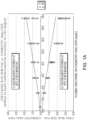
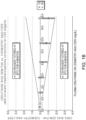
- each test cartridge contained a creatinine measuring system comprised of a creatinine sensor, a creatine sensor, and three calibration solutions (CS1, CS2 CS3), there were two groups of cartridges with same reagents but the CS3 reagents went through different storage conditions: data points in green circles were cartridges with CS3 reagent stored 4 months at 25°C while data points in blue diamonds were cartridges with CS3 reagent stored 8 months at 15°C.
- Fig. 1A indicated by applying option (a) to the creatinine calibration the bias of reported creatinine between two CS3 groups were significant (refer to the data points between green circles and blue diamonds).
- Fig. 1B demonstrated that by applying option (b) to the creatinine calibration the bias of reported creatinine between two CS3 groups was significantly reduced throughout the sample range to meet designed clinical specifications (refer to again the data points between green circles and blue diamonds).
- Example 2 Bias charts of whole blood Creatinine samples measured by GEM PAK cartridges vs. plasma Creatinine by chemistry analyzer with and without current techniques.
- each test cartridge contained a creatinine measuring system, as in previous example, plus two external correction solutions.
- the creatinine measuring system comprised of a creatinine sensor, a creatine sensor, and three calibration solutions (CS1, CS2, and CS3). All test cartridges had same CS3 reagents stored at ambient conditions for 3 months.
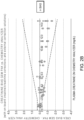
- Fig. 2A indicated by applying Option (a) to the creatinine calibration the bias of reported creatinine for all blood samples were noticeably negative biased and somewhat scattered vs. acceptable clinical specifications (refer to the data points in green circles vs. the dotted line).
- Fig. 2B demonstrated that by applying Option (b) to the creatinine calibration both the negative bias and scattering of reported creatinine in blood samples were significantly reduced throughout the sample range to meet designed clinical specifications (refer to again the data points in green circles vs. the dotted lines).
Landscapes
- Health & Medical Sciences (AREA)
- Chemical & Material Sciences (AREA)
- Life Sciences & Earth Sciences (AREA)
- Engineering & Computer Science (AREA)
- Molecular Biology (AREA)
- Physics & Mathematics (AREA)
- Immunology (AREA)
- General Health & Medical Sciences (AREA)
- Biochemistry (AREA)
- Organic Chemistry (AREA)
- Analytical Chemistry (AREA)
- General Physics & Mathematics (AREA)
- Chemical Kinetics & Catalysis (AREA)
- Hematology (AREA)
- Proteomics, Peptides & Aminoacids (AREA)
- Wood Science & Technology (AREA)
- Zoology (AREA)
- Pathology (AREA)
- Biotechnology (AREA)
- Microbiology (AREA)
- Urology & Nephrology (AREA)
- Biomedical Technology (AREA)
- Biophysics (AREA)
- Bioinformatics & Cheminformatics (AREA)
- General Engineering & Computer Science (AREA)
- Electrochemistry (AREA)
- Genetics & Genomics (AREA)
- Food Science & Technology (AREA)
- Medicinal Chemistry (AREA)
- Cell Biology (AREA)
- Theoretical Computer Science (AREA)
- Spectroscopy & Molecular Physics (AREA)
- Data Mining & Analysis (AREA)
- Dispersion Chemistry (AREA)
- Mathematical Analysis (AREA)
- Bioinformatics & Computational Biology (AREA)
- Evolutionary Biology (AREA)
- Mathematical Optimization (AREA)
- Computational Mathematics (AREA)
- Pure & Applied Mathematics (AREA)
Description
- The disclosure relates to electrochemical sensors for measuring creatinine and creatine in a sample. More particularly, the disclosure relates to compositions and methods for improving calibration accuracy of electrochemical sensors used for measuring creatinine and creatine (e.g., in a subject's blood).
- The ability to accurately measure creatinine and creatine levels in a patient's blood is an important indicator of renal (e.g., kidney) health. In particular, serum creatinine is an important indicator of renal health because it is excreted unaltered by the kidneys, and can readily be measured. For example, elevated levels of blood serum creatinine is a late marker of chronic kidney disease, and is generally only observed when significant kidney damage has already occurred. Chronic kidney disease refers to the gradual loss of kidney function. The kidneys function to filter wastes and excess fluids from the blood, and these filtered wastes and excess fluids are then excreted in urine. When chronic kidney disease reaches an advanced stage (e.g., end-stage renal disease), dangerous levels of fluids, metabolites, electrolytes, wastes, and the like, can build up in the body. In the early stages of chronic kidney disease, there may be few signs or symptoms, and progression of the disease may not become apparent until kidney function has been significantly impaired.
- Creatinine/creatine in a sample (e.g., a patient's blood) may be measured via electrochemical sensors. For example, current creatinine sensors may include an enzymatic biosensor containing three enzymes-creatininase, creatinase, and sarcosine oxidase-that catalyze the production of glycine, formaldehyde, and hydrogen peroxide from creatinine and water. These three enzymes may be immobilized on the surface of a platinum electrode, and the final reaction product of hydrogen peroxide (H2O2) may then be electrochemically oxidized on the platinum electrode under a constant polarization potential and used to measure creatinine and/or creatine levels in a patient's blood. However, in order to determine creatinine and/or creatine concentrations in a biological sample, the creatinine and creatine sensors need to be calibrated to determine their sensitivities. This can be done by measuring the current responses of creatinine and creatine sensors in calibration solutions with predetermined concentrations of creatinine and creatine. Once the sensitivities of the creatinine and creatine sensors are determined, the concentrations of creatinine and creatine in any biological sample can be estimated by measuring the current signals of that sample and comparing the measured sensitivities of the creatinine and creatine sensors as determined from the calibration process. Unfortunately, it is non-trivial to maintain stable creatinine and creatine concentrations in the sensor calibration solutions because the hydrolysis of creatinine to creatine is a reversible reaction in aqueous solution. Such hydrolysis of creatinine to creatine, or vice versa, is accelerated by increased storage temperature and/or age of the calibration solutions. Therefore, an error in creatinine and creatine concentration values associated with the calibration solutions will lead directly to an error in the calibration results - the sensor sensitivities, which in turn will propagate the error to all the sample results measured using these sensitivities. Accordingly, there is an urgent unmet need to identify and develop new methodologies to improve biosensor calibration accuracy for creatinine and/or creatine measurement.
US 7 815 788 B2 describes a method for calibrating a biosensor for the amperometric determination of creatinine in biological liquids, the biosensor consisting of one electrode system each for measuring the concentrations of creatinine and creatine, with at least two calibration solutions being used. The electrode system for measuring the creatinine concentration is calibrated with a creatinine solution which, prior to the calibration measurement, was mixed in the form of an acidic solution with an alkaline buffer solution, and the electrode system for measuring the creatine concentration is calibrated with a solution in which creatinine and creatine are at a thermodynamic equilibrium.
WO 2005/052596 A1 describes a reference solution which comprises, in a liquid phase, at least one of a first compound and a second compound which are mutually convertible into each other, and at least one catalyst, which catalyzes the conversion between the first compound and the second compound. - The present disclosure provides electrochemical sensors for measuring creatinine and creatine in a sample. More particularly, the present disclosure provides compositions and methods for improving calibration accuracy of electrochemical sensors used for measuring creatinine and creatine (e.g., in a subject's blood).
- The invention is defined in the appended claims.
- The present disclosure provides a method of calibrating a creatinine/creatine measuring system according to
claim 1. - In an embodiment, the stable ratio of creatine to creatinine is about 1.5 to about 2.
- In an embodiment, CS2 includes about 2-5 mg/dL of creatine and about 1-3 mg/dL of creatinine.
- In an embodiment, CS3 includes between about 2 and about 8 mg/dL of creatine and between about 0 and about 1 mg/dL of creatinine.
- In an embodiment, the ratio of creatine to creatinine in CS3 is about 4 to about 70.
- In an embodiment, the creatine concentration correction value is used to correct CREA_CS3 based on equal molar creatine to creatinine conversion.
- The present disclosure further provides a method of calibrating a creatinine/creatine measuring system according to claim 4.
- In an embodiment, the stable ratio of creatine to creatinine is about 1.5 to about 2.
- In an embodiment, CS2 includes about 2-5 mg/dL of creatine and about 1-3 mg/dL of creatinine.
- In an embodiment, CS3 includes between about 2 and about 8 mg/dL of creatine and between about 0 and about 1 mg/dL of creatinine.
- In an embodiment, the ratio of creatine to creatinine in the solution is about 4 to about 70.
- In an embodiment, COR1 comprises a concentration of creatine between about 0 and about 2 mg/dL and a concentration of creatinine between about 1 and about 3 mg/dL.
- In an embodiment, the method further includes the steps of: measuring, with the creatine sensor, a creatine concentration of a second correction solution (COR2) having a known creatine concentration (CR_COR2) and a known creatinine concentration (CREA_COR2) and a stable ratio of creatine to creatinine; and measuring, with the creatinine sensor, a creatinine concentration of COR2 (CREA_COR2)
- In the embodiment, Slope1=(CR_CS3*ΔI2' - CR_CS2*ΔI3')/(CREA_CS2*CR_CS3 - CREA_CS3 *CR_CS2).
- In the embodiment, Slope2=(CREA_CS2*ΔI3' - CREA_CS3*ΔI2')/(CREA_CS2*CR_CS3 - CREA_CS3*CR_CS2).
- In an embodiment, the creatine to creatinine ratio of CS2 is different from CS3.
- In an embodiment, the concentrations of creatine and creatinine in the first or second correction solution are maintained at 95% or better stability.
- In an embodiment, the concentrations of creatine and creatinine in the first or second correction solution are maintained by refrigeration.
- In an embodiment, the correction factors from the first or second correction solutions are used to adjust the slopes of creatinine or creatine sensors.
- In an embodiment, the creatine concentration correction value and the creatinine concentration correction value are used to adjust the sample results as bias or % correlation.
- In an embodiment, the method further includes at least one additional correction solution.
- The present disclosure further provides a creatinine/creatine measuring system according to claim 11.
- The present disclosure further provides a creatinine/creatine measuring system according to claim 12.
- By "control" or "reference" is meant a standard of comparison. In one aspect, as used herein, "changed as compared to a control" sample or subject is understood as having a level that is statistically different than a sample from a normal, untreated, or control sample. Control samples include, for example, creatine solutions, creatinine solutions, and the like. Methods to select and test control samples are within the ability of those in the art. Determination of statistical significance is within the ability of those skilled in the art, e.g., the number of standard deviations from the mean that constitute a positive result.
- As used herein, "creatine (a.k.a., 2-[Carbamimidoyl(methyl)amino]acetic acid, N-Carbamimidoyl-N-methylglycine, or Methylguanidoacetic acid)" refers to an organic compound that produce energy for the cells through the recycling of adenosine triphosphate (ATP) by converting adenosine diphosphate (ADP) back to ATP by donating phosphate groups. Creatine has the following chemical structure:

- As used herein, "creatinine" refers to the enzymatic breakdown by-product of creatine, and is generally found in two major tautomeric forms, which are shown below.

- Ranges can be expressed herein as from "about" one particular value, and/or to "about" another particular value. When such a range is expressed, another aspect includes from the one particular value and/or to the other particular value. Similarly, when values are expressed as approximations, by use of the antecedent "about," it is understood that the particular value forms another aspect. It is further understood that the endpoints of each of the ranges are significant both in relation to the other endpoint, and independently of the other endpoint. It is also understood that there are a number of values disclosed herein, and that each value is also herein disclosed as "about" that particular value in addition to the value itself. It is also understood that throughout the application, data are provided in a number of different formats and that this data represent endpoints and starting points and ranges for any combination of the data points. For example, if a particular data point "10" and a particular data point "15" are disclosed, it is understood that greater than, greater than or equal to, less than, less than or equal to, and equal to 10 and 15 are considered disclosed as well as between 10 and 15. It is also understood that each unit between two particular units are also disclosed. For example, if 10 and 15 are disclosed, then 11, 12, 13, and 14 are also disclosed. Ranges provided herein are understood to be shorthand for all of the values within the range. For example, a range of 1 to 50 is understood to include any number, combination of numbers, or sub-range from the group consisting 1, 2, 3, 4, 5, 6, 7, 8, 9, 10, 11, 12, 13, 14, 15, 16, 17, 18, 19, 20, 21, 22, 23, 24, 25, 26, 27, 28, 29, 30, 31, 32, 33, 34, 35, 36, 37, 38, 39, 40, 41, 42, 43, 44, 45, 46, 47, 48, 49, or 50 as well as all intervening decimal values between the aforementioned integers such as, for example, 1.1, 1.2, 1.3, 1.4, 1.5, 1.6, 1.7, 1.8, and 1.9. With respect to sub-ranges, "nested sub-ranges" that extend from either end point of the range are specifically contemplated. For example, a nested sub-range of an exemplary range of 1 to 50 may comprise 1 to 10, 1 to 20, 1 to 30, and 1 to 40 in one direction, or 50 to 40, 50 to 30, 50 to 20, and 50 to 10 in the other direction.
- Other features and advantages of the disclosure will be apparent from the following description of the preferred embodiments thereof, and from the claims. Unless otherwise defined, all technical and scientific terms used herein have the same meaning as commonly understood by one of ordinary skill in the art to which this disclosure belongs. Although methods and materials similar or equivalent to those described herein can be used in the practice or testing of the present disclosure, suitable methods and materials are described below.
- Where applicable or not specifically disclaimed, any one of the embodiments described herein are contemplated to be able to combine with any other one or more embodiments, even though the embodiments are described under different aspects of the disclosure.
- These and other embodiments are disclosed and/or encompassed by, the following Detailed Description.
- The following detailed description, given by way of example, but not intended to limit the disclosure solely to the specific embodiments described, may best be understood in conjunction with the accompanying drawings, in which:
-
FIGS. 1A-1B show two graphs that depict the bias of creatinine measured by whole blood creatinine biosensor vs. plasma creatinine on a chemistry analyzer in two study groups using cartridges with the same CS3 reagents that were subjected to different storage conditions: data points in green circles were cartridges with CS3 reagent stored 4 months at 25°C, while data points in blue diamonds were cartridges with CS3 reagent stored 8 months at 15°C.FIG. 1A shows creatinine measurement without real time creatine correction, whileFIG. 1B shows creatinine measurement in which creatine and creatinine were corrected based on real time measurement of creatine by a creatine sensor according to an exemplary embodiment of the disclosure. The dashed lines provided acceptable bias limits when comparing the test results from whole blood cartridge creatinine values vs. the plasma reference values (e.g., Total Allowable Error, TEa). -
FIGS. 2A-2B show two graphs that depict the bias of creatinine measured by whole blood creatinine biosensor vs. plasma creatinine on a chemistry analyzer.FIG. 2A shows creatinine results without on-board measured creatine and two correction solutions.FIG. 2B shows creatinine results from the same samples but with on-board measured creatine and two correction solutions according to an exemplary embodiment of the disclosure. -
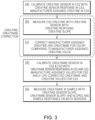
FIG. 3 is a process flow diagram for onboard calibration of creatine and creatinine sensors according to an exemplary embodiment of the disclosure. -
FIG. 4 is a process flow diagram for external calibration of creatine and creatinine sensors according to an exemplary embodiment of the disclosure. -
FIG. 5 illustrates a simplified procedure for onboard calibration of creatine and creatinine sensors according to an exemplary embodiment of the disclosure. -
FIG. 6 illustrates a simplified procedure for external calibration of creatine and creatinine sensors according to an exemplary embodiment of the disclosure. - The present disclosure is based, at least in part, on the discovery that a 3-point calibration process may be used to accurately calibrate creatinine sensors in a creatine and creatinine biosensor system that may be implemented at room temperature. Advantageously, the present disclosure provides compositions and methods that enable accurate creatine/creatinine sensor calibration using either internal calibration solutions or external correction solutions, which in turn allow for accurate detection of creatine and/or creatine in biological or laboratory samples.
- Current creatinine sensors in a creatine/creatinine system (e.g., GEM PAK cartridge) include an enzymatic biosensor containing three enzymes. These enzymes are immobilized on the surface of a platinum electrode. The creatinine detection system is based on the following three enzyme cascade reaction (Rx):



- The product hydrogen peroxide (H2O2) is then electrochemically oxidized on the platinum electrode under the constant polarization potential, and the current signal is proportional to the analyte concentration.
- The presence of creatine in clinical samples necessitates an additional sensor for creatine measurement to correct for the creatine response of the creatinine sensor. The creatine sensor includes only reactions (2) and (3) of the above enzyme cascade reactions.
- Both the creatine and creatinine sensors have a diffusion control membrane (also referred to as an outer membrane) on top of the enzyme layers. The diffusion control membrane limits the flux of creatinine and creatine substrates entering the enzyme layer to ensure that the signals generated by the hydrogen peroxide are proportional to the substrate concentrations of the sample.
- In order to determine the respective concentrations of creatinine and creatine in a biological sample(s), the creatinine and creatine sensors need to be calibrated in order to determine their respective sensitivities. This may be achieved by comparing the readings of the creatinine and creatine sensors in calibration solutions containing pre-determined (e.g., known) concentrations of creatinine and creatine. Once the sensitivities of the creatinine and creatine sensors are determined, the concentrations of creatine and creatinine in any biological sample can be estimated by adjusting the measured readings with the results determined from the calibration process.
- Theoretically, a creatinine measurement system as described above may quantitatively measure the concentration of creatinine in biological samples. However, there are several practical issues associated with the reagent stability that present challenges with respect to measuring creatinine accurately. For example, as shown in the diagram below, the hydrolysis of creatinine to creatine is a reversible process in aqueous solution that may vary in a manner that depends on the temperature and solution media, until an optimal stable ratio of creatine/creatinine is reached (e.g., about 1.5 to 2). When the creatine/creatinine ratio is above or below the optimal range, the creatine will convert to creatinine or vice versa. Consequently, the concentrations of creatinine and creatine in calibration solutions will change over time during storage from the original factory assigned concentrations, as shown in Rx. 4.

- Additionally, the conversion between creatinine and creatine during storage conditions will shift the creatine/creatinine ratio until the optimal stable ratio is reached. Unfortunately, this will introduce calibration errors into the sensor measurement, and these errors will become more significant over time as the calibration solution ages. This has the consequence of limiting the shelf-life of the reagents and the overall assay performance. One prior art solution to this problem addressed the conversion of creatinine to creatine in the calibration solution during storage by experimentally determining a shelf life decay curve (e.g., equation [CR_CS] = [CR_CS]0 - a*age - b*age^2, where [CR_CS]0 is the initial manufacture assigned creatine concentration value for the calibration solution, constant a and b were determined experimentally, age is the shelf life of the calibration solution) for known storage temperatures. By using this decay curve, a real time correction could be correlated with the factory assigned creatinine/creatine concentrations based on the length of storage. The limitation to this approach is that the decay curve based correction assumes that the calibration solutions are exposed to a constant temperature over time. Unfortunately, this assumption is not accurate as the calibration solutions/reagents may be exposed to temperatures that can fluctuate, sometimes dramatically, over time (e.g., during transfer between facilities). Under these circumstances an error can be introduced into the sensor calibration if the decay curve that is used is based on a calibration solution that was subjected to significant temperature fluctuations that can impact the ability of the creatinine sensors to accurately report creatinine concentration in calibration solutions/reagents (e.g., creatine/creatinine solutions) stored, for example, for 8 months or longer.
- Other prior art methods to minimize the creatinine/creatine conversion include refrigerating the reagents (e.g., creatine/creatinine powder or solution), limiting the shelf life of the calibration solution to couple weeks, and/or preparing reagent/calibration solutions on site at a customer's facility immediately prior to use by mixing the creatinine and creatine powder into solution. Unfortunately, all of these prior art methods are impractical for point-of-care use at clinical testing locations.
- The techniques herein solve the above-enumerated prior art problems with creatine/creatinine calibration solution instability (e.g., creatine/creatinine conversion in calibration solutions during storage) by minimizing the variation in measured biological creatinine levels. As described further below, the following steps may be implemented to address the impact of calibration error due to changes in the creatine/creatinine ratio in calibration solutions during shipping and/or storage:
- 1. Install and calibrate the creatine sensor.
- 2. Measure creatine concentration of the second calibration solution (e.g., CS3) that is not used for creatine sensor calibration and additional correction solutions to assess the change in concentration of the second calibration solution during shipping and storage.
- 3. Use changes in creatine concentration relative to the factory assigned values, in molar equivalent concentration, to correct for changes in creatinine concentration change during storage since creatine is assumed to convert into creatinine or vice versa.
- 4. Apply the creatine and creatinine corrections to the second calibration reagent for creatinine prior to completing the creatinine sensor calibration process and continue to use this same correction over the lifetime of the sensor.
- The techniques herein provide systems for calibrating creatine and/or creatinine biosensors.
- Calibration systems for a creatine sensor or biosensor may involve a 2-point calibration based on the following equation:

- ΔI2 is a current signal measured on the creatine sensor in a first calibration solution (CS2). [CR_CS2] is the concentration of creatine in the first calibration solution (CS2). As discussed in detail below, CS2 has a known concentration of creatine (CR CS2), a known concentration of creatinine (CREA CS2), and a stable ratio of creatine to creatinine, which makes it possible to establish a creatine sensor sensitivity (Slope) for the creatine sensor.
- According to the techniques herein, a calibration system for a creatinine sensor or biosensor may implement a 3-point calibration methodology. As the creatinine sensor provides readings of both creatinine and creatine in biological samples or calibration solutions containing both analytes, the sensitivities of the creatinine sensor to creatinine (Slope1) or creatine (Slope2) may be determined according to the disclosure, as defined below, from equations 2-5 below. The disclosure provides that two calibration solutions with distinct ratios of creatine/creatinine may be used for the 3-point calibration method.
- 3-point creatinine sensor calibration equations:


- ΔI2' and ΔI3' are current signals measured on creatinine sensor in a first calibration solutions (CS2) and a second calibration solution (CS3), respectively. CS3 has an initial known creatine concentration (CR CS3), an initial known creatinine concentration (CREA_CS3) and an unstable ratio of creatine to creatinine.
- [CREA CS2], [CREA CS3], [CR_CS2] and [CR_CS3] represent the initial known concentrations of creatinine and creatine in calibration solutions CS2 and CS3, respectively. The sensitivity of the creatinine sensor for creatinine and creatine, Slope1 (sensor sensitivity to creatinine) and Slope2 (sensor sensitivity to creatine), can be derived from Eq. 2 and 3:


- CS2 may be formulated at the optimal stable ratio of creatine/creatinine between about 1.5 and 2, while CS3 may be formulated at a different, unstable, ratio (about 10 to 70) of creatine/creatinine that will vary over time from the original ratio at the time of manufacturing due to concentration changes during storage. This change in creatine and creatinine concentrations from the original manufacturing stage, if uncorrected, will introduce calibration errors and therefore sample measurement errors.
- According to the disclosure, calibration solutions CS2 and CS3 may be used in "onboard" applications (e.g., within a biosensor apparatus or cartridge).
- As described herein, the present disclosure also provides correction solutions designed to be stable at the factory assigned creatinine and creatine concentrations through appropriate creatine/creatinine ratios or through optimal storage conditions. Such correction solutions may be used in "external" applications such as, for example, during the initial calibration of a creatinine and/or creatine sensor system. Upon measuring these correction solutions with an individual creatinine sensor and/or creatine sensor, the deviation from measured creatinine and creatine concentrations may be identified by comparison to the factory assigned creatinine and creatine concentrations, and then used as the correction factor for all subsequent biological samples. The correction factors may be used to minimize the impact of any residual errors in creatinine and creatine value assignments for a specific cartridge(s) and may be used continuously throughout the life of the sensor.
- The new creatinine/creatine sensor calibration system described herein may include the steps of 1) correcting the creatine/creatinine concentrations of the calibration solution that may not have a stable creatinine/creatine ratio, 2) calibrating the sensor, 3) establishing correction factors, and 4) taking sample measurements. These steps are described in detail below:
- 1. Establishing that the creatinine and creatine concentrations of the calibration solution are not at an optimal creatine/creatinine ratio. In this exemplary creatinine/creatine sensor calibration system, there are three calibration solutions: calibration solution 1 (CS1), calibration solution 2 (CS2), and calibration solution 3 (CS3). CS1 does not contain either creatinine or creatine, and is used for baseline measurements (e.g., a blank control). CS2 and CS3 both contain creatinine and creatine concentrations at different ratios. CS2 has a creatine/creatinine ratio of about 1.5 to 2 that is stable and can maintain the factory assigned creatinine and creatine concentrations throughout the shelf life for a minimum of 8 months without significant changes. In contrast to CS2, CS3 has a different creatine/creatinine ratio that is unstable and will change over time in storage (e.g., by converting creatine to creatinine slowly during storage of the solution). When creatinine and creatine sensors are installed and exposed to calibration solutions that have aged over the shelf life of the solution(s), but within the specified solution storage temperature conditions (15°C - 25°C), the creatine sensor sensitivity can be determined accurately by measuring the current in CS2 and applying the factory assigned creatine concentration of CS2. Then the creatine concentration in CS3 and/or the external correction solutions is measured with the measured current on the creatine sensor and the creatine sensitivity. The concentration of creatine that has been converted to creatinine in CS3 can be derived from the difference between the factory assigned creatine concentration value and the measured creatine concentration value in CS3. The creatinine increase in CS3 can then be estimated by applying molar equivalent concentration of the change in CS3 creatine concentration as a correction to the factory assigned creatinine concentrations. Therefore, the creatinine and creatine concentrations in CS3 are both determined in real time at the beginning of the sensor installation during the initial sensor calibration without the need to apply a decay curve (e.g., with the aid of an equation).
- 2. Sensor calibration. Each creatinine measuring system contains both creatinine and creatine sensors, and the sensors are calibrated periodically using the calibration solutions throughout the lifetime of the sensor. The sensitivities of the creatinine and creatine sensors may be calculated as described in previous background section. These sensitivities may then be used for subsequent sample measurement.
- The sensitivity of the creatine sensor is determined by measuring the current in the CS2 solution and factory assigned CS2 creatine concentration, as shown in Eq. 1 above.
- The creatinine sensitivities (to creatinine-
Slope 1 and creatine-Slope2 as defined in equations 3 and 4) are determined by measuring the currents in CS2 and CS3, comparing these measurements to the factory assigned concentrations of creatinine and creatine in CS2, and applying real time corrections to the factory assigned creatinine and creatine concentrations in CS3 at the time of the sensor installation and initial calibration as shown in Eqs. 2-5 above. - 3. Additionally, external corrections may be implemented using one or more correction solutions. For example, two correction solutions (e.g., a first correction solution (COR1) and a second correction solution (COR2) with stable creatine/creatinine concentrations) may be used to correct any residual errors from the calibration accuracy. These solutions have predetermined creatinine and creatine concentrations that are stable (e.g., COR1 may have a concentration range of about 0 - 2 and 1-3 mg/dL for creatinine and creatine, respectively, while COR2 may have concentration range of about 0 - 1 and 2 - 8 mg/dL for creatinine and creatine, respectively). For example, these solutions may be sealed in reagent bags or in ampules and are designed to maintain constant pCO2, pH levels, and creatinine/creatine levels. These solutions may be buffered and/or contain biocides to ensure stability. It is important that the creatinine and creatine concentrations of both of these solutions be kept stable during their usage. This may be accomplished in a variety of ways known to the skilled artisan. For example, the external correction solutions may be sealed into ampoules to maintain the reproducibility for use when correcting sensors from cartridge to cartridge. In yet another example, the correction solutions may be refrigerated and/or also packaged in ampules.
- The creatinine/creatine correction solution may be measured on each creatinine measuring system at the beginning of its use once the sensor calibration is completed and the sensitivities are established. The creatinine and creatine concentrations measured by the sensors are compared to the factory assigned creatinine and creatine levels, and used to establish the correction factors for the creatinine sensor and creatine sensor, respectively.
- Alternatively, two correction solutions can be measured consecutively at the beginning of the usage lifetime and the correction factors can be established more accurately from two distinct levels of creatinine and creatine concentrations. These correction factors provide the correction for residual errors from calibration process including shelf life decay for that specific cartridge.
- Since these correction solutions have accurately predetermined creatinine and creatine concentrations, and they are kept stable and outside of the creatinine measuring system, they can be used as independent checks of the calibration accuracy of the creatinine measuring system. Thus tolerance ranges are established to accept or reject the creatinine measuring system based on the reported results of the creatinine and creatine of that cartridge from the correction solutions.
- 4. Measuring creatinine/creatine in biological samples. For each patient sample, the current signals are measured on creatinine and creatine sensors. Following the direct current reading, the sensitivities from the most recent calibration are used to estimate the creatinine and creatine concentrations. Finally, the correction factors may be applied to obtain the final creatinine and creatine results.
- In an alternative embodiment, the correction may be applied to the sensitivities obtained from the calibration process when two correction solutions are used. In this approach, the correction factors to the sensitivity obtained from two correction solutions from the initial calibration may be directly applied to the sensitivities from the most recent sensor calibration. Then the sample creatinine and creatine concentrations are estimated from sample readings and the corrected sensitivities.
-
FIG. 5 illustrates an example of a simplified procedure for onboard calibration of creatine and creatinine sensors according to an exemplary embodiment of the disclosure. For example, a non-generic, specifically configured device (e.g., a GEM Premier Analyzer) may performprocedure 100 by executing, for example, stored instructions. Theprocedure 100 may start atstep 105 and continue to step 110 where, as described in greater detail above, a device having a creatine sensor, a creatinine sensor, one or more network interfaces to communicate in a computer network, a processor coupled to the network interfaces and the creatine sensor and the creatinine sensor and adapted to execute one or more processes; and a memory configured to store a process executable by the processor and provide for onboard calibration of creatine and creatinine sensors. - In
step 110, the device measures, with the creatine sensor, a creatine sensor current signal (ΔI2) of a first calibration solution (CS2) having a known concentration of creatine (CR_CS2), a known concentration of creatinine (CREA_CS2), and a stable ratio of creatine to creatinine to establish a creatine sensor sensitivity (Slope) for the creatine sensor. - In
step 115, the device measures, with the creatine sensor, a measured creatine concentration (MCR_CS3) of a second calibration solution (CS3) having an initial known creatine concentration (CR_CS3), an initial known creatinine concentration (CREA_CS3) and an unstable ratio of creatine to creatinine. - The simplified procedure may then proceed to step 120, were the device compares MCR_CS3 of CS3 to CR_CS3 to establish a creatine and creatinine concentration correction value for CS3 based on equal molar conversion.
- In
step 125, the device measures, with the creatinine sensor, a creatinine sensor current signal (ΔI2') of CS2 and a creatinine sensor current signal (ΔI3') of CS3 creatinine concentrations (CREA_CS2), (MCREA_CS3), and creatine concentrations (CR_CS2) and (MCR CS3). Instep 130, the device determines a first creatinine sensor sensitivity (Slope1) and a second creatinine sensor sensitivity (Slope2). - In
step 135; the device then estimates a creatinine concentration in a sample based on the current signal of the sample and the Slope1 and Slope2.Procedure 100 then ends atstep 140. -
FIG. 6 illustrates a simplified procedure for external calibration of creatine and creatinine sensors according to an exemplary embodiment of the disclosure. For example, a non-generic, specifically configured device (e.g., a GEM Premier Analyzer) may performprocedure 200 by executing, for example, stored instructions. Theprocedure 200 may start atstep 205 and continue to step 210 where, as described in greater detail above, a device having a creatine sensor, a creatinine sensor, one or more network interfaces to communicate in a computer network, a processor coupled to the network interfaces and the creatine sensor and the creatinine sensor and adapted to execute one or more processes; and a memory configured to store a process executable by the processor and provide for onboard calibration of creatine and creatinine sensors. - In
step 210, the device measures, with the creatine sensor, a creatine sensor current signal (ΔI2) of a first calibration solution (CS2) having a known concentration of creatine (CR_CS2), a known concentration of creatinine (CREA_CS2), and a stable ratio of creatine to creatinine to establish a creatine sensor sensitivity (Slope) for the creatine sensor. - In
step 215, the device measures, with the creatinine sensor, a creatinine sensor current signal (ΔI2') of cs2 and a creatinine sensor current signal (ΔI3') of a second calibration solution (CS3) having an initial known creatine concentration (CR_CS3), an initial known creatinine concentration (CREA_CS3), and an unstable ratio of creatine to creatinine. - The simplified procedure may then proceed to step 220, where the device determining a first creatinine sensor sensitivity (SLOPE1) and a second creatinine sensor sensitivity (SLOPE2).
- In
step 225, the device measures, with the creatine sensor, a creatine concentration of a first correction solution (COR1) having a known creatine concentration (CR_COR1), a known creatinine concentration (CREA_COR1), and a stable ratio of creatine to creatinine; measuring, with the creatinine sensor, a creatinine concentration of COR1 (CREA_COR1). - In
step 230, the device measures, with the creatinine sensor, a creatinine concentration of COR1 (CREA_COR1). - In
step 235; the device then comparing the measured creatine concentration to CR_COR1 and the measured creatinine concentration to CREA_COR1 to establish a creatine concentration correction value and a creatinine concentration correction value. - In
step 240, the device estimates, based on the values of SLOPE, SLOPE1, SLOPE2, creatine correction factor, creatinine correction factor and creatine and creatinine current signals a creatinine concentration in a sample.Procedure 200 then ends atstep 245. - The present disclosure addresses the issue of creatinine and creatine sensor sensitivity deviation due to shelf life decay of the calibration solutions. As described in the working examples below, the techniques herein have reduced reported bias for creatinine in clinical samples and have allowed cartridge shelf life to be extended to at least 5 months. It is known that creatinine to creatine conversion over shelf life will impact the sensor sensitivities if not addressed properly. The present disclosure is also applicable to creatinine measuring system using calibration solutions that are not at the optimal stable creatine/creatinine ratio.
- The instant disclosure also provides kits not encompassed by the wording of the claims, containing agents of this disclosure for use in the methods of the present disclosure. Kits of the instant disclosure may include one or more containers comprising an agent (e.g., creatine, creatinine, etc.) of this disclosure and/or may contain agents in one or more solutions (e.g., CS1, CS2, CS3, correction solutions (e.g., COR1 and COR2), etc.) for calibrating a creatine and/or creatinine sensor(s). In some embodiments, the kits further include instructions for use in accordance with the methods of this disclosure. In some embodiments, these instructions comprise a description of how to apply the agents/solutions to a sensor (e.g., a creatine sensor, creatinine sensor, and the like) and how to calculate variables of interest (e.g., ΔI2, ΔI2', ΔI3', Slope,
Slope 1,Slope 2, and the like) according to any of the methods of the disclosure. In some embodiments, the instructions comprise a description of how to install and calibrate a measuring system as disclosed herein. - The instructions generally include information as to reagent/solution concentration, reagent/solution ratio (e.g., creatine/creatinine ratio), shelf life, etc. Instructions supplied in the kits of the instant disclosure are typically written instructions on a label or package insert (e.g., a paper sheet included in the kit), but machine-readable instructions (e.g., instructions carried on a magnetic or optical storage disk) are also acceptable.
- The label or package insert indicates that the reagents/solutions may be used to calibrate any of a variety of creatine and/or creatinine sensor(s) for use in a measuring system as described herein. Instructions may be provided for practicing any of the methods described herein, for example, to install and calibrate a measuring system.
- The kits of this disclosure are in suitable packaging. Suitable packaging includes, but is not limited to, vials, ampules, bottles, jars, flexible packaging (e.g., sealed Mylar or plastic bags), and the like. Also contemplated are packages for use in combination with a specific device, such as GEM Premier whole blood analyzer family (Instrumentation Laboratory, Bedford, MA). In certain embodiments, at least one active agent in the reagent or solution is creatine and/or creatinine.
- Kits may optionally provide additional components such as buffers and interpretive information. Normally, the kit comprises a container and a label or package insert(s) on or associated with the container.
- The practice of the present disclosure employs, unless otherwise indicated, conventional techniques of chemistry, molecular biology, microbiology, recombinant DNA, genetics, immunology, cell biology, cell culture and transgenic biology, which are within the skill of the art. See, e.g., Maniatis et al., 1982, Molecular Cloning (Cold Spring Harbor Laboratory Press, Cold Spring Harbor, N.Y.); Sambrook et al., 1989, Molecular Cloning, 2nd Ed. (Cold Spring Harbor Laboratory Press, Cold Spring Harbor, N.Y.); Sambrook and Russell, 2001, Molecular Cloning, 3rd Ed. (Cold Spring Harbor Laboratory Press, Cold Spring Harbor, N.Y.); Ausubel et al., 1992), Current Protocols in Molecular Biology (John Wiley & Sons, including periodic updates); Glover, 1985, DNA Cloning (IRL Press, Oxford); Anand, 1992; Guthrie and Fink, 1991; Harlow and Lane, 1988, Antibodies, (Cold Spring Harbor Laboratory Press, Cold Spring Harbor, N.Y.); Jakoby and Pastan, 1979; Nucleic Acid Hybridization (B. D. Hames & S. J. Higgins eds. 1984); Transcription And Translation (B. D. Hames & S. J. Higgins eds. 1984); Culture Of Animal Cells (R. I. Freshney, Alan R. Liss, Inc., 1987); Immobilized Cells And Enzymes (IRL Press, 1986); B. Perbal, A Practical Guide To Molecular Cloning (1984); the treatise, Methods In Enzymology (Academic Press, Inc., N.Y.); Gene Transfer Vectors For Mammalian Cells (J. H. Miller and M. P. Calos eds., 1987, Cold Spring Harbor Laboratory); Methods In Enzymology, Vols. 154 and 155 (Wu et al. eds.), Immunochemical Methods In Cell And Molecular Biology (Mayer and Walker, eds., Academic Press, London, 1987); Handbook Of Experimental Immunology, Volumes I- IV (D. M. Weir and C. C. Blackwell, eds., 1986); Riott, Essential Immunology, 6th Edition, Blackwell Scientific Publications, Oxford, 1988; Hogan et al., Manipulating the Mouse Embryo, (Cold Spring Harbor Laboratory Press, Cold Spring Harbor, N.Y., 1986); Westerfield, M., The zebrafish book. A guide for the laboratory use of zebrafish (Danio rerio), (4th Ed., Univ. of Oregon Press, Eugene, 2000).
- Unless otherwise defined, all technical and scientific terms used herein have the same meaning as commonly understood by one of ordinary skill in the art to which this disclosure belongs. Although methods and materials similar or equivalent to those described herein can be used in the practice or testing of the present disclosure, suitable methods and materials are described below.
- The present disclosure also relates to a computer system involved in carrying out the methods of the disclosure relating to both computations and sequencing.
- A computer system (or digital device) may be used to receive, transmit, display and/or store results, analyze the results, and/or produce a report of the results and analysis. A computer system may be understood as a logical apparatus that can read instructions from media (e.g. software) and/or network port (e.g. from the internet), which can optionally be connected to a server having fixed media. A computer system may comprise one or more of a CPU, disk drives, input devices such as keyboard and/or mouse, and a display (e.g. a monitor). Data communication, such as transmission of instructions or reports, can be achieved through a communication medium to a server at a local or a remote location. The communication medium can include any means of transmitting and/or receiving data. For example, the communication medium can be a network connection, a wireless connection, or an internet connection. Such a connection can provide for communication over the World Wide Web. It is envisioned that data relating to the present disclosure can be transmitted over such networks or connections (or any other suitable means for transmitting information, including but not limited to mailing a physical report, such as a print-out) for reception and/or for review by a receiver. The receiver can be but is not limited to an individual, or electronic system (e.g. one or more computers, and/or one or more servers).
- In some embodiments, the computer system may comprise one or more processors. Processors may be associated with one or more controllers, calculation units, and/or other units of a computer system, or implanted in firmware as desired. If implemented in software, the routines may be stored in any computer readable memory such as in RAM, ROM, flash memory, a magnetic disk, a laser disk, or other suitable storage medium. Likewise, this software may be delivered to a computing device via any known delivery method including, for example, over a communication channel such as a telephone line, the internet, a wireless connection, etc., or via a transportable medium, such as a computer readable disk, flash drive, etc. The various steps may be implemented as various blocks, operations, tools, modules and techniques which, in turn, may be implemented in hardware, firmware, software, or any combination of hardware, firmware, and/or software. When implemented in hardware, some or all of the blocks, operations, techniques, etc. may be implemented in, for example, a custom integrated circuit (IC), an application specific integrated circuit (ASIC), a field programmable logic array (FPGA), a programmable logic array (PLA), etc.
- A client-server, relational database architecture can be used in embodiments of the disclosure. A client-server architecture is a network architecture in which each computer or process on the network is either a client or a server. Server computers are typically powerful computers dedicated to managing disk drives (file servers), printers (print servers), or network traffic (network servers). Client computers include PCs (personal computers) or workstations on which users run applications, as well as example output devices as disclosed herein. Client computers rely on server computers for resources, such as files, devices, and even processing power. In some embodiments of the disclosure, the server computer handles all of the database functionality. The client computer can have software that handles all the front-end data management and can also receive data input from users.
- A machine readable medium which may comprise computer-executable code may take many forms, including but not limited to, a tangible storage medium, a carrier wave medium or physical transmission medium. Non-volatile storage media include, for example, optical or magnetic disks, such as any of the storage devices in any computer(s) or the like, such as may be used to implement the databases, etc. shown in the drawings. Volatile storage media include dynamic memory, such as main memory of such a computer platform. Tangible transmission media include coaxial cables; copper wire and fiber optics, including the wires that comprise a bus within a computer system. Carrier-wave transmission media may take the form of electric or electromagnetic signals, or acoustic or light waves such as those generated during radio frequency (RF) and infrared (IR) data communications. Common forms of computer-readable media therefore include for example: a floppy disk, a flexible disk, hard disk, magnetic tape, any other magnetic medium, a CD-ROM, DVD or DVD-ROM, any other optical medium, punch cards paper tape, any other physical storage medium with patterns of holes, a RAM, a ROM, a PROM and EPROM, a FLASH-EPROM, any other memory chip or cartridge, a carrier wave transporting data or instructions, cables or links transporting such a carrier wave, or any other medium from which a computer may read programming code and/or data. Many of these forms of computer readable media may be involved in carrying one or more sequences of one or more instructions to a processor for execution.
- The subject computer-executable code can be executed on any suitable device which may comprise a processor, including a server, a PC, or a mobile device such as a smartphone or tablet. Any controller or computer optionally includes a monitor, which can be a cathode ray tube ("CRT") display, a flat panel display (e.g., active matrix liquid crystal display, liquid crystal display, etc.), or others. Computer circuitry is often placed in a box, which includes numerous integrated circuit chips, such as a microprocessor, memory, interface circuits, and others. The box also optionally includes a hard disk drive, a floppy disk drive, a high capacity removable drive such as a writeable CD-ROM, and other common peripheral elements. Inputting devices such as a keyboard, mouse, or touch-sensitive screen, optionally provide for input from a user. The computer can include appropriate software for receiving user instructions, either in the form of user input into a set of parameter fields, e.g., in a GUI, or in the form of preprogrammed instructions, e.g., preprogrammed for a variety of different specific operations.
- Reference will now be made in detail to exemplary embodiments of the disclosure. While the disclosure will be described in conjunction with the exemplary embodiments, it will be understood that it is not intended to limit the disclosure to those embodiments. Standard techniques well known in the art or the techniques specifically described below were utilized.
- The present disclosure is further illustrated by the following examples, which should not be construed as limiting.
- In this study each test cartridge contained a creatinine measuring system comprised of a creatinine sensor, a creatine sensor, and three calibration solutions (CS1, CS2 CS3), there were two groups of cartridges with same reagents but the CS3 reagents went through different storage conditions: data points in green circles were cartridges with CS3 reagent stored 4 months at 25°C while data points in blue diamonds were cartridges with CS3 reagent stored 8 months at 15°C. Two approaches to establish CS3 creatine and creatinine concentrations for creatinine calibration were investigated: option (a) without real time creatine correction for CS3; and option (b) creatine and creatinine in CS3 were corrected based on real time measured creatine by creatine sensor as described in the present disclosure [as
step 1. on page 16].Fig. 1A indicated by applying option (a) to the creatinine calibration the bias of reported creatinine between two CS3 groups were significant (refer to the data points between green circles and blue diamonds).Fig. 1B demonstrated that by applying option (b) to the creatinine calibration the bias of reported creatinine between two CS3 groups was significantly reduced throughout the sample range to meet designed clinical specifications (refer to again the data points between green circles and blue diamonds). - In this study each test cartridge contained a creatinine measuring system, as in previous example, plus two external correction solutions. The creatinine measuring system comprised of a creatinine sensor, a creatine sensor, and three calibration solutions (CS1, CS2, and CS3). All test cartridges had same CS3 reagents stored at ambient conditions for 3 months. Two approaches to establish CS3 creatine and creatinine concentrations for creatinine calibration and calibration correction were investigated: Option (a) without real time creatine correction for CS3, and no secondary correction applied; and Option (b) creatine and creatinine in CS3 were corrected based on real time measured creatine by creatine sensor, and followed by secondary correction based on measured results of two external correction solutions at the beginning of cartridge use life (as described in the present disclosure from step 1-4. on pages 14-18).
Fig. 2A indicated by applying Option (a) to the creatinine calibration the bias of reported creatinine for all blood samples were noticeably negative biased and somewhat scattered vs. acceptable clinical specifications (refer to the data points in green circles vs. the dotted line).Fig. 2B demonstrated that by applying Option (b) to the creatinine calibration both the negative bias and scattering of reported creatinine in blood samples were significantly reduced throughout the sample range to meet designed clinical specifications (refer to again the data points in green circles vs. the dotted lines). - It is understood that the detailed examples and embodiments described herein are given by way of example for illustrative purposes only, and are in no way considered to be limiting to the disclosure. Additional advantageous features and functionalities associated with the systems, methods, and processes of the present disclosure will be apparent from the appended claims.
Claims (12)
- A method of calibrating a creatinine/creatine measuring system having a creatine sensor and a creatinine sensor, comprising:measuring, with the creatine sensor, a creatine sensor current signal (ΔI2) of a first calibration solution (CS2) having a known concentration of creatine (CR_CS2), a known concentration of creatinine (CREA_CS2), and a stable ratio of creatine to creatinine to establish a creatine sensor sensitivity (Slope) for the creatine sensor, wherein the stable ratio of creatine to creatinine of CS2 is of about 1.5 to 2 and can maintain the factory assigned creatinine and creatine concentrations throughout the shelf life for a minimum of 8 months without significant changes;measuring, with the creatine sensor, a measured creatine concentration (MCR_CS3) of a second calibration solution (CS3) having an initial known creatine concentration (CR_CS3), an initial known creatinine concentration (CREA_CS3) and an unstable ratio of creatine to creatinine which will change over time in storage;comparing MCR_CS3 of CS3 to CR_CS3 to establish a creatine concentration correction value for CS3;measuring, with the creatinine sensor, a creatinine sensor current signal (ΔI2') of CS2 and a creatinine sensor current signal (ΔI3') of CS3, creatinine concentrations (CREA_CS2), measured creatinine concentration (MCREA_CS3), and creatine concentrations (CR_CS2) and (MCR_CS3);determining a first creatinine sensor sensitivity (Slope1);determining a second creatinine sensor sensitivity (Slope2); andestimating a creatinine concentration in a sample based on the current signal of the sample and the Slope1 and Slope2;wherein Slope=ΔI2/CR_CS2, andwherein Slope1=(MCR_CS3*ΔI2' - CR_CS2*ΔI3')/(CREA_CS2*MCR_CS3 - MCREA_CS3*CR_CS2), andwherein Slope2=(CREA_CS2*ΔI3' - MCREA_CS3*ΔI2')/(CREA_CS2*MCR_CS3 - MCREA_CS3*CR_CS2).
- The method of claim 1, wherein CS3 includes between about 2 and about 8 mg/dL of creatine and between about 0 and about 1 mg/dL of creatinine, and
wherein the ratio of creatine to creatinine in CS3 preferably is about 4 to about 70. - The method of claim 1 or 2, wherein the creatine concentration correction value is used to correct CREA_CS3 based on equal molar creatine to creatinine conversion.
- A method of calibrating a creatinine/creatine measuring system having a creatine sensor and a creatinine sensor, comprising:measuring, with the creatine sensor, a creatine sensor current signal (ΔI2) of a first calibration solution (CS2) having a known concentration of creatine (CR_CS2), a known concentration of creatinine (CREA_CS2), and a stable ratio of creatine to creatinine to establish a creatine sensor sensitivity (Slope) for the creatine sensor, wherein the stable ratio of creatine to creatinine of CS2 is of about 1.5 to 2 and can maintain the factory assigned creatinine and creatine concentrations throughout the shelf life for a minimum of 8 months without significant changes;measuring, with the creatinine sensor, a creatinine sensor current signal (ΔI2') of CS2 and a creatinine sensor current signal (ΔI3') of a second calibration solution (CS3) having an initial known creatine concentration (CR_CS3), an initial known creatinine concentration (CREA_CS3), and an unstable ratio of creatine to creatinine which will change over time in storage;determining a first creatinine sensor sensitivity (Slope1);determining a second creatinine sensor sensitivity (Slope2); andmeasuring, with the creatine sensor, a creatine concentration of a first correction solution (COR1) having a known creatine concentration (CR_COR1), a known creatinine concentration (CREA_COR1), and a stable ratio of creatine to creatinine, wherein COR1 has predetermined creatinine and creatine concentrations that are kept stable;measuring, with the creatinine sensor, a creatinine concentration of COR1 (CREA COR1);comparing the measured creatine concentration to CR_COR1 and the measured creatinine concentration to CREA_COR1 to establish a creatine concentration correction value and a creatinine concentration correction value;estimating, based on the values of Slope, Slope1, Slope2, creatine concentration correction value, creatinine concentration correction value and creatine and creatinine current signals a creatinine concentration in a sample;wherein Slope=ΔI2/CR_CS2, andwherein Slope1=(CR_CS3*ΔI2' - CR_CS2*ΔI3')/(CREA_CS2*CR_CS3 - CREA_CS3*CR_CS2), andwherein Slope2=(CREA_CS2*ΔI3' - CREA_CS3*ΔI2')/(CREA_CS2*CR_CS3 - CREA_CS3*CR_CS2).
- The method of claim 4, wherein the ratio of creatine to creatinine in the solution is about 4 to about 70, and/or
wherein COR1 comprises a concentration of creatine between about 0 and about 2 mg/dL and a concentration of creatinine between about 1 and about 3 mg/dL. - The method of claim 4 or 5, further comprising the step of:measuring, with the creatine sensor, a creatine concentration of a second correction solution (COR2) having a known creatine concentration (CR_COR2) and a known creatinine concentration (CREA_COR2) and a stable ratio of creatine to creatinine; andmeasuring, with the creatinine sensor, a creatinine concentration of COR2 (CREA COR2).
- The method of any one of the claims 4 to 6, wherein the concentrations of creatine and creatinine in the first or second correction solution are maintained at 95% or better stability, and/or
wherein the concentrations of creatine and creatinine in the first or second correction solution are maintained by refrigeration. - The method of any one of the claims 4 to 7, wherein the concentration correction values from the first or second correction solutions are used to adjust the slopes of creatinine or creatine sensors, and/or
wherein the creatine concentration correction value and the creatinine concentration correction value are used to adjust the sample results as bias or % correlation. - The method of any one of the claims 1 to 8, wherein the stable ratio of creatine to creatinine is about 1.5 to about 2.
- The method of any one of the claims 1 to 9, wherein CS2 includes about 2-5 mg/dL of creatine and about 1-3 mg/dL of creatinine.
- A creatinine/creatine measuring system, comprising:a creatine sensor;a creatinine sensor;one or more network interfaces to communicate in a computer network;a processor coupled to the network interfaces and the creatine sensor and the creatinine sensor and adapted to execute one or more processes; anda memory configured to store a process executable by the processor, the process when executed operable to:measure, with the creatine sensor, a creatine sensor current signal (ΔI2) of a first calibration solution (CS2) having a known concentration of creatine (CR_CS2), a known concentration of creatinine (CREA_CS2), and a stable ratio of creatine to creatinine to establish a creatine sensor sensitivity (Slope) for the creatine sensor, wherein the stable ratio of creatine to creatinine of CS2 is of about 1.5 to 2 and can maintain the factory assigned creatinine and creatine concentrations throughout the shelf life for a minimum of 8 months without significant changes;measure, with the creatine sensor, a measured creatine concentration (MCR_CS3) of a second calibration solution (CS3) having an initial known creatine concentration (CR_CS3), an initial known creatinine concentration (CREA_CS3) and an unstable ratio of creatine to creatinine which will change over time in storage;compare MCR_CS3 of CS3 to CR_CS3 to establish a creatine concentration correction value for CS3;measure, with the creatinine sensor, a creatinine sensor current signal (ΔI2') of CS2 and a creatinine sensor current signal (ΔI3') of CS3, creatinine concentrations (CREA_CS2), measured creatinine concentration (MCREA_CS3), and creatine concentrations (CR_CS2) and (MCR_CS3);determine a first creatinine sensor sensitivity (Slope1);determine a second creatinine sensor sensitivity (Slope2); andestimate a creatinine concentration in a sample based on the current signal of the sample and the Slope1 and Slope2;wherein Slope=ΔI2/CR_CS2, andwherein Slope1=(MCR_CS3*ΔI2' - CR_CS2*ΔI3')/(CREA_CS2*MCR_CS3 - MCREA_CS3*CR_CS2), andwherein Slope2=(CREA_CS2*ΔI3' - MCREA_CS3*ΔI2')/(CREA_CS2*MCR_CS3 - MCREA_CS3*CR_CS2).
- A creatinine/creatine measuring system, comprising:a creatine sensor;a creatinine sensor;one or more network interfaces to communicate in a computer network;a processor coupled to the network interfaces and the creatine sensor and the creatinine sensor and adapted to execute one or more processes; anda memory configured to store a process executable by the processor, the process when executed operable to:measure, with the creatine sensor, a creatine sensor current signal (ΔI2) of a first calibration solution (CS2) having a known concentration of creatine (CR_CS2), a known concentration of creatinine (CREA_CS2), and a stable ratio of creatine to creatinine to establish a creatine sensor sensitivity (Slope) for the creatine sensor, wherein the stable ratio of creatine to creatinine of CS2 is of about 1.5 to 2 and can maintain the factory assigned creatinine and creatine concentrations throughout the shelf life for a minimum of 8 months without significant changes;measure, with the creatinine sensor, a creatinine sensor current signal (ΔI2') of CS2 and a creatinine sensor current signal (ΔI3') of a second calibration solution (CS3) having an initial known creatine concentration (CR_CS3), an initial known creatinine concentration (CREA_CS3), and an unstable ratio of creatine to creatinine which will change over time in storage;determining a first creatinine sensor sensitivity (Slope1);determining a second creatinine sensor sensitivity (Slope2); andmeasure, with the creatine sensor, a creatine concentration of a first correction solution (COR1) having a known creatine concentration (CR_COR1), a known creatinine concentration (CREA_COR1), and a stable ratio of creatine to creatinine, wherein COR1 has predetermined creatinine and creatine concentrations that are kept stable;measuring, with the creatinine sensor, a creatinine concentration of COR1 (CREA COR1);comparing the measured creatine concentration to CR_COR1 and the measured creatinine concentration to CREA_COR1 to establish a creatine concentration correction value and a creatinine concentration correction value; andestimating, based on the values of Slope, Slope1, Slope2, creatine concentration correction value, creatinine concentration correction value and creatine and creatinine current signals a creatinine concentration in a sample;wherein Slope=ΔI2/CR_CS2, andwherein Slope1=(CR_CS3*ΔI2' - CR_CS2*ΔI3')/(CREA_CS2*CR_CS3 - CREA_CS3*CR_CS2), andwherein Slope2=(CREA_CS2*ΔI3' - CREA_CS3*ΔI2')/(CREA_CS2*CR_CS3 - CREA_CS3*CR_CS2).
Applications Claiming Priority (2)
| Application Number | Priority Date | Filing Date | Title |
|---|---|---|---|
| US201962830191P | 2019-04-05 | 2019-04-05 | |
| PCT/US2019/035152 WO2020204972A1 (en) | 2019-04-05 | 2019-06-03 | Improved calibration accuracy method for creatinine/creatine sensors |
Publications (2)
| Publication Number | Publication Date |
|---|---|
| EP3947708A1 EP3947708A1 (en) | 2022-02-09 |
| EP3947708B1 true EP3947708B1 (en) | 2024-02-14 |
Family
ID=67138031
Family Applications (5)
| Application Number | Title | Priority Date | Filing Date |
|---|---|---|---|
| EP19734963.2A Pending EP3947709A1 (en) | 2019-04-05 | 2019-06-03 | Compositions and methods for improved creatinine measurement accuracy and uses thereof |
| EP19739734.2A Active EP3947711B1 (en) | 2019-04-05 | 2019-06-03 | Room temperature stabilised urea biosensors |
| EP19740656.4A Active EP3946697B1 (en) | 2019-04-05 | 2019-06-03 | Creatinine/creatine biosensors comprising outer membrane compositions |
| EP19734962.4A Active EP3947708B1 (en) | 2019-04-05 | 2019-06-03 | Improved calibration accuracy method and system for creatinine/creatine sensors |
| EP19734964.0A Pending EP3947710A1 (en) | 2019-04-05 | 2019-06-03 | Multi-enzymatic biosensors and stabilization of multi-enzymatic biosensors at room temperature |
Family Applications Before (3)
| Application Number | Title | Priority Date | Filing Date |
|---|---|---|---|
| EP19734963.2A Pending EP3947709A1 (en) | 2019-04-05 | 2019-06-03 | Compositions and methods for improved creatinine measurement accuracy and uses thereof |
| EP19739734.2A Active EP3947711B1 (en) | 2019-04-05 | 2019-06-03 | Room temperature stabilised urea biosensors |
| EP19740656.4A Active EP3946697B1 (en) | 2019-04-05 | 2019-06-03 | Creatinine/creatine biosensors comprising outer membrane compositions |
Family Applications After (1)
| Application Number | Title | Priority Date | Filing Date |
|---|---|---|---|
| EP19734964.0A Pending EP3947710A1 (en) | 2019-04-05 | 2019-06-03 | Multi-enzymatic biosensors and stabilization of multi-enzymatic biosensors at room temperature |
Country Status (10)
| Country | Link |
|---|---|
| US (6) | US11293890B2 (en) |
| EP (5) | EP3947709A1 (en) |
| JP (6) | JP7015401B2 (en) |
| KR (5) | KR102519406B1 (en) |
| CN (6) | CN112638513A (en) |
| AU (3) | AU2019439424B2 (en) |
| CA (3) | CA3105013C (en) |
| DK (2) | DK3947708T3 (en) |
| ES (1) | ES3038379T3 (en) |
| WO (5) | WO2020204976A1 (en) |
Families Citing this family (8)
| Publication number | Priority date | Publication date | Assignee | Title |
|---|---|---|---|---|
| WO2020204976A1 (en) * | 2019-04-05 | 2020-10-08 | Instrumentation Laboratory Company | Outer membrane compositions for creatinine/creatine sensors |
| US12139741B2 (en) | 2019-10-25 | 2024-11-12 | Instrumentation Laboratory Company | Biocide compositions compatible with enzyme biosensors and methods of use thereof |
| US12298268B2 (en) * | 2020-05-21 | 2025-05-13 | Nova Biomedical Corporation | Single-use disposable reference sensor |
| WO2023015187A1 (en) * | 2021-08-03 | 2023-02-09 | Polymer Technology Systems, Inc. | Systems and methods for quantifying the specific activity of creatininase |
| ES3054584T3 (en) | 2022-02-09 | 2026-02-04 | Instr Laboratory Co | Sensor for measuring ionized magnesium |
| CN114705674B (en) * | 2022-05-10 | 2025-07-22 | 光景生物科技(苏州)有限公司 | Quantitative detection method for creatine and creatinine in whole blood |
| US20250040845A1 (en) * | 2023-07-31 | 2025-02-06 | Abbott Diabetes Care Inc. | Background interference mitigation for high sensitivity creatinine sensing |
| KR102800865B1 (en) | 2024-07-31 | 2025-05-07 | 전남대학교 산학협력단 | A Novel Apparatus for Quantification of Creatinine |
Family Cites Families (43)
| Publication number | Priority date | Publication date | Assignee | Title |
|---|---|---|---|---|
| JPS5861459A (en) * | 1981-10-07 | 1983-04-12 | Hitachi Ltd | Creatine and creatinine analyzer |
| JPS6475000A (en) * | 1987-09-14 | 1989-03-20 | Shimadzu Corp | Method and equipment for analyzing creatinine |
| US5464747A (en) * | 1993-10-29 | 1995-11-07 | Boehringer Mannheim Corporation | Oxidation-resistant muteins of β-galactosidase fragments |
| DE69735127T2 (en) * | 1996-11-14 | 2006-08-31 | Radiometer Medical Aps | ENZYME SENSOR |
| DE69810194T2 (en) | 1997-06-03 | 2003-11-20 | Matsushita Electric Industrial Co. Ltd., Osaka | cholesterol sensor |
| DK1269172T3 (en) * | 2000-03-01 | 2009-08-17 | Radiometer Medical Aps | Electrode device with a fixed reference system |
| AT408662B (en) | 2000-05-16 | 2002-02-25 | Hoffmann La Roche | Creatinine SENSOR |
| AT409040B (en) * | 2000-08-11 | 2002-05-27 | Roche Diagnostics Gmbh | CREATININSENSOR CALIBRATION |
| US6960466B2 (en) | 2001-05-31 | 2005-11-01 | Instrumentation Laboratory Company | Composite membrane containing a cross-linked enzyme matrix for a biosensor |
| US6872297B2 (en) | 2001-05-31 | 2005-03-29 | Instrumentation Laboratory Company | Analytical instruments, biosensors and methods thereof |
| US6767441B1 (en) | 2001-07-31 | 2004-07-27 | Nova Biomedical Corporation | Biosensor with peroxidase enzyme |
| JP4512363B2 (en) * | 2001-08-22 | 2010-07-28 | インストゥルメンテイション ラボラトリー カンパニー | Method and apparatus for calibrating electrochemical sensors |
| US8404096B2 (en) | 2001-08-24 | 2013-03-26 | Sensortec Limited | Methods for producing highly sensitive potentiometric sensors |
| GB0227424D0 (en) | 2002-11-25 | 2002-12-31 | Univ Warwick | Coatings |
| US20040256227A1 (en) | 2003-02-11 | 2004-12-23 | Jungwon Shin | Electrochemical urea sensors and methods of making the same |
| US20070034512A1 (en) | 2003-10-30 | 2007-02-15 | Arkray, Inc. | Biosensor and method for producing the same |
| WO2005052596A1 (en) * | 2003-11-28 | 2005-06-09 | Radiometer Medical Aps | A reference solution |
| US7699964B2 (en) * | 2004-02-09 | 2010-04-20 | Abbott Diabetes Care Inc. | Membrane suitable for use in an analyte sensor, analyte sensor, and associated method |
| WO2005111593A2 (en) * | 2004-02-23 | 2005-11-24 | Douglas Joel S | Strip electrode with conductive nano tube printing |
| US8989833B2 (en) * | 2004-07-13 | 2015-03-24 | Dexcom, Inc. | Transcutaneous analyte sensor |
| JP4996599B2 (en) * | 2005-05-17 | 2012-08-08 | ラジオメーター・メディカル・アー・ペー・エス | Method to stabilize or reactivate creatinine sensor with divalent manganese ion solution |
| US7959791B2 (en) | 2005-05-17 | 2011-06-14 | Radiometer Medical Aps | Enzyme sensor with a cover membrane layer covered by a hydrophilic polymer |
| CN101175999A (en) | 2005-05-17 | 2008-05-07 | 雷迪奥米特医学公司 | Method for stabilizing or reactivating creatinine sensors using solutions of divalent manganese ions |
| JP2008541104A (en) * | 2005-05-17 | 2008-11-20 | ラジオメーター・メディカル・アー・ペー・エス | Enzyme sensor having a hydrous spacer layer |
| KR100726963B1 (en) * | 2005-06-15 | 2007-06-14 | 김경훈 | Method for manufacturing urease-immobilized membrane for biosensor |
| US7799195B2 (en) * | 2005-09-02 | 2010-09-21 | Vladislav Dolnik | Neutral polysaccharide wall coating for electrophoretic separations in capillaries and microchannels |
| US8617366B2 (en) * | 2005-12-12 | 2013-12-31 | Nova Biomedical Corporation | Disposable urea sensor and system for determining creatinine and urea nitrogen-to-creatinine ratio in a single device |
| US9556471B2 (en) * | 2006-08-09 | 2017-01-31 | Flir Detection, Inc. | Enzyme containing liquid and delivery system for detection of analytes on surfaces |
| US7687103B2 (en) * | 2006-08-31 | 2010-03-30 | Gamida For Life B.V. | Compositions and methods for preserving permeation layers for use on active electronic matrix devices |
| IES20070774A2 (en) * | 2007-10-24 | 2008-12-24 | Nat Univ Ireland Maynooth | Monitoring target endogenous species in the brain |
| US8268604B2 (en) | 2007-12-20 | 2012-09-18 | Abbott Point Of Care Inc. | Compositions for forming immobilized biological layers for sensing |
| WO2011037702A1 (en) * | 2009-09-24 | 2011-03-31 | Fresenius Medical Care Holdings, Inc. | Amperometric creatinine biosensor with immobilized enzyme-polymer composition and systems using same, and methods |
| US9233788B2 (en) * | 2010-01-22 | 2016-01-12 | Bayer Healthcare Llc | Biosensor desiccant system having enhanced measurement performance |
| JP2014153243A (en) | 2013-02-12 | 2014-08-25 | Tanita Corp | Biosensor and measurement method employing the same |
| ES2744633T3 (en) * | 2013-03-14 | 2020-02-25 | Instr Laboratory Co | Whole blood hemolysis sensor |
| WO2014150876A2 (en) | 2013-03-15 | 2014-09-25 | Abbott Point Of Care Inc | Biosensor structures for improved point of care testing and methods of manufacture thereof |
| CN107110813B (en) | 2014-12-18 | 2020-04-17 | 雷迪奥米特医学公司 | Calibration concept for amperometric creatinine sensors corrected for endogenous modulators |
| WO2016096725A1 (en) * | 2014-12-18 | 2016-06-23 | Radiometer Medical Aps | Method for calibrating a device for measuring the concentration of creatinine |
| JP6435053B2 (en) * | 2014-12-18 | 2018-12-05 | ラジオメーター・メディカル・アー・ペー・エス | Calibration method for creatinine concentration measuring device |
| WO2017089380A1 (en) * | 2015-11-27 | 2017-06-01 | Radiometer Medical Aps | An outer layer for enzyme sensors |
| JP7011906B2 (en) * | 2017-08-25 | 2022-01-27 | 国立大学法人 筑波大学 | Creatinine sensor |
| KR102573459B1 (en) * | 2017-08-28 | 2023-09-04 | 디에스엠 아이피 어셋츠 비.브이. | Synthetic membrane composition comprising a polyurethane blend |
| WO2020204976A1 (en) | 2019-04-05 | 2020-10-08 | Instrumentation Laboratory Company | Outer membrane compositions for creatinine/creatine sensors |
-
2019
- 2019-06-03 WO PCT/US2019/035157 patent/WO2020204976A1/en not_active Ceased
- 2019-06-03 WO PCT/US2019/035155 patent/WO2020204974A1/en not_active Ceased
- 2019-06-03 EP EP19734963.2A patent/EP3947709A1/en active Pending
- 2019-06-03 CA CA3105013A patent/CA3105013C/en active Active
- 2019-06-03 US US16/429,922 patent/US11293890B2/en active Active
- 2019-06-03 EP EP19739734.2A patent/EP3947711B1/en active Active
- 2019-06-03 KR KR1020207037318A patent/KR102519406B1/en active Active
- 2019-06-03 KR KR1020207037316A patent/KR102519408B1/en active Active
- 2019-06-03 KR KR1020207037741A patent/KR102937635B1/en active Active
- 2019-06-03 US US16/430,028 patent/US11460431B2/en active Active
- 2019-06-03 US US16/430,057 patent/US11761921B2/en active Active
- 2019-06-03 EP EP19740656.4A patent/EP3946697B1/en active Active
- 2019-06-03 AU AU2019439424A patent/AU2019439424B2/en active Active
- 2019-06-03 KR KR1020207037321A patent/KR102480669B1/en active Active
- 2019-06-03 ES ES19740656T patent/ES3038379T3/en active Active
- 2019-06-03 WO PCT/US2019/035153 patent/WO2020204973A1/en not_active Ceased
- 2019-06-03 AU AU2019439465A patent/AU2019439465B2/en active Active
- 2019-06-03 CN CN201980043651.XA patent/CN112638513A/en active Pending
- 2019-06-03 CN CN201980043652.4A patent/CN112534059B/en active Active
- 2019-06-03 US US16/429,993 patent/US11327042B2/en active Active
- 2019-06-03 CN CN201980045247.6A patent/CN112513285B/en active Active
- 2019-06-03 CA CA3105191A patent/CA3105191A1/en active Pending
- 2019-06-03 EP EP19734962.4A patent/EP3947708B1/en active Active
- 2019-06-03 JP JP2020570972A patent/JP7015401B2/en active Active
- 2019-06-03 CN CN201980042702.7A patent/CN112424369A/en active Pending
- 2019-06-03 KR KR1020207037324A patent/KR102574622B1/en active Active
- 2019-06-03 US US16/429,886 patent/US12529673B2/en active Active
- 2019-06-03 JP JP2020570928A patent/JP7135121B2/en active Active
- 2019-06-03 JP JP2020570732A patent/JP7100162B2/en active Active
- 2019-06-03 CN CN201980043624.2A patent/CN112534058B/en active Active
- 2019-06-03 AU AU2019440163A patent/AU2019440163B2/en active Active
- 2019-06-03 DK DK19734962.4T patent/DK3947708T3/en active
- 2019-06-03 JP JP2020571701A patent/JP7127159B2/en active Active
- 2019-06-03 CN CN202411896882.4A patent/CN119776481A/en active Pending
- 2019-06-03 CA CA3104896A patent/CA3104896A1/en active Pending
- 2019-06-03 WO PCT/US2019/035152 patent/WO2020204972A1/en not_active Ceased
- 2019-06-03 WO PCT/US2019/035156 patent/WO2020204975A1/en not_active Ceased
- 2019-06-03 JP JP2020567148A patent/JP7082691B2/en active Active
- 2019-06-03 EP EP19734964.0A patent/EP3947710A1/en active Pending
- 2019-06-03 DK DK19739734.2T patent/DK3947711T3/en active
-
2022
- 2022-02-18 JP JP2022024293A patent/JP2022068299A/en active Pending
- 2022-02-25 US US17/680,487 patent/US20220187234A1/en active Pending
Also Published As
Similar Documents
| Publication | Publication Date | Title |
|---|---|---|
| AU2024205186A1 (en) | Spatial separation of particules in a particle containing solution for biomedical sensing and detection | |
| AU2019439465B2 (en) | Improved calibration accuracy method for creatinine/creatine sensors | |
| Grgicak et al. | Investigation of reproducibility and error associated with qPCR methods using Quantifiler® Duo DNA quantification kit | |
| CN101421620B (en) | Method for Enzyme Immunochemical Assays Conjugated to Analytes by Endogenous Calibrators | |
| US6601006B2 (en) | Methods for the calibration of analyte assays | |
| Karadurmus et al. | Validation requirements in biosensors | |
| CA3101513C (en) | Improved calibration accuracy method for creatinine/creatine sensors | |
| CA3105011C (en) | Compositions and methods for improved creatinine measurement accuracy and uses thereof | |
| US20060199221A1 (en) | Correction for temperature dependence assays | |
| Brazaca et al. | Electrochemical biosensors for the detection of viruses: must-have products or just science for publication? | |
| US20140356977A1 (en) | Method and Apparatus for Performing Automated Affinity Based Assays | |
| US20250322914A1 (en) | Device and method for displaying performance comparison result with respect to fluorescence data analysis algorithm | |
| WO2025128481A1 (en) | Correcting calibration data used by diagnostic analyzers based on reagent storage conditions | |
| US12566184B2 (en) | Cell-free biosensors to detect creatinine, creatine, and sarcosine | |
| Guo et al. | Theoretical Framework for Absolute Quantification in Digital Immunoassays and Advancements in Microfluidic-Free Droplet-Based Digital Immunoassay Methodologies | |
| Guo et al. | From Empirical Calibration to Physicochemical Principles: An α-β Competitive Equilibrium Theory for Absolute Quantification in Digital Immunoassays | |
| Hwang et al. | Delivery of formulated industrial enzymes with acoustic technology | |
| Apostolopoulos | Conclusion: Build Stronger Assays by Addressing Core Development Challenges | |
| Lê | Best Practice# 1: Optimize Adapter Ligation Conditions |
Legal Events
| Date | Code | Title | Description |
|---|---|---|---|
| STAA | Information on the status of an ep patent application or granted ep patent |
Free format text: STATUS: UNKNOWN |
|
| STAA | Information on the status of an ep patent application or granted ep patent |
Free format text: STATUS: THE INTERNATIONAL PUBLICATION HAS BEEN MADE |
|
| PUAI | Public reference made under article 153(3) epc to a published international application that has entered the european phase |
Free format text: ORIGINAL CODE: 0009012 |
|
| STAA | Information on the status of an ep patent application or granted ep patent |
Free format text: STATUS: REQUEST FOR EXAMINATION WAS MADE |
|
| 17P | Request for examination filed |
Effective date: 20210405 |
|
| AK | Designated contracting states |
Kind code of ref document: A1 Designated state(s): AL AT BE BG CH CY CZ DE DK EE ES FI FR GB GR HR HU IE IS IT LI LT LU LV MC MK MT NL NO PL PT RO RS SE SI SK SM TR |
|
| DAV | Request for validation of the european patent (deleted) | ||
| DAX | Request for extension of the european patent (deleted) | ||
| STAA | Information on the status of an ep patent application or granted ep patent |
Free format text: STATUS: EXAMINATION IS IN PROGRESS |
|
| 17Q | First examination report despatched |
Effective date: 20221117 |
|
| GRAP | Despatch of communication of intention to grant a patent |
Free format text: ORIGINAL CODE: EPIDOSNIGR1 |
|
| STAA | Information on the status of an ep patent application or granted ep patent |
Free format text: STATUS: GRANT OF PATENT IS INTENDED |
|
| INTG | Intention to grant announced |
Effective date: 20230612 |
|
| GRAJ | Information related to disapproval of communication of intention to grant by the applicant or resumption of examination proceedings by the epo deleted |
Free format text: ORIGINAL CODE: EPIDOSDIGR1 |
|
| STAA | Information on the status of an ep patent application or granted ep patent |
Free format text: STATUS: EXAMINATION IS IN PROGRESS |
|
| INTC | Intention to grant announced (deleted) | ||
| GRAP | Despatch of communication of intention to grant a patent |
Free format text: ORIGINAL CODE: EPIDOSNIGR1 |
|
| STAA | Information on the status of an ep patent application or granted ep patent |
Free format text: STATUS: GRANT OF PATENT IS INTENDED |
|
| INTG | Intention to grant announced |
Effective date: 20230918 |
|
| GRAS | Grant fee paid |
Free format text: ORIGINAL CODE: EPIDOSNIGR3 |
|
| GRAA | (expected) grant |
Free format text: ORIGINAL CODE: 0009210 |
|
| STAA | Information on the status of an ep patent application or granted ep patent |
Free format text: STATUS: THE PATENT HAS BEEN GRANTED |
|
| AK | Designated contracting states |
Kind code of ref document: B1 Designated state(s): AL AT BE BG CH CY CZ DE DK EE ES FI FR GB GR HR HU IE IS IT LI LT LU LV MC MK MT NL NO PL PT RO RS SE SI SK SM TR |
|
| REG | Reference to a national code |
Ref country code: GB Ref legal event code: FG4D |
|
| REG | Reference to a national code |
Ref country code: CH Ref legal event code: EP |
|
| REG | Reference to a national code |
Ref country code: DE Ref legal event code: R096 Ref document number: 602019046498 Country of ref document: DE |
|
| REG | Reference to a national code |
Ref country code: DK Ref legal event code: T3 Effective date: 20240306 |
|
| REG | Reference to a national code |
Ref country code: IE Ref legal event code: FG4D |
|
| REG | Reference to a national code |
Ref country code: LT Ref legal event code: MG9D |
|
| REG | Reference to a national code |
Ref country code: NL Ref legal event code: MP Effective date: 20240214 |
|
| PG25 | Lapsed in a contracting state [announced via postgrant information from national office to epo] |
Ref country code: IS Free format text: LAPSE BECAUSE OF FAILURE TO SUBMIT A TRANSLATION OF THE DESCRIPTION OR TO PAY THE FEE WITHIN THE PRESCRIBED TIME-LIMIT Effective date: 20240614 |
|
| PG25 | Lapsed in a contracting state [announced via postgrant information from national office to epo] |
Ref country code: LT Free format text: LAPSE BECAUSE OF FAILURE TO SUBMIT A TRANSLATION OF THE DESCRIPTION OR TO PAY THE FEE WITHIN THE PRESCRIBED TIME-LIMIT Effective date: 20240214 |
|
| PG25 | Lapsed in a contracting state [announced via postgrant information from national office to epo] |
Ref country code: GR Free format text: LAPSE BECAUSE OF FAILURE TO SUBMIT A TRANSLATION OF THE DESCRIPTION OR TO PAY THE FEE WITHIN THE PRESCRIBED TIME-LIMIT Effective date: 20240515 |
|
| REG | Reference to a national code |
Ref country code: AT Ref legal event code: MK05 Ref document number: 1657053 Country of ref document: AT Kind code of ref document: T Effective date: 20240214 |
|
| PG25 | Lapsed in a contracting state [announced via postgrant information from national office to epo] |
Ref country code: HR Free format text: LAPSE BECAUSE OF FAILURE TO SUBMIT A TRANSLATION OF THE DESCRIPTION OR TO PAY THE FEE WITHIN THE PRESCRIBED TIME-LIMIT Effective date: 20240214 Ref country code: RS Free format text: LAPSE BECAUSE OF FAILURE TO SUBMIT A TRANSLATION OF THE DESCRIPTION OR TO PAY THE FEE WITHIN THE PRESCRIBED TIME-LIMIT Effective date: 20240514 Ref country code: NL Free format text: LAPSE BECAUSE OF FAILURE TO SUBMIT A TRANSLATION OF THE DESCRIPTION OR TO PAY THE FEE WITHIN THE PRESCRIBED TIME-LIMIT Effective date: 20240214 |
|
| PG25 | Lapsed in a contracting state [announced via postgrant information from national office to epo] |
Ref country code: ES Free format text: LAPSE BECAUSE OF FAILURE TO SUBMIT A TRANSLATION OF THE DESCRIPTION OR TO PAY THE FEE WITHIN THE PRESCRIBED TIME-LIMIT Effective date: 20240214 |
|
| PG25 | Lapsed in a contracting state [announced via postgrant information from national office to epo] |
Ref country code: AT Free format text: LAPSE BECAUSE OF FAILURE TO SUBMIT A TRANSLATION OF THE DESCRIPTION OR TO PAY THE FEE WITHIN THE PRESCRIBED TIME-LIMIT Effective date: 20240214 |
|
| PG25 | Lapsed in a contracting state [announced via postgrant information from national office to epo] |
Ref country code: RS Free format text: LAPSE BECAUSE OF FAILURE TO SUBMIT A TRANSLATION OF THE DESCRIPTION OR TO PAY THE FEE WITHIN THE PRESCRIBED TIME-LIMIT Effective date: 20240514 Ref country code: NO Free format text: LAPSE BECAUSE OF FAILURE TO SUBMIT A TRANSLATION OF THE DESCRIPTION OR TO PAY THE FEE WITHIN THE PRESCRIBED TIME-LIMIT Effective date: 20240514 Ref country code: NL Free format text: LAPSE BECAUSE OF FAILURE TO SUBMIT A TRANSLATION OF THE DESCRIPTION OR TO PAY THE FEE WITHIN THE PRESCRIBED TIME-LIMIT Effective date: 20240214 Ref country code: LT Free format text: LAPSE BECAUSE OF FAILURE TO SUBMIT A TRANSLATION OF THE DESCRIPTION OR TO PAY THE FEE WITHIN THE PRESCRIBED TIME-LIMIT Effective date: 20240214 Ref country code: IS Free format text: LAPSE BECAUSE OF FAILURE TO SUBMIT A TRANSLATION OF THE DESCRIPTION OR TO PAY THE FEE WITHIN THE PRESCRIBED TIME-LIMIT Effective date: 20240614 Ref country code: HR Free format text: LAPSE BECAUSE OF FAILURE TO SUBMIT A TRANSLATION OF THE DESCRIPTION OR TO PAY THE FEE WITHIN THE PRESCRIBED TIME-LIMIT Effective date: 20240214 Ref country code: GR Free format text: LAPSE BECAUSE OF FAILURE TO SUBMIT A TRANSLATION OF THE DESCRIPTION OR TO PAY THE FEE WITHIN THE PRESCRIBED TIME-LIMIT Effective date: 20240515 Ref country code: FI Free format text: LAPSE BECAUSE OF FAILURE TO SUBMIT A TRANSLATION OF THE DESCRIPTION OR TO PAY THE FEE WITHIN THE PRESCRIBED TIME-LIMIT Effective date: 20240214 Ref country code: ES Free format text: LAPSE BECAUSE OF FAILURE TO SUBMIT A TRANSLATION OF THE DESCRIPTION OR TO PAY THE FEE WITHIN THE PRESCRIBED TIME-LIMIT Effective date: 20240214 Ref country code: BG Free format text: LAPSE BECAUSE OF FAILURE TO SUBMIT A TRANSLATION OF THE DESCRIPTION OR TO PAY THE FEE WITHIN THE PRESCRIBED TIME-LIMIT Effective date: 20240214 Ref country code: AT Free format text: LAPSE BECAUSE OF FAILURE TO SUBMIT A TRANSLATION OF THE DESCRIPTION OR TO PAY THE FEE WITHIN THE PRESCRIBED TIME-LIMIT Effective date: 20240214 |
|
| PG25 | Lapsed in a contracting state [announced via postgrant information from national office to epo] |
Ref country code: PL Free format text: LAPSE BECAUSE OF FAILURE TO SUBMIT A TRANSLATION OF THE DESCRIPTION OR TO PAY THE FEE WITHIN THE PRESCRIBED TIME-LIMIT Effective date: 20240214 Ref country code: PT Free format text: LAPSE BECAUSE OF FAILURE TO SUBMIT A TRANSLATION OF THE DESCRIPTION OR TO PAY THE FEE WITHIN THE PRESCRIBED TIME-LIMIT Effective date: 20240614 |
|
| PG25 | Lapsed in a contracting state [announced via postgrant information from national office to epo] |
Ref country code: SE Free format text: LAPSE BECAUSE OF FAILURE TO SUBMIT A TRANSLATION OF THE DESCRIPTION OR TO PAY THE FEE WITHIN THE PRESCRIBED TIME-LIMIT Effective date: 20240214 Ref country code: PT Free format text: LAPSE BECAUSE OF FAILURE TO SUBMIT A TRANSLATION OF THE DESCRIPTION OR TO PAY THE FEE WITHIN THE PRESCRIBED TIME-LIMIT Effective date: 20240614 Ref country code: PL Free format text: LAPSE BECAUSE OF FAILURE TO SUBMIT A TRANSLATION OF THE DESCRIPTION OR TO PAY THE FEE WITHIN THE PRESCRIBED TIME-LIMIT Effective date: 20240214 Ref country code: LV Free format text: LAPSE BECAUSE OF FAILURE TO SUBMIT A TRANSLATION OF THE DESCRIPTION OR TO PAY THE FEE WITHIN THE PRESCRIBED TIME-LIMIT Effective date: 20240214 |
|
| PG25 | Lapsed in a contracting state [announced via postgrant information from national office to epo] |
Ref country code: SM Free format text: LAPSE BECAUSE OF FAILURE TO SUBMIT A TRANSLATION OF THE DESCRIPTION OR TO PAY THE FEE WITHIN THE PRESCRIBED TIME-LIMIT Effective date: 20240214 |
|
| PG25 | Lapsed in a contracting state [announced via postgrant information from national office to epo] |
Ref country code: EE Free format text: LAPSE BECAUSE OF FAILURE TO SUBMIT A TRANSLATION OF THE DESCRIPTION OR TO PAY THE FEE WITHIN THE PRESCRIBED TIME-LIMIT Effective date: 20240214 Ref country code: CZ Free format text: LAPSE BECAUSE OF FAILURE TO SUBMIT A TRANSLATION OF THE DESCRIPTION OR TO PAY THE FEE WITHIN THE PRESCRIBED TIME-LIMIT Effective date: 20240214 |
|
| PG25 | Lapsed in a contracting state [announced via postgrant information from national office to epo] |
Ref country code: SK Free format text: LAPSE BECAUSE OF FAILURE TO SUBMIT A TRANSLATION OF THE DESCRIPTION OR TO PAY THE FEE WITHIN THE PRESCRIBED TIME-LIMIT Effective date: 20240214 |
|
| PG25 | Lapsed in a contracting state [announced via postgrant information from national office to epo] |
Ref country code: SM Free format text: LAPSE BECAUSE OF FAILURE TO SUBMIT A TRANSLATION OF THE DESCRIPTION OR TO PAY THE FEE WITHIN THE PRESCRIBED TIME-LIMIT Effective date: 20240214 Ref country code: SK Free format text: LAPSE BECAUSE OF FAILURE TO SUBMIT A TRANSLATION OF THE DESCRIPTION OR TO PAY THE FEE WITHIN THE PRESCRIBED TIME-LIMIT Effective date: 20240214 Ref country code: RO Free format text: LAPSE BECAUSE OF FAILURE TO SUBMIT A TRANSLATION OF THE DESCRIPTION OR TO PAY THE FEE WITHIN THE PRESCRIBED TIME-LIMIT Effective date: 20240214 Ref country code: EE Free format text: LAPSE BECAUSE OF FAILURE TO SUBMIT A TRANSLATION OF THE DESCRIPTION OR TO PAY THE FEE WITHIN THE PRESCRIBED TIME-LIMIT Effective date: 20240214 Ref country code: CZ Free format text: LAPSE BECAUSE OF FAILURE TO SUBMIT A TRANSLATION OF THE DESCRIPTION OR TO PAY THE FEE WITHIN THE PRESCRIBED TIME-LIMIT Effective date: 20240214 |
|
| REG | Reference to a national code |
Ref country code: DE Ref legal event code: R097 Ref document number: 602019046498 Country of ref document: DE |
|
| PG25 | Lapsed in a contracting state [announced via postgrant information from national office to epo] |
Ref country code: IT Free format text: LAPSE BECAUSE OF FAILURE TO SUBMIT A TRANSLATION OF THE DESCRIPTION OR TO PAY THE FEE WITHIN THE PRESCRIBED TIME-LIMIT Effective date: 20240214 |
|
| PLBE | No opposition filed within time limit |
Free format text: ORIGINAL CODE: 0009261 |
|
| STAA | Information on the status of an ep patent application or granted ep patent |
Free format text: STATUS: NO OPPOSITION FILED WITHIN TIME LIMIT |
|
| PG25 | Lapsed in a contracting state [announced via postgrant information from national office to epo] |
Ref country code: IT Free format text: LAPSE BECAUSE OF FAILURE TO SUBMIT A TRANSLATION OF THE DESCRIPTION OR TO PAY THE FEE WITHIN THE PRESCRIBED TIME-LIMIT Effective date: 20240214 |
|
| 26N | No opposition filed |
Effective date: 20241115 |
|
| PG25 | Lapsed in a contracting state [announced via postgrant information from national office to epo] |
Ref country code: MC Free format text: LAPSE BECAUSE OF FAILURE TO SUBMIT A TRANSLATION OF THE DESCRIPTION OR TO PAY THE FEE WITHIN THE PRESCRIBED TIME-LIMIT Effective date: 20240214 |
|
| PG25 | Lapsed in a contracting state [announced via postgrant information from national office to epo] |
Ref country code: LU Free format text: LAPSE BECAUSE OF NON-PAYMENT OF DUE FEES Effective date: 20240603 |
|
| PG25 | Lapsed in a contracting state [announced via postgrant information from national office to epo] |
Ref country code: IE Free format text: LAPSE BECAUSE OF NON-PAYMENT OF DUE FEES Effective date: 20240603 |
|
| PG25 | Lapsed in a contracting state [announced via postgrant information from national office to epo] |
Ref country code: BE Free format text: LAPSE BECAUSE OF NON-PAYMENT OF DUE FEES Effective date: 20240630 Ref country code: SI Free format text: LAPSE BECAUSE OF FAILURE TO SUBMIT A TRANSLATION OF THE DESCRIPTION OR TO PAY THE FEE WITHIN THE PRESCRIBED TIME-LIMIT Effective date: 20240214 |
|
| REG | Reference to a national code |
Ref country code: BE Ref legal event code: MM Effective date: 20240630 |
|
| PGFP | Annual fee paid to national office [announced via postgrant information from national office to epo] |
Ref country code: DE Payment date: 20250627 Year of fee payment: 7 |
|
| PGFP | Annual fee paid to national office [announced via postgrant information from national office to epo] |
Ref country code: GB Payment date: 20250627 Year of fee payment: 7 Ref country code: DK Payment date: 20250625 Year of fee payment: 7 |
|
| PGFP | Annual fee paid to national office [announced via postgrant information from national office to epo] |
Ref country code: FR Payment date: 20250625 Year of fee payment: 7 |
|
| PG25 | Lapsed in a contracting state [announced via postgrant information from national office to epo] |
Ref country code: CY Free format text: LAPSE BECAUSE OF FAILURE TO SUBMIT A TRANSLATION OF THE DESCRIPTION OR TO PAY THE FEE WITHIN THE PRESCRIBED TIME-LIMIT; INVALID AB INITIO Effective date: 20190603 |
|
| PGFP | Annual fee paid to national office [announced via postgrant information from national office to epo] |
Ref country code: CH Payment date: 20250701 Year of fee payment: 7 |
|
| PG25 | Lapsed in a contracting state [announced via postgrant information from national office to epo] |
Ref country code: HU Free format text: LAPSE BECAUSE OF FAILURE TO SUBMIT A TRANSLATION OF THE DESCRIPTION OR TO PAY THE FEE WITHIN THE PRESCRIBED TIME-LIMIT; INVALID AB INITIO Effective date: 20190603 |