EP3945377A1 - Control system, control method and control program - Google Patents
Control system, control method and control program Download PDFInfo
- Publication number
- EP3945377A1 EP3945377A1 EP21187962.2A EP21187962A EP3945377A1 EP 3945377 A1 EP3945377 A1 EP 3945377A1 EP 21187962 A EP21187962 A EP 21187962A EP 3945377 A1 EP3945377 A1 EP 3945377A1
- Authority
- EP
- European Patent Office
- Prior art keywords
- person
- information
- detection information
- environment
- control system
- Prior art date
- Legal status (The legal status is an assumption and is not a legal conclusion. Google has not performed a legal analysis and makes no representation as to the accuracy of the status listed.)
- Withdrawn
Links
Images





Classifications
-
- G—PHYSICS
- G01—MEASURING; TESTING
- G01S—RADIO DIRECTION-FINDING; RADIO NAVIGATION; DETERMINING DISTANCE OR VELOCITY BY USE OF RADIO WAVES; LOCATING OR PRESENCE-DETECTING BY USE OF THE REFLECTION OR RERADIATION OF RADIO WAVES; ANALOGOUS ARRANGEMENTS USING OTHER WAVES
- G01S7/00—Details of systems according to groups G01S13/00, G01S15/00, G01S17/00
- G01S7/02—Details of systems according to groups G01S13/00, G01S15/00, G01S17/00 of systems according to group G01S13/00
- G01S7/41—Details of systems according to groups G01S13/00, G01S15/00, G01S17/00 of systems according to group G01S13/00 using analysis of echo signal for target characterisation; Target signature; Target cross-section
- G01S7/411—Identification of targets based on measurements of radar reflectivity
- G01S7/412—Identification of targets based on measurements of radar reflectivity based on a comparison between measured values and known or stored values
-
- G—PHYSICS
- G05—CONTROLLING; REGULATING
- G05B—CONTROL OR REGULATING SYSTEMS IN GENERAL; FUNCTIONAL ELEMENTS OF SUCH SYSTEMS; MONITORING OR TESTING ARRANGEMENTS FOR SUCH SYSTEMS OR ELEMENTS
- G05B15/00—Systems controlled by a computer
- G05B15/02—Systems controlled by a computer electric
-
- G—PHYSICS
- G01—MEASURING; TESTING
- G01D—MEASURING NOT SPECIALLY ADAPTED FOR A SPECIFIC VARIABLE; ARRANGEMENTS FOR MEASURING TWO OR MORE VARIABLES NOT COVERED IN A SINGLE OTHER SUBCLASS; TARIFF METERING APPARATUS; MEASURING OR TESTING NOT OTHERWISE PROVIDED FOR
- G01D21/00—Measuring or testing not otherwise provided for
- G01D21/02—Measuring two or more variables by means not covered by a single other subclass
-
- G—PHYSICS
- G01—MEASURING; TESTING
- G01J—MEASUREMENT OF INTENSITY, VELOCITY, SPECTRAL CONTENT, POLARISATION, PHASE OR PULSE CHARACTERISTICS OF INFRARED, VISIBLE OR ULTRAVIOLET LIGHT; COLORIMETRY; RADIATION PYROMETRY
- G01J5/00—Radiation pyrometry, e.g. infrared or optical thermometry
- G01J5/0022—Radiation pyrometry, e.g. infrared or optical thermometry for sensing the radiation of moving bodies
- G01J5/0025—Living bodies
-
- G—PHYSICS
- G01—MEASURING; TESTING
- G01S—RADIO DIRECTION-FINDING; RADIO NAVIGATION; DETERMINING DISTANCE OR VELOCITY BY USE OF RADIO WAVES; LOCATING OR PRESENCE-DETECTING BY USE OF THE REFLECTION OR RERADIATION OF RADIO WAVES; ANALOGOUS ARRANGEMENTS USING OTHER WAVES
- G01S13/00—Systems using the reflection or reradiation of radio waves, e.g. radar systems; Analogous systems using reflection or reradiation of waves whose nature or wavelength is irrelevant or unspecified
- G01S13/86—Combinations of radar systems with non-radar systems, e.g. sonar, direction finder
- G01S13/867—Combination of radar systems with cameras
-
- H—ELECTRICITY
- H04—ELECTRIC COMMUNICATION TECHNIQUE
- H04R—LOUDSPEAKERS, MICROPHONES, GRAMOPHONE PICK-UPS OR LIKE ACOUSTIC ELECTROMECHANICAL TRANSDUCERS; ELECTRIC HEARING AIDS; PUBLIC ADDRESS SYSTEMS
- H04R1/00—Details of transducers, loudspeakers or microphones
- H04R1/20—Arrangements for obtaining desired frequency or directional characteristics
- H04R1/32—Arrangements for obtaining desired frequency or directional characteristics for obtaining desired directional characteristic only
- H04R1/326—Arrangements for obtaining desired frequency or directional characteristics for obtaining desired directional characteristic only for microphones
-
- H—ELECTRICITY
- H04—ELECTRIC COMMUNICATION TECHNIQUE
- H04R—LOUDSPEAKERS, MICROPHONES, GRAMOPHONE PICK-UPS OR LIKE ACOUSTIC ELECTROMECHANICAL TRANSDUCERS; ELECTRIC HEARING AIDS; PUBLIC ADDRESS SYSTEMS
- H04R3/00—Circuits for transducers
-
- G—PHYSICS
- G05—CONTROLLING; REGULATING
- G05B—CONTROL OR REGULATING SYSTEMS IN GENERAL; FUNCTIONAL ELEMENTS OF SUCH SYSTEMS; MONITORING OR TESTING ARRANGEMENTS FOR SUCH SYSTEMS OR ELEMENTS
- G05B2219/00—Program-control systems
- G05B2219/20—Pc systems
- G05B2219/26—Pc applications
- G05B2219/2642—Domotique, domestic, home control, automation, smart house
Definitions
- the present disclosure relates to a control system, a control method, and a control program.
- the present disclosure has been made in view of such a problem, and achieves a control system, a control method, and a control program which can accurately differentiate a person and another object while protecting privacy.
- An aspect of the present disclosure is a control system including:
- a person and another object are differentiated using the radar detection information which enables detection of the object without identifying an individual, and the temperature detection information which makes a difference between the person and the other object without identifying the individual. It is thus possible to accurately differentiate a person and another object while protecting privacy.
- the differentiation unit is preferably configured to differentiate the person and the other object based on a temperature distribution in a region corresponding to a region in which the object is indicated by the radar detection information in the temperature detection information.
- the differentiation unit is preferably configured to perform learning so that a correct result of the differentiation between the person and the other object can be obtained by supervised learning using, as input information, information about a change in the temperature distribution of the other object in time series, temperature detection information of the person, and physical constitution information of the person, and as output information, differentiation result information of whether the object is the person or the other object.
- the electric device is preferably a microphone
- the control unit is preferably configured to control the microphone so that a sound collecting direction of the microphone is directed toward the differentiated person.
- the electric device is preferably a mobile body
- the control unit is preferably configured to control the mobile body to avoid the differentiated person.
- the electric device is preferably an air conditioner
- the control unit is preferably configured to control the air conditioner so that a wind direction of the air conditioner is directed to the differentiated person.
- control unit is preferably configured to turn off power of the electric device when it is determined there is no person in the environment based on the differentiation result information.
- Another aspect of the present disclosure is a control method including:
- a person and another object are differentiated using the radar detection information which enables detection of the object without identifying an individual, and the temperature detection information which makes a difference between the person and the other object without identifying the individual. It is thus possible to accurately differentiate a person and another object while protecting privacy.
- Another aspect of the present disclosure is a control program causing a computer to execute:
- a person and another object are differentiated using the radar detection information which enables detection of the object without identifying an individual, and the temperature detection information which makes a difference between the person and the other object without identifying the individual. It is thus possible to accurately differentiate a person and another object while protecting privacy.
- Fig. 1 shows a state in which a control system according to this embodiment is used.
- Fig. 2 is a block diagram showing a configuration of the control system according to this embodiment.
- a control system 1 is suitable for a room R of a house as a predetermined environment.
- the control system 1 can be applied not only to a house but also to a facility where persons do activities.
- the control system 1 includes a first acquisition unit 2, a second acquisition unit 3, an differentiation unit 4, and a control unit 5.
- the first acquisition unit 2 acquires radar detection information, the inside of a room R being set as a detection range.
- Fig. 3 shows an example of point group information acquired by the first acquisition unit.
- the radar detection information is the point group information based on reflected waves from an object present inside the room R.
- the point group information includes, for example, position information of a world coordinate system inside the room R.
- the first acquisition unit 2 includes, for example, a radar sensor, and is fixed to an upper part of the room R so as to look down on the room R, as shown in Fig. 1 .
- the detection range of the first acquisition unit 2 is, for example, an almost entire region of the room R.
- a fixed position and the detection range of the first acquisition unit 2 may be a fixed position and a detection range, respectively, which enable the first acquisition unit 1 to detect a person(s) present inside the room R.
- the first acquisition unit 2 is not limited to a configuration in which the first acquisition unit 2 includes the radar sensor, and instead may be configured to acquire the radar detection information from a radar sensor provided outside the first acquisition unit 2. That is, the first acquisition unit 2 may function as an input unit of the radar detection information.
- the second acquisition unit 3 acquires temperature detection information, the inside of the room R being set as the detection range.
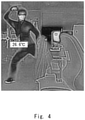
- Fig. 4 shows an example of the temperature detection information acquired by the second acquisition unit.
- Fig. 4 shows an image in which the higher the temperature is, the darker the color becomes.
- the temperature detection information is temperature distribution information of objects present inside the room R.
- the temperature distribution information includes, for example, position information inside the room R.
- the second acquisition unit 3 includes, for example, an infrared camera, and is fixed to an upper part of the room R so as to look down on the room R, as shown in Fig. 1 .
- the detection range of the second acquisition unit 3 is, for example, an almost entire region of the room R.
- a fixed position and the detection range of the second acquisition unit 3 may be a fixed position and a detection range, respectively, which enable the second acquisition unit 1 to detect a person(s) present inside the room R.
- the second acquisition unit 3 is not limited to a configuration in which the second acquisition unit 3 includes an infrared camera, and instead may be configured to acquire the temperature detection information from an infrared camera provided outside the second acquisition unit 3. That is, the second acquisition unit 3 may function as an input unit of the temperature detection information.
- the differentiation unit 4 differentiates whether an object inside the room R is a person or another object based on the radar detection information and the temperature detection information.
- the differentiation unit 4 which will be described later in detail, differentiates a person and another object based on the temperature distribution in the area corresponding to the area in which the object is indicated by the radar detection information in the temperature detection information.
- the control unit 5 controls the electric device disposed inside the room R based on a result of the differentiation.
- the control unit 5 controls, for example, a microphone 6 as the electric device.
- the microphone 6 is, for example, a directional microphone and, as shown in Fig. 1 , is disposed inside the room R so as to operate other electric devices such as an air conditioner based on a voice collected from the microphone 6.
- the microphone 6 is configured to change the direction. However, the microphone 6 only needs to be capable of collecting voices, and the use of the collected voice is not limited.
- FIG. 5 is a flowchart showing a flow of controlling a microphone using the control system according to this embodiment.
- the differentiation unit 4 acquires the radar detection information inside the room R via the first acquisition unit 2, and acquires the temperature detection information inside the room R via the second acquisition unit 3 (S1). At this time, the radar detection information and the temperature detection information have the position information of the object of the world coordinate system inside the room R.
- the differentiation unit 4 differentiates a person and another object based on the temperature distribution in the area corresponding to the area in which the object is indicated by the radar detection information in the temperature detection information (S2). Since radar waves are reflected by water or metal, the acquired point group information is not information that enables accurate differentiation of a person and another object. Approximate image and shape can be acquired from the point group information, but the acquired point group information is not at a level that enables identification of an individual such as a person face. On the other hand, in regard to the temperature distribution indicated by the temperature detection information, the temperature distribution of a person differs from that of another object.
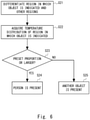
- Fig. 6 is a flowchart showing a flow of differentiating a person and another object in the differentiation unit according to this embodiment.
- the differentiation unit 4 differentiates, for example, a region in which an object present inside the room R is indicated and other regions based on the radar detection information (S21). Then, the differentiation unit 4 acquires a temperature distribution in the region corresponding to a region in which the object is indicated by the radar detection information in the temperature detection information (S22).
- the differentiation unit 4 may acquire the temperature distribution in the area corresponding to the area in which the object is indicated by the radar detection information in the temperature detection information based on the position information in the point group information which is the radar detection information and the position information in the temperature distribution information which is the temperature detection information.
- the differentiation unit 4 acquires the temperature distribution in each of the regions corresponding to the region in which each of the objects is indicated in the temperature detection information.
- the differentiation unit 4 determines, based on the temperature distribution in the region in which the object is indicated by the radar detection information in the temperature detection information, whether or not an area of the region in which the object is indicated by the radar detection information in the temperature detection information having a preset temperature or higher is larger than or equal to a preset proportion of the area of the region in which the object is indicated (S23).
- the differentiation unit 4 determines that a person is present in the area in which the determination is made (S24). On the contrary, when the area having the preset temperature or higher is less than the the preset proportion of the area in which the object is indicated (NO in S23), the differentiation unit 4 determines that another object is present in the area in which the determination is made (S25). In this manner, the differentiation unit 4 differentiates whether the object of the radar detection information is a person or another object.
- the preset temperature and proportion can be set appropriately, for example, to 35 °C and 70%, respectively.
- learning may be performed so that the correct result of the differentiation between the person and the other object can be obtained.
- the radar detection information indicating the person and the radar detection information indicating another object may be supervised learning using the radar detection information indicating the person and the radar detection information indicating another object as the input information, and using differentiation result information indicating whether the object present in the area in which the object is indicated by the radar detection information is the person or the other object as the output information, learning may be performed so that the correct result of the differentiation between the person and the other object can be obtained, and then the area in which the other object is clearly indicated in the radeter detection information may be filtered.
- the area in which the person is indicated by the radar detection information may be extracted, and the differentiation between the person and the other object may be performed based on the temperature distribution in the area corresponding to the extracted area of the radar detection information in the temperature detection information. By doing so, an amount of calculation can be reduced.
- the differentiation unit 4 may perform learning by supervised learning using, as the input information, information about a change in the temperature distribution of the other object in time series, the temperature detection information of the person, and the physical constitution information of the person, and as the output information, the differentiation result information indicating whether the object is the person or the object, so that the correct result of differentiation between the person and the other object can be obtained. Then, based on a result of the learning, the differentiation unit 4 may differentiate whether the object present in the region corresponding to the region in which the object is indicated by the radar detection information in the temperature detection information is a person or another object. At this time, since the radar waves reflected from a person differs from the radar waves reflected from an object, the learning accuracy can be improved if radar intensity information of the radar detection information is also used as the input information.
- control unit 5 controls the microphone 6 so that the direction of the microphone 6 (namely, a sound collecting direction of the microphone 6) is directed toward the differentiated person based on information indicating the result of the differentiation and position information of at least one of the position information in the point group information which is the radar detection information and the position information in the temperature distribution information which is the temperature detection information (S3).
- the control system 1 and the control method according to this embodiment differentiate a person and another object using the radar detection information which enables detection of the object without identifying an individual, and the temperature detection information which makes a difference between the person and the other object without identifying the individual. Therefore, the control system 1 and the control method according to this embodiment can accurately differentiate the person and the other object while protecting privacy, and as a result, the direction of the microphone 6 toward the person can be controlled with high accuracy. Note that it is only necessary to differentiate whether the object indicated by the radar detection information is a person or another object based on the radar detection information and the temperature detection information, and the method is not limited to the above-described method.
- Fig. 7 is a block diagram showing a configuration of a control system according to this embodiment. Since a control system 21 shown in Fig. 7 has substantially the same configuration as that of the control system 1 according to the first embodiment, except that the control system 21 controls a mobile body 22 in place of the microphone 6, the repeated description is omitted.
- the mobile body 22 is, for example, an autonomous mobile robot that moves inside the room R and can communicate with a control unit 23 of a control system 21. Then, the control unit 23 of the control system 21 controls the mobile body 22 so as to avoid the person based on information indicating a result of the differentiation and position information of at least one of the position information in the point group information which is the radar detection information and the position information in the temperature distribution information which is the temperature detection information.
- the mobile body 22 may be a robot or the like which operates based on instruction information from the outside.
- Fig. 8 is a block diagram showing a configuration of a control system according to this embodiment. Since a control system 31 shown in Fig. 8 has substantially the same configuration as that of the control system 1 according the first embodiment, except that the control system 31 controls an air conditioner 32 in place of the microphone 6, the repeated description is omitted.
- the air conditioner 32 is, for example, an air conditioner installed in the room R and can communicate with a control unit 33 of the control system 31. Then, the control unit 33 of the control system 31 controls the air conditioner 32 so that a wind direction of the air conditioner 32 is directed to the differentiated person based on information indicating the result of the differentiation and position information of one of the position information in the point group information which is the radar detection information and the position information in the temperature distribution information which is the temperature detection information.
- the air conditioner 32 can be operated efficiently, and power consumption can be reduced.
- Fig. 9 is a block diagram showing a configuration of a control system according to this embodiment. Since a control system 41 shown in Fig. 9 has substantially the same configuration as that of the control system 1 according the first embodiment, except that the control system 41 controls an electric device 42, the repeated description is omitted.
- the electric device 42 is, for example, an device operated by electric power such as the microphone 6, the mobile body 22, or the air conditioner 32 disposed inside the room R, and can communicate with the control unit 43 of the control system 41.
- the control unit 43 of the control system 41 determines that there is no person inside the room R based on the information indicating the result of the differentiation, it controls the power supply of the electric device 42 to be OFF.
- the present disclosure has been described as a hardware configuration, but the present disclosure is not limited to this.
- the present disclosure may also be implemented by causing a CPU (Central Processing Unit) to execute a computer program to process processing of each component.
- a CPU Central Processing Unit
- control system may include the following hardware configuration.
- Fig. 10 shows an example of the hardware configuration included in the control system.
- An apparatus 51 shown in Fig. 10 includes an interface 52, a processor 53, and a memory 54.
- the control system described in the above embodiment is implemented by the processor 53 reading and executing a program stored in the memory 54. That is, this program is a program for causing the processor 53 to function as the control system according to the above-described embodiments.
- Non-transitory computer readable media include any type of tangible storage media.
- Examples of non-transitory computer readable media include magnetic storage media (such as floppy disks, magnetic tapes, hard disk drives, etc.), optical magnetic storage media (e.g. magneto-optical disks).
- Examples of non-transitory computer readable media further include CD-ROM (Read Only Memory), CD-R, CD-R/W.
- Examples of non-transitory computer readable media further include semiconductor memories (such as mask ROM, PROM, EPROM, flash ROM, RAM, etc.).
- the program may be provided to a computer using any type of transitory computer readable media. Examples of transitory computer readable media include electric signals, optical signals, and electromagnetic waves. Transitory computer readable media can provide the program to a computer via a wired communication line (e.g. electric wires, and optical fibers) or a wireless communication line.
Landscapes
- Engineering & Computer Science (AREA)
- Physics & Mathematics (AREA)
- Radar, Positioning & Navigation (AREA)
- Remote Sensing (AREA)
- General Physics & Mathematics (AREA)
- Acoustics & Sound (AREA)
- Computer Networks & Wireless Communication (AREA)
- Signal Processing (AREA)
- Health & Medical Sciences (AREA)
- Otolaryngology (AREA)
- Spectroscopy & Molecular Physics (AREA)
- General Engineering & Computer Science (AREA)
- Automation & Control Theory (AREA)
- Air Conditioning Control Device (AREA)
- Radiation Pyrometers (AREA)
- Geophysics And Detection Of Objects (AREA)
- Radar Systems Or Details Thereof (AREA)
Abstract
A control system which can accurately differentiate a person from another object while protecting privacy is provided. A control system (1) according to an embodiment of the present disclosure includes a first acquisition unit (2) configured to acquire radar detection information with a detection range being set within a predetermined environment; a second acquisition unit (3) configured to acquire temperature detection information with the detection range being set within the environment; a differentiation unit (4) configured to differentiate whether an object in the environment is a person or another object based on the radar detection information and the temperature detection information; and a control unit (5) configured to control an electric device disposed in the environment based on differentiation result information of whether the object is the person or the other obj ect.
Description
- The present disclosure relates to a control system, a control method, and a control program.
- Recently, a technique for controlling an electric device disposed in a predetermined environment based on the presence of a person in the environment has been put into practical use. As disclosed in
Japanese Unexamined Patent Application Publication No. 2017-16610 - The applicant has found the following problem. In
Japanese Unexamined Patent Application Publication No. 2017-16610 - The present disclosure has been made in view of such a problem, and achieves a control system, a control method, and a control program which can accurately differentiate a person and another object while protecting privacy.
- An aspect of the present disclosure is a control system including:
- a first acquisition unit configured to acquire radar detection information with a detection range being set within a predetermined environment;
- a second acquisition unit configured to acquire temperature detection information with the detection range being set within the environment;
- a differentiation unit configured to differentiate whether an object in the environment is a person or another object based on the radar detection information and the temperature detection information; and
- a control unit configured to control an electric device disposed in the environment based on differentiation result information of whether the object is the person or the other object.
- In this manner, a person and another object are differentiated using the radar detection information which enables detection of the object without identifying an individual, and the temperature detection information which makes a difference between the person and the other object without identifying the individual. It is thus possible to accurately differentiate a person and another object while protecting privacy.
- In the above control system, the differentiation unit is preferably configured to differentiate the person and the other object based on a temperature distribution in a region corresponding to a region in which the object is indicated by the radar detection information in the temperature detection information.
- In the above control system, the differentiation unit is preferably configured to perform learning so that a correct result of the differentiation between the person and the other object can be obtained by supervised learning using, as input information, information about a change in the temperature distribution of the other object in time series, temperature detection information of the person, and physical constitution information of the person, and as output information, differentiation result information of whether the object is the person or the other object.
- In the above control system, the electric device is preferably a microphone, and
the control unit is preferably configured to control the microphone so that a sound collecting direction of the microphone is directed toward the differentiated person. - In the above control system, the electric device is preferably a mobile body, and
the control unit is preferably configured to control the mobile body to avoid the differentiated person. - In the above control system,
the electric device is preferably an air conditioner, and
the control unit is preferably configured to control the air conditioner so that a wind direction of the air conditioner is directed to the differentiated person. - In the above control system,
the control unit is preferably configured to turn off power of the electric device when it is determined there is no person in the environment based on the differentiation result information. - Another aspect of the present disclosure is a control method including:
- acquiring radar detection information with a detection range being set within a predetermined environment;
- acquiring temperature detection information with the detection range being set within the environment;
- differentiating whether an object in the environment is a person or another object based on the radar detection information and the temperature detection information; and
- controlling an electric device disposed in the environment based on differentiation result information of whether the object is the person or the other obj ect.
- In this manner, a person and another object are differentiated using the radar detection information which enables detection of the object without identifying an individual, and the temperature detection information which makes a difference between the person and the other object without identifying the individual. It is thus possible to accurately differentiate a person and another object while protecting privacy.
- Another aspect of the present disclosure is a control program causing a computer to execute:
- a process of acquiring radar detection information with a detection range being set within a predetermined environment;
- a process of acquiring temperature detection information with the detection range being set within the environment;
- a process of differentiating whether an object in the environment is a person or another object based on the radar detection information and the temperature detection information; and
- a process of controlling an electric device disposed in the environment based on differentiation result information of whether the object is the person or the other obj ect.
- In this manner, a person and another object are differentiated using the radar detection information which enables detection of the object without identifying an individual, and the temperature detection information which makes a difference between the person and the other object without identifying the individual. It is thus possible to accurately differentiate a person and another object while protecting privacy.
- According to the present disclosure, it is possible to achieve a control system, a control method, and a control program which can accurately differentiate a person and another object while protecting privacy.
- The above and other objects, features and advantages of the present disclosure will become more fully understood from the detailed description given hereinbelow and the accompanying drawings which are given by way of illustration only, and thus are not to be considered as limiting the present disclosure.
-
-
Fig. 1 shows a state in which a control system according to a first embodiment is used; -
Fig. 2 is a block diagram showing a configuration of the control system according to the first embodiment; -
Fig. 3 shows an example of point group information acquired by a first acquisition unit; -
Fig. 4 shows an example of temperature detection information acquired by a second acquisition unit; -
Fig. 5 is a flowchart showing a flow of controlling a microphone using the control system according to the first embodiment; -
Fig. 6 is a flowchart showing a flow of differentiating a person and another object in an differentiation unit according to the first embodiment; -
Fig. 7 is a block diagram showing a configuration of a control system according to a second embodiment; -
Fig. 8 is a block diagram showing a configuration of a control system according to a third embodiment; -
Fig. 9 is a block diagram showing a configuration of a control system according to a fourth embodiment; and -
Fig. 10 shows an example of a hardware configuration included in a control system. - Hereinafter, a specific embodiment to which the present disclosure is applied will be described in detail with reference to the drawings. However, the present disclosure is not limited to the following embodiments. In order to clarify the description, the following description and drawings are appropriately simplified.
- First, a configuration of a control system according to this embodiment will be described.
Fig. 1 shows a state in which a control system according to this embodiment is used.Fig. 2 is a block diagram showing a configuration of the control system according to this embodiment. - As shown in
Fig. 1 , for example, acontrol system 1 according to this embodiment is suitable for a room R of a house as a predetermined environment. However, thecontrol system 1 can be applied not only to a house but also to a facility where persons do activities. - As shown in
Figs. 1 and2 , thecontrol system 1 includes afirst acquisition unit 2, asecond acquisition unit 3, andifferentiation unit 4, and acontrol unit 5. Thefirst acquisition unit 2 acquires radar detection information, the inside of a room R being set as a detection range.Fig. 3 shows an example of point group information acquired by the first acquisition unit. As shown inFig. 3 , the radar detection information is the point group information based on reflected waves from an object present inside the room R. The point group information includes, for example, position information of a world coordinate system inside the room R. - The
first acquisition unit 2 includes, for example, a radar sensor, and is fixed to an upper part of the room R so as to look down on the room R, as shown inFig. 1 . The detection range of thefirst acquisition unit 2 is, for example, an almost entire region of the room R. - However, a fixed position and the detection range of the
first acquisition unit 2 may be a fixed position and a detection range, respectively, which enable thefirst acquisition unit 1 to detect a person(s) present inside the room R. Thefirst acquisition unit 2 is not limited to a configuration in which thefirst acquisition unit 2 includes the radar sensor, and instead may be configured to acquire the radar detection information from a radar sensor provided outside thefirst acquisition unit 2. That is, thefirst acquisition unit 2 may function as an input unit of the radar detection information. - The
second acquisition unit 3 acquires temperature detection information, the inside of the room R being set as the detection range.Fig. 4 shows an example of the temperature detection information acquired by the second acquisition unit.Fig. 4 shows an image in which the higher the temperature is, the darker the color becomes. As shown inFig. 4 , the temperature detection information is temperature distribution information of objects present inside the room R. The temperature distribution information includes, for example, position information inside the room R. - The
second acquisition unit 3 includes, for example, an infrared camera, and is fixed to an upper part of the room R so as to look down on the room R, as shown inFig. 1 . The detection range of thesecond acquisition unit 3 is, for example, an almost entire region of the room R. - However, a fixed position and the detection range of the
second acquisition unit 3 may be a fixed position and a detection range, respectively, which enable thesecond acquisition unit 1 to detect a person(s) present inside the room R. Thesecond acquisition unit 3 is not limited to a configuration in which thesecond acquisition unit 3 includes an infrared camera, and instead may be configured to acquire the temperature detection information from an infrared camera provided outside thesecond acquisition unit 3. That is, thesecond acquisition unit 3 may function as an input unit of the temperature detection information. - The
differentiation unit 4 differentiates whether an object inside the room R is a person or another object based on the radar detection information and the temperature detection information. Thedifferentiation unit 4, which will be described later in detail, differentiates a person and another object based on the temperature distribution in the area corresponding to the area in which the object is indicated by the radar detection information in the temperature detection information. - The
control unit 5 controls the electric device disposed inside the room R based on a result of the differentiation. Thecontrol unit 5 controls, for example, amicrophone 6 as the electric device. Themicrophone 6 is, for example, a directional microphone and, as shown inFig. 1 , is disposed inside the room R so as to operate other electric devices such as an air conditioner based on a voice collected from themicrophone 6. Themicrophone 6 is configured to change the direction. However, themicrophone 6 only needs to be capable of collecting voices, and the use of the collected voice is not limited. - Next, a flow of controlling the
microphone 6 using thecontrol system 1 according to this embodiment will be described.Fig. 5 is a flowchart showing a flow of controlling a microphone using the control system according to this embodiment. - First, the
differentiation unit 4 acquires the radar detection information inside the room R via thefirst acquisition unit 2, and acquires the temperature detection information inside the room R via the second acquisition unit 3 (S1). At this time, the radar detection information and the temperature detection information have the position information of the object of the world coordinate system inside the room R. - Next, as described above, the
differentiation unit 4 differentiates a person and another object based on the temperature distribution in the area corresponding to the area in which the object is indicated by the radar detection information in the temperature detection information (S2). Since radar waves are reflected by water or metal, the acquired point group information is not information that enables accurate differentiation of a person and another object. Approximate image and shape can be acquired from the point group information, but the acquired point group information is not at a level that enables identification of an individual such as a person face. On the other hand, in regard to the temperature distribution indicated by the temperature detection information, the temperature distribution of a person differs from that of another object. -
Fig. 6 is a flowchart showing a flow of differentiating a person and another object in the differentiation unit according to this embodiment. Thedifferentiation unit 4 differentiates, for example, a region in which an object present inside the room R is indicated and other regions based on the radar detection information (S21). Then, thedifferentiation unit 4 acquires a temperature distribution in the region corresponding to a region in which the object is indicated by the radar detection information in the temperature detection information (S22). - At this time, the
differentiation unit 4 may acquire the temperature distribution in the area corresponding to the area in which the object is indicated by the radar detection information in the temperature detection information based on the position information in the point group information which is the radar detection information and the position information in the temperature distribution information which is the temperature detection information. When there are a plurality of regions in which the objects are indicated, thedifferentiation unit 4 acquires the temperature distribution in each of the regions corresponding to the region in which each of the objects is indicated in the temperature detection information. - Furthermore, the
differentiation unit 4 determines, based on the temperature distribution in the region in which the object is indicated by the radar detection information in the temperature detection information, whether or not an area of the region in which the object is indicated by the radar detection information in the temperature detection information having a preset temperature or higher is larger than or equal to a preset proportion of the area of the region in which the object is indicated (S23). - If the area having the preset temperature or higher is larger than or equal to the preset proportion of the area in which the object is indicated (YES in S23), the
differentiation unit 4 determines that a person is present in the area in which the determination is made (S24). On the contrary, when the area having the preset temperature or higher is less than the the preset proportion of the area in which the object is indicated (NO in S23), thedifferentiation unit 4 determines that another object is present in the area in which the determination is made (S25). In this manner, thedifferentiation unit 4 differentiates whether the object of the radar detection information is a person or another object. - The preset temperature and proportion can be set appropriately, for example, to 35 °C and 70%, respectively. In addition, by supervised learning using the temperature detection information of the person and physical constitution information of the person as input information and the temperature and the proportion to be set as output information, learning may be performed so that the correct result of the differentiation between the person and the other object can be obtained.
- Here, by supervised learning using the radar detection information indicating the person and the radar detection information indicating another object as the input information, and using differentiation result information indicating whether the object present in the area in which the object is indicated by the radar detection information is the person or the other object as the output information, learning may be performed so that the correct result of the differentiation between the person and the other object can be obtained, and then the area in which the other object is clearly indicated in the radeter detection information may be filtered. Alternatively, the area in which the person is indicated by the radar detection information may be extracted, and the differentiation between the person and the other object may be performed based on the temperature distribution in the area corresponding to the extracted area of the radar detection information in the temperature detection information. By doing so, an amount of calculation can be reduced.
- However, the
differentiation unit 4 may perform learning by supervised learning using, as the input information, information about a change in the temperature distribution of the other object in time series, the temperature detection information of the person, and the physical constitution information of the person, and as the output information, the differentiation result information indicating whether the object is the person or the object, so that the correct result of differentiation between the person and the other object can be obtained. Then, based on a result of the learning, thedifferentiation unit 4 may differentiate whether the object present in the region corresponding to the region in which the object is indicated by the radar detection information in the temperature detection information is a person or another object. At this time, since the radar waves reflected from a person differs from the radar waves reflected from an object, the learning accuracy can be improved if radar intensity information of the radar detection information is also used as the input information. - Next, the
control unit 5 controls themicrophone 6 so that the direction of the microphone 6 (namely, a sound collecting direction of the microphone 6) is directed toward the differentiated person based on information indicating the result of the differentiation and position information of at least one of the position information in the point group information which is the radar detection information and the position information in the temperature distribution information which is the temperature detection information (S3). - As described above, the
control system 1 and the control method according to this embodiment differentiate a person and another object using the radar detection information which enables detection of the object without identifying an individual, and the temperature detection information which makes a difference between the person and the other object without identifying the individual. Therefore, thecontrol system 1 and the control method according to this embodiment can accurately differentiate the person and the other object while protecting privacy, and as a result, the direction of themicrophone 6 toward the person can be controlled with high accuracy. Note that it is only necessary to differentiate whether the object indicated by the radar detection information is a person or another object based on the radar detection information and the temperature detection information, and the method is not limited to the above-described method. -
Fig. 7 is a block diagram showing a configuration of a control system according to this embodiment. Since acontrol system 21 shown inFig. 7 has substantially the same configuration as that of thecontrol system 1 according to the first embodiment, except that thecontrol system 21 controls amobile body 22 in place of themicrophone 6, the repeated description is omitted. - The
mobile body 22 is, for example, an autonomous mobile robot that moves inside the room R and can communicate with acontrol unit 23 of acontrol system 21. Then, thecontrol unit 23 of thecontrol system 21 controls themobile body 22 so as to avoid the person based on information indicating a result of the differentiation and position information of at least one of the position information in the point group information which is the radar detection information and the position information in the temperature distribution information which is the temperature detection information. - It is thus possible to accurately prevent the
mobile body 22 from being in contact with the person. Themobile body 22 may be a robot or the like which operates based on instruction information from the outside. -
Fig. 8 is a block diagram showing a configuration of a control system according to this embodiment. Since acontrol system 31 shown inFig. 8 has substantially the same configuration as that of thecontrol system 1 according the first embodiment, except that thecontrol system 31 controls anair conditioner 32 in place of themicrophone 6, the repeated description is omitted. - The
air conditioner 32 is, for example, an air conditioner installed in the room R and can communicate with acontrol unit 33 of thecontrol system 31. Then, thecontrol unit 33 of thecontrol system 31 controls theair conditioner 32 so that a wind direction of theair conditioner 32 is directed to the differentiated person based on information indicating the result of the differentiation and position information of one of the position information in the point group information which is the radar detection information and the position information in the temperature distribution information which is the temperature detection information. - By doing so, a place where a person is present inside the room R can be selectively heated or cooled. Therefore, the
air conditioner 32 can be operated efficiently, and power consumption can be reduced. -
Fig. 9 is a block diagram showing a configuration of a control system according to this embodiment. Since acontrol system 41 shown inFig. 9 has substantially the same configuration as that of thecontrol system 1 according the first embodiment, except that thecontrol system 41 controls anelectric device 42, the repeated description is omitted. - The
electric device 42 is, for example, an device operated by electric power such as themicrophone 6, themobile body 22, or theair conditioner 32 disposed inside the room R, and can communicate with thecontrol unit 43 of thecontrol system 41. When thecontrol unit 43 of thecontrol system 41 determines that there is no person inside the room R based on the information indicating the result of the differentiation, it controls the power supply of theelectric device 42 to be OFF. - By doing so, when there is no person present in the room R, it is possible to prevent forgetting to turn off the power of the
electric device 42, and thus power consumption of theelectric device 42 can be reduced. - In the first to fourth embodiments, the present disclosure has been described as a hardware configuration, but the present disclosure is not limited to this. The present disclosure may also be implemented by causing a CPU (Central Processing Unit) to execute a computer program to process processing of each component.
- For example, the control system according to the above embodiments may include the following hardware configuration.
Fig. 10 shows an example of the hardware configuration included in the control system. - An
apparatus 51 shown inFig. 10 includes aninterface 52, aprocessor 53, and amemory 54. The control system described in the above embodiment is implemented by theprocessor 53 reading and executing a program stored in thememory 54. That is, this program is a program for causing theprocessor 53 to function as the control system according to the above-described embodiments. - The above program can be stored and provided to a computer using any type of non-transitory computer readable media. Non-transitory computer readable media include any type of tangible storage media. Examples of non-transitory computer readable media include magnetic storage media (such as floppy disks, magnetic tapes, hard disk drives, etc.), optical magnetic storage media (e.g. magneto-optical disks). Examples of non-transitory computer readable media further include CD-ROM (Read Only Memory), CD-R, CD-R/W. Examples of non-transitory computer readable media further include semiconductor memories (such as mask ROM, PROM, EPROM, flash ROM, RAM, etc.). The program may be provided to a computer using any type of transitory computer readable media. Examples of transitory computer readable media include electric signals, optical signals, and electromagnetic waves. Transitory computer readable media can provide the program to a computer via a wired communication line (e.g. electric wires, and optical fibers) or a wireless communication line.
- The above embodiments are only an example of application of the technical idea obtained by the present inventor. That is, the technical idea is not limited to the above-described embodiments, and various modifications can be made, as a matter of course.
- From the disclosure thus described, it will be obvious that the embodiments of the disclosure may be varied in many ways. Such variations are not to be regarded as a departure from the spirit and scope of the disclosure, and all such modifications as would be obvious to one skilled in the art are intended for inclusion within the scope of the following claims.
Claims (9)
- A control system (1,21,31,41) comprising:a first acquisition unit (2) configured to acquire radar detection information with a detection range being set within a predetermined environment;a second acquisition unit (3) configured to acquire temperature detection information with the detection range being set within the environment;a differentiation unit (4) configured to differentiate whether an object in the environment is a person or another object based on the radar detection information and the temperature detection information; anda control unit (5,23,33,43) configured to control an electric device disposed in the environment based on differentiation result information of whether the object is the person or the other object.
- The control system (1,21,31,41) according to Claim 1, wherein
the differentiation unit (4) is configured to differentiate the person and the other object based on a temperature distribution in a region corresponding to a region in which the object is indicated by the radar detection information in the temperature detection information. - The control system (1,21,31,41) according to Claim 2, wherein the
the differentiation unit (4) is configured to perform learning so that a correct result of the differentiation between the person and the other object can be obtained by supervised learning using, as input information, information about a change in the temperature distribution of the other object in time series, temperature detection information of the person, and physical constitution information of the person, and as output information, differentiation result information of whether the object is the person or the other object. - The control system (1) according to any one of Claims 1 to 3, wherein
the electric device is a microphone (6), and
the control unit is (5) configured to control the microphone (6) so that a sound collecting direction of the microphone (6) is directed toward the differentiated person. - The control system (21) according to any one of Claims 1 to 3, wherein
the electric device is a mobile body (22), and
the control unit (23) is configured to control the mobile body (22) to avoid the differentiated person. - The control system (31) according to any one of Claims 1 to 3, wherein
the electric device is an air conditioner (32), and
the control unit (33) is configured to control the air conditioner (32) so that a wind direction of the air conditioner (32) is directed to the differentiated person. - The control system (41) according to any one of Claims 1 to 6, wherein
the control unit (43) is configured to turn off power of the electric device (42) when it is determined there is no person in the environment based on the differentiation result information. - A control method comprising:acquiring radar detection information with a detection range being set within a predetermined environment;acquiring temperature detection information with the detection range being set within the environment;differentiating whether an object in the environment is a person or another object based on the radar detection information and the temperature detection information; andcontrolling an electric device disposed in the environment based on differentiation result information of whether the object is the person or the other obj ect.
- A control program causing a computer to execute:a process of acquiring radar detection information with a detection range being set within a predetermined environment;a process of acquiring temperature detection information with the detection range being set within the environment;a process of differentiating whether an object in the environment is a person or another object based on the radar detection information and the temperature detection information; anda process of controlling an electric device disposed in the environment based on differentiation result information of whether the object is the person or the other object.
Applications Claiming Priority (1)
| Application Number | Priority Date | Filing Date | Title |
|---|---|---|---|
| JP2020126214A JP7334689B2 (en) | 2020-07-27 | 2020-07-27 | Control system, control method and control program |
Publications (1)
| Publication Number | Publication Date |
|---|---|
| EP3945377A1 true EP3945377A1 (en) | 2022-02-02 |
Family
ID=77103853
Family Applications (1)
| Application Number | Title | Priority Date | Filing Date |
|---|---|---|---|
| EP21187962.2A Withdrawn EP3945377A1 (en) | 2020-07-27 | 2021-07-27 | Control system, control method and control program |
Country Status (4)
| Country | Link |
|---|---|
| US (1) | US20220026529A1 (en) |
| EP (1) | EP3945377A1 (en) |
| JP (1) | JP7334689B2 (en) |
| CN (1) | CN113984105A (en) |
Families Citing this family (2)
| Publication number | Priority date | Publication date | Assignee | Title |
|---|---|---|---|---|
| CN115218399A (en) * | 2022-06-22 | 2022-10-21 | 青岛海尔空调器有限总公司 | Control method and device of indoor unit and air conditioner |
| CN115774148A (en) * | 2023-01-10 | 2023-03-10 | 国网江苏省电力有限公司营销服务中心 | An online monitoring device and method for the operating environment of an electric energy metering device |
Citations (4)
| Publication number | Priority date | Publication date | Assignee | Title |
|---|---|---|---|---|
| JP2017016610A (en) | 2015-07-06 | 2017-01-19 | 有限会社セルフ | Integrated watching and security liaison device for dwellers and the like and equipment and the like of collective residential facilities |
| US20170329449A1 (en) * | 2016-05-13 | 2017-11-16 | Google Inc. | Systems, Methods, and Devices for Utilizing Radar-Based Touch Interfaces |
| EP3285160A1 (en) * | 2016-08-19 | 2018-02-21 | Otis Elevator Company | Intention recognition for triggering voice recognition system |
| US20190041822A1 (en) * | 2017-05-10 | 2019-02-07 | Katerra, Inc. | Method and apparatus for real property monitoring and control system |
Family Cites Families (27)
| Publication number | Priority date | Publication date | Assignee | Title |
|---|---|---|---|---|
| JPS6010240B2 (en) * | 1977-08-15 | 1985-03-15 | 株式会社日立製作所 | Robot collision prevention control method |
| JPH0728488A (en) * | 1993-06-24 | 1995-01-31 | Canon Inc | Information processing method and device |
| JPH10142351A (en) * | 1996-11-08 | 1998-05-29 | Matsushita Seiko Co Ltd | Human sensor |
| JP2003302470A (en) | 2002-04-05 | 2003-10-24 | Sogo Jidosha Anzen Kogai Gijutsu Kenkyu Kumiai | Pedestrian detection device and pedestrian detection method |
| JP4261321B2 (en) | 2003-11-26 | 2009-04-30 | アルパイン株式会社 | Pedestrian detection device |
| JP4655572B2 (en) * | 2004-03-25 | 2011-03-23 | 日本電気株式会社 | Signal processing method, signal processing apparatus, and robot |
| US8063375B2 (en) | 2007-06-22 | 2011-11-22 | Intel-Ge Care Innovations Llc | Sensible motion detector |
| JP2010050571A (en) | 2008-08-19 | 2010-03-04 | Yamaha Corp | Sound pickup device |
| JP2010250516A (en) * | 2009-04-15 | 2010-11-04 | Nec Access Technica Ltd | Monitoring system, monitoring method, monitoring camera device, central monitoring device, and program |
| JP2011061461A (en) * | 2009-09-09 | 2011-03-24 | Sony Corp | Imaging apparatus, directivity control method, and program therefor |
| CN102323822B (en) * | 2011-05-09 | 2013-07-03 | 无锡引域智能机器人有限公司 | Method for preventing industrial robot from colliding with worker |
| KR20130056655A (en) * | 2011-11-22 | 2013-05-30 | 주식회사 케이엔소프트 | A counter moving method for collision avoidance of unmanned automatic vehicle |
| JP6017913B2 (en) * | 2012-10-10 | 2016-11-02 | 株式会社東芝 | Electronic apparatus and operation control method |
| MY182329A (en) * | 2013-05-17 | 2021-01-19 | Panasonic Ip Corp America | Thermal image sensor and user interface |
| JP6568385B2 (en) | 2015-04-15 | 2019-08-28 | アズビル株式会社 | Air conditioning controller |
| EP3529788B1 (en) * | 2016-10-24 | 2020-07-22 | Signify Holding B.V. | Presence detection system and method |
| CN106996621A (en) * | 2017-04-10 | 2017-08-01 | 盐城师范学院 | Intelligent air condition control device and control method based on infrared acquisition |
| JP7011910B2 (en) * | 2017-09-01 | 2022-01-27 | 川崎重工業株式会社 | Robot system |
| JP2019052889A (en) | 2017-09-13 | 2019-04-04 | サクサ株式会社 | Image processor |
| KR102426171B1 (en) * | 2017-10-13 | 2022-07-29 | 현대자동차주식회사 | Dialogue processing apparatus, vehicle having the same and dialogue service processing method |
| JP6804099B2 (en) | 2018-02-20 | 2020-12-23 | 伸和コントロールズ株式会社 | Condition monitoring device |
| DE102019100766A1 (en) * | 2018-08-07 | 2020-02-13 | Still Gmbh | Remote-controlled industrial truck |
| TWI699120B (en) * | 2019-04-30 | 2020-07-11 | 陳筱涵 | Conference recording system and conference recording method |
| WO2021006303A1 (en) * | 2019-07-10 | 2021-01-14 | 日本電気株式会社 | Translation system, translation device, translation method, and translation program |
| KR20210045022A (en) * | 2019-10-16 | 2021-04-26 | 네이버 주식회사 | Method and system for controlling robot using recognized personal space associated with human |
| KR102388782B1 (en) * | 2019-12-05 | 2022-04-20 | 부산대학교 산학협력단 | System and Method for Deep Learning Based Object Detection Using PIR Sensor |
| US11625828B2 (en) * | 2020-03-17 | 2023-04-11 | Seek Thermal, Inc. | Cost effective, mass producible system for rapid detection of fever conditions based on thermal imaging |
-
2020
- 2020-07-27 JP JP2020126214A patent/JP7334689B2/en active Active
-
2021
- 2021-07-21 US US17/381,684 patent/US20220026529A1/en not_active Abandoned
- 2021-07-23 CN CN202110836184.5A patent/CN113984105A/en active Pending
- 2021-07-27 EP EP21187962.2A patent/EP3945377A1/en not_active Withdrawn
Patent Citations (4)
| Publication number | Priority date | Publication date | Assignee | Title |
|---|---|---|---|---|
| JP2017016610A (en) | 2015-07-06 | 2017-01-19 | 有限会社セルフ | Integrated watching and security liaison device for dwellers and the like and equipment and the like of collective residential facilities |
| US20170329449A1 (en) * | 2016-05-13 | 2017-11-16 | Google Inc. | Systems, Methods, and Devices for Utilizing Radar-Based Touch Interfaces |
| EP3285160A1 (en) * | 2016-08-19 | 2018-02-21 | Otis Elevator Company | Intention recognition for triggering voice recognition system |
| US20190041822A1 (en) * | 2017-05-10 | 2019-02-07 | Katerra, Inc. | Method and apparatus for real property monitoring and control system |
Also Published As
| Publication number | Publication date |
|---|---|
| US20220026529A1 (en) | 2022-01-27 |
| CN113984105A (en) | 2022-01-28 |
| JP7334689B2 (en) | 2023-08-29 |
| JP2022023342A (en) | 2022-02-08 |
Similar Documents
| Publication | Publication Date | Title |
|---|---|---|
| US20200357125A1 (en) | Systems and methods for user detection, identification, and localization within a defined space | |
| CN105184325B (en) | Mobile intelligent terminal | |
| US11217246B2 (en) | Communication robot and method for operating the same | |
| EP3945377A1 (en) | Control system, control method and control program | |
| WO2017133453A1 (en) | Method and system for tracking moving body | |
| US10659670B2 (en) | Monitoring system and control method thereof | |
| JP6689566B2 (en) | Security system and security method | |
| JP2017512991A (en) | Target object detection method, detection apparatus, and robot | |
| JP2018061114A (en) | Monitoring device and monitoring method | |
| CN108724178B (en) | Method and device for autonomous following of specific person, robot, device and storage medium | |
| WO2020250082A1 (en) | Information processing device which performs actions depending on user's emotions | |
| EP2031865A2 (en) | Image input apparatus, and image input method | |
| JP5336896B2 (en) | Objective behavior estimation apparatus and service providing system | |
| CN110139037A (en) | Object monitoring method and device, storage medium and electronic equipment | |
| KR102051016B1 (en) | Server and method for controlling learning-based speech recognition apparatus | |
| KR20180057839A (en) | Intelligent robot capable of human recognition and operation method thereof | |
| JP6332128B2 (en) | Object recognition apparatus and object recognition method | |
| CN118269102A (en) | Artificial intelligent robot attitude control method and system | |
| US10690466B2 (en) | Mobile correctional facility robots | |
| KR20120016889A (en) | Visitor Counting System and Method | |
| KR102772458B1 (en) | Method for preventing collision between human and robot in realtime and system for preventing collision in realtime using the same | |
| KR101950721B1 (en) | Safety speaker with multiple AI module | |
| KR101520446B1 (en) | Monitoring system for prevention beating and cruel act | |
| Ciuffreda et al. | Validation and accuracy estimation of a novel measurement system based on a mobile robot for human detection in indoor environment | |
| Alqadri et al. | Lightweight YOLOv5-Based Algorithm to Detect Room Nameplates for Autonomous Smart Wheelchair |
Legal Events
| Date | Code | Title | Description |
|---|---|---|---|
| PUAI | Public reference made under article 153(3) epc to a published international application that has entered the european phase |
Free format text: ORIGINAL CODE: 0009012 |
|
| STAA | Information on the status of an ep patent application or granted ep patent |
Free format text: STATUS: REQUEST FOR EXAMINATION WAS MADE |
|
| 17P | Request for examination filed |
Effective date: 20210813 |
|
| AK | Designated contracting states |
Kind code of ref document: A1 Designated state(s): AL AT BE BG CH CY CZ DE DK EE ES FI FR GB GR HR HU IE IS IT LI LT LU LV MC MK MT NL NO PL PT RO RS SE SI SK SM TR |
|
| STAA | Information on the status of an ep patent application or granted ep patent |
Free format text: STATUS: THE APPLICATION HAS BEEN WITHDRAWN |
|
| 18W | Application withdrawn |
Effective date: 20230706 |