EP3944975B1 - Ultraviolet sterilization apparatus for a vehicle - Google Patents
Ultraviolet sterilization apparatus for a vehicle Download PDFInfo
- Publication number
- EP3944975B1 EP3944975B1 EP21185751.1A EP21185751A EP3944975B1 EP 3944975 B1 EP3944975 B1 EP 3944975B1 EP 21185751 A EP21185751 A EP 21185751A EP 3944975 B1 EP3944975 B1 EP 3944975B1
- Authority
- EP
- European Patent Office
- Prior art keywords
- state
- unit
- control unit
- vehicle
- driving
- Prior art date
- Legal status (The legal status is an assumption and is not a legal conclusion. Google has not performed a legal analysis and makes no representation as to the accuracy of the status listed.)
- Active
Links
Images


Classifications
-
- B—PERFORMING OPERATIONS; TRANSPORTING
- B60—VEHICLES IN GENERAL
- B60H—ARRANGEMENTS OF HEATING, COOLING, VENTILATING OR OTHER AIR-TREATING DEVICES SPECIALLY ADAPTED FOR PASSENGER OR GOODS SPACES OF VEHICLES
- B60H3/00—Other air-treating devices
- B60H3/0071—Electrically conditioning the air, e.g. by ionizing
- B60H3/0078—Electrically conditioning the air, e.g. by ionizing comprising electric purifying means
-
- A—HUMAN NECESSITIES
- A61—MEDICAL OR VETERINARY SCIENCE; HYGIENE
- A61L—METHODS OR APPARATUS FOR STERILISING MATERIALS OR OBJECTS IN GENERAL; DISINFECTION, STERILISATION OR DEODORISATION OF AIR; CHEMICAL ASPECTS OF BANDAGES, DRESSINGS, ABSORBENT PADS OR SURGICAL ARTICLES; MATERIALS FOR BANDAGES, DRESSINGS, ABSORBENT PADS OR SURGICAL ARTICLES
- A61L2/00—Disinfection or sterilisation of materials or objects, in general; Accessories therefor
- A61L2/02—Disinfection or sterilisation of materials or objects, in general; Accessories therefor using physical processes
- A61L2/08—Radiation
- A61L2/10—Ultraviolet [UV] radiation
-
- A—HUMAN NECESSITIES
- A61—MEDICAL OR VETERINARY SCIENCE; HYGIENE
- A61L—METHODS OR APPARATUS FOR STERILISING MATERIALS OR OBJECTS IN GENERAL; DISINFECTION, STERILISATION OR DEODORISATION OF AIR; CHEMICAL ASPECTS OF BANDAGES, DRESSINGS, ABSORBENT PADS OR SURGICAL ARTICLES; MATERIALS FOR BANDAGES, DRESSINGS, ABSORBENT PADS OR SURGICAL ARTICLES
- A61L2/00—Disinfection or sterilisation of materials or objects, in general; Accessories therefor
- A61L2/24—Apparatus using programmed or automatic operation
-
- A—HUMAN NECESSITIES
- A61—MEDICAL OR VETERINARY SCIENCE; HYGIENE
- A61L—METHODS OR APPARATUS FOR STERILISING MATERIALS OR OBJECTS IN GENERAL; DISINFECTION, STERILISATION OR DEODORISATION OF AIR; CHEMICAL ASPECTS OF BANDAGES, DRESSINGS, ABSORBENT PADS OR SURGICAL ARTICLES; MATERIALS FOR BANDAGES, DRESSINGS, ABSORBENT PADS OR SURGICAL ARTICLES
- A61L9/00—Disinfection, sterilisation or deodorisation of air
- A61L9/16—Disinfection, sterilisation or deodorisation of air using physical phenomena
- A61L9/18—Radiation
- A61L9/20—Ultraviolet radiation
-
- B—PERFORMING OPERATIONS; TRANSPORTING
- B60—VEHICLES IN GENERAL
- B60H—ARRANGEMENTS OF HEATING, COOLING, VENTILATING OR OTHER AIR-TREATING DEVICES SPECIALLY ADAPTED FOR PASSENGER OR GOODS SPACES OF VEHICLES
- B60H1/00—Heating, cooling or ventilating devices
- B60H1/00421—Driving arrangements for parts of a vehicle air-conditioning
- B60H1/00428—Driving arrangements for parts of a vehicle air-conditioning electric
-
- B—PERFORMING OPERATIONS; TRANSPORTING
- B60—VEHICLES IN GENERAL
- B60H—ARRANGEMENTS OF HEATING, COOLING, VENTILATING OR OTHER AIR-TREATING DEVICES SPECIALLY ADAPTED FOR PASSENGER OR GOODS SPACES OF VEHICLES
- B60H1/00—Heating, cooling or ventilating devices
- B60H1/00642—Control systems or circuits; Control members or indication devices for heating, cooling or ventilating devices
- B60H1/00735—Control systems or circuits characterised by their input, i.e. by the detection, measurement or calculation of particular conditions, e.g. signal treatment, dynamic models
- B60H1/00742—Control systems or circuits characterised by their input, i.e. by the detection, measurement or calculation of particular conditions, e.g. signal treatment, dynamic models by detection of the vehicle occupants' presence; by detection of conditions relating to the body of occupants, e.g. using radiant heat detectors
-
- B—PERFORMING OPERATIONS; TRANSPORTING
- B60—VEHICLES IN GENERAL
- B60H—ARRANGEMENTS OF HEATING, COOLING, VENTILATING OR OTHER AIR-TREATING DEVICES SPECIALLY ADAPTED FOR PASSENGER OR GOODS SPACES OF VEHICLES
- B60H1/00—Heating, cooling or ventilating devices
- B60H1/00642—Control systems or circuits; Control members or indication devices for heating, cooling or ventilating devices
- B60H1/00735—Control systems or circuits characterised by their input, i.e. by the detection, measurement or calculation of particular conditions, e.g. signal treatment, dynamic models
- B60H1/00764—Control systems or circuits characterised by their input, i.e. by the detection, measurement or calculation of particular conditions, e.g. signal treatment, dynamic models the input being a vehicle driving condition, e.g. speed
-
- B—PERFORMING OPERATIONS; TRANSPORTING
- B60—VEHICLES IN GENERAL
- B60H—ARRANGEMENTS OF HEATING, COOLING, VENTILATING OR OTHER AIR-TREATING DEVICES SPECIALLY ADAPTED FOR PASSENGER OR GOODS SPACES OF VEHICLES
- B60H1/00—Heating, cooling or ventilating devices
- B60H1/00642—Control systems or circuits; Control members or indication devices for heating, cooling or ventilating devices
- B60H1/00735—Control systems or circuits characterised by their input, i.e. by the detection, measurement or calculation of particular conditions, e.g. signal treatment, dynamic models
- B60H1/00785—Control systems or circuits characterised by their input, i.e. by the detection, measurement or calculation of particular conditions, e.g. signal treatment, dynamic models by the detection of humidity or frost
-
- B—PERFORMING OPERATIONS; TRANSPORTING
- B60—VEHICLES IN GENERAL
- B60H—ARRANGEMENTS OF HEATING, COOLING, VENTILATING OR OTHER AIR-TREATING DEVICES SPECIALLY ADAPTED FOR PASSENGER OR GOODS SPACES OF VEHICLES
- B60H1/00—Heating, cooling or ventilating devices
- B60H1/00642—Control systems or circuits; Control members or indication devices for heating, cooling or ventilating devices
- B60H1/00735—Control systems or circuits characterised by their input, i.e. by the detection, measurement or calculation of particular conditions, e.g. signal treatment, dynamic models
- B60H1/00807—Control systems or circuits characterised by their input, i.e. by the detection, measurement or calculation of particular conditions, e.g. signal treatment, dynamic models the input being a specific way of measuring or calculating an air or coolant temperature
-
- B—PERFORMING OPERATIONS; TRANSPORTING
- B60—VEHICLES IN GENERAL
- B60H—ARRANGEMENTS OF HEATING, COOLING, VENTILATING OR OTHER AIR-TREATING DEVICES SPECIALLY ADAPTED FOR PASSENGER OR GOODS SPACES OF VEHICLES
- B60H1/00—Heating, cooling or ventilating devices
- B60H1/00642—Control systems or circuits; Control members or indication devices for heating, cooling or ventilating devices
- B60H1/00985—Control systems or circuits characterised by display or indicating devices, e.g. voice simulators
-
- B—PERFORMING OPERATIONS; TRANSPORTING
- B60—VEHICLES IN GENERAL
- B60R—VEHICLES, VEHICLE FITTINGS, OR VEHICLE PARTS, NOT OTHERWISE PROVIDED FOR
- B60R16/00—Electric or fluid circuits specially adapted for vehicles and not otherwise provided for; Arrangement of elements of electric or fluid circuits specially adapted for vehicles and not otherwise provided for
- B60R16/02—Electric or fluid circuits specially adapted for vehicles and not otherwise provided for; Arrangement of elements of electric or fluid circuits specially adapted for vehicles and not otherwise provided for electric constitutive elements
- B60R16/03—Electric or fluid circuits specially adapted for vehicles and not otherwise provided for; Arrangement of elements of electric or fluid circuits specially adapted for vehicles and not otherwise provided for electric constitutive elements for supply of electrical power to vehicle subsystems or for
- B60R16/033—Electric or fluid circuits specially adapted for vehicles and not otherwise provided for; Arrangement of elements of electric or fluid circuits specially adapted for vehicles and not otherwise provided for electric constitutive elements for supply of electrical power to vehicle subsystems or for characterised by the use of electrical cells or batteries
-
- A—HUMAN NECESSITIES
- A61—MEDICAL OR VETERINARY SCIENCE; HYGIENE
- A61L—METHODS OR APPARATUS FOR STERILISING MATERIALS OR OBJECTS IN GENERAL; DISINFECTION, STERILISATION OR DEODORISATION OF AIR; CHEMICAL ASPECTS OF BANDAGES, DRESSINGS, ABSORBENT PADS OR SURGICAL ARTICLES; MATERIALS FOR BANDAGES, DRESSINGS, ABSORBENT PADS OR SURGICAL ARTICLES
- A61L2103/00—Materials or objects being the target of disinfection or sterilisation
- A61L2103/75—Room floors or walls
-
- A—HUMAN NECESSITIES
- A61—MEDICAL OR VETERINARY SCIENCE; HYGIENE
- A61L—METHODS OR APPARATUS FOR STERILISING MATERIALS OR OBJECTS IN GENERAL; DISINFECTION, STERILISATION OR DEODORISATION OF AIR; CHEMICAL ASPECTS OF BANDAGES, DRESSINGS, ABSORBENT PADS OR SURGICAL ARTICLES; MATERIALS FOR BANDAGES, DRESSINGS, ABSORBENT PADS OR SURGICAL ARTICLES
- A61L2202/00—Aspects relating to methods or apparatus for disinfecting or sterilising materials or objects
- A61L2202/10—Apparatus features
- A61L2202/11—Apparatus for generating biocidal substances, e.g. vaporisers, UV lamps
-
- A—HUMAN NECESSITIES
- A61—MEDICAL OR VETERINARY SCIENCE; HYGIENE
- A61L—METHODS OR APPARATUS FOR STERILISING MATERIALS OR OBJECTS IN GENERAL; DISINFECTION, STERILISATION OR DEODORISATION OF AIR; CHEMICAL ASPECTS OF BANDAGES, DRESSINGS, ABSORBENT PADS OR SURGICAL ARTICLES; MATERIALS FOR BANDAGES, DRESSINGS, ABSORBENT PADS OR SURGICAL ARTICLES
- A61L2202/00—Aspects relating to methods or apparatus for disinfecting or sterilising materials or objects
- A61L2202/10—Apparatus features
- A61L2202/14—Means for controlling sterilisation processes, data processing, presentation and storage means, e.g. sensors, controllers, programs
Definitions
- the present invention relates to an ultraviolet sterilization apparatus for a vehicle, and more particularly, to an ultraviolet sterilization apparatus for a vehicle as outlined in the preamble of claim 1.
- air conditioners for vehicles have the functions of constant temperature and constant humidity to keep constant temperature and constant humidity as well as functions such as dehumidification, humidification, purification, ventilation, aroma, in addition to cooling and heating, which are the main functions so as to maintain the indoor air environment of the vehicle in a comfortable or suitable condition for the driver.
- the cabin filter is usually located inside a glove box in front of a passenger seat, when the cabin filter is inspected and replaced, the glove box needs to be opened, separated, and then reinserted. Also, since the cabin filter needs to be mounted in a predetermined direction in which the air flows, i.e., according to directivity, it is very cumbersome and laborious for the driver to replace the cabin filter from time to time, and it is difficult to immediately check a contamination state, so it takes quite a long time, and it is not easy to carry out.
- Korean Patent Publication No. KR2015 0017544 A discloses a sterilizer for a vehicle including a light-emission module unit disposed inside a vehicle to release ultraviolet light having sterilizing power; and a light-emission control unit for controlling at least one of a start point, wherein ultraviolet light is released from the light-emission module unit to sterilize indoor of a vehicle, and an end point wherein the sterilization is stopped, as well as the intensity of the ultraviolet light.
- Korean Patent Publication No. KR2015 0124672 discloses an air purifying apparatus comprising an air purifier mounted inside a vehicle; a reservation setup part structured to receive reservation information including at least one among operation starting information and operation time information of the air purifier, and structured to reserve operation of the air purifier based on the reservation information; and a control part for controlling the operation of the air purifier based on the reservation information.
- German Patent Publication No. DE102016110547 A1 discloses a device for disinfection of a car comprising a first electrode mostly covering one part of a transmission panel as well as multiple printed LEDs suspended in a semi-conductor oil ink of the first electrode and used for emitting and disinfection as well as a second electrode electrically connected with the multiple LEDs and wherein a light transmitting emitting layer is connected with the second electrode and/or one or more intermeddle layers configured to be an inner surface of a glass panel.
- the air contains various pollutants such as bacteria, viruses, mold, fine dust, harmful gases and odor components that are harmful to health
- the demand for air purifiers for vehicles having an air purification function using a filter and a drying function using a blower so as to improve and maintain the indoor air quality of a vehicle has been increased.
- UV ultraviolet
- LED light emitting diode
- an ultraviolet sterilization apparatus for a vehicle as set out in independent claim 1.
- the UV sterilization apparatus for the vehicle may further include an operation display unit configured to display an operating state and result of the control unit.
- the UV driving unit may include a plurality of ports which allow driving power to be output differently according to the UV modules.
- the control unit may determine a case where an absence state of a passenger is maintained for more than a set time, as the operating condition based on any one or more of a starting state, a shifting state, a door opening/closing state, a door locking state, a seating state, an audio/video/navigation (AVN) state, an emergency light lighting state, a seat movement state, an fob signal state, and a rear seat detection state from the vehicle information.
- a starting state a shifting state
- a door opening/closing state a door locking state
- a seating state a seating state
- an audio/video/navigation (AVN) state an emergency light lighting state
- a seat movement state a fob signal state
- a rear seat detection state from the vehicle information.
- control unit may switch the power conversion unit to the auxiliary power so as to drive the UV driving unit.
- control unit may switch the power conversion unit to the auxiliary power so as to operate the UV driving unit.
- control unit When the control unit determines the operating condition and then a charging state of the main battery is less than a set value, the control unit may stop an operation of the UV driving unit.
- control unit may stop the operation of the UV driving unit and may temporarily stop counting of the sterilization driving time, and when the operating condition is satisfied again, the control unit may count the sterilization driving time so as to operate the UV driving unit again.
- control unit may stop the operation of the UV driving unit and may initialize counting.
- the sterilization driving time may be set based on any one or more of a starting time, a door opening time, and temperature and humidity inside the vehicle.
- each block, unit, and/or module may be implemented by dedicated hardware or as a combination of dedicated hardware to perform some functions and a processor (e.g., one or more programmed processors and associated circuitry) to perform other functions.
- a processor e.g., one or more programmed processors and associated circuitry
- Each block, unit, and/or module of some exemplary embodiments may be physically separated into two or more interacting and discrete blocks, units, and/or modules without departing from the scope of the inventive concept. Further, blocks, units, and/or module of some exemplary embodiments may be physically combined into more complex blocks, units, and/or modules without departing from the scope of the inventive concept.
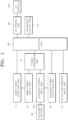
- FIG. 1 is a block diagram showing an ultraviolet sterilization apparatus for a vehicle according to an embodiment of the present invention
- FIG. 2 is an exemplary view showing installation positions of ultraviolet (UV) modules in the UV sterilization apparatus for the vehicle according to an embodiment of the present invention.
- UV ultraviolet
- the UV sterilization apparatus may include a main power input unit 20, an auxiliary power input unit 30, a main power detection unit 10, an auxiliary power detection unit 40, a vehicle information input unit 50, a power conversion unit 70, a plurality of UV modules 100, an UV driving unit 90, and a control unit 80, as well as an operation display unit 110.
- the main power input unit 20 provides a port for receiving main power supplied from a main battery of a vehicle.
- the auxiliary power input unit 30 provides a port for receiving auxiliary power from an auxiliary battery 60.
- the main power detection unit 10 may detect a state of main power input from the main power input unit 20.
- the auxiliary power detection unit 40 may detect the charging state of the auxiliary battery 60 connected to the auxiliary power input unit 30.
- the vehicle information input unit 50 may receive vehicle information for determining the state of the vehicle through vehicle internal communication.
- the vehicle information includes at least one of a starting state, a shifting state, a door opening/closing state, a door locking state, a seating state, an audio/video/navigation (AVN) state, an emergency light lighting state, a seat movement state, an fob signal state, a rear seat detection state, and the charging state of the main battery.
- a starting state a shifting state
- a door opening/closing state a door locking state
- a seating state an audio/video/navigation (AVN) state
- an emergency light lighting state a seat movement state
- an fob signal state a rear seat detection state
- the charging state of the main battery includes at least one of a starting state, a shifting state, a door opening/closing state, a door locking state, a seating state, an audio/video/navigation (AVN) state, an emergency light lighting state, a seat movement state, an fob signal state, a rear seat detection state, and the charging state of the main battery.
- the power conversion unit 70 switches between main power and auxiliary power input from the main power input unit 20 and the auxiliary power input unit 30, respectively, so that power can be stably supplied.
- the plurality of UV modules 100 include UV light emitting didoes (LEDs), and are installed at a plurality of locations in the vehicle to irradiate UV rays and sterilize the interior of the vehicle.
- LEDs UV light emitting didoes
- the plurality of UV modules 100 may be installed to irradiate UV rays to the interior at a location of a central interior light or a front interior light of the ceiling of the vehicle so that UV rays can be irradiated without a shaded area inside the vehicle, as shown in FIG. 2 , and the plurality of UV modules 100 may be installed to irradiate UV rays from the lower space of a driver's seat or passenger seat to the upper side and may be installed to irradiate UV rays from the left and right sides of the vehicle to the inside.
- the UV driving unit 90 is provided with a plurality of ports to independently drive the UV modules 100, so that the driving power can be output differently or the driving can be performed for different times according to the installation location of the plurality of UV modules 100.
- the control unit 80 receives vehicle information input from the vehicle information input unit 50, the state of main power, and the charging state, determines the operating condition of the UV modules 100, and controls a power switching unit to drive the UV driving unit 90 during a sterilization driving time.
- the sterilization driving time may be set based on any one or more of a starting time, a door opening time, and temperature and humidity inside the vehicle.
- the control unit 80 may determine the case where the absence state of the passenger is maintained for more than a set time, as an operating condition based on a starting state, the shifting state, the door opening/closing state, the door locking state, the seating state, the AVN state, the emergency light lighting state, the seat movement state, the fob signal state and the rear seat detection state from the vehicle information.
- control unit 80 determines the absence state of the driver by determining whether an engine is turned off, is switched to a parking mode, a door is closed, the door is locked and no weight is detected on the seat from the vehicle information.
- control unit 80 determines the absence state of the passenger by determining whether, additionally, the AVN state is an activated state, emergency lights are turned on, seats are moving, fob signals are detected inside the vehicle, and a rear seat detection state is input, and the control unit 80 determines the case where the absence state of the passenger is maintained for more than a set time, as an operating condition, so that the safety of the passenger due to UV sterilization can be considered as much as possible.
- control unit 80 determines the charging state of the auxiliary battery 60, and when the charging state of the auxiliary battery 60 is greater than or equal to predicted driving power, the control unit 80 switches the power conversion unit 70 to the main power so as to operate the UV driving unit 90, thereby determining the secured state of the driving power and then stably operating the sterilization apparatus even when an abnormality of the main power occurs during the operation of the sterilization apparatus.
- control unit 80 determines the operating condition, and when the charging state of the main battery is less than the expected driving power, or when an abnormality occurs in the state of the main power while the UV driving unit 90 is operating, the control unit 80 switches the power conversion unit 70 to auxiliary power so as to operate the UV driving unit 90, thereby stably operating the operation of the sterilization apparatus.
- control unit 80 may stop the operation so as not to affect the operation of the vehicle.
- the control unit 80 stops the operation of the UV driving unit 90 for safety and temporarily stops counting of the sterilization driving time, and when the operating condition is satisfied again, the control unit 80 counts the sterilization driving time so as to operate the UV driving unit 90 again, so that power consumption due to repeated sterilization can be reduced.
- control unit 80 temporarily stops the UV driving unit 90 and then determines whether the operation condition is satisfied again, and initializes the counting when the operating condition is not satisfied.
- the operation display unit 110 displays the operating state and result of the control unit 80 so that the driver can visually check the operating state or operation result of the sterilization apparatus.
- the operation or completion state can be indicated through the color of an LED lamp
- the progress state or progress result can be displayed sequentially by a plurality of LED lamps
- the operating state of the sterilization apparatus can be visually displayed by scanning a laser beam.
- a plurality of UV LEDs installed inside the vehicle are independently driven to uniformly sterilized the interior space without a shaded area and the driving state of the vehicle and the state of the passenger are determined by receiving vehicle information so that the operation of the plurality of LEDs is controlled and discharge of the vehicle is prevented by utilizing an auxiliary battery.
- FIG. 3 is a flowchart illustrating a method of controlling a UV sterilizing apparatus for a vehicle according to an embodiment of the present invention.
- the control unit 80 receives vehicle information for determining the state of the vehicle from the vehicle information input unit 50 (S10).
- control unit 80 receives the state of the main power and the charging state of the auxiliary battery 60 from the main power detection unit 10 and the auxiliary power detection unit 40, respectively (S20).
- the control unit 80 After receiving the vehicle information, the state of the main power, and the charging state of the auxiliary battery 60 through operations S10 and S20, the control unit 80 determines the operating condition of the UV modules 100 based on the input vehicle information, the state of the main power, and the charging state of the auxiliary battery 60.
- control unit 80 may determine the case where the absence state of the passenger is maintained for more than a set time, as an operating condition based on a starting state, a shifting state, a door opening/closing state, a door locking state, a seating state, an AVN state, an emergency light lighting state, a seat movement state, an fob signal state and a rear seat detection state from the vehicle information.
- control unit 80 determines the absence state of the driver by determining whether an engine is turned off, is switched to a parking mode, a door is closed, the door is locked and no weight is detected on the seat from the vehicle information.
- control unit 80 determines the absence state of the passenger by determining whether, additionally, the AVN state is an activated state, emergency lights are turned on, seats are moving, fob signals are detected inside the vehicle, and a rear seat detection state is input, and the control unit 80 determines the case where the absence state of the passenger is maintained for more than a set time, as an operating condition, so that the safety of the passenger due to UV sterilization can be considered as much as possible.
- control unit 80 determines whether the operating condition is satisfied (S40).
- control unit 80 When it is determined that the operating condition is not satisfied in operation S40 of determining whether the operating condition is satisfied, the control unit 80 returns to operation S10 and may repeatedly determine the operating condition of the UV modules 100 by receiving the state of main power and the charging state of the auxiliary battery 60. In this case, the above process may be repeated only for a predetermined time after the engine is turned off so as to prevent power consumption.
- control unit 80 controls the power conversion unit 70 so as to operate the UV driving unit 90 during a sterilization driving time (S50).
- control unit 80 may differently adjust the operating time according to installation locations of the plurality of UV modules 100.
- control unit 80 determines the charging state of the auxiliary battery 60, and when the charging state of the auxiliary battery 60 is greater than or equal to the expected driving power, the control unit 80 switches the power conversion unit 70 to the main power so as to operate the UV driving unit 90, thereby determining the secured state of the driving power and then stably operating the sterilization apparatus even when an abnormality of the main power occurs during the operation of the sterilization apparatus.
- control unit 80 switches the power conversion unit 70 to auxiliary power so as to operate the UV driving unit 90, thereby stably operating the operation of the sterilization apparatus.
- control unit 80 may stop the operation so as not to affect the operation of the vehicle.
- control unit 80 displays the operating state and result through the operation display unit 110 so that the driver can visually check the operating state or operation result of the UV driving unit 90 (S60).
- the operation or completion state can be indicated through the color of an LED lamp
- the progress state or progress result can be displayed sequentially by a plurality of LED lamps
- the operating state of the UV driving unit 90 can be visually displayed by scanning a laser beam.
- the control unit 80 counts a sterilization driving time to determine whether the sterilization driving time has elapsed (S70).
- the method returns to operation S50, and the UV driving unit 90 is operated during the sterilization driving time so that sterilization of the inside of the vehicle can be performed.
- the sterilization driving time may be set based on any one or more of a starting time, a door opening time, temperature and humidity inside the vehicle.
- the control unit 80 stops the operation of the UV driving unit 90, initializes the counting and terminates the operation of the UV driving unit 90 (S80).
- the control unit 80 stops the operation of the UV driving unit 90 for safety and temporarily stops counting of the sterilization driving time, and when the operating condition is satisfied again, the sterilization driving time is counted and the UV driving unit 90 is operated again, so that power consumption due to repeated sterilization can be reduced.
- the control unit 80 determines whether the operation condition is satisfied again, and when the operation condition is not satisfied, the control unit 80 initializes counting of the sterilization driving time and then terminates the operation of the UV driving unit 90.
- a plurality of UV light emitting diodes (LEDs) installed inside the vehicle are independently driven to uniformly sterilized the interior space without a shaded area and the driving state of the vehicle, and the state of a passenger are determined by receiving vehicle information so that the operation of the plurality of LEDs is controlled and discharge of the vehicle is prevented by utilizing an auxiliary battery.
- LEDs UV light emitting diodes
- the implementations described herein may be implemented in, for example, a method or process, an apparatus, a software program, a data stream or a signal. Although discussed only in the context of a single form of implementation (e.g., only as a method), the implementation of the discussed features may also be implemented in other forms (e.g., an apparatus or program).
- the device may be implemented with appropriate hardware, software and firmware.
- the method may be implemented in an apparatus such as a processor, which generally refers to a processing device including, for example, a computer, a microprocessor, an integrated circuit or a programmable logic device, or the like. Processors also include communication devices such as computers, cell phones, personal digital assistants ("PDAs”) and other devices that facilitate communication of information between end-users.
- PDAs personal digital assistants
- a plurality of LEDs installed inside the vehicle are independently driven so that the interior space can be uniformly sterilized without a shaded area and the driving state of the vehicle, and the state of a passenger are determined by receiving vehicle information so that the operation of the plurality of LEDs is controlled and discharge of the vehicle is prevented by utilizing an auxiliary battery.
Landscapes
- Health & Medical Sciences (AREA)
- Mechanical Engineering (AREA)
- Engineering & Computer Science (AREA)
- Animal Behavior & Ethology (AREA)
- General Health & Medical Sciences (AREA)
- Public Health (AREA)
- Veterinary Medicine (AREA)
- Life Sciences & Earth Sciences (AREA)
- Epidemiology (AREA)
- Physics & Mathematics (AREA)
- Thermal Sciences (AREA)
- Air-Conditioning For Vehicles (AREA)
- Apparatus For Disinfection Or Sterilisation (AREA)
Description
- This application claims priority to and the benefit of
Korean Patent Application No. 10-2020-0093900, filed on July 28, 2020 - The present invention relates to an ultraviolet sterilization apparatus for a vehicle, and more particularly, to an ultraviolet sterilization apparatus for a vehicle as outlined in the preamble of claim 1.
- In general, air conditioners for vehicles have the functions of constant temperature and constant humidity to keep constant temperature and constant humidity as well as functions such as dehumidification, humidification, purification, ventilation, aroma, in addition to cooling and heating, which are the main functions so as to maintain the indoor air environment of the vehicle in a comfortable or suitable condition for the driver.
- In such air conditioners for vehicles, since air is introduced into the interior of the vehicle through a cabin filter that filters and purifies pollutants such as exhaust gas, dust, and yellow dust in the air, the cabin filter plays an important role in whether indoor air is comfortable or not.
- However, since the cabin filter is usually located inside a glove box in front of a passenger seat, when the cabin filter is inspected and replaced, the glove box needs to be opened, separated, and then reinserted. Also, since the cabin filter needs to be mounted in a predetermined direction in which the air flows, i.e., according to directivity, it is very cumbersome and laborious for the driver to replace the cabin filter from time to time, and it is difficult to immediately check a contamination state, so it takes quite a long time, and it is not easy to carry out.
- The background technology of the present invention is disclosed in
Korean Patent Laid-open Publication No. 10-2020-0075412 (published on June 26, 2020 - Korean Patent Publication No.
KR2015 0017544 A - Korean Patent Publication No.
KR2015 0124672 - German Patent Publication No.
DE102016110547 A1 discloses a device for disinfection of a car comprising a first electrode mostly covering one part of a transmission panel as well as multiple printed LEDs suspended in a semi-conductor oil ink of the first electrode and used for emitting and disinfection as well as a second electrode electrically connected with the multiple LEDs and wherein a light transmitting emitting layer is connected with the second electrode and/or one or more intermeddle layers configured to be an inner surface of a glass panel. - On the other hand, since the air contains various pollutants such as bacteria, viruses, mold, fine dust, harmful gases and odor components that are harmful to health, the demand for air purifiers for vehicles having an air purification function using a filter and a drying function using a blower so as to improve and maintain the indoor air quality of a vehicle has been increased.
- Recently, air purifiers have been developed to control bacteria and purify indoor air by applying the sterilization effect of an ultraviolet (UV) light emitting diode (LED) that emits UV rays for air purification.
- In particular, as large-scale infectious diseases (SARS / H1N1 flu / MERS / Corona 19, etc.) continue to occur, interest in sterilization and disinfection is also increasing, and the need for sterilization is increasing even in automobiles that are necessary for daily life.
- In accordance with an aspect of the present invention there is provided an ultraviolet sterilization apparatus for a vehicle, as set out in independent claim 1.
- The UV sterilization apparatus for the vehicle may further include an operation display unit configured to display an operating state and result of the control unit.
- The UV driving unit may include a plurality of ports which allow driving power to be output differently according to the UV modules.
- The control unit may determine a case where an absence state of a passenger is maintained for more than a set time, as the operating condition based on any one or more of a starting state, a shifting state, a door opening/closing state, a door locking state, a seating state, an audio/video/navigation (AVN) state, an emergency light lighting state, a seat movement state, an fob signal state, and a rear seat detection state from the vehicle information.
- When the control unit determines the operating condition and then a charging state of the main battery is less than expected driving power, the control unit may switch the power conversion unit to the auxiliary power so as to drive the UV driving unit.
- When an abnormality occurs in the state of the main power input while the UV driving unit is operating, the control unit may switch the power conversion unit to the auxiliary power so as to operate the UV driving unit.
- When the control unit determines the operating condition and then a charging state of the main battery is less than a set value, the control unit may stop an operation of the UV driving unit.
- When a door lock is released while the UV driving unit is operating, the control unit may stop the operation of the UV driving unit and may temporarily stop counting of the sterilization driving time, and when the operating condition is satisfied again, the control unit may count the sterilization driving time so as to operate the UV driving unit again.
- When the control unit determines again whether the operating condition is satisfied and then the operating condition is not satisfied, the control unit may stop the operation of the UV driving unit and may initialize counting.
- The sterilization driving time may be set based on any one or more of a starting time, a door opening time, and temperature and humidity inside the vehicle.
- The above and other objects, features and advantages of the present invention will become more apparent to those of ordinary skill in the art by describing exemplary embodiments thereof in detail with reference to the accompanying drawings, in which:
-
FIG. 1 is a block diagram illustrating an ultraviolet sterilization apparatus for a vehicle according to an embodiment of the present invention; -
FIG. 2 is an exemplary diagram illustrating installation positions of ultraviolet (UV) modules in the UV sterilization apparatus for a vehicle according to an embodiment of the present invention; and -
FIG. 3 is a flowchart illustrating a method of controlling a UV sterilization apparatus for a vehicle according to an embodiment of the present invention. - As is traditional in the corresponding field, some exemplary embodiments may be illustrated in the drawings in terms of functional blocks, units, and/or modules. Those of ordinary skill in the art will appreciate that these block, units, and/or modules are physically implemented by electronic (or optical) circuits such as logic circuits, discrete components, processors, hard-wired circuits, memory elements, wiring connections, and the like. When the blocks, units, and/or modules are implemented by processors or similar hardware, they may be programmed and controlled using software (e.g., code) to perform various functions discussed herein. Alternatively, each block, unit, and/or module may be implemented by dedicated hardware or as a combination of dedicated hardware to perform some functions and a processor (e.g., one or more programmed processors and associated circuitry) to perform other functions. Each block, unit, and/or module of some exemplary embodiments may be physically separated into two or more interacting and discrete blocks, units, and/or modules without departing from the scope of the inventive concept. Further, blocks, units, and/or module of some exemplary embodiments may be physically combined into more complex blocks, units, and/or modules without departing from the scope of the inventive concept.
- Hereinafter, an ultraviolet sterilization apparatus for a vehicle according to the present invention will be described with reference to the accompanying drawings. In this process, the thicknesses of lines or the sizes of components shown in the drawings may be exaggerated for clarity and convenience of description. In addition, terms to be described below are terms defined in consideration of functions in the present invention, which may vary according to the intention or custom of users or operators. Therefore, definitions of these terms should be made based on the contents throughout the present specification.
-
FIG. 1 is a block diagram showing an ultraviolet sterilization apparatus for a vehicle according to an embodiment of the present invention, andFIG. 2 is an exemplary view showing installation positions of ultraviolet (UV) modules in the UV sterilization apparatus for the vehicle according to an embodiment of the present invention. - As shown in
FIG. 1 , the UV sterilization apparatus according to the embodiment of the present invention may include a mainpower input unit 20, an auxiliarypower input unit 30, a mainpower detection unit 10, an auxiliarypower detection unit 40, a vehicleinformation input unit 50, apower conversion unit 70, a plurality ofUV modules 100, anUV driving unit 90, and acontrol unit 80, as well as anoperation display unit 110. - The main
power input unit 20 provides a port for receiving main power supplied from a main battery of a vehicle. - The auxiliary
power input unit 30 provides a port for receiving auxiliary power from anauxiliary battery 60. - The main
power detection unit 10 may detect a state of main power input from the mainpower input unit 20. - The auxiliary
power detection unit 40 may detect the charging state of theauxiliary battery 60 connected to the auxiliarypower input unit 30. - The vehicle
information input unit 50 may receive vehicle information for determining the state of the vehicle through vehicle internal communication. - Here, the vehicle information includes at least one of a starting state, a shifting state, a door opening/closing state, a door locking state, a seating state, an audio/video/navigation (AVN) state, an emergency light lighting state, a seat movement state, an fob signal state, a rear seat detection state, and the charging state of the main battery.
- The
power conversion unit 70 switches between main power and auxiliary power input from the mainpower input unit 20 and the auxiliarypower input unit 30, respectively, so that power can be stably supplied. - The plurality of
UV modules 100 include UV light emitting didoes (LEDs), and are installed at a plurality of locations in the vehicle to irradiate UV rays and sterilize the interior of the vehicle. - Here, the plurality of
UV modules 100 may be installed to irradiate UV rays to the interior at a location of a central interior light or a front interior light of the ceiling of the vehicle so that UV rays can be irradiated without a shaded area inside the vehicle, as shown inFIG. 2 , and the plurality ofUV modules 100 may be installed to irradiate UV rays from the lower space of a driver's seat or passenger seat to the upper side and may be installed to irradiate UV rays from the left and right sides of the vehicle to the inside. - The
UV driving unit 90 is provided with a plurality of ports to independently drive theUV modules 100, so that the driving power can be output differently or the driving can be performed for different times according to the installation location of the plurality ofUV modules 100. - The
control unit 80 receives vehicle information input from the vehicleinformation input unit 50, the state of main power, and the charging state, determines the operating condition of theUV modules 100, and controls a power switching unit to drive theUV driving unit 90 during a sterilization driving time. - Here, the sterilization driving time may be set based on any one or more of a starting time, a door opening time, and temperature and humidity inside the vehicle.
- The
control unit 80 may determine the case where the absence state of the passenger is maintained for more than a set time, as an operating condition based on a starting state, the shifting state, the door opening/closing state, the door locking state, the seating state, the AVN state, the emergency light lighting state, the seat movement state, the fob signal state and the rear seat detection state from the vehicle information. - In this way, the
control unit 80 determines the absence state of the driver by determining whether an engine is turned off, is switched to a parking mode, a door is closed, the door is locked and no weight is detected on the seat from the vehicle information. In addition, thecontrol unit 80 determines the absence state of the passenger by determining whether, additionally, the AVN state is an activated state, emergency lights are turned on, seats are moving, fob signals are detected inside the vehicle, and a rear seat detection state is input, and thecontrol unit 80 determines the case where the absence state of the passenger is maintained for more than a set time, as an operating condition, so that the safety of the passenger due to UV sterilization can be considered as much as possible. - Thereafter, when the state of the main power input is normal after the
control unit 80 determines the operating condition, thecontrol unit 80 determines the charging state of theauxiliary battery 60, and when the charging state of theauxiliary battery 60 is greater than or equal to predicted driving power, thecontrol unit 80 switches thepower conversion unit 70 to the main power so as to operate theUV driving unit 90, thereby determining the secured state of the driving power and then stably operating the sterilization apparatus even when an abnormality of the main power occurs during the operation of the sterilization apparatus. - In addition, the
control unit 80 determines the operating condition, and when the charging state of the main battery is less than the expected driving power, or when an abnormality occurs in the state of the main power while theUV driving unit 90 is operating, thecontrol unit 80 switches thepower conversion unit 70 to auxiliary power so as to operate theUV driving unit 90, thereby stably operating the operation of the sterilization apparatus. - Meanwhile, when the
control unit 80 determines the operating condition and then the charging state of the main battery is less than a set value, thecontrol unit 80 may stop the operation so as not to affect the operation of the vehicle. - In addition, when the door lock is released while the
UV driving unit 90 is operating, thecontrol unit 80 stops the operation of theUV driving unit 90 for safety and temporarily stops counting of the sterilization driving time, and when the operating condition is satisfied again, thecontrol unit 80 counts the sterilization driving time so as to operate theUV driving unit 90 again, so that power consumption due to repeated sterilization can be reduced. - On the other hand, the
control unit 80 temporarily stops theUV driving unit 90 and then determines whether the operation condition is satisfied again, and initializes the counting when the operating condition is not satisfied. - The
operation display unit 110 displays the operating state and result of thecontrol unit 80 so that the driver can visually check the operating state or operation result of the sterilization apparatus. - For example, the operation or completion state can be indicated through the color of an LED lamp, the progress state or progress result can be displayed sequentially by a plurality of LED lamps, and the operating state of the sterilization apparatus can be visually displayed by scanning a laser beam.
- As described above, according to the UV sterilization apparatus for a vehicle according to the embodiment of the present invention, a plurality of UV LEDs installed inside the vehicle are independently driven to uniformly sterilized the interior space without a shaded area and the driving state of the vehicle and the state of the passenger are determined by receiving vehicle information so that the operation of the plurality of LEDs is controlled and discharge of the vehicle is prevented by utilizing an auxiliary battery.
-
FIG. 3 is a flowchart illustrating a method of controlling a UV sterilizing apparatus for a vehicle according to an embodiment of the present invention. - As shown in
FIG. 3 , in the method of controlling a UV sterilization apparatus for a vehicle according to the embodiment of the present invention, first, thecontrol unit 80 receives vehicle information for determining the state of the vehicle from the vehicle information input unit 50 (S10). - In addition, the
control unit 80 receives the state of the main power and the charging state of theauxiliary battery 60 from the mainpower detection unit 10 and the auxiliarypower detection unit 40, respectively (S20). - After receiving the vehicle information, the state of the main power, and the charging state of the
auxiliary battery 60 through operations S10 and S20, thecontrol unit 80 determines the operating condition of theUV modules 100 based on the input vehicle information, the state of the main power, and the charging state of theauxiliary battery 60. - That is, the
control unit 80 may determine the case where the absence state of the passenger is maintained for more than a set time, as an operating condition based on a starting state, a shifting state, a door opening/closing state, a door locking state, a seating state, an AVN state, an emergency light lighting state, a seat movement state, an fob signal state and a rear seat detection state from the vehicle information. - In this way, the
control unit 80 determines the absence state of the driver by determining whether an engine is turned off, is switched to a parking mode, a door is closed, the door is locked and no weight is detected on the seat from the vehicle information. In addition, thecontrol unit 80 determines the absence state of the passenger by determining whether, additionally, the AVN state is an activated state, emergency lights are turned on, seats are moving, fob signals are detected inside the vehicle, and a rear seat detection state is input, and thecontrol unit 80 determines the case where the absence state of the passenger is maintained for more than a set time, as an operating condition, so that the safety of the passenger due to UV sterilization can be considered as much as possible. - After the operating condition of the
UV modules 100 is determined in operation S30, thecontrol unit 80 determines whether the operating condition is satisfied (S40). - When it is determined that the operating condition is not satisfied in operation S40 of determining whether the operating condition is satisfied, the
control unit 80 returns to operation S10 and may repeatedly determine the operating condition of theUV modules 100 by receiving the state of main power and the charging state of theauxiliary battery 60. In this case, the above process may be repeated only for a predetermined time after the engine is turned off so as to prevent power consumption. - When it is determined that the operating condition is satisfied in operation S40 of determining whether the operating condition is satisfied, the
control unit 80 controls thepower conversion unit 70 so as to operate theUV driving unit 90 during a sterilization driving time (S50). - Here, when operating the
UV driving unit 90, thecontrol unit 80 may differently adjust the operating time according to installation locations of the plurality ofUV modules 100. - Also, when the state of the main power is normal, the
control unit 80 determines the charging state of theauxiliary battery 60, and when the charging state of theauxiliary battery 60 is greater than or equal to the expected driving power, thecontrol unit 80 switches thepower conversion unit 70 to the main power so as to operate theUV driving unit 90, thereby determining the secured state of the driving power and then stably operating the sterilization apparatus even when an abnormality of the main power occurs during the operation of the sterilization apparatus. - In addition, when the charging state of the main battery is less than the expected driving power, or when an abnormality occurs in the state of main power while the
UV driving unit 90 is operating, thecontrol unit 80 switches thepower conversion unit 70 to auxiliary power so as to operate theUV driving unit 90, thereby stably operating the operation of the sterilization apparatus. - Meanwhile, when the charging state of the main battery is less than a set value, the
control unit 80 may stop the operation so as not to affect the operation of the vehicle. - In this case, the
control unit 80 displays the operating state and result through theoperation display unit 110 so that the driver can visually check the operating state or operation result of the UV driving unit 90 (S60). - For example, the operation or completion state can be indicated through the color of an LED lamp, the progress state or progress result can be displayed sequentially by a plurality of LED lamps, and the operating state of the
UV driving unit 90 can be visually displayed by scanning a laser beam. - In this way, after operating the
UV driving unit 90, thecontrol unit 80 counts a sterilization driving time to determine whether the sterilization driving time has elapsed (S70). - When it is determined that the sterilization driving time has elapsed in operation S70 of determining whether the sterilization driving time has elapsed, the method returns to operation S50, and the
UV driving unit 90 is operated during the sterilization driving time so that sterilization of the inside of the vehicle can be performed. - Here, the sterilization driving time may be set based on any one or more of a starting time, a door opening time, temperature and humidity inside the vehicle.
- On the other hand, when it is determined that the sterilization driving time has elapsed in operation S70 of determining whether the sterilization driving time has elapsed, the
control unit 80 stops the operation of theUV driving unit 90, initializes the counting and terminates the operation of the UV driving unit 90 (S80). - Meanwhile, when a door lock is released while the
UV driving unit 90 is operating, thecontrol unit 80 stops the operation of theUV driving unit 90 for safety and temporarily stops counting of the sterilization driving time, and when the operating condition is satisfied again, the sterilization driving time is counted and theUV driving unit 90 is operated again, so that power consumption due to repeated sterilization can be reduced. On the other hand, after temporarily stopping counting of the sterilization driving time, thecontrol unit 80 determines whether the operation condition is satisfied again, and when the operation condition is not satisfied, thecontrol unit 80 initializes counting of the sterilization driving time and then terminates the operation of theUV driving unit 90. - As described above, according to the method of controlling a UV sterilization device for a vehicle according to the embodiment of the present invention, a plurality of UV light emitting diodes (LEDs) installed inside the vehicle are independently driven to uniformly sterilized the interior space without a shaded area and the driving state of the vehicle, and the state of a passenger are determined by receiving vehicle information so that the operation of the plurality of LEDs is controlled and discharge of the vehicle is prevented by utilizing an auxiliary battery.
- The implementations described herein may be implemented in, for example, a method or process, an apparatus, a software program, a data stream or a signal. Although discussed only in the context of a single form of implementation (e.g., only as a method), the implementation of the discussed features may also be implemented in other forms (e.g., an apparatus or program). The device may be implemented with appropriate hardware, software and firmware. The method may be implemented in an apparatus such as a processor, which generally refers to a processing device including, for example, a computer, a microprocessor, an integrated circuit or a programmable logic device, or the like. Processors also include communication devices such as computers, cell phones, personal digital assistants ("PDAs") and other devices that facilitate communication of information between end-users.
- In the UV sterilization apparatus for a vehicle according to the aspect of the present invention, a plurality of LEDs installed inside the vehicle are independently driven so that the interior space can be uniformly sterilized without a shaded area and the driving state of the vehicle, and the state of a passenger are determined by receiving vehicle information so that the operation of the plurality of LEDs is controlled and discharge of the vehicle is prevented by utilizing an auxiliary battery.
- While one or more embodiments have been described with reference to the figures, it will be understood by those of ordinary skill in the art that various changes in form and details may be made therein without departing from the scope of the present invention as defined by the following claims.
Claims (10)
- An ultraviolet, UV, sterilization apparatus for a vehicle, comprising:a main power input unit (20) configured to receive main power from a main battery of a vehicle;a main power detection unit (10) configured to detect a state of a main power input from the main power input unit (20);a vehicle information input unit (50) configured to receive vehicle information for determining a state of the vehicle;a plurality of UV modules (100) configured to be installed at a plurality of locations in the vehicle and configured to irradiate UV rays and sterilize the interior of the vehicle during a sterilization driving time;an UV driving unit (90) configured to drive the plurality of UV modules (100); anda control unit (80) configured to receive a vehicle information input from the vehicle information input unit (50) and the state of the main power input, andcharacterized in that the UV sterilization apparatus further comprises an auxiliary power input unit (30) configured to receive auxiliary power from an auxiliary battery (60), an auxiliary power detection unit (40) configured to detect a charging state of the auxiliary battery (60) connected to the auxiliary power input unit (30), and a power conversion unit (70) configured to switch between the main power input and an auxiliary power input from the main power input unit (20) and the auxiliary power input unit (30), respectively, the control unit (80) is further configured to receive the charging state of the auxiliary battery (60) and control the power conversion unit (70) so as to drive the plurality of UV modules (100) independently through the UV driving unit (90) during the sterilization driving time, andwhen the state of the main power input is normal after the control unit (80) is configured to determine the operating condition of the UV modules (100), the control unit (80) is further configured to determine the charging state of the auxiliary battery (60), and when the charging state of the auxiliary battery (60) is greater than or equal to predicted driving power, the control unit (80) is configured to switch the power conversion unit (70) to the main power input so as to operate the UV driving unit (90).
- The UV sterilization apparatus for the vehicle according to claim 1, further comprising an operation display unit (110) configured to display an operating state and result of the control unit (80).
- The UV sterilization apparatus for the vehicle according to claim 1 or 2, wherein the UV driving unit (90) comprises a plurality of ports which allow driving power to be output differently according to the UV modules (100).
- The UV sterilization apparatus for the vehicle according to any one of the claims 1 to 3, wherein the control unit (80) is configured to determine a case where an absence state of a passenger is maintained for more than a set time, as the operating condition based on any one or more of a starting state, a shifting state, a door opening/closing state, a door locking state, a seating state, an audio/video/navigation (AVN) state, an emergency light lighting state, a seat movement state, an fob signal state, and a rear seat detection state from the vehicle information.
- The UV sterilization apparatus for the vehicle according to any one of the claims 1 to 4, wherein, when the control unit (80) determines the operating condition and then a charging state of the main battery is less than expected driving power, the control unit (80) is configured to switch the power conversion unit (70) to the auxiliary power so as to drive the UV driving unit (90).
- The UV sterilization apparatus for the vehicle according to any one of the claims 1 to 5, wherein, when an abnormality occurs in the state of the main power input while the UV driving unit is operating, the control unit (80) is configured to switch the power conversion unit (70) to the auxiliary power so as to operate the UV driving unit (90).
- The UV sterilization apparatus for the vehicle according to any one of the claims 1 to 6, wherein, when the control unit (80) determines the operating condition and then a charging state of the main battery is less than a set value, the control unit (80) is configured to stop an operation of the UV driving unit (90).
- The UV sterilization apparatus for the vehicle according to any one of the claims 1 to 7, wherein, when a door lock is released while the UV driving unit (90) is operating, the control unit (80) is configured to stop the operation of the UV driving unit (90) and to temporarily stop counting of the sterilization driving time, and when the operating condition is satisfied again, the control unit (80) is configured to count the sterilization driving time so as to operate the UV driving unit (90) again.
- The UV sterilization apparatus for the vehicle of claim 8, wherein, when the control unit (80) determines again whether the operating condition is satisfied and then the operating condition is not satisfied, the control unit (80) is configured to stop the operation of the UV driving unit (90) and to initialize counting.
- The UV sterilization apparatus for the vehicle according to any one of the claims 1 to 9, wherein the sterilization driving time is set based on any one or more of a starting time, a door opening time, and temperature and humidity inside the vehicle.
Applications Claiming Priority (1)
| Application Number | Priority Date | Filing Date | Title |
|---|---|---|---|
| KR1020200093900A KR102249536B1 (en) | 2020-07-28 | 2020-07-28 | Ultraviolet sterilization apparatus for vehicle |
Publications (2)
| Publication Number | Publication Date |
|---|---|
| EP3944975A1 EP3944975A1 (en) | 2022-02-02 |
| EP3944975B1 true EP3944975B1 (en) | 2023-02-22 |
Family
ID=75917070
Family Applications (1)
| Application Number | Title | Priority Date | Filing Date |
|---|---|---|---|
| EP21185751.1A Active EP3944975B1 (en) | 2020-07-28 | 2021-07-15 | Ultraviolet sterilization apparatus for a vehicle |
Country Status (3)
| Country | Link |
|---|---|
| US (1) | US20220031880A1 (en) |
| EP (1) | EP3944975B1 (en) |
| KR (1) | KR102249536B1 (en) |
Families Citing this family (8)
| Publication number | Priority date | Publication date | Assignee | Title |
|---|---|---|---|---|
| US11654869B2 (en) * | 2020-10-26 | 2023-05-23 | Ford Global Technologies, Llc | Remote user interface commanded vehicle interior sanitization |
| US11969514B2 (en) * | 2021-01-20 | 2024-04-30 | B/E Aerospace, Inc. | Sanitization systems and methods with FAR-UVC |
| JP2022167486A (en) * | 2021-04-23 | 2022-11-04 | トヨタ自動車株式会社 | Vehicle operation system and automatic driving vehicle |
| EP4104868A1 (en) * | 2021-06-17 | 2022-12-21 | Volvo Truck Corporation | A disinfection system for a motorized vehicle |
| JP7469263B2 (en) * | 2021-07-26 | 2024-04-16 | 矢崎総業株式会社 | In-vehicle sterilization control device and in-vehicle sterilization control system |
| FR3132846A1 (en) * | 2022-01-31 | 2023-08-25 | Valeo Vision | Device for disinfection of a vehicle interior |
| KR102668820B1 (en) * | 2022-03-14 | 2024-05-31 | 주식회사 보승일렉트릭 | Apparatus for sterilization lighting for vehicles |
| KR102811641B1 (en) | 2022-09-29 | 2025-05-21 | 주식회사 모아텍 | Opening and shutting apparatus of actuator electronic equipment |
Family Cites Families (10)
| Publication number | Priority date | Publication date | Assignee | Title |
|---|---|---|---|---|
| KR102087940B1 (en) * | 2013-08-07 | 2020-03-11 | 엘지이노텍 주식회사 | Sterilizing apparatus for vehicle |
| US10357583B2 (en) * | 2014-04-28 | 2019-07-23 | Diversey, Inc. | Decontamination method and apparatus |
| KR102188727B1 (en) * | 2014-04-29 | 2020-12-08 | 주식회사 대창 | Apparatus for air cleanning |
| CN106237351A (en) * | 2015-06-10 | 2016-12-21 | 福特全球技术公司 | Color change and disinfecting surface |
| US10655818B2 (en) * | 2017-01-24 | 2020-05-19 | The Boeing Company | Light-converting lighting assembly |
| US10377351B2 (en) * | 2017-06-28 | 2019-08-13 | Ford Global Technologies, Llc | Display for a vehicle |
| KR20200075412A (en) | 2018-12-18 | 2020-06-26 | 주식회사 허니아이티 | Air cleaner for vehicle |
| KR102675863B1 (en) | 2019-01-29 | 2024-06-17 | 삼성전자주식회사 | Light emitting device package and method of manufacturing light emitting device package |
| US20200338220A1 (en) * | 2019-04-27 | 2020-10-29 | Gerald Ho Kim | UV-C Illumination System For Disinfection |
| US11844884B2 (en) * | 2020-07-10 | 2023-12-19 | Luv Systems, Inc. | Ultraviolet pathogen disinfection system |
-
2020
- 2020-07-28 KR KR1020200093900A patent/KR102249536B1/en active Active
-
2021
- 2021-05-30 US US17/334,781 patent/US20220031880A1/en not_active Abandoned
- 2021-07-15 EP EP21185751.1A patent/EP3944975B1/en active Active
Also Published As
| Publication number | Publication date |
|---|---|
| KR102249536B1 (en) | 2021-05-10 |
| US20220031880A1 (en) | 2022-02-03 |
| EP3944975A1 (en) | 2022-02-02 |
Similar Documents
| Publication | Publication Date | Title |
|---|---|---|
| EP3944975B1 (en) | Ultraviolet sterilization apparatus for a vehicle | |
| US12226541B2 (en) | System for and method of eliminating microbes within vehicle | |
| KR20200098792A (en) | Lamp asembly of vehicle having sterilization function and sterilization method using the lamp asembly | |
| KR102176420B1 (en) | Car interior smart germicidal lamp system | |
| JP2004155405A (en) | Structure of vehicle air conditioner filter | |
| KR20210033817A (en) | Duct module and car seat including the same | |
| JP4359876B2 (en) | Air conditioning cleaning equipment for vehicles | |
| KR20080097028A (en) | Indoor air purifier and control method | |
| JP7287923B2 (en) | Vehicle disinfection system | |
| KR102032255B1 (en) | Air conditioner for vehicle with photocatalyst module and method for controlling the same | |
| JP2004210275A (en) | Control method for air conditioner equipped with blower and filter means | |
| KR100478706B1 (en) | Air- cleaning apparatus for Heating, Ventilation, and Air Conditioning controls on vehicle | |
| KR102079947B1 (en) | Air conditioner for vehicle with photocatalyst module and method for controlling the same | |
| KR200465900Y1 (en) | Ionizing and purification device of vehicle | |
| KR102121346B1 (en) | Air conditioner for vehicle with photocatalyst module and method for controlling the same | |
| CN213007504U (en) | Air conditioning device and automobile | |
| JP2001328486A (en) | Lighting system for vehicle | |
| KR20250086120A (en) | Ultraviolet sterilization apparatus for vehicle and control method thereof | |
| JP2022145667A (en) | Ventilation system and air conditioning equipment | |
| KR102547163B1 (en) | Air quality improvement system of children school bus | |
| KR101288849B1 (en) | Ionizer of air conditioning system for automotive vehicles | |
| KR20150129198A (en) | Air conditioner for vehicle with photocatalyst module and method for controlling the same | |
| JP2023542184A (en) | Vehicle occupant protection | |
| CN111823827A (en) | Control method and control device for sterilizing ultraviolet lamp of automobile air conditioner and storage medium | |
| CN116635257B (en) | Vehicle air conditioner with photocatalyst module |
Legal Events
| Date | Code | Title | Description |
|---|---|---|---|
| PUAI | Public reference made under article 153(3) epc to a published international application that has entered the european phase |
Free format text: ORIGINAL CODE: 0009012 |
|
| STAA | Information on the status of an ep patent application or granted ep patent |
Free format text: STATUS: THE APPLICATION HAS BEEN PUBLISHED |
|
| AK | Designated contracting states |
Kind code of ref document: A1 Designated state(s): AL AT BE BG CH CY CZ DE DK EE ES FI FR GB GR HR HU IE IS IT LI LT LU LV MC MK MT NL NO PL PT RO RS SE SI SK SM TR |
|
| STAA | Information on the status of an ep patent application or granted ep patent |
Free format text: STATUS: REQUEST FOR EXAMINATION WAS MADE |
|
| 17P | Request for examination filed |
Effective date: 20220726 |
|
| RBV | Designated contracting states (corrected) |
Designated state(s): AL AT BE BG CH CY CZ DE DK EE ES FI FR GB GR HR HU IE IS IT LI LT LU LV MC MK MT NL NO PL PT RO RS SE SI SK SM TR |
|
| GRAP | Despatch of communication of intention to grant a patent |
Free format text: ORIGINAL CODE: EPIDOSNIGR1 |
|
| STAA | Information on the status of an ep patent application or granted ep patent |
Free format text: STATUS: GRANT OF PATENT IS INTENDED |
|
| INTG | Intention to grant announced |
Effective date: 20221114 |
|
| RIN1 | Information on inventor provided before grant (corrected) |
Inventor name: CHOI, YUN SUK Inventor name: SUNG, NAK SUN Inventor name: KIM, CHANG SUK Inventor name: HWANG, CHUNG YUL |
|
| GRAS | Grant fee paid |
Free format text: ORIGINAL CODE: EPIDOSNIGR3 |
|
| GRAA | (expected) grant |
Free format text: ORIGINAL CODE: 0009210 |
|
| STAA | Information on the status of an ep patent application or granted ep patent |
Free format text: STATUS: THE PATENT HAS BEEN GRANTED |
|
| AK | Designated contracting states |
Kind code of ref document: B1 Designated state(s): AL AT BE BG CH CY CZ DE DK EE ES FI FR GB GR HR HU IE IS IT LI LT LU LV MC MK MT NL NO PL PT RO RS SE SI SK SM TR |
|
| REG | Reference to a national code |
Ref country code: GB Ref legal event code: FG4D |
|
| REG | Reference to a national code |
Ref country code: CH Ref legal event code: EP |
|
| REG | Reference to a national code |
Ref country code: AT Ref legal event code: REF Ref document number: 1549291 Country of ref document: AT Kind code of ref document: T Effective date: 20230315 Ref country code: IE Ref legal event code: FG4D |
|
| REG | Reference to a national code |
Ref country code: DE Ref legal event code: R096 Ref document number: 602021001460 Country of ref document: DE |
|
| REG | Reference to a national code |
Ref country code: LT Ref legal event code: MG9D |
|
| REG | Reference to a national code |
Ref country code: NL Ref legal event code: MP Effective date: 20230222 |
|
| REG | Reference to a national code |
Ref country code: AT Ref legal event code: MK05 Ref document number: 1549291 Country of ref document: AT Kind code of ref document: T Effective date: 20230222 |
|
| PG25 | Lapsed in a contracting state [announced via postgrant information from national office to epo] |
Ref country code: RS Free format text: LAPSE BECAUSE OF FAILURE TO SUBMIT A TRANSLATION OF THE DESCRIPTION OR TO PAY THE FEE WITHIN THE PRESCRIBED TIME-LIMIT Effective date: 20230222 Ref country code: PT Free format text: LAPSE BECAUSE OF FAILURE TO SUBMIT A TRANSLATION OF THE DESCRIPTION OR TO PAY THE FEE WITHIN THE PRESCRIBED TIME-LIMIT Effective date: 20230622 Ref country code: NO Free format text: LAPSE BECAUSE OF FAILURE TO SUBMIT A TRANSLATION OF THE DESCRIPTION OR TO PAY THE FEE WITHIN THE PRESCRIBED TIME-LIMIT Effective date: 20230522 Ref country code: NL Free format text: LAPSE BECAUSE OF FAILURE TO SUBMIT A TRANSLATION OF THE DESCRIPTION OR TO PAY THE FEE WITHIN THE PRESCRIBED TIME-LIMIT Effective date: 20230222 Ref country code: LV Free format text: LAPSE BECAUSE OF FAILURE TO SUBMIT A TRANSLATION OF THE DESCRIPTION OR TO PAY THE FEE WITHIN THE PRESCRIBED TIME-LIMIT Effective date: 20230222 Ref country code: LT Free format text: LAPSE BECAUSE OF FAILURE TO SUBMIT A TRANSLATION OF THE DESCRIPTION OR TO PAY THE FEE WITHIN THE PRESCRIBED TIME-LIMIT Effective date: 20230222 Ref country code: HR Free format text: LAPSE BECAUSE OF FAILURE TO SUBMIT A TRANSLATION OF THE DESCRIPTION OR TO PAY THE FEE WITHIN THE PRESCRIBED TIME-LIMIT Effective date: 20230222 Ref country code: ES Free format text: LAPSE BECAUSE OF FAILURE TO SUBMIT A TRANSLATION OF THE DESCRIPTION OR TO PAY THE FEE WITHIN THE PRESCRIBED TIME-LIMIT Effective date: 20230222 Ref country code: AT Free format text: LAPSE BECAUSE OF FAILURE TO SUBMIT A TRANSLATION OF THE DESCRIPTION OR TO PAY THE FEE WITHIN THE PRESCRIBED TIME-LIMIT Effective date: 20230222 |
|
| PG25 | Lapsed in a contracting state [announced via postgrant information from national office to epo] |
Ref country code: SE Free format text: LAPSE BECAUSE OF FAILURE TO SUBMIT A TRANSLATION OF THE DESCRIPTION OR TO PAY THE FEE WITHIN THE PRESCRIBED TIME-LIMIT Effective date: 20230222 Ref country code: PL Free format text: LAPSE BECAUSE OF FAILURE TO SUBMIT A TRANSLATION OF THE DESCRIPTION OR TO PAY THE FEE WITHIN THE PRESCRIBED TIME-LIMIT Effective date: 20230222 Ref country code: IS Free format text: LAPSE BECAUSE OF FAILURE TO SUBMIT A TRANSLATION OF THE DESCRIPTION OR TO PAY THE FEE WITHIN THE PRESCRIBED TIME-LIMIT Effective date: 20230622 Ref country code: GR Free format text: LAPSE BECAUSE OF FAILURE TO SUBMIT A TRANSLATION OF THE DESCRIPTION OR TO PAY THE FEE WITHIN THE PRESCRIBED TIME-LIMIT Effective date: 20230523 Ref country code: FI Free format text: LAPSE BECAUSE OF FAILURE TO SUBMIT A TRANSLATION OF THE DESCRIPTION OR TO PAY THE FEE WITHIN THE PRESCRIBED TIME-LIMIT Effective date: 20230222 |
|
| PG25 | Lapsed in a contracting state [announced via postgrant information from national office to epo] |
Ref country code: SM Free format text: LAPSE BECAUSE OF FAILURE TO SUBMIT A TRANSLATION OF THE DESCRIPTION OR TO PAY THE FEE WITHIN THE PRESCRIBED TIME-LIMIT Effective date: 20230222 Ref country code: RO Free format text: LAPSE BECAUSE OF FAILURE TO SUBMIT A TRANSLATION OF THE DESCRIPTION OR TO PAY THE FEE WITHIN THE PRESCRIBED TIME-LIMIT Effective date: 20230222 Ref country code: EE Free format text: LAPSE BECAUSE OF FAILURE TO SUBMIT A TRANSLATION OF THE DESCRIPTION OR TO PAY THE FEE WITHIN THE PRESCRIBED TIME-LIMIT Effective date: 20230222 Ref country code: DK Free format text: LAPSE BECAUSE OF FAILURE TO SUBMIT A TRANSLATION OF THE DESCRIPTION OR TO PAY THE FEE WITHIN THE PRESCRIBED TIME-LIMIT Effective date: 20230222 Ref country code: CZ Free format text: LAPSE BECAUSE OF FAILURE TO SUBMIT A TRANSLATION OF THE DESCRIPTION OR TO PAY THE FEE WITHIN THE PRESCRIBED TIME-LIMIT Effective date: 20230222 |
|
| REG | Reference to a national code |
Ref country code: DE Ref legal event code: R097 Ref document number: 602021001460 Country of ref document: DE |
|
| PG25 | Lapsed in a contracting state [announced via postgrant information from national office to epo] |
Ref country code: SK Free format text: LAPSE BECAUSE OF FAILURE TO SUBMIT A TRANSLATION OF THE DESCRIPTION OR TO PAY THE FEE WITHIN THE PRESCRIBED TIME-LIMIT Effective date: 20230222 |
|
| PLBE | No opposition filed within time limit |
Free format text: ORIGINAL CODE: 0009261 |
|
| STAA | Information on the status of an ep patent application or granted ep patent |
Free format text: STATUS: NO OPPOSITION FILED WITHIN TIME LIMIT |
|
| 26N | No opposition filed |
Effective date: 20231123 |
|
| PG25 | Lapsed in a contracting state [announced via postgrant information from national office to epo] |
Ref country code: SI Free format text: LAPSE BECAUSE OF FAILURE TO SUBMIT A TRANSLATION OF THE DESCRIPTION OR TO PAY THE FEE WITHIN THE PRESCRIBED TIME-LIMIT Effective date: 20230222 |
|
| PG25 | Lapsed in a contracting state [announced via postgrant information from national office to epo] |
Ref country code: MC Free format text: LAPSE BECAUSE OF FAILURE TO SUBMIT A TRANSLATION OF THE DESCRIPTION OR TO PAY THE FEE WITHIN THE PRESCRIBED TIME-LIMIT Effective date: 20230222 |
|
| PG25 | Lapsed in a contracting state [announced via postgrant information from national office to epo] |
Ref country code: MC Free format text: LAPSE BECAUSE OF FAILURE TO SUBMIT A TRANSLATION OF THE DESCRIPTION OR TO PAY THE FEE WITHIN THE PRESCRIBED TIME-LIMIT Effective date: 20230222 |
|
| REG | Reference to a national code |
Ref country code: BE Ref legal event code: MM Effective date: 20230731 |
|
| PG25 | Lapsed in a contracting state [announced via postgrant information from national office to epo] |
Ref country code: LU Free format text: LAPSE BECAUSE OF NON-PAYMENT OF DUE FEES Effective date: 20230715 |
|
| PG25 | Lapsed in a contracting state [announced via postgrant information from national office to epo] |
Ref country code: LU Free format text: LAPSE BECAUSE OF NON-PAYMENT OF DUE FEES Effective date: 20230715 |
|
| REG | Reference to a national code |
Ref country code: IE Ref legal event code: MM4A |
|
| PG25 | Lapsed in a contracting state [announced via postgrant information from national office to epo] |
Ref country code: IT Free format text: LAPSE BECAUSE OF FAILURE TO SUBMIT A TRANSLATION OF THE DESCRIPTION OR TO PAY THE FEE WITHIN THE PRESCRIBED TIME-LIMIT Effective date: 20230222 Ref country code: FR Free format text: LAPSE BECAUSE OF NON-PAYMENT OF DUE FEES Effective date: 20230731 Ref country code: BE Free format text: LAPSE BECAUSE OF NON-PAYMENT OF DUE FEES Effective date: 20230731 |
|
| PG25 | Lapsed in a contracting state [announced via postgrant information from national office to epo] |
Ref country code: IE Free format text: LAPSE BECAUSE OF NON-PAYMENT OF DUE FEES Effective date: 20230715 |
|
| PG25 | Lapsed in a contracting state [announced via postgrant information from national office to epo] |
Ref country code: IE Free format text: LAPSE BECAUSE OF NON-PAYMENT OF DUE FEES Effective date: 20230715 |
|
| PG25 | Lapsed in a contracting state [announced via postgrant information from national office to epo] |
Ref country code: BG Free format text: LAPSE BECAUSE OF FAILURE TO SUBMIT A TRANSLATION OF THE DESCRIPTION OR TO PAY THE FEE WITHIN THE PRESCRIBED TIME-LIMIT Effective date: 20230222 |
|
| PG25 | Lapsed in a contracting state [announced via postgrant information from national office to epo] |
Ref country code: BG Free format text: LAPSE BECAUSE OF FAILURE TO SUBMIT A TRANSLATION OF THE DESCRIPTION OR TO PAY THE FEE WITHIN THE PRESCRIBED TIME-LIMIT Effective date: 20230222 |
|
| REG | Reference to a national code |
Ref country code: CH Ref legal event code: PL |
|
| PG25 | Lapsed in a contracting state [announced via postgrant information from national office to epo] |
Ref country code: CH Free format text: LAPSE BECAUSE OF NON-PAYMENT OF DUE FEES Effective date: 20240731 |
|
| PG25 | Lapsed in a contracting state [announced via postgrant information from national office to epo] |
Ref country code: CY Free format text: LAPSE BECAUSE OF FAILURE TO SUBMIT A TRANSLATION OF THE DESCRIPTION OR TO PAY THE FEE WITHIN THE PRESCRIBED TIME-LIMIT; INVALID AB INITIO Effective date: 20210715 |
|
| PG25 | Lapsed in a contracting state [announced via postgrant information from national office to epo] |
Ref country code: HU Free format text: LAPSE BECAUSE OF FAILURE TO SUBMIT A TRANSLATION OF THE DESCRIPTION OR TO PAY THE FEE WITHIN THE PRESCRIBED TIME-LIMIT; INVALID AB INITIO Effective date: 20210715 |
|
| PGFP | Annual fee paid to national office [announced via postgrant information from national office to epo] |
Ref country code: DE Payment date: 20250624 Year of fee payment: 5 |
|
| PG25 | Lapsed in a contracting state [announced via postgrant information from national office to epo] |
Ref country code: TR Free format text: LAPSE BECAUSE OF FAILURE TO SUBMIT A TRANSLATION OF THE DESCRIPTION OR TO PAY THE FEE WITHIN THE PRESCRIBED TIME-LIMIT Effective date: 20230222 |
|
| GBPC | Gb: european patent ceased through non-payment of renewal fee |
Effective date: 20250715 |
|
| PG25 | Lapsed in a contracting state [announced via postgrant information from national office to epo] |
Ref country code: GB Free format text: LAPSE BECAUSE OF NON-PAYMENT OF DUE FEES Effective date: 20250715 |