EP3944406B1 - Composite solid electrolyte separator using inorganic fibers, and secondary battery using same - Google Patents
Composite solid electrolyte separator using inorganic fibers, and secondary battery using same Download PDFInfo
- Publication number
- EP3944406B1 EP3944406B1 EP20888728.1A EP20888728A EP3944406B1 EP 3944406 B1 EP3944406 B1 EP 3944406B1 EP 20888728 A EP20888728 A EP 20888728A EP 3944406 B1 EP3944406 B1 EP 3944406B1
- Authority
- EP
- European Patent Office
- Prior art keywords
- solid electrolyte
- composite solid
- separation membrane
- inorganic fiber
- nasicon
- Prior art date
- Legal status (The legal status is an assumption and is not a legal conclusion. Google has not performed a legal analysis and makes no representation as to the accuracy of the status listed.)
- Active
Links
Images




Classifications
-
- H—ELECTRICITY
- H01—ELECTRIC ELEMENTS
- H01M—PROCESSES OR MEANS, e.g. BATTERIES, FOR THE DIRECT CONVERSION OF CHEMICAL ENERGY INTO ELECTRICAL ENERGY
- H01M10/00—Secondary cells; Manufacture thereof
- H01M10/05—Accumulators with non-aqueous electrolyte
- H01M10/056—Accumulators with non-aqueous electrolyte characterised by the materials used as electrolytes, e.g. mixed inorganic/organic electrolytes
- H01M10/0561—Accumulators with non-aqueous electrolyte characterised by the materials used as electrolytes, e.g. mixed inorganic/organic electrolytes the electrolyte being constituted of inorganic materials only
- H01M10/0562—Solid materials
-
- H—ELECTRICITY
- H01—ELECTRIC ELEMENTS
- H01M—PROCESSES OR MEANS, e.g. BATTERIES, FOR THE DIRECT CONVERSION OF CHEMICAL ENERGY INTO ELECTRICAL ENERGY
- H01M10/00—Secondary cells; Manufacture thereof
- H01M10/05—Accumulators with non-aqueous electrolyte
- H01M10/056—Accumulators with non-aqueous electrolyte characterised by the materials used as electrolytes, e.g. mixed inorganic/organic electrolytes
- H01M10/0564—Accumulators with non-aqueous electrolyte characterised by the materials used as electrolytes, e.g. mixed inorganic/organic electrolytes the electrolyte being constituted of organic materials only
- H01M10/0565—Polymeric materials, e.g. gel-type or solid-type
-
- H—ELECTRICITY
- H01—ELECTRIC ELEMENTS
- H01M—PROCESSES OR MEANS, e.g. BATTERIES, FOR THE DIRECT CONVERSION OF CHEMICAL ENERGY INTO ELECTRICAL ENERGY
- H01M50/00—Constructional details or processes of manufacture of the non-active parts of electrochemical cells other than fuel cells, e.g. hybrid cells
- H01M50/40—Separators; Membranes; Diaphragms; Spacing elements inside cells
- H01M50/403—Manufacturing processes of separators, membranes or diaphragms
-
- H—ELECTRICITY
- H01—ELECTRIC ELEMENTS
- H01M—PROCESSES OR MEANS, e.g. BATTERIES, FOR THE DIRECT CONVERSION OF CHEMICAL ENERGY INTO ELECTRICAL ENERGY
- H01M50/00—Constructional details or processes of manufacture of the non-active parts of electrochemical cells other than fuel cells, e.g. hybrid cells
- H01M50/40—Separators; Membranes; Diaphragms; Spacing elements inside cells
- H01M50/409—Separators, membranes or diaphragms characterised by the material
- H01M50/431—Inorganic material
-
- H—ELECTRICITY
- H01—ELECTRIC ELEMENTS
- H01M—PROCESSES OR MEANS, e.g. BATTERIES, FOR THE DIRECT CONVERSION OF CHEMICAL ENERGY INTO ELECTRICAL ENERGY
- H01M50/00—Constructional details or processes of manufacture of the non-active parts of electrochemical cells other than fuel cells, e.g. hybrid cells
- H01M50/40—Separators; Membranes; Diaphragms; Spacing elements inside cells
- H01M50/409—Separators, membranes or diaphragms characterised by the material
- H01M50/431—Inorganic material
- H01M50/434—Ceramics
-
- H—ELECTRICITY
- H01—ELECTRIC ELEMENTS
- H01M—PROCESSES OR MEANS, e.g. BATTERIES, FOR THE DIRECT CONVERSION OF CHEMICAL ENERGY INTO ELECTRICAL ENERGY
- H01M50/00—Constructional details or processes of manufacture of the non-active parts of electrochemical cells other than fuel cells, e.g. hybrid cells
- H01M50/40—Separators; Membranes; Diaphragms; Spacing elements inside cells
- H01M50/409—Separators, membranes or diaphragms characterised by the material
- H01M50/431—Inorganic material
- H01M50/434—Ceramics
- H01M50/437—Glass
-
- H—ELECTRICITY
- H01—ELECTRIC ELEMENTS
- H01M—PROCESSES OR MEANS, e.g. BATTERIES, FOR THE DIRECT CONVERSION OF CHEMICAL ENERGY INTO ELECTRICAL ENERGY
- H01M50/00—Constructional details or processes of manufacture of the non-active parts of electrochemical cells other than fuel cells, e.g. hybrid cells
- H01M50/40—Separators; Membranes; Diaphragms; Spacing elements inside cells
- H01M50/409—Separators, membranes or diaphragms characterised by the material
- H01M50/44—Fibrous material
-
- H—ELECTRICITY
- H01—ELECTRIC ELEMENTS
- H01M—PROCESSES OR MEANS, e.g. BATTERIES, FOR THE DIRECT CONVERSION OF CHEMICAL ENERGY INTO ELECTRICAL ENERGY
- H01M2300/00—Electrolytes
- H01M2300/0017—Non-aqueous electrolytes
- H01M2300/0025—Organic electrolyte
-
- H—ELECTRICITY
- H01—ELECTRIC ELEMENTS
- H01M—PROCESSES OR MEANS, e.g. BATTERIES, FOR THE DIRECT CONVERSION OF CHEMICAL ENERGY INTO ELECTRICAL ENERGY
- H01M2300/00—Electrolytes
- H01M2300/0017—Non-aqueous electrolytes
- H01M2300/0065—Solid electrolytes
- H01M2300/0068—Solid electrolytes inorganic
-
- H—ELECTRICITY
- H01—ELECTRIC ELEMENTS
- H01M—PROCESSES OR MEANS, e.g. BATTERIES, FOR THE DIRECT CONVERSION OF CHEMICAL ENERGY INTO ELECTRICAL ENERGY
- H01M2300/00—Electrolytes
- H01M2300/0017—Non-aqueous electrolytes
- H01M2300/0065—Solid electrolytes
- H01M2300/0082—Organic polymers
-
- H—ELECTRICITY
- H01—ELECTRIC ELEMENTS
- H01M—PROCESSES OR MEANS, e.g. BATTERIES, FOR THE DIRECT CONVERSION OF CHEMICAL ENERGY INTO ELECTRICAL ENERGY
- H01M2300/00—Electrolytes
- H01M2300/0088—Composites
-
- H—ELECTRICITY
- H01—ELECTRIC ELEMENTS
- H01M—PROCESSES OR MEANS, e.g. BATTERIES, FOR THE DIRECT CONVERSION OF CHEMICAL ENERGY INTO ELECTRICAL ENERGY
- H01M2300/00—Electrolytes
- H01M2300/0088—Composites
- H01M2300/0091—Composites in the form of mixtures
-
- H—ELECTRICITY
- H01—ELECTRIC ELEMENTS
- H01M—PROCESSES OR MEANS, e.g. BATTERIES, FOR THE DIRECT CONVERSION OF CHEMICAL ENERGY INTO ELECTRICAL ENERGY
- H01M2300/00—Electrolytes
- H01M2300/0088—Composites
- H01M2300/0094—Composites in the form of layered products, e.g. coatings
-
- Y—GENERAL TAGGING OF NEW TECHNOLOGICAL DEVELOPMENTS; GENERAL TAGGING OF CROSS-SECTIONAL TECHNOLOGIES SPANNING OVER SEVERAL SECTIONS OF THE IPC; TECHNICAL SUBJECTS COVERED BY FORMER USPC CROSS-REFERENCE ART COLLECTIONS [XRACs] AND DIGESTS
- Y02—TECHNOLOGIES OR APPLICATIONS FOR MITIGATION OR ADAPTATION AGAINST CLIMATE CHANGE
- Y02E—REDUCTION OF GREENHOUSE GAS [GHG] EMISSIONS, RELATED TO ENERGY GENERATION, TRANSMISSION OR DISTRIBUTION
- Y02E60/00—Enabling technologies; Technologies with a potential or indirect contribution to GHG emissions mitigation
- Y02E60/10—Energy storage using batteries
-
- Y—GENERAL TAGGING OF NEW TECHNOLOGICAL DEVELOPMENTS; GENERAL TAGGING OF CROSS-SECTIONAL TECHNOLOGIES SPANNING OVER SEVERAL SECTIONS OF THE IPC; TECHNICAL SUBJECTS COVERED BY FORMER USPC CROSS-REFERENCE ART COLLECTIONS [XRACs] AND DIGESTS
- Y02—TECHNOLOGIES OR APPLICATIONS FOR MITIGATION OR ADAPTATION AGAINST CLIMATE CHANGE
- Y02P—CLIMATE CHANGE MITIGATION TECHNOLOGIES IN THE PRODUCTION OR PROCESSING OF GOODS
- Y02P70/00—Climate change mitigation technologies in the production process for final industrial or consumer products
- Y02P70/50—Manufacturing or production processes characterised by the final manufactured product
Definitions
- a sodium secondary battery uses sodium metal oxide as a positive electrode active material and uses a metal, sodium metal alloy, crystalline or amorphous carbon, or carbon composite as a negative electrode active material.
- the sodium secondary battery is charged and discharged while a process of intercalation and deintercalation of sodium ions from a sodium metal oxide of a positive electrode to a graphite electrode of a negative electrode is repeatedly performed.
- the present disclosure has been made in view of the above problems, and it is one object of the present disclosure to provide a composite solid electrolyte separation membrane using inorganic fiber and a secondary battery using the same for increasing lifespan and heat resistance and increasing utilization.
- the inorganic fiber may use any one of glass fiber, inorganic rock powder, and thermosetting fiber.
- the present disclosure provides a secondary battery including the aforementioned composite solid electrolyte separation membrane.
- a sodium secondary battery will be described, and the present disclosure may also be applied to other secondary batteries in the same/similar way.
- the sodium oxide-based ceramic material uses NASICON (Na 3 Zr 2 Si 2 PO 12 ), sodium polyphosphate (Na 5 P 3 O 10 ), and trisodium phosphate (Na 3 PO 4 ⁇ 12H 2 O), and may be used using impregnated coating with the inorganic fiber.
- NASICON Na 3 Zr 2 Si 2 PO 12
- sodium polyphosphate Na 5 P 3 O 10
- trisodium phosphate Na 3 PO 4 ⁇ 12H 2 O
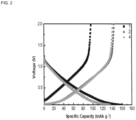
- FIG. 2 is a diagram for explaining charging and discharging of a secondary battery using a composite solid electrolyte separation membrane according to an embodiment of the present disclosure.
- NASICON may be manufactured by performing the firing process, the drying process, the impregnation process, and the like using ZrO 2 , SiO 2 , and Na 3 PO 4 ⁇ 12H 2 O, as described above.
- FIG. 2 shows charging and discharging of a half cell using a hard carbon electrode, and a composite solid electrolyte separation membrane including sodium metal and inorganic fiber in a secondary battery using the composite solid electrolyte separation membrane according to the present disclosure.
- an initial capacitance may be 160 mAh/g
- a second cycle capacitance may be 143 mAh/g.
- FIG. 3 is a diagram showing tensile strength of a composite solid electrolyte separation membrane according to an embodiment of the present disclosure.
- FIG. 4 is a diagram showing ion conductivity of a composite solid electrolyte separation membrane according to an embodiment of the present disclosure.
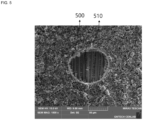
- FIG. 5 is a diagram showing a scanning electron microscope (SEM) image of a composite solid electrolyte separation membrane according to an embodiment of the present disclosure.
- FIG. 5 shows a composite type separation membrane between a NASICON 500 and an inorganic fiber 510 during measurement using an SEM.
- the inorganic fiber 510 may be shaped like a central pillar at the center and the NASICON 500 may be formed at upper and lower layers therearound.
- FIG. 6 is a diagram showing a method of manufacturing a composite solid electrolyte separation membrane 600 using a firing roller 620 at high temperature according to an embodiment of the present disclosure.
- the composite solid electrolyte separation membrane 600 may include an inorganic fiber 610 and may be processed using the firing roller 620 at high temperature.
- the firing roller 620 may be maintained at temperature of 900 to 1100 °C.
Landscapes
- Chemical & Material Sciences (AREA)
- Electrochemistry (AREA)
- General Chemical & Material Sciences (AREA)
- Chemical Kinetics & Catalysis (AREA)
- Engineering & Computer Science (AREA)
- Inorganic Chemistry (AREA)
- Manufacturing & Machinery (AREA)
- Ceramic Engineering (AREA)
- Physics & Mathematics (AREA)
- Condensed Matter Physics & Semiconductors (AREA)
- General Physics & Mathematics (AREA)
- Dispersion Chemistry (AREA)
- Secondary Cells (AREA)
- Conductive Materials (AREA)
Description
- The present disclosure relates to a composite solid electrolyte separation membrane using inorganic fiber and a secondary battery using the same, and more particularly to a composite solid electrolyte separation membrane using inorganic fiber and a secondary battery using the same for maintaining the predetermined pressure, predetermined thickness, and poise viscosity of the composite solid electrolyte to be appropriate for firing at high temperature.
- Recently, with the development of electric vehicles and energy storage devices, the demand for secondary batteries has increased, and research has been actively conducted into secondary batteries having high energy density. Among secondary batteries, a sodium secondary battery uses sodium metal oxide as a positive electrode active material and uses a metal, sodium metal alloy, crystalline or amorphous carbon, or carbon composite as a negative electrode active material. The sodium secondary battery is charged and discharged while a process of intercalation and deintercalation of sodium ions from a sodium metal oxide of a positive electrode to a graphite electrode of a negative electrode is repeatedly performed.
- A separation membrane is a core component of the secondary battery, and the stability of the separation membrane is very important in order to prevent fire hazard and to safely use the secondary battery. NASICON is mainly used to stably maintain the separation membrane. Although NASICON is a type of ceramic and has high ionic conductivity, NASICON may have high surface resistance and may crack, and thus a composite solid electrolyte mixed with a polymer is used. However, the composite solid electrolyte mixed with a polymer has low tensile strength and is not highly usable, and thus a support made using nonwoven fabric is coated with the composite solid electrolyte and is used, but there is a problem in that the nonwoven fabric is deformed even at low temperature.
EP 2680342 A1 discloses a separator for an electric storage device which has small thermal shrinkage under high-temperature environment, and in which the increase of the battery temperature can be suppressed.JP 2015026483 A - Therefore, the present disclosure has been made in view of the above problems, and it is one object of the present disclosure to provide a composite solid electrolyte separation membrane using inorganic fiber and a secondary battery using the same for increasing lifespan and heat resistance and increasing utilization.
- It is another object of the present disclosure to provide a composite solid electrolyte separation membrane using inorganic fiber and a secondary battery using the same for lowering resistance of an electrode through a firing roller at high temperature.
- In accordance with one aspect of the present disclosure, provided is a composite solid electrolyte separation membrane including inorganic fiber, a sodium oxide-based ceramic material impregnated into the inorganic fiber, and an electrolyte impregnated into the inorganic fiber into which the sodium oxide-based ceramic material is impregnated, characterized in that the sodium oxide-based ceramic material is any one of NASICON (Na3Zr2Si2PO12), sodium polyphosphate (Na5P3O10), and trisodium phosphate (Na3PO4·12H2O).
- Here, the composite solid electrolyte separation membrane may include 120 to 150 parts by weight of the sodium oxide-based ceramic material and 3 to 10 parts by weight of the electrolyte based on 100 parts by weight of the inorganic fiber.
- The composite solid electrolyte separation membrane may have a thickness of 35 to 45 µm.
- The inorganic fiber may use any one of glass fiber, inorganic rock powder, and thermosetting fiber.
- When the sodium oxide-based ceramic material is NASICON, the NASICON may include ZrO2 , SiO2, and Na3PO4·12H2O.
- The electrolyte may use any one of a liquid electrolyte and an ion electrolyte.
- The present disclosure provides a secondary battery including the aforementioned composite solid electrolyte separation membrane.
- In accordance with another aspect of the present disclosure, provided is a method of manufacturing a composite solid electrolyte separation membrane, the method including impregnating a sodium oxide-based ceramic material into inorganic fiber, and
impregnating an electrolyte into the inorganic fiber into the sodium oxide-based ceramic material is impregnated, characterized in that the sodium oxide-based ceramic material is any one of NASICON (Na3Zr2Si2PO12), sodium polyphosphate (Na5P3O10), and trisodium phosphate (Na3PO4·12H2O). - Here, the impregnating the sodium oxide-based ceramic material into the inorganic fiber may include synthesizing ZrO2 , SiO2, and Na3PO4·12H2O, after adding and mixing ethanol to the synthesized material, washing the synthesized material with alcohol and primarily firing the synthesized material in an electric furnace at predetermined temperature for a predetermined time, drying the primarily fired synthesized material, pulverizing the dried synthesized material in a form of powder, secondarily firing the synthesized material pulverized in the form of powder in an electric furnace at predetermined temperature for a predetermined time, stirring PVDF-HFP and NMP in the NASICON powder generated in the secondarily firing to generate NASICON slurry, impregnating the NASICON slurry into the inorganic fiber, and washing a surface of the inorganic fiber into which the NASICON slurry is impregnated and drying the inorganic fiber for a predetermined time.
- According to the present disclosure, a composite solid electrolyte separation membrane may include inorganic fiber, and thus may ensure tensile strength, may increase the lifespan of a secondary battery, and may not be deformed even by heat at about 1000 °C, thereby increasing durability. Poise viscosity may be maintained to increase surface hardness and to improve heat resistance and durability. The inorganic fiber may be coated with an incombustible electrolyte and may be impregnated into Hong type, thereby ensuring stability and improving durability. In addition, electrode resistance may be reduced through a firing roller at high temperature, and long-term reliability may be increased by preventing side reactions of dendrite that occurs during charging and discharging.
-
-
FIG. 1 is a diagram for explaining a method of manufacturing a composite solid electrolyte separation membrane according to an embodiment of the present disclosure. -
FIG. 2 is a diagram for explaining charging and discharging of a secondary battery using a composite solid electrolyte separation membrane according to an embodiment of the present disclosure. -
FIG. 3 is a diagram showing tensile strength of a composite solid electrolyte separation membrane according to an embodiment of the present disclosure. -
FIG. 4 is a diagram showing ion conductivity of a composite solid electrolyte separation membrane according to an embodiment of the present disclosure. -
FIG. 5 is a diagram showing a scanning electron microscope (SEM) image of a composite solid electrolyte separation membrane according to an embodiment of the present disclosure. -
FIG. 6 is a diagram showing a method of manufacturing a composite solid electrolyte separation membrane using a firing roller at high temperature according to an embodiment of the present disclosure. - Hereinafter, the present disclosure will be described in detail by explaining exemplary embodiments of the present disclosure with reference to the accompanying drawings. In the following description of the present disclosure, a detailed description of known functions and configurations incorporated herein will be omitted when it may make the subject matter of the present disclosure unclear.
- As an example of a secondary battery according to the present disclosure, a sodium secondary battery will be described, and the present disclosure may also be applied to other secondary batteries in the same/similar way.
- In addition, the case in which a composite solid electrolyte separation membrane includes an inorganic fiber will be exemplified, and the present disclosure may also be applied to the case in which special yarn is used.
-
FIG. 1 is a diagram for explaining a method of manufacturing a composite solid electrolyte separation membrane according to an embodiment of the present disclosure. - The composite solid electrolyte separation membrane according to the present disclosure may include inorganic fiber, a sodium oxide-based ceramic material, and an electrolyte, and here, the sodium oxide-based ceramic material may have 120 to 150 parts by weight based on 100 parts by weight of the inorganic fiber, the electrolyte may have 3 to 10 parts by weight based on 100 parts by weight of the inorganic fiber, and the composite solid electrolyte separation membrane may have a thickness of 35 to 45 µm in order to increase ion conductivity.
- The inorganic fiber may be filmed in the polymer electrolyte using an impregnation coating method. For example, glass fiber, inorganic rock powder, thermosetting fiber, or the like may be used for the inorganic fiber. In the case of the glass fiber, the glass fiber may have a pore structure of a membrane, which contributes to a high electrolyte impregnation rate, may have a high strength of 9 to 15 g/d, may have low friction resistance, and is an incombustible material, which is advantageously stable with respect to acids and organic solvents. In addition, the sodium oxide-based ceramic material uses NASICON (Na3Zr2Si2PO12), sodium polyphosphate (Na5P3O10), and trisodium phosphate (Na3PO4·12H2O), and may be used using impregnated coating with the inorganic fiber.
- The electrolyte may use a liquid electrolyte or an ion electrolyte and may use molecules obtained by dissolving 1 M of sodium hexafluorophosphate (NaPF6) or sodium perchlorate (NaClO4) salt and additives, e.g., ethylene carbonate (EC) or diethyl carbonate (DEC).
- With reference to
FIG. 1 , the method of manufacturing the composite solid electrolyte separation membrane according to the present disclosure will be described, and the composite solid electrolyte separation membrane according to the present disclosure may be manufactured using the method including preparing a sodium oxide-based ceramic material, impregnating the sodium oxide-based ceramic material and the inorganic fiber, and impregnating the electrolyte, and may use the Hong type. - The preparing the sodium oxide-based ceramic material may include preparing the sodium oxide-based ceramic material in the form of powder and then preparing the sodium oxide-based ceramic material in the form of slurry. For example, with regard to a preparation process of NASICON, Zirconium dioxide (ZrO2), silicon dioxide (SiO2), and trisodium phosphate (Na3PO4·12H2O) may be synthesized at a predetermined ratio (100). In this case, ZrO2, SiO2, and Na3PO4·12H2O may be composed at a composition ratio of 1: 0.52: 1.7.
- After the material is synthesized, a weighing process may be performed on the synthesized material and a primary firing process may be performed (110). In the
primary firing process 110, ethanol may be added to the synthesized material, may be mixed in a MILL mixer using a ZrO2 ball, may be washed with alcohol using a sieve, and may then be fired in an electric furnace at 400 °C for 9 hours. After the primary firing, the synthesized material may be washed using the sieve and may then be vacuum-dried for 2 hours (120). - After drying, the synthesized material may be evenly pulverized in the form of powder, and the pulverized synthesized material may be secondarily fired in an electric furnace at 1,200°C for 12 hours (130) to form NASICON powder (140). Then, the NASICON powder, polyvinylidene fluoride (PVDF)-Hexafluoropropene (HFP), and N-methyl-2-pyrrolidone (NMP) may be stirred at a predetermined ratio to form NASICON slurry (150) and may be impregnated into inorganic fiber (160). In this case, the NASICON slurry may include the NASICON powder, the PVDF-HFP, and the NMP in a composition ratio of 0.75: 0.25: 1.
- When the impregnation process is completed, a surface of the inorganic fiber into which NASICON is impregnated may be washed with deionized (DI) water, may be dried at room temperature for about 20 minutes, and may then be dried in an oven at 80 °C for 24 hours (170). After drying, an electrolyte may be impregnated into the inorganic fiber in which NASICON is impregnated to form the composite solid electrolyte separation membrane (180).
-
FIG. 2 is a diagram for explaining charging and discharging of a secondary battery using a composite solid electrolyte separation membrane according to an embodiment of the present disclosure. - Hereinafter, a result obtained via an experiment with respect to a composite solid electrolyte separation membrane manufactured by the Hong type using 7 g of glass fiber as an inorganic fiber, 12 g ofNASICON as a sodium oxide-based ceramic material, and 1 g of ion electrolyte as an electrolyte will be described. In addition, NASICON may be manufactured by performing the firing process, the drying process, the impregnation process, and the like using ZrO2, SiO2, and Na3PO4·12H2O, as described above.
-
FIG. 2 shows charging and discharging of a half cell using a hard carbon electrode, and a composite solid electrolyte separation membrane including sodium metal and inorganic fiber in a secondary battery using the composite solid electrolyte separation membrane according to the present disclosure. In four cycles according to an embodiment using electrolyte of NaPF6, an initial capacitance may be 160 mAh/g, and a second cycle capacitance may be 143 mAh/g. -
FIG. 3 is a diagram showing tensile strength of a composite solid electrolyte separation membrane according to an embodiment of the present disclosure. - A plot in a small box of
FIG. 3 shows tensile strength of commerciallyavailable Celgard ®2400, and as seen fromFIG. 3 , the composite solid electrolyte separation membrane according to the present disclosure has tensile strength that is about 30 times higher thanCelgard ®2400. -
FIG. 4 is a diagram showing ion conductivity of a composite solid electrolyte separation membrane according to an embodiment of the present disclosure. - Referring to
FIG. 4 , the ion conductivity of the composite solid electrolyte separation membrane according to the present disclosure may have σ=5.97×10⁻³ S/cm at a thickness of 40 µm in the case of sinking mill and may have σ=7.94×10⁻³ S/cm in the case of high ball mill. -
FIG. 5 is a diagram showing a scanning electron microscope (SEM) image of a composite solid electrolyte separation membrane according to an embodiment of the present disclosure. -
FIG. 5 shows a composite type separation membrane between aNASICON 500 and aninorganic fiber 510 during measurement using an SEM. As seen fromFIG. 5 , theinorganic fiber 510 may be shaped like a central pillar at the center and theNASICON 500 may be formed at upper and lower layers therearound. -
FIG. 6 is a diagram showing a method of manufacturing a composite solidelectrolyte separation membrane 600 using afiring roller 620 at high temperature according to an embodiment of the present disclosure. - Referring to
FIG. 6 , the composite solidelectrolyte separation membrane 600 according to the present disclosure may include aninorganic fiber 610 and may be processed using thefiring roller 620 at high temperature. In this case, the firingroller 620 may be maintained at temperature of 900 to 1100 °C. - When the composite solid
electrolyte separation membrane 600 passes through the firingroller 620, pressure of the firingroller 620 may be applied to the composite solidelectrolyte separation membrane 600, and accordingly, it may be possible to adjust the thickness of theseparation membrane 600, cohesion may increase, and ceramic such as NASICON included in theseparation membrane 600 may be sintered and fired. - Although specific embodiments have been described in the detailed description of the present disclosure, various modifications are possible without departing from the scope of the present disclosure.
- Therefore, the scope of the present disclosure is not limited to the described embodiments, and should be determined not only by the scope of the claims to be described below, but also by the scope and equivalents of the claims.
Claims (9)
- A composite solid electrolyte separation membrane comprising:inorganic fiber;a sodium oxide-based ceramic material impregnated into the inorganic fiber; andan electrolyte impregnated into the inorganic fiber into which the sodium oxide-based ceramic material is impregnated,characterized in that the sodium oxide-based ceramic material is any one of NASICON (Na3Zr2Si2PO12), sodium polyphosphate (Na5P3O10), and trisodium phosphate (Na3PO4·12H2O).
- The composite solid electrolyte separation membrane of claim 1, wherein the composite solid electrolyte separation membrane includes 120 to 150 parts by weight of the sodium oxide-based ceramic material and 3 to 10 parts by weight of the electrolyte based on 100 parts by weight of the inorganic fiber.
- The composite solid electrolyte separation membrane of claim 1, wherein the composite solid electrolyte separation membrane has a thickness of 35 to 45 µm.
- The composite solid electrolyte separation membrane of claim 1, wherein the inorganic fiber is any one of glass fiber, and thermosetting fiber.
- The composite solid electrolyte separation membrane of claim 1, wherein, when the sodium oxide-based ceramic material is NASICON, the NASICON includes ZrO2, SiO2, and Na3PO4·12H2O.
- The composite solid electrolyte separation membrane of claim 1, wherein the electrolyte is any one of a liquid electrolyte and an ion electrolyte.
- A secondary battery including the composite solid electrolyte separation membrane of any one of claims 1 to 6.
- A method of manufacturing a composite solid electrolyte separation membrane, the method comprising:impregnating a sodium oxide-based ceramic material into inorganic fiber; andimpregnating an electrolyte into the inorganic fiber into which the sodium oxide-based ceramic material is impregnated,characterized in that the sodium oxide-based ceramic material is any one of NASICON (Na3Zr2Si2PO12), sodium polyphosphate (Na5P3O10), and trisodium phosphate (Na3PO4·12H2O).
- The method of claim 8, wherein the impregnating the sodium oxide-based ceramic material into the inorganic fiber includes:synthesizing ZrO2, SiO2, and Na3PO4·12H2O;after adding and mixing ethanol to the synthesized material, washing the synthesized material with alcohol and primarily firing the synthesized material in an electric furnace at predetermined temperature for a predetermined time;drying the primarily fired synthesized material;pulverizing the dried synthesized material in a form of powder;secondarily firing the synthesized material pulverized in the form of powder in an electric furnace at predetermined temperature for a predetermined time;stirring PVDF-HFP and NMP in the NASICON powder generated in the secondarily firing to generate NASICON slurry;impregnating the NASICON slurry into the inorganic fiber; andwashing a surface of the inorganic fiber into which the NASICON slurry is impregnated and drying the inorganic fiber for a predetermined time.
Applications Claiming Priority (3)
| Application Number | Priority Date | Filing Date | Title |
|---|---|---|---|
| KR20200063303 | 2020-05-26 | ||
| KR20200080798 | 2020-07-01 | ||
| PCT/KR2020/018562 WO2021241829A1 (en) | 2020-05-26 | 2020-12-17 | Composite solid electrolyte separator using inorganic fibers, and secondary battery using same |
Publications (4)
| Publication Number | Publication Date |
|---|---|
| EP3944406A1 EP3944406A1 (en) | 2022-01-26 |
| EP3944406A4 EP3944406A4 (en) | 2022-03-02 |
| EP3944406C0 EP3944406C0 (en) | 2024-07-10 |
| EP3944406B1 true EP3944406B1 (en) | 2024-07-10 |
Family
ID=78744962
Family Applications (1)
| Application Number | Title | Priority Date | Filing Date |
|---|---|---|---|
| EP20888728.1A Active EP3944406B1 (en) | 2020-05-26 | 2020-12-17 | Composite solid electrolyte separator using inorganic fibers, and secondary battery using same |
Country Status (4)
| Country | Link |
|---|---|
| US (1) | US20230231272A1 (en) |
| EP (1) | EP3944406B1 (en) |
| KR (1) | KR102499043B1 (en) |
| WO (1) | WO2021241829A1 (en) |
Families Citing this family (2)
| Publication number | Priority date | Publication date | Assignee | Title |
|---|---|---|---|---|
| CN114927750B (en) * | 2022-06-17 | 2025-06-24 | 江南大学 | A solid electrolyte membrane with a wide temperature range and its preparation method and application |
| KR102854376B1 (en) | 2023-10-10 | 2025-09-04 | 주식회사 솔리텍 | All solid state secondary battery comprising composite solid electrolyte |
Family Cites Families (9)
| Publication number | Priority date | Publication date | Assignee | Title |
|---|---|---|---|---|
| KR20000018387A (en) * | 1998-09-02 | 2000-04-06 | 고장면 | Lithium ion second electric cell using high polymer electrolyte and method for fabricating the same |
| CN103403918A (en) * | 2011-02-24 | 2013-11-20 | 日本电气株式会社 | Separator for accumulators, and accumulator |
| JP2015026483A (en) * | 2013-07-25 | 2015-02-05 | トヨタ自動車株式会社 | Positive electrode for sodium batteries, and sodium battery |
| KR102155696B1 (en) * | 2013-09-13 | 2020-09-15 | 삼성전자주식회사 | Composite membrane, preparing method thereof, and lithium air battery including the same |
| KR101879503B1 (en) * | 2016-09-21 | 2018-07-18 | 주식회사 세븐킹에너지 | Hybrid solid electrolyte for rechargeable batteries and preparation method of the same |
| KR102114228B1 (en) * | 2017-02-27 | 2020-05-22 | 울산과학기술원 | Solid electrolyte film, manufacturing method of the same, and all-solid-state-battery including the same |
| KR102047300B1 (en) * | 2017-12-27 | 2019-11-21 | 청주대학교 산학협력단 | Hybrid solid electrolyte and secondary battery using the same |
| CN109860700B (en) * | 2019-01-16 | 2022-07-01 | 广东工业大学 | A kind of Nasicon structure sodium ion solid electrolyte and preparation method and application thereof |
| CN110098432B (en) * | 2019-06-03 | 2022-04-01 | 哈尔滨工业大学 | Preparation method and application of carbon fiber coated solid electrolyte material |
-
2020
- 2020-12-17 US US17/295,867 patent/US20230231272A1/en active Pending
- 2020-12-17 KR KR1020200177039A patent/KR102499043B1/en active Active
- 2020-12-17 WO PCT/KR2020/018562 patent/WO2021241829A1/en not_active Ceased
- 2020-12-17 EP EP20888728.1A patent/EP3944406B1/en active Active
Also Published As
| Publication number | Publication date |
|---|---|
| WO2021241829A1 (en) | 2021-12-02 |
| KR20210146201A (en) | 2021-12-03 |
| EP3944406C0 (en) | 2024-07-10 |
| EP3944406A4 (en) | 2022-03-02 |
| EP3944406A1 (en) | 2022-01-26 |
| KR102499043B1 (en) | 2023-02-13 |
| US20230231272A1 (en) | 2023-07-20 |
Similar Documents
| Publication | Publication Date | Title |
|---|---|---|
| Zheng et al. | Unprecedented self‐healing effect of Li6PS5Cl‐based all‐solid‐state lithium battery | |
| CN109004271B (en) | Composite solid electrolyte membrane and preparation method and application thereof | |
| CN109921097B (en) | Preparation method of all-solid-state battery and all-solid-state battery obtained by preparation method | |
| JP4465492B2 (en) | Rechargeable hybrid battery / supercapacitor system | |
| CN114552122B (en) | Separator, preparation method thereof and secondary battery | |
| EP3326226A1 (en) | Cathode material for rechargeable solid state lithium ion battery | |
| KR101643819B1 (en) | Methode of preparing surface coated cathode active material and cathode active material prepared thereby | |
| CN112993233A (en) | Lithium supplement material of lithium ion battery and preparation method and application thereof | |
| KR102241403B1 (en) | Electrode for an electric energy storage battery comprising a graphite/silicon/carbon fibre composite material | |
| CN113659146A (en) | Potassium lanthanum silicon ternary co-doped sodium vanadium phosphate electrode material and preparation method and application thereof | |
| CN101222055A (en) | Copolymer-based polymer electrolyte material for lithium battery, composite electrolyte membrane and preparation method thereof | |
| EP3944406B1 (en) | Composite solid electrolyte separator using inorganic fibers, and secondary battery using same | |
| KR20170120735A (en) | Method for menufacturing a cathode of lithium primary battery | |
| CN114262447A (en) | A two-dimensional covalent organic framework material with cationic skeleton, preparation method and application thereof, and lithium metal battery electrode | |
| Guo et al. | A high performance composite separator with robust environmental stability for dendrite-free lithium metal batteries | |
| Ma et al. | Efficient utilization of glass fiber separator for low-cost sodium-ion batteries | |
| CN113991095B (en) | Negative active material, preparation method thereof, electrode and battery | |
| Li et al. | Nitrogen and fluorine co-doped graphene for ultra-stable lithium metal anodes | |
| CN119275285A (en) | Positive electrode active material, preparation method, lithium ion battery and electrical equipment | |
| Du et al. | Silica Nanowires Reinforced with Poly (vinylidene fluoride‐co‐hexafluoropropylene): Separator for High‐Performance Lithium Batteries | |
| KR20160060171A (en) | A cathode for all-solid-state battery, its manufacturing process, and all-solid-state battery comprising the same | |
| KR20190044427A (en) | Non-aqueous electrolyte and lithium secondary battery comprising the same | |
| Chen et al. | A novel flexible composite solid electrolyte based on 3D network structural inorganic Si-Zr-OC fiber film | |
| Chen et al. | A composite gel polymer electrolyte for sodium metal battery at a wide temperature range | |
| CN120073052A (en) | Interface modification material with high failure threshold, solid electrolyte and all-solid battery |
Legal Events
| Date | Code | Title | Description |
|---|---|---|---|
| STAA | Information on the status of an ep patent application or granted ep patent |
Free format text: STATUS: UNKNOWN |
|
| STAA | Information on the status of an ep patent application or granted ep patent |
Free format text: STATUS: THE INTERNATIONAL PUBLICATION HAS BEEN MADE |
|
| PUAI | Public reference made under article 153(3) epc to a published international application that has entered the european phase |
Free format text: ORIGINAL CODE: 0009012 |
|
| STAA | Information on the status of an ep patent application or granted ep patent |
Free format text: STATUS: REQUEST FOR EXAMINATION WAS MADE |
|
| 17P | Request for examination filed |
Effective date: 20210526 |
|
| AK | Designated contracting states |
Kind code of ref document: A1 Designated state(s): AL AT BE BG CH CY CZ DE DK EE ES FI FR GB GR HR HU IE IS IT LI LT LU LV MC MK MT NL NO PL PT RO RS SE SI SK SM TR |
|
| A4 | Supplementary search report drawn up and despatched |
Effective date: 20220128 |
|
| RIC1 | Information provided on ipc code assigned before grant |
Ipc: H01M 10/0562 20100101ALI20220124BHEP Ipc: H01M 10/0565 20100101ALI20220124BHEP Ipc: H01M 10/04 20060101ALI20220124BHEP Ipc: H01M 50/431 20210101AFI20220124BHEP |
|
| DAV | Request for validation of the european patent (deleted) | ||
| DAX | Request for extension of the european patent (deleted) | ||
| REG | Reference to a national code |
Ref country code: DE Free format text: PREVIOUS MAIN CLASS: H01M0050431000 Ref country code: DE Ref legal event code: R079 Ref document number: 602020033902 Country of ref document: DE Free format text: PREVIOUS MAIN CLASS: H01M0050431000 Ipc: H01M0050403000 |
|
| GRAP | Despatch of communication of intention to grant a patent |
Free format text: ORIGINAL CODE: EPIDOSNIGR1 |
|
| STAA | Information on the status of an ep patent application or granted ep patent |
Free format text: STATUS: GRANT OF PATENT IS INTENDED |
|
| RIC1 | Information provided on ipc code assigned before grant |
Ipc: H01M 50/431 20210101ALI20240108BHEP Ipc: H01M 10/0562 20100101ALI20240108BHEP Ipc: H01M 50/44 20210101ALI20240108BHEP Ipc: H01M 50/437 20210101ALI20240108BHEP Ipc: H01M 50/434 20210101ALI20240108BHEP Ipc: H01M 50/403 20210101AFI20240108BHEP |
|
| INTG | Intention to grant announced |
Effective date: 20240205 |
|
| GRAS | Grant fee paid |
Free format text: ORIGINAL CODE: EPIDOSNIGR3 |
|
| GRAA | (expected) grant |
Free format text: ORIGINAL CODE: 0009210 |
|
| STAA | Information on the status of an ep patent application or granted ep patent |
Free format text: STATUS: THE PATENT HAS BEEN GRANTED |
|
| AK | Designated contracting states |
Kind code of ref document: B1 Designated state(s): AL AT BE BG CH CY CZ DE DK EE ES FI FR GB GR HR HU IE IS IT LI LT LU LV MC MK MT NL NO PL PT RO RS SE SI SK SM TR |
|
| REG | Reference to a national code |
Ref country code: CH Ref legal event code: EP |
|
| REG | Reference to a national code |
Ref country code: DE Ref legal event code: R096 Ref document number: 602020033902 Country of ref document: DE |
|
| U01 | Request for unitary effect filed |
Effective date: 20240729 |
|
| U07 | Unitary effect registered |
Designated state(s): AT BE BG DE DK EE FI FR IT LT LU LV MT NL PT SE SI Effective date: 20240812 |
|
| PG25 | Lapsed in a contracting state [announced via postgrant information from national office to epo] |
Ref country code: NO Free format text: LAPSE BECAUSE OF FAILURE TO SUBMIT A TRANSLATION OF THE DESCRIPTION OR TO PAY THE FEE WITHIN THE PRESCRIBED TIME-LIMIT Effective date: 20241010 |
|
| PG25 | Lapsed in a contracting state [announced via postgrant information from national office to epo] |
Ref country code: GR Free format text: LAPSE BECAUSE OF FAILURE TO SUBMIT A TRANSLATION OF THE DESCRIPTION OR TO PAY THE FEE WITHIN THE PRESCRIBED TIME-LIMIT Effective date: 20241011 Ref country code: PL Free format text: LAPSE BECAUSE OF FAILURE TO SUBMIT A TRANSLATION OF THE DESCRIPTION OR TO PAY THE FEE WITHIN THE PRESCRIBED TIME-LIMIT Effective date: 20240710 |
|
| U20 | Renewal fee for the european patent with unitary effect paid |
Year of fee payment: 5 Effective date: 20241216 |
|
| PG25 | Lapsed in a contracting state [announced via postgrant information from national office to epo] |
Ref country code: IS Free format text: LAPSE BECAUSE OF FAILURE TO SUBMIT A TRANSLATION OF THE DESCRIPTION OR TO PAY THE FEE WITHIN THE PRESCRIBED TIME-LIMIT Effective date: 20241110 |
|
| PG25 | Lapsed in a contracting state [announced via postgrant information from national office to epo] |
Ref country code: HR Free format text: LAPSE BECAUSE OF FAILURE TO SUBMIT A TRANSLATION OF THE DESCRIPTION OR TO PAY THE FEE WITHIN THE PRESCRIBED TIME-LIMIT Effective date: 20240710 |
|
| PG25 | Lapsed in a contracting state [announced via postgrant information from national office to epo] |
Ref country code: ES Free format text: LAPSE BECAUSE OF FAILURE TO SUBMIT A TRANSLATION OF THE DESCRIPTION OR TO PAY THE FEE WITHIN THE PRESCRIBED TIME-LIMIT Effective date: 20240710 Ref country code: RS Free format text: LAPSE BECAUSE OF FAILURE TO SUBMIT A TRANSLATION OF THE DESCRIPTION OR TO PAY THE FEE WITHIN THE PRESCRIBED TIME-LIMIT Effective date: 20241010 |
|
| PG25 | Lapsed in a contracting state [announced via postgrant information from national office to epo] |
Ref country code: RS Free format text: LAPSE BECAUSE OF FAILURE TO SUBMIT A TRANSLATION OF THE DESCRIPTION OR TO PAY THE FEE WITHIN THE PRESCRIBED TIME-LIMIT Effective date: 20241010 Ref country code: PL Free format text: LAPSE BECAUSE OF FAILURE TO SUBMIT A TRANSLATION OF THE DESCRIPTION OR TO PAY THE FEE WITHIN THE PRESCRIBED TIME-LIMIT Effective date: 20240710 Ref country code: NO Free format text: LAPSE BECAUSE OF FAILURE TO SUBMIT A TRANSLATION OF THE DESCRIPTION OR TO PAY THE FEE WITHIN THE PRESCRIBED TIME-LIMIT Effective date: 20241010 Ref country code: IS Free format text: LAPSE BECAUSE OF FAILURE TO SUBMIT A TRANSLATION OF THE DESCRIPTION OR TO PAY THE FEE WITHIN THE PRESCRIBED TIME-LIMIT Effective date: 20241110 Ref country code: HR Free format text: LAPSE BECAUSE OF FAILURE TO SUBMIT A TRANSLATION OF THE DESCRIPTION OR TO PAY THE FEE WITHIN THE PRESCRIBED TIME-LIMIT Effective date: 20240710 Ref country code: GR Free format text: LAPSE BECAUSE OF FAILURE TO SUBMIT A TRANSLATION OF THE DESCRIPTION OR TO PAY THE FEE WITHIN THE PRESCRIBED TIME-LIMIT Effective date: 20241011 Ref country code: ES Free format text: LAPSE BECAUSE OF FAILURE TO SUBMIT A TRANSLATION OF THE DESCRIPTION OR TO PAY THE FEE WITHIN THE PRESCRIBED TIME-LIMIT Effective date: 20240710 |
|
| PG25 | Lapsed in a contracting state [announced via postgrant information from national office to epo] |
Ref country code: SM Free format text: LAPSE BECAUSE OF FAILURE TO SUBMIT A TRANSLATION OF THE DESCRIPTION OR TO PAY THE FEE WITHIN THE PRESCRIBED TIME-LIMIT Effective date: 20240710 |
|
| PG25 | Lapsed in a contracting state [announced via postgrant information from national office to epo] |
Ref country code: CZ Free format text: LAPSE BECAUSE OF FAILURE TO SUBMIT A TRANSLATION OF THE DESCRIPTION OR TO PAY THE FEE WITHIN THE PRESCRIBED TIME-LIMIT Effective date: 20240710 |
|
| PG25 | Lapsed in a contracting state [announced via postgrant information from national office to epo] |
Ref country code: SK Free format text: LAPSE BECAUSE OF FAILURE TO SUBMIT A TRANSLATION OF THE DESCRIPTION OR TO PAY THE FEE WITHIN THE PRESCRIBED TIME-LIMIT Effective date: 20240710 |
|
| PLBE | No opposition filed within time limit |
Free format text: ORIGINAL CODE: 0009261 |
|
| STAA | Information on the status of an ep patent application or granted ep patent |
Free format text: STATUS: NO OPPOSITION FILED WITHIN TIME LIMIT |
|
| 26N | No opposition filed |
Effective date: 20250411 |
|
| PG25 | Lapsed in a contracting state [announced via postgrant information from national office to epo] |
Ref country code: MC Free format text: LAPSE BECAUSE OF FAILURE TO SUBMIT A TRANSLATION OF THE DESCRIPTION OR TO PAY THE FEE WITHIN THE PRESCRIBED TIME-LIMIT Effective date: 20240710 |
|
| REG | Reference to a national code |
Ref country code: CH Ref legal event code: PL |
|
| GBPC | Gb: european patent ceased through non-payment of renewal fee |
Effective date: 20241217 |
|
| PG25 | Lapsed in a contracting state [announced via postgrant information from national office to epo] |
Ref country code: GB Free format text: LAPSE BECAUSE OF NON-PAYMENT OF DUE FEES Effective date: 20241217 |
|
| PG25 | Lapsed in a contracting state [announced via postgrant information from national office to epo] |
Ref country code: CH Free format text: LAPSE BECAUSE OF NON-PAYMENT OF DUE FEES Effective date: 20241231 |
|
| PG25 | Lapsed in a contracting state [announced via postgrant information from national office to epo] |
Ref country code: IE Free format text: LAPSE BECAUSE OF NON-PAYMENT OF DUE FEES Effective date: 20241217 |
|
| PG25 | Lapsed in a contracting state [announced via postgrant information from national office to epo] |
Ref country code: RO Free format text: LAPSE BECAUSE OF FAILURE TO SUBMIT A TRANSLATION OF THE DESCRIPTION OR TO PAY THE FEE WITHIN THE PRESCRIBED TIME-LIMIT Effective date: 20240710 |
|
| U20 | Renewal fee for the european patent with unitary effect paid |
Year of fee payment: 6 Effective date: 20251128 |