EP3944086A1 - Information delivery device, information delivery method, and information delivery program - Google Patents
Information delivery device, information delivery method, and information delivery program Download PDFInfo
- Publication number
- EP3944086A1 EP3944086A1 EP19919864.9A EP19919864A EP3944086A1 EP 3944086 A1 EP3944086 A1 EP 3944086A1 EP 19919864 A EP19919864 A EP 19919864A EP 3944086 A1 EP3944086 A1 EP 3944086A1
- Authority
- EP
- European Patent Office
- Prior art keywords
- user
- information
- users
- pieces
- captured
- Prior art date
- Legal status (The legal status is an assumption and is not a legal conclusion. Google has not performed a legal analysis and makes no representation as to the accuracy of the status listed.)
- Granted
Links
Images




Classifications
-
- H—ELECTRICITY
- H04—ELECTRIC COMMUNICATION TECHNIQUE
- H04N—PICTORIAL COMMUNICATION, e.g. TELEVISION
- H04N21/00—Selective content distribution, e.g. interactive television or video on demand [VOD]
- H04N21/20—Servers specifically adapted for the distribution of content, e.g. VOD servers; Operations thereof
- H04N21/27—Server based end-user applications
- H04N21/274—Storing end-user multimedia data in response to end-user request, e.g. network recorder
- H04N21/2743—Video hosting of uploaded data from client
-
- G—PHYSICS
- G06—COMPUTING OR CALCULATING; COUNTING
- G06F—ELECTRIC DIGITAL DATA PROCESSING
- G06F13/00—Interconnection of, or transfer of information or other signals between, memories, input/output devices or central processing units
-
- G—PHYSICS
- G06—COMPUTING OR CALCULATING; COUNTING
- G06V—IMAGE OR VIDEO RECOGNITION OR UNDERSTANDING
- G06V20/00—Scenes; Scene-specific elements
- G06V20/40—Scenes; Scene-specific elements in video content
- G06V20/46—Extracting features or characteristics from the video content, e.g. video fingerprints, representative shots or key frames
-
- G—PHYSICS
- G06—COMPUTING OR CALCULATING; COUNTING
- G06V—IMAGE OR VIDEO RECOGNITION OR UNDERSTANDING
- G06V40/00—Recognition of biometric, human-related or animal-related patterns in image or video data
- G06V40/10—Human or animal bodies, e.g. vehicle occupants or pedestrians; Body parts, e.g. hands
-
- H—ELECTRICITY
- H04—ELECTRIC COMMUNICATION TECHNIQUE
- H04N—PICTORIAL COMMUNICATION, e.g. TELEVISION
- H04N21/00—Selective content distribution, e.g. interactive television or video on demand [VOD]
- H04N21/20—Servers specifically adapted for the distribution of content, e.g. VOD servers; Operations thereof
- H04N21/21—Server components or server architectures
- H04N21/218—Source of audio or video content, e.g. local disk arrays
- H04N21/21805—Source of audio or video content, e.g. local disk arrays enabling multiple viewpoints, e.g. using a plurality of cameras
-
- H—ELECTRICITY
- H04—ELECTRIC COMMUNICATION TECHNIQUE
- H04N—PICTORIAL COMMUNICATION, e.g. TELEVISION
- H04N21/00—Selective content distribution, e.g. interactive television or video on demand [VOD]
- H04N21/20—Servers specifically adapted for the distribution of content, e.g. VOD servers; Operations thereof
- H04N21/23—Processing of content or additional data; Elementary server operations; Server middleware
- H04N21/234—Processing of video elementary streams, e.g. splicing of video streams or manipulating encoded video stream scene graphs
- H04N21/23418—Processing of video elementary streams, e.g. splicing of video streams or manipulating encoded video stream scene graphs involving operations for analysing video streams, e.g. detecting features or characteristics
-
- H—ELECTRICITY
- H04—ELECTRIC COMMUNICATION TECHNIQUE
- H04N—PICTORIAL COMMUNICATION, e.g. TELEVISION
- H04N21/00—Selective content distribution, e.g. interactive television or video on demand [VOD]
- H04N21/20—Servers specifically adapted for the distribution of content, e.g. VOD servers; Operations thereof
- H04N21/25—Management operations performed by the server for facilitating the content distribution or administrating data related to end-users or client devices, e.g. end-user or client device authentication, learning user preferences for recommending movies
- H04N21/251—Learning process for intelligent management, e.g. learning user preferences for recommending movies
- H04N21/252—Processing of multiple end-users' preferences to derive collaborative data
-
- H—ELECTRICITY
- H04—ELECTRIC COMMUNICATION TECHNIQUE
- H04N—PICTORIAL COMMUNICATION, e.g. TELEVISION
- H04N21/00—Selective content distribution, e.g. interactive television or video on demand [VOD]
- H04N21/20—Servers specifically adapted for the distribution of content, e.g. VOD servers; Operations thereof
- H04N21/25—Management operations performed by the server for facilitating the content distribution or administrating data related to end-users or client devices, e.g. end-user or client device authentication, learning user preferences for recommending movies
- H04N21/258—Client or end-user data management, e.g. managing client capabilities, user preferences or demographics, processing of multiple end-users preferences to derive collaborative data
- H04N21/25808—Management of client data
- H04N21/25841—Management of client data involving the geographical location of the client
-
- H—ELECTRICITY
- H04—ELECTRIC COMMUNICATION TECHNIQUE
- H04N—PICTORIAL COMMUNICATION, e.g. TELEVISION
- H04N21/00—Selective content distribution, e.g. interactive television or video on demand [VOD]
- H04N21/20—Servers specifically adapted for the distribution of content, e.g. VOD servers; Operations thereof
- H04N21/25—Management operations performed by the server for facilitating the content distribution or administrating data related to end-users or client devices, e.g. end-user or client device authentication, learning user preferences for recommending movies
- H04N21/258—Client or end-user data management, e.g. managing client capabilities, user preferences or demographics, processing of multiple end-users preferences to derive collaborative data
- H04N21/25866—Management of end-user data
-
- H—ELECTRICITY
- H04—ELECTRIC COMMUNICATION TECHNIQUE
- H04N—PICTORIAL COMMUNICATION, e.g. TELEVISION
- H04N21/00—Selective content distribution, e.g. interactive television or video on demand [VOD]
- H04N21/20—Servers specifically adapted for the distribution of content, e.g. VOD servers; Operations thereof
- H04N21/25—Management operations performed by the server for facilitating the content distribution or administrating data related to end-users or client devices, e.g. end-user or client device authentication, learning user preferences for recommending movies
- H04N21/258—Client or end-user data management, e.g. managing client capabilities, user preferences or demographics, processing of multiple end-users preferences to derive collaborative data
- H04N21/25866—Management of end-user data
- H04N21/25891—Management of end-user data being end-user preferences
-
- H—ELECTRICITY
- H04—ELECTRIC COMMUNICATION TECHNIQUE
- H04N—PICTORIAL COMMUNICATION, e.g. TELEVISION
- H04N21/00—Selective content distribution, e.g. interactive television or video on demand [VOD]
- H04N21/20—Servers specifically adapted for the distribution of content, e.g. VOD servers; Operations thereof
- H04N21/25—Management operations performed by the server for facilitating the content distribution or administrating data related to end-users or client devices, e.g. end-user or client device authentication, learning user preferences for recommending movies
- H04N21/266—Channel or content management, e.g. generation and management of keys and entitlement messages in a conditional access system, merging a VOD unicast channel into a multicast channel
- H04N21/2668—Creating a channel for a dedicated end-user group, e.g. insertion of targeted commercials based on end-user profiles
-
- H—ELECTRICITY
- H04—ELECTRIC COMMUNICATION TECHNIQUE
- H04N—PICTORIAL COMMUNICATION, e.g. TELEVISION
- H04N21/00—Selective content distribution, e.g. interactive television or video on demand [VOD]
- H04N21/40—Client devices specifically adapted for the reception of or interaction with content, e.g. set-top-box [STB]; Operations thereof
- H04N21/41—Structure of client; Structure of client peripherals
- H04N21/414—Specialised client platforms, e.g. receiver in car or embedded in a mobile appliance
- H04N21/41407—Specialised client platforms, e.g. receiver in car or embedded in a mobile appliance embedded in a portable device, e.g. video client on a mobile phone, PDA, laptop
-
- H—ELECTRICITY
- H04—ELECTRIC COMMUNICATION TECHNIQUE
- H04N—PICTORIAL COMMUNICATION, e.g. TELEVISION
- H04N21/00—Selective content distribution, e.g. interactive television or video on demand [VOD]
- H04N21/40—Client devices specifically adapted for the reception of or interaction with content, e.g. set-top-box [STB]; Operations thereof
- H04N21/41—Structure of client; Structure of client peripherals
- H04N21/422—Input-only peripherals, i.e. input devices connected to specially adapted client devices, e.g. global positioning system [GPS]
- H04N21/42202—Input-only peripherals, i.e. input devices connected to specially adapted client devices, e.g. global positioning system [GPS] environmental sensors, e.g. for detecting temperature, luminosity, pressure, earthquakes
-
- H—ELECTRICITY
- H04—ELECTRIC COMMUNICATION TECHNIQUE
- H04N—PICTORIAL COMMUNICATION, e.g. TELEVISION
- H04N21/00—Selective content distribution, e.g. interactive television or video on demand [VOD]
- H04N21/40—Client devices specifically adapted for the reception of or interaction with content, e.g. set-top-box [STB]; Operations thereof
- H04N21/41—Structure of client; Structure of client peripherals
- H04N21/422—Input-only peripherals, i.e. input devices connected to specially adapted client devices, e.g. global positioning system [GPS]
- H04N21/4223—Cameras
-
- H—ELECTRICITY
- H04—ELECTRIC COMMUNICATION TECHNIQUE
- H04N—PICTORIAL COMMUNICATION, e.g. TELEVISION
- H04N21/00—Selective content distribution, e.g. interactive television or video on demand [VOD]
- H04N21/40—Client devices specifically adapted for the reception of or interaction with content, e.g. set-top-box [STB]; Operations thereof
- H04N21/43—Processing of content or additional data, e.g. demultiplexing additional data from a digital video stream; Elementary client operations, e.g. monitoring of home network or synchronising decoder's clock; Client middleware
- H04N21/44—Processing of video elementary streams, e.g. splicing a video clip retrieved from local storage with an incoming video stream or rendering scenes according to encoded video stream scene graphs
- H04N21/44008—Processing of video elementary streams, e.g. splicing a video clip retrieved from local storage with an incoming video stream or rendering scenes according to encoded video stream scene graphs involving operations for analysing video streams, e.g. detecting features or characteristics in the video stream
-
- H—ELECTRICITY
- H04—ELECTRIC COMMUNICATION TECHNIQUE
- H04N—PICTORIAL COMMUNICATION, e.g. TELEVISION
- H04N21/00—Selective content distribution, e.g. interactive television or video on demand [VOD]
- H04N21/40—Client devices specifically adapted for the reception of or interaction with content, e.g. set-top-box [STB]; Operations thereof
- H04N21/45—Management operations performed by the client for facilitating the reception of or the interaction with the content or administrating data related to the end-user or to the client device itself, e.g. learning user preferences for recommending movies, resolving scheduling conflicts
- H04N21/4508—Management of client data or end-user data
- H04N21/4532—Management of client data or end-user data involving end-user characteristics, e.g. viewer profile, preferences
-
- H—ELECTRICITY
- H04—ELECTRIC COMMUNICATION TECHNIQUE
- H04N—PICTORIAL COMMUNICATION, e.g. TELEVISION
- H04N21/00—Selective content distribution, e.g. interactive television or video on demand [VOD]
- H04N21/60—Network structure or processes for video distribution between server and client or between remote clients; Control signalling between clients, server and network components; Transmission of management data between server and client, e.g. sending from server to client commands for recording incoming content stream; Communication details between server and client
- H04N21/65—Transmission of management data between client and server
- H04N21/658—Transmission by the client directed to the server
- H04N21/6582—Data stored in the client, e.g. viewing habits, hardware capabilities, credit card number
-
- H—ELECTRICITY
- H04—ELECTRIC COMMUNICATION TECHNIQUE
- H04N—PICTORIAL COMMUNICATION, e.g. TELEVISION
- H04N21/00—Selective content distribution, e.g. interactive television or video on demand [VOD]
- H04N21/60—Network structure or processes for video distribution between server and client or between remote clients; Control signalling between clients, server and network components; Transmission of management data between server and client, e.g. sending from server to client commands for recording incoming content stream; Communication details between server and client
- H04N21/65—Transmission of management data between client and server
- H04N21/658—Transmission by the client directed to the server
- H04N21/6587—Control parameters, e.g. trick play commands, viewpoint selection
Definitions
- the present disclosure relates to an information distribution apparatus, an information distribution method, and an information distribution program.
- Patent Literature 1 discloses a technique of extracting user attribute data associated with a user ID, extracting training video content from a matching table, and displaying the extracted content. Accordingly, each user is provided with appropriate content.
- Patent Literature 1 Japanese Unexamined Patent Application Publication No. 2018-98769
- a supporter may want to focus on and support a group including a user, who is a target to be supported, and people who are present near the target to be supported.
- the aim of the present disclosure is to provide an information distribution apparatus, an information distribution method, and an information distribution program for assisting in observing a specific user from a group of a large number of people by extracting a specific user and people who are present near the specific user from the group including the large number of people.
- this distribution system allows each participant to have a user device 40, wirelessly communicates user information, the user information including at least one of a user-captured image and positional information of a user, and a user ID, and collects the information in a server 30.
- Each of the user information pieces that have been collected is associated as related user group information including a specific user (a target to be supported) and users who are present near the specific user based on at least one of the user-captured images and the positional information of the users and is distributed to a communication terminal 10 owned by a supporter who wants to watch the game.
- a supporter who wants to watch the game in which a large number of participants participate is able to enjoy watching the game focusing on a group including a participant, who is a target to be supported, and participants who are present near the participant to be supported from among a large number of participants.
- a supporter who has received the related user group information by a communication terminal such as a smartphone is able to view the related user group information as a map display in which positions of the respective players are arranged or as a list display with thumbnails indicating the ranking or the like of each player in the group.
- the supporter watches the video of the player, who is a target to be supported, captured by the user devices 40 of the players who are present near the target to be supported.
- a satellite positioning system such as a Global Positioning System (GPS) in the United States and Global Navigation Satellite System (GLONASS) in Russia may be, for example, used.
- GPS Global Positioning System
- GLONASS Global Navigation Satellite System
- Fig. 2 is a block diagram showing a configuration of the user device 40.
- the user device 40 includes an image-capturing unit 401, a position detection unit 402, and a radio communication unit 403.
- the image-capturing unit 401 which is, for example, a wearable camera that can capture images near a user, such as the front and back of the user, includes an image sensor (e.g., a CCD/CMOS image sensor). Such a camera is preferably a high-resolution camera capable of identifying characters and colors as well.
- the position detection unit 402 measures positions of users who are wearing the user devices 40 using the aforementioned positioning system.
- the radio communication unit 403 is able to communicate with the server 30 wirelessly, and wirelessly transmit, to the sensor 30, data of images captured by the image-capturing unit 401, the positional information detected by the position detection unit 402, and user IDs such as uniform numbers or bib numbers of the users, the registration numbers, the names or the like by which the users can be identified.
- the radio communication unit 403 may perform wireless communication with an external device (e.g., a server) by, for example, Bluetooth (registered trademark) Low Energy (hereinafter it will be referred to as BLE), ZigBee (registered trademark) or Wi-Fi (registered trademark).
- BLE Bluetooth (registered trademark) Low Energy
- ZigBee registered trademark
- Wi-Fi registered trademark
- This controller includes a function of executing various kinds of control based on various kinds of programs stored in a storage unit and is implemented by a central processing unit (CPU), a read-only memory (ROM), a random access memory (RAM), an input/output port (I/O) or the like.
- CPU central processing unit
- ROM read-only memory
- RAM random access memory
- I/O input/output port
- the user device 40 may include a microphone that collects ambient sounds of a user who wears the microphone and transmit the collected voice data to the server 30, although the microphone is not shown in Fig. 2 .
- a communication terminal 10 owned by a supporter includes a display unit 101, a speaker 102, and a communication unit 103.
- the display unit 101 includes any preferable display such as a liquid crystal display (LCD) or a touch screen display.
- the communication unit 103 is able to communicate with the server 30 via a network and receive data of images captured by the image-capturing unit 401, positional information detected by the position detection unit 402, and voice data of ambient sounds collected by the microphone.
- Examples of the network include a local area network (LAN) and a wide area network (WAN), like the Internet.
- the communication network may be implemented by using an arbitrary known network protocol, including various types of wired or wireless protocols, such as Ethernet (registered trademark), Universal Serial Bus (USB), FIREWIRE (registered trademark), Global System for Mobile Communications (GSM (registered trademark)), Enhanced Data GSM (registered trademark) Environment (EDGE), Code Division Multiple Access (CDMA), Time Division Multiple Access (TDMA), Bluetooth (registered trademark), Wi-Fi (registered trademark), Voice over Internet Protocol (VoIP), Wi-MAX (registered trademark), or other types of arbitrary suitable communication protocols.
- Ethernet registered trademark
- USB Universal Serial Bus
- FIREWIRE registered trademark
- GSM Global System for Mobile Communications
- EDGE Enhanced Data GSM
- CDMA Code Division Multiple Access
- TDMA Time Division Multiple Access
- Bluetooth registered trademark
- Wi-Fi registered trademark
- VoIP Voice over Internet Protocol
- Wi-MAX registered trademark
- the communication terminal 10 which is device for enabling a supporter who watches the game to view data of images captured by game participants, positional information, and voice data of ambient sounds, may be a mobile communication terminal or a fixed communication terminal.
- the mobile communication terminal may be, for example, a mobile terminal such as a mobile telephone, a smartphone, a tablet terminal, or a wearable terminal (smart glasses etc.)
- the fixed communication terminal may be a personal computer, a multifunctional television, a set-top box or the like.
- a server which is an information distribution apparatus and is one of the features of the present disclosure. While the present disclosure can be applied to games such as a marathon, a bicycle race, a horse race, soccer, or a car race in which a number of players participate, a case in which the present disclosure is applied to a marathon will be described in the following.
- Fig. 3 is a block diagram showing a configuration of the server 30.
- the server 30 includes a user information receiving unit 301, a user specifying unit 302, an other user extraction unit 303, a related user group information generation unit 304, and a distribution unit 305.
- the user specifying unit 302 may further include a specific user ID receiving unit 3021 and a selection symbol information receiving unit 3022.
- the other user extraction unit 303 may further include a positional relation calculation unit 3031 and a captured user determination unit 3032.
- Fig. 4 is a flowchart showing operation processing of the server 30.
- Fig. 5 is a diagram for describing a group of people among a large number of participants who participate in a marathon. This group of people includes a player A to be supported and players B, C, D, E, and F who are present near the player A.
- each player wears a user device 40 on his/her back and the respective image-capturing units of the respective user devices 40 are capturing images in a direction opposite to the running direction.
- Fig. 5 shows respective imaging regions 401A-401F having a substantially triangular shape that are extended from the respective user devices 40.
- the user information receiving unit 301 receives the user information from each of the user devices 40, the user information including at least one of the captured data and the positional information, and the user ID (Step S1).
- the user specifying unit 302 specifies the user to be supported from a large number of participants (Step S2).
- a predetermined user such as a favorite player or a leading runner may be selected as a specific user.
- the supporter may input the user ID from the communication terminal 10 that the supporter has.
- the specific user ID receiving unit 3021 may receive the input data from the communication terminal 10. Thereby, the user specifying unit 302 can specify the user.
- the supporter may select a symbol such as a pin icon of the specific player generated by the related user group information generation unit 304 and transmit it to the server from the communication terminal 10 that the supporter has.
- the selection symbol information receiving unit 3022 may receive the selected data from the communication terminal 10.
- the user specifying unit 302 can specify the user.
- the player A to be supported shown in Fig. 5 is the specific user.
- the other user extraction unit 303 extracts the specified user and related surrounding users (a group of people) (Step S3).
- the positional relation calculation unit 3031 may calculate the positional relations (front and back or right and left with respect to the running direction, or the distance from each other) of the respective users (the respective players) based on the positional information of the respective user devices 40 and extract the related surrounding users in accordance with the distances from the specific user (the player A) (within a predetermined distance from the player A).
- the players B, C, D, E, F, and G who are within 10 m from the specific user (the player A) may be extracted as the related surrounding users.
- the other user extraction unit 303 may extract user who wears the user device 40 capturing the specific user (the player A) as related surrounding user.
- the specific user (the player A) is included in a part of each of the imaging regions 401B, 401C, and 401D (angles of view) of the image-capturing units of the respective user devices 40 worn by players who are present near the specific user.
- the captured user determination unit 3032 capable of recognizing images of the captured data and specifying persons etc. may recognize images of the faces, bibs etc. of the players. Then, the captured user determination unit 3032 may specify surrounding users who are capturing images of the specific user (the player A), and extract these users as other users.
- the players B, C, and D are capturing images of the specific user (the player A), whereby it is possible to extract the players B, C, and D as other users.
- the related user group information generation unit 304 generates related user group information including at least one of a pieces of user information of the specific user and at least one of pieces of other user information on the related surrounding users (other users) (Step S4).
- the related user group information may be generated as information (related user group positional information) which shows the positions of the respective players by symbols such as pin icons on a map as shown in Fig. 5 .
- the related user group positional information may display the pin icon of the player to be supported and pin icons of players who are present near the player to be supported by different forms with different colors or shapes.
- the related user group information may be generated as information in which video data captured by the user devices 40 that the respective players have is linked from the pin icons of the respective players. Accordingly, the supporter is able to view video images captured by the cameras the respective players have by selecting the pin icons of the respective players from the communication terminal 10.
- the related user group information generation unit 304 may generate, for example, related user group information including positional information of the user information of the specific user and video data captured by the user devices 40 that the respective players have. Accordingly, the positional information of the specific user in association with the video data that have been captured by users who are present near the specific user and show the specific user can be distributed to the communication terminal 10 of the supporter.
- the other user extraction unit 303 extracts other users based on one of the positional information of the respective user devices 40 and specified result of other users who capture images of the specific user by the captured user determination unit 3032. More preferably, the other user extraction unit 303 extracts other users based on both of them.
- the related user group information may be generated as a list display as shown in Fig. 6 .
- the item indicating a distance (m) indicates the distance from the player A who is to be supported. In this example, the distance is shown with a plus sign for the forward direction from the player A to be supported and with a minus sign for the backward direction therefrom.
- thumbnails of data captured by the user devices 40 of the respective players may be displayed in the item indicating the presence or the absence of video images.
- the presence or the absence of video images here indicates whether or not images of the player A to be supported are being captured, which is determined by the captured user determination unit 3032. Since the video images captured by the players D, B, and C are "present" in Fig.
- a supporter is able to view the video images of the player A from the link to these video images.
- the video images of the user devices 40 of the players E, F, and G are "absent" in Fig. 6 , the supporter is still able to view these video images from the link to these video images.
- the distribution unit 305 distributes the thus generated related user group information to the communication terminal 10 of the supporter (Step S5). Accordingly, the supporter is able to enjoy watching the game focusing on a group including the player to be supported and players who are present near the player to be supported from among a large number of participants. Further, the supporter is able to constantly observe at least one of images of the player to be supported captured by each of the players who are present near the player to be supported and the transition of the current position of a group including the player to be supported and players who are present near the player to be supported.
- Fig. 7 is a diagram for describing a group of participants who participate in a marathon according to a modified example of Fig. 5 .
- the group of people includes a player A to be supported and players B, C, D, E, and F who are present near the player A.
- Each of the players wears one of the user devices 40 on both his/her front and back, and each of the image-capturing units captures images of the running direction and a direction that is opposite to the running direction.
- Fig. 7 shows substantially circular imaging regions 401A-401F that are extended from the respective user devices 40. While the example in which each participant wears the user device 40 on both his/her front and back is shown in Fig.
- the player A to be supported shown in Fig. 7 is a specific user.
- Step S3 an example of extracting the specific user and the related surrounding users according to the modified example
- the positional relation calculation unit 3031 calculates the positional relation (front and back or right and left with respect to the running direction, or the distance from each other) based on the positional information of the respective user devices 40. Then, the related surrounding users may be extracted from the positional relation (within a predetermined distance from the player A) with the specific user (the player A).
- the players B, C, and D who are running in front of the specific user, may be extracted as other users.
- the players E, F, and G who are running behind the specific user, may be extracted as other users.
- the related user group information generation unit 304 is able to acquire images of the specific user captured from the front from the user devices 40 of the other players B, C, and D and acquire images of the specific user captured from behind from the user devices 40 of the other players E, F, and G.
- the supporter adds desired positional relation information to the user ID to be transmitted and transmits them to the specific user ID receiving unit 3021. Thereby, the supporter is able to receive distributed images of the specific user captured from a desired direction from the server 30.
- users who wears the user devices 40 capturing images of the specific user may be extracted as related surrounding users.
- the specific user (the player A) is included in a part of each of the imaging regions 401C, 401D, 401E, and 401G (angles of view) of the image-capturing units of the players who are present near the specific user.
- the captured user determination unit 3032 may recognize images of the faces of the players, bibs that the players wear etc., and users who are present near the specific user and capturing images of the specific user may be specified. Therefore, since the players C, D, E, and G are capturing images of the specific user (the player A) in this example, the players C, D, E, and G may be extracted as the related surrounding users.
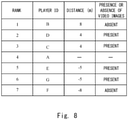
- Fig. 8 is a diagram showing one example of the related user group information according to a modified example shown in Fig. 7 .
- the related user group information may be generated as a list display indicating the ranking of each player in the running direction.
- the distance from the player A to be supported is shown in the item of a distance (m). In this example, the distance is shown with a plus sign for the forward direction from the player A to be supported and with a minus sign for the backward direction therefrom. While the distance from the player A to be supported is shown in Fig. 8 , the distance from the start or the distance to the goal may instead be shown.
- thumbnails of data captured by the user devices 40 of the respective players may be displayed in the item indicating the presence or the absence of video images.
- the presence or the absence of video images here indicates whether or not images of the player A to be supported are being captured. Since video images of the players D, C, E, and G indicate “present” in Fig. 8 , the supporter is able to view video images of the player A from the link to these video images. Although the video images of the user devices 40 of the players B and F indicate "absent" in Fig. 8 , the supporter is still able to view the video images from the link to these video images.
- the supporter is able to receive the above list by a communication terminal and check the position of the target to be supported. Further, the supporter is able to enjoy realistic video images sent from players near the player to be supported.
- Non-transitory computer readable media include any type of tangible storage media.
- Examples of non-transitory computer readable media include magnetic storage media (such as flexible disks, magnetic tapes, hard disk drives, etc.), optical magnetic storage media (e.g., magneto-optical disks), CD-Read Only Memory (ROM), CD-R, CD-R/W, DVD (Digital Versatile Disc), BD (Blu-ray (registered trademark) Disc), and semiconductor memories (such as mask ROM, Programmable ROM (PROM), Erasable PROM (EPROM), flash ROM, Random Access Memory (RAM), etc.).
- the program(s) may be provided to a computer using any type of transitory computer readable media.
- Examples of transitory computer readable media include electric signals, optical signals, and electromagnetic waves.
- Transitory computer readable media can provide the program to a computer via a wired communication line (e.g., electric wires, and optical fibers) or a wireless communication line.
- Fig. 9 is a block diagram showing a hardware configuration example of the communication terminal 10 and the server 30 according to the embodiment.
- each of the communication terminal 10 and the server 30 according to this embodiment is a computer that includes, for example, a Central Processing Unit (CPU) 201, a Random access memory (RAM) 202, and a Read Only Memory (ROM) 203.
- the CPU 201 performs calculation and control in accordance with software stored in the RAM 202, the ROM 203, or a hard disk 204.
- the RAM 202 is used as a temporary storage area when the CPU 201 executes various kinds of processing.
- the hard disk 204 stores, for example, an operating system (OS), and a registration program which will be described later.
- OS operating system
- a display 205 is composed of a liquid crystal display and a graphic controller, and displays objects such as images and icons, a GUI, and the like.
- An input unit 206 which is an apparatus for a user to give various instructions to the terminal device 200, may be composed of, for example, a touch panel, a mouse, a keyboard and the like.
- An interface (I/F) unit 207 can control wireless LAN communication and wired LAN communication conforming to standards such as the IEEE 802.11a and communicates with an external device through a communication network the same as the wireless and wired LAN communication networks and the Internet based on a protocol such as TCP/IP.
- a system bus 208 controls the exchange of data with the CPU 201, the RAM 202, the ROM 203, the hard disk 204, and the like.
- the present disclosure is not limited to the above-described embodiments and may be changed as appropriate without departing from the spirit of the present disclosure.
- players who participate in a game such as a marathon race wear user devices 40.
- the user device 40 may be attached to a mobile body such as a vehicle, a horse, an automobile, or a motorbike.
- this system is not limited to these games.
- the user device 40 may be attached to vehicles running on public roads and may be used by a driver (corresponding to a player) and a family member in a home (corresponding to a supporter).
- the "player ID (bib)" may be an ID for each vehicle or for each in-vehicle device, i.e., a number plate.
- the present disclosure relates to a technique of assisting in observing a specific user from among a large number of users and includes industrial applicability.
Landscapes
- Engineering & Computer Science (AREA)
- Multimedia (AREA)
- Signal Processing (AREA)
- Databases & Information Systems (AREA)
- Theoretical Computer Science (AREA)
- Computer Graphics (AREA)
- Physics & Mathematics (AREA)
- General Physics & Mathematics (AREA)
- General Engineering & Computer Science (AREA)
- Life Sciences & Earth Sciences (AREA)
- Ecology (AREA)
- Emergency Management (AREA)
- Environmental & Geological Engineering (AREA)
- Environmental Sciences (AREA)
- Remote Sensing (AREA)
- Biodiversity & Conservation Biology (AREA)
- Business, Economics & Management (AREA)
- Human Computer Interaction (AREA)
- Computing Systems (AREA)
- Two-Way Televisions, Distribution Of Moving Picture Or The Like (AREA)
- Information Transfer Between Computers (AREA)
- Management, Administration, Business Operations System, And Electronic Commerce (AREA)
Abstract
Description
- The present disclosure relates to an information distribution apparatus, an information distribution method, and an information distribution program.
-
Patent Literature 1 discloses a technique of extracting user attribute data associated with a user ID, extracting training video content from a matching table, and displaying the extracted content. Accordingly, each user is provided with appropriate content. - [Patent Literature 1]
Japanese Unexamined Patent Application Publication No. 2018-98769 - Incidentally, in games such as a marathon, a bicycle race, a horse race, or soccer in which a large number of players (users) participate, it is sometimes difficult for a supporter to find a user, who is a target to be supported, from a group of such a large number of people. Further, in these games, a supporter may want to focus on and support a group including a user, who is a target to be supported, and people who are present near the target to be supported.
- The aim of the present disclosure is to provide an information distribution apparatus, an information distribution method, and an information distribution program for assisting in observing a specific user from a group of a large number of people by extracting a specific user and people who are present near the specific user from the group including the large number of people.
- An information distribution apparatus according to this embodiment includes:
- a user information receiving unit configured to receive user information from user devices that respective users have, the user information including at least one of user-captured images captured by the respective user devices and positional information of the users measured by the respective user devices, and user IDs of the users;
- a user specifying unit configured to specify at least one user from a plurality of pieces of user information;
- an other user extraction unit configured to extract at least one other user who is present near the specified user based on at least one of the user-captured images and the positional information of the users that have been received;
- a related user group information generation unit configured to generate related user group information in which at least one of the pieces of user information is associated with at least one of pieces of other user information, which are information pieces on other users that have been extracted; and
- a distribution unit configured to externally distribute the related user group information.
- An information distribution method according to this embodiment includes:
- receiving user information from user devices that respective users have, the user information including at least one of user-captured images captured by the respective user devices and positional information of the users measured by the respective user devices, and user IDs of the users;
- specifying at least one user from a plurality of pieces of user information;
- extracting at least one other user who is present near the specified user based on at least one of the user-captured images and the positional information of the users that have been received;
- generating related user group information in which at least one of the pieces of user information is associated with at least one of pieces of other user information, which are information pieces on other users that have been extracted; and
- externally distributing the related user group information.
- An information distribution program according to this embodiment causes a computer to execute the following processing of:
- receiving user information from user devices that respective users have, the user information including at least one of user-captured images captured by the respective user devices and positional information of the users measured by the respective user devices, and user IDs of the users;
- specifying at least one user from a plurality of pieces of user information;
- extracting at least one other user who is present near the specified user based on at least one of the user-captured images and the positional information of the users that have been received;
- generating related user group information in which at least one of the pieces of user information is associated with at least one of pieces of other user information, which are information pieces on other users that have been extracted; and
- externally distributing the related user group information.
- According to this embodiment, it is possible to assist in observing a specific user from among a large number of users.
-
-
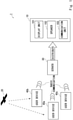
Fig. 1 is a diagram for describing an outline of an information distribution apparatus according to the present disclosure; -
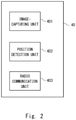
Fig. 2 is a block diagram showing a configuration of a user device according to an embodiment of the present disclosure; -
Fig. 3 is a block diagram showing a configuration of a server according to the embodiment of the present disclosure; -
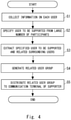
Fig. 4 is a flowchart showing an operation processing of the server according to the embodiment of the present disclosure; -
Fig. 5 is a diagram for describing a group of people of participants who participate in a marathon according to the embodiment of the present disclosure; -
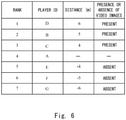
Fig. 6 is a diagram showing one example of related user group information; -
Fig. 7 is a diagram for describing a group of people of participants who participate in a marathon according to a modified example ofFig. 5 ; -
Fig. 8 is a diagram showing one example of related user group information according to a modified example shown inFig. 7 ; and -
Fig. 9 is a block diagram showing a hardware configuration example of acommunication terminal 10 and aserver 30. - Referring to
Figs. 1 and2 , an outline of an information distribution system according to the present disclosure will be described. - In games such as a marathon in which a number of players participate, for example, this distribution system allows each participant to have a
user device 40, wirelessly communicates user information, the user information including at least one of a user-captured image and positional information of a user, and a user ID, and collects the information in aserver 30. Each of the user information pieces that have been collected is associated as related user group information including a specific user (a target to be supported) and users who are present near the specific user based on at least one of the user-captured images and the positional information of the users and is distributed to acommunication terminal 10 owned by a supporter who wants to watch the game. In this way, a supporter who wants to watch the game in which a large number of participants participate is able to enjoy watching the game focusing on a group including a participant, who is a target to be supported, and participants who are present near the participant to be supported from among a large number of participants. For example, a supporter who has received the related user group information by a communication terminal such as a smartphone is able to view the related user group information as a map display in which positions of the respective players are arranged or as a list display with thumbnails indicating the ranking or the like of each player in the group. Preferably, the supporter watches the video of the player, who is a target to be supported, captured by theuser devices 40 of the players who are present near the target to be supported. - In this information distribution system, it is possible to acquire positional information of the respective participants by a positioning system that uses an
artificial satellite 20. A satellite positioning system such as a Global Positioning System (GPS) in the United States and Global Navigation Satellite System (GLONASS) in Russia may be, for example, used. In games such as a marathon or soccer, in order to grasp the exact position (error 1 m class) of each of crowded players, it is preferable to perform positioning using signals transmitted from a satellite that complements GPS (e.g., Quasi-Zenith Satellite System Michibiki). -
Fig. 2 is a block diagram showing a configuration of theuser device 40. Theuser device 40 includes an image-capturingunit 401, aposition detection unit 402, and aradio communication unit 403. The image-capturingunit 401, which is, for example, a wearable camera that can capture images near a user, such as the front and back of the user, includes an image sensor (e.g., a CCD/CMOS image sensor). Such a camera is preferably a high-resolution camera capable of identifying characters and colors as well. Theposition detection unit 402 measures positions of users who are wearing theuser devices 40 using the aforementioned positioning system. Theradio communication unit 403 is able to communicate with theserver 30 wirelessly, and wirelessly transmit, to thesensor 30, data of images captured by the image-capturingunit 401, the positional information detected by theposition detection unit 402, and user IDs such as uniform numbers or bib numbers of the users, the registration numbers, the names or the like by which the users can be identified. Theradio communication unit 403 may perform wireless communication with an external device (e.g., a server) by, for example, Bluetooth (registered trademark) Low Energy (hereinafter it will be referred to as BLE), ZigBee (registered trademark) or Wi-Fi (registered trademark). The user device may include a controller. This controller includes a function of executing various kinds of control based on various kinds of programs stored in a storage unit and is implemented by a central processing unit (CPU), a read-only memory (ROM), a random access memory (RAM), an input/output port (I/O) or the like. - Further, the
user device 40 may include a microphone that collects ambient sounds of a user who wears the microphone and transmit the collected voice data to theserver 30, although the microphone is not shown inFig. 2 . - As shown in
Fig. 1 , acommunication terminal 10 owned by a supporter includes adisplay unit 101, aspeaker 102, and acommunication unit 103. Thedisplay unit 101 includes any preferable display such as a liquid crystal display (LCD) or a touch screen display. Thecommunication unit 103 is able to communicate with theserver 30 via a network and receive data of images captured by the image-capturingunit 401, positional information detected by theposition detection unit 402, and voice data of ambient sounds collected by the microphone. - Examples of the network include a local area network (LAN) and a wide area network (WAN), like the Internet. Further, the communication network may be implemented by using an arbitrary known network protocol, including various types of wired or wireless protocols, such as Ethernet (registered trademark), Universal Serial Bus (USB), FIREWIRE (registered trademark), Global System for Mobile Communications (GSM (registered trademark)), Enhanced Data GSM (registered trademark) Environment (EDGE), Code Division Multiple Access (CDMA), Time Division Multiple Access (TDMA), Bluetooth (registered trademark), Wi-Fi (registered trademark), Voice over Internet Protocol (VoIP), Wi-MAX (registered trademark), or other types of arbitrary suitable communication protocols.
- As described above, the
communication terminal 10, which is device for enabling a supporter who watches the game to view data of images captured by game participants, positional information, and voice data of ambient sounds, may be a mobile communication terminal or a fixed communication terminal. The mobile communication terminal may be, for example, a mobile terminal such as a mobile telephone, a smartphone, a tablet terminal, or a wearable terminal (smart glasses etc.) The fixed communication terminal may be a personal computer, a multifunctional television, a set-top box or the like. - Referring next to
Figs. 3-7 , functions of a server, which is an information distribution apparatus and is one of the features of the present disclosure, will be described. While the present disclosure can be applied to games such as a marathon, a bicycle race, a horse race, soccer, or a car race in which a number of players participate, a case in which the present disclosure is applied to a marathon will be described in the following. -
Fig. 3 is a block diagram showing a configuration of theserver 30. Theserver 30 includes a userinformation receiving unit 301, auser specifying unit 302, an otheruser extraction unit 303, a related user groupinformation generation unit 304, and adistribution unit 305. Theuser specifying unit 302 may further include a specific userID receiving unit 3021 and a selection symbolinformation receiving unit 3022. The otheruser extraction unit 303 may further include a positionalrelation calculation unit 3031 and a captureduser determination unit 3032. -
Fig. 4 is a flowchart showing operation processing of theserver 30.Fig. 5 is a diagram for describing a group of people among a large number of participants who participate in a marathon. This group of people includes a player A to be supported and players B, C, D, E, and F who are present near the player A. In the example shown inFig. 5 , each player wears auser device 40 on his/her back and the respective image-capturing units of therespective user devices 40 are capturing images in a direction opposite to the running direction.Fig. 5 showsrespective imaging regions 401A-401F having a substantially triangular shape that are extended from therespective user devices 40. - The user
information receiving unit 301 receives the user information from each of theuser devices 40, the user information including at least one of the captured data and the positional information, and the user ID (Step S1). - Next, the
user specifying unit 302 specifies the user to be supported from a large number of participants (Step S2). A predetermined user such as a favorite player or a leading runner may be selected as a specific user. Alternatively, the supporter may input the user ID from thecommunication terminal 10 that the supporter has. Then, the specific userID receiving unit 3021 may receive the input data from thecommunication terminal 10. Thereby, theuser specifying unit 302 can specify the user. - Alternatively, the supporter may select a symbol such as a pin icon of the specific player generated by the related user group
information generation unit 304 and transmit it to the server from thecommunication terminal 10 that the supporter has. The selection symbolinformation receiving unit 3022 may receive the selected data from thecommunication terminal 10. Thereby, theuser specifying unit 302 can specify the user. In this example, the player A to be supported shown inFig. 5 is the specific user. - The other
user extraction unit 303 extracts the specified user and related surrounding users (a group of people) (Step S3). For example, the positionalrelation calculation unit 3031 may calculate the positional relations (front and back or right and left with respect to the running direction, or the distance from each other) of the respective users (the respective players) based on the positional information of therespective user devices 40 and extract the related surrounding users in accordance with the distances from the specific user (the player A) (within a predetermined distance from the player A). For example, in this example, the players B, C, D, E, F, and G who are within 10 m from the specific user (the player A) may be extracted as the related surrounding users. - Alternatively, the other
user extraction unit 303 may extract user who wears theuser device 40 capturing the specific user (the player A) as related surrounding user. InFig. 5 , the specific user (the player A) is included in a part of each of theimaging regions respective user devices 40 worn by players who are present near the specific user. The captureduser determination unit 3032 capable of recognizing images of the captured data and specifying persons etc. may recognize images of the faces, bibs etc. of the players. Then, the captureduser determination unit 3032 may specify surrounding users who are capturing images of the specific user (the player A), and extract these users as other users. In this way, in this example, the players B, C, and D are capturing images of the specific user (the player A), whereby it is possible to extract the players B, C, and D as other users. - As described above, the related user group
information generation unit 304 generates related user group information including at least one of a pieces of user information of the specific user and at least one of pieces of other user information on the related surrounding users (other users) (Step S4). The related user group information may be generated as information (related user group positional information) which shows the positions of the respective players by symbols such as pin icons on a map as shown inFig. 5 . In this case, the related user group positional information may display the pin icon of the player to be supported and pin icons of players who are present near the player to be supported by different forms with different colors or shapes. Further, in this case, the related user group information may be generated as information in which video data captured by theuser devices 40 that the respective players have is linked from the pin icons of the respective players. Accordingly, the supporter is able to view video images captured by the cameras the respective players have by selecting the pin icons of the respective players from thecommunication terminal 10. - The related user group
information generation unit 304 may generate, for example, related user group information including positional information of the user information of the specific user and video data captured by theuser devices 40 that the respective players have. Accordingly, the positional information of the specific user in association with the video data that have been captured by users who are present near the specific user and show the specific user can be distributed to thecommunication terminal 10 of the supporter. In this case, the otheruser extraction unit 303 extracts other users based on one of the positional information of therespective user devices 40 and specified result of other users who capture images of the specific user by the captureduser determination unit 3032. More preferably, the otheruser extraction unit 303 extracts other users based on both of them. - Alternatively, the related user group information may be generated as a list display as shown in
Fig. 6 . Further, the item indicating a distance (m) indicates the distance from the player A who is to be supported. In this example, the distance is shown with a plus sign for the forward direction from the player A to be supported and with a minus sign for the backward direction therefrom. In this case, thumbnails of data captured by theuser devices 40 of the respective players may be displayed in the item indicating the presence or the absence of video images. The presence or the absence of video images here indicates whether or not images of the player A to be supported are being captured, which is determined by the captureduser determination unit 3032. Since the video images captured by the players D, B, and C are "present" inFig. 6 , a supporter is able to view the video images of the player A from the link to these video images. Although the video images of theuser devices 40 of the players E, F, and G are "absent" inFig. 6 , the supporter is still able to view these video images from the link to these video images. - The
distribution unit 305 distributes the thus generated related user group information to thecommunication terminal 10 of the supporter (Step S5). Accordingly, the supporter is able to enjoy watching the game focusing on a group including the player to be supported and players who are present near the player to be supported from among a large number of participants. Further, the supporter is able to constantly observe at least one of images of the player to be supported captured by each of the players who are present near the player to be supported and the transition of the current position of a group including the player to be supported and players who are present near the player to be supported. -
Fig. 7 is a diagram for describing a group of participants who participate in a marathon according to a modified example ofFig. 5 . The group of people includes a player A to be supported and players B, C, D, E, and F who are present near the player A. Each of the players wears one of theuser devices 40 on both his/her front and back, and each of the image-capturing units captures images of the running direction and a direction that is opposite to the running direction.Fig. 7 shows substantiallycircular imaging regions 401A-401F that are extended from therespective user devices 40. While the example in which each participant wears theuser device 40 on both his/her front and back is shown inFig. 7 , this is merely an example and one of theuser devices 40 may instead be attached also to both sides of each of the participants. In this modified example, it is possible to capture images of a participant from all directions by a plurality ofuser devices 40 that the respective participants have. In this example as well, the player A to be supported shown inFig. 7 is a specific user. - Referring to
Fig. 7 , an example of extracting the specific user and the related surrounding users according to the modified example (Step S3) will be described. - For example, the positional
relation calculation unit 3031 calculates the positional relation (front and back or right and left with respect to the running direction, or the distance from each other) based on the positional information of therespective user devices 40. Then, the related surrounding users may be extracted from the positional relation (within a predetermined distance from the player A) with the specific user (the player A). In this example, for example, the players B, C, and D, who are running in front of the specific user, may be extracted as other users. For example, in this example, the players E, F, and G, who are running behind the specific user, may be extracted as other users. By employing a configuration according to the modified example, the related user groupinformation generation unit 304 is able to acquire images of the specific user captured from the front from theuser devices 40 of the other players B, C, and D and acquire images of the specific user captured from behind from theuser devices 40 of the other players E, F, and G. The supporter adds desired positional relation information to the user ID to be transmitted and transmits them to the specific userID receiving unit 3021. Thereby, the supporter is able to receive distributed images of the specific user captured from a desired direction from theserver 30. - Alternatively, users who wears the
user devices 40 capturing images of the specific user (the player A) may be extracted as related surrounding users. InFig. 7 , the specific user (the player A) is included in a part of each of theimaging regions user determination unit 3032 may recognize images of the faces of the players, bibs that the players wear etc., and users who are present near the specific user and capturing images of the specific user may be specified. Therefore, since the players C, D, E, and G are capturing images of the specific user (the player A) in this example, the players C, D, E, and G may be extracted as the related surrounding users. -
Fig. 8 is a diagram showing one example of the related user group information according to a modified example shown inFig. 7 . - As shown in
Fig. 8 , the related user group information may be generated as a list display indicating the ranking of each player in the running direction. Further, in the item of a distance (m), the distance from the player A to be supported is shown. In this example, the distance is shown with a plus sign for the forward direction from the player A to be supported and with a minus sign for the backward direction therefrom. While the distance from the player A to be supported is shown inFig. 8 , the distance from the start or the distance to the goal may instead be shown. - In this case, thumbnails of data captured by the
user devices 40 of the respective players may be displayed in the item indicating the presence or the absence of video images. The presence or the absence of video images here indicates whether or not images of the player A to be supported are being captured. Since video images of the players D, C, E, and G indicate "present" inFig. 8 , the supporter is able to view video images of the player A from the link to these video images. Although the video images of theuser devices 40 of the players B and F indicate "absent" inFig. 8 , the supporter is still able to view the video images from the link to these video images. - As described above, the supporter is able to receive the above list by a communication terminal and check the position of the target to be supported. Further, the supporter is able to enjoy realistic video images sent from players near the player to be supported.
- In the aforementioned examples, the information distribution program may be stored and provided to a computer using any type of non-transitory computer readable media. Non-transitory computer readable media include any type of tangible storage media. Examples of non-transitory computer readable media include magnetic storage media (such as flexible disks, magnetic tapes, hard disk drives, etc.), optical magnetic storage media (e.g., magneto-optical disks), CD-Read Only Memory (ROM), CD-R, CD-R/W, DVD (Digital Versatile Disc), BD (Blu-ray (registered trademark) Disc), and semiconductor memories (such as mask ROM, Programmable ROM (PROM), Erasable PROM (EPROM), flash ROM, Random Access Memory (RAM), etc.). The program(s) may be provided to a computer using any type of transitory computer readable media. Examples of transitory computer readable media include electric signals, optical signals, and electromagnetic waves. Transitory computer readable media can provide the program to a computer via a wired communication line (e.g., electric wires, and optical fibers) or a wireless communication line.
-
Fig. 9 is a block diagram showing a hardware configuration example of thecommunication terminal 10 and theserver 30 according to the embodiment. As shown inFig. 9 , each of thecommunication terminal 10 and theserver 30 according to this embodiment is a computer that includes, for example, a Central Processing Unit (CPU) 201, a Random access memory (RAM) 202, and a Read Only Memory (ROM) 203. TheCPU 201 performs calculation and control in accordance with software stored in theRAM 202, theROM 203, or ahard disk 204. TheRAM 202 is used as a temporary storage area when theCPU 201 executes various kinds of processing. Thehard disk 204 stores, for example, an operating system (OS), and a registration program which will be described later. Adisplay 205 is composed of a liquid crystal display and a graphic controller, and displays objects such as images and icons, a GUI, and the like. Aninput unit 206, which is an apparatus for a user to give various instructions to the terminal device 200, may be composed of, for example, a touch panel, a mouse, a keyboard and the like. An interface (I/F)unit 207 can control wireless LAN communication and wired LAN communication conforming to standards such as the IEEE 802.11a and communicates with an external device through a communication network the same as the wireless and wired LAN communication networks and the Internet based on a protocol such as TCP/IP. Asystem bus 208 controls the exchange of data with theCPU 201, theRAM 202, theROM 203, thehard disk 204, and the like. - Note that the present disclosure is not limited to the above-described embodiments and may be changed as appropriate without departing from the spirit of the present disclosure. For example, in the above-described embodiments, players who participate in a game such as a marathon race
wear user devices 40. However, the present disclosure is not limited thereto and theuser device 40 may be attached to a mobile body such as a vehicle, a horse, an automobile, or a motorbike. Further, this system is not limited to these games. For example, theuser device 40 may be attached to vehicles running on public roads and may be used by a driver (corresponding to a player) and a family member in a home (corresponding to a supporter). In this case, the "player ID (bib)" may be an ID for each vehicle or for each in-vehicle device, i.e., a number plate. - This application is based upon and claims the benefit of priority from
Japanese patent application No. 2019-049630, filed on March 18, 2019 - The present disclosure relates to a technique of assisting in observing a specific user from among a large number of users and includes industrial applicability.
-
- 1
- Information Distribution System
- 10
- Communication Terminal
- 101
- Display Unit
- 102
- Speaker
- 103
- Communication Unit
- 20
- Artificial Satellite
- 30
- Server
- 301
- User Information Receiving Unit
- 302
- User Specifying Unit
- 3021
- Specific User ID Receiving Unit
- 3022
- Selection Symbol Information Receiving Unit
- 303
- Other User Extraction Unit
- 3031
- Positional Relation Calculation Unit
- 3032
- Captured User Determination Unit
- 304
- Related User Group Information Generation Unit
- 305
- Distribution Unit
- 40
- User Device
- 401
- Image-capturing Unit
- 402
- Position Detection Unit
- 403
- Radio Communication Unit
Claims (9)
- An information distribution apparatus comprising:a user information receiving unit configured to receive user information from user devices that respective users have, the user information including at least one of user-captured images captured by the respective user devices and positional information of the user devices measured by the respective user devices, and user IDs of the users;a user specifying unit configured to specify at least one user from a plurality of pieces of user information;an other user extraction unit configured to extract at least one other user who is present near the specified specific user based on at least one of the user-captured images and the positional information of the users that have been received;a related user group information generation unit configured to generate related user group information in which at least one of the pieces of user information is associated with at least one of pieces of other user information, which are information pieces on other users that have been extracted; anda distribution unit configured to externally distribute the related user group information.
- The information distribution apparatus according to Claim 1, whereinthe user information includes positional information of the respective users,the information distribution apparatus further comprises a positional relation calculation unit configured to calculate a positional relation between the specific user and the other users, andthe other user extraction unit extracts other users based on the positional relation that has been calculated.
- The information distribution apparatus according to Claim 2, wherein the related user group information generation unit generates related user group positional information in a form in which the positional information of the user and the positional information of the other users can be displayed as symbols.
- The information distribution apparatus according to any one of Claims 1 to 3, whereinthe user information includes the user-captured images and positional information of the user devices, andthe related user group information generation unit generates related user group information in which the positional information of the user device of the specific user is associated with user-captured images captured by the respective user devices of the other users.
- The information distribution apparatus according to Claim 1, whereinthe user information includes user-captured images,the other user extraction unit further comprises a captured user determination unit configured to determine whether or not the specific user is being captured in each of the user-captured images, andthe other user extraction unit extracts the other users based on whether or not the specific user is being captured in each of the user-captured images.
- The information distribution apparatus according to Claim 5, wherein, when it is determined that the specific user has been captured, the distribution unit externally distributes the images of the specific user that have been captured.
- The information distribution apparatus according to any one of Claims 1 to 6, wherein the user specifying unit comprises a specific user ID information receiving unit configured to receive specific user ID information from an external communication terminal.
- An information distribution method comprising:receiving user information from user devices that respective users have, the user information including at least one of user-captured images captured by the respective user devices and positional information of the users measured by the respective user devices, and user IDs of the users;specifying at least one user from a plurality of pieces of user information;extracting at least one other user who is present near the specified user based on at least one of the user-captured images and the positional information of the users that have been received;generating related user group information in which at least one of the pieces of user information is associated with at least one of pieces of other user information, which are information pieces on other users that have been extracted; andexternally distributing the related user group information.
- An information distribution program for causing a computer to execute the following processing of:receiving user information from user devices that respective users have, the user information including at least one of user-captured images captured by the respective user devices and positional information of the users measured by the respective user devices, and user IDs of the users;specifying at least one user from a plurality of pieces of user information;extracting at least one other user who is present near the specified user based on at least one of the user-captured images and the positional information of the users that have been received;generating related user group information in which at least one of the pieces of user information is associated with at least one of pieces of other user information, which are information pieces on other users that have been extracted; andexternally distributing the related user group information.
Applications Claiming Priority (2)
| Application Number | Priority Date | Filing Date | Title |
|---|---|---|---|
| JP2019049630 | 2019-03-18 | ||
| PCT/JP2019/048261 WO2020188908A1 (en) | 2019-03-18 | 2019-12-10 | Information delivery device, information delivery method, and information delivery program |
Publications (3)
| Publication Number | Publication Date |
|---|---|
| EP3944086A1 true EP3944086A1 (en) | 2022-01-26 |
| EP3944086A4 EP3944086A4 (en) | 2022-06-01 |
| EP3944086B1 EP3944086B1 (en) | 2023-09-06 |
Family
ID=72519035
Family Applications (1)
| Application Number | Title | Priority Date | Filing Date |
|---|---|---|---|
| EP19919864.9A Active EP3944086B1 (en) | 2019-03-18 | 2019-12-10 | Information delivery device, information delivery method, and information delivery program |
Country Status (4)
| Country | Link |
|---|---|
| US (1) | US11683549B2 (en) |
| EP (1) | EP3944086B1 (en) |
| JP (1) | JP7235098B2 (en) |
| WO (1) | WO2020188908A1 (en) |
Families Citing this family (3)
| Publication number | Priority date | Publication date | Assignee | Title |
|---|---|---|---|---|
| SG10201407100PA (en) * | 2014-10-30 | 2016-05-30 | Nec Asia Pacific Pte Ltd | System For Monitoring Event Related Data |
| US20230162503A1 (en) * | 2020-04-13 | 2023-05-25 | Kaoru Watanabe | Monitoring information management system, monitoring information management program, and monitoring information management method |
| WO2022259339A1 (en) * | 2021-06-07 | 2022-12-15 | 日本電信電話株式会社 | Display control device, display control method, and program |
Family Cites Families (14)
| Publication number | Priority date | Publication date | Assignee | Title |
|---|---|---|---|---|
| US20080132243A1 (en) * | 2006-11-30 | 2008-06-05 | Sony Ericsson Mobile Communications Ab | Device and method for providing location information on a portable mobile communications device |
| US8662975B1 (en) * | 2008-07-23 | 2014-03-04 | Mark D. Wieczorek | Multiplayer game using multiplayer characters |
| US9053594B2 (en) * | 2008-10-01 | 2015-06-09 | International Business Machines Corporation | Monitoring objects in motion along a static route using sensory detection devices |
| JP5276746B1 (en) | 2012-11-21 | 2013-08-28 | オーシャンズ株式会社 | Information sharing system using maps |
| US20160098941A1 (en) * | 2013-05-21 | 2016-04-07 | Double Blue Sports Analytics, Inc. | Methods and apparatus for goaltending applications including collecting performance metrics, video and sensor analysis |
| US20150116501A1 (en) * | 2013-10-30 | 2015-04-30 | Sony Network Entertainment International Llc | System and method for tracking objects |
| US20190267041A1 (en) * | 2015-02-24 | 2019-08-29 | Plaay Llc | System and method for generating probabilistic play analyses from sports videos |
| EP3317880A1 (en) * | 2015-07-03 | 2018-05-09 | H4 Engineering, Inc. | Tracking camera network |
| US20170064240A1 (en) * | 2015-08-24 | 2017-03-02 | Microsoft Technology Licensing, Llc | Player position and auxiliary information visualization |
| JP2017103619A (en) * | 2015-12-02 | 2017-06-08 | ソニー株式会社 | Control device, control method, and program |
| JP2017207974A (en) * | 2016-05-19 | 2017-11-24 | ソニー株式会社 | INFORMATION PROCESSING APPARATUS, INFORMATION PROCESSING METHOD, AND PROGRAM |
| JP2018098769A (en) | 2016-12-14 | 2018-06-21 | パナソニック インテレクチュアル プロパティ コーポレーション オブ アメリカPanasonic Intellectual Property Corporation of America | Information processing method, information processing system and server |
| JP7016648B2 (en) | 2017-09-08 | 2022-02-07 | キヤノン株式会社 | Image forming device |
| WO2020092271A1 (en) * | 2018-10-29 | 2020-05-07 | Holosports Corporation | Racing helmet with visual and audible information exchange |
-
2019
- 2019-12-10 EP EP19919864.9A patent/EP3944086B1/en active Active
- 2019-12-10 WO PCT/JP2019/048261 patent/WO2020188908A1/en not_active Ceased
- 2019-12-10 JP JP2021506158A patent/JP7235098B2/en active Active
-
2021
- 2021-07-30 US US17/389,939 patent/US11683549B2/en active Active
Also Published As
| Publication number | Publication date |
|---|---|
| JPWO2020188908A1 (en) | 2020-09-24 |
| US20210360307A1 (en) | 2021-11-18 |
| EP3944086B1 (en) | 2023-09-06 |
| EP3944086A4 (en) | 2022-06-01 |
| US11683549B2 (en) | 2023-06-20 |
| WO2020188908A1 (en) | 2020-09-24 |
| JP7235098B2 (en) | 2023-03-08 |
Similar Documents
| Publication | Publication Date | Title |
|---|---|---|
| CN106982387B (en) | Bullet screen display and push method and device and bullet screen application system | |
| EP4583514A1 (en) | Information processing device, information processing method, and program | |
| US11683549B2 (en) | Information distribution apparatus, information distribution method, and information distribution program | |
| US9788065B2 (en) | Methods and devices for providing a video | |
| CN104571532B (en) | A kind of method and device for realizing augmented reality or virtual reality | |
| EP3176756A1 (en) | Augmented reality display system, terminal device and augmented reality display method | |
| EP2624217A1 (en) | Information presentation device, digital camera, head mount display, projector, information presentation method, and information presentation program | |
| US10460022B2 (en) | Display control device, display control method, and program for displaying an annotation toward a user | |
| US20170150230A1 (en) | Information processing apparatus, information processing method, and program | |
| WO2012029576A1 (en) | Mixed reality display system, image providing server, display apparatus, and display program | |
| JP2020086983A (en) | Image processing device, image processing method, and program | |
| CN105450736A (en) | Method and device for establishing connection with virtual reality | |
| JPWO2016199483A1 (en) | Image processing apparatus, image processing method, and program | |
| US10949159B2 (en) | Information processing apparatus | |
| WO2020095648A1 (en) | Image processing device, image processing method, computer program, and storage medium | |
| US11190472B2 (en) | Changing display probability of posted information according to relationship disconnection request | |
| JP2018169735A (en) | Video search program, video search method, and video information processing apparatus | |
| CN102810308B (en) | Display control unit, display control method | |
| KR20150004494A (en) | Social media platform system based on augmented reality and method of supplying social media contents based on augmented reality | |
| CN115205169A (en) | Image processing method, image processing device, electronic equipment and storage medium | |
| JP7282519B2 (en) | Image processing device or image processing server | |
| CN118981575A (en) | Information display method, device, electronic device and storage medium | |
| CN115280408A (en) | Image display device and image display method | |
| JP2020077951A (en) | Image processing device | |
| JPWO2019017046A1 (en) | Information processing apparatus and information processing method |
Legal Events
| Date | Code | Title | Description |
|---|---|---|---|
| STAA | Information on the status of an ep patent application or granted ep patent |
Free format text: STATUS: THE INTERNATIONAL PUBLICATION HAS BEEN MADE |
|
| PUAI | Public reference made under article 153(3) epc to a published international application that has entered the european phase |
Free format text: ORIGINAL CODE: 0009012 |
|
| STAA | Information on the status of an ep patent application or granted ep patent |
Free format text: STATUS: REQUEST FOR EXAMINATION WAS MADE |
|
| 17P | Request for examination filed |
Effective date: 20210730 |
|
| AK | Designated contracting states |
Kind code of ref document: A1 Designated state(s): AL AT BE BG CH CY CZ DE DK EE ES FI FR GB GR HR HU IE IS IT LI LT LU LV MC MK MT NL NO PL PT RO RS SE SI SK SM TR |
|
| A4 | Supplementary search report drawn up and despatched |
Effective date: 20220429 |
|
| RIC1 | Information provided on ipc code assigned before grant |
Ipc: H04N 21/258 20110101ALI20220422BHEP Ipc: H04N 21/218 20110101ALI20220422BHEP Ipc: G06F 13/00 20060101AFI20220422BHEP |
|
| DAV | Request for validation of the european patent (deleted) | ||
| DAX | Request for extension of the european patent (deleted) | ||
| REG | Reference to a national code |
Ref country code: DE Ref legal event code: R079 Free format text: PREVIOUS MAIN CLASS: G06F0013000000 Ipc: G06V0040100000 Ref country code: DE Ref legal event code: R079 Ref document number: 602019037164 Country of ref document: DE Free format text: PREVIOUS MAIN CLASS: G06F0013000000 Ipc: G06V0040100000 |
|
| RIC1 | Information provided on ipc code assigned before grant |
Ipc: G06V 40/10 20220101AFI20230221BHEP |
|
| GRAP | Despatch of communication of intention to grant a patent |
Free format text: ORIGINAL CODE: EPIDOSNIGR1 |
|
| STAA | Information on the status of an ep patent application or granted ep patent |
Free format text: STATUS: GRANT OF PATENT IS INTENDED |
|
| INTG | Intention to grant announced |
Effective date: 20230331 |
|
| GRAS | Grant fee paid |
Free format text: ORIGINAL CODE: EPIDOSNIGR3 |
|
| GRAA | (expected) grant |
Free format text: ORIGINAL CODE: 0009210 |
|
| STAA | Information on the status of an ep patent application or granted ep patent |
Free format text: STATUS: THE PATENT HAS BEEN GRANTED |
|
| AK | Designated contracting states |
Kind code of ref document: B1 Designated state(s): AL AT BE BG CH CY CZ DE DK EE ES FI FR GB GR HR HU IE IS IT LI LT LU LV MC MK MT NL NO PL PT RO RS SE SI SK SM TR |
|
| REG | Reference to a national code |
Ref country code: GB Ref legal event code: FG4D |
|
| REG | Reference to a national code |
Ref country code: CH Ref legal event code: EP |
|
| REG | Reference to a national code |
Ref country code: IE Ref legal event code: FG4D |
|
| REG | Reference to a national code |
Ref country code: DE Ref legal event code: R096 Ref document number: 602019037164 Country of ref document: DE |
|
| REG | Reference to a national code |
Ref country code: LT Ref legal event code: MG9D |
|
| REG | Reference to a national code |
Ref country code: NL Ref legal event code: MP Effective date: 20230906 |
|
| PG25 | Lapsed in a contracting state [announced via postgrant information from national office to epo] |
Ref country code: GR Free format text: LAPSE BECAUSE OF FAILURE TO SUBMIT A TRANSLATION OF THE DESCRIPTION OR TO PAY THE FEE WITHIN THE PRESCRIBED TIME-LIMIT Effective date: 20231207 |
|
| PG25 | Lapsed in a contracting state [announced via postgrant information from national office to epo] |
Ref country code: SE Free format text: LAPSE BECAUSE OF FAILURE TO SUBMIT A TRANSLATION OF THE DESCRIPTION OR TO PAY THE FEE WITHIN THE PRESCRIBED TIME-LIMIT Effective date: 20230906 Ref country code: RS Free format text: LAPSE BECAUSE OF FAILURE TO SUBMIT A TRANSLATION OF THE DESCRIPTION OR TO PAY THE FEE WITHIN THE PRESCRIBED TIME-LIMIT Effective date: 20230906 Ref country code: NO Free format text: LAPSE BECAUSE OF FAILURE TO SUBMIT A TRANSLATION OF THE DESCRIPTION OR TO PAY THE FEE WITHIN THE PRESCRIBED TIME-LIMIT Effective date: 20231206 Ref country code: LV Free format text: LAPSE BECAUSE OF FAILURE TO SUBMIT A TRANSLATION OF THE DESCRIPTION OR TO PAY THE FEE WITHIN THE PRESCRIBED TIME-LIMIT Effective date: 20230906 Ref country code: LT Free format text: LAPSE BECAUSE OF FAILURE TO SUBMIT A TRANSLATION OF THE DESCRIPTION OR TO PAY THE FEE WITHIN THE PRESCRIBED TIME-LIMIT Effective date: 20230906 Ref country code: HR Free format text: LAPSE BECAUSE OF FAILURE TO SUBMIT A TRANSLATION OF THE DESCRIPTION OR TO PAY THE FEE WITHIN THE PRESCRIBED TIME-LIMIT Effective date: 20230906 Ref country code: GR Free format text: LAPSE BECAUSE OF FAILURE TO SUBMIT A TRANSLATION OF THE DESCRIPTION OR TO PAY THE FEE WITHIN THE PRESCRIBED TIME-LIMIT Effective date: 20231207 Ref country code: FI Free format text: LAPSE BECAUSE OF FAILURE TO SUBMIT A TRANSLATION OF THE DESCRIPTION OR TO PAY THE FEE WITHIN THE PRESCRIBED TIME-LIMIT Effective date: 20230906 |
|
| REG | Reference to a national code |
Ref country code: AT Ref legal event code: MK05 Ref document number: 1609575 Country of ref document: AT Kind code of ref document: T Effective date: 20230906 |
|
| PG25 | Lapsed in a contracting state [announced via postgrant information from national office to epo] |
Ref country code: NL Free format text: LAPSE BECAUSE OF FAILURE TO SUBMIT A TRANSLATION OF THE DESCRIPTION OR TO PAY THE FEE WITHIN THE PRESCRIBED TIME-LIMIT Effective date: 20230906 |
|
| PG25 | Lapsed in a contracting state [announced via postgrant information from national office to epo] |
Ref country code: IS Free format text: LAPSE BECAUSE OF FAILURE TO SUBMIT A TRANSLATION OF THE DESCRIPTION OR TO PAY THE FEE WITHIN THE PRESCRIBED TIME-LIMIT Effective date: 20240106 |
|
| PG25 | Lapsed in a contracting state [announced via postgrant information from national office to epo] |
Ref country code: AT Free format text: LAPSE BECAUSE OF FAILURE TO SUBMIT A TRANSLATION OF THE DESCRIPTION OR TO PAY THE FEE WITHIN THE PRESCRIBED TIME-LIMIT Effective date: 20230906 |
|
| PG25 | Lapsed in a contracting state [announced via postgrant information from national office to epo] |
Ref country code: ES Free format text: LAPSE BECAUSE OF FAILURE TO SUBMIT A TRANSLATION OF THE DESCRIPTION OR TO PAY THE FEE WITHIN THE PRESCRIBED TIME-LIMIT Effective date: 20230906 |
|
| PG25 | Lapsed in a contracting state [announced via postgrant information from national office to epo] |
Ref country code: SM Free format text: LAPSE BECAUSE OF FAILURE TO SUBMIT A TRANSLATION OF THE DESCRIPTION OR TO PAY THE FEE WITHIN THE PRESCRIBED TIME-LIMIT Effective date: 20230906 Ref country code: RO Free format text: LAPSE BECAUSE OF FAILURE TO SUBMIT A TRANSLATION OF THE DESCRIPTION OR TO PAY THE FEE WITHIN THE PRESCRIBED TIME-LIMIT Effective date: 20230906 Ref country code: IS Free format text: LAPSE BECAUSE OF FAILURE TO SUBMIT A TRANSLATION OF THE DESCRIPTION OR TO PAY THE FEE WITHIN THE PRESCRIBED TIME-LIMIT Effective date: 20240106 Ref country code: ES Free format text: LAPSE BECAUSE OF FAILURE TO SUBMIT A TRANSLATION OF THE DESCRIPTION OR TO PAY THE FEE WITHIN THE PRESCRIBED TIME-LIMIT Effective date: 20230906 Ref country code: EE Free format text: LAPSE BECAUSE OF FAILURE TO SUBMIT A TRANSLATION OF THE DESCRIPTION OR TO PAY THE FEE WITHIN THE PRESCRIBED TIME-LIMIT Effective date: 20230906 Ref country code: CZ Free format text: LAPSE BECAUSE OF FAILURE TO SUBMIT A TRANSLATION OF THE DESCRIPTION OR TO PAY THE FEE WITHIN THE PRESCRIBED TIME-LIMIT Effective date: 20230906 Ref country code: AT Free format text: LAPSE BECAUSE OF FAILURE TO SUBMIT A TRANSLATION OF THE DESCRIPTION OR TO PAY THE FEE WITHIN THE PRESCRIBED TIME-LIMIT Effective date: 20230906 Ref country code: PT Free format text: LAPSE BECAUSE OF FAILURE TO SUBMIT A TRANSLATION OF THE DESCRIPTION OR TO PAY THE FEE WITHIN THE PRESCRIBED TIME-LIMIT Effective date: 20240108 Ref country code: SK Free format text: LAPSE BECAUSE OF FAILURE TO SUBMIT A TRANSLATION OF THE DESCRIPTION OR TO PAY THE FEE WITHIN THE PRESCRIBED TIME-LIMIT Effective date: 20230906 |
|
| PG25 | Lapsed in a contracting state [announced via postgrant information from national office to epo] |
Ref country code: PL Free format text: LAPSE BECAUSE OF FAILURE TO SUBMIT A TRANSLATION OF THE DESCRIPTION OR TO PAY THE FEE WITHIN THE PRESCRIBED TIME-LIMIT Effective date: 20230906 Ref country code: IT Free format text: LAPSE BECAUSE OF FAILURE TO SUBMIT A TRANSLATION OF THE DESCRIPTION OR TO PAY THE FEE WITHIN THE PRESCRIBED TIME-LIMIT Effective date: 20230906 |
|
| REG | Reference to a national code |
Ref country code: DE Ref legal event code: R097 Ref document number: 602019037164 Country of ref document: DE |
|
| PG25 | Lapsed in a contracting state [announced via postgrant information from national office to epo] |
Ref country code: DK Free format text: LAPSE BECAUSE OF FAILURE TO SUBMIT A TRANSLATION OF THE DESCRIPTION OR TO PAY THE FEE WITHIN THE PRESCRIBED TIME-LIMIT Effective date: 20230906 |
|
| PLBE | No opposition filed within time limit |
Free format text: ORIGINAL CODE: 0009261 |
|
| STAA | Information on the status of an ep patent application or granted ep patent |
Free format text: STATUS: NO OPPOSITION FILED WITHIN TIME LIMIT |
|
| PG25 | Lapsed in a contracting state [announced via postgrant information from national office to epo] |
Ref country code: DK Free format text: LAPSE BECAUSE OF FAILURE TO SUBMIT A TRANSLATION OF THE DESCRIPTION OR TO PAY THE FEE WITHIN THE PRESCRIBED TIME-LIMIT Effective date: 20230906 Ref country code: SI Free format text: LAPSE BECAUSE OF FAILURE TO SUBMIT A TRANSLATION OF THE DESCRIPTION OR TO PAY THE FEE WITHIN THE PRESCRIBED TIME-LIMIT Effective date: 20230906 |
|
| REG | Reference to a national code |
Ref country code: CH Ref legal event code: PL |
|
| 26N | No opposition filed |
Effective date: 20240607 |
|
| PG25 | Lapsed in a contracting state [announced via postgrant information from national office to epo] |
Ref country code: LU Free format text: LAPSE BECAUSE OF NON-PAYMENT OF DUE FEES Effective date: 20231210 |
|
| PG25 | Lapsed in a contracting state [announced via postgrant information from national office to epo] |
Ref country code: MC Free format text: LAPSE BECAUSE OF FAILURE TO SUBMIT A TRANSLATION OF THE DESCRIPTION OR TO PAY THE FEE WITHIN THE PRESCRIBED TIME-LIMIT Effective date: 20230906 |
|
| REG | Reference to a national code |
Ref country code: BE Ref legal event code: MM Effective date: 20231231 |
|
| PG25 | Lapsed in a contracting state [announced via postgrant information from national office to epo] |
Ref country code: MC Free format text: LAPSE BECAUSE OF FAILURE TO SUBMIT A TRANSLATION OF THE DESCRIPTION OR TO PAY THE FEE WITHIN THE PRESCRIBED TIME-LIMIT Effective date: 20230906 Ref country code: LU Free format text: LAPSE BECAUSE OF NON-PAYMENT OF DUE FEES Effective date: 20231210 |
|
| REG | Reference to a national code |
Ref country code: IE Ref legal event code: MM4A |
|
| PG25 | Lapsed in a contracting state [announced via postgrant information from national office to epo] |
Ref country code: IE Free format text: LAPSE BECAUSE OF NON-PAYMENT OF DUE FEES Effective date: 20231210 |
|
| PG25 | Lapsed in a contracting state [announced via postgrant information from national office to epo] |
Ref country code: BE Free format text: LAPSE BECAUSE OF NON-PAYMENT OF DUE FEES Effective date: 20231231 |
|
| PG25 | Lapsed in a contracting state [announced via postgrant information from national office to epo] |
Ref country code: CH Free format text: LAPSE BECAUSE OF NON-PAYMENT OF DUE FEES Effective date: 20231231 |
|
| PG25 | Lapsed in a contracting state [announced via postgrant information from national office to epo] |
Ref country code: IE Free format text: LAPSE BECAUSE OF NON-PAYMENT OF DUE FEES Effective date: 20231210 Ref country code: CH Free format text: LAPSE BECAUSE OF NON-PAYMENT OF DUE FEES Effective date: 20231231 Ref country code: BE Free format text: LAPSE BECAUSE OF NON-PAYMENT OF DUE FEES Effective date: 20231231 |
|
| PG25 | Lapsed in a contracting state [announced via postgrant information from national office to epo] |
Ref country code: BG Free format text: LAPSE BECAUSE OF FAILURE TO SUBMIT A TRANSLATION OF THE DESCRIPTION OR TO PAY THE FEE WITHIN THE PRESCRIBED TIME-LIMIT Effective date: 20230906 |
|
| PG25 | Lapsed in a contracting state [announced via postgrant information from national office to epo] |
Ref country code: BG Free format text: LAPSE BECAUSE OF FAILURE TO SUBMIT A TRANSLATION OF THE DESCRIPTION OR TO PAY THE FEE WITHIN THE PRESCRIBED TIME-LIMIT Effective date: 20230906 |
|
| PG25 | Lapsed in a contracting state [announced via postgrant information from national office to epo] |
Ref country code: CY Free format text: LAPSE BECAUSE OF FAILURE TO SUBMIT A TRANSLATION OF THE DESCRIPTION OR TO PAY THE FEE WITHIN THE PRESCRIBED TIME-LIMIT; INVALID AB INITIO Effective date: 20191210 |
|
| PG25 | Lapsed in a contracting state [announced via postgrant information from national office to epo] |
Ref country code: HU Free format text: LAPSE BECAUSE OF FAILURE TO SUBMIT A TRANSLATION OF THE DESCRIPTION OR TO PAY THE FEE WITHIN THE PRESCRIBED TIME-LIMIT; INVALID AB INITIO Effective date: 20191210 |
|
| PG25 | Lapsed in a contracting state [announced via postgrant information from national office to epo] |
Ref country code: TR Free format text: LAPSE BECAUSE OF FAILURE TO SUBMIT A TRANSLATION OF THE DESCRIPTION OR TO PAY THE FEE WITHIN THE PRESCRIBED TIME-LIMIT Effective date: 20230906 |
|
| PGFP | Annual fee paid to national office [announced via postgrant information from national office to epo] |
Ref country code: DE Payment date: 20251028 Year of fee payment: 7 |
|
| PGFP | Annual fee paid to national office [announced via postgrant information from national office to epo] |
Ref country code: GB Payment date: 20251030 Year of fee payment: 7 |
|
| PGFP | Annual fee paid to national office [announced via postgrant information from national office to epo] |
Ref country code: FR Payment date: 20251117 Year of fee payment: 7 |