EP3943337B1 - Power supply system of fuel cell using user authentication and method thereof - Google Patents
Power supply system of fuel cell using user authentication and method thereof Download PDFInfo
- Publication number
- EP3943337B1 EP3943337B1 EP21186399.8A EP21186399A EP3943337B1 EP 3943337 B1 EP3943337 B1 EP 3943337B1 EP 21186399 A EP21186399 A EP 21186399A EP 3943337 B1 EP3943337 B1 EP 3943337B1
- Authority
- EP
- European Patent Office
- Prior art keywords
- voltage
- battery
- power
- electric power
- vehicle
- Prior art date
- Legal status (The legal status is an assumption and is not a legal conclusion. Google has not performed a legal analysis and makes no representation as to the accuracy of the status listed.)
- Active
Links
Images

Classifications
-
- B—PERFORMING OPERATIONS; TRANSPORTING
- B60—VEHICLES IN GENERAL
- B60L—PROPULSION OF ELECTRICALLY-PROPELLED VEHICLES; SUPPLYING ELECTRIC POWER FOR AUXILIARY EQUIPMENT OF ELECTRICALLY-PROPELLED VEHICLES; ELECTRODYNAMIC BRAKE SYSTEMS FOR VEHICLES IN GENERAL; MAGNETIC SUSPENSION OR LEVITATION FOR VEHICLES; MONITORING OPERATING VARIABLES OF ELECTRICALLY-PROPELLED VEHICLES; ELECTRIC SAFETY DEVICES FOR ELECTRICALLY-PROPELLED VEHICLES
- B60L1/00—Supplying electric power to auxiliary equipment of vehicles
-
- B—PERFORMING OPERATIONS; TRANSPORTING
- B60—VEHICLES IN GENERAL
- B60L—PROPULSION OF ELECTRICALLY-PROPELLED VEHICLES; SUPPLYING ELECTRIC POWER FOR AUXILIARY EQUIPMENT OF ELECTRICALLY-PROPELLED VEHICLES; ELECTRODYNAMIC BRAKE SYSTEMS FOR VEHICLES IN GENERAL; MAGNETIC SUSPENSION OR LEVITATION FOR VEHICLES; MONITORING OPERATING VARIABLES OF ELECTRICALLY-PROPELLED VEHICLES; ELECTRIC SAFETY DEVICES FOR ELECTRICALLY-PROPELLED VEHICLES
- B60L53/00—Methods of charging batteries, specially adapted for electric vehicles; Charging stations or on-board charging equipment therefor; Exchange of energy storage elements in electric vehicles
- B60L53/60—Monitoring or controlling charging stations
- B60L53/65—Monitoring or controlling charging stations involving identification of vehicles or their battery types
-
- B—PERFORMING OPERATIONS; TRANSPORTING
- B60—VEHICLES IN GENERAL
- B60L—PROPULSION OF ELECTRICALLY-PROPELLED VEHICLES; SUPPLYING ELECTRIC POWER FOR AUXILIARY EQUIPMENT OF ELECTRICALLY-PROPELLED VEHICLES; ELECTRODYNAMIC BRAKE SYSTEMS FOR VEHICLES IN GENERAL; MAGNETIC SUSPENSION OR LEVITATION FOR VEHICLES; MONITORING OPERATING VARIABLES OF ELECTRICALLY-PROPELLED VEHICLES; ELECTRIC SAFETY DEVICES FOR ELECTRICALLY-PROPELLED VEHICLES
- B60L53/00—Methods of charging batteries, specially adapted for electric vehicles; Charging stations or on-board charging equipment therefor; Exchange of energy storage elements in electric vehicles
- B60L53/20—Methods of charging batteries, specially adapted for electric vehicles; Charging stations or on-board charging equipment therefor; Exchange of energy storage elements in electric vehicles characterised by converters located in the vehicle
- B60L53/22—Constructional details or arrangements of charging converters specially adapted for charging electric vehicles
-
- B—PERFORMING OPERATIONS; TRANSPORTING
- B60—VEHICLES IN GENERAL
- B60L—PROPULSION OF ELECTRICALLY-PROPELLED VEHICLES; SUPPLYING ELECTRIC POWER FOR AUXILIARY EQUIPMENT OF ELECTRICALLY-PROPELLED VEHICLES; ELECTRODYNAMIC BRAKE SYSTEMS FOR VEHICLES IN GENERAL; MAGNETIC SUSPENSION OR LEVITATION FOR VEHICLES; MONITORING OPERATING VARIABLES OF ELECTRICALLY-PROPELLED VEHICLES; ELECTRIC SAFETY DEVICES FOR ELECTRICALLY-PROPELLED VEHICLES
- B60L53/00—Methods of charging batteries, specially adapted for electric vehicles; Charging stations or on-board charging equipment therefor; Exchange of energy storage elements in electric vehicles
- B60L53/20—Methods of charging batteries, specially adapted for electric vehicles; Charging stations or on-board charging equipment therefor; Exchange of energy storage elements in electric vehicles characterised by converters located in the vehicle
- B60L53/24—Using the vehicle's propulsion converter for charging
-
- B—PERFORMING OPERATIONS; TRANSPORTING
- B60—VEHICLES IN GENERAL
- B60L—PROPULSION OF ELECTRICALLY-PROPELLED VEHICLES; SUPPLYING ELECTRIC POWER FOR AUXILIARY EQUIPMENT OF ELECTRICALLY-PROPELLED VEHICLES; ELECTRODYNAMIC BRAKE SYSTEMS FOR VEHICLES IN GENERAL; MAGNETIC SUSPENSION OR LEVITATION FOR VEHICLES; MONITORING OPERATING VARIABLES OF ELECTRICALLY-PROPELLED VEHICLES; ELECTRIC SAFETY DEVICES FOR ELECTRICALLY-PROPELLED VEHICLES
- B60L53/00—Methods of charging batteries, specially adapted for electric vehicles; Charging stations or on-board charging equipment therefor; Exchange of energy storage elements in electric vehicles
- B60L53/30—Constructional details of charging stations
- B60L53/31—Charging columns specially adapted for electric vehicles
-
- B—PERFORMING OPERATIONS; TRANSPORTING
- B60—VEHICLES IN GENERAL
- B60L—PROPULSION OF ELECTRICALLY-PROPELLED VEHICLES; SUPPLYING ELECTRIC POWER FOR AUXILIARY EQUIPMENT OF ELECTRICALLY-PROPELLED VEHICLES; ELECTRODYNAMIC BRAKE SYSTEMS FOR VEHICLES IN GENERAL; MAGNETIC SUSPENSION OR LEVITATION FOR VEHICLES; MONITORING OPERATING VARIABLES OF ELECTRICALLY-PROPELLED VEHICLES; ELECTRIC SAFETY DEVICES FOR ELECTRICALLY-PROPELLED VEHICLES
- B60L58/00—Methods or circuit arrangements for monitoring or controlling batteries or fuel cells, specially adapted for electric vehicles
-
- B—PERFORMING OPERATIONS; TRANSPORTING
- B60—VEHICLES IN GENERAL
- B60L—PROPULSION OF ELECTRICALLY-PROPELLED VEHICLES; SUPPLYING ELECTRIC POWER FOR AUXILIARY EQUIPMENT OF ELECTRICALLY-PROPELLED VEHICLES; ELECTRODYNAMIC BRAKE SYSTEMS FOR VEHICLES IN GENERAL; MAGNETIC SUSPENSION OR LEVITATION FOR VEHICLES; MONITORING OPERATING VARIABLES OF ELECTRICALLY-PROPELLED VEHICLES; ELECTRIC SAFETY DEVICES FOR ELECTRICALLY-PROPELLED VEHICLES
- B60L58/00—Methods or circuit arrangements for monitoring or controlling batteries or fuel cells, specially adapted for electric vehicles
- B60L58/10—Methods or circuit arrangements for monitoring or controlling batteries or fuel cells, specially adapted for electric vehicles for monitoring or controlling batteries
- B60L58/18—Methods or circuit arrangements for monitoring or controlling batteries or fuel cells, specially adapted for electric vehicles for monitoring or controlling batteries of two or more battery modules
- B60L58/20—Methods or circuit arrangements for monitoring or controlling batteries or fuel cells, specially adapted for electric vehicles for monitoring or controlling batteries of two or more battery modules having different nominal voltages
-
- B—PERFORMING OPERATIONS; TRANSPORTING
- B60—VEHICLES IN GENERAL
- B60L—PROPULSION OF ELECTRICALLY-PROPELLED VEHICLES; SUPPLYING ELECTRIC POWER FOR AUXILIARY EQUIPMENT OF ELECTRICALLY-PROPELLED VEHICLES; ELECTRODYNAMIC BRAKE SYSTEMS FOR VEHICLES IN GENERAL; MAGNETIC SUSPENSION OR LEVITATION FOR VEHICLES; MONITORING OPERATING VARIABLES OF ELECTRICALLY-PROPELLED VEHICLES; ELECTRIC SAFETY DEVICES FOR ELECTRICALLY-PROPELLED VEHICLES
- B60L58/00—Methods or circuit arrangements for monitoring or controlling batteries or fuel cells, specially adapted for electric vehicles
- B60L58/30—Methods or circuit arrangements for monitoring or controlling batteries or fuel cells, specially adapted for electric vehicles for monitoring or controlling fuel cells
-
- B—PERFORMING OPERATIONS; TRANSPORTING
- B60—VEHICLES IN GENERAL
- B60L—PROPULSION OF ELECTRICALLY-PROPELLED VEHICLES; SUPPLYING ELECTRIC POWER FOR AUXILIARY EQUIPMENT OF ELECTRICALLY-PROPELLED VEHICLES; ELECTRODYNAMIC BRAKE SYSTEMS FOR VEHICLES IN GENERAL; MAGNETIC SUSPENSION OR LEVITATION FOR VEHICLES; MONITORING OPERATING VARIABLES OF ELECTRICALLY-PROPELLED VEHICLES; ELECTRIC SAFETY DEVICES FOR ELECTRICALLY-PROPELLED VEHICLES
- B60L58/00—Methods or circuit arrangements for monitoring or controlling batteries or fuel cells, specially adapted for electric vehicles
- B60L58/40—Methods or circuit arrangements for monitoring or controlling batteries or fuel cells, specially adapted for electric vehicles for controlling a combination of batteries and fuel cells
-
- B—PERFORMING OPERATIONS; TRANSPORTING
- B60—VEHICLES IN GENERAL
- B60R—VEHICLES, VEHICLE FITTINGS, OR VEHICLE PARTS, NOT OTHERWISE PROVIDED FOR
- B60R25/00—Fittings or systems for preventing or indicating unauthorised use or theft of vehicles
- B60R25/20—Means to switch the anti-theft system on or off
- B60R25/24—Means to switch the anti-theft system on or off using electronic identifiers containing a code not memorised by the user
-
- G—PHYSICS
- G06—COMPUTING OR CALCULATING; COUNTING
- G06F—ELECTRIC DIGITAL DATA PROCESSING
- G06F21/00—Security arrangements for protecting computers, components thereof, programs or data against unauthorised activity
- G06F21/30—Authentication, i.e. establishing the identity or authorisation of security principals
- G06F21/31—User authentication
-
- H—ELECTRICITY
- H01—ELECTRIC ELEMENTS
- H01M—PROCESSES OR MEANS, e.g. BATTERIES, FOR THE DIRECT CONVERSION OF CHEMICAL ENERGY INTO ELECTRICAL ENERGY
- H01M8/00—Fuel cells; Manufacture thereof
- H01M8/04—Auxiliary arrangements, e.g. for control of pressure or for circulation of fluids
- H01M8/04298—Processes for controlling fuel cells or fuel cell systems
- H01M8/04694—Processes for controlling fuel cells or fuel cell systems characterised by variables to be controlled
- H01M8/04858—Electric variables
- H01M8/04925—Power, energy, capacity or load
- H01M8/0494—Power, energy, capacity or load of fuel cell stacks
-
- H—ELECTRICITY
- H01—ELECTRIC ELEMENTS
- H01M—PROCESSES OR MEANS, e.g. BATTERIES, FOR THE DIRECT CONVERSION OF CHEMICAL ENERGY INTO ELECTRICAL ENERGY
- H01M8/00—Fuel cells; Manufacture thereof
- H01M8/04—Auxiliary arrangements, e.g. for control of pressure or for circulation of fluids
- H01M8/04298—Processes for controlling fuel cells or fuel cell systems
- H01M8/04694—Processes for controlling fuel cells or fuel cell systems characterised by variables to be controlled
- H01M8/04858—Electric variables
- H01M8/04925—Power, energy, capacity or load
- H01M8/04947—Power, energy, capacity or load of auxiliary devices, e.g. batteries, capacitors
-
- H—ELECTRICITY
- H04—ELECTRIC COMMUNICATION TECHNIQUE
- H04M—TELEPHONIC COMMUNICATION
- H04M1/00—Substation equipment, e.g. for use by subscribers
- H04M1/72—Mobile telephones; Cordless telephones, i.e. devices for establishing wireless links to base stations without route selection
- H04M1/724—User interfaces specially adapted for cordless or mobile telephones
- H04M1/72403—User interfaces specially adapted for cordless or mobile telephones with means for local support of applications that increase the functionality
- H04M1/72409—User interfaces specially adapted for cordless or mobile telephones with means for local support of applications that increase the functionality by interfacing with external accessories
- H04M1/72412—User interfaces specially adapted for cordless or mobile telephones with means for local support of applications that increase the functionality by interfacing with external accessories using two-way short-range wireless interfaces
-
- B—PERFORMING OPERATIONS; TRANSPORTING
- B60—VEHICLES IN GENERAL
- B60L—PROPULSION OF ELECTRICALLY-PROPELLED VEHICLES; SUPPLYING ELECTRIC POWER FOR AUXILIARY EQUIPMENT OF ELECTRICALLY-PROPELLED VEHICLES; ELECTRODYNAMIC BRAKE SYSTEMS FOR VEHICLES IN GENERAL; MAGNETIC SUSPENSION OR LEVITATION FOR VEHICLES; MONITORING OPERATING VARIABLES OF ELECTRICALLY-PROPELLED VEHICLES; ELECTRIC SAFETY DEVICES FOR ELECTRICALLY-PROPELLED VEHICLES
- B60L2210/00—Converter types
- B60L2210/10—DC to DC converters
-
- B—PERFORMING OPERATIONS; TRANSPORTING
- B60—VEHICLES IN GENERAL
- B60L—PROPULSION OF ELECTRICALLY-PROPELLED VEHICLES; SUPPLYING ELECTRIC POWER FOR AUXILIARY EQUIPMENT OF ELECTRICALLY-PROPELLED VEHICLES; ELECTRODYNAMIC BRAKE SYSTEMS FOR VEHICLES IN GENERAL; MAGNETIC SUSPENSION OR LEVITATION FOR VEHICLES; MONITORING OPERATING VARIABLES OF ELECTRICALLY-PROPELLED VEHICLES; ELECTRIC SAFETY DEVICES FOR ELECTRICALLY-PROPELLED VEHICLES
- B60L2240/00—Control parameters of input or output; Target parameters
- B60L2240/40—Drive Train control parameters
- B60L2240/54—Drive Train control parameters related to batteries
- B60L2240/547—Voltage
-
- B—PERFORMING OPERATIONS; TRANSPORTING
- B60—VEHICLES IN GENERAL
- B60L—PROPULSION OF ELECTRICALLY-PROPELLED VEHICLES; SUPPLYING ELECTRIC POWER FOR AUXILIARY EQUIPMENT OF ELECTRICALLY-PROPELLED VEHICLES; ELECTRODYNAMIC BRAKE SYSTEMS FOR VEHICLES IN GENERAL; MAGNETIC SUSPENSION OR LEVITATION FOR VEHICLES; MONITORING OPERATING VARIABLES OF ELECTRICALLY-PROPELLED VEHICLES; ELECTRIC SAFETY DEVICES FOR ELECTRICALLY-PROPELLED VEHICLES
- B60L2250/00—Driver interactions
- B60L2250/20—Driver interactions by driver identification
-
- B—PERFORMING OPERATIONS; TRANSPORTING
- B60—VEHICLES IN GENERAL
- B60Y—INDEXING SCHEME RELATING TO ASPECTS CROSS-CUTTING VEHICLE TECHNOLOGY
- B60Y2200/00—Type of vehicle
- B60Y2200/90—Vehicles comprising electric prime movers
- B60Y2200/91—Electric vehicles
-
- H—ELECTRICITY
- H01—ELECTRIC ELEMENTS
- H01M—PROCESSES OR MEANS, e.g. BATTERIES, FOR THE DIRECT CONVERSION OF CHEMICAL ENERGY INTO ELECTRICAL ENERGY
- H01M2250/00—Fuel cells for particular applications; Specific features of fuel cell system
- H01M2250/20—Fuel cells in motive systems, e.g. vehicle, ship, plane
-
- Y—GENERAL TAGGING OF NEW TECHNOLOGICAL DEVELOPMENTS; GENERAL TAGGING OF CROSS-SECTIONAL TECHNOLOGIES SPANNING OVER SEVERAL SECTIONS OF THE IPC; TECHNICAL SUBJECTS COVERED BY FORMER USPC CROSS-REFERENCE ART COLLECTIONS [XRACs] AND DIGESTS
- Y02—TECHNOLOGIES OR APPLICATIONS FOR MITIGATION OR ADAPTATION AGAINST CLIMATE CHANGE
- Y02E—REDUCTION OF GREENHOUSE GAS [GHG] EMISSIONS, RELATED TO ENERGY GENERATION, TRANSMISSION OR DISTRIBUTION
- Y02E60/00—Enabling technologies; Technologies with a potential or indirect contribution to GHG emissions mitigation
- Y02E60/30—Hydrogen technology
- Y02E60/50—Fuel cells
-
- Y—GENERAL TAGGING OF NEW TECHNOLOGICAL DEVELOPMENTS; GENERAL TAGGING OF CROSS-SECTIONAL TECHNOLOGIES SPANNING OVER SEVERAL SECTIONS OF THE IPC; TECHNICAL SUBJECTS COVERED BY FORMER USPC CROSS-REFERENCE ART COLLECTIONS [XRACs] AND DIGESTS
- Y02—TECHNOLOGIES OR APPLICATIONS FOR MITIGATION OR ADAPTATION AGAINST CLIMATE CHANGE
- Y02T—CLIMATE CHANGE MITIGATION TECHNOLOGIES RELATED TO TRANSPORTATION
- Y02T10/00—Road transport of goods or passengers
- Y02T10/60—Other road transportation technologies with climate change mitigation effect
- Y02T10/70—Energy storage systems for electromobility, e.g. batteries
-
- Y—GENERAL TAGGING OF NEW TECHNOLOGICAL DEVELOPMENTS; GENERAL TAGGING OF CROSS-SECTIONAL TECHNOLOGIES SPANNING OVER SEVERAL SECTIONS OF THE IPC; TECHNICAL SUBJECTS COVERED BY FORMER USPC CROSS-REFERENCE ART COLLECTIONS [XRACs] AND DIGESTS
- Y02—TECHNOLOGIES OR APPLICATIONS FOR MITIGATION OR ADAPTATION AGAINST CLIMATE CHANGE
- Y02T—CLIMATE CHANGE MITIGATION TECHNOLOGIES RELATED TO TRANSPORTATION
- Y02T10/00—Road transport of goods or passengers
- Y02T10/60—Other road transportation technologies with climate change mitigation effect
- Y02T10/7072—Electromobility specific charging systems or methods for batteries, ultracapacitors, supercapacitors or double-layer capacitors
-
- Y—GENERAL TAGGING OF NEW TECHNOLOGICAL DEVELOPMENTS; GENERAL TAGGING OF CROSS-SECTIONAL TECHNOLOGIES SPANNING OVER SEVERAL SECTIONS OF THE IPC; TECHNICAL SUBJECTS COVERED BY FORMER USPC CROSS-REFERENCE ART COLLECTIONS [XRACs] AND DIGESTS
- Y02—TECHNOLOGIES OR APPLICATIONS FOR MITIGATION OR ADAPTATION AGAINST CLIMATE CHANGE
- Y02T—CLIMATE CHANGE MITIGATION TECHNOLOGIES RELATED TO TRANSPORTATION
- Y02T90/00—Enabling technologies or technologies with a potential or indirect contribution to GHG emissions mitigation
- Y02T90/10—Technologies relating to charging of electric vehicles
-
- Y—GENERAL TAGGING OF NEW TECHNOLOGICAL DEVELOPMENTS; GENERAL TAGGING OF CROSS-SECTIONAL TECHNOLOGIES SPANNING OVER SEVERAL SECTIONS OF THE IPC; TECHNICAL SUBJECTS COVERED BY FORMER USPC CROSS-REFERENCE ART COLLECTIONS [XRACs] AND DIGESTS
- Y02—TECHNOLOGIES OR APPLICATIONS FOR MITIGATION OR ADAPTATION AGAINST CLIMATE CHANGE
- Y02T—CLIMATE CHANGE MITIGATION TECHNOLOGIES RELATED TO TRANSPORTATION
- Y02T90/00—Enabling technologies or technologies with a potential or indirect contribution to GHG emissions mitigation
- Y02T90/10—Technologies relating to charging of electric vehicles
- Y02T90/12—Electric charging stations
-
- Y—GENERAL TAGGING OF NEW TECHNOLOGICAL DEVELOPMENTS; GENERAL TAGGING OF CROSS-SECTIONAL TECHNOLOGIES SPANNING OVER SEVERAL SECTIONS OF THE IPC; TECHNICAL SUBJECTS COVERED BY FORMER USPC CROSS-REFERENCE ART COLLECTIONS [XRACs] AND DIGESTS
- Y02—TECHNOLOGIES OR APPLICATIONS FOR MITIGATION OR ADAPTATION AGAINST CLIMATE CHANGE
- Y02T—CLIMATE CHANGE MITIGATION TECHNOLOGIES RELATED TO TRANSPORTATION
- Y02T90/00—Enabling technologies or technologies with a potential or indirect contribution to GHG emissions mitigation
- Y02T90/10—Technologies relating to charging of electric vehicles
- Y02T90/14—Plug-in electric vehicles
-
- Y—GENERAL TAGGING OF NEW TECHNOLOGICAL DEVELOPMENTS; GENERAL TAGGING OF CROSS-SECTIONAL TECHNOLOGIES SPANNING OVER SEVERAL SECTIONS OF THE IPC; TECHNICAL SUBJECTS COVERED BY FORMER USPC CROSS-REFERENCE ART COLLECTIONS [XRACs] AND DIGESTS
- Y02—TECHNOLOGIES OR APPLICATIONS FOR MITIGATION OR ADAPTATION AGAINST CLIMATE CHANGE
- Y02T—CLIMATE CHANGE MITIGATION TECHNOLOGIES RELATED TO TRANSPORTATION
- Y02T90/00—Enabling technologies or technologies with a potential or indirect contribution to GHG emissions mitigation
- Y02T90/10—Technologies relating to charging of electric vehicles
- Y02T90/16—Information or communication technologies improving the operation of electric vehicles
- Y02T90/167—Systems integrating technologies related to power network operation and communication or information technologies for supporting the interoperability of electric or hybrid vehicles, i.e. smartgrids as interface for battery charging of electric vehicles [EV] or hybrid vehicles [HEV]
-
- Y—GENERAL TAGGING OF NEW TECHNOLOGICAL DEVELOPMENTS; GENERAL TAGGING OF CROSS-SECTIONAL TECHNOLOGIES SPANNING OVER SEVERAL SECTIONS OF THE IPC; TECHNICAL SUBJECTS COVERED BY FORMER USPC CROSS-REFERENCE ART COLLECTIONS [XRACs] AND DIGESTS
- Y02—TECHNOLOGIES OR APPLICATIONS FOR MITIGATION OR ADAPTATION AGAINST CLIMATE CHANGE
- Y02T—CLIMATE CHANGE MITIGATION TECHNOLOGIES RELATED TO TRANSPORTATION
- Y02T90/00—Enabling technologies or technologies with a potential or indirect contribution to GHG emissions mitigation
- Y02T90/40—Application of hydrogen technology to transportation, e.g. using fuel cells
-
- Y—GENERAL TAGGING OF NEW TECHNOLOGICAL DEVELOPMENTS; GENERAL TAGGING OF CROSS-SECTIONAL TECHNOLOGIES SPANNING OVER SEVERAL SECTIONS OF THE IPC; TECHNICAL SUBJECTS COVERED BY FORMER USPC CROSS-REFERENCE ART COLLECTIONS [XRACs] AND DIGESTS
- Y04—INFORMATION OR COMMUNICATION TECHNOLOGIES HAVING AN IMPACT ON OTHER TECHNOLOGY AREAS
- Y04S—SYSTEMS INTEGRATING TECHNOLOGIES RELATED TO POWER NETWORK OPERATION, COMMUNICATION OR INFORMATION TECHNOLOGIES FOR IMPROVING THE ELECTRICAL POWER GENERATION, TRANSMISSION, DISTRIBUTION, MANAGEMENT OR USAGE, i.e. SMART GRIDS
- Y04S30/00—Systems supporting specific end-user applications in the sector of transportation
- Y04S30/10—Systems supporting the interoperability of electric or hybrid vehicles
- Y04S30/14—Details associated with the interoperability, e.g. vehicle recognition, authentication, identification or billing
Definitions
- the present disclosure relates to a power supply system of a fuel cell using user authentication, and a method thereof, and more particularly, to a power supply system of a fuel cell using user authentication that allows a driver to supply electric power to an external load of the vehicle without the need to get in the vehicle after authenticating the driver using short-range communication such as NFC or Bluetooth communication, so that a hydrogen fuel cell vehicle may be used as an electric energy source, and a method thereof.
- FCEV fuel cell electric vehicle
- Stack special device
- Stack In order to drive a special device (Stack), a stack operation device (Balance of Plant) is required and is composed of the following major categories.
- a fuel cell electric vehicle includes control parts such as a stack, BOP (hydrogen/air supply, thermal management), a junction box, a hydrogen/air supply controller, a hydrogen storage device, a battery system, an electric power component, and the like.
- control parts such as a stack, BOP (hydrogen/air supply, thermal management), a junction box, a hydrogen/air supply controller, a hydrogen storage device, a battery system, an electric power component, and the like.
- An aspect of the present disclosure provides a power supply system of a fuel cell using user authentication that allows the fuel cell to supply electric power to an external load of the vehicle without the need for a driver to get in the vehicle after authenticating the driver using short-range communication such as NFC or Bluetooth communication, so that a hydrogen fuel cell vehicle may be used as an electric energy source in the case of outdated industrial sites where electricity supply is impossible, or outdoor activities and camping, which are increasing due to changes in lifestyle,, and a method thereof.
- a power supply system of a fuel cell of a vehicle for supplying electric power to an external load the power supply system using user authentication includes a tagging device that receives user information of a user terminal, an identity authentication unit that compares the user information inputted through the tagging device with previously learned authentication information, and outputs a use authority signal when the user information matches the authentication information, a power module (PMC power module complete) that produces electric power by a chemical reaction between hydrogen and oxygen, a battery that receives and is charged with electric power produced by the power module, an output terminal that is connected to the battery to output electric power stored in the battery, and an integrated control unit (integrated body control unit IBU) that controls electric power to be output through the output terminal when the identity authentication unit outputs the use authority signal.
- PMC power module complete that produces electric power by a chemical reaction between hydrogen and oxygen
- a battery that receives and is charged with electric power produced by the power module
- an output terminal that is connected to the battery to output electric power stored in the battery
- IBU integrated body control unit
- the tagging device may include an Near-Field Communication (NFC) device that performs NFC with the user terminal, or a Bluetooth device that performs Bluetooth-communication with the user terminal.
- NFC Near-Field Communication
- Bluetooth Bluetooth-communication
- the battery includes a high-voltage battery that stores a first voltage power through a bidirectional high voltage DC/DC converter that receives electric power produced by the power module and converts a voltage of electric power into a first voltage, and a low-voltage battery that stores a second voltage power, the second voltage power having a voltage power lower than that of the first voltage power, through a low voltage DC-DC that receives electric power produced by the power module and converts a voltage of electric power into a second voltage to be lower than the first voltage.
- the output terminal is disposed adjacent the tagging device, wherein the output terminal includes a high-voltage output terminal connected to the high-voltage battery to output the first voltage power; and a low-voltage output terminal connected to the low-voltage battery to output the second voltage power.
- the integrated control unit may control to charge the battery by driving the power module when an amount charged in the battery is less than a reference value.
- the integrated control unit may notify the vehicle of whether the power supply system is movable toward the vehicle.
- a method of controlling a power supply system of a fuel cell of a vehicle for supplying electric power to an external load includes: receiving, by a tagging device of the power supply system, user information of a user terminal; comparing, by an identity authentication unit of the power supply system, the user information inputted through the tagging device with previously stored authentication information; upon determining that the user information matches the previously stored authentication information, outputting a use authority signal; and in response to receiving the use authority signal, outputting electric power stored in a battery through an output terminal, which is connected to the battery charged with electric power produced by a power module to the vehicle requiring electric power.
- the method may further comprise: receiving, by an integrated control unit of the power supply system, a power providing request from a vehicle requiring electric power; the receiving of the power providing request may include, upon receiving the power providing request from the vehicle in need of charging and requiring electric power, notifying the vehicle of whether the power supply system is movable toward the vehicle.
- the receiving of the user information may include performing Near-Field Communication with the user terminal through an NFC device, or Bluetooth communication with the user terminal through a Bluetooth device.
- the outputting of electric power stored in the battery includes storing a first voltage power in a high-voltage battery through a bidirectional high voltage DC/DC converter that receives electric power produced by the power module and converts a voltage of electric power into a first voltage, and storing a second voltage power, the second voltage power having a voltage power lower than that of the first voltage power, in a low-voltage battery through a low voltage DC-DC converter that receives electric power produced by the power module and converts the voltage of electric power into a second voltage to be lower than the first voltage.
- the outputting of electric power stored in the battery includes outputting the first voltage power through a high-voltage output terminal connected to the high-voltage battery, and outputting the second voltage power through a low-voltage output terminal connected to the low-voltage battery.
- the outputting of electric power stored in the battery may include controlling the power supply system to charge the battery by driving the power module.
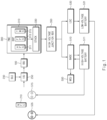
- FIG. 1 is a block diagram illustrating a power supply system of a fuel cell using user authentication according to an embodiment of the present disclosure.
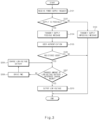
- FIG. 2 is a flowchart illustrating the supply of a high voltage in a power supply method of a fuel cell using user authentication according to an embodiment of the present disclosure.
- FIG. 3 is a flowchart illustrating the supply of a low voltage in a power supply method of a fuel cell using user authentication according to an embodiment of the present disclosure.
- a power supply system of a fuel cell using user authentication may include a tagging device including an NFC module 210 and a Bluetooth (Bluetooth low energy: BLE) module 230, an identity authentication unit (IAU) 250, a power module complete (PMC) 300, a battery including a high-voltage battery 511 and a low-voltage battery 531, an output terminal including a high output terminal 515 and a low output terminal 535, and an integrated body control unit (IBU) 100.
- a tagging device including an NFC module 210 and a Bluetooth (Bluetooth low energy: BLE) module 230, an identity authentication unit (IAU) 250, a power module complete (PMC) 300, a battery including a high-voltage battery 511 and a low-voltage battery 531, an output terminal including a high output terminal 515 and a low output terminal 535, and an integrated body control unit (IBU) 100.
- BLE Bluetooth low energy: BLE
- IAU identity authentication unit
- PMC
- the NFC module 210 may perform NFC-communication with a user terminal such as a smartphone and the like to receive user information from a user terminal.
- the Bluetooth module 230 may perform Bluetooth-communication with the user terminal such as a smart phone and the like to receive the user information from the user terminal.
- the NFC module 210 and Bluetooth module 230 may be provided on a side of a vehicle.
- the IAU 250 may compare the user information input through the NFC module 210 or the Bluetooth module 230 with the authentication information learned in advance, and may output a use authority signal when the user information matches the authentication information.
- the power module complete 300 which generates electric power by a chemical reaction of hydrogen and oxygen, may include a fuel cell stack 330 in which fuel cells each including a polymer electrolyte membrane, a fuel electrode, and an air electrode are electrically connected in series, and balance of plant (BOP) 310 for operating the power module complete 300.
- BOP balance of plant
- the BOP 310 may include an air processing system (APS) 311, a fuel processing system (FPS) 313, a thermal management system (TMS) 315.
- APS air processing system
- FPS fuel processing system
- TMS thermal management system
- Hydrogen supplied from a hydrogen tank to the FPS 313 may be supplied to the fuel cell stack 330 through a hydrogen shutoff valve and a solenoid valve for pressure control to cause an electrochemical reaction.
- the generated power of the fuel cell stack 330 may have about 250 V to 450 V.
- a high voltage junction box (HV_J/box) 350 may be connected to the power module complete 300, and a bidirectional high voltage DC/DC converter (BHDC) 510 and a low voltage DC-DC (LDC) 530 may be connected to the high voltage junction box 350.
- BHDC bidirectional high voltage DC/DC converter
- LDC low voltage DC-DC
- the high-voltage battery 511 may receive the power produced by the fuel cell stack 330, and store relatively high voltage power through the BHDC 510 that converts it into a higher voltage than the generated power of the fuel cell stack 330.
- the BHDC 510 may be connected to a motor control unit (MCU) 550 of a motor for driving the vehicle to supply required power to the MCU 550.
- MCU motor control unit
- the low-voltage battery 531 may receive the power produced through the fuel cell stack 330, and store relatively low voltage power through the LDC 530 that converts it into a lower voltage than the generated power of the fuel cell stack 330.
- the high-voltage battery 511 and the low-voltage battery 531 may further include a battery management system (BMS), and may monitor the state of charge (SOC) of power charged from the fuel cell stack 330 to the high-voltage battery 511 and the low-voltage battery 531 through the BMS.
- BMS battery management system
- SOC state of charge
- the high output terminal 515 which is provided close to the NFC module 210 and the Bluetooth module 230, may be connected to the high-voltage battery 511 to output the high voltage power charged into the high-voltage battery 511.
- the low output terminal 535 which is provided close to the NFC module 210 and the Bluetooth module 230, may be connected to the low-voltage battery 531 to output low-voltage power charged into the low-voltage battery 531.
- the high output terminal 515 and the low output terminal 535 may be provided on the side of the vehicle to be adjacent to the NFC module 210 and the Bluetooth module 230.
- the IBU 100 may control such that power is output through the high output terminal 515 or the low output terminal 535 when the IAU 250 outputs the use authority signal.
- the IBU 100 may generate electric power after driving the PMC 300 when the amount charged in the high-voltage battery 511 or the low-voltage battery 531 is less than a preset reference value, and control the high-voltage battery 511 or the low-voltage battery 531 to be charged.
- the power supply system of a fuel cell using user authentication may output the power charged in the high-voltage battery 511 to the high output terminal 515, and output the power charged in the low-voltage battery 531 to the low output terminal 535, so that the power supply system serves as a mobile generator.
- an electric vehicle equipped with a telematics device may search for a charging station due to insufficient battery charge while driving, and even if a charging station is found, the electric vehicle may not arrive at the charging station with the remaining charge.
- the hydrogen vehicle search process may be repeatedly performed a preset number of times or for a preset time, and when any hydrogen vehicles are not searched for a preset number of times or a preset time, the search process may be stopped.
- the hydrogen vehicle may determine whether to provide electric power.
- the hydrogen vehicle may transmit a message indicating that electric power cannot be provided to the electric vehicle by using a telematics device in S103.
- the electric vehicle may transmit a message indicating that electric power can be provided to the electric vehicle by using the telematics device in S104.
- the electric vehicle may move to the location where the hydrogen vehicle is located or the hydrogen vehicle may move to the location where the electric vehicle is located.
- the driver of the hydrogen vehicle may perform a user authentication process by contacting a user terminal such as a smartphone to the NFC module 210 or by pairing with the Bluetooth module 230.
- a use authority signal may be output in S106.
- the IBU 100 may control to output electric power through the high output terminal 515 or the low output terminal 535.
- the IBU 100 may check the SOC of the high-voltage battery 511 to determine whether the charged amount of the high-voltage battery 511 is greater than a reference charge amount.
- the reference charge amount which is a charge amount required to maintain the performance of a battery, may be about 30% of the fully charged amount, which may be changed according to a situation.
- the electric vehicle may be charged by outputting electric power to the high output terminal 515.
- the electric vehicle cannot be charged by blocking the output of electric power to the high output terminal 515.
- the PMC 300 is driven in S108 to produce electric power in the fuel cell stack 330, so that the high-voltage battery 511 may be charged in S109.
- the IBU 100 may check the SOC of the low-voltage battery 531 to determine whether the charged amount of the low-voltage battery 531 is greater than the reference charge amount.
- the electric vehicle when the charged amount of the low-voltage battery 531 is greater than the reference charge amount, the electric vehicle may be charged by outputting electric power to the low output terminal 535.
- the PMC 300 is driven in S208 to produce electric power in the fuel cell stack 330, so that the low-voltage battery 531 may be charged in S209.
- a power supply system of a fuel cell using user authentication and a method thereof according to the embodiments of the present disclosure, after authenticating the driver using short-range communication such as NFC communication, Bluetooth communication, or the like, it is possible to supply electric power to a load outside a vehicle without the need for the driver to get into the vehicle.
- short-range communication such as NFC communication, Bluetooth communication, or the like
- a hydrogen fuel cell vehicle may be used as an electric energy source, which is a kind of generator.
- an internal combustion engine is used to drive a pump to spray pesticides or turn a generator to supply electric power to agricultural equipment necessary for production.
- hydrogen charging stations When a hydrogen fuel cell vehicle is used as a power source for agricultural machinery in an agricultural site, hydrogen charging stations may be installed all over the country because a variety of demand groups can be secured. Thus, it may bring a positive effect of resolving the anxiety factor of the absence of a charging station to customers who are hesitant to purchase a vehicle due to the absence of a hydrogen charging station.
- the power supply method of a fuel cell using user authentication of S101 to S210 may be programmed and stored in a computer-readable recording medium.
- a hydrogen fuel cell vehicle may be used as an electric energy source, which is a kind of generator.
Landscapes
- Engineering & Computer Science (AREA)
- Power Engineering (AREA)
- Mechanical Engineering (AREA)
- Transportation (AREA)
- Life Sciences & Earth Sciences (AREA)
- Sustainable Development (AREA)
- Sustainable Energy (AREA)
- Manufacturing & Machinery (AREA)
- Chemical & Material Sciences (AREA)
- Chemical Kinetics & Catalysis (AREA)
- Electrochemistry (AREA)
- General Chemical & Material Sciences (AREA)
- Computer Networks & Wireless Communication (AREA)
- Computer Security & Cryptography (AREA)
- Theoretical Computer Science (AREA)
- Human Computer Interaction (AREA)
- Signal Processing (AREA)
- Fuel Cell (AREA)
- Computer Hardware Design (AREA)
- Software Systems (AREA)
- Physics & Mathematics (AREA)
- General Engineering & Computer Science (AREA)
- General Physics & Mathematics (AREA)
- Electric Propulsion And Braking For Vehicles (AREA)
Description
- This application claims the benefit of priority to
Korean Patent Application No. 10-2020-0091211, filed in the Korean Intellectual Property Office on July 22, 2020 - The present disclosure relates to a power supply system of a fuel cell using user authentication, and a method thereof, and more particularly, to a power supply system of a fuel cell using user authentication that allows a driver to supply electric power to an external load of the vehicle without the need to get in the vehicle after authenticating the driver using short-range communication such as NFC or Bluetooth communication, so that a hydrogen fuel cell vehicle may be used as an electric energy source, and a method thereof.
- In general, a fuel cell electric vehicle (FCEV) generates electricity through a chemical reaction of hydrogen and oxygen in a special device (Stack), and operates a driving motor by using the electric energy to drive the vehicle.
- In order to drive a special device (Stack), a stack operation device (Balance of Plant) is required and is composed of the following major categories.
- That is, a fuel cell electric vehicle includes control parts such as a stack, BOP (hydrogen/air supply, thermal management), a junction box, a hydrogen/air supply controller, a hydrogen storage device, a battery system, an electric power component, and the like.
- Conventional hydrogen fuel cell electric vehicles are focused on safety in terms of using hydrogen as a fuel source and stable output/efficiency of the vehicle. In order to use a current hydrogen fuel cell vehicle as a power source, it was possible when a user (driver) must insert a key into ae vehicle's key set and turn the key to IGN-On, or the user must hold an FOB-Smart key within the range allowed by short-range communication. From
US 2020/031239 A1 a power supply system of a fuel cell with the features of the preamble of claim 1 is derivable. - The present disclosure has been made to solve the above-mentioned problems occurring in the prior art while advantages achieved by the prior art are maintained intact.
- An aspect of the present disclosure provides a power supply system of a fuel cell using user authentication that allows the fuel cell to supply electric power to an external load of the vehicle without the need for a driver to get in the vehicle after authenticating the driver using short-range communication such as NFC or Bluetooth communication, so that a hydrogen fuel cell vehicle may be used as an electric energy source in the case of outdated industrial sites where electricity supply is impossible, or outdoor activities and camping, which are increasing due to changes in lifestyle,, and a method thereof.
- The technical problems to be solved by the present inventive concept are not limited to the aforementioned problems, and any other technical problems not mentioned herein will be clearly understood from the following description by those skilled in the art to which the present disclosure pertains.
- According to an aspect of the present invention, a power supply system of a fuel cell of a vehicle for supplying electric power to an external load, the power supply system using user authentication includes a tagging device that receives user information of a user terminal, an identity authentication unit that compares the user information inputted through the tagging device with previously learned authentication information, and outputs a use authority signal when the user information matches the authentication information, a power module (PMC power module complete) that produces electric power by a chemical reaction between hydrogen and oxygen, a battery that receives and is charged with electric power produced by the power module, an output terminal that is connected to the battery to output electric power stored in the battery, and an integrated control unit (integrated body control unit IBU) that controls electric power to be output through the output terminal when the identity authentication unit outputs the use authority signal.
- According to an embodiment, the tagging device may include an Near-Field Communication (NFC) device that performs NFC with the user terminal, or a Bluetooth device that performs Bluetooth-communication with the user terminal.
- According to the present invention, the battery includes a high-voltage battery that stores a first voltage power through a bidirectional high voltage DC/DC converter that receives electric power produced by the power module and converts a voltage of electric power into a first voltage, and a low-voltage battery that stores a second voltage power, the second voltage power having a voltage power lower than that of the first voltage power, through a low voltage DC-DC that receives electric power produced by the power module and converts a voltage of electric power into a second voltage to be lower than the first voltage.
- According to the invention, the output terminal is disposed adjacent the tagging device, wherein the output terminal includes a high-voltage output terminal connected to the high-voltage battery to output the first voltage power; and a low-voltage output terminal connected to the low-voltage battery to output the second voltage power.
- According to an embodiment, the integrated control unit may control to charge the battery by driving the power module when an amount charged in the battery is less than a reference value.
- According to an embodiment, when an electric power supply is requested from a vehicle in need of charging, the integrated control unit may notify the vehicle of whether the power supply system is movable toward the vehicle.
- According to another aspect of the present invention, a method of controlling a power supply system of a fuel cell of a vehicle for supplying electric power to an external load, the power supply method using user authentication includes: receiving, by a tagging device of the power supply system, user information of a user terminal; comparing, by an identity authentication unit of the power supply system, the user information inputted through the tagging device with previously stored authentication information; upon determining that the user information matches the previously stored authentication information, outputting a use authority signal; and in response to receiving the use authority signal, outputting electric power stored in a battery through an output terminal, which is connected to the battery charged with electric power produced by a power module to the vehicle requiring electric power.
- According to an embodiment, the method may further comprise: receiving, by an integrated control unit of the power supply system, a power providing request from a vehicle requiring electric power; the receiving of the power providing request may include, upon receiving the power providing request from the vehicle in need of charging and requiring electric power, notifying the vehicle of whether the power supply system is movable toward the vehicle.
- According to an embodiment, the receiving of the user information may include performing Near-Field Communication with the user terminal through an NFC device, or Bluetooth communication with the user terminal through a Bluetooth device.
- According to the present invention, the outputting of electric power stored in the battery includes storing a first voltage power in a high-voltage battery through a bidirectional high voltage DC/DC converter that receives electric power produced by the power module and converts a voltage of electric power into a first voltage, and storing a second voltage power, the second voltage power having a voltage power lower than that of the first voltage power, in a low-voltage battery through a low voltage DC-DC converter that receives electric power produced by the power module and converts the voltage of electric power into a second voltage to be lower than the first voltage.
- According to the present invention, the outputting of electric power stored in the battery includes outputting the first voltage power through a high-voltage output terminal connected to the high-voltage battery, and outputting the second voltage power through a low-voltage output terminal connected to the low-voltage battery.
- According to an embodiment, when an amount charged in the battery is less than a preset reference value, the outputting of electric power stored in the battery may include controlling the power supply system to charge the battery by driving the power module.
- The above and other objects, features and advantages of the present disclosure will be more apparent from the following detailed description taken in conjunction with the accompanying drawings:
-
FIG. 1 is a block diagram illustrating a power supply system of a fuel cell using user authentication according to an embodiment of the present disclosure; -
FIG. 2 is a flowchart illustrating the supply of a high voltage in a power supply method of a fuel cell using user authentication according to an embodiment of the present disclosure; and -
FIG. 3 is a flowchart illustrating the supply of a low voltage in a power supply method of a fuel cell using user authentication according to an embodiment of the present disclosure - Hereinafter, some embodiments of the present disclosure will be described in detail with reference to the exemplary drawings. In adding the reference numerals to the components of each drawing, it should be noted that the identical or equivalent component is designated by the identical numeral even when they are displayed on other drawings. Further, in describing the embodiment of the present disclosure, a detailed description of the related known configuration or function will be omitted when it is determined that it interferes with the understanding of the embodiment of the present disclosure.
- In describing the components of the embodiment according to the present disclosure, terms such as first, second, A, B, (a), (b), and the like may be used. These terms are merely intended to distinguish the components from other components, and the terms do not limit the nature, order or sequence of the components. Unless otherwise defined, all terms including technical and scientific terms used herein have the same meaning as commonly understood by one of ordinary skill in the art to which this disclosure belongs. It will be further understood that terms, such as those defined in commonly used dictionaries, should be interpreted as having a meaning that is consistent with their meaning in the context of the relevant art and will not be interpreted in an idealized or overly formal sense unless expressly so defined herein.
- Hereinafter, with reference to
FIG. 1 , embodiments of the present disclosure will be described in detail. -
FIG. 1 is a block diagram illustrating a power supply system of a fuel cell using user authentication according to an embodiment of the present disclosure.FIG. 2 is a flowchart illustrating the supply of a high voltage in a power supply method of a fuel cell using user authentication according to an embodiment of the present disclosure.FIG. 3 is a flowchart illustrating the supply of a low voltage in a power supply method of a fuel cell using user authentication according to an embodiment of the present disclosure. - Referring to
FIG. 1 , a power supply system of a fuel cell using user authentication according to an embodiment of the present disclosure may include a tagging device including anNFC module 210 and a Bluetooth (Bluetooth low energy: BLE)module 230, an identity authentication unit (IAU) 250, a power module complete (PMC) 300, a battery including a high-voltage battery 511 and a low-voltage battery 531, an output terminal including a high output terminal 515 and alow output terminal 535, and an integrated body control unit (IBU) 100. - The
NFC module 210 may perform NFC-communication with a user terminal such as a smartphone and the like to receive user information from a user terminal. The Bluetoothmodule 230 may perform Bluetooth-communication with the user terminal such as a smart phone and the like to receive the user information from the user terminal. - The
NFC module 210 and Bluetoothmodule 230 may be provided on a side of a vehicle. - The IAU 250 may compare the user information input through the
NFC module 210 or the Bluetoothmodule 230 with the authentication information learned in advance, and may output a use authority signal when the user information matches the authentication information. - The power module complete 300, which generates electric power by a chemical reaction of hydrogen and oxygen, may include a
fuel cell stack 330 in which fuel cells each including a polymer electrolyte membrane, a fuel electrode, and an air electrode are electrically connected in series, and balance of plant (BOP) 310 for operating the power module complete 300. - The BOP 310 may include an air processing system (APS) 311, a fuel processing system (FPS) 313, a thermal management system (TMS) 315.
- Hydrogen supplied from a hydrogen tank to the
FPS 313 may be supplied to thefuel cell stack 330 through a hydrogen shutoff valve and a solenoid valve for pressure control to cause an electrochemical reaction. - The generated power of the
fuel cell stack 330 may have about 250 V to 450 V. - A high voltage junction box (HV_J/box) 350 may be connected to the power module complete 300, and a bidirectional high voltage DC/DC converter (BHDC) 510 and a low voltage DC-DC (LDC) 530 may be connected to the high
voltage junction box 350. - The high-
voltage battery 511 may receive the power produced by thefuel cell stack 330, and store relatively high voltage power through theBHDC 510 that converts it into a higher voltage than the generated power of thefuel cell stack 330. - The BHDC 510 may be connected to a motor control unit (MCU) 550 of a motor for driving the vehicle to supply required power to the MCU 550.
- The low-
voltage battery 531 may receive the power produced through thefuel cell stack 330, and store relatively low voltage power through theLDC 530 that converts it into a lower voltage than the generated power of thefuel cell stack 330. - The high-
voltage battery 511 and the low-voltage battery 531 may further include a battery management system (BMS), and may monitor the state of charge (SOC) of power charged from thefuel cell stack 330 to the high-voltage battery 511 and the low-voltage battery 531 through the BMS. - The high output terminal 515, which is provided close to the
NFC module 210 and the Bluetoothmodule 230, may be connected to the high-voltage battery 511 to output the high voltage power charged into the high-voltage battery 511. Thelow output terminal 535, which is provided close to theNFC module 210 and the Bluetoothmodule 230, may be connected to the low-voltage battery 531 to output low-voltage power charged into the low-voltage battery 531. - The high output terminal 515 and the
low output terminal 535 may be provided on the side of the vehicle to be adjacent to theNFC module 210 and the Bluetoothmodule 230. - The IBU 100 may control such that power is output through the high output terminal 515 or the
low output terminal 535 when the IAU 250 outputs the use authority signal. - The IBU 100 may generate electric power after driving the
PMC 300 when the amount charged in the high-voltage battery 511 or the low-voltage battery 531 is less than a preset reference value, and control the high-voltage battery 511 or the low-voltage battery 531 to be charged. - As described above, the power supply system of a fuel cell using user authentication according to an embodiment of the present disclosure may output the power charged in the high-
voltage battery 511 to the high output terminal 515, and output the power charged in the low-voltage battery 531 to thelow output terminal 535, so that the power supply system serves as a mobile generator. - For example, an electric vehicle equipped with a telematics device may search for a charging station due to insufficient battery charge while driving, and even if a charging station is found, the electric vehicle may not arrive at the charging station with the remaining charge.
- In this case, it is possible to search for a hydrogen vehicle equipped with a telematics device in the vicinity by using the telematics device.
- When a hydrogen vehicle cannot be searched for at a short distance such as a radius of 500 m, 1 km, or 1.5 km based on the location of the electric vehicle, it is possible to search for a hydrogen vehicle while gradually increasing the distance.
- The hydrogen vehicle search process may be repeatedly performed a preset number of times or for a preset time, and when any hydrogen vehicles are not searched for a preset number of times or a preset time, the search process may be stopped.
- Then, when a hydrogen vehicle is found, it may be requested whether the corresponding hydrogen vehicle can provide electric power, and when the hydrogen vehicle receives the request for electric power from the electric vehicle in S101, the hydrogen vehicle may determine whether to provide electric power.
- Then, when the hydrogen vehicle cannot provide electric power in S102, the hydrogen vehicle may transmit a message indicating that electric power cannot be provided to the electric vehicle by using a telematics device in S103.
- In addition, when the hydrogen vehicle can provide electric power in S102, the electric vehicle may transmit a message indicating that electric power can be provided to the electric vehicle by using the telematics device in S104.
- Then, the electric vehicle may move to the location where the hydrogen vehicle is located or the hydrogen vehicle may move to the location where the electric vehicle is located.
- In S105, the driver of the hydrogen vehicle may perform a user authentication process by contacting a user terminal such as a smartphone to the
NFC module 210 or by pairing with theBluetooth module 230. - Next, by comparing the user information and the previously learned authentication information in the
IAU 250, when the user information and the authentication information match, a use authority signal may be output in S106. - Then, the
IBU 100 may control to output electric power through the high output terminal 515 or thelow output terminal 535. - In S107, when the electric vehicle requires high voltage power and connects the charging plug of the electric vehicle to the high output terminal 515, the
IBU 100 may check the SOC of the high-voltage battery 511 to determine whether the charged amount of the high-voltage battery 511 is greater than a reference charge amount. - The reference charge amount, which is a charge amount required to maintain the performance of a battery, may be about 30% of the fully charged amount, which may be changed according to a situation.
- Then, in S110, when the charged amount of the high-
voltage battery 511 is greater than the reference charge amount, the electric vehicle may be charged by outputting electric power to the high output terminal 515. - Meanwhile, when the charged amount of the high-
voltage battery 511 is less than the reference charge amount, the electric vehicle cannot be charged by blocking the output of electric power to the high output terminal 515. - Therefore, when the charged amount of the high-
voltage battery 511 is less than the reference charge amount in S107, thePMC 300 is driven in S108 to produce electric power in thefuel cell stack 330, so that the high-voltage battery 511 may be charged in S109. - Similarly, in S207, when the electric vehicle requires low-voltage power and connects the charging plug of the electric vehicle to the
low output terminal 535, theIBU 100 may check the SOC of the low-voltage battery 531 to determine whether the charged amount of the low-voltage battery 531 is greater than the reference charge amount. - Next, in S210, when the charged amount of the low-
voltage battery 531 is greater than the reference charge amount, the electric vehicle may be charged by outputting electric power to thelow output terminal 535. - On the other hand, when the charge amount of the low-
voltage battery 531 is less than the reference charge amount, the electric vehicle cannot be charged by blocking the output of power to thelow output terminal 535. - Therefore, when the charged amount of the low-
voltage battery 531 is less than the reference charge amount in S207, thePMC 300 is driven in S208 to produce electric power in thefuel cell stack 330, so that the low-voltage battery 531 may be charged in S209. - As described above, according to a power supply system of a fuel cell using user authentication, and a method thereof according to the embodiments of the present disclosure, after authenticating the driver using short-range communication such as NFC communication, Bluetooth communication, or the like, it is possible to supply electric power to a load outside a vehicle without the need for the driver to get into the vehicle. In the case of outdated industrial sites where electricity supply is impossible, or outdoor activities and camping, which are increasing due to changes in lifestyle, a hydrogen fuel cell vehicle may be used as an electric energy source, which is a kind of generator.
- In addition, like SUVs, whose demand is increasing in connection with modern lifestyles, by efficiently using a fuel cell vehicle as an energy source for outdoor activities or camping, it is possible to increase profits due to the effect of increasing marketability and diversify industries that can resell the generated electricity.
- As described above, it is possible to drive home appliances (heaters, audio, video systems and light bulbs) while camping, and drive industrial electric tools (cutter, pump, drill, and the like) that require a three-phase high voltage of 380 V in industrial sites in remote areas where electricity supply is difficult.
- Furthermore, when the hydrogen fuel cell power system is used in agriculture, the possibility is sufficient.
- As well known in the art, because agricultural sites are far from an electricity supply source, in most cases, an internal combustion engine is used to drive a pump to spray pesticides or turn a generator to supply electric power to agricultural equipment necessary for production.
- In the worst case, it is very inefficient to bring the produced agricultural products home and proceed with threshing or additional work corresponding thereto.
- When a hydrogen fuel cell vehicle is used as a power source for agricultural machinery in an agricultural site, hydrogen charging stations may be installed all over the country because a variety of demand groups can be secured. Thus, it may bring a positive effect of resolving the anxiety factor of the absence of a charging station to customers who are hesitant to purchase a vehicle due to the absence of a hydrogen charging station.
- In addition, although the electric vehicle market is growing in Korea, the growth rate is slower than overseas.
- The biggest concern of potential customers who are hesitant to purchase electric vehicles is insufficient electric charging stations across the country.
- However, when a hydrogen fuel cell vehicle is used as a power source to charge an electric vehicle with a three-phase high voltage output of 380V, it is determined that it will contribute to the growth of the eco-friendly automobile industry by partially solving the shortage of electric charging stations, which is an obstacle to the growth of the electric vehicle market.
- Meanwhile, the power supply method of a fuel cell using user authentication of S101 to S210 according to the embodiments of the present disclosure may be programmed and stored in a computer-readable recording medium.
- According to the present technique, after authenticating the driver using short-range communication such as NFC communication, Bluetooth communication, or the like, it is possible to supply electric power to a load outside a vehicle without the need for the driver to get into the vehicle. In the case of outdated industrial sites where electricity supply is impossible, or outdoor activities and camping, which are increasing due to changes in lifestyle, a hydrogen fuel cell vehicle may be used as an electric energy source, which is a kind of generator.
- In addition, various effects that are directly or indirectly understood through the present disclosure may be provided.
- Although exemplary embodiments of the present disclosure have been described for illustrative purposes, those skilled in the art will appreciate that various modifications, additions and substitutions are possible, without departing from the scope of the disclosure.
Claims (8)
- A power supply system of a fuel cell of a vehicle for supplying electric power to an external load, the power supply system using user authentication and comprising:a tagging device configured to receive user information of a user terminal;an identity authentication unit (250) configured to compare the user information inputted through the tagging device with previously stored authentication information, and output a use authority signal when the user information matches the authentication information;a power module (300)configured to produce electric power by a chemical reaction between hydrogen and oxygen;a battery configured to receive and be charged with electric power produced by the power module;an output terminal connected to the battery to output electric power stored in the battery; andan integrated control unit (100) configured to control electric power to be outputted through the output terminal when the identity authentication unit (250) outputs the use authority signal,characterized in thatthe battery includes:a high-voltage battery (511) configured to store a first voltage supplied through a bidirectional high voltage DC/DC converter (510), which receives electric power produced by the power module (300) and converts a voltage received from the power module (300) into a first voltage; anda low-voltage battery (531) configured to store a second voltage, the second voltage having a voltage lower than that of the first voltage, supplied through a low voltage DC-DC converter (530), which receives electric power produced by the power module (300) and converts the voltage received from the power module (300) into a second voltage to be lower than the first voltage,wherein the output terminal is disposed adjacent the tagging device, andwherein the output terminal includes:a high-voltage output terminal (515) connected to the high-voltage battery (511) to output power at the first voltage; anda low-voltage output terminal (535) connected to the low-voltage battery (531) to output power at the second voltage.
- The power supply system of claim 1, wherein the tagging device includes at least one of:a Near-Field Communication (NFC) device (210) configured to perform NFC the user terminal; ora Bluetooth device (230) configured to perform Bluetooth communication with the user terminal.
- The power supply system of claim 1, wherein, when an amount charged in the battery is less than a reference value, the integrated control unit (100) controls to charge the battery by driving the power module (300).
- The power supply system of claim 1, wherein, when an electric power supply request is received from a vehicle in need of charging, the integrated control unit (100) notifies the vehicle of whether the power supply system is movable toward the vehicle.
- A method of controlling a power supply system of a fuel cell of a vehicle for supplying electric power to an external load, the power supply method using user authentication and comprising:receiving, by a tagging device of the power supply system, user information of a user terminal;comparing, by an identity authentication unit (250), the user information inputted through the tagging device with previously stored authentication information;upon determining that the user information inputted through the tagging device matches the previously stored authentication information, outputting a use authority signal; andin response to receiving the use authority signal from the identity authentication unit (250), outputting electric power stored in a battery through an output terminal, which is connected to the battery charged with electric power produced by a power module (300),characterized in thatthe outputting of electric power stored in the battery includes:storing a first voltage in a high-voltage battery (511) supplied through a bidirectional high voltage DC/DC converter (510), which receives electric power produced by the power module (300) and converts a voltage received from the power module (300) into a first voltage; andstoring a second voltage, the second voltage having a voltage lower than that of the first voltage, in a low-voltage battery (531) supplied through a low voltage DC-DC converter (530), which receives electric power produced by the power module (300) and converts the voltage received from the power module (300) into a second voltage that is lower than the first voltage,wherein the outputting of electric power stored in the battery further includes:outputting a power at the first voltage through a high-voltage output terminal (515) connected to the high-voltage battery (511); andoutputting a power at the second voltage, the second voltage having a voltage lower than that of the first voltage, through a low-voltage output terminal (535) connected to the low-voltage battery (531).
- The method of claim 5, further comprising:receiving, by an integrated control unit (100) of the power supply system, a power providing request from a vehicle requiring electric power;wherein the receiving of the power providing request includes upon receiving the power providing request from the vehicle in need of charging and requiring electric power, notifying the vehicle of whether the power supply system is movable toward the vehicle.
- The method of claim 5, wherein the receiving of the user information includes:performing Near-Field Communication (NFC) with the user terminal through an NFC device (210); orperforming Bluetooth communication with the user terminal through a Bluetooth device (230).
- The method of claim 5, wherein the outputting of electric power stored in the battery includes when an amount charged in the battery is less than a reference value, controlling the power supply system to charge the battery by driving the power module (300).
Applications Claiming Priority (1)
| Application Number | Priority Date | Filing Date | Title |
|---|---|---|---|
| KR1020200091211A KR102934875B1 (en) | 2020-07-22 | 2020-07-22 | Power supply system of fuel cell using user authentication and method thereof |
Publications (2)
| Publication Number | Publication Date |
|---|---|
| EP3943337A1 EP3943337A1 (en) | 2022-01-26 |
| EP3943337B1 true EP3943337B1 (en) | 2023-05-03 |
Family
ID=76971734
Family Applications (1)
| Application Number | Title | Priority Date | Filing Date |
|---|---|---|---|
| EP21186399.8A Active EP3943337B1 (en) | 2020-07-22 | 2021-07-19 | Power supply system of fuel cell using user authentication and method thereof |
Country Status (5)
| Country | Link |
|---|---|
| US (2) | US11831056B2 (en) |
| EP (1) | EP3943337B1 (en) |
| JP (1) | JP7797128B2 (en) |
| KR (1) | KR102934875B1 (en) |
| CN (1) | CN113968135B (en) |
Families Citing this family (3)
| Publication number | Priority date | Publication date | Assignee | Title |
|---|---|---|---|---|
| KR20230020165A (en) * | 2021-08-03 | 2023-02-10 | 현대자동차주식회사 | Mobile electric vehicle charging system |
| CN115358357A (en) * | 2022-03-29 | 2022-11-18 | 中电科海洋信息技术研究院有限公司 | Outdoor type information checking service multifunctional terminal equipment |
| CN115214352B (en) * | 2022-08-22 | 2025-03-07 | 上海舜华新能源系统有限公司 | A gas replacement device for a hydrogen supply system and a control method thereof |
Family Cites Families (15)
| Publication number | Priority date | Publication date | Assignee | Title |
|---|---|---|---|---|
| US20030105562A1 (en) * | 2001-11-30 | 2003-06-05 | Industrial Technology Research Institute | Power output control system for electric vehicle with hybrid fuel cell |
| JP2004179086A (en) * | 2002-11-28 | 2004-06-24 | Nissan Motor Co Ltd | Polymer electrolyte fuel cell system and method of operating the same |
| US20110084650A1 (en) * | 2009-10-09 | 2011-04-14 | Charles Industries, Ltd. | Battery charger |
| JP5675541B2 (en) * | 2011-09-26 | 2015-02-25 | トヨタ自動車株式会社 | vehicle |
| JP5853549B2 (en) * | 2011-09-29 | 2016-02-09 | 日産自動車株式会社 | Electric power transfer system, electric vehicle, and electric power transfer method |
| JP5465304B1 (en) * | 2012-10-17 | 2014-04-09 | オムロンオートモーティブエレクトロニクス株式会社 | Battery management device |
| JP6415821B2 (en) * | 2014-02-05 | 2018-10-31 | エイディシーテクノロジー株式会社 | Moving body |
| KR101683504B1 (en) * | 2015-02-09 | 2016-12-07 | 현대자동차 주식회사 | Charging apparatus of low voltage battery and method thereof |
| KR101745099B1 (en) * | 2015-06-15 | 2017-06-20 | 현대자동차주식회사 | Safety apparatus for portable power generation of fuel cell vehicle and operation method thereof |
| JP6551884B2 (en) * | 2015-08-05 | 2019-07-31 | エイディシーテクノロジー株式会社 | Fuel cell vehicle |
| WO2018020675A1 (en) * | 2016-07-29 | 2018-02-01 | 日産自動車株式会社 | Vehicle system |
| JP6348629B1 (en) * | 2017-03-23 | 2018-06-27 | 本田技研工業株式会社 | Management device, management system, and program |
| KR102586914B1 (en) * | 2018-05-23 | 2023-10-10 | 현대자동차주식회사 | Power converting apparatus for charging vehicle battery and Method for controlling the same |
| KR102119779B1 (en) | 2018-07-02 | 2020-06-09 | 현대자동차(주) | Power supply system of fuel cell and control method of the same |
| KR102645040B1 (en) * | 2018-07-26 | 2024-03-08 | 현대자동차주식회사 | Mobile charging system and operation method thereof |
-
2020
- 2020-07-22 KR KR1020200091211A patent/KR102934875B1/en active Active
-
2021
- 2021-07-19 EP EP21186399.8A patent/EP3943337B1/en active Active
- 2021-07-20 CN CN202110819520.5A patent/CN113968135B/en active Active
- 2021-07-21 JP JP2021120318A patent/JP7797128B2/en active Active
- 2021-07-21 US US17/382,161 patent/US11831056B2/en active Active
-
2023
- 2023-11-03 US US18/386,671 patent/US12100873B2/en active Active
Also Published As
| Publication number | Publication date |
|---|---|
| JP2022022173A (en) | 2022-02-03 |
| CN113968135B (en) | 2024-05-03 |
| CN113968135A (en) | 2022-01-25 |
| US11831056B2 (en) | 2023-11-28 |
| US20240063413A1 (en) | 2024-02-22 |
| US20220029183A1 (en) | 2022-01-27 |
| EP3943337A1 (en) | 2022-01-26 |
| KR102934875B1 (en) | 2026-03-10 |
| KR20220012494A (en) | 2022-02-04 |
| JP7797128B2 (en) | 2026-01-13 |
| US12100873B2 (en) | 2024-09-24 |
Similar Documents
| Publication | Publication Date | Title |
|---|---|---|
| US12100873B2 (en) | Power supply system of fuel cell using user authentication and method thereof | |
| EP2612786B1 (en) | Buddy charging for electric vehicles | |
| US8716978B2 (en) | Charging method and apparatus for electric vehicle | |
| EP2587583B1 (en) | AC current control of mobile battery chargers | |
| KR101336794B1 (en) | Integrated battery charging system and its operating method for electric vehicle | |
| US20230173936A1 (en) | Charging electric vehicle supercapacitors using solar energy | |
| US10894480B2 (en) | Supplying of low-voltage on-board electrical systems of vehicles having an electric drive | |
| US20250149912A1 (en) | Battery swapping station having mode in which battery pack is operated at time of power supply interruption | |
| EP1883129B1 (en) | Fuel cell system operation method and fuel cell system | |
| KR101694030B1 (en) | Management system of suppying gas and charging for plug-in hybrid electric vehicle | |
| EP4206033A1 (en) | Battery swapping station with emergency power generation function | |
| US11001249B2 (en) | Automatic cutoff for vehicle operable as generator | |
| US20140232179A1 (en) | Vehicle and method of controlling vehicle | |
| US11677244B2 (en) | Controlling the charge/discharge operations of multiple electric vehicles in a distribution network | |
| Leksono et al. | Development of active cell to cell battery balancing system for electric vehicle applications | |
| US20170256962A1 (en) | Intermediate storage facility for battery units | |
| US12224615B2 (en) | Composite charging system and method | |
| JP2020099171A (en) | Quick recharging station | |
| JP2020099128A (en) | Quick recharging station | |
| KR20140081309A (en) | Battery Management System of control method for module voltage | |
| US12002304B2 (en) | Management server and management system | |
| US20240351452A1 (en) | Access to vehicle with low state of charge battery | |
| JP2017195739A (en) | Power supply device, power supply system, and micro grid | |
| JP2022068401A (en) | On-vehicle charger, on-vehicle charge system, and charge control method | |
| JP2024060803A (en) | POWER SYSTEM, SERVER, AND POWER CONTROL METHOD |
Legal Events
| Date | Code | Title | Description |
|---|---|---|---|
| PUAI | Public reference made under article 153(3) epc to a published international application that has entered the european phase |
Free format text: ORIGINAL CODE: 0009012 |
|
| STAA | Information on the status of an ep patent application or granted ep patent |
Free format text: STATUS: REQUEST FOR EXAMINATION WAS MADE |
|
| 17P | Request for examination filed |
Effective date: 20210719 |
|
| AK | Designated contracting states |
Kind code of ref document: A1 Designated state(s): AL AT BE BG CH CY CZ DE DK EE ES FI FR GB GR HR HU IE IS IT LI LT LU LV MC MK MT NL NO PL PT RO RS SE SI SK SM TR |
|
| RBV | Designated contracting states (corrected) |
Designated state(s): AL AT BE BG CH CY CZ DE DK EE ES FI FR GB GR HR HU IE IS IT LI LT LU LV MC MK MT NL NO PL PT RO RS SE SI SK SM TR |
|
| GRAP | Despatch of communication of intention to grant a patent |
Free format text: ORIGINAL CODE: EPIDOSNIGR1 |
|
| STAA | Information on the status of an ep patent application or granted ep patent |
Free format text: STATUS: GRANT OF PATENT IS INTENDED |
|
| INTG | Intention to grant announced |
Effective date: 20221118 |
|
| GRAS | Grant fee paid |
Free format text: ORIGINAL CODE: EPIDOSNIGR3 |
|
| GRAA | (expected) grant |
Free format text: ORIGINAL CODE: 0009210 |
|
| STAA | Information on the status of an ep patent application or granted ep patent |
Free format text: STATUS: THE PATENT HAS BEEN GRANTED |
|
| AK | Designated contracting states |
Kind code of ref document: B1 Designated state(s): AL AT BE BG CH CY CZ DE DK EE ES FI FR GB GR HR HU IE IS IT LI LT LU LV MC MK MT NL NO PL PT RO RS SE SI SK SM TR |
|
| REG | Reference to a national code |
Ref country code: GB Ref legal event code: FG4D |
|
| REG | Reference to a national code |
Ref country code: DE Ref legal event code: R096 Ref document number: 602021002158 Country of ref document: DE |
|
| REG | Reference to a national code |
Ref country code: AT Ref legal event code: REF Ref document number: 1564315 Country of ref document: AT Kind code of ref document: T Effective date: 20230515 Ref country code: CH Ref legal event code: EP |
|
| REG | Reference to a national code |
Ref country code: IE Ref legal event code: FG4D |
|
| P01 | Opt-out of the competence of the unified patent court (upc) registered |
Effective date: 20230524 |
|
| REG | Reference to a national code |
Ref country code: LT Ref legal event code: MG9D |
|
| REG | Reference to a national code |
Ref country code: NL Ref legal event code: MP Effective date: 20230503 |
|
| REG | Reference to a national code |
Ref country code: AT Ref legal event code: MK05 Ref document number: 1564315 Country of ref document: AT Kind code of ref document: T Effective date: 20230503 |
|
| PG25 | Lapsed in a contracting state [announced via postgrant information from national office to epo] |
Ref country code: SE Free format text: LAPSE BECAUSE OF FAILURE TO SUBMIT A TRANSLATION OF THE DESCRIPTION OR TO PAY THE FEE WITHIN THE PRESCRIBED TIME-LIMIT Effective date: 20230503 Ref country code: PT Free format text: LAPSE BECAUSE OF FAILURE TO SUBMIT A TRANSLATION OF THE DESCRIPTION OR TO PAY THE FEE WITHIN THE PRESCRIBED TIME-LIMIT Effective date: 20230904 Ref country code: NO Free format text: LAPSE BECAUSE OF FAILURE TO SUBMIT A TRANSLATION OF THE DESCRIPTION OR TO PAY THE FEE WITHIN THE PRESCRIBED TIME-LIMIT Effective date: 20230803 Ref country code: NL Free format text: LAPSE BECAUSE OF FAILURE TO SUBMIT A TRANSLATION OF THE DESCRIPTION OR TO PAY THE FEE WITHIN THE PRESCRIBED TIME-LIMIT Effective date: 20230503 Ref country code: ES Free format text: LAPSE BECAUSE OF FAILURE TO SUBMIT A TRANSLATION OF THE DESCRIPTION OR TO PAY THE FEE WITHIN THE PRESCRIBED TIME-LIMIT Effective date: 20230503 Ref country code: AT Free format text: LAPSE BECAUSE OF FAILURE TO SUBMIT A TRANSLATION OF THE DESCRIPTION OR TO PAY THE FEE WITHIN THE PRESCRIBED TIME-LIMIT Effective date: 20230503 |
|
| PG25 | Lapsed in a contracting state [announced via postgrant information from national office to epo] |
Ref country code: RS Free format text: LAPSE BECAUSE OF FAILURE TO SUBMIT A TRANSLATION OF THE DESCRIPTION OR TO PAY THE FEE WITHIN THE PRESCRIBED TIME-LIMIT Effective date: 20230503 Ref country code: PL Free format text: LAPSE BECAUSE OF FAILURE TO SUBMIT A TRANSLATION OF THE DESCRIPTION OR TO PAY THE FEE WITHIN THE PRESCRIBED TIME-LIMIT Effective date: 20230503 Ref country code: LV Free format text: LAPSE BECAUSE OF FAILURE TO SUBMIT A TRANSLATION OF THE DESCRIPTION OR TO PAY THE FEE WITHIN THE PRESCRIBED TIME-LIMIT Effective date: 20230503 Ref country code: LT Free format text: LAPSE BECAUSE OF FAILURE TO SUBMIT A TRANSLATION OF THE DESCRIPTION OR TO PAY THE FEE WITHIN THE PRESCRIBED TIME-LIMIT Effective date: 20230503 Ref country code: IS Free format text: LAPSE BECAUSE OF FAILURE TO SUBMIT A TRANSLATION OF THE DESCRIPTION OR TO PAY THE FEE WITHIN THE PRESCRIBED TIME-LIMIT Effective date: 20230903 Ref country code: HR Free format text: LAPSE BECAUSE OF FAILURE TO SUBMIT A TRANSLATION OF THE DESCRIPTION OR TO PAY THE FEE WITHIN THE PRESCRIBED TIME-LIMIT Effective date: 20230503 Ref country code: GR Free format text: LAPSE BECAUSE OF FAILURE TO SUBMIT A TRANSLATION OF THE DESCRIPTION OR TO PAY THE FEE WITHIN THE PRESCRIBED TIME-LIMIT Effective date: 20230804 |
|
| PG25 | Lapsed in a contracting state [announced via postgrant information from national office to epo] |
Ref country code: FI Free format text: LAPSE BECAUSE OF FAILURE TO SUBMIT A TRANSLATION OF THE DESCRIPTION OR TO PAY THE FEE WITHIN THE PRESCRIBED TIME-LIMIT Effective date: 20230503 |
|
| PG25 | Lapsed in a contracting state [announced via postgrant information from national office to epo] |
Ref country code: SK Free format text: LAPSE BECAUSE OF FAILURE TO SUBMIT A TRANSLATION OF THE DESCRIPTION OR TO PAY THE FEE WITHIN THE PRESCRIBED TIME-LIMIT Effective date: 20230503 |
|
| PG25 | Lapsed in a contracting state [announced via postgrant information from national office to epo] |
Ref country code: SM Free format text: LAPSE BECAUSE OF FAILURE TO SUBMIT A TRANSLATION OF THE DESCRIPTION OR TO PAY THE FEE WITHIN THE PRESCRIBED TIME-LIMIT Effective date: 20230503 Ref country code: SK Free format text: LAPSE BECAUSE OF FAILURE TO SUBMIT A TRANSLATION OF THE DESCRIPTION OR TO PAY THE FEE WITHIN THE PRESCRIBED TIME-LIMIT Effective date: 20230503 Ref country code: RO Free format text: LAPSE BECAUSE OF FAILURE TO SUBMIT A TRANSLATION OF THE DESCRIPTION OR TO PAY THE FEE WITHIN THE PRESCRIBED TIME-LIMIT Effective date: 20230503 Ref country code: EE Free format text: LAPSE BECAUSE OF FAILURE TO SUBMIT A TRANSLATION OF THE DESCRIPTION OR TO PAY THE FEE WITHIN THE PRESCRIBED TIME-LIMIT Effective date: 20230503 Ref country code: DK Free format text: LAPSE BECAUSE OF FAILURE TO SUBMIT A TRANSLATION OF THE DESCRIPTION OR TO PAY THE FEE WITHIN THE PRESCRIBED TIME-LIMIT Effective date: 20230503 Ref country code: CZ Free format text: LAPSE BECAUSE OF FAILURE TO SUBMIT A TRANSLATION OF THE DESCRIPTION OR TO PAY THE FEE WITHIN THE PRESCRIBED TIME-LIMIT Effective date: 20230503 |
|
| REG | Reference to a national code |
Ref country code: DE Ref legal event code: R097 Ref document number: 602021002158 Country of ref document: DE |
|
| PG25 | Lapsed in a contracting state [announced via postgrant information from national office to epo] |
Ref country code: MC Free format text: LAPSE BECAUSE OF FAILURE TO SUBMIT A TRANSLATION OF THE DESCRIPTION OR TO PAY THE FEE WITHIN THE PRESCRIBED TIME-LIMIT Effective date: 20230503 |
|
| PG25 | Lapsed in a contracting state [announced via postgrant information from national office to epo] |
Ref country code: MC Free format text: LAPSE BECAUSE OF FAILURE TO SUBMIT A TRANSLATION OF THE DESCRIPTION OR TO PAY THE FEE WITHIN THE PRESCRIBED TIME-LIMIT Effective date: 20230503 |
|
| PLBE | No opposition filed within time limit |
Free format text: ORIGINAL CODE: 0009261 |
|
| STAA | Information on the status of an ep patent application or granted ep patent |
Free format text: STATUS: NO OPPOSITION FILED WITHIN TIME LIMIT |
|
| REG | Reference to a national code |
Ref country code: BE Ref legal event code: MM Effective date: 20230731 |
|
| PG25 | Lapsed in a contracting state [announced via postgrant information from national office to epo] |
Ref country code: LU Free format text: LAPSE BECAUSE OF NON-PAYMENT OF DUE FEES Effective date: 20230719 |
|
| PG25 | Lapsed in a contracting state [announced via postgrant information from national office to epo] |
Ref country code: LU Free format text: LAPSE BECAUSE OF NON-PAYMENT OF DUE FEES Effective date: 20230719 |
|
| 26N | No opposition filed |
Effective date: 20240206 |
|
| REG | Reference to a national code |
Ref country code: IE Ref legal event code: MM4A |
|
| PG25 | Lapsed in a contracting state [announced via postgrant information from national office to epo] |
Ref country code: SI Free format text: LAPSE BECAUSE OF FAILURE TO SUBMIT A TRANSLATION OF THE DESCRIPTION OR TO PAY THE FEE WITHIN THE PRESCRIBED TIME-LIMIT Effective date: 20230503 |
|
| PG25 | Lapsed in a contracting state [announced via postgrant information from national office to epo] |
Ref country code: SI Free format text: LAPSE BECAUSE OF FAILURE TO SUBMIT A TRANSLATION OF THE DESCRIPTION OR TO PAY THE FEE WITHIN THE PRESCRIBED TIME-LIMIT Effective date: 20230503 Ref country code: IT Free format text: LAPSE BECAUSE OF FAILURE TO SUBMIT A TRANSLATION OF THE DESCRIPTION OR TO PAY THE FEE WITHIN THE PRESCRIBED TIME-LIMIT Effective date: 20230503 Ref country code: BE Free format text: LAPSE BECAUSE OF NON-PAYMENT OF DUE FEES Effective date: 20230731 |
|
| PG25 | Lapsed in a contracting state [announced via postgrant information from national office to epo] |
Ref country code: IE Free format text: LAPSE BECAUSE OF NON-PAYMENT OF DUE FEES Effective date: 20230719 |
|
| PG25 | Lapsed in a contracting state [announced via postgrant information from national office to epo] |
Ref country code: IE Free format text: LAPSE BECAUSE OF NON-PAYMENT OF DUE FEES Effective date: 20230719 |
|
| PG25 | Lapsed in a contracting state [announced via postgrant information from national office to epo] |
Ref country code: BG Free format text: LAPSE BECAUSE OF FAILURE TO SUBMIT A TRANSLATION OF THE DESCRIPTION OR TO PAY THE FEE WITHIN THE PRESCRIBED TIME-LIMIT Effective date: 20230503 |
|
| REG | Reference to a national code |
Ref country code: DE Ref legal event code: R081 Ref document number: 602021002158 Country of ref document: DE Owner name: KIA CORPORATION, KR Free format text: FORMER OWNER: HYUNDAI MOBIS CO., LTD., SEOUL, KR Ref country code: DE Ref legal event code: R081 Ref document number: 602021002158 Country of ref document: DE Owner name: HYUNDAI MOTOR COMPANY, KR Free format text: FORMER OWNER: HYUNDAI MOBIS CO., LTD., SEOUL, KR |
|
| PG25 | Lapsed in a contracting state [announced via postgrant information from national office to epo] |
Ref country code: BG Free format text: LAPSE BECAUSE OF FAILURE TO SUBMIT A TRANSLATION OF THE DESCRIPTION OR TO PAY THE FEE WITHIN THE PRESCRIBED TIME-LIMIT Effective date: 20230503 |
|
| REG | Reference to a national code |
Ref country code: GB Ref legal event code: 732E Free format text: REGISTERED BETWEEN 20241107 AND 20241113 |
|
| REG | Reference to a national code |
Ref country code: CH Ref legal event code: PL |
|
| PG25 | Lapsed in a contracting state [announced via postgrant information from national office to epo] |
Ref country code: CH Free format text: LAPSE BECAUSE OF NON-PAYMENT OF DUE FEES Effective date: 20240731 |
|
| PGFP | Annual fee paid to national office [announced via postgrant information from national office to epo] |
Ref country code: GB Payment date: 20250624 Year of fee payment: 5 |
|
| PGFP | Annual fee paid to national office [announced via postgrant information from national office to epo] |
Ref country code: FR Payment date: 20250624 Year of fee payment: 5 |
|
| PG25 | Lapsed in a contracting state [announced via postgrant information from national office to epo] |
Ref country code: CY Free format text: LAPSE BECAUSE OF FAILURE TO SUBMIT A TRANSLATION OF THE DESCRIPTION OR TO PAY THE FEE WITHIN THE PRESCRIBED TIME-LIMIT; INVALID AB INITIO Effective date: 20210719 |
|
| PG25 | Lapsed in a contracting state [announced via postgrant information from national office to epo] |
Ref country code: HU Free format text: LAPSE BECAUSE OF FAILURE TO SUBMIT A TRANSLATION OF THE DESCRIPTION OR TO PAY THE FEE WITHIN THE PRESCRIBED TIME-LIMIT; INVALID AB INITIO Effective date: 20210719 |
|
| PGFP | Annual fee paid to national office [announced via postgrant information from national office to epo] |
Ref country code: DE Payment date: 20250624 Year of fee payment: 5 |
|
| PG25 | Lapsed in a contracting state [announced via postgrant information from national office to epo] |
Ref country code: TR Free format text: LAPSE BECAUSE OF FAILURE TO SUBMIT A TRANSLATION OF THE DESCRIPTION OR TO PAY THE FEE WITHIN THE PRESCRIBED TIME-LIMIT Effective date: 20230503 |