EP3943333A1 - Methods and systems for guiding an operator of a vehicle during a vehicle-sharing session - Google Patents
Methods and systems for guiding an operator of a vehicle during a vehicle-sharing session Download PDFInfo
- Publication number
- EP3943333A1 EP3943333A1 EP21183656.4A EP21183656A EP3943333A1 EP 3943333 A1 EP3943333 A1 EP 3943333A1 EP 21183656 A EP21183656 A EP 21183656A EP 3943333 A1 EP3943333 A1 EP 3943333A1
- Authority
- EP
- European Patent Office
- Prior art keywords
- vehicle
- graphical user
- user interface
- instructions
- client device
- Prior art date
- Legal status (The legal status is an assumption and is not a legal conclusion. Google has not performed a legal analysis and makes no representation as to the accuracy of the status listed.)
- Withdrawn
Links
Images


Classifications
-
- B—PERFORMING OPERATIONS; TRANSPORTING
- B60—VEHICLES IN GENERAL
- B60Q—ARRANGEMENT OF SIGNALLING OR LIGHTING DEVICES, THE MOUNTING OR SUPPORTING THEREOF OR CIRCUITS THEREFOR, FOR VEHICLES IN GENERAL
- B60Q9/00—Arrangement or adaptation of signal devices not provided for in one of main groups B60Q1/00 - B60Q7/00, e.g. haptic signalling
-
- B—PERFORMING OPERATIONS; TRANSPORTING
- B60—VEHICLES IN GENERAL
- B60K—ARRANGEMENT OR MOUNTING OF PROPULSION UNITS OR OF TRANSMISSIONS IN VEHICLES; ARRANGEMENT OR MOUNTING OF PLURAL DIVERSE PRIME-MOVERS IN VEHICLES; AUXILIARY DRIVES FOR VEHICLES; INSTRUMENTATION OR DASHBOARDS FOR VEHICLES; ARRANGEMENTS IN CONNECTION WITH COOLING, AIR INTAKE, GAS EXHAUST OR FUEL SUPPLY OF PROPULSION UNITS IN VEHICLES
- B60K35/00—Instruments specially adapted for vehicles; Arrangement of instruments in or on vehicles
- B60K35/10—Input arrangements, i.e. from user to vehicle, associated with vehicle functions or specially adapted therefor
-
- B—PERFORMING OPERATIONS; TRANSPORTING
- B60—VEHICLES IN GENERAL
- B60K—ARRANGEMENT OR MOUNTING OF PROPULSION UNITS OR OF TRANSMISSIONS IN VEHICLES; ARRANGEMENT OR MOUNTING OF PLURAL DIVERSE PRIME-MOVERS IN VEHICLES; AUXILIARY DRIVES FOR VEHICLES; INSTRUMENTATION OR DASHBOARDS FOR VEHICLES; ARRANGEMENTS IN CONNECTION WITH COOLING, AIR INTAKE, GAS EXHAUST OR FUEL SUPPLY OF PROPULSION UNITS IN VEHICLES
- B60K35/00—Instruments specially adapted for vehicles; Arrangement of instruments in or on vehicles
- B60K35/20—Output arrangements, i.e. from vehicle to user, associated with vehicle functions or specially adapted therefor
- B60K35/21—Output arrangements, i.e. from vehicle to user, associated with vehicle functions or specially adapted therefor using visual output, e.g. blinking lights or matrix displays
- B60K35/22—Display screens
-
- B—PERFORMING OPERATIONS; TRANSPORTING
- B60—VEHICLES IN GENERAL
- B60K—ARRANGEMENT OR MOUNTING OF PROPULSION UNITS OR OF TRANSMISSIONS IN VEHICLES; ARRANGEMENT OR MOUNTING OF PLURAL DIVERSE PRIME-MOVERS IN VEHICLES; AUXILIARY DRIVES FOR VEHICLES; INSTRUMENTATION OR DASHBOARDS FOR VEHICLES; ARRANGEMENTS IN CONNECTION WITH COOLING, AIR INTAKE, GAS EXHAUST OR FUEL SUPPLY OF PROPULSION UNITS IN VEHICLES
- B60K35/00—Instruments specially adapted for vehicles; Arrangement of instruments in or on vehicles
- B60K35/20—Output arrangements, i.e. from vehicle to user, associated with vehicle functions or specially adapted therefor
- B60K35/25—Output arrangements, i.e. from vehicle to user, associated with vehicle functions or specially adapted therefor using haptic output
-
- B—PERFORMING OPERATIONS; TRANSPORTING
- B60—VEHICLES IN GENERAL
- B60K—ARRANGEMENT OR MOUNTING OF PROPULSION UNITS OR OF TRANSMISSIONS IN VEHICLES; ARRANGEMENT OR MOUNTING OF PLURAL DIVERSE PRIME-MOVERS IN VEHICLES; AUXILIARY DRIVES FOR VEHICLES; INSTRUMENTATION OR DASHBOARDS FOR VEHICLES; ARRANGEMENTS IN CONNECTION WITH COOLING, AIR INTAKE, GAS EXHAUST OR FUEL SUPPLY OF PROPULSION UNITS IN VEHICLES
- B60K35/00—Instruments specially adapted for vehicles; Arrangement of instruments in or on vehicles
- B60K35/20—Output arrangements, i.e. from vehicle to user, associated with vehicle functions or specially adapted therefor
- B60K35/26—Output arrangements, i.e. from vehicle to user, associated with vehicle functions or specially adapted therefor using acoustic output
-
- B—PERFORMING OPERATIONS; TRANSPORTING
- B60—VEHICLES IN GENERAL
- B60K—ARRANGEMENT OR MOUNTING OF PROPULSION UNITS OR OF TRANSMISSIONS IN VEHICLES; ARRANGEMENT OR MOUNTING OF PLURAL DIVERSE PRIME-MOVERS IN VEHICLES; AUXILIARY DRIVES FOR VEHICLES; INSTRUMENTATION OR DASHBOARDS FOR VEHICLES; ARRANGEMENTS IN CONNECTION WITH COOLING, AIR INTAKE, GAS EXHAUST OR FUEL SUPPLY OF PROPULSION UNITS IN VEHICLES
- B60K35/00—Instruments specially adapted for vehicles; Arrangement of instruments in or on vehicles
- B60K35/85—Arrangements for transferring vehicle- or driver-related data
-
- G—PHYSICS
- G08—SIGNALLING
- G08B—SIGNALLING SYSTEMS, e.g. PERSONAL CALLING SYSTEMS; ORDER TELEGRAPHS; ALARM SYSTEMS
- G08B7/00—Signalling systems according to two or more of groups G08B3/00 - G08B6/00
- G08B7/06—Signalling systems according to two or more of groups G08B3/00 - G08B6/00 using electric transmission, e.g. involving audible and visible signalling through the use of sound and light sources
-
- G—PHYSICS
- G06—COMPUTING OR CALCULATING; COUNTING
- G06F—ELECTRIC DIGITAL DATA PROCESSING
- G06F3/00—Input arrangements for transferring data to be processed into a form capable of being handled by the computer; Output arrangements for transferring data from processing unit to output unit, e.g. interface arrangements
- G06F3/01—Input arrangements or combined input and output arrangements for interaction between user and computer
- G06F3/048—Interaction techniques based on graphical user interfaces [GUI]
- G06F3/0484—Interaction techniques based on graphical user interfaces [GUI] for the control of specific functions or operations, e.g. selecting or manipulating an object, an image or a displayed text element, setting a parameter value or selecting a range
-
- G—PHYSICS
- G06—COMPUTING OR CALCULATING; COUNTING
- G06Q—INFORMATION AND COMMUNICATION TECHNOLOGY [ICT] SPECIALLY ADAPTED FOR ADMINISTRATIVE, COMMERCIAL, FINANCIAL, MANAGERIAL OR SUPERVISORY PURPOSES; SYSTEMS OR METHODS SPECIALLY ADAPTED FOR ADMINISTRATIVE, COMMERCIAL, FINANCIAL, MANAGERIAL OR SUPERVISORY PURPOSES, NOT OTHERWISE PROVIDED FOR
- G06Q50/00—Information and communication technology [ICT] specially adapted for implementation of business processes of specific business sectors, e.g. utilities or tourism
- G06Q50/40—Business processes related to the transportation industry
Definitions
- the present disclosure relates to systems and methods for guiding an operator of a vehicle during a vehicle-sharing session.
- Vehicle-sharing fleet managers may have a variety of vehicles that are available to rent for a predefined period of time using a vehicle-sharing application.
- the user may not be aware of various features or operational instructions of the corresponding vehicle.
- the user may not be aware of how to turn on the vehicle, how to operate a shift-by-wire system of the vehicle, and/or how to pump fuel into the vehicle.
- the user may not be aware of how to properly complete the vehicle-sharing session.
- the user may not be aware that the vehicle must be placed in park, the windows must be rolled up, and the doors must be locked to properly complete the vehicle-sharing session.
- the present disclosure provides a method of guiding an operator of a vehicle.
- the method includes determining, in response to a vehicle-sharing request, whether a vehicle operation condition is satisfied based on state information of the vehicle.
- the method includes, in response to the vehicle operation condition being satisfied, identifying a set of vehicle operation instructions from a plurality of vehicle instructions corresponding to the vehicle, where the set of vehicle operation instructions correspond to the vehicle operation condition.
- the method includes, in response to the vehicle operation condition being satisfied, identifying a notification system from among a plurality of notification systems based on the vehicle operation condition, and providing, using the notification system, the set of vehicle operation instructions.
- the plurality of notification systems include a plurality of graphical user interfaces, a plurality of audio systems, a plurality of tactile feedback systems, or a combination thereof.
- the plurality of graphical user interfaces include a client device graphical user interface disposed at a client device, a vehicle graphical user interface disposed at the vehicle, or a combination thereof.
- the plurality of audio systems include a client device audio system disposed at the client device, a vehicle audio system disposed at the vehicle, or a combination thereof.
- the plurality of tactile feedback systems include a client device tactile feedback system disposed at the client device, a vehicle tactile feedback system disposed at the vehicle, or a combination thereof.
- the method further includes determining whether an operation corresponding to the set of vehicle operation instructions is controllable using a graphical user interface from among the plurality of notification systems.
- the method further includes identifying the graphical user interface as the notification system in response to a determination that the operation is controllable using the user interface, where the graphical user interface provides the set of vehicle operation instructions as a display graphic for controlling the operation.
- the method further includes determining whether an operation corresponding to the set of vehicle operation instructions is controllable using at least one of a client device graphical user interface or a vehicle graphical user interface from among the plurality of notification systems.
- the method further includes, in response to determining that the operation is controllable using one of the client device graphical user interface or the vehicle graphical user interface, selecting at least one of a client device control mode or a vehicle control mode based on one of a user input or predefined control rules.
- the method further includes selecting the client device graphical user interface as the notification system in response to a selection of the client device control mode, where the client device graphical user interface provides the set of vehicle operation instructions as a display graphic for controlling the operation.
- the method further includes selecting the vehicle graphical user interface as the notification system in response to a selection of the vehicle control mode, where the vehicle graphical user interface provides the set of vehicle operation instructions as a display graphic for controlling the operation.
- the state information is indicative of an operation state of the vehicle and is based on sensor data obtained from one or more sensors of the vehicle, an input obtained from the plurality of notification systems, or a combination thereof.
- the vehicle operation condition is satisfied in response to the sensor data corresponding to a threshold value.
- the vehicle operation condition is satisfied in response to the input indicating a request for a given notification system from among the plurality of notification systems to provide the set of vehicle operation instructions.
- the present disclosure provides a system for guiding an operator of a vehicle.
- the system includes a processor and a non-transitory computer-readable medium including machine-readable instructions that are executable by the processor.
- the machine-readable instructions include determining, in response to a vehicle-sharing request, whether a vehicle operation condition is satisfied based on state information of the vehicle.
- the instructions include, in response to the vehicle operation condition being satisfied, identifying a set of vehicle operation instructions from a plurality of vehicle instructions corresponding to the vehicle, where the set of vehicle operation instructions correspond to the vehicle operation condition, identifying a notification system from among a plurality of notification systems based on the vehicle operation condition, and providing, using the notification system, the set of vehicle operation instructions.
- the instructions further include determining whether an operation corresponding to the set of vehicle operation instructions is controllable using a graphical user interface from among the plurality of notification systems, and identifying the graphical user interface as the notification system in response to a determination that the operation is controllable using the user interface, where the graphical user interface provides the set of vehicle operation instructions as a display graphic for controlling the operation.
- the instructions further include determining whether an operation corresponding to the set of vehicle operation instructions is controllable using at least one of a client device graphical user interface or a vehicle graphical user interface from among the plurality of notification systems.
- the instructions further include, in response to determining that the operation is controllable using one of the client device graphical user interface or the vehicle graphical user interface, selecting at least one of a client device control mode or a vehicle control mode based on one of a user input or predefined control rules.
- the instructions further include selecting the client device graphical user interface as the notification system in response to a selection of the client device control mode, wherein the client device graphical user interface provides the set of vehicle operation instructions as a display graphic for controlling the operation, and selecting the vehicle graphical user interface as the notification system in response to a selection of the vehicle control mode, wherein the vehicle graphical user interface provides the set of vehicle operation instructions as a display graphic for controlling the operation.
- the instructions further include determining whether an operation corresponding to the set of vehicle operation instructions can be controlled using at least one of a client device graphical user interface or a vehicle graphical user interface from among the plurality of notification systems.
- the state information is indicative of an operation state of the vehicle and is based on sensor data obtained from one or more sensors of the vehicle, an input obtained from the plurality of notification systems, or a combination thereof.
- the vehicle operation condition is satisfied in response to at least one of: the sensor data corresponding to a threshold value or the input indicating a request for a given notification system from among the plurality of notification systems to provide the set of vehicle operation instructions.
- the present disclosure provides a method including determining, in response to a vehicle-sharing request, whether a vehicle operation condition is satisfied based on state information of a vehicle, where the state information is indicative of an operation state of the vehicle and is based on sensor data obtained from one or more sensors of the vehicle.
- the method includes, in response to the vehicle operation condition being satisfied, identifying a set of vehicle operation instructions from a plurality of vehicle instructions corresponding to the vehicle, where the set of vehicle operation instructions correspond to the vehicle operation condition.
- the method includes, in response to the vehicle operation condition being satisfied, identifying a notification system from among a plurality of notification systems based on the vehicle operation condition and providing, using the notification system, the set of vehicle operation instructions, where the plurality of notification systems include a plurality of graphical user interfaces, a plurality of audio systems, a plurality of tactile feedback systems, or a combination thereof.
- a vehicle-sharing system is configured to selectively provide vehicle operation instructions to an operator of the vehicle when a vehicle operation condition is satisfied.
- the vehicle-sharing system identifies and provides a set of vehicle operation instructions corresponding to the vehicle operation condition using a given notification system.
- the vehicle-sharing system is configured to selectively provide visual, auditory, or haptic guidance and/or operation instructions to an operator for performing various vehicle functions.
- the vehicle-sharing system 5 generally includes a user 10, a fleet management system 20, a client device 30, and vehicles 40-1, 40-2, 40-3, 40-4 (collectively referred to herein as "vehicle fleet 40").
- the fleet management system 20, the client device 30, and the vehicle fleet 40 are communicably coupled via a network 50 and using one or more wireless communication protocols (e.g., a Bluetooth ® -type protocol, a cellular protocol, a wireless fidelity (Wi-Fi)-type protocol, a near-field communication (NFC) protocol, an ultra-wideband (UWB) protocol, among others).
- Wi-Fi wireless fidelity
- NFC near-field communication
- UWB ultra-wideband
- the client device 30 is a computing device that utilizes a wireless communication protocol to generate a vehicle-sharing request.
- the client device 30 may include, but is not limited to, a computer, laptop, smartphone, tablet, personal digital assistant (PDA), a wearable device, among others.
- PDA personal digital assistant
- the user 10 generates one or more session parameters associated with a vehicle-sharing request using the client device 30.
- the session parameters include a start time of the vehicle-sharing session, an end time of the vehicle-sharing session, a monetary cost of the vehicle-sharing session, a location associated with a vehicle-sharing session request, a vehicle type, or a combination thereof.
- the fleet management system 20 In response to receiving the one or more session parameters, the fleet management system 20 identifies one of the vehicles from the vehicle fleet 40 associated with the vehicle-sharing request, such as the vehicle 40-1. Furthermore, the fleet management system 20 selectively provides a set of vehicle operation instructions corresponding to the vehicle 40-1 based on a vehicle operation condition being satisfied, as described below in further detail.
- vehicle operation condition refers to a vehicle condition, vehicle parameters, a type of input generated by the user 10, or a combination thereof that is satisfied before or during the vehicle-sharing session.
- vehicle operation instructions refer to instructions for operating a component/system of a vehicle from the vehicle fleet 40 and/or instructions for properly completing a vehicle-sharing session.
- the vehicle operation instructions may correspond to instructions for turning on/off the vehicle 40-1, operating a gear shift assembly, adjusting a seat and/or mirror position, controlling an infotainment system, pumping fuel into the vehicle 40-1, controlling a vehicle subsystem (e.g., a climate control system, a windshield wiper system, a locking system, among others), and the like.
- a vehicle subsystem e.g., a climate control system, a windshield wiper system, a locking system, among others
- the vehicle operation instructions may correspond to various vehicle functions that need to be performed for properly completing the vehicle-sharing session (e.g., parking the vehicle 40-1, rolling up the windows of the vehicle 40-1, and locking the doors of the vehicle 40-1). It should be understood that the vehicle operation instructions may include instructions for various types of vehicle components/systems and are not limited to the examples provided herein.
- the modules and control systems of the fleet management system 20, the client device 30, and the vehicle 40-1 may include one or more processor circuits that execute machine-readable instructions stored in a non-transitory computer-readable medium, such as a read-only memory (ROM) circuit and/or a random-access memory (RAM) circuit.
- ROM read-only memory
- RAM random-access memory
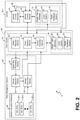
- the client device 30 includes a share request module 31, a share session module 32, a control selection module 33, a graphical user interface 35, an audio system 36, and a tactile feedback system 37.
- the share request module 31, the share session module 32, and the control selection module 33 may be part of a vehicle-sharing application 34.
- the graphical user interface 35, the audio system 36, and the tactile feedback system 37 are collectively referred to herein as "operator interfaces 38.”
- the graphical user interface 35 may include display components that enable the user 10 to interact with the client device 30 by manipulating graphical elements generated by the vehicle-sharing application 34. Furthermore, the graphical user interface 35 may include display components that visually provide a set of vehicle operation instructions and/or enable the user 10 to control various components of the vehicle 40-1 by manipulating the graphical elements, as described below in further detail.
- the graphical user interface 35 is a touchscreen component of the client device 30 that enables the user 10 to input the session parameters associated with the vehicle-sharing request.
- the graphical user interface 35 is an augmented reality (AR) device configured to provide the manipulatable graphical elements using an AR overlay operation.
- AR augmented reality
- the audio system 36 may include microphones, speakers, and/or natural language user interface modules for receiving voice queries from the user 10 and auditorily outputting a set of vehicle operation instructions, as described below in further detail.
- the tactile feedback system 37 may include a vibration motor circuit and driver for haptically outputting a set of vehicle operation instructions, as described below in further detail.
- the share request module 31 is configured to provide an application interface for receiving a vehicle-sharing request and session parameters thereof from the user 10. In response to receiving the one or more session parameters, the share request module 31 provides the corresponding vehicle-sharing request session parameters to the fleet management system 20.
- the share session module 32 obtains a digital key to initiate the vehicle-sharing session and information corresponding to a selected vehicle (e.g., the vehicle 40-1) in response to the fleet management system 20 processing the vehicle-sharing request.
- the vehicle-sharing session 32 initiates the vehicle-sharing session when location data of the client device 30 indicates that the user 10 intends to enter the vehicle 40-1 or is inside of the vehicle 40-1.
- the control selection module 33 obtains the vehicle operation instructions from the fleet management system 20 and identifies a set of vehicle operation instructions corresponding to a vehicle operation condition. As an example, if the vehicle operation condition indicates that the user 10 has not started the vehicle 40-1 within a threshold period of time, the control selection module 33 identifies the vehicle operation instructions corresponding to starting the vehicle 40-1 from among the vehicle operation instructions associated with the vehicle 40-1. Furthermore, the control selection module 33 is configured to identify a notification system of the vehicle-sharing system 5 for providing the vehicle operation instructions and/or determine whether a corresponding operation is controllable using, for example, the graphical user interface 35, as described below in further detail.
- the fleet management system 20 includes a share request processing module 22, a vehicle selection module 24, a vehicle instruction module 26, and a vehicle instruction database 28 including a plurality of instruction entries 29-1, 29-2, ... 29-n (collectively referred to herein as "instruction entries 29").
- the vehicle selection module 24 selects a corresponding vehicle (e.g., the vehicle 40-1) from the vehicle fleet 40 and reserves a vehicle sharing session based on the session parameters of the vehicle-sharing request.
- the vehicle instruction module 26 identifies one or more instruction entries 29 from the vehicle instruction database 28 based on the selected vehicle 40-1.
- each instruction entry 29 includes, for a given vehicle from among the vehicle fleet 40, visual, auditory, and/or haptic instructions for operating a given component/system of the vehicle or for properly completing the vehicle-sharing session.
- a first instruction entry of the one or more identified instruction entries 29 includes instructions for turning on/off the vehicle 40-1
- a second instruction entry of the one or more identified instruction entries 29 includes operating a push-by-wire gear shift assembly of the vehicle 40-1
- a third instruction entry of the one or more identified instruction entries 29 may include instructions for adjusting a seat and/or mirror position of the vehicle 40-1
- a fourth instruction entry of the one or more identified instruction entries 29 may include instructions for pumping fuel into the vehicle 40-1.
- the one or more identified instruction entries 29 may include any number of instruction entries and is not limited to the examples described herein.
- the vehicle selection module 24 provides the digital key and information corresponding to the selected vehicle 40-1 to the share session module 32.
- the vehicle 40-1 includes one or more vehicle control systems 41, a vehicle control module 42, a graphical user interface 43, an audio system 44, a tactile feedback system 45, and one or more sensors 46.
- the graphical user interface 43, the audio system 44, and the tactile feedback system 45 are collectively referred to herein as "operator interfaces 47."
- the one or more vehicle control systems 41, the vehicle control module 42, the one or more sensors 46, and the operator interfaces 47 may be communicably coupled using a vehicle interface, which may be, for example, a controller area network (CAN), a local interconnect network (LIN), a clock extension peripheral interface (CXPI) bus, among others.
- CAN controller area network
- LIN local interconnect network
- CXPI clock extension peripheral interface
- the graphical user interface 43 is similar to the graphical user interface 35
- the audio system 44 is similar to the audio system 36
- the tactile feedback system 45 is similar to the tactile feedback system 37.
- the one or more sensors 46 include various types of sensors to generate various operational information of one or more vehicle control systems 41 and/or information related to the surrounding environment of the vehicle 40-1.
- the sensors 46 include door sensors configured to determine entry into and/or exit from the vehicle 40-1.
- Example door sensors are described in are described in co-pending U.S. Pat. App. No. 16/359,066 titled "ACTIVATING VEHICLE FUNCTIONS BASED ON VEHICLE OCCUPANT LOCATION," which is commonly owned and the disclosure of which is incorporated by reference.
- the one or more sensors 46 include fuel level sensors for detecting a fuel level of the vehicle 40-1.
- the sensors 46 may include an ignition sensor to detect whether the vehicle 40-1 is on or off, imaging sensors that provide image data surrounding the vehicle 40-1, an accelerometer to detect whether the vehicle 40-1 is idling, and/or location sensors, such as a global navigation satellite system (GNSS) sensor.
- the image sensors may include, but are not limited to: a two-dimensional (2D) camera, a 3D camera, an infrared sensor, a radar scanner, a laser scanner, a light detection and ranging (LIDAR) sensor, an ultrasonic sensor, among others.
- the one or more sensors 46 may include any type of vehicle sensor and is not limited to the examples described herein.
- the sensors 46 provide the operational information to the vehicle control module 42 and/or the one or more vehicle control systems 41.
- the vehicle control module 42 is configured to determine whether the vehicle operation condition is satisfied. In one form, the vehicle control module 42 determines a vehicle operation condition is satisfied when the user requests to obtain a set of vehicle operation instructions, such as starting the vehicle 40-1 operator interfaces 38. As described below in further detail, one of the operator interfaces 38, 47 may provide the vehicle operation instructions
- the vehicle control module 42 determines whether the vehicle operation condition is satisfied based on state information of the vehicle 40-1.
- the state information is indicative of an operation state of the vehicle 40-1 and is based on sensor data obtained from the sensors 46.
- the vehicle control module 42 determines that the vehicle operation condition is satisfied if the user 10 has not started the vehicle 40-1 within a threshold period of time. More specifically, if the data from the door sensor indicates that the user 10 has entered the vehicle 40-1 and data from the ignition sensor indicates the user 10 has not started the vehicle 40-1 within a threshold period of time, the vehicle control module 42 determines that the vehicle operation condition is satisfied.
- the vehicle control module 42 determines that the vehicle operation condition is satisfied. In yet another example, if the fuel level of the vehicle 40-1 is below a threshold value, as indicated by data from the fuel level sensor, the vehicle control module 42 determines that the vehicle operation condition is satisfied. In yet another example, if the vehicle 40-1 is turned on and is idling for a period of time greater than a predetermined threshold time, as indicated by the accelerometer and the ignition sensor, the vehicle control module 42 determines that the vehicle operation condition is satisfied. As yet another example, the vehicle control module 42 determines that the vehicle operation condition is satisfied if the user 10 performs an operation that deviates from a nominal or predicted sequence of operations (e.g., the user 10 begins to operate the vehicle 40-1 prior to fastening a seatbelt of the vehicle 40-1).
- the vehicle control module 42 is configured to transmit a signal to the control selection module 33 of the vehicle-sharing application indicating that the vehicle operation condition is satisfied and that vehicle operation instructions can be provided.
- the user 10 inputs a vehicle-sharing request and session parameters thereof using an interface provided by the vehicle-sharing application 34 and one or more of the operator interfaces 38.
- the vehicle-sharing application 34 provides the vehicle-sharing request to the share request processing module 22 of the fleet management system 20.
- the vehicle selection module 24 selects a corresponding vehicle (e.g., the vehicle 40-1) from the vehicle fleet 40 and reserves a vehicle sharing session based on the session parameters.
- the vehicle instruction module 26 identifies one or more of the instruction entries 29 based on the selected vehicle 40-1 and provides the vehicle operation instructions thereof to the vehicle-sharing application 34.
- the vehicle-sharing application 34 obtains the vehicle operation instructions and selectively identifies a set of the vehicle operation instructions when the vehicle control module 42 determines the vehicle operation condition is satisfied. As an example, if the vehicle operation condition indicates that the user 10 has not started the vehicle 40-1 within a threshold period of time, the vehicle-sharing application 34 identifies the vehicle operation instructions corresponding to starting the vehicle 40-1 from among the vehicle operation instructions associated with the vehicle 40-1.
- the vehicle-sharing application 34 is configured to identify a notification system from among the operator interfaces 38, 47 for providing the vehicle operation instructions based on the type of vehicle operation instructions. As an example, the vehicle-sharing application 34 identifies one of the graphical user interfaces 35, 43 as the notification systems if the vehicle operation instructions are visual instructions. As another example, the vehicle-sharing application 34 identifies one of the audio systems 36, 44 as the notification systems if the vehicle operation instructions are auditory instructions. As an additional example, the vehicle-sharing application 34 identifies one of the tactile feedback systems 37, 45 as the notification systems if the vehicle operation instructions are haptic instructions.
- the vehicle-sharing application 34 determines whether an operation corresponding to the identified set of vehicle operation instructions is controllable using at least one of the graphical user interfaces 35, 43. As an example, when the vehicle operation instructions correspond to turning on or off the vehicle 40-1, the vehicle-sharing application 34 determines whether the vehicle 40-1 can be turned on or off using at least one of the graphical user interfaces 35, 43. As another example, when the vehicle operation instructions correspond to shift-by-wire instructions, the vehicle-sharing application 34 determines whether the shift-by-wire system can be controlled using at least one of the graphical user interfaces 35, 43.
- the vehicle-sharing application 34 may identify at least one of the graphical user interfaces 35, 43 as the notification system for providing the vehicle operation instructions as a display graphic for controlling the operation. Furthermore, the vehicle-sharing application 34 may select from one of the graphical user interfaces 35, 43 for providing the display graphic based on an input indicating a user selection of a client device control mode or a vehicle control mode via the graphical user interfaces 35, 43, predefined control rules, or a combination thereof.
- Example control rules include, but are not limited to: always identifying the graphical user interface 43 as the notification system if the operation corresponding to the identified set of vehicle operation instructions is controllable using the graphical user interface 43, always identifying the graphical user interface 35 as the notification system if the operation corresponding to the identified set of vehicle operation instructions is controllable using the graphical user interface 35, among others.
- the identified notification system is configured to provide the respective vehicle operation instructions.
- the graphical user interfaces 35, 43 are configured to provide visual instructions corresponding to the operation and/or display graphics for controlling the operation in response to being identified as the notification system.
- the audio systems 36, 44 are configured to provide auditory instructions corresponding to the operation in response to being identified as the notification system.
- the fleet management system 20 receives the one or more session parameters from the client device 30.
- the fleet management system 20 receives a start time and an end time of the vehicle-sharing session and a vehicle type.
- the fleet management system 20 reserves the vehicle (e.g., the vehicle 40-1) based on the one or more session parameters.
- the fleet management system 20 identifies the set of vehicle operating instructions corresponding to the selected vehicle.
- the fleet management system 20 broadcasts the identified set of vehicle operating instructions and the digital key to the client device 30.
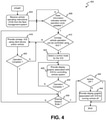
- an example routine 400 performed by the vehicle-sharing system 5 is shown.
- the client device 30 receives the identified set of vehicle operating instructions from the fleet management system 20.
- the vehicle 40-1 and/or the client device 30 determine whether the state information indicates that the vehicle operation condition is satisfied. If the vehicle operation condition is satisfied, the routine 400 proceeds to 412. Otherwise, the routine 400 remains at 408 until the vehicle operation condition is satisfied.
- the client device 30 determines whether the corresponding vehicle operation can be controlled using one of the graphical user interfaces 35, 43. If the corresponding vehicle operation can be controlled using one of the graphical user interfaces 35, 43, the routine 400 proceeds to 424. Otherwise, if the corresponding vehicle operation is not controllable using one of the graphical user interfaces 35, 43, the routine 400 proceeds to 416.
- the client device 30 and/or the vehicle 40-1 provide the set of identified vehicle instructions using at least one of the audio systems 36, 44 and the tactile feedback systems 37, 45 and proceeds to 420.
- the vehicle 40-1 determines whether the corresponding operation is complete. If the operation is complete, the routine 400 proceeds to 436. Otherwise, the routine 400 proceeds to 416 if the operation is not complete.
- the client device 30 or the vehicle 40-1 select a control mode for the vehicle operation instructions.
- at least one of the graphical user interfaces 35, 43 provide a display graphic for controlling the corresponding vehicle system (e.g., display graphics for turning on/off the vehicle 40-1, display graphics for operating a shift by wire system of the vehicle 40-1, among others).
- the vehicle 40-1 determines whether the corresponding operation is complete. If the operation is complete, the routine 400 proceeds to 436. Otherwise, the routine 400 proceeds to 428 if the operation is not complete.
- the client device 30 and/or the vehicle 40-1 determine if the vehicle-sharing session has ended based on the one or more session parameters. If the vehicle-sharing session has ended, the routine 400 proceeds to 440. If the vehicle-sharing session has not ended, the routine 400 proceeds to 408. At 440, the vehicle 40-1 determines whether it is turned off. If the vehicle 40-1 is not turned off, the routine 400 proceeds to 444, where the client device 30 and/or the vehicle 40-1 provide a display graphic associated with vehicle operating instructions for turning the vehicle 40-1 off and/or properly completing the vehicle-sharing session. Otherwise, if the vehicle 40-1 is turned off, the routine 400 ends.
- routines 300, 400 are example control routines and other control routines may be implemented.
- the vehicle-sharing system 5 described herein is configured to selectively provide vehicle operation instructions to the user 10 of the vehicle 40-1 when a vehicle operation condition is satisfied. Furthermore, when the vehicle operation condition is satisfied, the vehicle-sharing system 5 identifies and provides a set of vehicle operation instructions corresponding to the vehicle operation condition using a given notification system from the various operator interfaces 38, 47. As such, the vehicle-sharing system 5 is configured to selectively provide visual, auditory, or haptic guidance and/or operation instructions to the user 10 for performing various vehicle functions.
- the phrase at least one of A, B, and/or C should be construed to mean a logical (A OR B OR C), using a non-exclusive logical OR, and should not be construed to mean "at least one of A, at least one of B, and at least one of C.”
- the direction of an arrow generally demonstrates the flow of information (such as data or instructions) that is of interest to the illustration.
- information such as data or instructions
- the arrow may point from element A to element B. This unidirectional arrow does not imply that no other information is transmitted from element B to element A.
- element B may send requests for, or receipt acknowledgements of, the information to element A.
- module and/or “controller” may refer to, be part of, or include: an Application Specific Integrated Circuit (ASIC); a digital, analog, or mixed analog/digital discrete circuit; a digital, analog, or mixed analog/digital integrated circuit; a combinational logic circuit; a field programmable gate array (FPGA); a processor circuit (shared, dedicated, or group) that executes code; a memory circuit (shared, dedicated, or group) that stores code executed by the processor circuit; other suitable hardware components that provide the described functionality; or a combination of some or all of the above, such as in a system-on-chip.
- ASIC Application Specific Integrated Circuit
- FPGA field programmable gate array
- memory is a subset of the term computer-readable medium.
- computer-readable medium does not encompass transitory electrical or electromagnetic signals propagating through a medium (such as on a carrier wave); the term computer-readable medium may therefore be considered tangible and non-transitory.
- Non-limiting examples of a non-transitory, tangible computer-readable medium are nonvolatile memory circuits (such as a flash memory circuit, an erasable programmable read-only memory circuit, or a mask read-only circuit), volatile memory circuits (such as a static random access memory circuit or a dynamic random access memory circuit), magnetic storage media (such as an analog or digital magnetic tape or a hard disk drive), and optical storage media (such as a CD, a DVD, or a Blu-ray Disc).
- nonvolatile memory circuits such as a flash memory circuit, an erasable programmable read-only memory circuit, or a mask read-only circuit
- volatile memory circuits such as a static random access memory circuit or a dynamic random access memory circuit
- magnetic storage media such as an analog or digital magnetic tape or a hard disk drive
- optical storage media such as a CD, a DVD, or a Blu-ray Disc
- the apparatuses and methods described in this application may be partially or fully implemented by a special purpose computer created by configuring a general-purpose computer to execute one or more particular functions embodied in computer programs.
- the functional blocks, flowchart components, and other elements described above serve as software specifications, which can be translated into the computer programs by the routine work of a skilled technician or programmer.
- a method of guiding an operator of a vehicle (40) includes: determining, in response to a vehicle-sharing request, whether a vehicle operation condition is satisfied based on state information of the vehicle (40); in response to the vehicle operation condition being satisfied: (i) identifying a set of vehicle operation instructions from a plurality of vehicle instructions corresponding to the vehicle (40), wherein the set of vehicle operation instructions correspond to the vehicle operation condition; (ii) identifying a notification system (38, 47) from among a plurality of notification systems based on the vehicle operation condition; and (iii) providing, using the notification system (38, 47), the set of vehicle operation instructions.
Landscapes
- Engineering & Computer Science (AREA)
- Mechanical Engineering (AREA)
- Chemical & Material Sciences (AREA)
- Combustion & Propulsion (AREA)
- Transportation (AREA)
- Human Computer Interaction (AREA)
- Physics & Mathematics (AREA)
- General Physics & Mathematics (AREA)
- User Interface Of Digital Computer (AREA)
Abstract
Description
- The present disclosure relates to systems and methods for guiding an operator of a vehicle during a vehicle-sharing session.
- Vehicle-sharing fleet managers may have a variety of vehicles that are available to rent for a predefined period of time using a vehicle-sharing application. However, when a user initiates a vehicle-sharing session, the user may not be aware of various features or operational instructions of the corresponding vehicle. As an example, the user may not be aware of how to turn on the vehicle, how to operate a shift-by-wire system of the vehicle, and/or how to pump fuel into the vehicle. Furthermore, when a user completes the vehicle-sharing session, the user may not be aware of how to properly complete the vehicle-sharing session. As an example, the user may not be aware that the vehicle must be placed in park, the windows must be rolled up, and the doors must be locked to properly complete the vehicle-sharing session.
- The present disclosure provides a method of guiding an operator of a vehicle. The method includes determining, in response to a vehicle-sharing request, whether a vehicle operation condition is satisfied based on state information of the vehicle. The method includes, in response to the vehicle operation condition being satisfied, identifying a set of vehicle operation instructions from a plurality of vehicle instructions corresponding to the vehicle, where the set of vehicle operation instructions correspond to the vehicle operation condition. The method includes, in response to the vehicle operation condition being satisfied, identifying a notification system from among a plurality of notification systems based on the vehicle operation condition, and providing, using the notification system, the set of vehicle operation instructions.
- In some forms, the plurality of notification systems include a plurality of graphical user interfaces, a plurality of audio systems, a plurality of tactile feedback systems, or a combination thereof.
- In some forms, the plurality of graphical user interfaces include a client device graphical user interface disposed at a client device, a vehicle graphical user interface disposed at the vehicle, or a combination thereof. The plurality of audio systems include a client device audio system disposed at the client device, a vehicle audio system disposed at the vehicle, or a combination thereof. The plurality of tactile feedback systems include a client device tactile feedback system disposed at the client device, a vehicle tactile feedback system disposed at the vehicle, or a combination thereof.
- In some forms, the method further includes determining whether an operation corresponding to the set of vehicle operation instructions is controllable using a graphical user interface from among the plurality of notification systems.
- In some forms, the method further includes identifying the graphical user interface as the notification system in response to a determination that the operation is controllable using the user interface, where the graphical user interface provides the set of vehicle operation instructions as a display graphic for controlling the operation.
- In some forms, the method further includes determining whether an operation corresponding to the set of vehicle operation instructions is controllable using at least one of a client device graphical user interface or a vehicle graphical user interface from among the plurality of notification systems.
- In some forms, the method further includes, in response to determining that the operation is controllable using one of the client device graphical user interface or the vehicle graphical user interface, selecting at least one of a client device control mode or a vehicle control mode based on one of a user input or predefined control rules.
- In some forms, the method further includes selecting the client device graphical user interface as the notification system in response to a selection of the client device control mode, where the client device graphical user interface provides the set of vehicle operation instructions as a display graphic for controlling the operation.
- In some forms, the method further includes selecting the vehicle graphical user interface as the notification system in response to a selection of the vehicle control mode, where the vehicle graphical user interface provides the set of vehicle operation instructions as a display graphic for controlling the operation.
- In some forms, the state information is indicative of an operation state of the vehicle and is based on sensor data obtained from one or more sensors of the vehicle, an input obtained from the plurality of notification systems, or a combination thereof.
- In some forms, the vehicle operation condition is satisfied in response to the sensor data corresponding to a threshold value.
- In some forms, the vehicle operation condition is satisfied in response to the input indicating a request for a given notification system from among the plurality of notification systems to provide the set of vehicle operation instructions.
- The present disclosure provides a system for guiding an operator of a vehicle. The system includes a processor and a non-transitory computer-readable medium including machine-readable instructions that are executable by the processor. The machine-readable instructions include determining, in response to a vehicle-sharing request, whether a vehicle operation condition is satisfied based on state information of the vehicle. The instructions include, in response to the vehicle operation condition being satisfied, identifying a set of vehicle operation instructions from a plurality of vehicle instructions corresponding to the vehicle, where the set of vehicle operation instructions correspond to the vehicle operation condition, identifying a notification system from among a plurality of notification systems based on the vehicle operation condition, and providing, using the notification system, the set of vehicle operation instructions.
- In some forms, the instructions further include determining whether an operation corresponding to the set of vehicle operation instructions is controllable using a graphical user interface from among the plurality of notification systems, and identifying the graphical user interface as the notification system in response to a determination that the operation is controllable using the user interface, where the graphical user interface provides the set of vehicle operation instructions as a display graphic for controlling the operation.
- In some forms, the instructions further include determining whether an operation corresponding to the set of vehicle operation instructions is controllable using at least one of a client device graphical user interface or a vehicle graphical user interface from among the plurality of notification systems. The instructions further include, in response to determining that the operation is controllable using one of the client device graphical user interface or the vehicle graphical user interface, selecting at least one of a client device control mode or a vehicle control mode based on one of a user input or predefined control rules.
- In some forms, the instructions further include selecting the client device graphical user interface as the notification system in response to a selection of the client device control mode, wherein the client device graphical user interface provides the set of vehicle operation instructions as a display graphic for controlling the operation, and selecting the vehicle graphical user interface as the notification system in response to a selection of the vehicle control mode, wherein the vehicle graphical user interface provides the set of vehicle operation instructions as a display graphic for controlling the operation.
- In some forms, the instructions further include determining whether an operation corresponding to the set of vehicle operation instructions can be controlled using at least one of a client device graphical user interface or a vehicle graphical user interface from among the plurality of notification systems.
- In some forms, the state information is indicative of an operation state of the vehicle and is based on sensor data obtained from one or more sensors of the vehicle, an input obtained from the plurality of notification systems, or a combination thereof.
- In some forms, the vehicle operation condition is satisfied in response to at least one of: the sensor data corresponding to a threshold value or the input indicating a request for a given notification system from among the plurality of notification systems to provide the set of vehicle operation instructions.
- The present disclosure provides a method including determining, in response to a vehicle-sharing request, whether a vehicle operation condition is satisfied based on state information of a vehicle, where the state information is indicative of an operation state of the vehicle and is based on sensor data obtained from one or more sensors of the vehicle. The method includes, in response to the vehicle operation condition being satisfied, identifying a set of vehicle operation instructions from a plurality of vehicle instructions corresponding to the vehicle, where the set of vehicle operation instructions correspond to the vehicle operation condition. The method includes, in response to the vehicle operation condition being satisfied, identifying a notification system from among a plurality of notification systems based on the vehicle operation condition and providing, using the notification system, the set of vehicle operation instructions, where the plurality of notification systems include a plurality of graphical user interfaces, a plurality of audio systems, a plurality of tactile feedback systems, or a combination thereof.
- Further areas of applicability will become apparent from the description provided herein. It should be understood that the description and specific examples are intended for purposes of illustration only and are not intended to limit the scope of the present disclosure.
- Additional objects and advantages of the present disclosure will be more readily apparent from the following detailed description when taken together with the accompanying drawings. In the drawings:
-
FIG. 1 illustrates a vehicle-sharing system in accordance with the teachings of the present disclosure; -
FIG. 2 is a functional block diagram of a vehicle-sharing system in accordance with the teachings of the present disclosure; -
FIG. 3 illustrates an example control routine performed by a fleet management system in accordance with the teachings of the present disclosure; and -
FIG. 4 illustrates an example control routine performed by a client device and/or vehicle in accordance with the teachings of the present disclosure. - The drawings described herein are for illustration purposes only and are not intended to limit the scope of the present disclosure in any way.
- The following description is merely exemplary in nature and is not intended to limit the present disclosure, application, or uses. It should be understood that throughout the drawings, corresponding reference numerals indicate like or corresponding parts and features.
- The present disclosure relates to systems and methods for guiding an operator of the vehicle. More specifically, a vehicle-sharing system is configured to selectively provide vehicle operation instructions to an operator of the vehicle when a vehicle operation condition is satisfied. When the vehicle operation condition is satisfied, the vehicle-sharing system identifies and provides a set of vehicle operation instructions corresponding to the vehicle operation condition using a given notification system. As such, the vehicle-sharing system is configured to selectively provide visual, auditory, or haptic guidance and/or operation instructions to an operator for performing various vehicle functions.
- Referring to
FIG. 1 , a vehicle-sharing system 5 is provided. The vehicle-sharing system 5 generally includes auser 10, afleet management system 20, aclient device 30, and vehicles 40-1, 40-2, 40-3, 40-4 (collectively referred to herein as "vehicle fleet 40"). In one form, thefleet management system 20, theclient device 30, and the vehicle fleet 40 are communicably coupled via anetwork 50 and using one or more wireless communication protocols (e.g., a Bluetooth®-type protocol, a cellular protocol, a wireless fidelity (Wi-Fi)-type protocol, a near-field communication (NFC) protocol, an ultra-wideband (UWB) protocol, among others). While the vehicle fleet 40 illustrates four vehicles, it should be understood that the vehicle fleet 40 may include any number of vehicles in other forms. - In one form, the
client device 30 is a computing device that utilizes a wireless communication protocol to generate a vehicle-sharing request. Theclient device 30 may include, but is not limited to, a computer, laptop, smartphone, tablet, personal digital assistant (PDA), a wearable device, among others. In one form, theuser 10 generates one or more session parameters associated with a vehicle-sharing request using theclient device 30. As an example, the session parameters include a start time of the vehicle-sharing session, an end time of the vehicle-sharing session, a monetary cost of the vehicle-sharing session, a location associated with a vehicle-sharing session request, a vehicle type, or a combination thereof. - In response to receiving the one or more session parameters, the
fleet management system 20 identifies one of the vehicles from the vehicle fleet 40 associated with the vehicle-sharing request, such as the vehicle 40-1. Furthermore, thefleet management system 20 selectively provides a set of vehicle operation instructions corresponding to the vehicle 40-1 based on a vehicle operation condition being satisfied, as described below in further detail. - As used herein, "vehicle operation condition" refers to a vehicle condition, vehicle parameters, a type of input generated by the
user 10, or a combination thereof that is satisfied before or during the vehicle-sharing session. - As used herein, "vehicle operation instructions" refer to instructions for operating a component/system of a vehicle from the vehicle fleet 40 and/or instructions for properly completing a vehicle-sharing session. As an example, the vehicle operation instructions may correspond to instructions for turning on/off the vehicle 40-1, operating a gear shift assembly, adjusting a seat and/or mirror position, controlling an infotainment system, pumping fuel into the vehicle 40-1, controlling a vehicle subsystem (e.g., a climate control system, a windshield wiper system, a locking system, among others), and the like. As another example, the vehicle operation instructions may correspond to various vehicle functions that need to be performed for properly completing the vehicle-sharing session (e.g., parking the vehicle 40-1, rolling up the windows of the vehicle 40-1, and locking the doors of the vehicle 40-1). It should be understood that the vehicle operation instructions may include instructions for various types of vehicle components/systems and are not limited to the examples provided herein.
- Referring to
FIG. 2 , a functional block diagram of thefleet management system 20, theclient device 30, and the vehicle 40-1 is shown. While thefleet management system 20, theclient device 30, and the vehicle 40-1 are illustrated as separate systems, it should be understood that any one of the components of thefleet management system 20, theclient device 30, the vehicle 40-1 can be provided at other locations and communicably coupled accordingly. In order to execute the functionality described herein, the modules and control systems of thefleet management system 20, theclient device 30, and the vehicle 40-1 may include one or more processor circuits that execute machine-readable instructions stored in a non-transitory computer-readable medium, such as a read-only memory (ROM) circuit and/or a random-access memory (RAM) circuit. - In one form, the
client device 30 includes ashare request module 31, ashare session module 32, acontrol selection module 33, a graphical user interface 35, anaudio system 36, and atactile feedback system 37. Theshare request module 31, theshare session module 32, and thecontrol selection module 33 may be part of a vehicle-sharingapplication 34. The graphical user interface 35, theaudio system 36, and thetactile feedback system 37 are collectively referred to herein as "operator interfaces 38." - In one form, the graphical user interface 35 may include display components that enable the
user 10 to interact with theclient device 30 by manipulating graphical elements generated by the vehicle-sharingapplication 34. Furthermore, the graphical user interface 35 may include display components that visually provide a set of vehicle operation instructions and/or enable theuser 10 to control various components of the vehicle 40-1 by manipulating the graphical elements, as described below in further detail. As an example, the graphical user interface 35 is a touchscreen component of theclient device 30 that enables theuser 10 to input the session parameters associated with the vehicle-sharing request. As another example, the graphical user interface 35 is an augmented reality (AR) device configured to provide the manipulatable graphical elements using an AR overlay operation. - In one form, the
audio system 36 may include microphones, speakers, and/or natural language user interface modules for receiving voice queries from theuser 10 and auditorily outputting a set of vehicle operation instructions, as described below in further detail. In one form, thetactile feedback system 37 may include a vibration motor circuit and driver for haptically outputting a set of vehicle operation instructions, as described below in further detail. - In one form, the
share request module 31 is configured to provide an application interface for receiving a vehicle-sharing request and session parameters thereof from theuser 10. In response to receiving the one or more session parameters, theshare request module 31 provides the corresponding vehicle-sharing request session parameters to thefleet management system 20. In one form, theshare session module 32 obtains a digital key to initiate the vehicle-sharing session and information corresponding to a selected vehicle (e.g., the vehicle 40-1) in response to thefleet management system 20 processing the vehicle-sharing request. In one form, the vehicle-sharingsession 32 initiates the vehicle-sharing session when location data of theclient device 30 indicates that theuser 10 intends to enter the vehicle 40-1 or is inside of the vehicle 40-1. Examples systems for detecting whether theuser 10 of theclient device 30 intends to enter the vehicle 40-1 or is inside of the vehicle 40-1 are described in co-pendingU.S. Pat. App. No. 16/359,050 titled "STATISTICS BASED SYSTEMS AND METHODS FOR ACTIVATING VEHICLE FUNCTIONS," which is commonly owned and the disclosure of which is incorporated by reference. - In one form, the
control selection module 33 obtains the vehicle operation instructions from thefleet management system 20 and identifies a set of vehicle operation instructions corresponding to a vehicle operation condition. As an example, if the vehicle operation condition indicates that theuser 10 has not started the vehicle 40-1 within a threshold period of time, thecontrol selection module 33 identifies the vehicle operation instructions corresponding to starting the vehicle 40-1 from among the vehicle operation instructions associated with the vehicle 40-1. Furthermore, thecontrol selection module 33 is configured to identify a notification system of the vehicle-sharingsystem 5 for providing the vehicle operation instructions and/or determine whether a corresponding operation is controllable using, for example, the graphical user interface 35, as described below in further detail. - In one form, the
fleet management system 20 includes a sharerequest processing module 22, avehicle selection module 24, avehicle instruction module 26, and avehicle instruction database 28 including a plurality of instruction entries 29-1, 29-2, ... 29-n (collectively referred to herein as "instruction entries 29"). - In one form, the
vehicle selection module 24 selects a corresponding vehicle (e.g., the vehicle 40-1) from the vehicle fleet 40 and reserves a vehicle sharing session based on the session parameters of the vehicle-sharing request. In one form, thevehicle instruction module 26 identifies one ormore instruction entries 29 from thevehicle instruction database 28 based on the selected vehicle 40-1. In one form, eachinstruction entry 29 includes, for a given vehicle from among the vehicle fleet 40, visual, auditory, and/or haptic instructions for operating a given component/system of the vehicle or for properly completing the vehicle-sharing session. As an example, a first instruction entry of the one or more identifiedinstruction entries 29 includes instructions for turning on/off the vehicle 40-1, and a second instruction entry of the one or more identifiedinstruction entries 29 includes operating a push-by-wire gear shift assembly of the vehicle 40-1. Furthermore, a third instruction entry of the one or more identifiedinstruction entries 29 may include instructions for adjusting a seat and/or mirror position of the vehicle 40-1, and a fourth instruction entry of the one or more identifiedinstruction entries 29 may include instructions for pumping fuel into the vehicle 40-1. It should be understood that the one or more identifiedinstruction entries 29 may include any number of instruction entries and is not limited to the examples described herein. In one form, thevehicle selection module 24 provides the digital key and information corresponding to the selected vehicle 40-1 to theshare session module 32. - In one form, the vehicle 40-1 includes one or more
vehicle control systems 41, avehicle control module 42, agraphical user interface 43, an audio system 44, a tactile feedback system 45, and one ormore sensors 46. Thegraphical user interface 43, the audio system 44, and the tactile feedback system 45 are collectively referred to herein as "operator interfaces 47." The one or morevehicle control systems 41, thevehicle control module 42, the one ormore sensors 46, and the operator interfaces 47 may be communicably coupled using a vehicle interface, which may be, for example, a controller area network (CAN), a local interconnect network (LIN), a clock extension peripheral interface (CXPI) bus, among others. - In one form, the
graphical user interface 43 is similar to the graphical user interface 35, the audio system 44 is similar to theaudio system 36, and the tactile feedback system 45 is similar to thetactile feedback system 37. - In one form, the one or
more sensors 46 include various types of sensors to generate various operational information of one or morevehicle control systems 41 and/or information related to the surrounding environment of the vehicle 40-1. As an example, thesensors 46 include door sensors configured to determine entry into and/or exit from the vehicle 40-1. Example door sensors are described in are described in co-pendingU.S. Pat. App. No. 16/359,066 titled "ACTIVATING VEHICLE FUNCTIONS BASED ON VEHICLE OCCUPANT LOCATION," which is commonly owned and the disclosure of which is incorporated by reference. As another example the one ormore sensors 46 include fuel level sensors for detecting a fuel level of the vehicle 40-1. - Additionally, the
sensors 46 may include an ignition sensor to detect whether the vehicle 40-1 is on or off, imaging sensors that provide image data surrounding the vehicle 40-1, an accelerometer to detect whether the vehicle 40-1 is idling, and/or location sensors, such as a global navigation satellite system (GNSS) sensor. The image sensors may include, but are not limited to: a two-dimensional (2D) camera, a 3D camera, an infrared sensor, a radar scanner, a laser scanner, a light detection and ranging (LIDAR) sensor, an ultrasonic sensor, among others. It should be understood that the one ormore sensors 46 may include any type of vehicle sensor and is not limited to the examples described herein. Thesensors 46 provide the operational information to thevehicle control module 42 and/or the one or morevehicle control systems 41. - In one form, the
vehicle control module 42 is configured to determine whether the vehicle operation condition is satisfied. In one form, thevehicle control module 42 determines a vehicle operation condition is satisfied when the user requests to obtain a set of vehicle operation instructions, such as starting the vehicle 40-1 operator interfaces 38. As described below in further detail, one of the operator interfaces 38, 47 may provide the vehicle operation instructions - In one form, the
vehicle control module 42 determines whether the vehicle operation condition is satisfied based on state information of the vehicle 40-1. The state information is indicative of an operation state of the vehicle 40-1 and is based on sensor data obtained from thesensors 46. As an example, thevehicle control module 42 determines that the vehicle operation condition is satisfied if theuser 10 has not started the vehicle 40-1 within a threshold period of time. More specifically, if the data from the door sensor indicates that theuser 10 has entered the vehicle 40-1 and data from the ignition sensor indicates theuser 10 has not started the vehicle 40-1 within a threshold period of time, thevehicle control module 42 determines that the vehicle operation condition is satisfied. As another example, if the fuel level of the vehicle 40-1 is below a threshold value, as indicated by data from the fuel level sensor, thevehicle control module 42 determines that the vehicle operation condition is satisfied. In yet another example, if the vehicle 40-1 is turned on and is idling for a period of time greater than a predetermined threshold time, as indicated by the accelerometer and the ignition sensor, thevehicle control module 42 determines that the vehicle operation condition is satisfied. As yet another example, thevehicle control module 42 determines that the vehicle operation condition is satisfied if theuser 10 performs an operation that deviates from a nominal or predicted sequence of operations (e.g., theuser 10 begins to operate the vehicle 40-1 prior to fastening a seatbelt of the vehicle 40-1). It should be understood various other state information of the vehicle 40-1 may be used for the vehicle operation condition and is not limited to the examples provided herein. Once satisfied, thevehicle control module 42 is configured to transmit a signal to thecontrol selection module 33 of the vehicle-sharing application indicating that the vehicle operation condition is satisfied and that vehicle operation instructions can be provided. - Based on the above, during operation, the
user 10 inputs a vehicle-sharing request and session parameters thereof using an interface provided by the vehicle-sharingapplication 34 and one or more of the operator interfaces 38. The vehicle-sharingapplication 34 provides the vehicle-sharing request to the sharerequest processing module 22 of thefleet management system 20. Thevehicle selection module 24 then selects a corresponding vehicle (e.g., the vehicle 40-1) from the vehicle fleet 40 and reserves a vehicle sharing session based on the session parameters. Subsequently, thevehicle instruction module 26 identifies one or more of theinstruction entries 29 based on the selected vehicle 40-1 and provides the vehicle operation instructions thereof to the vehicle-sharingapplication 34. - The vehicle-sharing
application 34 obtains the vehicle operation instructions and selectively identifies a set of the vehicle operation instructions when thevehicle control module 42 determines the vehicle operation condition is satisfied. As an example, if the vehicle operation condition indicates that theuser 10 has not started the vehicle 40-1 within a threshold period of time, the vehicle-sharingapplication 34 identifies the vehicle operation instructions corresponding to starting the vehicle 40-1 from among the vehicle operation instructions associated with the vehicle 40-1. - Furthermore, the vehicle-sharing
application 34 is configured to identify a notification system from among the operator interfaces 38, 47 for providing the vehicle operation instructions based on the type of vehicle operation instructions. As an example, the vehicle-sharingapplication 34 identifies one of thegraphical user interfaces 35, 43 as the notification systems if the vehicle operation instructions are visual instructions. As another example, the vehicle-sharingapplication 34 identifies one of theaudio systems 36, 44 as the notification systems if the vehicle operation instructions are auditory instructions. As an additional example, the vehicle-sharingapplication 34 identifies one of thetactile feedback systems 37, 45 as the notification systems if the vehicle operation instructions are haptic instructions. - In one form, the vehicle-sharing
application 34 determines whether an operation corresponding to the identified set of vehicle operation instructions is controllable using at least one of thegraphical user interfaces 35, 43. As an example, when the vehicle operation instructions correspond to turning on or off the vehicle 40-1, the vehicle-sharingapplication 34 determines whether the vehicle 40-1 can be turned on or off using at least one of thegraphical user interfaces 35, 43. As another example, when the vehicle operation instructions correspond to shift-by-wire instructions, the vehicle-sharingapplication 34 determines whether the shift-by-wire system can be controlled using at least one of thegraphical user interfaces 35, 43. - In response to a determination that at least one of the
graphical user interfaces 35, 43 can control the corresponding operation, the vehicle-sharingapplication 34 may identify at least one of thegraphical user interfaces 35, 43 as the notification system for providing the vehicle operation instructions as a display graphic for controlling the operation. Furthermore, the vehicle-sharingapplication 34 may select from one of thegraphical user interfaces 35, 43 for providing the display graphic based on an input indicating a user selection of a client device control mode or a vehicle control mode via thegraphical user interfaces 35, 43, predefined control rules, or a combination thereof. Example control rules include, but are not limited to: always identifying thegraphical user interface 43 as the notification system if the operation corresponding to the identified set of vehicle operation instructions is controllable using thegraphical user interface 43, always identifying the graphical user interface 35 as the notification system if the operation corresponding to the identified set of vehicle operation instructions is controllable using the graphical user interface 35, among others. - In one form, the identified notification system is configured to provide the respective vehicle operation instructions. As an example, the
graphical user interfaces 35, 43 are configured to provide visual instructions corresponding to the operation and/or display graphics for controlling the operation in response to being identified as the notification system. As another example, theaudio systems 36, 44 are configured to provide auditory instructions corresponding to the operation in response to being identified as the notification system. - With reference to
FIG. 3 , anexample routine 300 performed by thefleet management system 20 is shown. At 304, thefleet management system 20 receives the one or more session parameters from theclient device 30. As an example, thefleet management system 20 receives a start time and an end time of the vehicle-sharing session and a vehicle type. At 308, thefleet management system 20 reserves the vehicle (e.g., the vehicle 40-1) based on the one or more session parameters. At 312, thefleet management system 20 identifies the set of vehicle operating instructions corresponding to the selected vehicle. At 316, thefleet management system 20 broadcasts the identified set of vehicle operating instructions and the digital key to theclient device 30. - With reference to
FIG. 4 , anexample routine 400 performed by the vehicle-sharingsystem 5 is shown. At 404, theclient device 30 receives the identified set of vehicle operating instructions from thefleet management system 20. At 408, the vehicle 40-1 and/or theclient device 30 determine whether the state information indicates that the vehicle operation condition is satisfied. If the vehicle operation condition is satisfied, the routine 400 proceeds to 412. Otherwise, the routine 400 remains at 408 until the vehicle operation condition is satisfied. - At 412, the
client device 30 determines whether the corresponding vehicle operation can be controlled using one of thegraphical user interfaces 35, 43. If the corresponding vehicle operation can be controlled using one of thegraphical user interfaces 35, 43, the routine 400 proceeds to 424. Otherwise, if the corresponding vehicle operation is not controllable using one of thegraphical user interfaces 35, 43, the routine 400 proceeds to 416. At 416, theclient device 30 and/or the vehicle 40-1 provide the set of identified vehicle instructions using at least one of theaudio systems 36, 44 and thetactile feedback systems 37, 45 and proceeds to 420. At 420, the vehicle 40-1 determines whether the corresponding operation is complete. If the operation is complete, the routine 400 proceeds to 436. Otherwise, the routine 400 proceeds to 416 if the operation is not complete. - At 424, the
client device 30 or the vehicle 40-1 select a control mode for the vehicle operation instructions. At 428, at least one of thegraphical user interfaces 35, 43 provide a display graphic for controlling the corresponding vehicle system (e.g., display graphics for turning on/off the vehicle 40-1, display graphics for operating a shift by wire system of the vehicle 40-1, among others). At 432, the vehicle 40-1 determines whether the corresponding operation is complete. If the operation is complete, the routine 400 proceeds to 436. Otherwise, the routine 400 proceeds to 428 if the operation is not complete. - At 436, the
client device 30 and/or the vehicle 40-1 determine if the vehicle-sharing session has ended based on the one or more session parameters. If the vehicle-sharing session has ended, the routine 400 proceeds to 440. If the vehicle-sharing session has not ended, the routine 400 proceeds to 408. At 440, the vehicle 40-1 determines whether it is turned off. If the vehicle 40-1 is not turned off, the routine 400 proceeds to 444, where theclient device 30 and/or the vehicle 40-1 provide a display graphic associated with vehicle operating instructions for turning the vehicle 40-1 off and/or properly completing the vehicle-sharing session. Otherwise, if the vehicle 40-1 is turned off, the routine 400 ends. - It should be readily understood that
routines - The vehicle-sharing
system 5 described herein is configured to selectively provide vehicle operation instructions to theuser 10 of the vehicle 40-1 when a vehicle operation condition is satisfied. Furthermore, when the vehicle operation condition is satisfied, the vehicle-sharingsystem 5 identifies and provides a set of vehicle operation instructions corresponding to the vehicle operation condition using a given notification system from the various operator interfaces 38, 47. As such, the vehicle-sharingsystem 5 is configured to selectively provide visual, auditory, or haptic guidance and/or operation instructions to theuser 10 for performing various vehicle functions. - Unless otherwise expressly indicated herein, all numerical values indicating mechanical/thermal properties, compositional percentages, dimensions and/or tolerances, or other characteristics are to be understood as modified by the word "about" or "approximately" in describing the scope of the present disclosure. This modification is desired for various reasons including industrial practice, manufacturing technology, and testing capability.
- As used herein, the phrase at least one of A, B, and/or C should be construed to mean a logical (A OR B OR C), using a non-exclusive logical OR, and should not be construed to mean "at least one of A, at least one of B, and at least one of C."
- The description of the disclosure is merely exemplary in nature and, thus, variations that do not depart from the substance of the disclosure are intended to be within the scope of the disclosure. Such variations are not to be regarded as a departure from the spirit and scope of the disclosure.
- In the figures, the direction of an arrow, as indicated by the arrowhead, generally demonstrates the flow of information (such as data or instructions) that is of interest to the illustration. For example, when element A and element B exchange a variety of information, but information transmitted from element A to element B is relevant to the illustration, the arrow may point from element A to element B. This unidirectional arrow does not imply that no other information is transmitted from element B to element A. Further, for information sent from element A to element B, element B may send requests for, or receipt acknowledgements of, the information to element A.
- In this application, the term "module" and/or "controller" may refer to, be part of, or include: an Application Specific Integrated Circuit (ASIC); a digital, analog, or mixed analog/digital discrete circuit; a digital, analog, or mixed analog/digital integrated circuit; a combinational logic circuit; a field programmable gate array (FPGA); a processor circuit (shared, dedicated, or group) that executes code; a memory circuit (shared, dedicated, or group) that stores code executed by the processor circuit; other suitable hardware components that provide the described functionality; or a combination of some or all of the above, such as in a system-on-chip.
- The term memory is a subset of the term computer-readable medium. The term computer-readable medium, as used herein, does not encompass transitory electrical or electromagnetic signals propagating through a medium (such as on a carrier wave); the term computer-readable medium may therefore be considered tangible and non-transitory. Non-limiting examples of a non-transitory, tangible computer-readable medium are nonvolatile memory circuits (such as a flash memory circuit, an erasable programmable read-only memory circuit, or a mask read-only circuit), volatile memory circuits (such as a static random access memory circuit or a dynamic random access memory circuit), magnetic storage media (such as an analog or digital magnetic tape or a hard disk drive), and optical storage media (such as a CD, a DVD, or a Blu-ray Disc).
- The apparatuses and methods described in this application may be partially or fully implemented by a special purpose computer created by configuring a general-purpose computer to execute one or more particular functions embodied in computer programs. The functional blocks, flowchart components, and other elements described above serve as software specifications, which can be translated into the computer programs by the routine work of a skilled technician or programmer.
- A method of guiding an operator of a vehicle (40) includes: determining, in response to a vehicle-sharing request, whether a vehicle operation condition is satisfied based on state information of the vehicle (40); in response to the vehicle operation condition being satisfied: (i) identifying a set of vehicle operation instructions from a plurality of vehicle instructions corresponding to the vehicle (40), wherein the set of vehicle operation instructions correspond to the vehicle operation condition; (ii) identifying a notification system (38, 47) from among a plurality of notification systems based on the vehicle operation condition; and (iii) providing, using the notification system (38, 47), the set of vehicle operation instructions.
Claims (19)
- A method of guiding an operator of a vehicle (40), the method comprising:determining, in response to a vehicle-sharing request, whether a vehicle operation condition is satisfied based on state information of the vehicle (40);in response to the vehicle operation condition being satisfied:(i) identifying a set of vehicle operation instructions from a plurality of vehicle instructions corresponding to the vehicle (40), wherein the set of vehicle operation instructions correspond to the vehicle operation condition;(ii) identifying a notification system (38, 47) from among a plurality of notification systems (38, 47) based on the vehicle operation condition; and(iii) providing, using the notification system (38, 47), the set of vehicle operation instructions.
- The method of Claim 1, wherein
the plurality of notification systems (38, 47) include a plurality of graphical user interfaces (35, 43), a plurality of audio systems (36, 44), a plurality of tactile feedback systems (37, 45), or a combination thereof. - The method of Claim 2, wherein:the plurality of graphical user interfaces (35, 43) include a client device graphical user interface (35) disposed at a client device (30), a vehicle graphical user interface (43) disposed at the vehicle (40), or a combination thereof;the plurality of audio systems (36, 44) include a client device audio system (36) disposed at the client device (30), a vehicle audio system (44) disposed at the vehicle (40), or a combination thereof; andthe plurality of tactile feedback systems (37, 45) include a client device tactile feedback system (37) disposed at the client device (30), a vehicle tactile feedback system (45) disposed at the vehicle (40), or a combination thereof.
- The method of Claim 1 further comprising
determining whether an operation corresponding to the set of vehicle operation instructions is controllable using a graphical user interface (35, 43) from among the plurality of notification systems (38, 47). - The method of Claim 4 further comprising
identifying the graphical user interface (35, 43) as the notification system in response to a determination that the operation is controllable using the graphical user interface (35, 43), wherein the graphical user interface (35, 43) provides the set of vehicle operation instructions as a display graphic for controlling the operation. - The method of Claim 1 further comprising
determining whether an operation corresponding to the set of vehicle operation instructions is controllable using at least one of a client device graphical user interface (35) or a vehicle graphical user interface (43) from among the plurality of notification systems (38, 47). - The method of Claim 6 further comprising,
in response to determining that the operation is controllable using one of the client device graphical user interface (35) or the vehicle graphical user interface (43), selecting at least one of a client device control mode or a vehicle control mode based on one of a user input or predefined control rules. - The method of Claim 7 further comprising
selecting the client device graphical user interface (35) as the notification system in response to a selection of the client device control mode,
wherein the client device graphical user interface (35) provides the set of vehicle operation instructions as a display graphic for controlling the operation. - The method of Claim 7 further comprising
selecting the vehicle graphical user interface (43) as the notification system in response to a selection of the vehicle control mode,
wherein the vehicle graphical user interface (43) provides the set of vehicle operation instructions as a display graphic for controlling the operation. - The method of Claim 1, wherein
the state information is indicative of an operation state of the vehicle (40) and is based on sensor data obtained from one or more sensors (46) of the vehicle (40), an input obtained from the plurality of notification systems (38, 47), or a combination thereof. - The method of Claim 10, wherein
the vehicle operation condition is satisfied in response to the sensor data corresponding to a threshold value. - The method of Claim 10, wherein
the vehicle operation condition is satisfied in response to the input indicating a request for a given notification system (38, 47) from among the plurality of notification systems (38, 47) to provide the set of vehicle operation instructions. - A system for guiding an operator of a vehicle (40), the system comprising:a processor (22, 24, 26); anda non-transitory computer-readable medium including machine-readable instructions that are executable by the processor, wherein the machine-readable instructions include:determining, in response to a vehicle-sharing request, whether a vehicle operation condition is satisfied based on state information of the vehicle (40);in response to the vehicle operation condition being satisfied:(i) identifying a set of vehicle operation instructions from a plurality of vehicle instructions corresponding to the vehicle (40), wherein the set of vehicle operation instructions correspond to the vehicle operation condition;(ii) identifying a notification system (38, 47) from among a plurality of notification systems (38, 47) based on the vehicle operation condition; and(iii) providing, using the notification system (38, 47), the set of vehicle operation instructions.
- The system of Claim 13, wherein the instructions further include:determining whether an operation corresponding to the set of vehicle operation instructions is controllable using a graphical user interface (35, 43) from among the plurality of notification systems (38, 47), andidentifying the graphical user interface (35, 43) as the notification system in response to a determination that the operation is controllable using the graphical user interface (35, 43), wherein the graphical user interface (35, 43) provides the set of vehicle operation instructions as a display graphic for controlling the operation.
- The system of Claim 13, wherein the instructions further include:determining whether an operation corresponding to the set of vehicle operation instructions is controllable using at least one of a client device graphical user interface (35) or a vehicle graphical user interface (43) from among the plurality of notification systems (38, 47); andin response to determining that the operation is controllable using one of the client device graphical user interface (35) or the vehicle graphical user interface (43), selecting at least one of a client device control mode or a vehicle control mode based on one of a user input or predefined control rules.
- The system of Claim 15, wherein the instructions further include:selecting the client device graphical user interface (35) as the notification system in response to a selection of the client device control mode, wherein the client device graphical user interface (35) provides the set of vehicle operation instructions as a display graphic for controlling the operation; andselecting the vehicle graphical user interface (43) as the notification system in response to a selection of the vehicle control mode, wherein the vehicle graphical user interface (43) provides the set of vehicle operation instructions as a display graphic for controlling the operation.
- The system of Claim 13, wherein the instructions further include
determining whether an operation corresponding to the set of vehicle operation instructions can be controlled using at least one of a client device graphical user interface (35) or a vehicle graphical user interface (43) from among the plurality of notification systems (38, 47). - The system of Claim 13, wherein
the state information is indicative of an operation state of the vehicle (40) and is based on sensor data obtained from one or more sensors (46) of the vehicle, an input obtained from the plurality of notification systems (38, 47), or a combination thereof. - The system of Claim 18, wherein
the vehicle operation condition is satisfied in response to at least one of:the sensor data corresponding to a threshold value; orthe input indicating a request for a given notification system (38, 47) from among the plurality of notification systems (38, 47) to provide the set of vehicle operation instructions.
Applications Claiming Priority (2)
| Application Number | Priority Date | Filing Date | Title |
|---|---|---|---|
| US202063055514P | 2020-07-23 | 2020-07-23 | |
| US17/218,406 US11618378B2 (en) | 2020-07-23 | 2021-03-31 | Methods and systems for guiding an operator of a vehicle during a vehicle-sharing session |
Publications (1)
| Publication Number | Publication Date |
|---|---|
| EP3943333A1 true EP3943333A1 (en) | 2022-01-26 |
Family
ID=77050773
Family Applications (1)
| Application Number | Title | Priority Date | Filing Date |
|---|---|---|---|
| EP21183656.4A Withdrawn EP3943333A1 (en) | 2020-07-23 | 2021-07-05 | Methods and systems for guiding an operator of a vehicle during a vehicle-sharing session |
Country Status (2)
| Country | Link |
|---|---|
| US (1) | US11618378B2 (en) |
| EP (1) | EP3943333A1 (en) |
Citations (3)
| Publication number | Priority date | Publication date | Assignee | Title |
|---|---|---|---|---|
| US20150304406A1 (en) * | 2011-04-22 | 2015-10-22 | Angel A. Penilla | Methods and Systems for Generating Recommendations to make Settings at Vehicles via Cloud Systems |
| US9288270B1 (en) * | 2011-04-22 | 2016-03-15 | Angel A. Penilla | Systems for learning user preferences and generating recommendations to make settings at connected vehicles and interfacing with cloud systems |
| US20190236510A1 (en) * | 2018-01-31 | 2019-08-01 | TrueLite Trace, Inc. | Coaching Mode in a Vehicle Electronic Logging Device (ELD) Hour-of-Service (HoS) Audit and Correction Guidance System and Method of Operating Thereof |
Family Cites Families (7)
| Publication number | Priority date | Publication date | Assignee | Title |
|---|---|---|---|---|
| US9104537B1 (en) * | 2011-04-22 | 2015-08-11 | Angel A. Penilla | Methods and systems for generating setting recommendation to user accounts for registered vehicles via cloud systems and remotely applying settings |
| US9818088B2 (en) * | 2011-04-22 | 2017-11-14 | Emerging Automotive, Llc | Vehicles and cloud systems for providing recommendations to vehicle users to handle alerts associated with the vehicle |
| US20140240349A1 (en) | 2013-02-22 | 2014-08-28 | Nokia Corporation | Method and apparatus for presenting task-related objects in an augmented reality display |
| EP3556612B1 (en) | 2016-12-19 | 2022-11-09 | Clarion Co., Ltd. | Terminal and method for controlling terminal |
| US10789835B2 (en) * | 2017-05-23 | 2020-09-29 | Uatc, Llc | Fractional risk performance evaluation for autonomous vehicles |
| US11263690B2 (en) * | 2018-08-20 | 2022-03-01 | Bird Rides, Inc. | On-demand rental of electric vehicles |
| CN110060658A (en) | 2019-04-25 | 2019-07-26 | 北京首汽智行科技有限公司 | A kind of vehicle launch guide device |
-
2021
- 2021-03-31 US US17/218,406 patent/US11618378B2/en active Active
- 2021-07-05 EP EP21183656.4A patent/EP3943333A1/en not_active Withdrawn
Patent Citations (3)
| Publication number | Priority date | Publication date | Assignee | Title |
|---|---|---|---|---|
| US20150304406A1 (en) * | 2011-04-22 | 2015-10-22 | Angel A. Penilla | Methods and Systems for Generating Recommendations to make Settings at Vehicles via Cloud Systems |
| US9288270B1 (en) * | 2011-04-22 | 2016-03-15 | Angel A. Penilla | Systems for learning user preferences and generating recommendations to make settings at connected vehicles and interfacing with cloud systems |
| US20190236510A1 (en) * | 2018-01-31 | 2019-08-01 | TrueLite Trace, Inc. | Coaching Mode in a Vehicle Electronic Logging Device (ELD) Hour-of-Service (HoS) Audit and Correction Guidance System and Method of Operating Thereof |
Also Published As
| Publication number | Publication date |
|---|---|
| US20220024381A1 (en) | 2022-01-27 |
| US11618378B2 (en) | 2023-04-04 |
Similar Documents
| Publication | Publication Date | Title |
|---|---|---|
| US10843710B2 (en) | Apparatus and method for providing notification of control authority transition in vehicle | |
| JP6494782B2 (en) | Notification control device and notification control method | |
| GB2552404A (en) | Extended lane blind spot detection | |
| US9349292B2 (en) | Vehicle with traffic flow reminder | |
| US10591909B2 (en) | Handheld mobile device for adaptive vehicular operations | |
| MX2015001755A (en) | STOPPING THE VEHICLE WHEN LEAVING. | |
| US20180137762A1 (en) | Start control device and method for vehicle | |
| US9447741B2 (en) | Automatic engine start-stop control | |
| CN108930784B (en) | Device and method for detecting inappropriate gear selection based on gaze information | |
| US20200151625A1 (en) | Vehicle Prioritization For Vehicle-Sharing Fleet | |
| US12422841B2 (en) | Methods and systems for preconditioning a vehicle prior to a vehicle-sharing session | |
| US10055993B2 (en) | Systems and methods for control of mobile platform safety systems | |
| KR20220147747A (en) | Apparatus for controlling autonomous parking and method thereof | |
| US11618378B2 (en) | Methods and systems for guiding an operator of a vehicle during a vehicle-sharing session | |
| CN114510017A (en) | Queue driving controller based on driver state, queue driving control method and system comprising queue driving controller | |
| JPWO2020079755A1 (en) | Information providing device and information providing method | |
| US20150066347A1 (en) | Driving concentration level calculating apparatus and method, and system and method for warning of vehicle collision using the same | |
| WO2020102329A1 (en) | Exterior camera services for vehicle-sharing fleet | |
| US20240402732A1 (en) | Control device, non-transitory storage medium and control method | |
| FR3115516A1 (en) | Method and device for typing the driving mode of an autonomous vehicle | |
| US12093041B2 (en) | Processing sensor data in a motor vehicle | |
| CN117794804A (en) | Driving assistance system and driving assistance method for vehicles | |
| CN113791840A (en) | Management system, management method, management device, management equipment and storage medium | |
| US20250259545A1 (en) | Driving assistance device, driving assistance method, and storage medium | |
| JP7800394B2 (en) | Information processing device |
Legal Events
| Date | Code | Title | Description |
|---|---|---|---|
| PUAI | Public reference made under article 153(3) epc to a published international application that has entered the european phase |
Free format text: ORIGINAL CODE: 0009012 |
|
| STAA | Information on the status of an ep patent application or granted ep patent |
Free format text: STATUS: THE APPLICATION HAS BEEN PUBLISHED |
|
| AK | Designated contracting states |
Kind code of ref document: A1 Designated state(s): AL AT BE BG CH CY CZ DE DK EE ES FI FR GB GR HR HU IE IS IT LI LT LU LV MC MK MT NL NO PL PT RO RS SE SI SK SM TR |
|
| STAA | Information on the status of an ep patent application or granted ep patent |
Free format text: STATUS: REQUEST FOR EXAMINATION WAS MADE |
|
| 17P | Request for examination filed |
Effective date: 20220412 |
|
| RBV | Designated contracting states (corrected) |
Designated state(s): AL AT BE BG CH CY CZ DE DK EE ES FI FR GB GR HR HU IE IS IT LI LT LU LV MC MK MT NL NO PL PT RO RS SE SI SK SM TR |
|
| STAA | Information on the status of an ep patent application or granted ep patent |
Free format text: STATUS: THE APPLICATION HAS BEEN WITHDRAWN |
|
| 18W | Application withdrawn |
Effective date: 20240923 |