EP3942572B1 - Nuclear thermal propulsion nuclear reactor interface structure - Google Patents
Nuclear thermal propulsion nuclear reactor interface structure Download PDFInfo
- Publication number
- EP3942572B1 EP3942572B1 EP20788043.6A EP20788043A EP3942572B1 EP 3942572 B1 EP3942572 B1 EP 3942572B1 EP 20788043 A EP20788043 A EP 20788043A EP 3942572 B1 EP3942572 B1 EP 3942572B1
- Authority
- EP
- European Patent Office
- Prior art keywords
- interface structure
- reactor
- cylindrical body
- coolant
- nuclear
- Prior art date
- Legal status (The legal status is an assumption and is not a legal conclusion. Google has not performed a legal analysis and makes no representation as to the accuracy of the status listed.)
- Active
Links
Images





Classifications
-
- G—PHYSICS
- G21—NUCLEAR PHYSICS; NUCLEAR ENGINEERING
- G21D—NUCLEAR POWER PLANT
- G21D5/00—Arrangements of reactor and engine in which reactor-produced heat is converted into mechanical energy
- G21D5/02—Reactor and engine structurally combined, e.g. portable
-
- B—PERFORMING OPERATIONS; TRANSPORTING
- B64—AIRCRAFT; AVIATION; COSMONAUTICS
- B64G—COSMONAUTICS; VEHICLES OR EQUIPMENT THEREFOR
- B64G1/00—Cosmonautic vehicles
- B64G1/22—Parts of, or equipment specially adapted for fitting in or to, cosmonautic vehicles
- B64G1/40—Arrangements or adaptations of propulsion systems
- B64G1/408—Nuclear spacecraft propulsion
-
- B—PERFORMING OPERATIONS; TRANSPORTING
- B64—AIRCRAFT; AVIATION; COSMONAUTICS
- B64G—COSMONAUTICS; VEHICLES OR EQUIPMENT THEREFOR
- B64G1/00—Cosmonautic vehicles
- B64G1/22—Parts of, or equipment specially adapted for fitting in or to, cosmonautic vehicles
- B64G1/42—Arrangements or adaptations of power supply systems
- B64G1/421—Non-solar power generation
- B64G1/422—Nuclear power generation
-
- F—MECHANICAL ENGINEERING; LIGHTING; HEATING; WEAPONS; BLASTING
- F02—COMBUSTION ENGINES; HOT-GAS OR COMBUSTION-PRODUCT ENGINE PLANTS
- F02K—JET-PROPULSION PLANTS
- F02K9/00—Rocket-engine plants, i.e. plants carrying both fuel and oxidant therefor; Control thereof
- F02K9/42—Rocket-engine plants, i.e. plants carrying both fuel and oxidant therefor; Control thereof using liquid or gaseous propellants
-
- F—MECHANICAL ENGINEERING; LIGHTING; HEATING; WEAPONS; BLASTING
- F02—COMBUSTION ENGINES; HOT-GAS OR COMBUSTION-PRODUCT ENGINE PLANTS
- F02K—JET-PROPULSION PLANTS
- F02K9/00—Rocket-engine plants, i.e. plants carrying both fuel and oxidant therefor; Control thereof
- F02K9/42—Rocket-engine plants, i.e. plants carrying both fuel and oxidant therefor; Control thereof using liquid or gaseous propellants
- F02K9/60—Constructional parts; Details not otherwise provided for
- F02K9/62—Combustion or thrust chambers
-
- G—PHYSICS
- G21—NUCLEAR PHYSICS; NUCLEAR ENGINEERING
- G21C—NUCLEAR REACTORS
- G21C13/00—Pressure vessels; Containment vessels; Containment in general
- G21C13/02—Details
-
- G—PHYSICS
- G21—NUCLEAR PHYSICS; NUCLEAR ENGINEERING
- G21C—NUCLEAR REACTORS
- G21C15/00—Cooling arrangements within the pressure vessel containing the core; Selection of specific coolants
- G21C15/02—Arrangements or disposition of passages in which heat is transferred to the coolant; Coolant flow control devices
-
- G—PHYSICS
- G21—NUCLEAR PHYSICS; NUCLEAR ENGINEERING
- G21C—NUCLEAR REACTORS
- G21C5/00—Moderator or core structure; Selection of materials for use as moderator
- G21C5/02—Details
-
- G—PHYSICS
- G21—NUCLEAR PHYSICS; NUCLEAR ENGINEERING
- G21C—NUCLEAR REACTORS
- G21C11/00—Shielding structurally associated with the reactor
- G21C11/02—Biological shielding ; Neutron or gamma shielding
- G21C11/022—Biological shielding ; Neutron or gamma shielding inside the reactor vessel
-
- G—PHYSICS
- G21—NUCLEAR PHYSICS; NUCLEAR ENGINEERING
- G21C—NUCLEAR REACTORS
- G21C11/00—Shielding structurally associated with the reactor
- G21C11/06—Reflecting shields, i.e. for minimising loss of neutrons
-
- Y—GENERAL TAGGING OF NEW TECHNOLOGICAL DEVELOPMENTS; GENERAL TAGGING OF CROSS-SECTIONAL TECHNOLOGIES SPANNING OVER SEVERAL SECTIONS OF THE IPC; TECHNICAL SUBJECTS COVERED BY FORMER USPC CROSS-REFERENCE ART COLLECTIONS [XRACs] AND DIGESTS
- Y02—TECHNOLOGIES OR APPLICATIONS FOR MITIGATION OR ADAPTATION AGAINST CLIMATE CHANGE
- Y02E—REDUCTION OF GREENHOUSE GAS [GHG] EMISSIONS, RELATED TO ENERGY GENERATION, TRANSMISSION OR DISTRIBUTION
- Y02E30/00—Energy generation of nuclear origin
-
- Y—GENERAL TAGGING OF NEW TECHNOLOGICAL DEVELOPMENTS; GENERAL TAGGING OF CROSS-SECTIONAL TECHNOLOGIES SPANNING OVER SEVERAL SECTIONS OF THE IPC; TECHNICAL SUBJECTS COVERED BY FORMER USPC CROSS-REFERENCE ART COLLECTIONS [XRACs] AND DIGESTS
- Y02—TECHNOLOGIES OR APPLICATIONS FOR MITIGATION OR ADAPTATION AGAINST CLIMATE CHANGE
- Y02E—REDUCTION OF GREENHOUSE GAS [GHG] EMISSIONS, RELATED TO ENERGY GENERATION, TRANSMISSION OR DISTRIBUTION
- Y02E30/00—Energy generation of nuclear origin
- Y02E30/30—Nuclear fission reactors
Definitions
- the presently-disclosed invention relates generally to nuclear reactors and, more specifically, to internal support structures for supporting various internal components of nuclear reactors used in nuclear thermal propulsion.
- NTP nuclear thermal propulsion
- NERVA Nuclear Engine for Rocket Vehicle Application
- the weight of the core 10 is hung from the support structure 12 and transferred to the reactor vessel by a support plate 14 that is welded into the inner diameter of the reactor vessel 16.
- a support plate 14 that is welded into the inner diameter of the reactor vessel 16.
- the coolant lines 24 are then threaded into a mating flange that is then bolted to the reactor head thereby making a gas seal.
- High velocity coolant gas used to cool the reactor head flows between the outside of the interior dome and the inside of the reactor head.
- the coolant gas lines 24, as shown in Figure 14 are susceptible to flow induced vibration which can lead to tube cracks and ultimately tube failure.
- US2013/287157 discloses a nuclear reactor having a penetration seal ring interposed between the reactor vessel flange and a mating flange on the reactor vessel head.
- US2013/287158 discloses a suspended basket includes a plurality of plates, tie rods, and adjustable length threaded tie rod couplings connecting threaded ends of the tie rods with threaded features of the plates.
- One embodiment of the present invention includes an internal interface structure for a nuclear thermal propulsion nuclear reactor including a reactor vessel and a reactor head.
- the interface structure includes a substantially cylindrical body having a top end, a bottom end, an inner surface, and an outer surface, and an annular flange extending radially-outwardly from the outer surface of the cylindrical body, wherein the annular flange of the interface structure is configured to be mounted between an upper flange of the reactor vessel and a bottom flange of the reactor head.
- the internal interface structure further comprises: a pathway extending through the annular flange and having an inlet formed in an outer perimeter of the annular flange and an outlet formed in the inner surface of the cylindrical body; a first annular ledge formed on the inner surface of the cylindrical body; a second annular ledge formed on the inner surface of the body; and a third annular ledge formed on the inner surface of the cylindrical body, wherein the first annular ledge is disposed between the top end of the cylindrical body and the outlet of the pathway, the second ledge is disposed between the bottom end of the cylindrical body and the outlet of the pathway, and the third ledge is disposed between the second ledge and the bottom end of the cylindrical body.
- the interface structure 100 is designed and configured to be used in a nuclear reactor 202 of a nuclear thermal propulsion (NTP) rocket engine 200, as shown in Figures 11A and 11B .
- the interface structure 100 is a single component including a substantially cylindrical body 102 and an annular flange 104 extending radially-outwardly therefrom.
- the annular flange 104 lies in a plane that is transverse to a longitudinal center axis 106 of the cylindrical body 102 and is configured to be mounted between an upper flange 108 of a corresponding reactor vessel 110 and a lower flange 112 of a corresponding reactor head 114, as best seen in Figure 3 .
- the body 102 of interface structure 100 extends above and below the annular flange 104 and functions as a cylindrical pressure vessel that supports the internal reactor core components, shielding components, reactor controls, and provides pathways for the reactor coolant gas and instrumentation pathways.
- the interior of the pressure vessel 102 provides mounting surfaces at 116, 118, and 120 for the interior plenum lid 117, interior gamma shield 119, interior neutron shield 121, respectively, and provides a coolant gas barrier, as discussed in greater detail below.
- Coolant gas from a turbo pump 210 ( Figure 12 ), passes through the interior plenum lid 117 and accumulates prior to entering the coolant holes 122 and 124 of the gamma and neutron shields 119 and 121, respectively, located below the interior plenum lid 117.
- the gamma and neutron shields 119 and 121 are mounted to the annular ledges that form the mounting surfaces 118 and 120 and are disposed on the inner wall of the pressure vessel 102.
- the coolant gas passes through the coolant holes 122 and 124 in both shields, thereby removing heat from the shielding material.
- the interface structure 100 also supports and provides cooling pathways through exterior gamma and neutron shields 126 and 128, respectively, located adjacent the outer surface of the pressure vessel 102. Coolant holes 127 and 129 of the exterior gamma and neutron shields 126 and 128, respectively, are aligned with corresponding coolant holes 130 that are formed in the annular flange 104, as best shown in Figure 2 .
- annular ledges 132, 134 and 136 is provided on the inner surface of the pressure vessel 102 inwardly of the annular flange 104.
- Each annular ledge supports a corresponding plenum plate 133, 135, and 137, the plenum plates 133, 135, and 137 dividing the coolant gas supply for the moderator and fuel elements.
- the moderators require plenums to provide coolant gas both into and out of the moderator. Coolant for the moderators is supplied by plumbing that is disposed externally of the reactor vessel.
- a coolant supply line 140 is formed within the annular flange 104 and allows for a non-welded pathway to the interior of the reactor at the moderator entrance plenum 141. After coolant passes through the moderator, the coolant exits the moderator and enters a moderator exit plenum 142. The moderator coolant gas exits the moderator plenum 142 through penetrations 144 in the pressure vessel wall, as best seen in Figures 7C and Figure 2 .
- a radial reflector 146 surrounds the reactor core and reflects neutrons back into the core.
- the radial reflector 146 is located below the annular flange 104 adjacent the outer surface of the pressure vessel 102.
- An annular ledge 148 is disposed on the outer surface of the pressure vessel 102 beneath the annular flange 104, the annular ledge 148 being configured to abut an upper surface of the reflector 146, thereby holding it in place.
- the bottom 150 of the radial reflector 146 is supported by the reactor vessel 110 once the reactor vessel 110 is attached to the bottom of the annular flange 104, as best seen in Figures 10A and 10B .
- the radial reflector 146 houses a plurality of control drums 152 that are used to control the criticality of the nuclear reactor.
- Control drum drive motors 154 ( Figure 11A ) are located on the outside of the reactor head and are connected to the control drums 152 by shafts 156 that pass through the annular flange 104.
- the annular flange 104 provides alignment holes 158 and surfaces for supporting bearings 160 for each control drum shaft 156.
- the coolant pathway 140 through the annular flange 104 is the only location that which the full flange thickness 140a is required from the cylindrical pressure vessel 102 to the outer perimeter of the annular flange 104.
- most of the remaining material between the mating surfaces of the reactor vessel 110 and reactor head 114, and the interior pressure vessel 102 wall is removed.
- An annular recess 162 formed by this removal of material becomes an internal coolant mixing area for mixing the coolant exiting from the moderator exit plenum 142 ( Figure 7C ) and the coolant exiting the radial reflector 146 and control drums 152 shown in Figure 8 .
- the mixed coolant then exits through coolant holes 130 that are defined by annular flange 104.
- the lower surface 150 of the interface structure's pressure vessel 102 is used to provide a vapor barrier from the interior gas flow through the core and the higher pressure coolant through the radial reflector 146 and control drums 152.
- a seal 162 located at the thrust chamber assembly interface to the reactor vessel 110 provides the vapor barrier.
- the lower portion of the pressure vessel 102 provides a secondary load path to the annular flange 104 from the thrust exiting the nozzle of the rocket engine ( Figures 11A and 11B ).
- Instrumentation required within the reactor vessel for monitoring temperature, pressure, ionizing radiation, structural loading, etc. can be routed by way of direct pathways 170 through the annular flange 104 to the interior of the reactor, as shown in Figure 9 .
- instrumentation that was routed either through the reactor head or reactor vessel had to be disconnected when removing or installing the reactor head and/or the reactor vessel.
- the instrumentation cables may be hardwired directly to the corresponding instrument with the first connection being located outside of the pressure boundary.
- Multiple ports 170 can be radially placed through the circular flange that do not interfere with the cooling holes 130, control drum supports 158/160, and reactor head/vessel mounting holes 172.
- the interface structure 100 allows the internal reactor components to be mounted directly thereto.
- the components are attached by bolted structures and require no welding.
- interior reactor components and parts may be disassembled after testing of the reactor for inspection without having to cut welds.
- coolant to the moderator through the annular flange 104
- coolant penetrations to both the reactor vessel and the reactor head may be avoided.
- flow induced vibration issues commonly found in prior art designs may be avoided.
- coolant from an external turbo pump 203 enters the nozzle 204 at 300, coolant from the nozzle enters reactor vessel at 302, through holes 339 ( Figure 10B ) in the bottom of reactor vessel 110, coolant passes through the reflector and the control drums at 304, coolant exits the reflector and the control drums and enters upper plenum at 306, where internal mixing of the coolant form the nozzle and moderator occurs.
- coolant from the external turbo pump 203 enters coolant pathway 140 of interface structure at 308, coolant next enters moderator entrance plenum at 310, the coolant next enters moderator inlet tube at 312, the coolant next flows through the moderator at 314, after a 180° change in the direction of flow, the coolant passes upwardly through the moderator into the moderator exit plenum 142 and out the moderator exit plenum at 316 through holes 114, enters the upper plenum where it undergoes internal mixing at 306 with the coolant that entered through the nozzle 204.
- the coolant passes upwardly through the holes 130 in the annular flange of the interface structure and through the holes 129 and 127 of the neutron and gamma shields at 320, passes upwardly through reactor head at 322 into the inlet of a turbo pump 324, the coolant exits the turbo pump at 326 and enters the central dome at 328, after passing through the internal neutron and gamma shields at 330, the coolant enters the fuel element plenum at 332, and passes next into the fuel element inlet tube at 334, ultimately passing through the fuel elements at 336 and exiting the NTP rocket engine nozzle 204 as exhaust at 338.
Landscapes
- Engineering & Computer Science (AREA)
- Physics & Mathematics (AREA)
- High Energy & Nuclear Physics (AREA)
- General Engineering & Computer Science (AREA)
- Combustion & Propulsion (AREA)
- Chemical & Material Sciences (AREA)
- Plasma & Fusion (AREA)
- Aviation & Aerospace Engineering (AREA)
- Remote Sensing (AREA)
- Mechanical Engineering (AREA)
- Life Sciences & Earth Sciences (AREA)
- Sustainable Development (AREA)
- Monitoring And Testing Of Nuclear Reactors (AREA)
- Pressure Vessels And Lids Thereof (AREA)
Description
- The presently-disclosed invention relates generally to nuclear reactors and, more specifically, to internal support structures for supporting various internal components of nuclear reactors used in nuclear thermal propulsion.
- The concept of utilizing nuclear thermal propulsion (NTP) to propel spacecraft during space travel is known. In developing the technology related to propelling spacecraft in this manner, it is necessary to be able to test the NTP engines and be able to both assemble and disassemble the engines so that their internal components can be inspected. Preferably, nuclear reactors for NTP engines are compact, lightweight, and due to the extreme conditions in which the nuclear reactors must function, readily assembled and disassembled for rigorous testing during the developmental phase. Various issues exist with regard to existing NTP engine designs, such as Nuclear Engine for Rocket Vehicle Application (NERVA). Specifically, the assembly and disassembly of existing designs is known to be both complicated and time consuming, and free-standing internal plumbing from the outside of the reactor vessel to the internal moderator components within the nuclear core assembly can lead to flow induced vibrations and, therefore, undesired wear of the components.
- As noted above, it is important to have the ability to disassemble an NTP engine's reactor vessel after performing hot and cold fire tests to determine the integrity of the internal reactor components. Existing NTP engine designs often require welding operations and, therefore, weld inspection operations when reassembling a previously inspected nuclear reactor. During normal operations of NTP engines, thrust generated from the nozzle is transferred to the reactor vessel, to the reactor head, and onto a thrust vector control structure which interfaces with the spacecraft that is being propelled. During launch of the reactor assembly into space, the reactor vessel must support the weight of the reactor core assembly, such as fuel elements and moderators, as well as launch acceleration loads. As shown in
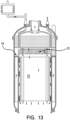
Figure 13 , in some known NTP engine designs, the weight of thecore 10 is hung from thesupport structure 12 and transferred to the reactor vessel by asupport plate 14 that is welded into the inner diameter of the reactor vessel 16. As such, when disassembling the nuclear reactor for inspection, various internal components, such as control drums, are often not removable. - As well, routing of coolant from outside known nuclear reactors to the plenums located in the
support structure 18 above the core often requires either penetrations through thereactor vessel 20 or through thereactor vessel head 22. When plumbing is routed horizontally (not shown) through a side of thereactor vessel 20, the plumbing must be welded to both thereactor vessel 20 and thesupport structure 18. This welding locks thesupport structure 18 to thereactor vessel 20 and does not allow replacement of components below the support plate unless these welds are first cut, possibly damaging the reactor vessel/support structure. The known solution to this routing issue involves routingcoolant lines 24 to the top of the reactor internals and interior dome and passing them vertically out through the reactor head, as shown inFigure 14 . Thecoolant lines 24 are then threaded into a mating flange that is then bolted to the reactor head thereby making a gas seal. High velocity coolant gas used to cool the reactor head flows between the outside of the interior dome and the inside of the reactor head. As such, thecoolant gas lines 24, as shown inFigure 14 , are susceptible to flow induced vibration which can lead to tube cracks and ultimately tube failure. - There at least remains a need, therefore, for improved devices for NTP engines that can be more easily assembled and disassembled for inspection and maintenance purposes during testing operations.
US2013/287157 discloses a nuclear reactor having a penetration seal ring interposed between the reactor vessel flange and a mating flange on the reactor vessel head.US2013/287158 discloses a suspended basket includes a plurality of plates, tie rods, and adjustable length threaded tie rod couplings connecting threaded ends of the tie rods with threaded features of the plates. - One embodiment of the present invention includes an internal interface structure for a nuclear thermal propulsion nuclear reactor including a reactor vessel and a reactor head. The interface structure includes a substantially cylindrical body having a top end, a bottom end, an inner surface, and an outer surface, and an annular flange extending radially-outwardly from the outer surface of the cylindrical body, wherein the annular flange of the interface structure is configured to be mounted between an upper flange of the reactor vessel and a bottom flange of the reactor head.
- The internal interface structure further comprises: a pathway extending through the annular flange and having an inlet formed in an outer perimeter of the annular flange and an outlet formed in the inner surface of the cylindrical body; a first annular ledge formed on the inner surface of the cylindrical body; a second annular ledge formed on the inner surface of the body; and a third annular ledge formed on the inner surface of the cylindrical body, wherein the first annular ledge is disposed between the top end of the cylindrical body and the outlet of the pathway, the second ledge is disposed between the bottom end of the cylindrical body and the outlet of the pathway, and the third ledge is disposed between the second ledge and the bottom end of the cylindrical body. The accompanying drawings, which are incorporated in and constitute a part of this specification, illustrate one or more embodiments of the invention and, together with the description, serve to explain the principles of the invention.
- The invention now will be described more fully hereinafter with reference to the accompanying drawings, in which some, but not, all embodiments of the invention are shown. Indeed, this invention may be embodied in many different forms and should not be construed as limited to the embodiments set forth herein; rather, these embodiments are provided so that this disclosure will satisfy applicable legal requirements.
-
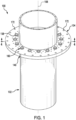
Figure 1 is a is a top perspective view of an internal interface structure of a nuclear thermal propulsion nuclear reactor in accordance with an embodiment of the present disclosure; -
Figure 2 is a bottom perspective view of the interface structure shown inFigure 1 ; -
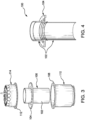
Figure 3 is an exploded perspective view of the interface structure shown inFigure 1 , and the corresponding reactor head and reactor vessel in which the interface structure is disposed; -
Figure 4 is a cross-sectional view of the interface structure shown inFigure 1 , taken along line 4-4; -
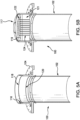
Figure 5A is a cross-sectional view of the interface structure shown inFigure 1 ; -
Figure 5B is a cross-section view of the interface structure shown inFigure 1 , showing internal neutron and gamma shielding; -
Figure 6 is a cross-sectional view of the interface structure shown inFigure 1 , showing exterior neutron and gamma shielding; -
Figure 7A is a cross-sectional view of the interface structure shown inFigure 1 , indicating plenum plate mounting surfaces; -
Figures 7B and 7C are cross-sectional views of the interface structure shown inFigure 7A , including plenum plates mounted on the plenum plate mounting surfaces; -
Figure 8 is a cross-sectional view of the interface structure shown inFigure 1 , showing control drums and a radial reflector mounted thereto; -
Figure 9 is a partial cross-sectional view of the interface structure shown inFigure 1 ; -
Figures 10A and 10B are cross-sectional views of the interface structure shown inFigure 1 , wherein the interface structure is supported by the reactor vessel; -
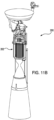
Figures 11A and11B are cross-sectional views of a nuclear thermal propulsion rocket engine including the internal interface structure shown inFigure 1 ; -
Figure 12 is a schematic diagram detailing coolant flow through the nuclear thermal propulsion rocket engine shown inFigures 11A and11B ; -
Figure 13 is a partial cross-sectional view of a prior art Nuclear Engine for Rocket Vehicle Application (NERVA) design, showing the nuclear reactor interface structure design; and -
Figure 14 is a partial cross-sectional view of a prior art nuclear thermal propulsion rocket engine design. - Repeat use of reference characters in the present specification and drawings is intended to represent same or analogous features or elements of the invention according to the disclosure.
- The invention now will be described more fully hereinafter with reference to the accompanying drawings, in which some, but not, all embodiments of the invention are shown. Indeed, this invention may be embodied in many different forms and should not be construed as limited to the embodiments set forth herein; rather, these embodiments are provided so that this disclosure will satisfy applicable legal requirements. As used in the specification, and in the appended claims, the singular forms "a", "an", "the", include plural referents unless the context clearly dictates otherwise.
- Referring now to the figures, an
internal interface structure 100 in accordance with the present disclosure is shown inFigures 1 and2 . Theinterface structure 100 is designed and configured to be used in anuclear reactor 202 of a nuclear thermal propulsion (NTP)rocket engine 200, as shown inFigures 11A and11B . Theinterface structure 100 is a single component including a substantiallycylindrical body 102 and anannular flange 104 extending radially-outwardly therefrom. Theannular flange 104 lies in a plane that is transverse to alongitudinal center axis 106 of thecylindrical body 102 and is configured to be mounted between anupper flange 108 of acorresponding reactor vessel 110 and a lower flange 112 of acorresponding reactor head 114, as best seen inFigure 3 . As shown inFigure 4 , thebody 102 ofinterface structure 100 extends above and below theannular flange 104 and functions as a cylindrical pressure vessel that supports the internal reactor core components, shielding components, reactor controls, and provides pathways for the reactor coolant gas and instrumentation pathways. - As shown in
Figures 5A and 5B , the interior of thepressure vessel 102 provides mounting surfaces at 116, 118, and 120 for theinterior plenum lid 117,interior gamma shield 119,interior neutron shield 121, respectively, and provides a coolant gas barrier, as discussed in greater detail below. Coolant gas from a turbo pump 210 (Figure 12 ), passes through theinterior plenum lid 117 and accumulates prior to entering thecoolant holes neutron shields interior plenum lid 117. The gamma andneutron shields mounting surfaces pressure vessel 102. The coolant gas passes through thecoolant holes - Referring additionally to
Figure 6 , theinterface structure 100 also supports and provides cooling pathways through exterior gamma andneutron shields pressure vessel 102.Coolant holes neutron shields corresponding coolant holes 130 that are formed in theannular flange 104, as best shown inFigure 2 . - Referring now to
Figure 7A through 7C , a plurality ofannular ledges pressure vessel 102 inwardly of theannular flange 104. Each annular ledge supports acorresponding plenum plate plenum plates coolant supply line 140 is formed within theannular flange 104 and allows for a non-welded pathway to the interior of the reactor at themoderator entrance plenum 141. After coolant passes through the moderator, the coolant exits the moderator and enters amoderator exit plenum 142. The moderator coolant gas exits themoderator plenum 142 throughpenetrations 144 in the pressure vessel wall, as best seen inFigures 7C andFigure 2 . - Referring now to
Figure 8 , aradial reflector 146 surrounds the reactor core and reflects neutrons back into the core. Theradial reflector 146 is located below theannular flange 104 adjacent the outer surface of thepressure vessel 102. Anannular ledge 148 is disposed on the outer surface of thepressure vessel 102 beneath theannular flange 104, theannular ledge 148 being configured to abut an upper surface of thereflector 146, thereby holding it in place. Thebottom 150 of theradial reflector 146 is supported by thereactor vessel 110 once thereactor vessel 110 is attached to the bottom of theannular flange 104, as best seen inFigures 10A and 10B . Theradial reflector 146 houses a plurality ofcontrol drums 152 that are used to control the criticality of the nuclear reactor. Control drum drive motors 154 (Figure 11A ) are located on the outside of the reactor head and are connected to the control drums 152 byshafts 156 that pass through theannular flange 104. Referring additionally toFigure 1 , theannular flange 104 provides alignment holes 158 and surfaces for supportingbearings 160 for eachcontrol drum shaft 156. - As best seen in
Figure 2 , thecoolant pathway 140 through theannular flange 104 is the only location that which thefull flange thickness 140a is required from thecylindrical pressure vessel 102 to the outer perimeter of theannular flange 104. Preferably, most of the remaining material between the mating surfaces of thereactor vessel 110 andreactor head 114, and theinterior pressure vessel 102 wall is removed. Anannular recess 162 formed by this removal of material becomes an internal coolant mixing area for mixing the coolant exiting from the moderator exit plenum 142 (Figure 7C ) and the coolant exiting theradial reflector 146 and controldrums 152 shown inFigure 8 . The mixed coolant then exits throughcoolant holes 130 that are defined byannular flange 104. - Referring again to
Figures 10A and 10B , thelower surface 150 of the interface structure'spressure vessel 102 is used to provide a vapor barrier from the interior gas flow through the core and the higher pressure coolant through theradial reflector 146 and control drums 152. Aseal 162 located at the thrust chamber assembly interface to thereactor vessel 110 provides the vapor barrier. Additionally, the lower portion of thepressure vessel 102 provides a secondary load path to theannular flange 104 from the thrust exiting the nozzle of the rocket engine (Figures 11A and11B ). - Instrumentation required within the reactor vessel for monitoring temperature, pressure, ionizing radiation, structural loading, etc., can be routed by way of
direct pathways 170 through theannular flange 104 to the interior of the reactor, as shown inFigure 9 . In prior art designs, instrumentation that was routed either through the reactor head or reactor vessel had to be disconnected when removing or installing the reactor head and/or the reactor vessel. By preferably routing instrumentation cabling through theannular flange 104, the instrumentation cables may be hardwired directly to the corresponding instrument with the first connection being located outside of the pressure boundary.Multiple ports 170 can be radially placed through the circular flange that do not interfere with the cooling holes 130, control drum supports 158/160, and reactor head/vessel mounting holes 172. - As described above, the
interface structure 100 allows the internal reactor components to be mounted directly thereto. The components are attached by bolted structures and require no welding. Thus, interior reactor components and parts may be disassembled after testing of the reactor for inspection without having to cut welds. As well, by routing coolant to the moderator through theannular flange 104, coolant penetrations to both the reactor vessel and the reactor head may be avoided. As well, by routing the coolant through theannular flange 104, flow induced vibration issues commonly found in prior art designs may be avoided. - Referring now to
Figures 11A ,11B and12 , the coolant flow paths through anNTP rocket engine 200 having an interface structure in accordance with the present disclosure is described. As shown, coolant from anexternal turbo pump 203 enters thenozzle 204 at 300, coolant from the nozzle enters reactor vessel at 302, through holes 339 (Figure 10B ) in the bottom ofreactor vessel 110, coolant passes through the reflector and the control drums at 304, coolant exits the reflector and the control drums and enters upper plenum at 306, where internal mixing of the coolant form the nozzle and moderator occurs. Additionally, coolant from theexternal turbo pump 203 enterscoolant pathway 140 of interface structure at 308, coolant next enters moderator entrance plenum at 310, the coolant next enters moderator inlet tube at 312, the coolant next flows through the moderator at 314, after a 180° change in the direction of flow, the coolant passes upwardly through the moderator into themoderator exit plenum 142 and out the moderator exit plenum at 316 throughholes 114, enters the upper plenum where it undergoes internal mixing at 306 with the coolant that entered through thenozzle 204. The coolant passes upwardly through theholes 130 in the annular flange of the interface structure and through theholes turbo pump 324, the coolant exits the turbo pump at 326 and enters the central dome at 328, after passing through the internal neutron and gamma shields at 330, the coolant enters the fuel element plenum at 332, and passes next into the fuel element inlet tube at 334, ultimately passing through the fuel elements at 336 and exiting the NTProcket engine nozzle 204 as exhaust at 338. - These and other modifications and variations to the invention may be practiced by those of ordinary skill in the art without departing from the scope of the invention, which is more particularly set forth in the appended claims. In addition, it should be understood that aspects of the various embodiments may be interchanged in whole or in part. Furthermore, those of ordinary skill in the art will appreciate that the foregoing description is by way of example only, and it is not intended to limit the invention as further described in such appended claims. Therefore, the scope of the appended claims should not be limited to the exemplary description of the versions contained herein.
Claims (3)
- An internal interface structure (100) for a nuclear thermal propulsion nuclear reactor (202) including a reactor vessel (110) and a reactor head (114), the internal interface structure (100) comprising:a substantially cylindrical body (102) having a top end, a bottom end, an inner surface, and an outer surface;an annular flange (104) extending radially-outwardly from the outer surface of the cylindrical body (102), wherein the annular flange (104) of the interface structure (100) is configured to be mounted between an upper flange of the reactor vessel (110) and a bottom flange of the reactor head (114); anda pathway extending through the annular flange (104) and having an inlet formed in an outer perimeter of the annular flange (104) and an outlet formed in the inner surface of the cylindrical body (102);characterized bya first annular ledge (132) formed on the inner surface of the cylindrical body (102); a second annular ledge (134) formed on the inner surface of the cylindrical body (102); anda third annular ledge (136) formed on the inner surface of the cylindrical body (102),wherein the first annular ledge (132) is disposed between the top end of the cylindrical body (102) and the outlet of the pathway, the second annular ledge (134) is disposed between the bottom end of the cylindrical body (102) and the outlet of the pathway, and the third annular ledge (136) is disposed between the second annular ledge (134) and the bottom end of the cylindrical body (102).
- The interface structure (100) of claim 1, wherein a longitudinal center axis of the pathway is perpendicular to a longitudinal center axis of the cylindrical body (102).
- The interface structure of claim 1, further comprising a plurality of penetrations extending through a portion of the cylindrical body (102) that is disposed between the second annular ledge (134) and the third annular ledge (136).
Priority Applications (1)
| Application Number | Priority Date | Filing Date | Title |
|---|---|---|---|
| EP25156297.1A EP4528094A3 (en) | 2019-03-19 | 2020-03-19 | Nuclear thermal propulsion nuclear reactor interface structure |
Applications Claiming Priority (2)
| Application Number | Priority Date | Filing Date | Title |
|---|---|---|---|
| US201962820622P | 2019-03-19 | 2019-03-19 | |
| PCT/US2020/023587 WO2020209997A2 (en) | 2019-03-19 | 2020-03-19 | Nuclear thermal propulsion nuclear reactor interface structure |
Related Child Applications (1)
| Application Number | Title | Priority Date | Filing Date |
|---|---|---|---|
| EP25156297.1A Division EP4528094A3 (en) | 2019-03-19 | 2020-03-19 | Nuclear thermal propulsion nuclear reactor interface structure |
Publications (4)
| Publication Number | Publication Date |
|---|---|
| EP3942572A2 EP3942572A2 (en) | 2022-01-26 |
| EP3942572A4 EP3942572A4 (en) | 2023-02-22 |
| EP3942572C0 EP3942572C0 (en) | 2025-03-05 |
| EP3942572B1 true EP3942572B1 (en) | 2025-03-05 |
Family
ID=72751744
Family Applications (2)
| Application Number | Title | Priority Date | Filing Date |
|---|---|---|---|
| EP20788043.6A Active EP3942572B1 (en) | 2019-03-19 | 2020-03-19 | Nuclear thermal propulsion nuclear reactor interface structure |
| EP25156297.1A Pending EP4528094A3 (en) | 2019-03-19 | 2020-03-19 | Nuclear thermal propulsion nuclear reactor interface structure |
Family Applications After (1)
| Application Number | Title | Priority Date | Filing Date |
|---|---|---|---|
| EP25156297.1A Pending EP4528094A3 (en) | 2019-03-19 | 2020-03-19 | Nuclear thermal propulsion nuclear reactor interface structure |
Country Status (4)
| Country | Link |
|---|---|
| US (1) | US11158433B2 (en) |
| EP (2) | EP3942572B1 (en) |
| CA (1) | CA3131300A1 (en) |
| WO (1) | WO2020209997A2 (en) |
Families Citing this family (6)
| Publication number | Priority date | Publication date | Assignee | Title |
|---|---|---|---|---|
| US10867710B2 (en) | 2015-09-30 | 2020-12-15 | Terrapower, Llc | Molten fuel nuclear reactor with neutron reflecting coolant |
| AU2017261230B2 (en) | 2016-05-02 | 2022-02-24 | Terrapower, Llc | Improved molten fuel reactor thermal management configurations |
| CA3092142A1 (en) | 2018-03-12 | 2019-11-28 | Terrapower, Llc | Reflectors for molten chloride fast reactors |
| CA3131300A1 (en) | 2019-03-19 | 2020-10-15 | Bwxt Nuclear Energy, Inc. | Nuclear thermal propulsion nuclear reactor interface structure |
| CN114651311A (en) | 2019-12-23 | 2022-06-21 | 泰拉能源公司 | Molten fuel reactor and annular ring plate for molten fuel reactor |
| US11728052B2 (en) | 2020-08-17 | 2023-08-15 | Terra Power, Llc | Fast spectrum molten chloride test reactors |
Family Cites Families (10)
| Publication number | Priority date | Publication date | Assignee | Title |
|---|---|---|---|---|
| BE635669A (en) * | 1962-07-31 | |||
| US3817029A (en) * | 1970-04-21 | 1974-06-18 | Westinghouse Electric Corp | Rocket engine |
| JPS62284289A (en) * | 1986-06-02 | 1987-12-10 | 日本原子力研究所 | Reactor |
| US20080232533A1 (en) * | 2006-02-15 | 2008-09-25 | Anatoly Blanovsky | High flux sub-critical reactor for nuclear waste transmulation |
| US9887015B2 (en) * | 2012-04-17 | 2018-02-06 | Bwxt Mpower, Inc. | Suspended upper internals with tie rod couplings for compact nuclear reactor |
| US9659674B2 (en) * | 2012-04-27 | 2017-05-23 | Westinghouse Electric Company Llc | Instrumentation and control penetration flange for pressurized water reactor |
| US9318227B2 (en) * | 2013-01-15 | 2016-04-19 | Westinghouse Electric Company Llc | Apparatus and method for removing the upper internals from a nuclear reactor pressurized vessel |
| WO2017222614A2 (en) * | 2016-03-14 | 2017-12-28 | Ultra Safe Nuclear Corporation | Passive reactivity control of nuclear thermal propulsion reactors |
| KR102561185B1 (en) | 2018-01-22 | 2023-07-27 | 울트라 세이프 뉴클리어 코포레이션 | Composite moderators for nuclear reactor systems |
| CA3131300A1 (en) | 2019-03-19 | 2020-10-15 | Bwxt Nuclear Energy, Inc. | Nuclear thermal propulsion nuclear reactor interface structure |
-
2020
- 2020-03-19 CA CA3131300A patent/CA3131300A1/en active Pending
- 2020-03-19 EP EP20788043.6A patent/EP3942572B1/en active Active
- 2020-03-19 US US16/823,993 patent/US11158433B2/en active Active
- 2020-03-19 EP EP25156297.1A patent/EP4528094A3/en active Pending
- 2020-03-19 WO PCT/US2020/023587 patent/WO2020209997A2/en not_active Ceased
Also Published As
| Publication number | Publication date |
|---|---|
| WO2020209997A9 (en) | 2020-11-05 |
| EP4528094A3 (en) | 2025-05-28 |
| EP3942572A2 (en) | 2022-01-26 |
| EP3942572C0 (en) | 2025-03-05 |
| US11158433B2 (en) | 2021-10-26 |
| EP4528094A2 (en) | 2025-03-26 |
| EP3942572A4 (en) | 2023-02-22 |
| WO2020209997A2 (en) | 2020-10-15 |
| WO2020209997A3 (en) | 2020-12-10 |
| US20200357531A1 (en) | 2020-11-12 |
| CA3131300A1 (en) | 2020-10-15 |
Similar Documents
| Publication | Publication Date | Title |
|---|---|---|
| EP3942572B1 (en) | Nuclear thermal propulsion nuclear reactor interface structure | |
| CA1108313A (en) | Irradiation surveillance specimen assembly | |
| US10217537B2 (en) | Container for radioactive waste | |
| JP5345951B2 (en) | Structure of alignment plate for nuclear reactor | |
| JPS5947277B2 (en) | pressurized water reactor | |
| CN109154438B (en) | Gas turbine annular combustor device | |
| JP2018504573A (en) | Steam generator with inclined tubesheet | |
| JPS587957B2 (en) | Genshiro | |
| EP0138477A1 (en) | Improved reactor internals hold down spring | |
| US5325407A (en) | Core barrel and support plate assembly for pressurized water nuclear reactor | |
| JPH0353589B2 (en) | ||
| US20200388411A1 (en) | Nuclear steam supply system | |
| JPH04232895A (en) | Guide-tube inserted-material assembly in in-pile structure assembly | |
| US11248793B2 (en) | Combustion chamber having a double chamber bottom | |
| US11724830B2 (en) | Plenum plate standoff spools for separating a pair of plenum plates in a nuclear reactor | |
| US6389094B1 (en) | Integral forged shroud flange for a boiling water reactor | |
| JP4851811B2 (en) | Natural circulation boiling water reactor and its handling method | |
| US5995575A (en) | In-core guide tube restraint for a boiling water reactor | |
| JP3886654B2 (en) | Core structure of pressurized water reactor | |
| RU2798478C1 (en) | Integrated nuclear reactor with liquid metal coolant | |
| CN121593921A (en) | A propellant tank for a reusable launch vehicle | |
| US5920603A (en) | Forged core plate for a boiling water reactor | |
| KR101032824B1 (en) | Ring plate of integral reactor superstructure | |
| Gluck et al. | Status of a reformer design for a modular HTGR in an in-line configuration | |
| JP2017116381A (en) | Baffle structure and reactor vessel |
Legal Events
| Date | Code | Title | Description |
|---|---|---|---|
| STAA | Information on the status of an ep patent application or granted ep patent |
Free format text: STATUS: THE INTERNATIONAL PUBLICATION HAS BEEN MADE |
|
| PUAI | Public reference made under article 153(3) epc to a published international application that has entered the european phase |
Free format text: ORIGINAL CODE: 0009012 |
|
| STAA | Information on the status of an ep patent application or granted ep patent |
Free format text: STATUS: REQUEST FOR EXAMINATION WAS MADE |
|
| 17P | Request for examination filed |
Effective date: 20210820 |
|
| AK | Designated contracting states |
Kind code of ref document: A2 Designated state(s): AL AT BE BG CH CY CZ DE DK EE ES FI FR GB GR HR HU IE IS IT LI LT LU LV MC MK MT NL NO PL PT RO RS SE SI SK SM TR |
|
| DAV | Request for validation of the european patent (deleted) | ||
| DAX | Request for extension of the european patent (deleted) | ||
| RIC1 | Information provided on ipc code assigned before grant |
Ipc: G21C 11/06 20060101ALN20221018BHEP Ipc: G21C 11/02 20060101ALN20221018BHEP Ipc: F02K 9/00 20060101ALI20221018BHEP Ipc: G21C 15/02 20060101ALI20221018BHEP Ipc: G21C 13/02 20060101ALI20221018BHEP Ipc: G21C 5/02 20060101ALI20221018BHEP Ipc: B64G 1/40 20060101ALI20221018BHEP Ipc: G21D 5/02 20060101AFI20221018BHEP |
|
| REG | Reference to a national code |
Ref country code: DE Ref legal event code: R079 Free format text: PREVIOUS MAIN CLASS: G21C0001000000 Ref country code: DE Ref legal event code: R079 Ref document number: 602020047287 Country of ref document: DE Free format text: PREVIOUS MAIN CLASS: G21C0001000000 Ipc: G21D0005020000 |
|
| A4 | Supplementary search report drawn up and despatched |
Effective date: 20230124 |
|
| RIC1 | Information provided on ipc code assigned before grant |
Ipc: G21C 11/06 20060101ALN20230118BHEP Ipc: G21C 11/02 20060101ALN20230118BHEP Ipc: F02K 9/00 20060101ALI20230118BHEP Ipc: G21C 15/02 20060101ALI20230118BHEP Ipc: G21C 13/02 20060101ALI20230118BHEP Ipc: G21C 5/02 20060101ALI20230118BHEP Ipc: B64G 1/40 20060101ALI20230118BHEP Ipc: G21D 5/02 20060101AFI20230118BHEP |
|
| STAA | Information on the status of an ep patent application or granted ep patent |
Free format text: STATUS: EXAMINATION IS IN PROGRESS |
|
| 17Q | First examination report despatched |
Effective date: 20231220 |
|
| GRAP | Despatch of communication of intention to grant a patent |
Free format text: ORIGINAL CODE: EPIDOSNIGR1 |
|
| STAA | Information on the status of an ep patent application or granted ep patent |
Free format text: STATUS: GRANT OF PATENT IS INTENDED |
|
| RIC1 | Information provided on ipc code assigned before grant |
Ipc: G21C 11/06 20060101ALN20241121BHEP Ipc: G21C 11/02 20060101ALN20241121BHEP Ipc: F02K 9/00 20060101ALI20241121BHEP Ipc: G21C 15/02 20060101ALI20241121BHEP Ipc: G21C 13/02 20060101ALI20241121BHEP Ipc: G21C 5/02 20060101ALI20241121BHEP Ipc: B64G 1/40 20060101ALI20241121BHEP Ipc: G21D 5/02 20060101AFI20241121BHEP |
|
| INTG | Intention to grant announced |
Effective date: 20241204 |
|
| GRAS | Grant fee paid |
Free format text: ORIGINAL CODE: EPIDOSNIGR3 |
|
| GRAA | (expected) grant |
Free format text: ORIGINAL CODE: 0009210 |
|
| STAA | Information on the status of an ep patent application or granted ep patent |
Free format text: STATUS: THE PATENT HAS BEEN GRANTED |
|
| AK | Designated contracting states |
Kind code of ref document: B1 Designated state(s): AL AT BE BG CH CY CZ DE DK EE ES FI FR GB GR HR HU IE IS IT LI LT LU LV MC MK MT NL NO PL PT RO RS SE SI SK SM TR |
|
| REG | Reference to a national code |
Ref country code: GB Ref legal event code: FG4D |
|
| REG | Reference to a national code |
Ref country code: CH Ref legal event code: EP |
|
| REG | Reference to a national code |
Ref country code: IE Ref legal event code: FG4D |
|
| REG | Reference to a national code |
Ref country code: DE Ref legal event code: R096 Ref document number: 602020047287 Country of ref document: DE |
|
| U01 | Request for unitary effect filed |
Effective date: 20250321 |
|
| U07 | Unitary effect registered |
Designated state(s): AT BE BG DE DK EE FI FR IT LT LU LV MT NL PT RO SE SI Effective date: 20250327 |
|
| PG25 | Lapsed in a contracting state [announced via postgrant information from national office to epo] |
Ref country code: RS Free format text: LAPSE BECAUSE OF FAILURE TO SUBMIT A TRANSLATION OF THE DESCRIPTION OR TO PAY THE FEE WITHIN THE PRESCRIBED TIME-LIMIT Effective date: 20250605 |
|
| PG25 | Lapsed in a contracting state [announced via postgrant information from national office to epo] |
Ref country code: ES Free format text: LAPSE BECAUSE OF FAILURE TO SUBMIT A TRANSLATION OF THE DESCRIPTION OR TO PAY THE FEE WITHIN THE PRESCRIBED TIME-LIMIT Effective date: 20250305 |
|
| PG25 | Lapsed in a contracting state [announced via postgrant information from national office to epo] |
Ref country code: NO Free format text: LAPSE BECAUSE OF FAILURE TO SUBMIT A TRANSLATION OF THE DESCRIPTION OR TO PAY THE FEE WITHIN THE PRESCRIBED TIME-LIMIT Effective date: 20250605 |
|
| PG25 | Lapsed in a contracting state [announced via postgrant information from national office to epo] |
Ref country code: HR Free format text: LAPSE BECAUSE OF FAILURE TO SUBMIT A TRANSLATION OF THE DESCRIPTION OR TO PAY THE FEE WITHIN THE PRESCRIBED TIME-LIMIT Effective date: 20250305 |
|
| PG25 | Lapsed in a contracting state [announced via postgrant information from national office to epo] |
Ref country code: GR Free format text: LAPSE BECAUSE OF FAILURE TO SUBMIT A TRANSLATION OF THE DESCRIPTION OR TO PAY THE FEE WITHIN THE PRESCRIBED TIME-LIMIT Effective date: 20250606 |
|
| U21 | Renewal fee for the european patent with unitary effect paid with additional fee |
Year of fee payment: 6 Effective date: 20250628 |
|
| PG25 | Lapsed in a contracting state [announced via postgrant information from national office to epo] |
Ref country code: SM Free format text: LAPSE BECAUSE OF FAILURE TO SUBMIT A TRANSLATION OF THE DESCRIPTION OR TO PAY THE FEE WITHIN THE PRESCRIBED TIME-LIMIT Effective date: 20250305 |
|
| PG25 | Lapsed in a contracting state [announced via postgrant information from national office to epo] |
Ref country code: PL Free format text: LAPSE BECAUSE OF FAILURE TO SUBMIT A TRANSLATION OF THE DESCRIPTION OR TO PAY THE FEE WITHIN THE PRESCRIBED TIME-LIMIT Effective date: 20250305 |
|
| PG25 | Lapsed in a contracting state [announced via postgrant information from national office to epo] |
Ref country code: CZ Free format text: LAPSE BECAUSE OF FAILURE TO SUBMIT A TRANSLATION OF THE DESCRIPTION OR TO PAY THE FEE WITHIN THE PRESCRIBED TIME-LIMIT Effective date: 20250305 |
|
| REG | Reference to a national code |
Ref country code: CH Ref legal event code: H13 Free format text: ST27 STATUS EVENT CODE: U-0-0-H10-H13 (AS PROVIDED BY THE NATIONAL OFFICE) Effective date: 20251024 |
|
| PG25 | Lapsed in a contracting state [announced via postgrant information from national office to epo] |
Ref country code: SK Free format text: LAPSE BECAUSE OF FAILURE TO SUBMIT A TRANSLATION OF THE DESCRIPTION OR TO PAY THE FEE WITHIN THE PRESCRIBED TIME-LIMIT Effective date: 20250305 |
|
| PG25 | Lapsed in a contracting state [announced via postgrant information from national office to epo] |
Ref country code: IS Free format text: LAPSE BECAUSE OF FAILURE TO SUBMIT A TRANSLATION OF THE DESCRIPTION OR TO PAY THE FEE WITHIN THE PRESCRIBED TIME-LIMIT Effective date: 20250705 |
|
| PG25 | Lapsed in a contracting state [announced via postgrant information from national office to epo] |
Ref country code: MC Free format text: LAPSE BECAUSE OF FAILURE TO SUBMIT A TRANSLATION OF THE DESCRIPTION OR TO PAY THE FEE WITHIN THE PRESCRIBED TIME-LIMIT Effective date: 20250305 |
|
| PLBE | No opposition filed within time limit |
Free format text: ORIGINAL CODE: 0009261 |
|
| STAA | Information on the status of an ep patent application or granted ep patent |
Free format text: STATUS: NO OPPOSITION FILED WITHIN TIME LIMIT |
|
| REG | Reference to a national code |
Ref country code: CH Ref legal event code: L10 Free format text: ST27 STATUS EVENT CODE: U-0-0-L10-L00 (AS PROVIDED BY THE NATIONAL OFFICE) Effective date: 20260114 |
|
| PG25 | Lapsed in a contracting state [announced via postgrant information from national office to epo] |
Ref country code: CH Free format text: LAPSE BECAUSE OF NON-PAYMENT OF DUE FEES Effective date: 20250331 |
|
| PG25 | Lapsed in a contracting state [announced via postgrant information from national office to epo] |
Ref country code: IE Free format text: LAPSE BECAUSE OF NON-PAYMENT OF DUE FEES Effective date: 20250319 |
|
| 26N | No opposition filed |
Effective date: 20251208 |
|
| PGFP | Annual fee paid to national office [announced via postgrant information from national office to epo] |
Ref country code: GB Payment date: 20260327 Year of fee payment: 7 |