EP3942452B1 - Browserübergreifende techniken für effizienten seitenumbruch in dokumenten - Google Patents
Browserübergreifende techniken für effizienten seitenumbruch in dokumenten Download PDFInfo
- Publication number
- EP3942452B1 EP3942452B1 EP20721077.4A EP20721077A EP3942452B1 EP 3942452 B1 EP3942452 B1 EP 3942452B1 EP 20721077 A EP20721077 A EP 20721077A EP 3942452 B1 EP3942452 B1 EP 3942452B1
- Authority
- EP
- European Patent Office
- Prior art keywords
- content
- page
- document
- computer system
- flow
- Prior art date
- Legal status (The legal status is an assumption and is not a legal conclusion. Google has not performed a legal analysis and makes no representation as to the accuracy of the status listed.)
- Active
Links
Images



Classifications
-
- G—PHYSICS
- G06—COMPUTING OR CALCULATING; COUNTING
- G06F—ELECTRIC DIGITAL DATA PROCESSING
- G06F40/00—Handling natural language data
- G06F40/10—Text processing
- G06F40/103—Formatting, i.e. changing of presentation of documents
- G06F40/114—Pagination
-
- G—PHYSICS
- G06—COMPUTING OR CALCULATING; COUNTING
- G06F—ELECTRIC DIGITAL DATA PROCESSING
- G06F40/00—Handling natural language data
- G06F40/10—Text processing
- G06F40/103—Formatting, i.e. changing of presentation of documents
- G06F40/117—Tagging; Marking up; Designating a block; Setting of attributes
-
- G—PHYSICS
- G06—COMPUTING OR CALCULATING; COUNTING
- G06F—ELECTRIC DIGITAL DATA PROCESSING
- G06F40/00—Handling natural language data
- G06F40/10—Text processing
- G06F40/12—Use of codes for handling textual entities
- G06F40/14—Tree-structured documents
-
- G—PHYSICS
- G06—COMPUTING OR CALCULATING; COUNTING
- G06F—ELECTRIC DIGITAL DATA PROCESSING
- G06F40/00—Handling natural language data
- G06F40/10—Text processing
- G06F40/166—Editing, e.g. inserting or deleting
Definitions
- Pagination is the process of partitioning the content of an electronic document into limited, often fixed-sized, portions referred to as pages. Pagination is used in a number of different contexts, such as in WYSIWYG ("what you see is what you get") document editing programs to support document printing, print preview, presentation virtualization, and other similar features.
- WYSIWYG what you see is what you get
- Some web browsers have built-in pagination algorithms for paginating browser documents like HTML (Hyper Text Markup Language) documents.
- HTML Hyper Text Markup Language
- HTML Hyper Text Markup Language
- CSS CSS
- Some web browsers have built-in pagination algorithms for paginating browser documents like HTML (Hyper Text Markup Language) documents.
- HTML Hyper Text Markup Language
- W3C HTML and CSS CSS
- the web browsers that do natively implement pagination each do so differently and generally offer no, or very few, options for customizing their pagination behavior. This makes it difficult for developers to build web applications, such as web-based document editing programs, that support pagination in a consistent and flexible manner across all web browsers.
- US 2011/252304 A1 discloses a computer-implemented method for presenting a document for interaction with a user in a web browser.
- An electronic model of the document is accessed, positions for items in a visual rendering of the electronic model are determined based on relative sizes and positions of other items in the electronic model; the items are placed at the determined positions on an editing surface where the characters representing the raw text for the document may include reserved control characters such as characters that indicate the occurrence of a page break.
- WO 2012/128950 A1 discloses receiving data defining a document and identifying elements within the document where for each of the elements, a layout and render function are generated. Layout data associated with the elements is generated and the elements are incrementally rendered based on their layout data while they fit in an available page height in order to define pages.
- FIG. 1 is a simplified block diagram illustrating an example computing system/device 100 that implements these techniques according to certain embodiments.
- computing system/device 100 includes a web browser 102 running a web application 104.
- Web browser 102 may be, e.g., Microsoft Edge, Google Chrome, Mozilla Firefox, Apple Safari, or any other web browser known in the art.
- Web application 104 is assumed to be an application that allows for the manipulation and presentation of documents via web browser 102, such as an online document editor.
- pagination is often used by document editing applications like web application 104 to support features such as document printing, print preview, and presentation virtualization.
- Some web browsers natively implement pagination via built-in pagination algorithms, but this is not available on all browsers on the market today. Accordingly, web application 104 cannot rely on browser-specific pagination implementations while maintaining cross-browser compatibility. It is possible for web application 104 itself to implement pagination using "custom" document layout code (in other words, layout code that does not rely on any browser-based logic).
- custom layout code is non-trivial to implement and will generally perform poorly due to the need for web application 104 to manage very large amounts of data (for, e.g., character glyphs, international properties, etc.) as well as handle the time-consuming task of sizing and positioning every character in a document.
- web application 104 of FIG. 1 includes a novel set of pagination algorithms, collectively referred to as pagination logic 106, that are implemented using JavaScript.
- This pagination logic can be added to one or more HTML files of web application 104 by, e.g., the provider/developer of web application 104 and can be delivered to web browser 102 (as part of web application 104) from a web server 108 at a time a user of web browser 102 accesses application 104 via an appropriate URL (uniform resource locator).
- pagination logic 106 may be packaged as a portable JavaScript library so that it can be easily reused by multiple different web applications/web pages.
- JavaScript-based pagination logic 106 enable web application 104 to paginate browser documents by leveraging a built-in document layout engine of web browser 102 for certain parts of the pagination process (e.g., layout measurement and creation), rather than relying on custom layout code.
- All web browsers on the market today implement a built-in layout engine as part of their base feature set and make the functionality of this built-in engine available to client-side JavaScript code via standard, cross-browser JavaScript APIs.
- this built-in layout engine is different from the built-in pagination algorithms noted earlier (which are only implemented in a few web browsers) because the built-in layout engine is directed to the general task of measuring and laying out the content of a document rather than the specific task of pagination.
- pagination logic 106 can advantageously avoid incorporating custom code for the complex tasks of layout measurement and layout creation; instead, pagination logic 106 can rely on the browser to take care of these complex tasks via the browser's built-in layout engine, while logic 106 can directly handle other aspects of the pagination process. This results in relatively simple (in terms of code size) and efficient pagination code.
- pagination logic 106 can advantageously run on all such browsers without compatibility issues/concerns.
- pagination logic 106 can be easily extended and customized to support different application use cases that have different pagination requirements. Examples of such different requirements include the pagination of documents with headers and footers, footnotes, pages of varying sizes, and so on.
- section (2) describes two algorithms for paginating a browser document with a single linear flow of content: (A) a "create page” algorithm for defining a single page from a given starting position in the document (which can be repeated multiple times to divide the document into a set of pages), and (B) an "update page set” algorithm for updating the document's page set each time the document content is modified.
- section (3) below describes an enhanced version of the "create page” algorithm that can be employed for paginating a browser document with multiple linear content flows (e.g., a document with one or more tables).
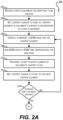
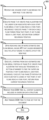
- FIGS. 2A , 2B , and 2C depict a flowchart 200 of a "create page" algorithm that may be included in pagination logic 106 of FIG. 1 and executed by web application 104 for defining a single page with respect to a browser document according to certain embodiments, where the browser document's content is structured as a single linear flow.
- the act of "defining a page” with respect to a browser document refers to identifying content elements of the document (e.g., text characters, images, etc.) that fall within the boundaries of that page.
- a “linear flow” or a “linear content flow” in a browser document refers to document content that is visually presented in a sequential manner without any branching paths.
- the create page algorithm shown in FIGS. 2A-C may be repeated several times with respect to a given document in order to partition the document into a page set, which is an ordered collection of pages defined on the document content.
- FIG. 2A roughly corresponds to a first phase of the create page algorithm that involves "building visuals" for the new page to be defined/created (i.e., building a DOM (Document Model Object) tree representation of the page that can be laid out and rendered), with a certain amount of overflow so that the DOM tree includes some document content that extends beyond the ending boundary of the new page.
- DOM Document Model Object
- FIG. 2B roughly corresponds to a second phase of the create page algorithm that involves "measuring the visuals" via the built in layout engine of web browser 102 (i.e., calculating precise graphical coordinates of a visual representation of the page) and traversing through the document's content flow in a bottom-up manner to determine the point at which the content has crossed the new page's ending boundary (i.e., has overflowed).
- FIG. 2C roughly corresponds to a third phase of the create page algorithm that involves removing from the DOM tree all DOM nodes representing the overflow content.
- web application 104 receives an indication of a point within the document's linear content flow that corresponds to the desired starting point of the new page to be created.
- this point (referred to as a "start flow break") can identify a particular content element (e.g., a text character, image, etc.) in the linear content flow.
- web application 104 can set a content cursor C to point to the content element identified by the start flow break. Web application 104 then creates, in system memory, a DOM (Document Object Model) node for the content element pointed to by content cursor C (block 206) and can add the created DOM node to a DOM tree representing the new page (block 208). Blocks 206 and 208 can be performed using appropriate JavaScript APIs defined under the W3C DOM standard.
- web application 104 can traverse to the next content element in the document's linear content flow that follows the previous content element and can set content cursor C to point to this next content element.
- the document's linear content flow can be represented as a tree comprising intermediate nodes for formatting elements (e.g., paragraphs, titles, headers, etc.) and leaf-level nodes for content elements (e.g., text, images, etc.).
- the traversal at block 210 can be carried out by moving to the next leaf-level node in the document tree.
- web application 104 can check whether it has reached an estimated ending point, where this estimated ending point (referred to as an "estimated end flow break") corresponds to a location in the document's linear content flow that is, e.g., X number of content elements downstream from the start flow break.
- This number X will typically be predefined and correspond to an estimated number of content elements that can fit on a given page, with a certain amount of overflow onto the next page. For instance, if the start flow break corresponds to character C35 of the linear content flow, the estimated end flow break may be set for 300 text characters after C35, or character C335.
- web application 104 can return to block 206 and repeat the foregoing steps, thereby creating and adding a DOM node for this next content element to the in-memory DOM tree. This process can continue until the estimated end flow break is reached at block 212, at which point the algorithm can proceed to phase 2 depicted in FIG. 2B .
- web application 104 invokes a standard cross-browser API that causes the built-in layout engine of web browser 102 to create/measure a visual representation of the new page based on the DOM tree built during phase 1 of the algorithm.
- This representation (referred to herein as the "page layout") includes the exact sizing and positioning of every page element in accordance with the DOM tree, as those elements would appear if rendered on-screen.
- Web application 104 can invoke any one of a number of standard cross-browser DOM APIs to carry out this step, such as the DOM offsetHeight API.
- web application 104 can set content cursor C to point to the content element in the document's linear content flow that immediately precedes the estimated end flow break (block 218), retrieve the content element pointed to by cursor C (block 220), and invoke a browser API that causes web browser 102 to lookup and return the y-coordinate position of the retrieved content element, based on the page layout (block 222). In this way, the exact vertical position of this content element (in terms of, e.g., pixels) can be determined.
- web application 104 determines whether the retrieved content element has crossed over the new page's ending boundary or not by comparing the y-coordinate value returned by web browser 102 at block 222 with the desired vertical size of the page (e.g., 1000 pixels). If the y-coordinate position exceeds the vertical size of the page, web application 104 can conclude that this content element is an overflow element and can add the element to an overflow data structure (block 226).
- Web application 104 can then traverse to the next previous content element in the document's linear content flow (block 228) and set content cursor C to point to this next content element (block 230) (thereby traversing in a bottom-up manner through the flow) and return to block 220 to repeat the foregoing steps until it finds a content element that has not overflowed the new page's ending boundary. At that point, web application 104 can proceed to phase 3 in FIG. 2C .
- web application 104 removes, from its in-memory DOM tree representation of the new page, all of the overflow elements included in the overflow data structure (in other words, all of the content elements that have been determined during phase 2 to have crossed over the new page's ending boundary). In this way, web application 104 can essentially "trim" the DOM tree to include only those elements that fit onto the new page.
- computing system/device 100 adds the trimmed DOM tree of the new page to the page set for the document and the create page algorithm can end.
- FIG. 3 depicts a schematic representation 300 of the algorithm's execution in terms of the 3 phases (i.e., passes) described above.
- FIG. 5 depicts a flowchart 500 of an "update page set" algorithm that may be included in pagination logic 106 of FIG. 1 and executed by web application 104 for updating the pages of a document according to certain embodiments.
- this algorithm takes as input a page set that may have various gaps or overlaps between its pages and outputs a page set that corresponds to a "fully paginated" state for the document (i.e., a state where (a) the page set fully covers the entirety of the document content, and (b) there are no gaps or overlaps between any two consecutive pages in the page set).
- web application 104 can receive a page set S for a given document and check whether page set S includes two consecutive pages that either overlap (i.e., the same document content appears on both pages) or have an intervening gap (i.e., there is some document content between the end of the first page and the start of the second page that is not assigned to any page in page set S). Web application 104 can perform this check by examining the DOM tree of each page, as created via the create page algorithm, and comparing these DOM trees to the current version of the document content. If no such pages are found (block 506), web application 104 can conclude that the document is fully paginated (block 508) and can terminate the algorithm.
- web application 104 can take one of two actions, depending on whether there is an overlap or a gap (block 510). If there is an overlap, web application 104 can execute a "remove page” operation for remove the second of the two consecutive pages from page set S (thereby creating a gap after the first page) (block 512).
- web application 104 can execute the create page algorithm of FIG. 2 by passing the next character/element after the end of the first page as the "start flow break" for that algorithm (block 514). In this way, web application 104 can define/create a new single page immediately following the first page that incorporates the document content that was in the gap. Note that this may result in an overlap between the newly created page and a subsequent page in page set S.
- FIG. 6 is a schematic diagram 600 illustrating the two alternative actions of blocks 512 and 514.
- the remove page and create page operations may be implemented as atomic operations that can be executed asynchronously. This means that the web browser in which the update page set algorithm is run can remain responsive to user input while pagination is in progress. This also allows for efficient handling of pagination/repagination in co-authoring scenarios where multiple users may interact with and modify the document at substantially the same time.
- FIG. 7 is a schematic diagram 700 of an example document including a first linear content flow 702, followed by a complex table 704 with multiple parallel columns of content, followed by a second linear content flow 706.
- a first linear content flow 702 followed by a complex table 704 with multiple parallel columns of content
- a second linear content flow 706 One known way to paginate a document with a table like the one shown in FIG. 7 is to simply render the document without regard to pages and then forcefully "cut" the content along page boundary lines. However, this approach typically results in an undesirable outcome if a page boundary falls within the table, since the content of the table may be split in an unnatural way.
- FIG. 8 depicts a flow structure 800 corresponding to the example document of FIG. 7 .
- each arrow indicates an individual linear content flow within the document.
- these linear flows fork and join in accordance with the columns and rows shown in the table of FIG. 7 .
- the structure of the enhanced create page algorithm for handling multiple linear flows is fundamentally similar to the implementation for handling a single linear flow-in particular, the algorithm operates over three phases or passes that include: (1) building the visuals of the new page, with some overflow; (2) invoking a browser API to have the browser's built-in layout engine measure/create the page layout and traversing in a bottom-up manner through the document to find the overflow position; and (3) removing all of the overflow elements from the DOM tree representation of the new page.
- the traversal portions of phases 1 and 2 are performed for every linear flow encountered in the document.
- the algorithm will traverse down each linear flow and add DOM nodes for that linear flow to the page's DOM tree. If these three linear flows do not re-join before the estimated end of the page is reached, this will result in a set of three estimated end flow breaks for the page-one for each parallel flow. The algorithm will then traverse in a bottom-up manner from each of those three estimated end flow breaks until an end flow break (i.e., the overflow position) is found in each linear flow, resulting in a set of three end flow breaks. Then, if the create page algorithm is called again to create another new page for the next portion of the document, this set of three end flow breaks can be passed into the algorithm as the start flow breaks for the next new page.
- FIG. 9 depicts a high-level flowchart 900 of this enhanced create page algorithm according to certain embodiments.
- Flowchart 900 refers to phases 1, 2, and 3 of the algorithm, which can be understood as roughly corresponding to the processing shown in FIGS. 2A , 2B , and 2C respectively.
- web application 104 receives a set of one or more start flow breaks indicating the desired starting points for the new page to be defined/created.
- each start flow break can correspond to a starting point in a separate linear content flow of the document (e.g., a separate column in a table) where the last page in the document's page set ended.
- web application 104 executes phase 1 of the create page algorithm with respect to each start flow break, which involves traversing down the linear content flow associated with the start flow break and adding DOM nodes for the content elements encountered within that linear flow to an in-memory DOM tree for the new page.
- web application 104 can recursively invoke phase 1 for each of the child linear flows forked from that parent linear flow.
- web application 104 can identify a fork point as being the start of a new table column in the document.
- web application 104 can return from the current recursion iteration of phase 1.
- web application 104 can identify a join point as being the end of a table column in the document.
- web application 104 upon reaching one or more estimated end flow breaks per the execution(s) of phase 1, invokes a browser API that causes the built-in layout engine of web browser 102 to measure and create the page layout for the new page.
- Web application (1) then executes, starting from each estimated end flow break, the portion of phase 2 of the create page algorithm that involves traversing in a bottom-up manner through the document content to find the overflow position within each linear flow (block 908).
- web application 104 can recursively invoke that phase 2 portion for each of the linear flows joined into the current linear flow.
- web application 104 can return from the current recursion iteration of the phase 2 portion.
- web application 104 removes, from its in-memory DOM tree representation of the new page, all of the overflow elements included in the overflow data structure (block 910) and adds the DOM tree of the new page to the page set for the document (block 912), thereby concluding the algorithm.
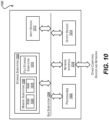
- FIG. 10 is a simplified block diagram illustrating the architecture of an example computing system/device 1000 according to certain embodiments.
- Computing system/device 1000 (and/or equivalent systems/devices) may be used to run any of the software described in the foregoing disclosure.
- computing system/device 1000 may be used to implement system/device 100 of FIG. 1 .
- computing system/device 1000 includes one or more processors 1002 that communicate with a number of peripheral devices via a bus subsystem 1004.
- peripheral devices include a storage subsystem 1006 (comprising a memory subsystem 1008 and a file storage subsystem 1010), user interface input devices 1012, user interface output devices 1014, and a network interface subsystem 1016.
- Bus subsystem 1004 can provide a mechanism for letting the various components and subsystems of computing system/device 1000 communicate with each other as intended. Although bus subsystem 1004 is shown schematically as a single bus, alternative embodiments of the bus subsystem can utilize multiple busses.
- Network interface subsystem 1016 can serve as an interface for communicating data between computer system 1000 and other computer systems or networks.
- Embodiments of network interface subsystem 1016 can include, e.g., an Ethernet module, a Wi-Fi and/or cellular connectivity module, and/or the like.
- User interface input devices 1012 can include a keyboard, pointing devices (e.g., mouse, trackball, touchpad, etc.), a touch-screen incorporated into a display, audio input devices (e.g., voice recognition systems, microphones, etc.), motion-based controllers, and other types of input devices.
- pointing devices e.g., mouse, trackball, touchpad, etc.
- audio input devices e.g., voice recognition systems, microphones, etc.
- motion-based controllers e.g., motion-based controllers, and other types of input devices.
- use of the term "input device” is intended to include all possible types of devices and mechanisms for inputting information into computing system/device 1000.
- User interface output devices 1014 can include a display subsystem and non-visual output devices such as audio output devices, etc.
- the display subsystem can be, e.g., a transparent or non-transparent display screen such as a liquid crystal display (LCD) or organic light-emitting diode (OLED) display that is capable of presenting 2D and/or 3D imagery.
- LCD liquid crystal display
- OLED organic light-emitting diode
- output device is intended to include all possible types of devices and mechanisms for outputting information from computing system/device 1000.
- Storage subsystem 1006 includes a memory subsystem 1008 and a file/disk storage subsystem 1010.
- Subsystems 1008 and 1010 represent non-transitory computer-readable storage media that can store program code and/or data that provide the functionality of embodiments of the present disclosure.
- Memory subsystem 1008 includes a number of memories including a main random access memory (RAM) 1018 for storage of instructions and data during program execution and a read-only memory (ROM) 1020 in which fixed instructions are stored.
- File storage subsystem 1010 can provide persistent (i.e., non-volatile) storage for program and data files, and can include a magnetic or solid-state hard disk drive, an optical drive along with associated removable media (e.g., CD-ROM, DVD, Blu-Ray, etc.), a removable or non-removable flash memory-based drive, and/or other types of storage media known in the art.
- computing system/device 1000 is illustrative and other configurations having more or fewer components than computing system/device 1000 are possible.
Landscapes
- Engineering & Computer Science (AREA)
- Theoretical Computer Science (AREA)
- Health & Medical Sciences (AREA)
- Artificial Intelligence (AREA)
- Audiology, Speech & Language Pathology (AREA)
- Computational Linguistics (AREA)
- General Health & Medical Sciences (AREA)
- Physics & Mathematics (AREA)
- General Engineering & Computer Science (AREA)
- General Physics & Mathematics (AREA)
- Information Transfer Between Computers (AREA)
- Document Processing Apparatus (AREA)
Claims (15)
- Computersystem (1000), umfassend:einen Prozessor (1002); undein computerlesbares Speichermedium (1008), auf dem Programmcode gespeichert ist, der, wenn er von dem Prozessor (1002) ausgeführt wird, bewirkt, dass der Prozessor (1002):eine Angabe eines Startpunkts für eine Seite in einem Inhaltsfluss (400) eines Dokuments empfängt (202);einen DOM- (Dokumentobjektmodell) Baum von Inhaltselementen in einem Abschnitt des Inhaltsflusses (400), der sich vom Startpunkt bis zu einem geschätzten Endpunkt erspannt, aufbaut (206), wobei der geschätzte Endpunkt einer Stelle im Inhaltsfluss (400) entspricht, die eine vordefinierte Anzahl von Inhaltselementen nach dem Startpunkt ist, wobei es sich bei der vordefinierten Anzahl von Inhaltselementen um eine geschätzte Anzahl von Inhaltselementen handelt, die auf eine gegebene Seite passen können, mit einer gewissen Menge an Überlauf auf die nächste Seite;eine API (Application Programming Interface, Anwendungsprogrammierschnittstelle) aufruft (216), die bewirkt, dass eine Layout-Engine eines Webbrowsers (102) auf Basis des DOM-Baums ein Layout der Seite erzeugt;auf Basis des Layouts und des Inhaltsflusses (400) ein oder mehrere Inhaltselemente im Inhaltsfluss (400) bestimmt, die über eine tatsächliche Endbegrenzung der Seite hinausgehen;das eine oder die mehreren Inhaltselemente aus dem DOM-Baum entfernt (232); undden DOM-Baum zu einem Seitensatz für das Dokument hinzufügt (234).
- Computersystem (1000) nach Anspruch 1, wobei der Code, der bewirkt, dass der Prozessor (1002) den DOM-Baum aufbaut, Code umfasst, der bewirkt, dass der Prozessor (1002):den Inhaltsfluss (400) ab dem Startpunkt beginnend nach unten durchläuft;bei jedem Inhaltselement im Inhaltsfluss (400), das beim Durchlaufen angetroffen wird, einen DOM-Knoten für das Inhaltselement erzeugt und den DOM-Knoten zum DOM-Baum hinzufügt; unddas Durchlaufen stoppt, wenn der geschätzte Endpunkt erreicht ist.
- Computersystem (1000) nach Anspruch 1, wobei der Code, der bewirkt, dass der Prozessor (1002) das eine oder die mehreren Inhaltselemente im Inhaltsfluss (400), die über die tatsächliche Endbegrenzung der Seite hinausgehen, bestimmt, Code umfasst, der bewirkt, dass der Prozessor (1002):den Inhaltsfluss (400) ab dem geschätzten Endpunkt beginnend nach oben durchläuft; undbei jedem Inhaltselement im Inhaltsfluss (400), das beim Durchlaufen angetroffen wird, eine API aufruft, die bewirkt, dass der Browser (222) eine y-Koordinatenposition des jeweiligen Inhaltselements innerhalb des Layouts der Seite zurückgibt.
- Computersystem (1000) nach Anspruch 3, wobei der Code, der bewirkt, dass der Prozessor (1002) das eine oder die mehreren Inhaltselemente im Inhaltsfluss (400), die über die tatsächliche Endbegrenzung der Seite hinausgehen, bestimmt, weiter Code umfasst, der bewirkt, dass der Prozessor (1002):die y-Koordinatenposition des jeweiligen Inhaltselements mit einer vordefinierten vertikalen Größe der Seite vergleicht; undwenn die y-Koordinatenposition des jeweiligen Inhaltselements die vordefinierte vertikale Größe übersteigt, bestimmt, dass das jeweilige Inhaltselement über die tatsächliche Endbegrenzung hinausgeht.
- Computersystem (1000) nach Anspruch 4, wobei der Code, der bewirkt, dass der Prozessor (1002) das eine oder die mehreren Inhaltselemente im Inhaltsfluss (400), die über die tatsächliche Endbegrenzung der Seite hinausgehen, bestimmt, weiter Code umfasst, der bewirkt, dass der Prozessor (1002):
das jeweilige Inhaltselement zu einer Überlaufdatenstruktur hinzufügt, wenn die y-Koordinatenposition des jeweiligen Inhaltselements die vordefinierte vertikale Größe übersteigt. - Computersystem (1000) nach Anspruch 3, wobei der Code, der bewirkt, dass der Prozessor (1002) das eine oder die mehreren Inhaltselemente im Inhaltsfluss (400), die über die tatsächliche Endbegrenzung der Seite hinausgehen, bestimmt, weiter Code umfasst, der bewirkt, dass der Prozessor (1002):
das Durchlaufen bei Erreichen eines Inhaltselements, das in die tatsächliche Endbegrenzung der Seite hineingeht, stoppt. - Computersystem (1000) nach Anspruch 1, wobei der Programmcode weiter bewirkt, dass der Prozessor (1002):
weitere Seiten im Inhaltsfluss (400) des Dokuments bestimmt und die weiteren Seiten zu dem Seitensatz hinzufügt, bis das Dokument einen vollständig paginierten Zustand erreicht. - Computersystem (1000) nach Anspruch 1, wobei der Programmcode weiter bewirkt, dass der Prozessor (1002) das Dokument in Anbetracht einer oder mehrerer Inhaltsänderungen neu paginiert, wobei das Neupaginieren umfasst:Empfangen (502) des Seitensatzes des Dokuments; undKontrollieren (504), ob sich die DOM-Bäume von zwei beliebigen aufeinanderfolgenden Seiten im Seitensatz überschneiden oder eine dazwischenliegende Lücke aufweisen.
- Computersystem (1000) nach Anspruch 8, wobei das Neupaginieren weiter umfasst:
wenn die DOM-Bäume einer ersten und einer zweiten aufeinanderfolgenden Seite in dem Seitensatz eine Überschneidung aufweisen, entfernen der zweiten Seite aus dem Seitensatz und erneutes Ausführen der Kontrolle. - Computersystem (1000) nach Anspruch 8, wobei das Neupaginieren weiter umfasst:
wenn die DOM-Bäume einer ersten und einer zweiten aufeinanderfolgenden Seite in dem Seitensatz eine dazwischenliegende Lücke aufweisen, Definieren einer neuen Seite ab einer Endbegrenzung der ersten Seite beginnend. - Computersystem (1000) nach Anspruch 1, wobei das Dokument eine Vielzahl von Inhaltsflüssen (400) beinhaltet, die einer oder mehreren Tabellen entsprechen.
- Computersystem (1000) nach Anspruch 11, wobei das Aufbauen des DOM-Baums umfasst:rekursives Durchlaufen jedes der Vielzahl von Inhaltsflüssen (400) nach unten; undbei jedem Inhaltselement im Inhaltsfluss (400), das beim Durchlaufen angetroffen wird, Erzeugen eines DOM-Knotens für das Inhaltselement und Hinzufügen des DOM-Knotens zum DOM-Baum.
- Computersystem (1000) nach Anspruch 11, wobei der Code, der bewirkt, dass der Prozessor (1002) das eine oder die mehreren Inhaltselemente im Inhaltsfluss (400), die über die tatsächliche Endbegrenzung der Seite hinausgehen, bestimmt, Code umfasst, der bewirkt, dass der Prozessor (1002):jeden der Vielzahl von Inhaltsflüssen (400) rekursiv nach oben durchläuft; undbei jedem Inhaltselement im Inhaltsfluss (400), das beim Durchlaufen angetroffen wird, eine API aufruft, die bewirkt, dass der Browser (222) eine y-Koordinatenposition des Inhaltselements innerhalb des Layouts der Seite zurückgibt.
- Verfahren zum Implementieren einer Paginierung, wobei das Verfahren umfasst:Empfangen (202) einer Angabe eines Startpunkts für eine Seite in einem Inhaltsfluss (400) eines Dokuments durch ein Computersystem (1000),Aufbauen (206) eines DOM- (Dokumentobjektmodell) Baums von Inhaltselementen in einem Abschnitt des Inhaltsflusses (400), der sich vom Startpunkt bis zu einem geschätzten Endpunkt erspannt, durch das Computersystem (1000), wobei der geschätzte Endpunkt einer Stelle im Inhaltsfluss (400) entspricht, die eine vordefinierte Anzahl von Inhaltselementen nach dem Startpunkt ist, wobei es sich bei der vordefinierten Anzahl von Inhaltselementen um eine geschätzte Anzahl von Inhaltselementen handelt, die auf eine gegebene Seite passen können, mit einer gewissen Menge an Überlauf auf die nächste Seite;Aufrufen (216) einer API (Anwendungsprogrammierschnittstelle), die bewirkt, dass eine Layout-Engine des Webbrowsers (102) auf Basis des DOM-Baums ein Layout der Seite erzeugt, durch das Computersystem (1000);Bestimmen eines oder mehrerer Inhaltselemente im Inhaltsfluss (400), die über eine tatsächliche Endbegrenzung der Seite hinausgehen, durch das Computersystem (1000) auf Basis des Layouts und des Inhaltsflusses (400);Entfernen (232) des einen oder der mehreren Inhaltselemente durch das Computersystem (1000) aus dem DOM-Baum; undHinzufügen (234) des DOM-Baums durch das Computersystem (1000) zu einem Seitensatz für das Dokument.
- Computerlesbares Speichermedium (1008), auf dem Programmcode gespeichert ist, der von einem Computersystem (1000) ausgeführt werden kann, wobei der Programmcode bewirkt, dass das Computersystem (1000):eine Angabe eines Startpunkts für eine Seite in einem Inhaltsfluss (400) eines Dokuments empfängt (202);einen DOM- (Dokumentobjektmodell) Baum von Inhaltselementen in einem Abschnitt des Inhaltsflusses (400), der sich vom Startpunkt bis zu einem geschätzten Endpunkt erspannt, aufbaut (206), wobei der geschätzte Endpunkt einer Stelle im Inhaltsfluss (400) entspricht, die eine vordefinierte Anzahl von Inhaltselementen nach dem Startpunkt ist, wobei es sich bei der vordefinierten Anzahl von Inhaltselementen um eine geschätzte Anzahl von Inhaltselementen handelt, die auf eine gegebene Seite passen können, mit einer gewissen Menge an Überlauf auf die nächste Seite;eine API (Application Programming Interface, Anwendungsprogrammierschnittstelle) aufruft (216), die bewirkt, dass eine Layout-Engine eines Webbrowsers (102) auf Basis des DOM-Baums ein Layout der Seite erzeugt;auf Basis des Layouts und des Inhaltsflusses (400) ein oder mehrere Inhaltselemente im Inhaltsfluss (400) bestimmt, die über eine tatsächliche Endbegrenzung der Seite hinausgehen;das eine oder die mehreren Inhaltselemente aus dem DOM-Baum entfernt (232); undden DOM-Baum zu einem Seitensatz für das Dokument hinzufügt (234).
Applications Claiming Priority (3)
| Application Number | Priority Date | Filing Date | Title |
|---|---|---|---|
| US201962843009P | 2019-05-03 | 2019-05-03 | |
| US16/426,799 US11055475B2 (en) | 2019-05-03 | 2019-05-30 | Cross-browser techniques for efficient document pagination |
| PCT/US2020/026791 WO2020226805A1 (en) | 2019-05-03 | 2020-04-05 | Cross-browser techniques for efficient document pagination |
Publications (2)
| Publication Number | Publication Date |
|---|---|
| EP3942452A1 EP3942452A1 (de) | 2022-01-26 |
| EP3942452B1 true EP3942452B1 (de) | 2023-03-22 |
Family
ID=73017730
Family Applications (1)
| Application Number | Title | Priority Date | Filing Date |
|---|---|---|---|
| EP20721077.4A Active EP3942452B1 (de) | 2019-05-03 | 2020-04-05 | Browserübergreifende techniken für effizienten seitenumbruch in dokumenten |
Country Status (3)
| Country | Link |
|---|---|
| US (1) | US11055475B2 (de) |
| EP (1) | EP3942452B1 (de) |
| WO (1) | WO2020226805A1 (de) |
Families Citing this family (2)
| Publication number | Priority date | Publication date | Assignee | Title |
|---|---|---|---|---|
| US12443860B2 (en) * | 2021-04-29 | 2025-10-14 | Verizon Patent And Licensing Inc. | Systems and methods for generating customer journeys for an application based on process management rules |
| CN116881283B (zh) * | 2023-07-12 | 2026-01-27 | 中国平安人寿保险股份有限公司 | 基于HBase的数据分页查询方法和装置、电子设备 |
Family Cites Families (19)
| Publication number | Priority date | Publication date | Assignee | Title |
|---|---|---|---|---|
| US6415278B1 (en) | 1997-11-14 | 2002-07-02 | Adobe Systems Incorporated | Retrieving documents transitively linked to an initial document |
| US6675351B1 (en) * | 1999-06-15 | 2004-01-06 | Sun Microsystems, Inc. | Table layout for a small footprint device |
| US7962522B2 (en) * | 2003-06-03 | 2011-06-14 | Norris Iii Forbes Holten | Flexible, dynamic menu-based web-page architecture |
| US20080098300A1 (en) * | 2006-10-24 | 2008-04-24 | Brilliant Shopper, Inc. | Method and system for extracting information from web pages |
| US8181107B2 (en) * | 2006-12-08 | 2012-05-15 | Bytemobile, Inc. | Content adaptation |
| WO2008157322A1 (en) * | 2007-06-13 | 2008-12-24 | Quattro Wireless, Inc. | Displaying content on a mobile device |
| US9311425B2 (en) | 2009-03-31 | 2016-04-12 | Qualcomm Incorporated | Rendering a page using a previously stored DOM associated with a different page |
| US20110209046A1 (en) * | 2010-02-11 | 2011-08-25 | Zheng Huang | Optimizing web content display on an electronic mobile reader |
| US8914813B1 (en) * | 2010-04-09 | 2014-12-16 | Google Inc. | Interfaces to enable cross-browser extensions and applications thereof |
| CA2795913A1 (en) | 2010-04-12 | 2011-10-20 | Google Inc. | Rich browser-based word processor |
| US9727293B1 (en) | 2010-12-21 | 2017-08-08 | Amazon Technologies, Inc. | Method and apparatus for paginating electronic documents |
| US8892994B2 (en) | 2011-03-18 | 2014-11-18 | Google Inc. | System, method, and architecture for displaying a document |
| US20130145252A1 (en) | 2011-12-02 | 2013-06-06 | Opera Software Asa | Page based navigation and presentation of web content |
| WO2016040076A2 (en) | 2014-09-09 | 2016-03-17 | Charles Simonyi | Layout engine |
| US10318614B2 (en) | 2015-07-01 | 2019-06-11 | Tnq Books And Journals Private Limited | Transformation of marked-up content into a file format that enables automated browser based pagination |
| CN106560805A (zh) | 2015-10-01 | 2017-04-12 | 曹蕾 | 基于html标准的所见即所得文档编辑器的页面布局方法 |
| CN113542355B (zh) * | 2016-03-14 | 2024-01-02 | 电子湾有限公司 | 用于委托内容处理的系统和方法 |
| US10210144B2 (en) * | 2016-08-16 | 2019-02-19 | Adobe Inc. | Creation and display of a webpage with alternative layouts for different webpage widths |
| US10620816B2 (en) * | 2016-10-11 | 2020-04-14 | Salesforce.Com, Inc. | System for displaying elements of a scrollable list |
-
2019
- 2019-05-30 US US16/426,799 patent/US11055475B2/en active Active
-
2020
- 2020-04-05 WO PCT/US2020/026791 patent/WO2020226805A1/en not_active Ceased
- 2020-04-05 EP EP20721077.4A patent/EP3942452B1/de active Active
Also Published As
| Publication number | Publication date |
|---|---|
| WO2020226805A1 (en) | 2020-11-12 |
| EP3942452A1 (de) | 2022-01-26 |
| US11055475B2 (en) | 2021-07-06 |
| US20200349219A1 (en) | 2020-11-05 |
Similar Documents
| Publication | Publication Date | Title |
|---|---|---|
| CN110235122B (zh) | 用于将web内容转化为可重复使用的模板和组件的系统和方法 | |
| JP5490729B2 (ja) | 一時的編集面を使用したドキュメントの編集 | |
| US8694904B2 (en) | Cross-browser rich text editing via a hybrid client-side model | |
| US9904936B2 (en) | Method and apparatus for identifying elements of a webpage in different viewports of sizes | |
| US9128723B2 (en) | Method and apparatus for dynamic document object model (DOM) aware code editing | |
| US10049095B2 (en) | In-context editing of output presentations via automatic pattern detection | |
| US11194885B1 (en) | Incremental document object model updating | |
| US20160098250A1 (en) | Application prototyping tool | |
| WO2020118485A1 (en) | Method of Detecting User Interface Layout Issues for Web Applications | |
| JP2011159284A (ja) | ウェブサイトフォントのプレビュー | |
| Zakas | High performance JavaScript: build faster web application interfaces | |
| CN111797336A (zh) | 一种网页解析方法、装置、电子设备及介质 | |
| CN112861481B (zh) | 分页处理的方法、装置、电子设备及计算机可读存储介质 | |
| EP3942452B1 (de) | Browserübergreifende techniken für effizienten seitenumbruch in dokumenten | |
| US20100042914A1 (en) | Information processing apparatus, information processing method, and program | |
| KR101115497B1 (ko) | 웹페이지의 저작에 있어서 오브젝트 선택을 지원하기 위한 방법, 시스템 및 프로그램 | |
| US9594737B2 (en) | Natural language-aided hypertext document authoring | |
| CN114154092B (zh) | 用于对网页进行翻译的方法及其相关产品 | |
| Haug | Fast typesetting with incremental compilation | |
| CN117520678A (zh) | 一种网页处理的方法、装置、电子设备及存储介质 | |
| US11354379B2 (en) | Display control method and display control apparatus | |
| CN103440289B (zh) | 基于MapReduce的网页不兼容标签并行查找方法 | |
| Sikora | Professional CSS3 | |
| CN117932184A (zh) | 一种根据不同语言的页面自动布局方法及装置 | |
| CN120336656A (zh) | 面向多语种网站的动态渲染方法、装置、设备和存储介质 |
Legal Events
| Date | Code | Title | Description |
|---|---|---|---|
| STAA | Information on the status of an ep patent application or granted ep patent |
Free format text: STATUS: UNKNOWN |
|
| STAA | Information on the status of an ep patent application or granted ep patent |
Free format text: STATUS: THE INTERNATIONAL PUBLICATION HAS BEEN MADE |
|
| PUAI | Public reference made under article 153(3) epc to a published international application that has entered the european phase |
Free format text: ORIGINAL CODE: 0009012 |
|
| STAA | Information on the status of an ep patent application or granted ep patent |
Free format text: STATUS: REQUEST FOR EXAMINATION WAS MADE |
|
| 17P | Request for examination filed |
Effective date: 20211021 |
|
| AK | Designated contracting states |
Kind code of ref document: A1 Designated state(s): AL AT BE BG CH CY CZ DE DK EE ES FI FR GB GR HR HU IE IS IT LI LT LU LV MC MK MT NL NO PL PT RO RS SE SI SK SM TR |
|
| DAV | Request for validation of the european patent (deleted) | ||
| DAX | Request for extension of the european patent (deleted) | ||
| GRAP | Despatch of communication of intention to grant a patent |
Free format text: ORIGINAL CODE: EPIDOSNIGR1 |
|
| STAA | Information on the status of an ep patent application or granted ep patent |
Free format text: STATUS: GRANT OF PATENT IS INTENDED |
|
| INTG | Intention to grant announced |
Effective date: 20221010 |
|
| GRAJ | Information related to disapproval of communication of intention to grant by the applicant or resumption of examination proceedings by the epo deleted |
Free format text: ORIGINAL CODE: EPIDOSDIGR1 |
|
| STAA | Information on the status of an ep patent application or granted ep patent |
Free format text: STATUS: REQUEST FOR EXAMINATION WAS MADE |
|
| GRAP | Despatch of communication of intention to grant a patent |
Free format text: ORIGINAL CODE: EPIDOSNIGR1 |
|
| STAA | Information on the status of an ep patent application or granted ep patent |
Free format text: STATUS: GRANT OF PATENT IS INTENDED |
|
| INTC | Intention to grant announced (deleted) | ||
| INTG | Intention to grant announced |
Effective date: 20221214 |
|
| GRAS | Grant fee paid |
Free format text: ORIGINAL CODE: EPIDOSNIGR3 |
|
| GRAA | (expected) grant |
Free format text: ORIGINAL CODE: 0009210 |
|
| STAA | Information on the status of an ep patent application or granted ep patent |
Free format text: STATUS: THE PATENT HAS BEEN GRANTED |
|
| AK | Designated contracting states |
Kind code of ref document: B1 Designated state(s): AL AT BE BG CH CY CZ DE DK EE ES FI FR GB GR HR HU IE IS IT LI LT LU LV MC MK MT NL NO PL PT RO RS SE SI SK SM TR |
|
| REG | Reference to a national code |
Ref country code: GB Ref legal event code: FG4D |
|
| REG | Reference to a national code |
Ref country code: CH Ref legal event code: EP |
|
| REG | Reference to a national code |
Ref country code: IE Ref legal event code: FG4D |
|
| REG | Reference to a national code |
Ref country code: DE Ref legal event code: R096 Ref document number: 602020009063 Country of ref document: DE |
|
| REG | Reference to a national code |
Ref country code: AT Ref legal event code: REF Ref document number: 1555758 Country of ref document: AT Kind code of ref document: T Effective date: 20230415 |
|
| REG | Reference to a national code |
Ref country code: LT Ref legal event code: MG9D |
|
| P01 | Opt-out of the competence of the unified patent court (upc) registered |
Effective date: 20230606 |
|
| REG | Reference to a national code |
Ref country code: NL Ref legal event code: MP Effective date: 20230322 |
|
| PG25 | Lapsed in a contracting state [announced via postgrant information from national office to epo] |
Ref country code: RS Free format text: LAPSE BECAUSE OF FAILURE TO SUBMIT A TRANSLATION OF THE DESCRIPTION OR TO PAY THE FEE WITHIN THE PRESCRIBED TIME-LIMIT Effective date: 20230322 Ref country code: NO Free format text: LAPSE BECAUSE OF FAILURE TO SUBMIT A TRANSLATION OF THE DESCRIPTION OR TO PAY THE FEE WITHIN THE PRESCRIBED TIME-LIMIT Effective date: 20230622 Ref country code: LV Free format text: LAPSE BECAUSE OF FAILURE TO SUBMIT A TRANSLATION OF THE DESCRIPTION OR TO PAY THE FEE WITHIN THE PRESCRIBED TIME-LIMIT Effective date: 20230322 Ref country code: LT Free format text: LAPSE BECAUSE OF FAILURE TO SUBMIT A TRANSLATION OF THE DESCRIPTION OR TO PAY THE FEE WITHIN THE PRESCRIBED TIME-LIMIT Effective date: 20230322 Ref country code: HR Free format text: LAPSE BECAUSE OF FAILURE TO SUBMIT A TRANSLATION OF THE DESCRIPTION OR TO PAY THE FEE WITHIN THE PRESCRIBED TIME-LIMIT Effective date: 20230322 |
|
| REG | Reference to a national code |
Ref country code: AT Ref legal event code: MK05 Ref document number: 1555758 Country of ref document: AT Kind code of ref document: T Effective date: 20230322 |
|
| PG25 | Lapsed in a contracting state [announced via postgrant information from national office to epo] |
Ref country code: SE Free format text: LAPSE BECAUSE OF FAILURE TO SUBMIT A TRANSLATION OF THE DESCRIPTION OR TO PAY THE FEE WITHIN THE PRESCRIBED TIME-LIMIT Effective date: 20230322 Ref country code: NL Free format text: LAPSE BECAUSE OF FAILURE TO SUBMIT A TRANSLATION OF THE DESCRIPTION OR TO PAY THE FEE WITHIN THE PRESCRIBED TIME-LIMIT Effective date: 20230322 Ref country code: GR Free format text: LAPSE BECAUSE OF FAILURE TO SUBMIT A TRANSLATION OF THE DESCRIPTION OR TO PAY THE FEE WITHIN THE PRESCRIBED TIME-LIMIT Effective date: 20230623 Ref country code: FI Free format text: LAPSE BECAUSE OF FAILURE TO SUBMIT A TRANSLATION OF THE DESCRIPTION OR TO PAY THE FEE WITHIN THE PRESCRIBED TIME-LIMIT Effective date: 20230322 |
|
| PG25 | Lapsed in a contracting state [announced via postgrant information from national office to epo] |
Ref country code: SM Free format text: LAPSE BECAUSE OF FAILURE TO SUBMIT A TRANSLATION OF THE DESCRIPTION OR TO PAY THE FEE WITHIN THE PRESCRIBED TIME-LIMIT Effective date: 20230322 Ref country code: RO Free format text: LAPSE BECAUSE OF FAILURE TO SUBMIT A TRANSLATION OF THE DESCRIPTION OR TO PAY THE FEE WITHIN THE PRESCRIBED TIME-LIMIT Effective date: 20230322 Ref country code: PT Free format text: LAPSE BECAUSE OF FAILURE TO SUBMIT A TRANSLATION OF THE DESCRIPTION OR TO PAY THE FEE WITHIN THE PRESCRIBED TIME-LIMIT Effective date: 20230724 Ref country code: ES Free format text: LAPSE BECAUSE OF FAILURE TO SUBMIT A TRANSLATION OF THE DESCRIPTION OR TO PAY THE FEE WITHIN THE PRESCRIBED TIME-LIMIT Effective date: 20230322 Ref country code: EE Free format text: LAPSE BECAUSE OF FAILURE TO SUBMIT A TRANSLATION OF THE DESCRIPTION OR TO PAY THE FEE WITHIN THE PRESCRIBED TIME-LIMIT Effective date: 20230322 Ref country code: AT Free format text: LAPSE BECAUSE OF FAILURE TO SUBMIT A TRANSLATION OF THE DESCRIPTION OR TO PAY THE FEE WITHIN THE PRESCRIBED TIME-LIMIT Effective date: 20230322 |
|
| PG25 | Lapsed in a contracting state [announced via postgrant information from national office to epo] |
Ref country code: SK Free format text: LAPSE BECAUSE OF FAILURE TO SUBMIT A TRANSLATION OF THE DESCRIPTION OR TO PAY THE FEE WITHIN THE PRESCRIBED TIME-LIMIT Effective date: 20230322 Ref country code: PL Free format text: LAPSE BECAUSE OF FAILURE TO SUBMIT A TRANSLATION OF THE DESCRIPTION OR TO PAY THE FEE WITHIN THE PRESCRIBED TIME-LIMIT Effective date: 20230322 Ref country code: IS Free format text: LAPSE BECAUSE OF FAILURE TO SUBMIT A TRANSLATION OF THE DESCRIPTION OR TO PAY THE FEE WITHIN THE PRESCRIBED TIME-LIMIT Effective date: 20230722 |
|
| REG | Reference to a national code |
Ref country code: CH Ref legal event code: PL |
|
| PG25 | Lapsed in a contracting state [announced via postgrant information from national office to epo] |
Ref country code: LU Free format text: LAPSE BECAUSE OF NON-PAYMENT OF DUE FEES Effective date: 20230405 |
|
| REG | Reference to a national code |
Ref country code: DE Ref legal event code: R097 Ref document number: 602020009063 Country of ref document: DE |
|
| REG | Reference to a national code |
Ref country code: BE Ref legal event code: MM Effective date: 20230430 |
|
| PG25 | Lapsed in a contracting state [announced via postgrant information from national office to epo] |
Ref country code: MC Free format text: LAPSE BECAUSE OF FAILURE TO SUBMIT A TRANSLATION OF THE DESCRIPTION OR TO PAY THE FEE WITHIN THE PRESCRIBED TIME-LIMIT Effective date: 20230322 |
|
| PLBE | No opposition filed within time limit |
Free format text: ORIGINAL CODE: 0009261 |
|
| STAA | Information on the status of an ep patent application or granted ep patent |
Free format text: STATUS: NO OPPOSITION FILED WITHIN TIME LIMIT |
|
| PG25 | Lapsed in a contracting state [announced via postgrant information from national office to epo] |
Ref country code: SI Free format text: LAPSE BECAUSE OF FAILURE TO SUBMIT A TRANSLATION OF THE DESCRIPTION OR TO PAY THE FEE WITHIN THE PRESCRIBED TIME-LIMIT Effective date: 20230322 Ref country code: MC Free format text: LAPSE BECAUSE OF FAILURE TO SUBMIT A TRANSLATION OF THE DESCRIPTION OR TO PAY THE FEE WITHIN THE PRESCRIBED TIME-LIMIT Effective date: 20230322 Ref country code: LI Free format text: LAPSE BECAUSE OF NON-PAYMENT OF DUE FEES Effective date: 20230430 Ref country code: DK Free format text: LAPSE BECAUSE OF FAILURE TO SUBMIT A TRANSLATION OF THE DESCRIPTION OR TO PAY THE FEE WITHIN THE PRESCRIBED TIME-LIMIT Effective date: 20230322 Ref country code: CZ Free format text: LAPSE BECAUSE OF FAILURE TO SUBMIT A TRANSLATION OF THE DESCRIPTION OR TO PAY THE FEE WITHIN THE PRESCRIBED TIME-LIMIT Effective date: 20230322 Ref country code: CH Free format text: LAPSE BECAUSE OF NON-PAYMENT OF DUE FEES Effective date: 20230430 |
|
| REG | Reference to a national code |
Ref country code: IE Ref legal event code: MM4A |
|
| 26N | No opposition filed |
Effective date: 20240102 |
|
| PG25 | Lapsed in a contracting state [announced via postgrant information from national office to epo] |
Ref country code: BE Free format text: LAPSE BECAUSE OF NON-PAYMENT OF DUE FEES Effective date: 20230430 |
|
| PG25 | Lapsed in a contracting state [announced via postgrant information from national office to epo] |
Ref country code: IE Free format text: LAPSE BECAUSE OF NON-PAYMENT OF DUE FEES Effective date: 20230405 |
|
| PG25 | Lapsed in a contracting state [announced via postgrant information from national office to epo] |
Ref country code: IE Free format text: LAPSE BECAUSE OF NON-PAYMENT OF DUE FEES Effective date: 20230405 |
|
| PGFP | Annual fee paid to national office [announced via postgrant information from national office to epo] |
Ref country code: GB Payment date: 20240320 Year of fee payment: 5 |
|
| PG25 | Lapsed in a contracting state [announced via postgrant information from national office to epo] |
Ref country code: IT Free format text: LAPSE BECAUSE OF FAILURE TO SUBMIT A TRANSLATION OF THE DESCRIPTION OR TO PAY THE FEE WITHIN THE PRESCRIBED TIME-LIMIT Effective date: 20230322 |
|
| PGFP | Annual fee paid to national office [announced via postgrant information from national office to epo] |
Ref country code: FR Payment date: 20240320 Year of fee payment: 5 |
|
| PGFP | Annual fee paid to national office [announced via postgrant information from national office to epo] |
Ref country code: DE Payment date: 20240320 Year of fee payment: 5 |
|
| PG25 | Lapsed in a contracting state [announced via postgrant information from national office to epo] |
Ref country code: BG Free format text: LAPSE BECAUSE OF FAILURE TO SUBMIT A TRANSLATION OF THE DESCRIPTION OR TO PAY THE FEE WITHIN THE PRESCRIBED TIME-LIMIT Effective date: 20230322 |
|
| PG25 | Lapsed in a contracting state [announced via postgrant information from national office to epo] |
Ref country code: BG Free format text: LAPSE BECAUSE OF FAILURE TO SUBMIT A TRANSLATION OF THE DESCRIPTION OR TO PAY THE FEE WITHIN THE PRESCRIBED TIME-LIMIT Effective date: 20230322 |
|
| PG25 | Lapsed in a contracting state [announced via postgrant information from national office to epo] |
Ref country code: CY Free format text: LAPSE BECAUSE OF FAILURE TO SUBMIT A TRANSLATION OF THE DESCRIPTION OR TO PAY THE FEE WITHIN THE PRESCRIBED TIME-LIMIT; INVALID AB INITIO Effective date: 20200405 |
|
| PG25 | Lapsed in a contracting state [announced via postgrant information from national office to epo] |
Ref country code: HU Free format text: LAPSE BECAUSE OF FAILURE TO SUBMIT A TRANSLATION OF THE DESCRIPTION OR TO PAY THE FEE WITHIN THE PRESCRIBED TIME-LIMIT; INVALID AB INITIO Effective date: 20200405 |
|
| REG | Reference to a national code |
Ref country code: DE Ref legal event code: R119 Ref document number: 602020009063 Country of ref document: DE |
|
| PG25 | Lapsed in a contracting state [announced via postgrant information from national office to epo] |
Ref country code: TR Free format text: LAPSE BECAUSE OF FAILURE TO SUBMIT A TRANSLATION OF THE DESCRIPTION OR TO PAY THE FEE WITHIN THE PRESCRIBED TIME-LIMIT Effective date: 20230322 |
|
| GBPC | Gb: european patent ceased through non-payment of renewal fee |
Effective date: 20250405 |
|
| PG25 | Lapsed in a contracting state [announced via postgrant information from national office to epo] |
Ref country code: DE Free format text: LAPSE BECAUSE OF NON-PAYMENT OF DUE FEES Effective date: 20251104 |
|
| PG25 | Lapsed in a contracting state [announced via postgrant information from national office to epo] |
Ref country code: GB Free format text: LAPSE BECAUSE OF NON-PAYMENT OF DUE FEES Effective date: 20250405 |
|
| PG25 | Lapsed in a contracting state [announced via postgrant information from national office to epo] |
Ref country code: FR Free format text: LAPSE BECAUSE OF NON-PAYMENT OF DUE FEES Effective date: 20250430 |