EP3939844B1 - Longitudinal control method and system for automatic driving vehicle - Google Patents
Longitudinal control method and system for automatic driving vehicle Download PDFInfo
- Publication number
- EP3939844B1 EP3939844B1 EP20774774.2A EP20774774A EP3939844B1 EP 3939844 B1 EP3939844 B1 EP 3939844B1 EP 20774774 A EP20774774 A EP 20774774A EP 3939844 B1 EP3939844 B1 EP 3939844B1
- Authority
- EP
- European Patent Office
- Prior art keywords
- vehicle
- kph
- automatic driving
- speed
- acceleration
- Prior art date
- Legal status (The legal status is an assumption and is not a legal conclusion. Google has not performed a legal analysis and makes no representation as to the accuracy of the status listed.)
- Active
Links
Images


Classifications
-
- B—PERFORMING OPERATIONS; TRANSPORTING
- B60—VEHICLES IN GENERAL
- B60W—CONJOINT CONTROL OF VEHICLE SUB-UNITS OF DIFFERENT TYPE OR DIFFERENT FUNCTION; CONTROL SYSTEMS SPECIALLY ADAPTED FOR HYBRID VEHICLES; ROAD VEHICLE DRIVE CONTROL SYSTEMS FOR PURPOSES NOT RELATED TO THE CONTROL OF A PARTICULAR SUB-UNIT
- B60W30/00—Purposes of road vehicle drive control systems not related to the control of a particular sub-unit, e.g. of systems using conjoint control of vehicle sub-units
- B60W30/14—Adaptive cruise control
- B60W30/16—Control of distance between vehicles, e.g. keeping a distance to preceding vehicle
- B60W30/165—Automatically following the path of a preceding lead vehicle, e.g. "electronic tow-bar"
-
- B—PERFORMING OPERATIONS; TRANSPORTING
- B60—VEHICLES IN GENERAL
- B60W—CONJOINT CONTROL OF VEHICLE SUB-UNITS OF DIFFERENT TYPE OR DIFFERENT FUNCTION; CONTROL SYSTEMS SPECIALLY ADAPTED FOR HYBRID VEHICLES; ROAD VEHICLE DRIVE CONTROL SYSTEMS FOR PURPOSES NOT RELATED TO THE CONTROL OF A PARTICULAR SUB-UNIT
- B60W30/00—Purposes of road vehicle drive control systems not related to the control of a particular sub-unit, e.g. of systems using conjoint control of vehicle sub-units
- B60W30/14—Adaptive cruise control
- B60W30/16—Control of distance between vehicles, e.g. keeping a distance to preceding vehicle
-
- B—PERFORMING OPERATIONS; TRANSPORTING
- B60—VEHICLES IN GENERAL
- B60W—CONJOINT CONTROL OF VEHICLE SUB-UNITS OF DIFFERENT TYPE OR DIFFERENT FUNCTION; CONTROL SYSTEMS SPECIALLY ADAPTED FOR HYBRID VEHICLES; ROAD VEHICLE DRIVE CONTROL SYSTEMS FOR PURPOSES NOT RELATED TO THE CONTROL OF A PARTICULAR SUB-UNIT
- B60W30/00—Purposes of road vehicle drive control systems not related to the control of a particular sub-unit, e.g. of systems using conjoint control of vehicle sub-units
- B60W30/14—Adaptive cruise control
- B60W30/143—Speed control
-
- B—PERFORMING OPERATIONS; TRANSPORTING
- B60—VEHICLES IN GENERAL
- B60W—CONJOINT CONTROL OF VEHICLE SUB-UNITS OF DIFFERENT TYPE OR DIFFERENT FUNCTION; CONTROL SYSTEMS SPECIALLY ADAPTED FOR HYBRID VEHICLES; ROAD VEHICLE DRIVE CONTROL SYSTEMS FOR PURPOSES NOT RELATED TO THE CONTROL OF A PARTICULAR SUB-UNIT
- B60W40/00—Estimation or calculation of non-directly measurable driving parameters for road vehicle drive control systems not related to the control of a particular sub unit, e.g. by using mathematical models
- B60W40/10—Estimation or calculation of non-directly measurable driving parameters for road vehicle drive control systems not related to the control of a particular sub unit, e.g. by using mathematical models related to vehicle motion
- B60W40/105—Speed
-
- B—PERFORMING OPERATIONS; TRANSPORTING
- B60—VEHICLES IN GENERAL
- B60W—CONJOINT CONTROL OF VEHICLE SUB-UNITS OF DIFFERENT TYPE OR DIFFERENT FUNCTION; CONTROL SYSTEMS SPECIALLY ADAPTED FOR HYBRID VEHICLES; ROAD VEHICLE DRIVE CONTROL SYSTEMS FOR PURPOSES NOT RELATED TO THE CONTROL OF A PARTICULAR SUB-UNIT
- B60W40/00—Estimation or calculation of non-directly measurable driving parameters for road vehicle drive control systems not related to the control of a particular sub unit, e.g. by using mathematical models
- B60W40/10—Estimation or calculation of non-directly measurable driving parameters for road vehicle drive control systems not related to the control of a particular sub unit, e.g. by using mathematical models related to vehicle motion
- B60W40/107—Longitudinal acceleration
-
- B—PERFORMING OPERATIONS; TRANSPORTING
- B60—VEHICLES IN GENERAL
- B60W—CONJOINT CONTROL OF VEHICLE SUB-UNITS OF DIFFERENT TYPE OR DIFFERENT FUNCTION; CONTROL SYSTEMS SPECIALLY ADAPTED FOR HYBRID VEHICLES; ROAD VEHICLE DRIVE CONTROL SYSTEMS FOR PURPOSES NOT RELATED TO THE CONTROL OF A PARTICULAR SUB-UNIT
- B60W2520/00—Input parameters relating to overall vehicle dynamics
- B60W2520/10—Longitudinal speed
-
- B—PERFORMING OPERATIONS; TRANSPORTING
- B60—VEHICLES IN GENERAL
- B60W—CONJOINT CONTROL OF VEHICLE SUB-UNITS OF DIFFERENT TYPE OR DIFFERENT FUNCTION; CONTROL SYSTEMS SPECIALLY ADAPTED FOR HYBRID VEHICLES; ROAD VEHICLE DRIVE CONTROL SYSTEMS FOR PURPOSES NOT RELATED TO THE CONTROL OF A PARTICULAR SUB-UNIT
- B60W2554/00—Input parameters relating to objects
- B60W2554/80—Spatial relation or speed relative to objects
- B60W2554/802—Longitudinal distance
-
- B—PERFORMING OPERATIONS; TRANSPORTING
- B60—VEHICLES IN GENERAL
- B60W—CONJOINT CONTROL OF VEHICLE SUB-UNITS OF DIFFERENT TYPE OR DIFFERENT FUNCTION; CONTROL SYSTEMS SPECIALLY ADAPTED FOR HYBRID VEHICLES; ROAD VEHICLE DRIVE CONTROL SYSTEMS FOR PURPOSES NOT RELATED TO THE CONTROL OF A PARTICULAR SUB-UNIT
- B60W2554/00—Input parameters relating to objects
- B60W2554/80—Spatial relation or speed relative to objects
- B60W2554/804—Relative longitudinal speed
-
- B—PERFORMING OPERATIONS; TRANSPORTING
- B60—VEHICLES IN GENERAL
- B60W—CONJOINT CONTROL OF VEHICLE SUB-UNITS OF DIFFERENT TYPE OR DIFFERENT FUNCTION; CONTROL SYSTEMS SPECIALLY ADAPTED FOR HYBRID VEHICLES; ROAD VEHICLE DRIVE CONTROL SYSTEMS FOR PURPOSES NOT RELATED TO THE CONTROL OF A PARTICULAR SUB-UNIT
- B60W2720/00—Output or target parameters relating to overall vehicle dynamics
- B60W2720/10—Longitudinal speed
-
- B—PERFORMING OPERATIONS; TRANSPORTING
- B60—VEHICLES IN GENERAL
- B60W—CONJOINT CONTROL OF VEHICLE SUB-UNITS OF DIFFERENT TYPE OR DIFFERENT FUNCTION; CONTROL SYSTEMS SPECIALLY ADAPTED FOR HYBRID VEHICLES; ROAD VEHICLE DRIVE CONTROL SYSTEMS FOR PURPOSES NOT RELATED TO THE CONTROL OF A PARTICULAR SUB-UNIT
- B60W2720/00—Output or target parameters relating to overall vehicle dynamics
- B60W2720/10—Longitudinal speed
- B60W2720/106—Longitudinal acceleration
Definitions
- the present invention relates to the technical field of intelligent transportation, and in particular to a longitudinal control method and system for an automatic driving vehicle.
- An automatic driving vehicle implements an automatic driving based on an intelligent driving system.
- the automatic driving vehicle acquires information of external environment and information of the vehicle through various sensing systems mounted on the vehicle body, then integrates inputted information and makes a decision (respectively performed by an integration system and a decision making system).
- a drivable safe route is planed according to driving conditions and safe driving of the vehicle is motored and controlled in a real time manner through a control system, ensuring highly automated driving of the vehicle.
- the control system serves as a core of the intelligent driving system, the performance of which directly determines standard for safe driving and automation degree of the vehicle. Therefore, the control system is the key and difficult point of research and development for companies.
- the control system includes two parts, i.e., a lateral control system and a longitudinal control system.
- the lateral control system controls steering of the automatic driving vehicle in a real time manner based on a series of control algorithms, to control the vehicle to maintain a lane, automatically change a lane, dynamically avoid an obstacle, U-turn and swerve according to the planned route.
- the longitudinal control system controls the automatic driving vehicle to longitudinally move at a safe driving speed by controlling acceleration and deceleration of the vehicle, so that the automatic driving vehicle operates in a start-stop mode, a following mode and a cruise mode.
- the entire control system can realize automatic control of the vehicle's steering and speed at the same time, by coupling the lateral control with the longitudinal control.
- the longitudinal movement is divided into three modes which are the cruise mode, the following mode and the Autonomous Emergency Braking (AEB) mode based on the state of motion.
- the cruise mode refers to that the automatic driving vehicle can drive at a maximum speed of the vehicle when no front vehicle is within an action distance (the action distance is recorded as ActDis_m, which refers to a minimum distance threshold for the automatic driving vehicle switching from the cruise mode to the following mode, and is related to speeds of the ego vehicle and the front vehicle).
- the following mode refers to that the automatic driving vehicle drives following the front vehicle without changing a lane in the case that a front vehicle is within the action distance in the lane in which the ego vehicle drives.
- the AEB mode refers to that the automatic driving vehicle brakes at a large deceleration to avoid or mitigate an accident, in the case that a change in driving environment around the ago vehicle may cause rear-end or collisions and endanger the driver, passengers and pedestrians.
- a corresponding control system is disclosed for example in document CN 104 925 057 A .
- a longitudinal control method for an automatic driving vehicle is provided according to the present invention to solve at least partial of the above technical problems.
- a longitudinal control method for an automatic driving vehicle includes:
- the correspondence relationship between working conditions of the automatic driving vehicle in the following mode and control algorithms includes any one or more of: a first working condition in which a speed of a front vehicle is less than a speed of the ego vehicle and a real distance between the front vehicle and the ego vehicle is less than a desired distance, and a first control algorithm used for controlling the ego vehicle in the first working condition to decelerate at an first acceleration; a second working condition in which the speed of the front vehicle is less than the speed of the ego vehicle and the real distance between the front vehicle and the ego vehicle is greater than the desired distance, and a second control algorithm used for controlling the ego vehicle in the second working condition to decelerate at a second acceleration; a third working condition in which the speed of the front vehicle is greater than the speed of the ego vehicle and the real distance between the front vehicle and the ego vehicle is greater than the desired distance, and a third control algorithm used for controlling the automatic driving vehicle in the third working condition to accelerate at a third acceleration; a fourth working condition in which the speed of the
- VehSpd _kph represents the speed of the ego vehicle
- FroVehSpd _kph represents the speed of the front vehicle
- ExpDis_m represents the desired distance
- RelaDis_m represents the real distance between the front vehicle and the ego vehicle
- K 1 represents a constant used for compensating for a delay effect of a control algorithm.
- the longitudinal control method for an automatic driving vehicle further includes: in the AEB mode of the automatic driving vehicle, controlling the automatic driving vehicle to brake at a braking deceleration ranging from 0.7g to 0.9g, where g represents a gravitational acceleration.
- the longitudinal control method for the automatic driving vehicle according to the present invention has the following advantages.
- the following control algorithms corresponding to multiple follow working conditions can be matched based on the speed of the front vehicle, the speed of the ego vehicle and the real distance between the two vehicles.
- a following control algorithm corresponding to the working condition is performed, so that this vehicle follows the front vehicle well.
- the longitudinal control method for the automatic driving vehicle according to the present invention optimizes the cruise control, and thus efficiency, safety and comfortableness of the longitudinal control algorithm are improved.
- Another objective of the present invention is to provide a machine-readable storage medium and a processor to solve at least partial of the above technical problems.
- a machine-readable storage medium stores instructions used for controlling a machine to perform the longitudinal control method for the automatic driving vehicle described above.
- a processor is provided.
- the processor is configured to execute a program to perform the longitudinal control method for the automatic driving vehicle described above.
- Another objective of the present invention is to provide a longitudinal control system for an automatic driving vehicle to solve at least partial of the above technical problems.
- a longitudinal control system for an automatic driving vehicle includes a positioning unit, a map unit, a detection unit, and the processor described above.
- the positioning unit is configured to acquire current position information of the automatic driving vehicle.
- the map unit is connected to the positioning unit through a signal and is configured to output map information around the automatic driving vehicle based on the current position information.
- the detection unit is configured to detect information of an obstacle around the automatic driving vehicle.
- the processor is connected to the map unit and the detection unit through signals and is configured to acquire information of an object in front of the automatic driving vehicle based on the map information and the information of the obstacle, and perform a longitudinal control on the vehicle based on the information of the object in front of the automatic driving vehicle.
- the machine-readable storage medium, the processor, the longitudinal control system, and the longitudinal control method have the same advantages compared with the conventional technology, which will not be repeated herein.
- the longitudinal control may further include a start-stop mode.
- the start-stop mode the automatic driving vehicle can be accurately controlled to park at a predetermined position (for example, a toll station, a service area and the like).
- a function of the start-stop mode can be realized in the cruise mode.
- the start-stop mode is subordinate to the following mode, which will not be described separately in the embodiments of the present invention.
- the cruise mode refers to that a maximum drivable speed of the automatic driving vehicle is adjusted when no front vehicle is within an action distance (ActDis_m) of the automatic driving vehicle (also referred to as an ego vehicle hereafter).
- ActDis_m action distance of the automatic driving vehicle
- the automatic driving vehicle accelerates. Otherwise, the automatic driving vehicle decelerates.
- the following mode refers to that a speed of the ego vehicle is adjusted, when a front vehicle is located within the action distance of the automatic driving vehicle in a lane in which the automatic driving vehicle drives and the ego vehicle drives following the front vehicle without changing a lane. In this way, a safe distance and a relative speed between the ego vehicle and the front vehicle are maintained, while a safe driving is ensured.
- the AEB mode refers to that the automatic driving vehicle brakes at a large deceleration when a longitudinal decision transmits a signal of AEB mode.
- Figure 1 is a flowchart of a longitudinal control method for an automatic driving vehicle according to an embodiment of the present invention. As shown in Figure 1 , the longitudinal control method includes the following steps S110 to S130.
- step S 110 a current longitudinal mode of the automatic driving vehicle is detected.
- the longitudinal mode includes the cruise mode, the following mode, and the AEB mode described above.
- step S120 when the automatic driving vehicle is in the following mode, a following control is performed.
- FIG. 2 is a flowchart of a following control according to an embodiment of the present invention. As shown in Figure 2 , the following control includes the following steps S121 to S123.
- step S121 a current working condition of the automatic driving vehicle in the following mode is detected.
- step S122 a control algorithm corresponding to the current working condition is determined, based on a pre-configured correspondence relationship between working condition of the automatic driving vehicle in the following mode and control algorithms.
- the control algorithm is used for controlling a speed change of the automatic driving vehicle in the working condition corresponding to the control algorithm.
- step S123 the automatic driving vehicle is controlled to perform a following movement, based on the determined control algorithm.
- the following mode is divided into five working conditions. Different working conditions are respectively configured with different control algorithms.
- FIG. 3 is a schematic diagram of five working conditions included in the following mode according to an embodiment of the present invention.
- ⁇ V represents a speed of the ego vehicle relative to the front vehicle.
- ⁇ D represents a difference between a desired distance and a real distance of the ego vehicle and the front vehicle. This difference indicates a relative distance between the two vehicles.
- the correspondence relationship between working conditions of the automatic driving vehicle in the following mode and control algorithms includes any one or more of the following.
- the first control algorithm is used for controlling the ego vehicle in the first working condition to decelerate at a first acceleration. That is, when this vehicle is in the first working condition, it is required to control the vehicle to decelerate.
- acceleration is not limited to be used for indicating a scenario in which this vehicle accelerates, and also be used for indicating a scenario in which the vehicle decelerates. Both “decelerating at acceleration” and “deceleration” may be used for indicating the scenario in which the vehicle decelerates.
- a process of calculating the first acceleration is described.
- the safe distance (SfDis_m) refers to a demanded minimum distance between the ego vehicle and the front vehicle when the speeds of two vehicles are the same.
- the braking distance (AEBDis_m) refers to a distance threshold between the two vehicles when the automatic driving vehicle switches from the following mode to the AEB mode.
- the braking distance (AEBDis_m) is calculated by calculating a time to collision (TTC).
- VehSpd _kph represents the speed of the ego vehicle
- FroVehSpd _kph represents the speed of the front vehicle
- RelaDis_m represents the real distance between the two vehicles.
- AEBDis_m VehSpd _ kph ⁇ FroVehSpd _ kph * TTC / 3.6
- SfDis_m 0.8509 ⁇ FroVehSpd _ kph + c
- c is a scalar.
- c is equal to 8.
- ExpDis_m represents the desired distance
- the first acceleration a1 may be calculated for three cases. It is determined that a range of the first acceleration a1 is a 1 ⁇ [-8, 1]. According to the formula (4):
- acceleration with a negative sign "-" indicates “acceleration of decelerating” or "deceleration”.
- the second control algorithm is used for controlling the ego vehicle in the second working condition to decelerate at second acceleration. That is, in the second working condition, the ego vehicle is controlled to decelerate.
- K1 represents a constant used for compensating for a delay effect of the control algorithm.
- VLC vehicle longitudinal control
- the third control algorithm is used for controlling the ego vehicle in the third working condition to accelerate at third acceleration. That is, in the third working condition, the ego vehicle is controlled to accelerate.
- C31 to C34 respectively represent different acceleration states
- k31 to k34 respectively represent accelerations corresponding to different acceleration states.
- the acceleration states in the third working condition is divided into four sub-states which are respectively represented by C31 to C34.
- the four sub-states respectively correspond to different accelerations, which are represented by k31 to k34.
- K 1 represents a constant.
- K 1 is equal to 0.3.
- a range of the third acceleration a3 is ⁇ 3 ⁇ [0, 0.8].
- the fourth control algorithm is used for controlling the ego vehicle in the fourth working condition to decelerate at fourth acceleration. That is, in the fourth working condition, the ego vehicle is controlled to decelerate.
- C41 to C44 respectively represent different deceleration states
- k41 to k44 respectively represent accelerations corresponding to different deceleration states
- K 1 represents a constant.
- K 1 is equal to 0.2.
- a range of the fourth acceleration a4 is a4 ⁇ [-0.8, 1].
- a difference between the speed of the front vehicle and the speed of the ego vehicle is within a set speed threshold range, and a real distance between the front vehicle and the ego vehicle is within a set distance threshold range, so that the ego vehicle follows the front vehicle stably at an approximately uniform speed.
- the fifth control algorithm is used for controlling the ego vehicle in the fifth working condition to follow the front vehicle stably.
- the fifth control algorithm may be used for controlling the ego vehicle to follow the front vehicle stably at fifth acceleration a5.
- VehSpd _kph represents the speed of the ego vehicle
- FroVehSpd_kph represents the speed of the front vehicle
- kp represents a proportionality coefficient
- a match is performed on the control algorithms corresponding to the above five working conditions based on the speed of the front vehicle, the speed of the ego vehicle and the real distance between the front vehicle and the ego vehicle.
- a control algorithm corresponding to the working condition is performed, which has a good control effect, thereby improving efficiency, safety and comfortableness of the control algorithm.
- step S130 when the automatic driving vehicle is in the cruise mode, a cruise control is performed.
- FIG 4 is a flowchart of a cruise control according to an embodiment of the present invention. As shown in Figure 4 , the cruise control includes the following steps S131 to S134.
- step S131 a current speed of the ego vehicle in the cruise mode is acquired, and a relative speed difference between the current speed and a maximum drivable speed of the ego vehicle is calculated.
- the current speed may be acquired by a vehicle sensor (for example, an inertial navigation device) of the ego vehicle or by an electronic control unit (ECU) of the vehicle through a CAN bus.
- a vehicle sensor for example, an inertial navigation device
- ECU electronice control unit
- the maximum drivable speed of the ego vehicle is determined by a maximum speed management module in ADS of the automatic driving vehicle.
- the maximum speed management module belongs to a decision making system of the automatic driving vehicle.
- the maximum speed management module is configured to acquire maximum drivable speeds of the vehicle corresponding to driving scenario information, driving environment information and road condition information, to form a set of maximum drivable speeds; and determine a proper maximum speed according to actual conditions as the maximum drivable speed of the ego vehicle.
- a set of maximum speeds ⁇ VI, — V13 ⁇ is obtained, and a proper speed V0 is selected based on actual conditions as the maximum speed V at which the automatic driving vehicle is allowed to drive on the current road.
- V0 is determined based on environmental factors (rain, snow, fog, and the like) or the adhesion coefficient of the road
- V0 is not determined based on environmental factors (rain, snow, fog, and the like) or the adhesion coefficient of the road
- V8 In the case of no vehicle adjacent to the automatic driving vehicle, the maximum speed V is equal to V0.
- the maximum drivable speed of the ego vehicle determined according to the embodiment of the present invention compared with a maximum speed determined with a conventional method, is more practical, applied to more scenarios, more in line with people's driving habits. In this way, an illegal behavior and an accident such as collision or skidding caused by excessive speed of the automatic driving vehicle can be avoided, and the driving safety of the automatic driving vehicle, and safety and ride comfortableness of the driver can be ensured.
- step S132 the relative speed difference is corrected to cause a variation of the relative speed difference in a control period to be within a predetermined range.
- a rate limiting module is configured to correct the relative speed difference.
- the rate limiting module for example, may be a rate limiter module in Simulink.
- the rate limiting module is configured to correct a great variation of the relative speed difference in one operation period due to the variation of the maximum drivable speed of the ego vehicle.
- the great variation of the relative speed difference may lessen a comfortableness of cruise control of the automatic driving vehicle.
- the introduced rate limiting module avoids the above case. Based on simulation and real vehicle test, it is verified that the rate limiting module improves the cruise control effect greatly.
- parameter setting in the rate limiting module is calibrated based on the real vehicle test.
- step S133 an acceleration of the ego vehicle is calculated based on the corrected relative speed difference.
- TopSpd _kph represents the maximum speed
- VehSpd _kph represents the current speed
- Kp represents a proportionality parameter of a P control.
- the P control is refers to the P control in a conventional proportion integration differentiation (PID) control.
- the cruise control relates to an acceleration control and a deceleration control.
- the vehicle accelerates when the speed of the ego vehicle is less than the maximum speed, and the vehicle decelerates when the speed of the ego vehicle is greater than the maximum speed.
- a mechanism for performing the acceleration control and a mechanism for performing the deceleration control have different response speeds and accuracies, so that Kp in acceleration is different from that in deceleration.
- K 0 represent a first parameter corresponding to an optimal ride experience in the acceleration working condition of the vehicle, which is determined in the real vehicle test.
- K 1 represent a second parameter corresponding to an optimal ride experience in the deceleration working condition of the vehicle, which is determined in the real vehicle test.
- K 0 and K 1 are scalars determined in the real vehicle test.
- step S134 the speed of the ego vehicle in the cruise mode is adjusted based on the acceleration of the ego vehicle.
- step S134 the speed of the ego vehicle in the cruise mode is adjusted in step S134 by controlling the ego vehicle to accelerate or decelerate.
- the acceleration of this vehicle calculated in step S133 may not be ideal.
- the calculated acceleration is greater than acceleration at which an actual driver drives a vehicle within a particular speed range under the same condition.
- step S134 limiting correction is performed on the acceleration of the ego vehicle, and the speed of the ego vehicle in the cruise mode is adjusted based on the limiting-corrected acceleration of the ego vehicle. In this way, by limiting the acceleration, the acceleration used for controlling the speed of the vehicle is proper.
- a lower limit of acceleration is determined in a similar way.
- b1 to b6 are constants that increase sequentially and are less than 1.
- b1 to b6 are respectively equal to 0.35, 0.45, 0.55, 0.65, 0.75, and 0.85.
- a1 to a8 are set values that decrease sequentially.
- the comfortableness of the control is optimized.
- good control effect is achieved, and efficiency, safety and comfortableness for the cruise control algorithm and the longitudinal control algorithm are improved.
- the longitudinal control method further includes: in the AEB mode of the automatic driving vehicle, an AEB control is performed.
- the AEB control includes: when the longitudinal decision transmits a signal of AEB mode, the automatic driving vehicle brakes at great deceleration without considering comfortableness in the vehicle braking process. Braking deceleration ranges from 0.7g to 0.9g, where g represents the gravitational acceleration. For example, the deceleration is equal to -8m/s 2 .
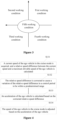
- FIG. 5 is a schematic diagram of a switch between longitudinal modes according to an embodiment of the present invention.
- a program before the intelligent driving system of the automatic driving vehicle is turned on, a program is in a default mode (that is, the program is standby and does not control the vehicle).
- the program switches from the default mode to an operation mode, that is, the cruise mode, the AEB mode, and the following mode, based on environmental information and the like.
- the program In a driving process of the automatic driving vehicle, the program generally switches from the cruise mode to the AEB mode or the following mode.
- the program may switch from the following mode to the cruise mode or the AEB mode.
- the program may switch between the cruise mode and the following mode or between the AEB mode and the following mode.
- the program may switch between the cruise mode and the default mode, between the AEB mode and the default mode, or between the following mode and the default mode.
- corresponding controlling algorithm is performed based on an instruction transmitted by the longitudinal decision, to control the vehicle to accelerate or decelerate, so as to adjust the speed of the vehicle. In this way, a control for the cruise mode, the following mode and the AEB mode is realized.
- a machine-readable control medium is further provided according to another embodiment of the present invention.
- the machine-readable control medium stores instructions used for controlling a machine to perform the longitudinal control method for the automatic driving vehicle described above.
- the machine-readable control medium includes, but is not limited to, various mediums that are capable of storing a program code, such as a phase change memory (PRAM), a static random access memory (SRAM), a dynamic random access memory (DRAM), other random access memory (RAM), a read-only memory (ROM), an electrically erasable programmable read only memory (EEPROM), a flash memory or other memory, a CD-ROM read-only memory (CD-ROM), a digital versatile disc (DVD) or other optical storage, a magnetic cassette tape, a magnetic tape disk storage or other magnetic storage devices.
- PRAM phase change memory
- SRAM static random access memory
- DRAM dynamic random access memory
- RAM random access memory
- ROM read-only memory
- EEPROM electrically erasable programmable read only memory
- a processor is further provided according to another embodiment of the present invention.
- the processor is configured to execute a program.
- the program is used to perfom the longitudinal control method for the automatic driving vehicle described above, when be executed.
- FIG. 6 is a schematic structural diagram of a longitudinal control system for an automatic driving vehicle according to an embodiment of the present invention.
- the longitudinal control system includes a positioning unit 610, a map unit 620, a detection unit 630, the readable storage medium described above and a processor 640.
- the positioning unit 610 is configured to acquire current position information of the automatic driving vehicle.
- the map unit 620 is connected to the positioning unit 610 through a signal and is configured to output map information around the automatic driving vehicle based on the current position information.
- the detection unit 630 is configured to detect information of an obstacle around the automatic driving vehicle.
- the processor 640 is connected to the map unit 620 and the detection unit 630 through signals, and is configured to acquire the map information and the information of the obstacle from acquisition devices, acquire information of an object in front of the automatic driving vehicle based on the map information and the information of the obstacle, and execute the instruction stored in the machine-readable storage medium based on the information of the object in front of the automatic driving vehicle, where the instruction, when being executed by a machine, causes the machine to perform the longitudinal control method for the automatic driving vehicle described above.
- the positioning unit 610 is a self-positioning device, and is preferably a high-precision PGS positioning device.
- the positioning unit 610 is configured to provide current position information of the vehicle.
- the current position information includes current longitude and latitude information, heading angle information of the vehicle and the like.
- a horizontal positioning deviation is within 10cm, and a longitudinal positioning deviation is within 30cm.
- the map unit 620 is configured to store and output high-precision map data information.
- a map unit with a storage space greater than 50G and a processing memory greater than 1G is used.
- the map unit 620 outputs, based on the current position information of the vehicle provided by the positioning unit 610, various attribute information of a road in a range of 200 meters in front and rear of the automatic driving vehicle provided by the high-definition map in a real-time manner.
- the detection unit 630 for example, is configured to detect and extract an obstacle within 360° around the automatic driving vehicle.
- an all-weather sensor detection device is used to avoid unstable object detection caused by rain, snow, fog, illumination and the like.
- the detection unit 630 is not limited to be mounted on a current position, and the number of the detection unit 630 is not limited to a current number.
- a radar sensor (a laser radar, a millimeter wave radar device and the like) or a vision sensor may be arranged at the front of the vehicle.
- two angle radar devices may be mounted respectively at a front left corner and a front right corner of the vehicle to reduce false detection and missed detection of an object through device redundancy.
- the processor 640 provides information of the front object, based on the map information provided by the map unit 620 and the information of the obstacle provided by the detection unit 630; and thus execute the instruction stored in the machine-readable storage medium, to perform the longitudinal control method for the automatic driving vehicle described above.
- the processor 640 may be the processor configured to execute a program described in the above embodiment.
- the program when being executed, performs the control method of lane change for a vehicle abnormality according to the above embodiments.
- the longitudinal control system for the automatic driving vehicle may not include the machine-readable storage medium.
- the processor 640 may be an ECU (electronic control unit) of the vehicle or an independently configured general controller such as a CPU, a single-chip microcomputer, a DSP (digital signal processor), an SOC (system on a chip) and the like. It can be understood that the independent controllers may be integrated in the ECU.
- the processor 640 is preferably a controller that has a fast operation speed and many IO port devices.
- the processor 640 is required to have input and output ports capable of communicating with the CAN of the vehicle, input and output ports for a switch signal, a network cable interface, and the like.
- Figure 7 is a schematic diagram of a communication of an exemplary longitudinal control system for an automatic driving vehicle according to an embodiment of the present invention.
- the longitudinal control system includes a self-positioning device serving as the positioning unit 610, a high-definition map unit serving as the map unit 620, a radar device serving as the detection unit 630, and an ECU serving as the processor 640.
- the self-positioning device includes a GPS, a high-precision wheel speed sensor, a gyroscope sensor and like, which is configured to detect position information of the vehicle including current latitude and longitude of the vehicle, heading angle information of the vehicle and the like.
- the high-definition map unit includes a high-definition map (HD map) storage unit and a data operating and processing unit.
- HD map high-definition map
- the high-definition map unit is configured to store and properly process the position information of the vehicle and the like to output map information such as longitudes and latitudes (taking the earth's core as an origin) of discrete points on a lane line, heading angles (due north serving as 0° and clockwise being a positive direction) of the discrete points, a type of the lane line, a width of each lane, the number of lanes, and road boundary based on a high-definition map in a range of 200 meters in front and rear of the automatic driving vehicle.
- the high-definition map unit may output the map information to the ECU through a user datagram protocol (UDP) communication.
- the radar device includes an optical transmitting system and an optical receiving system.
- the number and arrangement of the radar device may be set based on the type of the vehicle and requirements of the vehicle.
- the radar device may transmit information of a detected obstacle to the ECU through the CAN communication.
- the ECU adopts configuration of a CPU.
- the ECU includes readable storage mediums including an ROM, an RAM, and a Flash Memory.
- the readable storage mediums store algorithm programs about the longitudinal control method described above.
Landscapes
- Engineering & Computer Science (AREA)
- Automation & Control Theory (AREA)
- Transportation (AREA)
- Mechanical Engineering (AREA)
- Physics & Mathematics (AREA)
- Mathematical Physics (AREA)
- Control Of Driving Devices And Active Controlling Of Vehicle (AREA)
- Traffic Control Systems (AREA)
Description
- The present invention relates to the technical field of intelligent transportation, and in particular to a longitudinal control method and system for an automatic driving vehicle.
- An automatic driving vehicle implements an automatic driving based on an intelligent driving system. The automatic driving vehicle acquires information of external environment and information of the vehicle through various sensing systems mounted on the vehicle body, then integrates inputted information and makes a decision (respectively performed by an integration system and a decision making system). Thus, a drivable safe route is planed according to driving conditions and safe driving of the vehicle is motored and controlled in a real time manner through a control system, ensuring highly automated driving of the vehicle. The control system serves as a core of the intelligent driving system, the performance of which directly determines standard for safe driving and automation degree of the vehicle. Therefore, the control system is the key and difficult point of research and development for companies. The control system includes two parts, i.e., a lateral control system and a longitudinal control system. The lateral control system controls steering of the automatic driving vehicle in a real time manner based on a series of control algorithms, to control the vehicle to maintain a lane, automatically change a lane, dynamically avoid an obstacle, U-turn and swerve according to the planned route. The longitudinal control system controls the automatic driving vehicle to longitudinally move at a safe driving speed by controlling acceleration and deceleration of the vehicle, so that the automatic driving vehicle operates in a start-stop mode, a following mode and a cruise mode. The entire control system can realize automatic control of the vehicle's steering and speed at the same time, by coupling the lateral control with the longitudinal control.
- The longitudinal movement is divided into three modes which are the cruise mode, the following mode and the Autonomous Emergency Braking (AEB) mode based on the state of motion. The cruise mode refers to that the automatic driving vehicle can drive at a maximum speed of the vehicle when no front vehicle is within an action distance (the action distance is recorded as ActDis_m, which refers to a minimum distance threshold for the automatic driving vehicle switching from the cruise mode to the following mode, and is related to speeds of the ego vehicle and the front vehicle). The following mode refers to that the automatic driving vehicle drives following the front vehicle without changing a lane in the case that a front vehicle is within the action distance in the lane in which the ego vehicle drives. The AEB mode refers to that the automatic driving vehicle brakes at a large deceleration to avoid or mitigate an accident, in the case that a change in driving environment around the ago vehicle may cause rear-end or collisions and endanger the driver, passengers and pedestrians. A corresponding control system is disclosed for example in document
CN 104 925 057 A . - However, in the conventional longitudinal control solutions, only a control solution for the following mode or the cruise mode is provided without considering various working conditions that may occur in various states of the vehicle, and thus good control effect cannot be achieved.
- In view of the above, a longitudinal control method for an automatic driving vehicle is provided according to the present invention to solve at least partial of the above technical problems.
- In order to realize the above objectives, the technical solutions of the present invention are described as following.
- A longitudinal control method for an automatic driving vehicle includes:
- detecting a current longitudinal mode of the automatic driving vehicle, where the longitudinal mode comprises a cruise mode, a following mode, and an autonomous emergency braking, AEB, mode;
- in the following mode of the automatic driving vehicle, determining a control algorithm corresponding to a current working condition based on a pre-configured correspondence relationship between working conditions of the automatic driving vehicle in the following mode and control algorithms, where the control algorithm is used for controlling a speed change of the automatic driving vehicle in a working condition corresponding to the control algorithm; and controlling, based on the determined control algorithm, the automatic driving vehicle to perform a following movement;
- in the cruise mode of the automatic driving vehicle, acquiring a current speed of an ego vehicle in the cruise mode, and calculating a relative speed difference between the current speed and a maximum drivable speed of an ego vehicle; correcting the relative speed difference to cause a variation of the relative speed difference in a control period to be within a predetermined range; calculating an acceleration of the ego vehicle based on the corrected relative speed difference; and adjusting a speed of the ego vehicle in the cruise mode based on the acceleration of the ego vehicle.
- Further, the correspondence relationship between working conditions of the automatic driving vehicle in the following mode and control algorithms includes any one or more of: a first working condition in which a speed of a front vehicle is less than a speed of the ego vehicle and a real distance between the front vehicle and the ego vehicle is less than a desired distance, and a first control algorithm used for controlling the ego vehicle in the first working condition to decelerate at an first acceleration; a second working condition in which the speed of the front vehicle is less than the speed of the ego vehicle and the real distance between the front vehicle and the ego vehicle is greater than the desired distance, and a second control algorithm used for controlling the ego vehicle in the second working condition to decelerate at a second acceleration; a third working condition in which the speed of the front vehicle is greater than the speed of the ego vehicle and the real distance between the front vehicle and the ego vehicle is greater than the desired distance, and a third control algorithm used for controlling the automatic driving vehicle in the third working condition to accelerate at a third acceleration; a fourth working condition in which the speed of the front vehicle is greater than the speed of the ego vehicle and the real distance between the front vehicle and the ego vehicle is less than the desired distance, and a fourth control algorithm used for controlling the ego vehicle in the fourth working condition to decelerate at fourth acceleration; and a fifth working condition in which a difference between the speed of the front vehicle and the speed of the ego vehicle is within a set speed threshold range and the real distance between the front vehicle and the ego vehicle is within a set distance threshold range, and a fifth control algorithm used for controlling the ego vehicle in the fifth working condition to follow the front vehicle stably.
- According to the invention, in the first control algorithm, the first acceleration a1 is calculated according to a formula:




- Further, in the second control algorithm, the second acceleration a2 is calculated according to a formula:

- Further, in the third control algorithm, the third acceleration a3 is calculated according to a formula:

- where C31 to C34 respectively represent different acceleration states, and k31 to k34 respectively represent accelerations corresponding to different acceleration states; and/or
- in the fourth control algorithm, the fourth acceleration a4 is calculated according to a formula:

- where C41 to C44 respectively represent different deceleration states, and k41 to k44 respectively represent accelerations corresponding to different deceleration states.
- Further, in the fifth control algorithm, the fifth acceleration as is calculated according to a formula:

- Further, the calculating an acceleration of the ego vehicle includes: calculating the acceleration a of the ego vehicle according to a formula:

- where TopSpd _kph represents a maximum speed, VehSpd _kph represents the current speed, Kp represents a proportionality parameter of P control, and the proportionality parameter Kp is determined according to a formula:

- where K0 represent a first parameter which corresponds to an optimal ride experience in an acceleration working condition of a vehicle and is determined in a real vehicle test, and K1 represent a second parameter which corresponds to an optimal ride experience in a deceleration working condition and is determined in the real vehicle test.
- Further, the longitudinal control method for an automatic driving vehicle further includes: in the AEB mode of the automatic driving vehicle, controlling the automatic driving vehicle to brake at a braking deceleration ranging from 0.7g to 0.9g, where g represents a gravitational acceleration.
- Compared with the conventional technology, the longitudinal control method for the automatic driving vehicle according to the present invention has the following advantages. With the longitudinal control method for the automatic driving vehicle according to the present invention, the following control algorithms corresponding to multiple follow working conditions can be matched based on the speed of the front vehicle, the speed of the ego vehicle and the real distance between the two vehicles. In the case that the ego vehicle is in a working condition, a following control algorithm corresponding to the working condition is performed, so that this vehicle follows the front vehicle well. In addition, the longitudinal control method for the automatic driving vehicle according to the present invention optimizes the cruise control, and thus efficiency, safety and comfortableness of the longitudinal control algorithm are improved.
- Another objective of the present invention is to provide a machine-readable storage medium and a processor to solve at least partial of the above technical problems.
- In order to realize the above objectives, the technical solutions of the present invention are described as following.
- A machine-readable storage medium is provided. The machine-readable storage medium stores instructions used for controlling a machine to perform the longitudinal control method for the automatic driving vehicle described above.
- A processor is provided. The processor is configured to execute a program to perform the longitudinal control method for the automatic driving vehicle described above. Another objective of the present invention is to provide a longitudinal control system for an automatic driving vehicle to solve at least partial of the above technical problems.
- In order to realize the above objectives, the technical solutions of the present invention are described as following.
- A longitudinal control system for an automatic driving vehicle is provided. The system includes a positioning unit, a map unit, a detection unit, and the processor described above. The positioning unit is configured to acquire current position information of the automatic driving vehicle. The map unit is connected to the positioning unit through a signal and is configured to output map information around the automatic driving vehicle based on the current position information. The detection unit is configured to detect information of an obstacle around the automatic driving vehicle. The processor is connected to the map unit and the detection unit through signals and is configured to acquire information of an object in front of the automatic driving vehicle based on the map information and the information of the obstacle, and perform a longitudinal control on the vehicle based on the information of the object in front of the automatic driving vehicle.
- The machine-readable storage medium, the processor, the longitudinal control system, and the longitudinal control method have the same advantages compared with the conventional technology, which will not be repeated herein.
- Other features and advantages of the present invention are described in detail in the following embodiments.
- Drawings that form part of the present invention are used for providing further understanding of the present invention, and the schematic embodiments of the present invention and descriptions of the embodiments are used to explain the present invention and do not limit the present invention. In the drawings:
-
Figure 1 is a flowchart of a longitudinal control method for an automatic driving vehicle according to an embodiment of the present invention, -
Figure 2 is a flowchart of a following control according to an embodiment of the present invention; -
Figure 3 is a schematic diagram of five working conditions in a following mode according to an embodiment of the present invention; -
Figure 4 is a flowchart of a cruise control according to an embodiment of the present invention; -
Figure 5 is a schematic diagram of a switch between longitudinal modes according to an embodiment of the present invention, -
Figure 6 is a schematic structural diagram of a longitudinal control system for an automatic driving vehicle according to an embodiment of the present invention; and -
Figure 7 is a schematic diagram of a communication in an exemplary longitudinal control, system for an automatic driving vehicle according to an embodiment of the present invention. - Reference numerals are listed as follows:
- 610: positioning unit
- 620: map unit
- 630: detection unit
- 640: processor
- It should be noted that the embodiments of the present invention may be combined with each other without conflict.
- The present invention is described in detail below with reference to the drawings and in conjunction with the embodiments.
- Before a longitudinal control method for an automatic driving vehicle according embodiments of the present invention is described, three modes involved in a longitudinal control of the automatic driving vehicle will be introduced, which includes a cruise mode, a following mode, and an AEB mode. In other embodiments, the longitudinal control may further include a start-stop mode. In the start-stop mode, the automatic driving vehicle can be accurately controlled to park at a predetermined position (for example, a toll station, a service area and the like). A function of the start-stop mode can be realized in the cruise mode. Thus, the start-stop mode is subordinate to the following mode, which will not be described separately in the embodiments of the present invention.
- The cruise mode refers to that a maximum drivable speed of the automatic driving vehicle is adjusted when no front vehicle is within an action distance (ActDis_m) of the automatic driving vehicle (also referred to as an ego vehicle hereafter). When the speed is less than the maximum speed, the automatic driving vehicle accelerates. Otherwise, the automatic driving vehicle decelerates.
- The following mode refers to that a speed of the ego vehicle is adjusted, when a front vehicle is located within the action distance of the automatic driving vehicle in a lane in which the automatic driving vehicle drives and the ego vehicle drives following the front vehicle without changing a lane. In this way, a safe distance and a relative speed between the ego vehicle and the front vehicle are maintained, while a safe driving is ensured.
- The AEB mode refers to that the automatic driving vehicle brakes at a large deceleration when a longitudinal decision transmits a signal of AEB mode.
-
Figure 1 is a flowchart of a longitudinal control method for an automatic driving vehicle according to an embodiment of the present invention. As shown inFigure 1 , the longitudinal control method includes the following steps S110 to S130. - In step S 110, a current longitudinal mode of the automatic driving vehicle is detected.
- The longitudinal mode includes the cruise mode, the following mode, and the AEB mode described above.
- In step S120, when the automatic driving vehicle is in the following mode, a following control is performed.
-
Figure 2 is a flowchart of a following control according to an embodiment of the present invention. As shown inFigure 2 , the following control includes the following steps S121 to S123. - In step S121, a current working condition of the automatic driving vehicle in the following mode is detected.
- In step S122, a control algorithm corresponding to the current working condition is determined, based on a pre-configured correspondence relationship between working condition of the automatic driving vehicle in the following mode and control algorithms. The control algorithm is used for controlling a speed change of the automatic driving vehicle in the working condition corresponding to the control algorithm.
- In step S123, the automatic driving vehicle is controlled to perform a following movement, based on the determined control algorithm.
- In an embodiment of the present invention, based on driving situations of the automatic driving vehicle in the following mode, the following mode is divided into five working conditions. Different working conditions are respectively configured with different control algorithms.
-
Figure 3 is a schematic diagram of five working conditions included in the following mode according to an embodiment of the present invention. ΔV represents a speed of the ego vehicle relative to the front vehicle. ΔD represents a difference between a desired distance and a real distance of the ego vehicle and the front vehicle. This difference indicates a relative distance between the two vehicles. - Referring to
Figure 3 , the five working conditions are briefly described as following. - 1) In a first working condition, the front vehicle drives slowly and the relative distance is small. The slow front vehicle refers to that the speed of the front vehicle is less than a speed of the ego vehicle. The small relative distance refers to that the real distance between the front vehicle and the ego vehicle is less than the desired distance.
- 2) In a second working condition, the front vehicle drives slowly and the relative distance is large. The large relative distance refers to that the real distance between the front vehicle and the ego vehicle is greater than the desired distance.
- 3) In a third working condition, the front vehicle drives fast and the relative distance is large. The fast front vehicle refers to that the speed of the front vehicle is greater than the speed of the ego vehicle.
- 4) In a fourth working condition, the front vehicle drives fast and the relative distance is small.
- 5) In a fifth working condition, the ego vehicle follows the front vehicle steadily.
- In a preferred embodiment, for the above five working conditions, the correspondence relationship between working conditions of the automatic driving vehicle in the following mode and control algorithms includes any one or more of the following.
- The first control algorithm is used for controlling the ego vehicle in the first working condition to decelerate at a first acceleration. That is, when this vehicle is in the first working condition, it is required to control the vehicle to decelerate. Those skilled in the art can understand that "acceleration" is not limited to be used for indicating a scenario in which this vehicle accelerates, and also be used for indicating a scenario in which the vehicle decelerates. Both "decelerating at acceleration" and "deceleration" may be used for indicating the scenario in which the vehicle decelerates.
- According to the invention a process of calculating the first acceleration is described. Before the process is described, concepts of a safe distance (SfDis_m) and a braking distance (AEBDis_m) are introduced. The safe distance (SfDis_m) refers to a demanded minimum distance between the ego vehicle and the front vehicle when the speeds of two vehicles are the same. The braking distance (AEBDis_m) refers to a distance threshold between the two vehicles when the automatic driving vehicle switches from the following mode to the AEB mode.
- The braking distance (AEBDis_m) is calculated by calculating a time to collision (TTC). The TTC is calculated according to:

- In the formula, VehSpd _kph represents the speed of the ego vehicle, FroVehSpd _kph represents the speed of the front vehicle, and RelaDis_m represents the real distance between the two vehicles.
- Further, the braking distance AEBDis_m is calculated according to a formula:

- Further, the safe distance (SfDis_m) is calculated according to a formula:

- In the formula, c is a scalar. For example, c is equal to 8.
- Based on the above formulas (1) to (3), in the present invention, the first acceleration a1 is calculated according to a formula:

- In the formula, ExpDis_m represents the desired distance.
- According to the formula (4), the first acceleration a1 may be calculated for three cases. It is determined that a range of the first acceleration a1 is a1 ∈ [-8, 1]. According to the formula (4):
- when the distance RelaDis m between the two vehicles is SfDis_m<RelaDis_m<ExpDis_m,

- when the distance RelaDis m between the two vehicles is AEBDis_m<RelaDis_m<SfDis_m,

- when the distance RelaDis_m between the two vehicles is RelaDis_m<AEBDis_m, the vehicle switches from the following mode to the AEB mode. The AEB control is performed and acceleration is equal to -8m/s2.
- It should be noted that in the formulas according to the embodiments of the present invention, acceleration with a negative sign "-" indicates "acceleration of decelerating" or "deceleration".
- The second control algorithm is used for controlling the ego vehicle in the second working condition to decelerate at second acceleration. That is, in the second working condition, the ego vehicle is controlled to decelerate.
- In a more preferred embodiment, a process of calculating the second acceleration is described. The second acceleration a2 is calculated according to the following formula:

- In the formula, K1 represents a constant used for compensating for a delay effect of the control algorithm. When the vehicle longitudinal control (VLC) system performs longitudinal control on the vehicle, there is a delayed response. K1 is used for compensating for the delayed response of the VLC system.
- The third control algorithm is used for controlling the ego vehicle in the third working condition to accelerate at third acceleration. That is, in the third working condition, the ego vehicle is controlled to accelerate.
- In a preferred embodiment, in the third control algorithm, the third acceleration a3 is calculated according to the following formula:

- In the formula, C31 to C34 respectively represent different acceleration states, and k31 to k34 respectively represent accelerations corresponding to different acceleration states. Based on the speed of the front vehicle and a distance between the front vehicle and the ego vehicle, the acceleration states in the third working condition is divided into four sub-states which are respectively represented by C31 to C34. The four sub-states respectively correspond to different accelerations, which are represented by k31 to k34.
- In other embodiments, the third acceleration a3 is calculated according to the following formula:

- In the formula, K1 represents a constant. For example, K1 is equal to 0.3. In the third condition, a range of the third acceleration a3 is α3 ∈ [0, 0.8].
- The fourth control algorithm is used for controlling the ego vehicle in the fourth working condition to decelerate at fourth acceleration. That is, in the fourth working condition, the ego vehicle is controlled to decelerate.
- In a preferred embodiment, in the fourth control algorithm, the fourth acceleration a4 is calculated according to the following formula:

- In the formula, C41 to C44 respectively represent different deceleration states, and k41 to k44 respectively represent accelerations corresponding to different deceleration states.
- In other embodiments, a process of calculating the fourth acceleration is described. The fourth acceleration a4 is calculated according to the following formula:

- In the formula, K1 represents a constant. For example, K1 is equal to 0.2. In the fourth condition, a range of the fourth acceleration a4 is a4 ∈ [-0.8, 1].
- In the fifth working condition, a difference between the speed of the front vehicle and the speed of the ego vehicle is within a set speed threshold range, and a real distance between the front vehicle and the ego vehicle is within a set distance threshold range, so that the ego vehicle follows the front vehicle stably at an approximately uniform speed.
- The fifth control algorithm is used for controlling the ego vehicle in the fifth working condition to follow the front vehicle stably.
- In other embodiments, when a requirement for the state of the ego vehicle stably following the front vehicle is not high, the fifth control algorithm may be used for controlling the ego vehicle to follow the front vehicle stably at fifth acceleration a5. The fifth acceleration a5 is calculated according to the following formula:

- In the formula, VehSpd _kph represents the speed of the ego vehicle, FroVehSpd_kph represents the speed of the front vehicle, and kp represents a proportionality coefficient.
- As described above, in the following mode, a match is performed on the control algorithms corresponding to the above five working conditions based on the speed of the front vehicle, the speed of the ego vehicle and the real distance between the front vehicle and the ego vehicle. When this vehicle is in a working condition, a control algorithm corresponding to the working condition is performed, which has a good control effect, thereby improving efficiency, safety and comfortableness of the control algorithm.
- In step S130, when the automatic driving vehicle is in the cruise mode, a cruise control is performed.
-
Figure 4 is a flowchart of a cruise control according to an embodiment of the present invention. As shown inFigure 4 , the cruise control includes the following steps S131 to S134. - In step S131, a current speed of the ego vehicle in the cruise mode is acquired, and a relative speed difference between the current speed and a maximum drivable speed of the ego vehicle is calculated.
- The current speed may be acquired by a vehicle sensor (for example, an inertial navigation device) of the ego vehicle or by an electronic control unit (ECU) of the vehicle through a CAN bus.
- The maximum drivable speed of the ego vehicle is determined by a maximum speed management module in ADS of the automatic driving vehicle. The maximum speed management module belongs to a decision making system of the automatic driving vehicle. The maximum speed management module is configured to acquire maximum drivable speeds of the vehicle corresponding to driving scenario information, driving environment information and road condition information, to form a set of maximum drivable speeds; and determine a proper maximum speed according to actual conditions as the maximum drivable speed of the ego vehicle.
- Functions of the maximum speed management module are described in detail according to the driving scenario, the driving environment and the road condition.
- 1) According to different driving scenarios, the maximum speed is affected by the following factors. I. A maximum speed V1 is predetermined by the ADS. II. A maximum speed V2 is dependent on a width of a drivable area in front of the automatic driving vehicle. III. When a passenger is within a predetermined area in a lane (non-emergency lane) adjacent to the lane in which the automatic driving vehicle drives, the vehicle decelerates and a maximum speed V3 is set. IV A maximum speed V4 is dependent on a distance between the automatic driving vehicle and a highway exit (a ramp exit, a toll station and the like). V. the automatic driving vehicle decelerates to a maximum speed V5, when the automatic driving vehicle is located at a predetermined distance to a merging point. VI. When the automatic driving vehicle is required to switch to an adjacent lane at a specific working condition (for example, parallel flow, shunting, leaving the highway, driving into a fork and the like), a maximum speed V6 is set based on speeds of vehicles in a left front area and a right front area of the vehicle. VII. A maximum speed V7 is set based on an object directly in front of the automatic driving vehicle in a lane change process of the automatic driving vehicle. VIII, A maximum speed V8 is set when a vehicle drives side by side with the automatic driving vehicle in an adjacent lane and the automatic driving vehicle overtakes that vehicle.
- 2) For different driving environments, the maximum speed is affected by the following factors. I. Different roads have different speed limits, and a maximum speed limit V9 is identified and outputted based on a high definition map (HDM) and a vision sensor. II, a maximum speed V10 of the automatic driving vehicle is limited based on driving environment factors, such as light intensity, fog, rain and snow, hail, and the like.
- 3) For different road conditions, the maximum speed is affected by the following factors. I. a curvature of a road, a maximum speed V11 of the automatic driving vehicle is determined based on a curvature of a road. II. A roughness of a road, a maximum speed V12 of the automatic driving vehicle is determined based on dynamic information of the vehicle, such as a vertical acceleration, a transverse force, a slope and the like. III. An adhesion coefficient of a road, a maximum speed V13 of the automatic driving vehicle is limited based on the adhesion coefficient of the current road detected by a sensor of the automatic driving vehicle.
- Accordingly, a set of maximum speeds {VI, ...... V13} is obtained, and a proper speed V0 is selected based on actual conditions as the maximum speed V at which the automatic driving vehicle is allowed to drive on the current road. In addition, if V0 is determined based on environmental factors (rain, snow, fog, and the like) or the adhesion coefficient of the road, in the case that a vehicle is adjacent to the automatic driving vehicle, V0 is actively reduced by 10% and the maximum speed V of the system is V=0.9*V0. If V0 is not determined based on environmental factors (rain, snow, fog, and the like) or the adhesion coefficient of the road, when a vehicle is adjacent to the automatic driving vehicle, the maximum speed V of the system is equal to V8. In the case of no vehicle adjacent to the automatic driving vehicle, the maximum speed V is equal to V0.
- The maximum drivable speed of the ego vehicle determined according to the embodiment of the present invention, compared with a maximum speed determined with a conventional method, is more practical, applied to more scenarios, more in line with people's driving habits. In this way, an illegal behavior and an accident such as collision or skidding caused by excessive speed of the automatic driving vehicle can be avoided, and the driving safety of the automatic driving vehicle, and safety and ride comfortableness of the driver can be ensured.
- In step S132, the relative speed difference is corrected to cause a variation of the relative speed difference in a control period to be within a predetermined range.
- For step S132, in a preferred embodiment, a rate limiting module is configured to correct the relative speed difference. The rate limiting module, for example, may be a rate limiter module in Simulink. The rate limiting module is configured to correct a great variation of the relative speed difference in one operation period due to the variation of the maximum drivable speed of the ego vehicle. The great variation of the relative speed difference may lessen a comfortableness of cruise control of the automatic driving vehicle. The introduced rate limiting module avoids the above case. Based on simulation and real vehicle test, it is verified that the rate limiting module improves the cruise control effect greatly. In addition, parameter setting in the rate limiting module is calibrated based on the real vehicle test.
- In step S133, an acceleration of the ego vehicle is calculated based on the corrected relative speed difference.
- In a preferred embodiment, the acceleration a of the ego vehicle is calculated according to the following formula:

- In the formula, TopSpd _kph represents the maximum speed, VehSpd _kph represents the current speed, and Kp represents a proportionality parameter of a P control. The P control is refers to the P control in a conventional proportion integration differentiation (PID) control.
- For Kp, the cruise control relates to an acceleration control and a deceleration control. The vehicle accelerates when the speed of the ego vehicle is less than the maximum speed, and the vehicle decelerates when the speed of the ego vehicle is greater than the maximum speed. A mechanism for performing the acceleration control and a mechanism for performing the deceleration control have different response speeds and accuracies, so that Kp in acceleration is different from that in deceleration. Preferably, the proportionality parameter Kp is determined according to the following formula:

- In the formula, K0 represent a first parameter corresponding to an optimal ride experience in the acceleration working condition of the vehicle, which is determined in the real vehicle test. K1 represent a second parameter corresponding to an optimal ride experience in the deceleration working condition of the vehicle, which is determined in the real vehicle test. K0 and K1 are scalars determined in the real vehicle test.
- In step S134, the speed of the ego vehicle in the cruise mode is adjusted based on the acceleration of the ego vehicle.
- After the proper acceleration is determined by steps S131 to S133, the speed of the ego vehicle in the cruise mode is adjusted in step S134 by controlling the ego vehicle to accelerate or decelerate.
- In some cases, the acceleration of this vehicle calculated in step S133 may not be ideal. For example, the calculated acceleration is greater than acceleration at which an actual driver drives a vehicle within a particular speed range under the same condition. For this case, in a preferred embodiment, in step S134, limiting correction is performed on the acceleration of the ego vehicle, and the speed of the ego vehicle in the cruise mode is adjusted based on the limiting-corrected acceleration of the ego vehicle. In this way, by limiting the acceleration, the acceleration used for controlling the speed of the vehicle is proper.
- Further, an upper limit Up of acceleration is determined by looking up a table. Maximum acceleration of the vehicle is determined based on the speed of the ego vehicle. That is, when the calculated acceleration a of the vehicle is greater than the upper limit Up, this vehicle actually drives at acceleration of the upper limit Up. Otherwise, the vehicle actually drives at the calculated acceleration. That is, α Taracce=MIN(Up, a). In an embodiment, the upper limit Up is determined according to the following formula:

- A lower limit of acceleration is determined in a similar way. b1 to b6 are constants that increase sequentially and are less than 1. For example, b1 to b6 are respectively equal to 0.35, 0.45, 0.55, 0.65, 0.75, and 0.85. a1 to a8 are set values that decrease sequentially.
- Therefore, in the embodiments of the present invention, on the basis of implementing the cruise control, the comfortableness of the control is optimized. By analyzing test data in the real vehicle test and the simulation test, good control effect is achieved, and efficiency, safety and comfortableness for the cruise control algorithm and the longitudinal control algorithm are improved.
- Further, the longitudinal control method further includes: in the AEB mode of the automatic driving vehicle, an AEB control is performed. In an embodiment of the present invention, the AEB control includes: when the longitudinal decision transmits a signal of AEB mode, the automatic driving vehicle brakes at great deceleration without considering comfortableness in the vehicle braking process. Braking deceleration ranges from 0.7g to 0.9g, where g represents the gravitational acceleration. For example, the deceleration is equal to -8m/s2.
-
Figure 5 is a schematic diagram of a switch between longitudinal modes according to an embodiment of the present invention. As shown inFigure 5 , before the intelligent driving system of the automatic driving vehicle is turned on, a program is in a default mode (that is, the program is standby and does not control the vehicle). After the intelligent driving system is turned on, the program switches from the default mode to an operation mode, that is, the cruise mode, the AEB mode, and the following mode, based on environmental information and the like. In a driving process of the automatic driving vehicle, the program generally switches from the cruise mode to the AEB mode or the following mode. The program may switch from the following mode to the cruise mode or the AEB mode. The program may switch between the cruise mode and the following mode or between the AEB mode and the following mode. The program may switch between the cruise mode and the default mode, between the AEB mode and the default mode, or between the following mode and the default mode. - As described above, in the longitudinal control method for the automatic driving vehicle according to the embodiments of the present invention, corresponding controlling algorithm is performed based on an instruction transmitted by the longitudinal decision, to control the vehicle to accelerate or decelerate, so as to adjust the speed of the vehicle. In this way, a control for the cruise mode, the following mode and the AEB mode is realized.
- A machine-readable control medium is further provided according to another embodiment of the present invention. The machine-readable control medium stores instructions used for controlling a machine to perform the longitudinal control method for the automatic driving vehicle described above. The machine-readable control medium includes, but is not limited to, various mediums that are capable of storing a program code, such as a phase change memory (PRAM), a static random access memory (SRAM), a dynamic random access memory (DRAM), other random access memory (RAM), a read-only memory (ROM), an electrically erasable programmable read only memory (EEPROM), a flash memory or other memory, a CD-ROM read-only memory (CD-ROM), a digital versatile disc (DVD) or other optical storage, a magnetic cassette tape, a magnetic tape disk storage or other magnetic storage devices.
- A processor is further provided according to another embodiment of the present invention. The processor is configured to execute a program. The program is used to perfom the longitudinal control method for the automatic driving vehicle described above, when be executed.
-
Figure 6 is a schematic structural diagram of a longitudinal control system for an automatic driving vehicle according to an embodiment of the present invention. As shown inFigure 6 , the longitudinal control system includes apositioning unit 610, amap unit 620, adetection unit 630, the readable storage medium described above and aprocessor 640. Thepositioning unit 610 is configured to acquire current position information of the automatic driving vehicle. Themap unit 620 is connected to thepositioning unit 610 through a signal and is configured to output map information around the automatic driving vehicle based on the current position information. Thedetection unit 630 is configured to detect information of an obstacle around the automatic driving vehicle. Theprocessor 640 is connected to themap unit 620 and thedetection unit 630 through signals, and is configured to acquire the map information and the information of the obstacle from acquisition devices, acquire information of an object in front of the automatic driving vehicle based on the map information and the information of the obstacle, and execute the instruction stored in the machine-readable storage medium based on the information of the object in front of the automatic driving vehicle, where the instruction, when being executed by a machine, causes the machine to perform the longitudinal control method for the automatic driving vehicle described above. - For the longitudinal control system, the
positioning unit 610 is a self-positioning device, and is preferably a high-precision PGS positioning device. Thepositioning unit 610 is configured to provide current position information of the vehicle. The current position information includes current longitude and latitude information, heading angle information of the vehicle and the like. A horizontal positioning deviation is within 10cm, and a longitudinal positioning deviation is within 30cm. Themap unit 620, for example, is configured to store and output high-precision map data information. Preferably, a map unit with a storage space greater than 50G and a processing memory greater than 1G is used. In addition, themap unit 620 outputs, based on the current position information of the vehicle provided by thepositioning unit 610, various attribute information of a road in a range of 200 meters in front and rear of the automatic driving vehicle provided by the high-definition map in a real-time manner. Thedetection unit 630, for example, is configured to detect and extract an obstacle within 360° around the automatic driving vehicle. Preferably, an all-weather sensor detection device is used to avoid unstable object detection caused by rain, snow, fog, illumination and the like. Thedetection unit 630 is not limited to be mounted on a current position, and the number of thedetection unit 630 is not limited to a current number. In order to improve accuracy of object detection, a radar sensor (a laser radar, a millimeter wave radar device and the like) or a vision sensor may be arranged at the front of the vehicle. Similarly, two angle radar devices may be mounted respectively at a front left corner and a front right corner of the vehicle to reduce false detection and missed detection of an object through device redundancy. Theprocessor 640 provides information of the front object, based on the map information provided by themap unit 620 and the information of the obstacle provided by thedetection unit 630; and thus execute the instruction stored in the machine-readable storage medium, to perform the longitudinal control method for the automatic driving vehicle described above. - In a preferred embodiment, the
processor 640 may be the processor configured to execute a program described in the above embodiment. The program, when being executed, performs the control method of lane change for a vehicle abnormality according to the above embodiments. In this case, the longitudinal control system for the automatic driving vehicle may not include the machine-readable storage medium. - The
processor 640 may be an ECU (electronic control unit) of the vehicle or an independently configured general controller such as a CPU, a single-chip microcomputer, a DSP (digital signal processor), an SOC (system on a chip) and the like. It can be understood that the independent controllers may be integrated in the ECU. Theprocessor 640 is preferably a controller that has a fast operation speed and many IO port devices. Theprocessor 640 is required to have input and output ports capable of communicating with the CAN of the vehicle, input and output ports for a switch signal, a network cable interface, and the like. -
Figure 7 is a schematic diagram of a communication of an exemplary longitudinal control system for an automatic driving vehicle according to an embodiment of the present invention. In the example, the longitudinal control system includes a self-positioning device serving as thepositioning unit 610, a high-definition map unit serving as themap unit 620, a radar device serving as thedetection unit 630, and an ECU serving as theprocessor 640. The self-positioning device includes a GPS, a high-precision wheel speed sensor, a gyroscope sensor and like, which is configured to detect position information of the vehicle including current latitude and longitude of the vehicle, heading angle information of the vehicle and the like. The high-definition map unit includes a high-definition map (HD map) storage unit and a data operating and processing unit. The high-definition map unit is configured to store and properly process the position information of the vehicle and the like to output map information such as longitudes and latitudes (taking the earth's core as an origin) of discrete points on a lane line, heading angles (due north serving as 0° and clockwise being a positive direction) of the discrete points, a type of the lane line, a width of each lane, the number of lanes, and road boundary based on a high-definition map in a range of 200 meters in front and rear of the automatic driving vehicle. The high-definition map unit may output the map information to the ECU through a user datagram protocol (UDP) communication. The radar device includes an optical transmitting system and an optical receiving system. The number and arrangement of the radar device may be set based on the type of the vehicle and requirements of the vehicle. The radar device may transmit information of a detected obstacle to the ECU through the CAN communication. The ECU adopts configuration of a CPU. The ECU includes readable storage mediums including an ROM, an RAM, and a Flash Memory. The readable storage mediums store algorithm programs about the longitudinal control method described above. - It should be noted that details and effects of the machine-readable storage medium and the longitudinal control system for the automatic driving vehicle according to the embodiments of the present invention refer to the embodiments of the longitudinal control method for the automatic driving vehicle, which will not be repeated herein.
- Only preferred embodiments of the present invention are described above. Modifications are possible within the scope of the invention as defined by the appended claims.
Claims (10)
- A longitudinal control method for an automatic driving vehicle, comprising:detecting (S110) a current longitudinal mode of the automatic driving vehicle, wherein the longitudinal mode comprises a cruise mode, a following mode, and an autonomous emergency braking, AEB, mode;in the following mode (S120) of the automatic driving vehicle,determining a control algorithm corresponding to a current working condition based on a pre-configured correspondence relationship between working conditions of the automatic driving vehicle in the following mode and control algorithms, wherein the control algorithm is used for controlling a speed change of the automatic driving vehicle in a corresponding working condition; andcontrolling, based on the determined control algorithm, the automatic driving vehicle to perform a following movement; andin the cruise mode (S130) of the automatic driving vehicle,acquiring (S131) a current speed of the automatic driving vehicle in the cruise mode, and calculating a relative speed difference between the current speed and a maximum drivable speed of an ego vehicle;correcting (S132) the relative speed difference to cause a variation of the relative speed difference in a control period to be within a predetermined range;calculating (S133) an acceleration of the ego vehicle based on the corrected relative speed difference; andadjusting a speed of the ego vehicle in the cruise mode based on the acceleration of the ego vehicle,characterized in thatthe pre-configured correspondence relationship comprises a first working condition in which a speed of a front vehicle is less than a speed of the ego vehicle and a real distance between the front vehicle and the ego vehicle is less than a desired distance, and a first control algorithm used for controlling the ego vehicle in the first working condition to decelerate at a first acceleration, whereinin the first control algorithm, the first acceleration a1 is calculated according to a formula:


 wherein VehSpd_kph represents the speed of the ego vehicle, FroVehSpd_kph represents the speed of the front vehicle, ExpDis_m represents the desired distance, RelaDis_m represents the real distance between the front vehicle and the ego vehicle, SfDis_m represents a safe distance, AEBDis_m represents a braking distance, TTC represents a collision time, and c represents a constant, andwherein the safe distance indicates a demanded minimum distance between the front vehicle and the ego vehicle in a case that the ego vehicle has the same speed as the front vehicle; andthe braking distance indicates a distance threshold between the front vehicle and the ego vehicle when the automatic driving vehicle switches from the following mode to the AEB mode.
 - The longitudinal control method for the automatic driving vehicle as claimed in claim 1, wherein the correspondence relationship between working conditions of the automatic driving vehicle in the following mode and control algorithms comprises any one or more of:a second working condition in which the speed of the front vehicle is less than the speed of the ego vehicle and the real distance between the front vehicle and the ego vehicle is greater than the desired distance, and a second control algorithm used for controlling the ego vehicle in the second working condition to decelerate at a second acceleration;a third working condition in which the speed of the front vehicle is greater than the speed of the ego vehicle and the real distance between the front vehicle and the ego vehicle is greater than the desired distance, and a third control algorithm used for controlling the ego vehicle in the third working condition to accelerate at a third acceleration;a fourth working condition in which the speed of the front vehicle is greater than the speed of the ego vehicle and the real distance between the front vehicle and the ego vehicle is less than the desired distance, and a fourth control algorithm used for controlling the ego vehicle in the fourth working condition to decelerate at a fourth acceleration; anda fifth working condition in which a difference between the speed of the front vehicle and the speed of the ego vehicle is within a set speed threshold range and the real distance between the front vehicle and the ego vehicle is within a set distance threshold range, and a fifth control algorithm used for controlling the ego vehicle in the fifth working condition to follow the front vehicle stably.
- The longitudinal control method for the automatic driving vehicle as claimed in claim 2, wherein in the second control algorithm, the second acceleration a2 is calculated according to a formula:

- The longitudinal control method for the automatic driving vehicle as claimed in claim 2, wherein in the third control algorithm, the third acceleration a3 is calculated according to a formula:
 wherein C31 to C34 respectively represent different acceleration states, and k31 to k34 respectively represent accelerations corresponding to different acceleration states; and/orin the fourth control algorithm, the fourth acceleration a4 is calculated according to a formula:
 wherein C41 to C44 respectively represent different deceleration states, and k41 to k44 respectively represent accelerations corresponding to different deceleration states.
 - The longitudinal control method for the automatic driving vehicle as claimed in claim 2, wherein in the fifth control algorithm, the fifth acceleration a5 is calculated according to a formula:

- The longitudinal control method for the automatic driving vehicle as claimed in claim 1, wherein the calculating acceleration of the ego vehicle comprises: calculating the acceleration a of the ego vehicle according to a formula:
 wherein TopSpd _kph represents a maximum speed, VehSpd _kph represents the current speed, Kp represent a proportionality parameter of P control, andwherein the proportionality parameter Kp is determined according to a formula:
 wherein K0 represent a first parameter which corresponds to an optimal ride experience in an acceleration working condition of a vehicle and is determined in a real vehicle test, and K1 represent a second parameter which corresponds to an optimal ride experience in a deceleration working condition of the vehicle and is determined in the real vehicle test.
 - The longitudinal control method for the automatic driving vehicle as claimed in claim 1, further comprising:
in the AEB mode of the automatic driving vehicle, controlling the automatic driving vehicle to brake at a braking deceleration ranging from 0.7g to 0.9g, wherein g represents a gravitational acceleration. - A machine-readable storage medium, wherein the machine-readable storage medium stores instructions used for controlling a machine to perform the longitudinal control method for the automatic driving vehicle as claimed in any one of claims 1 to 7.
- A processor, wherein the processor is configured to execute a program to perform the longitudinal control method for the automatic driving vehicle as claimed in any one of claims 1 to 7.
- A longitudinal control system for an automatic driving vehicle, comprising:a positioning unit (610) configured to acquire current position information of the automatic driving vehicle;a map unit (620) connected to the positioning unit through a signal, and configured to output map information around the automatic driving vehicle based on the current position information;a detection unit (630) configured to detect information of an obstacle around the automatic driving vehicle; andthe processor as claimed in claim 9, wherein the processor (640) is connected to the map unit and the detection unit through signals, and is configured to acquire information of an object in front of the automatic driving vehicle based on the map information and the information of the obstacle, and perform a longitudinal control on a vehicle based on the information of the object in front of the automatic driving vehicle.
Applications Claiming Priority (2)
| Application Number | Priority Date | Filing Date | Title |
|---|---|---|---|
| CN201910204325.4A CN110979327B (en) | 2019-03-18 | 2019-03-18 | Longitudinal control method and system for automatic driving vehicle |
| PCT/CN2020/079953 WO2020187254A1 (en) | 2019-03-18 | 2020-03-18 | Longitudinal control method and system for automatic driving vehicle |
Publications (3)
| Publication Number | Publication Date |
|---|---|
| EP3939844A1 EP3939844A1 (en) | 2022-01-19 |
| EP3939844A4 EP3939844A4 (en) | 2022-10-05 |
| EP3939844B1 true EP3939844B1 (en) | 2024-11-06 |
Family
ID=70081570
Family Applications (1)
| Application Number | Title | Priority Date | Filing Date |
|---|---|---|---|
| EP20774774.2A Active EP3939844B1 (en) | 2019-03-18 | 2020-03-18 | Longitudinal control method and system for automatic driving vehicle |
Country Status (3)
| Country | Link |
|---|---|
| EP (1) | EP3939844B1 (en) |
| CN (1) | CN110979327B (en) |
| WO (1) | WO2020187254A1 (en) |
Families Citing this family (39)
| Publication number | Priority date | Publication date | Assignee | Title |
|---|---|---|---|---|
| CN113548050B (en) * | 2020-04-15 | 2024-10-15 | 广州汽车集团股份有限公司 | Vehicle running control method, device, system and storage medium |
| CN111845744B (en) * | 2020-06-24 | 2022-10-18 | 深圳中集智能科技有限公司 | Vehicle following control method and device, electronic equipment and storage medium |
| CN114248792B (en) * | 2020-09-21 | 2025-09-02 | 罗伯特·博世有限公司 | Vehicle driving assistance system, control unit and method thereof |
| CN114633743B (en) * | 2020-12-16 | 2024-05-28 | 宇通客车股份有限公司 | A self-driving vehicle and a collision accident detection method and system thereof |
| CN112677974B (en) * | 2020-12-18 | 2025-04-01 | 深圳市布谷鸟科技有限公司 | A method and system for determining expected acceleration of an adaptive cruise system |
| CN112528212B (en) * | 2020-12-24 | 2024-08-06 | 交控科技股份有限公司 | Method and device for calculating engineering truck EBI curve for ATP protection |
| CN112677982B (en) * | 2020-12-25 | 2022-06-14 | 重庆大学 | Vehicle longitudinal speed planning method based on driver characteristics |
| CN112677963B (en) * | 2021-01-07 | 2022-02-15 | 吉林大学 | Intelligent networking four-wheel independent steering and independent driving electric automobile emergency obstacle avoidance system |
| CN112896162B (en) * | 2021-03-29 | 2022-09-27 | 东风汽车集团股份有限公司 | Method and device for optimally controlling longitudinal running of automobile under ramp working condition |
| CN113343448B (en) * | 2021-05-25 | 2024-03-05 | 京东鲲鹏(江苏)科技有限公司 | Control effect evaluation method, device, electronic equipment and storage medium |
| CN113353077B (en) * | 2021-06-11 | 2024-07-05 | 中汽创智科技有限公司 | Vehicle running control method, device and equipment |
| CN113470406A (en) * | 2021-06-15 | 2021-10-01 | 东风汽车集团股份有限公司 | Method and device for automatically driving to pass through high-speed toll station based on vehicle-road cooperation |
| CN113525369B (en) * | 2021-06-21 | 2022-09-20 | 上汽通用五菱汽车股份有限公司 | Cruise acceleration control method and device, vehicle and readable storage medium |
| CN113320545A (en) * | 2021-07-01 | 2021-08-31 | 江苏理工学院 | Intersection behavior prediction decision method based on line-control intelligent vehicle |
| CN113335279B (en) * | 2021-07-22 | 2022-08-23 | 中国第一汽车股份有限公司 | Starting control method, device, equipment and medium of adaptive cruise control system |
| CN113492855B (en) * | 2021-07-22 | 2023-01-03 | 上汽通用五菱汽车股份有限公司 | Acceleration compensation method and device in car following scene and readable storage medium |
| CN113548049B (en) * | 2021-07-27 | 2022-05-31 | 武汉理工大学 | Intelligent vehicle driving behavior decision method and system based on finite-state machine |
| CN113650612B (en) * | 2021-09-27 | 2023-03-10 | 扬州亚星客车股份有限公司 | Self-adaptive cruise longitudinal control method and device for pure electric bus and electronic equipment |
| CN113928339A (en) * | 2021-10-21 | 2022-01-14 | 东风悦享科技有限公司 | A vehicle longitudinal motion control system and method based on state judgment and error feedback |
| CN113815620B (en) * | 2021-10-26 | 2023-03-14 | 中国第一汽车股份有限公司 | Method, device and equipment for evaluating safe driving of vehicle and storage medium |
| CN114116454A (en) * | 2021-11-03 | 2022-03-01 | 同济大学 | Calibration method for vehicle automatic emergency brake model in mechanical and non-conflict scene |
| CN114179798B (en) * | 2021-11-12 | 2023-08-25 | 江铃汽车股份有限公司 | Adaptive cruise control method, system, computer and storage medium |
| CN114194217B (en) * | 2022-01-28 | 2023-11-28 | 中国第一汽车股份有限公司 | Automatic driving method and device for vehicle, electronic equipment and storage medium |
| CN114407985B (en) * | 2022-03-30 | 2022-08-09 | 北京全路通信信号研究设计院集团有限公司 | Train tracking method and control system based on virtual marshalling |
| EP4501729B1 (en) * | 2022-04-29 | 2025-11-12 | Shenzhen Yinwang Intelligent Technologies Co., Ltd. | Lane changing decision-making method, device and storage medium |
| CN114802203B (en) * | 2022-05-11 | 2025-08-19 | 阿波罗智能技术(北京)有限公司 | Longitudinal control method and device for vehicle, storage medium and automatic driving vehicle |
| CN115214678B (en) * | 2022-06-24 | 2025-08-08 | 广州汽车集团股份有限公司 | Driving monitoring method, controller, recorder and vehicle for high-speed loop conditions |
| CN115352466B (en) * | 2022-08-10 | 2024-11-19 | 山东省科学院自动化研究所 | Autonomous driving longitudinal control method and system based on GRU network control mechanism |
| CN117922599B (en) * | 2022-10-13 | 2024-10-25 | 北京三快在线科技有限公司 | Automatic driving vehicle safety assessment method and device |
| CN115903843B (en) * | 2022-12-21 | 2025-06-17 | 国广顺能(上海)能源科技有限公司 | A mobile charging robot avoidance method |
| CN115743114B (en) * | 2022-12-29 | 2026-01-27 | 新石器慧通(北京)科技有限公司 | Vehicle cruise control method and device, electronic equipment and storage medium |
| CN116300524A (en) * | 2023-02-17 | 2023-06-23 | 宁波吉利汽车研究开发有限公司 | A vehicle simulation test method, device and electronic equipment |
| CN116373859A (en) * | 2023-04-26 | 2023-07-04 | 重庆长安汽车股份有限公司 | A control method and system for a vehicle passing through a speed reduction belt |
| CN116738229B (en) * | 2023-06-06 | 2025-09-16 | 长安大学 | Low-spacing start-stop vehicle longitudinal motion model calibration method, system, equipment and medium |
| CN116620287B (en) * | 2023-06-30 | 2024-03-19 | 南京项尚车联网技术有限公司 | Intelligent driving method and system |
| CN116859925B (en) * | 2023-07-06 | 2025-09-30 | 华晓精密工业(苏州)有限公司 | Control method, device, equipment and storage medium for AGV following main line equipment |
| CN116691674B (en) * | 2023-07-25 | 2026-03-24 | 中南大学 | Driving control method and related equipment based on ACC vehicle following model |
| CN117360519B (en) * | 2023-12-04 | 2024-03-05 | 安徽中科星驰自动驾驶技术有限公司 | Decision making and control method and system for automatic driving vehicle |
| CN119348591A (en) * | 2024-11-29 | 2025-01-24 | 吉林大学 | Automatic emergency braking control system and control method for semi-trailer based on vehicle-road collaboration |
Family Cites Families (17)
| Publication number | Priority date | Publication date | Assignee | Title |
|---|---|---|---|---|
| JP2009003554A (en) * | 2007-06-19 | 2009-01-08 | Toyota Motor Corp | Travel control device, travel control system |
| CN101417655B (en) * | 2008-10-14 | 2010-12-01 | 清华大学 | A vehicle multi-objective coordinated adaptive cruise control method |
| US8504275B2 (en) * | 2010-09-30 | 2013-08-06 | Robert Bosch Gmbh | Adaptive cruise control acceleration rate control |
| KR102007247B1 (en) * | 2012-12-05 | 2019-08-06 | 현대모비스 주식회사 | Smart cruise control system and control method therefor |
| CN104527644B (en) * | 2014-12-29 | 2017-06-27 | 江苏大学 | A Method of Adaptive Cruise |
| CN104925057A (en) * | 2015-06-26 | 2015-09-23 | 武汉理工大学 | Automotive self-adaptive cruising system with multi-mode switching system and control method thereof |
| US11458970B2 (en) * | 2015-06-29 | 2022-10-04 | Hyundai Motor Company | Cooperative adaptive cruise control system based on driving pattern of target vehicle |
| CN204845924U (en) * | 2015-07-23 | 2015-12-09 | 江苏大学 | Vertically keep away to hit and remind and follow integrated system automatically |
| CN105644560B (en) * | 2016-03-22 | 2017-12-29 | 辽宁工业大学 | Self-adaptive cruise control system and method for four-wheel hub motor electric vehicle |
| JP6429203B2 (en) * | 2016-05-19 | 2018-11-28 | 本田技研工業株式会社 | Vehicle control system, vehicle control method, and vehicle control program |
| CN105857309B (en) * | 2016-05-25 | 2018-06-26 | 吉林大学 | A kind of adaptive cruise control method for considering multiple target |
| JP6313834B2 (en) * | 2016-10-24 | 2018-04-18 | 日立オートモティブシステムズ株式会社 | Vehicle control device |
| CN106476806B (en) * | 2016-10-26 | 2019-01-15 | 上海理工大学 | Cooperating type self-adaption cruise system algorithm based on traffic information |
| CN107089231B (en) * | 2017-03-27 | 2019-05-10 | 中国第一汽车股份有限公司 | A kind of automatic following car driving control system and method thereof |
| CN107933555B (en) * | 2017-11-08 | 2019-10-08 | 重庆长安汽车股份有限公司 | Automobile low speed straight line cruise system and method |
| CN108860148B (en) * | 2018-06-13 | 2019-11-08 | 吉林大学 | Adaptive cruise control method based on safety distance model of driver following characteristics |
| CN109131312B (en) * | 2018-08-01 | 2020-08-18 | 厦门大学 | An intelligent electric vehicle ACC/ESC integrated control system and method thereof |
-
2019
- 2019-03-18 CN CN201910204325.4A patent/CN110979327B/en active Active
-
2020
- 2020-03-18 WO PCT/CN2020/079953 patent/WO2020187254A1/en not_active Ceased
- 2020-03-18 EP EP20774774.2A patent/EP3939844B1/en active Active
Also Published As
| Publication number | Publication date |
|---|---|
| WO2020187254A1 (en) | 2020-09-24 |
| CN110979327A (en) | 2020-04-10 |
| CN110979327B (en) | 2021-06-22 |
| EP3939844A4 (en) | 2022-10-05 |
| EP3939844A1 (en) | 2022-01-19 |
Similar Documents
| Publication | Publication Date | Title |
|---|---|---|
| EP3939844B1 (en) | Longitudinal control method and system for automatic driving vehicle | |
| US11279362B2 (en) | Automatic driving assist apparatus | |
| JP5760835B2 (en) | Driving support device and driving support system | |
| EP1087358B1 (en) | Curve approaching mode controller | |
| JP7222259B2 (en) | VEHICLE WHEEL LOAD CONTROL METHOD AND WHEEL LOAD CONTROL DEVICE | |
| EP3657461A1 (en) | Information processing system and server | |
| CN111717212B (en) | Following control method and device for automatic driving vehicle | |
| US20180312161A1 (en) | Vehicle travel control device | |
| KR20210014433A (en) | Apparatus for controlling platooning driving of vehicle, system having the same and method thereof | |
| EP3052356A1 (en) | System and method for controlling a vehicle platoon with a common position-based driving strategy | |
| JP7211127B2 (en) | Vehicle Turning Posture Control Method and Turning Posture Control Device | |
| US11608065B2 (en) | Method for advanced inertia drive control of vehicle | |
| CN111391830B (en) | Longitudinal decision system and longitudinal decision determination method for automatic driving vehicle | |
| US20200310452A1 (en) | Vehicle traveling control apparatus | |
| US20220119008A1 (en) | Vehicle control systems and methods | |
| US10377383B2 (en) | Vehicle lane change | |
| US20200318976A1 (en) | Methods and systems for mapping and localization for a vehicle | |
| US20230001918A1 (en) | Vehicle control system | |
| US20230009173A1 (en) | Lane change negotiation methods and systems | |
| US20240124060A1 (en) | A method for determining whether an automatic collision avoidance steering maneuver should be executed or not | |
| JP7223730B2 (en) | VEHICLE CONTROL DEVICE, VEHICLE CONTROL METHOD, AND PROGRAM | |
| CN111717213A (en) | Cruise control method and device for autonomous vehicle | |
| CN111376901B (en) | Vehicle control method and device and vehicle | |
| JP7206970B2 (en) | VEHICLE MOTION CONTROL METHOD AND VEHICLE MOTION CONTROL DEVICE | |
| US20250206339A1 (en) | Autonomous driving vehicles and methods for controlling the same |
Legal Events
| Date | Code | Title | Description |
|---|---|---|---|
| STAA | Information on the status of an ep patent application or granted ep patent |
Free format text: STATUS: THE INTERNATIONAL PUBLICATION HAS BEEN MADE |
|
| PUAI | Public reference made under article 153(3) epc to a published international application that has entered the european phase |
Free format text: ORIGINAL CODE: 0009012 |
|
| STAA | Information on the status of an ep patent application or granted ep patent |
Free format text: STATUS: REQUEST FOR EXAMINATION WAS MADE |
|
| 17P | Request for examination filed |
Effective date: 20211015 |
|
| AK | Designated contracting states |
Kind code of ref document: A1 Designated state(s): AL AT BE BG CH CY CZ DE DK EE ES FI FR GB GR HR HU IE IS IT LI LT LU LV MC MK MT NL NO PL PT RO RS SE SI SK SM TR |
|
| DAV | Request for validation of the european patent (deleted) | ||
| DAX | Request for extension of the european patent (deleted) | ||
| A4 | Supplementary search report drawn up and despatched |
Effective date: 20220906 |
|
| RIC1 | Information provided on ipc code assigned before grant |
Ipc: B60W 30/16 20200101ALI20220831BHEP Ipc: B60W 30/14 20060101ALI20220831BHEP Ipc: B60W 40/107 20120101ALI20220831BHEP Ipc: B60W 40/105 20120101ALI20220831BHEP Ipc: B60W 30/165 20200101AFI20220831BHEP |
|
| P01 | Opt-out of the competence of the unified patent court (upc) registered |
Effective date: 20230530 |
|
| GRAP | Despatch of communication of intention to grant a patent |
Free format text: ORIGINAL CODE: EPIDOSNIGR1 |
|
| STAA | Information on the status of an ep patent application or granted ep patent |
Free format text: STATUS: GRANT OF PATENT IS INTENDED |
|
| RIC1 | Information provided on ipc code assigned before grant |
Ipc: B60W 30/16 20200101ALI20240430BHEP Ipc: B60W 30/14 20060101ALI20240430BHEP Ipc: B60W 40/107 20120101ALI20240430BHEP Ipc: B60W 40/105 20120101ALI20240430BHEP Ipc: B60W 30/165 20200101AFI20240430BHEP |
|
| INTG | Intention to grant announced |
Effective date: 20240528 |
|
| GRAS | Grant fee paid |
Free format text: ORIGINAL CODE: EPIDOSNIGR3 |
|
| GRAA | (expected) grant |
Free format text: ORIGINAL CODE: 0009210 |
|
| STAA | Information on the status of an ep patent application or granted ep patent |
Free format text: STATUS: THE PATENT HAS BEEN GRANTED |
|
| AK | Designated contracting states |
Kind code of ref document: B1 Designated state(s): AL AT BE BG CH CY CZ DE DK EE ES FI FR GB GR HR HU IE IS IT LI LT LU LV MC MK MT NL NO PL PT RO RS SE SI SK SM TR |
|
| REG | Reference to a national code |
Ref country code: GB Ref legal event code: FG4D |
|
| REG | Reference to a national code |
Ref country code: CH Ref legal event code: EP |
|
| REG | Reference to a national code |
Ref country code: DE Ref legal event code: R096 Ref document number: 602020040900 Country of ref document: DE |
|
| REG | Reference to a national code |
Ref country code: IE Ref legal event code: FG4D |
|
| REG | Reference to a national code |
Ref country code: LT Ref legal event code: MG9D |
|
| REG | Reference to a national code |
Ref country code: NL Ref legal event code: MP Effective date: 20241106 |
|
| PG25 | Lapsed in a contracting state [announced via postgrant information from national office to epo] |
Ref country code: HR Free format text: LAPSE BECAUSE OF FAILURE TO SUBMIT A TRANSLATION OF THE DESCRIPTION OR TO PAY THE FEE WITHIN THE PRESCRIBED TIME-LIMIT Effective date: 20241106 Ref country code: PT Free format text: LAPSE BECAUSE OF FAILURE TO SUBMIT A TRANSLATION OF THE DESCRIPTION OR TO PAY THE FEE WITHIN THE PRESCRIBED TIME-LIMIT Effective date: 20250306 Ref country code: IS Free format text: LAPSE BECAUSE OF FAILURE TO SUBMIT A TRANSLATION OF THE DESCRIPTION OR TO PAY THE FEE WITHIN THE PRESCRIBED TIME-LIMIT Effective date: 20250306 |
|
| PG25 | Lapsed in a contracting state [announced via postgrant information from national office to epo] |
Ref country code: FI Free format text: LAPSE BECAUSE OF FAILURE TO SUBMIT A TRANSLATION OF THE DESCRIPTION OR TO PAY THE FEE WITHIN THE PRESCRIBED TIME-LIMIT Effective date: 20241106 Ref country code: NL Free format text: LAPSE BECAUSE OF FAILURE TO SUBMIT A TRANSLATION OF THE DESCRIPTION OR TO PAY THE FEE WITHIN THE PRESCRIBED TIME-LIMIT Effective date: 20241106 |
|
| REG | Reference to a national code |
Ref country code: AT Ref legal event code: MK05 Ref document number: 1739069 Country of ref document: AT Kind code of ref document: T Effective date: 20241106 |
|
| PG25 | Lapsed in a contracting state [announced via postgrant information from national office to epo] |
Ref country code: BG Free format text: LAPSE BECAUSE OF FAILURE TO SUBMIT A TRANSLATION OF THE DESCRIPTION OR TO PAY THE FEE WITHIN THE PRESCRIBED TIME-LIMIT Effective date: 20241106 |
|
| PG25 | Lapsed in a contracting state [announced via postgrant information from national office to epo] |
Ref country code: ES Free format text: LAPSE BECAUSE OF FAILURE TO SUBMIT A TRANSLATION OF THE DESCRIPTION OR TO PAY THE FEE WITHIN THE PRESCRIBED TIME-LIMIT Effective date: 20241106 |
|
| PG25 | Lapsed in a contracting state [announced via postgrant information from national office to epo] |
Ref country code: NO Free format text: LAPSE BECAUSE OF FAILURE TO SUBMIT A TRANSLATION OF THE DESCRIPTION OR TO PAY THE FEE WITHIN THE PRESCRIBED TIME-LIMIT Effective date: 20250206 |
|
| PG25 | Lapsed in a contracting state [announced via postgrant information from national office to epo] |
Ref country code: LV Free format text: LAPSE BECAUSE OF FAILURE TO SUBMIT A TRANSLATION OF THE DESCRIPTION OR TO PAY THE FEE WITHIN THE PRESCRIBED TIME-LIMIT Effective date: 20241106 Ref country code: GR Free format text: LAPSE BECAUSE OF FAILURE TO SUBMIT A TRANSLATION OF THE DESCRIPTION OR TO PAY THE FEE WITHIN THE PRESCRIBED TIME-LIMIT Effective date: 20250207 Ref country code: AT Free format text: LAPSE BECAUSE OF FAILURE TO SUBMIT A TRANSLATION OF THE DESCRIPTION OR TO PAY THE FEE WITHIN THE PRESCRIBED TIME-LIMIT Effective date: 20241106 |
|
| PG25 | Lapsed in a contracting state [announced via postgrant information from national office to epo] |
Ref country code: PL Free format text: LAPSE BECAUSE OF FAILURE TO SUBMIT A TRANSLATION OF THE DESCRIPTION OR TO PAY THE FEE WITHIN THE PRESCRIBED TIME-LIMIT Effective date: 20241106 |
|
| PG25 | Lapsed in a contracting state [announced via postgrant information from national office to epo] |
Ref country code: RS Free format text: LAPSE BECAUSE OF FAILURE TO SUBMIT A TRANSLATION OF THE DESCRIPTION OR TO PAY THE FEE WITHIN THE PRESCRIBED TIME-LIMIT Effective date: 20250206 |
|
| PG25 | Lapsed in a contracting state [announced via postgrant information from national office to epo] |
Ref country code: SM Free format text: LAPSE BECAUSE OF FAILURE TO SUBMIT A TRANSLATION OF THE DESCRIPTION OR TO PAY THE FEE WITHIN THE PRESCRIBED TIME-LIMIT Effective date: 20241106 |
|
| PG25 | Lapsed in a contracting state [announced via postgrant information from national office to epo] |
Ref country code: DK Free format text: LAPSE BECAUSE OF FAILURE TO SUBMIT A TRANSLATION OF THE DESCRIPTION OR TO PAY THE FEE WITHIN THE PRESCRIBED TIME-LIMIT Effective date: 20241106 |
|
| PG25 | Lapsed in a contracting state [announced via postgrant information from national office to epo] |
Ref country code: EE Free format text: LAPSE BECAUSE OF FAILURE TO SUBMIT A TRANSLATION OF THE DESCRIPTION OR TO PAY THE FEE WITHIN THE PRESCRIBED TIME-LIMIT Effective date: 20241106 |
|
| PG25 | Lapsed in a contracting state [announced via postgrant information from national office to epo] |
Ref country code: RO Free format text: LAPSE BECAUSE OF FAILURE TO SUBMIT A TRANSLATION OF THE DESCRIPTION OR TO PAY THE FEE WITHIN THE PRESCRIBED TIME-LIMIT Effective date: 20241106 |
|
| PG25 | Lapsed in a contracting state [announced via postgrant information from national office to epo] |
Ref country code: SK Free format text: LAPSE BECAUSE OF FAILURE TO SUBMIT A TRANSLATION OF THE DESCRIPTION OR TO PAY THE FEE WITHIN THE PRESCRIBED TIME-LIMIT Effective date: 20241106 |
|
| PG25 | Lapsed in a contracting state [announced via postgrant information from national office to epo] |
Ref country code: CZ Free format text: LAPSE BECAUSE OF FAILURE TO SUBMIT A TRANSLATION OF THE DESCRIPTION OR TO PAY THE FEE WITHIN THE PRESCRIBED TIME-LIMIT Effective date: 20241106 |
|
| PG25 | Lapsed in a contracting state [announced via postgrant information from national office to epo] |
Ref country code: IT Free format text: LAPSE BECAUSE OF FAILURE TO SUBMIT A TRANSLATION OF THE DESCRIPTION OR TO PAY THE FEE WITHIN THE PRESCRIBED TIME-LIMIT Effective date: 20241106 |
|
| REG | Reference to a national code |
Ref country code: DE Ref legal event code: R097 Ref document number: 602020040900 Country of ref document: DE |
|
| PG25 | Lapsed in a contracting state [announced via postgrant information from national office to epo] |
Ref country code: SE Free format text: LAPSE BECAUSE OF FAILURE TO SUBMIT A TRANSLATION OF THE DESCRIPTION OR TO PAY THE FEE WITHIN THE PRESCRIBED TIME-LIMIT Effective date: 20241106 |
|
| PLBE | No opposition filed within time limit |
Free format text: ORIGINAL CODE: 0009261 |
|
| STAA | Information on the status of an ep patent application or granted ep patent |
Free format text: STATUS: NO OPPOSITION FILED WITHIN TIME LIMIT |
|
| PG25 | Lapsed in a contracting state [announced via postgrant information from national office to epo] |
Ref country code: MC Free format text: LAPSE BECAUSE OF FAILURE TO SUBMIT A TRANSLATION OF THE DESCRIPTION OR TO PAY THE FEE WITHIN THE PRESCRIBED TIME-LIMIT Effective date: 20241106 |
|
| 26N | No opposition filed |
Effective date: 20250807 |
|
| REG | Reference to a national code |
Ref country code: CH Ref legal event code: H13 Free format text: ST27 STATUS EVENT CODE: U-0-0-H10-H13 (AS PROVIDED BY THE NATIONAL OFFICE) Effective date: 20251023 |
|
| PG25 | Lapsed in a contracting state [announced via postgrant information from national office to epo] |
Ref country code: LU Free format text: LAPSE BECAUSE OF NON-PAYMENT OF DUE FEES Effective date: 20250318 |
|
| REG | Reference to a national code |
Ref country code: BE Ref legal event code: MM Effective date: 20250331 |
|
| PG25 | Lapsed in a contracting state [announced via postgrant information from national office to epo] |
Ref country code: BE Free format text: LAPSE BECAUSE OF NON-PAYMENT OF DUE FEES Effective date: 20250331 |
|
| PG25 | Lapsed in a contracting state [announced via postgrant information from national office to epo] |
Ref country code: CH Free format text: LAPSE BECAUSE OF NON-PAYMENT OF DUE FEES Effective date: 20250331 |
|
| PG25 | Lapsed in a contracting state [announced via postgrant information from national office to epo] |
Ref country code: IE Free format text: LAPSE BECAUSE OF NON-PAYMENT OF DUE FEES Effective date: 20250318 |
|
| PGFP | Annual fee paid to national office [announced via postgrant information from national office to epo] |
Ref country code: GB Payment date: 20260323 Year of fee payment: 7 |
|
| PGFP | Annual fee paid to national office [announced via postgrant information from national office to epo] |
Ref country code: DE Payment date: 20260313 Year of fee payment: 7 |
|
| PGFP | Annual fee paid to national office [announced via postgrant information from national office to epo] |
Ref country code: FR Payment date: 20260330 Year of fee payment: 7 |