EP3938122B1 - Pad for coating - Google Patents
Pad for coating Download PDFInfo
- Publication number
- EP3938122B1 EP3938122B1 EP20768259.2A EP20768259A EP3938122B1 EP 3938122 B1 EP3938122 B1 EP 3938122B1 EP 20768259 A EP20768259 A EP 20768259A EP 3938122 B1 EP3938122 B1 EP 3938122B1
- Authority
- EP
- European Patent Office
- Prior art keywords
- pad
- filaments
- fabric
- previous
- applicator
- Prior art date
- Legal status (The legal status is an assumption and is not a legal conclusion. Google has not performed a legal analysis and makes no representation as to the accuracy of the status listed.)
- Active
Links
Images



Classifications
-
- A—HUMAN NECESSITIES
- A47—FURNITURE; DOMESTIC ARTICLES OR APPLIANCES; COFFEE MILLS; SPICE MILLS; SUCTION CLEANERS IN GENERAL
- A47L—DOMESTIC WASHING OR CLEANING; SUCTION CLEANERS IN GENERAL
- A47L13/00—Implements for cleaning floors, carpets, furniture, walls, or wall coverings
- A47L13/10—Scrubbing; Scouring; Cleaning; Polishing
- A47L13/16—Cloths; Pads; Sponges
-
- B—PERFORMING OPERATIONS; TRANSPORTING
- B05—SPRAYING OR ATOMISING IN GENERAL; APPLYING FLUENT MATERIALS TO SURFACES, IN GENERAL
- B05C—APPARATUS FOR APPLYING FLUENT MATERIALS TO SURFACES, IN GENERAL
- B05C17/00—Hand tools or apparatus using hand held tools, for applying liquids or other fluent materials to, for spreading applied liquids or other fluent materials on, or for partially removing applied liquids or other fluent materials from, surfaces
- B05C17/10—Hand tools for removing partially or for spreading or redistributing applied liquids or other fluent materials, e.g. colour touchers
-
- A—HUMAN NECESSITIES
- A46—BRUSHWARE
- A46B—BRUSHES
- A46B9/00—Arrangements of the bristles in the brush body
- A46B9/06—Arrangement of mixed bristles or tufts of bristles, e.g. wire, fibre, rubber
- A46B9/065—Arrangement of mixed bristles or tufts of bristles, e.g. wire, fibre, rubber the bristles or the tufts being embedded in a different brushing material
-
- A—HUMAN NECESSITIES
- A47—FURNITURE; DOMESTIC ARTICLES OR APPLIANCES; COFFEE MILLS; SPICE MILLS; SUCTION CLEANERS IN GENERAL
- A47L—DOMESTIC WASHING OR CLEANING; SUCTION CLEANERS IN GENERAL
- A47L13/00—Implements for cleaning floors, carpets, furniture, walls, or wall coverings
- A47L13/10—Scrubbing; Scouring; Cleaning; Polishing
- A47L13/16—Cloths; Pads; Sponges
- A47L13/17—Cloths; Pads; Sponges containing cleaning agents
-
- A—HUMAN NECESSITIES
- A47—FURNITURE; DOMESTIC ARTICLES OR APPLIANCES; COFFEE MILLS; SPICE MILLS; SUCTION CLEANERS IN GENERAL
- A47L—DOMESTIC WASHING OR CLEANING; SUCTION CLEANERS IN GENERAL
- A47L13/00—Implements for cleaning floors, carpets, furniture, walls, or wall coverings
- A47L13/10—Scrubbing; Scouring; Cleaning; Polishing
- A47L13/20—Mops
-
- A—HUMAN NECESSITIES
- A47—FURNITURE; DOMESTIC ARTICLES OR APPLIANCES; COFFEE MILLS; SPICE MILLS; SUCTION CLEANERS IN GENERAL
- A47L—DOMESTIC WASHING OR CLEANING; SUCTION CLEANERS IN GENERAL
- A47L13/00—Implements for cleaning floors, carpets, furniture, walls, or wall coverings
- A47L13/10—Scrubbing; Scouring; Cleaning; Polishing
- A47L13/20—Mops
- A47L13/24—Frames for mops; Mop heads
- A47L13/254—Plate frames
- A47L13/257—Plate frames for mops made of sponge material
-
- A—HUMAN NECESSITIES
- A47—FURNITURE; DOMESTIC ARTICLES OR APPLIANCES; COFFEE MILLS; SPICE MILLS; SUCTION CLEANERS IN GENERAL
- A47L—DOMESTIC WASHING OR CLEANING; SUCTION CLEANERS IN GENERAL
- A47L13/00—Implements for cleaning floors, carpets, furniture, walls, or wall coverings
- A47L13/10—Scrubbing; Scouring; Cleaning; Polishing
- A47L13/28—Polishing implements
- A47L13/30—Implements for polishing and waxing or oiling, with dispensers for wax or oil
-
- B—PERFORMING OPERATIONS; TRANSPORTING
- B05—SPRAYING OR ATOMISING IN GENERAL; APPLYING FLUENT MATERIALS TO SURFACES, IN GENERAL
- B05D—PROCESSES FOR APPLYING FLUENT MATERIALS TO SURFACES, IN GENERAL
- B05D1/00—Processes for applying liquids or other fluent materials
- B05D1/28—Processes for applying liquids or other fluent materials performed by transfer from the surfaces of elements carrying the liquid or other fluent material, e.g. brushes, pads, rollers
-
- A—HUMAN NECESSITIES
- A46—BRUSHWARE
- A46B—BRUSHES
- A46B15/00—Other brushes; Brushes with additional arrangements
-
- A—HUMAN NECESSITIES
- A46—BRUSHWARE
- A46B—BRUSHES
- A46B2200/00—Brushes characterized by their functions, uses or applications
- A46B2200/20—Brushes for applying products to surfaces in general
-
- A—HUMAN NECESSITIES
- A46—BRUSHWARE
- A46B—BRUSHES
- A46B5/00—Brush bodies; Handles integral with brushware
- A46B5/002—Brush bodies; Handles integral with brushware having articulations, joints or flexible portions
- A46B5/0033—Brush bodies; Handles integral with brushware having articulations, joints or flexible portions bending or stretching or collapsing
- A46B5/0041—Mechanical joint or hinge, made up of several components
-
- A—HUMAN NECESSITIES
- A47—FURNITURE; DOMESTIC ARTICLES OR APPLIANCES; COFFEE MILLS; SPICE MILLS; SUCTION CLEANERS IN GENERAL
- A47L—DOMESTIC WASHING OR CLEANING; SUCTION CLEANERS IN GENERAL
- A47L25/00—Domestic cleaning devices not provided for in other groups of this subclass
-
- B—PERFORMING OPERATIONS; TRANSPORTING
- B05—SPRAYING OR ATOMISING IN GENERAL; APPLYING FLUENT MATERIALS TO SURFACES, IN GENERAL
- B05D—PROCESSES FOR APPLYING FLUENT MATERIALS TO SURFACES, IN GENERAL
- B05D7/00—Processes, other than flocking, specially adapted for applying liquids or other fluent materials to particular surfaces or for applying particular liquids or other fluent materials
- B05D7/06—Processes, other than flocking, specially adapted for applying liquids or other fluent materials to particular surfaces or for applying particular liquids or other fluent materials to wood
Definitions
- the present disclosure relates generally to the field of pads for applying coatings, in particular to pads for applying protective coatings on e.g. wooden decks.
- protective coatings such as e.g. oils, varnishes and paints
- US 4,244,074 describes a pad applicator comprising two different working zones.
- the pad applicator is suitable for applying paint to surfaces, and reduces the problem of paint dripping from the pad applicator when painting walls.
- US2005/241095 discloses an applicator pad according to the preamble of claim 1. There is a need for an applicator that solves the problems above, giving a thin and even distribution of a coating.
- the pad comprises a fabric of relatively higher absorbency material, the fabric having an average thickness T, the pad further comprising filaments of a relatively lower absorbency material, the filaments having a length L, wherein the length L of the filaments is equal to or longer than the thickness T.
- the thickness T of the fabric is at least about 6 mm, preferably about 7-11 mm.
- the length L is least about 6 mm, preferably about 8-13 mm.
- the filaments have a diameter D of about 0.15-0.20 mm.
- the filaments have a dtex of about 1000-1200 g/10 000 m, preferably about 1100 g/10 000 m.
- the filaments are essentially evenly distributed in the fabric of the pad.
- the pad when used for applying coatings, releases about 50 to 100, preferably about 60 to 90, more preferably about 64 to 83, gram water based decking stain per square meter rough wooden deck that is pressure treated with wood preservatives.
- the filaments extends through the fabric in the direction of the thickness T.
- the surface area of the pad comprises about 62-80% filaments, while the remaining percentages comprise the fabric, where percentages are calculated based on the number of filaments in relation of the number of threads of the fabric in a specified surface area of the pad.
- the filaments comprise polyester, polyamide and/or polypropylene.
- the fabric of the relatively higher absorption material comprises polyester, microfiber, acrylic, polyamide and/or polypropylene.
- the pad further comprises a base layer.
- the base layer is preferably positioned behind the fabric and filaments in relation to the surface to be coated.
- the fabric and filaments are attached to the base layer.
- the base layer has a thickness X of about 6-10 mm, preferably about 7-9 mm.
- the base layer comprises a foam material, such as polyurethane foam.
- the present invention relates to an applicator comprising a pad according to the present invention.
- the applicator comprises a handle and/or means for attaching the applicator to a handle and/or an extension pole/stick.
- FIG. 1 and Fig. 2 An embodiment of the invention is shown in Fig. 1 and Fig. 2 , including a pad 1 comprising a fabric 2 of relatively higher absorbency material, where the fabric 2 comprising the relatively higher absorbency material has an average thickness T.
- the thickness of the fabric 2 may vary about +/- 0.5 mm, thus the average thickness T is used as reference.
- the pad 1 further comprises filaments 3 of a relatively lower absorbency material.
- the filaments 3 preferably have a length L, which length L preferably is equal to or longer than the average thickness T of the fabric 2 of relatively higher absorbency material.
- the filaments extend in the direction of the thickness T.
- the average thickness T of the fabric 2 of the relatively higher absorbency material preferably is at least about 6 mm, and is preferably within the range of about 7-11 mm.
- the length L of the filaments 3 may be at least about 6 mm, and is preferably within the range of about 8-13 mm. All the filaments 3 on the pad 1 must not be of the same length L, but may have different lengths.
- the pad 1 releases about 50 to 100, preferably about 60 to 90, more preferably about 64 to 83, gram water based decking stain per square meter rough wooden deck, when the pad 1 is used for applying the water based decking stain on a wooden deck comprising wood that is pressure treated with wood preservatives.
- the filaments 3 of the pad 1 are preferably evenly distributed in the fabric 2 of the pad 1. Thus, they are preferably not distributed in lines, groups/spots, etc., but are spread out on the pad in the fabric 2 of the relatively higher absorbency material, as is shown in Fig. 1 .
- the filaments 3 extend through the fabric 2 in the direction of the thickness T, as is shown in Fig. 2 .
- the percentages are calculated based on the number of filaments 3 in relation of the number of threads in the fabric 2 in a specific surface area of the pad 1.
- the precentages are calculated based on the surface area.
- the filaments 3 may comprise a material that is more rigid than the fabric 2. This limits the compression of the fabric 2 and the flexing of the pad 1, giving the effect sought for.
- the filaments 3 may comprise polyester, polyamide and/or polypropylene.
- the filaments 3 have a diameter D of about 0.15-0.20 mm.
- the filaments 3, comprising polyester, polyamide and/or polypropylene may be cut with a dtex of about 1000-1200 g/10 000 m. In one preferred embodiment, the dtex of the filaments is about 1100 g/10 000 m.
- the fabric 2 of relatively higher absorbency material may comprise polyester, microfiber, acrylic, polyamide and/or polypropylene.
- the pad 1 further comprises a base layer 7.
- the base layer 7 is preferably positioned behind the fabric 2 and filaments 3 in relation to the surface where the coating is to be applied, and closest to the handle or means for attaching the handle.
- the fabric 2 and filaments 3 are preferably attached to the base layer, e.g. by gluing the fabric 2 and filaments 3 to the base layer 7.
- the base layer 7 preferably has a thickness X of about 6-10 mm, preferably about 7-9 mm.
- an applicator 4 comprising a pad 1 according to the present invention is shown in Fig. 4 .
- the pad used comprises fabric (2) and filaments (3), but no base layer (7).
- FIG. 5 Another embodiment of an applicator 4 comprising a pad 1 according to the present invention is shown in Fig. 5 .
- the pad used comprises fabric (2) and filaments (3), and further also the base layer (7).
- the applicator 4 may comprise a handle 5 and/or means 6 for attaching the applicator 4 to a handle 5 and/or e.g. a extension pole/stick.
- a handle 5 and/or extension pole/stick makes the handling and use of the applicator 4 more easy and convenient.
- An extension pole/stick may preferably be mounted if a person that intends to apply a coating on a surface, such as a wooden deck, would like to do so while being able to stand in an upright position.
- the base layer 7 is positioned between the handle 5 and/or means 6 for attaching the applicator 4, and the fabric 2 and filaments 3.
- the means 6 for attaching the handle 5 and/or extension pole/stick, and/or the handle 5 per se is of the same type as used on the device used for sanding, i.e. the same handle 5 and/or extension pole/stick can be used both when sanding and applying coatings.
- a pad 1 according to the present invention has the benefits that the fabric 2 of relatively higher absorption material has a good absorption of the coating when applying the coating to a surface, such as a wooden deck.
- a small pressure may be necessary to be applied by the person holding the handle/stick of the applicator 4 to distribute coating from the pad 1 onto the surface, such as a wooden deck. The size of the applied pressure controls the amount of coating that is released from the pad 1.
- the average thickness T of the fabric 2 contributes to a good absorption as described above, and also to that the fabric 2 may reach down into irregularities in the surface, such as cracks etc. in the wooden deck, so that the coating is applied evenly all over the surface.
- Using a base layer 7 may also contribute to this effect.
- the applicator may be turned 90° so that coating only is applied on one board or plank at the time when using the applicator of the invention.
- the base layer 7 gives a more comfortable use to the person using a pad according to the invention, since it gives a softer feeling when using the pad 1 and/or applicator 4 of the invention, reducing the impact of irregularities in the panels etc.
- the filaments 3 on the pad 1 helps in moving the coating in the direction of movement of the pad 1 along the surface, such as a wooden deck, avoiding the creation of bubbles and thick spots and fields of coating, which later may peel off.
- the filaments 3 create friction against the wooden deck and aids in applying pressure on the fabric 2 of relatively higher absorption material so that coating is released from the pad 1. Further, the filaments 3 prevent the fabric 2 from becoming to compressed and flat, and to wear down quickly due to the friction against the wooden deck. Thus, the filaments 3 also contribute to the pad 1 lasting longer.
- the size of the pad 1 is not critical, but suitably the pad 1 have a size that is well adapted to its purpose.
- the pad has a length and width within a range of 5 cm to 100 cm.
- Figs. 3a and 3b show how the size of the pad 1 suitably is adapted such that the width of the pad 1 essentially covers the width of one board or plank and the length of the pad 1 essentially covers the width of two or more boards or planks, when the pad 1 is used in the direction of the length of the plank/board.
Landscapes
- Engineering & Computer Science (AREA)
- Mechanical Engineering (AREA)
- Cleaning Implements For Floors, Carpets, Furniture, Walls, And The Like (AREA)
- Laminated Bodies (AREA)
- Details Of Garments (AREA)
Description
- The present disclosure relates generally to the field of pads for applying coatings, in particular to pads for applying protective coatings on e.g. wooden decks.
- Exterior surfaces of e.g. wood, such as wooden decks, require application of protective coatings, such as e.g. oils, varnishes and paints, to protect the surface thereof.
- Applying of protective coatings to such surfaces is a task that often is not particularly pleasant. Using available standard brushes for applying the coatings is generally rather time consuming and complicated. Such standard brushes often release too much oil or paint, giving unsatisfactory results, with bubbles and thick spots and fields of coating which has not been evenly distributed on the surface. Such coating, that has not been evenly distributed, often tends to peel off from the surface, leaving spots open to the influence of water, wind, attrition, etc.
-
US 4,244,074 describes a pad applicator comprising two different working zones. The pad applicator is suitable for applying paint to surfaces, and reduces the problem of paint dripping from the pad applicator when painting walls. -
US2005/241095 discloses an applicator pad according to the preamble ofclaim 1. There is a need for an applicator that solves the problems above, giving a thin and even distribution of a coating. - It is an object of certain aspects of the present invention to provide an improvement over the above described techniques and known art; particularly to provide pads that provide a thin and even distribution of coatings to surfaces, such as panels and wooden decks.
- At least some of this and other objects and advantages that will be apparent from the description have been achieved by a pad as defined in
claim 1. - Embodiments of the invention are recited in the dependent claims. The pad comprises a fabric of relatively higher absorbency material, the fabric having an average thickness T, the pad further comprising filaments of a relatively lower absorbency material, the filaments having a length L, wherein the length L of the filaments is equal to or longer than the thickness T.
- According to an aspect the thickness T of the fabric is at least about 6 mm, preferably about 7-11 mm.
- According to an aspect the length L is least about 6 mm, preferably about 8-13 mm. According to an aspect the filaments have a diameter D of about 0.15-0.20 mm.
- According to an aspect the filaments have a dtex of about 1000-1200 g/10 000 m, preferably about 1100 g/10 000 m.
- According to the claimed invention the filaments are essentially evenly distributed in the fabric of the pad. According to an aspect the pad, when used for applying coatings, releases about 50 to 100, preferably about 60 to 90, more preferably about 64 to 83, gram water based decking stain per square meter rough wooden deck that is pressure treated with wood preservatives. According to an aspect the filaments extends through the fabric in the direction of the thickness T.
- According to the claimed invention the surface area of the pad comprises about 62-80% filaments, while the remaining percentages comprise the fabric, where percentages are calculated based on the number of filaments in relation of the number of threads of the fabric in a specified surface area of the pad.
- According to the claimed invention the filaments comprise polyester, polyamide and/or polypropylene.
- According to the claimed invention the fabric of the relatively higher absorption material comprises polyester, microfiber, acrylic, polyamide and/or polypropylene.
- According to an aspect the pad further comprises a base layer.
- The base layer is preferably positioned behind the fabric and filaments in relation to the surface to be coated.
- In one aspect the fabric and filaments are attached to the base layer.
- According to an aspect the base layer has a thickness X of about 6-10 mm, preferably about 7-9 mm.
- According to an aspect the base layer comprises a foam material, such as polyurethane foam.
- According to an aspect, the present invention relates to an applicator comprising a pad according to the present invention.
- According to an aspect the applicator comprises a handle and/or means for attaching the applicator to a handle and/or an extension pole/stick.
- At least some of the above identified and other objects and advantages that may be apparent from the description have been achieved by a pad and an applicator in accordance with the above.
- These and other aspects, features and advantages of which embodiments of the invention are capable of, will be apparent and elucidated from the following description of embodiments and aspects of the present invention, reference being made to the accompanying drawings, in which
-
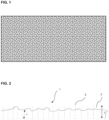
Fig. 1 shows a plan view of the pad of an aspect of the invention. -
Fig. 2 shows a cross-sectional side view of a pad of an aspect of the invention, where the part of the pad that will be in contact with the surface to be coated is upwards. -
Fig. 3a-3b is a schematic view from above of a pad of an aspect of the invention, when used for applying a coating. -
Fig. 4 is a view of an applicator of an aspect of the invention, comprising a handle and means for attaching the pad to the handle, where the part of the pad that will be in contact with the surface to be coated is downwards. -
Fig. 5 shows a side view of the applicator of an aspect of the invention, where the part of the pad that will be in contact with the surface to be coated is downwards. -
Fig. 6 shows a cross-sectional side view of a pad of an aspect of the invention, where the part of the pad that will be in contact with the surface to be coated is upwards. - Specific embodiments of the invention will now be described with reference to the accompanying drawings. This invention may, however, be embodied in many different forms and should not be construed as limited to the embodiments set forth herein; rather, these embodiments are provided so that this disclosure will be thorough and complete, and will fully convey the scope of the invention to those skilled in the art. The terminology used in the detailed description of the embodiments illustrated in the accompanying drawings is not intended to be limiting of the invention. In the drawings, like numbers refer to like elements. The terminology used herein is for the purpose of describing particular aspects of the disclosure only, and is not intended to limit the disclosure. As used herein, the singular forms "a", "an" and "the" are intended to include the plural forms as well, unless the context clearly indicates otherwise.
- In the drawings and specification, there have been disclosed exemplary aspects of the disclosure. However, many variations and modifications can be made to these aspects without substantially departing from the the scope of the appended claims. Thus, the disclosure should be regarded as illustrative rather than restrictive, and not as being limited to the particular aspects discussed above. Accordingly, although specific terms are employed, they are used in a generic and descriptive sense only and not for purposes of limitation, for example, definition of dimensions such as width or breadth or height or length or diameter depends on how exemplary aspects are depicted, hence, if depicted differently, a shown width or diameter in one depiction is a length or thickness in another depiction.
- It should be noted that the word "comprising" does not necessarily exclude the presence of other elements or steps than those listed and the words "a" or "an" preceding an element do not exclude the presence of a plurality of such elements. It should further be noted that any reference signs do not limit the scope of the claims, that the example aspects may be implemented at least in part by means of both hardware and software, and that several "means", "units" or "devices" may be represented by the same item of hardware.
- The different aspects, alternatives and embodiments of the invention disclosed herein can be combined with one or more of the other aspects, alternatives and embodiments described herein. Two or more aspects can be combined.
- An embodiment of the invention is shown in
Fig. 1 and Fig. 2 , including apad 1 comprising afabric 2 of relatively higher absorbency material, where thefabric 2 comprising the relatively higher absorbency material has an average thickness T. - In one embodiment, the thickness of the
fabric 2 may vary about +/- 0.5 mm, thus the average thickness T is used as reference. Thepad 1 further comprisesfilaments 3 of a relatively lower absorbency material. Thefilaments 3 preferably have a length L, which length L preferably is equal to or longer than the average thickness T of thefabric 2 of relatively higher absorbency material. - The filaments extend in the direction of the thickness T.
- The average thickness T of the
fabric 2 of the relatively higher absorbency material preferably is at least about 6 mm, and is preferably within the range of about 7-11 mm. - The length L of the
filaments 3 may be at least about 6 mm, and is preferably within the range of about 8-13 mm. All thefilaments 3 on thepad 1 must not be of the same length L, but may have different lengths. - In one embodiment, the
pad 1 releases about 50 to 100, preferably about 60 to 90, more preferably about 64 to 83, gram water based decking stain per square meter rough wooden deck, when thepad 1 is used for applying the water based decking stain on a wooden deck comprising wood that is pressure treated with wood preservatives. - The
filaments 3 of thepad 1 are preferably evenly distributed in thefabric 2 of thepad 1. Thus, they are preferably not distributed in lines, groups/spots, etc., but are spread out on the pad in thefabric 2 of the relatively higher absorbency material, as is shown inFig. 1 . - Preferably, the
filaments 3 extend through thefabric 2 in the direction of the thickness T, as is shown inFig. 2 . - The
pad 1, in one embodiment, preferably comprises about 40-80 %, preferably about 50 - 70 %, more preferably about 62 %,filaments 3, while the remaining percentages comprise thefabric 2. In one embodiment, the percentages are calculated based on the number offilaments 3 in relation of the number of threads in thefabric 2 in a specific surface area of thepad 1. In another embodiment, the precentages are calculated based on the surface area. - The
filaments 3 may comprise a material that is more rigid than thefabric 2. This limits the compression of thefabric 2 and the flexing of thepad 1, giving the effect sought for. In a preferred embodiment, thefilaments 3 may comprise polyester, polyamide and/or polypropylene. - I one preferred embodiment, the
filaments 3 have a diameter D of about 0.15-0.20 mm. - Further, the
filaments 3, comprising polyester, polyamide and/or polypropylene may be cut with a dtex of about 1000-1200 g/10 000 m. In one preferred embodiment, the dtex of the filaments is about 1100 g/10 000 m. - The
fabric 2 of relatively higher absorbency material may comprise polyester, microfiber, acrylic, polyamide and/or polypropylene. - One embodiment of the invention is shown in
Fig. 6 , where thepad 1 further comprises abase layer 7. Thebase layer 7 is preferably positioned behind thefabric 2 andfilaments 3 in relation to the surface where the coating is to be applied, and closest to the handle or means for attaching the handle. Thefabric 2 andfilaments 3 are preferably attached to the base layer, e.g. by gluing thefabric 2 andfilaments 3 to thebase layer 7. - The
base layer 7 preferably has a thickness X of about 6-10 mm, preferably about 7-9 mm. - In one embodiment, the
base layer 7 comprises a foam material, such as polyurethane foam. - One embodiment of an
applicator 4 comprising apad 1 according to the present invention is shown inFig. 4 . According to this embodiment, the pad used comprises fabric (2) and filaments (3), but no base layer (7). - Another embodiment of an
applicator 4 comprising apad 1 according to the present invention is shown inFig. 5 . According to this embodiment, the pad used comprises fabric (2) and filaments (3), and further also the base layer (7). - The
applicator 4 may comprise ahandle 5 and/or means 6 for attaching theapplicator 4 to ahandle 5 and/or e.g. a extension pole/stick. The use of ahandle 5 and/or extension pole/stick makes the handling and use of theapplicator 4 more easy and convenient. An extension pole/stick may preferably be mounted if a person that intends to apply a coating on a surface, such as a wooden deck, would like to do so while being able to stand in an upright position. As seen inFig. 5 and Fig. 6 , thebase layer 7 is positioned between thehandle 5 and/or means 6 for attaching theapplicator 4, and thefabric 2 andfilaments 3. - Further, since it is beneficial if a wooden deck is sanded before applying a coating, in one embodiment the
means 6 for attaching thehandle 5 and/or extension pole/stick, and/or thehandle 5 per se, is of the same type as used on the device used for sanding, i.e. thesame handle 5 and/or extension pole/stick can be used both when sanding and applying coatings. - A
pad 1 according to the present invention has the benefits that thefabric 2 of relatively higher absorption material has a good absorption of the coating when applying the coating to a surface, such as a wooden deck. A small pressure may be necessary to be applied by the person holding the handle/stick of theapplicator 4 to distribute coating from thepad 1 onto the surface, such as a wooden deck. The size of the applied pressure controls the amount of coating that is released from thepad 1. - A small degree of friction between the
pad 1 and the surface, such as a wooden deck, is desirable, since that facilitates applying the required/desired pressure giving release of the coating from thepad 1. - The fact that the
fabric 2 of relatively higher absorption material has a good absorption, further has the effect that thefabric 2 may absorb redundant coating that is not absorbed by the wooden deck. Such redundant coating could otherwise give an undesirable result with bubbles and thick spots and fields of coating, which later may peel off. - The average thickness T of the
fabric 2 contributes to a good absorption as described above, and also to that thefabric 2 may reach down into irregularities in the surface, such as cracks etc. in the wooden deck, so that the coating is applied evenly all over the surface. Using abase layer 7 may also contribute to this effect. When there are large differences in height between different boards or planks, it is also beneficial that the applicator may be turned 90° so that coating only is applied on one board or plank at the time when using the applicator of the invention. - The
base layer 7 gives a more comfortable use to the person using a pad according to the invention, since it gives a softer feeling when using thepad 1 and/orapplicator 4 of the invention, reducing the impact of irregularities in the panels etc. - The
filaments 3 on thepad 1 helps in moving the coating in the direction of movement of thepad 1 along the surface, such as a wooden deck, avoiding the creation of bubbles and thick spots and fields of coating, which later may peel off. Thefilaments 3 create friction against the wooden deck and aids in applying pressure on thefabric 2 of relatively higher absorption material so that coating is released from thepad 1. Further, thefilaments 3 prevent thefabric 2 from becoming to compressed and flat, and to wear down quickly due to the friction against the wooden deck. Thus, thefilaments 3 also contribute to thepad 1 lasting longer. - The size of the
pad 1 is not critical, but suitably thepad 1 have a size that is well adapted to its purpose. In one embodiment the pad has a length and width within a range of 5 cm to 100 cm.Figs. 3a and 3b show how the size of thepad 1 suitably is adapted such that the width of thepad 1 essentially covers the width of one board or plank and the length of thepad 1 essentially covers the width of two or more boards or planks, when thepad 1 is used in the direction of the length of the plank/board.
Claims (13)
- A pad (1) for applying a coating on a surface, the pad (1) comprising a fabric (2) of relatively higher absorbency material wherein the fabric (2) of the relatively higher absorbency material comprises polyester, microfiber, acrylic, polyamide and/or polypropylene, the fabric (2) having an average thickness T, the pad (1) further comprising filaments (3) of a relatively lower absorbency material wherein the filaments (3) comprises polyester, polyamide and/or polypropylene, the filaments (3) having a length L, wherein the length L of the filaments (3) is equal to or longer than the thickness T, characterised in that the surface area of the pad (1) comprises about 62-80 % filaments (3), where percentages are calculated based on the number of filaments (3) in relation of the number of threads of the fabric (2) in a specified surface area, and wherein the filaments (3) are essentially evenly distributed in the fabric (2) of the pad (1).
- The pad (1) according to claim 1, wherein the thickness T is at least about 6 mm, preferably about 7-11 mm.
- The pad (1) according to any one of the previous claims, wherein the length L is least about 6 mm, preferably about 8-13 mm.
- The pad (1) according to any one of the previous claims, wherein the filaments (3) have a diameter D of about 0.15-0.20 mm.
- The pad (1) according to any one of the previous claims, wherein the filaments (3) have a dtex of about 1000 to about 1200 g/10 000 m, preferably about 1100 g/10 000 m.
- The pad (1) according to any one of the previous claims, wherein the pad (1) releases about 50 to 100, preferably about 60 to 90, more preferably about 64 to 83, gram water based decking stain per square meter rough wooden deck that is pressure treated with wood preservatives.
- The pad (1) according to any one of the previous claims, wherein the filaments (3) extends through the fabric (2) in the direction of the thickness T.
- The pad (1) according to any one of the previous claims, further comprising a base layer (7) positioned behind the fabric (2) and filaments (3), in relation to the surface to be coated.
- The pad (1) according to claim 8, wherein the base layer (7) has a thickness X of about 6-10 mm, preferably about 7-9 mm.
- The pad (1) according to claim 8 or claim 9, wherein the base layer (7) comprises a foam material.
- The pad (1) according to claim 10, wherein the foam material comprises polyurethane foam.
- An applicator (4) comprising a pad (1) according to any one of the previous claims.
- The applicator (4) according to claim 12, further comprising a handle (5) and/or means (6) for attaching the applicator (4) to a handle (5) and/or an extension pole.
Applications Claiming Priority (2)
| Application Number | Priority Date | Filing Date | Title |
|---|---|---|---|
| SE1950304A SE543566C2 (en) | 2019-03-11 | 2019-03-11 | Pad for coating and related applicator |
| PCT/SE2020/050252 WO2020185148A1 (en) | 2019-03-11 | 2020-03-09 | Pad for coating |
Publications (3)
| Publication Number | Publication Date |
|---|---|
| EP3938122A1 EP3938122A1 (en) | 2022-01-19 |
| EP3938122A4 EP3938122A4 (en) | 2022-12-21 |
| EP3938122B1 true EP3938122B1 (en) | 2025-06-25 |
Family
ID=72426839
Family Applications (1)
| Application Number | Title | Priority Date | Filing Date |
|---|---|---|---|
| EP20768259.2A Active EP3938122B1 (en) | 2019-03-11 | 2020-03-09 | Pad for coating |
Country Status (4)
| Country | Link |
|---|---|
| EP (1) | EP3938122B1 (en) |
| FI (1) | FI3938122T3 (en) |
| SE (1) | SE543566C2 (en) |
| WO (1) | WO2020185148A1 (en) |
Family Cites Families (7)
| Publication number | Priority date | Publication date | Assignee | Title |
|---|---|---|---|---|
| US4244074A (en) * | 1978-10-17 | 1981-01-13 | Ppg Industries, Inc. | Pad applicator |
| US5495635A (en) * | 1995-06-02 | 1996-03-05 | Williams; Thomas A. | Paint trimming device |
| US6695516B2 (en) * | 2001-11-14 | 2004-02-24 | Ecolab Inc. | Floor finish application system using applicator pad and matched floor finish composition |
| US7192210B2 (en) * | 2004-03-24 | 2007-03-20 | Wagner Spray Tech Corporation | Deck stain applicator |
| US7578023B2 (en) * | 2004-04-30 | 2009-08-25 | 3M Innovative Properties Company | Applicator pad |
| AU2007336853B2 (en) * | 2006-12-21 | 2012-09-06 | Diversey, Inc. | Floor finish application assembly and method |
| GB2469476B (en) * | 2009-04-15 | 2013-05-15 | Akzo Nobel Coatings Int Bv | A decking coating composition applicator |
-
2019
- 2019-03-11 SE SE1950304A patent/SE543566C2/en unknown
-
2020
- 2020-03-09 EP EP20768259.2A patent/EP3938122B1/en active Active
- 2020-03-09 WO PCT/SE2020/050252 patent/WO2020185148A1/en not_active Ceased
- 2020-03-09 FI FIEP20768259.2T patent/FI3938122T3/en active
Also Published As
| Publication number | Publication date |
|---|---|
| WO2020185148A1 (en) | 2020-09-17 |
| FI3938122T3 (en) | 2025-09-25 |
| SE1950304A1 (en) | 2020-09-12 |
| EP3938122A4 (en) | 2022-12-21 |
| SE543566C2 (en) | 2021-03-30 |
| EP3938122A1 (en) | 2022-01-19 |
Similar Documents
| Publication | Publication Date | Title |
|---|---|---|
| EP0771613B1 (en) | Abrasive sheet and method of manufacturing the same | |
| EP0988932B1 (en) | Grinding method with grid fabric | |
| IL185969A (en) | Methods for maintenance of hard surfaces | |
| US20040185231A1 (en) | Polymer coated surfaces having inlaid decorative sheets | |
| WO2008079948A3 (en) | Floor finish application assembly and method | |
| WO2009043483A2 (en) | Method for producing a floor panel having good non-slip properties | |
| JPH0596282U (en) | Wood decorative material | |
| JP2005512855A (en) | Surface improvement and correction system | |
| EP2740610B1 (en) | Anti-wear layer with ellipsoidal solid particles | |
| EP2755827B1 (en) | Device and method for improved direct printing of decorative panels | |
| WO2020185148A1 (en) | Pad for coating | |
| JP2003013587A (en) | Floor sheet and floor material | |
| US20110189387A1 (en) | Exact match no sand wood floor repair kit | |
| CN106457884B (en) | For finishing the method for wood plank | |
| EP2251501B1 (en) | Method for structuring a floor lining element | |
| EP3347211A1 (en) | Structured cork floor | |
| US20060123577A1 (en) | Apparatus for applying protective coatings to deck and stair balusters | |
| JP2008280807A (en) | Method of painting flooring with decorative grooves on the surface | |
| WO2003037584A2 (en) | Methods for finishing top surfaces of concrete filled access floor panels | |
| JP2639018B2 (en) | Floor material | |
| JP2001315259A (en) | Decorative board | |
| JP3027516B2 (en) | Method for manufacturing flexible decorative board | |
| US20130108846A1 (en) | Microcement laminate and method for obtaining same | |
| JP2020055264A (en) | How to repair the decorative sheet surface | |
| JP2935001B2 (en) | Decorative plate and manufacturing method thereof |
Legal Events
| Date | Code | Title | Description |
|---|---|---|---|
| STAA | Information on the status of an ep patent application or granted ep patent |
Free format text: STATUS: UNKNOWN |
|
| STAA | Information on the status of an ep patent application or granted ep patent |
Free format text: STATUS: THE INTERNATIONAL PUBLICATION HAS BEEN MADE |
|
| PUAI | Public reference made under article 153(3) epc to a published international application that has entered the european phase |
Free format text: ORIGINAL CODE: 0009012 |
|
| STAA | Information on the status of an ep patent application or granted ep patent |
Free format text: STATUS: REQUEST FOR EXAMINATION WAS MADE |
|
| 17P | Request for examination filed |
Effective date: 20211008 |
|
| AK | Designated contracting states |
Kind code of ref document: A1 Designated state(s): AL AT BE BG CH CY CZ DE DK EE ES FI FR GB GR HR HU IE IS IT LI LT LU LV MC MK MT NL NO PL PT RO RS SE SI SK SM TR |
|
| DAV | Request for validation of the european patent (deleted) | ||
| DAX | Request for extension of the european patent (deleted) | ||
| A4 | Supplementary search report drawn up and despatched |
Effective date: 20221122 |
|
| RIC1 | Information provided on ipc code assigned before grant |
Ipc: C11D 17/04 20060101ALI20221116BHEP Ipc: A46B 9/06 20060101ALI20221116BHEP Ipc: A47L 13/30 20060101ALI20221116BHEP Ipc: B05D 1/28 20060101ALI20221116BHEP Ipc: A47L 13/20 20060101ALI20221116BHEP Ipc: A46B 15/00 20060101ALI20221116BHEP Ipc: B05C 17/00 20060101AFI20221116BHEP |
|
| GRAP | Despatch of communication of intention to grant a patent |
Free format text: ORIGINAL CODE: EPIDOSNIGR1 |
|
| STAA | Information on the status of an ep patent application or granted ep patent |
Free format text: STATUS: GRANT OF PATENT IS INTENDED |
|
| INTG | Intention to grant announced |
Effective date: 20250217 |
|
| GRAS | Grant fee paid |
Free format text: ORIGINAL CODE: EPIDOSNIGR3 |
|
| GRAA | (expected) grant |
Free format text: ORIGINAL CODE: 0009210 |
|
| STAA | Information on the status of an ep patent application or granted ep patent |
Free format text: STATUS: THE PATENT HAS BEEN GRANTED |
|
| AK | Designated contracting states |
Kind code of ref document: B1 Designated state(s): AL AT BE BG CH CY CZ DE DK EE ES FI FR GB GR HR HU IE IS IT LI LT LU LV MC MK MT NL NO PL PT RO RS SE SI SK SM TR |
|
| REG | Reference to a national code |
Ref country code: GB Ref legal event code: FG4D |
|
| REG | Reference to a national code |
Ref country code: CH Ref legal event code: EP |
|
| REG | Reference to a national code |
Ref country code: CH Ref legal event code: EP |
|
| REG | Reference to a national code |
Ref country code: IE Ref legal event code: FG4D |
|
| REG | Reference to a national code |
Ref country code: DE Ref legal event code: R096 Ref document number: 602020053365 Country of ref document: DE |
|
| REG | Reference to a national code |
Ref country code: FI Ref legal event code: FGE |
|
| REG | Reference to a national code |
Ref country code: LT Ref legal event code: MG9D |
|
| PG25 | Lapsed in a contracting state [announced via postgrant information from national office to epo] |
Ref country code: GR Free format text: LAPSE BECAUSE OF FAILURE TO SUBMIT A TRANSLATION OF THE DESCRIPTION OR TO PAY THE FEE WITHIN THE PRESCRIBED TIME-LIMIT Effective date: 20250926 |
|
| PG25 | Lapsed in a contracting state [announced via postgrant information from national office to epo] |
Ref country code: BG Free format text: LAPSE BECAUSE OF FAILURE TO SUBMIT A TRANSLATION OF THE DESCRIPTION OR TO PAY THE FEE WITHIN THE PRESCRIBED TIME-LIMIT Effective date: 20250625 |
|
| PG25 | Lapsed in a contracting state [announced via postgrant information from national office to epo] |
Ref country code: HR Free format text: LAPSE BECAUSE OF FAILURE TO SUBMIT A TRANSLATION OF THE DESCRIPTION OR TO PAY THE FEE WITHIN THE PRESCRIBED TIME-LIMIT Effective date: 20250625 |
|
| PG25 | Lapsed in a contracting state [announced via postgrant information from national office to epo] |
Ref country code: RS Free format text: LAPSE BECAUSE OF FAILURE TO SUBMIT A TRANSLATION OF THE DESCRIPTION OR TO PAY THE FEE WITHIN THE PRESCRIBED TIME-LIMIT Effective date: 20250925 |
|
| PG25 | Lapsed in a contracting state [announced via postgrant information from national office to epo] |
Ref country code: LV Free format text: LAPSE BECAUSE OF FAILURE TO SUBMIT A TRANSLATION OF THE DESCRIPTION OR TO PAY THE FEE WITHIN THE PRESCRIBED TIME-LIMIT Effective date: 20250625 |
|
| REG | Reference to a national code |
Ref country code: NL Ref legal event code: MP Effective date: 20250625 |
|
| PG25 | Lapsed in a contracting state [announced via postgrant information from national office to epo] |
Ref country code: NL Free format text: LAPSE BECAUSE OF FAILURE TO SUBMIT A TRANSLATION OF THE DESCRIPTION OR TO PAY THE FEE WITHIN THE PRESCRIBED TIME-LIMIT Effective date: 20250625 |
|
| PG25 | Lapsed in a contracting state [announced via postgrant information from national office to epo] |
Ref country code: PT Free format text: LAPSE BECAUSE OF FAILURE TO SUBMIT A TRANSLATION OF THE DESCRIPTION OR TO PAY THE FEE WITHIN THE PRESCRIBED TIME-LIMIT Effective date: 20251027 |
|
| REG | Reference to a national code |
Ref country code: AT Ref legal event code: MK05 Ref document number: 1805947 Country of ref document: AT Kind code of ref document: T Effective date: 20250625 |
|
| PG25 | Lapsed in a contracting state [announced via postgrant information from national office to epo] |
Ref country code: IS Free format text: LAPSE BECAUSE OF FAILURE TO SUBMIT A TRANSLATION OF THE DESCRIPTION OR TO PAY THE FEE WITHIN THE PRESCRIBED TIME-LIMIT Effective date: 20251025 |
|
| PG25 | Lapsed in a contracting state [announced via postgrant information from national office to epo] |
Ref country code: SM Free format text: LAPSE BECAUSE OF FAILURE TO SUBMIT A TRANSLATION OF THE DESCRIPTION OR TO PAY THE FEE WITHIN THE PRESCRIBED TIME-LIMIT Effective date: 20250625 Ref country code: AT Free format text: LAPSE BECAUSE OF FAILURE TO SUBMIT A TRANSLATION OF THE DESCRIPTION OR TO PAY THE FEE WITHIN THE PRESCRIBED TIME-LIMIT Effective date: 20250625 |
|
| PG25 | Lapsed in a contracting state [announced via postgrant information from national office to epo] |
Ref country code: CZ Free format text: LAPSE BECAUSE OF FAILURE TO SUBMIT A TRANSLATION OF THE DESCRIPTION OR TO PAY THE FEE WITHIN THE PRESCRIBED TIME-LIMIT Effective date: 20250625 |
|
| PG25 | Lapsed in a contracting state [announced via postgrant information from national office to epo] |
Ref country code: PL Free format text: LAPSE BECAUSE OF FAILURE TO SUBMIT A TRANSLATION OF THE DESCRIPTION OR TO PAY THE FEE WITHIN THE PRESCRIBED TIME-LIMIT Effective date: 20250625 |
|
| PG25 | Lapsed in a contracting state [announced via postgrant information from national office to epo] |
Ref country code: EE Free format text: LAPSE BECAUSE OF FAILURE TO SUBMIT A TRANSLATION OF THE DESCRIPTION OR TO PAY THE FEE WITHIN THE PRESCRIBED TIME-LIMIT Effective date: 20250625 |
|
| PG25 | Lapsed in a contracting state [announced via postgrant information from national office to epo] |
Ref country code: SK Free format text: LAPSE BECAUSE OF FAILURE TO SUBMIT A TRANSLATION OF THE DESCRIPTION OR TO PAY THE FEE WITHIN THE PRESCRIBED TIME-LIMIT Effective date: 20250625 |
|
| PG25 | Lapsed in a contracting state [announced via postgrant information from national office to epo] |
Ref country code: ES Free format text: LAPSE BECAUSE OF FAILURE TO SUBMIT A TRANSLATION OF THE DESCRIPTION OR TO PAY THE FEE WITHIN THE PRESCRIBED TIME-LIMIT Effective date: 20250625 |
|
| PG25 | Lapsed in a contracting state [announced via postgrant information from national office to epo] |
Ref country code: DK Free format text: LAPSE BECAUSE OF FAILURE TO SUBMIT A TRANSLATION OF THE DESCRIPTION OR TO PAY THE FEE WITHIN THE PRESCRIBED TIME-LIMIT Effective date: 20250625 |
|
| PGFP | Annual fee paid to national office [announced via postgrant information from national office to epo] |
Ref country code: NO Payment date: 20260129 Year of fee payment: 7 |
|
| PG25 | Lapsed in a contracting state [announced via postgrant information from national office to epo] |
Ref country code: IT Free format text: LAPSE BECAUSE OF FAILURE TO SUBMIT A TRANSLATION OF THE DESCRIPTION OR TO PAY THE FEE WITHIN THE PRESCRIBED TIME-LIMIT Effective date: 20250625 |
|
| PGFP | Annual fee paid to national office [announced via postgrant information from national office to epo] |
Ref country code: FI Payment date: 20260127 Year of fee payment: 7 |
|
| PLBE | No opposition filed within time limit |
Free format text: ORIGINAL CODE: 0009261 |
|
| STAA | Information on the status of an ep patent application or granted ep patent |
Free format text: STATUS: NO OPPOSITION FILED WITHIN TIME LIMIT |
|
| REG | Reference to a national code |
Ref country code: CH Ref legal event code: L10 Free format text: ST27 STATUS EVENT CODE: U-0-0-L10-L00 (AS PROVIDED BY THE NATIONAL OFFICE) Effective date: 20260507 |