EP3937932B1 - Inhibitors of cgas for treating autoinflammatory diseases and cancer metastasis - Google Patents
Inhibitors of cgas for treating autoinflammatory diseases and cancer metastasis Download PDFInfo
- Publication number
- EP3937932B1 EP3937932B1 EP20769554.5A EP20769554A EP3937932B1 EP 3937932 B1 EP3937932 B1 EP 3937932B1 EP 20769554 A EP20769554 A EP 20769554A EP 3937932 B1 EP3937932 B1 EP 3937932B1
- Authority
- EP
- European Patent Office
- Prior art keywords
- alkyl
- fluoro
- tdi
- hydrogen
- compound according
- Prior art date
- Legal status (The legal status is an assumption and is not a legal conclusion. Google has not performed a legal analysis and makes no representation as to the accuracy of the status listed.)
- Active
Links
Classifications
-
- C—CHEMISTRY; METALLURGY
- C07—ORGANIC CHEMISTRY
- C07D—HETEROCYCLIC COMPOUNDS
- C07D471/00—Heterocyclic compounds containing nitrogen atoms as the only ring hetero atoms in the condensed system, at least one ring being a six-membered ring with one nitrogen atom, not provided for by groups C07D451/00 - C07D463/00
- C07D471/12—Heterocyclic compounds containing nitrogen atoms as the only ring hetero atoms in the condensed system, at least one ring being a six-membered ring with one nitrogen atom, not provided for by groups C07D451/00 - C07D463/00 in which the condensed system contains three hetero rings
- C07D471/14—Ortho-condensed systems
-
- A—HUMAN NECESSITIES
- A61—MEDICAL OR VETERINARY SCIENCE; HYGIENE
- A61P—SPECIFIC THERAPEUTIC ACTIVITY OF CHEMICAL COMPOUNDS OR MEDICINAL PREPARATIONS
- A61P29/00—Non-central analgesic, antipyretic or antiinflammatory agents, e.g. antirheumatic agents; Non-steroidal antiinflammatory drugs [NSAID]
-
- A—HUMAN NECESSITIES
- A61—MEDICAL OR VETERINARY SCIENCE; HYGIENE
- A61P—SPECIFIC THERAPEUTIC ACTIVITY OF CHEMICAL COMPOUNDS OR MEDICINAL PREPARATIONS
- A61P35/00—Antineoplastic agents
- A61P35/04—Antineoplastic agents specific for metastasis
-
- C—CHEMISTRY; METALLURGY
- C07—ORGANIC CHEMISTRY
- C07D—HETEROCYCLIC COMPOUNDS
- C07D471/00—Heterocyclic compounds containing nitrogen atoms as the only ring hetero atoms in the condensed system, at least one ring being a six-membered ring with one nitrogen atom, not provided for by groups C07D451/00 - C07D463/00
- C07D471/02—Heterocyclic compounds containing nitrogen atoms as the only ring hetero atoms in the condensed system, at least one ring being a six-membered ring with one nitrogen atom, not provided for by groups C07D451/00 - C07D463/00 in which the condensed system contains two hetero rings
- C07D471/04—Ortho-condensed systems
-
- C—CHEMISTRY; METALLURGY
- C07—ORGANIC CHEMISTRY
- C07D—HETEROCYCLIC COMPOUNDS
- C07D487/00—Heterocyclic compounds containing nitrogen atoms as the only ring hetero atoms in the condensed system, not provided for by groups C07D451/00 - C07D477/00
- C07D487/02—Heterocyclic compounds containing nitrogen atoms as the only ring hetero atoms in the condensed system, not provided for by groups C07D451/00 - C07D477/00 in which the condensed system contains two hetero rings
- C07D487/04—Ortho-condensed systems
-
- Y—GENERAL TAGGING OF NEW TECHNOLOGICAL DEVELOPMENTS; GENERAL TAGGING OF CROSS-SECTIONAL TECHNOLOGIES SPANNING OVER SEVERAL SECTIONS OF THE IPC; TECHNICAL SUBJECTS COVERED BY FORMER USPC CROSS-REFERENCE ART COLLECTIONS [XRACs] AND DIGESTS
- Y02—TECHNOLOGIES OR APPLICATIONS FOR MITIGATION OR ADAPTATION AGAINST CLIMATE CHANGE
- Y02A—TECHNOLOGIES FOR ADAPTATION TO CLIMATE CHANGE
- Y02A50/00—TECHNOLOGIES FOR ADAPTATION TO CLIMATE CHANGE in human health protection, e.g. against extreme weather
- Y02A50/30—Against vector-borne diseases, e.g. mosquito-borne, fly-borne, tick-borne or waterborne diseases whose impact is exacerbated by climate change
Definitions
- the invention relates to tri-cyclyl nitrogen-containing heterocyclic compounds that are inhibitors of human cGAS in major interferon-producing cell types. They are thus useful as therapeutic agents for treating cGAS-related autoimmune diseases, chronic inflammatory diseases, and cancer metastasis in humans.
- Innate immunity is considered a first line cellular stress response defending the host cell against invading pathogens and initiating signaling to the adaptive immunity system. These processes are triggered by conserved pathogen-associated molecular patterns (PAMPs) through sensing by diverse pattern recognition receptors (PRRs) and subsequent activation of cytokine and type I interferon gene expression.
- PAMPs pathogen-associated molecular patterns
- PRRs pattern recognition receptors
- the major antigen-presenting cells such as monocytes, macrophages, microglia, and dendritic cells produce interferons and are critical for eliciting adaptive T- and B-cell immune system responses.
- the major PRRs detect aberrant, i.e. mislocalized, immature, or unmodified nucleic acids on either the cell surface, the inside of lysosomal membranes, or the cytosol.
- Cyclic GMP-AMP synthase (cGAS/MB21D1) is the predominant sensor for cytosolic dsDNA originating from pathogens or mislocalization of nuclear or mitochondrial self-dsDNA. Binding of dsDNA to cGAS activates the synthesis of c[G(2',5')pA(3',5')p], a diffusible cyclic dinucleotide referred to as cGAMP, which travels to and activates the endoplasmic reticulum membrane-anchored adaptor protein, Stimulator of interferon genes (STING/TMEM173).
- Activated STING recruits and activates TANK binding kinase 1 (TBK1), which in turn phosphorylates the transcription factor family of interferon regulatory factors (IRFs) inducing cytokine and type I interferon mRNA expression.
- IRFs interferon regulatory factors
- Type I interferons are expressed from over ten IFNA genes and one IFNB1 gene.
- cGAS The critical role of cGAS in dsDNA sensing has been established in different pathogenic bacteria, viruses, and retroviruses. Additionally, cGAS is essential in various other biological processes such as cellular senescence and recognition of ruptured micronuclei in the surveillance of potential cancer cells.
- Aicardi-Goutines syndrome Aicardi-Goutines syndrome (AGS), a lupus-like severe autoinflammatory immune-mediated disorder, arises from loss-of-function mutation in TREX1, a primary DNA exonuclease responsible for degrading aberrant DNA in cytosol. Knockout of cGAS in TREX1-deficient mice prevented otherwise lethal autoimmune responses, supporting cGAS as a drug target and driver of interferonopathies.
- Small molecule inhibitors that are specific for cGAS would be of great value in treating diseases that arise from inappropriate cGAS activity and the resulting undesired type I interferon activity.
- autoimmune diseases include Aicardi-Goutines syndrome (AGS) and systemic lupus erythematosus (SLE), a complex chronic systemic autoimmune disease that afflicts over 1.5 million Americans.
- Current treatments for SLE involve immuno-suppressive regimens associated with debilitating adverse side effects.
- Other possible utilities related to the suppression of undesired type I interferon activity would include treating inflammatory bowel disease (IBD).
- IBD inflammatory bowel disease
- suppressing of the non-canonical cGAS-pathway-dependent NF-kB signaling may interfere with the process of cancer metastasis [ Bakhoum et al., Nature 553, 467-472 (2018 )].
- SASP senescence-associated secretory phenotype
- DNA sensing by cGAS is regarded as the central mediator of signaling to SASP formation, thus can be considered as plausible therapeutic target for age-associated neurodegenerative diseases.
- cGAS inhibitors Some small molecule cGAS inhibitors are known.
- WO2019/153002 discloses 2,3,4,5-tetrahydro-1H-pyrido[4,3-b]indole compounds and states that the compounds may be used as cGAS inhibitors.
- WO2016/176222 discloses a series of substituted (acridinyl)diamines which may be used as cGAS inhibitors.
- WO2017/176812 discloses pyrrolidine, imidazolidine, tetrahydrothiophene and thiazolidine derivatives which may be used as cGAS antagonists.
- tri-cyclyl nitrogen-containing heterocyclic compounds are potent and specific inhibitors for human cGAS and are active in interferon-producing cell types including primary human macrophages.
- the invention relates to compounds of Formula I: wherein:
- the invention relates to compounds as described herein for use in the treatment of an inflammatory response in a patient.
- the invention relates to compounds as described herein for use in inhibiting dsDNA-triggered interferon expression in a patient.
- the invention relates to compounds as described herein for use in treating Aicardi Goutines Syndrome, Parkinson's disease, Alzheimer's disease, or Systemic lupus erythematosus in a patient.
- the invention relates to compounds as described herein for use in treating cancer metastasis in a patient.
- the invention relates to compounds as described herein for use in inhibiting cGAS in a patient.
- the invention in another aspect, relates to pharmaceutical compositions comprising a pharmaceutically acceptable carrier and a compound as described herein.
- the invention relates to compounds of Formula I: as described above.
- X 1 is N. In other embodiments, X 1 is N-R 1 . It will be understood by those having ordinary skill in the art that X 1 may only be N in embodiments wherein one of X 2 or X 3 is N and, conversely, X 2 or X 3 may not be N without X 1 being N.
- R 1 when X 1 is N-R 1 , R 1 is hydrogen. In other embodiments when X 1 is N-R 1 , R 1 is a (C 1 -C 3 )alkyl group, in particular, methyl. In yet other embodiments when X 1 is N-R 1 , R 1 is CH 2 CH 2 -OR 3a , wherein R 3a is chosen from hydrogen and (C 1 -C 3 )alkyl. In still other embodiments when X 1 is N-R 1 , R 1 is a fluoro(C 1 -C 3 )alkyl group.
- At least one of X 2 , X 3 , X 4 and X 5 is N.
- X 1 is N and X 3 is N:
- X 1 is NR 1 and X 5 is N:
- X 1 is NR 1 and X 4 is N:
- X 2 is C. In other embodiments, X 2 is N.
- X 3 is C. In other embodiments, X 3 is N.
- X 4 is C-R 4 . In other embodiments, X 4 is N.
- R 4 when X 4 is C-R 4 , R 4 is hydrogen. In other embodiments when X 4 is C-R 4 , R 4 is halogen. In yet other embodiments when X 4 is C-R 4 , R 4 is (C 1 -C 6 )alkoxy. In still other embodiments when X 4 is C-R 4 , R 4 is (C 1 -C 6 )alkyl.
- R 4 when X 4 is C-R 4 , R 4 is fluoro(C 1 -C 6 )alkyl. In other embodiments when X 4 is C-R 4 , R 4 is fluoro(C 1 -C 6 )alkoxy. In yet other embodiments when X 4 is C-R 4 , R 4 is (C 3 -C 6 )cycloalkyl. In still other embodiments when X 4 is C-R 4 , R 4 is fluoro(C 3 -C 6 )cycloalkyl.
- R 4 when X 4 is C-R 4 , R 4 is (C 3 -C 6 )cycloalkyloxy. In other embodiments when X 4 is C-R 4 , R 4 is fluoro(C 3 -C 6 )cycloalkyloxy. In yet other embodiments when X 4 is C-R 4 , R 4 is cyano. In still other embodiments when X 4 is C-R 4 , R 4 is an amino(C 1 -C 3 )alkyl group.
- R 4 is (C 1 -C 3 )alkylamino(C 1 -C 3 )alkyl. In other embodiments when X 4 is C-R 4 , R 4 is (C 1 -C 3 )dialkylamino(C 1 -C 3 )alkyl. In yet other embodiments when X 4 is C-R 4 , R 4 is (C 1 -C 3 )alkoxy(C 1 -C 3 )alkyl. In still other embodiments when X 4 is C-R 4 , R 4 is (C 1 -C 6 )hydrocarbyl.
- R 4 when X 4 is C-R 4 , R 4 is heterocyclyl(C 1 -C 3 )alkyl. In other embodiments when X 4 is C-R 4 , R 4 is benzyl. In yet other embodiments when X 4 is C-R 4 , R 4 is heterocyclyl-substituted benzyl. In still other embodiments when X 4 is C-R 4 , R 4 is (C 1 -C 3 )alkylaminocarbonyl. In some embodiments when X 4 is C-R 4 , R 4 is (C 1 -C 3 )acylamino.
- R 4 is (C 1 -C 6 )alkoxy
- said (C 1 -C 6 )alkoxy is chosen from methoxy, ethoxy, propoxy, and butoxy.
- R 4 is (C 3 -C 6 )cycloalkyloxy
- said (C 3 -C 6 )cycloalkyloxy is chosen from cyclopropyloxy, and cyclobutyloxy.
- R 4 when X 4 is C-R 4 , R 4 is an optionally substituted monocyclic heterocyclyl. In other embodiments when X 4 is C-R 4 , R 4 is an optionally substituted phenyl. In yet other embodiments when X 4 is C-R 4 , R 4 is an optionally substituted bicyclic heterocyclyl.
- R 4 is an optionally substituted monocyclic heterocyclyl
- said optional substituents are chosen from one or more of: a (C 1 -C 3 )alkyl, an amino group, a cyano substituent, a (C 1 -C 3 )alkylamino group, a (C 1 -C 3 )alkoxy group, an oxo substituent, a fluoro(C 1 -C 3 )alkyl group (i.e., a (C 1 -C 3 )alkyl that is further substituted with one or more fluorines), a halogen substituent, a hydroxy substituent, and a hydroxy(C 1 -C 3 )alkyl group.
- R 4 is an optionally substituted monocyclic heterocyclyl
- said optional substituents are chosen from one or more of: a methyl group, an ethyl group, a difluoromethyl group, a trifluoromethyl group, a fluoro substituent, a chloro substitutent, a bromo substitutent, a methoxy group, and an ethoxy group.
- R 4 is an optionally substituted monocyclic heterocyclyl
- the monocyclic heterocyclyl is chosen from furanyl, thiophenyl, pyrrolyl, pyrazolyl oxazolyl, oxadiazolyl thiazolyl, isoxazolyl, isothiazolyl, imidazolyl, triazolyl, pyridinyl pyrimidinyl pyrazinyl, pyridazinyl, dihydropyranyl, tetrahydropyranyl, tetrahydrofuranyl, oxetanyl, and azetidinyl, .
- R 4 is an optionally substituted monocyclic heteroaryl
- the monocyclic heteroaryl is chosen from furanyl, thiophenyl, pyrrolyl, pyrazolyl, oxazolyl, oxadiazolyl, thiazolyl, isoxazolyl, isothiazolyl, imidazolyl, triazolyl, pyridinyl, pyrimidinyl, pyrazinyl, and pyridazinyl.
- R 4 is an optionally substituted phenyl
- said optional substituents are chosen from one or more of: an amino substituent, a (C 1 -C 3 )alkylamino group, a (C 1 -C 3 )dialkylamino group, a (C 1 -C 3 )alkoxy group (in particular, methoxy), a hydroxy substituent, a halogen substituent (in particular fluoro), a cyano substituent, an aminocarbonyl group, a 1,2-methylenedioxy ring, a 1,2-ethylenedioxy ring, a (C 1 -C 3 )acylamino group, a fluoro(C 1 -C 3 )acylamino group, and a hydroxy(C 1 -C 3 )alkylaminosulfonyl group.
- R 4 is an optionally substituted bicyclic heterocyclyl
- said optional substituents are chosen from one or more of: a (C 1 -C 3 )alkyl group, a hydroxy substituent, and an oxo substituent.
- R 4 is an optionally substituted bicyclic heterocyclyl
- the bicyclic heterocyclyl is chosen from: indolyl, isoindolyl, benzimidazolyl, benzofuranyl, benzothiophenyl, benzooxadiazolyl, benzothiazolyl, pyrazolopyridinyl, quinolinyl, isoquinolinyl, quinazolinyl, quinoxalinyl, benzodioxolyl, dihydrobenzooxazinyl, and purinyl.
- R 4 is a (C 1 -C 3 )alkylamino(C 1 -C 3 )alkyl group. In other embodiments, R 4 is a (C 1 -C 3 )dialkylamino(C 1 -C 3 )alkyl group. In yet other embodiments, R 4 is a (C 1 -C 3 )alkoxy(C 1 -C 3 )alkyl group. In still other embodiments, R 4 is (C 1 -C 6 )hydrocarbyl group.
- R 4 is a heterocyclyl(C 1 -C 3 )alkyl group. In other embodiments, R 4 is a benzyl group. In yet other embodiments, R 4 is a heterocyclyl-substituted benzyl group. In still other embodiments, R 4 is a (C 1 -C 3 )alkylaminocarbonyl or a (C 1 -C 3 )acylamino group.
- X 5 is C-R 5 . In other embodiments, X 5 is N.
- R 5 when X 5 is C-R 5 , R 5 is hydrogen. In other embodiments when X 5 is C-R 5 , R 5 is halogen. In yet other embodiments when X 5 is C-R 5 , R 5 is (C 1 -C 6 )alkoxy. In still other embodiments when X 5 is C-R 5 , R 5 is (C 1 -C 6 )alkyl.
- R 5 when X 5 is C-R 5 , R 5 is fluoro(C 1 -C 6 )alkyl. In other embodiments when X 5 is C-R 5 , R 5 is fluoro(C 1 -C 6 )alkoxy. In yet other embodiments when X 5 is C-R 5 , R 5 is (C 3 -C 6 )cycloalkyl. In still other embodiments when X 5 is C-R 5 , R 5 is fluoro(C 3 -C 6 )cycloalkyl.
- R 5 when X 5 is C-R 5 , R 5 is (C 3 -C 6 )cycloalkyloxy. In other embodiments when X 5 is C-R 5 , R 5 is fluoro(C 3 -C 6 )cycloalkyloxy. In yet other embodiments when X 5 is C-R 5 , R 5 is cyano. In still other embodiments when X 5 is C-R 5 , R 5 is an amino(C 1 -C 3 )alkyl group.
- R 5 when X 5 is C-R 5 , R 5 is (C 1 -C 3 )alkylamino(C 1 -C 3 )alkyl. In other embodiments when X 5 is C-R 5 , R 5 is (C 1 -C 3 )dialkylamino(C 1 -C 3 )alkyl. In yet other embodiments when X 5 is C-R 5 , R 5 is (C 1 -C 3 )alkoxy(C 1 -C 3 )alkyl. In still other embodiments when X 5 is C-R 5 , R 5 is (C 1 -C 6 )hydrocarbyl.
- R 5 when X 5 is C-R 5 , R 5 is heterocyclyl(C 1 -C 3 )alkyl. In other embodiments when X 5 is C-R 5 , R 5 is benzyl. In yet other embodiments when X 5 is C-R 5 , R 5 is heterocyclyl-substituted benzyl. In still other embodiments when X 5 is C-R 5 , R 5 is (C 1 -C 3 )alkylaminocarbonyl. In some embodiments when X 5 is C-R 5 , R 5 is (C 1 -C 3 )acylamino.
- R 5 when X 5 is C-R 5 , R 5 is an optionally substituted monocyclic heterocyclyl. In other embodiments when X 5 is C-R 5 , R 5 is an optionally substituted phenyl ring. In yet other embodiments when X 5 is C-R 5 , R 5 is an optionally substituted bicyclic heterocyclyl.
- R 5 is an optionally substituted monocyclic heterocyclyl
- said optional substituents are chosen from one or more of: a (C 1 -C 3 )alkyl, an amino group, a cyano substituent, a (C 1 -C 3 )alkylamino group, a (C 1 -C 3 )alkoxy group, an oxo substituent, a fluoro(C 1 -C 3 )alkyl group, a halogen substituent, a hydroxy substituent, and a hydroxy(C 1 -C 3 )alkyl group.
- R 5 is an optionally substituted monocyclic heterocyclyl
- said optional substituents are chosen from one or more of: a methyl group, a ethyl group, a difluoromethyl group, a trifluoromethyl group, a fluoro substituent, a chloro substitutent, a bromo substitutent,a methoxy group, and a ethoxy group.
- R 5 is an optionally substituted monocyclic heterocyclyl
- the monocyclic heterocyclyl is chosen from furanyl, thiophenyl, pyrrolyl, pyrazolyl oxazolyl, oxadiazolyl thiazolyl, isoxazolyl, isothiazolyl, imidazolyl, triazolyl, pyridinyl pyrimidinyl pyrazinyl, pyridazinyl, dihydropyranyl, tetrahydropyranyl, tetrahydrofuranyl, oxetanyl, and azetidinyl.
- R 5 is an optionally substituted monocyclic heteroaryl
- the monocyclic heteroaryl is chosen from furanyl, thiophenyl, pyrrolyl, pyrazolyl, oxazolyl, oxadiazolyl, thiazolyl, isoxazolyl, isothiazolyl, imidazolyl, triazolyl, pyridinyl, pyrimidinyl, pyrazinyl, and pyridazinyl.
- R 5 is an optionally substituted phenyl ring
- said optional substituents are chosen from one or more of: an amino substituent, a (C 1 -C 3 )alkylamino group, a (C 1 -C 3 )dialkylamino group, a (C 1 -C 3 )alkoxy group (in particular, methoxy), a hydroxy substituent, a halogen substituent (in particular fluoro), a cyano substituent, an aminocarbonyl group, a 1,2-methylenedioxy ring, a 1,2-ethylenedioxy ring, a (C 1 -C 3 )acylamino group, a fluoro(C 1 -C 3 )acylamino group, and a hydroxy(C 1 -C 3 )alkylaminosulfonyl group.
- R 5 is an optionally substituted bicyclic heterocyclyl
- said optional substituents are chosen from one or more of: a (C 1 -C 3 )alkyl group, a hydroxy substituent, and an oxo substituent.
- R 5 is an optionally substituted bicyclic heterocyclyl
- the bicyclic heterocyclyl is chosen from: indolyl, isoindolyl, benzimidazolyl, benzofuranyl, benzothiophenyl, benzooxadiazolyl, benzothiazolyl, pyrazolopyridinyl, quinolinyl, isoquinolinyl, quinazolinyl, quinoxalinyl, benzodioxolyl, dihydrobenzooxazinyl, and purinyl.
- R 5 is a (C 1 -C 3 )alkylamino(C 1 -C 3 )alkyl group. In other embodiments, R 5 is a (C 1 -C 3 )dialkylamino(C 1 -C 3 )alkyl group. In yet other embodiments, R 5 is a (C 1 -C 3 )alkoxy(C 1 -C 3 )alkyl group. In still other embodiments, R 5 is (C 1 -C 6 )hydrocarbyl group.
- R 5 is a heterocyclyl(C 1 -C 3 )alkyl group. In other embodiments, R 5 is a benzyl group. In yet other embodiments, R 5 is a heterocyclyl-substituted benzyl group. In still other embodiments, R 5 is a (C 1 -C 3 )alkylaminocarbonyl or a (C 1 -C 3 )acylamino group.
- R 2 is hydrogen. In other embodiments, R 2 is a (C 1 -C 3 )alkyl group, in particular, methyl. In yet other embodiments, R 2 is CH 2 CH 2 -OR 3b , wherein R 3b is chosen from hydrogen and (C 1 -C 3 )alkyl. In still other embodiments, R 2 and R 30 , along with the atoms to which they are attached, form a 4- to 6-membered oxygen-containing non-aromatic heterocyclic ring.
- R 20 is hydrogen. In other embodiments, R 20 is a (C 1 -C 3 )alkyl group, in particular methyl. In some embodiments, R 21 is hydrogen. In other embodiments, R 21 is a (C 1 -C 3 )alkyl group, in particular methyl. In some embodiments, R 20 and R 21 , together with the carbon to which they are attached form a 3- to 5-membered aliphatic carbocyclic ring.
- R 30 is hydrogen. In other embodiments, R 30 and R 2 , along with the atoms to which they are attached, form a 4- to 6-membered oxygen-containing non-aromatic heterocyclic ring.
- n is 1. In other embodiments, n is 2.
- the invention relates to:
- the terms “comprising” and “including” or grammatical variants thereof are to be taken as specifying the stated features, integers, steps or components, but do not preclude the addition of one or more additional features, integers, steps, components or groups thereof. This term encompasses the terms “consisting of” and “consisting essentially of”.
- the phrase “consisting essentially of' or grammatical variants thereof, when used herein, is to be taken as specifying the stated features, integers, steps or components, but does not preclude the addition of one or more additional features, integers, steps, components or groups thereof, but only if the additional features, integers, steps, components or groups thereof do not materially alter the basic and novel characteristics of the claimed composition or method.
- the terms “comprise” (and any form of comprise, such as “comprises” and “comprising"), “have” (and any form of have, such as “has” and “having"), “include” (and any form of include, such as “includes” and “including”), and “contain” (and any form contain, such as “contains” and “containing”) are open-ended linking verbs.
- a method that "comprises”, “has”, “includes” or “contains” one or more steps or elements possesses those one or more steps or elements, but is not limited to possessing only those one or more steps or elements.
- Hydrocarbyl when it is a residue includes alkyl, cycloalkyl, polycycloalkyl, alkenyl, alkynyl, aryl and combinations thereof. Examples include benzyl, phenethyl, cyclohexylmethyl, adamantyl, camphoryl and naphthylethyl. Hydrocarbyl refers to any substituent comprised of hydrogen and carbon as the only elemental constituents. A prefix such as “C x -C y " or "(C x -C y )" indicates that the group following the prefix has from x to y carbon atoms.
- a "C 1 to C 20 hydrocarbon” indicates a hydrocarbon having 1 to 20 carbon atoms.
- Aliphatic hydrocarbons are hydrocarbons that are not aromatic; they may be saturated or unsaturated, cyclic, linear or branched. Examples of aliphatic hydrocarbons include isopropyl, 2-butenyl, 2-butynyl, cyclopentyl, norbornyl, etc.
- Aromatic hydrocarbons include benzene (phenyl), naphthalene (naphthyl), anthracene, etc.
- alkyl (or alkylene when divalent) is intended to include linear or branched saturated hydrocarbon structures and combinations thereof.
- alkyl refers to alkyl groups from 1 to 20 carbon atoms, preferably 1 to 10 carbon atoms, more preferably 1 to 6 carbon atoms. Examples of alkyl groups include methyl, ethyl, propyl, isopropyl, n-butyl, s-butyl, t-butyl and the like.
- Cycloalkyl is a subset of hydrocarbon and includes cyclic hydrocarbon groups of from 3 to 8 carbon atoms. Examples of cycloalkyl groups include cyclopropyl, cyclobutyl, cyclopentyl, norbornyl and the like.
- carbocycle is intended to include ring systems in which the ring atoms are all carbon but of any oxidation state.
- C 3 -C 10 carbocycle refers to both non-aromatic and aromatic systems, including such systems as cyclopropane, benzene and cyclohexene;
- C 8 -C 12 carbopolycycle refers to such systems as norbornane, decalin, indane and naphthalene.
- Carbocycle if not otherwise limited, refers to monocycles, bicycles and polycycles.
- Heterocycle means an aliphatic or aromatic carbocycle residue in which from one to four carbons has been replaced by a heteroatom selected from the group consisting of N, O, and S. Unless otherwise specified, a heterocycle may be non-aromatic (heteroaliphatic) or aromatic (heteroaryl).
- heterocycles include pyrrolidine, pyrazole, pyrrole, indole, quinoline, isoquinoline, tetrahydroisoquinoline, benzofuran, benzodioxan, benzodioxole (commonly referred to as methylenedioxyphenyl, when occurring as a substituent), tetrazole, morpholine, thiazole, pyridine, pyridazine, pyrimidine, thiophene, furan, oxazole, oxazoline, isoxazole, dioxane, tetrahydrofuran and the like.
- heterocyclyl residues include piperazinyl, piperidinyl, pyrazolidinyl, imidazolyl, imidazolinyl, imidazolidinyl, pyrazinyl, oxazolidinyl, isoxazolidinyl, thiazolidinyl, isothiazolyl, quinuclidinyl, isothiazolidinyl, benzimidazolyl, thiadiazolyl, benzopyranyl, benzothiazolyl, benzoxazolyl, tetrahydrofuryl, tetrahydropyranyl, thienyl (also historically called thiophenyl), benzothienyl, thiamorpholinyl, oxadiazolyl, triazolyl and tetrahydroquinolinyl.
- Monocyclic heterocyclyl or monocyclic heterocycle means an aromatic or non-aromatic heterocycle composed of a single ring.
- monocyclic heterocycles include furan, thiophene, pyrrole, pyrazole, oxazole, oxadiazole, thiazole, isoxazole, isothiazole, imidazole, triazole, pyridine, pyrimidine, pyrazine, and pyridazine.
- Bicyclic heterocyclyl means an aromatic or non-aromatic heterocycle composed of two fused rings wherein one or both of the rings contain a heteroatom.
- bicyclic heterocyclyl includes fused bicyclic structures that have no heteroatom in one ring but contain one or more heteroatoms in the other ring. Neither ring need be aromatic but one or both rings may be aromatic. However, if at least one ring is aromatic, then the bicyclic heterocyclyl is considered aromatic.
- bicyclic heterocycles include indole, isoindole, benzimidazole, benzofuran, benzothiophene, benzooxadiazole, benzothiazole, pyrazolopyridine, quinoline, isoquinoline, quinazoline, quinoxaline, benzodioxole, dihydrobenzooxazine, and purine.
- acyl refers to formyl and to groups of 1, 2, 3, 4, 5, 6, 7 and 8 carbon atoms of a straight, branched, cyclic configuration, saturated, unsaturated and aromatic and combinations thereof, attached to the parent structure through a carbonyl functionality. Examples include acetyl, benzoyl, propionyl, isobutyryl and the like. Lower-acyl refers to groups containing one to four carbons.
- substituted refers to the replacement of one or more hydrogen atoms in a specified group with a specified radical.
- 1, 2, or 3 hydrogen atoms are replaced with a specified radical.
- more than three hydrogen atoms can be replaced by fluorine; indeed, all available hydrogen atoms could be replaced by fluorine.
- One or more compounds described herein contain up to two asymmetric centers and may thus give rise to enantiomers, diastereomers, and other stereoisomeric forms which may be defined in terms of absolute stereochemistry as ( R )- or ( S )-.
- the present invention is meant to include all such possible isomers as racemates, optically pure forms and intermediate mixtures.
- Optically active isomers may be prepared using homo-chiral synthons or homo-chiral reagents, or optically resolved using conventional techniques such as chiral chromatography. All tautomeric forms are intended to be included.
- the graphic representations of racemic, ambiscalemic and scalemic or enantiomerically pure compounds used herein are taken from Maehr J. Chem. Ed.
- a generic structure depicting exemplary compounds of the invention is depicted as follows when R 21 is hydrogen: This structure contains a single asymmetric center (labeled with an asterisk). In one embodiment, this structure can be represented as: This depiction only indicates connectivity regarding the atoms bonded to the chiral center.
- the compound represented in this case may be any mixture of R and S enantiomers, from 100% R to 100% S, and any ratio between.
- Therapeutic benefit includes eradication and/or amelioration of the underlying disorder being treated; it also includes the eradication and/or amelioration of one or more of the symptoms associated with the underlying disorder such that an improvement is observed in the subject, notwithstanding that the subject may still be afflicted with the underlying disorder.
- treatment includes one or more of the following: (a) inhibiting the disorder (for example, decreasing one or more symptoms resulting from the disorder, and/or diminishing the extent of the disorder); (b) slowing or arresting the development of one or more symptoms associated with the disorder (for example, stabilizing the disorder and/or delaying the worsening or progression of the disorder); and/or (c) relieving the disorder (for example, causing the regression of clinical symptoms, ameliorating the disorder, delaying the progression of the disorder, and/or increasing quality of life.).
- a therapeutic benefit is achieved with the eradication or amelioration of one or more of the physiological systems associated with the underlying disorder such that an improvement is observed in the patient, notwithstanding that the patient may still be afflicted with the underlying disorder.
- SLE family predispositions.
- clinicians would treat the asymptomatic child because of the genetic background.
- salts refers to salts prepared from pharmaceutically acceptable non-toxic acids or bases including inorganic acids and bases and organic acids and bases.
- salts with inorganic bases include alkali metal salts such as sodium salts, potassium salts and the like; alkali earth metal salts such as calcium salts, magnesium salts and the like; aluminum salts; and ammonium salts.
- salts with organic bases include salts with trimethylamine, triethylamine, pyridine, picoline, ethanolamine, diethanolamine, triethanolamine, dicyclohexylamine, N,N-dibenzylethylenediamine and the like.
- salts with inorganic acids include salts with hydrochloric acid, hydrobromic acid, nitric acid, sulfuric acid, phosphoric acid and the like.
- salts with organic acids include salts with formic acid, acetic acid, trifluoroacetic acid, fumaric acid, oxalic acid, tartaric acid, maleic acid, citric acid, succinic acid, malic acid, methanesulfonic acid, benzenesulfonic acid, p-toluenesulfonic acid and the like.
- salts with basic amino acids include salts with arginine, lysine, ornithine and the like.
- salts with acidic amino acids include salts with aspartic acid, glutamic acid and the like.
- the salt of compound (I) is preferably a salt with an inorganic acid (preferably, hydrochloric acid) or an organic acid (preferably, trifluoroacetic acid).
- an inorganic acid preferably, hydrochloric acid
- an organic acid preferably, trifluoroacetic acid
- Suitable pharmaceutically acceptable acid addition salts for the compounds of the present invention include acetic, adipic, alginic, ascorbic, aspartic, benzenesulfonic (besylate), benzoic, boric, butyric, camphoric, camphorsulfonic, carbonic, citric, ethanedisulfonic, ethanesulfonic, ethylenediaminetetraacetic, formic, fumaric, glucoheptonic, gluconic, glutamic, hydrobromic, hydrochloric, hydroiodic, hydroxynaphthoic, isethionic, lactic, lactobionic, laurylsulfonic, maleic, malic, mandelic, methanesulfonic, mucic, naphthylenesulfonic, nitric, oleic, pamoic, pantothenic, phosphoric, pivalic, polygalacturonic, salicylic, stearic, succin
- suitable pharmaceutically acceptable base addition salts for the compounds of the present invention include, but are not limited to, metallic salts made from aluminum, calcium, lithium, magnesium, potassium, sodium and zinc or organic salts made from lysine, arginine, N,N'-dibenzylethylenediamine, chloroprocaine, choline, diethanolamine, ethylenediamine, meglumine (N-methylglucamine) and procaine.
- Further pharmaceutically acceptable salts include, when appropriate, nontoxic ammonium cations and carboxylate, sulfonate and phosphonate anions attached to alkyl having from 1 to 20 carbon atoms.
- the compound of the present invention may be an anhydrate or a hydrate.
- the compound may be a solvate or a non-solvate.
- the compound may be a deuterated compound.
- the compound of the present invention may be a crystal, and both a single crystal and crystal mixtures are encompassed in the compound. Crystals can be produced by crystallization according to crystallization methods known per se.
- the compound may be a pharmaceutically acceptable cocrystal or cocrystal salt.
- the cocrystal or cocrystal salt means a crystalline substance consisting of two or more particular substances which are solids at room temperature, each having different physical properties (e.g., structure, melting point, heat of melting, hygroscopicity, and stability).
- the cocrystal and cocrystal salt can be produced by cocrystallization method known per se.
- the compound of the present invention or salt thereof (hereinafter sometimes to be simply abbreviated as the compound of the present invention) has low toxicity (e.g., acute toxicity, chronic toxicity, genetic toxicity, reproductive toxicity, cardiotoxicity, carcinogenicity), and can be used as it is or in the form of a pharmaceutical composition to mammals (e.g., human, mouse, rat, rabbit, dog, cat, bovine, horse, swine, monkey) as an agent for the prophylaxis or treatment of diseases as separately mentioned.
- a pharmaceutical composition comprising a compound of the present invention as disclosed above, together with one or more pharmaceutically carriers thereof and optionally one or more other therapeutic ingredients.
- the carrier(s) must be "acceptable" in the sense of being compatible with the other ingredients of the formulation and not deleterious to the recipient thereof.
- Carriers are added as vehicles (e.g., lactose, sucrose, D-mannitol, D-sorbitol, starch, ⁇ -starch, dextrin, crystalline cellulose, low-substituted hydroxypropyl cellulose, sodium carboxymethylcellulose, gum Arabic, pullulan, light anhydrous silicic acid, synthetic aluminum silicate, and magnesium metasilicic aluminate), lubricants (e.g., magnesium stearate, calcium stearate, talc, colloidal silica, and the like), binders (e.g., ⁇ -starch, sucrose, gelatin, gum Arabic, methylcellulose, carboxymethylcellulose, sodium carboxymethylcellulose, crystalline cellulose, sucrose, D-mannitol, trehalose, dextrin, pullulan, hydroxypropylcellulose, hydroxypropyl methylcellulose, and polyvinyl
- the formulations include those suitable for oral, parenteral (including subcutaneous, intradermal, intramuscular, intravenous and intraarticular), rectal and topical (including dermal, buccal, sublingual and intraocular) administration.
- the most suitable route may depend upon the condition and disorder of the recipient.
- the formulations may conveniently be presented in unit dosage form and may be prepared by any of the methods well known in the art of pharmacy. All methods include the step of bringing into association a compound of formula I or a pharmaceutically acceptable salt thereof ("active ingredient”) with the carrier which constitutes one or more accessory ingredients.
- active ingredient a compound of formula I or a pharmaceutically acceptable salt thereof
- the formulations are prepared by uniformly and intimately bringing into association the active ingredient with liquid carriers or finely divided solid carriers or both and then, if necessary, shaping the product into the desired formulation.
- Formulations of the present invention suitable for oral administration may be presented as discrete units such as capsules, cachets or tablets each containing a predetermined amount of the active ingredient; as a powder or granules; as a solution or a suspension in an aqueous liquid or a non-aqueous liquid; or as an oil-in-water liquid emulsion or a water-in-oil liquid emulsion.
- the active ingredient may also be presented as a bolus, electuary or paste.
- a tablet may be made by compression or molding, optionally with one or more accessory ingredients.
- Compressed tablets may be prepared by compressing in a suitable machine the active ingredient in a free-flowing form such as a powder or granules, optionally mixed with a binder, lubricant, inert diluent, lubricating, surface active or dispersing agent.
- Molded tablets may be made by molding in a suitable machine a mixture of the powdered compound moistened with an inert liquid diluent.
- the tablets may optionally be coated or scored and may be formulated so as to provide sustained, delayed or controlled release of the active ingredient therein.
- Formulations for parenteral administration include aqueous and non-aqueous sterile injection solutions which may contain anti-oxidants, buffers, bacteriostats and solutes which render the formulation isotonic with the blood of the intended recipient.
- Formulations for parenteral administration also include aqueous and non-aqueous sterile suspensions, which may include suspending agents and thickening agents.
- the formulations may be presented in unit-dose of multi-dose containers, for example sealed ampoules and vials, and may be stored in a freeze-dried (lyophilized) condition requiring only the addition of a sterile liquid carrier, for example saline, phosphate-buffered saline (PBS) or the like, immediately prior to use.
- Extemporaneous injection solutions and suspensions may be prepared from sterile powders, granules and tablets of the kind previously described.
- the content of the compound of the present invention in the formulation of the present invention varies based on the dosage forms, dosages of the compound of the present invention, and the like. For example, it is approximately about 0.1 to 100 wt%.
- the dosage of the compound of the present invention varies depending on the administration subjects, administration routes, target diseases, symptoms, and the like.
- a single dose is about 0.01 to 100 mg/kg body weight, preferably 0.1 to 50 mg/kg body weight, further preferably 0.5 to 20 mg/kg body weight, and this dosage is preferably administered 1 to 3 times daily.
- the compound of the present invention can be used as a prophylactic or therapeutic agent for autoimmune diseases such as Aicardi-Goutaires Syndrome (AGS), systemic lupus erythematosus, lupus nephritis, rheumatoid arthritis, Sjogren's syndrome, psoriasis, ulcerative colitis, Crohn's disease, type 1 diabetes, myasthenia gravis, multiple sclerosis, idiopathic pulmonary fibrosis, cirrhosis, endomyocardial fibrosis, scleroderma/systemic sclerosis, and the like.
- APS Aicardi-Goutines Syndrome
- systemic lupus erythematosus lupus nephritis
- rheumatoid arthritis Sjogren's syndrome
- psoriasis ulcerative colitis
- Crohn's disease type 1 diabetes
- myasthenia gravis multiple sclerosis
- the compound of the present invention can be used as a prophylactic or therapeutic agent for central nervous system diseases. It is useful as a prophylactic or therapeutic agent for diseases such as (1) psychiatric diseases [e.g., depression, major depression, bipolar depression, dysthymic disorder, emotional disorder (seasonal affective disorder and the like), recurrent depression, postpartum depression, stress disorder, depression symptom, Tourette syndrome, bipolar disorder, neurosis, schizophrenia (e.g., positive symptom, negative symptom, cognitive impairment), psychotic major depression, refractory major depression, treatment-resistant depression], (2) neurodegenerative diseases [e.g., Alzheimer's disease, Alzheimer-type senile dementia, Parkinson's disease, Huntington's disease (Huntington chorea), multi-infarct dementia, frontotemporal dementia, frontotemporal dementia with Parkinsonism, progressive supranuclear palsy, Pick's syndrome, Niemann-Pick syndrome, corticobasal degeneration, vascular dementia, postencephalitic parkinsonism
- the compound of the present invention can be used as a prophylactic or therapeutic agent for cancer.
- the cancer include breast cancer, prostate cancer, pancreatic cancer, gastric cancer, lung cancer, colorectal cancer, rectal cancer, esophagus cancer, duodenal cancer, tongue cancer, pharyngeal cancer, brain tumor, schwannoma, non-small cell lung cancer, small cell lung cancer, liver cancer, kidney cancer, bile duct cancer, uterine body cancer, cervical cancer, ovarian cancer, urinary bladder cancer, skin cancer, hemangioma, malignant lymphoma, malignant melanoma, thyroid cancer, bone tumor, angiofibroma, retinoblastoma, penile cancer, childhood solid cancer, Kaposi's sarcoma, AIDS-related Kaposi's sarcoma, tumor of maxillary sinus, fibrous histiocytoma, leiomyosarcoma, rhabdomyosarcoma, and leukemia.
- the starting materials and reagents used for each step in the following production methods, and the obtained compounds may each form a salt.
- the salts include those similar to the aforementioned salts of the compound of the present invention and the like.
- the compound obtained in each step When the compound obtained in each step is a free compound, it may be converted to a desired salt by a method known per se. Conversely, when the compound obtained in each step is a salt, it may be converted to a free form or a desired other kind of salt by a method known per se.
- the compound obtained in each step may also be used for the next reaction as a reaction mixture thereof or after obtaining a crude product thereof.
- the compound obtained in each step may be isolated and/or purified from the reaction mixture by a separation means such as concentration, crystallization, recrystallization, distillation, solvent extraction, fractionation, chromatography and the like according to a conventional method.
- the starting materials and reagent compounds of each step are commercially available, the commercially available products are often used as is.
- reaction time varies depending on the reagents and solvents to be used, unless otherwise specified, it is generally 1 min - 48 hr and preferably 10 min - 8 hr.
- reaction temperature varies depending on the reagents and solvents to be used, unless otherwise specified, it is generally -78°C to 300°C and preferably -78°C to 150°C.
- the pressure varies depending on the reagents and solvents to be used, unless otherwise specified, it is generally 1 atm - 20 atm and preferably 1 atm - 3 atm.
- microwave synthesizers such as INITIATOR manufactured by BIOTAGE and the like are sometimes used.
- reaction temperature varies depending on the reagents and solvents to be used, unless otherwise specified, it is generally room temperature to 300°C and preferably 50°C to 250°C.
- reaction time varies depending on the reagents and solvents to be used, unless otherwise specified, it is generally 1 min - 48 hr and preferably 1 min - 8 hr.
- a reagent is used in 0.5 equivalent - 20 equivalents and preferably 0.8 equivalent - 5 equivalents, relative to the substrate.
- the reagent is used in 0.001 equivalent - 1 equivalent, preferably 0.01 equivalent - 0.2 equivalent, relative to the substrate.
- the reagent is also a reaction solvent, the reagent is used in a solvent amount.
- Two or more kinds of the above-mentioned solvents may be used by mixing at an appropriate ratio.
- acids and acidic catalysts shown below or those described in Examples are used:
- the reaction of each step is performed according to a method known per se.
- a method known per se for example, the methods described in Jikken Kagaku Kouza 5th edition, vol. 13 - vol. 19 (The Chemical Society of Japan ed .); Shinjikken Kagaku Kouza (Courses in Experimental Chemistry), vol. 14 - vol. 15 (The Chemical Society of Japan ed .); Fine Organic Chemistry rev. 2nd edition (L. F. Tietze, Th. Eicher, NANKODO ); rev.
- protection or deprotection of a functional group is performed by the method known per se, for example, the methods described in “ Protective Groups in Organic Synthesis, 4th Ed.” (Theodora W. Greene, Peter G. M. Wuts) Wiley-Interscience, 2007 ; “ Protecting Groups 3rd Ed.” (P. J. Kocienski) Thieme, 2004 and the like, or the methods described in the Examples.
- Examples of the protecting group of the hydroxyl group of alcohol and the like and a phenolic hydroxyl group include ether protecting groups such as methoxymethyl ether, benzyl ether, tert-butyldimethylsilyl ether, tetrahydropyranyl ether and the like; carboxylate protecting groups such as acetate and the like; sulfonate ester protecting groups such as methanesulfonate ester and the like; carbonate ester protecting groups such as tert-butylcarbonate and the like, and the like.
- ether protecting groups such as methoxymethyl ether, benzyl ether, tert-butyldimethylsilyl ether, tetrahydropyranyl ether and the like
- carboxylate protecting groups such as acetate and the like
- sulfonate ester protecting groups such as methanesulfonate ester and the like
- carbonate ester protecting groups such as tert-butyl
- Examples of the protecting group of the carbonyl group of aldehyde include acetal protecting groups such as dimethyl acetal and the like; cyclic acetal protecting groups such as 1,3-dioxane and the like, and the like.
- Examples of the protecting group of the carbonyl group of ketone include ketal protecting groups such as dimethyl ketal and the like; cyclic ketal protecting groups such as 1,3-dioxane and the like; oxime protecting groups such as O-methyloxime and the like; hydrazone protecting groups such as N,N-dimethylhydrazone and the like.
- carboxyl protecting group examples include ester protecting groups such as methyl ester and the like; amide protecting groups such as N,N-dimethylamide and the like.
- thiol protecting group examples include ether protecting groups such as benzyl thioether and the like; ester protecting groups such as thioacetate ester, thiocarbonate, thiocarbamate and the like.
- Examples of the protecting group of an amino group and an aromatic hetero ring such as imidazole, pyrrole, indole and the like include carbamate protecting groups such as benzyl carbamate and the like; amide protecting groups such as acetamide and the like; alkylamine protecting groups such as N-triphenylmethylamine and the like, sulfonamide protecting groups such as methanesulfonamide and the like.
- the protecting group may be removed by a method known per se, for example, a method using acid, base, ultraviolet light, hydrazine, phenylhydrazine, sodium N-methyldithiocarbamate, tetrabutylammonium fluoride, palladium acetate, trialkylsilyl halide (e.g., trimethylsilyl iodide, trimethylsilyl bromide), a reduction method and the like.
- a method known per se for example, a method using acid, base, ultraviolet light, hydrazine, phenylhydrazine, sodium N-methyldithiocarbamate, tetrabutylammonium fluoride, palladium acetate, trialkylsilyl halide (e.g., trimethylsilyl iodide, trimethylsilyl bromide), a reduction method and the like.
- examples of the reducing agent to be used include metal hydrides such as lithium aluminum hydride, sodium triacetoxyborohydride, sodium cyanoborohydride, diisobutylaluminum hydride (DIBAL-H), sodium borohydride, tetramethylammonium triacetoxyborohydride and the like; boranes such as borane tetrahydrofuran complex and the like; Raney nickel; Raney cobalt; hydrogen; formic acid; triethylsilane and the like.
- a method using a catalyst such as palladium-carbon, Lindlar catalyst and the like.
- examples of an oxidant to be used include peracids such as m-chloroperbenzoic acid (mCPBA), hydrogen peroxide, tert-butyl hydroperoxide and the like; perchlorates such as tetrabutylammonium perchlorate and the like; chlorates such as sodium chlorate and the like; chlorites such as sodium chlorite and the like; periodic acids such as sodium periodate and the like; high valent iodine reagents such as iodosylbenzene and the like; reagents containing manganese such as manganese dioxide, potassium permanganate and the like; leads such as lead tetraacetate and the like; reagents containing chrome such as pyridinium chlorochromate (PCC), pyridinium dichromate (PDC), Jones reagent and the like; halogen compounds such as N-bromosuccinimide (NBS) and the like; oxygen
- mCPBA m-chlor
- examples of the radical initiator to be used include azo compounds such as azobisisobutyronitrile (AIBN) and the like; water-soluble radical initiators such as 4-4'-azobis-4-cyanopentanoic acid (ACPA) and the like; triethylboron in the presence of air or oxygen; benzoyl peroxide and the like.
- examples of the radical reaction agent to be used include tributylstannane, tristrimethylsilylsilane, 1,1,2,2-tetraphenyldisilane, diphenylsilane, samarium iodide and the like.
- Examples of the Wittig reagent to be used include alkylidenephosphoranes and the like.
- Alkylidenephosphoranes may be prepared by a method known per se, for example, by reacting a phosphonium salt with a strong base.
- examples of the reagent to be used include phosphonoacetic acid esters such as methyl dimethylphosphonoacetate, ethyl diethylphosphonoacetate and the like; and bases such as alkali metal hydrides, organic lithiums and the like.
- examples of the reagent to be used include Lewis acid and acid chloride or Lewis acid and alkylating agents (e.g., alkyl halides, alcohol, olefins and the like).
- Lewis acid and acid chloride or Lewis acid and alkylating agents (e.g., alkyl halides, alcohol, olefins and the like).
- an organic acid and an inorganic acid may also be used instead of the Lewis acid
- acid anhydride such as acetic anhydride and the like may also be used instead of acid chloride.
- a nucleophilic agent e.g., amines, imidazole and the like
- a base e.g., organic bases and the like
- examples of the base to be used for developing carbanion include organic lithiums, metal alkoxides, inorganic bases, organic bases and the like.
- examples of the Grignard reagent include aryl magnesium halides such as phenyl magnesium bromide and the like; and alkyl magnesium halides such as methyl magnesium bromide and the like.
- the Grignard reagent may be prepared by a method known per se, for example, by reacting alkyl halide or aryl halide with metal magnesium in ether or tetrahydrofuran as a solvent.
- an active methylene compound e.g., malonic acid, diethyl malonate, malononitrile and the like
- a base e.g., organic bases, metal alkoxides, inorganic bases held between two electron-withdrawing groups
- phosphoryl chloride and an amide derivative are used as the reagents.
- an amide derivative e.g., N,N-dimethylformamide and the like
- examples of the azidation agent to be used include diphenylphosphoryl azide (DPPA), trimethylsilylazide, sodium azide and the like.
- DPPA diphenylphosphoryl azide
- DBU 1,8-diazabicyclo[5,4,0]undec-7-ene
- a method using trimethylsilylazide and the Lewis acid and the like may be employed.
- examples of the reducing agent to be used include sodium triacetoxyborohydride, sodium cyanoborohydride, hydrogen, formic acid and the like.
- examples of the carbonyl compound to be used besides para-formaldehyde include aldehydes such as acetaldehyde and the like, ketones such as cyclohexanone and the like.
- examples of the amines to be used include primary amines such as ammonia, methylamine and the like; secondary amines such as dimethylamine and the like, and the like.
- azodicarboxylate esters e.g., diethyl azodicarboxylate (DEAD), diisopropyl azodicarboxylate (DIAD) and the like
- triphenylphosphine e.g., triphenylphosphine
- examples of the reagent to be used include halogenated acyl forms such as acid chloride, acid bromide and the like; and activated carboxylic acids such as acid anhydride, active ester form, sulfuric acid ester form and the like.
- carboxylic acid activator examples include carbodiimide condensing agents such as 1-ethyl-3-(3-dimethylaminopropyl)carbodiimide hydrochloride (WSCD) and the like; triazine condensing agents such as 4-(4,6-dimethoxy-1,3,5-triazin-2-yl)-4-methylmorpholinium chloride-n-hydrate (DMT-MM) and the like; carbonate ester condensing agents such as 1,1-carbonyldiimidazole (CDI) and the like; diphenylphosphoryl azide (DPPA); benzotriazol-1-yloxy-trisdimethylaminophosphonium salt (BOP reagent); 2-chloro-1-methyl-pyridinium iodide (Mukaiyama reagent); thionyl chloride; lower alkyl haloformates such as ethyl chloroformate and the like; O-(7-azabenzo
- additives such as 1-hydroxybenzotriazole (HOBt), N-hydroxysuccinimide (HOSu), dimethylaminopyridine (DMAP) and the like may be further added to the reaction.
- HOBt 1-hydroxybenzotriazole
- HOSu N-hydroxysuccinimide
- DMAP dimethylaminopyridine
- examples of the metal catalyst to be used include palladium compounds such as palladium(II) acetate, tetrakis(triphenylphosphine)palladium(0), dichlorobis(triphenylphosphine)palladium(II), dichlorobis(triethylphosphine)palladium(II), tris(dibenzylideneacetone)dipalladium(0), 1,1'-bis(diphenylphosphino)ferrocene palladium(II) chloride and the like; nickel compounds such as tetrakis(triphenylphosphine)nickel(0) and the like; rhodium compounds such as tris(triphenylphosphine)rhodium(III) chloride and the like; a cobalt compound; copper compounds such as copper oxide, copper(I) iodide and the like; a platinum compound and the like.
- a base may be further added to
- diphosphorus pentasulfide is representatively used as a thiocarbonylating agent.
- a reagent having a 1,3,2,4-dithiadiphosphetane-2,4-disulfide structure such as 2,4-bis(4-methoxyphenyl)-1,3,2,4-dithiadiphosphetane-2,4-disulfide (Lawesson reagent) and the like may also be used.
- examples of the halogenating agent to be used include N-iodosuccinimide, N-bromosuccinimide (NBS), N-chlorosuccinimide (NCS), bromine, sulfuryl chloride and the like.
- the reaction may be accelerated by adding heat, light, radical initiators such as benzoyl peroxide, azobisisobutyronitrile and the like to the reaction.
- examples of the halogenating agent to be used include acid halide of hydrohalic acid and inorganic acid; specifically, hydrochloric acid, thionyl chloride, phosphorus oxychloride and the like for chlorination, and 48% hydrobromic acid and the like for bromination.
- a method of obtaining a halogenated alkyl form from alcohol by reacting with triphenylphosphine and carbon tetrachloride or carbon tetrabromide, and the like may be used.
- a method of synthesizing a halogenated alkyl form via a two-step reaction including conversion of alcohol to sulfonic acid ester, and reacting same with lithium bromide, lithium chloride or sodium iodide may also be used.
- examples of the reagent to be used include alkyl halides such as ethyl bromoacetate and the like; and phosphites such as triethyl phosphite, tri(isopropyl)phosphite and the like.
- examples of the sulfonating agent to be used include methanesulfonyl chloride, p-toluenesulfonyl chloride, methanesulfonic anhydride, p-toluenesulfonic anhydride and the like.
- examples of the dehydrating agent to be used include sulfuric acid, phosphorus pentaoxide, phosphorus oxychloride, N,N'-dicyclohexylcarbodiimide, alumina, polyphosphoric acid and the like.
- room temperature in the following Examples is generally about 10°C to about 35°C.
- the ratio for a mixed solvent is, unless otherwise specified, a volume mixing ratio and % means wt% unless otherwise specified.
- the indication of NH means use of aminopropylsilane-bonded silica gel.
- HPLC high performance liquid chromatography
- the indication of C18 means use of octadecyl-bonded silica gel.
- the ratio of elution solvents is a volume mixing ratio.
- MS was measured by LC/MS.
- ESI method or APCI method was used as the ionization method.
- the data indicates measured values (found).
- a molecular ion peak is observed.
- a peak free of a tert-butoxycarbonyl group or tert-butyl group may be observed as a fragment ion.
- a peak free of H 2 O may be observed as a fragment ion.
- a molecular ion peak or a fragment ion peak of a free form is generally observed.
- the unit of the sample concentration (c) in optical rotation ([ ⁇ ] D ) is g/100 mL.
- Example 1 1-(3,4-Dichloro-2-methoxy-5,6,7,9-tetrahydro-8H-pyrrolo[3,2- b :4,5- c ']dipyridin-8-yl)-2-hydroxyethan-1-one.
- Examples 7-24 can be produced by employing a similar synthetic process and method as described in this Example 1 synthesis.
- Example 2 1-(7-Chloro-1,3,4,5-tetrahydro-2H-pyrrolo[3,2-c:4,5-c']dipyridin-2-yl)-2-methoxyethan-1-one.
- Examples 25-63 can be produced by employing a similar synthetic process and method as described in this Example 2 synthesis.
- Example 3 1-(7,8-Dichloro-3,4-dihydropyrazino[1,2-b]indazol-2(1H)-yl)-2-methoxyethan-1-one.
- the crude reaction mixture was filtered through a plug of celite (washed with EA until the filtrate was colorless) and evaporated to yield brown oil (2.02 g).
- reaction mixture was maintained at 15 °C for 2 h under nitrogen and then 2-((4-methoxybenzyl)-amino)ethan-1-ol (549.10 mg, 3.03 mmol, 1 eq) was added. After 2 h, the solvent was removed under reduced pressure. The mixture was poured into water (100 mL) and extracted with ethyl acetate (50 mL*2). The combined organic phase was washed with brine (50 mL*2), dried with anhydrous Na 2 SO 4 , filtered and concentrated in vacuum.
- Example 4 1-(7,8-Dichloro-3,4-dihydropyrazino[1,2-b]indazol-2(1H)-yl)-2-hydroxyethan-1-one.
- Example 5 (not part of the invention): 1-(7,8-Dichloro-3,4-dihydropyrazolo[1,5-a:4,3-c']dipyridin-2(1H)-yl)-2-methoxyethan-1 -one.
- the residue was purified by prep-HPLC (column: Phenomenex Synergi C18 150*25*10um; mobile phase: [water (0.1%TFA)-ACN]; B%: 18%-48%, 10min) to give an impure product (0.1 g).
- the impure product was further purified by prep-TLC (ethyl acetate) to give 1-(7,8-dichloro-3,4-dihydropyrazolo[1,5-a:4,3-c']dipyridin-2(1H)-yl)-2-methoxyethan-1-one (5) (14.7 mg, 43.98 umol, 15.72% yield, 98.52% purity) as an off white solid.
- Example 6 1-(7,8-Dichloro-3,4-dihydropyrazolo[1,5-a:4,3-c']dipyridin-2(1H)-yl)-2-hydroxyethan-1 -one.
- Example 25 1-[6,7-Dichloro-9-(1-methyl-1H-pyrazol-3-yl)-1,3,4,5-tetrahydro-2H-pyrrolo[3,2-c:4,5-c']dipyridin-2-yl]-2-hydroxyethan-1-one.
- reaction mixture was poured into water (100 mL) at 25 °C and the mixture was extracted with EtOAc (50 mL*3). The combined organic phase was washed with brine (100 mL), dried with Na 2 SO 4 , filtered and the filtrate was concentrated in vacuo.
- Example 30 1-[6,7-Dichloro-9-(1-methyl-1H-pyrazol-3-yl)-1,3,4,5-tetrahydro-2H-pyrrolo[3,2-c:4,5-c']dipyridin-2-yl]-2-methoxyethan-1-one.
- Example 34 1-[6,7-Dichloro-5-methyl-9-(1-methyl-1H-pyrazol-3-yl)-1,3,4,5-tetrahydro-2H-pyrrolo[3,2-c:4,5-c']dipyridin-2-yl]-2-hydroxyethan-1-one.
- reaction mixture was diluted with water (20 mL) at 25 °C and the mixture was extracted with EtOAc (15 mL*2). The combined organic phase was washed with brine (10 mL), dried with anhydrous Na 2 SO 4 , filtered and concentrated in vacuo.
- the reaction mixture was quenched with saturated aqueous NH 4 Cl solution (20 mL) at 25 °C and the mixture was extracted with EtOAc (20 mL*2).
- Example 64 1-[8-Chloro-7-fluoro-10-(1-methyl-1H-pyrazol-3-yl)-3,4-dihydropyrazino[1,2-b]indazol-2(1H)-yl]-2-hydroxyethan-1-one.
- Examples 67-71 can be produced by employing a similar synthetic process and method as described in this Example 64 synthesis.
- Example 67 1-[7,8-Dichloro-10-(1-methyl-1H-pyrazol-3-yl)-3,4-dihydropyrazino[1,2-b]indazol-2(1H)-yl]-2-hydroxyethan-1-one.
- Example 67 was obtained as a white solid in a manner similar to that described for the synthesis of Example 64.
- 1 H NMR 300 MHz, DMSO- d 6 ) ⁇ 3.89-4.30 (7H, m), 4.43-4.65 (2H, m), 4.81-4.98 (1H, m), 5.17-5.36 (2H, m), 6.71-6.84 (1H, m), 7.31-7.45 (1H, m), 7.77-7.91 (1H, m).
- Example 68 1-[7,8-Dichloro-10-(1-methyl-1H-pyrazol-3-yl)-3,4-dihydropyrazino[1,2-b]indazol-2(1H)-yl]-2-methoxyethan-1-one.
- Example 68 was obtained as a white solid in a manner similar to that described for the synthesis of Example 64.
- Example 69 1-[7-Chloro-10-(1-methyl-1H-pyrazol-3-yl)-3,4-dihydropyrazino[1,2-b]indazol-2(1H)-yl]-2-hydroxyethan-1-one.
- Example 69 was obtained as a white solid in a manner similar to that described for the synthesis of Example 64.
- Example 70 1-[8-Chloro-7-fluoro-10-(5-methyl-1,3,4-oxadiazol-2-yl)-3,4-dihydropyrazino[1,2-b]indazol-2(1H)-yl]-2-hydroxyethan-1-one.
- Example 70 was obtained as a white solid in a manner similar to that described for the synthesis of Example 64.
- Example 71 1-[8-Chloro-7-fluoro-10-(3-methyl-1,2,4-oxadiazol-5-yl)-3,4-dihydropyrazino[1,2-b]indazol-2(1H)-yl]-2-hydroxyethan-1-one.
- Example 71 was obtained as a white solid in a manner similar to that described for the synthesis of Example 64.
- Examples 72-74 can be produced by employing a similar synthetic process and method as described in this Examples 25 or 34 synthesis.
- Example 72 1-[6-Chloro-9-(1-methyl-1H-pyrazol-3-yl)-1,3,4,5-tetrahydro-2H-pyrrolo[3,2-c:4,5-c']dipyridin-2-yl]-2-hydroxyethan-1-one.
- Example 72 was obtained as a white solid in a manner similar to that described for the synthesis of Example 25.
- 1 H NMR (400 MHz, DMSO- d 6 ) ⁇ 2.84-2.98 (2H, m), 3.64-3.73 (1H, m), 3.83-3.90 (1H, m), 3.92-4.03 (3H, m), 4.16-4.27 (2H, m), 4.58 (1H, brs), 4.90 (2H, s), 6.761-6.80 (1H, m), 7.79 (1H, s), 8.16-8.19 (1H, m), 11.93 (1H, brs).
- Example 73 1-[6-Chloro-9-(1-methyl-1H-pyrazol-3-yl)-1,3,4,5-tetrahydro-2H-pyrrolo[3,2-c:4,5-c']dipyridin-2-yl]-2-methoxyethan-1-one.
- Example 73 was obtained as a white solid in a manner similar to that described for the synthesis of Example 25.
- Example 74 1-[6-Chloro-5-methyl-9-(1-methyl-1H-pyrazol-3-yl)-1,3,4,5-tetrahydro-2H-pyrrolo[3,2-c:4,5-c']dipyridin-2-yl]-2-hydroxyethan-1-one.
- Example 74 was obtained as a white solid in a manner similar to that described for the synthesis of Example 34.
- 1 H NMR (400 MHz, DMSO- d 6 ) ⁇ 2.83-2.97 (2H, m), 3.68-3.77 (1H, m), 3.85-3.90 (1H, m), 3.92-4.01 (6H, m), 4.09-4.28 (2H, m), 4.62 (1H, brs), 4.71-4.87 (2H, m), 6.66-6.81 (1H, m), 7.80 (1H, s), 8.12-8.17 (1H, m).
- Examples 75-82 can be produced by employing a similar synthetic process and method as described in this Example 1 synthesis.
- Example 75 1-(3-Chloro-4-fluoro-2-methoxy-5,6,7,9-tetrahydro-8H-pyrrolo[3,2-b:4,5-c']dipyridin-8-yl)-2-hydroxyethan-1-one.
- Example 75 was obtained as a white solid in a manner similar to that described for the synthesis of Example 1.
- 1 H NMR 400 MHz, DMSO- d 6 ) ⁇ 2.75-2.95 (2H, m), 3.65-3.90 (2H, m), 3.97 (3H, s), 4.21-4.25 (2H, m), 4.51-4.75 (3H, m), 11.77-11.81 (1H, m).
- Example 76 1-(3,4-Dichloro-2-methoxy-6,6-dimethyl-5,6,7,9-tetrahydro-8H-pyrrolo[3,2-b:4,5-c']dipyridin-8-yl)-2-hydroxyethan-1-one.
- Example 76 was obtained as a white solid in a manner similar to that described for the synthesis of Example 1.
- 1 H NMR 400 MHz, DMSO- d 6 ) ⁇ 1.31 (3H, s), 1.34 (3H, s), 3.42-3.67 (2H, m), 3.97 (3H, s), 4.21-4.26 (2H, m), 4.50-4.65 (2H, m), 4.69 (1H, brs), 11.56 (1H, brs).
- Example 77 1-(3,4-Dichloro-2-ethoxy-5,6,7,9-tetrahydro-8H-pyrrolo[3,2-b:4,5-c']dipyridin-8-yl)-2-hydroxyethan-1-one.
- Example 77 was obtained as a white solid in a manner similar to that described for the synthesis of Example 1.
- Example 78 1-(3-Chloro-2-ethoxy-4-fluoro-5,6,7,9-tetrahydro-8H-pyrrolo[3,2-b:4,5-c']dipyridin-8-yl)-2-hydroxyethan-1-one.
- Example 78 was obtained as a white solid in a manner similar to that described for the synthesis of Example 1.
- Example 79 1-[3,4-Dichloro-2-(cyclopropylmethoxy)-5,6,7,9-tetrahydro-8H-pyrrolo[3,2-b:4,5-c']dipyridin-8-yl]-2-hydroxyethan-1-one.
- Example 79 was obtained as a white solid in a manner similar to that described for the synthesis of Example 1.
- Example 80 1-[3-Chloro-2-(cyclopropylmethoxy)-4-fluoro-5,6,7,9-tetrahydro-8H-pyrrolo[3,2-b:4,5-c']dipyridin-8-yl]-2-hydroxyethan-1-one.
- Example 80 was obtained as an off-white solid in a manner similar to that described for the synthesis of Example 1.
- 1 H NMR (400 MHz, DMSO- d 6 ) ⁇ 0.31-0.42 (2H, m), 0.50-0.62 (2H, m), 1.25-1.37 (1H, m), 2.75-2.99 (2H, m), 3.65-3.96 (2H, m), 4.14-4.30 (4H, m), 4.50-4.80 (3H, m), 11.76-11.81 (1H, m).
- Example 81 1-[3,4-Dichloro-2-(difluoromethoxy)-5,6,7,9-tetrahydro-8H-pyrrolo[3,2-b:4,5-c']dipyridin-8-yl]-2-hydroxyethan-1-one.
- Example 81 was obtained as a white solid in a manner similar to that described for the synthesis of Example 1.
- Example 82 1-[3-Chloro-2-(difluoromethoxy)-4-fluoro-5,6,7,9-tetrahydro-8H-pyrrolo[3,2-b:4,5-c']dipyridin-8-yl]-2-hydroxyethan-1-one.
- Example 82 was obtained as a red solid in a manner similar to that described for the synthesis of Example 1.
- 1 H NMR (400 MHz, DMSO- d 6 ) ⁇ 2.09 (3H, s), 2.78-3.03 (2H, m), 3.70-3.90 (2H, m), 4.54-4.67 (2H, m), 4.87-4.98 (2H, m), 7.54-7.99 (1H, m), 12.10-12.28 (1H, m).
- Example No. Structure Name 1 1-(3,4-dichloro-2-methoxy-5,6,7,9-tetrahydro-8H-pyrrolo[3,2-b:4,5-c']dipyridin-8-yl)-2-hydroxyethan-1-one 2
- Example No. Structure Name 1 1-(3,4-dichloro-2-methoxy-5,6,7,9-tetrahydro-8H-pyrrolo[3,2-b:4,5-c']dipyridin-8-yl)-2-hydroxyethan-1-one 2
- h-cGAS Compounds were resuspended in 10 mM stock concentration using DMSO and tested to determine their IC 50 values against h-cGAS in 384-well polypropylene plates using RapidFire 365 mass spectrometry (RF-MS).
- the final concentration of full-length h-cGAS, dsDNA, ATP, and GTP were 100 nM, 25 nM, 100 ⁇ M, and 100 ⁇ M, respectively.
- the reaction buffer was composed of 20 mM Tns-HCl, pH 7.4, 150 mMNaCl, 5 mM MgCl 2 , 1 ⁇ M ZnCl 2 and 0.01% Tween-20.
- Reaction solutions of 20 ⁇ l were incubated for 7 h at room temperature (RT) and stopped by addition of 60 ⁇ l of 0.5% (v/v) formic acid per well followed by RF-MS analysis.
- An aqueous solvent of 5 mM ammonium acetate, pH 10 was used for loading/washing process.
- An organic solvent comprising 5 mM ammonium acetate, pH 10 in 50% water, 25% acetone, and 25% acetonitrile was used for elution of the analytes.
- About 35 ⁇ l of each sample was aspirated from a 384-well plate and separated using a Graphitic carbon Type D cartridge.
- the sample loaded onto cartridge was then washed for 4 s at 1.5 ml min -1 using the aqueous solvent.
- ATP, GTP, and cGAMP were eluted for 5 s using the organic solvent at a flow rate of 1.5 ml min -1 followed by re-equilibration with the aqueous solvent for 5 s at a flow rate of 1.5 ml min -1 .
- the samples were analysed using a negative ionization mode in the mass spectrometer, with a gas temperature of 350 °C, nebulizer pressure of 35 psi, and gas flow rate of 15 L min -1 .
- the acquisition range was between 300 and 800 m/z for all the chromatograms and the molecular masses of the detected peaks were: ATP: 505.9835, GTP: 521.9854, and cGAMP: 673.0906.
- THP1-Dual cells carrying a secreted luciferase reporting interferon-induced gene expression.
- THP1-Dual cells were pre-incubated in 24-well plates (2.5 ⁇ 10 5 cells/well, 500 ⁇ l per well) over an indicated concentration range of inhibitors for 1 h. DMSO was added as negative control. Cells were transfected with 0.5 ⁇ g ml -1 of 100-bp dsDNA ligands in complex with Lipofectamine 2000 (Invitrogen) for 24 h.
- Transfection complex was prepared by combining 0.25 ⁇ g of dsDNA in 25 ⁇ l Opti-MEM (Gibco) with 0.25 ⁇ l of Lipofectamine 2000 in 25 ⁇ l Opti-MEM and adding the 50 ⁇ l combined volume for each well containing cells. Luciferase luminescence was measured for each sample using QUANTI-Luc luciferase reagent (InvivoGen) following the manufacturer's protocol.
- TR-FRET time-resolved fluorescence resonance energy transfer
- the cGAS enzyme assay using TR-FRET were performed to determine potency of selected inhibitors in 384-well white flat-bottom small volume plates (Greiner Bio-One).
- Assay buffer 25 mmol/L Tris-HCl (pH 7.5), 150 mmol/L NaCl, 1mmol/L MgCl 2 , 0.01% Tween-20, 0.01% BSA was used to dilution of the reagents.
- the test compounds were prepared as DMSO solution.
- Human cGAS (1.5 ⁇ l, final 5 nmol/L), each concentration of test compound (1.5 ⁇ l) and 90 bp dsDNA (1.5 ⁇ l, final 100 nmol/L) were added to each well and pre-incubated for 1 h.
- the substrate mixture (1.5 ⁇ l) including ATP (final 40 ⁇ mol/L), GTP (final 20 ⁇ mol/L), and ZnCl 2 (100 ⁇ mol/L) was added to each well and incubation were carried out for 40 min at room temperature.
- detection premix (2 ⁇ l) including mouse monoclonal antibody against cGAMP (in house, see Miyakawa S., et al., Journal of Immunological Methods, in press ), FITC-cGAMP (Biolog Life Science Institute), rabbit Tb-anti-mouse IgG (ThermoFisher), EDTA was added to each well and incubated for 1 h. Indeed, TR-FRET was measured for each sample using competitive reaction assay system, which signals of individual wells were measured using a Envision Multilabel plate reader (PerkinElmer; Ex 337 nm, Em 520 nm/486 nm). The cGAMP concentration of each well was calculated using cGAMP standard curve.
- the cGAMP concentration of no compound was set as 0% inhibition and the cGAMP concentration of no cGAS protein was set as 100% inhibition.
- the inhibition rate (%) of test compounds was calculated as (1-( C sample - C 100% inhibition ) / (C 0% inhibition - C 100% inhibition )) ⁇ 100 where C indicates concentration of cGAMP.
- the IC 50 values were calculated by Excelfit (CTC). Table 5.
- Example No. hcGAS enzyme assay Example No.
- hcGAS enzyme assay 1 0.19 ⁇ M 71 1.4 ⁇ M 2 >30 ⁇ M 72 0.25 ⁇ M 4 21 ⁇ M 73 0.87 ⁇ M 5 >30 ⁇ M 74 0.29 ⁇ M 25 0.095 ⁇ M 75 0.55 ⁇ M 30 0.21 ⁇ M 76 0.85 ⁇ M 34 0.15 ⁇ M 77 3.0 ⁇ M 64 0.18 ⁇ M 78 3.7 ⁇ M 67 0.15 ⁇ M 79 5.9 ⁇ M 68 0.24 ⁇ M 80 5.0 ⁇ M 69 0.28 ⁇ M 81 2.4 ⁇ M 70 7.5 ⁇ M 82 15 ⁇ M
- TR-FRET time-resolved fluorescence resonance energy transfer
- THP1 cells were incubated in 96-well plates (corning3585) for 48h. After differentiation THP1 cells (macrophage cells) were pre-incubated in the 96-well plates (1.0 ⁇ 10 5 cells/well, 100 ⁇ l per well) with indicated concentration range of inhibitors, and DMSO as a positive control, for 1h. Then, cells were transfected with 0.1 ⁇ g/well of 90-bp dsDNA ligands in complex with Lipofectamine 3000 (Invitrogen), without dsDNA as a negative control, for 24 h.
- Lipofectamine 3000 Invitrogen
- Transfection complex was prepared by combining 0.1 ⁇ g of dsDNA in 5 ⁇ l Opti-MEM (Invitrogen) with 0.35 ⁇ l of Lipofectamine 3000 in 5 ⁇ l Opti-MEM. The 10 ⁇ l of combined transfection complex was added to each well containing cells. TR-FRET was measured for each sample using competitive reaction assay system with cGAMP and FITC-cGAMP (Biolog Life Science Institute) containing mouse monoclonal antibody against cGAMP (in house, see Miyakawa S., et al., Journal of Immunological Methods, in press ) and rabbit Tb-anti-mouse IgG (ThermoFisher).
- the IC 50 values were calculated by Excelfit (CTC). Table 6.
- Example # THP1 cGAMP IC 50 ( ⁇ M) Example # THP1 cGAMP IC 50 ( ⁇ M)
- THP1 cGAMP IC 50 ( ⁇ M) 1 2.5 67 0.14 68 0.33
- IFNB1 mRNA expression was quantified using qRT-PCR. Total RNA was isolated from 5 ⁇ 10 5 THP1 cells per well of a 12-well plate, which were pre-incubated with inhibitors for 1 h. Human primary macrophages were used at 3 ⁇ 10 5 cells per well of a 12-well plate. Human PBMCs were used at 1 ⁇ 10 6 cells per well of a 12-well plate. Cells were transfected using 100 ⁇ l of Opti-MEM transfection solution comprising 2 ⁇ g of 100-bp dsDNA complexed with 2 ⁇ l of Lipofectamine 2000.
- Threshold cycle (C T ) values obtained for IFNB1 mRNAs were normalized to TUBA1B C T values and used to calculate ⁇ C T .
- Relative mRNA expression levels of IFNB1 were calculated using the ⁇ C T method (2 ⁇ C T ).
- the extent of cGAS inhibition was determined by normalizing the IFNB1 mRNA expression level for each sample relative to DMSO only control.
- a pharmaceutical composition containing the compound of the present invention as an active ingredient can be produced, for example, according to the following formulation.
- the total amount of the above-mentioned (1), (2) and (3) and 5mg of (4) are blended, and the mixture is granulated. Thereto is added the remaining 5mg of (4), and the whole is sealed in a gelatin capsule.
- the total amount of the above-mentioned (1), (2), and (3), 20mg of (4) and 2.5 mg of (5) are blended, and the mixture is granulated. Thereto are added the remaining 10mg of (4), and 2.5mg of (5), and the mixture is compression-molded to give a tablet.
Landscapes
- Organic Chemistry (AREA)
- Chemical & Material Sciences (AREA)
- Health & Medical Sciences (AREA)
- Pharmacology & Pharmacy (AREA)
- Animal Behavior & Ethology (AREA)
- Medicinal Chemistry (AREA)
- Nuclear Medicine, Radiotherapy & Molecular Imaging (AREA)
- Chemical Kinetics & Catalysis (AREA)
- Veterinary Medicine (AREA)
- Life Sciences & Earth Sciences (AREA)
- General Chemical & Material Sciences (AREA)
- General Health & Medical Sciences (AREA)
- Public Health (AREA)
- Oncology (AREA)
- Pain & Pain Management (AREA)
- Rheumatology (AREA)
- Pharmaceuticals Containing Other Organic And Inorganic Compounds (AREA)
- Nitrogen Condensed Heterocyclic Rings (AREA)
- Medicines That Contain Protein Lipid Enzymes And Other Medicines (AREA)
Description
- The invention relates to tri-cyclyl nitrogen-containing heterocyclic compounds that are inhibitors of human cGAS in major interferon-producing cell types. They are thus useful as therapeutic agents for treating cGAS-related autoimmune diseases, chronic inflammatory diseases, and cancer metastasis in humans.
- Innate immunity is considered a first line cellular stress response defending the host cell against invading pathogens and initiating signaling to the adaptive immunity system. These processes are triggered by conserved pathogen-associated molecular patterns (PAMPs) through sensing by diverse pattern recognition receptors (PRRs) and subsequent activation of cytokine and type I interferon gene expression. The major antigen-presenting cells, such as monocytes, macrophages, microglia, and dendritic cells produce interferons and are critical for eliciting adaptive T- and B-cell immune system responses. The major PRRs detect aberrant, i.e. mislocalized, immature, or unmodified nucleic acids on either the cell surface, the inside of lysosomal membranes, or the cytosol.
- Cyclic GMP-AMP synthase (cGAS/MB21D1) is the predominant sensor for cytosolic dsDNA originating from pathogens or mislocalization of nuclear or mitochondrial self-dsDNA. Binding of dsDNA to cGAS activates the synthesis of c[G(2',5')pA(3',5')p], a diffusible cyclic dinucleotide referred to as cGAMP, which travels to and activates the endoplasmic reticulum membrane-anchored adaptor protein, Stimulator of interferon genes (STING/TMEM173). Activated STING recruits and activates TANK binding kinase 1 (TBK1), which in turn phosphorylates the transcription factor family of interferon regulatory factors (IRFs) inducing cytokine and type I interferon mRNA expression. Type I interferons are expressed from over ten IFNA genes and one IFNB1 gene.
- The critical role of cGAS in dsDNA sensing has been established in different pathogenic bacteria, viruses, and retroviruses. Additionally, cGAS is essential in various other biological processes such as cellular senescence and recognition of ruptured micronuclei in the surveillance of potential cancer cells.
- While the cGAS pathway is important for host defense against invading pathogens, cellular stress and genetic factors may also cause accumulation of self-dsDNA in the cytosol, e.g. from nuclear or mitochondrial leakage. This can trigger autoinflammatory responses. Aicardi-Goutières syndrome (AGS), a lupus-like severe autoinflammatory immune-mediated disorder, arises from loss-of-function mutation in TREX1, a primary DNA exonuclease responsible for degrading aberrant DNA in cytosol. Knockout of cGAS in TREX1-deficient mice prevented otherwise lethal autoimmune responses, supporting cGAS as a drug target and driver of interferonopathies. Likewise, embryonic lethality caused by deficiency of DNase II, an endonuclease responsible for degradation of excessive DNA in lysosomes during endocytosis, is completely rescued by additional knockout of STING or cGAS. Inhibition of cGAS, therefore, constitutes an important therapeutic strategy for preventing autoinflammatory diseases whose etiology involves anti-dsDNA antibodies. Systemic lupus erythematosus (SLE) may be one such disease [Pisetsky, Nat Rev Rheumatol 12, 102-110 (2016)].
- Consequently, cGAS and STING have attracted the interest of structural biologists and medicinal chemists for identification of inhibitors and/or activators. An in silico screening effort using murine cGAS-DNA crystal structure led to the identification of a well-characterized small-molecule anti-malarial drug, quinacrine, as a potential cGAS inhibitor [An et al., J. Immunol. 194, 4089-4093 (2015)]. However, quinacrine, a known DNA intercalator, was found to indirectly affect the cGAS activity through disruption of dsDNA conformation failing to activate the enzyme instead of directly binding and inhibiting the enzyme. Additionally, considerable off-target effect was observed through its interference with RIG-I pathway.
- Small molecule inhibitors that are specific for cGAS would be of great value in treating diseases that arise from inappropriate cGAS activity and the resulting undesired type I interferon activity. Examples of such autoimmune diseases include Aicardi-Goutières syndrome (AGS) and systemic lupus erythematosus (SLE), a complex chronic systemic autoimmune disease that afflicts over 1.5 million Americans. Current treatments for SLE involve immuno-suppressive regimens associated with debilitating adverse side effects. Other possible utilities related to the suppression of undesired type I interferon activity would include treating inflammatory bowel disease (IBD). Furthermore, suppressing of the non-canonical cGAS-pathway-dependent NF-kB signaling may interfere with the process of cancer metastasis [Bakhoum et al., Nature 553, 467-472 (2018)].
- Recent studies revealed that cGAS-pathway mediates ageing-associated chronic inflammation. Senescent cells accumulate in the body as we age. It has been acknowledged that senescent cells secrete a variety of substances such as chemokines, pro-inflammatory cytokines, growth factors, and proteases into the tissue environment. The phenomenon is called senescence-associated secretory phenotype (SASP) and is thought to be involved in etiology of a range of age-associated diseases such as Parkinson's disease and Alzheimer's disease [Chinta et al., Cell Reports 22, 930-940, 23, 2018]. As genetic ablation of cGAS abrogated SASP induced by a variety of stimuli ranging from irradiation to chromatin fragment, DNA sensing by cGAS is regarded as the central mediator of signaling to SASP formation, thus can be considered as plausible therapeutic target for age-associated neurodegenerative diseases.
- Some small molecule cGAS inhibitors are known.
WO2019/153002 discloses 2,3,4,5-tetrahydro-1H-pyrido[4,3-b]indole compounds and states that the compounds may be used as cGAS inhibitors.WO2016/176222 discloses a series of substituted (acridinyl)diamines which may be used as cGAS inhibitors.WO2017/176812 discloses pyrrolidine, imidazolidine, tetrahydrothiophene and thiazolidine derivatives which may be used as cGAS antagonists. - It has now been found that tri-cyclyl nitrogen-containing heterocyclic compounds are potent and specific inhibitors for human cGAS and are active in interferon-producing cell types including primary human macrophages.
- In one aspect, the invention relates to compounds of Formula I:

- the structure

- X1 is Nor N-R1;
- X2 is C or N;
- X3 is N;
- X4 is C-R4 or N;
- X5 is C-R5 or N;
or - X1 is Nor N-R1;
- X2 is C or N;
- X3 is N or C;
- X4 is N;
- X5 is C-R5 or N;
or - X1 is Nor N-R1;
- X2 is C or N;
- X3 is N or C;
- X4 is C-R4 or N;
- X5 is N;
- R1 is hydrogen, (C1-C3)alkyl, CH2CH2-OR3a, or fluoro(C1-C3)alkyl;
- R2 is hydrogen, (C1-C3)alkyl, or CH2CH2-OR3b, or, taken together along with the atoms to which they are attached, R2 and R30 may form a 4- to 6-membered oxygen-containing non-aromatic heterocyclic ring;
- R3a is hydrogen or (C1-C3)alkyl;
- R3b is hydrogen or (C1-C3)alkyl;
- R4 is chosen from optionally substituted monocyclic heterocyclyl, hydrogen, halogen, (C1-C6)alkyl, (C1-C6)alkoxy, fluoro(C1-C6)alkyl, fluoro(C1-C6)alkoxy, (C3-C6)cycloalkyl, fluoro(C3-C6)cycloalkyl, (C3-C6)cycloalkyloxy, fluoro(C3-C6)cycloalkyloxy, cyano, optionally substituted phenyl, optionally substituted bicyclic heterocyclyl, amino(C1-C3)alkyl, (C1-C3)alkylamino(C1-C3)alkyl, (C1-C3)dialkylamino(C1-C3)alkyl, (C1-C3)alkoxy(C1-C3)alkyl, (C1-C6)hydrocarbyl, heterocyclyl(C1-C3)alkyl, benzyl, heterocyclyl-substituted benzyl, (C1-C3)alkylaminocarbonyl, and (C1-C3)acylamino;
- R5 is chosen from hydrogen, (C1-C6)alkoxy, halogen, (C1-C6)alkyl, fluoro(C1-C6)alkyl, fluoro(C1-C6)alkoxy, (C3-C6)cycloalkyl, fluoro(C3-C6)cycloalkyl, (C3-C6)cycloalkyloxy, fluoro(C3-C6)cycloalkyloxy, optionally substituted monocyclic heterocyclyl, cyano, optionally substituted phenyl, optionally substituted bicyclic heterocyclyl, amino(C1-C3)alkyl, (C1-C3)alkylamino(C1-C3)alkyl, (C1-C3)dialkylamino(C1-C3)alkyl, (C1-C3)alkoxy(C1-C3)alkyl, (C1-C6)hydrocarbyl, heterocyclyl(C1-C3)alkyl, benzyl, heterocyclyl-substituted benzyl, (C1-C3)alkylaminocarbonyl, and (C1-C3)acylamino;
- wherein:
- said optionally substituted monocyclic heterocyclyl may be substituted with one or more substituents chosen from: (C1-C3)alkyl, amino, cyano, (C1-C3)alkylamino, (C1-C3)alkoxy, oxo, fluoro(C1-C3)alkyl, halogen, hydroxy, and hydroxy(C1-C3)alkyl;
- said optionally substituted phenyl may be substituted with one or more substituents chosen from: amino, (C1-C3)alkylamino, (C1-C3)dialkylamino, (C1-C3)alkoxy, hydroxy, halogen, cyano, aminocarbonyl, methylenedioxy, ethylenedioxy, (C1-C3)acylamino, fluoro(C1-C3)acylamino, and hydroxy(C1-C3)alkylaminosulfonyl; and
- said optionally substituted bicyclic heterocyclyl may be substituted with one or more substituents chosen from: (C1-C3)alkyl, hydroxy, and oxo;
- R6 and R7 are independently chosen from halogen, hydrogen, cyano, -C≡CH, -CH=CH2, (C1-C3)alkyl, (C1-C3)alkoxy, fluoro(C1-C3)alkyl, fluoro(C1-C3)alkoxy, (C3-C4)cycloalkyl,and fluoro(C3 -C4)cycloalkyl;
- R20 is hydrogen or (C1-C3)alkyl, or, taken together with the carbon to which they are attached, R20 and R21 may form a 3- to 5-membered aliphatic carbocyclic ring;
- R21 is hydrogen or (C1-C3)alkyl, or, taken together with the carbon to which they are attached, R21 and R20 may form a 3- to 5-membered aliphatic carbocyclic ring;
- R30 is hydrogen, or, taken together along with the atoms to which they are attached, R30 and R2 may form a 4- to 6-membered oxygen-containing non-aromatic heterocyclic ring; and n is 1 or 2;
- In one aspect, the invention relates to compounds as described herein for use in the treatment of an inflammatory response in a patient.
- In another aspect, the invention relates to compounds as described herein for use in inhibiting dsDNA-triggered interferon expression in a patient.
- In another aspect, the invention relates to compounds as described herein for use in treating Aicardi Goutières Syndrome, Parkinson's disease, Alzheimer's disease, or Systemic lupus erythematosus in a patient.
- In another aspect, the invention relates to compounds as described herein for use in treating cancer metastasis in a patient.
- In another aspect, the invention relates to compounds as described herein for use in inhibiting cGAS in a patient.
- In another aspect, the invention relates to pharmaceutical compositions comprising a pharmaceutically acceptable carrier and a compound as described herein.
- In a composition aspect, the invention relates to compounds of Formula I:


- In some embodiments, X1 is N. In other embodiments, X1 is N-R1. It will be understood by those having ordinary skill in the art that X1 may only be N in embodiments wherein one of X2 or X3 is N and, conversely, X2 or X3 may not be N without X1 being N.
- In some embodiments when X1 is N-R1, R1 is hydrogen. In other embodiments when X1 is N-R1, R1 is a (C1-C3)alkyl group, in particular, methyl. In yet other embodiments when X1 is N-R1, R1 is CH2CH2-OR3a, wherein R3a is chosen from hydrogen and (C1-C3)alkyl. In still other embodiments when X1 is N-R1, R1 is a fluoro(C1-C3)alkyl group.
- In some embodiments, at least one of X2, X3, X4 and X5 is N. In one subgenus, X1 is N and X3 is N:

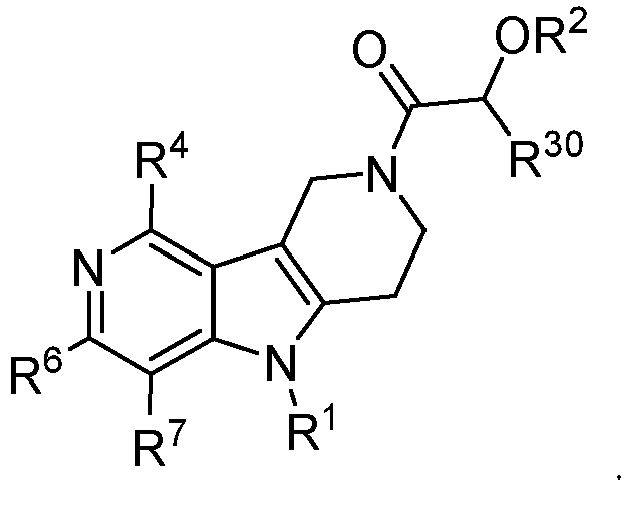
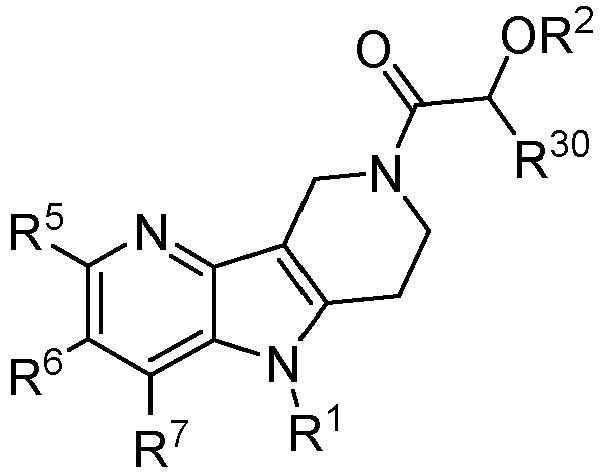
- In some embodiments, X2 is C. In other embodiments, X2 is N.
- In some embodiments, X3 is C. In other embodiments, X3 is N.
- In some embodiments, X4 is C-R4. In other embodiments, X4 is N.
- In some embodiments when X4 is C-R4, R4 is hydrogen. In other embodiments when X4 is C-R4, R4 is halogen. In yet other embodiments when X4 is C-R4, R4 is (C1-C6)alkoxy. In still other embodiments when X4 is C-R4, R4 is (C1-C6)alkyl.
- In some embodiments when X4 is C-R4, R4 is fluoro(C1-C6)alkyl. In other embodiments when X4 is C-R4, R4 is fluoro(C1-C6)alkoxy. In yet other embodiments when X4 is C-R4, R4 is (C3-C6)cycloalkyl. In still other embodiments when X4 is C-R4, R4 is fluoro(C3-C6)cycloalkyl.
- In some embodiments when X4 is C-R4, R4 is (C3-C6)cycloalkyloxy. In other embodiments when X4 is C-R4, R4 is fluoro(C3-C6)cycloalkyloxy. In yet other embodiments when X4 is C-R4, R4 is cyano. In still other embodiments when X4 is C-R4, R4 is an amino(C1-C3)alkyl group.
- In some embodiments when X4 is C-R4, R4 is (C1-C3)alkylamino(C1-C3)alkyl. In other embodiments when X4 is C-R4, R4 is (C1-C3)dialkylamino(C1-C3)alkyl. In yet other embodiments when X4 is C-R4, R4 is (C1-C3)alkoxy(C1-C3)alkyl. In still other embodiments when X4 is C-R4, R4 is (C1-C6)hydrocarbyl.
- In some embodiments when X4 is C-R4, R4 is heterocyclyl(C1-C3)alkyl. In other embodiments when X4 is C-R4, R4 is benzyl. In yet other embodiments when X4 is C-R4, R4 is heterocyclyl-substituted benzyl. In still other embodiments when X4 is C-R4, R4 is (C1-C3)alkylaminocarbonyl. In some embodiments when X4 is C-R4, R4 is (C1-C3)acylamino.
- For some embodiments where R4 is (C1-C6)alkoxy, said (C1-C6)alkoxy is chosen from methoxy, ethoxy, propoxy, and butoxy.
- For some embodiments where R4 is (C3-C6)cycloalkyloxy, said (C3-C6)cycloalkyloxy is chosen from cyclopropyloxy, and cyclobutyloxy.
- In some embodiments when X4 is C-R4, R4 is an optionally substituted monocyclic heterocyclyl. In other embodiments when X4 is C-R4, R4 is an optionally substituted phenyl. In yet other embodiments when X4 is C-R4, R4 is an optionally substituted bicyclic heterocyclyl.
- For some embodiments where R4 is an optionally substituted monocyclic heterocyclyl, said optional substituents are chosen from one or more of: a (C1-C3)alkyl, an amino group, a cyano substituent, a (C1-C3)alkylamino group, a (C1-C3)alkoxy group, an oxo substituent, a fluoro(C1-C3)alkyl group (i.e., a (C1-C3)alkyl that is further substituted with one or more fluorines), a halogen substituent, a hydroxy substituent, and a hydroxy(C1-C3)alkyl group.
- For some embodiments where R4 is an optionally substituted monocyclic heterocyclyl, said optional substituents are chosen from one or more of: a methyl group, an ethyl group, a difluoromethyl group, a trifluoromethyl group, a fluoro substituent, a chloro substitutent, a bromo substitutent, a methoxy group, and an ethoxy group.
- For some embodiments where R4 is an optionally substituted monocyclic heterocyclyl, the monocyclic heterocyclyl is chosen from furanyl, thiophenyl, pyrrolyl, pyrazolyl oxazolyl, oxadiazolyl thiazolyl, isoxazolyl, isothiazolyl, imidazolyl, triazolyl, pyridinyl pyrimidinyl pyrazinyl, pyridazinyl, dihydropyranyl, tetrahydropyranyl, tetrahydrofuranyl, oxetanyl, and azetidinyl, .
- For some embodiments where R4 is an optionally substituted monocyclic heteroaryl, the monocyclic heteroaryl is chosen from furanyl, thiophenyl, pyrrolyl, pyrazolyl, oxazolyl, oxadiazolyl, thiazolyl, isoxazolyl, isothiazolyl, imidazolyl, triazolyl, pyridinyl, pyrimidinyl, pyrazinyl, and pyridazinyl.
- For the embodiments where R4 is an optionally substituted phenyl, said optional substituents are chosen from one or more of: an amino substituent, a (C1-C3)alkylamino group, a (C1-C3)dialkylamino group, a (C1-C3)alkoxy group (in particular, methoxy), a hydroxy substituent, a halogen substituent (in particular fluoro), a cyano substituent, an aminocarbonyl group, a 1,2-methylenedioxy ring, a 1,2-ethylenedioxy ring, a (C1-C3)acylamino group, a fluoro(C1-C3)acylamino group, and a hydroxy(C1-C3)alkylaminosulfonyl group.
- For the embodiments where R4 is an optionally substituted bicyclic heterocyclyl, said optional substituents are chosen from one or more of: a (C1-C3)alkyl group, a hydroxy substituent, and an oxo substituent.
- For some embodiments where R4 is an optionally substituted bicyclic heterocyclyl, the bicyclic heterocyclyl is chosen from: indolyl, isoindolyl, benzimidazolyl, benzofuranyl, benzothiophenyl, benzooxadiazolyl, benzothiazolyl, pyrazolopyridinyl, quinolinyl, isoquinolinyl, quinazolinyl, quinoxalinyl, benzodioxolyl, dihydrobenzooxazinyl, and purinyl.
- In some embodiments, R4 is a (C1-C3)alkylamino(C1-C3)alkyl group. In other embodiments, R4 is a (C1-C3)dialkylamino(C1-C3)alkyl group. In yet other embodiments, R4 is a (C1-C3)alkoxy(C1-C3)alkyl group. In still other embodiments, R4 is (C1-C6)hydrocarbyl group.
- In some embodiments, R4 is a heterocyclyl(C1-C3)alkyl group. In other embodiments, R4 is a benzyl group. In yet other embodiments, R4 is a heterocyclyl-substituted benzyl group. In still other embodiments, R4 is a (C1-C3)alkylaminocarbonyl or a (C1-C3)acylamino group.
- In some embodiments, X5 is C-R5. In other embodiments, X5 is N.
- In some embodiments when X5 is C-R5, R5 is hydrogen. In other embodiments when X5 is C-R5, R5 is halogen. In yet other embodiments when X5 is C-R5, R5 is (C1-C6)alkoxy. In still other embodiments when X5 is C-R5, R5 is (C1-C6)alkyl.
- In some embodiments when X5 is C-R5, R5 is fluoro(C1-C6)alkyl. In other embodiments when X5 is C-R5, R5 is fluoro(C1-C6)alkoxy. In yet other embodiments when X5 is C-R5, R5 is (C3-C6)cycloalkyl. In still other embodiments when X5 is C-R5, R5 is fluoro(C3-C6)cycloalkyl.
- In some embodiments when X5 is C-R5, R5 is (C3-C6)cycloalkyloxy. In other embodiments when X5 is C-R5, R5 is fluoro(C3-C6)cycloalkyloxy. In yet other embodiments when X5 is C-R5, R5 is cyano. In still other embodiments when X5 is C-R5, R5 is an amino(C1-C3)alkyl group.
- In some embodiments when X5 is C-R5, R5 is (C1-C3)alkylamino(C1-C3)alkyl. In other embodiments when X5 is C-R5, R5 is (C1-C3)dialkylamino(C1-C3)alkyl. In yet other embodiments when X5 is C-R5, R5 is (C1-C3)alkoxy(C1-C3)alkyl. In still other embodiments when X5 is C-R5, R5 is (C1-C6)hydrocarbyl.
- In some embodiments when X5 is C-R5, R5 is heterocyclyl(C1-C3)alkyl. In other embodiments when X5 is C-R5, R5 is benzyl. In yet other embodiments when X5 is C-R5, R5 is heterocyclyl-substituted benzyl. In still other embodiments when X5 is C-R5, R5 is (C1-C3)alkylaminocarbonyl. In some embodiments when X5 is C-R5, R5 is (C1-C3)acylamino.
- In some embodiments when X5 is C-R5, R5 is an optionally substituted monocyclic heterocyclyl. In other embodiments when X5 is C-R5, R5 is an optionally substituted phenyl ring. In yet other embodiments when X5 is C-R5, R5 is an optionally substituted bicyclic heterocyclyl.
- For some embodiments where R5 is an optionally substituted monocyclic heterocyclyl, said optional substituents are chosen from one or more of: a (C1-C3)alkyl, an amino group, a cyano substituent, a (C1-C3)alkylamino group, a (C1-C3)alkoxy group, an oxo substituent, a fluoro(C1-C3)alkyl group, a halogen substituent, a hydroxy substituent, and a hydroxy(C1-C3)alkyl group.
- For some embodiments where R5 is an optionally substituted monocyclic heterocyclyl , said optional substituents are chosen from one or more of: a methyl group, a ethyl group, a difluoromethyl group, a trifluoromethyl group, a fluoro substituent, a chloro substitutent, a bromo substitutent,a methoxy group, and a ethoxy group.
- For some embodiments where R5 is an optionally substituted monocyclic heterocyclyl, the monocyclic heterocyclyl is chosen from furanyl, thiophenyl, pyrrolyl, pyrazolyl oxazolyl, oxadiazolyl thiazolyl, isoxazolyl, isothiazolyl, imidazolyl, triazolyl, pyridinyl pyrimidinyl pyrazinyl, pyridazinyl, dihydropyranyl, tetrahydropyranyl, tetrahydrofuranyl, oxetanyl, and azetidinyl.
- For some embodiments where R5 is an optionally substituted monocyclic heteroaryl, the monocyclic heteroaryl is chosen from furanyl, thiophenyl, pyrrolyl, pyrazolyl, oxazolyl, oxadiazolyl, thiazolyl, isoxazolyl, isothiazolyl, imidazolyl, triazolyl, pyridinyl, pyrimidinyl, pyrazinyl, and pyridazinyl.
- For the embodiments where R5 is an optionally substituted phenyl ring, said optional substituents are chosen from one or more of: an amino substituent, a (C1-C3)alkylamino group, a (C1-C3)dialkylamino group, a (C1-C3)alkoxy group (in particular, methoxy), a hydroxy substituent, a halogen substituent (in particular fluoro), a cyano substituent, an aminocarbonyl group, a 1,2-methylenedioxy ring, a 1,2-ethylenedioxy ring, a (C1-C3)acylamino group, a fluoro(C1-C3)acylamino group, and a hydroxy(C1-C3)alkylaminosulfonyl group.
- For the embodiments where R5 is an optionally substituted bicyclic heterocyclyl, said optional substituents are chosen from one or more of: a (C1-C3)alkyl group, a hydroxy substituent, and an oxo substituent.
- For some embodiments where R5 is an optionally substituted bicyclic heterocyclyl, the bicyclic heterocyclyl is chosen from: indolyl, isoindolyl, benzimidazolyl, benzofuranyl, benzothiophenyl, benzooxadiazolyl, benzothiazolyl, pyrazolopyridinyl, quinolinyl, isoquinolinyl, quinazolinyl, quinoxalinyl, benzodioxolyl, dihydrobenzooxazinyl, and purinyl.
- In some embodiments, R5 is a (C1-C3)alkylamino(C1-C3)alkyl group. In other embodiments, R5 is a (C1-C3)dialkylamino(C1-C3)alkyl group. In yet other embodiments, R5 is a (C1-C3)alkoxy(C1-C3)alkyl group. In still other embodiments, R5 is (C1-C6)hydrocarbyl group.
- In some embodiments, R5 is a heterocyclyl(C1-C3)alkyl group. In other embodiments, R5 is a benzyl group. In yet other embodiments, R5 is a heterocyclyl-substituted benzyl group. In still other embodiments, R5 is a (C1-C3)alkylaminocarbonyl or a (C1-C3)acylamino group.
- In some embodiments, R2 is hydrogen. In other embodiments, R2 is a (C1-C3)alkyl group, in particular, methyl. In yet other embodiments, R2 is CH2CH2-OR3b, wherein R3b is chosen from hydrogen and (C1-C3)alkyl. In still other embodiments, R2 and R30, along with the atoms to which they are attached, form a 4- to 6-membered oxygen-containing non-aromatic heterocyclic ring.
- In some embodiments, R6 is hydrogen. In other embodiments, R6 is a halogen substituent, in particular, bromo, chloro or fluoro. In yet other embodiments, R6 is a cyano substituent. In still other embodiments, R6 is chosen from a -C≡CH, -CH=CH2, (C1-C3)alkyl, (C1-C3)alkoxy, fluoro(C1-C3)alkyl, fluoro(C1-C3)alkoxy, (C3-C4)cycloalkyl,and fluoro(C3-C4)cycloalkyl.
- In some embodiments, R7 is hydrogen. In other embodiments, R7 is a halogen substituent, in particular, bromo, chloro or fluoro. In yet other embodiments, R7 is a cyano substituent. In still other embodiments, R7 is chosen from a -C≡CH, -CH=CH2, (C1-C3)alkyl, (C1-C3)alkoxy, fluoro(C1-C3)alkyl, fluoro(C1-C3)alkoxy, (C3-C4)cycloalkyl,and fluoro(C3-C4)cycloalkyl.
- In some embodiments, R20 is hydrogen. In other embodiments, R20 is a (C1-C3)alkyl group, in particular methyl. In some embodiments, R21 is hydrogen. In other embodiments, R21 is a (C1-C3)alkyl group, in particular methyl. In some embodiments, R20 and R21, together with the carbon to which they are attached form a 3- to 5-membered aliphatic carbocyclic ring.
- In some embodiments, R30 is hydrogen. In other embodiments, R30 and R2, along with the atoms to which they are attached, form a 4- to 6-membered oxygen-containing non-aromatic heterocyclic ring.
- In some embodiments, n is 1. In other embodiments, n is 2.
- In summary, the invention relates to:
- [1] A compound of formula I.
- [2] A compound according to [1] above wherein R1 is hydrogen.
- [3] A compound according to [1] above wherein R1 is (C1-C3)alkyl.
- [4] A compound according to [1] above wherein R1 is CH2CH2-OR3a and R3a is chosen from hydrogen and (C1-C3)alkyl.
- [5] A compound according to [1] above wherein R1 is a fluoro(C1-C3)alkyl group.
- [6] A compound according to any of [1] through [5] above wherein R2 is hydrogen.
- [7] A compound according to any of [1] through [5] above wherein R2 is (C1-C3)alkyl.
- [8] A compound according to any of [1] through [5] above wherein R2 is CH2CH2-OR3b and R3b is chosen from hydrogen and (C1-C3)alkyl.
- [9] A compound according to any of [1] through [8] above wherein R4 is hydrogen.
- [10] A compound according to any of [1] through [8] above wherein R4 is halogen.
- [11] A compound according to any of [1] through [8] above wherein R4 is (C1-C6)alkoxy.
- [12] A compound according to any of [1] through [8] above wherein R4 is cyano.
- [12 a] A compound according to any of [1]through [8]above wherein R4 is (C3-C6)cycloalkyloxy
- [12b] A compound according to any of [1] through [8] above wherein R4 is fluoro(C3-C6)cycloalkyloxy
- [13] A compound according to any of [1] through [8] above wherein R4 is an optionally substituted monocyclic heterocyclyl, said optional substituents are chosen from one or more of: a (C1-C3)alkyl group, amino group, a cyano substituent, a (C1-C3)alkylamino group, a (C1-C3)alkoxy group, an oxo substituent, a fluoro(C1-C3)alkyl group, a halogen substituent, a hydroxy substituent, and a hydroxy(C1-C3)alkyl group.
- [14] A compound according to any of [1] through [8] above wherein R4 is an optionally substituted phenyl ring, said optional substituents are chosen from one or more of: an amino substituent, a (C1-C3)alkylamino group, a (C1-C3)dialkylamino group, a (C1-C3)alkoxy group (in particular methoxy), a hydroxy substituent, a halogen substituent (in particular fluoro), an cyano substituent, , an aminocarbonyl group, a 1,2-methylenedioxy ring, a 1,2-ethylenedioxy ring, a (C1-C3)acylamino group, a fluoro(C1-C3)acylamino group, and a hydroxy(C1-C3)alkylaminosulfonyl group.
- [15] A compound according to any of [1] through [8] above wherein R4 is an optionally substituted bicyclic heterocyclyl, said optional substituents are chosen from one or more of: a (C1-C3)alkyl group, a hydroxy substituent, and an oxo substituent.
- [16] A compound according to any of [1] through [8] above wherein R4 is an amino(Ci-C3)alkyl group.
- [17] A compound according to any of [1] through [8] above wherein R4 is an optionally substituted monocyclic heteroaryl, said optional substituents are chosen from one or more of: an amino substituent, a halogen substituent, a methyl group, a difluoromethyl group, a methoxy group, and a cyano substituent.
- [18] A compound according to any of [1] through [8], [13], and [17] above wherein R4 is an optionally substituted monocyclic heteroaryl chosen from furanyl, thiophenyl, pyrrolyl, pyrazolyl, oxazolyl, oxadiazolyl, thiazolyl, isoxazolyl, isothiazolyl, imidazolyl, triazolyl, pyridinyl, pyrimidinyl, pyrazinyl, and pyridazinyl.
- [18a] A compound according to any of [1] through [8], [13], and [17] above wherein R4 is an optionally substituted monocyclic heterocyclyl chosen from furanyl, thiophenyl, pyrrolyl, pyrazolyl, oxazolyl, oxadiazolyl, thiazolyl, isoxazolyl, isothiazolyl, imidazolyl, triazolyl, pyridinyl, pyrimidinyl, pyrazinyl, pyridazinyl, dihydropyran, tetrahydropyran, tetrahydrofuranyl, oxetane, and azetidinyl,.
- [19] A compound according to any of [1] through [8], [13], and [17]-[18] above wherein R4 is

- [20] A compound according to any of [1] through [8], [13], and [17]-[18] above wherein R4 is

- [21] A compound according to any of [1] through [8] above wherein R4 is a (C1-C3)alkylamino(C1-C3)alkyl group.
- [22] A compound according to any of [1] through [8] above wherein R4 is a (C1-C3)dialkylamino(C1-C3)alkyl group.
- [23] A compound according to any of [1] through [8] above wherein R4 is a (C1-C3)alkoxy(C1-C3)alkyl group.
- [24] A compound according to any of [1] through [23] above wherein R5 is hydrogen.
- [25] A compound according to any of [1] through [23] above wherein R5 is a halogen substituent.
- [26] A compound according to any of [1] through [23] above wherein R5 is a (C1-C3)alkyl group.
- [27] A compound according to any of [1] through [23] above wherein R5 is a (C1-C3)alkoxy group.
- [28] A compound according to any of [1] through [23] above wherein R5 is a fluoro(C1-C3)alkyl group.
- [29] A compound according to any of [1] through [23] above wherein R5 is a fluoro(C1-C3)alkoxy group.
- [30] A compound according to any of [1] through [23] above wherein R5 is a cyano substituent.
- [31] A compound according to any of [1] through [30] above wherein R6 is hydrogen.
- [32] A compound according to any of [1] through [30] above wherein R6 is bromo, fluoro or chloro.
- [33] A compound according to any of [1] through [30] above wherein R6 is a cyano substituent.
- [34] A compound according to any of [1] through [33] above wherein R7 is hydrogen.
- [35] A compound according to any of [1] through [33] above wherein R7 is fluoro or chloro.
- [36] A compound according to any of [1] through [33] above wherein R7 is a cyano substituent.
- [37] A compound according to any of [1] through [36] above wherein R20 is a hydrogen.
- [38] A compound according to any of [1] through [36] above wherein R20 is a methyl group.
- [39] A compound according to any of [1] through [36] above wherein R21 is a hydrogen.
- [40] A compound according to any of [1] through [36] above wherein R21 is a methyl group.
- [41] A compound according to any of [1] through [36] above wherein R20 and R21, together with the carbon to which they are attached, form a 3- to 5-membered aliphatic carbocyclic ring.
- [42] A compound according to any of [1] through [41] above wherein X1 is N-R1.
- [43] A compound according to any of [1] and [6] through [41] above wherein X1 is N.
- [44] A compound according to any of [1] through [43] above wherein X2 is C.
- [45] A compound according to any of [6] through [41], and [43] above wherein X2 is N.
- [46] A compound according to any of [1] through [45] above wherein X3 is C.
- [47] A compound according to any of [6] through [41], [43], and [44] above wherein X3 is N.
- [48] A compound according to any of [1] through [47] above wherein X4 is C-R4.
- [49] A compound according to any of [1] through [8] and [24] through [48] above wherein X4 is N.
- [50] A compound according to any of [1] through [49] above wherein X5 is C-R5 with the proviso that at least one of X1, X2, X3, and X4 is N.
- [51] A compound according to any of [1] through [23] and [31] through [50] above wherein X5 is N.
- [52] A compound according to any of [1]through [23]and [31] through [50] above wherein X1 is N and X4 is N
- [53] A compound according to any of [1]through [23]and [31] through [50] above wherein X1 is N-R1 and X4 is N
- [54] A compound according to any of [1]through [23]and [31 through [50] above wherein X1 is N and X5 is N
- [55] A compound according to any of [1]through [23]and [31 through [50] above wherein X1 is N-R1 and X5 is N
- Throughout this specification the terms and substituents retain their definitions. The description provided herein uses certain terms known in the chemical arts. Unless otherwise specified throughout the description herein, terms retain their meaning as understood by one having ordinary skill in the art.
- As used herein, the terms "comprising" and "including" or grammatical variants thereof are to be taken as specifying the stated features, integers, steps or components, but do not preclude the addition of one or more additional features, integers, steps, components or groups thereof. This term encompasses the terms "consisting of" and "consisting essentially of". The phrase "consisting essentially of' or grammatical variants thereof, when used herein, is to be taken as specifying the stated features, integers, steps or components, but does not preclude the addition of one or more additional features, integers, steps, components or groups thereof, but only if the additional features, integers, steps, components or groups thereof do not materially alter the basic and novel characteristics of the claimed composition or method.
- As used herein, the terms "comprise" (and any form of comprise, such as "comprises" and "comprising"), "have" (and any form of have, such as "has" and "having"), "include" (and any form of include, such as "includes" and "including"), and "contain" (and any form contain, such as "contains" and "containing") are open-ended linking verbs. As a result, a method that "comprises", "has", "includes" or "contains" one or more steps or elements possesses those one or more steps or elements, but is not limited to possessing only those one or more steps or elements.
- "Hydrocarbon" (or "hydrocarbyl" when it is a residue) includes alkyl, cycloalkyl, polycycloalkyl, alkenyl, alkynyl, aryl and combinations thereof. Examples include benzyl, phenethyl, cyclohexylmethyl, adamantyl, camphoryl and naphthylethyl. Hydrocarbyl refers to any substituent comprised of hydrogen and carbon as the only elemental constituents. A prefix such as "Cx-Cy" or "(Cx-Cy)" indicates that the group following the prefix has from x to y carbon atoms. For example, a "C1 to C20 hydrocarbon" indicates a hydrocarbon having 1 to 20 carbon atoms. Aliphatic hydrocarbons are hydrocarbons that are not aromatic; they may be saturated or unsaturated, cyclic, linear or branched. Examples of aliphatic hydrocarbons include isopropyl, 2-butenyl, 2-butynyl, cyclopentyl, norbornyl, etc. Aromatic hydrocarbons include benzene (phenyl), naphthalene (naphthyl), anthracene, etc.
- Unless otherwise specified, alkyl (or alkylene when divalent) is intended to include linear or branched saturated hydrocarbon structures and combinations thereof. Unless otherwise defined, "alkyl" refers to alkyl groups from 1 to 20 carbon atoms, preferably 1 to 10 carbon atoms, more preferably 1 to 6 carbon atoms. Examples of alkyl groups include methyl, ethyl, propyl, isopropyl, n-butyl, s-butyl, t-butyl and the like.
- Cycloalkyl is a subset of hydrocarbon and includes cyclic hydrocarbon groups of from 3 to 8 carbon atoms. Examples of cycloalkyl groups include cyclopropyl, cyclobutyl, cyclopentyl, norbornyl and the like.
- Unless otherwise specified, the term "carbocycle" is intended to include ring systems in which the ring atoms are all carbon but of any oxidation state. Thus (C3-C10) carbocycle refers to both non-aromatic and aromatic systems, including such systems as cyclopropane, benzene and cyclohexene; (C8-C12) carbopolycycle refers to such systems as norbornane, decalin, indane and naphthalene. Carbocycle, if not otherwise limited, refers to monocycles, bicycles and polycycles.
- Heterocycle means an aliphatic or aromatic carbocycle residue in which from one to four carbons has been replaced by a heteroatom selected from the group consisting of N, O, and S. Unless otherwise specified, a heterocycle may be non-aromatic (heteroaliphatic) or aromatic (heteroaryl). Examples of heterocycles include pyrrolidine, pyrazole, pyrrole, indole, quinoline, isoquinoline, tetrahydroisoquinoline, benzofuran, benzodioxan, benzodioxole (commonly referred to as methylenedioxyphenyl, when occurring as a substituent), tetrazole, morpholine, thiazole, pyridine, pyridazine, pyrimidine, thiophene, furan, oxazole, oxazoline, isoxazole, dioxane, tetrahydrofuran and the like. Examples of heterocyclyl residues include piperazinyl, piperidinyl, pyrazolidinyl, imidazolyl, imidazolinyl, imidazolidinyl, pyrazinyl, oxazolidinyl, isoxazolidinyl, thiazolidinyl, isothiazolyl, quinuclidinyl, isothiazolidinyl, benzimidazolyl, thiadiazolyl, benzopyranyl, benzothiazolyl, benzoxazolyl, tetrahydrofuryl, tetrahydropyranyl, thienyl (also historically called thiophenyl), benzothienyl, thiamorpholinyl, oxadiazolyl, triazolyl and tetrahydroquinolinyl.
- Monocyclic heterocyclyl or monocyclic heterocycle means an aromatic or non-aromatic heterocycle composed of a single ring. Examples of monocyclic heterocycles include furan, thiophene, pyrrole, pyrazole, oxazole, oxadiazole, thiazole, isoxazole, isothiazole, imidazole, triazole, pyridine, pyrimidine, pyrazine, and pyridazine. Bicyclic heterocyclyl means an aromatic or non-aromatic heterocycle composed of two fused rings wherein one or both of the rings contain a heteroatom. Thus, bicyclic heterocyclyl includes fused bicyclic structures that have no heteroatom in one ring but contain one or more heteroatoms in the other ring. Neither ring need be aromatic but one or both rings may be aromatic. However, if at least one ring is aromatic, then the bicyclic heterocyclyl is considered aromatic. Examples of bicyclic heterocycles include indole, isoindole, benzimidazole, benzofuran, benzothiophene, benzooxadiazole, benzothiazole, pyrazolopyridine, quinoline, isoquinoline, quinazoline, quinoxaline, benzodioxole, dihydrobenzooxazine, and purine.
- Hydrocarbyloxy refers to groups of from 1 to 20 carbon atoms, preferably 1 to 10 carbon atoms, more preferably 1 to 6 carbon atoms attached to the parent structure through an oxygen. Alkoxy is a subset of hydrocarbyloxy and includes groups of a straight or branched configuration. Examples include methoxy, ethoxy, propoxy, isopropoxy and the like. Lower-alkoxy refers to groups containing one to four carbons. The term "halogen" means fluorine, chlorine, bromine or iodine atoms.
- Unless otherwise specified, acyl refers to formyl and to groups of 1, 2, 3, 4, 5, 6, 7 and 8 carbon atoms of a straight, branched, cyclic configuration, saturated, unsaturated and aromatic and combinations thereof, attached to the parent structure through a carbonyl functionality. Examples include acetyl, benzoyl, propionyl, isobutyryl and the like. Lower-acyl refers to groups containing one to four carbons.
- As used herein, the term "optionally substituted" may be used interchangeably with "unsubstituted or substituted". The term "substituted" refers to the replacement of one or more hydrogen atoms in a specified group with a specified radical. For example, substituted alkyl, aryl, cycloalkyl, heterocyclyl etc. refer to alkyl, aryl, cycloalkyl, or heterocyclyl wherein one or more H atoms in each residue are replaced with halogen, haloalkyl, alkyl, acyl, alkoxyalkyl, hydroxy lower alkyl, carbonyl, phenyl, heteroaryl, benzenesulfonyl, hydroxy, lower alkoxy, haloalkoxy, oxaalkyl, carboxy, alkoxycarbonyl [-C(=O)O-alkyl], alkoxycarbonylamino [ HNC(=O)O-alkyl], aminocarbonyl (also known as carboxamido) [-C(=O)NH2], oxo [=O] alkylaminocarbonyl [-C(=O)NH-alkyl], cyano, acetoxy, nitro, amino, alkylamino, dialkylamino, (alkyl)(aryl)aminoalkyl, alkylaminoalkyl (including cycloalkylaminoalkyl), dialkylaminoalkyl, dialkylaminoalkoxy, heterocyclylalkoxy, mercapto, alkylthio, sulfoxide, sulfone, sulfonylamino, alkylsulfinyl, alkylsulfonyl, acylaminoalkyl, acylaminoalkoxy, acylamino, amidino, aryl, benzyl, heterocyclyl, heterocyclylalkyl, phenoxy, benzyloxy, heteroaryloxy, hydroxyimino, alkoxyimino, oxaalkyl, aminosulfonyl, trityl, amidino, guanidino, ureido, benzyloxyphenyl, and benzyloxy. In one embodiment, 1, 2, or 3 hydrogen atoms are replaced with a specified radical. In the case of alkyl and cycloalkyl, more than three hydrogen atoms can be replaced by fluorine; indeed, all available hydrogen atoms could be replaced by fluorine.
- Substituents Rn are generally defined when introduced and retain that definition throughout the specification and in all independent claims.
- One or more compounds described herein contain up to two asymmetric centers and may thus give rise to enantiomers, diastereomers, and other stereoisomeric forms which may be defined in terms of absolute stereochemistry as (R)- or (S)-. The present invention is meant to include all such possible isomers as racemates, optically pure forms and intermediate mixtures. Optically active isomers may be prepared using homo-chiral synthons or homo-chiral reagents, or optically resolved using conventional techniques such as chiral chromatography. All tautomeric forms are intended to be included. The graphic representations of racemic, ambiscalemic and scalemic or enantiomerically pure compounds used herein are taken from Maehr J. Chem. Ed. 62, 114-120 (1985): simple, single bond lines convey connectivity only and no stereochemical implication; solid and broken wedges are used to denote the absolute configuration of a chiral element; wavy lines indicate explicit disavowal of any stereochemical implication which the bond it represents could generate; solid and broken bold lines are geometric descriptors indicating the relative configuration shown but do not denote absolute configurations; and wedge outlines and dotted or broken lines denote enantiomerically pure compounds of indeterminate absolute configuration. Enantiomerically pure means greater than 80 e.e., and preferably greater than 90 e.e.
- For example, a generic structure depicting exemplary compounds of the invention is depicted as follows when R21 is hydrogen:


- Individual enantiomers are drawn as follows:

- When the absolute stereochemistry is not known, but the compounds are known to be enantiomerically enriched (> 80% e.e.), the structures are drawn as follows:

- Therapeutic benefit includes eradication and/or amelioration of the underlying disorder being treated; it also includes the eradication and/or amelioration of one or more of the symptoms associated with the underlying disorder such that an improvement is observed in the subject, notwithstanding that the subject may still be afflicted with the underlying disorder. In some embodiments, "treatment" or "treating" includes one or more of the following: (a) inhibiting the disorder (for example, decreasing one or more symptoms resulting from the disorder, and/or diminishing the extent of the disorder); (b) slowing or arresting the development of one or more symptoms associated with the disorder (for example, stabilizing the disorder and/or delaying the worsening or progression of the disorder); and/or (c) relieving the disorder (for example, causing the regression of clinical symptoms, ameliorating the disorder, delaying the progression of the disorder, and/or increasing quality of life.). A therapeutic benefit is achieved with the eradication or amelioration of one or more of the physiological systems associated with the underlying disorder such that an improvement is observed in the patient, notwithstanding that the patient may still be afflicted with the underlying disorder. In particular, in the case of treating SLE, one considers family predispositions. Thus, if there is a family with three children, two of whom have SLE and anti dsDNA antibodies, if the 3rd child displays dsDNA antibodies but hasn't yet disease symptoms, clinicians would treat the asymptomatic child because of the genetic background.
- As used herein, and as would be understood by the person of skill in the art, the recitation of "a compound" - unless expressly further limited - is intended to include salts of that compound. In a particular embodiment, the term "compound of formula" refers to the compound or a pharmaceutically acceptable salt thereof.
- The term "pharmaceutically acceptable salt" refers to salts prepared from pharmaceutically acceptable non-toxic acids or bases including inorganic acids and bases and organic acids and bases. When the compounds of the present invention are basic - as they are in most cases -salts may be prepared from pharmaceutically acceptable non-toxic acids including inorganic and organic acids. Preferable examples of salts with inorganic bases include alkali metal salts such as sodium salts, potassium salts and the like; alkali earth metal salts such as calcium salts, magnesium salts and the like; aluminum salts; and ammonium salts. Preferable examples of salts with organic bases include salts with trimethylamine, triethylamine, pyridine, picoline, ethanolamine, diethanolamine, triethanolamine, dicyclohexylamine, N,N-dibenzylethylenediamine and the like. Preferable examples of salts with inorganic acids include salts with hydrochloric acid, hydrobromic acid, nitric acid, sulfuric acid, phosphoric acid and the like. Preferable examples of salts with organic acids include salts with formic acid, acetic acid, trifluoroacetic acid, fumaric acid, oxalic acid, tartaric acid, maleic acid, citric acid, succinic acid, malic acid, methanesulfonic acid, benzenesulfonic acid, p-toluenesulfonic acid and the like. Preferable examples of salts with basic amino acids include salts with arginine, lysine, ornithine and the like. Preferable examples of salts with acidic amino acids include salts with aspartic acid, glutamic acid and the like.
- The salt of compound (I) is preferably a salt with an inorganic acid (preferably, hydrochloric acid) or an organic acid (preferably, trifluoroacetic acid).
- Suitable pharmaceutically acceptable acid addition salts for the compounds of the present invention include acetic, adipic, alginic, ascorbic, aspartic, benzenesulfonic (besylate), benzoic, boric, butyric, camphoric, camphorsulfonic, carbonic, citric, ethanedisulfonic, ethanesulfonic, ethylenediaminetetraacetic, formic, fumaric, glucoheptonic, gluconic, glutamic, hydrobromic, hydrochloric, hydroiodic, hydroxynaphthoic, isethionic, lactic, lactobionic, laurylsulfonic, maleic, malic, mandelic, methanesulfonic, mucic, naphthylenesulfonic, nitric, oleic, pamoic, pantothenic, phosphoric, pivalic, polygalacturonic, salicylic, stearic, succinic, sulfuric, tannic, tartaric acid, teoclatic, p-toluenesulfonic, and the like. When the compounds contain an acidic functionality (e.g. -SO3H), suitable pharmaceutically acceptable base addition salts for the compounds of the present invention include, but are not limited to, metallic salts made from aluminum, calcium, lithium, magnesium, potassium, sodium and zinc or organic salts made from lysine, arginine, N,N'-dibenzylethylenediamine, chloroprocaine, choline, diethanolamine, ethylenediamine, meglumine (N-methylglucamine) and procaine. Further pharmaceutically acceptable salts include, when appropriate, nontoxic ammonium cations and carboxylate, sulfonate and phosphonate anions attached to alkyl having from 1 to 20 carbon atoms.
- The compound of the present invention may be labeled with an isotope (e.g., 2H, 3H, 14C, 35S, 125I, "C, 18F) and the like. The compound labeled with or substituted by an isotope can be used, for example, as a tracer used for Positron Emission Tomography (PET) (PET tracer), and is useful in the field of medical diagnosis and the like.
- The compound of the present invention may be an anhydrate or a hydrate. The compound may be a solvate or a non-solvate. Furthermore, the compound may be a deuterated compound.
- The compound of the present invention may be a crystal, and both a single crystal and crystal mixtures are encompassed in the compound. Crystals can be produced by crystallization according to crystallization methods known per se.
- In addition, the compound may be a pharmaceutically acceptable cocrystal or cocrystal salt. Here, the cocrystal or cocrystal salt means a crystalline substance consisting of two or more particular substances which are solids at room temperature, each having different physical properties (e.g., structure, melting point, heat of melting, hygroscopicity, and stability). The cocrystal and cocrystal salt can be produced by cocrystallization method known per se.
- The compound of the present invention or salt thereof (hereinafter sometimes to be simply abbreviated as the compound of the present invention) has low toxicity (e.g., acute toxicity, chronic toxicity, genetic toxicity, reproductive toxicity, cardiotoxicity, carcinogenicity), and can be used as it is or in the form of a pharmaceutical composition to mammals (e.g., human, mouse, rat, rabbit, dog, cat, bovine, horse, swine, monkey) as an agent for the prophylaxis or treatment of diseases as separately mentioned. A pharmaceutical composition comprising a compound of the present invention as disclosed above, together with one or more pharmaceutically carriers thereof and optionally one or more other therapeutic ingredients. The carrier(s) must be "acceptable" in the sense of being compatible with the other ingredients of the formulation and not deleterious to the recipient thereof.
- As a pharmaceutically acceptable carrier here, common organic or inorganic carrier substances are used as formulation raw materials. Carriers are added as vehicles (e.g., lactose, sucrose, D-mannitol, D-sorbitol, starch, α-starch, dextrin, crystalline cellulose, low-substituted hydroxypropyl cellulose, sodium carboxymethylcellulose, gum Arabic, pullulan, light anhydrous silicic acid, synthetic aluminum silicate, and magnesium metasilicic aluminate), lubricants (e.g., magnesium stearate, calcium stearate, talc, colloidal silica, and the like), binders (e.g., α-starch, sucrose, gelatin, gum Arabic, methylcellulose, carboxymethylcellulose, sodium carboxymethylcellulose, crystalline cellulose, sucrose, D-mannitol, trehalose, dextrin, pullulan, hydroxypropylcellulose, hydroxypropyl methylcellulose, and polyvinylpyrrolidone) and disintegrants (e.g., lactose, sucrose, starch, carboxymethylcellulose, calcium carboxymethylcellulose, croscarmellose sodium, sodium carboxymethyl starch, light anhydrous silicic acid, and low-substituted hydroxypropylcellulose) in the solid formulations; and as solvents, solubilizing agents, suspending agents, isotonization agents, buffering agents, soothing agents etc. in the liquid formulations. If desired, formulation additives such as preservatives, antioxidants, colorants, sweeteners, etc. can be used.
- The formulations include those suitable for oral, parenteral (including subcutaneous, intradermal, intramuscular, intravenous and intraarticular), rectal and topical (including dermal, buccal, sublingual and intraocular) administration. The most suitable route may depend upon the condition and disorder of the recipient. The formulations may conveniently be presented in unit dosage form and may be prepared by any of the methods well known in the art of pharmacy. All methods include the step of bringing into association a compound of formula I or a pharmaceutically acceptable salt thereof ("active ingredient") with the carrier which constitutes one or more accessory ingredients. In general, the formulations are prepared by uniformly and intimately bringing into association the active ingredient with liquid carriers or finely divided solid carriers or both and then, if necessary, shaping the product into the desired formulation.
- Formulations of the present invention suitable for oral administration may be presented as discrete units such as capsules, cachets or tablets each containing a predetermined amount of the active ingredient; as a powder or granules; as a solution or a suspension in an aqueous liquid or a non-aqueous liquid; or as an oil-in-water liquid emulsion or a water-in-oil liquid emulsion. The active ingredient may also be presented as a bolus, electuary or paste.
- A tablet may be made by compression or molding, optionally with one or more accessory ingredients. Compressed tablets may be prepared by compressing in a suitable machine the active ingredient in a free-flowing form such as a powder or granules, optionally mixed with a binder, lubricant, inert diluent, lubricating, surface active or dispersing agent. Molded tablets may be made by molding in a suitable machine a mixture of the powdered compound moistened with an inert liquid diluent. The tablets may optionally be coated or scored and may be formulated so as to provide sustained, delayed or controlled release of the active ingredient therein.
- Formulations for parenteral administration include aqueous and non-aqueous sterile injection solutions which may contain anti-oxidants, buffers, bacteriostats and solutes which render the formulation isotonic with the blood of the intended recipient. Formulations for parenteral administration also include aqueous and non-aqueous sterile suspensions, which may include suspending agents and thickening agents. The formulations may be presented in unit-dose of multi-dose containers, for example sealed ampoules and vials, and may be stored in a freeze-dried (lyophilized) condition requiring only the addition of a sterile liquid carrier, for example saline, phosphate-buffered saline (PBS) or the like, immediately prior to use. Extemporaneous injection solutions and suspensions may be prepared from sterile powders, granules and tablets of the kind previously described.
- The content of the compound of the present invention in the formulation of the present invention varies based on the dosage forms, dosages of the compound of the present invention, and the like. For example, it is approximately about 0.1 to 100 wt%.
- The dosage of the compound of the present invention varies depending on the administration subjects, administration routes, target diseases, symptoms, and the like. For example, for oral administration to adult patients with cancer, generally a single dose is about 0.01 to 100 mg/kg body weight, preferably 0.1 to 50 mg/kg body weight, further preferably 0.5 to 20 mg/kg body weight, and this dosage is preferably administered 1 to 3 times daily.
- The compound of the present invention can be used as a prophylactic or therapeutic agent for autoimmune diseases such as Aicardi-Goutières Syndrome (AGS), systemic lupus erythematosus, lupus nephritis, rheumatoid arthritis, Sjogren's syndrome, psoriasis, ulcerative colitis, Crohn's disease, type 1 diabetes, myasthenia gravis, multiple sclerosis, idiopathic pulmonary fibrosis, cirrhosis, endomyocardial fibrosis, scleroderma/systemic sclerosis, and the like.
- The compound of the present invention can be used as a prophylactic or therapeutic agent for central nervous system diseases. It is useful as a prophylactic or therapeutic agent for diseases such as (1) psychiatric diseases [e.g., depression, major depression, bipolar depression, dysthymic disorder, emotional disorder (seasonal affective disorder and the like), recurrent depression, postpartum depression, stress disorder, depression symptom, Tourette syndrome, bipolar disorder, neurosis, schizophrenia (e.g., positive symptom, negative symptom, cognitive impairment), psychotic major depression, refractory major depression, treatment-resistant depression], (2) neurodegenerative diseases [e.g., Alzheimer's disease, Alzheimer-type senile dementia, Parkinson's disease, Huntington's disease (Huntington chorea), multi-infarct dementia, frontotemporal dementia, frontotemporal dementia with Parkinsonism, progressive supranuclear palsy, Pick's syndrome, Niemann-Pick syndrome, corticobasal degeneration, vascular dementia, postencephalitic parkinsonism, dementia with Lewy body, HIV dementia, amyotrophic lateral sclerosis (ALS), motor neurogenesis disease (MND), progressive supranuclear palsy, multiple sclerosis, spinocerebellar degeneration (e.g., dentatorubural pallidoluysian atrophy)], ataxia-telangiectasia, (3) Down's syndrome, Hutchinson-Gilford Progeria Syndrome (Progeria, HGPS) (4) age-related cognition and memory disorders [e.g., age-related memory disorders, senile dementia], (5) epilepsy (e.g., Dravet syndrome), traumatic brain injury, diabetic neuropathy, obesity, diabetes, cardiac disease, inflammatory disease, allergic disease, immunodeficiency syndrome caused by HIV infection, immunodeficiency syndrome caused by stress, metabolic syndrome, irritable bowel syndrome, inflammatory bowel disease, ulcerative colitis, Crohn's disease, stress gastrointestinal disorder, stress vomiting, stress ulcer, and the like.
- The compound of the present invention can be used as a prophylactic or therapeutic agent for cancer. Examples of the cancer include breast cancer, prostate cancer, pancreatic cancer, gastric cancer, lung cancer, colorectal cancer, rectal cancer, esophagus cancer, duodenal cancer, tongue cancer, pharyngeal cancer, brain tumor, schwannoma, non-small cell lung cancer, small cell lung cancer, liver cancer, kidney cancer, bile duct cancer, uterine body cancer, cervical cancer, ovarian cancer, urinary bladder cancer, skin cancer, hemangioma, malignant lymphoma, malignant melanoma, thyroid cancer, bone tumor, angiofibroma, retinoblastoma, penile cancer, childhood solid cancer, Kaposi's sarcoma, AIDS-related Kaposi's sarcoma, tumor of maxillary sinus, fibrous histiocytoma, leiomyosarcoma, rhabdomyosarcoma, and leukemia. Among these, the compound can be preferably used for prostate cancer, leukemia, and malignant lymphoma.
- In general, the production methods for the compounds of the present invention are explained with the following:
The starting materials and reagents used for each step in the following production methods, and the obtained compounds may each form a salt. Examples of the salts include those similar to the aforementioned salts of the compound of the present invention and the like. - When the compound obtained in each step is a free compound, it may be converted to a desired salt by a method known per se. Conversely, when the compound obtained in each step is a salt, it may be converted to a free form or a desired other kind of salt by a method known per se.
- The compound obtained in each step may also be used for the next reaction as a reaction mixture thereof or after obtaining a crude product thereof. Alternatively, the compound obtained in each step may be isolated and/or purified from the reaction mixture by a separation means such as concentration, crystallization, recrystallization, distillation, solvent extraction, fractionation, chromatography and the like according to a conventional method.
- When the starting materials and reagent compounds of each step are commercially available, the commercially available products are often used as is.
- In the reaction of each step, while the reaction time varies depending on the reagents and solvents to be used, unless otherwise specified, it is generally 1 min - 48 hr and preferably 10 min - 8 hr.
- In the reaction of each step, while the reaction temperature varies depending on the reagents and solvents to be used, unless otherwise specified, it is generally -78°C to 300°C and preferably -78°C to 150°C.
- In the reaction of each step, while the pressure varies depending on the reagents and solvents to be used, unless otherwise specified, it is generally 1 atm - 20 atm and preferably 1 atm - 3 atm.
- In the reaction of each step, for example, microwave synthesizers such as INITIATOR manufactured by BIOTAGE and the like are sometimes used. While the reaction temperature varies depending on the reagents and solvents to be used, unless otherwise specified, it is generally room temperature to 300°C and preferably 50°C to 250°C. While the reaction time varies depending on the reagents and solvents to be used, unless otherwise specified, it is generally 1 min - 48 hr and preferably 1 min - 8 hr.
- In the reaction of each step, unless otherwise specified, a reagent is used in 0.5 equivalent - 20 equivalents and preferably 0.8 equivalent - 5 equivalents, relative to the substrate. When a reagent is used as a catalyst, the reagent is used in 0.001 equivalent - 1 equivalent, preferably 0.01 equivalent - 0.2 equivalent, relative to the substrate. When the reagent is also a reaction solvent, the reagent is used in a solvent amount.
- In the reaction of each step, unless otherwise specified, it is performed without solvent or by dissolving or suspending in a suitable solvent. Specific examples of the solvent include those described in Examples and the following:
- ▪ alcohols: methanol, ethanol, tert-butyl alcohol, 2-methoxyethanol and the like;
- ▪ ethers: diethyl ether, diphenyl ether, tetrahydrofuran, 1,2-dimethoxyethane and the like;
- ▪ aromatic hydrocarbons: chlorobenzene, toluene, xylene and the like;
- ▪ saturated hydrocarbons: cyclohexane, hexane and the like;
- ▪ amides: N,N-dimethylformamide, N-methylpyrrolidone and the like;
- ▪ halogenated hydrocarbons: dichloromethane, carbon tetrachloride and the like;
- ▪ nitriles: acetonitrile and the like;
- ▪ sulfoxides: dimethyl sulfoxide and the like;
- ▪ aromatic organic bases: pyridine and the like;
- ▪ acid anhydrides: acetic anhydride and the like;
- ▪ organic acids: formic acid, acetic acid, trifluoroacetic acid and the like;
- ▪ inorganic acids: hydrochloric acid, sulfuric acid and the like;
- ▪ esters: ethyl acetate and the like;
- ▪ ketones: acetone, methyl ethyl ketone and the like; and
- ▪ water.
- Two or more kinds of the above-mentioned solvents may be used by mixing at an appropriate ratio.
- When a base is used in the reaction of each step, for example, bases shown below or those described in Examples are used:
- ▪ inorganic bases: sodium hydroxide, magnesium hydroxide, sodium carbonate, calcium carbonate, sodium hydrogen carbonate and the like;
- ▪ organic bases: triethylamine, diethylamine, pyridine, 4-dimethylaminopyridine, N,N-dimethylaniline, 1,4-diazabicyclo[2.2.2]octane, 1,8-diazabicyclo[5.4.0]-7-undecene, imidazole, piperidine and the like;
- ▪ metal alkoxides: sodium ethoxide, potassium tert-butoxide and the like;
- ▪ alkali metal hydrides: sodium hydride and the like;
- ▪ metal amides: sodium amide, lithium diisopropyl amide, lithium hexamethyl disilazide and the like; and
- ▪ organic lithiums: n-butyllithium and the like.
- When an acid or acidic catalyst is used in the reaction of each step, for example, acids and acidic catalysts shown below or those described in Examples are used:
- ▪ inorganic acids: hydrochloric acid, sulfuric acid, nitric acid, hydrobromic acid, phosphoric acid and the like;
- ▪ organic acids: acetic acid, trifluoroacetic acid, citric acid, p-toluenesulfonic acid, 10-camphorsulfonic acid and the like; and
- ▪ Lewis acids: boron trifluoride diethyl ether complex, zinc iodide, anhydrous aluminum chloride, anhydrous zinc chloride, anhydrous iron chloride and the like.
- Unless otherwise specified, the reaction of each step is performed according to a method known per se. For example, the methods described in Jikken Kagaku Kouza 5th edition, vol. 13 - vol. 19 (The Chemical Society of Japan ed.); Shinjikken Kagaku Kouza (Courses in Experimental Chemistry), vol. 14 - vol. 15 (The Chemical Society of Japan ed.); Fine Organic Chemistry rev. 2nd edition (L. F. Tietze, Th. Eicher, NANKODO); rev. Organic Name Reactions, Their Mechanism and Essence (Hideo Togo, Kodansha); ORGANIC SYNTHESES Collective Volume I - VII (John Wiley & Sons Inc); Modern Organic Synthesis in the Laboratory, A Collection of Standard Experimental Procedures (Jie Jack Li, OXFORD UNIVERSITY); Comprehensive Heterocyclic Chemistry III, Vol. 1 - Vol. 14 (Elsevier Japan KK); Strategic Applications of Named Reactions in Organic Synthesis (translation supervisor Kiyoshi Tomioka, KAGAKUDOJIN); Comprehensive Organic Transformations (VCH Publishers Inc.), 1989 and the like, or the methods described in the Examples.
- In each step, protection or deprotection of a functional group is performed by the method known per se, for example, the methods described in "Protective Groups in Organic Synthesis, 4th Ed." (Theodora W. Greene, Peter G. M. Wuts) Wiley-Interscience, 2007; "Protecting Groups 3rd Ed." (P. J. Kocienski) Thieme, 2004 and the like, or the methods described in the Examples.
- Examples of the protecting group of the hydroxyl group of alcohol and the like and a phenolic hydroxyl group include ether protecting groups such as methoxymethyl ether, benzyl ether, tert-butyldimethylsilyl ether, tetrahydropyranyl ether and the like; carboxylate protecting groups such as acetate and the like; sulfonate ester protecting groups such as methanesulfonate ester and the like; carbonate ester protecting groups such as tert-butylcarbonate and the like, and the like.
- Examples of the protecting group of the carbonyl group of aldehyde include acetal protecting groups such as dimethyl acetal and the like; cyclic acetal protecting groups such as 1,3-dioxane and the like, and the like.
- Examples of the protecting group of the carbonyl group of ketone include ketal protecting groups such as dimethyl ketal and the like; cyclic ketal protecting groups such as 1,3-dioxane and the like; oxime protecting groups such as O-methyloxime and the like; hydrazone protecting groups such as N,N-dimethylhydrazone and the like.
- Examples of the carboxyl protecting group include ester protecting groups such as methyl ester and the like; amide protecting groups such as N,N-dimethylamide and the like.
- Examples of the thiol protecting group include ether protecting groups such as benzyl thioether and the like; ester protecting groups such as thioacetate ester, thiocarbonate, thiocarbamate and the like.
- Examples of the protecting group of an amino group and an aromatic hetero ring such as imidazole, pyrrole, indole and the like include carbamate protecting groups such as benzyl carbamate and the like; amide protecting groups such as acetamide and the like; alkylamine protecting groups such as N-triphenylmethylamine and the like, sulfonamide protecting groups such as methanesulfonamide and the like.
- The protecting group may be removed by a method known per se, for example, a method using acid, base, ultraviolet light, hydrazine, phenylhydrazine, sodium N-methyldithiocarbamate, tetrabutylammonium fluoride, palladium acetate, trialkylsilyl halide (e.g., trimethylsilyl iodide, trimethylsilyl bromide), a reduction method and the like.
- When a reduction reaction is performed in each step, examples of the reducing agent to be used include metal hydrides such as lithium aluminum hydride, sodium triacetoxyborohydride, sodium cyanoborohydride, diisobutylaluminum hydride (DIBAL-H), sodium borohydride, tetramethylammonium triacetoxyborohydride and the like; boranes such as borane tetrahydrofuran complex and the like; Raney nickel; Raney cobalt; hydrogen; formic acid; triethylsilane and the like. When a carbon-carbon double bond or triple bond is reduced, a method using a catalyst such as palladium-carbon, Lindlar catalyst and the like.
- When an oxidation reaction is performed in each step, examples of an oxidant to be used include peracids such as m-chloroperbenzoic acid (mCPBA), hydrogen peroxide, tert-butyl hydroperoxide and the like; perchlorates such as tetrabutylammonium perchlorate and the like; chlorates such as sodium chlorate and the like; chlorites such as sodium chlorite and the like; periodic acids such as sodium periodate and the like; high valent iodine reagents such as iodosylbenzene and the like; reagents containing manganese such as manganese dioxide, potassium permanganate and the like; leads such as lead tetraacetate and the like; reagents containing chrome such as pyridinium chlorochromate (PCC), pyridinium dichromate (PDC), Jones reagent and the like; halogen compounds such as N-bromosuccinimide (NBS) and the like; oxygen; ozone; sulfur trioxide pyridine complex; osmium tetraoxide; selenium dioxide; 2,3-dichloro-5,6-dicyano-1,4-benzoquinone (DDQ) and the like.
- When a radical cyclization reaction is performed in each step, examples of the radical initiator to be used include azo compounds such as azobisisobutyronitrile (AIBN) and the like; water-soluble radical initiators such as 4-4'-azobis-4-cyanopentanoic acid (ACPA) and the like; triethylboron in the presence of air or oxygen; benzoyl peroxide and the like. In addition, examples of the radical reaction agent to be used include tributylstannane, tristrimethylsilylsilane, 1,1,2,2-tetraphenyldisilane, diphenylsilane, samarium iodide and the like.
- When the Wittig reaction is performed in each step, examples of the Wittig reagent to be used include alkylidenephosphoranes and the like. Alkylidenephosphoranes may be prepared by a method known per se, for example, by reacting a phosphonium salt with a strong base.
- When the Horner-Emmons reaction is performed in each step, examples of the reagent to be used include phosphonoacetic acid esters such as methyl dimethylphosphonoacetate, ethyl diethylphosphonoacetate and the like; and bases such as alkali metal hydrides, organic lithiums and the like.
- When the Friedel-Crafts reaction is performed in each step, examples of the reagent to be used include Lewis acid and acid chloride or Lewis acid and alkylating agents (e.g., alkyl halides, alcohol, olefins and the like). Alternatively, an organic acid and an inorganic acid may also be used instead of the Lewis acid, and acid anhydride such as acetic anhydride and the like may also be used instead of acid chloride.
- When an aromatic nucleophilic substitution reaction is performed in each step, a nucleophilic agent (e.g., amines, imidazole and the like) and a base (e.g., organic bases and the like) are used as the reagent.
- When a nucleophilic addition reaction with carbanion, a nucleophilic 1,4-addition reaction with carbanion (Michael addition reaction) or a nucleophilic substitution reaction with carbanion is performed in each step, examples of the base to be used for developing carbanion include organic lithiums, metal alkoxides, inorganic bases, organic bases and the like.
- When the Grignard reaction is performed in each step, examples of the Grignard reagent include aryl magnesium halides such as phenyl magnesium bromide and the like; and alkyl magnesium halides such as methyl magnesium bromide and the like. The Grignard reagent may be prepared by a method known per se, for example, by reacting alkyl halide or aryl halide with metal magnesium in ether or tetrahydrofuran as a solvent.
- When the Knoevenagel condensation reaction is performed in each step, an active methylene compound (e.g., malonic acid, diethyl malonate, malononitrile and the like) and a base (e.g., organic bases, metal alkoxides, inorganic bases) held between two electron-withdrawing groups are used as the reagents.
- When the Vilsmeier-Haack reaction is performed in each step, phosphoryl chloride and an amide derivative (e.g., N,N-dimethylformamide and the like) are used as the reagents.
- When an azidation reaction of alcohols, alkylhalides or sulfonate esters is performed in each step, examples of the azidation agent to be used include diphenylphosphoryl azide (DPPA), trimethylsilylazide, sodium azide and the like. For example, when alcohols are azidated, a method using diphenylphosphoryl azide and 1,8-diazabicyclo[5,4,0]undec-7-ene (DBU), a method using trimethylsilylazide and the Lewis acid and the like may be employed.
- When a reductive amination reaction is performed in each step, examples of the reducing agent to be used include sodium triacetoxyborohydride, sodium cyanoborohydride, hydrogen, formic acid and the like. When the substrate is an amine compound, examples of the carbonyl compound to be used besides para-formaldehyde include aldehydes such as acetaldehyde and the like, ketones such as cyclohexanone and the like. When the substrate is a carbonyl compound, examples of the amines to be used include primary amines such as ammonia, methylamine and the like; secondary amines such as dimethylamine and the like, and the like.
- When the Mitsunobu reaction is performed in each step, azodicarboxylate esters (e.g., diethyl azodicarboxylate (DEAD), diisopropyl azodicarboxylate (DIAD) and the like) and triphenylphosphine are used as the reagents.
- When an esterification reaction, amidation reaction or ureation reaction is performed in each step, examples of the reagent to be used include halogenated acyl forms such as acid chloride, acid bromide and the like; and activated carboxylic acids such as acid anhydride, active ester form, sulfuric acid ester form and the like. Examples of the carboxylic acid activator include carbodiimide condensing agents such as 1-ethyl-3-(3-dimethylaminopropyl)carbodiimide hydrochloride (WSCD) and the like; triazine condensing agents such as 4-(4,6-dimethoxy-1,3,5-triazin-2-yl)-4-methylmorpholinium chloride-n-hydrate (DMT-MM) and the like; carbonate ester condensing agents such as 1,1-carbonyldiimidazole (CDI) and the like; diphenylphosphoryl azide (DPPA); benzotriazol-1-yloxy-trisdimethylaminophosphonium salt (BOP reagent); 2-chloro-1-methyl-pyridinium iodide (Mukaiyama reagent); thionyl chloride; lower alkyl haloformates such as ethyl chloroformate and the like; O-(7-azabenzotriazol-1-yl)-N,N,N',N'-tetramethyluronium hexafluorophosphate (HATU); sulfuric acid; a combination thereof and the like. When a carbodiimide condensing agent is used, additives such as 1-hydroxybenzotriazole (HOBt), N-hydroxysuccinimide (HOSu), dimethylaminopyridine (DMAP) and the like may be further added to the reaction.
- When a coupling reaction is performed in each step, examples of the metal catalyst to be used include palladium compounds such as palladium(II) acetate, tetrakis(triphenylphosphine)palladium(0), dichlorobis(triphenylphosphine)palladium(II), dichlorobis(triethylphosphine)palladium(II), tris(dibenzylideneacetone)dipalladium(0), 1,1'-bis(diphenylphosphino)ferrocene palladium(II) chloride and the like; nickel compounds such as tetrakis(triphenylphosphine)nickel(0) and the like; rhodium compounds such as tris(triphenylphosphine)rhodium(III) chloride and the like; a cobalt compound; copper compounds such as copper oxide, copper(I) iodide and the like; a platinum compound and the like. A base may be further added to the reaction and examples of such base include inorganic bases and the like.
- When a thiocarbonylation reaction is performed in each step, diphosphorus pentasulfide is representatively used as a thiocarbonylating agent. Besides diphosphorus pentasulfide, a reagent having a 1,3,2,4-dithiadiphosphetane-2,4-disulfide structure such as 2,4-bis(4-methoxyphenyl)-1,3,2,4-dithiadiphosphetane-2,4-disulfide (Lawesson reagent) and the like may also be used.
- When the Wohl-Ziegler reaction is performed in each step, examples of the halogenating agent to be used include N-iodosuccinimide, N-bromosuccinimide (NBS), N-chlorosuccinimide (NCS), bromine, sulfuryl chloride and the like. Furthermore, the reaction may be accelerated by adding heat, light, radical initiators such as benzoyl peroxide, azobisisobutyronitrile and the like to the reaction.
- When a halogenating reaction of a hydroxy group is performed in each step, examples of the halogenating agent to be used include acid halide of hydrohalic acid and inorganic acid; specifically, hydrochloric acid, thionyl chloride, phosphorus oxychloride and the like for chlorination, and 48% hydrobromic acid and the like for bromination. In addition, a method of obtaining a halogenated alkyl form from alcohol by reacting with triphenylphosphine and carbon tetrachloride or carbon tetrabromide, and the like may be used. Alternatively, a method of synthesizing a halogenated alkyl form via a two-step reaction including conversion of alcohol to sulfonic acid ester, and reacting same with lithium bromide, lithium chloride or sodium iodide may also be used.
- When the Arbuzov reaction is performed in each step, examples of the reagent to be used include alkyl halides such as ethyl bromoacetate and the like; and phosphites such as triethyl phosphite, tri(isopropyl)phosphite and the like.
- When a sulfonate esterification reaction is performed in each step, examples of the sulfonating agent to be used include methanesulfonyl chloride, p-toluenesulfonyl chloride, methanesulfonic anhydride, p-toluenesulfonic anhydride and the like.
- When hydrolysis is performed in each step, an acid or a base is used as the reagent. In addition, when acid hydrolysis of tert-butyl ester is performed, formic acid, triethylsilane and the like are sometimes added to reductively trap the by-produced tert-butyl cation.
- When a dehydrating reaction is performed in each step, examples of the dehydrating agent to be used include sulfuric acid, phosphorus pentaoxide, phosphorus oxychloride, N,N'-dicyclohexylcarbodiimide, alumina, polyphosphoric acid and the like.
- The synthesis of exemplary compounds of the invention are shown below. The examples do not limit the present invention and the present invention can be modified within the scope of the present invention.
- The "room temperature" in the following Examples is generally about 10°C to about 35°C. The ratio for a mixed solvent is, unless otherwise specified, a volume mixing ratio and % means wt% unless otherwise specified.
- In silica gel column chromatography, the indication of NH means use of aminopropylsilane-bonded silica gel. In HPLC (high performance liquid chromatography), the indication of C18 means use of octadecyl-bonded silica gel. Unless otherwise specified, the ratio of elution solvents is a volume mixing ratio.
- In the following Examples, the following abbreviations are used.
- ▪ mp: melting point
- ▪ MS: mass spectrum
- ▪ [M+H]+, [M-H]-: molecular ion peak
- ▪ M: molar concentration
- ▪ N: normality
- ▪ CDCl3: deuterated chloroform
- ▪ DMSO-d6: deuterated dimethyl sulfoxide
- ▪ 1H NMR: proton nuclear magnetic resonance
- ▪ LC/MS: liquid chromatography mass spectrometer
- ▪ ESI: ElectroSpray Ionization
- ▪ APCI: Atmospheric Pressure Chemical Ionization
- ▪ THF: tetrahydrofuran
- ▪ DMF: N,N-dimethylformamide
- ▪ DMSO: dimethyl sulfoxide
- ▪ TFA: trifluoroacetic acid
- ▪ SFC: supercritical fluid chromatography
- ▪ TEA: triethylamine
- ▪ AA: acetic acid
- ▪ DMAP: 4-dimethylaminopyridine
- ▪ HATU: O-(7-azabenzotriazol-1-yl)-N,N,N',N'-tetramethyluronium hexafluorophosphate
- ▪ Pd(PPh3)4 : tetrakis(triphenylphosphine)palladium(0)
- ▪ Cy2NMe: N,N-Dicyclohexylmethylamine
- ▪ Meerwein reagent (Meerwein's reagent): Trimethyloxonium tetrafluoroborate (Me3OBF4) or Triethyloxonium tetrafluoroborate (Et3OBF4)
- ▪ Pd/C Palladium on carbon
- ▪ DCM: Dichloromethane
- ▪ PTSA, p-TsOH: p-toluenesulfonic acid
- ▪ CAN: Acetonitrile
- ▪ DIPEA: N, N-diisopropylethylamine
- ▪ EA: Ethyl acetate
- ▪ PE: Petroleum ether
- ▪ HBTU (3-[Bis(dimethylamino)methyliumyl]-3H-benzotriazol-1-oxide hexafluorophosphate)
- ▪ DIAD: diisopropyl azodicarboxylate
- ▪ DppONH2: O-(diphenylphosphynyl)hydroxylamine
- ▪ PMB: p-methoxybenzyl group
- ▪ Boc: tert-butoxycarbonyl group
- 1H NMR was measured by Fourier-transform NMR. For the analyses, ACD/SpecManager (trade name) and the like were used. A peak showing very mild proton of hydroxyl group, amino group or the like is not described.
- MS was measured by LC/MS. As the ionization method, ESI method or APCI method was used. The data indicates measured values (found). Generally, a molecular ion peak is observed. However, when a compound has a tert-butoxycarbonyl group, a peak free of a tert-butoxycarbonyl group or tert-butyl group may be observed as a fragment ion. When a compound has a hydroxyl group, a peak free of H2O may be observed as a fragment ion. In the case of a salt, a molecular ion peak or a fragment ion peak of a free form is generally observed.
- The unit of the sample concentration (c) in optical rotation ([α]D) is g/100 mL.
- As the elemental analytical values (Anal.), Calculated (Calcd) and measured values (Found) are described.
-

-

- A solution of 4-chloro-5-nitropyridin-2-ol (i) (3 g, 17.19 mmol, 1 eq) in hydrochloric acid (12 M, 12 mL, 8.38 eq) was stirred at 25°C for 10 minutes. Then the mixture was heated to 50°C and a solution of sodium chlorate (914.75 mg, 8.59 mmol, 0.5 eq) in water (4 mL) was added dropwise. The mixture was stirred at 50°C for 50 minutes. Some solid was precipited out. The suspension mixture was filtered and the cake was collected to give 3,4-dichloro-5-nitropyridin-2-ol (ii) (3 g, 14.35 mmol, 83.52% yield) as a yellow solid. 1H NMR (DMSO-d6, 400 MHz): δ 8.74(s, 1H).
- A solution of 3,4-dichloro-5-nitropyridin-2-ol (ii) (2.2 g, 10.53 mmol, 1 eq) in dichloromethane (50 mL) was treated with trimethyloxonium tetrafluoroborate (6.23 g, 42.11 mmol, 4 eq) at 0°C. The mixture was stirred at 25°C for 16 hours. The reaction mixture was concentrated under reduced pressure to give a residue. The residue was purified by silica gel chromatography (Petroleum ether: Ethyl acetate=1:0 to 50:1) to give 3,4-dichloro-2-methoxy-5-nitropyridine (iii) (2.15 g, 9.64 mmol, 91.58% yield) as a white solid. 1H NMR (DMSO-d6, 400 MHz): δ 8.75 (s, 1H), 4.15 (s, 3H).
- A solution of 3,4-dichloro-2-methoxy-5-nitropyridine (iii) (2.15 g, 9.64 mmol, 1 eq) in ethyl acetate (5 mL) and ethanol (5 mL) was treated with zinc bromide (1.09 g, 4.82 mmol, 241.23 uL, 0.5 eq) and Pd/C (400 mg, 10% purity, 1.0 eq) under nitrogen. The mixture was stirred under hydrogen (15 Psi) at 25°C for 2 hours. The mixture was filtered and concentrated under reduced pressure to give a residue. The residue was purified by reverse phase flash chromatography (basic conditions) to give 4,5-dichloro-6-methoxypyridin-3-amine (iv) (1.4 g, 7.25 mmol, 75.23% yield) as a yellow solid. 1H NMR (CDCl3, 400 MHz): δ7.65 (s, 1H), 3.96 (s, 3H), 3.77 (br.s, 2H).
- A solution of 4,5-dichloro-6-methoxypyridin-3-amine (iv) (1.35 g, 6.99 mmol, 1 eq) in hydrochloric acid (12 M, 20 mL, 34.32 eq) was treated with a solution of sodium nitrite (579.04 mg, 8.39 mmol, 1.2 eq) in water (2 mL) at 0°C. The mixture was stirred at 0°C for 1 hour. A solution of stannous chloride (3.16 g, 13.99 mmol, 2 eq) in water (4 mL) was added at 0°C. The mixture was stirred at 25°C for 16 hours. The reaction mixture was diluted with sat'd sodium bicarbonate solution (200 mL) and extracted with ethyl acetate (100 mL * 2). The combined organic layers were dried over sodium sulfate, filtered and concentrated under reduced pressure to give a residue. The residue was purified by silica gel chromatography (Petroleum ether:Ethyl acetate=50:1 to 0:1) to give 3,4-dichloro-5-hydrazineyl-2-methoxypyridine (v) (1 g, 4.81 mmol, 68.73% yield) as a white solid. 1H NMR (CDCl3, 400 MHz): δ 7.96 (s, 1H), 5.38 (br.s, 1H), 3.99 (s, 3H), 3.67 (br.s, 2H).
- A solution of 3,4-dichloro-5-hydrazineyl-2-methoxypyridine (v) (1 g, 4.81 mmol, 1 eq) in dioxane (10 mL) was treated with piperidin-4-one (782.09 mg, 5.77 mmol, 1.2 eq, HCl) and sulfuric acid (1.27 g, 12.93 mmol, 689.22 uL, 2.69 eq) at 0°C. The mixture was stirred at 80°C for 16 hours. The mixture was poured onto ice and water (20 mL) and adjusted to pH=8 by a sat'd sodium bicarbonate solution. The result intermediate solution of 3,4-dichloro-6,7,8,9-tetrahydro-5H-pyrrolo[3,2-b:4,5-c']dipyridin-2-ol (vi) was treated with Boc2O (1.47 g, 6.73 mmol, 1.55 mL, 1.4 eq) and tetrahydrofuran (50 mL), the mixture was stirred at 25°C for 1 hour. The mixture was adjusted to pH=7 by hydrochloric acid (1M) and extracted with ethyl acetate (20 mL * 2). The combined organic layers were dried over sodium sulfate, filtered and concentrated under reduced pressure to give a residue. The residue was purified by silica gel chromatography (petroleum ether: ethyl acetate =50:1 to 3:1) to give tert-butyl 3,4-dichloro-2-hydroxy-5,6,7,9-tetrahydro-8H-pyrrolo[3,2-b:4,5-c']dipyridine-8-carboxylate (vii) (1.5 g, 4.19 mmol, 87.21% yield) as a yellow solid. 1H NMR (DMSO-d6, 400 MHz): δ 12.31 (br.s, 1H), 11.62 (br.s, 1H), 4.40 (s, 2H), 3.63 (t, J = 5.6 Hz, 2H), 2.72 (t, J = 5.2 Hz, 2H), 1.42 (s, 9H).
- A solution of tert-butyl 3,4-dichloro-2-hydroxy-5,6,7,9-tetrahydro-8H-pyrrolo[3,2-b:4,5-c']dipyridine-8-carboxylate (vii) (500 mg, 1.4 mmol, 1 eq) in dichloromethane (50 mL) was treated with trimethyloxonium tetrafluoroborate (825.79 mg, 5.58 mmol, 4 eq). The mixture was stirred at 25°C for 16 hours. The intermediate 3,4-dichloro-2-methoxy-6,7,8,9-tetrahydro-5H-pyrrolo[3,2-b:4,5-c']dipyridine (viii) solution was treated with triethylamine (4.23 g, 41.78 mmol, 5.82 mL, 30 eq) and (2-chloro-2-oxo-ethyl) acetate (285.23 mg, 2.09 mmol, 224.59 uL, 1.5 eq) at 0°C. The reaction mixture was stirred at 25°C for 16 hours. The mixture was diluted with water (40 mL) and extracted with dichloromethane (25 mL * 2). The combined organic layers were dried over sodium sulfate, filtered and concentrated under reduced pressure to give a residue. The residue was purified by reverse phase flash chromatography (basic conditions) to give 2-(3,4-dichloro-2-methoxy-5,6,7,9-tetrahydro-8H-pyrrolo[3,2-b:4,5-c']dipyridin-8-yl)-2-oxoethyl acetate (ix) (200 mg, 537.34 umol, 38.58% yield) as a white solid. 1H NMR (CD3OD, 400 MHz): δ 4.95 (d, J = 5.2 Hz, 2H), 4.76 (s, 1H), 4.70 (s, 1H), 4.02 - 3.97 (m, 4H), 3.83 (t, J = 5.6 Hz, 1H), 2.99 (t, J = 5.6 Hz, 1H), 2.90 (t, J = 6.4 Hz, 1H), 2.14 (d, J = 5.6 Hz, 3H); MS: m/z 371.9 [M+H]+.
- A solution of 2-(3,4-dichloro-2-methoxy-5,6,7,9-tetrahydro-8H-pyrrolo[3,2-b:4,5-c']dipyridin-8-yl)-2-oxoethyl acetate (ix) (80 mg, 214.94 umol, 1 eq) in tetrahydrofuran (2 mL) was treated with lithium hydroxide monohydrate (27.06 mg, 644.81 umol, 3 eq) and water (0.5 mL). The mixture was stirred at 25°C for 0.5 hour. The mixture was adjusted to pH=7 by trifluoroacetic acid solution (1M). The mixture was concentrated under reduced pressure to give a residue. The residue was purified by prep-HPLC (column: Gemini 150*25 5u; mobile phase: [water (0.05% ammonia hydroxide v/v)-ACN]; B%: 22%-52%, 12min) to give 1-(3,4-dichloro-2-methoxy-5,6,7,9-tetrahydro-8H-pyrrolo[3,2-b:4,5-c']dipyridin-8-yl)-2-hydroxyethan-1-one (1) (41.3 mg, 119.49 umol, 55.59% yield, 95.527% purity) as an off-white solid. 1H NMR (DMSO-d6, 400 MHz): δ 11.68 - 11.65 (m, 1H), 4.70 - 4.63 (m, 2H), 4.54 (s, 1H), 4.22 - 4.18 (m, 2H), 3.95 (s, 3H), 3.85 (t, J = 6.0 Hz, 1H), 3.69 (t, J = 6.0 Hz, 1H), 2.89 (t, J = 5.2 Hz, 1H), 2.80 (m, 1H); MS: m/z 330.1.
- Examples 7-24 can be produced by employing a similar synthetic process and method as described in this Example 1 synthesis.
-

-

- A mixture of 2-chloro-5-iodopyridin-4-amine (x) (200 mg, 785.99 µmol), tert-butyl 4-oxopiperidine-1-carboxylate (313.21 mg, 1.57 mmol), PTSA (27.07 mg, 157.20 µmol), Si(OEt)4 (180.12 mg, 864.59 µmol), Pd(PPh3)4 (22.71 mg, 19.65 µmol) and Cy2NMe (199.60 mg, 1.02 mmol) in pyridine (2 mL) was bubbled with N2, and heated to 160 °C for 40 min under microwave. The mixture was concentrated. The residue was purified by prep-HPLC (TFA condition) to afford tert-butyl 7-chloro-1,3,4,5-tetrahydro-2H-pyrrolo[3,2-c:4,5-c']dipyridine-2-carboxylate (xi) (40 mg, 2.4% yield, 87% purity) as a yellow solid.
- A mixture of tert-butyl 7-chloro-1,3,4,5-tetrahydro-2H-pyrrolo[3,2-c:4,5-c']dipyridine-2-carboxylate (xi) (40 mg, 129.97 umol) in HCl/EA (10 mL) was stirred at 15 °C for 3 h. The mixture was evaporated to give 7-chloro-2,3,4,5-tetrahydro-1H-pyrrolo[3,2-c:4,5-c']dipyridine (xii) (40 mg, crude, HCl) as a yellow solid. The material was treated with DIPEA (24.90 mg, 192.62 µmol) in DMF (2 mL) 2-methoxyacetyl chloride (20.90 mg, 192.62 µmol) was added at 15 °C. The mixture was stirred at 15 °C for 3 h. The mixture was poured into water (10 mL) and extracted with EA (20 mL*3). The organic layer was dried over Na2SO4, filtered and concentrated. The residue was purified by preparative Thin-layer Chromatography (TLC) (EA: PE = 1:1, Rf = 0.5) to afford 1-(7-chloro-1,3,4,5-tetrahydro-2H-pyrrolo[3,2-c:4,5-c']dipyridin-2-yl)-2-methoxyethan-1-one (2) (12.6 mg, 23% yield, 98.9% purity) as a yellow solid. 1H NMR (CD3OD, 400MHz): δ 8.48-8.45 (m, 1H), 7.34 (s, 1H), 4.80 (s, 1H), 4.73 (s, 1H), 4.29 (s, 2H), 4.00 (t, J = 5.8 Hz, 1H), 3.86 (t, J = 5.7 Hz, 1H), 3.42 (d, J = 3.5 Hz, 3H), 2.95-2.86 (m, 2H).
- Examples 25-63 can be produced by employing a similar synthetic process and method as described in this Example 2 synthesis.
-

-

- 6,7-Dichloroindoline-2,3-dione (xiii) (2 g, 9.26 mmol, 1 eq) was stirred as a suspension in anhydrous MeOH (20 mL). Trimethylorthoformate (1.18 g, 11.11 mmol, 1.22 ml, 1.2 eq) and p-toluenesulfonic acid monohydrate (88.05 mg, 462.92 umol, 0.05 eq) were added and the mixture was stirred at 80 °C for 6 h. The mixture was concentrated under reduced pressure. The residue was purified by flash column (PE/EA=10/1) to give 6,7-dichloro-3,3-dimethoxyindolin-2-one (xiv) (2 g, 6.49 mmol, 70.06% yield, 85% purity) as yellow solid. 1H NMR (DMSO-d6, 400 MHz): δ 11.23 (s, 1H), 7.41 (d, J = 7.95 Hz, 1H), 7.30 (d, J = 7.95 Hz, 1H), 3.41 (s, 6H).
- 6,7-Dichloro-3,3-dimethoxyindolin-2-one (xiv) (2.15 g, 8.20 mmol, 1 eq) was dissolved in THF (100 mL) and the solution was cooled to 0 °C. NaH (492.15 mg, 12.30 mmol, 60% purity, 1.5 eq) was added, resulting in a rapid production of hydrogen gas. After 30 min, O-diphenyl-phosphorylhydroxylamine (2.30 g, 9.84 mmol, 1.2 eq) was added and the reaction was warmed to 15 °C and stirred at 15 °C for 12 h. The crude reaction mixture was filtered through a plug of celite (washed with EA until the filtrate was colorless) and evaporated to yield brown oil (2.02 g). The crude product was purified by flash chromatography using deactivated alumina and (PE/EA=20/1-3/1) as eluent to give 1-amino-6,7-dichloro-3,3-dimethoxyindolin-2-one (xv) (1.8 g, 6.50 mmol, 79.18% yield) as yellow solid.
- To a suspension of 1-amino-6,7-dichloro-3,3-dimethoxyindolin-2-one (xv) (1.8 g, 6.50 mmol, 1 eq) in H2O (40 mL) was added H2SO4 (22.53 g, 225.13 mmol, 12.24 mL, 98% purity, 34.66 eq) drop-wise for 30 min. After stirring the resulting orange solution for 30 min at 15 °C, the mixture was heated to 85 °C and stirred at that temperature for an additional 3 h. The reaction was then allowed to cool to 15 °C and then cooled to 0 °C in an ice/water bath. The resulting precipitate was collected by vacuum filtration and the filter cake was washed with H2O to give 6,7-dichloro-1H-indazole-3-carboxylic acid (xvi) (1.4 g, crude) as yellow-orange solid.
- To a solution of 6,7-dichloro-1H-indazole-3-carboxylic acid (xvi) (700 mg, 3.03 mmol, 1 eq) in DMF (10 mL) was added HBTU (1.15 g, 3.03 mmol, 1 eq), DMAP (74.03 mg, 605.97 µmol, 0.2 eq), DIPEA (2.35 g, 18.18 mmol, 3.17 mL, 6 eq) and 4A molecular sieves (5 g). The reaction mixture was maintained at 15 °C for 2 h under nitrogen and then 2-((4-methoxybenzyl)-amino)ethan-1-ol (549.10 mg, 3.03 mmol, 1 eq) was added. After 2 h, the solvent was removed under reduced pressure. The mixture was poured into water (100 mL) and extracted with ethyl acetate (50 mL*2). The combined organic phase was washed with brine (50 mL*2), dried with anhydrous Na2SO4, filtered and concentrated in vacuum. The residue was purified by silica gel chromatography (petroleum ether/ethyl acetate=5/1, 1/1) to give 6,7-dichloro-N-(2-hydroxyethyl)-N-(4-methoxybenzyl)-1H-indazole-3-carboxamide (xvii) (600 mg, crude) as yellow solid.
- To a mixture of 6,7-dichloro-N-(2-hydroxyethyl)-N-(4-methoxybenzyl)-1H-indazole-3-carboxamide (xvii) (550 mg, 1.40 mmol, 1 eq) and PPh3 (548.85 mg, 2.09 mmol, 1.5 eq) in THF (10 mL) was added DIAD (423.14 mg, 2.09 mmol, 406.86 uL, 1.5 eq) in one portion at 0 °C under N2. The mixture was stirred at 15 °C for 12 h. The mixture was concentrated under reduced pressure. The residue was purified by flash column(PE/EA=10/1-2/1) to give 7,8-dichloro-2-(4-methoxybenzyl)-3,4-dihydropyrazino[1,2-b]indazol-1(2H)-one (xviii) (350 mg, crude) as yellow solid. 1H NMR (DMSO-d6, 400 MHz): δ 7.98 (d, J = 8.77 Hz, 1H), 7.42 (d, J = 8.77 Hz, 1H), 7.31 (br d, J = 8.33 Hz, 2H), 6.91 (br d, J = 8.33 Hz, H), 4.71 (br t, J = 6.14 Hz, 2H), 4.67 (s, 2H), 3.81 (br t, J = 6.14 Hz, 2H), 3.72 (s, 3H).
- A solution of 7,8-dichloro-2-(4-methoxybenzyl)-3,4-dihydropyrazino[1,2-b]indazol-1(2H)-one (xviii) (350 mg, 930.27 umol, 1 eq) in anhydrous THF (10 mL) was treated with LiAlH4 (70.62 mg, 1.86 mmol, 2 eq). This mixture was stirred 0.5 h at 40 °C. The mixture was poured into ice-water (30 mL) and extracted with ethyl acetate (10 mL*2). The combined organic phase was washed with brine (10 mL*2), dried with anhydrous Na2SO4, filtered and concentrated in vacuum. The residue was purified by silica gel chromatography (petroleum ether/ethyl acetate=20/1, 2/1) to give 7,8-dichloro-2-(4-methoxybenzyl)-1,2,3,4-tetrahydropyrazino[1,2-b]indazole (xix) (250 mg, 621.11 umol, 66.77% yield, 90% purity) as yellow solid. 1H NMR (DMSO-d6, 400 MHz): δ 7.66 (d, J = 8.77 Hz, 1H), 7.30 (d, J = 8.77 Hz, 2H), 7.10 (d, J = 8.77 Hz, 1H), 6.92 (d, J = 8.33 Hz, 2H), 4.42 (t, J = 5.26 Hz, 2H), 3.99 (s, 2 H), 3.75-3.71 (m, 5H), 3.02 (t, J = 5.48 Hz, 2H).
- To 7,8-dichloro-2-(4-methoxybenzyl)-1,2,3,4-tetrahydropyrazino[1,2-b]indazole (xix) (100 mg, 276.05 umol, 1 eq) was added TFA (2 mL) in one portion at 15 °C under N2. The mixture was stirred at 80 °C for 0.5 hour under MW. The mixture was poured into ice-water (w/w = 1/1) (50 mL) and added NaHCO3 solid until pH=8. The mixture was extracted with ethyl acetate (25 mL*2). The combined organic phase was washed with brine (20 mL*2), dried with anhydrous Na2SO4, filtered and concentrated in vacuum to give 7,8-dichloro-1,2,3,4-tetrahydro-pyrazino[1,2-b]indazole (xx) (45 mg, crude) as yellow solid.
- To a mixture of 7,8-dichloro-1,2,3,4-tetrahydropyrazino[1,2-b]indazole (xx) (40 mg, 165.22 umol, 1 eq) and Et3N (25.08 mg, 247.83 umol, 34.49 uL, 1.5 eq) in DCM (5 mL) was added 2-methoxyacetyl chloride (21.52 mg, 198.26 umol, 18.08 uL, 1.2 eq) in one portion at 15 °C under N2. The mixture was stirred at 15 °C for 1 h. The mixture was poured into water (20 mL) and extracted with DCM (10 mL*2). The combined organic phase was washed with brine (10 mL*2), dried with anhydrous Na2SO4, filtered and concentrated in vacuum. The residue was purified by prep-HPLC(HCl) to give 1-(7,8-dichloro-3,4-dihydropyrazino[1,2-b]indazol-2(1H)-yl)-2-methoxyethan-1-one (3) (35 mg, 96.02 umol, 58.12% yield, 96.19% purity, HCl) as white solid. 1H NMR (DMSO-d6, 400 MHz): δ 7.75 (d, J = 8.82 Hz, 1H), 7.14 (d, J = 8.60 Hz, 1H), 5.07 (s, 2H), 4.50 (br s, 2H), 4.24 (s, 2H), 4.05 (t, J = 5.51 Hz, 2H), 3.34 (s, 3H).
-

-

- To a solution of 7,8-dichloro-1,2,3,4-tetrahydropyrazino[1,2-b]indazole (xx) (90 mg, 371.74 µm ol, 1 eq) and 2-hydroxyacetic acid (33.93 mg, 446.09 umol, 27.14 uL, 1.2 eq) in DMF (5 mL) wa s added Et3N (112.85 mg, 1.12 mmol, 155.23 uL, 3 eq) and HBTU (211.47 mg, 557.61 umol, 1.5 eq). The mixture was stirred at 15 °C for 12 h. The reaction mixture was poured into 20 mL H2O and extracted with EA (25 mL * 3). The combined organic layers were washed with brine, dried over Na2SO4, filtered and concentrated under reduced pressure to give a residue. The residue was purified by prep-HPLC (HCl condition) to give 1-(7,8-dichloro-3,4-dihydropyrazino[1,2-b]indaz ol-2(1H)-yl)-2-hydroxyethan-1-one (4) (30 mg, 79.28 umol, 21.33% yield, 88.95% purity, HCl) as a white solid. 1H NMR (DMSO-d6, 400 MHz): δ 7.80-7.75 (m, 1H), 7.16 (d, J = 8.8 Hz, 1H), 5.09 (s, 2H), 4.52 (br s, 2H), 4.28 (s, 2H), 4.07 (br t, J = 5.3 Hz, 2H).
- Examples 64-67 can be produced by employing similar synthesis process and method as described in these Example 3 synthesis and Example 4 synthesis.
-

-

- To a solution of 2,4,6-trimethylbenzenesulfonyl chloride (xxi) (30 g, 137.17 mmol, 1 eq) and tert-butyl hydroxycarbamate (xxii) (20.09 g, 150.89 mmol, 1.1 eq) in methyl tertbutylether (300 mL) was added triethylamine (15.27 g, 150.89 mmol, 21 mL, 1.1 eq) at 0°C dropwise. The reaction mixture was stirred at 25°C for 2 hours. The suspension mixture was filtered and washed with MTBE (50 mL). The filter was concentrated in vacuum to give tert-butyl ((mesitylsulfonyl)oxy)carbamate (xxiii) (40 g, crude) as yellow oil. 1H NMR (CDCl3, 400 MHz): δ 7.61 (br.s, 1H), 6.99 (s, 2H), 2.68 (s, 3H), 2.33 (s, 3H), 1.36 (s, 9H).
- The solution of tert-butyl ((mesitylsulfonyl)oxy)carbamate (xxiii) (36 g, 114.15 mmol, 1 eq) in trifluoroacetic acid (90 mL) was stirred at 0°C for 1 hour. The reaction mixture was poured into ice/water (200 mL), the solid was collected by filtration and washed with water (200 mL) to give O-(mesitylsulfonyl)hydroxylamine (xxiv) (30 g, crude) as a white solid. 1H NMR (CDCl3, 400 MHz): δ 7.00 (s, 2H), 2.65 (s, 6H), 2.33 (s, 3H).
- To a solution of 6-bromo-2-chloropyridin-3-amine (xxv) (10 g, 48.2 mmol, 1 eq) in acetonitrile (100 mL) was added isoamyl nitrite (16.94 g, 144.61 mmol, 19.47 mL, 3 eq) and copper dichloride (12.96 g, 96.41 mmol, 2 eq) at 0°C. After addition, the mixture was stirred at 20°C for 4 hours. Solvent was removed in vacuum to give residue. The residue was purified by silica gel chromatography (Petroleum ether) to give 6-bromo-2,3-dichloropyridine (xxvi) (8.3 g, 36.58 mmol, 75.89% yield) as a white solid. 1H NMR (DMSO-d6, 400 MHz): δ 8.11 (d, J = 8.0 Hz, 1H), 7.77 (d, J = 8.0 Hz, 1H).
- To a solution of 6-bromo-2,3-dichloropyridine (xxvi) (8.3 g, 36.58 mmol, 1 eq) and but-3-yn-1-ol (3.85 g, 54.87 mmol, 4.15 mL, 1.5 eq) in tetrahydrofuran (150 mL) was added Pd(PPh3)2Cl2 (2.57 g, 3.66 mmol, 0.1 eq), triethylamine (5.55 g, 54.87 mmol, 7.64 mL, 1.5 eq) and cuprous iodide (1.39 g, 7.32 mmol, 0.2 eq). The mixture was stirred at 20°C for 3 hours under nitrogen. LCMS showed the reaction was worked well. The mixture was filtered and the filter was concentrated in vacuum to give a residue. The residue was purified by silica gel chromatography (Petroleum ether: Ethyl acetate =20:1 to 5:1) to give 4-(5,6-dichloropyridin-2-yl)but-3-yn-1-ol (xxvii) (6.5 g, 26.14 mmol, 71.46% yield, 86.9% purity) as a brown solid. 1H NMR (CDCl3, 400 MHz): δ 7.71 (d, J= 8.4 Hz, 1H), 7.28 (d, J = 8.0 Hz, 1H), 3.86 (t, J = 6.0 Hz, 2H), 2.72 (t, J = 6.0 Hz, 2H), 2.15 (br.s, 1H).
- To a solution of 4-(5,6-dichloropyridin-2-yl)but-3-yn-1-ol (xxvii) (6.5 g, 30.08 mmol, 1 eq) in dichloromethane (100 mL) was added O-(mesitylsulfonyl)hydroxylamine (xxiv) (32.38 g, 150.42 mmol, 5 eq) at 0°C, the reaction mixture was stirred at 30°C for 16 hours. The reaction mixture was quenched with water (30 mL) and extracted with dichloromethane (100 mL * 2), organic layers were collected, dried and concentrated to give xxviii (7.3 g, crude) as black oil.
- To a solution of xxviii (7.3 g, 16.92 mmol, 1 eq) in N,N-dimethylformamide (80 mL) was added potassium carbonate (7.02 g, 50.77 mmol, 3 eq) at 0°C, the reaction mixture was stirred at 30°C for 1 hour. The reaction mixture was filtered and the filter was concentrated in vacuum to give a residue. The residue was purified by silica gel chromatography (petroleum ether: ethyl acetate =20:1 to 5:1) to give 2-(6,7-dichloropyrazolo[1,5-a]pyridin-2-yl)ethan-1-ol (xxix) (1.6 g, 6.92 mmol, 40.91% yield) as yellow oil. 1H NMR (CDCl3, 400 MHz): δ 7.39 (d, J = 6.8 Hz, 2H), 7.18 (d, J = 6.4 Hz, 1H), 6.53 (s, 1H), 4.02 (t, J = 6.0 Hz, 2H), 3.13 (t, J = 6.0 Hz, 2H).
- To a solution of 2-(6,7-dichloropyrazolo[1,5-a]pyridin-2-yl)ethan-1-ol (xxix) (1.6 g, 6.92 mmol, 1 eq), isoindoline-1,3-dione (1.22 g, 8.31 mmol, 1.2 eq) and triphenylphosphine (2.18 g, 8.31 mmol, 1.2 eq) in tetrahydrofuran (30 mL) was added diisopropyl azodicarboxylate (1.68 g, 8.31 mmol, 1.62 mL, 1.2 eq) at 0°C under nitrogen. The reaction mixture was stirred at 25°C for 12 hours. The reaction mixture was poured into water (20 mL) and extracted with ethyl acetate (30 mL), organic layer was collected, dried and concentrated in vacuum to give a residue. The residue was purified by silica gel chromatography (petroleum ether: ethyl acetate =50:1 to 5:1) to give 2-(2-(6,7-dichloropyrazolo[1,5-a]pyridin-2-yl)ethyl)isoindoline-1,3-dione (xxx) (1.5 g, impure) as an off-white solid. 1H NMR (CDCl3,400 MHz): δ 7.70 - 7.68 (m, 2H), 7.67 - 7.65 (m, 2H), 7.47 (d, J = 6.8 Hz, 1H), 7.15 (d, J = 6.8 Hz, 1H), 4.15 - 4.12 (m, 2H), 3.31 - 3.30 (m, 2H).
- To a solution of 2-(2-(6,7-dichloropyrazolo[1,5-a]pyridin-2-yl)ethyl)isoindoline-1,3-dione (xxx) (1.5 g, 4.16 mmol, 1 eq) in ethanol (20 mL) was added hydrazine hydrate (1.04 g, 20.41 mmol, 1.01 mL, 98% purity, 4.9 eq). The reaction mixture was stirred at 25°C for 13 hours. The mixture was filtered and concentrated to give a residue. The residue was purified by reverse phase flash (TFA condition) to give 2-(6,7-dichloropyrazolo[1,5-a]pyridin-2-yl)ethan-1-amine (xxxi) (0.8 g, 2.32 mmol, 83.78% purity, 55.83% yield, TFA) as yellow oil. 1H NMR (CDCl3, 400 MHz): δ 7.44 (d, J = 5.6 Hz, 1H), 7.31 - 7.28 (m, 1H), 6.55 (s, 1H), 3.55 - 3.52 (m, 2H), 3.29 - 3.27 (m, 2H).
- To a solution of 2-(6,7-dichloropyrazolo[1,5-a]pyridin-2-yl)ethan-1-amine (xxxi) (800 mg, 2.32 mmol, 1 eq, TFA) in acetic acid (8 mL) was added paraformaldehyde (372.56 mg, 4.14 mmol, 1.78 eq) at 25°C. The reaction mixture was stirred at 25°C for 12 hours. Solvent was removed in vacuum to give a residue. The residue was purified by reverse phase falsh (TFA condition) to give 7,8-dichloro-1,2,3,4-tetrahydropyrazolo[1,5-a:4,3-c']dipyridine (xxxii) (0.25 g, 502.63 umol, 21.62% yield, 71.6% purity, TFA) as a yellow solid. 1H NMR (CD3OD, 400 MHz): δ7.64 (d, J= 9.2 Hz, 1H), 7.46 (d, J = 9.2 Hz, 1H), 4.54 (s, 2H), 3.68 (t, J = 6.4 Hz, 1H), 3.31-3.28 (m, 2H).
- To a solution of 7,8-dichloro-1,2,3,4-tetrahydropyrazolo[1,5-a:4,3-c']dipyridine (xxxii) (0.1 g, 280.8 umol, 1 eq, TFA) and triethylamine (85.24 mg, 842.4 umol, 117.25 uL, 3 eq) in dichloromethane (3 mL) was added 2-methoxyacetyl chloride (45.71 mg, 421.2 umol, 38.41 uL, 1.5 eq) at 0°C. The reaction mixture was stirred at 25°C for 5 minutes. Solvent was removed in vacuum to give a residue. The residue was purified by prep-HPLC (column: Phenomenex Synergi C18 150*25*10um; mobile phase: [water (0.1%TFA)-ACN]; B%: 18%-48%, 10min) to give an impure product (0.1 g). The impure product was further purified by prep-TLC (ethyl acetate) to give 1-(7,8-dichloro-3,4-dihydropyrazolo[1,5-a:4,3-c']dipyridin-2(1H)-yl)-2-methoxyethan-1-one (5) (14.7 mg, 43.98 umol, 15.72% yield, 98.52% purity) as an off white solid. 1H NMR (DMSO-d6, 400 MHz): δ7.71 (d, J = 9.2 Hz, 1H), 7.38 (d, J = 9.6 Hz, 1H), 4.75 (s, 2H), 4.20 (s, 2H), 3.83 (t, J = 6.0 Hz, 2H), 3.34 (s, 3H), 2.97 - 2.95 (m, 2H).
-

-

- To a solution of 7,8-dichloro-1,2,3,4-tetrahydropyrazolo[1,5-a:4,3-c']dipyridine (xxxii) (100 mg, 280.80 umol, 1 eq, TFA) and triethylamine (85.24 mg, 842.4 umol, 117.25 uL, 3 eq) in dichloromethane (1 mL) was added 2-chloro-2-oxoethyl acetate (57.51 mg, 421.2 umol, 45.28 uL, 1.5 eq) at 0°C. The reaction mixture was stirred at 25°C for 20 minutes. Solvent was removed in vacuum to give 2-(7,8-dichloro-3,4-dihydropyrazolo[1,5-a:4,3-c']dipyridin-2(1H)-yl)-2-oxoethyl acetate (xxxiii) (0.11 g, crude) as yellow oil.
- To a solution of 2-(7,8-dichloro-3,4-dihydropyrazolo[1,5-a:4,3-c']dipyridin-2(1H)-yl)-2-oxoethyl acetate (xxxiii) (110 mg, 321.47 umol, 1 eq) in tetrohydrofuran (0.5 mL) and water (0.5 mL) was added lithium hydroxide monohydrate (40.47 mg, 964.41 umol, 3 eq). The reaction mixture was stirred at 25°C for 0.5 hour. The reaction mixture was quenched with hydrochloric acid (2 mL) and extracted with ethyl acetate (5 mL), organic layer was collected and concentrated in vacuum to give a residue. The residue was purified by rep-HPLC (column: Phenomenex Synergi C18 150*25*10um; mobile phase: [water (0.1%TFA)-ACN]; B%: 15%-45%,10min) to give 1-(7,8-dichloro-3,4-dihydropyrazolo[1,5-a:4,3-c']dipyridin-2(1H)-yl)-2-hydroxyethan-1-one (6) (7.7 mg, 25.01 umol, 7.79% yield) as a white solid. 1H NMR (CD3OD, 400 MHz): δ7.60 (d, J = 9.2 Hz, 1H), 7.36 (dd, J1 = 2.0 Hz, J2 = 9.2 Hz, 1H), 5.02 - 4.97 (m, 2H), 4.40 - 4.36 (m, 2H), 4.11 (t, J = 6.0 Hz, 1H), 3.82 (t, J = 5.8 Hz, 1H), 3.07 - 2.96 (m, 2H).
-
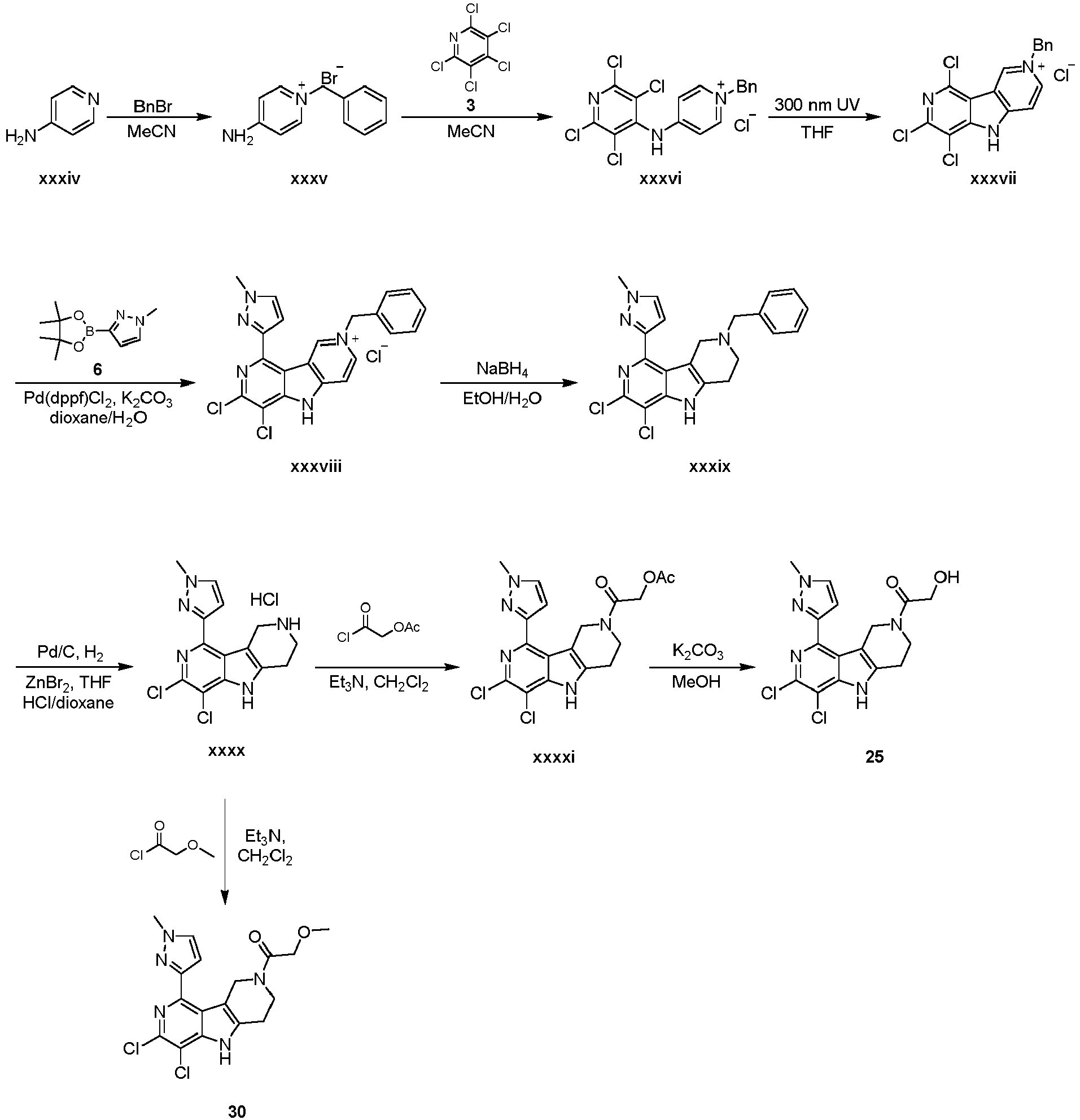
-

- A mixture of pyridin-4-amine (xxxiv) (3.66 g, 38.9 mmol) and bromomethylbenzene (7.32 g, 42.8 mmol, 5.08 mL) in MeCN (50 mL) was stirred at 25 °C for 3 h. TLC (Petroleum ether/Ethyl acetate = 2/1) showed the reaction was completed and a new spot was detected. The resultant precipitate solid was collected by filtration and dried in vacuo to afford 4-amino-1-benzylpyridin-1-ium bromide (xxxv) (9.60 g, 93% yield) as a white solid. 1H NMR (400 MHz, DMSO-d6) δ 5.38 (2H, s), 6.87 (2H, d, J = 7.2 Hz), 7.32-7.50 (5H, m), 8.19 (2H, brs), 8.31 (2H, d, J = 7.2 Hz).
- A mixture of 4-amino-1-benzylpyridin-1-ium bromide (xxxv) (9.60 g, 36.2 mmol), K2CO3 (12.5 g, 90.5 mmol) and perchloropyridine 3 (10.0 g, 39.8 mmol) in MeCN (150 mL) was stirred at 25 °C for 12 h. The reaction mixture was heated to 80 °C and stirred for 12 h. LCMS showed the reaction was completed and the desired m/z was detected. The reaction mixture was filtered to remove insoluble material. The fitrate was diluted with water (80 mL) at 25 °C and the mixture was extracted with EtOAc (60 mL*2). The combined organic phase was washed with brine (40 mL), dried with anhydrous Na2SO4, filtered and concentrated in vacuo. The residue was purified by column chromatography on silica gel (Petroleum ether/Ethyl acetate = 10/1 to 2/1) to afford 1-benzyl-4-((perchloropyridin-4-yl)amino)pyridin-1-ium chloride (xxxvi) (10.5 g, 61% yield) as a yellow solid. 1H NMR (400 MHz, DMSO-d6) δ 5.10 (2H, s), 6.06-6.22 (2H, m), 7.30-7.50 (5H, m), 7.65-7.77 (2H, m).
- A mixture of 1-benzyl-4-((perchloropyridin-4-yl)amino)pyridin-1-ium chloride (xxxvi) (5.00 g, 11.5 mmol) in THF (60 mL) was stirred at 25 °C for 24 h under 300 nm UV light. LCMS showed the reaction was completed and the desired m/z was detected. The reaction mixture was concentrated in vacuo and the residue was triturated with EtOAc (10 mL). The resultant precipitate solid was collected by filtration and dried in vacuo to afford 2-benzyl-6,7,9-trichloro-5H-pyrrolo[3,2-c:4,5-c']dipyridin-2-ium chloride (xxxvii) (3.50 g, 69% yield) as a yellow solid. 1H NMR (400 MHz, DMSO-d6) δ 6.06 (2H, s), 7.41-7.48 (4H, m), 7.52-7.62 (2H, m), 8.23 (1H, d, J = 6.8 Hz), 9.03 (1H, d, J = 6.4 Hz), 10.12 (1H, s).
- A mixture of 2-benzyl-6,7,9-trichloro-5H-pyrrolo[3,2-c:4,5-c']dipyridin-2-ium chloride (xxxvii) (3.00 g, 6.77 mmol), 1-methyl-3-(4,4,5,5-tetramethyl-1,3,2-dioxaborolan-2-yl)-1H-pyrazole (1.55 g, 7.44 mmol), Pd(dppf)Cl2 (495 mg, 0.68 mmol) and K2CO3 (2.80 g, 20.3 mmol) in dioxane (50 mL) and H2O (5 mL) was heated to 100 °C for 12 h under N2. LCMS showed the reaction was completed and the desired m/z was detected. The reaction mixture was filtered to remove insoluble material. The filtrate was diluted with water (100 mL) at 25 °C and the mixture was extracted with EtOAc (50 mL*2). The combined organic phase was washed with brine (30 mL), dried with anhydrous Na2SO4, filtered and concentrated in vacuo. The residue was purified by column chromatography on silica gel (Dichloromethane/Methanol = 50/1 to 20/1) to afford 2-benzyl-6,7-dichloro-9-(1-methyl-1H-pyrazol-3-yl)-5H-pyrrolo[3,2-c:4,5-c']dipyridin-2-ium chloride (xxxviii) (1.80 g, 59% yield) as a white solid. 1H NMR (400 MHz, DMSO-d 6) δ 4.05 (3H, s), 5.80 (2H, s), 6.98 (1H, d, J = 2.4 Hz), 7.37-7.56 (6H, m), 7.81 (1H, d, J = 7.2 Hz), 7.91 (1H, d, J = 2.4 Hz), 8.57 (1H, d, J = 7.2 Hz), 10.51 (1H, brs).
- To a mixture of 2-benzyl-6,7-dichloro-9-(1-methyl-1H-pyrazol-3-yl)-5H-pyrrolo[3,2-c:4,5-c']dipyridin-2-ium chloride (xxxviii) (1.80 g, 4.05 mmol) in EtOH (30 mL) and H2O (30 mL) was added NaBH4 (1.53 g, 40.5 mmol) at 0 °C udner N2. The reaction mixture was stirred at 100 °C for 3 h. LCMS showed the reaction was completed and the desired m/z was detected. The reaction mixture was poured into water (100 mL) at 25 °C and the mixture was extracted with EtOAc (50 mL*3). The combined organic phase was washed with brine (100 mL), dried with Na2SO4, filtered and the filtrate was concentrated in vacuo. The residue was purified by column chromatography on silica gel (Petroleum ether/Ethyl acetate = 5/1 to 2/3) to afford 2-benzyl-6,7-dichloro-9-(1-methyl-1H-pyrazol-3-yl)-2,3,4,5-tetrahydro-1H-pyrrolo[3,2-c:4,5-c']dipyridine (xxxix) (1.30 g, 77% yield) as a white solid. 1H NMR (400 MHz, DMSO-d 6) δ 2.78-2.93 (4H, m), 3.67-3.80 (7H, m), 6.64 (1H, d, J = 2.0 Hz), 7.21-7.45 (5H, m), 7.70 (1H, d, J = 2.4 Hz), 11.96 (1H, brs).
- To a mixture of 2-benzyl-6,7-dichloro-9-(1-methyl-1H-pyrazol-3-yl)-2,3,4,5-tetrahydro-1H-pyrrolo[3,2-c:4,5-c']dipyridine (xxxix) (120 mg, 0.29 mmol), 4 MHCl/dioxane (0.04 mL) and ZnBr2 (65.5 mg, 0.29 mmol) in THF (6 mL) was added 10% Pd/C (50 mg) at 25 °C under N2. The reaction mixture was degassed and stirred at 25 °C for 1 h under H2 (15 psi). TLC (Dichloromethane/Methanol = 10/1) showed the reaction was completed and a new spot was detected. The reaction mixture was filtered and the filtrate was concentrated in vacuo to afford 6,7-dichloro-9-(1-methyl-1H-pyrazol-3-yl)-2,3,4,5-tetrahydro-1H-pyrrolo[3,2-c:4,5-c']dipyridine (xxxx) (100 mg, 85% purity) as a white solid. 1H NMR (400 MHz, DMSO-d 6) δ 2.96-3.00 (2H, m), 3.16-3.20 (2H, m), 3.99 (3H, s), 4.40-4.44 (2H, m), 6.77 (1H, d, J = 2.0 Hz), 7.82 (1H, d, J = 2.4 Hz), 12.17 (1H, brs).
- To a mixture of 6,7-dichloro-9-(1-methyl-1H-pyrazol-3-yl)-2,3,4,5-tetrahydro-1H-pyrrolo[3,2-c:4,5-c']dipyridine (xxxx) (85% purity, 110 mg, 0.29 mmol) and Et3N (147 mg, 1.45 mmol, 0.20 mL) in CH2Cl2 (8 mL) was added (2-chloro-2-oxo-ethyl) acetate 10 (47.6 mg, 0.35 mmol, 0.04 mL) at 0 °C. The reaction mixture was warmed to 25 °C and stirred for 0.5 h. TLC (Petroleum ether/Ethyl acetate = 1/1) showed the reaction was completed and a new spot was detected. The reaction mixture was diluted with water (20 mL) at 25 °C and the mixture was extracted with CH2Cl2 (15 mL*2). The combined organic phase was dried with anhydrous Na2SO4, filtered and concentrated in vacuo to afford 2-(6,7-dichloro-9-(1-methyl-1H-pyrazol-3-yl)-3,4-dihydro-1H-pyrrolo[3,2-c:4,5-c']dipyridin-2(5H)-yl)-2-oxoethyl acetate (xxxxi) (80.0 mg, 53% yield for 2 steps) as a white solid. 1H NMR (400 MHz, DMSO-d 6) δ 2.08 (3H, s), 2.80-3.01 (2H, m), 3.69-3.87 (2H, m), 3.93-4.03 (3H, m), 4.78-5.00 (4H, m), 6.72-6.81 (1H, m), 7.82 (1H, d, J= 2.4 Hz), 12.08-12.20 (1H, m).
- A mixture of 2-(6,7-dichloro-9-(1-methyl-1H-pyrazol-3-yl)-3,4-dihydro-1H-pyrrolo[3,2-c:4,5-c']dipyridin-2(5H)-yl)-2-oxoethyl acetate (xxxxi) (80.0 mg, 0.18 mmol) and K2CO3 (98.5 mg, 0.71 mmol) in MeOH (5 mL) was stirred at 25 °C for 2 h under N2. LCMS showed the reaction was completed and the desired m/z was detected. The reaction mixture was concentrated in vacuo. The residue was purified by preparative HPLC (TFA) to afford 1-(6,7-dichloro-9-(1-methyl-1H-pyrazol-3-yl)-3,4-dihydro-1H-pyrrolo[3,2-c:4,5-c']dipyridin-2(5H)-yl)-2-hydroxyethanone (25) (35.0 mg, 50% yield) as a white solid. 1H NMR (400 MHz, DMSO-d 6) δ 2.81-2.98 (2H, m), 3.65-3.75 (1H, m), 3.83-3.92 (1H, m), 3.92-4.07 (3H, m), 4.17-4.26 (2H, m), 4.57-4.66 (1H, m), 4.90 (2H, s), 6.72-6.79 (1H, m), 7.76-7.89 (1H, m), 12.06-12.17 (1H, m).
-

- To a mixture of 6,7-dichloro-9-(1-methyl-1H-pyrazol-3-yl)-2,3,4,5-tetrahydro-1H-pyrrolo[3,2-c:4,5-c']dipyridine;hydrochloride (xxxx) (50.0 mg, 0.13 mmol) and Et3N (71.5 mg, 0.71 mmol, 0.10 mL) in CH2Cl2 (8 mL) was added 2-methoxyacetyl chloride (18.4 mg, 0.17 mmol, 0.02 mL) at 0 °C. The reaction mixture was warmed to 25 °C and stirred for 0.5 h. TLC (Petroleum ether/Ethyl acetate = 1/1) showed the reaction was completed and a new spot was detected. The reaction mixture was diluted with water (20 mL) at 25 °C and the mixture was extracted with CH2Cl2 (15 mL*2). The combined organic phase was dried with anhydrous Na2SO4, filtered and concentrated in vacuo. The residue was purified by preparative HPLC (TFA). The crude product was triturated with MeCN (3 mL). The resultant precipitate solid was collected by filtration and dried in vacuo to afford 1-(6,7-dichloro-9-(1-methyl-1H-pyrazol-3-yl)-3,4-dihydro-1H-pyrrolo[3,2-c:4,5-c']dipyridin-2(5H)-yl)-2-methoxyethanone (30) (26.0 mg, 51% yield) as a white solid. 1H NMR (400 MHz, DMSO-d 6) δ 2.82-2.98 (2H, m), 3.37-3.32 (3H, m), 3.69-3.88 (2H, m), 3.93-4.05 (3H, m), 4.14-4.25 (2H, m), 4.82-5.00 (2H, m), 6.72-6.80 (1H, m), 7.83 (1H, s), 12.06-12.17 (1H, m).
-

-

- A mixture of 6,7-dichloro-9-(1-methyl-1H-pyrazol-3-yl)-2,3,4,5-tetrahydro-1H-pyrrolo[3,2-c:4,5-c']dipyridine;hydrochloride (xxxx) (260 mg, 0.72 mmol), Boc2O (264 mg, 1.21 mmol) and Et3N (408 mg, 4.03 mmol, 0.56 mL) in THF (15 mL) was stirred at 25 °C for 2 h. TLC (Petroleum ether/Ethyl acetate = 1/1) showed the reaction was completed and a new spot was detected. The reaction mixture was diluted with water (20 mL) at 25 °C and the mixture was extracted with EtOAc (15 mL*2). The combined organic phase was washed with brine (10 mL), dried with anhydrous Na2SO4, filtered and concentrated in vacuo. The residue was purified by column chromatography on silica gel (Petroleum ether/Ethyl acetate = 10/1 to 4/1) to afford tert-butyl 6,7-dichloro-5-methyl-9-(1-methyl-1H-pyrazol-3-yl)-3,4-dihydro-1H-pyrrolo[3,2-c:4,5-c']dipyridine-2(5H)-carboxylate (xxxxii) (200 mg, 65% yield) as a colorless solid. 1H NMR (400 MHz, DMSO-d 6) δ 1.43 (9H, s), 2.78-2.88 (2H, m), 3.63-3.75 (2H, m), 3.97 (3H, s), 4.66-4.90 (2H, m), 6.74 (1H, d, J = 2.4 Hz), 7.81 (1H, d, J = 2.0 Hz), 12.09 (1H, s).
- To a mixture of tert-butyl 6,7-dichloro-5-methyl-9-(1-methyl-1H-pyrazol-3-yl)-3,4-dihydro-1H-pyrrolo[3,2-c:4,5-c']dipyridine-2(5H)-carboxylate (xxxxii) (160 mg, 0.38 mmol) in DMF (8 mL) was added NaH (60% purity, 22.7 mg, 0.57 mmol) at 0 °C under N2. The reaction mixture was stirred at 0 °C for 0.5 h. To the reaction mixture was added MeI (108 mg, 0.76 mmol, 0.05 mL) at 0 °C. The reaction mixture was warmed to 25 °C and stirred for 0.5 h. TLC (Petroleum ether/Ethyl acetate = 1/1) showed the reaction was completed and a new spot was detected. The reaction mixture was quenched with saturated aqueous NH4Cl solution (20 mL) at 25 °C and the mixture was extracted with EtOAc (20 mL*2). The combined organic phase was washed with brine (10 mL*3), dried with anhydrous Na2SO4, filtered and concentrated in vacuo to afford tert-butyl 6,7-dichloro-5-methyl-9-(1-methyl-1H-pyrazol-3-yl)-3,4-dihydro-1H-pyrrolo[3,2-c:4,5-c']dipyridine-2(5H)-carboxylate (xxxxiii) (160 mg, 97% yield) as a white solid. 1H NMR (400 MHz, DMSO-d 6) δ 1.40 (9H, s), 2.80-2.88 (2H, m), 3.66-3.73 (2H, m), 3.96 (3H, s), 3.99 (3H, s), 4.54-4.71 (2H, m), 6.69 (1H, d, J = 2.0 Hz), 7.82 (1H, d, J = 2.0 Hz).
- A mixture of tert-butyl 6,7-dichloro-5-methyl-9-(1-methyl-1H-pyrazol-3-yl)-3,4-dihydro-1H-pyrrolo[3,2-c:4,5-c']dipyridine-2(5H)-carboxylate;hydrochloride (xxxxiii) (140 mg, 0.32 mmol) and 4 M HCl/dioxane (3 mL) in CH2Cl2 (3 mL) was stirred at 25 °C for 0.5 h. TLC (Petroleum ether/Ethyl acetate =1/1) showed the reaction was completed and a new spot was detected. The reaction mixture was concentrated in vacuo to afford 6,7-dichloro-5-methyl-9-(1-methyl-1H-pyrazol-3-yl)-2,3,4,5-tetrahydro-1H-pyrrolo[3,2-c:4,5-c']dipyridine;hydrochloride (xxxxiv) (115 mg, 96% yield) as a white solid. 1H NMR (400 MHz, DMSO-d 6) δ 3.06-3.15 (2H, m), 3.46-3.54 (2H, m), 3.97 (3H, s), 4.03 (3H, s), 4.36-4.50 (2H, m), 6.77 (1H, d, J = 2.0 Hz), 7.86 (1H, d, J = 2.4 Hz), 9.36 (2H, brs).
- To a mixture of 6,7-dichloro-5-methyl-9-(1-methyl-1H-pyrazol-3-yl)-2,3,4,5-tetrahydro-1H-pyrrolo[3,2-c:4,5-c']dipyridine;hydrochloride (xxxxiv) (115 mg, 0.31 mmol) and Et3N (156 mg, 1.54 mmol, 0.21 mL) in CH2Cl2 (20 mL) was added (2-chloro-2-oxo-ethyl) acetate 14 (50.6 mg, 0.37 mmol, 0.04 mL) at 0 °C. The reaction mixture was warmed to 25 °C and stirred for 0.5 h. TLC (Petroleum ether/Ethyl acetate = 1/1) showed the reaction was completed and a new spot was detected. The reaction mixture was washed with water (20 mL), dried with anhydrous Na2SO4, filtered and concentrated in vacuo to afford 2-(6,7-dichloro-5-methyl-9-(1-methyl-1H-pyrazol-3-yl)-3,4-dihydro-1H-pyrrolo[3,2-c:4,5-c']dipyridin-2(5H)-yl)-2-oxoethyl acetate (xxxxv) (130 mg, 95% yield) as a white solid. 1H NMR (400 MHz, DMSO-d 6) δ 2.05-2.08 (3H, m), 2.68-2.78 (2H, m), 2.83-3.00 (2H, m), 3.72-3.88 (2H, m), 3.92-4.06 (6H, m), 4.84-4.92 (2H, m), 6.67-6.81 (1H, m), 7.83 (1H, d, J = 2.0 Hz).
- A mixture of 2-(6,7-dichloro-5-methyl-9-(1-methyl-1Hpyrazol-3-yl)-3,4-dihydro-1H-pyrrolo[3,2-c:4,5-c']dipyridin-2(5H)-yl)-2-oxoethyl acetate (xxxxv) (120 mg, 0.28 mmol) and K2CO3 (152 mg, 1.10 mmol) in MeOH (8 mL) was stirred at 25 °C for 2 h. LCMS showed the reaction was completed and the desired m/z was detected. The reaction mixture was concentrated in vacuo. The residue was diluted with water (10 mL) at 25 °C and the mixture was extracted with CH2Cl2 (10 mL*2). The combined organic phase was dried with anhydrous Na2SO4, filtered and concentrated in vacuo. The residue was purified by preparative HPLC (TFA) to afford 1-(6,7-dichloro-5-methyl-9-(1-methyl-1H-pyrazol-3-yl)-3,4-dihydro-1H-pyrrolo[3,2-c:4,5-c']dipyridin-2(5H)-yl)-2-hydroxyethanone (34) (56.0 mg, 51% yield) as a white solid. LCMS: RT = 2.690 min, m/z 394.0 [M+H]+. 1H NMR (400 MHz, DMSO-d 6) δ 2.82-2.97 (2H, m), 3.70-3.90 (2H, m), 3.92-4.04 (6H, m), 4.11-4.25 (2H, m), 4.72-4.83 (2H, m), 6.69-6.76 (1H, m), 7.84 (1H, brs). The signal of the OH proton was not observed.
-

-
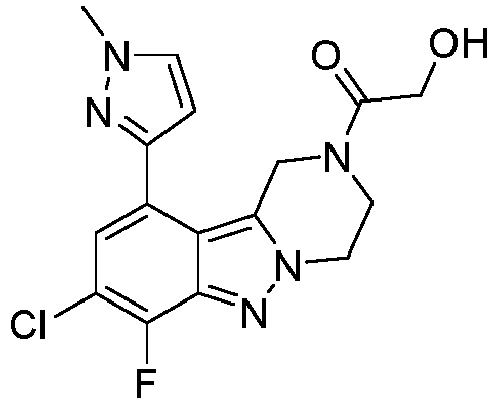
- To a solution of 1-chloro-2-fluoro-3-nitrobenzene (xxxxvi) (8.03 g, 45.74 mmol) in conc.H2SO4 (35 ml) was added NBS (8.96 g, 50.32 mmol) portionwise at room temperature. The mixture was purged with Ar and then stirred at 70 °C for 3 hours, then cooled to room temperature. The mixture was transfered into a beaker of ice water (50 mL), then extracted with EtOAc (30 mL x2). The combined organic layer was successively washed with water (30 mL), saturated aqueous NaHCO3 (30 mL), and brine (30 mL), dried over Na2SO4, and concentrated under reduced pressure. Purification by column chromatography (0-5% EtOAc/hexane) afforded 5-bromo-1-chloro-2-fluoro-3-nitrobenzene (xxxxvii) (11.69 g, 45.9 mmol, 100 %) as a yellow oil. 1H NMR (300 MHz, DMSO-d 6) δ 8.33-8.37 (1H, m), 8.38-8.42 (1H, m).
- To a solution of 5-bromo-1-chloro-2-fluoro-3-nitrobenzene (xxxxvii) (5.1 g, 20.04 mmol) cooled to -78 °C was added vinylmagnesium bromide (1 M in THF) (46 ml, 46.00 mmol) dropwise over a period of 20 min, and stirred at -78 °C for 30 min. The reaction was quenched at -78 °C with MeOH (5 mL), then acidified with 1 M HCl (45 mL). The mixture was extracted with EtOAc (50 mL x3) and the combined organic layer was washed with brine (30 mL), dried over Na2SO4, and concentrated under reduced pressure. The crude material was passed through a pad of SiO2 (50 mL), eluting with 1:1 EtOAc/hexane (100 mL) followed by EtOAc (30 mL). The eluent was concentrated under reduced pressure and further purified by column chromatography (silica gel, 1-5% EtOAc/hexane) to afford 4-bromo-6-chloro-7-fluoro-1H-indole (xxxxviii) (0.954 g, 3.84 mmol, 19.15 %) as a dark red-orange solid. 1H NMR (300 MHz, DMSO-d 6) δ 6.49 (1H, td, J = 3.2, 2.3 Hz), 7.38 (1H, d, J = 5.6 Hz), 7.55-7.63 (1H, m), 12.24 (1H, br s).
- To a solution of sodium nitrite (1.38 g, 20.00 mmol) in DMF (12 ml) and water (6 ml) cooled to 0 °C was added 2 M HCl (aq.) (8.5 ml, 17.00 mmol). The solution was stirred at room temperature for 5 min and then a solution of 4-bromo-6-chloro-7-fluoro-1H-indole (xxxxviii) (595 mg, 2.39 mmol) in DMF (40 mL) was added via addition funnel over a period of 45 minutes. The reaction was stirred at room temperature for 1 hour, then stirred at 65 °C for 3 hours. The reaction was diluted with water (30 mL) and extracted with Et2O (40 mL x3). The combined organic layer was washed with water (10 mL), brine (10 mL), dried over Na2SO4, and concentrated under reduced pressure to give 4-bromo-6-chloro-7-fluoro-1H-indazole-3-carbaldehyde (xxxxix) (576 mg, 2.076 mmol, 87 %) as a brown solid. 1H NMR (300 MHz, DMSO-d 6) δ 7.78-7.83 (1H, m), 10.53 (1H, s), 15.08-15.42 (1H, m).
- To a solution of 4-bromo-6-chloro-7-fluoro-1H-indazole-3-carbaldehyde (xxxxix) (569 mg, 2.05 mmol) and 2-((4-methoxybenzyl)amino)ethan-1-ol (509 mg, 2.81 mmol) in CH3CN (5 ml) and THF(dry) (5 ml) was added NaBH(OAc)3 (1304 mg, 6.15 mmol) at room temperature. The mixture was stirred for 40 min at room temperature and then quenched with aqueous saturated NaHCO3 (10 mL). The mixture was extracted with EtOAc (25 mL x3) and the combined organic layer was washed with brine (10 mL), dried over Na2SO4, and concentrated under reduced pressure. Purification by column chromatography (silica gel, 50-100% EtOAc/hexane) afforded 2-(((4-bromo-6-chloro-7-fluoro-1H-indazol-3-yl)methyl)(4-methoxybenzyl)amino)ethan-1-ol (xxxxx) (297 mg, 0.671 mmol, 32.7 %) as a light brown solid. 1H NMR (300 MHz, DMSO-d 6) δ 2.59 (2H, t, J = 6.8 Hz), 3.36-3.48 (2H, m), 3.64 (2H, s), 3.70 (3H, s), 4.12 (2H, s), 4.25 (1H, br s), 6.76-6.85 (2H, m), 7.20 (2H, br d, J = 8.7 Hz), 7.49 (1H, br d, J= 5.6 Hz), 13.94 (1H, br s).
- To a solution of 2-(((4-bromo-6-chloro-7-fluoro-1H-indazol-3-yl)methyl)(4-methoxybenzyl)amino)ethan-1-ol (xxxxx) (295 mg, 0.67 mmol) and Ph3P (262 mg, 1.00 mmol) in THF(dry) (5 ml) was added bis(2-methoxyethyl) (E)-diazene-1,2-dicarboxylate (234 mg, 1.00 mmol) at room temprature. The reaction was stirred at room temperature for 1.5 hours and then water (10 mL) was added. The mixture was extracted with EtOAc (20 mL x2) and the combined organic layer was washed with brine (10 mL), dried over Na2SO4, and concentrated under reduced pressure. Purification by column chromatoghraphy (slica gel, 50-100% EtOAc/hexane) afforded 10-bromo-8-chloro-7-fluoro-2-(4-methoxybenzyl)-1,2,3,4-tetrahydropyrazino[1,2-b]indazole (xxxxxi) (194 mg, 0.457 mmol, 68.6 %) as a baige solid. 1H NMR (300 MHz, DMSO-d 6) δ 3.04 (2H, t, J = 5.5 Hz), 3.75 (3H, s), 3.77 (2H, s), 4.24 (2H, s), 4.44 (2H, t, J = 5.3 Hz), 6.89-6.97 (2H, m), 7.28-7.34 (2H, m), 7.36 (1H, d, J = 5.6 Hz).
- A mixture of 1-methyl-3-(4,4,5,5-tetramethyl-1,3,2-dioxaborolan-2-yl)-1H-pyrazole (140 mg, 0.67 mmol), 10-bromo-8-chloro-7-fluoro-2-(4-methoxybenzyl)-1,2,3,4-tetrahydropyrazino[1,2-b]indazole (xxxxxi) (191 mg, 0.45 mmol), PdCl2(dppf) (32.9 mg, 0.04 mmol), cesium carbonate (440 mg, 1.35 mmol), DME (2.5 mL) and water (0.5 mL) was heated at 120 °C for 1 h under microwave irradiation. The crude was filtered through Celite and concentrated under reduced pressure. The crude was suspended in EtOAc (15 mL) and filtered through Celite again. The filterate was concentrated under reduced pressure and purified by column chromatography (NH silica, 10-60% EtOAc/hexane) to afford 8-chloro-7-fluoro-2-(4-methoxybenzyl)-10-(1-methyl-1H-pyrazol-3-yl)-1,2,3,4-tetrahydropyrazino[1,2-b]indazole (xxxxxii) (66 mg, 0.155 mmol, 34.5 %) as a yellow solid. 1H NMR (300 MHz, DMSO-d6) δ 3.06 (2H, br s), 3.75 (8H, s), 4.03 (2H, br s), 4.49 (2H, br s), 6.62 (1H, d, J = 1.9 Hz), 6.92 (2H, d, J = 8.7 Hz), 7.15 (1H, d, J = 6.0 Hz), 7.29 (2H, br d, J = 8.3 Hz), 7.72 (1H, d, J = 2.3 Hz).
- A solution of 8-chloro-7-fluoro-2-(4-methoxybenzyl)-10-(1-methyl-1H-pyrazol-3-yl)-1,2,3,4-tetrahydropyrazino[1,2-b]indazole (xxxxxii) (166 mg, 0.39 mmol) in 2,2,2-trifluoroacetic acid (5 ml, 0.39 mmol) was stirred at 85 °C under Ar atmosphere for 2 hours, then at 70 °C overnight (12 hours). The reaction mixture was concentrated under reduced pressure (co-evaporate with toluene 5 mL x2) to give a dark green oil. To the crude material was added saturated aqueous NaHCO3 (10 mL) and extracted with EtOAc (20 mL x2). The combined organic layer was washed with brine (5 mL), dried over Na2SO4, and concentrated to give 8-chloro-7-fluoro-10-(1-methyl-1H-pyrazol-3-yl)-1,2,3,4-tetrahydropyrazino[1,2-b]indazole (xxxxxiii) (179 mg, quant., 66% purity) as a dark green amorphous solid. This material was used without further purification. 1H NMR (300 MHz, DMSO-d 6) δ 3.21 (2H, t, J = 5.5 Hz), 3.62-3.78 (1H, m), 3.92 (3H, s), 4.28 (2H, s), 4.34 (2H, t, J = 5.5 Hz), 6.64 (1H, d, J = 2.3 Hz), 7.13 (1H, d, J = 6.4 Hz), 7.79 (1H, d, J = 2.3 Hz).
- To a solution of 8-chloro-7-fluoro-10-(1-methyl-1H-pyrazol-3-yl)-1,2,3,4-tetrahydropyrazino[1,2-b]indazole (xxxxxiii) (119 mg, 0.39 mmol), 2-hydroxyacetic acid (38.6 mg, 0.51 mmol), and DIPEA (0.170 ml, 0.98 mmol) in DMF(dry) (2 ml) was added HATU (222 mg, 0.59 mmol) at room temperature and stirred the mixture at room temperature for 3 hours. The reaction was diluted with water (10 mL) and extracted with EtOAc (15 mL x2). The combined organic layer was washed with brine (5 mL), dried over Na2SO4, and concentrated under reduced pressure. Purification by column chromatography (silica gel, 0-5% MeOH/EtOAc) afforded an yellow oil. Further purification by column chromatography (silica gel, 0-3% MeOH/EtOAc) afforded a white solid (contains impurity). Another column chromatography (NH silica, 0-4% MeOH/EtOAc) afforded a white solid that was suspended in EtOAc and filtered to give 1-(8-chloro-7-fluoro-10-(1-methyl-1H-pyrazol-3-yl)-3,4-dihydropyrazino[1,2-b]indazol-2(1H)-yl)-2-hydroxyethan-1-one (64) (33.0 mg, 0.091 mmol, 16 % in 2 steps) as a white solid. 1H NMR (300 MHz, DMSO-d 6) δ 3.97 (4H, br d, J = 7.5 Hz), 4.03-4.11 (1H, m), 4.25 (2H, br d, J = 4.5 Hz), 4.41-4.63 (2H, m), 4.81-4.98 (1H, m), 5.15-5.35 (2H, m), 6.75 (1H, br d, J = 8.7 Hz), 7.19-7.36 (1H, m), 7.83 (1H, s).
- Examples 67-71 can be produced by employing a similar synthetic process and method as described in this Example 64 synthesis.
-

- Example 67 was obtained as a white solid in a manner similar to that described for the synthesis of Example 64. 1H NMR (300 MHz, DMSO-d 6) δ 3.89-4.30 (7H, m), 4.43-4.65 (2H, m), 4.81-4.98 (1H, m), 5.17-5.36 (2H, m), 6.71-6.84 (1H, m), 7.31-7.45 (1H, m), 7.77-7.91 (1H, m).
-

- Example 68 was obtained as a white solid in a manner similar to that described for the synthesis of Example 64. 1H NMR (400 MHz, DMSO-d 6) δ 3.29-3.32 (3H, m), 3.96-4.01 (3H, m), 4.01-4.09 (2H, m), 4.23-4.28 (2H, m), 4.48-4.60 (2H, m), 5.18-5.34 (2H, m), 6.80 (1H, d, J = 15.2 Hz), 7.33-7.43 (1H, m), 7.86 (1H, s).
-

- Example 69 was obtained as a white solid in a manner similar to that described for the synthesis of Example 64. 1H NMR (300 MHz, DMSO-d 6) δ 3.90-4.10 (5H, m), 4.21-4.29 (2H, m), 4.44-4.63 (2H, m), 4.83-4.93 (1H, m), 5.14-5.25 (1H, m), 5.30 (1H, s), 6.66 (1H, br d, J = 7.53 Hz), 7.15-7.26 (1H, m), 7.39 (1H, d, J = 7.53 Hz), 7.82 (1H, s).
-

- Example 70 was obtained as a white solid in a manner similar to that described for the synthesis of Example 64. 1H NMR (400 MHz, DMSO-d 6) δ 2.64 (3H, s), 3.95-4.15 (2H, m), 4.19-4.35 (2H, m), 4.48-4.68 (2H, m), 4.93 (1H, br s), 5.40 (2H, br s), 7.62-7.81 (1H, m).
-

- Example 71 was obtained as a white solid in a manner similar to that described for the synthesis of Example 64. 1H NMR (400 MHz, DMSO-d 6) δ 3.97-4.16 (3H, m), 4.26 (3H, br d, J = 11.0 Hz), 4.50-4.69 (3H, m), 4.92 (1H, br d, J = 3.4 Hz), 5.39 (2H, s), 7.92 (1H, d, J = 5.9 Hz).
- Examples 72-74 can be produced by employing a similar synthetic process and method as described in this Examples 25 or 34 synthesis.
-

- Example 72 was obtained as a white solid in a manner similar to that described for the synthesis of Example 25. 1H NMR (400 MHz, DMSO-d 6) δ 2.84-2.98 (2H, m), 3.64-3.73 (1H, m), 3.83-3.90 (1H, m), 3.92-4.03 (3H, m), 4.16-4.27 (2H, m), 4.58 (1H, brs), 4.90 (2H, s), 6.761-6.80 (1H, m), 7.79 (1H, s), 8.16-8.19 (1H, m), 11.93 (1H, brs).
-

- Example 73 was obtained as a white solid in a manner similar to that described for the synthesis of Example 25. 1H NMR (400 MHz, DMSO-d 6) δ 2.83-2.97 (2H, m), 3.27-3.32 (3H, m), 3.69-3.89 (2H, m), 3.93-4.02 (3H, m), 4.15-4.22 (2H, m), 4.80-5.01 (2H, m), 6.73-6.80 (1H, m), 7.79 (1H, s), 8.15-8.20 (1H, m), 11.88-11.99 (1H, m).
-

- Example 74 was obtained as a white solid in a manner similar to that described for the synthesis of Example 34. 1H NMR (400 MHz, DMSO-d 6) δ 2.83-2.97 (2H, m), 3.68-3.77 (1H, m), 3.85-3.90 (1H, m), 3.92-4.01 (6H, m), 4.09-4.28 (2H, m), 4.62 (1H, brs), 4.71-4.87 (2H, m), 6.66-6.81 (1H, m), 7.80 (1H, s), 8.12-8.17 (1H, m).
- Examples 75-82 can be produced by employing a similar synthetic process and method as described in this Example 1 synthesis.
-

- Example 75 was obtained as a white solid in a manner similar to that described for the synthesis of Example 1. 1H NMR (400 MHz, DMSO-d 6) δ 2.75-2.95 (2H, m), 3.65-3.90 (2H, m), 3.97 (3H, s), 4.21-4.25 (2H, m), 4.51-4.75 (3H, m), 11.77-11.81 (1H, m).
-

- Example 76 was obtained as a white solid in a manner similar to that described for the synthesis of Example 1. 1H NMR (400 MHz, DMSO-d 6) δ 1.31 (3H, s), 1.34 (3H, s), 3.42-3.67 (2H, m), 3.97 (3H, s), 4.21-4.26 (2H, m), 4.50-4.65 (2H, m), 4.69 (1H, brs), 11.56 (1H, brs).
-

- Example 77 was obtained as a white solid in a manner similar to that described for the synthesis of Example 1. 1H NMR (400 MHz, DMSO-d 6) δ 1.39 (3H, t, J = 7.2 Hz), 2.89 (2H, t, J = 5.6 Hz), 3.80 (2H, s), 4.19-4.25 (2H, m), 4.41 (1H, brs), 4.46 (2H, q, J = 7.2 Hz), 4.62 (2H, s), 11.37 (1H, s).
-

- Example 78 was obtained as a white solid in a manner similar to that described for the synthesis of Example 1. 1H NMR (400 MHz, DMSO-d 6) δ 1.37 (3H, t, J = 7.2 Hz), 2.77-2.95 (2H, m), 3.68-3.73 (1H, m), 3.86-3.88 (1H, m), 4.21-4.25 (2H, m), 4.38-4.46 (2H, m), 4.51-4.66 (2H, m), 11.77-11.81 (2H, m).
-

- Example 79 was obtained as a white solid in a manner similar to that described for the synthesis of Example 1. 1H NMR (400 MHz, DMSO-d 6) δ 0.36-0.43 (2H, m), 0.54-0.61 (2H, m), 1.28-1.31 (1H, m), 2.87-2.91 (2H, m), 3.77-3.81 (2H, m), 4.22 (2H, s), 4.28 (2H, d, J = 7.2 Hz), 4.40-4.43 (1H, m), 4.61 (2H, s), 11.37 (1H, s).
-

- Example 80 was obtained as an off-white solid in a manner similar to that described for the synthesis of Example 1. 1H NMR (400 MHz, DMSO-d 6) δ 0.31-0.42 (2H, m), 0.50-0.62 (2H, m), 1.25-1.37 (1H, m), 2.75-2.99 (2H, m), 3.65-3.96 (2H, m), 4.14-4.30 (4H, m), 4.50-4.80 (3H, m), 11.76-11.81 (1H, m).
-

- Example 81 was obtained as a white solid in a manner similar to that described for the synthesis of Example 1. 1H NMR (400 MHz, DMSO-d 6) δ 2.91-2.95 (2H, m), 3.80-3.84 (2H, m), 4.23 (2H, s), 4.43 (1H, brs), 4.64 (2H, s) 7.69 (1H, t, J = 72.8 Hz), 11.78 (1H, s).
-

- Example 82 was obtained as a red solid in a manner similar to that described for the synthesis of Example 1. 1H NMR (400 MHz, DMSO-d 6) δ 2.09 (3H, s), 2.78-3.03 (2H, m), 3.70-3.90 (2H, m), 4.54-4.67 (2H, m), 4.87-4.98 (2H, m), 7.54-7.99 (1H, m), 12.10-12.28 (1H, m).
- Representative compounds of the present invention are shown in Table 1. Compounds not falling within the scope of the claims (Examples 5 and 6) are provided as comparative examples.
Table 1. Example No. Structure Name 1 
1-(3,4-dichloro-2-methoxy-5,6,7,9-tetrahydro-8H-pyrrolo[3,2-b:4,5-c']dipyridin-8-yl)-2-hydroxyethan-1-one 2 
1-(7-chloro-1,3,4,5-tetrahydro-2H-pyrrolo[3,2-c:4,5-c']dipyridin-2-yl)-2-methoxyethan-1-one 3 
1-(7,8-dichloro-3,4-dihydropyrazino[1,2-b]indazol-2(1H)-yl)-2-methoxyethan-1-one 4 
1-(7,8-dichloro-3,4-dihydropyrazino[1,2-b]indazol-2(1H)-yl)-2-hydroxyethan-1-one 5 
1-(7,8-dichloro-3,4-dihydropyrazolo[1,5-a:4,3-c']dipyridin-2(1H)-yl)-2-methoxyethan-1-one 6 
1-(7,8-dichloro-3,4-dihydropyrazolo[1,5-a:4,3-c']dipyridin-2(1H)-yl)-2-hydroxyethan-1-one 7 
1-(3,4-dichloro-2-methoxy-5,6,7,9-tetrahydro-8H-pyrrolo[3,2-b:4,5-c']dipyridin-8-yl)-2-methoxyethan-1-one 8 
1-(3-chloro-4-fluoro-2-methoxy-5,6,7,9-tetrahydro-8H-pyrrolo[3,2-b:4,5-c']dipyridin-8-yl)-2-hydroxyethan-1-one 9 
(3,4-dichloro-2-methoxy-5,6,7,9-tetrahydro-8H-pyrrolo[3,2-b:4,5-c']dipyridin-8-yl)(oxetan-2-yl)methanone 10 
1-(3-bromo-4-chloro-2-methoxy-5,6,7,9-tetrahydro-8H-pyrrolo[3,2-b:4,5-c']dipyridin-8-yl)-2-hydroxyethan-1-one 11 
1-(3,4-dichloro-2-methoxy-6-methyl-5,6,7, 9-tetrahydro-8H-pyrrolo[3,2-b:4,5-c']dipyridin-8-yl)-2-hydroxyethan-1-one 12 
1-(3-bromo-4-fluoro-2-methoxy-5,6,7,9-tetrahydro-8H-pyrrolo[3,2-b:4,5-c']dipyridin-8-yl)-2-hydroxyethan-1-one 13 
1-(3,4-dichloro-2-methoxy-6,7,9, 10-tetrahydropyrido[2',3':4,5]pyrrolo[2,3-d]azepin-8(5H)-yl)-2-hydroxyethan-1-one 14 
1-(3,4-dichloro-2-methoxy-5-methyl-5,6,7,9-tetrahydro-8H-pyrrolo[3,2-b:4,5-c']dipyridin-8-yl)-2-hydroxyethan-1-one 15 
1-(3-bromo-4-chloro-2-methoxy-5-methyl-5,6,7,9-tetrahydro-8H-pyrrolo[3,2-b:4,5-c']dipyridin-8-yl)-2-hydroxyethan-1-one 16 
1-(3-bromo-4-chloro-2-methoxy-5,6,7,9-tetrahydro-8H-pyrrolo[3,2-b:4,5-c']dipyridin-8-yl)-2-methoxyethan-1-one 17 
1-(3-bromo-4-fluoro-2-methoxy-5,6,7,9-tetrahydro-8H-pyrrolo[3,2-b:4,5-c']dipyridin-8-yl)-2-methoxyethan-1-one 18 
(3-bromo-4-chloro-2-methoxy-5,6,7,9-tetrahydro-8H-pyrrolo[3,2-b:4,5-c']dipyridin-8-yl)(oxetan-2-yl)methanone 19 
(3-bromo-4-fluoro-2-methoxy-5,6,7,9-tetrahydro-8H-pyrrolo[3,2-b:4,5-c']dipyridin-8-yl)(oxetan-2-yl)methanone 20 
1-(3-bromo-4-chloro-2-methoxy-6-methyl-5,6,7,9-tetrahydro-8H-pyrrolo[3,2-b:4, 5-c']dipyridin-8-yl)-2-hydroxyethan-1-one 21 
1-(3-bromo-4-fluoro-2-methoxy-6-methyl-5,6,7,9-tetrahydro-8H-pyrrolo[3,2-b:4, 5-c']dipyridin-8-yl)-2-hydroxyethan-1-one 22 
1-(3-bromo-4-chloro-2-methoxy-6,7,9,10-tetrahydropyrido[2',3':4,5]pyrrolo[2,3-d]azepin-8(5H)-yl)-2-hydroxyethan-1-one 23 
1-(3-bromo-4-fluoro-2-methoxy-6,7,9,10-tetrahydropyrido[2',3':4,5]pyrrolo[2,3-d]azepin-8(5H)-yl)-2-hydroxyethan-1-one 24 
1-(3-bromo-4-fluoro-2-methoxy-5-methyl-5,6,7,9-tetrahydro-8H-pyrrolo[3,2-b:4, 5-c']dipyridin-8-yl)-2-hydroxyethan-1-one 25 
1-[6,7-dichloro-9-(1-methyl-1H-pyrazol-3-yl)-1,3,4,5-tetrahydro-2H-pyrrolo[3,2-c:4,5-c']dipyridin-2-yl]-2-hydroxyethan-1-one 26 
1-(6-chloro-7-methyl-9-(1-methyl-1H-pyrazol-3-yl)-1,3,4,5-tetrahydro-2H-pyrrolo[3,2-c:4,5-c']dipyridin-2-yl)-2-hydroxyethan-1-one 27 
1-(7-chloro-6-fluoro-9-(1-methyl-1H-pyrazol-3-yl)-1,3,4,5-tetrahydro-2H-pyrrolo[3,2-c:4,5-c']dipyridin-2-yl)-2-hydroxyethan-1-one 28 
1-(7-chloro-6-methyl-9-(1-methyl-1H-pyrazol-3-yl)-1,3,4,5-tetrahydro-2H-pyrrolo[3,2-c:4,5-c']dipyridin-2-yl)-2-hydroxyethan-1-one 29 
1-(6-chloro-7-fluoro-9-(1-methyl-1H-pyrazol-3-yl)-1,3,4,5-tetrahydro-2H-pyrrolo[3,2-c:4,5-c']dipyridin-2-yl)-2-hydroxyethan-1-one 30 
1-[6,7-dichloro-9-(1-methyl-1H-pyrazol-3-yl)-1,3,4,5-tetrahydro-2H-pyrrolo[3,2-c:4,5-c']dipyridin-2-yl]-2-methoxyethan-1-one 31 
1-(6-bromo-7-fluoro-9-(1-methyl-1 H-pyrazol-3-yl)-1,3,4,5-tetrahydro-2H-pyrrolo[3,2-c:4,5-c']dipyridin-2-yl)-2-hydroxyethan-1-one 32 
(6,7-dichloro-9-(1-methyl-1H-pyrazol-3-yl)-1,3,4,5-tetrahydro-2H-pyrrolo[3,2-c:4,5-c']dipyridin-2-yl)(oxetan-2-yl)methanone 33 
1-(6-bromo-7-chloro-9-(1-methyl-1H-pyrazol-3-yl)-1,3,4,5-tetrahydro-2H-pyrrolo[3,2-c:4,5-c']dipyridin-2-yl)-2-hydroxyethan-1-one 34 
1-[6,7-dichloro-5-methyl-9-(1-methyl-1H-pyrazol-3-yl)-1,3,4,5-tetrahydro-2H-pyrrolo[3,2-c:4,5-c']dipyridin-2-yl]-2-hydroxyethan-1-one 35 
1-(6,7-dichloro-4-methyl-9-(1-methyl-1H-pyrazol-3-yl)-1,3,4,5-tetrahydro-2H-pyrrolo[3,2-c:4,5-c']dipyridin-2-yl)-2-hydroxyethan-1-one 36 
1-(6,7-dichloro-9-(1-methyl-1H-pyrazol-4-yl)-1,3,4,5-tetrahydro-2H-pyrrolo[3,2-c:4,5-c']dipyridin-2-yl)-2-hydroxyethan-1-one 37 
1-(6,7-dichloro-4,4-dimethyl-9-(1-methyl-1H-pyrazol-3-yl)-1,3,4,5-tetrahydro-2H-pyrrolo[3,2-c:4,5-c']dipyridin-2-yl)-2-hydroxyethan-1-one 38 
1-(6,7-dichloro-9-(1-(difluoromethyl)-1H-pyrazol-4-yl)-1,3,4,5-tetrahydro-2H-pyrrolo[3,2-c:4,5-c']dipyridin-2-yl)-2-hydroxyethan-1-one 39 
1-(6',7'-dichloro-9'-(1-methyl-1H-pyrazol-3-yl)-1',5'-dihydrospiro[cyclopropane-1,4'-pyrrolo[3,2-c:4,5-c']dipyridin]-2'(3'H)-yl)-2-hydroxyethan-1-one 40 
1-(6,7-dichloro-9-(2-methyl-2H-1,2,3-triazol-4-yl)-1,3,4,5-tetrahydro-2H-pyrrolo[3,2-c:4,5-c']dipyridin-2-yl)-2-hydroxyethan-1-one 41 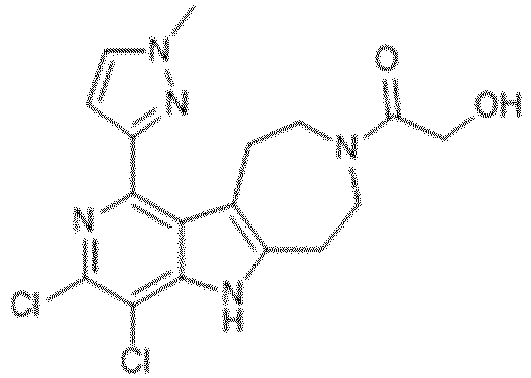
1-(3,4-dichloro-1-(1-methyl-1H-pyrazol-3-yl)-6,7,9,10-tetrahydropyrido[3',4':4,5]pyrrolo[2,3-d]azepin-8(5H)-yl)-2-hydroxyethan-1-one 42 
1-(6,7-dichloro-9-(2-(difluoromethyl)-2H-1,2,3-triazol-4-yl)-1,3,4,5-tetrahydro-2H-pyrrolo[3,2-c:4,5-c']dipyridin-2-yl)-2-hydroxyethan-1-one 43 
1-(6,7-dichloro-9-(1-(difluoromethyl)-1 H-pyrazol-3-yl)-1,3,4,5-tetrahydro-2H-pyrrolo[3,2-c:4,5-c']dipyridin-2-yl)-2-hydroxyethan-1-one 44 
1-(6,7-dichloro-9-(1-methyl-1H-1,2,4-triazol-3-yl)-1,3,4,5-tetrahydro-2H-pyrrolo[3,2-c:4,5-c']dipyridin-2-yl)-2-hydroxyethan-1-one 45 
1-(6,7-dichloro-9-(3-methyl-1,2,4-oxadiazol-5-yl)-1,3,4,5-tetrahydro-2H-pyrrolo[3,2-c:4,5-c']dipyridin-2-yl)-2-hydroxyethan-1-one 46 
1-(6,7-dichloro-9-(6-methoxypyridin-2-yl)-1,3,4,5-tetrahydro-2H-pyrrolo[3,2-c:4,5-c']dipyridin-2-yl)-2-hydroxyethan-1-one 47 
1-(6,7-dichloro-9-(5-methyl-1,3,4-oxadiazol-2-yl)-1,3,4,5-tetrahydro-2H-pyrrolo[3,2-c:4,5-c']dipyridin-2-yl)-2-hydroxyethan-1-one 48 
1-(6,7-dichloro-9-(3-methoxypyridin-2-yl)-1,3,4,5-tetrahydro-2H-pyrrolo[3,2-c:4,5-c']dipyridin-2-yl)-2-hydroxyethan-1-one 49 
1-(6,7-dichloro-9-(2-fluorophenyl)-1,3,4,5-tetrahydro-2H-pyrrolo[3,2-c:4,5-c']dipyridin-2-yl)-2-hydroxyethan-1-one 50 
1-(6,7-dichloro-9-(2-methoxypyridin-4-yl)-1,3,4,5-tetrahydro-2H-pyrrolo[3,2-c:4,5-c']dipyridin-2-yl)-2-hydroxyethan-1-one 51 
1-(6,7-dichloro-9-(5-fluoropyridin-3-yl)-1,3,4,5-tetrahydro-2H-pyrrolo[3,2-c:4,5-c']dipyridin-2-yl)-2-hydroxyethan-1-one 52 
1-(6,7-dichloro-9-(5-methoxypyridin-3-yl)-1,3,4,5-tetrahydro-2H-pyrrolo[3,2-c:4,5-c']dipyridin-2-yl)-2-hydroxyethan-1-one 53 
1-(6,7-dichloro-9-(pyrimidin-5-yl)-1,3,4,5-tetrahydro-2H-pyrrolo[3,2-c:4,5-c']dipyridin-2-yl)-2-hydroxyethan-1-one 54 
1-(6,7-dichloro-9-(3,4-dihydro-2H-pyran-6-yl)-1,3,4,5-tetrahydro-2H-pyrrolo[3,2-c:4,5-c']dipyridin-2-yl)-2-hydroxyethan-1-one 55 
1-(6,7-dichloro-9-(tetrahydro-2H-pyran-2-yl)-1,3,4,5-tetrahydro-2H-pyrrolo[3,2-c:4,5-c']dipyridin-2-yl)-2-hydroxyethan-1-one 56 
1-(6-chloro-7-fluoro-9-methoxy-1,3,4,5-tetrahydro-2H-pyrrolo[3,2-c:4,5-c']dipyridin-2-yl)-2-hydroxyethan-1-one 57 
1-(6,7-dichloro-9-(furan-2-yl)-1,3,4,5-tetrahydro-2H-pyrrolo[3,2-c:4,5-c']dipyridin-2-yl)-2-hydroxyethan-1-one 58 
1-(6,7-dichloro-9-cyclopropoxy-1,3,4,5-tetrahydro-2H-pyrrolo[3,2-c:4,5-c']dipyridin-2-yl)-2-hydroxyethan-1-one 59 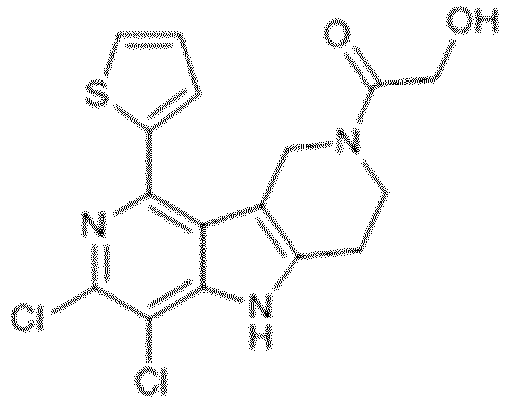
1-(6,7-dichloro-9-(thiophen-2-yl)-1,3,4,5-tetrahydro-2H-pyrrolo[3,2-c:4,5-c']dipyridin-2-yl)-2-hydroxyethan-1-one 60 
1-(7-chloro-9-cyclopropoxy-6-fluoro-1,3,4,5-tetrahydro-2H-pyrrolo[3,2-c:4,5-c']dipyridin-2-yl)-2-hydroxyethan-1-one 61 
1-(6,7-dichloro-9-methoxy-1,3,4,5-tetrahydro-2H-pyrrolo[3,2-c:4,5-c']dipyridin-2-yl)-2-hydroxyethan-1-one 62 
1-(6-chloro-9-cyclopropoxy-7-fluoro-1,3,4,5-tetrahydro-2H-pyrrolo[3,2-c:4,5-c']dipyridin-2-yl)-2-hydroxyethan-1-one 63 
1-(7-chloro-6-fluoro-9-methoxy-1,3,4,5-tetrahydro-2H-pyrrolo[3,2-c:4,5-c']dipyridin-2-yl)-2-hydroxyethan-1-one 64 
1-[8-chloro-7-fluoro-10-(1-methyl-1H-pyrazol-3-yl)-3,4-dihydropyrazino[1,2-b]indazol-2(1H)-yl]-2-hydroxyethan-1-one 65 
1-(8-bromo-7-chloro-10-(1-methyl-1H-pyrazol-3-yl)-3,4-dihydropyrazino[1,2-b]indazol-2(1H)-yl)-2-hydroxyethan-1-one 66 
1-(8-bromo-7-fluoro-10-(1-methyl-1H-pyrazol-3-yl)-3,4-dihydropyrazino[1,2-b]indazol-2(1H)-yl)-2-hydroxyethan-1-one 67 
1-[7,8-dichloro-10-(1-methyl-1H-pyrazol-3-yl)-3,4-dihydropyrazino[1,2-b]indazol-2(1H)-yl]-2-hydroxyethan-1-one 68 
1-[7,8-dichloro-10-(1-methyl-1H-pyrazol-3-yl)-3,4-dihydropyrazino[1,2-b]indazol-2(1H)-yl]-2-methoxyethan-1-one 69 
1-[7-chloro-10-(1-methyl-1H-pyrazol-3-yl)-3,4-dihydropyrazino[1,2-b]indazol-2(1H)-yl]-2-hydroxyethan-1-one 70 
1-[8-chloro-7-fluoro-10-(5-methyl-1,3,4-oxadiazol-2-yl)-3,4-dihydropyrazino[1,2-b]indazol-2(1H)-yl]-2-hydroxyethan-1-one 71 
1-[8-chloro-7-fluoro-10-(3-methyl-1,2,4-oxadiazol-5-yl)-3,4-dihydropyrazino[1,2-b]indazol-2(1H)-yl]-2-hydroxyethan-1-one 72 
1-[6-chloro-9-(1-methyl-1H-pyrazol-3-yl)-1,3,4,5-tetrahydro-2H-pyrrolo[3,2-c:4,5-c']dipyridin-2-yl]-2-hydroxyethan-1-one 73 
1-[6-chloro-9-(1-methyl-1H-pyrazol-3-yl)-1,3,4,5-tetrahydro-2H-pyrrolo[3,2-c:4,5-c']dipyridin-2-yl]-2-methoxyethan-1-one 74 
1-[6-chloro-5-methyl-9-(1-methyl-1H-pyrazol-3-yl)-1,3,4,5-tetrahydro-2H-pyrrolo[3,2-c:4,5-c']dipyridin-2-yl]-2-hydroxyethan-1-one 75 
1-(3-chloro-4-fluoro-2-methoxy-5,6,7,9-tetrahydro-8H-pyrrolo[3,2-b:4,5-c']dipyridin-8-yl)-2-hydroxyethan-1-one 76 
1-(3,4-dichloro-2-methoxy-6,6-dimethyl-5,6,7,9-tetrahydro-8H-pyrrolo[3,2-b:4,5-c']dipyridin-8-yl)-2-hydroxyethan-1-one 77 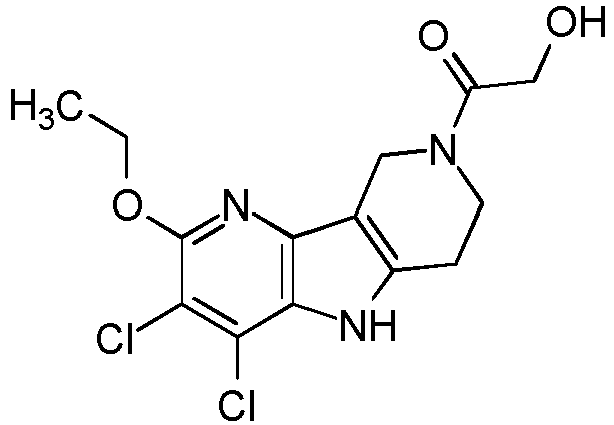
1-(3,4-dichloro-2-ethoxy-5,6,7,9-tetrahydro-8H-pyrrolo[3,2-b:4,5-c']dipyridin-8-yl)-2-hydroxyethan-1-one 78 
1-(3-chloro-2-ethoxy-4-fluoro-5,6,7,9-tetrahydro-8H-pyrrolo[3,2-b:4,5-c']dipyridin-8-yl)-2-hydroxyethan-1-one 79 
1-[3,4-dichloro-2-(cyclopropylmethoxy)-5,6,7,9-tetrahydro-8H-pyrrolo[3,2-b:4,5-c']dipyridin-8-yl]-2-hydroxyethan-1-one 80 
1-[3-chloro-2-(cyclopropylmethoxy)-4-fluoro-5,6,7,9-tetrahydro-8H-pyrrolo[3,2-b:4,5-c']dipyridin-8-yl]-2-hydroxyethan-1-one 81 
1-[3,4-dichloro-2-(difluoromethoxy)-5,6,7,9-tetrahydro-8H-pyrrolo[3,2-b:4,5-c']dipyridin-8-yl]-2-hydroxyethan-1-one 82 
1-[3-chloro-2-(difluoromethoxy)-4-fluoro-5,6,7,9-tetrahydro-8H-pyrrolo[3,2-b:4,5-c']dipyridin-8-yl]-2-hydroxyethan-1-one 83 
1-(7-chloro-9-methoxy-1,3,4,5-tetrahydro-2H-pyrrolo[3,2-c:4,5-c']dipyridin-2-yl)-2-hydroxyethan-1-one - Representative compounds of the invention were tested in a RapidFire mass spectroscopy assay with the results shown in Table 2.
- Compounds were resuspended in 10 mM stock concentration using DMSO and tested to determine their IC50 values against h-cGAS in 384-well polypropylene plates using RapidFire 365 mass spectrometry (RF-MS). The final concentration of full-length h-cGAS, dsDNA, ATP, and GTP were 100 nM, 25 nM, 100 µM, and 100 µM, respectively. The reaction buffer was composed of 20 mM Tns-HCl, pH 7.4, 150 mMNaCl, 5 mM MgCl2, 1 µM ZnCl2 and 0.01% Tween-20. Reaction solutions of 20 µl were incubated for 7 h at room temperature (RT) and stopped by addition of 60 µl of 0.5% (v/v) formic acid per well followed by RF-MS analysis. An aqueous solvent of 5 mM ammonium acetate, pH 10 was used for loading/washing process. An organic solvent comprising 5 mM ammonium acetate, pH 10 in 50% water, 25% acetone, and 25% acetonitrile was used for elution of the analytes. About 35 µl of each sample was aspirated from a 384-well plate and separated using a Graphitic carbon Type D cartridge. The sample loaded onto cartridge was then washed for 4 s at 1.5 ml min-1 using the aqueous solvent. ATP, GTP, and cGAMP were eluted for 5 s using the organic solvent at a flow rate of 1.5 ml min-1 followed by re-equilibration with the aqueous solvent for 5 s at a flow rate of 1.5 ml min-1. The samples were analysed using a negative ionization mode in the mass spectrometer, with a gas temperature of 350 °C, nebulizer pressure of 35 psi, and gas flow rate of 15 L min-1. The acquisition range was between 300 and 800 m/z for all the chromatograms and the molecular masses of the detected peaks were: ATP: 505.9835, GTP: 521.9854, and cGAMP: 673.0906. The area under the curve (AUC) of the extracted ion counts for each analyte was calculated using the Agilent RapidFire Integrator software. Percent product formation for cGAMP was calculated as: product formation (%) = [(AUCcGAMP × 100)/(AUCcGAMP + ½ AUCATP + ½ AUCGTP)]. Percent product formation from each sample at a given inhibitor concentration was used to determine percent inhibition by normalization against the positive control (no dsDNA) and negative control (no inhibitor). The % inhibition was calculated as follows: % inhibition = 100 × [(sample-average negative control)/(average positive control - average negative control)].
Table 2. Ex # IC50 (µM) Ex # IC50 (µM) Ex # IC50 (µM) 1 0.0616 3 2.47 5 21.8 2 2.41 4 1.46 6 20.8 - Representative compounds from related
application PCT/US2019/016673 were tested in the foregoing RapidFire mass spectroscopy assay with the results shown in Table 3 in support of claim scope for representative compounds of the present invention.Table 3. ID/Structure IC50 (µM) ID/Structure IC50 (µM) TDI-004576 3.08 TDI-008097 0.0422 

TDI-004581 2.41 TDI-008098 0.0853 

TDI-005021 13.9 TDI-008100 5.27 

TDI-005323 5.86 TDI-008101 0.105 

TDI-005324 4.02 TDI-008102 0.0402 

TDI-005325 3.23 TDI-008103 0.0441 

TDI-005397 0.352 TDI-008104 0.0952 

TDI-005685 0.106 TDI-008105 0.107 

TDI-005716 1.51 TDI-008106 0.0493 

TDI-005719 3.29 TDI-008107 0.0524 

TDI-005745 3.08 TDI-008108 0.552 

TDI-005776 0.203 TDI-008109 2.33 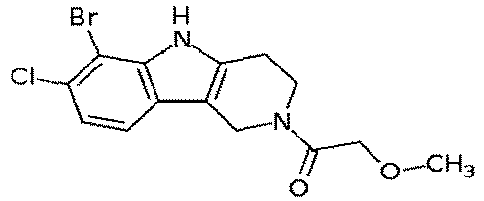

TDI-005777 24.7 TDI-008110 2.97 

TDI-005 854 0.198 TDI-008111 0.268 

TDI-005855 1.74 TDI-008112 0.201 

TDI-006171 7.69 TDI-008113 0.962 

TDI-006182 0.57 TDI-008114 0.0622 

TDI-006183 0.469 TDI-008115 0.0451 

TDI-006261 0.14 TDI-008116 0.0252 

TDI-006339 7.63 TDI-008117 0.0182 
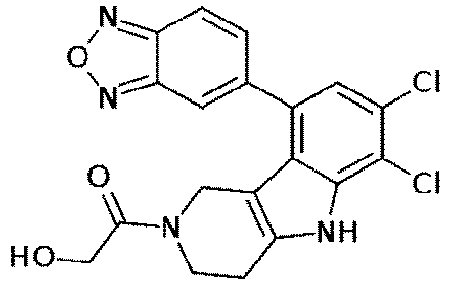
TDI-006340 0.129 TDI-008118 0.0768 

TDI-006354 0.043 TDI-008120 0.438 

TDI-006358 0.597 TDI-008130 1.12 

TDI-006359 0.44 TDI-008136 0.416 

TDI-006360 0.327 TDI-008179 0.506 

TDI-006366 0.201 TDI-008185 0.0322 

TDI-006528 0.031 TDI-008246 0.023 

TDI-006529 0.039 TDI-008292 0.402 

TDI-006570 0.138 TDI-008371 0.0232 

TDI-006622 0.049 TDI-008437 0.35 

TDI-006923 19.3 TDI-008438 0.112 

TDI-006931 0.402 TDI-008439 0.663 

TDI-006932 >25 TDI-008440 2.23 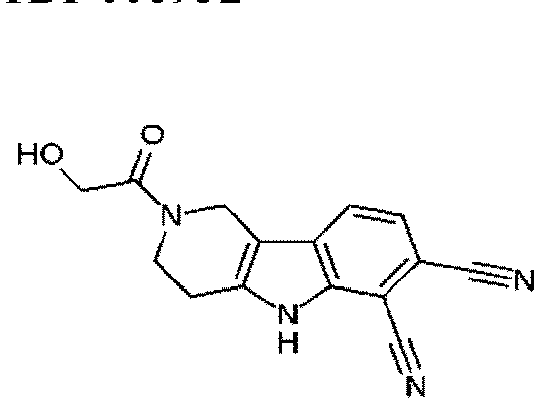

TDI-007362 0.591 TDI-008441 5.22 
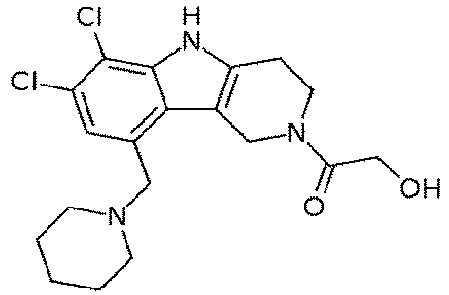
TDI-007433 1.45 TDI-008442 0.706 

TDI-007445 0.0275 TDI-008443 0.586 

TDI-007457 0.0541 TDI-008444 3.24 

TDI-007542 1.23 TDI-008445 0.035 

TDI-007544 0.166 TDI-008446 0.901 

TDI-007553 0.3 TDI-008447 0.0249 
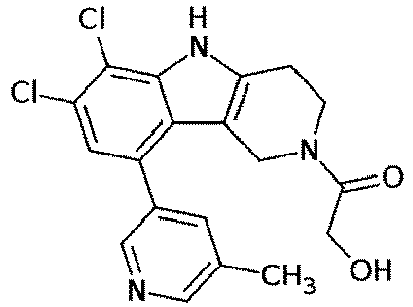
TDI-007560 6.74 TDI-008448 0.0259 

TDI-007575 0.174 TDI-008449 0.42 

TDI-007576 0.323 TDI-008450 0.0545 
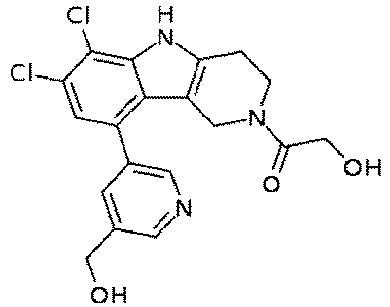
TDI-007586 0.352 TDI-008451 9.78 

TDI-007635 0.0428 TDI-008452 2.91 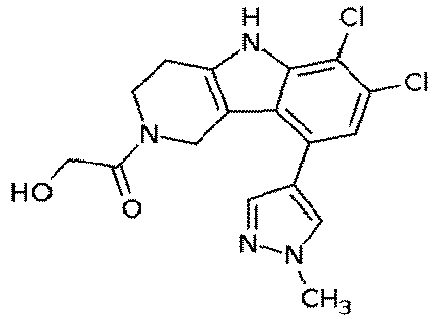

TDI-007945 0.125 TDI-008455 0.154 

TDI-008026 0.203 TDI-008457 0.0446 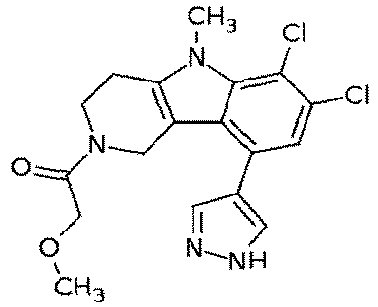

TDI-008034 0.401 TDI-008458 0.629 

TDI-008061 0.131 TDI-008460 0.83 

TDI-008062 1.03 TDI-008461 0.344 

TDI-008069 0.0848 TDI-008462 1.2 

TDI-008070 0.0228 TDI-008464 3.91 

TDI-008071 0.0393 TDI-008474 0.018 

TDI-008072 0.0975 TDI-008520 1.04 

TDI-008073 0.0204 TDI-008522 0.365 

TDI-008074 0.0194 TDI-008605 0.568 

TDI-008075 0.469 TDI-008768 0.0226 

TDI-008076 11.4 TDI-008777 0.0305 

TDI-008077 0.0146 TDI-008783 0.0172 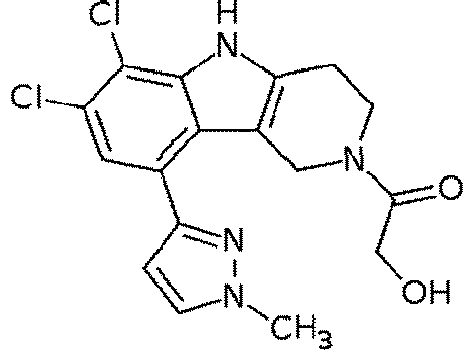

TDI-008078 0.0318 TDI-008796 0.984 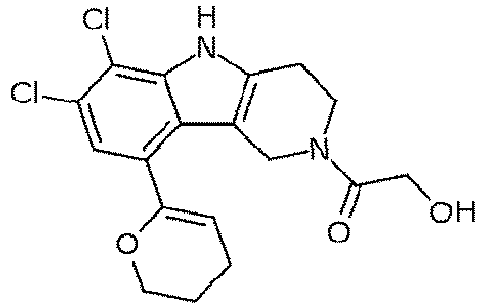

TDI-008079 0.890 TDI-008797 0.351 

TDI-008080 0.0668 TDI-008860 0.350 

TDI-008081 0.0479 TDT-008861 0.480 
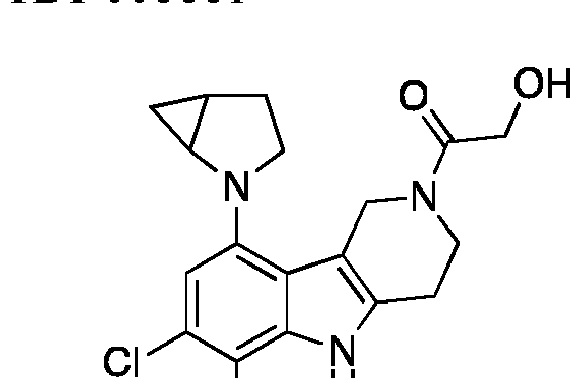
TDI-008082 0.322 TDI-008862 0.478 

TDI-008083 0.0203 TDI-008863 0.147 

TDI-008084 0.258 TDI-008864 0.455 

TDI-008085 0.0309 TDI-008865 1.58 

TDI-008086 2.05 TDI-008866 0.452 

TDI-008087 0.0102 TDI-008867 6.93 

TDI-008088 0.0569 TDI-008937 0.0776 

TDI-008089 0.0644 TDI-008989 0.0459 

TDI-008090 0.0267 TDI-009000 0.0245 

TDI-008091 0.031 TDI-009001 0.0327 

TDI-008092 1.84 TDI-009007 0.0233 

TDI-008093 0.330 TDI-009013 0.583 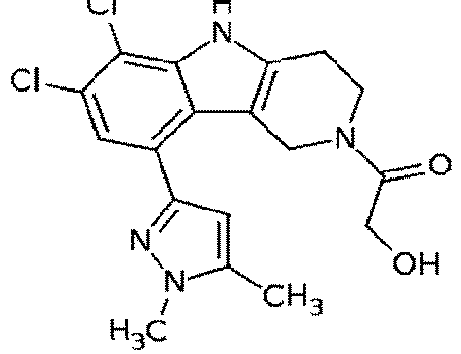

TDI-008094 0.371 TDI-009072 18.6 

TDI-008095 0.929 TDI-009186 0.0176 

TDI-008096 5.95 TDI-009208 0.0392 

- Example 1 was tested in a cell-based lucia luciferase assay in THP1-Dual cells (protocol shown below). The results are shown in Table 4 along with representative compounds from related
application PCT/US2019/016673 . - Potency of select inhibitors is determined using human THP1-Dual cells carrying a secreted luciferase reporting interferon-induced gene expression. THP1-Dual cells were pre-incubated in 24-well plates (2.5×10⁵ cells/well, 500 µl per well) over an indicated concentration range of inhibitors for 1 h. DMSO was added as negative control. Cells were transfected with 0.5 µg ml-1 of 100-bp dsDNA ligands in complex with Lipofectamine 2000 (Invitrogen) for 24 h. Transfection complex was prepared by combining 0.25 µg of dsDNA in 25 µl Opti-MEM (Gibco) with 0.25 µl of Lipofectamine 2000 in 25 µl Opti-MEM and adding the 50 µl combined volume for each well containing cells. Luciferase luminescence was measured for each sample using QUANTI-Luc luciferase reagent (InvivoGen) following the manufacturer's protocol. Shortly, 20 µl of cell culture supernatant per well was transferred into a 96-well white opaque plate and luminescence was recorded using a Biotek Synergy Neo plate reader (BioTek, Winooski, VT) with the following parameters: 50 µl of luciferase reagent injection, end-point measurement with 4 s start time and 0.1 s reading time. Relative luciferase activity for each compound-treated sample was calculated using Lipofectamine 2000 treated sample as negative control and Lipofectamine 2000:dsDNA complex treated sample without compound as positive control, i.e., relative luciferase activity = (RLUsample - RLUnegative control)/(RLUpositive control -RLUnegative control) where RLU indicates raw luciferase unit.
Table 4. ID# IC50 (µM) ID # IC50 (µM) ID # IC50 (µM) Example 1 10.7 TDI-008136 15.86 TDI-008864 >10.0 TDI-006570 >40 TDI-008179 34 TDI-008865 >10.0 TDI-007445 5.26 TDI-008185 9.9 TDI-008866 >10.0 TDI-007635 8.14 TDI-008246 1.7 TDI-008867 >10.0 TDI-008070 4.95 TDI-008292 >40.0 TDI-008937 16.1 TDI-008071 9 TDI-008371 6.52 TDI-008989 6.71 TDI-008073 6.23 TDI-008768 5.8 TDI-009000 2.89 TDI-008074 6.85 TDI-008777 12.9 TDI-009001 3.18 TDI-008077 3.32 TDI-008783 3.41 TDI-009007 1.15 TDI-008087 1.97 TDI-008796 >40.0 TDI-009013 >40.0 TDI-008116 6.43 TDI-008860 >10.0 TDI-009072 >40.0 TDI-008117 6.19 TDI-008861 >10.0 TDI-009186 0.72 TDI-008130 25.78 TDI-008863 >10.0 TDI-009208 4.4 - Representative compounds of the present invention were tested in a cGAS enzyme assay using time-resolved fluorescence resonance energy transfer (TR-FRET). The protocol is described below, and the results are shown in Table 5.
- The cGAS enzyme assay using TR-FRET were performed to determine potency of selected inhibitors in 384-well white flat-bottom small volume plates (Greiner Bio-One). Assay buffer (25 mmol/L Tris-HCl (pH 7.5), 150 mmol/L NaCl, 1mmol/L MgCl2, 0.01% Tween-20, 0.01% BSA) was used to dilution of the reagents. The test compounds were prepared as DMSO solution. Human cGAS (1.5 µl, final 5 nmol/L), each concentration of test compound (1.5 µl) and 90 bp dsDNA (1.5 µl, final 100 nmol/L) were added to each well and pre-incubated for 1 h. Next, the substrate mixture (1.5 µl) including ATP (final 40 µmol/L), GTP (final 20 µmol/L), and ZnCl2 (100 µmol/L) was added to each well and incubation were carried out for 40 min at room temperature. And then, detection premix (2 µl) including mouse monoclonal antibody against cGAMP (in house, see Miyakawa S., et al., Journal of Immunological Methods, in press), FITC-cGAMP (Biolog Life Science Institute), rabbit Tb-anti-mouse IgG (ThermoFisher), EDTA was added to each well and incubated for 1 h. Indeed, TR-FRET was measured for each sample using competitive reaction assay system, which signals of individual wells were measured using a Envision Multilabel plate reader (PerkinElmer; Ex 337 nm, Em 520 nm/486 nm). The cGAMP concentration of each well was calculated using cGAMP standard curve. For determination of inhibition rate, the cGAMP concentration of no compound was set as 0% inhibition and the cGAMP concentration of no cGAS protein was set as 100% inhibition. The inhibition rate (%) of test compounds was calculated as (1-( Csample - C100% inhibition) / (C0% inhibition - C100% inhibition)) × 100 where C indicates concentration of cGAMP. The IC50 values were calculated by Excelfit (CTC).
Table 5. Example No. hcGAS enzyme assay Example No. hcGAS enzyme assay 1 0.19 µM 71 1.4 µM 2 >30 µM 72 0.25 µM 4 21 µM 73 0.87 µM 5 >30 µM 74 0.29 µM 25 0.095 µM 75 0.55 µM 30 0.21 µM 76 0.85 µM 34 0.15 µM 77 3.0 µM 64 0.18 µM 78 3.7 µM 67 0.15 µM 79 5.9 µM 68 0.24 µM 80 5.0 µM 69 0.28 µM 81 2.4 µM 70 7.5 µM 82 15 µM - Representative compounds of the present invention were tested in a cell-based time-resolved fluorescence resonance energy transfer (TR-FRET) assay in THP1 cells. The protocol is described below, and the results are shown in Table 6.
- Potency of select inhibitors were determined using human THP1 cells with homogeneous TR-FRFT assay. 50 nmol/l PMA treated THP1 cells were incubated in 96-well plates (corning3585) for 48h. After differentiation THP1 cells (macrophage cells) were pre-incubated in the 96-well plates (1.0×10⁵ cells/well, 100 µl per well) with indicated concentration range of inhibitors, and DMSO as a positive control, for 1h. Then, cells were transfected with 0.1 µg/well of 90-bp dsDNA ligands in complex with Lipofectamine 3000 (Invitrogen), without dsDNA as a negative control, for 24 h. Transfection complex was prepared by combining 0.1 µg of dsDNA in 5 µl Opti-MEM (Invitrogen) with 0.35 µl of Lipofectamine 3000 in 5 µl Opti-MEM. The 10 µl of combined transfection complex was added to each well containing cells. TR-FRET was measured for each sample using competitive reaction assay system with cGAMP and FITC-cGAMP (Biolog Life Science Institute) containing mouse monoclonal antibody against cGAMP (in house, see Miyakawa S., et al., Journal of Immunological Methods, in press) and rabbit Tb-anti-mouse IgG (ThermoFisher). After removal of cell culture supernatant, 50 µl of cell lysis buffer (50 mmol/l Tris-HCl, 1% NP-40, 2 mmol/l EDTA) was added to each well and stirred. After cell debris was precipitated by centrifugation, 6 µl of the supernatant was transferred into a 384-well white plate (greiner784075), 6 µl of TR-FRET detection solution was added to each well. After incubated at room temperature for 1h, TR-FRET signal was detected using a Envision plate reader (PerkinElmer), using excitation at 337 nm and emissions at 520nm/486 nm. cGAMP concentration of each well was calculated from standard curve of known concentration of cGAMP. Relative inhibitory activity for each compound-treated sample was calculated using Lipofectamine 3000-treated sample without dsDNA as a negative control and Lipofectamine 3000:dsDNA complex-treated sample without test compound as a positive control, i.e., relative inhibitory activity(%) = (1-(Csample - Cnegative control)/(Cpositive control - Cnegative controi))× 100 where C indicates concentration of cGAMP. The IC50 values were calculated by Excelfit (CTC).
Table 6. Example # THP1 cGAMP IC50 (µM) Example # THP1 cGAMP IC50 (µM) Example # THP1 cGAMP IC50 (µM) 1 2.5 67 0.14 68 0.33 - Cellular activation of cGAS enzyme leads to IFNB1 mRNA expression in THP1 cells, primary human macrophage cells, and human PBMCs. IFNB1 mRNA expression was quantified using qRT-PCR. Total RNA was isolated from 5×10⁵ THP1 cells per well of a 12-well plate, which were pre-incubated with inhibitors for 1 h. Human primary macrophages were used at 3×10⁵ cells per well of a 12-well plate. Human PBMCs were used at 1×10⁶ cells per well of a 12-well plate. Cells were transfected using 100 µl of Opti-MEM transfection solution comprising 2 µg of 100-bp dsDNA complexed with 2 µl of Lipofectamine 2000. Cells were harvested 4 hours post-transfection, and RNA was extracted using 500 µl of Trizol (Ambion). 800 ng of total RNA was reverse-transcribed for cDNA synthesis in 20 µl final reaction volume using oligo(dT)20 primer at 2.5 µM and 10 U/µl Superscript III (Thermo-Fisher) for 50 min at 50°C. Quantitative PCR was performed on a Mx3000P qPCR System (Agilent Technologies) using 1/20th volume of reverse transcription material as an input for each qPCR reaction. Expression levels of IFNB1 and TUBA1B mRNAs were measured in technical triplicate for each sample. Threshold cycle (CT) values obtained for IFNB1 mRNAs were normalized to TUBA1B CT values and used to calculate ΔCT. Relative mRNA expression levels of IFNB1 were calculated using the ΔΔCT method (2ΔΔC T). The extent of cGAS inhibition was determined by normalizing the IFNB1 mRNA expression level for each sample relative to DMSO only control.
- Representative compounds from related application
PCT/US2019/016673 were tested in the foregoing cellular assays with the results shown in Table 7 in support of claim scope for representative compounds of the present invention.Table 7. ID # THP1, qRT-PCR IC50 (µM) Human Macrophage, qRT-PCR IC50 (µM) Fresh human PBMCs, qRT-PCR IC50 (µM) Freeze-thawed human PBMCs, qRT-PCR IC50 (µM) TDI-7445 1.44 1.2 n.d. n.d. TDI-7635 2.14 n.d. n.d. n.d. TDI-8077 0.93 0.86 1.15 n.d. TDI-8087 0.95 0.62 n.d. n.d. TDI-8246 1.09 0.6 1.12 1.16 n.d. - not determined - Early experiments in vivo suggest that compounds described herein penetrate the blood-brain barrier. They would therefore be useful in treating autoimmune disorders within the CNS.
- A pharmaceutical composition containing the compound of the present invention as an active ingredient can be produced, for example, according to the following formulation.
-
- (1)compound obtained in Example 1 10mg
- (2) lactose 90mg
- (3) crystalline cellulose 70mg
- (4) magnesium stearate 10mg
- The total amount of the above-mentioned (1), (2) and (3) and 5mg of (4) are blended, and the mixture is granulated. Thereto is added the remaining 5mg of (4), and the whole is sealed in a gelatin capsule.
-
- (1) compound obtained in example 1 10mg
- (2) lactose 35mg
- (3) cornstarch 150mg
- (4) crystalline cellulose 30mg
- (5) magnesium stearate 5mg
- The total amount of the above-mentioned (1), (2), and (3), 20mg of (4) and 2.5 mg of (5) are blended, and the mixture is granulated. Thereto are added the remaining 10mg of (4), and 2.5mg of (5), and the mixture is compression-molded to give a tablet.
Claims (16)
- A compound of formula (I):
 the structure
 X1 is Nor N-R1;X2 is C or N;X3 is N;X4 is C-R4 or N;X5 is C-R5 or N;
orX1 is Nor N-R1;X2 is C or N;X3 is N or C;X4 is N;X5 is C-R5 or N;
orX1 is Nor N-R1;X2 is C or N;X3 is N or C;X4 is C-R4 or N;X5 is N;R1 is hydrogen, (C1-C3)alkyl, CH2CH2-OR3a, or fluoro(C1-C3)alkyl;R2 is hydrogen, (C1-C3)alkyl, or CH2CH2-OR3b, or, taken together along with the atoms to which they are attached, R2 and R30 may form a 4- to 6-membered oxygen-containing non-aromatic heterocyclic ring;R3a is hydrogen or (C1-C3)alkyl;R3b is hydrogen or (C1-C3)alkyl;R4 is chosen from optionally substituted monocyclic heterocyclyl, hydrogen, halogen, (C1-C6)alkyl, (C1-C6)alkoxy, fluoro(C1-C6)alkyl, fluoro(C1-C6)alkoxy, (C3-C6)cycloalkyl, fluoro(C3-C6)cycloalkyl, (C3-C6)cycloalkyloxy, fluoro(C3-C6)cycloalkyloxy, cyano, optionally substituted phenyl, optionally substituted bicyclic heterocyclyl, amino(C1-C3)alkyl, (C1-C3)alkylamino(C1-C3)alkyl, (C1-C3)dialkylamino(C1-C3)alkyl, (C1-C3)alkoxy(C1-C3)alkyl, (C1-3 C6)hydrocarbyl, heterocyclyl(C1-C3)alkyl, benzyl, heterocyclyl-substituted benzyl, (C1-C3)alkylaminocarbonyl, and (C1-C3)acylamino;R5 is chosen from hydrogen, (C1-C6)alkoxy, optionally substituted monocyclic heterocyclyl, halogen, (C1-C6)alkyl, fluoro(C1-C6)alkyl, fluoro(C1-C6)alkoxy, (C3-C6)cycloalkyl, fluoro(C3-C6)cycloalkyl, (C3-C6)cycloalkyloxy, fluoro(C3-C6)cycloalkyloxy, cyano, optionally substituted phenyl, optionally substituted bicyclic heterocyclyl, amino(C1-C3)alkyl, (C1-C3)alkylamino(C1-C3)alkyl, (C1-C3)dialkylamino(C1-C3)alkyl, (C1-C3)alkoxy(C1-C3)alkyl, (C1-C6)hydrocarbyl, heterocyclyl(C1-C3)alkyl, benzyl, heterocyclyl-substituted benzyl, (C1-C3)alkylaminocarbonyl, and (C1-C3)acylamino;wherein:said optionally substituted monocyclic heterocyclyl may be substituted with one or more substituents chosen from: (C1-C3)alkyl, amino, cyano, (C1-C3)alkylamino, (C1-C3)alkoxy, oxo, fluoro(C1-C3)alkyl, halogen, hydroxy, and hydroxy(C1-C3)alkyl;said optionally substituted phenyl may be substituted with one or more substituents chosen from: amino, (C1-C3)alkylamino, (C1-C3)dialkylamino, (C1-C3)alkoxy, hydroxy, halogen, cyano, aminocarbonyl, methylenedioxy, ethylenedioxy, (C1-C3)acylamino, fluoro(C1-C3)acylamino, and hydroxy(C1-C3)alkylaminosulfonyl; andsaid optionally substituted bicyclic heterocyclyl may be substituted with one or more substituents chosen from: (C1-C3)alkyl, hydroxy, and oxo;R6 and R7 are independently chosen from halogen, hydrogen, cyano, -C≡CH, -CH=CH2, (C1-C3)alkyl, (C1-C3)alkoxy, fluoro(C1-C3)alkyl, fluoro(C1-C3)alkoxy, (C3-C4)cycloalkyl,and fluoro(C3-C4)cycloalkyl;R20 is hydrogen or (C1-C3)alkyl, or, taken together with the carbon to which they are attached, R20 and R21 may form a 3- to 5-membered aliphatic carbocyclic ring;R21 is hydrogen or (C1-C3)alkyl, or, taken together with the carbon to which they are attached, R21 and R20 may form a 3- to 5-membered aliphatic carbocyclic ring;R30 is hydrogen, or, taken together along with the atoms to which they are attached, R30 and R2 may form a 4- to 6-membered oxygen-containing non-aromatic heterocyclic ring; andn is 1 or 2. - The compound according to claim 1 or a salt thereof, wherein:i) R30 is hydrogen; andii) n is 1.
- The compound according to claim 2 or a salt thereof, wherein X1 is N, X2 is C, and X3 is N.
- The compound according to claim 3 or a salt thereof, wherein R2 is hydrogen or methyl.
- The compound according to claim 4 or a salt thereof, wherein R6 is halogen or hydrogen, and R7 is chosen from halogen, hydrogen, methoxy, cyano, and trifluoromethyl.
- The compound according to claim 4 or a salt thereof, wherein X5 is C-R5 and R5 is chosen from hydrogen, (C1-C3)alkoxy, halogen, cyano, and trifluoromethyl and R7 is chosen from halogen, hydrogen, methoxy, cyano and trifluoromethyl.
- The compound according to claim 4 or a salt thereof, wherein X4 is C-R4 and R4 is chosen from optionally substituted monocyclic heteroaryl, hydrogen, optionally substituted phenyl, and optionally substituted bicyclic heterocyclyl and R7 is chosen from halogen, hydrogen, methoxy, cyano, and trifluoromethyl.
- The compound according to claim 7 or a salt thereof, wherein R6 and R7 are independently a halogen chosen from bromo, chloro, and fluoro.
- The compound according to claim 3 or a salt thereof, wherein R4 is optionally substituted monocyclic heterocyclyl and X4 is C-R4 and X5 is C-R5.
- The compound according to claim 9 or a salt thereof, wherein the optionally substituted monocyclic heterocyclyl is pyrazolyl.
- The compound according to claim 9 or 10 or a salt thereof, wherein the optional substituent is (C1-C3)alkyl that is further optionally substituted with one or more fluorines.
- The compound according to claim 11, where the compound is 1-[8-chloro-7-fluoro-10-(1-methyl-1H-pyrazol-3-yl)-3,4-dihydropyrazino[1,2-b]indazol-2(1H)-yl]-2-hydroxyethan-1-one or a salt thereof.
- The compound according to claim 11, where the compound is 1-[7,8-dichloro-10-(1-methyl-1H-pyrazol-3-yl)-3,4-dihydropyrazino[1,2-b]indazol-2(1H)-yl]-2-hydroxyethan-1-one or a salt thereof.
- The compound according to claim 11, where the compound is 1-[8-chloro-7-fluoro-10-(3-methyl-1,2,4-oxadiazol-5-yl)-3,4-dihydropyrazino[1,2-b]indazol-2(1H)-yl]-2-hydroxyethan-1-one or a salt thereof.
- A compound according to any one of claims 1-14, or a salt thereof, for use in:a) medicine, orb) the treatment of inflammation in a patient, orc) the treatment of Aicardi Goutières Syndrome, Parkinson's disease, Alzheimer's disease, Systemic lupus erythematosus, or cancer metastasis in a patient.
- A pharmaceutical formulation comprising a pharmaceutically acceptable carrier and a compound according to any of claims 1-14, or a salt thereof, and optionally a therapeutic agent suitable for Aicardi Goutières Syndrome, Parkinson's disease, Alzheimer's disease, or Systemic lupus erythematosus.
Applications Claiming Priority (2)
| Application Number | Priority Date | Filing Date | Title |
|---|---|---|---|
| US201962817759P | 2019-03-13 | 2019-03-13 | |
| PCT/US2020/022334 WO2020186027A1 (en) | 2019-03-13 | 2020-03-12 | Inhibitors of cgas for treating autoinflammatory diseases and cancer metastasis |
Publications (3)
| Publication Number | Publication Date |
|---|---|
| EP3937932A1 EP3937932A1 (en) | 2022-01-19 |
| EP3937932A4 EP3937932A4 (en) | 2022-11-16 |
| EP3937932B1 true EP3937932B1 (en) | 2025-01-08 |
Family
ID=72427662
Family Applications (1)
| Application Number | Title | Priority Date | Filing Date |
|---|---|---|---|
| EP20769554.5A Active EP3937932B1 (en) | 2019-03-13 | 2020-03-12 | Inhibitors of cgas for treating autoinflammatory diseases and cancer metastasis |
Country Status (6)
| Country | Link |
|---|---|
| US (1) | US12522603B2 (en) |
| EP (1) | EP3937932B1 (en) |
| JP (1) | JP7504118B2 (en) |
| CN (1) | CN114901279A (en) |
| CA (1) | CA3131881A1 (en) |
| WO (1) | WO2020186027A1 (en) |
Families Citing this family (17)
| Publication number | Priority date | Publication date | Assignee | Title |
|---|---|---|---|---|
| EP3519816A4 (en) | 2016-09-29 | 2020-05-06 | The Regents of the University of California | COMPOUNDS FOR INCREASING NEURONAL PLASTICITY |
| KR102946120B1 (en) | 2019-02-27 | 2026-03-30 | 더 리젠츠 오브 더 유니버시티 오브 캘리포니아 | Azefino-indole and other heterocycles for treating brain disorders |
| EP4216940A4 (en) * | 2020-09-24 | 2025-01-01 | Ventus Therapeutics U.S., Inc. | PYRIDO[4,3-B]INDOLE DERIVATIVES AND THEIR USE AS PHARMACEUTICALS |
| WO2022118043A1 (en) * | 2020-12-03 | 2022-06-09 | Enara Bio Limited | Novel protein-ligand complex |
| KR20230124665A (en) | 2020-12-22 | 2023-08-25 | 노파르티스 아게 | Indole derivatives useful for the treatment of CGAS-related conditions |
| WO2022221415A2 (en) | 2021-04-13 | 2022-10-20 | The Regents Of The University Of California | Tetracyclic compounds for treating brain disorders |
| JP2025502615A (en) | 2021-12-15 | 2025-01-28 | デリックス セラピューティクス,インク. | Phenoxy and benzyloxy substituted psychoplastogens and uses thereof |
| EP4479134A1 (en) * | 2022-02-14 | 2024-12-25 | Cornell University | Cgas inhibitors and uses thereof |
| US20230279100A1 (en) * | 2022-03-03 | 2023-09-07 | Feng Xue | Methods of Prevention or Treatment of Alzheimer's Disease by Blocking or Decreasing STING Signaling Activation |
| WO2023183275A1 (en) * | 2022-03-22 | 2023-09-28 | Ventus Therapeutics U.S., Inc. | Hexahydropyrido[4,3-b]indolyl ketone derivatives useful as cgas modulators |
| CN120769854A (en) * | 2022-12-21 | 2025-10-10 | 伊莱利利公司 | Aza-[4,5-B]indolinone cGAS inhibitors |
| WO2025034569A2 (en) * | 2023-08-04 | 2025-02-13 | University Of Massachusetts | Sting inhibitors and methods of using thereof |
| CN119490508A (en) * | 2023-08-21 | 2025-02-21 | 上海交通大学 | Preparation method and application of a class of spirocyclic tetrahydro-γ-carboline derivatives |
| WO2025111327A1 (en) * | 2023-11-21 | 2025-05-30 | The Trustees Of Columbia University In The City Of New York | Inhibitors of cgas and uses thereof |
| WO2025218659A1 (en) * | 2024-04-16 | 2025-10-23 | Insilico Medicine Ip Limited | Novel compounds as cyclic gmp-amp synthase inhibitor and uses thereof |
| WO2026026969A1 (en) * | 2024-08-01 | 2026-02-05 | 杭州英创医药科技有限公司 | Compound serving as cgas inhibitor |
| WO2026059395A1 (en) * | 2024-09-13 | 2026-03-19 | 한국과학기술연구원 | Novel pyridoindole derivative compound and use thereof |
Family Cites Families (6)
| Publication number | Priority date | Publication date | Assignee | Title |
|---|---|---|---|---|
| RU2007139634A (en) | 2007-10-25 | 2009-04-27 | Сергей Олегович Бачурин (RU) | NEW THIAZOLE-, TRIAZOLE- OR OXADIAZOLE-CONTAINING TETRACYCLIC COMPOUNDS |
| CA2727055C (en) | 2008-01-11 | 2016-12-20 | Albany Molecular Research, Inc. | (1-azinone) -substituted pyridoindoles as mch antagonists |
| CA2788762C (en) * | 2010-04-08 | 2018-04-10 | Aziende Chimiche Riunite Angelini Francesco A.C.R.A.F.S.P.A. | Tricyclic indazole compound, method of preparation and pharmaceutical composition containing it |
| WO2016176222A1 (en) | 2015-04-30 | 2016-11-03 | University Of Washington | Cgas in systemic lupus erythematosus (sle) |
| DK3439667T3 (en) | 2016-04-05 | 2024-04-02 | Immune Sensor Llc | CGAS ANTAGONIST COMPOUNDS |
| MX2020008237A (en) | 2018-02-05 | 2020-09-25 | Univ Rockefeller | 2,3,4,5-tetrahydro-1h-pyrido[4, 3-b]indole inhibitors of cgas for treating autoinflammatory diseases. |
-
2020
- 2020-03-12 WO PCT/US2020/022334 patent/WO2020186027A1/en not_active Ceased
- 2020-03-12 US US17/437,974 patent/US12522603B2/en active Active
- 2020-03-12 CN CN202080035695.0A patent/CN114901279A/en active Pending
- 2020-03-12 JP JP2021555420A patent/JP7504118B2/en active Active
- 2020-03-12 CA CA3131881A patent/CA3131881A1/en active Pending
- 2020-03-12 EP EP20769554.5A patent/EP3937932B1/en active Active
Also Published As
| Publication number | Publication date |
|---|---|
| WO2020186027A1 (en) | 2020-09-17 |
| US20220185812A1 (en) | 2022-06-16 |
| CN114901279A (en) | 2022-08-12 |
| JP2022531755A (en) | 2022-07-11 |
| JP7504118B2 (en) | 2024-06-21 |
| CA3131881A1 (en) | 2020-09-17 |
| US12522603B2 (en) | 2026-01-13 |
| EP3937932A4 (en) | 2022-11-16 |
| EP3937932A1 (en) | 2022-01-19 |
Similar Documents
| Publication | Publication Date | Title |
|---|---|---|
| US12522603B2 (en) | Inhibitors of gas for treating autoinflammatory diseases and cancer metastasis | |
| JP7135007B2 (en) | heterocyclic compound | |
| JP7406674B2 (en) | Spirocyclic compounds | |
| JP7286679B2 (en) | 2,3,4,5-tetrahydro-1H-pyrido[4,3-b]indole inhibitors of cGAS for treating autoinflammatory diseases | |
| JP5739448B2 (en) | Substituted N- (1H-indazol-4-yl) imidazo [1,2-a] pyridine-3-carboxamide compounds as cFMS inhibitors | |
| US20230119316A1 (en) | Substituted Tricyclic Compounds | |
| CN104520290B (en) | Amido spirocyclic amide and sulfonamide derivatives | |
| AU2020381792A1 (en) | Rock inhibitor, preparation method therefor and use thereof | |
| WO2016007731A1 (en) | Imidazopyridines and imidazopyrazines as lsd1 inhibitors | |
| AU2006283592A1 (en) | Pyrazolopyridine and pyrazolopyrimidine compounds useful as kinase enzymes modulators | |
| SG191129A1 (en) | SUBSTITUTED N-(1H-INDAZOL-4-YL)IMIDAZO[1,2-a]PYRIDINE-3-CARBOXAMIDE COMPOUNDS AS TYPE III RECEPTOR TYROSINE KINASE INHIBITORS | |
| CA2861795A1 (en) | Pyrazoloquinoline derivative | |
| KR20110010732A (en) | Quinoline or isoquinoline substituted P2X7 antagonists | |
| KR101947289B1 (en) | Novel pyrrolopyrimidine compound or salt thereof, pharmaceutical composition containing same, especially agent for prevention and/or treatment of tumors etc based on nae inhibitory effect | |
| ES2985494T3 (en) | Heterocyclic compound | |
| WO2019072978A1 (en) | Mitochondrial inhibitors for the treatment of proliferation disorders | |
| KR20220097438A (en) | Fluorinated quinolines and quinoxaline derivatives as dihydroorotate dehydrogenase (DHODH) inhibitors for the treatment of cancer, autoimmune, and inflammatory diseases | |
| US9771351B2 (en) | Wnt signaling inhibitor | |
| KR20190085112A (en) | GSK-3 inhibitor | |
| AU2021306597A1 (en) | 3'3' cyclic dinucleotides with an alkenylene | |
| WO2008111009A1 (en) | Pyrazolo [3, 4-b] pyridine derivatives as phosphodiesterase inhibitors | |
| TW202604506A (en) | Tetrahydropyrazolopyridine derivative | |
| US20220274982A1 (en) | Heterocyclic compound |
Legal Events
| Date | Code | Title | Description |
|---|---|---|---|
| STAA | Information on the status of an ep patent application or granted ep patent |
Free format text: STATUS: THE INTERNATIONAL PUBLICATION HAS BEEN MADE |
|
| PUAI | Public reference made under article 153(3) epc to a published international application that has entered the european phase |
Free format text: ORIGINAL CODE: 0009012 |
|
| STAA | Information on the status of an ep patent application or granted ep patent |
Free format text: STATUS: REQUEST FOR EXAMINATION WAS MADE |
|
| 17P | Request for examination filed |
Effective date: 20211006 |
|
| AK | Designated contracting states |
Kind code of ref document: A1 Designated state(s): AL AT BE BG CH CY CZ DE DK EE ES FI FR GB GR HR HU IE IS IT LI LT LU LV MC MK MT NL NO PL PT RO RS SE SI SK SM TR |
|
| RAP1 | Party data changed (applicant data changed or rights of an application transferred) |
Owner name: MEMORIAL SLOAN-KETTERING CANCER CENTER Owner name: THE ROCKEFELLER UNIVERSITY |
|
| RIN1 | Information on inventor provided before grant (corrected) |
Inventor name: KUROITA, TAKANOBU. Inventor name: MICHINO, MAYAKO. Inventor name: IMAEDA, TOSHIHIRO Inventor name: AIDA, JUMPEI. Inventor name: HASHIZUME, SHOGO. Inventor name: OKAMOTO, REI. Inventor name: ASANO, YASUTOMI. Inventor name: MILLER, MICHAEL. Inventor name: KAMEL, TAKU. Inventor name: GLICKMAN, J.FRASER. Inventor name: PATEL, DINSHAW. Inventor name: TUSCHL, THOMAS. Inventor name: LAMA, LODOE. Inventor name: TOMITA, DAISUKE. |
|
| DAV | Request for validation of the european patent (deleted) | ||
| DAX | Request for extension of the european patent (deleted) | ||
| A4 | Supplementary search report drawn up and despatched |
Effective date: 20221013 |
|
| RIC1 | Information provided on ipc code assigned before grant |
Ipc: A61P 35/04 20060101ALI20221007BHEP Ipc: A61P 29/00 20060101ALI20221007BHEP Ipc: C07D 487/04 20060101ALI20221007BHEP Ipc: C07D 471/14 20060101ALI20221007BHEP Ipc: C07D 471/04 20060101ALI20221007BHEP Ipc: A61K 31/437 20060101AFI20221007BHEP |
|
| STAA | Information on the status of an ep patent application or granted ep patent |
Free format text: STATUS: EXAMINATION IS IN PROGRESS |
|
| 17Q | First examination report despatched |
Effective date: 20231116 |
|
| GRAP | Despatch of communication of intention to grant a patent |
Free format text: ORIGINAL CODE: EPIDOSNIGR1 |
|
| STAA | Information on the status of an ep patent application or granted ep patent |
Free format text: STATUS: GRANT OF PATENT IS INTENDED |
|
| INTG | Intention to grant announced |
Effective date: 20240729 |
|
| GRAJ | Information related to disapproval of communication of intention to grant by the applicant or resumption of examination proceedings by the epo deleted |
Free format text: ORIGINAL CODE: EPIDOSDIGR1 |
|
| STAA | Information on the status of an ep patent application or granted ep patent |
Free format text: STATUS: EXAMINATION IS IN PROGRESS |
|
| GRAP | Despatch of communication of intention to grant a patent |
Free format text: ORIGINAL CODE: EPIDOSNIGR1 |
|
| STAA | Information on the status of an ep patent application or granted ep patent |
Free format text: STATUS: GRANT OF PATENT IS INTENDED |
|
| INTC | Intention to grant announced (deleted) | ||
| GRAS | Grant fee paid |
Free format text: ORIGINAL CODE: EPIDOSNIGR3 |
|
| GRAA | (expected) grant |
Free format text: ORIGINAL CODE: 0009210 |
|
| STAA | Information on the status of an ep patent application or granted ep patent |
Free format text: STATUS: THE PATENT HAS BEEN GRANTED |
|
| INTG | Intention to grant announced |
Effective date: 20241107 |
|
| AK | Designated contracting states |
Kind code of ref document: B1 Designated state(s): AL AT BE BG CH CY CZ DE DK EE ES FI FR GB GR HR HU IE IS IT LI LT LU LV MC MK MT NL NO PL PT RO RS SE SI SK SM TR |
|
| REG | Reference to a national code |
Ref country code: GB Ref legal event code: FG4D |
|
| REG | Reference to a national code |
Ref country code: CH Ref legal event code: EP |
|
| REG | Reference to a national code |
Ref country code: DE Ref legal event code: R096 Ref document number: 602020044538 Country of ref document: DE |
|
| REG | Reference to a national code |
Ref country code: IE Ref legal event code: FG4D |
|
| REG | Reference to a national code |
Ref country code: LT Ref legal event code: MG9D |
|
| REG | Reference to a national code |
Ref country code: NL Ref legal event code: MP Effective date: 20250108 |
|
| REG | Reference to a national code |
Ref country code: AT Ref legal event code: MK05 Ref document number: 1757903 Country of ref document: AT Kind code of ref document: T Effective date: 20250108 |
|
| PG25 | Lapsed in a contracting state [announced via postgrant information from national office to epo] |
Ref country code: NL Free format text: LAPSE BECAUSE OF FAILURE TO SUBMIT A TRANSLATION OF THE DESCRIPTION OR TO PAY THE FEE WITHIN THE PRESCRIBED TIME-LIMIT Effective date: 20250108 |
|
| PG25 | Lapsed in a contracting state [announced via postgrant information from national office to epo] |
Ref country code: RS Free format text: LAPSE BECAUSE OF FAILURE TO SUBMIT A TRANSLATION OF THE DESCRIPTION OR TO PAY THE FEE WITHIN THE PRESCRIBED TIME-LIMIT Effective date: 20250408 |
|
| PG25 | Lapsed in a contracting state [announced via postgrant information from national office to epo] |
Ref country code: FI Free format text: LAPSE BECAUSE OF FAILURE TO SUBMIT A TRANSLATION OF THE DESCRIPTION OR TO PAY THE FEE WITHIN THE PRESCRIBED TIME-LIMIT Effective date: 20250108 |
|
| PG25 | Lapsed in a contracting state [announced via postgrant information from national office to epo] |
Ref country code: PL Free format text: LAPSE BECAUSE OF FAILURE TO SUBMIT A TRANSLATION OF THE DESCRIPTION OR TO PAY THE FEE WITHIN THE PRESCRIBED TIME-LIMIT Effective date: 20250108 |
|
| PG25 | Lapsed in a contracting state [announced via postgrant information from national office to epo] |
Ref country code: ES Free format text: LAPSE BECAUSE OF FAILURE TO SUBMIT A TRANSLATION OF THE DESCRIPTION OR TO PAY THE FEE WITHIN THE PRESCRIBED TIME-LIMIT Effective date: 20250108 |
|
| PG25 | Lapsed in a contracting state [announced via postgrant information from national office to epo] |
Ref country code: IS Free format text: LAPSE BECAUSE OF FAILURE TO SUBMIT A TRANSLATION OF THE DESCRIPTION OR TO PAY THE FEE WITHIN THE PRESCRIBED TIME-LIMIT Effective date: 20250508 Ref country code: NO Free format text: LAPSE BECAUSE OF FAILURE TO SUBMIT A TRANSLATION OF THE DESCRIPTION OR TO PAY THE FEE WITHIN THE PRESCRIBED TIME-LIMIT Effective date: 20250408 |
|
| PG25 | Lapsed in a contracting state [announced via postgrant information from national office to epo] |
Ref country code: HR Free format text: LAPSE BECAUSE OF FAILURE TO SUBMIT A TRANSLATION OF THE DESCRIPTION OR TO PAY THE FEE WITHIN THE PRESCRIBED TIME-LIMIT Effective date: 20250108 |
|
| PG25 | Lapsed in a contracting state [announced via postgrant information from national office to epo] |
Ref country code: PT Free format text: LAPSE BECAUSE OF FAILURE TO SUBMIT A TRANSLATION OF THE DESCRIPTION OR TO PAY THE FEE WITHIN THE PRESCRIBED TIME-LIMIT Effective date: 20250508 Ref country code: LV Free format text: LAPSE BECAUSE OF FAILURE TO SUBMIT A TRANSLATION OF THE DESCRIPTION OR TO PAY THE FEE WITHIN THE PRESCRIBED TIME-LIMIT Effective date: 20250108 |
|
| PG25 | Lapsed in a contracting state [announced via postgrant information from national office to epo] |
Ref country code: GR Free format text: LAPSE BECAUSE OF FAILURE TO SUBMIT A TRANSLATION OF THE DESCRIPTION OR TO PAY THE FEE WITHIN THE PRESCRIBED TIME-LIMIT Effective date: 20250409 Ref country code: BG Free format text: LAPSE BECAUSE OF FAILURE TO SUBMIT A TRANSLATION OF THE DESCRIPTION OR TO PAY THE FEE WITHIN THE PRESCRIBED TIME-LIMIT Effective date: 20250108 |
|
| PG25 | Lapsed in a contracting state [announced via postgrant information from national office to epo] |
Ref country code: AT Free format text: LAPSE BECAUSE OF FAILURE TO SUBMIT A TRANSLATION OF THE DESCRIPTION OR TO PAY THE FEE WITHIN THE PRESCRIBED TIME-LIMIT Effective date: 20250108 |
|
| PG25 | Lapsed in a contracting state [announced via postgrant information from national office to epo] |
Ref country code: SE Free format text: LAPSE BECAUSE OF FAILURE TO SUBMIT A TRANSLATION OF THE DESCRIPTION OR TO PAY THE FEE WITHIN THE PRESCRIBED TIME-LIMIT Effective date: 20250108 |
|
| PG25 | Lapsed in a contracting state [announced via postgrant information from national office to epo] |
Ref country code: SM Free format text: LAPSE BECAUSE OF FAILURE TO SUBMIT A TRANSLATION OF THE DESCRIPTION OR TO PAY THE FEE WITHIN THE PRESCRIBED TIME-LIMIT Effective date: 20250108 |
|
| REG | Reference to a national code |
Ref country code: DE Ref legal event code: R097 Ref document number: 602020044538 Country of ref document: DE |
|
| PG25 | Lapsed in a contracting state [announced via postgrant information from national office to epo] |
Ref country code: DK Free format text: LAPSE BECAUSE OF FAILURE TO SUBMIT A TRANSLATION OF THE DESCRIPTION OR TO PAY THE FEE WITHIN THE PRESCRIBED TIME-LIMIT Effective date: 20250108 |
|
| PG25 | Lapsed in a contracting state [announced via postgrant information from national office to epo] |
Ref country code: MC Free format text: LAPSE BECAUSE OF FAILURE TO SUBMIT A TRANSLATION OF THE DESCRIPTION OR TO PAY THE FEE WITHIN THE PRESCRIBED TIME-LIMIT Effective date: 20250108 |
|
| PG25 | Lapsed in a contracting state [announced via postgrant information from national office to epo] |
Ref country code: CZ Free format text: LAPSE BECAUSE OF FAILURE TO SUBMIT A TRANSLATION OF THE DESCRIPTION OR TO PAY THE FEE WITHIN THE PRESCRIBED TIME-LIMIT Effective date: 20250108 Ref country code: EE Free format text: LAPSE BECAUSE OF FAILURE TO SUBMIT A TRANSLATION OF THE DESCRIPTION OR TO PAY THE FEE WITHIN THE PRESCRIBED TIME-LIMIT Effective date: 20250108 |
|
| PG25 | Lapsed in a contracting state [announced via postgrant information from national office to epo] |
Ref country code: RO Free format text: LAPSE BECAUSE OF FAILURE TO SUBMIT A TRANSLATION OF THE DESCRIPTION OR TO PAY THE FEE WITHIN THE PRESCRIBED TIME-LIMIT Effective date: 20250108 |
|
| REG | Reference to a national code |
Ref country code: CH Ref legal event code: H13 Free format text: ST27 STATUS EVENT CODE: U-0-0-H10-H13 (AS PROVIDED BY THE NATIONAL OFFICE) Effective date: 20251024 |
|
| PG25 | Lapsed in a contracting state [announced via postgrant information from national office to epo] |
Ref country code: SK Free format text: LAPSE BECAUSE OF FAILURE TO SUBMIT A TRANSLATION OF THE DESCRIPTION OR TO PAY THE FEE WITHIN THE PRESCRIBED TIME-LIMIT Effective date: 20250108 |
|
| PLBE | No opposition filed within time limit |
Free format text: ORIGINAL CODE: 0009261 |
|
| STAA | Information on the status of an ep patent application or granted ep patent |
Free format text: STATUS: NO OPPOSITION FILED WITHIN TIME LIMIT |
|
| PG25 | Lapsed in a contracting state [announced via postgrant information from national office to epo] |
Ref country code: LU Free format text: LAPSE BECAUSE OF NON-PAYMENT OF DUE FEES Effective date: 20250312 |
|
| REG | Reference to a national code |
Ref country code: BE Ref legal event code: MM Effective date: 20250331 |
|
| 26N | No opposition filed |
Effective date: 20251009 |
|
| PG25 | Lapsed in a contracting state [announced via postgrant information from national office to epo] |
Ref country code: BE Free format text: LAPSE BECAUSE OF NON-PAYMENT OF DUE FEES Effective date: 20250331 |
|
| PG25 | Lapsed in a contracting state [announced via postgrant information from national office to epo] |
Ref country code: CH Free format text: LAPSE BECAUSE OF NON-PAYMENT OF DUE FEES Effective date: 20250331 |
|
| PG25 | Lapsed in a contracting state [announced via postgrant information from national office to epo] |
Ref country code: IE Free format text: LAPSE BECAUSE OF NON-PAYMENT OF DUE FEES Effective date: 20250312 |
|
| PG25 | Lapsed in a contracting state [announced via postgrant information from national office to epo] |
Ref country code: IT Free format text: LAPSE BECAUSE OF FAILURE TO SUBMIT A TRANSLATION OF THE DESCRIPTION OR TO PAY THE FEE WITHIN THE PRESCRIBED TIME-LIMIT Effective date: 20250108 |
|
| PGFP | Annual fee paid to national office [announced via postgrant information from national office to epo] |
Ref country code: GB Payment date: 20260220 Year of fee payment: 7 |
|
| PGFP | Annual fee paid to national office [announced via postgrant information from national office to epo] |
Ref country code: DE Payment date: 20260219 Year of fee payment: 7 |
|
| PGFP | Annual fee paid to national office [announced via postgrant information from national office to epo] |
Ref country code: FR Payment date: 20260219 Year of fee payment: 7 |
|
| PG25 | Lapsed in a contracting state [announced via postgrant information from national office to epo] |
Ref country code: CY Free format text: LAPSE BECAUSE OF FAILURE TO SUBMIT A TRANSLATION OF THE DESCRIPTION OR TO PAY THE FEE WITHIN THE PRESCRIBED TIME-LIMIT Effective date: 20250108 |
|
| PG25 | Lapsed in a contracting state [announced via postgrant information from national office to epo] |
Ref country code: LT Free format text: LAPSE BECAUSE OF FAILURE TO SUBMIT A TRANSLATION OF THE DESCRIPTION OR TO PAY THE FEE WITHIN THE PRESCRIBED TIME-LIMIT Effective date: 20250108 |
|
| PG25 | Lapsed in a contracting state [announced via postgrant information from national office to epo] |
Ref country code: TR Free format text: LAPSE BECAUSE OF FAILURE TO SUBMIT A TRANSLATION OF THE DESCRIPTION OR TO PAY THE FEE WITHIN THE PRESCRIBED TIME-LIMIT Effective date: 20250108 |