EP3937285B1 - Verfahren zum betreiben eines brennstoffzellensystems in einem schienenfahrzeug - Google Patents
Verfahren zum betreiben eines brennstoffzellensystems in einem schienenfahrzeug Download PDFInfo
- Publication number
- EP3937285B1 EP3937285B1 EP21182361.2A EP21182361A EP3937285B1 EP 3937285 B1 EP3937285 B1 EP 3937285B1 EP 21182361 A EP21182361 A EP 21182361A EP 3937285 B1 EP3937285 B1 EP 3937285B1
- Authority
- EP
- European Patent Office
- Prior art keywords
- fuel cell
- humidifier
- cell system
- humidity
- feed
- Prior art date
- Legal status (The legal status is an assumption and is not a legal conclusion. Google has not performed a legal analysis and makes no representation as to the accuracy of the status listed.)
- Active
Links
Images


Classifications
-
- H—ELECTRICITY
- H01—ELECTRIC ELEMENTS
- H01M—PROCESSES OR MEANS, e.g. BATTERIES, FOR THE DIRECT CONVERSION OF CHEMICAL ENERGY INTO ELECTRICAL ENERGY
- H01M8/00—Fuel cells; Manufacture thereof
- H01M8/04—Auxiliary arrangements, e.g. for control of pressure or for circulation of fluids
- H01M8/04082—Arrangements for control of reactant parameters, e.g. pressure or concentration
- H01M8/04089—Arrangements for control of reactant parameters, e.g. pressure or concentration of gaseous reactants
- H01M8/04119—Arrangements for control of reactant parameters, e.g. pressure or concentration of gaseous reactants with simultaneous supply or evacuation of electrolyte; Humidifying or dehumidifying
- H01M8/04126—Humidifying
- H01M8/04141—Humidifying by water containing exhaust gases
-
- H—ELECTRICITY
- H01—ELECTRIC ELEMENTS
- H01M—PROCESSES OR MEANS, e.g. BATTERIES, FOR THE DIRECT CONVERSION OF CHEMICAL ENERGY INTO ELECTRICAL ENERGY
- H01M8/00—Fuel cells; Manufacture thereof
- H01M8/10—Fuel cells with solid electrolytes
- H01M2008/1095—Fuel cells with polymeric electrolytes
-
- H—ELECTRICITY
- H01—ELECTRIC ELEMENTS
- H01M—PROCESSES OR MEANS, e.g. BATTERIES, FOR THE DIRECT CONVERSION OF CHEMICAL ENERGY INTO ELECTRICAL ENERGY
- H01M2250/00—Fuel cells for particular applications; Specific features of fuel cell system
- H01M2250/20—Fuel cells in motive systems, e.g. vehicle, ship, plane
-
- H—ELECTRICITY
- H01—ELECTRIC ELEMENTS
- H01M—PROCESSES OR MEANS, e.g. BATTERIES, FOR THE DIRECT CONVERSION OF CHEMICAL ENERGY INTO ELECTRICAL ENERGY
- H01M8/00—Fuel cells; Manufacture thereof
- H01M8/04—Auxiliary arrangements, e.g. for control of pressure or for circulation of fluids
- H01M8/04082—Arrangements for control of reactant parameters, e.g. pressure or concentration
- H01M8/04089—Arrangements for control of reactant parameters, e.g. pressure or concentration of gaseous reactants
- H01M8/04119—Arrangements for control of reactant parameters, e.g. pressure or concentration of gaseous reactants with simultaneous supply or evacuation of electrolyte; Humidifying or dehumidifying
- H01M8/04126—Humidifying
- H01M8/04149—Humidifying by diffusion, e.g. making use of membranes
-
- H—ELECTRICITY
- H01—ELECTRIC ELEMENTS
- H01M—PROCESSES OR MEANS, e.g. BATTERIES, FOR THE DIRECT CONVERSION OF CHEMICAL ENERGY INTO ELECTRICAL ENERGY
- H01M8/00—Fuel cells; Manufacture thereof
- H01M8/04—Auxiliary arrangements, e.g. for control of pressure or for circulation of fluids
- H01M8/04298—Processes for controlling fuel cells or fuel cell systems
- H01M8/04313—Processes for controlling fuel cells or fuel cell systems characterised by the detection or assessment of variables; characterised by the detection or assessment of failure or abnormal function
- H01M8/04492—Humidity; Ambient humidity; Water content
- H01M8/04507—Humidity; Ambient humidity; Water content of cathode reactants at the inlet or inside the fuel cell
-
- Y—GENERAL TAGGING OF NEW TECHNOLOGICAL DEVELOPMENTS; GENERAL TAGGING OF CROSS-SECTIONAL TECHNOLOGIES SPANNING OVER SEVERAL SECTIONS OF THE IPC; TECHNICAL SUBJECTS COVERED BY FORMER USPC CROSS-REFERENCE ART COLLECTIONS [XRACs] AND DIGESTS
- Y02—TECHNOLOGIES OR APPLICATIONS FOR MITIGATION OR ADAPTATION AGAINST CLIMATE CHANGE
- Y02E—REDUCTION OF GREENHOUSE GAS [GHG] EMISSIONS, RELATED TO ENERGY GENERATION, TRANSMISSION OR DISTRIBUTION
- Y02E60/00—Enabling technologies; Technologies with a potential or indirect contribution to GHG emissions mitigation
- Y02E60/30—Hydrogen technology
- Y02E60/50—Fuel cells
-
- Y—GENERAL TAGGING OF NEW TECHNOLOGICAL DEVELOPMENTS; GENERAL TAGGING OF CROSS-SECTIONAL TECHNOLOGIES SPANNING OVER SEVERAL SECTIONS OF THE IPC; TECHNICAL SUBJECTS COVERED BY FORMER USPC CROSS-REFERENCE ART COLLECTIONS [XRACs] AND DIGESTS
- Y02—TECHNOLOGIES OR APPLICATIONS FOR MITIGATION OR ADAPTATION AGAINST CLIMATE CHANGE
- Y02T—CLIMATE CHANGE MITIGATION TECHNOLOGIES RELATED TO TRANSPORTATION
- Y02T90/00—Enabling technologies or technologies with a potential or indirect contribution to GHG emissions mitigation
- Y02T90/40—Application of hydrogen technology to transportation, e.g. using fuel cells
Definitions
- the invention relates to a method for operating a fuel cell system in a rail vehicle, wherein the fuel cell system has at least one humidifier.
- rail vehicles are preferably supplied with electrical energy via an overhead line or conductor rail.
- routes or sections of the rail network that are not equipped with such infrastructure. For example, only around 60% of the rail network in the Federal Republic of Germany is currently electrified.
- rail vehicles are therefore still used that generate the energy required for propulsion or traction and the operation of secondary consumers or so-called auxiliary systems using internal combustion engines.
- rail vehicles are increasingly being equipped with electrical energy storage devices, so-called traction batteries.
- electrical energy storage devices so-called traction batteries.
- these rail vehicles can travel a certain distance without being supplied by an overhead line.
- the energy storage devices are recharged with electrical energy when driving on electrified sections of route or during a stop via a suitable charging infrastructure, for example in the area of bus stops.
- the use of such energy storage devices is suitable especially for regional transport, shorter distances between stops.
- fuel cells are considered a sensible alternative to traction batteries, particularly in long-distance transport. These generate electrical energy from a fuel using an electrochemical process, which can be used to operate traction devices and auxiliary systems on the rail vehicle.
- a fuel storage unit and an electrical energy storage unit are required, whereby the electrical energy storage unit can have a significantly lower storage capacity than a traction battery, as it is primarily used to supply the auxiliary systems of the fuel cell, particularly during commissioning of the fuel cell, and as a buffer storage unit to compensate for short-term load fluctuations.
- a membrane fuel cell known as a proton exchange membrane fuel cell (PEMFC) or polymer electrolyte fuel cell (PEFC), is considered particularly suitable for use in rail vehicles, as it allows for rapid load changes and can compensate for temperature fluctuations associated with load changes well compared to other known fuel cell types.
- PEM fuel cell This type of fuel cell is referred to below as a PEM fuel cell.
- the working temperature of a PEM fuel cell is below 100°C, typically in the range between 60°C and 80°C, which is why it is assigned to the group of low-temperature fuel cells with operating temperatures between 60°C and 130°C. Fuel cell types are differentiated according to the electrolyte used.
- EN 10 2018 212420 For example, it discloses PEM fuel cells with a humidifier that are used in rail vehicles.
- a thin, gas-tight and proton-conducting plastic film takes on the function of the electrolyte and acts as a separator for the gaseous reactants hydrogen (as fuel gas) and oxygen (as oxidizing gas), the latter being supplied to the fuel cell as a component of the ambient air.
- the central membrane electrode assembly (MEA) is the active element of the fuel cell. This consists of two electrodes separated from each other by the electrolyte, an anode and a cathode, and is contacted on both sides with a gas distributor and a current collector, with the gas distributors serving to supply and remove gas.
- a PEM fuel cell is formed by a large number of MEAs arranged in a stack, which are electrically connected in series to achieve a higher voltage and thus a higher possible output of the fuel cell.
- a particular challenge when operating a PEM fuel cell is so-called water management.
- the proton conductivity of the membrane depends in particular on the water content or moisture of the membrane, which is influenced by factors such as the current density, the moisture content of the reactants and the temperature. If the membrane is too humid, this reduces proton conductivity and thus reduces performance and ultimately leads to degradation of the fuel cell.
- Flooding the cathode with reaction water can block channels in the cathode-side gas distributor, which also limits the function of the cell. For the efficient operation of the PEM fuel cell, it is therefore important that sufficient water remains in the cell and that excessive formation of reaction water is avoided.
- Known humidifiers are constructed similarly to a heat exchanger, whereby, for example, a large number of tubes made of a membrane material or a flat membrane, in particular a hydrophilic polymer membrane, separates the reactant to be humidified from a humidifier gas or from water.
- a so-called gas/gas humidifier in which a humidifier gas with a high humidity or water vapor concentration is used to humidify the reactant
- a so-called water/gas humidifier in which water circulating through the humidifier is used to humidify the reactant.
- ion channels in the membrane cause water to be bound from the humidifier gas, transported in the direction of the partial pressure gradient and absorbed by the drier reactant.
- the cathode exhaust gas from the fuel cell which has a high humidity due to the reaction water produced on the cathode side, can be used as a humidifier gas. On the one hand, this is already available in the fuel cell system in an energy-neutral way, and on the other hand, its heat is transferred to the reactant along with the humidity.
- the membranes of humidifiers When used in rail vehicles, the membranes of humidifiers are exposed to high mechanical stresses, particularly caused by vibrations and impacts, and to loading by particles and other contaminants such as salts, nitrogen oxides or compounds containing sulphur or ammonia, which are contained in the air supplied despite the presence of air filters upstream of the humidifier, particularly if these are heavily or completely loaded with contaminants. Such particles and contaminants lead to a reduction in the water transport through the membrane and thus to a reduction in the humidifier's humidification performance.
- the object of the invention is therefore to provide a method for operating a fuel cell system for a rail vehicle, which in particular enables a reduction in the operating costs in connection with the humidifiers used. This object is achieved by the method with the features of the independent patent claim. Further developments of the invention are specified in dependent patent claims.
- a fuel cell system used in a rail vehicle has at least one PEM fuel cell stack, a first feed which is designed to feed hydrogen as fuel gas to an anode side of the fuel cell stack, a second feed which is designed to feed air as oxidation gas to a cathode side of the fuel cell stack, and at least one humidifier which is arranged in the second feed and is designed to humidify air supplied to the fuel cell stack.
- cleaning and/or replacement of the at least one humidifier is carried out depending on a predetermined aging model, wherein the aging model is defined depending on operating conditions of the rail vehicle.
- the PEM fuel cell stack can advantageously be operated with high efficiency over a long operating period, on the one hand, and on the other hand, costs for replacement and labor costs, which arise in particular due to visual inspections and cleaning work by maintenance personnel requiring the humidifier to be dismantled in each case, can be significantly reduced compared to predetermined fixed time intervals.
- An aging model defines an expected reduction in the humidification performance of the humidifier over time and depending on the operating conditions of the rail vehicle.
- Operating conditions relate in particular to the prevailing ambient or environmental conditions on the route traveled by the rail vehicle.
- Ambient or environmental conditions are, for example, contamination of the ambient air with particles and certain chemical compounds which, acting as contaminants, can impair the function of the humidification membrane and thus the humidification performance of the humidifier.
- the loads in cities and industrial regions and those in areas with agricultural use are different. Since such loads occur in particular temporarily, the aging model should preferably also take into account temporary changes in the ambient or environmental conditions, in particular seasonal changes.
- the operating conditions relate, for example, to mechanical loads acting on the humidifier or the humidification membrane, which can cause mechanical damage and thus also a reduction in the humidification performance.
- an ageing model is selected that was defined based on operating conditions that largely correspond to those of the route traveled by the rail vehicle, so that advantageously, cleaning work or replacement of the humidifier(s) used in the rail vehicle can be carried out depending on the condition. If, during operation of the rail vehicle, major deviations are found between the actual condition and the condition of at least one humidifier expected according to the aging model, the aging model can be adjusted accordingly or another aging model can be selected that more accurately reflects the operating conditions.
- a single humidifier or several humidifiers can be provided.
- the several humidifiers can be arranged in parallel, with only a partial flow of air being passed through each humidifier and the partial flows preferably being reunited downstream of the humidifier, or they can be arranged in series, with partial humidification of the air taking place in each of the humidifiers.
- the fuel cell system further comprises at least one humidity sensor, which is arranged exclusively temporarily in the second feed downstream of the at least one humidifier, wherein a humidity of the air supplied to the fuel cell stack is determined by means of the at least one humidity sensor.
- the fuel cell system in the rail vehicle deliberately refrains from actively controlling the degree of humidification of the air supplied to the fuel cell stack, as is used in particular in motor vehicles with a fuel cell.
- the humidity of the cathode-side reactant is controlled by means of a bypass line arranged parallel to the humidifier, a controllable bypass valve and a humidity sensor.
- the at least one humidifier of the fuel cell system in which the method according to the invention is used is dimensioned in terms of humidification performance, for example, such that the humidity of the cathode-side reactant is in the range between 80% and 95%.
- the possibility of compensating for a humidification performance of the humidifier that decreases over time by controlling a bypass valve is therefore not provided for in the fuel cell system.
- the at least one humidity sensor is arranged exclusively temporarily in the second feed in order to determine a current humidity of the air supplied to the fuel cell stack on the cathode side.
- This temporary arrangement and determination takes place, for example, when the rail vehicle is out of service, i.e. while the rail vehicle is not being used for passenger or freight transport. Such a shutdown takes place regularly, for example, for the maintenance of other components and devices of the rail vehicle and in particular for cleaning purposes.
- the fuel cell system of the rail vehicle In order to determine the humidity of the supplied air using the at least one humidity sensor without dismantling the at least one humidifier, the fuel cell system of the rail vehicle must be operated.
- the humidity sensor is mounted at a location of the second feed line intended for its installation by maintenance personnel.
- a closable opening can be provided in the second feed line, which is closed during normal operation of the rail vehicle, but can be opened by maintenance personnel during maintenance work in order to insert a humidity sensor into the second feed line to carry out measurements.
- the at least one Humidity sensor additionally has a temperature sensor or is arranged with it in a common housing, whereby a temperature sensor can also be arranged separately from the humidity sensor in the second feed.
- the humidity sensor is, for example, connected by communication technology to an evaluation device, in particular a suitable electronic handheld device of the maintenance personnel, a control device of the fuel cell system or a control device of the rail vehicle.
- An evaluation device serves in particular to determine a current humidification performance of the humidifier based on the information provided by the humidity sensor and in particular the temperature sensor. The determined humidification performance is then compared by the evaluation device with a humidification performance expected for the time of the determination according to the aging model, which is stored, for example, in a memory area of the evaluation device.
- the evaluation device will, for example, output corresponding information about the condition of the humidifier to the maintenance personnel. If, however, the comparison shows that the determined humidification performance is outside the tolerance band, a corresponding indication of a required adjustment of the time of the next cleaning of the humidifier or a replacement can be issued by the evaluation device or an optical and/or acoustic output device connected to it.
- cleaning or a required replacement of the humidifier can advantageously only be carried out at a later time than after the aging model.
- the corresponding indication can, for example, first prompt the maintenance personnel to carry out a visual inspection of the humidifier in order to carry out an immediate replacement if mechanical damage or a heavy load on the membrane material is detected, or to be able to manually adjust a time for a subsequent visual inspection or a required replacement.
- an additional humidity sensor can be installed by maintenance personnel at a location designated for its installation upstream of the humidifier in the second feed line. From the information provided by the two humidity sensors, a difference in the humidity and, from this, a humidification performance can be determined by the evaluation device.
- the humidification performance of each individual humidifier is preferably determined. If the several humidifiers are connected in parallel, the humidity sensor is again mounted by maintenance personnel at a location on the second supply provided for its installation. The location provided for the installation of the humidity sensor should be located upstream of a junction of the parallel branches into a common second supply in order to be able to determine the humidification performance of the humidifier in question independently of the other humidifiers. In a series connection, however, a respective humidity sensor is mounted upstream and downstream of the humidifier in question at a respective location on the second supply provided.
- the respective humidification performance can also be determined in a series connection using just one humidity sensor, if starting with the first humidifier in the flow direction of the supplied air, a respective difference to the humidity of the ambient air or the exhaust air of the humidifier connected upstream is determined.
- the respective humidification performance can be determined sequentially or in parallel, whereby a sequential determination advantageously requires only one or two humidity sensors or two humidity sensors for a difference determination.
- the evaluation device used to determine the current state of the humidifier can, as already mentioned above, be implemented as part of a control device which serves to control in particular controllable components and auxiliary systems of the fuel cell system. Alternatively, however, the evaluation device can also be implemented independently of the fuel cell system, but connected to it by means of communication technology.
- Information representing the specific state of the humidifier can in turn be fed to a higher-level monitoring device at the vehicle level, in which in particular all information representing the respective state of the various components of the fuel cell system or the rail vehicle is brought together. The aggregated information can then be used by the higher-level device as a basis for planning and carrying out necessary maintenance work by maintenance personnel, in particular on the fuel cell system.
- the higher-level monitoring device can also be provided outside the rail vehicle, which is connected to the rail vehicle via suitable communication interfaces.
- the fuel cell system further comprises a first outlet, which is designed to discharge an anode exhaust gas, and a second outlet, which is designed to discharge a cathode exhaust gas.
- the at least one humidifier is also arranged in the second outlet, wherein the supplied air is humidified by means of the cathode exhaust gas in the humidifier.
- the at least one humidifier is implemented, for example, as a gas/gas humidifier, by means of which cathode gas carrying a higher humidity than the supplied air is used to humidify the air.
- the aging model is defined depending on the ambient and environmental conditions of a route traveled by the rail vehicle.
- FIG 1 shows a schematic side view of a rail vehicle, which is designed, for example, as a multiple unit TZ with a plurality of carriages for the transport of passengers, whereby only a first carriage in the form of an end carriage EW and a second carriage coupled to it in the form of a middle carriage MW are shown as examples.
- a multiple unit usually has two end carriages and a number of middle carriages. In a minimum configuration, however, a multiple unit can also consist of just two end carriages.
- the rail vehicle can be designed in the same way as a multiple unit or a locomotive.
- the end car EW and the middle car MW shown each have a car body WK, which is supported by two bogies DG in the form of driving or running bogies on rails (not shown) of the route to be traveled.
- the rear, right end of the end car EW and the front, left end of the middle car MW can also be supported on a common bogie, in particular on a so-called Jakobs bogie.
- the end car EW is divided into several spatial areas with respect to the longitudinal axis L or horizontal axis, for example.
- the middle car MW on the other hand, only has one passenger compartment FR.
- the passenger compartments FR of the cars EW, MW can be entered and exited by passengers via doors (not shown) arranged in the side walls of the respective car body WK. Furthermore, passengers can access the passenger compartment of a neighboring car via a car gangway.
- TZ multiple unit On the roof and under the floor or in the underfloor area of the car body WK of the end car EW, several containers for components and electrical devices are installed as examples. Components of the electrical equipment of the TZ multiple unit are arranged. These are used, for example, for energy generation as well as for the drive or traction as well as various auxiliary systems of the TZ multiple unit.
- the example TZ multiple unit is prepared for operation on non-electrified or only partially electrified sections of the rail network. For this reason, the TZ multiple unit does not have a pantograph that can be connected to a network-side overhead line, via which the TZ multiple unit can be supplied with electrical energy for its operation. Instead, the electrical energy required for the operation of the TZ multiple unit is generated by means of a fuel cell system BZS arranged on the vehicle.
- the main mechanical and electrical components of the BZS fuel cell system in particular a PEM fuel cell stack, a compressor, air filters and one or more humidifiers, are based on the example of the FIG 1 in a fuel cell container BZC on the roof of the end car EW of the multiple unit TZ.
- the fuel required for the operation of the fuel cell system BZS for example hydrogen
- a fuel storage unit BSS which is also arranged on the roof of the end car EW and is fluidically connected to the fuel cell container via suitable lines or pipes.
- an air conditioning container KC is arranged on the roof of the end car EW, in which, for example, both electrical and mechanical components for the air conditioning of the passenger compartment FR of the end car EW and components in particular for temperature control of components of the fuel cell system BZS are housed.
- a traction battery container TBC is provided for a traction battery that can be fed by the fuel cell system BZS via a DC voltage controller.
- a The SRC converter container is intended for a traction converter, which is connected in particular to the traction battery and supplies traction motors with electrical energy.
- the traction motors are arranged, for example, in the DG bogies of the end car EW, which are designed as drive bogies, whereby additional traction motors can be arranged in other bogies of the TZ multiple unit, in particular depending on the maximum drive power required.
- containers listed and the systems and components arranged therein can be provided in or on the car body WK of the end car EW. It is also possible to distribute the various containers and components across several cars of the multiple unit TZ, in particular in order not to exceed the specified maximum wheel loads.
- the containers, systems and components listed can also be provided multiple times in the multiple unit TZ, in particular in order to increase the electrical energy that can be generated and thus the possible traction power.
- FIG 2 shows a schematic of an example fuel cell system BZS for the TZ train of the FIG 1 , which is designed to implement the method according to the invention.
- the fuel cell system BZS comprises a PEM fuel cell as a central component with a large number of membrane electrode units arranged in a stack ST and electrically connected in series.
- the power that can be generated by the fuel cell system BZS can be in the range of several hundred kilowatts, for example.
- the two reactants hydrogen and oxygen required for the electrochemical process are fed to the fuel cell stack ST.
- the anode side of the fuel cell stack ST is connected to the fuel storage BSS via a first feed ZF1.
- a pressure control valve (not shown) arranged in this first feed ZF1 serves to set a desired pressure of the gaseous hydrogen.
- the hydrogen is fed in over-stoichiometrically, i.e. more hydrogen is fed to the fuel cell stack ST than it consumes.
- the hydrogen not consumed during the process is discharged as anode exhaust gas from the first feed ZF1 via a first discharge AF1 or is fed back in via a recirculation branch RZ connecting the first feed ZF1 and the first discharge AF1 and mixed with incoming hydrogen.
- a water separator for separating reaction water entering the anode exhaust gas a so-called purge valve for discharging nitrogen and a pressure relief valve for protecting the fuel cell against excess pressure, can also be provided on the anode side of the fuel cell system BZS.
- the cathode side of the fuel cell stack ST is supplied with oxygen-containing ambient air via a second feed ZF2.
- the air is sucked in from the surroundings of the trainset TZ via an electrically operated air compressor arranged in the second feed ZF2 and is freed of particles and chemical compounds that could damage the membranes of the fuel cell stack ST or impair their function by means of one or more downstream air filters.
- the air compressor and air filter are again not shown separately.
- the oxygen is also supplied over-stoichiometrically, so more oxygen is supplied to the fuel cell stack ST than it consumes.
- the Cathode exhaust gas is discharged to the environment via a second discharge AF2.
- a humidifier BF is arranged in the second feed ZF2 downstream of the one or more air filters.
- the humidification of the air serves to prevent the membranes of the fuel cell stack from drying out.
- the humidifier BF is designed as a gas/gas humidifier and is also arranged in the second outlet AF2 downstream of the fuel cell stack ST.
- the cathode exhaust gas which is moist due to the reaction water present in the fuel cell stack ZF and which is created during the electrochemical process, causes the purified air flowing through to be humidified in the humidifier BF.
- the humidifier BF can be designed, for example, as a cocurrent or countercurrent humidifier.
- a pressure valve can also be provided, for example, in the second supply ZF2 or the second outlet AF2, which is also not shown.
- the humidifier in particular is subjected to high mechanical loads during operation of the rail vehicle, which are caused in particular by vibrations and impacts, and to a loading of the membrane separating the air streams by particles and other contaminants, which are contained in the supplied air as the loading of the upstream air filter(s) increases. Both mechanical damage and loading by particles and other contaminants lead to a reduction in the capacity of the membrane to extract water from the cathode exhaust gas and feed it into the drier supply air, and thus to a reduction in the humidification performance of the BF humidifier.
- a condition-dependent cleaning or a condition-dependent replacement of the humidifier BF or the membrane arranged therein takes place, provided that this can be replaced separately.
- the condition-dependent cleaning or replacement takes place on the basis of a predetermined aging model, which is selected from a plurality of aging models defined for different operating conditions of the rail vehicle. In accordance with the selected predetermined aging model, maintenance personnel clean the membrane in particular or completely replace the humidifier BF.
- Such an activity requires direct access to the humidifier BF, which according to the above description is part of the FIG 1 as part of the main components of the BZS fuel cell system in the BZC fuel cell container on the roof of the EW end car of the TZ multiple unit. Cleaning or replacing this difficult-to-access area of the TZ multiple unit therefore means a great deal of work for the maintenance staff, while replacing the humidifier represents a significant cost factor over the service life of the rail vehicle, typically 30 years.
- an aging model that reflects the real operating conditions of the BZS fuel cell system as accurately as possible, significant cost savings can be achieved compared to fixed intervals.
- the quality of the representation of the actual reduction in humidification performance by the aging model should preferably be checked regularly in order to make an adjustment, for example to the date of the next maintenance of the fuel cell system BZS, during which the humidifier should also be cleaned or replaced, or to select a more suitable aging model for the humidifier BF.
- a closable opening VOE is provided in the second feed ZF2 downstream of the humidifier BF, in which a first humidity sensor FS1 can be temporarily arranged.
- the closable opening can have a thread or a bayonet lock that is compatible with a corresponding thread or lock of the first humidity sensor FS1.
- the closable opening is accessible to maintenance personnel in such a way that the fuel cell container BZC does not have to be opened completely, so that the humidity sensor FS1 can be quickly installed and removed.
- an easily accessible, closable maintenance flap can be provided in the fuel cell container BZC for this purpose.
- the first humidity sensor FS1 is designed to determine the humidity of the air flowing out of the humidifier BF. Since the humidity of the air depends in particular on the temperature, the first humidity sensor FS1 preferably additionally has a temperature sensor in order to also determine the temperature of the air, in particular the actual process temperature. If the humidity sensor and temperature sensor are not implemented in a common housing, a corresponding further closable opening can be provided for the temperature sensor in the second feed ZF2, preferably close to the closable opening for the humidity sensor.
- the humidity sensor has, for example, a thin-film polymer sensor and is preferably designed to be heatable.
- the ability to heat the humidity sensor is particularly important in an environment with high Humidity, especially at over 80% relative humidity, is useful because in such an environment condensation can lead to saturation of the humidity sensor.
- the relative humidity of the air can be determined from the humidity and temperature determined by the sensors.
- the humidification performance of the humidifier BF can be determined based on the determined humidity and with knowledge of the humidity of the ambient air. If a return of a part of the cathode exhaust gas in particular to the second supply line ZF2 takes place via a recirculation branch, which is arranged in the second supply line ZF2 upstream of the humidifier BF and in the second discharge line AF2 downstream of the humidifier BF, a further closable opening should be provided in the second supply line ZF2 downstream of the recirculation branch in order to also temporarily arrange a second humidity sensor FS2 in this, as is shown by way of example in the FIG 2 is shown. Based on the humidity determined by the first and second humidity sensors FS1 and FS2, the humidification performance of the humidifier BF can be determined.
- the humidification performance of the humidifier BF To record the humidification performance of the humidifier BF, maintenance personnel mount the first humidity sensor FS1 and, if necessary, a temperature sensor and a second humidity sensor FS2 on the designated closable openings of the second feed. The measurements are then carried out using the mounted sensors while the fuel cell system is in operation and preferably over a predetermined period of time, which is defined in such a way that the humidification performance of the humidifier BF can be determined. Following the example of the FIG 2 the measurements of the first humidity sensor FS1 and, if available, the second humidity sensor FS2 and the Temperature sensor or information representing these measurements is transmitted during the period via a radio interface from the sensors to an evaluation device AE.
- This evaluation device AE can be, for example, an electronic handheld device that provides maintenance personnel with the information required to carry out maintenance specifically on the fuel cell system BZS or the rail vehicle in general.
- an exemplary handheld device has an optical output unit in the form of a screen as well as at least one electronic processor and a data memory.
- the processor is used in particular to evaluate the information provided to the one or more sensors in order to derive a humidification performance and thus a current status of the humidifier BF from this.
- the humidification performance determined from the information provided can be compared with the expected humidification performance according to the assigned aging model stored in the data memory of the evaluation device AE.
- the respective humidification performances can be displayed to the maintenance personnel via the optical output unit.
- a difference between the determined and the expected humidification performance according to the aging model can be determined in the evaluation device AE and compared with a predetermined threshold value.
- information can be output via the optical output unit as to whether the currently determined state of the humidifier corresponds to a state expected according to the aging model, a worse state or even a better state. Based on this information, the maintenance personnel can then carry out further activities, for example cleaning or replacing the humidifier if the condition is worse, or For example, adjust the timing of the next status determination.
- information can also be transmitted via cable.
- the sensors can alternatively also have a data storage device in which information generated during the measurement period is stored. This stored information can be transmitted to the evaluation device AE after the measurements have been completed and can then be evaluated in accordance with the above description.
- the evaluation device AE can alternatively be designed as a stationary device which, for example, serves to centrally record and evaluate the status of various systems and components of the rail vehicle in order to coordinate necessary maintenance activities on the vehicle based on these.
- the evaluation device AE can also be designed as part of a control device of the fuel cell system BZS, which, in addition to controlling, also serves to centrally record the status of at least some of the components of the fuel cell system.
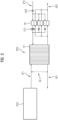
- FIG 3 shows schematically an example of an alternative fuel cell system BZS, which corresponds to the example of FIG 2 is designed to implement the method according to the invention.
- this alternative fuel cell system BZS instead of a single humidifier BF, as in the example of the FIG 2
- three humidifiers BF are arranged in the second feed ZF2 and the second discharge AF2 in order to achieve a higher humidification performance.
- a different number of humidifiers BF can also be used.
- the three humidifiers BF given as examples are connected in parallel, whereby both the air flow in the second feed ZF2 and the cathode exhaust gas in the second discharge AF2 are divided into three partial flows upstream of the humidifier BF and the respective partial flows are recombined into a common flow downstream of the humidifier BF.
- a closable opening VOE is provided in the partial branch of the second feed ZF2 for the installation of a first humidity sensor FS1 downstream of the respective humidifier BF and before the merging of the partial flows.
- further closable openings can be provided for the installation of a second humidity sensor FS2 and a temperature sensor, with these further openings being arranged in the second feed ZF2, outside the partial branches for the three humidifiers BF.
- a first humidity sensor FS1 is used to sequentially determine the respective humidification performance of the three humidifiers BF.
- the maintenance staff mounts the first humidity sensor FS1 one after the other on the closable opening VOE of the partial branch downstream of one of the three humidifiers BF and leaves it there for the specified period of time for the humidity measurements.
- This allows the humidification performance and thus the condition of each of the three humidifiers BF to be determined, so that based on this, different measures can be taken by the maintenance staff, in particular with regard to cleaning or replacement.
- three first humidity sensors FS1 can also be used to enable a parallel and thus faster determination of the condition of the humidifiers.
- the condition of the humidifier BF is determined without installing a second humidity sensor FS2 at the intended closable opening VOE.
- the recirculation branch between the second outlet AF2 and the second inlet ZF2 is closed by means of a valve arranged in the branch, so that the cathode exhaust gas is completely fed to the environment and consequently the supplied air is not mixed with cathode exhaust gas upstream of the humidifier BF.
Landscapes
- Life Sciences & Earth Sciences (AREA)
- Engineering & Computer Science (AREA)
- Manufacturing & Machinery (AREA)
- Sustainable Development (AREA)
- Sustainable Energy (AREA)
- Chemical & Material Sciences (AREA)
- Chemical Kinetics & Catalysis (AREA)
- Electrochemistry (AREA)
- General Chemical & Material Sciences (AREA)
- Fuel Cell (AREA)
Description
- Die Erfindung betrifft ein Verfahren zum Betreiben eines Brennstoffzellensystems in einem Schienenfahrzeug, wobei das Brennstoffzellensystem zumindest einen Befeuchter aufweist.
- Insbesondere im Regional- und Fernverkehr werden Schienenfahrzeuge vorzugsweise mittels einer Oberleitung oder Stromschiene mit elektrischer Energie versorgt. Es existieren üblicherweise jedoch weiterhin Strecken bzw. Streckenabschnitte des Schienennetzes, welche nicht mit einer solchen Infrastruktur ausgerüstet sind. Beispielsweise sind aktuell in der Bundesrepublik Deutschland lediglich ca. 60% des Schienennetzes elektrifiziert. Auf nicht- oder teilelektrifizierten Strecken bzw. Streckenabschnitten werden daher weiterhin Schienenfahrzeuge eingesetzt, welche die für den Antrieb bzw. die Traktion und den Betrieb von Nebenverbrauchern bzw. so genannten Hilfsbetrieben erforderliche Energie mittels Verbrennungskraftmaschinen generieren.
- Um einen im Vergleich zu solchen mit Verbrennungskraftmaschinen betriebenen Schienenfahrzeugen umweltfreundlicheren Betrieb auf solchen Strecken bzw. Streckenabschnitten zu ermöglichen, werden Schienenfahrzeuge zunehmend mit elektrischen Energiespeichern, so genannten Traktionsbatterien, ausgerüstet. Abhängig von einer in den elektrischen Energiespeichern speicherbaren Energiemenge können diese Schienenfahrzeuge eine bestimmte Distanz ohne eine Versorgung über eine Oberleitung zurücklegen. Die Energiespeicher werden bei Befahren elektrifizierter Streckenabschnitte bzw. während eines Halts über eine beispielsweise im Bereich von Haltestellen angeordnete geeignete Ladeinfrastruktur wieder mit elektrischer Energie geladen. Ein Einsatz solcher Energiespeicher eignet sich insbesondere für den Regionalverkehr kürzeren Distanzen zwischen Haltestellen.
- Für den Einsatz im weiteren Regionalverkehr sowie Fernverkehr mit üblicherweise größeren Distanzen zwischen Haltestellen ist die Ausrüstung von Schienenfahrzeugen mit elektrischen Energiespeichern hingegen weniger geeignet, da die in diesen speicherbare elektrische Energie zu gering ist bzw. Gewicht und Ausmaße der hierfür erforderlichen Energiespeicher die Kapazität des Schienenfahrzeugs übersteigen würden.
- Insbesondere im Fernverkehr wird als Alternative zu Traktionsbatterien der Einsatz von Brennstoffzellen als sinnvoll erachtet. Diese generieren mittels eines elektro-chemischen Prozesses aus einem Brennstoff elektrische Energie, mittels welcher Traktionseinrichtungen und Hilfsbetriebe des Schienenfahrzeugs betrieben werden können. Ergänzend zu der eigentlichen Brennstoffzelle und deren Hilfsbetrieben sind hierfür insbesondere ein Brennstoffspeicher sowie ein elektrischer Energiespeicher erforderlich, wobei der elektrische Energiespeicher eine im Vergleich zu einer Traktionsbatterie deutlich geringere Speicherkapazität aufweisen kann, da dieser vorwiegend der Versorgung der Hilfsbetriebe der Brennstoffzelle, insbesondere während der Inbetriebnahme der Brennstoffzelle, sowie als Pufferspeicher dem Ausgleich kurzzeitiger Lastschwankungen dient.
- Als besonders geeignet für den Einsatz in Schienenfahrzeugen wird eine Membran-Brennstoffzelle, bekannt unter den Begriffen Protonenaustauschmembran-Brennstoffzelle (Engl. Proton Exchange Membrane Fuel Cell, PEMFC) bzw. Polymer-Elektrolyt-Brennstoffzelle (Engl. Polymer Electrolyte Fuel Cell, PEFC), angesehen, da diese sowohl schnelle Lastwechsel zulässt als auch mit Lastwechseln verbundene Temperaturschwankungen im Vergleich zu anderen bekannten Brennstoffzellentypen gut kompensieren kann. Nachfolgend wird dieser Brennstoffzellentyp als PEM-Brennstoffzelle bezeichnet. Die Arbeitstemperatur einer PEM-Brennstoffzelle liegt unterhalb von 100°C, typischerweise im Bereich zwischen 60°C und 80°C, weshalb sie der Gruppe der Niedertemperatur-Brennstoffzellen mit Betriebstemperaturen zwischen 60°C und 130°C zugeordnet ist. Brennstoffzellentypen werden nach dem jeweils verwendeten Elektrolyten unterschieden.
-
DE 10 2018 212420 offenbart zum Beispiel PEM Brennstoffzellen mit einem Befeuchter die in Schienenfahrzeugen verwendet werden. - In einer PEM-Brennstoffzelle übernimmt eine dünne, gasdichte und protonenleitende Kunststofffolie die Funktion des Elektrolyten und wirkt als Separator für die gasförmigen Reaktanten Wasserstoff (als Brenngas) und Sauerstoff (als Oxidationsgas), wobei letzterer der Brennstoffzelle als Bestandteil der Umgebungsluft zugeführt wird. Die zentrale Membran-Elektroden-Einheit (Engl. Membrane Electrode Assembly, MEA) ist das aktive Element der Brennstoffzelle. Diese besteht aus zwei durch den Elektrolyten voneinander getrennten Elektroden, einer Anode und einer Kathode, und ist beidseitig jeweils mit einem Gasverteiler und einem Stromableiter kontaktiert, wobei die Gasverteiler einer Gaszufuhr und Gasabfuhr dienen. Eine PEM-Brennstoffzelle wird durch eine Vielzahl in einem Stapel (Engl. Stack) angeordneter MEA gebildet, die elektrisch in Reihe geschaltet sind, um eine höhere Spannung und damit eine höhere mögliche Leistung der Brennstoffzelle zu erzielen.
- Bei Zuführung von Wasserstoff zu der Anode und Sauerstoff zu der Kathode entsteht zwischen den beiden Elektroden eine Potenzialdifferenz. An der Anode oxidiert der Wasserstoff und es entstehen Wasserstoffionen bzw. Protonen, die durch die protonenleitende Membran zu der Kathode wandern. Die Membran stellt für die Elektronen hingegen ein Isolator dar, weshalb diese über einen äußeren Stromkreis, in welchen eine Last geschaltet ist, von der Anode zur Kathode transportiert werden, wodurch der elektrische Stromkreis geschlossen wird. An der Kathode reagieren die Wasserstoffionen mit dem Sauerstoff der Luft und als Reaktionsprodukt entsteht Wasser, auch als Reaktionswasser bzw. Produktwasser bezeichnet.
- Eine besondere Herausforderung beim Betrieb einer PEM-Brennstoffzelle stellt das so genannte Wassermanagement dar. Die Protonenleitfähigkeit der Membran ist insbesondere von dem Wassergehalt bzw. von der Feuchte der Membran, welcher bzw. welche von Faktoren wie der Stromdichte, der Feuchte der Reaktanten sowie der Temperatur beeinflusst wird. Eine zu geringe Feuchte der Membran führt zu einer reduzierten Protonenleitfähigkeit und damit zu einer Verringerung der Leistung sowie schließlich zu einer Degradation der Brennstoffzelle. Eine Flutung der Kathode mit Reaktionswasser hingegen kann zu einer Blockierung von Kanälen des kathodenseitigen Gasverteilers führen, wodurch die Funktion der Zelle ebenfalls eingeschränkt wird. Für den effizienten Betrieb der PEM-Brennstoffzelle ist es daher von Bedeutung, dass einerseits ausreichend Wasser in der Zelle verbleibt, andererseits eine exzessive Bildung von Reaktionswasser vermieden wird.
- Insbesondere in Brennstoffzellensystemen höherer Leistung, wie sie in Schienenfahrzeugen eingesetzt werden sollen, wird eine ausreichende Feuchte der Membran durch Einsatz zusätzlicher Befeuchter zur Befeuchtung der Reaktanten stromaufwärts der Brennstoffzelle sichergestellt. Für PEM-Brennstoffzellen niedrigerer Leistung ist ein Einsatz zusätzlicher Befeuchter hingegen üblicherweise nicht erforderlich.
- Bekannte Befeuchter sind ähnlich einem Wärmetauscher aufgebaut, wobei beispielsweise eine Vielzahl von Röhrchen aus einem Membranmaterial oder eine flächige Membran, insbesondere eine hydrophile Polymermembran, den zu befeuchtenden Reaktanten von einem Befeuchtergas bzw. von Wasser trennt. Unterschieden wird dabei zwischen einem so genannten Gas/Gas-Befeuchter, in welchem ein Befeuchtergas mit einer hohen Feuchte bzw. Wasserdampfkonzentration zur Befeuchtung des Reaktanten dient, und einem so genannten Wasser/Gas-Befeuchter, in welchem durch den Befeuchter zirkulierendes Wasser der Befeuchtung des Reaktanten dient.
- In Gas/Gas-Befeuchtern bewirken Ionenkanäle der Membran, dass Wasser aus dem Befeuchtergas gebunden, in Richtung des Partialdruckgefälles transportiert und von dem trockeneren Reaktanten aufgenommen wird. Als Befeuchtergas ist insbesondere das Kathodenabgas der Brennstoffzelle verwendbar, welches aufgrund des kathodenseitig anfallenden Reaktionswassers eine hohe Feuchte aufweist. Vorteilhaft ist dieses einerseits bereits energieneutral in dem Brennstoffzellensystem verfügbar, andererseits wird zusammen mit der Feuchte auch dessen Wärme auf den Reaktanten übertragen.
- Die Membranen der Befeuchter sind bei einem Einsatz in Schienenfahrzeugen einerseits hohen mechanischen Belastungen, insbesondere hervorgerufen durch Vibrationen und Stöße, andererseits einer Beladung durch Partikel und anderen Kontaminanten wie beispielsweise Salze, Stickoxide oder Verbundstoffe mit Schwefel oder Ammoniak ausgesetzt, welche trotz dem Befeuchter in der Zuführung vorgeschalteter Luftfilter, insbesondere wenn diese stärker oder vollständig mit Kontaminanten beladen sind, in der zugeführten Luft enthalten sind. Solche Partikel und Kontaminanten führen zu einer Verringerung des Wassertransports durch die Membran und damit zu einer Verringerung der Befeuchtungsleistung des Befeuchters.
- Zur Sicherstellung einer effizienten Funktion des einen bzw. der mehreren Befeuchter und damit der Funktion der PEM-Brennstoffzelle während des Betriebs in einem Schienenfahrzeug muss dessen bzw. deren Membran daher regelmäßig gereinigt bzw. bei Beschädigung getauscht werden. Ein solcher Tausch kann auf Basis eines festen Tauschintervalls zwischen 5.000 und 10.000 Betriebsstunden, welches beispielsweise herstellerseitig für bekannte Befeuchter empfohlen wird, erfolgen. Dieses bedeutet jedoch nachteilig, dass über den Einsatzzeitraum eines Schienenfahrzeugs von typischerweise 30 Jahren hohe Betriebskosten bereits für die Aufrechterhaltung der Funktion des bzw. der Befeuchter des Brennstoffzellensystems entstehen.
- Aufgabe der Erfindung ist es daher, ein Verfahren zum Betreiben eines Brennstoffzellensystems für ein Schienenfahrzeug anzugeben, welches insbesondere eine Verringerung der Betriebskosten im Zusammenhang mit eingesetzten Befeuchtern ermöglicht. Diese Aufgabe wird durch das Verfahren mit den Merkmalen des unabhängigen Patentanspruchs gelöst. Weiterbildungen der Erfindung sind in abhängigen Patentansprüchen angegeben.
- Ein in einem Schienenfahrzeug eingesetztes Brennstoffzellensystem weist zumindest einen PEM-Brennstoffzellenstapel, eine erste Zuführung, welche dazu ausgestaltet ist, Wasserstoff als Brenngas einer Anodenseite des Brennstoffzellenstapels zuzuführen, eine zweite Zuführung, welche dazu ausgestaltet ist, Luft als Oxidationsgas einer Kathodenseite des Brennstoffzellenstapels zuzuführen, sowie zumindest einen Befeuchter, welcher in der zweiten Zuführung angeordnet ist und dazu ausgestaltet ist, dem Brennstoffzellenstapel zugeführte Luft zu befeuchten, auf. Erfindungsgemäß wird eine Reinigung und/oder ein Austausch des zumindest einen Befeuchters abhängig von einem vorgegebenen Alterungsmodell durchgeführt wobei das Alterungsmodell abhängig von Betriebsbedingungen des Schienenfahrzeugs definiert wird.
- Erfindungsgemäß wurde erkannt, dass aufgrund einer Durchführung einer Reinigung und/oder eines Austauschs des zumindest einen Befeuchters auf Basis eines Alterungsmodells der PEM-Brennstoffzellenstapel vorteilhaft einerseits mit einer hohen Effizienz bei langer Betriebsdauer betreibbar ist, andererseits Kosten für Ersatz und Arbeitskosten, welche insbesondere aufgrund von eine jeweilige Demontage des Befeuchters erfordernden Sichtprüfungen und Reinigungsarbeiten durch Wartungspersonal entstehen, gegenüber vorgegebenen festen Zeitintervallen vorteilhaft deutlich verringert werden können. Besonders ausgeprägt können diese Vorteile verwirklicht werden, wenn eine die Betriebsbedingungen des Schienenfahrzeugs und damit des Brennstoffzellensystems bekannt sind, sodass das Alterungsmodell entsprechend diesen Bedingungen definiert werden kann.
- Ein Alterungsmodell definiert eine erwartete Verringerung der Befeuchtungsleistung des Befeuchters über der Zeit und in Abhängigkeit von den Betriebsbedingungen des Schienenfahrzeugs. Betriebsbedingungen betreffen insbesondere herrschende Umgebungs- bzw. Umweltbedingungen auf der von dem Schienenfahrzeug zu befahrenden Strecke. Umgebungs- bzw. Umweltbedingungen sind beispielsweise Belastungen der Umgebungsluft mit Partikeln sowie bestimmten chemische Verbindungen, welche als Kontaminanten wirkend die Funktion der Befeuchtungsmembran und damit die Befeuchtungsleistung des Befeuchters beeinträchtigen können. Insbesondere sind beispielsweise die Belastungen in Städten und Industrieregionen und jene in Gebieten mit landwirtschaftlicher Nutzung unterschiedlich. Da derartige Belastungen insbesondere temporär auftreten, sollte das Alterungsmodell vorzugsweise auch temporäre Änderungen der Umgebungs- bzw. Umweltbedingungen, insbesondere jahreszeitabhängige Änderungen, berücksichtigen. Weiterhin betreffen die Betriebsbedingungen beispielsweise auf den Befeuchter bzw. auf die Befeuchtungsmembran wirkende mechanische Belastungen, welche mechanische Schädigungen und damit ebenfalls eine Verringerung der Befeuchtungsleistung bewirken können.
- Verschiedene Alterungsmodelle können definiert werden, welche jeweils unterschiedliche Betriebsbedingungen berücksichtigen. Entsprechend wird beispielsweise ein Alterungsmodell ausgewählt, welches auf Betriebsbedingungen basierend definiert wurde, die mit denen der von dem Schienenfahrzeug befahrenen Strecke weitgehend übereinstimmen, sodass vorteilhaft Reinigungsarbeiten bzw. ein Austausch des bzw. der in dem Schienenfahrzeug eingesetzten Befeuchter zustandsabhängig durchgeführt werden kann. Sollten während des Betriebs des Schienenfahrzeugs größere Abweichungen des tatsächlichen Zustands von dem gemäß dem Alterungsmodell erwarteten Zustand des zumindest einen Befeuchters festgestellt werden, so kann eine entsprechende Anpassung des Alterungsmodells erfolgen bzw. ein anderes, die Betriebsbedingungen genauer widerspiegelndes Alterungsmodell gewählt werden.
- Zur Erzielung der erforderlichen Befeuchtungsleistung können ein einziger oder mehrere Befeuchter vorgesehen sein. Die mehreren Befeuchter können dabei parallel angeordnet sein, wobei durch jeden Befeuchter nur ein Teilstrom der Luft geführt wird und die Teilströme stromabwärts der Befeuchter vorzugsweise wieder zusammengeführt werden, oder seriell angeordnet sein, wobei in jedem der Befeuchter eine Teilbefeuchtung der Luft erfolgt.
- Gemäß einer Weiterbildung der Erfindung weist das Brennstoffzellensystem ferner zumindest einen Feuchtesensor auf, welcher ausschließlich temporär in der zweiten Zuführung stromabwärts des zumindest einen Befeuchters angeordnet wird, wobei mittels des zumindest einen Feuchtesensors eine Feuchte der dem Brennstoffzellenstapel zugeführten Luft bestimmt wird.
- Das Brennstoffzellensystem in dem Schienenfahrzeug sieht bewusst von einer aktiven Steuerung des Befeuchtungsgrads der dem Brennstoffzellenstapel zugeführten Luft ab, wie sie insbesondere in Kraftfahrzeugen mit einer Brennstoffzelle eingesetzt wird. In diesen wird mittels einer parallel zum Befeuchter angeordneten Bypass-Leitung, einem steuerbaren Bypass-Ventil sowie einem Feuchtesensor die Feuchte des kathodenseitigen Reaktanten gesteuert. Die vorteilhafte Wirkung einer solchen Steuerung, insbesondere bei Anordnung des Befeuchters entfernt von dem Brennstoffzellenstapel, konnte bislang nicht nachgewiesen werden, zudem stellen die genannten zusätzlichen Komponenten wiederum jeweils potenzielle Fehlerquellen für die Funktion des Brennstoffzellensystems dar. Der zumindest eine Befeuchter des Brennstoffzellensystems, in welchem das erfindungsgemäße Verfahren Anwendung findet, ist bezüglich der Befeuchtungsleistung beispielsweise derart dimensioniert, dass die Feuchte des kathodenseitigen Reaktanten im Bereich zwischen 80% und 95% liegt. Die Möglichkeit eines Ausgleichs einer über die Zeit geringer werdenden Befeuchtungsleistung des Befeuchters durch Ansteuerung eines Bypass-Ventils ist in dem Brennstoffzellensystem somit nicht vorgesehen.
- Erfindungsgemäß wird der zumindest eine Feuchtesensor ausschließlich temporär in der zweiten Zuführung angeordnet, um eine aktuelle Feuchte der dem Brennstoffzellenstapel kathodenseitig zugeführten Luft zu bestimmen. Diese temporäre Anordnung und Bestimmung erfolgt beispielsweise während einer Außerbetriebsetzung des Schienenfahrzeugs, also während das Schienenfahrzeug nicht für den Personen- oder Gütertransport eingesetzt wird. Eine solche Außerbetriebsetzung erfolgt beispielsweise regelmäßig zur Wartung weiterer Komponenten und Einrichtungen des Schienenfahrzeugs sowie insbesondere zu Reinigungszwecken. Für die Bestimmung der Feuchte der zugeführten Luft mittels des zumindest einen Feuchtesensors ohne Demontage des zumindest einen Befeuchters ist ein Betrieb des Brennstoffzellensystems des Schienenfahrzeugs erforderlich.
- Hierzu wird der Feuchtesensor an einer für dessen Montage vorgesehenen Stelle der zweiten Zuführung von Wartungspersonal montiert. Hierfür kann beispielsweise eine verschließbare Öffnung in der zweiten Zuführungen vorgesehen sein, welche während des normalen Betriebs des Schienenfahrzeugs verschlossen ist, während Wartungsarbeiten jedoch von Wartungspersonal geöffnet werden kann, um einen Feuchtesensor in die zweite Zuführung zur Durchführung von Messungen einzuführen. Vorzugsweise weist der zumindest eine Feuchtesensor ergänzend einen Temperatursensor auf bzw. ist mit diesem in einem gemeinsamen Gehäuse angeordnet, wobei ein Temperatursensor auch getrennt von dem Feuchtesensor in der zweiten Zuführung angeordnet werden kann.
- Der Feuchtesensor ist beispielsweise mit einer Auswerteeinrichtung, insbesondere einem geeigneten elektronischen Handgerät des Wartungspersonals, einer Steuereinrichtung des Brennstoffzellensystems oder einer Steuereinrichtung des Schienenfahrzeugs kommunikationstechnisch verbunden. Eine Auswerteeinrichtung dient insbesondere dazu, basierend auf den von dem Feuchtesensor sowie insbesondere dem Temperatursensor bereitgestellten Informationen eine aktuelle Befeuchtungsleistung des Befeuchters zu bestimmen. Die bestimmte Befeuchtungsleistung wird von der Auswerteeinrichtung anschließend mit einer für den Zeitpunkt der Bestimmung erwarteten Befeuchtungsleistung gemäß dem Alterungsmodells verglichen, welches beispielsweise in einem Speicherbereich der Auswerteeinrichtung hinterlegt ist.
- Sofern dieser Vergleich ergibt, dass die bestimmte Befeuchtungsleistung der erwarteten entspricht bzw. innerhalb eines vorgegebenen Toleranzbands um die erwartete Befeuchtungsleistung liegt, erfolgt beispielsweise eine Ausgabe einer entsprechenden Information über den Zustand des Befeuchters an das Wartungspersonal durch die Auswerteeinrichtung. Ergibt der Vergleich hingegen, dass die bestimmte Befeuchtungsleistung außerhalb des Toleranzbandes liegt, kann ein entsprechender Hinweis auf eine erforderliche Anpassung des Zeitpunkts einer nächsten Reinigung des Befeuchters bzw. eines Austausches von der Auswerteeinrichtung oder einer mit dieser verbundenen optischen und/oder akustischen Ausgabeeinrichtung ausgegeben werden. Insbesondere wenn die bestimmte Befeuchtungsleistung die erwartete Befeuchtungsleistung übersteigt, kann eine Reinigung bzw. ein erforderlicher Austausch des Befeuchters vorteilhaft erst zu einem späteren Zeitpunkt als nach dem Alterungsmodell vorgesehen erfolgen. In gleicher Weise kann, wenn die bestimmte Befeuchtungsleistung die erwartete Befeuchtungsleistung unterschreitet, der entsprechende Hinweis das Wartungspersonal beispielsweise zunächst dazu veranlassen, eine Sichtprüfung des Befeuchters vorzunehmen, um bei Feststellung einer mechanischen Beschädigung oder einer starken Beladung des Membranmaterials einen sofortigen Austausch vorzunehmen oder einen Zeitpunkt einer nachfolgenden Sichtprüfung bzw. eines erforderlichen Austauschs manuell anpassen zu können.
- Zur Bestimmung der Befeuchtungsleistung kann ein weiterer Feuchtesensor, welcher von Wartungspersonal an einer für dessen Montage vorgesehenen Stelle stromaufwärts des Befeuchters in der zweiten Zuführung montiert wird, ergänzend vorgesehen werden. Aus den von den beiden Feuchtesensoren jeweils bereitgestellten Informationen kann eine Differenz der Feuchten und daraus eine Befeuchtungsleistung durch die Auswerteeinrichtung bestimmt werden kann.
- Sofern in der zweiten Zuführung des Brennstoffzellensystems mehrere Befeuchter vorgesehen sind, wird vorzugsweise die Befeuchtungsleistung jedes einzelnen der Befeuchter bestimmt. Bei einer Parallelschaltung der mehreren Befeuchter wird der Feuchtesensor wiederum an einer für dessen Montage vorgesehenen Stelle der zweiten Zuführung von Wartungspersonal montiert. Die für die Montage des Feuchtesensors vorgesehene Stelle sollte dabei stromaufwärts einer Zusammenführung der parallelen Zweige in eine gemeinsame zweite Zuführung angeordnet sein, um die Befeuchtungsleistung des betrachteten Befeuchters unabhängig von den weiteren Befeuchtern bestimmen zu können. Bei einer Serienschaltung wird hingegen ein jeweiliger Feuchtesensor stromaufwärts und stromabwärts des betrachteten Befeuchters an einer jeweils vorgesehenen Stelle der zweiten Zuführung montiert. Mittels der zwei dem Befeuchter vor- und nachgeschalteten Feuchtesensoren kann eine Differenz der Feuchten und daraus die Befeuchtungsleistung des betrachteten Befeuchters bestimmt werden. Alternativ kann die jeweilige Befeuchtungsleistung auch bei einer Serienschaltung mittels lediglich eines Feuchtesensors bestimmt werden, wenn beginnend mit dem in Strömungsrichtung der zugeführten Luft ersten Befeuchter eine jeweilige Differenz zu der Feuchte der Umgebungsluft bzw. der Abluft des jeweils vorgeschalteten Befeuchters bestimmt wird. Sowohl bei einer parallelen als auch einer seriellen Anordnung mehrerer Befeuchter in der zweiten Zuführung kann die Bestimmung der jeweiligen Befeuchtungsleistung sequenziell oder parallel erfolgen, wobei eine sequenzielle Bestimmung vorteilhaft nur einen bzw. Feuchtesensor bzw. zwei Feuchtesensoren bei einer Differenzbestimmung erfordert.
- Die für die Bestimmung des aktuellen Zustands des Befeuchters verwendete Auswerteeinrichtung kann, wie vorstehend bereits genannt, als Teil einer Steuereinrichtung verwirklicht sein, welche einer Steuerung von insbesondere steuerbaren Komponenten und Hilfsbetriebe des Brennstoffzellensystems dient. Alternativ kann die Auswerteeinrichtung jedoch auch unabhängig von dem Brennstoffzellensystem verwirklicht, mit dieser jedoch kommunikationstechnisch verbunden sein. Den bestimmten Zustand des Befeuchters repräsentierende Informationen können wiederum einer übergeordneten Überwachungseinrichtung auf Ebene des Fahrzeugs zugeführt werden, in welcher insbesondere alle den jeweiligen Zustand der verschiedenen Komponenten des Brennstoffzellensystems bzw. des Schienenfahrzeugs repräsentierenden Informationen zusammengeführt werden. Die aggregierten Informationen können von der übergeordneten Einrichtung dann als Basis für die Planung und Durchführung erforderlichen Wartungsarbeiten durch Wartungspersonal insbesondere an dem Brennstoffzellensystem dienen. Die übergeordnete Überwachungseinrichtung kann alternativ oder ergänzend auch außerhalb des Schienenfahrzeugs vorgesehen sein, welche über geeignete Kommunikationsschnittstellen mit dem Schienenfahrzeug verbunden ist.
- Gemäß einer weiteren Weiterbildung der Erfindung weist das Brennstoffzellensystem ferner eine erste Abführung, welche ausgestaltet ist, ein Anodenabgas abzuführen, sowie eine zweite Abführung, welche ausgestaltet ist, ein Kathodenabgas abzuführen, auf. Der zumindest eine Befeuchter ist dabei ebenfalls in der zweiten Abführung angeordnet, wobei die zugeführte Luft mittels des Kathodenabgases in dem Befeuchter befeuchtet wir.
- Der zumindest eine Befeuchter ist entsprechend den einleitenden Erläuterungen beispielsweise als ein Gas/GasBefeuchter verwirklicht, mittels welchem in dem eine höhere Feuchte als die zugeführte Luft führendes Kathodengas zur Befeuchtung der Luft verwendet wird.
- Einer weiteren Weiterbildung der Erfindung wird das Alterungsmodell abhängig von Umgebungs- und Umweltbedingungen einer von dem Schienenfahrzeug befahrenen Strecke, definiert.
- Wie vorstehend bereits beschrieben, können durch Verwendung eines existierende Betriebsbedingungen des Schienenfahrzeugs berücksichtigenden Alterungsmodells vorteilhaft insbesondere Kosten für eine Reinigung und/oder einen Austausch des zumindest einen Befeuchters verringert werden sowie ein effizienter Betrieb des Brennstoffzellensystems bei langer Betriebsbereitschaft sichergestellt werden.
- Ausführungsbeispiele der Erfindung werden nachfolgend unter Bezugnahme auf Figuren beschrieben. Dabei zeigen:
- FIG 1
- ein Schienenfahrzeug,
- FIG 2
- ein Brennstoffzellensystem mit einem kathodenseitigen Befeuchter sowie Feuchtesensoren, und
- FIG 3
- ein Brennstoffzellensystem mit drei kathodenseitig parallel geschalteten Befeuchtern sowie einem Feuchtesensor.
-
FIG 1 zeigt eine schematische Seitenansicht eines Schienenfahrzeugs, welches beispielsweise als ein Triebzug TZ mit einer Mehrzahl Wagen für die Personenbeförderung ausgestaltet ist, wobei lediglich ein erster Wagen in Form eines Endwagens EW sowie ein mit diesem gekuppelter zweiter Wagen in Form eines Mittelwagens MW beispielhaft dargestellt sind. Abhängig von der gewünschten Anzahl beförderbarer Personen weist ein Triebzug üblicherweise zwei Endwagen sowie eine Anzahl Mittelwagen auf. In einer Mindestkonfiguration kann ein Triebzug jedoch auch aus lediglich zwei Endwagen bestehen. Alternativ kann das Schienenfahrzeug jedoch in gleicher Weise als ein Triebwagen oder eine Lokomotive ausgestaltet sein. Die in derFIG 1 dargestellten Endwagen EW und Mittelwagen MW verfügen über einen jeweiligen Wagenkasten WK, der sich über jeweils zwei Drehgestelle DG in Form von Trieb- oder Laufdrehgestellen auf nicht dargestellten Schienen der zu befahrenden Strecke abstützt. Alternativ zu der angegebenen Anordnung von Drehgestellen können sich das hintere, rechte Ende des Endwagens EW und das vordere, linke Ende des Mittelwagens MW auch auf einem gemeinsamen Drehgestell, insbesondere auf einem so genannten Jakobs-Drehgestell, abstützen. Der Endwagen EW ist bezüglich der Längsachse L bzw. horizontalen Achse beispielhaft in mehrere räumliche Bereiche unterteilt. Diese Bereiche sind zum einen ein Führerstand FS im vorderen Bereich, zum anderen ein an den Führerstand FS angrenzender Fahrgastraum FR. Der Mittelwagen MW weist hingegen ausschließlich einen Fahrgastraum FR auf. Die Fahrgasträume FR der Wagen EW, MW können von Fahrgästen über in Seitenwänden des jeweiligen Wagenkastens WK angeordnete, nicht dargestellte Türen betreten und verlassen werden. Weiterhin können Fahrgäste über einen Wagenübergang in den Fahrgastraum eines jeweils benachbarten Wagens gelangen. - Auf dem Dach sowie unter dem Boden bzw. im Unterflurbereich des Wagenkastens WK des Endwagens EW sind beispielhaft mehrere Container für Komponenten und elektrische Geräte als Bestandteile der elektrischen Ausrüstung des Triebzugs TZ angeordnet. Diese dienen beispielsweise sowohl der Energieerzeugung als auch dem Antrieb bzw. der Traktion sowie diversen Hilfsbetrieben des Triebzugs TZ.
- Der beispielhafte Triebzug TZ ist für einen Betrieb auf nicht oder nur teilelektrifizierten Strecken des Schienennetzes vorbereitet. Aus diesem Grund verfügt der Triebzug TZ nicht über einen mit einer netzseitigen Oberleitung verbindbaren Stromabnehmer, über welchen dem Triebzug TZ elektrische Energie für dessen Betrieb zugeführt werden kann. Vielmehr wird die für den Betrieb des Triebzugs TZ erforderliche elektrische Energie mittels eines auf dem Fahrzeug angeordneten Brennstoffzellensystems BZS generiert. Mechanische und elektrische Hauptkomponenten des Brennstoffzellensystems BZS, insbesondere ein PEM-Brennstoffzellenstapel, ein Verdichter, Luftfilter sowie ein oder mehrere Befeuchter, sind nach dem Beispiel der
FIG 1 in einem Brennstoffzellencontainer BZC auf dem Dach des Endwagens EW des Triebzugs TZ angeordnet. Der für den Betrieb des Brennstoffzellensystems BZS erforderliche Brennstoff, beispielsweise Wasserstoff, ist in einem Brennstoffspeicher BSS gelagert, welcher beispielhafte ebenfalls auf dem Dach des Endwagens EW angeordnet und über geeignete Leitungen bzw. Rohre fluidtechnisch mit dem Brennstoffzellencontainer verbunden ist. Ergänzend ist auf dem Dach des Endwagens EW ein Klimatisierungscontainer KC angeordnet, in welchem beispielsweise sowohl elektrische und mechanische Komponenten für die Klimatisierung des Fahrgastraums FR des Endwagens EW als auch Komponenten insbesondere für eine Temperierung von Komponenten des Brennstoffzellensystems BZS untergebracht sind. - Im Unterflurbereich des Endwagens EW ist hingegen ein Traktionsbatteriecontainer TBC für eine von dem Brennstoffzellensystem BZS über einen Gleichspannungssteller speisbare Traktionsbatterie vorgesehen. Ferner ist im Unterflurbereich des Endwagens EW beispielhaft ein Stromrichtercontainer SRC für einen Traktionsstromrichter vorgesehen, welcher insbesondere mit der Traktionsbatterie verbunden ist und Fahrmotoren mit elektrischer Energie versorgt. Die Fahrmotoren sind beispielsweise in den als Triebdrehgestelle ausgestalteten Drehgestellen DG des Endwagens EW angeordnet, wobei in weiteren Drehgestellen des Triebzugs TZ, insbesondere abhängig von der benötigten maximalen Antriebsleistung, weitere Fahrmotoren angeordnet sein können.
- Neben den aufgeführten Containern und darin angeordneten Systemen und Komponenten können weitere, nicht speziell dargestellte jedoch für den Betrieb des Triebzugs erforderliche Komponenten und Einrichtungen, insbesondere Einrichtungen zur Steuerung der diversen Systeme und Komponenten, in oder an dem Wagenkasten WK des Endwagens EW vorgesehen sein. Auch ist eine Verteilung der verschiedenen Container und Komponenten auf mehrere Wagen des Triebzugs TZ möglich, insbesondere um vorgegebene maximale Radlasten nicht zu überschreiten. Ebenfalls können die aufgeführten Container, Systeme und Komponenten jeweils mehrfach in dem Triebzug TZ vorgesehen sein, insbesondere um die generierbare elektrische Energie und damit mögliche Traktionsleistung zu erhöhen.
-
FIG 2 zeigt schematisch ein beispielhaftes Brennstoffzellensystem BZS für den Triebzug TZ derFIG 1 , welches ausgestaltet ist, das erfindungsgemäße Verfahren umzusetzen. Dabei sind zur Vereinfachung der Darstellung nicht alle für den Betrieb des Brennstoffzellensystems BZS erforderlichen mechanischen und elektrischen Komponenten dargestellt. Das Brennstoffzellensystem BZS umfasst als zentrale Komponente eine PEM-Brennstoffzelle mit einer Vielzahl in einem Stapel ST angeordneter und elektrisch in Reihe geschalteten Membran-Elektroden-Einheiten. Eine von dem Brennstoffzellensystem BZS generierbare Leistung kann beispielsweise im Bereich von mehreren hundert Kilowatt liegen. - Dem Brennstoffzellenstapel ST werden die beiden für den elektro-chemischen Prozess erforderlichen Reaktanten Wasserstoff sowie Sauerstoff zugeführt. Die Anodenseite des Brennstoffzellenstapels ST ist hierfür über eine erste Zuführung ZF1 mit dem Brennstoffspeicher BSS verbunden. Ein in dieser ersten Zuführung ZF1 angeordnetes, nicht dargestelltes, Druckregelventil dient dabei der Einstellung eines gewünschten Drucks des gasförmigen Wasserstoffs. Die Zufuhr des Wasserstoffs erfolgt überstöchiometrisch, dem Brennstoffzellenstapel ST wird also mehr Wasserstoff zugeführt als dieser verbraucht. Der während des Prozesses nicht verbrauchte Wasserstoff wird als Anodenabgas der ersten Zuführung ZF1 über eine erste Abführung AF1 abgeführt bzw. über einen die erste Zuführung ZF1 und die erste Abführung AF1 verbindenden Rezirkulationszweig RZ wieder zugeführt und mit nachströmenden Wasserstoff vermischt. Weitere nicht dargestellte Komponenten wie insbesondere ein Wasserabscheider zum Abscheiden von in das Anodenabgas gelangendem Reaktionswasser, ein so genanntes Purge-Ventil zum Ablassen von Stickstoff sowie ein Druckablassventil für einen Schutz der Brennstoffzelle vor Überdruck können ebenfalls auf der Anodenseite des Brennstoffzellensystems BZS vorgesehen sein.
- Der Kathodenseite des Brennstoffzellenstapels ST wird hingegen sauerstoffhaltige Umgebungsluft über eine zweite Zuführung ZF2 zugeführt. Die Luft wird hierfür über einen in der zweiten Zuführung ZF2 angeordneten elektrisch betriebenen Luftverdichter aus der Umgebung des Triebzugs TZ angesaugt und mittels eines oder mehrerer nachgeschalteter Luftfilter von Partikeln und chemischen Verbindungen, welche die Membranen des Brennstoffzellenstapels ST beschädigen bzw. deren Funktion beeinträchtigen können, befreit. Luftverdichter und Luftfilter sind wiederum nicht gesondert dargestellt. Die Zufuhr des Sauerstoffs erfolgt ebenfalls überstöchiometrisch, dem Brennstoffzellenstapel ST wird also auch mehr Sauerstoff zugeführt als dieser verbraucht. Das Kathodenabgas wird über eine zweite Abführung AF2 an die Umgebung abgeführt.
- Weiterhin ist in der zweiten Zuführung ZF2 ein Befeuchter BF stromabwärts des einen bzw. der mehreren Luftfilter angeordnet. Wie vorstehend bereits ausgeführt, dient die Befeuchtung der Luft der Vermeidung eines Austrocknens der Membranen des Brennstoffzellenstapels. In dem beispielhaften Brennstoffzellensystem BZS der
FIG 2 ist der Befeuchter BF als ein Gas/Gas-Befeuchter ausgestaltet und ebenfalls in der zweiten Abführung AF2 stromabwärts des Brennstoffzellenstapels ST angeordnet. Das aufgrund des in dem Brennstoffzellenstapel ZF vorhandenen, während des elektro-chemischen Prozesses entstehenden Reaktionswassers feuchte Kathodenabgas bewirkt in dem Befeuchter BF eine Befeuchtung der durchströmenden gereinigten Luft. Der Befeuchter BF kann beispielsweise als Gleichstrom- oder Gegenstrom-Befeuchter ausgestaltet sein. Für eine Steuerung des Luftmassenstroms kann ergänzend ein Druckventil beispielsweise in der zweiten Zuführung ZF2 bzw. der zweiten Abführung AF2 vorgesehen sein, welches ebenfalls nicht dargestellt ist. - Wie einleitend bereits ausgeführt, unterliegt insbesondere der Befeuchter während des Fahrbetriebs des Schienenfahrzeugs einerseits hohen mechanischen Belastungen, welche insbesondere durch Vibrationen und Stöße hervorgerufen werden, andererseits einer Beladung der die Luftströme trennenden Membran durch Partikel und andere Kontaminanten, welche mit ebenfalls steigender Beladung des bzw. der vorgeschalteter Luftfilter in der zugeführten Luft enthalten sind. Sowohl mechanische Beschädigungen als auch eine Beladung durch Partikel und andere Kontaminanten führen zu einer Verringerung der Kapazität der Membran, Wasser dem Kathodenabgas zu entziehen und der trockeneren Zuluft zuzuführen, und damit zu einer Abnahme der Befeuchtungsleistung des Befeuchters BF. Da eine verringerte Befeuchtungsleistung direkte Auswirkungen sowohl auf die generierbare Leistung des Brennstoffzellensystems als auch speziell auf die Haltbarkeit der in dem Brennstoffzellenstapel ST eingesetzten Membranen hat, muss eine möglichst konstant hohe Befeuchtungsleistung des Befeuchters BF während des Betriebs des Brennstoffzellensystems BZS sichergestellt werden.
- Im Unterschied zu einem festen Reinigungs- und/oder Tauschintervall für den Befeuchter BF des Brennstoffzellensystems BZS, wie es aktuell von dem Hersteller des Befeuchters vorgegeben wird, erfolgt erfindungsgemäß eine zustandsabhängige Reinigung bzw. ein zustandsabhängiger Tausch des Befeuchters BF bzw. der darin angeordneten Membran, sofern diese separat getauscht werden kann. Die zustandsabhängige Reinigung bzw. der Tausch erfolgt dabei auf Basis eines vorgegebenen Alterungsmodells, welches aus einer Mehrzahl für unterschiedliche Einsatzbedingungen des Schienenfahrzeugs definierter Alterungsmodelle gewählt wird. Entsprechend dem ausgewählten vorgegebenen Alterungsmodell wird von Wartungspersonal eine Reinigung insbesondere der Membran bzw. ein vollständiger Austausch des Befeuchters BF vorgenommen. Eine solche Tätigkeit erfordert einen direkten Zugriff auf den Befeuchter BF, welcher nach der vorstehenden Beschreibung zu der
FIG 1 als Teil der hauptsächlichen Komponenten des Brennstoffzellensystems BZS in dem Brennstoffzellencontainer BZC auf dem Dach des Endwagens EW des Triebzugs TZ angeordnet ist. Die Reinigung bzw. der Austausch an diesem schwer zugänglichen Bereich des Triebzugs TZ bedeutet somit einen großen Arbeitsaufwand für das Wartungspersonal, gleichzeitig stellt ein Austausch des Befeuchters einen über die Betriebsdauer des Schienenfahrzeugs von typischerweise 30 Jahren gesehen bedeutenden Kostenfaktor dar. Durch Wahl eines Alterungsmodells, welches die realen Betriebsbedingungen des Brennstoffzellensystems BZS möglichst genau widerspiegelt, kann somit eine deutliche Kostenersparnis gegenüber fest vorgegebenen Intervallen erzielt werden. - Die Qualität der Abbildung der tatsächlichen Verringerung der Befeuchtungsleistung durch das Alterungsmodell sollte vorzugsweise jedoch regelmäßig überprüft werden, um eine Anpassung, beispielsweise des Termins der nächsten Wartung des Brennstoffzellensystems BZS, bei welchen auch eine Reinigung oder ein Austausch des Befeuchters erfolgen soll, vorzunehmen oder ein geeigneteres Alterungsmodell für den Befeuchter BF auszuwählen. Für eine solche Prüfung ist in der zweiten Zuführung ZF2 stromabwärts des Befeuchters BF eine verschließbare Öffnung VOE vorgesehen, in welcher ein erster Feuchtesensor FS1 temporär angeordnet werden kann. Beispielsweise kann die verschließbare Öffnung ein Gewinde oder einen Bajonettverschluss aufweisen, welches mit einem entsprechenden Gewinde bzw. Verschluss des ersten Feuchtesensors FS1 kompatibel ist. Vorzugsweise ist die verschließbare Öffnung derart für Wartungspersonal zugänglich, dass der Brennstoffzellencontainer BZC nicht vollständig geöffnet werden muss, sodass eine schnelle Montage und Demontage des Feuchtesensors FS1 möglich ist. Beispielsweise kann hierfür eine leicht zugängliche verschließbare Wartungsklappe in dem Brennstoffzellencontainer BZC vorgesehen sein.
- Der erste Feuchtesensor FS1 ist dazu ausgestaltet, eine Feuchte der aus dem Befeuchter BF strömenden Luft zu bestimmen. Da die Feuchte der Luft insbesondere von der Temperatur abhängig ist, weist der erste Feuchtesensors FS1 vorzugsweise ergänzend einen Temperatursensor auf, um ebenfalls die Temperatur der Luft, insbesondere die tatsächliche Prozesstemperatur, zu bestimmen. Sofern Feuchtesensor und Temperatursensor nicht in einem gemeinsamen Gehäuse verwirklicht sind, kann für den Temperatursensor eine entsprechende weitere verschließbare Öffnung in der zweiten Zuführung ZF2, vorzugsweise nahe der verschließbaren Öffnung für den Feuchtesensor, vorgesehen sein. Der Feuchtesensor weist beispielsweise eine Dünnfilm-Polymer-Sensorik auf und ist vorzugsweise beheizbar ausgeführt. Eine Beheizbarkeit des Feuchtesensors ist speziell in einer Umgebung mit hoher Feuchte, insbesondere bei über 80% relativer Feuchte, sinnvoll, da in einer solchen Umgebung eine Kondensation zu einer Sättigung des Feuchtesensors führen kann. Durch Erwärmung des Feuchtesensors auf einen Wert oberhalb der Umgebungstemperatur wird die relative Feuchte auf ein Niveau unterhalb der Kondensation reduziert. Aus der mittels der Sensoren bestimmten Feuchte und Temperatur ist eine relative Feuchte der Luft bestimmbar.
- Sofern die zweite Zuführung ZF2 ausschließlich Umgebungsluft führt, kann die Befeuchtungsleistung des Befeuchters BF anhand der bestimmten Feuchte und in Kenntnis der Feuchte der Umgebungsluft bestimmt werden. Sofern eine Rückführung insbesondere eines Teils des Kathodenabgases in die zweite Zuführung ZF2 über einen Rezirkulationszweig, welcher in der zweiten Zuführung ZF2 stromaufwärts des Befeuchters BF und in der zweiten Abführung AF2 stromabwärts des Befeuchters BF angeordnet ist, erfolgt, sollte hingegen eine weitere verschließbare Öffnung in der zweiten Zuführung ZF2 stromabwärts des Rezirkulationszweigs vorgesehen sein, um in dieser einen zweiten Feuchtesensor FS2 ebenfalls temporär anzuordnen, wie es beispielhaft in der
FIG 2 dargestellt ist. Auf Basis der jeweils bestimmten Feuchte des ersten und des zweiten Feuchtesensors FS1 bzw. FS2 kann schließlich die Befeuchtungsleistung des Befeuchters BF bestimmt werden. - Zur Erfassung der Befeuchtungsleistung des Befeuchters BF werden von Wartungspersonal der erste Feuchtesensor FS1 sowie gegebenenfalls ein Temperatursensor sowie ein zweiter Feuchtesensors FS2 an den vorgesehenen verschließbaren Öffnungen der zweiten Zuführung montiert. Die Durchführung der Messungen mittels der montierten Sensoren erfolgt anschließend bei Betrieb des Brennstoffzellensystems und vorzugsweise über einen vorgegebenen Zeitraum, welcher derart definiert ist, dass eine Bestimmung der Befeuchtungsleistung des Befeuchters BF möglich ist. Nach dem Beispiel der
FIG 2 werden die Messungen des ersten Feuchtesensors FS1 sowie, sofern vorhanden, des zweiten Feuchtesensors FS2 sowie des Temperatursensors bzw. diese Messungen jeweils repräsentierende Informationen während des Zeitraums über eine Funkschnittstelle von den Sensoren zu einer Auswerteeinrichtung AE übertragen. Diese Auswerteeinrichtung AE kann beispielsweise ein elektronisches Handgerät sein, welches dem Wartungspersonal für die Durchführung der Wartung speziell des Brennstoffzellensystems BZS bzw. des Schienenfahrzeugs allgemein erforderliche Informationen bereitstellt. Ein solches beispielhaftes Handgerät weist neben einer Funkschnittstelle eine optische Ausgabeeinheit in Form eines Bildschirms sowie zumindest einen elektronischen Prozessor sowie einen Datenspeicher auf. Der Prozessor dient dabei insbesondere einer Auswertung der dem einen oder den mehreren Sensoren bereitgestellten Informationen, um aus diesen eine Befeuchtungsleistung und damit einen aktuellen Zustand des Befeuchters BF abzuleiten. - Die aus den bereitgestellten Informationen bestimmte Befeuchtungsleistung kann mit der erwarteten Befeuchtungsleistung gemäß dem zugeordneten und in dem Datenspeicher der Auswerteeinrichtung AE vorgehaltenen Alterungsmodell verglichen werden. Die jeweiligen Befeuchtungsleistungen können dem Wartungspersonal über die optische Ausgabeeinheit angezeigt werden. Alternativ kann jedoch in der Auswerteeinrichtung AE beispielsweise eine Differenz zwischen der bestimmten und der nach dem Alterungsmodell erwarteten Befeuchtungsleistung bestimmt und mit einem vorgegebenen Schwellwert verglichen werden. Abhängig von dem Ergebnis des Vergleichs kann über die optische Ausgabeeinheit eine Information darüber ausgegeben werden, ob der aktuell bestimmte Zustand des Befeuchters einem nach dem Alterungsmodell erwarteten Zustand, einem schlechteren oder sogar einem besseren Zustand entspricht. Basierend auf dieser Information kann das Wartungspersonal dann weitere Tätigkeiten, bei einem schlechteren Zustand beispielsweise eine Reinigung oder einen Austausch des Befeuchters durchführen, bei einem besseren Zustand beispielsweise eine Anpassung des Zeitpunktes einer nächsten Zustandsbestimmung vornehmen.
- Alternativ zu der beispielhaften Übertragung von Informationen zwischen Sensoren und der Auswerteeinrichtung AE über eine Funkschnittstelle kann eine Informationsübertragung ebenfalls kabelgebunden erfolgen. Weiterhin können die Sensoren alternativ ebenso über einen Datenspeicher verfügen, in welchem während des Zeitraums der Messungen generierte Informationen gespeichert werden. Diese gespeicherten Informationen können nach Abschluss der Messungen an die Auswerterichtung AE übertragen und in dieser wiederum entsprechend der vorstehenden Beschreibung ausgewertet werden. Ebenso kann die Auswerteeinrichtung AE alternativ als eine stationäre Einrichtung ausgestaltet sein, welche beispielsweise einer zentralen Erfassung und Bewertung des Zustands verschiedener Systeme und Komponenten des Schienenfahrzeugs dient, um auf diesen basierend erforderliche Wartungstätigkeiten an dem Fahrzeug zu koordinieren. Auch kann die Auswerteeinrichtung AE als Teil einer Steuerungseinrichtung des Brennstoffzellensystems BZS ausgestaltet sein, welche neben der Steuerung auch einer zentralen Erfassung der Zustände zumindest eines Teils der Komponenten des Brennstoffzellensystems dient.
-
FIG 3 zeigt schematisch ein Beispiel eines alternativen Brennstoffzellensystems BZS, welches entsprechend dem Beispiel derFIG 2 ausgestaltet ist, das erfindungsgemäße Verfahren umzusetzen. In diesem alternativen Brennstoffzellensystem BZS sind anstelle eines einzigen Befeuchters BF, wie er in dem Beispiel derFIG 2 angegeben ist, drei Befeuchter BF in der zweiten Zuführung ZF2 und der zweiten Abführung AF2 angeordnet, um eine höhere Befeuchtungsleistung zu erzielen. Abhängig von der gewünschten Befeuchtungsleistung sowie der Dimensionierung der Befeuchter, welche insbesondere von den Platzverhältnissen in dem Brennstoffzellencontainer BZC abhängen, kann ebenso eine andere Anzahl Befeuchter BF vorgesehen sein. Die beispielhaft angegebenen drei Befeuchter BF sind dabei parallelgeschaltet, wobei sowohl der Luftstrom in der zweiten Zuführung ZF2 als auch das Kathodenabgas in der zweiten Abführung AF2 jeweils stromaufwärts der Befeuchter BF in drei Teilströme aufgeteilt werden und die jeweiligen Teilströme stromabwärts der Befeuchter BF wieder zu einem gemeinsamen Strom zusammengeführt werden. - Um die jeweilige Befeuchtungsleistung der drei Befeuchter BF bestimmen zu können, ist stromabwärts des jeweiligen Befeuchters BF und vor der Zusammenführung der Teilströme wiederum eine verschließbare Öffnung VOE in dem Teilzweig der zweiten Zuführung ZF2 für die Montage eines ersten Feuchtesensors FS1 vorgesehen. Wie vorstehend beschrieben, können wiederum weitere verschließbare Öffnungen für die Montage eines zweiten Feuchtesensors FS2 sowie eines Temperatursensors vorgesehen sein, wobei diese weiteren Öffnungen in der zweiten Zuführung ZF2, außerhalb der Teilzweige für die drei Befeuchter BF, angeordnet sind.
- Nach dem Beispiel der
FIG 3 wird nur ein erster Feuchtesensor FS1 verwendet, um sequenziell eine jeweilige Befeuchtungsleistung der drei Befeuchter BF zu bestimmen. Hierfür montiert das Wartungspersonal den ersten Feuchtesensor FS1 nacheinander an der verschließbaren Öffnung VOE des Teilzweigs stromabwärts eines der drei Befeuchter BF und belässt diesen dort während des vorgegebenen Zeitraums für die Messungen der Feuchte. Hierdurch kann die Befeuchtungsleistung und damit der Zustand jedes der drei Befeuchter BF bestimmt werden, sodass hierauf basierend gegebenenfalls unterschiedliche Maßnahmen insbesondere hinsichtlich einer Reinigung oder eines Austausches durch das Wartungspersonal getroffen werden können. Alternativ können ebenso drei erste Feuchtesensoren FS1 eingesetzt werden, um eine parallele und damit schnellere Bestimmung des Zustands der Befeuchter zu ermöglichen. Nach dem Beispiel derFIG 3 erfolgt die Zustandsbestimmung der Befeuchter BF ohne Montage eines zweiten Feuchtesensors FS2 an der vorgesehenen verschließbaren Öffnung VOE. Während des Betriebs des Brennstoffzellensystems BZS wird der Rezirkulationszweig zwischen der zweiten Abführung AF2 und der zweiten Zuführung ZF2 mittels eines in dem Zweig angeordneten Ventils verschlossen, sodass das Kathodenabgas vollständig der Umgebung zugeführt wird und folglich die zugeführte Luft nicht mit Kathodenabgas stromaufwärts der Befeuchter BF vermischt wird.
Claims (4)
- Verfahren zum Betreiben eines Brennstoffzellensystems (BZS) in einem Schienenfahrzeug (TZ),wobei das Brennstoffzellensystem (BZS) zumindest aufweist:- einen PEM-Brennstoffzellenstapel (ST),- eine erste Zuführung (ZF1), welche dazu ausgestaltet ist, Wasserstoff als Brenngas einer Anodenseite des Brennstoffzellenstapels (ST) zuzuführen,- eine zweite Zuführung (ZF2), welche dazu ausgestaltet ist, Luft als Oxidationsgas einer Kathodenseite des Brennstoffzellenstapels (ST) zuzuführen, und- zumindest einen Befeuchter (BF), welcher in der zweiten Zuführung (ZF2) angeordnet ist und dazu ausgestaltet ist, dem Brennstoffzellenstapel (ST) zugeführte Luft zu befeuchten, und wobei- eine Reinigung und/oder ein Austausch des zumindest einen Befeuchters (BF) abhängig von einem vorgegebenen Alterungsmodell durchgeführt wird, wobeidas Alterungsmodell abhängig von Betriebsbedingungen des Schienenfahrzeugs (TZ) definiert wird.
- Verfahren nach Anspruch 1, wobei
das Brennstoffzellensystem (BZS) ferner aufweist:- zumindest einen Feuchtesensor (FS1), welcher ausschließlich temporär in der zweiten Zuführung (ZF2) stromabwärts des zumindest einen Befeuchters (BF) angeordnet wird, wobei mittels des zumindest einen Feuchtesensors (FS1) eine Feuchte der dem Brennstoffzellenstapel (ST) zugeführten Luft bestimmt wird. - Verfahren nach einem der vorstehenden Ansprüche, wobei das Brennstoffzellensystem (BZS) ferner aufweist:- eine erste Abführung (AF1), welche ausgestaltet ist, ein Anodenabgas abzuführen, und- eine zweite Abführung (AF2), welche ausgestaltet ist, ein Kathodenabgas abzuführen, wobei der zumindest eine Befeuchter (BF) in der zweiten Abführung (AF2) angeordnet ist, wobei- in dem zumindest einen Befeuchter (BF) die zugeführte Luft mittels des Kathodenabgases befeuchtet wird.
- Verfahren nach Anspruch 1, wobei
das Alterungsmodell abhängig von Umgebungs- und Umweltbedingungen einer von dem Schienenfahrzeug (TZ) befahrenen Strecke definiert wird.
Applications Claiming Priority (1)
| Application Number | Priority Date | Filing Date | Title |
|---|---|---|---|
| DE102020208571.4A DE102020208571A1 (de) | 2020-07-08 | 2020-07-08 | Verfahren zum Betreiben eines Brennstoffzellensystems in einem Schienenfahrzeug |
Publications (2)
| Publication Number | Publication Date |
|---|---|
| EP3937285A1 EP3937285A1 (de) | 2022-01-12 |
| EP3937285B1 true EP3937285B1 (de) | 2024-09-04 |
Family
ID=76708040
Family Applications (1)
| Application Number | Title | Priority Date | Filing Date |
|---|---|---|---|
| EP21182361.2A Active EP3937285B1 (de) | 2020-07-08 | 2021-06-29 | Verfahren zum betreiben eines brennstoffzellensystems in einem schienenfahrzeug |
Country Status (3)
| Country | Link |
|---|---|
| EP (1) | EP3937285B1 (de) |
| DE (1) | DE102020208571A1 (de) |
| ES (1) | ES2997078T3 (de) |
Families Citing this family (1)
| Publication number | Priority date | Publication date | Assignee | Title |
|---|---|---|---|---|
| CN114464843B (zh) * | 2022-04-14 | 2022-09-09 | 中氢华夏新能源技术(山东)有限公司 | 一种氢燃料电池加湿系统及加湿方法 |
Family Cites Families (4)
| Publication number | Priority date | Publication date | Assignee | Title |
|---|---|---|---|---|
| DE19918850C2 (de) * | 1999-04-19 | 2002-10-24 | Vodafone Ag | Befeuchtungsvorrichtung für Brennstoffzelle, Verfahren zur Befeuchtung einer Brennstoffzellenmembran und Verwendung der Befeuchtungsvorrichtung in einer Brennstoffzelle |
| DE102017214967A1 (de) * | 2017-08-28 | 2019-02-28 | Audi Ag | Verfahren zum Bestimmen eines Alterungszustands eines Befeuchters und Brennstoffzellensystem |
| DE102018212420A1 (de) * | 2018-07-25 | 2020-01-30 | Bayerische Motoren Werke Aktiengesellschaft | Die Erfindung betrifft ein Brennstoffzellensystem für ein Kraftfahrzeug |
| DE102019211171A1 (de) | 2019-07-26 | 2021-01-28 | Siemens Mobility GmbH | Verfahren, Vorrichtung und Schienenfahrzeug |
-
2020
- 2020-07-08 DE DE102020208571.4A patent/DE102020208571A1/de not_active Withdrawn
-
2021
- 2021-06-29 EP EP21182361.2A patent/EP3937285B1/de active Active
- 2021-06-29 ES ES21182361T patent/ES2997078T3/es active Active
Also Published As
| Publication number | Publication date |
|---|---|
| EP3937285A1 (de) | 2022-01-12 |
| DE102020208571A1 (de) | 2022-01-13 |
| ES2997078T3 (en) | 2025-02-14 |
Similar Documents
| Publication | Publication Date | Title |
|---|---|---|
| EP3649692B1 (de) | Brennstoffzellensystem mit integrierten gasanschlüssen zum anschluss an eine externe prüfgasversorgung | |
| EP0596366B1 (de) | Verfahren und Einrichtung zur Wasser- und/oder Inertgasentsorgung eines Brennstoffzellenblocks | |
| DE112005000484B4 (de) | Steuervorrichtung für ein Brennstoffzellensystem, mit einer Steuervorrichtung sowie die Verwendung des Brennstoffzellensystems in einem Brennstoffzellen-Hybridfahrzeug | |
| EP4164012A1 (de) | Verfahren zum betreiben eines brennstoffzellensystems in einem schienenfahrzeug | |
| DE112007001734T5 (de) | Brennstoffzellensystem | |
| DE10353848B4 (de) | Diagnosevorrichtung und Diagnoseverfahren für eine Brennstoffzelle | |
| DE102011014969B4 (de) | Verfahren zum Betreiben eines Brennstoffzellensystems in einem Standby-Modus | |
| DE102005052019B4 (de) | Verfahren zum Steuern/Regeln eines Leerlaufstopps eines Brennstoffzellensystems | |
| DE102015119045A1 (de) | Brennstoffzellenystem und Verfahren zum Ermitteln des Trockenheitsgrades | |
| DE112008003022T5 (de) | Brennstoffzellensystem | |
| EP3937285B1 (de) | Verfahren zum betreiben eines brennstoffzellensystems in einem schienenfahrzeug | |
| DE202021105689U1 (de) | Intelligentes System zur Verbesserung des Zustands der Batterien von Elektrofahrzeugen durch maschinelles Lernen und künstliche Intelligenz | |
| DE102016116214A1 (de) | Verfahren zum Betreiben und Sicherstellen einer Froststartfähigkeit eines Brennstoffzellenfahrzeugs | |
| WO2021144070A1 (de) | Verfahren zum initiieren eines regenerationsprozesses | |
| DE102020207207A1 (de) | Vorrichtung zum Steuern eines Antreibens eines Brennstoffzellenfahrzeugs und Verfahren davon | |
| DE102015117055B4 (de) | Stapelgehäuse-Belüftung, Brennstoffzellensystem sowie Fahrzeug | |
| WO2019154846A1 (de) | Verfahren zur detektion der luftgüte einer brennstoffzelle | |
| EP1427046B1 (de) | Brennstoffzelle mit Regulierung des Wassergehalts der Reaktanden | |
| EP3807596B1 (de) | Verfahren zur ermittlung einer optimalen fahrtroute, navigationssystem und brennstoffzellenfahrzeug | |
| DE102012001947B4 (de) | Verfahren zur Optimierung der Betriebsstrategie eines Niedrigtemperatur-Brennstoffzellensystems in einem Fahrzeug und hierfür angepasstes Fahrzeug | |
| DE102022105512A1 (de) | Brennstoffzellensystem | |
| DE102022104724A1 (de) | Brennstoffzellensystem | |
| DE102021005544A1 (de) | Verfahren zur Alterung von Batterieeinzelzellen nach der Formierung | |
| DE102016118202A1 (de) | Verfahren zum Detektieren eines Fluidaustritts | |
| DE102019006634A1 (de) | Verfahren zur Bereitstellung von Antriebsleistung für ein Fahrzeug |
Legal Events
| Date | Code | Title | Description |
|---|---|---|---|
| PUAI | Public reference made under article 153(3) epc to a published international application that has entered the european phase |
Free format text: ORIGINAL CODE: 0009012 |
|
| STAA | Information on the status of an ep patent application or granted ep patent |
Free format text: STATUS: THE APPLICATION HAS BEEN PUBLISHED |
|
| AK | Designated contracting states |
Kind code of ref document: A1 Designated state(s): AL AT BE BG CH CY CZ DE DK EE ES FI FR GB GR HR HU IE IS IT LI LT LU LV MC MK MT NL NO PL PT RO RS SE SI SK SM TR |
|
| B565 | Issuance of search results under rule 164(2) epc |
Effective date: 20211123 |
|
| STAA | Information on the status of an ep patent application or granted ep patent |
Free format text: STATUS: REQUEST FOR EXAMINATION WAS MADE |
|
| 17P | Request for examination filed |
Effective date: 20220711 |
|
| RBV | Designated contracting states (corrected) |
Designated state(s): AL AT BE BG CH CY CZ DE DK EE ES FI FR GB GR HR HU IE IS IT LI LT LU LV MC MK MT NL NO PL PT RO RS SE SI SK SM TR |
|
| GRAP | Despatch of communication of intention to grant a patent |
Free format text: ORIGINAL CODE: EPIDOSNIGR1 |
|
| STAA | Information on the status of an ep patent application or granted ep patent |
Free format text: STATUS: GRANT OF PATENT IS INTENDED |
|
| INTG | Intention to grant announced |
Effective date: 20240424 |
|
| GRAS | Grant fee paid |
Free format text: ORIGINAL CODE: EPIDOSNIGR3 |
|
| GRAA | (expected) grant |
Free format text: ORIGINAL CODE: 0009210 |
|
| STAA | Information on the status of an ep patent application or granted ep patent |
Free format text: STATUS: THE PATENT HAS BEEN GRANTED |
|
| AK | Designated contracting states |
Kind code of ref document: B1 Designated state(s): AL AT BE BG CH CY CZ DE DK EE ES FI FR GB GR HR HU IE IS IT LI LT LU LV MC MK MT NL NO PL PT RO RS SE SI SK SM TR |
|
| REG | Reference to a national code |
Ref country code: GB Ref legal event code: FG4D Free format text: NOT ENGLISH |
|
| REG | Reference to a national code |
Ref country code: CH Ref legal event code: EP |
|
| REG | Reference to a national code |
Ref country code: IE Ref legal event code: FG4D Free format text: LANGUAGE OF EP DOCUMENT: GERMAN |
|
| REG | Reference to a national code |
Ref country code: DE Ref legal event code: R096 Ref document number: 502021005024 Country of ref document: DE |
|
| REG | Reference to a national code |
Ref country code: LT Ref legal event code: MG9D |
|
| REG | Reference to a national code |
Ref country code: NL Ref legal event code: MP Effective date: 20240904 |
|
| PG25 | Lapsed in a contracting state [announced via postgrant information from national office to epo] |
Ref country code: NO Free format text: LAPSE BECAUSE OF FAILURE TO SUBMIT A TRANSLATION OF THE DESCRIPTION OR TO PAY THE FEE WITHIN THE PRESCRIBED TIME-LIMIT Effective date: 20241204 |
|
| PG25 | Lapsed in a contracting state [announced via postgrant information from national office to epo] |
Ref country code: GR Free format text: LAPSE BECAUSE OF FAILURE TO SUBMIT A TRANSLATION OF THE DESCRIPTION OR TO PAY THE FEE WITHIN THE PRESCRIBED TIME-LIMIT Effective date: 20241205 Ref country code: PL Free format text: LAPSE BECAUSE OF FAILURE TO SUBMIT A TRANSLATION OF THE DESCRIPTION OR TO PAY THE FEE WITHIN THE PRESCRIBED TIME-LIMIT Effective date: 20240904 Ref country code: FI Free format text: LAPSE BECAUSE OF FAILURE TO SUBMIT A TRANSLATION OF THE DESCRIPTION OR TO PAY THE FEE WITHIN THE PRESCRIBED TIME-LIMIT Effective date: 20240904 |
|
| PG25 | Lapsed in a contracting state [announced via postgrant information from national office to epo] |
Ref country code: BG Free format text: LAPSE BECAUSE OF FAILURE TO SUBMIT A TRANSLATION OF THE DESCRIPTION OR TO PAY THE FEE WITHIN THE PRESCRIBED TIME-LIMIT Effective date: 20240904 |
|
| PG25 | Lapsed in a contracting state [announced via postgrant information from national office to epo] |
Ref country code: LV Free format text: LAPSE BECAUSE OF FAILURE TO SUBMIT A TRANSLATION OF THE DESCRIPTION OR TO PAY THE FEE WITHIN THE PRESCRIBED TIME-LIMIT Effective date: 20240904 |
|
| PG25 | Lapsed in a contracting state [announced via postgrant information from national office to epo] |
Ref country code: HR Free format text: LAPSE BECAUSE OF FAILURE TO SUBMIT A TRANSLATION OF THE DESCRIPTION OR TO PAY THE FEE WITHIN THE PRESCRIBED TIME-LIMIT Effective date: 20240904 |
|
| PG25 | Lapsed in a contracting state [announced via postgrant information from national office to epo] |
Ref country code: RS Free format text: LAPSE BECAUSE OF FAILURE TO SUBMIT A TRANSLATION OF THE DESCRIPTION OR TO PAY THE FEE WITHIN THE PRESCRIBED TIME-LIMIT Effective date: 20241204 |
|
| PG25 | Lapsed in a contracting state [announced via postgrant information from national office to epo] |
Ref country code: RS Free format text: LAPSE BECAUSE OF FAILURE TO SUBMIT A TRANSLATION OF THE DESCRIPTION OR TO PAY THE FEE WITHIN THE PRESCRIBED TIME-LIMIT Effective date: 20241204 Ref country code: PL Free format text: LAPSE BECAUSE OF FAILURE TO SUBMIT A TRANSLATION OF THE DESCRIPTION OR TO PAY THE FEE WITHIN THE PRESCRIBED TIME-LIMIT Effective date: 20240904 Ref country code: NO Free format text: LAPSE BECAUSE OF FAILURE TO SUBMIT A TRANSLATION OF THE DESCRIPTION OR TO PAY THE FEE WITHIN THE PRESCRIBED TIME-LIMIT Effective date: 20241204 Ref country code: LV Free format text: LAPSE BECAUSE OF FAILURE TO SUBMIT A TRANSLATION OF THE DESCRIPTION OR TO PAY THE FEE WITHIN THE PRESCRIBED TIME-LIMIT Effective date: 20240904 Ref country code: HR Free format text: LAPSE BECAUSE OF FAILURE TO SUBMIT A TRANSLATION OF THE DESCRIPTION OR TO PAY THE FEE WITHIN THE PRESCRIBED TIME-LIMIT Effective date: 20240904 Ref country code: GR Free format text: LAPSE BECAUSE OF FAILURE TO SUBMIT A TRANSLATION OF THE DESCRIPTION OR TO PAY THE FEE WITHIN THE PRESCRIBED TIME-LIMIT Effective date: 20241205 Ref country code: FI Free format text: LAPSE BECAUSE OF FAILURE TO SUBMIT A TRANSLATION OF THE DESCRIPTION OR TO PAY THE FEE WITHIN THE PRESCRIBED TIME-LIMIT Effective date: 20240904 Ref country code: BG Free format text: LAPSE BECAUSE OF FAILURE TO SUBMIT A TRANSLATION OF THE DESCRIPTION OR TO PAY THE FEE WITHIN THE PRESCRIBED TIME-LIMIT Effective date: 20240904 |
|
| REG | Reference to a national code |
Ref country code: ES Ref legal event code: FG2A Ref document number: 2997078 Country of ref document: ES Kind code of ref document: T3 Effective date: 20250214 |
|
| PG25 | Lapsed in a contracting state [announced via postgrant information from national office to epo] |
Ref country code: NL Free format text: LAPSE BECAUSE OF FAILURE TO SUBMIT A TRANSLATION OF THE DESCRIPTION OR TO PAY THE FEE WITHIN THE PRESCRIBED TIME-LIMIT Effective date: 20240904 |
|
| PG25 | Lapsed in a contracting state [announced via postgrant information from national office to epo] |
Ref country code: PT Free format text: LAPSE BECAUSE OF FAILURE TO SUBMIT A TRANSLATION OF THE DESCRIPTION OR TO PAY THE FEE WITHIN THE PRESCRIBED TIME-LIMIT Effective date: 20250106 Ref country code: IS Free format text: LAPSE BECAUSE OF FAILURE TO SUBMIT A TRANSLATION OF THE DESCRIPTION OR TO PAY THE FEE WITHIN THE PRESCRIBED TIME-LIMIT Effective date: 20250104 |
|
| PG25 | Lapsed in a contracting state [announced via postgrant information from national office to epo] |
Ref country code: RO Free format text: LAPSE BECAUSE OF FAILURE TO SUBMIT A TRANSLATION OF THE DESCRIPTION OR TO PAY THE FEE WITHIN THE PRESCRIBED TIME-LIMIT Effective date: 20240904 Ref country code: SM Free format text: LAPSE BECAUSE OF FAILURE TO SUBMIT A TRANSLATION OF THE DESCRIPTION OR TO PAY THE FEE WITHIN THE PRESCRIBED TIME-LIMIT Effective date: 20240904 |
|
| PG25 | Lapsed in a contracting state [announced via postgrant information from national office to epo] |
Ref country code: EE Free format text: LAPSE BECAUSE OF FAILURE TO SUBMIT A TRANSLATION OF THE DESCRIPTION OR TO PAY THE FEE WITHIN THE PRESCRIBED TIME-LIMIT Effective date: 20240904 |
|
| PG25 | Lapsed in a contracting state [announced via postgrant information from national office to epo] |
Ref country code: CZ Free format text: LAPSE BECAUSE OF FAILURE TO SUBMIT A TRANSLATION OF THE DESCRIPTION OR TO PAY THE FEE WITHIN THE PRESCRIBED TIME-LIMIT Effective date: 20240904 |
|
| PG25 | Lapsed in a contracting state [announced via postgrant information from national office to epo] |
Ref country code: IT Free format text: LAPSE BECAUSE OF FAILURE TO SUBMIT A TRANSLATION OF THE DESCRIPTION OR TO PAY THE FEE WITHIN THE PRESCRIBED TIME-LIMIT Effective date: 20240904 Ref country code: SK Free format text: LAPSE BECAUSE OF FAILURE TO SUBMIT A TRANSLATION OF THE DESCRIPTION OR TO PAY THE FEE WITHIN THE PRESCRIBED TIME-LIMIT Effective date: 20240904 |
|
| REG | Reference to a national code |
Ref country code: DE Ref legal event code: R097 Ref document number: 502021005024 Country of ref document: DE |
|
| PG25 | Lapsed in a contracting state [announced via postgrant information from national office to epo] |
Ref country code: DK Free format text: LAPSE BECAUSE OF FAILURE TO SUBMIT A TRANSLATION OF THE DESCRIPTION OR TO PAY THE FEE WITHIN THE PRESCRIBED TIME-LIMIT Effective date: 20240904 |
|
| PLBE | No opposition filed within time limit |
Free format text: ORIGINAL CODE: 0009261 |
|
| STAA | Information on the status of an ep patent application or granted ep patent |
Free format text: STATUS: NO OPPOSITION FILED WITHIN TIME LIMIT |
|
| PGFP | Annual fee paid to national office [announced via postgrant information from national office to epo] |
Ref country code: FR Payment date: 20250613 Year of fee payment: 5 |
|
| PGFP | Annual fee paid to national office [announced via postgrant information from national office to epo] |
Ref country code: AT Payment date: 20250721 Year of fee payment: 5 |
|
| 26N | No opposition filed |
Effective date: 20250605 |
|
| REG | Reference to a national code |
Ref country code: DE Ref legal event code: R081 Ref document number: 502021005024 Country of ref document: DE Owner name: SIEMENS MOBILITY GMBH, DE Free format text: FORMER OWNER: SIEMENS MOBILITY GMBH, 81739 MUENCHEN, DE |
|
| PG25 | Lapsed in a contracting state [announced via postgrant information from national office to epo] |
Ref country code: SE Free format text: LAPSE BECAUSE OF FAILURE TO SUBMIT A TRANSLATION OF THE DESCRIPTION OR TO PAY THE FEE WITHIN THE PRESCRIBED TIME-LIMIT Effective date: 20240904 |
|
| PGFP | Annual fee paid to national office [announced via postgrant information from national office to epo] |
Ref country code: ES Payment date: 20250923 Year of fee payment: 5 |
|
| PGFP | Annual fee paid to national office [announced via postgrant information from national office to epo] |
Ref country code: DE Payment date: 20250820 Year of fee payment: 5 |
|
| PGFP | Annual fee paid to national office [announced via postgrant information from national office to epo] |
Ref country code: GB Payment date: 20250710 Year of fee payment: 5 |
|
| PGFP | Annual fee paid to national office [announced via postgrant information from national office to epo] |
Ref country code: CH Payment date: 20250903 Year of fee payment: 5 |
|
| PG25 | Lapsed in a contracting state [announced via postgrant information from national office to epo] |
Ref country code: MC Free format text: LAPSE BECAUSE OF FAILURE TO SUBMIT A TRANSLATION OF THE DESCRIPTION OR TO PAY THE FEE WITHIN THE PRESCRIBED TIME-LIMIT Effective date: 20240904 |
|
| PG25 | Lapsed in a contracting state [announced via postgrant information from national office to epo] |
Ref country code: LU Free format text: LAPSE BECAUSE OF NON-PAYMENT OF DUE FEES Effective date: 20250629 |
|
| REG | Reference to a national code |
Ref country code: BE Ref legal event code: MM Effective date: 20250630 |
|
| PG25 | Lapsed in a contracting state [announced via postgrant information from national office to epo] |
Ref country code: IE Free format text: LAPSE BECAUSE OF NON-PAYMENT OF DUE FEES Effective date: 20250629 |
|
| PG25 | Lapsed in a contracting state [announced via postgrant information from national office to epo] |
Ref country code: BE Free format text: LAPSE BECAUSE OF NON-PAYMENT OF DUE FEES Effective date: 20250630 |