EP3936998A1 - Method for managing namespaces in storage device and storage device employing the same - Google Patents
Method for managing namespaces in storage device and storage device employing the same Download PDFInfo
- Publication number
- EP3936998A1 EP3936998A1 EP21166528.6A EP21166528A EP3936998A1 EP 3936998 A1 EP3936998 A1 EP 3936998A1 EP 21166528 A EP21166528 A EP 21166528A EP 3936998 A1 EP3936998 A1 EP 3936998A1
- Authority
- EP
- European Patent Office
- Prior art keywords
- chunk
- namespace
- controller
- storage device
- provisioning
- Prior art date
- Legal status (The legal status is an assumption and is not a legal conclusion. Google has not performed a legal analysis and makes no representation as to the accuracy of the status listed.)
- Pending
Links
Images





Classifications
-
- G—PHYSICS
- G06—COMPUTING OR CALCULATING; COUNTING
- G06F—ELECTRIC DIGITAL DATA PROCESSING
- G06F3/00—Input arrangements for transferring data to be processed into a form capable of being handled by the computer; Output arrangements for transferring data from processing unit to output unit, e.g. interface arrangements
- G06F3/06—Digital input from, or digital output to, record carriers, e.g. RAID, emulated record carriers or networked record carriers
- G06F3/0601—Interfaces specially adapted for storage systems
- G06F3/0628—Interfaces specially adapted for storage systems making use of a particular technique
- G06F3/0629—Configuration or reconfiguration of storage systems
- G06F3/0631—Configuration or reconfiguration of storage systems by allocating resources to storage systems
-
- G—PHYSICS
- G06—COMPUTING OR CALCULATING; COUNTING
- G06F—ELECTRIC DIGITAL DATA PROCESSING
- G06F12/00—Accessing, addressing or allocating within memory systems or architectures
- G06F12/02—Addressing or allocation; Relocation
- G06F12/0223—User address space allocation, e.g. contiguous or non contiguous base addressing
- G06F12/023—Free address space management
- G06F12/0238—Memory management in non-volatile memory, e.g. resistive RAM or ferroelectric memory
- G06F12/0246—Memory management in non-volatile memory, e.g. resistive RAM or ferroelectric memory in block erasable memory, e.g. flash memory
-
- G—PHYSICS
- G06—COMPUTING OR CALCULATING; COUNTING
- G06F—ELECTRIC DIGITAL DATA PROCESSING
- G06F3/00—Input arrangements for transferring data to be processed into a form capable of being handled by the computer; Output arrangements for transferring data from processing unit to output unit, e.g. interface arrangements
- G06F3/06—Digital input from, or digital output to, record carriers, e.g. RAID, emulated record carriers or networked record carriers
- G06F3/0601—Interfaces specially adapted for storage systems
- G06F3/0628—Interfaces specially adapted for storage systems making use of a particular technique
- G06F3/0638—Organizing or formatting or addressing of data
- G06F3/0644—Management of space entities, e.g. partitions, extents, pools
-
- G—PHYSICS
- G06—COMPUTING OR CALCULATING; COUNTING
- G06F—ELECTRIC DIGITAL DATA PROCESSING
- G06F3/00—Input arrangements for transferring data to be processed into a form capable of being handled by the computer; Output arrangements for transferring data from processing unit to output unit, e.g. interface arrangements
- G06F3/06—Digital input from, or digital output to, record carriers, e.g. RAID, emulated record carriers or networked record carriers
- G06F3/0601—Interfaces specially adapted for storage systems
- G06F3/0602—Interfaces specially adapted for storage systems specifically adapted to achieve a particular effect
- G06F3/0604—Improving or facilitating administration, e.g. storage management
-
- G—PHYSICS
- G06—COMPUTING OR CALCULATING; COUNTING
- G06F—ELECTRIC DIGITAL DATA PROCESSING
- G06F3/00—Input arrangements for transferring data to be processed into a form capable of being handled by the computer; Output arrangements for transferring data from processing unit to output unit, e.g. interface arrangements
- G06F3/06—Digital input from, or digital output to, record carriers, e.g. RAID, emulated record carriers or networked record carriers
- G06F3/0601—Interfaces specially adapted for storage systems
- G06F3/0602—Interfaces specially adapted for storage systems specifically adapted to achieve a particular effect
- G06F3/0608—Saving storage space on storage systems
-
- G—PHYSICS
- G06—COMPUTING OR CALCULATING; COUNTING
- G06F—ELECTRIC DIGITAL DATA PROCESSING
- G06F3/00—Input arrangements for transferring data to be processed into a form capable of being handled by the computer; Output arrangements for transferring data from processing unit to output unit, e.g. interface arrangements
- G06F3/06—Digital input from, or digital output to, record carriers, e.g. RAID, emulated record carriers or networked record carriers
- G06F3/0601—Interfaces specially adapted for storage systems
- G06F3/0628—Interfaces specially adapted for storage systems making use of a particular technique
- G06F3/0638—Organizing or formatting or addressing of data
- G06F3/064—Management of blocks
-
- G—PHYSICS
- G06—COMPUTING OR CALCULATING; COUNTING
- G06F—ELECTRIC DIGITAL DATA PROCESSING
- G06F3/00—Input arrangements for transferring data to be processed into a form capable of being handled by the computer; Output arrangements for transferring data from processing unit to output unit, e.g. interface arrangements
- G06F3/06—Digital input from, or digital output to, record carriers, e.g. RAID, emulated record carriers or networked record carriers
- G06F3/0601—Interfaces specially adapted for storage systems
- G06F3/0628—Interfaces specially adapted for storage systems making use of a particular technique
- G06F3/0655—Vertical data movement, i.e. input-output transfer; data movement between one or more hosts and one or more storage devices
- G06F3/0658—Controller construction arrangements
-
- G—PHYSICS
- G06—COMPUTING OR CALCULATING; COUNTING
- G06F—ELECTRIC DIGITAL DATA PROCESSING
- G06F3/00—Input arrangements for transferring data to be processed into a form capable of being handled by the computer; Output arrangements for transferring data from processing unit to output unit, e.g. interface arrangements
- G06F3/06—Digital input from, or digital output to, record carriers, e.g. RAID, emulated record carriers or networked record carriers
- G06F3/0601—Interfaces specially adapted for storage systems
- G06F3/0628—Interfaces specially adapted for storage systems making use of a particular technique
- G06F3/0662—Virtualisation aspects
- G06F3/0665—Virtualisation aspects at area level, e.g. provisioning of virtual or logical volumes
-
- G—PHYSICS
- G06—COMPUTING OR CALCULATING; COUNTING
- G06F—ELECTRIC DIGITAL DATA PROCESSING
- G06F3/00—Input arrangements for transferring data to be processed into a form capable of being handled by the computer; Output arrangements for transferring data from processing unit to output unit, e.g. interface arrangements
- G06F3/06—Digital input from, or digital output to, record carriers, e.g. RAID, emulated record carriers or networked record carriers
- G06F3/0601—Interfaces specially adapted for storage systems
- G06F3/0668—Interfaces specially adapted for storage systems adopting a particular infrastructure
- G06F3/0671—In-line storage system
- G06F3/0673—Single storage device
- G06F3/0679—Non-volatile semiconductor memory device, e.g. flash memory, one time programmable memory [OTP]
-
- G—PHYSICS
- G11—INFORMATION STORAGE
- G11C—STATIC STORES
- G11C16/00—Erasable programmable read-only memories
- G11C16/02—Erasable programmable read-only memories electrically programmable
- G11C16/04—Erasable programmable read-only memories electrically programmable using variable threshold transistors, e.g. FAMOS
- G11C16/0483—Erasable programmable read-only memories electrically programmable using variable threshold transistors, e.g. FAMOS comprising cells having several storage transistors connected in series
-
- G—PHYSICS
- G06—COMPUTING OR CALCULATING; COUNTING
- G06F—ELECTRIC DIGITAL DATA PROCESSING
- G06F12/00—Accessing, addressing or allocating within memory systems or architectures
- G06F12/02—Addressing or allocation; Relocation
- G06F12/04—Addressing variable-length words or parts of words
-
- G—PHYSICS
- G06—COMPUTING OR CALCULATING; COUNTING
- G06F—ELECTRIC DIGITAL DATA PROCESSING
- G06F2212/00—Indexing scheme relating to accessing, addressing or allocation within memory systems or architectures
- G06F2212/10—Providing a specific technical effect
- G06F2212/1016—Performance improvement
-
- G—PHYSICS
- G06—COMPUTING OR CALCULATING; COUNTING
- G06F—ELECTRIC DIGITAL DATA PROCESSING
- G06F2212/00—Indexing scheme relating to accessing, addressing or allocation within memory systems or architectures
- G06F2212/10—Providing a specific technical effect
- G06F2212/1032—Reliability improvement, data loss prevention, degraded operation etc
-
- G—PHYSICS
- G06—COMPUTING OR CALCULATING; COUNTING
- G06F—ELECTRIC DIGITAL DATA PROCESSING
- G06F2212/00—Indexing scheme relating to accessing, addressing or allocation within memory systems or architectures
- G06F2212/72—Details relating to flash memory management
- G06F2212/7201—Logical to physical mapping or translation of blocks or pages
-
- G—PHYSICS
- G06—COMPUTING OR CALCULATING; COUNTING
- G06F—ELECTRIC DIGITAL DATA PROCESSING
- G06F2212/00—Indexing scheme relating to accessing, addressing or allocation within memory systems or architectures
- G06F2212/72—Details relating to flash memory management
- G06F2212/7204—Capacity control, e.g. partitioning, end-of-life degradation
Definitions
- aspects of one or more embodiments of the present disclosure relate to a method for managing namespaces in a storage device and a storage device employing the method.
- SSDs solid-state drives
- HDDs hard disk drives
- NVMe Non-Volatile Memory Express
- One or more example embodiments of the present disclosure are directed to a system and method for namespace management.
- a storage device configured to support a number of namespaces.
- the storage device includes a memory and a controller coupled to the memory.
- the controller includes a host interface layer and a flash translation layer configured to report to the host interface layer a first over-provisioning chunk from an over-provisioning pool and a first chunk separate from the over-provisioning pool.
- the controller is configured to receive a command at the host interface layer to utilize a portion of the memory for a first namespace from among the number of namespaces and the first namespace includes an unaligned chunk.
- the controller is configured to utilize the first over-provisioning chunk as the unaligned chunk of the first namespace.
- a number of over-provisioning chunks to be utilized as unaligned chunks is less than the number of namespaces.
- the controller may further include an internal memory and the number of over-provisioning chunks to be utilized as unaligned chunks may be based on an amount of the internal memory of the controller.
- a type of the memory of the storage device may be triple-level cell flash, quad-level cell flash, or Z-NAND type, and the number of namespaces may be based on the type of the memory.
- the host interface layer may include a visible chunk pool including the first chunk and a hidden chunk pool including the first over-provisioning chunk.
- the host interface layer may be configured to report information about the visible chunk pool to a host and to hide information about the hidden chunk pool from the host, and the host may be configured to send the command to the storage device to utilize the portion of the memory for the first namespace from among the number of namespaces.
- the controller may be further configured to utilize the first over-provisioning chunk for the first namespace on a first-come, first-serve basis.
- the controller may be further configured to utilize the first over-provisioning chunk based on a privacy designation, a format, or a group number of the first namespace.
- the controller may be further configured to utilize the first over-provisioning chunk based on a potential capacity loss of the first namespace associated with the first namespace being above or below a set threshold.
- the controller may be further configured to utilize the first over-provisioning chunk based on a size of the first namespace being above or below a set threshold.
- a system may include a storage device and a host may be configured to send the command to the storage device to utilize the portion of the memory for the first namespace from among the number of namespaces.
- a method of managing namespaces in a storage device includes supporting, by the storage device, a number of namespaces, reporting, by a flash translation layer of a controller of the storage device, to a host interface layer of the controller of the storage device a first over-provisioning chunk from an over-provisioning pool and a first chunk separate from the over-provisioning pool, receiving, by the storage device, a command at the host interface layer to utilize a portion of a memory for a first namespace from among the number of namespaces, the first namespace including an unaligned chunk, and utilizing, by the controller, the first over-provisioning chunk as the unaligned chunk of the first namespace.
- a number of over-provisioning chunks to be utilized as unaligned chunks is less than the number of namespaces.
- the method may further include supporting, by the controller, the number of over-provisioning chunks to be utilized as unaligned chunks.
- the number of over-provisioning chunks may be based on an amount of an internal memory of the controller.
- the method may further include supporting the number of namespaces based on a type of the memory of the storage device, wherein the type of the memory may be triple-level cell flash, quad-level cell flash, or Z-NAND type.
- the method may further include reporting, by the host interface layer, to a host information about a visible chunk pool including the first chunk, hiding, by the host interface layer, information about a hidden chunk pool including the first over-provisioning chunk from the host, and sending, by the host, the command to the storage device to utilize the portion of the memory for the first namespace from among the number of namespaces.
- the method may further include utilizing, by the controller, the first over-provisioning chunk for the first namespace on a first-come, first-serve basis.
- the method may further include utilizing, by the controller, the first over-provisioning chunk based on a privacy designation, a format, or a group number of the first namespace.
- the method may further include utilizing, by the controller, the first over-provisioning chunk based on a potential capacity loss of the first namespace associated with the first namespace being above or below a set threshold.
- the method may further include utilizing, by the controller, the first over-provisioning chunk based on a size of the first namespace being above or below a set threshold.
- a method of managing namespaces in a storage device including a memory and a controller, the controller including a host interface layer and a flash translation layer.
- the method includes reporting, by the flash translation layer, to the host interface layer a first over-provisioning chunk from an over-provisioning pool and a first chunk separate from the over-provisioning pool, receiving, by the controller, a first command at the host interface layer to utilize a first portion of the memory for a first namespace, the first namespace including a first unaligned chunk associated with a first potential capacity loss, utilizing, by the controller, the first over-provisioning chunk as the first unaligned chunk of the first namespace, receiving, by the controller, a second command at the host interface layer to utilize a second portion of the memory for a second namespace, the second namespace including a second unaligned chunk; and utilizing, by the controller, the first chunk as the second unaligned chunk of the second namespace.
- the method may further include supporting, by the controller, a number of over-provisioning chunks to be utilized as unaligned chunks, wherein the number of over-provisioning chunks may be based on an amount of an internal memory of the controller.
- the method may further include supporting, by the storage device, a number of namespaces based on a type of the memory of the storage device, wherein the type of the memory may be triple-level cell flash, quad-level cell flash, or Z-NAND type.
- the method may further include reporting, by the host interface layer, to a host information about a visible chunk pool including the first chunk, hiding, by the host interface layer, information about a hidden chunk pool including the first over-provisioning chunk from the host, sending, by the host, the first command to the storage device to utilize the first portion of the memory for the first namespace, and sending, by the host, the second command to the storage device to utilize the second portion of the memory for the second namespace.
- a host may request that a storage device creates a namespace.
- a "namespace” refers to a quantity of non-volatile memory formatted into logical blocks where the namespace has a size equal to the combined size of "n" logical blocks.
- a "logical block” refers to the smallest unit for I/O commands (e.g., Read and Write commands) in an NVMe specification to address data, and each of the logical blocks of the namespace may have a corresponding LBA (e.g., a LBA from 0 to (n-1)).
- namespaces may provide logical separation, multi-tenancy, security isolation, and/or the like.
- the host may send a request to a controller of the storage device where the host specifies attributes of the namespace (e.g., the format of the namespace, a group number associated with the namespace, shared or private designation, a range of logical block addresses, and the like).
- a controller of the storage device may use chunks of memory for a namespace.
- a "chunk” i.e., a logical page number (LPN) range
- LPN logical page number
- the host may request a number of logical blocks corresponding to a total size that is not divisible by or is a multiple of the size of one chunk. Therefore, the total size of the logical blocks requested for a namespace may not be aligned with (i.e., may not equal) the size of one or more chunks used for the namespace.
- an unaligned chunk i.e., a chunk that is only partially addressable by the namespace
- a portion of the unaligned chunk may be un-addressable because the host has not provided logical blocks and associated LBAs corresponding to the full capacity of the chunk.
- the portion of the unaligned chunk that may be un-addressable may result in capacity loss of the storage device.
- a host may request the creation of two namespaces with each namespace having a size of 256 kilobytes (kBs).
- the storage device may not recognize chunks of memory that, alone or in aggregate (i.e., one or more chunks), equal exactly 256 kBs.
- the storage device may have hardware that supports a chunk size of 1 gigabyte (GB). A first chunk may be used for a first namespace of the two namespaces and a second chunk may be used for a second namespace of the two namespaces.
- GB gigabyte
- 256 KBs of the first chunk may be addressable (e.g., by the host) as part of the first namespace, but the remaining 999.744 megabytes (MB) of the first chunk may be un-addressable.
- 256 KBs of the second chunk may be addressable as part of the second namespace, but the remaining 999.744 MB of the second chunk may be un-addressable. Therefore, each namespace may result in 999.744 megabytes (MBs) of the storage device that may be un-addressable.
- the size difference between 1 GB and 256 kBs may be un-addressable for each of the two namespaces. Accordingly, creation of the two 256 kB namespaces, in this case, may lead to a capacity loss of 1.999488 GBs of the storage device.
- the host may request the creation of a namespace with a size of 1.1 GBs.
- the storage device may recognize chunks of 1 GB and may use two chunks to accommodate the namespace with a size of 1.1 GBs. For example, a first chunk may accommodate 1 GB of the namespace and a second chunk may accommodate 0.1 GBs of the namespace. The remaining 0.9 GBs of the second chunk may be un-addressable. Therefore, the namespace may result in 0.9 GBs of the storage device that may be un-addressable. Accordingly, creation of the namespace, in this case, may lead to a capacity loss of 0.9 GBs of the storage device.
- a controller of the storage device uses chunks from an over-provisioning pool (OP pool) as unaligned chunks to avoid capacity loss and achieve logical block size granularity.
- OP pool over-provisioning pool
- a chunk from the OP pool may absorb an unaligned chunk.
- the unaligned chunks in the OP pool generally remain unmapped which results in no OP loss.
- using the chunks from the OP pool for the unaligned chunks of namespaces may not affect the operations performed by the OP pool of the storage device such as, for example, wear leveling, garbage collection, and the like.
- the controller of the storage device may support less chunks from the OP pool to be used as unaligned chunks than the total number of namespaces that the storage device supports. Therefore, some of the namespaces may be provided with logical block size granularity using chunks from the OP pool and some of the namespaces may be provided with chunk size granularity.
- the controller of the storage device may provide logical block size granularity using chunks from the OP pool on a first-come, first-serve basis.
- the controller of the storage device may consider a number of factors when using chunks from the OP pool as unaligned chunks such as the size of the namespace, the number of available chunks in the OP pool, the format (e.g., logical block size and/or whether metadata supporting end-to-end protection is provided) of the namespace, shared vs. private designation, the amount of potential capacity loss, the number of namespaces supported, and/or the like.
- a system and method are provided that reduce capacity loss associated with creating a namespace by using chunks from the OP pool as unaligned chunks according to set (e.g., predetermined) logic.
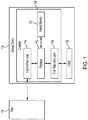
- FIG. 1 is a system diagram according to one or more embodiments of the present disclosure.
- a system includes a host 102 and a storage device 104.
- the host 102 may be housed with (e.g., may be integral with) the storage device 104, and in other embodiments, the host 102 may be separate from the storage device 104.
- the host 102 may include a processor, such as a central processor unit (CPU), and a host memory.
- the storage device 104 may include a controller 108 (e.g., a storage controller or SSD controller) and a memory.
- the memory may include one or more flash memory cells.
- the storage device 104 may be a solid-state storage device (SSD), and the memory may be NAND 106 (e.g., a plurality of NAND memory cells) connected to the controller 108.
- SSD solid-state storage device
- NAND 106 e.g., a plurality of NAND memory cells
- the host 102 may communicate with the storage device 104 via a Peripheral Component Interconnect Express (PCIe) interface (e.g., a PCIe bus).
- PCIe Peripheral Component Interconnect Express
- the present disclosure is not limited thereto.
- the host 102 may communicate with the storage device 104 via an Ethernet bus, NVMe over Fabrics or any other suitable bus known to those with ordinary skill in the art.
- the controller 108 of the storage device 104 may include a processor 110, such as a CPU, and an internal memory 112 (e.g., DRAM, SRAM, flash memory, and/or the like).
- Logic stored in the internal memory 112 e.g., DRAM
- firmware e.g., ASIC or FPGA
- the processor 110 may carry out one or more processes or process modules described herein, such as, for example, the functions of a host interface layer 114 (HIL) and a flash translation layer 116 (FTL).
- HIL host interface layer
- FTL flash translation layer
- the HIL 114 of the controller 108 may be configured to communicate with the host 102 and the FTL 116 of the controller 108 may be configured to provide or map LPNs converted from LBAs at the HIL 114 to physical addresses in the NAND 106 of the storage device 104.
- the HIL 114 receives commands and/or data from the host 102.
- the host 102 may request from the HIL 114 the attributes of existing namespaces, the total capacity of the visible chunks, the capacity available for allocating a namespace, the chunk size, the total number of namespaces supported, and the like to provide information for a user.
- the HIL 114 of the controller 108 of the storage device 104 may send or provide the attributes of existing namespaces, the total capacity of the visible chunks, the capacity available for allocating a namespace, the chunk size, the total number of namespaces supported, and/or the like.
- the HIL 114 maintains a pool of hidden chunks from an OP pool, and the HIL 114 hides the hidden chunks from the host 102.
- the HIL 114 may have a visible chunk pool and a hidden chunk pool such that the HIL 114 reports the attributes of the visible chunk pool to respond to requests (e.g., requests for information) from the host 102, and the HIL 114 does not report attributes of the hidden chunk pool to the host 102 in response to requests (e.g., requests for information) from the host 102.
- the host 102 may allow a user to select the size of the namespace, format, and the like, when creating or requesting a new namespace.
- the size of the namespace may be equal to one or more logical blocks where one logical block is the smallest unit for I/O commands (e.g., Read and Write commands) in the NVMe specification to address data.
- Logical block size may be selectively set in the format of the namespace. Therefore, logical block size may vary for different namespaces depending on the demands of the user and/or the host 102.
- the host 102 may set in the format of the namespace a logical block size of any suitable value such as, for example, 512 bytes or 4kB.
- the host 102 may address different logical blocks associated with the namespace using LBAs. In other words, each logical block of a namespace may correspond to a different LBA from among an LBA range.
- the host 102 may send, to the HIL 114, a command to create the namespace including the LBA range associated with the namespace.
- the HIL 114 may organize or map the LBAs to LPNs of the storage device 104. In other words, the HIL 114 may convert LBAs from the host 102 to LPNs of the storage device 104.
- the LPNs of the HIL 114 may then be used to communicate with or send requests to the FTL 116 such that the FTL 116 may map or translate the LPNs to corresponding physical addresses in the NAND 106.
- mapping at the HIL 114 and the FTL 116 is described, any suitable approach for mapping as known to those of ordinary skill in the art may be used with suitable adjustments thereto.
- the chunk associated with a chunk entry may be referenced by multiple LBAs from the perspective of the host 102 and/or multiple LPNs (i.e., an LPN range) from the perspective of the controller 108 of the storage device 104. Because the size of the logical blocks associated with an LBA range requested by the host may not match the size of a chunk, the host may request a number of logical blocks corresponding to a total size that is not divisible by or is a multiple of a size of one chunk. In other words, the total size of the logical blocks requested by the host may not match (e.g., precisely or exactly match) the total size of one or more chunks used or required to support all the logical blocks requested by the host.
- the host 102 may request a number of logical blocks corresponding to a total size that is not divisible by or is a multiple of a size of one chunk.
- the storage device 104 may round up the number of chunks used in order to provide enough capacity for the namespace requested by the host 102.
- the rounding difference may be equal to the capacity loss associated when creating the namespace because the rounding difference may become un-addressable after being used for the namespace.
- one chunk (e.g., the rounded up chunk) used for a namespace may be an unaligned chunk (i.e., a chunk where a portion may be un-addressable after creating the namespace thereby resulting in capacity loss).
- the chunk size may be based on the capacity of the NAND 106 and the number of chunk entries supported by the hardware of the storage device 104.
- the chunk size may be equal to the capacity of the NAND 106 divided by the number of chunk entries.
- 2000 chunk entries may be supported and the capacity of the NAND 106 (e.g., drive capacity) may be 2 terabytes (TBs).
- TBs terabytes
- a chunk size of 1 GB may be provided by the storage device 104 because 2 TB divided by 2000 equals 1 GB. Therefore, in this case, each chunk entry refers to a chunk (or LPN range) containing 1 GB.
- the present disclosure is not limited thereto, and any chunk size may be used depending on the number of chunk entries supported by the hardware of the storage device 104 and the size of the NAND 106 (i.e., the total drive capacity).
- the storage device hardware may support 2048 chunk entries and the storage device 104 may have a drive capacity of 32 TB.
- a chunk size of 15.625 GB may be provided by the storage device 104.
- FIG. 2A is a block diagram illustrating an example of namespace management based on a first-come, first-serve basis according to one or more embodiments of the present disclosure.
- FIG. 2B is a block diagram illustrating an example of namespace management based on capacity loss according to one or more embodiments of the present disclosure.
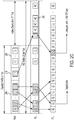
- FIG. 2C is a block diagram illustrating an example of namespace management based on a size of a namespace according to one or more embodiments of the present disclosure.
- Each CE may correspond to a range of LBAs from the perspective of the host 102 and a range of LPNs from the perspective of the controller 108. Because the size of the logical blocks associated with an LBA range requested by the host may not match (e.g., precisely or exactly match) the size of a chunk, the host may request a number of logical blocks corresponding to a total size that is not divisible by or is a multiple of the size of one chunk.
- an unaligned chunk i.e., a chunk that is only partially addressable by the namespace
- a UC unaligned chunk
- hidden chunks that are hidden from or not reported to the host 102 may be designated as hidden chunks (HCs) for convenience.
- the HIL may include a visible chunk pool and no hidden chunk pool.
- the HIL may provide (or advertise) the entire capacity of the HIL to the host.
- the FTL including chunks corresponding to the OP pool and chunks separate from the OP pool may only report the chunks separate from the OP pool to the HIL and hide the chunks in the OP pool from the HIL. In other words, all of the chunks of the HIL are visible to the host and chunks from the OP pool are not reported by the FTL to the HIL.
- the FTL 116 may report chunks separate from the OP pool 202 to the HIL 114 and report one or more chunks of the OP pool 202 to the HIL 114.
- the chunks from the OP pool 202 reported to the HIL 114 by the FTL 116 but hidden from the host 102 by the HIL 114 may be HCs.
- all of the chunks in the OP pool 202 reported to the HIL 114 are hidden from the host 102, and therefore, may be HCs.
- UCs may be absorbed by the HCs from the OP pool 202 on a first-come, first-serve basis by using HCs from the OP pool 202 as the UCs on a first-come, first-serve basis. For example, if an UC is formed in response to a host 102 request to create a namespace, then a chunk from the OP pool 202 from among the HCs of the HIL 114 may be used as the UC.
- a UC is not formed in response to the host 102 request to create a namespace
- no chunks from the OP pool 202 may be used because applying logical block size granularity instead of chunk size granularity may not save capacity (e.g., saving capacity by avoiding capacity loss). Therefore, the one or more chunks of the OP pool 202 that are HCs may be saved for subsequent namespace creation requests where logical block size granularity may be desirable.
- chunks from the OP pool 202 may be suitable for use as the UCs because the chunks from the OP pool 202 are unmapped areas (i.e., unmapped areas of NAND 106). Therefore, the use of chunks from the OP pool 202 results in no OP pool 202 loss. In other words, operations performed by the OP pool 202 such as, for example, wear leveling, garbage collection, and/or the like, may not be affected by the chunks from the OP pool 202 being used as the UCs.
- the host 102 may request creation of a first namespace 204 and a second namespace 206 from among unused chunks 208 reported to the host 102 from the visible chunk pool at the HIL 114. Because the total size of the logical blocks requested by the host 102 for each of the first namespace 204 and the second namespace 206 may not be divisible by or be a multiple of the size of one chunk as shown in FIGS. 2A-2C , each of the first namespace 204 and the second namespace 206 may be unaligned namespaces where the first namespace 204 includes an UC and the second namespace 206 includes an UC.
- HCs e.g., HCs from the OP pool 202
- HIL 114 may be used as the UCs associated with the first namespace 204 and the second namespace 206 such that logical block size granularity may be provided for the first namespace 204 and the second namespace 206 according to the first-come, first-serve basis.
- the use of HCs as shown in FIGS. 2A-2C may prevent or substantially prevent the host from recognizing a change in available capacity in order to indicate that logical block size granularity is provided for the namespace whose UC was absorbed by the OP pool 202 (i.e., an HC from the OP pool 202 was used as the UC).
- visible chunks that would otherwise be used and partially un-addressable resulting in visible capacity loss may remain visible and available to the host 102 as unused for use in subsequent namespace requests.
- the host does not receive an indication of capacity loss.
- the storage device 104 may report to the host no capacity loss due to unaligned chunks by taking advantage of the HCs
- a visible chunk of the HIL 114 separate from the chunks from the OP pool 202 may be used for a UCs of a namespace depending on set (e.g., predetermined) logic as will be described in more detail below.
- set e.g., predetermined
- chunk size granularity is provided for the namespace and the creation of the namespace may cause the host 102 to recognize a corresponding capacity loss because the visible chunk used as the UC may be unavailable for subsequent namespaces.
- chunks from the OP pool 202 reported by the FTL 116 to the HIL 114 to be used as UCs may be less than the total number of namespaces supported by the controller 108 of the storage device 104.
- different NAND types such as triple-level cell flash (TLC), quad-level cell flash (QLC), and Z-NAND may support different set numbers of namespaces from each other.
- the FTL 116 may use internal memory 112 (e.g., DRAM) to support a set number of chunks from the OP pool 202 to be used as HCs, and the set number of chunks of the OP pool 202 to be used for UCs may depend on the amount of internal memory available.
- the total number of namespaces supported by the controller 108 may be greater than the set number of chunks from the OP pool 202 to be used as UCs supported by the controller 108.
- the system and methods of the present disclosure include build time customizable features depending on NAND type and suitable product variants. Therefore, a host may connect to multiple storage devices that have the same or different NAND types (i.e., mixed drive types), and the host may send a request to the connected storage devices as desired to allocate one or more namespaces.
- NAND types i.e., mixed drive types
- the controller 108 of the storage device 104 may support creation of, for example, up to 64 namespaces (e.g., depending on the NAND type) corresponding to up to 64 visible chunks or CEs thereby providing a total capacity for namespace creation of 64 multiplied by the chunk size (i.e., size of the chunk corresponding to a CE).
- the controller 108 of the storage device 104 may support 32 chunks (e.g., depending on the internal memory 112 or DRAM) from the OP pool 202 to be used as HCs.
- the host 102 may request creation of more than 32 namespaces (e.g., between 33 to 64 namespaces). If a first-come, first-serve basis is applied and more than 32 UCs are concurrently present, then a chunk of the OP pool 202 may not be available to be used as the 33rd UC thereby leading to capacity loss when a visible chunk separate from the OP pool 202 is used as the 33rd UC.
- first-come, first-serve basis is provided in reference to FIG. 2A
- present disclosure is not limited thereto.
- any other suitable logical arrangements may be considered when using chunks from the OP pool 202 to be used as UCs.
- each of the first namespace 204 and the second namespace 206 may be unaligned namespaces where the first namespace 204 includes an UC and the second namespace 206 includes an UC. According to chunk size granularity, a portion of the UCs of each of the first namespace 204 and the second namespace 206 may become un-addressable resulting in capacity loss.
- the amount of un-addressable memory that may be formed according to chunk size granularity may be used as a factor to determine whether HCs from the OP pool 202 should be used to provide logical block size granularity.
- a threshold may be used where if more than a set amount of memory will become un-addressable due to the UC (i.e., if capacity loss exceeds a set amount), then an HC of the OP pool 202 is used to provide logical block size granularity (assuming an HC of the OP pool 202 is available). Therefore, as shown in FIG.
- a UC of the first namespace 204 which may form un-addressable memory below the threshold may use a chunk from the visible chunk pool of the HIL 114 resulting in minor capacity loss (i.e., a chunk from the visible chunk pool of the HIL 114 may be used as the UC of the first namespace 204).
- a chunk from the visible chunk pool of the HIL 114 may be used as the UC of the first namespace 204.
- a UC of the second namespace 206 which may be associated with a potentially greater amount of capacity loss than the UC of the first namespace 204, may be above the threshold, and therefore, may use an HC from the OP pool 202 (i.e., an HC from the OP pool 202 may be used as the UC of the second namespace 206) to achieve logical block size granularity and thereby avoid the potentially greater amount of capacity loss.
- the size of the namespace may be used as a factor to determine whether HCs from the OP pool 202 should be used to provide logical block size granularity.
- using HCs from the OP pool 202 may be based on the size of the namespace requested. For example, a threshold may apply HCs to unaligned chunks where the size of the namespace is less than one chunk. Therefore, as shown in FIG. 2C , the first namespace 204 with a size greater than one chunk and having a UC may form un-addressable memory resulting in capacity loss. However, the second namespace 206 with a size less than one chunk and having a UC may use an HC from the OP pool 202 to achieve logical block size granularity and thereby avoid capacity loss.
- FIGS. 2A-2C Although a number of arrangements are separately described with reference to FIGS. 2A-2C , logical arrangements according to one or more embodiments may be based on a combination of the arrangements presented in FIGS. 2A-2C .
- a threshold or multi-threshold approach may be used where the logical arrangements may be implemented according to one or more thresholds.
- the unused capacity of NAND 106 may be used to determine whether to provide logical block size granularity and, if so, which among one or more logical arrangement for applying logical block size granularity should be applied.
- the system and method for providing logical block size granularity may be provided when unused capacity for namespaces is below or above a set threshold.
- logical block size granularity may be provided on a first-come, first-serve basis when less than 20% of the chunks in the visible pool of the HIL 114 are unused chunks 208.
- a dynamic approach (as opposed to a static approach) may be used to determine use of chunks from the OP pool 202 as UCs.
- the controller 108 may, in real-time or at set intervals of time (e.g., when a namespace request is received), dynamically adjust whether an HC from the OP pool 202 is used as a UC based on a priority of the namespace including the UC.
- the HCs from the OP pool 202 may be used on a first-come, first-serve basis until all of the HCs have been used as UCs where each UC corresponds to a separate namespace.
- the controller 108 may determine a priority associated with each of the namespaces including UCs. For example, the controller 108 may determine that using a chunk from the OP pool 202 as one UC results in potentially less capacity loss than using the chunk from the OP pool 202 as another UC associated with a different namespace. In this case, the namespace that may result in lower capacity loss is lower priority than the priority of the namespace that may result in higher capacity loss.
- the controller 108 may change the HC used as the UC of the lower priority namespace and to be used as the UC of the higher priority namespace thereby reducing potential capacity loss. If a namespace including an UC is lower priority than all the of the namespaces for which a chunk from the OP pool has been used, the change may not occur. Prior to performing the change, the controller 108 may use a chunk of NAND 106 separate from the OP pool 202 (e.g., a chunk of memory in the visible chunk pool) at the HIL 114 to accommodate the memory of the lower priority namespace that may have been previously absorbed by the HC from the OP pool 202.
- a chunk of NAND 106 separate from the OP pool 202 (e.g., a chunk of memory in the visible chunk pool) at the HIL 114 to accommodate the memory of the lower priority namespace that may have been previously absorbed by the HC from the OP pool 202.
- the data previously absorbed by the HC from the OP pool 202 may be copied to a chunk of NAND 106 separate from the OP pool 202 prior to using the HC from the OP pool 202 as the UC of the higher priority namespace.
- the lower priority namespace may change from logical block size granularity to chunk size granularity and a higher priority namespace may be provided with logical block size granularity instead of chunk size granularity based on priority.
- priority may be based on the factors described with reference to FIGS. 2A-2C and/or attributes of the namespace described in more detail below.
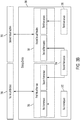
- FIG. 3A is a system diagram according to one or more embodiments of the present disclosure.
- FIG. 3B is a block diagram illustrating shared and private namespaces according to one or more embodiments of the present disclosure.
- a system may include more than one host (e.g., a first host 302 and a second host 304) in communication with first or second controllers 108a, 108b of a storage device 104 (e.g., via two separate ports corresponding to the first and second controllers 108a, 108b with a PCIe link of the first host 302 and a PCIe link of the second host 304 respectively connected to the two separate ports).
- first and second controllers 108a, 108b connect to separate hosts 302, 304
- the NAND 106 and FTL 116 may not be divided by the two separate ports and the first and second controllers 108a, 108b.
- the processor 110, internal memory 112, and HIL 114 may not be divided by the two separate ports and the first and second controllers 108a, 108b.
- the first host 302 and the second host 304 may execute programs in software to generate a first virtual machine 306 and a second virtual machine 308 respectively.
- the first virtual machine 306 and the second virtual machine 308 may emulate the functionality of a computing environment.
- the first controller 108a and/or the second controller 108b may provide a first virtual function 305 and a second virtual function 307 for use as a connection to the first virtual machine 306 and the second virtual machine 308 respectively to manage namespaces.
- the storage device 104 may include both a physical connection (e.g., via a PCIe link) and a virtual connection (e.g., via virtualization) to the first host 302 and/or the second host 304 to manage namespaces (e.g., namespaces with a shared attribute).
- a physical connection e.g., via a PCIe link
- a virtual connection e.g., via virtualization
- the storage device 104 may include a processor 110, such as a CPU, and an internal memory 112 (e.g., DRAM, SRAM, flash memory, and/or the like). Logic stored in the internal memory 112 (e.g., DRAM) and/or firmware (e.g., ASIC or FPGA) may be used or executed by the processor 110 for carrying out one or more processes or process modules described herein, such as, for example, the functions of a HIL 114, a FTL 116, the first virtual function 305, and the second virtual function 307.
- the processor 110 and the internal memory 112 may be one or more processors and/or one or more memory devices operating alone or in combination with each other and may be components of the first controller 108a, the second controller 108b, and/or any other controller of the storage device.
- the first and second hosts 302, 304 may send a request to create a first namespace 312, a second namespace 314, and a third namespace 310 with set attributes via corresponding physical connections.
- the first and second virtual machines 306, 308 may send a request to create a first namespace 312, a second namespace 314, and a third namespace 310 with set attributes via virtual connections.
- the first namespace 312 and the third namespace 310 may be designated as private namespaces, and the second namespace 314 may be designated as a shared namespace between the first virtual machine 306 and the second virtual machine 308 with communications transmitted via virtual connections.
- the present disclosure is not limited thereto.
- the first namespace 312 and the third namespace 310 may be designated as private namespaces, and the second namespace 314 may be designated as a shared namespace between the first host 302 and the second host 304 with communications transmitted via physical connections.
- the first controller 108a may report information to the first host 302 such that the first host 302 may receive information from the HIL 114 and send commands to the HIL 114 relating to the second namespace 314 and the first namespace 312.
- the second controller 108b may report information to the second host 304 such that the second host 304 may receive information from the HIL 114 and send commands to the HIL 114 relating to the second namespace 314 and the third namespace 310.
- the first virtual function 305 of the storage device 104 may report information to the first virtual machine 306 such that the first virtual machine 306 may receive information from the first virtual function 305 and send commands to the first virtual function 305 relating to the second namespace 314 and the first namespace 312.
- the second virtual function 307 of the storage device 104 may report information to the second virtual machine 308 such that the second virtual machine 308 may receive information from the second virtual function 307 and send commands to the second virtual function 307 relating to the second namespace 314 and the third namespace 310.
- FIG. 3C is a block diagram illustrating an example of namespace management according to one or more embodiments of the present disclosure.
- the designation of shared and private may be used as a factor to determine whether HCs from the OP pool 316 should be used to provide logical block size granularity.
- an HC from the OP pool 316 may be used for shared namespaces including an UC to absorb the UC and an HC from the OP pool 316 may not be used for private namespaces including an UC.
- the first namespace 312 including a UC may be private, and therefore, an HC from the OP pool 316 may not be used as the UC, thereby leading to use of a chunk of memory separate from the OP pool 316 which may result in capacity loss.
- the second namespace 314 including a UC is shared, and therefore, an HC from the OP pool 316 may be used as the UC to avoid capacity loss (e.g., by providing logical block size granularity).
- shared namespace and private namespace are used as an example for determining whether to apply logical block size granularity
- the present disclosure is not limited thereto as the shared namespace and the private namespace designation is an example of one attribute of the namespace that may be used.
- any suitable attribute of the namespace e.g., the format of the namespace such as logical block size and/or whether metadata supporting end-to-end protection is provided, a group number associated with the namespace, privacy designation, a logical block size, and the like
- attributes of the namespace may be used, alone or in combination with other factors such as first-come, first-serve basis, size of the namespace, and/or potential capacity loss.
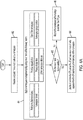
- FIG. 4A is a flow chart of a method for static namespace management, according to one or more embodiments of the present disclosure.
- a system and method of static namespace management may include a controller 108 of the storage device 104 using NAND 106 of the storage device to allocate a namespace at the request of a host 102 (e.g., also see FIG. 1 ).
- the controller 108 may selectively use a chunk from an OP pool 202, 316 as an UC to provide logical block size granularity for the namespace.
- the method may include receiving a request from a host 102 to allocate a namespace (402).
- the host 102 may specify attributes of the namespace when sending the request to allocate the namespace to the controller 108.
- the controller 108 may apply a namespace management policy (404) to determine whether to use the chunk from the OP pool 202, 316 as the UC. For example, the controller 108 may determine whether the namespace includes an UC. If the namespace does not include any UCs (405), then the controller 108 may allocate the namespace without using a chunk from the OP pool 202, 316 (406). However, if the namespace includes the UC, then the controller 108 may determine whether one or more conditions for applying logical block size granularity are met.
- a namespace management policy 404
- the controller 108 may check whether the HIL 114 of the controller 108 has a chunk (e.g., an HC) from the OP pool 202, 316 available to be used as the UC. If no chunk from the OP pool 202, 316 is available to be used as the UC (405), then the controller 108 may allocate the namespace without using a chunk from the OP pool (406) thereby resulting in capacity loss due to the UC. If a chunk is available at the HIL 114 from the OP pool 202, 316, then the controller 108 may consider one or more additional factors to determine whether to use the chunk from the OP pool 202, 316 as the UC.
- a chunk e.g., an HC
- the availability of a chunk from the OP pool 202, 316 is described as a condition for applying logical block size granularity, the present disclosure is not limited thereto.
- the one or more conditions may include availability of a chunk from the OP pool 202, 316, whether the capacity of NAND 106 for namespaces is above or below a set threshold, and/or the like.
- the one or more additional factors considered by the namespace management policy (404) to determine whether to use the chunk from the OP pool 202, 316 as the UC of the namespace may be any factor discussed throughout the present disclosure and shown, for example, in step (404) of FIG. 4A .
- the namespace management policy may operate on a first-come, first-serve basis or based on potential capacity loss, size of the namespace, namespace format, privacy designation, namespace group number, any other attributes of the namespace, or any combination thereof.
- the controller 108 may allocate the namespace without using a chunk from the OP pool 202, 316 (406) resulting in capacity loss due to the UC.
- the namespace may be provided with chunk size granularity.
- the controller may use the chunk from the OP pool 202, 316 as the UC and use one or more chunks separate from the OP pool 202, 316 for any other demands (e.g., additional chunks) of the namespace (408).
- logical block size granularity may be provided for the namespace.
- FIG. 4B is a flow chart of a method for dynamic namespace management, according to one or more embodiments of the present disclosure.
- a system and method of dynamic namespace management may include a controller 108 of the storage device 104 using NAND 106 of the storage device to allocate a namespace at the request of a host 102 (e.g., also see FIG. 1 ).
- the controller 108 may selectively use a chunk from an OP pool 202, 316 as the UC to provide logical block size granularity for the namespace.
- the method may include receiving a request from a host 102 to allocate a namespace (402).
- the host 102 may specify attributes of the namespace when sending the request to allocate the namespace to the controller 108.
- the controller 108 may apply a namespace management policy (404) to determine whether to use the chunk from the OP pool 202, 316 as the UC. For example, the controller 108 may determine whether the namespace includes an UC. If the namespace does not include any UCs (405), then the controller 108 may allocate the namespace without using a chunk from the OP pool (406).
- the namespace management policy may consider one or more additional factors to determine whether to use the chunk from the OP pool 202, 316 as the UC of the namespace.
- the one or more additional factors may be any factor discussed throughout the present disclosure and shown, for example, in step (404) of FIG 4B .
- the namespace management policy may operate on a first-come, first-serve basis or based on capacity loss, size of the namespace, namespace format, privacy designation, namespace group number, any other attributes of the namespace, or any combination thereof.
- the controller 108 may allocate the namespace without using a chunk from the OP pool 202, 316 (406) resulting in capacity loss due to the UC.
- the namespace may be provided with chunk size granularity. If all of the factors are satisfied (405) and a chunk from the OP pool 202, 316 is available to be used as the UC (407), then the controller may use the chunk from the OP pool 202, 316 as the UC and use one or more chunks separate from the OP pool 202, 316 for any other demands (e.g., additional chunks) of the namespace (408).
- logical block size granularity may be provided for the namespace.
- the controller 108 may consider a priority of the namespace compared to the priority of existing namespaces including UCs where a chunk of the OP pool 202, 316 has been used as the UC of the existing namespaces (410). For example, based on the factors of the namespace management policy of step (404), the controller 108 may determine that the new namespace is more suited (e.g., higher priority) for logical block size granularity than an existing namespace (e.g., lower priority namespace) where a chunk of the OP pool 202, 316 has been used as the UC (410).
- the new namespace is more suited (e.g., higher priority) for logical block size granularity than an existing namespace (e.g., lower priority namespace) where a chunk of the OP pool 202, 316 has been used as the UC (410).
- the controller 108 may copy the data of the chunk of the OP pool 202, 316 used for the lower priority namespace to an unused chunk separate from the OP pool 202, 316 (412) thereby resulting in capacity loss associated with the lower priority namespace.
- the data previously absorbed by the chunk of the OP pool 202, 316 may be copied to a chunk of NAND 106 separate from the OP pool 202 for the lower priority namespace.
- the controller 108 may use the now available chunk (e.g., the chunk that was copied) from the OP pool 202, 316 as the UC of the higher priority namespace and use one or more chunks separate from the OP pool 202, 316 for any other demands of the higher priority namespace (414).
- the lower priority namespace may change from logical block size granularity to chunk size granularity while the higher priority namespace is provided with logical block size granularity despite all of chunks of the OP pool 202, 316 being used (e.g., concurrently or simultaneously used) as UCs.
- the dynamic approach enables the controller 108 to adaptively accommodate namespace requests despite all of the chunks from the OP pool 202, 316 at the HIL 114 of the controller 108 being used (e.g., concurrently or simultaneously used) as UCs.
- the controller 108 may compare the priority of the new namespace to each of the existing namespaces to determine or identify which existing namespace, if any, may be changed from logical block size granularity to chunk size granularity as described in steps (410), (412), (414).
- the new namespace may have a higher priority than more than one existing namespace and the controller 108 may select the lowest priority namespace to change from logical block size granularity to chunk size granularity.
- the controller 108 may allocate the namespace without using a chunk from the OP pool (406) resulting in capacity loss due to the UC.
- embodiments of the present disclosure provide a system and method of namespace management to provide logical block size granularity. Further, systems and methods of one or more embodiments of the present disclosure provide logic for static and dynamic adjustments to namespaces being provided with logical block size granularity based on one or more factors described herein.
- first,” “second,” “third,” etc. may be used herein to describe various elements, components, regions, layers and/or sections, these elements, components, regions, layers and/or sections should not be limited by these terms. These terms are used to distinguish one element, component, region, layer or section from another element, component, region, layer or section. Thus, a first element, component, region, layer or section described below could be termed a second element, component, region, layer or section, without departing from the spirit and scope of the present disclosure.
Landscapes
- Engineering & Computer Science (AREA)
- Theoretical Computer Science (AREA)
- Physics & Mathematics (AREA)
- General Engineering & Computer Science (AREA)
- General Physics & Mathematics (AREA)
- Human Computer Interaction (AREA)
- Microelectronics & Electronic Packaging (AREA)
- Information Retrieval, Db Structures And Fs Structures Therefor (AREA)
- Memory System (AREA)
Applications Claiming Priority (2)
| Application Number | Priority Date | Filing Date | Title |
|---|---|---|---|
| US202063049533P | 2020-07-08 | 2020-07-08 | |
| US17/013,451 US11262923B2 (en) | 2020-07-08 | 2020-09-04 | Method for managing namespaces in a storage device using an over-provisioning pool and storage device employing the same |
Publications (1)
| Publication Number | Publication Date |
|---|---|
| EP3936998A1 true EP3936998A1 (en) | 2022-01-12 |
Family
ID=75377642
Family Applications (1)
| Application Number | Title | Priority Date | Filing Date |
|---|---|---|---|
| EP21166528.6A Pending EP3936998A1 (en) | 2020-07-08 | 2021-04-01 | Method for managing namespaces in storage device and storage device employing the same |
Country Status (6)
| Country | Link |
|---|---|
| US (3) | US11262923B2 (enExample) |
| EP (1) | EP3936998A1 (enExample) |
| JP (1) | JP7712127B2 (enExample) |
| KR (1) | KR20220006454A (enExample) |
| CN (1) | CN113918087B (enExample) |
| TW (1) | TWI874641B (enExample) |
Families Citing this family (3)
| Publication number | Priority date | Publication date | Assignee | Title |
|---|---|---|---|---|
| US11914898B2 (en) * | 2022-01-26 | 2024-02-27 | Kioxia Corporation | Systems, methods, and non-transitory computer-readable media for thin provisioning in non-volatile memory storage devices |
| CN114546266B (zh) * | 2022-02-07 | 2024-07-26 | 联想开天科技有限公司 | 固态硬盘隐藏分区的配置方法、装置及存储介质 |
| TWI874200B (zh) * | 2024-04-23 | 2025-02-21 | 旺宏電子股份有限公司 | 記憶體裝置及記憶體控制電路 |
Citations (2)
| Publication number | Priority date | Publication date | Assignee | Title |
|---|---|---|---|---|
| US20170262176A1 (en) * | 2016-03-08 | 2017-09-14 | Kabushiki Kaisha Toshiba | Storage system, information processing system and method for controlling nonvolatile memory |
| US20190121547A1 (en) * | 2017-10-23 | 2019-04-25 | Micron Technology, Inc. | Namespaces Allocation in Non-Volatile Memory Devices |
Family Cites Families (16)
| Publication number | Priority date | Publication date | Assignee | Title |
|---|---|---|---|---|
| US6804761B1 (en) | 2000-01-21 | 2004-10-12 | Cisco Technology, Inc. | Memory allocation system and method |
| KR100981884B1 (ko) | 2008-01-08 | 2010-09-14 | 한국과학기술원 | 컴퓨터 저장장치에서의 프리페칭 데이터 관리 방법 |
| US9823981B2 (en) | 2011-03-11 | 2017-11-21 | Microsoft Technology Licensing, Llc | Backup and restore strategies for data deduplication |
| US20130013880A1 (en) | 2011-07-08 | 2013-01-10 | Hitachi Computer Peripherals Co., Ltd. | Storage system and its data processing method |
| TWI584120B (zh) * | 2012-03-23 | 2017-05-21 | Lsi公司 | 用於動態調適快取的方法及系統 |
| KR20130139084A (ko) | 2012-06-12 | 2013-12-20 | 삼성전자주식회사 | 메모리 시스템 및 메모리 청크 단위로 메모리를 관리하는 메모리 관리 방법 |
| WO2014201696A1 (zh) | 2013-06-21 | 2014-12-24 | 华为技术有限公司 | 一种文件读取方法、存储设备及读取系统 |
| US9696935B2 (en) * | 2015-04-24 | 2017-07-04 | Kabushiki Kaisha Toshiba | Storage device that secures a block for a stream or namespace and system having the storage device |
| US9971542B2 (en) | 2015-06-09 | 2018-05-15 | Ultrata, Llc | Infinite memory fabric streams and APIs |
| JP6403162B2 (ja) * | 2015-07-23 | 2018-10-10 | 東芝メモリ株式会社 | メモリシステム |
| US10235198B2 (en) * | 2016-02-24 | 2019-03-19 | Samsung Electronics Co., Ltd. | VM-aware FTL design for SR-IOV NVME SSD |
| US10810117B2 (en) * | 2017-10-16 | 2020-10-20 | Vmware, Inc. | Virtualization of multiple coprocessor memory |
| US10678703B2 (en) * | 2017-11-16 | 2020-06-09 | Micron Technology, Inc. | Namespace mapping structual adjustment in non-volatile memory devices |
| US10915440B2 (en) * | 2017-11-16 | 2021-02-09 | Micron Technology, Inc. | Namespace mapping optimization in non-volatile memory devices |
| US11188251B2 (en) * | 2017-12-19 | 2021-11-30 | Western Digital Technologies, Inc. | Partitioned non-volatile memory express protocol for controller memory buffer |
| KR102833854B1 (ko) * | 2019-01-07 | 2025-07-14 | 에스케이하이닉스 주식회사 | 데이터 저장 장치 및 동작 방법, 이를 포함하는 스토리지 시스템 |
-
2020
- 2020-09-04 US US17/013,451 patent/US11262923B2/en active Active
-
2021
- 2021-03-18 KR KR1020210035566A patent/KR20220006454A/ko active Pending
- 2021-04-01 EP EP21166528.6A patent/EP3936998A1/en active Pending
- 2021-04-15 TW TW110113592A patent/TWI874641B/zh active
- 2021-05-07 CN CN202110493971.4A patent/CN113918087B/zh active Active
- 2021-07-07 JP JP2021113094A patent/JP7712127B2/ja active Active
-
2022
- 2022-02-25 US US17/681,216 patent/US11797200B2/en active Active
-
2023
- 2023-10-03 US US18/376,364 patent/US20240086092A1/en active Pending
Patent Citations (2)
| Publication number | Priority date | Publication date | Assignee | Title |
|---|---|---|---|---|
| US20170262176A1 (en) * | 2016-03-08 | 2017-09-14 | Kabushiki Kaisha Toshiba | Storage system, information processing system and method for controlling nonvolatile memory |
| US20190121547A1 (en) * | 2017-10-23 | 2019-04-25 | Micron Technology, Inc. | Namespaces Allocation in Non-Volatile Memory Devices |
Also Published As
| Publication number | Publication date |
|---|---|
| CN113918087B (zh) | 2024-02-06 |
| US11797200B2 (en) | 2023-10-24 |
| KR20220006454A (ko) | 2022-01-17 |
| US20220011953A1 (en) | 2022-01-13 |
| JP2022016368A (ja) | 2022-01-21 |
| CN113918087A (zh) | 2022-01-11 |
| US20240086092A1 (en) | 2024-03-14 |
| JP7712127B2 (ja) | 2025-07-23 |
| TW202203033A (zh) | 2022-01-16 |
| TWI874641B (zh) | 2025-03-01 |
| US11262923B2 (en) | 2022-03-01 |
| US20220269427A1 (en) | 2022-08-25 |
Similar Documents
| Publication | Publication Date | Title |
|---|---|---|
| US11093177B2 (en) | Virtualized OCSSDs spanning physical OCSSD channels | |
| US11481144B1 (en) | Techniques for directed data migration | |
| US20240086092A1 (en) | Method for managing namespaces in a storage device and storage device employing the same | |
| JP6890401B2 (ja) | 多重モード格納管理装置、多重モード格納装置、及びその選別潜在露出(sue)マッピング動作方法 | |
| CN102968279B (zh) | 一种存储系统自动精简配置的方法 | |
| US9459806B2 (en) | Combining virtual mapping metadata and physical space mapping metadata | |
| US20210240584A1 (en) | Data recovery method, system, and apparatus in storage system | |
| WO2017000658A1 (zh) | 存储系统、存储管理装置、存储器、混合存储装置及存储管理方法 | |
| US11010079B2 (en) | Concept for storing file system metadata within solid-stage storage devices | |
| US11314655B2 (en) | Storage device configurable mapping granularity system where data is written without performing read-modify-write operations | |
| US12032849B2 (en) | Distributed storage system and computer program product | |
| WO2017107015A1 (zh) | 存储空间的分配方法及存储设备 | |
| CN102945275B (zh) | 文件碎片整理方法、装置及设备 | |
| CN119088287A (zh) | 用于数据存储的系统和方法以及存储装置 | |
| US11561695B1 (en) | Using drive compression in uncompressed tier | |
| US11740816B1 (en) | Initial cache segmentation recommendation engine using customer-specific historical workload analysis | |
| WO2023169142A1 (zh) | 一种存储装置及相关数据分区管理方法 | |
| US12045165B1 (en) | Direct addressing and efficient storage of variable sized metadata | |
| US20250245147A1 (en) | Storage device and operation method thereof | |
| Vishwakarma et al. | Enhancing eMMC using Multi-Stream technique. | |
| CN121070287A (zh) | NVMe固态硬盘的调度方法、装置、数据处理器和设备 | |
| WO2018051446A1 (ja) | オプショナルなデータ処理機能を有するストレージシステムを含んだ計算機システム、および、記憶制御方法 |
Legal Events
| Date | Code | Title | Description |
|---|---|---|---|
| PUAI | Public reference made under article 153(3) epc to a published international application that has entered the european phase |
Free format text: ORIGINAL CODE: 0009012 |
|
| STAA | Information on the status of an ep patent application or granted ep patent |
Free format text: STATUS: THE APPLICATION HAS BEEN PUBLISHED |
|
| STAA | Information on the status of an ep patent application or granted ep patent |
Free format text: STATUS: REQUEST FOR EXAMINATION WAS MADE |
|
| AK | Designated contracting states |
Kind code of ref document: A1 Designated state(s): AL AT BE BG CH CY CZ DE DK EE ES FI FR GB GR HR HU IE IS IT LI LT LU LV MC MK MT NL NO PL PT RO RS SE SI SK SM TR |
|
| B565 | Issuance of search results under rule 164(2) epc |
Effective date: 20211008 |
|
| 17P | Request for examination filed |
Effective date: 20211216 |
|
| RBV | Designated contracting states (corrected) |
Designated state(s): AL AT BE BG CH CY CZ DE DK EE ES FI FR GB GR HR HU IE IS IT LI LT LU LV MC MK MT NL NO PL PT RO RS SE SI SK SM TR |
|
| STAA | Information on the status of an ep patent application or granted ep patent |
Free format text: STATUS: EXAMINATION IS IN PROGRESS |
|
| 17Q | First examination report despatched |
Effective date: 20230104 |
|
| P01 | Opt-out of the competence of the unified patent court (upc) registered |
Effective date: 20230520 |
|
| GRAP | Despatch of communication of intention to grant a patent |
Free format text: ORIGINAL CODE: EPIDOSNIGR1 |
|
| STAA | Information on the status of an ep patent application or granted ep patent |
Free format text: STATUS: GRANT OF PATENT IS INTENDED |