EP3936710B1 - Air intake for a stationary gas turbine engine - Google Patents
Air intake for a stationary gas turbine engine Download PDFInfo
- Publication number
- EP3936710B1 EP3936710B1 EP20425021.1A EP20425021A EP3936710B1 EP 3936710 B1 EP3936710 B1 EP 3936710B1 EP 20425021 A EP20425021 A EP 20425021A EP 3936710 B1 EP3936710 B1 EP 3936710B1
- Authority
- EP
- European Patent Office
- Prior art keywords
- air intake
- divergent
- side walls
- curvature
- section
- Prior art date
- Legal status (The legal status is an assumption and is not a legal conclusion. Google has not performed a legal analysis and makes no representation as to the accuracy of the status listed.)
- Active
Links
Images


Classifications
-
- F—MECHANICAL ENGINEERING; LIGHTING; HEATING; WEAPONS; BLASTING
- F02—COMBUSTION ENGINES; HOT-GAS OR COMBUSTION-PRODUCT ENGINE PLANTS
- F02C—GAS-TURBINE PLANTS; AIR INTAKES FOR JET-PROPULSION PLANTS; CONTROLLING FUEL SUPPLY IN AIR-BREATHING JET-PROPULSION PLANTS
- F02C7/00—Features, components parts, details or accessories, not provided for in, or of interest apart form groups F02C1/00 - F02C6/00; Air intakes for jet-propulsion plants
- F02C7/04—Air intakes for gas-turbine plants or jet-propulsion plants
-
- F—MECHANICAL ENGINEERING; LIGHTING; HEATING; WEAPONS; BLASTING
- F04—POSITIVE - DISPLACEMENT MACHINES FOR LIQUIDS; PUMPS FOR LIQUIDS OR ELASTIC FLUIDS
- F04D—NON-POSITIVE-DISPLACEMENT PUMPS
- F04D29/00—Details, component parts, or accessories
- F04D29/40—Casings; Connections of working fluid
- F04D29/42—Casings; Connections of working fluid for radial or helico-centrifugal pumps
- F04D29/4206—Casings; Connections of working fluid for radial or helico-centrifugal pumps especially adapted for elastic fluid pumps
- F04D29/4213—Casings; Connections of working fluid for radial or helico-centrifugal pumps especially adapted for elastic fluid pumps suction ports
-
- F—MECHANICAL ENGINEERING; LIGHTING; HEATING; WEAPONS; BLASTING
- F04—POSITIVE - DISPLACEMENT MACHINES FOR LIQUIDS; PUMPS FOR LIQUIDS OR ELASTIC FLUIDS
- F04D—NON-POSITIVE-DISPLACEMENT PUMPS
- F04D29/00—Details, component parts, or accessories
- F04D29/40—Casings; Connections of working fluid
- F04D29/42—Casings; Connections of working fluid for radial or helico-centrifugal pumps
- F04D29/44—Fluid-guiding means, e.g. diffusers
- F04D29/441—Fluid-guiding means, e.g. diffusers especially adapted for elastic fluid pumps
-
- F—MECHANICAL ENGINEERING; LIGHTING; HEATING; WEAPONS; BLASTING
- F04—POSITIVE - DISPLACEMENT MACHINES FOR LIQUIDS; PUMPS FOR LIQUIDS OR ELASTIC FLUIDS
- F04D—NON-POSITIVE-DISPLACEMENT PUMPS
- F04D29/00—Details, component parts, or accessories
- F04D29/40—Casings; Connections of working fluid
- F04D29/52—Casings; Connections of working fluid for axial pumps
- F04D29/54—Fluid-guiding means, e.g. diffusers
- F04D29/541—Specially adapted for elastic fluid pumps
- F04D29/545—Ducts
- F04D29/547—Ducts having a special shape in order to influence fluid flow
-
- F—MECHANICAL ENGINEERING; LIGHTING; HEATING; WEAPONS; BLASTING
- F05—INDEXING SCHEMES RELATING TO ENGINES OR PUMPS IN VARIOUS SUBCLASSES OF CLASSES F01-F04
- F05D—INDEXING SCHEME FOR ASPECTS RELATING TO NON-POSITIVE-DISPLACEMENT MACHINES OR ENGINES, GAS-TURBINES OR JET-PROPULSION PLANTS
- F05D2220/00—Application
- F05D2220/30—Application in turbines
- F05D2220/32—Application in turbines in gas turbines
-
- F—MECHANICAL ENGINEERING; LIGHTING; HEATING; WEAPONS; BLASTING
- F05—INDEXING SCHEMES RELATING TO ENGINES OR PUMPS IN VARIOUS SUBCLASSES OF CLASSES F01-F04
- F05D—INDEXING SCHEME FOR ASPECTS RELATING TO NON-POSITIVE-DISPLACEMENT MACHINES OR ENGINES, GAS-TURBINES OR JET-PROPULSION PLANTS
- F05D2250/00—Geometry
- F05D2250/50—Inlet or outlet
- F05D2250/51—Inlet
-
- F—MECHANICAL ENGINEERING; LIGHTING; HEATING; WEAPONS; BLASTING
- F05—INDEXING SCHEMES RELATING TO ENGINES OR PUMPS IN VARIOUS SUBCLASSES OF CLASSES F01-F04
- F05D—INDEXING SCHEME FOR ASPECTS RELATING TO NON-POSITIVE-DISPLACEMENT MACHINES OR ENGINES, GAS-TURBINES OR JET-PROPULSION PLANTS
- F05D2270/00—Control
- F05D2270/01—Purpose of the control system
- F05D2270/17—Purpose of the control system to control boundary layer
- F05D2270/173—Purpose of the control system to control boundary layer by the Coanda effect
Definitions
- the present invention relates to an air intake for a stationary gas turbine engine and to a stationary gas turbine engine.
- Air intakes that guide an airflow to an inlet of a compressor, which is normally of the axial type. Air intakes are designed to optimize air feed to the compressor in terms of mass flow, speed and direction over a broad range of operating conditions. Air intakes generally comprise air louvers, air filters, an horizontal duct also called “white room”, silencers, a vertical duct section, which includes a lower end conveyor and a feed opening coupled with the compressor inlet.
- an air intake for a stationary gas turbine engine comprising a vertical duct having a front wall, a rear wall, side walls and a feed opening in the rear wall, the front wall and the rear wall being flat and parallel to each other; wherein the side walls define:
- the divergent diffuser section brings about a twofold advantageous effect.
- the speed of the airflow is generally reduced, thus also reducing differences in feed conditions around the feed opening.
- part of the airflow is actively deflected away by the curved side walls by Coanda effect and is therefore diverted from the upper portion of the feed opening.
- the diverted part of the airflow then is redirected toward the feed opening by the convergent conveyor section of the vertical duct, instead of directly reaching the feed opening from above.
- deflection by Coanda effect avoids flow separation and does not require additional elements in the flow channel, such as baffles or flow guides. Such elements would be likely cause critical flow conditions, possible turbulence and pressure loss.
- the size of the vertical duct and space occupied are relatively small because of the flat and parallel front wall and rear wall. This is important as the air intake is often arranged in a space between the gas turbine engine and an electric power generator, e.g. an alternator, driven by the gas turbine engine.
- an electric power generator e.g. an alternator
- the side walls are configured to impart respective opposite rotations to respective portions of the airflow.
- the opposite rotations help symmetrically and homogeneously spread the airflow in the divergent diffuser section and collect airflow components in the convergent conveyor section after passing next to the feed opening.
- the side walls have respective curved divergent portions in the divergent diffuser section and a local divergent radius of curvature of the curved divergent portions is selected to prevent flow separation in the divergent diffuser section at a maximum rated speed of the inlet airflow.
- the side walls have respective straight divergent portions in the divergent diffuser section, downstream of the respective curved divergent portions.
- straight divergent portions make design of the vertical duct more flexible.
- the straight divergent portions may be introduced in accordance with design preferences to obtain desired divergence also in relation to the height of the divergent diffuser section.
- Straight portions do not entail substantial risk of flow separation.
- the side walls have respective convergent curved portions with a local convergent radius of curvature in the convergent conveyor section, wherein a ratio of a maximum of the local divergent radius of curvature to a minimum of the local convergent radius of curvature is comprised between 0.5 and 10.
- the shape of the convergent conveyor section allows to collect and redirect the airflow deflected in the divergent diffuser section without creating turbulence and optimizing feed of the compressor of the associated gas turbine engine.
- the convergent conveyor section comprises a conveyor bump, symmetrically arranged with respect to the longitudinal median plane of the vertical duct.
- the conveyor bump projects toward the feed opening from a bottom of the vertical duct.
- the bump helps redirect the airflow collected by the convergent conveyor section toward the feed opening without creating turbulence.
- the conveyor bump has a rounded summit with a bump radius of curvature and joins the side walls through respective curved base connections having equal base radii of curvature.
- a ratio of the bump radius of curvature to each of the base radii of curvature is comprised between 0.9 and 1.1 and the bump radius of curvature and the base radii of curvature are preferably equal to or greater than 200 mm.
- the lower extreme of the range is sufficient to cause an appreciable deflection of the airflow and a consequent improvement in conditions of the airflow fed to the compressor.
- safe conditions are defined, which prevent separation of the airflow.
- the maximum width is not greater than twice the minimum width.
- the feed opening is symmetrically arranged with respect to the longitudinal median plane.
- the side walls are specularly symmetrical with respect to the longitudinal median plane.
- Symmetry of the arrangement favors homogeneous feed conditions and is less at risk of undesired effects such as turbulence.
- the vertical duct comprises an inlet section upstream of the divergent diffuser section, the side walls being straight and parallel in the inlet section.
- the air intake further comprises air louvers, air filters, silencers and an horizontal duct upstream of the vertical duct.
- a stationary gas turbine engine comprising:
- a power plant is indicated by numeral 1 and comprises a stationary gas turbine engine 2 and an alternator 3 driven by a shaft 4 of the gas turbine engine 2.
- the stationary gas turbine engine 2 in turn comprises an air intake 5, a compressor 7 of the axial type, a combustion chamber 8 and a turbine 10.
- An inlet of the compressor 7, specifically a first stage of orientable inlet guide vanes 7a, is coupled to the air intake 5 for receiving an inlet airflow QA, which is added with fuel flow QF and burned in the combustion chamber 8.
- a flow of exhaust gas QE is expanded in the turbine 10 to extract mechanical energy which is used to drive the alternator 3.
- the inlet airflow QA is supplied to the compressor 7 through the air intake 5, which is in part arranged about the shaft 4 between the alternator 3 and the compressor 7.
- the air intake 5 comprises air louvers 11, a filtering section 12, an horizontal duct 13 and a vertical duct 15. Air is sucked from outside through the air louvers 11 and the filtering section 12, flows through the horizontal duct 13 and the vertical duct 15 and is delivered to the compressor 7 through a feed opening 50 provided in the vertical duct 15, as illustrated in figure 2 .
- Silencers 14 ( figure 1 ) may be arranged either in the horizontal duct 13, as in the embodiment of figures 1 and 2 , or in the vertical duct 15, in accordance with design preferences.
- the vertical duct 15 is arranged between the alternator 3 and the compressor 7 and has a front wall 16, facing the alternator 3, a rear wall 17, facing the compressor 7, and side walls 18 ( figure 2 ).
- the front wall 16 and the rear wall 17 are flat and parallel to each other, as illustrated in figure 1 .
- the side walls 18 are specularly symmetrical with respect to a longitudinal median plane P of the vertical duct 15.
- the vertical duct 15 comprises an inlet section 19, a divergent diffuser section 20 and a convergent conveyor section 21, arranged in succession in a flow direction of the inlet air flowing through the air intake 5.
- the side walls 18 are straight and parallel to each other. Moreover, in the inlet section 19, the vertical duct 15 has a minimum width WMin. In one embodiment not shown, the inlet section is not present and the divergent diffuser section 20 is directly connected to the bend and to the horizontal duct 13.
- the side walls 18 have curved divergent portions 18a configured to impart opposite divergent rotations to respective portions of the inlet airflow QA.
- the side walls 18 In the convergent conveyor section 21, the side walls 18 have curved convergent portions 18b, configured to impart respective convergent opposite rotations to respective portions of the inlet airflow QA, thus opposite to each other and opposite to the curved divergent portions 18a of the respective side wall 18.
- the divergent diffuser section 20 is configured to slow down the inlet airflow QA flowing through the vertical duct 15.
- the side walls 18 are configured to deflect part of the inlet airflow QA away from the longitudinal median plane P by Coanda effect, so that separation of the airflow from the side walls 18 is prevented.
- the divergent curved portions 18a of the side walls 18 extend throughout the whole divergent diffuser section 20.
- a local divergent radius of curvature R1 of the side walls 18 is in any case selected to prevent flow separation in the divergent diffuser section 20 at a maximum rated speed of the inlet airflow QA.
- the term "divergent" applied to the radius of curvature is to be understood as meaning that the curvature of the side walls 18 is such that a fraction of the inlet airflow QA flowing along the side walls 18 is deflected away from the longitudinal median plane P.
- the local divergent radius of curvature R1 need not be constant in the divergent diffuser section 20 and may vary from an upstream end 20a at the junction with the inlet section 19 from a downstream end 20b at the junction with the convergent conveyor section 21.
- the convergent conveyor section 21 of the vertical duct 15 is arranged downstream of the divergent diffuser section 20 and the feed opening 50 is formed in the rear wall 18 in the convergent conveyor section 21 symmetrically with respect to the longitudinal median plane P. Therefore, the convergent conveyor section 21 extends around the feed opening 50.
- the convergent conveyor section 21 is configured to redirect part of the inlet airflow QA toward the feed opening 50. Specifically, the convergent conveyor section 21 collects a fraction of the inlet airflow QA which is deflected by the divergent diffuser section 20 and passes by the feed opening 50 without directly entering. To this end, convergent curved portions 18b of the side walls 18 in the convergent conveyor section 21 have a local convergent radius of curvature R2.
- the term "convergent" applied to the radius of curvature is to be understood as meaning that, locally, the curvature of the side walls 18 is such that a fraction of the inlet airflow QA flowing along the side walls 18 is deflected toward the longitudinal median plane P.
- the local convergent radius of curvature R2 may be constant or variable along the convergent curved portions 18b in accordance with design preferences.
- the local convergent radius of curvature R2 is selected so that a ratio of a maximum of the local divergent radius of curvature R1 to a minimum of the local convergent radius of curvature R2 is comprised between 0.5 and 10.
- the convergent curved portions 18b may also include straight portions, in accordance with design preferences.
- the convergent conveyor section 21 comprises a conveyor bump 22, symmetrically arranged with respect to the longitudinal median plane P of the vertical duct 15.
- the conveyor bump 22 projects toward the feed opening 50 from a bottom of the convergent conveyor section 21 of the vertical duct 15 and is configured to deflect a portion of the inlet airflow QA upwards to the feed opening 50.
- the conveyor bump 22 has a rounded summit 22a with a bump radius of curvature R3 and smoothly joins curved convergent portions 18b of the side walls 18 in the convergent conveyor section 21 through respective curved base connections 22b having equal base radii of curvature R4. Moreover, a ratio of a bump radius of curvature R3 to each of the base radii of curvature R4 is comprised between 0.9 and 1.1 and the radius of curvature R3 and the base radii of curvature R4 are preferably equal to or greater than 200 mm.
- an air intake designated by numeral 105 comprises a vertical duct 115 with side walls 118 in place of the vertical duct 15 of figures 1-3 and is similar for the remainder to the air intake 5 disclosed.
- the vertical duct 115 has an inlet section 119, a divergent diffuser section 120, and a convergent conveyor section 121 substantially as already discussed for the convergent conveyor section 21 of figures 1-3 .
- the side walls 118 have respective curved divergent portions 118a and respective straight divergent portions 118c, downstream of the respective curved divergent portions 118a.
- a vertical duct 215 in an air intake 205 for a stationary gas turbine engine a vertical duct 215 has side walls 218 and comprises an inlet section 219, a divergent diffuser section 220 substantially as already described and a convergent conveyor section 221.
- the side wall 218 join at the longitudinal median plane P without any bump.
Landscapes
- Engineering & Computer Science (AREA)
- Chemical & Material Sciences (AREA)
- Combustion & Propulsion (AREA)
- Mechanical Engineering (AREA)
- General Engineering & Computer Science (AREA)
- Physics & Mathematics (AREA)
- Fluid Mechanics (AREA)
- Structures Of Non-Positive Displacement Pumps (AREA)
Description
- The present invention relates to an air intake for a stationary gas turbine engine and to a stationary gas turbine engine.
- As known, stationary gas turbines engines are provided with air intakes that guide an airflow to an inlet of a compressor, which is normally of the axial type. Air intakes are designed to optimize air feed to the compressor in terms of mass flow, speed and direction over a broad range of operating conditions. Air intakes generally comprise air louvers, air filters, an horizontal duct also called "white room", silencers, a vertical duct section, which includes a lower end conveyor and a feed opening coupled with the compressor inlet.
- Prior art air intakes are disclosed in documents
US2018/266436A1 ,US2010/172753A1 ,WO2009/052170A2 andWO2008/111098A1 . - One problem often associated with known air intakes resides in that the conditions of the airflow are not homogeneous around the feed opening and the inlet guide vanes of the first compressor stage. For example, air speed is higher in the upper part of the feed passage than in the lower part, where flow stagnation, recirculation and vortices may take place. Difference in amplitude and direction of speed may result in dangerous deviations of the angle of attack at the inlet guide vanes and, as a consequence, flow separation that may propagate along the compressor. Flow separation not only affects performance and efficiency of the gas turbine engines, but may also cause critical conditions and major problems, such as forced shutdown and engine damage. Hence, poor air feed may lead to serious risks for the operability, performance and lifetime of the engine components.
- It is thus an object of the present invention to provide an air intake for a stationary gas turbine engine and a stationary gas turbine engine that allow to overcome or at least attenuate the above described limitations.
- According to the present invention, there is provided an air intake for a stationary gas turbine engine comprising a vertical duct having a front wall, a rear wall, side walls and a feed opening in the rear wall, the front wall and the rear wall being flat and parallel to each other;
wherein the side walls define: - a divergent diffuser section of the vertical duct, configured to slow down an inlet airflow flowing through the vertical duct; and
- a convergent conveyor section of the vertical duct, arranged downstream of the divergent diffuser section and around the feed opening and configured to redirect part of the airflow toward the feed opening;
- and wherein in the divergent diffuser section the side walls are configured to deflect the airflow away from a longitudinal median plane of the vertical duct by Coanda effect, whereby separation of the airflow from the side walls is prevented.
- The divergent diffuser section brings about a twofold advantageous effect. In the first place, the speed of the airflow is generally reduced, thus also reducing differences in feed conditions around the feed opening. In addition, part of the airflow is actively deflected away by the curved side walls by Coanda effect and is therefore diverted from the upper portion of the feed opening. The diverted part of the airflow then is redirected toward the feed opening by the convergent conveyor section of the vertical duct, instead of directly reaching the feed opening from above. At the same time, deflection by Coanda effect avoids flow separation and does not require additional elements in the flow channel, such as baffles or flow guides. Such elements would be likely cause critical flow conditions, possible turbulence and pressure loss. As a result, conditions of air supply to the first stage of the axial compressor are equalized over the whole feed opening and differences are attenuated, as well as stagnation and flow recirculation. Performance and efficiency are thus increased and potentially critical conditions which could be detrimental for operability and lifetime of components are avoided.
- The size of the vertical duct and space occupied are relatively small because of the flat and parallel front wall and rear wall. This is important as the air intake is often arranged in a space between the gas turbine engine and an electric power generator, e.g. an alternator, driven by the gas turbine engine.
- According to an aspect of the invention, the side walls are configured to impart respective opposite rotations to respective portions of the airflow.
- The opposite rotations help symmetrically and homogeneously spread the airflow in the divergent diffuser section and collect airflow components in the convergent conveyor section after passing next to the feed opening.
- According to an aspect of the invention, the side walls have respective curved divergent portions in the divergent diffuser section and a local divergent radius of curvature of the curved divergent portions is selected to prevent flow separation in the divergent diffuser section at a maximum rated speed of the inlet airflow.
- Flow separation is thus avoided even in the worst flow conditions and, therefore, over the whole operating range of the associated gas turbine engine.
- According to an aspect of the invention, the side walls have respective straight divergent portions in the divergent diffuser section, downstream of the respective curved divergent portions.
- Use of straight divergent portions makes design of the vertical duct more flexible. The straight divergent portions may be introduced in accordance with design preferences to obtain desired divergence also in relation to the height of the divergent diffuser section. Straight portions do not entail substantial risk of flow separation.
- According to an aspect of the invention, the side walls have respective convergent curved portions with a local convergent radius of curvature in the convergent conveyor section, wherein a ratio of a maximum of the local divergent radius of curvature to a minimum of the local convergent radius of curvature is comprised between 0.5 and 10.
- The shape of the convergent conveyor section allows to collect and redirect the airflow deflected in the divergent diffuser section without creating turbulence and optimizing feed of the compressor of the associated gas turbine engine.
- According to an aspect of the invention, the convergent conveyor section comprises a conveyor bump, symmetrically arranged with respect to the longitudinal median plane of the vertical duct.
- According to an aspect of the invention, the conveyor bump projects toward the feed opening from a bottom of the vertical duct.
- The bump helps redirect the airflow collected by the convergent conveyor section toward the feed opening without creating turbulence.
- According to an aspect of the invention, the conveyor bump has a rounded summit with a bump radius of curvature and joins the side walls through respective curved base connections having equal base radii of curvature.
- According to an aspect of the invention, a ratio of the bump radius of curvature to each of the base radii of curvature is comprised between 0.9 and 1.1 and the bump radius of curvature and the base radii of curvature are preferably equal to or greater than 200 mm.
- Positive effect of the bump is thus optimized. Moreover, due to the shape of the divergent diffuser section and of the convergent conveyor section, the airflow reaching the zone of the bump is relatively ordered and has low turbulence. Thus, a little and smooth bumper provides sufficient redirection of the flow and causes negligible loss of pressure, which instead could be substantial with guiding elements such as cusps o separators.
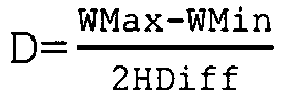
- According to an aspect of the invention, the divergent diffuser section has a minimum width at an upstream end, a maximum width at a downstream end and a diffuser height from the upstream end to the downstream end and a divergence parameter is between 0.02 and 0.5, preferably between 0.05 and 0.2, the divergence parameter being defined by

- The lower extreme of the range is sufficient to cause an appreciable deflection of the airflow and a consequent improvement in conditions of the airflow fed to the compressor. Within the upper extreme, safe conditions are defined, which prevent separation of the airflow.
- According to an aspect of the invention, the maximum width is not greater than twice the minimum width.
- The risk of separation is thus negligible.
- According to an aspect of the invention, the feed opening is symmetrically arranged with respect to the longitudinal median plane.
- According to an aspect of the invention, the side walls are specularly symmetrical with respect to the longitudinal median plane.
- Symmetry of the arrangement favors homogeneous feed conditions and is less at risk of undesired effects such as turbulence.
- According to an aspect of the invention, the vertical duct comprises an inlet section upstream of the divergent diffuser section, the side walls being straight and parallel in the inlet section.
- According to an aspect of the invention, the air intake further comprises air louvers, air filters, silencers and an horizontal duct upstream of the vertical duct.
- According to an aspect of the invention, there is also provided a stationary gas turbine engine comprising:
- an air intake as defined above;
- an axial compressor, having a compressor inlet coupled to the air intake and configured to receive an inlet airflow from the air intake.
- The present invention will now be described with reference to the accompanying drawings, which illustrate some non-limitative embodiments thereof, in which:
-
figure 1 is a schematic view of a power plant; -
figure 2 is a cross-sectional front view, taken along the line II-II offigure 1 , of a portion of an air intake included in the power plant offigure 1 and made in accordance to an embodiment of the present invention; -
figure 3 shows an enlarged detail of a portion of the vertical duct offigure 2 ; -
figure 4 is a cross-sectional front view of a portion of an air intake for a stationary gas turbine engine and made in accordance to a different embodiment of the present invention; and -
figure 5 is a cross-sectional front view of a portion of an air intake for a stationary gas turbine engine and made in accordance to another embodiment of the present invention. - With reference to
figure 1 , a power plant is indicated by numeral 1 and comprises a stationarygas turbine engine 2 and analternator 3 driven by a shaft 4 of thegas turbine engine 2. The stationarygas turbine engine 2 in turn comprises anair intake 5, acompressor 7 of the axial type, acombustion chamber 8 and aturbine 10. - An inlet of the
compressor 7, specifically a first stage of orientableinlet guide vanes 7a, is coupled to theair intake 5 for receiving an inlet airflow QA, which is added with fuel flow QF and burned in thecombustion chamber 8. A flow of exhaust gas QE is expanded in theturbine 10 to extract mechanical energy which is used to drive thealternator 3. - The inlet airflow QA is supplied to the
compressor 7 through theair intake 5, which is in part arranged about the shaft 4 between thealternator 3 and thecompressor 7. - In one embodiment of the present invention, the
air intake 5 comprisesair louvers 11, afiltering section 12, anhorizontal duct 13 and avertical duct 15. Air is sucked from outside through theair louvers 11 and thefiltering section 12, flows through thehorizontal duct 13 and thevertical duct 15 and is delivered to thecompressor 7 through afeed opening 50 provided in thevertical duct 15, as illustrated infigure 2 . Silencers 14 (figure 1 ) may be arranged either in thehorizontal duct 13, as in the embodiment offigures 1 and2 , or in thevertical duct 15, in accordance with design preferences. - The
vertical duct 15 is arranged between thealternator 3 and thecompressor 7 and has afront wall 16, facing thealternator 3, arear wall 17, facing thecompressor 7, and side walls 18 (figure 2 ). Thefront wall 16 and therear wall 17 are flat and parallel to each other, as illustrated infigure 1 . Theside walls 18 are specularly symmetrical with respect to a longitudinal median plane P of thevertical duct 15. - The
vertical duct 15 comprises aninlet section 19, adivergent diffuser section 20 and aconvergent conveyor section 21, arranged in succession in a flow direction of the inlet air flowing through theair intake 5. - In the
inlet section 19, which is connected to thehorizontal duct 13 through a bend, theside walls 18 are straight and parallel to each other. Moreover, in theinlet section 19, thevertical duct 15 has a minimum width WMin. In one embodiment not shown, the inlet section is not present and thedivergent diffuser section 20 is directly connected to the bend and to thehorizontal duct 13. - In the
divergent diffuser section 20 theside walls 18 have curveddivergent portions 18a configured to impart opposite divergent rotations to respective portions of the inlet airflow QA. In theconvergent conveyor section 21, theside walls 18 have curvedconvergent portions 18b, configured to impart respective convergent opposite rotations to respective portions of the inlet airflow QA, thus opposite to each other and opposite to the curveddivergent portions 18a of therespective side wall 18. - The
divergent diffuser section 20 is configured to slow down the inlet airflow QA flowing through thevertical duct 15. Specifically, in thedivergent diffuser section 20 theside walls 18 are configured to deflect part of the inlet airflow QA away from the longitudinal median plane P by Coanda effect, so that separation of the airflow from theside walls 18 is prevented. In one embodiment, the divergentcurved portions 18a of theside walls 18 extend throughout the wholedivergent diffuser section 20. A local divergent radius of curvature R1 of theside walls 18 is in any case selected to prevent flow separation in thedivergent diffuser section 20 at a maximum rated speed of the inlet airflow QA. The term "divergent" applied to the radius of curvature is to be understood as meaning that the curvature of theside walls 18 is such that a fraction of the inlet airflow QA flowing along theside walls 18 is deflected away from the longitudinal median plane P. The local divergent radius of curvature R1 need not be constant in thedivergent diffuser section 20 and may vary from anupstream end 20a at the junction with theinlet section 19 from adownstream end 20b at the junction with theconvergent conveyor section 21. - The divergent diffuser section has the minimum width WMin at the
upstream end 20a and a maximum width WMax at thedownstream end 20b and a diffuser height HDiff from theupstream end 20a to thedownstream end 20b. Separation of the airflow from theside walls 18 may be prevented for example if a divergence parameter D defined by
- The
convergent conveyor section 21 of thevertical duct 15 is arranged downstream of thedivergent diffuser section 20 and thefeed opening 50 is formed in therear wall 18 in theconvergent conveyor section 21 symmetrically with respect to the longitudinal median plane P. Therefore, theconvergent conveyor section 21 extends around thefeed opening 50. - The
convergent conveyor section 21 is configured to redirect part of the inlet airflow QA toward thefeed opening 50. Specifically, theconvergent conveyor section 21 collects a fraction of the inlet airflow QA which is deflected by thedivergent diffuser section 20 and passes by thefeed opening 50 without directly entering. To this end, convergentcurved portions 18b of theside walls 18 in theconvergent conveyor section 21 have a local convergent radius of curvature R2. The term "convergent" applied to the radius of curvature is to be understood as meaning that, locally, the curvature of theside walls 18 is such that a fraction of the inlet airflow QA flowing along theside walls 18 is deflected toward the longitudinal median plane P. Moreover, as theside walls 18 join at the longitudinal median plane P at the bottom of theconvergent conveyor section 21, the fraction of the inlet airflow QA is finally redirected toward the feed opening 50 from below. The local convergent radius of curvature R2 may be constant or variable along the convergentcurved portions 18b in accordance with design preferences. For example, in theconvergent conveyor section 21 the local convergent radius of curvature R2 is selected so that a ratio of a maximum of the local divergent radius of curvature R1 to a minimum of the local convergent radius of curvature R2 is comprised between 0.5 and 10. In some embodiments, here not shown, the convergentcurved portions 18b may also include straight portions, in accordance with design preferences. - No edges are provided either in the
divergent diffuser section 20 or in theconvergent conveyor section 21. - The
convergent conveyor section 21 comprises aconveyor bump 22, symmetrically arranged with respect to the longitudinal median plane P of thevertical duct 15. Theconveyor bump 22 projects toward the feed opening 50 from a bottom of theconvergent conveyor section 21 of thevertical duct 15 and is configured to deflect a portion of the inlet airflow QA upwards to thefeed opening 50. - The
conveyor bump 22 has a roundedsummit 22a with a bump radius of curvature R3 and smoothly joins curvedconvergent portions 18b of theside walls 18 in theconvergent conveyor section 21 through respectivecurved base connections 22b having equal base radii of curvature R4. Moreover, a ratio of a bump radius of curvature R3 to each of the base radii of curvature R4 is comprised between 0.9 and 1.1 and the radius of curvature R3 and the base radii of curvature R4 are preferably equal to or greater than 200 mm. - According to an embodiment of the present invention, shown in
figure 4 , an air intake designated bynumeral 105 comprises avertical duct 115 withside walls 118 in place of thevertical duct 15 offigures 1-3 and is similar for the remainder to theair intake 5 disclosed. Thevertical duct 115 has aninlet section 119, adivergent diffuser section 120, and aconvergent conveyor section 121 substantially as already discussed for theconvergent conveyor section 21 offigures 1-3 . In thedivergent diffuser section 120, theside walls 118 have respective curveddivergent portions 118a and respective straightdivergent portions 118c, downstream of the respective curveddivergent portions 118a. - According to the embodiment of
figure 5 , in anair intake 205 for a stationary gas turbine engine avertical duct 215 hasside walls 218 and comprises aninlet section 219, adivergent diffuser section 220 substantially as already described and aconvergent conveyor section 221. In theconvergent conveyor section 221, theside wall 218 join at the longitudinal median plane P without any bump. - It is finally apparent that changes and variations may be made to the air intake illustrated without departing from the scope of protection of the accompanying claims.
Claims (15)
- An air intake for a stationary gas turbine engine, comprising a vertical duct (15; 115; 215) having a front wall (16), a rear wall (17), side walls (18; 118; 218) and a feed opening (50) in the rear wall (17), the front wall (16) and the rear wall (17) being flat and parallel to each other;
wherein the side walls (18; 118; 218) define:a divergent diffuser section (20; 120; 220) of the vertical duct (15; 115; 215), configured to slow down an inlet airflow (QA) flowing through the vertical duct (15; 115; 215); anda convergent conveyor section (21; 121; 221) of the vertical duct (15; 115; 215), arranged downstream of the divergent diffuser section (20; 120; 220) and around the feed opening (50) and configured to redirect part of the inlet airflow (QA) toward the feed opening (50);the air intake being characterized in thatin the divergent diffuser section (20; 120; 220) the side walls (18; 118; 218) are configured to deflect the inlet airflow (QA) away from a longitudinal median plane (P) of the vertical duct (15; 115; 215) by Coanda effect, whereby separation of the inlet airflow (QA) from the side walls (18; 118; 218) is prevented. - The air intake according to claim 1, wherein the side walls (18; 118; 218) are configured to impart respective opposite rotations to respective portions of the inlet airflow (QA).
- The air intake according to claim 1 or 2, wherein the side walls (18; 118; 218) have respective curved divergent portions (18a; 118a) in the divergent diffuser section (20; 120; 220) and a local divergent radius of curvature (R1) of the curved divergent portions (18a; 118a) is selected to prevent flow separation in the divergent diffuser section (20; 120; 220) at a maximum rated speed of the inlet airflow (QA) .
- The air intake according to claim 3, wherein the side walls (118) have respective straight divergent portions (118c) in the divergent diffuser section (120), downstream of the respective curved divergent portions (118a).
- The air intake according to claim 3 or 4, wherein the side walls (18) have respective convergent curved portions (18b) with a local convergent radius of curvature (R2) in the convergent conveyor section (21; 121; 221), wherein a ratio of a maximum of the local divergent radius of curvature (R1) to a minimum of the local convergent radius of curvature (R2) is comprised between 0.5 and 10.
- The air intake according to any one of claims 3 to 5, wherein the convergent conveyor section (21; 121) comprises a conveyor bump (22), symmetrically arranged with respect to the longitudinal median plane (P) of the vertical duct (15; 115) .
- The air intake according to claim 6, wherein the conveyor bump (22) projects toward the feed opening (50) from a bottom of the vertical duct (15; 115).
- The air intake according to claim 6 or 7, wherein the conveyor bump (22) has a rounded summit (22a) with a bump radius of curvature (R3) and joins the side walls (18) through respective curved base connections (22b) having equal base radii of curvature (R4).
- The air intake according to claim 8, wherein a ratio of the bump radius of curvature (R3) to each of the base radii of curvature (R4) is comprised between 0.9 and 1.1 and the radius of curvature (R3) and the base radii of curvature (R4) are preferably equal to or greater than 200 mm.
- The air intake according to any one of the preceding claims, wherein the divergent diffuser section (20; 120; 220) has a minimum width (WMin) at an upstream end (20a), a maximum width (WMax) at a downstream end (20b) and a diffuser height (HDiff) from the upstream end (20a) to the downstream end (20b) and wherein a divergence parameter (D) is between 0.02 and 0.5, preferably between 0.05 and 0.2, the divergence parameter (D) being defined by
- The air intake according to claim 10, wherein the maximum width (WMax) is not greater than twice the minimum width (WMin).
- The air intake according to any one of the preceding claims, wherein the feed opening (50) is symmetrically arranged with respect to the longitudinal median plane (P) and wherein the side walls (18; 118; 218) are specularly symmetrical with respect to the longitudinal median plane (P) .
- The air intake according to any one of the preceding claims, wherein the vertical duct (15; 115; 215) comprises an inlet section (19; 119; 219) upstream of the divergent diffuser section (20; 120; 220), the side walls (18; 118; 218) being straight and parallel in the inlet section (19; 219) .
- The air intake according to any one of the preceding claims, further comprising air louvers (11), air filters (12), silencers (14) and an horizontal duct (13) upstream of the vertical duct (15; 115; 215).
- A stationary gas turbine engine comprising:an air intake (5; 105; 205) according to any one of the preceding claims;an axial compressor (7), having a compressor inlet (7a) coupled to the air intake (5; 105; 205) and configured to receive an inlet airflow (QA) from the air intake (5; 105; 205) .
Priority Applications (2)
| Application Number | Priority Date | Filing Date | Title |
|---|---|---|---|
| EP20425021.1A EP3936710B1 (en) | 2020-07-06 | 2020-07-06 | Air intake for a stationary gas turbine engine |
| CN202110761338.9A CN113898475B (en) | 2020-07-06 | 2021-07-06 | Air intake for a stationary gas turbine engine |
Applications Claiming Priority (1)
| Application Number | Priority Date | Filing Date | Title |
|---|---|---|---|
| EP20425021.1A EP3936710B1 (en) | 2020-07-06 | 2020-07-06 | Air intake for a stationary gas turbine engine |
Publications (2)
| Publication Number | Publication Date |
|---|---|
| EP3936710A1 EP3936710A1 (en) | 2022-01-12 |
| EP3936710B1 true EP3936710B1 (en) | 2023-04-12 |
Family
ID=71894767
Family Applications (1)
| Application Number | Title | Priority Date | Filing Date |
|---|---|---|---|
| EP20425021.1A Active EP3936710B1 (en) | 2020-07-06 | 2020-07-06 | Air intake for a stationary gas turbine engine |
Country Status (2)
| Country | Link |
|---|---|
| EP (1) | EP3936710B1 (en) |
| CN (1) | CN113898475B (en) |
Cited By (1)
| Publication number | Priority date | Publication date | Assignee | Title |
|---|---|---|---|---|
| US12577909B2 (en) | 2024-08-26 | 2026-03-17 | Pratt & Whitney Canada Corp. | Radial inlet compressor |
Family Cites Families (7)
| Publication number | Priority date | Publication date | Assignee | Title |
|---|---|---|---|---|
| EP2132446A1 (en) * | 2007-03-09 | 2009-12-16 | Ansaldo Nucleare S.p.A. | Air intake for a gas turbine compressor |
| DE112008002608T5 (en) * | 2007-10-19 | 2010-09-02 | Borgwarner Inc., Auburn Hills | Flow deflection channel, in particular for a turbocharger compressor inlet |
| US20100172753A1 (en) * | 2009-01-08 | 2010-07-08 | Frank Lin | Compressor side inlet with improved aerodynamic performance and reduced manufacturing complexity |
| US20120034064A1 (en) * | 2010-08-06 | 2012-02-09 | General Electric Company | Contoured axial-radial exhaust diffuser |
| JP5787790B2 (en) * | 2012-02-29 | 2015-09-30 | 三菱重工業株式会社 | Intake pipe structure of centrifugal fluid machinery |
| JP6172758B2 (en) * | 2014-12-11 | 2017-08-02 | 三菱重工業株式会社 | Single-suction intake device for rotating machinery |
| US10533496B2 (en) * | 2016-07-28 | 2020-01-14 | General Electric Company | Compact gas turbine air inlet system |
-
2020
- 2020-07-06 EP EP20425021.1A patent/EP3936710B1/en active Active
-
2021
- 2021-07-06 CN CN202110761338.9A patent/CN113898475B/en active Active
Cited By (1)
| Publication number | Priority date | Publication date | Assignee | Title |
|---|---|---|---|---|
| US12577909B2 (en) | 2024-08-26 | 2026-03-17 | Pratt & Whitney Canada Corp. | Radial inlet compressor |
Also Published As
| Publication number | Publication date |
|---|---|
| CN113898475A (en) | 2022-01-07 |
| EP3936710A1 (en) | 2022-01-12 |
| CN113898475B (en) | 2025-11-21 |
Similar Documents
| Publication | Publication Date | Title |
|---|---|---|
| US8484982B2 (en) | Bleed structure for a bleed passage in a gas turbine engine | |
| RU2397373C1 (en) | Circular flow channel for turbo-machines with main flow running in axial direction, also compressor with such flow channel | |
| CN102434232B (en) | Turbine exhaust plenum | |
| EP2239428A2 (en) | Exhaust plenum for a turbine engine | |
| EP0942150A2 (en) | A stator vane assembly for a turbomachine | |
| US8959888B2 (en) | Device to lower NOx in a gas turbine engine combustion system | |
| EP3258115B1 (en) | Service routing configuration for gas turbine engine diffuser systems | |
| EP3225818A1 (en) | Turbine engine designs for improved fine particle separation efficiency | |
| US20100180574A1 (en) | Gas turbine engine | |
| EP2123894A1 (en) | Jet flow discharge nozzle and jet engine | |
| EP2971617B1 (en) | Radial diffuser exhaust system | |
| GB2467120A (en) | Gas turbine engine with fluid mixing in by-pass duct | |
| CN101550872A (en) | Re-heat combustor for a gas turbine engine | |
| EP3306197A1 (en) | Dual fuel concentric nozzle for a gas turbine | |
| CN102235387A (en) | Diffuser for gas turbine system | |
| EP2955443A1 (en) | Impingement cooled wall arrangement | |
| US20220106884A1 (en) | Turbine engine component with deflector | |
| EP2629018A2 (en) | Late lean injection system | |
| EP3936710B1 (en) | Air intake for a stationary gas turbine engine | |
| EP2565426A1 (en) | Cooling flow control module for a turbomachine | |
| CN111794860A (en) | Turbine engine for an aircraft | |
| EP3599344A1 (en) | Systems for turbine engine particle separation | |
| EP1856398B1 (en) | A bleed structure for a bleed passage in a gas turbine engine | |
| CN108869041B (en) | Front end steering scoop for a gas turbine | |
| EP2397654A2 (en) | Vane assembly |
Legal Events
| Date | Code | Title | Description |
|---|---|---|---|
| PUAI | Public reference made under article 153(3) epc to a published international application that has entered the european phase |
Free format text: ORIGINAL CODE: 0009012 |
|
| STAA | Information on the status of an ep patent application or granted ep patent |
Free format text: STATUS: THE APPLICATION HAS BEEN PUBLISHED |
|
| AK | Designated contracting states |
Kind code of ref document: A1 Designated state(s): AL AT BE BG CH CY CZ DE DK EE ES FI FR GB GR HR HU IE IS IT LI LT LU LV MC MK MT NL NO PL PT RO RS SE SI SK SM TR |
|
| B565 | Issuance of search results under rule 164(2) epc |
Effective date: 20210118 |
|
| STAA | Information on the status of an ep patent application or granted ep patent |
Free format text: STATUS: REQUEST FOR EXAMINATION WAS MADE |
|
| 17P | Request for examination filed |
Effective date: 20220630 |
|
| RBV | Designated contracting states (corrected) |
Designated state(s): AL AT BE BG CH CY CZ DE DK EE ES FI FR GB GR HR HU IE IS IT LI LT LU LV MC MK MT NL NO PL PT RO RS SE SI SK SM TR |
|
| GRAP | Despatch of communication of intention to grant a patent |
Free format text: ORIGINAL CODE: EPIDOSNIGR1 |
|
| STAA | Information on the status of an ep patent application or granted ep patent |
Free format text: STATUS: GRANT OF PATENT IS INTENDED |
|
| INTG | Intention to grant announced |
Effective date: 20221027 |
|
| RIN1 | Information on inventor provided before grant (corrected) |
Inventor name: TAPPANI, MARCO |
|
| GRAS | Grant fee paid |
Free format text: ORIGINAL CODE: EPIDOSNIGR3 |
|
| GRAA | (expected) grant |
Free format text: ORIGINAL CODE: 0009210 |
|
| STAA | Information on the status of an ep patent application or granted ep patent |
Free format text: STATUS: THE PATENT HAS BEEN GRANTED |
|
| AK | Designated contracting states |
Kind code of ref document: B1 Designated state(s): AL AT BE BG CH CY CZ DE DK EE ES FI FR GB GR HR HU IE IS IT LI LT LU LV MC MK MT NL NO PL PT RO RS SE SI SK SM TR |
|
| REG | Reference to a national code |
Ref country code: GB Ref legal event code: FG4D |
|
| REG | Reference to a national code |
Ref country code: CH Ref legal event code: EP |
|
| REG | Reference to a national code |
Ref country code: DE Ref legal event code: R096 Ref document number: 602020009678 Country of ref document: DE |
|
| REG | Reference to a national code |
Ref country code: IE Ref legal event code: FG4D |
|
| REG | Reference to a national code |
Ref country code: AT Ref legal event code: REF Ref document number: 1559901 Country of ref document: AT Kind code of ref document: T Effective date: 20230515 |
|
| REG | Reference to a national code |
Ref country code: LT Ref legal event code: MG9D |
|
| REG | Reference to a national code |
Ref country code: NL Ref legal event code: MP Effective date: 20230412 |
|
| REG | Reference to a national code |
Ref country code: AT Ref legal event code: MK05 Ref document number: 1559901 Country of ref document: AT Kind code of ref document: T Effective date: 20230412 |
|
| PG25 | Lapsed in a contracting state [announced via postgrant information from national office to epo] |
Ref country code: NL Free format text: LAPSE BECAUSE OF FAILURE TO SUBMIT A TRANSLATION OF THE DESCRIPTION OR TO PAY THE FEE WITHIN THE PRESCRIBED TIME-LIMIT Effective date: 20230412 |
|
| PG25 | Lapsed in a contracting state [announced via postgrant information from national office to epo] |
Ref country code: SE Free format text: LAPSE BECAUSE OF FAILURE TO SUBMIT A TRANSLATION OF THE DESCRIPTION OR TO PAY THE FEE WITHIN THE PRESCRIBED TIME-LIMIT Effective date: 20230412 Ref country code: PT Free format text: LAPSE BECAUSE OF FAILURE TO SUBMIT A TRANSLATION OF THE DESCRIPTION OR TO PAY THE FEE WITHIN THE PRESCRIBED TIME-LIMIT Effective date: 20230814 Ref country code: NO Free format text: LAPSE BECAUSE OF FAILURE TO SUBMIT A TRANSLATION OF THE DESCRIPTION OR TO PAY THE FEE WITHIN THE PRESCRIBED TIME-LIMIT Effective date: 20230712 Ref country code: ES Free format text: LAPSE BECAUSE OF FAILURE TO SUBMIT A TRANSLATION OF THE DESCRIPTION OR TO PAY THE FEE WITHIN THE PRESCRIBED TIME-LIMIT Effective date: 20230412 Ref country code: AT Free format text: LAPSE BECAUSE OF FAILURE TO SUBMIT A TRANSLATION OF THE DESCRIPTION OR TO PAY THE FEE WITHIN THE PRESCRIBED TIME-LIMIT Effective date: 20230412 |
|
| PG25 | Lapsed in a contracting state [announced via postgrant information from national office to epo] |
Ref country code: RS Free format text: LAPSE BECAUSE OF FAILURE TO SUBMIT A TRANSLATION OF THE DESCRIPTION OR TO PAY THE FEE WITHIN THE PRESCRIBED TIME-LIMIT Effective date: 20230412 Ref country code: PL Free format text: LAPSE BECAUSE OF FAILURE TO SUBMIT A TRANSLATION OF THE DESCRIPTION OR TO PAY THE FEE WITHIN THE PRESCRIBED TIME-LIMIT Effective date: 20230412 Ref country code: LV Free format text: LAPSE BECAUSE OF FAILURE TO SUBMIT A TRANSLATION OF THE DESCRIPTION OR TO PAY THE FEE WITHIN THE PRESCRIBED TIME-LIMIT Effective date: 20230412 Ref country code: LT Free format text: LAPSE BECAUSE OF FAILURE TO SUBMIT A TRANSLATION OF THE DESCRIPTION OR TO PAY THE FEE WITHIN THE PRESCRIBED TIME-LIMIT Effective date: 20230412 Ref country code: IS Free format text: LAPSE BECAUSE OF FAILURE TO SUBMIT A TRANSLATION OF THE DESCRIPTION OR TO PAY THE FEE WITHIN THE PRESCRIBED TIME-LIMIT Effective date: 20230812 Ref country code: HR Free format text: LAPSE BECAUSE OF FAILURE TO SUBMIT A TRANSLATION OF THE DESCRIPTION OR TO PAY THE FEE WITHIN THE PRESCRIBED TIME-LIMIT Effective date: 20230412 Ref country code: GR Free format text: LAPSE BECAUSE OF FAILURE TO SUBMIT A TRANSLATION OF THE DESCRIPTION OR TO PAY THE FEE WITHIN THE PRESCRIBED TIME-LIMIT Effective date: 20230713 Ref country code: AL Free format text: LAPSE BECAUSE OF FAILURE TO SUBMIT A TRANSLATION OF THE DESCRIPTION OR TO PAY THE FEE WITHIN THE PRESCRIBED TIME-LIMIT Effective date: 20230412 |
|
| PG25 | Lapsed in a contracting state [announced via postgrant information from national office to epo] |
Ref country code: FI Free format text: LAPSE BECAUSE OF FAILURE TO SUBMIT A TRANSLATION OF THE DESCRIPTION OR TO PAY THE FEE WITHIN THE PRESCRIBED TIME-LIMIT Effective date: 20230412 |
|
| REG | Reference to a national code |
Ref country code: DE Ref legal event code: R097 Ref document number: 602020009678 Country of ref document: DE |
|
| PG25 | Lapsed in a contracting state [announced via postgrant information from national office to epo] |
Ref country code: SK Free format text: LAPSE BECAUSE OF FAILURE TO SUBMIT A TRANSLATION OF THE DESCRIPTION OR TO PAY THE FEE WITHIN THE PRESCRIBED TIME-LIMIT Effective date: 20230412 |
|
| PG25 | Lapsed in a contracting state [announced via postgrant information from national office to epo] |
Ref country code: SM Free format text: LAPSE BECAUSE OF FAILURE TO SUBMIT A TRANSLATION OF THE DESCRIPTION OR TO PAY THE FEE WITHIN THE PRESCRIBED TIME-LIMIT Effective date: 20230412 Ref country code: SK Free format text: LAPSE BECAUSE OF FAILURE TO SUBMIT A TRANSLATION OF THE DESCRIPTION OR TO PAY THE FEE WITHIN THE PRESCRIBED TIME-LIMIT Effective date: 20230412 Ref country code: RO Free format text: LAPSE BECAUSE OF FAILURE TO SUBMIT A TRANSLATION OF THE DESCRIPTION OR TO PAY THE FEE WITHIN THE PRESCRIBED TIME-LIMIT Effective date: 20230412 Ref country code: EE Free format text: LAPSE BECAUSE OF FAILURE TO SUBMIT A TRANSLATION OF THE DESCRIPTION OR TO PAY THE FEE WITHIN THE PRESCRIBED TIME-LIMIT Effective date: 20230412 Ref country code: DK Free format text: LAPSE BECAUSE OF FAILURE TO SUBMIT A TRANSLATION OF THE DESCRIPTION OR TO PAY THE FEE WITHIN THE PRESCRIBED TIME-LIMIT Effective date: 20230412 Ref country code: CZ Free format text: LAPSE BECAUSE OF FAILURE TO SUBMIT A TRANSLATION OF THE DESCRIPTION OR TO PAY THE FEE WITHIN THE PRESCRIBED TIME-LIMIT Effective date: 20230412 |
|
| PLBE | No opposition filed within time limit |
Free format text: ORIGINAL CODE: 0009261 |
|
| STAA | Information on the status of an ep patent application or granted ep patent |
Free format text: STATUS: NO OPPOSITION FILED WITHIN TIME LIMIT |
|
| PG25 | Lapsed in a contracting state [announced via postgrant information from national office to epo] |
Ref country code: MC Free format text: LAPSE BECAUSE OF FAILURE TO SUBMIT A TRANSLATION OF THE DESCRIPTION OR TO PAY THE FEE WITHIN THE PRESCRIBED TIME-LIMIT Effective date: 20230412 |
|
| PG25 | Lapsed in a contracting state [announced via postgrant information from national office to epo] |
Ref country code: MC Free format text: LAPSE BECAUSE OF FAILURE TO SUBMIT A TRANSLATION OF THE DESCRIPTION OR TO PAY THE FEE WITHIN THE PRESCRIBED TIME-LIMIT Effective date: 20230412 |
|
| REG | Reference to a national code |
Ref country code: CH Ref legal event code: PL |
|
| REG | Reference to a national code |
Ref country code: BE Ref legal event code: MM Effective date: 20230731 |
|
| 26N | No opposition filed |
Effective date: 20240115 |
|
| PG25 | Lapsed in a contracting state [announced via postgrant information from national office to epo] |
Ref country code: LU Free format text: LAPSE BECAUSE OF NON-PAYMENT OF DUE FEES Effective date: 20230706 |
|
| PG25 | Lapsed in a contracting state [announced via postgrant information from national office to epo] |
Ref country code: LU Free format text: LAPSE BECAUSE OF NON-PAYMENT OF DUE FEES Effective date: 20230706 |
|
| REG | Reference to a national code |
Ref country code: IE Ref legal event code: MM4A |
|
| PG25 | Lapsed in a contracting state [announced via postgrant information from national office to epo] |
Ref country code: CH Free format text: LAPSE BECAUSE OF NON-PAYMENT OF DUE FEES Effective date: 20230731 |
|
| PG25 | Lapsed in a contracting state [announced via postgrant information from national office to epo] |
Ref country code: SI Free format text: LAPSE BECAUSE OF FAILURE TO SUBMIT A TRANSLATION OF THE DESCRIPTION OR TO PAY THE FEE WITHIN THE PRESCRIBED TIME-LIMIT Effective date: 20230412 |
|
| PG25 | Lapsed in a contracting state [announced via postgrant information from national office to epo] |
Ref country code: SI Free format text: LAPSE BECAUSE OF FAILURE TO SUBMIT A TRANSLATION OF THE DESCRIPTION OR TO PAY THE FEE WITHIN THE PRESCRIBED TIME-LIMIT Effective date: 20230412 Ref country code: FR Free format text: LAPSE BECAUSE OF NON-PAYMENT OF DUE FEES Effective date: 20230731 Ref country code: BE Free format text: LAPSE BECAUSE OF NON-PAYMENT OF DUE FEES Effective date: 20230731 |
|
| P01 | Opt-out of the competence of the unified patent court (upc) registered |
Effective date: 20240430 |
|
| PG25 | Lapsed in a contracting state [announced via postgrant information from national office to epo] |
Ref country code: IE Free format text: LAPSE BECAUSE OF NON-PAYMENT OF DUE FEES Effective date: 20230706 |
|
| PG25 | Lapsed in a contracting state [announced via postgrant information from national office to epo] |
Ref country code: IE Free format text: LAPSE BECAUSE OF NON-PAYMENT OF DUE FEES Effective date: 20230706 |
|
| PG25 | Lapsed in a contracting state [announced via postgrant information from national office to epo] |
Ref country code: BG Free format text: LAPSE BECAUSE OF FAILURE TO SUBMIT A TRANSLATION OF THE DESCRIPTION OR TO PAY THE FEE WITHIN THE PRESCRIBED TIME-LIMIT Effective date: 20230412 |
|
| PG25 | Lapsed in a contracting state [announced via postgrant information from national office to epo] |
Ref country code: BG Free format text: LAPSE BECAUSE OF FAILURE TO SUBMIT A TRANSLATION OF THE DESCRIPTION OR TO PAY THE FEE WITHIN THE PRESCRIBED TIME-LIMIT Effective date: 20230412 |
|
| GBPC | Gb: european patent ceased through non-payment of renewal fee |
Effective date: 20240706 |
|
| PG25 | Lapsed in a contracting state [announced via postgrant information from national office to epo] |
Ref country code: GB Free format text: LAPSE BECAUSE OF NON-PAYMENT OF DUE FEES Effective date: 20240706 |
|
| PG25 | Lapsed in a contracting state [announced via postgrant information from national office to epo] |
Ref country code: CY Free format text: LAPSE BECAUSE OF FAILURE TO SUBMIT A TRANSLATION OF THE DESCRIPTION OR TO PAY THE FEE WITHIN THE PRESCRIBED TIME-LIMIT; INVALID AB INITIO Effective date: 20200706 |
|
| PG25 | Lapsed in a contracting state [announced via postgrant information from national office to epo] |
Ref country code: HU Free format text: LAPSE BECAUSE OF FAILURE TO SUBMIT A TRANSLATION OF THE DESCRIPTION OR TO PAY THE FEE WITHIN THE PRESCRIBED TIME-LIMIT; INVALID AB INITIO Effective date: 20200706 |
|
| PGFP | Annual fee paid to national office [announced via postgrant information from national office to epo] |
Ref country code: DE Payment date: 20250722 Year of fee payment: 6 |
|
| PGFP | Annual fee paid to national office [announced via postgrant information from national office to epo] |
Ref country code: IT Payment date: 20250731 Year of fee payment: 6 |
|
| PG25 | Lapsed in a contracting state [announced via postgrant information from national office to epo] |
Ref country code: TR Free format text: LAPSE BECAUSE OF FAILURE TO SUBMIT A TRANSLATION OF THE DESCRIPTION OR TO PAY THE FEE WITHIN THE PRESCRIBED TIME-LIMIT Effective date: 20230412 |