EP3935316B1 - Verfahren und anordnung zum steuern einer verbrennungskraftmaschine mit mehreren brennern - Google Patents
Verfahren und anordnung zum steuern einer verbrennungskraftmaschine mit mehreren brennern Download PDFInfo
- Publication number
- EP3935316B1 EP3935316B1 EP20714946.9A EP20714946A EP3935316B1 EP 3935316 B1 EP3935316 B1 EP 3935316B1 EP 20714946 A EP20714946 A EP 20714946A EP 3935316 B1 EP3935316 B1 EP 3935316B1
- Authority
- EP
- European Patent Office
- Prior art keywords
- burner
- fuel
- machine learning
- burners
- learning model
- Prior art date
- Legal status (The legal status is an assumption and is not a legal conclusion. Google has not performed a legal analysis and makes no representation as to the accuracy of the status listed.)
- Active
Links
Images

Classifications
-
- F—MECHANICAL ENGINEERING; LIGHTING; HEATING; WEAPONS; BLASTING
- F23—COMBUSTION APPARATUS; COMBUSTION PROCESSES
- F23N—REGULATING OR CONTROLLING COMBUSTION
- F23N5/00—Systems for controlling combustion
- F23N5/003—Systems for controlling combustion using detectors sensitive to combustion gas properties
-
- F—MECHANICAL ENGINEERING; LIGHTING; HEATING; WEAPONS; BLASTING
- F23—COMBUSTION APPARATUS; COMBUSTION PROCESSES
- F23N—REGULATING OR CONTROLLING COMBUSTION
- F23N5/00—Systems for controlling combustion
-
- F—MECHANICAL ENGINEERING; LIGHTING; HEATING; WEAPONS; BLASTING
- F02—COMBUSTION ENGINES; HOT-GAS OR COMBUSTION-PRODUCT ENGINE PLANTS
- F02D—CONTROLLING COMBUSTION ENGINES
- F02D41/00—Electrical control of supply of combustible mixture or its constituents
- F02D41/02—Circuit arrangements for generating control signals
- F02D41/14—Introducing closed-loop corrections
- F02D41/1401—Introducing closed-loop corrections characterised by the control or regulation method
- F02D41/1405—Neural network control
-
- F—MECHANICAL ENGINEERING; LIGHTING; HEATING; WEAPONS; BLASTING
- F23—COMBUSTION APPARATUS; COMBUSTION PROCESSES
- F23N—REGULATING OR CONTROLLING COMBUSTION
- F23N2223/00—Signal processing; Details thereof
- F23N2223/04—Memory
-
- F—MECHANICAL ENGINEERING; LIGHTING; HEATING; WEAPONS; BLASTING
- F23—COMBUSTION APPARATUS; COMBUSTION PROCESSES
- F23N—REGULATING OR CONTROLLING COMBUSTION
- F23N2223/00—Signal processing; Details thereof
- F23N2223/40—Simulation
-
- F—MECHANICAL ENGINEERING; LIGHTING; HEATING; WEAPONS; BLASTING
- F23—COMBUSTION APPARATUS; COMBUSTION PROCESSES
- F23N—REGULATING OR CONTROLLING COMBUSTION
- F23N2223/00—Signal processing; Details thereof
- F23N2223/48—Learning / Adaptive control
-
- F—MECHANICAL ENGINEERING; LIGHTING; HEATING; WEAPONS; BLASTING
- F23—COMBUSTION APPARATUS; COMBUSTION PROCESSES
- F23N—REGULATING OR CONTROLLING COMBUSTION
- F23N2237/00—Controlling
- F23N2237/02—Controlling two or more burners
-
- F—MECHANICAL ENGINEERING; LIGHTING; HEATING; WEAPONS; BLASTING
- F23—COMBUSTION APPARATUS; COMBUSTION PROCESSES
- F23N—REGULATING OR CONTROLLING COMBUSTION
- F23N2241/00—Applications
- F23N2241/20—Gas turbines
-
- F—MECHANICAL ENGINEERING; LIGHTING; HEATING; WEAPONS; BLASTING
- F23—COMBUSTION APPARATUS; COMBUSTION PROCESSES
- F23N—REGULATING OR CONTROLLING COMBUSTION
- F23N2900/00—Special features of, or arrangements for controlling combustion
- F23N2900/05006—Controlling systems using neuronal networks
-
- Y—GENERAL TAGGING OF NEW TECHNOLOGICAL DEVELOPMENTS; GENERAL TAGGING OF CROSS-SECTIONAL TECHNOLOGIES SPANNING OVER SEVERAL SECTIONS OF THE IPC; TECHNICAL SUBJECTS COVERED BY FORMER USPC CROSS-REFERENCE ART COLLECTIONS [XRACs] AND DIGESTS
- Y02—TECHNOLOGIES OR APPLICATIONS FOR MITIGATION OR ADAPTATION AGAINST CLIMATE CHANGE
- Y02T—CLIMATE CHANGE MITIGATION TECHNOLOGIES RELATED TO TRANSPORTATION
- Y02T50/00—Aeronautics or air transport
- Y02T50/60—Efficient propulsion technologies, e.g. for aircraft
Definitions
- Modern internal combustion engines such as gas turbines or jet engines, often have several burners that generate high temperatures and volume flows in separate or shared combustion chambers, which are converted into kinetic energy.
- pressure oscillations are usually excited and pollutants such as nitrogen oxides, carbon monoxide or unburned hydrocarbons are generated or emitted.
- the combustion process in the burners is structured by adjusting different fuel stages. Differentiated fuel flows with different flow quantities, inlet pressures and/or fuel-air mixture ratios are fed in parallel to each burner in the different fuel stages. A separate ring line is usually provided for each fuel stage, which leads to all burners.
- the operation of the internal combustion engine can be optimized by appropriately adjusting the individual fuel stages. The aim is often to reduce pressure fluctuations or temperature peaks in the combustion chambers, to reduce clogging of fuel nozzles and/or to reduce pollutant emissions, and to increase the performance or efficiency of the internal combustion engine. However, the optimization goals sought often have an antagonistic effect and can only be achieved approximately.
- US 2014/020400 A1 describes a controller, a gas turbine and a method for automatically tuning a combustion system of a gas turbine.
- EN 10 2008 057 199 A1 describes a control device arrangement for a motor vehicle in which an artificial neural network is implemented, wherein a A variety of control units are provided in the motor vehicle.
- EN 10 2017 204 434 A1 describes a method and an arrangement for measuring a gas temperature distribution in a combustion chamber.
- combustion measurement data is recorded for each burner in a burner-specific manner and assigned to a burner identifier that identifies the respective burner.
- the internal combustion engine can in particular be a gas turbine or a jet engine.
- a respective burner can also have several combustion points and/or be designed as a burner group.
- performance measurement data of the internal combustion engine is recorded, on the basis of which a performance value is determined.
- a machine learning model is trained to generate burner-specific control data that optimizes the performance value when the burners are controlled by the control data in a burner-specific manner.
- Optimization is understood here in particular to mean approaching an optimum determined by a predetermined criterion.
- a criterion can be in a so-called reward function, loss function or Cost function for the performance value is evaluated.
- the control data generated by the trained machine learning model is output for burner-specific control of the burners.
- pressure fluctuations in a combustion chamber, pollutant emissions, a gas temperature, a spatial temperature distribution, a fuel inflow, a mixture ratio or other parameters of a combustion process can be recorded as combustion measurement data in a burner-specific manner.
- the performance value can in particular relate to a generated power or an efficiency of the internal combustion engine, pressure fluctuations in a combustion chamber, a temperature distribution, a gas inlet temperature, local temperature peaks, pollutant emissions, clogging of fuel nozzles, fuel consumption or wear of the internal combustion engine.
- the control data can in particular be used to control a mixture ratio between fuel and air, a fuel inflow or an injection pressure in a burner-specific manner.
- an arrangement for controlling an internal combustion engine, a computer program product and a computer-readable storage medium are provided.
- the method according to the invention and the arrangement according to the invention can be carried out or implemented, for example, by means of one or more processors, computers, application-specific integrated circuits (ASICs), digital signal processors (DSPs) and/or so-called “field programmable gate arrays” (FPGAs).
- ASICs application-specific integrated circuits
- DSPs digital signal processors
- FPGAs field programmable gate arrays
- One advantage of the invention is that the burner-specific measurement data acquisition and performance optimization allow individual differences between the individual burners, which may be caused by manufacturing tolerances or different Pipe routing can be compensated for in a coordinated manner. In this way, in many cases, temperature, pressure or pollutant extremes, material fatigue, wear or pollutant emissions can be reduced and/or efficiency or generated power can be increased.
- a machine learning model complex causal relationships or correlations between burner-specific combustion measurement data, performance measurement data and burner-specific optimized control data can be modeled relatively accurately. This also applies in particular to different operating states of the internal combustion engine.
- a fuel flow to a respective burner can be divided into several fuel stages depending on the control data for each burner. Using the different fuel stages, several fuel flows can be fed to a burner, which differ in terms of their fuel/air mixture ratio, their inlet pressure or another inlet parameter.
- the combustion process in each burner can be structured spatially, temporally, physically and/or chemically and thus optimized for each burner, in particular with regard to the performance value.
- the fuel flow can be distributed between the fuel stages using burner-specific and/or fuel stage-specific multi-way valves.
- the use of multi-way valves can often significantly reduce the piping effort for the internal combustion engine.
- a valve that covers all burners can be controlled to temporarily interrupt or reduce the fuel flow.
- several burners can be quickly turned down together - regardless of their burner-specific control.
- combustion measurement data can be recorded for each fuel stage and assigned to a fuel stage identifier, which is also used to train the machine learning model.
- the machine learning model can also model fuel stage-specific causal relationships between combustion measurement data and performance measurement data or control data. These causal relationships can be advantageously taken into account when optimizing the performance value.
- the machine learning model can be trained using a reinforcement learning method.
- a reinforcement learning method is often also referred to as reinforcement learning.
- Reinforcement learning methods that can be used include, for example, so-called PGNRR methods (PGNRR: Policy Gradient Neural Rewards Regression), VOP-PGNNR methods (VOP-PGNRR: Variable Objective Policy PGNRR) or model-based reinforcement learning methods such as RCNN methods (RCNN: Recurrent Control Neural Network).
- PGNRR Policy Gradient Neural Rewards Regression
- VOP-PGNRR Variable Objective Policy PGNRR
- RCNN Recurrent Control Neural Network
- the training can in particular generate one or more so-called closed control policies.
- closed control policies can usually be executed very quickly and therefore allow a high time resolution when controlling the internal combustion engine.
- the machine learning model and/or a control policy may preferably be an artificial neural network, a recurrent neural network, a convolutional neural network, a Bayesian neural network, an autoencoder, a deep learning architecture, a support vector machine, a data-driven trainable regression model, a k-nearest neighbor classifier, a physical model, and/or a decision tree.
- the machine learning model can be further trained during ongoing operation of the internal combustion engine using currently recorded combustion measurement data and performance measurement data. This allows continuous operation optimization and adaptation to runtime-related or environment-related changes in the internal combustion engine.
- the machine learning model can be pre-trained in a calibration phase using a training internal combustion engine and/or a simulation model of an internal combustion engine.
- a simulation model is often also referred to as a design model or digital twin.
- An identical or similar model of the internal combustion engine can preferably be used as the training internal combustion engine.
- Such pre-training can often significantly shorten training on the internal combustion engine.
- the machine learning model comprises several sub-models specific to a respective burner, each of which generates control data specific to the respective burner.
- the training task is broken down into smaller sub-tasks, the causal relationships of which are generally easier to model and which can often be carried out considerably more quickly.
- the submodels for generating the burner-specific control data can be executed in parallel. In this way, execution time can usually be reduced considerably.
- a further machine learning model can be trained to generate further control data by which a fuel flow distribution, in particular an overall fuel flow distribution between the burners and/or a combustion temperature is set and which optimizes the performance value and/or a further performance value.
- Combustion measurement data, associated burner identifications and performance measurement data can be used as training data.
- simulation data from a simulation of the internal combustion engine or a part thereof can be used to train the further machine learning model.
- the use of simulation data is advantageous in that a smaller amount of suitable training data is usually available for such cross-burner control processes.
- the setting of the fuel flow distribution between the burners is particularly advantageous for annular combustion chambers in which the burners are arranged in a common annular combustion chamber. Since each burner usually influences the entire annular combustion chamber, cross-burner fluctuations can be compensated by controlling the cross-burner fuel distribution.
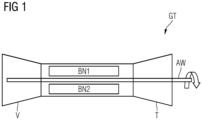
- Figure 1 shows a gas turbine GT as an internal combustion engine in a schematic representation.
- the gas turbine GT has a compressor V for compressing incoming air, several burners BN1 and BN2 for burning supplied fuel and a turbine T for converting thermal and kinetic energy generated by combustion into rotational energy.
- the latter is transferred via a drive shaft AW to the compressor V, among other things, in order to drive it.
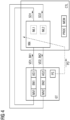
- FIG. 2 shows a diagram illustrating a fuel supply in a gas turbine according to the state of the art.
- the gas turbine has several burners, of which Figure 2 For reasons of clarity, only two burners BN1 and BN2 are shown.
- the gas turbine also has several fuel stages, of which Figure 2 Also for reasons of clarity, only two fuel stages FSA and FSB are explicitly indicated. In the different fuel stages FSA and FSB, several different fuel flows are introduced into a respective burner BN1 or BN2 through separate fuel nozzles.
- the fuel flows can differ, for example, in terms of their flow quantities, fuel-air mixture ratios or inlet pressures.
- the The combustion process can be spatially, temporally, physically and/or chemically structured and thus particularly optimized.
- a separate, stage-specific ring line FRA or FRB is provided for each of the combustion stages FSA and FSB, which leads to all burners BN1 and BN2.
- the ring lines FRA and FRB are each connected to a main supply line MSL of the gas turbine via a controllable, fuel stage-specific valve VA or VB.
- the valves VA and VB divide a total fuel flow F between the individual fuel stages FSA and FSB.
- each fuel stage FSA or FSB is supplied via a ring line FRA or FRB
- the distribution of the fuel inflows has an undifferentiated effect on all burners BN1 and BN2.
- the fuel inflows to the individual burners BN1 and BN2 and the individual combustion processes differ at least slightly. These differences usually also result in different pollutant emissions, temperature peaks or pressure fluctuations in the individual burners BN1 and BN2 and cannot be compensated for by the valves VA and VB upstream of the ring lines FRA and FRB.
- the control of an internal combustion engine according to the state of the art is often based on the burner with the worst combustion values. However, this means that the other burners are not operated optimally.
- Figure 3 shows a diagram to illustrate a fuel supply in a gas turbine according to the invention.
- the gas turbine according to the invention has several burners, of which only two burners BN1 and BN2 are explicitly shown. A respective burner BN1 or BN2 can also have several combustion points and/or be designed as a burner group.
- the gas turbine according to the invention has several fuel stages, of which Figure 3 Also for reasons of clarity, only two fuel stages FSA and FSB are explicitly indicated.
- the fuel stages FSA and FSB serve, as already described above, to distribute the fuel flows to the individual burners BN1 and BN2.
- this division is carried out individually for each burner BN1 and BN2 or each burner group.
- Controllable, burner-specific multi-way valves MV1 and MV2 are provided for the burner-specific distribution of the fuel inflows to the individual fuel stages FSA and FSB. Each burner BN1 and BN2 is therefore specifically assigned a multi-way valve MV1 or MV2.
- the multi-way valves MV1 and MV2 are connected to a main supply line MSL of the gas turbine via a cross-stage ring line FR, via which a total fuel flow F is fed to the multi-way valves MV1 and MV2.
- burner-wide valves can be connected upstream of the multi-way valves MV1 and MV2 for the short-term interruption or reduction of a fuel flow.
- interruptions of the fuel flow are often referred to as trips and such reductions of the fuel flow are often referred to as unloads.
- individual burners BN1 or BN2 can be operated at different power points, at different combustion temperatures and/or with different fuel quantities. This generally effectively reduces the formation of carbon monoxide, especially at low loads, and/or nitrogen oxides. This means that gas turbines can in many cases be operated at very low power and kept on standby while complying with emissions regulations.
- Figure 4 shows a schematic representation of an arrangement for controlling a gas turbine GT according to the invention.
- Figure 4 the same reference numerals as in Figure 3 are used, these reference symbols refer to the same entities as in Figure 3 These entities can be referred to in particular as in Figure 3 be designed as described.
- the gas turbine GT has a turbine control CTL that implements a control method according to the invention.
- the turbine control CTL is in Figure 4 external to the gas turbine GT.
- the turbine control CTL can also be implemented in whole or in part in the gas turbine GT.
- the turbine control has one or more computers or processors PROC for executing method steps of the turbine control CTL, as well as one or more memories MEN for storing the data to be processed by the turbine control CTL.
- a non-volatile memory is provided in particular in the turbine control CTL.
- the GT gas turbine has several burners, of which Figure 4 for reasons of clarity, only two burners BN1 and BN2 are shown.
- a respective burner BN1 or BN2 can also have several burners and/or be designed as a burner group.
- Each burner BN1 or BN2 is fed individually by an electric or hydraulic multi-way valve MV1 or MV2.
- the multi-way valves MV1 and MV2 divide a fuel flow to the burners BN1 and BN2 burners burner-specifically or burner-group-specifically to the individual fuel stages, as already mentioned in connection with Figure 3 described.
- the multi-way valves MV1 and MV2 are each controlled by burner-specific control data, here SD1 and SD2, respectively, through which the distribution of the fuel flow to the various fuel stages is set for each multi-way valve MV1 and MV2, specific to the burner or burner group.
- control data SD1 and SD2 can also be used to set a mixing ratio between fuel and air, an injection pressure or other control parameters specific to the burner or burner group.
- a burner-specific sensor AS1 or AS2 is arranged on each burner BN1 or BN2, which measures burner-specific combustion measurement data VD1 or VD2 of the respective burner BN1 or BN2, preferably in real time.
- acoustic vibrations of a respective burner BN1 or BN2, generated by pressure fluctuations within a respective combustion chamber, are measured. Intensities of the acoustic vibrations are recorded separately in several frequency ranges, preferably between 15 Hz and 10 kHz, for each burner BN1 or BN2 and output as combustion measurement data VD1 or VD2.
- the sensors AS1 and AS2 can also measure burner-specific pollutant emissions, in particular nitrogen oxides, carbon monoxide or unburned Hydrocarbons, a chemical composition of the pollutants, a combustion temperature or combustion temperature distribution, an inlet or exhaust gas temperature, a pressure, a fuel-air mixture ratio, a fuel flow or other combustion parameters are recorded as combustion measurement data VD1 and VD2.
- burner-specific pollutant emissions in particular nitrogen oxides, carbon monoxide or unburned Hydrocarbons, a chemical composition of the pollutants, a combustion temperature or combustion temperature distribution, an inlet or exhaust gas temperature, a pressure, a fuel-air mixture ratio, a fuel flow or other combustion parameters are recorded as combustion measurement data VD1 and VD2.
- the combustion measurement data VD1 or VD2 measured and output by a respective sensor AS1 or AS2 are each assigned to a burner identification BK1 or BK2 identifying the respective burner BN1 or BN2 and transmitted to the turbine control CTL.
- the gas turbine GT also has performance sensors PS that measure performance measurement data PD of the gas turbine GT, preferably in real time.
- the performance sensors PS can include all or part of the sensors AS1 and AS2.
- the performance measurement data PD can be measured burner-specifically or across burners and may be part of the combustion measurement data VD1 and VD2 measured by the sensors AS1 and AS2.
- the performance measurement data PD can include, in particular, measurement data on the performance, efficiency, fuel consumption or wear of the gas turbine GT, on pressure fluctuations in the combustion chambers, on pollutant emissions, in particular of nitrogen oxides, carbon monoxide or unburned hydrocarbons, on inlet temperatures, on exhaust gas temperatures, on local temperature peaks or on clogging of fuel nozzles as well as measurement data on other operating variables relating to the performance of the gas turbine GT.
- the combustion measurement data VD1 are transmitted in association with the burner detection BK1 and the combustion measurement data VD2 in association with the burner detection BK2 to a machine learning model NN of the turbine control CTL.
- the performance measurement data PD are also transmitted from the performance sensors PS to the machine learning model NN.
- the Performance measurement data PD are used together with the combustion measurement data VD1 and VD2 in association with the burner identifications BK1 and BK2 as training data to train the machine learning model NN in a data-driven manner.
- the machine learning model NN is implemented by an artificial neural network.
- the artificial neural network is preferably trained using a reinforcement learning method.
- the performance measurement data PD is evaluated in a reward function, which uses the performance measurement data PD to determine a performance value for the gas turbine GT that is to be optimized through training.
- a reward function is often also referred to as a reward function.
- a large number of known reinforcement learning methods are available for carrying out the training.
- PGNRR Policy Gradient Neural Rewards Regression
- VOP-PGNRR Variable Objective Policy PGNRR
- RCNN Recurrent Control Neural Network
- the machine learning model NN comprises a burner-specific submodel ML1 or ML2 for each burner of the gas turbine GT, here BN1 or BN2, which is trained using the training data PD and VD1, BK1 or VD2, BK2 to generate specific control data, here SD1 or SD2, via the respective burner BN1 or BN2.
- the submodels ML1 and ML2 are trained in parallel and the trained submodels ML1 and ML2 are executed in parallel in productive operation of the gas turbine GT.
- the parallel execution of the submodels ML1 and ML2 can greatly accelerate the application of the trained machine learning model NN, so that a high time resolution can be achieved when generating the control data SD1 and SD2.
- training is understood - following the usual technical usage - as a mapping of input data from a machine learning model, here NN, to one or more target variables, which is optimized according to predetermined criteria during a training phase.
- a training structure of the machine learning model NN is developed that is optimized according to the predetermined criteria.
- the training structure can, for example, include a network structure of neurons in a neural network and/or weights of connections between the neurons, which are developed through training in such a way that the predetermined criteria are met as well as possible.
- the predetermined criteria can be mapped in a reward function to be optimized.
- the machine learning model NN receives the burner-specific combustion measurement data VD1 and VD2 from the gas turbine GT, each associated with the relevant burner identification BK1 or BK2, as input data.
- the machine learning model NN receives the performance measurement data PD as further input data.
- the output data of the machine learning model NN are fed back to the gas turbine GT as burner-specific control data SD1 and SD2.
- the multi-way valve MV1 is controlled using the control data SD1 and the multi-way valve MV2 is controlled using the control data SD2, as described above.
- the machine learning model NN is trained so that its output data, here the burner-specific control data SD1 and SD2, optimize the performance value and thus, to a certain extent, the performance measurement data PD when the multi-way valves MV1 and MV2 are controlled in a burner-specific manner by these control data SD1 and SD2.
- the use of the performance measurement data PD as an optimization criterion for the machine learning model NN is in Figure 4 illustrated by a dashed arrow. This means that the training to an optimization problem for which a variety of optimization methods are available.
- the machine learning model NN is trained to generate advantageous, i.e. performance-enhancing, control data SD1 and SD2 for the operation of the gas turbine GT from the burner-specific combustion measurement data VD1 and VD2.
- advantageous, i.e. performance-enhancing, control data SD1 and SD2 for the operation of the gas turbine GT from the burner-specific combustion measurement data VD1 and VD2.
- the efficiency of the gas turbine GT can generally be increased and/or pollutant emissions or wear of the gas turbine GT can be reduced.
- local temperature peaks can be avoided or clogging of fuel nozzles can be reduced.
- the machine learning model NN is preferably further trained during ongoing productive operation of the gas turbine GT using currently recorded combustion measurement data and performance measurement data.
- a closed control loop can be provided for continuous optimization in order to continuously adapt the gas turbine GT to environmental or runtime-related changes.
- the combustion measurement data VD1 and VD2 can also be recorded by the sensors AS1 and AS2 in a fuel stage-specific manner and assigned a fuel stage identifier that identifies the respective fuel stage.
- the combustion measurement data VD1 and VD2, which are both burner-specific and fuel stage-specific, can then be transmitted as input data to the machine learning model NN in association with the respective fuel stage identifier in order to train it.
- the additional differentiation according to fuel stages also allows fuel stage-specific causal relationships to be modeled and taken into account when optimizing the performance value.
- a further machine learning model (not shown) can be provided which is trained to generate further control data by which a fuel flow distribution between the burners BN1 and BN2 is set and which additionally optimizes the performance value and/or another performance value.
Landscapes
- Engineering & Computer Science (AREA)
- Chemical & Material Sciences (AREA)
- Combustion & Propulsion (AREA)
- Mechanical Engineering (AREA)
- General Engineering & Computer Science (AREA)
- Artificial Intelligence (AREA)
- Evolutionary Computation (AREA)
- Regulation And Control Of Combustion (AREA)
Description
- Moderne Verbrennungskraftmaschinen, wie beispielsweise Gasturbinen oder Strahltriebwerke, verfügen häufig über mehrere Brenner, die in separaten oder in gemeinsamen Brennkammern hohe Temperaturen und Volumenströme erzeugen, die in Bewegungsenergie umgesetzt werden. Während des Verbrennungsvorgangs werden in der Regel Druckschwingungen angeregt und Schadstoffe, wie z.B. Stickoxide, Kohlenmonoxid oder unverbrannte Kohlenwasserstoffe erzeugt oder ausgestoßen.
- Bei vielen Verbrennungskraftmaschinen wird der Verbrennungsvorgang in den Brennern durch eine Justierung verschiedener Brennstoffstufen strukturiert. Hierbei werden einem jeweiligen Brenner in den unterschiedlichen Brennstoffstufen differenzierte Brennstoffflüsse mit unterschiedlichen Flussmengen, Einleitungsdrücken und/oder Brennstoff-Luft-Mischungsverhältnissen parallel zugeführt. Für jede Brennstoffstufe ist üblicherweise eine separate Ringleitung vorgesehen, die zu allen Brennern führt. Durch geeignete Justierung der einzelnen Brennstoffstufen kann der Betrieb der Verbrennungskraftmaschine optimiert werden. Dabei wird häufig angestrebt, Druckschwankungen oder Temperaturspitzen in den Brennkammern, ein Zusetzen von Brennstoffdüsen und/oder einen Schadstoffausstoß zu verringern sowie eine Leistung oder einen Wirkungsgrad der Verbrennungskraftmaschine zu steigern. Die angestrebten Optimierungsziele wirken jedoch häufig antagonistisch und können nur näherungsweise erreicht werden.
US 2014/020400 A1 beschreibt einen Regler, eine Gasturbine und ein Verfahren zur automatischen Abstimmung eines Verbrennungssystems einer Gasturbine.DE 10 2008 057 199 A1 beschreibt eine Steuergeräteanordnung für ein Kraftfahrzeug in der ein künstliches neuronales Netz implementiert ist, wobei eine Vielzahl von Steuergeräten im Kraftfahrzeug vorgesehen ist.DE 10 2017 204 434 A1 beschreibt ein Verfahren und eine Anordnung zur Messung einer Gastemperaturverteilung in einer Brennkammer. - Es ist Aufgabe der vorliegenden Erfindung, ein Verfahren und eine Anordnung zum Steuern einer Verbrennungskraftmaschine mit mehreren Brennern zu schaffen, die eine bessere Optimierung des Betriebs der Verbrennungskraftmaschine erlauben.
- Gelöst wird diese Aufgabe durch ein Verfahren mit den Merkmalen des Patentanspruchs 1, durch eine Anordnung mit den Merkmalen des Patentanspruchs 12, durch ein Computerprogrammprodukt mit den Merkmalen des Patentanspruchs 13 sowie durch ein computerlesbares Speichermedium mit den Merkmalen des Patentanspruchs 14.
- Erfindungsgemäß werden zum Steuern einer Verbrennungskraftmaschine mit mehreren Brennern für einen jeweiligen Brenner Verbrennungsmessdaten brennerspezifisch erfasst und einer den jeweiligen Brenner identifizierenden Brennerkennung zugeordnet. Die Verbrennungskraftmaschine kann insbesondere eine Gasturbine oder ein Strahltriebwerk sein. Ein jeweiliger Brenner kann dabei auch mehrere Brennstellen aufweisen und/oder als Brennergruppe ausgestaltet sein. Weiterhin werden Performanzmessdaten der Verbrennungskraftmaschine erfasst, anhand derer ein Performanzwert ermittelt wird. Mittels der Verbrennungsmessdaten, der zugeordneten Brennerkennungen sowie der Performanzmessdaten wird ein maschinelles Lernmodell darauf trainiert, brennerspezifische Steuerdaten zu generieren, die bei brennerspezifischer Ansteuerung der Brenner durch die Steuerdaten den Performanzwert optimieren. Unter einem Optimieren sei hierbei insbesondere auch ein Annähern an ein durch ein vorgegebenes Kriterium bestimmtes Optimum verstanden. Ein solches Kriterium kann in einer sogenannten Belohnungsfunktion, Verlustfunktion oder Kostenfunktion für den Performanzwert ausgewertet werden. Die vom trainierten maschinellen Lernmodell generierten Steuerdaten werden zum brennerspezifischen Ansteuern der Brenner ausgegeben.
- Als Verbrennungsmessdaten können insbesondere Druckschwankungen in einer Brennkammer, Schadstoffemissionen, eine Gastemperatur, eine räumliche Temperaturverteilung, ein Brennstoffzufluss, ein Mischungsverhältnis oder andere Parameter eines Verbrennungsvorgangs brennerspezifisch erfasst werden. Der Performanzwert kann insbesondere eine generierte Leistung oder einen Wirkungsgrad der Verbrennungskraftmaschine, Druckschwankungen in einer Brennkammer, eine Temperaturverteilung, eine Gaseinlasstemperatur, lokale Temperaturspitzen, Schadstoffemissionen, ein Zusetzen von Brennstoffdüsen, einen Brennstoffverbrauch oder einen Verschleiß der Verbrennungskraftmaschine betreffen. Durch die Steuerdaten können insbesondere ein Mischungsverhältnis zwischen Brennstoff und Luft, ein Brennstoffzufluss oder ein Einspritzdruck brennerspezifisch gesteuert werden.
- Zum Ausführen des erfindungsgemäßen Verfahrens sind eine Anordnung zum Steuern einer Verbrennungskraftmaschine, ein Computerprogrammprodukt sowie ein computerlesbares Speichermedium vorgesehen.
- Das erfindungsgemäße Verfahren und die erfindungsgemäße Anordnung können beispielsweise mittels eines oder mehrerer Prozessoren, Computer, anwendungsspezifischer integrierter Schaltungen (ASIC), digitaler Signalprozessoren (DSP) und/oder sogenannter "Field Programmable Gate Arrays" (FPGA) ausgeführt bzw. implementiert werden.
- Ein Vorteil der Erfindung ist insbesondere darin zu sehen, dass durch die brennerspezifische Messdatenerfassung und die Performanzoptimierung individuelle Unterschiede der einzelnen Brenner, die durch Fertigungstoleranzen oder unterschiedliche Leitungsführungen bedingt sein können, in koordinierter Weise ausgeglichen werden können. Auf diese Weise können in vielen Fällen Temperatur-, Druck- oder Schadstoffextreme, eine Materialermüdung, ein Verschleiß oder ein Schadstoffausstoß verringert und/oder ein Wirkungsgrad oder eine generierte Leistung erhöht werden. Durch die Verwendung eines maschinellen Lernmodells können auch komplexe Wirkungszusammenhänge oder Korrelationen zwischen brennerspezifischen Verbrennungsmessdaten, Performanzmessdaten und brennerspezifisch optimierten Steuerdaten verhältnismäßig genau modelliert werden. Dies gilt insbesondere auch für unterschiedliche Betriebszustände der Verbrennungskraftmaschine.
- Vorteilhafte Ausführungsformen und Weiterbildungen der Erfindung sind in den abhängigen Ansprüchen angegeben.
- Gemäß einer vorteilhaften Ausführungsform der Erfindung kann ein Brennstoffzufluss zu einem jeweiligen Brenner abhängig von den Steuerdaten brennerspezifisch auf mehrere Brennstoffstufen aufgeteilt werden. Mittels der verschiedenen Brennstoffstufen können einem Brenner jeweils mehrere Brennstoffflüsse zugeleitet werden, die sich hinsichtlich ihres Brennstoff/Luft-Mischungsverhältnisses, ihres Einleitungsdruckes oder hinsichtlich eines anderen Einleitungsparameters unterscheiden. Auf diese Weise kann in jedem Brenner der Verbrennungsvorgang räumlich, zeitlich, physikalisch und/oder chemisch strukturiert und damit insbesondere hinsichtlich des Performanzwertes brennerspezifisch optimiert werden.
- Vorzugsweise kann die Aufteilung des Brennstoffzuflusses auf die Brennstoffstufen durch brennerspezifische und/oder brennstoffstufenspezifische Mehrwegventile vorgenommen werden. Durch die Verwendung von Mehrwegventilen kann ein Verrohrungsaufwand für die Verbrennungskraftmaschine häufig erheblich gesenkt werden.
- Vorteilhafterweise kann zur kurzfristigen Unterbrechung oder Reduzierung eines Brennstoffzuflusses ein brennerübergreifendes Ventil angesteuert werden. Auf diese Weise können mehrere Brenner - unabhängig von ihrer brennerspezifischen Ansteuerung - gemeinsam schnell heruntergeregelt werden.
- Nach einer vorteilhaften Weiterbildung der Erfindung können Verbrennungsmessdaten brennstoffstufenspezifisch erfasst und jeweils einer Brennstoffstufenkennung zugeordnet werden, die zusätzlich zum Trainieren des maschinellen Lernmodells verwendet wird. Auf diese Weise können durch das maschinelle Lernmodell auch brennstoffstufenspezifische Wirkungszusammenhänge zwischen Verbrennungsmessdaten und Performanzmessdaten bzw. Steuerdaten modelliert werden. Diese Wirkungszusammenhänge können bei der Optimierung des Performanzwertes in vorteilhafter Weise berücksichtigt werden.
- Gemäß einer besonders vorteilhaften Ausführungsform der Erfindung kann das maschinelle Lernmodell durch ein Verfahren des bestärkenden Lernens trainiert werden. Ein solches Verfahren des bestärkenden Lernens wird häufig auch als Reinforcement-Learning bezeichnet. Als Verfahren des bestärkenden Lernens können beispielsweise sogenannte PGNRR-Verfahren (PGNRR: Policy Gradient Neural Rewards Regression), VOP-PGNNR-Verfahren (VOP-PGNRR: Variable Objective Policy PGNRR) oder modellbasierte Reinforcement-Learning-Verfahren wie z.B. RCNN-Verfahren (RCNN: Recurrent Control Neural Network) verwendet werden. Durch das Training können insbesondere eine oder mehrere sogenannte geschlossene Control-Policies generiert werden. Derartige geschlossene Control-Policies lassen sich in der Regel sehr schnell ausführen und erlauben mithin eine hohe Zeitauflösung bei der Steuerung der Verbrennungskraftmaschine.
- Das maschinelle Lernmodell und/oder eine Control-Policiy kann vorzugsweise ein künstliches neuronales Netz, ein rekurrentes neuronales Netz, ein faltendes neuronales Netz, ein bayessches neuronales Netz, einen Autoencoder, eine Deep-Learning-Architektur, eine Support-Vector-Machine, ein datengetriebenes trainierbares Regressionsmodell, einen k-nächste-Nachbarn-Klassifikator, ein physikalisches Modell und/oder einen Entscheidungsbaum umfassen.
- Nach einer weiteren vorteilhaften Ausführungsform der Erfindung kann das maschinelle Lernmodell im laufenden Betrieb der Verbrennungskraftmaschine anhand aktuell erfasster Verbrennungsmessdaten und Performanzmessdaten weitertrainiert werden. Dies erlaubt eine fortlaufende Betriebsoptimierung und Anpassung an laufzeitbedingte oder umgebungsbedingte Veränderungen der Verbrennungskraftmaschine.
- Weiterhin kann das maschinelle Lernmodell in einer Kalibrierungsphase mittels einer Trainings-Verbrennungskraftmaschine und/oder mittels eines Simulationsmodells einer Verbrennungskraftmaschine vortrainiert werden. Ein solches Simulationsmodell wird häufig auch als Designmodell oder Digital-Twin bezeichnet. Als Trainings-Verbrennungskraftmaschine kann vorzugsweise ein baugleiches oder ähnliches Modell der Verbrennungskraftmaschine verwendet werden. Durch ein solches Vortraining kann ein Training an der Verbrennungskraftmaschine häufig erheblich verkürzt werden.
- Erfindungsgemäß umfasst das maschinelle Lernmodell mehrere, für einen jeweiligen Brenner spezifische Teilmodelle, die jeweils für den jeweiligen Brenner spezifische Steuerdaten generieren. Auf diese Weise werden die Trainingsaufgabe in kleinere Teilaufgaben zerlegt, deren Wirkungszusammenhänge in der Regel einfacher zu modellieren sind und die sich oft erheblich schneller ausführen lassen.
- Insbesondere können die Teilmodelle zur Generierung der brennerspezifischen Steuerdaten parallel ausgeführt werden. Auf diese Weise kann eine Ausführungszeit in der Regel erheblich verkürzt werden.
- Nach einer vorteilhaften Weiterbildung der Erfindung kann ein weiteres maschinelles Lernmodell darauf trainiert werden, weitere Steuerdaten zu generieren, durch die eine Brennstoffflussverteilung, insbesondere eine Gesamt-Brennstoffflussverteilung zwischen den Brennern und/oder eine Verbrennungstemperatur eingestellt wird und die den Performanzwert und/oder einen weiteren Performanzwert optimieren. Als Trainingsdaten können Verbrennungsmessdaten, zugeordnete Brennerkennungen sowie Performanzmessdaten genutzt werden. Darüber hinaus können zum Training des Weiteren maschinellen Lernmodells Simulationsdaten aus einer Simulation der Verbrennungskraftmaschine oder eines Teils davon verwendet werden. Die Verwendung von Simulationsdaten ist insofern vorteilhaft, als für derartige brennerübergreifende Steuerungsvorgänge in der Regel eine geringere Menge von geeigneten Trainingsdaten verfügbar sind. Die Einstellung der Brennstoffflussverteilung zwischen den Brennern ist insbesondere für Ringbrennkammern vorteilhaft, in denen die Brenner in einer gemeinsamen ringförmigen Brennkammer angeordnet sind. Da jeder Brenner in der Regel die ganze Ringbrennkammer beeinflusst, können durch eine Steuerung der brennerübergreifenden Brennstoffverteilung brennerübergreifende Schwankungen ausgeglichen werden.
- Ein Ausführungsbeispiel der Erfindung wird nachfolgend anhand der Zeichnung näher erläutert. Dabei zeigen jeweils in schematischer Darstellung:
- Figur 1
- eine Gasturbine mit mehreren Brennern,
- Figur 2
- ein Diagramm zur Veranschaulichung einer Brennstoffzuführung bei einer Gasturbine gemäß dem Stand der Technik,
- Figur 3
- ein Diagramm zur Veranschaulichung einer Brennstoffzuführung bei einer erfindungsgemäßen Gasturbine, und
- Figur 4
- eine Anordnung zum Steuern der erfindungsgemäßen Gasturbine.
-
Figur 1 zeigt als Verbrennungskraftmaschine eine Gasturbine GT in schematischer Darstellung. Die Gasturbine GT verfügt über einen Verdichter V zum Komprimieren von zuströmender Luft, über mehrere Brenner BN1 und BN2 zum Verbrennen von zugeführtem Brennstoff sowie über eine Turbine T zum Umsetzen von durch die Verbrennung erzeugter thermischer und kinetischer Energie in Rotationsenergie. Letztere wird über eine Antriebswelle AW unter anderem zum Verdichter V übertragen, um diesen anzutreiben. - Die Anwendung der Erfindung auf eine Gasturbine ist lediglich beispielhaft zu verstehen. Alternativ oder zusätzlich kann die Erfindung auch zum Steuern von anderen Verbrennungskraftmaschinen, wie beispielsweise Strahltriebwerken eingesetzt werden.
Figur 2 zeigt ein Diagramm zur Veranschaulichung einer Brennstoffzuführung bei einer Gasturbine gemäß dem Stand der Technik. Die Gasturbine verfügt über mehrere Brenner, von denen inFigur 2 aus Übersichtlichkeitsgründen nur zwei Brenner BN1 und BN2 veranschaulicht sind. Die Gasturbine verfügt weiterhin über mehrere Brennstoffstufen, von denen inFigur 2 ebenfalls aus Übersichtlichkeitsgründen nur zwei Brennstoffstufen FSA und FSB explizit angedeutet sind. In den unterschiedlichen Brennstoffstufen FSA und FSB werden in einen jeweiligen Brenner BN1 bzw. BN2 jeweils mehrere unterschiedliche Brennstoffflüsse durch separate Brennstoffdüsen eingeleitet. Die Brennstoffflüsse können sich z.B. hinsichtlich ihrer Flussmengen, Brennstoff-Luft-Mischungsverhältnissen oder Einleitungsdrücken unterscheiden. Auf diese Weise kann in jedem Brenner BN1 bzw. BN2 der Verbrennungsvorgang räumlich, zeitlich, physikalisch und/oder chemisch strukturiert und damit insbesondere optimiert werden. - Für die Brennstufen FSA und FSB ist gemäß dem Stand der Technik jeweils eine separate, stufenspezifische Ringleitung FRA bzw. FRB vorgesehen, die jeweils zu allen Brennern BN1 und BN2 führt. Die Ringleitungen FRA und FRB sind jeweils über ein steuerbares, brennstoffstufenspezifisches Ventil VA bzw. VB an eine Hauptversorgungsleitung MSL der Gasturbine angeschlossen. Die Ventile VA und VB teilen einen Gesamt-Brennstofffluss F auf die einzelnen Brennstoffstufen FSA und FSB auf.
- Wegen der Zuführung einer jeweiligen Brennstoffstufe FSA bzw. FSB über eine Ringleitung FRA bzw. FRB wirkt sich die Aufteilung der Brennstoffzuflüsse undifferenziert auf alle Brenner BN1 und BN2 aus. Aufgrund von geometrischen Unterschieden der Leitungsführung sowie aufgrund von Fertigungstoleranzen oder laufzeitbedingten Änderungen der Brenner BN1 und BN2 unterscheiden sich jedoch die Brennstoffzuflüsse zu den einzelnen Brennern BN1 und BN2 sowie die individuellen Verbrennungsvorgänge zumindest geringfügig. Diese Unterschiede bedingen in der Regel auch unterschiedliche Schadstoffemissionen, Temperaturspitzen oder Druckschwankungen in den individuellen Brennern BN1 und BN2 und können durch die den Ringleitungen FRA und FRB vorgelagerten Ventile VA und VB nicht ausgeglichen werden. Dementsprechend orientiert sich eine Steuerung einer Verbrennungskraftmaschine gemäß dem Stand der Technik häufig am Brenner mit den schlechtesten Verbrennungswerten. Hierdurch werden jedoch die anderen Brenner nicht in optimaler Weise betrieben.
-
Figur 3 zeigt ein Diagramm zur Veranschaulichung einer Brennstoffzuführung bei einer erfindungsgemäßen Gasturbine. Die erfindungsgemäße Gasturbine verfügt über mehrere Brenner, von denen aus Übersichtlichkeitsgründen nur zwei Brenner BN1 und BN2 explizit dargestellt sind. Ein jeweiliger Brenner BN1 bzw. BN2 kann hierbei auch mehrere Brennstellen aufweisen und/oder als Brennergruppe ausgestaltet sein. Weiterhin weist die erfindungsgemäße Gasturbine mehrere Brennstoffstufen auf, von denen inFigur 3 ebenfalls aus Übersichtlichkeitsgründen nur zwei Brennstoffstufen FSA und FSB explizit angedeutet sind. Die Brennstoffstufen FSA und FSB dienen, wie oben bereits beschrieben, zur Aufteilung der Brennstoffzuflüsse zu den einzelnen Brennern BN1 und BN2. Im Unterschied zu der im Zusammenhang mitFigur 2 beschriebenen Gasturbine gemäß dem Stand der Technik erfolgt diese Aufteilung bei der erfindungsgemäßen Gasturbine jedoch für jeden Brenner BN1 und BN2 oder jede Brennergruppe individuell. - Zur brennerspezifischen Aufteilung der Brennstoffzuflüsse auf die einzelnen Brennstoffstufen FSA und FSB sind steuerbare, brennerspezifische Mehrwegventile MV1 und MV2 vorgesehen. Jedem Brenner BN1 und BN2 ist also ein Mehrwegventil MV1 bzw. MV2 spezifisch zugeordnet. Die Mehrwegventile MV1 und MV2 sind über eine stufenübergreifende Ringleitung FR an eine Hauptversorgungsleitung MSL der Gasturbine angeschlossen, über die ein Gesamt-Brennstofffluss F den Mehrwegventilen MV1 und MV2 zugeleitet wird.
- Vorzugsweise können den Mehrwegventilen MV1 und MV2 brennerübergreifende Ventile (nicht dargestellt) zur kurzfristen Unterbrechung oder Reduzierung eines Brennstoffzuflusses vorgeschaltet sein. Derartige Unterbrechungen des Brennstoffzuflusses werden häufig auch als Trips und derartige Reduzierungen des Brennstoffzuflusses häufig als Unloads bezeichnet.
- Durch die brennerspezifische Aufteilung des Brennstoffflusses auf die einzelnen Brennstoffstufen FSA und FSB können brennerindividuelle Unterschiede des Verbrennungsprozesses ausgeglichen und zudem brennerspezifisch optimiert werden. Insbesondere können Schadstoffemissionen, lokale Temperaturspitzen, Druckschwankungen, Leistung, Wirkungsgrad, Brennstoffverbrauch, Lebensdauer, Verschleiß, Ermüdung und/oder ein Zusetzen der Brennstoffdüsen individuell für jeden Brenner optimiert werden. Durch den möglichen Wegfall von stufenspezifischen Ringleitungen kann zudem in vielen Fällen ein Verrohrungsaufwand reduziert werden.
- Darüber hinaus können einzelne Brenner BN1 bzw. BN2 gezielt an unterschiedlichen Leistungspunkten, bei unterschiedlichen Verbrennungstemperaturen und/oder mit unterschiedlichen Brennstoffmengen betrieben werden. Damit kann in der Regel eine Entstehung von Kohlenmonoxid, insbesondere bei kleiner Last und/oder von Stickoxiden effektiv reduziert werden. Damit können Gasturbinen in vielen Fällen unter Einhaltung von Emissionsvorschriften bei sehr niedriger Leistung betrieben und in Bereitschaft gehalten werden.
-
Figur 4 zeigt in schematischer Darstellung eine Anordnung zum Steuern einer erfindungsgemäßen Gasturbine GT. Insofern inFigur 4 die gleichen Bezugszeichen wie inFigur 3 verwendet werden, werden durch diese Bezugszeichen die gleichen Entitäten wie inFigur 3 bezeichnet. Diese Entitäten können insbesondere wie inFigur 3 beschrieben ausgestaltet sein. - Die Gasturbine GT verfügt über eine Turbinensteuerung CTL, die ein erfindungsgemäßes Steuerverfahren implementiert. Die Turbinensteuerung CTL ist in
Figur 4 extern zur Gasturbine GT dargestellt. Alternativ kann die Turbinensteuerung CTL auch ganz oder teilweise in der Gasturbine GT implementiert sein. Die Turbinensteuerung weist einen oder mehrere Computer oder Prozessoren PROC zum Ausführen von Verfahrensschritten der Turbinensteuerung CTL auf, sowie eine oder mehrere Speicher MEN zum Speichern der von der Turbinensteuerung CTL zu verarbeitenden Daten. Zum Steuern eines das erfindungsgemäße Verfahren implementierenden Computerprogramms ist in der Turbinensteuerung CTL insbesondere ein nichtflüchtiger Speicher vorgesehen. - Die Gasturbine GT verfügt über mehrere Brenner, von denen in
Figur 4 aus Übersichtlichkeitsgründen nur zwei Brenner BN1 und BN2 dargestellt sind. Ein jeweiliger Brenner BN1 bzw. BN2 kann hierbei auch mehrere Brennstellen aufweisen und/oder als Brennergruppe ausgestaltet sein. Jeder Brenner BN1 bzw. BN2 wird durch ein elektrisches oder hydraulisches Mehrwegventil MV1 bzw. MV2 brennerindividuell gespeist. Die Mehrwegventile MV1 und MV2 teilen einen Brennstoffzufluss zu den Brennern BN1 und BN2 brennerspezifisch oder brennergruppenspezifisch auf die einzelnen Brennstoffstufen auf, wie bereits im Zusammenhang mitFigur 3 beschrieben. - Die Mehrwegventile MV1 und MV2 werden jeweils durch brennerspezifische Steuerdaten, hier SD1 bzw. SD2 angesteuert, durch die für jedes Mehrwegventil MV1 und MV2 die Aufteilung des Brennstoffzuflusses auf die verschiedenen Brennstoffstufen brennerspezifisch oder brennergruppenspezifisch eingestellt wird. Darüber hinaus können durch die Steuerdaten SD1 und SD2 auch ein Mischverhältnis zwischen Brennstoff und Luft, ein Einspritzdruck oder andere Steuerparameter brennerspezifisch oder brennergruppenspezifisch eingestellt werden.
- An einen jeweiligen Brenner BN1 bzw. BN2 ist jeweils ein brennerspezifischer Sensor AS1 bzw. AS2 angeordnet, der jeweils brennerspezifische Verbrennungsmessdaten VD1 bzw. VD2 des betreffenden Brenners BN1 bzw. BN2 vorzugsweise in Echtzeit misst. Im vorliegenden Ausführungsbeispiel werden insbesondere von Druckschwankungen innerhalb einer jeweiligen Brennkammer erzeugte akustische Schwingungen eines jeweiligen Brenners BN1 bzw. BN2 gemessen. Dabei werden jeweils Intensitäten der akustischen Schwingungen in mehreren Frequenzbereichen, vorzugsweise zwischen 15 Hz und 10 kHz für jeden Brenner BN1 bzw. BN2 separat erfasst und als Verbrennungsmessdaten VD1 bzw. VD2 ausgegeben. Zusätzlich können durch die Sensoren AS1 und AS2 auch ein brennerspezifischer Schadstoffausstoß, insbesondere von Stickoxiden, Kohlenmonoxid oder unverbrannten Kohlenwasserstoffen, eine chemische Zusammensetzung der Schadstoffe, eine Verbrennungstemperatur oder Verbrennungstemperaturverteilung, eine Einlass- oder Abgastemperatur, ein Druck, ein Brennstoff-Luft-Mischungsverhältnis, ein Brennstoffzufluss oder andere Verbrennungsparameter als Verbrennungsmessdaten VD1 und VD2 erfasst werden.
- Die von einem jeweiligen Sensor AS1 bzw. AS2 gemessenen und ausgegebenen Verbrennungsmessdaten VD1 bzw. VD2 werden jeweils einer den betreffenden Brenner BN1 bzw. BN2 identifizierenden Brennerkennung BK1 bzw. BK2 zugeordnet und zur Turbinensteuerung CTL übermittelt.
- Weiterhin verfügt die Gasturbine GT über Performanzsensoren PS, die, vorzugsweise in Echtzeit, Performanzmessdaten PD der Gasturbine GT messen. Die Performanzsensoren PS können die Sensoren AS1 und AS2 ganz oder teilweise umfassen. Die Performanzmessdaten PD können brennerspezifisch oder brennerübergreifend gemessen werden und ggf. Teil der von den Sensoren AS1 und AS2 gemessenen Verbrennungsmessdaten VD1 und VD2 sein. Die Performanzmessdaten PD können insbesondere Messdaten über Leistung, Wirkungsgrad, Brennstoffverbrauch oder Verschleiß der Gasturbine GT, über Druckschwankungen in den Brennkammern, über Schadstoffemissionen, insbesondere von Stickoxiden, Kohlenmonoxid oder unverbrannten Kohlenwasserstoffen, über Einlasstemperaturen, über Abgastemperaturen, über lokale Temperaturspitzen oder über ein Zusetzen von Brennstoffdüsen sowie Messdaten über andere eine Performanz der Gasturbine GT betreffende Betriebsgrößen umfassen.
- Die Verbrennungsmessdaten VD1 werden in Zuordnung zur Brennerkennung BK1 und die Verbrennungsmessdaten VD2 in Zuordnung zur Brennerkennung BK2 zu einem maschinellen Lernmodell NN der Turbinensteuerung CTL übermittelt. Die Performanzmessdaten PD werden von den Performanzsensoren PS ebenfalls zum maschinellen Lernmodell NN übermittelt. Die Performanzmessdaten PD werden zusammen mit den Verbrennungsmessdaten VD1 und VD2 in Zuordnung zu den Brennerkennungen BK1 und BK2 als Trainingsdaten verwendet, um das maschinelle Lernmodell NN datengetrieben zu trainieren.
- Das maschinelle Lernmodell NN wird im vorliegenden Ausführungsbeispiel durch ein künstliches neuronales Netz implementiert. Das künstliche neuronale Netz wird vorzugsweise mittels eines Verfahrens des bestärkenden Lernens (Reinforcement-Learning) trainiert. Hierbei werden die Performanzmessdaten PD in einer Belohnungsfunktion ausgewertet, die anhand der Performanzmessdaten PD einen durch das Training zu optimierenden Performanzwert für die Gasturbine GT ermittelt. Eine solche Belohnungsfunktion wird häufig auch als Reward-Function bezeichnet. Zur Durchführung des Trainings ist eine Vielzahl von bekannten Verfahren des bestärkenden Lernens verfügbar. Vorzugsweise kann ein sogenanntes PGNRR-Verfahren (PGNRR: Policy Gradient Neural Rewards Regression), ein sogenanntes VOP-PGNRR-Verfahren (VOP-PGNRR: Variable Objective Policy PGNRR) oder ein modellbasiertes Reinforcement-Learning-Verfahren wie z.B. ein sogenanntes RCNN-Verfahren (RCNN: Recurrent Control Neural Network) zum Training verwendet werden.
- Das maschinelle Lernmodell NN umfasst im vorliegenden Ausführungsbeispiel für jeden Brenner der Gasturbine GT, hier BN1 bzw. BN2, ein brennerspezifisches Teilmodell ML1 bzw. ML2, das mittels der Trainingsdaten PD sowie VD1, BK1 bzw. VD2, BK2 darauf trainiert wird, über den jeweiligen Brenner BN1 bzw. BN2 spezifische Steuerdaten, hier SD1 bzw. SD2 zu generieren. Die Teilmodelle ML1 und ML2 werden parallel trainiert und die trainierten Teilmodelle ML1 und ML2 in Produktivbetrieb der Gasturbine GT parallel ausgeführt. Durch die parallele Ausführung der Teilmodelle ML1 und ML2 kann die Anwendung des trainierten maschinellen Lernmodells NN stark beschleunigt werden, so dass bei der Generierung der Steuerdaten SD1 und SD2 eine hohe Zeitauflösung erzielt werden kann.
- Als Training sei in diesem Zusammenhang - dem fachüblichen Sprachgebrauch folgend - eine Abbildung von Eingabedaten eines maschinellen Lernmodells, hier NN, auf eine oder mehrere Zielgrößen verstanden, die nach vorgegebenen Kriterien während einer Trainingsphase optimiert wird. Hierbei wird eine auf die vorgegebenen Kriterien hin optimierte Trainingsstruktur des maschinellen Lernmodells NN ausgebildet. Die Trainingsstruktur kann z.B. eine Vernetzungsstruktur von Neuronen eines neuronalen Netzes und/oder Gewichte von Verbindungen zwischen den Neuronen umfassen, die durch das Training so ausgebildet werden, dass die vorgegebenen Kriterien möglichst gut erfüllt werden. Die vorgegebenen Kriterien können in einer zu optimierenden Belohnungsfunktion abgebildet werden.
- Im vorliegenden Ausführungsbeispiel empfängt das maschinelle Lernmodell NN von der Gasturbine GT die brennerspezifischen Verbrennungsmessdaten VD1 und VD2 jeweils in Zuordnung zur betreffenden Brennerkennung BK1 bzw. BK2 als Eingabedaten. Als weitere Eingabedaten empfängt das maschinelle Lernmodell NN die Performanzmessdaten PD. Die Ausgabedaten des maschinellen Lernmodells NN werden als brennerspezifische Steuerdaten SD1 und SD2 zur Gasturbine GT zurückgeführt. Mittels der Steuerdaten SD1 wird das Mehrwegventil MV1 und mittels der Steuerdaten SD2 wird das Mehrwegventil MV2 wie oben beschrieben angesteuert.
- Das maschinelle Lernmodell NN wird darauf trainiert, dass seine Ausgabedaten, hier die brennerspezifischen Steuerdaten SD1 und SD2, bei brennerspezifischer Ansteuerung der Mehrwegventile MV1 und MV2 durch diese Steuerdaten SD1 und SD2 den Performanzwert und dadurch gewissermaßen die Performanzmessdaten PD optimieren. Die Nutzung der Performanzmessdaten PD als Optimierungskriterium für das maschinelle Lernmodell NN ist in
Figur 4 durch einen strichlierten Pfeil veranschaulicht. Damit ist das Training auf ein Optimierungsproblem zurückgeführt, für das eine Vielzahl von Optimierungsverfahren verfügbar sind. - Durch die Optimierung des Performanzwertes wird das maschinelle Lernmodell NN darauf trainiert, aus den brennspezifischen Verbrennungsmessdaten VD1 und VD2 für den Betrieb der Gasturbine GT vorteilhafte, d.h. performanzerhöhende Steuerdaten SD1 und SD2 zu generieren. Mittels der brennerspezifisch optimierten Steuerdaten SD1 und SD2 kann in der Regel ein Wirkungsgrad der Gasturbine GT erhöht und/oder ein Schadstoffausstoß oder Verschleiß der Gasturbine GT verringert werden. Darüber hinaus können lokale Temperaturspitzen vermieden oder ein Zusetzen von Brennstoffdüsen verringert werden.
- Das maschinelle Lernmodell NN wird vorzugsweise im laufenden Produktivbetrieb der Gasturbine GT anhand von aktuell erfassten Verbrennungsmessdaten und Performanzmessdaten weitertrainiert. Insbesondere kann ein geschlossener Regelkreis für eine fortlaufende Optimierung vorgesehen sein, um so die Gasturbine GT laufend an umgebungsbedingte oder laufzeitbedingte Veränderungen anzupassen.
- Gemäß einer Ausführungsvariante der Erfindung können die Verbrennungsmessdaten VD1 und VD2 durch die Sensoren AS1 und AS2 auch brennstoffstufenspezifisch erfasst werden und ihnen eine die jeweilige Brennstoffstufe identifizierende Brennstoffstufenkennung zugeordnet werden. Die sowohl brennerspezifischen als auch brennstoffstufenspezifischen Verbrennungsmessdaten VD1 und VD2 können dann in Zuordnung zur jeweiligen Brennstoffstufenkennung als Eingabedaten zum maschinellen Lernmodell NN übermittelt werden, um dieses zu trainieren. Die zusätzliche Differenzierung nach Brennstoffstufen erlaubt es, auch brennstoffstufenspezifische Wirkungszusammenhänge zu modellieren und bei der Optimierung des Performanzwertes zu berücksichtigen.
- Gemäß einer weiteren Ausführungsvariante der Erfindung kann ein weiteres maschinellen Lernmodells (nicht dargestellt) vorgesehen sein, dass darauf trainiert wird, weitere Steuerdaten zu generieren, durch die eine Brennstoffflussverteilung zwischen den Brennern BN1 und BN2 eingestellt wird und die den Performanzwert und/oder einen weiteren Performanzwert zusätzlich optimieren.
Claims (14)
- Verfahren zum Steuern einer Verbrennungskraftmaschine (GT) mit mehreren Brennern (BN1, BN2), wobeia) für einen jeweiligen Brenner (BN1, BN2) Verbrennungsmessdaten (VD1, VD2) brennerspezifisch erfasst und einer den jeweiligen Brenner (BN1, BN2) identifizierenden Brennerkennung (BK1, BK2) zugeordnet werden,b) Performanzmessdaten (PD) der Verbrennungskraftmaschine (GT) erfasst werden, anhand derer ein Performanzwert ermittelt wird,c) mittels der Verbrennungsmessdaten (VD1, VD2), der zugeordneten Brennerkennungen (BK1, BK2) sowie der Performanzmessdaten (PD) ein maschinelles Lernmodell (NN) darauf trainiert wird, brennerspezifische Steuerdaten (SD1, SD2) zu generieren, die bei brennerspezifischer Ansteuerung der Brenner (BN1, BN2) durch die Steuerdaten (SD1, SD2) den Performanzwert optimieren, wobei das maschinelle Lernmodell (NN) mehrere, für einen jeweiligen Brenner (BN1, BN2) spezifische Teilmodelle (ML1, ML2) umfasst, die jeweils für den jeweiligen Brenner (BN1, BN2) spezifische Steuerdaten (SD1, SD2) generieren, undd) vom trainierten maschinellen Lernmodell (NN) generierte Steuerdaten (SD1, SD2) zum brennerspezifischen Ansteuern der Brenner (BN1, BN2) ausgegeben werden.
- Verfahren nach Anspruch 1, dadurch gekennzeichnet, dass ein Brennstoffzufluss zu einem jeweiligen Brenner (BN1, BN2) abhängig von den Steuerdaten (SD1, SD2) brennerspezifisch auf mehrere Brennstoffstufen (FSA, FSB) aufgeteilt wird.
- Verfahren nach Anspruch 2, dadurch gekennzeichnet, dass die Aufteilung des Brennstoffzuflusses auf die Brennstoffstufen (FSA, FSB) durch brennerspezifische Mehrwegventile (MV1, MV2) vorgenommen wird.
- Verfahren nach einem der vorhergehenden Ansprüche, dadurch gekennzeichnet, dass
zur kurzfristigen Unterbrechung oder Reduzierung eines Brennstoffzuflusses ein brennerübergreifendes Ventil angesteuert wird. - Verfahren nach einem der vorhergehenden Ansprüche, dadurch gekennzeichnet,dass Verbrennungsmessdaten brennstoffstufenspezifisch erfasst und jeweils einer Brennstoffstufenkennung zugeordnet werden, unddass die zugeordneten Brennstoffstufenkennungen zum Trainieren des maschinellen Lernmodells (NN) verwendet werden.
- Verfahren nach einem der vorhergehenden Ansprüche, dadurch gekennzeichnet, dass
das maschinelle Lernmodell (NN) durch ein Verfahren des bestärkenden Lernens trainiert wird. - Verfahren nach einem der vorhergehenden Ansprüche, dadurch gekennzeichnet, dass
das maschinelle Lernmodell (NN) ein künstliches neuronales Netz, ein rekurrentes neuronales Netz, ein faltendes neuronales Netz, ein bayessches neuronales Netz, einen Autoencoder, eine Deep-Learning-Architektur, eine Support-Vector-Machine, ein datengetriebenes trainierbares Regressionsmodell, einen k-nächste-Nachbarn-Klassifikator, ein physikalisches Modell und/oder einen Entscheidungsbaum umfasst. - Verfahren nach einem der vorhergehenden Ansprüche, dadurch gekennzeichnet, dass
das maschinelle Lernmodell (NN) im laufenden Betrieb der Verbrennungskraftmaschine (GT) anhand aktuell erfasster Verbrennungsmessdaten (VD1, VD2) und Performanzmessdaten (PD) weitertrainiert wird. - Verfahren nach einem der vorhergehenden Ansprüche, dadurch gekennzeichnet, dass
das maschinelle Lernmodell (NN) in einer Kalibrierungsphase mittels einer Trainings-Verbrennungskraftmaschine und/oder mittels eines Simulationsmodells einer Verbrennungskraftmaschine vortrainiert wird. - Verfahren nach einem der vorhergehenden Ansprüche, dadurch gekennzeichnet, dass
die Teilmodelle (ML1, ML2) zur Generierung der brennerspezifischen Steuerdaten (SD1, SD2) parallel ausgeführt werden. - Verfahren nach einem der vorhergehenden Ansprüche, dadurch gekennzeichnet, dass
ein weiteres maschinelles Lernmodell darauf trainiert wird, weitere Steuerdaten zu generieren, durch die eine Brennstoffflussverteilung zwischen den Brennern (BN1, BN2) und/oder eine Verbrennungstemperatur eingestellt wird und die den Performanzwert und/oder einen weiteren Performanzwert optimieren. - Steuerung zum Steuern einer Verbrennungskraftmaschine (GT) mit mehreren Brennern (BN1, BN2), eingerichtet zum Ausführen eines Verfahrens nach Anspruch 1
- Computerprogrammprodukt zum Steuern einer Verbrennungskraftmaschine mit mehreren Brennern (BN1, BN2), eingerichtet zum Ausführen eines Verfahrens nach Anspruch 1 in einer Steuerung zum Steuern der Verbrennungskraftmaschine (GT) mit mehreren Brennern (BN1, BN2).
- Computerlesbares Speichermedium mit einem Computerprogrammprodukt nach Anspruch 13.
Applications Claiming Priority (2)
| Application Number | Priority Date | Filing Date | Title |
|---|---|---|---|
| EP19169491.8A EP3726139A1 (de) | 2019-04-16 | 2019-04-16 | Verfahren und anordnung zum steuern einer verbrennungskraftmaschine mit mehreren brennern |
| PCT/EP2020/057579 WO2020212067A1 (de) | 2019-04-16 | 2020-03-19 | Verfahren und anordnung zum steuern einer verbrennungskraftmaschine mit mehreren brennern |
Publications (2)
| Publication Number | Publication Date |
|---|---|
| EP3935316A1 EP3935316A1 (de) | 2022-01-12 |
| EP3935316B1 true EP3935316B1 (de) | 2024-05-29 |
Family
ID=66217761
Family Applications (2)
| Application Number | Title | Priority Date | Filing Date |
|---|---|---|---|
| EP19169491.8A Withdrawn EP3726139A1 (de) | 2019-04-16 | 2019-04-16 | Verfahren und anordnung zum steuern einer verbrennungskraftmaschine mit mehreren brennern |
| EP20714946.9A Active EP3935316B1 (de) | 2019-04-16 | 2020-03-19 | Verfahren und anordnung zum steuern einer verbrennungskraftmaschine mit mehreren brennern |
Family Applications Before (1)
| Application Number | Title | Priority Date | Filing Date |
|---|---|---|---|
| EP19169491.8A Withdrawn EP3726139A1 (de) | 2019-04-16 | 2019-04-16 | Verfahren und anordnung zum steuern einer verbrennungskraftmaschine mit mehreren brennern |
Country Status (5)
| Country | Link |
|---|---|
| US (1) | US12013119B2 (de) |
| EP (2) | EP3726139A1 (de) |
| CN (1) | CN113646586B (de) |
| PL (1) | PL3935316T3 (de) |
| WO (1) | WO2020212067A1 (de) |
Families Citing this family (1)
| Publication number | Priority date | Publication date | Assignee | Title |
|---|---|---|---|---|
| WO2023102927A1 (en) * | 2021-12-10 | 2023-06-15 | Siemens Energy Co., Ltd. | Method and apparatus for controlling operation of a combustor, and a combustor |
Family Cites Families (9)
| Publication number | Priority date | Publication date | Assignee | Title |
|---|---|---|---|---|
| DE102007001024B4 (de) * | 2007-01-02 | 2008-10-02 | Siemens Ag | Verfahren zur rechnergestützten Regelung und/oder Steuerung eines technischen Systems insbesondere einer Gasturbine |
| DE102008043315A1 (de) * | 2008-10-30 | 2010-05-06 | Robert Bosch Gmbh | Verfahren zum Betreiben einer Brennkraftmaschine und Steuer- und/oder Regeleinrichtung für eine Brennkraftmaschine |
| DE102008057199A1 (de) * | 2008-11-13 | 2009-07-02 | Daimler Ag | Steuergeräteanordnung für ein Kraftfahrzeug |
| DE102010001090A1 (de) * | 2010-01-21 | 2011-07-28 | Robert Bosch GmbH, 70469 | Verfahren zum Betreiben einer Brennkraftmaschine sowie entsprechende Vorrichtung |
| US8573245B1 (en) * | 2010-10-28 | 2013-11-05 | Jansen's Aircraft Systems Controls, Inc. | Fuel manifold for turbine |
| US20130186057A1 (en) * | 2012-01-25 | 2013-07-25 | Venkadesh Shanmugam | Naphtha and process gas/syngas mixture firing method for gas turbine engines |
| US20140020400A1 (en) * | 2012-07-18 | 2014-01-23 | Gianni Ceccherini | System and method for auto-tuning a combustion system of a gas turbine |
| US10267185B2 (en) * | 2015-07-30 | 2019-04-23 | General Electric Company | System and method for controlling coolant supply to an exhaust gas |
| DE102017204434A1 (de) * | 2017-03-16 | 2018-09-20 | Siemens Aktiengesellschaft | Verfahren und Anordnung zur Messung einer Gastemperaturverteilung in einer Brennkammer |
-
2019
- 2019-04-16 EP EP19169491.8A patent/EP3726139A1/de not_active Withdrawn
-
2020
- 2020-03-19 US US17/602,398 patent/US12013119B2/en active Active
- 2020-03-19 WO PCT/EP2020/057579 patent/WO2020212067A1/de not_active Ceased
- 2020-03-19 CN CN202080029388.1A patent/CN113646586B/zh active Active
- 2020-03-19 EP EP20714946.9A patent/EP3935316B1/de active Active
- 2020-03-19 PL PL20714946.9T patent/PL3935316T3/pl unknown
Also Published As
| Publication number | Publication date |
|---|---|
| US12013119B2 (en) | 2024-06-18 |
| EP3726139A1 (de) | 2020-10-21 |
| WO2020212067A1 (de) | 2020-10-22 |
| US20220252264A1 (en) | 2022-08-11 |
| CN113646586B (zh) | 2024-11-12 |
| EP3935316A1 (de) | 2022-01-12 |
| CN113646586A (zh) | 2021-11-12 |
| PL3935316T3 (pl) | 2024-10-28 |
Similar Documents
| Publication | Publication Date | Title |
|---|---|---|
| EP2977596B1 (de) | Brennkraftmaschine mit einer regeleinrichtung | |
| CH704223B1 (de) | Verfahren und Steuerungsvorrichtung zur Steuerung eines Gasturbinenmotors. | |
| DE102010037368A1 (de) | Verfahren zur Steuerung einer Turboladeranordnung eines Verbrennungsmotors sowie Turboladeranordnung | |
| DE102009016509A1 (de) | Regelungssystem zur Regelung einer Abgasrückführrate mittels eines virtuellen NOx-Sensors mit einer Adaption über einen NOx-Sensor | |
| DE102008031941A1 (de) | Luftstromausgleich für ein Motorsystem mit Twin-Turboladung | |
| EP1112461A1 (de) | Verfahren zum betrieb eines brenners und brenneranordnung | |
| EP3935316B1 (de) | Verfahren und anordnung zum steuern einer verbrennungskraftmaschine mit mehreren brennern | |
| DE102015011180A1 (de) | Abgassteuerungsvorrichtung für einen Motor, Verfahren zum Steuern eines Motors und Computerprogrammprodukt | |
| DE102005056074A1 (de) | Steuergerät für eine Brennkraftmaschine mit Ladevorrichtung | |
| EP3617481A1 (de) | Überwachung von servoventil-filterelementen | |
| DE102010002849B4 (de) | Verfahren und Vorrichtung zur Ermittlung eines Modellierungswertes für einen Druck in einem Motorsystem mit einem Verbrennungsmotor und ein Computerprogrammprodukt | |
| DE102020208938A1 (de) | Verfahren zum Betreiben eines zweistufigen Aufladungssystems, Steuergerät und ein Kraftfahrzeug | |
| EP1792154A1 (de) | Verfahren zur korrektur eines gemessenen zylinderdruckes einer brennkraftmaschine | |
| DE102007055186A1 (de) | Aufgeladene Brennkraftmaschine | |
| EP3784892B1 (de) | Verfahren zum betreiben eines verbrennungsmotors | |
| DE102017127516B4 (de) | Verfahren zum Steuern von Kraftstoffeinspritzdüsen mittels korrelierter Verstärkungskurvendaten | |
| DE102017203213B3 (de) | Verfahren und Vorrichtung zur Ventilhubumschaltsteuerung eines Verbrennungsmotors | |
| DE102015121317A1 (de) | Verfahren zum Berechnen von einer Sauerstoffkonzentration in einer Brennkammer | |
| DE102019200578A1 (de) | Verfahren und Anordnung zur Temperierung eines Benzinpartikelfilters | |
| EP1426593A2 (de) | Verfahren zum Aufrechterhalten optimaler Bedingungen in einem Katalysator einer Brennkraftmaschine während einer unbefeuerten Betriebsphase | |
| DE102013210966A1 (de) | Verbrennungsmotor, sowie Verfahren zum Steuern des Betriebseines Verbrennungsmotors | |
| DE102015107532B4 (de) | Brennkraftmaschine | |
| DE202013102541U1 (de) | Verbrennungsmotor | |
| DE102011055275A1 (de) | Verfahren zur Regelung der Abgastemperatur einer direkteinspritzenden Brennkraftmaschine | |
| EP1460252B1 (de) | Verfahren und Vorrichtung zum Betrieb einer Brennkraftmaschine mit einem Abgasturbolader |
Legal Events
| Date | Code | Title | Description |
|---|---|---|---|
| STAA | Information on the status of an ep patent application or granted ep patent |
Free format text: STATUS: UNKNOWN |
|
| STAA | Information on the status of an ep patent application or granted ep patent |
Free format text: STATUS: THE INTERNATIONAL PUBLICATION HAS BEEN MADE |
|
| PUAI | Public reference made under article 153(3) epc to a published international application that has entered the european phase |
Free format text: ORIGINAL CODE: 0009012 |
|
| STAA | Information on the status of an ep patent application or granted ep patent |
Free format text: STATUS: REQUEST FOR EXAMINATION WAS MADE |
|
| 17P | Request for examination filed |
Effective date: 20211005 |
|
| AK | Designated contracting states |
Kind code of ref document: A1 Designated state(s): AL AT BE BG CH CY CZ DE DK EE ES FI FR GB GR HR HU IE IS IT LI LT LU LV MC MK MT NL NO PL PT RO RS SE SI SK SM TR |
|
| DAV | Request for validation of the european patent (deleted) | ||
| DAX | Request for extension of the european patent (deleted) | ||
| STAA | Information on the status of an ep patent application or granted ep patent |
Free format text: STATUS: EXAMINATION IS IN PROGRESS |
|
| 17Q | First examination report despatched |
Effective date: 20230327 |
|
| RAP1 | Party data changed (applicant data changed or rights of an application transferred) |
Owner name: SIEMENS ENERGY GLOBAL GMBH & CO. KG |
|
| RIC1 | Information provided on ipc code assigned before grant |
Ipc: F23N 5/00 20060101AFI20231127BHEP |
|
| GRAP | Despatch of communication of intention to grant a patent |
Free format text: ORIGINAL CODE: EPIDOSNIGR1 |
|
| STAA | Information on the status of an ep patent application or granted ep patent |
Free format text: STATUS: GRANT OF PATENT IS INTENDED |
|
| INTG | Intention to grant announced |
Effective date: 20240109 |
|
| GRAS | Grant fee paid |
Free format text: ORIGINAL CODE: EPIDOSNIGR3 |
|
| GRAA | (expected) grant |
Free format text: ORIGINAL CODE: 0009210 |
|
| STAA | Information on the status of an ep patent application or granted ep patent |
Free format text: STATUS: THE PATENT HAS BEEN GRANTED |
|
| AK | Designated contracting states |
Kind code of ref document: B1 Designated state(s): AL AT BE BG CH CY CZ DE DK EE ES FI FR GB GR HR HU IE IS IT LI LT LU LV MC MK MT NL NO PL PT RO RS SE SI SK SM TR |
|
| REG | Reference to a national code |
Ref country code: CH Ref legal event code: EP |
|
| REG | Reference to a national code |
Ref country code: IE Ref legal event code: FG4D Free format text: LANGUAGE OF EP DOCUMENT: GERMAN |
|
| REG | Reference to a national code |
Ref country code: DE Ref legal event code: R096 Ref document number: 502020008144 Country of ref document: DE |
|
| REG | Reference to a national code |
Ref country code: LT Ref legal event code: MG9D |
|
| REG | Reference to a national code |
Ref country code: NL Ref legal event code: MP Effective date: 20240529 |
|
| PG25 | Lapsed in a contracting state [announced via postgrant information from national office to epo] |
Ref country code: IS Free format text: LAPSE BECAUSE OF FAILURE TO SUBMIT A TRANSLATION OF THE DESCRIPTION OR TO PAY THE FEE WITHIN THE PRESCRIBED TIME-LIMIT Effective date: 20240929 |
|
| PG25 | Lapsed in a contracting state [announced via postgrant information from national office to epo] |
Ref country code: BG Free format text: LAPSE BECAUSE OF FAILURE TO SUBMIT A TRANSLATION OF THE DESCRIPTION OR TO PAY THE FEE WITHIN THE PRESCRIBED TIME-LIMIT Effective date: 20240529 |
|
| PG25 | Lapsed in a contracting state [announced via postgrant information from national office to epo] |
Ref country code: FI Free format text: LAPSE BECAUSE OF FAILURE TO SUBMIT A TRANSLATION OF THE DESCRIPTION OR TO PAY THE FEE WITHIN THE PRESCRIBED TIME-LIMIT Effective date: 20240529 Ref country code: HR Free format text: LAPSE BECAUSE OF FAILURE TO SUBMIT A TRANSLATION OF THE DESCRIPTION OR TO PAY THE FEE WITHIN THE PRESCRIBED TIME-LIMIT Effective date: 20240529 |
|
| PG25 | Lapsed in a contracting state [announced via postgrant information from national office to epo] |
Ref country code: GR Free format text: LAPSE BECAUSE OF FAILURE TO SUBMIT A TRANSLATION OF THE DESCRIPTION OR TO PAY THE FEE WITHIN THE PRESCRIBED TIME-LIMIT Effective date: 20240830 |
|
| PG25 | Lapsed in a contracting state [announced via postgrant information from national office to epo] |
Ref country code: ES Free format text: LAPSE BECAUSE OF FAILURE TO SUBMIT A TRANSLATION OF THE DESCRIPTION OR TO PAY THE FEE WITHIN THE PRESCRIBED TIME-LIMIT Effective date: 20240529 |
|
| PG25 | Lapsed in a contracting state [announced via postgrant information from national office to epo] |
Ref country code: LV Free format text: LAPSE BECAUSE OF FAILURE TO SUBMIT A TRANSLATION OF THE DESCRIPTION OR TO PAY THE FEE WITHIN THE PRESCRIBED TIME-LIMIT Effective date: 20240529 |
|
| PG25 | Lapsed in a contracting state [announced via postgrant information from national office to epo] |
Ref country code: NO Free format text: LAPSE BECAUSE OF FAILURE TO SUBMIT A TRANSLATION OF THE DESCRIPTION OR TO PAY THE FEE WITHIN THE PRESCRIBED TIME-LIMIT Effective date: 20240829 Ref country code: LV Free format text: LAPSE BECAUSE OF FAILURE TO SUBMIT A TRANSLATION OF THE DESCRIPTION OR TO PAY THE FEE WITHIN THE PRESCRIBED TIME-LIMIT Effective date: 20240529 Ref country code: IS Free format text: LAPSE BECAUSE OF FAILURE TO SUBMIT A TRANSLATION OF THE DESCRIPTION OR TO PAY THE FEE WITHIN THE PRESCRIBED TIME-LIMIT Effective date: 20240929 Ref country code: HR Free format text: LAPSE BECAUSE OF FAILURE TO SUBMIT A TRANSLATION OF THE DESCRIPTION OR TO PAY THE FEE WITHIN THE PRESCRIBED TIME-LIMIT Effective date: 20240529 Ref country code: GR Free format text: LAPSE BECAUSE OF FAILURE TO SUBMIT A TRANSLATION OF THE DESCRIPTION OR TO PAY THE FEE WITHIN THE PRESCRIBED TIME-LIMIT Effective date: 20240830 Ref country code: FI Free format text: LAPSE BECAUSE OF FAILURE TO SUBMIT A TRANSLATION OF THE DESCRIPTION OR TO PAY THE FEE WITHIN THE PRESCRIBED TIME-LIMIT Effective date: 20240529 Ref country code: ES Free format text: LAPSE BECAUSE OF FAILURE TO SUBMIT A TRANSLATION OF THE DESCRIPTION OR TO PAY THE FEE WITHIN THE PRESCRIBED TIME-LIMIT Effective date: 20240529 Ref country code: BG Free format text: LAPSE BECAUSE OF FAILURE TO SUBMIT A TRANSLATION OF THE DESCRIPTION OR TO PAY THE FEE WITHIN THE PRESCRIBED TIME-LIMIT Effective date: 20240529 Ref country code: RS Free format text: LAPSE BECAUSE OF FAILURE TO SUBMIT A TRANSLATION OF THE DESCRIPTION OR TO PAY THE FEE WITHIN THE PRESCRIBED TIME-LIMIT Effective date: 20240829 |
|
| PG25 | Lapsed in a contracting state [announced via postgrant information from national office to epo] |
Ref country code: NL Free format text: LAPSE BECAUSE OF FAILURE TO SUBMIT A TRANSLATION OF THE DESCRIPTION OR TO PAY THE FEE WITHIN THE PRESCRIBED TIME-LIMIT Effective date: 20240529 |
|
| PG25 | Lapsed in a contracting state [announced via postgrant information from national office to epo] |
Ref country code: NL Free format text: LAPSE BECAUSE OF FAILURE TO SUBMIT A TRANSLATION OF THE DESCRIPTION OR TO PAY THE FEE WITHIN THE PRESCRIBED TIME-LIMIT Effective date: 20240529 |
|
| PG25 | Lapsed in a contracting state [announced via postgrant information from national office to epo] |
Ref country code: DK Free format text: LAPSE BECAUSE OF FAILURE TO SUBMIT A TRANSLATION OF THE DESCRIPTION OR TO PAY THE FEE WITHIN THE PRESCRIBED TIME-LIMIT Effective date: 20240529 |
|
| PG25 | Lapsed in a contracting state [announced via postgrant information from national office to epo] |
Ref country code: EE Free format text: LAPSE BECAUSE OF FAILURE TO SUBMIT A TRANSLATION OF THE DESCRIPTION OR TO PAY THE FEE WITHIN THE PRESCRIBED TIME-LIMIT Effective date: 20240529 |
|
| PG25 | Lapsed in a contracting state [announced via postgrant information from national office to epo] |
Ref country code: CZ Free format text: LAPSE BECAUSE OF FAILURE TO SUBMIT A TRANSLATION OF THE DESCRIPTION OR TO PAY THE FEE WITHIN THE PRESCRIBED TIME-LIMIT Effective date: 20240529 |
|
| PG25 | Lapsed in a contracting state [announced via postgrant information from national office to epo] |
Ref country code: SK Free format text: LAPSE BECAUSE OF FAILURE TO SUBMIT A TRANSLATION OF THE DESCRIPTION OR TO PAY THE FEE WITHIN THE PRESCRIBED TIME-LIMIT Effective date: 20240529 Ref country code: RO Free format text: LAPSE BECAUSE OF FAILURE TO SUBMIT A TRANSLATION OF THE DESCRIPTION OR TO PAY THE FEE WITHIN THE PRESCRIBED TIME-LIMIT Effective date: 20240529 |
|
| PG25 | Lapsed in a contracting state [announced via postgrant information from national office to epo] |
Ref country code: SM Free format text: LAPSE BECAUSE OF FAILURE TO SUBMIT A TRANSLATION OF THE DESCRIPTION OR TO PAY THE FEE WITHIN THE PRESCRIBED TIME-LIMIT Effective date: 20240529 |
|
| PG25 | Lapsed in a contracting state [announced via postgrant information from national office to epo] |
Ref country code: SM Free format text: LAPSE BECAUSE OF FAILURE TO SUBMIT A TRANSLATION OF THE DESCRIPTION OR TO PAY THE FEE WITHIN THE PRESCRIBED TIME-LIMIT Effective date: 20240529 Ref country code: SK Free format text: LAPSE BECAUSE OF FAILURE TO SUBMIT A TRANSLATION OF THE DESCRIPTION OR TO PAY THE FEE WITHIN THE PRESCRIBED TIME-LIMIT Effective date: 20240529 Ref country code: RO Free format text: LAPSE BECAUSE OF FAILURE TO SUBMIT A TRANSLATION OF THE DESCRIPTION OR TO PAY THE FEE WITHIN THE PRESCRIBED TIME-LIMIT Effective date: 20240529 Ref country code: EE Free format text: LAPSE BECAUSE OF FAILURE TO SUBMIT A TRANSLATION OF THE DESCRIPTION OR TO PAY THE FEE WITHIN THE PRESCRIBED TIME-LIMIT Effective date: 20240529 Ref country code: DK Free format text: LAPSE BECAUSE OF FAILURE TO SUBMIT A TRANSLATION OF THE DESCRIPTION OR TO PAY THE FEE WITHIN THE PRESCRIBED TIME-LIMIT Effective date: 20240529 Ref country code: CZ Free format text: LAPSE BECAUSE OF FAILURE TO SUBMIT A TRANSLATION OF THE DESCRIPTION OR TO PAY THE FEE WITHIN THE PRESCRIBED TIME-LIMIT Effective date: 20240529 |
|
| REG | Reference to a national code |
Ref country code: DE Ref legal event code: R097 Ref document number: 502020008144 Country of ref document: DE |
|
| PLBE | No opposition filed within time limit |
Free format text: ORIGINAL CODE: 0009261 |
|
| STAA | Information on the status of an ep patent application or granted ep patent |
Free format text: STATUS: NO OPPOSITION FILED WITHIN TIME LIMIT |
|
| PG25 | Lapsed in a contracting state [announced via postgrant information from national office to epo] |
Ref country code: SI Free format text: LAPSE BECAUSE OF FAILURE TO SUBMIT A TRANSLATION OF THE DESCRIPTION OR TO PAY THE FEE WITHIN THE PRESCRIBED TIME-LIMIT Effective date: 20240529 |
|
| 26N | No opposition filed |
Effective date: 20250303 |
|
| PG25 | Lapsed in a contracting state [announced via postgrant information from national office to epo] |
Ref country code: SE Free format text: LAPSE BECAUSE OF FAILURE TO SUBMIT A TRANSLATION OF THE DESCRIPTION OR TO PAY THE FEE WITHIN THE PRESCRIBED TIME-LIMIT Effective date: 20240529 |
|
| PG25 | Lapsed in a contracting state [announced via postgrant information from national office to epo] |
Ref country code: MC Free format text: LAPSE BECAUSE OF FAILURE TO SUBMIT A TRANSLATION OF THE DESCRIPTION OR TO PAY THE FEE WITHIN THE PRESCRIBED TIME-LIMIT Effective date: 20240529 |
|
| REG | Reference to a national code |
Ref country code: CH Ref legal event code: H13 Free format text: ST27 STATUS EVENT CODE: U-0-0-H10-H13 (AS PROVIDED BY THE NATIONAL OFFICE) Effective date: 20251023 |
|
| PG25 | Lapsed in a contracting state [announced via postgrant information from national office to epo] |
Ref country code: LU Free format text: LAPSE BECAUSE OF NON-PAYMENT OF DUE FEES Effective date: 20250319 |
|
| REG | Reference to a national code |
Ref country code: BE Ref legal event code: MM Effective date: 20250331 |
|
| PG25 | Lapsed in a contracting state [announced via postgrant information from national office to epo] |
Ref country code: BE Free format text: LAPSE BECAUSE OF NON-PAYMENT OF DUE FEES Effective date: 20250331 |
|
| PG25 | Lapsed in a contracting state [announced via postgrant information from national office to epo] |
Ref country code: CH Free format text: LAPSE BECAUSE OF NON-PAYMENT OF DUE FEES Effective date: 20250331 |
|
| PG25 | Lapsed in a contracting state [announced via postgrant information from national office to epo] |
Ref country code: IE Free format text: LAPSE BECAUSE OF NON-PAYMENT OF DUE FEES Effective date: 20250319 |
|
| PGFP | Annual fee paid to national office [announced via postgrant information from national office to epo] |
Ref country code: GB Payment date: 20260323 Year of fee payment: 7 |
|
| PGFP | Annual fee paid to national office [announced via postgrant information from national office to epo] |
Ref country code: DE Payment date: 20260320 Year of fee payment: 7 |
|
| PGFP | Annual fee paid to national office [announced via postgrant information from national office to epo] |
Ref country code: AT Payment date: 20260318 Year of fee payment: 7 |
|
| PGFP | Annual fee paid to national office [announced via postgrant information from national office to epo] |
Ref country code: IT Payment date: 20260320 Year of fee payment: 7 |
|
| PGFP | Annual fee paid to national office [announced via postgrant information from national office to epo] |
Ref country code: FR Payment date: 20260323 Year of fee payment: 7 |
|
| PGFP | Annual fee paid to national office [announced via postgrant information from national office to epo] |
Ref country code: PL Payment date: 20260223 Year of fee payment: 7 |