EP3934144B1 - Wireless battery management system, wireless battery management method and electric vehicle - Google Patents
Wireless battery management system, wireless battery management method and electric vehicle Download PDFInfo
- Publication number
- EP3934144B1 EP3934144B1 EP20887495.8A EP20887495A EP3934144B1 EP 3934144 B1 EP3934144 B1 EP 3934144B1 EP 20887495 A EP20887495 A EP 20887495A EP 3934144 B1 EP3934144 B1 EP 3934144B1
- Authority
- EP
- European Patent Office
- Prior art keywords
- slave
- master
- group
- command packet
- time
- Prior art date
- Legal status (The legal status is an assumption and is not a legal conclusion. Google has not performed a legal analysis and makes no representation as to the accuracy of the status listed.)
- Active
Links
Images




Classifications
-
- H—ELECTRICITY
- H01—ELECTRIC ELEMENTS
- H01M—PROCESSES OR MEANS, e.g. BATTERIES, FOR THE DIRECT CONVERSION OF CHEMICAL ENERGY INTO ELECTRICAL ENERGY
- H01M10/00—Secondary cells; Manufacture thereof
- H01M10/42—Methods or arrangements for servicing or maintenance of secondary cells or secondary half-cells
- H01M10/425—Structural combination with electronic components, e.g. electronic circuits integrated to the outside of the casing
- H01M10/4257—Smart batteries, e.g. electronic circuits inside the housing of the cells or batteries
-
- H—ELECTRICITY
- H04—ELECTRIC COMMUNICATION TECHNIQUE
- H04L—TRANSMISSION OF DIGITAL INFORMATION, e.g. TELEGRAPHIC COMMUNICATION
- H04L1/00—Arrangements for detecting or preventing errors in the information received
- H04L1/12—Arrangements for detecting or preventing errors in the information received by using return channel
- H04L1/16—Arrangements for detecting or preventing errors in the information received by using return channel in which the return channel carries supervisory signals, e.g. repetition request signals
- H04L1/18—Automatic repetition systems, e.g. Van Duuren systems
- H04L1/1829—Arrangements specially adapted for the receiver end
- H04L1/1848—Time-out mechanisms
-
- H—ELECTRICITY
- H01—ELECTRIC ELEMENTS
- H01M—PROCESSES OR MEANS, e.g. BATTERIES, FOR THE DIRECT CONVERSION OF CHEMICAL ENERGY INTO ELECTRICAL ENERGY
- H01M10/00—Secondary cells; Manufacture thereof
- H01M10/42—Methods or arrangements for servicing or maintenance of secondary cells or secondary half-cells
- H01M10/4207—Methods or arrangements for servicing or maintenance of secondary cells or secondary half-cells for several batteries or cells simultaneously or sequentially
-
- B—PERFORMING OPERATIONS; TRANSPORTING
- B60—VEHICLES IN GENERAL
- B60L—PROPULSION OF ELECTRICALLY-PROPELLED VEHICLES; SUPPLYING ELECTRIC POWER FOR AUXILIARY EQUIPMENT OF ELECTRICALLY-PROPELLED VEHICLES; ELECTRODYNAMIC BRAKE SYSTEMS FOR VEHICLES IN GENERAL; MAGNETIC SUSPENSION OR LEVITATION FOR VEHICLES; MONITORING OPERATING VARIABLES OF ELECTRICALLY-PROPELLED VEHICLES; ELECTRIC SAFETY DEVICES FOR ELECTRICALLY-PROPELLED VEHICLES
- B60L58/00—Methods or circuit arrangements for monitoring or controlling batteries or fuel cells, specially adapted for electric vehicles
- B60L58/10—Methods or circuit arrangements for monitoring or controlling batteries or fuel cells, specially adapted for electric vehicles for monitoring or controlling batteries
- B60L58/18—Methods or circuit arrangements for monitoring or controlling batteries or fuel cells, specially adapted for electric vehicles for monitoring or controlling batteries of two or more battery modules
-
- H—ELECTRICITY
- H01—ELECTRIC ELEMENTS
- H01M—PROCESSES OR MEANS, e.g. BATTERIES, FOR THE DIRECT CONVERSION OF CHEMICAL ENERGY INTO ELECTRICAL ENERGY
- H01M10/00—Secondary cells; Manufacture thereof
- H01M10/42—Methods or arrangements for servicing or maintenance of secondary cells or secondary half-cells
- H01M10/425—Structural combination with electronic components, e.g. electronic circuits integrated to the outside of the casing
-
- H—ELECTRICITY
- H01—ELECTRIC ELEMENTS
- H01M—PROCESSES OR MEANS, e.g. BATTERIES, FOR THE DIRECT CONVERSION OF CHEMICAL ENERGY INTO ELECTRICAL ENERGY
- H01M4/00—Electrodes
- H01M4/02—Electrodes composed of, or comprising, active material
- H01M4/36—Selection of substances as active materials, active masses, active liquids
- H01M4/48—Selection of substances as active materials, active masses, active liquids of inorganic oxides or hydroxides
- H01M4/50—Selection of substances as active materials, active masses, active liquids of inorganic oxides or hydroxides of manganese
- H01M4/505—Selection of substances as active materials, active masses, active liquids of inorganic oxides or hydroxides of manganese of mixed oxides or hydroxides containing manganese for inserting or intercalating light metals, e.g. LiMn2O4 or LiMn2OxFy
-
- H—ELECTRICITY
- H02—GENERATION; CONVERSION OR DISTRIBUTION OF ELECTRIC POWER
- H02J—ELECTRIC POWER NETWORKS; CIRCUIT ARRANGEMENTS OR SYSTEMS FOR SUPPLYING OR DISTRIBUTING ELECTRIC POWER; SYSTEMS FOR STORING ELECTRIC ENERGY
- H02J7/00—Circuit arrangements for charging or discharging batteries or for supplying loads from batteries
- H02J7/40—Circuit arrangements for charging or discharging batteries or for supplying loads from batteries characterised by the exchange of charge or discharge related data
-
- H—ELECTRICITY
- H02—GENERATION; CONVERSION OR DISTRIBUTION OF ELECTRIC POWER
- H02J—ELECTRIC POWER NETWORKS; CIRCUIT ARRANGEMENTS OR SYSTEMS FOR SUPPLYING OR DISTRIBUTING ELECTRIC POWER; SYSTEMS FOR STORING ELECTRIC ENERGY
- H02J7/00—Circuit arrangements for charging or discharging batteries or for supplying loads from batteries
- H02J7/50—Circuit arrangements for charging or discharging batteries or for supplying loads from batteries acting upon multiple batteries simultaneously or sequentially
-
- H—ELECTRICITY
- H02—GENERATION; CONVERSION OR DISTRIBUTION OF ELECTRIC POWER
- H02J—ELECTRIC POWER NETWORKS; CIRCUIT ARRANGEMENTS OR SYSTEMS FOR SUPPLYING OR DISTRIBUTING ELECTRIC POWER; SYSTEMS FOR STORING ELECTRIC ENERGY
- H02J7/00—Circuit arrangements for charging or discharging batteries or for supplying loads from batteries
- H02J7/60—Circuit arrangements for charging or discharging batteries or for supplying loads from batteries including safety or protection arrangements
- H02J7/685—Circuit arrangements for charging or discharging batteries or for supplying loads from batteries including safety or protection arrangements using connection detecting circuits
-
- H—ELECTRICITY
- H02—GENERATION; CONVERSION OR DISTRIBUTION OF ELECTRIC POWER
- H02J—ELECTRIC POWER NETWORKS; CIRCUIT ARRANGEMENTS OR SYSTEMS FOR SUPPLYING OR DISTRIBUTING ELECTRIC POWER; SYSTEMS FOR STORING ELECTRIC ENERGY
- H02J7/00—Circuit arrangements for charging or discharging batteries or for supplying loads from batteries
- H02J7/80—Circuit arrangements for charging or discharging batteries or for supplying loads from batteries including monitoring or indicating arrangements
-
- H—ELECTRICITY
- H04—ELECTRIC COMMUNICATION TECHNIQUE
- H04L—TRANSMISSION OF DIGITAL INFORMATION, e.g. TELEGRAPHIC COMMUNICATION
- H04L1/00—Arrangements for detecting or preventing errors in the information received
- H04L1/12—Arrangements for detecting or preventing errors in the information received by using return channel
- H04L1/16—Arrangements for detecting or preventing errors in the information received by using return channel in which the return channel carries supervisory signals, e.g. repetition request signals
- H04L1/1607—Details of the supervisory signal
- H04L1/1621—Group acknowledgement, i.e. the acknowledgement message defining a range of identifiers, e.g. of sequence numbers
-
- H—ELECTRICITY
- H01—ELECTRIC ELEMENTS
- H01M—PROCESSES OR MEANS, e.g. BATTERIES, FOR THE DIRECT CONVERSION OF CHEMICAL ENERGY INTO ELECTRICAL ENERGY
- H01M10/00—Secondary cells; Manufacture thereof
- H01M10/42—Methods or arrangements for servicing or maintenance of secondary cells or secondary half-cells
- H01M10/425—Structural combination with electronic components, e.g. electronic circuits integrated to the outside of the casing
- H01M2010/4271—Battery management systems including electronic circuits, e.g. control of current or voltage to keep battery in healthy state, cell balancing
-
- H—ELECTRICITY
- H01—ELECTRIC ELEMENTS
- H01M—PROCESSES OR MEANS, e.g. BATTERIES, FOR THE DIRECT CONVERSION OF CHEMICAL ENERGY INTO ELECTRICAL ENERGY
- H01M10/00—Secondary cells; Manufacture thereof
- H01M10/42—Methods or arrangements for servicing or maintenance of secondary cells or secondary half-cells
- H01M10/425—Structural combination with electronic components, e.g. electronic circuits integrated to the outside of the casing
- H01M2010/4278—Systems for data transfer from batteries, e.g. transfer of battery parameters to a controller, data transferred between battery controller and main controller
-
- H—ELECTRICITY
- H01—ELECTRIC ELEMENTS
- H01M—PROCESSES OR MEANS, e.g. BATTERIES, FOR THE DIRECT CONVERSION OF CHEMICAL ENERGY INTO ELECTRICAL ENERGY
- H01M2220/00—Batteries for particular applications
- H01M2220/20—Batteries in motive systems, e.g. vehicle, ship, plane
-
- H—ELECTRICITY
- H04—ELECTRIC COMMUNICATION TECHNIQUE
- H04L—TRANSMISSION OF DIGITAL INFORMATION, e.g. TELEGRAPHIC COMMUNICATION
- H04L1/00—Arrangements for detecting or preventing errors in the information received
- H04L1/12—Arrangements for detecting or preventing errors in the information received by using return channel
- H04L1/16—Arrangements for detecting or preventing errors in the information received by using return channel in which the return channel carries supervisory signals, e.g. repetition request signals
- H04L1/1607—Details of the supervisory signal
- H04L1/1671—Details of the supervisory signal the supervisory signal being transmitted together with control information
-
- H—ELECTRICITY
- H04—ELECTRIC COMMUNICATION TECHNIQUE
- H04L—TRANSMISSION OF DIGITAL INFORMATION, e.g. TELEGRAPHIC COMMUNICATION
- H04L1/00—Arrangements for detecting or preventing errors in the information received
- H04L2001/0092—Error control systems characterised by the topology of the transmission link
- H04L2001/0093—Point-to-multipoint
-
- Y—GENERAL TAGGING OF NEW TECHNOLOGICAL DEVELOPMENTS; GENERAL TAGGING OF CROSS-SECTIONAL TECHNOLOGIES SPANNING OVER SEVERAL SECTIONS OF THE IPC; TECHNICAL SUBJECTS COVERED BY FORMER USPC CROSS-REFERENCE ART COLLECTIONS [XRACs] AND DIGESTS
- Y02—TECHNOLOGIES OR APPLICATIONS FOR MITIGATION OR ADAPTATION AGAINST CLIMATE CHANGE
- Y02E—REDUCTION OF GREENHOUSE GAS [GHG] EMISSIONS, RELATED TO ENERGY GENERATION, TRANSMISSION OR DISTRIBUTION
- Y02E60/00—Enabling technologies; Technologies with a potential or indirect contribution to GHG emissions mitigation
- Y02E60/10—Energy storage using batteries
-
- Y—GENERAL TAGGING OF NEW TECHNOLOGICAL DEVELOPMENTS; GENERAL TAGGING OF CROSS-SECTIONAL TECHNOLOGIES SPANNING OVER SEVERAL SECTIONS OF THE IPC; TECHNICAL SUBJECTS COVERED BY FORMER USPC CROSS-REFERENCE ART COLLECTIONS [XRACs] AND DIGESTS
- Y02—TECHNOLOGIES OR APPLICATIONS FOR MITIGATION OR ADAPTATION AGAINST CLIMATE CHANGE
- Y02T—CLIMATE CHANGE MITIGATION TECHNOLOGIES RELATED TO TRANSPORTATION
- Y02T10/00—Road transport of goods or passengers
- Y02T10/60—Other road transportation technologies with climate change mitigation effect
- Y02T10/70—Energy storage systems for electromobility, e.g. batteries
Definitions
- the master may be configured to classify each slave to which the ID included in each response packet received within the threshold time from a time point at which the sub command packet was transmitted is allocated as the first group from the second group.
- the electric vehicle 1 includes a battery pack 10, a relay 11, an inverter 12 and an electric motor 13.
- the antenna SA_i of the slave 200_i may be positioned on the 'upstream side' of the antenna SA_i+1 of the slave 200_i+1, and the antenna SA_i+1 of the slave 200_i+1 may be positioned on the 'downstream side' of the antenna SA_i of the slave 200_i.
- a 'command packet' is wirelessly transmitted by the master 100, and may be classified into a main command packet and a sub command packet.
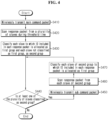
- FIG. 4 is a flowchart showing a wireless battery management method according to a first embodiment of the present disclosure. The method of FIG. 4 may be performed every reference time ⁇ T ref .
- step S460 the master 100 scans the response packet RP from each slave 200 of the second group during the threshold time ⁇ T th .
- the master 100 wirelessly transmits the main command packet CP1.
- the main command packet CP1 may be wirelessly transmitted with the predetermined first signal strength.
- each slave 200 may wirelessly transmit the response packet RP including the slave's ID with the predetermined second signal strength or the slave's reference signal strength.
- each slave 200 may initialize the time count of the watchdog timer 240 provided in the slave 200.
Landscapes
- Engineering & Computer Science (AREA)
- Chemical & Material Sciences (AREA)
- Chemical Kinetics & Catalysis (AREA)
- Electrochemistry (AREA)
- General Chemical & Material Sciences (AREA)
- Manufacturing & Machinery (AREA)
- Power Engineering (AREA)
- Computer Networks & Wireless Communication (AREA)
- Signal Processing (AREA)
- Microelectronics & Electronic Packaging (AREA)
- Life Sciences & Earth Sciences (AREA)
- Transportation (AREA)
- Mechanical Engineering (AREA)
- Inorganic Chemistry (AREA)
- Sustainable Energy (AREA)
- Sustainable Development (AREA)
- Charge And Discharge Circuits For Batteries Or The Like (AREA)
- Mobile Radio Communication Systems (AREA)
Description
- The present disclosure relates to technology that uses wireless communication between a master and a plurality of slaves to manage a battery.
- The present application claims the benefit of
Korean Patent Application No. 10-2019-0146126 filed on November 14, 2019 - Recently, there has been a rapid increase in the demand for portable electronic products such as laptop computers, video cameras and mobile phones, and with the extensive development of electric vehicles, accumulators for energy storage, robots and satellites, many studies are being made on high performance batteries that can be recharged repeatedly.
- Currently, commercially available batteries include nickel-cadmium batteries, nickel-hydrogen batteries, nickel-zinc batteries, lithium batteries and the like, and among them, lithium batteries have little or no memory effect, and thus they are gaining more attention than nickel-based batteries for their advantages that recharging can be done whenever it is convenient, the self-discharge rate is very low and the energy density is high.
- A battery pack for devices requiring high capacity and high voltage such as electric vehicles generally includes a plurality of battery modules connected in series. A management system having a multi slave system is disclosed to individually and efficiently manage the state of the plurality of battery modules. The management system having a multi slave system includes a plurality of slaves for monitoring the state of each battery module and a master to integratedly control the plurality of slaves.
- However, when some slaves cannot respond to a command wirelessly transmitted from the master due to external noise, temporary malfunction or the like, the corresponding battery modules cannot be properly managed.
- Document
WO 2019/164203 discloses a wireless battery management system, comprising:a master configured to wirelessly transmit a main command packet every reference time; and a plurality of slaves provided to monitor a state of a plurality of battery modules, wherein the master is configured to:scan the response packet from each slave during a threshold time from a time point at which the main command packet was transmitted, classify each slave to which the ID included in each response packet received within the threshold time is allocated as a first group, and each slave not classified as the first group as a second group. - The present disclosure is aimed at enabling a master to identify each slave that did not send a response to a command wirelessly transmitted by the master, and wirelessly transmit the same command to each of the identified slaves again.
- In addition, the present disclosure causes each slave to be reset by the slave's watchdog function to restore the wireless communication function when each slave does not receive a command wirelessly transmitted from the master for a predetermined time or longer.
- These and other objects and advantages of the present disclosure may be understood by the following description and will be apparent from the embodiments of the present disclosure. In addition, it will be readily understood that the objects and advantages of the present disclosure may be realized by the means set forth in the appended claims and a combination thereof.
- A wireless battery management system according to an aspect of the present disclosure includes a master configured to wirelessly transmit a main command packet every reference time, and a plurality of slaves provided to monitor a state of a plurality of battery modules, each slave including a watchdog timer. Each slave is configured to wirelessly transmit a response packet including an ID of each slave when receiving the main command packet. The master is configured to scan the response packet from each slave during a threshold time from a time point at which the main command packet was transmitted. The master is configured to classify each slave to which the ID included in each response packet received within the threshold time is allocated as a first group, and each slave not classified as the first group as a second group. Each slave is configured to initialize a time count of the watchdog timer when receiving the main command packet. Each slave is configured to be reset by the watchdog timer when the time count of the watchdog timer reaches a timeout that is equal to or less than the reference time.
- The master may be configured to wirelessly transmit a sub command packet including the ID of each slave classified as the second group. Each slave may be configured to wirelessly transmit the response packet when the sub command packet includes the ID of each slave.
- Each slave may be configured to initialize the time count of the watchdog timer when receiving the sub command packet.
- The master may be configured to determine an amplified signal strength based on a lowest ranked ID among the IDs of slaves each classified as the second group. The master may be configured to wirelessly transmit the sub command packet with the amplified signal strength.
- Each slave may be configured to determine a relative rank of the ID of each slave among all the IDs included in the sub command packet. Each slave may be configured to wirelessly transmit the response packet at a time slot corresponding to the relative rank.
- The master may be configured to classify each slave to which the ID included in each response packet received within the threshold time from a time point at which the sub command packet was transmitted is allocated as the first group from the second group.
- The threshold time may be equal to or less than 1/2 of the reference time.
- Each slave may be configured to increase a reference signal strength of each slave by a predetermined value each time each slave is reset by the watchdog timer. Each slave may be configured to wirelessly transmit the response packet with the increased reference signal strength.
- An electric vehicle according to another aspect of the present disclosure include the wireless battery management system.
- A wireless battery management method according to still another aspect of the present disclosure is executable by the wireless battery management system. The wireless battery management method includes wirelessly transmitting, by the master, the main command packet every reference time, scanning, by the master, the response packet from each slave during the threshold time from the time point at which the main command packet was transmitted, classifying, by the master, each slave to which the ID included in each response packet received within the threshold time is allocated as the first group, and each slave not classified as the first group as a second group, and wirelessly transmitting, by the master, the sub command packet including the ID of each slave classified as the second group. Each slave wirelessly transmits the response packet and initializes the time count of the watchdog timer when receiving the main command packet. Each slave is reset by the watchdog timer when the time count of the watchdog timer reaches the timeout. Each slave wirelessly transmits the response packet when the sub command packet includes the ID of each slave.
- According to at least one of the embodiments of the present disclosure, it is possible to enable the master to identify each slave that did not send a response to a command wirelessly transmitted from the master, and wirelessly transmit the same command to each of the identified slaves again.
- In addition, according to at least one of the embodiments of the present disclosure, when each slave does not receive a command wirelessly transmitted from the master for a predetermined time or longer, each slave may be reset by the slave's watchdog function to restore the wireless communication function of each slave.
- As a result, it is possible to reduce the frequency of failure of wireless connection between the master and the plurality of slaves and the time required for wireless connection of the master with all the slaves.
- The effects of the present disclosure are not limited to the effects mentioned above, and these and other effects will be clearly understood by those skilled in the art from the appended claims.
- The accompanying drawings illustrate a preferred embodiment of the present disclosure, and together with the detailed description of the present disclosure described below, serve to provide a further understanding of the technical aspects of the present disclosure, and thus the present disclosure should not be construed as being limited to the drawings.
-
FIG. 1 is a diagram exemplarily showing a configuration of an electric vehicle including a wireless battery management system. -
FIG. 2 is a diagram exemplarily showing a detailed configuration of a master and a slave ofFIG. 1 . -
FIG. 3 is a timing chart for describing a process of collecting battery information through wireless communication of a master ofFIG. 1 with a plurality of slaves. -
FIG. 4 is a flowchart showing a wireless battery management method according to a first embodiment of the present disclosure. -
FIG. 5 is a flowchart showing a wireless battery management method according to a second embodiment of the present disclosure. -
FIG. 6 is a diagram exemplarily showing a look up table for the second embodiment. - Hereinafter, the preferred embodiments of the present disclosure will be described in detail with reference to the accompanying drawings. Prior to the description, it should be understood that the terms or words used in the specification and the appended claims should not be construed as being limited to general and dictionary meanings, but rather interpreted based on the meanings and concepts corresponding to the technical aspects of the present disclosure on the basis of the principle that the inventor is allowed to define the terms appropriately for the best explanation.
- The terms including the ordinal number such as "first", "second" and the like, are used to distinguish one element from another among various elements, but not intended to limit the elements by the terms.
- Unless the context clearly indicates otherwise, it will be understood that the term "comprises" when used in this specification, specifies the presence of stated elements, but does not preclude the presence or addition of one or more other elements. Additionally, the term "control unit" as used herein refers to a processing unit of at least one function or operation, and this may be implemented by hardware and software either alone or in combination.
- In addition, throughout the specification, it will be further understood that when an element is referred to as being "connected to" another element, it can be directly connected to the other element or intervening elements may be present.
-
FIG. 1 is a diagram exemplarily showing a configuration of anelectric vehicle 1 according to the present disclosure. - Referring to
FIG. 1 , theelectric vehicle 1 includes abattery pack 10, arelay 11, aninverter 12 and anelectric motor 13. - The
battery pack 10 includesN battery modules 20 and a wirelessbattery management system 30. N is a natural of 2 or greater. In the drawing, to distinguish theN battery modules 20, the numbers 20_1~20_N are sequentially given to theN battery modules 20 in a descending order of potential. In describing the common elements between the N battery modules 20_1-20_N, thenumbers 20 or 20_i are given. Thebattery pack 10 may supply power required to drive theelectric motor 13 of theelectric vehicle 1. - The
relay 11 is installed on a power line PL connecting thebattery pack 10 to theinverter 12. Therelay 11 is controlled to be turned on/off in response to a switching signal from amaster 100 of the wireless battery management system 30 (hereinafter referred to as 'system'). - The
inverter 12 is provided to convert the direct current from thebattery pack 10 to an alternating current in response to a control signal from thesystem 30 while therelay 11 is in a turn-on state. Theelectric motor 13 is a 3-phase alternating motor, and works by the alternating current power generated by theinverter 12. - The N battery modules 20_1~20_N are connected in series and/or in parallel. The
battery module 20 includes at least onebattery cell 21. Thebattery cell 21 may be a lithium ion battery cell. Thebattery cell 21 includes any type of repeatedly rechargeable battery and is not limited to a particular type. - The
system 30 includes themaster 100 andN slaves 200. In the drawing, to distinguish theN slaves 200, the numbers 200_1~200_N are sequentially given to theN slaves 200. In describing the common elements between the N slaves 200_1-200_N, thenumbers 200 or 200_i are given. - The
master 100 is configured to integratedly control thebattery pack 10 through wireless communication with the N slaves 200_1~200_N. Each of the plurality of slaves 200_1~200_N is configured to wirelessly communicate with themaster 100 using the slave's ID pre-allocated from themaster 100. Themaster 100 stores the IDs allocated to the plurality of slaves 200_1~200_N. The ID is identification information for distinguishing the plurality of slaves 200_1~200_N. - The
master 100 may communicate with a vehicle controller of theelectric vehicle 1 via a wired network such as Controller Area Network (CAN). Themaster 100 may wirelessly communicate with eachslave 200 through an antenna MA. - The plurality of slaves 200_1~200_N is connected to a plurality of battery modules 20_1~20_N in a one-to-one relationship to collect and control battery information of the plurality of battery modules 20_1~20_N. Where i = 1 - N, the slave 200_i is configured to monitor the state (for example, voltage, current, temperature) of the battery module 20_i. The power required for the operation of the slave 200_i may be supplied from the battery module 20_i.
- The slave 200_i may wirelessly transmit data (hereinafter referred to as 'battery information') indicating the monitored state (for example, voltage, temperature and so on) of the battery module 20_i to the
master 100 in response to a command wirelessly transmitted from themaster 100. - The
master 100 may calculate the state of charge (SOC) and the state of health (SOH) of the battery module 20_i or determine whether overvoltage, undervoltage, overcharge or overdischarge occurred in the battery module 20_i based on the battery information from the slave 200_i. - The plurality of slaves 200_1~200_N is positioned at different areas in the
battery pack 10 for different wireless communication distances from themaster 100. The wireless communication distance between the slave 200_i and themaster 100 may refer to a straight line distance between the antenna SA_i of the slave 200_i and the antenna MA of themaster 100. Hereinafter, assume that the communication distance between the slave 200_i and themaster 100 is shorter than the communication distance between the slave 200_i+1 and themaster 100. For example, referring toFIG. 1 , the antenna SA_i of the slave 200_i is positioned closer to the antenna MA of themaster 100 than the antenna SA_i+1 of theslave 200_i+ 1. The antenna SA_i of the slave 200_i may be positioned on the 'upstream side' of the antenna SA_i+1 of theslave 200_i+ 1, and the antenna SA_i+1 of the slave 200_i+1 may be positioned on the 'downstream side' of the antenna SA_i of the slave 200_i. - Hereinafter, assume that a higher rank ID is allocated to a slave having a shorter wireless communication distance from the
master 100. For example, the ID of the slave 200_i has a higher rank than the ID of theslave 200_i+ 1. - In the present disclosure, a 'command packet' is wirelessly transmitted by the
master 100, and may be classified into a main command packet and a sub command packet. - The
master 100 wirelessly transmits the main command packet every reference time. The reference time (for example, 1 sec) is preset, considering the number of slaves 200_1~200_N and the wireless communication distance from eachslave 200. The main command packet may include information requesting the plurality of slaves 200_1~200_N to transmit the battery information of the plurality of battery modules 20_1~20_N to themaster 100. - The
master 100 is configured to perform the operation of classifying each of the plurality of slaves 200_1~200_N as a first group or a second group at least once for a standby period from the time point at which themaster 100 transmitted the main command packet until themaster 100 will transmit the next main command packet. Themaster 100 may scan a response packet from the second group during a threshold time (for example, 0.3 sec) from the time point at which themaster 100 transmitted the main command packet. - When at least one of the plurality of slaves 200_1~200_N is classified as the second group, the
master 100 may be configured to wirelessly transmit the sub command packet at least once within the standby period. The sub command packet is for inducing eachslave 200 of the second group to wirelessly transmit the response packet. - When the sub command packet includes the ID of the
slave 200, theslave 200 may be configured to wirelessly transmit the response packet as a response to the sub command packet to themaster 100. - The
master 100 classifies eachslave 200 that wirelessly transmitted the response packet within the threshold time from the time point at which the sub command packet was transmitted as the first group from the second group. Each of the remainingslaves 200 of the second group is maintained as the second group. -
FIG. 2 is a diagram exemplarily showing the detailed configuration of themaster 100 and theslave 200 ofFIG. 1 . - Referring to
FIG. 2 , themaster 100 includes an antenna MA, awireless communication circuit 110 and acontrol unit 120. The power required to operate themaster 100 may be supplied from at least one of the plurality of battery modules 20_1~20_N or an external power source. - The
wireless communication circuit 110 is configured to wirelessly transmit a command packet to theslave 200 through the antenna MA. Additionally, thewireless communication circuit 110 is configured to receive a response packet from theslave 200 through the antenna MA. - The
control unit 120 is operably connected to thewireless communication circuit 110. Thecontrol unit 120 may determine a request for at least one of the plurality of slaves 200_1~200_N based on a signal (for example, indicating the battery information) received through the antenna MA, and wirelessly transmit the command packet including data indicating the request to at least one of the plurality of slaves 200_1~200_N. - The
control unit 120 may be implemented in hardware using at least one of application specific integrated circuits (ASICs), digital signal processors (DSPs), digital signal processing devices (DSPDs), programmable logic devices (PLDs), field programmable gate arrays (FPGAs), microprocessors and electrical units for performing other functions. Thecontrol unit 120 may have a memory device embedded therein, and the memory device may include, for example, RAM, ROM, register, hard disk, optical recording media or magnetic recording media. The memory device may store, update and/or erase programs including a variety of control logics executed by thecontrol unit 120 and/or data created when the control logics are executed. - The
slave 200 includes an antenna SA, asensing unit 210, awireless communication circuit 220 and acontrol unit 230. Theslave 200 may further include awatchdog timer 240. - The
sensing unit 210 includes avoltage measurement circuit 211 and a temperature sensor 212. Thesensing unit 210 may further include a current sensor (not shown). Thevoltage measurement circuit 211 includes at least one voltage sensor. - The
voltage measurement circuit 211 measures a module voltage of thebattery module 20. The module voltage is a voltage across thebattery module 20. Thevoltage measurement circuit 211 may further measure a cell voltage of eachbattery cell 21 included in thebattery module 20. The cell voltage is a voltage across thebattery cell 21. Thevoltage measurement circuit 211 transmits a voltage signal indicating the module voltage and thecell 21 voltage to thecontrol unit 230. - The temperature sensor 212 is positioned at a predetermined distance from the
battery module 20 to transmit a temperature signal indicating the temperature of thebattery module 20 to thecontrol unit 230. - The current sensor is installed on a charge/discharge current path of the
battery pack 10 to measure an electric current flowing during the charge/discharge of thebattery pack 10, and transmit a current signal indicating the measured current to thecontrol unit 230. - The
wireless communication circuit 220 is connected to thecontrol unit 230 and the antenna SA. Thewireless communication circuit 220 may be implemented in hardware using RF System on Chip (SoC). Thewireless communication circuit 220 may wirelessly transmit data to themaster 100 orother slave 200 or wirelessly receive data from themaster 100 orother slave 200 through the antenna SA. - The
control unit 230 may be operably coupled to thesensing unit 210 and thewireless communication circuit 220 to individually control the operation of each of thesensing unit 210 and thewireless communication circuit 220. Thecontrol unit 230 may be implemented in hardware using at least one of application specific integrated circuits (ASICs), digital signal processors (DSPs), digital signal processing devices (DSPDs), programmable logic devices (PLDs), field programmable gate arrays (FPGAs), microprocessors and electrical units for performing other function. Thecontrol unit 230 may have a memory device embedded therein, and the memory device may include, for example, RAM, ROM, register, hard disk, optical recording media or magnetic recording media. The memory device may store, update and/or erase programs including a variety of control logics executed by thecontrol unit 230 and/or data created when the control logics are executed. - The
wireless communication circuit 220 is configured to selectively perform at least one of preset functions in response to a signal from themaster 100 orother slave 200 wirelessly received through the antenna SA. - When a signal is received through the antenna SA, the
wireless communication circuit 220 may measure the signal strength of the received signal. When the command packet is received from themaster 100 through the antenna SA, thewireless communication circuit 220 may wirelessly transmit the response packet as a response to the command packet to themaster 100. The response packet is a signal for reporting that theslave 200 succeeded to receive the command packet wirelessly transmitted from themaster 100 to themaster 100. The response packet includes battery information required by the command packet. - The
watchdog timer 240 is operably coupled to thecontrol unit 230 and/or thewireless communication circuit 220. Thewatchdog timer 240 is provided to repeatedly monitor whether theslave 200 is malfunctioning. - The
control unit 230 outputs an initialization signal to thewatchdog timer 240 in response to the reception of the command packet. A time count of thewatchdog timer 240 is initialized by the initialization signal. The time count of thewatchdog timer 240 indicates a period of time that has passed from the time at which the time count was initialized last. - In a situation where the command packet from the
master 100 cannot be received by theslave 200 due to a malfunction of thecontrol unit 230 and/or thewireless communication circuit 220, the time count may reach a timeout. Thewatchdog timer 240 outputs a rest signal to thecontrol unit 230 and/or thewireless communication circuit 220 each time the time count reaches a predetermined timeout. - The timeout may be equal to or less than the reference time or the threshold time. Accordingly, when the command packet from the
master 100 is not received by thecontrol unit 230 for the standby period, thewatchdog timer 240 outputs the reset signal at least once for the standby period. - The
slave 200 is reset by the reset signal. Resetting theslave 200 may refer to resetting thecontrol unit 230 and/or thewireless communication circuit 220. Each time theslave 200 is reset by thewatchdog timer 240, thecontrol unit 230 may increase the reference signal strength for wireless transmission of the response packet by a predetermined value. -
FIG. 3 is a timing chart for describing a process of collecting the battery information through wireless communication of themaster 100 ofFIG. 1 with the plurality of slaves 200_1~200_N. - In
FIG. 3 , a time point T10 denotes a start time of a cycle, a time point T20 denotes a start time of the next cycle, ΔTref denotes the reference time, ΔTth denotes the threshold time, and ΔTout denotes the timeout. ΔTref or ΔTth is divided into N or more time slots, and among them, assume that N time slots are sequentially allocated to the plurality of slaves 200_1~200_N. - The threshold time ΔTth may be equal to or less than 1/2 of the reference time ΔTref. In
FIG. 3 , the threshold time ΔTth is 1/4-1/3 of the reference time ΔTref, and the timeout ΔTout is shorter than the threshold time ΔTth. - At the time point T10, the
master 100 wirelessly transmits a main command packet CP1 to the plurality of slaves 200_1~200_N. Themaster 100 may wirelessly transmit the main command packet CP1 with a predetermined first signal strength. The main command packet CP1 may be transmitted to the plurality of slaves 200_1~200_N simultaneously through a broadcasting method. The main command packet CP1 may include first data D11 and second data D12, and may further include third data D13. The first data D11 indicates whether or not the corresponding command packet was initially transmitted by themaster 100 at the current cycle (i.e., whether the corresponding command packet is a main command packet or a sub command packet). For example, the first data D11 being a first value (for example, 0) indicates that the corresponding command packet is a main command packet. The second data D12 includes a request for the plurality of slaves 200_1~200_N. The request is for requesting a slave belonging to the second group to perform a specific function (for example, voltage measurement, cell balancing). The third data D13 includes the IDs of all of the plurality of slaves 200_1~200_N. - Each of the plurality of slaves 200_1~200_N wirelessly transmits the response packet RP at the time slot allocated to each slave 200_1~200_N when wirelessly receiving the main command packet CP1. That is, where i = 1 - N, the slave 200_i wirelessly transmits the response packet RP at the ith time slot among N or more time slots.
- The
master 100 scans the response packet RP from the plurality of slaves 200_1~200_N during the threshold time ΔTth from the time point T10. - Assume that the
master 100 received the response packet RP from the slave 200_1, 200_3~200_N-2, 200_N within the threshold time ΔTth from the time point T10, but did not receive the response packet RP from the slave 200_2, 200_N-1. - Then, the
master 100 may set the slaves 200_1, 200_3~200_N-2, 200_N to which the IDs included in the response packet RP are allocated as the first group, and the remaining slaves 200_2, 200_N-1 as the second group. - When the timeout ΔTout is equal to or less than the threshold time ΔTth, each of the slaves 200_2, 200_N-1 of the second group may be reset by the
watchdog timer 240 before a time point T11. - At the time point T11, only two slaves 200_2, 200_N-1 are set as the second group. At the time point T11, the
master 100 wirelessly transmits a sub command packet CP2. The sub command packet CP2 may include first data D21, second data D22 and third data D23. The first data D21 has a second value (for example, 1), and this indicates that the corresponding command packet is the sub command packet for requesting the response packet of the second group. The second data D22 includes a request for the slave 200_2, 200_N-1 of the second group. The third data D23 includes the ID of each of the slaves 200_2, 200_N-1 of the second group. - Since the sub command packet CP2 includes only the IDs of the two slaves 200_2, 200_N-1 belonging to the second group, the slaves 200_1, 200_3~200_N-2, 200_N classified as the first group may not respond to (ignore) the sub command packet CP2. For example, the slaves 200_1, 200_3~200_N-2, 200_N may erase the sub command packet CP2 from their memory devices.
- In contrast, when receiving the sub command packet CP2, each slave 200_2, 200_N-1 of the second group may determine a relative rank of the slave's ID to all the IDs included in the sub command packet CP2. The slave 200_2 determines the rank of the slave's ID as highest since there is no ID having a higher rank than the ID of slave 200_2 among all the IDs included in the third data D23. The slave 200_N-1 may determine the slave's ID as second highest since only one of the IDs included in the third data D23 has a higher rank than the ID of the slave 200_N-1.
- The slave 200_2 wirelessly transmits the response packet RP at a timing (for example, the first time slot) associated with the relative rank of the ID of the slave 200_2. The slave 200_N-1 wirelessly transmits the response packet RP including the ID of the slave 200_N-1 at the timing (for example, the second time slot) associated with the relative rank of the slave's ID.
- During the threshold time ΔTth from the time point T11, the
master 100 scans the response packet RP from the slave 200_2, 200_N-1 of the second group. Assume that themaster 100 received the response packet RP from the slave 200_2, but did not receive the response packet RP from the slave 200_N-1, within the threshold time ΔTth from the time point T11. Then, themaster 100 sets the slave 200_2 as the first group from the second group, while maintains the slave 200_N-1 as the second group. - The slave 200_N-1 of the second group is reset by the
watchdog timer 240 before a time point T12. - At the time point T12, the
master 100 wirelessly transmits a sub command packet CP3. The sub command packet CP3 may include first data D31, second data D32 and third data D33. The first data D31 of the sub command packet CP3 may have a second value. The second data D32 includes a request for the slave 200_N-1 of the second group. The third data D33 includes the ID of the slave 200_N-1 of the second group. - Since the sub command packet CP3 includes only the ID of the slave 200_N-1 of the second group, the slave 200_1~200_N-2, 200_N set as the first group may ignore the sub command packet CP3. The slave 200_N-1 may determine a relative rank of the slave's ID to all the IDs included in the sub command packet CP3. Since the third data D33 includes only the ID of the slave 200_N-1, the slave 200_N-1 determines the rank of the slave's ID as highest. Accordingly, the slave 200_N-1 transmits the response packet RP to the
master 100 at the timing (for example, the first time slot) associated with the relative rank of the slave's ID. - During the threshold time ΔTth from the time point T12, the
master 100 scans the response packet RP from the slave 200_N-1 of the second group. When themaster 100 receives the response packet RP from the slave 200_N-1 within the threshold time ΔTth from the time point T12, themaster 100 classifies the slave 200_N-1 as the first group from the second group. Then, since the number of members of the second group is 0, themaster 100 does not wirelessly transmit an additional sub command packet and stands by before the time point T20 arrives. - Meanwhile, the
slave 200 may wirelessly transmit the response packet RP with a predetermined second signal strength. Alternatively, eachslave 200 may wirelessly transmit the response packet RP with the slave's reference signal strength. For example, for the slave 200_i-1, when the number of times the slave 200_i-1 was reset is x, the reference signal strength of the slave 200_i-1 may equal the sum of a product obtained by multiplying a predetermined value by x and the predetermined second signal strength. -
FIG. 4 is a flowchart showing a wireless battery management method according to a first embodiment of the present disclosure. The method ofFIG. 4 may be performed every reference time ΔTref. - Referring to
FIGS. 1 to 4 , in step S410, themaster 100 wirelessly transmits the main command packet CP1. The main command packet CP1 may be wirelessly transmitted with the predetermined first signal strength. When receiving the main command packet CP1, eachslave 200 may wirelessly transmit the response packet RP including the slave's ID with the predetermined second signal strength or the slave's reference signal strength. When receiving the main command packet CP1, eachslave 200 may initialize the time count of thewatchdog timer 240 provided in theslave 200. - In step S420, the
master 100 scans the response packet RP from the plurality of slaves 200_1~200_N during the threshold time ΔTth. - In step S430, the
master 100 classifies eachslave 200 to which the ID included in each response packet RP received within the threshold time ΔTth is allocated as the first group, and eachslave 200 not classified as the first group as the second group. - In step S440, the
master 100 determines whether at least one of the plurality of slaves 200_1~200_N is classified as the second group. When a value of the step S440 is "Yes", step S450 is performed. When the value of the step S440 is "No", the method may end. - In step S450, the
master 100 wirelessly transmits the sub command packet CP2 including the ID of eachslave 200 classified as the second group. The sub command packet CP2 may be wirelessly transmitted with the predetermined first signal strength. Eachslave 200 of the second group wirelessly transmits the response packet RP including the slave's ID with the predetermined second signal strength or the slave's reference signal strength when receiving the sub command packet CP2. - In step S460, the
master 100 scans the response packet RP from eachslave 200 of the second group during the threshold time ΔTth. - In step S470, the
master 100 classifies eachslave 200 of the second group to which the ID included in each response packet RP received within the threshold time ΔTth is allocated as the first group. Each of the remainingslaves 200 of the second group is maintained as the second group. After the step S470, the method may move to the step S440. -
FIG. 5 is a flowchart showing a wireless battery management method according to a second embodiment of the present disclosure, andFIG. 6 shows a look up table for the second embodiment. The method ofFIG. 5 may be performed every reference time ΔTref. - Referring to
FIGS. 1 to 3 ,5 and 6 , in step S510, themaster 100 wirelessly transmits the main command packet CP1. The main command packet CP1 may be wirelessly transmitted with the predetermined first signal strength. When receiving the main command packet CP1, eachslave 200 may wirelessly transmit the response packet RP including the slave's ID with the predetermined second signal strength or the slave's reference signal strength. When receiving the main command packet CP1, eachslave 200 may initialize the time count of thewatchdog timer 240 provided in theslave 200. - In step S520, the
master 100 scans the response packet RP from the plurality of slaves 200_1~200_N during the threshold time ΔTth. - In step S530, the
master 100 classifies eachslave 200 to which the ID included in each response packet RP received within the threshold time ΔTth is allocated as the first group, and eachslave 200 not classified as the first group as the second group. - In step S540, the
master 100 determines whether at least one of the plurality of slaves 200_1~200_N is classified as the second group. When a value of the step S540 is "Yes", step S545 is performed. When the value of the step S540 is "No", the method may end. - In step S545, the
master 100 determines an amplified signal strength. In detail, themaster 100 determines a gain value from the look up table 600 based on the lowest ranked ID among the IDs of all theslaves 200 classified as the second group. The look up table 600 stores a plurality of gain values A1~AN associated with the IDs S1~SN of the plurality of slaves 200_1~200_N in a one-to-one relationship. The minimum value of the plurality of gain values A1~AN is greater than 1. In the look up table 600, a larger gain value is associated with a lower ranked ID. That is, A1 < A2, ... AN-1 < AN. For example, as shown inFIG. 3 , when the slave 200_2 and the slave 200_N-1 belong to the second group, the lowest ranked ID is SN-1, and thus AN-1 determined as the gain value, and the amplified signal strength is determined to be equal to the multiplication of the predetermined first signal strength by the gain value AN-1. - In step S550, the
master 100 wirelessly transmits the sub command packet CP2 including the ID of eachslave 200 classified as the second group. The sub command packet CP2 may be wirelessly transmitted with the amplified signal strength determined in the step S545. Eachslave 200 of the second group wirelessly transmits the response packet RP including the slave's ID with the predetermined second signal strength or the slave's reference signal strength when receiving the sub command packet CP2. - In step S560, the
master 100 scans the response packet RP from eachslave 200 of the second group during the threshold time ΔTth. - In step S570, the
master 100 classifies eachslave 200 of the second group to which the ID included in each response packet RP received within the threshold time ΔTth is allocated as the first group. Each of the remainingslaves 200 of the second group is maintained as the second group. After the step S570, the method may move to the step S540. - The embodiments of the present disclosure described hereinabove are not implemented only through the apparatus and method, and may be implemented through programs that perform functions corresponding to the configurations of the embodiments of the present disclosure or recording media having the programs recorded thereon, and such implementation may be easily achieved by those skilled in the art from the disclosure of the embodiments previously described.
- While the present disclosure has been hereinabove described with regard to a limited number of embodiments and drawings, the present disclosure is not limited thereto and it is obvious to those skilled in the art that various modifications and changes may be made thereto within the technical aspects of the present disclosure and the equivalent scope of the appended claims.
- Additionally, as many substitutions, modifications and changes may be made to the present disclosure described hereinabove by those skilled in the art without departing from the technical aspects of the present disclosure, the present disclosure is not limited by the above-described embodiments and the accompanying drawings, and some or all of the embodiments may be selectively combined to allow various modifications.
Claims (10)
- A wireless battery management system, comprising:a master (100) configured to wirelessly transmit a main command packet every reference time; anda plurality of slaves (200_1 - 200_N) provided to monitor a state of a plurality of battery modules, each slave including a watchdog timer (240), each slave (200_1 - 200_N) configured to wirelessly transmit a response packet including an ID of each slave (200_1 - 200_N) when receiving the main command packet,wherein the master (100) is configured to: scan the response packet from each slave (200_1 - 200_N) during a threshold time from a time point at which the main command packet was transmitted,classify each slave (200_1 - 200_N) to which the ID included in each response packet received within the threshold time is allocated as a first group, and each slave (200_1 - 200_N) not classified as the first group as a second group, andwherein each slave (200_1 - 200_N) is configured to:initialize a time count of the watchdog timer when receiving the main command packet,be reset by the watchdog timer (240) when the time count of the watchdog timer reaches a timeout that is equal to or less than the reference time.
- The wireless battery management system according to claim 1, wherein the master (100) is configured to:wirelessly transmit a sub command packet including the ID of each slave (200_1 - 200_N) classified as the second group, andeach slave (200_1 - 200_N) is configured to wirelessly transmit the response packet when the sub command packet includes the ID of each slave.
- The wireless battery management system according to claim 2, wherein each slave (200_1 - 200_N) is configured to initialize the time count of the watchdog timer (240) when receiving the sub command packet.
- The wireless battery management system according to claim 2, wherein the master (100) is configured to:determine an amplified signal strength based on a lowest ranked ID among the IDs of the slaves (200_1 - 200_N) each classified as the second group, andwirelessly transmit the sub command packet with the amplified signal strength.
- The wireless battery management system according to claim 2, wherein each slave (200_1 - 200_N) is configured to:determine a relative rank of the ID of each slave among all the IDs included in the sub command packet, andwirelessly transmit the response packet at a time slot corresponding to the relative rank.
- The wireless battery management system according to claim 2, wherein the master (100) is configured to classify each slave (200_1 - 200_N) to which the ID included in each response packet received within the threshold time from a time point at which the sub command packet was transmitted is allocated as the first group from the second group.
- The wireless battery management system according to claim 1, wherein the threshold time is equal to or less than 1/2 of the reference time.
- The wireless battery management system according to claim 1, wherein each slave (200_1 - 200_N) is configured to:increase a reference signal strength of each slave by a predetermined value each time each slave is reset by the watchdog timer (240), andwirelessly transmit the response packet with the increased reference signal strength.
- An electric vehicle comprising the wireless battery management system according to any one of claims 1 to 8.
- A wireless battery management method executable by the wireless battery management system according to any one of claims 1 to 8, comprising:wirelessly transmitting, by the master (100), the main command packet every reference time;scanning, by the master (100), the response packet from each slave (200_1 - 200_N) during the threshold time from the time point at which the main command packet was transmitted;classifying, by the master (100), each slave (200_1 - 200_N) to which the ID included in each response packet received within the threshold time is allocated as the first group, and each slave (200_1 - 200_N) not classified as the first group as a second group; andwirelessly transmitting, by the master (100), the sub command packet including the ID of each slave (200_1 - 200_N) classified as the second group,wherein each slave (200_1 - 200_N) wirelessly transmits the response packet and initializes the time count of the watchdog timer (240) when receiving the main command packet, is reset by the watchdog timer (240) when the time count of the watchdog timer (240) reaches the timeout, andwirelessly transmits the response packet when the sub command packet includes the ID of each slave (200_1 - 200_N).
Applications Claiming Priority (2)
| Application Number | Priority Date | Filing Date | Title |
|---|---|---|---|
| KR1020190146126A KR102780623B1 (en) | 2019-11-14 | 2019-11-14 | Wireless battery management system, electric vehicle comprising same, and method thereof |
| PCT/KR2020/015892 WO2021096250A1 (en) | 2019-11-14 | 2020-11-12 | Wireless battery management system, wireless battery management method and electric vehicle |
Publications (3)
| Publication Number | Publication Date |
|---|---|
| EP3934144A1 EP3934144A1 (en) | 2022-01-05 |
| EP3934144A4 EP3934144A4 (en) | 2022-06-22 |
| EP3934144B1 true EP3934144B1 (en) | 2023-03-22 |
Family
ID=75912236
Family Applications (1)
| Application Number | Title | Priority Date | Filing Date |
|---|---|---|---|
| EP20887495.8A Active EP3934144B1 (en) | 2019-11-14 | 2020-11-12 | Wireless battery management system, wireless battery management method and electric vehicle |
Country Status (6)
| Country | Link |
|---|---|
| US (2) | US12463260B2 (en) |
| EP (1) | EP3934144B1 (en) |
| JP (1) | JP7143565B2 (en) |
| KR (1) | KR102780623B1 (en) |
| CN (1) | CN113767505B (en) |
| WO (1) | WO2021096250A1 (en) |
Families Citing this family (8)
| Publication number | Priority date | Publication date | Assignee | Title |
|---|---|---|---|---|
| KR102743585B1 (en) * | 2019-09-09 | 2024-12-17 | 주식회사 엘지에너지솔루션 | Battery management system and method of communicating using intermediate nodes |
| WO2022189012A1 (en) | 2021-03-08 | 2022-09-15 | Smartiq Innovation Technology Gmbh | Measuring cell for battery modules, battery module, and battery |
| KR102862284B1 (en) * | 2021-11-01 | 2025-09-18 | 주식회사 엘지에너지솔루션 | Apparatus and method for compressing battery information |
| CN114280424B (en) * | 2021-12-30 | 2024-07-23 | 山西恒运售电有限公司 | Power failure positioning system for power rush-repair |
| US12155462B2 (en) * | 2022-08-30 | 2024-11-26 | Texas Instruments Incorporated | Optimizing node location in a battery management system |
| TWI840094B (en) * | 2023-01-13 | 2024-04-21 | 連恩微電子股份有限公司 | System and method of wireless communication identification |
| KR102914812B1 (en) | 2023-03-24 | 2026-01-16 | 삼성에스디아이 주식회사 | Battery pack |
| CN117081220B (en) * | 2023-10-17 | 2024-02-06 | 上海百竹成航新能源有限责任公司 | Energy storage system management method and energy storage system |
Family Cites Families (20)
| Publication number | Priority date | Publication date | Assignee | Title |
|---|---|---|---|---|
| GB2425693B (en) * | 2005-04-25 | 2007-05-30 | Siemens Ag | Method of re-transmitting an original frame |
| JP5466586B2 (en) | 2009-10-05 | 2014-04-09 | プライムアースEvエナジー株式会社 | Battery management device |
| JP5459660B2 (en) | 2009-12-16 | 2014-04-02 | 株式会社東芝 | Secondary battery device and vehicle |
| CN101739305A (en) * | 2010-02-09 | 2010-06-16 | 太仓市同维电子有限公司 | Operating system kernel level real-time dongle monitoring device and monitoring method thereof |
| KR101245279B1 (en) * | 2010-10-11 | 2013-03-19 | 주식회사 엘지화학 | Method and System for setting up sequent ID of multi-slave in battery pack |
| US9564762B2 (en) | 2010-11-02 | 2017-02-07 | Navitas Solutions | Fault tolerant wireless battery area network for a smart battery management system |
| JP2014020861A (en) | 2012-07-17 | 2014-02-03 | Kawashima Co Ltd | Solar cell module monitoring system |
| KR101333950B1 (en) | 2012-08-10 | 2013-11-27 | 주식회사 이노피아테크 | Software watchdog timer implementation device and method to enhance availability of set-top box |
| KR20140073949A (en) * | 2012-12-07 | 2014-06-17 | 현대모비스 주식회사 | System for management battery of vehicle and method thereof |
| CN103915862B (en) * | 2012-12-31 | 2017-07-04 | 比亚迪股份有限公司 | A kind of cell managing device and battery management chip |
| JP5439611B1 (en) * | 2013-01-24 | 2014-03-12 | トタニ技研工業株式会社 | Sheet product conveyor |
| KR102210890B1 (en) * | 2013-06-05 | 2021-02-02 | 삼성에스디아이 주식회사 | Battery management system, and method of managing the same |
| DE102013222461B4 (en) | 2013-11-06 | 2023-07-27 | Robert Bosch Gmbh | Method for starting a battery management system |
| US9981559B2 (en) * | 2014-02-14 | 2018-05-29 | Hitachi, Ltd. | Battery control system, and battery system |
| US10572325B2 (en) * | 2014-11-07 | 2020-02-25 | Hitachi, Ltd. | Power storage management system |
| JP6439611B2 (en) | 2015-07-06 | 2018-12-19 | 株式会社デンソー | Battery pack monitoring device and battery pack monitoring system |
| KR102167427B1 (en) | 2016-04-11 | 2020-10-19 | 주식회사 엘지화학 | Apparatus and method for cognizance of master bms and slave bms |
| KR102157882B1 (en) | 2017-07-19 | 2020-09-18 | 주식회사 엘지화학 | Wireless battery manamement system and a battery pack including the same |
| KR102255494B1 (en) * | 2018-02-22 | 2021-05-24 | 주식회사 엘지에너지솔루션 | Wireless battery control system, method and battery pack for assigning an ID to a plurality of slave management modules |
| WO2019164203A1 (en) * | 2018-02-22 | 2019-08-29 | 주식회사 엘지화학 | Wireless battery control system and method and battery pack for allocating id to multiple slave management modules |
-
2019
- 2019-11-14 KR KR1020190146126A patent/KR102780623B1/en active Active
-
2020
- 2020-11-12 JP JP2021545661A patent/JP7143565B2/en active Active
- 2020-11-12 EP EP20887495.8A patent/EP3934144B1/en active Active
- 2020-11-12 CN CN202080031915.2A patent/CN113767505B/en active Active
- 2020-11-12 US US17/438,291 patent/US12463260B2/en active Active
- 2020-11-12 WO PCT/KR2020/015892 patent/WO2021096250A1/en not_active Ceased
-
2025
- 2025-10-06 US US19/350,952 patent/US20260038893A1/en active Pending
Also Published As
| Publication number | Publication date |
|---|---|
| KR102780623B1 (en) | 2025-03-11 |
| US20220352563A1 (en) | 2022-11-03 |
| CN113767505B (en) | 2023-11-03 |
| US20260038893A1 (en) | 2026-02-05 |
| WO2021096250A1 (en) | 2021-05-20 |
| EP3934144A4 (en) | 2022-06-22 |
| JP7143565B2 (en) | 2022-09-29 |
| US12463260B2 (en) | 2025-11-04 |
| KR20210058539A (en) | 2021-05-24 |
| CN113767505A (en) | 2021-12-07 |
| JP2022519364A (en) | 2022-03-23 |
| EP3934144A1 (en) | 2022-01-05 |
Similar Documents
| Publication | Publication Date | Title |
|---|---|---|
| EP3934144B1 (en) | Wireless battery management system, wireless battery management method and electric vehicle | |
| EP3536541B1 (en) | Wireless battery management system and battery pack including same | |
| EP3758304B1 (en) | Wireless control system, wireless control method, and battery pack | |
| EP3557687B1 (en) | Battery management unit and battery pack including same | |
| EP3758303B1 (en) | Wireless control system, wireless connection method, and battery pack | |
| JP6828866B2 (en) | Wireless battery control system, method and battery pack for assigning IDs to multiple slave management modules | |
| US7956579B2 (en) | Battery charge management system for charging a battery bank that includes a plurality of batteries | |
| JP2020504422A (en) | Master battery management unit and battery pack including the same | |
| US12049154B2 (en) | Battery control system, battery pack, electric vehicle, and id setting method for the battery control system | |
| US11831716B2 (en) | System and method for communication between BMSs |
Legal Events
| Date | Code | Title | Description |
|---|---|---|---|
| STAA | Information on the status of an ep patent application or granted ep patent |
Free format text: STATUS: THE INTERNATIONAL PUBLICATION HAS BEEN MADE |
|
| PUAI | Public reference made under article 153(3) epc to a published international application that has entered the european phase |
Free format text: ORIGINAL CODE: 0009012 |
|
| STAA | Information on the status of an ep patent application or granted ep patent |
Free format text: STATUS: REQUEST FOR EXAMINATION WAS MADE |
|
| 17P | Request for examination filed |
Effective date: 20210927 |
|
| AK | Designated contracting states |
Kind code of ref document: A1 Designated state(s): AL AT BE BG CH CY CZ DE DK EE ES FI FR GB GR HR HU IE IS IT LI LT LU LV MC MK MT NL NO PL PT RO RS SE SI SK SM TR |
|
| A4 | Supplementary search report drawn up and despatched |
Effective date: 20220519 |
|
| RIC1 | Information provided on ipc code assigned before grant |
Ipc: H04L 1/00 20060101ALI20220513BHEP Ipc: H01M 4/505 20100101ALI20220513BHEP Ipc: H02J 7/00 20060101ALI20220513BHEP Ipc: H04L 1/16 20060101ALI20220513BHEP Ipc: H01M 10/42 20060101ALI20220513BHEP Ipc: H04L 1/18 20060101AFI20220513BHEP |
|
| RAP3 | Party data changed (applicant data changed or rights of an application transferred) |
Owner name: LG ENERGY SOLUTION, LTD. |
|
| GRAP | Despatch of communication of intention to grant a patent |
Free format text: ORIGINAL CODE: EPIDOSNIGR1 |
|
| STAA | Information on the status of an ep patent application or granted ep patent |
Free format text: STATUS: GRANT OF PATENT IS INTENDED |
|
| RIC1 | Information provided on ipc code assigned before grant |
Ipc: H04L 1/00 20060101ALI20221018BHEP Ipc: H01M 4/505 20100101ALI20221018BHEP Ipc: H02J 7/00 20060101ALI20221018BHEP Ipc: H04L 1/16 20060101ALI20221018BHEP Ipc: H01M 10/42 20060101ALI20221018BHEP Ipc: H04L 1/18 20060101AFI20221018BHEP |
|
| DAV | Request for validation of the european patent (deleted) | ||
| DAX | Request for extension of the european patent (deleted) | ||
| INTG | Intention to grant announced |
Effective date: 20221121 |
|
| GRAS | Grant fee paid |
Free format text: ORIGINAL CODE: EPIDOSNIGR3 |
|
| GRAA | (expected) grant |
Free format text: ORIGINAL CODE: 0009210 |
|
| STAA | Information on the status of an ep patent application or granted ep patent |
Free format text: STATUS: THE PATENT HAS BEEN GRANTED |
|
| AK | Designated contracting states |
Kind code of ref document: B1 Designated state(s): AL AT BE BG CH CY CZ DE DK EE ES FI FR GB GR HR HU IE IS IT LI LT LU LV MC MK MT NL NO PL PT RO RS SE SI SK SM TR |
|
| REG | Reference to a national code |
Ref country code: GB Ref legal event code: FG4D |
|
| REG | Reference to a national code |
Ref country code: CH Ref legal event code: EP |
|
| REG | Reference to a national code |
Ref country code: DE Ref legal event code: R096 Ref document number: 602020009111 Country of ref document: DE |
|
| REG | Reference to a national code |
Ref country code: IE Ref legal event code: FG4D |
|
| REG | Reference to a national code |
Ref country code: AT Ref legal event code: REF Ref document number: 1555915 Country of ref document: AT Kind code of ref document: T Effective date: 20230415 |
|
| P01 | Opt-out of the competence of the unified patent court (upc) registered |
Effective date: 20230516 |
|
| REG | Reference to a national code |
Ref country code: LT Ref legal event code: MG9D |
|
| REG | Reference to a national code |
Ref country code: NL Ref legal event code: MP Effective date: 20230322 |
|
| PG25 | Lapsed in a contracting state [announced via postgrant information from national office to epo] |
Ref country code: RS Free format text: LAPSE BECAUSE OF FAILURE TO SUBMIT A TRANSLATION OF THE DESCRIPTION OR TO PAY THE FEE WITHIN THE PRESCRIBED TIME-LIMIT Effective date: 20230322 Ref country code: NO Free format text: LAPSE BECAUSE OF FAILURE TO SUBMIT A TRANSLATION OF THE DESCRIPTION OR TO PAY THE FEE WITHIN THE PRESCRIBED TIME-LIMIT Effective date: 20230622 Ref country code: LV Free format text: LAPSE BECAUSE OF FAILURE TO SUBMIT A TRANSLATION OF THE DESCRIPTION OR TO PAY THE FEE WITHIN THE PRESCRIBED TIME-LIMIT Effective date: 20230322 Ref country code: LT Free format text: LAPSE BECAUSE OF FAILURE TO SUBMIT A TRANSLATION OF THE DESCRIPTION OR TO PAY THE FEE WITHIN THE PRESCRIBED TIME-LIMIT Effective date: 20230322 Ref country code: HR Free format text: LAPSE BECAUSE OF FAILURE TO SUBMIT A TRANSLATION OF THE DESCRIPTION OR TO PAY THE FEE WITHIN THE PRESCRIBED TIME-LIMIT Effective date: 20230322 |
|
| REG | Reference to a national code |
Ref country code: AT Ref legal event code: MK05 Ref document number: 1555915 Country of ref document: AT Kind code of ref document: T Effective date: 20230322 |
|
| PG25 | Lapsed in a contracting state [announced via postgrant information from national office to epo] |
Ref country code: SE Free format text: LAPSE BECAUSE OF FAILURE TO SUBMIT A TRANSLATION OF THE DESCRIPTION OR TO PAY THE FEE WITHIN THE PRESCRIBED TIME-LIMIT Effective date: 20230322 Ref country code: NL Free format text: LAPSE BECAUSE OF FAILURE TO SUBMIT A TRANSLATION OF THE DESCRIPTION OR TO PAY THE FEE WITHIN THE PRESCRIBED TIME-LIMIT Effective date: 20230322 Ref country code: GR Free format text: LAPSE BECAUSE OF FAILURE TO SUBMIT A TRANSLATION OF THE DESCRIPTION OR TO PAY THE FEE WITHIN THE PRESCRIBED TIME-LIMIT Effective date: 20230623 Ref country code: FI Free format text: LAPSE BECAUSE OF FAILURE TO SUBMIT A TRANSLATION OF THE DESCRIPTION OR TO PAY THE FEE WITHIN THE PRESCRIBED TIME-LIMIT Effective date: 20230322 |
|
| PG25 | Lapsed in a contracting state [announced via postgrant information from national office to epo] |
Ref country code: SM Free format text: LAPSE BECAUSE OF FAILURE TO SUBMIT A TRANSLATION OF THE DESCRIPTION OR TO PAY THE FEE WITHIN THE PRESCRIBED TIME-LIMIT Effective date: 20230322 Ref country code: RO Free format text: LAPSE BECAUSE OF FAILURE TO SUBMIT A TRANSLATION OF THE DESCRIPTION OR TO PAY THE FEE WITHIN THE PRESCRIBED TIME-LIMIT Effective date: 20230322 Ref country code: PT Free format text: LAPSE BECAUSE OF FAILURE TO SUBMIT A TRANSLATION OF THE DESCRIPTION OR TO PAY THE FEE WITHIN THE PRESCRIBED TIME-LIMIT Effective date: 20230724 Ref country code: ES Free format text: LAPSE BECAUSE OF FAILURE TO SUBMIT A TRANSLATION OF THE DESCRIPTION OR TO PAY THE FEE WITHIN THE PRESCRIBED TIME-LIMIT Effective date: 20230322 Ref country code: EE Free format text: LAPSE BECAUSE OF FAILURE TO SUBMIT A TRANSLATION OF THE DESCRIPTION OR TO PAY THE FEE WITHIN THE PRESCRIBED TIME-LIMIT Effective date: 20230322 Ref country code: AT Free format text: LAPSE BECAUSE OF FAILURE TO SUBMIT A TRANSLATION OF THE DESCRIPTION OR TO PAY THE FEE WITHIN THE PRESCRIBED TIME-LIMIT Effective date: 20230322 |
|
| PG25 | Lapsed in a contracting state [announced via postgrant information from national office to epo] |
Ref country code: SK Free format text: LAPSE BECAUSE OF FAILURE TO SUBMIT A TRANSLATION OF THE DESCRIPTION OR TO PAY THE FEE WITHIN THE PRESCRIBED TIME-LIMIT Effective date: 20230322 Ref country code: PL Free format text: LAPSE BECAUSE OF FAILURE TO SUBMIT A TRANSLATION OF THE DESCRIPTION OR TO PAY THE FEE WITHIN THE PRESCRIBED TIME-LIMIT Effective date: 20230322 Ref country code: IS Free format text: LAPSE BECAUSE OF FAILURE TO SUBMIT A TRANSLATION OF THE DESCRIPTION OR TO PAY THE FEE WITHIN THE PRESCRIBED TIME-LIMIT Effective date: 20230722 |
|
| REG | Reference to a national code |
Ref country code: DE Ref legal event code: R097 Ref document number: 602020009111 Country of ref document: DE |
|
| PLBE | No opposition filed within time limit |
Free format text: ORIGINAL CODE: 0009261 |
|
| STAA | Information on the status of an ep patent application or granted ep patent |
Free format text: STATUS: NO OPPOSITION FILED WITHIN TIME LIMIT |
|
| PG25 | Lapsed in a contracting state [announced via postgrant information from national office to epo] |
Ref country code: SI Free format text: LAPSE BECAUSE OF FAILURE TO SUBMIT A TRANSLATION OF THE DESCRIPTION OR TO PAY THE FEE WITHIN THE PRESCRIBED TIME-LIMIT Effective date: 20230322 Ref country code: DK Free format text: LAPSE BECAUSE OF FAILURE TO SUBMIT A TRANSLATION OF THE DESCRIPTION OR TO PAY THE FEE WITHIN THE PRESCRIBED TIME-LIMIT Effective date: 20230322 Ref country code: CZ Free format text: LAPSE BECAUSE OF FAILURE TO SUBMIT A TRANSLATION OF THE DESCRIPTION OR TO PAY THE FEE WITHIN THE PRESCRIBED TIME-LIMIT Effective date: 20230322 |
|
| 26N | No opposition filed |
Effective date: 20240102 |
|
| PG25 | Lapsed in a contracting state [announced via postgrant information from national office to epo] |
Ref country code: IT Free format text: LAPSE BECAUSE OF FAILURE TO SUBMIT A TRANSLATION OF THE DESCRIPTION OR TO PAY THE FEE WITHIN THE PRESCRIBED TIME-LIMIT Effective date: 20230322 |
|
| REG | Reference to a national code |
Ref country code: CH Ref legal event code: PL |
|
| PG25 | Lapsed in a contracting state [announced via postgrant information from national office to epo] |
Ref country code: MC Free format text: LAPSE BECAUSE OF FAILURE TO SUBMIT A TRANSLATION OF THE DESCRIPTION OR TO PAY THE FEE WITHIN THE PRESCRIBED TIME-LIMIT Effective date: 20230322 |
|
| PG25 | Lapsed in a contracting state [announced via postgrant information from national office to epo] |
Ref country code: LU Free format text: LAPSE BECAUSE OF NON-PAYMENT OF DUE FEES Effective date: 20231112 |
|
| PG25 | Lapsed in a contracting state [announced via postgrant information from national office to epo] |
Ref country code: CH Free format text: LAPSE BECAUSE OF NON-PAYMENT OF DUE FEES Effective date: 20231130 |
|
| PG25 | Lapsed in a contracting state [announced via postgrant information from national office to epo] |
Ref country code: MC Free format text: LAPSE BECAUSE OF FAILURE TO SUBMIT A TRANSLATION OF THE DESCRIPTION OR TO PAY THE FEE WITHIN THE PRESCRIBED TIME-LIMIT Effective date: 20230322 Ref country code: LU Free format text: LAPSE BECAUSE OF NON-PAYMENT OF DUE FEES Effective date: 20231112 Ref country code: CH Free format text: LAPSE BECAUSE OF NON-PAYMENT OF DUE FEES Effective date: 20231130 |
|
| REG | Reference to a national code |
Ref country code: BE Ref legal event code: MM Effective date: 20231130 |
|
| REG | Reference to a national code |
Ref country code: IE Ref legal event code: MM4A |
|
| PG25 | Lapsed in a contracting state [announced via postgrant information from national office to epo] |
Ref country code: IE Free format text: LAPSE BECAUSE OF NON-PAYMENT OF DUE FEES Effective date: 20231112 |
|
| PG25 | Lapsed in a contracting state [announced via postgrant information from national office to epo] |
Ref country code: BE Free format text: LAPSE BECAUSE OF NON-PAYMENT OF DUE FEES Effective date: 20231130 |
|
| PG25 | Lapsed in a contracting state [announced via postgrant information from national office to epo] |
Ref country code: IE Free format text: LAPSE BECAUSE OF NON-PAYMENT OF DUE FEES Effective date: 20231112 Ref country code: BE Free format text: LAPSE BECAUSE OF NON-PAYMENT OF DUE FEES Effective date: 20231130 |
|
| PG25 | Lapsed in a contracting state [announced via postgrant information from national office to epo] |
Ref country code: BG Free format text: LAPSE BECAUSE OF FAILURE TO SUBMIT A TRANSLATION OF THE DESCRIPTION OR TO PAY THE FEE WITHIN THE PRESCRIBED TIME-LIMIT Effective date: 20230322 |
|
| PG25 | Lapsed in a contracting state [announced via postgrant information from national office to epo] |
Ref country code: BG Free format text: LAPSE BECAUSE OF FAILURE TO SUBMIT A TRANSLATION OF THE DESCRIPTION OR TO PAY THE FEE WITHIN THE PRESCRIBED TIME-LIMIT Effective date: 20230322 |
|
| PG25 | Lapsed in a contracting state [announced via postgrant information from national office to epo] |
Ref country code: CY Free format text: LAPSE BECAUSE OF FAILURE TO SUBMIT A TRANSLATION OF THE DESCRIPTION OR TO PAY THE FEE WITHIN THE PRESCRIBED TIME-LIMIT; INVALID AB INITIO Effective date: 20201112 |
|
| PG25 | Lapsed in a contracting state [announced via postgrant information from national office to epo] |
Ref country code: HU Free format text: LAPSE BECAUSE OF FAILURE TO SUBMIT A TRANSLATION OF THE DESCRIPTION OR TO PAY THE FEE WITHIN THE PRESCRIBED TIME-LIMIT; INVALID AB INITIO Effective date: 20201112 |
|
| PG25 | Lapsed in a contracting state [announced via postgrant information from national office to epo] |
Ref country code: TR Free format text: LAPSE BECAUSE OF FAILURE TO SUBMIT A TRANSLATION OF THE DESCRIPTION OR TO PAY THE FEE WITHIN THE PRESCRIBED TIME-LIMIT Effective date: 20230322 |
|
| PGFP | Annual fee paid to national office [announced via postgrant information from national office to epo] |
Ref country code: DE Payment date: 20251020 Year of fee payment: 6 |
|
| PGFP | Annual fee paid to national office [announced via postgrant information from national office to epo] |
Ref country code: GB Payment date: 20251023 Year of fee payment: 6 |
|
| PGFP | Annual fee paid to national office [announced via postgrant information from national office to epo] |
Ref country code: FR Payment date: 20251021 Year of fee payment: 6 |