EP3933962A1 - Secondary battery and battery module comprising secondary battery - Google Patents
Secondary battery and battery module comprising secondary battery Download PDFInfo
- Publication number
- EP3933962A1 EP3933962A1 EP19924672.9A EP19924672A EP3933962A1 EP 3933962 A1 EP3933962 A1 EP 3933962A1 EP 19924672 A EP19924672 A EP 19924672A EP 3933962 A1 EP3933962 A1 EP 3933962A1
- Authority
- EP
- European Patent Office
- Prior art keywords
- temperature
- secondary battery
- exterior
- temperature sensing
- sensing parts
- Prior art date
- Legal status (The legal status is an assumption and is not a legal conclusion. Google has not performed a legal analysis and makes no representation as to the accuracy of the status listed.)
- Pending
Links
Images





Classifications
-
- H—ELECTRICITY
- H01—ELECTRIC ELEMENTS
- H01M—PROCESSES OR MEANS, e.g. BATTERIES, FOR THE DIRECT CONVERSION OF CHEMICAL ENERGY INTO ELECTRICAL ENERGY
- H01M10/00—Secondary cells; Manufacture thereof
- H01M10/42—Methods or arrangements for servicing or maintenance of secondary cells or secondary half-cells
- H01M10/48—Accumulators combined with arrangements for measuring, testing or indicating the condition of cells, e.g. the level or density of the electrolyte
- H01M10/486—Accumulators combined with arrangements for measuring, testing or indicating the condition of cells, e.g. the level or density of the electrolyte for measuring temperature
-
- H—ELECTRICITY
- H01—ELECTRIC ELEMENTS
- H01M—PROCESSES OR MEANS, e.g. BATTERIES, FOR THE DIRECT CONVERSION OF CHEMICAL ENERGY INTO ELECTRICAL ENERGY
- H01M10/00—Secondary cells; Manufacture thereof
- H01M10/42—Methods or arrangements for servicing or maintenance of secondary cells or secondary half-cells
- H01M10/48—Accumulators combined with arrangements for measuring, testing or indicating the condition of cells, e.g. the level or density of the electrolyte
-
- H—ELECTRICITY
- H01—ELECTRIC ELEMENTS
- H01M—PROCESSES OR MEANS, e.g. BATTERIES, FOR THE DIRECT CONVERSION OF CHEMICAL ENERGY INTO ELECTRICAL ENERGY
- H01M50/00—Constructional details or processes of manufacture of the non-active parts of electrochemical cells other than fuel cells, e.g. hybrid cells
- H01M50/10—Primary casings; Jackets or wrappings
- H01M50/102—Primary casings; Jackets or wrappings characterised by their shape or physical structure
- H01M50/105—Pouches or flexible bags
-
- H—ELECTRICITY
- H01—ELECTRIC ELEMENTS
- H01M—PROCESSES OR MEANS, e.g. BATTERIES, FOR THE DIRECT CONVERSION OF CHEMICAL ENERGY INTO ELECTRICAL ENERGY
- H01M50/00—Constructional details or processes of manufacture of the non-active parts of electrochemical cells other than fuel cells, e.g. hybrid cells
- H01M50/10—Primary casings; Jackets or wrappings
- H01M50/116—Primary casings; Jackets or wrappings characterised by the material
-
- H—ELECTRICITY
- H01—ELECTRIC ELEMENTS
- H01M—PROCESSES OR MEANS, e.g. BATTERIES, FOR THE DIRECT CONVERSION OF CHEMICAL ENERGY INTO ELECTRICAL ENERGY
- H01M50/00—Constructional details or processes of manufacture of the non-active parts of electrochemical cells other than fuel cells, e.g. hybrid cells
- H01M50/50—Current conducting connections for cells or batteries
- H01M50/543—Terminals
- H01M50/547—Terminals characterised by the disposition of the terminals on the cells
- H01M50/548—Terminals characterised by the disposition of the terminals on the cells on opposite sides of the cell
-
- H—ELECTRICITY
- H01—ELECTRIC ELEMENTS
- H01M—PROCESSES OR MEANS, e.g. BATTERIES, FOR THE DIRECT CONVERSION OF CHEMICAL ENERGY INTO ELECTRICAL ENERGY
- H01M50/00—Constructional details or processes of manufacture of the non-active parts of electrochemical cells other than fuel cells, e.g. hybrid cells
- H01M50/50—Current conducting connections for cells or batteries
- H01M50/543—Terminals
- H01M50/547—Terminals characterised by the disposition of the terminals on the cells
- H01M50/55—Terminals characterised by the disposition of the terminals on the cells on the same side of the cell
-
- H—ELECTRICITY
- H01—ELECTRIC ELEMENTS
- H01M—PROCESSES OR MEANS, e.g. BATTERIES, FOR THE DIRECT CONVERSION OF CHEMICAL ENERGY INTO ELECTRICAL ENERGY
- H01M50/00—Constructional details or processes of manufacture of the non-active parts of electrochemical cells other than fuel cells, e.g. hybrid cells
- H01M50/50—Current conducting connections for cells or batteries
- H01M50/572—Means for preventing undesired use or discharge
- H01M50/574—Devices or arrangements for the interruption of current
-
- H—ELECTRICITY
- H01—ELECTRIC ELEMENTS
- H01M—PROCESSES OR MEANS, e.g. BATTERIES, FOR THE DIRECT CONVERSION OF CHEMICAL ENERGY INTO ELECTRICAL ENERGY
- H01M50/00—Constructional details or processes of manufacture of the non-active parts of electrochemical cells other than fuel cells, e.g. hybrid cells
- H01M50/50—Current conducting connections for cells or batteries
- H01M50/572—Means for preventing undesired use or discharge
- H01M50/574—Devices or arrangements for the interruption of current
- H01M50/581—Devices or arrangements for the interruption of current in response to temperature
-
- H—ELECTRICITY
- H01—ELECTRIC ELEMENTS
- H01M—PROCESSES OR MEANS, e.g. BATTERIES, FOR THE DIRECT CONVERSION OF CHEMICAL ENERGY INTO ELECTRICAL ENERGY
- H01M2200/00—Safety devices for primary or secondary batteries
- H01M2200/10—Temperature sensitive devices
- H01M2200/105—NTC
-
- H—ELECTRICITY
- H01—ELECTRIC ELEMENTS
- H01M—PROCESSES OR MEANS, e.g. BATTERIES, FOR THE DIRECT CONVERSION OF CHEMICAL ENERGY INTO ELECTRICAL ENERGY
- H01M2200/00—Safety devices for primary or secondary batteries
- H01M2200/10—Temperature sensitive devices
- H01M2200/106—PTC
-
- Y—GENERAL TAGGING OF NEW TECHNOLOGICAL DEVELOPMENTS; GENERAL TAGGING OF CROSS-SECTIONAL TECHNOLOGIES SPANNING OVER SEVERAL SECTIONS OF THE IPC; TECHNICAL SUBJECTS COVERED BY FORMER USPC CROSS-REFERENCE ART COLLECTIONS [XRACs] AND DIGESTS
- Y02—TECHNOLOGIES OR APPLICATIONS FOR MITIGATION OR ADAPTATION AGAINST CLIMATE CHANGE
- Y02E—REDUCTION OF GREENHOUSE GAS [GHG] EMISSIONS, RELATED TO ENERGY GENERATION, TRANSMISSION OR DISTRIBUTION
- Y02E60/00—Enabling technologies; Technologies with a potential or indirect contribution to GHG emissions mitigation
- Y02E60/10—Energy storage using batteries
Definitions
- the present invention relates to a secondary battery and a battery module including the secondary battery, and more particularly, to a secondary battery having a structure which is capable of interrupting current when a temperature of the secondary battery exceeds a predetermined value, and a battery module including the secondary battery.
- Secondary batteries capable of being repeatedly chargeable and dischargeable need to be secured so that ignition or explosion does not occur when abnormal operation occurs.
- the secondary battery may be classified into a cylindrical type secondary battery, a prismatic type battery secondary battery, a pouch type secondary battery, and the like according to its structure or manufacturing method.
- the pouch type secondary battery has a structure in which an electrode assembly having a structure in which electrodes and separators are alternately disposed in a sheet-shaped pouch exterior is accommodated.
- the pouch type secondary battery has been widely used due to its relatively simple process and low manufacturing cost.
- the pouch type secondary battery is not provided with a constitute that is capable of interrupting current when a temperature within the secondary battery abnormally increases.
- an object of the present invention for solving the above problem is to provide a pouch type secondary battery in which current is interrupted when a temperature within the secondary battery abnormally increases, thereby improving safety.
- a secondary battery includes: an electrode assembly; a sheet-type exterior configured to accommodate the electrode assembly; and a plurality of temperature sensing parts provided adjacent to the exterior to sense a temperature of one area of the exterior, wherein at least one of the plurality of temperature sensing parts includes: a positive temperature coefficient (PTC) element; and a negative temperature coefficient (NTC) element.
- PTC positive temperature coefficient
- NTC negative temperature coefficient
- the secondary battery may further include an electrode lead having a shape that protrudes outward, wherein the NTC element may be provided in the temperature sensing part, which is adjacent to the electrode lead, among the plurality of temperature sensing parts.
- the electrode lead may include a positive electrode lead and a negative electrode lead, and the NTC element may be provided in the temperature sensing part, which is adjacent to the negative electrode lead, among the plurality of temperature sensing parts.
- the plurality of temperature sensing parts may be attached to a top or bottom surface that is a man plane of the exterior.
- the plurality of temperature sensing parts may be attached to a side surface of the exterior.
- the exterior may include: a body part having an internal space in which the electrode assembly is accommodated; and a sealing part configured to seal the internal space of the body part from the outside, wherein the plurality of temperature sensing parts may be attached to the sealing part, and the sealing part may be bent to be in close contact with a side surface of the exterior.
- the secondary battery may further include an adhesive part adhering to a portion of a surface of the exterior, wherein the plurality of temperature sensing parts may be attached to the adhesive part.
- the exterior may include: a body part having an internal space in which the exterior is accommodated; and a sealing part configured to seal the internal space of the body part from the outside, wherein the adhesive part may adhere together to the sealing part and the body part so that the sealing part is bent to be in close contact with a side surface of the exterior.
- the adhesive part may be attached to only an entire top or bottom surface that is a main plane of the exterior.
- a circuit configured to connect the plurality of temperature sensing parts to each other may connect the plurality of temperature sensing parts to each other in a zigzag shape.
- a battery module includes: the secondary battery; and a controller configured to receive temperature information of the exterior on areas to which the temperature sensing parts of the secondary battery are attached, wherein, when a temperature on a portion of the areas to which the temperature sensing parts are attached exceeds a predetermined value, the controller (i) interrupts current of the secondary battery or (ii) transmits a warning signal to the outside.
- the controller may receive temperature information from each of the temperature sensing part provided with all the PTC element and the NTC element, and when a temperature provided from the NTC element exceeds a first reference temperature, the controller may transmit the warning signal to the outside.
- the controller may interrupt the current of the secondary battery.
- the second reference temperature may be greater than the first reference temperature.
- the second reference temperature may be the same as the third reference temperature.
- the current when the temperature within the pouch type secondary battery abnormally increases, the current may be interrupted to improve the safety.
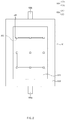
- FIG. 1 is a plan view illustrating a structure of a secondary battery according to a first embodiment of the present invention
- FIG. 2 is a plan view illustrating a structure of a secondary battery according to a second embodiment of the present invention.
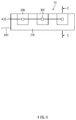
- FIG. 3 is a side view illustrating a structure of a secondary battery according to a third embodiment of the present invention.
- a secondary battery 10 according to the present invention may include an electrode assembly and a sheet type exterior 200 (hereinafter, referred to as an 'exterior') that accommodates the electrode assembly.
- the electrode assembly may have a structure in which electrodes and separators are alternately arranged.
- the exterior 200 may include a body part 210, in which an internal space in which the electrode assembly is accommodated is defined, and a sealing part 220 that seals the internal space of the body part 210 from the outside.
- the sealing part 220 may have a structure in which two sheets are bonded to each other.
- a surface having the largest area among surfaces of the body part 210 of the exterior 200 is referred to as a 'main plane', and a surface formed around the main plane is referred to as a 'side surface'.
- an area, which is illustrated in FIGS. 1 and 2 , of the body part 210 of the exterior is the main plane of the exterior 200, and an area, which is illustrated in FIG. 3 , of the body part 210 of the exterior is the side surface of the exterior 200.
- the main plane of the exterior 200 may be understood as a top or bottom surface of the exterior 200.
- the secondary battery 10 according to the present invention may include an electrode lead 100 having a shape protruding to the outside.
- the electrode lead 100 may include a positive electrode lead 100a and a negative electrode lead 100b.
- the positive electrode lead 100a and the negative electrode lead 100b may be provided at one side of the exterior 200 to protrude in the same direction.
- the positive electrode lead 100a and the negative electrode lead 100b may be respectively provided at one side of the exterior 200 and the other side opposite to the one side to protrude in opposite directions.
- the secondary battery 10 may include a plurality of temperature sensing parts 300 provided adjacent to the exterior 200.
- the temperature sensing part 300 may be configured to sense a temperature in one region of the exterior 200.
- information about a temperature in one region of the exterior 200 sensed by the temperature sensing parts 300 may be provided to a controller 20 (see FIG. 10 ) .
- the temperature sensing parts 300 are provided in the form of 3x3 matrix on the main plane of the exterior.
- a circuit that connects the temperature sensing parts 300 to each other has a shape in which the temperature sensing parts 300 are connected to each other in a zigzag shape.
- FIG. 3 illustrates a state in which three temperature sensing parts 300 are provided side by side on the exterior 200.
- the plurality of temperature sensing parts 300 may be directly attached to one surface of the exterior 200.
- the temperature sensing parts 300 may be attached to the top or bottom, which is the main plane of the exterior 200, and as illustrated in FIG. 3 , the temperature sensing parts 300 may be attached to the side surface of the exterior 200.
- the secondary battery 10 may further include a terminal part 400 provided on the surface of the exterior 200 and connected to any one of the plurality of temperature sensing parts 300 by the circuit.
- FIGS. 1 to 3 illustrate a case in which the terminal part 400 is provided at one side of the exterior 200 on which the electrode lead 100 is disposed.
- each of the plurality of temperature sensing parts 300 provided in the secondary battery 10 may include a positive temperature coefficient (PTC) element.
- PTC positive temperature coefficient
- At least one of the plurality of temperature sensing parts 300 may include a negative temperature coefficient (NTC) element.
- NTC negative temperature coefficient
- At least one of the plurality of temperature sensing parts 300 may include the PTC element and the NTC element.
- the PTC element represents an element in which electrical resistance increases rapidly when the temperature increases
- the NTC element represents an element in which electrical resistance increases when the temperature decreases.
- the plurality of temperature sensing parts since at least one of the plurality of temperature sensing parts includes all the PTC element and the NTC element, more reliable information with respect to the temperature in a specific region of the exterior may be obtained.
- the temperature information in the specific region of the exterior is limited to information obtained from only one type of temperature measurement element.
- the temperature information in the specific region of the exterior may also be obtained through the two channels.
- the error of the temperature information may be revealed through cross-checking using the temperature information obtained from the different type of temperature measurement elements.
- the reliability of information on the temperature in the specific region of the exterior may be improved.
- each of the plurality of temperature sensing parts includes the NTC element, and at least one of the plurality of temperature sensing parts includes the PTC element.
- the NTC element since the NTC element is more expensive than the PTC element, it may not be desirable in terms of economics when the temperature sensing parts are configured in the above-described structure.
- the temperature sensing part provided with two kinds of temperature measurement elements among the plurality of temperature sensing parts is provided at a position at which the temperature is high in the secondary battery.
- a region in which the electrode assembly and the electrode lead are connected to each other generally has a relatively high temperature.
- the NTC element may be provided in the temperature sensing part adjacent to the electrode lead among the plurality of temperature sensing parts 300.
- the NTC element may be provided in at least one of the upper temperature sensing part 300 that is closest to the electrode lead 100 among the plurality of temperature sensing parts 300.
- thermal conductivity of a material (e.g., copper) used for the negative electrode lead is greater than that of a material (e.g., aluminum) used for the positive electrode lead, it is common that large heat generation occurs in the negative electrode lead.
- the NTC element may be provided in the temperature sensing part adjacent to the negative electrode lead 100b among the plurality of temperature sensing parts 300.
- the NTC element may be provided in the temperature sensing part that is provided at a central portion in the upper temperature sensing parts 300, which is closest to the negative electrode lead 100b, among the plurality of temperature sensing parts 300.
- FIG. 4 is a plan view illustrating a structure of a secondary battery according to a fourth embodiment of the present invention
- FIG. 5 is a plan view illustrating a structure of a secondary battery according to a fifth embodiment of the present invention.
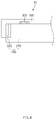
- FIG. 6 is a side view illustrating a structure of a secondary battery according to a sixth embodiment of the present invention.
- the secondary battery 10 may further include an adhesive part 500 adhering to a portion of the surface of the exterior 200, and the plurality of temperature sensing parts 300 may be attached to attached to the adhesive part 500.
- the plurality of temperature sensing parts 300 since the adhesive part 500, to which the plurality of temperature sensing parts 300 attached, adheres to the surface of the exterior, the plurality of temperature sensing parts 300 may be in close contact with the surface of the exterior 200 by the adhesive part 500.
- the adhesive part 500 may be provided in the secondary battery 10 in various manners.
- the adhesive part 500 may adhere together to the sealing part 220 and the body part 210 so that the sealing part 220 is bent to be in close contact with the side surface of the exterior 200.
- the adhesive part 500 may extend in a width direction of the main plane of the exterior 200 to adhere together to a surface of the body part 210 and each of surfaces of the two sealing parts 220, which are respectively disposed on both sides of the body part 210.
- the adhesive part 500 may adhere together to the main plane and the body part 210 and a surface of one sealing part 220 disposed at one side of the exterior 200.
- FIG. 4 three adhesive parts 500 are provided.
- three temperature sensing parts 300 are respectively provided on areas of the respective adhesive parts 500, which adhere to the main plane of the exterior 200.
- FIG. 5 six adhesive parts 500 are provided.
- one temperature sensing part 300 is provided on each of areas of the respective adhesive parts 500, which adhere to the main plane of the exterior 200.
- the temperature sensing part 300 may be provided on an area of the adhesive part 500, which adheres to the side surface of the exterior 200.
- the adhesive part 500 may adhere together to the sealing part 220 and the body part 210 so that the sealing part 220 is bent to be in close contact with the side surface of the exterior 200.
- one temperature sensing part 300 may be provided on each of areas of the respective adhesive parts 500, which adhere to the surface of the sealing part 220.
- the sealing part 200 may be bent by the adhesive part 500 to be in close contact with the side surface of the exterior 200, and since the plurality of temperature sensing parts 300 attached to each adhesive part 500 are attached to the sealing part 220, the temperature sensing parts 300 may be provided adjacent to the side surface of the exterior 200.
- the adhesive part to which the plurality of temperature sensing parts are attached may be attached only to the entire top or bottom surface, which is the main plane of the exterior.
- the structure of the secondary battery provided with the plurality of temperature sensing parts may be substantially the same as that of each of FIGS. 1 and 2 .
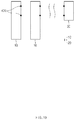
- FIG. 10 is a plan view illustrating a structure of a battery module according to the present invention.
- a battery module 1 may include a plurality of secondary batteries 10.
- the battery module 1 includes a controller 20 that receives information on a temperature of the exterior from the areas to which the temperature sensing parts 300 (see FIGS. 1 to 9 ) of the secondary battery 10 are attached.
- the temperature sensing parts mounted on the plurality of secondary batteries 10 sense the temperature of the exterior on the area to which the temperature sensing parts are attached to transmit the sensed temperature information to the controller 20.
- the controller 20 may (i) interrupt current of the secondary batteries to which the temperature sensing parts, which transmit information on the temperature that exceeds the predetermined value, are attached or may (ii) transmit a warning signal to the outside.
- the controller 20 of the battery module 1 receives information on a temperature from each of the PTC element and the NTC element, which are provided in the temperature sensing part of the secondary battery 10.
- the controller may determine whether the temperature provided from the NTC element (i) is equal to or less than a first reference temperature, (ii) is equal to or less than a second reference temperature that exceeds the first reference temperature and is greater than the first reference temperature, or (iii) exceeds the second reference temperature.
- the controller determines whether the temperature provided from the PTC element (i) is equal to or less than a third reference temperature or (ii) exceeds the third reference temperature.
- the controller transmits a first warning signal to the outside.
- the controller operates as follows according to the temperature provided from the PTC element of the temperature sensing part provided with the NTC element.
- the controller interrupts the current of the secondary battery provided with the temperature sensing part including the NTC element and the PTC element.
- the controller transmits a second warning signal to the outside.
- the second reference temperature and the third reference temperature may be the same as each other.
- the fact that the second reference temperature and the third reference temperature are 'the same' as each other means that the second reference temperature is not only numerically exactly the same as the third reference temperature, but also a difference between the second reference temperature and the third reference temperature is insignificant. Thus, it should be interpreted to include a case in which a person skilled in the art may determine that the two temperatures are substantially the same.
- the second reference temperature may be greater than the third reference temperature.
- an operation of the above-described controller relates to a case in which information on the temperatures is provided from the temperature sensing part including the PTC element and the NTC element.
- the controller may operate as follows.
- the controller may interrupt current of the secondary battery provided with the temperature sensing part including the PTC element.
- the controller may transmit a warning signal to the outside.
- the interruption may be performed permanently or temporarily.
- the permanent interruption of the current of the secondary battery may mean that the current is still interrupted even when the temperature of the secondary battery returns to a normal temperature.
- the current of the secondary battery when the current of the secondary battery is performed temporarily, it may mean that the current of the secondary battery flows again when the temperature of the secondary battery returns to the normal temperature.
- each of the plurality of secondary batteries constituting the battery module is provided with at least one temperature sensing part provided with the PTC element and NTC element, the reliable of the control of the secondary battery may be improved based on the information on the temperature provided from the PTC element and the NTC element.
Landscapes
- Chemical & Material Sciences (AREA)
- Chemical Kinetics & Catalysis (AREA)
- Electrochemistry (AREA)
- General Chemical & Material Sciences (AREA)
- Engineering & Computer Science (AREA)
- Manufacturing & Machinery (AREA)
- Battery Mounting, Suspending (AREA)
- Secondary Cells (AREA)
- Connection Of Batteries Or Terminals (AREA)
- Sealing Battery Cases Or Jackets (AREA)
- Charge And Discharge Circuits For Batteries Or The Like (AREA)
Abstract
Description
- The present application claims the benefit of the priority of
Korean Patent Application No. 10-2019-0044991, filed on April 17, 2019 - The present invention relates to a secondary battery and a battery module including the secondary battery, and more particularly, to a secondary battery having a structure which is capable of interrupting current when a temperature of the secondary battery exceeds a predetermined value, and a battery module including the secondary battery.
- Secondary batteries capable of being repeatedly chargeable and dischargeable need to be secured so that ignition or explosion does not occur when abnormal operation occurs.
- For example, when a temperature within a secondary battery exceeds a predetermined value due to short circuit or the like of the secondary battery, it is necessary to interrupt current from flowing through the secondary battery.
- The secondary battery may be classified into a cylindrical type secondary battery, a prismatic type battery secondary battery, a pouch type secondary battery, and the like according to its structure or manufacturing method.
- Among them, the pouch type secondary battery has a structure in which an electrode assembly having a structure in which electrodes and separators are alternately disposed in a sheet-shaped pouch exterior is accommodated.
- In particular, the pouch type secondary battery has been widely used due to its relatively simple process and low manufacturing cost.
- However, according to the related art, there is a problem in securing safety because the pouch type secondary battery is not provided with a constitute that is capable of interrupting current when a temperature within the secondary battery abnormally increases.
- Therefore, an object of the present invention for solving the above problem is to provide a pouch type secondary battery in which current is interrupted when a temperature within the secondary battery abnormally increases, thereby improving safety.
- According to one aspect of the present invention for achieving the above object, a secondary battery includes: an electrode assembly; a sheet-type exterior configured to accommodate the electrode assembly; and a plurality of temperature sensing parts provided adjacent to the exterior to sense a temperature of one area of the exterior, wherein at least one of the plurality of temperature sensing parts includes: a positive temperature coefficient (PTC) element; and a negative temperature coefficient (NTC) element.
- The secondary battery may further include an electrode lead having a shape that protrudes outward, wherein the NTC element may be provided in the temperature sensing part, which is adjacent to the electrode lead, among the plurality of temperature sensing parts.
- The electrode lead may include a positive electrode lead and a negative electrode lead, and the NTC element may be provided in the temperature sensing part, which is adjacent to the negative electrode lead, among the plurality of temperature sensing parts.
- The plurality of temperature sensing parts may be attached to a top or bottom surface that is a man plane of the exterior.
- The plurality of temperature sensing parts may be attached to a side surface of the exterior.
- The exterior may include: a body part having an internal space in which the electrode assembly is accommodated; and a sealing part configured to seal the internal space of the body part from the outside, wherein the plurality of temperature sensing parts may be attached to the sealing part, and the sealing part may be bent to be in close contact with a side surface of the exterior.
- The secondary battery may further include an adhesive part adhering to a portion of a surface of the exterior, wherein the plurality of temperature sensing parts may be attached to the adhesive part.
- The exterior may include: a body part having an internal space in which the exterior is accommodated; and a sealing part configured to seal the internal space of the body part from the outside, wherein the adhesive part may adhere together to the sealing part and the body part so that the sealing part is bent to be in close contact with a side surface of the exterior.
- The adhesive part may be attached to only an entire top or bottom surface that is a main plane of the exterior.
- A circuit configured to connect the plurality of temperature sensing parts to each other may connect the plurality of temperature sensing parts to each other in a zigzag shape.
- According to another aspect of the present invention for achieving the above object, a battery module includes: the secondary battery; and a controller configured to receive temperature information of the exterior on areas to which the temperature sensing parts of the secondary battery are attached, wherein, when a temperature on a portion of the areas to which the temperature sensing parts are attached exceeds a predetermined value, the controller (i) interrupts current of the secondary battery or (ii) transmits a warning signal to the outside.
- The controller may receive temperature information from each of the temperature sensing part provided with all the PTC element and the NTC element, and when a temperature provided from the NTC element exceeds a first reference temperature, the controller may transmit the warning signal to the outside.
- When a temperature provided from the NTC element exceeds a second reference temperature, and a temperature provided from the PTC element exceeds a third reference temperature, the controller may interrupt the current of the secondary battery.
- The second reference temperature may be greater than the first reference temperature.
- The second reference temperature may be the same as the third reference temperature.
- According to the present invention, when the temperature within the pouch type secondary battery abnormally increases, the current may be interrupted to improve the safety.
-
-
FIG. 1 is a plan view illustrating a structure of a secondary battery according to a first embodiment of the present invention. -
FIG. 2 is a plan view illustrating a structure of a secondary battery according to a second embodiment of the present invention. -
FIG. 3 is a side view illustrating a structure of a secondary battery according to a third embodiment of the present invention. -
FIG. 4 is a plan view illustrating a structure of a secondary battery according to a fourth embodiment of the present invention. -
FIG. 5 is a plan view illustrating a structure of a secondary battery according to a fifth embodiment of the present invention. -
FIG. 6 is a side view illustrating a structure of a secondary battery according to a sixth embodiment of the present invention. -
FIG. 7 is a side cross-sectional view illustrating the structure of the secondary battery, taken along line A-A ofFIG. 4 . -
FIG. 8 is a side cross-sectional view illustrating the structure of the secondary battery, taken along line B-B ofFIG. 5 . -
FIG. 9 is a side cross-sectional view illustrating the structure of the secondary battery, taken along line C-C ofFIG. 6 . -
FIG. 10 is a plan view illustrating a structure of a battery module according to the present invention. - Hereinafter, structures of a secondary battery and a battery module according to the present invention will be described with reference to the accompanying drawings.
-
FIG. 1 is a plan view illustrating a structure of a secondary battery according to a first embodiment of the present invention, andFIG. 2 is a plan view illustrating a structure of a secondary battery according to a second embodiment of the present invention. - Also,
FIG. 3 is a side view illustrating a structure of a secondary battery according to a third embodiment of the present invention. - A
secondary battery 10 according to the present invention may include an electrode assembly and a sheet type exterior 200 (hereinafter, referred to as an 'exterior') that accommodates the electrode assembly. - The electrode assembly may have a structure in which electrodes and separators are alternately arranged.
- As illustrated in
FIGS. 1 and2 , theexterior 200 may include abody part 210, in which an internal space in which the electrode assembly is accommodated is defined, and asealing part 220 that seals the internal space of thebody part 210 from the outside. - The
sealing part 220 may have a structure in which two sheets are bonded to each other. - In this specification, a surface having the largest area among surfaces of the
body part 210 of theexterior 200 is referred to as a 'main plane', and a surface formed around the main plane is referred to as a 'side surface'. - Referring to
FIGS. 1 to 3 , an area, which is illustrated inFIGS. 1 and2 , of thebody part 210 of the exterior is the main plane of theexterior 200, and an area, which is illustrated inFIG. 3 , of thebody part 210 of the exterior is the side surface of theexterior 200. - The main plane of the
exterior 200 may be understood as a top or bottom surface of theexterior 200. - Also, the
secondary battery 10 according to the present invention may include anelectrode lead 100 having a shape protruding to the outside. - The
electrode lead 100 may include apositive electrode lead 100a and anegative electrode lead 100b. - As illustrated in
FIG. 1 , according to the first embodiment of the present invention, the positive electrode lead 100a and thenegative electrode lead 100b may be provided at one side of theexterior 200 to protrude in the same direction. - However, as illustrated in
FIG. 2 , according to the second embodiment of the present invention, the positive electrode lead 100a and thenegative electrode lead 100b may be respectively provided at one side of theexterior 200 and the other side opposite to the one side to protrude in opposite directions. - The
secondary battery 10 according to the present invention may include a plurality oftemperature sensing parts 300 provided adjacent to theexterior 200. - The temperature sensing
part 300 according to the present invention may be configured to sense a temperature in one region of theexterior 200. - As described below, information about a temperature in one region of the
exterior 200 sensed by thetemperature sensing parts 300 may be provided to a controller 20 (seeFIG. 10 ) . - In
FIGS. 1 and2 , thetemperature sensing parts 300 are provided in the form of 3x3 matrix on the main plane of the exterior. Here, a circuit that connects the temperature sensingparts 300 to each other has a shape in which the temperature sensingparts 300 are connected to each other in a zigzag shape. -
FIG. 3 illustrates a state in which threetemperature sensing parts 300 are provided side by side on theexterior 200. - The plurality of
temperature sensing parts 300 may be directly attached to one surface of theexterior 200. - Here, as illustrated in
FIGS. 1 and2 , thetemperature sensing parts 300 may be attached to the top or bottom, which is the main plane of the exterior 200, and as illustrated inFIG. 3 , thetemperature sensing parts 300 may be attached to the side surface of theexterior 200. - As illustrated in
FIGS. 1 to 3 , thesecondary battery 10 according to the present invention may further include aterminal part 400 provided on the surface of the exterior 200 and connected to any one of the plurality oftemperature sensing parts 300 by the circuit. -
FIGS. 1 to 3 illustrate a case in which theterminal part 400 is provided at one side of the exterior 200 on which theelectrode lead 100 is disposed. - According to the present invention, each of the plurality of
temperature sensing parts 300 provided in thesecondary battery 10 may include a positive temperature coefficient (PTC) element. - Also, at least one of the plurality of
temperature sensing parts 300 may include a negative temperature coefficient (NTC) element. - At least one of the plurality of
temperature sensing parts 300 may include the PTC element and the NTC element. - The PTC element represents an element in which electrical resistance increases rapidly when the temperature increases, and the NTC element represents an element in which electrical resistance increases when the temperature decreases.
- According to the present invention, since at least one of the plurality of temperature sensing parts includes all the PTC element and the NTC element, more reliable information with respect to the temperature in a specific region of the exterior may be obtained.
- That is, when only one type of temperature measurement element is provided in the temperature sensing parts, the temperature information in the specific region of the exterior is limited to information obtained from only one type of temperature measurement element.
- Thus, even if the temperature information obtained from one type of temperature measurement element is wrong, it is not known that the information is wrong, thereby deteriorating the reliability of the temperature information in the specific region of the exterior.
- However, according to the present invention, since at least one temperature sensing part includes two types of temperature measurement elements, the temperature information in the specific region of the exterior may also be obtained through the two channels.
- If the temperature information obtained from one type of temperature measurement element is wrong, the error of the temperature information may be revealed through cross-checking using the temperature information obtained from the different type of temperature measurement elements.
- Thus, according to the present invention, the reliability of information on the temperature in the specific region of the exterior may be improved.
- It is considered that each of the plurality of temperature sensing parts includes the NTC element, and at least one of the plurality of temperature sensing parts includes the PTC element. However, in general, in the case of the NTC element, since the NTC element is more expensive than the PTC element, it may not be desirable in terms of economics when the temperature sensing parts are configured in the above-described structure.
- In view of the safety of the temperature of the secondary battery, it may be preferable that the temperature sensing part provided with two kinds of temperature measurement elements among the plurality of temperature sensing parts is provided at a position at which the temperature is high in the secondary battery.
- This is because there is also high possibility of abnormal temperature increase at the position at which an amount of heat is large.
- In the secondary battery, a region in which the electrode assembly and the electrode lead are connected to each other generally has a relatively high temperature.
- In order to connect the electrode assembly to the electrode lead, a welding process is performed because large heat generation occurs on the welded area, and current flowing through the electrode assembly having a relatively large width is concentrated in the electrode lead having a relatively narrow width.
- Thus, the NTC element may be provided in the temperature sensing part adjacent to the electrode lead among the plurality of
temperature sensing parts 300. - Referring to
FIGS. 1 and2 , the NTC element may be provided in at least one of the uppertemperature sensing part 300 that is closest to theelectrode lead 100 among the plurality oftemperature sensing parts 300. - In general, since thermal conductivity of a material (e.g., copper) used for the negative electrode lead is greater than that of a material (e.g., aluminum) used for the positive electrode lead, it is common that large heat generation occurs in the negative electrode lead.
- Also, when the secondary battery is discharged, since charges flow from the negative electrode lead to the positive electrode lead, it is common that a relatively high temperature is generated on the area on which the negative electrode lead and the electrode assembly are electrically connected to each other.
- Thus, the NTC element may be provided in the temperature sensing part adjacent to the
negative electrode lead 100b among the plurality oftemperature sensing parts 300. - Referring to
FIG. 2 , the NTC element may be provided in the temperature sensing part that is provided at a central portion in the uppertemperature sensing parts 300, which is closest to thenegative electrode lead 100b, among the plurality oftemperature sensing parts 300. -
FIG. 4 is a plan view illustrating a structure of a secondary battery according to a fourth embodiment of the present invention, andFIG. 5 is a plan view illustrating a structure of a secondary battery according to a fifth embodiment of the present invention. - Also,
FIG. 6 is a side view illustrating a structure of a secondary battery according to a sixth embodiment of the present invention. - As illustrated in
FIGS. 4 to 6 , thesecondary battery 10 according to the fourth to sixth embodiments of the present invention may further include anadhesive part 500 adhering to a portion of the surface of the exterior 200, and the plurality oftemperature sensing parts 300 may be attached to attached to theadhesive part 500. - According to the fourth and fifth embodiments of the present invention, since the
adhesive part 500, to which the plurality oftemperature sensing parts 300 attached, adheres to the surface of the exterior, the plurality oftemperature sensing parts 300 may be in close contact with the surface of the exterior 200 by theadhesive part 500. - Here, the
adhesive part 500 may be provided in thesecondary battery 10 in various manners. - As illustrated in
FIGS. 4 ,5 ,7 , and8 , theadhesive part 500 may adhere together to the sealingpart 220 and thebody part 210 so that the sealingpart 220 is bent to be in close contact with the side surface of theexterior 200. - Here, as illustrated in
FIG. 4 , according to the fourth embodiment of the present invention, theadhesive part 500 may extend in a width direction of the main plane of the exterior 200 to adhere together to a surface of thebody part 210 and each of surfaces of the two sealingparts 220, which are respectively disposed on both sides of thebody part 210. - Alternatively, as illustrated in
FIG. 5 , according to the fifth embodiment of the present invention, theadhesive part 500 may adhere together to the main plane and thebody part 210 and a surface of one sealingpart 220 disposed at one side of theexterior 200. - In
FIG. 4 , threeadhesive parts 500 are provided. Here, threetemperature sensing parts 300 are respectively provided on areas of the respectiveadhesive parts 500, which adhere to the main plane of theexterior 200. InFIG. 5 , sixadhesive parts 500 are provided. Here, onetemperature sensing part 300 is provided on each of areas of the respectiveadhesive parts 500, which adhere to the main plane of theexterior 200. - However, in contrast, the
temperature sensing part 300 may be provided on an area of theadhesive part 500, which adheres to the side surface of theexterior 200. - That is, as illustrated in
FIGS. 6 and9 , according to the sixth embodiment of the present invention, theadhesive part 500 may adhere together to the sealingpart 220 and thebody part 210 so that the sealingpart 220 is bent to be in close contact with the side surface of theexterior 200. Here, onetemperature sensing part 300 may be provided on each of areas of the respectiveadhesive parts 500, which adhere to the surface of the sealingpart 220. - Thus, according to the sixth embodiment of the present invention, the sealing
part 200 may be bent by theadhesive part 500 to be in close contact with the side surface of the exterior 200, and since the plurality oftemperature sensing parts 300 attached to eachadhesive part 500 are attached to the sealingpart 220, thetemperature sensing parts 300 may be provided adjacent to the side surface of theexterior 200. - Alternatively, in contrast, the adhesive part to which the plurality of temperature sensing parts are attached may be attached only to the entire top or bottom surface, which is the main plane of the exterior.
- In this case, the structure of the secondary battery provided with the plurality of temperature sensing parts may be substantially the same as that of each of
FIGS. 1 and2 . -
FIG. 10 is a plan view illustrating a structure of a battery module according to the present invention. - As illustrated in
FIG. 10 , abattery module 1 according to the present invention may include a plurality ofsecondary batteries 10. - Description with respect to the structure of the
secondary battery 10 will be replaced with the above description. - Also, the
battery module 1 according to the present invention includes acontroller 20 that receives information on a temperature of the exterior from the areas to which the temperature sensing parts 300 (seeFIGS. 1 to 9 ) of thesecondary battery 10 are attached. - According to the present invention, the temperature sensing parts mounted on the plurality of
secondary batteries 10 sense the temperature of the exterior on the area to which the temperature sensing parts are attached to transmit the sensed temperature information to thecontroller 20. - Thereafter, when a temperature on a portion of the areas to which the temperature sensing parts attached to the plurality of
secondary batteries 10 are attached exceeds a predetermined value, thecontroller 20 may (i) interrupt current of the secondary batteries to which the temperature sensing parts, which transmit information on the temperature that exceeds the predetermined value, are attached or may (ii) transmit a warning signal to the outside. - A control method of the controller in the battery module according to the present invention will be described in more detail as follows.
- The
controller 20 of thebattery module 1 receives information on a temperature from each of the PTC element and the NTC element, which are provided in the temperature sensing part of thesecondary battery 10. - According to the present invention, the controller may determine whether the temperature provided from the NTC element (i) is equal to or less than a first reference temperature, (ii) is equal to or less than a second reference temperature that exceeds the first reference temperature and is greater than the first reference temperature, or (iii) exceeds the second reference temperature.
- Also, according to the present invention, the controller determines whether the temperature provided from the PTC element (i) is equal to or less than a third reference temperature or (ii) exceeds the third reference temperature.
- Here, when it is determined that the temperature provided from the NTC element exceeds the first reference temperature, the controller transmits a first warning signal to the outside.
- Thereafter, when it is determined that the temperature provided from the NTC element exceeds the second reference temperature, the controller operates as follows according to the temperature provided from the PTC element of the temperature sensing part provided with the NTC element.
- When the temperature provided from the NTC element exceeds the second reference temperature, and also, when the temperature provided from the PTC element exceeds the third reference temperature, the controller interrupts the current of the secondary battery provided with the temperature sensing part including the NTC element and the PTC element.
- On the other hand, when the temperature provided from the NTC element exceeds the second reference temperature, and also, when the temperature provided from the PTC element is equal to or less than the third reference temperature, the controller transmits a second warning signal to the outside.
- The second reference temperature and the third reference temperature may be the same as each other.
- When the second reference temperature and the third reference temperature are the same as each other, since a temperature that serves as a reference for interrupting the current of the secondary battery is provided in a single, stable control and simplified control of the controller may be enabled.
- Here, the fact that the second reference temperature and the third reference temperature are 'the same' as each other means that the second reference temperature is not only numerically exactly the same as the third reference temperature, but also a difference between the second reference temperature and the third reference temperature is insignificant. Thus, it should be interpreted to include a case in which a person skilled in the art may determine that the two temperatures are substantially the same.
- Alternatively, in contrast, the second reference temperature may be greater than the third reference temperature.
- In the battery module according to the present invention, an operation of the above-described controller relates to a case in which information on the temperatures is provided from the temperature sensing part including the PTC element and the NTC element.
- Thus, when the temperature information is provided from the temperature sensing part provided with only the PTC element, the controller may operate as follows.
- When the temperature provided from the PTC element exceeds the third reference temperature, the controller may interrupt current of the secondary battery provided with the temperature sensing part including the PTC element.
- The controller may transmit a warning signal to the outside.
- When the current of the secondary battery is interrupted by the above algorithm in the battery module according to the present invention, the interruption may be performed permanently or temporarily.
- The permanent interruption of the current of the secondary battery may mean that the current is still interrupted even when the temperature of the secondary battery returns to a normal temperature.
- Also, when the current of the secondary battery is performed temporarily, it may mean that the current of the secondary battery flows again when the temperature of the secondary battery returns to the normal temperature.
- According to the present invention, since each of the plurality of secondary batteries constituting the battery module is provided with at least one temperature sensing part provided with the PTC element and NTC element, the reliable of the control of the secondary battery may be improved based on the information on the temperature provided from the PTC element and the NTC element.
- While the embodiments of the present invention have been described with reference to the specific embodiments, it will be apparent to those skilled in the art that various changes and modifications may be made without departing from the spirit and scope of the invention as defined in the following claims.
Claims (15)
- A secondary battery comprising:an electrode assembly;a sheet-type exterior configured to accommodate the electrode assembly; anda plurality of temperature sensing parts provided adjacent to the exterior to sense a temperature of one area of the exterior,wherein at least one of the plurality of temperature sensing parts comprises:a positive temperature coefficient (PTC) element; anda negative temperature coefficient (NTC) element.
- The secondary battery of claim 1, further comprising an electrode lead having a shape that protrudes outward,
wherein the NTC element is provided in the temperature sensing part, which is adjacent to the electrode lead, among the plurality of temperature sensing parts. - The secondary battery of claim 2, wherein the electrode lead comprises a positive electrode lead and a negative electrode lead, and
the NTC element is provided in the temperature sensing part, which is adjacent to the negative electrode lead, among the plurality of temperature sensing parts. - The secondary battery of claim 1, wherein the plurality of temperature sensing parts are attached to a top or bottom surface that is a main plane of the exterior.
- The secondary battery of claim 1, wherein the plurality of temperature sensing parts are attached to a side surface of the exterior.
- The secondary battery of claim 1, wherein the exterior comprises:a body part having an internal space in which the electrode assembly is accommodated; anda sealing part configured to seal the internal space of the body part from the outside,wherein the plurality of temperature sensing parts are attached to the sealing part, andthe sealing part is bent to be in close contact with a side surface of the exterior.
- The secondary battery of claim 1, further comprising an adhesive part adhering to a portion of a surface of the exterior,
wherein the plurality of temperature sensing parts are attached to the adhesive part. - The secondary battery of claim 7, wherein the exterior comprises:a body part having an internal space in which the exterior is accommodated; anda sealing part configured to seal the internal space of the body part from the outside,wherein the adhesive part adheres together to the sealing part and the body part so that the sealing part is bent to be in close contact with a side surface of the exterior.
- The secondary battery of claim 7, wherein the adhesive part is attached to only an entire top or bottom surface that is a main plane of the exterior.
- The secondary battery of claim 1, wherein a circuit configured to connect the plurality of temperature sensing parts to each other connects the plurality of temperature sensing parts to each other in a zigzag shape.
- A battery module comprising:the secondary battery of claim 1; anda controller configured to receive temperature information of the exterior on areas to which the temperature sensing parts of the secondary battery are attached,wherein, when a temperature on a portion of the areas to which the temperature sensing parts are attached exceeds a predetermined value, the controller (i) interrupts current of the secondary battery or (ii) transmits a warning signal to the outside.
- The battery module of claim 11, wherein the controller receives temperature information from each of the temperature sensing part provided with all the PTC element and the NTC element, and
when a temperature provided from the NTC element exceeds a first reference temperature, the controller transmits the warning signal to the outside. - The battery module of claim 12, wherein, when a temperature provided from the NTC element exceeds a second reference temperature, and a temperature provided from the PTC element exceeds a third reference temperature, the controller interrupts the current of the secondary battery.
- The battery module of claim 13, wherein the second reference temperature is greater than the first reference temperature.
- The battery module of claim 13, wherein the second reference temperature is the same as the third reference temperature.
Applications Claiming Priority (2)
| Application Number | Priority Date | Filing Date | Title |
|---|---|---|---|
| KR1020190044991A KR102480959B1 (en) | 2019-04-17 | 2019-04-17 | secondary battery and battery module including the same |
| PCT/KR2019/017356 WO2020213807A1 (en) | 2019-04-17 | 2019-12-10 | Secondary battery and battery module comprising secondary battery |
Publications (2)
| Publication Number | Publication Date |
|---|---|
| EP3933962A1 true EP3933962A1 (en) | 2022-01-05 |
| EP3933962A4 EP3933962A4 (en) | 2022-05-11 |
Family
ID=72837430
Family Applications (1)
| Application Number | Title | Priority Date | Filing Date |
|---|---|---|---|
| EP19924672.9A Pending EP3933962A4 (en) | 2019-04-17 | 2019-12-10 | RECHARGEABLE BATTERY AND BATTERY MODULE INCLUDING A RECHARGEABLE BATTERY |
Country Status (6)
| Country | Link |
|---|---|
| US (2) | US20220190400A1 (en) |
| EP (1) | EP3933962A4 (en) |
| JP (1) | JP7258408B2 (en) |
| KR (1) | KR102480959B1 (en) |
| CN (1) | CN113646965B (en) |
| WO (1) | WO2020213807A1 (en) |
Families Citing this family (3)
| Publication number | Priority date | Publication date | Assignee | Title |
|---|---|---|---|---|
| JP7581747B2 (en) * | 2020-09-30 | 2024-11-13 | トヨタ自動車株式会社 | battery |
| KR102663023B1 (en) * | 2021-08-05 | 2024-05-07 | 삼성에스디아이 주식회사 | Battery pack and control method for the same |
| KR20230067366A (en) * | 2021-11-09 | 2023-05-16 | 현대자동차주식회사 | Apparatus for controlling a vehicle and control method thereof |
Family Cites Families (29)
| Publication number | Priority date | Publication date | Assignee | Title |
|---|---|---|---|---|
| JP2966158B2 (en) | 1991-09-17 | 1999-10-25 | 日本碍子株式会社 | High temperature battery abnormal temperature detector |
| JP3961061B2 (en) | 1997-03-24 | 2007-08-15 | 松下電器産業株式会社 | Battery abnormal temperature rise detection device |
| JP2001025158A (en) * | 1999-07-02 | 2001-01-26 | Murata Mfg Co Ltd | Protection circuit and composite element used therefor |
| JP2001025159A (en) * | 1999-07-02 | 2001-01-26 | Murata Mfg Co Ltd | Protection circuit |
| JP3705079B2 (en) * | 2000-05-23 | 2005-10-12 | 株式会社村田製作所 | Secondary battery pack temperature detection device and secondary battery pack |
| JP2002056900A (en) | 2000-08-14 | 2002-02-22 | Japan Storage Battery Co Ltd | Non-aqueous electrolyte battery device and battery pack |
| JP4082071B2 (en) | 2002-04-12 | 2008-04-30 | 株式会社ジーエス・ユアサコーポレーション | Nonaqueous electrolyte secondary battery |
| JP4442484B2 (en) * | 2005-03-23 | 2010-03-31 | 日本電気株式会社 | Portable electronic devices |
| WO2006115342A1 (en) * | 2005-04-08 | 2006-11-02 | U-Nisum Technology Co., Ltd | Circuit and chip for protecting battery, method of manufacturing the same and battery pack having the same |
| JP5270154B2 (en) * | 2005-05-16 | 2013-08-21 | タイコエレクトロニクスジャパン合同会社 | Sealing body |
| KR100964175B1 (en) | 2008-05-19 | 2010-06-17 | 주식회사 에스피엠탈로스 | Battery explosion prevention sensor and control method of battery charge / discharge circuit |
| JP2010244844A (en) * | 2009-04-06 | 2010-10-28 | Nec Energy Devices Ltd | Battery pack |
| US8916278B2 (en) | 2009-08-12 | 2014-12-23 | Samsung Sdi Co., Ltd. | Heat transfer member for battery pack |
| CN102792513A (en) * | 2010-03-01 | 2012-11-21 | 波士顿电力公司 | Thermal sensor device with average temperature and hot spot feedback |
| KR101192042B1 (en) | 2010-11-01 | 2012-10-17 | 삼성에스디아이 주식회사 | Battery Pack |
| JP2013077433A (en) * | 2011-09-30 | 2013-04-25 | Panasonic Corp | Battery module |
| CN102496750B (en) * | 2011-12-20 | 2014-10-08 | 华为技术有限公司 | Battery |
| KR20130089376A (en) | 2012-02-02 | 2013-08-12 | 주식회사 엘지화학 | Secondary battery having temperature sensor |
| WO2014003085A1 (en) | 2012-06-27 | 2014-01-03 | Semiconductor Energy Laboratory Co., Ltd. | Power storage unit and solar power generation unit |
| KR101631124B1 (en) | 2012-11-13 | 2016-06-17 | 주식회사 엘지화학 | Secondary Battery Having Member for Temperature Measurement |
| KR101595611B1 (en) * | 2013-03-22 | 2016-02-18 | 주식회사 엘지화학 | a secondary battery for improving energy degree |
| KR101469356B1 (en) | 2013-03-25 | 2014-12-04 | 세방전지(주) | Battery module control system and method thereof |
| KR20150131759A (en) | 2014-05-16 | 2015-11-25 | 주식회사 엘지화학 | Battery Module Having Thermoelectric Element |
| TWI509862B (en) * | 2014-09-12 | 2015-11-21 | Polytronics Technology Corp | Secondary Battery |
| KR101750488B1 (en) | 2014-11-24 | 2017-06-23 | 주식회사 엘지화학 | Abnormal-temperature Sensing Assembly Comprising Series-connected PTC Thermistors and Battery Pack Comprising the Same |
| KR102347801B1 (en) | 2015-06-08 | 2022-01-07 | 에스케이온 주식회사 | Secondary battery having temperature measuring device |
| KR101734717B1 (en) * | 2015-12-11 | 2017-05-24 | 현대자동차주식회사 | Control Method Of Battery Module |
| KR101849763B1 (en) | 2017-01-02 | 2018-04-17 | 세방전지(주) | Lituim battery having integrated temperature sensor |
| KR101951930B1 (en) | 2018-06-11 | 2019-02-25 | 주식회사 엘지화학 | Temperature coltrol system for the secondary battery and Charge/discharge test system for the secondary battery comprising the same |
-
2019
- 2019-04-17 KR KR1020190044991A patent/KR102480959B1/en active Active
- 2019-12-10 CN CN201980094919.2A patent/CN113646965B/en active Active
- 2019-12-10 EP EP19924672.9A patent/EP3933962A4/en active Pending
- 2019-12-10 WO PCT/KR2019/017356 patent/WO2020213807A1/en not_active Ceased
- 2019-12-10 US US17/601,187 patent/US20220190400A1/en not_active Abandoned
- 2019-12-10 JP JP2021559215A patent/JP7258408B2/en active Active
-
2024
- 2024-05-24 US US18/673,693 patent/US12469894B2/en active Active
Also Published As
| Publication number | Publication date |
|---|---|
| US12469894B2 (en) | 2025-11-11 |
| US20240313280A1 (en) | 2024-09-19 |
| KR102480959B1 (en) | 2022-12-23 |
| CN113646965A (en) | 2021-11-12 |
| CN113646965B (en) | 2023-05-30 |
| JP2022528903A (en) | 2022-06-16 |
| JP7258408B2 (en) | 2023-04-17 |
| US20220190400A1 (en) | 2022-06-16 |
| KR20200122124A (en) | 2020-10-27 |
| WO2020213807A1 (en) | 2020-10-22 |
| EP3933962A4 (en) | 2022-05-11 |
Similar Documents
| Publication | Publication Date | Title |
|---|---|---|
| US12469894B2 (en) | Secondary battery and battery module having the same | |
| US12003001B2 (en) | Secondary battery, method for manufacturing the secondary battery, and battery module including the secondary battery | |
| US6444350B1 (en) | Battery unit which can detect an abnormal temperature rise of at least one of a plurality of cells | |
| JP5401512B2 (en) | Secondary battery | |
| US20170214033A1 (en) | Electrode member, current collecting plate, and battery block | |
| CN107871840B (en) | Battery unit | |
| EP2581959A2 (en) | Secondary battery | |
| US20240347854A1 (en) | Secondary Battery and Battery Pack Including the Same | |
| JP4712929B2 (en) | Abnormal temperature detection device for battery pack | |
| CN103050652B (en) | Secondary battery | |
| CN113950768A (en) | Battery module system including external short-circuiting device and cooling device | |
| JP6936397B2 (en) | Connection structure and battery module | |
| US12555876B2 (en) | Current blocking structure applied to pouch type secondary battery | |
| EP3926067A1 (en) | Cid filter and secondary battery including cid filter | |
| EP4274017B1 (en) | Pouch-shaped battery cell including sensing member and battery module including the same | |
| KR20160144224A (en) | Secondary battery having temperature measuring device | |
| US11909073B2 (en) | Battery module having overcharge prevention structure, battery pack comprising the same, and vehicle comprising the battery pack | |
| GB2354587A (en) | Detecting abnormal temperature rise in cells of a battery | |
| EP3376568A1 (en) | Secondary battery | |
| KR20170022176A (en) | Secondary battery |
Legal Events
| Date | Code | Title | Description |
|---|---|---|---|
| STAA | Information on the status of an ep patent application or granted ep patent |
Free format text: STATUS: THE INTERNATIONAL PUBLICATION HAS BEEN MADE |
|
| PUAI | Public reference made under article 153(3) epc to a published international application that has entered the european phase |
Free format text: ORIGINAL CODE: 0009012 |
|
| STAA | Information on the status of an ep patent application or granted ep patent |
Free format text: STATUS: REQUEST FOR EXAMINATION WAS MADE |
|
| 17P | Request for examination filed |
Effective date: 20210930 |
|
| AK | Designated contracting states |
Kind code of ref document: A1 Designated state(s): AL AT BE BG CH CY CZ DE DK EE ES FI FR GB GR HR HU IE IS IT LI LT LU LV MC MK MT NL NO PL PT RO RS SE SI SK SM TR |
|
| RAP3 | Party data changed (applicant data changed or rights of an application transferred) |
Owner name: LG ENERGY SOLUTION, LTD. |
|
| A4 | Supplementary search report drawn up and despatched |
Effective date: 20220408 |
|
| RIC1 | Information provided on ipc code assigned before grant |
Ipc: H01M 50/581 20210101ALI20220404BHEP Ipc: H01M 50/55 20210101ALI20220404BHEP Ipc: H01M 10/48 20060101ALI20220404BHEP Ipc: H01M 50/548 20210101AFI20220404BHEP |
|
| DAV | Request for validation of the european patent (deleted) | ||
| DAX | Request for extension of the european patent (deleted) |