EP3933715B1 - Verfahren und system zur erzeugung synthetischer zeitbereichssignale zum aufbau eines klassifikators - Google Patents
Verfahren und system zur erzeugung synthetischer zeitbereichssignale zum aufbau eines klassifikators Download PDFInfo
- Publication number
- EP3933715B1 EP3933715B1 EP21160873.2A EP21160873A EP3933715B1 EP 3933715 B1 EP3933715 B1 EP 3933715B1 EP 21160873 A EP21160873 A EP 21160873A EP 3933715 B1 EP3933715 B1 EP 3933715B1
- Authority
- EP
- European Patent Office
- Prior art keywords
- time domain
- data
- classifier
- interest
- morphological features
- Prior art date
- Legal status (The legal status is an assumption and is not a legal conclusion. Google has not performed a legal analysis and makes no representation as to the accuracy of the status listed.)
- Active
Links
Images




Classifications
-
- G—PHYSICS
- G06—COMPUTING OR CALCULATING; COUNTING
- G06N—COMPUTING ARRANGEMENTS BASED ON SPECIFIC COMPUTATIONAL MODELS
- G06N20/00—Machine learning
- G06N20/10—Machine learning using kernel methods, e.g. support vector machines [SVM]
-
- G—PHYSICS
- G06—COMPUTING OR CALCULATING; COUNTING
- G06F—ELECTRIC DIGITAL DATA PROCESSING
- G06F18/00—Pattern recognition
- G06F18/20—Analysing
- G06F18/21—Design or setup of recognition systems or techniques; Extraction of features in feature space; Blind source separation
- G06F18/213—Feature extraction, e.g. by transforming the feature space; Summarisation; Mappings, e.g. subspace methods
- G06F18/2134—Feature extraction, e.g. by transforming the feature space; Summarisation; Mappings, e.g. subspace methods based on separation criteria, e.g. independent component analysis
-
- G—PHYSICS
- G06—COMPUTING OR CALCULATING; COUNTING
- G06F—ELECTRIC DIGITAL DATA PROCESSING
- G06F18/00—Pattern recognition
- G06F18/20—Analysing
- G06F18/21—Design or setup of recognition systems or techniques; Extraction of features in feature space; Blind source separation
- G06F18/214—Generating training patterns; Bootstrap methods, e.g. bagging or boosting
- G06F18/2148—Generating training patterns; Bootstrap methods, e.g. bagging or boosting characterised by the process organisation or structure, e.g. boosting cascade
-
- G—PHYSICS
- G06—COMPUTING OR CALCULATING; COUNTING
- G06F—ELECTRIC DIGITAL DATA PROCESSING
- G06F18/00—Pattern recognition
- G06F18/20—Analysing
- G06F18/22—Matching criteria, e.g. proximity measures
-
- G—PHYSICS
- G06—COMPUTING OR CALCULATING; COUNTING
- G06F—ELECTRIC DIGITAL DATA PROCESSING
- G06F18/00—Pattern recognition
- G06F18/20—Analysing
- G06F18/23—Clustering techniques
- G06F18/232—Non-hierarchical techniques
- G06F18/2321—Non-hierarchical techniques using statistics or function optimisation, e.g. modelling of probability density functions
-
- G—PHYSICS
- G06—COMPUTING OR CALCULATING; COUNTING
- G06F—ELECTRIC DIGITAL DATA PROCESSING
- G06F18/00—Pattern recognition
- G06F18/20—Analysing
- G06F18/24—Classification techniques
- G06F18/243—Classification techniques relating to the number of classes
- G06F18/24317—Piecewise classification, i.e. whereby each classification requires several discriminant rules
-
- G—PHYSICS
- G06—COMPUTING OR CALCULATING; COUNTING
- G06N—COMPUTING ARRANGEMENTS BASED ON SPECIFIC COMPUTATIONAL MODELS
- G06N7/00—Computing arrangements based on specific mathematical models
- G06N7/01—Probabilistic graphical models, e.g. probabilistic networks
-
- G—PHYSICS
- G16—INFORMATION AND COMMUNICATION TECHNOLOGY [ICT] SPECIALLY ADAPTED FOR SPECIFIC APPLICATION FIELDS
- G16H—HEALTHCARE INFORMATICS, i.e. INFORMATION AND COMMUNICATION TECHNOLOGY [ICT] SPECIALLY ADAPTED FOR THE HANDLING OR PROCESSING OF MEDICAL OR HEALTHCARE DATA
- G16H50/00—ICT specially adapted for medical diagnosis, medical simulation or medical data mining; ICT specially adapted for detecting, monitoring or modelling epidemics or pandemics
- G16H50/20—ICT specially adapted for medical diagnosis, medical simulation or medical data mining; ICT specially adapted for detecting, monitoring or modelling epidemics or pandemics for computer-aided diagnosis, e.g. based on medical expert systems
-
- G—PHYSICS
- G16—INFORMATION AND COMMUNICATION TECHNOLOGY [ICT] SPECIALLY ADAPTED FOR SPECIFIC APPLICATION FIELDS
- G16H—HEALTHCARE INFORMATICS, i.e. INFORMATION AND COMMUNICATION TECHNOLOGY [ICT] SPECIALLY ADAPTED FOR THE HANDLING OR PROCESSING OF MEDICAL OR HEALTHCARE DATA
- G16H50/00—ICT specially adapted for medical diagnosis, medical simulation or medical data mining; ICT specially adapted for detecting, monitoring or modelling epidemics or pandemics
- G16H50/70—ICT specially adapted for medical diagnosis, medical simulation or medical data mining; ICT specially adapted for detecting, monitoring or modelling epidemics or pandemics for mining of medical data, e.g. analysing previous cases of other patients
-
- A—HUMAN NECESSITIES
- A61—MEDICAL OR VETERINARY SCIENCE; HYGIENE
- A61B—DIAGNOSIS; SURGERY; IDENTIFICATION
- A61B5/00—Measuring for diagnostic purposes; Identification of persons
- A61B5/02—Detecting, measuring or recording for evaluating the cardiovascular system, e.g. pulse, heart rate, blood pressure or blood flow
- A61B5/02007—Evaluating blood vessel condition, e.g. elasticity, compliance
-
- A—HUMAN NECESSITIES
- A61—MEDICAL OR VETERINARY SCIENCE; HYGIENE
- A61B—DIAGNOSIS; SURGERY; IDENTIFICATION
- A61B5/00—Measuring for diagnostic purposes; Identification of persons
- A61B5/02—Detecting, measuring or recording for evaluating the cardiovascular system, e.g. pulse, heart rate, blood pressure or blood flow
- A61B5/024—Measuring pulse rate or heart rate
-
- A—HUMAN NECESSITIES
- A61—MEDICAL OR VETERINARY SCIENCE; HYGIENE
- A61B—DIAGNOSIS; SURGERY; IDENTIFICATION
- A61B5/00—Measuring for diagnostic purposes; Identification of persons
- A61B5/02—Detecting, measuring or recording for evaluating the cardiovascular system, e.g. pulse, heart rate, blood pressure or blood flow
- A61B5/024—Measuring pulse rate or heart rate
- A61B5/02416—Measuring pulse rate or heart rate using photoplethysmograph signals, e.g. generated by infrared radiation
-
- A—HUMAN NECESSITIES
- A61—MEDICAL OR VETERINARY SCIENCE; HYGIENE
- A61B—DIAGNOSIS; SURGERY; IDENTIFICATION
- A61B5/00—Measuring for diagnostic purposes; Identification of persons
- A61B5/02—Detecting, measuring or recording for evaluating the cardiovascular system, e.g. pulse, heart rate, blood pressure or blood flow
- A61B5/026—Measuring blood flow
-
- A—HUMAN NECESSITIES
- A61—MEDICAL OR VETERINARY SCIENCE; HYGIENE
- A61B—DIAGNOSIS; SURGERY; IDENTIFICATION
- A61B5/00—Measuring for diagnostic purposes; Identification of persons
- A61B5/24—Detecting, measuring or recording bioelectric or biomagnetic signals of the body or parts thereof
- A61B5/316—Modalities, i.e. specific diagnostic methods
- A61B5/318—Heart-related electrical modalities, e.g. electrocardiography [ECG]
-
- A—HUMAN NECESSITIES
- A61—MEDICAL OR VETERINARY SCIENCE; HYGIENE
- A61B—DIAGNOSIS; SURGERY; IDENTIFICATION
- A61B5/00—Measuring for diagnostic purposes; Identification of persons
- A61B5/72—Signal processing specially adapted for physiological signals or for diagnostic purposes
- A61B5/7235—Details of waveform analysis
- A61B5/7253—Details of waveform analysis characterised by using transforms
- A61B5/726—Details of waveform analysis characterised by using transforms using Wavelet transforms
-
- A—HUMAN NECESSITIES
- A61—MEDICAL OR VETERINARY SCIENCE; HYGIENE
- A61B—DIAGNOSIS; SURGERY; IDENTIFICATION
- A61B5/00—Measuring for diagnostic purposes; Identification of persons
- A61B5/72—Signal processing specially adapted for physiological signals or for diagnostic purposes
- A61B5/7235—Details of waveform analysis
- A61B5/7264—Classification of physiological signals or data, e.g. using neural networks, statistical classifiers, expert systems or fuzzy systems
-
- G—PHYSICS
- G06—COMPUTING OR CALCULATING; COUNTING
- G06F—ELECTRIC DIGITAL DATA PROCESSING
- G06F2218/00—Aspects of pattern recognition specially adapted for signal processing
- G06F2218/08—Feature extraction
-
- G—PHYSICS
- G06—COMPUTING OR CALCULATING; COUNTING
- G06F—ELECTRIC DIGITAL DATA PROCESSING
- G06F2218/00—Aspects of pattern recognition specially adapted for signal processing
- G06F2218/12—Classification; Matching
- G06F2218/14—Classification; Matching by matching peak patterns
-
- G—PHYSICS
- G06—COMPUTING OR CALCULATING; COUNTING
- G06N—COMPUTING ARRANGEMENTS BASED ON SPECIFIC COMPUTATIONAL MODELS
- G06N5/00—Computing arrangements using knowledge-based models
- G06N5/01—Dynamic search techniques; Heuristics; Dynamic trees; Branch-and-bound
Definitions
- the embodiments herein generally relates to synthetic data generation for classifiers and, more particularly, to a method and system for generating synthetic time domain signals to build a classifier.
- Synthetic data generation has recently emerged as a substitution technique for handling the problem of bulk data needed in training machine learning algorithms.
- Healthcare primarily cardiovascular domain is a major area where synthetic physiological data can be used to improve accuracy of the machine learning algorithms.
- Synthetic data is artificially generated data, used to mimic real world data while preserving some selected properties from the original data. This technique is argued by works in literature to be a more efficient way of getting labeled data for recognition as well as a mean to test performance of new software and scalability of Machine Learning (ML) techniques.
- ML Machine Learning
- aim of this paper is to generate synthetic PPG signal from a Digital twin platform replicating cardiovascular system.
- Such system can serve the dual purpose of replicating the physical system, so as to simulate specific 'what if' scenarios as well as to generate large scale synthetic data with patho-physiological interpretability.
- Cardio-vascular Digital twin is modeled with a two chambered heart, haemodynamic equations and a baroreflex based pressure control mechanism to generate blood pressure and flow variations.
- Synthetic PPG signal is generated from the model for healthy and Atherosclerosis condition.
- Initial validation of the platform has been made on the basis of efficiency of the platform in clustering Coronary Artery Disease (CAD) and non CAD PPG data by extracting features from the synthetically generated PPG and comparing that with PPG obtained from Physionet data.
- CAD Coronary Artery Disease
- CHOU YONGXIN ET AL "The Optimal Morphological Model for Arterial Blood Pressure Wave Related Classification: Comparison of Two Types of Kernel Function Mixtures", IEEE ACCESS, IEEE, USA, vol. 8, 6 December 2019 (2019-12-06), pages 4133-4148 , discloses that the morphological modeling methods are efficient in quantifying the change of arterial blood pressure (ABP) waves.
- ABSP arterial blood pressure
- a method for generating synthetic time domain signals to build a classifier receives a parent dataset of a plurality of samples of a time domain signal of interest comprising a combination of a class data and an non-class data.
- each subset among the plurality of subset comprises p samples
- the plurality of morphological features comprise a Peak Sample (Ps), a Peak Amplitude (Pa), a Trough Sample (Ts), a Trough Amplitude (Ta), a Notch Sample (Ns), a Notch Amplitude (Na), a Dip Sample (Ds), a Dip Amplitude (Da), and distance between left and right samples corresponding to the 25%, 50%, 75% of the (Pa) defining distances d 1 , d 2 , d 3 , and wherein the plurality of morphological features define a template for the time domain signal of interest.
- each of the plurality of subsets corresponding to each of the plurality of morphological features processes each of the plurality of subsets corresponding to each of the plurality of morphological features to generate a plurality of sets of observational values with each of the plurality of sets of observational values comprising p actual values corresponding to each of the plurality of morphological features;
- KDE gaussian kernel density estimate
- a combination of the plurality of samples in the parent dataset and the plurality of synthetic time domain signals as a training data for building a two stage cascaded classifier for classifying input data corresponding to time domain signal of interest into one of a class data and a non-class data
- the two stage cascaded classifier comprises: a first classifier utilizing Matusita distance for likeness measurement and data explosion driven decision rule for classification; and a second classifier utilizing a random forest technique for classification.
- the first classifier classifies the input data as the non-class data and the class data with ambiguity, wherein the non-class data at an output of the first classifier is identified as a final non-class data; and the second classifier classifies the received class data with ambiguity into a final class data.
- a system for generating synthetic time domain signals to build a classifier comprises a memory storing instructions; one or more Input/Output (I/O) interfaces; and one or more hardware processors coupled to the memory via the one or more I/O interfaces, wherein the one or more hardware processors are configured by the instructions to receive a parent dataset of a plurality of samples of a time domain signal of interest comprising a combination of a class data and an non-class data.
- I/O Input/Output
- each subset among the plurality of subset comprises p samples
- the plurality of morphological features comprise a Peak Sample (Ps), a Peak Amplitude (Pa), a Trough Sample (Ts), a Trough Amplitude (Ta), a Notch Sample (Ns), a Notch Amplitude (Na), a Dip Sample (Ds), a Dip Amplitude (Da), and distance between left and right samples corresponding to the 25%, 50%, 75% of the (Pa) defining distances d 1 , d 2 , d 3 , and wherein the plurality of morphological features define a template for the time domain signal of interest.
- each of the plurality of subsets corresponding to each of the plurality of morphological features process each of the plurality of subsets corresponding to each of the plurality of morphological features to generate a plurality of sets of observational values with each of the plurality of sets of observational values comprising p actual values corresponding to each of the plurality of morphological features;
- KDE gaussian kernel density estimate
- a combination of the plurality of samples in the parent dataset and the plurality of synthetic time domain signals as a training data for building a two stage cascaded classifier for classifying input data corresponding to time domain signal of interest into one of a class data and a non-class data
- the two stage cascaded classifier comprises: a first classifier utilizing Matusita distance for likeness measurement and data explosion driven decision rule for classification; and a second classifier utilizing a random forest technique for classification.
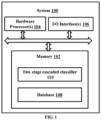
- the two stage cascaded classifier 110 comprising a first classifier utilizing Matusita distance for likeness measurement and data explosion driven decision rule for classification and a second classifier utilizing random forest technique for classification.
- the two stage cascaded classifier 110 is explained in conjunction with FIG. 3 .
- the one or more hardware processors 104 are configured to identify a plurality of subsets, from the parent dataset, corresponding to a plurality of morphological features identified for the time domain signal of interest.
- Each subset among the plurality of subset comprises p samples and the plurality of morphological features comprise a Peak Sample (Ps), a Peak Amplitude (Pa), a Trough Sample (Ts), a Trough Amplitude (Ta), a Notch Sample (Ns), a Notch Amplitude (Na), a Dip Sample (Ds), a Dip Amplitude (Da), and distance between left and right samples corresponding to the 25%, 50%, 75% of the (Pa) providing distances d 1 , d 2 , d 3 .
- the morphological features mentioned above are for a PPG signal, however, for any time domain signal these features can be as identified by a subject matter expert. These identified features capture the most important and relevant information in the signal, which would be critical in classifying the time domain signal of interest into the relevant classes.
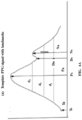
- the plurality of morphological features define a template for the time domain signal of interest as depicted in FIG. 4A , used for generating the synthetic time domain signals.
- FIG. 4A depicts the template PPG signal (time domain signal) with landmarks for feature distribution, in accordance with some embodiments of the present disclosure.
- certain morphological landmarks are annotated as shown in FIG 4A .
- the morphological features or landmarks such as the Peak Sample (Ps), the Peak Amplitude (Pa), the Trough Sample (Ts), the Trough Amplitude (Ta), the Notch Sample (Ns), the Notch Amplitude (Na), the Dip Sample (Ds), the Dip Amplitude (Da), and the distance between left and right samples corresponding to the 25%, 50%, 75% of Pa providing the distances d 1 , d 2 , d 3 , where 'left' means the position before Ps, and 'right' means the position after the Ps. So in total there are eleven features.
- the one or more hardware processors 104 are configured to process each of the plurality of subsets corresponding to each of the plurality of morphological features to generate a plurality of sets of observational values with each of the plurality of sets of observational values comprising p actual values corresponding to each of the plurality of morphological features.
- the one or more hardware processors 104 are configured to fit a gaussian kernel density estimate (KDE) to each of the plurality of sets of observational values.
- KDE gaussian kernel density estimate
- the one or more hardware processors 104 are configured to generate N-point simulated data for each of the plurality of morphological features by generating N random samples from the gaussian KDE fitted to each of the plurality of sets of observational values.
- a probability density function using a gaussian kernel density estimate (KDE) is fitted to the x i - s. 'Bandwidth' parameter of KDE algorithm affects the smoothness of the resulting curve.
- KDE gaussian kernel density estimate
- the one or more hardware processors 104 are configured to construct a plurality of synthetic time domain signals for the time domain signal of interest from the N-point simulated data for each of the plurality of morphological features in accordance to the template, wherein the constructing of the plurality of synthetic time domain signals comprises:
- steps 212a through 212d are explained below with case examples below.
- required is to construct the entire signal.
- the first thing is to specify the sample point regarding the 25%, 50%, and 75% of Pa ( d 1, d 2, and d 3 )at both sides of Ps.
- the required is to determine the positions of Pa/4;Pa/ and 3Pa/4 before and after Ps.
- sample points corresponding to Pa/2 are q1 and r1 before and after Ps, respectively.
- d 1 , q 2 , q 3 , r 1 , r 2 , r 3 based on d 1 , d 2 , and d 3 are distances between two points on the PPG template of FIG. 4A .
- d 1 is equal to r 1 - q 1 .
- value of d 2 is identified and is equal to and same follows for d 3 , which is equal to r 3 - q 3
- the sequence of sample points or elements in the simulated density would be Ts, q 1 , q 2 , q 3 , Ps, r 3, r 2 , r 1 , Ds, Ns along with their amplitudes. If the first situation happens for r 2 and the second situation happens for r 1 then the sequence of sample points in the simulated density would be Ts, q 1 , q 2, q 3 , Ps, r 2, r 3 , Ds, r 1 , Ns along with their amplitudes, and the process goes on similarly for other situations. In total, there are nine possibilities along with corresponding sequences.
- the weight function assigns more weight to points near the point whose response is being estimated and less weight to points further away.
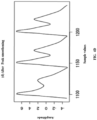
- FIG. 4B depicts a reconstructed signal from the feature distribution
- FIGS. 4C and 4D shows the three phases of signal reconstruction.
- FIG. 3 illustrates architectural overview of the classifier of the system of FIG 1 , wherein the classifier is the two stage cascaded classifier 110, in accordance with some embodiments of the present disclosure.
- a combination of the plurality of samples in the parent dataset and the plurality of synthetic time domain signals is used as a training data for building the two stage cascaded classifier 110 for classifying input data corresponding to time domain signal of interest into one of the class data and the non-class data.
- the two stage cascaded classifier comprises a first classifier utilizing Matusita distance for likeness measurement and data explosion driven decision rule for classification; and a second classifier utilizing one of a random forest technique and a Support Vector Machines (SVM) for classification.
- SVM Support Vector Machines
- the first classifier classifies the input data as the non-class data and the class data with ambiguity.
- the non-class data at an output of the first classifier is identified as a final non-class data and the second classifier classifies the received class data with ambiguity into a final class data.
- the generated synthetic data set is used to classify CAD (class data) and non-CAD ( non-class data) through a cascaded classifier.
- statistical features extracted from the synthetically populated data set is used to differentiate between CAD and non CAD using a rule based on 'Matusita distance'.
- This classifier is inherently biased towards identifying non-CAD data (time series signal).
- Results from Stage 1 are again run through Stage 2, exploiting similar statistical features and a standard classifier like the SVM or the Random Forest.
- Stage 2 provides better classification of CAD cases.
- the cascading architecture provided by the method disclosed along with the training data sets builds a classifier such that it corrects the bias inherent in any binary classification procedure towards one class or another, and produces better classification results as compared to the conventional techniques.
- the two stage cascaded classifier 110 once built using the training dataset as in FIG. 3 , can then be used for to test real time data of subjects being monitored for corresponding to the time domain signal of interest such as PPG and classify the real time data into the final class data (CAD subjects) and the final non-class data (non-CAD subjects).
- Stage 1 For the 1st stage classifier, from the parent data set of 90 CAD and 55 non CAD data, we keep 45 CAD and 28 non-CAD (50%) observations as test data. From rest of the data serving as 'training set', 9 CAD and 6 non-CAD data are taken, (i.e. about 20%) and inflate them (1000 for each observation) using synthetic PPG generation technique as discussed by the method disclosed herein. For aiding in classification, 13 statistical features are extracted from each of the simulated data (timeseries). These features contain important statistical information regarding inherent properties of a signal, that may help in discriminating a healthy subject from a diseased one.
Landscapes
- Engineering & Computer Science (AREA)
- Data Mining & Analysis (AREA)
- Theoretical Computer Science (AREA)
- Physics & Mathematics (AREA)
- General Physics & Mathematics (AREA)
- Computer Vision & Pattern Recognition (AREA)
- Evolutionary Computation (AREA)
- Artificial Intelligence (AREA)
- General Engineering & Computer Science (AREA)
- Health & Medical Sciences (AREA)
- Medical Informatics (AREA)
- Evolutionary Biology (AREA)
- Life Sciences & Earth Sciences (AREA)
- Bioinformatics & Cheminformatics (AREA)
- Bioinformatics & Computational Biology (AREA)
- Public Health (AREA)
- Biomedical Technology (AREA)
- Software Systems (AREA)
- General Health & Medical Sciences (AREA)
- Pathology (AREA)
- Primary Health Care (AREA)
- Epidemiology (AREA)
- Databases & Information Systems (AREA)
- Computing Systems (AREA)
- Mathematical Physics (AREA)
- Probability & Statistics with Applications (AREA)
- Pure & Applied Mathematics (AREA)
- Algebra (AREA)
- Computational Mathematics (AREA)
- Mathematical Optimization (AREA)
- Mathematical Analysis (AREA)
- Measuring And Recording Apparatus For Diagnosis (AREA)
- Measurement Of The Respiration, Hearing Ability, Form, And Blood Characteristics Of Living Organisms (AREA)
- Image Processing (AREA)
Claims (5)
- Prozessorimplementiertes Verfahren zum Erzeugen synthetischer Zeitbereichssignale, um einen Klassifikator aufzubauen, wobei das Verfahren Folgendes umfasst:Empfangen (202), durch einen oder mehrere Hardwareprozessoren (104), eines Elterndatensatzes einer Mehrzahl von Proben eines Zeitbereichssignals von Interesse, das eine Kombination von Klassendaten und Nicht-Klassendaten umfasst, wobei das Zeitbereichssignal von Interesse Biosignalen einschließlich Photoplethysmogramm (PPG), Elektrokardiogramm (ECG) entspricht und die Klassendaten der Koronararterienkrankheit, CAD, Klasse von ungesunden Subjekten entsprechen und die Nicht-Klassendaten der Nicht-CAD-Klasse von gesunden Subjekten entsprechen;Identifizieren (204), durch den einen oder die mehreren Hardwareprozessoren (104), einer Mehrzahl von Teilsätzen aus dem Elterndatensatz, die einer Mehrzahl von morphologischen Merkmalen entsprechen, die für das Zeitbereichssignal von Interesse identifiziert wurden, wobei jeder Teilsatz aus der Mehrzahl von Teilsätzen p Proben umfasst, wobei ferner die Mehrzahl von morphologischen Merkmalen eine Peak-Probe (Ps), eine Peak-Amplitude (Pa), eine Trough-Probe (Ts), eine Trough-Amplitude (Ta), eine Notch-Probe (Ns), eine Notch-Amplitude (Na), eine Dip-Probe (Ds), eine Dip-Amplitude (Da) und einen Abstand zwischen linken und rechten Proben umfasst, die den 25%, 50%, 75% der (Pa) definierenden Abstände d 1 , d 2 , d 3 entsprechen, und wobei die Mehrzahl von morphologischen Merkmalen eine Vorlage für das Zeitbereichssignal von Interesse definiert, und Verwenden einer Kombination der Mehrzahl von Proben in dem Elterndatensatz und einer Mehrzahl von synthetischen Zeitbereichssignalen als Trainingsdaten zum Aufbauen eines zweistufigen kaskadierten Klassifikators zum Klassifizieren von Eingabedaten, die dem Zeitbereichssignal von Interesse entsprechen, in eines der CAD-Klassendaten und der Nicht-Klassendaten,wobei der zweistufige kaskadierte Klassifikator Folgendes umfasst:einen ersten Klassifikator, der den Matusita-Abstand für die Ähnlichkeitsmessung und die datenexplosionsgesteuerte Entscheidungsregel für die Klassifizierung verwendet, undeinen zweiten Klassifikator, der eine Zufallswaldtechnik für die Klassifizierung verwendet,wobei der erste Klassifikator die Eingabedaten als die Nicht-Klassendaten und die Klassendaten mit Mehrdeutigkeit klassifiziert, wobei die Nicht-Klassendaten an einer Ausgabe des ersten Klassifikators als endgültige Nicht-Klassendaten identifiziert werden, undder zweite Klassifikator die empfangenen Klassendaten mit Mehrdeutigkeit in endgültige Klassendaten klassifiziert,wobei der zweistufige kaskadierte Klassifikator, sobald er unter Verwendung der Trainingsdaten aufgebaut ist, Echtzeitdaten von Subjekten, die überwacht werden, entsprechend dem Zeitbereichssignal von Interesse testet und die Echtzeitdaten in die endgültigen Klassendaten als CAD-Subjekte und die endgültigen Nicht-Klassendaten als Nicht-CAD-Subjekte klassifiziert;Verarbeiten (206), durch den einen oder die mehreren Hardwareprozessoren (104), jeder der Mehrzahl von Teilmengen entsprechend jedem der Mehrzahl von morphologischen Merkmalen, um eine Mehrzahl von Sätzen von Beobachtungswerten zu erzeugen, wobei jeder der Mehrzahl von Sätzen von Beobachtungswerten p tatsächliche Werte entsprechend jedem der Mehrzahl von morphologischen Merkmalen umfasst;Anpassen (208), durch den einen oder die mehreren Hardwareprozessoren (104), einer Gauß'schen Kerndichteschätzung (KDE) an jeden der Mehrzahl von Sätzen von Beobachtungswerten;Erzeugen (210), durch den einen oder die mehreren Hardwareprozessoren (104), von simulierten N-Punkt-Daten für jedes der Mehrzahl von morphologischen Merkmalen durch Erzeugen von N Zufallsproben aus der Gauß'schen KDE, die an jeden der Mehrzahl von Sätzen von Beobachtungswerten angepasst ist; undKonstruieren (212), durch den einen oder die mehreren Hardwareprozessoren (104), der Mehrzahl von synthetischen Zeitbereichssignalen für das Zeitbereichssignal von Interesse aus den simulierten N-Punkt-Daten für jedes der Mehrzahl von morphologischen Merkmalen gemäß der Vorlage, wobei das Konstruieren der Mehrzahl von synthetischen Zeitbereichssignalen Folgendes umfasst:Bestimmen (212a) einer Mehrzahl von Sequenzen , die aus den erzeugten simulierten N-Punkt-Daten für jedes der Mehrzahl von morphologischen Merkmalen abgeleitet sind, wobei eine Mehrzahl von Elementen in jeder der Mehrzahl von Sequenzen Ts, Ps, Ds, Ns, r 1 r 2 ,r 3, q 1 , q 2 und q 3 , umfasst, wobei Werte von q 1 , q 2 , q 3 , r 1 , r 2, r 3 basierend auf vorausgewählten Werten der Abstände d 1 , d 2 , d 3 abgeleitet sind, die für die Vorlage definiert sind, und wobei die Position jedes der Mehrzahl von Elementen innerhalb jeder der Mehrzahl von Sequenzen auf einem Satz von Bedingungen basiert, die durch einen vordefinierten Satz von morphologischen Merkmalen unter der Mehrzahl von morphologischen Merkmalen definiert sind;Erzeugen (212b), aus der Mehrzahl von Sequenzen, einer Mehrzahl von Zeitbereichssignalen entsprechend dem Zeitbereichssignal von Interesse durch Durchführen einer Spline-Anpassung an jeder der Mehrzahl von Sequenzen von Probenpunkten, wobei jeder Punkt durch eine andere Linie verbunden ist, wobei die Spline-Anpassung stückweise lineare Regression verwendet, um Parameter von Linien zu erhalten, die zwei aufeinanderfolgende Elemente unter der Mehrzahl von Elementen jeder der Mehrzahl von Sequenzen verbinden;Glätten (212c) jedes der Mehrzahl von Zeitbereichssignalen unter Verwendung einer Glättungstechnik, um eine Mehrzahl von geglätteten Zeitbereichssignalen zu erzeugen, wobei an jedem Punkt eine lineare parametrische Funktion an eine Teilmenge von Daten mit erklärenden Variablenwerten in der Nähe eines Punkts einer geschätzten Antwort angepasst wird und eine Nachbarschaft durch Nächster-Nachbar-Annäherung unter Verwendung eines Glättungsparameters als eine Funktion von Gesamtdatenpunkten bestimmt wird, die bei einer lokalen Anpassung verwendet werden, wobei zum Glätten der Mehrzahl von Zeitbereichssignalen eine rückwärtsschrittweise Regressionstechnik in einer kleinen Nachbarschaft der Spitzenprobe (Ps) angewendet wird; undAnwenden (212d) einer Spitzenglättungstechnik auf jedes der geglätteten Mehrzahl von Zeitbereichssignalen, um die Mehrzahl von synthetischen Zeitbereichssignalen für das Zeitbereichssignal von Interesse zu konstruieren.
- Verfahren nach Anspruch 1, wobei der zweistufige kaskadierte Klassifikator verwendet wird, um die Mehrzahl von synthetischen Zeitbereichssignalen zu validieren.
- System (100) zum Erzeugen synthetischer Zeitbereichssignale, um einen Klassifikator aufzubauen, wobei das System (100) Folgendes umfasst:einen Speicher (102), der Anweisungen speichert;eine oder mehrere Eingabe/Ausgabe(E/A)-Schnittstellen (106); undeinen oder mehrere Hardwareprozessoren (104), die über die eine oder die mehreren E/A-Schnittstellen (106) mit dem Speicher (102) gekoppelt sind, wobei die Anweisungen, wenn sie durch den einen oder die mehreren Hardwareprozessoren ausgeführt werden, den einen oder die mehreren Hardwareprozessoren zu Folgendem veranlassen:Empfangen eines Elterndatensatzes einer Mehrzahl von Proben eines Zeitbereichssignals von Interesse, das eine Kombination von Klassendaten und Nicht-Klassendaten umfasst, wobei das Zeitbereichssignal von Interesse Biosignalen einschließlich Photoplethysmogramm (PPG), Elektrokardiogramm (ECG) entspricht und die Klassendaten der Koronararterienkrankheit, CAD, Klasse von ungesunden Subjekten entsprechen und die Nicht-Klassendaten der Nicht-CAD-Klasse von gesunden Subjekten entsprechen;Identifizieren einer Mehrzahl von Teilsätzen aus dem Elterndatensatz, die einer Mehrzahl von morphologischen Merkmalen entsprechen, die für das Zeitbereichssignal von Interesse identifiziert wurden, wobei jeder Teilsatz aus der Mehrzahl von Teilsätzen p Proben umfasst, wobei die Mehrzahl von morphologischen Merkmalen eine Peak-Probe (Ps), eine Peak-Amplitude (Pa), eine Trough-Probe (Ts), eine Trough-Amplitude (Ta), eine Notch-Probe (Ns), eine Notch-Amplitude (Na), eine Dip-Probe (Ds), eine Dip-Amplitude (Da) und einen Abstand zwischen linken und rechten Proben umfasst, die den 25%, 50%, 75% der (Pa) definierenden Abstände d 1, d 2, d 3 entsprechen, und wobei die Mehrzahl von morphologischen Merkmalen eine Vorlage für das Zeitbereichssignal von Interesse definiert, und Verwenden einer Kombination der Mehrzahl von Proben in dem Elterndatensatz und einer Mehrzahl von synthetischen Zeitbereichssignalen als Trainingsdaten zum Aufbauen eines zweistufigen kaskadierten Klassifikators zum Klassifizieren von Eingabedaten, die dem Zeitbereichssignal von Interesse entsprechen, in eines der CAD-Klassendaten und der Nicht-Klassendaten,wobei der zweistufige kaskadierte Klassifikator Folgendes umfasst:einen ersten Klassifikator, der den Matusita-Abstand für die Ähnlichkeitsmessung und die datenexplosionsgesteuerte Entscheidungsregel für die Klassifizierung verwendet, undeinen zweiten Klassifikator, der eine Zufallswaldtechnik für die Klassifizierung verwendet,wobei der erste Klassifikator die Eingabedaten als die Nicht-Klassendaten und die Klassendaten mit Mehrdeutigkeit klassifiziert, wobei die Nicht-Klassendaten an einer Ausgabe des ersten Klassifikators als endgültige Nicht-Klassendaten identifiziert werden, undder zweite Klassifikator die empfangenen Klassendaten mit Mehrdeutigkeit in endgültige Klassendaten klassifiziert,wobei der zweistufige kaskadierte Klassifikator, sobald er unter Verwendung der Trainingsdaten aufgebaut ist, Echtzeitdaten von Subjekten, die überwacht werden, entsprechend dem Zeitbereichssignal von Interesse testet und die Echtzeitdaten in die endgültigen Klassendaten als CAD-Subjekte und die endgültigen Nicht-Klassendaten als Nicht-CAD-Subjekte klassifiziert;Verarbeiten jeder der Mehrzahl von Teilmengen entsprechend jedem der Mehrzahl von morphologischen Merkmalen, um eine Mehrzahl von Sätzen von Beobachtungswerten zu erzeugen, wobei jeder der Mehrzahl von Sätzen von Beobachtungswerten p tatsächliche Werte entsprechend jedem der Mehrzahl von morphologischen Merkmalen umfasst;Anpassen einer Gauß'schen Kerndichteschätzung (KDE) an jeden der Mehrzahl von Sätzen von Beobachtungswerten;Erzeugen von simulierten N-Punkt-Daten für jedes der Mehrzahl von morphologischen Merkmalen durch Erzeugen von N Zufallsproben aus der Gauß'schen KDE, die an jeden der Mehrzahl von Sätzen von Beobachtungswerten angepasst ist; undKonstruieren der Mehrzahl von synthetischen Zeitbereichssignalen für das Zeitbereichssignal von Interesse aus den simulierten N-Punkt-Daten für jedes der Mehrzahl von morphologischen Merkmalen gemäß der Vorlage, wobei das Konstruieren der Mehrzahl von synthetischen Zeitbereichssignalen Folgendes umfasst:Bestimmen einer Mehrzahl von Sequenzen , die aus den erzeugten simulierten N-Punkt-Daten für jedes der Mehrzahl von morphologischen Merkmalen abgeleitet sind, wobei eine Mehrzahl von Elementen in jeder der Mehrzahl von Sequenzen Ts, Ps, Ds, Ns, r 1 r 2 ,r 3, q 1 , q 2 und q 3 , umfasst, wobei Werte von q 1 , q 2 , q 3 , r 1 , r 2, r 3 basierend auf vorausgewählten Werten der Abstände d 1 , d 2 , d 3 abgeleitet sind, die für die Vorlage definiert sind, und wobei die Position jedes der Mehrzahl von Elementen innerhalb jeder der Mehrzahl von Sequenzen auf einem Satz von Bedingungen basiert, die durch einen vordefinierten Satz von morphologischen Merkmalen unter der Mehrzahl von morphologischen Merkmalen definiert sind;Erzeugen, aus der Mehrzahl von Sequenzen, einer Mehrzahl von Zeitbereichssignalen entsprechend dem Zeitbereichssignal von Interesse durch Durchführen einer Spline-Anpassung an jeder der Mehrzahl von Sequenzen von Probenpunkten, wobei jeder Punkt durch eine andere Linie verbunden ist, wobei die Spline-Anpassung stückweise lineare Regression verwendet, um Parameter von Linien zu erhalten, die zwei aufeinanderfolgende Elemente unter der Mehrzahl von Elementen jeder der Mehrzahl von Sequenzen verbinden;Glätten jedes der Mehrzahl von Zeitbereichssignalen unter Verwendung einer Glättungstechnik, um eine Mehrzahl von geglätteten Zeitbereichssignalen zu erzeugen, wobei an jedem Punkt eine lineare parametrische Funktion an eine Teilmenge von Daten mit erklärenden Variablenwerten in der Nähe eines Punkts einer geschätzten Antwort angepasst wird und eine Nachbarschaft durch Nächster-Nachbar-Annäherung unter Verwendung eines Glättungsparameters als eine Funktion von Gesamtdatenpunkten bestimmt wird, die bei einer lokalen Anpassung verwendet werden, wobei zum Glätten der Mehrzahl von Zeitbereichssignalen eine rückwärtsschrittweise Regressionstechnik in einer kleinen Nachbarschaft der Spitzenprobe (Ps) angewendet wird; undAnwenden einer Spitzenglättungstechnik auf jedes der geglätteten Mehrzahl von Zeitbereichssignalen, um die Mehrzahl von synthetischen Zeitbereichssignalen für das Zeitbereichssignal von Interesse zu konstruieren.
- System (100) nach Anspruch 3, wobei der eine oder die mehreren Hardwareprozessoren (104) konfiguriert sind, um den zweistufigen kaskadierten Klassifikator zu verwenden, um die Mehrzahl von synthetischen Zeitbereichssignalen zu validieren.
- Ein oder mehrere nichtflüchtige maschinenlesbare Informationsspeichermedien, die eine oder mehrere Anweisungen umfassen, die, wenn sie durch einen oder mehrere Hardwareprozessoren ausgeführt werden, die Hardwareprozessoren veranlassen, die folgenden Schritte durchzuführen:Empfangen eines Elterndatensatzes einer Mehrzahl von Proben eines Zeitbereichssignals von Interesse, das eine Kombination von Klassendaten und Nicht-Klassendaten umfasst, wobei das Zeitbereichssignal von Interesse Biosignalen einschließlich Photoplethysmogramm (PPG), Elektrokardiogramm (ECG) entspricht und die Klassendaten der Koronararterienkrankheit, CAD, Klasse von ungesunden Subjekten entsprechen und die Nicht-Klassendaten der Nicht-CAD-Klasse von gesunden Subjekten entsprechen;Identifizieren einer Mehrzahl von Teilsätzen aus dem Elterndatensatz, die einer Mehrzahl von morphologischen Merkmalen entsprechen, die für das Zeitbereichssignal von Interesse identifiziert wurden, wobei jeder Teilsatz aus der Mehrzahl von Teilsätzen p Proben umfasst, wobei ferner die Mehrzahl von morphologischen Merkmalen eine Peak-Probe (Ps), eine Peak-Amplitude (Pa), eine Trough-Probe (Ts), eine Trough-Amplitude (Ta), eine Notch-Probe (Ns), eine Notch-Amplitude (Na), eine Dip-Probe (Ds), eine Dip-Amplitude (Da) und einen Abstand zwischen linken und rechten Proben umfasst, die den 25%, 50%, 75% der (Pa) definierenden Abstände d 1, d 2, d 3 entsprechen, und wobei die Mehrzahl von morphologischen Merkmalen eine Vorlage für das Zeitbereichssignal von Interesse definiert, und Verwenden einer Kombination der Mehrzahl von Proben in dem Elterndatensatz und einer Mehrzahl von synthetischen Zeitbereichssignalen als Trainingsdaten zum Aufbauen eines zweistufigen kaskadierten Klassifikators zum Klassifizieren von Eingabedaten, die dem Zeitbereichssignal von Interesse entsprechen, in eines der CAD-Klassendaten und der Nicht-Klassendaten,wobei der zweistufige kaskadierte Klassifikator Folgendes umfasst:einen ersten Klassifikator, der den Matusita-Abstand für die Ähnlichkeitsmessung und die datenexplosionsgesteuerte Entscheidungsregel für die Klassifizierung verwendet, undeinen zweiten Klassifikator, der eine Zufallswaldtechnik für die Klassifizierung verwendet,wobei der erste Klassifikator die Eingabedaten als die Nicht-Klassendaten und die Klassendaten mit Mehrdeutigkeit klassifiziert, wobei die Nicht-Klassendaten an einer Ausgabe des ersten Klassifikators als endgültige Nicht-Klassendaten identifiziert werden, undder zweite Klassifikator die empfangenen Klassendaten mit Mehrdeutigkeit in endgültige Klassendaten klassifiziert,wobei der zweistufige kaskadierte Klassifikator, sobald er unter Verwendung der Trainingsdaten aufgebaut ist, Echtzeitdaten von Subjekten, die überwacht werden, entsprechend dem Zeitbereichssignal von Interesse testet und die Echtzeitdaten in die endgültigen Klassendaten als CAD-Subjekte und die endgültigen Nicht-Klassendaten als Nicht-CAD-Subjekte klassifiziert;Verarbeiten jeder der Mehrzahl von Teilmengen entsprechend jedem der Mehrzahl von morphologischen Merkmalen, um eine Mehrzahl von Sätzen von Beobachtungswerten zu erzeugen, wobei jeder der Mehrzahl von Sätzen von Beobachtungswerten p tatsächliche Werte entsprechend jedem der Mehrzahl von morphologischen Merkmalen umfasst;Anpassen einer Gauß'schen Kerndichteschätzung (KDE) an jeden der Mehrzahl von Sätzen von Beobachtungswerten;Erzeugen von simulierten N-Punkt-Daten für jedes der Mehrzahl von morphologischen Merkmalen durch Erzeugen von N Zufallsproben aus der Gauß'schen KDE, die an jeden der Mehrzahl von Sätzen von Beobachtungswerten angepasst ist; undKonstruieren der Mehrzahl von synthetischen Zeitbereichssignalen für das Zeitbereichssignal von Interesse aus den simulierten N-Punkt-Daten für jedes der Mehrzahl von morphologischen Merkmalen gemäß der Vorlage, wobei das Konstruieren der Mehrzahl von synthetischen Zeitbereichssignalen Folgendes umfasst:Bestimmen einer Mehrzahl von Sequenzen , die aus den erzeugten simulierten N-Punkt-Daten für jedes der Mehrzahl von morphologischen Merkmalen abgeleitet sind, wobei eine Mehrzahl von Elementen in jeder der Mehrzahl von Sequenzen Ts, Ps, Ds, Ns, r 1 r 2, r 3, q 1 , q 2 und q 3 , umfasst, wobei Werte von q 1 , q 2 , q 3 , r 1 , r 2, r 3 basierend auf vorausgewählten Werten der Abstände d 1 , d 2 , d 3 abgeleitet sind, die für die Vorlage definiert sind, und wobei die Position jedes der Mehrzahl von Elementen innerhalb der Mehrzahl von Sequenzen auf einem Satz von Bedingungen basiert, die durch einen vordefinierten Satz von morphologischen Merkmalen unter der Mehrzahl von morphologischen Merkmalen definiert sind;Erzeugen, aus der Mehrzahl von Sequenzen, einer Mehrzahl von Zeitbereichssignalen entsprechend dem Zeitbereichssignal von Interesse durch Durchführen einer Spline-Anpassung an jeder der Mehrzahl von Sequenzen von Probenpunkten, wobei jeder Punkt durch eine andere Linie verbunden ist, wobei die Spline-Anpassung stückweise lineare Regression verwendet, um Parameter von Linien zu erhalten, die zwei aufeinanderfolgende Elemente unter der Mehrzahl von Elementen jeder der Mehrzahl von Sequenzen verbinden;Glätten jedes der Mehrzahl von Zeitbereichssignalen unter Verwendung einer Glättungstechnik, um eine Mehrzahl von geglätteten Zeitbereichssignalen zu erzeugen, wobei an jedem Punkt eine lineare parametrische Funktion an eine Teilmenge von Daten mit erklärenden Variablenwerten in der Nähe eines Punkts einer geschätzten Antwort angepasst wird und eine Nachbarschaft durch Nächster-Nachbar-Annäherung unter Verwendung eines Glättungsparameters als eine Funktion von Gesamtdatenpunkten bestimmt wird, die bei einer lokalen Anpassung verwendet werden, wobei zum Glätten der Mehrzahl von Zeitbereichssignalen eine rückwärtsschrittweise Regressionstechnik in einer kleinen Nachbarschaft der Spitzenprobe (Ps) angewendet wird; undAnwenden einer Spitzenglättungstechnik auf jedes der geglätteten Mehrzahl von Zeitbereichssignalen, um die Mehrzahl von synthetischen Zeitbereichssignalen für das Zeitbereichssignal von Interesse zu konstruieren.
Applications Claiming Priority (1)
| Application Number | Priority Date | Filing Date | Title |
|---|---|---|---|
| IN202021018573 | 2020-04-30 |
Publications (3)
| Publication Number | Publication Date |
|---|---|
| EP3933715A1 EP3933715A1 (de) | 2022-01-05 |
| EP3933715C0 EP3933715C0 (de) | 2025-07-09 |
| EP3933715B1 true EP3933715B1 (de) | 2025-07-09 |
Family
ID=74859249
Family Applications (1)
| Application Number | Title | Priority Date | Filing Date |
|---|---|---|---|
| EP21160873.2A Active EP3933715B1 (de) | 2020-04-30 | 2021-03-05 | Verfahren und system zur erzeugung synthetischer zeitbereichssignale zum aufbau eines klassifikators |
Country Status (2)
| Country | Link |
|---|---|
| US (1) | US12106196B2 (de) |
| EP (1) | EP3933715B1 (de) |
Families Citing this family (1)
| Publication number | Priority date | Publication date | Assignee | Title |
|---|---|---|---|---|
| AU2024288292A1 (en) * | 2023-07-10 | 2026-02-19 | Boston Scientific Neuromodulation Corporation | System and method for evoked potential classification |
Family Cites Families (1)
| Publication number | Priority date | Publication date | Assignee | Title |
|---|---|---|---|---|
| KR102002549B1 (ko) | 2019-01-23 | 2019-07-22 | 주식회사 솔리드웨어 | 다단계 분류모델 생성 방법 및 그 장치 |
-
2021
- 2021-03-05 EP EP21160873.2A patent/EP3933715B1/de active Active
- 2021-03-09 US US17/196,406 patent/US12106196B2/en active Active
Also Published As
| Publication number | Publication date |
|---|---|
| EP3933715A1 (de) | 2022-01-05 |
| EP3933715C0 (de) | 2025-07-09 |
| US12106196B2 (en) | 2024-10-01 |
| US20210342641A1 (en) | 2021-11-04 |
Similar Documents
| Publication | Publication Date | Title |
|---|---|---|
| Huang et al. | A regularized deep learning approach for clinical risk prediction of acute coronary syndrome using electronic health records | |
| Zhang et al. | [Retracted] An ECG Heartbeat Classification Method Based on Deep Convolutional Neural Network | |
| CN112690802B (zh) | 一种检测心电信号的方法、装置、终端及存储介质 | |
| Zhang et al. | Explainability metrics of deep convolutional networks for photoplethysmography quality assessment | |
| CN116028858B (zh) | 基于预标签的自监督神经网络学习心拍分类方法及系统 | |
| Alemerien et al. | Diagnosing cardiovascular diseases using optimized machine learning algorithms with GridSearchCV | |
| Yadav et al. | [Retracted] FVC‐NET: An Automated Diagnosis of Pulmonary Fibrosis Progression Prediction Using Honeycombing and Deep Learning | |
| EP4503051A1 (de) | Vorrichtung und verfahren zur bestimmung eines patientenüberlebensprofils mithilfe eines elektrokardiogramms mit fähigkeit zur künstlichen intelligenz | |
| Lilhore et al. | An attention‐driven hybrid deep neural network for enhanced heart disease classification | |
| EP4085838B1 (de) | Auf einem generativen kontradiktorischen netzwerk-ensemble basierte simulation von kardiovaskulären krankheitsspezifischen biomedizinischen signalen | |
| Abubaker et al. | Exploring important factors in predicting heart disease based on ensemble-extra feature selection approach | |
| CN108960050A (zh) | 归类模型训练方法、心电图数据归类方法、装置及设备 | |
| Suvon et al. | Multimodal learning for predicting mortality in patients with pulmonary arterial hypertension | |
| Baxani et al. | Heart disease prediction using machine learning algorithms logistic regression, support vector machine and random forest classification techniques | |
| Alharbi et al. | Enhanced skin cancer diagnosis: a deep feature extraction-based framework for the multi-classification of skin cancer utilizing dermoscopy images | |
| US7996073B2 (en) | System and method for interpreting electrocardiograms | |
| EP3933715B1 (de) | Verfahren und system zur erzeugung synthetischer zeitbereichssignale zum aufbau eines klassifikators | |
| Rouhani et al. | A comparison of different feature extraction methods for diagnosis of valvular heart diseases using PCG signals | |
| KR20190031192A (ko) | 건강 위험 예측 방법 | |
| CN114190949B (zh) | 生理状态评估方法与生理状态评估装置 | |
| Bhattacharya et al. | Synthetic data generation through statistical explosion: Improving classification accuracy of coronary artery disease using PPG | |
| Poolsawad et al. | Feature selection approaches with missing values handling for data mining-a case study of heart failure dataset | |
| Sihlangu et al. | Analysis of machine learning methods to determine the best data analysis method for diabetes prediction | |
| CN113724069A (zh) | 基于深度学习的定价方法、装置、电子设备和存储介质 | |
| Logananthan et al. | Evaluating the Impact of Gradient Boosting and Random Forest on Accuracy Improvement in Cardiovascular Risk Prediction |
Legal Events
| Date | Code | Title | Description |
|---|---|---|---|
| PUAI | Public reference made under article 153(3) epc to a published international application that has entered the european phase |
Free format text: ORIGINAL CODE: 0009012 |
|
| STAA | Information on the status of an ep patent application or granted ep patent |
Free format text: STATUS: THE APPLICATION HAS BEEN PUBLISHED |
|
| AK | Designated contracting states |
Kind code of ref document: A1 Designated state(s): AL AT BE BG CH CY CZ DE DK EE ES FI FR GB GR HR HU IE IS IT LI LT LU LV MC MK MT NL NO PL PT RO RS SE SI SK SM TR |
|
| B565 | Issuance of search results under rule 164(2) epc |
Effective date: 20211208 |
|
| STAA | Information on the status of an ep patent application or granted ep patent |
Free format text: STATUS: REQUEST FOR EXAMINATION WAS MADE |
|
| 17P | Request for examination filed |
Effective date: 20220705 |
|
| RBV | Designated contracting states (corrected) |
Designated state(s): AL AT BE BG CH CY CZ DE DK EE ES FI FR GB GR HR HU IE IS IT LI LT LU LV MC MK MT NL NO PL PT RO RS SE SI SK SM TR |
|
| STAA | Information on the status of an ep patent application or granted ep patent |
Free format text: STATUS: EXAMINATION IS IN PROGRESS |
|
| 17Q | First examination report despatched |
Effective date: 20240502 |
|
| REG | Reference to a national code |
Ref country code: DE Ref legal event code: R079 Free format text: PREVIOUS MAIN CLASS: G06N0007000000 Ipc: G06N0020100000 Ref document number: 602021033632 Country of ref document: DE |
|
| GRAP | Despatch of communication of intention to grant a patent |
Free format text: ORIGINAL CODE: EPIDOSNIGR1 |
|
| STAA | Information on the status of an ep patent application or granted ep patent |
Free format text: STATUS: GRANT OF PATENT IS INTENDED |
|
| RIC1 | Information provided on ipc code assigned before grant |
Ipc: G06N 5/00 20060101ALN20250318BHEP Ipc: G06N 7/01 20230101ALI20250318BHEP Ipc: G06F 18/243 20230101ALI20250318BHEP Ipc: G06F 18/22 20230101ALI20250318BHEP Ipc: G06F 18/214 20230101ALI20250318BHEP Ipc: A61B 5/026 20060101ALI20250318BHEP Ipc: A61B 5/024 20060101ALI20250318BHEP Ipc: A61B 5/02 20060101ALI20250318BHEP Ipc: G16H 50/20 20180101ALI20250318BHEP Ipc: G06N 20/10 20190101ALI20250318BHEP Ipc: A61B 5/00 20060101ALI20250318BHEP Ipc: G06N 7/00 20060101AFI20250318BHEP |
|
| RIC1 | Information provided on ipc code assigned before grant |
Ipc: G06N 5/00 20060101ALN20250326BHEP Ipc: G06N 7/01 20230101ALI20250326BHEP Ipc: G06F 18/243 20230101ALI20250326BHEP Ipc: G06F 18/22 20230101ALI20250326BHEP Ipc: G06F 18/214 20230101ALI20250326BHEP Ipc: A61B 5/026 20060101ALI20250326BHEP Ipc: A61B 5/024 20060101ALI20250326BHEP Ipc: A61B 5/02 20060101ALI20250326BHEP Ipc: A61B 5/00 20060101ALI20250326BHEP Ipc: G16H 50/20 20180101ALI20250326BHEP Ipc: G06N 20/10 20190101AFI20250326BHEP |
|
| INTG | Intention to grant announced |
Effective date: 20250402 |
|
| GRAS | Grant fee paid |
Free format text: ORIGINAL CODE: EPIDOSNIGR3 |
|
| GRAA | (expected) grant |
Free format text: ORIGINAL CODE: 0009210 |
|
| STAA | Information on the status of an ep patent application or granted ep patent |
Free format text: STATUS: THE PATENT HAS BEEN GRANTED |
|
| AK | Designated contracting states |
Kind code of ref document: B1 Designated state(s): AL AT BE BG CH CY CZ DE DK EE ES FI FR GB GR HR HU IE IS IT LI LT LU LV MC MK MT NL NO PL PT RO RS SE SI SK SM TR |
|
| REG | Reference to a national code |
Ref country code: GB Ref legal event code: FG4D |
|
| REG | Reference to a national code |
Ref country code: CH Ref legal event code: EP |
|
| REG | Reference to a national code |
Ref country code: IE Ref legal event code: FG4D |
|
| U01 | Request for unitary effect filed |
Effective date: 20250709 |
|
| U07 | Unitary effect registered |
Designated state(s): AT BE BG DE DK EE FI FR IT LT LU LV MT NL PT RO SE SI Effective date: 20250715 |
|
| PG25 | Lapsed in a contracting state [announced via postgrant information from national office to epo] |
Ref country code: IS Free format text: LAPSE BECAUSE OF FAILURE TO SUBMIT A TRANSLATION OF THE DESCRIPTION OR TO PAY THE FEE WITHIN THE PRESCRIBED TIME-LIMIT Effective date: 20251109 |
|
| PG25 | Lapsed in a contracting state [announced via postgrant information from national office to epo] |
Ref country code: NO Free format text: LAPSE BECAUSE OF FAILURE TO SUBMIT A TRANSLATION OF THE DESCRIPTION OR TO PAY THE FEE WITHIN THE PRESCRIBED TIME-LIMIT Effective date: 20251009 |
|
| PG25 | Lapsed in a contracting state [announced via postgrant information from national office to epo] |
Ref country code: HR Free format text: LAPSE BECAUSE OF FAILURE TO SUBMIT A TRANSLATION OF THE DESCRIPTION OR TO PAY THE FEE WITHIN THE PRESCRIBED TIME-LIMIT Effective date: 20250709 |
|
| PG25 | Lapsed in a contracting state [announced via postgrant information from national office to epo] |
Ref country code: GR Free format text: LAPSE BECAUSE OF FAILURE TO SUBMIT A TRANSLATION OF THE DESCRIPTION OR TO PAY THE FEE WITHIN THE PRESCRIBED TIME-LIMIT Effective date: 20251010 |
|
| PG25 | Lapsed in a contracting state [announced via postgrant information from national office to epo] |
Ref country code: PL Free format text: LAPSE BECAUSE OF FAILURE TO SUBMIT A TRANSLATION OF THE DESCRIPTION OR TO PAY THE FEE WITHIN THE PRESCRIBED TIME-LIMIT Effective date: 20250709 |
|
| PG25 | Lapsed in a contracting state [announced via postgrant information from national office to epo] |
Ref country code: RS Free format text: LAPSE BECAUSE OF FAILURE TO SUBMIT A TRANSLATION OF THE DESCRIPTION OR TO PAY THE FEE WITHIN THE PRESCRIBED TIME-LIMIT Effective date: 20251009 |
|
| PG25 | Lapsed in a contracting state [announced via postgrant information from national office to epo] |
Ref country code: ES Free format text: LAPSE BECAUSE OF FAILURE TO SUBMIT A TRANSLATION OF THE DESCRIPTION OR TO PAY THE FEE WITHIN THE PRESCRIBED TIME-LIMIT Effective date: 20250709 |