EP3933643A1 - Verfahren und systeme für konsensus in blockchains - Google Patents
Verfahren und systeme für konsensus in blockchains Download PDFInfo
- Publication number
- EP3933643A1 EP3933643A1 EP21181496.7A EP21181496A EP3933643A1 EP 3933643 A1 EP3933643 A1 EP 3933643A1 EP 21181496 A EP21181496 A EP 21181496A EP 3933643 A1 EP3933643 A1 EP 3933643A1
- Authority
- EP
- European Patent Office
- Prior art keywords
- consensus
- proposals
- reached
- node
- blockchain
- Prior art date
- Legal status (The legal status is an assumption and is not a legal conclusion. Google has not performed a legal analysis and makes no representation as to the accuracy of the status listed.)
- Withdrawn
Links
Images


Classifications
-
- H—ELECTRICITY
- H04—ELECTRIC COMMUNICATION TECHNIQUE
- H04L—TRANSMISSION OF DIGITAL INFORMATION, e.g. TELEGRAPHIC COMMUNICATION
- H04L67/00—Network arrangements or protocols for supporting network services or applications
- H04L67/01—Protocols
- H04L67/10—Protocols in which an application is distributed across nodes in the network
- H04L67/1097—Protocols in which an application is distributed across nodes in the network for distributed storage of data in networks, e.g. transport arrangements for network file system [NFS], storage area networks [SAN] or network attached storage [NAS]
-
- G—PHYSICS
- G06—COMPUTING OR CALCULATING; COUNTING
- G06F—ELECTRIC DIGITAL DATA PROCESSING
- G06F21/00—Security arrangements for protecting computers, components thereof, programs or data against unauthorised activity
- G06F21/60—Protecting data
- G06F21/64—Protecting data integrity, e.g. using checksums, certificates or signatures
-
- H—ELECTRICITY
- H04—ELECTRIC COMMUNICATION TECHNIQUE
- H04L—TRANSMISSION OF DIGITAL INFORMATION, e.g. TELEGRAPHIC COMMUNICATION
- H04L63/00—Network architectures or network communication protocols for network security
- H04L63/12—Applying verification of the received information
- H04L63/123—Applying verification of the received information received data contents, e.g. message integrity
-
- H—ELECTRICITY
- H04—ELECTRIC COMMUNICATION TECHNIQUE
- H04L—TRANSMISSION OF DIGITAL INFORMATION, e.g. TELEGRAPHIC COMMUNICATION
- H04L63/00—Network architectures or network communication protocols for network security
- H04L63/14—Network architectures or network communication protocols for network security for detecting or protecting against malicious traffic
- H04L63/1441—Countermeasures against malicious traffic
- H04L63/1491—Countermeasures against malicious traffic using deception as countermeasure, e.g. honeypots, honeynets, decoys or entrapment
-
- H—ELECTRICITY
- H04—ELECTRIC COMMUNICATION TECHNIQUE
- H04L—TRANSMISSION OF DIGITAL INFORMATION, e.g. TELEGRAPHIC COMMUNICATION
- H04L9/00—Cryptographic mechanisms or cryptographic arrangements for secret or secure communications; Network security protocols
- H04L9/32—Cryptographic mechanisms or cryptographic arrangements for secret or secure communications; Network security protocols including means for verifying the identity or authority of a user of the system or for message authentication, e.g. authorization, entity authentication, data integrity or data verification, non-repudiation, key authentication or verification of credentials
- H04L9/3236—Cryptographic mechanisms or cryptographic arrangements for secret or secure communications; Network security protocols including means for verifying the identity or authority of a user of the system or for message authentication, e.g. authorization, entity authentication, data integrity or data verification, non-repudiation, key authentication or verification of credentials using cryptographic hash functions
-
- H—ELECTRICITY
- H04—ELECTRIC COMMUNICATION TECHNIQUE
- H04L—TRANSMISSION OF DIGITAL INFORMATION, e.g. TELEGRAPHIC COMMUNICATION
- H04L9/00—Cryptographic mechanisms or cryptographic arrangements for secret or secure communications; Network security protocols
- H04L9/32—Cryptographic mechanisms or cryptographic arrangements for secret or secure communications; Network security protocols including means for verifying the identity or authority of a user of the system or for message authentication, e.g. authorization, entity authentication, data integrity or data verification, non-repudiation, key authentication or verification of credentials
- H04L9/3236—Cryptographic mechanisms or cryptographic arrangements for secret or secure communications; Network security protocols including means for verifying the identity or authority of a user of the system or for message authentication, e.g. authorization, entity authentication, data integrity or data verification, non-repudiation, key authentication or verification of credentials using cryptographic hash functions
- H04L9/3239—Cryptographic mechanisms or cryptographic arrangements for secret or secure communications; Network security protocols including means for verifying the identity or authority of a user of the system or for message authentication, e.g. authorization, entity authentication, data integrity or data verification, non-repudiation, key authentication or verification of credentials using cryptographic hash functions involving non-keyed hash functions, e.g. modification detection codes [MDCs], MD5, SHA or RIPEMD
-
- H—ELECTRICITY
- H04—ELECTRIC COMMUNICATION TECHNIQUE
- H04L—TRANSMISSION OF DIGITAL INFORMATION, e.g. TELEGRAPHIC COMMUNICATION
- H04L9/00—Cryptographic mechanisms or cryptographic arrangements for secret or secure communications; Network security protocols
- H04L9/32—Cryptographic mechanisms or cryptographic arrangements for secret or secure communications; Network security protocols including means for verifying the identity or authority of a user of the system or for message authentication, e.g. authorization, entity authentication, data integrity or data verification, non-repudiation, key authentication or verification of credentials
- H04L9/3247—Cryptographic mechanisms or cryptographic arrangements for secret or secure communications; Network security protocols including means for verifying the identity or authority of a user of the system or for message authentication, e.g. authorization, entity authentication, data integrity or data verification, non-repudiation, key authentication or verification of credentials involving digital signatures
-
- H—ELECTRICITY
- H04—ELECTRIC COMMUNICATION TECHNIQUE
- H04L—TRANSMISSION OF DIGITAL INFORMATION, e.g. TELEGRAPHIC COMMUNICATION
- H04L9/00—Cryptographic mechanisms or cryptographic arrangements for secret or secure communications; Network security protocols
- H04L9/50—Cryptographic mechanisms or cryptographic arrangements for secret or secure communications; Network security protocols using hash chains, e.g. blockchains or hash trees
Definitions
- This file relates to the field of computer technologies, and in particular, to a method and a system for consensus in a blockchain.
- PBFT Practical Byzantine fault tolerance
- a blockchain such as a consortium blockchain or a blockchain of other types
- generation of a block generally requires consensus nodes to reach consensus.
- a consensus protocol of a consensus algorithm such as the PBFT or a RAFT
- there is no valid proof for a proposal set recorded in a block generated after consensus that is, no proof on whether the proposal set is acknowledged by most consensus nodes.
- Embodiments of this specification provide a method and a system for consensus in a blockchain, proofs of consensus for all proposals on which consensus is reached are generated based on signatures of a Merkle root of all the proposals on which consensus is reached that are signed by nodes participating in consensus in a blockchain, thereby improving the efficiency of proving the validity of a block recording all the proposals on which consensus is reached.
- a method for consensus in a blockchain including:
- a blockchain-based system including:
- a first consensus node in a blockchain can obtain a Merkle root of the one or more proposals on which consensus is reached, where the one or more proposals on which consensus is reached are initiated by one or more consensus nodes in the blockchain; sign the Merkle root of the one or more proposals on which consensus is reached, to obtain a signature of the one or more proposals on which consensus is reached; and then transmit the signature of the one or more proposals on which consensus is reached to one or more consensus nodes in the blockchain.
- a second consensus node in the blockchain can receive the signature transmitted by the first consensus node, and if signatures transmitted by 2f+1 first consensus nodes are received, the second consensus node generates, based on the received signatures, a proof of consensus for the one or more proposals on which consensus is reached, where f is a maximum quantity of abnormal consensus nodes permitted by the blockchain.
- f is a maximum quantity of abnormal consensus nodes permitted by the blockchain.
- an embodiment of this specification provides a method for consensus in a blockchain.
- a first consensus node in a blockchain can obtain a Merkle root of the one or more proposals on which consensus is reached, where the one or more proposals on which consensus is reached are initiated by one or more consensus nodes in the blockchain; sign the Merkle root of the one or more proposals on which consensus is reached, to obtain a signature of the one or more proposals on which consensus is reached; and then transmit the signature of the one or more proposals on which consensus is reached to one or more consensus nodes in the blockchain.
- a second consensus node in the blockchain can receive the signature transmitted by the first consensus node, and if signatures transmitted by 2f+1 first consensus nodes are received, the second consensus node may generate, based on the received signatures, a proof of consensus for the one or more proposals on which consensus is reached, where f is a maximum quantity of abnormal consensus nodes permitted by the blockchain. In this way, after the second consensus node generates proofs of consensus for all proposals on which consensus is reached, the validity of a block recording all the proposals on which consensus is reached can be confirmed based on the proofs of consensus, thereby greatly improving the efficiency of proving the validity of the block.
- FIG. 1 is a schematic flowchart of implementing a method for consensus in a blockchain, according to one or more embodiments of this specification. The method is applicable to one or more consensus nodes in a blockchain, and includes the following steps.
- Step 110 A first consensus node in a blockchain obtains a Merkle root of one or more proposals on which consensus is reached, where the one or more proposals on which consensus is reached are initiated by one or more consensus nodes in the blockchain.
- the first consensus node may be any consensus node in the blockchain. Any consensus node in the blockchain may be used as the first consensus node to transmit a signature to other consensus nodes.
- a blockchain uses a PBFT consensus protocol
- the obtaining, by a first consensus node in a blockchain, a Merkle root of one or more proposals on which consensus is reached may be obtaining a hash value of the proposal on which consensus is reached, where the proposal on which consensus is reached is initiated by a consensus master node in the blockchain.
- the blockchain uses a consensus protocol of a Honey Badger BFT algorithm
- there are a plurality of proposals on which consensus is reached and the plurality of proposals are initiated by a plurality of consensus nodes in the blockchain
- the obtaining, by a first consensus node in a blockchain, a Merkle root of one or more proposals on which consensus is reached includes: generating, by the first consensus node, a Merkle tree based on the plurality of proposals on which consensus is reached; and obtaining, by the first consensus node, a Merkle root of the plurality of proposals on which consensus is reached.
- the Merkle tree of the plurality of proposals may be generated based on a sequence of the consensus nodes initiating the plurality of proposals on which consensus is reached.
- the generating, by the first consensus node, a Merkle tree based on the plurality of proposals on which consensus is reached includes:
- a proposal on which consensus is reached may include transactions obtained from a node transaction pool by a node that initiates the proposal or may be empty, that is, the proposal does not include transactions obtained from a node transaction pool by the node that initiates the proposal.
- a sequence of the four consensus nodes namely, the consensus node A to the consensus node D
- ABCD consensus on the proposals of the consensus node A to the consensus node D
- the proposal is selected.
- a final transaction set of proposals on which consensus is reached is ⁇ Atx1, Atx2, Atx3, Btx1, Btx2, Btx3, Ctx1, Ctx2 ⁇ .
- the generating, by the first consensus node, a Merkle tree based on the plurality of proposals on which consensus is reached may be: first obtaining hash values of the transactions in the transaction set; and then generating the Merkle tree based on the hash values of the transactions in the transaction set, to obtain the Merkle root of the plurality of proposals on which consensus is reached.
- a new block recording the transaction sets may be generated, and the proofs of consensus of the proposals on which consensus is reached are recorded in the new block.
- the proposal on which consensus is pending may be further split into a plurality of data blocks.
- a Merkle tree is constructed based on the plurality of data blocks. Only a portion of the data blocks, Merkle proofs of the portion of the data blocks on a Merkle path of the Merkle tree, and a root hash are transmitted, for nodes receiving these messages to verify the validity of the messages based on the received messages.
- the first data block in the plurality of data blocks may be stored locally, and a j th data block in the plurality of data blocks, a Merkle proof of the j th data block on a Merkle path, and the root hash are transmitted to a j th consensus node, for the j th consensus node to verify, after receiving the information, the validity of a received proposal based on the j th data block, the Merkle proof of the j th data block on the Merkle path, and the root hash. If a root hash obtained based on the j th data block and the Merkle proof of the j th data block on the Merkle path is the same as the received root hash, it indicates that the received information is valid. Otherwise, invalid information is discarded.
- the performing, by the first consensus node, consensus processing and feedback respectively on the plurality of proposals on which consensus is pending includes: performing, based on a binary agreement (BA) sub-protocol in the Honey Badger BFT consensus algorithm, consensus processing and feedback respectively on the plurality of proposals on which consensus is pending.
- BA binary agreement
- Step 120 The first consensus node signs the Merkle root of the one or more proposals on which consensus is reached, to obtain a signature of the one or more proposals on which consensus is reached.
- one public key pk and N private keys sk may be generated in the blockchain.
- Each consensus node in the blockchain has a private key sk and the public key pk, the consensus node uses its own private key to sign a Merkle root of all proposals on which consensus is reached and broadcasts a signature to other consensus nodes in the blockchain.
- nodes participating in consensus in the blockchain include the consensus node A to the consensus node D.
- the consensus node A uses its own private key sk A to sign the Merkle root of the plurality of proposals on which consensus is reached to obtain a sig A
- the consensus node B uses its own private key sk B to sign the Merkle root of the plurality of proposals on which consensus is reached to obtain a sig B
- the consensus node C uses its own private key skc to sign the Merkle root of the plurality of proposals on which consensus is reached to obtain a sig C
- the consensus node D uses its own private key sk D to sign the Merkle root of the plurality of proposals on which consensus is reached to obtain a sig D .
- Step 130 The first consensus node transmits the signature of the one or more proposals on which consensus is reached to one or more consensus nodes in the blockchain.
- the consensus node A broadcasts the signature sig A to nodes in the blockchain, for the consensus node B and the consensus node C to verify the signature sig A
- the consensus node B broadcasts the signature sig B to consensus nodes in the blockchain, for the consensus node A, the consensus node C, and the consensus node D to verify the signature sig B
- the consensus node C broadcasts the signature sig C to consensus nodes in the blockchain, for the consensus node A, the consensus node B, and the consensus node D to verify the signature sig C
- the consensus node D broadcasts the signature sign to nodes in the blockchain, for the consensus node A, the consensus node B, and the consensus node C to verify the signature sig D .
- Step 140 A second consensus node in the blockchain receives the signature transmitted by the first consensus node.
- the second consensus node may be any consensus node receiving the signature transmitted by the first consensus node.
- Any consensus node in the blockchain may be used as the first consensus node to transmit a signature to other consensus nodes and may also be used as the second consensus node to receive signatures from other consensus nodes.
- the method further includes:
- Step 150 If signatures transmitted by 2f+1 first consensus nodes are received, the second consensus node generates, based on the received signatures, a proof of consensus for the one or more proposals on which consensus is reached, where f is a maximum quantity of abnormal consensus nodes permitted by the blockchain.
- a consensus node in the blockchain After receiving signatures from consensus nodes in the blockchain, a consensus node in the blockchain first caches the received signatures, and after 2f + 1 ⁇ x ⁇ N signature messages are received, signature verification is performed by using a Merkle root stored by the consensus node and the x signatures. If there are at least 2f+1 valid signatures, a proof of consensus for the proposals on which consensus is reached is generated based on the at least 2f+1 signatures.
- x is a quantity of signatures received by the consensus node
- N is a quantity of all nodes participating in consensus in the blockchain.
- proofs of consensus of all the proposals on which consensus is reached may be generated based on signatures of which the quantity is at least 2f+1 and that are received from the consensus nodes in the blockchain.
- the generating, by the second consensus node based on the received signatures if signatures transmitted by 2f+1 first consensus nodes are received, a proof of consensus for the one or more proposals on which consensus is reached includes:
- the second consensus node of this embodiment of this specification may verify the received signatures.
- the verifying, by the second consensus node, the received signatures includes: performing, by the second consensus node, signature verification on the received signatures based on a locally stored Merkle root of the one or more proposals on which consensus is reached.
- the second consensus node may use the public key stored locally to decrypt the signature, to obtain a to-be-verified Merkle root. If the to-be-verified Merkle root is the same as the Merkle root that is locally calculated by the second consensus node and that is of the one or more proposals on which consensus is reached, it indicates that the signature is valid.
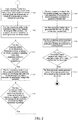
- a consensus node execution procedure of a blockchain using a consensus protocol of a Honey Badger BFT algorithm shown in FIG. 2 is used as an example to describe below in detail the method for consensus in a blockchain provided in this embodiment of this specification.
- FIG. 2 a schematic flowchart of an implementation is applied to a blockchain that includes a plurality of consensus nodes.
- the method includes the following steps.
- S201 The four consensus nodes in the blockchain respectively obtain some transactions from a node transaction pool and respectively pack the transactions, to obtain four proposals on which consensus is pending.
- the consensus node A obtains transactions Atx1, Atx2, and Atx3 from the node transaction pool and packs the transactions Atx1, Atx2, and Atx3 into a message ma as a proposal of the consensus node A.
- the consensus node B obtains transactions Btx1, Btx2, and Btx3 from the node transaction pool and packs the transactions Btx1, Btx2, and Btx3 into a message mb as a proposal of the consensus node B.
- the consensus node C obtains transactions Ctxl and Ctx2 from the node transaction pool and packs the transactions Ctxl and Ctx2 into a message mc as a proposal of the consensus node C.
- the consensus node D obtains a transaction Dtx1 from the node transaction pool and packs the transaction Dtx1 into a message md as a proposal of the consensus node D.
- S202 The four consensus nodes in the blockchain respectively transmit, by using an RBC protocol, the proposals on which consensus is pending to other consensus nodes.
- the consensus node A transmits the proposal ma on which consensus is pending to the consensus nodes B, C, and D by using the RBC protocol.
- the consensus node B transmits the proposal mb on which consensus is pending to the consensus nodes A, C, and D by using the RBC protocol.
- the consensus node C transmits the proposal mc on which consensus is pending to the consensus nodes A, B, and D by using the RBC protocol.
- the consensus node D transmits the proposal md on which consensus is pending to the consensus nodes A, B, and C by using the RBC protocol.
- a specific process of the consensus node A transmitting the proposal ma on which consensus is pending to the consensus nodes B, C, and D by using the RBC protocol is as follows:
- the consensus node A first splits the message ma into N data blocks through erasure coding, and it is assumed that the data blocks are four data blocks, that is, block00 to block03.
- the consensus node A constructs a Merkle tree based on hash values (Hash000 to Hash003) of the split four data blocks (block00 to block03).
- a first leaf node is the hash value Hash000 of block00
- a second leaf node is the hash value Hash001 of block01
- a fourth leaf node is the hash value Hash003 of block03.
- a quadratic hash value of the hash value Hash000 and the hash value Hash001 is Hash00
- a quadratic hash value of the hash value Hash002 and the hash value Hash003 is Hash01
- a quadratic hash value of Hash00 and HashOl is HashO (that is, a Merkle root).
- the consensus node A stores block00 locally, transmits (block01 and Hash000, HashOl, and HashO) to the consensus node B, transmits (block02 and Hash003, Hash00, and HashO) to Node2, and transmits (block03 and Hash002, Hash00, and HashO) to the consensus node C.
- the message (block01 and Hash000,Hash01, HashO) is recorded as Rval (h, bj, sj), where h is a root hash, bj is a j th data block, and sj is a Merkle proof of the j th data block on a corresponding Merkle path.
- each consensus node j After the message Rval (h, bj, sj) is received by another consensus node, received (h, bj, sj) is broadcasted to other nodes through an Echo message, and a message format is Echo (h, bj, sj), and for the received Echo message, each consensus node j checks whether the message is valid, and discards the message if the message is invalid.
- the consensus node B calculates Hash001 of received block01, calculates Hash00 by using Hash001 and received Hash000,calculates Hash0 by using Hash00 and received Hash01, and compares calculated Hash0 with received Hash0. If the two values are the same, the message is valid, or otherwise, Echo (h, bj, sj) is discarded.
- N-2f data blocks are selected to restore the messages, and a Merkle tree is reconstructed. Whether a root of the reconstructed Merkle tree and the previous root are the same is verified. If the two roots are different, the messages are discarded, and if the two roots are the same, a Ready message is broadcasted, and message content is stored.
- S203 The four consensus nodes in the blockchain respectively determine whether proposals on which consensus is pending from other consensus nodes are received, and if yes, perform S204.
- S204 The four consensus nodes in the blockchain respectively perform consensus processing and feedback on the proposals on which consensus is pending by using a BA protocol.
- S205 The four consensus nodes in the blockchain determine whether all nodes participating in consensus complete consensus processing on the received proposals on which consensus is pending. If yes, proceed to S206.
- S206 The four consensus nodes in the blockchain arrange, according to a node sequence, all proposals on which consensus is reached, to generate a Merkle tree.
- a node sequence is the consensus node A to the consensus node C sequentially.
- Transactions in ma to mc may be taken out sequentially according to the node sequence, that is, the eight transactions Atx1, Atx2, Atx3, Btx1, Btx2, Btx3, Ctx1, and Ctx2.
- a Merkle tree is generated based on the eight transactions to obtain a Merkle root of the eight transactions, that is, a Merkle root of all the proposals on which consensus is reached.
- S207 The consensus node A to the consensus node D sign a Merkle root of the generated Merkle tree by using private keys of the consensus nodes respectively, to obtain signatures of the Merkle root of all the proposals on which consensus is reached.
- a signature of the consensus node A for the Merkle root of all the proposals on which consensus is reached a signature of the consensus node B for the Merkle root of all the proposals on which consensus is reached, a signature of the consensus node C for the Merkle root of all the proposals on which consensus is reached, and a signature of the consensus node D for the Merkle root of all the proposals on which consensus is reached may be obtained.
- S208 The consensus node A to the consensus node D broadcast the signatures of the Merkle root of all the proposals on which consensus is reached to nodes participating in consensus in the blockchain respectively.
- S209 The consensus node A to the consensus node D respectively determine whether at least 2f+1 valid signatures are received. If yes, proceed to S210.
- the consensus node A to the consensus node D may respectively perform a signature verification operation on the at least three received signatures, that is, decrypt the at least three received signatures to obtain at least three Merkle roots, compare the at least three Merkle roots to the Merkle root calculated by the node, and if the at least three Merkle roots are the same as the calculated Merkle root, determine that the at least three signatures are valid.
- the consensus node A to the consensus node D respectively generate, based on the at least 2f+1 valid signatures, a proof of consensus and a new block recording all the proposals on which consensus is reached.
- the consensus node A to the consensus node D respectively receive three valid signatures
- the three valid signatures may be placed into a file to generate a proof of consensus for all the proposals on which consensus is reached, and generate a new block for recording all the proposals on which consensus is reached and the proof of consensus.
- a first consensus node in a blockchain can: obtain a Merkle root of the one or more proposals on which consensus is reached, where the one or more proposals on which consensus is reached are initiated by one or more consensus nodes in the blockchain; sign the Merkle root of the one or more proposals on which consensus is reached, to obtain a signature of the one or more proposals on which consensus is reached; and then transmit the signature of the one or more proposals on which consensus is reached to one or more consensus nodes in the blockchain.
- a second consensus node in the blockchain can receive the signature transmitted by the first consensus node, and if signatures transmitted by 2f+1 first consensus nodes are received, the second consensus node generates, based on the received signatures, a proof of consensus for the one or more proposals on which consensus is reached, where f is a maximum quantity of abnormal consensus nodes permitted by the blockchain.
- f is a maximum quantity of abnormal consensus nodes permitted by the blockchain.
- FIG. 3 is a schematic structural diagram of a blockchain system, according to an embodiment of this specification.
- the blockchain system 300 may include a first consensus node 310 and a second consensus node 320 in a blockchain.
- the first consensus node 310 in the blockchain is configured to: obtain a Merkle root of one or more proposals on which consensus is reached, where the one or more proposals on which consensus is reached are initiated by one or more consensus nodes in the blockchain; sign the Merkle root of the one or more proposals on which consensus is reached, to obtain a signature of the one or more proposals on which consensus is reached; and transmit the signature of the one or more proposals on which consensus is reached to one or more consensus nodes in the blockchain.
- the second consensus node 320 in the blockchain is configured to: receive the signature transmitted by the first consensus node; and if signatures transmitted by 2f+1 first consensus nodes are received, generate, based on the received signatures, a proof of consensus for the one or more proposals on which consensus is reached, where f is a maximum quantity of abnormal consensus nodes permitted by the blockchain.
- a first consensus node in a blockchain can obtain a Merkle root of the one or more proposals on which consensus is reached, where the one or more proposals on which consensus is reached are initiated by one or more consensus nodes in the blockchain; sign the Merkle root of the one or more proposals on which consensus is reached, to obtain a signature of the one or more proposals on which consensus is reached; and then transmit the signature of the one or more proposals on which consensus is reached to one or more consensus nodes in the blockchain.
- a second consensus node in the blockchain can receive the signature transmitted by the first consensus node, and if signatures transmitted by 2f+1 first consensus nodes are received, the second consensus node generates, based on the received signatures, a proof of consensus for the one or more proposals on which consensus is reached, where f is a maximum quantity of abnormal consensus nodes permitted by the blockchain.
- f is a maximum quantity of abnormal consensus nodes permitted by the blockchain.
- the blockchain uses a consensus protocol of a Honey Badger BFT algorithm
- the first consensus node 310 is configured to:
- the first consensus node 310 is configured to:
- the second consensus node 320 is configured to:
- the second consensus node 320 is further configured to:
- a first consensus node 310 in the blockchain is further configured to:
- the first consensus node 310 in the blockchain is configured to: perform, based on a binary agreement (BA) sub-protocol in the Honey Badger BFT consensus algorithm, consensus processing and feedback respectively on the plurality of proposals on which consensus is pending.
- BA binary agreement
- the second consensus node 320 is configured to: perform signature verification on the received signatures based on a locally stored Merkle root of the one or more proposals on which consensus is reached.
- the one or more proposals on which consensus is reached are initiated by a consensus master node in the blockchain, and the quantity of the one or more proposals on which consensus is reached is 1.
- the second consensus node 320 in the blockchain is further configured to:
- the blockchain system 300 can implement the method of the method embodiments of FIG. 1 and FIG. 2 . Details may be referred to the method for consensus in a blockchain in the embodiments shown in FIG. 1 and FIG. 2 , and are not described herein again.
- the system, the apparatus, the module, or the unit described in the foregoing embodiments may be specifically implemented by a computer chip or an entity, or implemented by a product having a certain function.
- a typical implementation device is a computer.
- the computer may be, for example, a personal computer, a laptop computer, a cellular phone, a camera phone, a smartphone, a personal digital assistant, a media player, a navigation device, an email device, a game console, a tablet computer, a wearable device, or a combination of any of these devices.
- the computer-readable medium includes a non-volatile medium and a volatile medium, a removable medium and a non-removable medium, which may implement storage of information by using any method or technology.
- the information may be a computer-readable instruction, a data structure, a program module, or other data.
- Examples of a computer storage medium include but are not limited to a phase-change memory (PRAM), a static random access memory (SRAM), a dynamic random access memory (DRAM), other type of random access memory (RAM), a read-only memory (ROM), an electrically erasable programmable read-only memory (EEPROM), a flash memory or other memory technology, a compact disc read-only memory (CD-ROM), a digital versatile disc (DVD) or other optical storage, a cassette tape, a magnetic tape, a magnetic disk storage or other magnetic storage device, or any other non-transmission medium, which may be configured to store information accessible by a computing device.
- the computer-readable medium does not include transitory computer-readable media (transitory media), such as a modulated data signal and a carrier.
Landscapes
- Engineering & Computer Science (AREA)
- Computer Security & Cryptography (AREA)
- Computer Networks & Wireless Communication (AREA)
- Signal Processing (AREA)
- Computer Hardware Design (AREA)
- General Engineering & Computer Science (AREA)
- Computing Systems (AREA)
- Theoretical Computer Science (AREA)
- Bioethics (AREA)
- General Health & Medical Sciences (AREA)
- Software Systems (AREA)
- Physics & Mathematics (AREA)
- General Physics & Mathematics (AREA)
- Health & Medical Sciences (AREA)
- Medicines That Contain Protein Lipid Enzymes And Other Medicines (AREA)
- Retry When Errors Occur (AREA)
Applications Claiming Priority (1)
| Application Number | Priority Date | Filing Date | Title |
|---|---|---|---|
| CN202010630033.XA CN111526217B (zh) | 2020-07-03 | 2020-07-03 | 一种区块链中的共识方法和系统 |
Publications (1)
| Publication Number | Publication Date |
|---|---|
| EP3933643A1 true EP3933643A1 (de) | 2022-01-05 |
Family
ID=71911941
Family Applications (1)
| Application Number | Title | Priority Date | Filing Date |
|---|---|---|---|
| EP21181496.7A Withdrawn EP3933643A1 (de) | 2020-07-03 | 2021-06-24 | Verfahren und systeme für konsensus in blockchains |
Country Status (3)
| Country | Link |
|---|---|
| US (1) | US11265173B2 (de) |
| EP (1) | EP3933643A1 (de) |
| CN (1) | CN111526217B (de) |
Families Citing this family (22)
| Publication number | Priority date | Publication date | Assignee | Title |
|---|---|---|---|---|
| US10419225B2 (en) | 2017-01-30 | 2019-09-17 | Factom, Inc. | Validating documents via blockchain |
| US11134120B2 (en) | 2018-05-18 | 2021-09-28 | Inveniam Capital Partners, Inc. | Load balancing in blockchain environments |
| US11989208B2 (en) | 2018-08-06 | 2024-05-21 | Inveniam Capital Partners, Inc. | Transactional sharding of blockchain transactions |
| US11444749B2 (en) | 2020-01-17 | 2022-09-13 | Inveniam Capital Partners, Inc. | Separating hashing from proof-of-work in blockchain environments |
| CN111343208B (zh) * | 2020-05-21 | 2020-08-14 | 腾讯科技(深圳)有限公司 | 基于区块链的数据检测方法、装置及计算机可读存储介质 |
| CN111526216B (zh) * | 2020-07-03 | 2020-09-22 | 支付宝(杭州)信息技术有限公司 | 联盟链中的共识方法和系统 |
| CN112685796B (zh) * | 2021-03-12 | 2021-06-18 | 腾讯科技(深圳)有限公司 | 一种基于区块链的区块共识方法以及相关设备 |
| CN113300855B (zh) * | 2021-05-25 | 2022-05-03 | 浙江大学 | 基于可变策略的联盟链投票管理方法及系统 |
| US12137179B2 (en) * | 2021-06-19 | 2024-11-05 | Inveniam Capital Partners, Inc. | Systems and methods for processing blockchain transactions |
| US12007972B2 (en) * | 2021-06-19 | 2024-06-11 | Inveniam Capital Partners, Inc. | Systems and methods for processing blockchain transactions |
| CN113849564B (zh) * | 2021-09-24 | 2024-05-28 | 支付宝(杭州)信息技术有限公司 | 一种区块链的共识方法、共识节点及电子设备 |
| CN113852691B (zh) * | 2021-09-24 | 2024-10-18 | 支付宝(杭州)信息技术有限公司 | 一种区块链的共识方法、共识节点及电子设备 |
| CN113873030B (zh) * | 2021-09-24 | 2024-12-10 | 支付宝(杭州)信息技术有限公司 | 一种区块链的共识方法、共识节点及电子设备 |
| CN113872961B (zh) * | 2021-09-24 | 2023-09-29 | 支付宝(杭州)信息技术有限公司 | 一种区块链的共识方法、共识节点及电子设备 |
| CN113761069B (zh) * | 2021-09-24 | 2025-02-25 | 蚂蚁区块链科技(上海)有限公司 | 一种区块链的共识方法、系统、节点及电子设备 |
| CN113630259B (zh) * | 2021-10-09 | 2021-12-14 | 支付宝(杭州)信息技术有限公司 | 一种共识方法、区块链系统和共识节点 |
| CN114584312B (zh) * | 2021-10-09 | 2024-03-29 | 支付宝(杭州)信息技术有限公司 | 一种共识方法、区块链系统和共识节点 |
| CN113630258B (zh) * | 2021-10-09 | 2022-01-11 | 支付宝(杭州)信息技术有限公司 | 一种共识方法、区块链系统和共识节点 |
| CN113761071B (zh) * | 2021-10-09 | 2023-07-11 | 支付宝(杭州)信息技术有限公司 | 一种共识方法、区块链系统和共识节点 |
| CN114780987B (zh) * | 2021-12-29 | 2023-08-29 | 张海滨 | 数据分发、存储、读取、传输方法及分布式系统 |
| CN115348278B (zh) * | 2022-08-18 | 2026-03-10 | 中山大学 | 区块链的分布式存储方法 |
| CN115802338B (zh) * | 2022-09-27 | 2025-07-15 | 紫金山实验室 | 区块链共识方法、装置、移动通信系统及可读存储介质 |
Citations (1)
| Publication number | Priority date | Publication date | Assignee | Title |
|---|---|---|---|---|
| US20190286531A1 (en) * | 2018-12-13 | 2019-09-19 | Alibaba Group Holding Limited | Performing a recovery process for a network node in a distributed system |
Family Cites Families (29)
| Publication number | Priority date | Publication date | Assignee | Title |
|---|---|---|---|---|
| EP3452975A4 (de) * | 2016-05-04 | 2020-04-15 | Algorand Inc. | Verteiltes transaktionsweiterleitungs- und -verifizierungssystem |
| US10198325B2 (en) * | 2016-05-24 | 2019-02-05 | Mastercard International Incorporated | Method and system for desynchronization recovery for permissioned blockchains using bloom filters |
| WO2018006072A1 (en) | 2016-06-30 | 2018-01-04 | Clause, Inc. | Systems and method for forming, storing, managing,and executing contracts |
| US10417217B2 (en) * | 2016-08-05 | 2019-09-17 | Chicago Mercantile Exchange Inc. | Systems and methods for blockchain rule synchronization |
| US10158527B2 (en) * | 2016-10-28 | 2018-12-18 | International Business Machines Corporation | Changing an existing blockchain trust configuration |
| US11196623B2 (en) | 2016-12-30 | 2021-12-07 | Intel Corporation | Data packaging protocols for communications between IoT devices |
| US20180247191A1 (en) | 2017-02-03 | 2018-08-30 | Milestone Entertainment Llc | Architectures, systems and methods for program defined entertainment state system, decentralized cryptocurrency system and system with segregated secure functions and public functions |
| US10255342B2 (en) | 2017-04-12 | 2019-04-09 | Vijay K. Madisetti | Method and system for tuning blockchain scalability, decentralization, and security for fast and low-cost payment and transaction processing |
| US10102265B1 (en) | 2017-04-12 | 2018-10-16 | Vijay K. Madisetti | Method and system for tuning blockchain scalability for fast and low-cost payment and transaction processing |
| US10397328B2 (en) | 2017-05-17 | 2019-08-27 | Nec Corporation | Method and system for providing a robust blockchain with an integrated proof of storage |
| WO2018217804A1 (en) | 2017-05-22 | 2018-11-29 | Visa International Service Association | Network for improved verification speed with tamper resistant data |
| US10761877B2 (en) | 2017-07-21 | 2020-09-01 | Intel Corporation | Apparatuses, methods, and systems for blockchain transaction acceleration |
| US11146380B2 (en) | 2017-08-03 | 2021-10-12 | Parity Technologies Ltd. | Methods and systems for a heterogeneous multi-chain framework |
| US10938567B2 (en) | 2017-09-12 | 2021-03-02 | Kadena Llc | Parallel-chain architecture for blockchain systems |
| US20200356991A1 (en) * | 2017-11-10 | 2020-11-12 | Digital Asset (Switzerland) GmbH | Method And Apparatus For Execution Of Atomic Transactions |
| US20190188706A1 (en) * | 2017-12-18 | 2019-06-20 | Apple Inc. | Transference tracking |
| US10250708B1 (en) | 2017-12-26 | 2019-04-02 | Akamai Technologies, Inc. | High performance distributed system of record |
| US10320569B1 (en) | 2018-04-05 | 2019-06-11 | HOTYB, Inc. | Systems and methods for authenticating a digitally signed assertion using verified evaluators |
| US20190340269A1 (en) | 2018-05-02 | 2019-11-07 | Rockwell Automation Technologies, Inc. | Blockchain-enabled industrial devices |
| WO2020033216A2 (en) * | 2018-07-31 | 2020-02-13 | Oded Wertheim | Scaling and accelerating decentralized execution of transactions |
| CN109379397B (zh) | 2018-08-31 | 2019-12-06 | 阿里巴巴集团控股有限公司 | 基于区块链的交易共识处理方法及装置、电子设备 |
| CN109361734B (zh) * | 2018-09-18 | 2021-04-20 | 百度在线网络技术(北京)有限公司 | 一种区块链的数据处理方法、装置、设备及介质 |
| WO2020091746A1 (en) * | 2018-10-30 | 2020-05-07 | Hewlett-Packard Development Company, L.P. | 3d print service compute node for 3d model printing |
| US20200162261A1 (en) * | 2018-11-18 | 2020-05-21 | Ramachandran Iyer | System and method of blockchain consensus mechanism with custom hardware based on geographic distribution, density, node asset and reputation |
| JP6726367B2 (ja) | 2018-12-13 | 2020-07-22 | アリババ・グループ・ホールディング・リミテッドAlibaba Group Holding Limited | 分散システムにおける1次ノードの変更を行うこと |
| CN110169015B (zh) | 2018-12-13 | 2022-03-01 | 创新先进技术有限公司 | 在分布式系统中的网络节点之间达成共识 |
| CN110059494B (zh) * | 2019-04-17 | 2020-11-03 | 深圳启元信息服务有限公司 | 一种区块链交易数据的隐私保护方法及区块链系统 |
| CN110572287B (zh) * | 2019-09-05 | 2022-03-18 | 腾讯科技(深圳)有限公司 | 数据容灾方法、装置、计算机设备和存储介质 |
| CN110798308A (zh) * | 2019-10-31 | 2020-02-14 | 支付宝(杭州)信息技术有限公司 | 一种区块链的签名方法和系统 |
-
2020
- 2020-07-03 CN CN202010630033.XA patent/CN111526217B/zh active Active
-
2021
- 2021-06-18 US US17/351,558 patent/US11265173B2/en active Active
- 2021-06-24 EP EP21181496.7A patent/EP3933643A1/de not_active Withdrawn
Patent Citations (1)
| Publication number | Priority date | Publication date | Assignee | Title |
|---|---|---|---|---|
| US20190286531A1 (en) * | 2018-12-13 | 2019-09-19 | Alibaba Group Holding Limited | Performing a recovery process for a network node in a distributed system |
Non-Patent Citations (3)
| Title |
|---|
| ANDREW MILLER ET AL: "The Honey Badger of BFT Protocols", COMPUTER AND COMMUNICATIONS SECURITY, ACM, 2 PENN PLAZA, SUITE 701 NEW YORK NY 10121-0701 USA, 24 October 2016 (2016-10-24), pages 31 - 42, XP058280141, ISBN: 978-1-4503-4139-4, DOI: 10.1145/2976749.2978399 * |
| ELLI ANDROULAKI ET AL: "Hyperledger fabric : a distributed operating system for permissioned blockchains", EUROSYS '18: PROCEEDINGS OF THE THIRTEENTH EUROSYS CONFERENCE; APRIL 23-26, 2018; PORTO, POTUGAL, 1 January 2018 (2018-01-01), New York, New York, USA, pages 1 - 15, XP055554083, ISBN: 978-1-4503-5584-1, DOI: 10.1145/3190508.3190538 * |
| MIGUEL CASTRO ET AL: "Practical byzantine fault tolerance and proactive recovery", ACM TRANSACTIONS ON COMPUTER SYSTEMS (TOCS), ASSOCIATION FOR COMPUTING MACHINERY, INC, US, vol. 20, no. 4, 1 November 2002 (2002-11-01), pages 398 - 461, XP058290927, ISSN: 0734-2071, DOI: 10.1145/571637.571640 * |
Also Published As
| Publication number | Publication date |
|---|---|
| CN111526217A (zh) | 2020-08-11 |
| US20210314167A1 (en) | 2021-10-07 |
| US11265173B2 (en) | 2022-03-01 |
| CN111526217B (zh) | 2020-10-09 |
Similar Documents
| Publication | Publication Date | Title |
|---|---|---|
| US11265173B2 (en) | Methods and systems for consensus in blockchains | |
| US11921706B2 (en) | Methods and systems for controlling access to, and integrity of, resources on a blockchain | |
| US11283627B2 (en) | Method and apparatus for generating blockchain transaction | |
| CN109583887B (zh) | 一种区块链的交易方法和装置 | |
| CN113783935B (zh) | 一种拜占庭容错方法及装置 | |
| CN111526216B (zh) | 联盟链中的共识方法和系统 | |
| US12008569B2 (en) | Transaction verification system and method of operation thereof | |
| WO2023185045A1 (zh) | 一种区块链上产生随机数种子的方法、系统和共识节点 | |
| US20200151066A1 (en) | Byzantine Fault Tolerance with Verifiable Secret Sharing at Constant Overhead | |
| US11387990B2 (en) | Method and apparatus for generating description information | |
| CN113055188B (zh) | 一种数据处理方法、装置、设备及存储介质 | |
| CN110334153B (zh) | 块链式账本中的授权方法、系统、装置及设备 | |
| US10447475B1 (en) | System and method for managing backup of cryptographic keys | |
| CN113810465A (zh) | 一种异步二元共识方法及装置 | |
| WO2023024885A1 (zh) | 一种基于可靠广播的可再投票二元共识方法、装置、电子设备及存储介质 | |
| US20220035797A1 (en) | Block data access method, block data storage method, and apparatuses thereof | |
| CN113794576B (zh) | 一种可再投票的二元共识方法及装置 | |
| CN116881045A (zh) | 区块链数据恢复方法、装置及系统 | |
| CN113949508B (zh) | 基于随机数共识机制的过程数据处理方法及装置 | |
| CN112565201B (zh) | 一种区块链中的私钥处理方法、装置及计算机存储介质 | |
| HK40035822A (en) | Consensus method and system in blockchain | |
| HK40035822B (en) | Consensus method and system in blockchain | |
| CN115766038A (zh) | 区块链中的交易发送方法和区块链节点 | |
| CN110825918B (zh) | 一种数字证书的获取方法、存储方法及装置 | |
| CN119070994B (zh) | 环签名方法、系统、电子设备及存储介质 |
Legal Events
| Date | Code | Title | Description |
|---|---|---|---|
| PUAI | Public reference made under article 153(3) epc to a published international application that has entered the european phase |
Free format text: ORIGINAL CODE: 0009012 |
|
| STAA | Information on the status of an ep patent application or granted ep patent |
Free format text: STATUS: REQUEST FOR EXAMINATION WAS MADE |
|
| 17P | Request for examination filed |
Effective date: 20210624 |
|
| AK | Designated contracting states |
Kind code of ref document: A1 Designated state(s): AL AT BE BG CH CY CZ DE DK EE ES FI FR GB GR HR HU IE IS IT LI LT LU LV MC MK MT NL NO PL PT RO RS SE SI SK SM TR |
|
| B565 | Issuance of search results under rule 164(2) epc |
Effective date: 20211125 |
|
| RBV | Designated contracting states (corrected) |
Designated state(s): AL AT BE BG CH CY CZ DE DK EE ES FI FR GB GR HR HU IE IS IT LI LT LU LV MC MK MT NL NO PL PT RO RS SE SI SK SM TR |
|
| STAA | Information on the status of an ep patent application or granted ep patent |
Free format text: STATUS: EXAMINATION IS IN PROGRESS |
|
| 17Q | First examination report despatched |
Effective date: 20220906 |
|
| STAA | Information on the status of an ep patent application or granted ep patent |
Free format text: STATUS: THE APPLICATION IS DEEMED TO BE WITHDRAWN |
|
| 18D | Application deemed to be withdrawn |
Effective date: 20231205 |