EP3932769B1 - Systems and methods for communicating intent of an autonomous vehicle - Google Patents
Systems and methods for communicating intent of an autonomous vehicle Download PDFInfo
- Publication number
- EP3932769B1 EP3932769B1 EP21193381.7A EP21193381A EP3932769B1 EP 3932769 B1 EP3932769 B1 EP 3932769B1 EP 21193381 A EP21193381 A EP 21193381A EP 3932769 B1 EP3932769 B1 EP 3932769B1
- Authority
- EP
- European Patent Office
- Prior art keywords
- autonomous vehicle
- intent
- computer
- passenger
- implemented method
- Prior art date
- Legal status (The legal status is an assumption and is not a legal conclusion. Google has not performed a legal analysis and makes no representation as to the accuracy of the status listed.)
- Active
Links
Images




Classifications
-
- G—PHYSICS
- G05—CONTROLLING; REGULATING
- G05D—SYSTEMS FOR CONTROLLING OR REGULATING NON-ELECTRIC VARIABLES
- G05D1/00—Control of position, course, altitude or attitude of land, water, air or space vehicles, e.g. using automatic pilots
- G05D1/02—Control of position or course in two dimensions
- G05D1/021—Control of position or course in two dimensions specially adapted to land vehicles
- G05D1/0212—Control of position or course in two dimensions specially adapted to land vehicles with means for defining a desired trajectory
-
- B—PERFORMING OPERATIONS; TRANSPORTING
- B60—VEHICLES IN GENERAL
- B60W—CONJOINT CONTROL OF VEHICLE SUB-UNITS OF DIFFERENT TYPE OR DIFFERENT FUNCTION; CONTROL SYSTEMS SPECIALLY ADAPTED FOR HYBRID VEHICLES; ROAD VEHICLE DRIVE CONTROL SYSTEMS FOR PURPOSES NOT RELATED TO THE CONTROL OF A PARTICULAR SUB-UNIT
- B60W50/00—Details of control systems for road vehicle drive control not related to the control of a particular sub-unit, e.g. process diagnostic or vehicle driver interfaces
- B60W50/0097—Predicting future conditions
-
- B—PERFORMING OPERATIONS; TRANSPORTING
- B60—VEHICLES IN GENERAL
- B60W—CONJOINT CONTROL OF VEHICLE SUB-UNITS OF DIFFERENT TYPE OR DIFFERENT FUNCTION; CONTROL SYSTEMS SPECIALLY ADAPTED FOR HYBRID VEHICLES; ROAD VEHICLE DRIVE CONTROL SYSTEMS FOR PURPOSES NOT RELATED TO THE CONTROL OF A PARTICULAR SUB-UNIT
- B60W50/00—Details of control systems for road vehicle drive control not related to the control of a particular sub-unit, e.g. process diagnostic or vehicle driver interfaces
- B60W50/08—Interaction between the driver and the control system
-
- B—PERFORMING OPERATIONS; TRANSPORTING
- B60—VEHICLES IN GENERAL
- B60W—CONJOINT CONTROL OF VEHICLE SUB-UNITS OF DIFFERENT TYPE OR DIFFERENT FUNCTION; CONTROL SYSTEMS SPECIALLY ADAPTED FOR HYBRID VEHICLES; ROAD VEHICLE DRIVE CONTROL SYSTEMS FOR PURPOSES NOT RELATED TO THE CONTROL OF A PARTICULAR SUB-UNIT
- B60W50/00—Details of control systems for road vehicle drive control not related to the control of a particular sub-unit, e.g. process diagnostic or vehicle driver interfaces
- B60W50/08—Interaction between the driver and the control system
- B60W50/14—Means for informing the driver, warning the driver or prompting a driver intervention
-
- G—PHYSICS
- G01—MEASURING; TESTING
- G01C—MEASURING DISTANCES, LEVELS OR BEARINGS; SURVEYING; NAVIGATION; GYROSCOPIC INSTRUMENTS; PHOTOGRAMMETRY OR VIDEOGRAMMETRY
- G01C21/00—Navigation; Navigational instruments not provided for in groups G01C1/00 - G01C19/00
- G01C21/26—Navigation; Navigational instruments not provided for in groups G01C1/00 - G01C19/00 specially adapted for navigation in a road network
- G01C21/34—Route searching; Route guidance
- G01C21/36—Input/output arrangements for on-board computers
- G01C21/3667—Display of a road map
- G01C21/3676—Overview of the route on the road map
-
- G—PHYSICS
- G05—CONTROLLING; REGULATING
- G05D—SYSTEMS FOR CONTROLLING OR REGULATING NON-ELECTRIC VARIABLES
- G05D1/00—Control of position, course, altitude or attitude of land, water, air or space vehicles, e.g. using automatic pilots
- G05D1/20—Control system inputs
- G05D1/22—Command input arrangements
- G05D1/221—Remote-control arrangements
- G05D1/227—Handing over between remote control and on-board control; Handing over between remote control arrangements
-
- G—PHYSICS
- G05—CONTROLLING; REGULATING
- G05D—SYSTEMS FOR CONTROLLING OR REGULATING NON-ELECTRIC VARIABLES
- G05D1/00—Control of position, course, altitude or attitude of land, water, air or space vehicles, e.g. using automatic pilots
- G05D1/60—Intended control result
- G05D1/646—Following a predefined trajectory, e.g. a line marked on the floor or a flight path
-
- B—PERFORMING OPERATIONS; TRANSPORTING
- B60—VEHICLES IN GENERAL
- B60K—ARRANGEMENT OR MOUNTING OF PROPULSION UNITS OR OF TRANSMISSIONS IN VEHICLES; ARRANGEMENT OR MOUNTING OF PLURAL DIVERSE PRIME-MOVERS IN VEHICLES; AUXILIARY DRIVES FOR VEHICLES; INSTRUMENTATION OR DASHBOARDS FOR VEHICLES; ARRANGEMENTS IN CONNECTION WITH COOLING, AIR INTAKE, GAS EXHAUST OR FUEL SUPPLY OF PROPULSION UNITS IN VEHICLES
- B60K2360/00—Indexing scheme associated with groups B60K35/00 or B60K37/00 relating to details of instruments or dashboards
- B60K2360/11—Instrument graphical user interfaces or menu aspects
- B60K2360/119—Icons
-
- B—PERFORMING OPERATIONS; TRANSPORTING
- B60—VEHICLES IN GENERAL
- B60K—ARRANGEMENT OR MOUNTING OF PROPULSION UNITS OR OF TRANSMISSIONS IN VEHICLES; ARRANGEMENT OR MOUNTING OF PLURAL DIVERSE PRIME-MOVERS IN VEHICLES; AUXILIARY DRIVES FOR VEHICLES; INSTRUMENTATION OR DASHBOARDS FOR VEHICLES; ARRANGEMENTS IN CONNECTION WITH COOLING, AIR INTAKE, GAS EXHAUST OR FUEL SUPPLY OF PROPULSION UNITS IN VEHICLES
- B60K2360/00—Indexing scheme associated with groups B60K35/00 or B60K37/00 relating to details of instruments or dashboards
- B60K2360/16—Type of output information
-
- B—PERFORMING OPERATIONS; TRANSPORTING
- B60—VEHICLES IN GENERAL
- B60K—ARRANGEMENT OR MOUNTING OF PROPULSION UNITS OR OF TRANSMISSIONS IN VEHICLES; ARRANGEMENT OR MOUNTING OF PLURAL DIVERSE PRIME-MOVERS IN VEHICLES; AUXILIARY DRIVES FOR VEHICLES; INSTRUMENTATION OR DASHBOARDS FOR VEHICLES; ARRANGEMENTS IN CONNECTION WITH COOLING, AIR INTAKE, GAS EXHAUST OR FUEL SUPPLY OF PROPULSION UNITS IN VEHICLES
- B60K2360/00—Indexing scheme associated with groups B60K35/00 or B60K37/00 relating to details of instruments or dashboards
- B60K2360/16—Type of output information
- B60K2360/166—Navigation
-
- B—PERFORMING OPERATIONS; TRANSPORTING
- B60—VEHICLES IN GENERAL
- B60K—ARRANGEMENT OR MOUNTING OF PROPULSION UNITS OR OF TRANSMISSIONS IN VEHICLES; ARRANGEMENT OR MOUNTING OF PLURAL DIVERSE PRIME-MOVERS IN VEHICLES; AUXILIARY DRIVES FOR VEHICLES; INSTRUMENTATION OR DASHBOARDS FOR VEHICLES; ARRANGEMENTS IN CONNECTION WITH COOLING, AIR INTAKE, GAS EXHAUST OR FUEL SUPPLY OF PROPULSION UNITS IN VEHICLES
- B60K2360/00—Indexing scheme associated with groups B60K35/00 or B60K37/00 relating to details of instruments or dashboards
- B60K2360/16—Type of output information
- B60K2360/175—Autonomous driving
-
- B—PERFORMING OPERATIONS; TRANSPORTING
- B60—VEHICLES IN GENERAL
- B60K—ARRANGEMENT OR MOUNTING OF PROPULSION UNITS OR OF TRANSMISSIONS IN VEHICLES; ARRANGEMENT OR MOUNTING OF PLURAL DIVERSE PRIME-MOVERS IN VEHICLES; AUXILIARY DRIVES FOR VEHICLES; INSTRUMENTATION OR DASHBOARDS FOR VEHICLES; ARRANGEMENTS IN CONNECTION WITH COOLING, AIR INTAKE, GAS EXHAUST OR FUEL SUPPLY OF PROPULSION UNITS IN VEHICLES
- B60K2360/00—Indexing scheme associated with groups B60K35/00 or B60K37/00 relating to details of instruments or dashboards
- B60K2360/18—Information management
- B60K2360/186—Displaying information according to relevancy
-
- B—PERFORMING OPERATIONS; TRANSPORTING
- B60—VEHICLES IN GENERAL
- B60K—ARRANGEMENT OR MOUNTING OF PROPULSION UNITS OR OF TRANSMISSIONS IN VEHICLES; ARRANGEMENT OR MOUNTING OF PLURAL DIVERSE PRIME-MOVERS IN VEHICLES; AUXILIARY DRIVES FOR VEHICLES; INSTRUMENTATION OR DASHBOARDS FOR VEHICLES; ARRANGEMENTS IN CONNECTION WITH COOLING, AIR INTAKE, GAS EXHAUST OR FUEL SUPPLY OF PROPULSION UNITS IN VEHICLES
- B60K2360/00—Indexing scheme associated with groups B60K35/00 or B60K37/00 relating to details of instruments or dashboards
- B60K2360/18—Information management
- B60K2360/191—Highlight information
-
- B—PERFORMING OPERATIONS; TRANSPORTING
- B60—VEHICLES IN GENERAL
- B60K—ARRANGEMENT OR MOUNTING OF PROPULSION UNITS OR OF TRANSMISSIONS IN VEHICLES; ARRANGEMENT OR MOUNTING OF PLURAL DIVERSE PRIME-MOVERS IN VEHICLES; AUXILIARY DRIVES FOR VEHICLES; INSTRUMENTATION OR DASHBOARDS FOR VEHICLES; ARRANGEMENTS IN CONNECTION WITH COOLING, AIR INTAKE, GAS EXHAUST OR FUEL SUPPLY OF PROPULSION UNITS IN VEHICLES
- B60K35/00—Instruments specially adapted for vehicles; Arrangement of instruments in or on vehicles
- B60K35/10—Input arrangements, i.e. from user to vehicle, associated with vehicle functions or specially adapted therefor
-
- B—PERFORMING OPERATIONS; TRANSPORTING
- B60—VEHICLES IN GENERAL
- B60K—ARRANGEMENT OR MOUNTING OF PROPULSION UNITS OR OF TRANSMISSIONS IN VEHICLES; ARRANGEMENT OR MOUNTING OF PLURAL DIVERSE PRIME-MOVERS IN VEHICLES; AUXILIARY DRIVES FOR VEHICLES; INSTRUMENTATION OR DASHBOARDS FOR VEHICLES; ARRANGEMENTS IN CONNECTION WITH COOLING, AIR INTAKE, GAS EXHAUST OR FUEL SUPPLY OF PROPULSION UNITS IN VEHICLES
- B60K35/00—Instruments specially adapted for vehicles; Arrangement of instruments in or on vehicles
- B60K35/20—Output arrangements, i.e. from vehicle to user, associated with vehicle functions or specially adapted therefor
- B60K35/28—Output arrangements, i.e. from vehicle to user, associated with vehicle functions or specially adapted therefor characterised by the type of the output information, e.g. video entertainment or vehicle dynamics information; characterised by the purpose of the output information, e.g. for attracting the attention of the driver
-
- B—PERFORMING OPERATIONS; TRANSPORTING
- B60—VEHICLES IN GENERAL
- B60K—ARRANGEMENT OR MOUNTING OF PROPULSION UNITS OR OF TRANSMISSIONS IN VEHICLES; ARRANGEMENT OR MOUNTING OF PLURAL DIVERSE PRIME-MOVERS IN VEHICLES; AUXILIARY DRIVES FOR VEHICLES; INSTRUMENTATION OR DASHBOARDS FOR VEHICLES; ARRANGEMENTS IN CONNECTION WITH COOLING, AIR INTAKE, GAS EXHAUST OR FUEL SUPPLY OF PROPULSION UNITS IN VEHICLES
- B60K35/00—Instruments specially adapted for vehicles; Arrangement of instruments in or on vehicles
- B60K35/20—Output arrangements, i.e. from vehicle to user, associated with vehicle functions or specially adapted therefor
- B60K35/29—Instruments characterised by the way in which information is handled, e.g. showing information on plural displays or prioritising information according to driving conditions
-
- B—PERFORMING OPERATIONS; TRANSPORTING
- B60—VEHICLES IN GENERAL
- B60W—CONJOINT CONTROL OF VEHICLE SUB-UNITS OF DIFFERENT TYPE OR DIFFERENT FUNCTION; CONTROL SYSTEMS SPECIALLY ADAPTED FOR HYBRID VEHICLES; ROAD VEHICLE DRIVE CONTROL SYSTEMS FOR PURPOSES NOT RELATED TO THE CONTROL OF A PARTICULAR SUB-UNIT
- B60W50/00—Details of control systems for road vehicle drive control not related to the control of a particular sub-unit, e.g. process diagnostic or vehicle driver interfaces
- B60W50/08—Interaction between the driver and the control system
- B60W50/14—Means for informing the driver, warning the driver or prompting a driver intervention
- B60W2050/146—Display means
-
- B—PERFORMING OPERATIONS; TRANSPORTING
- B60—VEHICLES IN GENERAL
- B60W—CONJOINT CONTROL OF VEHICLE SUB-UNITS OF DIFFERENT TYPE OR DIFFERENT FUNCTION; CONTROL SYSTEMS SPECIALLY ADAPTED FOR HYBRID VEHICLES; ROAD VEHICLE DRIVE CONTROL SYSTEMS FOR PURPOSES NOT RELATED TO THE CONTROL OF A PARTICULAR SUB-UNIT
- B60W2554/00—Input parameters relating to objects
- B60W2554/80—Spatial relation or speed relative to objects
-
- B—PERFORMING OPERATIONS; TRANSPORTING
- B60—VEHICLES IN GENERAL
- B60W—CONJOINT CONTROL OF VEHICLE SUB-UNITS OF DIFFERENT TYPE OR DIFFERENT FUNCTION; CONTROL SYSTEMS SPECIALLY ADAPTED FOR HYBRID VEHICLES; ROAD VEHICLE DRIVE CONTROL SYSTEMS FOR PURPOSES NOT RELATED TO THE CONTROL OF A PARTICULAR SUB-UNIT
- B60W2555/00—Input parameters relating to exterior conditions, not covered by groups B60W2552/00, B60W2554/00
- B60W2555/60—Traffic rules, e.g. speed limits or right of way
Definitions
- the present invention relates generally to autonomous vehicles. More particularly, the present disclosure relates to communicating intent of an autonomous vehicle.
- An autonomous vehicle is a vehicle that is capable of sensing its environment and navigating with minimal or no human input.
- an autonomous vehicle can observe its surrounding environment using a variety of sensors and identify an appropriate motion path through such surrounding environment.
- US8676431B1 proposes a vehicle having a plurality of control apparatuses, a user input, a geographic position component, an object detection apparatus, memory, and a display.
- a processor is also included and is programmed to receive the destination information, identify a route, and determine the current geographic location of the vehicle.
- the processor is also programmed to identify an object and object type based on object information received from the object detection apparatus and to determine at least one warning characteristic of the identified object based on at least one of: the object type, a detected proximity of the detected object to the vehicle, the location of the detected object relative to predetermined peripheral areas of the vehicle, the current geographic location of the vehicle, and the route.
- the processor is also configured to select and display on the display an object warning image based on the at least one warning characteristic.
- an autonomy computing system of an autonomous vehicle determines a motion plan for the autonomous vehicle based on maps and data received from sensors of the autonomous vehicle that describes the environment in which the autonomous vehicle is operating.
- a motion plan includes data that indicates intents of the autonomous vehicle.
- the autonomous vehicle can plan to stop at an approaching intersection (e.g., based on a stop sign or signal determined from map and/or environmental sensor data).
- a computing system can receive, from the autonomy computing system of the autonomous vehicle, data indicating the intent of the autonomous vehicle (e.g., that the autonomous vehicle intends to stop at the approaching intersection). Multiple intents of the autonomous vehicle are determined based on the data indicating the intent.
- the data can indicate that the autonomous vehicle plans to stop at the approaching intersection because there is a red signal light and because pedestrians are currently crossing the path of the autonomous vehicle (e.g., at the intersection).
- an intent of the autonomous vehicle is selected.
- the intent can be selected based on a predetermined hierarchy. For example, an intent indicating that the autonomous vehicle plans to stop at the approaching intersection because there is a red signal light can be selected instead of an intent indicating that the autonomous vehicle plans to stop because pedestrians are currently crossing the path of the autonomous vehicle because a predetermined hierarchy can indicate that intents associated with traffic signals should be selected in lieu of intents associated with pedestrian crossings.
- a determination is made that the intent of the autonomous vehicle e.g., planned deceleration associated with the approaching intersection
- a passenger of the autonomous vehicle e.g., operator or non-operator passenger of the autonomous vehicle.
- the deceleration associated with the approaching intersection is of sufficient magnitude (e.g., exceeds a predetermined threshold) that a passenger of the autonomous vehicle should be notified.
- a graphical interface indicating the intent of the autonomous vehicle is generated and displayed for viewing by the passenger of the autonomous vehicle. For example, a graphical interface indicating that the autonomous vehicle is (or is planning to) decelerate due to the approaching intersection can be generated and displayed to a passenger of the autonomous vehicle.
- the graphical interface can include a map of the area surrounding the current location of the autonomous vehicle and can depict the location of the autonomous vehicle (e.g., within the surrounding area).
- the graphical interface can include a graphic overlay on the map indicating the intent of the autonomous vehicle.
- generating the graphical interface can include distilling or summarizing complex vehicle intent information into an easily understandable graphical element that quickly conveys to the passenger the intent of the autonomous vehicle.
- the graphical interface can include (e.g., as part of the graphic overlay) one or more elements depicting an event associated with the intent of the autonomous vehicle.
- the autonomous vehicle can be stopped for two cars, and the graphic overlay can indicate that the autonomous vehicle is stopped (e.g., via a graphic corresponding to a stop sign) and the graphical interface can indicate that the associated event is waiting for two cars (e.g., via one or more textual elements).
- the autonomous vehicle can be approaching a traffic signal and the graphical overlay can indicate the intent of the autonomous vehicle (e.g., continuing, stopping, stopped, or the like) and the associated event, for example, the status of the traffic signal (e.g., red, yellow, green, or the like).
- the graphical interface can indicate one or more parameters associated with the event.
- the autonomous vehicle can be approaching a turn and the graphical interface can indicate a time until completion or execution of the turn.
- the autonomous vehicle can be yielding (e.g., decelerating) in response to another vehicle, a pedestrian, a cyclist, or the like, and the graphical interface can indicate a speed of the vehicle, cyclist, pedestrian, or the like and/or a distance between the autonomous vehicle and the vehicle, cyclist, pedestrian, or the like.
- the computing system can determine that the intent of the autonomous vehicle should be communicated to the passenger based on a determination that a frequency in the change of the intent indicated by the data received from the autonomy computing system meets a predetermined threshold.
- the data received from the autonomy computing system can indicate multiple intents within a short period of time (e.g., the autonomy computing system can frequently alter its planned motion path for the autonomous vehicle based on, for example, changes in data received from sensors of the autonomous vehicle).
- the data received from the autonomy computing system can indicate that the autonomous vehicle intends to decelerate in order to avoid a pedestrian, however, the data received from the autonomy computing system could subsequently indicate that the autonomous vehicle intends to maintain its current speed (e.g., because data received from sensors of the autonomous vehicle indicates the pedestrian has already cleared the path of the autonomous vehicle).
- a determination can be made with regards to the frequency in the change of the intent indicated by the data received from the autonomy computing system, and the intent of the autonomous vehicle can be communicated in response to a determination that the frequency in the change of the intent meets a predetermined threshold (e.g., the intent of the autonomous vehicle has remained constant for a threshold period of time).
- a predetermined threshold e.g., the intent of the autonomous vehicle has remained constant for a threshold period of time.
- the intent of the autonomous vehicle can be communicated in response to a determination that the frequency in the change of the intent is less than a predetermined threshold.
- the computing system can determine that the intent of the autonomous vehicle should be communicated to the passenger based on a determination that a degree of confidence of an event associated with the intent indicated by the data received from the autonomy computing system meets a predetermined threshold.
- the data received from the autonomy computing system can indicate an event associated with the intent of the autonomous vehicle.
- the data can indicate that the autonomous vehicle intends to decelerate because a pedestrian has entered the path of the autonomous vehicle.
- the autonomous vehicle can determine its intent, but the nature of the associated event can be unclear.
- the autonomous vehicle can detect an object in its path and determine to decelerate in order to avoid the object, but the autonomous vehicle can be uncertain regarding the nature of the object (e.g., whether the object is a pedestrian, cyclist, or the like). This uncertainty can be indicated by the data received from the autonomy computing system. For example, the data can indicate the nature of the object to a degree of confidence. Because communicating erroneous information about the nature of the event to the passenger could undermine the confidence of the passenger in the autonomous vehicle, a determination can be made about whether to communicate the intent of the autonomous vehicle based on a determination that the degree of confidence meets a predetermined threshold (e.g., the intent can be conveyed when the confidence regarding the event exceeds the predetermined threshold).
- a predetermined threshold e.g., the intent can be conveyed when the confidence regarding the event exceeds the predetermined threshold.
- the computing system can include a human machine interface device (e.g., a mobile device, tablet computing device, or the like) that can be viewable by a passenger of the autonomous vehicle.
- the device can include a display (e.g., for viewing by the passenger), one or more processors, and memory.
- the memory can include instructions that when executed by the processor(s) cause the device to perform one or more of the operations described herein.
- the systems and methods described herein can provide a number of technical effects and benefits.
- the systems and methods described herein can communicate the intent of an autonomous vehicle to its passenger thereby allowing the passenger to anticipate impending changes in force and increasing passenger comfort.
- the systems and methods described herein can demonstrate environmental understanding and driving competence of the autonomous vehicle to its passenger thereby reassuring the passenger that the autonomous vehicle is correctly interpreting its environment and acting appropriately.
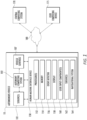
- FIG. 1 depicts a block diagram of an example computing system according to example embodiments of the present invention.
- the example computing system includes autonomous vehicle 10, central computing system 170, and user computing device 175 that are communicatively coupled over one or more communication networks 180.
- Autonomous vehicle 10 can include one or more sensors 101, autonomy computing system 102, one or more vehicle controls 107, and human machine interface device 150.
- Human machine interface device 150 can enable communication, control, and/or other interface actions to occur between autonomous vehicle 10 and a human (e.g., a passenger located within autonomous vehicle 10). Human machine interface device 150 can be communicatively coupled to autonomy computing system 102 to enable exchange of data, instructions, and/or requests between system 102 and device 150.
- Human machine interface device 150 can include or be implemented by one or more computing devices that are operatively connected. Human machine interface device 150 can be an embedded computing device or a stand-alone computing device. In one particular example, human machine interface device 150 can be a tablet computing device that is positioned within autonomous vehicle 10 for viewing by a passenger (e.g., within a rear seat area of autonomous vehicle 10).
- Human machine interface device 150 can include one or more processors 152, memory 154, event detector 156, display 158, one or more user input components 160, one or more sensors 162, and navigational system 164.
- Processor(s) 152 can be any suitable processing device (e.g., a processor core, a microprocessor, an application-specific integrated circuit (ASIC), a field-programmable gate array (FPGA), a controller, a microcontroller, etc.) and can be one processor or a plurality of processors that are operatively connected.
- Memory 154 can include one or more non-transitory computer-readable storage media, such as random-access memory (RAM), read-only memory (ROM), electrically erasable programmable read-only memory (EEPROM), erasable programmable read-only memory (EPROM), one or more memory devices, flash memory devices, etc., and combinations thereof.
- RAM random-access memory
- ROM read-only memory
- EEPROM electrically erasable programmable read-only memory
- EPROM erasable programmable read-only memory
- Memory 154 can store information that can be accessed by processor(s) 152.
- memory 154 e.g., one or more non-transitory computer-readable storage mediums, memory devices
- memory 154 can store data that can be obtained, received, accessed, written, manipulated, created, and/or stored.
- Memory 154 can also store computer-readable instructions that can be executed by processor(s) 152.
- the instructions can be software written in any suitable programming language or can be implemented in hardware. Additionally, or alternatively, the instructions can be executed in logically and/or virtually separate threads on processor(s) 152.
- memory 154 can store instructions that when executed by processor(s) 152 cause processor(s) 152 to perform any of the operations and/or functions described herein.
- human machine interface device 150 can include display device 158 (e.g., a touch-sensitive display device) and/or other input/output components 160 that provide an interactive user interface.
- display device 158 can be a rear-seat display device that is accessible by a passenger that is located in a rear seat of autonomous vehicle 10.
- central computing system 170 that is remotely located to autonomous vehicle 10 and in communication with autonomous vehicle 10 over network(s) 180 (e.g., cellular data networks, satellite communication networks, wide area networks, etc.).
- network(s) 180 e.g., cellular data networks, satellite communication networks, wide area networks, etc.
- central computing system 170 can include one or more server computing devices. In the event that plural server computing devices are used, the server computing devices can be arranged according to a parallel computing architecture, a sequential computing architecture, or combinations thereof.
- central computing system 170 can provide control, monitoring, management, and/or other functionality for a fleet of autonomous vehicles including autonomous vehicle 10.
- Network(s) 180 can be any type of network or combination of networks that allows for communication between devices.
- network(s) 180 can include one or more of a local area network, wide area network, the Internet, secure network, cellular network, mesh network, peer-to-peer communication link, and/or some combination thereof, and can include any number of wired or wireless links.
- Communication over network(s) 180 can be accomplished, for instance, via a network interface using any type of protocol, protection scheme, encoding, format, packaging, etc.
- a computing system of autonomous vehicle 10 can be configured to communicate intent of autonomous vehicle 10 to a passenger of autonomous vehicle 10 (e.g., an operator and/or non-operator passenger).
- human machine interface device 150 can receive, from autonomy computing system 102, data indicating an intent of autonomous vehicle 10 (e.g., intent to perform a driving maneuver) and can determine, based on the data indicating the intent, that the intent of autonomous vehicle 10 should be communicated to a passenger of autonomous vehicle 10.
- human machine interface device 150 can generate a graphical interface indicating the intent of autonomous vehicle 10 and can provide the graphical interface for display (e.g., via display 158) for viewing by the passenger.
- human machine interface device 150 can generate or otherwise trigger an audible signal for the passenger (e.g., a signal indicating the intent, a signal alerting the passenger to view display 158 for information regarding the intent, or the like).
- human machine interface device 150 can determine multiple intents of autonomous vehicle 10 based on the data received from autonomy computing system 102. For example, the data received from autonomy computing system 102 can indicate autonomous vehicle 10 plans to stop at an approaching intersection because there is a red signal light and because pedestrians are currently crossing the path of autonomous vehicle 10 (e.g., at the intersection). In such implementations, human machine interface device 150 can select, from amongst the intents, an intent to communicate to the passenger of autonomous vehicle 10. In some implementations, human machine interface device 150 can be configured to select the intent to be communicated to the passenger based on a predetermined hierarchy.
- human machine interface device 150 can be configured to select an intent indicating that autonomous vehicle 10 plans to stop at the approaching intersection because there is a red signal light instead of an intent indicating that autonomous vehicle 10 plans to stop because pedestrians are currently crossing the path of autonomous vehicle 10 because a predetermined hierarchy can indicate that intents associated with traffic signals should be selected in lieu of intents associated with pedestrian crossings.
- human machine interface device 150 can be configured to determine that the intent of autonomous vehicle 10 should be communicated to the passenger based on a determination that a frequency in the change of the intent indicated by the data received from autonomy computing system 102 meets a predetermined threshold.
- the data received from autonomy computing system 102 can indicate multiple intents within a short period of time (e.g., autonomy computing system 102 can frequently alter its planned motion path for autonomous vehicle 10 based on, for example, changes in data received from sensor(s) 101).
- the data received from autonomy computing system 102 can indicate that autonomous vehicle 10 intends to decelerate in order to avoid a pedestrian, however, the data received from autonomy computing system 102 could subsequently indicate that autonomous vehicle 10 intends to maintain its current speed (e.g., because data received from sensor(s) 101 indicates the pedestrian has already cleared the path of autonomous vehicle 10).
- human machine interface device 150 can be configured to make a determination with regards to the frequency in the change of the intent indicated by the data received from autonomy computing system 102, and the intent of autonomous vehicle 10 can be communicated in response to a determination that the frequency in the change of the intent meets a predetermined threshold (e.g., the intent of autonomous vehicle 10 has remained constant for a threshold period of time). For example, the intent of autonomous vehicle 10 can be communicated in response to a determination that the frequency in the change of the intent is less than a predetermined threshold.
- a predetermined threshold e.g., the intent of autonomous vehicle 10 has remained constant for a threshold period of time
- human machine interface device 150 can be configured to determine that the intent of autonomous vehicle 10 should be communicated to the passenger based on a determination that a degree of confidence of an event associated with the intent indicated by the data received from autonomy computing system 102 meets a predetermined threshold.
- the data received from autonomy computing system 102 can indicate an event associated with the intent of autonomous vehicle 10.
- the data can indicate that autonomous vehicle 10 intends to decelerate because a pedestrian has entered the path of autonomous vehicle 10.
- autonomous vehicle 10 can determine its intent, but the nature of the associated event can be unclear.
- autonomous vehicle 10 can detect an object in its path and determine to decelerate in order to avoid the object, but autonomous vehicle 10 can be uncertain regarding the nature of the object (e.g., whether the object is a pedestrian, cyclist, or the like). This uncertainty can be indicated by the data received from autonomy computing system 102. For example, the data can indicate the nature of the object to a degree of confidence. Because communicating erroneous information about the nature of the event to the passenger could undermine the confidence of the passenger in autonomous vehicle 10, human machine interface device 150 can be configured to make a determination about whether to communicate the intent of autonomous vehicle 10 based on a determination that the degree of confidence meets a predetermined threshold (e.g., the intent can be conveyed when the confidence regarding the event exceeds the predetermined threshold).
- a predetermined threshold e.g., the intent can be conveyed when the confidence regarding the event exceeds the predetermined threshold.
- the intent can be an intent to perform a driving maneuver.
- the intent could be that autonomous vehicle 10 intends to change lanes, decelerate (e.g., to yield to and/or stop for a traffic sign or signal, approaching vehicle, pedestrian, cyclist, unclassified object or the like), merge into traffic, pull alongside a curb or roadside, perform a left- or right-hand turn (e.g., a protected or unprotected turn), deviate from a typical pathway within its lane and/or without substantially intruding an adjacent lane in order to avoid an object or obstruction, decelerate or alter its speed based on a context-based speed limit (e.g., a school zone), or other driving maneuver.
- a context-based speed limit e.g., a school zone
- human machine interface device 150 can be configured to distill or summarize complex vehicle intent information such that it is easily understandable by a passenger.
- human machine interface device 150 can be configured to generate a graphical interface indicating the intent of autonomous vehicle 10.
- the graphical interface can include one or more elements that distill or summarize complex vehicle intent information such that it is easily understandable by a passenger.
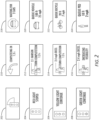
- FIG. 2 depicts example graphical interface elements for communicating intent of an autonomous vehicle according to example embodiments of the present invention.
- graphics 202, 204, 206, 208, 210, 212, 214, 216, 218, 220, 222, and 224 include elements that distill or summarize complex vehicle intent information such that it is easily understandable by a passenger.
- the one or more elements of a graphic indicating intent can include elements depicting an event associated with the intent.
- graphic 202 can depict an intent of autonomous vehicle 10 to decelerate in response to a red traffic signal.
- graphic 204 can depict an intent of autonomous vehicle 10 to remain stopped for a red traffic signal; graphic 204 can depict an intent of autonomous vehicle 10 to maintain its current velocity in response to a yellow traffic signal; graphic 208 can depict an intent of autonomous vehicle 10 to maintain its current velocity in response to a green traffic signal; graphics 210 and 212 can depict an intent of autonomous vehicle 10 to perform a left-hand turn; graphics 214 and 216 can depict an intent of autonomous vehicle 10 to perform a right-hand turn; graphic 218 can depict an intent of autonomous vehicle 10 to remain stopped for two other vehicles; graphic 220 can depict an intent of autonomous vehicle 10 to remain stopped or decelerate for another vehicle; graphic 222 can depict an intent of autonomous vehicle 10 to remain stopped or decelerate for a cyclist; and graphic 224 can depict an intent of autonomous vehicle 10 to remain stopped or decelerate for a pedestrian.
- the one or more elements of a graphic indicating intent can include elements that provide contextual information associated with the intent and/or associated event.
- graphics 210, 212, and/or 214 can indicate a time until the turn is completed;
- graphic 212 can indicate a margin between autonomous vehicle 10 and an approaching vehicle;
- graphics 214 and/or 216 can indicate a velocity and/or acceleration status of an approaching vehicle;
- graphics 220, 222, and/or 224 can indicate a distance to and/or velocity of another vehicle, a cyclist, and/or a pedestrian, respectively.
- human machine interface device 150 can be configured to generate a graphical interface that includes a map depicting the current location of autonomous vehicle 10.
- the graphical interface can include a graphic overlay on the map indicating an intent of autonomous vehicle 10.
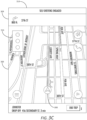
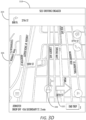
- FIGs. 3A-G depict example graphical interfaces for communicating intent of an autonomous vehicle according to example embodiments of the present invention.
- graphical interface 302 can include portion 304 and map 306.
- Portion 304 can indicate a status of autonomous vehicle 10 on a planned route (e.g., a distance to the next turn on the planned route, or the like).
- Map 306 can include element 308, which can depict the current location of autonomous vehicle 10 (e.g., within its surrounding environment).
- human machine interface device 150 can be configured to generate a graphical interface that includes a graphic overlay on the map indicating an intent of autonomous vehicle 10.
- graphical interface 310 can include graphic overlay 312 indicating an intent of autonomous vehicle 10 to remain stopped and/or decelerate in response to a detected cyclist.
- FIG. 3B graphical interface 310 can include graphic overlay 312 indicating an intent of autonomous vehicle 10 to remain stopped and/or decelerate in response to a detected cyclist.
- graphical interface 314 can include graphic overlay 316 indicating an intent of autonomous vehicle 10 to remain stopped and/or decelerate in response to a red traffic signal; referring to FIG. 3D , graphical interface 318 can include graphic overlay 320 indicating an intent of autonomous vehicle 10 to execute a right-hand turn; referring to FIG. 3E , graphical interface 322 can include graphic overlay 324 indicating an intent of autonomous vehicle 10 to abort a planned lane change (e.g., in response to the presence of another vehicle in the lane); referring to FIG.
- graphical interface 326 can include graphic overlay 328 indicating an intent of autonomous vehicle 10 to execute a lane change (e.g., in order to pass an approaching vehicle in its current lane); and referring to FIG. 3G , graphical interface 330 can include graphic overlay 332 indicating an intent of autonomous vehicle 10 to execute a lane change.
- FIG. 4 depicts a flow chart diagram of an example method to communicate intent of an autonomous vehicle according to example embodiments of the present invention.
- data indicating one or more intents of an autonomous vehicle can be received.
- human machine interface device 150 can receive data indicating one or more intents of autonomous vehicle 10 from autonomy computing system 102.
- one or more intents of the autonomous vehicle can be determined.
- human machine interface device 150 can determine, based on the data received from autonomy computing system 102, one or more intents of autonomous vehicle 10.
- an intent of the autonomous vehicle is selected.
- human machine interface device 150 can select, from amongst the determined intent(s) (e.g., based on a predetermined hierarchy), an intent to communicate to a passenger of autonomous vehicle 10.
- a determination that the intent should be communicated to a passenger of the autonomous vehicle is made.
- human machine interface device 150 can determine to communicate the selected intent of autonomous vehicle 10 to a passenger of autonomous vehicle 10 (e.g., based on a determination that a frequency in the change of the intent meets a predetermined threshold, a determination that a degree of confidence of an event associated with the intent meets a predetermined threshold, or the like).
- a graphical interface indicating the intent of the autonomous vehicle is generated.
- human machine interface device 150 can generate a graphical interface similar to graphical interfaces 310, 314, 318, 322, 326, and/or 330.
- the graphical interface indicating the intent of the autonomous vehicle is provided for display for viewing by the passenger of the autonomous vehicle.
- human machine interface device 150 can provide a graphical interface similar to graphical interfaces 310, 314, 318, 322, 326, and/or 330 (e.g., via display 158) for viewing by a passenger of autonomous vehicle 10.
- the technology discussed herein makes reference to servers, databases, software applications, and other computer-based systems, as well as actions taken and information sent to and from such systems.
- the inherent flexibility of computer-based systems allows for a great variety of possible configurations, combinations, and divisions of tasks and functionality between and among components.
- processes discussed herein can be implemented using a single device or component or multiple devices or components working in combination.
- Databases and applications can be implemented on a single system or distributed across multiple systems. Distributed components can operate sequentially or in parallel.
Landscapes
- Engineering & Computer Science (AREA)
- Automation & Control Theory (AREA)
- Mechanical Engineering (AREA)
- Transportation (AREA)
- Radar, Positioning & Navigation (AREA)
- Remote Sensing (AREA)
- Human Computer Interaction (AREA)
- Physics & Mathematics (AREA)
- General Physics & Mathematics (AREA)
- Aviation & Aerospace Engineering (AREA)
- Chemical & Material Sciences (AREA)
- Combustion & Propulsion (AREA)
- Traffic Control Systems (AREA)
- Business, Economics & Management (AREA)
- Game Theory and Decision Science (AREA)
- Medical Informatics (AREA)
- Evolutionary Computation (AREA)
- Artificial Intelligence (AREA)
- Health & Medical Sciences (AREA)
- User Interface Of Digital Computer (AREA)
- Control Of Driving Devices And Active Controlling Of Vehicle (AREA)
Description
- The present invention relates generally to autonomous vehicles. More particularly, the present disclosure relates to communicating intent of an autonomous vehicle.
- An autonomous vehicle is a vehicle that is capable of sensing its environment and navigating with minimal or no human input. In particular, an autonomous vehicle can observe its surrounding environment using a variety of sensors and identify an appropriate motion path through such surrounding environment.
-
US8676431B1 proposes a vehicle having a plurality of control apparatuses, a user input, a geographic position component, an object detection apparatus, memory, and a display. A processor is also included and is programmed to receive the destination information, identify a route, and determine the current geographic location of the vehicle. The processor is also programmed to identify an object and object type based on object information received from the object detection apparatus and to determine at least one warning characteristic of the identified object based on at least one of: the object type, a detected proximity of the detected object to the vehicle, the location of the detected object relative to predetermined peripheral areas of the vehicle, the current geographic location of the vehicle, and the route. The processor is also configured to select and display on the display an object warning image based on the at least one warning characteristic. - Aspects and advantages of embodiments of the present invention will be set forth in part in the following description, or can be learned from the description, or can be learned through practice of the embodiments.
- According to a first aspect of the present invention, there is provided a computer-implemented method as set out in
claim 1. - According to a second aspect of the present invention, there is provided a computing system as set out in claim 12.
- According to a third aspect of the present invention, there is provided one or more non-transitory computer-readable media as set out in claim 13.
- Other aspects of the present invention are directed to various systems, apparatuses, non-transitory computer-readable media, user interfaces, and electronic devices.
- These and other features, aspects, and advantages of various embodiments of the present invention will become better understood with reference to the following description and appended claims. The accompanying drawings, which are incorporated in and constitute a part of this specification, illustrate example embodiments of the present invention and, together with the description, serve to explain the related principles.
- Detailed discussion of embodiments directed to one of ordinary skill in the art is set forth in the specification, which makes reference to the appended figures, in which:
-
FIG. 1 depicts a block diagram of an example computing system according to example embodiments of the present invention; -
FIG. 2 depicts example graphical interface elements for communicating intent of an autonomous vehicle according to example embodiments of the present invention; -
FIGs. 3A-G depict example graphical interfaces for communicating intent of an autonomous vehicle according to example embodiments of the present invention; and -
FIG. 4 depicts a flow chart diagram of an example method to communicate intent of an autonomous vehicle according to example embodiments of the present invention. - Generally, the present invention is directed to methods and systems for communicating intent of an autonomous vehicle. According to the present invention, an autonomy computing system of an autonomous vehicle determines a motion plan for the autonomous vehicle based on maps and data received from sensors of the autonomous vehicle that describes the environment in which the autonomous vehicle is operating. Such a motion plan includes data that indicates intents of the autonomous vehicle. For example, the autonomous vehicle can plan to stop at an approaching intersection (e.g., based on a stop sign or signal determined from map and/or environmental sensor data). A computing system can receive, from the autonomy computing system of the autonomous vehicle, data indicating the intent of the autonomous vehicle (e.g., that the autonomous vehicle intends to stop at the approaching intersection). Multiple intents of the autonomous vehicle are determined based on the data indicating the intent. For example, the data can indicate that the autonomous vehicle plans to stop at the approaching intersection because there is a red signal light and because pedestrians are currently crossing the path of the autonomous vehicle (e.g., at the intersection). From amongst the determined intents, an intent of the autonomous vehicle is selected. In some implementations, the intent can be selected based on a predetermined hierarchy. For example, an intent indicating that the autonomous vehicle plans to stop at the approaching intersection because there is a red signal light can be selected instead of an intent indicating that the autonomous vehicle plans to stop because pedestrians are currently crossing the path of the autonomous vehicle because a predetermined hierarchy can indicate that intents associated with traffic signals should be selected in lieu of intents associated with pedestrian crossings. A determination is made that the intent of the autonomous vehicle (e.g., planned deceleration associated with the approaching intersection) should be communicated to a passenger of the autonomous vehicle (e.g., operator or non-operator passenger of the autonomous vehicle). For example, a determination can be made that the deceleration associated with the approaching intersection is of sufficient magnitude (e.g., exceeds a predetermined threshold) that a passenger of the autonomous vehicle should be notified.
- Responsive to a determination that a passenger of the autonomous vehicle should be notified of the intent of the autonomous vehicle, a graphical interface indicating the intent of the autonomous vehicle is generated and displayed for viewing by the passenger of the autonomous vehicle. For example, a graphical interface indicating that the autonomous vehicle is (or is planning to) decelerate due to the approaching intersection can be generated and displayed to a passenger of the autonomous vehicle.
- In some implementations, the graphical interface can include a map of the area surrounding the current location of the autonomous vehicle and can depict the location of the autonomous vehicle (e.g., within the surrounding area). In such implementations, the graphical interface can include a graphic overlay on the map indicating the intent of the autonomous vehicle. In some implementations, generating the graphical interface can include distilling or summarizing complex vehicle intent information into an easily understandable graphical element that quickly conveys to the passenger the intent of the autonomous vehicle. The graphical interface can include (e.g., as part of the graphic overlay) one or more elements depicting an event associated with the intent of the autonomous vehicle. For example, the autonomous vehicle can be stopped for two cars, and the graphic overlay can indicate that the autonomous vehicle is stopped (e.g., via a graphic corresponding to a stop sign) and the graphical interface can indicate that the associated event is waiting for two cars (e.g., via one or more textual elements). Similarly, the autonomous vehicle can be approaching a traffic signal and the graphical overlay can indicate the intent of the autonomous vehicle (e.g., continuing, stopping, stopped, or the like) and the associated event, for example, the status of the traffic signal (e.g., red, yellow, green, or the like). In some implementations, the graphical interface can indicate one or more parameters associated with the event. For example, the autonomous vehicle can be approaching a turn and the graphical interface can indicate a time until completion or execution of the turn. Similarly, the autonomous vehicle can be yielding (e.g., decelerating) in response to another vehicle, a pedestrian, a cyclist, or the like, and the graphical interface can indicate a speed of the vehicle, cyclist, pedestrian, or the like and/or a distance between the autonomous vehicle and the vehicle, cyclist, pedestrian, or the like.
- In some implementations, the computing system can determine that the intent of the autonomous vehicle should be communicated to the passenger based on a determination that a frequency in the change of the intent indicated by the data received from the autonomy computing system meets a predetermined threshold. The data received from the autonomy computing system can indicate multiple intents within a short period of time (e.g., the autonomy computing system can frequently alter its planned motion path for the autonomous vehicle based on, for example, changes in data received from sensors of the autonomous vehicle). For example, the data received from the autonomy computing system can indicate that the autonomous vehicle intends to decelerate in order to avoid a pedestrian, however, the data received from the autonomy computing system could subsequently indicate that the autonomous vehicle intends to maintain its current speed (e.g., because data received from sensors of the autonomous vehicle indicates the pedestrian has already cleared the path of the autonomous vehicle). Accordingly, in order to prevent multiple intents (e.g., possibly contradictory intents) from being communicated to the passenger of the autonomous vehicle within a short time period, a determination can be made with regards to the frequency in the change of the intent indicated by the data received from the autonomy computing system, and the intent of the autonomous vehicle can be communicated in response to a determination that the frequency in the change of the intent meets a predetermined threshold (e.g., the intent of the autonomous vehicle has remained constant for a threshold period of time). For example, the intent of the autonomous vehicle can be communicated in response to a determination that the frequency in the change of the intent is less than a predetermined threshold.
- Additionally or alternatively, the computing system can determine that the intent of the autonomous vehicle should be communicated to the passenger based on a determination that a degree of confidence of an event associated with the intent indicated by the data received from the autonomy computing system meets a predetermined threshold. The data received from the autonomy computing system can indicate an event associated with the intent of the autonomous vehicle. For example, the data can indicate that the autonomous vehicle intends to decelerate because a pedestrian has entered the path of the autonomous vehicle. In certain scenarios, the autonomous vehicle can determine its intent, but the nature of the associated event can be unclear. For example, the autonomous vehicle can detect an object in its path and determine to decelerate in order to avoid the object, but the autonomous vehicle can be uncertain regarding the nature of the object (e.g., whether the object is a pedestrian, cyclist, or the like). This uncertainty can be indicated by the data received from the autonomy computing system. For example, the data can indicate the nature of the object to a degree of confidence. Because communicating erroneous information about the nature of the event to the passenger could undermine the confidence of the passenger in the autonomous vehicle, a determination can be made about whether to communicate the intent of the autonomous vehicle based on a determination that the degree of confidence meets a predetermined threshold (e.g., the intent can be conveyed when the confidence regarding the event exceeds the predetermined threshold).
- The computing system can include a human machine interface device (e.g., a mobile device, tablet computing device, or the like) that can be viewable by a passenger of the autonomous vehicle. The device can include a display (e.g., for viewing by the passenger), one or more processors, and memory. The memory can include instructions that when executed by the processor(s) cause the device to perform one or more of the operations described herein.
- The systems and methods described herein can provide a number of technical effects and benefits. For example, the systems and methods described herein can communicate the intent of an autonomous vehicle to its passenger thereby allowing the passenger to anticipate impending changes in force and increasing passenger comfort. Additionally or alternatively, by communicating the intent of an autonomous vehicle to its passenger, the systems and methods described herein can demonstrate environmental understanding and driving competence of the autonomous vehicle to its passenger thereby reassuring the passenger that the autonomous vehicle is correctly interpreting its environment and acting appropriately.
- With reference now to the Figures, example embodiments of the present invention will be discussed in further detail.
-
FIG. 1 depicts a block diagram of an example computing system according to example embodiments of the present invention. Referring toFIG. 1 , the example computing system includesautonomous vehicle 10,central computing system 170, anduser computing device 175 that are communicatively coupled over one or more communication networks 180.Autonomous vehicle 10 can include one ormore sensors 101,autonomy computing system 102, one or more vehicle controls 107, and humanmachine interface device 150. - Human
machine interface device 150 can enable communication, control, and/or other interface actions to occur betweenautonomous vehicle 10 and a human (e.g., a passenger located within autonomous vehicle 10). Humanmachine interface device 150 can be communicatively coupled toautonomy computing system 102 to enable exchange of data, instructions, and/or requests betweensystem 102 anddevice 150. - Human
machine interface device 150 can include or be implemented by one or more computing devices that are operatively connected. Humanmachine interface device 150 can be an embedded computing device or a stand-alone computing device. In one particular example, humanmachine interface device 150 can be a tablet computing device that is positioned withinautonomous vehicle 10 for viewing by a passenger (e.g., within a rear seat area of autonomous vehicle 10). - Human
machine interface device 150 can include one ormore processors 152,memory 154,event detector 156,display 158, one or moreuser input components 160, one ormore sensors 162, andnavigational system 164. Processor(s) 152 can be any suitable processing device (e.g., a processor core, a microprocessor, an application-specific integrated circuit (ASIC), a field-programmable gate array (FPGA), a controller, a microcontroller, etc.) and can be one processor or a plurality of processors that are operatively connected.Memory 154 can include one or more non-transitory computer-readable storage media, such as random-access memory (RAM), read-only memory (ROM), electrically erasable programmable read-only memory (EEPROM), erasable programmable read-only memory (EPROM), one or more memory devices, flash memory devices, etc., and combinations thereof. -
Memory 154 can store information that can be accessed by processor(s) 152. For instance, memory 154 (e.g., one or more non-transitory computer-readable storage mediums, memory devices) can store data that can be obtained, received, accessed, written, manipulated, created, and/or stored.Memory 154 can also store computer-readable instructions that can be executed by processor(s) 152. The instructions can be software written in any suitable programming language or can be implemented in hardware. Additionally, or alternatively, the instructions can be executed in logically and/or virtually separate threads on processor(s) 152. For example,memory 154 can store instructions that when executed by processor(s) 152 cause processor(s) 152 to perform any of the operations and/or functions described herein. - In some implementations, human
machine interface device 150 can include display device 158 (e.g., a touch-sensitive display device) and/or other input/output components 160 that provide an interactive user interface. For example,display device 158 can be a rear-seat display device that is accessible by a passenger that is located in a rear seat ofautonomous vehicle 10. - In some implementations, in addition or alternatively to human
machine interface device 150, the systems and methods of the present invention can include or leverageuser computing device 175 that is associated with the passenger. For example, in some implementations, in addition or alternatively to the display of the user interface by humanmachine interface device 150, the interactive user interface can be provided on or accessible via a display ofuser computing device 175.User computing device 175 can be communicatively connected to humanmachine interface device 150 via a local area network such as a short range wireless connection (e.g., a Bluetooth, ZigBee, near-field communication (NFC), infrared, etc.) or other forms of connections (e.g., hardwiring). As examples,user computing device 175 can be a smartphone, tablet computing device, wearable computing device, portable gaming device, hand-held display screen, or other form of computing device. - In yet further implementations, certain operations described herein can be performed by
central computing system 170 that is remotely located toautonomous vehicle 10 and in communication withautonomous vehicle 10 over network(s) 180 (e.g., cellular data networks, satellite communication networks, wide area networks, etc.). As an example,central computing system 170 can include one or more server computing devices. In the event that plural server computing devices are used, the server computing devices can be arranged according to a parallel computing architecture, a sequential computing architecture, or combinations thereof. In some implementations,central computing system 170 can provide control, monitoring, management, and/or other functionality for a fleet of autonomous vehicles includingautonomous vehicle 10. - Network(s) 180 can be any type of network or combination of networks that allows for communication between devices. In some embodiments, network(s) 180 can include one or more of a local area network, wide area network, the Internet, secure network, cellular network, mesh network, peer-to-peer communication link, and/or some combination thereof, and can include any number of wired or wireless links. Communication over network(s) 180 can be accomplished, for instance, via a network interface using any type of protocol, protection scheme, encoding, format, packaging, etc.
- In accordance with aspects of the invention, a computing system of
autonomous vehicle 10 can be configured to communicate intent ofautonomous vehicle 10 to a passenger of autonomous vehicle 10 (e.g., an operator and/or non-operator passenger). For example, humanmachine interface device 150 can receive, fromautonomy computing system 102, data indicating an intent of autonomous vehicle 10 (e.g., intent to perform a driving maneuver) and can determine, based on the data indicating the intent, that the intent ofautonomous vehicle 10 should be communicated to a passenger ofautonomous vehicle 10. Responsive to determining that the intent ofautonomous vehicle 10 should be communicated to the passenger, humanmachine interface device 150 can generate a graphical interface indicating the intent ofautonomous vehicle 10 and can provide the graphical interface for display (e.g., via display 158) for viewing by the passenger. In some implementations, humanmachine interface device 150 can generate or otherwise trigger an audible signal for the passenger (e.g., a signal indicating the intent, a signal alerting the passenger to viewdisplay 158 for information regarding the intent, or the like). - In some implementations, human
machine interface device 150 can determine multiple intents ofautonomous vehicle 10 based on the data received fromautonomy computing system 102. For example, the data received fromautonomy computing system 102 can indicateautonomous vehicle 10 plans to stop at an approaching intersection because there is a red signal light and because pedestrians are currently crossing the path of autonomous vehicle 10 (e.g., at the intersection). In such implementations, humanmachine interface device 150 can select, from amongst the intents, an intent to communicate to the passenger ofautonomous vehicle 10. In some implementations, humanmachine interface device 150 can be configured to select the intent to be communicated to the passenger based on a predetermined hierarchy. For example, humanmachine interface device 150 can be configured to select an intent indicating thatautonomous vehicle 10 plans to stop at the approaching intersection because there is a red signal light instead of an intent indicating thatautonomous vehicle 10 plans to stop because pedestrians are currently crossing the path ofautonomous vehicle 10 because a predetermined hierarchy can indicate that intents associated with traffic signals should be selected in lieu of intents associated with pedestrian crossings. - In some implementations, human
machine interface device 150 can be configured to determine that the intent ofautonomous vehicle 10 should be communicated to the passenger based on a determination that a frequency in the change of the intent indicated by the data received fromautonomy computing system 102 meets a predetermined threshold. The data received fromautonomy computing system 102 can indicate multiple intents within a short period of time (e.g.,autonomy computing system 102 can frequently alter its planned motion path forautonomous vehicle 10 based on, for example, changes in data received from sensor(s) 101). For example, the data received fromautonomy computing system 102 can indicate thatautonomous vehicle 10 intends to decelerate in order to avoid a pedestrian, however, the data received fromautonomy computing system 102 could subsequently indicate thatautonomous vehicle 10 intends to maintain its current speed (e.g., because data received from sensor(s) 101 indicates the pedestrian has already cleared the path of autonomous vehicle 10). Accordingly, in order to prevent multiple intents (e.g., possibly contradictory intents) from being communicated to the passenger ofautonomous vehicle 10 within a short time period, humanmachine interface device 150 can be configured to make a determination with regards to the frequency in the change of the intent indicated by the data received fromautonomy computing system 102, and the intent ofautonomous vehicle 10 can be communicated in response to a determination that the frequency in the change of the intent meets a predetermined threshold (e.g., the intent ofautonomous vehicle 10 has remained constant for a threshold period of time). For example, the intent ofautonomous vehicle 10 can be communicated in response to a determination that the frequency in the change of the intent is less than a predetermined threshold. - Additionally or alternatively, human
machine interface device 150 can be configured to determine that the intent ofautonomous vehicle 10 should be communicated to the passenger based on a determination that a degree of confidence of an event associated with the intent indicated by the data received fromautonomy computing system 102 meets a predetermined threshold. The data received fromautonomy computing system 102 can indicate an event associated with the intent ofautonomous vehicle 10. For example, the data can indicate thatautonomous vehicle 10 intends to decelerate because a pedestrian has entered the path ofautonomous vehicle 10. In certain scenarios,autonomous vehicle 10 can determine its intent, but the nature of the associated event can be unclear. For example,autonomous vehicle 10 can detect an object in its path and determine to decelerate in order to avoid the object, butautonomous vehicle 10 can be uncertain regarding the nature of the object (e.g., whether the object is a pedestrian, cyclist, or the like). This uncertainty can be indicated by the data received fromautonomy computing system 102. For example, the data can indicate the nature of the object to a degree of confidence. Because communicating erroneous information about the nature of the event to the passenger could undermine the confidence of the passenger inautonomous vehicle 10, humanmachine interface device 150 can be configured to make a determination about whether to communicate the intent ofautonomous vehicle 10 based on a determination that the degree of confidence meets a predetermined threshold (e.g., the intent can be conveyed when the confidence regarding the event exceeds the predetermined threshold). - The intent can be an intent to perform a driving maneuver. For example, the intent could be that
autonomous vehicle 10 intends to change lanes, decelerate (e.g., to yield to and/or stop for a traffic sign or signal, approaching vehicle, pedestrian, cyclist, unclassified object or the like), merge into traffic, pull alongside a curb or roadside, perform a left- or right-hand turn (e.g., a protected or unprotected turn), deviate from a typical pathway within its lane and/or without substantially intruding an adjacent lane in order to avoid an object or obstruction, decelerate or alter its speed based on a context-based speed limit (e.g., a school zone), or other driving maneuver. In some implementations, humanmachine interface device 150 can be configured to distill or summarize complex vehicle intent information such that it is easily understandable by a passenger. For example, as indicated above, humanmachine interface device 150 can be configured to generate a graphical interface indicating the intent ofautonomous vehicle 10. The graphical interface can include one or more elements that distill or summarize complex vehicle intent information such that it is easily understandable by a passenger. For example,FIG. 2 depicts example graphical interface elements for communicating intent of an autonomous vehicle according to example embodiments of the present invention. - Referring to
FIG. 2 ,graphics autonomous vehicle 10 to decelerate in response to a red traffic signal. Similarly, graphic 204 can depict an intent ofautonomous vehicle 10 to remain stopped for a red traffic signal; graphic 204 can depict an intent ofautonomous vehicle 10 to maintain its current velocity in response to a yellow traffic signal; graphic 208 can depict an intent ofautonomous vehicle 10 to maintain its current velocity in response to a green traffic signal;graphics autonomous vehicle 10 to perform a left-hand turn;graphics autonomous vehicle 10 to perform a right-hand turn; graphic 218 can depict an intent ofautonomous vehicle 10 to remain stopped for two other vehicles; graphic 220 can depict an intent ofautonomous vehicle 10 to remain stopped or decelerate for another vehicle; graphic 222 can depict an intent ofautonomous vehicle 10 to remain stopped or decelerate for a cyclist; and graphic 224 can depict an intent ofautonomous vehicle 10 to remain stopped or decelerate for a pedestrian. In some implementations, the one or more elements of a graphic indicating intent can include elements that provide contextual information associated with the intent and/or associated event. For example,graphics autonomous vehicle 10 and an approaching vehicle;graphics 214 and/or 216 can indicate a velocity and/or acceleration status of an approaching vehicle; andgraphics - In some implementations, human
machine interface device 150 can be configured to generate a graphical interface that includes a map depicting the current location ofautonomous vehicle 10. In such implementations, the graphical interface can include a graphic overlay on the map indicating an intent ofautonomous vehicle 10. For example,FIGs. 3A-G depict example graphical interfaces for communicating intent of an autonomous vehicle according to example embodiments of the present invention. - Referring to
FIG. 3A ,graphical interface 302 can includeportion 304 andmap 306.Portion 304 can indicate a status ofautonomous vehicle 10 on a planned route (e.g., a distance to the next turn on the planned route, or the like).Map 306 can includeelement 308, which can depict the current location of autonomous vehicle 10 (e.g., within its surrounding environment). As indicated above, humanmachine interface device 150 can be configured to generate a graphical interface that includes a graphic overlay on the map indicating an intent ofautonomous vehicle 10. For example, referring toFIG. 3B ,graphical interface 310 can includegraphic overlay 312 indicating an intent ofautonomous vehicle 10 to remain stopped and/or decelerate in response to a detected cyclist. Similarly, referring toFIG. 3C ,graphical interface 314 can includegraphic overlay 316 indicating an intent ofautonomous vehicle 10 to remain stopped and/or decelerate in response to a red traffic signal; referring toFIG. 3D ,graphical interface 318 can includegraphic overlay 320 indicating an intent ofautonomous vehicle 10 to execute a right-hand turn; referring toFIG. 3E ,graphical interface 322 can includegraphic overlay 324 indicating an intent ofautonomous vehicle 10 to abort a planned lane change (e.g., in response to the presence of another vehicle in the lane); referring toFIG. 3F ,graphical interface 326 can includegraphic overlay 328 indicating an intent ofautonomous vehicle 10 to execute a lane change (e.g., in order to pass an approaching vehicle in its current lane); and referring toFIG. 3G ,graphical interface 330 can includegraphic overlay 332 indicating an intent ofautonomous vehicle 10 to execute a lane change. -
FIG. 4 depicts a flow chart diagram of an example method to communicate intent of an autonomous vehicle according to example embodiments of the present invention. Referring toFIG. 4 , at (402), data indicating one or more intents of an autonomous vehicle can be received. For example, humanmachine interface device 150 can receive data indicating one or more intents ofautonomous vehicle 10 fromautonomy computing system 102. At (404), one or more intents of the autonomous vehicle can be determined. For example, humanmachine interface device 150 can determine, based on the data received fromautonomy computing system 102, one or more intents ofautonomous vehicle 10. At (406), an intent of the autonomous vehicle is selected. For example, humanmachine interface device 150 can select, from amongst the determined intent(s) (e.g., based on a predetermined hierarchy), an intent to communicate to a passenger ofautonomous vehicle 10. At (408), a determination that the intent should be communicated to a passenger of the autonomous vehicle is made. For example, humanmachine interface device 150 can determine to communicate the selected intent ofautonomous vehicle 10 to a passenger of autonomous vehicle 10 (e.g., based on a determination that a frequency in the change of the intent meets a predetermined threshold, a determination that a degree of confidence of an event associated with the intent meets a predetermined threshold, or the like). At (410), a graphical interface indicating the intent of the autonomous vehicle is generated. For example, humanmachine interface device 150 can generate a graphical interface similar tographical interfaces machine interface device 150 can provide a graphical interface similar tographical interfaces autonomous vehicle 10. - The technology discussed herein makes reference to servers, databases, software applications, and other computer-based systems, as well as actions taken and information sent to and from such systems. The inherent flexibility of computer-based systems allows for a great variety of possible configurations, combinations, and divisions of tasks and functionality between and among components. For instance, processes discussed herein can be implemented using a single device or component or multiple devices or components working in combination. Databases and applications can be implemented on a single system or distributed across multiple systems. Distributed components can operate sequentially or in parallel.
- While the present subject matter has been described in detail with respect to various specific example embodiments thereof, each example is provided by way of explanation, not limitation of the invention. Accordingly, the subject description does not preclude inclusion of such modifications, variations and/or additions to the present subject matter as would be readily apparent to one of ordinary skill in the art. For instance, features illustrated or described as part of one embodiment can be used with another embodiment to yield a still further embodiment.
Claims (13)
- A computer-implemented method comprising:determining, by a computing system comprising one or more computing devices, a motion plan for an autonomous vehicle based on maps and data received from sensors of the autonomous vehicle;determining (404), by the computing system and based at least in part on the motion plan for the autonomous vehicle, a plurality of intents of the autonomous vehicle;selecting (406), by the computing system, from amongst the plurality of intents, an intent of the autonomous vehicle;characterized in that it further comprises:determining (408), by the computing system, that the intent of the autonomous vehicle should be communicated to a passenger of the autonomous vehicle; andresponsive to determining that the intent of the autonomous vehicle should be communicated to the passenger, providing (412), by the computing system for display via a graphical interface, data indicative of the intent of the autonomous vehicle for viewing.
- The computer-implemented method of claim 1, wherein selecting the intent of the autonomous vehicle from amongst the plurality of intents is based at least in part on a predetermined hierarchy.
- The computer-implemented method of claim 1 or 2, wherein determining the plurality of intents of the autonomous vehicle comprises determining that the autonomous vehicle is stopped or stopping in response to at least a first event and a second event based at least in part on a signal determined from the maps and sensor data.
- The computer-implemented method of claim 4, wherein the graphical interface comprises a graphic indicating that the autonomous vehicle is stopped or stopping in accordance with an intent of the autonomous vehicle and indicates an event for which the autonomous vehicle is stopped or stopping.
- The computer-implemented method of any one of the preceding claims, wherein determining that the intent of the autonomous vehicle should be communicated to the passenger of the autonomous vehicle comprises determining that a frequency in a change of the intent meets a predetermined threshold.
- The computer-implemented method of any one of the preceding claims, wherein determining that the intent of the autonomous vehicle should be communicated to the passenger of the autonomous vehicle comprises determining that a degree of confidence of an event associated with the intent meets a predetermined threshold.
- The computer-implemented method of any one of the preceding claims, wherein the graphical interface comprises a map depicting the current location of the autonomous vehicle and a graphic overlay on the map indicating the intent of the autonomous vehicle.
- The computer-implemented method of any one of the preceding claims, wherein the graphical interface comprises one or more elements depicting an event associated with the intent of the autonomous vehicle.
- The computer-implemented method of claim 8, wherein the one or more elements comprise at least one of a time until the turn is completed, a margin between the autonomous vehicle and an approaching vehicle, a velocity and/or acceleration status of an approaching vehicle, or a distance to and/or velocity of another vehicle, a cyclist, and/or a pedestrian, respectively.
- The computer-implemented method of any one of the preceding claims, comprising:
responsive to determining that the intent of the autonomous vehicle should be communicated to the passenger, generating an audible signal for the passenger. - The computer-implemented method of any one of the preceding claims, wherein the intent of the autonomous vehicle comprises at least one of changing lanes, decelerating for a traffic signal, decelerating for an approaching vehicle, decelerating for a pedestrian, or decelerating for a cyclist.
- A computing system configured to implement a computer-implemented method according to any one of the preceding claims.
- One or more non-transitory computer-readable media that collectively store instructions that, when executed by one or more processors, will cause a computing system to perform a method according to any one of claims 1 to 11.
Applications Claiming Priority (4)
| Application Number | Priority Date | Filing Date | Title |
|---|---|---|---|
| US201762550796P | 2017-08-28 | 2017-08-28 | |
| US15/700,211 US10429846B2 (en) | 2017-08-28 | 2017-09-11 | Systems and methods for communicating intent of an autonomous vehicle |
| PCT/US2018/047044 WO2019046024A1 (en) | 2017-08-28 | 2018-08-20 | Systems and methods for communicating intent of an autonomous vehicle |
| EP18773296.1A EP3676149B1 (en) | 2017-08-28 | 2018-08-20 | Systems and methods for communicating intent of an autonomous vehicle |
Related Parent Applications (2)
| Application Number | Title | Priority Date | Filing Date |
|---|---|---|---|
| EP18773296.1A Division-Into EP3676149B1 (en) | 2017-08-28 | 2018-08-20 | Systems and methods for communicating intent of an autonomous vehicle |
| EP18773296.1A Division EP3676149B1 (en) | 2017-08-28 | 2018-08-20 | Systems and methods for communicating intent of an autonomous vehicle |
Publications (2)
| Publication Number | Publication Date |
|---|---|
| EP3932769A1 EP3932769A1 (en) | 2022-01-05 |
| EP3932769B1 true EP3932769B1 (en) | 2024-09-18 |
Family
ID=65436212
Family Applications (2)
| Application Number | Title | Priority Date | Filing Date |
|---|---|---|---|
| EP18773296.1A Active EP3676149B1 (en) | 2017-08-28 | 2018-08-20 | Systems and methods for communicating intent of an autonomous vehicle |
| EP21193381.7A Active EP3932769B1 (en) | 2017-08-28 | 2018-08-20 | Systems and methods for communicating intent of an autonomous vehicle |
Family Applications Before (1)
| Application Number | Title | Priority Date | Filing Date |
|---|---|---|---|
| EP18773296.1A Active EP3676149B1 (en) | 2017-08-28 | 2018-08-20 | Systems and methods for communicating intent of an autonomous vehicle |
Country Status (3)
| Country | Link |
|---|---|
| US (3) | US10429846B2 (en) |
| EP (2) | EP3676149B1 (en) |
| WO (1) | WO2019046024A1 (en) |
Families Citing this family (13)
| Publication number | Priority date | Publication date | Assignee | Title |
|---|---|---|---|---|
| US11010615B2 (en) * | 2016-11-14 | 2021-05-18 | Lyft, Inc. | Rendering a situational-awareness view in an autonomous-vehicle environment |
| US10576984B2 (en) * | 2017-07-06 | 2020-03-03 | Toyota Research Institute, Inc. | Second stop position for intersection turn |
| US10429846B2 (en) * | 2017-08-28 | 2019-10-01 | Uber Technologies, Inc. | Systems and methods for communicating intent of an autonomous vehicle |
| DE102017221619A1 (en) * | 2017-11-30 | 2019-06-06 | Volkswagen Aktiengesellschaft | Method and device for indicating a feasibility of an at least partially automatically feasible driving maneuver in a vehicle |
| US11474519B2 (en) * | 2018-02-26 | 2022-10-18 | Nvidia Corporation | Systems and methods for computer-assisted shuttles, buses, robo-taxis, ride-sharing and on-demand vehicles with situational awareness |
| JP2019156180A (en) * | 2018-03-13 | 2019-09-19 | 本田技研工業株式会社 | Vehicle controller, vehicle control method and program |
| JP7073880B2 (en) * | 2018-04-19 | 2022-05-24 | トヨタ自動車株式会社 | Career decision device |
| JP7155975B2 (en) * | 2018-12-10 | 2022-10-19 | トヨタ自動車株式会社 | vehicle controller |
| US11794766B2 (en) * | 2021-10-14 | 2023-10-24 | Huawei Technologies Co., Ltd. | Systems and methods for prediction-based driver assistance |
| DE102021133174A1 (en) * | 2021-12-15 | 2023-06-15 | Bayerische Motoren Werke Aktiengesellschaft | METHOD FOR THE ANIMATED REPRESENTATION OF OBJECT PERCEPTION AND DRIVING INTENT OF AN ASSISTANCE SYSTEM OF A VEHICLE, ASSISTANCE SYSTEM, COMPUTER PROGRAM AND COMPUTER-READABLE (STORAGE) MEDIUM |
| US12037012B2 (en) * | 2022-10-14 | 2024-07-16 | Motional Ad Llc | Ensemble-based vehicle motion planner |
| TW202430574A (en) | 2022-11-30 | 2024-08-01 | 美商積分分子股份有限公司 | Antibodies directed to claudin 6, including bispecific formats thereof |
| CN116691721B (en) * | 2023-06-20 | 2025-02-28 | 杭州电子科技大学 | A system and method for improving driving confidence based on optimization of interactive interface scenario elements presentation |
Family Cites Families (86)
| Publication number | Priority date | Publication date | Assignee | Title |
|---|---|---|---|---|
| JP3455153B2 (en) * | 2000-02-16 | 2003-10-14 | 松下電器産業株式会社 | Lane guidance display method at intersection, navigation device thereof, and recording medium |
| DE10037573B4 (en) * | 2000-08-02 | 2005-05-19 | Robert Bosch Gmbh | Navigation method in a motor vehicle |
| EP1302356B1 (en) * | 2001-10-15 | 2006-08-02 | Ford Global Technologies, LLC. | Method and system for controlling a vehicle |
| KR100811232B1 (en) * | 2003-07-18 | 2008-03-07 | 엘지전자 주식회사 | Turn-by-turn navigation system and how to guide |
| US7649444B1 (en) | 2005-12-13 | 2010-01-19 | Nvidia Corporation | Positional audio cues for an vehicle indicator system |
| US20090069977A1 (en) * | 2007-09-12 | 2009-03-12 | Gm Global Technology Operations, Inc. | Apparatus and methods for automatically activating a motor vehicle turn signal lamp |
| US8160811B2 (en) * | 2008-06-26 | 2012-04-17 | Toyota Motor Engineering & Manufacturing North America, Inc. | Method and system to estimate driving risk based on a hierarchical index of driving |
| US8103449B2 (en) * | 2008-10-24 | 2012-01-24 | GM Global Technology Operations LLC | Configurable vehicular time to stop warning system |
| US8773281B2 (en) * | 2009-09-15 | 2014-07-08 | Ohanes D. Ghazarian | Intersection vehicle collision avoidance system |
| US8253589B2 (en) * | 2009-10-20 | 2012-08-28 | GM Global Technology Operations LLC | Vehicle to entity communication |
| US10395125B2 (en) | 2016-10-06 | 2019-08-27 | Smr Patents S.A.R.L. | Object detection and classification with fourier fans |
| JP5626578B2 (en) * | 2010-12-02 | 2014-11-19 | アイシン・エィ・ダブリュ株式会社 | Driving support system, driving support program, and driving support method |
| JP5408237B2 (en) * | 2010-12-28 | 2014-02-05 | 株式会社デンソー | In-vehicle obstacle information notification device |
| US8924150B2 (en) * | 2010-12-29 | 2014-12-30 | GM Global Technology Operations LLC | Vehicle operation and control system for autonomous vehicles on full windshield display |
| DE102011121948A1 (en) | 2011-12-22 | 2013-06-27 | Gm Global Technology Operations, Llc | Perspective on actions of an autonomous driving system |
| WO2013136779A1 (en) * | 2012-03-16 | 2013-09-19 | 日産自動車株式会社 | Device for determining sensitivity to prediction of unexpected situations |
| WO2013145274A1 (en) * | 2012-03-30 | 2013-10-03 | トヨタ自動車株式会社 | Driving assistance system |
| US8676500B1 (en) * | 2012-08-30 | 2014-03-18 | Mitac International Corp. | Method of providing intersection assistance and related portable electronic device |
| US9242647B2 (en) | 2013-02-06 | 2016-01-26 | GM Global Technology Operations LLC | Display systems and methods for autonomous vehicles |
| US8676431B1 (en) * | 2013-03-12 | 2014-03-18 | Google Inc. | User interface for displaying object-based indications in an autonomous driving system |
| US9514650B2 (en) * | 2013-03-13 | 2016-12-06 | Honda Motor Co., Ltd. | System and method for warning a driver of pedestrians and other obstacles when turning |
| US9047703B2 (en) * | 2013-03-13 | 2015-06-02 | Honda Motor Co., Ltd. | Augmented reality heads up display (HUD) for left turn safety cues |
| US9200915B2 (en) * | 2013-06-08 | 2015-12-01 | Apple Inc. | Mapping application with several user interfaces |
| US9812007B2 (en) * | 2013-03-28 | 2017-11-07 | Honda Motor Co., Ltd. | Map generation system, map generation device, map generation method, and program |
| WO2014157401A1 (en) * | 2013-03-28 | 2014-10-02 | 本田技研工業株式会社 | Driving evaluation system, electronic device, driving evaluation method, and program |
| WO2014157322A1 (en) * | 2013-03-28 | 2014-10-02 | 本田技研工業株式会社 | Notification system, electronic device, notification method, and program |
| FR3005924B1 (en) * | 2013-05-27 | 2016-10-21 | Renault Sa | METHOD FOR OPERATING A VEHICLE IN MANUAL MODE AND IN AUTONOMOUS MODE |
| EP3217321B1 (en) * | 2013-07-31 | 2019-08-28 | Honda Motor Co., Ltd. | Sign information output apparatus |
| US20150066284A1 (en) * | 2013-09-05 | 2015-03-05 | Ford Global Technologies, Llc | Autonomous vehicle control for impaired driver |
| KR101901962B1 (en) * | 2013-11-08 | 2018-11-07 | 한국전자통신연구원 | Apparatus and method for autonomous driving controll using navigation |
| US9656673B2 (en) * | 2013-12-04 | 2017-05-23 | Mobileye Vision Technologies Ltd. | Systems and methods for navigating a vehicle to a default lane |
| US9406177B2 (en) | 2013-12-20 | 2016-08-02 | Ford Global Technologies, Llc | Fault handling in an autonomous vehicle |
| JP6180968B2 (en) * | 2014-03-10 | 2017-08-16 | 日立オートモティブシステムズ株式会社 | Vehicle control device |
| JP6267558B2 (en) * | 2014-03-25 | 2018-01-24 | 株式会社デンソーテン | Vehicle apparatus and vehicle control method |
| US9522676B2 (en) * | 2014-04-30 | 2016-12-20 | Denso International America, Inc. | Situation awareness assistant for vehicle control |
| US9720418B2 (en) | 2014-05-27 | 2017-08-01 | Here Global B.V. | Autonomous vehicle monitoring and control |
| JP6330537B2 (en) * | 2014-07-14 | 2018-05-30 | 株式会社デンソー | Driving assistance device |
| WO2016027351A1 (en) * | 2014-08-21 | 2016-02-25 | 日産自動車株式会社 | Driving support device and driving support method |
| WO2016070193A1 (en) | 2014-10-31 | 2016-05-06 | Nodal Inc. | Systems, apparatus, and methods for improving safety related to movable/moving objects |
| US9959624B2 (en) * | 2014-12-22 | 2018-05-01 | Volkswagen Ag | Early detection of turning condition identification using perception technology |
| US10589751B2 (en) | 2014-12-31 | 2020-03-17 | Robert Bosch Gmbh | Autonomous maneuver notification for autonomous vehicles |
| US9740945B2 (en) * | 2015-01-14 | 2017-08-22 | Magna Electronics Inc. | Driver assistance system for vehicle |
| US9649979B2 (en) | 2015-01-29 | 2017-05-16 | Toyota Motor Engineering & Manufacturing North America, Inc. | Autonomous vehicle operation in view-obstructed environments |
| JP6470059B2 (en) | 2015-01-30 | 2019-02-13 | 株式会社デンソーテン | Information providing method, information providing apparatus, information providing system, and vehicle |
| KR20170117098A (en) | 2015-02-10 | 2017-10-20 | 라이더 시스템즈 엘엘씨 | Proximity recognition system for automobiles |
| JP6598019B2 (en) * | 2015-04-21 | 2019-10-30 | パナソニックIpマネジメント株式会社 | Driving support method, driving support device, driving control device, vehicle, and driving support program using the same |
| CN107531245B (en) * | 2015-04-21 | 2020-01-24 | 松下知识产权经营株式会社 | Information processing system, information processing method, and program |
| US9459623B1 (en) * | 2015-04-29 | 2016-10-04 | Volkswagen Ag | Stop sign intersection decision system |
| US9669677B2 (en) | 2015-05-28 | 2017-06-06 | Ford Global Technologies, Llc | Vehicle active suspension system and method of control |
| US9637120B2 (en) * | 2015-06-24 | 2017-05-02 | Delphi Technologies, Inc. | Cognitive driver assist with variable assistance for automated vehicles |
| US10179590B2 (en) * | 2015-09-10 | 2019-01-15 | Ford Global Technologies, Llc | Park out assist |
| US10053001B1 (en) * | 2015-09-24 | 2018-08-21 | Apple Inc. | System and method for visual communication of an operational status |
| US9950619B1 (en) * | 2015-09-30 | 2018-04-24 | Waymo Llc | Occupant facing vehicle display |
| US10509121B2 (en) | 2016-03-04 | 2019-12-17 | Uatc, Llc | Dynamic range setting for vehicular radars |
| US10807603B2 (en) * | 2016-04-05 | 2020-10-20 | Ford Global Technologies, Llc | Method and apparatus for predictive driver assistance |
| US10032453B2 (en) | 2016-05-06 | 2018-07-24 | GM Global Technology Operations LLC | System for providing occupant-specific acoustic functions in a vehicle of transportation |
| US10317900B2 (en) | 2016-05-13 | 2019-06-11 | GM Global Technology Operations LLC | Controlling autonomous-vehicle functions and output based on occupant position and attention |
| US10011285B2 (en) * | 2016-05-23 | 2018-07-03 | Toyota Motor Engineering & Manufacturing North America, Inc. | Device, system, and method for pictorial language for autonomous vehicle |
| US10183679B2 (en) | 2016-06-28 | 2019-01-22 | Volkswagen Aktiengesellschaft | Apparatus, system and method for personalized settings for driver assistance systems |
| WO2018007995A1 (en) * | 2016-07-08 | 2018-01-11 | Magna Electronics Inc. | 2d mimo radar system for vehicle |
| US9956910B2 (en) | 2016-07-18 | 2018-05-01 | Toyota Motor Engineering & Manufacturing North America, Inc. | Audible notification systems and methods for autonomous vehicles |
| US10471904B2 (en) | 2016-08-08 | 2019-11-12 | Toyota Motor Engineering & Manufacturing North America, Inc. | Systems and methods for adjusting the position of sensors of an automated vehicle |
| US10179586B2 (en) * | 2016-08-11 | 2019-01-15 | Toyota Motor Engineering & Manufacturing North America, Inc. | Using information obtained from fleet of vehicles for informational display and control of an autonomous vehicle |
| JP6412070B2 (en) * | 2016-08-12 | 2018-10-24 | トヨタ自動車株式会社 | Driving support device and driving support method |
| US10643391B2 (en) * | 2016-09-23 | 2020-05-05 | Apple Inc. | Immersive virtual display |
| US10496090B2 (en) | 2016-09-29 | 2019-12-03 | Magna Electronics Inc. | Handover procedure for driver of autonomous vehicle |
| JP6731619B2 (en) * | 2016-10-26 | 2020-07-29 | パナソニックIpマネジメント株式会社 | Information processing system, information processing method, and program |
| US9811086B1 (en) * | 2016-12-14 | 2017-11-07 | Uber Technologies, Inc. | Vehicle management system |
| JP6895634B2 (en) * | 2016-12-16 | 2021-06-30 | パナソニックIpマネジメント株式会社 | Information processing systems, information processing methods, and programs |
| US10261513B2 (en) * | 2016-12-19 | 2019-04-16 | drive.ai Inc. | Methods for communicating state, intent, and context of an autonomous vehicle |
| US10150386B2 (en) * | 2017-02-27 | 2018-12-11 | Nissan North America, Inc. | Autonomous vehicle seat positioning system |
| US10134279B1 (en) * | 2017-05-05 | 2018-11-20 | Toyota Motor Engineering & Manufacturing North America, Inc. | Systems and methods for visualizing potential risks |
| US10346888B2 (en) * | 2017-06-16 | 2019-07-09 | Uber Technologies, Inc. | Systems and methods to obtain passenger feedback in response to autonomous vehicle driving events |
| US10493622B2 (en) * | 2017-07-14 | 2019-12-03 | Uatc, Llc | Systems and methods for communicating future vehicle actions to be performed by an autonomous vehicle |
| US10429846B2 (en) | 2017-08-28 | 2019-10-01 | Uber Technologies, Inc. | Systems and methods for communicating intent of an autonomous vehicle |
| US10629080B2 (en) * | 2017-08-31 | 2020-04-21 | Uatc Llc | Autonomous vehicles featuring vehicle intention system |
| JP7062898B2 (en) * | 2017-09-07 | 2022-05-09 | 株式会社デンソー | Collision avoidance device |
| US10648832B2 (en) * | 2017-09-27 | 2020-05-12 | Toyota Research Institute, Inc. | System and method for in-vehicle display with integrated object detection |
| KR102540919B1 (en) * | 2018-02-20 | 2023-06-07 | 현대자동차주식회사 | Apparatus and method for controlling drive of vehicle |
| KR102139590B1 (en) * | 2018-02-27 | 2020-07-30 | 주식회사 만도 | Autonomous emergency braking system and method for vehicle at intersection |
| EP3779929A4 (en) * | 2018-03-29 | 2021-05-05 | Panasonic Intellectual Property Management Co., Ltd. | Control device and map generation method |
| DE102018209191A1 (en) * | 2018-06-08 | 2019-12-12 | Volkswagen Aktiengesellschaft | Method and system for operating an automatic driving function in a vehicle |
| US10488215B1 (en) * | 2018-10-26 | 2019-11-26 | Phiar Technologies, Inc. | Augmented reality interface for navigation assistance |
| US11472440B2 (en) * | 2019-09-27 | 2022-10-18 | Intel Corporation | Methods and apparatus to provide accident avoidance information to passengers of autonomous vehicles |
| US12444305B2 (en) * | 2020-01-29 | 2025-10-14 | NetraDyne, Inc. | Combination alerts |
| JP2023068892A (en) * | 2021-11-04 | 2023-05-18 | 本田技研工業株式会社 | Driving support device |
-
2017
- 2017-09-11 US US15/700,211 patent/US10429846B2/en active Active
-
2018
- 2018-08-20 EP EP18773296.1A patent/EP3676149B1/en active Active
- 2018-08-20 EP EP21193381.7A patent/EP3932769B1/en active Active
- 2018-08-20 WO PCT/US2018/047044 patent/WO2019046024A1/en not_active Ceased
-
2019
- 2019-09-27 US US16/585,497 patent/US11022973B2/en active Active
-
2021
- 2021-05-28 US US17/333,934 patent/US12013701B2/en active Active
Also Published As
| Publication number | Publication date |
|---|---|
| US10429846B2 (en) | 2019-10-01 |
| EP3676149B1 (en) | 2021-10-06 |
| US20190064824A1 (en) | 2019-02-28 |
| US12013701B2 (en) | 2024-06-18 |
| US20210356966A1 (en) | 2021-11-18 |
| EP3932769A1 (en) | 2022-01-05 |
| US20200026298A1 (en) | 2020-01-23 |
| WO2019046024A1 (en) | 2019-03-07 |
| US11022973B2 (en) | 2021-06-01 |
| EP3676149A1 (en) | 2020-07-08 |
Similar Documents
| Publication | Publication Date | Title |
|---|---|---|
| US12013701B2 (en) | Systems and methods for communicating intent of an autonomous vehicle | |
| US11953911B1 (en) | User interface for displaying object-based indications in an autonomous driving system | |
| US20230418307A1 (en) | Autonomous Vehicle Collision Mitigation Systems and Methods | |
| EP3704684B1 (en) | Object motion prediction and vehicle control for autonomous vehicles | |
| US20200402323A1 (en) | Intervention in operation of a vehicle having autonomous driving capabilities | |
| US10514692B2 (en) | Intervention in operation of a vehicle having autonomous driving capabilities | |
| EP2915718B1 (en) | Apparatus and method for continuously establishing a boundary for autonomous driving availability and an automotive vehicle comprising such an apparatus | |
| US20190258246A1 (en) | Intervention in operation of a vehicle having autonomous driving capabilities | |
| JP6856085B2 (en) | Vehicle display controls, methods and programs | |
| US20210191394A1 (en) | Systems and methods for presenting curated autonomy-system information of a vehicle | |
| AU2018211324B1 (en) | Multi-modal switching on a collision mitigation system | |
| US20190241122A1 (en) | Context-dependent alertness monitor in an autonomous vehicle | |
| US11112789B2 (en) | Intervention in operation of a vehicle having autonomous driving capabilities | |
| EP4276567A2 (en) | Intervention in operation of a vehicle having autonomous driving capabilities | |
| US20180364701A1 (en) | Intervention in operation of a vehicle having autonomous driving capabilities | |
| US20180364703A1 (en) | Intervention in operation of a vehicle having autonomous driving capabilities | |
| US20150057835A1 (en) | Driver assistance system, motor vehicle having a driver assistance system, and a method for operating a driver assistance system | |
| CN104890595A (en) | Apparatus and method for prediction of time available for autonomous driving, in a vehicle having autonomous driving cap | |
| CN106537480A (en) | Method for analysing a traffic situation in an area surrounding a vehicle | |
| CN109789879A (en) | Safe visualization of the navigation interface | |
| US9612596B2 (en) | Hands-off steering wheel governed by pedestrian detection | |
| US20220180738A1 (en) | Risk assessment for temporary zones | |
| US12442656B2 (en) | Method and system for controlling head up display | |
| CN115729229B (en) | Methods and vehicle systems for use in vehicles | |
| CN105843225B (en) | Data processing method and equipment |
Legal Events
| Date | Code | Title | Description |
|---|---|---|---|
| PUAI | Public reference made under article 153(3) epc to a published international application that has entered the european phase |
Free format text: ORIGINAL CODE: 0009012 |
|
| STAA | Information on the status of an ep patent application or granted ep patent |
Free format text: STATUS: THE APPLICATION HAS BEEN PUBLISHED |
|
| AC | Divisional application: reference to earlier application |
Ref document number: 3676149 Country of ref document: EP Kind code of ref document: P |
|
| AK | Designated contracting states |
Kind code of ref document: A1 Designated state(s): AL AT BE BG CH CY CZ DE DK EE ES FI FR GB GR HR HU IE IS IT LI LT LU LV MC MK MT NL NO PL PT RO RS SE SI SK SM TR |
|
| B565 | Issuance of search results under rule 164(2) epc |
Effective date: 20211124 |
|
| STAA | Information on the status of an ep patent application or granted ep patent |
Free format text: STATUS: REQUEST FOR EXAMINATION WAS MADE |
|
| 17P | Request for examination filed |
Effective date: 20220630 |
|
| RBV | Designated contracting states (corrected) |
Designated state(s): AL AT BE BG CH CY CZ DE DK EE ES FI FR GB GR HR HU IE IS IT LI LT LU LV MC MK MT NL NO PL PT RO RS SE SI SK SM TR |
|
| P01 | Opt-out of the competence of the unified patent court (upc) registered |
Effective date: 20230526 |
|
| GRAP | Despatch of communication of intention to grant a patent |
Free format text: ORIGINAL CODE: EPIDOSNIGR1 |
|
| STAA | Information on the status of an ep patent application or granted ep patent |
Free format text: STATUS: GRANT OF PATENT IS INTENDED |
|
| INTG | Intention to grant announced |
Effective date: 20240313 |
|
| GRAS | Grant fee paid |
Free format text: ORIGINAL CODE: EPIDOSNIGR3 |
|
| GRAA | (expected) grant |
Free format text: ORIGINAL CODE: 0009210 |
|
| STAA | Information on the status of an ep patent application or granted ep patent |
Free format text: STATUS: THE PATENT HAS BEEN GRANTED |
|
| AC | Divisional application: reference to earlier application |
Ref document number: 3676149 Country of ref document: EP Kind code of ref document: P |
|
| AK | Designated contracting states |
Kind code of ref document: B1 Designated state(s): AL AT BE BG CH CY CZ DE DK EE ES FI FR GB GR HR HU IE IS IT LI LT LU LV MC MK MT NL NO PL PT RO RS SE SI SK SM TR |
|
| REG | Reference to a national code |
Ref country code: GB Ref legal event code: FG4D |
|
| REG | Reference to a national code |
Ref country code: CH Ref legal event code: EP |
|
| REG | Reference to a national code |
Ref country code: IE Ref legal event code: FG4D |
|
| REG | Reference to a national code |
Ref country code: DE Ref legal event code: R096 Ref document number: 602018074638 Country of ref document: DE |
|
| REG | Reference to a national code |
Ref country code: LT Ref legal event code: MG9D |
|
| PG25 | Lapsed in a contracting state [announced via postgrant information from national office to epo] |
Ref country code: NO Free format text: LAPSE BECAUSE OF FAILURE TO SUBMIT A TRANSLATION OF THE DESCRIPTION OR TO PAY THE FEE WITHIN THE PRESCRIBED TIME-LIMIT Effective date: 20241218 |
|
| PG25 | Lapsed in a contracting state [announced via postgrant information from national office to epo] |
Ref country code: GR Free format text: LAPSE BECAUSE OF FAILURE TO SUBMIT A TRANSLATION OF THE DESCRIPTION OR TO PAY THE FEE WITHIN THE PRESCRIBED TIME-LIMIT Effective date: 20241219 Ref country code: FI Free format text: LAPSE BECAUSE OF FAILURE TO SUBMIT A TRANSLATION OF THE DESCRIPTION OR TO PAY THE FEE WITHIN THE PRESCRIBED TIME-LIMIT Effective date: 20240918 |
|
| PG25 | Lapsed in a contracting state [announced via postgrant information from national office to epo] |
Ref country code: BG Free format text: LAPSE BECAUSE OF FAILURE TO SUBMIT A TRANSLATION OF THE DESCRIPTION OR TO PAY THE FEE WITHIN THE PRESCRIBED TIME-LIMIT Effective date: 20240918 |
|
| PG25 | Lapsed in a contracting state [announced via postgrant information from national office to epo] |
Ref country code: LV Free format text: LAPSE BECAUSE OF FAILURE TO SUBMIT A TRANSLATION OF THE DESCRIPTION OR TO PAY THE FEE WITHIN THE PRESCRIBED TIME-LIMIT Effective date: 20240918 |
|
| PG25 | Lapsed in a contracting state [announced via postgrant information from national office to epo] |
Ref country code: HR Free format text: LAPSE BECAUSE OF FAILURE TO SUBMIT A TRANSLATION OF THE DESCRIPTION OR TO PAY THE FEE WITHIN THE PRESCRIBED TIME-LIMIT Effective date: 20240918 |
|
| REG | Reference to a national code |
Ref country code: NL Ref legal event code: MP Effective date: 20240918 |
|
| PG25 | Lapsed in a contracting state [announced via postgrant information from national office to epo] |
Ref country code: RS Free format text: LAPSE BECAUSE OF FAILURE TO SUBMIT A TRANSLATION OF THE DESCRIPTION OR TO PAY THE FEE WITHIN THE PRESCRIBED TIME-LIMIT Effective date: 20241218 |
|
| PG25 | Lapsed in a contracting state [announced via postgrant information from national office to epo] |
Ref country code: RS Free format text: LAPSE BECAUSE OF FAILURE TO SUBMIT A TRANSLATION OF THE DESCRIPTION OR TO PAY THE FEE WITHIN THE PRESCRIBED TIME-LIMIT Effective date: 20241218 Ref country code: NO Free format text: LAPSE BECAUSE OF FAILURE TO SUBMIT A TRANSLATION OF THE DESCRIPTION OR TO PAY THE FEE WITHIN THE PRESCRIBED TIME-LIMIT Effective date: 20241218 Ref country code: LV Free format text: LAPSE BECAUSE OF FAILURE TO SUBMIT A TRANSLATION OF THE DESCRIPTION OR TO PAY THE FEE WITHIN THE PRESCRIBED TIME-LIMIT Effective date: 20240918 Ref country code: HR Free format text: LAPSE BECAUSE OF FAILURE TO SUBMIT A TRANSLATION OF THE DESCRIPTION OR TO PAY THE FEE WITHIN THE PRESCRIBED TIME-LIMIT Effective date: 20240918 Ref country code: GR Free format text: LAPSE BECAUSE OF FAILURE TO SUBMIT A TRANSLATION OF THE DESCRIPTION OR TO PAY THE FEE WITHIN THE PRESCRIBED TIME-LIMIT Effective date: 20241219 Ref country code: FI Free format text: LAPSE BECAUSE OF FAILURE TO SUBMIT A TRANSLATION OF THE DESCRIPTION OR TO PAY THE FEE WITHIN THE PRESCRIBED TIME-LIMIT Effective date: 20240918 Ref country code: BG Free format text: LAPSE BECAUSE OF FAILURE TO SUBMIT A TRANSLATION OF THE DESCRIPTION OR TO PAY THE FEE WITHIN THE PRESCRIBED TIME-LIMIT Effective date: 20240918 |
|
| REG | Reference to a national code |
Ref country code: AT Ref legal event code: MK05 Ref document number: 1724467 Country of ref document: AT Kind code of ref document: T Effective date: 20240918 |
|
| PG25 | Lapsed in a contracting state [announced via postgrant information from national office to epo] |
Ref country code: NL Free format text: LAPSE BECAUSE OF FAILURE TO SUBMIT A TRANSLATION OF THE DESCRIPTION OR TO PAY THE FEE WITHIN THE PRESCRIBED TIME-LIMIT Effective date: 20240918 |
|
| PG25 | Lapsed in a contracting state [announced via postgrant information from national office to epo] |
Ref country code: IS Free format text: LAPSE BECAUSE OF FAILURE TO SUBMIT A TRANSLATION OF THE DESCRIPTION OR TO PAY THE FEE WITHIN THE PRESCRIBED TIME-LIMIT Effective date: 20250118 Ref country code: PT Free format text: LAPSE BECAUSE OF FAILURE TO SUBMIT A TRANSLATION OF THE DESCRIPTION OR TO PAY THE FEE WITHIN THE PRESCRIBED TIME-LIMIT Effective date: 20250120 |
|
| PG25 | Lapsed in a contracting state [announced via postgrant information from national office to epo] |
Ref country code: RO Free format text: LAPSE BECAUSE OF FAILURE TO SUBMIT A TRANSLATION OF THE DESCRIPTION OR TO PAY THE FEE WITHIN THE PRESCRIBED TIME-LIMIT Effective date: 20240918 Ref country code: SM Free format text: LAPSE BECAUSE OF FAILURE TO SUBMIT A TRANSLATION OF THE DESCRIPTION OR TO PAY THE FEE WITHIN THE PRESCRIBED TIME-LIMIT Effective date: 20240918 |
|
| PG25 | Lapsed in a contracting state [announced via postgrant information from national office to epo] |
Ref country code: ES Free format text: LAPSE BECAUSE OF FAILURE TO SUBMIT A TRANSLATION OF THE DESCRIPTION OR TO PAY THE FEE WITHIN THE PRESCRIBED TIME-LIMIT Effective date: 20240918 |
|
| PG25 | Lapsed in a contracting state [announced via postgrant information from national office to epo] |
Ref country code: EE Free format text: LAPSE BECAUSE OF FAILURE TO SUBMIT A TRANSLATION OF THE DESCRIPTION OR TO PAY THE FEE WITHIN THE PRESCRIBED TIME-LIMIT Effective date: 20240918 Ref country code: AT Free format text: LAPSE BECAUSE OF FAILURE TO SUBMIT A TRANSLATION OF THE DESCRIPTION OR TO PAY THE FEE WITHIN THE PRESCRIBED TIME-LIMIT Effective date: 20240918 |
|
| PG25 | Lapsed in a contracting state [announced via postgrant information from national office to epo] |
Ref country code: PL Free format text: LAPSE BECAUSE OF FAILURE TO SUBMIT A TRANSLATION OF THE DESCRIPTION OR TO PAY THE FEE WITHIN THE PRESCRIBED TIME-LIMIT Effective date: 20240918 Ref country code: CZ Free format text: LAPSE BECAUSE OF FAILURE TO SUBMIT A TRANSLATION OF THE DESCRIPTION OR TO PAY THE FEE WITHIN THE PRESCRIBED TIME-LIMIT Effective date: 20240918 |
|
| PG25 | Lapsed in a contracting state [announced via postgrant information from national office to epo] |
Ref country code: SK Free format text: LAPSE BECAUSE OF FAILURE TO SUBMIT A TRANSLATION OF THE DESCRIPTION OR TO PAY THE FEE WITHIN THE PRESCRIBED TIME-LIMIT Effective date: 20240918 Ref country code: IT Free format text: LAPSE BECAUSE OF FAILURE TO SUBMIT A TRANSLATION OF THE DESCRIPTION OR TO PAY THE FEE WITHIN THE PRESCRIBED TIME-LIMIT Effective date: 20240918 |
|
| REG | Reference to a national code |
Ref country code: DE Ref legal event code: R097 Ref document number: 602018074638 Country of ref document: DE |
|
| PG25 | Lapsed in a contracting state [announced via postgrant information from national office to epo] |
Ref country code: DK Free format text: LAPSE BECAUSE OF FAILURE TO SUBMIT A TRANSLATION OF THE DESCRIPTION OR TO PAY THE FEE WITHIN THE PRESCRIBED TIME-LIMIT Effective date: 20240918 |
|
| PLBE | No opposition filed within time limit |
Free format text: ORIGINAL CODE: 0009261 |
|
| STAA | Information on the status of an ep patent application or granted ep patent |
Free format text: STATUS: NO OPPOSITION FILED WITHIN TIME LIMIT |
|
| 26N | No opposition filed |
Effective date: 20250619 |
|
| PG25 | Lapsed in a contracting state [announced via postgrant information from national office to epo] |
Ref country code: SE Free format text: LAPSE BECAUSE OF FAILURE TO SUBMIT A TRANSLATION OF THE DESCRIPTION OR TO PAY THE FEE WITHIN THE PRESCRIBED TIME-LIMIT Effective date: 20240918 |
|
| PGFP | Annual fee paid to national office [announced via postgrant information from national office to epo] |
Ref country code: DE Payment date: 20250827 Year of fee payment: 8 |
|
| PGFP | Annual fee paid to national office [announced via postgrant information from national office to epo] |
Ref country code: GB Payment date: 20250826 Year of fee payment: 8 |
|
| REG | Reference to a national code |
Ref country code: CH Ref legal event code: H13 Free format text: ST27 STATUS EVENT CODE: U-0-0-H10-H13 (AS PROVIDED BY THE NATIONAL OFFICE) Effective date: 20260324 |
|
| PG25 | Lapsed in a contracting state [announced via postgrant information from national office to epo] |
Ref country code: MC Free format text: LAPSE BECAUSE OF FAILURE TO SUBMIT A TRANSLATION OF THE DESCRIPTION OR TO PAY THE FEE WITHIN THE PRESCRIBED TIME-LIMIT Effective date: 20240918 |
|
| PG25 | Lapsed in a contracting state [announced via postgrant information from national office to epo] |
Ref country code: LU Free format text: LAPSE BECAUSE OF NON-PAYMENT OF DUE FEES Effective date: 20250820 |
|
| PG25 | Lapsed in a contracting state [announced via postgrant information from national office to epo] |
Ref country code: CH Free format text: LAPSE BECAUSE OF NON-PAYMENT OF DUE FEES Effective date: 20250831 |