EP3931010B1 - Heating device with a housing assembly - Google Patents
Heating device with a housing assembly Download PDFInfo
- Publication number
- EP3931010B1 EP3931010B1 EP20763214.2A EP20763214A EP3931010B1 EP 3931010 B1 EP3931010 B1 EP 3931010B1 EP 20763214 A EP20763214 A EP 20763214A EP 3931010 B1 EP3931010 B1 EP 3931010B1
- Authority
- EP
- European Patent Office
- Prior art keywords
- housing
- terminal
- housing assembly
- bus bar
- assembly
- Prior art date
- Legal status (The legal status is an assumption and is not a legal conclusion. Google has not performed a legal analysis and makes no representation as to the accuracy of the status listed.)
- Active
Links
Images




Classifications
-
- B—PERFORMING OPERATIONS; TRANSPORTING
- B60—VEHICLES IN GENERAL
- B60H—ARRANGEMENTS OF HEATING, COOLING, VENTILATING OR OTHER AIR-TREATING DEVICES SPECIALLY ADAPTED FOR PASSENGER OR GOODS SPACES OF VEHICLES
- B60H1/00—Heating, cooling or ventilating devices
- B60H1/00007—Combined heating, ventilating, or cooling devices
- B60H1/00021—Air flow details of HVAC devices
-
- F—MECHANICAL ENGINEERING; LIGHTING; HEATING; WEAPONS; BLASTING
- F24—HEATING; RANGES; VENTILATING
- F24H—FLUID HEATERS, e.g. WATER OR AIR HEATERS, HAVING HEAT-GENERATING MEANS, e.g. HEAT PUMPS, IN GENERAL
- F24H3/00—Air heaters
- F24H3/02—Air heaters with forced circulation
- F24H3/04—Air heaters with forced circulation the air being in direct contact with the heating medium, e.g. electric heating element
- F24H3/0405—Air heaters with forced circulation the air being in direct contact with the heating medium, e.g. electric heating element using electric energy supply, e.g. the heating medium being a resistive element; Heating by direct contact, i.e. with resistive elements, electrodes and fins being bonded together without additional element in-between
- F24H3/0429—For vehicles
- F24H3/0435—Structures comprising heat spreading elements in the form of fins
-
- B—PERFORMING OPERATIONS; TRANSPORTING
- B60—VEHICLES IN GENERAL
- B60H—ARRANGEMENTS OF HEATING, COOLING, VENTILATING OR OTHER AIR-TREATING DEVICES SPECIALLY ADAPTED FOR PASSENGER OR GOODS SPACES OF VEHICLES
- B60H1/00—Heating, cooling or ventilating devices
- B60H1/02—Heating, cooling or ventilating devices the heat being derived from the propulsion plant
- B60H1/03—Heating, cooling or ventilating devices the heat being derived from the propulsion plant and from a source other than the propulsion plant
- B60H1/034—Heating, cooling or ventilating devices the heat being derived from the propulsion plant and from a source other than the propulsion plant from the cooling liquid of the propulsion plant and from an electric heating device
-
- B—PERFORMING OPERATIONS; TRANSPORTING
- B60—VEHICLES IN GENERAL
- B60H—ARRANGEMENTS OF HEATING, COOLING, VENTILATING OR OTHER AIR-TREATING DEVICES SPECIALLY ADAPTED FOR PASSENGER OR GOODS SPACES OF VEHICLES
- B60H1/00—Heating, cooling or ventilating devices
- B60H1/00421—Driving arrangements for parts of a vehicle air-conditioning
- B60H1/00428—Driving arrangements for parts of a vehicle air-conditioning electric
-
- B—PERFORMING OPERATIONS; TRANSPORTING
- B60—VEHICLES IN GENERAL
- B60H—ARRANGEMENTS OF HEATING, COOLING, VENTILATING OR OTHER AIR-TREATING DEVICES SPECIALLY ADAPTED FOR PASSENGER OR GOODS SPACES OF VEHICLES
- B60H1/00—Heating, cooling or ventilating devices
- B60H1/00507—Details, e.g. mounting arrangements, desaeration devices
-
- B—PERFORMING OPERATIONS; TRANSPORTING
- B60—VEHICLES IN GENERAL
- B60H—ARRANGEMENTS OF HEATING, COOLING, VENTILATING OR OTHER AIR-TREATING DEVICES SPECIALLY ADAPTED FOR PASSENGER OR GOODS SPACES OF VEHICLES
- B60H1/00—Heating, cooling or ventilating devices
- B60H1/00507—Details, e.g. mounting arrangements, desaeration devices
- B60H1/00514—Details of air conditioning housings
- B60H1/00521—Mounting or fastening of components in housings, e.g. heat exchangers, fans, electronic regulators
-
- B—PERFORMING OPERATIONS; TRANSPORTING
- B60—VEHICLES IN GENERAL
- B60H—ARRANGEMENTS OF HEATING, COOLING, VENTILATING OR OTHER AIR-TREATING DEVICES SPECIALLY ADAPTED FOR PASSENGER OR GOODS SPACES OF VEHICLES
- B60H1/00—Heating, cooling or ventilating devices
- B60H1/22—Heating, cooling or ventilating devices the heat source being other than the propulsion plant
- B60H1/2215—Heating, cooling or ventilating devices the heat source being other than the propulsion plant the heat being derived from electric heaters
- B60H1/2225—Heating, cooling or ventilating devices the heat source being other than the propulsion plant the heat being derived from electric heaters arrangements of electric heaters for heating air
-
- F—MECHANICAL ENGINEERING; LIGHTING; HEATING; WEAPONS; BLASTING
- F24—HEATING; RANGES; VENTILATING
- F24H—FLUID HEATERS, e.g. WATER OR AIR HEATERS, HAVING HEAT-GENERATING MEANS, e.g. HEAT PUMPS, IN GENERAL
- F24H3/00—Air heaters
- F24H3/02—Air heaters with forced circulation
- F24H3/04—Air heaters with forced circulation the air being in direct contact with the heating medium, e.g. electric heating element
- F24H3/0405—Air heaters with forced circulation the air being in direct contact with the heating medium, e.g. electric heating element using electric energy supply, e.g. the heating medium being a resistive element; Heating by direct contact, i.e. with resistive elements, electrodes and fins being bonded together without additional element in-between
- F24H3/0429—For vehicles
- F24H3/0441—Interfaces between the electrodes of a resistive heating element and the power supply means
-
- H—ELECTRICITY
- H05—ELECTRIC TECHNIQUES NOT OTHERWISE PROVIDED FOR
- H05B—ELECTRIC HEATING; ELECTRIC LIGHT SOURCES NOT OTHERWISE PROVIDED FOR; CIRCUIT ARRANGEMENTS FOR ELECTRIC LIGHT SOURCES, IN GENERAL
- H05B3/00—Ohmic-resistance heating
- H05B3/02—Details
-
- H—ELECTRICITY
- H05—ELECTRIC TECHNIQUES NOT OTHERWISE PROVIDED FOR
- H05B—ELECTRIC HEATING; ELECTRIC LIGHT SOURCES NOT OTHERWISE PROVIDED FOR; CIRCUIT ARRANGEMENTS FOR ELECTRIC LIGHT SOURCES, IN GENERAL
- H05B3/00—Ohmic-resistance heating
- H05B3/02—Details
- H05B3/06—Heater elements structurally combined with coupling elements or holders
-
- B—PERFORMING OPERATIONS; TRANSPORTING
- B60—VEHICLES IN GENERAL
- B60H—ARRANGEMENTS OF HEATING, COOLING, VENTILATING OR OTHER AIR-TREATING DEVICES SPECIALLY ADAPTED FOR PASSENGER OR GOODS SPACES OF VEHICLES
- B60H1/00—Heating, cooling or ventilating devices
- B60H1/00007—Combined heating, ventilating, or cooling devices
- B60H1/00021—Air flow details of HVAC devices
- B60H2001/00114—Heating or cooling details
- B60H2001/00128—Electric heaters
-
- B—PERFORMING OPERATIONS; TRANSPORTING
- B60—VEHICLES IN GENERAL
- B60H—ARRANGEMENTS OF HEATING, COOLING, VENTILATING OR OTHER AIR-TREATING DEVICES SPECIALLY ADAPTED FOR PASSENGER OR GOODS SPACES OF VEHICLES
- B60H1/00—Heating, cooling or ventilating devices
- B60H1/22—Heating, cooling or ventilating devices the heat source being other than the propulsion plant
- B60H2001/2268—Constructional features
- B60H2001/2278—Connectors, water supply, housing, mounting brackets
Definitions
- the present invention relates to a housing assembly, and in particularly, to a housing assembly for facilitating electrical connectivity to a heater core of a Heating Ventilation and Air conditioning (HVAC) system.
- HVAC Heating Ventilation and Air conditioning
- HVAC systems are provided in a vehicle to provide comfort driving to the driver and the occupants.
- the HVAC system may include heat exchangers to provide either hot air or cold air based on a mode of operation of the heat exchangers.
- hot fluid is received from an engine of the vehicle if the vehicle is an internal combustion engine vehicle.
- a heater core having heating elements provides hot air to the cabin of the vehicle.
- the heating elements are electrical heating elements powered by an electrical source.
- the heater core is used to cold start the engine of the vehicle when the vehicle is in a cold region. If the heater core is utilized to provide comfort conditions to the passengers inside the vehicle's cabin, the heater core is placed in a downstream of an evaporator of the HVAC unit.
- the heater core is coupled to housing for providing electrical insulation for electrical terminals of the heating elements of the heater core.
- the electrical terminals of the heating elements are extended to the housing and coupled to bus bars provided in the housing.
- the bus bars are connected with a pair of wires (e.g., pigtail connection) to provide electrical energy to the bus bars.
- the bus bars transmit electrical energy to the heating elements in the heater core.
- both of the wires are adapted to enter into the housing from one side of the housing to enable contact with the electrical terminals of the heating elements.
- such design may cause electrical leakage between the electrical terminals.
- By providing two connections next to each other may lead to potential electrical insulation issues between the two connections. Further, such design of connections may be cumbersome to connect the two wires with the bus bar.
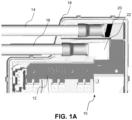
- a conventional housing assembly 10 provides housing for a pair bus bars 12 that is adapted to energies a heating element (not shown in Fig. 1A ) of a heater device.
- the pair of bus bars 12 may include terminals and adapted to connect with the heating element.
- the pair of bus bars 12 may be connected with two wires 14, 16 to power the heating element.
- the first wire 14 and the second wire 16 enter into the conventional housing assembly 10 from a side 18, where the first wire 14 and the second wire 16 are adjacent to each other.
- the first wire 14 and the second wire 16 are connected to the corresponding bus bars through terminal connections 20, 22 respectively.
- An object of the present invention is to provide a housing assembly that obviates the drawbacks associated with the conventional housing assembly.
- Another object of the present invention is to provide a housing to encapsulate terminals, which connects heating elements and wires, to provide insulation between terminals.
- the housing assembly includes a housing configured with a protruded portion, a first terminal, and a second terminal.
- the first terminal is configured on the protruded portion of the housing and adapted to be electrically connected with a first bus bar.
- the second terminal is configured on a first end of the housing and adapted to be electrically connected with a second bus bar.
- the first bus bar and the second bus bar are connected to the heater core to provide an electrical connectivity to the heater core. Further, the first terminal and the second terminal are laterally offset to each other, and are at least partially on opposite sides of a reference line coinciding with an edge of a printed circuit board received in the housing.
- the housing includes a first side wall and a second side wall adapted to be coupled to the first side wall.
- the first side wall and the second side wall may forms a base portion.
- the printed circuit board is provided on a second end of the housing in such a way that the first terminal and the second terminal are adjacent to the orthogonal sides of the printed circuit board.
- the housing assembly comprises a plurality of connectors that is connected to the first bus bar and the second bus bar to couple the first bus bar and the second bus bar with the printed circuit board.
- the housing assembly comprises a top portion adapted to couple with the housing for encapsulating of the first terminal, the second terminal and the printed circuit board. The top portion and the housing may be of an electrically insulated material.
- the housing assembly further comprising at least one locking assembly to retain the housing and the top portion in a locked state.
- the at least one locking assembly being a snap-fit assembly having is complementary engagement members provided on the housing and the top portion to lock the housing with the top portion.
- the first terminal and the second terminal are connected to an electrical energy source by a pair of electrical conductors.
- a heating device for a vehicle.
- the heating device includes a heater core and the housing assembly.
- the heater core may further include one or more heating elements with corresponding electrical contacts.
- the housing assembly includes a housing configured with a protruded portion, a first terminal, and a second terminal.
- the first terminal is configured on the protruded portion of the housing and adapted to be electrically connected with a first bus bar.
- the second terminal is configured on a first end of the housing and adapted to be electrically connected with a second bus bar.
- the first bus bar and the second bus bar are connected to the heater core to provide an electrical connectivity to the heater core.
- the first terminal and the second terminal are laterally offset to each other, and are at least partially on opposite sides of a reference line coinciding with an edge of a printed circuit board received in the housing.
- FIGs. 1A and 1B illustrate a comparison of a conventional housing assembly with a housing assembly 100A of a heating device of the present subject matter.
- Fig. 1A illustrates a schematic view of the conventional housing assembly
- Fig. 1B illustrates a schematic view of the housing assembly 100A of the present subject matter.
- conventional housing assembly 10 of Fig. 1A the two terminals 20, 22 are placed adjacent to each other which may leads to current/potential leakage between the two terminals 20, 22.
- two terminals 110, 114 of the housing assembly 100A of Fig. 1B are laterally offset to each other, thereby eliminating risk of potential leakage between the two terminals 110, 114. Further, construction and assembling of the housing assembly are described in forthcoming figures.
- Figs. 2A , 2B and 2C illustrate schematic isometric views of a heating device 100 provided with the housing assembly 100A of Fig. 1B , in accordance with an embodiment of the present subject matter.
- Fig. 2A illustrates a schematic view of the heating device 100 with the housing assembly 100A
- Fig. 2B illustrates a schematic view of the heating device 100 having a Printed Circuit Board 210
- Fig. 2C illustrates a perspective view of the housing assembly 100A.
- the heating device 100 includes a heater core 120A having one or more heating elements 120B, and the housing assembly 100A.
- the housing assembly 100A being coupled on the heater core 120A and adapted to receive corresponding electrical contacts of the one or more heating elements 120B.
- the housing assembly 100A includes a housing 102, a first terminal 110, and a second terminal 114.
- the housing 102 is provided with a protruded portion 108.
- the protruded portion 108 is formed on a wall of the housing 102.
- the housing 102 may include a first side wall 104 and a second side wall 106 which are coupled to each other.
- the housing 102 may further include a first bus bar 112, and a second bus bar 118 to connect the first terminal 110 and the second terminal 114 with corresponding electrical contacts of the one or more heating elements 120B.
- the first terminal 110 may be configured on the protruded portion 108 of the housing 102 and is electrically connected to the first bus bar 112.
- the second terminal 114 may be configured on a first end 116 of the housing 102 and is electrically connected to the second bus bar 118.
- the housing 102 further receives a printed circuit board (PCB) (not shown in Figs. 2A and 2B ) to adjust heating power of the heater core 102A and provide protection function to the heater core 120A.
- the PCB may be provided with control circuits (not shown in Figs. 2A and 2B ) to control supply of electrical energy to the heater core 120A and to avoid overheating of the heater core 120A.
- first terminal 110 and the second terminal 114 are laterally offset to each other, and are at least partially on opposite sides of a reference line coinciding with an edge 212 of the printed circuit board 210 received in the housing 102.
- first terminal 110 and the second terminal 114 are provided in such a way that the first terminal 110 is diagonally anterior to the second terminal 114.
- the first terminal 110 and the second terminal 114 are connected to an electrical energy source by a pair of electrical conductors 208.
- the pair of electrical conductors 208 is electrically insulated wires.
- the housing 102 is a rectangular housing having a first side wall 104 and a second side wall 106.
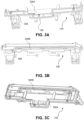
- Figs. 3A and 3B illustrate the first side wall 104 and the second side wall 106 of the housing 102 of Fig. 2A , in accordance with an embodiment of the present subject matter.
- the housing 102 is formed by snap-fitting the first side wall 104 and the second side wall 106.
- the first side wall 104 as shown in Fig. 3A , includes a first vertical wall 304 having a first horizontal portion 306A.
- the first horizontal portion 306A may be perpendicularly coupled to the first vertical wall 304.
- the second side wall 106 includes a second vertical wall 308 having a second horizontal portion 306B perpendicular to the second vertical wall 308.
- the second horizontal portion 306B may be perpendicularly coupled to the second vertical wall 308 of the second side wall 106.
- the first vertical wall 304, and the second vertical wall 308 are adapted to couple each other thereby coupling the first horizontal portion 306A with the second horizontal portion 306B as shown in Fig. 3C .
- the first side wall 104 is adapted to couple with the second side wall 106 to form a base portion.
- the base portion may be a portion which forms when the first horizontal portion 306A is coupled the second horizontal portion 306B.
- Fig. 4 illustrates an exploded view of the heating device 100 of Fig. 2A , in accordance with an embodiment of the present subject matter.
- the electrical contacts 404 of the one or more heating elements 120B are coupled to the first bus bar 112 and the second bus bar 118 as shown in Fig. 4 .
- a plurality of connectors 204 is provided in the first bus bar 112 and the second bus bar 118 to couple the first bus bar 112 and the second bus bar 118 with the printed circuit board 210.
- the plurality of connectors 204 is coupled to the printed circuit board 210 to provide rigid support to the electrical contacts 404 of the one or more heating elements 120B.
- the printer circuit board 210 is provided at a second end 122 of the housing 102 in such a way that the first terminal 110 and the second terminal 114 are adjacent to the orthogonal sides of the printed circuit board 210 respectively.
- the second end 122 may be opposite to the first end 116.
- the printed circuit board 210 may partially covers the first bus bar 112 and the second bus bar 118 as shown in Fig. 2B .
- the housing assembly 100A includes a top portion 502 adapted to couple with the housing 102 for encapsulating the first terminal 110, the second terminal 114, and the printed circuit board 210 as shown in the Fig. 5 .
- the top portion 502 is complementary to the housing 102 to enable engagement between each other.
- the housing assembly 100A further includes at least one locking assembly 504 to retain the housing 102 and the top portion 502 in a locked state.
- the at least one locking assembly 504 being a snap-fit assembly having complementary engagement members provided on the housing 102 and the top portion 502 to lock the housing 102 with the top portion 502.
- the housing assembly 100A may include multiple locking assemblies provided throughout the circumference of the housing 102 and the top portion 502.
- the top portion 502 and the housing 102 are of an electrically insulated material.
- the heating device 100 can be provided in a fossil fuel vehicle to provide heat while cold starting an engine of the vehicle in a cold region.
- the heating device can be provided in a HVAC unit of an electric vehicle to provide hot air to the passengers in the vehicle's cabin.
- the housing assembly 100A as defined above, as long as it comprises the first terminal 110 and the second terminal 114 orthogonally offset to the first terminal 110.
Landscapes
- Engineering & Computer Science (AREA)
- Physics & Mathematics (AREA)
- Thermal Sciences (AREA)
- Mechanical Engineering (AREA)
- Chemical & Material Sciences (AREA)
- Combustion & Propulsion (AREA)
- General Engineering & Computer Science (AREA)
- Air-Conditioning For Vehicles (AREA)
Description
- The present invention relates to a housing assembly, and in particularly, to a housing assembly for facilitating electrical connectivity to a heater core of a Heating Ventilation and Air conditioning (HVAC) system.
- Generally, HVAC systems are provided in a vehicle to provide comfort driving to the driver and the occupants. The HVAC system may include heat exchangers to provide either hot air or cold air based on a mode of operation of the heat exchangers. To provide hot air to the cabin, hot fluid is received from an engine of the vehicle if the vehicle is an internal combustion engine vehicle. In case the vehicle is an electric vehicle or a hybrid vehicle, a heater core having heating elements provides hot air to the cabin of the vehicle. The heating elements are electrical heating elements powered by an electrical source. In some case, the heater core is used to cold start the engine of the vehicle when the vehicle is in a cold region. If the heater core is utilized to provide comfort conditions to the passengers inside the vehicle's cabin, the heater core is placed in a downstream of an evaporator of the HVAC unit.
- Generally, the heater core is coupled to housing for providing electrical insulation for electrical terminals of the heating elements of the heater core. The electrical terminals of the heating elements are extended to the housing and coupled to bus bars provided in the housing. The bus bars are connected with a pair of wires (e.g., pigtail connection) to provide electrical energy to the bus bars. In turn, the bus bars transmit electrical energy to the heating elements in the heater core. Conventionally, both of the wires are adapted to enter into the housing from one side of the housing to enable contact with the electrical terminals of the heating elements. However, such design may cause electrical leakage between the electrical terminals. By providing two connections next to each other may lead to potential electrical insulation issues between the two connections. Further, such design of connections may be cumbersome to connect the two wires with the bus bar.
- As shown in
Fig. 1A , aconventional housing assembly 10 provides housing for apair bus bars 12 that is adapted to energies a heating element (not shown inFig. 1A ) of a heater device. The pair ofbus bars 12 may include terminals and adapted to connect with the heating element. The pair ofbus bars 12 may be connected with twowires first wire 14 and thesecond wire 16 enter into theconventional housing assembly 10 from aside 18, where thefirst wire 14 and thesecond wire 16 are adjacent to each other. Thefirst wire 14 and thesecond wire 16 are connected to the corresponding bus bars throughterminal connections terminal connections terminal connections first wire 14 and thesecond wire 16 that may cause short-circuiting. - Accordingly, there is need for a simple design to connect the wires with the bus bar which eliminates risk of electrical leakage between the connections in the design.
- It is known from the document
EP2017548 ,EP3228950 ,DE202009005582 ,CN109210768 to place electrical terminals in protrusion portions of housings. - An object of the present invention is to provide a housing assembly that obviates the drawbacks associated with the conventional housing assembly.
- Another object of the present invention is to provide a housing to encapsulate terminals, which connects heating elements and wires, to provide insulation between terminals.
- In the present description, some elements or parameters may be indexed, such as a first element and a second element. In this case, unless stated otherwise, this indexation is only meant to differentiate and name elements which are similar but not identical. No idea of priority should be inferred from such indexation, as these terms may be switched without betraying the invention. Additionally, this indexation does not imply any order in mounting or use of the elements of the invention.
device. The housing assembly includes a housing configured with a protruded portion, a first terminal, and a second terminal. The first terminal is configured on the protruded portion of the housing and adapted to be electrically connected with a first bus bar. The second terminal is configured on a first end of the housing and adapted to be electrically connected with a second bus bar. The first bus bar and the second bus bar are connected to the heater core to provide an electrical connectivity to the heater core. Further, the first terminal and the second terminal are laterally offset to each other, and are at least partially on opposite sides of a reference line coinciding with an edge of a printed circuit board received in the housing. - In one embodiment, the housing includes a first side wall and a second side wall adapted to be coupled to the first side wall. The first side wall and the second side wall may forms a base portion.
- In another embodiment, the printed circuit board is provided on a second end of the housing in such a way that the first terminal and the second terminal are adjacent to the orthogonal sides of the printed circuit board. In yet another embodiment, the housing assembly comprises a plurality of connectors that is connected to the first bus bar and the second bus bar to couple the first bus bar and the second bus bar with the printed circuit board. In yet another embodiment, the housing assembly comprises a top portion adapted to couple with the housing for encapsulating of the first terminal, the second terminal and the printed circuit board. The top portion and the housing may be of an electrically insulated material.
- In yet another embodiment, the housing assembly further comprising at least one locking assembly to retain the housing and the top portion in a locked state. Further, the at least one locking assembly being a snap-fit assembly having is complementary engagement members provided on the housing and the top portion to lock the housing with the top portion. The first terminal and the second terminal are connected to an electrical energy source by a pair of electrical conductors.
- In another aspect of the invention, a heating device is provided for a vehicle. The heating device includes a heater core and the housing assembly. The heater core may further include one or more heating elements with corresponding electrical contacts. The housing assembly includes a housing configured with a protruded portion, a first terminal, and a second terminal. The first terminal is configured on the protruded portion of the housing and adapted to be electrically connected with a first bus bar. The second terminal is configured on a first end of the housing and adapted to be electrically connected with a second bus bar. The first bus bar and the second bus bar are connected to the heater core to provide an electrical connectivity to the heater core. Further, the first terminal and the second terminal are laterally offset to each other, and are at least partially on opposite sides of a reference line coinciding with an edge of a printed circuit board received in the housing.
- Other characteristics, details and advantages of the invention can be inferred from the description of the invention hereunder. A more complete appreciation of the invention and many of the attendant advantages thereof will be readily obtained as the same becomes better understood by reference to the following detailed description when considered in connection with the accompanying figures, wherein:
-
Fig. 1A illustrates a schematic view of a conventional housing assembly of a heater core, in accordance with an embodiment of a prior art; -
Fig. 1B illustrates a schematic view of a housing assembly of a heating device of the present subject matter; -
Figs. 2A ,2B and2C illustrate schematic views of a heating device provided with the housing assembly ofFig. 1B , in accordance with an embodiment of the present subject matter; -
Figs. 3A, 3B illustrate a first side wall and a second side wall of the housing ofFig. 2A , in accordance with an embodiment of the present subject matter; -
FIG. 3C illustrates an assembled view of the housing ofFIG. 2A formed by assembling the first portion and the second portion ofFIG. 3A and FIG. 3B respectively; -
Fig. 4 illustrates a isometric view of the heating device ofFig. 2A , in accordance with an embodiment of the present subject matter; and -
Fig. 5 illustrates a perspective view of the housing assembly having a top portion covered therein, in accordance with an embodiment of the present subject matter. - It must be noted that the figures disclose the invention in a detailed enough way to be implemented, the figures helping to better define the invention if needs be. The invention should however not be limited to the embodiment disclosed in the description.
- The present subject matter relates to concepts relating to a housing assembly for housing electrical terminals of heating elements of a heating device. According to another aspect, the present subject matter relates to a heating device provided with a housing assembly for housing the electrical terminals of the heating elements. The housing assembly includes a housing having a protruded portion. Further, a couple of terminals are provided on the housing, one terminal is provided on the protruded portion and another terminal is provided on the portion other than the protruded portion. The couple of terminals are connected to heating elements through a pair of bus-bars. As the terminals are laterally offset to each other, and are at least partially on opposite sides of a reference line coinciding with an edge of a printed circuit board received in the housing, a risk of electrical leakage between the terminals is eliminated.
- These and other advantages of the present subject matter would be described in greater detail in conjunction with the following figures. While aspects relating to a housing assembly provided with a heating device as described above and henceforth can be implemented in any number of terminals which are offset to each other to avoid electrical leakage, the embodiments are described in the context of the following system(s).
-
Figs. 1A and1B illustrate a comparison of a conventional housing assembly with ahousing assembly 100A of a heating device of the present subject matter. In one example,Fig. 1A illustrates a schematic view of the conventional housing assembly, andFig. 1B illustrates a schematic view of thehousing assembly 100A of the present subject matter. Inconventional housing assembly 10 ofFig. 1A , the twoterminals terminals terminals housing assembly 100A ofFig. 1B are laterally offset to each other, thereby eliminating risk of potential leakage between the twoterminals -
Figs. 2A ,2B and2C illustrate schematic isometric views of aheating device 100 provided with thehousing assembly 100A ofFig. 1B , in accordance with an embodiment of the present subject matter. In one example,Fig. 2A illustrates a schematic view of theheating device 100 with thehousing assembly 100A,Fig. 2B illustrates a schematic view of theheating device 100 having a PrintedCircuit Board 210, andFig. 2C illustrates a perspective view of thehousing assembly 100A. Theheating device 100 includes aheater core 120A having one ormore heating elements 120B, and thehousing assembly 100A. Thehousing assembly 100A being coupled on theheater core 120A and adapted to receive corresponding electrical contacts of the one ormore heating elements 120B. Thehousing assembly 100A includes ahousing 102, afirst terminal 110, and asecond terminal 114. According to the invention thehousing 102 is provided with a protrudedportion 108. According to the invention the protrudedportion 108 is formed on a wall of thehousing 102. Thehousing 102 may include afirst side wall 104 and asecond side wall 106 which are coupled to each other. Thehousing 102 may further include afirst bus bar 112, and asecond bus bar 118 to connect thefirst terminal 110 and thesecond terminal 114 with corresponding electrical contacts of the one ormore heating elements 120B. - The
first terminal 110 may be configured on the protrudedportion 108 of thehousing 102 and is electrically connected to thefirst bus bar 112. Thesecond terminal 114 may be configured on afirst end 116 of thehousing 102 and is electrically connected to thesecond bus bar 118. Thehousing 102 further receives a printed circuit board (PCB) (not shown inFigs. 2A and2B ) to adjust heating power of the heater core 102A and provide protection function to theheater core 120A. In one embodiment, the PCB may be provided with control circuits (not shown inFigs. 2A and2B ) to control supply of electrical energy to theheater core 120A and to avoid overheating of theheater core 120A. Further, thefirst terminal 110 and thesecond terminal 114 are laterally offset to each other, and are at least partially on opposite sides of a reference line coinciding with anedge 212 of the printedcircuit board 210 received in thehousing 102. In other words, thefirst terminal 110 and thesecond terminal 114 are provided in such a way that thefirst terminal 110 is diagonally anterior to thesecond terminal 114. Thefirst terminal 110 and thesecond terminal 114 are connected to an electrical energy source by a pair ofelectrical conductors 208. In one embodiment, the pair ofelectrical conductors 208 is electrically insulated wires. In one embodiment, thehousing 102 is a rectangular housing having afirst side wall 104 and asecond side wall 106. -
Figs. 3A and 3B illustrate thefirst side wall 104 and thesecond side wall 106 of thehousing 102 ofFig. 2A , in accordance with an embodiment of the present subject matter. In one embodiment, thehousing 102 is formed by snap-fitting thefirst side wall 104 and thesecond side wall 106. In one example, thefirst side wall 104, as shown inFig. 3A , includes a firstvertical wall 304 having a firsthorizontal portion 306A. The firsthorizontal portion 306A may be perpendicularly coupled to the firstvertical wall 304. In another example, thesecond side wall 106, as shown inFig. 3B , includes a secondvertical wall 308 having a secondhorizontal portion 306B perpendicular to the secondvertical wall 308. The secondhorizontal portion 306B may be perpendicularly coupled to the secondvertical wall 308 of thesecond side wall 106. In another embodiment, the firstvertical wall 304, and the secondvertical wall 308 are adapted to couple each other thereby coupling the firsthorizontal portion 306A with the secondhorizontal portion 306B as shown inFig. 3C . In one example, thefirst side wall 104 is adapted to couple with thesecond side wall 106 to form a base portion. In one embodiment, the base portion may be a portion which forms when the firsthorizontal portion 306A is coupled the secondhorizontal portion 306B. -
Fig. 4 illustrates an exploded view of theheating device 100 ofFig. 2A , in accordance with an embodiment of the present subject matter. Theelectrical contacts 404 of the one ormore heating elements 120B are coupled to thefirst bus bar 112 and thesecond bus bar 118 as shown inFig. 4 . Further, a plurality ofconnectors 204 is provided in thefirst bus bar 112 and thesecond bus bar 118 to couple thefirst bus bar 112 and thesecond bus bar 118 with the printedcircuit board 210. The plurality ofconnectors 204 is coupled to the printedcircuit board 210 to provide rigid support to theelectrical contacts 404 of the one ormore heating elements 120B. Further, theprinter circuit board 210 is provided at asecond end 122 of thehousing 102 in such a way that thefirst terminal 110 and thesecond terminal 114 are adjacent to the orthogonal sides of the printedcircuit board 210 respectively. In one embodiment, thesecond end 122 may be opposite to thefirst end 116. In another embodiment, the printedcircuit board 210 may partially covers thefirst bus bar 112 and thesecond bus bar 118 as shown inFig. 2B . - Further, the
housing assembly 100A includes atop portion 502 adapted to couple with thehousing 102 for encapsulating thefirst terminal 110, thesecond terminal 114, and the printedcircuit board 210 as shown in theFig. 5 . In one embodiment, thetop portion 502 is complementary to thehousing 102 to enable engagement between each other. Thehousing assembly 100A further includes at least one lockingassembly 504 to retain thehousing 102 and thetop portion 502 in a locked state. In one embodiment, the at least one lockingassembly 504 being a snap-fit assembly having complementary engagement members provided on thehousing 102 and thetop portion 502 to lock thehousing 102 with thetop portion 502. In another embodiment, thehousing assembly 100A may include multiple locking assemblies provided throughout the circumference of thehousing 102 and thetop portion 502. In one embodiment, thetop portion 502 and thehousing 102 are of an electrically insulated material. In one example, theheating device 100 can be provided in a fossil fuel vehicle to provide heat while cold starting an engine of the vehicle in a cold region. In another example, the heating device can be provided in a HVAC unit of an electric vehicle to provide hot air to the passengers in the vehicle's cabin. - Several modifications and improvement might be applied by the person skilled in the art to the
housing assembly 100A as defined above, as long as it comprises thefirst terminal 110 and thesecond terminal 114 orthogonally offset to thefirst terminal 110. - In any case, the invention cannot and should not be limited to the embodiments specifically described in this document, as other embodiments might exist.
Claims (9)
- A housing assembly (100A) for facilitating electrical connectivity to a heater core (120A) of a heating device, the heater core being configured to be placed in a Heating Ventilation and Air conditioning (HVAC) system, the housing assembly comprising:a housing (102) configured with a protruded portion (108) formed on a wall of the housing (102);a first terminal (110) configured on the protruded portion (108) of the housing (102) and electrically connected with a first bus bar (112);a second terminal (114) provided on the portion other than the protruded portion and configured on a first end (116) of the housing (102) and electrically connected with a second bus bar (118), wherein the first bus bar (112) and the second bus bar (118) are configured to be connected to the heater core (120A) to provide an electrical connectivity to the heater core (120A), whereby the first terminal (110) and the second terminal (114) are laterally offset to each other, and are at least partially on opposite sides of a reference line coinciding with an edge of a printed circuit board (210) received in the housing (102); anda top portion (502) adapted to couple with the housing (102) for encapsulating the first terminal (110), the second terminal (114), and the printed circuit board (210).
- The housing assembly (100A) as claimed in claim 1, wherein the housing (102) comprises a first side wall (104) and a second side wall (106) adapted to be coupled to the first side wall (104), wherein the first side wall (104) and the second side wall (106) forms a base portion.
- The housing assembly (100A) as claimed in claim 1, wherein the printed circuit board (210) provided on a second end (122) of the housing (102) in such a way that the first terminal (110) and the second terminal (114) are adjacent to the orthogonal sides of the printed circuit board (210).
- The housing assembly (100A) as claimed in claim 3, further comprising a plurality of connectors (204) connected to the first bus bar (112) and the second bus bar (118) to couple the first bus bar (112) and the second bus bar (118) with the printed circuit board (210).
- The housing assembly (100A) according to one of the preceding claims wherein the top portion (502) and the housing (102) are of an electrically insulated material.
- The housing assembly (100A) according to one of the preceding claims wherein , the housing assembly comprises at least one locking assembly (504) to retain the housing (102) and the top portion (502) in a locked state.
- The housing assembly (100A) as claimed in claim 6, wherein the at least one locking assembly (504) being a snap-fit assembly having complementary engagement members provided on the housing (102) and the top portion (502) to lock the housing (102) with the top portion (502).
- The housing assembly (100A) as claimed in claim 1, wherein the first terminal (110) and the second terminal (114) are configured to be connected to an electrical energy source by a pair of electrical conductors (208).
- A heating device (100) for a vehicle, comprising:a heater core (120A) comprises a plurality of heating elements (120B) with corresponding electrical contacts (404);a housing assembly (100A) as claimed in claims 1 to 8 wherein the housing assembly is coupled on the heater core (120A).
Applications Claiming Priority (2)
| Application Number | Priority Date | Filing Date | Title |
|---|---|---|---|
| CN201910149300.9A CN111619303B (en) | 2019-02-28 | 2019-02-28 | Heating device having a housing assembly |
| PCT/CN2020/076940 WO2020173479A1 (en) | 2019-02-28 | 2020-02-27 | Heating device with a housing assembly |
Publications (3)
| Publication Number | Publication Date |
|---|---|
| EP3931010A1 EP3931010A1 (en) | 2022-01-05 |
| EP3931010A4 EP3931010A4 (en) | 2023-01-18 |
| EP3931010B1 true EP3931010B1 (en) | 2025-06-18 |
Family
ID=72239156
Family Applications (1)
| Application Number | Title | Priority Date | Filing Date |
|---|---|---|---|
| EP20763214.2A Active EP3931010B1 (en) | 2019-02-28 | 2020-02-27 | Heating device with a housing assembly |
Country Status (4)
| Country | Link |
|---|---|
| US (1) | US12214645B2 (en) |
| EP (1) | EP3931010B1 (en) |
| CN (1) | CN111619303B (en) |
| WO (1) | WO2020173479A1 (en) |
Families Citing this family (2)
| Publication number | Priority date | Publication date | Assignee | Title |
|---|---|---|---|---|
| CN112009202B (en) * | 2019-05-31 | 2024-10-29 | 法雷奥汽车空调湖北有限公司 | Heating device |
| EP3756913B1 (en) * | 2019-06-28 | 2022-03-30 | MAHLE International GmbH | Hvac-modul |
Family Cites Families (18)
| Publication number | Priority date | Publication date | Assignee | Title |
|---|---|---|---|---|
| DE3807397A1 (en) * | 1988-03-07 | 1989-09-21 | Webasto Ag Fahrzeugtechnik | HEATER |
| DE502006007891D1 (en) * | 2006-07-31 | 2010-10-28 | Behr France Rouffach Sas | Electric heating arrangement, in particular for a motor vehicle |
| FR2916933B1 (en) * | 2007-06-01 | 2009-09-04 | Valeo Systemes Thermiques | DEVICE FOR ELECTRICAL CONNECTION BETWEEN AN ELECTRICAL POWER SOURCE AND AN ELECTRICAL RADIATOR, AND A METHOD OF MAKING SUCH A CONNECTING DEVICE |
| ES2349351T3 (en) | 2007-07-20 | 2010-12-30 | EBERSPÄCHER CATEM GMBH & CO. KG | ELECTRICAL HEATING DEVICE IN SPECIAL FOR MOTOR VEHICLES. |
| KR101030869B1 (en) | 2008-11-03 | 2011-04-22 | 갑을오토텍(주) | PPM controlled high capacity PTC heater |
| KR20100055262A (en) * | 2008-11-17 | 2010-05-26 | 현대자동차주식회사 | High capacity ptc heater |
| KR101076136B1 (en) | 2008-12-05 | 2011-10-21 | 현대자동차주식회사 | Pulse Width Modulation Control Type High Capacity PTC Heater |
| DE202009005582U1 (en) | 2009-04-14 | 2010-09-02 | Eberspächer Catem Gmbh & Co. Kg | Electric heater |
| FR2954468B1 (en) * | 2009-12-23 | 2012-06-08 | Valeo Systemes Thermiques | ELECTRIC HEATING DEVICE AND CORRESPONDING ASSEMBLY METHOD |
| JP2012056351A (en) | 2010-09-06 | 2012-03-22 | Mitsubishi Heavy Ind Ltd | Heat medium heating device and air conditioning apparatus for vehicle provided with same |
| FR3004058B1 (en) * | 2013-03-26 | 2016-12-16 | Valeo Systemes Thermiques | CONTROL MODULE OF AN ELECTRICAL APPARATUS |
| EP2863143B1 (en) * | 2013-10-21 | 2019-02-20 | Mahle Behr France Rouffach S.A.S | Heating device |
| JP6444605B2 (en) | 2014-03-19 | 2018-12-26 | 三菱重工サーマルシステムズ株式会社 | Inverter-integrated electric compressor |
| FR3032385B1 (en) * | 2015-02-10 | 2018-05-25 | Valeo Systemes Thermiques | HOUSING OF AN ELECTRIC HEATING DEVICE |
| FR3049776B1 (en) | 2016-03-29 | 2019-06-21 | Valeo Systemes Thermiques | ELECTRICAL CONNECTION DEVICE, HEATING DEVICE AND VENTILATION INSTALLATION, HEATING AND / OR AIR CONDITIONING |
| US20170295613A1 (en) | 2016-04-07 | 2017-10-12 | Lg Electronics Inc. | Heater assembly |
| CN106642654A (en) | 2017-03-07 | 2017-05-10 | 重庆超力高科技股份有限公司 | Heater and vehicle-mounted air conditioning system |
| CN109210768B (en) | 2017-06-30 | 2021-02-19 | 杭州三花研究院有限公司 | Electric heater |
-
2019
- 2019-02-28 CN CN201910149300.9A patent/CN111619303B/en active Active
-
2020
- 2020-02-27 EP EP20763214.2A patent/EP3931010B1/en active Active
- 2020-02-27 US US17/434,154 patent/US12214645B2/en active Active
- 2020-02-27 WO PCT/CN2020/076940 patent/WO2020173479A1/en not_active Ceased
Also Published As
| Publication number | Publication date |
|---|---|
| CN111619303B (en) | 2024-10-29 |
| US12214645B2 (en) | 2025-02-04 |
| EP3931010A4 (en) | 2023-01-18 |
| CN111619303A (en) | 2020-09-04 |
| EP3931010A1 (en) | 2022-01-05 |
| US20220169092A1 (en) | 2022-06-02 |
| WO2020173479A1 (en) | 2020-09-03 |
Similar Documents
| Publication | Publication Date | Title |
|---|---|---|
| US8395089B2 (en) | Electrical heating device | |
| EP2696456B1 (en) | High-voltage electrical connection box | |
| US7053298B2 (en) | Electric connecting box | |
| US6520780B2 (en) | Power relay module | |
| EP3931010B1 (en) | Heating device with a housing assembly | |
| EP3310127A1 (en) | High voltage air heater including a control housing and method for the assembly thereof | |
| US12434539B2 (en) | Heater device | |
| JP4424042B2 (en) | Automotive relays and electrical junction boxes | |
| JP2000115956A (en) | Heat dissipation structure of electrical junction box | |
| US6179628B1 (en) | Electric connection box | |
| KR100958021B1 (en) | PPM controlled high capacity PTC heater | |
| JP2947079B2 (en) | Connection structure of electrical junction box | |
| CN212046774U (en) | Electric heating device, heating, ventilation and/or air conditioning device and motor vehicle | |
| JPH1189052A (en) | Electrical junction box | |
| JP3108608B2 (en) | Electrical junction box | |
| US20140287629A1 (en) | Plug-type element | |
| JP2002159119A (en) | Electrical junction box | |
| JP2005168218A (en) | Electrical junction box | |
| JP2005185036A (en) | Bus bar structure, electric junction box having the same, and method of forming bus bar | |
| EP3310126A1 (en) | High voltage air heater and method for the assembly of its heating elements | |
| US20220141923A1 (en) | A bus bar system | |
| JP3139304B2 (en) | Connection structure of electrical junction box | |
| JP2000092657A (en) | Electrical junction box | |
| CN116914461A (en) | Clamping type automobile connector, mounting and connecting method thereof and vehicle-mounted ECU | |
| JP2001110485A (en) | Flat circuit connection device |
Legal Events
| Date | Code | Title | Description |
|---|---|---|---|
| STAA | Information on the status of an ep patent application or granted ep patent |
Free format text: STATUS: THE INTERNATIONAL PUBLICATION HAS BEEN MADE |
|
| PUAI | Public reference made under article 153(3) epc to a published international application that has entered the european phase |
Free format text: ORIGINAL CODE: 0009012 |
|
| STAA | Information on the status of an ep patent application or granted ep patent |
Free format text: STATUS: REQUEST FOR EXAMINATION WAS MADE |
|
| 17P | Request for examination filed |
Effective date: 20210929 |
|
| AK | Designated contracting states |
Kind code of ref document: A1 Designated state(s): AL AT BE BG CH CY CZ DE DK EE ES FI FR GB GR HR HU IE IS IT LI LT LU LV MC MK MT NL NO PL PT RO RS SE SI SK SM TR |
|
| DAV | Request for validation of the european patent (deleted) | ||
| DAX | Request for extension of the european patent (deleted) | ||
| A4 | Supplementary search report drawn up and despatched |
Effective date: 20221215 |
|
| RIC1 | Information provided on ipc code assigned before grant |
Ipc: B60H 1/22 20060101ALI20221209BHEP Ipc: H05B 3/06 20060101ALI20221209BHEP Ipc: F24H 3/04 20220101ALI20221209BHEP Ipc: F24H 1/00 20220101ALI20221209BHEP Ipc: B60H 1/00 20060101AFI20221209BHEP |
|
| P01 | Opt-out of the competence of the unified patent court (upc) registered |
Effective date: 20230603 |
|
| GRAP | Despatch of communication of intention to grant a patent |
Free format text: ORIGINAL CODE: EPIDOSNIGR1 |
|
| STAA | Information on the status of an ep patent application or granted ep patent |
Free format text: STATUS: GRANT OF PATENT IS INTENDED |
|
| INTG | Intention to grant announced |
Effective date: 20250129 |
|
| GRAS | Grant fee paid |
Free format text: ORIGINAL CODE: EPIDOSNIGR3 |
|
| GRAA | (expected) grant |
Free format text: ORIGINAL CODE: 0009210 |
|
| STAA | Information on the status of an ep patent application or granted ep patent |
Free format text: STATUS: THE PATENT HAS BEEN GRANTED |
|
| AK | Designated contracting states |
Kind code of ref document: B1 Designated state(s): AL AT BE BG CH CY CZ DE DK EE ES FI FR GB GR HR HU IE IS IT LI LT LU LV MC MK MT NL NO PL PT RO RS SE SI SK SM TR |
|
| REG | Reference to a national code |
Ref country code: GB Ref legal event code: FG4D |
|
| REG | Reference to a national code |
Ref country code: CH Ref legal event code: EP |
|
| REG | Reference to a national code |
Ref country code: DE Ref legal event code: R096 Ref document number: 602020052959 Country of ref document: DE |
|
| REG | Reference to a national code |
Ref country code: CH Ref legal event code: EP |
|
| REG | Reference to a national code |
Ref country code: IE Ref legal event code: FG4D |
|
| PG25 | Lapsed in a contracting state [announced via postgrant information from national office to epo] |
Ref country code: FI Free format text: LAPSE BECAUSE OF FAILURE TO SUBMIT A TRANSLATION OF THE DESCRIPTION OR TO PAY THE FEE WITHIN THE PRESCRIBED TIME-LIMIT Effective date: 20250618 |
|
| REG | Reference to a national code |
Ref country code: LT Ref legal event code: MG9D |
|
| PG25 | Lapsed in a contracting state [announced via postgrant information from national office to epo] |
Ref country code: GR Free format text: LAPSE BECAUSE OF FAILURE TO SUBMIT A TRANSLATION OF THE DESCRIPTION OR TO PAY THE FEE WITHIN THE PRESCRIBED TIME-LIMIT Effective date: 20250919 Ref country code: NO Free format text: LAPSE BECAUSE OF FAILURE TO SUBMIT A TRANSLATION OF THE DESCRIPTION OR TO PAY THE FEE WITHIN THE PRESCRIBED TIME-LIMIT Effective date: 20250918 |
|
| PG25 | Lapsed in a contracting state [announced via postgrant information from national office to epo] |
Ref country code: BG Free format text: LAPSE BECAUSE OF FAILURE TO SUBMIT A TRANSLATION OF THE DESCRIPTION OR TO PAY THE FEE WITHIN THE PRESCRIBED TIME-LIMIT Effective date: 20250618 |
|
| PG25 | Lapsed in a contracting state [announced via postgrant information from national office to epo] |
Ref country code: HR Free format text: LAPSE BECAUSE OF FAILURE TO SUBMIT A TRANSLATION OF THE DESCRIPTION OR TO PAY THE FEE WITHIN THE PRESCRIBED TIME-LIMIT Effective date: 20250618 |
|
| PG25 | Lapsed in a contracting state [announced via postgrant information from national office to epo] |
Ref country code: RS Free format text: LAPSE BECAUSE OF FAILURE TO SUBMIT A TRANSLATION OF THE DESCRIPTION OR TO PAY THE FEE WITHIN THE PRESCRIBED TIME-LIMIT Effective date: 20250918 |
|
| REG | Reference to a national code |
Ref country code: NL Ref legal event code: MP Effective date: 20250618 |
|
| PG25 | Lapsed in a contracting state [announced via postgrant information from national office to epo] |
Ref country code: LV Free format text: LAPSE BECAUSE OF FAILURE TO SUBMIT A TRANSLATION OF THE DESCRIPTION OR TO PAY THE FEE WITHIN THE PRESCRIBED TIME-LIMIT Effective date: 20250618 |
|
| PG25 | Lapsed in a contracting state [announced via postgrant information from national office to epo] |
Ref country code: NL Free format text: LAPSE BECAUSE OF FAILURE TO SUBMIT A TRANSLATION OF THE DESCRIPTION OR TO PAY THE FEE WITHIN THE PRESCRIBED TIME-LIMIT Effective date: 20250618 |
|
| PG25 | Lapsed in a contracting state [announced via postgrant information from national office to epo] |
Ref country code: PT Free format text: LAPSE BECAUSE OF FAILURE TO SUBMIT A TRANSLATION OF THE DESCRIPTION OR TO PAY THE FEE WITHIN THE PRESCRIBED TIME-LIMIT Effective date: 20251020 |
|
| REG | Reference to a national code |
Ref country code: AT Ref legal event code: MK05 Ref document number: 1803897 Country of ref document: AT Kind code of ref document: T Effective date: 20250618 |
|
| PG25 | Lapsed in a contracting state [announced via postgrant information from national office to epo] |
Ref country code: IS Free format text: LAPSE BECAUSE OF FAILURE TO SUBMIT A TRANSLATION OF THE DESCRIPTION OR TO PAY THE FEE WITHIN THE PRESCRIBED TIME-LIMIT Effective date: 20251018 |
|
| PG25 | Lapsed in a contracting state [announced via postgrant information from national office to epo] |
Ref country code: AT Free format text: LAPSE BECAUSE OF FAILURE TO SUBMIT A TRANSLATION OF THE DESCRIPTION OR TO PAY THE FEE WITHIN THE PRESCRIBED TIME-LIMIT Effective date: 20250618 Ref country code: SM Free format text: LAPSE BECAUSE OF FAILURE TO SUBMIT A TRANSLATION OF THE DESCRIPTION OR TO PAY THE FEE WITHIN THE PRESCRIBED TIME-LIMIT Effective date: 20250618 |
|
| PG25 | Lapsed in a contracting state [announced via postgrant information from national office to epo] |
Ref country code: CZ Free format text: LAPSE BECAUSE OF FAILURE TO SUBMIT A TRANSLATION OF THE DESCRIPTION OR TO PAY THE FEE WITHIN THE PRESCRIBED TIME-LIMIT Effective date: 20250618 |
|
| PG25 | Lapsed in a contracting state [announced via postgrant information from national office to epo] |
Ref country code: PL Free format text: LAPSE BECAUSE OF FAILURE TO SUBMIT A TRANSLATION OF THE DESCRIPTION OR TO PAY THE FEE WITHIN THE PRESCRIBED TIME-LIMIT Effective date: 20250618 |
|
| PG25 | Lapsed in a contracting state [announced via postgrant information from national office to epo] |
Ref country code: EE Free format text: LAPSE BECAUSE OF FAILURE TO SUBMIT A TRANSLATION OF THE DESCRIPTION OR TO PAY THE FEE WITHIN THE PRESCRIBED TIME-LIMIT Effective date: 20250618 |
|
| PG25 | Lapsed in a contracting state [announced via postgrant information from national office to epo] |
Ref country code: RO Free format text: LAPSE BECAUSE OF FAILURE TO SUBMIT A TRANSLATION OF THE DESCRIPTION OR TO PAY THE FEE WITHIN THE PRESCRIBED TIME-LIMIT Effective date: 20250618 Ref country code: SK Free format text: LAPSE BECAUSE OF FAILURE TO SUBMIT A TRANSLATION OF THE DESCRIPTION OR TO PAY THE FEE WITHIN THE PRESCRIBED TIME-LIMIT Effective date: 20250618 |
|
| PG25 | Lapsed in a contracting state [announced via postgrant information from national office to epo] |
Ref country code: ES Free format text: LAPSE BECAUSE OF FAILURE TO SUBMIT A TRANSLATION OF THE DESCRIPTION OR TO PAY THE FEE WITHIN THE PRESCRIBED TIME-LIMIT Effective date: 20250618 |
|
| REG | Reference to a national code |
Ref country code: DE Ref legal event code: R097 Ref document number: 602020052959 Country of ref document: DE |
|
| PG25 | Lapsed in a contracting state [announced via postgrant information from national office to epo] |
Ref country code: DK Free format text: LAPSE BECAUSE OF FAILURE TO SUBMIT A TRANSLATION OF THE DESCRIPTION OR TO PAY THE FEE WITHIN THE PRESCRIBED TIME-LIMIT Effective date: 20250618 |
|
| PGFP | Annual fee paid to national office [announced via postgrant information from national office to epo] |
Ref country code: DE Payment date: 20260206 Year of fee payment: 7 |
|
| PG25 | Lapsed in a contracting state [announced via postgrant information from national office to epo] |
Ref country code: IT Free format text: LAPSE BECAUSE OF FAILURE TO SUBMIT A TRANSLATION OF THE DESCRIPTION OR TO PAY THE FEE WITHIN THE PRESCRIBED TIME-LIMIT Effective date: 20250618 |
|
| PLBE | No opposition filed within time limit |
Free format text: ORIGINAL CODE: 0009261 |
|
| STAA | Information on the status of an ep patent application or granted ep patent |
Free format text: STATUS: NO OPPOSITION FILED WITHIN TIME LIMIT |
|
| REG | Reference to a national code |
Ref country code: CH Ref legal event code: L10 Free format text: ST27 STATUS EVENT CODE: U-0-0-L10-L00 (AS PROVIDED BY THE NATIONAL OFFICE) Effective date: 20260430 |