EP3930065B1 - Lithium ion battery and device - Google Patents
Lithium ion battery and device Download PDFInfo
- Publication number
- EP3930065B1 EP3930065B1 EP20850310.2A EP20850310A EP3930065B1 EP 3930065 B1 EP3930065 B1 EP 3930065B1 EP 20850310 A EP20850310 A EP 20850310A EP 3930065 B1 EP3930065 B1 EP 3930065B1
- Authority
- EP
- European Patent Office
- Prior art keywords
- lithium
- particulate material
- organic porous
- electrode plate
- porous particulate
- Prior art date
- Legal status (The legal status is an assumption and is not a legal conclusion. Google has not performed a legal analysis and makes no representation as to the accuracy of the status listed.)
- Active
Links
Images
Classifications
-
- H—ELECTRICITY
- H01—ELECTRIC ELEMENTS
- H01M—PROCESSES OR MEANS, e.g. BATTERIES, FOR THE DIRECT CONVERSION OF CHEMICAL ENERGY INTO ELECTRICAL ENERGY
- H01M10/00—Secondary cells; Manufacture thereof
- H01M10/05—Accumulators with non-aqueous electrolyte
- H01M10/058—Construction or manufacture
- H01M10/0587—Construction or manufacture of accumulators having only wound construction elements, i.e. wound positive electrodes, wound negative electrodes and wound separators
-
- H—ELECTRICITY
- H01—ELECTRIC ELEMENTS
- H01M—PROCESSES OR MEANS, e.g. BATTERIES, FOR THE DIRECT CONVERSION OF CHEMICAL ENERGY INTO ELECTRICAL ENERGY
- H01M4/00—Electrodes
- H01M4/02—Electrodes composed of, or comprising, active material
- H01M4/36—Selection of substances as active materials, active masses, active liquids
- H01M4/362—Composites
- H01M4/366—Composites as layered products
-
- H—ELECTRICITY
- H01—ELECTRIC ELEMENTS
- H01M—PROCESSES OR MEANS, e.g. BATTERIES, FOR THE DIRECT CONVERSION OF CHEMICAL ENERGY INTO ELECTRICAL ENERGY
- H01M4/00—Electrodes
- H01M4/02—Electrodes composed of, or comprising, active material
- H01M4/13—Electrodes for accumulators with non-aqueous electrolyte, e.g. for lithium-accumulators; Processes of manufacture thereof
- H01M4/133—Electrodes based on carbonaceous material, e.g. graphite-intercalation compounds or CFx
-
- H—ELECTRICITY
- H01—ELECTRIC ELEMENTS
- H01M—PROCESSES OR MEANS, e.g. BATTERIES, FOR THE DIRECT CONVERSION OF CHEMICAL ENERGY INTO ELECTRICAL ENERGY
- H01M10/00—Secondary cells; Manufacture thereof
- H01M10/05—Accumulators with non-aqueous electrolyte
- H01M10/052—Li-accumulators
- H01M10/0525—Rocking-chair batteries, i.e. batteries with lithium insertion or intercalation in both electrodes; Lithium-ion batteries
-
- H—ELECTRICITY
- H01—ELECTRIC ELEMENTS
- H01M—PROCESSES OR MEANS, e.g. BATTERIES, FOR THE DIRECT CONVERSION OF CHEMICAL ENERGY INTO ELECTRICAL ENERGY
- H01M10/00—Secondary cells; Manufacture thereof
- H01M10/60—Heating or cooling; Temperature control
- H01M10/61—Types of temperature control
- H01M10/613—Cooling or keeping cold
-
- H—ELECTRICITY
- H01—ELECTRIC ELEMENTS
- H01M—PROCESSES OR MEANS, e.g. BATTERIES, FOR THE DIRECT CONVERSION OF CHEMICAL ENERGY INTO ELECTRICAL ENERGY
- H01M10/00—Secondary cells; Manufacture thereof
- H01M10/60—Heating or cooling; Temperature control
- H01M10/65—Means for temperature control structurally associated with the cells
- H01M10/654—Means for temperature control structurally associated with the cells located inside the innermost case of the cells, e.g. mandrels, electrodes or electrolytes
-
- H—ELECTRICITY
- H01—ELECTRIC ELEMENTS
- H01M—PROCESSES OR MEANS, e.g. BATTERIES, FOR THE DIRECT CONVERSION OF CHEMICAL ENERGY INTO ELECTRICAL ENERGY
- H01M10/00—Secondary cells; Manufacture thereof
- H01M10/60—Heating or cooling; Temperature control
- H01M10/65—Means for temperature control structurally associated with the cells
- H01M10/656—Means for temperature control structurally associated with the cells characterised by the type of heat-exchange fluid
- H01M10/6561—Gases
- H01M10/6562—Gases with free flow by convection only
-
- H—ELECTRICITY
- H01—ELECTRIC ELEMENTS
- H01M—PROCESSES OR MEANS, e.g. BATTERIES, FOR THE DIRECT CONVERSION OF CHEMICAL ENERGY INTO ELECTRICAL ENERGY
- H01M4/00—Electrodes
- H01M4/02—Electrodes composed of, or comprising, active material
- H01M4/13—Electrodes for accumulators with non-aqueous electrolyte, e.g. for lithium-accumulators; Processes of manufacture thereof
-
- H—ELECTRICITY
- H01—ELECTRIC ELEMENTS
- H01M—PROCESSES OR MEANS, e.g. BATTERIES, FOR THE DIRECT CONVERSION OF CHEMICAL ENERGY INTO ELECTRICAL ENERGY
- H01M4/00—Electrodes
- H01M4/02—Electrodes composed of, or comprising, active material
- H01M4/13—Electrodes for accumulators with non-aqueous electrolyte, e.g. for lithium-accumulators; Processes of manufacture thereof
- H01M4/134—Electrodes based on metals, Si or alloys
-
- H—ELECTRICITY
- H01—ELECTRIC ELEMENTS
- H01M—PROCESSES OR MEANS, e.g. BATTERIES, FOR THE DIRECT CONVERSION OF CHEMICAL ENERGY INTO ELECTRICAL ENERGY
- H01M4/00—Electrodes
- H01M4/02—Electrodes composed of, or comprising, active material
- H01M4/62—Selection of inactive substances as ingredients for active masses, e.g. binders, fillers
-
- H—ELECTRICITY
- H01—ELECTRIC ELEMENTS
- H01M—PROCESSES OR MEANS, e.g. BATTERIES, FOR THE DIRECT CONVERSION OF CHEMICAL ENERGY INTO ELECTRICAL ENERGY
- H01M50/00—Constructional details or processes of manufacture of the non-active parts of electrochemical cells other than fuel cells, e.g. hybrid cells
- H01M50/40—Separators; Membranes; Diaphragms; Spacing elements inside cells
- H01M50/409—Separators, membranes or diaphragms characterised by the material
- H01M50/411—Organic material
- H01M50/414—Synthetic resins, e.g. thermoplastics or thermosetting resins
- H01M50/417—Polyolefins
-
- H—ELECTRICITY
- H01—ELECTRIC ELEMENTS
- H01M—PROCESSES OR MEANS, e.g. BATTERIES, FOR THE DIRECT CONVERSION OF CHEMICAL ENERGY INTO ELECTRICAL ENERGY
- H01M50/00—Constructional details or processes of manufacture of the non-active parts of electrochemical cells other than fuel cells, e.g. hybrid cells
- H01M50/40—Separators; Membranes; Diaphragms; Spacing elements inside cells
- H01M50/409—Separators, membranes or diaphragms characterised by the material
- H01M50/431—Inorganic material
- H01M50/434—Ceramics
-
- H—ELECTRICITY
- H01—ELECTRIC ELEMENTS
- H01M—PROCESSES OR MEANS, e.g. BATTERIES, FOR THE DIRECT CONVERSION OF CHEMICAL ENERGY INTO ELECTRICAL ENERGY
- H01M50/00—Constructional details or processes of manufacture of the non-active parts of electrochemical cells other than fuel cells, e.g. hybrid cells
- H01M50/40—Separators; Membranes; Diaphragms; Spacing elements inside cells
- H01M50/409—Separators, membranes or diaphragms characterised by the material
- H01M50/443—Particulate material
-
- H—ELECTRICITY
- H01—ELECTRIC ELEMENTS
- H01M—PROCESSES OR MEANS, e.g. BATTERIES, FOR THE DIRECT CONVERSION OF CHEMICAL ENERGY INTO ELECTRICAL ENERGY
- H01M50/00—Constructional details or processes of manufacture of the non-active parts of electrochemical cells other than fuel cells, e.g. hybrid cells
- H01M50/40—Separators; Membranes; Diaphragms; Spacing elements inside cells
- H01M50/409—Separators, membranes or diaphragms characterised by the material
- H01M50/449—Separators, membranes or diaphragms characterised by the material having a layered structure
- H01M50/451—Separators, membranes or diaphragms characterised by the material having a layered structure comprising layers of only organic material and layers containing inorganic material
-
- H—ELECTRICITY
- H01—ELECTRIC ELEMENTS
- H01M—PROCESSES OR MEANS, e.g. BATTERIES, FOR THE DIRECT CONVERSION OF CHEMICAL ENERGY INTO ELECTRICAL ENERGY
- H01M50/00—Constructional details or processes of manufacture of the non-active parts of electrochemical cells other than fuel cells, e.g. hybrid cells
- H01M50/40—Separators; Membranes; Diaphragms; Spacing elements inside cells
- H01M50/409—Separators, membranes or diaphragms characterised by the material
- H01M50/449—Separators, membranes or diaphragms characterised by the material having a layered structure
- H01M50/457—Separators, membranes or diaphragms characterised by the material having a layered structure comprising three or more layers
-
- H—ELECTRICITY
- H01—ELECTRIC ELEMENTS
- H01M—PROCESSES OR MEANS, e.g. BATTERIES, FOR THE DIRECT CONVERSION OF CHEMICAL ENERGY INTO ELECTRICAL ENERGY
- H01M4/00—Electrodes
- H01M4/02—Electrodes composed of, or comprising, active material
- H01M2004/021—Physical characteristics, e.g. porosity, surface area
-
- H—ELECTRICITY
- H01—ELECTRIC ELEMENTS
- H01M—PROCESSES OR MEANS, e.g. BATTERIES, FOR THE DIRECT CONVERSION OF CHEMICAL ENERGY INTO ELECTRICAL ENERGY
- H01M4/00—Electrodes
- H01M4/02—Electrodes composed of, or comprising, active material
- H01M2004/026—Electrodes composed of, or comprising, active material characterised by the polarity
- H01M2004/027—Negative electrodes
-
- H—ELECTRICITY
- H01—ELECTRIC ELEMENTS
- H01M—PROCESSES OR MEANS, e.g. BATTERIES, FOR THE DIRECT CONVERSION OF CHEMICAL ENERGY INTO ELECTRICAL ENERGY
- H01M2220/00—Batteries for particular applications
- H01M2220/20—Batteries in motive systems, e.g. vehicle, ship, plane
-
- H—ELECTRICITY
- H01—ELECTRIC ELEMENTS
- H01M—PROCESSES OR MEANS, e.g. BATTERIES, FOR THE DIRECT CONVERSION OF CHEMICAL ENERGY INTO ELECTRICAL ENERGY
- H01M4/00—Electrodes
- H01M4/02—Electrodes composed of, or comprising, active material
- H01M4/36—Selection of substances as active materials, active masses, active liquids
- H01M4/38—Selection of substances as active materials, active masses, active liquids of elements or alloys
- H01M4/386—Silicon or alloys based on silicon
-
- H—ELECTRICITY
- H01—ELECTRIC ELEMENTS
- H01M—PROCESSES OR MEANS, e.g. BATTERIES, FOR THE DIRECT CONVERSION OF CHEMICAL ENERGY INTO ELECTRICAL ENERGY
- H01M4/00—Electrodes
- H01M4/02—Electrodes composed of, or comprising, active material
- H01M4/36—Selection of substances as active materials, active masses, active liquids
- H01M4/58—Selection of substances as active materials, active masses, active liquids of inorganic compounds other than oxides or hydroxides, e.g. sulfides, selenides, tellurides, halogenides or LiCoFy; of polyanionic structures, e.g. phosphates, silicates or borates
- H01M4/583—Carbonaceous material, e.g. graphite-intercalation compounds or CFx
- H01M4/587—Carbonaceous material, e.g. graphite-intercalation compounds or CFx for inserting or intercalating light metals
-
- Y—GENERAL TAGGING OF NEW TECHNOLOGICAL DEVELOPMENTS; GENERAL TAGGING OF CROSS-SECTIONAL TECHNOLOGIES SPANNING OVER SEVERAL SECTIONS OF THE IPC; TECHNICAL SUBJECTS COVERED BY FORMER USPC CROSS-REFERENCE ART COLLECTIONS [XRACs] AND DIGESTS
- Y02—TECHNOLOGIES OR APPLICATIONS FOR MITIGATION OR ADAPTATION AGAINST CLIMATE CHANGE
- Y02E—REDUCTION OF GREENHOUSE GAS [GHG] EMISSIONS, RELATED TO ENERGY GENERATION, TRANSMISSION OR DISTRIBUTION
- Y02E60/00—Enabling technologies; Technologies with a potential or indirect contribution to GHG emissions mitigation
- Y02E60/10—Energy storage using batteries
-
- Y—GENERAL TAGGING OF NEW TECHNOLOGICAL DEVELOPMENTS; GENERAL TAGGING OF CROSS-SECTIONAL TECHNOLOGIES SPANNING OVER SEVERAL SECTIONS OF THE IPC; TECHNICAL SUBJECTS COVERED BY FORMER USPC CROSS-REFERENCE ART COLLECTIONS [XRACs] AND DIGESTS
- Y02—TECHNOLOGIES OR APPLICATIONS FOR MITIGATION OR ADAPTATION AGAINST CLIMATE CHANGE
- Y02P—CLIMATE CHANGE MITIGATION TECHNOLOGIES IN THE PRODUCTION OR PROCESSING OF GOODS
- Y02P70/00—Climate change mitigation technologies in the production process for final industrial or consumer products
- Y02P70/50—Manufacturing or production processes characterised by the final manufactured product
Definitions
- This application relates to the field of batteries, and in particular, to a lithium-ion battery and a device.
- a battery is required to have features such as fast charging, a high energy density, a long cycle life, and high stability concurrently.
- a lithium pre-supplementing technology not only makes up for loss of first-cycle coulombic efficiency of a negative electrode, but also provides an additional lithium source, thereby helping to enhance the energy density and cycle performance of the lithium-ion battery.
- a surface of an electrode plate supplemented with lithium is a smooth lithium foil. Consequently, relative slippage is likely to occur between a lithium-supplementing layer of the electrode plate and a separator, thereby affecting the stability of the battery.
- the electrode plate is prone to expand, and is likely to snap off. Even a fractured section of the electrode plate may directly pierce the separator, thereby leading to safety risks of thermal runaway of a battery cell.
- a main measure taken to solve the problem of electrode plate expansion is to increase strength of a current collector.
- the sheer increase the strength of the current collector leads to a poor elongation of the current collector, and the problem of electrode plate expansion is not properly solved.
- CN 105 742 613 A discloses a negative pole piece, which comprises a negative pole current collector and a negative pole film layer, wherein the negative pole film layer is arranged on the negative pole current collector and comprises at least two negative pole active material layers; and the at least two negative pole active material layers are sequentially arranged on the negative pole current collector from the inside to the outside according to the lithium-ion dynamic property decreasing order of the negative pole active material layers.
- WO 2019/107229 A1 discloses a binder composition for a non-aqueous secondary cell with which it is possible to form a slurry composition for a non-aqueous secondary cell functional layer and a functional layer for a non-aqueous secondary cell.
- an objective of this application is to provide a lithium-ion battery to enhance stability, safety and cycle performance of the lithium-ion battery.
- an aspect of this application provides a lithium-ion battery, including a positive electrode plate, a negative electrode plate, a separator located between the positive electrode plate and the negative electrode plate, and an electrolytic solution.
- a lithium-supplementing layer with a smooth surface and a first functional coating are sequentially disposed on a surface of the negative electrode plate, the surface being close to the separator.
- a second functional coating is disposed on a surface of the separator, the surface being close to the negative electrode plate.
- an inorganic coating is disposed between the separator and the second functional coating, the inorganic coating comprises an inorganic particulate material, and the inorganic particulate material is one or more selected from aluminum oxide, silicon monoxide, silicon dioxide, zirconium dioxide, manganese oxide, magnesium oxide, calcium oxide, and calcium carbonate.
- Both the first functional coating and the second functional coating contain an organic porous particulate material.
- a compressibility S of the organic porous particulate material ranges from 40% to 90%, and optionally, 50% to 80%.
- S (H - h)/H, where H represents an original particle height of the organic porous particulate material, and h represents a particle height of the organic porous particulate material that has been pressed for 1 minute under a pressure of 2 Mpa.
- the inorganic coating is 0.5 ⁇ m to 10 ⁇ m in thickness, and the first functional coating and the second functional coating are each 5 ⁇ m to 70 ⁇ m in thickness.
- the organic porous particulate material is one or more selected from polyacrylate, polypropylene, polyethylene, polyamide, polyborate, polysulfone, polyarylate, polyvinylpyridine, and polyaniline.
- a drive source or a storage source of the device is the lithium-ion battery described above.
- a lithium-ion battery provided in an embodiment of this application includes a positive electrode plate, a negative electrode plate, a separator located between the positive electrode plate and the negative electrode plate, and an electrolytic solution.
- a lithium-supplementing layer with a smooth surface and a first functional coating are sequentially disposed on a surface of the negative electrode plate, the surface being close to the separator.
- a second functional coating is disposed on a surface of the separator, the surface being close to the negative electrode plate.
- an inorganic coating is disposed between the separator and the second functional coating, the inorganic coating comprises an inorganic particulate material, and the inorganic particulate material is one or more selected from aluminum oxide, silicon monoxide, silicon dioxide, zirconium dioxide, manganese oxide, magnesium oxide, calcium oxide, and calcium carbonate.
- Both the first functional coating and the second functional coating contain an organic porous particulate material.
- H represents an original particle height of the organic porous particulate material
- h represents a particle height of the organic porous particulate material that has been pressed for 1 minute under a pressure of 2 Mpa.
- the inorganic coating is 0.5 ⁇ m to 10 ⁇ m in thickness
- the first functional coating and the second functional coating are each 5 ⁇ m to 70 ⁇ m in thickness.
- the organic porous particulate material is one or more selected from polyacrylate, polypropylene, polyethylene, polyamide, polyborate, polysulfone, polyarylate, polyvinylpyridine, and polyaniline.
- the organic porous particulate material in the first functional coating and the organic porous particulate material in the second functional coating can achieve an effect of mechanical riveting on a contact interface, thereby increasing an interaction force between the lithium-supplementing layer of the electrode plate and the separator, suppressing the relative slippage between the lithium-supplementing layer and the separator due to a smooth surface of the lithium-supplementing layer after the negative electrode plate is supplemented with lithium, and enhancing battery stability.
- the organic porous particulate material contained in the first functional coating and the second functional coating reserves a gap between the lithium-supplementing layer of the electrode plate and the separator (especially at a corner).
- this effectively mitigates safety risks of electrode plate fracturing or even separator piercing caused by expansion of the electrode plate.
- this ensures air circulation at the corner, facilitates heat dissipation of the rolled electrode plate supplemented with lithium, and prevents a corner of a rolled battery cell supplemented with lithium from being blackened by poor air circulation, thereby increasing a lithium utilization rate of the lithium-supplementing battery cell and ultimately improving battery performance.
- this can also enhance a capacity of accommodating lithium scraps/lithium specks on a surface of the lithium-supplementing layer because the compressible coating reduces a probability of piercing the separator by the lithium scraps/lithium specks.
- the organic porous particulate material contained in the first functional coating and the second functional coating can absorb the electrolytic solution, and improve an infiltration effect of the lithium-supplementing layer of the electrode plate and the separator, so that the lithium-supplementing layer can be inserted into the active material layer more effectively.
- This also increases a utilization rate of the lithium-supplementing layer, improves effects of the electrolytic solution infiltrating the separator, and ultimately improves battery performance.
- the electrolytic solution can be stored in the organic porous particulate material to suppress a problem of insufficient electrolytic solution at an interface between the electrode plate and the separator in later cycles of the battery, and improve cycle performance of the battery.
- the organic porous particulate material is one or more selected from polyacrylate, polypropylene, polyethylene, polyamide, polyborate, polysulfone, polyarylate, polyvinylpyridine, and polyaniline.
- All the foregoing materials can absorb and store the electrolytic solution and increase an available gap at the corner of the battery cell.
- Polymer materials with a large molecular weight are less compressible because their molecular structures are mostly long chains, and therefore, can further increase the available gap at the corner of the battery cell. Therefore, a polymer with a weight-average molecular weight of 500-2,000,000 may be selected, and further, an ester or an organic polymer material containing carboxyl or hydroxyl with a weight-average molecular weight of 500-2,000,000 is selected.
- Such materials increase the available gap at the corner of the battery cell more significantly.
- ester or the organic polymer materials containing carboxyl or hydroxyl not only increases the gap at the corner of the battery cell significantly, but also dissolves the electrolytic solution more effectively. Such materials can absorb and store a larger amount of the electrolytic solution, improve the infiltration effect of the lithium-supplementing layer of the electrode plate more effectively, and suppress the problem of insufficient electrolytic solution at the interface between the electrode plate and the separator in later cycles of the battery.
- the ester in this application is one or more selected from polyacrylate, polypropylene carbonate, aromatic copolyester, polyurethane, polyhydroxybutyrate, and poly fatty acid ester.
- the organic polymer material containing carboxyl or hydroxyl may be one or more selected from acrylic resin (carboxyl), polyacrylic resin, hexahydroxy triphenyl, phenolic hydroxyl structure polymer, polyvinyl alcohol, and the like.
- a significant surface functional group of the organic porous particulate material is one or more selected from carboxyl, hydroxyl, ester, alkenyl, and alkyl.
- a surface functional group of the organic porous particulate material affects electrochemical performance of the lithium-ion battery.
- the inventor finds that surface activity of the organic porous particulate material varies depending on the type of the surface functional group, thereby affecting a speed and an extent of a reaction between the organic porous particulate material and the lithium-supplementing layer of the electrode plate.
- Functional groups of relatively high reactivity with the lithium-supplementing layer are carboxyl, hydroxyl, and ester consecutively.
- a chemical reaction between the surface functional group of the organic porous particulate material and the lithium-supplementing layer of the electrode plate helps to improve the interaction between the surface functional group and the lithium-supplementing layer, thereby increasing a bonding effect between the first functional coating and the lithium-supplementing layer of the negative electrode.
- an excessive reaction between a lithium layer and the carboxyl that serves as the surface functional group may lead to a relatively high heat emission temperature of the electrode plate. Therefore, it is necessary to control reaction conditions or perform pretreatment, or select an appropriate organic porous particulate material to achieve a relatively appropriate reactivity of the surface functional group.
- the difference in the surface functional group also affects an electrolyte absorption capacity of the material. In the electrolytic solution, there are many ester polymer materials.
- the ester functional group on the surface of the material effectively improves the electrolyte absorption capacity of the material. Therefore, when the significant surface functional group of the organic porous particulate material is an ester group, the electrochemical performance of the battery is improved significantly.
- the significant surface functional group mentioned in this application means a functional group of which the content is the highest on the surface.
- the particle size of the organic porous particulate material is 1 ⁇ m to 70 ⁇ m, and optionally, 5 ⁇ m to 50 ⁇ m.
- the material As the particle size of the organic porous particulate material increases, the material is more capable of absorbing and storing the electrolytic solution, and a molecular chain of the material is larger. Therefore, the compressibility of the material decreases, and the available gap at the corner is larger. When the particle size increases, the gap at the corner also increases.
- the increased gap reserves enough space for expansion of the electrode plate, but increases a transmission distance of lithium ions at the corner, and is likely to cause lithium-plating black flecks on the interface, increase an internal resistance of the battery cell, and affect battery performance.
- the increased particle size makes the organic porous particulate material absorb more electrolytic solution.
- a bonding force between the negative electrode plate and the organic particulate material affect an interface effect of the battery cell, and ultimately affect the battery performance.
- distribution of the organic porous particulate material on the negative electrode plate becomes denser. This can increase the bonding force between the negative electrode plate and the organic porous particulate material, but is likely to cause a too small gap on the surface of the electrode plate. Consequently, heat dissipation is difficult, and safety hazards are brought.
- a pore size of the organic porous particulate material is 1 nm to 200 nm, and optionally, 5 nm to 50 nm.
- the increased pore size of the organic porous particulate material improves effects of ventilation and heat dissipation between the electrode plates, decreases the heat emission temperature of the lithium-supplementing electrode plate, increases the electrolyte absorption capacity of the material, increases the compressibility of particles, and increases the available gap at the corner.
- the pore size of the material is too large, the electrolyte absorption capacity is increased, but excessive absorption of the electrolytic solution is likely to decrease the bonding force between the lithium-supplementing layer of the electrode plate and the material, and affect enhancement of electrical performance.
- the decreased pore size of the organic porous particulate material increases an electrolyte storage capacity of the organic porous particulate material, but deteriorates a transmission effect of lithium ions, increases the internal resistance of the battery cell, and adversely affects enhancement of the battery performance. Therefore, the pore size needs to be controlled to be within an appropriate range to enhance the overall performance of lithium-ion battery more effectively.
- the organic porous particulate material is a hollow structure and/or a through-hole structure.
- the structure of the organic porous particulate material affects the electrochemical performance of the battery. If the organic porous particulate material is a solid particle structure, the structure can reserve a specific space for the expansion of the electrode plate and provide a specific electrolyte absorption capacity, but is not desirable in enhancing electrochemical performance. Therefore, the organic porous particulate material is designed to be a hollow structure and/or a through-hole structure, thereby facilitating the electrolytic solution to fully permeate the organic porous particulate material, and enhancing the electrolyte absorption and storage capacities of the material. Therefore, the organic porous particulate material used in this embodiment of this application is optionally a hollow structure and/or a through-hole structure.
- the organic porous particulate material of a hollow structure is more capable of absorbing and storing the electrolytic solution than the organic porous particulate material of a through-hole structure. That is because the distinct hollow structure provides a larger electrolyte storage space inside the particulate material, and is more capable of storing the electrolytic solution and more compressible, and more conducive to enhancement of the battery performance.
- the crystallinity of the organic porous particulate material is 30% to 80%, and optionally, 30% to 50%.
- Crystallinity means a percentage of crystalline regions in a polymer. Crystallization is an ordered arrangement of molecular chains. Generally, the higher the crystallinity, the more regularly the molecular chains are arranged. As the crystallinity of the material increases, the material is less compressible and less capable of absorbing the electrolytic solution. When the crystallinity is too high, the compressibility of the material is relatively low. The low compressibility enhances the performance of the lithium-ion battery, but to an insignificant extent. The low compressibility is likely to make it difficult to reshape a major surface of the rolled battery cell, and increase the internal resistance of the battery cell. Consequently, enough space is not able to be reserved for the expansion of the electrode plate, the material is less capable of absorbing the electrolytic solution, and the effect of improving the infiltration of the electrolytic solution for the electrode plate is insufficient.
- a crosslinkability of the organic porous particulate material is 20% to 80%, and optionally, 20% to 70%.
- the crosslinkability means a degree of crosslinking between polymer chains in a polymer.
- the material is less compressible and less capable of storing the electrolytic solution.
- the crosslinkability is too high, the compressibility of the material is relatively low, it is difficult to reshape the major surface of the rolled battery cell, and the internal resistance of the battery cell increases. Consequently, enough space is not able to be reserved for the expansion of the electrode plate, and the heat emission temperature of the electrode plate is relatively high.
- the material is less capable of storing the electrolytic solution, and the effect of improving the infiltration of the electrolytic solution for the electrode plate is weak.
- an inorganic coating is disposed between the separator and the second functional coating, the inorganic coating includes an inorganic particulate material, and the inorganic particulate material is one or more selected from aluminum oxide, silicon monoxide, silicon dioxide, zirconium dioxide, manganese oxide, magnesium oxide, calcium oxide, and calcium carbonate.
- the inorganic coating is added to increase heat resistance of the separator, reduce thermal shrinkage of the separator during cycles of the battery, and improve stability of the separator.
- the inorganic coating is 0.5 ⁇ m to 10 ⁇ m in thickness, and the first functional coating and the second functional coating are each 5 ⁇ m to 70 ⁇ m in thickness.
- first functional coating, the second functional coating, and the inorganic coating each contain a binder.
- the binder is one or more selected from polyacrylate, polyacrylate copolymer, polyvinylidene difluoride, vinylidene-difluoride-hexafluoropropylene copolymer, styrene butadiene rubber, and sodium hydroxymethyl cellulose.
- a weight percent of the binder in the first functional coating, the second functional coating, and the inorganic coating may be 10 wt% to 40 wt%.
- the shape of the lithium-ion battery is not specifically limited in this application, and may be cylindrical, prismatic or any other shape.
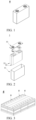
- FIG. 1 shows a prismatic lithium-ion battery 5 as an example.
- the lithium-ion battery may include an outer package configured to package the positive electrode plate, the negative electrode plate, the separator, and the electrolytic solution.
- the outer package of the lithium-ion battery may be a soft package such as a pouch-type soft package.
- the material of the soft package may be plastic such as one or more of polypropylene (PP), polybutylene terephthalate (PBT), or polybutylene succinate (PBS).
- the outer package of the lithium-ion battery may also be a hard housing such as a hard plastic housing, an aluminum housing, or a steel housing.
- the outer package may include a housing body 51 and a cover plate 53.
- the housing body 51 may include a bottom plate and a side plate connected to the bottom plate.
- the bottom plate and the side plate define an accommodation cavity.
- the housing body 51 is provided with an opening that communicates with the accommodation cavity.
- the cover plate 53 can cover the opening to close the accommodation cavity.
- the positive electrode plate, the negative electrode plate, and the separator may be wound or stacked to form the battery cell 52.
- the battery cell 52 is packaged in the accommodation cavity.
- the electrolytic solution serves to infiltrate in the battery cell 52.
- the quantity of battery cells 52 contained in the lithium-ion battery 5 may be one or more, and may be adjusted as required.
- the lithium-ion batteries may be assembled into a battery module.
- the quantity of the lithium-ion batteries contained in a battery module may be plural, and may be adjusted according to the use and capacity of the battery module.
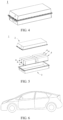
- FIG. 3 shows a battery module 4 as an example.
- a plurality of lithium-ion batteries 5 may be arranged sequentially along a length direction of the battery module 4. Nevertheless, the secondary batteries may also be arranged in any other manner. Further, the plurality of lithium-ion batteries 5 may be fixed by a fastener.
- the battery module 4 may further include an enclosure that provides an accommodation space.
- the plurality of lithium-ion batteries 5 are accommodated in the accommodation space.
- the battery module may be assembled into a battery pack.
- the quantity of the battery modules contained in a battery pack may be adjusted according to the application and capacity of the battery pack.
- FIG. 4 and FIG. 5 show a battery pack 1 as an example.
- the battery pack 1 may include a battery box and a plurality of battery modules 4 disposed in the battery box.
- the battery box includes an upper box 2 and a lower box 3.
- the upper box 2 can fit the lower box 3 to form a closed space for accommodating the battery module 4.
- the plurality of battery modules 4 may be arranged in the battery box in any manner.
- the device includes the lithium-ion battery described herein above.
- the lithium-ion battery may be used as a power supply to the device, or as an energy storage unit of the device.
- the device may be, but is not limited to, a mobile device (such as a mobile phone or a laptop computer), an electric vehicle (such as a battery electric vehicle, a hybrid electric vehicle, a plug-in hybrid electric vehicle, an electric bicycle, an electric scooter, an electric golf cart, or an electric truck), an electric train, a ship, a satellite system, or an energy storage system.
- a lithium-ion battery, a battery module, or a battery pack may be selected for the device according to working requirements of the device.
- FIG. 6 shows a device as an example.
- the device may be a battery electric vehicle, a hybrid electric vehicle, a plug-in hybrid electric vehicle, or the like.
- a battery pack or a battery module may be used for the device.
- the device may be a mobile phone, a tablet computer, a notebook computer, or the like.
- the device is generally required to be thin and light, and may use a lithium-ion battery as a power supply.
- a method for preparing the positive electrode plate includes: evenly mixing lithium cobalt oxide as a positive active material, conductive carbon as a conductive agent, and polyvinylidene difluoride (PVDF) as a binder at a weight ratio of 96:2:2, and making the mixture into a positive slurry of a specific viscosity for the lithium-ion battery.
- PVDF polyvinylidene difluoride
- a preparation method includes: mixing a negative active material (the negative active material is a mixture of graphite and Si powder, where a weight percent of Si powder is 50 wt%), styrene butadiene rubber as a negative binder, a conductive carbon black Super P as a negative conductive agent at a weight ratio of 92:3:5, and dispersing the mixture in a solvent N-methyl-pyrrolidone (NMP) to make a negative slurry; evenly coating both the front and the back of a negative current collector copper foil with the negative slurry at a coating amount of 130 mg/1540 mm 2 , and drying in an 85 °C oven to make a substrate of a negative electrode plate; and calendering a metal lithium strip to form a lithium foil of 1 ⁇ 20 ⁇ m in thickness, pressing the lithium foil onto the surface of the substrate of the negative electrode plate, and then performing slitting to obtain a negative electrode plate pre-supplemented with lithium.
- NMP N-methyl-pyrrolidon
- the preparation method further includes: evenly mixing an organic porous particulate material (for specific parameters, see Table 1), a binder (a weight ratio of the organic porous particulate material to the binder is 80:20), and cyclohexane to make a first functional coating slurry, evenly coating a surface of a lithium-supplementing layer of the negative electrode plate with the first functional coating, and drying in an 85 °C oven to obtain the negative electrode plate of the lithium-ion battery according to Embodiments 1 ⁇ 23, where the negative electrode plate contains the first functional coating.
- an organic porous particulate material for specific parameters, see Table 1
- a binder a weight ratio of the organic porous particulate material to the binder is 80:20
- cyclohexane to make a first functional coating slurry
- a preparation method includes: using a polyethylene microporous thin film of 16 ⁇ m in thickness as a substrate of the separator, and evenly mixing porous aluminum oxide, styrene-butadiene rubber as a binder (a weight ratio of the porous aluminum oxide to the binder is 80:20), and deionized water to make an inorganic coating slurry; evenly coating a surface of the substrate of the separator with the inorganic coating slurry, where a coating thickness is controlled to be 4 ⁇ 1 ⁇ m; and drying in a 60 °C oven to make a separator containing the inorganic coating.
- the preparation method further includes: evenly mixing an organic porous particulate material (for specific parameters, see Table 1), styrene butadiene rubber (a weight ratio of the organic porous particulate material to the styrene butadiene rubber is 80:20), and deionized water to make an organic coating slurry, and then evenly coating the surface of the inorganic coating of the separator with the organic coating slurry; and drying in an 85 °C oven to obtain the separator of the lithium-ion battery according to Embodiments 1 ⁇ 23, where the separator contains the second functional coating.
- an organic porous particulate material for specific parameters, see Table 1
- styrene butadiene rubber a weight ratio of the organic porous particulate material to the styrene butadiene rubber is 80:20
- deionized water to make an organic coating slurry
- a preparation method includes: dissolving lithium hexafluorophosphate in a mixed solvent of ethylene carbonate, dimethyl carbonate, and ethyl methyl carbonate to obtain the electrolytic solution, where a volume ratio of ethylene carbonate to dimethyl carbonate to ethyl methyl carbonate is 1:2:1.
- a preparation method includes: winding and assembling the positive electrode plate, the negative electrode plate containing the first functional coating, and the separator located between the positive electrode plate and the negative electrode plate, where, after the assembling, a lithium-supplementing layer and a first functional coating are sequentially disposed on a surface of the negative electrode plate toward the separator, and a second functional coating is disposed on a surface of the separator toward the negative electrode plate; and then injecting the electrolytic solution to make the lithium-ion battery according to Embodiments 1 ⁇ 23.
- the preparation method further includes: preparing the lithium-ion batteries according to Embodiments 1 ⁇ 23 of this application based on the foregoing method, where specific parameters of the organic porous particulate material used in each embodiment are shown in Table 1.
- Comparative Embodiment 1 differs from Embodiments 1 ⁇ 23 in that, in the lithium-ion battery according to Comparative Embodiment 1, the negative electrode contains no first functional coating, and the separator contains no second functional coating.
- Comparative Embodiment 2 differs from Embodiment 1 in that the negative electrode in Comparative Embodiment 2 contains no first functional coating.
- Table 1 shows specific parameters and test results of Embodiments 1 ⁇ 23 and Comparative Embodiments 1 and 2: Table 1 Specific parameters and test results of Embodiments 1 ⁇ 23 and Comparative Embodiments 1 and 2 Type of organic porous particulate material Structure of organic porous particulate material Significant surface functional group Particle size D50 Average pore size Crystalli nity Crosslink ability Heat emission temperature of lithium-supplementing electrode plate (°C) Electrolyte storage capacity F Compre ssibility S Available gap at corner ( ⁇ m) Internal resistance of battery cell (mOhm) Cycle performa nce (cycles) Embodi ment 1 Polyacrylic ester Hollow sphere Ester 5 10 30% 30% 48 94% 72% 20 0.59 870 Embodi ment 2 Polyacrylic ester Hollow sphere Ester 5 10 40% 30% 52 85% 60% 15 0.61 810 Embodi ment 3 Polyacrylic ester Hollow sphere Ester 5 10 50% 30% 55 70% 50% 10 0.62 760 Embodi ment 4 Polyacrylic ester Hollow sphere Ester 5 10
- An increased crystallinity of the organic porous particulate material exerts the following effects on the performance: (1) the electrolyte storage capacity of the material is reduced: as the crystallinity increases, the material is more capable of precluding permeation of the electrolytic solution, and is more resistant to solvents, consequently weakening the infiltration of the electrolytic solution. When the crystallinity reaches 80% (Embodiment 4), the electrolyte storage capacity of the material is merely 50%. (2) Reducing compressibility of the material: The crystallinity is increased in parallel with the decrease of the compressibility of the material.
- the organic porous particulate material exhibits very high mechanical performance, excessive resistance to compression, and a compressibility of less than 50%. Consequently, it is difficult to reshape the major surface of the rolled battery cell. To be specific, the gap between the electrode plates at the major surface of the rolled battery cell is increased.
- the increased crystallinity reduces the compressibility of the material, and decreases a contact area between the surface of the lithium-supplementing electrode plate and the organic porous particulate material.
- the surface functional group of the particulate material reacts with the lithium-supplementing layer on the surface of the electrode plate to form a passivation layer on the surface of the lithium-supplementing layer, thereby affecting the heating effect of the lithium-supplementing layer.
- the heat emission temperature of the lithium-supplementing electrode plate is relatively high (the heat emission temperature of the electrode plate in Embodiment 4 reaches 58 °C).
- the crystallinity of the organic porous particulate material is within a range of 30% to 80%, and optionally, 30% to 50%.
- Embodiments 1 and 5 ⁇ 9 show how the changed crosslinkability of the organic porous particulate material affects the performance
- the organic materials are identical in porous particles, significant functional groups, particle size, pore size, and crystallinity, but differ merely in crosslinkability.
- the increased crosslinkability of the organic porous particulate material brings the following effects:
- the increased crosslinkability of the organic porous particulate material makes the material less capable of storing the electrolytic solution and less compressible.
- the crosslinkability of the organic porous particulate material is too high (as in Embodiment 9)
- the following problems will occur: (1)
- the electrolyte storage capacity of the material is affected: The too high crosslinkability disrupts the original molecular structure and makes the material less capable of absorbing the electrolytic solution.
- the compressibility of the material is affected: When the crosslinkability is too high, a meshed structure formed between molecules of the porous material is firmer, and has higher molecular mechanical performance and higher resistance to compression.
- the major surface of the rolled battery cell is difficult to reshape.
- the gap between the electrode plates at the major surface of the rolled battery cell is very large.
- the transmission distance of lithium ions is lengthened, thereby increasing the internal resistance of the battery cell, and ultimately affecting the cycle performance of the battery cell.
- the gap at the corner is affected:
- the too high crosslinkability reduces the compressibility of the material.
- the heat emission of the electrode plate is affected: As mentioned above, the too high crosslinkability reduces the compressibility of the material.
- the reduced compressibility can provide a larger gap between the lithium-supplementing electrode plates, enhance effects of ventilation and heat dissipation between the lithium-supplementing electrode plates, and ultimately reduce the heat emission temperature of the lithium-supplementing electrode plates.
- the reduced compressibility also reduces the contact area between the surface of the lithium-supplementing electrode plate and the particulate material.
- the ester reacts with the lithium-supplementing layer on the surface of the electrode plate to form on a passivation layer on the surface of the lithium-supplementing layer, thereby affecting the heat emission effect of the lithium-supplementing layer. If the contact area is too small, the heat emission temperature of the lithium-supplementing electrode plate is relatively high.
- the decreased crosslinkability of the organic porous particulate material makes the material more capable of storing the electrolytic solution and more compressible.
- the crosslinkability is 20% (as in Embodiment 5)
- the available gap at the corner reaches 20 ⁇ m, and the heat emission temperature of the electrode plate, the internal resistance of the battery cell, and the cycle performance are excellent.
- the crosslinkability is reduced to less than 20%, the hardness of the organic porous particulate material will decrease due to the reduced crosslinkability between organics.
- the crosslinkability of the organic porous particulate material is 20% to 80%, and optionally, 20% to 70%.
- Embodiments 1 and 10-11 show how the changed surface functional group of the organic porous particulate material affects the performance
- the organic materials are identical in porous particles, particle size, pore size, crystallinity, and crosslinkability, but differ merely in significant functional group.
- a different surface functional group decides a different reactivity between the organic porous particulate material and the lithium-supplementing layer of the electrode plate.
- Functional groups of relatively high reactivity with the lithium-supplementing layer are carboxyl, hydroxyl, and ester consecutively. However, although the carboxyl can form a passivation layer on the surface of the lithium layer most quickly, the carboxyl reacts too violently with the lithium layer.
- the heat emission temperature during lithium-supplementing is relatively high (as in Embodiment 10).
- the differences of the surface functional group also affects the electrolyte absorption capacity of the material. Due to the rule of the likes dissolve each other, there are many ester polymer materials in the electrolytic solution. Therefore, the ester functional groups on the surface of the material considerably increase the electrolyte absorption capacity of the material, and enhance the battery performance (Embodiment 1) more effectively.
- Embodiments 1 and 12 ⁇ 15 show how the changed particle size of the organic porous particulate material affects the performance
- the organic materials are identical in porous particles, surface functional groups, pore size, crystallinity, and crosslinkability, but differ merely in particle size.
- the increased particle size of the organic porous particulate material brings the following effects: (1) The electrolyte storage capacity is increased: With a larger particle size, a larger space is available for absorbing more electrolytic solution (the electrolyte storage capacity of the material in Embodiment 15 reaches 110%). (2) The available gap at the corner is affected: The increased particle size increases the available gap at the corner of the battery cell (the gap at the corner in Embodiment 15 reaches 100 ⁇ m). However, a too large gap at the corner leads to a too long transmission distance of lithium ions at the corner. Consequently, lithium plating black flecks appear on the interface, thereby increasing the internal resistance of the battery cell (the internal resistance of the battery cell in Embodiment 15 is relatively high), and affecting the battery performance.
- the reduced particle size of the organic porous particulate material brings the following effects: (1) The heat emission temperature of the electrode plate is increased: When the particle size of the organic porous particulate material is reduced, the material is more likely to react with the lithium-supplementing electrode plate to form a passivation layer on the surface of the lithium-supplementing layer of the lithium-supplementing electrode plate. If the particle size is too small, a heat conduction path between the lithium-supplementing layer and the electrode plate will be reduced, thereby leading to an increase of the temperature of the electrode plate and possibly bringing safety hazards (for example, the heat emission temperature of the electrode plate in Embodiment 12 reaches 60 °C).
- the gap at the corner is reduced:
- the reduced particle size of the organic porous particulate material also directly leads to reduction of the gap at the corner of the battery cell (for example, the gap at the corner in Embodiment 12 is merely 3 ⁇ m).
- the particle size of the organic porous particulate material is 1 ⁇ m to 70 ⁇ m, and optionally, 5 ⁇ m to 50 ⁇ m.
- Embodiments 1 and 16-19 show how the changed pore size of the organic porous particulate material affects the performance
- the organic materials are identical in porous particles, surface functional groups, particle size, crystallinity, and crosslinkability, but differ merely in pore size.
- the increased pore size of the organic porous particulate material brings the following effects: (1) The heat emission temperature of the lithium-supplementing electrode plate is reduced: The increased pore size of the material can increase effects ventilation and heat dissipation between electrode plates and reduce the heat emission temperature of the lithium-supplementing electrode plate, thereby improving manufacturing safety of the lithium-supplementing electrode plate (for example, the heat emission temperature of the electrode plate in Embodiment 19 is merely 40 °C). (2) The electrolyte storage capacity is affected: The material with a larger pore size can absorb and store the electrolytic solution more easily.
- the reduced pore size of the organic porous particulate material reduces the electrolyte absorption and storage capacities of the material.
- the pore size of micropores on the surface is too small, transmission of lithium ions is not smooth, and the internal resistance of the battery cell is likely to increase, ultimately affecting the enhancement of electrical performance of the lithium-ion battery (for example, the performance in Embodiment 16 is inferior to that in Embodiments 17 and 18). Therefore, in the embodiments of this application, the pore size of the organic porous particulate material is 1 nm to 200 nm, and optionally, 5 nm to 50 nm.
- Embodiments 1 and 20-21 show how the changed internal structure of the organic porous particulate material affects the performance
- the organic materials are identical in surface functional groups, particle size, pore size, crystallinity, and crosslinkability, but differ merely in internal structure of porous particles
- the organic porous particulate material is a solid particulate structure (Embodiment 21)
- the electrolyte absorption and storage capacities of the material will be severely affected, and the solid particulate structure is less compressible, thereby increasing the internal resistance of the battery cell and ultimately affecting the battery performance.
- the organic porous particulate material is a through-hole structure (Embodiment 20)
- the material can well store the electrolytic solution, and is somewhat compressible, thereby providing a reserved space for the expansion of the electrode plate and an available gap at the corner.
- the organic porous particulate material is a hollow structure (Embodiment 1), the material is more capable of storing the electrolytic solution and more compressible, and is more conducive to performance enhancement of the electrode plate and the battery.
- Embodiments 1 and 22-23 show how the changed constituents of the organic material affects the performance
- the organic materials are identical in internal structure, surface functional groups, particle size, pore size, crystallinity, and crosslinkability, but differ merely in constituents.
- Hydrocarbon and olefin materials are less compressible because their molecular structures are mostly long chains, and therefore, increase available gaps at corners of the battery cell to a smaller extent than ester, carboxyl, and hydroxyl materials.
- the esters and the organic porous particulate materials containing carboxyl or hydroxyl (as in Embodiment 1) not only increases the gap at the corner of the battery cell significantly, but also dissolves the electrolytic solution more effectively.
- Such materials can absorb and store a larger amount of the electrolytic solution, improve the infiltration effect of the lithium-supplementing layer of the electrode plate more effectively, and suppress the problem of insufficient electrolytic solution at the interface between the electrode plate and the separator in later cycles of the battery.
Landscapes
- Chemical & Material Sciences (AREA)
- Chemical Kinetics & Catalysis (AREA)
- Electrochemistry (AREA)
- General Chemical & Material Sciences (AREA)
- Engineering & Computer Science (AREA)
- Materials Engineering (AREA)
- Manufacturing & Machinery (AREA)
- Composite Materials (AREA)
- Inorganic Chemistry (AREA)
- Ceramic Engineering (AREA)
- Secondary Cells (AREA)
Description
- This application relates to the field of batteries, and in particular, to a lithium-ion battery and a device.
- With the ubiquity of new energy vehicles, the demand for lithium-ion power batteries is proliferating. A battery is required to have features such as fast charging, a high energy density, a long cycle life, and high stability concurrently.
- A lithium pre-supplementing technology not only makes up for loss of first-cycle coulombic efficiency of a negative electrode, but also provides an additional lithium source, thereby helping to enhance the energy density and cycle performance of the lithium-ion battery. However, a surface of an electrode plate supplemented with lithium is a smooth lithium foil. Consequently, relative slippage is likely to occur between a lithium-supplementing layer of the electrode plate and a separator, thereby affecting the stability of the battery.
- In addition, during cycles of a high-energy-density battery, the electrode plate is prone to expand, and is likely to snap off. Even a fractured section of the electrode plate may directly pierce the separator, thereby leading to safety risks of thermal runaway of a battery cell. Currently, a main measure taken to solve the problem of electrode plate expansion is to increase strength of a current collector. However, the sheer increase the strength of the current collector leads to a poor elongation of the current collector, and the problem of electrode plate expansion is not properly solved.
-
CN 105 742 613 A discloses a negative pole piece, which comprises a negative pole current collector and a negative pole film layer, wherein the negative pole film layer is arranged on the negative pole current collector and comprises at least two negative pole active material layers; and the at least two negative pole active material layers are sequentially arranged on the negative pole current collector from the inside to the outside according to the lithium-ion dynamic property decreasing order of the negative pole active material layers. -
WO 2019/107229 A1 discloses a binder composition for a non-aqueous secondary cell with which it is possible to form a slurry composition for a non-aqueous secondary cell functional layer and a functional layer for a non-aqueous secondary cell. - In view of the problems in the background technologies, an objective of this application is to provide a lithium-ion battery to enhance stability, safety and cycle performance of the lithium-ion battery.
- To achieve the foregoing objective, an aspect of this application provides a lithium-ion battery, including a positive electrode plate, a negative electrode plate, a separator located between the positive electrode plate and the negative electrode plate, and an electrolytic solution. A lithium-supplementing layer with a smooth surface and a first functional coating are sequentially disposed on a surface of the negative electrode plate, the surface being close to the separator. A second functional coating is disposed on a surface of the separator, the surface being close to the negative electrode plate. Further, an inorganic coating is disposed between the separator and the second functional coating, the inorganic coating comprises an inorganic particulate material, and the inorganic particulate material is one or more selected from aluminum oxide, silicon monoxide, silicon dioxide, zirconium dioxide, manganese oxide, magnesium oxide, calcium oxide, and calcium carbonate. Both the first functional coating and the second functional coating contain an organic porous particulate material. A compressibility S of the organic porous particulate material ranges from 40% to 90%, and optionally, 50% to 80%.
- The following relational expression is satisfied: S = (H - h)/H, where H represents an original particle height of the organic porous particulate material, and h represents a particle height of the organic porous particulate material that has been pressed for 1 minute under a pressure of 2 Mpa. The inorganic coating is 0.5 µm to 10 µm in thickness, and the first functional coating and the second functional coating are each 5 µm to 70 µm in thickness. The organic porous particulate material is one or more selected from polyacrylate, polypropylene, polyethylene, polyamide, polyborate, polysulfone, polyarylate, polyvinylpyridine, and polyaniline.
- Another aspect of this application further provides a device. A drive source or a storage source of the device is the lithium-ion battery described above.
- Compared with the prior art, this application achieves at least the following beneficial effects:
- 1. Both the first functional coating and the second functional coating contain the organic porous particulate material, and the organic porous particulate material in the first functional coating and the organic porous particulate material in the second functional coating can achieve an effect of mechanical riveting on a contact surface, thereby increasing an interaction force between the lithium-supplementing electrode plate and the separator. The increased interaction force can suppress the relative slippage between the lithium-supplementing layer and the separator due to a smooth surface of the lithium-supplementing layer after the negative electrode plate is supplemented with lithium, thereby enhancing the stability of the lithium-ion battery.
- 2. The organic porous particulate material contained in the first functional coating and the second functional coating can increase a reserved gap between the lithium-supplementing layer of the electrode plate and the separator (especially at a corner). On the one hand, this mitigates safety risks of electrode plate fracturing or even separator piercing caused by expansion of the electrode plate. On the other hand, this ensures air circulation at the corner, facilitates heat dissipation, and prevents a corner of a rolled battery cell supplemented with lithium from being blackened by poor air circulation, thereby increasing a lithium utilization rate of the lithium-supplementing battery and ultimately improving battery performance. Still on another hand, this can also enhance a capacity of accommodating lithium scraps/lithium specks on a surface of the lithium-supplementing layer of the electrode plate because the compressible coating reduces a probability of piercing the separator by the lithium scraps/lithium specks. After the electrolytic solution is injected, the lithium-supplementing layer is inserted into an active material layer, and bumps on the surface of the lithium-supplementing layer disappear, thereby improving battery safety.
- 3. The organic porous particulate material contained in the first functional coating and the second functional coating can absorb the electrolytic solution, and improve an infiltration effect of the lithium-supplementing layer of the electrode plate, so that the lithium-supplementing layer can be inserted into the active material layer more effectively. In addition, this also increases a utilization rate of the lithium-supplementing layer and improves battery performance. Moreover, the electrolytic solution can be stored in the organic porous particulate material to suppress a problem of insufficient electrolytic solution at an interface between the electrode plate and the separator in later cycles of the battery, and improve cycle performance of the battery.
- 4. The device according to this application includes the lithium-ion battery provided in this application, and therefore, has at least the advantages identical to those of the lithium-ion battery according to this application.
- To describe the technical solutions in the embodiments of this application more clearly, the following outlines the drawings used in the embodiments of this application. Apparently, the drawings outlined below are merely a part of embodiments of this application. A person of ordinary skill in the art may derive other drawings from the outlined drawings without making any creative efforts.
-
FIG. 1 is a schematic diagram of a lithium-ion battery according to an embodiment; -
FIG. 2 is an exploded view ofFIG. 1 ; -
FIG. 3 is a schematic diagram of a battery module according to an embodiment; -
FIG. 4 is a schematic diagram of a battery pack according to an embodiment; -
FIG. 5 is an exploded view ofFIG. 4 ; and -
FIG. 6 is a schematic diagram of a device using a lithium-ion battery as a power supply -
- 1-
- Battery pack;
- 2-
- Upper box;
- 3-
- Lower box;
- 4-
- Battery module;
- 5-
- Lithium-ion battery;
- 51-
- Housing body;
- 52-
- Battery cell; and
- 53-
- Cover plate.
- To make the objectives, technical solutions, and advantages of the embodiments of this application clearer, the following gives a clear and comprehensive description of the technical solutions in the embodiments of this application. Apparently, the described embodiments are merely a part of but not all of the embodiments of this application. All other embodiments derived by a person of ordinary skill in the art based on the embodiments of this application without making any creative efforts shall fall within the protection scope of this application.
- The following describes in detail a lithium-ion battery according to this application. A lithium-ion battery provided in an embodiment of this application includes a positive electrode plate, a negative electrode plate, a separator located between the positive electrode plate and the negative electrode plate, and an electrolytic solution. A lithium-supplementing layer with a smooth surface and a first functional coating are sequentially disposed on a surface of the negative electrode plate, the surface being close to the separator. A second functional coating is disposed on a surface of the separator, the surface being close to the negative electrode plate. Further, an inorganic coating is disposed between the separator and the second functional coating, the inorganic coating comprises an inorganic particulate material, and the inorganic particulate material is one or more selected from aluminum oxide, silicon monoxide, silicon dioxide, zirconium dioxide, manganese oxide, magnesium oxide, calcium oxide, and calcium carbonate. Both the first functional coating and the second functional coating contain an organic porous particulate material. The compressibility S of the organic porous particulate material satisfies:
S = (H - h)/H, where S ranges from 40% to 90%, and optionally, 50% to 80%. - H represents an original particle height of the organic porous particulate material, and h represents a particle height of the organic porous particulate material that has been pressed for 1 minute under a pressure of 2 Mpa. The inorganic coating is 0.5 µm to 10 µm in thickness, and the first functional coating and the second functional coating are each 5 µm to 70 µm in thickness. The organic porous particulate material is one or more selected from polyacrylate, polypropylene, polyethylene, polyamide, polyborate, polysulfone, polyarylate, polyvinylpyridine, and polyaniline.
- In the lithium-ion battery according to this embodiment of this application, the organic porous particulate material in the first functional coating and the organic porous particulate material in the second functional coating can achieve an effect of mechanical riveting on a contact interface, thereby increasing an interaction force between the lithium-supplementing layer of the electrode plate and the separator, suppressing the relative slippage between the lithium-supplementing layer and the separator due to a smooth surface of the lithium-supplementing layer after the negative electrode plate is supplemented with lithium, and enhancing battery stability.
- In addition, the organic porous particulate material contained in the first functional coating and the second functional coating reserves a gap between the lithium-supplementing layer of the electrode plate and the separator (especially at a corner). On the one hand, this effectively mitigates safety risks of electrode plate fracturing or even separator piercing caused by expansion of the electrode plate. On the other hand, this ensures air circulation at the corner, facilitates heat dissipation of the rolled electrode plate supplemented with lithium, and prevents a corner of a rolled battery cell supplemented with lithium from being blackened by poor air circulation, thereby increasing a lithium utilization rate of the lithium-supplementing battery cell and ultimately improving battery performance. Still on another hand, this can also enhance a capacity of accommodating lithium scraps/lithium specks on a surface of the lithium-supplementing layer because the compressible coating reduces a probability of piercing the separator by the lithium scraps/lithium specks. After the electrolytic solution is injected, the lithium-supplementing layer is inserted into an active material layer, and bumps on the surface of the lithium-supplementing layer disappear, thereby improving battery safety.
- In addition, the organic porous particulate material contained in the first functional coating and the second functional coating can absorb the electrolytic solution, and improve an infiltration effect of the lithium-supplementing layer of the electrode plate and the separator, so that the lithium-supplementing layer can be inserted into the active material layer more effectively. This also increases a utilization rate of the lithium-supplementing layer, improves effects of the electrolytic solution infiltrating the separator, and ultimately improves battery performance. Moreover, the electrolytic solution can be stored in the organic porous particulate material to suppress a problem of insufficient electrolytic solution at an interface between the electrode plate and the separator in later cycles of the battery, and improve cycle performance of the battery. Further, the organic porous particulate material is one or more selected from polyacrylate, polypropylene, polyethylene, polyamide, polyborate, polysulfone, polyarylate, polyvinylpyridine, and polyaniline.
- All the foregoing materials can absorb and store the electrolytic solution and increase an available gap at the corner of the battery cell. Polymer materials with a large molecular weight are less compressible because their molecular structures are mostly long chains, and therefore, can further increase the available gap at the corner of the battery cell. Therefore, a polymer with a weight-average molecular weight of 500-2,000,000 may be selected, and further, an ester or an organic polymer material containing carboxyl or hydroxyl with a weight-average molecular weight of 500-2,000,000 is selected. Such materials increase the available gap at the corner of the battery cell more significantly. A reason is that the ester or the organic polymer materials containing carboxyl or hydroxyl not only increases the gap at the corner of the battery cell significantly, but also dissolves the electrolytic solution more effectively. Such materials can absorb and store a larger amount of the electrolytic solution, improve the infiltration effect of the lithium-supplementing layer of the electrode plate more effectively, and suppress the problem of insufficient electrolytic solution at the interface between the electrode plate and the separator in later cycles of the battery. The ester in this application is one or more selected from polyacrylate, polypropylene carbonate, aromatic copolyester, polyurethane, polyhydroxybutyrate, and poly fatty acid ester. The organic polymer material containing carboxyl or hydroxyl may be one or more selected from acrylic resin (carboxyl), polyacrylic resin, hexahydroxy triphenyl, phenolic hydroxyl structure polymer, polyvinyl alcohol, and the like.
- Further, a significant surface functional group of the organic porous particulate material is one or more selected from carboxyl, hydroxyl, ester, alkenyl, and alkyl.
- A surface functional group of the organic porous particulate material affects electrochemical performance of the lithium-ion battery. After a lot of experimental research, the inventor finds that surface activity of the organic porous particulate material varies depending on the type of the surface functional group, thereby affecting a speed and an extent of a reaction between the organic porous particulate material and the lithium-supplementing layer of the electrode plate. Functional groups of relatively high reactivity with the lithium-supplementing layer are carboxyl, hydroxyl, and ester consecutively. A chemical reaction between the surface functional group of the organic porous particulate material and the lithium-supplementing layer of the electrode plate helps to improve the interaction between the surface functional group and the lithium-supplementing layer, thereby increasing a bonding effect between the first functional coating and the lithium-supplementing layer of the negative electrode. However, an excessive reaction between a lithium layer and the carboxyl that serves as the surface functional group may lead to a relatively high heat emission temperature of the electrode plate. Therefore, it is necessary to control reaction conditions or perform pretreatment, or select an appropriate organic porous particulate material to achieve a relatively appropriate reactivity of the surface functional group. Secondly, the difference in the surface functional group also affects an electrolyte absorption capacity of the material. In the electrolytic solution, there are many ester polymer materials. Based on the rule of the likes dissolve each other, the ester functional group on the surface of the material effectively improves the electrolyte absorption capacity of the material. Therefore, when the significant surface functional group of the organic porous particulate material is an ester group, the electrochemical performance of the battery is improved significantly. The significant surface functional group mentioned in this application means a functional group of which the content is the highest on the surface. Further, the particle size of the organic porous particulate material is 1 µm to 70 µm, and optionally, 5 µm to 50 µm.
- As the particle size of the organic porous particulate material increases, the material is more capable of absorbing and storing the electrolytic solution, and a molecular chain of the material is larger. Therefore, the compressibility of the material decreases, and the available gap at the corner is larger. When the particle size increases, the gap at the corner also increases. The increased gap reserves enough space for expansion of the electrode plate, but increases a transmission distance of lithium ions at the corner, and is likely to cause lithium-plating black flecks on the interface, increase an internal resistance of the battery cell, and affect battery performance. The increased particle size makes the organic porous particulate material absorb more electrolytic solution. This can effectively increase an electrolyte retention capacity, but may decrease a bonding force between the negative electrode plate and the organic particulate material, affect an interface effect of the battery cell, and ultimately affect the battery performance. With the decrease of the particle size of the organic porous particulate material, distribution of the organic porous particulate material on the negative electrode plate becomes denser. This can increase the bonding force between the negative electrode plate and the organic porous particulate material, but is likely to cause a too small gap on the surface of the electrode plate. Consequently, heat dissipation is difficult, and safety hazards are brought. In addition, due to the decrease of the particle size, the gap at the corner decreases accordingly, and cannot reserve enough space for the expansion of the electrode plate during cycles, thereby affecting enhancement of the cycle performance of the battery. Therefore, an appropriate particle size of the organic porous particulate material can enhance overall performance of the lithium-ion battery. Further, a pore size of the organic porous particulate material is 1 nm to 200 nm, and optionally, 5 nm to 50 nm.
- The increased pore size of the organic porous particulate material improves effects of ventilation and heat dissipation between the electrode plates, decreases the heat emission temperature of the lithium-supplementing electrode plate, increases the electrolyte absorption capacity of the material, increases the compressibility of particles, and increases the available gap at the corner. When the pore size of the material is too large, the electrolyte absorption capacity is increased, but excessive absorption of the electrolytic solution is likely to decrease the bonding force between the lithium-supplementing layer of the electrode plate and the material, and affect enhancement of electrical performance. The decreased pore size of the organic porous particulate material increases an electrolyte storage capacity of the organic porous particulate material, but deteriorates a transmission effect of lithium ions, increases the internal resistance of the battery cell, and adversely affects enhancement of the battery performance. Therefore, the pore size needs to be controlled to be within an appropriate range to enhance the overall performance of lithium-ion battery more effectively. Further, the organic porous particulate material is a hollow structure and/or a through-hole structure.
- The structure of the organic porous particulate material affects the electrochemical performance of the battery. If the organic porous particulate material is a solid particle structure, the structure can reserve a specific space for the expansion of the electrode plate and provide a specific electrolyte absorption capacity, but is not desirable in enhancing electrochemical performance. Therefore, the organic porous particulate material is designed to be a hollow structure and/or a through-hole structure, thereby facilitating the electrolytic solution to fully permeate the organic porous particulate material, and enhancing the electrolyte absorption and storage capacities of the material. Therefore, the organic porous particulate material used in this embodiment of this application is optionally a hollow structure and/or a through-hole structure. Further, optionally, the organic porous particulate material of a hollow structure is more capable of absorbing and storing the electrolytic solution than the organic porous particulate material of a through-hole structure. That is because the distinct hollow structure provides a larger electrolyte storage space inside the particulate material, and is more capable of storing the electrolytic solution and more compressible, and more conducive to enhancement of the battery performance.
- Further, the crystallinity of the organic porous particulate material is 30% to 80%, and optionally, 30% to 50%.
- Crystallinity means a percentage of crystalline regions in a polymer. Crystallization is an ordered arrangement of molecular chains. Generally, the higher the crystallinity, the more regularly the molecular chains are arranged. As the crystallinity of the material increases, the material is less compressible and less capable of absorbing the electrolytic solution. When the crystallinity is too high, the compressibility of the material is relatively low. The low compressibility enhances the performance of the lithium-ion battery, but to an insignificant extent. The low compressibility is likely to make it difficult to reshape a major surface of the rolled battery cell, and increase the internal resistance of the battery cell. Consequently, enough space is not able to be reserved for the expansion of the electrode plate, the material is less capable of absorbing the electrolytic solution, and the effect of improving the infiltration of the electrolytic solution for the electrode plate is insufficient.
- Further, a crosslinkability of the organic porous particulate material is 20% to 80%, and optionally, 20% to 70%.
- The crosslinkability means a degree of crosslinking between polymer chains in a polymer. As the crosslinkability of the organic porous particulate material increases, the material is less compressible and less capable of storing the electrolytic solution. When the crosslinkability is too high, the compressibility of the material is relatively low, it is difficult to reshape the major surface of the rolled battery cell, and the internal resistance of the battery cell increases. Consequently, enough space is not able to be reserved for the expansion of the electrode plate, and the heat emission temperature of the electrode plate is relatively high. In addition, the material is less capable of storing the electrolytic solution, and the effect of improving the infiltration of the electrolytic solution for the electrode plate is weak. When the crosslinkability of the material is too low, the compressibility of the material is increased significantly, and the material is prone to be crushed, consequently impairing the original structure and the electrolyte storage capacity of the material, and affecting enhancement of the battery performance. Further, an inorganic coating is disposed between the separator and the second functional coating, the inorganic coating includes an inorganic particulate material, and the inorganic particulate material is one or more selected from aluminum oxide, silicon monoxide, silicon dioxide, zirconium dioxide, manganese oxide, magnesium oxide, calcium oxide, and calcium carbonate.
- The inorganic coating is added to increase heat resistance of the separator, reduce thermal shrinkage of the separator during cycles of the battery, and improve stability of the separator. The inorganic coating is 0.5 µm to 10 µm in thickness, and the first functional coating and the second functional coating are each 5 µm to 70 µm in thickness.
- Further, the first functional coating, the second functional coating, and the inorganic coating each contain a binder. The binder is one or more selected from polyacrylate, polyacrylate copolymer, polyvinylidene difluoride, vinylidene-difluoride-hexafluoropropylene copolymer, styrene butadiene rubber, and sodium hydroxymethyl cellulose. Generally, a weight percent of the binder in the first functional coating, the second functional coating, and the inorganic coating may be 10 wt% to 40 wt%.
- The shape of the lithium-ion battery is not specifically limited in this application, and may be cylindrical, prismatic or any other shape.
FIG. 1 shows a prismatic lithium-ion battery 5 as an example. - In some embodiments, the lithium-ion battery may include an outer package configured to package the positive electrode plate, the negative electrode plate, the separator, and the electrolytic solution.
- In some embodiments, the outer package of the lithium-ion battery may be a soft package such as a pouch-type soft package. The material of the soft package may be plastic such as one or more of polypropylene (PP), polybutylene terephthalate (PBT), or polybutylene succinate (PBS). The outer package of the lithium-ion battery may also be a hard housing such as a hard plastic housing, an aluminum housing, or a steel housing.
- In some embodiments, referring to
FIG. 2 , the outer package may include ahousing body 51 and acover plate 53. Thehousing body 51 may include a bottom plate and a side plate connected to the bottom plate. The bottom plate and the side plate define an accommodation cavity. Thehousing body 51 is provided with an opening that communicates with the accommodation cavity. Thecover plate 53 can cover the opening to close the accommodation cavity. - The positive electrode plate, the negative electrode plate, and the separator may be wound or stacked to form the
battery cell 52. Thebattery cell 52 is packaged in the accommodation cavity. The electrolytic solution serves to infiltrate in thebattery cell 52. - The quantity of
battery cells 52 contained in the lithium-ion battery 5 may be one or more, and may be adjusted as required. - In some embodiments, the lithium-ion batteries may be assembled into a battery module. The quantity of the lithium-ion batteries contained in a battery module may be plural, and may be adjusted according to the use and capacity of the battery module.
-
FIG. 3 shows abattery module 4 as an example. Referring toFIG. 3 , in thebattery module 4, a plurality of lithium-ion batteries 5 may be arranged sequentially along a length direction of thebattery module 4. Nevertheless, the secondary batteries may also be arranged in any other manner. Further, the plurality of lithium-ion batteries 5 may be fixed by a fastener. - Optionally, the
battery module 4 may further include an enclosure that provides an accommodation space. The plurality of lithium-ion batteries 5 are accommodated in the accommodation space. - In some embodiments, the battery module may be assembled into a battery pack. The quantity of the battery modules contained in a battery pack may be adjusted according to the application and capacity of the battery pack.
-
FIG. 4 and FIG. 5 show abattery pack 1 as an example. Referring toFIG. 4 and FIG. 5 , thebattery pack 1 may include a battery box and a plurality ofbattery modules 4 disposed in the battery box. The battery box includes an upper box 2 and alower box 3. The upper box 2 can fit thelower box 3 to form a closed space for accommodating thebattery module 4. The plurality ofbattery modules 4 may be arranged in the battery box in any manner. - This application further provides a device. The device includes the lithium-ion battery described herein above. The lithium-ion battery may be used as a power supply to the device, or as an energy storage unit of the device. The device may be, but is not limited to, a mobile device (such as a mobile phone or a laptop computer), an electric vehicle (such as a battery electric vehicle, a hybrid electric vehicle, a plug-in hybrid electric vehicle, an electric bicycle, an electric scooter, an electric golf cart, or an electric truck), an electric train, a ship, a satellite system, or an energy storage system.
- A lithium-ion battery, a battery module, or a battery pack may be selected for the device according to working requirements of the device.
-
FIG. 6 shows a device as an example. The device may be a battery electric vehicle, a hybrid electric vehicle, a plug-in hybrid electric vehicle, or the like. To meet the requirements of the device for a high power and a high energy density of the battery, a battery pack or a battery module may be used for the device. - In another example, the device may be a mobile phone, a tablet computer, a notebook computer, or the like. The device is generally required to be thin and light, and may use a lithium-ion battery as a power supply.
- This application is further described below with reference to specific embodiments and comparative embodiments. Understandably, the embodiments are merely intended to illustrate this application but not intended to limit the scope of this application.
- A process of preparing a lithium-ion battery according to
Embodiments 1~23 is described below. - A method for preparing the positive electrode plate includes: evenly mixing lithium cobalt oxide as a positive active material, conductive carbon as a conductive agent, and polyvinylidene difluoride (PVDF) as a binder at a weight ratio of 96:2:2, and making the mixture into a positive slurry of a specific viscosity for the lithium-ion battery. coating a positive current collector aluminum foil with the positive slurry, drying at 85 °C, and then cold-calendering the aluminum foil; performing edge trimming, cutting, and slitting, and then drying at 85 °C for 4 hours under a vacuum condition, and welding tabs to make a positive electrode plate.
- A preparation method includes: mixing a negative active material (the negative active material is a mixture of graphite and Si powder, where a weight percent of Si powder is 50 wt%), styrene butadiene rubber as a negative binder, a conductive carbon black Super P as a negative conductive agent at a weight ratio of 92:3:5, and dispersing the mixture in a solvent N-methyl-pyrrolidone (NMP) to make a negative slurry; evenly coating both the front and the back of a negative current collector copper foil with the negative slurry at a coating amount of 130 mg/1540 mm2, and drying in an 85 °C oven to make a substrate of a negative electrode plate; and calendering a metal lithium strip to form a lithium foil of 1~20 µm in thickness, pressing the lithium foil onto the surface of the substrate of the negative electrode plate, and then performing slitting to obtain a negative electrode plate pre-supplemented with lithium.
- The preparation method further includes: evenly mixing an organic porous particulate material (for specific parameters, see Table 1), a binder (a weight ratio of the organic porous particulate material to the binder is 80:20), and cyclohexane to make a first functional coating slurry, evenly coating a surface of a lithium-supplementing layer of the negative electrode plate with the first functional coating, and drying in an 85 °C oven to obtain the negative electrode plate of the lithium-ion battery according to
Embodiments 1~23, where the negative electrode plate contains the first functional coating. - A preparation method includes: using a polyethylene microporous thin film of 16 µm in thickness as a substrate of the separator, and evenly mixing porous aluminum oxide, styrene-butadiene rubber as a binder (a weight ratio of the porous aluminum oxide to the binder is 80:20), and deionized water to make an inorganic coating slurry; evenly coating a surface of the substrate of the separator with the inorganic coating slurry, where a coating thickness is controlled to be 4±1 µm; and drying in a 60 °C oven to make a separator containing the inorganic coating.
- The preparation method further includes: evenly mixing an organic porous particulate material (for specific parameters, see Table 1), styrene butadiene rubber (a weight ratio of the organic porous particulate material to the styrene butadiene rubber is 80:20), and deionized water to make an organic coating slurry, and then evenly coating the surface of the inorganic coating of the separator with the organic coating slurry; and drying in an 85 °C oven to obtain the separator of the lithium-ion battery according to
Embodiments 1~23, where the separator contains the second functional coating. - A preparation method includes: dissolving lithium hexafluorophosphate in a mixed solvent of ethylene carbonate, dimethyl carbonate, and ethyl methyl carbonate to obtain the electrolytic solution, where a volume ratio of ethylene carbonate to dimethyl carbonate to ethyl methyl carbonate is 1:2:1.
- A preparation method includes: winding and assembling the positive electrode plate, the negative electrode plate containing the first functional coating, and the separator located between the positive electrode plate and the negative electrode plate, where, after the assembling, a lithium-supplementing layer and a first functional coating are sequentially disposed on a surface of the negative electrode plate toward the separator, and a second functional coating is disposed on a surface of the separator toward the negative electrode plate; and then injecting the electrolytic solution to make the lithium-ion battery according to
Embodiments 1~23. - The preparation method further includes: preparing the lithium-ion batteries according to
Embodiments 1~23 of this application based on the foregoing method, where specific parameters of the organic porous particulate material used in each embodiment are shown in Table 1. With reference to the method for preparing the lithium-ion battery according toComparative Embodiment 1,Comparative Embodiment 1 differs fromEmbodiments 1~23 in that, in the lithium-ion battery according toComparative Embodiment 1, the negative electrode contains no first functional coating, and the separator contains no second functional coating. Comparative Embodiment 2 differs fromEmbodiment 1 in that the negative electrode in Comparative Embodiment 2 contains no first functional coating. - Parameter definitions of the organic porous particulate materials and a performance detection method of the lithium-ion batteries in
Embodiments 1~23 andComparative Embodiment 1 are as follows: - (1) Significant surface functional group of the organic porous particulate material (the functional group of which the content is the highest on a surface of an organic porous particle):
Functional groups in an organic material are determined by means of infrared spectroscopy. Each different wavelength corresponds to a different functional group. An intensity of an absorption peak of a specific wavelength serves to qualitatively determine the content of the functional group. A functional group corresponding to the strongest absorption peak is the significant functional group on the surface of the material. - (2) Median diameter of the organic porous particulate material:
A particle size D50 of the organic porous particulate material is determined by using a laser particle size analyzer. D50 represents a median diameter of the organic material. - (3) Average pore size of nanopores on the surface of the organic porous particulate material:
Sizes of 32 micropores on the surface of the porous material are measured by using a scanning electron microscope (SEM). An average value of the sizes represents the average pore size of the porous material. - (4) Crystallinity of the organic porous particulate material:
The heat of melting of a partially crystalline material, which is denoted by ΔH1, is measured using differential scanning calorimetry (DSC). The heat of melting of the polymer material that is 100% crystalline is known and denoted by ΔH, and therefore, the crystallinity of the material is equal to ΔH1 divided by ΔH. - (5) Crosslinkability of the organic porous particulate material:
Constituents of a thermal decomposition product of a polymer are determined by means of pyrolysis chromatography-mass spectrometry, so that the crosslinkability of the polymer is deduced. - (6) Electrolyte storage capacity F of the organic porous particulate material:
- An original weight of the organic porous particulate material is M. A measurement method includes: soaking the organic porous particulate material in the electrolytic solution for 24 hours, taking it out, and absorbing residual electrolytic solution thoroughly on the surface by using dust-free paper, and then weighing the weight M1 of the organic porous particulate material after infiltration in the electrolytic solution. The electrolyte storage capacity of the organic porous particulate material is F = (M1- M)/M.
- The electrolyte storage capacity F of the organic porous particulate materials in
Embodiments 1~23 is shown in Table 1, where F ranges from 10% to 200%, and optionally, 30% to 100%.
- (7) Compressibility S of the organic porous particulate material:
- Assuming that H represents an original particle height of the organic porous particulate material, and h represents a particle height of the organic porous particulate material that has been pressed for 1 minute under a pressure of 2 Mpa, the compressibility S of the organic porous particulate material is S = (H - h)/H.
- The compressibility S of the organic porous particulate materials in
Embodiments 1~23 is shown in Table 1, where S ranges from 40% to 90%, and optionally, 50% to 80%.
- (8) Measuring a heat emission temperature of a lithium-supplementing electrode plate:
- The measurement method includes: rewinding the lithium-supplementing electrode plate for 1,000 m by using a 6-inch reel, and inserting a temperature sensing wire at 500 m of rewinding to measure the temperature of the electrode plate by using a thermometer SKF TKDT 10, where the temperature specification is less than or equal to 60 °C.
- The heat emission temperature of the electrode plate in
Embodiments 1~23 is shown in Table 1. According toEmbodiments 1~23, the heat emission temperature of the electrode plate can be controlled to be less than 60 °C.
- (9) Measuring an available gap at a corner:

Embodiments 1~23 is shown in Table 1. The available gap ranges from 1 µm to 100 µm, and optionally, 5 µm to 80 µm. - (10) Measuring an internal resistance of a battery cell:
- Internal resistance is alternating current resistance. A device for measuring the alternating current resistance is IT5100 series battery resistance tester manufactured by Itech. The measurement method includes: applying a fixed frequency of 1 KHz and a fixed current of 50 mA to the battery cell under test, sampling the voltage, and calculating a resistance value by using a rectifier.
- The internal resistance of the battery cell in
Embodiments 1~23 is shown in Table 1. Generally, the internal resistance of the battery cell is optionally controlled to be less than 0.625 mOhm.
- (11) Testing cycle performance of a battery:
- A test method includes: charging and discharging the battery repeatedly by using a Neware mobile power product-specific tester until a capacity attenuation rate reaches 80%; for example, if the capacity of the battery cell is 70 Ah, charging and discharging the battery cell repeatedly, and, when the capacity of the battery cell attenuates to 56 Ah, stopping the test and recording the quantity of charge and discharge cycles, which is the cycle performance data of the battery cell.
- The internal resistance of the battery cell in
Embodiments 1~23 is shown in Table 1. Generally, the cycle performance of the battery cell is optionally controlled to be more than 750 cycles.
- Table 1 shows specific parameters and test results of Embodiments 1~23 and Comparative Embodiments 1 and 2:
Table 1 Specific parameters and test results of Embodiments 1~23 and Comparative Embodiments 1 and 2 Type of organic porous particulate material Structure of organic porous particulate material Significant surface functional group Particle size D50 Average pore size Crystalli nity Crosslink ability Heat emission temperature of lithium-supplementing electrode plate (°C) Electrolyte storage capacity F Compre ssibility S Available gap at corner (µm) Internal resistance of battery cell (mOhm) Cycle performa nce (cycles) Embodi ment 1 Polyacrylic ester Hollow sphere Ester 5 10 30% 30% 48 94% 72% 20 0.59 870 Embodi ment 2 Polyacrylic ester Hollow sphere Ester 5 10 40% 30% 52 85% 60% 15 0.61 810 Embodi ment 3 Polyacrylic ester Hollow sphere Ester 5 10 50% 30% 55 70% 50% 10 0.62 760 Embodi ment 4 Polyacrylic ester Hollow sphere Ester 5 10 80% 30% 58 50% 42% 2 0.67 745 Embodi ment 5 Polyacrylic ester Hollow sphere Ester 5 10 30% 20% 45 98% 80% 20 0.59 890 Embodi ment 6 Polyacrylic ester Hollow sphere Ester 5 10 30% 40% 51 81% 70% 15 0.6 825 Embodi ment 7 Polyacrylic ester Hollow sphere Ester 5 10 30% 50% 57 68% 62% 10 0.62 770 Embodi ment 8 Polyacrylic ester Hollow sphere Ester 5 10 30% 70% 59 40% 51% 6 0.62 750 Embodi ment 9 Polyacrylic ester Hollow sphere Ester 5 10 30% 80% 60 30% 40% 3 0.65 730 Embodi ment 10 Polyacrylic ester Hollow sphere Carboxyl 5 10 30% 30% 58 70% 55% 20 0.61 780 Embodi ment 11 Polyacrylic ester Hollow sphere Hydroxyl 5 10 30% 30% 52 65% 52% 20 0.6 810 Embodi ment 12 Polyacrylic ester Hollow sphere Ester 1 10 30% 30% 60 70% 71% 3 0.59 740 Embodi ment 13 Polyacrylic ester Hollow sphere Ester 20 10 30% 30% 45 95% 78% 45 0.6 900 Embodi ment 14 Polyacrylic ester Hollow sphere Ester 50 10 30% 30% 40 100% 75% 80 0.625 800 Embodi ment 15 Polyacrylic ester Hollow sphere Ester 70 10 30% 30% 38 110% 74% 100 0.66 715 Embodi ment 16 Polyacrylic ester Hollow sphere Ester 5 5 30% 30% 52 80% 72% 20 0.62 760 Embodi ment 17 Polyacrylic ester Hollow sphere Ester 5 20 30% 30% 45 95% 73% 20 0.62 800 Embodi ment 18 Polyacrylic ester Hollow sphere Ester 5 50 30% 30% 42 100% 73% 22 0.6 850 Embodi ment 19 Polyacrylic ester Hollow sphere Ester 5 200 30% 30% 40 110% 80% 25 0.59 740 Embodi ment 20 Polyacrylic ester Through-hole sphere Ester 5 10 30% 30% 50 87% 65% 17 0.6 800 Embodi ment 21 Polyacrylic ester Solid sphere Ester 5 / 30% 30% 58 25% 45% 5 0.69 740 Embodi ment 22 Polypropylen e Hollow sphere Ester 5 10 30% 30% 45 80% 45% 10 0.6 805 Embodi ment 23 Polyethylene Hollow sphere Ester 5 10 30% 30% 48 85% 40% 10 0.61 800 Compar ative Embodi ment 1 / / / / / / / 65 0% 0% 0 0.59 670 Compar ative Embodi ment 2 Polyacrylic ester Hollow sphere Ester 5 10 30% 30% 60 94% 72% 8 0.59 700 Note: In Comparative Embodiment 2, the second functional coating is merely disposed on a surface of the separator, the surface being close to the negative electrode plate. Material parameters of the coating are shown in Table 1. - As can be learned from the data in Table 1, the performance data in
Embodiments 1~23 outperformComparative Embodiments 1 and 2, indicating that the added first functional coating and second functional coating have achieved effects of enhancing stability and safety of the battery and improving the cycle performance of the battery. The following discusses how the different parameters of the first functional coating and the second functional coating affect the battery performance differently. - (i)
Embodiments 1~4 show how the changed crystallinity of the organic porous particulate material affects the performance InEmbodiments 1~4, the organic materials are identical in porous particles, significant functional groups, median diameter, average pore size, and crosslinkability, but differ merely in crystallinity. - An increased crystallinity of the organic porous particulate material exerts the following effects on the performance: (1) the electrolyte storage capacity of the material is reduced: as the crystallinity increases, the material is more capable of precluding permeation of the electrolytic solution, and is more resistant to solvents, consequently weakening the infiltration of the electrolytic solution. When the crystallinity reaches 80% (Embodiment 4), the electrolyte storage capacity of the material is merely 50%. (2) Reducing compressibility of the material: The crystallinity is increased in parallel with the decrease of the compressibility of the material. When the crystallinity reaches 80% (Embodiment 4), the organic porous particulate material exhibits very high mechanical performance, excessive resistance to compression, and a compressibility of less than 50%. Consequently, it is difficult to reshape the major surface of the rolled battery cell. To be specific, the gap between the electrode plates at the major surface of the rolled battery cell is increased. Consequently, during cycles, a transmission distance of lithium ions is lengthened, and the internal resistance of the battery cell is increased (the internal resistance of the battery cell in
Embodiment 4 is higher than that inEmbodiments 1~3, and reaches 0.67), ultimately affecting the cycle performance of the battery (the cycle performance of the lithium-ion battery inEmbodiment 4 is lower than that inEmbodiments 1~3, and is merely 745 cycles, slightly higher than that in Comparative Example 1). (3) Affecting the gap at the corner of the battery cell: As mentioned above, the increased crystallinity reduces the compressibility of the material. When the compressibility is too low, enough space is not able to be reserved for the expansion of the electrode plate (inEmbodiment 4, the available gap at the corner is merely 2 µm), adversely affecting the enhancement of performance of the lithium-ion battery. (4) Affecting the heating of the electrode plate: As mentioned above, the increased crystallinity reduces the compressibility of the material, and decreases a contact area between the surface of the lithium-supplementing electrode plate and the organic porous particulate material. The surface functional group of the particulate material reacts with the lithium-supplementing layer on the surface of the electrode plate to form a passivation layer on the surface of the lithium-supplementing layer, thereby affecting the heating effect of the lithium-supplementing layer. Therefore, when the contact area between the surface of the lithium-supplementing electrode plate and the organic porous particulate material is too small, the heat emission temperature of the lithium-supplementing electrode plate is relatively high (the heat emission temperature of the electrode plate inEmbodiment 4 reaches 58 °C). - Therefore, in the embodiments of this application, to achieve more excellent electrochemical performance of the lithium-ion battery, the crystallinity of the organic porous particulate material is within a range of 30% to 80%, and optionally, 30% to 50%.
- (ii) Embodiments 1 and 5~9 show how the changed crosslinkability of the organic porous particulate material affects the performance In
Embodiments - The increased crosslinkability of the organic porous particulate material brings the following effects: The increased crosslinkability of the organic porous particulate material makes the material less capable of storing the electrolytic solution and less compressible. When the crosslinkability of the organic porous particulate material is too high (as in Embodiment 9), the following problems will occur: (1) The electrolyte storage capacity of the material is affected: The too high crosslinkability disrupts the original molecular structure and makes the material less capable of absorbing the electrolytic solution. (2) The compressibility of the material is affected: When the crosslinkability is too high, a meshed structure formed between molecules of the porous material is firmer, and has higher molecular mechanical performance and higher resistance to compression. Consequently, the major surface of the rolled battery cell is difficult to reshape. To be specific, the gap between the electrode plates at the major surface of the rolled battery cell is very large. During cycles, the transmission distance of lithium ions is lengthened, thereby increasing the internal resistance of the battery cell, and ultimately affecting the cycle performance of the battery cell. (3) The gap at the corner is affected: The too high crosslinkability reduces the compressibility of the material. During the expansion of the electrode plate, enough space is not able to be reserved for the expansion of the electrode plate, ultimately affecting the performance of the lithium-ion battery. (4) The heat emission of the electrode plate is affected: As mentioned above, the too high crosslinkability reduces the compressibility of the material. The reduced compressibility can provide a larger gap between the lithium-supplementing electrode plates, enhance effects of ventilation and heat dissipation between the lithium-supplementing electrode plates, and ultimately reduce the heat emission temperature of the lithium-supplementing electrode plates. However, the reduced compressibility also reduces the contact area between the surface of the lithium-supplementing electrode plate and the particulate material. The ester reacts with the lithium-supplementing layer on the surface of the electrode plate to form on a passivation layer on the surface of the lithium-supplementing layer, thereby affecting the heat emission effect of the lithium-supplementing layer. If the contact area is too small, the heat emission temperature of the lithium-supplementing electrode plate is relatively high.
- Conversely, the decreased crosslinkability of the organic porous particulate material makes the material more capable of storing the electrolytic solution and more compressible. When the crosslinkability is 20% (as in Embodiment 5), the available gap at the corner reaches 20 µm, and the heat emission temperature of the electrode plate, the internal resistance of the battery cell, and the cycle performance are excellent. However, if the crosslinkability is reduced to less than 20%, the hardness of the organic porous particulate material will decrease due to the reduced crosslinkability between organics. Consequently, in a case that the organic porous particulate material is crushed, on the one hand, the original structure of the material is disrupted, transmission performance of lithium ions is affected, the internal resistance of the battery cell is increased, and ultimately the battery performance is affected; on the other hand, the original electrolyte storage capacity will be greatly reduced, and ultimately the battery performance is affected.
- Therefore, in the embodiments of this application, the crosslinkability of the organic porous particulate material is 20% to 80%, and optionally, 20% to 70%.
- (iii) Embodiments 1 and 10-11 show how the changed surface functional group of the organic porous particulate material affects the performance In
Embodiments 1 and 10~11, the organic materials are identical in porous particles, particle size, pore size, crystallinity, and crosslinkability, but differ merely in significant functional group. A different surface functional group decides a different reactivity between the organic porous particulate material and the lithium-supplementing layer of the electrode plate. Functional groups of relatively high reactivity with the lithium-supplementing layer are carboxyl, hydroxyl, and ester consecutively. However, although the carboxyl can form a passivation layer on the surface of the lithium layer most quickly, the carboxyl reacts too violently with the lithium layer. Consequently, the heat emission temperature during lithium-supplementing is relatively high (as in Embodiment 10). Secondly, the differences of the surface functional group also affects the electrolyte absorption capacity of the material. Due to the rule of the likes dissolve each other, there are many ester polymer materials in the electrolytic solution. Therefore, the ester functional groups on the surface of the material considerably increase the electrolyte absorption capacity of the material, and enhance the battery performance (Embodiment 1) more effectively. - (iv) Embodiments 1 and 12~15 show how the changed particle size of the organic porous particulate material affects the performance In
Embodiments 1 and 12~15, the organic materials are identical in porous particles, surface functional groups, pore size, crystallinity, and crosslinkability, but differ merely in particle size. - The increased particle size of the organic porous particulate material brings the following effects: (1) The electrolyte storage capacity is increased: With a larger particle size, a larger space is available for absorbing more electrolytic solution (the electrolyte storage capacity of the material in Embodiment 15 reaches 110%). (2) The available gap at the corner is affected: The increased particle size increases the available gap at the corner of the battery cell (the gap at the corner in Embodiment 15 reaches 100 µm). However, a too large gap at the corner leads to a too long transmission distance of lithium ions at the corner. Consequently, lithium plating black flecks appear on the interface, thereby increasing the internal resistance of the battery cell (the internal resistance of the battery cell in Embodiment 15 is relatively high), and affecting the battery performance. (3) The too large particle size leads to absorption of too much electrolytic solution injected, reduces the binding force between the electrode plate and the organic particles, affects the interface effect of the battery cell, and ultimately affects the cycle performance of the battery (the cycle performance in Embodiment 15 is lower than that in Embodiments 13 and 14).
- Conversely, the reduced particle size of the organic porous particulate material brings the following effects: (1) The heat emission temperature of the electrode plate is increased: When the particle size of the organic porous particulate material is reduced, the material is more likely to react with the lithium-supplementing electrode plate to form a passivation layer on the surface of the lithium-supplementing layer of the lithium-supplementing electrode plate. If the particle size is too small, a heat conduction path between the lithium-supplementing layer and the electrode plate will be reduced, thereby leading to an increase of the temperature of the electrode plate and possibly bringing safety hazards (for example, the heat emission temperature of the electrode plate in Embodiment 12 reaches 60 °C). (2) The gap at the corner is reduced: The reduced particle size of the organic porous particulate material also directly leads to reduction of the gap at the corner of the battery cell (for example, the gap at the corner in Embodiment 12 is merely 3 µm). When the gap at the corner is too small, enough space is not able to be reserved for the expansion of the electrode plate during cycles, thereby affecting the enhancement of electrical performance and cycle performance. Therefore, in the embodiments of this application, the particle size of the organic porous particulate material is 1 µm to 70 µm, and optionally, 5 µm to 50 µm.
- (v) Embodiments 1 and 16-19 show how the changed pore size of the organic porous particulate material affects the performance In
Embodiments 1 and 16~19, the organic materials are identical in porous particles, surface functional groups, particle size, crystallinity, and crosslinkability, but differ merely in pore size. - The increased pore size of the organic porous particulate material brings the following effects: (1) The heat emission temperature of the lithium-supplementing electrode plate is reduced: The increased pore size of the material can increase effects ventilation and heat dissipation between electrode plates and reduce the heat emission temperature of the lithium-supplementing electrode plate, thereby improving manufacturing safety of the lithium-supplementing electrode plate (for example, the heat emission temperature of the electrode plate in Embodiment 19 is merely 40 °C). (2) The electrolyte storage capacity is affected: The material with a larger pore size can absorb and store the electrolytic solution more easily. However, when the pore size is too large, too much electrolytic solution is absorbed, thereby reducing the bonding force between the lithium-supplementing electrode plate and the organic material particles, disrupting a surface structure of the lithium-supplementing electrode plate, deteriorating the interface, and affecting the enhancement of electrical performance (for example, the cycle performance in Embodiment 19 is inferior to that in Embodiments 17 and 18). (3) The compressibility of particles is increased: The increased pore size of the organic porous particulate material directly increases the compressibility of the particles. However, when the compressibility is too high, the particles are vulnerable to crushing, and microporous structures on the surface of the particulate material are prone to be disrupted, thereby affecting transmission effects of lithium ions and ultimately affecting electrical performance.
- Conversely, the reduced pore size of the organic porous particulate material reduces the electrolyte absorption and storage capacities of the material. When the pore size of micropores on the surface is too small, transmission of lithium ions is not smooth, and the internal resistance of the battery cell is likely to increase, ultimately affecting the enhancement of electrical performance of the lithium-ion battery (for example, the performance in Embodiment 16 is inferior to that in Embodiments 17 and 18). Therefore, in the embodiments of this application, the pore size of the organic porous particulate material is 1 nm to 200 nm, and optionally, 5 nm to 50 nm.
- (vi) Embodiments 1 and 20-21 show how the changed internal structure of the organic porous particulate material affects the performance In
Embodiments 1 and 20~21, the organic materials are identical in surface functional groups, particle size, pore size, crystallinity, and crosslinkability, but differ merely in internal structure of porous particles - If the organic porous particulate material is a solid particulate structure (Embodiment 21), the electrolyte absorption and storage capacities of the material will be severely affected, and the solid particulate structure is less compressible, thereby increasing the internal resistance of the battery cell and ultimately affecting the battery performance. If the organic porous particulate material is a through-hole structure (Embodiment 20), the material can well store the electrolytic solution, and is somewhat compressible, thereby providing a reserved space for the expansion of the electrode plate and an available gap at the corner. If the organic porous particulate material is a hollow structure (Embodiment 1), the material is more capable of storing the electrolytic solution and more compressible, and is more conducive to performance enhancement of the electrode plate and the battery.
- (vii) Embodiments 1 and 22-23 show how the changed constituents of the organic material affects the performance In
Embodiments 1 and 22~23, the organic materials are identical in internal structure, surface functional groups, particle size, pore size, crystallinity, and crosslinkability, but differ merely in constituents. - Hydrocarbon and olefin materials (as in Embodiments 22 and 23) are less compressible because their molecular structures are mostly long chains, and therefore, increase available gaps at corners of the battery cell to a smaller extent than ester, carboxyl, and hydroxyl materials. The esters and the organic porous particulate materials containing carboxyl or hydroxyl (as in Embodiment 1) not only increases the gap at the corner of the battery cell significantly, but also dissolves the electrolytic solution more effectively. Such materials can absorb and store a larger amount of the electrolytic solution, improve the infiltration effect of the lithium-supplementing layer of the electrode plate more effectively, and suppress the problem of insufficient electrolytic solution at the interface between the electrode plate and the separator in later cycles of the battery.
- A person skilled in the art may make changes and modifications to the embodiments of this application based on the disclosure and teachings in this specification. Therefore, this application is not limited to the specific embodiments disclosed and described above, and the modifications and changes made to this application fall within the protection scope of the claims of this application. In addition, although specific terms are used in this specification, the terms are intended merely for ease of description but do not constitute any limitation on this application.
Claims (9)
- A lithium-ion battery (5), comprising a positive electrode plate, a negative electrode plate, a separator located between the positive electrode plate and the negative electrode plate, and an electrolytic solution, whereina lithium-supplementing layer with a smooth surface and a first functional coating are sequentially disposed on a surface of the negative electrode plate, the surface being close to the separator;a second functional coating is disposed on a surface of the separator, the surface being close to the negative electrode plate,wherein an inorganic coating is disposed between the separator and the second functional coating, the inorganic coating comprises an inorganic particulate material, and the inorganic particulate material is one or more selected from aluminum oxide, silicon monoxide, silicon dioxide, zirconium dioxide, manganese oxide, magnesium oxide, calcium oxide, and calcium carbonate;wherein both the first functional coating and the second functional coating contain an organic porous particulate material, and a compressibility S of the organic porous particulate material ranges from 40% to 90%;wherein, S = (H - h)/H, andH represents an original particle height of the organic porous particulate material, and h represents a particle height of the organic porous particulate material that has been pressed for 1 minute under a pressure of 2 Mpa;wherein the inorganic coating is 0.5 µm to 10 µm in thickness, and the first functional coating and the second functional coating are each 5 µm to 70 µm in thickness; andwherein the organic porous particulate material is one or more selected from polyacrylate, polypropylene, polyethylene, polyamide, polyborate, polysulfone, polyarylate, polyvinylpyridine, and polyaniline.
- The lithium-ion battery (5) according to claim 1, wherein the compressibility S of the organic porous particulate material ranges from 50% to 80%.
- The lithium-ion battery (5) according to any one of claims 1 to 2, wherein a particle size of the organic porous particulate material is 1 µm to 70 µm, preferably 5 µm to 50 µm, wherein the particle size is measured as described in the description.
- The lithium-ion battery (5) according to claim 3, wherein a pore size of the organic porous particulate material is 1 nm to 200 nm, preferably 5 nm to 50 nm, wherein the pore size is measured as described in the description.
- The lithium-ion battery (5) according to any one of claims 1 to 4, wherein the organic porous particulate material is a hollow structure and/or a through-hole structure.
- The lithium-ion battery (5) according to any one of claims 1 to 5, wherein a crystallinity of the organic porous particulate material is 30% to 80%, preferably 30% to 50%, wherein the crystallinity is measured as described in the description.
- The lithium-ion battery (5) according to claim 1, wherein an inorganic coating is disposed between the separator and the second functional coating, the inorganic coating comprises an inorganic particulate material, and the inorganic particulate material is one or more selected from aluminum oxide, silicon monoxide, silicon dioxide, zirconium dioxide, manganese oxide, magnesium oxide, calcium oxide, and calcium carbonate.
- The lithium-ion battery (5) according to claim 7, wherein the first functional coating, the second functional coating, and the inorganic coating each further contain a binder, and the binder is one or more selected from polyacrylate, polyacrylate copolymer, polyvinylidene difluoride, vinylidene-difluoride-hexafluoropropylene copolymer, styrene butadiene rubber, and sodium hydroxymethyl cellulose.
- A device, wherein a drive source or a storage source of the device is the lithium-ion battery (5) according to any one of claims 1 to 8.
Applications Claiming Priority (2)
| Application Number | Priority Date | Filing Date | Title |
|---|---|---|---|
| CN201910715799.5A CN112421128B (en) | 2019-08-05 | 2019-08-05 | A lithium-ion battery |
| PCT/CN2020/106916 WO2021023196A1 (en) | 2019-08-05 | 2020-08-04 | Lithium ion battery and device |
Publications (3)
| Publication Number | Publication Date |
|---|---|
| EP3930065A1 EP3930065A1 (en) | 2021-12-29 |
| EP3930065A4 EP3930065A4 (en) | 2022-06-08 |
| EP3930065B1 true EP3930065B1 (en) | 2023-07-12 |
Family
ID=74502701
Family Applications (1)
| Application Number | Title | Priority Date | Filing Date |
|---|---|---|---|
| EP20850310.2A Active EP3930065B1 (en) | 2019-08-05 | 2020-08-04 | Lithium ion battery and device |
Country Status (5)
| Country | Link |
|---|---|
| US (1) | US20220059826A1 (en) |
| EP (1) | EP3930065B1 (en) |
| CN (1) | CN112421128B (en) |
| HU (1) | HUE063610T2 (en) |
| WO (1) | WO2021023196A1 (en) |
Families Citing this family (13)
| Publication number | Priority date | Publication date | Assignee | Title |
|---|---|---|---|---|
| US20220123279A1 (en) * | 2020-10-15 | 2022-04-21 | GM Global Technology Operations LLC | Self-lithiating battery cells and methods for pre-lithiating the same |
| CN115377345B (en) * | 2021-05-21 | 2025-08-29 | 北京卫蓝新能源科技股份有限公司 | A negative electrode sheet for lithium supplementation and preparation method thereof, and a preparation method of a negative electrode sheet for a lithium ion secondary battery |
| CN113675531A (en) * | 2021-07-13 | 2021-11-19 | 宁德新能源科技有限公司 | Separator, lithium ion battery and electrical device |
| CN113839146B (en) * | 2021-09-17 | 2023-08-15 | 电子科技大学 | Lithium-ion battery separator coated with negative electrode active material and its preparation method and application |
| WO2023054151A1 (en) * | 2021-09-30 | 2023-04-06 | パナソニックIpマネジメント株式会社 | Lithium secondary battery |
| WO2023054149A1 (en) * | 2021-09-30 | 2023-04-06 | パナソニックIpマネジメント株式会社 | Lithium secondary battery |
| CN115842094B (en) * | 2022-05-19 | 2024-03-22 | 宁德时代新能源科技股份有限公司 | Negative electrode plate, preparation method thereof, secondary battery, battery module, battery pack and power utilization device |
| CN117999670B (en) * | 2022-06-15 | 2025-09-30 | 宁德时代新能源科技股份有限公司 | Pole piece and manufacturing method, electrode assembly, secondary battery and electrical device |
| CN115842096B (en) * | 2022-07-19 | 2025-02-25 | 宁德时代新能源科技股份有限公司 | Pre-lithiation pole piece and preparation method thereof, secondary battery and electric device |
| CN116190549B (en) * | 2022-12-21 | 2026-01-13 | 东莞维科电池有限公司 | Lithium supplementing method for battery and battery prepared by adopting lithium supplementing method |
| CN118431422B (en) * | 2023-01-31 | 2026-04-03 | 比亚迪股份有限公司 | Composite anode materials and their preparation methods, and anode sheets and batteries |
| CN118841620A (en) * | 2023-04-23 | 2024-10-25 | 宁德时代新能源科技股份有限公司 | Battery monomer, battery and electric equipment |
| CN119627042A (en) * | 2024-11-12 | 2025-03-14 | 湖北亿纬动力有限公司 | Pole preform, pole piece and battery |
Family Cites Families (22)
| Publication number | Priority date | Publication date | Assignee | Title |
|---|---|---|---|---|
| CA2110097C (en) * | 1992-11-30 | 2002-07-09 | Soichiro Kawakami | Secondary battery |
| US7816037B2 (en) * | 2002-01-25 | 2010-10-19 | Toyo Tanso Co., Ltd. | Anode material for lithium ion secondary battery |
| KR20120128125A (en) * | 2009-11-03 | 2012-11-26 | 엔비아 시스템즈 인코포레이티드 | High capacity anode materials for lithium ion batteries |
| WO2012006725A1 (en) * | 2010-07-15 | 2012-01-19 | Phostech Lithium Inc. | Battery grade cathode coating formulation |
| CN102610773B (en) * | 2012-03-06 | 2017-06-06 | 宁德新能源科技有限公司 | A kind of polymer Li-ion battery and its barrier film |
| CN103401016B (en) * | 2013-08-05 | 2015-08-19 | 宁德时代新能源科技有限公司 | Lithium ion battery with high energy density |
| CN105244492A (en) * | 2014-07-11 | 2016-01-13 | 北京当升材料科技股份有限公司 | Cathode material for boracic lithium ion battery and preparation method thereof |
| CN104157819A (en) * | 2014-09-02 | 2014-11-19 | 深圳市星源材质科技股份有限公司 | Ceramic-gel polymer multilayer composite lithium battery diaphragm and preparation method thereof |
| CN104752752B (en) * | 2015-04-01 | 2017-03-29 | 广东烛光新能源科技有限公司 | The preparation method of the naked battery core of lithium ion battery and the lithium ion battery containing the naked battery core |
| CN106328865B (en) * | 2015-06-19 | 2019-06-11 | 宁德时代新能源科技股份有限公司 | Separator and lithium ion secondary battery |
| US11217860B2 (en) * | 2015-08-26 | 2022-01-04 | Xiamen University | Modified ceramic composite separator and manufacturing method thereof |
| CN105742613B (en) * | 2016-04-18 | 2018-09-18 | 宁德新能源科技有限公司 | A kind of cathode pole piece and lithium ion battery |
| CN107394115B (en) * | 2016-04-29 | 2022-03-29 | 三星电子株式会社 | Negative electrode for lithium metal battery and lithium metal battery including the same |
| WO2017221451A1 (en) * | 2016-06-24 | 2017-12-28 | 日本碍子株式会社 | Functional layer including layered double hydroxide, and composite material |
| KR102016717B1 (en) * | 2016-08-26 | 2019-10-14 | 주식회사 엘지화학 | An electrode lead member for an electrochemical device |
| CN106684291A (en) * | 2016-12-29 | 2017-05-17 | 深圳天珑无线科技有限公司 | Lithium ion battery and preparation method thereof |
| CN109546150B (en) * | 2017-09-21 | 2021-09-21 | 宁德时代新能源科技股份有限公司 | Negative plate, lithium-rich negative plate thereof, lithium ion secondary battery and preparation method |
| KR102440816B1 (en) * | 2017-10-26 | 2022-09-06 | 주식회사 엘지에너지솔루션 | Separator Having Melting-Cutting Part and Electrochemical Device Prepared Thereby |
| KR102799083B1 (en) * | 2017-11-03 | 2025-04-23 | 셀가드 엘엘씨 | Improved microporous membrane, battery separator, battery, and device including same |
| US11482707B2 (en) * | 2017-11-30 | 2022-10-25 | Zeon Corporation | Binder composition for non-aqueous secondary battery, slurry composition for non-aqueous secondary battery functional layer, functional layer for non-aqueous secondary battery, battery component for non-aqueous secondary battery, and non-aqueous secondary battery |
| CN110197922B (en) * | 2018-02-26 | 2021-03-19 | 宁德新能源科技有限公司 | Separator and Lithium Ion Batteries |
| CN108878775A (en) * | 2018-06-29 | 2018-11-23 | 桑顿新能源科技有限公司 | It is a kind of to mend lithium composite negative pole pole piece and preparation method thereof safely |
-
2019
- 2019-08-05 CN CN201910715799.5A patent/CN112421128B/en active Active
-
2020
- 2020-08-04 WO PCT/CN2020/106916 patent/WO2021023196A1/en not_active Ceased
- 2020-08-04 EP EP20850310.2A patent/EP3930065B1/en active Active
- 2020-08-04 HU HUE20850310A patent/HUE063610T2/en unknown
-
2021
- 2021-11-02 US US17/517,587 patent/US20220059826A1/en active Pending
Also Published As
| Publication number | Publication date |
|---|---|
| HUE063610T2 (en) | 2024-01-28 |
| EP3930065A1 (en) | 2021-12-29 |
| CN112421128B (en) | 2021-10-22 |
| WO2021023196A1 (en) | 2021-02-11 |
| CN112421128A (en) | 2021-02-26 |
| US20220059826A1 (en) | 2022-02-24 |
| EP3930065A4 (en) | 2022-06-08 |
Similar Documents
| Publication | Publication Date | Title |
|---|---|---|
| EP3930065B1 (en) | Lithium ion battery and device | |
| EP1994586B1 (en) | Lithium secondary battery with enhanced heat-resistance | |
| US12283658B2 (en) | Electrochemical apparatus, preparation method thereof, and electronic apparatus | |
| KR101621410B1 (en) | Lithium electrode and lithium secondary battery including the same | |
| KR102599823B1 (en) | Secondary battery, method of manufacturing the same, and device containing the secondary battery | |
| CN117154188B (en) | Lithium ion battery, battery and power utilization device | |
| US12512559B2 (en) | Separator, preparation method therefor and related secondary battery, battery module, battery pack and device | |
| US20250140849A1 (en) | Positive active material, positive electrode plate, secondary battery, and electrical device | |
| US11791460B2 (en) | Electrode assembly, secondary battery, battery module, battery pack and power consuming device | |
| KR20230088782A (en) | Composite Separators, Electrochemical Energy Storage Devices and Electrical Devices | |
| ES2930342T3 (en) | Positive electrode plate and electrochemical device | |
| CN118888686B (en) | Battery, positive electrode sheet, preparation method thereof, and power-using device | |
| KR20230054657A (en) | lithium ion battery | |
| US20260018622A1 (en) | Secondary battery and electronic apparatus | |
| CN120341346A (en) | Battery cell, battery device and power-consuming device | |
| CN118302891A (en) | Negative electrode sheets, electrode assemblies, lithium metal batteries and electronic devices for lithium metal batteries | |
| KR20230058001A (en) | Negative electrode plates, secondary batteries, battery modules, battery packs and electrical devices | |
| CN117747904A (en) | Secondary battery and electric equipment | |
| US20230387380A1 (en) | Secondary battery | |
| KR101748640B1 (en) | An organic-inoranic composite porous layer, a seperatator and an electrode structure comprising the same | |
| US20250158078A1 (en) | Negative electrode plate, secondary battery, battery module, battery pack, and electric device | |
| CN114864952A (en) | Battery core, battery module and battery pack | |
| US20240186479A1 (en) | Negative electrode plate, secondary battery, battery module, battery pack, and electric apparatus | |
| CN119852538B (en) | Secondary batteries and electrical devices | |
| EP4597726A1 (en) | Separator, preparation method therefor, secondary battery, and electrical apparatus |
Legal Events
| Date | Code | Title | Description |
|---|---|---|---|
| STAA | Information on the status of an ep patent application or granted ep patent |
Free format text: STATUS: THE INTERNATIONAL PUBLICATION HAS BEEN MADE |
|
| PUAI | Public reference made under article 153(3) epc to a published international application that has entered the european phase |
Free format text: ORIGINAL CODE: 0009012 |
|
| STAA | Information on the status of an ep patent application or granted ep patent |
Free format text: STATUS: REQUEST FOR EXAMINATION WAS MADE |
|
| 17P | Request for examination filed |
Effective date: 20210715 |
|
| AK | Designated contracting states |
Kind code of ref document: A1 Designated state(s): AL AT BE BG CH CY CZ DE DK EE ES FI FR GB GR HR HU IE IS IT LI LT LU LV MC MK MT NL NO PL PT RO RS SE SI SK SM TR |
|
| A4 | Supplementary search report drawn up and despatched |
Effective date: 20220510 |
|
| RIC1 | Information provided on ipc code assigned before grant |
Ipc: H01M 10/6562 20140101ALN20220503BHEP Ipc: H01M 10/654 20140101ALN20220503BHEP Ipc: H01M 10/613 20140101ALN20220503BHEP Ipc: H01M 4/587 20100101ALN20220503BHEP Ipc: H01M 4/38 20060101ALN20220503BHEP Ipc: H01M 4/36 20060101ALN20220503BHEP Ipc: H01M 50/457 20210101ALI20220503BHEP Ipc: H01M 50/451 20210101ALI20220503BHEP Ipc: H01M 50/443 20210101ALI20220503BHEP Ipc: H01M 50/434 20210101ALI20220503BHEP Ipc: H01M 50/417 20210101ALI20220503BHEP Ipc: H01M 4/134 20100101ALI20220503BHEP Ipc: H01M 4/133 20100101ALI20220503BHEP Ipc: H01M 10/0525 20100101AFI20220503BHEP |
|
| STAA | Information on the status of an ep patent application or granted ep patent |
Free format text: STATUS: EXAMINATION IS IN PROGRESS |
|
| DAV | Request for validation of the european patent (deleted) | ||
| DAX | Request for extension of the european patent (deleted) | ||
| 17Q | First examination report despatched |
Effective date: 20221020 |
|
| GRAP | Despatch of communication of intention to grant a patent |
Free format text: ORIGINAL CODE: EPIDOSNIGR1 |
|
| STAA | Information on the status of an ep patent application or granted ep patent |
Free format text: STATUS: GRANT OF PATENT IS INTENDED |
|
| RIC1 | Information provided on ipc code assigned before grant |
Ipc: H01M 10/6562 20140101ALN20230317BHEP Ipc: H01M 10/654 20140101ALN20230317BHEP Ipc: H01M 10/613 20140101ALN20230317BHEP Ipc: H01M 4/587 20100101ALN20230317BHEP Ipc: H01M 4/38 20060101ALN20230317BHEP Ipc: H01M 4/36 20060101ALN20230317BHEP Ipc: H01M 50/457 20210101ALI20230317BHEP Ipc: H01M 50/451 20210101ALI20230317BHEP Ipc: H01M 50/443 20210101ALI20230317BHEP Ipc: H01M 50/434 20210101ALI20230317BHEP Ipc: H01M 50/417 20210101ALI20230317BHEP Ipc: H01M 4/134 20100101ALI20230317BHEP Ipc: H01M 4/133 20100101ALI20230317BHEP Ipc: H01M 10/0525 20100101AFI20230317BHEP |
|
| INTG | Intention to grant announced |
Effective date: 20230412 |
|
| GRAS | Grant fee paid |
Free format text: ORIGINAL CODE: EPIDOSNIGR3 |
|
| GRAA | (expected) grant |
Free format text: ORIGINAL CODE: 0009210 |
|
| STAA | Information on the status of an ep patent application or granted ep patent |
Free format text: STATUS: THE PATENT HAS BEEN GRANTED |
|
| P01 | Opt-out of the competence of the unified patent court (upc) registered |
Effective date: 20230516 |
|
| AK | Designated contracting states |
Kind code of ref document: B1 Designated state(s): AL AT BE BG CH CY CZ DE DK EE ES FI FR GB GR HR HU IE IS IT LI LT LU LV MC MK MT NL NO PL PT RO RS SE SI SK SM TR |
|
| RAP3 | Party data changed (applicant data changed or rights of an application transferred) |
Owner name: CONTEMPORARY AMPEREX TECHNOLOGY CO., LIMITED |
|
| REG | Reference to a national code |
Ref country code: CH Ref legal event code: EP |
|
| REG | Reference to a national code |
Ref country code: IE Ref legal event code: FG4D |
|
| REG | Reference to a national code |
Ref country code: DE Ref legal event code: R096 Ref document number: 602020013873 Country of ref document: DE |
|
| REG | Reference to a national code |
Ref country code: NL Ref legal event code: FP |
|
| REG | Reference to a national code |
Ref country code: NO Ref legal event code: T2 Effective date: 20230712 |
|
| REG | Reference to a national code |
Ref country code: LT Ref legal event code: MG9D |
|
| REG | Reference to a national code |
Ref country code: AT Ref legal event code: MK05 Ref document number: 1588083 Country of ref document: AT Kind code of ref document: T Effective date: 20230712 |
|
| PG25 | Lapsed in a contracting state [announced via postgrant information from national office to epo] |
Ref country code: GR Free format text: LAPSE BECAUSE OF FAILURE TO SUBMIT A TRANSLATION OF THE DESCRIPTION OR TO PAY THE FEE WITHIN THE PRESCRIBED TIME-LIMIT Effective date: 20231013 |
|
| PG25 | Lapsed in a contracting state [announced via postgrant information from national office to epo] |
Ref country code: ES Free format text: LAPSE BECAUSE OF FAILURE TO SUBMIT A TRANSLATION OF THE DESCRIPTION OR TO PAY THE FEE WITHIN THE PRESCRIBED TIME-LIMIT Effective date: 20230712 |
|
| PG25 | Lapsed in a contracting state [announced via postgrant information from national office to epo] |
Ref country code: IS Free format text: LAPSE BECAUSE OF FAILURE TO SUBMIT A TRANSLATION OF THE DESCRIPTION OR TO PAY THE FEE WITHIN THE PRESCRIBED TIME-LIMIT Effective date: 20231112 |
|
| REG | Reference to a national code |
Ref country code: HU Ref legal event code: AG4A Ref document number: E063610 Country of ref document: HU |
|
| PG25 | Lapsed in a contracting state [announced via postgrant information from national office to epo] |
Ref country code: SE Free format text: LAPSE BECAUSE OF FAILURE TO SUBMIT A TRANSLATION OF THE DESCRIPTION OR TO PAY THE FEE WITHIN THE PRESCRIBED TIME-LIMIT Effective date: 20230712 Ref country code: RS Free format text: LAPSE BECAUSE OF FAILURE TO SUBMIT A TRANSLATION OF THE DESCRIPTION OR TO PAY THE FEE WITHIN THE PRESCRIBED TIME-LIMIT Effective date: 20230712 Ref country code: PT Free format text: LAPSE BECAUSE OF FAILURE TO SUBMIT A TRANSLATION OF THE DESCRIPTION OR TO PAY THE FEE WITHIN THE PRESCRIBED TIME-LIMIT Effective date: 20231113 Ref country code: LV Free format text: LAPSE BECAUSE OF FAILURE TO SUBMIT A TRANSLATION OF THE DESCRIPTION OR TO PAY THE FEE WITHIN THE PRESCRIBED TIME-LIMIT Effective date: 20230712 Ref country code: LT Free format text: LAPSE BECAUSE OF FAILURE TO SUBMIT A TRANSLATION OF THE DESCRIPTION OR TO PAY THE FEE WITHIN THE PRESCRIBED TIME-LIMIT Effective date: 20230712 Ref country code: IS Free format text: LAPSE BECAUSE OF FAILURE TO SUBMIT A TRANSLATION OF THE DESCRIPTION OR TO PAY THE FEE WITHIN THE PRESCRIBED TIME-LIMIT Effective date: 20231112 Ref country code: HR Free format text: LAPSE BECAUSE OF FAILURE TO SUBMIT A TRANSLATION OF THE DESCRIPTION OR TO PAY THE FEE WITHIN THE PRESCRIBED TIME-LIMIT Effective date: 20230712 Ref country code: GR Free format text: LAPSE BECAUSE OF FAILURE TO SUBMIT A TRANSLATION OF THE DESCRIPTION OR TO PAY THE FEE WITHIN THE PRESCRIBED TIME-LIMIT Effective date: 20231013 Ref country code: FI Free format text: LAPSE BECAUSE OF FAILURE TO SUBMIT A TRANSLATION OF THE DESCRIPTION OR TO PAY THE FEE WITHIN THE PRESCRIBED TIME-LIMIT Effective date: 20230712 Ref country code: ES Free format text: LAPSE BECAUSE OF FAILURE TO SUBMIT A TRANSLATION OF THE DESCRIPTION OR TO PAY THE FEE WITHIN THE PRESCRIBED TIME-LIMIT Effective date: 20230712 Ref country code: AT Free format text: LAPSE BECAUSE OF FAILURE TO SUBMIT A TRANSLATION OF THE DESCRIPTION OR TO PAY THE FEE WITHIN THE PRESCRIBED TIME-LIMIT Effective date: 20230712 |
|
| PG25 | Lapsed in a contracting state [announced via postgrant information from national office to epo] |
Ref country code: PL Free format text: LAPSE BECAUSE OF FAILURE TO SUBMIT A TRANSLATION OF THE DESCRIPTION OR TO PAY THE FEE WITHIN THE PRESCRIBED TIME-LIMIT Effective date: 20230712 |
|
| REG | Reference to a national code |
Ref country code: CH Ref legal event code: PL |
|
| REG | Reference to a national code |
Ref country code: DE Ref legal event code: R097 Ref document number: 602020013873 Country of ref document: DE |
|
| PG25 | Lapsed in a contracting state [announced via postgrant information from national office to epo] |
Ref country code: LU Free format text: LAPSE BECAUSE OF NON-PAYMENT OF DUE FEES Effective date: 20230804 |
|
| PG25 | Lapsed in a contracting state [announced via postgrant information from national office to epo] |
Ref country code: SM Free format text: LAPSE BECAUSE OF FAILURE TO SUBMIT A TRANSLATION OF THE DESCRIPTION OR TO PAY THE FEE WITHIN THE PRESCRIBED TIME-LIMIT Effective date: 20230712 Ref country code: RO Free format text: LAPSE BECAUSE OF FAILURE TO SUBMIT A TRANSLATION OF THE DESCRIPTION OR TO PAY THE FEE WITHIN THE PRESCRIBED TIME-LIMIT Effective date: 20230712 Ref country code: LU Free format text: LAPSE BECAUSE OF NON-PAYMENT OF DUE FEES Effective date: 20230804 Ref country code: EE Free format text: LAPSE BECAUSE OF FAILURE TO SUBMIT A TRANSLATION OF THE DESCRIPTION OR TO PAY THE FEE WITHIN THE PRESCRIBED TIME-LIMIT Effective date: 20230712 Ref country code: DK Free format text: LAPSE BECAUSE OF FAILURE TO SUBMIT A TRANSLATION OF THE DESCRIPTION OR TO PAY THE FEE WITHIN THE PRESCRIBED TIME-LIMIT Effective date: 20230712 Ref country code: CZ Free format text: LAPSE BECAUSE OF FAILURE TO SUBMIT A TRANSLATION OF THE DESCRIPTION OR TO PAY THE FEE WITHIN THE PRESCRIBED TIME-LIMIT Effective date: 20230712 Ref country code: SK Free format text: LAPSE BECAUSE OF FAILURE TO SUBMIT A TRANSLATION OF THE DESCRIPTION OR TO PAY THE FEE WITHIN THE PRESCRIBED TIME-LIMIT Effective date: 20230712 Ref country code: CH Free format text: LAPSE BECAUSE OF NON-PAYMENT OF DUE FEES Effective date: 20230831 Ref country code: MC Free format text: LAPSE BECAUSE OF FAILURE TO SUBMIT A TRANSLATION OF THE DESCRIPTION OR TO PAY THE FEE WITHIN THE PRESCRIBED TIME-LIMIT Effective date: 20230712 |
|
| REG | Reference to a national code |
Ref country code: BE Ref legal event code: MM Effective date: 20230831 |
|
| PLBE | No opposition filed within time limit |
Free format text: ORIGINAL CODE: 0009261 |
|
| STAA | Information on the status of an ep patent application or granted ep patent |
Free format text: STATUS: NO OPPOSITION FILED WITHIN TIME LIMIT |
|
| REG | Reference to a national code |
Ref country code: IE Ref legal event code: MM4A |
|
| PG25 | Lapsed in a contracting state [announced via postgrant information from national office to epo] |
Ref country code: IT Free format text: LAPSE BECAUSE OF FAILURE TO SUBMIT A TRANSLATION OF THE DESCRIPTION OR TO PAY THE FEE WITHIN THE PRESCRIBED TIME-LIMIT Effective date: 20230712 |
|
| 26N | No opposition filed |
Effective date: 20240415 |
|
| PG25 | Lapsed in a contracting state [announced via postgrant information from national office to epo] |
Ref country code: IE Free format text: LAPSE BECAUSE OF NON-PAYMENT OF DUE FEES Effective date: 20230804 |
|
| PG25 | Lapsed in a contracting state [announced via postgrant information from national office to epo] |
Ref country code: IE Free format text: LAPSE BECAUSE OF NON-PAYMENT OF DUE FEES Effective date: 20230804 Ref country code: SI Free format text: LAPSE BECAUSE OF FAILURE TO SUBMIT A TRANSLATION OF THE DESCRIPTION OR TO PAY THE FEE WITHIN THE PRESCRIBED TIME-LIMIT Effective date: 20230712 |
|
| REG | Reference to a national code |
Ref country code: DE Ref legal event code: R081 Ref document number: 602020013873 Country of ref document: DE Owner name: CONTEMPORARY AMPEREX TECHNOLOGY (HONG KONG) LI, HK Free format text: FORMER OWNER: CONTEMPORARY AMPEREX TECHNOLOGY CO., LIMITED, NINGDE CITY, FUJIAN, CN |
|
| REG | Reference to a national code |
Ref country code: NL Ref legal event code: PD Owner name: CONTEMPORARY AMPEREX TECHNOLOGY (HONG KONG) LIMITED; CN Free format text: DETAILS ASSIGNMENT: CHANGE OF OWNER(S), ASSIGNMENT; FORMER OWNER NAME: CONTEMPORARY AMPEREX TECHNOLOGY CO., LIMITED Effective date: 20240819 |
|
| PG25 | Lapsed in a contracting state [announced via postgrant information from national office to epo] |
Ref country code: BE Free format text: LAPSE BECAUSE OF NON-PAYMENT OF DUE FEES Effective date: 20230831 |
|
| REG | Reference to a national code |
Ref country code: GB Ref legal event code: 732E Free format text: REGISTERED BETWEEN 20240829 AND 20240904 |
|
| REG | Reference to a national code |
Ref country code: HU Ref legal event code: GB9C Owner name: CONTEMPORARY AMPEREX TECHNOLOGY (HONG KONG) LIMITED, HK Free format text: FORMER OWNER(S): CONTEMPORARY AMPEREX TECHNOLOGY CO., LIMITED, CN Ref country code: HU Ref legal event code: FH1C Free format text: FORMER REPRESENTATIVE(S): SBGK SZABADALMI UEGYVIVOEI IRODA, HU Representative=s name: DANUBIA SZABADALMI ES JOGI IRODA KFT., HU |
|
| PG25 | Lapsed in a contracting state [announced via postgrant information from national office to epo] |
Ref country code: BG Free format text: LAPSE BECAUSE OF FAILURE TO SUBMIT A TRANSLATION OF THE DESCRIPTION OR TO PAY THE FEE WITHIN THE PRESCRIBED TIME-LIMIT Effective date: 20230712 |
|
| PG25 | Lapsed in a contracting state [announced via postgrant information from national office to epo] |
Ref country code: BG Free format text: LAPSE BECAUSE OF FAILURE TO SUBMIT A TRANSLATION OF THE DESCRIPTION OR TO PAY THE FEE WITHIN THE PRESCRIBED TIME-LIMIT Effective date: 20230712 |
|
| PGFP | Annual fee paid to national office [announced via postgrant information from national office to epo] |
Ref country code: GB Payment date: 20250612 Year of fee payment: 6 |
|
| PGFP | Annual fee paid to national office [announced via postgrant information from national office to epo] |
Ref country code: NL Payment date: 20250613 Year of fee payment: 6 |
|
| PGFP | Annual fee paid to national office [announced via postgrant information from national office to epo] |
Ref country code: FR Payment date: 20250610 Year of fee payment: 6 |
|
| PG25 | Lapsed in a contracting state [announced via postgrant information from national office to epo] |
Ref country code: CY Free format text: LAPSE BECAUSE OF FAILURE TO SUBMIT A TRANSLATION OF THE DESCRIPTION OR TO PAY THE FEE WITHIN THE PRESCRIBED TIME-LIMIT; INVALID AB INITIO Effective date: 20200804 |
|
| PGFP | Annual fee paid to national office [announced via postgrant information from national office to epo] |
Ref country code: HU Payment date: 20250711 Year of fee payment: 6 |
|
| PGFP | Annual fee paid to national office [announced via postgrant information from national office to epo] |
Ref country code: DE Payment date: 20250611 Year of fee payment: 6 |
|
| PGFP | Annual fee paid to national office [announced via postgrant information from national office to epo] |
Ref country code: NO Payment date: 20250808 Year of fee payment: 6 |
|
| PG25 | Lapsed in a contracting state [announced via postgrant information from national office to epo] |
Ref country code: TR Free format text: LAPSE BECAUSE OF FAILURE TO SUBMIT A TRANSLATION OF THE DESCRIPTION OR TO PAY THE FEE WITHIN THE PRESCRIBED TIME-LIMIT Effective date: 20230712 |