EP3928885A1 - Rolling load predicting method, rolling load predicting device, and rolling control method - Google Patents
Rolling load predicting method, rolling load predicting device, and rolling control method Download PDFInfo
- Publication number
- EP3928885A1 EP3928885A1 EP20758445.9A EP20758445A EP3928885A1 EP 3928885 A1 EP3928885 A1 EP 3928885A1 EP 20758445 A EP20758445 A EP 20758445A EP 3928885 A1 EP3928885 A1 EP 3928885A1
- Authority
- EP
- European Patent Office
- Prior art keywords
- rolling
- rolling load
- steel
- temperature
- load prediction
- Prior art date
- Legal status (The legal status is an assumption and is not a legal conclusion. Google has not performed a legal analysis and makes no representation as to the accuracy of the status listed.)
- Granted
Links
Images


Classifications
-
- B—PERFORMING OPERATIONS; TRANSPORTING
- B21—MECHANICAL METAL-WORKING WITHOUT ESSENTIALLY REMOVING MATERIAL; PUNCHING METAL
- B21B—ROLLING OF METAL
- B21B37/00—Control devices or methods specially adapted for metal-rolling mills or the work produced thereby
- B21B37/58—Roll-force control; Roll-gap control
-
- B—PERFORMING OPERATIONS; TRANSPORTING
- B21—MECHANICAL METAL-WORKING WITHOUT ESSENTIALLY REMOVING MATERIAL; PUNCHING METAL
- B21B—ROLLING OF METAL
- B21B38/00—Methods or devices for measuring, detecting or monitoring specially adapted for metal-rolling mills, e.g. position detection, inspection of the product
- B21B38/006—Methods or devices for measuring, detecting or monitoring specially adapted for metal-rolling mills, e.g. position detection, inspection of the product for measuring temperature
-
- B—PERFORMING OPERATIONS; TRANSPORTING
- B21—MECHANICAL METAL-WORKING WITHOUT ESSENTIALLY REMOVING MATERIAL; PUNCHING METAL
- B21C—MANUFACTURE OF METAL SHEETS, WIRE, RODS, TUBES, PROFILES OR LIKE SEMI-MANUFACTURED PRODUCTS OTHERWISE THAN BY ROLLING; AUXILIARY OPERATIONS USED IN CONNECTION WITH METAL-WORKING WITHOUT ESSENTIALLY REMOVING MATERIAL
- B21C51/00—Measuring, gauging, indicating, counting, or marking devices specially adapted for use in the production or manipulation of material in accordance with subclasses B21B - B21F
-
- B—PERFORMING OPERATIONS; TRANSPORTING
- B21—MECHANICAL METAL-WORKING WITHOUT ESSENTIALLY REMOVING MATERIAL; PUNCHING METAL
- B21C—MANUFACTURE OF METAL SHEETS, WIRE, RODS, TUBES, PROFILES OR LIKE SEMI-MANUFACTURED PRODUCTS OTHERWISE THAN BY ROLLING; AUXILIARY OPERATIONS USED IN CONNECTION WITH METAL-WORKING WITHOUT ESSENTIALLY REMOVING MATERIAL
- B21C51/00—Measuring, gauging, indicating, counting, or marking devices specially adapted for use in the production or manipulation of material in accordance with subclasses B21B - B21F
- B21C51/005—Marking devices
-
- G—PHYSICS
- G06—COMPUTING OR CALCULATING; COUNTING
- G06N—COMPUTING ARRANGEMENTS BASED ON SPECIFIC COMPUTATIONAL MODELS
- G06N20/00—Machine learning
-
- G—PHYSICS
- G06—COMPUTING OR CALCULATING; COUNTING
- G06N—COMPUTING ARRANGEMENTS BASED ON SPECIFIC COMPUTATIONAL MODELS
- G06N3/00—Computing arrangements based on biological models
- G06N3/02—Neural networks
- G06N3/04—Architecture, e.g. interconnection topology
- G06N3/0499—Feedforward networks
-
- G—PHYSICS
- G06—COMPUTING OR CALCULATING; COUNTING
- G06N—COMPUTING ARRANGEMENTS BASED ON SPECIFIC COMPUTATIONAL MODELS
- G06N3/00—Computing arrangements based on biological models
- G06N3/02—Neural networks
- G06N3/08—Learning methods
-
- G—PHYSICS
- G06—COMPUTING OR CALCULATING; COUNTING
- G06N—COMPUTING ARRANGEMENTS BASED ON SPECIFIC COMPUTATIONAL MODELS
- G06N3/00—Computing arrangements based on biological models
- G06N3/02—Neural networks
- G06N3/08—Learning methods
- G06N3/09—Supervised learning
-
- G—PHYSICS
- G06—COMPUTING OR CALCULATING; COUNTING
- G06N—COMPUTING ARRANGEMENTS BASED ON SPECIFIC COMPUTATIONAL MODELS
- G06N5/00—Computing arrangements using knowledge-based models
- G06N5/01—Dynamic search techniques; Heuristics; Dynamic trees; Branch-and-bound
-
- B—PERFORMING OPERATIONS; TRANSPORTING
- B21—MECHANICAL METAL-WORKING WITHOUT ESSENTIALLY REMOVING MATERIAL; PUNCHING METAL
- B21B—ROLLING OF METAL
- B21B2265/00—Forming parameters
- B21B2265/12—Rolling load or rolling pressure; roll force
-
- B—PERFORMING OPERATIONS; TRANSPORTING
- B21—MECHANICAL METAL-WORKING WITHOUT ESSENTIALLY REMOVING MATERIAL; PUNCHING METAL
- B21B—ROLLING OF METAL
- B21B37/00—Control devices or methods specially adapted for metal-rolling mills or the work produced thereby
-
- B—PERFORMING OPERATIONS; TRANSPORTING
- B21—MECHANICAL METAL-WORKING WITHOUT ESSENTIALLY REMOVING MATERIAL; PUNCHING METAL
- B21B—ROLLING OF METAL
- B21B38/00—Methods or devices for measuring, detecting or monitoring specially adapted for metal-rolling mills, e.g. position detection, inspection of the product
-
- B—PERFORMING OPERATIONS; TRANSPORTING
- B21—MECHANICAL METAL-WORKING WITHOUT ESSENTIALLY REMOVING MATERIAL; PUNCHING METAL
- B21B—ROLLING OF METAL
- B21B38/00—Methods or devices for measuring, detecting or monitoring specially adapted for metal-rolling mills, e.g. position detection, inspection of the product
- B21B38/04—Methods or devices for measuring, detecting or monitoring specially adapted for metal-rolling mills, e.g. position detection, inspection of the product for measuring thickness, width, diameter or other transverse dimensions of the product
-
- G—PHYSICS
- G06—COMPUTING OR CALCULATING; COUNTING
- G06N—COMPUTING ARRANGEMENTS BASED ON SPECIFIC COMPUTATIONAL MODELS
- G06N3/00—Computing arrangements based on biological models
- G06N3/02—Neural networks
- G06N3/04—Architecture, e.g. interconnection topology
Definitions
- the present invention relates to a rolling load prediction method, a rolling load prediction device, and a rolling control method.
- Patent Literature 1 describes a technique that uses a neural network to train a mathematical model that formulates the characteristics of a rolling mill using operation record data.
- Patent Literature 1 Japanese Patent Application Laid-open No. H11-000707
- Patent Literature 1 because it is difficult to measure the temperature of steel during rolling, it has not been possible to optimize a rolling load prediction model using operation record data related to the temperature of steel. In addition, because the number of operation record data that can be used as training data items for neural networks is limited, the technique described in Patent Literature 1 does not use operation record data related to the temperature of steel as training data items. As a result, it has been difficult to predict rolling loads with high accuracy by using a rolling load prediction model so as to determine the setting values of a rolling mill with high accuracy, thereby making it difficult to improve the rolling quality and rolling efficiency of steel.
- the present invention has been made in view of the above-described problems, and an object of the present invention is to provide a rolling load prediction method and a rolling load prediction device that can predict a rolling load of a rolling mill with high accuracy. Another object of the present invention is to provide a rolling control method that can improve the rolling quality and rolling efficiency of steel.
- the inventors of the present invention have focused on the fact that input variables can be freely selected without considering the problem of multicollinearity when using a neural network, and examined various input variables. As a result, the inventors have found that the prediction accuracy of rolling loads is improved by adding the temperature of a skid rail and the like to the input variables, which is difficult to select with conventional methods.
- the inventors of the present invention have further investigated and found that the prediction accuracy of rolling loads is significantly improved by adding various factors related to temperature, including not only a direct factor of the temperature of steel at the time of rolling, but also indirect factors such as the temperature of the slab at the time of extraction from a heating furnace and the temperature of a skid rail, and reached the idea of associating the findings with a neural network, which has no limitation on the selection of input variables. Accordingly, the inventors have found that a rolling load of a rolling mill can be predicted with high accuracy by training a rolling load prediction model using a machine learning method with the input variables of the rolling load prediction model including factors related to the temperature of steel, and using the trained rolling load prediction model to predict the rolling load of the rolling mill.
- the present invention has been conceived on the basis of the above findings.
- a rolling load prediction method is a rolling load prediction method for predicting a rolling load of a rolling mill for rolling steel, and includes a step of predicting the rolling load of the rolling mill in a case where the steel is rolled under an operating condition for prediction, by inputting the operating condition for prediction into a rolling load prediction model that has been trained with operation record data including at least a factor related to a temperature of the steel as an input variable and an actual value of the rolling load of the rolling mill as an output variable.
- the factor related to the temperature of the steel may include a temperature of a skid rail that supports the steel in a heating furnace.
- the rolling load prediction model may be a learning model that has been trained using deep learning.
- a rolling load prediction device is a rolling load prediction device for predicting a rolling load of a rolling mill for rolling steel, and includes a unit configured to predict the rolling load of the rolling mill in a case where the steel is rolled under an operating condition for prediction, by inputting the operating condition for prediction into a rolling load prediction model that has been trained with operation record data including at least a factor related to a temperature of the steel as an input variable and an actual value of the rolling load of the rolling mill as an output variable.
- the factor related to the temperature of the steel may include a temperature of a skid rail that supports the steel in a heating furnace.
- the rolling load prediction model may be a learning model that has been trained using deep learning.
- a rolling control method includes a step of calculating a setting value of a rolling mill using a rolling load of the rolling mill predicted using the rolling load prediction method according to the present invention, and controlling the rolling mill according to the calculated setting value.
- a rolling load of a rolling mill can be predicted with high accuracy.
- a rolling control method according to the present invention can improve the rolling quality and rolling efficiency of steel.
- FIG. 1 is a block diagram illustrating a configuration of a rolling control device according to an embodiment of the present invention.
- FIG. 2 is a schematic diagram illustrating a configuration of a rolling load prediction model 11 illustrated in FIG. 1 .
- FIG. 3 is a schematic diagram illustrating a configuration of an operation record DB4 illustrated in FIG. 1 .
- a rolling control device 1 is configured with a well-known information processing device, and controls a rolling mill 2, such as a reversible rolling mill for manufacturing thick steel sheets, to control the rolling quality and rolling efficiency of steel rolled in the rolling mill 2.
- a rolling mill 2 such as a reversible rolling mill for manufacturing thick steel sheets
- the rolling control device 1 includes the rolling load prediction model 11, a model calculation section 12, and a setting value calculation section 13.
- the rolling load prediction model 11 is a machine learning model for predicting a rolling load of the rolling mill 2 from operating conditions.
- the rolling load prediction model 11 is configured with a deep learning model including an input layer, a plurality of intermediate layers, and an output layer as illustrated in FIG. 2 .
- the input layer receives input of operating conditions for prediction for a rolling load.
- the parameters of the intermediate layers are machine-learned by a machine learning device 3.
- the output layer outputs the predicted value of the rolling load of the rolling mill 2 when steel is rolled under the operating conditions input in the input layer.
- the input variables (explanatory variables) of the deep learning model include input variables related to the size of steel, input variables related to the temperature of the steel, input variables related to the constituent elements of the steel, and input variables related to the rolling mill 2 that rolls the steel.
- Examples of input variables related to the size of steel may include the product dimensions of a steel sheet (thickness, width, length), the thickness of the sheet at the entry and exit sides of the rolling mill 2 at the time of rolling, and the dimensions of the slab extracted from a heating furnace (thickness, width, length).
- Examples of input variables related to the temperature of the steel may include the temperature of the steel at the time of rolling (average value, temperature at the center in the width direction, temperature at an end in the width direction), the temperature of the slab at the time of extraction from the heating furnace (average value, temperature at the center in the width direction, temperature at an end in the width direction), and the temperatures of fixed and moving skid rails that support the steel in the heating furnace.
- Examples of input variables related to the constituent elements of the steel may include constituent elements (C, Si, Mn, P, S, Cu, Ni, Cr, Mo, V, Nb, Al, Ti, B) and steel grade determination marks.
- Examples of input variables related to the rolling mill 2 that rolls the steel may include the current number of rolling passes, the time between rolling, the radius of a work roll, the amounts of wear at the center and an end of the work roll in the width direction, and the number of rolling after changing work rolls.
- the present invention adds input variables not used in conventional rolling load prediction, such as slab dimensions (thickness, width, length), product dimensions (thickness, width, length), the surface temperature of a slab at the time of slab extraction, the temperature of a fixed skid rail and the temperature of a moving skid rail in the heating furnace, composition information (C, Si, Mn, P, S), the number of rolling after changing rolling rolls, and the number of rolling passes.
- a rolling load is a combination of the deformation resistance of the steel sheet to be rolled and the pressure increment caused by friction on the contact line between a roll surface and a steel sheet surface.
- the deformation resistance varies greatly depending on the amount of pressure drop and the composition of the material, and also depends greatly on the temperature.
- the rolling load has been calculated using, as main input variables, the thickness of the sheet at the entry and exit sides of the rolling mill, the width of the sheet, the average temperature (predicted value) of the steel sheet at the time of rolling, the roll diameter, and other factors.
- the above-described input variables are newly added.
- the deformation resistance is taken into account because it is affected by the material composition of the steel sheet (steel composition).
- the calculation accuracy is thought to be improved when the effect of temperature unevenness in the thickness direction or the like is taken into account.
- the temperature unevenness in the thickness direction at the slab stage before rolling has a significant impact on the subsequent temperature prediction. Therefore, it has been decided that the temperatures of the fixed and moving skid rails in the heating furnace is considered to reflect the heating conditions in the heating furnace.
- the skid rails in the heating furnace are rod-shaped supports that support the slab in the furnace, and their interior is always water-cooled, which affects the temperature of the lower part of the slab, and thus its effect is evaluated using the temperatures of the skid rails.
- the number of rolling (the number of rolled materials) after changing rolling rolls are reflected in the input because it can be used for direct assessment of the degree of wear of the rolls. It is thought that this absorbs an increase in the error with respect to the contact arc length caused by roll flattening due to the use of rolls in rolling.
- the machine learning device 3 obtains, as training data, pairs of input variables (explanatory variables) and actual rolling load values of the rolling mill 2 as illustrated in FIG. 3 from the operation record database (operation record DB) 4 that stores therein operation record data of the rolling mill 2, and performs machine-learning of the rolling load prediction model 11 using the obtained training data.
- operation record database operation record DB
- deep learning is used as the machine learning method, but other machine learning methods such as logistic regression analysis, decision trees, and neural networks may also be used.
- the model calculation section 12 predicts the rolling load of the rolling mill 2 when steel is rolled under the operating conditions for prediction by inputting the operating conditions for the prediction into the rolling load prediction model 11.
- the setting value calculation section 13 calculates a setting value of the rolling mill 2 on the basis of the rolling load predicted by the model calculation section 12, and controls (sets up) the rolling mill 2 according to the calculated setting value.
- the machine learning of the rolling load prediction model 11 was performed using a publicly known deep learning framework, Chainer.
- Four intermediate layers (the number of units in each layer was set to 60, 120, 60, and 30, starting from the one closest to the input) were used, and operation record data of 200,000 operations was used as the training data.
- a batch normalization method (where the batch size was set to 256) was used during machine learning, and the Adam method was used to set the learning rate.
- a total of 35 input variables were used, which are the current number of passes, steel sheet dimensions (thickness, width, length), slab dimensions (thickness, width, length), constituent elements (C, Si, Mn, P, S, Cu, Ni, Cr, Mo, V, Nb, Al, Ti, B), steel grade designation marks (422, 434, 433, 333), temperature (temperature of steel at the time of rolling (average value, temperature at the center, temperature at an end), temperature of the slab at the time of extraction from a heating furnace (average value, temperature at the center, temperature at an end), temperature of fixed and moving skid rails in the heating furnace), time between rolling, a work roll (radius of the work roll, amounts of wear at the center and an end of the work roll, the number of rolling after changing work rolls).
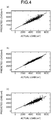
- Example 1 presents a comparison between the accuracy of rolling load prediction and deformation resistance prediction using deep learning (Examples 1 and 2) and the accuracy of rolling load prediction using conventional physical model equations (Conventional Example).
- FIGS. 4(a) through 4(c) are scatter diagrams illustrating the relations between the predicted loads and the actual loads in Example 1, Example 2, and Conventional Example.
- the root mean square error (RMSE) of Example 1 is half of the RMSE of Conventional Example. Accordingly, it is confirmed that using deep learning can significantly improve accuracy.
- the rolling control device 1 predicts a rolling load of the rolling mill 2 when steel is rolled under an operating condition for prediction by inputting the operating condition for prediction into the rolling load prediction model 11 that has been trained with operation record data including at least a factor related to the temperature of steel as an input variable and the actual value of the rolling load of the rolling mill 2 as an output variable, and thus can predict the rolling load of the rolling mill 2 with high accuracy.
- This configuration also allows the setting value of the rolling mill 2 to be determined with high accuracy, thereby improving the rolling quality and rolling efficiency of steel.
- the present invention it is possible to provide a rolling load prediction method and a rolling load prediction device that can predict a rolling load of a rolling mill with high accuracy.
- the present invention also provides a rolling control method that can improve the rolling quality and rolling efficiency of steel.
Landscapes
- Engineering & Computer Science (AREA)
- Theoretical Computer Science (AREA)
- Physics & Mathematics (AREA)
- Mechanical Engineering (AREA)
- Software Systems (AREA)
- Artificial Intelligence (AREA)
- General Engineering & Computer Science (AREA)
- Data Mining & Analysis (AREA)
- Evolutionary Computation (AREA)
- Mathematical Physics (AREA)
- General Physics & Mathematics (AREA)
- Computing Systems (AREA)
- Computational Linguistics (AREA)
- Biomedical Technology (AREA)
- Molecular Biology (AREA)
- General Health & Medical Sciences (AREA)
- Biophysics (AREA)
- Life Sciences & Earth Sciences (AREA)
- Health & Medical Sciences (AREA)
- Computer Vision & Pattern Recognition (AREA)
- Medical Informatics (AREA)
- Control Of Metal Rolling (AREA)
Abstract
Description
- The present invention relates to a rolling load prediction method, a rolling load prediction device, and a rolling control method.
- Conventionally, in order to improve rolling quality and rolling efficiency, optimization has been performed on physical models used to calculate the setting values of rolling mills using operation record data, specifically, rolling load prediction models for predicting rolling loads. Specifically,
Patent Literature 1 describes a technique that uses a neural network to train a mathematical model that formulates the characteristics of a rolling mill using operation record data. - Patent Literature 1:
Japanese Patent Application Laid-open No. H11-000707 - However, because it is difficult to measure the temperature of steel during rolling, it has not been possible to optimize a rolling load prediction model using operation record data related to the temperature of steel. In addition, because the number of operation record data that can be used as training data items for neural networks is limited, the technique described in
Patent Literature 1 does not use operation record data related to the temperature of steel as training data items. As a result, it has been difficult to predict rolling loads with high accuracy by using a rolling load prediction model so as to determine the setting values of a rolling mill with high accuracy, thereby making it difficult to improve the rolling quality and rolling efficiency of steel. - The present invention has been made in view of the above-described problems, and an object of the present invention is to provide a rolling load prediction method and a rolling load prediction device that can predict a rolling load of a rolling mill with high accuracy. Another object of the present invention is to provide a rolling control method that can improve the rolling quality and rolling efficiency of steel.
- The inventors of the present invention have focused on the fact that input variables can be freely selected without considering the problem of multicollinearity when using a neural network, and examined various input variables. As a result, the inventors have found that the prediction accuracy of rolling loads is improved by adding the temperature of a skid rail and the like to the input variables, which is difficult to select with conventional methods. The inventors of the present invention have further investigated and found that the prediction accuracy of rolling loads is significantly improved by adding various factors related to temperature, including not only a direct factor of the temperature of steel at the time of rolling, but also indirect factors such as the temperature of the slab at the time of extraction from a heating furnace and the temperature of a skid rail, and reached the idea of associating the findings with a neural network, which has no limitation on the selection of input variables. Accordingly, the inventors have found that a rolling load of a rolling mill can be predicted with high accuracy by training a rolling load prediction model using a machine learning method with the input variables of the rolling load prediction model including factors related to the temperature of steel, and using the trained rolling load prediction model to predict the rolling load of the rolling mill. The present invention has been conceived on the basis of the above findings.
- A rolling load prediction method according to the present invention is a rolling load prediction method for predicting a rolling load of a rolling mill for rolling steel, and includes a step of predicting the rolling load of the rolling mill in a case where the steel is rolled under an operating condition for prediction, by inputting the operating condition for prediction into a rolling load prediction model that has been trained with operation record data including at least a factor related to a temperature of the steel as an input variable and an actual value of the rolling load of the rolling mill as an output variable.
- The factor related to the temperature of the steel may include a temperature of a skid rail that supports the steel in a heating furnace.
- The rolling load prediction model may be a learning model that has been trained using deep learning.
- A rolling load prediction device according to the present invention is a rolling load prediction device for predicting a rolling load of a rolling mill for rolling steel, and includes a unit configured to predict the rolling load of the rolling mill in a case where the steel is rolled under an operating condition for prediction, by inputting the operating condition for prediction into a rolling load prediction model that has been trained with operation record data including at least a factor related to a temperature of the steel as an input variable and an actual value of the rolling load of the rolling mill as an output variable.
- The factor related to the temperature of the steel may include a temperature of a skid rail that supports the steel in a heating furnace.
- The rolling load prediction model may be a learning model that has been trained using deep learning.
- A rolling control method according to the present invention includes a step of calculating a setting value of a rolling mill using a rolling load of the rolling mill predicted using the rolling load prediction method according to the present invention, and controlling the rolling mill according to the calculated setting value. Advantageous Effects of Invention
- With a rolling load prediction method and a rolling load prediction device according to the present invention, a rolling load of a rolling mill can be predicted with high accuracy. In addition, a rolling control method according to the present invention can improve the rolling quality and rolling efficiency of steel. Brief Description of Drawings
-
-
FIG. 1 is a block diagram illustrating a configuration of a rolling control device according to an embodiment of the present invention. -
FIG. 2 is a schematic diagram illustrating a configuration of a rolling load prediction model illustrated inFIG. 1 . -
FIG. 3 is a schematic diagram illustrating a configuration of an operation record DB illustrated inFIG. 1 . -
FIGS. 4 are scatter diagrams illustrating the relations between the predicted loads and the actual loads in Example 1, Example 2, and Conventional Example. Description of Embodiments - The following describes a rolling control device according to an embodiment of the present invention with reference to the drawings.
-
FIG. 1 is a block diagram illustrating a configuration of a rolling control device according to an embodiment of the present invention.FIG. 2 is a schematic diagram illustrating a configuration of a rolling load prediction model 11 illustrated inFIG. 1 .FIG. 3 is a schematic diagram illustrating a configuration of an operation record DB4 illustrated inFIG. 1 . - As illustrated in
FIG. 1 , arolling control device 1 according to an embodiment of the present invention is configured with a well-known information processing device, and controls a rollingmill 2, such as a reversible rolling mill for manufacturing thick steel sheets, to control the rolling quality and rolling efficiency of steel rolled in the rollingmill 2. - The
rolling control device 1 includes the rolling load prediction model 11, amodel calculation section 12, and a settingvalue calculation section 13. - The rolling load prediction model 11 is a machine learning model for predicting a rolling load of the
rolling mill 2 from operating conditions. In the present embodiment, the rolling load prediction model 11 is configured with a deep learning model including an input layer, a plurality of intermediate layers, and an output layer as illustrated inFIG. 2 . Here, the input layer receives input of operating conditions for prediction for a rolling load. The parameters of the intermediate layers are machine-learned by a machine learning device 3. The output layer outputs the predicted value of the rolling load of therolling mill 2 when steel is rolled under the operating conditions input in the input layer. - In the present embodiment, the input variables (explanatory variables) of the deep learning model include input variables related to the size of steel, input variables related to the temperature of the steel, input variables related to the constituent elements of the steel, and input variables related to the
rolling mill 2 that rolls the steel. - Examples of input variables related to the size of steel may include the product dimensions of a steel sheet (thickness, width, length), the thickness of the sheet at the entry and exit sides of the
rolling mill 2 at the time of rolling, and the dimensions of the slab extracted from a heating furnace (thickness, width, length). - Examples of input variables related to the temperature of the steel may include the temperature of the steel at the time of rolling (average value, temperature at the center in the width direction, temperature at an end in the width direction), the temperature of the slab at the time of extraction from the heating furnace (average value, temperature at the center in the width direction, temperature at an end in the width direction), and the temperatures of fixed and moving skid rails that support the steel in the heating furnace.
- Examples of input variables related to the constituent elements of the steel may include constituent elements (C, Si, Mn, P, S, Cu, Ni, Cr, Mo, V, Nb, Al, Ti, B) and steel grade determination marks.
- Examples of input variables related to the rolling
mill 2 that rolls the steel may include the current number of rolling passes, the time between rolling, the radius of a work roll, the amounts of wear at the center and an end of the work roll in the width direction, and the number of rolling after changing work rolls. Among these input variables, the present invention adds input variables not used in conventional rolling load prediction, such as slab dimensions (thickness, width, length), product dimensions (thickness, width, length), the surface temperature of a slab at the time of slab extraction, the temperature of a fixed skid rail and the temperature of a moving skid rail in the heating furnace, composition information (C, Si, Mn, P, S), the number of rolling after changing rolling rolls, and the number of rolling passes. A rolling load is a combination of the deformation resistance of the steel sheet to be rolled and the pressure increment caused by friction on the contact line between a roll surface and a steel sheet surface. Among these, the deformation resistance varies greatly depending on the amount of pressure drop and the composition of the material, and also depends greatly on the temperature. Conventionally, the rolling load has been calculated using, as main input variables, the thickness of the sheet at the entry and exit sides of the rolling mill, the width of the sheet, the average temperature (predicted value) of the steel sheet at the time of rolling, the roll diameter, and other factors. However, in the present invention, the above-described input variables are newly added. - In particular, the deformation resistance is taken into account because it is affected by the material composition of the steel sheet (steel composition). As for the temperature, the calculation accuracy is thought to be improved when the effect of temperature unevenness in the thickness direction or the like is taken into account. The temperature unevenness in the thickness direction at the slab stage before rolling has a significant impact on the subsequent temperature prediction. Therefore, it has been decided that the temperatures of the fixed and moving skid rails in the heating furnace is considered to reflect the heating conditions in the heating furnace. The skid rails in the heating furnace are rod-shaped supports that support the slab in the furnace, and their interior is always water-cooled, which affects the temperature of the lower part of the slab, and thus its effect is evaluated using the temperatures of the skid rails. The number of rolling (the number of rolled materials) after changing rolling rolls are reflected in the input because it can be used for direct assessment of the degree of wear of the rolls. It is thought that this absorbs an increase in the error with respect to the contact arc length caused by roll flattening due to the use of rolls in rolling.
- The machine learning device 3 obtains, as training data, pairs of input variables (explanatory variables) and actual rolling load values of the rolling
mill 2 as illustrated inFIG. 3 from the operation record database (operation record DB) 4 that stores therein operation record data of therolling mill 2, and performs machine-learning of the rolling load prediction model 11 using the obtained training data. In the present embodiment, deep learning is used as the machine learning method, but other machine learning methods such as logistic regression analysis, decision trees, and neural networks may also be used. - The
model calculation section 12 predicts the rolling load of the rollingmill 2 when steel is rolled under the operating conditions for prediction by inputting the operating conditions for the prediction into the rolling load prediction model 11. - The setting
value calculation section 13 calculates a setting value of the rollingmill 2 on the basis of the rolling load predicted by themodel calculation section 12, and controls (sets up) therolling mill 2 according to the calculated setting value. - In the following examples, the machine learning of the rolling load prediction model 11 was performed using a publicly known deep learning framework, Chainer. Four intermediate layers (the number of units in each layer was set to 60, 120, 60, and 30, starting from the one closest to the input) were used, and operation record data of 200,000 operations was used as the training data. A batch normalization method (where the batch size was set to 256) was used during machine learning, and the Adam method was used to set the learning rate. A total of 35 input variables were used, which are the current number of passes, steel sheet dimensions (thickness, width, length), slab dimensions (thickness, width, length), constituent elements (C, Si, Mn, P, S, Cu, Ni, Cr, Mo, V, Nb, Al, Ti, B), steel grade designation marks (422, 434, 433, 333), temperature (temperature of steel at the time of rolling (average value, temperature at the center, temperature at an end), temperature of the slab at the time of extraction from a heating furnace (average value, temperature at the center, temperature at an end), temperature of fixed and moving skid rails in the heating furnace), time between rolling, a work roll (radius of the work roll, amounts of wear at the center and an end of the work roll, the number of rolling after changing work rolls). The actual value of a rolling load was used as the output variable (response variable). As a result, it was confirmed that the accuracy of the rolling load can be improved by performing machine learning of the rolling load prediction model 11 applied with the operation record data on temperatures and constituent elements. Table 1 presents a comparison between the accuracy of rolling load prediction and deformation resistance prediction using deep learning (Examples 1 and 2) and the accuracy of rolling load prediction using conventional physical model equations (Conventional Example).
FIGS. 4(a) through 4(c) are scatter diagrams illustrating the relations between the predicted loads and the actual loads in Example 1, Example 2, and Conventional Example. The root mean square error (RMSE) of Example 1 is half of the RMSE of Conventional Example. Accordingly, it is confirmed that using deep learning can significantly improve accuracy.Table 1 Average Standard Deviation RMSE Conventional Example 0.15% 10.8% 10.8% Example 1 0.41% 5.38% 5.40% Example 2 1.62% 8.90% 9.05% - As is clear from the above description, the rolling
control device 1 according to an embodiment of the present invention predicts a rolling load of the rollingmill 2 when steel is rolled under an operating condition for prediction by inputting the operating condition for prediction into the rolling load prediction model 11 that has been trained with operation record data including at least a factor related to the temperature of steel as an input variable and the actual value of the rolling load of the rollingmill 2 as an output variable, and thus can predict the rolling load of the rollingmill 2 with high accuracy. This configuration also allows the setting value of the rollingmill 2 to be determined with high accuracy, thereby improving the rolling quality and rolling efficiency of steel. - Embodiments of the present invention made by the inventors have been described above; however, the present invention is not limited by the description and drawings that form part of the disclosure of the present invention by means of the embodiments. In other words, all other embodiments, examples, and operational techniques made by those skilled in the art or the like on the basis of the embodiments are included in the scope of the present invention.
- According to the present invention, it is possible to provide a rolling load prediction method and a rolling load prediction device that can predict a rolling load of a rolling mill with high accuracy. The present invention also provides a rolling control method that can improve the rolling quality and rolling efficiency of steel. Reference Signs List
-
- 1
- Rolling control device
- 2
- Rolling mill
- 3
- Machine learning device
- 4
- Actual operation database (Actual operation DB)
- 11
- Rolling load prediction model
- 12
- Model calculation section
- 13
- Setting value calculation section
Claims (7)
- A rolling load prediction method for predicting a rolling load of a rolling mill for rolling steel, the method comprising
a step of predicting the rolling load of the rolling mill in a case where the steel is rolled under an operating condition for prediction, by inputting the operating condition for prediction into a rolling load prediction model that has been trained with operation record data including at least a factor related to a temperature of the steel as an input variable and an actual value of the rolling load of the rolling mill as an output variable. - The rolling load prediction method according to claim 1, wherein the factor related to the temperature of the steel includes a temperature of a skid rail that supports the steel in a heating furnace.
- The rolling load prediction method according to claim 1 or 2, wherein the rolling load prediction model is a learning model that has been trained using deep learning.
- A rolling load prediction device for predicting a rolling load of a rolling mill for rolling steel, the device comprising
a unit configured to predict the rolling load of the rolling mill in a case where the steel is rolled under an operating condition for prediction, by inputting the operating condition for prediction into a rolling load prediction model that has been trained with operation record data including at least a factor related to a temperature of the steel as an input variable and an actual value of the rolling load of the rolling mill as an output variable. - The rolling load prediction device according to claim 4, wherein the factor related to the temperature of the steel includes a temperature of a skid rail that supports the steel in a heating furnace.
- The rolling load prediction device according to claim 4 or 5, wherein the rolling load prediction model is a learning model that has been trained using deep learning.
- A rolling control method comprising
a step of calculating a setting value of a rolling mill using a rolling load of the rolling mill predicted using the rolling load prediction method according to any one of claims 1 to 3, and controlling the rolling mill according to the calculated setting value.
Applications Claiming Priority (2)
| Application Number | Priority Date | Filing Date | Title |
|---|---|---|---|
| JP2019029123A JP2020131248A (en) | 2019-02-21 | 2019-02-21 | Rolling load prediction method, rolling load prediction device, and rolling control method |
| PCT/JP2020/006387 WO2020171096A1 (en) | 2019-02-21 | 2020-02-19 | Rolling load predicting method, rolling load predicting device, and rolling control method |
Publications (3)
| Publication Number | Publication Date |
|---|---|
| EP3928885A1 true EP3928885A1 (en) | 2021-12-29 |
| EP3928885A4 EP3928885A4 (en) | 2022-04-06 |
| EP3928885B1 EP3928885B1 (en) | 2025-01-15 |
Family
ID=72143977
Family Applications (1)
| Application Number | Title | Priority Date | Filing Date |
|---|---|---|---|
| EP20758445.9A Active EP3928885B1 (en) | 2019-02-21 | 2020-02-19 | Rolling load predicting method, rolling load predicting device, and rolling control method |
Country Status (6)
| Country | Link |
|---|---|
| US (1) | US12145184B2 (en) |
| EP (1) | EP3928885B1 (en) |
| JP (1) | JP2020131248A (en) |
| KR (1) | KR20210111296A (en) |
| CN (1) | CN113474098A (en) |
| WO (1) | WO2020171096A1 (en) |
Families Citing this family (12)
| Publication number | Priority date | Publication date | Assignee | Title |
|---|---|---|---|---|
| JP7449776B2 (en) * | 2020-05-20 | 2024-03-14 | 株式会社日立製作所 | Hot rolling line control system and hot rolling line control method |
| JP7298577B2 (en) * | 2020-10-01 | 2023-06-27 | Jfeスチール株式会社 | Plate thickness calculation method, plate thickness control method, plate material manufacturing method, plate thickness calculation device, and plate thickness control device |
| JP7298578B2 (en) * | 2020-10-01 | 2023-06-27 | Jfeスチール株式会社 | Plate thickness control method, plate material manufacturing method, and plate thickness control device |
| JP7342891B2 (en) * | 2021-01-19 | 2023-09-12 | Jfeスチール株式会社 | Method for calculating rolling time of steel materials, automatic combustion control method for continuous heating furnace, and manufacturing method for steel materials |
| WO2022172524A1 (en) * | 2021-02-15 | 2022-08-18 | Jfeスチール株式会社 | Method for calculating rolling condition for cold rolling mill, device for calculating rolling condition for cold rolling mill, cold rolling method, cold rolling mill, and method for manufacturing steel sheet |
| EP4252928B1 (en) * | 2021-02-15 | 2025-12-03 | JFE Steel Corporation | Cold rolling method, cold rolling mill, and steel sheet manufacturing method |
| JP7420157B2 (en) * | 2021-03-23 | 2024-01-23 | Jfeスチール株式会社 | Rolling control device and rolling control method |
| JP7468466B2 (en) | 2021-06-21 | 2024-04-16 | Jfeスチール株式会社 | Method for setting rolling conditions for a cold rolling mill, cold rolling method, method for manufacturing a steel sheet, device for setting rolling conditions for a cold rolling mill, and cold rolling mill |
| EP4124398B1 (en) * | 2021-07-27 | 2024-04-10 | Primetals Technologies Austria GmbH | Method for determining mechanical properties of a product to be rolled using a hybrid model |
| JP7480764B2 (en) * | 2021-09-06 | 2024-05-10 | Jfeスチール株式会社 | Method for predicting rolling load of steel plate, method for controlling continuous rolling mill, and method for manufacturing steel plate |
| TWI824834B (en) * | 2022-11-22 | 2023-12-01 | 國立高雄科技大學 | Roll forming process inspection method |
| CN118904928A (en) * | 2024-10-10 | 2024-11-08 | 陕西钢铁集团有限公司 | Load distribution method for rolling mill in steel-making and steel-rolling direct rolling process |
Family Cites Families (24)
| Publication number | Priority date | Publication date | Assignee | Title |
|---|---|---|---|---|
| JPH06269823A (en) * | 1993-03-23 | 1994-09-27 | Nippon Steel Corp | Strip crown control method in continuous rolling |
| JPH07204718A (en) * | 1994-01-11 | 1995-08-08 | Mitsubishi Electric Corp | Rolling equipment |
| JP2763495B2 (en) * | 1994-10-24 | 1998-06-11 | 三菱電機株式会社 | Rolling equipment |
| JP2978407B2 (en) * | 1994-11-11 | 1999-11-15 | 新日本製鐵株式会社 | Rolling control method |
| JP3312565B2 (en) * | 1996-10-16 | 2002-08-12 | 日本鋼管株式会社 | Hot rolled steel strip rolling method |
| JP3223856B2 (en) * | 1997-04-17 | 2001-10-29 | 日本鋼管株式会社 | Rolling mill control method and rolling mill control device |
| DE19930124A1 (en) | 1999-06-30 | 2001-01-04 | Siemens Ag | Process for determining the rolling force in a roll stand comprises using a neuronal network that is trained with values for the rolling force and values for the different operating conditions for roll stands of different rolling mills |
| EP1163062B1 (en) | 1999-03-23 | 2002-11-13 | Siemens Aktiengesellschaft | Method and device for detecting the roll force in a rolling stand |
| KR20030048932A (en) | 2001-12-13 | 2003-06-25 | 주식회사 포스코 | Strip thickness control system and method using filtered rolling force & skid mark thickness variation |
| US6945776B2 (en) | 2002-07-25 | 2005-09-20 | Posco | Method and a skid member for reducing temperature difference in a heating subject and a skid apparatus using them |
| JP2007245204A (en) * | 2006-03-16 | 2007-09-27 | Jfe Steel Kk | Method and apparatus for learning rolling load model |
| CN201032387Y (en) * | 2007-04-23 | 2008-03-05 | 北京浩日新特热能技术有限公司 | Embedded full non-water cooling sliding rail for heating stove |
| KR101149927B1 (en) * | 2008-03-14 | 2012-06-08 | 신닛뽄세이테쯔 카부시키카이샤 | Rolling load prediction learning method for hot plate rolling |
| CN102348516B (en) * | 2009-03-13 | 2014-05-28 | 东芝三菱电机产业系统株式会社 | optimization device |
| JP6020263B2 (en) * | 2012-03-29 | 2016-11-02 | Jfeスチール株式会社 | Rolling load learning control device and learning control method, and metal plate manufacturing method using the same |
| JP5979066B2 (en) * | 2012-06-04 | 2016-08-24 | Jfeスチール株式会社 | Result prediction apparatus and result prediction method |
| KR101585762B1 (en) * | 2014-03-26 | 2016-01-15 | 주식회사 포스코 | Heating furnace for experimenting skid rail |
| CN106660090B (en) * | 2014-09-10 | 2019-03-19 | 东芝三菱电机产业系统株式会社 | Rolling Simulator |
| JP6315818B2 (en) * | 2014-10-07 | 2018-04-25 | 株式会社日立製作所 | Control device and control method for tandem rolling mill |
| EP3293594A1 (en) * | 2016-09-13 | 2018-03-14 | Primetals Technologies Germany GmbH | Use of comprehensive artificial intelligence in primary industry plants |
| JP6548691B2 (en) | 2016-10-06 | 2019-07-24 | 株式会社アドバンスド・データ・コントロールズ | Image generation system, program and method, simulation system, program and method |
| CN110520805B (en) * | 2017-04-18 | 2022-12-06 | 首要金属科技德国有限责任公司 | Modeling Optimization of Process Models |
| JP6491262B2 (en) * | 2017-05-24 | 2019-03-27 | ヤフー株式会社 | model |
| CN108363886A (en) * | 2018-03-08 | 2018-08-03 | 杭州鲁尔物联科技有限公司 | Deformation prediction method and system based on deep learning |
-
2019
- 2019-02-21 JP JP2019029123A patent/JP2020131248A/en active Pending
-
2020
- 2020-02-19 EP EP20758445.9A patent/EP3928885B1/en active Active
- 2020-02-19 WO PCT/JP2020/006387 patent/WO2020171096A1/en not_active Ceased
- 2020-02-19 US US17/428,801 patent/US12145184B2/en active Active
- 2020-02-19 CN CN202080014930.6A patent/CN113474098A/en active Pending
- 2020-02-19 KR KR1020217024913A patent/KR20210111296A/en not_active Ceased
Also Published As
| Publication number | Publication date |
|---|---|
| CN113474098A (en) | 2021-10-01 |
| US20220126342A1 (en) | 2022-04-28 |
| EP3928885A4 (en) | 2022-04-06 |
| WO2020171096A1 (en) | 2020-08-27 |
| KR20210111296A (en) | 2021-09-10 |
| EP3928885B1 (en) | 2025-01-15 |
| JP2020131248A (en) | 2020-08-31 |
| BR112021016071A2 (en) | 2021-10-13 |
| US12145184B2 (en) | 2024-11-19 |
Similar Documents
| Publication | Publication Date | Title |
|---|---|---|
| EP3928885B1 (en) | Rolling load predicting method, rolling load predicting device, and rolling control method | |
| CN101779114B (en) | Material information providing method for outgoing steel plate, and material information using method | |
| EP3096896B1 (en) | Method for optimally producing metal steel and iron alloys in hot-rolled and thick plate factories using a microstructure simulator, monitor, and/or model | |
| Lee et al. | Application of neural-network for improving accuracy of roll-force model in hot-rolling mill | |
| JP7298645B2 (en) | Method for generating cross-sectional dimension variation prediction model for shaped steel, apparatus for generating cross-sectional dimension variation prediction model for shaped steel, method for predicting cross-sectional dimension of shaped steel, method for controlling cross-sectional dimension of shaped steel, and method for manufacturing shaped steel | |
| JP7503150B2 (en) | System and method for controlling a production facility consisting of several facility parts, in particular for producing industrial products such as metal semi-finished products - Patents.com | |
| JP7287416B2 (en) | Thick steel plate manufacturing specification determination support device, manufacturing specification search method, computer program, computer-readable recording medium, and thick steel plate manufacturing method | |
| JP7156318B2 (en) | Rolling mill control method, rolling mill control device, and steel plate manufacturing method | |
| JP7156317B2 (en) | Rolling mill control method, rolling mill control device, and steel plate manufacturing method | |
| JP7513046B2 (en) | Surface layer hardness prediction model, method for predicting and controlling surface layer hardness of steel plate using the same, control command device, steel plate production line, and steel plate production method | |
| KR20240039161A (en) | Plate thickness schedule calculation method for tandem rolling mill and rolling plant | |
| JP7135962B2 (en) | Steel plate finishing delivery side temperature control method, steel plate finishing delivery side temperature control device, and steel plate manufacturing method | |
| JP7480764B2 (en) | Method for predicting rolling load of steel plate, method for controlling continuous rolling mill, and method for manufacturing steel plate | |
| JP7230880B2 (en) | Rolling load prediction method, rolling method, method for manufacturing hot-rolled steel sheet, and method for generating rolling load prediction model | |
| JP7619533B1 (en) | Method for predicting cross-sectional dimension of shaped steel, manufacturing method of shaped steel, device for predicting cross-sectional dimension of shaped steel, and method for generating cross-sectional dimension prediction model | |
| JP7294242B2 (en) | Method for predicting surface roughness, method for manufacturing steel strip, and method for generating trained machine learning model | |
| TWI798047B (en) | Method for predicting rolling force of steel plate and rolling system | |
| JP2005133158A (en) | Decarburized layer depth prediction method, decarburized layer depth control method, and steel rolling method | |
| KR101198474B1 (en) | Method of roll force prediction in cold rolling of stainless steels | |
| Agarwal et al. | Process-structure-microstructure relationship in hot strip rolling of steels using statistical data mining | |
| CN113182363A (en) | Force arm coefficient calculation method of single-stand wide and thick plate rolling mill | |
| JP4102267B2 (en) | Sheet width control method in cold tandem rolling | |
| BR112021016071B1 (en) | ROLLING LOAD PREDICTION METHOD, ROLLING LOAD PREDICTION DEVICE AND ROLLING CONTROL METHOD | |
| JP7722398B2 (en) | Method for controlling wall thickness of mother pipe in stretch reducer rolling | |
| JP7772957B2 (en) | Method for cross-cutting a metal strip and rolling equipment having a shear for cross-cutting a metal strip |
Legal Events
| Date | Code | Title | Description |
|---|---|---|---|
| STAA | Information on the status of an ep patent application or granted ep patent |
Free format text: STATUS: THE INTERNATIONAL PUBLICATION HAS BEEN MADE |
|
| PUAI | Public reference made under article 153(3) epc to a published international application that has entered the european phase |
Free format text: ORIGINAL CODE: 0009012 |
|
| STAA | Information on the status of an ep patent application or granted ep patent |
Free format text: STATUS: REQUEST FOR EXAMINATION WAS MADE |
|
| 17P | Request for examination filed |
Effective date: 20210811 |
|
| AK | Designated contracting states |
Kind code of ref document: A1 Designated state(s): AL AT BE BG CH CY CZ DE DK EE ES FI FR GB GR HR HU IE IS IT LI LT LU LV MC MK MT NL NO PL PT RO RS SE SI SK SM TR |
|
| A4 | Supplementary search report drawn up and despatched |
Effective date: 20220304 |
|
| RIC1 | Information provided on ipc code assigned before grant |
Ipc: B21B 37/58 20060101ALI20220228BHEP Ipc: G06N 20/00 20190101ALI20220228BHEP Ipc: B21B 37/00 20060101ALI20220228BHEP Ipc: B21C 51/00 20060101AFI20220228BHEP |
|
| DAV | Request for validation of the european patent (deleted) | ||
| DAX | Request for extension of the european patent (deleted) | ||
| STAA | Information on the status of an ep patent application or granted ep patent |
Free format text: STATUS: EXAMINATION IS IN PROGRESS |
|
| 17Q | First examination report despatched |
Effective date: 20230330 |
|
| GRAP | Despatch of communication of intention to grant a patent |
Free format text: ORIGINAL CODE: EPIDOSNIGR1 |
|
| STAA | Information on the status of an ep patent application or granted ep patent |
Free format text: STATUS: GRANT OF PATENT IS INTENDED |
|
| INTG | Intention to grant announced |
Effective date: 20241018 |
|
| GRAS | Grant fee paid |
Free format text: ORIGINAL CODE: EPIDOSNIGR3 |
|
| GRAA | (expected) grant |
Free format text: ORIGINAL CODE: 0009210 |
|
| STAA | Information on the status of an ep patent application or granted ep patent |
Free format text: STATUS: THE PATENT HAS BEEN GRANTED |
|
| AK | Designated contracting states |
Kind code of ref document: B1 Designated state(s): AL AT BE BG CH CY CZ DE DK EE ES FI FR GB GR HR HU IE IS IT LI LT LU LV MC MK MT NL NO PL PT RO RS SE SI SK SM TR |
|
| REG | Reference to a national code |
Ref country code: CH Ref legal event code: EP Ref country code: GB Ref legal event code: FG4D |
|
| REG | Reference to a national code |
Ref country code: DE Ref legal event code: R096 Ref document number: 602020044828 Country of ref document: DE |
|
| REG | Reference to a national code |
Ref country code: IE Ref legal event code: FG4D |
|
| REG | Reference to a national code |
Ref country code: NL Ref legal event code: MP Effective date: 20250115 |
|
| PG25 | Lapsed in a contracting state [announced via postgrant information from national office to epo] |
Ref country code: NL Free format text: LAPSE BECAUSE OF FAILURE TO SUBMIT A TRANSLATION OF THE DESCRIPTION OR TO PAY THE FEE WITHIN THE PRESCRIBED TIME-LIMIT Effective date: 20250115 |
|
| PG25 | Lapsed in a contracting state [announced via postgrant information from national office to epo] |
Ref country code: RS Free format text: LAPSE BECAUSE OF FAILURE TO SUBMIT A TRANSLATION OF THE DESCRIPTION OR TO PAY THE FEE WITHIN THE PRESCRIBED TIME-LIMIT Effective date: 20250415 |
|
| PG25 | Lapsed in a contracting state [announced via postgrant information from national office to epo] |
Ref country code: FI Free format text: LAPSE BECAUSE OF FAILURE TO SUBMIT A TRANSLATION OF THE DESCRIPTION OR TO PAY THE FEE WITHIN THE PRESCRIBED TIME-LIMIT Effective date: 20250115 |
|
| PG25 | Lapsed in a contracting state [announced via postgrant information from national office to epo] |
Ref country code: PL Free format text: LAPSE BECAUSE OF FAILURE TO SUBMIT A TRANSLATION OF THE DESCRIPTION OR TO PAY THE FEE WITHIN THE PRESCRIBED TIME-LIMIT Effective date: 20250115 |
|
| PG25 | Lapsed in a contracting state [announced via postgrant information from national office to epo] |
Ref country code: ES Free format text: LAPSE BECAUSE OF FAILURE TO SUBMIT A TRANSLATION OF THE DESCRIPTION OR TO PAY THE FEE WITHIN THE PRESCRIBED TIME-LIMIT Effective date: 20250115 |
|
| REG | Reference to a national code |
Ref country code: LT Ref legal event code: MG9D |
|
| PG25 | Lapsed in a contracting state [announced via postgrant information from national office to epo] |
Ref country code: IS Free format text: LAPSE BECAUSE OF FAILURE TO SUBMIT A TRANSLATION OF THE DESCRIPTION OR TO PAY THE FEE WITHIN THE PRESCRIBED TIME-LIMIT Effective date: 20250515 Ref country code: NO Free format text: LAPSE BECAUSE OF FAILURE TO SUBMIT A TRANSLATION OF THE DESCRIPTION OR TO PAY THE FEE WITHIN THE PRESCRIBED TIME-LIMIT Effective date: 20250415 |
|
| REG | Reference to a national code |
Ref country code: AT Ref legal event code: MK05 Ref document number: 1759506 Country of ref document: AT Kind code of ref document: T Effective date: 20250115 |
|
| PG25 | Lapsed in a contracting state [announced via postgrant information from national office to epo] |
Ref country code: HR Free format text: LAPSE BECAUSE OF FAILURE TO SUBMIT A TRANSLATION OF THE DESCRIPTION OR TO PAY THE FEE WITHIN THE PRESCRIBED TIME-LIMIT Effective date: 20250115 |
|
| PG25 | Lapsed in a contracting state [announced via postgrant information from national office to epo] |
Ref country code: LV Free format text: LAPSE BECAUSE OF FAILURE TO SUBMIT A TRANSLATION OF THE DESCRIPTION OR TO PAY THE FEE WITHIN THE PRESCRIBED TIME-LIMIT Effective date: 20250115 Ref country code: PT Free format text: LAPSE BECAUSE OF FAILURE TO SUBMIT A TRANSLATION OF THE DESCRIPTION OR TO PAY THE FEE WITHIN THE PRESCRIBED TIME-LIMIT Effective date: 20250515 |
|
| PG25 | Lapsed in a contracting state [announced via postgrant information from national office to epo] |
Ref country code: GR Free format text: LAPSE BECAUSE OF FAILURE TO SUBMIT A TRANSLATION OF THE DESCRIPTION OR TO PAY THE FEE WITHIN THE PRESCRIBED TIME-LIMIT Effective date: 20250416 Ref country code: BG Free format text: LAPSE BECAUSE OF FAILURE TO SUBMIT A TRANSLATION OF THE DESCRIPTION OR TO PAY THE FEE WITHIN THE PRESCRIBED TIME-LIMIT Effective date: 20250115 |
|
| PG25 | Lapsed in a contracting state [announced via postgrant information from national office to epo] |
Ref country code: AT Free format text: LAPSE BECAUSE OF FAILURE TO SUBMIT A TRANSLATION OF THE DESCRIPTION OR TO PAY THE FEE WITHIN THE PRESCRIBED TIME-LIMIT Effective date: 20250115 |
|
| REG | Reference to a national code |
Ref country code: DE Ref legal event code: R119 Ref document number: 602020044828 Country of ref document: DE |
|
| PG25 | Lapsed in a contracting state [announced via postgrant information from national office to epo] |
Ref country code: SE Free format text: LAPSE BECAUSE OF FAILURE TO SUBMIT A TRANSLATION OF THE DESCRIPTION OR TO PAY THE FEE WITHIN THE PRESCRIBED TIME-LIMIT Effective date: 20250115 |
|
| REG | Reference to a national code |
Ref country code: CH Ref legal event code: PL |
|
| PG25 | Lapsed in a contracting state [announced via postgrant information from national office to epo] |
Ref country code: SM Free format text: LAPSE BECAUSE OF FAILURE TO SUBMIT A TRANSLATION OF THE DESCRIPTION OR TO PAY THE FEE WITHIN THE PRESCRIBED TIME-LIMIT Effective date: 20250115 |
|
| PG25 | Lapsed in a contracting state [announced via postgrant information from national office to epo] |
Ref country code: DK Free format text: LAPSE BECAUSE OF FAILURE TO SUBMIT A TRANSLATION OF THE DESCRIPTION OR TO PAY THE FEE WITHIN THE PRESCRIBED TIME-LIMIT Effective date: 20250115 |
|
| PG25 | Lapsed in a contracting state [announced via postgrant information from national office to epo] |
Ref country code: MC Free format text: LAPSE BECAUSE OF FAILURE TO SUBMIT A TRANSLATION OF THE DESCRIPTION OR TO PAY THE FEE WITHIN THE PRESCRIBED TIME-LIMIT Effective date: 20250115 |
|
| PG25 | Lapsed in a contracting state [announced via postgrant information from national office to epo] |
Ref country code: LU Free format text: LAPSE BECAUSE OF NON-PAYMENT OF DUE FEES Effective date: 20250219 Ref country code: IT Free format text: LAPSE BECAUSE OF FAILURE TO SUBMIT A TRANSLATION OF THE DESCRIPTION OR TO PAY THE FEE WITHIN THE PRESCRIBED TIME-LIMIT Effective date: 20250115 |
|
| PG25 | Lapsed in a contracting state [announced via postgrant information from national office to epo] |
Ref country code: CH Free format text: LAPSE BECAUSE OF NON-PAYMENT OF DUE FEES Effective date: 20250228 |
|
| PG25 | Lapsed in a contracting state [announced via postgrant information from national office to epo] |
Ref country code: CZ Free format text: LAPSE BECAUSE OF FAILURE TO SUBMIT A TRANSLATION OF THE DESCRIPTION OR TO PAY THE FEE WITHIN THE PRESCRIBED TIME-LIMIT Effective date: 20250115 Ref country code: EE Free format text: LAPSE BECAUSE OF FAILURE TO SUBMIT A TRANSLATION OF THE DESCRIPTION OR TO PAY THE FEE WITHIN THE PRESCRIBED TIME-LIMIT Effective date: 20250115 |
|
| PG25 | Lapsed in a contracting state [announced via postgrant information from national office to epo] |
Ref country code: RO Free format text: LAPSE BECAUSE OF FAILURE TO SUBMIT A TRANSLATION OF THE DESCRIPTION OR TO PAY THE FEE WITHIN THE PRESCRIBED TIME-LIMIT Effective date: 20250115 |
|
| PG25 | Lapsed in a contracting state [announced via postgrant information from national office to epo] |
Ref country code: SK Free format text: LAPSE BECAUSE OF FAILURE TO SUBMIT A TRANSLATION OF THE DESCRIPTION OR TO PAY THE FEE WITHIN THE PRESCRIBED TIME-LIMIT Effective date: 20250115 |
|
| PLBE | No opposition filed within time limit |
Free format text: ORIGINAL CODE: 0009261 |
|
| STAA | Information on the status of an ep patent application or granted ep patent |
Free format text: STATUS: NO OPPOSITION FILED WITHIN TIME LIMIT |
|
| REG | Reference to a national code |
Ref country code: BE Ref legal event code: MM Effective date: 20250228 |
|
| 26N | No opposition filed |
Effective date: 20251016 |
|
| GBPC | Gb: european patent ceased through non-payment of renewal fee |
Effective date: 20250415 |
|
| PG25 | Lapsed in a contracting state [announced via postgrant information from national office to epo] |
Ref country code: DE Free format text: LAPSE BECAUSE OF NON-PAYMENT OF DUE FEES Effective date: 20250902 |
|
| PG25 | Lapsed in a contracting state [announced via postgrant information from national office to epo] |
Ref country code: GB Free format text: LAPSE BECAUSE OF NON-PAYMENT OF DUE FEES Effective date: 20250415 |
|
| PGFP | Annual fee paid to national office [announced via postgrant information from national office to epo] |
Ref country code: FR Payment date: 20251231 Year of fee payment: 7 |
|
| PG25 | Lapsed in a contracting state [announced via postgrant information from national office to epo] |
Ref country code: BE Free format text: LAPSE BECAUSE OF NON-PAYMENT OF DUE FEES Effective date: 20250228 |
|
| PG25 | Lapsed in a contracting state [announced via postgrant information from national office to epo] |
Ref country code: IE Free format text: LAPSE BECAUSE OF NON-PAYMENT OF DUE FEES Effective date: 20250219 |
|
| PGFP | Annual fee paid to national office [announced via postgrant information from national office to epo] |
Ref country code: TR Payment date: 20260218 Year of fee payment: 7 |