EP3928870A1 - Blood purification device and purification method of blood - Google Patents
Blood purification device and purification method of blood Download PDFInfo
- Publication number
- EP3928870A1 EP3928870A1 EP20759076.1A EP20759076A EP3928870A1 EP 3928870 A1 EP3928870 A1 EP 3928870A1 EP 20759076 A EP20759076 A EP 20759076A EP 3928870 A1 EP3928870 A1 EP 3928870A1
- Authority
- EP
- European Patent Office
- Prior art keywords
- blood
- magnetic
- flow channel
- magnetic particles
- purification device
- Prior art date
- Legal status (The legal status is an assumption and is not a legal conclusion. Google has not performed a legal analysis and makes no representation as to the accuracy of the status listed.)
- Withdrawn
Links
Images






Classifications
-
- A—HUMAN NECESSITIES
- A61—MEDICAL OR VETERINARY SCIENCE; HYGIENE
- A61M—DEVICES FOR INTRODUCING MEDIA INTO, OR ONTO, THE BODY; DEVICES FOR TRANSDUCING BODY MEDIA OR FOR TAKING MEDIA FROM THE BODY; DEVICES FOR PRODUCING OR ENDING SLEEP OR STUPOR
- A61M1/00—Suction or pumping devices for medical purposes; Devices for carrying-off, for treatment of, or for carrying-over, body-liquids; Drainage systems
- A61M1/36—Other treatment of blood in a by-pass of the natural circulatory system, e.g. temperature adaptation, irradiation ; Extra-corporeal blood circuits
- A61M1/3618—Magnetic separation
-
- A—HUMAN NECESSITIES
- A61—MEDICAL OR VETERINARY SCIENCE; HYGIENE
- A61M—DEVICES FOR INTRODUCING MEDIA INTO, OR ONTO, THE BODY; DEVICES FOR TRANSDUCING BODY MEDIA OR FOR TAKING MEDIA FROM THE BODY; DEVICES FOR PRODUCING OR ENDING SLEEP OR STUPOR
- A61M1/00—Suction or pumping devices for medical purposes; Devices for carrying-off, for treatment of, or for carrying-over, body-liquids; Drainage systems
- A61M1/36—Other treatment of blood in a by-pass of the natural circulatory system, e.g. temperature adaptation, irradiation ; Extra-corporeal blood circuits
- A61M1/3621—Extra-corporeal blood circuits
- A61M1/3623—Means for actively controlling temperature of blood
-
- B—PERFORMING OPERATIONS; TRANSPORTING
- B03—SEPARATION OF SOLID MATERIALS USING LIQUIDS OR USING PNEUMATIC TABLES OR JIGS; MAGNETIC OR ELECTROSTATIC SEPARATION OF SOLID MATERIALS FROM SOLID MATERIALS OR FLUIDS; SEPARATION BY HIGH-VOLTAGE ELECTRIC FIELDS
- B03C—MAGNETIC OR ELECTROSTATIC SEPARATION OF SOLID MATERIALS FROM SOLID MATERIALS OR FLUIDS; SEPARATION BY HIGH-VOLTAGE ELECTRIC FIELDS
- B03C1/00—Magnetic separation
- B03C1/02—Magnetic separation acting directly on the substance being separated
- B03C1/025—High gradient magnetic separators
- B03C1/031—Component parts; Auxiliary operations
- B03C1/033—Component parts; Auxiliary operations characterised by the magnetic circuit
- B03C1/0332—Component parts; Auxiliary operations characterised by the magnetic circuit using permanent magnets
-
- B—PERFORMING OPERATIONS; TRANSPORTING
- B03—SEPARATION OF SOLID MATERIALS USING LIQUIDS OR USING PNEUMATIC TABLES OR JIGS; MAGNETIC OR ELECTROSTATIC SEPARATION OF SOLID MATERIALS FROM SOLID MATERIALS OR FLUIDS; SEPARATION BY HIGH-VOLTAGE ELECTRIC FIELDS
- B03C—MAGNETIC OR ELECTROSTATIC SEPARATION OF SOLID MATERIALS FROM SOLID MATERIALS OR FLUIDS; SEPARATION BY HIGH-VOLTAGE ELECTRIC FIELDS
- B03C1/00—Magnetic separation
- B03C1/02—Magnetic separation acting directly on the substance being separated
- B03C1/025—High gradient magnetic separators
- B03C1/031—Component parts; Auxiliary operations
- B03C1/033—Component parts; Auxiliary operations characterised by the magnetic circuit
- B03C1/0335—Component parts; Auxiliary operations characterised by the magnetic circuit using coils
-
- B—PERFORMING OPERATIONS; TRANSPORTING
- B03—SEPARATION OF SOLID MATERIALS USING LIQUIDS OR USING PNEUMATIC TABLES OR JIGS; MAGNETIC OR ELECTROSTATIC SEPARATION OF SOLID MATERIALS FROM SOLID MATERIALS OR FLUIDS; SEPARATION BY HIGH-VOLTAGE ELECTRIC FIELDS
- B03C—MAGNETIC OR ELECTROSTATIC SEPARATION OF SOLID MATERIALS FROM SOLID MATERIALS OR FLUIDS; SEPARATION BY HIGH-VOLTAGE ELECTRIC FIELDS
- B03C1/00—Magnetic separation
- B03C1/02—Magnetic separation acting directly on the substance being separated
- B03C1/28—Magnetic plugs and dipsticks
- B03C1/282—Magnetic plugs and dipsticks with associated accumulation indicator, e.g. Hall sensor
-
- B—PERFORMING OPERATIONS; TRANSPORTING
- B03—SEPARATION OF SOLID MATERIALS USING LIQUIDS OR USING PNEUMATIC TABLES OR JIGS; MAGNETIC OR ELECTROSTATIC SEPARATION OF SOLID MATERIALS FROM SOLID MATERIALS OR FLUIDS; SEPARATION BY HIGH-VOLTAGE ELECTRIC FIELDS
- B03C—MAGNETIC OR ELECTROSTATIC SEPARATION OF SOLID MATERIALS FROM SOLID MATERIALS OR FLUIDS; SEPARATION BY HIGH-VOLTAGE ELECTRIC FIELDS
- B03C1/00—Magnetic separation
- B03C1/02—Magnetic separation acting directly on the substance being separated
- B03C1/28—Magnetic plugs and dipsticks
- B03C1/288—Magnetic plugs and dipsticks disposed at the outer circumference of a recipient
-
- B—PERFORMING OPERATIONS; TRANSPORTING
- B03—SEPARATION OF SOLID MATERIALS USING LIQUIDS OR USING PNEUMATIC TABLES OR JIGS; MAGNETIC OR ELECTROSTATIC SEPARATION OF SOLID MATERIALS FROM SOLID MATERIALS OR FLUIDS; SEPARATION BY HIGH-VOLTAGE ELECTRIC FIELDS
- B03C—MAGNETIC OR ELECTROSTATIC SEPARATION OF SOLID MATERIALS FROM SOLID MATERIALS OR FLUIDS; SEPARATION BY HIGH-VOLTAGE ELECTRIC FIELDS
- B03C1/00—Magnetic separation
- B03C1/02—Magnetic separation acting directly on the substance being separated
- B03C1/30—Combinations with other devices, not otherwise provided for
-
- A—HUMAN NECESSITIES
- A61—MEDICAL OR VETERINARY SCIENCE; HYGIENE
- A61M—DEVICES FOR INTRODUCING MEDIA INTO, OR ONTO, THE BODY; DEVICES FOR TRANSDUCING BODY MEDIA OR FOR TAKING MEDIA FROM THE BODY; DEVICES FOR PRODUCING OR ENDING SLEEP OR STUPOR
- A61M2205/00—General characteristics of the apparatus
- A61M2205/33—Controlling, regulating or measuring
- A61M2205/3317—Electromagnetic, inductive or dielectric measuring means
-
- A—HUMAN NECESSITIES
- A61—MEDICAL OR VETERINARY SCIENCE; HYGIENE
- A61M—DEVICES FOR INTRODUCING MEDIA INTO, OR ONTO, THE BODY; DEVICES FOR TRANSDUCING BODY MEDIA OR FOR TAKING MEDIA FROM THE BODY; DEVICES FOR PRODUCING OR ENDING SLEEP OR STUPOR
- A61M2205/00—General characteristics of the apparatus
- A61M2205/33—Controlling, regulating or measuring
- A61M2205/3368—Temperature
-
- A—HUMAN NECESSITIES
- A61—MEDICAL OR VETERINARY SCIENCE; HYGIENE
- A61M—DEVICES FOR INTRODUCING MEDIA INTO, OR ONTO, THE BODY; DEVICES FOR TRANSDUCING BODY MEDIA OR FOR TAKING MEDIA FROM THE BODY; DEVICES FOR PRODUCING OR ENDING SLEEP OR STUPOR
- A61M2205/00—General characteristics of the apparatus
- A61M2205/60—General characteristics of the apparatus with identification means
- A61M2205/6054—Magnetic identification systems
-
- B—PERFORMING OPERATIONS; TRANSPORTING
- B03—SEPARATION OF SOLID MATERIALS USING LIQUIDS OR USING PNEUMATIC TABLES OR JIGS; MAGNETIC OR ELECTROSTATIC SEPARATION OF SOLID MATERIALS FROM SOLID MATERIALS OR FLUIDS; SEPARATION BY HIGH-VOLTAGE ELECTRIC FIELDS
- B03C—MAGNETIC OR ELECTROSTATIC SEPARATION OF SOLID MATERIALS FROM SOLID MATERIALS OR FLUIDS; SEPARATION BY HIGH-VOLTAGE ELECTRIC FIELDS
- B03C2201/00—Details of magnetic or electrostatic separation
- B03C2201/18—Magnetic separation whereby the particles are suspended in a liquid
-
- B—PERFORMING OPERATIONS; TRANSPORTING
- B03—SEPARATION OF SOLID MATERIALS USING LIQUIDS OR USING PNEUMATIC TABLES OR JIGS; MAGNETIC OR ELECTROSTATIC SEPARATION OF SOLID MATERIALS FROM SOLID MATERIALS OR FLUIDS; SEPARATION BY HIGH-VOLTAGE ELECTRIC FIELDS
- B03C—MAGNETIC OR ELECTROSTATIC SEPARATION OF SOLID MATERIALS FROM SOLID MATERIALS OR FLUIDS; SEPARATION BY HIGH-VOLTAGE ELECTRIC FIELDS
- B03C2201/00—Details of magnetic or electrostatic separation
- B03C2201/26—Details of magnetic or electrostatic separation for use in medical or biological applications
Definitions
- the present disclosure relates to a blood purification device and purification method of blood.
- a method using centrifugation, membrane separation, an adsorption column separation, or the like is known as a method for removing a causative substance which causes a disease from blood.
- a blood purification device which mixes fine particles (magnetic particles), having magnetism and capable of adsorbing a diseasecausing substance in blood thereon, into the blood, and magnetically collects the magnetic particles is known (for example, refer to Patent Literature 1).
- an object of the present disclosure is to provide a blood purification device capable of confirming that magnetic particles have been separated and removed from blood, and a purification method of blood.
- the technology according to the present disclosure includes the following aspects.
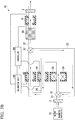
- Figs. 1A and 1B are plan views showing configurations of a blood purification device 1A according to a first embodiment of the present disclosure.
- a flow channel through which blood flows does not include a return flow channel will be described as an example.
- the blood purification device 1A includes: a main flow channel 20 through which blood 10 flows; a magnetic extraction unit 30 (magnetic extraction means) for collecting magnetic particles contained in the blood 10; and magnetic sensors 40 and 41 for detecting the presence of the magnetic particles in the blood 10.
- the blood purification device 1A includes a filter 50, a connection port (inlet) 2, and a connection port (outlet) 3.
- the magnetic extraction unit 30, the magnetic sensors 40 and 41 are disposed so as to come into contact with the main flow channel 20.
- the magnetic sensors 40 and 41 are implemented as parts subsequent to the magnetic extraction unit 30.
- the number of magnetic sensors implemented as parts subsequent to the magnetic extraction unit 30 in the blood purification device 1A is two, but may be one or may be three or more.
- the blood 10 containing magnetic particles flows from the connection port 2 into the main flow channel 20. After the magnetic particles contained in the blood 10 are collected by the magnetic extraction unit 30, the magnetism of the blood 10 is measured by the magnetic sensor 40. As a result, it is determined whether or not the blood 10 contains the magnetic particles. Subsequently, the blood 10 passes through the filter 50, and the magnetic sensor 41 determines whether or not the blood 10 contains the magnetic particles. Thereafter, the blood 10 which has passed through the filter 50 flows out of the connection port 3.
- the filter 50 can capture, for example, the magnetic particles which are contained in the blood 10 and could not be removed by the magnetic extraction unit 30, and foreign substances contained in the blood 10.
- the magnetic extraction unit 30 can collect magnetic particles in blood flowing through the main flow channel 20 with a magnetic force. Accordingly, a specific substance captured by the magnetic particles can be extracted from blood.
- Patent Literature 1 magnetic separation method disclosed in Patent Literature 1 can be used.
- the collection of magnetic particles from blood may be performed, for example, by taking out the magnetic particles into a flow channel connected to the main flow channel 20, or magnetic particles may be collected in a collection unit located on an inner wall of the main flow channel 20.
- the magnetic extraction unit 30 may have magnetic field generator (not shown in the drawings) for generating a magnetic field. Magnetic particles are collected from the blood 10 flowing through the main flow channel 20 due to this magnetic field.
- the magnetic field generator may be, for example, a permanent magnet or a variable magnetic flux magnet, or may be, for example, an induced magnetic field.
- the magnetic extraction unit 30 may have a member, such as a magnetic shield layer, capable of shielding a magnetic field. Accordingly, it is possible to suppress or prevent a leakage magnetic field from the magnetic extraction unit 30.
- the magnetic field generator may be disposed outside the main flow channel 20 and free of contact with the blood 10. Since the magnetic field generator does not come into contact with the blood 10, coagulation of the blood 10 and contamination with foreign substances can be suppressed.
- the magnetic sensors 40 and 41 can detect the presence of magnetic particles by detecting a leakage magnetic field generated from magnetic particles in blood flowing through the main flow channel 20.
- the magnetic sensors 40 and 41 may be disposed outside the main flow channel 20 and free of contact with the blood 10. Since the magnetic sensors 40 and 41 are free of contact with the blood 10, coagulation of the blood 10 and contamination with foreign substances can be suppressed.
- Magnetic sensors 40 and 41 can be used as the magnetic sensors 40 and 41.
- coil-type sensors may be used, Hall sensors may be used, or elements using magnetic resistance may be used. It is possible to determine whether or not the blood 10 flowing through the main flow channel 20 contains magnetic particles based on measurement values of magnetism indicated by the magnetic sensors 40 and 41.
- a coil-type sensor measures and detects a magnetic field of magnetic particles which are passing through using an induction coil, when a magnetic particle-containing sample is passed through the induction coil.
- the coil-type sensor has an advantage of being able to be easily installed.
- a Hall sensor detects a magnetic field using the Hall effect and has advantages of being inexpensive and able to be easily installed.
- a magnetoresistive element is an element utilizing a phenomenon in which electrical resistance changes due to an effect of a magnetic field, and includes an anisotropic magnetoresistive effect (AMR) element, a giant magnetoresistive (GMR) element, a tunnel magnetoresistive resistance (TMR) element, and the like.
- a GMR element or a TMR element has advantages that the temperature change or the change with time is small and the sensitivity (MR ratio) is large.
- the magnetic sensors 40 and 41 may have a member, such as a magnetic shield layer, capable of shielding a magnetic field. Accordingly, it is possible to prevent failures such as false detection due to influence of a magnetic field generated from the magnetic extraction unit 30.
- connection port 3 In a case where it is determined from measurement values of the magnetic sensor 40 and/or the magnetic sensor 41 that the blood 10 does not contain magnetic particles, blood flowing out of the connection port 3 can be safely returned to the body.
- whether or not the blood 10 after passing through the filter 50 contains magnetic particles can be determined based on the measurement values of the magnetic sensor 41, and the blood can be safely returned to the body.
- whether or not magnetic particles are contained in the blood 10 at an amount harmful to the human body may be determined by comparing the measurement values of the magnetic sensors 40 and 41 and a specific reference value (for example, a reference value relating to safety to the human body).
- a signal for controlling an artificial heart-lung machine to be described below may be output from the magnetic sensor 41. According to this configuration, it is possible to confirm that magnetic particles have been sufficiently separated and removed from blood before purified blood is returned to the body, for example.
- the blood purification device 1A may include a blood pump (not shown in the drawings) used for taking out blood from the body.
- a blood pump (not shown in the drawings) used for taking out blood from the body.
- an externally provided blood pump may be used separately from the blood purification device of the present disclosure.
- the blood 10 containing magnetic particles modified with a separation-target capturing material which is capable of capturing a component to be separated out
- the magnetic extraction unit 30 capable of generating a magnetic field collects at least the portion of the magnetic particles contained in the blood 10.
- the magnetic sensors 40 and 41 capable of detecting the presence of the magnetic particles detect the presence or the absence of the magnetic particles in the blood after at least the portion of the magnetic particles are collected by the magnetic extraction unit 30.
- the temperature of the entire blood purification device 1A in the first embodiment may be kept constant or within a specific temperature range.
- an exterior cover which externally covers the entire blood purification device 1A and is composed of a heat insulating material or the like may be provided in the blood purification device.
- the measurement values of the magnetic sensors may be stabilized by keeping the temperature of the entire device constant.
- the temperature of the entire blood purification device is preferably kept the same as body temperature.
- the blood purification device may further include: a temperature sensor (not shown in the drawings) that detects the internal temperature of the above-described exterior cover; and a heating unit (not shown in the drawings) of a heater or the like that heats the interior of the above-described exterior cover according to signals from the controller based on the temperature sensor. Accordingly, it is possible to stabilize the measurement values of the magnetic sensors and to maintain the quality of blood flowing through the blood purification device for a long period of time.
- the blood purification device 1A may further include a validation unit 90 which determines whether or not the magnetic sensors 40 and 41 are operating correctly.
- the validation unit 90 may be connected to the magnetic sensors 40 and 41 and determine whether the magnetic sensors 40 and 41 are operating correctly on a basis of the outputs (magnetic values of blood) from the magnetic sensors.
- the validation unit 90 may determine the operations of the magnetic sensors 40 and 41 by, for example, comparing the outputs from the magnetic sensors 40 and 41 with a specific reference value.
- the validation unit 90 may determine that the magnetic sensors 40 and 41 are operating correctly in a case where the outputs from the magnetic sensors 40 and 41 are included in a specific range.
- the validation unit 90 may determine that the magnetic sensors 40, 41 are not correctly operating in a case where the outputs from the magnetic sensors 40, 41 are greater than a specific upper limit value or less than a specific lower limit value.
- the validation unit 90 may be realized, for example, by a circuit element capable of comparing outputs from magnetic sensors with a specific reference value, or by a combination of a general-purpose arithmetic logic device (microprocessor) and an appropriate software program.
- the configuration of the validation unit 90 is not limited to the above.
- the blood purification device 1A may further include a controller 80 (for example, Fig. 1B ) which is connected to the magnetic sensors 40 and 41 and determines whether or not magnetic particles are contained in the blood 10 on a basis of the outputs from the magnetic sensors.
- the controller 80 may check operation states of the magnetic sensors 40 and 41 which have been determined by the validation unit 90. Accordingly, the controller 80 which is a safety circuit can check the operation states of the magnetic sensors 40 and 41. As a result, the controller 80 can accurately determine whether or not magnetic particles are contained in the blood 10.
- the controller 80 may be realized, for example, by a circuit element capable of comparing output values from one or more magnetic sensors with each other or output values from magnetic sensors with a specific reference value or the like, or by a combination of a general-purpose arithmetic logic device (microprocessor) and an appropriate software program.
- the configuration of the controller is not limited to the above.
- the validation unit 90 and the controller 80 may be individually realized using a plurality of devices, but may also be integrated as one device.
- Examples of magnetic particles include particles exhibiting ferromagnetism or paramagnetism. At least a part of the outer circumferential portion of each magnetic particle is modified with a separation-target capturing material which is capable of capturing a specific substance in blood.
- the magnetic particles may include: for example, iron, cobalt, nickel, and inorganic compounds thereof; and organically modified inorganic compounds obtained so that these metals or inorganic compounds are modified with organic compounds.
- the magnetic particles can capture a specific substance in blood through the separation-target capturing material.
- a method of capturing a specific component in blood by the separation-target capturing material is not particularly limited.
- a chemical bonding such as a molecular biological bonding, an electrical bonding (a van der Waals force, polar attraction, intermolecular forces, and Coulomb force, and the like)
- adsorption, and trapping using a three-dimensional structure can be appropriately adopted.
- Magnetic particles may be coated with coating materials including the separation-target capturing material.
- whole body magnetic particle may be formed from the separation-target capturing material itself.
- magnetic particles may be embedded in the separation-target capturing material being formed in a granular shape.
- At least a part of the outer circumferential portion of a magnetic particle is preferably coated with a polymer or a silica matrix depending on the component to be separated out.
- At least a part of the outer circumferential portion of a magnetic particle may have hydrophobicity or hydrophilicity depending on the component to be separated out.
- the average particle diameter of magnetic particles may be greater than or equal to 2 nm. In a case where the average particle diameter of magnetic particles is within the above-described range, the magnetic particles can be efficiently collected by the magnetic field generator included in the magnetic extraction unit 30. In a case where the average particle diameter thereof is greater than or equal to 100 nm, the effect becomes larger, and in a case where the average particle diameter thereof is greater than or equal to 250 nm, the effect becomes even larger.
- the average particle diameter of magnetic particles may be less than or equal to 1 mm.
- the magnetic particles have high dispersibility and a large specific surface area. As a result, it is possible to efficiently capture (for example, adsorb) a specific substance in blood.
- the average particle diameter thereof is less than or equal to 10 ⁇ m, the effect becomes larger, and in a case where the average particle diameter thereof is less than or equal to 5 ⁇ m, the effect becomes even larger.
- the "average particle diameter” means a particle diameter (also referred to as a median diameter D 50 ) at 50% of cumulative values in a particle size distribution obtained through a laser diffraction/light scattering method.
- Animals from which blood to be purified by the blood purification device 1A is derived are not particularly limited.
- the blood may be derived from humans or non-human animals such as livestock or pets.
- non-human animals include dogs, cats, monkeys, pigs, cows, horses, sheep, goats, mice, rats, and birds.
- the blood purification device 1A can extract a specific substance from blood to purify the blood.
- the blood purification device 1A may be directly connected to an animal to immediately purify blood collected from the animal.
- the blood purification device 1A can purify blood which has been collected from an animal in advance without being directly connected to the animal.
- the purified blood may be immediately returned to the individual animal or may be returned to the individual animal after being stored temporarily.
- examples of specific substances in blood to be removed by magnetic particles include low-molecular-weight compounds, proteins, nucleic acids, and cells. More specific examples thereof include urea, creatinine, uric acid, ⁇ 2-micro globulin, LDL cholesterol, abnormal antibodies in immune diseases, and substances, such as viruses, bacteria, fungi, and cancer cells, which cause diseases.
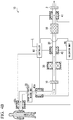
- Figs. 2A and 2B are plan views showing configurations of a blood purification device 1B according to a second embodiment of the present disclosure.
- a flow channel through which blood flows includes a return flow channel will be described as an example.
- the blood purification device 1B includes: main flow channels 20, 21, and 22 through which blood 10 taken out of the body flows; a magnetic extraction unit 30 (magnetic extraction means) for collecting magnetic particles contained in the blood 10; and magnetic sensors 40 and 41 for detecting the presence of the magnetic particles in the blood 10.
- the blood purification device 1B includes: a return flow channel 23 for recirculating the blood 10; a first flow channel selection unit 61 (first flow channel selection means) for selecting a flow destination of blood; and a second flow channel selection unit 62 (second flow channel selection means) for selecting a flow destination of blood.
- the blood purification device 1B includes a filter 50, a connection port (inlet) 2, and a connection port (outlet) 3.
- the magnetic extraction unit 30 and the magnetic sensor 40 are disposed so as to come into contact with the main flow channel 20, and the magnetic sensor 41 is disposed so as to come into contact with the main flow channel 22.
- the magnetic sensors 40 and 41 are implemented as parts subsequent to the magnetic extraction unit 30. In a embodiment of in the blood purification device 1B, two magnetic sensors are implemented as parts subsequent to the magnetic extraction unit 30, however the number of magnetic sensor may be one or may be three or more.
- the first flow channel selection unit 61 is disposed on a preceding portion with respect to the magnetic extraction unit 30, and the second flow channel selection unit 62 is disposed on a subsequent portion with respect to the magnetic extraction unit 30.
- the first flow channel selection unit 61 and the second flow channel selection unit 62 may be operated manually, for example.
- the first flow channel selection unit 61 (flow channel selection means) and the second flow channel selection unit 62 (flow channel selection means) may be controlled using an appropriate actuator or the like.
- the first flow channel selection unit 61 and the second flow channel selection unit 62 are, for example, three-way valves.
- the first flow channel selection unit 61 is operated to allow communication between the main flow channel 21 and the main flow channel 20
- the second flow channel selection unit 62 is operated to allow communication between the main flow channel 20 and the return flow channel 23 and block communication between the main flow channels 20 and 22.
- the blood 10 containing magnetic particles flows from the connection port 2 into the main flow channel 21.
- the first flow channel selection unit 61 is operated to allow communication between the main flow channel 20 and the return flow channel 23.
- the second flow channel selection unit 62 allows a state where the main flow channel 20 is allowed to communicate with the return flow channel 23 to continue.
- the blood 10 circulates in the main flow channel 20 and the return flow channel 23. During that period, the magnetic particles are collected by the magnetic extraction unit 30, and the magnetism generated from the blood 10 is measured by the magnetic sensor 40.
- the first flow channel selection unit 61 and the second flow channel selection unit 62 allow the state where the main flow channel 20 is allowed to communicate with the return flow channel 23 to continue.
- the blood 10 containing magnetic particles recirculates through the main flow channel 20 and the return flow channel 23, and the magnetic particles contained in the blood 10 are collected by the magnetic extraction unit 30.
- the first flow channel selection unit 61 allows the state where the main flow channel 20 is allowed to communicate with the return flow channel 23 to continue and the second flow channel selection unit 62 is operated to allow communication between the main flow channel 20 and the main flow channel 22.
- the blood 10 flows into the main flow channel 22 and passes through the filter 50. After the magnetic sensor 41 determines whether or not the blood 10 contains magnetic particles, the blood 10 flowing through the main flow channel 22 flows out of the connection port 3.
- blood flowing out of the connection port 3 can be safely returned to the body.
- whether or not the blood 10 after passing through the filter 50 contains magnetic particles can be determined based on the measurement values of the magnetic sensor 41, and the blood can be safely returned to the body.
- a signal for controlling an artificial heart-lung machine to be described below may be output from the magnetic sensor 41. According to this configuration, it is possible to confirm that magnetic particles have been sufficiently separated and removed from blood before purified blood is returned to the body.
- the filter 50 can capture, for example, the magnetic particles which are contained in the blood 10 and could not be removed by the magnetic extraction unit 30, and foreign substances contained in the blood 10.
- the magnetic extraction unit 30 can collect magnetic particles in blood flowing through the main flow channel 20 with a magnetic force. Accordingly, a specific substance captured by the magnetic particles can be extracted from blood.
- Patent Literature 1 magnetic separation method disclosed in Patent Literature 1 can be used.
- the collection of magnetic particles from blood may be performed, for example, by taking out the magnetic particles into a flow channel connected to the main flow channel 20, or magnetic particles may be collected in a collection unit located on an inner wall of the main flow channel 20.
- the magnetic extraction unit 30 may have magnetic field generator (not shown in the drawings) for generating a magnetic field. Magnetic particles are collected from the blood 10 flowing through the main flow channel 20 due to this magnetic field.
- the magnetic field generator may be, for example, a permanent magnet or a variable magnetic flux magnet, or may be, for example, an induced magnetic field.
- the magnetic extraction unit 30 may have a member, such as a magnetic shield layer, capable of shielding a magnetic field. Accordingly, it is possible to suppress or prevent a leakage magnetic field from the magnetic extraction unit 30.
- the magnetic field generator may be disposed outside the main flow channel 20 and free of contact with the blood 10. Since the magnetic field generator does not come into contact with the blood 10, coagulation of the blood 10 and contamination with foreign substances can be suppressed.
- the magnetic sensor 40 can detect the presence of magnetic particles by detecting a leakage magnetic field generated from magnetic particles in blood flowing through the main flow channel 20.
- the magnetic sensor 41 can detect the presence of magnetic particles by detecting a leakage magnetic field generated from magnetic particles in blood flowing through the main flow channel 22.
- the magnetic sensors 40 and 41 may be respectively disposed outside the main flow channels 20 and 22 and free of contact with the blood 10. Since the magnetic sensors 40 and 41 are free of contact with the blood 10, coagulation of the blood 10 and contamination with foreign substances can be suppressed.
- Magnetic sensors 40 and 41 can be used as the magnetic sensors 40 and 41.
- coil-type sensors may be used, Hall sensors may be used, or elements using magnetic resistance may be used. It is possible to determine whether or not the blood 10 flowing through the main flow channel 20 contains magnetic particles based on measurement values of magnetism indicated by the magnetic sensors 40 and 41.
- a coil-type sensor measures and detects a magnetic field of magnetic particles which are passing through using an induction coil, when a magnetic particle-containing sample is passed through the induction coil.
- the coil-type sensor has an advantage of being able to be easily installed.
- a Hall sensor detects a magnetic field using the Hall effect and has advantages of being inexpensive and able to be easily installed.
- a magnetoresistive element is an element utilizing a phenomenon in which electrical resistance changes due to an effect of a magnetic field, and includes an anisotropic magnetoresistive effect (AMR) element, a giant magnetoresistive (GMR) element, a tunnel magnetoresistive resistance (TMR) element, and the like.
- a GMR element or a TMR element has advantages that the temperature change or the change with time is small and the sensitivity (MR ratio) is large.
- the magnetic sensors 40 and 41 may have a member, such as a magnetic shield layer, capable of shielding a magnetic field. Accordingly, it is possible to prevent failures such as false detection due to influence of a magnetic field generated from the magnetic extraction unit 30.
- the blood purification device 1B may be connected to a blood pump (not shown in the drawings) capable of making blood flow.
- the blood pump may be, for example, used for taking out blood from the body or used for circulating blood taken out of the body. Alternatively, an externally provided blood pump may be used separately from the blood purification device of the present disclosure.
- the blood 10 containing magnetic particles modified with the separation-target capturing material which is capable of capturing a specific substance in the blood
- the magnetic extraction unit 30 capable of generating a magnetic field collects at least the portion of the magnetic particles contained in the blood 10.
- the magnetic sensors 40 and 41 capable of detecting the presence of the magnetic particles detect the presence or the absence of the magnetic particles in the blood after at least the portion of the magnetic particles are collected by the magnetic extraction unit 30.
- the temperature of the entire blood purification device 1B in the second embodiment may be kept constant or within a specific temperature range.
- an exterior cover which externally covers the entire blood purification device and is composed of a heat insulating material or the like may be provided in the blood purification device.
- the measurement values of the magnetic sensors are stabilized by keeping the temperature of the entire device constant.
- the temperature of the entire blood purification device is preferably kept the same as body temperature.
- the blood purification device may further include: a temperature sensor (not shown in the drawings) that detects the internal temperature of the above-described exterior cover; and a heating unit (not shown in the drawings) of a heater or the like that heats the interior of the above-described exterior cover according to signals from the controller based on the temperature sensor. Accordingly, it is possible to stabilize the measurement values of the magnetic sensors and to maintain the quality of blood flowing through the blood purification device for a long period of time.
- the blood purification device 1B may further include a validation unit 90 which determines whether or not the magnetic sensors 40 and 41 are operating correctly.
- the validation unit 90 may be connected to the magnetic sensors 40 and 41 and determine whether the magnetic sensors are operating correctly on a basis of the outputs (magnetic values of blood) from the magnetic sensors.
- the validation unit 90 of this second embodiment may be configured in the same manner as the validation unit 90 of the above-described first embodiment, for example.
- the blood purification device 1B may further include a controller 80 (for example, Fig. 2B ) which is connected to the magnetic sensors 40 and 41 and determines whether or not magnetic particles are contained in the blood 10 on a basis of the outputs from the magnetic sensors.
- the controller 80 may check operation states of the magnetic sensors 40 and 41 which have been determined by the validation unit 90.
- the controller 80 of this second embodiment can be configured in the same manner as the controller 80 of the above-described first embodiment, for example. Accordingly, the controller 80 which is a safety circuit can check the operations of the magnetic sensors 40 and 41. As a result, the controller can accurately determine whether or not magnetic particles are contained in the blood 10.
- Examples of magnetic particles include particles exhibiting ferromagnetism or paramagnetism. At least a part of the outer circumferential portion of each magnetic particle is modified with a separation-target capturing material which is capable of capturing a specific substance in blood.
- the magnetic particles may include: for example, iron, cobalt, nickel, and inorganic compounds thereof; and organically modified inorganic compounds obtained so that these metals or inorganic compounds are modified with organic compounds.
- the magnetic particles can capture a specific substance in blood through the separation-target capturing material.
- a method of capturing a specific component in blood by the separation-target capturing material is not particularly limited.
- a chemical bonding such as a molecular biological bonding, an electrical bonding (a van der Waals force, polar attraction, intermolecular forces, and Coulomb force, and the like)
- adsorption, and trapping using a three-dimensional structure can be appropriately adopted.
- Magnetic particles may be coated with coating materials including the separation-target capturing material. Also, whole body of magnetic particles may be formed from the separation-target capturing material itself.
- At least a part of the outer circumferential portion of a magnetic particle is preferably coated with a polymer or a silica matrix depending on the component to be separated out.
- At least a part of the outer circumferential portion of a magnetic particle may have hydrophobicity or hydrophilicity depending on the component to be separated out.
- the average particle diameter of magnetic particles may be greater than or equal to 2 nm. In a case where the average particle diameter of magnetic particles is within the above-described range, the magnetic particles can be efficiently collected by the magnetic field generator included in the magnetic extraction unit 30. In a case where the average particle diameter thereof is greater than or equal to 100 nm, the effect becomes larger, and in a case where the average particle diameter thereof is greater than or equal to 250 nm, the effect becomes even larger.
- the average particle diameter of magnetic particles may be less than or equal to 1 mm.
- the magnetic particles have high dispersibility and a large specific surface area. As a result, it is possible to efficiently capture (for example, adsorb) a specific substance in blood.
- the average particle diameter thereof is less than or equal to 10 ⁇ m, the effect becomes larger, and in a case where the average particle diameter thereof is less than or equal to 5 ⁇ m, the effect becomes even larger.
- the "average particle diameter” means a particle diameter (also referred to as a median diameter D 50 ) at 50% of cumulative values in a particle size distribution obtained through a laser diffraction/light scattering method.
- Animals from which blood to be purified by the blood purification device 1B is derived are not particularly limited.
- the blood may be derived from humans or non-human animals such as livestock or pets.
- non-human animals include dogs, cats, monkeys, pigs, cows, horses, sheep, goats, mice, rats, and birds.
- the blood purification device 1B can extract a specific substance from blood to purify the blood.
- the blood purification device 1B may be directly connected to an animal to immediately purify blood collected from the animal.
- the blood purification device 1B can purify blood which has been collected from an animal in advance without being directly connected to the animal.
- the purified blood may be immediately returned to the individual animal or may be returned to the individual animal after being stored temporarily.
- examples of specific substances in blood to be removed by magnetic particles include low-molecular-weight compounds, proteins, nucleic acids, and cells. More specific examples thereof include urea, creatinine, uric acid, ⁇ 2-micro globulin, LDL cholesterol, abnormal antibodies in immune diseases, and substances, such as viruses, bacteria, fungi, and cancer cells, which cause diseases.
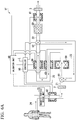
- Figs. 3A and 3B are plan views showing configurations of a blood purification device 1C according to a third embodiment of the present disclosure.
- a flow channel through which blood flows includes a meander-shaped return flow channel will be described as an example.
- the blood purification device 1C includes: main flow channels 20, 21, and 22 through which blood 10 flows; a magnetic extraction unit 30 (magnetic extraction means) for collecting magnetic particles contained in the blood 10; and magnetic sensors 40 and 41 for detecting the presence of the magnetic particles in the blood 10.
- the blood purification device 1C includes: a return flow channel 23 for recirculating the blood 10; a first flow channel selection unit 61 (first flow channel selection means) for selecting a flow channel; and a second flow channel selection unit 62 for selecting a flow channel.
- the blood purification device 1C includes a filter 50, a connection port (inlet) 2, and a connection port (outlet) 3.
- the magnetic extraction unit 30 and the two magnetic sensors 40 and 40 are disposed so as to come into contact with the main flow channel 20, and the magnetic sensor 41 is disposed so as to come into contact with the main flow channel 22.
- the magnetic sensors 40, 40, and 41 are implemented as parts subsequent to the magnetic extraction unit 30. In an embodiment of the blood purification device 1C, three magnetic sensors may be implemented as parts subsequent to the magnetic extraction unit 30, however, the number of the magnetic sensor(s) may be one or two or may be four or more.
- the two magnetic sensors 40 and 40 implemented in the main flow channel 20 are, for example, attached in a state of being deviated from the axis of the magnetic extraction unit 30 in a side view of the main flow channel 20. Furthermore, the two magnetic sensors 40 and 40 are also attached in a state in which their axes are deviated from each other. In this manner, the two magnetic sensors 40 and 40 are disposed so as not to be affected by a magnetic field generated by the magnetic extraction unit 30.
- the first flow channel selection unit 61 is disposed on a preceding portion with respect to the magnetic extraction unit 30, and the second flow channel selection unit 62 is disposed on a subsequent portion with respect to the magnetic extraction unit 30.
- the first flow channel selection unit 61 and the second flow channel selection unit 62 may be operated manually, for example.
- the first flow channel selection unit 61 and the second flow channel selection unit 62 may be controlled using an appropriate actuator or the like.
- the first flow channel selection unit 61 and the second flow channel selection unit 62 are, for example, three-way valves.
- the first flow channel selection unit 61 is operated to allow communication between the main flow channel 21 and the main flow channel 20
- the second flow channel selection unit 62 is operated to allow communication between the main flow channel 20 and the return flow channel 23. Subsequently, the blood 10 containing magnetic particles flows from the connection port 2 into the main flow channel 21.
- the first flow channel selection unit 61 is operated to allow communication between the main flow channel 20 and the return flow channel 23.
- the second flow channel selection unit 62 allows a state where the main flow channel 20 is allowed to communicate with the return flow channel 23 to continue.
- the blood 10 circulates in the main flow channel 20 and the return flow channel 23. During that period, the magnetic particles are collected by the magnetic extraction unit 30, and the magnetism generated from the blood 10 is measured by the magnetic sensors 40.
- the first flow channel selection unit 61 and the second flow channel selection unit 62 allow the state where the main flow channel 20 is allowed to communicate with the return flow channel 23 to continue.
- the blood 10 containing magnetic particles recirculates through the main flow channel 20 and the return flow channel 23, and the magnetic particles contained in the blood 10 are collected by the magnetic extraction unit 30.
- the first flow channel selection unit 61 allows the state where the main flow channel 20 is allowed to communicate with the return flow channel 23 to continue and the second flow channel selection unit 62 is operated to allow communication between the main flow channel 20 and the main flow channel 22.
- the blood 10 flows into the main flow channel 22 and passes through the filter 50. After the magnetic sensor 41 determines whether or not the blood 10 contains magnetic particles, the blood 10 flowing through the main flow channel 22 flows out of the connection port 3.
- blood flowing out of the connection port 3 can be safely returned to the body.
- whether or not the blood 10 that has been passed through the filter 50 contains magnetic particles can be determined based on the measurement values of the magnetic sensor 41, and the blood can be safely returned to the body.
- a signal for controlling an artificial heart-lung machine to be described below may be output from the magnetic sensor 41. According to this configuration, it is possible to confirm that magnetic particles have been sufficiently separated and removed from blood before purified blood is returned to the body.
- the filter 50 can capture, for example, the magnetic particles which are contained in the blood 10 and could not be removed by the magnetic extraction unit 30, and foreign substances contained in the blood 10.
- the magnetic extraction unit 30 can collect magnetic particles in blood flowing through the main flow channel 20 with a magnetic force. Accordingly, a specific substance captured by the magnetic particles can be extracted from blood.
- Patent Literature 1 magnetic separation method disclosed in Patent Literature 1 can be used.
- the collection of magnetic particles from blood may be performed, for example, by taking out the magnetic particles into a flow channel connected to the main flow channel 20, or magnetic particles may be collected in a collection unit located on an inner wall of the main flow channel 20.
- the magnetic extraction unit 30 may have magnetic field generator (not shown in the drawings) for generating a magnetic field. Magnetic particles are collected from the blood 10 flowing through the main flow channel 20 due to this magnetic field.
- the magnetic field generator may be, for example, a permanent magnet or a variable magnetic flux magnet, or may be, for example, an induced magnetic field.
- the magnetic extraction unit 30 may have a member, such as a magnetic shield layer, capable of shielding a magnetic field. Accordingly, it is possible to suppress or prevent a leakage magnetic field from the magnetic extraction unit 30.
- the magnetic field generator may be disposed outside the main flow channel 20 and free of contact with the blood 10. Since the magnetic field generator does not come into contact with the blood 10, coagulation of the blood 10 and contamination with foreign substances can be suppressed.
- the magnetic sensors 40 and 41 can detect the presence of magnetic particles by detecting a leakage magnetic field generated from magnetic particles in blood flowing through the main flow channel 20.
- the magnetic sensors 40 and 41 may be respectively disposed outside the main flow channels 20 and 22 and free of contact with the blood 10. Since the magnetic sensors 40 and 41 are free of contact with the blood 10, coagulation of the blood 10 and contamination with foreign substances can be suppressed.
- Magnetic sensors 40 and 41 can be used as the magnetic sensors 40 and 41.
- coil-type sensors may be used, Hall sensors may be used, or elements using magnetic resistance may be used. It is possible to determine whether or not the blood 10 flowing through the main flow channel 20 contains magnetic particles based on measurement values of magnetism indicated by the magnetic sensors 40 and 41.
- a coil-type sensor measures and detects a magnetic field of magnetic particles which are passing through using an induction coil, when a magnetic particle-containing sample is passed through the induction coil.
- the coil-type sensor has an advantage of being able to be easily installed.
- a Hall sensor detects a magnetic field using the Hall effect and has advantages of being inexpensive and able to be easily installed.
- a magnetoresistive element is an element utilizing a phenomenon in which electrical resistance changes due to an effect of a magnetic field, and includes an anisotropic magnetoresistive effect (AMR) element, a giant magnetoresistive (GMR) element, a tunnel magnetoresistive resistance (TMR) element, and the like.
- a GMR element or a TMR element has advantages that the temperature change or the change with time is small and the sensitivity (MR ratio) is large.
- the magnetic sensors 40 and 41 may have a member, such as a magnetic shield layer, capable of shielding a magnetic field. Accordingly, it is possible to prevent failures such as false detection due to influence of a magnetic field generated from the magnetic extraction unit 30.
- the blood purification device 1C may be connected to a blood pump capable of making blood flow.
- the blood pump may be, for example, used for taking out blood from the body or used for circulating blood taken out of the body. Alternatively, an externally provided blood pump may be used separately from the blood purification device of the present disclosure.
- the blood 10 containing magnetic particles modified with the separation-target capturing material is allowed to flow through the main flow channels 20, 21, and 22 through which the blood 10 can flow.
- the magnetic extraction unit 30 capable of generating a magnetic field collects at least the portion of the magnetic particles contained in the blood 10.
- the magnetic sensors 40 and 41 capable of detecting the presence of the magnetic particles detect the presence or the absence of the magnetic particles in the blood after at least the portion of the magnetic particles are collected by the magnetic extraction unit 30.
- the temperature of the entire blood purification device 1C in the third embodiment may be kept constant or within a specific temperature range.
- an exterior cover which externally covers the entire blood purification device and is composed of a heat insulating material or the like may be provided in the blood purification device.
- the measurement values of the magnetic sensors are stabilized by keeping the temperature of the entire device constant.
- the temperature of the entire blood purification device is preferably kept the same as body temperature.
- the blood purification device may further include: a temperature sensor (not shown in the drawings) that detects the internal temperature of the above-described exterior cover; and a heating unit (not shown in the drawings) of a heater or the like that heats the interior of the above-described exterior cover according to signals from the controller based on the temperature sensor. Accordingly, it is possible to stabilize the measurement values of the magnetic sensors and to maintain the quality of blood flowing through the blood purification device for a long period of time.
- the blood purification device 1C may further include a validation unit 90 which determines whether or not the magnetic sensors 40, 40, and 41 are operating correctly.
- the validation unit 90 may be connected to the magnetic sensors 40, 40, and 41 and determine whether the magnetic sensors 40, 40, and 41 are operating correctly on a basis of the outputs (magnetic values of blood) from the magnetic sensors.
- the validation unit may be configured in the same manner as the validation unit 90 of the above-described first embodiment, for example.
- the blood purification device 1C may further include a controller 80 (for example, Fig. 3B ) which is connected to the magnetic sensors 40, 40, and 41 and determines whether or not magnetic particles are contained in the blood 10 on a basis of the outputs from the magnetic sensors.
- the controller 80 may check operation states of the magnetic sensors 40, 40, and 41 which have been determined by the validation unit 90.
- the controller 80 of this third embodiment can be configured in the same manner as the controller 80 of the above-described first embodiment, for example. Accordingly, the controller 80 which is a safety circuit can check the operations of the magnetic sensors 40, 40, and 41. As a result, the controller can accurately determine whether or not magnetic particles are contained in the blood 10.
- Examples of magnetic particles include particles exhibiting ferromagnetism or paramagnetism. At least a part of the outer circumferential portion of each magnetic particle is modified with a separation-target capturing material which is capable of capturing a specific substance in blood.
- the magnetic particles may include: for example, iron, cobalt, nickel, and inorganic compounds thereof; and organically modified inorganic compounds obtained so that these metals or inorganic compounds are modified with organic compounds.
- the magnetic particles can capture a specific substance in blood through the separation-target capturing material.
- a method of capturing a specific component in blood by the separation-target capturing material is not particularly limited.
- a chemical bonding such as a molecular biological bonding, an electrical bonding (a van der Waals force, polar attraction, intermolecular forces, and Coulomb force), and the like
- adsorption, and trapping using a three-dimensional structure can be appropriately adopted.
- Magnetic particles may be coated with coating materials including the separation-target capturing material.
- whole body magnetic particle may be formed from the separation-target capturing material itself.
- magnetic particles may be embedded in the separation-target capturing material being formed in a granular shape.
- At least a part of the outer circumferential portion of a magnetic particle is preferably coated with a polymer or a silica matrix depending on the component to be separated out.
- At least a part of the outer circumferential portion of a magnetic particle may have hydrophobicity or hydrophilicity depending on the component to be separated out.
- the average particle diameter of magnetic particles may be greater than or equal to 2 nm. In a case where the average particle diameter of magnetic particles is within the above-described range, the magnetic particles can be efficiently collected by the magnetic field generator included in the magnetic extraction unit 30. In a case where the average particle diameter thereof is greater than or equal to 100 nm, the effect becomes larger, and in a case where the average particle diameter thereof is greater than or equal to 250 nm, the effect becomes even larger.
- the average particle diameter of magnetic particles may be less than or equal to 1 mm.
- the magnetic particles have high dispersibility and a large specific surface area. As a result, it is possible to efficiently capture (for example, adsorb) a specific substance in blood.
- the average particle diameter thereof is less than or equal to 10 ⁇ m, the effect becomes larger, and in a case where the average particle diameter thereof is less than or equal to 5 ⁇ m, the effect becomes even larger.
- the "average particle diameter” means a particle diameter (also referred to as a median diameter D 50 ) at 50% of cumulative values in a particle size distribution obtained through a laser diffraction/light scattering method.
- Animals from which blood to be purified by the blood purification device 1C is derived are not particularly limited.
- the blood may be derived from humans or non-human animals such as livestock or pets.
- non-human animals include dogs, cats, monkeys, pigs, cows, horses, sheep, goats, mice, rats, and birds.
- the blood purification device 1C can extract a specific substance from blood to purify the blood.
- the blood purification device 1C may be directly connected to an animal to immediately purify blood collected from the animal.
- the blood purification device 1C can purify blood which has been collected from an animal in advance without being directly connected to the animal.
- the purified blood may be immediately returned to the individual animal or may be returned to the individual animal after being stored temporarily.
- examples of specific substances in blood to be removed by magnetic particles include low-molecular-weight compounds, proteins, nucleic acids, and cells. More specific examples thereof include urea, creatinine, uric acid, ⁇ 2-micro globulin, LDL cholesterol, abnormal antibodies in immune diseases, and substances, such as viruses, bacteria, fungi, and cancer cells, which cause diseases.
- Figs. 4A and 4B are plan views showing configurations of a blood purification device ID according to a fourth embodiment of the present disclosure.
- a flow channel through which blood flows includes no return flow channel and the blood purification device ID includes a controller 80 for processing measurement values of magnetic sensors will be described as an example.
- the blood purification device ID includes: a main flow channel 20 through which blood 10 flows; a magnetic extraction unit 30 (magnetic extraction means) for collecting magnetic particles contained in the blood 10; and magnetic sensors 40, 41, and 42 for detecting the presence of the magnetic particles in the blood 10; a magnetic particle mixing unit 70 for mixing the magnetic particles into the blood 10; and a controller 80 for processing measurement values of magnetic sensors.
- the blood purification device ID includes a filter 50, a connection port (inlet) 2, and a connection port (outlet) 3.
- the blood purification device ID may include at least one of magnetic sensors 42a and 42b for detecting the presence of magnetic particles in the blood 10. Both the magnetic sensors 42a and 42b are exemplified in Fig. 4B as a specific example, but the blood purification device ID may include only the magnetic sensor 42b.
- the magnetic particle mixing unit 70 is located on a preceding portion with respect to the magnetic extraction unit 30, and magnetic particles are mixed into the blood 10 taken out of the body.
- the magnetic particle mixing unit 70 may not be included in a part of the blood purification device ID, and may be implemented outside the blood purification device ID.
- the magnetic sensors 42, 42a, and 42b are implemented as parts preceding the magnetic extraction unit 30.
- the magnetic sensors 42 and 42a may be located on a subsequent portion with respect to the magnetic particle mixing unit 70.
- the magnetic sensor 42b may be located on a preceding portion with respect to the magnetic particle mixing unit 70.
- the magnetic sensor 42 (42a) can measure magnetism indicated by blood after magnetic particles are mixed into the blood.
- a magnetism value measured by the magnetic sensor 42 (42a) may be used as a reference value (hereinafter, sometimes referred to as a "first reference value") after charging magnetic particles, for example.
- the magnetic sensor 42b can measure magnetism indicated by blood itself before magnetic particles are mixed into the blood.
- a magnetism value measured by the magnetic sensor 42b may be used as a reference value (hereinafter, sometimes referred to as a "second reference value") before charging magnetic particles, for example.
- the magnetic extraction unit 30, the magnetic sensors 40 and 41 are disposed so as to come into contact with the main flow channel 20.
- the magnetic sensors 40 and 41 are implemented as parts subsequent to the magnetic extraction unit 30.
- the number of magnetic sensors implemented as parts subsequent to the magnetic extraction unit 30 may be two, however the number of magnetic sensor(s) may be one or may be three or more.
- the controller 80 is connected to, for example, the magnetic sensors 40, 41, and 42 and an artificial heart-lung machine (not shown in the drawings) ( Fig. 4A ).
- the controller 80 may be connected to the magnetic sensors 40, 41, 42a, and 42b and an artificial heart-lung machine (not shown in the drawings) as exemplified in Fig. 4B .
- Signals, for example, from the magnetic sensors 40, 41, and 42 are input to the controller 80.
- Signals from the magnetic sensors 40, 41, 42a, and 42b may be input to the controller 80 ( Fig. 4B ).
- the controller 80 may be configured to be able to output signals to the artificial heart-lung machine.
- the controller 80 may not be directly connected to the magnetic sensors 40, 41, 42, 42a, and 42b and the artificial heart-lung machine.
- the controller 80 may receive data of measurement values measured by the magnetic sensors 40, 41, 42, 42a, 42b, and the like as input.
- the blood 10 containing magnetic particles flows from the connection port 2 into the main flow channel 20, and the magnetic particles are collected by the magnetic extraction unit 30. Subsequently, after the blood 10 has passed through the filter 50, the magnetism of the blood is measured by the magnetic sensor 41.
- the controller 80 may execute processing of comparing the magnetism of the blood measured by the magnetic sensor 40 with the magnetism (first reference value) which has been measured by the magnetic sensor 42 (42a) and is indicated by the blood containing magnetic particles.
- the controller 80 can, for example, output the results of the processing to an appropriate display device or the like.
- the controller 80 may output signals for controlling an operation of the artificial heart-lung machine according to results obtained by comparing a specific reference value (or a range of reference values) with a difference between the magnetism of the blood measured by the magnetic sensor 41 and the magnetism which has been measured by the magnetic sensor 42 (42a) and is indicated by the blood containing magnetic particles.
- the controller 80 may control whether or not to allow the blood 10 to flow into the artificial heart-lung machine according to the results obtained by comparing the magnetism of the blood measured by the magnetic sensor 41 with the first reference value measured by the magnetic sensor 42 (42a), for example.
- the controller 80 may allow the blood 10 to flow into the artificial heart-lung machine in a case where, for example, the magnetism of the blood measured by the magnetic sensor 41 is reduced to a certain specific reference value or more (that is, in a case where the magnetic particles are captured by the magnetic extraction unit 30 and the amount of magnetic particles in the blood is sufficiently reduced) compared to the first reference value.
- the controller 80 may control the blood 10 not to flow into the artificial heart-lung machine.
- the controller 80 may control the artificial heart-lung machine or the like so as to stop the blood 10 from flowing into the artificial heart-lung machine.
- the controller 80 may control the artificial heart-lung machine or the like so as to stop the blood 10 from flowing into the artificial heart-lung machine. Accordingly, the controller 80 can prevent the blood 10, which contains magnetic particles at an amount out of a range of certain specific reference values, from flowing into the artificial heart-lung machine, for example.
- the reference value may be appropriately determined from the viewpoint of, for example, safety to the human body (the same applies to the embodiments to be described below).
- the controller 80 may execute processing of comparing the magnetism of the blood measured by the magnetic sensor 40 with the magnetism (second reference value) which has been measured by the magnetic sensor 42b and is indicated by the blood itself containing no magnetic particles.
- the controller 80 can, for example, output the results of the processing to an appropriate display device or the like.
- the controller 80 may control whether or not to allow the blood 10 to flow into the artificial heart-lung machine according to the results obtained by comparing the magnetism of the blood measured by the magnetic sensor 41 with the second reference value measured by the magnetic sensor 42b, for example.
- the controller 80 may allow the blood 10 to flow into the artificial heart-lung machine in a case where, for example, the magnetism of the blood measured by the magnetic sensor 41 is less than or equal to the second reference value (in a case where the amount of magnetic particles in the blood is sufficiently reduced).
- the controller 80 may control the artificial heart-lung machine so as to stop the blood 10 from flowing into the artificial heart-lung machine.
- the controller 80 may control the artificial heart-lung machine so as to stop the blood 10 from flowing into the artificial heart-lung machine. Accordingly, the controller 80 can prevent the blood 10, which contains magnetic particles at an amount out of a range of certain specific reference values, from flowing into the artificial heart-lung machine, for example.
- the controller 80 can control whether or not to allow the blood 10 to flow into the artificial heart-lung machine according to the results obtained by comparing the magnetism of the blood measured by the magnetic sensor 41 with the first reference value measured by the magnetic sensor 42 (magnetic sensor 42a) or the second reference value measured by the magnetic sensor 42b.
- the controller 80 may control whether or not to allow the blood 10 to flow into the artificial heart-lung machine depending on whether or not a difference between the magnetism of the blood measured by the magnetic sensor 41 and the first reference value or a difference between the magnetism of the blood measured by the magnetic sensor 41 and the second reference value is included in a specific range as described above.
- the filter 50 can capture, for example, the magnetic particles, which could not be removed by the magnetic extraction unit 30, and foreign substances contained in the blood 10.
- the magnetic extraction unit 30 can collect magnetic particles in blood flowing through the main flow channel 20 with a magnetic force. Accordingly, a specific substance captured by the magnetic particles can be extracted from blood.
- Patent Literature 1 magnetic separation method disclosed in Patent Literature 1 can be used.
- the collection of magnetic particles from blood may be performed, for example, by taking out the magnetic particles into a flow channel connected to the main flow channel 20, or magnetic particles may be collected in a collection unit located on an inner wall of the main flow channel 20.
- the magnetic extraction unit 30 may have magnetic field generator (not shown in the drawings) for generating a magnetic field. Magnetic particles are collected from the blood 10 flowing through the main flow channel 20 due to this magnetic field.
- the magnetic field generator may be, for example, a permanent magnet or a variable magnetic flux magnet, or may be, for example, an induced magnetic field.
- the magnetic extraction unit 30 may have a member, such as a magnetic shield layer, capable of shielding a magnetic field. Accordingly, it is possible to suppress or prevent a leakage magnetic field from the magnetic extraction unit 30.
- the magnetic field generator may be disposed outside the main flow channel 20 and free of contact with the blood 10. Since the magnetic field generator does not come into contact with the blood 10, coagulation of the blood 10 and contamination with foreign substances can be suppressed.
- the magnetic sensors 40, 41, 42 (42a), and 42b can detect the presence of magnetic particles by detecting a leakage magnetic field generated from magnetic particles in blood flowing through the main flow channel 20.
- the magnetic sensors 40, 41, 42 (42a), and 42b may be disposed outside the main flow channel 20 and free of contact with the blood 10. Since the magnetic sensors 40, 41, and 42 are free of contact with the blood 10, coagulation of the blood 10 and contamination with foreign substances can be suppressed.
- Magnetic sensors 40, 41, 42 (42a), and 42b can be used as the magnetic sensors 40, 41, 42 (42a), and 42b.
- coil-type sensors may be used, Hall sensors may be used, or elements using magnetic resistance may be used. It is possible to determine whether or not the blood 10 flowing through the main flow channel 20 contains magnetic particles based on measurement values of magnetism indicated by the magnetic sensors 40, 41, 42 (42a), and 42b.
- the magnetic sensors 40, 41, 42 (42a), and 42b may be the same or different types of magnetic sensors.
- a coil-type sensor measures and detects a magnetic field of magnetic particles which are passing through using an induction coil when a magnetic particle-containing sample is passed through the induction coil.
- the coil-type sensor has an advantage of being able to be easily installed.
- a Hall sensor detects a magnetic field using the Hall effect and has advantages of being inexpensive and able to be easily installed.
- a magnetoresistive element is an element utilizing a phenomenon in which electrical resistance changes due to an effect of a magnetic field, and includes an anisotropic magnetoresistive effect (AMR) element, a giant magnetoresistive (GMR) element, a tunnel magnetoresistive resistance (TMR) element, and the like.
- a GMR element or a TMR element has advantages that the temperature change or the change with time is small and the sensitivity (MR ratio) is large.
- the magnetic sensors 40, 41, 42 (42a), and 42b may have a member, such as a magnetic shield layer, capable of shielding a magnetic field. Accordingly, it is possible to prevent failures such as false detection due to influence of a magnetic field generated from the magnetic extraction unit 30.
- the blood purification device ID may include a blood pump for taking out blood from the body.
- an externally provided blood pump may be used separately from the blood purification device of the present disclosure.
- the blood 10 containing magnetic particles modified with the separation-target capturing material which is capable of capturing a specific substance in the blood
- the magnetic extraction unit 30 capable of generating a magnetic field collects at least the portion of the magnetic particles contained in the blood 10.
- the magnetic sensors 40 and 41 capable of detecting the presence of the magnetic particles detect whether or not the magnetic particles have remained in the blood after at least the portion of the magnetic particles are collected by the magnetic extraction unit 30.
- the temperature of the entire blood purification device ID in the fourth embodiment may be kept constant or within a specific temperature range.
- an exterior cover which externally covers the entire blood purification device and is composed of a heat insulating material or the like may be provided in the blood purification device.
- the measurement values of the magnetic sensors are stabilized by keeping the temperature of the entire device constant.
- the temperature of the entire blood purification device is preferably kept the same as body temperature.
- the blood purification device may further include: a temperature sensor (not shown in the drawings) that detects the internal temperature of the above-described exterior cover; and a heating unit (not shown in the drawings) of a heater or the like that heats the interior of the above-described exterior cover according to signals from the controller based on the temperature sensor. Accordingly, it is possible to stabilize the measurement values of the magnetic sensors and to maintain the quality of blood flowing through the blood purification device for a long period of time.
- the blood purification device ID may further include a validation unit 90 which determines whether or not the magnetic sensors 40, 41, 42 (42a), and 42b are operating correctly.
- the validation unit 90 may be connected to the magnetic sensors 40, 41, 42 (42a), and 42b and determine whether the magnetic sensors 40, 41, 42 (42a), and 42b are operating correctly on a basis of the outputs (magnetic values of blood) from the magnetic sensors.
- the validation unit may be configured in the same manner as the validation unit 90 of the above-described first embodiment, for example.
- the blood purification device ID may further include a controller 80 which is connected to the magnetic sensors 40, 41, 42 (42a), and 42b and determines whether or not magnetic particles are contained in the blood 10 on a basis of the outputs from the magnetic sensors.
- the controller 80 may check operation states of the magnetic sensors 40, 41, 42 (42a), and 42b which have been determined by the validation unit 90.
- the controller 80 of this third embodiment can be configured in the same manner as the controller 80 of the above-described first embodiment, for example. Accordingly, the controller 80 which is a safety circuit can check the operations of the magnetic sensors 40, 41, 42 (42a), and 42b. As a result, the controller can accurately determine whether or not magnetic particles are contained in the blood 10.
- Examples of magnetic particles include particles exhibiting ferromagnetism or paramagnetism. At least a part of the outer circumferential portion of each magnetic particle is modified with a separation-target capturing material which is capable of capturing a specific substance in blood.
- the magnetic particles may include: for example, iron, cobalt, nickel, and inorganic compounds thereof; and organically modified inorganic compounds obtained so that these metals or inorganic compounds are modified with organic compounds.
- the magnetic particles can capture a specific substance in blood through the separation-target capturing material.
- a method of capturing a specific component in blood by the separation-target capturing material is not particularly limited.
- a chemical bonding such as a molecular biological bonding, an electrical bonding (a van der Waals force, polar attraction, intermolecular forces, and Coulomb force, and the like)
- adsorption, and trapping using a three-dimensional structure can be appropriately adopted.
- Magnetic particles may be coated with coating materials including the separation-target capturing material.
- whole body magnetic particle may be formed from the separation-target capturing material itself..
- magnetic particles may be embedded in the separation-target capturing material being formed in a granular shape.
- At least a part of the outer circumferential portion of a magnetic particle is preferably coated with a polymer or a silica matrix depending on the component to be separated out.
- At least a part of the outer circumferential portion of a magnetic particle may have hydrophobicity or hydrophilicity depending on the component to be separated out.
- the average particle diameter of magnetic particles may be greater than or equal to 2 nm. In a case where the average particle diameter of magnetic particles is within the above-described range, the magnetic particles can be efficiently collected by the magnetic field generator included in the magnetic extraction unit 30. In a case where the average particle diameter thereof is greater than or equal to 100 nm, the effect becomes larger, and in a case where the average particle diameter thereof is greater than or equal to 250 nm, the effect becomes even larger.
- the average particle diameter of magnetic particles may be less than or equal to 1 mm.
- the magnetic particles have high dispersibility and a large specific surface area. As a result, it is possible to efficiently capture (for example, adsorb) a specific substance in blood.
- the average particle diameter thereof is less than or equal to 10 ⁇ m, the effect becomes larger, and in a case where the average particle diameter thereof is less than or equal to 5 ⁇ m, the effect becomes even larger.
- the "average particle diameter” means a particle diameter (also referred to as a median diameter D 50 ) at 50% of cumulative values in a particle size distribution obtained through a laser diffraction/light scattering method.
- Animals from which blood to be purified by the blood purification device ID is derived are not particularly limited.
- the blood may be derived from humans or non-human animals such as livestock or pets.
- non-human animals include dogs, cats, monkeys, pigs, cows, horses, sheep, goats, mice, rats, and birds.
- the blood purification device ID can extract a specific substance from blood to purify the blood.
- the blood purification device ID may be directly connected to an animal to immediately purify blood collected from the animal.
- the blood purification device ID can purify blood which has been collected from an animal in advance without being directly connected to the animal.
- the purified blood may be immediately returned to the individual animal or may be returned to the individual animal after being stored temporarily.
- examples of specific substances in blood to be removed by magnetic particles include low-molecular-weight compounds, proteins, nucleic acids, and cells. More specific examples thereof include urea, creatinine, uric acid, ⁇ 2-micro globulin, LDL cholesterol, abnormal antibodies in immune diseases, and substances, such as viruses, bacteria, fungi, and cancer cells, which cause diseases.
- Figs. 5A and 5B are plan views showing configurations of a blood purification device IE according to a fifth embodiment of the present disclosure.
- the blood purification device IE includes a flow channel through which blood flows and a return flow channel and a controller 80 for operating a flow channel selection unit will be described as an example.
- the blood purification device IE includes: main flow channels 20, 21, and 22 through which blood 10 flows; a magnetic extraction unit 30 (magnetic extraction means) for collecting magnetic particles contained in the blood 10; and magnetic sensors 40, 41, and 42 for detecting the presence of the magnetic particles in the blood 10; a magnetic particle mixing unit 70 for mixing the magnetic particles into the blood 10; and a controller 80 for processing measurement values of magnetic sensors.
- the blood purification device IE includes: a return flow channel 23 for recirculating the blood 10; a first flow channel selection unit 61 (first flow channel selection means) for selecting a flow channel; and a second flow channel selection unit 62 (second flow channel selection means) for selecting a flow channel.
- the blood purification device IE includes a filter 50, a connection port (inlet) 2, and a connection port 3.
- the blood purification device IE may include at least one of magnetic sensors 42a and 42b for detecting the presence of magnetic particles in the blood 10. Both the magnetic sensors 42a and 42b are exemplified in Fig. 5B as a specific example, but the blood purification device IE may include only the magnetic sensor 42b.
- the magnetic particle mixing unit 70 is located on a preceding portion with respect to the magnetic extraction unit 30, and magnetic particles are mixed into the blood 10.
- the magnetic particle mixing unit 70 may be implemented in the blood purification device IE, or may be implemented outside the blood purification device IE.
- the magnetic sensors 42, 42a, and 42b are implemented as parts preceding the magnetic extraction unit 30.
- the magnetic sensors 42 and 42a may be located on a subsequent portion with respect to the magnetic particle mixing unit 70.
- the magnetic sensor 42b may be located on a preceding portion with respect to the magnetic particle mixing unit 70.
- the magnetic sensor 42 (42a) can measure magnetism indicated by blood after magnetic particles are mixed into the blood.
- a magnetism value measured by the magnetic sensor 42 (42a) may be used as a reference value (a "first reference value") after charging magnetic particles, for example.
- the magnetic sensor 42b can measure magnetism indicated by blood itself containing no magnetic particles before magnetic particles are mixed into the blood.
- a magnetism value measured by the magnetic sensor 42b may be used as a reference value (a "first reference value") before charging magnetic particles, for example.
- the first flow channel selection unit 61 and the second flow channel selection unit 62 are, for example, three-way solenoid valves. Not limited to the above, the first flow channel selection unit 61 and the second flow channel selection unit 62 may be realized with an appropriate configuration (for example, an actuator or a valve) capable of selecting a flow channel of blood using control signals output from the controller 80, for example.
- an appropriate configuration for example, an actuator or a valve
- the magnetic extraction unit 30, the magnetic sensors 40 and 41 are disposed so as to come into contact with the main flow channel 20.
- the magnetic sensors 40 and 41 are implemented as parts subsequent to the magnetic extraction unit 30.
- the number of magnetic sensors implemented as parts subsequent to the magnetic extraction unit 30 may be two, however, the number of magnetic sensor(s) may be one or may be three or more.
- the controller 80 is connected to the magnetic sensors 40, 41, and 42, the first flow channel selection unit 61, the second flow channel selection unit 62, and an artificial heart-lung machine (not shown in the drawings) ( Fig. 5A ).
- the controller 80 may be connected to the magnetic sensors 40, 41, 42a, and 42b, the first flow channel selection unit 61, the second flow channel selection unit 62, and an artificial heart-lung machine (not shown in the drawings) as exemplified in Fig. 5B .
- Signals, for example, from the magnetic sensors 40, 41, and 42 are input to the controller 80.
- Signals from the magnetic sensors 40, 41, 42a, and 42b may be input to the controller 80 ( Fig. 5B ).
- the controller 80 may output signals to the first flow channel selection unit 61, the second flow channel selection unit 62, and the artificial heart-lung machine.
- the controller 80 may not be directly connected to the magnetic sensors 40, 41, 42, 42a, and 42b and the artificial heart-lung machine.
- the controller 80 may receive data of measurement values measured by the magnetic sensors 40, 41, 42, 42a, 42b, and the like as input.
- the controller 80 outputs signals to the first flow channel selection unit 61 and operates the first flow channel selection unit 61 to allow communication between the main flow channel 21 and the main flow channel 20.
- the controller 80 outputs signals to the second flow channel selection unit 62 and operates the second flow channel selection unit 62 to allow communication between the main flow channel 20 and the return flow channel 23 and block communication between the main flow channels 20 and 22. Accordingly, the blood 10 containing magnetic particles flows from the connection port 2 into the main flow channel 21.
- the controller 80 After the blood 10 containing magnetic particles flows in from the connection port 2, the controller 80 operates the first flow channel selection unit 61 to allow communication between the main flow channel 20 and the return flow channel 23. At this time, the second flow channel selection unit 62 allows a state where the main flow channel 20 is allowed to communicate with the return flow channel 23 to continue.
- the blood 10 circulates in the main flow channel 20 and the return flow channel 23. During that period, the magnetic particles are collected by the magnetic extraction unit 30, and the magnetism generated from the blood 10 is measured by the magnetic sensor 40.
- the controller 80 may execute processing of comparing the magnetism of the blood measured by the magnetic sensor 40 with the magnetism (first reference value) which has been measured by the magnetic sensor 42 (42a) and is indicated by the blood containing magnetic particles.
- the controller 80 can, for example, output the results of the processing to an appropriate display device or the like.
- the controller 80 may control at least one of the first flow channel selection unit 61 and the second flow channel selection unit 62 according to the results obtained by comparing the magnetism of the blood measured by the magnetic sensor 40 with the first reference value measured by the magnetic sensor 42 (42a).
- the controller 80 may control at least one of the first flow channel selection unit 61 and the second flow channel selection unit 62 so as to allow communication between the main flow channel 20 and the main flow channel 22. Specifically, for example, the controller 80 outputs signals to the second flow channel selection unit 62 and operates the second flow channel selection unit 62 to allow communication between the main flow channel 20 and the main flow channel 22. At this time, the controller 80 allows the state of the first flow channel selection unit 61 allowing communication between the main flow channel 20 and the return flow channel 23 to continue. Then, the blood 10 flows into the main flow channel 22 and passes through the filter 50.
- the controller 80 may control at least one of the first flow channel selection unit 61 and the second flow channel selection unit 62 so as to maintain the state where the main flow channel 20 and the return flow channel 23 communicate with each other.
- the controller 80 may control at least one of the first flow channel selection unit 61 and the second flow channel selection unit 62 to allow the state where the main flow channel 20 is allowed to communicate with the return flow channel 23 to continue.
- the controller 80 may control at least one of the first flow channel selection unit 61 and the second flow channel selection unit 62 so as to maintain the state where the main flow channel 20 and the return flow channel 23 communicate with each other.
- the first flow channel selection unit 61 and the second flow channel selection unit 62 allow the state where the main flow channel 20 is allowed to communicate with the return flow channel 23 to continue according to the control signals from the controller 80. Accordingly, the controller 80 can prevent the blood 10, which contains magnetic particles at an amount out of a range of certain specific reference values, from flowing into the main flow channel 22, for example.
- the controller 80 may execute processing of comparing the magnetism of the blood measured by the magnetic sensor 40 with the magnetism (second reference value) which has been measured by the magnetic sensor 42b and is indicated by the blood itself containing no magnetic particles.
- the controller 80 may control, for example, at least one of the first flow channel selection unit 61 and the second flow channel selection unit 62 according to the results obtained by comparing the magnetism of the blood measured by the magnetic sensor 40 with the second reference value measured by the magnetic sensor 42b.
- the controller 80 may execute the following processing in a case where, for example, the magnetism of the blood measured by the magnetic sensor 40 is less than or equal to the second reference value (in a case where the amount of magnetic particles in the blood is sufficiently reduced). That is, the controller 80 may control at least one of the first flow channel selection unit 61 and the second flow channel selection unit 62 so as to allow communication between the main flow channel 20 and the main flow channel 22. For example, the controller 80 outputs signals to the second flow channel selection unit 62 and operates the second flow channel selection unit 62 to allow communication between the main flow channel 20 and the main flow channel 22. At this time, the controller 80 allows the state of the first flow channel selection unit 61 allowing communication between the main flow channel 20 and the return flow channel 23 to continue. Then, the blood 10 flows into the main flow channel 22 and passes through the filter 50.
- the controller 80 may control at least one of the first flow channel selection unit 61 and the second flow channel selection unit 62 so as to maintain the state where the main flow channel 20 and the return flow channel 23 communicate with each other.
- the controller 80 may control at least one of the first flow channel selection unit 61 and the second flow channel selection unit 62 so as to maintain the state where the main flow channel 20 and the return flow channel 23 communicate with each other.
- the first flow channel selection unit 61 and the second flow channel selection unit 62 allow the state where the main flow channel 20 is allowed to communicate with the return flow channel 23 to continue according to the control signals from the controller 80. Accordingly, the controller 80 can prevent the blood 10, which contains magnetic particles at an amount out of a range of certain specific reference values, from flowing into the main flow channel 22, for example.
- the controller 80 can control at least one of the first flow channel selection unit 61 and the second flow channel selection unit 62 according to the results obtained by comparing the magnetism of the blood measured by the magnetic sensor 40 with the first reference value measured by the magnetic sensor 42 (magnetic sensor 42a). In addition, the controller 80 can control at least one of the first flow channel selection unit 61 and the second flow channel selection unit 62 according to the results obtained by comparing the magnetism of the blood measured by the magnetic sensor 40 with the second reference value measured by the magnetic sensor 42b.
- the controller 80 may control at least one of the first flow channel selection unit 61 and the second flow channel selection unit 62 depending on whether or not a difference between the magnetism of the blood measured by the magnetic sensor 40 and the first reference value or a difference between the magnetism of the blood measured by the magnetic sensor 40 and the second reference value is included in a specific range as described above. Accordingly, the controller 80 can control the blood flow according to the measurement results of the magnetic sensors.
- the controller 80 can determine whether or not the blood 10 flowing through the main flow channel 22, that is, the blood 10 after passing through the filter 50 contains magnetic particles based on the magnetism of the blood measured by the magnetic sensor 41 and the magnetism (first reference value) which has been measured by the magnetic sensor 42 (42a) and is indicated by blood containing magnetic particles.
- the controller 80 may determine that the amount of magnetic particles contained in the blood 10 after passing through the filter 50 is sufficiently reduced.
- the controller 80 may determine that the amount of magnetic particles contained in the blood 10 after passing through the filter 50 is sufficiently reduced.
- the controller 80 can determine whether or not the blood 10 flowing through the main flow channel 22, that is, the blood 10 after passing through the filter 50 contains magnetic particles based on the magnetism of the blood measured by the magnetic sensor 41 and the magnetism (second reference value) which has been measured by the magnetic sensor 42b and is indicated by blood containing no magnetic particles. As an example, in a case where the magnetism of the blood measured by the magnetic sensor 41 is less than or equal to the second reference value, the controller 80 may determine that the amount of magnetic particles contained in the blood 10 after passing through the filter 50 is sufficiently reduced.
- the controller 80 may determine that the amount of magnetic particles contained in the blood 10 after passing through the filter 50 is sufficiently reduced.
- the controller 80 determines that the blood 10 flowing through the main flow channel 22 contains no magnetic particles (or that the amount of magnetic particles is sufficiently reduced)
- the state where the main flow channel 20 and the main flow channel 22 communicate with each other is continued. In this case, the blood 10 flows out of the connection port 3.
- the controller 80 may output signals for controlling the operation the artificial heart-lung machine. For example, the controller 80 may control the artificial heart-lung machine so as to stop the blood 10 from flowing into the artificial heart-lung machine.
- the controller 80 may control at least one of the first flow channel selection unit 61 and the second flow channel selection unit 62 to block communication between the main flow channel 22 and the return flow channel 23 and to switch the flow channels into a state where the main flow channel 20 is allowed to communicate with the return flow channel 23. Accordingly, the controller 80 can prevent the blood 10, which contains magnetic particles, from flowing into the artificial heart-lung machine.
- the controller 80 operates the first flow channel selection unit 61 and the second flow channel selection unit 62 based on the measurement values of the magnetic sensors 40, 42 (42a), and 42b. Therefore, magnetic particles can be sufficiently separated and removed from blood before purified blood is returned to the body.
- the filter 50 can capture, for example, the magnetic particles, which could not be removed by the magnetic extraction unit 30, and foreign substances contained in the blood 10.
- the magnetic extraction unit 30 can collect magnetic particles in blood flowing through the main flow channel 20 with a magnetic force. Accordingly, a specific substance captured by the magnetic particles can be extracted from blood.
- Patent Literature 1 magnetic separation method disclosed in Patent Literature 1 can be used.
- the collection of magnetic particles from blood may be performed, for example, by taking out the magnetic particles into a flow channel connected to the main flow channel 20, or magnetic particles may be collected in a collection unit located on an inner wall of the main flow channel 20.
- the magnetic extraction unit 30 may have magnetic field generator for generating a magnetic field. Magnetic particles are collected from the blood 10 flowing through the main flow channel 20 due to this magnetic field.
- the magnetic field generator may be, for example, a permanent magnet or a variable magnetic flux magnet, or may be, for example, an induced magnetic field.
- the magnetic extraction unit 30 may have a member, such as a magnetic shield layer, capable of shielding a magnetic field. Accordingly, it is possible to suppress or prevent a leakage magnetic field from the magnetic extraction unit 30.
- the magnetic field generator may be disposed outside the main flow channel 20 and free of contact with the blood 10. Since the magnetic field generator does not come into contact with the blood 10, coagulation of the blood 10 and contamination with foreign substances can be suppressed.
- the magnetic sensors 40, 41, 42 (42a), and 42b can detect the presence of magnetic particles by detecting a leakage magnetic field generated from magnetic particles in blood flowing through the main flow channel 20.
- the magnetic sensors 40, 41, 42 (42a), and 42b may be disposed outside the main flow channel 20 and free of contact with the blood 10. Since the magnetic sensors 40, 41, 42 (42a), and 42b are free of contact with the blood 10, coagulation of the blood 10 and contamination with foreign substances can be suppressed.
- Magnetic sensors 40, 41, 42 (42a), and 42b can be used as the magnetic sensors 40, 41, 42 (42a), and 42b.
- coil-type sensors may be used, Hall sensors may be used, or elements using magnetic resistance may be used. It is possible to determine whether or not the blood 10 flowing through the main flow channel 20 contains magnetic particles based on measurement values of magnetism indicated by the magnetic sensors 40, 41, 42 (42a), and 42b.
- the magnetic sensors 40, 41, 42 (42a), and 42b may be the same or different types of magnetic sensors.
- a coil-type sensor measures and detects a magnetic field of magnetic particles which are passing through using an induction coil when a magnetic particle-containing sample is passed through the induction coil.
- the coil-type sensor has an advantage of being able to be easily installed.
- a Hall sensor detects a magnetic field using the Hall effect and has advantages of being inexpensive and able to be easily installed.
- a magnetoresistive element is an element utilizing a phenomenon in which electrical resistance changes due to an effect of a magnetic field, and includes an anisotropic magnetoresistive effect (AMR) element, a giant magnetoresistive (GMR) element, a tunnel magnetoresistive resistance (TMR) element, and the like.
- a GMR element or a TMR element has advantages that the temperature change or the change with time is small and the sensitivity (MR ratio) is large.
- the magnetic sensors 40, 41, 42 (42a), and 42b may have a member, such as a magnetic shield layer, capable of shielding a magnetic field. Accordingly, it is possible to prevent failures such as false detection due to influence of a magnetic field generated from the magnetic extraction unit 30.
- the blood purification device IE may be connected to a blood pump capable of making blood flow.
- the blood pump may be, for example, used for taking out blood from the body or used for circulating blood taken out of the body. Alternatively, an externally provided blood pump may be used separately from the blood purification device of the present disclosure.
- the blood 10 containing magnetic particles modified with the separation-target capturing material which is capable of capturing a specific substance in the blood
- the magnetic extraction unit 30 capable of generating a magnetic field collects at least the portion of the magnetic particles contained in the blood 10.
- the magnetic sensors 40 and 41 capable of detecting the presence of the magnetic particles detect whether or not the magnetic particles have remained in the blood after at least the portion of the magnetic particles are collected by the magnetic extraction unit 30.
- the temperature of the entire blood purification device IE in the fifth embodiment may be kept constant or within a specific temperature range.
- an exterior cover which externally covers the entire blood purification device and is composed of a heat insulating material or the like may be provided in the blood purification device.
- the measurement values of the magnetic sensors are stabilized by keeping the temperature of the entire device constant.
- the temperature of the entire blood purification device is preferably kept the same as body temperature.
- the blood purification device may further include: a temperature sensor (not shown in the drawings) that detects the internal temperature of the above-described exterior cover; and a heating unit (not shown in the drawings) of a heater or the like that heats the interior of the above-described exterior cover according to signals from the controller based on the temperature sensor. Accordingly, it is possible to stabilize the measurement values of the magnetic sensors and to maintain the quality of blood flowing through the blood purification device for a long period of time.
- the blood purification device IE may further include a validation unit 90 which determines whether or not the magnetic sensors 40, 41, 42 (42a), and 42b are operating correctly.
- the validation unit 90 may be connected to the magnetic sensors 40, 41, 42 (42a), and 42b and determine whether the magnetic sensors 40, 41, 42 (42a), and 42b are operating correctly on a basis of the outputs (magnetic values of blood) from the magnetic sensors.
- the validation unit may be configured in the same manner as the validation unit 90 of the above-described first embodiment, for example.
- the blood purification device IE may further include a controller which is connected to the magnetic sensors 40, 41, 42 (42a), and 42b and determines whether or not magnetic particles are contained in the blood 10 on a basis of the outputs from the magnetic sensors.
- the controller 80 may check operation states of the magnetic sensors 40, 41, 42 (42a), and 42b which have been determined by the validation unit 90. Accordingly, the controller 80 which is a safety circuit can check the operations of the magnetic sensors 40, 41, 42 (42a), and 42b. As a result, the controller can accurately determine whether or not magnetic particles are contained in the blood 10.
- Examples of magnetic particles include particles exhibiting ferromagnetism or paramagnetism. At least a part of the outer circumferential portion of each magnetic particle is modified with a the separation-target capturing material which is capable of capturing a specific substance in blood.
- the magnetic particles may include: for example, iron, cobalt, nickel, and inorganic compounds thereof; and organically modified inorganic compounds obtained so that these metals or inorganic compounds are modified with organic compounds.
- the magnetic particles can capture a specific substance in blood through the separation-target capturing material.
- a method of capturing a specific component in blood by the separation-target capturing material is not particularly limited.
- a chemical bonding such as a molecular biological bonding, an electrical bonding (a van der Waals force, polar attraction, intermolecular forces, and Coulomb force, and the like)
- adsorption, and trapping using a three-dimensional structure can be appropriately adopted.
- Magnetic particles may be coated with coating materials including the separation-target capturing material.
- whole body magnetic particle may be formed from the separation-target capturing material itself.
- magnetic particles may be embedded in the separation-target capturing material being formed in a granular shape.
- At least a part of the outer circumferential portion of a magnetic particle is preferably coated with a polymer or a silica matrix depending on the component to be separated out.
- At least a part of the outer circumferential portion of a magnetic particle may have hydrophobicity or hydrophilicity depending on the component to be separated out.
- the average particle diameter of magnetic particles may be greater than or equal to 2 nm. In a case where the average particle diameter of magnetic particles is within the above-described range, the magnetic particles can be efficiently collected by the magnetic field generator included in the magnetic extraction unit 30. In a case where the average particle diameter thereof is greater than or equal to 100 nm, the effect becomes larger, and in a case where the average particle diameter thereof is greater than or equal to 250 nm, the effect becomes even larger.
- the average particle diameter of magnetic particles may be less than or equal to 1 mm.
- the magnetic particles have high dispersibility and a large specific surface area. As a result, it is possible to efficiently capture (for example, adsorb) a specific substance in blood.
- the average particle diameter thereof is less than or equal to 10 ⁇ m, the effect becomes larger, and in a case where the average particle diameter thereof is less than or equal to 5 ⁇ m, the effect becomes even larger.
- the "average particle diameter” means a particle diameter (also referred to as a median diameter D 50 ) at 50% of cumulative values in a particle size distribution obtained through a laser diffraction/light scattering method.
- Animals from which blood to be purified by the blood purification device IE is derived are not particularly limited.
- the blood may be derived from humans or non-human animals such as livestock or pets.
- non-human animals include dogs, cats, monkeys, pigs, cows, horses, sheep, goats, mice, rats, and birds.
- the blood purification device IE can extract a specific substance from blood to purify the blood.
- the blood purification device IE may be directly connected to an animal to immediately purify blood collected from the animal.
- the blood purification device IE can purify blood which has been collected from an animal in advance without being directly connected to the animal.
- the purified blood may be immediately returned to the individual animal or may be returned to the individual animal after being stored temporarily.
- examples of specific substances in blood to be removed by magnetic particles include low-molecular-weight compounds, proteins, nucleic acids, and cells. More specific examples thereof include urea, creatinine, uric acid, ⁇ 2-micro globulin, LDL cholesterol, abnormal antibodies in immune diseases, and substances, such as viruses, bacteria, fungi, and cancer cells, which cause diseases.
- Figs. 6A and 6B are plan views showing configurations of a blood purification device IF according to a sixth embodiment of the present disclosure.
- the blood purification device IF includes a meander-shaped return flow channel and a controller 80 for operating a flow channel selection unit will be described as an example.
- the blood purification device IF includes: main flow channels 20, 21, and 22 through which blood 10 flows; a magnetic extraction unit 30 (magnetic extraction means) for collecting magnetic particles contained in the blood 10; and two magnetic sensors 40 and 40 and magnetic sensors 41 and 42 for detecting the presence of the magnetic particles in the blood 10; a magnetic particle mixing unit 70 for mixing the magnetic particles into the blood 10; and a controller 80 for processing measurement values of magnetic sensors.
- the blood purification device IF includes: a return flow channel 23 for recirculating the blood 10; a first flow channel selection unit 61 (first flow channel selection means) for selecting a flow channel; and a second flow channel selection unit 62 (second flow channel selection means) for selecting a flow channel.
- the blood purification device IF includes a filter 50, a connection port (inlet) 2, and a connection port (outlet) 3.
- the blood purification device IF may include at least one of magnetic sensors 42a and 42b for detecting the presence of magnetic particles in the blood 10. Both the magnetic sensors 42a and 42b are exemplified in Fig. 6B as a specific example, but the blood purification device IF may include only the magnetic sensor 42b.
- two magnetic sensors 40 and 40 are implemented in the main flow channel 20.
- the magnetic sensors 40 are disposed so as not to be affected by a magnetic field generated by the magnetic extraction unit 30. With such an arrangement, the magnetic sensors 40 can more accurately measure the magnetism of the blood 10.
- the two magnetic sensors 40 and 40 implemented in the main flow channel 20 are, for example, attached in a state of being deviated from the axis of the magnetic extraction unit 30 in a side view of the main flow channel 20. Furthermore, the two magnetic sensors 40 and 40 are also attached in a state in which their axes are deviated from each other. In this manner, the two magnetic sensors 40 and 40 are disposed so as not to be affected by a magnetic field generated by the magnetic extraction unit 30.
- the magnetic particle mixing unit 70 is located on a preceding portion with respect to the magnetic extraction unit 30, and magnetic particles are mixed into the blood 10.
- the magnetic particle mixing unit 70 may be implemented in the blood purification device IF, or may be implemented outside the blood purification device IF.
- the magnetic sensors 42, 42a, and 42b are implemented as parts preceding the magnetic extraction unit 30.
- the magnetic sensors 42 and 42a may be implemented on a subsequent portion with respect to the magnetic particle mixing unit 70.
- the magnetic sensor 42b may be located on a preceding portion with respect to the magnetic particle mixing unit 70.
- the magnetic sensor 42 (42a) can measure magnetism indicated by blood after magnetic particles are mixed into the blood.
- a magnetism value measured by the magnetic sensor 42 (42a) may be used as a reference value (a "first reference value") after charging magnetic particles, for example.
- the magnetic sensor 42b can measure magnetism of blood itself containing no magnetic particles before magnetic particles are mixed into the blood.
- a magnetism value measured by the magnetic sensor 42b may be used as a reference value (a "second reference value") before charging magnetic particles, for example.
- the first flow channel selection unit 61 and the second flow channel selection unit 62 are, for example, three-way solenoid valves. Not limited to the above, the first flow channel selection unit 61 and the second flow channel selection unit 62 may be realized with an appropriate configuration (for example, an actuator or a valve) capable of selecting a flow channel of blood using control signals output from the controller 80, for example.
- an appropriate configuration for example, an actuator or a valve
- the magnetic extraction unit 30, the magnetic sensors 40 and 41 are disposed so as to come into contact with the main flow channel 20.
- the magnetic sensors 40 and 41 are implemented as parts subsequent to the magnetic extraction unit 30.
- the number of magnetic sensors implemented as parts subsequent to the magnetic extraction unit 30 may be three, however the number of magnetic sensor(s) may be one or two or may be four or more.
- the controller 80 is connected to the two magnetic sensors 40 and 40, the magnetic sensors 41 and 42, the first flow channel selection unit 61, the second flow channel selection unit 62, and an artificial heart-lung machine (not shown in the drawings) ( Fig. 6A ).
- the controller 80 may be connected to the magnetic sensors 40, 41, 42a, and 42b, the first flow channel selection unit 61, the second flow channel selection unit 62, and an artificial heart-lung machine (not shown in the drawings) as exemplified in Fig. 6B .
- Signals, for example, from the two magnetic sensors 40 and 40 and the magnetic sensors 41 and 42 are input to the controller 80.
- Signals from the magnetic sensors 40, 41, 42a, and 42b may be input to the controller 80 ( Fig. 6B ).
- the controller 80 may output signals to the first flow channel selection unit 61, the second flow channel selection unit 62, and the artificial heart-lung machine.
- the controller 80 may not be directly connected to the magnetic sensor 41 and the artificial heart-lung machine.
- the controller 80 may receive data of measurement values measured by the magnetic sensors 40, 41, 42, 42a, 42b, and the like as input.
- the controller 80 outputs signals to the first flow channel selection unit 61 and operates the first flow channel selection unit 61 to allow communication between the main flow channel 21 and the main flow channel 20.
- the controller 80 outputs signals to the second flow channel selection unit 62 and operates the second flow channel selection unit 62 to allow communication between the main flow channel 20 and the return flow channel 23 and block communication between the main flow channels 20 and 22. Accordingly, the blood 10 containing magnetic particles flows from the connection port 2 into the main flow channel 21.
- the controller 80 After the blood 10 containing magnetic particles flows in from the connection port 2, the controller 80 operates the first flow channel selection unit 61 to allow communication between the main flow channel 20 and the return flow channel 23. At this time, the second flow channel selection unit 62 allows a state where the main flow channel 20 is allowed to communicate with the return flow channel 23 to continue.
- the blood 10 circulates in the main flow channel 20 and the return flow channel 23. During that period, the magnetic particles are collected by the magnetic extraction unit 30, and the magnetism generated from the blood 10 is measured by the magnetic sensors 40 and 40.
- the controller 80 may execute processing of comparing the magnetism of the blood measured by the magnetic sensors 40 and 40 with the magnetism (first reference value) which has been measured by the magnetic sensor 42 (42a) and is indicated by the blood containing magnetic particles.
- the controller 80 can, for example, output the results of the processing to an appropriate display device or the like.
- the controller 80 may control at least one of the first flow channel selection unit 61 and the second flow channel selection unit 62 according to the results obtained by comparing the magnetism of the blood measured by the magnetic sensors 40 and 40 with the first reference value measured by the magnetic sensor 42 (42a).
- the controller 80 may control the first flow channel selection unit 61 and the second flow channel selection unit 62 to allow the state where the main flow channel 20 is allowed to communicate with the return flow channel 23 to continue.
- the controller 80 may control the first flow channel selection unit 61 and the second flow channel selection unit 62 to allow the state where the main flow channel 20 is allowed to communicate with the return flow channel 23 to continue.
- the controller 80 may execute processing of comparing the magnetism of the blood measured by the magnetic sensors 40 and 40 with the magnetism (second reference value) which has been measured by the magnetic sensor 42b and is indicated by the blood containing no magnetic particles.
- the controller 80 may control at least one of the first flow channel selection unit 61 and the second flow channel selection unit 62 according to the results obtained by comparing the second reference value with the magnetism of the blood measured by the magnetic sensors 40 and 40.
- the controller 80 may control the first flow channel selection unit 61 and the second flow channel selection unit 62 to allow the state where the main flow channel 20 is allowed to communicate with the return flow channel 23 to continue.
- the controller 80 may control the first flow channel selection unit 61 and the second flow channel selection unit 62 to allow the state where the main flow channel 20 is allowed to communicate with the return flow channel 23 to continue.
- the controller 80 may execute the following processing. That is, the controller 80 outputs signals to the second flow channel selection unit 62 and operates the second flow channel selection unit 62 to allow communication between the main flow channel 20 and the main flow channel 22, for example. At this time, the controller 80 may control the first flow channel selection unit 61 so as to allow the state where the main flow channel 20 is allowed to communicate with the return flow channel 23 to continue. Then, the blood 10 flows into the main flow channel 22 and passes through the filter 50.
- the controller 80 may operate the second flow channel selection unit 62 to allow communication between the main flow channel 20 and the main flow channel 22.
- the controller 80 may execute the following processing. That is, the controller 80 outputs signals to the second flow channel selection unit 62 and operates the second flow channel selection unit 62 to allow communication between the main flow channel 20 and the main flow channel 22, for example. At this time, the controller 80 may control the first flow channel selection unit 61 so as to allow the state where the main flow channel 20 is allowed to communicate with the return flow channel 23 to continue. Then, the blood 10 flows into the main flow channel 22 and passes through the filter 50.
- the controller 80 may operate the second flow channel selection unit 62 to allow communication between the main flow channel 20 and the main flow channel 22.
- the controller 80 can determine whether or not the blood 10 flowing through the main flow channel 22 contains magnetic particles (or whether or not the amount of magnetic particles is sufficiently reduced) based on the magnetism of the blood measured by the magnetic sensor 41 and the magnetism (first reference value) which has been measured by the magnetic sensor 42 (42a) and is indicated by blood itself containing magnetic particles. In addition, the controller 80 may determine whether or not the blood 10 flowing through the main flow channel 22 contains magnetic particles (or whether or not the amount of magnetic particles is sufficiently reduced) based on the magnetism of the blood measured by the magnetic sensor 41 and the magnetism which has been measured by the magnetic sensor 42b and is indicated by blood itself containing no magnetic particles.
- the controller 80 may determine that the amount of magnetic particles is not sufficiently reduced.
- the controller 80 may determine that the amount of magnetic particles is not sufficiently reduced.
- the controller 80 may determine that the amount of magnetic particles is not sufficiently reduced.
- the controller 80 may determine that the amount of magnetic particles is not sufficiently reduced.
- the controller 80 can compare the first reference value measured by the magnetic sensor 42 (42a) with the magnetism of the blood measured by the magnetic sensor 40 to output the results to a display device, for example.
- the controller 80 can compare the second reference value measured by the magnetic sensor 42b with the magnetism of the blood measured by the magnetic sensor 40 to output the results to a display device, for example.
- the controller 80 may output signals for controlling the operation of the artificial heart-lung machine.
- the controller 80 may output signals for controlling the operation of the artificial heart-lung machine.
- the controller 80 may control, for example, the artificial heart-lung machine so as to stop the blood 10 from flowing into the artificial heart-lung machine.
- the controller 80 may control at least one of the first flow channel selection unit 61 and the second flow channel selection unit 62 to block communication between the main flow channel 22 and the return flow channel 23 and to switch the flow channels into a state where the main flow channel 20 is allowed to communicate with the return flow channel 23. Accordingly, the controller 80 can prevent the blood 10, which contains magnetic particles, from flowing into the artificial heart-lung machine.
- the controller 80 operates the first flow channel selection unit 61 and the second flow channel selection unit 62 based on the measurement values of the two magnetic sensors 40 and 40 and the magnetic sensors 42 (42a) and 42b. Therefore, the measurement accuracy of the magnetic sensors 40 can be improved and magnetic particles can be sufficiently separated and removed from blood before purified blood is returned to the body.
- the filter 50 can capture, for example, the magnetic particles, which could not be removed by the magnetic extraction unit 30, and foreign substances contained in the blood 10.
- the magnetic extraction unit 30 can collect magnetic particles in blood flowing through the main flow channel 20 with a magnetic force. Accordingly, a specific substance captured by the magnetic particles can be extracted from blood.
- Patent Literature 1 magnetic separation method disclosed in Patent Literature 1 can be used.
- the collection of magnetic particles from blood may be performed, for example, by taking out the magnetic particles into a flow channel connected to the main flow channel 20, or magnetic particles may be collected in a collection unit located on an inner wall of the main flow channel 20.
- the magnetic extraction unit 30 may have magnetic field generator for generating a magnetic field. Magnetic particles are collected from the blood 10 flowing through the main flow channel 20 due to this magnetic field.
- the magnetic field generator may be, for example, a permanent magnet or a variable magnetic flux magnet, or may be, for example, an induced magnetic field.
- the magnetic extraction unit 30 may have a member, such as a magnetic shield layer, capable of shielding a magnetic field. Accordingly, it is possible to suppress or prevent a leakage magnetic field from the magnetic extraction unit 30.
- the magnetic field generator may be disposed outside the main flow channel 20 and free of contact with the blood 10. Since the magnetic field generator does not come into contact with the blood 10, coagulation of the blood 10 and contamination with foreign substances can be suppressed.
- the magnetic sensors 40, 41, 42 (42a), and 42b can detect the presence of magnetic particles by detecting a leakage magnetic field generated from magnetic particles in blood flowing through the main flow channel 20.
- the magnetic sensors 40, 41, 42 (42a), and 42b may be disposed outside the main flow channel 20 and free of contact with the blood 10. Since the magnetic sensors 40, 41, 42 (42a), and 42b are free of contact with the blood 10, coagulation of the blood 10 and contamination with foreign substances can be suppressed.
- Magnetic sensors 40, 41, 42 (42a), and 42b can be used as the magnetic sensors 40, 41, 42 (42a), and 42b.
- coil-type sensors may be used, Hall sensors may be used, or elements using magnetic resistance may be used. It is possible to determine whether or not the blood 10 flowing through the main flow channel 20 contains magnetic particles based on measurement values of magnetism indicated by the magnetic sensors 40, 41, 42 (42a), and 42b.
- the magnetic sensors 40, 41, 42 (42a), and 42b may be the same or different types of magnetic sensors.
- a coil-type sensor measures and detects a magnetic field of magnetic particles which are passing through, using an induction coil when a magnetic particle-containing sample is passed through the induction coil.
- the coil-type sensor has an advantage of being able to be easily installed.
- a Hall sensor detects a magnetic field using the Hall effect and has advantages of being inexpensive and able to be easily installed.
- a magnetoresistive element is an element utilizing a phenomenon in which electrical resistance changes due to an effect of a magnetic field, and includes an anisotropic magnetoresistive effect (AMR) element, a giant magnetoresistive (GMR) element, a tunnel magnetoresistive resistance (TMR) element, and the like.
- a GMR element or a TMR element has advantages that the temperature change or the change with time is small and the sensitivity (MR ratio) is large.
- the magnetic sensors 40, 41, 42 (42a), and 42b may have a member, such as a magnetic shield layer, capable of shielding a magnetic field. Accordingly, it is possible to prevent failures such as false detection due to influence of a magnetic field generated from the magnetic extraction unit 30.
- the blood purification device IF may be connected to a blood pump capable of making blood flow.
- the blood pump may be, for example, used for taking out blood from the body or used for circulating blood taken out of the body. Alternatively, an externally provided blood pump may be used separately from the blood purification device of the present disclosure.
- the blood 10 containing magnetic particles modified with the separation-target capturing material which is capable of capturing a specific substance in the blood
- the magnetic extraction unit 30 capable of generating a magnetic field collects at least the portion of the magnetic particles contained in the blood 10.
- the magnetic sensors 40 and 41 capable of detecting the presence of the magnetic particles detect whether or not the magnetic particles have remained in the blood after at least the portion of the magnetic particles are collected by the magnetic extraction unit 30.
- the temperature of the entire blood purification device IF in the sixth embodiment may be kept constant or within a specific temperature range.
- an exterior cover which externally covers the entire blood purification device and is composed of a heat insulating material or the like may be provided in the blood purification device.
- the measurement values of the magnetic sensors are stabilized by keeping the temperature of the entire device constant.
- the temperature of the entire blood purification device is preferably kept the same as body temperature.
- the blood purification device may further include: a temperature sensor (not shown in the drawings) that detects the internal temperature of the above-described exterior cover; and a heating unit (not shown in the drawings) of a heater or the like that heats the interior of the above-described exterior cover according to signals from the controller based on the temperature sensor. Accordingly, it is possible to stabilize the measurement values of the magnetic sensors and to maintain the quality of blood flowing through the blood purification device for a long period of time.
- the blood purification device IF may further include a validation unit 90 which determines whether or not the magnetic sensors 40, 40, 41 42 (42a), and 42b are operating correctly.
- the validation unit 90 may be connected to the magnetic sensors 40, 40, 41, 42 (42a), and 42b and determine whether the magnetic sensors 40, 40, 41, 42 (42a), and 42b are operating correctly on a basis of the outputs (magnetic values of blood) from the magnetic sensors.
- the validation unit may be configured in the same manner as the validation unit 90 of the above-described first embodiment, for example.
- the blood purification device IF may further include a controller which is connected to the magnetic sensors 40, 40, 41, 42 (42a), and 42b and determines whether or not magnetic particles are contained in the blood 10 on a basis of the outputs from the magnetic sensors.
- the controller 80 may check operation states of the magnetic sensors 40, 40, 41, 42 (42a), and 42b which have been determined by the validation unit 90. Accordingly, the controller 80 which is a safety circuit can check the operations of the magnetic sensors 40, 40, 41, 42 (42a), and 42b. As a result, the controller can accurately determine whether or not magnetic particles are contained in the blood 10.
- Examples of magnetic particles include particles exhibiting ferromagnetism or paramagnetism. At least a part of the outer circumferential portion of each magnetic particle is modified with a separation-target capturing material which is capable of capturing a specific substance in blood.
- the magnetic particles may include: for example, iron, cobalt, nickel, and inorganic compounds thereof; and organically modified inorganic compounds obtained so that these metals or inorganic compounds are modified with organic compounds.
- the magnetic particles can capture a specific substance in blood through the separation-target capturing material.
- a method of capturing a specific component in blood by the separation-target capturing material is not particularly limited. For example, a chemical bonding, adsorption, and trapping using a three-dimensional structure can be appropriately adopted.
- Magnetic particles may be coated with coating materials including the separation-target capturing material. Also, whole body magnetic particle may be formed from the separation-target capturing material itself. In addition, magnetic particles may be embedded in the separation-target capturing material being formed in a granular shape.
- At least a part of the outer circumferential portion of a magnetic particle is preferably coated with a polymer or a silica matrix depending on the component to be separated out.
- At least a part of the outer circumferential portion of a magnetic particle may have hydrophobicity or hydrophilicity depending on the component to be separated out.
- the average particle diameter of magnetic particles may be greater than or equal to 2 nm. In a case where the average particle diameter of magnetic particles is within the above-described range, the magnetic particles can be efficiently collected by the magnetic field generator included in the magnetic extraction unit 30. In a case where the average particle diameter thereof is greater than or equal to 100 nm, the effect becomes larger, and in a case where the average particle diameter thereof is greater than or equal to 250 nm, the effect becomes even larger.
- the average particle diameter of magnetic particles may be less than or equal to 1 mm.
- the magnetic particles have high dispersibility and a large specific surface area. As a result, it is possible to efficiently capture (for example, adsorb) a specific substance in blood.
- the average particle diameter thereof is less than or equal to 10 ⁇ m, the effect becomes larger, and in a case where the average particle diameter thereof is less than or equal to 5 ⁇ m, the effect becomes even larger.
- the "average particle diameter” means a particle diameter (also referred to as a median diameter D 50 ) at 50% of cumulative values in a particle size distribution obtained through a laser diffraction/light scattering method.
- Animals from which blood to be purified by the blood purification device IF is derived are not particularly limited.
- the blood may be derived from humans or non-human animals such as livestock or pets.
- non-human animals include dogs, cats, monkeys, pigs, cows, horses, sheep, goats, mice, rats, and birds.
- the blood purification device IF can extract a specific substance from blood to purify the blood.
- the blood purification device IF may be directly connected to an animal to immediately purify blood collected from the animal.
- the blood purification device IF can purify blood which has been collected from an animal in advance without being directly connected to the animal.
- the purified blood may be immediately returned to the individual animal or may be returned to the individual animal after being stored temporarily.
- examples of specific substances in blood to be removed by magnetic particles include low-molecular-weight compounds, proteins, nucleic acids, and cells. More specific examples thereof include urea, creatinine, uric acid, ⁇ 2-micro globulin, LDL cholesterol, abnormal antibodies in immune diseases, and substances, such as viruses, bacteria, fungi, and cancer cells, which cause diseases.
- the technology according to the present disclosure has been described in detail with reference to the above-described embodiments.
- the technology according to the present disclosure is not limited to the above-described embodiments. That is, for example, modified embodiments in which at least a part of each of the above-described embodiments is modified, changed, or improved within a range of technical ideas according to the present disclosure described in the claims, a combination of one or more of the embodiments, and a combination of each of the above-described embodiments and an improved embodiment can be included in the technology according to the present disclosure.
Landscapes
- Health & Medical Sciences (AREA)
- Vascular Medicine (AREA)
- Heart & Thoracic Surgery (AREA)
- Biomedical Technology (AREA)
- Life Sciences & Earth Sciences (AREA)
- Veterinary Medicine (AREA)
- Engineering & Computer Science (AREA)
- Anesthesiology (AREA)
- Public Health (AREA)
- Hematology (AREA)
- Cardiology (AREA)
- Animal Behavior & Ethology (AREA)
- General Health & Medical Sciences (AREA)
- Chemical & Material Sciences (AREA)
- Analytical Chemistry (AREA)
- External Artificial Organs (AREA)
- Investigating Or Analyzing Materials By The Use Of Magnetic Means (AREA)
- Magnetic Treatment Devices (AREA)
Abstract
Description
- The present disclosure relates to a blood purification device and purification method of blood.
- Priority is claimed on
Japanese Patent Application No. 2019-030713, filed February 22, 2019 - A method using centrifugation, membrane separation, an adsorption column separation, or the like is known as a method for removing a causative substance which causes a disease from blood. In addition, a blood purification device which mixes fine particles (magnetic particles), having magnetism and capable of adsorbing a diseasecausing substance in blood thereon, into the blood, and magnetically collects the magnetic particles is known (for example, refer to Patent Literature 1).
-
Japanese Patent No. 4485380 - However, it cannot be said that a blood purification device using magnetic particles in the related art has a sufficient mechanism for confirming that magnetic particles have been removed. Therefore, there is a concern that magnetic particles will remain in blood after purification.
- For this reason, there is a problem in that blood after purification cannot be safely returned into the body.
- Therefore, an object of the present disclosure is to provide a blood purification device capable of confirming that magnetic particles have been separated and removed from blood, and a purification method of blood.
- The technology according to the present disclosure includes the following aspects.
- [1] A blood purification device including: a main flow channel configured to allow blood to flow through; a magnetic extraction unit (a magnetic extraction means) configured to collect magnetic particles with a magnetic force, the magnetic particles being contained in blood; and one or more magnetic sensors configured to be capable of detecting a presence of the magnetic particles in blood, wherein each of the magnetic particles has, on at least a part of its outer circumferential portion, a modified part being modified with a separation-target capturing material which is capable of capturing a specific substance to be separated in the blood, and wherein the magnetic extraction unit is further configured to collect the magnetic particles that have captured the specific substance and, to extract the collected specific substance from the blood thereby purifying the blood.
- [2] The blood purification device according to [1], in which the at least one magnetic sensor among the one or more magnetic sensors is disposed on a subsequent portion with respect to the magnetic extraction unit.
- [3] The blood purification device according to [2], in which another at least one magnetic sensor among the one or more magnetic sensors is disposed on a preceding portion with respect to the magnetic extraction unit.
- [4] The blood purification device according to any one of [1] to [3], further including: a first flow channel selection unit (a first flow channel selection means) disposed on a preceding portion with respect to the magnetic extraction unit in the main flow channel and configured to select a flow destination of the blood; a second flow channel selection unit (a second flow channel means) disposed on a subsequent portion with respect to the magnetic extraction unit in the main flow channel and configured to select a flow destination of the blood; and a return flow channel disposed between the first flow channel selection unit and the second flow channel selection unit.
- [5] The blood purification device according to [4], further including: a magnetic sensor disposed on a subsequent portion with respect to the second flow channel selection unit in the main flow channel.
- [6] The blood purification device according to [4] or [5], further including:
a controller connected to the magnetic sensors, the first flow channel selection unit, and the second flow channel selection unit, wherein the controller is configured to control at least one of the first flow channel selection unit and the second flow channel selection unit on a basis of outputs of the magnetic sensors. - [7] The blood purification device according to any one of [1] to [6], in which the magnetic sensors are magnetoresistive elements which are disposed outside the flow channel so as not to contact with the blood.
- [8] The blood purification device according to any one of [1] to [6], in which the magnetic sensors are coil-type sensors which are disposed outside the flow channel so as not to contact with the blood.
- [9] The blood purification device according to any one of [1] to [6], in which the magnetic sensors are Hall sensors which are disposed outside the flow channel so as not to contact with the blood.
- [10] The blood purification device according to any one of [1] to [9], in which the magnetic extraction unit comprises a magnetic field generator (a magnetic field generation means) configured to generate a magnetic field for collecting the magnetic particles, and wherein the magnetic field generator is disposed at a position outside the flow channel so as not to contact with the blood.
- [11] The blood purification device according to any one of [1] to [10], in which a temperature of the blood purification device itself is kept constant or within a specific temperature range.
- [12] The blood purification device according to any one of [1] to [11], further including: a validation unit which determines whether the magnetic sensors are normally operational.
- [13] A purification method of blood including the steps of: flowing blood containing magnetic particles through a main flow channel being configured to allow the blood to flow through, each of the magnetic particles being modified with a separation-target capturing material which is capable of capturing a specific substance to be separated in blood; collecting at least a portion of the magnetic particles contained in the blood using magnetic extraction unit capable of generating a magnetic field; and detecting, by a magnetic sensor, remaining of the magnetic particles in the blood after the at least the portion of the magnetic particles being collected by the magnetic extraction unit, the magnetic sensor capable of detecting the presence of the magnetic particles.
- According to the present disclosure, it is possible to provide technology for confirming that magnetic particles have been separated and removed from blood.
-
-
Fig. 1A is a schematic diagram schematically showing a configuration of a plan view of ablood purification device 1A according to a first embodiment of the present disclosure. -
Fig. 1B is a schematic diagram schematically showing another configuration of theblood purification device 1A according to the first embodiment of the present disclosure. -
Fig. 2A is a schematic diagram schematically showing a configuration of a plan view of ablood purification device 1B according to a second embodiment of the present disclosure. -
Fig. 2B is a schematic diagram schematically showing another configuration of theblood purification device 1B according to the second embodiment of the present disclosure. -
Fig. 3A is a schematic diagram schematically showing a configuration of a plan view of ablood purification device 1C according to a third embodiment of the present disclosure. -
Fig. 3B is a schematic diagram schematically showing another configuration of theblood purification device 1C according to the third embodiment of the present disclosure. -
Fig. 4A is a schematic diagram schematically showing a configuration of a plan view of ablood purification device 1D according to a fourth embodiment of the present disclosure. -
Fig. 4B is a schematic diagram schematically showing another configuration of the blood purification device ID according to the fourth embodiment of the present disclosure. -
Fig. 5A is a schematic diagram schematically showing a configuration of a plan view of a blood purification device IE according to a fifth embodiment of the present disclosure. -
Fig. 5B is a schematic diagram schematically showing another configuration of the blood purification device IE according to the fifth embodiment of the present disclosure. -
Fig. 6A is a schematic diagram schematically showing a configuration of a plan view of ablood purification device 1F according to a sixth embodiment of the present disclosure. -
Fig. 6B is a schematic diagram schematically showing another configuration of the blood purification device IF according to the sixth embodiment of the present disclosure. - Hereinafter, embodiments in which the technology according to the present disclosure can be realized will be described in detail with reference to the drawings. In the drawings used in the following description, a part that becomes a feature is sometimes enlarged for convenience, and the dimensional ratios of each constituent element or the like are not limited to those shown in the drawings.
-
Figs. 1A and1B are plan views showing configurations of ablood purification device 1A according to a first embodiment of the present disclosure. In the present embodiment, a case where a flow channel through which blood flows does not include a return flow channel will be described as an example. - As exemplified in
Fig. 1A , theblood purification device 1A includes: amain flow channel 20 through whichblood 10 flows; a magnetic extraction unit 30 (magnetic extraction means) for collecting magnetic particles contained in theblood 10; andmagnetic sensors blood 10. - In addition, the
blood purification device 1A includes afilter 50, a connection port (inlet) 2, and a connection port (outlet) 3. - The
magnetic extraction unit 30, themagnetic sensors main flow channel 20. Themagnetic sensors magnetic extraction unit 30. The number of magnetic sensors implemented as parts subsequent to themagnetic extraction unit 30 in theblood purification device 1A is two, but may be one or may be three or more. - The
blood 10 containing magnetic particles flows from theconnection port 2 into themain flow channel 20. After the magnetic particles contained in theblood 10 are collected by themagnetic extraction unit 30, the magnetism of theblood 10 is measured by themagnetic sensor 40. As a result, it is determined whether or not theblood 10 contains the magnetic particles. Subsequently, theblood 10 passes through thefilter 50, and themagnetic sensor 41 determines whether or not theblood 10 contains the magnetic particles. Thereafter, theblood 10 which has passed through thefilter 50 flows out of theconnection port 3. - The
filter 50 can capture, for example, the magnetic particles which are contained in theblood 10 and could not be removed by themagnetic extraction unit 30, and foreign substances contained in theblood 10. - The
magnetic extraction unit 30 can collect magnetic particles in blood flowing through themain flow channel 20 with a magnetic force. Accordingly, a specific substance captured by the magnetic particles can be extracted from blood. - Known methods can be employed to implement the
magnetic extraction unit 30. For example, magnetic separation method disclosed inPatent Literature 1 can be used. - The collection of magnetic particles from blood may be performed, for example, by taking out the magnetic particles into a flow channel connected to the
main flow channel 20, or magnetic particles may be collected in a collection unit located on an inner wall of themain flow channel 20. - The
magnetic extraction unit 30 may have magnetic field generator (not shown in the drawings) for generating a magnetic field. Magnetic particles are collected from theblood 10 flowing through themain flow channel 20 due to this magnetic field. The magnetic field generator may be, for example, a permanent magnet or a variable magnetic flux magnet, or may be, for example, an induced magnetic field. - The
magnetic extraction unit 30 may have a member, such as a magnetic shield layer, capable of shielding a magnetic field. Accordingly, it is possible to suppress or prevent a leakage magnetic field from themagnetic extraction unit 30. - The magnetic field generator may be disposed outside the
main flow channel 20 and free of contact with theblood 10. Since the magnetic field generator does not come into contact with theblood 10, coagulation of theblood 10 and contamination with foreign substances can be suppressed. - The
magnetic sensors main flow channel 20. - The
magnetic sensors main flow channel 20 and free of contact with theblood 10. Since themagnetic sensors blood 10, coagulation of theblood 10 and contamination with foreign substances can be suppressed. - Known magnetic sensors can be used as the
magnetic sensors blood 10 flowing through themain flow channel 20 contains magnetic particles based on measurement values of magnetism indicated by themagnetic sensors - A coil-type sensor measures and detects a magnetic field of magnetic particles which are passing through using an induction coil, when a magnetic particle-containing sample is passed through the induction coil. The coil-type sensor has an advantage of being able to be easily installed.
- A Hall sensor detects a magnetic field using the Hall effect and has advantages of being inexpensive and able to be easily installed.
- A magnetoresistive element is an element utilizing a phenomenon in which electrical resistance changes due to an effect of a magnetic field, and includes an anisotropic magnetoresistive effect (AMR) element, a giant magnetoresistive (GMR) element, a tunnel magnetoresistive resistance (TMR) element, and the like. A GMR element or a TMR element has advantages that the temperature change or the change with time is small and the sensitivity (MR ratio) is large.
- The
magnetic sensors magnetic extraction unit 30. - In a case where it is determined from measurement values of the
magnetic sensor 40 and/or themagnetic sensor 41 that theblood 10 does not contain magnetic particles, blood flowing out of theconnection port 3 can be safely returned to the body. - In addition, whether or not the
blood 10 after passing through thefilter 50 contains magnetic particles can be determined based on the measurement values of themagnetic sensor 41, and the blood can be safely returned to the body. - In this case, whether or not magnetic particles are contained in the
blood 10 at an amount harmful to the human body may be determined by comparing the measurement values of themagnetic sensors - In addition, a signal for controlling an artificial heart-lung machine to be described below may be output from the
magnetic sensor 41. According to this configuration, it is possible to confirm that magnetic particles have been sufficiently separated and removed from blood before purified blood is returned to the body, for example. - The
blood purification device 1A may include a blood pump (not shown in the drawings) used for taking out blood from the body. Alternatively, an externally provided blood pump may be used separately from the blood purification device of the present disclosure. - In this
blood purification device 1A, for example, theblood 10 containing magnetic particles modified with a separation-target capturing material, which is capable of capturing a component to be separated out, is allowed to flow through themain flow channel 20 through which theblood 10 can flow. In addition, themagnetic extraction unit 30 capable of generating a magnetic field collects at least the portion of the magnetic particles contained in theblood 10. Themagnetic sensors magnetic extraction unit 30. - Although the first embodiment of the present disclosure has been described in detail above, the technology according to the present disclosure is not limited to the first embodiment and various modifications and changes can be made within the scope of the gist of the present disclosure disclosed in the claims.
- For example, the temperature of the entire
blood purification device 1A in the first embodiment may be kept constant or within a specific temperature range. For example, an exterior cover which externally covers the entireblood purification device 1A and is composed of a heat insulating material or the like may be provided in the blood purification device. For example, the measurement values of the magnetic sensors may be stabilized by keeping the temperature of the entire device constant. In addition, the temperature of the entire blood purification device is preferably kept the same as body temperature. For example, the blood purification device may further include: a temperature sensor (not shown in the drawings) that detects the internal temperature of the above-described exterior cover; and a heating unit (not shown in the drawings) of a heater or the like that heats the interior of the above-described exterior cover according to signals from the controller based on the temperature sensor. Accordingly, it is possible to stabilize the measurement values of the magnetic sensors and to maintain the quality of blood flowing through the blood purification device for a long period of time. - In addition, as exemplified in
Fig. 1B , theblood purification device 1A may further include avalidation unit 90 which determines whether or not themagnetic sensors validation unit 90 may be connected to themagnetic sensors magnetic sensors validation unit 90 may determine the operations of themagnetic sensors magnetic sensors validation unit 90 may determine that themagnetic sensors magnetic sensors validation unit 90 may determine that themagnetic sensors magnetic sensors - The
validation unit 90 may be realized, for example, by a circuit element capable of comparing outputs from magnetic sensors with a specific reference value, or by a combination of a general-purpose arithmetic logic device (microprocessor) and an appropriate software program. The configuration of thevalidation unit 90 is not limited to the above. - The
blood purification device 1A may further include a controller 80 (for example,Fig. 1B ) which is connected to themagnetic sensors blood 10 on a basis of the outputs from the magnetic sensors. Thecontroller 80 may check operation states of themagnetic sensors validation unit 90. Accordingly, thecontroller 80 which is a safety circuit can check the operation states of themagnetic sensors controller 80 can accurately determine whether or not magnetic particles are contained in theblood 10. - The
controller 80 may be realized, for example, by a circuit element capable of comparing output values from one or more magnetic sensors with each other or output values from magnetic sensors with a specific reference value or the like, or by a combination of a general-purpose arithmetic logic device (microprocessor) and an appropriate software program. The configuration of the controller is not limited to the above. - The
validation unit 90 and thecontroller 80 may be individually realized using a plurality of devices, but may also be integrated as one device. - <Magnetic Particles>
- Examples of magnetic particles include particles exhibiting ferromagnetism or paramagnetism. At least a part of the outer circumferential portion of each magnetic particle is modified with a separation-target capturing material which is capable of capturing a specific substance in blood.
- The magnetic particles may include: for example, iron, cobalt, nickel, and inorganic compounds thereof; and organically modified inorganic compounds obtained so that these metals or inorganic compounds are modified with organic compounds.
- The magnetic particles can capture a specific substance in blood through the separation-target capturing material. A method of capturing a specific component in blood by the separation-target capturing material is not particularly limited. For example, a chemical bonding (such as a molecular biological bonding, an electrical bonding (a van der Waals force, polar attraction, intermolecular forces, and Coulomb force, and the like)), adsorption, and trapping using a three-dimensional structure can be appropriately adopted. Magnetic particles may be coated with coating materials including the separation-target capturing material. Also, whole body magnetic particle may be formed from the separation-target capturing material itself. In addition, magnetic particles may be embedded in the separation-target capturing material being formed in a granular shape.
- At least a part of the outer circumferential portion of a magnetic particle is preferably coated with a polymer or a silica matrix depending on the component to be separated out.
- At least a part of the outer circumferential portion of a magnetic particle may have hydrophobicity or hydrophilicity depending on the component to be separated out.
- The average particle diameter of magnetic particles may be greater than or equal to 2 nm. In a case where the average particle diameter of magnetic particles is within the above-described range, the magnetic particles can be efficiently collected by the magnetic field generator included in the
magnetic extraction unit 30. In a case where the average particle diameter thereof is greater than or equal to 100 nm, the effect becomes larger, and in a case where the average particle diameter thereof is greater than or equal to 250 nm, the effect becomes even larger. - The average particle diameter of magnetic particles may be less than or equal to 1 mm. In a case where the average particle diameter of magnetic particles is within the above-described range, the magnetic particles have high dispersibility and a large specific surface area. As a result, it is possible to efficiently capture (for example, adsorb) a specific substance in blood. In a case where the average particle diameter thereof is less than or equal to 10 µm, the effect becomes larger, and in a case where the average particle diameter thereof is less than or equal to 5 µm, the effect becomes even larger.
- In the present specification, the "average particle diameter" means a particle diameter (also referred to as a median diameter D50) at 50% of cumulative values in a particle size distribution obtained through a laser diffraction/light scattering method.
- Animals from which blood to be purified by the
blood purification device 1A is derived are not particularly limited. The blood may be derived from humans or non-human animals such as livestock or pets. Examples of non-human animals include dogs, cats, monkeys, pigs, cows, horses, sheep, goats, mice, rats, and birds. - As described above, the
blood purification device 1A can extract a specific substance from blood to purify the blood. Theblood purification device 1A may be directly connected to an animal to immediately purify blood collected from the animal. Alternatively, theblood purification device 1A can purify blood which has been collected from an animal in advance without being directly connected to the animal. The purified blood may be immediately returned to the individual animal or may be returned to the individual animal after being stored temporarily. - In the present embodiment, examples of specific substances in blood to be removed by magnetic particles include low-molecular-weight compounds, proteins, nucleic acids, and cells. More specific examples thereof include urea, creatinine, uric acid, β2-micro globulin, LDL cholesterol, abnormal antibodies in immune diseases, and substances, such as viruses, bacteria, fungi, and cancer cells, which cause diseases.
-
Figs. 2A and2B are plan views showing configurations of ablood purification device 1B according to a second embodiment of the present disclosure. In the present embodiment, a case where a flow channel through which blood flows includes a return flow channel will be described as an example. - As exemplified in
Fig. 2A , theblood purification device 1B includes:main flow channels blood 10 taken out of the body flows; a magnetic extraction unit 30 (magnetic extraction means) for collecting magnetic particles contained in theblood 10; andmagnetic sensors blood 10. In addition, theblood purification device 1B includes: areturn flow channel 23 for recirculating theblood 10; a first flow channel selection unit 61 (first flow channel selection means) for selecting a flow destination of blood; and a second flow channel selection unit 62 (second flow channel selection means) for selecting a flow destination of blood. Furthermore, theblood purification device 1B includes afilter 50, a connection port (inlet) 2, and a connection port (outlet) 3. - The
magnetic extraction unit 30 and themagnetic sensor 40 are disposed so as to come into contact with themain flow channel 20, and themagnetic sensor 41 is disposed so as to come into contact with themain flow channel 22. Themagnetic sensors magnetic extraction unit 30. In a embodiment of in theblood purification device 1B, two magnetic sensors are implemented as parts subsequent to themagnetic extraction unit 30, however the number of magnetic sensor may be one or may be three or more. - In the
main flow channel 20, the first flowchannel selection unit 61 is disposed on a preceding portion with respect to themagnetic extraction unit 30, and the second flowchannel selection unit 62 is disposed on a subsequent portion with respect to themagnetic extraction unit 30. In theblood purification device 1B, the first flowchannel selection unit 61 and the second flowchannel selection unit 62 may be operated manually, for example. As another example, the first flow channel selection unit 61 (flow channel selection means) and the second flow channel selection unit 62 (flow channel selection means) may be controlled using an appropriate actuator or the like. The first flowchannel selection unit 61 and the second flowchannel selection unit 62 are, for example, three-way valves. - First, the first flow
channel selection unit 61 is operated to allow communication between themain flow channel 21 and themain flow channel 20, and the second flowchannel selection unit 62 is operated to allow communication between themain flow channel 20 and thereturn flow channel 23 and block communication between themain flow channels blood 10 containing magnetic particles flows from theconnection port 2 into themain flow channel 21. - After the
blood 10 containing magnetic particles flows in from theconnection port 2, the first flowchannel selection unit 61 is operated to allow communication between themain flow channel 20 and thereturn flow channel 23. At this time, the second flowchannel selection unit 62 allows a state where themain flow channel 20 is allowed to communicate with thereturn flow channel 23 to continue. - The
blood 10 circulates in themain flow channel 20 and thereturn flow channel 23. During that period, the magnetic particles are collected by themagnetic extraction unit 30, and the magnetism generated from theblood 10 is measured by themagnetic sensor 40. - When it is determined from the measurement value shown by the
magnetic sensor 40 that theblood 10 flowing through themain flow channel 20 contains magnetic particles, the first flowchannel selection unit 61 and the second flowchannel selection unit 62 allow the state where themain flow channel 20 is allowed to communicate with thereturn flow channel 23 to continue. Theblood 10 containing magnetic particles recirculates through themain flow channel 20 and thereturn flow channel 23, and the magnetic particles contained in theblood 10 are collected by themagnetic extraction unit 30. - When it is determined from the measurement value shown by the
magnetic sensor 40 that theblood 10 flowing through themain flow channel 20 does not contain magnetic particles, the first flowchannel selection unit 61 allows the state where themain flow channel 20 is allowed to communicate with thereturn flow channel 23 to continue and the second flowchannel selection unit 62 is operated to allow communication between themain flow channel 20 and themain flow channel 22. - Then, the
blood 10 flows into themain flow channel 22 and passes through thefilter 50. After themagnetic sensor 41 determines whether or not theblood 10 contains magnetic particles, theblood 10 flowing through themain flow channel 22 flows out of theconnection port 3. - In a case where it is determined from measurement values of the
magnetic sensor 40 and/or themagnetic sensor 41 that theblood 10 does not contain magnetic particles, blood flowing out of theconnection port 3 can be safely returned to the body. In addition, whether or not theblood 10 after passing through thefilter 50 contains magnetic particles can be determined based on the measurement values of themagnetic sensor 41, and the blood can be safely returned to the body. - In addition, a signal for controlling an artificial heart-lung machine to be described below may be output from the
magnetic sensor 41. According to this configuration, it is possible to confirm that magnetic particles have been sufficiently separated and removed from blood before purified blood is returned to the body. - The
filter 50 can capture, for example, the magnetic particles which are contained in theblood 10 and could not be removed by themagnetic extraction unit 30, and foreign substances contained in theblood 10. - The
magnetic extraction unit 30 can collect magnetic particles in blood flowing through themain flow channel 20 with a magnetic force. Accordingly, a specific substance captured by the magnetic particles can be extracted from blood. - Known methods can be employed to implement the
magnetic extraction unit 30. For example, magnetic separation method disclosed inPatent Literature 1 can be used. - The collection of magnetic particles from blood may be performed, for example, by taking out the magnetic particles into a flow channel connected to the
main flow channel 20, or magnetic particles may be collected in a collection unit located on an inner wall of themain flow channel 20. - The
magnetic extraction unit 30 may have magnetic field generator (not shown in the drawings) for generating a magnetic field. Magnetic particles are collected from theblood 10 flowing through themain flow channel 20 due to this magnetic field. The magnetic field generator may be, for example, a permanent magnet or a variable magnetic flux magnet, or may be, for example, an induced magnetic field. - The
magnetic extraction unit 30 may have a member, such as a magnetic shield layer, capable of shielding a magnetic field. Accordingly, it is possible to suppress or prevent a leakage magnetic field from themagnetic extraction unit 30. - The magnetic field generator may be disposed outside the
main flow channel 20 and free of contact with theblood 10. Since the magnetic field generator does not come into contact with theblood 10, coagulation of theblood 10 and contamination with foreign substances can be suppressed. - The
magnetic sensor 40 can detect the presence of magnetic particles by detecting a leakage magnetic field generated from magnetic particles in blood flowing through themain flow channel 20. Themagnetic sensor 41 can detect the presence of magnetic particles by detecting a leakage magnetic field generated from magnetic particles in blood flowing through themain flow channel 22. - The
magnetic sensors main flow channels blood 10. Since themagnetic sensors blood 10, coagulation of theblood 10 and contamination with foreign substances can be suppressed. - Known magnetic sensors can be used as the
magnetic sensors blood 10 flowing through themain flow channel 20 contains magnetic particles based on measurement values of magnetism indicated by themagnetic sensors - A coil-type sensor measures and detects a magnetic field of magnetic particles which are passing through using an induction coil, when a magnetic particle-containing sample is passed through the induction coil. The coil-type sensor has an advantage of being able to be easily installed.
- A Hall sensor detects a magnetic field using the Hall effect and has advantages of being inexpensive and able to be easily installed.
- A magnetoresistive element is an element utilizing a phenomenon in which electrical resistance changes due to an effect of a magnetic field, and includes an anisotropic magnetoresistive effect (AMR) element, a giant magnetoresistive (GMR) element, a tunnel magnetoresistive resistance (TMR) element, and the like. A GMR element or a TMR element has advantages that the temperature change or the change with time is small and the sensitivity (MR ratio) is large.
- The
magnetic sensors magnetic extraction unit 30. - The
blood purification device 1B may be connected to a blood pump (not shown in the drawings) capable of making blood flow. The blood pump may be, for example, used for taking out blood from the body or used for circulating blood taken out of the body. Alternatively, an externally provided blood pump may be used separately from the blood purification device of the present disclosure. - In this
blood purification device 1B, for example, theblood 10 containing magnetic particles modified with the separation-target capturing material, which is capable of capturing a specific substance in the blood, is allowed to flow through themain flow channels blood 10 can flow. In addition, themagnetic extraction unit 30 capable of generating a magnetic field collects at least the portion of the magnetic particles contained in theblood 10. Themagnetic sensors magnetic extraction unit 30. - Although the second embodiment of the technology according to the present disclosure has been described in detail above, the technology according to the present disclosure is not limited to the second embodiment and various modifications and changes can be made within the scope of the gist of the present disclosure disclosed in the claims.
- For example, the temperature of the entire
blood purification device 1B in the second embodiment may be kept constant or within a specific temperature range. For example, an exterior cover which externally covers the entire blood purification device and is composed of a heat insulating material or the like may be provided in the blood purification device. The measurement values of the magnetic sensors are stabilized by keeping the temperature of the entire device constant. In addition, the temperature of the entire blood purification device is preferably kept the same as body temperature. For example, the blood purification device may further include: a temperature sensor (not shown in the drawings) that detects the internal temperature of the above-described exterior cover; and a heating unit (not shown in the drawings) of a heater or the like that heats the interior of the above-described exterior cover according to signals from the controller based on the temperature sensor. Accordingly, it is possible to stabilize the measurement values of the magnetic sensors and to maintain the quality of blood flowing through the blood purification device for a long period of time. - In addition, as exemplified in
Fig. 2B , theblood purification device 1B may further include avalidation unit 90 which determines whether or not themagnetic sensors validation unit 90 may be connected to themagnetic sensors validation unit 90 of this second embodiment may be configured in the same manner as thevalidation unit 90 of the above-described first embodiment, for example. - In addition, the
blood purification device 1B may further include a controller 80 (for example,Fig. 2B ) which is connected to themagnetic sensors blood 10 on a basis of the outputs from the magnetic sensors. Thecontroller 80 may check operation states of themagnetic sensors validation unit 90. Thecontroller 80 of this second embodiment can be configured in the same manner as thecontroller 80 of the above-described first embodiment, for example. Accordingly, thecontroller 80 which is a safety circuit can check the operations of themagnetic sensors blood 10. - Examples of magnetic particles include particles exhibiting ferromagnetism or paramagnetism. At least a part of the outer circumferential portion of each magnetic particle is modified with a separation-target capturing material which is capable of capturing a specific substance in blood.
- The magnetic particles may include: for example, iron, cobalt, nickel, and inorganic compounds thereof; and organically modified inorganic compounds obtained so that these metals or inorganic compounds are modified with organic compounds.
- The magnetic particles can capture a specific substance in blood through the separation-target capturing material. A method of capturing a specific component in blood by the separation-target capturing material is not particularly limited. For example, a chemical bonding (such as a molecular biological bonding, an electrical bonding (a van der Waals force, polar attraction, intermolecular forces, and Coulomb force, and the like)), adsorption, and trapping using a three-dimensional structure can be appropriately adopted. Magnetic particles may be coated with coating materials including the separation-target capturing material. Also, whole body of magnetic particles may be formed from the separation-target capturing material itself.
- At least a part of the outer circumferential portion of a magnetic particle is preferably coated with a polymer or a silica matrix depending on the component to be separated out.
- At least a part of the outer circumferential portion of a magnetic particle may have hydrophobicity or hydrophilicity depending on the component to be separated out.
- The average particle diameter of magnetic particles may be greater than or equal to 2 nm. In a case where the average particle diameter of magnetic particles is within the above-described range, the magnetic particles can be efficiently collected by the magnetic field generator included in the
magnetic extraction unit 30. In a case where the average particle diameter thereof is greater than or equal to 100 nm, the effect becomes larger, and in a case where the average particle diameter thereof is greater than or equal to 250 nm, the effect becomes even larger. - The average particle diameter of magnetic particles may be less than or equal to 1 mm. In a case where the average particle diameter of magnetic particles is within the above-described range, the magnetic particles have high dispersibility and a large specific surface area. As a result, it is possible to efficiently capture (for example, adsorb) a specific substance in blood. In a case where the average particle diameter thereof is less than or equal to 10 µm, the effect becomes larger, and in a case where the average particle diameter thereof is less than or equal to 5 µm, the effect becomes even larger.
- In the present specification, the "average particle diameter" means a particle diameter (also referred to as a median diameter D50) at 50% of cumulative values in a particle size distribution obtained through a laser diffraction/light scattering method.
- Animals from which blood to be purified by the
blood purification device 1B is derived are not particularly limited. The blood may be derived from humans or non-human animals such as livestock or pets. Examples of non-human animals include dogs, cats, monkeys, pigs, cows, horses, sheep, goats, mice, rats, and birds. - As described above, the
blood purification device 1B can extract a specific substance from blood to purify the blood. Theblood purification device 1B may be directly connected to an animal to immediately purify blood collected from the animal. Alternatively, theblood purification device 1B can purify blood which has been collected from an animal in advance without being directly connected to the animal. The purified blood may be immediately returned to the individual animal or may be returned to the individual animal after being stored temporarily. - In the present embodiment, examples of specific substances in blood to be removed by magnetic particles include low-molecular-weight compounds, proteins, nucleic acids, and cells. More specific examples thereof include urea, creatinine, uric acid, β2-micro globulin, LDL cholesterol, abnormal antibodies in immune diseases, and substances, such as viruses, bacteria, fungi, and cancer cells, which cause diseases.
-
Figs. 3A and3B are plan views showing configurations of ablood purification device 1C according to a third embodiment of the present disclosure. In the present embodiment, a case where a flow channel through which blood flows includes a meander-shaped return flow channel will be described as an example. - As exemplified in
Fig. 3A , theblood purification device 1C includes:main flow channels blood 10 flows; a magnetic extraction unit 30 (magnetic extraction means) for collecting magnetic particles contained in theblood 10; andmagnetic sensors blood 10. In addition, theblood purification device 1C includes: areturn flow channel 23 for recirculating theblood 10; a first flow channel selection unit 61 (first flow channel selection means) for selecting a flow channel; and a second flowchannel selection unit 62 for selecting a flow channel. Furthermore, theblood purification device 1C includes afilter 50, a connection port (inlet) 2, and a connection port (outlet) 3. - The
magnetic extraction unit 30 and the twomagnetic sensors main flow channel 20, and themagnetic sensor 41 is disposed so as to come into contact with themain flow channel 22. Themagnetic sensors magnetic extraction unit 30. In an embodiment of theblood purification device 1C, three magnetic sensors may be implemented as parts subsequent to themagnetic extraction unit 30, however, the number of the magnetic sensor(s) may be one or two or may be four or more. - In the
blood purification device 1C, the twomagnetic sensors main flow channel 20 are, for example, attached in a state of being deviated from the axis of themagnetic extraction unit 30 in a side view of themain flow channel 20. Furthermore, the twomagnetic sensors magnetic sensors magnetic extraction unit 30. - By providing the two
magnetic sensors 40 in thisblood purification device 1C, it is possible to more accurately measure the magnetism of theblood 10 using two measurement values of the twomagnetic sensors magnetic sensors 40, and therefore, the measurement accuracy of themagnetic sensors 40 can be improved. - In the
main flow channel 20, the first flowchannel selection unit 61 is disposed on a preceding portion with respect to themagnetic extraction unit 30, and the second flowchannel selection unit 62 is disposed on a subsequent portion with respect to themagnetic extraction unit 30. In theblood purification device 1C, the first flowchannel selection unit 61 and the second flowchannel selection unit 62 may be operated manually, for example. As another example, the first flowchannel selection unit 61 and the second flowchannel selection unit 62 may be controlled using an appropriate actuator or the like. The first flowchannel selection unit 61 and the second flowchannel selection unit 62 are, for example, three-way valves. - First, the first flow
channel selection unit 61 is operated to allow communication between themain flow channel 21 and themain flow channel 20, and the second flowchannel selection unit 62 is operated to allow communication between themain flow channel 20 and thereturn flow channel 23. Subsequently, theblood 10 containing magnetic particles flows from theconnection port 2 into themain flow channel 21. - After the
blood 10 containing magnetic particles flows in from theconnection port 2, the first flowchannel selection unit 61 is operated to allow communication between themain flow channel 20 and thereturn flow channel 23. At this time, the second flowchannel selection unit 62 allows a state where themain flow channel 20 is allowed to communicate with thereturn flow channel 23 to continue. - The
blood 10 circulates in themain flow channel 20 and thereturn flow channel 23. During that period, the magnetic particles are collected by themagnetic extraction unit 30, and the magnetism generated from theblood 10 is measured by themagnetic sensors 40. - When it is determined from the measurement values shown by the
magnetic sensors 40 that theblood 10 flowing through themain flow channel 20 contains magnetic particles, the first flowchannel selection unit 61 and the second flowchannel selection unit 62 allow the state where themain flow channel 20 is allowed to communicate with thereturn flow channel 23 to continue. Theblood 10 containing magnetic particles recirculates through themain flow channel 20 and thereturn flow channel 23, and the magnetic particles contained in theblood 10 are collected by themagnetic extraction unit 30. - When it is determined from the measurement values shown by the
magnetic sensors 40 that theblood 10 flowing through themain flow channel 20 does not contain magnetic particles, the first flowchannel selection unit 61 allows the state where themain flow channel 20 is allowed to communicate with thereturn flow channel 23 to continue and the second flowchannel selection unit 62 is operated to allow communication between themain flow channel 20 and themain flow channel 22. - Then, the
blood 10 flows into themain flow channel 22 and passes through thefilter 50. After themagnetic sensor 41 determines whether or not theblood 10 contains magnetic particles, theblood 10 flowing through themain flow channel 22 flows out of theconnection port 3. - In a case where it is determined from measurement values of the
magnetic sensors 40 and/or themagnetic sensor 41 that theblood 10 does not contain magnetic particles, blood flowing out of theconnection port 3 can be safely returned to the body. In addition, whether or not theblood 10 that has been passed through thefilter 50 contains magnetic particles can be determined based on the measurement values of themagnetic sensor 41, and the blood can be safely returned to the body. - In addition, a signal for controlling an artificial heart-lung machine to be described below may be output from the
magnetic sensor 41. According to this configuration, it is possible to confirm that magnetic particles have been sufficiently separated and removed from blood before purified blood is returned to the body. - The
filter 50 can capture, for example, the magnetic particles which are contained in theblood 10 and could not be removed by themagnetic extraction unit 30, and foreign substances contained in theblood 10. - The
magnetic extraction unit 30 can collect magnetic particles in blood flowing through themain flow channel 20 with a magnetic force. Accordingly, a specific substance captured by the magnetic particles can be extracted from blood. - Known methods can be employed to implement the
magnetic extraction unit 30. For example, magnetic separation method disclosed inPatent Literature 1 can be used. - The collection of magnetic particles from blood may be performed, for example, by taking out the magnetic particles into a flow channel connected to the
main flow channel 20, or magnetic particles may be collected in a collection unit located on an inner wall of themain flow channel 20. - The
magnetic extraction unit 30 may have magnetic field generator (not shown in the drawings) for generating a magnetic field. Magnetic particles are collected from theblood 10 flowing through themain flow channel 20 due to this magnetic field. The magnetic field generator may be, for example, a permanent magnet or a variable magnetic flux magnet, or may be, for example, an induced magnetic field. - The
magnetic extraction unit 30 may have a member, such as a magnetic shield layer, capable of shielding a magnetic field. Accordingly, it is possible to suppress or prevent a leakage magnetic field from themagnetic extraction unit 30. - The magnetic field generator may be disposed outside the
main flow channel 20 and free of contact with theblood 10. Since the magnetic field generator does not come into contact with theblood 10, coagulation of theblood 10 and contamination with foreign substances can be suppressed. - The
magnetic sensors main flow channel 20. - The
magnetic sensors main flow channels blood 10. Since themagnetic sensors blood 10, coagulation of theblood 10 and contamination with foreign substances can be suppressed. - Known magnetic sensors can be used as the
magnetic sensors blood 10 flowing through themain flow channel 20 contains magnetic particles based on measurement values of magnetism indicated by themagnetic sensors - A coil-type sensor measures and detects a magnetic field of magnetic particles which are passing through using an induction coil, when a magnetic particle-containing sample is passed through the induction coil. The coil-type sensor has an advantage of being able to be easily installed.
- A Hall sensor detects a magnetic field using the Hall effect and has advantages of being inexpensive and able to be easily installed.
- A magnetoresistive element is an element utilizing a phenomenon in which electrical resistance changes due to an effect of a magnetic field, and includes an anisotropic magnetoresistive effect (AMR) element, a giant magnetoresistive (GMR) element, a tunnel magnetoresistive resistance (TMR) element, and the like. A GMR element or a TMR element has advantages that the temperature change or the change with time is small and the sensitivity (MR ratio) is large.
- The
magnetic sensors magnetic extraction unit 30. - The
blood purification device 1C may be connected to a blood pump capable of making blood flow. The blood pump may be, for example, used for taking out blood from the body or used for circulating blood taken out of the body. Alternatively, an externally provided blood pump may be used separately from the blood purification device of the present disclosure. - In this
blood purification device 1C, for example, theblood 10 containing magnetic particles modified with the separation-target capturing material, is allowed to flow through themain flow channels blood 10 can flow. In addition, themagnetic extraction unit 30 capable of generating a magnetic field collects at least the portion of the magnetic particles contained in theblood 10. Themagnetic sensors magnetic extraction unit 30. - Although the third embodiment of the present disclosure has been described in detail above, the technology according to the present disclosure is not limited to the third embodiment and various modifications and changes can be made within the scope of the gist of the present disclosure disclosed in the claims.
- For example, the temperature of the entire
blood purification device 1C in the third embodiment may be kept constant or within a specific temperature range. For example, an exterior cover which externally covers the entire blood purification device and is composed of a heat insulating material or the like may be provided in the blood purification device. The measurement values of the magnetic sensors are stabilized by keeping the temperature of the entire device constant. In addition, the temperature of the entire blood purification device is preferably kept the same as body temperature. For example, the blood purification device may further include: a temperature sensor (not shown in the drawings) that detects the internal temperature of the above-described exterior cover; and a heating unit (not shown in the drawings) of a heater or the like that heats the interior of the above-described exterior cover according to signals from the controller based on the temperature sensor. Accordingly, it is possible to stabilize the measurement values of the magnetic sensors and to maintain the quality of blood flowing through the blood purification device for a long period of time. - In addition, as exemplified in
Fig. 3B , theblood purification device 1C may further include avalidation unit 90 which determines whether or not themagnetic sensors validation unit 90 may be connected to themagnetic sensors magnetic sensors validation unit 90 of the above-described first embodiment, for example. - In addition, the
blood purification device 1C may further include a controller 80 (for example,Fig. 3B ) which is connected to themagnetic sensors blood 10 on a basis of the outputs from the magnetic sensors. Thecontroller 80 may check operation states of themagnetic sensors validation unit 90. Thecontroller 80 of this third embodiment can be configured in the same manner as thecontroller 80 of the above-described first embodiment, for example. Accordingly, thecontroller 80 which is a safety circuit can check the operations of themagnetic sensors blood 10. - Examples of magnetic particles include particles exhibiting ferromagnetism or paramagnetism. At least a part of the outer circumferential portion of each magnetic particle is modified with a separation-target capturing material which is capable of capturing a specific substance in blood.
- The magnetic particles may include: for example, iron, cobalt, nickel, and inorganic compounds thereof; and organically modified inorganic compounds obtained so that these metals or inorganic compounds are modified with organic compounds.
- The magnetic particles can capture a specific substance in blood through the separation-target capturing material. A method of capturing a specific component in blood by the separation-target capturing material is not particularly limited. For example, a chemical bonding (such as a molecular biological bonding, an electrical bonding (a van der Waals force, polar attraction, intermolecular forces, and Coulomb force), and the like), adsorption, and trapping using a three-dimensional structure can be appropriately adopted. Magnetic particles may be coated with coating materials including the separation-target capturing material. Also, whole body magnetic particle may be formed from the separation-target capturing material itself. In addition, magnetic particles may be embedded in the separation-target capturing material being formed in a granular shape.
- At least a part of the outer circumferential portion of a magnetic particle is preferably coated with a polymer or a silica matrix depending on the component to be separated out.
- At least a part of the outer circumferential portion of a magnetic particle may have hydrophobicity or hydrophilicity depending on the component to be separated out.
- The average particle diameter of magnetic particles may be greater than or equal to 2 nm. In a case where the average particle diameter of magnetic particles is within the above-described range, the magnetic particles can be efficiently collected by the magnetic field generator included in the
magnetic extraction unit 30. In a case where the average particle diameter thereof is greater than or equal to 100 nm, the effect becomes larger, and in a case where the average particle diameter thereof is greater than or equal to 250 nm, the effect becomes even larger. - The average particle diameter of magnetic particles may be less than or equal to 1 mm. In a case where the average particle diameter of magnetic particles is within the above-described range, the magnetic particles have high dispersibility and a large specific surface area. As a result, it is possible to efficiently capture (for example, adsorb) a specific substance in blood. In a case where the average particle diameter thereof is less than or equal to 10 µm, the effect becomes larger, and in a case where the average particle diameter thereof is less than or equal to 5 µm, the effect becomes even larger.
- In the present specification, the "average particle diameter" means a particle diameter (also referred to as a median diameter D50) at 50% of cumulative values in a particle size distribution obtained through a laser diffraction/light scattering method.
- Animals from which blood to be purified by the
blood purification device 1C is derived are not particularly limited. The blood may be derived from humans or non-human animals such as livestock or pets. Examples of non-human animals include dogs, cats, monkeys, pigs, cows, horses, sheep, goats, mice, rats, and birds. - As described above, the
blood purification device 1C can extract a specific substance from blood to purify the blood. Theblood purification device 1C may be directly connected to an animal to immediately purify blood collected from the animal. Alternatively, theblood purification device 1C can purify blood which has been collected from an animal in advance without being directly connected to the animal. The purified blood may be immediately returned to the individual animal or may be returned to the individual animal after being stored temporarily. - In the present embodiment, examples of specific substances in blood to be removed by magnetic particles include low-molecular-weight compounds, proteins, nucleic acids, and cells. More specific examples thereof include urea, creatinine, uric acid, β2-micro globulin, LDL cholesterol, abnormal antibodies in immune diseases, and substances, such as viruses, bacteria, fungi, and cancer cells, which cause diseases.
-
Figs. 4A and4B are plan views showing configurations of a blood purification device ID according to a fourth embodiment of the present disclosure. In the present embodiment, a case where a flow channel through which blood flows includes no return flow channel and the blood purification device ID includes acontroller 80 for processing measurement values of magnetic sensors will be described as an example. - As exemplified in
Fig. 4A , the blood purification device ID includes: amain flow channel 20 through whichblood 10 flows; a magnetic extraction unit 30 (magnetic extraction means) for collecting magnetic particles contained in theblood 10; andmagnetic sensors blood 10; a magneticparticle mixing unit 70 for mixing the magnetic particles into theblood 10; and acontroller 80 for processing measurement values of magnetic sensors. In addition, the blood purification device ID includes afilter 50, a connection port (inlet) 2, and a connection port (outlet) 3. - As exemplified in
Fig. 4B , the blood purification device ID may include at least one ofmagnetic sensors blood 10. Both themagnetic sensors Fig. 4B as a specific example, but the blood purification device ID may include only themagnetic sensor 42b. - The magnetic
particle mixing unit 70 is located on a preceding portion with respect to themagnetic extraction unit 30, and magnetic particles are mixed into theblood 10 taken out of the body. However, the magneticparticle mixing unit 70 may not be included in a part of the blood purification device ID, and may be implemented outside the blood purification device ID. - In the specific examples shown in
Figs. 4A and4B , themagnetic sensors magnetic extraction unit 30. Themagnetic sensors particle mixing unit 70. Themagnetic sensor 42b may be located on a preceding portion with respect to the magneticparticle mixing unit 70. - The magnetic sensor 42 (42a) can measure magnetism indicated by blood after magnetic particles are mixed into the blood. In this case, a magnetism value measured by the magnetic sensor 42 (42a) may be used as a reference value (hereinafter, sometimes referred to as a "first reference value") after charging magnetic particles, for example.
- The
magnetic sensor 42b can measure magnetism indicated by blood itself before magnetic particles are mixed into the blood. In this case, a magnetism value measured by themagnetic sensor 42b may be used as a reference value (hereinafter, sometimes referred to as a "second reference value") before charging magnetic particles, for example. - The
magnetic extraction unit 30, themagnetic sensors main flow channel 20. Themagnetic sensors magnetic extraction unit 30. In one embodiment of the blood purification device ID, the number of magnetic sensors implemented as parts subsequent to themagnetic extraction unit 30 may be two, however the number of magnetic sensor(s) may be one or may be three or more. - The
controller 80 is connected to, for example, themagnetic sensors Fig. 4A ). Thecontroller 80 may be connected to themagnetic sensors Fig. 4B . Signals, for example, from themagnetic sensors controller 80. Signals from themagnetic sensors Fig. 4B ). In addition, as an example, thecontroller 80 may be configured to be able to output signals to the artificial heart-lung machine. However, thecontroller 80 may not be directly connected to themagnetic sensors controller 80 may receive data of measurement values measured by themagnetic sensors - The
blood 10 containing magnetic particles flows from theconnection port 2 into themain flow channel 20, and the magnetic particles are collected by themagnetic extraction unit 30. Subsequently, after theblood 10 has passed through thefilter 50, the magnetism of the blood is measured by themagnetic sensor 41. - As one specific example, the
controller 80 may execute processing of comparing the magnetism of the blood measured by themagnetic sensor 40 with the magnetism (first reference value) which has been measured by the magnetic sensor 42 (42a) and is indicated by the blood containing magnetic particles. In this case, thecontroller 80 can, for example, output the results of the processing to an appropriate display device or the like. In addition, thecontroller 80 may output signals for controlling an operation of the artificial heart-lung machine according to results obtained by comparing a specific reference value (or a range of reference values) with a difference between the magnetism of the blood measured by themagnetic sensor 41 and the magnetism which has been measured by the magnetic sensor 42 (42a) and is indicated by the blood containing magnetic particles. - The
controller 80 may control whether or not to allow theblood 10 to flow into the artificial heart-lung machine according to the results obtained by comparing the magnetism of the blood measured by themagnetic sensor 41 with the first reference value measured by the magnetic sensor 42 (42a), for example. - The
controller 80 may allow theblood 10 to flow into the artificial heart-lung machine in a case where, for example, the magnetism of the blood measured by themagnetic sensor 41 is reduced to a certain specific reference value or more (that is, in a case where the magnetic particles are captured by themagnetic extraction unit 30 and the amount of magnetic particles in the blood is sufficiently reduced) compared to the first reference value. - On the other hand, in a case where the
controller 80 determines that the amount of magnetic particles in the blood is not sufficiently reduced, the controller may control theblood 10 not to flow into the artificial heart-lung machine. Specifically, in a case where, for example, the magnetism of the blood measured by themagnetic sensor 41 is larger than the first reference value, thecontroller 80 may control the artificial heart-lung machine or the like so as to stop theblood 10 from flowing into the artificial heart-lung machine. In addition, in a case where, for example, the difference between the first reference value and the magnetism of the blood measured by themagnetic sensor 41 is not included in a range of specific reference values (for example, in a case where the difference therebetween is smaller than a certain reference value), thecontroller 80 may control the artificial heart-lung machine or the like so as to stop theblood 10 from flowing into the artificial heart-lung machine. Accordingly, thecontroller 80 can prevent theblood 10, which contains magnetic particles at an amount out of a range of certain specific reference values, from flowing into the artificial heart-lung machine, for example. The reference value may be appropriately determined from the viewpoint of, for example, safety to the human body (the same applies to the embodiments to be described below). - As another specific example, the
controller 80 may execute processing of comparing the magnetism of the blood measured by themagnetic sensor 40 with the magnetism (second reference value) which has been measured by themagnetic sensor 42b and is indicated by the blood itself containing no magnetic particles. In this case, thecontroller 80 can, for example, output the results of the processing to an appropriate display device or the like. - The
controller 80 may control whether or not to allow theblood 10 to flow into the artificial heart-lung machine according to the results obtained by comparing the magnetism of the blood measured by themagnetic sensor 41 with the second reference value measured by themagnetic sensor 42b, for example. - The
controller 80 may allow theblood 10 to flow into the artificial heart-lung machine in a case where, for example, the magnetism of the blood measured by themagnetic sensor 41 is less than or equal to the second reference value (in a case where the amount of magnetic particles in the blood is sufficiently reduced). - On the other hand, in a case where, for example, the magnetism of the blood measured by the
magnetic sensor 41 is higher than the second reference value, thecontroller 80 may control the artificial heart-lung machine so as to stop theblood 10 from flowing into the artificial heart-lung machine. In a case where, for example, the difference between the second reference value and the magnetism of the blood measured by themagnetic sensor 41 is not included in a range of a specific reference value (for example, in a case where the difference therebetween is larger than a certain reference value), thecontroller 80 may control the artificial heart-lung machine so as to stop theblood 10 from flowing into the artificial heart-lung machine. Accordingly, thecontroller 80 can prevent theblood 10, which contains magnetic particles at an amount out of a range of certain specific reference values, from flowing into the artificial heart-lung machine, for example. - As described above, the
controller 80 can control whether or not to allow theblood 10 to flow into the artificial heart-lung machine according to the results obtained by comparing the magnetism of the blood measured by themagnetic sensor 41 with the first reference value measured by the magnetic sensor 42 (magnetic sensor 42a) or the second reference value measured by themagnetic sensor 42b. As an example, thecontroller 80 may control whether or not to allow theblood 10 to flow into the artificial heart-lung machine depending on whether or not a difference between the magnetism of the blood measured by themagnetic sensor 41 and the first reference value or a difference between the magnetism of the blood measured by themagnetic sensor 41 and the second reference value is included in a specific range as described above. - In this blood purification device ID, it is possible to more accurately measure the magnetism of the
blood 10 by providing thecontroller 80 and to confirm that magnetic particles have been sufficiently separated and removed from blood before purified blood is returned to the body. - The
filter 50 can capture, for example, the magnetic particles, which could not be removed by themagnetic extraction unit 30, and foreign substances contained in theblood 10. - The
magnetic extraction unit 30 can collect magnetic particles in blood flowing through themain flow channel 20 with a magnetic force. Accordingly, a specific substance captured by the magnetic particles can be extracted from blood. - Known methods can be employed to implement the
magnetic extraction unit 30. For example, magnetic separation method disclosed inPatent Literature 1 can be used. - The collection of magnetic particles from blood may be performed, for example, by taking out the magnetic particles into a flow channel connected to the
main flow channel 20, or magnetic particles may be collected in a collection unit located on an inner wall of themain flow channel 20. - The
magnetic extraction unit 30 may have magnetic field generator (not shown in the drawings) for generating a magnetic field. Magnetic particles are collected from theblood 10 flowing through themain flow channel 20 due to this magnetic field. The magnetic field generator may be, for example, a permanent magnet or a variable magnetic flux magnet, or may be, for example, an induced magnetic field. - The
magnetic extraction unit 30 may have a member, such as a magnetic shield layer, capable of shielding a magnetic field. Accordingly, it is possible to suppress or prevent a leakage magnetic field from themagnetic extraction unit 30. - The magnetic field generator may be disposed outside the
main flow channel 20 and free of contact with theblood 10. Since the magnetic field generator does not come into contact with theblood 10, coagulation of theblood 10 and contamination with foreign substances can be suppressed. - The
magnetic sensors main flow channel 20. - The
magnetic sensors main flow channel 20 and free of contact with theblood 10. Since themagnetic sensors blood 10, coagulation of theblood 10 and contamination with foreign substances can be suppressed. - Known magnetic sensors can be used as the
magnetic sensors blood 10 flowing through themain flow channel 20 contains magnetic particles based on measurement values of magnetism indicated by themagnetic sensors magnetic sensors - A coil-type sensor measures and detects a magnetic field of magnetic particles which are passing through using an induction coil when a magnetic particle-containing sample is passed through the induction coil. The coil-type sensor has an advantage of being able to be easily installed.
- A Hall sensor detects a magnetic field using the Hall effect and has advantages of being inexpensive and able to be easily installed.
- A magnetoresistive element is an element utilizing a phenomenon in which electrical resistance changes due to an effect of a magnetic field, and includes an anisotropic magnetoresistive effect (AMR) element, a giant magnetoresistive (GMR) element, a tunnel magnetoresistive resistance (TMR) element, and the like. A GMR element or a TMR element has advantages that the temperature change or the change with time is small and the sensitivity (MR ratio) is large.
- The
magnetic sensors magnetic extraction unit 30. - The blood purification device ID may include a blood pump for taking out blood from the body. Alternatively, an externally provided blood pump may be used separately from the blood purification device of the present disclosure.
- In this blood purification device ID, for example, the
blood 10 containing magnetic particles modified with the separation-target capturing material, which is capable of capturing a specific substance in the blood, is allowed to flow through themain flow channel 20 through which theblood 10 can flow. In addition, themagnetic extraction unit 30 capable of generating a magnetic field collects at least the portion of the magnetic particles contained in theblood 10. Themagnetic sensors magnetic extraction unit 30. - Although the fourth embodiment of the present disclosure has been described in detail above, the technology according to the present disclosure is not limited to the fourth embodiment and various modifications and changes can be made within the scope of the gist of the present disclosure disclosed in the claims.
- For example, the temperature of the entire blood purification device ID in the fourth embodiment may be kept constant or within a specific temperature range. For example, an exterior cover which externally covers the entire blood purification device and is composed of a heat insulating material or the like may be provided in the blood purification device. The measurement values of the magnetic sensors are stabilized by keeping the temperature of the entire device constant. In addition, the temperature of the entire blood purification device is preferably kept the same as body temperature. For example, the blood purification device may further include: a temperature sensor (not shown in the drawings) that detects the internal temperature of the above-described exterior cover; and a heating unit (not shown in the drawings) of a heater or the like that heats the interior of the above-described exterior cover according to signals from the controller based on the temperature sensor. Accordingly, it is possible to stabilize the measurement values of the magnetic sensors and to maintain the quality of blood flowing through the blood purification device for a long period of time.
- In addition, as shown in
Figs. 4A and4B , the blood purification device ID may further include avalidation unit 90 which determines whether or not themagnetic sensors validation unit 90 may be connected to themagnetic sensors magnetic sensors validation unit 90 of the above-described first embodiment, for example. - In addition, the blood purification device ID may further include a
controller 80 which is connected to themagnetic sensors blood 10 on a basis of the outputs from the magnetic sensors. Thecontroller 80 may check operation states of themagnetic sensors validation unit 90. Thecontroller 80 of this third embodiment can be configured in the same manner as thecontroller 80 of the above-described first embodiment, for example. Accordingly, thecontroller 80 which is a safety circuit can check the operations of themagnetic sensors blood 10. - Examples of magnetic particles include particles exhibiting ferromagnetism or paramagnetism. At least a part of the outer circumferential portion of each magnetic particle is modified with a separation-target capturing material which is capable of capturing a specific substance in blood.
- The magnetic particles may include: for example, iron, cobalt, nickel, and inorganic compounds thereof; and organically modified inorganic compounds obtained so that these metals or inorganic compounds are modified with organic compounds.
- The magnetic particles can capture a specific substance in blood through the separation-target capturing material. A method of capturing a specific component in blood by the separation-target capturing material is not particularly limited. For example, a chemical bonding (such as a molecular biological bonding, an electrical bonding (a van der Waals force, polar attraction, intermolecular forces, and Coulomb force, and the like)), adsorption, and trapping using a three-dimensional structure can be appropriately adopted. Magnetic particles may be coated with coating materials including the separation-target capturing material. Also, whole body magnetic particle may be formed from the separation-target capturing material itself.. In addition, magnetic particles may be embedded in the separation-target capturing material being formed in a granular shape.
- At least a part of the outer circumferential portion of a magnetic particle is preferably coated with a polymer or a silica matrix depending on the component to be separated out.
- At least a part of the outer circumferential portion of a magnetic particle may have hydrophobicity or hydrophilicity depending on the component to be separated out.
- The average particle diameter of magnetic particles may be greater than or equal to 2 nm. In a case where the average particle diameter of magnetic particles is within the above-described range, the magnetic particles can be efficiently collected by the magnetic field generator included in the
magnetic extraction unit 30. In a case where the average particle diameter thereof is greater than or equal to 100 nm, the effect becomes larger, and in a case where the average particle diameter thereof is greater than or equal to 250 nm, the effect becomes even larger. - The average particle diameter of magnetic particles may be less than or equal to 1 mm. In a case where the average particle diameter of magnetic particles is within the above-described range, the magnetic particles have high dispersibility and a large specific surface area. As a result, it is possible to efficiently capture (for example, adsorb) a specific substance in blood. In a case where the average particle diameter thereof is less than or equal to 10 µm, the effect becomes larger, and in a case where the average particle diameter thereof is less than or equal to 5 µm, the effect becomes even larger.
- In the present specification, the "average particle diameter" means a particle diameter (also referred to as a median diameter D50) at 50% of cumulative values in a particle size distribution obtained through a laser diffraction/light scattering method.
- Animals from which blood to be purified by the blood purification device ID is derived are not particularly limited. The blood may be derived from humans or non-human animals such as livestock or pets. Examples of non-human animals include dogs, cats, monkeys, pigs, cows, horses, sheep, goats, mice, rats, and birds.
- As described above, the blood purification device ID can extract a specific substance from blood to purify the blood. The blood purification device ID may be directly connected to an animal to immediately purify blood collected from the animal. Alternatively, the blood purification device ID can purify blood which has been collected from an animal in advance without being directly connected to the animal. The purified blood may be immediately returned to the individual animal or may be returned to the individual animal after being stored temporarily.
- In the present embodiment, examples of specific substances in blood to be removed by magnetic particles include low-molecular-weight compounds, proteins, nucleic acids, and cells. More specific examples thereof include urea, creatinine, uric acid, β2-micro globulin, LDL cholesterol, abnormal antibodies in immune diseases, and substances, such as viruses, bacteria, fungi, and cancer cells, which cause diseases.
-
Figs. 5A and5B are plan views showing configurations of a blood purification device IE according to a fifth embodiment of the present disclosure. In the present embodiment, a case where the blood purification device IE includes a flow channel through which blood flows and a return flow channel and acontroller 80 for operating a flow channel selection unit will be described as an example. - As exemplified in
Fig. 5A , the blood purification device IE includes:main flow channels blood 10 flows; a magnetic extraction unit 30 (magnetic extraction means) for collecting magnetic particles contained in theblood 10; andmagnetic sensors blood 10; a magneticparticle mixing unit 70 for mixing the magnetic particles into theblood 10; and acontroller 80 for processing measurement values of magnetic sensors. In addition, the blood purification device IE includes: areturn flow channel 23 for recirculating theblood 10; a first flow channel selection unit 61 (first flow channel selection means) for selecting a flow channel; and a second flow channel selection unit 62 (second flow channel selection means) for selecting a flow channel. Furthermore, the blood purification device IE includes afilter 50, a connection port (inlet) 2, and aconnection port 3. - As exemplified in
Fig. 5B , the blood purification device IE may include at least one ofmagnetic sensors blood 10. Both themagnetic sensors Fig. 5B as a specific example, but the blood purification device IE may include only themagnetic sensor 42b. - The magnetic
particle mixing unit 70 is located on a preceding portion with respect to themagnetic extraction unit 30, and magnetic particles are mixed into theblood 10. However, the magneticparticle mixing unit 70 may be implemented in the blood purification device IE, or may be implemented outside the blood purification device IE. - In the specific examples shown in
Figs. 5A and5B , themagnetic sensors magnetic extraction unit 30. Themagnetic sensors particle mixing unit 70. Themagnetic sensor 42b may be located on a preceding portion with respect to the magneticparticle mixing unit 70. - The magnetic sensor 42 (42a) can measure magnetism indicated by blood after magnetic particles are mixed into the blood. In this case, a magnetism value measured by the magnetic sensor 42 (42a) may be used as a reference value (a "first reference value") after charging magnetic particles, for example.
- The
magnetic sensor 42b can measure magnetism indicated by blood itself containing no magnetic particles before magnetic particles are mixed into the blood. In this case, a magnetism value measured by themagnetic sensor 42b may be used as a reference value (a "first reference value") before charging magnetic particles, for example. - The first flow
channel selection unit 61 and the second flowchannel selection unit 62 are, for example, three-way solenoid valves. Not limited to the above, the first flowchannel selection unit 61 and the second flowchannel selection unit 62 may be realized with an appropriate configuration (for example, an actuator or a valve) capable of selecting a flow channel of blood using control signals output from thecontroller 80, for example. - The
magnetic extraction unit 30, themagnetic sensors main flow channel 20. Themagnetic sensors magnetic extraction unit 30. In one embodiment of theblood purification device 1E, the number of magnetic sensors implemented as parts subsequent to themagnetic extraction unit 30 may be two, however, the number of magnetic sensor(s) may be one or may be three or more. - The
controller 80 is connected to themagnetic sensors channel selection unit 61, the second flowchannel selection unit 62, and an artificial heart-lung machine (not shown in the drawings) (Fig. 5A ). Thecontroller 80 may be connected to themagnetic sensors channel selection unit 61, the second flowchannel selection unit 62, and an artificial heart-lung machine (not shown in the drawings) as exemplified inFig. 5B . Signals, for example, from themagnetic sensors controller 80. Signals from themagnetic sensors Fig. 5B ). In addition, as an example, thecontroller 80 may output signals to the first flowchannel selection unit 61, the second flowchannel selection unit 62, and the artificial heart-lung machine. However, thecontroller 80 may not be directly connected to themagnetic sensors controller 80 may receive data of measurement values measured by themagnetic sensors - First, the
controller 80 outputs signals to the first flowchannel selection unit 61 and operates the first flowchannel selection unit 61 to allow communication between themain flow channel 21 and themain flow channel 20. In addition, thecontroller 80 outputs signals to the second flowchannel selection unit 62 and operates the second flowchannel selection unit 62 to allow communication between themain flow channel 20 and thereturn flow channel 23 and block communication between themain flow channels blood 10 containing magnetic particles flows from theconnection port 2 into themain flow channel 21. - After the
blood 10 containing magnetic particles flows in from theconnection port 2, thecontroller 80 operates the first flowchannel selection unit 61 to allow communication between themain flow channel 20 and thereturn flow channel 23. At this time, the second flowchannel selection unit 62 allows a state where themain flow channel 20 is allowed to communicate with thereturn flow channel 23 to continue. - The
blood 10 circulates in themain flow channel 20 and thereturn flow channel 23. During that period, the magnetic particles are collected by themagnetic extraction unit 30, and the magnetism generated from theblood 10 is measured by themagnetic sensor 40. - As one specific example, the
controller 80 may execute processing of comparing the magnetism of the blood measured by themagnetic sensor 40 with the magnetism (first reference value) which has been measured by the magnetic sensor 42 (42a) and is indicated by the blood containing magnetic particles. In this case, thecontroller 80 can, for example, output the results of the processing to an appropriate display device or the like. In addition, thecontroller 80 may control at least one of the first flowchannel selection unit 61 and the second flowchannel selection unit 62 according to the results obtained by comparing the magnetism of the blood measured by themagnetic sensor 40 with the first reference value measured by the magnetic sensor 42 (42a). - In a case where, for example, the magnetism of the blood measured by the
magnetic sensor 40 is reduced to a certain specific reference value or more (that is, in a case where the magnetic particles are captured by themagnetic extraction unit 30 and the amount of magnetic particles in the blood is sufficiently reduced) compared to the first reference value, thecontroller 80 may control at least one of the first flowchannel selection unit 61 and the second flowchannel selection unit 62 so as to allow communication between themain flow channel 20 and themain flow channel 22. Specifically, for example, thecontroller 80 outputs signals to the second flowchannel selection unit 62 and operates the second flowchannel selection unit 62 to allow communication between themain flow channel 20 and themain flow channel 22. At this time, thecontroller 80 allows the state of the first flowchannel selection unit 61 allowing communication between themain flow channel 20 and thereturn flow channel 23 to continue. Then, theblood 10 flows into themain flow channel 22 and passes through thefilter 50. - On the other hand, in a case where the
controller 80 determines that the amount of magnetic particles in the blood is not sufficiently reduced, the controller may control at least one of the first flowchannel selection unit 61 and the second flowchannel selection unit 62 so as to maintain the state where themain flow channel 20 and thereturn flow channel 23 communicate with each other. Specifically, in a case where, for example, thecontroller 80 determines that the magnetism of the blood measured by themagnetic sensor 40 is larger than the first reference value measured by the magnetic sensor 42 (42a), the controller may control at least one of the first flowchannel selection unit 61 and the second flowchannel selection unit 62 to allow the state where themain flow channel 20 is allowed to communicate with thereturn flow channel 23 to continue. In addition, in a case where, for example, the difference between the first reference value and the magnetism of the blood measured by themagnetic sensor 40 is not included in a range of specific reference values (for example, in a case where the difference therebetween is smaller than a certain standard, thecontroller 80 may control at least one of the first flowchannel selection unit 61 and the second flowchannel selection unit 62 so as to maintain the state where themain flow channel 20 and thereturn flow channel 23 communicate with each other. The first flowchannel selection unit 61 and the second flowchannel selection unit 62 allow the state where themain flow channel 20 is allowed to communicate with thereturn flow channel 23 to continue according to the control signals from thecontroller 80. Accordingly, thecontroller 80 can prevent theblood 10, which contains magnetic particles at an amount out of a range of certain specific reference values, from flowing into themain flow channel 22, for example. - As another specific example, the
controller 80 may execute processing of comparing the magnetism of the blood measured by themagnetic sensor 40 with the magnetism (second reference value) which has been measured by themagnetic sensor 42b and is indicated by the blood itself containing no magnetic particles. Thecontroller 80 may control, for example, at least one of the first flowchannel selection unit 61 and the second flowchannel selection unit 62 according to the results obtained by comparing the magnetism of the blood measured by themagnetic sensor 40 with the second reference value measured by themagnetic sensor 42b. - Specifically, the
controller 80 may execute the following processing in a case where, for example, the magnetism of the blood measured by themagnetic sensor 40 is less than or equal to the second reference value (in a case where the amount of magnetic particles in the blood is sufficiently reduced). That is, thecontroller 80 may control at least one of the first flowchannel selection unit 61 and the second flowchannel selection unit 62 so as to allow communication between themain flow channel 20 and themain flow channel 22. For example, thecontroller 80 outputs signals to the second flowchannel selection unit 62 and operates the second flowchannel selection unit 62 to allow communication between themain flow channel 20 and themain flow channel 22. At this time, thecontroller 80 allows the state of the first flowchannel selection unit 61 allowing communication between themain flow channel 20 and thereturn flow channel 23 to continue. Then, theblood 10 flows into themain flow channel 22 and passes through thefilter 50. - On the other hand, in a case where, for example, the magnetism of the blood measured by the
magnetic sensor 40 is larger than the second reference value (that is, in a case where the amount of magnetic particles in the blood is not sufficiently reduced), thecontroller 80 may control at least one of the first flowchannel selection unit 61 and the second flowchannel selection unit 62 so as to maintain the state where themain flow channel 20 and thereturn flow channel 23 communicate with each other. In a case where, for example, the difference between the second reference value and the magnetism of the blood measured by themagnetic sensor 40 is not included in a range of specific reference values (for example, in a case where the difference therebetween is larger than a certain reference value), thecontroller 80 may control at least one of the first flowchannel selection unit 61 and the second flowchannel selection unit 62 so as to maintain the state where themain flow channel 20 and thereturn flow channel 23 communicate with each other. The first flowchannel selection unit 61 and the second flowchannel selection unit 62 allow the state where themain flow channel 20 is allowed to communicate with thereturn flow channel 23 to continue according to the control signals from thecontroller 80. Accordingly, thecontroller 80 can prevent theblood 10, which contains magnetic particles at an amount out of a range of certain specific reference values, from flowing into themain flow channel 22, for example. - As described above, the
controller 80 can control at least one of the first flowchannel selection unit 61 and the second flowchannel selection unit 62 according to the results obtained by comparing the magnetism of the blood measured by themagnetic sensor 40 with the first reference value measured by the magnetic sensor 42 (magnetic sensor 42a). In addition, thecontroller 80 can control at least one of the first flowchannel selection unit 61 and the second flowchannel selection unit 62 according to the results obtained by comparing the magnetism of the blood measured by themagnetic sensor 40 with the second reference value measured by themagnetic sensor 42b. As an example, thecontroller 80 may control at least one of the first flowchannel selection unit 61 and the second flowchannel selection unit 62 depending on whether or not a difference between the magnetism of the blood measured by themagnetic sensor 40 and the first reference value or a difference between the magnetism of the blood measured by themagnetic sensor 40 and the second reference value is included in a specific range as described above. Accordingly, thecontroller 80 can control the blood flow according to the measurement results of the magnetic sensors. - In addition, the
controller 80 can determine whether or not theblood 10 flowing through themain flow channel 22, that is, theblood 10 after passing through thefilter 50 contains magnetic particles based on the magnetism of the blood measured by themagnetic sensor 41 and the magnetism (first reference value) which has been measured by the magnetic sensor 42 (42a) and is indicated by blood containing magnetic particles. As an example, in a case where the magnetism of the blood measured by themagnetic sensor 41 is reduced to a certain specific reference value or more compared to the first reference value, thecontroller 80 may determine that the amount of magnetic particles contained in theblood 10 after passing through thefilter 50 is sufficiently reduced. In addition, in a case where, for example, the difference between the magnetism of the blood measured by themagnetic sensor 41 and the first reference value is included in a certain specific range (for example, in a case where the difference therebetween is larger than a certain reference value), thecontroller 80 may determine that the amount of magnetic particles contained in theblood 10 after passing through thefilter 50 is sufficiently reduced. - Similarly, the
controller 80 can determine whether or not theblood 10 flowing through themain flow channel 22, that is, theblood 10 after passing through thefilter 50 contains magnetic particles based on the magnetism of the blood measured by themagnetic sensor 41 and the magnetism (second reference value) which has been measured by themagnetic sensor 42b and is indicated by blood containing no magnetic particles. As an example, in a case where the magnetism of the blood measured by themagnetic sensor 41 is less than or equal to the second reference value, thecontroller 80 may determine that the amount of magnetic particles contained in theblood 10 after passing through thefilter 50 is sufficiently reduced. In addition, in a case where, for example, the difference between the magnetism of the blood measured by themagnetic sensor 41 and the second reference value is included in a certain specific range (for example, in a case where the difference therebetween is greater than or equal to a certain reference value), thecontroller 80 may determine that the amount of magnetic particles contained in theblood 10 after passing through thefilter 50 is sufficiently reduced. - In a case where the
controller 80 determines that theblood 10 flowing through themain flow channel 22 contains no magnetic particles (or that the amount of magnetic particles is sufficiently reduced), the state where themain flow channel 20 and themain flow channel 22 communicate with each other is continued. In this case, theblood 10 flows out of theconnection port 3. On the other hand, it is determined that theblood 10 flowing through themain flow channel 22 contains magnetic particles (or that the amount of magnetic particles is not sufficiently reduced), thecontroller 80 may output signals for controlling the operation the artificial heart-lung machine. For example, thecontroller 80 may control the artificial heart-lung machine so as to stop theblood 10 from flowing into the artificial heart-lung machine. At this time, thecontroller 80 may control at least one of the first flowchannel selection unit 61 and the second flowchannel selection unit 62 to block communication between themain flow channel 22 and thereturn flow channel 23 and to switch the flow channels into a state where themain flow channel 20 is allowed to communicate with thereturn flow channel 23. Accordingly, thecontroller 80 can prevent theblood 10, which contains magnetic particles, from flowing into the artificial heart-lung machine. - In this blood purification device IE, the
controller 80 operates the first flowchannel selection unit 61 and the second flowchannel selection unit 62 based on the measurement values of themagnetic sensors 40, 42 (42a), and 42b. Therefore, magnetic particles can be sufficiently separated and removed from blood before purified blood is returned to the body. - The
filter 50 can capture, for example, the magnetic particles, which could not be removed by themagnetic extraction unit 30, and foreign substances contained in theblood 10. - The
magnetic extraction unit 30 can collect magnetic particles in blood flowing through themain flow channel 20 with a magnetic force. Accordingly, a specific substance captured by the magnetic particles can be extracted from blood. - Known methods can be employed to implement the
magnetic extraction unit 30. For example, magnetic separation method disclosed inPatent Literature 1 can be used. - The collection of magnetic particles from blood may be performed, for example, by taking out the magnetic particles into a flow channel connected to the
main flow channel 20, or magnetic particles may be collected in a collection unit located on an inner wall of themain flow channel 20. - The
magnetic extraction unit 30 may have magnetic field generator for generating a magnetic field. Magnetic particles are collected from theblood 10 flowing through themain flow channel 20 due to this magnetic field. The magnetic field generator may be, for example, a permanent magnet or a variable magnetic flux magnet, or may be, for example, an induced magnetic field. - The
magnetic extraction unit 30 may have a member, such as a magnetic shield layer, capable of shielding a magnetic field. Accordingly, it is possible to suppress or prevent a leakage magnetic field from themagnetic extraction unit 30. - The magnetic field generator may be disposed outside the
main flow channel 20 and free of contact with theblood 10. Since the magnetic field generator does not come into contact with theblood 10, coagulation of theblood 10 and contamination with foreign substances can be suppressed. - The
magnetic sensors main flow channel 20. - The
magnetic sensors main flow channel 20 and free of contact with theblood 10. Since themagnetic sensors blood 10, coagulation of theblood 10 and contamination with foreign substances can be suppressed. - Known magnetic sensors can be used as the
magnetic sensors blood 10 flowing through themain flow channel 20 contains magnetic particles based on measurement values of magnetism indicated by themagnetic sensors magnetic sensors - A coil-type sensor measures and detects a magnetic field of magnetic particles which are passing through using an induction coil when a magnetic particle-containing sample is passed through the induction coil. The coil-type sensor has an advantage of being able to be easily installed.
- A Hall sensor detects a magnetic field using the Hall effect and has advantages of being inexpensive and able to be easily installed.
- A magnetoresistive element is an element utilizing a phenomenon in which electrical resistance changes due to an effect of a magnetic field, and includes an anisotropic magnetoresistive effect (AMR) element, a giant magnetoresistive (GMR) element, a tunnel magnetoresistive resistance (TMR) element, and the like. A GMR element or a TMR element has advantages that the temperature change or the change with time is small and the sensitivity (MR ratio) is large.
- The
magnetic sensors magnetic extraction unit 30. - The blood purification device IE may be connected to a blood pump capable of making blood flow. The blood pump may be, for example, used for taking out blood from the body or used for circulating blood taken out of the body. Alternatively, an externally provided blood pump may be used separately from the blood purification device of the present disclosure.
- In this
blood purification device 1E, for example, theblood 10 containing magnetic particles modified with the separation-target capturing material, which is capable of capturing a specific substance in the blood, is allowed to flow through themain flow channels blood 10 can flow. In addition, themagnetic extraction unit 30 capable of generating a magnetic field collects at least the portion of the magnetic particles contained in theblood 10. Themagnetic sensors magnetic extraction unit 30. - Although the fifth embodiment of the present disclosure has been described in detail above, the technology according to the present disclosure is not limited to the fifth embodiment and various modifications and changes can be made within the scope of the gist of the present disclosure disclosed in the claims.
- For example, the temperature of the entire blood purification device IE in the fifth embodiment may be kept constant or within a specific temperature range. For example, an exterior cover which externally covers the entire blood purification device and is composed of a heat insulating material or the like may be provided in the blood purification device. The measurement values of the magnetic sensors are stabilized by keeping the temperature of the entire device constant. In addition, the temperature of the entire blood purification device is preferably kept the same as body temperature. For example, the blood purification device may further include: a temperature sensor (not shown in the drawings) that detects the internal temperature of the above-described exterior cover; and a heating unit (not shown in the drawings) of a heater or the like that heats the interior of the above-described exterior cover according to signals from the controller based on the temperature sensor. Accordingly, it is possible to stabilize the measurement values of the magnetic sensors and to maintain the quality of blood flowing through the blood purification device for a long period of time.
- In addition, as exemplified in
Figs. 5A and5B , the blood purification device IE may further include avalidation unit 90 which determines whether or not themagnetic sensors validation unit 90 may be connected to themagnetic sensors magnetic sensors validation unit 90 of the above-described first embodiment, for example. - In addition, the blood purification device IE may further include a controller which is connected to the
magnetic sensors blood 10 on a basis of the outputs from the magnetic sensors. Thecontroller 80 may check operation states of themagnetic sensors validation unit 90. Accordingly, thecontroller 80 which is a safety circuit can check the operations of themagnetic sensors blood 10. - Examples of magnetic particles include particles exhibiting ferromagnetism or paramagnetism. At least a part of the outer circumferential portion of each magnetic particle is modified with a the separation-target capturing material which is capable of capturing a specific substance in blood.
- The magnetic particles may include: for example, iron, cobalt, nickel, and inorganic compounds thereof; and organically modified inorganic compounds obtained so that these metals or inorganic compounds are modified with organic compounds.
- The magnetic particles can capture a specific substance in blood through the separation-target capturing material. A method of capturing a specific component in blood by the separation-target capturing material is not particularly limited. For example, a chemical bonding (such as a molecular biological bonding, an electrical bonding (a van der Waals force, polar attraction, intermolecular forces, and Coulomb force, and the like)), adsorption, and trapping using a three-dimensional structure can be appropriately adopted. Magnetic particles may be coated with coating materials including the separation-target capturing material. Also, whole body magnetic particle may be formed from the separation-target capturing material itself. In addition, magnetic particles may be embedded in the separation-target capturing material being formed in a granular shape.
- At least a part of the outer circumferential portion of a magnetic particle is preferably coated with a polymer or a silica matrix depending on the component to be separated out.
- At least a part of the outer circumferential portion of a magnetic particle may have hydrophobicity or hydrophilicity depending on the component to be separated out.
- The average particle diameter of magnetic particles may be greater than or equal to 2 nm. In a case where the average particle diameter of magnetic particles is within the above-described range, the magnetic particles can be efficiently collected by the magnetic field generator included in the
magnetic extraction unit 30. In a case where the average particle diameter thereof is greater than or equal to 100 nm, the effect becomes larger, and in a case where the average particle diameter thereof is greater than or equal to 250 nm, the effect becomes even larger. - The average particle diameter of magnetic particles may be less than or equal to 1 mm. In a case where the average particle diameter of magnetic particles is within the above-described range, the magnetic particles have high dispersibility and a large specific surface area. As a result, it is possible to efficiently capture (for example, adsorb) a specific substance in blood. In a case where the average particle diameter thereof is less than or equal to 10 µm, the effect becomes larger, and in a case where the average particle diameter thereof is less than or equal to 5 µm, the effect becomes even larger.
- In the present specification, the "average particle diameter" means a particle diameter (also referred to as a median diameter D50) at 50% of cumulative values in a particle size distribution obtained through a laser diffraction/light scattering method.
- Animals from which blood to be purified by the blood purification device IE is derived are not particularly limited. The blood may be derived from humans or non-human animals such as livestock or pets. Examples of non-human animals include dogs, cats, monkeys, pigs, cows, horses, sheep, goats, mice, rats, and birds.
- As described above, the blood purification device IE can extract a specific substance from blood to purify the blood. The blood purification device IE may be directly connected to an animal to immediately purify blood collected from the animal. Alternatively, the blood purification device IE can purify blood which has been collected from an animal in advance without being directly connected to the animal. The purified blood may be immediately returned to the individual animal or may be returned to the individual animal after being stored temporarily.
- In the present embodiment, examples of specific substances in blood to be removed by magnetic particles include low-molecular-weight compounds, proteins, nucleic acids, and cells. More specific examples thereof include urea, creatinine, uric acid, β2-micro globulin, LDL cholesterol, abnormal antibodies in immune diseases, and substances, such as viruses, bacteria, fungi, and cancer cells, which cause diseases.
-
Figs. 6A and6B are plan views showing configurations of a blood purification device IF according to a sixth embodiment of the present disclosure. In the present embodiment, a case where the blood purification device IF includes a meander-shaped return flow channel and acontroller 80 for operating a flow channel selection unit will be described as an example. - As exemplified in
Fig. 6A , the blood purification device IF includes:main flow channels blood 10 flows; a magnetic extraction unit 30 (magnetic extraction means) for collecting magnetic particles contained in theblood 10; and twomagnetic sensors magnetic sensors blood 10; a magneticparticle mixing unit 70 for mixing the magnetic particles into theblood 10; and acontroller 80 for processing measurement values of magnetic sensors. In addition, the blood purification device IF includes: areturn flow channel 23 for recirculating theblood 10; a first flow channel selection unit 61 (first flow channel selection means) for selecting a flow channel; and a second flow channel selection unit 62 (second flow channel selection means) for selecting a flow channel. Furthermore, the blood purification device IF includes afilter 50, a connection port (inlet) 2, and a connection port (outlet) 3. - As exemplified in
Fig. 6B , the blood purification device IF may include at least one ofmagnetic sensors blood 10. Both themagnetic sensors Fig. 6B as a specific example, but the blood purification device IF may include only themagnetic sensor 42b. - In the blood purification device IF, two
magnetic sensors main flow channel 20. Themagnetic sensors 40 are disposed so as not to be affected by a magnetic field generated by themagnetic extraction unit 30. With such an arrangement, themagnetic sensors 40 can more accurately measure the magnetism of theblood 10. - In the
blood purification device 1F, the twomagnetic sensors main flow channel 20 are, for example, attached in a state of being deviated from the axis of themagnetic extraction unit 30 in a side view of themain flow channel 20. Furthermore, the twomagnetic sensors magnetic sensors magnetic extraction unit 30. - By providing the two
magnetic sensors 40 in this blood purification device IF, it is possible to more accurately measure the magnetism of theblood 10 using two measurement values of the twomagnetic sensors magnetic sensors 40, and therefore, the measurement accuracy of themagnetic sensors 40 can be improved. - The magnetic
particle mixing unit 70 is located on a preceding portion with respect to themagnetic extraction unit 30, and magnetic particles are mixed into theblood 10. However, the magneticparticle mixing unit 70 may be implemented in the blood purification device IF, or may be implemented outside the blood purification device IF. - The
magnetic sensors magnetic extraction unit 30. Themagnetic sensors particle mixing unit 70. Themagnetic sensor 42b may be located on a preceding portion with respect to the magneticparticle mixing unit 70. - The magnetic sensor 42 (42a) can measure magnetism indicated by blood after magnetic particles are mixed into the blood. In this case, a magnetism value measured by the magnetic sensor 42 (42a) may be used as a reference value (a "first reference value") after charging magnetic particles, for example.
- The
magnetic sensor 42b can measure magnetism of blood itself containing no magnetic particles before magnetic particles are mixed into the blood. In this case, a magnetism value measured by themagnetic sensor 42b may be used as a reference value (a "second reference value") before charging magnetic particles, for example. - The first flow
channel selection unit 61 and the second flowchannel selection unit 62 are, for example, three-way solenoid valves. Not limited to the above, the first flowchannel selection unit 61 and the second flowchannel selection unit 62 may be realized with an appropriate configuration (for example, an actuator or a valve) capable of selecting a flow channel of blood using control signals output from thecontroller 80, for example. - The
magnetic extraction unit 30, themagnetic sensors main flow channel 20. Themagnetic sensors magnetic extraction unit 30. In one embodiment of the blood purification device IF, the number of magnetic sensors implemented as parts subsequent to themagnetic extraction unit 30 may be three, however the number of magnetic sensor(s) may be one or two or may be four or more. - The
controller 80 is connected to the twomagnetic sensors magnetic sensors channel selection unit 61, the second flowchannel selection unit 62, and an artificial heart-lung machine (not shown in the drawings) (Fig. 6A ). Thecontroller 80 may be connected to themagnetic sensors channel selection unit 61, the second flowchannel selection unit 62, and an artificial heart-lung machine (not shown in the drawings) as exemplified inFig. 6B . Signals, for example, from the twomagnetic sensors magnetic sensors controller 80. Signals from themagnetic sensors Fig. 6B ). In addition, as an example, thecontroller 80 may output signals to the first flowchannel selection unit 61, the second flowchannel selection unit 62, and the artificial heart-lung machine. However, thecontroller 80 may not be directly connected to themagnetic sensor 41 and the artificial heart-lung machine. For example, thecontroller 80 may receive data of measurement values measured by themagnetic sensors - First, the
controller 80 outputs signals to the first flowchannel selection unit 61 and operates the first flowchannel selection unit 61 to allow communication between themain flow channel 21 and themain flow channel 20. In addition, thecontroller 80 outputs signals to the second flowchannel selection unit 62 and operates the second flowchannel selection unit 62 to allow communication between themain flow channel 20 and thereturn flow channel 23 and block communication between themain flow channels blood 10 containing magnetic particles flows from theconnection port 2 into themain flow channel 21. - After the
blood 10 containing magnetic particles flows in from theconnection port 2, thecontroller 80 operates the first flowchannel selection unit 61 to allow communication between themain flow channel 20 and thereturn flow channel 23. At this time, the second flowchannel selection unit 62 allows a state where themain flow channel 20 is allowed to communicate with thereturn flow channel 23 to continue. - The
blood 10 circulates in themain flow channel 20 and thereturn flow channel 23. During that period, the magnetic particles are collected by themagnetic extraction unit 30, and the magnetism generated from theblood 10 is measured by themagnetic sensors - As one specific example, the
controller 80 may execute processing of comparing the magnetism of the blood measured by themagnetic sensors controller 80 can, for example, output the results of the processing to an appropriate display device or the like. In addition, thecontroller 80 may control at least one of the first flowchannel selection unit 61 and the second flowchannel selection unit 62 according to the results obtained by comparing the magnetism of the blood measured by themagnetic sensors - In a case where, for example, the
controller 80 determines that either or both of the magnetism values of the blood measured by the twomagnetic sensors channel selection unit 61 and the second flowchannel selection unit 62 to allow the state where themain flow channel 20 is allowed to communicate with thereturn flow channel 23 to continue. In addition, in a case where, for example, thecontroller 80 determines that the difference between the first reference value measured by the magnetic sensor 42 (42a) and either or both of the magnetism values of the blood measured by the twomagnetic sensors channel selection unit 61 and the second flowchannel selection unit 62 to allow the state where themain flow channel 20 is allowed to communicate with thereturn flow channel 23 to continue. - As another specific example, the
controller 80 may execute processing of comparing the magnetism of the blood measured by themagnetic sensors magnetic sensor 42b and is indicated by the blood containing no magnetic particles. In addition, thecontroller 80 may control at least one of the first flowchannel selection unit 61 and the second flowchannel selection unit 62 according to the results obtained by comparing the second reference value with the magnetism of the blood measured by themagnetic sensors - Specifically, in a case where, for example, the
controller 80 determines that either or both of the magnetism values of the blood measured by the twomagnetic sensors magnetic sensor 42b, the controller may control the first flowchannel selection unit 61 and the second flowchannel selection unit 62 to allow the state where themain flow channel 20 is allowed to communicate with thereturn flow channel 23 to continue. In a case where, for example, thecontroller 80 determines that the difference between the second reference value measured by themagnetic sensor 42b and either or both of the magnetism values of the blood measured by the twomagnetic sensors channel selection unit 61 and the second flowchannel selection unit 62 to allow the state where themain flow channel 20 is allowed to communicate with thereturn flow channel 23 to continue. - On the other hand, when the
controller 80 determines that theblood 10 flowing through themain flow channel 20 contains no magnetic particles (or that the amount of magnetic particles is sufficiently reduced) based on the magnetism of the blood measured by either or both of the twomagnetic sensors controller 80 outputs signals to the second flowchannel selection unit 62 and operates the second flowchannel selection unit 62 to allow communication between themain flow channel 20 and themain flow channel 22, for example. At this time, thecontroller 80 may control the first flowchannel selection unit 61 so as to allow the state where themain flow channel 20 is allowed to communicate with thereturn flow channel 23 to continue. Then, theblood 10 flows into themain flow channel 22 and passes through thefilter 50. As an example, in a case where the difference between the first reference value measured by the magnetic sensor 42 (42a) and either or both of the magnetism values of the blood measured by the twomagnetic sensors controller 80 may operate the second flowchannel selection unit 62 to allow communication between themain flow channel 20 and themain flow channel 22. - In addition, when the
controller 80 determines that theblood 10 flowing through themain flow channel 20 contains no magnetic particles (or that the amount of magnetic particles is sufficiently reduced) based on the magnetism of the blood measured by either or both of the twomagnetic sensors magnetic sensor 42b, the controller may execute the following processing. That is, thecontroller 80 outputs signals to the second flowchannel selection unit 62 and operates the second flowchannel selection unit 62 to allow communication between themain flow channel 20 and themain flow channel 22, for example. At this time, thecontroller 80 may control the first flowchannel selection unit 61 so as to allow the state where themain flow channel 20 is allowed to communicate with thereturn flow channel 23 to continue. Then, theblood 10 flows into themain flow channel 22 and passes through thefilter 50. As an example, in a case where the difference between the second reference value measured by themagnetic sensor 42b and either or both of the magnetism values of the blood measured by the twomagnetic sensors controller 80 may operate the second flowchannel selection unit 62 to allow communication between themain flow channel 20 and themain flow channel 22. - In addition, the
controller 80 can determine whether or not theblood 10 flowing through themain flow channel 22 contains magnetic particles (or whether or not the amount of magnetic particles is sufficiently reduced) based on the magnetism of the blood measured by themagnetic sensor 41 and the magnetism (first reference value) which has been measured by the magnetic sensor 42 (42a) and is indicated by blood itself containing magnetic particles. In addition, thecontroller 80 may determine whether or not theblood 10 flowing through themain flow channel 22 contains magnetic particles (or whether or not the amount of magnetic particles is sufficiently reduced) based on the magnetism of the blood measured by themagnetic sensor 41 and the magnetism which has been measured by themagnetic sensor 42b and is indicated by blood itself containing no magnetic particles. - Specifically, in a case where, for example, the magnetism of the blood measured by the
magnetic sensor 41 is larger than the first reference value, thecontroller 80 may determine that the amount of magnetic particles is not sufficiently reduced. In addition, in a case where, for example, the difference between the first reference value and the magnetism of the blood measured by themagnetic sensor 41 is not included in a range of specific reference values (for example, in a case where the difference therebetween is smaller than a reference value), thecontroller 80 may determine that the amount of magnetic particles is not sufficiently reduced. - Similarly, in a case where, for example, the magnetism of the blood measured by the
magnetic sensor 41 is larger than the second reference value, thecontroller 80 may determine that the amount of magnetic particles is not sufficiently reduced. In addition, in a case where, for example, the difference between the second reference value and the magnetism of the blood measured by themagnetic sensor 41 is not included in a range of specific reference values (for example, in a case where the difference therebetween is larger than a reference value), thecontroller 80 may determine that the amount of magnetic particles is not sufficiently reduced. - The
controller 80 can compare the first reference value measured by the magnetic sensor 42 (42a) with the magnetism of the blood measured by themagnetic sensor 40 to output the results to a display device, for example. Thecontroller 80 can compare the second reference value measured by themagnetic sensor 42b with the magnetism of the blood measured by themagnetic sensor 40 to output the results to a display device, for example. - In a case where the
controller 80 determines that the amount of magnetic particles is not sufficiently reduced based on the first reference value measured by the magnetic sensor 42 (42a) and the magnetism of the blood measured by themagnetic sensor 41, the controller may output signals for controlling the operation of the artificial heart-lung machine. Similarly, in a case where thecontroller 80 determines that the amount of magnetic particles is not sufficiently reduced based on the second reference value measured by themagnetic sensor 42b and the magnetism of the blood measured by themagnetic sensor 41, the controller may output signals for controlling the operation of the artificial heart-lung machine. In this case, thecontroller 80 may control, for example, the artificial heart-lung machine so as to stop theblood 10 from flowing into the artificial heart-lung machine. At this time, thecontroller 80 may control at least one of the first flowchannel selection unit 61 and the second flowchannel selection unit 62 to block communication between themain flow channel 22 and thereturn flow channel 23 and to switch the flow channels into a state where themain flow channel 20 is allowed to communicate with thereturn flow channel 23. Accordingly, thecontroller 80 can prevent theblood 10, which contains magnetic particles, from flowing into the artificial heart-lung machine. - In this
blood purification device 1F, thecontroller 80 operates the first flowchannel selection unit 61 and the second flowchannel selection unit 62 based on the measurement values of the twomagnetic sensors magnetic sensors 40 can be improved and magnetic particles can be sufficiently separated and removed from blood before purified blood is returned to the body. - The
filter 50 can capture, for example, the magnetic particles, which could not be removed by themagnetic extraction unit 30, and foreign substances contained in theblood 10. - The
magnetic extraction unit 30 can collect magnetic particles in blood flowing through themain flow channel 20 with a magnetic force. Accordingly, a specific substance captured by the magnetic particles can be extracted from blood. - Known methods can be employed to implement the
magnetic extraction unit 30. For example, magnetic separation method disclosed inPatent Literature 1 can be used. - The collection of magnetic particles from blood may be performed, for example, by taking out the magnetic particles into a flow channel connected to the
main flow channel 20, or magnetic particles may be collected in a collection unit located on an inner wall of themain flow channel 20. - The
magnetic extraction unit 30 may have magnetic field generator for generating a magnetic field. Magnetic particles are collected from theblood 10 flowing through themain flow channel 20 due to this magnetic field. The magnetic field generator may be, for example, a permanent magnet or a variable magnetic flux magnet, or may be, for example, an induced magnetic field. - The
magnetic extraction unit 30 may have a member, such as a magnetic shield layer, capable of shielding a magnetic field. Accordingly, it is possible to suppress or prevent a leakage magnetic field from themagnetic extraction unit 30. - The magnetic field generator may be disposed outside the
main flow channel 20 and free of contact with theblood 10. Since the magnetic field generator does not come into contact with theblood 10, coagulation of theblood 10 and contamination with foreign substances can be suppressed. - The
magnetic sensors main flow channel 20. - The
magnetic sensors main flow channel 20 and free of contact with theblood 10. Since themagnetic sensors blood 10, coagulation of theblood 10 and contamination with foreign substances can be suppressed. - Known magnetic sensors can be used as the
magnetic sensors blood 10 flowing through themain flow channel 20 contains magnetic particles based on measurement values of magnetism indicated by themagnetic sensors magnetic sensors - A coil-type sensor measures and detects a magnetic field of magnetic particles which are passing through, using an induction coil when a magnetic particle-containing sample is passed through the induction coil. The coil-type sensor has an advantage of being able to be easily installed.
- A Hall sensor detects a magnetic field using the Hall effect and has advantages of being inexpensive and able to be easily installed.
- A magnetoresistive element is an element utilizing a phenomenon in which electrical resistance changes due to an effect of a magnetic field, and includes an anisotropic magnetoresistive effect (AMR) element, a giant magnetoresistive (GMR) element, a tunnel magnetoresistive resistance (TMR) element, and the like. A GMR element or a TMR element has advantages that the temperature change or the change with time is small and the sensitivity (MR ratio) is large.
- The
magnetic sensors magnetic extraction unit 30. - The blood purification device IF may be connected to a blood pump capable of making blood flow. The blood pump may be, for example, used for taking out blood from the body or used for circulating blood taken out of the body. Alternatively, an externally provided blood pump may be used separately from the blood purification device of the present disclosure.
- In this
blood purification device 1F, for example, theblood 10 containing magnetic particles modified with the separation-target capturing material, which is capable of capturing a specific substance in the blood, is allowed to flow through themain flow channels blood 10 can flow. In addition, themagnetic extraction unit 30 capable of generating a magnetic field collects at least the portion of the magnetic particles contained in theblood 10. Themagnetic sensors magnetic extraction unit 30. - Although the sixth embodiment of the present disclosure has been described in detail above, the technology according to the present disclosure is not limited to the sixth embodiment and various modifications and changes can be made within the scope of the gist of the present disclosure disclosed in the claims.
- For example, the temperature of the entire blood purification device IF in the sixth embodiment may be kept constant or within a specific temperature range. For example, an exterior cover which externally covers the entire blood purification device and is composed of a heat insulating material or the like may be provided in the blood purification device. The measurement values of the magnetic sensors are stabilized by keeping the temperature of the entire device constant. In addition, the temperature of the entire blood purification device is preferably kept the same as body temperature. For example, the blood purification device may further include: a temperature sensor (not shown in the drawings) that detects the internal temperature of the above-described exterior cover; and a heating unit (not shown in the drawings) of a heater or the like that heats the interior of the above-described exterior cover according to signals from the controller based on the temperature sensor. Accordingly, it is possible to stabilize the measurement values of the magnetic sensors and to maintain the quality of blood flowing through the blood purification device for a long period of time.
- In addition, as exemplified in
Figs. 6A and6B , the blood purification device IF may further include avalidation unit 90 which determines whether or not themagnetic sensors validation unit 90 may be connected to themagnetic sensors magnetic sensors validation unit 90 of the above-described first embodiment, for example. - In addition, the blood purification device IF may further include a controller which is connected to the
magnetic sensors blood 10 on a basis of the outputs from the magnetic sensors. Thecontroller 80 may check operation states of themagnetic sensors validation unit 90. Accordingly, thecontroller 80 which is a safety circuit can check the operations of themagnetic sensors blood 10. - Examples of magnetic particles include particles exhibiting ferromagnetism or paramagnetism. At least a part of the outer circumferential portion of each magnetic particle is modified with a separation-target capturing material which is capable of capturing a specific substance in blood.
- The magnetic particles may include: for example, iron, cobalt, nickel, and inorganic compounds thereof; and organically modified inorganic compounds obtained so that these metals or inorganic compounds are modified with organic compounds.
- The magnetic particles can capture a specific substance in blood through the separation-target capturing material. A method of capturing a specific component in blood by the separation-target capturing material is not particularly limited. For example, a chemical bonding, adsorption, and trapping using a three-dimensional structure can be appropriately adopted. Magnetic particles may be coated with coating materials including the separation-target capturing material. Also, whole body magnetic particle may be formed from the separation-target capturing material itself. In addition, magnetic particles may be embedded in the separation-target capturing material being formed in a granular shape.
- At least a part of the outer circumferential portion of a magnetic particle is preferably coated with a polymer or a silica matrix depending on the component to be separated out.
- At least a part of the outer circumferential portion of a magnetic particle may have hydrophobicity or hydrophilicity depending on the component to be separated out.
- The average particle diameter of magnetic particles may be greater than or equal to 2 nm. In a case where the average particle diameter of magnetic particles is within the above-described range, the magnetic particles can be efficiently collected by the magnetic field generator included in the
magnetic extraction unit 30. In a case where the average particle diameter thereof is greater than or equal to 100 nm, the effect becomes larger, and in a case where the average particle diameter thereof is greater than or equal to 250 nm, the effect becomes even larger. - The average particle diameter of magnetic particles may be less than or equal to 1 mm. In a case where the average particle diameter of magnetic particles is within the above-described range, the magnetic particles have high dispersibility and a large specific surface area. As a result, it is possible to efficiently capture (for example, adsorb) a specific substance in blood. In a case where the average particle diameter thereof is less than or equal to 10 µm, the effect becomes larger, and in a case where the average particle diameter thereof is less than or equal to 5 µm, the effect becomes even larger.
- In the present specification, the "average particle diameter" means a particle diameter (also referred to as a median diameter D50) at 50% of cumulative values in a particle size distribution obtained through a laser diffraction/light scattering method.
- Animals from which blood to be purified by the blood purification device IF is derived are not particularly limited. The blood may be derived from humans or non-human animals such as livestock or pets. Examples of non-human animals include dogs, cats, monkeys, pigs, cows, horses, sheep, goats, mice, rats, and birds.
- As described above, the blood purification device IF can extract a specific substance from blood to purify the blood. The blood purification device IF may be directly connected to an animal to immediately purify blood collected from the animal. Alternatively, the blood purification device IF can purify blood which has been collected from an animal in advance without being directly connected to the animal. The purified blood may be immediately returned to the individual animal or may be returned to the individual animal after being stored temporarily.
- In the present embodiment, examples of specific substances in blood to be removed by magnetic particles include low-molecular-weight compounds, proteins, nucleic acids, and cells. More specific examples thereof include urea, creatinine, uric acid, β2-micro globulin, LDL cholesterol, abnormal antibodies in immune diseases, and substances, such as viruses, bacteria, fungi, and cancer cells, which cause diseases.
- As described above, the technology according to the present disclosure has been described in detail with reference to the above-described embodiments. The technology according to the present disclosure is not limited to the above-described embodiments. That is, for example, modified embodiments in which at least a part of each of the above-described embodiments is modified, changed, or improved within a range of technical ideas according to the present disclosure described in the claims, a combination of one or more of the embodiments, and a combination of each of the above-described embodiments and an improved embodiment can be included in the technology according to the present disclosure.
-
- 1A
- Blood purification device
- 1B
- Blood purification device
- 1C
- Blood purification device
- 1D
- Blood purification device
- 1E
- Blood purification device
- IF
- Blood purification device
- 2
- Connection port (inlet)
- 3
- Connection port (outlet)
- 10
- Blood
- 20
- Main flow channel
- 21
- Main flow channel
- 22
- Main flow channel
- 23
- Return flow channel
- 30
- Magnetic extraction unit (magnetic extraction means)
- 40
- Magnetic sensor
- 41
- Magnetic sensor
- 42
- Magnetic sensor
- 42a
- Magnetic sensor
- 42b
- Magnetic sensor
- 50
- Filter
- 61
- First flow channel selection unit (first flow channel selection means)
- 62
- Second flow channel selection unit (second flow channel selection means)
- 70
- Magnetic particle mixing unit
- 80
- Controller
- 90
- Validation unit
Claims (13)
- A blood purification device comprising:a main flow channel configured to allow blood to flow through;a magnetic extraction means configured to collect magnetic particles with a magnetic force, the magnetic particles being contained in blood; andone or more magnetic sensors configured to be capable of detecting a presence of the magnetic particles in blood,wherein each of the magnetic particles has, on at least a part of its outer circumferential portion, a modified part being modified with a separation-target capturing material which is capable of capturing a specific substance to be separated in the blood,and wherein the magnetic extraction means is further configured to collect the magnetic particles that have captured the specific substance and,to extract the collected specific substance from the blood thereby purifying the blood.
- The blood purification device according to claim 1,
wherein the at least one magnetic sensor among the one or more magnetic sensors is disposed on a subsequent portion with respect to the magnetic extraction means. - The blood purification device according to claim 2,
wherein another at least one magnetic sensor among the one or more magnetic sensors is disposed on a preceding portion with respect to the magnetic extraction means. - The blood purification device according to any one of claims 1 to 3, further comprising:a first flow channel selection means disposed on a preceding portion with respect to the magnetic extraction means in the main flow channel and configured to select a flow destination of the blood;a second flow channel selection means disposed on a subsequent portion with respect to the magnetic extraction means in the main flow channel and configured to select a flow destination of the blood; anda return flow channel disposed between the first flow channel selection means and the second flow channel selection means.
- The blood purification device according to claim 4, further comprising:
a magnetic sensor disposed on a subsequent portion with respect to the second flow channel selection means in the main flow channel. - The blood purification device according to claim 4 or 5, further comprising:a controller connected to the magnetic sensors, the first flow channel selection means, and the second flow channel selection means,wherein the controller is configured to control at least one of the first flow channel selection means and the second flow channel selection means on a basis of outputs of the magnetic sensors.
- The blood purification device according to any one of claims 1 to 6,
wherein the magnetic sensors are magnetoresistive elements which are disposed outside the flow channel so as not to contact with the blood. - The blood purification device according to any one of claims 1 to 6,
wherein the magnetic sensors are coil-type sensors which are disposed outside the flow channel so as not to contact with the blood. - The blood purification device according to any one of claims 1 to 6,
wherein the magnetic sensors are Hall sensors which are disposed outside the flow channel so as not to contact with the blood. - The blood purification device according to any one of claims 1 to 9,wherein the magnetic extraction means comprises a magnetic field generator configured to generate a magnetic field for collecting the magnetic particles, andwherein the magnetic field generator is disposed at a position outside the flow channel so as not to contact with the blood.
- The blood purification device according to any one of claims 1 to 10,
wherein a temperature of the blood purification device itself is kept constant or within a specific temperature range. - The blood purification device according to any one of claims 1 to 11, further comprising:
a validation unit which determines whether the magnetic sensors are normally operational. - A purification method of blood comprising the steps of:flowing blood containing magnetic particles through a main flow channel being configured to allow the blood to flow through, each of the magnetic particles being modified with a separation-target capturing material which is capable of capturing a specific substance to be separated in blood;collecting at least a portion of the magnetic particles contained in the blood using magnetic extraction means capable of generating a magnetic field; anddetecting, by a magnetic sensor, remaining of the magnetic particles in the blood after the at least the portion of the magnetic particles being collected by the magnetic extraction means, the magnetic sensor capable of detecting the presence of the magnetic particles.
Applications Claiming Priority (2)
| Application Number | Priority Date | Filing Date | Title |
|---|---|---|---|
| JP2019030713 | 2019-02-22 | ||
| PCT/JP2020/003069 WO2020170735A1 (en) | 2019-02-22 | 2020-01-29 | Blood purification device and purification method of blood |
Publications (2)
| Publication Number | Publication Date |
|---|---|
| EP3928870A1 true EP3928870A1 (en) | 2021-12-29 |
| EP3928870A4 EP3928870A4 (en) | 2022-11-23 |
Family
ID=72144246
Family Applications (1)
| Application Number | Title | Priority Date | Filing Date |
|---|---|---|---|
| EP20759076.1A Withdrawn EP3928870A4 (en) | 2019-02-22 | 2020-01-29 | Blood purification device and purification method of blood |
Country Status (5)
| Country | Link |
|---|---|
| US (1) | US20220047794A1 (en) |
| EP (1) | EP3928870A4 (en) |
| JP (1) | JPWO2020170735A1 (en) |
| CN (1) | CN112566726A (en) |
| WO (1) | WO2020170735A1 (en) |
Family Cites Families (11)
| Publication number | Priority date | Publication date | Assignee | Title |
|---|---|---|---|---|
| US5980479A (en) * | 1997-07-02 | 1999-11-09 | Idializa Ltd. | Method and system for correcting a biological fluid |
| AU2002220577A1 (en) * | 2000-09-28 | 2002-04-08 | Affina Immuntechnik Gmbh | Circulatory device for separating substances in bodily fluids, especially blood,and the use of said device |
| DE10127068A1 (en) * | 2001-05-23 | 2002-11-28 | Bio Medical Apherese Systeme G | Apparatus for the separation of leukocytes, from blood, has a number of stations to separate marked components with magnetic particles without any adverse effects on the blood |
| JP4485380B2 (en) | 2005-02-21 | 2010-06-23 | 株式会社日立製作所 | Blood purification equipment |
| CN2776411Y (en) * | 2005-03-18 | 2006-05-03 | 缪文良 | Circulation blood immune target treating device |
| CN101273996B (en) * | 2007-03-30 | 2012-11-07 | 陕西北美基因股份有限公司 | Method for purifying blood and blood products |
| WO2009097159A1 (en) * | 2008-02-02 | 2009-08-06 | Tropical Health Systems Llc | A blood purification method and appartus for the treatment of malaria |
| US20110014719A1 (en) * | 2008-03-17 | 2011-01-20 | Koninklijke Philips Electronics N.V. | Cartridge for assays with magnetic particles |
| JP2011526799A (en) * | 2008-06-17 | 2011-10-20 | ジョージア テック リサーチ コーポレイション | Superparamagnetic nanoparticles for removing cells, pathogens or viruses |
| EP2720728A4 (en) * | 2011-06-14 | 2014-12-10 | Hangzhou Everlong Biotechnics Co Ltd | Target-directed, magnetically enhanced system for detoxification of patients |
| JP6696549B2 (en) | 2018-10-24 | 2020-05-20 | 株式会社三洋物産 | Amusement machine |
-
2020
- 2020-01-29 JP JP2021501771A patent/JPWO2020170735A1/en active Pending
- 2020-01-29 WO PCT/JP2020/003069 patent/WO2020170735A1/en not_active Ceased
- 2020-01-29 EP EP20759076.1A patent/EP3928870A4/en not_active Withdrawn
- 2020-01-29 CN CN202080004569.9A patent/CN112566726A/en active Pending
- 2020-01-29 US US17/275,125 patent/US20220047794A1/en not_active Abandoned
Also Published As
| Publication number | Publication date |
|---|---|
| JPWO2020170735A1 (en) | 2021-12-16 |
| CN112566726A (en) | 2021-03-26 |
| EP3928870A4 (en) | 2022-11-23 |
| WO2020170735A1 (en) | 2020-08-27 |
| US20220047794A1 (en) | 2022-02-17 |
Similar Documents
| Publication | Publication Date | Title |
|---|---|---|
| ES2461865T3 (en) | MRI method to detect analytes | |
| US7781228B2 (en) | Magnetic resonance system and method to detect and confirm analytes | |
| US8790916B2 (en) | Microfluidic method and system for isolating particles from biological fluid | |
| JP2009509143A (en) | Analysis improvement system and method | |
| JP5628784B2 (en) | Cartridge for assay with magnetic particles | |
| CN106324079A (en) | Integrated magnetic field generation and detection platform | |
| JP2010540929A (en) | Diagnosis with NMR equipment using plastic sample containers | |
| US9091720B2 (en) | Detection system using magnetic resistance sensor | |
| WO2005124345A2 (en) | Method of determining the presence and/or concentration of substances of interest in fluids | |
| Reisbeck et al. | Hybrid integration of scalable mechanical and magnetophoretic focusing for magnetic flow cytometry | |
| US10520419B2 (en) | Cartridge for a magnetic flow cytometer, a magnetic flow cytometer, and method for analysing a sample with such a cartridge | |
| EP2800970B1 (en) | Monolithic device combining cmos with magnetoresistive sensors | |
| US12275008B2 (en) | Electronic-sensing and magnetic-modulation (ESMM) biosensor for phagocytosis quantification in pathogenic infections and methods of use thereof | |
| JP2014006255A (en) | Method and apparatus for partial labeling and subsequent quantification of cells of cell suspension | |
| US20220047794A1 (en) | Blood purification device and purification method of blood | |
| KR101491921B1 (en) | Apparatus for detecting specimen | |
| CA2750886A1 (en) | Device, instrument and process for detecting magnetically labeled analytes | |
| KR101067695B1 (en) | Molecular Transport System Using Soft Magnetic Microstructures | |
| CN105973682B (en) | Sample separator and separation method, biochip and its application method | |
| US20180372732A1 (en) | Method for Detecting Particles in a Sample, Detection Device, and Microfluidic System for Examining a Sample | |
| US20150219661A1 (en) | Detecting and sorting cells or particles | |
| KR101157990B1 (en) | Methods for detecting analytes | |
| Gooneratne et al. | Microdevice with half-ring shaped GMR sensors for magnetic bead manipulation and detection | |
| WO2018026840A1 (en) | Device and method for detecting a target analyte | |
| Lin et al. | Parallelized immunomagnetic nanopore sorting: modeling, scaling, and optimization of surface marker specific isolation of extracellular vesicles from complex media |
Legal Events
| Date | Code | Title | Description |
|---|---|---|---|
| STAA | Information on the status of an ep patent application or granted ep patent |
Free format text: STATUS: THE INTERNATIONAL PUBLICATION HAS BEEN MADE |
|
| PUAI | Public reference made under article 153(3) epc to a published international application that has entered the european phase |
Free format text: ORIGINAL CODE: 0009012 |
|
| STAA | Information on the status of an ep patent application or granted ep patent |
Free format text: STATUS: REQUEST FOR EXAMINATION WAS MADE |
|
| 17P | Request for examination filed |
Effective date: 20210311 |
|
| AK | Designated contracting states |
Kind code of ref document: A1 Designated state(s): AL AT BE BG CH CY CZ DE DK EE ES FI FR GB GR HR HU IE IS IT LI LT LU LV MC MK MT NL NO PL PT RO RS SE SI SK SM TR |
|
| DAV | Request for validation of the european patent (deleted) | ||
| DAX | Request for extension of the european patent (deleted) | ||
| A4 | Supplementary search report drawn up and despatched |
Effective date: 20221024 |
|
| RIC1 | Information provided on ipc code assigned before grant |
Ipc: B03C 1/033 20060101ALI20221018BHEP Ipc: A61M 1/36 20060101ALI20221018BHEP Ipc: B03C 1/28 20060101ALI20221018BHEP Ipc: B03C 1/01 20060101ALI20221018BHEP Ipc: B03C 1/00 20060101AFI20221018BHEP |
|
| STAA | Information on the status of an ep patent application or granted ep patent |
Free format text: STATUS: THE APPLICATION IS DEEMED TO BE WITHDRAWN |
|
| 18D | Application deemed to be withdrawn |
Effective date: 20240801 |