EP3928774A1 - Dimethyl sulfone for treatment of chronically heat stressed poultry - Google Patents
Dimethyl sulfone for treatment of chronically heat stressed poultry Download PDFInfo
- Publication number
- EP3928774A1 EP3928774A1 EP20182483.6A EP20182483A EP3928774A1 EP 3928774 A1 EP3928774 A1 EP 3928774A1 EP 20182483 A EP20182483 A EP 20182483A EP 3928774 A1 EP3928774 A1 EP 3928774A1
- Authority
- EP
- European Patent Office
- Prior art keywords
- poultry
- temperature
- period
- heat stress
- dimethyl sulfone
- Prior art date
- Legal status (The legal status is an assumption and is not a legal conclusion. Google has not performed a legal analysis and makes no representation as to the accuracy of the status listed.)
- Granted
Links
Images




Classifications
-
- A—HUMAN NECESSITIES
- A61—MEDICAL OR VETERINARY SCIENCE; HYGIENE
- A61K—PREPARATIONS FOR MEDICAL, DENTAL OR TOILETRY PURPOSES
- A61K31/00—Medicinal preparations containing organic active ingredients
- A61K31/095—Sulfur, selenium, or tellurium compounds, e.g. thiols
- A61K31/10—Sulfides; Sulfoxides; Sulfones
-
- A—HUMAN NECESSITIES
- A23—FOODS OR FOODSTUFFS; TREATMENT THEREOF, NOT COVERED BY OTHER CLASSES
- A23K—FODDER
- A23K20/00—Accessory food factors for animal feeding-stuffs
- A23K20/10—Organic substances
- A23K20/105—Aliphatic or alicyclic compounds
-
- A—HUMAN NECESSITIES
- A23—FOODS OR FOODSTUFFS; TREATMENT THEREOF, NOT COVERED BY OTHER CLASSES
- A23K—FODDER
- A23K50/00—Feeding-stuffs specially adapted for particular animals
- A23K50/70—Feeding-stuffs specially adapted for particular animals for birds
- A23K50/75—Feeding-stuffs specially adapted for particular animals for birds for poultry
-
- A—HUMAN NECESSITIES
- A61—MEDICAL OR VETERINARY SCIENCE; HYGIENE
- A61K—PREPARATIONS FOR MEDICAL, DENTAL OR TOILETRY PURPOSES
- A61K9/00—Medicinal preparations characterised by special physical form
- A61K9/0012—Galenical forms characterised by the site of application
- A61K9/0053—Mouth and digestive tract, i.e. intraoral and peroral administration
- A61K9/0056—Mouth soluble or dispersible forms; Suckable, eatable, chewable coherent forms; Forms rapidly disintegrating in the mouth; Lozenges; Lollipops; Bite capsules; Baked products; Baits or other oral forms for animals
-
- A—HUMAN NECESSITIES
- A61—MEDICAL OR VETERINARY SCIENCE; HYGIENE
- A61P—SPECIFIC THERAPEUTIC ACTIVITY OF CHEMICAL COMPOUNDS OR MEDICINAL PREPARATIONS
- A61P39/00—General protective or antinoxious agents
Definitions
- the present invention relates to dimethyl sulfone and a composition for use in the treatment by oral administration of heat stress in chronically heat stressed poultry.
- thermoregulation Animals are divided into two groups: cold-blooded (heterothermic) and warm-blooded (homeothermic). Birds are homeothermic, as they have the ability to maintain a stable internal body temperature regardless of external influence. However, their thermoregulatory mechanisms are efficient only in thermoneutral zones. General features of thermoregulation in birds are similar to those of other homeothermic animals. However, in contrast to homeothermic species, birds do not have sweat glands. Further, birds use feathers and fat insulation, which is a good insulation in cold weather but inhibits heat loss in hot weather. Therefore, birds have difficulties in dissipating heat through the feather coverage. This makes them more susceptible to develop a stress under high temperatures.
- birds have air sacs, that allow the inhaled air, which is usually cooler than the body temperature, to reach deep into the abdominal capacity so that when the bird exhales, heat is removed from the body.
- birds use a panting mechanism (also referred to as gular flutter) during hot weather to evaporate water from its throat, thus reducing body temperature. Panting is extremely effective in cooling birds.
- birds, as endotherms can regulate body temperature using heat generated in their bodies. Heat is produced in the body of birds as a result of metabolism and muscular activity. The concentrations of enzymes, vitamins, and hormones; physical activities; oxygen consumption; ambient temperature; and circadian rhythms affect the amount of heat production in the bodies of chickens. To maintains body temperature and avoid overheating, excess heat is dissipated to the surrounding environment through cellular conduction and vascular convection. Inability of heat dissipation leads to metabolic disorders and in extreme situation to the death of the individual.
- Heat stress interferes with animal comfort and suppresses productive performance, reproductive performance, economic traits, and welfare of poultry.
- Heat stress can be chronic or acute. Sudden and short periods of extremely high ambient temperatures and humidity can result in acute heat stress.
- An extended period of elevated ambient temperatures along with increased humidity results in chronic heat stress.
- Birds are 'heat stressed' if they have difficulty achieving a balance between body heat production and body heat loss. Heat stress can occur at all ages and in all types of poultry.
- the temperature comfort zone of birds depends on their age. Older birds are more sensitive to high temperatures. For example, a temperature of 21°C is the ideal temperature for poultry in the grower period.
- Feed consumption and Feed Conversion Factor are affected by high temperatures. Specifically, body weight gain, egg production, in particular egg size, egg quality and hatchability, as well as fertility are decreased in breeder flocks exposed to heat stress.
- these strategies can be divided into the three groups mechanical techniques, specifically housing and thermal conditioning; nutritional strategies, involving restricted feeding and watering strategies, use of phytochemicals such as lycopene, anthocyanins, gamma-glutamylethylamide, adjusting the dietary electrolyte balance, specifically with potassium bicarbonate, potassium chloride, sodium bicarbonate, sodium chloride, and ammonium chloride in water and/or feed, supplementing of vitamins, in particular vitamin C and E, supplementing of virginiamycin, betaine, and prebiotics/probiotics, reducing crude protein content using feed grade amino acids, increase of fats by 3 to 5% in feed at the cost of carbohydrates without changing the metabolizable energy, increase of digestible amino acids by about 5 to 10% than normally used; and other management, such as activities at the farm, specifically, do not disturb the birds for transportation, debeaking, dubbing, etc.
- nutritional strategies involving restricted feeding and watering strategies, use of phytochemicals such as lycopene, anthocyanin
- One object of the present invention is therefore dimethyl sulfone for use in the treatment of heat stress in poultry by oral administration, wherein the dimethyl sulfone is administered to chronically heat stressed poultry.
- DMS administration showed an increased heat tolerance and thus, a reduced mortality compared to poultry not receiving DMS administration.
- DMS administration to poultry led not only to a reduced panting and thus a reduced loss of moisture, but also to a reduced rectal temperature.
- DMS administration to poultry supports poultry to adapt their metabolism better to heat stress. For example, DMS appeared to promote the antioxidant function and redox homeostasis in poultry. This results in a lower oxidative stress or higher antioxidant capacity in heat stressed poultry.
- DMS administration to poultry diet did not negatively affect the general performance of the poultry nor the meat quality; specifically, there was no significant white striping or wooden breast observable in the carcass.
- poultry is used in the context of the present invention to denote any kind of domesticated bird, captive raised for its utility.
- poultry are domestic fowls, including chickens, turkeys, geese, quails and ducks, raised to produce meat or eggs.
- poultry refers to chickens in the context of the present invention.
- heat stress is used in the context of the present invention to determine the exposure to elevated ambient temperature.
- Heat stress can be chronic or acute.
- chronic heat stress is used in the context to the present invention to determine an extended period of elevated ambient temperature.
- acute heat stress is understood in the context of the present invention to determine a sudden and short period of extremely high ambient temperatures.
- dimethyl sulfone according to the present invention is not subject to a limitation regarding a chronic or an acute heat stress.
- elevated ambient temperature is used in the context of the present invention and in particular in the content of the term chronic heat stress to determine a temperature which is above the comfortable temperature of poultry.
- the temperature comfort zone of birds depends on their age. Older birds are more sensitive to high temperatures. Typically, birds feel comfortable at ca.
- a temperature of more than 27 °C and in particular, a temperature of at least 30 °C is an elevated ambient temperature in the context of the present invention.
- a temperature in the range from 30 to 40 °C is an elevated temperature.
- the poultry is exposed to a temperature of more than 27 °C, preferably to a temperature of at least 30 °C.
- an extended period or an extended period of elevated ambient temperature is used in the context of the present invention to determine a period of at least 5 hours a day.
- the extended prior or extended period of elevated ambient temperature denotes a period of 5 to 24 hours a day, in particular at least 5, 6, 7, 8, 9, 10, 11, 12, 13, 14, 15, 16, 17, 18, 19, 20, 21, 22, 23 or even up to 24 hours a day.
- the poultry is exposed to a temperature of more than 27 °C, preferably to a temperature of at least 30 °C, for at least 5 hours a day.
- the elevated temperature to the poultry is exposed follows a cyclic course: The temperature has a minimum value at night, then steadily increases over the day until it reaches a maximum, and from this maximum the temperature decreases again over night until the minimum value. If the described temperature course extends over several days or weeks, it is also called a chronic cycle heat stress in the context of the present invention.
- the chronic heat stress is chronic cyclic heat stress.
- an elevated temperature is coupled with a higher relative humidity.
- the term higher relative humidity is used in the context of the present invention to denote a relative humidity of at least 40% on average.
- the relative humidity ranges from 40 to 70% on average, in the context of the present invention, in particular from 50 to 60%, on average.
- the poultry is exposed to a relative humidity of at least 40% on average.
- the lifetime of captive-raised birds can be divided into the three phases of starter, grower and finisher phase.
- the whole lifetime of chicken amounts to 39 days, of which the days (d) from d-0 to d-10 are called the starter phase, the days from d-10 to d-21 are called the grower phase and the days from d-21 to d-39 are called the finisher phase.
- the dimethyl sulfone according to the present invention being administered to chronically heat stress poultry is not limited to any specific phase or period in the lifetime of poultry. Therefore, the dimethyl sulfone can be administered to chronically heat stressed poultry at any conceivable time point in or during any of the phases, i.e.
- the term in with respect to a phase is used in the context of the present invention to denote selected time points, such as hours, days, or weeks, which are not necessarily a continuous period.
- the term during with respect to a phase is used in the context of the present invention to denote to continuous period of hours, days or weeks.
- the dimethyl sulfone is administered to poultry in or during the starter, grower and/or finisher phase.
- the dimethyl sulfone according to the present invention is administered to poultry starting from the beginning of starter phase until slaughter or from the beginning of grower phase until slaughter.
- DMS supplemented birds were better prepared in the previous feeding period, hereby referring to improved feed conversion ratio in the following feeding period, to cope with the upcoming heat stress.
- providing birds with a DMS supplemented in the grower period supported the poultry to cope better with the upcoming heat stress in the following finishing period.
- the dimethyl sulfone is administered to poultry in the finishing period.
- the dimethyl sulfone according to the present invention is administered to poultry together and/or accompanied by a low protein diet and/or a diet with low amount of digestible lysine.
- the said diet nevertheless has an ideal amino acid profile in order to avoid or at significantly reduce any negative impact on the body weight gain of poultry.
- the dimethyl sulfone according to the present invention being administered to chronically heat stressed poultry can be part of any matrix, preferably a liquid and/or a solid matrix.
- the dimethyl sulfone can be administered to chronically heat stressed poultry through their drinking water, their diet or combination of both. It was found that a concentration of only 0.05 wt.-% of the dimethyl sulfone, based on the total weight of the liquid and/or solid matrix, through which the dimethyl sulfone is administered, already has a beneficial effect on chronically heat stressed poultry.
- the dimethyl sulfone is administered to the poultry in a concentration of at least 0.05 wt.-%, based on the total weight of a liquid and/or solid matrix.
- the dimethyl sulfone is administered to the poultry in a concentration from 0.05 to 0.5 wt.-%, from 0.05 to 0.4 wt.-% or from 0.5 to 0.3 wt.-%, based on the total weight of a liquid and/or solid matrix.
- Another object of the present invention is therefore also a composition comprising dimethyl sulfone for use in the treatment of heat stress in poultry by oral administration, comprising at least 0.05 wt.-% of dimethyl sulfone, based on the total weight of the composition, wherein the composition is administered to chronically heat stressed poultry.
- composition according to the present invention comprises dimethyl sulfone in a concentration from 0.05 to 0.5 wt.-%, based on the total weight of the composition.
- the composition comprises dimethyl sulfone in a concentration from 0.05 to 0.4 wt.-% or from 0.5 to 0.3 wt.-%, based on the total weight of a liquid and/or solid matrix.
- Chronical heat stress is characterized by extended periods of elevated temperatures.
- a temperature of more than 27 °C preferably a temperature of at least 30 °C, preferably in the range from 30 to 40 °C, is an elevated temperature in the context of the present invention.
- an extended period of elevated temperature is understood to mean a period of at least 5 hours a day, preferably, a period of 5 to 24 hours a day, in particular at least t 5, 6, 7, 8, 9, 10, 11, 12, 13, 14, 15, 16, 17, 18, 19, 20, 21, 22, 23 or even up to 24 hours a day.
- the poultry is exposed to a temperature of more than 27 °C, preferably to a temperature of at least 30 °C.
- the poultry is exposed to a temperature of more than 27 °C, preferably to a temperature of at least 30 °C, for at least 5 hours a day.
- the heat stress is chronic cyclic heat stress.
- the poultry is exposed to a relative humidity of at least 40% on average.
- the relative humidity ranges from 40 to 70% on average, in the context of the present invention, in particular from 50 to 60%, on average.
- composition is administered to poultry in or during the starter, grower and/or finisher phase.
- the composition is a liquid and/or a solid matrix.
- composition according to the present invention is a solid matrix
- said composition is a diet for poultry.
- said diet is a starter, grower and/or finisher diet for poultry, in particular, a finisher diet.
- composition according to the present invention is a diet for poultry, it is further preferred that is a low protein diet and/or a diet with a low amount of digestible lysine.
- the diet nevertheless contains an ideal amino acid profile in order to avoid or at least significantly reduce a negative effect on the body weight gain of poultry.
- composition according to the present invention is a liquid matrix
- said composition is the drinking water for the poultry, supplemented with at least 0.05 wt.-% of dimethyl sulfone, based on the total weight of the drinking water.
- a further object of the present invention is therefore also a method for reducing moisture in litter by orally administrating the dimethyl sulfone according to the present invention and/or the dimethyl sulfone comprising composition according to the present invention to chronically heat stressed poultry.
- the experimental design consisted of one control group (T1) and two other groups receiving the control diet supplemented with increasing levels of DMS (dimethyl sulfone), specifically 0.1% DMS (T2) and 0.2% DMS (T3). Treatments were replicated in 12 pens each in a completely randomized block design. Block refers to physical allocation in the experimental facility. All the animal trial was realized in compliance with the Ethics Committee of Faculty of Veterinary Medicine (Ghent University, EC2018-71).
- the experiment consisted in three rearing phases: starter (from d-0 to d-10), grower (from d-10 to d-21) and finisher (from d-21 to d-39). The one-day old chicks were weighted and equally spread among the pens according to their body weight (BW).
- Pens were randomly allocated to the treatment groups.
- the initial average animal BW was 41.3 ⁇ 0.31 g at the beginning of the experiment.
- the newly selected chicks were housed in a single climate-controlled room, which contained 36 pens of 22 animals each.
- Each pen had a dimension of 0.80 x 1.70 m, and had concrete floor covered with wood shavings.
- the room was equipped with liner drinkers (two nipples per pen), and each pen had one tube-type metallic feeder.
- Temperature in starter and grower phase was set to decrease linearly from 34°C, at d-0 until a basal temperature of 22°C, at d-24.
- the light of the room was turned on 23h in period d-0 to d-7, and then turned on at 4:00 and switched off at 22:00 during the rest of the experiment (18L:6D).
- the finisher period started at d-21, and the chronic cyclic heat stress (HS) protocol was applied from d-24 until d-39.
- HS chronic cyclic heat stress
- the temperature was increased from 22°C to 34°C for 6 hours per day (from 9:00 to 15:00) with relative air humidity (RH) between 52 and 58%.
- RH relative air humidity
- the room was equipped with heaters with thermostats, and air circulators to enable the desired temperature and RH to be maintained, providing sufficient ventilation and air conditions.
- RH was adjusted with manual spraying of water on stable walls, periodically.
- the temperature and the RH were recorded at 10-min intervals with a dry bulb thermo-hygrometer (Escort RH iLog, Escort Verification Technologies Inc., Buchanan, United States).
- the pen is the experimental unit.
- Total feed intake (FI) was recorded for each rearing period.
- FI during HS period was recorded every day, weighing the feeders before (at 8:00) and after (at 16:00) HS every day. That allows the calculation of the relative FI during period with HS relative to the total FI for each day during HS (d-24 to d-39).
- the total body weight (BW) of each pen was recorded at d-0, d-10, d-21 and d-39, and divided by the number of chickens in the pen at that day to have the average BW for each pen.
- ADG P BW last day ⁇ BW first day last day ⁇ first day
- ADG P the ADG at a given rearing period (g/d)
- ADFI p TFI p AD p
- ADFI p the ADFI per bird (g/d) at a given rearing period
- TFI p the total FI of the pen during the given rearing period (g)
- AD p the number of animal-days during this rearing period (day).
- F:G p ADFI p ⁇ AD p TBW last day + BW dead ⁇ TBW first day
- F:G p is the feed:gain ratio (g/g) at a given rearing period
- ADFI p is the ADFI per bird (g/d)
- AD p is the number of animal-days during this rearing period (d)
- BW dead is the total BW of the dead chickens during the studied period, including sampled birds in case (g).
- MR p #birds first day ⁇ #birds last day #birds first day ⁇ 100
- MR p the MR at a given period (%)
- the sampled chickens at d-23 and d-25 were excluded from the respective calculation.
- EPEF 100 ⁇ MR ⁇ BW d ⁇ 39 39 ⁇ F : G ⁇ 100
- EPEF the European Production Efficiency Factor
- MR is the MR for the total period (%)
- BW d-39 is the average BW at d-39 (kg)
- F:G is the F:G (g/g) for the total period.
- Rectal temperature and panting frequency (video analyses) (for 2 selected birds per pen on 3 days: d-24, d-31 and d-38, measured after 4h of heat stress that day)
- time of sampling (representing the number of minutes between the beginning of heat stress and the precise moment of sampling of the bird that day), if appropriate, was included in the model as a covariable if significant as well.
- Orthogonal contrasts were applied to test for linear and quadratic effects upon incremental levels of DMS supplementation in the diet. Means are given as estimated marginal means (least square means). Means were separated using the Tukey post-hoc test. Differences were considered significant when p ⁇ 0.05 and as a trend for significance when p ⁇ 0.1.
- Table 1 Composition of wheat-soybean based basal diets for the starter (d-0 to 10), grower (d-10 to 21) and finisher (d-21 to 39) phase.
- F:G was reduced by 6 and 7 points for T2 and T3, respectively, as compared to T1 (both P ⁇ 0.05).
- Fig. 4 shows a scatterplot representation of F:G for this period.
- the finisher period encompassed two subperiods: d-21 to d-24 was without heat stress protocol, whereas in period d-24 to d-39 the heat stress protocol prevailed, reducing potential growth of birds.
- none of the performance indicators was affected by treatment. Nonetheless, a numerical reduction of mortality by supplementing DMS could clearly be observed, mortality accounted for 6.3, 4.7 and 3.1% in T1, T2 and T3, respectively. From these data it is concluded that supplementing DMS increased heat tolerance of the animals and thus reduced mortality.
- DMS is more effective in low protein / low digestible LYS (whilst maintaining the ideal amino acid profile) diets.
- the chronic cyclic heat stress model was implemented from d-24 till d-39 2 Values with different superscripts within a row are significantly different at p ⁇ 0.05 3
- T1 control diet
- T2 control diet + 0.1% DMS
- T3 control diet + 0.2% DMS 4 Standard Error of the Mean 5 Indicates the percentage of total feed intake that was consumed during hours of heat stress (6 h per day) in period d-24 till d-39.
- Fig.5 explains the effect of the chronic cyclic heat stress on birds' growth better. It shows the growth from d-19 to d-39, thus emphasizing growth in late grower and finisher phase.
- growth according to male Ross 308 Performance Objectives 2019 is given (full black line).
- treatments T1-T3 show much higher growth, but as described above, no differences amongst treatments were noticed for body weight.
- a projected growth is established (broken black line) suggesting growth in thermo-neutral conditions. This is done by connecting the average body weight of all treatments at d-21 (end of grower phase, no heat stress yet established) with an estimated body weight at d-39 in case there would be no heat stress. This estimation is based on the following assumptions according to a meta-analysis of 43 published papers (83 challenges) including studies with a thermo-neutral and heat stress treatment:
- the average body weight at d-39 observed for treatments T1-T3 was 3083 g, which means that the estimated body weight at d-39 in case there would be no heat stress would be 3272 g.
- the implementation of the chronic cyclic heat stress model reduced final body weight by 189 g or 5.8%.
- FI HS indicates the percentage of total feed intake that was consumed during hours of heat stress (6 h per day) in period d-24 till d-39.
- Fig. 6 and 7 give more details on the consumption of feed and water on a daily basis in period d-24 till d-39.
- Fig. 6 shows the absolute feed intake per bird and per day during period of 6 h of heat stress and during rest of the day. The intake during the rest of the day shows a more or less steady increase over the 15 days of heat stress protocol, which corresponds to normal increase in feed intake when birds become heavier.
- Fig. 12 and 13 give mortality+culling. Number of cullings was limited by only in T1 and T2.
- statistics on Fig. 13 says there was a trend for differences in survival curves. It can also be speculated whether this difference in timing of mortality might have affected calculations for ADFI and F:G in the finisher period.
- F:G increases when birds are older, thus having more dead birds at the end of finisher period would overestimate F:G, or in other words it could be suspected that F:G for finisher is underestimated for T1 and overestimated for T3. If this is the case, the true F:G would be more in favour for T3, and not numerically higher for T3 as compared to T1 as seen in Table 3.
- authors did not find a method to correct for this and recalculate F:G in one way or another.
- Table 4 shows the effect of treatment on rectal temperature and panting on days 24, 31 and 38 of the study. Both parameters were measured during the last 2 hours of the 6-h heat stress episode on the respective days, and illustrate that birds suffered from high environmental temperatures.
- rectal temperature numerically, supplementation with DMS resulted in lower rectal temperatures at all days, supporting the idea that heat tolerance was improved.
- Fig. 14 illustrates these effects. On d-38, it resulted in a linear effect (P ⁇ 0.05). In total, rectal temperature was significantly reduced by 0.2% DMS in the diet as compared to control (P ⁇ 0.05). To note, rectal temperature of birds at thermo-neutral fluctuates between 40.5 and 41.5°C.
- Panting occurs heavily during episodes of heat stress, and apparently increased when birds' age, although d-38 was not higher than d-31, likely because room temperature was 33 and 34°C for these days, respectively.
- d-24 a significant treatment effect was found which indicates that panting frequency was reduced by 0.2% DMS as compared to control, and the effect at d-24 was linear (P ⁇ 0.05).
- Figures for d-31 and d-38 were not significant, but for total again a numerical lower panting frequency was observed. Respiratory frequency of birds at thermo-neutral would be between 40-80, depending on age and metabolism.
- the chronic cyclic heat stress model was implemented from d-24 till d-39 2 Values with different superscripts within a row are significantly different at p ⁇ 0.05 3
- T1 control diet
- T2 control diet + 0.1% DMS
- the chronic cyclic heat stress model was implemented from d-24 till d-39 2 Values with different superscripts within a row are significantly different at p ⁇ 0.05 3
- T1 control diet
- T2 control diet + 0.1% DMS
- T3 control diet + 0.2% DMS 4 Standard Error of the Mean 5 Wooden breast: normal, 0; mild, 1 and severe, 2.
- Body weights at d-39 for sampled birds are very close to body weights for d-39 shown in Table 3, which confirms that birds with weight close to average weight of the pen were selected. Again, this was not affected by supplementation with DMS. Rectal temperature of sampled birds on d-23 represents values for thermo-neutral conditions, and thus ranged between 41.1 and 41.3°C without treatment differences ( Fig. 15 ). However, on d-25 rectal temperatures were largely elevated and obviously affected by diet (P ⁇ 0.05). Rectal temperature linearly decreased with higher DMS in the diet, both supplemented groups being different from control, and for T3 this was 0.5°C lower than control.
- the chronic cyclic heat stress model was implemented from d-24 till d-39 2 Values with different superscripts within a row are significantly different at p ⁇ 0.05 3
- T1 control diet
- T2 control diet + 0.1% DMS
- T3 control diet + 0.2% DMS 4 Standard Error of the Mean Table 8.
- T3, T3/T4, and glutathione were all decreasing when time advanced irrespective of treatment (all P ⁇ 0.05).
- malondialdehyde was not affected by time after starting heat stress but is given in Fig. 16 as example.
- the graphs also show that only a small fraction of the variance is explained by time after starting heat stress, r 2 is ranging between 0.14 and 0.19. Nonetheless, the decrease in T3, and coherently in T3/T4 can be regarded as an adaptation to reduce body metabolism and hitherto metabolic heat production.
- T3 values sharply dropped when comparing d-23, d-25 and d-39 (Table 8). It means that when heat stress was prolonged for 2 weeks, a continuous decrease in T3 and its activation from T4 can be observed. As no thermo-neutral control was included in the study, the effect of age cannot be ruled out. However, the reduction is strong and moreover T4 does not seem to be affected by day. Also, glutathione declines with time after starting heat stress, which might be caused by higher needs in other tissues such as small intestine and respiratory system to foster antioxidant function and redox homeostasis, or by reduced synthesis primarily taken place in liver, as heat stress continues.
- Heat shock protein 70 and heat shock protein 90 were determined in plasma employing the competitive inhibition enzyme immunoassay technique (HSP70, Chicken Heat Shock Protein 70, Hsp-70 ELISA Kit; Cusabio Code CSB-E11196Ch) and the quantitative sandwich enzyme immunoassay technique (HSP90, Chicken Heat Shock Protein 90, HSP-90 ELISA Kit; Cusabio Code CSB-E12873C), respectively.
- HSP70 Chicken Heat Shock Protein 70, Hsp-70 ELISA Kit; Cusabio Code CSB-E11196Ch
- HSP90 Chicken Heat Shock Protein 90, HSP-90 ELISA Kit
- Cusabio Code CSB-E12873C Cusabio Code CSB-E12873C
- HSP-70 worked properly and values were all above sensitivity of 0.125 ng/mL. No treatments effects on HSP-70 could be perceived on either sampling day, apart from a trend for linear reduction on d-23. It also appears that plasma HSP-70 showed slight decrease upon acute heat stress (d-25), whereas after two weeks of heat stress (d-39) levels rose substantially. It must be noted that large variation across samples was found on d-39. Thyroxine (T4) could not be detected on d-23, while higher values were found on d-25 and d-39. A trend for linear increase on d-39 by higher DMS dose was observed.
- Triiodothyronine (T3), the derivative of T4 and most active form, was reduced on d-23 by feeding 0.2% DMS as compared to control (P ⁇ 0.05).
- T3 Triiodothyronine
- DMS Triiodothyronine
- a trend suggests that T3 is elevated by DMS, which is actually a result of higher T4 levels as the ratio T3/T4 was not affected. It means that conversion efficiency was not altered by diet. Irrespective of treatment is the sharp reduction in circulating T3 levels as birds age and thus subjected for long period to heat stress. As indicated above, this can be regarded as an adaptation to reduce body metabolism and hitherto metabolic heat production, and apparently birds fed DMS seems to be less affected. Nitric oxide was not different across treatments at any sampling day.
- Table 10 indicates that GSH levels in breast muscle increases with age, from 1.03-1.10 to 1.39-1.56 ⁇ mol/g (d-23 to d-39). Knowing that breast muscle mass enormously increases in this growth period, it must mean that large amounts of GSH are needed to supply muscle. The high demand by breast muscle likely affects levels in liver negatively. Interestingly in Table 10, GSH was elevated linearly by DMS on d-25 (P ⁇ 0.05) and a trend suggests the same for d-39. Surprisingly, on d-23, a decrease in malondialdehyde was found (P ⁇ 0.05) and not on the other days. Table 9.
- the chronic cyclic heat stress model was implemented from d-24 till d-39 2 Values with different superscripts within a row are significantly different at p ⁇ 0.05 3
- T1 control diet
- T2 control diet + 0.1% DMS
- Oxidized gluatathione (GSSG) was below detection limit (0.05 ⁇ mol/g) in samples of breast muscle and thus not reported here.
- Item T1 T2 T3 SEM 4 p Model Linear Quadratic Malondialdehyde [mmol/g] d-23 5.72 a 4.72 b 4.50 b 0.185 0.011 0.005 0.280 d-25 4.01 4.60 4.50 0.138 0.180 0.151 0.222 d-39 5.42 5.23 5.57 0.246 0.881 0.808 0.662
- T1 control diet
- T2 control diet + 0.05 wt.-% DMS
- Collection of litter was done at days 28 and 42 to determine litter moisture.
- the sampling of the litter was done in five different points in each pen (each corner and the centre of each pen) and then homogenized to compose the representative sample of the pen.
- the experiment showed a clear reduction in the moisture content in the litter at d-42, i.e. after the birds of the first experimental run were slaughtered and the pens were filled with new birds.
- the higher tolerance towards heat stress might be associated with following observations: 1/ a trend for linear increase of serum T3 on d-39 by higher DMS dose, likely illustration better metabolic adaptation to HS, 2/ on both d-25 and d-39 a linear decrease in plasma malondialdehyde, which suggests lower oxidative stress and/or higher antioxidant capacity, 3/ increased erythrocyte glutathione (GSH) on all days by adding DMS to the diet, promoting antioxidant function and redox homeostasis, and 4/ linearly elevated GSH in breast muscle by DMS on d-25 and a trend suggesting the same for d-39.
- GSH erythrocyte glutathione
- Supplementing DMS thus improved performance in grower period, with likely carry-over effects in the finisher phase that supported tolerance to heat, essentially reducing mortality when HS was applied.
- Various physiological observations support this finding.
Landscapes
- Health & Medical Sciences (AREA)
- Life Sciences & Earth Sciences (AREA)
- Chemical & Material Sciences (AREA)
- Veterinary Medicine (AREA)
- Polymers & Plastics (AREA)
- Public Health (AREA)
- Medicinal Chemistry (AREA)
- Pharmacology & Pharmacy (AREA)
- Animal Behavior & Ethology (AREA)
- General Health & Medical Sciences (AREA)
- Zoology (AREA)
- Epidemiology (AREA)
- Food Science & Technology (AREA)
- Animal Husbandry (AREA)
- Birds (AREA)
- Engineering & Computer Science (AREA)
- Nuclear Medicine, Radiotherapy & Molecular Imaging (AREA)
- Organic Chemistry (AREA)
- Toxicology (AREA)
- Nutrition Science (AREA)
- General Chemical & Material Sciences (AREA)
- Physiology (AREA)
- Chemical Kinetics & Catalysis (AREA)
- Fodder In General (AREA)
- Acyclic And Carbocyclic Compounds In Medicinal Compositions (AREA)
- Feed For Specific Animals (AREA)
Abstract
Description
- The present invention relates to dimethyl sulfone and a composition for use in the treatment by oral administration of heat stress in chronically heat stressed poultry.
- Animals are divided into two groups: cold-blooded (heterothermic) and warm-blooded (homeothermic). Birds are homeothermic, as they have the ability to maintain a stable internal body temperature regardless of external influence. However, their thermoregulatory mechanisms are efficient only in thermoneutral zones. General features of thermoregulation in birds are similar to those of other homeothermic animals. However, in contrast to homeothermic species, birds do not have sweat glands. Further, birds use feathers and fat insulation, which is a good insulation in cold weather but inhibits heat loss in hot weather. Therefore, birds have difficulties in dissipating heat through the feather coverage. This makes them more susceptible to develop a stress under high temperatures. Specifically, birds have air sacs, that allow the inhaled air, which is usually cooler than the body temperature, to reach deep into the abdominal capacity so that when the bird exhales, heat is removed from the body. Further, birds use a panting mechanism (also referred to as gular flutter) during hot weather to evaporate water from its throat, thus reducing body temperature. Panting is extremely effective in cooling birds. In addition, birds, as endotherms, can regulate body temperature using heat generated in their bodies. Heat is produced in the body of birds as a result of metabolism and muscular activity. The concentrations of enzymes, vitamins, and hormones; physical activities; oxygen consumption; ambient temperature; and circadian rhythms affect the amount of heat production in the bodies of chickens. To maintains body temperature and avoid overheating, excess heat is dissipated to the surrounding environment through cellular conduction and vascular convection. Inability of heat dissipation leads to metabolic disorders and in extreme situation to the death of the individual.
- Therefore, high ambient temperatures can be devastating to commercial animals. Coupled with high humidity they can have an even more harmful effect. Heat stress interferes with animal comfort and suppresses productive performance, reproductive performance, economic traits, and welfare of poultry. Heat stress can be chronic or acute. Sudden and short periods of extremely high ambient temperatures and humidity can result in acute heat stress. An extended period of elevated ambient temperatures along with increased humidity results in chronic heat stress. Birds are 'heat stressed' if they have difficulty achieving a balance between body heat production and body heat loss. Heat stress can occur at all ages and in all types of poultry. The temperature comfort zone of birds depends on their age. Older birds are more sensitive to high temperatures. For example, a temperature of 21°C is the ideal temperature for poultry in the grower period. Nevertheless, in principle one can generalize that birds feel comfortable at ca. 21 to 24 °C (75 °F) and function normally up to ca. 27 °C (80 °F). Above 27 °C (up to ca. 30 °C), feed consumption drops, while water intake increases. Feed conversion ratios (FCRs) and weight gain decrease in broiler birds, and egg production decreases in layer and breeder flocks. At 30 to 32 °C (86 to 95 °F), a significant decline in egg production and egg-shell quality is observed. In layers, the FCR based on egg mass and the FCR per dozen eggs increase as ambient temperature increase. When the temperature exceeds ca. 35 to 37 °C (96 to 100 °F), birds attempt to reduce body heat through severe gular fluttering; however, temperatures in this range result in high degree of mortality. Additionally, marked depression, nervous behaviors and symptoms such as trembling, staggering, and convulsions can also be seen.
- At a temperature of 35 °C (95 ° F) and a relative humidity of 40%, birds can dissipate 80% of their total heat through evaporative heat loss (gular fluttering), but at a temperature of 35 °C (95 ° F) and a relative humidity of 50%, heat loss dissipation is reduced to only 50%. At a temperature of 35 °C and a relative humidity of 100%, heat cannot be lost from the body anymore, resulting in severe stress, shock and high mortality. A temperature of ca. 38°C (101 °F) is lethal; at this temperature, mortality risk increases, and emergency measures are needed.
- Feed consumption and Feed Conversion Factor are affected by high temperatures. Specifically, body weight gain, egg production, in particular egg size, egg quality and hatchability, as well as fertility are decreased in breeder flocks exposed to heat stress.
- Commercial poultry farming is a very profitable business; however, any type of heat stress drastically reduces the profitability of poultry farming. Solutions for the protection from heat stress require multifactorial strategies that may involve housing, genetics, thermal conditioning and feeding and nutrition. A multitude of different strategies was designed to mitigate heat stress in poultry. In short, these strategies can be divided into the three groups mechanical techniques, specifically housing and thermal conditioning; nutritional strategies, involving restricted feeding and watering strategies, use of phytochemicals such as lycopene, anthocyanins, gamma-glutamylethylamide, adjusting the dietary electrolyte balance, specifically with potassium bicarbonate, potassium chloride, sodium bicarbonate, sodium chloride, and ammonium chloride in water and/or feed, supplementing of vitamins, in particular vitamin C and E, supplementing of virginiamycin, betaine, and prebiotics/probiotics, reducing crude protein content using feed grade amino acids, increase of fats by 3 to 5% in feed at the cost of carbohydrates without changing the metabolizable energy, increase of digestible amino acids by about 5 to 10% than normally used; and other management, such as activities at the farm, specifically, do not disturb the birds for transportation, debeaking, dubbing, etc. during peak heat period; early heat conditioning, e.g. induce heat resistance, and litter management, e.g. litter should be kept dry and not be much wet. However, none of the strategies has proven to be successful for treatment of heat stress in poultry. In particular, none of the strategies has proven to be successful for reducing mortality in poultry being exposed to heat stress. Accordingly, there was still a need for an approach for the successful reduction of mortality in poultry being exposed to heat stress, specifically chronic heat stress.
- It was found that this need is met by the oral administration of dimethyl sulfone to poultry being exposed to chronic heat stress.
- One object of the present invention is therefore dimethyl sulfone for use in the treatment of heat stress in poultry by oral administration, wherein the dimethyl sulfone is administered to chronically heat stressed poultry.
- Poultry receiving dimethyl sulfone (DMS) administration showed an increased heat tolerance and thus, a reduced mortality compared to poultry not receiving DMS administration. Specifically, DMS administration to poultry led not only to a reduced panting and thus a reduced loss of moisture, but also to a reduced rectal temperature. Specifically, DMS administration to poultry supports poultry to adapt their metabolism better to heat stress. For example, DMS appeared to promote the antioxidant function and redox homeostasis in poultry. This results in a lower oxidative stress or higher antioxidant capacity in heat stressed poultry. At the same time, DMS administration to poultry diet did not negatively affect the general performance of the poultry nor the meat quality; specifically, there was no significant white striping or wooden breast observable in the carcass.
- The term poultry is used in the context of the present invention to denote any kind of domesticated bird, captive raised for its utility. Examples for poultry are domestic fowls, including chickens, turkeys, geese, quails and ducks, raised to produce meat or eggs. Preferably, the term poultry refers to chickens in the context of the present invention.
- The term heat stress is used in the context of the present invention to determine the exposure to elevated ambient temperature. Heat stress can be chronic or acute. The term chronic heat stress is used in the context to the present invention to determine an extended period of elevated ambient temperature. In contrast, acute heat stress is understood in the context of the present invention to determine a sudden and short period of extremely high ambient temperatures. In principle, the dimethyl sulfone according to the present invention is not subject to a limitation regarding a chronic or an acute heat stress. The term elevated ambient temperature is used in the context of the present invention and in particular in the content of the term chronic heat stress to determine a temperature which is above the comfortable temperature of poultry. As already said above, the temperature comfort zone of birds depends on their age. Older birds are more sensitive to high temperatures. Typically, birds feel comfortable at ca. 21 to 24 °C (70 to 75 °F) and function normally up to ca. 27 °C (80 °F). However, above 27 °C (up to ca. 30 °C), feed consumption drops, while water intake increases. Feed conversion ratios (FCRs) and weight gain decrease in broiler birds, and egg production decreases in layer and breeder flocks. At temperatures from 30 to 32 °C (86 to 95 °F), a significant decline in egg production and egg-shell quality is observed. In layers, the FCR based on egg mass and the FCR per dozen eggs increase as ambient temperature increase. When the temperature exceeds ca. 35 to 37 °C (96 to 100 °F), birds attempt to reduce body heat through severe gular fluttering; however, temperatures in this range result in some degree of mortality. Preferably, a temperature of more than 27 °C and in particular, a temperature of at least 30 °C is an elevated ambient temperature in the context of the present invention. In particular, a temperature in the range from 30 to 40 °C is an elevated temperature.
- In an embodiment of the dimethyl sulfone according to the present invention the poultry is exposed to a temperature of more than 27 °C, preferably to a temperature of at least 30 °C.
- The term an extended period or an extended period of elevated ambient temperature is used in the context of the present invention to determine a period of at least 5 hours a day. Preferably, the extended prior or extended period of elevated ambient temperature denotes a period of 5 to 24 hours a day, in particular at least 5, 6, 7, 8, 9, 10, 11, 12, 13, 14, 15, 16, 17, 18, 19, 20, 21, 22, 23 or even up to 24 hours a day.
- In one embodiment of the dimethyl sulfone according to the present invention the poultry is exposed to a temperature of more than 27 °C, preferably to a temperature of at least 30 °C, for at least 5 hours a day.
- Often it is the case that the elevated temperature to the poultry is exposed follows a cyclic course: The temperature has a minimum value at night, then steadily increases over the day until it reaches a maximum, and from this maximum the temperature decreases again over night until the minimum value. If the described temperature course extends over several days or weeks, it is also called a chronic cycle heat stress in the context of the present invention.
- In a preferred embodiment of the dimethyl sulfone according to the present invention, the chronic heat stress is chronic cyclic heat stress.
- In many cases, specifically in southern countries, in particular in subtropical, tropical and in general in those countries near the equator, an elevated temperature is coupled with a higher relative humidity. The term higher relative humidity is used in the context of the present invention to denote a relative humidity of at least 40% on average. Preferably, the relative humidity ranges from 40 to 70% on average, in the context of the present invention, in particular from 50 to 60%, on average.
- In another embodiment of the dimethyl sulfone according to the present invention the poultry is exposed to a relative humidity of at least 40% on average.
- The lifetime of captive-raised birds, i.e. poultry, can be divided into the three phases of starter, grower and finisher phase. For example, the whole lifetime of chicken amounts to 39 days, of which the days (d) from d-0 to d-10 are called the starter phase, the days from d-10 to d-21 are called the grower phase and the days from d-21 to d-39 are called the finisher phase. In principle, the dimethyl sulfone according to the present invention being administered to chronically heat stress poultry is not limited to any specific phase or period in the lifetime of poultry. Therefore, the dimethyl sulfone can be administered to chronically heat stressed poultry at any conceivable time point in or during any of the phases, i.e. in or during the starter, grower and/or finisher phase. Notwithstanding, it is preferred to administer the dimethyl sulfone to chronically heat stressed poultry in or during the finisher phase. The term in with respect to a phase is used in the context of the present invention to denote selected time points, such as hours, days, or weeks, which are not necessarily a continuous period. In contrast, the term during with respect to a phase is used in the context of the present invention to denote to continuous period of hours, days or weeks.
- In a further embodiment of the dimethyl sulfone according to the present invention the dimethyl sulfone is administered to poultry in or during the starter, grower and/or finisher phase.
- Preferably, the dimethyl sulfone according to the present invention is administered to poultry starting from the beginning of starter phase until slaughter or from the beginning of grower phase until slaughter.
- Notwithstanding, it appeared that DMS supplemented birds were better prepared in the previous feeding period, hereby referring to improved feed conversion ratio in the following feeding period, to cope with the upcoming heat stress. Specifically, it appeared that providing birds with a DMS supplemented in the grower period supported the poultry to cope better with the upcoming heat stress in the following finishing period.
- In a preferred embodiment of the dimethyl sulfone according to the present invention the dimethyl sulfone is administered to poultry in the finishing period.
- Preferably, the dimethyl sulfone according to the present invention is administered to poultry together and/or accompanied by a low protein diet and/or a diet with low amount of digestible lysine. Preferably, the said diet nevertheless has an ideal amino acid profile in order to avoid or at significantly reduce any negative impact on the body weight gain of poultry.
- The dimethyl sulfone according to the present invention being administered to chronically heat stressed poultry can be part of any matrix, preferably a liquid and/or a solid matrix. For example, the dimethyl sulfone can be administered to chronically heat stressed poultry through their drinking water, their diet or combination of both. It was found that a concentration of only 0.05 wt.-% of the dimethyl sulfone, based on the total weight of the liquid and/or solid matrix, through which the dimethyl sulfone is administered, already has a beneficial effect on chronically heat stressed poultry.
- Preferably, the dimethyl sulfone is administered to the poultry in a concentration of at least 0.05 wt.-%, based on the total weight of a liquid and/or solid matrix.
- It is further preferred that the dimethyl sulfone is administered to the poultry in a concentration from 0.05 to 0.5 wt.-%, from 0.05 to 0.4 wt.-% or from 0.5 to 0.3 wt.-%, based on the total weight of a liquid and/or solid matrix.
- Another object of the present invention is therefore also a composition comprising dimethyl sulfone for use in the treatment of heat stress in poultry by oral administration, comprising at least 0.05 wt.-% of dimethyl sulfone, based on the total weight of the composition, wherein the composition is administered to chronically heat stressed poultry.
- In an embodiment the composition according to the present invention comprises dimethyl sulfone in a concentration from 0.05 to 0.5 wt.-%, based on the total weight of the composition.
- Preferably, the composition comprises dimethyl sulfone in a concentration from 0.05 to 0.4 wt.-% or from 0.5 to 0.3 wt.-%, based on the total weight of a liquid and/or solid matrix.
- Chronical heat stress is characterized by extended periods of elevated temperatures. As explained above in detail, a temperature of more than 27 °C, preferably a temperature of at least 30 °C, preferably in the range from 30 to 40 °C, is an elevated temperature in the context of the present invention. Further, an extended period of elevated temperature is understood to mean a period of at least 5 hours a day, preferably, a period of 5 to 24 hours a day, in particular at
least t - In a further embodiment of the composition according to the present invention the poultry is exposed to a temperature of more than 27 °C, preferably to a temperature of at least 30 °C.
- In one embodiment of the composition according to the present invention the poultry is exposed to a temperature of more than 27 °C, preferably to a temperature of at least 30 °C, for at least 5 hours a day.
- In a preferred embodiment of the composition according to the present invention, the heat stress is chronic cyclic heat stress.
- In another embodiment of the composition according to the present invention the poultry is exposed to a relative humidity of at least 40% on average. Preferably, the relative humidity ranges from 40 to 70% on average, in the context of the present invention, in particular from 50 to 60%, on average.
- In a further embodiment of the composition according to the present invention the composition is administered to poultry in or during the starter, grower and/or finisher phase.
- Preferably, the composition is a liquid and/or a solid matrix.
- When the composition according to the present invention is a solid matrix, it is preferred that said composition is a diet for poultry. Preferably, said diet is a starter, grower and/or finisher diet for poultry, in particular, a finisher diet.
- When the composition according to the present invention is a diet for poultry, it is further preferred that is a low protein diet and/or a diet with a low amount of digestible lysine. Preferably, the diet nevertheless contains an ideal amino acid profile in order to avoid or at least significantly reduce a negative effect on the body weight gain of poultry.
- When the composition according to the present invention is a liquid matrix, it is preferred that said composition is the drinking water for the poultry, supplemented with at least 0.05 wt.-% of dimethyl sulfone, based on the total weight of the drinking water.
- When the environmental temperature rises, the birds will drink more water. This will also increase the quantity of liquid excreta in the pens and thus, will also increase the moisture in the litter. However, a wet litter has a poor quality and lead to food footpad health. Therefore, a wet litter is considered to have a negative impact on bird welfare as well. It was found that the administration of dimethyl sulfone according to the present invention and/or of a dimethyl sulfone comprising composition according to the present invention helps to reduce the quantity of liquid excreta in the pens and thus, reduces the overall moisture in the litter.
- A further object of the present invention is therefore also a method for reducing moisture in litter by orally administrating the dimethyl sulfone according to the present invention and/or the dimethyl sulfone comprising composition according to the present invention to chronically heat stressed poultry.
- The present invention is further illustrated by the following figures and examples.
-
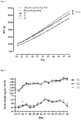
- Fig. 1
- shows the course of the relative humidity (upper line, right Y-axis) and of the temperature (lower line, left Y-axis) from d-0 until the end of the experiment.
- Fig. 2
- shows the course of the relative humidity (upper line, right Y-axis) and of the temperature (lower line, left Y-axis) from d-24 until the end of the experiment.
- Fig. 3
- is a scatterplot representation of the ADG for period from d-10 to d-21 per treatment with mean ± deviation.
- Fig. 4
- is a scatterplot representation of the F.G for the period from d-10 to d-21 per treatment with mean ± deviation.
- Fig. 5
- shows the progress of the body weight per treatment, and for male Ross 308 Performance Objectives 2019 and as projected for finisher phase.
- Fig. 6
- shows the feed intake per bird and per day during periods of 6 hours of heat stress (lower 3 lines) and during the rest of the day (upper 3 lines) in the period from d-24 till d-39 for each treatment.
- Fig. 7
- shows the percentage of total feed intake and the percentage of water intake being consumed during hours of heat stress in the period from d-24 till d-39 (6 h per day) for each treatment for all pens together.
- Fig. 8
- shows the mortality cases per day and treatment in the period from d-24 to d-39.
- Fig. 9
- is similar as
Fig. 8 but excluding pen 24 (T2) having 5 mortality cases in the period from d-24 to d-39; cases of mortality in this period were 14, 10 and 8 for T1, T2 and T2, respectively. - Fig. 10
- shows the percent survival of birds in the period of heat stress (d-24 to d-39; days in
heat stress Fig. 9 . Log-ranked test for trend, p=0.159; suggesting no statistical difference in survival curves.Fig. 10 is similar asFig. 3 but excluding pen 24 (T2) habing 5 mortality cases in period from d-24 to d-39. Cases of mortality in this period were 14, 10 and 8 for T1, T2 and T3, respectively. - Fig. 11
- shows mortality+culling cases per day and treatment in the period from d-24 to d-39 (cullings are dotted blocks). Cases of mortality+culling in this period were 16, 17 and 8 for T1, T2 and T, respectively.
- Fig. 12
- shows mortality+culling cases per day and treatment in the period from d-24 to d-39 (cullings are dotted blocks). Similar as
Fig. 11 but excluding pen 24 (T2) having 5 mortality cases in the period from d-24 to d-39. Cases of mortality+culling in this period were 16, 12 and 8 for T1, T2 and T, respectively. - Fig. 13
- shows the percent survival of birds in the period of heat stress (d-24 to d-39; days in
heat stress Fig. 12 . Log-ranked test for trend, p=0.087; suggesting no statistical difference in survival curves.Fig. 13 is similar asFig. 3 but excluding pen 24 (T2) having 5 mortality cases in period from d-24 to d-39. Cases of mortality in this period were 14, 10 and 8 for T1, T2 and T3, respectively. - Fig. 14
- is a boxplot + Tukey whiskers representation of rectal temperature of birds during heat stress per treatment.
- Fig. 15
- is a boxplot + Tukey whiskers representation of rectal temperature of birds sampled at d-23, d-25, and d-39.
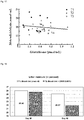
- Fig. 16
- shows the concentration of T3, malondialdehyde and glutathione as well as the T3/T4 ratio in the blood of male broilers subjected to chronic cyclic heat stress sampled at d-25 by time after starting heat stress.
- Fig. 17
- show the relation between malondialdehyde and glutathione in the blood of male broilers subjected to chronic cyclic heat stress sampled at d-39.
- Fig. 18
- shows the effect of DMS administration on litter moisture.
- The experimental design consisted of one control group (T1) and two other groups receiving the control diet supplemented with increasing levels of DMS (dimethyl sulfone), specifically 0.1% DMS (T2) and 0.2% DMS (T3). Treatments were replicated in 12 pens each in a completely randomized block design. Block refers to physical allocation in the experimental facility. All the animal trial was realized in compliance with the Ethics Committee of Faculty of Veterinary Medicine (Ghent University, EC2018-71).
- The experiment was conducted at the experimental facilities of the Department of Animal Sciences and Aquatic Ecology of Ghent University, located in Melle, Belgium. A total of 792 male broiler chickens (Ross 308, Aviagen Group) were provided by Vervaeke-Belavi hatchery (Tielt, Belgium). Larger treatment effects are expected with males, as they are more sensitive to heat stress (HS) (Cahaner and Leenstra, 1992). The experiment consisted in three rearing phases: starter (from d-0 to d-10), grower (from d-10 to d-21) and finisher (from d-21 to d-39). The one-day old chicks were weighted and equally spread among the pens according to their body weight (BW). Pens were randomly allocated to the treatment groups. The initial average animal BW was 41.3 ± 0.31 g at the beginning of the experiment. The newly selected chicks were housed in a single climate-controlled room, which contained 36 pens of 22 animals each. Each pen had a dimension of 0.80 x 1.70 m, and had concrete floor covered with wood shavings. The room was equipped with liner drinkers (two nipples per pen), and each pen had one tube-type metallic feeder. Temperature in starter and grower phase was set to decrease linearly from 34°C, at d-0 until a basal temperature of 22°C, at d-24. The light of the room was turned on 23h in period d-0 to d-7, and then turned on at 4:00 and switched off at 22:00 during the rest of the experiment (18L:6D).
- The finisher period started at d-21, and the chronic cyclic heat stress (HS) protocol was applied from d-24 until d-39. Starting from d-24, the temperature was increased from 22°C to 34°C for 6 hours per day (from 9:00 to 15:00) with relative air humidity (RH) between 52 and 58%. From 8:00 to 9:00, the temperature was increased from 22°C to 34°C, and from 15:00 to 16:00, the temperature was decreased from 34°C to 22°C. The rest of the day the temperature was 22°C. The room was equipped with heaters with thermostats, and air circulators to enable the desired temperature and RH to be maintained, providing sufficient ventilation and air conditions. RH was adjusted with manual spraying of water on stable walls, periodically. The temperature and the RH were recorded at 10-min intervals with a dry bulb thermo-hygrometer (Escort RH iLog, Escort Verification Technologies Inc., Buchanan, United States).
- Wheat and soybean meal-based feeds were formulated to meet the nutrient requirements of broiler chickens, according to Ross308 recommendations or slightly lower to avoid excessive mortality in the finisher phase. Diets did not contain coccidiostats, nor synthetic antioxidants, nor emulsifiers. The final formulation was approved by the commissioner. Ingredient and nutrient composition of all diets are given in Table 1 and 2. The test substance dimethyl sulfone was added on top at 0.1 and 0.2% in T2 and T3 in all rearing phases, respectively. Diets were processed by Research Dietary Services (RDS, Wijk bij Duurstede, The Netherlands) and delivered to Ghent University. All the diets were provided as pellets during all rearing phases. The chickens were fed ad libitum and had free access to water during the whole experiment.
- For all performance indices, the pen is the experimental unit. Total feed intake (FI) was recorded for each rearing period. In addition, FI during HS period was recorded every day, weighing the feeders before (at 8:00) and after (at 16:00) HS every day. That allows the calculation of the relative FI during period with HS relative to the total FI for each day during HS (d-24 to d-39). The total body weight (BW) of each pen was recorded at d-0, d-10, d-21 and d-39, and divided by the number of chickens in the pen at that day to have the average BW for each pen. Average daily gain (ADG, equation 1), average daily feed intake (ADFI, equation 2), the feed-to-gain ratio (F:G, equation 3) and the mortality rate (MR, equation 4) were calculated using the formulas below :


- All the dead birds were collected, and their weights were recorded every day. The MR was calculated for each rearing period using the following ratio:

- Finally, the European production efficiency factor (EPEF, equation 5) was calculated as follows:

- Rectal temperature and panting frequency (video analyses) (for 2 selected birds per pen on 3 days: d-24, d-31 and d-38, measured after 4h of heat stress that day)
- Sampling of one bird per pen (with weight close to average weight of the pen) on d-23, d-25 and on d-39 (on d-25 and d-39, sampling starts after >3h of heat stress that day; 108 birds in total)
- malondialdehyde, HSP70 (Chicken
Heat Shock Protein 70, Hsp-70 ELISA Kit) Cusabio Code CSB-E11196Ch), HSP90 (Chicken Heat Shock Protein 90, HSP-90 ELISA Kit; Cusabio Code CSB-E12873C), GPx, SOD in plasma; GSH/GSSG in erythrocytes; and T3, T4 and nitric oxide in serum - Breast muscle and liver: malondialdehyde, AOX (GPx, SOD), GSH/GSSG
- Sampling of two birds per pen (with weight close to average weight of the pen) on d-40 after overnight fasting (no heat stress that day)
- Carcass yield, breast percentage, thigh percentage, drumstick percentage and abdominal fat
- Carcass yield: with skin, bled, without internal organs, without feet, without head, without neck, without abdominal fat; relative to bird body weight Breast percentage: skinless, boneless; relative to bird body weight Thigh percentage: with skin, with bone; relative to bird body weight Drumstick percentage: with skin, with bone; relative to bird body weight Abdominal fat percentage: abdominal fat; relative to bird body weight
- Breast meat quality
- Scoring of breast myopathies (wooden breast and white striping) Wooden breast: normal, 0; mild, 1 and severe, 2 White striations: normal, 0; mild, 1, and severe, 2
- pH and colour, both at time 0h and 24h (after sampling at time 0h, breasts are stored at 4°C until 24h)
- Drip loss, determined for periods 0-24 h and for period 0-72 h (after sampling at time 0h, breasts are stored at 4°C until 72 h, and weight without exuded water at 24 h and 72 h)
- Press loss, determined at 24 h (after sampling at time 0h, breasts are stored at 4°C until 24 h, prior to determine press loss)
- Oxidative stability (TBARS after simulated retail display)
- Scoring of breast myopathies (wooden breast and white striping) Wooden breast: normal, 0; mild, 1 and severe, 2 White striations: normal, 0; mild, 1, and severe, 2
- All data were checked for anomalies and outliers (see description of results). Next, data for each dependent variable were tested for normal distribution (Kolmogorov-Smirnov) and homogeneity of variances (Levene's test) across treatments. It appeared that data for mortality and for mortality+culling were not normally distributed. Hence, data for this endpoint was evaluated with the non-parametric Kruskal-Wallis test, whereas other endpoints were tested with GLM procedures, unless otherwise stated.
- Data were analyzed with the following statistical model:

- For wooden breast and white striations statistical evaluation was done by the Chi-square test. Differences were considered significant when p<0.05 and as a tendency for significance when p<0.1.
- For physiological measurements, time of sampling (representing the number of minutes between the beginning of heat stress and the precise moment of sampling of the bird that day), if appropriate, was included in the model as a covariable if significant as well. Orthogonal contrasts were applied to test for linear and quadratic effects upon incremental levels of DMS supplementation in the diet. Means are given as estimated marginal means (least square means). Means were separated using the Tukey post-hoc test. Differences were considered significant when p<0.05 and as a trend for significance when p<0.1.
Table 1. Composition of wheat-soybean based basal diets for the starter (d-0 to 10), grower (d-10 to 21) and finisher (d-21 to 39) phase. Item Starter (d0-10) Grower (d10-21) Finisher (d21-39) wheat batch A7855 59.75 67.32 69.01 soybean meal batch A7845 23.45 15.79 13.11 toasted soybeans batch A7833 10.00 10.00 10.00 lard 1.000 2.000 3.000 soybean oil 0.868 0.443 0.731 monocalciumphosphate 1.260 1.102 0.966 limestone 1.655 1.536 1.455 salt 0.232 0.181 0.203 sodiumbicarbonate 0.250 0.280 0.251 premix article 252 (*) 0.500 0.500 0.500 choline CHL.50S 0.100 0.100 0.050 natuphos 5000AL (500 FTU) 0.010 0.010 0.010 L-lysine HCL 0.329 0.308 0.313 DL-methionine 0.333 0.240 0.218 L-threonine 0.165 0.131 0.127 L-valine 0.088 0.049 0.046 xylanase + glucanase 0.010 0.010 0.010 Calculated nutrient content dry matter [%] 89.4 89.4 89.0 ME poultry [kcal] 3000 3100 3200 crude protein [%] 23.1 20.3 19.2 ether extract [%] 5.81 6.39 7.69 crude ash [%] 6.32 5.68 5.35 starch [%] 35.8 40.3 41.2 calcium [%] 0.96 0.87 0.81 P dig. [%] 0.48 0.44 0.41 Na+K-Cl (meq/100g) [meq] 25.0 22.0 20.5 LYS [%] 1.38 1.17 1.10 dig LYS [%] 1.24 1.05 0.99 MET + CYS [%] 1.03 0.87 0.83 dig M+C (**) [%] 0.93 0.79 0.74 dig M+C / dig LYS [%] 75 75 75 THR [%] 0.96 0.81 0.76 dig THR [%] 0.83 0.70 0.66 dig THR / dig LYS [%] 67 67 67 TRP [%] 0.30 0.26 0.24 dig TRP [%] 0.26 0.22 0.21 dig TRP / dig LYS [%] 21 21 21 VAL [%] 1.12 0.95 0.89 dig VAL [%] 0.99 0.84 0.79 dig VAL / dig LYS [%] 80 80 80 ARG [%] 1.47 1.25 1.17 dig ARG [%] 1.31 1.11 1.03 dig ARG / dig LYS [%] 106 105 104 ILE [%] 0.93 0.80 0.75 dig ILE [%] 0.82 0.71 0.66 dig ILE / dig LYS [%] 67 68 67 LEU [%] 1.63 1.41 1.33 dig LEU [%] 1.44 1.25 1.17 dig LEU / dig LYS [%] 116 119 119 (*) Premix Artikel 252 providing per kg of diet: vitamin A (retinyl acetate), 10000 IU; vitamin D3 (cholecalciferol), 2500 IU; vitamin E (dl-α-tocopherol acetate), 50 mg; vitamin K3 (menadione), 1.5 mg; vitamin B1 (thiamine), 2.0 mg; vitamine B2 (riboflavin), 7.5 mg; niacin, 35 mg; D-pantothenic acid, 12 mg; vitamin B6 (pyridoxine-HCl), 3.5 mg; vitamin B12 (cyanocobalamine), 20 µg; folic acid, 1.0 mg; biotin, 0.2 mg; choline chloride, 460 mg; Fe (FeSO4.H2O), 80 mg; Cu (CuSO4.5H2O), 12 mg; Zn (ZnO), 60 mg; Mn (MnO), 85; I (Ca(IO3)2), 0.8 mg; Co (Co2CO3(OH)2), 0.77 mg; Se (Na2O3Se), 0.15 mg.
(**) Dig M/Dig M+C is 66, 63 and 62% in starter, grower and finisher diet, respectively Dig = digestible, ME = metabolisable energy - Diets were properly prepared as pellets and delivered to the experimental facility. Samples were analysed for proximate components and amino acids by Evonik Nutrition & Care GmbH (Table 2). Regarding starter diets it can be concluded that supplemental levels of LYS, MET, THR, and VAL were in line with feed formulation, and that all nutrients across treatments were very similar. Further, analysed crude protein, ether extract and ash appeared slightly lower than anticipated. Taking into account an uncertainty of 3% for all amino acids, all analysed values for amino acids show consistency with formulated values. Congruence for metabolizable energy (ME) could not be evaluated as different MEs were used. Similar observations can be made for the grower diets. Thus, again crude protein was lower (between 0.3 and 0.5%) as formulated. Finally, finisher diets showed again no difference across treatments. The discrepancy in crude protein in T2 versus T1 and T3 cannot be confirmed by differences in amino acids levels, as amino acid contents of all finisher diets are very identical. Nonetheless, crude protein was again lower than formulated, similar to somewhat lower ether extract and ash.
Table 2. Analysed composition (in %) of corn-soybean based basal diets for starter, grower and experimental finisher diets (d-21 to 39)1,2. Item Starter (d0-d10) Grower (d10-d21) Finisher (d21-d39) T1 T2 T3 T1 T2 T3 T1 T2 T3 dry matter (NIR) 89.5 89.8 89.9 89.4 89.8 90.1 89.4 89.4 89.7 AME (NIR) [kcal/kg] 2885 2915 2898 2973 2984 2958 3039 3051 3054 ether extract (NIR) 5.6 5.6 5.5 6.3 6.2 6.0 7.2 7.1 7.1 ash (NIR) 5.8 5.6 5.6 5.1 5.0 5.0 4.6 4.8 4.7 starch (NIR) 36.9 37.5 37.2 40.4 40.5 40.4 41.8 42.3 41.7 P (NIR) 6.5 6.1 6.1 5.5 5.4 5.1 4.7 4.9 4.7 crude protein 22.8 22.7 22.7 20.0 19.8 19.8 18.7 18.3 18.8 LYS 1.40 1.39 1.39 1.18 1.18 1.17 1.10 1.10 1.10 MET 0.65 0.66 0.65 0.53 0.52 0.52 0.48 0.48 0.48 CYS 0.38 0.38 0.35 0.34 0.34 0.34 0.33 0.33 0.33 MET+CYS 1.02 1.03 1.00 0.86 0.86 0.86 0.81 0.81 0.81 THR 0.94 0.94 0.95 0.81 0.80 0.80 0.74 0.74 0.75 Val 1.09 1.09 1.09 0.92 0.92 0.92 0.86 0.87 0.87 ARG 1.44 1.43 1.45 1.22 1.23 1.23 1.13 1.14 1.13 ILE 0.92 0.92 0.91 0.78 0.79 0.78 0.73 0.73 0.73 LEU 1.60 1.58 1.59 1.38 1.38 1.38 1.29 1.29 1.29 LYS supplemental 0.28 0.28 0.28 0.26 0.25 0.25 0.26 0.26 0.25 MET supplemental 0.33 0.34 0.34 0.24 0.24 0.24 0.22 0.22 0.22 THR supplemental 0.16 0.17 0.17 0.14 0.14 0.14 0.13 0.13 0.13 VAL supplemental 0.09 0.09 0.09 0.05 0.05 0.05 0.05 0.05 0.05 1 T1: control diet, T2: control diet + 0.1% DMS, and T3: control diet + 0.2% DMS
2 Nutrients were analysed by wet chemistry and given in %, unless otherwise stated. - Temperature in starter and grower phase was set to decrease linearly until d-24, with final temperature of 22°C (
Fig. 1 ). On d-5, infra-red lamps were shut down which caused a 3°C drop in temperature, but temperature remained acceptable for these aged birds, and was restored soon after. RH started low, but gradually increased towards the beginning of the finisher phase, when diurnal variations became larger due to HS protocol. Humidity was not controlled during starter and grower phases, and might depend on age of birds, temperature, outside humidity (rain, snow), ventilation rate and capacity, litter quality etc. Starting from d-24, the HS protocol was applied successfully (Fig. 1 and 2 ). However, 7, 5 and 5 mortality cases, respectively, were observed on d-28, d-29 and d-31 (Fig. 3 ). In order to prevent substantial bias of data due to excessive mortality it was decided to step down the heat stress protocol a little by having 32°C during heat stress period from d-32 to -37, which was again increased to 33°C fordays Fig. 3 shows that mortality decreased upon decreasing temperature during HS. During the period of HS, RH showed a clear diurnal pattern. Upon increasing stable temperature to 34°C to initiate HS, humidity tends to drop. However, target RH of 50-58% was maintained by regular nebulization of water, if necessary. During the rest of the day, RH showed big fluctuations, and reached occasionally >80% during night-time on some days. - Typically, upon initiating the HS protocol, birds tend to reduce movement, stop ingestion of feed, followed by immobility, spreading wings, increasing ground contact and ultimately severe panting. Effects on water intake are ambiguous; birds might increase water consumption due to evaporative and urinary losses, however, water consumption associated with feed intake is reduced. During the rest of the day, birds resumed normal behavior and (compensatory) feed intake.
- Birds were found healthy throughout the study and performed altogether very well, with final body weights exceeding Male Ross 308 Performance Objectives 2019. Various endpoints showed that pen 1 (T2) and pen 2 (T1) (edge of stable) did not experience heat stress in period d-24-39 as other pens did; i.e. no or minimal panting was observed, feed intake during heat stress relative to total intake per day was higher and close to 33.3% which is equal to the ratio of duration of heat stress per day (6 h) to total period with light (18 h). Hence, it was concluded not to include
pen 1 andpen 2 in statistical evaluation for any endpoints in finisher period and total period. Further, pen 24 (T2) showed excessive mortality in finisher period, i.e. 5 mortality cases thus equalling to 22.7%, which made calculations for performance indices biased. Hence, it was concluded not to includepen 24 in statistical evaluation for any endpoints in finisher period and total period. This is also highlighted inFig. 3-6 . Table 3 summarizes performance data of broilers for all rearing phases. In the starter period, no significant effects were found for either endpoint. Body weight at the end of starter period was around 360 g. In contrast, in grower period, final body weight and ADG showed linear increases with higher inclusion of DMS in the diet (P<0.05). ADG in this period was 2.6 and 3.4% higher for T2 and T3, respectively, as compared to control (T1) (both P<0.05), further illustrated byFig. 3 . This was explained by a remarkable improvement of feed conversion ratio. F:G was reduced by 6 and 7 points for T2 and T3, respectively, as compared to T1 (both P<0.05).Fig. 4 shows a scatterplot representation of F:G for this period. The finisher period encompassed two subperiods: d-21 to d-24 was without heat stress protocol, whereas in period d-24 to d-39 the heat stress protocol prevailed, reducing potential growth of birds. Surprisingly, none of the performance indicators was affected by treatment. Nonetheless, a numerical reduction of mortality by supplementing DMS could clearly be observed, mortality accounted for 6.3, 4.7 and 3.1% in T1, T2 and T3, respectively. From these data it is concluded that supplementing DMS increased heat tolerance of the animals and thus reduced mortality. A mortality of 6.3% is commonly seen when applying the chronic cyclic heat stress model in the used facility, but reductions as seen for T2 and T3 are rarely found. This emphasizes the importance of the numerical reductions here. In line with finisher phase, overall performance was not influenced by diet, but again numerical differences in mortality deserves full attention. The fact that DMS improved performance in the grower phase and not in the finisher might be related by the sharp reduction in formulated digestible LYS in grower diets as compared to starter diets (1.05 vs. 1.24%), which might have been far too low when consulting Ross 308 nutrient recommendations. The subsequent reduction in finisher diets was small (0.99 vs. 1.05%). Likely, DMS is more effective in low protein / low digestible LYS (whilst maintaining the ideal amino acid profile) diets.Table 3. Dietary effect on BW, ADG, ADFI, F:G, mortality and EPEF in male broilers subjected to chronic cyclic heat stress in the finisher phase123 (n=10-12, i.e. 10-12 pen replicates per treatment). Item T1 T2 T3 SEM4 p Model Linear Quadratic Starter (d0-d10) Initial BW [g] 41.3 41.4 41.2 0.05 0.176 0.289 0.123 Final BW [g] 362 359 357 1.2 0.258 0.105 0.834 ADG [g/d] 32.0 31.7 31.6 0.12 0.266 0.111 0.783 ADFI [g/d] 32.5 32.5 32.3 0.12 0.665 0.444 0.638 F:G 1.02 1.03 1.03 0.001 0.150 0.057 0.716 Mortality6 [%] 1.1 0.0 0.8 0.357 Mortality+culling6 [%] 1.5 0.0 0.8 0.347 Grower (d10-d21) Final BW [g] 1174 1189 1194 4.3 0.066 0.027 0.453 ADG [g/d] 73.6b 75.5a 76.1a 0.35 0.004 0.002 0.320 ADFI [g/d] 105 103 102 0.52 0.171 0.085 0.454 F:G 1.42a 1.36b 1.35b 0.009 <0.001 <0.001 0.104 Mortality6 [%] 0.0 1.1 0.4 0.147 Mortality+culling6 [%] 0.4 1.1 0.8 0.558 Finisher (d21-d39) Final BW, g 3081 3100 3066 11.5 0.491 0.566 0.326 ADG, g/d 106 106 104 0.6 0.212 0.174 0.333 ADFI, g/d 177 179 178 1.0 0.775 0.731 0.609 FIHS 5, % 26.2 27.9 27.9 0.43 0.134 0.129 0.368 F:G 1.69 1.71 1.72 0.008 0.269 0.108 0.907 Mortality6 [%] 6.3 4.7 3.1 0.399 Mortality+culling6 [%] 7.6 6.0 3.1 0.160 Total (d0-d39) ADG, g/d 77.9 78.4 77.6 0.30 0.495 0.569 0.329 ADFI, g/d 116 116 117 0.6 0.842 0.627 0.918 F:G 1.54 1.53 1.54 0.004 0.891 0.912 0.641 F:G corrected7 1.54 1.54 1.54 0.004 0.802 0.523 0.879 Mortality6 [%] 7.4 5.9 4.2 0.472 Mortality+culling6 [%] 9.5 7.3 4.5 0.246 EPEF8 476 488 491 6.4 0.561 0.362 0.761 1 Broilers were fed a wheat-soybean starter diet from d-0 to d-10, a grower diet from d-10 to d-21 and a finisher diet from d-21 to d-39. The chronic cyclic heat stress model was implemented from d-24 till d-39
2 Values with different superscripts within a row are significantly different at p<0.05
3 T1: control diet, T2: control diet + 0.1% DMS, and T3: control diet + 0.2% DMS
4 Standard Error of the Mean
5 Indicates the percentage of total feed intake that was consumed during hours of heat stress (6 h per day) in period d-24 till d-39. Statistics was done including day as within subject factor (repeated measure)
6 Data within treatment were not normally distributed, and hence treatments were compared using the non-parametric Kruskal-Wallis test
7 F:G for total period corrected to final body weight of 3050 g, by assuming 1.76 points increase per 100 g body weight (based on Male Ross 308 Performance Objectives 2019)
8 European Production Efficiency Factor,
-
Fig.5 explains the effect of the chronic cyclic heat stress on birds' growth better. It shows the growth from d-19 to d-39, thus emphasizing growth in late grower and finisher phase. First, growth according to male Ross 308 Performance Objectives 2019 is given (full black line). Obviously, treatments T1-T3 (grayscale lines) show much higher growth, but as described above, no differences amongst treatments were noticed for body weight. Next a projected growth is established (broken black line) suggesting growth in thermo-neutral conditions. This is done by connecting the average body weight of all treatments at d-21 (end of grower phase, no heat stress yet established) with an estimated body weight at d-39 in case there would be no heat stress. This estimation is based on the following assumptions according to a meta-analysis of 43 published papers (83 challenges) including studies with a thermo-neutral and heat stress treatment: - the meta-analysis reveals that ADG is reduced by 2.1 g/d for every °C above thermo-neutral,
- for chronic cyclic heat stress models, the difference between thermo-neutral and high temperature is halved, in casu this is then (34-22)/2 = 6 °C,
- in current experiment, the chronic cyclic heat stress was implemented for 15 days,
- altogether, it can be calculated that the reduction in body weight at d-39 equals 189 g.
- The average body weight at d-39 observed for treatments T1-T3 was 3083 g, which means that the estimated body weight at d-39 in case there would be no heat stress would be 3272 g. In other words, the implementation of the chronic cyclic heat stress model reduced final body weight by 189 g or 5.8%.
- In Table 3 it was shown that parameters ADFI and FIHS in finisher period did not differ significantly among treatments. FIHS indicates the percentage of total feed intake that was consumed during hours of heat stress (6 h per day) in period d-24 till d-39.
Fig. 6 and7 give more details on the consumption of feed and water on a daily basis in period d-24 till d-39.Fig. 6 shows the absolute feed intake per bird and per day during period of 6 h of heat stress and during rest of the day. The intake during the rest of the day shows a more or less steady increase over the 15 days of heat stress protocol, which corresponds to normal increase in feed intake when birds become heavier. The intake during period of 6 h of heat stress shows more inconsistent fluctuations, with an almost constant intake until d-31, after which it increased before dropping again on d-37 and d-38. It should be noted that this almost perfectly mirrors the actual temperature in the stable. As said above (seeFig. 2 ), initially the high temperature was set to 34°C, but by d-32 it was reduced to 32°C, and subsequently increased again on d-38 to 33°C. It is very obvious that the actual room temperature had an immediate effect on feed intake during this high temperature hours. Importantly to observe is that on most days the feed intake during period of 6 h of heat stress was higher in supplemented groups as compared to control, which resulted in a linear trend on d-26 only. It might indicate that supplemented birds suffered less from heat increment induced by feed consumption. This is even more clear when looking atFig. 7 . Relative feed intake during period of 6 h of heat stress fluctuated between 22 and 30%, and on several days a linear trend was observed by incremental levels of DMS in the diet. To understand this figure, the light schedule was 18L:6D, which means that the lights-on duration per day was 18 h of which 6 h with heat stress. Feed intake during heat stress might thus theoretically correspond to one third of total intake.Fig. 7 shows clearly that this is much lower (between 22 and 30%), thus indicating reduced feed intake by the heat stress protocol. In Table 3 it was already seen that FIHS for supplemented groups was numerically lower than control, thus suggesting higher heat tolerance. Not surprisingly, relative water intake during period of 6 h of heat stress (measured for all pens together) is much higher than one third, actually exceeding 35%, and in some days up to 42%. Thus, birds reduce feed intake whilst massively increase water consumption during heat stress episodes. - Above it was highlighted that supplementing DMS appeared to increase heat tolerance and thus reduce mortality. According to Table 3, mortality in finisher period accounted for 6.3, 4.7 and 3.1% in T1, T2 and T3, respectively. The following figures detail all cases of mortality and culling in the finisher period, either or not excluding pen 24 (
Fig. 8-13 ). As an example,Fig. 9 is discussed. In this figure, number of cases of mortality were 14, 10 and 8 for T1, T2 and T3, respectively. Beside the fact that the number is lower in DMS supplemented groups, it is interesting to see that mortality cases in T1 mostly occur in the beginning of the heat stress period whereas in T3 dead birds were found mostly in the second half of this period. T2 has mortality cases across all days. This is further illustrated inFig. 10 by plotting survival curves for the period with heat stress implemented. It lends to the speculation that supplementing DMS gives birds most benefits during the acute phase of a heat wave (first few days), whereas it might not add advantage in more chronically heat stressed birds. Analogously,Fig. 12 and13 give mortality+culling. Number of cullings was limited by only in T1 and T2. Here, statistics onFig. 13 says there was a trend for differences in survival curves. It can also be speculated whether this difference in timing of mortality might have affected calculations for ADFI and F:G in the finisher period. For instance, F:G increases when birds are older, thus having more dead birds at the end of finisher period would overestimate F:G, or in other words it could be suspected that F:G for finisher is underestimated for T1 and overestimated for T3. If this is the case, the true F:G would be more in favour for T3, and not numerically higher for T3 as compared to T1 as seen in Table 3. However, authors did not find a method to correct for this and recalculate F:G in one way or another. - Table 4 shows the effect of treatment on rectal temperature and panting on
days Fig. 14 illustrates these effects. On d-38, it resulted in a linear effect (P<0.05). In total, rectal temperature was significantly reduced by 0.2% DMS in the diet as compared to control (P<0.05). To note, rectal temperature of birds at thermo-neutral fluctuates between 40.5 and 41.5°C. Panting occurs heavily during episodes of heat stress, and apparently increased when birds' age, although d-38 was not higher than d-31, likely because room temperature was 33 and 34°C for these days, respectively. At d-24, a significant treatment effect was found which indicates that panting frequency was reduced by 0.2% DMS as compared to control, and the effect at d-24 was linear (P<0.05). Figures for d-31 and d-38 were not significant, but for total again a numerical lower panting frequency was observed. Respiratory frequency of birds at thermo-neutral would be between 40-80, depending on age and metabolism. The fact that in particular at d-24 differences were more pronounced (and significant) for both rectal temperature and panting might indicate that DMS supplemented birds were better prepared in the previous feeding period, hereby referring to improved feed conversion ratio in the grower period, to cope with the upcoming heat stress. It looks also that towards the end of the heat stress period, enhanced heat tolerance was less visible. This corresponds to findings about mortality as discussed above.Table 4. Dietary effect on rectal temperature and panting in male broilers subjected to chronic cyclic heat stress in the finisher phase123 (n=10-12, i.e. 10-12 pen replicates per treatment). Item T1 T2 T3 SEM4 p Model Linear Quadratic Rectal temperature [°C] d-24 42.5 42.3 42.3 0.06 0.304 0.154 0.540 d-31 43.0 42.9 42.6 0.09 0.252 0.106 0.761 d-38 42.9 42.7 42.6 0.07 0.118 0.040 0.990 Total5 42.8a 42.6ab 42.5b 0.03 0.013 Panting, #/min d-24 134a 119ab 112b 4.1 0.035 0.012 0.508 d-31 154 158 143 4.4 0.347 0.315 0.292 d-38 153 147 152 2.9 0.638 0.894 0.350 Total5 148 141 137 2.8 0.200 1 Broilers were fed a wheat-soybean starter diet from d-0 to d-10, a grower diet from d-10 to d-21 and a finisher diet from d-21 to d-39. The chronic cyclic heat stress model was implemented from d-24 till d-39
2 Values with different superscripts within a row are significantly different at p<0.05
3 T1: control diet, T2: control diet + 0.1% DMS, and T3: control diet + 0.2% DMS
4 Standard Error of the Mean
5 For all days, with statistics done including day as within subject factor (repeated measure) - No significant effects on carcass yield and portions were found (Table 5). Effect on breast meat characteristics are shown in Table 6. pH of breast at slaughter and 24 h post-mortem was not changed by the diet. Regarding colour, consistent effects on L* and b* might be conceived, though only significance was seen for b* 24 h post-mortem.
Table 5. Dietary effect on carcass yield and portions in male broilers subjected to chronic cyclic heat stress in the finisher phase123 after overnight fasting on d-40 (n=10-12, i.e. 10-12 pen replicates per treatment). Item T1 T2 T3 SEM4 p Model Linear Quadratic Body weight, kg 2902 3007 2983 24.3 0.191 0.170 0.215 Abdominal fat, % 1.1 1.1 1.1 0.05 0.996 0.878 0.838 Carcass yield, % 75.9 74.9 75.9 0.26 0.196 0.983 0.073 Breast percentage [%] 24.2 23.4 24.1 0.19 0.182 0.784 0.069 Thigh percentage [%] 11.2 11.1 11.2 11.2 0.11 0,986 0.966 Drumstick [%] 9.9 10.0 10.2 0.07 0.07 0.129 0.961 1 Broilers were fed a wheat-soybean starter diet from d-0 to d-10, a grower diet from d-10 to d-21 and a finisher diet from d-21 to d-39. The chronic cyclic heat stress model was implemented from d-24 till d-39
2 Values with different superscripts within a row are significantly different at p<0.05
3 T1: control diet, T2: control diet + 0.1% DMS, and T3: control diet + 0.2% DMS
4 Standard Error of the MeanTable 6. Dietary effect on breast characteristics in male broilers subjected to chronic cyclic heat stress in the finisher phase123 after overnight fasting on d-40 (n=10-12, i.e. 10-12 pen replicates per treatment). Item T1 T2 T3 SEM4 p Model Linear Quadratic Body weight [kg] 2902 3007 2983 24.3 0.191 0.170 0.215 pH 0h 6.8 6.8 6.8 0.03 0.853 0.796 0.615 pH 24h 6.0 6.0 6.0 0.02 0.385 0.517 0.229 Colour L* 0h 57.9 56.7 56.9 0.51 0.613 0.425 0.550 a* 0h 3.2 3.6 3.5 0.19 0.759 0.539 0.672 b* 0h 15.9 15.4 15.5 0.26 0.734 0.541 0.616 Colour L* 24h 57.8 56.7 56.2 0.59 0.549 0.283 0.849 a* 24h 5.0 5.0 5.3 0.16 0.751 0.556 0.650 b* 24h 18.1a 16.7b 17.3ab 0.22 0.026 0.116 0.022 Drip loss 0-24h [%] 2.3 2.0 1.8 0.19 0.615 0.329 0.921 0-72h [%] 3.1 2.7 2.7 0.21 0.673 0.407 0.728 Press loss [%] 20.3 20.4 20.4 0.31 0.987 0.875 0.994 Wooden breast 0h5 21/1/0 19/3/0 22/2/0 0.565 Wooden breast 24h5 14/8/0 15/7/0 12/12/0 0.420 White striations 0h6 19/3/0 21/1/0 20/4/0 0.420 White striations 24h6 21/1/0 21/1/0 18/6/0 0.044 TBARS [µg MDA/g] 0.157 0.125 0.122 0.0083 0.155 0.078 0.406 1 Broilers were fed a wheat-soybean starter diet from d-0 to d-10, a grower diet from d-10 to d-21 and a finisher diet from d-21 to d-39. The chronic cyclic heat stress model was implemented from d-24 till d-39
2 Values with different superscripts within a row are significantly different at p<0.05
3 T1: control diet, T2: control diet + 0.1% DMS, and T3: control diet + 0.2% DMS
4 Standard Error of the Mean
5 Wooden breast: normal, 0; mild, 1 and severe, 2. Count per level are given in order of severity and statistical evaluation was done by the Chi-square test (n=22-24).
6 White striations: normal, 0; mild, 1, and severe, 2. Count per level are given in order of severity and statistical evaluation was done by the Chi-square test (n=22-24). - At d-23, d-25 and d39, one bird per pen (with weight close to average weight of the pen) was sampled. On d-25 and d-39, sampling started after >3h of heat stress that day. Thus, in total 108 birds were sampled, and various endpoints were determined in several tissues. Table 7 reports the body weight and rectal temperature of birds sampled. To recall, finisher period started on d-21, while the heat stress protocol was implemented from d-24 onwards. It means that d-23 was the last day prior to heat stress and d-25 the second day whereby birds were subjected to high temperatures. Body weights on d-23 and d-25 (Table 7) were naturally higher than those reported on d-21 (Table 3), but not affected by treatment. Body weights at d-39 for sampled birds are very close to body weights for d-39 shown in Table 3, which confirms that birds with weight close to average weight of the pen were selected. Again, this was not affected by supplementation with DMS. Rectal temperature of sampled birds on d-23 represents values for thermo-neutral conditions, and thus ranged between 41.1 and 41.3°C without treatment differences (
Fig. 15 ). However, on d-25 rectal temperatures were largely elevated and obviously affected by diet (P<0.05). Rectal temperature linearly decreased with higher DMS in the diet, both supplemented groups being different from control, and for T3 this was 0.5°C lower than control. This rectal temperature is slightly higher than those on d-24 as shown in Table 4, at least for T1 and T2, suggesting increased disturbance of body temperature homeostasis in these groups. Rectal temperature on d-39 again drops with higher DMS in the diet but did not reach significance. Nonetheless, observations are in line with findings on d-38 (Table 4).Table 7. Dietary effect on body weight and rectal temperature in male broilers subjected to chronic cyclic heat stress in the finisher phase123 on d-23, d-25 and d-39 sampled between 4 and 6-7 h of heat stress on the respective day (n=10-12, i.e. 10-12 pen replicates per treatment). Item T1 T2 T3 SEM4 p Model Linear Quadratic Body weight, g d-23 1341 1361 1352 5.9 0.421 0.474 0.271 d-25 1535 1544 1536 6.3 0.827 0.957 0.542 d-39 3071 3097 3068 15.0 0.638 0.846 0.500 Rectal temperature, °C d-23 41.3 41.3 41.1 0.06 0.358 0.183 0.604 d-25 42.8a 42.5b 42.3b 0.07 0.005 0.006 0.544 d-39 42.7 42.6 42.3 0.09 0.263 0.127 0.571 1 Broilers were fed a wheat-soybean starter diet from d-0 to d-10, a grower diet from d-10 to d-21 and a finisher diet from d-21 to d-39. The chronic cyclic heat stress model was implemented from d-24 till d-39
2 Values with different superscripts within a row are significantly different at p<0.05
3 T1: control diet, T2: control diet + 0.1% DMS, and T3: control diet + 0.2% DMS
4 Standard Error of the MeanTable 8. Dietary effect on parameters in blood in male broilers subjected to chronic cyclic heat stress in the finisher phase123 on d-23, d-25 and d-39 sampled between 4 and 6 h of heat stress on the respective day (n=10-12, i.e. 10-12 pen replicates per treatment). Item Matrix T1 T2 T3 SEM4 p Model Linear Quadratic Heat shock protein 70 [ng/mL] d-23 Plasma 1.69 1.69 1.00 0.164 0.139 0.084 0.323 d-25 1.09 1.07 1.08 0.077 0.995 0.983 0.926 d-39 3.63 2.77 4.23 0.438 0.406 0.580 0.223 T4 [µg/dL] d-235 Serum d-25 0.50 0.53 0.50 0.019 0.771 0.984 0.475 d-39 0.54 0.60 0.63 0.022 0.227 0.091 0.793 T3 [µg/L] d-23 Serum 2.50a 2.43a 2.06b 0.065 0.009 0.005 0.215 d-256 1.50 1.74 1.72 0.064 0.199 0.139 0.306 d-39 0.97 1.10 1.12 0.032 0.094 0.059 0.618 T3/T4 d-235 Serum d-256 0.304 0.342 0.351 0.0160 0.421 0.219 0.660 d-39 0.180 0.193 0.180 0.0089 0.790 0.793 0.716 Nitric oxide [µmol/L] d-23 Serum 5.26 6.02 6.06 0.394 0.574 0.421 0.528 d-25 3.30 4.31 4.48 0.330 0.308 0.149 0.561 d-39 3.24 3.84 3.14 0.358 0.713 0.915 0.420 Malondialdehyde [mmol/mL] d-23 Plasma 14.7 14.4 14.2 0.26 0.785 0.492 0.951 d-25 14.8 14.3 13.2 0.28 0.057 0.020 0.592 d-39 17.1 15.7 14.9 0.42 0.076 0.025 0.698 Glutathione peroxidase [U/mL] d-23 Plasma 0.85 0.82 0.92 0.051 0.687 0.547 0.537 d-25 0.81 0.84 0.86 0.032 0.815 0.527 0.942 d-39 1.00 0.97 1.09 0.033 0.291 0.239 0.311 Super oxide dismutase [% inhibition] d-23 Plasma 79.9 84.1 80.4 2.24 0.709 0.926 0.413 d-25 84.8 81.3 84.1 1.86 0.721 0.883 0.430 d-39 88.0 79.5 87.1 2.18 0.236 0.847 0.093 Glutathione (GSH) µmol/mL d-23 0.91 1.07 1.25 0.066 0.103 0.035 0.930 d-256 Erythrocytes 0.59 0.59 0.70 0.026 0.088 0.052 0.303 d-39 0.50b 0.64ab 0.67a 0.031 0.037 0.018 0.311 Oxidized glutathione (GSSG) [µmol/mL] d-23 Erythrocytes 0.016 0.017 0.023 0.0020 0.322 0.167 0.560 d-25 0.009 0.010 0.009 0.0005 0.921 0.886 0.707 d-39 0.009 0.011 0.010 0.0006 0.220 0.564 0.12 GSSG/GSH d-23 Erythrocytes 0.018 0.015 0.018 0.0011 0.600 0.887 0.321 d-25 0.016ab 0.017a 0.013b 0.0006 0.027 0.054 0.049 d-39 0.017 0.017 0.015 0.0007 0.454 0.446 0.446 1 Broilers were fed a wheat-soybean starter diet from d-0 to d-10, a grower diet from d-10 to d-21 and a finisher diet from d-21 to d-39. The chronic cyclic heat stress model was implemented from d-24 till d-39
2 Values with different superscripts within a row are significantly different at p<0.05
3 T1: control diet, T2: control diet + 0.1% DMS, and T3: control diet + 0.2% DMS
4 Standard Error of the Mean
5 Many values were below detection limit of 0.42 µg/dL, hence statistical analysis could not be done
6 Variable was significantly negatively influenced by time of sampling - Parameters in blood are given in Table 8. For some cases, the time after starting heat stress that day affected linearly the response for the outcome (
Fig. 16 ). In particular, T3, T3/T4, and glutathione were all decreasing when time advanced irrespective of treatment (all P<0.05). To clarify, malondialdehyde was not affected by time after starting heat stress but is given inFig. 16 as example. The graphs also show that only a small fraction of the variance is explained by time after starting heat stress, r2 is ranging between 0.14 and 0.19. Nonetheless, the decrease in T3, and coherently in T3/T4 can be regarded as an adaptation to reduce body metabolism and hitherto metabolic heat production. This view might be supported by the fact that T3 values sharply dropped when comparing d-23, d-25 and d-39 (Table 8). It means that when heat stress was prolonged for 2 weeks, a continuous decrease in T3 and its activation from T4 can be observed. As no thermo-neutral control was included in the study, the effect of age cannot be ruled out. However, the reduction is strong and moreover T4 does not seem to be affected by day. Also, glutathione declines with time after starting heat stress, which might be caused by higher needs in other tissues such as small intestine and respiratory system to foster antioxidant function and redox homeostasis, or by reduced synthesis primarily taken place in liver, as heat stress continues. Interestingly, also glutathione in erythrocytes seems to be heavily affected by implementing the heat stress protocol as values on d-23 are between 0.91-1.25 µmol/L whereas from d-25 onwards these do not exceed 0.70 µmol/L (Table 8). Besides redox imbalance is not anticipated since GSSG/GSH remain fairly stable across sampling days, thus merely the synthesis of glutathione is impacted. -
Heat shock protein 70 and heat shock protein 90 were determined in plasma employing the competitive inhibition enzyme immunoassay technique (HSP70, ChickenHeat Shock Protein 70, Hsp-70 ELISA Kit; Cusabio Code CSB-E11196Ch) and the quantitative sandwich enzyme immunoassay technique (HSP90, Chicken Heat Shock Protein 90, HSP-90 ELISA Kit; Cusabio Code CSB-E12873C), respectively. Regarding HSP-90 very low absorbances were found and in most cases fell below the lowest standard dilution. Values were then typically less than 0.39 ng/mL, the minimum detectable dose as mentioned in the user manual. For that reason, no data for HSP-90 could be reported here. Opposite to that, HSP-70 worked properly and values were all above sensitivity of 0.125 ng/mL. No treatments effects on HSP-70 could be perceived on either sampling day, apart from a trend for linear reduction on d-23. It also appears that plasma HSP-70 showed slight decrease upon acute heat stress (d-25), whereas after two weeks of heat stress (d-39) levels rose substantially. It must be noted that large variation across samples was found on d-39. Thyroxine (T4) could not be detected on d-23, while higher values were found on d-25 and d-39. A trend for linear increase on d-39 by higher DMS dose was observed. Triiodothyronine (T3), the derivative of T4 and most active form, was reduced on d-23 by feeding 0.2% DMS as compared to control (P<0.05). On d-39, a trend suggests that T3 is elevated by DMS, which is actually a result of higher T4 levels as the ratio T3/T4 was not affected. It means that conversion efficiency was not altered by diet. Irrespective of treatment is the sharp reduction in circulating T3 levels as birds age and thus subjected for long period to heat stress. As indicated above, this can be regarded as an adaptation to reduce body metabolism and hitherto metabolic heat production, and apparently birds fed DMS seems to be less affected. Nitric oxide was not different across treatments at any sampling day. Further, interesting changes in malondialdehyde, a marker of lipid peroxidation, were found. First, on both d-25 and d-39 a linear decrease in this metabolite was found when feeding DMS (both P<0.05), which suggests lower oxidative stress and/or higher antioxidant capacity. Remarkable is also the large increase in malondialdehyde from d25- to d-39 in T1, something that did not occur in DMS-fed chickens. The antioxidant enzymes glutathione peroxidase and superoxide dismutase were not changed by diet, and thus do not explain the effect on malondialdehyde. In contrast, glutathione (GSH) was on all days increased by adding DMS to the diet, i.e. a linear increase on d-23 (P<0.05), a trend for linear increase on d25, and a linear increase on d-39 (P>0.05) showing that 0.2% DMS resulted in higher GSH content in erythrocytes as compared to control. Said above, glutathione in erythrocytes seems to be heavily affected by implementing the heat stress protocol as values on d-23 are between 0.91-1.25 µmol/L whereas from d-25 onwards these do not exceed 0.70 µmol/L. Besides redox imbalance is not anticipated since GSSG/GSH remain fairly stable across sampling days, thus merely the synthesis of glutathione is impacted. The higher GSH in DMS-fed chickens thus promotes antioxidant function and redox homeostasis. However, no relation could be established between plasma malondialdehyde and erythrocyte glutathione (Fig. 17 ). - In liver, only glutathione peroxidase activity was different across treatments (Table 9). A linear decrease was demonstrated (P<0.05), though differences small. Further noteworthy is the decline in GSH levels in aging birds, which has been repeatedly shown in this heat stress model. It implies that GSH synthesis and salvation - liver is main site of synthesis - becomes limiting, and/or export to tissues that require GSH is increased. Both hypotheses may hold truth. Firstly, in Table 9 it can be seen that the ratio GSSG to GSH from d-25 to d-39 tremendously increases. This suggest that salvation, i.e. the reduction of GSSG to GSH via glutathione reductase is hampered, leading to redox disturbance. Secondly, Table 10 indicates that GSH levels in breast muscle increases with age, from 1.03-1.10 to 1.39-1.56 µmol/g (d-23 to d-39). Knowing that breast muscle mass enormously increases in this growth period, it must mean that large amounts of GSH are needed to supply muscle. The high demand by breast muscle likely affects levels in liver negatively. Interestingly in Table 10, GSH was elevated linearly by DMS on d-25 (P<0.05) and a trend suggests the same for d-39. Surprisingly, on d-23, a decrease in malondialdehyde was found (P<0.05) and not on the other days.
Table 9. Dietary effect on parameters in liver in male broilers subjected to chronic cyclic heat stress in the finisher phase123 on d-23, d-25 and d-39 sampled between 4 and 6 h of heat stress on the respective day (n=10-12, i.e. 10-12 pen replicates per treatment). Item T1 T2 T3 SEM4 p Model Linear Quadratic Malondialdehyde [mmol/g] d-23 46.0 43.9 44.6 0.70 0.477 0.477 0.343 d-25 51.0 48.6 49.1 0.70 0.323 0.245 0.323 d-39 49.3 46.4 48.0 0.97 0.355 0.916 0.440 Glutathione peroxidase [U/g] d-23 17.9 17.0 16.9 0.20 0.091 0.043 0.395 d-25 18.2 17.8 17.9 0.22 0.691 0.569 0.514 d-39 18.2 17.5 18.6 0.29 0.303 0.535 0.163 Super oxide dismutase [U/g] d-23 307 332 317 6.7 0.303 0.545 0.156 d-25 274 292 289 6.7 0.507 0.342 0.489 d-39 358 356 346 6.5 0.637 0.686 0.636 Glutathione (GSH) [µmol/g] d-23 5.07 4.69 5.04 0.107 0.279 0.909 0.114 d-25 4.06 4.26 4.14 0.105 0.676 0.697 0.578 d-39 3.82 3.74 3.94 0.091 0.676 0.574 0.497 Oxidized glutathione (GSSG) [µmol/g] d-23 0.081 0.077 0.076 0.0014 0.360 0.198 0.520 d-25 0.076 0.070 0.069 0.0020 0.303 0.144 0.575 d-39 0.099 0.093 0.097 0.0025 0.688 0.789 0.411 GSSG/GSH d-23 0.016 0.016 0.015 0.0004 0.473 0.899 0.227 d-25 0.018 0.017 0.017 0.0006 0.559 0.494 0.398 d-39 0.026 0.027 0.025 0.0011 0.800 0.746 0.563 1 Broilers were fed a wheat-soybean starter diet from d-0 to d-10, a grower diet from d-10 to d-21 and a finisher diet from d-21 to d-39. The chronic cyclic heat stress model was implemented from d-24 till d-39
2 Values with different superscripts within a row are significantly different at p<0.05
3 T1: control diet, T2: control diet + 0.1% DMS, and T3: control diet + 0.2% DMS
4 Standard Error of the MeanTable 10. Dietary effect on parameters in breast muscle in male broilers subjected to chronic cyclic heat stress in the finisher phase123 on d-23, d-25 and d-39 sampled between 4 and 6 h of heat stress on the respective day (n=10-12, i.e. 10-12 pen replicates per treatment). Oxidized gluatathione (GSSG) was below detection limit (0.05 µmol/g) in samples of breast muscle and thus not reported here. Item T1 T2 T3 SEM4 p Model Linear Quadratic Malondialdehyde [mmol/g] d-23 5.72a 4.72b 4.50b 0.185 0.011 0.005 0.280 d-25 4.01 4.60 4.50 0.138 0.180 0.151 0.222 d-39 5.42 5.23 5.57 0.246 0.881 0.808 0.662 Glutathione peroxidase [U/g] d-23 0.40 0.39 0.38 0.008 0.763 0.483 0.839 d-25 0.42 0.42 0.44 0.010 0.471 0.325 0.481 d-39 0.45 0.46 0.50 0.022 0.274 0.133 0.605 Super oxide dismutase [U/g] d-23 30.3 29.7 32.6 1.32 0.641 0.485 0.530 d-25 28.6 27.3 28.1 1.14 0.893 0.862 0.658 d-39 29.1 27.4 26.2 0.87 0.416 0.190 0.886 Glutathione (GSH) [µmol/g] d-23 1.03 1.00 1.10 0.024 0.183 0.189 0.181 d-25 1.12b 1.30ab 1.39a 0.040 0.020 0.006 0.610 d-39 1.39 1.46 1.56 0.039 0.175 0.066 0.835 1 Broilers were fed a wheat-soybean starter diet from d-0 to d-10, a grower diet from d-10 to d-21 and a finisher diet from d-21 to d-39. The chronic cyclic heat stress model was implemented from d-24 till d-39
2 Values with different superscripts within a row are significantly different at p<0.05
3 T1: control diet, T2: control diet + 0.1% DMS, and T3: control diet + 0.2% DMS
4 Standard Error of the Mean - In addition, it was also studied whether the administration of dimethyl sulfone and/or of dimethyl sulfone comprising composition also has an impact on the moisture of the litter in the pens.
- For this purpose, two treatments (T1: control diet, and T2: control diet + 0.05 wt.-% DMS) were done with 13 replicate pens each and 10 birds per pen. Collection of litter was done at
days 
- The experiment showed a clear reduction in the moisture content in the litter at d-42, i.e. after the birds of the first experimental run were slaughtered and the pens were filled with new birds.
- Supplementing DMS did not affect the performance in the starter phase. In contrast, in grower period, final body weight and ADG showed linear increases with higher inclusion of DMS in the diet, it was 2.6 and 3.4% higher with 0.1 and 0.2% DMS, respectively, as compared to control. This was associated by a remarkable improvement of feed conversion ratio. F:G was reduced by 6 and 7 points for 0.1 and 0.2% DMS, respectively, as compared to control. In finisher period, none of the performance indicators was affected by treatment. Nonetheless, a numerical reduction of mortality by supplementing DMS could clearly be observed, mortality accounted for 6.3, 4.7 and 3.1% in control, and 0.1 and 0.2% DMS, respectively. Besides the fact that number of dead cases was lower in DMS supplemented groups, it was interesting to see that mortality cases in control mostly occurred in the beginning of the HS period whereas in 0.2% DMS group dead birds were found mostly in the second half of this period. Treatment 0.1% DMS showed mortality cases across all days. This is further evidenced by reduced panting frequency and rectal temperature in birds fed DMS during heat stress. Moreover, the higher tolerance towards heat stress might be associated with following observations: 1/ a trend for linear increase of serum T3 on d-39 by higher DMS dose, likely illustration better metabolic adaptation to HS, 2/ on both d-25 and d-39 a linear decrease in plasma malondialdehyde, which suggests lower oxidative stress and/or higher antioxidant capacity, 3/ increased erythrocyte glutathione (GSH) on all days by adding DMS to the diet, promoting antioxidant function and redox homeostasis, and 4/ linearly elevated GSH in breast muscle by DMS on d-25 and a trend suggesting the same for d-39.
- Supplementing DMS thus improved performance in grower period, with likely carry-over effects in the finisher phase that supported tolerance to heat, essentially reducing mortality when HS was applied. Various physiological observations support this finding.
Claims (15)
- Dimethyl sulfone for use in the treatment of heat stress in poultry by oral administration, wherein the dimethyl sulfone is administered to chronically heat stressed poultry.
- The dimethyl sulfone according to claim 1, wherein the poultry is exposed to a temperature of more than 27 °C, preferably to a temperature of at least 30°C.
- The dimethyl sulfone according to claim 1 or 2, wherein the poultry is exposed to a temperature of more than 27 °C, preferably to a temperature of at least 30°C, for at least 5 hours a day.
- The dimethyl sulfone according to any of claims 1 to 3, wherein the poultry is exposed is exposed to a relative air humidity of at least 40% on average.
- The dimethyl sulfone according to any of claims 1 to 4, wherein the dimethyl sulfone is administered to poultry in the starter, grower and/or finisher phase.
- A composition comprising dimethyl sulfone for use in the treatment of heat stress in poultry by oral administration, wherein the composition comprises at least 0.05 wt.-% of dimethyl sulfone, based on the total weight of the composition, and is administered to chronically heat stressed poultry.
- The composition according to claim 6, wherein the composition comprises dimethyl sulfone in a concentration from 0.05 to 0.3 wt.-%, based on the total weight of the liquid and/or solid matrix of the composition.
- The composition according to claim 6 or 7, wherein the composition is administered to poultry being exposed to a temperature of more than 27 °C, preferably to a temperature of at least 30°C.
- The composition according to any of claims 6 to 8, wherein the composition is administered to poultry being exposed to a temperature of more than 27 °C, preferably to a temperature of at least 30°C, for at least 5 hours a day.
- The composition according to any of claims 6 to 9, wherein the composition is administered to poultry being exposed to a relative air humidity of at least 40% on average.
- The composition according to any of claims 6 to 10, wherein the composition is administered to poultry in the starter, grower and/or finisher phase.
- The composition according to any of claims 6 to 11, wherein the composition is administered to poultry starting from the beginning of the starter phase until slaughter or from the beginning of grower phase until slaughter.
- The composition according to any of claims 6 to 12, wherein the composition is a diet for poultry.
- The composition according to any of claims 6 to 12, wherein the composition is an aqueous formulation.
- Method for reducing moisture in litter by administering the dimethyl sulfone according to any of claims 1 to 5 and/or the dimethyl sulfone comprising composition according to any of claims 6 to 14 to chronically heat stressed poultry.
Priority Applications (9)
| Application Number | Priority Date | Filing Date | Title |
|---|---|---|---|
| EP20182483.6A EP3928774B1 (en) | 2020-06-26 | 2020-06-26 | Dimethyl sulfone for treatment of chronically heat stressed poultry |
| HUE20182483A HUE065576T2 (en) | 2020-06-26 | 2020-06-26 | Dimethyl sulfone for treatment of chronically heat stressed poultry |
| ES20182483T ES2974539T3 (en) | 2020-06-26 | 2020-06-26 | Dimethylsulfone for the treatment of poultry with chronic heat stress |
| PT201824836T PT3928774T (en) | 2020-06-26 | 2020-06-26 | Dimethyl sulfone for treatment of chronically heat stressed poultry |
| CN202180045883.6A CN116249521B (en) | 2020-06-26 | 2021-06-21 | Dimethyl sulfone for treating chronic heat stress poultry |
| MX2022015883A MX2022015883A (en) | 2020-06-26 | 2021-06-21 | DIMETHYL SULPHONE FOR THE TREATMENT OF CHRONICLY THERMALLY STRESSED POULTRY. |
| BR112022026496A BR112022026496A2 (en) | 2020-06-26 | 2021-06-21 | DIMETHYLSULPHONE FOR TREATMENT OF POULTRY IN CHRONIC THERMAL STRESS |
| US18/002,433 US20230225990A1 (en) | 2020-06-26 | 2021-06-21 | Dimethyl sulfone for treatment of chronically heat stressed poultry |
| PCT/EP2021/066857 WO2021259866A1 (en) | 2020-06-26 | 2021-06-21 | Dimethyl sulfone for treatment of chronically heat stressed poultry |
Applications Claiming Priority (1)
| Application Number | Priority Date | Filing Date | Title |
|---|---|---|---|
| EP20182483.6A EP3928774B1 (en) | 2020-06-26 | 2020-06-26 | Dimethyl sulfone for treatment of chronically heat stressed poultry |
Publications (2)
| Publication Number | Publication Date |
|---|---|
| EP3928774A1 true EP3928774A1 (en) | 2021-12-29 |
| EP3928774B1 EP3928774B1 (en) | 2023-12-13 |
Family
ID=71170424
Family Applications (1)
| Application Number | Title | Priority Date | Filing Date |
|---|---|---|---|
| EP20182483.6A Active EP3928774B1 (en) | 2020-06-26 | 2020-06-26 | Dimethyl sulfone for treatment of chronically heat stressed poultry |
Country Status (9)
| Country | Link |
|---|---|
| US (1) | US20230225990A1 (en) |
| EP (1) | EP3928774B1 (en) |
| CN (1) | CN116249521B (en) |
| BR (1) | BR112022026496A2 (en) |
| ES (1) | ES2974539T3 (en) |
| HU (1) | HUE065576T2 (en) |
| MX (1) | MX2022015883A (en) |
| PT (1) | PT3928774T (en) |
| WO (1) | WO2021259866A1 (en) |
Family Cites Families (3)
| Publication number | Priority date | Publication date | Assignee | Title |
|---|---|---|---|---|
| KR100707848B1 (en) * | 2005-04-26 | 2007-04-13 | 권석은 | Poultry nutrient solution for increasing sulfur accumulation containing natural dietary sulfur and vitamin C, a method of producing the nutrient solution, a method of raising chickens by the nutrient solution, chickens raised by the method of breeding, and natural dietary sulfur produced by the chicken Contained Eggs |
| CN1836543A (en) * | 2006-04-21 | 2006-09-27 | 浙江大学 | Use of dimethyl sulfone as feedstuff and its usage method |
| AU2019212738B2 (en) * | 2018-01-24 | 2024-10-24 | Dsm Ip Assets B.V. | Novel use |
-
2020
- 2020-06-26 PT PT201824836T patent/PT3928774T/en unknown
- 2020-06-26 HU HUE20182483A patent/HUE065576T2/en unknown
- 2020-06-26 ES ES20182483T patent/ES2974539T3/en active Active
- 2020-06-26 EP EP20182483.6A patent/EP3928774B1/en active Active
-
2021
- 2021-06-21 BR BR112022026496A patent/BR112022026496A2/en unknown
- 2021-06-21 CN CN202180045883.6A patent/CN116249521B/en active Active
- 2021-06-21 WO PCT/EP2021/066857 patent/WO2021259866A1/en not_active Ceased
- 2021-06-21 MX MX2022015883A patent/MX2022015883A/en unknown
- 2021-06-21 US US18/002,433 patent/US20230225990A1/en active Pending
Non-Patent Citations (1)
| Title |
|---|
| M. S. ABDUL RASHEED ET AL: "Dietary methylsulfonylmethane supplementation and oxidative stress in broiler chickens", POULTRY SCIENCE, vol. 99, no. 2, 22 January 2020 (2020-01-22), Oxford, pages 914 - 925, XP055754363, ISSN: 0032-5791, DOI: 10.1016/j.psj.2019.12.010 * |
Also Published As
| Publication number | Publication date |
|---|---|
| WO2021259866A1 (en) | 2021-12-30 |
| MX2022015883A (en) | 2023-01-24 |
| PT3928774T (en) | 2024-03-11 |
| CN116249521B (en) | 2025-08-15 |
| US20230225990A1 (en) | 2023-07-20 |
| ES2974539T3 (en) | 2024-06-27 |
| EP3928774B1 (en) | 2023-12-13 |
| CN116249521A (en) | 2023-06-09 |
| BR112022026496A2 (en) | 2023-01-31 |
| HUE065576T2 (en) | 2024-06-28 |
Similar Documents
| Publication | Publication Date | Title |
|---|---|---|
| Pardue et al. | Influence of supplemental ascorbic acid on broiler performance following exposure to high environmental temperature | |
| NISSEN et al. | The effect of β-hydroxy-β-methylbutyrate on growth, mortality, and carcass qualities of broiler chickens | |
| Waldroup et al. | Evaluation of separate and combined effects of choline and betaine in diets for male broilers | |
| Zaman et al. | Effect of varying dietary energy and protein on broiler performance in hot climate | |
| Zhai et al. | Effects of dietary lysine and methionine supplementation on Ross 708 male broilers from 21 to 42 d of age (I): Growth performance, meat yield, and cost effectiveness | |
| Cemin et al. | Broiler responses to increasing selenium supplementation using Zn-L-selenomethionine with special attention to breast myopathies | |
| Birolo et al. | Effects of time-based feed restriction on morbidity, mortality, performance and meat quality of growing rabbits housed in collective systems | |
| Wen et al. | Effects of low-protein diets on growth performance and carcass yields of growing French meat quails (France coturnix coturnix) | |
| Gorman et al. | The effect of dietary lysine and methionine concentrations on the growth characteristics and breast meat yields of Australian broiler chickens | |
| Miranda et al. | Performance and meat production of broiler chickens fed diets formulated at different crude protein levels supplemented or not with L-valine and L-isoleucine | |
| Yousefi et al. | RETRACTED ARTICLE: Effects of emulsifier, betaine and l-carnitine on growth performance, immune response, gut morphology and nutrient digestibility in broiler chickens exposed to cyclic heat stress | |
| Renden et al. | Lack of interactions between dietary lysine or strain cross and photoschedule for male broiler performance and carcass yield | |
| Kwiatkowska et al. | Fast-growing chickens fed with lucerne protein-xanthophyll concentrate: growth performance, slaughter yield and bone quality. | |
| Corzo et al. | Nutritional feasibility of L-valine inclusion in commercial broiler diets | |
| Hale et al. | Isoleucine needs of thirty-to forty-two-day-old female chickens: growth and carcass responses | |
| Peebles et al. | Market age live weight, carcass yield, and liver characteristics of broiler offspring from breeder hens fed diets differing in fat and energy contents | |
| EP3928774B1 (en) | Dimethyl sulfone for treatment of chronically heat stressed poultry | |
| Pillai et al. | Homocysteine remethylation in broilers fed surfeit choline or betaine and varying levels and sources of methionine from eight to twenty-two days of age | |
| Dibner et al. | Use of Alimet® feed supplement (2-hydroxy-4-(methylthio) butanoic acid, HMTBA) for broiler production | |
| El-Haliem et al. | Impacts of zinc oxide nano-particles supplementation in broiler diets on growth performance, some carcass characteristics and immune organs | |
| Philpot et al. | Growth performance and carcass characteristics of broilers fed diets varying in supplemental copper concentrations from 29 to 53 days of age | |
| Villamide et al. | Composition of vitamin supplements in Spanish poultry diets | |
| Khajali et al. | Fine-tuning low-protein diets through vitamin E supplementation to avoid ascites in broiler chickens | |
| Corzo et al. | Impact of dietary amino acid density on broilers grown for the small bird market | |
| WO2001089315A2 (en) | Method of enhancing growth, fluid consumption and feed conversion in birds |
Legal Events
| Date | Code | Title | Description |
|---|---|---|---|
| PUAI | Public reference made under article 153(3) epc to a published international application that has entered the european phase |
Free format text: ORIGINAL CODE: 0009012 |
|
| STAA | Information on the status of an ep patent application or granted ep patent |
Free format text: STATUS: THE APPLICATION HAS BEEN PUBLISHED |
|
| AK | Designated contracting states |
Kind code of ref document: A1 Designated state(s): AL AT BE BG CH CY CZ DE DK EE ES FI FR GB GR HR HU IE IS IT LI LT LU LV MC MK MT NL NO PL PT RO RS SE SI SK SM TR |
|
| B565 | Issuance of search results under rule 164(2) epc |
Effective date: 20201209 |
|
| STAA | Information on the status of an ep patent application or granted ep patent |
Free format text: STATUS: REQUEST FOR EXAMINATION WAS MADE |
|
| 17P | Request for examination filed |
Effective date: 20220310 |
|
| RBV | Designated contracting states (corrected) |
Designated state(s): AL AT BE BG CH CY CZ DE DK EE ES FI FR GB GR HR HU IE IS IT LI LT LU LV MC MK MT NL NO PL PT RO RS SE SI SK SM TR |
|
| RIC1 | Information provided on ipc code assigned before grant |
Ipc: A61P 43/00 20060101ALI20230810BHEP Ipc: A61K 31/10 20060101AFI20230810BHEP |
|
| GRAP | Despatch of communication of intention to grant a patent |
Free format text: ORIGINAL CODE: EPIDOSNIGR1 |
|
| STAA | Information on the status of an ep patent application or granted ep patent |
Free format text: STATUS: GRANT OF PATENT IS INTENDED |
|
| INTG | Intention to grant announced |
Effective date: 20230929 |
|
| GRAS | Grant fee paid |
Free format text: ORIGINAL CODE: EPIDOSNIGR3 |
|
| GRAA | (expected) grant |
Free format text: ORIGINAL CODE: 0009210 |
|
| STAA | Information on the status of an ep patent application or granted ep patent |
Free format text: STATUS: THE PATENT HAS BEEN GRANTED |
|
| AK | Designated contracting states |
Kind code of ref document: B1 Designated state(s): AL AT BE BG CH CY CZ DE DK EE ES FI FR GB GR HR HU IE IS IT LI LT LU LV MC MK MT NL NO PL PT RO RS SE SI SK SM TR |
|
| REG | Reference to a national code |
Ref country code: GB Ref legal event code: FG4D |
|
| REG | Reference to a national code |
Ref country code: CH Ref legal event code: EP |
|
| REG | Reference to a national code |
Ref country code: DE Ref legal event code: R096 Ref document number: 602020022575 Country of ref document: DE |
|
| P01 | Opt-out of the competence of the unified patent court (upc) registered |
Effective date: 20231124 |
|
| REG | Reference to a national code |
Ref country code: IE Ref legal event code: FG4D |
|
| REG | Reference to a national code |
Ref country code: PT Ref legal event code: SC4A Ref document number: 3928774 Country of ref document: PT Date of ref document: 20240311 Kind code of ref document: T Free format text: AVAILABILITY OF NATIONAL TRANSLATION Effective date: 20240305 |
|
| REG | Reference to a national code |
Ref country code: LT Ref legal event code: MG9D |
|
| PG25 | Lapsed in a contracting state [announced via postgrant information from national office to epo] |
Ref country code: LT Free format text: LAPSE BECAUSE OF FAILURE TO SUBMIT A TRANSLATION OF THE DESCRIPTION OR TO PAY THE FEE WITHIN THE PRESCRIBED TIME-LIMIT Effective date: 20231213 |
|
| REG | Reference to a national code |
Ref country code: NL Ref legal event code: MP Effective date: 20231213 |
|
| REG | Reference to a national code |
Ref country code: GR Ref legal event code: EP Ref document number: 20240400641 Country of ref document: GR Effective date: 20240410 |
|
| PG25 | Lapsed in a contracting state [announced via postgrant information from national office to epo] |
Ref country code: LT Free format text: LAPSE BECAUSE OF FAILURE TO SUBMIT A TRANSLATION OF THE DESCRIPTION OR TO PAY THE FEE WITHIN THE PRESCRIBED TIME-LIMIT Effective date: 20231213 Ref country code: BG Free format text: LAPSE BECAUSE OF FAILURE TO SUBMIT A TRANSLATION OF THE DESCRIPTION OR TO PAY THE FEE WITHIN THE PRESCRIBED TIME-LIMIT Effective date: 20240313 |
|
| REG | Reference to a national code |
Ref country code: AT Ref legal event code: MK05 Ref document number: 1639881 Country of ref document: AT Kind code of ref document: T Effective date: 20231213 |
|
| PG25 | Lapsed in a contracting state [announced via postgrant information from national office to epo] |
Ref country code: NL Free format text: LAPSE BECAUSE OF FAILURE TO SUBMIT A TRANSLATION OF THE DESCRIPTION OR TO PAY THE FEE WITHIN THE PRESCRIBED TIME-LIMIT Effective date: 20231213 |
|
| PG25 | Lapsed in a contracting state [announced via postgrant information from national office to epo] |
Ref country code: SE Free format text: LAPSE BECAUSE OF FAILURE TO SUBMIT A TRANSLATION OF THE DESCRIPTION OR TO PAY THE FEE WITHIN THE PRESCRIBED TIME-LIMIT Effective date: 20231213 Ref country code: RS Free format text: LAPSE BECAUSE OF FAILURE TO SUBMIT A TRANSLATION OF THE DESCRIPTION OR TO PAY THE FEE WITHIN THE PRESCRIBED TIME-LIMIT Effective date: 20231213 Ref country code: NO Free format text: LAPSE BECAUSE OF FAILURE TO SUBMIT A TRANSLATION OF THE DESCRIPTION OR TO PAY THE FEE WITHIN THE PRESCRIBED TIME-LIMIT Effective date: 20240313 Ref country code: NL Free format text: LAPSE BECAUSE OF FAILURE TO SUBMIT A TRANSLATION OF THE DESCRIPTION OR TO PAY THE FEE WITHIN THE PRESCRIBED TIME-LIMIT Effective date: 20231213 Ref country code: LV Free format text: LAPSE BECAUSE OF FAILURE TO SUBMIT A TRANSLATION OF THE DESCRIPTION OR TO PAY THE FEE WITHIN THE PRESCRIBED TIME-LIMIT Effective date: 20231213 Ref country code: HR Free format text: LAPSE BECAUSE OF FAILURE TO SUBMIT A TRANSLATION OF THE DESCRIPTION OR TO PAY THE FEE WITHIN THE PRESCRIBED TIME-LIMIT Effective date: 20231213 |
|
| REG | Reference to a national code |
Ref country code: ES Ref legal event code: FG2A Ref document number: 2974539 Country of ref document: ES Kind code of ref document: T3 Effective date: 20240627 |
|
| REG | Reference to a national code |
Ref country code: HU Ref legal event code: AG4A Ref document number: E065576 Country of ref document: HU |
|
| PG25 | Lapsed in a contracting state [announced via postgrant information from national office to epo] |
Ref country code: IS Free format text: LAPSE BECAUSE OF FAILURE TO SUBMIT A TRANSLATION OF THE DESCRIPTION OR TO PAY THE FEE WITHIN THE PRESCRIBED TIME-LIMIT Effective date: 20240413 |
|
| PG25 | Lapsed in a contracting state [announced via postgrant information from national office to epo] |
Ref country code: CZ Free format text: LAPSE BECAUSE OF FAILURE TO SUBMIT A TRANSLATION OF THE DESCRIPTION OR TO PAY THE FEE WITHIN THE PRESCRIBED TIME-LIMIT Effective date: 20231213 Ref country code: AT Free format text: LAPSE BECAUSE OF FAILURE TO SUBMIT A TRANSLATION OF THE DESCRIPTION OR TO PAY THE FEE WITHIN THE PRESCRIBED TIME-LIMIT Effective date: 20231213 |
|
| PG25 | Lapsed in a contracting state [announced via postgrant information from national office to epo] |
Ref country code: SK Free format text: LAPSE BECAUSE OF FAILURE TO SUBMIT A TRANSLATION OF THE DESCRIPTION OR TO PAY THE FEE WITHIN THE PRESCRIBED TIME-LIMIT Effective date: 20231213 |
|
| PG25 | Lapsed in a contracting state [announced via postgrant information from national office to epo] |
Ref country code: SM Free format text: LAPSE BECAUSE OF FAILURE TO SUBMIT A TRANSLATION OF THE DESCRIPTION OR TO PAY THE FEE WITHIN THE PRESCRIBED TIME-LIMIT Effective date: 20231213 Ref country code: SK Free format text: LAPSE BECAUSE OF FAILURE TO SUBMIT A TRANSLATION OF THE DESCRIPTION OR TO PAY THE FEE WITHIN THE PRESCRIBED TIME-LIMIT Effective date: 20231213 Ref country code: IS Free format text: LAPSE BECAUSE OF FAILURE TO SUBMIT A TRANSLATION OF THE DESCRIPTION OR TO PAY THE FEE WITHIN THE PRESCRIBED TIME-LIMIT Effective date: 20240413 Ref country code: EE Free format text: LAPSE BECAUSE OF FAILURE TO SUBMIT A TRANSLATION OF THE DESCRIPTION OR TO PAY THE FEE WITHIN THE PRESCRIBED TIME-LIMIT Effective date: 20231213 Ref country code: CZ Free format text: LAPSE BECAUSE OF FAILURE TO SUBMIT A TRANSLATION OF THE DESCRIPTION OR TO PAY THE FEE WITHIN THE PRESCRIBED TIME-LIMIT Effective date: 20231213 Ref country code: AT Free format text: LAPSE BECAUSE OF FAILURE TO SUBMIT A TRANSLATION OF THE DESCRIPTION OR TO PAY THE FEE WITHIN THE PRESCRIBED TIME-LIMIT Effective date: 20231213 |
|
| PG25 | Lapsed in a contracting state [announced via postgrant information from national office to epo] |
Ref country code: PL Free format text: LAPSE BECAUSE OF FAILURE TO SUBMIT A TRANSLATION OF THE DESCRIPTION OR TO PAY THE FEE WITHIN THE PRESCRIBED TIME-LIMIT Effective date: 20231213 |
|
| PG25 | Lapsed in a contracting state [announced via postgrant information from national office to epo] |
Ref country code: PL Free format text: LAPSE BECAUSE OF FAILURE TO SUBMIT A TRANSLATION OF THE DESCRIPTION OR TO PAY THE FEE WITHIN THE PRESCRIBED TIME-LIMIT Effective date: 20231213 |
|
| REG | Reference to a national code |
Ref country code: DE Ref legal event code: R097 Ref document number: 602020022575 Country of ref document: DE |
|
| PG25 | Lapsed in a contracting state [announced via postgrant information from national office to epo] |
Ref country code: DK Free format text: LAPSE BECAUSE OF FAILURE TO SUBMIT A TRANSLATION OF THE DESCRIPTION OR TO PAY THE FEE WITHIN THE PRESCRIBED TIME-LIMIT Effective date: 20231213 |
|
| PLBE | No opposition filed within time limit |
Free format text: ORIGINAL CODE: 0009261 |
|
| STAA | Information on the status of an ep patent application or granted ep patent |
Free format text: STATUS: NO OPPOSITION FILED WITHIN TIME LIMIT |
|
| PG25 | Lapsed in a contracting state [announced via postgrant information from national office to epo] |
Ref country code: SI Free format text: LAPSE BECAUSE OF FAILURE TO SUBMIT A TRANSLATION OF THE DESCRIPTION OR TO PAY THE FEE WITHIN THE PRESCRIBED TIME-LIMIT Effective date: 20231213 |
|
| PG25 | Lapsed in a contracting state [announced via postgrant information from national office to epo] |
Ref country code: SI Free format text: LAPSE BECAUSE OF FAILURE TO SUBMIT A TRANSLATION OF THE DESCRIPTION OR TO PAY THE FEE WITHIN THE PRESCRIBED TIME-LIMIT Effective date: 20231213 Ref country code: DK Free format text: LAPSE BECAUSE OF FAILURE TO SUBMIT A TRANSLATION OF THE DESCRIPTION OR TO PAY THE FEE WITHIN THE PRESCRIBED TIME-LIMIT Effective date: 20231213 |
|
| 26N | No opposition filed |
Effective date: 20240916 |
|
| PG25 | Lapsed in a contracting state [announced via postgrant information from national office to epo] |
Ref country code: MC Free format text: LAPSE BECAUSE OF FAILURE TO SUBMIT A TRANSLATION OF THE DESCRIPTION OR TO PAY THE FEE WITHIN THE PRESCRIBED TIME-LIMIT Effective date: 20231213 |
|
| REG | Reference to a national code |
Ref country code: CH Ref legal event code: PL |
|
| PG25 | Lapsed in a contracting state [announced via postgrant information from national office to epo] |
Ref country code: LU Free format text: LAPSE BECAUSE OF NON-PAYMENT OF DUE FEES Effective date: 20240626 |
|
| PG25 | Lapsed in a contracting state [announced via postgrant information from national office to epo] |
Ref country code: IE Free format text: LAPSE BECAUSE OF NON-PAYMENT OF DUE FEES Effective date: 20240626 |
|
| PG25 | Lapsed in a contracting state [announced via postgrant information from national office to epo] |
Ref country code: BE Free format text: LAPSE BECAUSE OF NON-PAYMENT OF DUE FEES Effective date: 20240630 Ref country code: CH Free format text: LAPSE BECAUSE OF NON-PAYMENT OF DUE FEES Effective date: 20240630 |
|
| REG | Reference to a national code |
Ref country code: BE Ref legal event code: MM Effective date: 20240630 |
|
| PGFP | Annual fee paid to national office [announced via postgrant information from national office to epo] |
Ref country code: DE Payment date: 20250618 Year of fee payment: 6 |
|
| PGFP | Annual fee paid to national office [announced via postgrant information from national office to epo] |
Ref country code: GB Payment date: 20250618 Year of fee payment: 6 |
|
| PGFP | Annual fee paid to national office [announced via postgrant information from national office to epo] |
Ref country code: PT Payment date: 20250612 Year of fee payment: 6 |
|
| PGFP | Annual fee paid to national office [announced via postgrant information from national office to epo] |
Ref country code: FR Payment date: 20250627 Year of fee payment: 6 Ref country code: HU Payment date: 20250620 Year of fee payment: 6 |
|
| PGFP | Annual fee paid to national office [announced via postgrant information from national office to epo] |
Ref country code: GR Payment date: 20250620 Year of fee payment: 6 |
|
| PGFP | Annual fee paid to national office [announced via postgrant information from national office to epo] |
Ref country code: RO Payment date: 20250617 Year of fee payment: 6 |
|
| PGFP | Annual fee paid to national office [announced via postgrant information from national office to epo] |
Ref country code: TR Payment date: 20250617 Year of fee payment: 6 |
|
| PG25 | Lapsed in a contracting state [announced via postgrant information from national office to epo] |
Ref country code: FI Free format text: LAPSE BECAUSE OF FAILURE TO SUBMIT A TRANSLATION OF THE DESCRIPTION OR TO PAY THE FEE WITHIN THE PRESCRIBED TIME-LIMIT Effective date: 20231213 |
|
| PGFP | Annual fee paid to national office [announced via postgrant information from national office to epo] |
Ref country code: ES Payment date: 20250731 Year of fee payment: 6 |
|
| PGFP | Annual fee paid to national office [announced via postgrant information from national office to epo] |
Ref country code: IT Payment date: 20250624 Year of fee payment: 6 |
|
| PG25 | Lapsed in a contracting state [announced via postgrant information from national office to epo] |
Ref country code: CY Free format text: LAPSE BECAUSE OF FAILURE TO SUBMIT A TRANSLATION OF THE DESCRIPTION OR TO PAY THE FEE WITHIN THE PRESCRIBED TIME-LIMIT; INVALID AB INITIO Effective date: 20200626 |