EP3928557B1 - Verfahren und vorrichtung zur behandlung von zellenneuauswahl-prioritäten zur unterstützung der v2x-kommunikation in einem mobilkommunikationssystem - Google Patents
Verfahren und vorrichtung zur behandlung von zellenneuauswahl-prioritäten zur unterstützung der v2x-kommunikation in einem mobilkommunikationssystem Download PDFInfo
- Publication number
- EP3928557B1 EP3928557B1 EP20777989.3A EP20777989A EP3928557B1 EP 3928557 B1 EP3928557 B1 EP 3928557B1 EP 20777989 A EP20777989 A EP 20777989A EP 3928557 B1 EP3928557 B1 EP 3928557B1
- Authority
- EP
- European Patent Office
- Prior art keywords
- frequency
- lte
- sidelink communication
- cell
- sidelink
- Prior art date
- Legal status (The legal status is an assumption and is not a legal conclusion. Google has not performed a legal analysis and makes no representation as to the accuracy of the status listed.)
- Active
Links
Images




Classifications
-
- H—ELECTRICITY
- H04—ELECTRIC COMMUNICATION TECHNIQUE
- H04W—WIRELESS COMMUNICATION NETWORKS
- H04W36/00—Hand-off or reselection arrangements
- H04W36/0005—Control or signalling for completing the hand-off
- H04W36/0011—Control or signalling for completing the hand-off for data sessions of end-to-end connection
-
- H—ELECTRICITY
- H04—ELECTRIC COMMUNICATION TECHNIQUE
- H04W—WIRELESS COMMUNICATION NETWORKS
- H04W36/00—Hand-off or reselection arrangements
- H04W36/08—Reselecting an access point
-
- H—ELECTRICITY
- H04—ELECTRIC COMMUNICATION TECHNIQUE
- H04W—WIRELESS COMMUNICATION NETWORKS
- H04W4/00—Services specially adapted for wireless communication networks; Facilities therefor
- H04W4/30—Services specially adapted for particular environments, situations or purposes
- H04W4/40—Services specially adapted for particular environments, situations or purposes for vehicles, e.g. vehicle-to-pedestrians [V2P]
-
- H—ELECTRICITY
- H04—ELECTRIC COMMUNICATION TECHNIQUE
- H04W—WIRELESS COMMUNICATION NETWORKS
- H04W4/00—Services specially adapted for wireless communication networks; Facilities therefor
- H04W4/30—Services specially adapted for particular environments, situations or purposes
- H04W4/40—Services specially adapted for particular environments, situations or purposes for vehicles, e.g. vehicle-to-pedestrians [V2P]
- H04W4/46—Services specially adapted for particular environments, situations or purposes for vehicles, e.g. vehicle-to-pedestrians [V2P] for vehicle-to-vehicle communication [V2V]
-
- H—ELECTRICITY
- H04—ELECTRIC COMMUNICATION TECHNIQUE
- H04W—WIRELESS COMMUNICATION NETWORKS
- H04W4/00—Services specially adapted for wireless communication networks; Facilities therefor
- H04W4/70—Services for machine-to-machine communication [M2M] or machine type communication [MTC]
-
- H—ELECTRICITY
- H04—ELECTRIC COMMUNICATION TECHNIQUE
- H04W—WIRELESS COMMUNICATION NETWORKS
- H04W48/00—Access restriction; Network selection; Access point selection
- H04W48/16—Discovering, processing access restriction or access information
-
- H—ELECTRICITY
- H04—ELECTRIC COMMUNICATION TECHNIQUE
- H04W—WIRELESS COMMUNICATION NETWORKS
- H04W48/00—Access restriction; Network selection; Access point selection
- H04W48/20—Selecting an access point
-
- H—ELECTRICITY
- H04—ELECTRIC COMMUNICATION TECHNIQUE
- H04W—WIRELESS COMMUNICATION NETWORKS
- H04W76/00—Connection management
- H04W76/20—Manipulation of established connections
- H04W76/23—Manipulation of direct-mode connections
-
- H—ELECTRICITY
- H04—ELECTRIC COMMUNICATION TECHNIQUE
- H04W—WIRELESS COMMUNICATION NETWORKS
- H04W76/00—Connection management
- H04W76/20—Manipulation of established connections
- H04W76/27—Transitions between radio resource control [RRC] states
-
- H—ELECTRICITY
- H04—ELECTRIC COMMUNICATION TECHNIQUE
- H04W—WIRELESS COMMUNICATION NETWORKS
- H04W8/00—Network data management
- H04W8/22—Processing or transfer of terminal data, e.g. status or physical capabilities
Definitions
- the disclosure relates to a method and an apparatus for handling cell reselection and frequency priorities for vehicle to everything sidelink (V2X SL) communication of a user equipment (UE).
- V2X SL vehicle to everything sidelink
- the 5G or pre-5G communication system is also called a "Beyond 4G Network" or a "Post LTE System”.
- the 5G communication system is considered to be implemented in higher frequency (mmWave) bands, e.g., 60GHz bands, so as to accomplish higher data rates.
- mmWave e.g., 60GHz bands
- MIMO massive multiple-input multiple-output
- FD-MIMO full dimensional MIMO
- array antenna an analog beam forming, large scale antenna techniques are discussed in 5G communication systems.
- RANs cloud radio access networks
- D2D device-to-device
- SWSC sliding window superposition coding
- ACM advanced coding modulation
- FBMC filter bank multi carrier
- NOMA non-orthogonal multiple access
- SCMA sparse code multiple access
- the Internet which is a human centered connectivity network where humans generate and consume information
- IoT Internet of things
- IoE Internet of everything
- sensing technology “wired/wireless communication and network infrastructure”, “service interface technology”, and “security technology”
- M2M machine-to-machine
- MTC machine type communication
- IoT Internet technology services
- IoT may be applied to a variety of fields including smart home, smart building, smart city, smart car or connected cars, smart grid, health care, smart appliances and advanced medical services through convergence and combination between existing information technology (IT) and various industrial applications.
- IT information technology
- technologies such as a sensor network, machine type communication (MTC), and machine-to-machine (M2M) communication may be implemented by beamforming, MIMO, and array antennas.
- MTC machine type communication
- M2M machine-to-machine
- Application of a cloud radio access network (RAN) as the above-described big data processing technology may also be considered an example of convergence of the 5G technology with the IoT technology.
- RAN cloud radio access network
- 3GPP Technical Specification 38.304 (Version 15.2.0) specifies the Access Stratum (AS) part of the UE procedures in RRC_IDLE state (also called Idle mode) and RRC_INACTIVE state.
- AS Access Stratum
- V2X SL communication may be designed to provide not only basic safety services but also various enhanced services. Therefore, NR V2X SL communication may be designed to support not only a broadcast transmission type but also unicast and/or groupcast transmission types.
- an aspect of the disclosure is to provide a method for handling cell reselection and frequency priorities for vehicle to everything sidelink (V2X SL) communication of a user equipment (UE) in a radio resource control (RRC) inactive mode.
- V2X SL vehicle to everything sidelink
- UE user equipment
- RRC radio resource control
- a terminal in a wireless communication system is provided as defined in the appended claims.
- a UE in an RRC inactive mode is allowed to reselect a cell and to handle frequency priorities, thereby supporting V2X SL communication for providing various enhanced services.
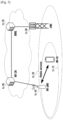
- FIG. 1 illustrates a structure of an LTE system according to an embodiment of the disclosure.
- a radio access network of the LTE system may include an evolved node B (hereinafter, referred to as an eNB, a Node B, or a base station) 1a-05, 1a-10, 1a-15, or 1a-20, a mobility management entity (MME) 1a-25, and a serving gateway (S-GW) 1a-30.
- eNB evolved node B
- MME mobility management entity
- S-GW serving gateway
- a user equipment (hereinafter, referred to as a UE or terminal) 1a-35 may access an external network through the eNBs 1a-05 to 1a-20 and the S-GW 1a-30.
- the eNBs 1a-05 to 1a-20 correspond to existing Node Bs of a universal mobile telecommunication system (UMTS).
- the eNBs may be connected to the UE 1a-35 over a wireless channel, and may perform a more complex role than that of the existing Node Bs.
- all user traffic based on real-time service such as a voice over Internet protocol (VoIP) service, is provided through a shared channel. Therefore, a device that collects state information, such as UEs' buffer status, available transmission power state, and channel state, and performs scheduling is required.
- the eNBs 1a-05 to 1a-20 may be responsible for these functions.
- One eNB may generally control a plurality of cells.
- the LTE system may use orthogonal frequency-division multiplexing (OFDM) as a radio access technology, for example, at a bandwidth of 20 MHz.
- the LTE system may apply adaptive modulation & coding (AMC), which determines a modulation scheme and a channel coding rate according to the channel state of a UE.
- AMC adaptive modulation & coding
- the S-GW 1a-30 is a device that provides a data bearer, and may generate or remove a data bearer under the control of the MME 1a-25.
- the MME is a device that performs not only a mobility management function for the UE but also various control functions, and may be connected to a plurality of base stations.
- FIG. 2 illustrates a wireless protocol structure of an LTE system according to an embodiment of the disclosure.
- a wireless protocol of the LTE system may include packet data convergence protocols (PDCPs) 1b-05 and 1b-40, radio link controls (RLCs) 1b-10 and 1b-35, and media access controls (MACs) 1b-15 and 1b-30 respectively at a UE and an eNB.
- the PDCPs may be responsible for IP header compression/decompression or the like.
- the main functions of the PDCPs may be summarized as follows.
- the RLCs 1b-10 and 1b-35 may reconstruct a PDCP PDU to have an appropriate size, and may perform an automatic repeat request (ARQ) operation.
- ARQ automatic repeat request
- the MACs 1b-15 and 1b-30 may be connected to a plurality of RLC-layer devices configured in one UE, may multiplex RLC PDUs into a MAC PDU, and may demultiplex a MAC PDU into RLC PDUs.
- the main functions of the MACs may be summarized as follows.
- Physical (PHY) layers 1b-20 and 1b-25 may perform channel coding and modulation of upper-layer data, and may convert the data into OFDM symbols to transmit the OFDM symbols via a wireless channel, or may demodulate OFDM symbols received via a wireless channel and may perform channel decoding of the OFDM symbols to deliver the OFDM symbols to an upper layer.
- FIG. 3 illustrates a structure of a next-generation mobile communication system according to an embodiment of the disclosure.
- a radio access network of the next-generation mobile communication system may include a new radio node B (hereinafter, an NR gNB, or NR base station) 1c-10 and a new radio core network (NR CN) 1c-05.
- NR gNB new radio node B
- NR CN new radio core network
- a new radio user equipment (hereinafter, an NR UE or terminal) 1c-15 may access an external network 1c-20 through the NR gNB 1c-10 and the NR CN 1c-05.
- the NR gNB 1c-10 may correspond to an evolved node B (eNB) of an existing LTE system.
- the NR gNB is connected to the NR UE 1c-15 over a wireless channel, and may provide a more advanced service than that of the existing eNB.
- all user traffic may be served through a shared channel. Therefore, a device that collects state information, such as UEs' buffer status, available transmission power state, and channel state, and performs scheduling is required.
- the NR gNB 1c-10 may be responsible for these functions.
- One NR gNB may generally control a plurality of cells.
- the next-generation mobile communication system may apply a bandwidth greater than the existing maximum bandwidth in order to realize ultrahigh-speed data transmission compared to current LTE. Further, the next-generation mobile communication system may employ a beamforming technique in addition to OFDM as a radio access technology. In addition, the next-generation mobile communication system may apply AMC, which determines a modulation scheme and a channel coding rate according to the channel state of a UE.
- the NR CN 1c-05 may perform functions of mobility support, bearer setup, and QoS setup.
- the NR CN is a device that performs not only a mobility management function for a UE but also various control functions, and may be connected to a plurality of base stations.
- the next-generation mobile communication system may also interwork with the existing LTE system, in which case the NR CN may be connected to an MME 1c-25 through a network interface.
- the MME is connected to the eNB 1c-30, which is an existing base station.
- FIG. 4 illustrates a wireless protocol structure of a next-generation mobile communication system according to an embodiment of the disclosure.
- a wireless protocol of the next-generation mobile communication system includes NR service data adaptation protocols (SDAPs) 1d-01 and 1d-45, NR PDCPs 1d-05 and 1d-40, NR RLCs 1d-10 and 1d-35, NR MACs 1d-15 and 1d-30, and NR PHYs 1d-20 and 1d-25 respectively at a UE and an NR base station.
- SDAPs NR service data adaptation protocols
- the main functions of the NR SDAPs 1d-01 and 1d-45 may include some of the following functions.
- the UE may receive a configuration about whether to use a header of the SDAP-layer devices or whether to use a function of the SDAP-layer devices for each PDCP-layer device, each bearer, or each logical channel via a radio resource control (RRC) message.
- RRC radio resource control
- a one-bit non-access stratum (NAS) quality of service (QoS) reflective indicator (NAS reflective QoS) and a one-bit AS QoS reflective indicator (AS reflective QoS) of the SDAP header may be used for indication to enable the UE to update or reconfigure uplink and downlink QoS flows and mapping information for a data bearer.
- the SDAP header may include QoS flow ID information indicating QoS.
- the QoS information may be used as a data-processing priority, scheduling information, or the like in order to support a desired service.
- the main functions of the NR PDCPs 1d-05 and 1d-40 may include some of the following functions.
- the reordering function of the NR PDCP devices refers to a function of rearranging PDCP PDUs received in a lower layer in sequence based on the PDCP sequence number (SN).
- the reordering function of the NR PDCP devices may include a function of transmitting the data to an upper layer in the rearranged order or a function of immediately transmitting the data regardless of order.
- the reordering function may include a function of recording lost PDCP PDUs via reordering, may include a function of reporting the state of lost PDCP PDUs to a transmitter, and may include a function of requesting retransmission of lost PDCP PDUs.
- the main functions of the NR RLCs 1d-10 and 1d-35 may include some of the following functions.
- the in-sequence delivery function of the NR RLC devices refers to a function of delivering RLC SDUs received from a lower layer to an upper layer in order.
- the in-sequence delivery function of the NR RLC devices may include a function of reassembling and delivering a plurality of RLC SDUs when one original RLC SDU which is divided into the plurality of RLC SDUs is received.
- the in-sequence delivery function of the NR RLC devices may include a function of rearranging received RLC PDUs based on the RLC SN or the PDCP SN, may include a function of recording lost RLC PDUs via reordering, may include a function of reporting the state of lost RLC PDUs to a transmitter, and may include a function of requesting retransmission of lost RLC PDUs.
- the in-sequence delivery function of the NR RLC devices 1d-10 and 1d-35 may include a function of delivering only RLC SDUs before the lost RLC SDU to an upper layer in order. Further, the in-sequence delivery function of the NR RLC devices may include a function of delivering all RLC SDUs received before a timer starts to an upper layer in order when the timer has expired despite the presence of a lost RLC SDU. Further, the in-sequence delivery function of the NR RLC devices may include a function of delivering all RLC SDUs received up to that point in time to an upper layer in order when the timer expires despite the presence of a lost RLC SDU.
- the NR RLC devices 1d-10 and 1d-35 may process RLC PDUs in the order of reception thereof regardless of the order of SNs, and may deliver the RLC PDUs to the NR PDCP devices 1d-05 and 1d-40 in an out-of-sequence manner.
- the NR RLC devices 1d-10 and 1d-35 may receive segments that are stored in a buffer or are to be subsequently received, may reconstruct the segments into one whole RLC PDU, and may deliver the RLC PDU to the NR PDCP devices.
- the NR RLC layers may not include a concatenation function, and the concatenation function may be performed in the NR MAC layers, or may be replaced with a multiplexing function of the NR MAC layers.
- the out-of-sequence delivery function of the NR RLC devices refers to a function of delivering RLC SDUs received from a lower layer directly to an upper layer regardless of order.
- the out-of-sequence delivery function of the NR RLC devices may include a function of reassembling and delivering a plurality of RLC SDUs when one original RLC SDU is divided into the plurality of RLC SDUs to be received.
- the out-of-sequence delivery function of the NR RLC devices may include a function of recording lost RLC PDUs by storing and reordering the RLC SNs or PDCP SNs of received RLC PDUs.
- the NR MACs 1d-15 and 1d-30 may be connected to a plurality of NR RLC-layer devices configured in one device, and the main functions of the NR MACs may include some of the following functions.
- the NR PHY layers 1d-20 and 1d-25 may perform channel coding and modulation of upper-layer data and convert the data into OFDM symbols to transmit the OFDM symbols via a wireless channel, or demodulate OFDM symbols received via a wireless channel and perform channel decoding of the OFDM symbols to deliver the OFDM symbols to an upper layer.
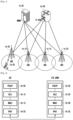
- FIG. 5 illustrates V2X communication in a next-generation mobile communication system according to an embodiment of the disclosure.
- vehicle-to-everything (V2X) according to the embodiment collectively refers to communication technology based on a vehicle and all interfaces and may be vehicle-to-vehicle (V2V), vehicle-to-infrastructure (V2I), vehicle-to-pedestrian (V2P), vehicle-to-network (V2N), and the like according to the form and components for establishing communication.
- V2V vehicle-to-vehicle
- V2I vehicle-to-infrastructure
- V2P vehicle-to-pedestrian
- V2N vehicle-to-network
- a base station 1e-01 may include at least one vehicle terminal 1e-05 or 1e-10 and a portable pedestrian UE 1e-15 located in a cell 1e-02 supporting V2X.
- V2X may be supported through a Uu interface and/or a PC5 interface.
- the vehicle terminal 1e-05 or 1e-10 may perform V2X cellular communication with the base station 1e-01 using a vehicle-terminal/base-station uplink (UL)/downlink (DL) 1e-30 or 1e-35, or the portable pedestrian UE 1e-15 may perform V2X cellular communication using a portable-pedestrian-UE/base-station uplink (UL)/downlink (DL) 1e-40.
- V2X sidelink (SL) communication may be performed using a UE-UE sidelink (SL) 1e-20 and 1e-25.
- the vehicle terminal 1e-05 in the coverage area of the base station terrestrial radio access may transmit and receive V2X packets to and from other vehicle terminals 1e-10 and 1e-40 and/or portable pedestrian UEs 1e-15 and 1e-55 through SLs 1e-20, 1e-50, 1e-25, and 1e-60 as transmission channels.
- the V2X packets may be transmitted and received in a broadcast transmission type and/or a unicast and/or groupcast transmission type.
- a UE supporting V2X sidelink communication may transmit and receive a V2X packet according to a resource allocation mode (scheduled resource allocation or UE autonomous resource selection).
- Scheduled resource allocation (mode 1 and/or mode 3) is a mode in which a base station allocates a resource used for sidelink transmission to a UE in an RRC-connected mode based on a dedicated scheduling scheme. This mode enables the base station to manage sidelink resources, and may thus be efficient for interference management and/or management of a resource pool (dynamic allocation and semi-persistent transmission).
- the UE in the RRC-connected mode may report that there is data to be transmitted to other UE(s) to the base station using an RRC message or a MAC control element (hereinafter, "CE").
- the RRC message may be a SidelinkUEInformation or UEAssistanceInformation message
- the MAC CE may be a buffer status report MAC CE in a new format (including at least an indicator indicating that a buffer status report is for V2X communication and information about the size of data buffered for sidelink communication).
- UE autonomous resource selection is a mode in which a base station provides sidelink resource information/pool to a UE supporting V2X sidelink communication via system information and/or an RRC message and the UE selects a resource according to a set rule.
- the base station may provide sidelink resource information to the UE by signaling SIB21, SIB26, or SIBx to be newly defined for an NR V2X UE.
- the base station may provide sidelink resource information by signaling an RRC message, for example, an RRC connection reconfiguration message (RRCReconfiguration message) and/or connection resumption message (RRCResume message), to the UE.
- RRC message for example, an RRC connection reconfiguration message (RRCReconfiguration message) and/or connection resumption message (RRCResume message
- UE autonomous resource selection may enable the UE to assist other UEs in selecting a resource to be used for a sidelink through a PC5 RRC message and/or MAC CE, or may allocate a resource to be used for sidelink transmission through direct or indirect scheduling.
- the UE autonomous resource selection mode may refer to one or more of the following.
- Resource selection methods for a UE may include zone mapping, sensing-based resource selection, random selection, configured-grant-based resource selection, and the like.
- the UE supporting V2X sidelink communication may transmit and receive a V2X packet based on a preconfigured resource pool (preconfigured resource) included in SL-V2X-Preconfiguration, which is an information element (hereinafter, "IE").
- IE information element
- the UE may perform V2X sidelink communication through a sidelink transmission/reception resource pool preconfigured in SL-V2X-Preconfiguration as the information element (IE).
- a vehicle terminal 1e-45 out of the coverage area of terrestrial radio access/new radio (E-UTRA/NR) vehicle terminal 1e-45 may perform V2X sidelink communication with another vehicle terminal 1e-65 or a portable pedestrian UE 1e-55, based on the foregoing preconfigured sidelink resource, through sidelinks (SL) 1e-70 and 1e-75 as transmission channels.
- E-UTRA/NR terrestrial radio access/new radio
- LTE V2X SL communication is designed primarily for basic safety services.
- a UE supporting LTE V2X SL communication is designed to provide basic safety services to all neighboring UEs supporting LTE V2X SL communication through a broadcast transmission type. Therefore, the UE does not need to perform a process for establishing a session with another particular UE or to perform a sidelink connection establishment procedure.
- V2X SL communication may be designed to provide not only basic safety services but also various and enhanced services (e.g., a self-driving service, a platooning service, a remote driving service, or an in-vehicle infotainment service). Therefore, NR V2X SL communication may be designed to support not only a broadcast transmission type but also a unicast and/or groupcast transmission type.
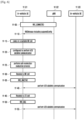
- FIG. 6 illustrates a procedure in which a base station releases a connection with a UE to switch from an RRC-connected mode (RRC_CONNECTED) to an RRC inactive mode (RRC_INACTIVE) and a method in which a UE in the RRC inactive mode (RRC_INACTIVE) handles frequency priorities when performing a cell reselection process according to an embodiment of the disclosure.
- the UE 1f-01 may establish an RRC connection to the NR base station 1f-02 and thus enter the RRC connected mode (RRC_CONNECTED) by in operation 1f-05.
- the UE may transmit and receive data to and from the base station 1f-02 in the RRC connected mode.
- the UE may obtain V2X sidelink communication configuration information from the base station 1f-02 and may transmit and receive data related to V2X sidelink communication to and from another UE 1f-03.
- the UE may receive an RRC connection release message (RRCRelease) including suspension configuration information (suspendConfig) from the base station when there is no data to be transmitted or received for some reason.
- the message may also include cell reselection priority information (cellReselectionPriorities).
- cellReselectionPriorities cellReselectionPriorities.
- the UE in the RRC inactive mode may perform a cell selection procedure to find a suitable NR cell and may camp on the NR cell.
- the cell that the UE camps on by finding a suitable cell in the RRC inactive mode may be referred to as a serving cell.
- the UE may receive system information (e.g., master information block (MIB) or system information block 1 (SIB1)) broadcast by the cell.
- MIB master information block
- SIB1 system information block 1
- the UE may derive the reception level (Srxlev) and the reception quality (Squal) of the serving cell using a parameter included in received SIB1.
- the reception level and reception quality of the serving cell may be obtained using Equation 1 below.
- Equation 1 Parameters used in Equation 1 are defined in 3GPP TS 38.304: "User Equipment (UE) Procedures in Idle Mode and RRC Inactive State ". In the following, the same applies to embodiments to which Equation 1 is applied.
- UE User Equipment
- the UE may receive system information (e.g., SIB2, SIB3, SIB4, or SIB5) broadcasted by the cell before or after camping on the cell.
- SIB2 may include information/parameters commonly applied when the UE in the RRC inactive mode reselects an NR intra-frequency cell, an NR inter-frequency cell, and an inter-RAT frequency cell.
- SIB3 may include information/parameters applied only when the UE in the RRC inactive mode reselects an NR intra-frequency cell.
- SIB4 may include information/parameters applied only when the UE in the RRC inactive mode reselects an NR inter-frequency cell.
- SIB5 may include information/parameters applied only when the UE in the RRC inactive mode reselects an inter-RAT frequency cell.
- the system information may also include per-frequency cell reselection priority information (cellReselectionPriority).
- the UE when the UE in the RRC inactive mode is capable of performing V2X sidelink communication, the UE may receive system information (one or a plurality of new SIBs) including V2X sidelink communication configuration information from the serving cell.
- the serving cell may separately broadcast the system information for each radio access technology (RAT).
- RAT radio access technology
- the V2X sidelink communication configuration information may include V2X sidelink communication reception resource pool (e.g., v2x-CommRxPool), a V2X sidelink communication transmission resource pool (e.g., v2x-CommTxPoolNormalCommon), a V2X sidelink communication transmission resource pool available for an exceptional occasion (e.g., v2x-CommTxPoolExceptional), or an inter-frequency information list for V2X sidelink communication (v2x-InterFreqInfiList).
- the system information may include an anchor carrier frequency list (anchorCarrierFreqList) including V2X sidelink communication configuration information.
- the SIB may have the following ASN1 structure.
- the IE SystemInformationBlockTypex contains NR V2X and/or LTE V2X sidelink communication configuration.
- the UE in the RRC inactive mode may be configured to perform V2X sidelink communication.
- the UE may be configured to perform V2X sidelink communication according to the following three cases.
- Performing V2X sidelink communication may mean transmitting V2X sidelink communication (i.e., transmitting V2X sidelink data), receiving V2X sidelink communication (i.e., receiving V2X sidelink data), or transmitting and receiving V2X sidelink communication.
- Operation 1f-20 may occur in operation 1f-15 or operation 1f-25.
- the UE in the RRC inactive mode may perform a cell reselection evaluation procedure.
- the cell reselection evaluation procedure may mean performing the following series of processes.
- the UE may perform the cell reselection evaluation procedure by applying the cell reselection priority information.
- the UE may perform the cell reselection evaluation procedure by applying the per-frequency cell reselection priority information (cellReselectionPriority) included in the system information received in operation 1f-15.
- an embodiment proposes an operation in which the UE handles reselection priorities by applying at least one of the following methods according to Case 1, Case 2, and Case 3 described above.
- the UE in the RRC inactive mode may perform measurement based on frequency priorities, may apply cell reselection criteria, and may perform a suitability check, thereby finally reselecting a cell.
- the UE When an NR cell is reselected through operation 1f-25 in operation 1f-30, the UE may maintain the RRC inactive mode in operation 1f-35, and may perform V2X sidelink communication with the other UE 1f-03 in operation 1f-40.
- the UE may transition to the RRC idle mode in operation 1f-50, and may perform V2X sidelink communication with the other UE 1f-03 in operation 1f -55.
- the embodiment may be applied equally to the UE in the RRC idle mode (RRC_IDLE). For example, when an NR cell is reselected by applying the same cell reselection priorities, the UE stays in the NR RRC idle mode, when an LTE cell is reselected, the UE transitions to the LTE RRC idle mode.
- RRC_IDLE RRC idle mode
- FIG. 7 illustrates a procedure in which a base station releases a connection with a UE to switch from an RRC-connected mode (RRC_CONNECTED) to an RRC inactive mode (RRC_INACTIVE) and a method in which a UE in the RRC inactive mode (RRC_INACTIVE) handles frequency priorities when performing a cell reselection process according to an embodiment of the disclosure.
- the UE 1g-01 may establish an RRC connection to the LTE base station 1g-02 connected to a 5G core and thus enter the RRC connected mode (RRC_CONNECTED) by in operation 1g-05.
- the UE may transmit and receive data to and from the base station 1g-02 in the RRC connected mode.
- the UE may obtain V2X sidelink communication configuration information from the base station 1g-02 and may transmit and receive data related to V2X sidelink communication to and from another UE 1g-03.
- the UE may receive an RRC connection release message (RRCConnectionRelease) including RRC inactivation configuration information (rrc-InactiveConfig) from the base station when there is no data to be transmitted or received for some reason.
- the message may also include cell reselection priority information (cellReselectionPriorities).
- cellReselectionPriorities cellReselectionPriorities.
- the UE in the RRC inactive mode may perform a cell selection procedure to find a suitable LTE cell and may camp on the LTE cell.
- the cell that the UE camps on by finding a suitable cell in the RRC inactive mode may be referred to as a serving cell.
- the UE may receive system information (e.g., MIB, SIB1, or SIB2) broadcast by the cell.
- the UE may derive the reception level (Srxlev) and the reception quality (Squal) of the serving cell using a parameter included in the received system information.
- the reception level and reception quality of the serving cell may be obtained using Equation 1 below.
- Equation 1 Parameters used in Equation 1 are defined in 3GPP TS 36.304: "User Equipment (UE) Procedures in Idle Mode". In the following, the same applies to embodiments to which Equation 1 is applied.
- UE User Equipment
- the UE may receive system information (e.g., SIB3, SIB4, SIB5, or SIB24) broadcasted by the cell before or after camping on the cell.
- SIB3 may include information/parameters commonly applied when the UE in the RRC inactive mode reselects an LTE intra-frequency cell, an LTE inter-frequency cell, and an inter-RAT frequency cell.
- SIB4 may include information/parameters applied only when the UE in the RRC inactive mode reselects an LTE intra-frequency cell.
- SIB5 may include information/parameters applied only when the UE in the RRC inactive mode reselects an LTE inter-frequency cell.
- SIB24 may include information/parameters applied only when the UE in the RRC inactive mode reselects an inter-RAT frequency NR cell.
- the system information may also include per-frequency cell reselection priority information (cellReselectionPriority).
- the UE when the UE in the RRC inactive mode is capable of performing V2X sidelink communication, the UE may receive system information (SIB21, SIB26, or one or a plurality of new SIBs) including V2X sidelink communication configuration information from the serving cell.
- the serving cell may separately broadcast the system information for each radio access technology (RAT).
- RAT radio access technology
- the V2X sidelink communication configuration information may include a V2X sidelink communication reception resource pool (e.g., v2x-CommRxPool), a V2X sidelink communication transmission resource pool (e.g., v2x-CommTxPoolNormalCommon), a V2X sidelink communication transmission resource pool available for an exceptional occasion (e.g., v2x-CommTxPoolExceptional), or an inter-frequency information list for V2X sidelink communication (v2x-InterFreqInfiList).
- SIB21 and SIB26 may have the ASN1 structure mentioned in 3GPP TS 36.331: "Radio Resource Control (RRC)".
- the system information may include an anchor carrier frequency list (anchorCarrierFreqList) including V2X sidelink communication configuration information.
- the new SIB may have the following abstract syntax notation 1 (ASN1) structure.
- the IE SystemInformationBlockTypex contains NR V2X and/or LTE V2X sidelink communication configuration.
- the UE in the RRC inactive mode may be configured to perform V2X sidelink communication.
- the UE may be configured to perform V2X sidelink communication according to the following three cases.
- Performing V2X sidelink communication may mean transmitting V2X sidelink communication (i.e., transmitting V2X sidelink data), receiving V2X sidelink communication (i.e., receiving V2X sidelink data), or transmitting and receiving V2X sidelink communication.
- Operation 1g-20 may occur in operation 1g-15 or operation 1g-25.
- the UE in the RRC inactive mode may perform a cell reselection evaluation procedure.
- the cell reselection evaluation procedure may mean performing the following series of processes.
- the UE may perform the cell reselection evaluation procedure by applying the cell reselection priority information.
- the UE may perform the cell reselection evaluation procedure by applying the per-frequency cell reselection priority information (cellReselectionPriority) included in the system information received in operation 1g-15.
- an embodiment proposes an operation in which the UE handles reselection priorities by applying at least one of the following methods according to Case 1, Case 2, and Case 3 described above.
- the UE in the RRC inactive mode may perform measurement based on frequency priorities, may apply cell reselection criteria, and may perform a suitability check, thereby finally reselecting a cell.
- the UE may maintain the RRC inactive mode in operation 1g-35 and may perform V2X sidelink communication with the other UE 1g-03 in operation 1g-40.
- the UE may transition to the RRC idle mode in operation 1g-50, and may perform V2X sidelink communication with the other UE 1g-03 in operation 1g -55.
- the embodiment may be applied equally to the UE in the RRC idle mode (RRC_IDLE). For example, when an LTE cell is reselected by applying the same cell reselection priorities, the UE stays in the LTE RRC idle mode, when an NR cell is reselected, the UE transitions to the NR RRC idle mode.
- RRC_IDLE RRC idle mode
- FIG. 8 illustrates a configuration of a UE according to an embodiment of the disclosure.
- the UE may include a radio frequency (RF) processor 1h-10, a baseband processor 1h-20, a storage unit 1h-30, and a controller 1h-40.
- RF radio frequency
- the RF processor 1h-10 may perform a function for transmitting or receiving a signal through a wireless channel, such as band conversion and amplification of a signal.
- the RF processor 1h-10 may upconvert a baseband signal, provided from the baseband processor 1h-20, into an RF band signal to transmit the RF band signal through an antenna, and may downconvert an RF band signal, received through the antenna, into a baseband signal.
- the RF processor 1h-10 may include a transmission filter, a reception filter, an amplifier, a mixer, an oscillator, a digital-to-analog converter (DAC), and an analog-to-digital converter (ADC).
- DAC digital-to-analog converter
- ADC analog-to-digital converter
- FIG. 8 shows only one antenna, the UE may include a plurality of antennas.
- the RF processor 1h-10 may include a plurality of radio frequency (RF) chains. Further, the RF processor 1h-10 may perform beamforming. For beamforming, the RF processor 1h-10 may adjust the phase and strength of each of signals transmitted and received through a plurality of antennas or antenna elements. The RF processor 1h-10 may perform multiple-input and multiple-output (MIMO) and may receive a plurality of layers when performing MIMO. The RF processor 1h-10 may perform reception beam sweeping by appropriately setting the plurality of antennas or antenna elements under the control of the controller 1h-40, or may adjust the orientation and width of a reception beam such that the reception beam is coordinated with a transmission beam.
- MIMO multiple-input and multiple-output
- the baseband processor 1h-20 may perform a function of converting a baseband signal and a bit stream according to the physical-layer specification of a system. For example, in data transmission, the baseband processor 1h-20 may encode and modulate a transmission bit stream, thereby generating complex symbols. In data reception, the baseband processor 1h-20 may demodulate and decode a baseband signal, provided from the RF processor 1h-10, thereby reconstructing a reception bit stream. For example, according to OFDM, in data transmission, the baseband processor 1h-20 may generate complex symbols by encoding and modulating a transmission bit stream, may map the complex symbols to subcarriers, and may construct OFDM symbols through an inverse fast Fourier transform (IFFT) and cyclic prefix (CP) insertion.
- IFFT inverse fast Fourier transform
- CP cyclic prefix
- the baseband processor 1h-20 may divide a baseband signal, provided from the RF processor 1h-10, into OFDM symbols, may reconstruct signals mapped to subcarriers through a fast Fourier transform (FFT), and may reconstruct a reception bit stream through demodulation and decoding.
- FFT fast Fourier transform
- the baseband processor 1h-20 and the RF processor 1h-10 may transmit and receive signals. Accordingly, the baseband processor 1h-20 and the RF processor 1h-10 may be referred to as a transmitter, a receiver, a transceiver, or a communication unit. At least one of the baseband processor 1h-20 and the RF processor 1h-10 may include a plurality of communication modules to support a plurality of different radio access technologies. Further, at least one of the baseband processor 1h-20 and the RF processor 1h-10 may include different communication modules for processing signals in different frequency bands. For example, the different radio access technologies may include an LTE network, an NR network, and the like. In addition, the different frequency bands may include a superhigh-frequency (SHF) band (e.g., 2.2 GHz or 2 GHz) and a millimeter (mm)-wave band (e.g., 60 GHz).
- SHF superhigh-frequency
- mm millimeter
- the storage unit 1h-30 may store data, such as a default program, an application, and configuration information for operating the UE.
- the storage unit 1h-30 may provide stored data upon request from the controller 1h-40.
- the controller 1h-40 may control the overall operation of the UE.
- the controller 1h-40 may transmit and receive signals through the baseband processor 1h-20 and the RF processor 1h-10. Further, the controller 1h-40 may record and read data in the storage unit 1h-40.
- the controller 1h-40 may include at least one processor (e.g., a multi-connection processor 1h-42).
- the controller 1h-40 may include a communication processor (CP) to perform control for communication and an application processor (AP) to control an upper layer, such as an application.
- CP communication processor
- AP application processor
- FIG. 9 illustrates a configuration of a base station according to an embodiment of the disclosure.
- the base station may include one or more transmission and reception points (TRPs).
- TRPs transmission and reception points
- the base station may include an RF processor 1i-10, a baseband processor 1i-20, a communication unit 1i-30, a storage unit 1i-40, and a controller 1i-50.
- the RF processor 1i-10 may perform a function for transmitting or receiving a signal through a wireless channel, such as band conversion and amplification of a signal.
- the RF processor 1i-10 may upconvert a baseband signal, provided from the baseband processor 1i-20, into an RF band signal to transmit the RF band signal through an antenna, and may downconvert an RF band signal, received through the antenna, into a baseband signal.
- the RF processor 1i-10 may include a transmission filter, a reception filter, an amplifier, a mixer, an oscillator, a DAC, and an ADC.
- the base station may include a plurality of antennas.
- the RF processor 1i-10 may include a plurality of RF chains. Further, the RF processor 1i-10 may perform beamforming. For beamforming, the RF processor 1i-10 may adjust the phase and strength of each of signals transmitted and received through a plurality of antennas or antenna elements. The RF processor 1i-10 may transmit one or more layers, thereby performing downlink MIMO.
- the baseband processor 1i-20 may perform a function of converting a baseband signal and a bit stream according to the physical-layer specification of a first radio access technology. For example, in data transmission, the baseband processor 1i-20 may encode and modulate a transmission bit stream, thereby generating complex symbols. In data reception, the baseband processor 1i-20 may demodulate and decode a baseband signal provided from the RF processor 1i-10, thereby reconstructing a reception bit stream. For example, according to OFDM, in data transmission, the baseband processor 1i-20 may generate complex symbols by encoding and modulating a transmission bit stream, may map the complex symbols to subcarriers, and may construct OFDM symbols through an IFFT and CP insertion.
- the baseband processor 1i-20 may divide a baseband signal, provided from the RF processor 1i-10, into OFDM symbols, may reconstruct signals mapped to subcarriers through an FFT, and may reconstruct a reception bit stream through demodulation and decoding. As described above, the baseband processor 1i-20 and the RF processor 1i-10 may transmit and receive signals.
- the baseband processor 1i-20 and the RF processor 1i-10 may be referred to as a transmitter, a receiver, a transceiver, a communication unit, or a wireless communication unit.
- the communication unit 1i-30 may provide an interface for performing communication with other nodes in a network.
- the communication unit 1i-30 may convert a bit stream, transmitted from a main base station to another node, for example, a secondary base station or a core network, into a physical signal, and may convert a physical signal, received from the other node, into a bit stream.
- the storage unit 1i-40 may store data, such as a default program, an application, and configuration information for operating the main base station.
- the storage unit 1i-40 may store information on a bearer allocated to a connected UE, a measurement result reported from a connected UE, and the like.
- the storage unit 1i-40 may store information as a criterion for determining whether to provide or stop multiple connections to a UE.
- the storage unit 1i-40 may provide stored data in response to a request from the controller 1i-50.
- the controller 1i-50 may control the overall operation of the main base station. For example, the controller 1i-50 may transmit and receive signals through the baseband processor 1i-20 and the RF processor 1i-10 or through the communication unit 1i-30. Further, the controller 1i-50 may record and read data in the storage unit 1i-40. To this end, the controller 1i-50 may include at least one processor (e.g., a multi-connection processor 1i-52).
- a computer-readable storage medium for storing one or more programs (software modules) may be provided.
- the one or more programs stored in the computer-readable storage medium may be configured for execution by one or more processors within the electronic device.
- the at least one program may include instructions that cause the electronic device to perform the methods according to various embodiments of the disclosure as defined by the appended claims and/or disclosed herein.
- the programs may be stored in non-volatile memories including a random access memory and a flash memory, a read only memory (ROM), an electrically erasable programmable read only memory (EEPROM), a magnetic disc storage device, a compact disc-ROM (CD-ROM), digital versatile discs (DVDs), or other type optical storage devices, or a magnetic cassette.
- ROM read only memory
- EEPROM electrically erasable programmable read only memory
- CD-ROM compact disc-ROM
- DVDs digital versatile discs
- any combination of some or all of them may form a memory in which the program is stored.
- a plurality of such memories may be included in the electronic device.
- the programs may be stored in an attachable storage device which may access the electronic device through communication networks, such as the Internet, Intranet, Local Area Network (LAN), Wide LAN (WLAN), and Storage Area Network (SAN) or a combination thereof.
- a storage device may access the electronic device via an external port.
- a separate storage device on the communication network may access a portable electronic device.
Landscapes
- Engineering & Computer Science (AREA)
- Computer Networks & Wireless Communication (AREA)
- Signal Processing (AREA)
- Computer Security & Cryptography (AREA)
- Databases & Information Systems (AREA)
- Mobile Radio Communication Systems (AREA)
Claims (13)
- Verfahren, das von einem Endgerät (1f-01) in einem drahtlosen Kommunikationssystem durchgeführt wird, wobei das Verfahren Folgendes umfasst:Empfangen (1f-10) einer Funkressourcensteuerungs-, RRC-,Nachricht von einer Basisstation (1f-02), um eine RRC-Verbindung zwischen dem Endgerät (1f-01) und der Basisstation (1f-02) zu unterbrechen;Identifizieren, ob das Endgerät (1f-01) so konfiguriert ist, dass es sowohl eine Neufunk-, NR-, Vehicle-to-Everything-, V2X-, Sidelink-Kommunikation auf einer ersten Frequenz als auch eine Long Term Evolution-, LTE-, V2X-Sidelink-Kommunikation auf einer zweiten Frequenz durchführt, während sich das Endgerät (1f-01) in einem inaktiven RRC-Zustand befindet;falls das Endgerät (1f-01) so konfiguriert ist, dass es sowohl die NR-V2X-Sidelink-Kommunikation als auch die LTE-V2X-Sidelink-Kommunikation durchführt,Identifizieren, ob eine dritte Frequenz für eine Zellenneuauswahl existiert, wobei die dritte Frequenz sowohl eine NR-V2X-Sidelink-Kommunikationskonfiguration als auch eine LTE-V2X-Sidelink-Kommunikationskonfiguration bereitstellt;Bestimmen der dritten Frequenz als höchste Priorität für die Zellenneuauswahl, für den Fall, dass die dritte Frequenz existiert, wobei die dritte Frequenz für NR oder LTE ist;Bestimmen einer vierten Frequenz als höchste Priorität für die Zellenneuauswahl, für den Fall, dass die dritte Frequenz nicht existiert, wobei die vierte Frequenz entweder die NR-V2X-Sidelink-Kommunikationskonfiguration oder die LTE-V2X-Sidelink-Kommunikationskonfiguration bereitstellt, wobei die vierte Frequenz für NR oder LTE ist; undfalls das Endgerät (1f-01) so konfiguriert ist, dass es die NR-V2X-Sidelink-Kommunikation oder die LTE-V2X-Sidelink-Kommunikation durchführt,
Bestimmen einer Frequenz, die eine Intra-Träger-Konfiguration bereitstellt, und einer Frequenz, die eine Inter-Träger-Konfiguration bereitstellt, als höchste Priorität als gleiche Priorität für die Zellenneuauswahl. - Verfahren nach Anspruch 1, falls das Endgerät (1f-01) so konfiguriert ist, dass es sowohl die NR-V2X-Sidelink-Kommunikation als auch die LTE-V2X-Sidelink-Kommunikation durchführt, ferner umfassend:Identifizieren, dass jede der dritten Frequenz und der vierten Frequenzen eine Vielzahl von Frequenzen umfasst; undAuswählen einer spezifischen Frequenz für die Zellenneuauswahl aus einer Vielzahl von Frequenzen,wobei eine Funkzugangstechnologie, RAT, der spezifischen Frequenz dieselbe ist wie eine RAT, die von einer Frequenz verwendet wird, auf der das Endgerät (1f-01) campiert.
- Verfahren nach Anspruch 1, ferner umfassend:Neuauswählen einer Zelle aus einer Vielzahl von Zellen für die dritte Frequenz; undDurchführen der NR-V2X-Sidelink-Kommunikation basierend auf der NR-V2X-Sidelink-Kommunikationskonfiguration und der LTE-V2X-Sidelink-Kommunikation basierend auf der LTE-V2X-Sidelink-Kommunikationskonfiguration, in der Zelle.
- Verfahren nach Anspruch 1, ferner umfassend:Neuauswählen einer Zelle aus einer Vielzahl von Zellen für die vierte Frequenz;Durchführen der NR-V2X-Sidelink-Kommunikation basierend auf der NR-V2X-Sidelink-Kommunikationskonfiguration und der LTE-V2X-Sidelink-Kommunikation basierend auf einer Vorkonfiguration in der Zelle, für den Fall, dass die vierte Frequenz die NR-V2X-Sidelink-Kommunikationskonfiguration bereitstellt; undDurchführen der LTE-V2X-Sidelink-Kommunikation basierend auf der LTE-V2X-Sidelink-Kommunikationskonfiguration und der NR-V2X-Sidelink-Kommunikation basierend auf einer Vorkonfiguration in der Zelle, für den Fall, dass die vierte Frequenz die LTE-V2X-Sidelink-Kommunikationskonfiguration bereitstellt.
- Verfahren nach Anspruch 1,
wobei die NR-V2X-Sidelink-Kommunikationskonfiguration und die LTE-V2X-Sidelink-Kommunikationskonfiguration von einer oberen Schicht einer Zugriffsschicht, AS-Schicht, konfiguriert werden. - Verfahren nach Anspruch 1, ferner umfassend:
Neuauswählen einer Zelle der dritten Frequenz oder der vierten Frequenz, basierend auf dem Endgerät (1f-01), das sich in einem Zustand des Campierens auf einer anderen Zelle befindet. - Verfahren nach Anspruch 6, ferner umfassend:
Durchführen eines Übergangs in einen RRC-Ruhezustand, falls eine von der Zelle verwendete Funkzugangstechnologie, RAT, sich von einer von der anderen Zelle verwendeten RAT unterscheidet. - Endgerät (1f-01) in einem drahtlosen Kommunikationssystem, wobei das Endgerät (1f-01) Folgendes umfasst:einen Transceiver; undmindestens einen Prozessor, der konfiguriert ist, um Folgendes zu steuern:Steuern des Transceivers zum Empfangen (1f-10) einer Funkressourcensteuerungs-, RRC-,Nachricht von einer Basisstation (1f-02), um eine RRC-Verbindung zwischen dem Endgerät (1f-01) und der Basisstation (1f-02) zu unterbrechen,Identifizieren, ob das Endgerät (1f-01) so konfiguriert ist, dass es sowohl eine Neufunk-, NR-, Vehicle-to-Everything-, V2X-, Sidelink-Kommunikation auf einer ersten Frequenz als auch eine Long Term Evolution-, LTE-, V2X-Sidelink-Kommunikation auf einer zweiten Frequenz durchführt, während sich das Endgerät (1f-01) in einem inaktiven RRC-Zustand befindet,für den Fall, dass das Endgerät (1f-01) konfiguriert ist, um sowohl die NR-V2X-Sidelink-Kommunikation als auch die LTE-V2X-Sidelink-Kommunikation durchzuführen, Identifizieren, ob eine dritte Frequenz für eine Zellenneuauswahl existiert, wobei die dritte Frequenz sowohl eine NR-V2X-Sidelink-Kommunikationskonfiguration als auch eine LTE-V2X-Sidelink-Kommunikationskonfiguration bereitstellt,Bestimmen der dritten Frequenz als höchste Priorität für die Zellenneuauswahl, für den Fall, dass die dritte Frequenz existiert, wobei die dritte Frequenz für NR oder LTE ist,Bestimmen einer vierten Frequenz als höchste Priorität für die Zellenneuauswahl, für den Fall, dass die dritte Frequenz nicht existiert, wobei die vierte Frequenz entweder die NR-V2X-Sidelink-Kommunikationskonfiguration oder die LTE-V2X-Sidelink-Kommunikationskonfiguration bereitstellt, wobei die vierte Frequenz für NR oder LTE ist, undfalls das Endgerät (1f-01) so konfiguriert ist, dass es die NR-V2X-Sidelink-Kommunikation oder die LTE-V2X-Sidelink-Kommunikation durchführt, Bestimmen einer Frequenz, die eine Intra-Träger-Konfiguration bereitstellt, und einer Frequenz, die eine Inter-Träger-Konfiguration bereitstellt, als höchste Priorität als gleiche Priorität für die Zellenneuauswahl.
- Endgerät (1f-01) nach Anspruch 8, falls das Endgerät (1f-01) so konfiguriert ist, dass es sowohl die NR-V2X-Sidelink-Kommunikation als auch die LTE-V2X-Sidelink-Kommunikation durchführt,wobei der mindestens eine Prozessor ferner konfiguriert ist zum Identifizieren, dass jede der dritten Frequenz und der vierten Frequenzen eine Vielzahl von Frequenzen umfasst, undwobei eine Funkzugangstechnologie, RAT, der spezifischen Frequenz dieselbe ist wie eine RAT, die von einer Frequenz verwendet wird, auf der das Endgerät (1f-01) campiert.
- Endgerät (1f-01) nach Anspruch 8,
wobei der mindestens eine Prozessor ferner konfiguriert ist, um eine Zelle aus einer Vielzahl von Zellen für die dritte Frequenz neu auszuwählen und über den Transceiver die NR-V2X-Sidelink-Kommunikation basierend auf der NR-V2X-Sidelink-Kommunikationskonfiguration und die LTE-V2X-Sidelink-Kommunikation basierend auf der LTE-V2X-Sidelink-Kommunikationskonfiguration in der Zelle durchzuführen. - Endgerät (1f-01) nach Anspruch 8,
wobei der mindestens eine Prozessor ferner konfiguriert ist, um eine Zelle aus einer Vielzahl von Zellen für die vierte Frequenz neu auszuwählen, über den Transceiver die NR-V2X-Sidelink-Kommunikation basierend auf der NR-V2X-Sidelink-Kommunikationskonfiguration und die LTE-V2X-Sidelink-Kommunikation basierend auf einer Vorkonfiguration in einer Zelle der zweiten Frequenz durchzuführen, für den Fall, dass die vierte Frequenz die NR-V2X-Sidelink-Kommunikationskonfiguration bereitstellt, und Durchführen, über den Transceiver, der LTE-V2X-Sidelink-Kommunikation basierend auf der LTE-V2X-Sidelink-Kommunikationskonfiguration und der NR-V2X-Sidelink-Kommunikation basierend auf einer Vorkonfiguration in der Zelle, für den Fall, dass die vierte Frequenz die LTE-V2X-Sidelink-Kommunikationskonfiguration bereitstellt. - Endgerät (1f-01) nach Anspruch 8,
wobei die NR-V2X-Sidelink-Kommunikationskonfiguration und die LTE-V2X-Sidelink-Kommunikationskonfiguration von einer oberen Schicht einer Zugriffsschicht, AS-Schicht, konfiguriert werden. - Endgerät (1f-01) nach Anspruch 8,
wobei der mindestens eine Prozessor ferner konfiguriert ist, um eine Zelle der dritten Frequenz oder der vierten Frequenz neu auszuwählen, basierend auf dem Endgerät (1f-01), das sich in einem Zustand des Campierens auf einer anderen Zelle befindet, und einen Übergang in einen RRC-Ruhezustand durchzuführen, falls eine von der Zelle verwendete Funkzugangstechnologie, RAT, sich von einer von der anderen Zelle verwendeten RAT unterscheidet.
Applications Claiming Priority (3)
| Application Number | Priority Date | Filing Date | Title |
|---|---|---|---|
| KR20190033549 | 2019-03-25 | ||
| KR1020190094559A KR102700302B1 (ko) | 2019-03-25 | 2019-08-02 | 차세대 이동 통신 시스템에서 차량 통신을 지원하기 위한 셀 재선택 우선순위 관리 방법 및 장치 |
| PCT/KR2020/003986 WO2020197235A1 (en) | 2019-03-25 | 2020-03-24 | Method and apparatus for handling cell reselection priorities for supporting v2x communication in next-generation mobile communication system |
Publications (3)
| Publication Number | Publication Date |
|---|---|
| EP3928557A1 EP3928557A1 (de) | 2021-12-29 |
| EP3928557A4 EP3928557A4 (de) | 2022-04-20 |
| EP3928557B1 true EP3928557B1 (de) | 2025-04-30 |
Family
ID=72883648
Family Applications (1)
| Application Number | Title | Priority Date | Filing Date |
|---|---|---|---|
| EP20777989.3A Active EP3928557B1 (de) | 2019-03-25 | 2020-03-24 | Verfahren und vorrichtung zur behandlung von zellenneuauswahl-prioritäten zur unterstützung der v2x-kommunikation in einem mobilkommunikationssystem |
Country Status (4)
| Country | Link |
|---|---|
| US (1) | US11917476B2 (de) |
| EP (1) | EP3928557B1 (de) |
| KR (1) | KR102700302B1 (de) |
| CN (1) | CN113647141B (de) |
Families Citing this family (5)
| Publication number | Priority date | Publication date | Assignee | Title |
|---|---|---|---|---|
| CN110536368A (zh) * | 2019-09-04 | 2019-12-03 | 中兴通讯股份有限公司 | 用于边路通信的小区重选方法、装置和系统 |
| CN116636266B (zh) * | 2020-12-10 | 2025-08-01 | 华为技术有限公司 | 通信方法和装置 |
| US11848772B2 (en) * | 2021-03-05 | 2023-12-19 | Qualcomm Incorporated | Rate-matching pattern indications for sidelink carrier aggregation |
| US20220386230A1 (en) * | 2021-05-27 | 2022-12-01 | Apple Inc. | Radio Access Technology Prioritization |
| WO2024258125A1 (en) * | 2023-06-16 | 2024-12-19 | Lg Electronics Inc. | Method and apparatus for cell reselection based on preconfiguration in a wireless communication system |
Family Cites Families (11)
| Publication number | Priority date | Publication date | Assignee | Title |
|---|---|---|---|---|
| KR102306823B1 (ko) * | 2015-03-11 | 2021-09-29 | 삼성전자 주식회사 | 무선 통신 시스템에서 면허 도움 접속 기술 활용 시 기지국의 데이터 스케쥴링을 위한 장치 및 방법 |
| WO2016163827A1 (ko) * | 2015-04-08 | 2016-10-13 | 엘지전자 주식회사 | 무선 통신 시스템에서 단말의 사이드링크 단말 정보 전송 방법 및 상기 방법을 이용하는 단말 |
| US10575224B2 (en) * | 2016-02-04 | 2020-02-25 | Telefonaktiebolaget Lm Ericsson (Publ) | Method and apparatus for cellular handovers involving sidelink communications |
| US10939461B2 (en) * | 2016-04-01 | 2021-03-02 | Lg Electronics Inc. | Method for performing semi-persistent scheduling process in wireless communication system and terminal using same |
| EP3273634A1 (de) * | 2016-07-18 | 2018-01-24 | Panasonic Intellectual Property Corporation of America | Verbesserte unterstützung der dienstqualität für v2x-übertragungen |
| KR102582554B1 (ko) * | 2017-01-03 | 2023-09-25 | 삼성전자 주식회사 | 차세대 이동 통신 시스템에서 light connection을 지원하는 방법 및 장치 |
| US10130045B2 (en) | 2017-01-13 | 2018-11-20 | Lazaro Balseiro | Living art frame |
| US20180279275A1 (en) * | 2017-03-23 | 2018-09-27 | Asustek Computer Inc. | Method and apparatus of facilitating reporting assistance information for sidelink service in a wireless communication system |
| US11147096B2 (en) | 2017-08-07 | 2021-10-12 | Lg Electronics Inc. | Method for transmitting and receiving signals in a wireless communication system and a device therefor |
| JP2018078632A (ja) * | 2018-01-01 | 2018-05-17 | ノキア テクノロジーズ オーユー | セル再選択方法および装置 |
| WO2019240527A1 (en) | 2018-06-15 | 2019-12-19 | Lg Electronics Inc. | Method and apparatus for handling frequency priorities inherited from other radio access technologies in wireless communication system |
-
2019
- 2019-08-02 KR KR1020190094559A patent/KR102700302B1/ko active Active
-
2020
- 2020-03-24 EP EP20777989.3A patent/EP3928557B1/de active Active
- 2020-03-24 CN CN202080024128.5A patent/CN113647141B/zh active Active
-
2022
- 2022-10-06 US US17/961,119 patent/US11917476B2/en active Active
Also Published As
| Publication number | Publication date |
|---|---|
| US11917476B2 (en) | 2024-02-27 |
| CN113647141B (zh) | 2024-11-12 |
| KR20200114971A (ko) | 2020-10-07 |
| EP3928557A1 (de) | 2021-12-29 |
| KR102700302B1 (ko) | 2024-08-30 |
| US20230037084A1 (en) | 2023-02-02 |
| CN113647141A (zh) | 2021-11-12 |
| EP3928557A4 (de) | 2022-04-20 |
Similar Documents
| Publication | Publication Date | Title |
|---|---|---|
| US20240107349A1 (en) | Method and apparatus for performing frequency measurement and setting frequency measurement for non-connection mode terminal | |
| US11470525B2 (en) | Method and apparatus for handling cell reselection priorities for supporting V2X communication in next-generation mobile communication system | |
| US20220377838A1 (en) | Method and apparatus for performing early frequency measurement and fast reporting by terminal in disconnected state in next generation mobile communication system | |
| EP3879916B1 (de) | Verfahren und vorrichtung zur v2x-kommunikation in einem mobilkommunikationssystem der nächsten generation | |
| US11700659B2 (en) | Method and apparatus for performing user equipment capability procedure for supporting vehicle communication in next generation mobile communication system | |
| CN112313992B (zh) | 在下一代移动通信系统中通过考虑双连接来控制分组复制的方法和装置 | |
| EP4135217A1 (de) | Verfahren und vorrichtung zur durchführung einer ephemeridenbasierten zellenneuauswahl in einem satellitennetzwerk | |
| EP3922056B1 (de) | Verfahren und vorrichtung zur aktualisierung der liste der zu messenden zellen bei der neuauswahl einer zelle im ruhemodus in einem drahtlosen kommunikationssystem der nächsten generation | |
| EP3742791B1 (de) | Verfahren und vorrichtung zum sammeln und melden von zellmessinformationen in einem mobilen kommunikationssystem der nächsten generation | |
| US11917476B2 (en) | Method and apparatus for handling cell reselection priorities for supporting V2X communication in next-generation mobile communication system | |
| EP3909392B1 (de) | Verfahren und vorrichtung zur durchführung von kommunikation in einem drahtloskommunikationssystem | |
| US12238796B2 (en) | Apparatus and method for supporting vehicle-to-everything in wireless communication system | |
| US12177656B2 (en) | Method and apparatus for handling EN-DC cell reselection indicator in next-generation mobile communication system | |
| KR20200050287A (ko) | 이동 통신 시스템에서 통신을 수행하는 방법 및 장치 | |
| CN114788347A (zh) | 用于在无线通信系统中重选小区的方法和装置 | |
| US12302201B2 (en) | Handover method and device for terminal that supports dual active protocol stack in mobile communication system | |
| CN113632542A (zh) | 用于在无线通信系统中执行小区重选的方法和装置 | |
| CN113574961A (zh) | 用于在无线通信系统中执行通信的方法和装置 | |
| US12328782B2 (en) | Method and apparatus for supporting dual connectivity for multi-USIM UE in next-generation mobile communication system | |
| KR20210085457A (ko) | 이동 통신 시스템에서 단말이 validity area를 벗어난 셀 재선택 시 early measurement 설정을 처리하는 방법 및 장치 | |
| KR20210077341A (ko) | 무선 통신 시스템에서 사설망에서 선택한 plmn의 보고 및 자동 이웃 관계를 구성하는 방법 및 장치 | |
| KR20210055225A (ko) | 무선 통신 시스템에서 차량 통신을 수행하는 방법 및 장치 | |
| KR20210007891A (ko) | 무선 통신 시스템에서 차량 통신을 지원하기 위한 장치 및 방법 | |
| KR20210007798A (ko) | 무선 통신 시스템에서 차량 통신을 지원하기 위한 장치 및 방법 |
Legal Events
| Date | Code | Title | Description |
|---|---|---|---|
| STAA | Information on the status of an ep patent application or granted ep patent |
Free format text: STATUS: THE INTERNATIONAL PUBLICATION HAS BEEN MADE |
|
| PUAI | Public reference made under article 153(3) epc to a published international application that has entered the european phase |
Free format text: ORIGINAL CODE: 0009012 |
|
| STAA | Information on the status of an ep patent application or granted ep patent |
Free format text: STATUS: REQUEST FOR EXAMINATION WAS MADE |
|
| 17P | Request for examination filed |
Effective date: 20210924 |
|
| AK | Designated contracting states |
Kind code of ref document: A1 Designated state(s): AL AT BE BG CH CY CZ DE DK EE ES FI FR GB GR HR HU IE IS IT LI LT LU LV MC MK MT NL NO PL PT RO RS SE SI SK SM TR |
|
| A4 | Supplementary search report drawn up and despatched |
Effective date: 20220321 |
|
| RIC1 | Information provided on ipc code assigned before grant |
Ipc: H04W 4/40 20180101ALI20220315BHEP Ipc: H04W 76/27 20180101ALI20220315BHEP Ipc: H04W 36/08 20090101ALI20220315BHEP Ipc: H04W 36/00 20090101AFI20220315BHEP |
|
| DAV | Request for validation of the european patent (deleted) | ||
| DAX | Request for extension of the european patent (deleted) | ||
| STAA | Information on the status of an ep patent application or granted ep patent |
Free format text: STATUS: EXAMINATION IS IN PROGRESS |
|
| 17Q | First examination report despatched |
Effective date: 20230328 |
|
| GRAP | Despatch of communication of intention to grant a patent |
Free format text: ORIGINAL CODE: EPIDOSNIGR1 |
|
| STAA | Information on the status of an ep patent application or granted ep patent |
Free format text: STATUS: GRANT OF PATENT IS INTENDED |
|
| GRAS | Grant fee paid |
Free format text: ORIGINAL CODE: EPIDOSNIGR3 |
|
| INTG | Intention to grant announced |
Effective date: 20250129 |
|
| GRAA | (expected) grant |
Free format text: ORIGINAL CODE: 0009210 |
|
| STAA | Information on the status of an ep patent application or granted ep patent |
Free format text: STATUS: THE PATENT HAS BEEN GRANTED |
|
| AK | Designated contracting states |
Kind code of ref document: B1 Designated state(s): AL AT BE BG CH CY CZ DE DK EE ES FI FR GB GR HR HU IE IS IT LI LT LU LV MC MK MT NL NO PL PT RO RS SE SI SK SM TR |
|
| REG | Reference to a national code |
Ref country code: CH Ref legal event code: EP Ref country code: GB Ref legal event code: FG4D |
|
| REG | Reference to a national code |
Ref country code: DE Ref legal event code: R096 Ref document number: 602020050478 Country of ref document: DE |
|
| REG | Reference to a national code |
Ref country code: IE Ref legal event code: FG4D |
|
| REG | Reference to a national code |
Ref country code: NL Ref legal event code: MP Effective date: 20250430 |
|
| REG | Reference to a national code |
Ref country code: AT Ref legal event code: MK05 Ref document number: 1791250 Country of ref document: AT Kind code of ref document: T Effective date: 20250430 |
|
| PG25 | Lapsed in a contracting state [announced via postgrant information from national office to epo] |
Ref country code: FI Free format text: LAPSE BECAUSE OF FAILURE TO SUBMIT A TRANSLATION OF THE DESCRIPTION OR TO PAY THE FEE WITHIN THE PRESCRIBED TIME-LIMIT Effective date: 20250430 Ref country code: ES Free format text: LAPSE BECAUSE OF FAILURE TO SUBMIT A TRANSLATION OF THE DESCRIPTION OR TO PAY THE FEE WITHIN THE PRESCRIBED TIME-LIMIT Effective date: 20250430 Ref country code: PT Free format text: LAPSE BECAUSE OF FAILURE TO SUBMIT A TRANSLATION OF THE DESCRIPTION OR TO PAY THE FEE WITHIN THE PRESCRIBED TIME-LIMIT Effective date: 20250901 |
|
| REG | Reference to a national code |
Ref country code: LT Ref legal event code: MG9D |
|
| PG25 | Lapsed in a contracting state [announced via postgrant information from national office to epo] |
Ref country code: GR Free format text: LAPSE BECAUSE OF FAILURE TO SUBMIT A TRANSLATION OF THE DESCRIPTION OR TO PAY THE FEE WITHIN THE PRESCRIBED TIME-LIMIT Effective date: 20250731 Ref country code: NO Free format text: LAPSE BECAUSE OF FAILURE TO SUBMIT A TRANSLATION OF THE DESCRIPTION OR TO PAY THE FEE WITHIN THE PRESCRIBED TIME-LIMIT Effective date: 20250730 |
|
| PG25 | Lapsed in a contracting state [announced via postgrant information from national office to epo] |
Ref country code: PL Free format text: LAPSE BECAUSE OF FAILURE TO SUBMIT A TRANSLATION OF THE DESCRIPTION OR TO PAY THE FEE WITHIN THE PRESCRIBED TIME-LIMIT Effective date: 20250430 Ref country code: NL Free format text: LAPSE BECAUSE OF FAILURE TO SUBMIT A TRANSLATION OF THE DESCRIPTION OR TO PAY THE FEE WITHIN THE PRESCRIBED TIME-LIMIT Effective date: 20250430 |
|
| PG25 | Lapsed in a contracting state [announced via postgrant information from national office to epo] |
Ref country code: BG Free format text: LAPSE BECAUSE OF FAILURE TO SUBMIT A TRANSLATION OF THE DESCRIPTION OR TO PAY THE FEE WITHIN THE PRESCRIBED TIME-LIMIT Effective date: 20250430 |
|
| PG25 | Lapsed in a contracting state [announced via postgrant information from national office to epo] |
Ref country code: HR Free format text: LAPSE BECAUSE OF FAILURE TO SUBMIT A TRANSLATION OF THE DESCRIPTION OR TO PAY THE FEE WITHIN THE PRESCRIBED TIME-LIMIT Effective date: 20250430 |
|
| PG25 | Lapsed in a contracting state [announced via postgrant information from national office to epo] |
Ref country code: AT Free format text: LAPSE BECAUSE OF FAILURE TO SUBMIT A TRANSLATION OF THE DESCRIPTION OR TO PAY THE FEE WITHIN THE PRESCRIBED TIME-LIMIT Effective date: 20250430 |
|
| PG25 | Lapsed in a contracting state [announced via postgrant information from national office to epo] |
Ref country code: RS Free format text: LAPSE BECAUSE OF FAILURE TO SUBMIT A TRANSLATION OF THE DESCRIPTION OR TO PAY THE FEE WITHIN THE PRESCRIBED TIME-LIMIT Effective date: 20250731 |
|
| PG25 | Lapsed in a contracting state [announced via postgrant information from national office to epo] |
Ref country code: IS Free format text: LAPSE BECAUSE OF FAILURE TO SUBMIT A TRANSLATION OF THE DESCRIPTION OR TO PAY THE FEE WITHIN THE PRESCRIBED TIME-LIMIT Effective date: 20250830 |
|
| PG25 | Lapsed in a contracting state [announced via postgrant information from national office to epo] |
Ref country code: LV Free format text: LAPSE BECAUSE OF FAILURE TO SUBMIT A TRANSLATION OF THE DESCRIPTION OR TO PAY THE FEE WITHIN THE PRESCRIBED TIME-LIMIT Effective date: 20250430 |
|
| PG25 | Lapsed in a contracting state [announced via postgrant information from national office to epo] |
Ref country code: SM Free format text: LAPSE BECAUSE OF FAILURE TO SUBMIT A TRANSLATION OF THE DESCRIPTION OR TO PAY THE FEE WITHIN THE PRESCRIBED TIME-LIMIT Effective date: 20250430 Ref country code: DK Free format text: LAPSE BECAUSE OF FAILURE TO SUBMIT A TRANSLATION OF THE DESCRIPTION OR TO PAY THE FEE WITHIN THE PRESCRIBED TIME-LIMIT Effective date: 20250430 |
|
| PG25 | Lapsed in a contracting state [announced via postgrant information from national office to epo] |
Ref country code: CZ Free format text: LAPSE BECAUSE OF FAILURE TO SUBMIT A TRANSLATION OF THE DESCRIPTION OR TO PAY THE FEE WITHIN THE PRESCRIBED TIME-LIMIT Effective date: 20250430 |
|
| PG25 | Lapsed in a contracting state [announced via postgrant information from national office to epo] |
Ref country code: EE Free format text: LAPSE BECAUSE OF FAILURE TO SUBMIT A TRANSLATION OF THE DESCRIPTION OR TO PAY THE FEE WITHIN THE PRESCRIBED TIME-LIMIT Effective date: 20250430 |
|
| PG25 | Lapsed in a contracting state [announced via postgrant information from national office to epo] |
Ref country code: RO Free format text: LAPSE BECAUSE OF FAILURE TO SUBMIT A TRANSLATION OF THE DESCRIPTION OR TO PAY THE FEE WITHIN THE PRESCRIBED TIME-LIMIT Effective date: 20250430 Ref country code: SK Free format text: LAPSE BECAUSE OF FAILURE TO SUBMIT A TRANSLATION OF THE DESCRIPTION OR TO PAY THE FEE WITHIN THE PRESCRIBED TIME-LIMIT Effective date: 20250430 |
|
| PG25 | Lapsed in a contracting state [announced via postgrant information from national office to epo] |
Ref country code: IT Free format text: LAPSE BECAUSE OF FAILURE TO SUBMIT A TRANSLATION OF THE DESCRIPTION OR TO PAY THE FEE WITHIN THE PRESCRIBED TIME-LIMIT Effective date: 20250430 |
|
| REG | Reference to a national code |
Ref country code: DE Ref legal event code: R097 Ref document number: 602020050478 Country of ref document: DE |
|
| PLBE | No opposition filed within time limit |
Free format text: ORIGINAL CODE: 0009261 |
|
| STAA | Information on the status of an ep patent application or granted ep patent |
Free format text: STATUS: NO OPPOSITION FILED WITHIN TIME LIMIT |
|
| REG | Reference to a national code |
Ref country code: CH Ref legal event code: L10 Free format text: ST27 STATUS EVENT CODE: U-0-0-L10-L00 (AS PROVIDED BY THE NATIONAL OFFICE) Effective date: 20260311 |
|
| 26N | No opposition filed |
Effective date: 20260202 |
|
| PGFP | Annual fee paid to national office [announced via postgrant information from national office to epo] |
Ref country code: GB Payment date: 20260224 Year of fee payment: 7 |
|
| PGFP | Annual fee paid to national office [announced via postgrant information from national office to epo] |
Ref country code: DE Payment date: 20260220 Year of fee payment: 7 |