EP3928458B1 - Verfahren und vorrichtung zum senden von steuerinformationen, elektronische vorrichtung und speichermedium - Google Patents
Verfahren und vorrichtung zum senden von steuerinformationen, elektronische vorrichtung und speichermedium Download PDFInfo
- Publication number
- EP3928458B1 EP3928458B1 EP20777194.0A EP20777194A EP3928458B1 EP 3928458 B1 EP3928458 B1 EP 3928458B1 EP 20777194 A EP20777194 A EP 20777194A EP 3928458 B1 EP3928458 B1 EP 3928458B1
- Authority
- EP
- European Patent Office
- Prior art keywords
- pscch
- sci
- resource
- pssch
- sub
- Prior art date
- Legal status (The legal status is an assumption and is not a legal conclusion. Google has not performed a legal analysis and makes no representation as to the accuracy of the status listed.)
- Active
Links
Images


Classifications
-
- H—ELECTRICITY
- H04—ELECTRIC COMMUNICATION TECHNIQUE
- H04W—WIRELESS COMMUNICATION NETWORKS
- H04W72/00—Local resource management
- H04W72/02—Selection of wireless resources by user or terminal
-
- H—ELECTRICITY
- H04—ELECTRIC COMMUNICATION TECHNIQUE
- H04L—TRANSMISSION OF DIGITAL INFORMATION, e.g. TELEGRAPHIC COMMUNICATION
- H04L5/00—Arrangements affording multiple use of the transmission path
- H04L5/003—Arrangements for allocating sub-channels of the transmission path
- H04L5/0053—Allocation of signalling, i.e. of overhead other than pilot signals
-
- H—ELECTRICITY
- H04—ELECTRIC COMMUNICATION TECHNIQUE
- H04L—TRANSMISSION OF DIGITAL INFORMATION, e.g. TELEGRAPHIC COMMUNICATION
- H04L5/00—Arrangements affording multiple use of the transmission path
- H04L5/0001—Arrangements for dividing the transmission path
- H04L5/0003—Two-dimensional division
- H04L5/0005—Time-frequency
-
- H—ELECTRICITY
- H04—ELECTRIC COMMUNICATION TECHNIQUE
- H04L—TRANSMISSION OF DIGITAL INFORMATION, e.g. TELEGRAPHIC COMMUNICATION
- H04L5/00—Arrangements affording multiple use of the transmission path
- H04L5/003—Arrangements for allocating sub-channels of the transmission path
- H04L5/0044—Allocation of payload; Allocation of data channels, e.g. PDSCH or PUSCH
-
- H—ELECTRICITY
- H04—ELECTRIC COMMUNICATION TECHNIQUE
- H04L—TRANSMISSION OF DIGITAL INFORMATION, e.g. TELEGRAPHIC COMMUNICATION
- H04L5/00—Arrangements affording multiple use of the transmission path
- H04L5/003—Arrangements for allocating sub-channels of the transmission path
- H04L5/0048—Allocation of pilot signals, i.e. of signals known to the receiver
-
- H—ELECTRICITY
- H04—ELECTRIC COMMUNICATION TECHNIQUE
- H04L—TRANSMISSION OF DIGITAL INFORMATION, e.g. TELEGRAPHIC COMMUNICATION
- H04L5/00—Arrangements affording multiple use of the transmission path
- H04L5/0091—Signalling for the administration of the divided path, e.g. signalling of configuration information
- H04L5/0094—Indication of how sub-channels of the path are allocated
-
- H—ELECTRICITY
- H04—ELECTRIC COMMUNICATION TECHNIQUE
- H04L—TRANSMISSION OF DIGITAL INFORMATION, e.g. TELEGRAPHIC COMMUNICATION
- H04L5/00—Arrangements affording multiple use of the transmission path
- H04L5/02—Channels characterised by the type of signal
- H04L5/06—Channels characterised by the type of signal the signals being represented by different frequencies
-
- H—ELECTRICITY
- H04—ELECTRIC COMMUNICATION TECHNIQUE
- H04W—WIRELESS COMMUNICATION NETWORKS
- H04W4/00—Services specially adapted for wireless communication networks; Facilities therefor
- H04W4/30—Services specially adapted for particular environments, situations or purposes
- H04W4/40—Services specially adapted for particular environments, situations or purposes for vehicles, e.g. vehicle-to-pedestrians [V2P]
-
- H—ELECTRICITY
- H04—ELECTRIC COMMUNICATION TECHNIQUE
- H04W—WIRELESS COMMUNICATION NETWORKS
- H04W72/00—Local resource management
- H04W72/04—Wireless resource allocation
- H04W72/044—Wireless resource allocation based on the type of the allocated resource
- H04W72/0446—Resources in time domain, e.g. slots or frames
-
- H—ELECTRICITY
- H04—ELECTRIC COMMUNICATION TECHNIQUE
- H04W—WIRELESS COMMUNICATION NETWORKS
- H04W72/00—Local resource management
- H04W72/04—Wireless resource allocation
- H04W72/044—Wireless resource allocation based on the type of the allocated resource
- H04W72/0453—Resources in frequency domain, e.g. a carrier in FDMA
-
- H—ELECTRICITY
- H04—ELECTRIC COMMUNICATION TECHNIQUE
- H04W—WIRELESS COMMUNICATION NETWORKS
- H04W72/00—Local resource management
- H04W72/20—Control channels or signalling for resource management
-
- H—ELECTRICITY
- H04—ELECTRIC COMMUNICATION TECHNIQUE
- H04W—WIRELESS COMMUNICATION NETWORKS
- H04W72/00—Local resource management
- H04W72/20—Control channels or signalling for resource management
- H04W72/25—Control channels or signalling for resource management between terminals via a wireless link, e.g. sidelink
-
- H—ELECTRICITY
- H04—ELECTRIC COMMUNICATION TECHNIQUE
- H04W—WIRELESS COMMUNICATION NETWORKS
- H04W72/00—Local resource management
- H04W72/50—Allocation or scheduling criteria for wireless resources
- H04W72/535—Allocation or scheduling criteria for wireless resources based on resource usage policies
-
- H—ELECTRICITY
- H04—ELECTRIC COMMUNICATION TECHNIQUE
- H04L—TRANSMISSION OF DIGITAL INFORMATION, e.g. TELEGRAPHIC COMMUNICATION
- H04L5/00—Arrangements affording multiple use of the transmission path
- H04L5/003—Arrangements for allocating sub-channels of the transmission path
- H04L5/0048—Allocation of pilot signals, i.e. of signals known to the receiver
- H04L5/0051—Allocation of pilot signals, i.e. of signals known to the receiver of dedicated pilots, i.e. pilots destined for a single user or terminal
-
- H—ELECTRICITY
- H04—ELECTRIC COMMUNICATION TECHNIQUE
- H04W—WIRELESS COMMUNICATION NETWORKS
- H04W4/00—Services specially adapted for wireless communication networks; Facilities therefor
- H04W4/30—Services specially adapted for particular environments, situations or purposes
- H04W4/40—Services specially adapted for particular environments, situations or purposes for vehicles, e.g. vehicle-to-pedestrians [V2P]
- H04W4/44—Services specially adapted for particular environments, situations or purposes for vehicles, e.g. vehicle-to-pedestrians [V2P] for communication between vehicles and infrastructures, e.g. vehicle-to-cloud [V2C] or vehicle-to-home [V2H]
-
- H—ELECTRICITY
- H04—ELECTRIC COMMUNICATION TECHNIQUE
- H04W—WIRELESS COMMUNICATION NETWORKS
- H04W4/00—Services specially adapted for wireless communication networks; Facilities therefor
- H04W4/30—Services specially adapted for particular environments, situations or purposes
- H04W4/40—Services specially adapted for particular environments, situations or purposes for vehicles, e.g. vehicle-to-pedestrians [V2P]
- H04W4/46—Services specially adapted for particular environments, situations or purposes for vehicles, e.g. vehicle-to-pedestrians [V2P] for vehicle-to-vehicle communication [V2V]
-
- H—ELECTRICITY
- H04—ELECTRIC COMMUNICATION TECHNIQUE
- H04W—WIRELESS COMMUNICATION NETWORKS
- H04W4/00—Services specially adapted for wireless communication networks; Facilities therefor
- H04W4/70—Services for machine-to-machine communication [M2M] or machine type communication [MTC]
Definitions
- the present disclosure relates to a field of wireless communication technologies, and particularly relates to a method and an apparatus for transmitting control information, an electronic device, and a storage medium.
- the sidelink communication includes two kinds of main mechanisms: direct communication of device to device (D2D) and Vehicle to Vehicle/Infrastructure/Pedestrian/Network (hereinafter referred to as V2X).
- V2X is designed based on D2D technology, which is superior to D2D in terms of data rate, latency, reliability and link capacity, and is the most representative sidelink communication technology in LTE technology.
- the sidelink communication also defines different physical channels, including a Physical Sidelink Control Channel (PSCCH) and a Physical Sidelink Shared Channel (PSSCH).
- PSSCH is used to carry data
- PSCCH is used to carry the Sidelink Control Information (SCI), wherein the SCI indicates information such as the time-frequency domain resource location of the associated PSSCH transmission, modulation and coding scheme, and the receiving target ID (also referred to as destination ID) for the PSSCH, and the like.
- SCI Sidelink Control Information
- the sidelink communication also defines a sub-channel as a minimum unit of resource allocation, and one sub-channel includes a control channel resource or a data channel resource, or including both.
- the LTE V2X system includes two modes in term of resource allocation: a resource allocation mode based on base station scheduling (Mode 3) and a resource allocation mode self-selected by the UE (Mode 4). Both modes are performed based on sub-channels defined in the sidelink system, and the base station schedules or the UE autonomously selects several control and/or data sub-channels for sidelink transmission.
- the SCI uses all control channel resources in the sub-channel; when the sidelink transmission occupies multiple sub-channels including control channel resources, the SCI uses all control channel resources in one of the sub-channels according to predefined criteria.
- the 5G NR (New Radio) system which is as an evolution technology of LTE, correspondingly also includes a further evolution of the sidelink communication, and the concepts of PSCCH and PSSCH are similarly introduced in the NR V2X.
- the current multiplexing method of PSSCH and PSCCH mainly includes: the PSCCH and the PSSCH using non-overlapped time domain resources, the frequency domain resources of the PSCCH and the PSSCH being the same or different; the PSCCH and the PSSCH using non-overlapped frequency domain resources, and the time domain resources of the PSCCH and the PSSCH being the same; or a portion of the PSCCH and the PSSCH using the resources which are overlapped in time domain and are not overlapped in frequency domain, and the other portion of the PSSCH and/or the PSCCH using non-overlapped time domain resources.
- the sub-channels of the NR V2X would be designed based on the multiplexing method of the PSSCH and the PSCCH.
- ERICSSON "On 2-stage PSCCH design", 3GPP DRAFT; R1-1813648, 3RD GENERATION PARTNERSHIP PROJECT (3GPP), MOBILE COMPETENCE CENTRE ; 650, ROUTE DES LUCIOLES; F-06921 SOPHIA-ANTIPOLIS CEDEX; FRANCE, vol. RAN WG1, no. Spokane, WA, US; 20181112 - 20181116 11 November 2018 (2018-11-11 ), discusses 2-stage PSCCH design.
- ZTE ET AL "Discussion on NR sidelink physical layer structure", 3GPP DRAFT; R1-1812731, 3RD GENERATION PARTNERSHIP PROJECT (3GPP), MOBILE COMPETENCE CENTRE; 650, ROUTE DES LUCIOLES; F-06921 SOPHIA-ANTIPOLIS CEDE,vol. RAN WG1, no. Spokane, USA; 20181112 - 20181116 11 November 2018 (2018-11-11 ), discloses that candidate PSCCH resources are arranged in the sidelink resource pool.
- SPREADTRUM COMMUNICATIONS "Discussion on NR sidelink physical layer structure", 3GPP DRAFT; R1-1900713, 3RD GENERATION PARTNERSHIP PROJECT (3GPP), MOBILE COMPETENCE CENTRE ; 650, ROUTE DES LUCIOLES; F-06921 SOPHIA-ANTIPOLIS CEDEX; FRANCE, 12 January 2019 (2019-01-12), pages 1-10 , teaches that the PSCCH is arranged inside the PSSCH, in particular inside one of the subblocks of the PSSCH.
- the technical solution of the present disclosure can fully utilize the control channel resources for transmitting the SCI in the V2X resource pool, so that when the same data resource is used for the sidelink transmission of different UEs, the degree of conflict of control messages between the UEs is reduced, and the negative impact of conflicts caused by different UE on performance is effectively improved, thereby improving the decoding performance of the sidelink control information
- the V2X resource pool may be configured to transmit PSCCH and PSSCH on adjacent frequency domain resources or non-adjacent frequency domain resources.
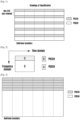
- the V2X resource pool is divided into several V2X sub-channels in the frequency domain, and each V2X sub-channel includes one control channel and one data channel, as shown in FIG. 1 .
- Each V2X sub-channel includes one PSCCH sub-channel and one PSSCH sub-channel.
- the resource multiplexing mode is shown in FIG.
- PSCCH resource pool the set of control channel resources in all V2X sub-channels
- PSSCH resource pool the set of data channel resources in all V2X sub-channels
- the V2X resource pool is divided into a PSCCH resource pool and a PSSCH resource pool in the frequency domain, and the PSCCH resource pool and the PSSCH resource pool have same time domain resources and their frequency domain resources are non-overlapped.
- the PSCCH resource pool and the PSSCH resource pool are respectively divided into several PSCCH sub-channels and PSSCH sub-channels in the frequency domain, as shown in FIG. 3 .
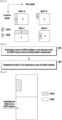
- the PSCCH resource and the PSSCH resource used by the specific control message and the data message have several possible multiplexing modes as shown in FIG. 4 :
- each content shown in each option of FIG. 4 is one V2X sub-channel, including one PSCCH sub-channel and one PSSCH sub-channel.
- the UE occupies one PSCCH sub-channel to transmit the control message all time-frequency resources of the PSCCH sub-channels in the corresponding subframe are used to transmit the control message. Therefore, the two UEs select the same PSCCH sub-channel to transmit the control message, the resource locations of the control messages of the two are completely overlapped.
- the resources may be further divided in one PSCCH sub-channel, the overlapped degree of control message resources during conflicts is reduced by the UE selecting different divided PSCCH resources.
- the embodiment of the present disclosure provides a design of a sub-channel and a control channel in the sidelink communication.
- each PSCCH resource is one CCE, and the CCE includes at least one REG.
- each PSCCH resource includes at least one PSCCH candidate.
- the PSCCH sub-channel may include a second set of PSCCH candidates, that is, the PSCCH sub-channel is defined by a second set of PSCCH candidates, where the second set of PSCCH candidates includes at least one PSCCH candidate.
- each PSCCH sub-channel includes a second set of PSCCH candidates, that is, each PSCCH sub-channel is defined by a set of PSCCH candidates, the second set of PSCCH candidates include at least one PSCCH candidate.
- the executor of the method may be a User Equipment (UE).
- UE User Equipment
- At least one PSCCH resource for transmitting the PSCCH and at least one PSSCH resource for transmitting the associated PSSCH are respectively selected, and the PSSCH is transmitted on the selected at least one PSSCH resource, at least one PSCCH candidate for transmitting the PSCCH is further selected on the selected at least one PSCCH resource, and the PSCCH is transmitted on the determined at least one PSCCH candidate.
- the selected at least one PSSCH resource and the selected at least one PSCCH resource are independent or associated with each other.
- the PSCCH resource and the PSSCH resource may be independent of each other; or, the PSCCH resource and the PSSCH resource may also be associated with each other.
- the PSCCH resource and the PSSCH resource associated therewith are used to transmit the PSCCH and the PSSCH associated therewith, respectively.
- the selected at least one PSSCH resource and the selected at least one PSCCH resource are respectively associated with each other, that is, one PSSCH resource may be associated with one PSCCH resource.
- the selected at least one PSSCH resource is associated with the selected more than on PSCCH resources, that is, one PSSCH resource may be associated with multiple PSCCH resources, and the time-frequency resource location of the multiple PSCCH resources is frequency-division multiplexing (FDM) and/or time division multiplexing (TDM), and different PSCCH resources do not overlap with each other, or different PSCCH resources fully or partially overlap with each other.
- FDM frequency-division multiplexing
- TDM time division multiplexing
- the association between the PSSCH resource and the PSCCH resource may be predefined.
- the one PSSCH resource is associated with the multiple PSCCH resources.
- the one PSSCH sub-channel is associated with the multiple PSCCH sub-channels.
- the PSCCH and PSSCH resources that use the time domain resources and/or the frequency domain resources meeting predetermined conditions are associated with each other.
- the association between the PSSCH resource and the PSCCH resource may also be dynamically indicated.
- a PSSCH resource (PSSCH resource location) associated with one PSCCH resource is indicated in the SCI transmitted in the PSCCH resource.
- the method further includes: transmitting the PSSCH associated with the PSCCH on the PSCCH candidate other than the determined at least one PSCCH candidate, that is, the PSSCH resource selected by the UE for transmitting the PSSCH associated with the PSCCH may further include all or part of resources of one or more PSCCH sub-channels.
- FIG. 6 provides an example of transmitting a PSSCH on a PSCCH resource, where FIG. 6 includes two V2X sub-channels, each of which includes one PSSCH sub-channel and one PSCCH sub-channel, respectively, and the PSCCH sub-channel of upper V2X sub-channel in FIG.
- the PSSCH sub-channel of the upper V2X sub-channel and the PSCCH sub-channel (shown by the area enclosed by the dotted line in the figure) and the PSSCH sub-channel of the lower V2X sub-channel are all used for PSSCH transmission.
- each PSCCH resource may be composed of one or more PSCCH sub-channels.
- a possible PSCCH candidate division manner is provided:
- a PSCCH resource is used as a V2X sub-channel.
- the UE selects at least one V2X sub-channel, or determines all or part of the PSCCH sub-channel in at least one V2X sub-channel, or determines at least one specific PSCCH sub-channel for sidelink transmission, and determines at least one of the PSCCH candidates for transmitting the PSCCH.
- all PSCCH sub-channels in one V2X sub-channel for transmission is one PSCCH sub-channel
- one PSCCH sub-channel is composed of A PSCCH candidates
- the UE further determines that A 0 PSCCH candidates are used to transmit the PSCCH.
- all PSCCH sub-channels in one V2X sub-channel for transmission are B PSCCH sub-channels, and each PSCCH sub-channel is one PSCCH candidate, and the UE further determines that B 0 PSCCH candidates are used to transmit the PSCCH.
- A, A 0 , B, B 0 , C, D, E and E 0 are positive integers.
- the UE determines that H PSCCH candidates in the G PSCCH sub-channels among the F V2X sub-channels for transmitting the PSCCH.
- the UE determines that multiple PSCCH candidates are used for transmitting the PSCCH, in a possible implementation manner, the UE transmits one complete PSCCH on each PSCCH candidate, and the transmission on multiple PSCCHs is referred to as a repetition of the PSCCH. Multiple repetitions of the PSCCH may be included in one sidelink transmission.
- one PSCCH resource is at least one CCE.
- one PSCCH resource is one CCE, and the CCE includes I 1 REGs.
- One PSCCH resource includes J 1 PSCCH candidates, and each PSCCH candidate includes I 1 /J 1 REGs.
- one PSCCH resource is R CCEs, and each CCE includes I 2 REGs.
- One PSCCH resource includes J 2 PSCCH candidates, and each PSCCH candidate includes R*I 2 /J 2 REGs.
- the CCEs or REGs included in each PSCCH candidate may be continuous or discontinuous in the time domain and/or frequency domain.
- different PSCCH candidates are mapped by using an interleaved manner.
- one PSCCH resource is one CCE including 6 REGs (REG 0 ⁇ REG 5 ), and each REG includes 12 REs.
- the REGs are mapped in the CCE in the order of first the time domain then the time domain.
- the PSCCH resource includes 6 PSCCH candidates, and each REG is one PSCCH candidate; or, the PSCCH resource includes 3 PSCCH candidates, respectively consisting of REG 0 and REG 3 , REG 1 and REG 4 , REG 2 and REG 5 ; or, the one PSCCH resource include one PSCCH candidate, and the PSCCH candidate is composed of all six REGs.
- the one PSCCH resource includes six PSCCH candidates consisting of one REG, three PSCCH candidates consisting of two REGs (respectively consisting of REG 0 and REG 3 , REG 1 and REG 4 , REG 2 and REG 5 , and a PSCCH candidate consisting of all six REGs.
- step S501 a possible implementation manner is provided for step S501.
- the UE further determines at least one PSCCH candidate for transmitting the PSCCH, including randomly selecting at least one PSCCH candidate for transmitting the PSCCH.
- the UE determines at least one PSCCH candidate on the selected at least one PSCCH resource based on at least one of the following: UE identification, radio network tempory identity (RNTI), reference signal configuration, sidelink transmission being first transmission or N th retransmission, redundancy version (RV), geographic location information, channel detection result, scheduling information sent by the base station, scheduling information sent by other UEs, where N is a natural number.
- RNTI radio network tempory identity
- RV redundancy version
- N is a natural number.
- the reference signal configuration includes at least one of the following: a demodulation reference signal (DMRS) antenna port, a DMRS pattern, DMRS scrambling information, DMRS cyclic shift, CSI-RS configuration information, PT-RS configuration information, and configuration information of other reference signals dedicated to sidelink channel measurement.
- DMRS demodulation reference signal
- the reference signal configuration is a reference signal configuration used by the PSCCH and/or the PSSCH.
- the UE identification includes an identification of the UE that sends the PSCCH and an identification of the destination UE of the PSCCH.
- the scheduling information sent by the other UEs includes scheduling information that explicitly indicates the sidelink transmission resource, such as a sidelink grant message, and further includes additional information that assists the base station to perform sidelink resource scheduling or assists the UE to select the sidelink resource.
- the UE determines at least one PSCCH candidate for transmitting the PSCCH based that the sidelink transmission is the first transmission or the N th retransmission. Specifically, it may include deriving at least one PSCCH candidate based that the sidelink transmission is the N th retransmission, and the resource location used by at least one transmission of the first transmission and the first N-1 retransmissions of the N th retransmitted data. Or, the transmitted PSCCH sub-channel may also be determined directly according to the N th retransmission. As an example, the sidelink transmission of the UE uses Q V2X sub-channels, wherein the SCI uses the PSCCH sub-channel in one of the Q V2X sub-channels for transmission.
- the UE determines to use the PSCCH sub-channel in the first V2X sub-channel in the Q V2X sub-channels for transmission based that the sidelink transmission is the first transmission (also referred to as the 0 th transmission or the 0 th retransmission); or, the UE determines to use PSCCH sub-channel in the (N+1) th (or the N+1 mod M, mod represents a modulo operation) V2X sub-channel in the M V2X sub-channels for transmission based that the sidelink transmission is the N th retransmission (if the first transmission is the 0 th transmission, the N th retransmission may also be referred to as the N th transmission; or if the first transmission is the first transmission, the N th retransmission may also be referred to as (N+1) th transmission).
- the UE determines at least one PSCCH candidate for transmitting the PSCCH in at least one of the following manners:
- the following frequency domain resources of the selected one PSCCH sub-channel may be used when transmitting the PSCCH on the determined Y 0 th PSCCH candidate: RB # m + Y 0 ⁇ 1 * P ⁇ RB # m + Y 0 * P ⁇ 1
- each PSCCH candidate is P RBs
- RB#m is the starting RB of the one PSCCH sub-channel
- RB#m+(Y 0 -1)*P ⁇ RB#m+Y 0 *P-1 represents that the range of frequency domain resources used is RB#m+(Y 0 -1)*P to RB#m+Y 0 *P-1.
- the method further includes that the UE does not perform transmission on PSCCH candidates other than the determined at least one PSCCH candidate.
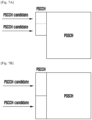
- the PSCCH resource in the sidelink transmission resource determined by the UE is composed of 2 PSCCH candidates, and the UE transmits the PSCCH on the determined one PSCCH candidate, and does not transmit the PSCCH on the other PSCCH candidate (the PSCCH shown in the dotted line in the figure).
- the method further includes: transmitting the PSSCH associated with the PSCCH on the PSCCH candidates other than the determined at least one PSCCH candidate.
- the PSCCH resource in the sidelink transmission resource determined by the UE is composed of two PSCCH candidates, and the UE transmits the PSCCH on the determined one PSCCH candidate and transmits the PSSCH on the other PSCCH candidate.
- FIG. 9a and FIG. 9b provide examples of not transmitting or transmitting a PSSCH on the remaining PSCCH candidates in one V2X sub-channel. Similarly, when the UE uses multiple V2X sub-channels for sidelink transmission, the remaining PSCCH candidates that are not used to transmit the PSCCH in multiple V2X sub-channels may also not transmit or transmit the PSSCH.
- step S501 after the UE further determines, in step S501, the at least one PSCCH candidate for transmitting the PSCCH, and while transmits the PSCCH on the determined at least one PSCCH candidate in step S502, and further includes: transmitting the DMRS corresponding to the PSSCH on the determined PSSCH resource.
- the UE transmits the DMRS corresponding to the PSCCH by at least one of the following transmission ways: 1. transmitting on the determined at least one PSCCH candidate; 2. transmitting on all of the PSCCH candidates in the PSCCH sub-channel corresponding to the determined at least one PSCCH candidate; 3. transmitting on all of the PSCCH candidates in the at least one PSCCH resource corresponding to the determined at least one PSCCH candidate; and 4. transmitting on all of the PSCCH candidates in the selected at least one PSCCH resource.
- the UE determines a PSCCH candidate for transmitting a PSCCH according to at least a DMRS antenna port number in a reference signal configuration, and transmits a DMRS using the antenna port number on the determined PSCCH candidate.
- the UE may also transmit DMRSs using the antenna port number on other PSCCH candidates that are not used to transmit the PSCCH.
- the UE determines a PSCCH candidate for transmitting a PSCCH according to at least a DMRS pattern in a reference signal configuration, and transmits a DMRS using the pattern on the determined PSCCH candidate.
- the UE may also transmit DMRS using the pattern on other PSCCH candidates that are not used to transmit the PSCCH.
- transmitting the DMRS corresponding to the PSCCH includes transmitting DMRS corresponding to the DMRS antenna port and/or the DMRS pattern.
- the UE transmits a PSSCH on the selected at least one PSSCH resource, further determines at least one PSCCH candidate for transmitting the PSCCH on the selected at least one PSCCH resource, and transmits the PSCCH on the determined at least one PSCCH candidate.
- the method further includes transmitting, by the UE, a DMRS corresponding to the PSCCH on the corresponding PSSCH resource.
- the UE determines a PSCCH candidate for transmitting a PSCCH according to a DMRS antenna port number and/or a DMRS pattern in a reference signal configuration, and transmits DMRS using the antenna port number and/or the DMRS pattern on a corresponding PSSCH resource.
- the effect of this design is that when the UEs using different antenna ports or DMRS patterns select the same PSSCH resource for transmission, that is, when conflict occurs, it may employ decoding technology similar to multi-user multi-input and multi-output (MU-MIMO) technology, to respectively solve the data transmitted by each UE.
- MU-MIMO multi-user multi-input and multi-output
- the method for transmitting control information provided by the embodiment of the present disclosure can fully utilize the control channel resources for transmitting the SCI in the V2X resource pool, so that when the same data resource is used for the sidelink transmission of different UEs, the degree of conflict of control messages between the UEs is reduced, and the negative impact of conflicts caused by different UE on performance is effectively improved, thereby improving the decoding performance of the sidelink control information.
- each UE needs to monitor all PSCCH resources and blindly detect the sidelink control information SCI thereon.
- the types of sidelink communication in the NR V2X system include unicast and groupcast.
- the information that the SCI needs to carry may be more complicated than that of LTE. Therefore, it is difficult to use a unified SCI design in the system. If more than one SCI format is introduced, the cost of the UE blindly detecting the SCI is increased. Therefore, in a possible prior art, the sidelink control information SCI is split, so that the SCI of one sidelink transmission is carried in two SCI messages.
- Each UE only needs to blindly detect the first SCI message and determine whether it is the target UE or the destination UE (also referred to as the target UE) of the SCI message, and if so, continue to decode the associated second SCI messages and a PSSCH associated with the SCI, otherwise the associated second SCI message and the PSSCH associated with the SCI are not decoded.
- the method can only retain the information used to determine whether decoding the second SCI/PSSCH and the information necessary for decoding in the first SCI, thereby simplifying the content carried in the first SCI, and avoiding introducing more than one SCI format in the first SCI, thereby reducing the cost of the UE blindly detecting the first SCI, and by the step of determining the target UE, makes the UE reduce the unnecessary cost of decoding the second SCI and PSSCH.
- This prior art is also known as 2-stage SCI.
- the first SCI and the second SCI do not necessarily have a sequential relationship.
- the first SCI and the second SCI may be frequency division multiplexing (FDM).
- an SCI message describing to use the 2-phase SCI feature is the first SCI or the second SCI, it is distinguished based on its function, rather than based on the time at which the SCI message is transmitted.
- the SCI that makes each UE to perform receiving and blindly detecting and carries the identification information of the target UE is the first SCI; and the SCI that only makes the target UE to perform receiving and carries more information of the PSSCH is the second SCI.
- the PSSCH associated with the given 2-stage SCI is associated with both the first SCI message and the second SCI message, that is, the first SCI and the second of the 2-stage SCI are associated with the same PSSCH.
- the embodiment of the present disclosure further provides a method for transmitting information, as shown in FIG. 10 , the method includes:
- the first SCI is transmitted on the selected PSCCH resource
- the second SCI and the PSSCH associated with the second SCI are transmitted on the selected PSSCH resource.
- the transmitting the second SCI on the determined resource includes any one of the following:
- the second SCI is carried on the PSSCH resource carrying the PSSCH associated with the second SCI.
- FIG. 12 is a specific example of second SCI being carried on the PSSCH resource carrying the PSSCH associated with the second SCI.
- the PSSCH associated with the second SCI is mapped onto the PSSCH resource, and the second SCI may be mapped onto a predefined resource element (RE), a resource element group (REG) or a symbol.
- the predefined resource element (RE), the resource element group (REG) or the symbol may be the resource element (RE) or the resource element group (REG) or symbol closest to the reference signal (RS), and thereby to guarantee the decoding performance.
- the PSSCH associated with the second SCI is punctured by the second SCI, for example, the resource that corresponds to the resource location of the second SCI on the PSSCH resource carrying the PSSCH associated with the second SCI is punctured.
- FIG. 12 is only an illustrative example for explaining how to carry the second SCI on the PSSCH resource, and is not limited to the specific number of symbols, SCI/PSCCH time-frequency resource size, reference signal location, PSCCH/PSSCH multiplexing mode, etc.
- the PSCCH resource selected in the foregoing includes at least one PSCCH resource, each PSCCH resource includes a technical solution of at least one PSCCH candidate, and the second SCI is carried on the PSSCH carrying the data and has several possible mapping patterns.
- the first SCI uses the W th PSCCH candidate in one PSCCH sub-channel
- the second SCI uses the W th pattern in several possible mapping patterns.
- the first SCI and the second SCI are transmitted on the selected PSCCH resource, and non-overlapped resource locations are used, the PSSCHs associated with the second SCI are transmitted on the selected PSSCH resources.
- the transmitting the first SCI and the second SCI on the determined resource includes any one of the following: that is, the first SCI and the second SCI are transmitted on the selected PSCCH resource, and non-overlapped resource locations are used, includes any one of the following:
- the PSCCH resource selected in the foregoing includes at least one PSCCH resource, and each PSCCH resource includes a technical solution of at least one PSCCH candidate, and the first SCI may be transmitted on the at least one PSCCH candidate among the determined PSCCH resources; the second SCI may be transmitted on other PSCCH resources that are not used to transmit the first SCI among the determined PSCCH resources. Specifically, the second SCI is transmitted on at least one of the other PSCCH candidates that are not used to transmit the first SCI among the determined PSCCH resources.
- the second SCI has multiple candidate resource locations available for transmission, and the UE determines at least one candidate resource location to transmit the second SCI, the PSCCH resource for transmitting the first SCI and the PSCCH resources for transmitting the second SCI are independent or associated with each other. For the associated case, the UE derives a resource for transmitting the second SCI according to the resource used for transmitting the first SCI. For example, when the first SCI uses the T 1 th PSCCH candidate resource location in one PSCCH sub-channel, the second SCI uses the T 1 th candidate resource locations among all candidate resource locations.
- the candidate resource location used by the second SCI is the (T 2 +M 1 ⁇ T 2 +M 2 ) th PSCCH candidate in the PSCCH sub-channel.
- the resource location for transmitting the second SCI is fixed or independent of the resource location used for transmitting the first SCI.
- the first SCI is transmitted on a selected PSCCH resource
- the second SCI is transmitted on a separate channel
- the PSSCH associated with the second SCI is transmitted on the selected PSSCH resource.
- the separate channel refers to a channel that is different from the PSCCH resource and the PSSCH resource and is dedicated to transmitting the second SCI in the sidelink communication using the 2-stage SCI.
- the resource location of the separate channel for carrying the second SCI and the resource location of the first SCI are TDM and/or FDM; And/or, the resource location of the separate channel for carrying the second SCI and the resource location of the PSSCH associated with the second SCI are TDM and/or FDM.
- the method of UE further determining at least one PSCCH candidate for transmitting the PSCCH further includes: further determining at least one PSCCH candidate for transmitting the PSCCH, among the PSSCH candidates included in the PSCCH resources corresponding to or associated with the multiple PSSCH sub-channels, when the UE transmitting the sidelink data by using multiple PSSCH sub-channels.
- the UE determines the number of the PSCCH candidates for transmitting the PSCCH based on at least one of the following: the bits of information of the PSCCH, sizes of the SCI carried by the PSCCH, formats of the SCI carried by the PSCCH, and service priorities of the sidelink data (it may be indicated by QoS that is carried in at least the SCI), a target communication range, types of services (unicast/groupcast/broadcast), and sizes of the PSCCH candidates.
- the UE uses the higher-layer-configured or preconfigured or predefined number of the PSCCH candidates for transmitting the PSCCH.
- the UE further determines that N PSCCH candidates in M PSCCH sub-channels, among all the PSCCH resources associated with the multiple PSSCH sub-channels, are used for transmitting the PSCCH; specifically, including at least one of the following:
- the UE may be based on at least one piece of the following information: UE identification, radio network tempory identity (RNTI), reference signal configuration, sidelink transmission being first transmission or N th retransmission, redundancy version, geographic location information, channel detection result, scheduling information sent by the base station, scheduling information sent by other UEs, where N is a natural number.
- RNTI radio network tempory identity
- the reference signal configuration includes at least one of the following: a demodulation reference signal (DMRS) antenna port, a DMRS pattern, DMRS scrambling information, DMRS cyclic shift, CSI-RS configuration information, PT-RS configuration information, and configuration information of other reference signals dedicated to sidelink channel measurement.
- DMRS demodulation reference signal
- the UE determines that the number of candidates, among the PSCCH resources associated with each PSSCH sub-channel, for transmitting the PSCCH is K, and further determines that each of the M PSCCH sub-channels with the highest frequency domain location has a maximum of K PSCCH candidates for transmitting the PSCCH, where M is an upper rounding of N/K.
- N can be evenly divided by K
- a maximum of K PSCCH candidates in each of the M PSCCH sub-channels are used for transmitting the PSCCH.
- N cannot be evenly divided by K
- a maximum of K PSCCH candidates in each of the M-1 PSCCH sub-channels among the M PSCCH sub-channels are used to transmit the PSCCH; in the remaining one PSCCH sub-channel of the M PSCCH sub-channels, N-K*(M-1) PSCCH candidates are used to transmit the PSCCH.
- the remaining one PSCCH sub-channel may be determined according to a preset rule, and may be one sub-channel with the lowest frequency domain location of the M sub-channels. In this example, the number of PSCCH candidates included in each PSCCH sub-channel may be greater than K or equal to K.
- the UE determines based on the sidelink transmission being a first transmission or the N th retransmission that the time domain pattern and/or the frequency domain pattern corresponding to the PSCCH candidate resources for transmitting the PSCCH is a time domain pattern and/or frequency domain pattern having index N in a set of time domain patterns and/or frequency domain patterns corresponding to the preconfigured PSCCH candidate resources.
- the location of the resources is indicated in the SCI carried by the PSCCH.
- the time domain pattern and/or the frequency domain pattern corresponding to the PSCCH candidate resources for transmitting the PSCCH is a time domain pattern and/or frequency domain pattern having index N in a set of time domain patterns and/or frequency domain patterns corresponding to the preconfigured PSCCH candidate resources
- the value of N is indicated in the SCI.
- the value of M is indicated in the SCI.
- Advantages of the above method are that: when the UE transmits the sidelink data by using multiple PSSCH sub-channels, if the resources for transmitting the PSSCH are determined according to a predetermined rule (for example, PSSCH candidates with the lowest frequency domain location or candidates in the PSSCH sub-channel), the method has lower complexity; if the PSSCH candidate patterns are determined according to a specific condition, when the different UEs just select the same or partially overlapping PSSCH to transmit data (that is, a scenario of conflicting).
- the PSCCHs can use different PSCCH candidate patterns, respectively, to avoid overlapping of PSCCH resources, that is, to avoid conflicts of control information, thereby improving the decoding performance of the PSCCH.
- the method further includes: when the UE uses multiple PSSCH sub-channels to transmit the sidelink data, the resources for transmitting the first SCI and the second SCI are determined based on the predetermined rule and/or the scheduling information of the second SCI.
- the UE determines that the resource for transmitting the first SCI is a physical sidelink control channel (PSCCH) resource, and the resource for transmitting the second SCI is a PSSCH resource.
- the UE determines that the second SCI is transmitted on the PSSCH resources in the N PSSCH sub-channels, including determining the value of N and determining the locations of the N PSSCH sub-channels in the multiple PSSCH sub-channels.
- PSCCH physical sidelink control channel
- the UE may determine the value of N based on at least one of the following: the number of bits and/or sizes of information of the second SCI, the format of the second SCI, and service priorities of the sidelink data (it may be indicated by QoS that is carried in at least the SCI), a target communication range, types of services (unicast/groupcast/broadcast), and sizes of the resources for carrying the second SCI in each PSSCH sub-channel.
- the UE uses the higher layer configured or preconfigured or predefined value of N.
- the UE may determine the locations of the N PSSCH sub-channels in the multiple PSSCH sub-channels based on at least one of the following:
- the UE transmits the sidelink data by using ten PSSCH sub-channels, the sub-channel indexes of the ten sub-channels are ⁇ M0, M0+1, ..., M0+9 ⁇ , and the UE determines that the second SCI is transmitted on the PSSCH resource in four PSSCH sub-channels, and the frequency domain pattern corresponding to the four PSSCH sub-channels is ⁇ 1, 1, 0, 0, 0, 1, 1, 0, 0, 0 ⁇ , then the UE determines that the second SCI is transmitted on the sub-channels ⁇ M0, M0+1, M0+5, M0+6 ⁇ .
- the UE indicates the value of N and/or the locations of the N PSSCH sub-channels in the multiple PSSCH sub-channels in the first SCI.
- the UE indicates an index of a frequency domain pattern corresponding to the N PSSCH sub-channels in the first SCI.
- the UE is configured with a set of frequency domain patterns corresponding to the N PSSCH sub-channels, and further determines a frequency domain pattern corresponding to the actually used N PSSCH sub-channels in the set, where the index of the pattern is K; then the UE indicates the value of K in the first SCI.
- the advantage of indicating the information is that the receiving terminal UE may decode the second SCI without performing blind detection, but may determine on which resources the second SCI should be decoded according to the information indicated in the first SCI.
- determining by the UE that the second SCI is transmitted on the PSSCH resources in the N PSSCH sub-channels further includes: the UE mapping the second SCI to the PSSCH resources by using any one of the following methods:
- the UE determines that the resource for transmitting the first SCI and the second SCI is a PSCCH resource.
- the UE determines that the second SCI is transmitted on the PSCCH resources associated with the N PSSCH sub-channels, including determining the value of N, and determining the locations of the PSCCH resources and/or the locations of the N PSSCH sub-channels in the multiple PSSCH sub-channels.
- the UE may determine the value of N based on at least one of the following: the bits and/or sizes of information of the second SCI, the format of the second SCI, and service priorities of the sidelink data (it may be indicated by QoS that is carried in at least the SCI), a target communication range, types of services (unicast/groupcast/broadcast), and sizes of the resources for carrying the second SCI in the PSCCH associated with each PSCCH sub-channel.
- the UE uses the higher-layer-configured or preconfigured or predefined value of N.
- determining by the UE the locations of the PSCCH resources includes: if among the multiple PSSCH sub-channels, the PSCCH resources associated with K sub-channels with the lowest frequency domain location (or similarly replaced with the highest frequency domain location) are used to transmit the first SCI, the PSCCH resources associated with the (K+1) th to (K+N) th sub-channels with the lowest frequency domain location are used to transmit the second SCI.
- the UE may determine the locations of the N PSSCH sub-channels in the multiple PSSCH sub-channels based on at least one of the following:
- the UE indicates at least one of the following in the first SCI: the value of N, the location of the PSCCH resource for transmitting the second SCI, and the locations of the N PSSCH sub-channels associated with the PSCCH resource for transmitting the second SCI in the multiple PSSCH sub-channels for transmitting sidelink data.
- the specific example and advantages are similar to the example and advantages provided in the possible implementation (1) of step S 1001.
- determining by the UE that the second SCI is transmitted on the PSSCH resource associated with the N PSSCH sub-channels further includes: the UE mapping the second SCI to the PSSCH resources by using any one of the following methods (optionally, the PSCCH resources may be replaced with the PSCCH resource for transmitting the second SCI in the following method):
- the frequency domain scheduling unit when the UE transmits the PSSCH and uses multiple scheduling units in the V2X in the frequency domain (in the prior art, the frequency domain scheduling unit is a PSSCH sub-channel), it may be used to determine the PSCCH associated with the PSSCH and/or a frequency domain transmission resource of the second SCI and map the second SCI to the frequency domain transmission resource.
- the UE when it transmits the PSSCH and uses multiple scheduling units in the V2X in the time domain (for example, using slot aggregation technology), it can replace the frequency domain scheduling unit, (such as a PSSCH sub-channel) with a time domain scheduling unit (such as, a time slot) in the above described methods, and it may correspondingly determine the PSCCH associated with the PSSCH and/or a time domain transmission resource of the second SCI and map the second SCI to the time domain transmission resource.
- the frequency domain scheduling unit such as a PSSCH sub-channel
- a time domain scheduling unit such as, a time slot
- the common advantages of the foregoing multiple methods are that: when the UE transmits the sidelink data by using multiple PSSCH sub-channels, if the resources for transmitting the second SCI are determined according to a predetermined rule (for example, the N PSSCH sub-channels or the PSCCH resources/candidates with the lowest frequency domain location), the methods have lower complexity; if the PSSCH candidate patterns are determined according to a specific condition, when the different UEs just select the same or partially overlapping PSSCH to transmit data (that is, a scenario of conflicting). the PSCCHs can use different PSCCH candidate patterns, respectively, to avoid overlapping of PSCCH resources, that is, to avoid conflicts of control information, thereby improving the decoding performance of the PSCCH.
- a predetermined rule for example, the N PSSCH sub-channels or the PSCCH resources/candidates with the lowest frequency domain location
- the time domain resource location, the frequency domain resource location, the time domain resource size, and the frequency domain resource size of each PSCCH resource used for transmitting the SCI in the resource pool may be at least one of the following: predefined; configured by a base station, including derived according to the predefined criteria and the resource pool configuration information; dynamically indicated by the base station, including derived according to the predefined criteria and the information dynamically indicated by of the base station.
- At least one of the time domain resource location, the frequency domain resource location, the time domain resource size, and the frequency domain resource size of each PSCCH resource for transmitting the SCI in the resource pool is configured by a base station or a higher layer. Specifically, it can be a portion of resource pool configuration, or is independent of the resource pool configuration.
- At least one of the time domain resource location, the frequency domain resource location, the time domain resource size, and the frequency domain resource size of each PSCCH resource for transmitting the SCI in the resource pool is derived according to a V2X sub-channel configuration, wherein the V2X sub-channel configuration further includes a PSCCH sub-channel configuration and/or a PSSCH sub-channel configuration.
- a terminal uses a time domain resource location, a frequency domain resource location, a time domain resource size, and/or a frequency domain resource size of each PSCCH resource in the predefined resource pool before obtaining the base station configuration information or the dynamic indication information, and uses the time domain resource size and the frequency domain resource size configured/indicated by the base station, and continues to use predefined time domain resource locations and frequency domain resource locations after obtaining the time domain resource size and the frequency domain resource size of each PSCCH resource carried in the base station configuration information or the dynamic indication information.
- the SCI may be the first SCI and/or the second SCI.
- the PSCCH candidate when the V2X sub-channel configuration includes a PSCCH sub-channel with a frequency domain size of M RBs and there are N PSCCH candidates in the PSCCH sub-channel, the PSCCH candidate has a frequency domain size of M/N, and a time domain size being equal to that of the PSCCH sub-channel.
- the V2X sub-channel configuration includes a PSSCH sub-channel with a frequency domain size of M RBs and there are N PSCCH candidates in the V2X sub-channel
- the PSCCH candidate when the V2X sub-channel configuration includes a PSSCH sub-channel with a frequency domain size of M RBs and there are N PSCCH candidates in the V2X sub-channel, the PSCCH candidate has a frequency domain size of M/N, and a time domain size being equal to that of the PSCCH sub-channel.
- the above embodiments can be used for a scenario that the sidelink transmission uses a full time slot or a partial of time slot.
- one V2X sub-channel or one V2X transmission has a time domain size of 1 time slot or N full time slots.
- one V2X sub-channel or one V2X transmission has a time domain size of x symbols in 1 time slot, or N time slots and each time slot having x available symbols.
- the time domain size of the PSSCH and the PSCCH is determined according to the number of available symbols in the corresponding time slot.
- the embodiment of the present disclosure further provides a method for receiving control information.
- the method includes:
- the specific identification is at least one identification configured by the high layer, or a pre-configured physical layer identification.
- the specific identification may include the identification of the UE itself, that is, when the current UE determines that the target UE indicated by the SCI includes itself, the second SCI is received on the PSSCH resource or on the PSCCH resource or on a separate channel.
- the resource for receiving the second SCI may be determined according to the resource of the received first SCI, and the second SCI is received on the determined resource for receiving the second SCI.
- the PSCCH in the embodiment of the present disclosure may be a physical downlink control channel (PDCCH), an enhanced PDCCH (EPDCCH), and a machine type communication PDCCH (MPDCCH), a narrowband physical downlink control channel (NPDCCH), NR-PDCCH;
- the PSSCH may be a physical downlink shared channel (PDSCH), EPDSCH, MPDSCH, NPDSCH, NR-PDSCH.
- the time slot in the foregoing embodiments may be a subframe or a time slot corresponding to the resource pool of the sidelink communication, unless otherwise specified.
- a resource pool is defined by a repeated bit map mapped onto a particular set of time slots
- the set of time slots may be all time slots, or all of the other time slots except for some specific time slots (such as the time slots of transmitting the master information block (MIB)/system information blocks (SIB)).
- the time slot indicated as "1" in the bitmap may be used for V2X transmission, and belongs to the subframe/time slot corresponding to the V2X resource pool; the time slot indicated as "0" is not available for V2X transmission, and does not belong to the subframe/time slot corresponding to the V2X resource pool.
- the time slot in each of the above embodiments may be a full time slot, or may be a number of symbols corresponding to the sidelink communication in one time slot. For example, when the sidelink communication is configured to be performed in the (X 1 ⁇ X 2 ) th symbols of each time slot, the time slots in the above embodiments are the (X 1 ⁇ X 2 ) th symbols in the time slot in this case.
- the information that is configured by the base station, indicated by the signaling, configured by the higher layer, and pre-configured includes a set of configuration information; or includes multiple sets of configuration information, and the UE selects and uses a set of configuration information from the multiple sets of configuration information according to the predefined conditions; or includes a set of configuration information including multiple subsets, and the UE selects and uses a subset from the multiple subsets according to the predefined conditions.
- the terminal or the UE may be of various types such as a vehicle, an infrastructure, a pedestrian, and the like.
- the embodiment of the present disclosure further provides an apparatus for transmitting control information.
- the transmission apparatus 140 includes a determining module 1401 and a transmission module 1402.
- the determining module 1401 is configured to determine at least one PSCCH candidate on the selected at least one PSCCH resource when performing sidelink communication.
- the transmission module 1402 is configured to transmit the PSCCH on the determined at least one PSCCH candidate.
- the transmission module 1402 is further configured to transmit a PSSCH associated with the PSCCH on the selected at least one physical sidelink shared channel (PSSCH) resource.
- PSSCH physical sidelink shared channel
- the selected at least one PSSCH resource and the selected at least one PSCCH resource are independent or associated with each other.
- the selected at least one PSSCH resource and the selected at least one PSCCH resource being independent or associated with each other includes: the selected at least one PSSCH resource being associated with more than one selected PSCCH resources.
- the transmission module 1402 is further configured to transmit the PSSCH associated with the PSCCH on PSCCH candidates other than the determined at least one PSCCH candidate.
- the determining module 1401 is specifically configured to determine at least one PSCCH candidate on the selected at least one PSCCH resource based on at least one piece of the following information: UE identification, radio network tempory identity (RNTI), reference signal configuration, sidelink transmission being first transmission or N th retransmission, redundancy version, geographic location information, channel detection result, scheduling information sent by the base station, scheduling information sent by other UEs, where N is a natural number.
- RNTI radio network tempory identity
- the reference signal configuration includes at least one of the following: a demodulation reference signal (DMRS) antenna port, a DMRS pattern, DMRS scrambling information, DMRS cyclic shift, CSI-RS configuration information, PT-RS configuration information, and configuration information of other reference signals dedicated to sidelink channel measurement.
- DMRS demodulation reference signal
- the reference signal configuration is a reference signal configuration used by the PSCCH and/or the PSSCH.
- the transmission module 1402 is further configured to transmit a DMRS corresponding to the PSSCH on the determined PSSCH resources.
- the transmission module 1402 is specifically configured to transmit the DMRS corresponding to the PSCCH by at least one of the following ways: transmitting on the determined at least one PSCCH candidate; transmitting on all of the PSCCH candidates in the PSCCH sub-channel corresponding to the determined at least one PSCCH candidate; transmitting on all of the PSCCH candidates in the at least one PSCCH resource corresponding to the determined at least one PSCCH candidate; and transmitting on all of the PSCCH candidates in the selected at least one PSCCH resource.
- each of PSCCH resources comprises at least one of the following: a first set of PSCCH candidates, the first set of PSCCH candidates comprising at least one PSCCH candidate; at least one PSCCH sub-channel; a PSCCH resource using at least one of following predefined or configured items: time domain resource size, frequency domain resource size, time domain resource location, frequency domain resource location; at least one control channel element (CCE); and at least one resource element group (REG).
- CCE control channel element
- REG resource element group
- each PSCCH sub-channel comprises a second set of PSCCH candidates
- the second set of PSCCH candidates comprises at least one PSCCH candidate.
- the size of one PSCCH sub-channel is M resource blocks (RB) in the frequency domain and L symbols in the time domain
- the size of each PSCCH candidate is M/X RBs in the frequency domain and L symbols in the time domain
- the size of each PSCCH candidate is M/X*k RBs in the frequency domain and L/k symbols in the time domain, where X represents the number of PSCCH candidates included in one PSCCH sub-channel, k represents the number of PSCCH candidates for frequency division multiplexing (FDM) on the same time domain resource in one PSCCH sub-channel.
- FDM frequency division multiplexing
- the determining module 1401 is specifically configured to: when determining the at least one PSCCH candidate on the selected one PSCCH resource according to the DMRS antenna port, according to the DMRS antenna port S, use the Y 0 th of the Y PSCCH candidates in the selected one PSCCH sub-channel as the determined PSCCH candidate, wherein the mapping relationship between Y 0 and S is predefined.
- the transmission module 1402 is specifically configured to transmit the PSCCH on the determined at least one PSCCH candidate includes: when the PSCCH is transmitted on the determined Y 0 th PSCCH candidate, the following frequency domain resources of the selected one PSCCH sub-channel are used: RB # m + Y 0 ⁇ 1 * P ⁇ RB # m + Y 0 * P ⁇ 1
- each PSCCH candidate is P RBs
- RB#m is the starting RB of the one PSCCH sub-channel
- RB#m+(Y 0 -1)*P ⁇ RB#m+Y 0 *P-1 represents that the range of frequency domain resources used is RB#m+(Y 0 -1)*P to RB#m+Y 0 *P-1.
- the transmission module 1402 when determining at least one PSCCH candidate on the selected at least one PSCCH resource according to the DMRS antenna port and/or the DMRS pattern, is specifically configured to transmit DMRS corresponding to the DMRS antenna port and/or DMRS pattern.
- the embodiment of the present disclosure further provides an apparatus for transmitting control information.
- the transmission apparatus 150 includes a determining module 1501 and a transmission module 1502.
- the determining module 1501 is configured to determine resources for transmitting first sidelink control information (SCI) and second SCI, the first SCI and the second SCI being associated to the same physical sidelink shared channel (PSSCH).
- SCI sidelink control information
- PSSCH physical sidelink shared channel
- the transmission module 1502 is configured to transmit the first SCI and the second SCI on the determined resources.
- the determining module 1501 is specifically configured to any one of the following: determine that the resource for transmitting the first SCI is a PSCCH resource, and the resource for transmitting the second SCI is a PSSCH resource; determine that the resource for transmitting the first SCI and the second SCI is a PSCCH resource; determine that the resource for transmitting the first SCI is a PSCCH resource, and the resource for transmitting the second SCI is a separate channel.
- the transmission module 1502 when determining that the resource for transmitting the second SCI is the PSSCH resource, is specifically configured to any one of the following: map respectively the second SCI and the PSSCH associated with the second SCI onto the determined PSSCH resources and use non-overlapped resource locations, and transmit the second SCI and the PSSCH associated with the second SCI on the determined PSSCH resources; map the second SCI onto the PSSCH resource carrying the PSSCH associated with the second SCI, and transmit the second SCI on the PSSCH resource carrying the PSSCH associated with the second SCI, wherein the resource that corresponds to the resource location of the second SCI on the PSSCH resource carrying the PSSCH associated with the second SCI is punctured.
- the transmission module 1502 is specifically configured to: map the second SCI onto the determined PSSCH resources, and rate match the PSSCH associated with the second SCI to other PSSCH resources among the determined PSSCH resources that are not used to transmit the second SCI based on at least one manner of the following: the order of first the frequency domain then the time domain; the order of first the time domain then the frequency domain; and a predetermined pattern.
- the resource location for mapping the second SCI and the resource location of the first SCI are fully or partially time division multiplexing (TDM) and/or frequency division multiplexing (FDM).
- the transmission module 1502 is specifically configured to map the second SCI onto a predefined resource element (RE), a resource element group (REG) or a symbol.
- RE resource element
- REG resource element group
- the transmission module 1502 when determining that the resource for transmitting the first SCI and the second SCI are PSCCH resources, is specifically configured to any one of the following: map respectively the first SCI and the second SCI onto the determined PSCCH resources and use non-overlapped resource locations, and transmit the first SCI and the second SCI on the determined PSCCH resources; map the second SCI onto the PSCCH resource carrying the first SCI, and transmit the second SCI on the PSCCH resource carrying the first SCI, wherein the resource that corresponds to the resource location of the second SCI on the PSSCH resource carrying the first SCI is punctured; and map the first SCI onto the PSCCH resource carrying the second SCI, and transmit the first SCI on the PSCCH resource carrying the second SCI, wherein the resource that corresponds to the resource location of the first SCI on the PSSCH resource carrying the second SCI is punctured.
- the determined PSCCH resources includes at least one PSCCH resource, each PSCCH resource includes at least one PSCCH candidate, and the transmission module 1502 is specifically configured to transmit the first SCI on at least one PSCCH candidate among the determined PSCCH resources; transmit the second SCI on other PSCCH resources that are not used to transmit the first SCI among the determined PSCCH resources.
- the transmission module 1502 is specifically configured to transmit the second SCI on at least one of the other PSCCH candidates that are not used to transmit the first SCI among the determined PSCCH resources.
- the resource for transmitting the first SCI and the resource for transmitting the second SCI are independent or associated with each other.
- the resource location of the separate channel for carrying the second SCI and the resource location of the first SCI are TDM and/or FDM; and/or the resource location of the separate channel for carrying the second SCI and the resource location of the PSSCH associated with the second SCI are TDM and/or FDM.
- At least one of a time domain resource location, a frequency domain resource location, a time domain resource size, and a frequency domain resource size of a PSCCH resource used for transmitting the SCI is configured by a base station or a higher layer; or, at least one of a time domain resource location, a frequency domain resource location, a time domain resource size, and a frequency domain resource size of a PSCCH resource for transmitting an SCI is derived according to a sub-channel configuration, wherein the sub-channel configuration further includes a PSCCH sub-channel configuration and/or PSSCH sub-channel configuration; or, at least one of a time domain resource location, a frequency domain resource location, a time domain resource size, and a frequency domain resource size of a PSCCH resource for transmitting the SCI is predefined.
- At least one of a time domain resource location, a frequency domain resource location, a time domain resource size, and a frequency domain resource size of a PSCCH resource for transmitting the SCI configured by a base station or a higher layer is a portion of resource pool configuration, or is independent of the resource pool configuration.
- the embodiment of the present disclosure further provides an apparatus for receiving control information.
- the reception device 160 includes a first receiving module 1601 and a second receiving module 1602.
- the first receiving module 1601 is configured to receive first SCI on a PSCCH resource.
- the second receiving module 1602 is configured to: when the target identification determined based on a decoded first SCI is a specific identification, receiving second SCI on a physical sidelink shared channel (PSSCH) resource or a PSCCH resource or a separate channel, wherein the first SCI and the second SCI are associated with the same PSSCH.
- PSSCH physical sidelink shared channel
- the specific identification is at least one identification configured by the higher layer or a pre-configured physical layer identification.
- the second receiving module 1602 is specifically configured to determine a resource for receiving the second SCI based on the resource of the received first SCI, and receiving the second SCI on the determined resource for receiving the second SCI.
- the embodiment of the present disclosure further provides an electronic device (for example, a terminal device), including: a processor and a memory, where the memory stores at least one instruction, at least one program, a code set or an instruction set, the at least one instruction, the at least one program, the code set or the instruction set is loaded and executed by the processor to implement the corresponding content in the foregoing method embodiments.
- an electronic device for example, a terminal device
- the memory stores at least one instruction, at least one program, a code set or an instruction set, the at least one instruction, the at least one program, the code set or the instruction set is loaded and executed by the processor to implement the corresponding content in the foregoing method embodiments.
- the electronic device may further include a transceiver.
- the processor is connected to the transceiver via such as a bus. It should be noted that, in the practical application, the number of transceiver is not limited to one, and the structure of the electronic device does not constitute a limitation to the embodiment of the present disclosure.
- the processor may be a CPU, a general purpose processor, a DSP, an ASIC, an FPGA or other programmable logic device, a transistor logic device, a hardware component, or any combination thereof. It is possible to implement or execute the various illustrative logical blocks, modules and circuits described in conjunction with the present disclosure.
- the processor may also be a combination of computing functions, for example, including a combination of one or more microprocessor, a combination of a DSP and a microprocessor, and the like.
- the bus may include a path for communicating information between the above components.
- the bus may be a peripheral component interconnect (PCI) bus or an extended industry standard architecture (EISA) bus.
- PCI peripheral component interconnect
- EISA extended industry standard architecture
- the bus may be divided into an address bus, a data bus, a control bus, and so on.
- the memory may be a read only memory (ROM) or other type of static storage device that can store static information and instructions, random access memory (RAM) or other types of dynamic storage device that can store information and instructions, also may be electrically erasable programmable read only memory (EEPROM), compact disc read only memory (CD-ROM) or other optical disc storage, optical disc storage (including compression optical discs, laser discs, optical discs, digital versatile discs, Blu-ray discs, etc.), magnetic disk storage media or other magnetic storage devices, or any other medium that can be used to carry or store desired program code in the form of instructions or data structures and can be accessed by a computer, but not limited to this.
- ROM read only memory
- RAM random access memory
- EEPROM electrically erasable programmable read only memory
- CD-ROM compact disc read only memory
- optical disc storage including compression optical discs, laser discs, optical discs, digital versatile discs, Blu-ray discs, etc.
- magnetic disk storage media or other magnetic storage devices or any other medium that can be used
- the embodiment of the present disclosure further provides a computer readable storage medium for storing computer instructions, which when executed on a computer, enable the computer to execute the corresponding content in the foregoing method embodiments.
Landscapes
- Engineering & Computer Science (AREA)
- Signal Processing (AREA)
- Computer Networks & Wireless Communication (AREA)
- Mobile Radio Communication Systems (AREA)
Claims (15)
- Verfahren, das von einem ersten Endgerät in einem Kommunikationssystem durchgeführt wird, wobei das Verfahren Folgendes umfasst:Identifizieren von Ressourcen für einen physischen Sidelink-Steuerungskanal, PSCCH;Identifizieren von Ressourcen für einen gemeinsam genutzten physischen Sidelink-Kanal, PSSCH;Übertragen von ersten Sidelink-Steuerungsinformationen, SCI, über die identifizierten Ressourcen für den PSCCH an ein zweites Endgerät; undÜbertragen von zweiten SCI und von Daten über die identifizierten Ressourcen für den PSSCH an das zweite Endgerät,wobei das Identifizieren der Ressourcen für den PSSCH ferner Folgendes umfasst:Zuordnen der zweiten SCI gemäß einer Reihenfolge eines Index für den ersten Frequenzbereich und dann eines Index für den Zeitbereich; undZuordnen der Daten zu einer Ressource, die nicht für die zweiten SCI verwendet wird.
- Verfahren nach Anspruch 1, wobei eine Anzahl von Ressourcen im Frequenzbereich, die für die zweiten SCI verwendet wird, entsprechend einer Anzahl von Bits für die zweiten SCI bestimmt wird.
- Verfahren nach Anspruch 1, wobei die zweiten SCI von einer Ressource mit dem niedrigsten Index im Frequenzbereich zugeordnet werden.
- Verfahren nach Anspruch 1, wobei die ersten SCI und die zweiten SCI dem PSSCH zugeordnet sind.
- Erstes Endgerät in einem Kommunikationssystem, wobei das erste Endgerät Folgendes umfasst:einen Transceiver; undeine Steuerung, die konfiguriert ist zum:Identifizieren von Ressourcen für einen physischen Sidelink-Steuerungskanal, PSCCH,Identifizieren von Ressourcen für einen gemeinsam genutzten physischen Sidelink-Kanal, PSSCH,Übertragen von ersten Sidelink-Steuerungsinformationen, SCI, über die identifizierten Ressourcen auf dem PSCCH an ein zweites Endgerät, undÜbertragen von zweiten SCI und von Daten über die identifizierten Ressourcen für den PSSCH an das zweite Endgerät,wobei die Steuerung ferner konfiguriert ist zum:Zuordnen der zweiten SCI gemäß einer Reihenfolge eines Index für den ersten Frequenzbereich und dann eines Index für den Zeitbereich; undZuordnen der Daten zu einer Ressource, die nicht für die zweiten SCI verwendet wird.
- Erstes Endgerät nach Anspruch 5, wobei eine Anzahl von Ressourcen im Frequenzbereich, die für die zweiten SCI verwendet werden, entsprechend einer Anzahl von Bits für die zweiten SCI bestimmt wird.
- Erstes Endgerät nach Anspruch 5, wobei die zweiten SCI von einer Ressource mit dem niedrigsten Index im Frequenzbereich zugeordnet werden.
- Erstes Endgerät nach Anspruch 5, wobei die ersten SCI und die zweiten SCI dem PSSCH zugeordnet sind.
- Verfahren, das von einem zweiten Endgerät in einem Kommunikationssystem durchgeführt wird, wobei das Verfahren Folgendes umfasst:Identifizieren von Ressourcen für einen physischen Sidelink-Steuerungskanal, PSCCH;Identifizieren von Ressourcen für einen gemeinsam genutzten physischen Sidelink-Kanal, PSSCH; undEmpfangen von ersten Sidelink-Steuerungsinformationen, SCI, über die identifizierten Ressourcen für den PSCCH von einem ersten Endgerät;Empfangen von zweiten SCI und Daten über die identifizierten Ressourcen für den PSSCH vom ersten Endgerät;wobei die zweiten SCI gemäß einer Reihenfolge eines Index für den ersten Frequenzbereich und dann eines Index für den Zeitbereich zugeordnet werden,wobei die Daten einer Ressource zugeordnet werden, die für die zweiten SCI nicht verwendet wird.
- Verfahren nach Anspruch 9, wobei eine Anzahl von Ressourcen im Frequenzbereich, die für die zweiten SCI verwendet wird, entsprechend einer Anzahl von Bits für die zweiten SCI bestimmt wird.
- Verfahren nach Anspruch 9, wobei die zweiten SCI von einer Ressource mit dem niedrigsten Index im Frequenzbereich zugeordnet werden, und
wobei die ersten SCI und die zweiten SCI dem PSSCH zugeordnet sind. - Zweites Endgerät in einem Kommunikationssystems, wobei das zweite Endgerät Folgendes umfasst:einen Transceiver; undeine Steuerung, die konfiguriert ist zum:Identifizieren von Ressourcen für einen physischen Sidelink-Steuerungskanal, PSCCH,Identifizieren von Ressourcen für einen gemeinsam genutzten physischen Sidelink-Kanal, PSSCH,Empfangen von ersten Sidelink-Steuerungsinformationen, SCI, über die identifizierten Ressourcen für den PSCCH von einem ersten Endgerät, undEmpfangen von zweiten SCI und den Daten über die identifizierten Ressourcen für den PSSCH vom ersten Endgerät,wobei die zweiten SCI gemäß einer Reihenfolge eines Index für den ersten Frequenzbereich und dann eines Index für den Zeitbereich zugeordnet werden,wobei die Daten einer Ressource zugeordnet werden, die für die zweiten SCI nicht verwendet wird.
- Zweites Endgerät nach Anspruch 12, wobei eine Anzahl von Ressourcen im Frequenzbereich, die für die zweiten SCI verwendet werden, entsprechend einer Anzahl von Bits für die zweiten SCI bestimmt wird.
- Zweites Endgerät nach Anspruch 12, wobei die zweiten SCI von einer Ressource mit dem niedrigsten Index im Frequenzbereich zugeordnet werden.
- Zweites Endgerät nach Anspruch 12, wobei die ersten SCI und die zweiten SCI dem PSSCH zugeordnet sind.
Priority Applications (1)
| Application Number | Priority Date | Filing Date | Title |
|---|---|---|---|
| EP25173317.6A EP4590045A3 (de) | 2019-03-26 | 2020-03-26 | Verfahren und vorrichtung zur übertragung von steuerinformationen, elektronische vorrichtung und speichermedium |
Applications Claiming Priority (3)
| Application Number | Priority Date | Filing Date | Title |
|---|---|---|---|
| CN201910234826 | 2019-03-26 | ||
| CN201910919585.XA CN111756513B (zh) | 2019-03-26 | 2019-09-26 | 控制信息的传输方法、装置、电子设备及存储介质 |
| PCT/KR2020/004152 WO2020197300A1 (en) | 2019-03-26 | 2020-03-26 | Method and apparatus for transmitting control information, electronic device, and storage medium |
Related Child Applications (1)
| Application Number | Title | Priority Date | Filing Date |
|---|---|---|---|
| EP25173317.6A Division EP4590045A3 (de) | 2019-03-26 | 2020-03-26 | Verfahren und vorrichtung zur übertragung von steuerinformationen, elektronische vorrichtung und speichermedium |
Publications (3)
| Publication Number | Publication Date |
|---|---|
| EP3928458A1 EP3928458A1 (de) | 2021-12-29 |
| EP3928458A4 EP3928458A4 (de) | 2022-11-23 |
| EP3928458B1 true EP3928458B1 (de) | 2025-04-30 |
Family
ID=72672765
Family Applications (2)
| Application Number | Title | Priority Date | Filing Date |
|---|---|---|---|
| EP25173317.6A Withdrawn EP4590045A3 (de) | 2019-03-26 | 2020-03-26 | Verfahren und vorrichtung zur übertragung von steuerinformationen, elektronische vorrichtung und speichermedium |
| EP20777194.0A Active EP3928458B1 (de) | 2019-03-26 | 2020-03-26 | Verfahren und vorrichtung zum senden von steuerinformationen, elektronische vorrichtung und speichermedium |
Family Applications Before (1)
| Application Number | Title | Priority Date | Filing Date |
|---|---|---|---|
| EP25173317.6A Withdrawn EP4590045A3 (de) | 2019-03-26 | 2020-03-26 | Verfahren und vorrichtung zur übertragung von steuerinformationen, elektronische vorrichtung und speichermedium |
Country Status (5)
| Country | Link |
|---|---|
| US (1) | US12219528B2 (de) |
| EP (2) | EP4590045A3 (de) |
| KR (2) | KR20250117839A (de) |
| CN (2) | CN118764146A (de) |
| ES (1) | ES3033665T3 (de) |
Families Citing this family (15)
| Publication number | Priority date | Publication date | Assignee | Title |
|---|---|---|---|---|
| US12238701B2 (en) * | 2019-03-29 | 2025-02-25 | Lg Electronics Inc. | Method and device for determining transport block size in NR V2X |
| WO2020204642A1 (ko) * | 2019-04-02 | 2020-10-08 | 엘지전자 주식회사 | Pscch 및 pssch를 전송하는 방법 및 장치 |
| CN113037449B (zh) * | 2019-04-02 | 2024-01-09 | 维沃移动通信有限公司 | 信道资源确定方法、信道检测方法及终端 |
| US11991665B2 (en) * | 2019-10-15 | 2024-05-21 | Qualcomm Incorporated | Mapping two-stage sidelink control with multi-layer sidelink data channel |
| CN113497689B (zh) * | 2020-04-03 | 2025-09-26 | 夏普株式会社 | 由用户设备执行的方法以及用户设备 |
| US11606806B2 (en) | 2020-07-22 | 2023-03-14 | Qualcomm Incorporated | Resource management techniques for full-duplex and half-duplex vehicle-to-everything systems |
| US12289612B2 (en) | 2020-07-22 | 2025-04-29 | Qualcomm Incorporated | Cooperative full-duplex techniques for sidelink communications |
| US12206609B2 (en) * | 2020-09-18 | 2025-01-21 | Qualcomm Incorporated | Phase-tracking reference signal configuration in sidelink |
| CN112438057B (zh) * | 2020-10-19 | 2023-09-01 | 北京小米移动软件有限公司 | 辅助资源集发送接收方法、装置及存储介质 |
| US11838909B2 (en) * | 2020-12-21 | 2023-12-05 | Qualcomm Incorporated | Sidelink resource pool for control signaling |
| US11729776B2 (en) | 2021-01-14 | 2023-08-15 | Qualcomm Incorporated | Methods and apparatus for transmitting sidelink control messages |
| US11871418B2 (en) * | 2021-01-14 | 2024-01-09 | Qualcomm Incorporated | Scheduling conflict resolution for overlapping sidelink transmissions |
| CN115734353B (zh) * | 2021-08-27 | 2026-03-27 | 维沃移动通信有限公司 | 信息指示方法、装置、终端及可读存储介质 |
| CN116321441A (zh) * | 2021-12-20 | 2023-06-23 | 维沃移动通信有限公司 | 旁链路传输方法、装置及终端 |
| WO2023201669A1 (zh) * | 2022-04-21 | 2023-10-26 | 北京小米移动软件有限公司 | 一种pscch的发送/接收方法及其装置 |
Family Cites Families (31)
| Publication number | Priority date | Publication date | Assignee | Title |
|---|---|---|---|---|
| WO2017026973A1 (en) * | 2015-08-12 | 2017-02-16 | Intel Corporation | Resource access in device to device communication |
| ES2871106T3 (es) * | 2015-08-13 | 2021-10-28 | Ntt Docomo Inc | Dispositivo de usuario y método de transmisión de señales |
| CN106550318B (zh) * | 2015-09-21 | 2019-11-15 | 海能达通信股份有限公司 | 一种在直通模式下信道冲突的处理方法以及终端 |
| WO2018030185A1 (ja) | 2016-08-10 | 2018-02-15 | ソニー株式会社 | 通信装置及び通信方法 |
| JP2018029323A (ja) | 2016-08-10 | 2018-02-22 | ソニー株式会社 | 通信装置及び通信方法 |
| WO2018135905A1 (en) * | 2017-01-20 | 2018-07-26 | Samsung Electronics Co., Ltd. | A method and device for vehicle to everything (v2x) communications and a transmitting and receiving method and equipment in v2x communication |
| EP3606216A4 (de) * | 2017-03-24 | 2020-03-18 | Sony Corporation | Kommunikationsvorrichtung und endgerätevorrichtung |
| WO2018174661A1 (en) * | 2017-03-24 | 2018-09-27 | Samsung Electronics Co., Ltd. | Resource selection method in vehicle to everything communication and apparatus therefore |
| CN110999357B (zh) * | 2017-08-11 | 2021-12-14 | 中兴通讯股份有限公司 | 资源分配 |
| US10694562B2 (en) * | 2017-09-18 | 2020-06-23 | Apple Inc. | Off grid radio service system design |
| CN112166631B (zh) * | 2018-07-20 | 2024-06-21 | 苹果公司 | 用于v2x通信的方法和装置 |
| US11382083B2 (en) * | 2018-07-23 | 2022-07-05 | Samsung Electronics Co., Ltd. | Method and apparatus for high reliability transmission in vehicle to everything (V2X) communication |
| JP7142148B2 (ja) * | 2018-08-08 | 2022-09-26 | アイディーエーシー ホールディングス インコーポレイテッド | ニューラジオ(nr)における物理サイドリンク制御チャネル(pscch)設計に対する方法および装置 |
| EP3854174B1 (de) * | 2018-09-18 | 2024-01-10 | Telefonaktiebolaget LM Ericsson (publ.) | Vorrichtungsentdeckung unter verwendung von sidelink-entdeckungsnachrichten |
| WO2020091921A1 (en) * | 2018-10-31 | 2020-05-07 | Apple Inc. | Methods of joint operation for extremely high doppler shift estimation and control channel false positive rate reduction and for side-link v2x communications in extreme high speed scenarios |
| EP3672133B1 (de) * | 2018-12-20 | 2022-09-14 | ASUSTek Computer Inc. | Verfahren und vorrichtung zur handhabung einer kollision zwischen sidelink-feedback und sidelink-daten in einem drahtloskommunikationssystem |
| CN113287357B (zh) * | 2019-01-11 | 2023-08-01 | Lg电子株式会社 | 在无线通信系统中发送反馈信息的方法 |
| CN111727575B (zh) * | 2019-01-23 | 2023-08-04 | Lg电子株式会社 | Nr v2x的副链路控制信息的发送 |
| WO2020191699A1 (en) * | 2019-03-28 | 2020-10-01 | Panasonic Intellectual Property Corporation Of America | User equipment and wireless communication method |
| US11233607B2 (en) * | 2019-04-18 | 2022-01-25 | Samsung Electronics Co., Ltd. | Method and apparatus for configuration of resource sensing in NR V2X resource allocation |
| CN111835486B (zh) * | 2019-08-09 | 2023-07-11 | 维沃移动通信有限公司 | 一种信息传输方法及终端 |
| CN111836304B (zh) * | 2019-08-09 | 2023-10-13 | 维沃移动通信有限公司 | 一种信息传输方法及终端 |
| US12389401B2 (en) * | 2019-08-21 | 2025-08-12 | Hyundai Motor Company | Method and apparatus for transmission and reception of sidelink control information in communication system |
| EP3975642B1 (de) * | 2019-09-30 | 2024-11-06 | Guangdong Oppo Mobile Telecommunications Corp., Ltd. | Verfahren und vorrichtung zur konfiguration einer sidelink-übertragungsressource |
| WO2021096108A1 (ko) * | 2019-11-13 | 2021-05-20 | 단국대학교 산학협력단 | 무선 통신 시스템에서 초저지연 고신뢰성 통신을 위한 사이드링크 데이터 전송 방법 및 이를 위한 장치 |
| US11758518B2 (en) * | 2020-05-15 | 2023-09-12 | Electronics And Telecommunications Research Institute | Method and apparatus for supporting bandwidth part based operations in sidelink communication |
| CN114205863B (zh) * | 2020-09-17 | 2024-05-31 | 华硕电脑股份有限公司 | 无线通信系统中处置侧链路通信装置间协调的方法和设备 |
| US12256385B2 (en) * | 2020-10-09 | 2025-03-18 | Qualcomm Incorporated | Techniques for indicating a configuration using a resource allocation indication |
| US11683787B2 (en) * | 2021-09-16 | 2023-06-20 | Asustek Computer Inc. | Method and apparatus of handling prioritization of signaling for sidelink resource conflict in a wireless communication system |
| KR102640020B1 (ko) * | 2021-12-30 | 2024-02-27 | 아서스테크 컴퓨터 인코포레이션 | 무선 통신 시스템에서 사용자 단말(ue)-간 조정 정보에 대한 제어 시그널링을 핸들링하는 방법 및 장치 |
| CN116782357A (zh) * | 2022-03-18 | 2023-09-19 | 华硕电脑股份有限公司 | 无线通信系统中处置多个载波中的侧链路反馈传送的方法和设备 |
-
2019
- 2019-09-26 CN CN202410954968.1A patent/CN118764146A/zh active Pending
- 2019-09-26 CN CN201910919585.XA patent/CN111756513B/zh active Active
-
2020
- 2020-03-26 KR KR1020257024971A patent/KR20250117839A/ko active Pending
- 2020-03-26 US US17/442,394 patent/US12219528B2/en active Active
- 2020-03-26 EP EP25173317.6A patent/EP4590045A3/de not_active Withdrawn
- 2020-03-26 EP EP20777194.0A patent/EP3928458B1/de active Active
- 2020-03-26 KR KR1020217030809A patent/KR102839913B1/ko active Active
- 2020-03-26 ES ES20777194T patent/ES3033665T3/es active Active
Also Published As
| Publication number | Publication date |
|---|---|
| EP3928458A1 (de) | 2021-12-29 |
| KR102839913B1 (ko) | 2025-07-29 |
| US12219528B2 (en) | 2025-02-04 |
| CN111756513A (zh) | 2020-10-09 |
| ES3033665T3 (en) | 2025-08-06 |
| CN111756513B (zh) | 2024-08-02 |
| EP3928458A4 (de) | 2022-11-23 |
| EP4590045A3 (de) | 2025-10-29 |
| US20220167313A1 (en) | 2022-05-26 |
| KR20250117839A (ko) | 2025-08-05 |
| EP4590045A2 (de) | 2025-07-23 |
| CN118764146A (zh) | 2024-10-11 |
| KR20210132696A (ko) | 2021-11-04 |
Similar Documents
| Publication | Publication Date | Title |
|---|---|---|
| EP3928458B1 (de) | Verfahren und vorrichtung zum senden von steuerinformationen, elektronische vorrichtung und speichermedium | |
| JP7432713B2 (ja) | 第2ステージsciを送信し、受信するための方法および装置、記憶媒体、送信ue、および受信ue | |
| CN114745084B (zh) | 无线通信系统中发送和接收控制信道的方法、装置和系统 | |
| CN113692059B (zh) | 无线通信系统中的方法和设备 | |
| CN110266453B (zh) | 盲检公共搜索空间和ue特定搜索空间的方法及设备 | |
| EP2911446B1 (de) | Verfahren und vorrichtung zur abbildung und erkennung eines steuerungskanals | |
| US9344259B2 (en) | Control channel provisioning and signaling | |
| CN106550459B (zh) | 一种下行控制方法及装置 | |
| CN108307535B (zh) | 传输数据的方法及设备 | |
| CN115767750B (zh) | 用于下行链路控制物理结构的方法和设备 | |
| CN111566972B (zh) | 对基站的小区中的ue组的时隙格式指示的方法、用户设备和基站 | |
| CN101378289B (zh) | 物理资源的表示方法和装置 | |
| US9641300B2 (en) | Method for transmitting and receiving control channel, base station, and user equipment | |
| CN102905379B (zh) | 控制信道的接收和发送方法和装置 | |
| US11539489B2 (en) | Control information transmission method, receiving method, device, base station and terminal | |
| CN107371272A (zh) | 下行控制信息的传输方法、装置及系统 | |
| WO2013166960A1 (en) | System and method for antenna port association | |
| CN108111281A (zh) | 数据信道参数配置方法及装置 | |
| EP4178270B1 (de) | Verfahren und vorrichtung zur bestimmung der pdcch-überwachungsgelegenheit sowie vorrichtung und speichermedium | |
| CN106603210A (zh) | 一种窄带传输中的调度方法和装置 | |
| KR20180109978A (ko) | 다운링크 제어 정보의 전송, 검출 방법 및 장치 | |
| WO2017133339A1 (zh) | 调度定时间隔的确定方法及装置 | |
| CN111972017A (zh) | 第五代(5g)新无线电(nr)的多时隙长物理上行链路控制信道(pucch)设计 | |
| CN107046713A (zh) | 下行控制信道的确定方法及装置、终端、基站 | |
| EP3562070B1 (de) | Datenempfangs- und -sendeverfahren und empfangs- und sendevorrichtung |
Legal Events
| Date | Code | Title | Description |
|---|---|---|---|
| STAA | Information on the status of an ep patent application or granted ep patent |
Free format text: STATUS: THE INTERNATIONAL PUBLICATION HAS BEEN MADE |
|
| PUAI | Public reference made under article 153(3) epc to a published international application that has entered the european phase |
Free format text: ORIGINAL CODE: 0009012 |
|
| STAA | Information on the status of an ep patent application or granted ep patent |
Free format text: STATUS: REQUEST FOR EXAMINATION WAS MADE |
|
| 17P | Request for examination filed |
Effective date: 20210924 |
|
| AK | Designated contracting states |
Kind code of ref document: A1 Designated state(s): AL AT BE BG CH CY CZ DE DK EE ES FI FR GB GR HR HU IE IS IT LI LT LU LV MC MK MT NL NO PL PT RO RS SE SI SK SM TR |
|
| DAV | Request for validation of the european patent (deleted) | ||
| DAX | Request for extension of the european patent (deleted) | ||
| A4 | Supplementary search report drawn up and despatched |
Effective date: 20221024 |
|
| RIC1 | Information provided on ipc code assigned before grant |
Ipc: H04W 72/04 20090101ALI20221018BHEP Ipc: H04W 4/40 20180101ALI20221018BHEP Ipc: H04L 5/00 20060101AFI20221018BHEP |
|
| GRAP | Despatch of communication of intention to grant a patent |
Free format text: ORIGINAL CODE: EPIDOSNIGR1 |
|
| STAA | Information on the status of an ep patent application or granted ep patent |
Free format text: STATUS: GRANT OF PATENT IS INTENDED |
|
| INTG | Intention to grant announced |
Effective date: 20240802 |
|
| GRAJ | Information related to disapproval of communication of intention to grant by the applicant or resumption of examination proceedings by the epo deleted |
Free format text: ORIGINAL CODE: EPIDOSDIGR1 |
|
| STAA | Information on the status of an ep patent application or granted ep patent |
Free format text: STATUS: REQUEST FOR EXAMINATION WAS MADE |
|
| INTC | Intention to grant announced (deleted) | ||
| GRAP | Despatch of communication of intention to grant a patent |
Free format text: ORIGINAL CODE: EPIDOSNIGR1 |
|
| STAA | Information on the status of an ep patent application or granted ep patent |
Free format text: STATUS: GRANT OF PATENT IS INTENDED |
|
| INTG | Intention to grant announced |
Effective date: 20241223 |
|
| GRAS | Grant fee paid |
Free format text: ORIGINAL CODE: EPIDOSNIGR3 |
|
| GRAA | (expected) grant |
Free format text: ORIGINAL CODE: 0009210 |
|
| STAA | Information on the status of an ep patent application or granted ep patent |
Free format text: STATUS: THE PATENT HAS BEEN GRANTED |
|
| AK | Designated contracting states |
Kind code of ref document: B1 Designated state(s): AL AT BE BG CH CY CZ DE DK EE ES FI FR GB GR HR HU IE IS IT LI LT LU LV MC MK MT NL NO PL PT RO RS SE SI SK SM TR |
|
| REG | Reference to a national code |
Ref country code: CH Ref legal event code: EP Ref country code: GB Ref legal event code: FG4D |
|
| REG | Reference to a national code |
Ref country code: IE Ref legal event code: FG4D |
|
| REG | Reference to a national code |
Ref country code: DE Ref legal event code: R096 Ref document number: 602020050474 Country of ref document: DE |
|
| REG | Reference to a national code |
Ref country code: NL Ref legal event code: FP |
|
| REG | Reference to a national code |
Ref country code: ES Ref legal event code: FG2A Ref document number: 3033665 Country of ref document: ES Kind code of ref document: T3 Effective date: 20250806 |
|
| REG | Reference to a national code |
Ref country code: AT Ref legal event code: MK05 Ref document number: 1791095 Country of ref document: AT Kind code of ref document: T Effective date: 20250430 |
|
| PG25 | Lapsed in a contracting state [announced via postgrant information from national office to epo] |
Ref country code: FI Free format text: LAPSE BECAUSE OF FAILURE TO SUBMIT A TRANSLATION OF THE DESCRIPTION OR TO PAY THE FEE WITHIN THE PRESCRIBED TIME-LIMIT Effective date: 20250430 Ref country code: PT Free format text: LAPSE BECAUSE OF FAILURE TO SUBMIT A TRANSLATION OF THE DESCRIPTION OR TO PAY THE FEE WITHIN THE PRESCRIBED TIME-LIMIT Effective date: 20250901 |
|
| REG | Reference to a national code |
Ref country code: LT Ref legal event code: MG9D |
|
| PG25 | Lapsed in a contracting state [announced via postgrant information from national office to epo] |
Ref country code: GR Free format text: LAPSE BECAUSE OF FAILURE TO SUBMIT A TRANSLATION OF THE DESCRIPTION OR TO PAY THE FEE WITHIN THE PRESCRIBED TIME-LIMIT Effective date: 20250731 Ref country code: NO Free format text: LAPSE BECAUSE OF FAILURE TO SUBMIT A TRANSLATION OF THE DESCRIPTION OR TO PAY THE FEE WITHIN THE PRESCRIBED TIME-LIMIT Effective date: 20250730 |
|
| PG25 | Lapsed in a contracting state [announced via postgrant information from national office to epo] |
Ref country code: PL Free format text: LAPSE BECAUSE OF FAILURE TO SUBMIT A TRANSLATION OF THE DESCRIPTION OR TO PAY THE FEE WITHIN THE PRESCRIBED TIME-LIMIT Effective date: 20250430 |
|
| PG25 | Lapsed in a contracting state [announced via postgrant information from national office to epo] |
Ref country code: BG Free format text: LAPSE BECAUSE OF FAILURE TO SUBMIT A TRANSLATION OF THE DESCRIPTION OR TO PAY THE FEE WITHIN THE PRESCRIBED TIME-LIMIT Effective date: 20250430 |
|
| PG25 | Lapsed in a contracting state [announced via postgrant information from national office to epo] |
Ref country code: HR Free format text: LAPSE BECAUSE OF FAILURE TO SUBMIT A TRANSLATION OF THE DESCRIPTION OR TO PAY THE FEE WITHIN THE PRESCRIBED TIME-LIMIT Effective date: 20250430 |
|
| PG25 | Lapsed in a contracting state [announced via postgrant information from national office to epo] |
Ref country code: AT Free format text: LAPSE BECAUSE OF FAILURE TO SUBMIT A TRANSLATION OF THE DESCRIPTION OR TO PAY THE FEE WITHIN THE PRESCRIBED TIME-LIMIT Effective date: 20250430 |
|
| PG25 | Lapsed in a contracting state [announced via postgrant information from national office to epo] |
Ref country code: RS Free format text: LAPSE BECAUSE OF FAILURE TO SUBMIT A TRANSLATION OF THE DESCRIPTION OR TO PAY THE FEE WITHIN THE PRESCRIBED TIME-LIMIT Effective date: 20250731 |
|
| PG25 | Lapsed in a contracting state [announced via postgrant information from national office to epo] |
Ref country code: IS Free format text: LAPSE BECAUSE OF FAILURE TO SUBMIT A TRANSLATION OF THE DESCRIPTION OR TO PAY THE FEE WITHIN THE PRESCRIBED TIME-LIMIT Effective date: 20250830 |
|
| PG25 | Lapsed in a contracting state [announced via postgrant information from national office to epo] |
Ref country code: LV Free format text: LAPSE BECAUSE OF FAILURE TO SUBMIT A TRANSLATION OF THE DESCRIPTION OR TO PAY THE FEE WITHIN THE PRESCRIBED TIME-LIMIT Effective date: 20250430 |
|
| PG25 | Lapsed in a contracting state [announced via postgrant information from national office to epo] |
Ref country code: DK Free format text: LAPSE BECAUSE OF FAILURE TO SUBMIT A TRANSLATION OF THE DESCRIPTION OR TO PAY THE FEE WITHIN THE PRESCRIBED TIME-LIMIT Effective date: 20250430 Ref country code: SM Free format text: LAPSE BECAUSE OF FAILURE TO SUBMIT A TRANSLATION OF THE DESCRIPTION OR TO PAY THE FEE WITHIN THE PRESCRIBED TIME-LIMIT Effective date: 20250430 |
|
| PG25 | Lapsed in a contracting state [announced via postgrant information from national office to epo] |
Ref country code: CZ Free format text: LAPSE BECAUSE OF FAILURE TO SUBMIT A TRANSLATION OF THE DESCRIPTION OR TO PAY THE FEE WITHIN THE PRESCRIBED TIME-LIMIT Effective date: 20250430 |
|
| PG25 | Lapsed in a contracting state [announced via postgrant information from national office to epo] |
Ref country code: EE Free format text: LAPSE BECAUSE OF FAILURE TO SUBMIT A TRANSLATION OF THE DESCRIPTION OR TO PAY THE FEE WITHIN THE PRESCRIBED TIME-LIMIT Effective date: 20250430 |
|
| PG25 | Lapsed in a contracting state [announced via postgrant information from national office to epo] |
Ref country code: RO Free format text: LAPSE BECAUSE OF FAILURE TO SUBMIT A TRANSLATION OF THE DESCRIPTION OR TO PAY THE FEE WITHIN THE PRESCRIBED TIME-LIMIT Effective date: 20250430 Ref country code: SK Free format text: LAPSE BECAUSE OF FAILURE TO SUBMIT A TRANSLATION OF THE DESCRIPTION OR TO PAY THE FEE WITHIN THE PRESCRIBED TIME-LIMIT Effective date: 20250430 |
|
| REG | Reference to a national code |
Ref country code: DE Ref legal event code: R097 Ref document number: 602020050474 Country of ref document: DE |
|
| PLBE | No opposition filed within time limit |
Free format text: ORIGINAL CODE: 0009261 |
|
| STAA | Information on the status of an ep patent application or granted ep patent |
Free format text: STATUS: NO OPPOSITION FILED WITHIN TIME LIMIT |
|
| REG | Reference to a national code |
Ref country code: CH Ref legal event code: L10 Free format text: ST27 STATUS EVENT CODE: U-0-0-L10-L00 (AS PROVIDED BY THE NATIONAL OFFICE) Effective date: 20260311 |
|
| PGFP | Annual fee paid to national office [announced via postgrant information from national office to epo] |
Ref country code: NL Payment date: 20260220 Year of fee payment: 7 |
|
| 26N | No opposition filed |
Effective date: 20260202 |
|
| PGFP | Annual fee paid to national office [announced via postgrant information from national office to epo] |
Ref country code: GB Payment date: 20260224 Year of fee payment: 7 |
|
| PGFP | Annual fee paid to national office [announced via postgrant information from national office to epo] |
Ref country code: DE Payment date: 20260220 Year of fee payment: 7 |
|
| PGFP | Annual fee paid to national office [announced via postgrant information from national office to epo] |
Ref country code: IT Payment date: 20260223 Year of fee payment: 7 |
|
| PGFP | Annual fee paid to national office [announced via postgrant information from national office to epo] |
Ref country code: FR Payment date: 20260224 Year of fee payment: 7 |