EP3926778B1 - Target electric power calculation device, target electric power calculation method, and target electric power calculation program - Google Patents
Target electric power calculation device, target electric power calculation method, and target electric power calculation program Download PDFInfo
- Publication number
- EP3926778B1 EP3926778B1 EP20755552.5A EP20755552A EP3926778B1 EP 3926778 B1 EP3926778 B1 EP 3926778B1 EP 20755552 A EP20755552 A EP 20755552A EP 3926778 B1 EP3926778 B1 EP 3926778B1
- Authority
- EP
- European Patent Office
- Prior art keywords
- target power
- information
- unit
- demand control
- demand
- Prior art date
- Legal status (The legal status is an assumption and is not a legal conclusion. Google has not performed a legal analysis and makes no representation as to the accuracy of the status listed.)
- Active
Links
Images





Classifications
-
- G—PHYSICS
- G05—CONTROLLING; REGULATING
- G05B—CONTROL OR REGULATING SYSTEMS IN GENERAL; FUNCTIONAL ELEMENTS OF SUCH SYSTEMS; MONITORING OR TESTING ARRANGEMENTS FOR SUCH SYSTEMS OR ELEMENTS
- G05B23/00—Testing or monitoring of control systems or parts thereof
- G05B23/02—Electric testing or monitoring
- G05B23/0205—Electric testing or monitoring by means of a monitoring system capable of detecting and responding to faults
- G05B23/0259—Electric testing or monitoring by means of a monitoring system capable of detecting and responding to faults characterized by the response to fault detection
- G05B23/0275—Fault isolation and identification, e.g. classify fault; estimate cause or root of failure
- G05B23/0281—Quantitative, e.g. mathematical distance; Clustering; Neural networks; Statistical analysis
-
- H—ELECTRICITY
- H02—GENERATION; CONVERSION OR DISTRIBUTION OF ELECTRIC POWER
- H02J—ELECTRIC POWER NETWORKS; CIRCUIT ARRANGEMENTS OR SYSTEMS FOR SUPPLYING OR DISTRIBUTING ELECTRIC POWER; SYSTEMS FOR STORING ELECTRIC ENERGY
- H02J3/00—Circuit arrangements for AC mains or AC distribution networks
- H02J3/003—Load forecast, e.g. methods or systems for forecasting future load demand
-
- F—MECHANICAL ENGINEERING; LIGHTING; HEATING; WEAPONS; BLASTING
- F24—HEATING; RANGES; VENTILATING
- F24F—AIR-CONDITIONING; AIR-HUMIDIFICATION; VENTILATION; USE OF AIR CURRENTS FOR SCREENING
- F24F11/00—Control or safety arrangements
- F24F11/30—Control or safety arrangements for purposes related to the operation of the system, e.g. for safety or monitoring
-
- G—PHYSICS
- G06—COMPUTING OR CALCULATING; COUNTING
- G06N—COMPUTING ARRANGEMENTS BASED ON SPECIFIC COMPUTATIONAL MODELS
- G06N20/00—Machine learning
-
- H—ELECTRICITY
- H02—GENERATION; CONVERSION OR DISTRIBUTION OF ELECTRIC POWER
- H02J—ELECTRIC POWER NETWORKS; CIRCUIT ARRANGEMENTS OR SYSTEMS FOR SUPPLYING OR DISTRIBUTING ELECTRIC POWER; SYSTEMS FOR STORING ELECTRIC ENERGY
- H02J3/00—Circuit arrangements for AC mains or AC distribution networks
- H02J3/12—Arrangements for adjusting voltage in AC networks by changing a characteristic of the network load
- H02J3/14—Arrangements for adjusting voltage in AC networks by changing a characteristic of the network load by switching loads on to, or off from, the networks, e.g. progressively balanced loading
-
- H—ELECTRICITY
- H02—GENERATION; CONVERSION OR DISTRIBUTION OF ELECTRIC POWER
- H02J—ELECTRIC POWER NETWORKS; CIRCUIT ARRANGEMENTS OR SYSTEMS FOR SUPPLYING OR DISTRIBUTING ELECTRIC POWER; SYSTEMS FOR STORING ELECTRIC ENERGY
- H02J3/00—Circuit arrangements for AC mains or AC distribution networks
- H02J3/17—Demand-responsive operation of AC power transmission or distribution networks
-
- H—ELECTRICITY
- H02—GENERATION; CONVERSION OR DISTRIBUTION OF ELECTRIC POWER
- H02J—ELECTRIC POWER NETWORKS; CIRCUIT ARRANGEMENTS OR SYSTEMS FOR SUPPLYING OR DISTRIBUTING ELECTRIC POWER; SYSTEMS FOR STORING ELECTRIC ENERGY
- H02J2103/00—Details of circuit arrangements for mains or AC distribution networks
- H02J2103/30—Simulating, planning, modelling, reliability check or computer assisted design [CAD] of electric power networks
-
- H—ELECTRICITY
- H02—GENERATION; CONVERSION OR DISTRIBUTION OF ELECTRIC POWER
- H02J—ELECTRIC POWER NETWORKS; CIRCUIT ARRANGEMENTS OR SYSTEMS FOR SUPPLYING OR DISTRIBUTING ELECTRIC POWER; SYSTEMS FOR STORING ELECTRIC ENERGY
- H02J2103/00—Details of circuit arrangements for mains or AC distribution networks
- H02J2103/30—Simulating, planning, modelling, reliability check or computer assisted design [CAD] of electric power networks
- H02J2103/35—Grid-level management of power transmission or distribution systems, e.g. load flow analysis or active network management
-
- H—ELECTRICITY
- H02—GENERATION; CONVERSION OR DISTRIBUTION OF ELECTRIC POWER
- H02J—ELECTRIC POWER NETWORKS; CIRCUIT ARRANGEMENTS OR SYSTEMS FOR SUPPLYING OR DISTRIBUTING ELECTRIC POWER; SYSTEMS FOR STORING ELECTRIC ENERGY
- H02J2105/00—Networks for supplying or distributing electric power characterised by their spatial reach or by the load
- H02J2105/50—Networks for supplying or distributing electric power characterised by their spatial reach or by the load for selectively controlling the operation of the loads
- H02J2105/52—Networks for supplying or distributing electric power characterised by their spatial reach or by the load for selectively controlling the operation of the loads for limitation of the power consumption in the networks or in one section of the networks, e.g. load shedding or peak shaving
-
- Y—GENERAL TAGGING OF NEW TECHNOLOGICAL DEVELOPMENTS; GENERAL TAGGING OF CROSS-SECTIONAL TECHNOLOGIES SPANNING OVER SEVERAL SECTIONS OF THE IPC; TECHNICAL SUBJECTS COVERED BY FORMER USPC CROSS-REFERENCE ART COLLECTIONS [XRACs] AND DIGESTS
- Y02—TECHNOLOGIES OR APPLICATIONS FOR MITIGATION OR ADAPTATION AGAINST CLIMATE CHANGE
- Y02B—CLIMATE CHANGE MITIGATION TECHNOLOGIES RELATED TO BUILDINGS, e.g. HOUSING, HOUSE APPLIANCES OR RELATED END-USER APPLICATIONS
- Y02B70/00—Technologies for an efficient end-user side electric power management and consumption
- Y02B70/30—Systems integrating technologies related to power network operation and communication or information technologies for improving the carbon footprint of the management of residential or tertiary loads, i.e. smart grids as climate change mitigation technology in the buildings sector, including also the last stages of power distribution and the control, monitoring or operating management systems at local level
-
- Y—GENERAL TAGGING OF NEW TECHNOLOGICAL DEVELOPMENTS; GENERAL TAGGING OF CROSS-SECTIONAL TECHNOLOGIES SPANNING OVER SEVERAL SECTIONS OF THE IPC; TECHNICAL SUBJECTS COVERED BY FORMER USPC CROSS-REFERENCE ART COLLECTIONS [XRACs] AND DIGESTS
- Y02—TECHNOLOGIES OR APPLICATIONS FOR MITIGATION OR ADAPTATION AGAINST CLIMATE CHANGE
- Y02B—CLIMATE CHANGE MITIGATION TECHNOLOGIES RELATED TO BUILDINGS, e.g. HOUSING, HOUSE APPLIANCES OR RELATED END-USER APPLICATIONS
- Y02B70/00—Technologies for an efficient end-user side electric power management and consumption
- Y02B70/30—Systems integrating technologies related to power network operation and communication or information technologies for improving the carbon footprint of the management of residential or tertiary loads, i.e. smart grids as climate change mitigation technology in the buildings sector, including also the last stages of power distribution and the control, monitoring or operating management systems at local level
- Y02B70/3225—Demand response systems, e.g. load shedding, peak shaving
-
- Y—GENERAL TAGGING OF NEW TECHNOLOGICAL DEVELOPMENTS; GENERAL TAGGING OF CROSS-SECTIONAL TECHNOLOGIES SPANNING OVER SEVERAL SECTIONS OF THE IPC; TECHNICAL SUBJECTS COVERED BY FORMER USPC CROSS-REFERENCE ART COLLECTIONS [XRACs] AND DIGESTS
- Y02—TECHNOLOGIES OR APPLICATIONS FOR MITIGATION OR ADAPTATION AGAINST CLIMATE CHANGE
- Y02E—REDUCTION OF GREENHOUSE GAS [GHG] EMISSIONS, RELATED TO ENERGY GENERATION, TRANSMISSION OR DISTRIBUTION
- Y02E60/00—Enabling technologies; Technologies with a potential or indirect contribution to GHG emissions mitigation
-
- Y—GENERAL TAGGING OF NEW TECHNOLOGICAL DEVELOPMENTS; GENERAL TAGGING OF CROSS-SECTIONAL TECHNOLOGIES SPANNING OVER SEVERAL SECTIONS OF THE IPC; TECHNICAL SUBJECTS COVERED BY FORMER USPC CROSS-REFERENCE ART COLLECTIONS [XRACs] AND DIGESTS
- Y04—INFORMATION OR COMMUNICATION TECHNOLOGIES HAVING AN IMPACT ON OTHER TECHNOLOGY AREAS
- Y04S—SYSTEMS INTEGRATING TECHNOLOGIES RELATED TO POWER NETWORK OPERATION, COMMUNICATION OR INFORMATION TECHNOLOGIES FOR IMPROVING THE ELECTRICAL POWER GENERATION, TRANSMISSION, DISTRIBUTION, MANAGEMENT OR USAGE, i.e. SMART GRIDS
- Y04S20/00—Management or operation of end-user stationary applications or the last stages of power distribution; Controlling, monitoring or operating thereof
- Y04S20/20—End-user application control systems
- Y04S20/222—Demand response systems, e.g. load shedding, peak shaving
-
- Y—GENERAL TAGGING OF NEW TECHNOLOGICAL DEVELOPMENTS; GENERAL TAGGING OF CROSS-SECTIONAL TECHNOLOGIES SPANNING OVER SEVERAL SECTIONS OF THE IPC; TECHNICAL SUBJECTS COVERED BY FORMER USPC CROSS-REFERENCE ART COLLECTIONS [XRACs] AND DIGESTS
- Y04—INFORMATION OR COMMUNICATION TECHNOLOGIES HAVING AN IMPACT ON OTHER TECHNOLOGY AREAS
- Y04S—SYSTEMS INTEGRATING TECHNOLOGIES RELATED TO POWER NETWORK OPERATION, COMMUNICATION OR INFORMATION TECHNOLOGIES FOR IMPROVING THE ELECTRICAL POWER GENERATION, TRANSMISSION, DISTRIBUTION, MANAGEMENT OR USAGE, i.e. SMART GRIDS
- Y04S20/00—Management or operation of end-user stationary applications or the last stages of power distribution; Controlling, monitoring or operating thereof
- Y04S20/20—End-user application control systems
- Y04S20/242—Home appliances
- Y04S20/244—Home appliances the home appliances being or involving heating ventilating and air conditioning [HVAC] units
-
- Y—GENERAL TAGGING OF NEW TECHNOLOGICAL DEVELOPMENTS; GENERAL TAGGING OF CROSS-SECTIONAL TECHNOLOGIES SPANNING OVER SEVERAL SECTIONS OF THE IPC; TECHNICAL SUBJECTS COVERED BY FORMER USPC CROSS-REFERENCE ART COLLECTIONS [XRACs] AND DIGESTS
- Y04—INFORMATION OR COMMUNICATION TECHNOLOGIES HAVING AN IMPACT ON OTHER TECHNOLOGY AREAS
- Y04S—SYSTEMS INTEGRATING TECHNOLOGIES RELATED TO POWER NETWORK OPERATION, COMMUNICATION OR INFORMATION TECHNOLOGIES FOR IMPROVING THE ELECTRICAL POWER GENERATION, TRANSMISSION, DISTRIBUTION, MANAGEMENT OR USAGE, i.e. SMART GRIDS
- Y04S40/00—Systems for electrical power generation, transmission, distribution or end-user application management characterised by the use of communication or information technologies, or communication or information technology specific aspects supporting them
- Y04S40/20—Information technology specific aspects, e.g. CAD, simulation, modelling, system security
Definitions
- the invention herein relates a demand control system.
- a demand control process has been known in the art to control power supplied to equipment (e.g., air-conditioner) based on target power in order to reduce the contracted power.
- Check technology has also been advanced to check the adequacy of target power that is selected when performing the demand control process.
- Patent Document 1 Japanese Laid-Open Patent Publication No. 2002-165361
- Document US 2016/241033 A1 discloses obtaining an average power consumption of electrical apparatus in a set time period, and obtaining a spare power of the average power consumption with respect to a target power in the set time period that is based on the set power, for the purpose of updating a demand value.
- the claimed invention provides a demand control system according to claim 1
- the present invention can provide a demand control system comprising a target power calculation apparatus for deriving a target power that is to be set when performing a demand control process.
- Fig. 1 is a first drawing illustrating an example of the system configuration of a demand control system.
- a demand control system 100 which is installed in a building 140 such as an office building, includes a demand control object 110, a demand control apparatus 120, and a target power calculation apparatus 130.
- the demand control object 110 includes devices for which supplied power is controlled.
- the demand control apparatus 120 controls power supplied to each device such that the target power is not exceeded.
- the device 1, device 2, ..., device n illustrated in Fig. 1 are air-conditioners installed in each room in the building 140, for example.
- the devices included in the demand control object 110 operates based on demand control data (e.g., suspend instruction for suspending the supply of power, resume instruction for resuming the supply of power, etc.) sent from the demand control apparatus 120.
- demand control data e.g., suspend instruction for suspending the supply of power, resume instruction for resuming the supply of power, etc.
- the amount of power consumed by each device included in the demand control object 110 is transmitted as demand pulses to the demand control apparatus 120. Further, device information about each device of the demand control object 110 and various types of information such as environmental information, device information, and the like detected by each device of the demand control object 110 during the demand control process are transmitted to the demand control apparatus 120.
- the demand control apparatus 120 has a demand control program installed therein, which is executed to cause the demand control apparatus 120 to function as a demand controller 121.
- the demand controller 121 transmits:
- the demand controller 121 obtains a target power that is newly calculated by the target power calculation apparatus 130 responding to the history information transmitted to the target power calculation apparatus 130, followed by setting the target power in the memory in the demand control apparatus 120.
- the demand controller 121 performs a demand control process based on the target power setting.
- the target power calculation apparatus 130 has a target power calculation program installed therein, which is executed to cause the target power calculation apparatus 130 to function as a learning unit 131, an input unit 132, and an inference unit 133.
- the learning unit 131 which is an example of an obtainment unit, obtains the history information transmitted from the demand controller 121.
- the learning unit 131 is also an example of a learning unit, and performs machine learning with respect to a model for calculating target power based on the obtained history information. With this arrangement, the learning unit 131 generates a trained model for calculating target power.
- the input unit 132 is an example of an input unit.
- the input unit 132 receives information entered by the administrator of the demand control apparatus 120 when the learning unit 131 performs machine learning with respect to a model, for example.
- the administrator of the demand control apparatus 120 enters knowledge obtained by referring to the history information.
- the entering of information into the input unit 132 may be performed either manually or automatically.
- Automatic entering of information into the input unit 132 may include a method of entering information by generating data in which information is arrayed in a predetermined format, and then feeding the data to the input unit 132.
- the inference unit 133 inputs, into the trained model, information newly transmitted from the demand controller 121 to execute the trained model, thereby calculating an adequate target power. Further, the inference unit 133 transmits the calculated target power to the demand controller 121.
- FIG. 2 is a drawing illustrating specific examples of demand control objects.
- Fig. 2 illustrates air-conditioners 210, 220, and 230 as examples of the demand control object 110.
- the air-conditioner 210 functions to remove contamination from the air and automatically adjust temperature and humidity inside a room 211 on a predetermined floor 200 of the building 140.
- the air-conditioner 210 detects in-room information 212 (e.g., the number of occupants, room temperature, room humidity, and the like in the room 211) while operating.
- the air-conditioner 210 also detects a length of operating time while operating.
- the air-conditioner 220 functions to remove contamination from the air and automatically adjust temperature and humidity inside a room 221 on the predetermined floor 200 of the building 140.
- the air-conditioner 220 detects in-room information 222 (e.g., the number of occupants, room temperature, room humidity, and the like in the room 221) while operating.
- the air-conditioner 220 also detects a length of operating time while operating.
- the air-conditioner 230 functions to remove contamination from the air and automatically adjust temperature and humidity inside a room 231 on the predetermined floor 200 of the building 140.
- the air-conditioner 230 detects in-room information 232 (e.g., the number of occupants, room temperature, room humidity, and the like in the room 231) while operating.
- the air-conditioner 230 also detects a length of operating time while operating.
- the air-conditioners 210, 220, and 230 further detect open-air information 240 (e.g., weather, insolation, outdoor temperature, outdoor humidity, and the like outside the building 140) while operating.
- open-air information 240 e.g., weather, insolation, outdoor temperature, outdoor humidity, and the like outside the building 140
- power lines for supplying power to the air-conditioners 210, 220, and 230 are not illustrated in Fig. 2 , these power lines are provided with respective power meters attached thereto.
- the power meters are configured to transmit demand pulses to the demand control apparatus 120.
- Control lines for transmitting demand control data to the air-conditioners 210, 220, and 230 are not illustrated in Fig. 2 .
- the air-conditioners 210, 220, and 230 are configured to receive demand control data transmitted from the demand control apparatus 120 through such control lines.
- Communication lines for transmitting environmental information (in-room information and open-air information) detected by the air-conditioners 210, 220, and 230 to the demand control apparatus 120 are not illustrated in Fig. 2 .
- the air-conditioners 210, 220, and 230 are configured to transmit environmental information to the demand control apparatus 120 through such communication lines.
- the air-conditioners 210, 220, and 230 are further configured to transmit device information about the devices (inclusive of information about a length of operating time) to the demand control apparatus 120 through such control lines.
- the hardware configurations of apparatuses constituting the demand control system 100 will be described. Since the demand control apparatus 120 and the target power calculation apparatus 130 have substantially the same hardware configuration, only the hardware configuration of the target power calculation apparatus 130 will be described.
- Fig. 3 is a drawing illustrating an example of the hardware configuration of the target power calculation apparatus.
- the target power calculation apparatus 130 includes a CPU (central processing unit) 301, a ROM (read only memory) 302, and a RAM (random access memory) 303.
- the CPU 301, the ROM 302, and the RAM 183 together constitute a computer.
- the target power calculation apparatus 130 further includes an auxiliary storage device 304, a display device 305, an operating device 306, an I/F (interface) device 307, and a drive device 308.
- the individual hardware parts of the target power calculation apparatus 130 are connected to one another through a bus 309.
- the CPU 301 is an arithmetic device which executes various types of program (e.g., target power calculation programs) installed in the auxiliary storage device 304.
- the ROM 302 is a nonvolatile memory.
- the ROM 302 stores boot programs and the like such as BIOS (basic input/output system) and EFI (extensible firmware interface).
- the RAM 303 is a volatile memory such as a DRAM (dynamic random access memory) and an SRAM (static random access memory).
- the RAM 303 which functions as a main memory device, provides a work area to which the various types of program installed in the auxiliary storage device 304 are loaded when executed by the CPU 301.
- the auxiliary storage device 304 stores various types of program, and stores information used when the various types of program are executed.
- the display device 305 is a display apparatus that displays information (e.g., history information) obtained by the target power calculation apparatus 130.
- the operating device 306 is an operating apparatus that is used by the administrator of the demand control apparatus 120 or the users of each room, for example, to perform various types of operation with respect to the target power calculation apparatus 130.
- the I/F device 2307 is a communication device for communicating with the demand control apparatus 120.
- the drive device 308 is a device to which a recording medium 310 is set.
- the recording medium 310 includes a medium for optically, electrically, or magnetically recording information, such as a CD-ROM, a flexible disk, a magneto-optical disk, or the like.
- the recording medium 310 may also include a semiconductor memory or the like that electrically records information, such as a ROM, a flash memory, or the like.
- the various types of programs to be installed in the auxiliary storage device 304 are installed by the drive device 308 reading the various types of programs recorded in the recording medium 310 upon the recording medium 310 being supplied and set in the drive device 308, for example.
- the various types of program to be installed in the auxiliary storage device 304 may be installed upon being downloaded from a network (not shown).
- Fig. 4 is a drawing illustrating an example of the functional configuration of the demand controller.
- the demand controller 121 includes a pulse counter 401, a remaining time computation unit 402, a power prediction computation unit 403, a control-need detection unit 404, a load control unit 405, and an analysis unit 406.
- the pulse counter 401 accumulates demand pulses to calculate track-record information about the power used by the demand control object 110.
- the remaining time computation unit 402 subtracts a lapsed time from the demand period (e.g., 30 minutes) to calculate a remaining time length.
- the power prediction computation unit 403 calculates predicted power based on the track-record information about the power used and the remaining time length.
- the control-need detection unit 404 checks whether control is needed, based on the target power retrieved from a target power storage 411 and set in the memory as well as the predicted power calculated by the power prediction computation unit 403. The control-need detection unit 404 supplies a suspension level to the load control unit 405 upon detecting the need for control.
- the suspension level is a value indicative of the extent to which the supply of power is suspended in response to a suspend instruction with respect to the devices included in the demand control object 110.
- a high suspension level state refers to the state in which a suspend instruction is issued to a large number of devices, or the state in which the functions of these devices are restricted.
- a low suspension level state refers to the state in which a suspend instruction is issued to only a small number of devices, or the state in which the functions of the devices are not restricted.
- the target power calculation apparatus 130 updates the target power stored in the target power storage 411.
- the control-need detection unit 404 stores the retrieved target power, the supplied suspension level, the track-record information about the consumed power, and the like in a history information storage 412 such that they are associated with the various types of information transmitted from the demand control object 110.
- the load control unit 405 transmits demand control data to the demand control object 110.
- the demand control data includes a suspend instruction or a resume instruction responsive to the suspension level supplied from the control-need detection unit 404.
- the analysis unit 406 analyzes the suspension level stored in the history information storage 412, and stores the analysis results in the history information storage 412 such that the results are associated with the suspension level.
- the target power calculation apparatus 130 retrieves the history information stored in the history information storage 412.
- Fig. 5 is a drawing illustrating a specific example of the demand control process.
- FIG. 5 An example of the track-record information about power consumed during the demand period is illustrated in 5a of Fig. 5 .
- the horizontal axis represents time
- the vertical axis represents power.
- T in the horizontal axis indicates the time until which the outputting of demand control data should be prohibited
- “30 minutes” indicates the end of the demand period”
- " ⁇ " in the vertical axis indicates the target power.
- a graph 501 illustrated in 5a of Fig. 5 represents the track-record information about power consumed from immediately after the start of the demand period to the present time.
- the power prediction computation unit 403 calculates: predetermined pulse weight x accumulated pulse value x (60/demand period [minutes]), thereby calculating the track record information about power consumed up to the present time.
- the power prediction computation unit 403 further calculates: (the track-record information about power consumed up to the present time) + (a change in power during the preceding ⁇ t minutes) / (sampling time interval ⁇ t) x (remaining time), thereby calculating predicted power.
- the control-need detection unit 404 calculates: target power / demand period x lapsed time, thereby calculating a current target power at each time point.
- FIG. 5 An example of the occurrence of a suspension level during the demand period is illustrated in 5b of Fig. 5 .
- the horizontal axis represents time
- the vertical axis represents the suspension level.
- the control-need detection unit 404 increases the suspension level by an increment of one when:
- the load control unit 405 outputs a suspend instruction as demand control data.
- control-need detection unit 404 decreases the suspension level by a decrement of one when:
- the load control unit 405 outputs a resume instruction as demand control data.
- the control-need detection unit 404 maintains the suspension level as it is when neither of the above-noted conditions are satisfied. In such a case, the load control unit 405 does not output demand control data (i.e., suspend instruction or resume instruction).
- demand control data i.e., suspend instruction or resume instruction
- a graph 511 illustrated in 5b of Fig. 5 represents the occurrences of suspension levels from immediately after the start of the demand period to the present time.
- Analytic results by the analysis unit 406 are obtained when the analysis unit 406 analyzes the occurrences of suspension levels stored in the history information storage 412.
- Fig. 6 is a drawing illustrating specific examples of the analytic results.
- Cumulative time lengths of respective suspension levels are illustrated in 6a-1 of Fig. 6 and 6a-2 of Fig. 6 , as calculated by the analysis unit 406 analyzing the status of occurrences of suspension levels that are stored in the history information storage 412 by the control-need detection unit 404. It may be noted that 6a-1 of Fig. 6 and 6a-2 of Fig. 6 show cumulative time lengths on a suspension-level-specific basis in respective cases in which different target powers are set during the demand control process concerning the same demand control object 110. As shown in these cases, changing the setting of target power causes significant changes to be made in the cumulative time lengths of respective suspension levels.
- Proportions of cumulative time lengths of respective suspension levels are illustrated in 6b-1 of Fig. 6 and 6b-2 of Fig. 6 , as calculated by the analysis unit 406 analyzing the status of occurrences of suspension levels that are stored in the history information storage 412 by the control-need detection unit 404. It may be noted that 6b-1 of Fig. 6 and 6b-2 of Fig. 6 show the proportions of cumulative time lengths of individual suspension levels when respective different target powers are set during the demand control process concerning the same demand control object 110. As shown in these cases, changing the setting of target power causes significant changes to be made in the proportions of cumulative time lengths of individual suspension levels.
- Fig. 7 is a drawing illustrating specific examples of history information.
- history information 700 includes current target power information 710.
- the example illustrated in Fig. 7 indicates that the current target power is " ⁇ ".
- the history information 700 further includes device information 720 about each device included in the demand control object 110.
- the device information 720 includes information items that are "identification information”, “device type”, “operating time length”, “item attribute”, “thermal load”, and "capacity”.
- the history information 700 further includes track-record information 730_1 about consumed power separately stored for each demand period.
- the history information 700 further includes suspension levels 730_2a separately stored for each demand period, and also includes analytic results 730_2b of the suspension levels 730_2a.
- Information including both the suspension levels 730_2a and the analytic results 730_2b will hereinafter be referred to as "control information”.
- the history information 700 further includes environmental information 730_3 separately stored for each demand period.
- Information including the device information 720, the track-record information 730_1 about consumed power, and the environmental information 730_3 will hereinafter be referred to as "detected information”.
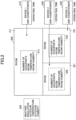
- Fig. 8 is a drawing illustrating an example of the functions of the target power calculation apparatus that are implemented during the learning phase according to the first embodiment. As illustrated in Fig. 8 , the target power calculation apparatus 130 functions as the learning unit 131 and the input unit 132 in the learning phase.
- the learning unit 131 and the input unit 132 retrieves, from among the history information 700 stored in the history information storage 412 of the demand controller 121, the control information concerning a period in which a demand control process is performed based on a predetermined target power (i.e., the period of a demand control process using a predetermined target power). For example, the learning unit 131 and the input unit 132 retrieves the suspension levels 730_2a and the analytic results 730_2b as the control information.
- the input unit 132 displays the retrieved control information to an administrator 810 of the demand control apparatus 120, for example.
- the administrator 810 determines whether the target power is adequate based on past knowledge.
- the input unit 132 receives entered information indicative of whether the target power is adequate as determined by the administrator 810.
- the input unit 132 also displays the retrieved control information to users 820 of the rooms 211, 221, and 231, for example.
- the users 820 determine a comfort index (inclusive of the presence or absence of comfort) based on sensations.
- the input unit 132 receives entered information indicative of the comfort indexes regarding the rooms 211, 221, and 231 as determined by the users 820.
- the learning unit 131 includes an adequacy determination model 801 and a compare-&-modify unit 802.
- the learning unit 131 inputs the retrieved control information and the entered and received information indicative of comfort indexes into the adequacy determination model 801 to run the adequacy determination model 801. With this arrangement, the adequacy determination model 801 outputs information indicative of whether the target power is adequate.
- the information that indicates whether the target power is adequate and that is output from the adequacy determination model 801 is supplied to the compare-&-modify unit 802.
- the compare-&-modify unit 802 compares:
- the compare-&-modify unit 802 modifies the model parameters of the adequacy determination model 801 based on the results of comparison.
- the learning unit 131 performs machine learning with respect to the adequacy determination model 801 for finding the relationship between:
- the learning unit 131 generates a trained adequacy determination model for determining whether the target power is adequate.
- Fig. 6 The example illustrated in Fig. 6 is directed to a case in which the control information and the information indicative of comfort indexes are input into the adequacy determination model 801. Alternatively, only the control information or part of the control information may be input into the adequacy determination model 801.
- the learning unit 131 performs machine learning with respect to the adequacy determination model 801 for finding the relationship between:
- the learning unit 131 generates a trained adequacy determination model for determining whether the target power is adequate (it may be noted that part of the analytic results 730_2b refers to either the cumulative time lengths of suspension levels or the proportions of cumulative time lengths of suspension levels).
- Fig. 9 is a drawing illustrating an example of the functions of the target power calculation apparatus that are implemented during the inference phase according to the first embodiment. As illustrated in Fig. 9 , the target power calculation apparatus 130 functions as the input unit 132 and the inference unit 133 in the inference phase.
- the inference unit 133 includes a trained adequacy determination model 901 generated by the learning unit 131, and includes a target power modifying unit 902.
- the learning unit 131 retrieves, from among history information 700 stored in the history information storage 412 of the demand controller 121, the control information concerning a period in which a demand control process is performed based on a current target power (i.e., the period of a demand control process using a current target power).
- the control information retrieved by the inference unit 133 is different from the control information retrieved by the learning unit 131 when the learning unit 131 performed machine learning.
- the inference unit 133 obtains via the input unit 132 information indicative of comfort indexes regarding the rooms 211, 221, and 231 as determined by the users 820 during the period of a demand control process executed on the current target power.
- the inference unit 133 inputs the retrieved control information and the obtained information indicative of comfort indexes into the trained adequacy determination model 901 to run the trained adequacy determination model 901. With this arrangement, the trained adequacy determination model 901 infers information indicative of whether the target power is adequate.
- the target power modifying unit 902 corrects the target power based on the information indicative of whether the target power is adequate, which is inferred by the trained adequacy determination model 901. Specifically, when the trained adequacy determination model 901 has inferred that the target power is adequate, the target power modifying unit 902 transmits the current target power to the demand control apparatus 120 without correcting the current target power.
- the target power modifying unit 902 corrects the current target power based on a predetermined correction amount, and then transmits the corrected target power to the demand control apparatus 120.
- the inference unit 133 corrects the target power by inferring whether the target power is adequate based on the information indicative of comfort indexes and the control information used during the period in which a demand control process is performed based on the current target power, thereby deriving an adequate target power.
- the inference unit 133 inputs control information and information indicative of comfort indexes into the trained adequacy determination model 901.
- the inference unit 133 inputs only control information (or part of the control information) into the trained adequacy determination model 901.
- the trained adequacy determination model 901 and the target power modifying unit 902 are provided in the inference unit 133.
- the trained adequacy determination model 901 and the target power modifying unit 902 may be provided separately from each other.
- the trained adequacy determination model 901 may be provided in the inference unit, while the target power modifying unit 902 may be provided in a correction unit (not shown) outside the inference unit.
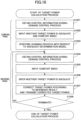
- Fig. 10 is a flowchart illustrating the flow of a target power calculation process according to the first embodiment.
- step S1001 the learning unit 131 obtains control information used during the period of a demand control process during which a demand control process is performed based on a predetermined target power.
- step S1002 the input unit 132 receives, as entered by the users and the administrator, information indicative of one or more comfort indexes and information indicative of whether the target power is adequate during the period of a demand control process during which a demand control process is performed based on the predetermined target power.
- step S1003 the learning unit 131 inputs the control information into the adequacy determination model 801 so as to run the adequacy determination model 801.
- the learning unit 131 performs machine learning with respect to the adequacy determination model 801 such that the information indicative of whether the target power is adequate as output from the adequacy determination model 801 approaches the information (supervisory data) indicative of whether the target power is adequate as input via the input unit 132.
- step S1004 the inference unit 133 obtains control information used during the period of a predetermined demand control process.
- step S1005 the input unit 132 receives entered information indicative of one or more comfort indexes during the period of a predetermined demand control process.
- step S1006 the inference unit 133 inputs the obtained control information and information indicative of comfort indexes into the trained adequacy determination model 901 to run the trained adequacy determination model 901. With this arrangement, the inference unit 133 infers information indicative of whether the target power is adequate.
- step S1007 the inference unit 133 corrects the target power based on the inferred outcome, and transmits the corrected target power to the demand control apparatus 120.
- the corrected target power is set in the memory in the demand control apparatus 120.
- step S1008 the inference unit 133 determines whether to terminate the target power calculation process. Upon determining in step S1008 that the target power calculation process is to be continued (NO in step S1008), the procedure returns to step S1004.
- step S1008 Upon determining in step S1008 that the target power calculation process is to be terminated (YES in step S1008), the target power calculation process is terminated.
- Fig. 10 has been directed to a case in which the learning unit 131 performs batch learning that modifies model parameters upon inputting control information into the adequacy determination model 801 in a batch.
- the learning unit 131 may perform sequential learning that modifies model parameters upon inputting control information into the adequacy determination model 801 a predetermined number of bytes at a time.
- the target power calculation apparatus 130 of the first embodiment is configured:
- the target power calculation apparatus 130 of the first embodiment enables accurate determination of whether the target power is adequate, thereby successfully deriving a proper target power.
- the first embodiment as described above thus provides a target power calculation apparatus, a target power calculation method, and a target power calculation program for deriving a target power that is to be set when performing a demand control process.
- the first embodiment described above has been directed to a case in which, for the purpose of calculating target power, machine learning is performed to learn the relationship between control information (or part thereof) and information indicative of whether the target power is adequate.
- the second embodiment is differently configured such that, for the purpose of calculating target power, machine learning is performed to learn the relationship between target power and track-record information about power consumption. In the following, the second embodiment will be described with a focus on the differences from the first embodiment.
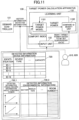
- Fig. 11 is a drawing illustrating an example of the functions of the target power calculation apparatus that are implemented during the learning phase according to the second embodiment. As illustrated in Fig. 11 , the target power calculation apparatus 130 functions as the learning unit 131 and the input unit 132 in the learning phase.
- the learning unit 131 and the input unit 132 retrieves, from among the history information 700 stored in the history information storage 412 of the demand controller 121, the detected information concerning a period in which a demand control process is performed based on a predetermined target power (i.e., the period of a demand control process using a predetermined target power).
- the learning unit 131 and the input unit 132 retrieves, as the detected information, the device information 720, the track-record information 730_1 about consumed power, and the environmental information 730_3.
- the input unit 132 displays the retrieved detected information to an administrator 810 of the demand control apparatus 120, for example.
- the administrator 810 determines, based on past knowledge, the right target power suited to be set for the given period of a demand control process.
- the input unit 132 receives an entered right target power suited to be set for the given period of a demand control process as determined by the administrator 810.
- the input unit 132 also displays the retrieved control information to users 820 of the rooms 211, 221, and 231, for example.
- the users 820 determine a comfort index based on sensations.
- the input unit 132 receives the entered information indicative of the comfort indexes regarding the rooms 211, 221, and 231 as determined by the users 820.
- the learning unit 131 includes a target power model 1101 and a compare-&-modify unit 1102.
- the learning unit 131 inputs the retrieved control information and the entered and received information indicative of comfort indexes into the target power model 1101 to run the target power model 1101. With this arrangement, the target power model 1101 outputs a target power.
- the compare-&-modify unit 1102 compares the target power output from the target power model 1101 with the target power (supervisory data) that is received by the input unit 132.
- the compare-&-modify unit 1102 modifies the model parameters of the target power model 1101 based on the results of comparison.
- the learning unit 131 performs machine learning with respect to the target power model 1101 for finding the relationship between:
- the learning unit 131 generates a trained target power model.
- the example illustrated in Fig. 11 is such that the learning unit 131 inputs detected information and information indicative of comfort indexes to the target power model 1101.
- the learning unit 131 may input only the detected information or only a part of the detected information into the target power model 1101.
- the learning unit 131 performs machine learning with respect to the target power model 1101 for finding the relationship between:
- the learning unit 131 generates a trained target power model.
- Fig. 12 is a drawing illustrating an example of the functions of the target power calculation apparatus that are implemented during the inference phase according to the second embodiment. As illustrated in Fig. 12 , the target power calculation apparatus 130 functions as the input unit 132 and the inference unit 133 in the inference phase.
- the inference unit 133 includes a trained target power model 1201 generated by the learning unit 131.
- the learning unit 131 retrieves, from among history information 700 stored in the history information storage 412 of the demand controller 121, the detected information concerning a period in which a demand control process is performed based on a current target power (i.e., the period of a demand control process using a current target power).
- the detected information retrieved by the inference unit 133 is different from the detected information retrieved by the learning unit 131 when the learning unit 131 performed machine learning.
- the inference unit 133 obtains via the input unit 132 information indicative of comfort indexes regarding the rooms 211, 221, and 231 as determined by the users 820 during the period of a demand control process executed on the current target power.
- the inference unit 133 inputs the retrieved detected information and the obtained information indicative of comfort indexes into the trained target power model 1201 to run the trained target power model 1201. With this arrangement, the trained target power model 1201 infers a target power.
- the inference unit 133 transmits the target power inferred by the trained target power model 1201 to the demand control apparatus 120.
- the inference unit 133 infers the target power based on the information indicative of comfort indexes and the detected information observed during the period in which a demand control process is performed based on the current target power, thereby deriving an adequate target power.
- the inference unit 133 inputs detected information and information indicative of comfort indexes into the trained target power model 1201.
- the inference unit 133 inputs only detected information (or part of the detected information) into the trained target power model 1201.
- Fig. 13 is a flowchart illustrating the flow of a target power calculation process according to the second embodiment.
- step S1301 the learning unit 131 obtains detected information observed during the period of a demand control process executed on a predetermined target power.
- step S1302 the input unit 132 receives entered information indicative of one or more comfort indexes and the right target power suited to be set for the period of a predetermined demand control process executed on a predetermined target power.
- step S1303 the learning unit 131 inputs the detected information into the target power model 1101 so as to run the target power model 1101.
- the learning unit 131 performs machine learning with respect to the target power model 1101 such that the target power output from the target power model 1101 approaches the target power (supervisory data) input via the input unit 132.
- step S1304 the inference unit 133 obtains detected information observed during the period of a predetermined demand control process.
- step S1305 the input unit 132 receives entered information indicative of one or more comfort indexes during the period of a predetermined demand control process.
- step S1306 the inference unit 133 inputs the obtained detected information and the information indicative of one or more comfort indexes into the trained target power model 1201 to run the trained target power model 1201. With this arrangement, the inference unit 133 infers a target power.
- step S1307 the inference unit 133 transmits the inferred target power to the demand control apparatus 120.
- the inferred target power is set in the memory in the demand control apparatus 120.
- the target power calculation apparatus 130 of the second embodiment is configured: - to obtain track-record information about power consumed during the period of a demand control process based on the set target power, and to learn a right target power suited to be set for the period of a demand control process, according to the track-record information about consumed power.
- the target power calculation apparatus 130 of the second embodiment can derive a proper target power.
- the second embodiment as described above thus provides a target power calculation apparatus, a target power calculation method, and a target power calculation program for deriving a target power that is to be set when performing a demand control process.
- the first and second embodiments described above have been directed to a case in which supervisory data is used when performing machine learning with respect to a model for calculating a target power.
- the third embodiment which is differently directed to reinforced learning, will be described. In the following, the third embodiment will be described with a focus on the differences from the first and second embodiments.
- Fig. 14 is a second drawing illustrating an example of the system configuration of a demand control system. What differs from Fig. 1 is a target power calculation apparatus 1400.
- the target power calculation apparatus 1400 has a target power calculation program installed therein, which is executed to cause the target power calculation apparatus 1400 to function as a reward determination unit 1401, a reinforcement learning unit 1402, and an input unit 1403.
- the reward determination unit 1401 determines rewards that the reinforcement learning unit 1402 uses when performing reinforcement learning.
- the reinforcement learning unit 1402 performs reinforcement learning with respect to a model for calculating target power based on history information transmitted from the demand controller 121. Further, the reinforcement learning unit 1402 transmits the target power obtained by performing reinforcement learning to the demand controller 121.
- the input unit 1403 receives information indicative of one or more comfort indexes regarding one or more rooms as entered by the users of the rooms, and sends the information to the reward determination unit 1401. This arrangement allows the rewards used in reinforcement learning performed by the reinforcement learning unit 1402 to reflect the information indicative of one or more comfort indexes regarding the one or more rooms.
- Fig. 15 is a drawing illustrating an example of the functional configuration of the target power calculation apparatus 1400 according to the third embodiment.
- the target power calculation apparatus 1400 functions as the reward determination unit 1401, the reinforcement learning unit 1402, and the input unit 1403.
- the reward determination unit 1401 and the input unit 1403 retrieve, from among history information 700 stored in the history information storage 412 of the demand controller 121, the control information concerning a period in which a demand control process is performed based on a current target power (i.e., the period of a demand control process using a current target power). For example, the reward determination unit 1401 and the input unit 1403 retrieve the suspension levels 730_2a and the analytic results 730_2b as the control information.
- the input unit 1403 displays the retrieved control information to the users 820 of the rooms 211, 221, and 231, for example.
- the users 820 determine a comfort index based on sensations.
- the input unit 1403 receives the entered information indicative of the comfort indexes regarding the rooms 211, 221, and 231 as determined by the users 820.
- the reward determination unit 1401 obtains the information indicative of comfort indexes entered into and received by the input unit 132. Further, the reward determination unit 1401 functions as a calculation unit to calculate a reward concerning the current target power based on the retrieved control information and the obtained information indicative of comfort indexes.
- the reinforcement learning unit 1402 retrieves detected information concerning the period in which a demand control process is performed based on the current target power (i.e., the period of a demand control process using the current target power).
- the reinforcement learning unit 1402 which is an example of the learning unit, includes a target power model 1501.
- the reinforcement learning unit 1402 modifies the model parameters of the target power model 1501 such that the rewards calculated by the reward determination unit 1401 becomes a maximum. Further, the reinforcement learning unit 1402 inputs the retrieved detected information into the target power model 1501 whose model parameters have been modified, thereby causing the target power model 1501 to operate. With this arrangement, the target power model 1501 outputs a target power.
- the reinforcement learning unit 1402 transmits the target power output by the target power model 1501 to the demand control apparatus 120.
- the reinforcement learning unit 1402 performs reinforcement learning with respect to the target power model 1501 such that the rewards calculated based on the information indicative of comfort indexes and the control information used during the execution of a demand control process based on the current target power become a maximum. With this arrangement, the reinforcement learning unit 1402 can derive a proper target power.
- the reward determination unit 1401 may be configured to receive control information (or part of the control information) only, or receive part of the control information and information indicative of comfort indexes only.
- the reward determination unit 1401 can calculate rewards based on:
- the reinforcement learning unit 1402 inputs all the detected information into the target power model 1501.
- the reinforcement learning unit 1402 may input only a part of the detected information into the target power model 1501.
- the reinforcement learning unit 1402 performs machine learning with respect to the target power model 1501 for finding the relationship between:
- Fig. 16 is a flowchart illustrating the flow of a target power calculation process according to the third embodiment.
- step S1601 the reward determination unit 1401 obtains control information used during the period of a demand control process executed on a current predetermined target power.
- step S1602 the input unit 1403 receives entered information indicative of one or more comfort indexes during the period of a demand control process executed on the current target power.
- step S1603 the reward determination unit 1401 calculates a reward concerning the target power based on the control information and the information indicative of one or more comfort indexes.
- step S1604 the reward determination unit 1401 checks whether the calculated reward is greater than or equal to a predetermined threshold. Upon determining in step S1604 that the calculated reward is less than the predetermined threshold (NO in step S1604), the procedure proceeds to step S1605.
- step S1605 the reinforcement learning unit 1402 performs machine learning with respect to the target power model 1501 such that the calculated reward becomes a maximum.
- step S1606 the reinforcement learning unit 1402 obtains detected information observed during the period of a demand control process executed on the current target power.
- step S1607 the reinforcement learning unit 1402 inputs the obtained detected information into the target power model 1501 so as to run the target power model 1501. With this arrangement, the reinforcement learning unit 1402 outputs a target power.
- step S1608 the reinforcement learning unit 1402 transmits the output target power to the demand control apparatus 120. With this arrangement, the output target power is set in the memory in the demand control apparatus 120. The procedure thereafter returns to step S1601.
- step S1604 Upon determining in step S1604 that the calculated reward is greater than or equal to the predetermined threshold (YES in step S1604), the target power calculation process comes to an end.
- the target power calculation apparatus 1400 of the third embodiment is configured:
- the target power calculation apparatus 1400 of the third embodiment can derive a proper target power.
- the third embodiment as described above thus provides a target power calculation apparatus, a target power calculation method, and a target power calculation program for deriving a target power that is to be set when performing a demand control process.
- the third embodiment has been described with respect to a case in which the reward determination unit calculates a reward concerning a target power based on control information and information indicative of one or more comfort indexes.
- the method of calculating rewards is not limited to this.
- the trained adequacy determination model generated in the first embodiment may be utilized to infer whether the target power is adequate based on control information and information indicative of one or more comfort indexes. A reward concerning the target power may then be calculated based on the result of inference.
- any types of model may be utilized as the model used in machine learning.
- any types of model such as an NN (neural network) model, a random forest model, an SVM (support vector machine) model, or the like, may be utilized.
- the description of the third embodiment provided heretofore makes no mention of the details of how the reward determination unit calculates rewards. It may be noted that the reward determination unit may calculate rewards by use of any method.
- the first embodiment has been described with respect to the configuration which infers whether the target power is adequate (i.e., whether it is adequate or inadequate).
- the configuration may further be made to infer whether a high target power causes inadequacy or a low target power causes inadequacy when the inference indicates that the target power is inadequate, for example, Alternatively, the configuration may be made to infer the degree of inadequacy.
- the target power modifying unit can correct the target power by use of a proper correction amount.
- the target power calculation process may be configured to come to an end when the trained adequacy determination model infers that the target power is adequate continuously for a certain length of time.
- the second embodiment has been described with respect to a case in which the administrator 810 of the demand control apparatus 120 determines supervisory data (i.e., the right target power suited to be set) based on detected information, and the administrator 810 inputs the determined supervisory data into the input unit. Nonetheless, the method of inputting supervisory data (i.e., right target power suited to be set) is not limited to this.
- the input unit may receive as supervisory data the target power that has not been modified for a certain length of time as indicated in the target-power-setting history data obtained by accumulating the history of target power settings.
- the target power calculation apparatus is installed inside the building 140. Notwithstanding this, the target power calculation apparatus may be situated outside the building 140. In this case, the target power calculation apparatus may function as part of the demand control system for a plurality of buildings. In the above-described embodiments, the target power calculation apparatus is configured as a separate unit from the demand control apparatus 120, but may alternatively be configured as a single unit together with the demand control apparatus 120.
Landscapes
- Engineering & Computer Science (AREA)
- Physics & Mathematics (AREA)
- General Physics & Mathematics (AREA)
- Power Engineering (AREA)
- Theoretical Computer Science (AREA)
- Artificial Intelligence (AREA)
- Evolutionary Computation (AREA)
- Software Systems (AREA)
- General Engineering & Computer Science (AREA)
- Mathematical Physics (AREA)
- Automation & Control Theory (AREA)
- Computer Vision & Pattern Recognition (AREA)
- Probability & Statistics with Applications (AREA)
- Chemical & Material Sciences (AREA)
- Combustion & Propulsion (AREA)
- Mechanical Engineering (AREA)
- Mathematical Optimization (AREA)
- Pure & Applied Mathematics (AREA)
- Data Mining & Analysis (AREA)
- Medical Informatics (AREA)
- Mathematical Analysis (AREA)
- Computing Systems (AREA)
- Algebra (AREA)
- Supply And Distribution Of Alternating Current (AREA)
Description
- The invention herein relates a demand control system.
- A demand control process has been known in the art to control power supplied to equipment (e.g., air-conditioner) based on target power in order to reduce the contracted power. Check technology has also been advanced to check the adequacy of target power that is selected when performing the demand control process.
- [Patent Document 1]
Japanese Laid-Open Patent Publication No. 2002-165361 - Unfortunately, the conventional check technology is not so advanced as to derive proper target power upon finding that the target power is inadequate.
- Document
US 2016/241033 A1 discloses obtaining an average power consumption of electrical apparatus in a set time period, and obtaining a spare power of the average power consumption with respect to a target power in the set time period that is based on the set power, for the purpose of updating a demand value. - The claimed invention provides a demand control system according to
claim 1 - The present invention can provide a demand control system comprising a target power calculation apparatus for deriving a target power that is to be set when performing a demand control process.
- The dependent claims relate to special embodiments.
-
- [
Fig. 1] Fig. 1 is a first drawing illustrating an example of the system configuration of a demand control system according to a first embodiment. - [
Fig. 2] Fig. 2 is a drawing illustrating specific examples of demand control objects. - [
Fig. 3] Fig. 3 is a drawing illustrating an example of the hardware configuration of a target power calculation apparatus. - [
Fig. 4] Fig. 4 is a drawing illustrating an example of the functional configuration of a demand controller. - [
Fig. 5] Fig. 5 is a drawing illustrating a specific example of a demand control process. - [
Fig. 6] Fig. 6 is a drawing illustrating specific examples of analytic results. - [
Fig. 7] Fig. 7 is a drawing illustrating specific examples of history information. - [
Fig. 8] Fig. 8 is a drawing illustrating an example of the functions of the target power calculation apparatus that are implemented during a learning phase of the system according to the first embodiment. - [
Fig. 9] Fig. 9 is a drawing illustrating an example of the functions of the target power calculation apparatus that are implemented during an inference phase of the system according to the first embodiment. - [
Fig. 10] Fig. 10 is a flowchart illustrating the flow of a target power calculation process by the target power calculation apparatus of the system according to the first embodiment. - [
Fig. 11] Fig. 11 is a drawing illustrating an example of the functions of the target power calculation apparatus that are implemented during a learning phase of the system according to the second embodiment. - [
Fig. 12] Fig. 12 is a drawing illustrating an example of the functions of the target power calculation apparatus that are implemented during an inference phase of the system according to the second embodiment. - [
Fig. 13] Fig. 13 is a flowchart illustrating the flow of a target power calculation process by the target power calculation apparatus of the system according to the second embodiment. - [
Fig. 14] Fig. 14 is a second drawing illustrating an example of the system configuration of a demand control system. - [
Fig. 15] Fig. 15 is a drawing illustrating an example of the functional configuration of a target power calculation apparatus of the system according to the third embodiment, not being part of the present invention. - [
Fig. 16] Fig. 16 is a flowchart illustrating the flow of a target power calculation process by the target power calculation apparatus of the system according to the third embodiment, not being part of the present invention. - [
Fig. 16] Fig. 16 is a flowchart illustrating the flow of a target power calculation process by the target power calculation apparatus according to the third embodiment. - In the following, embodiments will be described with reference to the accompanying drawings. In the specification and drawings, elements having substantially the same functions or configurations are referred to by the same numerals, and a duplicate description thereof will be omitted.
- The system configuration of a demand control system will be described first.
Fig. 1 is a first drawing illustrating an example of the system configuration of a demand control system. As illustrated inFig. 1 , ademand control system 100, which is installed in abuilding 140 such as an office building, includes ademand control object 110, ademand control apparatus 120, and a targetpower calculation apparatus 130. - The
demand control object 110 includes devices for which supplied power is controlled. Thedemand control apparatus 120 controls power supplied to each device such that the target power is not exceeded. Thedevice 1,device 2, ..., device n illustrated inFig. 1 are air-conditioners installed in each room in thebuilding 140, for example. - The devices included in the
demand control object 110 operates based on demand control data (e.g., suspend instruction for suspending the supply of power, resume instruction for resuming the supply of power, etc.) sent from thedemand control apparatus 120. - The amount of power consumed by each device included in the
demand control object 110 is transmitted as demand pulses to thedemand control apparatus 120. Further, device information about each device of thedemand control object 110 and various types of information such as environmental information, device information, and the like detected by each device of thedemand control object 110 during the demand control process are transmitted to thedemand control apparatus 120. - The
demand control apparatus 120 has a demand control program installed therein, which is executed to cause thedemand control apparatus 120 to function as ademand controller 121. - The
demand controller 121 transmits: - information obtained during the demand control process (which includes various types of information transmitted from the demand control object 110),
- the analytic results of analyzing the obtained information,
- The
demand controller 121 obtains a target power that is newly calculated by the targetpower calculation apparatus 130 responding to the history information transmitted to the targetpower calculation apparatus 130, followed by setting the target power in the memory in thedemand control apparatus 120. Thedemand controller 121 performs a demand control process based on the target power setting. - The target
power calculation apparatus 130 has a target power calculation program installed therein, which is executed to cause the targetpower calculation apparatus 130 to function as alearning unit 131, aninput unit 132, and aninference unit 133. - The
learning unit 131, which is an example of an obtainment unit, obtains the history information transmitted from thedemand controller 121. Thelearning unit 131 is also an example of a learning unit, and performs machine learning with respect to a model for calculating target power based on the obtained history information. With this arrangement, thelearning unit 131 generates a trained model for calculating target power. - The
input unit 132 is an example of an input unit. Theinput unit 132 receives information entered by the administrator of thedemand control apparatus 120 when thelearning unit 131 performs machine learning with respect to a model, for example. The administrator of thedemand control apparatus 120 enters knowledge obtained by referring to the history information. The entering of information into theinput unit 132 may be performed either manually or automatically. Automatic entering of information into theinput unit 132 may include a method of entering information by generating data in which information is arrayed in a predetermined format, and then feeding the data to theinput unit 132. - The
inference unit 133 inputs, into the trained model, information newly transmitted from thedemand controller 121 to execute the trained model, thereby calculating an adequate target power. Further, theinference unit 133 transmits the calculated target power to thedemand controller 121. - In the following, specific examples of the
demand control object 110 will be described.Fig. 2 is a drawing illustrating specific examples of demand control objects.Fig. 2 illustrates air-conditioners demand control object 110. - The air-
conditioner 210 functions to remove contamination from the air and automatically adjust temperature and humidity inside aroom 211 on apredetermined floor 200 of thebuilding 140. The air-conditioner 210 detects in-room information 212 (e.g., the number of occupants, room temperature, room humidity, and the like in the room 211) while operating. The air-conditioner 210 also detects a length of operating time while operating. - Similarly, the air-
conditioner 220 functions to remove contamination from the air and automatically adjust temperature and humidity inside aroom 221 on thepredetermined floor 200 of thebuilding 140. The air-conditioner 220 detects in-room information 222 (e.g., the number of occupants, room temperature, room humidity, and the like in the room 221) while operating. The air-conditioner 220 also detects a length of operating time while operating. - Similarly, the air-
conditioner 230 functions to remove contamination from the air and automatically adjust temperature and humidity inside aroom 231 on thepredetermined floor 200 of thebuilding 140. The air-conditioner 230 detects in-room information 232 (e.g., the number of occupants, room temperature, room humidity, and the like in the room 231) while operating. The air-conditioner 230 also detects a length of operating time while operating. - The air-
conditioners - Although power lines for supplying power to the air-
conditioners Fig. 2 , these power lines are provided with respective power meters attached thereto. The power meters are configured to transmit demand pulses to thedemand control apparatus 120. - Control lines for transmitting demand control data to the air-
conditioners Fig. 2 . The air-conditioners demand control apparatus 120 through such control lines. - Communication lines for transmitting environmental information (in-room information and open-air information) detected by the air-
conditioners demand control apparatus 120 are not illustrated inFig. 2 . The air-conditioners demand control apparatus 120 through such communication lines. The air-conditioners demand control apparatus 120 through such control lines. - In the following, the hardware configurations of apparatuses constituting the
demand control system 100 will be described. Since thedemand control apparatus 120 and the targetpower calculation apparatus 130 have substantially the same hardware configuration, only the hardware configuration of the targetpower calculation apparatus 130 will be described. -
Fig. 3 is a drawing illustrating an example of the hardware configuration of the target power calculation apparatus. As illustrated inFig. 3 , the targetpower calculation apparatus 130 includes a CPU (central processing unit) 301, a ROM (read only memory) 302, and a RAM (random access memory) 303. TheCPU 301, theROM 302, and the RAM 183 together constitute a computer. The targetpower calculation apparatus 130 further includes anauxiliary storage device 304, adisplay device 305, anoperating device 306, an I/F (interface)device 307, and adrive device 308. The individual hardware parts of the targetpower calculation apparatus 130 are connected to one another through abus 309. - The
CPU 301 is an arithmetic device which executes various types of program (e.g., target power calculation programs) installed in theauxiliary storage device 304. TheROM 302 is a nonvolatile memory. TheROM 302, which functions as a main memory device, stores various types of program, data, and the like necessary for theCPU 301 to execute the various types of program installed in theauxiliary storage device 304. Specifically, theROM 302 stores boot programs and the like such as BIOS (basic input/output system) and EFI (extensible firmware interface). - The
RAM 303 is a volatile memory such as a DRAM (dynamic random access memory) and an SRAM (static random access memory). TheRAM 303, which functions as a main memory device, provides a work area to which the various types of program installed in theauxiliary storage device 304 are loaded when executed by theCPU 301. - The
auxiliary storage device 304 stores various types of program, and stores information used when the various types of program are executed. - The
display device 305 is a display apparatus that displays information (e.g., history information) obtained by the targetpower calculation apparatus 130. The operatingdevice 306 is an operating apparatus that is used by the administrator of thedemand control apparatus 120 or the users of each room, for example, to perform various types of operation with respect to the targetpower calculation apparatus 130. The I/F device 2307 is a communication device for communicating with thedemand control apparatus 120. - The
drive device 308 is a device to which arecording medium 310 is set. Here, therecording medium 310 includes a medium for optically, electrically, or magnetically recording information, such as a CD-ROM, a flexible disk, a magneto-optical disk, or the like. Therecording medium 310 may also include a semiconductor memory or the like that electrically records information, such as a ROM, a flash memory, or the like. - The various types of programs to be installed in the
auxiliary storage device 304 are installed by thedrive device 308 reading the various types of programs recorded in therecording medium 310 upon therecording medium 310 being supplied and set in thedrive device 308, for example. Alternatively, the various types of program to be installed in theauxiliary storage device 304 may be installed upon being downloaded from a network (not shown). - In the following, the functional configuration of the
demand controller 121 will be described.Fig. 4 is a drawing illustrating an example of the functional configuration of the demand controller. As illustrated inFig. 4 , thedemand controller 121 includes apulse counter 401, a remainingtime computation unit 402, a powerprediction computation unit 403, a control-need detection unit 404, aload control unit 405, and ananalysis unit 406. - The
pulse counter 401 accumulates demand pulses to calculate track-record information about the power used by thedemand control object 110. The remainingtime computation unit 402 subtracts a lapsed time from the demand period (e.g., 30 minutes) to calculate a remaining time length. The powerprediction computation unit 403 calculates predicted power based on the track-record information about the power used and the remaining time length. - The control-
need detection unit 404 checks whether control is needed, based on the target power retrieved from atarget power storage 411 and set in the memory as well as the predicted power calculated by the powerprediction computation unit 403. The control-need detection unit 404 supplies a suspension level to theload control unit 405 upon detecting the need for control. - The suspension level is a value indicative of the extent to which the supply of power is suspended in response to a suspend instruction with respect to the devices included in the
demand control object 110. A high suspension level state refers to the state in which a suspend instruction is issued to a large number of devices, or the state in which the functions of these devices are restricted. A low suspension level state refers to the state in which a suspend instruction is issued to only a small number of devices, or the state in which the functions of the devices are not restricted. - The target
power calculation apparatus 130 updates the target power stored in thetarget power storage 411. The control-need detection unit 404 stores the retrieved target power, the supplied suspension level, the track-record information about the consumed power, and the like in ahistory information storage 412 such that they are associated with the various types of information transmitted from thedemand control object 110. - The
load control unit 405 transmits demand control data to thedemand control object 110. The demand control data includes a suspend instruction or a resume instruction responsive to the suspension level supplied from the control-need detection unit 404. - The
analysis unit 406 analyzes the suspension level stored in thehistory information storage 412, and stores the analysis results in thehistory information storage 412 such that the results are associated with the suspension level. - The target
power calculation apparatus 130 retrieves the history information stored in thehistory information storage 412. - In the following, a specific example of the demand control process by the
demand controller 121 will be described.Fig. 5 is a drawing illustrating a specific example of the demand control process. - An example of the track-record information about power consumed during the demand period is illustrated in 5a of
Fig. 5 . In 5a ofFig. 5 , the horizontal axis represents time, and the vertical axis represents power. "T" in the horizontal axis indicates the time until which the outputting of demand control data should be prohibited, and "30 minutes" indicates the end of the demand period" "α" in the vertical axis indicates the target power. - A
graph 501 illustrated in 5a ofFig. 5 represents the track-record information about power consumed from immediately after the start of the demand period to the present time. The powerprediction computation unit 403 calculates: predetermined pulse weight x accumulated pulse value x (60/demand period [minutes]), thereby calculating the track record information about power consumed up to the present time. The powerprediction computation unit 403 further calculates: (the track-record information about power consumed up to the present time) + (a change in power during the preceding Δt minutes) / (sampling time interval Δt) x (remaining time), thereby calculating predicted power. - The control-
need detection unit 404 calculates: target power / demand period x lapsed time, thereby calculating a current target power at each time point. - An example of the occurrence of a suspension level during the demand period is illustrated in 5b of
Fig. 5 . In 5b ofFig. 5 , the horizontal axis represents time, and the vertical axis represents the suspension level. - The control-
need detection unit 404 increases the suspension level by an increment of one when: - predicted power ≥ target power; and
- track-record information about power consumed up to the present time ≥ current target power.
- In such a case, the
load control unit 405 outputs a suspend instruction as demand control data. - Further, the control-
need detection unit 404 decreases the suspension level by a decrement of one when: - predicted power < target power; and
- track-record information about power consumed up to the present time < current target power.
- In such a case, the
load control unit 405 outputs a resume instruction as demand control data. - The control-
need detection unit 404 maintains the suspension level as it is when neither of the above-noted conditions are satisfied. In such a case, theload control unit 405 does not output demand control data (i.e., suspend instruction or resume instruction). - A
graph 511 illustrated in 5b ofFig. 5 represents the occurrences of suspension levels from immediately after the start of the demand period to the present time. In the example illustrated in thegraph 511, the following conditions: - predicted power ≥ target power; and
- track-record information about power consumed up to the present time ≥ current target power,
- In the following, specific examples of analytic results obtained by the
analysis unit 406 will be described. Analytic results by theanalysis unit 406 are obtained when theanalysis unit 406 analyzes the occurrences of suspension levels stored in thehistory information storage 412.Fig. 6 is a drawing illustrating specific examples of the analytic results. - Cumulative time lengths of respective suspension levels are illustrated in 6a-1 of
Fig. 6 and 6a-2 ofFig. 6 , as calculated by theanalysis unit 406 analyzing the status of occurrences of suspension levels that are stored in thehistory information storage 412 by the control-need detection unit 404. It may be noted that 6a-1 ofFig. 6 and 6a-2 ofFig. 6 show cumulative time lengths on a suspension-level-specific basis in respective cases in which different target powers are set during the demand control process concerning the samedemand control object 110. As shown in these cases, changing the setting of target power causes significant changes to be made in the cumulative time lengths of respective suspension levels. - Proportions of cumulative time lengths of respective suspension levels are illustrated in 6b-1 of
Fig. 6 and 6b-2 ofFig. 6 , as calculated by theanalysis unit 406 analyzing the status of occurrences of suspension levels that are stored in thehistory information storage 412 by the control-need detection unit 404. It may be noted that 6b-1 ofFig. 6 and 6b-2 ofFig. 6 show the proportions of cumulative time lengths of individual suspension levels when respective different target powers are set during the demand control process concerning the samedemand control object 110. As shown in these cases, changing the setting of target power causes significant changes to be made in the proportions of cumulative time lengths of individual suspension levels. - In the following, specific examples of history information stored in the
history information storage 412 will be described.Fig. 7 is a drawing illustrating specific examples of history information. - As illustrated in
Fig. 7 ,history information 700 includes currenttarget power information 710. The example illustrated inFig. 7 indicates that the current target power is "α". - The
history information 700 further includesdevice information 720 about each device included in thedemand control object 110. Thedevice information 720 includes information items that are "identification information", "device type", "operating time length", "item attribute", "thermal load", and "capacity". - The
history information 700 further includes track-record information 730_1 about consumed power separately stored for each demand period. Thehistory information 700 further includes suspension levels 730_2a separately stored for each demand period, and also includes analytic results 730_2b of the suspension levels 730_2a. Information including both the suspension levels 730_2a and the analytic results 730_2b will hereinafter be referred to as "control information". - The
history information 700 further includes environmental information 730_3 separately stored for each demand period. Information including thedevice information 720, the track-record information 730_1 about consumed power, and the environmental information 730_3 will hereinafter be referred to as "detected information". - In the following, a description will be given of the functional configuration of the target
power calculation apparatus 130 according to the first embodiment. It may be noted that in what follows, the learning phase and the inference phase will be described separately. - The functional configuration in the learning phase will be described first.
Fig. 8 is a drawing illustrating an example of the functions of the target power calculation apparatus that are implemented during the learning phase according to the first embodiment. As illustrated inFig. 8 , the targetpower calculation apparatus 130 functions as thelearning unit 131 and theinput unit 132 in the learning phase. - The
learning unit 131 and theinput unit 132 retrieves, from among thehistory information 700 stored in thehistory information storage 412 of thedemand controller 121, the control information concerning a period in which a demand control process is performed based on a predetermined target power (i.e., the period of a demand control process using a predetermined target power). For example, thelearning unit 131 and theinput unit 132 retrieves the suspension levels 730_2a and the analytic results 730_2b as the control information. - The
input unit 132 displays the retrieved control information to an administrator 810 of thedemand control apparatus 120, for example. The administrator 810 determines whether the target power is adequate based on past knowledge. Theinput unit 132 receives entered information indicative of whether the target power is adequate as determined by the administrator 810. - The
input unit 132 also displays the retrieved control information tousers 820 of therooms users 820 determine a comfort index (inclusive of the presence or absence of comfort) based on sensations. Theinput unit 132 receives entered information indicative of the comfort indexes regarding therooms users 820. - The
learning unit 131 includes anadequacy determination model 801 and a compare-&-modifyunit 802. Thelearning unit 131 inputs the retrieved control information and the entered and received information indicative of comfort indexes into theadequacy determination model 801 to run theadequacy determination model 801. With this arrangement, theadequacy determination model 801 outputs information indicative of whether the target power is adequate. - The information that indicates whether the target power is adequate and that is output from the
adequacy determination model 801 is supplied to the compare-&-modifyunit 802. The compare-&-modifyunit 802 compares: - the information indicative of whether the target power is adequate as output from the
adequacy determination model 801 and - the information (supervisory data) indicative of whether the target power is adequate as entered into and received by the
input unit 132. - The compare-&-modify
unit 802 modifies the model parameters of theadequacy determination model 801 based on the results of comparison. - As described above, the
learning unit 131 performs machine learning with respect to theadequacy determination model 801 for finding the relationship between: - control information as well as information indicative of one or more comfort indexes (i.e., dataset) and
- information indicative of whether the target power is adequate.
- With this arrangement, the
learning unit 131 generates a trained adequacy determination model for determining whether the target power is adequate. - The example illustrated in
Fig. 6 is directed to a case in which the control information and the information indicative of comfort indexes are input into theadequacy determination model 801. Alternatively, only the control information or part of the control information may be input into theadequacy determination model 801. - As described above, the
learning unit 131 performs machine learning with respect to theadequacy determination model 801 for finding the relationship between: - part of the control information (i.e., the suspension levels 730_2a) and
- information indicative of whether the target power is adequate,
- the control information (i.e., the suspension levels 730_2a and part of the analytic results 730_2b) and
- information indicative of whether the target power is adequate.
- With this arrangement, the
learning unit 131 generates a trained adequacy determination model for determining whether the target power is adequate (it may be noted that part of the analytic results 730_2b refers to either the cumulative time lengths of suspension levels or the proportions of cumulative time lengths of suspension levels). - The functional configuration in the inference phase will be described next.
Fig. 9 is a drawing illustrating an example of the functions of the target power calculation apparatus that are implemented during the inference phase according to the first embodiment. As illustrated inFig. 9 , the targetpower calculation apparatus 130 functions as theinput unit 132 and theinference unit 133 in the inference phase. - The
inference unit 133 includes a trainedadequacy determination model 901 generated by thelearning unit 131, and includes a targetpower modifying unit 902. Thelearning unit 131 retrieves, from amonghistory information 700 stored in thehistory information storage 412 of thedemand controller 121, the control information concerning a period in which a demand control process is performed based on a current target power (i.e., the period of a demand control process using a current target power). The control information retrieved by theinference unit 133 is different from the control information retrieved by thelearning unit 131 when thelearning unit 131 performed machine learning. - The
inference unit 133 obtains via theinput unit 132 information indicative of comfort indexes regarding therooms users 820 during the period of a demand control process executed on the current target power. - The
inference unit 133 inputs the retrieved control information and the obtained information indicative of comfort indexes into the trainedadequacy determination model 901 to run the trainedadequacy determination model 901. With this arrangement, the trainedadequacy determination model 901 infers information indicative of whether the target power is adequate. - The target
power modifying unit 902 corrects the target power based on the information indicative of whether the target power is adequate, which is inferred by the trainedadequacy determination model 901. Specifically, when the trainedadequacy determination model 901 has inferred that the target power is adequate, the targetpower modifying unit 902 transmits the current target power to thedemand control apparatus 120 without correcting the current target power. - When the trained
adequacy determination model 901 has inferred that the target power is inadequate, the targetpower modifying unit 902 corrects the current target power based on a predetermined correction amount, and then transmits the corrected target power to thedemand control apparatus 120. - In the manner described above, the
inference unit 133 corrects the target power by inferring whether the target power is adequate based on the information indicative of comfort indexes and the control information used during the period in which a demand control process is performed based on the current target power, thereby deriving an adequate target power. - The description given above has been directed to a case in which the
inference unit 133 inputs control information and information indicative of comfort indexes into the trainedadequacy determination model 901. Alternatively, when the trainedadequacy determination model 901 has been generated based only on control information (or part of the control information), theinference unit 133 inputs only control information (or part of the control information) into the trainedadequacy determination model 901. - The description given above has been directed to a case in which the trained
adequacy determination model 901 and the targetpower modifying unit 902 are provided in theinference unit 133. Alternatively, the trainedadequacy determination model 901 and the targetpower modifying unit 902 may be provided separately from each other. For example, the trainedadequacy determination model 901 may be provided in the inference unit, while the targetpower modifying unit 902 may be provided in a correction unit (not shown) outside the inference unit. - In the following, a description will be given of a target power calculation process performed by the target
power calculation apparatus 130 according to the first embodiment.Fig. 10 is a flowchart illustrating the flow of a target power calculation process according to the first embodiment. - In step S1001, the
learning unit 131 obtains control information used during the period of a demand control process during which a demand control process is performed based on a predetermined target power. - In step S1002, the
input unit 132 receives, as entered by the users and the administrator, information indicative of one or more comfort indexes and information indicative of whether the target power is adequate during the period of a demand control process during which a demand control process is performed based on the predetermined target power. - In step S1003, the
learning unit 131 inputs the control information into theadequacy determination model 801 so as to run theadequacy determination model 801. Thelearning unit 131 performs machine learning with respect to theadequacy determination model 801 such that the information indicative of whether the target power is adequate as output from theadequacy determination model 801 approaches the information (supervisory data) indicative of whether the target power is adequate as input via theinput unit 132. - In step S1004, the
inference unit 133 obtains control information used during the period of a predetermined demand control process. - In step S1005, the
input unit 132 receives entered information indicative of one or more comfort indexes during the period of a predetermined demand control process. - In step S1006, the
inference unit 133 inputs the obtained control information and information indicative of comfort indexes into the trainedadequacy determination model 901 to run the trainedadequacy determination model 901. With this arrangement, theinference unit 133 infers information indicative of whether the target power is adequate. - In step S1007, the
inference unit 133 corrects the target power based on the inferred outcome, and transmits the corrected target power to thedemand control apparatus 120. With this arrangement, the corrected target power is set in the memory in thedemand control apparatus 120. - In step S1008, the
inference unit 133 determines whether to terminate the target power calculation process. Upon determining in step S1008 that the target power calculation process is to be continued (NO in step S1008), the procedure returns to step S1004. - Upon determining in step S1008 that the target power calculation process is to be terminated (YES in step S1008), the target power calculation process is terminated.
-
Fig. 10 has been directed to a case in which thelearning unit 131 performs batch learning that modifies model parameters upon inputting control information into theadequacy determination model 801 in a batch. Alternatively, thelearning unit 131 may perform sequential learning that modifies model parameters upon inputting control information into the adequacy determination model 801 a predetermined number of bytes at a time. - As is understood from the descriptions provided heretofore, the target
power calculation apparatus 130 of the first embodiment is configured: - to learn whether the target power set in the period of a demand control process is adequate, according to the control information (or part thereof) obtained during the period of the demand control process;
- to infer whether the target power set in the next period of a demand control process is adequate, according to the control information (or part thereof) obtained during the next period of the demand control process; and
- to correct the noted set target power with a predetermined correction amount upon inferring that the target power is inadequate.
- With this arrangement, the target
power calculation apparatus 130 of the first embodiment enables accurate determination of whether the target power is adequate, thereby successfully deriving a proper target power. - The first embodiment as described above thus provides a target power calculation apparatus, a target power calculation method, and a target power calculation program for deriving a target power that is to be set when performing a demand control process.
- The first embodiment described above has been directed to a case in which, for the purpose of calculating target power, machine learning is performed to learn the relationship between control information (or part thereof) and information indicative of whether the target power is adequate. The second embodiment is differently configured such that, for the purpose of calculating target power, machine learning is performed to learn the relationship between target power and track-record information about power consumption. In the following, the second embodiment will be described with a focus on the differences from the first embodiment.
- A description will first be given of the functional configuration of the target
power calculation apparatus 130 according to the second embodiment. In what follows also, the learning phase and the inference phase will be described separately. -
Fig. 11 is a drawing illustrating an example of the functions of the target power calculation apparatus that are implemented during the learning phase according to the second embodiment. As illustrated inFig. 11 , the targetpower calculation apparatus 130 functions as thelearning unit 131 and theinput unit 132 in the learning phase. - The
learning unit 131 and theinput unit 132 retrieves, from among thehistory information 700 stored in thehistory information storage 412 of thedemand controller 121, the detected information concerning a period in which a demand control process is performed based on a predetermined target power (i.e., the period of a demand control process using a predetermined target power). Thelearning unit 131 and theinput unit 132 retrieves, as the detected information, thedevice information 720, the track-record information 730_1 about consumed power, and the environmental information 730_3. - The
input unit 132 displays the retrieved detected information to an administrator 810 of thedemand control apparatus 120, for example. The administrator 810 determines, based on past knowledge, the right target power suited to be set for the given period of a demand control process. Theinput unit 132 receives an entered right target power suited to be set for the given period of a demand control process as determined by the administrator 810. Theinput unit 132 also displays the retrieved control information tousers 820 of therooms users 820 determine a comfort index based on sensations. Theinput unit 132 receives the entered information indicative of the comfort indexes regarding therooms users 820. - The
learning unit 131 includes atarget power model 1101 and a compare-&-modifyunit 1102. Thelearning unit 131 inputs the retrieved control information and the entered and received information indicative of comfort indexes into thetarget power model 1101 to run thetarget power model 1101. With this arrangement, thetarget power model 1101 outputs a target power. - The compare-&-modify
unit 1102 compares the target power output from thetarget power model 1101 with the target power (supervisory data) that is received by theinput unit 132. The compare-&-modifyunit 1102 modifies the model parameters of thetarget power model 1101 based on the results of comparison. - As described above, the
learning unit 131 performs machine learning with respect to thetarget power model 1101 for finding the relationship between: - detected information as well as information indicative of one or more comfort indexes (i.e., dataset) and
- target power.
- With this arrangement, the
learning unit 131 generates a trained target power model. - The example illustrated in
Fig. 11 is such that thelearning unit 131 inputs detected information and information indicative of comfort indexes to thetarget power model 1101. Alternatively, thelearning unit 131 may input only the detected information or only a part of the detected information into thetarget power model 1101. - As described above, the
learning unit 131 performs machine learning with respect to thetarget power model 1101 for finding the relationship between: - detected information and
- target power,
- or with respect to the
target power model 1101 for finding the relationship between:- part of the detected information (i.e., the track-record information 730_1 about consumed power) and
- target power,
- or with respect to the
target power model 1101 for finding the relationship between:- part of the detected information (i.e., a dataset comprised of the track-record information 730_1 about consumed power and the device information 720) and
- target power,
- or with respect to the
target power model 1101 for finding the relationship between:- part of the detected information (i.e., a dataset comprised of the track-record information 730_1 about consumed power and the environmental information 730_3) and
- target power.
- With this arrangement, the
learning unit 131 generates a trained target power model. - The functional configuration in the inference phase will be described next.
Fig. 12 is a drawing illustrating an example of the functions of the target power calculation apparatus that are implemented during the inference phase according to the second embodiment. As illustrated inFig. 12 , the targetpower calculation apparatus 130 functions as theinput unit 132 and theinference unit 133 in the inference phase. - The
inference unit 133 includes a trainedtarget power model 1201 generated by thelearning unit 131. Thelearning unit 131 retrieves, from amonghistory information 700 stored in thehistory information storage 412 of thedemand controller 121, the detected information concerning a period in which a demand control process is performed based on a current target power (i.e., the period of a demand control process using a current target power). The detected information retrieved by theinference unit 133 is different from the detected information retrieved by thelearning unit 131 when thelearning unit 131 performed machine learning. - The
inference unit 133 obtains via theinput unit 132 information indicative of comfort indexes regarding therooms users 820 during the period of a demand control process executed on the current target power. - The
inference unit 133 inputs the retrieved detected information and the obtained information indicative of comfort indexes into the trainedtarget power model 1201 to run the trainedtarget power model 1201. With this arrangement, the trainedtarget power model 1201 infers a target power. - Further, the
inference unit 133 transmits the target power inferred by the trainedtarget power model 1201 to thedemand control apparatus 120. - In the manner described above, the
inference unit 133 infers the target power based on the information indicative of comfort indexes and the detected information observed during the period in which a demand control process is performed based on the current target power, thereby deriving an adequate target power. - The description given above has been directed to a case in which the
inference unit 133 inputs detected information and information indicative of comfort indexes into the trainedtarget power model 1201. Alternatively, when the trainedtarget power model 1201 has been generated based only on detected information (or part of the detected information), theinference unit 133 inputs only detected information (or part of the detected information) into the trainedtarget power model 1201. - In the following, a description will be given of a target power calculation process performed by the target
power calculation apparatus 130 according to the second embodiment.Fig. 13 is a flowchart illustrating the flow of a target power calculation process according to the second embodiment. - In step S1301, the
learning unit 131 obtains detected information observed during the period of a demand control process executed on a predetermined target power. - In step S1302, the
input unit 132 receives entered information indicative of one or more comfort indexes and the right target power suited to be set for the period of a predetermined demand control process executed on a predetermined target power. - In step S1303, the
learning unit 131 inputs the detected information into thetarget power model 1101 so as to run thetarget power model 1101. Thelearning unit 131 performs machine learning with respect to thetarget power model 1101 such that the target power output from thetarget power model 1101 approaches the target power (supervisory data) input via theinput unit 132. - In step S1304, the
inference unit 133 obtains detected information observed during the period of a predetermined demand control process. - In step S1305, the
input unit 132 receives entered information indicative of one or more comfort indexes during the period of a predetermined demand control process. - In step S1306, the
inference unit 133 inputs the obtained detected information and the information indicative of one or more comfort indexes into the trainedtarget power model 1201 to run the trainedtarget power model 1201. With this arrangement, theinference unit 133 infers a target power. - In step S1307, the
inference unit 133 transmits the inferred target power to thedemand control apparatus 120. With this arrangement, the inferred target power is set in the memory in thedemand control apparatus 120. - As is understood from the descriptions provided heretofore, the target
power calculation apparatus 130 of the second embodiment is configured: - to obtain track-record information about power consumed during the period of a demand control process based on the set target power, and to learn a right target power suited to be set for the period of a demand control process, according to the track-record information about consumed power. - With this arrangement, the target
power calculation apparatus 130 of the second embodiment can derive a proper target power. - The second embodiment as described above thus provides a target power calculation apparatus, a target power calculation method, and a target power calculation program for deriving a target power that is to be set when performing a demand control process.
- [Third Embodiment] - not being part of the present invention.
- The first and second embodiments described above have been directed to a case in which supervisory data is used when performing machine learning with respect to a model for calculating a target power. The third embodiment, which is differently directed to reinforced learning, will be described. In the following, the third embodiment will be described with a focus on the differences from the first and second embodiments.
- The system configuration of a demand control system will be described first.
Fig. 14 is a second drawing illustrating an example of the system configuration of a demand control system. What differs fromFig. 1 is a targetpower calculation apparatus 1400. - The target
power calculation apparatus 1400 has a target power calculation program installed therein, which is executed to cause the targetpower calculation apparatus 1400 to function as areward determination unit 1401, areinforcement learning unit 1402, and aninput unit 1403. - The
reward determination unit 1401 determines rewards that thereinforcement learning unit 1402 uses when performing reinforcement learning. - The
reinforcement learning unit 1402 performs reinforcement learning with respect to a model for calculating target power based on history information transmitted from thedemand controller 121. Further, thereinforcement learning unit 1402 transmits the target power obtained by performing reinforcement learning to thedemand controller 121. - The
input unit 1403 receives information indicative of one or more comfort indexes regarding one or more rooms as entered by the users of the rooms, and sends the information to thereward determination unit 1401. This arrangement allows the rewards used in reinforcement learning performed by thereinforcement learning unit 1402 to reflect the information indicative of one or more comfort indexes regarding the one or more rooms. - In the following, a description will be given with respect to the detail of the functional configuration of the target
power calculation apparatus 1400 according to the third embodiment.Fig. 15 is a drawing illustrating an example of the functional configuration of the targetpower calculation apparatus 1400 according to the third embodiment. - As was described above, the target
power calculation apparatus 1400 functions as thereward determination unit 1401, thereinforcement learning unit 1402, and theinput unit 1403. - The
reward determination unit 1401 and theinput unit 1403 retrieve, from amonghistory information 700 stored in thehistory information storage 412 of thedemand controller 121, the control information concerning a period in which a demand control process is performed based on a current target power (i.e., the period of a demand control process using a current target power). For example, thereward determination unit 1401 and theinput unit 1403 retrieve the suspension levels 730_2a and the analytic results 730_2b as the control information. - The
input unit 1403 displays the retrieved control information to theusers 820 of therooms users 820 determine a comfort index based on sensations. Theinput unit 1403 receives the entered information indicative of the comfort indexes regarding therooms users 820. - The
reward determination unit 1401 obtains the information indicative of comfort indexes entered into and received by theinput unit 132. Further, thereward determination unit 1401 functions as a calculation unit to calculate a reward concerning the current target power based on the retrieved control information and the obtained information indicative of comfort indexes. - The
reinforcement learning unit 1402 retrieves detected information concerning the period in which a demand control process is performed based on the current target power (i.e., the period of a demand control process using the current target power). - The
reinforcement learning unit 1402, which is an example of the learning unit, includes atarget power model 1501. Thereinforcement learning unit 1402 modifies the model parameters of thetarget power model 1501 such that the rewards calculated by thereward determination unit 1401 becomes a maximum. Further, thereinforcement learning unit 1402 inputs the retrieved detected information into thetarget power model 1501 whose model parameters have been modified, thereby causing thetarget power model 1501 to operate. With this arrangement, thetarget power model 1501 outputs a target power. Thereinforcement learning unit 1402 transmits the target power output by thetarget power model 1501 to thedemand control apparatus 120. - In the manner described above, the
reinforcement learning unit 1402 performs reinforcement learning with respect to thetarget power model 1501 such that the rewards calculated based on the information indicative of comfort indexes and the control information used during the execution of a demand control process based on the current target power become a maximum. With this arrangement, thereinforcement learning unit 1402 can derive a proper target power. - The description given above has been directed to a case in which control information and information indicative of comfort indexes are input into the
reward determination unit 1401. Alternatively, thereward determination unit 1401 may be configured to receive control information (or part of the control information) only, or receive part of the control information and information indicative of comfort indexes only. - With this arrangement, the
reward determination unit 1401 can calculate rewards based on: - control information (i.e., the suspension levels 730_2a and the analytic results 730_2b),
- or based on:
- part of the control information (i.e., the suspension levels 730_2a),
- or based on:
- part of the control information (i.e., the suspension levels 730_2a) and
- information indicative of one or more comfort indexes.
- The description given above has been directed to a case in which the
reinforcement learning unit 1402 inputs all the detected information into thetarget power model 1501. Alternatively, thereinforcement learning unit 1402 may input only a part of the detected information into thetarget power model 1501. - As described above, the
reinforcement learning unit 1402 performs machine learning with respect to thetarget power model 1501 for finding the relationship between: - part of the detected information (i.e., the track-record information 730_1 about consumed power) and
- target power,
- or with respect to the
target power model 1501 for finding the relationship between:- part of the detected information (i.e., a dataset comprised of the track-record information 730_1 about consumed power and the device information 720) and
- target power,
- or with respect to the
target power model 1501 for finding the relationship between:- part of the detected information (i.e., a dataset comprised of the track-record information 730_1 about consumed power and the environmental information 730_3) and
- target power.
- In the following, a description will be given of a target power calculation process performed by the target
power calculation apparatus 1400 according to the third embodiment.Fig. 16 is a flowchart illustrating the flow of a target power calculation process according to the third embodiment. - In step S1601, the
reward determination unit 1401 obtains control information used during the period of a demand control process executed on a current predetermined target power. - In step S1602, the
input unit 1403 receives entered information indicative of one or more comfort indexes during the period of a demand control process executed on the current target power. - In step S1603, the
reward determination unit 1401 calculates a reward concerning the target power based on the control information and the information indicative of one or more comfort indexes. - In step S1604, the
reward determination unit 1401 checks whether the calculated reward is greater than or equal to a predetermined threshold. Upon determining in step S1604 that the calculated reward is less than the predetermined threshold (NO in step S1604), the procedure proceeds to step S1605. - In step S1605, the
reinforcement learning unit 1402 performs machine learning with respect to thetarget power model 1501 such that the calculated reward becomes a maximum. - In step S1606, the
reinforcement learning unit 1402 obtains detected information observed during the period of a demand control process executed on the current target power. - In step S1607, the
reinforcement learning unit 1402 inputs the obtained detected information into thetarget power model 1501 so as to run thetarget power model 1501. With this arrangement, thereinforcement learning unit 1402 outputs a target power. - In step S1608, the
reinforcement learning unit 1402 transmits the output target power to thedemand control apparatus 120. With this arrangement, the output target power is set in the memory in thedemand control apparatus 120. The procedure thereafter returns to step S1601. - Upon determining in step S1604 that the calculated reward is greater than or equal to the predetermined threshold (YES in step S1604), the target power calculation process comes to an end.
- As is understood from the descriptions provided heretofore, the target
power calculation apparatus 1400 of the third embodiment is configured: - to calculate a reward concerning a target power based on control information (or part thereof) and information indicative of one or more comfort indexes obtained during the period of a demand control process executed on a current target power, and to perform reinforcement learning with respect to a target power model such that the calculated reward becomes a maximum, and
- to run the target power model for which reinforcement learning has been performed, by inputting thereinto detected information (or part thereof) obtained during the period of a demand control process executed on the current target value, and to transmit the target power output from the executed target power model to a demand control apparatus as a target power for the period of a next demand control process.
- With this arrangement, the target
power calculation apparatus 1400 of the third embodiment can derive a proper target power. - The third embodiment as described above thus provides a target power calculation apparatus, a target power calculation method, and a target power calculation program for deriving a target power that is to be set when performing a demand control process.
- The third embodiment has been described with respect to a case in which the reward determination unit calculates a reward concerning a target power based on control information and information indicative of one or more comfort indexes. However, the method of calculating rewards is not limited to this. For example, the trained adequacy determination model generated in the first embodiment may be utilized to infer whether the target power is adequate based on control information and information indicative of one or more comfort indexes. A reward concerning the target power may then be calculated based on the result of inference.
- The description of the embodiments provided heretofore makes no mention of the details of the models used in machine learning (i.e., the adequacy determination model and the target power model). In this regard, any types of model may be utilized as the model used in machine learning. Specifically, any types of model, such as an NN (neural network) model, a random forest model, an SVM (support vector machine) model, or the like, may be utilized.
- The description of the first and second embodiments provided heretofore makes no mention of the details of how to modify model parameters when needed based on the result of comparison by the compare-&-modify unit. It may be noted that the method of modifying model parameters performed by the compare-&-modify unit should depend on the types of model.
- The description of the third embodiment provided heretofore makes no mention of the details of how the reward determination unit calculates rewards. It may be noted that the reward determination unit may calculate rewards by use of any method.
- The first embodiment has been described with respect to the configuration which infers whether the target power is adequate (i.e., whether it is adequate or inadequate). The configuration may further be made to infer whether a high target power causes inadequacy or a low target power causes inadequacy when the inference indicates that the target power is inadequate, for example, Alternatively, the configuration may be made to infer the degree of inadequacy. With this arrangement, the target power modifying unit can correct the target power by use of a proper correction amount.
- The description of the first embodiment provided heretofore makes no mention of the conditions for terminating the target power calculation process. In this regard, it does not matter what conditions for termination are used. For example, the target power calculation process may be configured to come to an end when the trained adequacy determination model infers that the target power is adequate continuously for a certain length of time.
- The second embodiment has been described with respect to a case in which the administrator 810 of the
demand control apparatus 120 determines supervisory data (i.e., the right target power suited to be set) based on detected information, and the administrator 810 inputs the determined supervisory data into the input unit. Nonetheless, the method of inputting supervisory data (i.e., right target power suited to be set) is not limited to this. For example, the input unit may receive as supervisory data the target power that has not been modified for a certain length of time as indicated in the target-power-setting history data obtained by accumulating the history of target power settings. - The embodiments have been described with respect to a case in which the target power calculation apparatus is installed inside the
building 140. Notwithstanding this, the target power calculation apparatus may be situated outside thebuilding 140. In this case, the target power calculation apparatus may function as part of the demand control system for a plurality of buildings. In the above-described embodiments, the target power calculation apparatus is configured as a separate unit from thedemand control apparatus 120, but may alternatively be configured as a single unit together with thedemand control apparatus 120. - Although a description has been given of the embodiments, it may be understood that various modifications may be made to the configurations and details thereof, without departing from the spirit and scope of claims.
- This application is based on and claims priority to
Japanese Patent Application No. 2019-023839 filed on February 13, 2019 -
- 100: demand control system
- 110: demand control object
- 120: demand control apparatus
- 121: demand controller
- 130: target power calculation apparatus
- 131: learning unit
- 132: input unit
- 133: inference unit
- 710: target power information
- 720: device information
- 730_1: track-record information about consumed power
- 730_2a: suspension level
- 730_2b: analytic result
- 730_3: environmental information
- 801: adequacy determination model
- 802: compare-&-modify unit
- 901: trained adequacy determination model
- 902: target power modifying unit
- 1101: target power model
- 1102: compare-&-modify unit
- 1201: trained target power model
- 1400: target power calculation apparatus
- 1401: reward determination unit
- 1402: reinforcement learning unit
- 1403: input unit
- 1501: target power model
Claims (4)
- Demand control system (100) comprising:- a demand control object (110) including devices;- a demand control apparatus (120) configured to control power supplied to each device such that a target power is not exceeded; and- a target power calculation apparatus (130); characterized in thatthe target power calculation apparatus (130) comprises:a learning unit (131) comprising an adequacy determination model (801) and a compare-and-modify unit (802) and configured to perform machine learning with respect to the adequacy determination model (801) that is configured to receive, as inputs, control information and information indicative of a comfort index determined by a user, and to output information indicative of whether a target power set in a first period is adequate, the control information and the information indicative of the comfort index being obtained upon performing a demand control process in the first period based on the set target power, the compare-and-modify unit (802) configured to compare the information indicative of whether the target power is adequate as output from the adequacy determination model (801) and information indicative of whether the target power is adequate as entered into and received by an input unit (132);an inference unit (133) including a trained adequacy determination model (901) generated by the learning unit (131),the inference unit (133) configured to input the retrieved control information and the obtained information indicative of the comfort index obtained upon performing a demand control process in a second period into the trained adequacy determination model (901)to run the trained adequacy determination model (901) , the trained adequacy determination model (901) configured to infer information indicative of whether a target power set in the second period is adequate, ; anda correction unit configured to correct the target power set in the second period based on a predetermined correction amount upon the inference unit (133) inferring that there is inadequacy.
- The demand control system (100) as claimed in claim 1, wherein the control information includes information indicating status of occurrences of suspension levels that indicate an extent to which supply of power is suspended by performing a demand control process.
- The demand control system (100)as claimed in claim 2, wherein the control information includes either cumulative time lengths of the suspension levels or proportions of the cumulative time lengths of the suspension levels.
- The demand control system (100) as claimed in any one of claims 1 to 3, wherein the learning unit (131) is configured to learn whether the target power set in the first period is adequate, in accordance with a dataset containing a combination of the control information obtained upon performing the demand control process in the first period and information indicative of a comfort level of a room which is provided with an air-conditioner for which the demand control process in the first period is performed.
Applications Claiming Priority (2)
| Application Number | Priority Date | Filing Date | Title |
|---|---|---|---|
| JP2019023839A JP7360005B2 (en) | 2019-02-13 | 2019-02-13 | Target power calculation device, target power calculation method, and target power calculation program |
| PCT/JP2020/004400 WO2020166456A1 (en) | 2019-02-13 | 2020-02-05 | Target electric power calculation device, target electric power calculation method, and target electric power calculation program |
Publications (3)
| Publication Number | Publication Date |
|---|---|
| EP3926778A1 EP3926778A1 (en) | 2021-12-22 |
| EP3926778A4 EP3926778A4 (en) | 2022-06-15 |
| EP3926778B1 true EP3926778B1 (en) | 2024-12-25 |
Family
ID=72044743
Family Applications (1)
| Application Number | Title | Priority Date | Filing Date |
|---|---|---|---|
| EP20755552.5A Active EP3926778B1 (en) | 2019-02-13 | 2020-02-05 | Target electric power calculation device, target electric power calculation method, and target electric power calculation program |
Country Status (6)
| Country | Link |
|---|---|
| US (1) | US20220019210A1 (en) |
| EP (1) | EP3926778B1 (en) |
| JP (1) | JP7360005B2 (en) |
| CN (1) | CN113366723A (en) |
| SG (1) | SG11202108722UA (en) |
| WO (1) | WO2020166456A1 (en) |
Families Citing this family (2)
| Publication number | Priority date | Publication date | Assignee | Title |
|---|---|---|---|---|
| JP7027273B2 (en) * | 2018-07-11 | 2022-03-01 | 三菱電機ビルテクノサービス株式会社 | Equipment selection support equipment and programs |
| TWI875221B (en) * | 2023-09-28 | 2025-03-01 | 飛捷科技股份有限公司 | Energy consumption regulation method |
Citations (1)
| Publication number | Priority date | Publication date | Assignee | Title |
|---|---|---|---|---|
| AU2016241265A1 (en) * | 2015-03-31 | 2017-09-21 | Panasonic Intellectual Property Management Co., Ltd. | Gateway device, demand response system, and program for gateway device |
Family Cites Families (11)
| Publication number | Priority date | Publication date | Assignee | Title |
|---|---|---|---|---|
| JPH099502A (en) * | 1995-06-23 | 1997-01-10 | Mitsubishi Electric Corp | Demand control device |
| JP3731110B2 (en) | 2000-11-20 | 2006-01-05 | ダイキン工業株式会社 | Demand control monitoring method and apparatus |
| JP2007060848A (en) * | 2005-08-26 | 2007-03-08 | Sanyo Electric Co Ltd | Apparatus and method for controlling electric energy and its program |
| US8919659B2 (en) * | 2010-07-26 | 2014-12-30 | Panasonic Corporation | Heating system and heating system control method |
| EP3062412B1 (en) * | 2013-10-22 | 2019-11-20 | Mitsubishi Electric Corporation | Control device, control method, and program |
| JP6480280B2 (en) * | 2014-10-24 | 2019-03-06 | パナソニック インテレクチュアル プロパティ コーポレーション オブ アメリカPanasonic Intellectual Property Corporation of America | Information processing method and information processing apparatus |
| JP5743250B1 (en) | 2014-12-26 | 2015-07-01 | 日本テクノ株式会社 | Demand target value changing device, demand target value changing device maintenance method, demand target value changing program, storage medium |
| WO2017153991A1 (en) * | 2016-03-08 | 2017-09-14 | Grid4C | A method and system for optimizing and predicting demand response |
| US10693296B2 (en) * | 2017-05-03 | 2020-06-23 | International Business Machines Corporation | Stabilizing consumer energy demand |
| JP6469183B2 (en) | 2017-07-25 | 2019-02-13 | レノボ・シンガポール・プライベート・リミテッド | Electronics |
| US11579680B2 (en) * | 2019-02-01 | 2023-02-14 | Alibaba Group Holding Limited | Methods and devices for power management based on synthetic machine learning benchmarks |
-
2019
- 2019-02-13 JP JP2019023839A patent/JP7360005B2/en active Active
-
2020
- 2020-02-05 CN CN202080011504.7A patent/CN113366723A/en active Pending
- 2020-02-05 SG SG11202108722UA patent/SG11202108722UA/en unknown
- 2020-02-05 US US17/310,559 patent/US20220019210A1/en not_active Abandoned
- 2020-02-05 EP EP20755552.5A patent/EP3926778B1/en active Active
- 2020-02-05 WO PCT/JP2020/004400 patent/WO2020166456A1/en not_active Ceased
Patent Citations (1)
| Publication number | Priority date | Publication date | Assignee | Title |
|---|---|---|---|---|
| AU2016241265A1 (en) * | 2015-03-31 | 2017-09-21 | Panasonic Intellectual Property Management Co., Ltd. | Gateway device, demand response system, and program for gateway device |
Also Published As
| Publication number | Publication date |
|---|---|
| CN113366723A (en) | 2021-09-07 |
| JP2020137167A (en) | 2020-08-31 |
| EP3926778A4 (en) | 2022-06-15 |
| SG11202108722UA (en) | 2021-09-29 |
| US20220019210A1 (en) | 2022-01-20 |
| JP7360005B2 (en) | 2023-10-12 |
| WO2020166456A1 (en) | 2020-08-20 |
| EP3926778A1 (en) | 2021-12-22 |
Similar Documents
| Publication | Publication Date | Title |
|---|---|---|
| CN113534936B (en) | Server fan rotating speed control method, device, equipment and medium | |
| US7792597B2 (en) | Control systems and method using a shared component actuator | |
| EP3926778B1 (en) | Target electric power calculation device, target electric power calculation method, and target electric power calculation program | |
| CN103597413A (en) | Method for the computer-supported generation of a data-driven model of a technical system, in particular of a gas turbine or wind turbine | |
| EP3270239A1 (en) | Device characteristic model learning device, device characteristic model learning method, and storage medium | |
| EP3885664B1 (en) | Air conditioning control device and air conditioning control method | |
| CN105387570A (en) | Execution capacity adjusting method and device of water chilling unit | |
| US20130290787A1 (en) | System and method for recording system event logs of server | |
| US20170117744A1 (en) | PV Ramp Rate Control Using Reinforcement Learning Technique Through Integration of Battery Storage System | |
| US11231694B2 (en) | Information processing device, information processing method, and non-transitory recording medium | |
| CN120235384A (en) | Resource scheduling method, device, equipment, storage medium and computer program product | |
| US8429430B2 (en) | Information processor, computer readable recording medium which records data evacuation program, and data evacuation method | |
| CN107575412B (en) | Fan control method, fan controller and wall-mounted furnace | |
| CN120598473A (en) | Intelligent warehouse management system and management method | |
| CN121140161A (en) | Air conditioning control methods, devices, electronic equipment and computer-readable storage media | |
| WO2026011718A1 (en) | Regulation method and apparatus for air conditioners in data center room, and computer device and storage medium | |
| EP2985858A1 (en) | Broad area management system, broad area management apparatus, building management apparatus, and broad area management method | |
| KR20240075671A (en) | Energy management method and system of temperature-controlled logistics using digital twin | |
| US20230070959A1 (en) | Voltage regulator for computing device | |
| US11886268B2 (en) | User profile based on battery measurement | |
| CN112290529B (en) | Temperature control load frequency response simulation method and system | |
| CN110337594A (en) | Improved Characterization of Future Functional Operational Prognosis of Operating Electrochemical Devices | |
| JP6991106B2 (en) | Demand controller and program | |
| JP2026071981A (en) | control device | |
| CN113656059B (en) | Embedded software system |
Legal Events
| Date | Code | Title | Description |
|---|---|---|---|
| STAA | Information on the status of an ep patent application or granted ep patent |
Free format text: STATUS: THE INTERNATIONAL PUBLICATION HAS BEEN MADE |
|
| PUAI | Public reference made under article 153(3) epc to a published international application that has entered the european phase |
Free format text: ORIGINAL CODE: 0009012 |
|
| STAA | Information on the status of an ep patent application or granted ep patent |
Free format text: STATUS: REQUEST FOR EXAMINATION WAS MADE |
|
| 17P | Request for examination filed |
Effective date: 20210809 |
|
| AK | Designated contracting states |
Kind code of ref document: A1 Designated state(s): AL AT BE BG CH CY CZ DE DK EE ES FI FR GB GR HR HU IE IS IT LI LT LU LV MC MK MT NL NO PL PT RO RS SE SI SK SM TR |
|
| RIC1 | Information provided on ipc code assigned before grant |
Ipc: H02J 3/14 20060101ALI20220225BHEP Ipc: H02J 3/00 20060101AFI20220225BHEP |
|
| DAV | Request for validation of the european patent (deleted) | ||
| DAX | Request for extension of the european patent (deleted) | ||
| A4 | Supplementary search report drawn up and despatched |
Effective date: 20220513 |
|
| RIC1 | Information provided on ipc code assigned before grant |
Ipc: H02J 3/14 20060101ALI20220509BHEP Ipc: H02J 3/00 20060101AFI20220509BHEP |
|
| RAP3 | Party data changed (applicant data changed or rights of an application transferred) |
Owner name: DAIKIN INDUSTRIES, LTD. |
|
| STAA | Information on the status of an ep patent application or granted ep patent |
Free format text: STATUS: EXAMINATION IS IN PROGRESS |
|
| 17Q | First examination report despatched |
Effective date: 20230301 |
|
| P01 | Opt-out of the competence of the unified patent court (upc) registered |
Effective date: 20230525 |
|
| GRAP | Despatch of communication of intention to grant a patent |
Free format text: ORIGINAL CODE: EPIDOSNIGR1 |
|
| STAA | Information on the status of an ep patent application or granted ep patent |
Free format text: STATUS: GRANT OF PATENT IS INTENDED |
|
| INTG | Intention to grant announced |
Effective date: 20240718 |
|
| GRAJ | Information related to disapproval of communication of intention to grant by the applicant or resumption of examination proceedings by the epo deleted |
Free format text: ORIGINAL CODE: EPIDOSDIGR1 |
|
| STAA | Information on the status of an ep patent application or granted ep patent |
Free format text: STATUS: EXAMINATION IS IN PROGRESS |
|
| GRAP | Despatch of communication of intention to grant a patent |
Free format text: ORIGINAL CODE: EPIDOSNIGR1 |
|
| STAA | Information on the status of an ep patent application or granted ep patent |
Free format text: STATUS: GRANT OF PATENT IS INTENDED |
|
| INTC | Intention to grant announced (deleted) | ||
| GRAS | Grant fee paid |
Free format text: ORIGINAL CODE: EPIDOSNIGR3 |
|
| GRAA | (expected) grant |
Free format text: ORIGINAL CODE: 0009210 |
|
| STAA | Information on the status of an ep patent application or granted ep patent |
Free format text: STATUS: THE PATENT HAS BEEN GRANTED |
|
| INTG | Intention to grant announced |
Effective date: 20241031 |
|
| AK | Designated contracting states |
Kind code of ref document: B1 Designated state(s): AL AT BE BG CH CY CZ DE DK EE ES FI FR GB GR HR HU IE IS IT LI LT LU LV MC MK MT NL NO PL PT RO RS SE SI SK SM TR |
|
| REG | Reference to a national code |
Ref country code: GB Ref legal event code: FG4D |
|
| REG | Reference to a national code |
Ref country code: CH Ref legal event code: EP |
|
| REG | Reference to a national code |
Ref country code: DE Ref legal event code: R096 Ref document number: 602020043690 Country of ref document: DE |
|
| REG | Reference to a national code |
Ref country code: IE Ref legal event code: FG4D |
|
| REG | Reference to a national code |
Ref country code: LT Ref legal event code: MG9D |
|
| PG25 | Lapsed in a contracting state [announced via postgrant information from national office to epo] |
Ref country code: HR Free format text: LAPSE BECAUSE OF FAILURE TO SUBMIT A TRANSLATION OF THE DESCRIPTION OR TO PAY THE FEE WITHIN THE PRESCRIBED TIME-LIMIT Effective date: 20241225 |
|
| PG25 | Lapsed in a contracting state [announced via postgrant information from national office to epo] |
Ref country code: FI Free format text: LAPSE BECAUSE OF FAILURE TO SUBMIT A TRANSLATION OF THE DESCRIPTION OR TO PAY THE FEE WITHIN THE PRESCRIBED TIME-LIMIT Effective date: 20241225 |
|
| PG25 | Lapsed in a contracting state [announced via postgrant information from national office to epo] |
Ref country code: BG Free format text: LAPSE BECAUSE OF FAILURE TO SUBMIT A TRANSLATION OF THE DESCRIPTION OR TO PAY THE FEE WITHIN THE PRESCRIBED TIME-LIMIT Effective date: 20241225 |
|
| PG25 | Lapsed in a contracting state [announced via postgrant information from national office to epo] |
Ref country code: NO Free format text: LAPSE BECAUSE OF FAILURE TO SUBMIT A TRANSLATION OF THE DESCRIPTION OR TO PAY THE FEE WITHIN THE PRESCRIBED TIME-LIMIT Effective date: 20250325 |
|
| PG25 | Lapsed in a contracting state [announced via postgrant information from national office to epo] |
Ref country code: LV Free format text: LAPSE BECAUSE OF FAILURE TO SUBMIT A TRANSLATION OF THE DESCRIPTION OR TO PAY THE FEE WITHIN THE PRESCRIBED TIME-LIMIT Effective date: 20241225 Ref country code: GR Free format text: LAPSE BECAUSE OF FAILURE TO SUBMIT A TRANSLATION OF THE DESCRIPTION OR TO PAY THE FEE WITHIN THE PRESCRIBED TIME-LIMIT Effective date: 20250326 |
|
| PGFP | Annual fee paid to national office [announced via postgrant information from national office to epo] |
Ref country code: GB Payment date: 20250220 Year of fee payment: 6 |
|
| PG25 | Lapsed in a contracting state [announced via postgrant information from national office to epo] |
Ref country code: RS Free format text: LAPSE BECAUSE OF FAILURE TO SUBMIT A TRANSLATION OF THE DESCRIPTION OR TO PAY THE FEE WITHIN THE PRESCRIBED TIME-LIMIT Effective date: 20250325 |
|
| REG | Reference to a national code |
Ref country code: NL Ref legal event code: MP Effective date: 20241225 |
|
| PG25 | Lapsed in a contracting state [announced via postgrant information from national office to epo] |
Ref country code: NL Free format text: LAPSE BECAUSE OF FAILURE TO SUBMIT A TRANSLATION OF THE DESCRIPTION OR TO PAY THE FEE WITHIN THE PRESCRIBED TIME-LIMIT Effective date: 20241225 |
|
| REG | Reference to a national code |
Ref country code: AT Ref legal event code: MK05 Ref document number: 1755010 Country of ref document: AT Kind code of ref document: T Effective date: 20241225 |
|
| PG25 | Lapsed in a contracting state [announced via postgrant information from national office to epo] |
Ref country code: SM Free format text: LAPSE BECAUSE OF FAILURE TO SUBMIT A TRANSLATION OF THE DESCRIPTION OR TO PAY THE FEE WITHIN THE PRESCRIBED TIME-LIMIT Effective date: 20241225 |
|
| PG25 | Lapsed in a contracting state [announced via postgrant information from national office to epo] |
Ref country code: PL Free format text: LAPSE BECAUSE OF FAILURE TO SUBMIT A TRANSLATION OF THE DESCRIPTION OR TO PAY THE FEE WITHIN THE PRESCRIBED TIME-LIMIT Effective date: 20241225 |
|
| PG25 | Lapsed in a contracting state [announced via postgrant information from national office to epo] |
Ref country code: ES Free format text: LAPSE BECAUSE OF FAILURE TO SUBMIT A TRANSLATION OF THE DESCRIPTION OR TO PAY THE FEE WITHIN THE PRESCRIBED TIME-LIMIT Effective date: 20241225 |
|
| PG25 | Lapsed in a contracting state [announced via postgrant information from national office to epo] |
Ref country code: IS Free format text: LAPSE BECAUSE OF FAILURE TO SUBMIT A TRANSLATION OF THE DESCRIPTION OR TO PAY THE FEE WITHIN THE PRESCRIBED TIME-LIMIT Effective date: 20250425 |
|
| PG25 | Lapsed in a contracting state [announced via postgrant information from national office to epo] |
Ref country code: PT Free format text: LAPSE BECAUSE OF FAILURE TO SUBMIT A TRANSLATION OF THE DESCRIPTION OR TO PAY THE FEE WITHIN THE PRESCRIBED TIME-LIMIT Effective date: 20250428 |
|
| PG25 | Lapsed in a contracting state [announced via postgrant information from national office to epo] |
Ref country code: EE Free format text: LAPSE BECAUSE OF FAILURE TO SUBMIT A TRANSLATION OF THE DESCRIPTION OR TO PAY THE FEE WITHIN THE PRESCRIBED TIME-LIMIT Effective date: 20241225 |
|
| PG25 | Lapsed in a contracting state [announced via postgrant information from national office to epo] |
Ref country code: RO Free format text: LAPSE BECAUSE OF FAILURE TO SUBMIT A TRANSLATION OF THE DESCRIPTION OR TO PAY THE FEE WITHIN THE PRESCRIBED TIME-LIMIT Effective date: 20241225 Ref country code: AT Free format text: LAPSE BECAUSE OF FAILURE TO SUBMIT A TRANSLATION OF THE DESCRIPTION OR TO PAY THE FEE WITHIN THE PRESCRIBED TIME-LIMIT Effective date: 20241225 |
|
| PG25 | Lapsed in a contracting state [announced via postgrant information from national office to epo] |
Ref country code: SK Free format text: LAPSE BECAUSE OF FAILURE TO SUBMIT A TRANSLATION OF THE DESCRIPTION OR TO PAY THE FEE WITHIN THE PRESCRIBED TIME-LIMIT Effective date: 20241225 |
|
| PG25 | Lapsed in a contracting state [announced via postgrant information from national office to epo] |
Ref country code: CZ Free format text: LAPSE BECAUSE OF FAILURE TO SUBMIT A TRANSLATION OF THE DESCRIPTION OR TO PAY THE FEE WITHIN THE PRESCRIBED TIME-LIMIT Effective date: 20241225 |
|
| PG25 | Lapsed in a contracting state [announced via postgrant information from national office to epo] |
Ref country code: IT Free format text: LAPSE BECAUSE OF FAILURE TO SUBMIT A TRANSLATION OF THE DESCRIPTION OR TO PAY THE FEE WITHIN THE PRESCRIBED TIME-LIMIT Effective date: 20241225 |
|
| REG | Reference to a national code |
Ref country code: DE Ref legal event code: R119 Ref document number: 602020043690 Country of ref document: DE |
|
| PG25 | Lapsed in a contracting state [announced via postgrant information from national office to epo] |
Ref country code: SE Free format text: LAPSE BECAUSE OF FAILURE TO SUBMIT A TRANSLATION OF THE DESCRIPTION OR TO PAY THE FEE WITHIN THE PRESCRIBED TIME-LIMIT Effective date: 20241225 |
|
| PG25 | Lapsed in a contracting state [announced via postgrant information from national office to epo] |
Ref country code: MC Free format text: LAPSE BECAUSE OF FAILURE TO SUBMIT A TRANSLATION OF THE DESCRIPTION OR TO PAY THE FEE WITHIN THE PRESCRIBED TIME-LIMIT Effective date: 20241225 |
|
| REG | Reference to a national code |
Ref country code: CH Ref legal event code: PL |
|
| PG25 | Lapsed in a contracting state [announced via postgrant information from national office to epo] |
Ref country code: DK Free format text: LAPSE BECAUSE OF FAILURE TO SUBMIT A TRANSLATION OF THE DESCRIPTION OR TO PAY THE FEE WITHIN THE PRESCRIBED TIME-LIMIT Effective date: 20241225 |
|
| PG25 | Lapsed in a contracting state [announced via postgrant information from national office to epo] |
Ref country code: LU Free format text: LAPSE BECAUSE OF NON-PAYMENT OF DUE FEES Effective date: 20250205 |
|
| PG25 | Lapsed in a contracting state [announced via postgrant information from national office to epo] |
Ref country code: CH Free format text: LAPSE BECAUSE OF NON-PAYMENT OF DUE FEES Effective date: 20250228 |
|
| PLBE | No opposition filed within time limit |
Free format text: ORIGINAL CODE: 0009261 |
|
| STAA | Information on the status of an ep patent application or granted ep patent |
Free format text: STATUS: NO OPPOSITION FILED WITHIN TIME LIMIT |
|
| 26N | No opposition filed |
Effective date: 20250926 |
|
| REG | Reference to a national code |
Ref country code: BE Ref legal event code: MM Effective date: 20250228 |
|
| PG25 | Lapsed in a contracting state [announced via postgrant information from national office to epo] |
Ref country code: DE Free format text: LAPSE BECAUSE OF NON-PAYMENT OF DUE FEES Effective date: 20250902 |
|
| PG25 | Lapsed in a contracting state [announced via postgrant information from national office to epo] |
Ref country code: FR Free format text: LAPSE BECAUSE OF NON-PAYMENT OF DUE FEES Effective date: 20250225 |
|
| PG25 | Lapsed in a contracting state [announced via postgrant information from national office to epo] |
Ref country code: BE Free format text: LAPSE BECAUSE OF NON-PAYMENT OF DUE FEES Effective date: 20250228 |
|
| PG25 | Lapsed in a contracting state [announced via postgrant information from national office to epo] |
Ref country code: IE Free format text: LAPSE BECAUSE OF NON-PAYMENT OF DUE FEES Effective date: 20250205 |