EP3925957A1 - 1, 3-dioxolan derivative - Google Patents
1, 3-dioxolan derivative Download PDFInfo
- Publication number
- EP3925957A1 EP3925957A1 EP20756299.2A EP20756299A EP3925957A1 EP 3925957 A1 EP3925957 A1 EP 3925957A1 EP 20756299 A EP20756299 A EP 20756299A EP 3925957 A1 EP3925957 A1 EP 3925957A1
- Authority
- EP
- European Patent Office
- Prior art keywords
- methyl
- dioxolan
- benzyloxy
- pharmaceutically acceptable
- acceptable salt
- Prior art date
- Legal status (The legal status is an assumption and is not a legal conclusion. Google has not performed a legal analysis and makes no representation as to the accuracy of the status listed.)
- Pending
Links
- 0 *CC1(c2ccc(C*C#I)cc2)OC(CO*c2ccccc2)CO1 Chemical compound *CC1(c2ccc(C*C#I)cc2)OC(CO*c2ccccc2)CO1 0.000 description 3
- LWCHITNXTLDCQV-FXAWDEMLSA-N Clc1cc(Cl)c([C@@]2(C[n]3ncnc3)O[C@@H](COCc3ccccc3)CO2)cc1 Chemical compound Clc1cc(Cl)c([C@@]2(C[n]3ncnc3)O[C@@H](COCc3ccccc3)CO2)cc1 LWCHITNXTLDCQV-FXAWDEMLSA-N 0.000 description 1
Images









Classifications
-
- C—CHEMISTRY; METALLURGY
- C07—ORGANIC CHEMISTRY
- C07D—HETEROCYCLIC COMPOUNDS
- C07D405/00—Heterocyclic compounds containing both one or more hetero rings having oxygen atoms as the only ring hetero atoms, and one or more rings having nitrogen as the only ring hetero atom
- C07D405/02—Heterocyclic compounds containing both one or more hetero rings having oxygen atoms as the only ring hetero atoms, and one or more rings having nitrogen as the only ring hetero atom containing two hetero rings
- C07D405/06—Heterocyclic compounds containing both one or more hetero rings having oxygen atoms as the only ring hetero atoms, and one or more rings having nitrogen as the only ring hetero atom containing two hetero rings linked by a carbon chain containing only aliphatic carbon atoms
-
- A—HUMAN NECESSITIES
- A61—MEDICAL OR VETERINARY SCIENCE; HYGIENE
- A61P—SPECIFIC THERAPEUTIC ACTIVITY OF CHEMICAL COMPOUNDS OR MEDICINAL PREPARATIONS
- A61P13/00—Drugs for disorders of the urinary system
-
- A—HUMAN NECESSITIES
- A61—MEDICAL OR VETERINARY SCIENCE; HYGIENE
- A61P—SPECIFIC THERAPEUTIC ACTIVITY OF CHEMICAL COMPOUNDS OR MEDICINAL PREPARATIONS
- A61P13/00—Drugs for disorders of the urinary system
- A61P13/02—Drugs for disorders of the urinary system of urine or of the urinary tract, e.g. urine acidifiers
Definitions
- the present invention relates to a 1,3-dioxolane derivative, in particular a 2-phenyl-1,3-dioxolane derivative, and a pharmaceutically acceptable salt thereof. Moreover, the present invention relates to a pharmaceutical composition containing the compound or a salt thereof.
- CKDs chronic kidney diseases
- diabetic nephropathy diabetic nephropathy
- chronic glomerulonephritis chronic glomerulonephritis
- nephrosclerosis nephrosclerosis
- DN diabetic nephropathy
- ESRD end-stage renal disease
- a compound having a 2-phenyl-1,3-dioxolane derivative is also used as a synthetic intermediate in addition to a use as an antifungal agent (Patent Literature 5).
- an object of the present invention is to provide a new 1,3-dioxolane derivative, in particular a 2-phenyl-1,3-dioxolane derivative, and a pharmaceutically acceptable salt thereof. Moreover, an object of the present invention is to provide a pharmaceutical composition containing the compound.
- a 2-phenyl-1,3-dioxolane derivative which has pharmacological activity, and can be used as an active ingredient of a medicament is provided.
- means for treating chronic kidney disease is provided.
- C 1-6 alkyl means a linear, branched, cyclic, or partially cyclic alkyl group having 1 to 6 carbon atoms. Examples thereof include methyl, ethyl, n-propyl, i-propyl, n-butyl, s-butyl, i-butyl, t-butyl, n-pentyl, 3-methylbutyl, 2-methylbutyl, 1-methylbutyl, 1-ethylpropyl, n-hexyl, 4-methylpentyl, 3-methylpentyl, 2-methylpentyl, 1-methylpentyl, 3-ethylbutyl, 2-ethylbutyl, cyclopropyl, cyclobutyl, cyclopentyl, cyclohexyl, and cyclopropyl methyl. Examples thereof also include C 1-4 alkyl and C 1-3 alkyl.
- C 1-6 alkoxy means an alkyloxy group with the alkyl group having 1 to 6 carbon atoms and already defined as an alkyl moiety [-O-(C 1-6 alkyl)].
- Examples thereof include methoxy, ethoxy, n-propoxy, i-propoxy, n-butoxy, s-butoxy, i-butoxy, t-butoxy, n-pentoxy, 3-methylbutoxy, 2-methylbutoxy, 1-methylbutoxy, 1-ethylpropoxy, n-hexyloxy, 4-methylpentoxy, 3-methylpentoxy, 2-methylpentoxy, 1-methylpentoxy, 3-ethylbutoxy, cyclopentyloxy, cyclohexyloxy, and cyclopropylmethyloxy.
- Examples thereof also include C 1-4 alkoxy and C 1-3 alkoxy.
- halogen atom means a halogen atom such as a fluorine atom, a chlorine atom, a bromine atom, or an iodine atom as a substituent.
- the "nitrogen-containing 5 to 9-membered heteroaryl attaching via a nitrogen atom” means nitrogen-containing 5 to 9-membered heteroaryl bound to CH2 through the ring nitrogen atom.
- the heteroaryl group may contain one or more heteroatoms selected from an oxygen atom, a nitrogen atom, and a sulfur atom in addition to the nitrogen atom at the binding point.
- Examples thereof include 1-pyrrolyl, 1-pyrazolyl, 1-imidazolyl, 1,2,4-triazol-1-yl, 1,2,4-triazol-4-yl, 1-tetrazolyl, 1-indolyl, 2-isoindolyl, 1-indazolyl, 2-indazolyl, 1-benzimidazole, 1,2,3-benzotriazol-1-yl, and purin-7-yl.
- the "nitrogen-containing 5-membered heteroaryl attaching via a nitrogen atom” means nitrogen-containing 5-membered heteroaryl bound to CH2 through the ring nitrogen atom.
- the heteroaryl group may contain one or more heteroatoms selected from an oxygen atom, a nitrogen atom, and a sulfur atom in addition to the nitrogen atom at the binding point. Examples thereof include 1-pyrrolyl, 1-pyrazolyl, 1-imidazolyl, 1,2,4-triazol-1-yl, 1,2,4-triazol-4-yl, and 1-tetrazolyl.
- halogen atom examples include a fluorine atom, a chlorine atom, a bromine atom, and an iodine atom.
- the present invention can be implemented using the solvate.
- the compound of the present invention or a pharmaceutically acceptable salt thereof can be implemented as appropriate as a mixture, a solution, crystal polymorphism, or the like.
- the “pharmaceutically acceptable salt” of the compound of chemical formula (I) is a salt which can be used as a medicament
- the “pharmaceutically acceptable salt” of the compound of chemical formula (I) is not particularly limited.
- Examples of a salt which the compound of the present invention forms with a base include salts with inorganic bases such as sodium, potassium, magnesium, calcium, and aluminum; and salts with organic bases such as methylamine, ethylamine, and ethanolamine.
- the salt may be an acid addition salt.
- Such a salt include acid addition salts with mineral acids such as hydrochloric acid, hydrobromic acid, hydroiodic acid, sulfuric acid, nitric acid, and phosphoric acid; and with organic acids such as formic acid, acetic acid, propionic acid, oxalic acid, malonic acid, succinic acid, fumaric acid, maleic acid, lactic acid, malic acid, tartaric acid, citric acid, methanesulfonic acid, and ethanesulfonic acid.
- mineral acids such as hydrochloric acid, hydrobromic acid, hydroiodic acid, sulfuric acid, nitric acid, and phosphoric acid
- organic acids such as formic acid, acetic acid, propionic acid, oxalic acid, malonic acid, succinic acid, fumaric acid, maleic acid, lactic acid, malic acid, tartaric acid, citric acid, methanesulfonic acid, and ethanesulfonic acid.
- Each of atoms (for example, a hydrogen atom, a carbon atom, an oxygen atom, a nitrogen atom, a sulfur atom, and the like) contained in the compound represented by chemical formula (I) may be an isotope atom other than an isotope which is the most abundant in nature.
- the isotope atom may be a radioactive isotope atom. That is, according to one aspect of the present invention, the compound of chemical formula (I) already defined herein and labeled with the isotope atom or the salt thereof is provided.
- the labeling with the isotope atom may be, for example, labeling with a radioactive isotope ( 3 H, 14 C, 32 P, or the like), and is preferably labeling with 3 H from the aspect of the ease of the preparation of the compound.
- a radioactive isotope 3 H, 14 C, 32 P, or the like
- the compound of chemical formula (I), an enantiomer thereof, a diastereomer thereof, or a pharmaceutically acceptable salt thereof is administered as a prodrug, and is converted into an active compound in the living body.
- the pharmaceutical composition of the present invention can be prepared as various dosage forms, for example, for oral administration, a tablet, a capsule, a powder, a granule, a pill, a liquid, an emulsion, a suspension, a solution, a spirit, a syrup, an extract, and an elixir; as a parenteral, for example, injections such as a subcutaneous injection, an intravenous injection, an intramuscular injection, and an intraperitoneal injection; endermic administration or a patch, ointment or a lotion; a sublingual agent and a intraoral patch for intraoral administration; and an aerosol for nasal administration.
- the pharmaceutical composition of the present invention is not limited to these. These preparations can be produced by a known method usually used in a formulation step.
- the pharmaceutical composition can contain various components used generally, and can contain, for example, one or more pharmaceutically acceptable excipients, disintegrants, diluents, lubricants, perfuming agents, coloring agents, sweeteners, flavoring agents, suspending agents, wetting agents, emulsifiers, dispersants, adjuvants, antiseptics, buffers, binders, stabilizers, coating agents, and the like.
- the pharmaceutical composition of the present invention may be a long acting or sustained-release dosage form.
- the dose of the pharmaceutical composition of the present invention can be suitably selected depending on the administration route, the somatotype, the age, the physical condition, the degree of the disease, elapsed time after the onset of the disease of the patient or the like, and the pharmaceutical composition of the present invention can contain a therapeutically effective amount and/or a prophylactically effective amount of the compound of the above-mentioned chemical formula (I).
- the compound of the above-mentioned chemical formula (I) can be used in a dose of generally 1 to 1000 mg/day/adult, for example, 1 to 200 mg/day/adult, specifically 5 to 100 mg/day/adult, and more specifically 10 to 50 mg/day/adult.
- the administration of the pharmaceutical composition may be a single administration or multiple administrations.
- the pharmaceutical composition of the present invention may contain conventionally known components such as a coloring agent, a preservative, a perfume, a flavor, a coating agent, an antioxidant, vitamins, amino acids, peptides, proteins, and minerals (iron, zinc, magnesium, iodine, and the like) if needed.
- the pharmaceutical composition of the present invention may be prepared in a form suitable for oral administration, for example a form such as various solid preparations such as a granule (including dry syrups), a capsule (soft capsules and hard capsules), a tablet (including chewable agent), a powder (powder medicines), and a pill and a liquid preparation such as a liquid for internal use (including a liquid, suspension, and syrup).
- an additive for formulation examples include excipients, lubricants, binders, disintegrants, fluidizing agents, dispersants, wetting agents, antiseptics, thickeners, pH adjusters, coloring agents, correctives, surfactants, and solubilizing agents.
- thickening agents such as pectin, xanthan gum, and guar gum can be blended.
- a coating agent may be used to prepare a coated tablet, or a pasty glue. Moreover, even in the case of preparation into other forms, conventional methods may be followed.
- the treatment method or preventive method of the present invention may be implemented based on the above-mentioned description.
- the subject receiving the compound of chemical formula (I) or a pharmaceutically acceptable salt thereof is, for example, a mammal, such as human.
- ChREBP carbohydrate-responsive element-binding protein
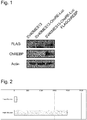
- pQCXIH FLAG ChREBP was further introduced into the SV40MES13-ChoRE-Luc cells in expectation of the sensitization of reporter assay using the SV40MES13-ChoRE-Luc cells to obtain the cell line: SV40MES13-ChoRE-Luc_FLAG-ChREBP for reporter assay.
- pQCXIH FLAG ChREBP was obtained as follows. mRNA was first extracted from pieces of the mouse liver using TRIzol Reagent (Thermo Fisher Scientific K.K.) according to the protocol attached to the kit, and the obtained mRNA was subjected to cDNA library preparation according to the protocol attached to the SuperScript III reverse transcriptase (Thermo Fisher Scientific K.K.). cDNA encoding ChREBP was obtained as an amplified fragment using this as a template and using the following primer set.
- the amplified fragment was subcloned according to the protocol attached to the pQCXIH-FLAG vector (Clontech Laboratories, Inc.).
- Fig. 1 shows the results of the Western blotting analysis of proteins derived from the cells SV40MES13, SV40MES13-ChoRE-Luc, and SV40MES13-ChoRE-Luc FLAG-ChREBP.
- anti-FLAG antibody Merck KGaA
- anti-ChREBP antibody Novus Biologicals, LLC
- SV40MES13-ChoRE-Luc_FLAG-ChREBP cells were subjected to plating per well of a Corning 384-well plate (Corning, Inc.) and cultured in DMEM medium for 1 day. On the next day, the medium was exchanged for high glucose (25 mM) DMEM medium. To this was added one compound so that the concentration was 20 ⁇ M, and culture was performed for 1 day. Then, the luciferase activity of each well was measured.
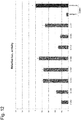
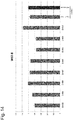
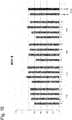
- Fig. 12 shows the results. It was confirmed that the test compounds suppress the expression of ChREBP in the cells cultured using the high glucose medium.
- Fig. 13 shows the results after tests as to compounds at a plurality of concentrations (the concentration is shown in terms of ⁇ M).
- iNOS transgenic mice ( Takamura T. et al., J Biol Chem. 1998; 273: 2493-2496 ; received from Emeritus Professor Hiroshi Okamoto, Tohoku University) were used as model mice.
- Compound 12 (D-532) was further orally administered to the experimental group in 6 mg/kg/day.
- the body weights were measured every day, and the blood sugar levels, the albumin in urine, and the creatinine in urine were measured in accordance with the usual method every 3 weeks.
- the groups were sacrificed after the breeding, the serum creatinine in the blood collected from the abdominal vena cava at the time of dissection was measured, and the gene expression in the kidneys collected at the time of dissection was analyzed.
- the kidney tissues were stained with HE and PAS and observed.
- the blood sugar level exhibited a significantly low value as compared with the control group ( Fig. 4 ).
- the amount of albumin excreted in urine also exhibited a significant low value in the compound 12 (D-532)-administered group as compared with the control group ( Fig. 5 ), and increase in blood creatinine in the model mice was significantly improved by the administration of the compound ( Fig. 6 ).
- ⁇ and ⁇ show the results of significant difference tests (Student's T-tests) with respect to the wild type mice (WT) and with respect to the positive control mice (iNOS), respectively [ ⁇ : p ⁇ 0.05, ⁇ : p ⁇ 0.01, ⁇ : p ⁇ 0.001 (with respect to ⁇ , the same are also meant)].
- a primer set used for the amplification of the TXNIP gene is as mentioned above.
- Fig. 10 and Fig. 11 show the results. As to ChREBP ⁇ and TXNIP, decrease in expression by D532 administration was observed.
- SV40MES13-ChoRE-Luc_FLAG-ChREBP cells were cultured in low glucose (5.5 mM) DMEM medium for 24 hours, the medium was then exchanged for high glucose (25 mM) DMEM media containing compounds (the experimental group), low glucose DMEM medium containing no compound and high glucose DMEM medium containing no compound (all corresponding to the control group), and the luciferase activities derived from the cells cultured for 24 hours after the exchange were measured according to the previous report.
- Fig. 14 shows the results.
- Fig. 15 shows the results after tests as to compounds at a plurality of concentrations (the concentration is shown in terms of ⁇ M).
- kidneys of model mice in the administered group and the non-administered group, and a mouse in the wild type group in Test Example 3 were placed in a prefixing solution containing 2% PFA (FUJIFILM Wako Pure Chemical Corporation; 163-20145)/ 2.5% glutaraldehyde (TAAB Laboratories Equipment Ltd.; G017/1)/ 0.1 M cacodylate buffer solution (FUJIFILM Wako Pure Chemical Corporation; 036-18175) and treated at room temperature for 2 hours.
- the prefixed kidneys were washed with 0.1 M cacodylate buffer solution (containing 8% sucrose (FUJIFILM Wako Pure Chemical Corporation: 196-00015)) on ice for 15 minutes ⁇ 4 times and treated with postfixing solution containing 1% osmium tetroxide (FUJIFILM Wako Pure Chemical Corporation; 154-01014) on ice for 90 minutes.
- the postfixed kidneys were washed with ultrapure water for 15 minutes ⁇ 3 times, placed in aqueous 50, 60, 70, 80, 90, and 95% ethanol solutions each for 10 minutes ⁇ 1 time, further in 100% ethanol for 20 minutes ⁇ 3 times, and subjected to ethanol dehydration.
- MNA propylene oxide/ EPON Resin
- D027 TAAB Laboratories Equipment Ltd.
- Epon 812 TAAB Laboratories Equipment Ltd.
- the prepared samples were sliced to a thickness of 200 to 300 nm with a Leica EM UC-7, mounted on slide glasses, extended at 80°C for 1 to 2 minutes, stained with toluidine blue (FUJIFILM Wako Pure Chemical Corporation; 535-05542) at 80°C for 1 to 2 minutes.
- the samples were observed with an optical microscope, portions observed by an electron microscope were selected, and the blocks were trimmed and then sliced to a thickness of 80 nm by Leica EM UC-7.
- the sliced specimens were placed on a grid, dried, reacted with 2% uranium acetate solution (FUJIFILM Wako Pure Chemical Corporation; 219-00692) for 8 minutes, and a mixed solution containing 1% lead acetate (TAAB Laboratories Equipment Ltd.; L021) / 1% lead nitrate (TAAB Laboratories Equipment Ltd.; L018) / 1% lead citrate (TAAB Laboratories Equipment Ltd.; L019) for 4 minutes. After drying, observation was performed at an accelerating voltage of 80 kV using a transmission electron microscope (H-7600, Hitachi High-Tech Corporation).
- db/db mice obtained by mating hetero mice (db/m+) was used as model mice.
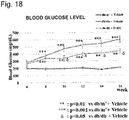
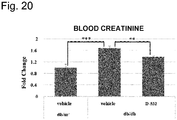
- Fig. 17 to Fig. 21 shows the results.
- the same effect as the effect observed using the model mice described in Test Example 3 ( Fig. 3 to Fig. 6 , and Fig. 9 ) was also confirmed when the db/db mice were used.
- ChREBP target gene expression analysis was performed by the same method as in Test Example 4.
- Fig. 22 and Fig. 23 show the results. Decrease in the expression by D532 administration was observed as to ChREBP ⁇ and TXNIP.
- the effect of the compound of the present invention was confirmed in both the test results using the iNOS mice generally understood also as a type I diabetic model and the test results using the db/db mice generally understood also as a type II diabetic model. This showed that the compound of the present invention has preventive and therapeutic effects on diabetic nephropathy developed as a complication regardless of the type of diabetes.
- D-532 Since the control group and the experimental group are greatly different in the gradient of the regression line, it is considered that the effect of D-532 on ACR is significant with respect to an effect of reducing the blood sugar level, namely D-532's effect of improving the ACR (effect of protecting the kidney) is not indirect change accompanying an effect of reducing the blood sugar level, and D-532 have a direct effect on the kidney.
Landscapes
- Chemical & Material Sciences (AREA)
- Organic Chemistry (AREA)
- Health & Medical Sciences (AREA)
- Engineering & Computer Science (AREA)
- Bioinformatics & Cheminformatics (AREA)
- Urology & Nephrology (AREA)
- Chemical Kinetics & Catalysis (AREA)
- General Chemical & Material Sciences (AREA)
- Medicinal Chemistry (AREA)
- Nuclear Medicine, Radiotherapy & Molecular Imaging (AREA)
- Pharmacology & Pharmacy (AREA)
- Life Sciences & Earth Sciences (AREA)
- Animal Behavior & Ethology (AREA)
- General Health & Medical Sciences (AREA)
- Public Health (AREA)
- Veterinary Medicine (AREA)
- Pharmaceuticals Containing Other Organic And Inorganic Compounds (AREA)
- Plural Heterocyclic Compounds (AREA)
Abstract
Description
- The present invention relates to a 1,3-dioxolane derivative, in particular a 2-phenyl-1,3-dioxolane derivative, and a pharmaceutically acceptable salt thereof. Moreover, the present invention relates to a pharmaceutical composition containing the compound or a salt thereof.
- The number of patients requiring hemodialysis is increasing steadily in recent years, which is recognized to be a social problem. Its causative diseases are chronic kidney diseases (CKDs) including diabetic nephropathy, chronic glomerulonephritis, and nephrosclerosis, and the execution of a comprehensive and effective measure against CKDs has been required to achieve a significant decrease in the number of patients introducing dialysis newly.
- Among them, diabetic nephropathy (DN) is a kidney disease which influences up to a maximum of 40% of type I or type II diabetics, and advances due to diabetes. DN is characterized by a progressive decrease in a renal function which results in albuminuria (protein in urine) and end-stage renal disease (ESRD), hypertension, and increases in the cardiovascular morbidity and the mortality. ESRD is a fatal symptom of a complete or almost complete loss of the kidney function, which requires dialysis or kidney transplantation. Research of means for treating chronic kidney disease has been reported (
Patent Literatures 1 to 4). - A compound having a 2-phenyl-1,3-dioxolane derivative is also used as a synthetic intermediate in addition to a use as an antifungal agent (Patent Literature 5).
-
- PTL 1:
Japanese Patent Laid-Open No. 2017-198689 - PTL 2:
Japanese Patent Laid-Open No. 2017-008081 - PTL 3: International Publication No.
WO 2016/190420 - PTL 4:
Japanese Translation of PCT International Application Publication No. 2015-534977 - PTL 5:
Japanese Translation of PCT International Application Publication No. 2002-535328 - In one aspect, an object of the present invention is to provide a new 1,3-dioxolane derivative, in particular a 2-phenyl-1,3-dioxolane derivative, and a pharmaceutically acceptable salt thereof. Moreover, an object of the present invention is to provide a pharmaceutical composition containing the compound.
- The present inventors have investigated earnestly to achieve the above-mentioned object and have completed the following present invention. The disclosure of the present specification includes inventions described in the following [1] to [10].
- [1] A compound represented by chemical formula (I):

- wherein R1 and R2 are each independently selected from a halogen atom, hydroxy, C1-6 alkyl, and C1-6 alkoxy;
- m and n are each independently an integer selected from 0 to 5;
- X is -CH2- or -C(=O)-; and
- Q is nitrogen-containing 5 to 9-membered heteroaryl attaching via a ring nitrogen atom,
- [2] The compound according to [1], wherein Q is nitrogen-containing 5-membered heteroaryl or nitrogen-containing 5-membered heteroaryl condensed with a benzene ring, the heteroaryl attaching via a ring nitrogen atom, or a pharmaceutically acceptable salt thereof.
- [3] The compound according to [1] or [2], wherein X is -CH2-, or a pharmaceutically acceptable salt thereof.
- [4] The compound according to any one of [1] to [3], wherein the compound is represented by chemical formula (1a):
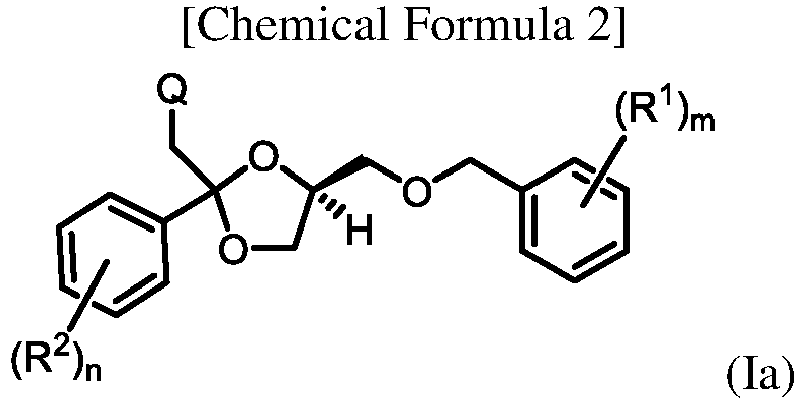
- wherein R1, R2, m, n, and Q are as already defined,
- or a pharmaceutically acceptable salt thereof.
- [5] The compound according to any one of [1] to [4], wherein n is an integer selected from 0 to 2, and R2 is a halogen atom, or a pharmaceutically acceptable salt thereof.
- [6] The compound according to any one of [1] to [5], wherein m is 0, or a pharmaceutically acceptable salt thereof.
- [7] The compound according to any one of [1] to [6], wherein Q is 1,2,3-benzotriazol-1-yl, 1,2,4-triazol-1-yl, or imidazolyl-1-yl, or a pharmaceutically acceptable salt thereof.
- [8] The compound according to [1], wherein the compound is selected from:
- 1-(((2S,4S)-4-((benzyloxy)methyl)-2-phenyl-1,3-dioxolan-2-yl)methyl)-1H-benzo[d][1,2,3]triazole;
- 1-(((4S)-4-((benzyloxy)methyl)-2-phenyl-1,3-dioxolan-2-yl)methyl)-1H-1,2,4-triazole;
- 1-(((2S,4S)-4-((benzyloxy)methyl)-2-(4-chlorophenyl)-1,3-dioxolan-2-yl)methyl)-1H-1,2,4-triazole;
- 1-(((2S,4S)-4-((benzyloxy)methyl)-2-(2,4-dichlorophenyl)-1,3-dioxolan-2-yl)methyl)-1H-1,2,4-triazole;
- 1-(((2R,4S)-4-((benzyloxy)methyl)-2-(4-chlorophenyl)-1,3-dioxolan-2-yl)methyl)-1H-1,2,4-triazole;
- 1-(((2S,4S)-4-((benzyloxy)methyl)-2-(4-chlorophenyl)-1,3-dioxolan-2-yl)methyl)-1H-imidazole;
- 1-(((2S,4S)-4-((benzyloxy)methyl)-2-(2,4-dichlorophenyl)-1,3-dioxolan-2-yl)methyl)-1H-imidazole;
- 1-(((4S)-4-((benzyloxy)methyl)-2-phenyl-1,3-dioxolan-2-yl)methyl)-1H-imidazole;
- 1-(((4S)-4-((benzoyloxy)methyl)-2-(2,4-dichlorophenyl)-1,3-dioxolan-2-yl)methyl)-1H-1,2,4-triazole; and
- 1-(((2R,4S)-4-((benzyloxy)methyl)-2-(4-chlorophenyl)-1,3-dioxolan-2-yl)methyl)-1H-imidazole,
- [9] A pharmaceutical composition comprising the compound according to any one of [1] to [8] or a pharmaceutically acceptable salt thereof.
- [10] The pharmaceutical composition according to [9], for use in treating chronic kidney disease.
- [11] The pharmaceutical composition according to [9] for use in treating a disease selected from diabetic nephropathy, glomerular injury, tubular injury, renal injury accompanying advanced age or related to dialysis, nephrosclerosis, nephrotoxicity, renal ischemia, primary vesicoureteral reflux, glomerulosclerosis, IgA-induced nephropathy, and hypertension-induced nephropathy.
- [12] A method for treating chronic kidney disease, comprising administering a therapeutically effective amount of the compound according to any one of [1] to [8] or a pharmaceutically acceptable salt thereof to a subject in need thereof.
- [13] A method for treating a disease, comprising administering a therapeutically effective amount of the compound according to any one of [1] to [8] or a pharmaceutically acceptable salt thereof to a subject in need thereof, wherein the disease is selected from diabetic nephropathy, glomerular injury, tubular injury, renal injury accompanying advanced age or related to dialysis, nephrosclerosis, nephrotoxicity, renal ischemia, primary vesicoureteral reflux, glomerulosclerosis, IgA-induced nephropathy, and hypertension-induced nephropathy.
- In one aspect, according to the present invention, a 2-phenyl-1,3-dioxolane derivative which has pharmacological activity, and can be used as an active ingredient of a medicament is provided. In another aspect, according to the present invention, means for treating chronic kidney disease is provided.
-
- [
Fig. 1] Fig. 1 shows the results of the Western blotting analysis of proteins derived from the cells SV40MES13, SV40MES13MES 13ChoRE# 4, and SV40MES13-ChoRE-Luc_FLAG-ChREBP. In the SV40MES13-ChoRE-Luc_FLAG-ChREBP cells, anti-FLAG antibody (Merck KGaA)- and anti-ChREBP antibody (Novus Biologicals, LLC)-positive bands were confirmed, and the expression of ChREBP protein derived from pQCXIH FLAG ChREBP was confirmed. - [
Fig. 2] Fig. 2 is a graph showing luciferase activity when SV40MES13-ChoRE-Luc_FLAG-ChREBP cells were cultured in low glucose (5.5 mM) or high glucose (25 mM) DMEM medium. - [
Fig. 3] Fig. 3 is a graph showing the transition of the average weights of mice in groups. - [
Fig. 4] Fig. 4 is a graph showing the transition of the blood sugar levels of mice in groups (average values). With respect to a WT mouse group, it is meant that **: p < 0.01 and ∗∗∗: p < 0.001. With respect to a non-administered group of iNOS mice, it is meant that δ: p < 0.05 and δδ: p < 0.01. Herein, it is meant that ∗: p < 0.05, ∗∗: p < 0.01, ∗∗∗: p < 0.001, δ: p < 0.05, δδ: p < 0.01, and δδδ: p < 0.001 (in the other figures, the same are also meant). - [
Fig. 5] Fig. 5 is a graph showing the transition of the amounts of albumin excreted in urine of mice in groups (average values). With respect to a WT mouse group, it is meant that ∗: p - < 0.05, ∗∗: p < 0.01. With respect to a non-administered group of iNOS mice, it is meant that δδ: p < 0.01, and δδδ: p < 0.001.
- [
Fig. 6] Fig. 6 is a graph showing the measurement results of the blood creatinine levels measured at the time of mouse dissection. It is meant that ∗∗: p < 0.01 and ∗∗∗: p < 0.001. - [
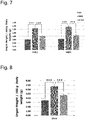
Fig. 7] Fig. 7 is a graph showing the measurement results of the kidney weights measured at the time of mouse dissection. It is meant that ∗∗∗: p < 0.001. - [
Fig. 8] Fig. 8 is a graph showing the measurement results of the liver weights measured at the time of mouse dissection. It is meant that ∗∗∗: p < 0.001. - [
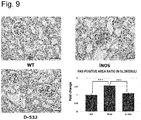
Fig. 9] Fig. 9 is photomicrographs of kidney tissues stained with PAS and a graph showing the PAS-positive area ratios in glomeruli. It is meant that ∗∗∗: p < 0.001. - [
Fig. 10] Fig. 10 is a graph showing the results obtained by analyzing the expression variations of the ChREBPβ gene, which is a target gene of ChREBP, in the kidney by quantitative PCR. It is meant that ∗: p < 0.05. - [
Fig. 11] Fig. 11 is a graph showing the results obtained by analyzing the expression variations of the TXNIP gene, which is a target gene of ChREBP, in the kidney by quantitative PCR. It is meant that ∗: p < 0.05. - [
Fig. 12] Fig. 12 is a graph showing the test results for confirming the effect of a compound according to the present invention on the expression amounts of carbohydrate-responsive element-binding protein (ChREBP). - [
Fig. 13] Fig. 13 is a graph showing the test results for confirming the effect of a compound according to the present invention on the expression amounts of carbohydrate-responsive element-binding protein (ChREBP) (the concentrations are shown in terms of µM). - [
Fig. 14] Fig. 14 is a graph showing the test results for confirming influence which a compound according to the present invention has on the cell survivabilities. - [
Fig. 15] Fig. 15 is a graph showing the test results for confirming influence which a compound according to the present invention has on the cell survivabilities (the concentrations are shown in terms of µM). - [
Fig. 16A] Fig. 16A is photographs showing the result obtained by observing a kidney tissue of a mouse in a wild type group by a transmission electron microscope. - [
Fig. 16B] Fig. 16B is photographs showing the result obtained by observing a kidney tissue of a model mouse in a non-administered group by a transmission electron microscope. - [
Fig. 16C] Fig. 16C is photographs showing the result obtained by observing a kidney tissue of a model mouse in a D-532-administered group by a transmission electron microscope. - [
Fig. 17] Fig. 17 is a graph showing the transition of the average weights of db/db mice in groups. With respect to a db/m+ mouse group, it is meant that ∗∗∗: p < 0.001. With respect to a non-administered group of db/db mice, it is meant that δ: p < 0.05. - [
Fig. 18] Fig. 18 is a graph showing the transition of the blood sugar levels of db/db mice in groups (average values). With respect to a db/m+ mouse group, it is meant that ∗∗: p < 0.01, and ∗∗∗: p < 0.001. With respect to a non-administered group of db/db mice, it is meant that δ: p < 0.05. - [
Fig. 19] Fig. 19 is a graph showing the transition of the amounts of albumin excreted in urine of mice in groups (average values). With respect to a db/m+ mouse group, it is meant that ∗: p < 0.05, ∗∗: p < 0.01, and ∗∗∗: p < 0.001. With respect to a non-administered group of db/db mice, it is meant that δ: p < 0.05, and δδ: p < 0.01. - [
Fig. 20] Fig. 20 is a graph showing the measurement results of the blood creatinine levels measured at the time of mouse dissection. It is meant that ∗∗: p < 0.01, and ∗∗∗: p< 0.001. - [
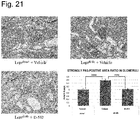
Fig. 21] Fig. 21 is photomicrographs of kidney tissues stained with PAS and a graph showing the PAS-positive area ratios in glomeruli. It is meant that ∗∗∗: p < 0.001. - [
Fig. 22] Fig. 22 is a graph showing the results obtained by analyzing the expression variations of the ChREBPβ gene, which is a target gene of ChREBP, in the kidney by quantitative PCR. It is meant that ∗: p < 0.05, and ∗∗: p < 0.01. - [
Fig. 23] Fig. 23 is a graph showing the results obtained by analyzing the expression variations of the TXNIP gene, which is a target gene of ChREBP, in the kidney by quantitative PCR. It is meant that ∗: p < 0.05. - [
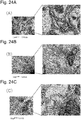
Fig. 24A] Fig. 24A is photographs showing the result obtained by observing a kidney tissue of a hetero mouse (db/m+) by a transmission electron microscope. - [
Fig. 24B] Fig. 24B is photographs showing the result obtained by observing a kidney tissue of a db/db mouse in a non-administered group by a transmission electron microscope. - [
Fig. 24C] Fig. 24C is photographs showing the result obtained by observing a kidney tissue of a db/db mouse in a D-532-administered group by a transmission electron microscope. - [
Fig. 25] Fig. 25 is a graph showing the results obtained by creating a scatter diagram as to the blood sugar levels and the amounts of albumin excreted in urine (ACR) of an experimental group and a control group in Test Example 7 using SPSS, which is statistical analysis software, so that the abscissa axis is the blood sugar level, and the ordinate axis is the ACR and finding regression lines (linear approximation by the least squares method). - Hereinafter, the present invention will be described further specifically.
- As used herein, the "C1-6 alkyl" means a linear, branched, cyclic, or partially cyclic alkyl group having 1 to 6 carbon atoms. Examples thereof include methyl, ethyl, n-propyl, i-propyl, n-butyl, s-butyl, i-butyl, t-butyl, n-pentyl, 3-methylbutyl, 2-methylbutyl, 1-methylbutyl, 1-ethylpropyl, n-hexyl, 4-methylpentyl, 3-methylpentyl, 2-methylpentyl, 1-methylpentyl, 3-ethylbutyl, 2-ethylbutyl, cyclopropyl, cyclobutyl, cyclopentyl, cyclohexyl, and cyclopropyl methyl. Examples thereof also include C1-4 alkyl and C1-3 alkyl.
- As used herein, the "C1-6 alkoxy" means an alkyloxy group with the alkyl group having 1 to 6 carbon atoms and already defined as an alkyl moiety [-O-(C1-6 alkyl)]. Examples thereof include methoxy, ethoxy, n-propoxy, i-propoxy, n-butoxy, s-butoxy, i-butoxy, t-butoxy, n-pentoxy, 3-methylbutoxy, 2-methylbutoxy, 1-methylbutoxy, 1-ethylpropoxy, n-hexyloxy, 4-methylpentoxy, 3-methylpentoxy, 2-methylpentoxy, 1-methylpentoxy, 3-ethylbutoxy, cyclopentyloxy, cyclohexyloxy, and cyclopropylmethyloxy. Examples thereof also include C1-4 alkoxy and C1-3 alkoxy.
- As used herein, the "halogen atom" means a halogen atom such as a fluorine atom, a chlorine atom, a bromine atom, or an iodine atom as a substituent.
- As used herein, the "nitrogen-containing 5 to 9-membered heteroaryl attaching via a nitrogen atom" means nitrogen-containing 5 to 9-membered heteroaryl bound to CH2 through the ring nitrogen atom. The heteroaryl group may contain one or more heteroatoms selected from an oxygen atom, a nitrogen atom, and a sulfur atom in addition to the nitrogen atom at the binding point. Examples thereof include 1-pyrrolyl, 1-pyrazolyl, 1-imidazolyl, 1,2,4-triazol-1-yl, 1,2,4-triazol-4-yl, 1-tetrazolyl, 1-indolyl, 2-isoindolyl, 1-indazolyl, 2-indazolyl, 1-benzimidazole, 1,2,3-benzotriazol-1-yl, and purin-7-yl.
- As used herein, the "nitrogen-containing 5-membered heteroaryl attaching via a nitrogen atom" means nitrogen-containing 5-membered heteroaryl bound to CH2 through the ring nitrogen atom. The heteroaryl group may contain one or more heteroatoms selected from an oxygen atom, a nitrogen atom, and a sulfur atom in addition to the nitrogen atom at the binding point. Examples thereof include 1-pyrrolyl, 1-pyrazolyl, 1-imidazolyl, 1,2,4-triazol-1-yl, 1,2,4-triazol-4-yl, and 1-tetrazolyl.
- As used herein, the "nitrogen-containing 5-membered heteroaryl attaching via a nitrogen atom" means nitrogen-containing 5-membered heteroaryl bound to CH2 through the ring nitrogen atom. The heteroaryl group may contain one or more heteroatoms selected from an oxygen atom, a nitrogen atom, and a sulfur atom in addition to the nitrogen atom at the binding point. Examples thereof include 1-pyrrolyl, 1-pyrazolyl, 1-imidazolyl, 1,2,4-triazol-1-yl, 1,2,4-triazol-4-yl, and 1-tetrazolyl.
- Examples of the halogen atom include a fluorine atom, a chlorine atom, a bromine atom, and an iodine atom.
- In chemical formula (I), when m is 0, it is meant that R1 is absent, and when n is 0, it is meant that R2 is absent.
- When the compound of chemical formula (I) or a pharmaceutically acceptable salt thereof forms a solvate such as a hydrate, the present invention can be implemented using the solvate. Moreover, the compound of the present invention or a pharmaceutically acceptable salt thereof can be implemented as appropriate as a mixture, a solution, crystal polymorphism, or the like.
- As the compound of the present invention, compounds described in the Examples herein can be used, and more specifically, the following compounds can be used.
- As long as the "pharmaceutically acceptable salt" of the compound of chemical formula (I) is a salt which can be used as a medicament, the "pharmaceutically acceptable salt" of the compound of chemical formula (I) is not particularly limited. Examples of a salt which the compound of the present invention forms with a base include salts with inorganic bases such as sodium, potassium, magnesium, calcium, and aluminum; and salts with organic bases such as methylamine, ethylamine, and ethanolamine. The salt may be an acid addition salt. Specific examples of such a salt include acid addition salts with mineral acids such as hydrochloric acid, hydrobromic acid, hydroiodic acid, sulfuric acid, nitric acid, and phosphoric acid; and with organic acids such as formic acid, acetic acid, propionic acid, oxalic acid, malonic acid, succinic acid, fumaric acid, maleic acid, lactic acid, malic acid, tartaric acid, citric acid, methanesulfonic acid, and ethanesulfonic acid.
- Each of atoms (for example, a hydrogen atom, a carbon atom, an oxygen atom, a nitrogen atom, a sulfur atom, and the like) contained in the compound represented by chemical formula (I) may be an isotope atom other than an isotope which is the most abundant in nature. The isotope atom may be a radioactive isotope atom. That is, according to one aspect of the present invention, the compound of chemical formula (I) already defined herein and labeled with the isotope atom or the salt thereof is provided. Here, the labeling with the isotope atom may be, for example, labeling with a radioactive isotope (3H, 14C, 32P, or the like), and is preferably labeling with 3H from the aspect of the ease of the preparation of the compound.
- In one aspect of the present invention, the compound of chemical formula (I), an enantiomer thereof, a diastereomer thereof, or a pharmaceutically acceptable salt thereof is administered as a prodrug, and is converted into an active compound in the living body.
- The pharmaceutical composition of the present invention can be prepared as various dosage forms, for example, for oral administration, a tablet, a capsule, a powder, a granule, a pill, a liquid, an emulsion, a suspension, a solution, a spirit, a syrup, an extract, and an elixir; as a parenteral, for example, injections such as a subcutaneous injection, an intravenous injection, an intramuscular injection, and an intraperitoneal injection; endermic administration or a patch, ointment or a lotion; a sublingual agent and a intraoral patch for intraoral administration; and an aerosol for nasal administration. The pharmaceutical composition of the present invention is not limited to these. These preparations can be produced by a known method usually used in a formulation step.
- The pharmaceutical composition can contain various components used generally, and can contain, for example, one or more pharmaceutically acceptable excipients, disintegrants, diluents, lubricants, perfuming agents, coloring agents, sweeteners, flavoring agents, suspending agents, wetting agents, emulsifiers, dispersants, adjuvants, antiseptics, buffers, binders, stabilizers, coating agents, and the like. The pharmaceutical composition of the present invention may be a long acting or sustained-release dosage form.
- The dose of the pharmaceutical composition of the present invention can be suitably selected depending on the administration route, the somatotype, the age, the physical condition, the degree of the disease, elapsed time after the onset of the disease of the patient or the like, and the pharmaceutical composition of the present invention can contain a therapeutically effective amount and/or a prophylactically effective amount of the compound of the above-mentioned chemical formula (I). In the present invention, the compound of the above-mentioned chemical formula (I) can be used in a dose of generally 1 to 1000 mg/day/adult, for example, 1 to 200 mg/day/adult, specifically 5 to 100 mg/day/adult, and more specifically 10 to 50 mg/day/adult. The administration of the pharmaceutical composition may be a single administration or multiple administrations.
- The pharmaceutical composition of the present invention may contain conventionally known components such as a coloring agent, a preservative, a perfume, a flavor, a coating agent, an antioxidant, vitamins, amino acids, peptides, proteins, and minerals (iron, zinc, magnesium, iodine, and the like) if needed. The pharmaceutical composition of the present invention may be prepared in a form suitable for oral administration, for example a form such as various solid preparations such as a granule (including dry syrups), a capsule (soft capsules and hard capsules), a tablet (including chewable agent), a powder (powder medicines), and a pill and a liquid preparation such as a liquid for internal use (including a liquid, suspension, and syrup).
- Examples of an additive for formulation include excipients, lubricants, binders, disintegrants, fluidizing agents, dispersants, wetting agents, antiseptics, thickeners, pH adjusters, coloring agents, correctives, surfactants, and solubilizing agents. In the case of the form of a liquid, thickening agents such as pectin, xanthan gum, and guar gum can be blended. A coating agent may be used to prepare a coated tablet, or a pasty glue. Moreover, even in the case of preparation into other forms, conventional methods may be followed.
- The treatment method or preventive method of the present invention may be implemented based on the above-mentioned description. The subject receiving the compound of chemical formula (I) or a pharmaceutically acceptable salt thereof is, for example, a mammal, such as human.
- The present invention will be described in further detail hereinafter by showing the Examples; however, the present invention is not limited to these Examples.
-


- PLC plates of 20 × 20 cm (silica gel 60 F254, 0.5 mm) of Merck KGaA were cut to 10 × 20 cm, and approximately 10 mg of the diastereomer mixture separated by column chromatography was applied to each cut plate. This was developed with a mixed solvent of ethyl acetate/hexane = 1/2, and the portions corresponding to D-532 and the diastereomer thereof were then shaven off separately, extracted with ethyl acetate to obtain the object and the diastereomer thereof.
- D-532: [α]D25 + 14.5 (c 0.466, CHCl3); 1H-NMR (700 MHz, CDCl3) δ: 8.04 (dt, J = 8.4 Hz, 0.7 Hz, 1H), 7.66 (dt, J = 8.4 Hz, 0.7 Hz, 1H), 7.57-7.54 (m, 2H), 7.46 (ddd, J = 11.7 Hz, 6.7 Hz, 0.7 Hz, 1H), 7.36-7.33 (m, 4H), 7.28-7.23 (m, 1H), 7.15-7.13 (m, 1H), 4.93 (dd, J = 21.7 Hz, 14.7 Hz, 2H), 4.36 (dd, J = 11.9 Hz, 7.7 Hz, 2H), 3.81-3.77 (m, 1H), 3.72 (dd, J = 8.4 Hz, 7.0 Hz, 1H), 3.52 (dd, J = 8.4 Hz, 7.0 Hz, 2H), 3.39 (dd, J = 9.8 Hz, 6.0 Hz, 1H), 3.20 (dd, J = 10.5 Hz, 8.1 Hz, 1H); 13C-NMR (175 MHz, CDCl3) δ: 145.7, 140.1, 137.7, 133.9, 128.9, 128.4, 128.3, 127.6, 127.5, 127.3, 125.6, 123.6, 119.6, 76.4, 73.2, 70.1, 68.0, 55.9; MS (EI) calculated for C24H23N3O3 [M-1]+: 400.1739, found: 400.1686.
- Diastereomer of D-532: [α]D25 + 13.9 (c 0.505, CHCl3); 1H-NMR (700 MHz, CDCl3) δ: 8.04 (dt, J = 8.4 Hz, 0.7 Hz, 1H), 7.69 (dt, J = 8.4 Hz, 0.7 Hz, 1H), 7.58-7.56 (m, 2H), 7.46 (ddd, J = 7.4 Hz, 4.2 Hz, 0.7 Hz, 1H), 7.39-7.25 (m, 7H), 7.16-7.15 (m, 2H), 4.96 (dd, J = 30.5 Hz, 14.7 Hz, 2H), 4.26 (m, 2H), 4.16-4.12 (m, 2H), 3.76 (dd, J = 8.4 Hz, 6.3 Hz, 1H), 3.44 (dd, J = 8.4 Hz, 4.9 Hz, 1H), 2.89 (dd, J = 9.8 Hz, 5.6 Hz, 1H), 2.70 (dd, J = 9.8 Hz, 5.6 Hz, 1H); 13C-NMR (175 MHz, CDCl3) δ: 145.6, 139.2, 137.6, 134.2, 129.1, 128.6, 128.3, 127.69, 127.67, 127.0, 125.9, 123.6, 119.5, 111.1, 109.0, 75.2, 73.3, 70.2, 67.3, 54.9; MS (EI) calculated for C24H23N3O3 [M]+: 401.1739, found: 401.1731.
- The following compounds were prepared by the same technique as in Example 1 using the corresponding acetophenone derivative and/or 1,2-propanediol derivative as a starting material.
-

- D-531(mixture, ~2:1): IR (neat): 3062, 2954, 2897, 1720, 1602, 1584, 1506, 1450, 1365, 1315 cm-1; 1H-NMR (400 MHz, CDCl3) δ: 8.15 (s, 1H, major), 8.13 (s, 1H, minor), 7.93 (s, 1H, major), 7.90 (s, 1H, minor), 7.70-7.68 (m, 2H), 7.52-7.46 (m, 4H), 7.33-7.24 (m, 8H), 7.17 (d, J = 6.8 Hz, 1H), 4.49 (s, 2H, major), 4.45 (s, 2H, minor), 4.30-4.28 (m, 1H), 4.21-4.15 (m, 2H), 4.06-3.98 (m, 1H), 3.92 (t, J = 8.2 Hz, 1H, minor), 3.73 (t, J = 8.2 Hz, 1H, major), 3.55 (t, J = 8.2 Hz, 1H, minor), 3.41 (dd, J = 10.1 Hz, 5.8 Hz, 1H, minor), 3.23 (dd, J = 9.9 Hz, 5.8 Hz, 1H, minor) ; 13C-NMR (100 MHz, CDCl3) δ: 166.0, 15.3, 151.2, 144.5, 139.8, 139.5, 133.0, 129.3, 129.0, 128.9, 128.5, 128.4, 128.3, 128.2, 127.7, 127.5, 125.5, 108.5, 108.1, 96.1, 84.3, 76.6, 75.7, 73.3, 70.2, 67.9, 67.0, 63.2, 60.4, 56.8 ; MS (FAB) calculated for C20H22N3O3 [M+H]+: 352.1583, found: 352.1643.
-

- D-546: [α]D24 + 10.6 (c 0.292, CHCl3); IR (neat): 2865, 2359, 1717, 1598, 1506, 1491, 1453, 1399, 1356 cm-1; 1H-NMR (400 MHz, CDCl3) δ: 8.13 (s, 1H), 7.90 (s, 1H), 7.40 (d, J = 8.8 Hz, 2H), 7.31-7.27 (m, 4H), 7.17 (d, J = 7.8 Hz, 1H), 4.46 (s, 2H), 4.41 (s, 2H), 4.07 (quin, J = 5.9 Hz, 1H), 3.94 (dd, J = 8.3 Hz, 6.3 Hz, 1H), 3.58 (t, J = 8.3 Hz, 1H), 3.40 (dd, J = 10.2 Hz, 5.6 Hz, 1H), 3.26 (dd, J = 10.2 Hz, 5.4 Hz, 1H) ; 13C-NMR (100 MHz, CDCl3) δ: 151.4, 144.5, 138.4, 137.5, 135.0, 128.7, 128.4, 127.8, 127.6, 127.1, 107.8, 76.8, 73.4, 69.9, 67.9, 56.7 ; MS (FAB) calculated for C20H21ClN3O3 [M+H]+: 386.1193, found: 386.1261.
-
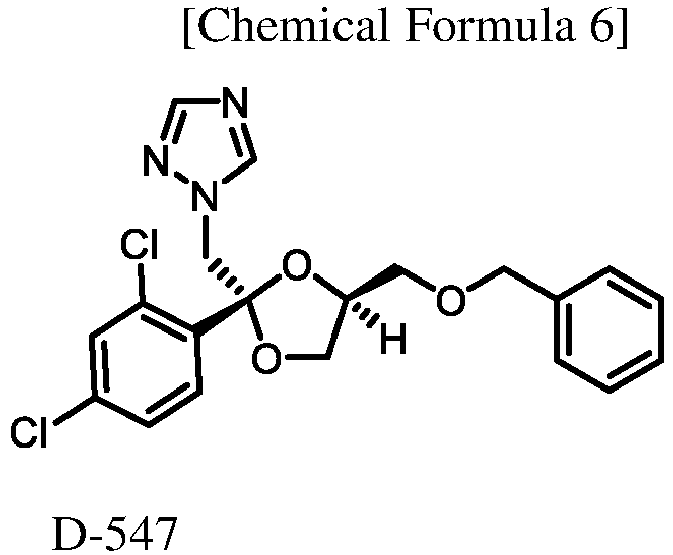
- D-547: [α]D26 + 7.23 (c 0.493, CHCl3); IR (neat): 2865, 1718, 1586, 1557, 1506, 1453, 1378, 1314 cm-1; 1H-NMR (400 MHz, CDCl3) δ: 8.16 (s, 1H), 7.89 (s, 1H), 7.52 (d, J = 8.8 Hz, 1H), 7.41 (d, J = 2.0 Hz, 1H), 7.32-7.25 (m, 3H), 7.16-7.13 (m, 3H), 4.72 (dd, J = 16.8 Hz, 15.1 Hz, 2H), 4.41 (s, 2H), 4.08-4.02 (m, 1H), 3.95 (dd, J = 8.3 Hz, 5.9 Hz, 1H), 3.65 (t, J = 8.3 Hz, 1H), 3.43 (dd, J = 10.2 Hz, 4.9 Hz, 1H), 3.34 (dd, J = 10.2 Hz, 5.4 Hz, 1H) ; 13C-NMR (100 MHz, CDCl3) δ: 137.5, 135.7, 15.2, 132.9, 131.1, 129.4, 128.4, 128.3, 127.8, 127.5, 127.1, 107.6, 76.8, 69.4, 67.6, 54.4 ; MS (FAB) calculated for C20H20Cl2N3O3 [M+H]+: 420.0803, found: 420.0860.
-
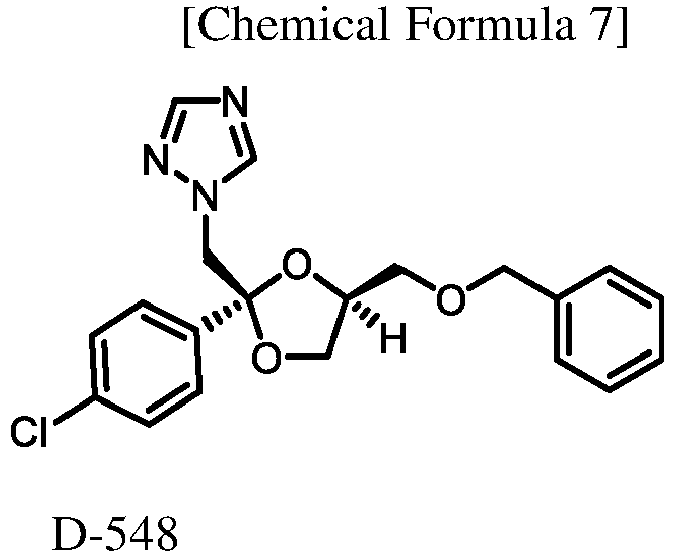
- D-548: IR (neat): 3031, 2889, 1722, 1598, 1506, 1491, 1453, 1420, 1399, 1365 cm-1; 1H-NMR (400 MHz, CDCl3) δ: 8.15 (s, 1H), 7.88 (s, 1H), 7.43-7.24 (m, 7H), 7.17 (d, J = 10.6 Hz, 2H), 4.49 (d, J = 10.1 Hz, 2H), 4.46 (d, J = 13.5 Hz, 2H), 4.18 (quin, J = 5.8 Hz, 1H), 3.81 (t, J = 8.2 Hz, 1H), 3.64 (dd, J = 8.7 Hz, 5.3 Hz, 1H), 3.27 (dd, J = 9.7 Hz, 5.8 Hz, 1H), 3.11 (dd, J = 9.7 Hz, 5.8 Hz, 1H) ; 13C-NMR (100 MHz, CDCl3) δ: 151.2, 144.7, 137.6, 137.5, 135.2, 128.8, 128.5, 127.9, 127.8, 127.3, 107.7, 77.2, 75.3, 73.5, 70.0, 67.4, 55.9 ; MS (EI) calculated for C20H20ClN3O3 [M]+: 385.1193, found: 385.1187.
-

- D-552: IR (neat): 3031, 2865, 1721, 1599, 1505, 1491, 1453, 1399 cm-1; 1H-NMR (400 MHz, CDCl3) δ: 7.41-7.20 (m, 8H), 7.13 (d, J = 7.8 Hz, 2H), 6.96 (s, 1H), 6.90 (s, 1H), 4.37 (s, 2H), 4.06 (s, 2H), 3.98 (quin, J = 5.9 Hz, 1H), 3.80 (dd, J= 8.0 Hz, 6.3 Hz, 1H), 3.49 (t, J = 7.3 Hz, 1H), 3.31 (dd, J = 10.2 Hz, 5.9 Hz, 1H), 3.21 (dd, J = 10.2 Hz, 5.4 Hz, 1H); 13C-NMR (100 MHz, CDCl3) δ: 138.9, 138.6, 137.5, 134.8, 133.2, 129.5, 128.7, 128.5, 128.4, 128.3, 127.8, 127.6, 127.0, 120.1, 108.0, 76.8, 73.3, 69.9, 67.8, 54.7; MS (FAB) calculated for C21H22ClN2O3 [M+H]+: 385.1241, found: 385.1313.
-

- D-555: IR (neat): 3064, 3030, 2897, 1721, 1586, 1557, 1505, 1466, 1435, 1377, 1313 cm-1; 1H-NMR (400 MHz, CDCl3) δ: 7.57-7.53 (m, 2H), 7.40 (d, J = 1.9 Hz, 1H), 7.33-7.27 (m, 3H), 7.17-7.13 (m, 3H), 7.01 (s, 1H), 6.97 (s, 1H), 4.41 (s, 2H), 4.39 (d, J = 3.9 Hz, 2H), 3.99 (quin, J = 5.8 Hz, 1H), 3.83 (dd, J = 8.0 Hz, 6.3 Hz, 1H), 3.59 (t, J = 7.7 Hz, 1H), 3.39 (dd, J = 10.1 Hz, 5.3 Hz, 1H), 3.31 (dd, J = 10.4 Hz, 4.8 Hz, 1H) ; 13C-NMR (100 MHz, CDCl3) δ: 138.7, 137.6, 135.6, 135.5, 132.7, 131.0, 129.4, 129.3, 128.5, 128.34, 128.27, 127.7, 127.5, 127.0, 120.9, 107.9, 76.8, 73.4, 69.4, 67.6, 52.2 ; MS (FAB) calculated for C21H21Cl2N2O3 [M+H]+: 419.0851, found: 419.0913.
-


- D-557(mixture, ~3:1): IR (neat): 3061, 3030, 2887, 1721, 1602, 1505, 1449, 1386, 1314 cm-1; 1H-NMR (400 MHz, CDCl3) δ: 7.45-7.43 (m, 4H), 7.34-7.23 (m, 7H), 6.94 (s, 1H), 6.91 (s, 1H), 4.49 (d, J = 12.1 Hz, 1H), 4.41 (d, J= 12.1 Hz, 1H), 4.17-4.13 (m, 3H), 3.77 (t, J= 7.7 Hz, 1H), 3.49 (dd, J = 8.2 Hz, 5.3 Hz, 1H), 3.20 (dd, J = 9.7 Hz, 6.3 Hz, 1H), 3.03 (dd, J = 9.9 Hz, 5.8 Hz, 1H) ; 13C-NMR (100 MHz, CDCl3) δ: 139.5, 138.8, 137.7, 133.3, 129.7, 129.0, 128.9, 128.54, 128.47, 128.44, 128.41, 128.3, 127.83, 127.78, 125.71, 125.68, 121.1, 108.3, 75.3, 74.2, 73.4, 70.4, 67.4, 67.1, 64.2, 53.9 ; MS (EI) calculated for C21H22N2O3 [M]+: 350.1630, found: 350.1651.
-

- D-535: [α]D26 + 14.5 (c 0.303, CHCl3); IR (neat): 2919, 1721, 1586, 1557, 1506, 1466, 1451, 1378, 1315 cm-1; 1H-NMR (400 MHz, CDCl3) δ: 8.18 (s, 1H), 7.91 (s, 1H), 7.69 (dd, J = 8.5 Hz, 0.98 Hz, 2H), 7.56-7.52 (m, 2H), 7.37-7.33 (m, 2H), 7.12 (dd, J = 8.5 Hz, 2.0 Hz, 1H), 4.73 (s, 2H), 4.46 (dd, J = 11.2, 3.4 Hz, 1H), 4.22-4.16 (m, 2H), 4.04-4.01 (m, 1H) ; 13C-NMR (100 MHz, CDCl3) δ: 200.2, 165.9, 15.6, 135.8, 134.8, 133.3, 133.1, 131.2, 129.4, 129.1, 128.3, 127.2, 108.0, 75.9, 66.8, 62.4, 54.4, 52.1 ; MS (FAB) calculated for C20H18Cl2N3O4 [M+H]+: 434.0596, found: 434.0673.
-

- D-534: IR (neat): 3031, 2886, 1721, 1598, 1505, 1490, 1453, 1434, 1399 cm-1; 1H-NMR (400 MHz, CDCl3) δ: 7.44 (s, 1H), 7.40-7.26 (m, 9H), 6.98 (s, 1H), 6.91 (s, 1H), 4.52 (d, J = 12.2 Hz, 1H), 4.44 (d, J= 12.2 Hz, 1H), 4.20-4.13 (m, 3H), 3.54 (dd, J = 7.8, 6.8 Hz, 1H), 3.54 (dd, J= 8.3, 5.4 Hz, 1H), 3.24 (dd, J = 10.0, 6.3 Hz, 1H), 3.09 (dd, J = 9.8 Hz, 5.4 Hz, 1H) ; 13C-NMR (100 MHz, CDCl3) δ: 138.7, 138.0, 137.7, 137.0, 135.0, 129.7, 128.8, 128.7, 128.5, 128.42, 128.36, 127.8, 127.2, 121.0, 77.2, 76.7, 75.4, 74.3, 73.4, 70.2, 67.4, 53.8 ; MS (EI) calculated for C21H21ClN2O3 [M]+: 384.1241, found: 384.1242.
- The following cells were produced to perform assay as to the expression of carbohydrate-responsive element-binding protein (abbreviated name: ChREBP).
- An ACC ChoRE/PK-luc reporter plasmid (Stoeckman et al (2004) ) was obtained from Dr. Howard C. Towle at the University of Minnesota. The insertion of the above-mentioned plasmid was subcloned according to the protocol attached to the pGL4.15 vector (Promega Corporation). The obtained expression vector was introduced into SV40 MES13 cells (ATCC Corporation) according to the protocol attached to pGL4.15 vector to obtain SV40MES13-ChoRE-Luc cells.
- Moreover, pQCXIH FLAG ChREBP was further introduced into the SV40MES13-ChoRE-Luc cells in expectation of the sensitization of reporter assay using the SV40MES13-ChoRE-Luc cells to obtain the cell line: SV40MES13-ChoRE-Luc_FLAG-ChREBP for reporter assay.
- pQCXIH FLAG ChREBP was obtained as follows. mRNA was first extracted from pieces of the mouse liver using TRIzol Reagent (Thermo Fisher Scientific K.K.) according to the protocol attached to the kit, and the obtained mRNA was subjected to cDNA library preparation according to the protocol attached to the SuperScript III reverse transcriptase (Thermo Fisher Scientific K.K.). cDNA encoding ChREBP was obtained as an amplified fragment using this as a template and using the following primer set.
- Forward: 5'-ATGCATCTCGAGATGGCGCGCGCGCTGGCGGATCTA-3',
- Reverse: 5'-ATGCATGCGGCCGCTTATAATGGTCTCCCCAGGGTGCC-3'.
- The amplified fragment was subcloned according to the protocol attached to the pQCXIH-FLAG vector (Clontech Laboratories, Inc.).
-
Fig. 1 shows the results of the Western blotting analysis of proteins derived from the cells SV40MES13, SV40MES13-ChoRE-Luc, and SV40MES13-ChoRE-Luc FLAG-ChREBP. In the SV40MES13-ChoRE-Luc_FLAG-ChREBP cells, anti-FLAG antibody (Merck KGaA)- and anti-ChREBP antibody (Novus Biologicals, LLC)-positive bands were confirmed, and the expression of ChREBP protein derived from pQCXIH FLAG ChREBP was confirmed. - When the luciferase activity at the time of culturing the SV40MES13-ChoRE-Luc_FLAG-ChREBP cells in low glucose (5.5 mM) or high glucose (25 mM) DMEM medium was measured according to a previous report (Biochemical and Biophysical Research Communications 489 (2017) 21-28), a remarkable difference in activity between the two groups was confirmed.
Fig. 2 shows the results. - First, 104 SV40MES13-ChoRE-Luc_FLAG-ChREBP cells were subjected to plating per well of a Corning 384-well plate (Corning, Inc.) and cultured in DMEM medium for 1 day. On the next day, the medium was exchanged for high glucose (25 mM) DMEM medium. To this was added one compound so that the concentration was 20 µM, and culture was performed for 1 day. Then, the luciferase activity of each well was measured.
Fig. 12 shows the results. It was confirmed that the test compounds suppress the expression of ChREBP in the cells cultured using the high glucose medium.Fig. 13 shows the results after tests as to compounds at a plurality of concentrations (the concentration is shown in terms of µM). - iNOS transgenic mice (Takamura T. et al., J Biol Chem. 1998; 273: 2493-2496; received from Emeritus Professor Hiroshi Okamoto, Tohoku University) were used as model mice. According to the literature of Takamura et al., breeding in which 4-week-old model mice (experimental group: n = 8, control group: n = 6) and a wild type group (n = 8), which is non-transgenic mice born simultaneously with the model mice by mating iNOS transgenic mice and wild type (CD1 (ICR)) mice, were fed with high protein and high calorie diets was performed for 13 weeks. Compound 12 (D-532) was further orally administered to the experimental group in 6 mg/kg/day. As to the groups, the body weights were measured every day, and the blood sugar levels, the albumin in urine, and the creatinine in urine were measured in accordance with the usual method every 3 weeks. The groups were sacrificed after the breeding, the serum creatinine in the blood collected from the abdominal vena cava at the time of dissection was measured, and the gene expression in the kidneys collected at the time of dissection was analyzed. The kidney tissues were stained with HE and PAS and observed.
- In the compound 12 (D-532)-administered group, the blood sugar level exhibited a significantly low value as compared with the control group (
Fig. 4 ). The amount of albumin excreted in urine also exhibited a significant low value in the compound 12 (D-532)-administered group as compared with the control group (Fig. 5 ), and increase in blood creatinine in the model mice was significantly improved by the administration of the compound (Fig. 6 ). As to bothFig. 4 andFig. 5 , ∗ and δ show the results of significant difference tests (Student's T-tests) with respect to the wild type mice (WT) and with respect to the positive control mice (iNOS), respectively [∗: p < 0.05, ∗∗: p < 0.01, ∗∗∗: p < 0.001 (with respect to δ, the same are also meant)]. - Although increase in the weights of the livers and the kidneys was confirmed in the model mice, it was significantly improved in the compound-administered group. Further, the PSA-stained tissue section images were subjected to ImageJ (http://imagej.nih.gov/ij/) and measured according to the operation manual attached to ImageJ. When each glomerulus area (each group, n = 100) and an area obtained by excluding regions of no interest such as vascular lumens and nuclei from the each glomerulus area were found, and the ratio therebetween, namely the PAS-positive area ratio in glomeruli, was found, the ratio increased in the model mice, and the improvement was meanwhile confirmed in the administered group.
- In the mice used in Test Example 3, the expression variations of ChREBPβ and the TXNIP genes, which are target genes of ChREBP in the kidney, were analyzed by quantitative PCR in the method of the previous report (Genes to Cells 19 (2013) 52-65). The following primer set was used for the amplification of ChREBPβ.
- Forward: 5'-TCTGCAGATCGCGTGGAG-3'
- Reverse: 5'-CTTGTCCCGGCATAGCAAC-3'
- A primer set used for the amplification of the TXNIP gene is as mentioned above.
- Forward: 5'-GTCAGTGTCCCTGGCTCCAAGA-3'
- Reverse: 5'-AGCTCATCTCAGAGCTCGTCCG-3'
-
Fig. 10 and Fig. 11 show the results. As to ChREBPβ and TXNIP, decrease in expression by D532 administration was observed. - Cell survivability tests were performed using SV40MES13-ChoRE-Luc_FLAG-ChREBP cells and using the method for measuring luciferase activity described in the previous report (Biochemical and Biophysical Research Communications 489 (2017) 21-28). SV40MES13-ChoRE-Luc_FLAG-ChREBP cells were cultured in low glucose (5.5 mM) DMEM medium for 24 hours, the medium was then exchanged for high glucose (25 mM) DMEM media containing compounds (the experimental group), low glucose DMEM medium containing no compound and high glucose DMEM medium containing no compound (all corresponding to the control group), and the luciferase activities derived from the cells cultured for 24 hours after the exchange were measured according to the previous report.
Fig. 14 shows the results. Moreover,Fig. 15 shows the results after tests as to compounds at a plurality of concentrations (the concentration is shown in terms of µM). - The kidneys of model mice in the administered group and the non-administered group, and a mouse in the wild type group in Test Example 3 were placed in a prefixing solution containing 2% PFA (FUJIFILM Wako Pure Chemical Corporation; 163-20145)/ 2.5% glutaraldehyde (TAAB Laboratories Equipment Ltd.; G017/1)/ 0.1 M cacodylate buffer solution (FUJIFILM Wako Pure Chemical Corporation; 036-18175) and treated at room temperature for 2 hours. The prefixed kidneys were washed with 0.1 M cacodylate buffer solution (containing 8% sucrose (FUJIFILM Wako Pure Chemical Corporation: 196-00015)) on ice for 15 minutes × 4 times and treated with postfixing solution containing 1% osmium tetroxide (FUJIFILM Wako Pure Chemical Corporation; 154-01014) on ice for 90 minutes. The postfixed kidneys were washed with ultrapure water for 15 minutes × 3 times, placed in aqueous 50, 60, 70, 80, 90, and 95% ethanol solutions each for 10 minutes × 1 time, further in 100% ethanol for 20 minutes × 3 times, and subjected to ethanol dehydration. After the dehydration, the kidneys were reacted with propylene oxide (FUJIFILM Wako Pure Chemical Corporation; 165-05026) for 10 minutes × 2 times, then reacted with a mixed solution of propylene oxide/ EPON Resin (MNA (TAAB Laboratories Equipment Ltd.; M012):DDSA (TAAB Laboratories Equipment Ltd.; D027):Epon 812 (TAAB Laboratories Equipment Ltd.; T026):DMP-30(TAAB Laboratories Equipment Ltd.; D032) = 20:10:30:1)(1:1) at room temperature for 60 minutes, then reacted with a mixed solution of propylene oxide/ EPON Resin (1:3) at room temperature overnight, further reacted with EPON Resin at 30°C overnight and embedded, and then subjected to polymerization reaction at 60°C for 2 days.
- The prepared samples were sliced to a thickness of 200 to 300 nm with a Leica EM UC-7, mounted on slide glasses, extended at 80°C for 1 to 2 minutes, stained with toluidine blue (FUJIFILM Wako Pure Chemical Corporation; 535-05542) at 80°C for 1 to 2 minutes. The samples were observed with an optical microscope, portions observed by an electron microscope were selected, and the blocks were trimmed and then sliced to a thickness of 80 nm by Leica EM UC-7. The sliced specimens were placed on a grid, dried, reacted with 2% uranium acetate solution (FUJIFILM Wako Pure Chemical Corporation; 219-00692) for 8 minutes, and a mixed solution containing 1% lead acetate (TAAB Laboratories Equipment Ltd.; L021) / 1% lead nitrate (TAAB Laboratories Equipment Ltd.; L018) / 1% lead citrate (TAAB Laboratories Equipment Ltd.; L019) for 4 minutes. After drying, observation was performed at an accelerating voltage of 80 kV using a transmission electron microscope (H-7600, Hitachi High-Tech Corporation).
- Although regular engaging structure can be observed in foot processes of the wild type mouse (WT + Vehicle,
Fig. 16A ), the regular structure observed in the wild type mouse changed, and the conglutination and disappearance of the foot processes were observed in foot processes of the type I diabetic mouse developing diabetic nephropathy (iNOS + Vehicle,Fig. 16B ), Meanwhile, the regular engaging structure could be observed in foot processes of the type I diabetic mouse to which D-532 was administered (iNOS + D-532,Fig. 16C ). This shows that D-532 suppressed the structural change of the foot processes accompanying the development and progress of diabetic nephropathy. It is known that foot processes have an important role of filters of blood, and it is considered that the prevention of the conglutination and disappearance of foot processes accompanying diabetic nephropathy also has great significance from the viewpoint of preventing the deterioration of renal function. - db/db mice (obtained by mating hetero mice (db/m+)) was used as model mice. Tests were performed under the same conditions as in Test Example 3 using 16-week-old model mice (experimental group n = 8, control group n = 6) and a wild type group (n = 8) which are hetero mice (db/m+) (purchased from Kumagai-shigeyasu Co., Ltd.), and the results were analyzed and observed.
Fig. 17 to Fig. 21 shows the results. The same effect as the effect observed using the model mice described in Test Example 3 (Fig. 3 to Fig. 6 , andFig. 9 ) was also confirmed when the db/db mice were used. - In the mice used in Test Example 7, ChREBP target gene expression analysis was performed by the same method as in Test Example 4.
Fig. 22 and Fig. 23 show the results. Decrease in the expression by D532 administration was observed as to ChREBPβ and TXNIP. - In the mice used in Test Example 7, the kidney tissues were observed by the same method as in Test Example 6.
Figs. 24A to C show the results. In the db/db mice, the same effect as the effect observed in the iNOS mice (the above-mentionedFig. 16 ) was also confirmed. - The effect of the compound of the present invention was confirmed in both the test results using the iNOS mice generally understood also as a type I diabetic model and the test results using the db/db mice generally understood also as a type II diabetic model. This showed that the compound of the present invention has preventive and therapeutic effects on diabetic nephropathy developed as a complication regardless of the type of diabetes.
- As to the blood sugar levels and the amounts of albumin excreted in urine (ACR) of the experimental group and the control group (non-administered group of db/db mice) in Test Example 7, a scatter diagram was created using SPSS, which is statistical analysis software, so that the abscissa axis is the blood sugar level, and the ordinate axis is the ACR, and regression lines (linear approximation by the least squares method) were found.
Fig. 25 shows the results. Since the control group and the experimental group are greatly different in the gradient of the regression line, it is considered that the effect of D-532 on ACR is significant with respect to an effect of reducing the blood sugar level, namely D-532's effect of improving the ACR (effect of protecting the kidney) is not indirect change accompanying an effect of reducing the blood sugar level, and D-532 have a direct effect on the kidney.
Claims (10)
- A compound represented by chemical formula (I):
 wherein R1 and R2 are each independently selected from a halogen atom, hydroxy, C1-6 alkyl, and C1-6 alkoxy;m and n are each independently an integer selected from 0 to 5;X is -CH2- or -C(=O)-; andQ is nitrogen-containing 5 to 9-membered heteroaryl attaching via a ring nitrogen atom,or a pharmaceutically acceptable salt thereof.
- The compound according to claim 1, wherein Q is nitrogen-containing 5-membered heteroaryl or nitrogen-containing 5-membered heteroaryl condensed with a benzene ring, the heteroaryl attaching via a ring nitrogen atom, or a pharmaceutically acceptable salt thereof.
- The compound according to claim 1 or 2, wherein X is -CH2-, or a pharmaceutically acceptable salt thereof.
- The compound according to any one of claims 1 to 3, wherein the compound is represented by chemical formula (Ia):

or a pharmaceutically acceptable salt thereof. - The compound according to any one of claims 1 to 4, wherein n is an integer selected from 0 to 2, and R2 is a halogen atom, or a pharmaceutically acceptable salt thereof.
- The compound according to any one of claims 1 to 5, wherein m is 0, or a pharmaceutically acceptable salt thereof.
- The compound according to any one of claims 1 to 6, wherein Q is 1,2,3-benzotriazol-1-yl, 1,2,4-triazol-1-yl, or imidazolyl-1-yl, or a pharmaceutically acceptable salt thereof.
- The compound according to claim 1, wherein the compound is selected from:1-(((2S,4S)-4-((benzyloxy)methyl)-2-phenyl-1,3-dioxolan-2-yl)methyl)-1H-benzo[d][1,2,3]triazole;1-(((4S)-4-((benzyloxy)methyl)-2-phenyl-1,3-dioxolan-2-yl)methyl)-1H-1,2,4-triazole;1-(((2S,4S)-4-((benzyloxy)methyl)-2-(4-chlorophenyl)-1,3-dioxolan-2-yl)methyl)-1H-1,2,4-triazole;1-(((2S,4S)-4-((benzyloxy)methyl)-2-(2,4-dichlorophenyl)-1,3-dioxolan-2-yl)methyl)-1H-1,2,4-triazole;1-(((2R,4S)-4-((benzyloxy)methyl)-2-(4-chlorophenyl)-1,3-dioxolan-2-yl)methyl)-1H-1,2,4-triazole;1-(((2S,4S)-4-((benzyloxy)methyl)-2-(4-chlorophenyl)-1,3-dioxolan-2-yl)methyl)-1H-imidazole;1-(((2S,4S)-4-((benzyloxy)methyl)-2-(2,4-dichlorophenyl)-1,3-dioxolan-2-yl)methyl)-1H-imidazole;1-(((4S)-4-((benzyloxy)methyl)-2-phenyl-1,3-dioxolan-2-yl)methyl)-1H-imidazole;1-(((4S)-4-((benzoyloxy)methyl)-2-(2,4-dichlorophenyl)-1,3-dioxolan-2-yl)methyl)-1H-1,2,4-triazole; and1-(((2R,4S)-4-((benzyloxy)methyl)-2-(4-chlorophenyl)-1,3-dioxolan-2-yl)methyl)-1H-imidazole,or a pharmaceutically acceptable salt thereof.
- A pharmaceutical composition comprising the compound according to any one of claims 1 to 8 or a pharmaceutically acceptable salt thereof.
- The pharmaceutical composition according to claim 9, for use in treating a disease selected from diabetic nephropathy, glomerular injury, tubular injury, renal injury accompanying advanced age or related to dialysis, nephrosclerosis, nephrotoxicity, renal ischemia, primary vesicoureteral reflux, glomerulosclerosis, IgA-induced nephropathy, and hypertension-induced nephropathy.
Applications Claiming Priority (2)
| Application Number | Priority Date | Filing Date | Title |
|---|---|---|---|
| JP2019025963 | 2019-02-15 | ||
| PCT/JP2020/005858 WO2020166710A1 (en) | 2019-02-15 | 2020-02-14 | 1, 3-dioxolan derivative |
Publications (2)
| Publication Number | Publication Date |
|---|---|
| EP3925957A1 true EP3925957A1 (en) | 2021-12-22 |
| EP3925957A4 EP3925957A4 (en) | 2022-11-02 |
Family
ID=72044072
Family Applications (1)
| Application Number | Title | Priority Date | Filing Date |
|---|---|---|---|
| EP20756299.2A Pending EP3925957A4 (en) | 2019-02-15 | 2020-02-14 | 1,3-DIOXOLANE DERIVATIVE |
Country Status (4)
| Country | Link |
|---|---|
| US (1) | US11912688B2 (en) |
| EP (1) | EP3925957A4 (en) |
| JP (2) | JP7573272B2 (en) |
| WO (1) | WO2020166710A1 (en) |
Family Cites Families (18)
| Publication number | Priority date | Publication date | Assignee | Title |
|---|---|---|---|---|
| US3936470A (en) * | 1975-01-27 | 1976-02-03 | Janssen Pharmaceutica N.V. | 1,3-Dioxolan-2-ylmethylimidazoles |
| CA1065873A (en) | 1975-01-27 | 1979-11-06 | Janssen Pharmaceutica Naamloze Vennootschap | Imidazole derivatives |
| US4101665A (en) | 1975-10-06 | 1978-07-18 | Janssen Pharmaceutica N.V. | 1-(2-Ar-4-aryloxymethyl-1,3-dioxolan-2-ylmethyl)imidazoles |
| BE879215A (en) | 1978-10-06 | 1980-04-08 | Janssen Pharmaceutica Nv | NEW ANTI-MICROBILE TRIAZOLE DERIVATIVES |
| US4338327A (en) * | 1978-10-06 | 1982-07-06 | Janssen Pharmaceutica, N.V. | Substituted 1-(2-aryl-1,3-dioxolan-2-ylmethyl)-1H-1,2,4-triazoles |
| JPS58134089A (en) * | 1982-02-02 | 1983-08-10 | Yoshiki Hamada | 1,3-dioxolane benzoate derivative and preparation thereof |
| JPS59139380A (en) | 1983-01-28 | 1984-08-10 | Yoshiki Hamada | 1,3-dioxalan acylate derivative and its novel preparation |
| KR20000051143A (en) | 1999-01-19 | 2000-08-16 | 김충섭 | Novel azole derivatives having a fluorinated vinyl group and a process for the preparation thereof |
| US7157584B2 (en) | 2004-02-25 | 2007-01-02 | Takeda Pharmaceutical Company Limited | Benzimidazole derivative and use thereof |
| KR20090049001A (en) * | 2007-11-12 | 2009-05-15 | 류성열 | Synthesis and Its Use of Itraconazole Antifungal Induction Using Aminobenzoic Acid Derivatives |
| WO2010114801A1 (en) | 2009-03-31 | 2010-10-07 | Ligand Pharmaceuticals Inc. | Oral formulations of diphenylsulfonamide endothelin and angiotensin ii receptor agonists to treat elevated blood pressure and diabetic nephropathy |
| CN101792437B (en) * | 2010-03-10 | 2012-01-25 | 天津药物研究院 | Tolyltriazole derivatives, preparation method thereof and use thereof |
| JP2012031135A (en) | 2010-06-29 | 2012-02-16 | Kao Corp | Prevention or improving agent for fructose-induced disease |
| JP6253596B2 (en) | 2012-02-16 | 2017-12-27 | ザ ペン ステイト リサーチ ファンデーション | Acyl coenzyme A: a method for identifying an inhibitor of expression, function or activity of lysocardiolipin acyltransferase 1 (ALCAT1) |
| CA2888160A1 (en) | 2012-10-23 | 2014-05-01 | Pfizer Inc. | Use of a tetrasubstituted pyrazolo[4,3-d]pyrimidine compound for treating diabetic nephropathy |
| CN104774195B (en) | 2015-03-10 | 2018-09-07 | 江苏艾迪药业有限公司 | A kind of optical voidness itraconazole key intermediate and synthetic method and the method by the pure Itraconazole of intermediate synthesizing optical |
| EP4667059A3 (en) | 2015-05-28 | 2026-04-08 | Japan Tobacco Inc. | Method for treating or preventing diabetic nephropathy |
| JP2019099550A (en) | 2017-12-07 | 2019-06-24 | 学校法人兵庫医科大学 | Sucrose absorption inhibitor, ChREBP inhibitor and use thereof |
-
2020
- 2020-02-14 WO PCT/JP2020/005858 patent/WO2020166710A1/en not_active Ceased
- 2020-02-14 EP EP20756299.2A patent/EP3925957A4/en active Pending
- 2020-02-14 JP JP2020572345A patent/JP7573272B2/en active Active
- 2020-02-14 US US17/430,884 patent/US11912688B2/en active Active
-
2024
- 2024-05-15 JP JP2024079478A patent/JP2024105559A/en active Pending
Also Published As
| Publication number | Publication date |
|---|---|
| JP2024105559A (en) | 2024-08-06 |
| JPWO2020166710A1 (en) | 2021-12-16 |
| EP3925957A4 (en) | 2022-11-02 |
| US20220033386A1 (en) | 2022-02-03 |
| JP7573272B2 (en) | 2024-10-25 |
| WO2020166710A1 (en) | 2020-08-20 |
| US11912688B2 (en) | 2024-02-27 |
Similar Documents
| Publication | Publication Date | Title |
|---|---|---|
| JP3282998B2 (en) | Hypolipidemic 1,4-benzothiazepine-1,1-dioxide | |
| CA2761934C (en) | Substituted 1-(biphenyl-4-yl)-2-benzyl-4-hydroxyalkyl-1h-imidazole compounds and their use as lxr modulators | |
| US20090131677A1 (en) | Substituted beta-phenyl-alpha-hydroxy-propanoic acid, synthesis method and use thereof | |
| Neff et al. | Calculation of the rate of catecholamine synthesis from the rate of conversion of tyrosine-14C to catecholamines: Effect of adrenal demedullation on synthesis rates | |
| EA016360B1 (en) | Inhibitors of 11-beta-hydroxysteroid dehydrogenase 1, pharmaceutical composition based thereon and use thereof | |
| CZ283425B6 (en) | Phenyl derivatives and pharmaceutical compositions containing thereof | |
| JPH07508261A (en) | Compounds for the treatment of allergic and inflammatory diseases | |
| EP0040591B1 (en) | Pyridoxine derivatives, process for their preparation and their therapeutical use | |
| KR20010053277A (en) | Thyroid hormone analogues and methods for their preparation | |
| AU2023235188A1 (en) | Tetracyclic compound and use thereof | |
| EP1982716B1 (en) | Novel histidine derivative | |
| EP3851099A1 (en) | Composition for treating fibrotic diseases, comprising benzhydryl thioacetamide compound as active ingredient | |
| EP1634874A1 (en) | Imidazolidine derivative | |
| HK1210694A1 (en) | Improvement of the bioavailability of active substances having an amidine function in medicaments | |
| CH630068A5 (en) | Process for the preparation of 4-hydroxyphenylalkanolamine derivatives | |
| US20150005385A1 (en) | Method of treating non-alcoholic fatty liver disease and steatohepatitis | |
| EA004931B1 (en) | 3,4,5-trisubstituted aryl nitrone compounds and pharmaceutical compositions containing the same | |
| Harikrishnan et al. | Substituted benzyloxytricyclic compounds as retinoic acid-related orphan receptor gamma t (RORγt) agonists | |
| US11912688B2 (en) | 1, 3-dioxolane derivative | |
| EP4397652A2 (en) | 3-(phenyl)-2-(aminomethyl)-1-phenyl-2-propen-1-one derivatives as inhibitors of the n-terminal domain of the androgen receptor for treating prostate cancer | |
| MC1744A1 (en) | PHENYLETHANOLAMINE DERIVATIVES | |
| WO1996025410A1 (en) | Azole compounds, their production and use | |
| US20080242722A1 (en) | Combination Therapy for Treating Cyclooxygenase-2 Mediated Diseases or Conditions in Patients at Risk of Thrombotic Cardiovascular Events | |
| US7622502B2 (en) | Nitric oxide releasing prodrugs of diaryl-2-(5h)-furanones as cyclooxygenase-2 inhibitors | |
| WO2007143951A1 (en) | COMPOUNDS WITH THE ACTIVITY OF PPARγ AGONIST AND APPLICATION THEREOF |
Legal Events
| Date | Code | Title | Description |
|---|---|---|---|
| STAA | Information on the status of an ep patent application or granted ep patent |
Free format text: STATUS: THE INTERNATIONAL PUBLICATION HAS BEEN MADE |
|
| PUAI | Public reference made under article 153(3) epc to a published international application that has entered the european phase |
Free format text: ORIGINAL CODE: 0009012 |
|
| STAA | Information on the status of an ep patent application or granted ep patent |
Free format text: STATUS: REQUEST FOR EXAMINATION WAS MADE |
|
| 17P | Request for examination filed |
Effective date: 20210816 |
|
| AK | Designated contracting states |
Kind code of ref document: A1 Designated state(s): AL AT BE BG CH CY CZ DE DK EE ES FI FR GB GR HR HU IE IS IT LI LT LU LV MC MK MT NL NO PL PT RO RS SE SI SK SM TR |
|
| DAV | Request for validation of the european patent (deleted) | ||
| DAX | Request for extension of the european patent (deleted) | ||
| A4 | Supplementary search report drawn up and despatched |
Effective date: 20220929 |
|
| RIC1 | Information provided on ipc code assigned before grant |
Ipc: C12Q 1/6883 20180101ALI20220923BHEP Ipc: A61P 13/02 20060101ALI20220923BHEP Ipc: A61P 13/00 20060101ALI20220923BHEP Ipc: A61K 31/4196 20060101ALI20220923BHEP Ipc: A61K 31/4192 20060101ALI20220923BHEP Ipc: A61K 31/4178 20060101ALI20220923BHEP Ipc: C07D 405/06 20060101AFI20220923BHEP |